Books

Editor’s Notes

3

tredmond@sfbg.com

I’ve been trying to think of a good metaphor for the public-employee pension story, a way to explain what’s going on without making it so complicated that it becomes a battle of political slogans. Here’s what I’ve come up with.

Imagine you and your friends all work at a resort hotel, and you’ve been there a while, and you approach the boss and say it’s expensive to live in the area and you want a raise. But your boss isn’t handing out any more cash — he wants to hire his girlfriend for a cush job, and he wants a promotion in the resort chain, so he has to keep the bottom line tight.

But he can’t afford to lose the group of you, so he offers a deal: no raise, but you and your coworkers can eat lunch free at the resort restaurant. It’s a painless offer for him; the restaurant is booming, so much cash coming in that nobody will notice a few free meals. Still, it’s a benefit you didn’t have, so you accept.

Then a year passes, and resort traffic drops off, and the price of lunch food goes way up, and the guy who handles the books at the restaurant has been skimming and pocketing a big chunk of the proceeds — and suddenly, the free meals aren’t so free for your boss. So he starts pointing fingers at you, telling all the other diners that it’s unfair you get to eat free. The cry goes out: “No free lunch!” He starts to demand that you pay “your fair share.”

Now: you realize like everyone else that the resort is in financial trouble, and you’ve already accepted unpaid overtime and fewer work days. You also realize that a couple of your greedier friends have been taking extra sandwiches home in their pockets and they need to knock it off.

But the huge chain that owns the resort is still doing fine; the percentage profits off the top never change. No cuts there. And your free lunch isn’t “free”; it’s part of your pay. And you suspect that at some point, the economy will pick up and the restaurant will be flush again — and if you give up your benefit now, you’ll wind up with no raise and no lunch either.

But somehow, it’s all your fault. You are the ones bleeding the resort dry.

Look at it that way, and the picture is a little different.

Burn this culture

0

caitlin@sfbg.com

LIT “I didn’t want to write a love letter to Burning Man.” Those words may come as a surprise out of the mouth of Guardian City Editor Steven T. Jones, who has been covering the freaky desert art festival and its year-round scene for nearly seven years in these very pages. They’re also surprising given that news of the book has already spread across the country by the vast Burning Man network: listserves, counterculture word-of-mouth, and through an important nod by the festival itself, which included a mention of Jones’ in-depth exploration of 2004-10 burner culture, The Tribes of Burning Man (Consortium of Collective Consciousness, 312 pages, $17.95) in its Jack Rabbit Speaks newsletter, which lands in 70,000 inboxes across the country.

Although Jones critiques many aspects of playa life, the book seems to be resonating with people immersed in the DIY, creativity a-go-go, Black Rock City milieu. “Man,” a burner friend told me on a recent trip to Washington, D.C. “You just don’t see books about Burning Man around these parts!” Which is kind of the point — Jones wanted to highlight a culture he says is vastly underreported yet culturally significant (and have a good time in the process). The book may be the most researched history of the festival to date, and romps through some of the biggest parties and most innovative art experiments on the playa in first person. “I was lucky to be reporting on this event at this time,” Jones says. “It was really epic stuff.”

Love the burn? Find yourself in the book’s pages — and at Jones’ series of readings all over town, he’ll be holding to celebrate its release. Hate everything it stands for? Read it and you’ll never have to go. I sat down with Jones at the newly remodeled Zeitgeist last week to learn more about the Man.

SFBG Why did you write this book?

Steven T. Jones Burning Man has been largely misunderstood and marginalized. Even those who know something about the event assume that its moment has past, that it’s “gone corporate” or otherwise lost its essential energy and appeal. Those who aren’t familiar think of it as just a festival. But it still absolutely floors newcomers, giving them what many describe as a chance to rediscover some more authentic sense of self in this strange and challenging new world. In recent years, this culture has expanded outward all over the world, a development that has begun to be even more important than the event itself to many people. It’s spawned vast social networks of creative, engaged people pursuing really interesting projects, and I’m honored to be able to tell their stories.

SFBG What initially drew you to write about Burning Man? You’re the Guardian city editor and most of your pieces are about politics.

SJ I think it’s hard to separate political culture from the counterculture. This book is probably more about San Francisco than it is about Black Rock City. Burning Man is the most significant culture to come out of San Francisco in years, especially considering its longevity and reach. I mean, some of our progressive political views have spread, but there are groups of burners in every major American city.

SFBG Who are the burners?

SJ There’s a census taken every year, so we know exact demographics on this one. There’s a wide age range and a wide cultural range in terms of ethnicities and geographic regions, and a range of how people live. There are the super-conservatives …

SFBG Really?

SJ Yeah, there are plenty of libertarians there. That’s how it was founded — the gun nuts and the freaks. Then the hippies discovered it. There’s the old hippie-punk divide at Burning Man that we see play out in San Francisco politics all the time over the last 40 years.

SFBG Throughout much of the book, you’re struggling with Burning Man’s political significance. In 2008 you even took a break in the middle of the festival to attend the Democratic National Convention and Barack Obama’s nomination. What was your final conclusion — is Burning Man important, politically speaking?

SJ It’s a good question. I wanted it to be. Larry Harvey wanted it to be, given what was going on with the rest of the country at the time. Ultimately, it just is what it is. I think it’s at least as relevant as the Tea Party — it’s got a better thought-out ethos and value system, but it doesn’t get as much press. It is a city, and the example the city offers is very relevant to the rest of the country.

SFBG Let’s say I’ve never gone to Burning Man and I’m never going to go. What does this book have for me?

SJ Burners are my main target audience, but it was important to me to make this book interesting and accessible to those who don’t go to Burning Man. I firmly ground this book in an intriguing sociopolitical moment in 2004, when the country really lost its mind. Bush was being reelected president and things were about to turn really ugly with the Iraq War and Hurricane Katrina, events that would further divide an already fractured country. I don’t think it’s an accident that the country hit its nadir just as Burning Man hit its zenith. People were desperate for authenticity, creativity, and a life-affirming way to spend their time. The most innovative and impactful cultural developments often happen on the margins, so to ignore Burning Man is to be incurious about what is animating the counterculture in San Francisco and other cities — people who will help lead this country back from this cultural desert we’re in, if that is ever going to happen.

SFBG Are you going to continue to write about burner culture as extensively as you’ve been doing?

SJ No, I think I’ll back off on it. I’ve got a few ideas for the next project — I’m fascinated by bike culture. I think it’d be fascinating to explore the international bike movement in the fashion of this book.

STEVEN T. JONES READS FROM TRIBES OF BURNING MAN

“Burning Man and the Art of Urbanism”

Tues/8 6 p.m., free for SPUR members, $20 for nonmembers

SPUR

654 Mission, SF

(415) 781-8726

www.spur.org

“Tribes of Burning Man Reading and Powwow”

Fri/11 7:30-10 p.m., $5–$20

Westerfield House

1198 Fulton, SF

Facebook: Tribes of Burning Man Reading and Powwow

Back to the streets

2

Coronel knew an old man in Granada who said

(who often said):

“I wish I were a foreigner, so that I

Could go home

— Zero Hour, Ernesto Cardenal

I first came into contact with the work of poet Roberto Vargas a couple of years ago, when I saw his face, projected several stories tall, on a wall just off Valencia Street.

I was riding my bike to the Day of the Dead procession when I came across filmmaker Veronica Majano screening historical footage of the old Mission District on the wall of Dog Eared Books. The footage of Vargas was from a movie called Back to the Streets, and it showed a Latino hippie fest in Precita Park circa-1970. Long-haired Chicanos smoked weed and danced and played bongos on the grass while Vargas read from a stage. On today’s Valencia Street, Vargas was a ghost returned from a long-lost Mission, now standing twenty feet tall on the bookstore’s wall, reading a powerful poem that angrily denounced the SFPD for the mysterious death of a Mission Latino youth in police custody.

The film of Vargas was a beautiful snapshot of Latino youth culture in the neighborhood before gang violence and gentrification, like a Mission High School yearbook scene from an exhilarating era of Latino self-determination. In 1970, the Free Los Siete movement was feeding the community at a free breakfast program out of St. Peter’s Church on Alabama Street and had started free clinics and legal aid programs in the Mission. In the years to follow, the neighborhood would see the founding of the Mission Cultural Center and Galeria de la Raza and the inception of many of the neighborhood’s now world-famous mural projects.

Looking at the groovy scene in the park, it was hard to imagine that just a few short years later, Vargas and other kids from the Mission would be fighting alongside the Sandinistas in the jungles and mountains of Nicaragua. Yet the utopian promise of the era’s poetry, art, and youth culture in many ways culminated in the guerrilla war in which Vargas and other poets from San Francisco would fight and ultimately — in 1979 — help defeat the forces of Nicaraguan dictator Anastasio Somoza.

On Feb. 24, the day of his 70th birthday, Roberto Vargas makes a rare return to San Francisco to perform in a poetry event at the Mission Cultural Center in honor of that Nicaraguan solidarity movement of the 1970s. A video will be shown of footage from that struggle — classic scenes of Vargas and others taking over the Nicaraguan consulate in San Francisco; of the famed nightly candlelight vigils at 24th and Mission BART Plaza in support of the Sandinistas — and Vargas will be reunited on stage to read with old poet friends like Lawrence Ferlinghetti, Diane di Prima, Alejandro Murguía, and Vargas’ old compañero from San Francisco State University’s Third World Liberation Front, actor Danny Glover. The event is not open to the public. Invitations have been given out and the small MCC theater’s 150 seats have already been filled. Yet the event provides an opportunity to publicly honor Roberto Vargas’ contributions to the Mission, and to reflect on the hopes and dreams of Mission past.


POETRY AND REVOLUTIONARY VISION

Poetry was a part of Vargas’ world from the beginning. Vargas was born in Nicaragua, but came to the United States when he was a small child. In his 1980 collection of poems Nicaragua Te Canto Besos, Balas, y Sueños, he writes of “living in an offbeat alley called Natoma Street (where I always imagined a lost Mayan city existed beneath the factories).” By the late 1950s, Vargas may have been the first Mission District Latino Beat poet. “I graduated from Mission High School in 1958 and used to hang out in North Beach, going around to see all the poets,” he says. “I met Allen Ginsberg when I was just a 19-year-old kid running around in North Beach. Diane di Prima, Bob Kaufman, Ted Berrigan — all the major poets knew me when I was in my teens.”

After a stint in the U.S. Marine Corps and an attempt at a boxing career that ended with a detached retina (an injury that also helped him avoid the Vietnam-era draft), Vargas went to SF State, where he was heavily active in the student strike of 1968-69. Students walked out of campus and battled riot police while standing on picket lines for five months to demand an ethnic studies program at the university.

In the spirit of the times, Vargas and other poets — including a young Mission Chicano named Alejandro Murguía — joined the Pocho-Che Collective to publish poetry by local Latino poets. The poets went to cut sugar cane in the Venceremos Brigade in Cuba. They put out small poetry chapbooks in the Mission, full of poems that linked Che Guevara’s call for Third World revolution with the experience of the Chicano barrios of the United States in a new vision tropical. In the era after the SF State strike, the city started funding community arts projects in the ghettos. Like all classic zines, the first copies of Pocho-Che were scammed, in this case late at night at Vargas’ new job in the Mission’s Neighborhood Arts Program. In the years to come, the group would eventually publish hardbound books by Vargas, Nina Serrano, and others.

Today, Murguía is a professor in the ethnic studies program at SF State that the strikers fought to originate. He is the author of the American Book Award-winning short story collection This War Called Love (2002) and the memoir The Medicine of Memory (2002). He remembers, “The poetry scene was incipient, very young, and the readings weren’t always very formal. Sometimes they were at community events or protest rallies. But we had contact with Latin America. We knew people who had been in Chile, like Dr. Fernando Alegría.”

Alegría was a poet who had been the cultural attaché to the U.S. under Allende in Washington. Vargas recalls, “Alegría had myself and some other young poets come to Chile and spend a month or two studying with [Pablo] Neruda. But, of course, our plans were canceled by the coup in Chile.”

Murguia remembers the September 1973 coup in Chile that overthrew the popularly elected Socialist democracy of Salvador Allende caused the young poets to organize rare formal readings at Glide Memorial Church in protest. “We had several big ones there,” he says. “There was a broad range of poets — Michael McClure, Fernando Alegría, Jack Hirschman, Bob Kaufman, Janice Mirikitami all read. There was a line going down the block to get in.”

In addition to their mentor, Alegría, Vargas, and Murguía also knew one of their heroes, the Nicaraguan Marxist poet and priest, Ernesto Cardenal. Cardenal lived under the Somoza dictatorship in a sort-of internal exile in a religious artist commune called Solentiname. Vargas wanted to bring Cardenal to read in the United States, but Somoza would not allow the poet, who was critical of the Nicaraguan dictator, to travel outside the country. Vargas went to his old pal Ginsberg for help.

“Because Allen knew me when I was a kid, he helped me with my organizing for Nicaragua,” says Vargas. “Allen was part of PEN, and in 1973 or ’74 he went to the State Department with other writers to put pressure on [Anastasio] Somoza. Eventually Somoza relented and we brought Cardenal to New York for a reading.”

The poetry of Cardenal was a north star to the young Mission poets. Cardenal’s epic 1957-60 masterwork Zero Hour is perhaps the literary foundation of revolution in Nicaragua. Influenced formally by Ezra Pound, Zero Hour weaves a sprawling history of Somozan oppression and U.S. intervention in Nicaragua together with lyrical imagery of Nicaragua’s natural beauty and wildlife. The poem creates a poignant sense that Nicaraguans, unable to enjoy and own these natural riches, had under Somoza become exiles within their own country.

Of particular interest to the young Mission poets, though, was Cardenal’s Homage to the American Indians (1969), a book-length meditation on the glory of Mayan and North American native civilizations. “For us, the work of Cardenal was very important,” says Murguía. “Homage to the American Indians is a continental vision of Native Americans — everything from the San Blas Indians of Panama to the Indians of Omaha to the Indians of Mexico City and Peru.”

In Homage, Cardenal evokes a lost Indian Utopia “so democratic that archaeologists know nothing about their rulers,” where “their pyramids were built with no forced labor, the peak of their civilization did not lead to an empire, and the word wall does not exist in their language.” He writes:

But how to write anew the hieroglyph,

How to paint the jaguar anew,

How to overthrow the tyrants?

How to build our tropical acropolis anew

Cardenal’s poems of this lost glorious past were to Vargas more pointedly a vision of a Latin American utopia that can also be regained in the future. In Cardenal’s work, says Vargas, “There is a longing for the simplicity of that civilization — the creativity, the innocence, the tribalism. Can we get it back after all the dictatorships, after all that capitalism has done? Cardenal showed us what we were, what we had, what we lost.”

Under Cardenal’s influence, the Mission poets turned seeing lost Mayan cities beneath the city’s factories into a literary movement. By 1975, members of Pocho-Che had started a magazine called El Tin Tan with Murguia as editor and Vargas as contributor. El Tin Tan presented a sweeping utopian vision of a borderless invisible Latino republic united culturally and politically under the sign of the palm tree. The poets situated the capital of this world right here in the Mission District.

“To tropicalize the Mission — to see it as a tropical pueblo — was a political act of defiance and self-determination,” says Murguía. “We were saying that we put this particular neighborhood — our pueblo, in a way — not in a context of North American history but in the context of Latin American history. The history of the eastern U.S. doesn’t affect California until 1848 when the first illegal immigrants came to California — not from the South, but from the East.

El Tin Tan,” Murguía continues, “was probably the first magazine that was intercontinental in scope, a combination of politics and literature and art and different trends from the Mission to Mexico City to Argentina and everywhere in between.” He proudly recalls that it ran the first North American essays on Salvadoran poetry, and translated and printed a short story by Nelson Marra, a writer imprisoned by the Uruguayan dictatorship.

Yet for all its international perspective, El Tin Tan remained firmly rooted in the Mission. Columns by Nuyorican poet Victor Hernández Cruz and news of the assassination of Salvadoran guerrilla poet Roque Dalton ran side by side with the first comics by future Galeria de la Raza founder Rene Yáñez, all folded between wildly colorful cover art by neighborhood favorites like the famed Chicano artist Rupert Garcia and the muralist Mike Rios.

“The magazines were colorful — tropical — on the outside, but very political on the inside,” says Murguía. “That was a metaphor for our own work.”

By this time, Vargas had become an Associate Director at the SF Arts Commission. From within City Hall, he started to pump city arts money into the Mission, helping to fund projects like Mike Rios’ mural of the people holding BART on their backs at 24th and Mission BART Plaza and the Balmy Alley Mural Project — art that can still be seen in public today.

Once, Vargas commissioned a Chuy Campesano mural for the Bank of America building at 22nd and Mission. “I read a poem called “Boa” and had the crowd dancing and chanting, Es la Boa, Es la Boa,” says Vargas. “We were trying to say, ‘You made your millions off our farmers, but now you are on our turf in the Mission here in occupied Mexico. So we’ll put hieroglyphics on the walls of your bank like we used to do!’ Someone from the bank tried to take the mic from me and cops came and escorted us out.”

Vargas’s story of the mural’s dedication ceremony captures the bravado of the era. “It was a beautiful time, all of us young and thinking we were going to change the world. We wanted to change the world through culture.”

The poets organized the community to demand a neighborhood’s arts center, too. In 1977, the dream was realized when the City, with pressure from Vargas from within City Hall in the Arts Commission, purchased an old, five-floor furniture store at 24th and Mission to be made into the Mission Cultural Center. Murguia became the center’s first director.

The Mission utopia was becoming a reality for Vargas. In Nicaragua Te Canto, he wrote:

We used to drive

Our lowered down Plymouths and Chevys

On top of the breast of a mountain to

Make love and drink wine… Never

Knowing what was going to happen after

Mission High School

The Mission is now an expression of real culture, a many-faceted being … both plus and minus with the soul of a human rainbow…My people watching slides of Sandino and Nica history … White children wearing guarachas and afros trippin’ down the streets to party. Young Salvadoran poets discussing the assassination of Roque Dalton … The Mission is now an implosion/explosion of human color, of walls being painted by muralistas. There is a collective feeling of compassion for each other Nicas Blacks Chicanos Chilenos Oppressed Indios. The sense of collective survival, histories full of Somozas, Wounded Knees written on the walls.

In Zero Hour, Cardenal wrote of Nicaragua’s trees and birds and lakes, and their call to revolution, as seen from its mountains:

What’s that light way off there? Is it a star?

Its Sandino’s light shining in the black mountain


Vargas, the excited Mission kid, echoed in his work:


Tonight I am sitting on a mountain called Bernal Hill

Tonight I see the flames of America Latina spreading from here …


STRUGGLE AND VICTORY — AND STRUGGLE

Perhaps inevitably, the Latin American Utopia Vargas and company created in poetry would seem so tantalizingly close to actualization that they would be forced to pick up the gun and fight for its existence.

When the enormous earthquake of 1972 left Nicaragua’s capital, Managua, in ruins, Nicaraguan refugees flocked to SF’s Mission District. Soon, San Francisco was home to more Nicaraguans than any place on Earth outside of Nicaragua. The family of Anastasio Somoza had controlled Nicaragua with brutal repression for generations. Somoza’s embezzling of relief funds for earthquake victims led to increased revolutionary activity against his rule. Taking their name from Augusto Sandino, a Nicaraguan revolutionary who led resistance against U.S. occupation of Nicaragua in the 1930s, La Frente Sandinista de Liberacion Nacional (FSLN) — or the Sandinistas, as they were popularly known — began guerrilla activities in late 1974 by taking government officials and Somoza relatives hostage in a raid on the house of the minister of agriculture. They received a $2 million ransom and had their communiqué printed in the national newspaper. Thus was born the Sandinista revolution.

In the Mission, Vargas, Murguía, and others were in touch with La Frente, and began organizing Sandinista solidarity rallies to coordinate with La Frente’s actions in Nicaragua. Out of offices in the Mission Cultural Center, along with El Tin Tan, the poets published a newspaper called La Gaceta about the situation in Nicaragua. The paper had a circulation of 5000 copies and was available for free all over the district. The sight of pro-Sandinista rallies at 24th and BART Plaza became so common that the plaza was popularly nicknamed Plaza Sandino.

Vargas organized takeovers of the Nicaraguan consulate in San Francisco and traveled the US, speaking about Nicaragua. Yet, soon, this kind of support didn’t seem like enough. In Cardenal’s poetry, victory was inevitable. Cardenal had written that Indian time was circular, that “history became prophecy,” and that therefore the “empire will always fall.” He had also written, “The hero is reborn when he dies. And the green grass is reborn from the ashes.” In poetry, Vargas and Murguia found inspiration to go to war.

In 1976 and 1977, Mission District residents, in solidarity with the FSLN, began quietly leaving San Francisco to join up with La Frente and pick up the gun in the Sandinista Revolution. Among them were Roberto Vargas and Alejandro Murguía.

“It was very romantic,” says Murguía. “If you grew up in the time after Che’s death, when you had Che’s figure calling for “1,2,3, many Vietnams” and a lot of different armed struggles going on all over Latin America, then it would seem logical, I think, if you were kind of young and crazy, that you would want to participate in some of these situations besides just doing solidarity work or organizing rallies. Also, the coup in Chile crushed our generation’s hope for electoral change in Latin America.”

Today, Murguía tries to situate the poets’ embrace of armed struggle within the spirit of those long ago times, but one senses that Vargas would not hesitate to join a guerrilla war tomorrow morning. When I ask him how the young poets made the leap from verse to bullets, he is incredulous at the question.

“We had to fight! There was no other way!” Vargas says. “We had the historical perspective and as a people we were worthless if we let that situation stand. We had our own books out. But are we really revolutionary poets if we just sit back and collect our laurels?”

Murguía compares the Sandinista war with the Spanish Civil War, when there were many international brigades in which writers had been involved. He suggests the poets went to war because they were poets. “If you knew the situation intimately in Nicaragua and you were reading Cardenal’s poems,” he says, “it was easy to see the connection between poets and political necessity.”

Vargas began organizing small, tight-knit cadres for battle in Nicaragua, recruiting his Sandinista guerrillas right off of the streets of the Mission. “I was secretive and I found them one by one,” he explains. “We were very clandestine and very compartmentalized. We never had more than a dozen people in our committee at once.”

Men who were menial laborers in San Francisco would one day be among the most respected heroes of the Nicaraguan Revolution. “When I recruited Chombo [Walter Ferretti], he was a cook at the Hyatt Regency,” says Vargas. “Later, Chombo would become a head of national security in Nicaragua. Another recruit was a former pilot, so I went to talk to him where he pumped gas at 21st and South Van Ness. That was Commandante Raúl Venerio. After the triumph of 1979, he would become the Chief of the Nicaraguan Air Force.”

When in San Francisco, Venerio later served as the editor of La Gaceta. In Nicaragua, the former gas station attendant became a real hero. “They got an airplane and attacked the National Palace,” says Vargas, laughing. “They hit it and split, and got away — real Mission boys!”

Before heading off to join La Frente, Vargas’ recruits would undergo a regimen of training and political education, an informal boot camp largely hidden in plain sight in the Bay Area.

“It was primitive,” remembers Murguía. “We didn’t really have someone with a military background to train us. We got just guns at pawn shops on Mission Street and practiced shooting at the firing range in Sharp Park down in Pacifica. We worked out with a friend who was a black belt in karate.”

Murguía says the most difficult part of training was the daily pre-dawn run of five laps around Bernal Hill. “We would run up the hill counter-clockwise — because that way is more difficult,” he says, “and we would wear these combat boots we bought at Leed’s Shoes on Mission.”

Besides being a part of physical conditioning, the run was a litmus test of the recruits’ commitment. “Doing activity like that is almost impossible if you’re not really psychologically into it,” says Murguía. “Try running five times around Bernal Hill! You start wondering after your third lap, ‘Goddamn! Why am I doing this?‘ Especially when no one is forcing you to do it!”

When I ask if the daily jog of 10 or 12 Latino men in combat boots on the hill at sunrise did not attract any, uh, attention, Murguía shrugs. “There were less people on the hill in those days,” he says. He recalls that the Mission cadres trained in complete anonymity: “We got money to rent planes and we took turns learning to fly the planes around the Bay Area. Nobody suspected anything because nobody knew anything about Nicaragua then.”

When I try to imagine a phalanx of Sandinistas at dawn on today’s Bernal Hill, surrounded by a crowd of early morning dog walkers, I can’t help but laugh. But the cadre’s training was deadly serious, and Murguía says its value was far more than psychological. “What I discovered when I went to the Southern Front was that our San Francisco cadres were some of the most advanced in the war,” he explains. “We understood the political situation and the tactic of insurrection and we had a minimum of physical conditioning. But some of these other cats, man! They literally just walked in off the street!”

For a time, Murguía remained the director of the Mission Cultural Center, while making regular trips to fight in Nicaragua. In 1977, Vargas resigned from the Arts Commission and went to battle for six or seven months. He and Murguía would spend the next couple of years rotating back and forth from the war front in Nicaragua to their solidarity work in the Mission. Murguía describes his entry into Nicaragua, his stay in various guerrilla safe houses in Costa Rica, and his experiences in the war in his 1991 American Book Award-winning fictionalized memoir, Southern Front.

Though Murguía says the actual military war on the ground was largely a stalemate between the Sandinistas and the Somozas’ National Guard, the Sandinistas were at last able to triumph through international pressure, strategic military victories, and a general strike. Somoza fled in July of 1979, and the Sandinistas entered Managua victorious on July 19 of the same year. Cardenal’s poem “Lights” describes the city as seen from a plane that brought the elder poet into a Managua free from the Somoza family’s rule for the first time in 43 years. In Managua, street graffiti declared, El triunfo de la revolución el triunfo de la poesía.

Vargas and Murguía, however, did not enter Managua with the victorious army. The Southern Front did not go to Managua, and Vargas had recently been sent back to the U.S., to coordinate a simultaneous take over of the Nicaraguan consulates in major U.S. cities from coast to coast to coincide with the victory in Managua.

Vargas’ work for Nicaragua did not end with victory. The Mission High kid now found himself serving in the new revolutionary government as cultural attaché to the United States. “I was jailed in the takeover of the DC consulate,” Vargas says, laughing, “but then I came back several months later to serve there!”

The voluble poet grows uncharacteristically silent when I ask him what it felt like to actually win the war.

“To win?,” he asks, pronouncing the word as if he was hearing it for the very first time. “Well … it’s like taking off a huge load, man. Like taking mountains off your back.” He is silent for a bit and then adds, “But what do you win? You win the right to continue the struggle.”

“To win was to reach the objective of getting rid of the Somoza family once and for all,” Vargas says. “But it was not really a win/lose situation.” Indeed, the Sandinistas inherited a country in ruins and in debt, with an estimated 50,000 war dead, and 600,000 homeless. Nicaragua’s left-wing powers would become an obsession for the Reagan Administration, who for the next ten years offered heavy financial assistance and training to the Contras, a coalition of pro-Somoza and anti-Sandinista guerrillas who fought to overthrow the revolutionary government. The U.S. strangled Nicaragua’s economy with a trade embargo like it employed against Cuba. In reality, for the Sandinistas, the war literally never ended.

“Somoza bombed everything in Nicaragua before he left the country. Reagan was spending — what? — $100 million a year annually against us at that time?” says Vargas. “They spent so much for a decade to destroy our little country.”

Nonetheless, poetry remained in the forefront of the Nicaraguan revolution. Cardenal was named Ministry of Culture, and he instituted poetry workshops across Nicaragua as part of a highly successful literacy campaign that raised literacy from just 12 percent to over 50 percent in the first 6 months of the revolutionary government. Soon, poetry was being written and taught in the tiniest villages and in the fields.

“We tried,” Vargas says bluntly. “We were doing very important land reform, incredible stuff for the economy. But it was dangerous to be a good example. We had the potential, but we had to hold off this enormous power [of the U.S.] for decades. Ultimately, we had to step back so they would not destroy Nicaragua.”

In 1990, Nicaraguan voters, weary of war and economic misery, chose to elect FSLN President Daniel Ortega’s U.S.-backed opponent, Violetta Chamorro, in the presidential election. “We lost the elections,” says Vargas. “But we had to allow them to demonstrate that we were not like Cuba or other revolutions. We lost beautiful young men and women to get that liberty.”

I ask Vargas to consider the successes and failures of the Nicaraguan revolution. He pauses and then seemingly changes the subject, excitedly telling me of the time he brought Ginsberg to meet the Sandinista soldiers. “Ginsberg was fascinated by the Sandinistas,” says Vargas. “And he wanted to see what he had been supporting on my behalf all these years. So I took him to the fighting along the Honduras border in 1984, during the Contra war.”

When Ginsberg went to the war zone, he brought not a rifle but a concertina. “I took him to meet these young soldiers in a trench. They see Allen with the concertina and they were like, ‘Who the hell is this guy?’ I told them he was a very famous poet. At once, they all started taking bits of paper out of their pockets that they had written poems on and started reading them to Allen. So there we are, with these soldiers in the trench with their rifles reading poetry, and Allen just wailing away on this concertina!”

I think of the strange road from Cardenal’s vision of lost Mayan cities to Vargas’ dreams of a Bernal Hill utopia to Ginsberg listening to soldiers’ poetry in a Nicaraguan trench, and I see that Vargas has answered my question with his own, the question asked by revolutionary poetry.


LOST CITIES, AND NEW ONES

The lost moment with Ginsberg in the trenches is like a missing chapter out of Roberto Bolaño’s Savage Detectives. Indeed Vargas’ story in many ways embodies that of Bolaño’s exile poet generation, of which he wrote, “They dreamed of a Latin American paradise and died in a Latin American hell.” Except for one crucial difference: Vargas is very much alive and still fighting.

Today, Vargas still puts in a tireless 50-hour work week as a labor organizer for the American Federation of Teachers in San Antonio, TX. During our conversation, he excitedly tells me of an action he is organizing for next month, a march of teachers on the Texas capital to protest budget cuts to education. “I camp out in the teacher’s lounge and talk to them when they are on break,” he says. “I signed up 50 new members last week!”

As he nears 70, the poet shows no signs of slowing down. “I can’t afford to!” he says. “My youngest son is only 17. When I get finished putting him through college, then maybe I can take a break.”

But work seems like more than necessity to Vargas; political struggle is the central theme of his life’s work. “Work, work, work, Erick,” he tells me. “That is what we have to do. I could go back and forth about what went wrong in Nicaragua, but there is more work to do and I have to stay positive. It is all part of the process.”

When Vargas comes back to the Mission Cultural Center this week, he will literally return, full circle, to a building he helped build. “We had no money to hire laborers, so we’d be there with our kids every weekend, building the place,” he remembers.

One of those kids was Vargas’ son, Mission poet Ariel Vargas, who will read in public with his father for the first time this week. “Cardenal baptized him when Ernesto came to bless the new Mission Cultural Center in 1977,” Vargas says. “He had offered to baptize any children who also might be there. In the end, there was a line of families around the block on 24th Street who had brought their children for Ernesto Cardenal to baptize. Ariel had already been there every weekend on his hands and knees sanding those huge gymnasium-like floors with us. The Mission Cultural Center is still there and that is our monument.” As he discusses the Mission, Vargas forgets the problems of the Nicaraguan revolution and begins talking nonstop again at last. He comes back to the stories that started our conversation. “You know, I lived at 110 Mullen on Bernal Hill,” he says, his excitement gathering. “Mike Rios was my neighbor. Rene Yáñez lived on the block. So it was all happening right there! Carlos Santana lived down the block at around 180 Mullen or something. We used to hear him and his band jamming all the time. The Arts Commission had a stage truck and I’d take it out to Precita Park and put the stage down for Carlos to play on.” I think of Cardenal’s vision of the repeating cycle of time, the promise that the empire will always fall and the hero will always be reborn. Much in the Mission has changed. But Vargas, the old poet, still looks out from Bernal Hill today and sees lost cities beneath the surface.




Hot sexy events: February 23-March 1

0

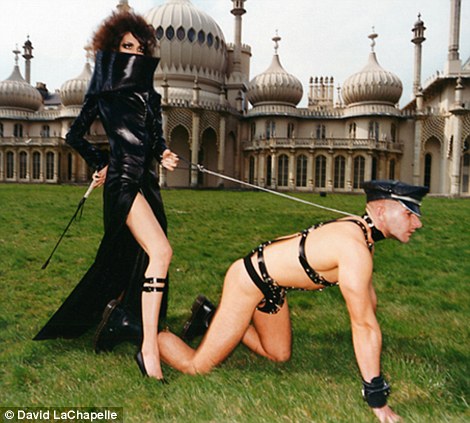
Perhaps you recall a few weeks ago when I espoused my love for Rihanna and slightly-less-intense love for the new music video for her song “S&M.” I’m saddened to report that the lovely RiRi is in a spot of trouble over the new reel – David LaChappelle is suing her for deriving the video’s “composition, total concept, feel, tone, mood, theme, colours, props, settings, decors, wardrobe and lighting” from the fashion photog’s work. Here‘s a helpful guide to the similarities between the video and LaChappelle’s photos. 

But you know what, Violet Blue’s going with RiRi and so am I. David LaChappelle, for the love of Perez Hilton on a leash  – is this video detracting from your personal worth as a pervy photog? Now you can say you made a Rihanna video and maybe people will believe you. Problem = solved! Now onto sex events. Dirty talk and sexy poetry readings, etc.


Aural Sex

Word on the street is that sex educator-kinkster Midori’s voice is like buttah, so slide on into her workshop, which focuses on that most sexy, most mind-blowing organ of all – our voice! Uh wait, that’s not an organ so — our throat! Um — our diaphragm! Yeah, you’ll need one of those, so close enough.

Weds/23 6-8 p.m., $20-25

Good Vibrations

1620 Polk, SF

(415) 345-0500

www.goodvibes.com


The Art of Sacred BDSM

Wanna bring sacred into BDSM? Perhaps BDSM into the sacred? You are in luck because we have here a genuine shaman (who may or may not look like Melissa Joan Hart from “Clarissa Explains it All”) and a priest of love and eros who has the skillz to pay the billz in balancing the masculine and feminine in our lives. They’ll perform a sacred collaring ceremony for ya, and in general encourage more feeling in your feeling. 

Weds/23 7-9:30 p.m., call for price

Center for Sex and Culture

1519 Mission, SF

(415) 552-7399

www.sexandculture.org


Tongue Tied poetry night

Sex is poetry. Get all those nasty limericks out of your head for good at this kink-friendly (kinda goes without saying when you’re talking about the coffeeshop that hosted a Kink.com shoot a few years back) poetry night at Wicked Grounds. Emceed by a one TheyCallMeVroom. Nice name.

Thurs/24 7-10 p.m., free

Wicked Grounds

289 Eighth St., SF

(415) 503-0405

www.wickedgrounds.com


Kiss 

Hello hetero-centric gentlemen: do you have a lovely lady who is raring to play with you and sexy strangers this weekend? Why don’t you sign the two of you up for Kiss, the Mission Control play party for couples and single ladies only. Reserve your spot now – the night is reservation-only and we hear that the stripper pole at Mission Control books up fast. 

Sat/26 10 p.m.-late, $70 per couple, members only

Mission Control 

www.missioncontrolsf.org


The 15 Association’s Anniversary Play Party

Probably the most exclusive BDSM party going on this particular Sunday, the 15 Association will be celebrating 20 years in the male fraternity bondage business. Of course, if you’re not a member you can go to the open party on Sat/26 – but c’mon, don’t you want to see what sex looks like after two whole decades of hedonistic association?

Sun/27 1-8 p.m., $20 members only

SF Citadel

1277 Mission, SF

(415) 626-2746

www.sfcitadel.org

Hoop dreams

2

culture@sfbg.com

RENEW Christabel Zamor moves like a snake — eyes fixed, lithe body writhing, hips rippling back and forth — which isn’t really surprising, considering the number of times she’s shed her skin.

Zamor is a hoopdancer — one of those sylph-like sirens who show up at parties and raves and on the playa in order to make the men drool and the women vow to do sit-ups. She credits hooping as the secret to her sensuous shape — but if you’re thinking of getting out your snake charmer’s flute, let’s get one thing straight: in this case, it’s the sexy serpent who’s charming you.

Zamor is magnetic and incredibly talented, but what sets her apart from other Bay Area hoopers is her avid following, cultivated by Hooping! The Book!, an array of instructional DVDs and 72-hour teacher training program that has certified 570 instructors in 16 countries. Zamor is HoopGirl® — a persona that not only has allowed her to whittle her waist and tone her tummy but to explode into a fitness franchise.

An erstwhile doctoral student and one-time “heavy-set, shy academic,” Zamor says she transformed her life — and her body — through hooping’s calorie-burning workouts and confidence-building powers. She now travels the world as a fitness trainer and empowerment coach, teaching people that they can do the same thing.

“I wasn’t really looking for hooping,” she says. At 27, Zamor was a UC Santa Barbara PhD student struggling to find academic support for her interest in ethnomusicology and drumming. Frustrated, she dropped out from her program after receiving a master’s degree, traveled to Senegal to study djembe, returned to the States, enrolled in Pacifica Graduate Institute’s master’s program in mythology and depth psychology, and began working as a personal assistant. Amid the confusion, she says she didn’t have the power to envision a life outside her studies. “I wanted to be a healer but didn’t know it,” she says.

But a simple circle changed all that. At a Gathering of the Tribes conference in Los Angeles, Zamor fortuitously picked up her first hoop — and HoopGirl was set in motion.

Zamor claims she never had a hula hoop as a child, but from the first instant she picked up the plastic ring and it clattered uncooperatively to the ground, she was hooked. Despite the initial “experience of not succeeding,” she was captivated by the hoopers around her — “beautiful nymphs undulating gorgeously” — and she was determined to become one.

“I got a hoop and started practicing in the park, in rhythm with high-energy trance or electronic music,” she says, and crowds “just started gathering.” When a newspaper reporter wrote a story on her weekly spin sessions, “100 people showed up wanting to hoop.”

Hooping has provided Zamor with a means of transformation, for her physical body as well as her spiritual self. She describes hooping as the portal that awakened her to underground subcultures like the circus-arts scene and artistic communities like Burning Man.

Zamor found that she could hoop for six hours at a time and that it catalyzed a level of physical and spiritual presence she describes as a “quickening” of the body. She interprets the orbital motion of the hoop as “intrinsically about coming back to your center,” a practice that stills mental chatter.

Hooping also began to fill in for the cultural activity that Zamor had so desperately wanted to study at UCSB. She had sought to understand how tribal rituals played a role in society, but she realized that dissecting a cultural form appropriated from the third world brought up questions of co-optation that she didn’t want to wrestle with. Hooping provided the same rhythmic, percussive, ritualistic aspects and counted as an indigenous rite in California in the early aughts, when its popularity was exploding. Burning Man was where Zamor tapped into hooping as a “sacred, transcendent experience,” one that she ultimately felt empowered to interpret for a national audience.

Now 10 years later, Zamor has performed at events for Warner Bros., Universal Pictures, and Cirque du Soleil. She has been hired to represent fitness brands and health club chains. She is licensing HoopGirl® Workout teachers across Canada, England, Australia, and the United States, where her hoop regimen has been certified by the Aerobics and Fitness Association of America.

At 38, she is a fitness guru and the leader of a profitable exercise business. In her books and DVDs, she maintains a bubbly exuberance in describing her physical transformation. “My unwanted extra fat just disappeared and was replaced by gorgeous muscle,” she crows, describing her journey. But she leaves out transcendence at Burning Man in favor of the elation of calories burned.

Zamor admits that she has had to be a chameleon to market herself and her hooping. Unlike other elite hoopers who began to develop the art form around the same time or even earlier, Zamor hasn’t been content to limit herself to a part of the San Francisco subculture. She hopes to bring legitimacy to hooping, which sometimes means talking abs and aerobics. “To spread hooping, I have to be able to spread the lingo. I gain respect by speaking a language that people respect.”

But when she is training HoopGirl dancers, she says she still refers to hooping as a spiritual practice. Her mantra — hooping is sexy! — is as much about a sense of self-worth as a satisfying session in the sack. The once “introverted loner” has been able to use hooping to help shed her old self, literally — and she’s eager to show us that results are replicable at home.

“The hoop adheres better to bare skin,” she explains, “so I started wearing less clothing. Showing my arms, showing my legs — it’s like the hoop was asking me to take those things off. I started to feel like I didn’t have to hide who I was.”

Flipping through pages of toned hotties in her book, or watching the bootie-shorted babes in her DVDs, it might be difficult to believe that the sexiness of hooping isn’t about, well, sex. But Zamor says there is something deeply and inherently feminine about the hoop — and it’s not just that the ladies look better shakin’ it.

After two surgeries for endometriosis, Zamor is convinced that the “soothing gyrations” of the hoop against her pelvis have helped heal her. “Hooping provided the insight I needed to slow down and focus on my body,” she says, explaining that it’s also a way to strengthen her core and reproductive organs, bringing fresh blood to the pelvic region and awakening her libido. Now, six years since her last surgery, she emphasizes that her doctor was amazed at how quickly she healed by hooping through the ordeal.

Next up, Zamor will be working on bringing that whole-body healing to women who may not be willing to step inside the hoop. She has expanded her business to include empowerment classes that honor the “divine, delicious feminine” and that will help women become a more supple, radiant, and luminous version of themselves, she says.

These classes in “hooping outside the hoop” are geared toward helping others uncover the empowerment and sense of self-worth that Zamor has found through HoopGirl. Of course, unless Zamor is planning on turning out hundreds of successful fitness revolutionaries with profitable book deals of their own, it’s hard to say whether her personal transformation will be replicable. But with one irresistible smile from Zamor, it’s easy to see that the hoop has worked for her — and difficult to resist the urge to run out and buy one for oneself.

Naughty girls (need love too)

0

SCANDAL! Flaubert’s Madame Bovary is one of those pillars of French culture whose dismissal might well get you deported. (Deservedly.) It has inspired innumerable adaptations and co-optations, including a Hindi musical, a VeggieTales episode, and a postmodernist novel posing as a nonfiction memoir-literary homage (Julian Barnes’ Flaubert’s Parrot). Its film incarnations have been reset everywhere from Portugal to Argentina to Rye, N.Y., attracting directors as celebrated as Jean Renoir and Vincente Minnelli and actresses as disparate as emotional heavy-lifter Pola Negri and chilly, twiggy Isabelle Huppert.

A few notches below that lofty company is 1969’s The Sins of Madame Bovary, a German-Italian coproduction with the era’s requisite mixture of dubbed multinationals — none very well remembered now — which is being issued this month by South San Francisco’s CAV Distributing. Despite its lurid title, this is a fairly faithful, if uninspired, version of the novel directed by journeyman Hans Schott-Schöbinger, whose less-than-illustrious prior credits included something called The Pastor with the Jazz Trumpet (1962).

It was a last career stop for him, but just the beginning for star Edwige Fenech, an Algerian-born beauty contest winner of Maltese and French extraction who would be the face that launched a thousand European exploitation movies — well, a lot of them anyway — over the next decade-plus. (Never entirely retired, she recently had a cameo in 2007’s Hostel: Part II.) Through all her giallos and sex comedies, Fenech, a brunette with a jones for heavy mascara, gamely deployed her beauty in various stages of undress, revealing a curvy figure with considerably less discretion than Flaubert allowed the tragic ninny he both pitied and ridiculed.

It’s probably on the shelf of every junior-high library now, but the original Madame Bovary was hugely scandalous — not just in her fictive world of bourgeois discontent, but in the salons, government offices, and courts of actual mid-19th century France. Couched in the most exquisite prose, her hapless infidelities — spurred by the fatal error of having married a nice, very dull country doctor — brought charges of immorality against author and original publisher (when it was serialized in a magazine) that came close to throwing the future pal to George Sand, Turgenev, and Emperor Napoleon III in prison.

Who knows how many titillated readers tried to emulate Emma B.’s suggested shag in a closed horse-drawn carriage only to discover their design in that era would in all likelihood make that exercise conducive to unpleasant contortions and muscle cramps? Perhaps that was another of Flaubert’s little jokes — as a many-mistress’d lifelong bachelor who’d explored the length of the Kinsey Scale (yet never truly moved out of his mother’s house) and had the venereal souvenirs to show for it. Yet one suspects he would have found the subsequent graphic sexualities of later banned books Lady Chatterley’s Lover, Ulysses, Tropic of Cancer, etc. to be merely vulgar.  


Printed matters: A specific glance at the 44th California International Book Fair

0

Do you want the pristine first edition of Bram Stoker’s Dracula for 45 grand, or the slightly worn copy for 25 grand? Such were the questions that presented themselves at the 44th Annual California Antiiquarian Book Fair, which took place at SF’s Concourse Exhibition Center from February 11 through 13. A special shout out to local merchants Serendipity Books and Bolerium Books, both of whom had some of the event’s most interesting and affordable pleasures and treasures on display.

Noise Pop 2011 short takes

0


DAN DEACON

Don’t take drugs before a Dan Deacon concert — it’s a waste of your perfectly good toxins, because even sober attendees will feel totally fucked up after a show with the holy Jesus of electronic madness. Crawl! Spin! High fives! Jump! Close your eyes. Spin! Imagine you’re running in a forest, etc. You’ll leave a wolf. With Ed Schrader’s Music Beat, Oona, and Altars, Tues./22, 8 p.m., Independent. Also with Ed Schrader’s Music Beat, Sister Crayon, Lily Taylor. Wed./23, 8:30 p.m., Rickshaw Stop. (Amber Schadewald)


VERSUS, TELEKINESIS

Live through this — be it heartbreak, hearing loss, or the heavy-duty poker sessions in the basement of Lost Weekend Video. Versus’ Richard Baluyut has moved on from his gig at the invaluable Mission video store, but he hasn’t lost his way with a moody rocker: Versus’ On the Ones and Threes (Merge, 2010), its first album in a decade, finds beauty in the darkness — and in the return of old compatriots like original member (and Richard’s bro) Edward Baluyut and engineer Nicolas Vernhes (Deerhunter). Elsewhere on this insurmountable bill: Michael Benjamin Lerner of Telekinesis has grappled with hearing loss by way of a cryptic disease and coped with the demise of the relationship that inspired his debut. Sounds like he’s rising above, beautifully, via the gritty, grumble-y, bass-wrought numbers of 12 Desperate Straight Lines (Merge). With The Love Language, Burnt Ones. Wed./23, 8 p.m., 21+, Cafe Du Nord. (Kimberly Chun)


THE EXTRAORDINARY ORDINARY LIFE OF JOSE GONZALEZ

If the trailer is any indication, this portrait of the singer-songwriter and Junip member uses animation and some Idiots-like live action to illustrate his music. “The best stuff is generally an unexpected twist while still maintaining a thread,” he says in voice-over, as directors Mikels Cee Karlsson and Frederik Egerstrand show him trying to write, slumped over a desk in a dark room. Wed./23, 9 p.m., Roxie Theatre. (Johnny Ray Huston)


WAY BEHIND THE MUSIC

Anthony Bedard of Hank IV and the Hemlock Tavern hosts as Mark Eitzel, Thao Nguyen, Beth Lisick, Linda Robertson, Michelle Tea, Bucky Sinister, Jesse Michaels, Paul Myers, and Tom Heyman read from some of the most bizarre American music memoirs. This showcase includes the words of Justin Bieber, Jewel, Gene Simmons, George Jones, Marilyn Manson, Tori Amos, Vince Neil, and Denise McLean (mother of Backstreet Boy A.J. McLean), among others. Thurs./24, 7:30 p.m., Make-Out Room. (Jen Verzosa)


APEX MANOR

Terrible-two Spoon meets newborn Dinosaur Jr.? Apex Manor, the latest project from Ross Flournoy, brings such post-punk pack leaders to mind, as the effortless strains of jingle-jangle bliss and well-hooked-up rock ‘n’ roll course out of the new Year of Magical Drinking (Merge). But, really, it must have been Flournoy’s passionate, punchy performance on “Under the Gun,” coupled with a bitchin’ guitar solo, that captured Carrie Brownstein’s heart and won her NPR challenge to write and record a song in one weekend. That’s all gravy, though, considering that the exercise succeeded in busting Flournoy out of a lousy case of writer’s block after the breakup of his underrated Broken West. With Film School, Gregory and the Hawk, Melted Toys. Thurs./24, 8 p.m., 21+, Cafe Du Nord. (Chun)


SHANNON AND THE CLAMS

Hey freak, you know you’re one of us. The wait has been long, but the time is coming soon for Shannon and the Clams to release Sleep Talk on 1-2-3-4-Go! Records. Get ready to be blown away by Shannon Shaw’s voice, one of the great untamed forces-of-nature of rock ‘n’ roll, and my vote for the best pure sound you can hear at this year’s fest. With Jake Mann and the Upper Hand, Wet Illustrated. Fri./25, 5 p.m., 21+, Benders Bar. (Huston)


NICK ZINNER’S 1001 IMAGES

While most noted as the guitarist for the Yeah Yeah Yeahs, Nick Zinner is making a name for himself as a talented photographer. (He has four books of images to his name, including his latest, Please Take Me Off The Guest List.) In this exhibition of 1,001 photographs, the Bard College-educated, four-time Grammy nominee captures intimate moments of his world travels as a member of an iconic art rock and garage pop trio. Fri./25, 5 p.m., 21+, Public Works. (Versosa)

YOUNG PRISMS

Thick, super-gooey reverb-smothered toast, crunchy and burnt and totally delicious. Young Prisms is a group of five San Francisco residents who roast gritty shoegaze tracks straight over the fire while living together in a house that apparently feels like an “extended camping trip.” You can’t take small bites of Young Prisms — this sound is meant for inhaling. With Big Lights, Seventeen Evergreen, DJ Britt Govea. Fri./25, 8 p.m., 21+, Independent. (Schadewald)


TAMARYN, THE SOFT MOON

Noise Pop broods with this bill, which presents an opportunity to hear the widescreen songs from Tamaryn’s The Waves (my fave: “Dawning) in live form, and find out how they’ll translate to Cafe Du Nord’s close-quarters basement setting. Luis Vasquez is a busy guy — in addition to his band the Soft Moon, he also plays with the Lumerians, who’ll be putting out an album this spring. With the Black Ryder, Wax Idols. Fri./25, 8 p.m., 21+, Cafe Du Nord. (Huston)


BATTLEHOOCH, EXRAY’S, DOWNER PARTY, NOBUNNY

Whether playing impromptu shows on street corners or headlining Noise Pop at Bottom of the Hill, Battlehooch is a San Francisco five-piece with a brilliant manic-depressive sound that flips from indie pop to experimental noise rock. Joining Battlehooch are: Exray’s, an SF duo whose song “Hesitation” was handpicked for use in the blockbuster Social Network; pop-punk trio The Downer Party, which dazzles audiences with its songs of teenage angst; and Nobunny, a psychobilly-meets-garage rock force of nature. Fri./25, 9 p.m., Bottom of the Hill. (Verzosa)


HUNX AND HIS PUNX

Hunx masters songs of love and death — whether they be teen-death love anthems or odes to his late father — on the upcoming Too Young to Be in Love, with tremendous help from Punkette Shannon Shaw of Shannon and the Clams. (He’s also just recorded some “straight”-ahead classic rock-pop solo songs that will make it less possible for dunderheads to pigeonhole him as a gay comic novelty.) I’d tell you exactly what’s rad — as in truly radical — about the interplay between Hunx’s and Shaw’s voice, but I’m going to wait until the album comes out. Why don’t you find for yourself? With Best Coast, Wavves, Royal Baths. Sat./26, 8 p.m., Regency Ballroom. (Huston)


NO AGE

Yes, age — maturity has been good to the L.A. duo. Beyond the walls of grinding distortion lies Everything in Between (Sub Pop, 2010), and such raging jewels as “Fever Dreaming,” a hell-bent, hardcore-fed hurl through sheet-metal noise and bemused but anthemic Joey Ramone-style vocals. Somehow the twosome has reclaimed the epic poetry in art punk, scratching through the ethereal rubble of “Skinned” and the mournful crunch and glimmer of “Positive Amputation.” With Grass Widow, Rank/Xerox, Crazy Band. Sat./26, 8:30 p.m., Rickshaw Stop. (Chun)

A jaundiced proposal

0

news@sfbg.com

An ordinance to ban unsolicited print Yellow Pages across San Francisco, proposed Feb. 1 by Board of Supervisors President David Chiu, seeks to reduce waste and save money.

“Phone books are a 20th-century tool that doesn’t meet the business and environmental needs of the 21st century,” Chiu said as he introduced the measure in board chambers.

The ordinance would establish a three-year pilot program starting Oct. 1 in which the city would reduce the mass distribution of phone books, making them available only at distribution centers or to residents or businesses that request them.

A rally in support of the ban before the meeting included Rainforest Action Network’s founder Randall Hayes and California Sen. Leland Yee (D-San Mateo), who proposed legislation that failed to gain steam last year for making it easier for Californians to opt out of receiving phone books.

But the Yellow Pages Association refuses to be thrown out with the rest of yesterday’s trash. YPA Vice President of Public Policy and Sustainability Amy Healy said her group opposes the proposal but that she was encouraged that Chiu and his staff say they are open to working with the association.


BY THE NUMBERS

Chiu introduced the ordinance, which is cosponsored by Sup. Scott Wiener, because of the potential effect it could have on reducing city waste, both in the city’s garbage bins and its treasury.

According to Chiu’s office, San Francisco receives about 1.5 million phone books a year. At an average weight of 4.33 pounds per book, the current distribution system creates about 7 million pounds of waste. If the production were cut in half for the city, it would save nearly 6,180 metric tons of carbon dioxide emissions a year from polluting the air.

But it isn’t just the environmental cost that is wearing on the city.

Phone books are tough to recycle. With plastic inserts, bulky design, and low-grade paper, the books have to be presorted and recycled manually. It costs Recology, the company contracted with the city for waste disposal, $300 per ton to dispose of the city’s unused phone books, which in turn costs taxpayers about $1 million a year for their disposal.


OPT IN VS. OPT OUT

The YPA has been sensitive to the environmental concerns, recently launching a website that allows a person to opt out of receiving a phone book.

But it is also suing the Seattle City Council over its Feb. 1 approval of a plan to charge Yellow Pages a 14-cent publisher’s fee per book and create an opt out system for the city, arguing the Seattle ordinance violates the First Amendment’s free speech protections.

According to a statement by YPA President Neg Norton, the association believes that “if don’t want a phone book, you shouldn’t have to get one.”

But YPA opposes the ban on unsolicited books, citing the jobs it would cost, the business community’s desire to “generate leads and revenue from ready-to-buy consumers,” and claiming the First Amendment “prohibits government from licensing or exercising advance approval of the press and from directing publishers what to publish and to whom they may communicate.”

Wiener has a different take on the matter, a stand he said he has already received lots of criticism for, including from some constituents who compared it to the board vote to ban Happy Meals last year. But he said this issue is very different.

“An enormous number of books dumped all over the city is a bad thing, and we should do something to address the issue,” he told the Guardian, noting that the ability to opt out isn’t good enough. “It’s not like the do-not-call list where it is directly annoying and people are more likely to take action … Stacks sit in apartment lobbies, and people don’t decide to opt-out.”

But YPA is also citing the public’s apathy as a reason the ban is unfair. “People don’t take the time to respond to e-mails,” Healy said. “It’s an unreasonable barrier to have a stranger knock on your door and ask you to take something.” The YPA claims that “seven in 10 adults in California use print Yellow Pages, so we do not believe a system that puts a burden on the majority of people to opt in is the best path for choice.”


ARE THEY USEFUL?

Do people still value the Yellow Pages?

Healy believes they do, stating that advertising with the Yellow Pages gives businesses a “high return on their investment.” We asked some city businesses that still advertise in the Yellow Pages what they thought about the potential ban.

Barbara Barrish, manager of Barrish Bail Bonds, doesn’t see her customers using the Yellow Pages anymore. “We used to swear by the Yellow Pages. Now young people use the computers, or their Blackberries and phones.”

Although she has an ad in the print edition, Barrish said she wouldn’t advertise with the directory again and only did so this time because it slashed its prices. “It used to cost a lot more, but it cut its advertising costs by a third,” she said. “They gave me a good deal.”

When asked if she would request a copy if the ban goes through, she said she probably would. “I might grab a phone book if the computer is down.”

Daniel Richardson, an immigration attorney who advertised in the Yellow Pages until 2008, predicted the business community would kill or water down the ordinance. “You are talking about going up against AT&T and other major businesses,” he told the Guardian with a chuckle.

Richardson said he stopped advertising in the Yellow Pages because he didn’t get enough business. He believes people look to the Yellow Pages for criminal or personal injury lawyers, but not immigration attorneys.

Even pizza places, a staple of advertising in the Yellow Pages, are ho-hum about the usefulness of the Yellow Pages. Junior Reyes, who is in charge of advertising for Go Getter Pizza on Gough Street, believes the restaurant gets most of its customers from online. “We do a lot of advertising with other places and online,” he said. “The Yellow Pages isn’t our main source.”

But what about people who do use the Yellow Pages, particularly groups that are not big Internet users. Would they miss it?

David Bolt is the dean for academic affairs at Expression College for Digital Arts in Emeryville and producer of the PBS series The Digital Divide. He believes that banning the Yellow Pages may be a problem for certain groups, including the elderly, recent immigrants, and the poor — groups with the least access to Internet, particularly in urban centers.

“We should err on the side of giving as much information to the greatest numbers of people, especially to groups that may not be technologically literate,” he said. “Society should think about how groups could be impacted by this decision.”

But Barbara Blong, executive director of the Senior Action Network, said older people are becoming more tech savvy. She said computer classes and other resources have put many of the city’s seniors online. She questioned the concept that seniors are one of the largest groups affected by the digital divide, noting that seniors oppose wastefulness as much as anyone.

“We are against having a lot of Yellow Pages laying around,” she said. Blong also mentioned that seniors who do not use the Internet for contacts can use the public library or senior centers that have phone books on hand. “I don’t see it as a ban, but moving on so we don’t have a great deal of waste,” she said.

The ordinance also exempts foreign language phone directories, further diluting the divide argument. The legislation wouldn’t ban the Chinese Yellow Pages or Momento (Spanish Yellow Pages) because they are distributed through community centers, not residences.

The ordinance is expected to have its first public hearing around the end of the month. The YPA will continue to tout its opt out website to the board in hopes it might be enough to persuade the city to forgo the opt in system. The group also hasn’t ruled out a lawsuit.

But YPA’s Healy said he hopes the coming dialogue will be productive. “We share the same goal — we don’t want to print directories that are unwanted.”

“He will probably drown in his beer hat”: the post-punk vegan hits SF

0

Isa Chandra Moskowitz is a believer in the power of baketivism. Emerging from the wilds of Food Not Bombs mass meals and the New York City punk scene, Moskowitz started a community access TV show, The Post Punk Kitchen in 2003. Since then she’s gotten five animal product-free cookbooks published, starting with the seminal Vegan Cupcakes Take Over the World (Da Capo, 168 pages, $15.95) and progressing to her latest, Appetite for Reduction (Da Capo, 336 pages, $19.95) — a collection of low-fat recipes (a couple of which we featured over the holidays), the result of Moskowitz’s doctor’s suggestion she cut back on fat after being diagnosed with a hormone imbalance.

 She’s vegging out in SF this weekend — you can catch her doing a cooking demonstration and book signing at the Ferry Plaza Farmer’s Market on Sat/12 — and hell, read that bio again, awesome. So we interviewed her and now we know where to get vegan cheese that actually tastes good, among other highly salient points.


San Francisco Bay Guardian: When and why did you become a vegan?

Isa Chandra Moskowitz: My vegan journey began over 20 years ago, when I was 16. Yes, it’s a journey, just like on the “Bachelorette.” It was pretty simple for me, I just couldn’t see any reason to eat animals. I’ve always been an animal lover and the thought of any animal suffering or being killed just drives me nuts. I didn’t want any part of it. 


SFBG: Have you seen a change in the animal product substitutes offered in stores since your early vegan days?

ISM: Yes, and what’s even more drastic is how widely available vegan meat substitues are. I’ll be honest, I don’t really care for many of the products — I prefer to cook whole foods. But I appreciate that the subs exist and there are some yummy ones out there, like the Field Roast sausages [editor’s note: soy-free, yay!] and Tofurkey slices, which make great sandwiches in a pinch. In terms of pastries and sweets it’s like we’re living in a completely different world. Sweet & Sarah Marshmallows are to die for, and there are so many awesome cookie companies that they’re too numerous to count. And ice cream is much better, especially the coconut milk varieties. 


SFBG: Do you think the US qualifies as a vegan-friendly country now? Where, in your eyes, are the best places for vegan dining?

ISM: Yeah, for sure. I mean, it’s such a big country. Of course there are more vegan-friendly places than others. The best places are probably pretty similar to the best places for food in general – NYC, Portland, and here in San Francisco. Those are also the places where I most often find myself, so go figure!


SFBG: What (if any) has been the most compelling argument you’ve heard NOT to be a vegan?

ISM: I honestly haven’t heard anything that sounded like a good argument. The only thing that makes sense to me is when people are like ‘well, I don’t really care.’ I mean, at least it’s honest! 


SFBG: When I became a vegan, I had to deal with a lot of flack from family and friends, even those that were totally cool with my ten years of vegetarianism. Did you run into that when you decided to go animal product-free? Why do you think people get so crazy about the dietary choices of others?

ISM: I hear this type of thing a lot and I have to say I did not experience it at all. I mean, there’s always that annoying guy who’s like ‘PETA means People Eating Tasty Animals!!! Guffaw! Snort!’ but he’s not my friend and he will probably drown in his beer hat so I’m not too worried about it. But in terms of friends and family, people either didn’t think anything of it or didn’t get into it with me. 


SFBG: What’s the best vegan cheese you’ve run into out there? I’m having issues with that one.

ISM: I am not crazy about any of the US cheeses on the market at the moment, but I had the most amazing vegan cheese from Switzerland called Vegusto. It’s not available here, unfortunately, but if anyone is listening and wants to make a million dollars, strike some sort of deal with that company and bring it to the US. It will change your life. In any case it’s good to know that a delicious creamy vegan cheese is possible, hopefully it will exist here someday. 


SFBG: It seems like a lot of vegan cooking revolves around processed animal product substitutes. How do you feel about that?

ISM: Ha, this whole interview was about products and processed food and yeah, in all my books I pretty much make it clear that I’m not into that. I cook with whole foods. 


SFBG: Finally, where/what are you planning on eating in SF?

ISM: I’m definitely going to eat a couple million burrito spots, but also Millenium, Cha-Ya, Gracias Madre and hopefully a kind soul will bring me something from Cinnaholic because I don’t think I’m going to make it over to the East Bay. I already went to Papalote tonight and then had the tiramisu at Cafe Gratitude so I’m happy.


Isa Chandra Moskowitz

Sat/12 11:45-12:30 p.m., free

Ferry Plaza Farmer’s Market

One Ferry Building, SF

(415) 391-3276

www.cuesa.org


Date with Satan? “Mosh Potatoes” to the rescue!

0

Sure, Julia Child was a badass in her own way — but do you think she ever blasted Seventh Son of a Seventh Son while cooking up beef bourguignon? (Gonna guess … not. I saw the movie so I’m kind of an expert.) For all the would-be chefs who prefer their kitchen adventures with a side of Satan comes Steve “Buckshot” Seabury’s Mosh Potatoes: Recipes, Anecdotes and Mayhem from the Heavyweights of Heavy Metal (Atria Books, $15).

Mosh Potatoes isn’t the first-ever metal-themed cookbook (see also: Hellbent for Cooking: The Heavy Metal Cookbook by Annick Giroux, which similarly features recipe contributions from famous headbangers). But Mosh Potatoes has the better name. Also, download site Loudtrax.com is running a contest (it ends Monday, a.k.a. February 14, a.k.a. Valentine’s Day) in conjunction with the book. For brave culinary warriors only, “We Dare You to Cook Up Lemmy!” offers Kilmister-approved prizes for folks willing to attempt the Motorhead legend’s contribution to the book. (Details here; the recipe involves chocolate syrup, curry powder, brandy, and fire, among other things. It is called “Krakatoa Surprise,” and I wouldn’t get near it even if you offered me a suit made out of Ove Gloves.)

For those with less suicidal palates, Mosh Potatoes offers a variety of appetizers (“Opening Acts”), main dishes (“Headliners”), and desserts (“Encores”), explained in first-person style by whoever contributed the dish. Some of the recipes are more Food Network-ready than others (Dave Witte of Municipal Waste‘s surprisingly sophisticated Turkey Gyoza with Soy-Vinegar Sauce; Aaron from Red Fang‘s Red Fang Pad Thai); some are worth reading just because of the anecdote (see: Life of Agony’s Joey Zampella’s lobster-hypnosis tips) or suspicious items in the ingredient list (I lost track of how many people included beer or booze, not for the food but for the chef to drink while cooking.)

I’m generally crap in the kitchen, but I can definitely mix a bunch of ingredients together and shove them in an oven. So in lieu of Krakatoa Surprise, I decided to make “The Best Blueberry Muffins,” created by Darkest Hour‘s Paul Burnette. I made sure to pick a recipe from a band I actually know and like; the book’s artists are overall pretty cool, but there are a few odd numbers (Mudvayne? Come on now.)

The muffins call for all the usual ingredients (butter, sugar, eggs, vanilla, flour, etc.) plus a boatload of blueberries. They were delicious, though the note about waiting for the muffins to cool before taking them out of the pan was key. Lots of blueberries = lots of molten blueberry juice waiting to sear anyone who dared try and nudge a muffin out of the pan before due time.

They were best within the first 24 hours — I’d recommend making them fresh before, like, a brunch and (after they cool off, f’reals) sharing them with a group. Not too sweet but full of blueberry goodness — perfect for hangovers. My batch of batter made around 18 smallish muffins and they were dee-lish.

Here’s my quarrel with Mosh Potatoes, and I suspect it’s simply due to the number, er, nature of the beast: though author Seabury says he tested out all the recipes while compiling the book, the instructions here aren’t as thorough as you’d find in a typical cookbook. If you’re a kitchen-phobe like me, expect to be intimidated by vague or imprecise instructions for some of the entries. Even something simple as muffins, I would’ve liked to have known how many muffins the batch was going to make before I started out, which is something a reg’lar cookbook would’ve divulged.

But while Julia Child always offered thorough instructions, she certainly didn’t pepper her recipes with drinking games (to my knowledge), and she never used Jägermeister as an ingredient (did she? If so, contact me ASAP with deets). Mosh Potatoes may be light on haute cuisine, but it’s heavy on nacho-salsa-guac varieties, groupie gossip, bad puns (“Kale ‘Em All,” har har), and does contain at least one recipe that should not be read while eating (talking to you and your barfy “ball cheese,” Michael Starr of Steel Panther). For those about to cook…

Flipping out

0

Dear Readers:

I get a lot of press releases and ignore them unless they’re for books, kid stuff, or sex toys. But I have been remiss on one count: I have not solicited any samples of sex stuff aimed at men. There is something inherently humorous about fucking an inanimate object (see Portnoy, Alexander and Pie, American) that simply doesn’t seem to apply to the dainty art of buzzing yourself to glory . Object-humping is not dignified.

So I owe men’s sex toys an apology and sent away for something. What arrived was essentially a featureless white cylinder with some recessed white buttons. Very classy. It’s called a “Flip Hole.” Uh, maybe a little less so. Do you want to fuck a flip-hole?

I don’t know anyone who does but I might know someone willing to try it. On the first go, my reviewer gave it about a B, and admitted, modestly, that it seemed to run “a tad small.” And the tight fit caused some of the lining to squish out the front in a disconcerting manner. On later investigation I was impressed with the internal topography, a ribbed-and-bumpy silicone sleeve the texture that maps very creditably to my own mental impression of what the inside of a vagina ought to look like, if was clear more jellylike. The company, Japanese fancy sex-stuff outfit Tenga, did its research. And also implies in its materials that it’s supposed to be that tight. It is called, rather baldly, an “ultratight masturbator.”

So the Flip Hole, ickily named or not, is well-designed and functional. It is easy to clean, which is what all the flipping is about; the sides wing open to give full cleaning access, avoiding the “squishy can full of jizz” impression given by earlier generations of men’s toys. It’s so tidy looking and hygienic that it hardly seems sexy, but when it comes to things you are supposed to stick your one and only precious into, you could do worse than well-designed and hygienic. And I will avoid rude jokes about those adjectives not applying to perhaps the majority of partners picked up in haste at the end of a drunken evening.

Does the thing have any downsides, besides the price, which is, to be fair, standard for boutiquey sex toys? Yes. Although the business end is made of silicone, we quickly noted a lingering industrial solvent scent, like a freshly opened cheap vinyl shower curtain that clung to the object and to anything inserted therein, as well as our hands and everything we touched, requiring showers and extra tooth brushing to get rid of. A long shower just for the Hole, followed by a nice air bath, only just began to diminish the pong. I’m pretty sure extended exposure to sunlight would help, but as deepest city dwellers we are at a loss to find a place to air it out not visible to passersby or accessible to children. So it stinks like the plasticy-est of plastic things, and I can’t recommend that part unless you have yourself some very serious Barbie fantasies. In which case, have at it.

Love,

Andrea

Got a question about sex? Email Andrea at andrea@mail.altsexcolumn.com

Our Weekly Picks: February 9-15

0

WEDNESDAY 9

MUSIC

Turisas

I recently heard Turisas described as “Disney metal.” So before you run screaming in the other direction, hear me out when I claim that it was actually a compliment. Spearheaded by singer-founder Mathias “Warlord” Nygard, the band plays folk metal so lushly orchestrated that it sounds like a movie score, full of trumpet swells and epic organs. Onstage, it features an accordionist and a violinist; the latter is responsible for all the soloing that would traditionally be done on guitar. Turisas’ 2007 release The Varangian Way is an engrossing concept album whose eight tracks follow a group of Scandinavian travelers as they make their way across Russia by river and end up in Constantinople. New platter Stand Up and Fight is due Feb. 23, but you can get a sneak preview at the show. (Ben Richardson)

With Cradle of Filth, Nachtmystium, Daniel Lioneye

8 p.m., $27

Regency Ballroom

1300 Van Ness, SF

1-800-745-3000

www.theregencyballroom.com


DANCE

Eonnagata

Eonnagata comes with pretty impressive credentials, and promises to be unique. The work is a collaboration between maverick ballerina Sylvie Guillem, who has made waves ever since she dared to quit the Paris Opera Ballet to freelance; multi-whiz Canadian director Robert Lepage, whose Ex Machina company has redefined theater for the last 20 years; and dancer-choreographer Russell Maliphant, who mixes ballet with yoga and everything in between. The trio created and performs in a work that examines the in-between state of male-female sexual identity. Inspired by an 18th century French noble, spy, and diplomat who fluidly switched genders throughout his career, Eonnataga also acknowledges a debt to the onnagatas, the refined male actors in Kabuki who spent their careers playing female characters. (Rita Felciano)

Wed/9–Thurs/10, 8 p.m., $36–$72

Zellerbach Hall

Bancroft at Telegraph,

UC Berkeley, Berk.

(510) 642-9988

www.calperformances.org


EVENT

“How to Write A Dynamic Online Dating Profile”

You’ve been on blind dates. You’ve tried speed dating. You’ve even have had your mother set you up. But you still can’t find love? Turn to cyberspace. (Don’t be embarrassed. According to those Match.com ads, one out of five relationships now begin online.) Take it from Carol Renee, a self-proclaimed “logophile,” English teacher, and aspiring novelist who found the love of her life using the handle “Fearlessly Compassionate.” She’ll hold your hand during the daunting tasks of coming up with a tantalizing user name, writing an attention-grabbing headline, and composing a succinct and yet true-to-life bio in this “how-to” class. (Jen Verzosa)

6:15 p.m., free

San Francisco Public Main Library

Latino/Hispanic Community Room B

100 Larkin, SF

www.sfpl.org


THURSDAY 10

MUSIC

Ensiferum

The Finnish metallers in Ensiferum span many styles, taking the best of everything they encompass. From folk metal, they learned the power of haunting, infectious melody and atmospheric texture. From thrash, they got the exultation and catharsis of breakneck tempos and relentless picking. And from power metal, they got the gleeful, empowering satisfaction that comes from singing about dudes with swords. The recent infatuation with Pagan stylings among American metalheads has brought the band stateside numerous times now, and Ensiferum never disappoints. Having donned their warrior garb, the five Finns who make up the band don’t leave the stage until everyone and everything is vanquished. (Richardson)

With Finntroll, Rotten Sound, Barren Earth

7:30 p.m., $25

DNA Lounge

375 11th St., SF

415-626-2532

www.dnalounge.com


EVENT

“Lusty Trusty Ball SF”

Not on the guest list for the annual Manus-Salzman Valentine’s Day Ball? No matter. Your photo won’t be gracing the pages of the Nob Hill Gazette or SF Luxe this time next week, but as least you don’t have to worry about breaking out the black tie. At the less-costly-but-no-less-classy Lusty Trusty Ball, in exchange for forgoing the ice sculptures, posh catered nosh, and a live gingerbread boy to nibble candy off of (he was holdin’ it down for Hasbro’s Candy Land in keeping with last year’s Manus-Salzman theme, “The Game of Love”) you’ll enjoy DJs, VJs, and live groups galore. Plus, with punk rock cabaret from the Can-Cannibals, Circus Finelli’s all-female antics, and Red Hots Burlesque, you can have a hot night without the haut monde. (Emily Appelbaum)

8:30 p.m., $10–$20

Submission

2183 Mission, SF

(415) 425-6137

www.sf-submission.com


EVENT

“Oilpocalypse Now”

Last April’s Gulf Coast-ravaging oil spill may have slipped from the headlines, but the region is still struggling to recover. “Oilpocalypse Now” takes aim at the corporations that cause (and cover up) environmental disasters — indeed, the event is subtitled “Time for a 28th Amendment for the Separation of Corporation and State” — featuring a talk by Dr. Riki Ott, a community activist and marine biologist. Ott will present the documentary Black Wave: The Legacy of the Exxon Valdez (remember that one? Big Oil hopes you don’t!) Other speakers include Lisa Gautier, who helped organize the “hair boom” effort to soak up Gulf Coast oil; former Guardian columnist Summer Burkes, who witnessed the Louisiana devastation first-hand, and more. Proceeds benefit the Gulf Coast Fund, Ultimate Civics, and the Coastal Heritage Society of Louisiana. (Cheryl Eddy)

7 p.m., $10–$20

Grand Lake Theater

3200 Grand Lake, Oakl.

(510) 452-3556

www.summerburkes.wordpress.com

http://communitycurrency.org/node/63


FRIDAY 11

DANCE

“Black Choreographers Festival: Here and Now”

For the next three weekends the “Black Choreographers Festival: Here and Now” throws the spotlight on the Bay Area’s African American voices. Now in its seventh year, the festival brings together professionals from a rainbow of perspectives on dance. If this were an ideal world, these choreographers would have their own companies and regular seasons. Some do — Raissa Simpson, Deborah Vaughan, Paco Gomes — but the festival offers all an opportunity to make themselves heard in the context of their colleagues. The Oakland lineup is different from the San Francisco one; the third weekend focuses on up-and-coming new talent. And as always, the youth ensembles at the family matinee will be a special high-energy treat. (Felciano)

Fri/11–Sat/12, 8 p.m.;

Sun/13, 4 p.m., $10–$20

Laney College

900 Fallon, Oakl.

Feb. 17–19, 8pm; Feb. 20, 7 p.m.

ODC Theater

3153 17th St., SF

Feb. 25–26, 8 p.m.; Feb. 27, 7 p.m.

Dance Mission Theater

3316 24th St., SF

1-888-819-9106

www.bcfhereandnow.com


PERFORMANCE

You’re Gonna Cry

Where better than 24th Street to watch a solo show about the real lives of Mission District residents at the height of gentrification? Touching on everyone from the techies and bohemians to the Latino locals and immigrants, HBO Def Poet and Youth Speaks cofounder Paul S. Flores performs his theatrical work about the human cost of gentrification in the neighborhood. In addition to masterful storytelling, get ready for a gangster puppet show and digital murals, illuminating the changes brought by the dot-com boom and bust, real estate bubble, immigration, and forced evictions. The Mission is loaded with characters and Flores’s dynamic fusion of urban culture and spoken word brings them all to life. (Julie Potter)

Fri/11–Sat/12, 8 p.m., $15

Dance Mission Theater

3316 24th St., SF

(415) 273-4633

www.dancemission.com


EVENT

California International Antiquarian Book Fair

Ever wonder what ephemera left by our generation will be pored over in a millennium or two? Parking slips, band posters, books like Lady Isabella’s Scandalous Marriage and 1001 Deductions and Tax Breaks, 2011? Whatever the items, they’ll surely be found at the 1000th annual California International Antiquarian Book Fair. The festival, now only in its 44th year, tempts bibliophiles with a menagerie of historical snippets and antique selections. The perusables include musical prints and manuscripts, rare codices, antique children’s literature, fine bindings, maps, trade books, miscellaneous historical scraps, and — vocabulary word — “incunabula,” which are books, pamphlets, or broadsheets printed (not handwritten) in Europe before 1501. A trove of timeworn tomes? Simply splendid! (Appelbaum)

Fri/11, 3–8 p.m.; Sat/12, 11 a.m.–7 p.m.;

Sun/13. 11 a.m.–5 p.m., $10–$15

Concourse Exhibition Center

635 Eighth St., SF

(415) 551-5190

www.labookfair.com


SATURDAY 12

DANCE

Company C Contemporary Ballet

With a sampling of contemporary ballet from choreographers active across North America and Europe, Company C’s mixed-bill winter program includes a premiere set to the music of Elvis Costello by Artistic Director Charles Anderson in collaboration with Benjamin Bowman (both formerly of the New York City Ballet), and another by Maurice Causey, a former principal of William Forsythe’s Ballet Frankfurt. Also appearing from the diverse repertory of this vibrant company is Tovernon, a solo work by David Anderson, the father of Charles Anderson, and Daniel Ezralow’s Pulse, during which dancers take running starts to slide across stage wearing socks. (Potter)

Sat/12, 8 p.m.; Sun/13, 2 p.m., $18–$40

Yerba Buena Center for the Arts

701 Mission, SF

(415) 978-2787

www.companycballet.org


EVENT

“Woo At The Zoo”

Want to make things a bit more “wild” this year for Valentine’s Day? Then head on over to the San Francisco Zoo for “Woo At The Zoo,” the annual event that’s become a favorite activity for amorous humans looking to learn a bit more about our animal pals’ own mating habits and sexual behaviors. Make plans soon with your sweetheart for this special multimedia event that also includes a romantic brunch or dinner, along with drinks. Admit it — you’re already humming the words to the Bloodhound Gang’s “Discovery Channel” song, aren’t you? “You and me baby we ain’t nothing but mammals, so let’s do it like they do on the Discovery Channel!” (Sean McCourt)

Sat/12-Sun/13, 6 p.m.;

Also Sun/13, 11 a.m., $65–$75

San Francisco Zoo

One Zoo Road, SF

(415) 753-7080, ext. 7236

www.sfzoo.org


SUNDAY 13

MUSIC

High on Fire

How rad would it be to have an all-chick High on Fire tribute band called Pie on Fire? Though, yeah, that could go either way — hot cherry deliciousness or the evil feeling that makes your girlfriend chug sour pints of cranberry juice. And pulling off (literally) the shreddiness of Riffchild caliber is probably not gonna happen in this lifetime. In any case, join the real trio for a special one-off hometown show before they head out to tour New Zealand and beyond. An honorable way to ring in the annual holiday of love and lust, no? (Kat Renz)

8 p.m., $18

Slim’s

333 11th St., SF

(415) 255-0333

www.slims-sf.com


The Guardian listings deadline is two weeks prior to our Wednesday publication date. To submit an item for consideration, please include the title of the event, a brief description of the event, date and time, venue name, street address (listing cross streets only isn’t sufficient), city, telephone number readers can call for more information, telephone number for media, and admission costs. Send information to Listings, the Guardian Building, 135 Mississippi St., SF, CA 94107; fax to (415) 487-2506; or e-mail (paste press release into e-mail body — no text attachments, please) to listings@sfbg.com. Digital photos may be submitted in jpeg format; the image must be at least 240 dpi and four inches by six inches in size. We regret we cannot accept listings over the phone.

Dirty business

24

rebeccab@sfbg.com

The owner of a certified minority-owned business in San Francisco is suing the city, charging that his telecommunications company went belly up after city officials falsely accused him of participating in a fraudulent kickback scheme within the city’s Department of Building Inspection (DBI).

The case and depositions of high-ranking officials offer a rare window into the inner workings of city government at a time when corruption was rife within DBI and regulations governing city contracting were considerably less strict. They also provide a glimpse at how city business was sometimes conducted under the administration of Mayor Willie Brown, a powerful figure who has resurfaced recently in San Francisco politics.

In addition, the case alleges inappropriate behavior by current Mayor Ed Lee when he was the city’s purchasing director. One of the depositions includes allegations that Lee, at Brown’s direction, approved a city contractor who was utterly unqualified and was later accused of being part of a criminal scam.

The plaintiff in the lawsuit — James Brady, CEO of Cobra Solutions — closed up shop years ago and moved to Sacramento with his wife and business partner, Debra. But he’s been locked in an ongoing legal battle against powerful forces in City Hall since 2003, when he claims the city stopped issuing payments to his company, terminated its contract, and declined to award it a new contract on suspicions of bribery.

“They want to make us look like we’re Bonnie and Clyde,” Brady told the Guardian. “We’ve never done a thing.”

Nancy Fineman, an attorney with the firm Cotchett, Pitre & McCarthy, which is representing the city in the case, said the corruption allegations against Cobra still stand and she emphasized, “The city attorney was not involved in doing anything wrong.”

In a complaint filed Jan. 7, attorney G. Whitney Leigh — law partner of former Board of Supervisors President Matt Gonzalez — alleges that a host of city officials are responsible for precipitating Brady’s financial ruin.

According to Leigh’s version of events, Cobra was dragged into an overzealous campaign to hold someone accountable after a contractor the city alleged was corrupt vanished, leaving a number of subcontractors unpaid and the city “with egg on its face.”

Leigh subpoenaed Ed Harrington, former city controller and current head of the San Francisco Public Utilities Commission; Deputy City Controller Monique Zmuda; former officials from the Office of Contract Administration, and others to testify out of court during discovery. Leigh describes the case as “a Shakespearean tragedy combined with a cartoon combined with a soap opera.”

For City Attorney Dennis Herrera, it might be more like a zombie flick. The city attorney is gaining momentum in his campaign for mayor and has taken an early lead in fundraising against his opponents. The Cobra Solutions saga might be one that he — and other top city officials — would rather forget.


CONFLICTS AND CRACKDOWNS

Appeals in the case have reached all the way to the California Supreme Court, which ruled that Herrera had a conflict of interest that should have disqualified his office from suing Cobra. Beginning in September 2000, before he was elected city attorney, Herrera provided legal representation to Cobra while working with a private firm called Kelly, Gill, Sherburne & Herrera.

Due to the disqualification, Herrera could not discuss specifics in the case. But he did offer us a general comment. “I’ve made it very clear that me and my office are going to have zero tolerance for corruption and individuals who would violate the public trust,” he said. “This case, I think, represents that philosophy.”

When Herrera was campaigning for city attorney in the November 2001 race, he ran on a platform of cracking down on fraud and corruption. The DBI case began as a triumphant delivery of that campaign promise.

In 2003, following a yearlong investigation by a Public Integrity Task Force that Herrera had convened, a corrupt DBI official named Marcus Armstrong got busted by the feds. He’d allegedly falsified the qualifications on his resume and set up shell companies to funnel money out of city coffers for his own personal gain. He pleaded guilty to corruption charges brought by the U.S. Attorney, and spent time in prison for cheating the city out of about $500,000.

Herrera brought a civil suit against Armstrong and a DBI contractor, Government Computer Sales, Inc. (GCSI), which allegedly partnered with Armstrong in a kickback scheme. Questions surrounded GCSI from the start. It only gained certification as a city contractor after being rejected multiple times by city staff as unqualified. Deborah Vincent-James, who directed the city’s Committee on Information Technology (COIT) at the time and has since died, testified in a 2008 deposition that GCSI was “fraudulent” and got the contract only because of ties to Mayor Brown.

Herrera hit a stumbling block when he amended the complaint to name Cobra Solutions and its management company, TeleCon Ltd., as another city contractor in on Armstrong’s kickback scheme. (Debra Brady was president of TeleCon, which predated Cobra. Although the Bradys insist the two entities were separate, Herrera named TeleCon in the suit as an alter ego of Cobra.)

Cobra struck back, claiming the City Attorney’s Office wasn’t entitled to file suit against the company because Herrera’s old firm had represented Brady. Herrera told us the whole thing came about “because of the 18 minutes that I billed to work for Cobra.”

Herrera’s office initially denied any conflict of interest. “Immediately upon discovery of Cobra’s role, the office screened Herrera off from further involvement in the investigation and all matters related to it in accordance with a stringent ethical screening policy Herrera established when he took office,” according to a statement issued by the City Attorney’s Office.

But the Supreme Court disagreed in a 2006 ruling. “The possibility that the City Attorney’s former client might be prosecuted for civil fraud by the City Attorney’s office may test public faith in the integrity of the judicial system,” the ruling stated, “raising the specter of perceptions that the former client will be treated more leniently because of its connections, or more harshly because of leaked confidences.”


COBRA’S CASH

The city’s lawsuit alleged that Cobra paid Armstrong about $240,000 in bribes in exchange for $2.4 million worth of business with DBI from April 1999 through 2000. The allegation was based on checks Cobra sent to Monarch Enterprises, which the city said was an Armstrong front. The investigation found that GCSI paid Armstrong about 10 percent of the contract amount in a similar fashion.

“Armstrong used these and all other funds received from Cobra for his personal benefit and gain,” the suit claimed. The complaint also charges, “Cobra … knew that Monarch enterprises was wholly owned and controlled by Armstrong, and that any payment made by Cobra was in fact a payment to Armstrong.”

But Cobra’s suit claims an FBI investigation into Cobra’s involvement found no wrongdoing. Additionally, “We turned all of our records over to the U.S. Attorney,” Leigh noted, and that didn’t lead to a criminal prosecution.

Brady calls the corruption allegation “a big lie,” and says his company’s name has been wrongfully sullied. He says Armstrong led him to believe Monarch Enterprises was an Internet company performing training, support, and computer security upgrades as a subcontractor. The bills came in, and Cobra believed it was responsible for paying for the service, Brady said. “We mailed the checks, and never thought about it.”

Before the trouble started, Cobra Solutions was in a growth phase, having gone from four employees to 35 in just a few years. James and Debra Brady moved from Colorado to San Francisco in the late 1980s with nothing. James Brady worked as a manager in several SROs, became a member of the Tenderloin Merchant’s Association and helped establish a credit union serving low-income residents.

The couple established TeleCon Ltd. and started out as city subcontractors providing voicemail services. At first, they had very limited resources. “Prior to being able to afford an office, Debra frequently used the telephones in the women’s lounge at Nordstrom to conduct business,” according to her bio.

Cobra was established after Vincent-James urged the Bradys to submit a bid for an upcoming contract. The city had opened up a Request for Proposals (RFP) for vendors who wanted to be admitted to the Computer Store, an entity created to speed up municipal orders for technical services.

Before then, it could take six months for the city to purchase so much as a desktop computer. A Human Rights Commission vetting process, designed to ensure that city contractors adhered to environmental and social justice criteria, caused long delays. Then-City Purchaser Ed Lee created the Computer Store to solve this logistical challenge. Vendors who applied for membership were vetted in the RFP (minority-owned businesses were given preference), admitted as certified contractors, and granted preference by city departments in need of IT services.

Cobra’s first departmental contract through the Computer Store was a $1.3 million agreement to provide technical services for DBI, working with Armstrong. Things got off to a rough start.

“We could never find the guy, he would never be at work, and when we did see him, he was complaining,” Brady recounted. According to Cobra’s complaint, “it ran into a series of disputes with DBI and Armstrong over the scope of work and particular payment issues,” and Cobra was eventually awarded a settlement reflecting services it provided after Armstrong changed the scope of the work.

Brady says he sought city help in dealing with Armstrong. According to Cobra’s complaint, he appealed for assistance to COIT, which oversaw the Computer Store. Cobra’s relationship with Armstrong soon soured, and the DBI deal dissolved.

According to the description of Vincent-James, “The relationship between James Brady … and Marcus got worse … Marcus got another company involved because James Brady would not do what Marcus wanted to do.”

The other company was GCSI.


NEW PHASE

Things got better for the Bradys before they got worse. Cobra became one of the city’s largest technology services providers, netting $14.5 million in contracts with various city agencies by 2003. They relocated to a nicer, more spacious office in the Financial District.

A partnership with IBM granted them access to higher credit limits than ever. The couple had a home custom-built in El Sobrante. When GCSI vanished without a trace, Vincent-James called on Cobra to hire some of the GCSI subcontractors who had gotten burned in the process, according to a deposition from former city purchaser Judith Blackwell.

By 2003, the Public Integrity Task Force’s DBI investigation was in full swing, but Brady didn’t know it. He says he started experiencing problems getting paid, yet couldn’t get an explanation from city agencies.

According to Cobra’s complaint, “The city intentionally frustrated payments to Cobra and TeleCon because investigators hastily and incorrectly concluded that the companies had conspired with Armstrong in a GCSI-type scheme to defraud the city.”

Fineman, the city’s attorney, said she strongly disagrees with “the idea that we just stopped and left them in the lurch,” emphasizing that there had been a whole separate legal proceeding arising out of the fact that “Cobra was not paying its subcontractors,” in violation of its contract.

The city defended its decision to delay Cobra’s payments by pointing to the GCSI scandal, which had left city agencies high and dry. “By the time the City discovered GCSI’s fraud and stopped making payments to GCSI, GCSI had already received millions of dollars in city payments that were not then passed on to the subcontractors,” a letter from the City Attorney’s Office to Brady’s attorneys explained. “Once the city started investigating the payments to GCSI that Marcus Armstrong authorized, GCSI’s assets, officers and staff disappeared. … The city has an obligation to its taxpayers to prevent the GCSI scenario from unfolding with regard to Cobra / TeleCon.”

Brady insists that because Cobra couldn’t get paid, it couldn’t pay its subcontractors, or its creditors, either — and the financial holdup triggered a cascade of losses. “I’ve got IBM, Booz Allen Hamilton, and American Express breathing down on me like a dragon,” he said. “Everybody wants to get paid. We owed folks after we couldn’t collect our receivables.”

The bills were piling up. “We were sinking fast,” said Debra Brady, “so we sold our house in El Sobrante.”

Brady said he was stunned to learn that Cobra had been named in Herrera’s suit.

“I have 37 employees, and I had to go in and tell them. I was all choked up and the phone was ringing, and it was my attorney on the line telling me that the FBI was coming. I could not believe that after everything we had achieved in the last three years, my former attorney was filing a lawsuit against me.”


CLEARING THEIR NAMES

After filing the complaint against Cobra, the City Attorney’s Office called on the company to submit to an audit — but Cobra refused on the basis that Herrera’s firm had represented it in the past. “The City Attorney’s assumption of the role of auditor seems calculated to exacerbate and expand the existing conflict of interest,” Cobra attorney Ethan Balogh wrote in an April 2003 letter. “This problem could easily be solved by allowing an agency other than the City Attorney to conduct the audit.”

In a lengthy back-and-forth, Herrera’s office responded: “You have never explained why your client, having been caught sending over $240,000 in cash to a San Francisco IT manager who authorized over $2.4 million in payments to Cobra/TeleCon during the period of time which he received those payments, has elected not to immediately … open its books and records to the city. Instead … you have raised a host of constantly-shifting objections and arguments as to why the city’s demand was inappropriate.”

Cobra’s lawsuit charges that the City Attorney’s Office never informed the Controller’s Office that Cobra would have allowed an audit by another party. At the same time, it charges, city attorneys weren’t allowing Cobra to communicate with the controller directly, due to the legal dispute.

“The question of who would do the audit and whether or not the City Attorney was doing the audit was not something that I was aware of or certainly had not agreed to,” Deputy City Controller Monique Zmuda said during her deposition.

Meanwhile, Cobra had received the highest Human Rights Commission score of any bidder for a renewal on the Computer Store contract, an HRC document shows. Brady received a letter stating that his company would be awarded a new Computer Store contract — but shortly after, he got a second letter reversing that award.

Judith Blackwell, who oversaw city purchasing under Brown’s administration, explained why during her deposition with Leigh. After Cobra’s bid evaluation, Blackwell testified, her office moved to award the contract — but the controller intervened, saying Cobra shouldn’t be awarded a new contract because of the Armstrong scandal. Blackwell wasn’t willing to throw Cobra out, however.

“I learned from watching politics that I cannot afford to bend the rules,” Blackwell testified. “If I step outside the precise boundaries in any way, or if any African American administrator does, they are probably not going to be interpreted in the same way as if anyone else did it. Based on the … procurement code, there is no way that I could, as the purchasing director, just throw them out.”

Blackwell testified that Zmuda requested that she sign paperwork denying Cobra the contract, and Blackwell received a warning when she refused. “She told me that I needed to remember that when [Mayor Brown] was gone that they, the Controller’s Office, and [Chief of Staff Steve Kawa] — I knew that is what she was implying — were in charge,” Blackwell said. Once Mayor Gavin Newsom replaced Brown, Blackwell was let go. She now lives in New York City.

Blackwell testified that losing her job came as a surprise, since she’d worked on Newsom’s campaign and expected to keep her position. “I had asked him something about why it happened and he said … he knew nothing about it and people were acting without, you know, basically not at his direction,” Blackwell testified. “I said, well, Mayor Newsom, you are in charge. And his response was, oh, I wish that were so.” 


ED LEE APPROVED UNQUALIFIED CONTRACTOR ACCUSED OF CORRUPTION

GCSI — a company accused of defrauding the city after improperly being given a city contract by Ed Lee, allegedly at the urging of then-Mayor Willie Brown — is long gone.

“I don’t think they’re around,” Nancy Fineman, an attorney representing the city, told the Guardian. “We’ve just been focused on Cobra and TeleCon.”

The story of how GCSI came to be a city contractor may be the most fascinating part of this case, one that could have repercussions today, even though it happened in the late-1990s.

Like Cobra Solutions, GCSI was a contractor with the city’s Computer Store — gaining admission after being repeatedly rejected by city staff, according to a 2008 deposition with former COIT director Deborah Vincent-James, who has died.

Vincent-James testified that GCSI didn’t meet the minimum qualifications and recounted how, during an interview with city officials about the bid, a member of the City Attorney’s Office noticed a wire peeking out from the suit of a GCSI representative who had been surreptitiously taping the meeting.

“San Francisco was not aware of GCSI’s wrongful conduct, financial problems, or legal difficulties at the time it hired GCSI to work on the DBI projects,” a city lawsuit claimed. Nor had the city realized that, “GCSI’s president and owner had been arrested and imprisoned by a federal judge for contempt of court and for disbursing funds in an effort to avoid …efforts to collect its loan.”

GCSI principal Robert Fowler resided in both Washington, D.C., and California, was believed to be a citizen of Sweden, and was also the director and owner of a bank located on the Caribbean island of St. Vincent, according to Herrera’s complaint.

“From day one, I knew that they were not qualified,” Vincent-James’ deposition transcript reads. She went on to say that the official city process for evaluating contractors was “totally bypassed.” Nonetheless, “We had to admit them to the Computer Store.”

“Who told you, you had to admit them to the Computer Store?” attorney Whitney Leigh asked.

“The director of purchasing,” states Vincent-James’ deposition transcript. “Ed Lee.”

She went on to testify that Lee had been acting under the direction of Mayor Brown. According to her deposition, “[Lee] was directed by the Mayor’s Office and told to do an evaluation process. They evaluated them. They were put in the store.” She also testified, “Principals of GCSI hired an attorney who had been in the State Legislature with Mayor Brown and … GCSI had felt that because we were asking intrusive questions during the oral interview, such as ‘Why do you have that wire hanging out of your coat?’ … They felt that biased the committee toward … not hiring them.”

Neither Brown nor Mayor Lee’s office responded to requests for comment.

GCSI is still a codefendant in the complaint, but the principals of the defunct company seem to be off the hook. A 2008 story from the Anchorage Daily News noted that Fowler had emerged as the head of a natural gas company in Alaska. The Bradys, meanwhile, are getting ready for another court date in March. “We keep going to court,” Debra Brady said. “I’m kind of like, when is the end coming?”

Black history, local hire, living color

31

City Hall kicked off its annual Black History month celebrations with a talk by Los Angeles philanthropist and former Xerox Corp. VP Bernard Kinsey about the importance of debunking myths about the absence of blacks in American history. And Mayor Ed Lee, who had just met with five dozen unemployed black construction workers from the Bayview, revealed how, when he was growing up in the projects in Seattle, his neighbors were black, and an African American named Darnell was one of the most loyal patrons of the restaurant that Lee’s father was trying to make succeed.


“And when my dad suddenly died of a heart attack, Darnell was the first person to offer my brother a job at his gas station,” Lee said. “So, this is not just about recognizing African American history, but recognizing what they did for us, and  making sure that no there are jobs and we protect the family structure. I know what it is to be helped by the African American culture.”


Lee’s recollections of Darnell came less than an hour after he met with Aboriginal Blackmen United, a group that represents unemployed construction workers in the Bayview, to discuss how its members can get hired at UCSF’s $1.5 billion hospital complex at Mission Bay and other local building sites.


At that meeting, ABU President James Richards thanked Lee for getting UC to clarify the details of its voluntary local hire plan at the Mission Bay hospitals.
But he warned that the fight is just starting. “We’ve got the unions to deal with,” Richards told Lee, referring to the reality that the unions also want their members to get work at the UCSF site.


Lee said he’d do his best to help.
“The African American community in San Francisco has not got its fair share,” he said. “I can’t say that everyone in the room is going to get a job, but I’ll open up doors and do my best.”


And then Lee confirmed that local hire is one of his top five priorities.
“My top priorities are the budget, pension reform, the America’s Cup, finding a good police chief and local hire,” he said. “I said that directly to every union leader yesterday. Some unions will be there, others will resist.”


ABU’s Richards said the need to have a G.E.D. to get into the city’s ob training programs is a barrier to employment for many in the Bayview.
“We have a lot of people, who are not able to get into CityBuild because they don’t take folks anymore who don’t have their G.E.D,” he said.


And he warned that the city’s black community is in crisis.
“I know there is a budget crisis, but this is a life crisis,” Richards said. “Young people are dying and it’s not even newsworthy any more.”


Lee suggested ABU work with the City to avoid the need to hold protests at construction sites in future,
“Let’s plan together, so you don’t have to go to all the sites,” Lee said. “I am for people getting their GED. But if someone has evidence that they are making an attempt to get their GED, we need to reward that with jobs. So that the GED is not a barrier, it’s a hope.”


And then Lee was off to attend his next round of meetings, which included the city’s Black History month event, where speakers noted that during Bernard Kinsey’s career with Xerox, he helped increase the hiring of blacks, Latinos and women,


Kinsey told the audience that he and Shirley Kinsey, his wife of 44 years, share a passion for African-American history and art. And that their world-famous Kinsey Collection, which contains art, books and manuscripts documenting African American triumphs and struggles from 1632 to the present, is currently on display at the National Museum of American History in Washington D.C, and a number of pieces are at the San Francisco African American Historical and Cultural Society. He noted that the posters of African Americans in the Civil War were reproductions of some of the art in those exhibits. 


Sup. Malia Cohen noted that about 200,000 African Americans participated in that war. Sup. Ross Mirkarimi, who represents the city’s Western Addition, where redevelopment triggered massive displacement of the black community in the 1960s, noted that eight members of the current Board of Supervisors, who selected Lee as the city’s first Chinese American mayor, are people of color.


“This is true representation,” Mirkarimi said, noting that the fact that the city’s African American population continues to drop (reportedly down from 6 percent to 3.9 percent, according to the 2010 Census) to “is a reminder that even the most forward-thinking cities have a lot of work to do.”


And Kinsey urged African Americans to start describing their ancestors as “enslaved.”


‘It will change how you look at your ancestors,” he said, “You don’t have a clue about what they sacrificed to get you to where you are today. We don’t tell you the ‘ain’t-it-awful’ story about slavery. We tell you the story of how we overcame.”


“You need three things for a successful life,” Kinsey added “Something to do. Someone to love. And something to look forward to.”


Kinsey said he and his wife have espoused two life principles, ‘To whom much is given much is required” and live “A life of no regrets.” And then he told a story about an eagle who was raised by a chicken.


The eagle ended up ashamed of his feathers, because the chickens never told him he was an eagle because they were afraid he’d end up ruling the barnyard.“He even grew up ashamed of his daughters,” Kinsey said.


Eventually, the eagle met another eagle, who told him the truth. “You ain’t no chicken,” the other eagle said.


“And this is the message,” Kinsey said. “Don’t think chicken thoughts, or dream chicken dreams. Think like an eagle.”


He warned the audience to be careful of buying into myths that would have them believe that African Americans played no role in building the U.S.
“There are stories that made America and stories that America made up,” Kinsey said. “And too often, the myth becomes the choice.”


And then he concluded by expounding on “the myth of absence.”
‘”African Americans are not seen, not because of their absence, but because of the presence of a myth that prepares and requires their absence,” Kinsey said. “And the manipulation of the myth changes the color of the past. It’s no accident that the dominate images from the past are white. And many of us have swallowed the pill.”


Landmark to loudness

0

MUSIC Happy Sanchez’s office is above the cafe, by the entrance. There are only a couple of windows. One opens onto the parking lot, where a car alarm blares during our interview. The other is dark; below it are the building’s two hourly rehearsal rooms. Aside from the vibration of a double bass revving, we’re cut off from the activity going on at Secret Studios. As the owner, Happy makes up for this isolation with a wall of closed-circuit TVs showing the hallways and common areas tying the Studio’s 130 monthly rehearsal spaces together.

“Mostly it’s just about dealing with the headaches of running a business,” Sanchez says. The headaches, when your clients are all musicians, can be numerous. Bands arrive at 2 a.m., fresh from a gig, and decide to toss utility carts down the stairs. People try to smoke inside, piss in the parking lot, live in their units. Watch out for speed freaks. Make sure women aren’t being harassed. “Sometimes I feel like I’m the principal of the school,” Sanchez says.

Sometimes it’s just plain traumatic. “The one thing that upset me the most, this fucking guy was pissed at his girlfriend, took her cat, put it in the [rehearsal] room, and left it for weeks. Fucking poor cat was skin and bones by the time the girlfriend came and asked me to look for it. Most I’ve ever been upset at anyone. He was banned.”

“But most of the time people are pretty cool,” Sanchez is quick to add. “The people who are on the lease are level-headed. It’s always the friend or the guy that’s just hanging out that makes problems.” There is reason for me to doubt this statement, having just heard Sanchez tell another story about being held up at gunpoint by a rapper who wants his demo tape. But I’m still inclined to believe him, given the sheer number of clients he’s come in contact with in the 25 years since he took a job as a studio manager at Secret Studios, back when it was a small two-room operation.

At the time, Secret, like most of the studios in town, was about hourly rehearsal and recording space. The two units of Secret Studios were originally at Third St., before a mid-1980s move to 215 Napoleon St. in a building with lots of neighbors. “Mostly we did a lot of punk rock recordings, back in ’87,” Sanchez remembers. “This guy David [Pollack], who I later bought the studio from, at the time I was just working for him and he set me up with all these gigs.” They’d rent the place out for parties, for extra money. “Metallica rented it, back in the days when I guess they were big in Europe but they weren’t really that big, yet. Before the Black Album [1991’s Metallica] came out, when they blew up.”

Those involved in Secret during the Napoleon Street era attempted to confine major sessions to nighttime, but it eventually became clear — as the neighbors bitched — that a different location was needed. After the owner sold the business to Sanchez (“Basically, he gave it to me at minimal cost”), he was able to expand and then move into 50 units at the current location on 2200 Cesar Chavez St. The large warehouse with a single floor of small rooms was previously the sound stage for the talk radio TV drama Midnight Caller.

Sanchez credits some of his success to timing. “I got in at the right time. It’s just more expensive to build nowadays. People have tried to build big studios like this and it’s just not affordable anymore. They see it as easy money, but it’s not easy to pull off.”

One person who tried — and succeeded — was Greg Koch, who developed the nearly 180-unit Downtown Rehearsal in 1992. Earlier, Sanchez had passed on its Third Street location. “It was shady at night when most of my clients would be around,” he says. “That building was cheap, though. They couldn’t give it away.”

Downtown was a major competitor until the summer of 2000, when Koch attempted to evict all of his tenants without notice in an attempt to flip the property for a huge profit. In the process, he instigated a musical community revolt, resulting in a large cash settlement and the formation of a then-hopeful, now apparently stagnant nonprofit, SoundSafe. At the time of the turmoil, Secret Studios was still expanding to its current size of 130 units. “I basically opened my units and saw a huge influx of bands,” Sanchez says.

Sanchez has had many models for what Secret Studios should — and shouldn’t — be. He recalls that Francisco Studios, a Turk Street basement space, had a bathroom out of Trainspotting. He’s quick to admit that since he’s taken over the business, there have been mistakes and failures. A plan to start the International DJ Academy in the front offices of the building, with a partner who managed Invisibl Skratch Piklz, fizzled. “They never could quite get it off the ground,” he says. “It was a good concept, but I think they needed someone to run it as a business.” Along with a rap studio that was going at the time, the academy devolved into something that included a barber shop and a night club before Sanchez had to shut it down.

Which, technically, makes two rap studios Sanchez had to end. Back in the late 1980s, at Secret’s old location, there was a lot of money to be made from hip-hop. “These rappers were coming in and you could pretty much just charge them anything,” Sanchez says. “I think there was always the drug dealer in the background financing it. I swear, we had like three clients over time that got murdered. The first time it was kind of a shock. They found the guy in a trunk in Oakland. The second guy got murdered on the night of the earthquake in 1989. The scene just got too crazy. Gangster rap came out, and the whole vibe changed. It got really hardcore.” After a hold-up occurred at the studio and an expensive keyboard was stolen, Sanchez stepped away from the rap game in 1991.

Many artists have come through Secret Studios, but it’s not something Sanchez brags about. In part this stems from his respect for overall security, a high priority when theft is a concern. But it also has to do with his respect for confidentiality. The music business exposed him to a lot of drugs in the ’80s, and he himself struggled with addiction. From 1989 until 1992, he hosted a Narcotics Anonymous gathering — the Straight Edge Rockers meeting — in the studio on Sunday nights. “There were a couple people there that you would definitely know their names,” he says. “I’m actually thinking about getting it going again. It’s not as easy to pull off, but I always thought that meeting was so cool. There are a lot of people in the music industry that need that.”

Sanchez is desensitized to stardom. He’ll say that no one really big has ever been at Secret Studios, then rattle off a long list of names: the Dead Kennedys, Michael Franti, the Go-Gos, EPMD, Romeo Void, Chris Isaak, Mike Pistel, Toots Hibbert. Some of these connections are long relationships, some are incidental. MC Hammer rehearsed at Secret before he was big (but had the parachute pants). Gene Simmons came down in a limo.

Sanchez is happy with his success so far and grateful for the freedom to be a musician with a stable business. With another 10 years on the lease (which he hopes to extend to when his two-and-a-half-year-old son reaches adulthood), he’s satisfied with assuming a more administrative role at Secret. He does the books, handles the day-to-day issues, and makes his own music, composing for movies and television as the Latin Soul Syndicate.

For a lot less drama, Sanchez is a little less in the know about his clients and their role in the scene of the moment. A while ago, for example, he needed to contact a band about a bill. But the band was on tour, and he was referred to its business manager. He went online to look it up. He had no idea who the band was until he Googled “The Dodos” and a video popped up showing the band playing on The Late Show with David Letterman.

www.secretstudios.com

arts@sfbg.com

Getting free

3

rebeccab@sfbg.com

Shane Bauer and Josh Fattal have been held captive in Evin Prison in Tehran for more than 540 days, and their friends and supporters in the Bay Area have been mounting an extraordinary campaign pushing for their release.

On July 31, 2009, Bauer and Fattal were hiking with Sarah Shourd, who is Bauer’s fiancée, through green mountains in Iraqi Kurdistan. The three UC Berkeley graduates had traveled from Damascus for a recreational visit. They were wandering nearby Ahmed Awa, a popular tourist destination where hundreds of people had flocked to camp, to visit a waterfall and enjoy the peace and quiet of the mountains.

They say they didn’t realize how close they were to Iran, which has no diplomatic ties to the United States.

Shourd told the Guardian she’s not sure whether they accidentally traversed the Iranian border, because it was unmarked. “We had no intention of being anywhere near Iran,” she said. “And if we were, we’re very sorry.”

Iranian officials surrounded them, speaking in Farsi, which they couldn’t understand. They were arrested on suspicion of spying and taken into custody. Before being taken to prison, one phoned a friend, Shon MeckFessel — who had been traveling with them but opted not to go on the hike because he wasn’t feeling well — to alert him that something had gone wrong. That would be the last communication any of them would have with close friends or family members for months.

Shourd was finally released on bail Sept. 14, 2010 on humanitarian grounds after spending 410 days in solitary confinement. She was reunited with family and friends — but Bauer and Fattal have remained in detainment ever since.

Since returning to the United States, Shourd has thrown her energy into advocating for their release — and she’s not alone. “Everyone in the family has been working tirelessly for all 18 months,” she said, “which is far, far longer than we ever imagined in our worst nightmares.”


FIGHTING FOR FREEDOM

While Shourd was still in prison, her mother, Nora, gave up her home and job to move in with Bauer’s mother, Cindy Hickey, and work for their release full-time. Fattal’s older brother, Alex, suspended his graduate studies at Harvard to dedicate himself to the campaign. His mother, Laura Fattal, stopped working to devote herself to the campaign.

“That’s just family alone,” Shourd noted. “If you start to look to how many people have contributed to our campaign and how many ways, it just blows your mind.” Soon after her release, Shourd put out a call for people to hang banners proclaiming the innocence of Bauer and Fattal and calling for their release. In response, nearly 60 banners were unfurled in 25 different countries.

Shourd has made countless media appearances since her release, and even put out an MP3 of a song she composed while in solitary confinement, which can be downloaded as a way to support the Free the Hikers campaign. Their story has drawn the interest of prominent figures. On Jan. 19, Noam Chomsky released a video offering to testify on their behalf if a trial is held, saying Bauer and Fattal “have dedicated themselves to advocating for social and environmental justice in Africa and elsewhere, and they truly embody the spirit of humanitarianism.”

Others who have publicly defended the trio include President Barack Obama, who issued a statement in July saying none of the hikers ever worked for the U.S. government, addressing Iranian accusations that they were there to commit espionage. United Nations Secretary General Ban Ki-Moon and the Archbishop Desmond Tutu have called for their release. A documentary has been produced about their plight, and a second one is in the works.

In San Francisco, artists and musicians have responded in droves to a call for support. An art auction that will benefit the campaign is planned for Jan. 29, featuring the work of more than 80 artists, plus live musical performances. As a nod toward Bauer’s work in photojournalism, the event will emphasize photography, and notables such as Mimi Chakrova, Taj Forer, Roberto Bear Guerra, Ken Light, the LUCEO Photo Collective, Susan Meiselas, Lianne Milton, Mark Murrmann, Alec Soth, and others have donated work. Among the artists who donated pieces are Marianne Bland, Mark Brecke, Teresa Camozzi, Andreina Davila, Eric Drooker, and former Board of Supervisors President Matt Gonzalez.

In early February, a music benefit will be held at the Bottom of the Hill to benefit the campaign. Titled “They Sing These Songs In Prison,” the event will feature performances of The Nightwatchman — that’s Tom Morello of Rage Against the Machine — plus Jolie Holland, accordionist Jason Webley, and Ryan Harvey & Lia Rose.

“The funding is to support the campaign to free Shane and Josh, and it goes to a wide array of needs that we have, like translation into Farsi, travel for media, and meeting with some various embassies and governments that are involved in advocating for Shane and Josh’s release,” Shourd explained. “Also, some of the money will probably go toward legal fees, and website fees, and materials for the campaign from flyers to business cards to t-shirts.”


WHO ARE THE HIKERS?

The campaign to advocate for their release has been tagged Free the Hikers, but the identities of the three young people (Bauer and Fattal are both 28, Shourd is 32) go much deeper than that. They’re social-justice advocates, antiwar activists, writers, environmentalists, travelers, and creative thinkers with deep ties to the Bay Area.

Shourd, who lives in Oakland, was teaching English to Iraqi refugees when she was in Syria, as well as practicing some journalism. Fattal, who taught at Aprovecho — an education center in Oregon focused on sustainability and permaculture — had been traveling to India, South Africa, and other places through the International Honors Program to lead workshops on health and sustainable technology before visiting his friends in Syria.

“Josh is an environmentalist, he’s a teacher, he’s an incredible, incredible, generous and selfless man,” Shourd said. “As soon as you meet him, you feel what an extraordinary and unique human being he is. I was friends with him for years before he came to visit us in Damascus, and he decided to travel with us to Northern Iraq to Iraqi Kurdistan to learn about Kurdish culture, to see another diverse aspect of the Middle East.”

Bauer wrote for publications such as The Nation, Mother Jones, and the Christian Science Monitor. A photojournalist who has won multiple awards and had his work published internationally, Bauer has documented everything from tenant conditions in San Francisco SROs to conflict-ridden regions in Africa and the Middle East. Bauer also wrote an article for the Guardian about an Oakland residence that is famous among East Bay anarchists (See “Hellarity burns,” May 27, 2008).

“Shane has an incredible passion for pursuing truth and complicating our ideas about other parts of the world, about conflicts around the world and at home,” Shourd noted. She added that many of his stories serve to highlight “some of the very specific ways that the U.S. presence in Iraq has taken a toll on innocent people.”

Before their ill-fated excursion, Shourd said she’d heard from multiple westerners and her Arabic tutor that Iraqi Kurdistan was a safe and enjoyable place to visit. “It’s often referred to as ‘the other Iraq’ because it’s a semiautonomous region designated as a no-fly zone by the U.S. government,” she explained. “It’s actually a part of the Middle East that has a very positive fingerprint from the U.S. government because they helped protect the Kurdish people from Saddam Hussein. So Northern Iraq is not a dangerous place for Americans or westerners to go, and no American has ever been killed in Northern Iraq, which is just phenomenal after a decade of war and occupation.”

She said Bauer, Fattal, and MeckFessel were all enthusiastic about the trip, and after researching it online, the four felt they had enough information to travel there. “We ordered a special Lonely Planet guide of Northern Iraq, and a friend of ours who went a month before we did borrowed it and lost it, so we didn’t have the Lonely Planet guide,” she noted. “But we still felt we had enough information about it to travel there and really believed we had nothing to fear.”


SOLITARY

Shourd credits her fiancé and her friend with helping her through “every minute of prison,” even though she was alone in her cell for 23 hours a day. At first she wasn’t allowed to see them at all, but after some time had passed, guards allowed her to visit with them in an outdoor courtyard for 30 minutes a day. Later, that brief time together was increased to an hour.

“There’s no way I could have maintained hope and maintained my own sanity and the strength that it took to get through every day of isolation and depravity and uncertainty and fear,” she said. “The emotional strength that that took, and the discipline that it took, really Shane and Josh and I all created together in the little time that we had, through the unconditional support and love we had for each other.”

Since they didn’t speak Farsi and the guards spoke very little English, it was difficult to communicate basic needs, and Shourd described the experience as being surrounded by hostility.

“Whenever I just started to slip away mentally, Shane and Josh would bring me back, and the knowledge that they were going to be there for me was the only thing that got me through 410 days of solitary confinement,” she said. The three thought up activities to give themselves something to look forward to, like marking time with small courtyard celebrations and special food they saved to share together or discussing topics in an organized format. “We had almost like a curriculum that we followed of study, and sort of intellectual exploration,” she explained.

They were only allowed to have pens for one month — that was the easiest month, Shourd said. But the rest of the time, even though they weren’t permitted to write things down, they were allowed to read. “Books were our lifeline. We read the same books in concert, we took turns reading books and passed them back and forth when we saw each other in the courtyard. And we would memorize dates and memorize poetry and recite poetry to each other and test each other on dates,” Shourd said.

“Josh would give me math problems to do in my head because he knew I was trying to get better with algebra. We had a dictionary that we passed back and forth, and we would make stories from words in the dictionary and tell each other these really intricate fantastical stories that we came up with. Anything to keep your mind busy.”

Beginning in her second month in prison, Shourd also passed the time by composing songs. A month went by before she was able to share the first one with Bauer and Fattal, but when she did finally sing it for them, they learned the words and sang it with her. “When we were together in the outdoor courtyard, they would just tell me to sing louder,” Shourd said. “I know they’re singing those songs now.”

The intellectual drills, storytelling, math problems, and singing weren’t merely a remedy for boredom. “You have to really keep your mind strong and busy so that you don’t get sort of swallowed up by the abyss of fear and loneliness that encroaches on you day by day in that kind of situation,” she said.


LOOKING AHEAD

Despite the time, energy, and effort spent on the campaign to free all three, no one can say for sure just when Bauer and Fattal will finally be reunited with family and friends. In November, Iranian authorities said that a trial previously scheduled for that month had been postponed, but the Free the Hikers campaign is calling for them to be released without a trial.

“They don’t deserve to be there one minute longer than I was, and they never deserved to be there in the first place,” Shourd said. “They should be shown the same kind of humanitarianism that they have put into action in their lives, through their work.”

Amnesty International is among many of the groups that have called for the Iranian government to release the two young men. “One year after their arrest, the Iranian authorities’ failure to charge them with illegal entry into Iran or more serious charges, such as espionage, has fueled speculation that the Iranian authorities are holding them as a bargaining chip,” notes a statement released July 2010 by Amnesty International, an international human rights organization.

Meanwhile, Shourd has been contemplating what her experience would have been like if the U.S. and Iran actually maintained diplomatic ties, and she published an opinion piece on CNN International calling for greater communication between the governments.

“I think it’s their responsibility to their people to do that, and I think it’s a tragedy that there’s been 30 years of practically no relationship between Iran and the U.S.,” Shourd said. “It’s a tragedy for countless Iranian Americans in this country who have a hard time visiting their relatives in Iran, sending them money, even just getting information about them or visiting their homeland.”

She began her opinion piece by recounting the time that a prison guard brought her freshly picked roses, an uncommon gesture of kindness during her incarceration. “In the worst of circumstances, the most extraordinary acts of human kindness emerge,” she told the Guardian. “They were rare. The vast majority of my experience was empty and desolate. But the times that the guards were kind to me … will stay with me for the rest of my life.” *

ART AUCTION TO FREE ALL THREE

Saturday, Jan. 29, 7 p.m.

SomArts Cultural Center

934 Brannan, SF

Musical performances by The Ferocious Few, Devon McClive and Sons, Grant Hazard and Lorin Station

www.artforssj.tumblr.com/#about

THEY SING THESE SONGS IN PRISON

Featuring The Nighwatchman, Jolie Holland, Jason Webley, Ryan Harvey & Lia Rose

Thursday, Feb. 10, 8:30 p.m., $12–$18

Bottom of the Hill

1233 17 St., SF

www.bottomofthehill.com

To learn more, visit www.freethehikers.org, www.freeourfriends.eu

Why I may run for Congress

12

OPINION One of the most inspiring political leaders in recent decades, Sen. Paul Wellstone (D-Minn.), famously declared: “I represent the democratic wing of the Democratic Party.” Today we need progressives in Congress who will represent the progressive wing of the Progressive Caucus.

That’s the largest caucus on Capitol Hill — but having 80 members on the roster won’t do much good if many cave under pressure.

For 18 years, the North Bay has been represented in Congress by Rep. Lynn Woolsey. Her strong antiwar voice and very progressive voting record have endeared her to a lot of constituents. Now she’s publicly saying that she may choose to retire instead of seeking reelection.

This week, after decades of working for progressive social change, I’m announcing a federal exploratory committee for Congress (www.NormanSolomonExploratory.com). If Rep. Woolsey doesn’t run in 2012, I will.

Across the country, alarm is rising as corporate power escalates at the intersection of Wall Street and Pennsylvania Avenue. An egregious factor is the deference to such power from some elected officials who rely on a progressive base for votes but shrug off tangible accountability to that base.

Dysfunctional relationships between liberals in Congress and progressive social movements serve as enablers for endless war, massive giveaways to Wall Street, widening gaps between the rich and the rest of us, erosion of civil liberties, outrageous inaction on global warming, and so much more.

Back in congressional districts, the only way to beat corporate Astroturf is with genuine grassroots activism — committed to creating a very different kind of future for the next generations.

At a time when high unemployment is becoming more protracted in tandem with a gargantuan warfare state, we’re in the midst of what Martin Luther King Jr. called “the madness of militarism.”

So-called moderates are adept at fine-tuning rather than challenging a destructive status quo. But there’s nothing moderate about helping to fuel the engines of social inequity, eco-disaster and perpetual war.

Eight decades ago, much of the U.S. press was hostile to a new president named Franklin D. Roosevelt, and many of his political enemies called him a dangerous radical. But there was — and is — nothing unduly radical about supporting economic fairness and social justice.

Before the end of his first term, FDR denounced “the economic royalists.” He said: “They are unanimous in their hate for me — and I welcome their hatred.” He did not say, “They hate me — and I want them to like me.”

Today, big money and mega-media power are dominant; yet progressives who are principled, determined, and methodical can prevail in a big way. That’s what happened last year when activists defeated PG&E’s monopolistic Proposition 16 despite being outspent by more than 400 to 1.

Living in the North Bay for more than a dozen years, I’ve often been moved by the extent of local progressive passions. Antiwar, environmental, and social justice outlooks are widespread — and deserve forthright representation in Congress.

Paul Wellstone was vitally correct when he said: “In the last analysis, politics is not predictions and politics is not observations. Politics is what we do. Politics is what we do, politics is what we create, by what we work for, by what we hope for, and what we dare to imagine.”


Norman Solomon is national co-chair of the Healthcare Not Warfare campaign, launched by Progressive Democrats of America. His books include War Made Easy: How Presidents and Pundits Keep Spinning Us to Death. For more information go to www.NormanSolomonExploratory.com.

5 best, most deeply embarrassing ways to find a date

0

They say that internet dating thing really works — especially if you’re a white male. But in the rush to OkCupid our lonely nights away, we may have missed a step. If you’re going for the artificially-constructed meet-and-greet, you may as well do it in person, right? Maximum awkwardness! That’s what the slew of alterna-dating events that are giggling and cautiously offering to buy you a drink this VD season are promising (no glove no love!). Below, five of the hipper – bikes! books! –options for those looking to be paired off before this warm snap ends and we all go back to our dens.


Literary Speed Dating

Finally, the library is doing something about your romantic travails! The public institution is freeing up from its mission to educate and entertain to host this book lover’s mix-and-mingle speed round. Singles in their twenties and thirties will get four to five minutes to biblio-chat about their fave bindings – books they hated, loved, or wanna bring up as a conversational flashpoint. 

Straight dates: Tues/1 5:45 – 7:45 p.m., free

LGBTQ dates: Weds/2 5:45 – 7:45 p.m., free

Pre-registration suggested

Main Library 

100 Larkin, SF

(415) 557-4400

www.sfpl.org


Love on Wheels Dating Game

Here’s an idea! Let’s pack new it-spot Public Works, put a curtain up and have singles ask each other prying questions regarding their transportational decisions in the search for love! Maybe the exhibitionism of the SF Bike Coalition’s Love on Wheels meat market-fundraiser isn’t for everybody. But it is for somebodies, and you may find love amongst the common folk audience members if you roll over to voyeur. Just hurry up if you wanna play the game, whydontcha – spots for straighties are already booked up and same sex cyclers should apply with the quickness to get on stage.

Weds/9 7 p.m., $5 for SF Bike Coalition members, $10 non-members

Public Works

161 Erie, SF

www.sfbike.org


Cupid’s Back

Because the pursuit of love is noble enough, but when you slap a healthy amount of fundraising for the queer historical society on top of your noble, your tail chase turns downright saintly! Such is this canonizing evening at Trigger, wherein those looking for someone to hold onto are pinned with a single bleeding heart with which to call upon Cupid’s help to locate love among boosters of the GLBT Historical Society. Open bar, gay community see-and-be-seen – this may just be the spot to find your new sweetie.

Fri/11 8 p.m. – midnight, $35-40

Trigger

2344 Market, SF

www.glbthistory.com


Singled Out on BART

Tie a ribbon around your ring finger (blue for menfolk, pink for womenfolk) and shoulder your messenger bag – you’re going hunting on BART today. Instead of subsisting completely on your interpretation of the odd sidelong glance, today there is an organized campaign to indicate one’s willingness to chat up a stranger on the Hallmark holiday. 

Mon/14 6 a.m. – 10 p.m., free

Bay Area BART trains

Facebook: Singled Out on BART


Queer Speed Dating

Well, Valentine’s Day has passed and what’s-his-name turned out to chew with his mouth open, so damn. Nonetheless, you have one more chance at finding love amongst the randoms. The Queer Love Connection is hosting this event as a fundraiser for Community United Against Violence, presenting a talk on “The Nueroscience of Love,” plus free food and drinks, and your chance to meet 10 different cute little things. There’s an “after-mingle” session too, so if you’re not down for a game of musical chairs come late. 

Sat/19 8 – 4 p.m., $20

Il Pirata

2007 16th St., SF

(415) 626-2626

www.cuav.org


Calling all John Ross fans

0

I’m compiling some of John’s best poetry for the next issue of the Guardian, and I’m thinking we might try to collect them all in some sort of anthology. But I only have a few of his chapbooks, and I don’t know if anyone has all of them. If you have any of the books on this list, can you give me a call (487-2554)?

  • Jam (Mercury Litho-Bug Press: 1976)
  • 12 Songs of Love and Ecocide (1977)
  • The Psoriasis of Heartbreak (1979)
  • The Daily Planet (1981)
  • Running Out of Coastlines (1983)
  • Heading South (1986)
  • Whose Bones (1990)
  • Jazzmexico (Calaca de Pelón: 1996)
  • Against Amnesia (Calaca de Pelón: 2002)
  • Bomba (Calaca de Pelón: 2007)

On the Cheap Listings

0

Events listings are compiled by Jackie Andrews. Submit items for the listings at listings@sfbg.com. For further information on how to submit items for the listings, see Weekly Picks.

WEDNESDAY 19

Tom Rachman Bookshop West Portal, 80 West Portal, SF; (415) 564-8080. 7p.m., free. Like books on tape, only better — Tom Rachman reads from his highly acclaimed debut novel The Imperfectionist, a collection of short stories set in and around an Italian English language newspaper for travelers and ex-pats. A journalist himself, Rachman’s writing has been described as alternately hilarious and heart-wrenching. Come see what all the hullabaloo is about.

THURSDAY 20

Pitchapalooza: American Idol for Books Booksmith, 1644 Haight, SF; (415) 863-8688, www.booksmith.com. 7:30pm, free. This American Idol-like event for writers unfortunately doesn’t feature a drunk and effed-up-on-pills Paula Abdul, but it could take you one step closer to becoming a published author. Pitch your book in one minute or less to an all star cast of publishing experts — the most convincing scribe gets an introduction to an agent that can help them realize their book dreams. Anyone who buys a book in the store that day gets a free consultation, making this a must-do for all you struggling artistes.Bay Area

Wild World of Frogs Randall Museum, 199 Museum Way, SF; (415)554-9600, www.randallmuseum.org. 7:30pm, free (donations encouraged). Dr. Jerry Kreiger, Save the Frogs! founder and director, will tell you everything you didn’t know you wanted to learn about frogs — from the interesting and funny to the downright sad (200 species of our skin breathing homies have become extinct over the last 30 years). Support the first and only public charity dedicated to amphibian conservation.

FRIDAY 21

Birds and Bees Collide Space Gallery, 1141 Polk, SF; (415)377-3325, www.birdlovesbee.com. 8pm, free. Celebrate the release of Birdlovesbee: Artists in Collaboration with writer Camille Ikalina Robles– founder of One Red Delicious Press — and a bevy of emerging artists. For Birdlovesbee, Robles passes her writing off to an artist who, in turn, creates a reaction in their chosen medium, resulting in beautiful, handmade zines. Collaborators include photographer Marie Dewitt and film artist Dennis Maxwell. Special musical performance by Silian Rail and DJ set by DJ Shortround.

SATURDAY 22

The Uncomfortable Zones of Fun Temescal Arts Center, 511 48th St., Oakl.; (510) 526-7858, www.temescalartscenter.org. 8pm, donations suggested. Prepare to get … uncomfortable. Frank Moore, shaman, disabled performance artist, and 2008 presidential candidate, merges music, dance, erotica, religion and improv to create an experience few people have an easy time describing.

Jewelry-making class The Bead Store, 417 Castro, SF; (415) 861-7332, www.thebeadstoresf.com. 11am-noon and 3-4pm, free (plus materials purchase). Tucked away on Castro Street amidst the countless bear bars and penis-shaped pasta peddlers lies a cozy little shop for all of your jewelry-making needs, including monthly classes. Perhaps you would like to recreate a piece of jewelry you once owned but lost after a night of too many Racer 5’s? You’ll want to attend the 11am “Bring Your Project” class. Stick around for the 3pm “Made with Love” class and make your sweetheart a heart-shaped pendant or earrings with materials provided by the shop. Call to reserve a spot because spaces are limited.

ChicaChic opening reception California Institute of Integral Studies, 1453 Mission, SF; (415) 575-6242, www.ciis.edu. 6-8 pm, free. Five leading chicana visual artists show their greatly varying work, which honors the themes and iconography of the Chicano civil rights movement of the 1960s and ’70s, yet at the same time provides new imagery for a newer and faster paced media-saturated society. Reception includes a panel discussion featuring the exhibition artists and curator.

SUNDAY 23

Cal Science and Engineering Festival UC Berkeley Sutardja Hall, Berk., (510) 642-0352, www.scienceatcal.berkeley.edu/festival. 11 am-3 pm, free. Cal drops the science from astronomy to zoology. Join the search for extraterrestrial intelligence, witness unicycle basketball, touch a real human brain, excavate fossils, make an earthquake, play silly animal games, and yes, there will be liquid nitrogen! Honorary UC Berkeley science degree not included.

TUESDAY 25

Delectable Delights: Tales of Food and Disaster Space Gallery, 1141 Polk, SF; (415) 377-3325, www.litupwriters.com. 7:30-9pm, free. LitUp Writers’ Humor Storytelling Series combines everyone’s favorite defense mechanism: humor, with everyone’s favorite coping mechanism: food. Sounds like a win-win right? Local writers perform, sharing funny stories about their obsessions with, or disgust for, the things we eat.

Gorgeously Gorey

2

caitlin@sfbg.com

NIGHTLIFE Actually, the Edwardian Ball — now in its 11th year of gothic, ghoulish, glorious celebration — isn’t strictly a gathering of period costume nerds. In fact, those who focus on historical accuracy, says event cofounder Justin Katz, are kind of missing the point. “Much to their frustration, the founders of the ball don’t care if your collar is Edwardian or not,” he chuckles.

That’s because, as any good SF costume freak will tell you, the original Edward of this shindig is Gorey, not Windsor. In its first years, it was actually named the Edward Gorey Ball, a theatrical homage to the work of the macabre writer and illustrator of such classics as the A-to-Z book of child demise, The Gashlycrumb Tinies. This tome was read at the ball’s first incarnation, which was hosted by Rosin Coven, the pagan lounge ensemble that has graced the stage each subsequent year.

Why Gorey? “Once we began to explore his work, we really enjoyed his ‘untelling’ of stories,” Katz continues. “Almost nothing happens in his books!” Which isn’t exactly true, of course, but his slight and spindly, grave-studded plot lines seem slightly unsuited for nightlife action, especially the bedazzled, bedazzling theatrical productions that Mike Gaines’ Vau de Vire Society circus-dance troupe so spectacularly gives birth to on stage at the ball.

“It isn’t the easiest thing to base a dramatic stage show on,” Gaines admits. “But Gorey left [his stories] up for interpretation. He was a real theatrical cat.” Gorey was a noted ballet fan, and his illustrated landscapes could easily double as sets. And if he did indeed mean for his creepy-cute stories to be blown into phantasmagoric carnivals someday, then he is smiling down on the Edwardian Ball.

But as far as the event goes these days, Gorey stories are but one of its attractions. In addition to all the offstage attractions at the ball (which has burgeoned into a weekend-long affair that includes an expo of steampunk wonder-toys, entire floors of the Regency Ballroom given over to vendors of satin and skeletal finery, even a Friday night-only Ferris Wheel to be erected inside the ballroom itself), the event has become a group therapy session for SF’s costume-addicted party people. Well, a therapy session in which the addicted bust out their most flagrant behavior and congratulate each other on having done so.

Top among Gaines’ favorite get-ups from years past was an homage to Gashlycrumb‘s Winnie, the poor tot who met her maker after becoming “embedded in ice.” The intrepid Edwardian in question encased herself in frosted Plexiglass for the evening’s festivities. Others choose more technically Edwardian-accurate ensembles, and others still will use the event as an excuse to wear whatever the hell gets their creative juices flowing: goth-steampunk-geisha, anyone?

This inclusivity most likely explains the success of the ball. Katz mentions that one is likely to see one of the aforementioned period fundamentalists having a cuppa with a giant grasshopper, one table over from a couple who “look like they just crawled out of a nightclub,” all in a steam-powered tea garden. And then they’ll all join in a round of ballroom dancing that takes place near the main stage on Saturday. One mustn’t forget about the ballroom dancing. *

EDWARDIAN BALL AND WORLD’S FAIR

Fri/21 “World’s Fair”: 8 p.m.– 2 a.m., $28–$75

Sat/22 bazaar: noon– 6 p.m., free; ball 8 p.m.– 2 a.m., $38–$85

Regency Ballroom

1300 Van Ness, SF

www.edwardianball.com


John Ross dies at 72

21

When John Ross left Terminal Island, the federal prison in Los Angeles, after serving a couple of years for refusing the Vietnam draft, the warden shook his head and said: “Ross, you never learned how to be a prisoner.”


I’m not writing the epitaph for whatever gravestone he has or doesn’t have, wherever it might be in the world, but that’s what I’d put on it: “John Ross, 1938-2011. Never learned how to be a prisoner.”


John, who died over the weekend, was a poet, author, activist, agitator and uncontrollable shit disturber, utterly and sometimes insanely fearless, pure of heart and devoted to the cause of social justice so deeply that he could never let up, even for a minute. He was also my friend.


John was a tenant organizer in San Francisco in the 1960s. He ran for supervisor once on a platform of rent control and ending the war; he was kicked off the ballot on the basis that he was a convicted felon. He never got his filing fee back.


After a while, he headed north for Arcata, back to the land, so to speak, and became something of a farmer. He wrote poetry, self-published maybe half a dozen books, most of which I have, some of which are probably lost forever. He wrote freelance for the Guardian, but he had no phone; you’d call him at a bar in Arcata (he swore later that Thomas Pynchon was one of his barmates), leave a message and he’d check in when he got it.


Then in 1984, he showed up at our office in San Francisco, fleeing the Campaign Against Marijuana Planting, which had raided his plot, trashed his house, thrown his typewriter out the window and missed capturing him by a few minutes. He sold the last of the crop in the city, found a room and started writing for us regularly.


He was one of the single most talented writers I’ve ever met — and a reporter willing to go anywhere for a story. He was also an absolute pain in the ass to work with. Every John Ross story I ever edited was a nightmare. He hated editors, almost as a matter of religion; every single word was sacred, and anytime I tried to mess with what he’d created he’d threaten to quit. “Take my name off the masthead; I’m never working for you again” was almost a mantra with us. It got to the point where I had to say: No, John. You can’t quit. You’re part of this operation forever, like it or not. And he always came around.


But it’s not a surprise that he never held down a real job for long.


Sandy Close at Pacific News Service sent him to Mexico City after the big earthquake in 1985, and he wound up at the Hotel Isabel, where he lived for the next 25 years. He took on stories nobody else would do or could do; he’d go places nobody else would dare. “Tim,” he’d always tell me, “you have to go where the story is.”


When the Zapatistas began their rebellion, he hitched a ride south from Mexico City, then hiked into the hills in Chiapas with a bag of granola and a couple of bottles of water, found the rebels in a little hamlet, met Subcommander Marcos and got interviews and information that left the rest of the media in the dust. In the first story he sent me, he described seeing a couple of reporters from the San Francisco Chronicle zipping by in a fancy rented jeep, with about $1,000 worth of camera gear, totally befuddled. They were out of their league; John was right at home.


He called me once, late at night, to ask if I knew any doctors in town. Turns out he’d been beaten pretty badly by the Mexican authorities just before getting on a plane to SF. I asked him how it happened, and he told me that he’d decided, on his own, to stand in the Mexico City airport and make a speech denouncing the government. The cops didn’t respond kindly.


He went to Iraq before the war to serve as a human shield in Baghdad (his emails were all signed “John Ross, humanshield”), left after having some clashes (imagine that) with his Iraqi government minders, travelled all over the world writing and selling his books, sent me pieces from everywhere, lost his eye to an old injury from fighting with the SFPD (his email signature became “Juan Eye”), won and refused an award from the City of San Francisco, wrote a major investigative piece on the death of journalist Brad Will and kept writing until the very end. When he was diagnosed with terminal liver cancer, he started signing his emails “John Ross, not dead yet.”


The last message I got was on Nov. 4. After complaining some more about the cops, he wrote:


“it appears ive written my last articles for the bay guardian — the doctors have given me six months on the outside and then its goodbye this cruel world — we raised some hell when i was here.” It’s signed: “insolidarity johnross enroute.”


Yes, John: We raised some some hell when you were here. Good luck enroute. And I will miss you forever.


John Ross leaves a son, Dante A. Ross, a daughter, Carla Ross-Allen, and a granddaughter, Zoe Ross-Allen, as well as a stepdaughter, Dylan Melbourne and her daugther Honore, as well as a sister, Susan Gardner. Memorial info is pending; I’ll keep you posted.


You can read some of John’s recent articles here and here and a lot more here.

A fiction writer that beats FOX News for war coverage

0

Kudos to the New Yorker for bringing Daniel Alarcón to the attention of the eastern rag’s audience. The Oakland writer is one of the three West coast scribes from the New Yorker’s 20 Under 40 “young” writers anthology who will be reading at City Lights Books on Weds/19. I suggest you go check up on the event – if not for the magazine’s time-proven track record of tagging future lit stars, then because the more people in this country who read Alarcón, the less likely we are to plunge our country into madness.

Alarcón’s are war stories, but not in the sense that we grow up with in America, where the term brings to mind bombs and sharp, whizzing death. Alarcon draws on his cultural memory of home country Peru (where he left for Birmingham, Alabama when he was three years old) to speak of the more prosaic nature of conflict through the eyes of people to whom it is brought, not those that strap on uniforms and board helicopters to go to it. 

Take the novel he’s best known for, Lost City Radio (Harper Collins, 288 pages, $24.95). It takes place – in the grand tradition of Latin American epics — in a mythic town, or at least an unnamed city. A war has raged for years, resulting in the disappearance of radio star Norma’s husband, Rey. An orphaned boy from the city shows up and with him an end to her endless, ragged wonderings about what happened to Rey. Every one of the book’s characters is struggling to deal with the real nature of war: a messy business, sure — but not one where the women, children, and elderly are left at home, as they are in many of our country’s depictions of conflict.

There are few gunshots fired in Lost City Radio. Instead, the scene of war is rendered in social notes – illicit dance parties held after curfew, names you can and can’t say on the radio, acceptance of loss, confusion. The story that Alarcón contributes to 20 Under 40 is Second Lives, which tells the story of a Peruvian family who sends their eldest son away from inflation and civil war to America, where he promptly immerses himself in the American life, which is to say he starts water-skiing, job-hopping, and stops writing home to his mom, dad, and brother.

What would our wars — including the one we are waging on immigration — be like if the general populace of our country saw it this way, instead of through the clip art pyrotechnics of TV news channels? 

Plus, Alarcón is the only author I’ve ever heard to name-check a seminal tome from my childhood, The Phantom Tollbooth as being an influential one in his life. Plus, he lives in Oakland. The night’s other readers, Chris Adrian and Yiyun Li, both hail from the Bay too. The last time the New Yorker pulled this same anthology stunt in 1999 they pegged Junót Diaz, Jonathan Franzen, and Jhumpa Lahiri before their ascent into best-sellerdom, so it’ll be perfect if you’re the before-the-curve type about the national fiction scene.


20 Under 40: Stories from the New Yorker

Weds/19 7 p.m., free

City Lights Books

261 Columbus, SF

(415) 362-4921

www.citylights.com