Berkeley

Live Shots: Wilco and Jonathan Richman at the Greek Theatre

0

What’s that thing that guitarists do in concert, where they get real close, face-to-face, and gaze down intently as if sizing up the other’s instrument? The sort of maneuver that the Traveling Wilburys probably did on almost every occasion, in a full circle formation? Does it serve a purpose? Timing perhaps?

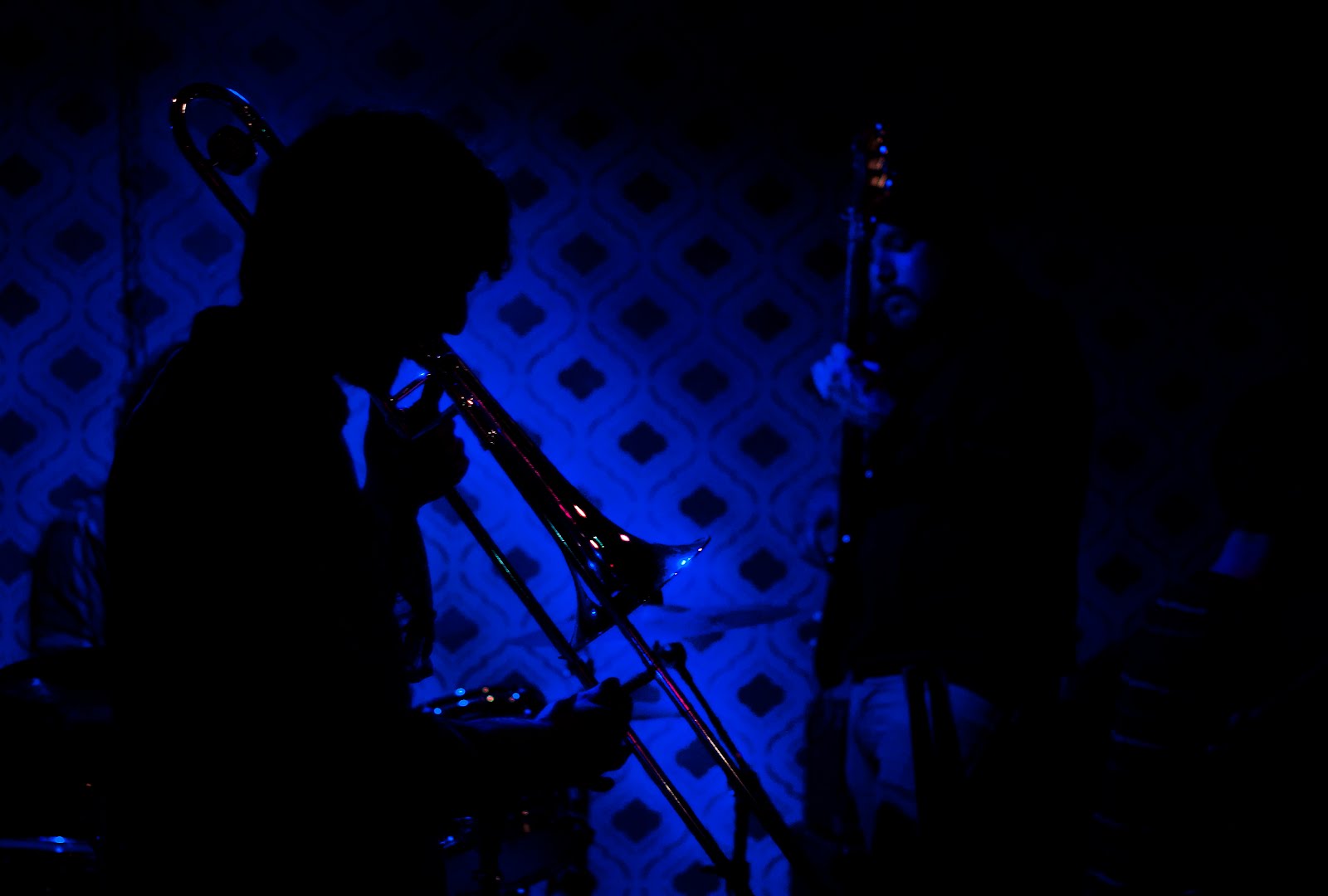
While Wilco’s Nels Cline was having his standout moment Saturday, taking his time delivering his solo for “Impossible Germany” off of 2007’s Sky Blue Sky, the other guitarists were communing at center stage, giving each other a Wilbury. At the moment, it seemed that the show – the second of two nights at Berkeley’s Greek Theatre – was dangerously close to veering into jam band territory.

Luckily, as much as Wilco gets indulgent at times – going extra long on a solo or an outro – the songs are the opposite of improvised. That the band’s live performances so closely resemble the album versions is impressive, given how structured and varied the songs are on record. Only listen to recordings, and one could assume that a lot of the music is overdubbed, until seeing the band live and discovering that on tracks like “Misunderstood,” all that percussion is purely drummer Glenn Kotche, whose bass drum seemed extra powerful Saturday night.

Seeing Wilco more than once, there are things you come to expect. “Misunderstood” will have a shout along coda of potentially endless “Nothing”s. “Via Chicago” will see the band’s alternation between harmony and noise exaggerated to an extreme, with the guitarists in the front strumming and carrying on, seemingly oblivious to a blaring interjection of distorted noise created by the rest of the band behind. It would be tiresome if it wasn’t so well done.

At the same time, new material was given deserving attention and time in the set. Singer Jeff Tweedy started soft with a tender rendition of “One Sunday Morning,” the closing track from 2011’s The Whole Love, before building the intensity with the opening track from that same album, “Art of Almost.” It was an immediate showcase of the band’s range, and the live recreation of the shifting “Art of Almost” was particularly electric, complete with the synchronized pulsing strobes accompanying the driving, snare-cracking build that happens near the five minute mark.

Maybe the band just seemed particularly tight since I was comparatively sober. And apparently not alone. “The wind must be blowing out tonight, because I don’t smell nearly as much mari-joo-wanna tonight,” Jeff Tweedy said, adding “No, that’s good for me. I’m still high from last night.”

Elsewhere in his brief mic breaks Tweedy took the time to both thank the Bay Area crowd for “inventing concerts” and also praise the always endearing Jonathan Richman, who Tweedy called one of 12 American originals, along with Little Richard, Buddy Holly, Hank Williams, Louie Armstrong, Woody Guthrie and “the dude from Night Ranger.”

Richman opened the evening with perpetually stoic drummer Tommy Larkins. Tweedy is right, and it’s always great to see Richman, but given the opportunity, catch him at a smaller venue like the Makeout Room, where he seems to leach the life force and feed off the crowd in an intimate setting. Saturday night was sadly lacking in age-defying roundhouse kicks.

Stage Listings

0

Stage listings are compiled by Guardian staff. Performance times may change; call venues to confirm. Reviewers are Robert Avila, Rita Felciano, and Nicole Gluckstern. Submit items for the listings at listings@sfbg.com. For further information on how to submit items for the listings, see Picks.

THEATER

OPENING

Foodies! The Musical Shelton Theater, 533 Sutter, SF; www.foodiesthemusical.com. $30-34. Previews Fri/28-Sat/29 and Oct 5, 8pm. Opens Oct 6, 8pm. Runs Fri-Sat, 8pm (no show Nov 17). Open-ended. AWAT Productions presents Morris Bobrow’s musical comedy revue all about food.

Roseanne: Live! Rebel, 1760 Market, SF; www.brownpapertickets.com. $25. Opens Wed/26, 7 and 9pm. Rns Wed, 7 and 9pm (no shows Oct 31). Lady Bear, Heklina, D’Arcy Drollinger, and more star in this tribute to the long-running sitcom.

Shocktoberfest 13: The Bride of Death Hypnodrome, 575 10th St, SF; www.thrillpeddlers.com. $25-35. Opens Thu/27, 8pm. Runs Thu-Sat, 8pm. Through Nov 17. Thrillpeddlers’ annual Halloween horror extravaganza features a classic Grand Guignol one-act and two world premiere one-acts, plus a blackout spook show finale.

"The Strange Case of Citizen de la Cruz" Bindlestiff Studio, 185 Sixth St, SF; www.bindlestiffstudio.org. Opens Sat/29, 8pm. Runs Thu-Sat, 8pm; Oct 7, 2pm. Through Oct 13. Bindlestiff Studio presents Luis Francia’s political thriller.

BAY AREA

Assassins Ashby Stage, 1901 Ashby, Berk; www.shotgunplayers.org. $20-30. Previews Wed/26-Thu/27 and Oct 3-4, 7pm; Fri/28-Sat/29, 8pm; Sun/30, 5pm. Opens Oct 5, 8pm. Runs Wed-Thu, 7pm; Fri-Sat, 8pm; Sun, 5pm. Through Nov 11. Shotgun Players performs the Sondheim musical about John Wilkes Booth, Lee Harvey Oswald, and other famous Presidential killers (and would-be killers).

Topdog/Underdog Marin Theatre Company, 397 Miller, Mill Valley; www.marintheatre.org. $36-57. Previews Thu/27-Sat/29, 8pm; Sun/30, 7pm. Opens Tue/2, 8pm. Runs Tue and Thu-Sat, 8pm (also Oct 6 and 20, 2pm; Oct 11, 1pm); Wed, 7:30pm; Sun, 2 and 7pm. Through Oct 21. Marin Theatre Company performs Suzan-Lori Parks’ Pulitzer Prize winner about a contentious pair of brothers.

ONGOING

Asteroids: Live! Dark Room Theater, 2263 Mission, SF; (415) 401-7987. $20. Fri/28-Sat/29, 8pm. Interstellar comedy "based very, very loosely on the arcade game."

Family Programming: An Evening of Short Comedic Plays Shelton Theater, 533 Sutter, SF; www.brownpapertickets.com. $20. Thu-Sat, 8pm. Through Oct 13. Left Coast Theatre Company performs short plays about gay and alternative families.

Fuck My Life (FML)/Homo File CounterPULSE, 1310 Mission, SF; www.counterpulse.org. $20-30. Thu/27-Sun/30, 8pm. To paraphrase Freud, sometimes a bottle of Tapatío salsa is just a bottle of Tapatío salsa. But definitely not this time. This time it’s a fornicating phallus of foodie fetishism with a Latina edge — and a Latina target, which writer-performer Xandra Ibarra (a.k.a. La Chica Boom) sets about to both embody and deconstruct, and somehow rescue. On a smart-looking bathroom set, with its loving altar to Mexican movie star Lupe Vélez (designed by Richie Israel) rising ominously and significantly over the commode, Ibarra’s sharp and raunchy political burlesque channels rage and despair, dejection and defiance, from within concentric circles of representation, both social and aesthetic. With astute direction by Evan Johnson, Fuck My Life (FML), the culmination of Ibarra’s CounterPULSE residency, unfolds some lovely set pieces and magic moments, made highly persuasive by Ibarra’s sure and formidable skill and presence as a performer. A scene in which she shovels earth into a bathtub, for instance, proves an evocative, eerily beautiful and potent image. But there’s a lot here to unpack, thematically and politically, and in truth the short arc of the show only goes so far, and in ways that remain solidly within established traditions of Latino/a performance from Culture Clash to Guillermo Gomez-Peña. The exceptional charisma of La Chica Boom herself, however, remains a force and focus in its own right, and from there it’s easy to imagine much more to come. On the bill with FML is a work-in-progress performance of Homo File, writer-designer-director Seth Eisen’s multi-media and cross-disciplinary show. It already sports a formidable narrative arc and aesthetic vision as it explores the life of Samuel Steward (1909–1993), an amazingly well, um, connected English professor, writer of homoerotic fiction, famous tattoo artist, and sexual rebel. The 30-odd minutes of material on display delivers a strong sense of this fascinating figure (played by Ned Brauer, with occasional and evocative recourse to some aerial straps), who kept elaborate record of his astounding range of sexual conquests and liaisons in what he called his "stud files," a concatenation that forms a backbone to the story of a life told from the vantage of final days. Meanwhile, Eisen and his winning cast place Steward in a mise-en-scène equally as promiscuous, ranging over dramatic scenes, aerial acrobatics, shadow puppetry, and even a hilariously lewd application of the old teacher’s standby, the overhead projector. (Avila)

Invasion! Boxcar Playhouse, 505 Natoma, SF; crowdedfire.dreamhosters.com. $20-35. Wed/26-Sat/29, 8pm. Crowded Fire mounts the West Coast premiere of Swedish-born playwright Jonas Hassen Khemiri’s postmodern dark comedy, a deconstruction of language and power in an American culture of perpetual war, which made a well-received New York debut last year. Translated from the Swedish by Rachel Willson-Broyles, and directed by Evren Odcikin, the play immediately subverts the usual multi-culti narrative of otherness and tolerance with a po-faced feint (featuring ensemble members Lawrence Radecker and Olivia Rosaldo-Pratt) that ends with a boisterous disruption of the proceedings from unexpected quarters (courtesy of ensemble members George Psarras and Wiley Naman Strasser). From there, we get a series of interrelated largely comical scenes, wherein — in shades of Martin Crimp’s Attempts on Her Life — a certain figure by the name of Abulkasem dissolves into the ultimate cipher, tied to everything from terror to pick-up lines in bars, and meaning absolutely anything and nothing. Nevertheless, in the interstices of language lurks real power — as the play implies most overly in a scene of intentional mistranslation, which twists a hapless and bemused immigrant’s tale into line with the war-on-terror mythos. In the end, the complexity the play adds does not completely dissolve that liberal narrative skewered at the outset, and its efforts remain only half-convincing. The problem may lie partly in the production’s inconsistent, often sluggish pace, as well as a tendency toward didacticism in director Odcikin’s staging. The material of this sardonic play doesn’t support too literal or even empathetic a reading, but rather seems best translated as a raucous premonition, dream, or intimation of our own guilty seduction by the sadistic, totalizing power of such stories. (Avila)

Kiss of the Spider Woman Phoenix Theatre, 414 Mason, SF; secondwind.8m.com. $15-35. Thu/27-Sat/29, 8pm. Second Wind presents Manuel Puig’s acclaimed drama about cellmates in a Buenos Aires jail.

Lorraine Olsen Is Figuratively Speaking SF Playhouse, 533 Sutter, SF; www.theatrevalentine.com. $25. Thu-27-Sat/29, 8pm. The artist model speaks in writer-performer Lorraine Olsen’s new solo show, in which the Bay Area actress recounts her experience as a longtime dues-paying member of the Bay Area Model’s Guild, founded in 1946 by model par excellence, as well as civil rights and labor activist and columnist, Flo Allen (who appears as a character and inspiration here throughout). Audience members are invited to pick up a drawing book and a pencil before taking their seats, as Olsen, her exposed back to the audience, poses pre-show on a tall stool. The narrative opens with a peep inside the thoughts of the model before the classroom (banal ruminations, perhaps unsurprisingly, from the work-a-day world of the professional muse), before moving more substantively into Olsen’s own careening career through art, family trauma, and alcoholism — not all as grim as it sounds, but charged with real emotion just the same. All the while, Olsen, a frank and sympathetic presence, moves in and out of her robe and various poses as she describes a sometimes-chaotic life in which her career as a model provides an unexpected anchor and education. The show, directed by Val Hendrickson, could use further shaping. Several possible framing devices — including one in which the audience comprises a room full of new models — compete here in a way that undermines the coherence of the piece, although the subject in general offers an undeniably interesting perspective on the artistic process. (Avila)

My Fair Lady SF Playhouse, 533 Sutter, SF; www.sfplayhouse.org. $30-70. Wed/26-Thu/27, 7pm; Fri/28-Sat/29, 8pm (also Sat/29, 3pm). SF Playhouse and artistic director Bill English (who helms) offer a swift, agreeable production of the Alan Jay Lerner and Frederick Loewe musical, based on George Bernard Shaw’s Pygmalion. The iconic class-conscious storyline revolves around a cocky linguist named Higgins (Johnny Moreno) who bets colleague Colonel Pickering (Richard Frederick) he can transform an irritable flower girl, Eliza Doolittle (Monique Hafen), into a "lady" and pass her off in high society. A battle of wills and wits ensues — interlarded with the "tragedy" of Alfred Doolittle (a shrewd and gleaming Charles Dean) and his reluctant upward fall into respectability — and love (at least in the musical version) triumphs. The songs ("Wouldn’t It Be Loverly," "I Could Have Danced All Night," "Get Me to the Church on Time," and the rest) remain evergreen in the cast’s spirited performances, supported by two offstage pianos (brought to life by David Dobrusky and musical director Greg Mason) and nimble choreography from Kimberly Richards. Hafen’s Eliza is especially admirable, projecting in dialogue and song a winning combination of childlike innocence and feminine potency. Moreno’s Higgins is also good, unusually virile yet heady too, a convincingly flawed if charming egotist. And Frederick, who adds a passing hint of homoerotic energy to his portrayal of the devoted Pickering, is gently funny and wholly sympathetic. (Avila)

The Normal Heart American Conservatory Theater, 415 Geary, SF; www.act-sf.org. $25-95. Tue, 7pm; Wed-Sun, 8pm (also Sat, 2pm); Sun, 2pm. Through Oct 7. Larry Kramer’s groundbreaking 1985 drama about the AIDS epidemic — winner of a 2011 Tony for Best Revival of a Play — has a limited run at ACT.

The Other Place Magic Theatre, Fort Mason Center, Bldg D, Third Flr, SF; www.magictheatre.org. $22-62. Tue, 7pm; Wed-Sat, 8pm (also Oct 3, 2:30pm); Sun, 2:30 (Oct 7 show at 7pm instead). Through Oct 7. Sharr White’s plot-twisty thriller has its West Coast premiere at Magic Theatre.

The Real Americans Marsh Studio Theater, 1062 Valencia, SF; www.themarsh.org. $25-50. Fri/28, 8pm; Sat/29, 8:30pm. Dan Hoyle’s hit show about his trip across America returns.

Rigoletto War Memorial Opera House, 301 Van Ness, SF; www.sfopera.com. $10-340. Sun/30, 2pm. "Fidelity is for weaklings!" Despite this rousing cry from its philandering villain, SF Opera opens its 90th season with a faithful and winsome double-cast production of Giuseppe Verdi’s immortal Rigoletto. Based on a play by Victor Hugo, the story concerns the titular court jester and hunchback (played opening night by the imposing Serbian baritone Zeljko Lucic, who alternates nights with Italian Marco Vratogna) whose attempt to revenge himself on the goatish Duke of Mantua (Sardinian tenor Francesco Demuro, alternating with Mexican tenor Arturo Chacón-Cruz) for seducing his beautiful daughter, Gilda (the thoroughly enchanting Polish soprano Aleksandra Kurzak, alternating with Russian coloratura soprano Albina Shagimuratova), backfires with tragic consequences. The production includes free simulcast presentations at AT&T Ballpark on consecutive weekends for those more inclined to recline, especially in the fresh free air, but either way the show’s a little staid but charming and the music, under SF Opera’s Nicola Luisotti, utterly transporting. (Avila)

Strange Travel Suggestions MainStage, Marsh San Francisco, 1062 Valencia, SF; www.themarsh.org. $20-50. Sat/29, 8:30pm. Author and Ethical Traveler founder Jeff Greenwald (Shopping for Buddhas, Snake Lake) has done his solo show Strange Travel Suggestions dozens if not hundreds of times and still has no idea where it’s going. No wonder he and his audience keep coming back for more. The unknown, an aphrodisiac to the traveler, also makes great catnip for the storyteller. Still, there are consistent elements. There is no need to reinvent the wheel — or the impressive Wheel of Fortune that sits just off center stage, painted with a map of the globe and ringed with symbols abstract and evocative enough to conjure up myriad adventures, peak experiences, and humbling encounters from the vivid grab-bag memory of an accomplished travel writer and inveterate globetrotter. There’s also a real grab bag, just in case, and an oversize tarot card, a sort of visual aid cum talisman sporting a classic image of the Fool, patron saint of the traveler’s heedless leaps of faith. Greenwald’s stories possess a fine sense of humor and a knack for the shrewd detail and telling observation. They also contain a Zen-inflected homespun wisdom no doubt born of leaving home on a regular basis. If slightly self-conscious at times, these tales are always genuine and appealing. In the end, Greenwald’s show, as reliable as it is unpredictable, mimics a genie-from-a-bottle experience: What you get is three spins, three stories, and a lot of unexpected truth. Note: capsule condensed from 2008 feature review of this production. (Avila)

Tripping on the Tipping Point Stagewerx, 446 Valencia, SF; (707) 322-5731. $15-20. Thu/27-Sat/29, 8pm. Human Nature performs a new comedy about global warming.

Twelfth Night San Francisco Maritime National Historic Park, Hyde Street Pier, 2905 Hyde, SF; www.weplayers.org. $30-80. Fri-Sun, 5:30pm (also Sat-Sun, noon; no performances Sun/29; evening performances only Oct 6-7). Through Oct 7. After spending the summer on Angel Island with their epic-scale production of The Odyssey, the We Players have scaled back with a lo-key rendition of Shakespeare’s Twelfth Night on Hyde Street Pier. Of course when it comes to the We Players, "scaled-back" still means a two-and-a-half hour long participatory jaunt taking place mainly along the length of the pier and aboard the historic ferryboat, the Eureka, which serves primarily as the residence of the grieving Illyrian Countess, Olivia (Clara Kamunde) around whose favors much of the plot revolves. Highlights of the experience include the opportunity to visit historic Hyde Street Pier, a gypsy-jazzy score directed by Charlie Gurke (who also plays the lovelorn Duke Orsino), and the rascally quartet of the prankish Maria (Caroline Parsons), jocular drunk Toby Belch (Dhira Rauch), clueless doofus Andrew Augecheek (Benjamin Stowe), and wise fool Feste (John Hadden). But as We Players productions go, this one feels less inspired in its staging, and much of the action merely shuffles back and forth on the Eureka without incorporating many of the intriguing nooks and views the Hyde Street Pier offers, despite a promising opening scene involving a beach and a rowboat. Also, uncharacteristically for We, the comic timing seemed to be off the evening I saw it, although both Stowe and Hadden ably conveyed their wit without a flaw. Dress warmly, carry a big flask, and you’ll be fine. (Gluckstern)

The Waiting Period MainStage, Marsh San Francisco, 1062 Valencia, SF; (415) 282-3055, www.themarsh.org. $15-50. Thu/27-Fri/28, 8pm; Sat/29, 5pm. Brian Copeland (comedian, TV and radio personality, and creator-performer of the long-running solo play Not a Genuine Black Man) returns to the Marsh with a new solo, this one based on more recent and messier events` in Copeland’s life. The play concerns an episode of severe depression in which he considered suicide, going so far as to purchase a handgun — the title coming from the legally mandatory 10-day period between purchasing and picking up the weapon, which leaves time for reflections and circumstances that ultimately prevent Copeland from pulling the trigger. A grim subject, but Copeland (with co-developer and director David Ford) ensures there’s plenty of humor as well as frank sentiment along the way. The actor peoples the opening scene in the gun store with a comically if somewhat stereotypically rugged representative of the Second Amendment, for instance, as well as an equally familiar "doood" dude at the service counter. Afterward, we follow Copeland, a just barely coping dad, home to the house recently abandoned by his wife, and through the ordinary routines that become unbearable to the clinically depressed. Copeland also recreates interviews he’s made with other survivors of suicidal depression. Telling someone about such things is vital to preventing their worst outcomes, says Copeland, and telling his own story is meant to encourage others. It’s a worthy aim but only a fitfully engaging piece, since as drama it remains thin, standing at perhaps too respectful a distance from the convoluted torment and alienation at its center. (Avila)

BAY AREA

Chinglish Berkeley Repertory Theatre, Roda Theatre, 2015 Addison, Berk; www.berkeleyrep.org. $14.50-99. Tue and Thu-Sat, 8pm (also Sat, 2pm; additional 2pm show Oct 4; no show Oct 5); Wed and Sun, 7pm (also Sun, 2pm). Through Oct 7. Tony Award-winning playwright David Henry Hwang (M. Butterfly) delivers this inconsistent but generally lively and fascinatingly au courant comedy about a down-on-his-luck American businessman (Alex Moggridge) who visits China hoping to win a contract for English-language signage. Hiring a British expat (Brian Nishii) to smooth the way for him, he enters negotiations with a local official (Larry Lei Zhang). Although things seem to be going well (across some hilarious scenes of half-assed simultaneous translation), he finds the deal running inexplicably aground, then finds unexpected help from a hard-nosed, initially hostile, and beautiful Party official (a standout Michelle Krusiec), with whom he soon begins an extramarital affair. But the American (who has a past of his own that eventually comes to light with surprising consequences) has no idea of the machinations taking place behind the formal business meetings and other confused cross-cultural encounters. What unfolds is a sometimes stretched but generally shrewd and laugh-out-loud funny assessment of has-been American delusions through the prism of rising Chinese ambitions and clout, cultural and otherwise. If the central dynamic between the lovers is not always convincing on the individual or metaphorical level, Leigh Silverman directs for Berkeley Rep a super slick production, complete with rotating sets and precisely timed entrances, featuring an enjoyable cast rounded out by Vivian Chiu, Celeste Den, and Austin Ku. (Avila)

The Elaborate Entrance of Chad Deity Aurora Theatre, 2081 Addison, Berk; (510) 843-4822, www.auroratheatre.org. $32-60. Wed/26-Sat/29, 8pm; Sun/30, 2 and 7pm. Playwright Kristoffer Diaz, a self-professed fan of the aggressively-theatrical spectacle that is professional wrestling, delivers much more than a "wrestling 101" primer for the uninitiated with The Elaborate Entrance of Chad Deity. Beneath the razzle-dazzle of the arena lighting (Kurt Landisman), the gaudy costuming (Maggie Whitaker) and the giant televised image of a hot bikini babe (Elizabeth Cadd, video by Jim Gross) lies the trampled luster of an American Dream. The dreamer, Macedonio "The Mace" Guerra (Tony Sancho), a wiry fall guy for THE Wrestling, wrestles not for money or glory (he is rarely privy to either), but for his love of the strange ballet that occurs in the ring. Guerra’s job is to make his opponents look good, including the pec-flexing, bling-booted Chad Deity (Beethovan Oden), leaving him to wrestle alone with the identity politics of being a marginalized but fully capable warrior battling perennially stacked odds. Willing suspension of disbelief does get stretched pretty thin when the character Vigneshwar Paduar, a smooth-talking hustler chance-met on the basketball courts of Brooklyn, rises to championship levels in record-breaking time as the truly cringe-worthy persona known as "The Fundamentalist," but Nasser Khan’s skillfully self-possessed performance as Paduar makes it impossible not to root for him all the way. Rod Gnapp as foul-mouthed bossman "EKO" and fight director Dave Maier as a whole squadron of hapless B-list wrestlers round out the excellent cast. (Gluckstern)

The Fisherman’s Wife La Val’s Subterranean, 1834 Euclid, Berk; www.impacttheatre.com. $10-20. Thu/27-Sat/29, 8pm. The latest from playwright Steve Yockey (Bellwether, Skin) is an exercise in pure pleasure, not least for the devious sea creatures preying lustily and unashamedly on the hapless human flesh of a small coastal town. There, in cracked fairytale fashion, an unsuccessful fisherman named Cooper Minnow (an endearingly nerdy but passionate Maro Guevara) is preparing to set out to sea, leaving at home frustrated wife Vanessa (a wonderfully, volcanically bitchy yet complex Eliza Leoni) and their sinking marriage, when he meets an oddly brazen pair of sexy, sassy bathers in old-fashioned beach attire (the swimmingly synchronized duo of Sarah Coykendall and Roy Landaverde). At more or less the same moment, a devilishly dashing yet prim traveling salesman (poised, nicely offbeat Adrian Anchondo) is offering a clearly aroused Vanessa an erotic woodcut featuring monstrous tentacles groping human victims at a very familiar-looking dock. Will she take the woodcut? Will she ever! And later she’ll defend her husband’s honor and swap places with him too, much to the commercial advantage of the ever-accommodating salesman who — like Yockey’s smart and sure sex farce — has a little something for everyone. Directed with smooth precision by Ben Randle for Berkeley’s Impact Theatre, The Fisherman’s Wife again finds Yockey playing productively with the fine fuzzy line separating human nature from nature at large (as in Large Animal Games, the winning 2009 co-production from Impact and Dad’s Garage). The animals come through for playwright and company once more, with a thoroughly enjoyable comedy whose borrowed maritime mythos has just enough metaphorical pull to lead those so inclined out beyond the shallow waters. (Avila)

Hamlet Bruns Amphitheater, 100 California Shakespeare Theater Way, Orinda; www.calshakes.org. $35-71. Tue-Thu, 7:30pm; Fri-Sat, 8pm (also Sat/29, 2pm); Sun, 4pm. Through Oct 14. California Shakespeare Theater performs a modernized version of the Bard’s classic drama.

Keith Moon/The Real Me TheaterStage at the March Berkeley, 2120 Allston, Berk; www.themarsh.org. $15-50. Thu/27, 8pm. Mike Berry workshops his new musical, featuring ten classic Who songs performed with a live band.

The Kipling Hotel: True Misadventures of the Electric Pink ’80s Marsh Berkeley, 2120 Allston, Berk; (415) 282-3055, www.themarsh.org. $20-50. Sat, 8:30pm; Sun, 7pm. Extended through Oct 14. This new autobiographical solo show by Don Reed, writer-performer of the fine and long-running East 14th, is another slice of the artist’s journey from 1970s Oakland ghetto to comedy-circuit respectability — here via a partial debate-scholarship to UCLA. The titular Los Angeles residency hotel was where Reed lived and worked for a time in the 1980s while attending university. It’s also a rich mine of memory and material for this physically protean and charismatic comic actor, who sails through two acts of often hilarious, sometimes touching vignettes loosely structured around his time on the hotel’s young wait staff, which catered to the needs of elderly patrons who might need conversation as much as breakfast. On opening night, the episodic narrative seemed to pass through several endings before settling on one whose tidy moral was delivered with too heavy a hand, but if the piece runs a little long, it’s only the last 20 minutes that noticeably meanders. And even with some awkward bumps along the way, it’s never a dull thing watching Reed work. (Avila)

A Midsummer Night’s Dream Forest Meadows Amphitheater, 890 Belle, Dominican University of California, San Rafael; www.marinshakespeare.org. $20-35. Fri/28-Sat/29, 8pm; Sun/30, 4pm. Marin Shakespeare Company performs the Bard’s classic, transported to the shores of Hawaii.

PERFORMANCE/DANCE

"Bay Area Flamenco Festival" Palace of Fine Arts, 3301 Lyon, SF; www.festivalflamencogitano.com. Thu/27 and Sun/30, 7pm; Fri/28, 8pm. $30-125. With ¡Fiesta Jerez! Flamenco All-Stars (Thu/27); José Mercé (Fri/28); and Farruco Family (Sun/30). Visit website for information on workshops and related flamenco events.

"Elect to Laugh" Studio Theater, Marsh San Francisco, 1062 Valencia, SF; (415) 282-3055, www.themarsh.org. Tue, 8pm. Through Nov 6. $15-50. Veteran political comedian Will Durst emphasizes he’s watching the news and keeping track of the presidential race "so you don’t have to." No kidding, it sounds like brutal work for anyone other than a professional comedian — for whom alone it must be Willy Wonka’s edible Eden of delicious material. Durst deserves thanks for ingesting this material and converting it into funny, but between the ingesting and out-jesting there’s the risk of turning too palatable what amounts to a deeply offensive excuse for a democratic process, as we once again hurtle and are herded toward another election-year November, with its attendant massive anticlimax and hangover already so close you can touch them. Durst knows his politics and comedy backwards and forwards, and the evolving show, which pops up at the Marsh every Tuesday in the run-up to election night, offers consistent laughs born on his breezy, infectious delivery. One just wishes there were some alternative political universe that also made itself known alongside the deft two-party sportscasting. (Avila)

Keith Hennessy/Circo Zero Yerba Buena Center for the Arts, 701 Mission, SF; www.ybca.org. Thu/27-Sat/29, 8pm. $15-25. The company performs Turbulence (a dance about the economy).

"Naked Girls Reading: Banned Books!" Stage Werx Theatre, 446 Valencia, SF; www.nakedgirlsreading.com. Tue/2, 8pm. $20. The name doesn’t lie: this is a reading series featuring naked ladies (Kristine Wilson, Ophelia Coeur de Noir, Carol Queen, and Twilight Vixen Revue performers).

"Niagara Falling" West wall of the Renoir Hotel, Seventh St at Market, SF; www.flyawayproductions.com. Wed/26-Sat/29, 8:30 and 9:30pm. Free. Flyaway Productions and Dancers’ Group/Onsite present the world premiere of choreographer Jo Kreiter and video artists David and Hi-Jin Hodge’s aerial dance, set on the outside of the Renoir Hotel.

"Picklewater Clown Cabaret Benefit for Paoli Lacy" Stage Werx Theatre, 446 Valencia, SF; picklewaterclowncabaret.bpt.me. Mon/1, 7 and 9pm. $15. Circus extravaganza to help performer and cancer patient Paoli Lacy with her medical bills.

Sandy Perez y Su Lade Dance Mission Theater, 3316 24th St, SF; www.brownpapertickets.com. Sat/29, 8pm. $20. Afro-Cuban music and dance.

"Squeeze Box" Marsh San Francisco, MainStage, 1062 Valencia, SF; www.themarsh.org. Sun/30, 5pm. $50-500. Benefit performance of Ann Randolph’s solo Off-Broadway hit.

"Theatecture on UN Plaza" Civic Center, UN Plaza, Seventh St at Market, SF; www.ftloose.org. Tue, noon-2pm. Through Oct 16. Free. Outdoor performance of Mary Alice Fry’s Honeycomb Zone as part of the "24 Days of Central Market Arts Festival."

"Tiara Sensation Pageant" Rickshaw Stop, 155 Fell, SF; www.rickshawstop.com. Sat/29, 9pm. $20. The Club Something Team (Vivvyanne Forevermore, Glamamore, and DJ Down-e) present "SF’s only non-gender-specific drag performance."

Zhukov Dance Theatre Z Space, 450 Florida, SF; www.zhukovdance.org. Thu/27-Sat/29, 8pm. $30-50. The company performs its fifth annual season, "Product 05," with a preogram that includes the world premiere of Yuri Zhukov’s Coin/C/Dance.

BAY AREA

"Access to Oddities" Central Stage, 5221 Central Ave. A-1, Richmond; www.brianscottproductions.com. Sat/29, 2 and 7:30pm. $12-20. Magic and comedy show presented in a family-friendly matinee and a later show not recommended for children under 8.

"Bay Area Flamenco Festival" Yoshi’s Oakland, 510 Embarcadero West, Jack London Square, Oakl; www.festivalflamencogitano.com. Wed/26, 8pm. $30. Gypsy flamenco guitar with Diego Del Morao.

"Empower: Master of the Three Rings" Chabot College Theater, 25555 Hesperian, Hayward; www.soulciety.org. Sat/29, 1 and 6pm. $20. Also Oct 27, 6pm, Herbst Theater, 401 Van Ness, SF. Soulciety performs a theatrical production that combines spoken word, urban acrobatics, and more.

"Fall Free for All" Various locations, UC Berkeley, Berk; www.calperformances.org. Sun/30, 11am. Free. Cal Performances’ annual free open house features performances across campus from Kronos Quartet, Shogun Players, Gamelan Sekar Jaya, and many more.

"Flamenco Passion!" Bankhead Theater, 2400 First St, Livermore; ww.mylvpac.com. Fri/28, 8pm. $15-48. Caminos Flamencos Dance Company performs.

Rhinocéros Zellerbach Hall, Bancroft at Telegraph, UC Berkeley, Berk; www.calperformances.org. Thu/27-Fri/28, 8pm; Sat/29, 2pm. $30-90. Théâtre de la Ville of Paris performs Ionesco’s absurdist masterpiece.

Film Listings

0

OPENING

“Aerobicide Sunday: A Marathon of Murder in Tights” Two things that made the 1980s taste great, slasher movies and aerobic exercise, were each too crassly, promiscuously commercial not to hook up a few times — even if the sub-sub-genre they created together is even less well remembered than the Lambada musical. Sun/30, however, it shall reign as king at the Vortex, where a triple bill of exer-psycho obscurities will really make you feel the burn. First up is 1987’s Aerobicide a.k.a. Killer Workout, in which the fitness emporium owned by Rhonda (Marcia Karrof of 1984’s Savage Streets) — as sour a grape as you’ll find in pastel spandex and pouf-shouldered Valley Girl dresses — experiences a rash of hard bodies being reduced to bloody pulp by an unknown killer wielding a large killer safety pin. Totally gross! We get many close-ups of overexposed thighs and over assisted cleavage gyrating to heinous dance tracks with inexplicable lyrics like “Hey baby! I’ve got your number! Red and juicy, warm and sweet” — plus some feathered-hair beefcake too — before the culprit turns out to be exactly who you think it is. This was but an early effort among 32 features to date by writer-director David A. Prior, and based on the evidence present there’s a reason why you’ve never heard of any of them. Slightly slicker was 1990’s Death Spa (a.k.a. Witch Bitch), in which a computer automated gym goes all HAL-slash-The Shining, to the mortal danger of its highly toned staff and clientele. We’re talking death by blender, sauna paneling, and reanimated frozen fish products. The facility’s bitchy programmer is played by Merrick Butrick, who’d portrayed Captain Kirk’s son and a Square Peg earlier in the decade, and died of AIDS before this movie was released. Directed by Austrian Michael Fischa, it’s comparatively glossy but definitely senseless nonsense with a Eurotrash-genre feel. Lastly, in the same vein, and even slicker, there’s 1984’s Murder Rock: Dancing Death a.k.a. Giallo a Disco a.k.a. Slashdance (one of, incredibly, no less than three movies with that third name), a lesser exercise by that occasionally great horror director Lucio Fulci. Rather than a health club, the setting here is a dance school where choreography seems less indebted to Balanchine and Martha Graham than Jane Fonda and Shabba Doo. For that crime the punishment is, of course … death by hatpin? Whatever. If you survive this evening, you will be sore, winded, and desperate to sweat the toxins out of your system. Vortex Room. (Harvey)

Backwards Athletic disappointment is not a new feeling for Abi (Sarah Megan Thomas, who also wrote the script), who has just learned she’s been named the alternate for the Olympic crew team — a bench warming role she was also relegated to in the last Olympics. But after she quits the team in a huff and moves home, it’s not long before she realizes that her life off the water is pretty depressing, too. Enter former boyfriend Geoff (James Van Der Beek), now the athletic director at the high school where Abi honed her rowing talents, who gives her a job coaching the talented but undisciplined girls who make up the current team. Will this new venture help Abi finally grow up and regain her self-confidence? Will she re-ignite her spark with Geoff? Will there be a last-act conflict involving yet another chance at the Olympics? Will there be multiple training montages? As directed by Ben Hickernell, Backwards hits all of the expected themes about following one’s heart and Doing the Right Thing. Thomas, a former rower herself, has an ordinary-girl appeal, but even Backwards’ attention to authenticity can’t elevate what’s essentially a very predictable sports drama. (1:29) Sundance Kabuki. (Eddy)

Detropia See “We Were Here.” (1:30) Elmwood, Roxie, Smith Rafael.

Diana Vreeland: The Eye Has to Travel See “Chronic Youth.” (1:26) Embarcadero.

Hotel Transylvania Genndy Tartakovsky (TV’s Star Wars: The Clone Wars) directs this 3D animated comedy about a resort run by Dracula (voiced by Adam Sandler) for Frankenstein (Kevin James) and other monsters. (1:32) Shattuck.


Liberal Arts See “Chronic Youth.” (1:37) Bridge, Shattuck.

Looper Writer-director Rian Johnson reunites with Brick (2005) star Joseph Gordon-Levitt for this sci-fi thriller about time-traveling assassins. (1:58) Four Star, Piedmont, Presidio.

The Perks of Being a Wallflower Stephen Chbosky wrote and directed this adaptation of his best-selling YA novel, about a high-school misfit (Logan Lerman) comes out of his shell when he befriends a brother-sister duo (Ezra Miller, Emma Watson). (1:43) California, Embarcadero.

Peter Ford: A Little Prince See “Chronic Youth.” (:40) Delancey Street.

Pitch Perfect Anna Kendrick stars in this musical comedy set within the cutthroat world of competitive college a capella groups. (1:52)

Solomon Kane Conceived by Conan the Barbarian creator Robert E. Howard, this 16th-century hero is cut from the same sword-and-sorcery cloth, being a brawny brute of slippery but generally sorta-kinda upright morals. Solomon (James Purefoy) is slaughtering his way to a North African treasure trove when demons swallow up his likewise greedy, conscience-free cohorts and damn his soul for a lifetime of bad deeds. Suddenly committed to the greater good, he returns homeward to cold gray England, where Jason Flemyng’s evil sorcerer soon imperils both our protagonist and the Puritan family (complete with love interest) he’s befriended. This movie has been around a while — since 2009, to be exact, yet barely beating director Michael J. Bassett’s new Silent Hill: Revelation 3D to U.S. theaters — and is a good illustration of what can happen when you make a fairly expensive ($45 million) fantasy-action adventure without major stars nor any marketable novelty. Which is to say: not much. There is absolutely nothing wrong with the good-looking, watchable but generic-feeling Solomon Kane, save that nothing about it feels remotely original or inspired. It’s the perfectly okay, like-a-thousand-others mall flick you’ll forget you saw by Thanksgiving, despite being peopled with such normally interesting actors as Max Von Sydow, Alice Krige, and the late Pete Postlethwaite. (1:54) (Harvey)

“Stars In Shorts” Outside of the festival circuit, it’s an uncommon feat for shorts to make it to the big screen, so it can’t hurt to make name recognition a prerequisite for selection. In writer-director Rupert Friend’s Steve, Keira Knightley plays an embattled Londoner under siege by her lonely, pathologically odd neighbor (Colin Firth). Written by Neil LaBute, Jacob Chase’s After School Special sets up a semi-flirtation between two strangers (Sarah Paulson and Wes Bentley) at a playground, only to deliver the kind of gut-level punch you might expect from the writer-director of 1998’s Your Friends and Neighbors. LaBute’s own Sexting is an entertaining exercise in stream-of-consciousness monologuing by Julia Stiles. As with most shorts programs, “Stars” is a mixed bag. Robert Festinger’s The Procession, in which Lily Tomlin and Modern Family‘s Jesse Tyler Ferguson play reluctant participants in a funeral procession, sounds promising, but the conversation palls during the 10-plus minutes we’re stuck in the car with them. Benjamin Grayson’s sci-fi thriller Prodigal, starring Kenneth Branagh, reaches its predictable crisis points several minutes after the viewer has arrived. More successful are Jay Kamen’s musical comedy Not Your Time, starring Seinfeld‘s Jason Alexander as an old Hollywood hand whose writing career has stalled out, and Chris Foggin’s Friend Request Pending, which treats viewers to the sight of Dame Judi Dench gamely wading into the social network in search of a date. (1:53) Opera Plaza, Shattuck. (Rapoport)

Vulgaria Raunchy HK import about a film producer who convinces a gangster to finance his porn epic. (1:32) Metreon.

Won’t Back Down Determined mothers (Maggie Gyllenhaal, Viola Davis) become education activists in this based-on-true-events drama. (2:00)

ONGOING

Arbitrage As Arbitrage opens, its slick protagonist, Robert Miller (Richard Gere), is trying to close the sale of his life, on his 60th birthday: the purchase of his company by a banking goliath. The trick is completing the deal before his fraud, involving hundreds of millions of dollars, is uncovered, though the whip-smart daughter who works for him (Brit Marling) might soon be onto him. Meanwhile, Miller’s gaming his personal affairs as well, juggling time between a model wife (Susan Sarandon) and a Gallic gallerist mistress (Laetitia Casta), when sudden-death circumstances threaten to destroy everything, and the power broker’s livelihood — and very existence — ends up in the hands of a young man (Nate Parker) with ambitions of his own. It’s a realm that filmmaker Nicholas Jarecki is all too familiar with. Though like brothers Andrew (2003’s Capturing the Friedmans) and Eugene (2005’s Why We Fight), Jarecki’s first love is documentaries (his first film, 2006’s The Outsider, covered auteur James Toback), his family is steeped in the business world. Both his parents were commodities traders, and Jarecki once owned his own web development firm and internet access provider, among other ventures. When he started writing Arbitrage‘s script in 2008, he drew some inspiration from Bernard Madoff — but ultimately, the film is about a good man who became corrupted along the way, to the point of believing in his own invincibility. (1:40) Metreon, Presidio, Smith Rafael, Shattuck, Sundance Kabuki. (Chun)

Beasts of the Southern Wild Six months after winning the Grand Jury Prize at Sundance (and a Cannes Camera d’Or), Beasts of the Southern Wild proves capable of enduring a second or third viewing with its originality and strangeness fully intact. Magical realism is a primarily literary device that isn’t attempted very often in U.S. cinema, and succeeds very rarely. But this intersection between Faulkner and fairy tale, a fable about — improbably — Hurricane Katrina, is mysterious and unruly and enchanting. Benh Zeitlin’s film is wildly cinematic from the outset, as voiceover narration from six-year-old Hushpuppy (Quvenzhané Wallis) offers simple commentary on her rather fantastical life. She abides in the Bathtub, an imaginary chunk of bayou country south of New Orleans whose residents live closer to nature, amid the detritus of civilization. Seemingly everything is some alchemical combination of scrap heap, flesh, and soil. But not all is well: when “the storm” floods the land, the holdouts are forced at federal gunpoint to evacuate. With its elements of magic, mythological exodus, and evolutionary biology, Beasts goes way out on a conceptual limb; you could argue it achieves many (if not more) of the same goals Terrence Malick’s 2011 The Tree of Life did at a fraction of that film’s cost and length. (1:31) Shattuck, Smith Rafael. (Harvey)

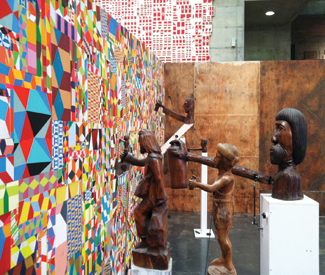
Beauty is Embarrassing You may not recognize the name Wayne White offhand, but you will know his work: he designed and operated many of the puppets on Pee-Wee’s Playhouse, including Randy (the blockheaded bully) and Dirty Dog (the canine jazzbo). Neil Berkeley’s Beauty Is Embarrassing — named for a mural White painted on the side of a Miami building for Art Basel 2009 — charts the life of an artist whose motto is both “I want to try everything I can!” and “Fuck you!” The Southern-born oddball, who came of age in the early-1980s East Village scene, is currently styling himself as a visual artist (his métier: painting non-sequitur phrases into landscapes bought from thrift stores), but Beauty offers a complex portrait of creativity balanced between the need to be subversive and the desire to entertain. (1:27) Roxie. (Eddy)

The Bourne Legacy Settle down, Matt Damon fans — the original Bourne appears in The Bourne Legacy only in dialogue (“Jason Bourne is in New York!”) and photograph form. Stepping in as lead badass is Jeremy Renner, whose twin powers of strength and intelligence come courtesy of an experimental-drug program overseen by sinister government types (including Edward Norton in an utterly generic role) and administered by lab workers doing it “for the science!,” according to Dr. Rachel Weisz. Legacy‘s timeline roughly matches up with the last Damon film, The Bourne Ultimatum, which came out five years ago and is referenced here like we’re supposed to be on a first-name basis with its long-forgotten plot twists. Anyway, thanks to ol’ Jason and a few other factors involving Albert Finney and YouTube, the drug program is shut down, and all guinea-pig agents and high-security-clearance doctors are offed. Except guess which two, who manage to flee across the globe to get more WMDs for Renner’s DNA. Essentially one long chase scene, The Bourne Legacy spends way too much of its time either in Norton’s “crisis suite,” watching characters bark orders and stare at computer screens, or trying to explain the genetic tinkering that’s made Renner a super-duper-superspy. Remember when Damon killed that guy with a rolled-up magazine in 2004’s The Bourne Supremacy? Absolutely nothing so rad in this imagination-free enterprise. (2:15) 1000 Van Ness, SF Center. (Eddy)

The Campaign (1:25) 1000 Van Ness, SF Center.

Celeste and Jesse Forever Married your best friend, realized you love but can’t be in love with each other, and don’t want to let all those great in-jokes wither away? Such is the premise of Celeste and Jesse Forever, the latest in what a recent wave of meaty, girl-centric comedies penned by actresses — here Rashida Jones working with real-life ex Will McCormack; there, Zoe Kazan (Ruby Sparks), Zoe Lister Jones (Lola Versus), and Lena Dunham (Girls) — who have gone the DIY route and whipped up their own juicy roles. There’s no mistaking theirs for your average big-screen rom-com: they dare to wallow harder, skew smarter, and in the case of Celeste, tackle the thorny, tough-to-resolve relationship dilemma that stubbornly refuses to conform to your copy-and-paste story arc. Nor do their female protagonists come off as uniformly likable: in this case, Celeste (Jones) is a bit of an aspiring LA powerbitch. Her Achilles heel is artist Jesse (Andy Samberg), the slacker high school sweetheart she wed and separated from because he doesn’t share her goals (e.g., he doesn’t have a car or a job). Yet the two continue to spend all their waking hours together and share an undeniable rapport, extending from Jesse’s encampment in her backyard apartment to their jokey simulated coitus featuring phallic-shaped lip balm. Throwing a wrench in the works: the fact that they’re still kind of in love with each other, which all their pals, like Jesse’s pot-dealer bud Skillz (McCormack), can clearly see. It’s an shaggy, everyday breakup yarn, writ glamorous by its appealing leads, that we too rarely witness, and barring the at-times nausea-inducing shaky-cam under the direction of Lee Toland Krieger, it’s rendered compelling and at times very funny — there’s no neat and tidy way to say good-bye, and Jones and McCormack do their best to capture but not encapsulate the severance and inevitable healing process. It also helps that the chemistry practically vibrates between the boyish if somewhat one-note Samberg and the soulful Jones, who fully, intelligently rises to the occasion, bringing on the heartbreak. (1:31) Shattuck, Sundance Kabuki. (Chun)

The Dark Knight Rises Early reviews that called out The Dark Knight Rises‘ flaws were greeted with the kind of vicious rage that only anonymous internet commentators can dish out. And maybe this is yet another critic-proof movie, albeit not one based on a best-selling YA book series. Of course, it is based on a comic book, though Christopher Nolan’s sophisticated filmmaking and Christian Bale’s tortured lead performance tend to make that easy to forget. In this third and “final” installment in Nolan’s trilogy, Bruce Wayne has gone into seclusion, skulking around his mansion and bemoaning his broken body and shattered reputation. He’s lured back into the Batcave after a series of unfortunate events, during which The Dark Knight Rises takes some jabs at contemporary class warfare (with problematic mixed results), introduces a villain with pecs of steel and an at-times distractingly muffled voice (Tom Hardy), and unveils a potentially dangerous device that produces sustainable energy (paging Tony Stark). Make no mistake: this is an exciting, appropriately moody conclusion to a superior superhero series, with some nice turns by supporting players Gary Oldman and Joseph Gordon-Levitt. But in trying to cram in so many characters and plot threads and themes (so many prisons in this thing, literal and figural), The Dark Knight Rises is ultimately done in by its sprawl. Without a focal point — like Heath Ledger’s menacing, iconic Joker in 2008’s The Dark Knight — the stakes aren’t as high, and the end result feels more like a superior summer blockbuster than one for the ages. (2:44) Metreon. (Eddy)

Dredd 3D Cartoonishly, gleefully gruesome violence abounds in Dredd 3D, a pretty enjoyable comic-book adaptation thanks to star Karl Urban’s deadpan zingers. This is not a remake of the 1995 Sly Stallone flop Judge Dredd, by the way, though it might as well be a remake of 2011 Indonesian import The Raid: Redemption. The stories are identical. Like, lawsuit material-identical: supercop infiltrates (and then becomes trapped in, and must battle his way out of) a high-rise apartment tower run by a ruthless crime boss. Key difference is that Dredd has futuristic weapons, and The Raid had badass martial arts. Also Dredd‘s villain is played by Lena “Cersei Lannister” Headey, so there’s that. (1:38) Metreon, 1000 Van Ness. (Eddy)

End of Watch Buddy cop movies tend to go one of two ways: the action-comedy route (see: the Rush Hour series) or the action-drama route. End of Watch is firmly in the latter camp, despite some witty shit-talking between partners Taylor (a chrome-domed Jake Gyllenhaal) and Zavala (Michael Peña from 2004’s Crash) as they patrol the mean streets of Los Angeles. Writer-director David Ayer, who wrote 2001’s Training Day, aims for authenticity by piecing together much of (but, incongruously, not all of) the story through dashboard cameras, surveillance footage, and Officer Taylor’s own ever-present camera, which he claims to be carrying for a school project, though we never once see him attending classes or mentioning school otherwise. Gyllenhaal and Peña have an appealing rapport, but End of Watch‘s adrenaline-seeking plot stretches credulity at times, with the duo stumbling across the same group of gangsters multiple times in a city of three million people. Natalie Martinez and Anna Kendrick do what they can in underwritten cop-wife roles, but End of Watch is ultimately too familiar (but not lawsuit-material familiar) to leave any lasting impression. Case in point: in the year 2012, do we really need yet another love scene set to Mazzy Star’s “Fade Into You”? (1:49) Marina, 1000 Van Ness, SF Center. (Eddy)

The Expendables 2 (1:43) Metreon.

Finding Nemo 3D (1:40) 1000 Van Ness, SF Center, Shattuck, Sundance Kabuki.

For a Good Time, Call&ldots; Suffering the modern-day dilemmas of elapsed rent control and boyfriend douchebaggery, sworn enemies Katie (Ari Graynor) and Lauren (Lauren Miller) find themselves shacking up in Katie’s highly covetable Manhattan apartment, brought together on a stale cloud of resentment by mutual bestie Jesse (Justin Long, gamely delivering a believable version of your standard-issue young hipster NYC gay boy). The domestic glacier begins to melt somewhere around the time that Lauren discovers Katie is working a phone-sex hotline from her bedroom; equipped with a good head for business, she offers to help her go freelance for a cut of the proceeds. Major profitability ensues, as does a friendship evoking the pair bonding at the center of your garden-variety romantic comedy, as Katie trains Lauren to be a phone-sex operator and the two share everything from pinkie swears and matching pink touch-tone phones to intimate secrets and the occasional hotline threesome. Directed by Jamie Travis and adapted from a screenplay by Miller and Katie Anne Naylon, the film is a welcome response to the bromance genre, and with any luck it may also introduce linguistic felicities like “phone-banging” and “let’s get this fuckshow started” into the larger culture. The raunchy telephonic interludes include cameos by Kevin Smith and Seth Rogen (Miller’s husband) as customers calling from such unfurtive locations as a public bathroom stall and the front seat of a taxicab. But the two roomies supply plenty of dirty as Katie, an abashed wearer of velour and denim pantsuits, helps the more restrained Lauren discover the joys of setting free her inner potty mouth. (1:25) SF Center. (Rapoport)

Hello I Must Be Going Blindsided by her recent divorce, 35-year-old Amy (Melanie Lynskey) flees New York City for quaint Westport, Conn., where she nurses her wounds, mostly by sleeping and watching Marx Brothers movies. Amy’s protracted moping rankles her perfectionist mother (Blythe Danner, bringing nuance to what could have been a clichéd character) and concerns her workaholic father (John Rubenstein). Dad’s trying to land a big client so he can “make back some of the money we lost in the market” — a subtle aside in Sarah Koskoff’s script that suggests Amy’s parents aren’t as well-heeled as they used to be, despite the ongoing renovations to their swanky home, catered dinners, and expensive art purchases. Money woes are just one of Amy’s many concerns, though, and when a distraction presents itself in the form of 19-year-old Jeremy (Girls’ Christopher Abbott), she finds herself sneaking out at night, making out in her mom’s car, smoking weed, and basically behaving like a teenager herself. As directed by indie actor turned director Todd Louiso (2002’s Love Liza), Hello I Must Be Going is a nicely contained, relatable (self-loathing: we’ve all been there) character study — and props for casting the endearing Lynskey, so often seen in supporting roles, as the film’s messy, complex lead. (1:35) SF Center. (Eddy)

House At the End of the Street Tight T-shirts, a creepy cul-de-sac, couples in cars on lonely lanes, and the cute but weird loner kid — all the stuff of classic drive-in horror fare, revisited in this ambitious tribute of sorts. Don’t mistake House at the End of the Street for genre-reviving efforts by super fans like Eli Roth and Rob Zombie; Mark Tonderai’s mash up of Psycho (1960) and Last House on the Left (1972) lacks the rock ‘n’ roll brio and jet-black humor of, say, Cabin Fever (2002) or The Devil’s Rejects (2005). Instead House reads like an earnest effort to add a thin veneer of psychological realism and even girl power sincerity to a blood-spattered back catalog. Teenage musician Elissa (Jennifer Lawrence) and her overwhelmed mom Sarah (Elisabeth Shue) have found themselves quite a deal of a new rental home — a bit too good, since their next door neighbors were both brutally killed by their brain-damaged offspring who was obviously afflicted with the same greasy hair issues as the ghoulish gal in The Ring. Ryan (Bay Area native Max Thieriot), the boy who continues to live in the house where his parents were murdered, is ostracized, attractive, and much like his home, a fixer — making him mighty attractive to Elissa. A hearty, artistic soul who likes to venture where others fear to tread, she’s drawn to him despite the fact that she feels like she’s being watched from the woods that separate their homes. Switching back and forth between various perspectives — like that of a sputtering, spasmodically edited psychopath-cam and the steady, thoughtful gaze of a rebellious yet empathetic girl — House manages to effectively throw a few curveballs your way, while toying with genre conventions and upsetting your expectations. Shoring up its efforts is a talented cast, headed up by Lawrence’s feisty heroine and Shue’s sad-eyed struggling mom. (1:43) Metreon, 1000 Van Ness. (Chun)

How to Survive a Plague David France’s documentary chronicles the unprecedented impact political activism had on the course of AIDS in the U.S. — drastically curtailing its death toll within a few years despite considerable institutional indifference and downright hostility. As the epidemic here first surfaced in, and decimated, the gay male community, much of Reagan America (particularly in religious quarters) figured the death sentence was deserved. The President himself infamously refrained from even saying the word “AIDS” publicly until his final year of office, after thousands had died. Both terrified and outraged, the gay community took it upon themselves to demand treatment, education, and research. Most of this urgent 1980s overview is concerned with the rise of ACT-UP, whose angry young men successfully lobbied and shamed corporate, academic, medical, and pharmaceutical bodies into action, with the result that by the mid-90s new drugs existed that made this dreaded diagnosis no longer a necessarily terminal one. France is a journalist who’s been covering AIDS practically since day one, and his first feature (made with the help of numerous first-rate collaborators) is authoritative and engrossing. Just don’t expect much (or really any) attention paid to the contributions made by S.F. or other activist hotspots — like many a gay documentary, this one hardly notices there’s a world (or gay community) outside Manhattan. (1:49) Opera Plaza. (Harvey)

Lawless Lawless has got to be the most pretentiously humorless movie ever made about moonshiners — a criminal subset whose adventures onscreen have almost always been rambunctious and breezy, even when violent. Not here, bub. Adapting Matt Bondurant’s fact-inspired novel The Wettest County in the World about his family’s very colorful times a couple generations back, director John Hillcoat and scenarist (as well as, natch, composer) Nick Cave have made one of those films in which the characters are presented to you as if already immortalized on Mount Rushmore — monumental, legendary, a bit stony. They’ve got a crackling story about war between hillbilly booze suppliers and corrupt lawmen during Prohibition, and while the results aren’t dull (they’re too bloody for that, anyway), they’d be a whole lot better if the entire enterprise didn’t take itself so gosh darned seriously. The Bondurant brothers of Franklin County, Va. are considered “legends” when we meet them in 1931, having defied all and sundry as well as survived a few bullets: mack-truck-built Forrest (Tom Hardy); eldest Howard (Jason Clarke), who tipples and smiles a lot; and “runt of the litter” Jack (Shia LeBeouf), who has a chip on his shoulder. The local law looks the other way so long as their palms are greased, but the Feds send sneering Special Deputy Charlie Rakes (Guy Pearce), it’s an eye for an eye for an eye, etc. The revenge-laden action in Lawless is engaging, but the filmmakers are trying so hard to make it all resonant and folkloric and meta-cinematic, any fun you have is in spite of their efforts. (1:55) 1000 Van Ness, SF Center. (Harvey)

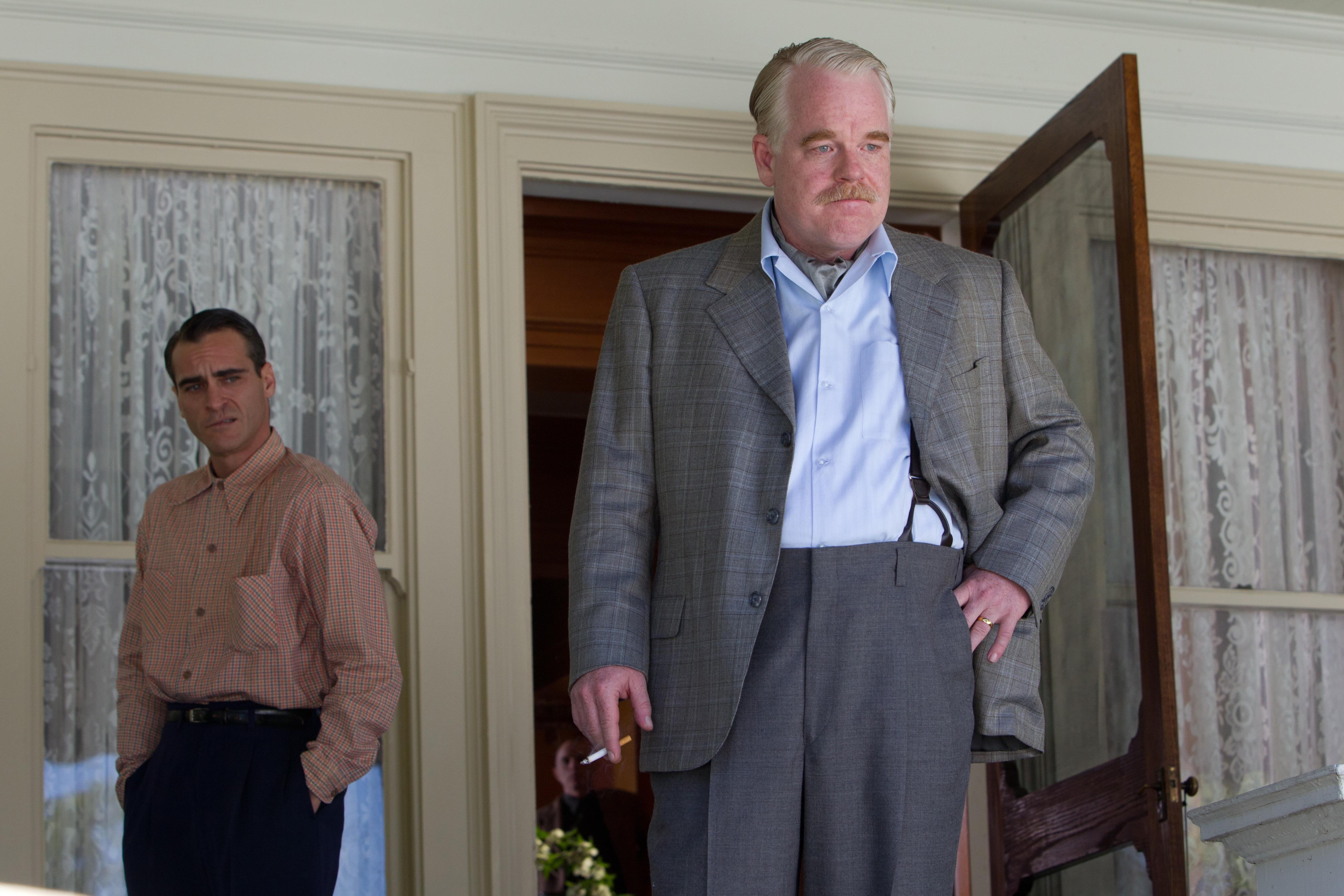
The Master Paul Thomas Anderson’s much-hyped likely Best Picture contender lives up: it’s easily the best film of 2012 so far. Philip Seymour Hoffman stars as Lancaster Dodd, the L. Ron Hubbard-ish head of a Scientology-esque movement. “The Cause” attracts Freddie Quell (Joaquin Phoenix, in a welcome return from the faux-deep end), less for its pseudo-religious psychobabble and bizarre personal-growth exercises, and more because it supplies the aimless, alcoholic veteran — a drifter in every sense of the word — with a sense of community he yearns for, yet resists submitting to. As with There Will Be Blood (2007), Anderson focuses on the tension between the two main characters: an older, established figure and his upstart challenger. But there’s less cut-and-dried antagonism here; while their relationship is complex, and it does lead to dark, troubled places, there are also moments of levity and weird hilarity — which might have something to do with Freddie’s paint-thinner moonshine. (2:17) Albany, Balboa, Embarcadero, 1000 Van Ness, Presidio, Sundance Kabuki. (Eddy)

Moonrise Kingdom Does Wes Anderson’s new film mark a live-action return to form after 2007’s disappointingly wan Darjeeling Limited? More or less. Does it tick all the Andersonian style and content boxes? Indubitably. In the most obvious deviation Anderson has taken with Moonrise, he gives us his first period piece, a romance set in 1965 on a fictional island off the New England coast. After a chance encounter at a church play, pre-teen Khaki Scout Sam (newcomer Jared Gilman) instantly falls for the raven-suited, sable-haired Suzy Bishop (Kara Hayward, ditto). The two become pen pals, and quickly bond over the shared misery of being misunderstood by both authority figures and fellow kids. The bespectacled Sam is an orphan, ostracized by his foster parents and scout troop (much to the dismay of its straight-arrow leader Edward Norton). Suzy despises her clueless attorney parents, played with gusto by Bill Murray and Frances McDormand in some of the film’s funniest and best scenes. When the two kids run off together, the whole thing begins to resemble a kind of tween version of Godard’s 1965 lovers-on the-lam fantasia Pierrot le Fou. But like most of Anderson’s stuff, it has a gauzy sentimentality more akin to Truffaut than Godard. Imagine if the sequence in 2001’s The Royal Tenenbaums where Margot and Richie run away to the Museum of Natural History had been given the feature treatment: it’s a simple yet inspired idea, and it becomes a charming little tale of the perils of growing up and selling out the fantasy. But it doesn’t feel remotely risky. It’s simply too damn tame. (1:37) Shattuck, Sundance Kabuki. (Michelle Devereaux)

ParaNorman (1:32) Metreon, 1000 Van Ness.

The Possession (1:31) Metreon.

Premium Rush “Fixed gear. Steel frame. No brakes. Can’t stop … don’t want to.” Thus goes the gear breakdown and personal philosophy of New York City bike messenger Wilee (Joseph Gordon-Levitt), an aggro rider who uses his law school-refined brain to make split-second decisions regarding which way to dart through Midtown traffic. Though bike messengers had a pop culture moment in the 1990s, Premium Rush is set in the present day, with one of Wilee’s numerous voice-overs explaining the job’s continued importance even in the digital era. One such example: a certain envelope he’s tasked with ferrying across the city, given to him by the troubled roommate (Jamie Chung) of the pretty fellow messenger (Dania Ramirez) he’s romantically pursuing. The contents of the envelope, and the teeth-gnashingly evil-cop-with-a-gambling-problem (Michael Shannon, adding some weird flair to what’s essentially a stock villain) who would dearly love to get his mitts on it, are less crucial to Premium Rush than the film’s many, many chase scenes featuring Wilee outwitting all comers with his two-wheeled Frogger moves. Silly fun from director David Koepp (2008’s Ghost Town), but not essential unless you’re a fixie fanatic or a JGL completist. (1:31) Metreon, 1000 Van Ness. (Eddy)

Resident Evil: Retribution (1:35) Metreon, 1000 Van Ness.

Robot and Frank Imagine the all-too-placid deadpan of Hal from 2001: A Space Odyssey (1968) coming out of a home-healthcare worker, and you get just part of the appeal of this very likable comedy debut with a nonrobotic pulse directed by Jake Schreier. Sometime in the indeterminate near future, former jewel thief and second-story man Frank (Frank Langella) can be found quietly deteriorating in his isolated home, increasingly forgettable and unable to care for himself and assemble a decent bowl of Cap’n Crunch (though he can still steal fancy soaps from the village boutique). In an effort to cover his own busy rear, Frank’s distracted son (James Marsden) buys him a highly efficient robotic stand-in (voiced by Peter Sarsgaard), much to his father’s grim resistance (“That thing is going to murder me in my sleep”) and the dismay of crunchy sibling Madison (Liv Tyler). The robot, however, is smarter than it looks, as it bargains with Frank to eat better, get healthier, and generally reanimate: it’s willing to learn to pick locks, participate in a robbery, and even plan a jewel heist, provided, say, Frank agrees to a low-sodium diet. Frank flourishes, like the garden the robot nurtures in a vain attempt to interest his human charge, and even goes on a date with his librarian crush (Susan Sarandon), though can the self-indulgent idyll last forever? A tale about aging as much as it is about rediscovery, Robot tells an old story, but one that’s wise beyond its years and willing to dress itself up in some of the smooth, sleek surfaces of an iGeneration. (1:30) Piedmont, Shattuck, Sundance Kabuki. (Chun)

Samsara Samsara is the latest sumptuous, wordless offering from director Ron Fricke, who helped develop this style of dialogue- and context-free travelogue with Koyaanisqatsi (1982) and Baraka (1992). Spanning five years and shooting on 70mm film to capture glimmers of life in 25 countries on five continents, Samsara, which spins off the Sanskrit word for the “ever-turning wheel of life,” is nothing if not good-looking, aspiring to be a kind of visual symphony boosted by music by the Dead Can Dance’s Lisa Gerrard and composers Michael Stearns and Marcello De Francisci. Images of natural beauty, baptisms, and an African woman and her babe give way to the madness of modern civilization — from jam-packed subways to the horrors of mechanized factory farming to a bizarre montage of go-go dancers, sex dolls, trash, toxic discarded technology, guns, and at least one gun-shaped coffin. After such dread, the opening and closing scenes of Buddhist spirituality seem almost like afterthoughts. The unmistakable overriding message is: humanity, you dazzle in all your glorious and inglorious dimensions — even at your most inhumane. Sullying this hand wringing, selective meditation is Fricke’s reliance on easy stereotypes: the predictable connections the filmmaker makes between Africa and an innocent, earthy naturalism, and Asia and a vaguely threatening, mechanistic efficiency, come off as facile and naive, while his sonic overlay of robot sounds over, for instance, an Asian woman blinking her eyes comes off as simply offensive. At such points, Fricke’s global leap-frogging begins to eclipse the beauty of his images and foregrounds his own biases. (1:39) Opera Plaza, Shattuck. (Chun)

Searching for Sugar Man The tale of the lost, and increasingly found, artist known as Rodriguez seems to have it all: the mystery and drama of myth, beginning with the singer-songwriter’s stunning 1970 debut, Cold Fact, a neglected folk rock-psychedelic masterwork. (The record never sold in the states, but somehow became a beloved, canonical LP in South Africa.) The story goes on to parse the cold, hard facts of vanished hopes and unpaid royalties, all too familiar in pop tragedies. In Searching for Sugar Man, Swedish documentarian Malik Bendjelloul lays out the ballad of Rodriguez as a rock’n’roll detective story, with two South African music lovers in hot pursuit of the elusive musician — long-rumored to have died onstage by either self-immolation or gunshot, and whose music spoke to a generation of white activists struggling to overturn apartheid. By the time Rodriguez himself enters the narrative, the film has taken on a fairy-tale trajectory; the end result speaks volumes about the power and longevity of great songwriting. (1:25) Clay. (Chun)

Sleepwalk with Me Every year lots of movies get made by actors and comedians who want to showcase themselves, usually writing and often directing in addition to starring. Most of these are pretty bad, and after a couple of festival appearances disappear, unremembered by anyone save the credit card companies that vastly benefited from its creation. Mike Birbiglia’s first feature is an exception — maybe not an entirely surprising one (since it’s based on his highly praised Off-Broadway solo show and best-seller), but still odds-bucking. Particularly as it’s an autobiographical feeling story about an aspiring stand-up comic (Mike as Matt) who unfortunately doesn’t seem to have much natural talent in that direction, but nonetheless obsessively perseveres. This pursuit of seemingly fore destined failure might be causing his sleep disorder, or it might be a means of avoiding taking the martial next step with long-term girlfriend (Lauren Ambrose, making something special out of a conventional reactive role) everyone else agrees is the best thing in his life. Yep, it’s another commitment-phobic man-boy/funny guy who regularly talks to the camera, trying to find himself while quirky friends and family stand around like trampoline spotters watching a determined clod. If all of these sounds derivative and indulgent, well, it ought to. But Sleepwalk turns a host of familiar, hardly foolproof ideas into astute, deftly performed, consistently amusing comedy with just enough seriousness for ballast. Additional points for “I zinged him” being the unlikely most gut-busting line here. (1:30) Balboa, Opera Plaza, Piedmont, Shattuck. (Harvey)

Somewhere Between Five years ago, when filmmaker Linda Goldstein Knowlton adopted a baby girl from China, she was inspired to make Somewhere Between, a doc about the experiences of other Chinese adoptees. The film profiles four teenage girls, including Berkeley resident Fang “Jenni” Lee, whose American lives couldn’t be more different (one girl has two moms and attends a fancy prep school; another, raised by devout Christians, dreams of playing her violin at the Grand Ole Opry) but who share similar feelings about their respective adoptions. The film follows the girls on trips to London (as part of an organized meeting of fellow adoptees), Spain (to chat with people interested in adopting Chinese babies, and where the question “What does it feel like to be abandoned?” is handled with astonishing composure), and China (including one teen’s determined quest to track down her birth family). Highly emotional at times, Somewhere Between benefits from its remarkably mature and articulate subjects, all of whom have much to say about identity and personal history. Lee and filmmaker Goldstein Knowlton will appear in person at select opening shows; visit www.landmarktheatres.com for more information. (1:28) Shattuck. (Eddy)

Ted Ah, boys and their toys — and the imaginary friends that mirror back a forever-after land of perpetual Peter Pans. That’s the crux of the surprisingly smart, hilarious Ted, aimed at an audience comprising a wide range of classes, races, and cultures with its mix of South Park go-there yuks and rom-commie coming-of-age sentiment. Look at Ted as a pop-culture-obsessed nerd tweak on dream critter-spirit animal buddy efforts from Harvey (1950) to Donnie Darko (2001) to TV’s Wilfred. Of course, we all know that the really untamable creature here wobbles around on two legs, laden with big-time baggage about growing up and moving on from childhood loves. Young John doesn’t have many friends but he is fortunate enough to have his Christmas wish come true: his beloved new teddy bear, Ted (voice by director-writer Seth MacFarlane), begins to talk back and comes to life. With that miracle, too, comes Ted’s marginal existence as a D-list celebrity curiosity — still, he’s the loyal “Thunder Buddy” that’s always there for the now-grown John (Mark Wahlberg), ready with a bong and a broheim-y breed of empathy that involves too much TV, an obsession with bad B-movies, and mock fisticuffs, just the thing when storms move in and mundane reality rolls through. With his tendency to spew whatever profanity-laced thought comes into his head and his talents are a ladies’ bear, Ted is the id of a best friend that enables all of John’s most memorable, un-PC, Hangover-style shenanigans. Alas, John’s cool girlfriend Lori (Mila Kunis) threatens that tidy fantasy setup with her perfectly reasonable relationship demands. Juggling scary emotions and material that seems so specific that it can’t help but charm — you’ve got to love a shot-by-shot re-creation of a key Flash Gordon scene — MacFarlane sails over any resistance you, Lori, or your superego might harbor about this scenario with the ease of a man fully in touch with his inner Ted. (1:46) Metreon. (Chun)

10 Years (1:50) Metreon.

Total Recall Already the source material for Paul Verhoeven’s campy, quotable 1990 film (starring the campy, quotable Arnold Schwarzenegger), Philip K. Dick’s short story gets a Hollywood do-over, with meh results. The story, anyway, is a fine nugget of sci-fi paranoia: to escape his unsatisfying life, Quaid (Colin Farrell) visits a company capable of implanting exciting memories into his brain. When he chooses the “secret agent” option, it’s soon revealed he actually does have secret agent-type memories, suppressed via brain-fuckery by sinister government forces (led by Bryan Cranston) keeping him in the dark about his true identity. Shit immediately gets crazy, with high-flying chases and secret codes and fight scenes all over the place. The woman Quaid thinks is his wife (Kate Beckinsale) is actually a slithery killer; the woman he’s been seeing in his dreams (Jessica Biel) turns out to be his comrade in a secret rebel movement. Len Wiseman (writer and sometimes director of the Underworld films) lenses futuristic urban grime with a certain sleek panache, and Farrell is appealing enough to make highly generic hero Quaid someone worth rooting for — until the movie ends, and the entire enterprise (save perhaps the tri-boobed hooker, a holdover from the original) becomes instantly forgettable, no amnesia trickery required. (1:58) Metreon. (Eddy)

Trouble with the Curve Baseball scout Gus (Clint Eastwood) relies on his senses to sign players to the Atlanta Braves, and his roster of greats is highly regarded by everyone — save a sniveling climber named Sanderson (Matthew Lillard), who insists his score-keeping software can replace any scout. Gus’ skill in his field are preternatural, but with his senses dwindling, his longtime-friend Pete (a brilliant John Goodman) begs Gus’ daughter Mickey (Amy Adams) to go with him — to see how bad the situation is and maybe drive him around. Ultimately, the film’s about the rift between career woman Mickey, and distant dad Gus, with some small intrusions from Justin Timberlake as Mickey’s romantic interest. Trouble with the Curve is a phrase used to describe batters who can’t hit a breaking ball and it’s a nuance — if an incontrovertible one — unobservable to the untrained eye. While Mickey and Gus stumble messily toward a better relationship (with a reasonable amount of compromise), Curve begins to look a bit like The Blind Side (2009), trading the church and charity for therapy and baggage. But what it offers is sweet and worthwhile, if you’re tolerant of the sanitized psychology and personality-free aesthetics. But it’s a movie about love and compromise — and if you love baseball you won’t have trouble forgiving some triteness, especially when Timberlake, the erstwhile Boo-Boo, gets to make a Yogi Berra joke. (1:51) Four Star, Marina, Metreon, 1000 Van Ness, Sundance Kabuki, Vogue. (Sara Vizcarrondo)

2 Days in New York Messy, attention-hungry, random, sweet, pathetic, and even adorable — such is the latest dispatch from Julie Delpy, here with her follow-up to 2007’s 2 Days in Paris. It’s also further proof that the rom-com as a genre can yet be saved by women who start with the autobiographical and spin off from there. Now separated from 2 Days in Paris‘s Jake and raising their son, artist Marion is happily cohabiting with boyfriend Mingus (Chris Rock), a radio host and sometime colleague at the Village Voice, and his daughter, while juggling her big, bouncing bundle of neuroses. Exacerbating her issues: a visit by her father Jeannot (Delpy’s real father Albert Delpy), who eschews baths and tries to smuggle an unseemly selection of sausages and cheeses into the country; her provocative sister Rose (Alexia Landeau), who’s given to nipple slips in yoga class and Marion and Mingus’ apartment; and Rose’s boyfriend Manu (Alexandre Nahon), who’s trouble all around. The gang’s in NYC for Marion’s one-woman show, in which she hopes to auction off her soul to the highest, and hopefully most benevolent, bidder. Rock, of course, brings the wisecracks to this charming, shambolic urban chamber comedy, as well as, surprisingly, a dose of gravitas, as Marion’s aggrieved squeeze — he’s uncertain whether these home invaders are intentionally racist, cultural clueless, or simply bonkers but he’s far too polite to blurt out those familiar Rock truths. The key, however, is Delpy — part Woody Allen, if the Woodman were a maturing, ever-metamorphosing French beauty — and part unique creature of her own making, given to questioning her identity, ideas of life and death, and the existence of the soul. 2 Days in New York is just a sliver of life, but buoyed by Delpy’s thoughtful, lightly madcap spirit. You’re drawn in, wanting to see what happens next after the days are done. (1:31) Smith Rafael. (Chun)

The Words We meet novelist Rory Jansen (Bradley Cooper) as he’s making his way from a posh building to a cab in the rain; it’s important the shot obscures his generally shiny exterior, because we’re meant to believe this guy’s a sincere and struggling novelist. Jeremy Irons, aged with flappy eye makeup, watches him vengefully. Seems Rory fell upon the unpublished novel Irons’ character wrote in sadness and loss — and feeling himself incapable of penning such prose, transcribed the whole thing. When his lady friend (Zoe Saldana) encourages him to sell it, he becomes the next great American writer. He’s living the dream on another man’s sweat. But that’s not the tragedy, exactly, because The Words isn’t so concerned with the work of being a writer — it’s concerned with the look and insecurity of it. Bradley and Irons aren’t “real,” they’re characters in a story read by Clay Hammond (Dennis Quaid) while the opportunistic, suggestive Daniella (Olivia Wilde) comes onto him. She can tell you everything about Clay, yet she hasn’t read the book that’s made him the toast of the town — The Words, which is all about a young plagiarist and the elderly writer he steals from. “I don’t know how things happen!”, the slimy, cowering writers each exclaim. So, how do you sell a book? Publish a book? Make a living from a book? How much wine does it take to bed Olivia Wilde? Sure, they don’t know how things happen; they only know what it looks like to finish reading Hemingway at a café or watch the sun rise over a typewriter. Rarely has a movie done such a trite job of depicting the process of what it’s like to be a writer — though if you found nothing suspect about, say, Owen Wilson casually re-editing his 400-page book in one afternoon in last year’s Midnight in Paris, perhaps you won’t be so offended by The Words, either. (1:36) SF Center. (Vizcarrondo)

The real McGee

0

caitlin@sfbg.com

STREET ART Gone are the days when Barry McGee, or Twist, or Ray Fong, or whatever alias he happened to be painting under at the time, stalked the San Francisco streets throwing up 3-D screws, Clarion Alley stunners, and his much-admired tags. Nowadays, he exhibits in big-deal gallery shows, like his mid-career retrospective that opened to much fanfare at the Berkeley Art Museum and Pacific Film Archive on August 24.

BAM/PFA devoted a space the size of a downtown parking garage to McGee’s works, which have ballooned in size as the years go on. Walls literally bulge with clusters of photos and drawings, a homage to the multifarious chorus of the street. A four-pack of dummies from his show at Pittsburgh’s 55th Carnegie International perch on each other shoulders, the uppermost’s arm mechanically waving a spray can. Look, an upended white van! Curator Lawrence Rinder had “no idea” how McGee and his henchmen managed to fit the vehicle into the gallery, as Rinder told a passel of press types at a media preview.

Recently-completed behemoth wall of his patched acid tests in Brooklyn notwithstanding, McGee is the poster child for decades-old genre of “street artist” — those who may have gotten started on the street, but now focus their creative oeuvre on recreating street art-style works indoors.

You’ll never miss the graffiti cultural reference at the retrospective — outside BAM/PFA, tags covered one wall of the museum (“SNITCH” the faker said, tricking me for a moment into thinking that someone had beef with McGee, which would be heresy in these parts) and its glass front doors.

This juxtaposition may be the main thing that keeps McGee’s art interesting. Small tropes impregnate the Berkeley retrospective: on one red wall McGee’s buffed his own work, then overlaid it with blank speech bubbles. Creation, censure, empty creation — it’s the weird feedback loop of his gallery-street life encapsulated.

“I appreciates his early stuff more than the esoteric stuff he’s doing today,” says muralist Sirron Norris when I call him at his Valencia Street studio to talk about McGee’s influence. “That stuff just goes right over my head.”

Norris moved to SF in 1997. Initially a commercial artist, “I was just blown away by the fact that there were cartoons in museums and galleries, and that was because of Barry,” he said. “I thought, I can do that.” McGee and his partner Margaret Kilgallen were instrumental in Norris’ decision to paint his now-signature blue bears and Victorion anti-gentrification Transformer on walls in the Mission and Western Addition. (Catch his most recent, whimsical mega-wall, info in this week’s rundown of our favorite Bay Area murals)

“He was doing something different.” Susan Cervantes co-founded Precita Eyes Mural Arts in 1977, and since then has been at the nexus of community mural-making in San Francisco and the Mission. The kind of murals that Precita Eyes sponsors tend to more neighborhood, family-based than McGee’s works, which even then smacked of high art potential (or were they high art already? A graduate of the SF Art Institute, the “street artist cum gallery artist” cliché was never apt in describing McGee.) Cervantes has known him since before he got into street art, and once he started on her neighborhood’s walls, she says his influence on other artists was undeniable.

“He showed us another way of seeing the world around us,” she tells me in a phone interview. “There’s things that have more content in them than just doing your name, or doing different styles of lettering.”

Looking around at the murals in the Bay today, the possibilities McGee exposed us to are evident. But I wonder sometimes who is becoming inspired by his gallery works, or those of other “street artists” who have found a way to support themselves in the art world. Are there baby taggers out there who are having their minds blown by this street-gallery mashup, who see possibilities for the once-and-sometimes-subversive art, not just increased the potential commercial viability?

Well anyway, I sure hope so.

BARRY MCGEE

Through Dec. 9, $9.50 museum admission

Berkeley Art Museum and Pacific Film Archive

2626 Bancroft Way, Berk.

bampfa.berkeley.edu


Critical Mass at 20

20

steve@sfbg.com

I was in Zeitgeist on a Friday summer evening, at a planning meeting for the 20th anniversary of Critical Mass, when I first heard about the idea of kicking off the celebration week with a renegade bicycle ride over the Bay Bridge.

The people who first shook up the city’s commute two decades ago were going to take the idea of seizing space from cars a step further — and fulfill a longtime cyclist fantasy. They were going to take the bridge.

Chris Carlsson, the author/activist who helped found Critical Mass and has evangelized the concept around the world, reminded me of this super-secret ride last Wednesday when I finally got around to starting my reporting for this story. I was surprised that I’d forgotten about it — but yes, I told him, I still wanted to be there.

>>JOIN IN ON THE FESTIVITIES WITH OUR GUIDE TO THIS WEEK’S CRITICAL MASS EVENTS

“This will galvanize our sense of the week,” Carlsson told me, explaining that Critical Mass has always been about “opening up a space for a conversation,” whether it’s about how urban space is used or who gets to make that decision.

“There is a real necessity to have a place for people to start thinking creatively. That’s Critical Mass’s enduring contribution, 20 years ago and today.”

What started in September 1992 with 48 cyclists pedaling together through San Francisco has become an enduring worldwide phenomenon. On the last Friday of every month, without leaders or direction, this group bike ride simply meanders through the streets, riders smiling and waving at motorists often perplexed at the temporary alteration of traffic laws by a crowd too big to stop or ignore. While views of Critical Mass may differ, the conversation about urban cycling that it started has had an undeniable impact on how people see cities and their power to shape them, placing it high on the list of San Francisco’s proudest cultural exports.

Last Friday evening — a week before thousands of people are expected to show up for the 20th anniversary ride Sept. 28 — I rode over to a meeting in the back of the art gallery at 518 Valencia, the welcome center for the week. The first international arrivals were there: four Europeans who flew to Mexico City, where most of them built tall bikes to cycle up to San Francisco for the anniversary ride, arriving last week after a four-month trek.

They were veterans of Critical Mass events all over Europe, which borrowed the concept from the Bay Area, and they were happy to be going back to its core.

Andrea Maccarone is a 31-year-old Italian who lives in Paris when he isn’t bike touring, which he does quite a bit, last year riding to consecutive Critical Mass events in Paris, Toulouse, Rome, and Madrid. “It began here and spread everywhere,” he said. “A lot of my lifestyle — I’ve been a bike messenger and worked in bike kitchens — is based on what started here.”

His French girlfriend, Marie Huijbregts, described a cultural happening that began when she was 8 years old. “It’s a political movement of cyclists to release the streets from the cars,” the 28-year-old told me. “It’s environmental, do-it-yourself, and a great way to meet people.”

She said she wanted to be here “because it’s supposed to be the biggest one and all the world was invited. It’s symbolic and I wanted to be a part of it.”

Carlsson has watched the event he helped popularize spread to hundreds of cities around the world, from the Biciletada in Sao Paulo to the Cyklojizda in Prague. He loves to see young people who have been energized by Critical Mass and the larger renegade cyclist movement that grew up around it — from DIY bicycle kitchens and art bikes to creative political actions that seize public spaces — “who dream of San Francisco with stars in their eyes.”

But he often feels like we’re the “hole in the donut” of this international urban cycling movement, unable to retain the same intention and energy that it had when Carlsson, Jim Swanson, and a group of their bike messenger and anarchist cyclist friends conceived of the idea (originally called Commute Clot) in the Market Street office of a zine called Processed World.

Carlsson still hears the stories from people whose lives were changed by Critical Mass. But it was only in the last year or so, as the 20th anniversary approached, that he started regularly riding Critical Mass again, with a new generation of participants often drawn by confrontational yahooism, riding well-trod routes and rejecting efforts to suggest destinations as counter to its leaderless ethos.

“It’s extremely predictable now and I’m sick of it,” Carlsson admitted to me, a less diplomatic version of what he wrote in the introduction to the newly released book of essays he edited, Shift Happens: Critical Mass at 20, writing that the “euphoria of cooperative, joyful reinhabitation of urban space is hard to sustain after a awhile.”

Yet that powerful central idea is still there, and it remains as relevant as ever in cities dominated by fast-moving cars. People working together to create “an organized coincidence” can still change the rules of the road, opening up all kinds of new possibilities.

“It is an unpredictable space and you never know what’s going to happen,” Carlsson told me. That’s true of the history of Critical Mass around the world — with its storied clashes with cops and motorists, and its glorious convergences and joyful infectiousness — and it was true of our quest to take the Bay Bridge the next day.


TO THE BRIDGE

We weren’t just being daredevils. The idea of fighting for a freeway lane against six lanes of fast-moving cars, drivers distracted by that epic view of San Francisco, was conceived by Carlsson as a political statement protesting current plans to rebuild the Bay Bridge with a bike lane going only from Oakland to Treasure Island, leaving out that final 2.5-mile stretch into The City.

And for years, the Bay Bridge had been out there as a symbol of where bikes couldn’t go — and in dozens of demonstrations, riders have sought to make it up those ramps, particularly during the Bikes Not Bombs rides protesting the US invasion of Iraq, only to be blocked by police.

Carlsson handed out flyers headlined “A Bay Bridge for Everyone,” harking back to the early pre-Internet “xerocracy” that used flyers to promote Critical Mass ideas or suggest routes. A local historian, Carlsson included photos and descriptions of the Bay Bridge with three lanes of cars in each direction on the top deck, back when the lower deck had trains.

Why couldn’t we have one lane back for bikes? Well, it’s actually under consideration — sort of.

The idea of creating a bicycle/pedestrian lane on the western span is the subject of an ongoing $1.6 million study by Caltrans and the Bay Area Toll Authority, which are looking at attaching paths to the sides of the bridge. That would likely require replacing the decks on the bridge with a lighter new surface to compensate for the added weight, all at a cost of up to $1 billion.

Carlsson thinks that’s ridiculous overkill, and probably intended to scuttle the idea (or else put the blame on bicyclists for the cost of resurfacing the bridge). “For five grand, in three hours it could be done,” he said, arguing that all cyclists need is a lane, a protective barrier, perhaps a lowering of the speed limit — oh, and the political will to recognize that we have as much right to this roadway as motorists.

“It is a sad commentary on the nature of our government that the only way the state transit agency will take bicycling seriously as everyday transportation is when pressured by demonstrations and organized public demands,” Carlsson wrote on the flyer. “Why don’t they take the lead in opening space for cycling instead of doing everything to obstruct, deny, and prevent cycling?”

Even getting to Treasure Island for a bike ride isn’t easy for the car-free. Muni only allows two bikes at a time on its 108 bus, so Carlsson borrowed a van to shuttle almost 20 of us out there in multiple trips. Among the crew were the group that rode up from Mexico City, a Peruvian, and many regular local Critical Mass riders, including Bike Cavalry founder Paul Jordan and LisaRuth Elliott, a 10-year Critical Mass rider who helped edit Shift Happens and coordinate volunteers for the anniversary week, along with a couple of its very early adherents: Hugh D’Andrade and Glenn Bachmann.

“Nobody knew what we were doing,” Bachmann said of that first ride. “We didn’t know what was going to happen. But displacing cars left us this intense euphoria.

Elliott said she was drawn to Critical Mass shortly after she got into urban cycling, attracted by the sense of community that had developed around her transportation choice. She was later inspired to visit Paris and Marseille and other cities that adopted Critical Mass rides.

“They have taken charge and are leading their movements to better bicyclable cities. It’s an adaptable idea,” she told me as we prepared to load our bikes on the van bound for Treasure Island.

Once we were out there, we gathered for a picnic on the beach in Cooper Cove, where we got some sobering news from David Wedding Dress, who talked us through the ride and was going to be trailing our crew in his Mercedes as a safety measure.

“Prepare to be in jail until Monday morning,” he told us. There were also the high winds and dangerous gaps to contend with, offering a bleak prognosis.

A veteran radical activist and bicyclist, Dress has ridden the bridge before and been arrested most times, and he didn’t share Carlsson’s view that we were most likely to get away with it. When Carlsson arrived, he tried to shore up our spirits, saying we’d probably be okay if we maintained the element of surprise.

“We have a right to do this and make that point,” Carlsson said.

Elliott, who was already a wobbler going in, decided not to ride, but 16 of us decided to do it anyway, feeling nervous but excited. When a CHP patrol pulled over a car near our spot and it turned into an hour-long arrest and towing ordeal, which we were forced to wait out, we had plenty of time to think about what we were doing.

As D’Andrade told me as we waited to ride up to the bridge entrance, “What feels to me like the early days of Critical Mass is how scary this is.”


THE EARLY DAYS

In the beginning, the Critical Mass activists say their battle for space was a safety issue infused with a political message, delivered with a smile derived from the joyous new discovery that riding with friends made it much easier. San Francisco streets were designed for automobiles, and to a lesser extent public transit, with cycling relegated to the bike messengers and a few renegades seen by most as simply refusing to grow up.

Even the nascent San Francisco Bicycle Coalition of that era — which grew in numbers and power on a similar trajectory as Critical Mass, despite its policy of maintaining a defensible distance from that outlaw event — was initially dominated by the philosophy that urban cyclists should ride quickly with car traffic and didn’t need separate lanes.

“That’s what I like to remind people is how scary bicycling was in San Francisco in the early ’90s,” D’Andrade said.

I first encountered Critical Mass in 2001 when I was the news editor for the Sacramento News & Review, and Berkeley resident Jason Meggs brought the movement into automobile-centric Sacramento. My reporters and I covered those early rides, which were met with a harsh crackdown by police, who often cited every minor traffic violation.

But Meggs was committed to the concept, as he wrote in his Shift Happens! essay entitled, “The Johnny Appleseed of Critical Mass,” a role he has played over the last 19 years. “Critical Mass made me a video activist and filmmaker; it sent me to jail and then to law school, and again to graduate school for healthy cities. It provided us the space to build a vibrant bicycle culture, and to feel free and alive in cities that otherwise felt hostile, caustic, and alien,” he wrote.

Meggs calculates that he’s been arrested more than 20 times and received more than 100 traffic tickets during Critical Mass events, beginning with the Berkeley Critical Mass that he started in March of 1993, in part to protest plans to widen I-80.

“Those early rides were legendary — moment to moment ecstatic joy and street theater,” he remembered. “The combination of bike activists and freeway fighters with anarcho-environmentalists on wheels was a combination that couldn’t be beat. Like a newscaster once said of Critical Mass, back then we were drunk with power.”

Yet in almost city where it’s sprouted, Critical Mass has had to battle through crackdowns by police, which are often met with greater determination by the cycling community. San Francisco fought through a showdown with Mayor Willie Brown in 1997, when his threats to shut Critical Mass down turned out thousands of cyclists for the next ride.

In 2007, the San Francisco Chronicle sensationalized a conflict between a motorist and Critical Mass, beginning a media campaign that led Mayor Gavin Newsom to order a heavy police presence on subsequent rides — a show of force, but one without any apparent plan or directive — again increasing number of cyclists.

Each time, San Francisco city officials were forced to accept the inevitability of Critical Mass, opting to avoid the route of the harsh, sustained, and costly crackdowns employed in New York City, whose police and city officials essentially went to war with Critical Mass in 2004 and have all-but destroyed it. Portland has also had a tumultuous relationship with its Critical Mass, with police there essentially shutting it down.

Yet Carlsson noted in his Shift Happens essay that the bicycle activism that formed along with those rides still prevailed: “Both cities — not coincidentally I think — have implemented extensive and intensive street-level redesigns to accommodate the enormous increase in daily cycling that followed the rapid growth and ultimate repression of their Critical Mass rides.”

San Francisco has seen an even greater explosion in the number of cyclists on the roadways, so many that spontaneous “mini-Masses” of cyclists form up during the daily commutes on Market Street and elsewhere. But despite the near-universal City Hall support for cycling here, and the SFBC’s status as one of the city’s largest grassroots political advocacy organizations, Carlsson said San Francisco’s cyclists still lack the infrastructure and policies needed to safely get around the city.

That’s one reason why the challenge of Critical Mass is still relevant, he said, and one reason why we were determined to ride our bikes into San Francisco on the Bay Bridge.


ANOTHER DAY

The cops left a little before 6pm, so we massed up and headed for the Bay Bridge, pedaling single-file up a long hill. Soon, the long western span of the bridge came into view, stretching to the downtown destination that we all hoped to reach without incident or arrest, as we passed a sign reading “Pedestrians and Bicycles Prohibited.”

As we crested the hill and dropped down toward the freeway entrance, our pathway seemed clear, with the only real variable being coordinating with Dress in the Mercedes trail car, but Carlsson was on the phone with him and we all assumed that we were about to ride our bikes onto the Bay Bridge.

We were in a fairly tight pack, Maccarone smiling atop the tall bike that had traveled so far to this point, as we rounded the swooping right turn to the point where even cars make a dangerously quick entrance onto the bridge from a complete stop, merging into loud and dense traffic moving at freeway speeds.

We stopped, looked back for Dress, and he wasn’t there. A minute crept by, then another, as cars drove cautiously past us to get onto the freeway, their drivers giving us the same quizzical, confused looks that we’d seen on Critical Mass so many times. Another minute passed, then another, as Carlsson lit one of the road flares that we planned to use as a secondary safety measure to the Mercedes.

Then, a CHP patrol car rounded the bend, the officer sternly telling us over his PA system, “Don’t even think you’re getting on this bridge with those bikes.”

So we turned around and began to head back when Dress finally arrived in his Mercedes, presenting a moment of truth. Did we proceed anyway, even though we had been warned and knew the officer had probably radioed in our presence, taking away the element of surprise and increasing our chances of arrest?

There was dissension in ranks and a clear division among those urging opposite courses of action, but Carlsson and others continued to ride away after talking the Dress, who proceeded onto the freeway. Later, Carlsson said he was still game to go at that moment, but tried to be responsive to the collective: “I was not comfortable imposing going on the bridge on everyone.”

D’Andrade advocated for going anyway, but most felt it was too risky at that point, siding with Carlsson’s argument that is wasn’t about getting arrested: “I like to do something and get away.”

And so it was decided that we would choose a strategic retreat, some pledging to take the bridge some other day, hopefully with greater numbers. Besides, we all had a big week ahead of us, starting the next day with the first official event of Critical Mass’s anniversary week: the Art Bike/Freak Bike Ride and BBQ.

We gathered the next afternoon on the waterfront under sunny blue skies, our aborted bike crew increased in size 10-fold, joined by underground DIY bike crews from San Francisco’s own Cyclecide to the Black Label crews from Minneapolis, Oakland, and Los Angeles, infusing the ride with a countercultural edge.

Urban bike culture is now vast and varied — from the eco-warriors and urban thinkers to wage slaves and renegade tinkerers — and they’ve all found a regular home in Critical Mass. “Twenty years on, people are kinda nostalgic about it, even if they don’t ride in it or think it’s a good idea,” an activist name rRez told me during that beautiful Sunday ride, the one we were able to take because we weren’t in jail.

Carlsson told me on the ride that he was at peace with our failed mission of the day before, a sign that being radical isn’t the same thing as being reckless. “That was a good strategic retreat moment. It’s very adult,” he said. “It was a good experience for all of us, and nothing bad happened and nobody is in jail.”

In a way, that’s the essence of Critical Mass. It isn’t pure anarchy, and it’s not about fighting with the cops or the motorists, something Carlsson sees as straying from its original intent. It’s a joyful gathering, an exercise in the power of people who are willing to challenge the status quo and take well-considered risks to create a society of their choosing.

“In a modern capitalist society, the roads are the lifeblood,” Carlsson said, “and if you block them, you’re a threat.”


CELEBRATE 20 YEARS OF CRITICAL MASS


Wednesday 26

East Bay Ride, meet at West Oakland BART station, 11:45am. Ride along the east shore of the bay to the Rosie the Riveter monument in Richmond.

NOIZ Ride, McKinley statue on the Panhandle at Baker Street, noon. Bring food, drink, and layers for a several hour, non-strenuous ride featuring three live bands.

Shift Happens book release party and discussion, Main SF Library, Latino-Hispanic Room, 100 Larkin St, 5:45 p.m. Discuss Critical Mass and this new book with its writers.

Book release concert, Great American Music Hall, 859 O’Farrell, SF, $15, 8pm. Featuring Seaweed Sway, Aaron Glass and Friends, and Kelly McFarling


Thursday 27

Mosquito Abatement Ride, Meeting place TBA near 16th & Valencia, SF, 11am. One-hour rides with a cycling city contractor.

NYC Critical Mass discussion and video, 518 Valencia, SF, 2pm. Hosted by Times Up New York City.

Bike Polo, Jose Coronado Playground, 21st and Shotwell, SF, 7-9pm. Play with locals and visitors, share a beer.

Bikes, Bands, and Brew: CM’s 20th Bday party, CELLspace, 2050 Bryant, 7pm, $10-20. Bike cultural offerings and music by Grass Widow, Apogee Sound Club, The Rabbles, and Future Twin.


Friday 28

20th Anniversary Critical Mass Ride, Justin “Pee Wee” Herman Plaza, Market and Embarcadero, SF, 6pm

Vintage Bicycle Film Festival, Oddball Films, 275 Capp, SF, $10. Saturday 29 International Critical Mass Symposium, California Institute of Integral Studies, 1453 Mission, Rooms 303/304, 5-8pm. Event will include an open mic and CM20 Anniversary Week photo contest at 7pm Sunday 30 Farewell Bike Ride and Party, 1pm departure from 518 Valencia, 2pm at Ocean Beach. Bring food and drink to share with your new friends and listen to bands on Rock the Bike’s pedal-powered stage. For more events and details, visit www.sfcriticalmass.org

Frenemies in this life, enemies in the next: ‘The Master’ and other new films

0

It’s here at last! Clear your mind and join the Cause!

Yep, The Master opens today, along with a pair of cop movies (one set in gritty LA, the other set in an even grittier megacity of the future). Already in progress is the 3rd i’s San Francisco International South Asian Film Festival. Check out my take on all of the above right herre.

The most excellent Caitlin Donohue takes on Stephen Elliott’s porn-themed About Cherry (screening at the Castro tonight!) here.

As-yet unreviewed due to various reasons (two being: aversions to PG-13 horror flicks, and Channing Tatum overload … seriously, guy, take a vacation!), but most certainly opening today, are House At the End of the Street (alas, not the House Hunters suspense thriller we’ve all been waiting for) and high-school reunion comedy 10 Years. I didn’t make it to my 10-year reunion but I feel confident saying that NOBODY in my class (go Tigers!) showed up with Magic Mike-style abs.

But wait, there’s more! Read on for the rest of the best (and meh-st) of the week.

Hello I Must Be Going Blindsided by her recent divorce, 35-year-old Amy (Melanie Lynskey) flees New York City for quaint Westport, Conn., where she nurses her wounds, mostly by sleeping and watching Marx Brothers movies. Amy’s protracted moping rankles her perfectionist mother (Blythe Danner, bringing nuance to what could have been a clichéd character) and concerns her workaholic father (John Rubenstein). Dad’s trying to land a big client so he can “make back some of the money we lost in the market” — a subtle aside in Sarah Koskoff’s script that suggests Amy’s parents aren’t as well-heeled as they used to be, despite the ongoing renovations to their swanky home, catered dinners, and expensive art purchases. Money woes are just one of Amy’s many concerns, though, and when a distraction presents itself in the form of 19-year-old Jeremy (Girls‘ Christopher Abbott), she finds herself sneaking out at night, making out in her mom’s car, smoking weed, and basically behaving like a teenager herself. As directed by indie actor turned director Todd Louiso (2002’s Love Liza), Hello I Must Be Going is a nicely contained, relatable (self-loathing: we’ve all been there) character study — and props for casting the endearing Lynskey, so often seen in supporting roles, as the film’s messy, complex lead. (1:35) (Cheryl Eddy)

http://www.youtube.com/watch?v=LQbM4bb6Zpk

How to Survive a Plague David France’s documentary chronicles the unprecedented impact political activism had on the course of AIDS in the US — drastically curtailing its death toll within a few years despite considerable institutional indifference and downright hostility. As the epidemic here first surfaced in, and decimated, the gay male community, much of Reagan America (particularly in religious quarters) figured the death sentence was deserved. The President himself infamously refrained from even saying the word “AIDS” publicly until his final year of office, after thousands had died. Both terrified and outraged, the gay community took it upon themselves to demand treatment, education, and research. Most of this urgent 1980s overview is concerned with the rise of ACT-UP, whose angry young men successfully lobbied and shamed corporate, academic, medical, and pharmaceutical bodies into action, with the result that by the mid-90s new drugs existed that made this dreaded diagnosis no longer a necessarily terminal one. France is a journalist who’s been covering AIDS practically since day one, and his first feature (made with the help of numerous first-rate collaborators) is authoritative and engrossing. Just don’t expect much (or really any) attention paid to the contributions made by SF or other activist hotspots — like many a gay documentary, this one hardly notices there’s a world (or gay community) outside Manhattan. (1:49) (Dennis Harvey)

Somewhere Between Five years ago, when filmmaker Linda Goldstein Knowlton adopted a baby girl from China, she was inspired to make Somewhere Between, a doc about the experiences of other Chinese adoptees. The film profiles four teenage girls, including Berkeley resident Fang “Jenni” Lee, whose American lives couldn’t be more different (one girl has two moms and attends a fancy prep school; another, raised by devout Christians, dreams of playing her violin at the Grand Ole Opry) but who share similar feelings about their respective adoptions. The film follows the girls on trips to London (as part of an organized meeting of fellow adoptees), Spain (to chat with people interested in adopting Chinese babies, and where the question “What does it feel like to be abandoned?” is handled with astonishing composure), and China (including one teen’s determined quest to track down her birth family). Highly emotional at times, Somewhere Between benefits from its remarkably mature and articulate subjects, all of whom have much to say about identity and personal history. Lee and filmmaker Goldstein Knowlton will appear in person at select opening shows; visit www.landmarktheatres.com for more information. (1:28) (Cheryl Eddy)

Trouble with the Curve Baseball scout Gus (Clint Eastwood) relies on his senses to sign players to the Atlanta Braves, and his roster of greats is highly regarded by everyone — save a sniveling climber named Sanderson (Matthew Lillard), who insists his score-keeping software can replace any scout. Gus’ skill in his field are preternatural, but with his senses dwindling, his longtime-friend Pete (a brilliant John Goodman) begs Gus’ daughter Mickey (Amy Adams) to go with him — to see how bad the situation is and maybe drive him around. Ultimately, the film’s about the rift between career woman Mickey, and distant dad Gus, with some small intrusions from Justin Timberlake as Mickey’s romantic interest. Trouble with the Curve is a phrase used to describe batters who can’t hit a breaking ball and it’s a nuance — if an incontrovertible one — unobservable to the untrained eye. While Mickey and Gus stumble messily toward a better relationship (with a reasonable amount of compromise), Curve begins to look a bit like The Blind Side (2009), trading the church and charity for therapy and baggage. But what it offers is sweet and worthwhile, if you’re tolerant of the sanitized psychology and personality-free aesthetics. But it’s a movie about love and compromise — and if you love baseball you won’t have trouble forgiving some triteness, especially when Timberlake, the erstwhile Boo-Boo, gets to make a Yogi Berra joke. (1:51) (Sara Vizcarrondo)

Fantasy Makers

0

Picture a kinky sorority of lifestyle players offering professional sessions in a discreet, private home near Berkeley, and who are happy to fulfill any fantasy that is safe, legal (no sexual contact) and consensual.

Whether you’re dominant, submissive, or switch, you can be playful and sensual or strict and severe – play any role you desire.

Create your own personal ritual – be it simple and spontaneous or elaborately scripted and staged.

Fantasy Makers welcome cross dressers, infantilism, naughty shows, photo modeling, playful/competitive wrestling, and more.

Are you over 18 years old and curious? Visit their website here.

Oh, the cutlery

0

le.chicken.farmer@gmail.com

CHEAP EATS This bums me out: hearing straight-phobic comments from queers. It’s a San Francisco thing. I’ll leave it to better minds than mine to figure out why. But in New Orleans, among our queer community, I never heard anything like it. And in New York City, among Hedgehog’s … nope.

Nothing.

But here, home, in San Francisco, it happens repeatedly. And as much as it used to bother me, as a closeted queer, to hear straight friends (assuming my sameness), make trans- and homophobic statements and jokes, it hurts now to hear the reverse.

Plus which, it’s stupid. So stop it. Just: stop.

Seriously, if we’ve become so proud of being queer that we devalue and disrespect “other,” then it’s time to reread Dr. Seuss.

The one with the Star-Bellied Sneetches, I’m thinking. But really they’re all very good, even “Hop on Pop.” Theodore Dreiser may have been a straight white male, but — like a lot of straight white men, including my dad, and possibly yours — he fucking rocked.

See, so it’s never as simple as Us vs. Them. You, dear heterophobe, have allies — important, awesome, straight allies, like

continued after sports section

CHEAP SPORTS

by Hedgehog

Last week was very football-oriented in our little neck of the Mission, what with the NFL and the San Francisco Women’s Flag Football League both kicking off their seasons and all.

Sunday morning, Kayday and I sat on the sidelines and watched Chicken Farmer and the rest of the team play their season-opener, but between the lack of instant replay and the lack of microphones on the refs, we rarely understood what the hell was going on. According to Chicken Farmer, her team lost. We’ll take her word for that.

And I’d tell you all about the 49ers game Sunday afternoon but that would be pointless since, obviously, you all witnessed it with your very own ocular orbs, right?

So what does that leave me with by way of football-orientated conversation? Gay marriage, of course. The nutshell, for those of you who are communists or live in a sports-free cave, is that Baltimore Ravens linebacker Brendon Ayanbadejo supports same-sex marriage. Openly. A certain Maryland State Delegate name of Burns took exception to Ayanbadejo voicing opinions about politics and wrote a letter to the Raven’s owner requesting that he put a muzzle on Ayanbadejo.

Enter Minnesota Vikings punter Chris Kluwe, who is some kind of Good Will Hunting-type genius (except with words instead of numbers). He has a gay brother-in-law, and apparently is really stoked to see an honest man made of him some day because he wrote a doozy of a letter to this Burns fellow. Look it up. It’s the kind of letter that makes State Delegates blush and concede that maybe linebackers have First Amendment rights, too.

So there you have it, sports fans: 24 hours into the NFL regular season and I have not one but two new favorite football players.

continued from before sports section

….Chris Kluwe and Brendon Ayanbadejo.

But speaking of Dr. Seuss, Hedgehog and me get to don Cat-in-the-Hat hats and solicit donations for the Children’s Book Project at Candlestick before the home-opener Sunday. Meaning: Not only do we get to see the game, we get to annoy tailgaters beforehand.

Now, if only I can get Hedgehog a press pass (plus one), for the rest of the — Wait a minute. Isn’t there a connection now between the Guardian and the Examiner?

My new favorite restaurant is Spoon, that awesome Korean joint at the corner of Ashby and something-or-other in Berkeley, where we ate, coincidentally, with Spoonbender, my new favorite unprofessional football player.

I had this fantastic kimchi fried rice, with beef (or bacon), and topped with a sunny-side-up egg. Spoonbender had Jhap Chae, which she loved, and Hedgehog had (and loved) Kimbop and chicken wings.

Then we went to the park and played catch.

SPOON

Daily 8am-8pm

933 Ashby, Berk.

(510) 704-9555

AE,D,MC,V

No alcohol


Cup-of-tea diplomacy

6

In the spring of 2008, I was invited to give a briefing on human rights to a Bush-appointed US ambassador scheduled to be posted to the Middle East. But the ambassador had little interest in talking about human rights.

“What I want to know is this,” he said. “Is Islam the problem here? Is Islam retarding progress—economically, socially, politically?”

I tried to steer the meeting back to human rights but the ambassador kept persisting. “I mean you’re a Muslim…so do you think Islam is standing in the way?”

I had participated in enough of these discussions to know that in agreeing to meet, both us were checking off boxes: He could say he was listening to the concerns of a human rights advocate; I was able to say I relayed the concerns of my employer, Amnesty International, to a US ambassador.

Most of the ambassadors I met were like this: They thought it neither important nor virtuous to understand—let alone to love—the people of the Middle East. The role of the ambassador, they reminded me, was not to listen to people’s ideals and hopes but rather to convey to people America’s ideals and hopes for them.

When I learned of the killing of the US Ambassador to Libya Christopher Stevens last week, I mourned the sad irony that a US diplomat who wore his love for the Middle East and North Africa on his sleeve would be killed serving the very people who inspired him.

In a YouTube video posted soon after his murder, Ambassador Stevens is seen standing in front of the Lincoln Memorial in Washington DC, the cherry blossoms in full bloom behind him, introducing himself to the Libyan people.

“As-salaam alaikum,” he begins using the traditional Islamic greeting that means “Peace be upon you.” He looks happy, giddy almost.

“Growing up in California, I didn’t know much about the Arab world,” he says. “Then after graduating from the University of California at Berkeley, I traveled to North Africa as a Peace Corps Volunteer.” He taught for two years in the mountains of Morocco and “grew to love this part of the world.”

Colleagues and friends who knew him spoke about his passion for listening. French writer Bernard-Henri Levy admired his “great capacity to listen and his strategy to speak last.” Elizabeth Dibble, his colleague at the State Department, spoke about Stevens’ unique diplomatic style.

“It takes a lot of tea,” she said. “You don’t rush into talking points, you develop a relationship and a personal connection, and a series of connections becomes a network.”

In a moving tribute published on CNN’s website, his friend Judith Drotar spoke about Steven’s remarkable judicious restraint. “What really made Chris exceptional to me, however, was his ability to distance himself,” she writes. “Not the aloof kind of distancing that you might expect from someone in his position, but the kind where one puts emotion and ego aside in order to truly listen, to understand, and then to find a way to build bridges.”

But in the aftermath of Stevens’ death, we are tearing down those very bridges that he worked so hard to build.

The cover of this week’s Newsweek features a close up photo of two bearded, turban clad Muslim men, clutching an Egyptian flag, shouting to the camera under a headline that reads, “Muslim Rage: How I survived it and how we can end it.”

In the article, Ayaan Hirsi Ali writes, “In the age of globalization and mass immigration, such intolerance has crossed borders and become the defining characteristic of Islam.”

Stevens would be ashamed. He worked his whole life to add nuance to our understanding of the Middle East and North Africa. To suggest that one film—or the religion of Islam—alone caused the violence that swept across 16 countries is as incomplete as suggesting that the LA riots of 1992 were sparked only by the Rodney King verdict.

But it’s easy to blame the protests that erupted in 16 Muslim majority countries as a reaction to a film. It is more difficult to examine the policies of our government that have sparked this resentment.

A week before Stevens died, the US fired two drone strikes 80 miles southeast of Sanaa, Yemen. One hit an Al Qaeda operative; the other missed its target, hitting a commuter mini-bus. Fourteen were killed, including three women and a child.

Mansoor al-Maweri was nearby when the attack happened.  “You want us to stay quiet while our wives and brothers are being killed for no reason,” he said. “This attack is the real terrorism.” Hundreds of angry people took to the street. Few cameras were there to beam these protests to television sets in America.

It is attacks like this, as well as the film, that sparked the current outcry. The tragedy is that Stevens would have understood this perhaps more than any other diplomat. Sometimes the explanations are painful; sometimes we do not know what is happening; and sometimes the best course of action for the United States is to pour a cup of tea and listen.

Zahir Janmohamed recently completed a fellowship at the San Francisco Writers’ Grotto and is writing a book about Juhapura, the largest ghetto of Muslims in India

Our Weekly Picks: September 19-25

0

WEDNESDAY 9/19

The Birds


As part of a series of ongoing celebrations marking the 100th anniversary of Universal Pictures, Fathom Events and Turner Classic Movies are presenting a special one day only screening of The Birds, Alfred Hitchcock’s classic 1963 horror flick about rampaging flocks of fearsome feathered fiends that invade a sleepy coastal community and wreak havoc on its citizens. Filmed in San Francisco and just to the north in Bodega Bay, the film has been newly restored, and will be preceded by an introduction from TCM host Robert Osborne, along with revealing interviews that he conducted with star Tippi Hedren earlier this year. See website for participating theaters. (Sean McCourt)

2 and 7pm, $10.50–$12.50

Various Bay Area Theaters

www.fathomevents.com

THURSDAY 9/20

Azure Ray


Orenda Fink and Maria Taylor are Alabama natives, childhood friends, and progenitors of dream pop duo Azure Ray. Throughout most of their Azure work, the pair grounded their tracks in vocal harmonization and added in some folksy acoustic guitar and/or piano melodies, such as in 2010’s Drawing Down the Moon. But in the latest LP released this month, As Above So Below, Fink and Taylor immerse their warm vocals in electronic atmospherics, vocal delay effects, and a smattering of bass. Azure have said for As Above that they drew on the minimalist and electronic aspects of artists such as James Blake, Nicholas Jaar and Apparat. As Above’s tight and intricate feel can be partially credited to co-producer and Orenda’s husband, Todd Fink of The Faint. (Kevin Lee)

With Soko, Haroula Rose 8pm, $15 Swedish American Music Hall 2174 Market, SF (415) 431-7578 www.cafedunord.com

FRIDAY 9/21

Eat Real Festival


Sure, the snacks and sips for sale at Eat Real are superlative, but not all of Oakland’s three-day fest dedicated to fresh, local edibles revolves around pure functionality. Take for example, the Thai fruit carving demonstration manned by staff from mobile Bay Area catering outfit House of Siam. You can learn how to turn a watermelon into a rose, petals fading from pink meat to white rind. It’s just one of a passel of tutorials that will be taking place throughout the fest, which will also feature a beer garden of local brews curated by Eat Real neighbor, Linden Street Brewery, live music, and vendors hawking treats, all for under $5. (Caitlin Donohue) Fri/21 1-9pm; Sat/22 10:30am-9pm; 10:30am-5pm Jack London Square, Oakl. www.eatrealfest.com

FRIDAY 9/21

Pacific Pinball Expo


"Free play!" For lifelong pinball wizards in training — and those, like me, who just enjoy playing Addams Family for hours at the local gay bar — there are few better phrases in the English language. To show off its extensive (and quite historically fascinating) collection of games with balls, and to help promote its intended move to the Palace of Fine Arts from Alameda, the great Pacific Pinball Museum is hosting the supposedly largest pinball expo in the world at the Marin Civic Center. 400 games set on free play! X-Men! Ms. Pacman! Vintage Bally games like Starjet! "Woodrails" from the 1950s! Sorry, there will be no splints provided for those who, in their excitement of such flashing and dinging riches, suffer a case of "flipper wrist." (Marke B.)

Through Sun/16, 10am-midnight, $15–$60

Marin Civic Center Exhibition Hall

10 Avenue of the Flags, San Rafael

(510) 205-6959

www.pacificpinball.org

FRIDAY 9/21

Wilco


As recent sold-out performances at the Fox attest, Chicago’s Wilco is an easy sell. Eight albums in with 2011’s The Whole Love, Jeff Tweedy continues to catalog tender hearts at the edge of maddening fights, backgrounded arguably the most expansive band in rock. (While other groups may struggle to create a sound big enough for the Greek, drummer Glenn Kotche could do it on his own.) But the added draw this time are the openers; Friday is a second chance for anyone who missed Cibo Matto’s reunion show at Bimbo’s last year, while Saturday features beloved raconteur Jonathan Richman, with extra of room for him to let loose his signature dance moves. (Ryan Prendiville)

Fri/21 with Cibo Matto; Sat/22 with Jonathan Richman 7:30pm, $49.50 Greek Theatre 2001 Gayley Road, Berk. (510) 548-3010 www.apeconcerts.com

FRIDAY 9/21

Yob


Eugene, Oreg.’s Yob has been producing sprawling doom metal landscapes since 1996, but it’s taken until 2012 for it to get noticed. Though the mainstream press has finally picked up on the band — Spin Magazine placed its sixth album, Atma, in its top 50 records of 2011 — Yob’s masterful songwriting and awesomely sinister energy hasn’t lost any of its edge. Atma is a megalith of slow, chugging riffs and discordant melodies, the shortest song clocking in at seven minutes and 33 seconds. Vocalist (and Krav Maga instructor) Mike Scheidt shrieks and growls over the sludge like a demon that has finally been unleashed. (Haley Zaremba)

With Acid King, Norska

9pm, $12

Brick and Mortar Music Hall

1710 Mission, SF

(415) 800-8782

www.brickandmortarmusic.com

SATURDAY 9/22

California Wines Road Trip


Love a variety of California wines, but don’t have the time to travel all over the state to visit all the wineries? Then head over the "California Wines Road Trip" event, where more than 90 wines from 14 different regions of the state will be available to sample, along with artisanal cheeses and other scrumptious food offerings. The party is part of California Wine Month, which will be hosting other events all throughout the state, so drink up for a good cause — part of the proceeds from the event will go to the Center for Urban Education about Sustainable Agriculture and the California Sustainable Winegrowing Alliance. (McCourt)

2-5pm, $35.

Ferry Building, Grand Hall

One Ferry Building, SF

discovercaliforniawines.com/roadtrip

SATURDAY 9/22

7 Seconds


They say that Reno is so close to hell you can see sparks. It makes sense that this environment would create one of the most enduring hardcore punk bands in music history. 7 Seconds have been active for three decades. In this time span they’ve gone through lineup changes, genre changes, into the straight edge movement and back out of it. Since its inception in 1980, the Marvelli brothers Kevin Seconds and Steve Youth have remained the backbone of the band, tirelessly touring and releasing 15 albums and numerous EPs and compilations. You’ve seen the logo for years, on T-shirts and patched onto jean jackets, but 7 Seconds have endured based on a lot more than great branding. They’re living, breathing, shredding pioneers of American punk. (Zaremba)

With Heartsounds, Bastards of Young, City of Vain

7pm, $12

924 Gilman, Berkeley

(510) 524-8180

www.924gilman.org

SATURDAY 9/22

Cut Hands


Like an enrapturing free-jazz gig, or a moshtastic punk show, Cut Hands’ brand of crushing experimentalism must be seen live to be fully appreciated. The one-man project, commanded by British fringe-artist and Whitehouse bandleader William Bennett, fuses traditional Central African percussion with synthetic drums, laying them atop ambient drones and shrill electronics, with an industrial production sound worthy of Throbbing Gristle at their most unforgiving. Pushing his singular vision to new extremes, Bennett’s forthcoming LP, Black Mamba (the follow-up to his Wire-approved Afro Noise series) is the project’s most relentlessly pulverizing statement to date. Gluttons for avant-punishment shouldn’t pass up the opportunity to experience Bennett’s viscerally draining, yet transcendent, explorations in sound. (Taylor Kaplan)

With Burmese, Bestial Mouths, DJ Crackwhore 9:30pm, $12

Elbo Room 647 Valencia, SF (415) 552-7788 www.elbo.com

MONDAY 9/24

Wyclef Jean


Member of a supernatural hip-hop crew, singer of "Gone ‘Til November" — maybe you even got a bead on his brief, but glorious run at being the president of Haiti, in the face of Sean Penn’s wet-blanket naysaying. But unless you have read his new book Purpose: An Immigrant’s Story (if you have, back pat, the thing was released on Tuesday) you probably did not know that Jean’s pastor father relocated his family into a fire-damaged funeral home in Newark when the sensitive rapper was wee. Face it, many things about this ex-Fugee remain a mystery. Attend tonight’s event and let them be revealed, with insightful prodding by MTV2’s Hip Hop Squares host Peter Rosenberg. (Donohue)

7:30, $25–$30 Palace of Fine Arts 3301 Lyon, SF

(415) 567-6642 www.palaceoffinearts.org

MONDAY 9/24

Serj Tankian


Serj Tankian started writing his third solo album when he read about the mass disappearance of different species of animals around the world. The result is Harakiri, a self-produced record named for the Japanese idea of ritual suicide. As the frontman for System of a Down, Armenian-born Tankian has a long history of activism and influence in the music community, and now he’s taking on the uncomfortable future of environmental (un)sustainability. In response, Tankian has kicked into overdrive, touring with System, publishing his third book of poetry, collaborating with nonprofits, collaborating with other musicians, and releasing a rock opera all within the last year. With this momentum, Tankian may just take over the world. I don’t know about you, but I trust him with it. (Zaremba)

With Viza

8pm, $35

Fillmore

1805 Geary, SF

(415) 346-3000

www.thefillmore.com

TUESDAY 9/25

Django Django


"Spins the phrases together ’til something starts to make sense" is generally a pretty apt description of what frequently parades as "psychedelic" songwriting, a veil of random weirdness that often obscures an underlying mediocrity and lack of musical talent. On its self-titled, Mercury Prize-nominated debut — which includes those lyrics on the track "Hail Bop" — Britain’s Django Django takes a different approach, combining the the straightforward structure of ’60s vocal pop with a nearly cribbed catalog of inward looking psych imagery, layered over surprisingly shiny production that includes influences from tribal rhythms and metronomic, driving electronica. The result is an album that’s paradoxically bold as it is bare. (Prendiville)

With Vinyl Williams 8pm, $15 Independent 628 Divisadero, SF (415) 771-1421 www.theindependentsf.com

The Guardian listings deadline is two weeks prior to our Wednesday publication date. To submit an item for consideration, please include the title of the event, a brief description of the event, date and time, venue name, street address (listing cross streets only isn’t sufficient), city, telephone number readers can call for more information, telephone number for media, and admission costs. Send information to Listings, the Guardian, 225 Bush, 17th Flr., SF, CA 94105; or e-mail (paste press release into e-mail body — no attachments, please) to listings@sfbg.com. Digital photos may be submitted in jpeg format; the image must be at least 240 dpi and four inches by six inches in size. We regret we cannot accept listings over the phone.

Stage Listings

0

Stage listings are compiled by Guardian staff. Performance times may change; call venues to confirm. Reviewers are Robert Avila, Rita Felciano, and Nicole Gluckstern. Submit items for the listings at listings@sfbg.com. For further information on how to submit items for the listings, see Picks.

THEATER

OPENING

Family Programming: An Evening of Short Comedic Plays Shelton Theater, 533 Sutter, SF; www.brownpapertickets.com. $20. Opens Fri/21, 8pm. Runs Thu-Sat, 8pm. Through Oct 13. Left Coast Theatre Company performs short plays about gay and alternative families.

ONGOING

Asteroids: Live! Dark Room Theater, 2263 Mission, SF; (415) 401-7987. $20. Fri-Sat, 8pm. Through Sept 29. Interstellar comedy “based very, very loosely on the arcade game.”

Henry V Presidio of San Francisco, Main Post Parade Ground Lawn, SF; www.sfshakes.org. Free. Sat/22-Sun/23, 2pm. The San Francisco Shakespeare Festival celebrates the 30th anniversary of Free Shakespeare in the Park with this history play.

Invasion! Boxcar Playhouse, 505 Natoma, SF; crowdedfire.dreamhosters.com. $20-35. Wed-Sat, 8pm. Through Sept 29. Crowded Fire mounts the West Coast premiere of Swedish-born playwright Jonas Hassen Khemiri’s postmodern dark comedy, a deconstruction of language and power in an American culture of perpetual war, which made a well-received New York debut last year. Translated from the Swedish by Rachel Willson-Broyles, and directed by Evren Odcikin, the play immediately subverts the usual multi-culti narrative of otherness and tolerance with a po-faced feint (featuring ensemble members Lawrence Radecker and Olivia Rosaldo-Pratt) that ends with a boisterous disruption of the proceedings from unexpected quarters (courtesy of ensemble members George Psarras and Wiley Naman Strasser). From there, we get a series of interrelated largely comical scenes, wherein — in shades of Martin Crimp’s Attempts on Her Life — a certain figure by the name of Abulkasem dissolves into the ultimate cipher, tied to everything from terror to pick-up lines in bars, and meaning absolutely anything and nothing. Nevertheless, in the interstices of language lurks real power — as the play implies most overly in a scene of intentional mistranslation, which twists a hapless and bemused immigrant’s tale into line with the war-on-terror mythos. In the end, the complexity the play adds does not completely dissolve that liberal narrative skewered at the outset, and its efforts remain only half-convincing. The problem may lie partly in the production’s inconsistent, often sluggish pace, as well as a tendency toward didacticism in director Odcikin’s staging. The material of this sardonic play doesn’t support too literal or even empathetic a reading, but rather seems best translated as a raucous premonition, dream, or intimation of our own guilty seduction by the sadistic, totalizing power of such stories. (Avila)

Kiss of the Spider Woman Phoenix Theatre, 414 Mason, SF; secondwind.8m.com. $15-35. Thu-Sat, 8pm; Sun, 2pm. Through Sept 29. Second Wind presents Manuel Puig’s acclaimed drama about cellmates in a Buenos Aires jail.

My Fair Lady SF Playhouse, 533 Sutter, SF; www.sfplayhouse.org. $30-70. Tue-Thu, 7pm; Fri-Sat, 8pm (also Sat, 3pm). Through Sept 29. SF Playhouse and artistic director Bill English (who helms) offer a swift, agreeable production of the Alan Jay Lerner and Frederick Loewe musical, based on George Bernard Shaw’s Pygmalion. The iconic class-conscious storyline revolves around a cocky linguist named Higgins (Johnny Moreno) who bets colleague Colonel Pickering (Richard Frederick) he can transform an irritable flower girl, Eliza Doolittle (Monique Hafen), into a “lady” and pass her off in high society. A battle of wills and wits ensues — interlarded with the “tragedy” of Alfred Doolittle (a shrewd and gleaming Charles Dean) and his reluctant upward fall into respectability — and love (at least in the musical version) triumphs. The songs (“Wouldn’t It Be Loverly,” “I Could Have Danced All Night,” “Get Me to the Church on Time,” and the rest) remain evergreen in the cast’s spirited performances, supported by two offstage pianos (brought to life by David Dobrusky and musical director Greg Mason) and nimble choreography from Kimberly Richards. Hafen’s Eliza is especially admirable, projecting in dialogue and song a winning combination of childlike innocence and feminine potency. Moreno’s Higgins is also good, unusually virile yet heady too, a convincingly flawed if charming egotist. And Frederick, who adds a passing hint of homoerotic energy to his portrayal of the devoted Pickering, is gently funny and wholly sympathetic. (Avila)

The Normal Heart American Conservatory Theater, 415 Geary, SF; www.act-sf.org. $25-95. Tue, 7pm; Wed-Sun, 8pm (also Sat, 2pm); Sun, 2pm (also Sept 23, 8pm). Through Oct 7. Larry Kramer’s groundbreaking 1985 drama about the AIDS epidemic — winner of a 2011 Tony for Best Revival of a Play — has a limited run at ACT.

The Other Place Magic Theatre, Fort Mason Center, Bldg D, Third Flr, SF; www.magictheatre.org. $22-62. Previews Wed/19, 8pm. Opens Thu/20, 8pm. Runs Tue, 7pm; Wed-Sat, 8pm (also Sat/22 and Oct 3, 2:30pm); Sun, 2:30 (Oct 7 show at 7pm instead). Through Oct 7. Sharr White’s plot-twisty thriller has its West Coast premiere at Magic Theatre.

Port Out, Starboard Home Z Space, 450 Florida, SF; www.foolsfury.org. $12-35. Wed/19-Sat/22, 8pm; Sun/23, 2pm. foolsFURY performs the world premiere of Sheila Callaghan’s black comedy.

The Real Americans Marsh Studio Theater, 1062 Valencia, SF; www.themarsh.org. $25-50. Fri, 8pm; Sat, 8:30pm. Through Sept 29. Dan Hoyle’s hit show about his trip across America returns.

Rigoletto War Memorial Opera House, 301 Van Ness, SF; www.sfopera.com. $10-340. Wed/19 and Sept 25, 7:30; Fri/21, 8pm; Sun, 2pm. Through Sept 30. “Fidelity is for weaklings!” Despite this rousing cry from its philandering villain, SF Opera opens its 90th season with a faithful and winsome double-cast production of Giuseppe Verdi’s immortal Rigoletto. Based on a play by Victor Hugo, the story concerns the titular court jester and hunchback (played opening night by the imposing Serbian baritone Zeljko Lucic, who alternates nights with Italian Marco Vratogna) whose attempt to revenge himself on the goatish Duke of Mantua (Sardinian tenor Francesco Demuro, alternating with Mexican tenor Arturo Chacón-Cruz) for seducing his beautiful daughter, Gilda (the thoroughly enchanting Polish soprano Aleksandra Kurzak, alternating with Russian coloratura soprano Albina Shagimuratova), backfires with tragic consequences. The production includes free simulcast presentations at AT&T Ballpark on consecutive weekends for those more inclined to recline, especially in the fresh free air, but either way the show’s a little staid but charming and the music, under SF Opera’s Nicola Luisotti, utterly transporting. (Avila)

Strange Travel Suggestions MainStage, Marsh San Francisco, 1062 Valencia, SF; www.themarsh.org. $20-50. Sat, 8:30pm. Through Sept 29. Author and Ethical Traveler founder Jeff Greenwald (Shopping for Buddhas, Snake Lake) has done his solo show Strange Travel Suggestions dozens if not hundreds of times and still has no idea where it’s going. No wonder he and his audience keep coming back for more. The unknown, an aphrodisiac to the traveler, also makes great catnip for the storyteller. Still, there are consistent elements. There is no need to reinvent the wheel — or the impressive Wheel of Fortune that sits just off center stage, painted with a map of the globe and ringed with symbols abstract and evocative enough to conjure up myriad adventures, peak experiences, and humbling encounters from the vivid grab-bag memory of an accomplished travel writer and inveterate globetrotter. There’s also a real grab bag, just in case, and an oversize tarot card, a sort of visual aid cum talisman sporting a classic image of the Fool, patron saint of the traveler’s heedless leaps of faith. Greenwald’s stories possess a fine sense of humor and a knack for the shrewd detail and telling observation. They also contain a Zen-inflected homespun wisdom no doubt born of leaving home on a regular basis. If slightly self-conscious at times, these tales are always genuine and appealing. In the end, Greenwald’s show, as reliable as it is unpredictable, mimics a genie-from-a-bottle experience: What you get is three spins, three stories, and a lot of unexpected truth. Note: capsule condensed from 2008 feature review of this production. (Avila)

Tripping on the Tipping Point Stagewerx, 446 Valencia, SF; (707) 322-5731. $15-20. Thu-Sat, 8pm. Through Sept 29. Human Nature performs a new comedy about global warming.

Twelfth Night San Francisco Maritime National Historic Park, Hyde Street Pier, 2905 Hyde, SF; www.weplayers.org. $30-80. Fri-Sun, 5:30pm (also Sat-Sun, noon; matinee only Sat/22; no performances Sept 29; evening performances only Oct 6-7). Through Oct 7. We Players board the Balclutha and the Eureka for this jazzy take on Shakespeare’s romance.

The Waiting Period MainStage, Marsh San Francisco, 1062 Valencia, SF; (415) 282-3055, www.themarsh.org. $15-50. Thu-Fri, 8pm; Sat, 5pm. Extended through Sept 29. Brian Copeland (comedian, TV and radio personality, and creator-performer of the long-running solo play Not a Genuine Black Man) returns to the Marsh with a new solo, this one based on more recent and messier events` in Copeland’s life. The play concerns an episode of severe depression in which he considered suicide, going so far as to purchase a handgun — the title coming from the legally mandatory 10-day period between purchasing and picking up the weapon, which leaves time for reflections and circumstances that ultimately prevent Copeland from pulling the trigger. A grim subject, but Copeland (with co-developer and director David Ford) ensures there’s plenty of humor as well as frank sentiment along the way. The actor peoples the opening scene in the gun store with a comically if somewhat stereotypically rugged representative of the Second Amendment, for instance, as well as an equally familiar “doood” dude at the service counter. Afterward, we follow Copeland, a just barely coping dad, home to the house recently abandoned by his wife, and through the ordinary routines that become unbearable to the clinically depressed. Copeland also recreates interviews he’s made with other survivors of suicidal depression. Telling someone about such things is vital to preventing their worst outcomes, says Copeland, and telling his own story is meant to encourage others. It’s a worthy aim but only a fitfully engaging piece, since as drama it remains thin, standing at perhaps too respectful a distance from the convoluted torment and alienation at its center. (Avila)

BAY AREA

Chinglish Berkeley Repertory Theatre, Roda Theatre, 2015 Addison, Berk; www.berkeleyrep.org. $14.50-99. Tue and Thu-Sat, 8pm (also Sat, 2pm; no show Oct 5; additional 2pm show Oct 4); Wed and Sun, 7pm (also Sun, 2pm). Through Oct 7. Tony Award-winning playwright David Henry Hwang (M. Butterfly) delivers this inconsistent but generally lively and fascinatingly au courant comedy about a down-on-his-luck American businessman (Alex Moggridge) who visits China hoping to win a contract for English-language signage. Hiring a British expat (Brian Nishii) to smooth the way for him, he enters negotiations with a local official (Larry Lei Zhang). Although things seem to be going well (across some hilarious scenes of half-assed simultaneous translation), he finds the deal running inexplicably aground, then finds unexpected help from a hard-nosed, initially hostile, and beautiful Party official (a standout Michelle Krusiec), with whom he soon begins an extramarital affair. But the American (who has a past of his own that eventually comes to light with surprising consequences) has no idea of the machinations taking place behind the formal business meetings and other confused cross-cultural encounters. What unfolds is a sometimes stretched but generally shrewd and laugh-out-loud funny assessment of has-been American delusions through the prism of rising Chinese ambitions and clout, cultural and otherwise. If the central dynamic between the lovers is not always convincing on the individual or metaphorical level, Leigh Silverman directs for Berkeley Rep a super slick production, complete with rotating sets and precisely timed entrances, featuring an enjoyable cast rounded out by Vivian Chiu, Celeste Den, and Austin Ku. (Avila)

The Death of the Novel San Jose Rep, 101 Paseo de San Antonio, San Jose; www.sjrep.com. $23-69. Wed/19, 7:30pm; Thu/20-Sat/22, 8pm (also Sat/22, 3pm). Vincent Kartheiser (a.k.a. Pete Campbell from Mad Men) stars in Jonathan Marc Feldman’s drama about creativity in post-9/11 America at San Jose Rep.

The Elaborate Entrance of Chad Deity Aurora Theatre, 2081 Addison, Berk; (510) 843-4822, www.auroratheatre.org. $32-60. Tue and Sun, 7pm (also Sun, 2pm); Wed-Sat, 8pm. Through Sept 30. Playwright Kristoffer Diaz, a self-professed fan of the aggressively-theatrical spectacle that is professional wrestling, delivers much more than a “wrestling 101” primer for the uninitiated with The Elaborate Entrance of Chad Deity. Beneath the razzle-dazzle of the arena lighting (Kurt Landisman), the gaudy costuming (Maggie Whitaker) and the giant televised image of a hot bikini babe (Elizabeth Cadd, video by Jim Gross) lies the trampled luster of an American Dream. The dreamer, Macedonio “The Mace” Guerra (Tony Sancho), a wiry fall guy for THE Wrestling, wrestles not for money or glory (he is rarely privy to either), but for his love of the strange ballet that occurs in the ring. Guerra’s job is to make his opponents look good, including the pec-flexing, bling-booted Chad Deity (Beethovan Oden), leaving him to wrestle alone with the identity politics of being a marginalized but fully capable warrior battling perennially stacked odds. Willing suspension of disbelief does get stretched pretty thin when the character Vigneshwar Paduar, a smooth-talking hustler chance-met on the basketball courts of Brooklyn, rises to championship levels in record-breaking time as the truly cringe-worthy persona known as “The Fundamentalist,” but Nasser Khan’s skillfully self-possessed performance as Paduar makes it impossible not to root for him all the way. Rod Gnapp as foul-mouthed bossman “EKO” and fight director Dave Maier as a whole squadron of hapless B-list wrestlers round out the excellent cast. (Gluckstern)

The Fisherman’s Wife La Val’s Subterranean, 1834 Euclid, Berk; www.impacttheatre.com. $10-20. Thu-Sat, 8pm. Through Sept 29. The latest from playwright Steve Yockey (Bellwether, Skin) is an exercise in pure pleasure, not least for the devious sea creatures preying lustily and unashamedly on the hapless human flesh of a small coastal town. There, in cracked fairytale fashion, an unsuccessful fisherman named Cooper Minnow (an endearingly nerdy but passionate Maro Guevara) is preparing to set out to sea, leaving at home frustrated wife Vanessa (a wonderfully, volcanically bitchy yet complex Eliza Leoni) and their sinking marriage, when he meets an oddly brazen pair of sexy, sassy bathers in old-fashioned beach attire (the swimmingly synchronized duo of Sarah Coykendall and Roy Landaverde). At more or less the same moment, a devilishly dashing yet prim traveling salesman (poised, nicely offbeat Adrian Anchondo) is offering a clearly aroused Vanessa an erotic woodcut featuring monstrous tentacles groping human victims at a very familiar-looking dock. Will she take the woodcut? Will she ever! And later she’ll defend her husband’s honor and swap places with him too, much to the commercial advantage of the ever-accommodating salesman who — like Yockey’s smart and sure sex farce — has a little something for everyone. Directed with smooth precision by Ben Randle for Berkeley’s Impact Theatre, The Fisherman’s Wife again finds Yockey playing productively with the fine fuzzy line separating human nature from nature at large (as in Large Animal Games, the winning 2009 co-production from Impact and Dad’s Garage). The animals come through for playwright and company once more, with a thoroughly enjoyable comedy whose borrowed maritime mythos has just enough metaphorical pull to lead those so inclined out beyond the shallow waters. (Avila)

Keith Moon/The Real Me TheaterStage at the March Berkeley, 2120 Allston, Berk; www.themarsh.org. $15-50. Thu, 8pm. Through Sept 27. Mike Berry workshops his new musical, featuring ten classic Who songs performed with a live band.

The Kipling Hotel: True Misadventures of the Electric Pink ’80s Marsh Berkeley, 2120 Allston, Berk; (415) 282-3055, www.themarsh.org. $20-50. Sat, 8:30pm; Sun, 7pm. Extended through Oct 14. This new autobiographical solo show by Don Reed, writer-performer of the fine and long-running East 14th, is another slice of the artist’s journey from 1970s Oakland ghetto to comedy-circuit respectability — here via a partial debate-scholarship to UCLA. The titular Los Angeles residency hotel was where Reed lived and worked for a time in the 1980s while attending university. It’s also a rich mine of memory and material for this physically protean and charismatic comic actor, who sails through two acts of often hilarious, sometimes touching vignettes loosely structured around his time on the hotel’s young wait staff, which catered to the needs of elderly patrons who might need conversation as much as breakfast. On opening night, the episodic narrative seemed to pass through several endings before settling on one whose tidy moral was delivered with too heavy a hand, but if the piece runs a little long, it’s only the last 20 minutes that noticeably meanders. And even with some awkward bumps along the way, it’s never a dull thing watching Reed work. (Avila)

A Midsummer Night’s Dream Forest Meadows Amphitheater, 890 Belle, Dominican University of California, San Rafael; www.marinshakespeare.org. $20-35. Check website for schedule. Through Sept 30. Marin Shakespeare Company performs the Bard’s classic, transported to the shores of Hawaii.

PERFORMANCE/DANCE

“Comikaze Lounge” Café Royale, 800 Post, SF; www.comikazelounge.com. Wed/19, 8pm. Free. Comedy with Kevin Camia, Mike Drucker, Paco Romane, Lydia Papovich, and more.

“Dogsbody” Intersection for the Arts, 925 Mission, SF; dogsbody.eventbrite.com. Fri/21-Sun/23, 8pm. $10. Erik Ehn’s play about child soldiers features choreography by Erika Chong Shuch.

“Elect to Laugh” Studio Theater, Marsh San Francisco, 1062 Valencia, SF; (415) 282-3055, www.themarsh.org. Tue, 8pm. Through Nov 6. $15-50. Veteran political comedian Will Durst emphasizes he’s watching the news and keeping track of the presidential race “so you don’t have to.” No kidding, it sounds like brutal work for anyone other than a professional comedian — for whom alone it must be Willy Wonka’s edible Eden of delicious material. Durst deserves thanks for ingesting this material and converting it into funny, but between the ingesting and out-jesting there’s the risk of turning too palatable what amounts to a deeply offensive excuse for a democratic process, as we once again hurtle and are herded toward another election-year November, with its attendant massive anticlimax and hangover already so close you can touch them. Durst knows his politics and comedy backwards and forwards, and the evolving show, which pops up at the Marsh every Tuesday in the run-up to election night, offers consistent laughs born on his breezy, infectious delivery. One just wishes there were some alternative political universe that also made itself known alongside the deft two-party sportscasting. (Avila)

“The Ella Effect” Shotwell Studios, 3252-A 19th St, SF; www.ftloose.org. Fri/21, 8 and 9:30pm. $15. Josh Klipp and the Klipptones join with a crew of local dancers to honor the music of Ella Fitzgerald.

“Fauxgirls! San Francisco’s Favorite Drag Revue” Infusion Lounge, 124 Ellis, SF; www.fauxgirls.com. Thu/20, 8pm. Free. With Victoria Secret, Alexandria, Chanel, Maria Garza, and more.

“Hella Gay Comedy Show: Bear Comedy Night” Deco Lounge, 510 Larkin, SF; www.decosf.com. Sun/23, 8pm. $10. Comedy with host Charlie Ballard and performers Kurt Weitzmann, David Gborie, Nick Leonard, Antwan Johnson, and more.

Kathy Mata Ballet San Francisco Conservatory of Music, 50 Oak, SF; www.kathymataballet.com. Fri/21, 8pm. Free-$30. The company performs a variety of dance styles, including ballet, jazz, modern, and belly dance, plus guest performers the Gnosis Dance Collective and live musical accompaniment.

Napoles Ballet Cowell Theater, Fort Mason Center, Marina at Buchanan, SF; www.napolesballet.org. Sat/22, 8pm; Sun/23, 7pm. $18-25. The new company presents Carlos Molina in the world premiere of Fausto.

“Open” Garage, 715 Bryant, SF; www.brownpapertickets.com. Fri/21-Mon/24, 8pm. $20. When a couple decides to try an open marriage, hilarity (and jealousy) ensues in Jeff Bedillion’s play, performed by Back Alley Theater Productions.

“Second City for President” Palace of Fine Arts Theatre, 3301 Lyon, SF; www.captivatearts.com. Sun/23, 3pm. $30-55. Political comedy revue by the renowned Second City troupe.

Gina Yashere Brava Theater Center, 2781 24th St, SF; www.brownpapertickets.com. Sat/22, 8pm. $18-20. The British Nigerian comedian performs.

BAY AREA

“Freedom House” Eastside Cultural Center, 2277 International, Oakl; (510) 420-0920. Fri/21-Sat/22, 8pm; Sun/23, 2pm. $10-25. dNaga, Eastside Arts Alliance, and the Asian Pacific Islander Center present this “dance art experience” inspired by the experiences of people of color who live in Oakland.

“Risk for Deep Love” Temescal Art Center, 511 48th St, Oakl; www.eroplay.com. Fri/21, 8pm. Free. Frank Moore leads this “ritual audience participation experience experiment.”


Film Listings

0

Film listings are edited by Cheryl Eddy. Reviewers are Kimberly Chun, Dennis Harvey, and Lynn Rapoport. For rep house showtimes, see Rep Clock.

3RD I

The San Francisco International South Asian Film Festival runs Sept. 19-30 at various Bay Area venues. Tickets and schedule at thirdi.org/festival. For commentary, see "Cinetology."

OPENING

About Cherry See "Sex Things We Love." (1:42) Castro.

Dredd 3D See "Cinetology." (1:38)

End of Watch See "Cinetology." (1:49) Marina.

Hello I Must Be Going Blindsided by her recent divorce, 35-year-old Amy (Melanie Lynskey) flees New York City for quaint Westport, Conn., where she nurses her wounds, mostly by sleeping and watching Marx Brothers movies. Amy’s protracted moping rankles her perfectionist mother (Blythe Danner, bringing nuance to what could have been a clichéd character) and concerns her workaholic father (John Rubenstein). Dad’s trying to land a big client so he can "make back some of the money we lost in the market" — a subtle aside in Sarah Koskoff’s script that suggests Amy’s parents aren’t as well-heeled as they used to be, despite the ongoing renovations to their swanky home, catered dinners, and expensive art purchases. Money woes are just one of Amy’s many concerns, though, and when a distraction presents itself in the form of 19-year-old Jeremy (Girls’ Christopher Abbott), she finds herself sneaking out at night, making out in her mom’s car, smoking weed, and basically behaving like a teenager herself. As directed by indie actor turned director Todd Louiso (2002’s Love Liza), Hello I Must Be Going is a nicely contained, relatable (self-loathing: we’ve all been there) character study — and props for casting the endearing Lynskey, so often seen in supporting roles, as the film’s messy, complex lead. (1:35) SF Center. (Eddy)

House At the End of the Street Oh, Jennifer Lawrence, don’t you know better than to poke around in that creepy house where all those murders happened? (1:43)

How to Survive a Plague David France’s documentary chronicles the unprecedented impact political activism had on the course of AIDS in the U.S. — drastically curtailing its death toll within a few years despite considerable institutional indifference and downright hostility. As the epidemic here first surfaced in, and decimated, the gay male community, much of Reagan America (particularly in religious quarters) figured the death sentence was deserved. The President himself infamously refrained from even saying the word "AIDS" publicly until his final year of office, after thousands had died. Both terrified and outraged, the gay community took it upon themselves to demand treatment, education, and research. Most of this urgent 1980s overview is concerned with the rise of ACT-UP, whose angry young men successfully lobbied and shamed corporate, academic, medical, and pharmaceutical bodies into action, with the result that by the mid-90s new drugs existed that made this dreaded diagnosis no longer a necessarily terminal one. France is a journalist who’s been covering AIDS practically since day one, and his first feature (made with the help of numerous first-rate collaborators) is authoritative and engrossing. Just don’t expect much (or really any) attention paid to the contributions made by S.F. or other activist hotspots — like many a gay documentary, this one hardly notices there’s a world (or gay community) outside Manhattan. (1:49) Embarcadero. (Harvey)

The Master See "Cinetology." (2:17) Embarcadero, Presidio.

Somewhere Between Five years ago, when filmmaker Linda Goldstein Knowlton adopted a baby girl from China, she was inspired to make Somewhere Between, a doc about the experiences of other Chinese adoptees. The film profiles four teenage girls, including Berkeley resident Fang "Jenni" Lee, whose American lives couldn’t be more different (one girl has two moms and attends a fancy prep school; another, raised by devout Christians, dreams of playing her violin at the Grand Ole Opry) but who share similar feelings about their respective adoptions. The film follows the girls on trips to London (as part of an organized meeting of fellow adoptees), Spain (to chat with people interested in adopting Chinese babies, and where the question "What does it feel like to be abandoned?" is handled with astonishing composure), and China (including one teen’s determined quest to track down her birth family). Highly emotional at times, Somewhere Between benefits from its remarkably mature and articulate subjects, all of whom have much to say about identity and personal history. Lee and filmmaker Goldstein Knowlton will appear in person at select opening shows; visit www.landmarktheatres.com for more information. (1:28) Opera Plaza. (Eddy)

10 Years Channing Tatum and Rosario Dawson star in this high-school reunion comedy. Which one of them invented Post-its, again? (1:50)

Trouble with the Curve Baseball scout Gus (Clint Eastwood) relies on his senses to sign players to the Atlanta Braves, and his roster of greats is highly regarded by everyone — save a sniveling climber named Sanderson (Matthew Lillard), who insists his score-keeping software can replace any scout. Gus’ skill in his field are preternatural, but with his senses dwindling, his longtime-friend Pete (a brilliant John Goodman) begs Gus’ daughter Mickey (Amy Adams) to go with him — to see how bad the situation is and maybe drive him around. Ultimately, the film’s about the rift between career woman Mickey, and distant dad Gus, with some small intrusions from Justin Timberlake as Mickey’s romantic interest. Trouble with the Curve is a phrase used to describe batters who can’t hit a breaking ball and it’s a nuance — if an incontrovertible one — unobservable to the untrained eye. While Mickey and Gus stumble messily toward a better relationship (with a reasonable amount of compromise), Curve begins to look a bit like The Blind Side (2009), trading the church and charity for therapy and baggage. But what it offers is sweet and worthwhile, if you’re tolerant of the sanitized psychology and personality-free aesthetics. But it’s a movie about love and compromise — and if you love baseball you won’t have trouble forgiving some triteness, especially when Timberlake, the erstwhile Boo-Boo, gets to make a Yogi Berra joke. (1:51) Four Star, Marina. (Sara Vizcarrondo)

ONGOING

Arbitrage As Arbitrage opens, its slick protagonist, Robert Miller (Richard Gere), is trying to close the sale of his life, on his 60th birthday: the purchase of his company by a banking goliath. The trick is completing the deal before his fraud, involving hundreds of millions of dollars, is uncovered, though the whip-smart daughter who works for him (Brit Marling) might soon be onto him. Meanwhile, Miller’s gaming his personal affairs as well, juggling time between a model wife (Susan Sarandon) and a Gallic gallerist mistress (Laetitia Casta), when sudden-death circumstances threaten to destroy everything, and the power broker’s livelihood — and very existence — ends up in the hands of a young man (Nate Parker) with ambitions of his own. It’s a realm that filmmaker Nicholas Jarecki is all too familiar with. Though like brothers Andrew (2003’s Capturing the Friedmans) and Eugene (2005’s Why We Fight), Jarecki’s first love is documentaries (his first film, 2006’s The Outsider, covered auteur James Toback), his family is steeped in the business world. Both his parents were commodities traders, and Jarecki once owned his own web development firm and internet access provider, among other ventures. When he started writing Arbitrage‘s script in 2008, he drew some inspiration from Bernard Madoff — but ultimately, the film is about a good man who became corrupted along the way, to the point of believing in his own invincibility. (1:40) Metreon, Smith Rafael, Sundance Kabuki. (Chun)

Bachelorette A movie called Bachelorette is inevitably going to be accused of riding Bridesmaids‘ coattails, even if — as it happens — Bachelorette‘s source-material play was written years before the 2011 comedy hit theaters. (That said, there are inevitable similarities, what with the shared wedding themes and all.) Playwright turned scriptwriter-director Leslye Headland does a good job of portraying women who are repulsive in realistic ways: a decade ago, Regan (Kirsten Dunst), Gena (Lizzy Caplan), Katie (Isla Fisher) were the popular "B-Faces" at their high school and haven’t matured much since. Competitive Regan is a Type A blonde; Gena’s the queen of one-night stands; and Katie’s a self-destructive party girl. All of them are pushing 30, and though Regan’s the most functional among them, she’s the hardest-hit when she learns that Becky (Bridesmaids‘ Rebel Wilson), always treated as a second-tier B-Face by virtue of being plus-sized, is engaged. "I was supposed to be first," Regan wails via three-way cell call to Gena and Katie, who’re sympathetic to this sense of entitlement. The wedding is a fancy New York City affair, so the B-Faces reunite for what they think will be a bachelorette party for the ages. Most of the film takes place during that single night, a madcap, coke-fueled, mean-spirited spiral into chaos. It’s raunchy and funny, but every character is utterly unlikable, which becomes more of a problem and less of an amusement as the movie trundles onward toward the expected happy ending. Bachelorette would’ve been better served by sticking with its rallying cry — "Fuck everyone!" — to the bitter end. (1:34) 1000 Van Ness. (Eddy)

Beasts of the Southern Wild Six months after winning the Grand Jury Prize at Sundance (and a Cannes Camera d’Or), Beasts of the Southern Wild proves capable of enduring a second or third viewing with its originality and strangeness fully intact. Magical realism is a primarily literary device that isn’t attempted very often in U.S. cinema, and succeeds very rarely. But this intersection between Faulkner and fairy tale, a fable about — improbably — Hurricane Katrina, is mysterious and unruly and enchanting. Benh Zeitlin’s film is wildly cinematic from the outset, as voiceover narration from six-year-old Hushpuppy (Quvenzhané Wallis) offers simple commentary on her rather fantastical life. She abides in the Bathtub, an imaginary chunk of bayou country south of New Orleans whose residents live closer to nature, amid the detritus of civilization. Seemingly everything is some alchemical combination of scrap heap, flesh, and soil. But not all is well: when "the storm" floods the land, the holdouts are forced at federal gunpoint to evacuate. With its elements of magic, mythological exodus, and evolutionary biology, Beasts goes way out on a conceptual limb; you could argue it achieves many (if not more) of the same goals Terrence Malick’s 2011 The Tree of Life did at a fraction of that film’s cost and length. (1:31) Four Star, Lumiere, Smith Rafael. (Harvey)

Beauty is Embarrassing You may not recognize the name Wayne White offhand, but you will know his work: he designed and operated many of the puppets on Pee-Wee’s Playhouse, including Randy (the blockheaded bully) and Dirty Dog (the canine jazzbo). Neil Berkeley’s Beauty Is Embarrassing — named for a mural White painted on the side of a Miami building for Art Basel 2009 — charts the life of an artist whose motto is both "I want to try everything I can!" and "Fuck you!" The Southern-born oddball, who came of age in the early-1980s East Village scene, is currently styling himself as a visual artist (his métier: painting non-sequitur phrases into landscapes bought from thrift stores), but Beauty offers a complex portrait of creativity balanced between the need to be subversive and the desire to entertain. (1:27) Roxie. (Eddy)

The Bourne Legacy Settle down, Matt Damon fans — the original Bourne appears in The Bourne Legacy only in dialogue ("Jason Bourne is in New York!") and photograph form. Stepping in as lead badass is Jeremy Renner, whose twin powers of strength and intelligence come courtesy of an experimental-drug program overseen by sinister government types (including Edward Norton in an utterly generic role) and administered by lab workers doing it "for the science!," according to Dr. Rachel Weisz. Legacy‘s timeline roughly matches up with the last Damon film, The Bourne Ultimatum, which came out five years ago and is referenced here like we’re supposed to be on a first-name basis with its long-forgotten plot twists. Anyway, thanks to ol’ Jason and a few other factors involving Albert Finney and YouTube, the drug program is shut down, and all guinea-pig agents and high-security-clearance doctors are offed. Except guess which two, who manage to flee across the globe to get more WMDs for Renner’s DNA. Essentially one long chase scene, The Bourne Legacy spends way too much of its time either in Norton’s "crisis suite," watching characters bark orders and stare at computer screens, or trying to explain the genetic tinkering that’s made Renner a super-duper-superspy. Remember when Damon killed that guy with a rolled-up magazine in 2004’s The Bourne Supremacy? Absolutely nothing so rad in this imagination-free enterprise. (2:15) 1000 Van Ness, SF Center, Sundance Kabuki. (Eddy)

Branded (1:46) SF Center.

The Bullet Vanishes Veteran Hong Kong actor Lau Ching-wan stars as a Sherlock Holmes type in 1930s Shanghai, bumped up from prison-guard detail to homicide detective by top brass impressed with his talent, if not his unusual methods. Good timing, since there’s been a series of killings at the local munitions factory, an operation run by a Scooby Doo-ish villain — in cahoots with corrupt cops — who’s prone to snappy hats and checkered overcoats. Adding to the mystery: a tragic back story involving Russian roulette and blood-written graffiti promising "The phantom bullets will kill you all!" Helping solve the crimes is Nicholas Tse as "the fastest gun in Tiancheng," no slouch of an investigator himself; together, the sleuths compile evidence and recreate scenes of murders, including one that seemingly transpired in a locked room with only one exit. The Bullet Vanishes contains more plot twists, slightly fewer steampunk flourishes, and way less slo-mo fist action than Guy Ritchie’s recent attempts at Holmes; though it’s no masterpiece, it’s a fun enough whodunit, with a reliably great and quirky performance from Lau. (2:00) Metreon. (Eddy)

The Campaign (1:25) 1000 Van Ness, SF Center.

Cane Toads: The Conquest They’re baaack — and in 3D. Director Mark Lewis returns to the subject that made him famous, or notorious, in Cane Toads: The Conquest. Lewis’ 1988 short doc Cane Toads: An Unnatural History — about the warty critters’ population explosion after being imported to Australia as part of an unsuccessful pest-control experiment, after which they became pests themselves — is by now a cult hit, thanks to its droll tone, quirky interview subjects, and toad’s-eye-view P.O.V. shots. These days, Australia’s toad situation has, predictably, gotten worse — and weirder, thanks in part to the popularity of the first film, as Lewis chats up a mix of scientists, government officials, and everyday folk on the subject. High points: a man whose "traveling toad show" includes dioramas of costumed, taxidermied toads (there’s a wrestling match, a nightclub scene, a highway accident, and an Aussie rules football game); advanced production values, which render our bulging-eyed buddies in lush detail; and fun 3D flourishes, as when a squeezed poison gland splatters the lens. (1:25) Smith Rafael. (Eddy)

Celeste and Jesse Forever Married your best friend, realized you love but can’t be in love with each other, and don’t want to let all those great in-jokes wither away? Such is the premise of Celeste and Jesse Forever, the latest in what a recent wave of meaty, girl-centric comedies penned by actresses — here Rashida Jones working with real-life ex Will McCormack; there, Zoe Kazan (Ruby Sparks), Zoe Lister Jones (Lola Versus), and Lena Dunham (Girls) — who have gone the DIY route and whipped up their own juicy roles. There’s no mistaking theirs for your average big-screen rom-com: they dare to wallow harder, skew smarter, and in the case of Celeste, tackle the thorny, tough-to-resolve relationship dilemma that stubbornly refuses to conform to your copy-and-paste story arc. Nor do their female protagonists come off as uniformly likable: in this case, Celeste (Jones) is a bit of an aspiring LA powerbitch. Her Achilles heel is artist Jesse (Andy Samberg), the slacker high school sweetheart she wed and separated from because he doesn’t share her goals (e.g., he doesn’t have a car or a job). Yet the two continue to spend all their waking hours together and share an undeniable rapport, extending from Jesse’s encampment in her backyard apartment to their jokey simulated coitus featuring phallic-shaped lip balm. Throwing a wrench in the works: the fact that they’re still kind of in love with each other, which all their pals, like Jesse’s pot-dealer bud Skillz (McCormack), can clearly see. It’s an shaggy, everyday breakup yarn, writ glamorous by its appealing leads, that we too rarely witness, and barring the at-times nausea-inducing shaky-cam under the direction of Lee Toland Krieger, it’s rendered compelling and at times very funny — there’s no neat and tidy way to say good-bye, and Jones and McCormack do their best to capture but not encapsulate the severance and inevitable healing process. It also helps that the chemistry practically vibrates between the boyish if somewhat one-note Samberg and the soulful Jones, who fully, intelligently rises to the occasion, bringing on the heartbreak. (1:31) Presidio, Sundance Kabuki. (Chun)

Chicken With Plums Steeped in whimsy — and a longing for love, beauty, and home — this latest effort from brilliant Persian-French cartoonist-filmmaker Marjane Satrapi and director Vincent Paronnaud flaunts the odd contours of its eccentric narrative, enchants with its imaginative tangents, sprawls like an unincapsulated life, and then takes off on aching, campy romantic reverie—a magical realistic vision of one Iranian artist’s doomed trajectory. Master violinist Nasser Ali Khan (Mathieu Amalric) is seeking the ineffable — a replacement for his destroyed instrument — and otherwise he’s determined to die. We trace the mystery of his passing, backward, with wanders through the life of his family and loved one along the way in this playful, bittersweet feast. Despite Amalric’s glazed-eyed mugging, which almost spoils the dish, Satrapi’s wonderfully arch yet lyrical visual sensibility and resonant characters — embodied by Maria de Medeiros, Jamel Debbouze, Golshifteh Farahani, and Isabella Rossellini, among others — satisfy, serving up so much more than chicken with plums. (1:31) (Chun)

The Cold Light of Day (1:33) 1000 Van Ness, SF Center.

Compliance No film at this year’s Sundance Film Festival encountered as much controversy as Craig Zobel’s Compliance. At the first public screening, an all-out shouting match erupted, with an audience member yelling "Sundance can do better!" You can’t buy that kind of publicity. Every screening that followed was jam-packed with people hoping to experience the most shocking film at Sundance, and the film did not disappoint. (Beware: every review I have happened upon has unnecessarily spoiled major plots in the film, which is based on true events.) What is so impressive about Zobel’s film is how it builds up a sense of ever-impending terror. In fact, I would go as far as to say that the film steps into Psycho (1960) terrain, as it boldly aims to confront a society filled with people who are trained to follow rules without questioning them. Magnolia Pictures, which previously collaborated with Zobel on his debut film Great World of Sound (which premiered at Sundance in 2007), picked up the film for theatrical release; if you dare to check it out, prepare to be traumatized as well as intellectualized. You’ll be screaming about one of the most audacious movies of 2012 — and that’s exactly why the film is so brilliant. For an interview with Zobel, visit www.sfbg.com/pixel_vision. (1:30) (Jesse Hawthorne Ficks)

Cosmopolis With end times nigh and the 99 percent battering the gates of the establishment, it’s little wonder David Cronenberg’s rendition of the Don DeLillo novel might rotate, with the stately rhythm of a royal funeral and deliciously tongue-in-cheek humor, around one of the most famed vampire heartthrobs at the cineplex. Sadly, a recent paparazzi scandal threatens to eclipse this latest, enjoyably blighted installment in the NYC urban nightmare genre. Robert Pattinson’s billionaire asset manager Eric Packer takes meetings with his new wife Elise (Sarah Gadon) and staffers like his monetary theorist Vija (Samantha Morton) in his moving office: a white, leather-bound stretch limo that materializes like a sleek, imposing extension of his pale frame. Seriously disassociated from reality on multiple levels, Eric is a 28-year-old boy in a bubble, speaking of himself in third person and willing to spend all day making his way across town to get a haircut at his father’s old barbershop, even though his head of security (Kevin Durand) warns him that at least one "credible threat" has designs on his life. The passing of his favorite Sufi rapper (K’Naan), a possible Rothko for sale, a mad pie-thrower, and an asymmetrical prostate all threaten to capsize those, as it turns out, not-so-humble plans. Warning: the brainier members of Team Edward might plan on finding their minds blown by this thoughtful and mordantly humorous meditation on this country’s cult of money, while Cronenberg watchers will be gratified to pluck out his recurring themes, here dealt with a lighter hand than usual. At this date, rather than telegraphing how one might feel about a scene by way of, say, music, the director is increasingly comfortable with the ambiguity — and the uneasy, pleasing mix of sneaking repulsion and gimlet-eyed humor, of these scenes and their language. Thus the autoerotic-car fetishism of Crash (1996) and hallucinatory culture grazing of Naked Lunch (1991) — and that fascination with how a body intersects sexually or otherwise with a machine or "other" — seems completely natural here. Or perhaps it’s a measure of how much Cronenberg’s preoccupations and cinematic language have made themselves at home in the vernacular. (1:49) (Chun)

The Dark Knight Rises Early reviews that called out The Dark Knight Rises‘ flaws were greeted with the kind of vicious rage that only anonymous internet commentators can dish out. And maybe this is yet another critic-proof movie, albeit not one based on a best-selling YA book series. Of course, it is based on a comic book, though Christopher Nolan’s sophisticated filmmaking and Christian Bale’s tortured lead performance tend to make that easy to forget. In this third and "final" installment in Nolan’s trilogy, Bruce Wayne has gone into seclusion, skulking around his mansion and bemoaning his broken body and shattered reputation. He’s lured back into the Batcave after a series of unfortunate events, during which The Dark Knight Rises takes some jabs at contemporary class warfare (with problematic mixed results), introduces a villain with pecs of steel and an at-times distractingly muffled voice (Tom Hardy), and unveils a potentially dangerous device that produces sustainable energy (paging Tony Stark). Make no mistake: this is an exciting, appropriately moody conclusion to a superior superhero series, with some nice turns by supporting players Gary Oldman and Joseph Gordon-Levitt. But in trying to cram in so many characters and plot threads and themes (so many prisons in this thing, literal and figural), The Dark Knight Rises is ultimately done in by its sprawl. Without a focal point — like Heath Ledger’s menacing, iconic Joker in 2008’s The Dark Knight — the stakes aren’t as high, and the end result feels more like a superior summer blockbuster than one for the ages. (2:44) Metreon, 1000 Van Ness, Sundance Kabuki. (Eddy)

The Expendables 2 (1:43) Metreon, 1000 Van Ness.

Farewell, My Queen (Benoît Jacquot, France, 2012) Opening early on the morning of July 14, 1789, Farewell, My Queen depicts four days at the Palace of Versailles on the eve of the French Revolution, as witnessed by a young woman named Sidonie Laborde (Léa Seydoux) who serves as reader to Marie Antoinette (Diane Kruger). Sidonie displays a singular and romantic devotion to the queen, while the latter’s loyalties are split between a heedless amour propre and her grand passion for the Duchess de Polignac (Virginie Ledoyen). These domestic matters and other regal whims loom large in the tiny galaxy of the queen’s retinue, so that while elsewhere in the palace, in shadowy, candle-lit corridors, courtiers and their servants mingle to exchange news, rumor, panicky theories, and evacuation plans, in the queen’s quarters the task of embroidering a dahlia for a projected gown at times overshadows the storming of the Bastille and the much larger catastrophe on the horizon. (1:39) Opera Plaza. (Rapoport)

Finding Nemo 3D (1:40) 1000 Van Ness, Presidio, SF Center, Sundance Kabuki.

For a Good Time, Call&ldots; Suffering the modern-day dilemmas of elapsed rent control and boyfriend douchebaggery, sworn enemies Katie (Ari Graynor) and Lauren (Lauren Miller) find themselves shacking up in Katie’s highly covetable Manhattan apartment, brought together on a stale cloud of resentment by mutual bestie Jesse (Justin Long, gamely delivering a believable version of your standard-issue young hipster NYC gay boy). The domestic glacier begins to melt somewhere around the time that Lauren discovers Katie is working a phone-sex hotline from her bedroom; equipped with a good head for business, she offers to help her go freelance for a cut of the proceeds. Major profitability ensues, as does a friendship evoking the pair bonding at the center of your garden-variety romantic comedy, as Katie trains Lauren to be a phone-sex operator and the two share everything from pinkie swears and matching pink touch-tone phones to intimate secrets and the occasional hotline threesome. Directed by Jamie Travis and adapted from a screenplay by Miller and Katie Anne Naylon, the film is a welcome response to the bromance genre, and with any luck it may also introduce linguistic felicities like "phone-banging" and "let’s get this fuckshow started" into the larger culture. The raunchy telephonic interludes include cameos by Kevin Smith and Seth Rogen (Miller’s husband) as customers calling from such unfurtive locations as a public bathroom stall and the front seat of a taxicab. But the two roomies supply plenty of dirty as Katie, an abashed wearer of velour and denim pantsuits, helps the more restrained Lauren discover the joys of setting free her inner potty mouth. (1:25) SF Center. (Rapoport)

Girl Model Everyone wants to be special — though of course that only works if other people aren’t. The disturbingly instructive new documentary Girl Model makes a good case for not encouraging such desires in your child, because the likelihood is that someone will come along to exploit that desire, convincingly promise them fame, then leave them worse off than before. "The first secret to a successful modeling career is to start modeling at five or ten years old," says an emcee at a cattle-call showcase early on in David Redmond and Ashley Sabin’s film. It’s Russia, where the relatively new capitalism trickles down even less than here, so the families are even more eager to turn little Svetlana into a moneymaker. But that way lies madness, or at least deceit and disappointment. Plucked from a couple hundred pretty, rail-thin girls, 13-year-old wide-eyed blonde Nadya Vall is yanked from her rural Siberian village and mother and sent to Japan, where she fits a general type sought there. The younger the better, as talent scout Ashley Arbaugh tells us, qualifying that it’s not her taste, but she’s learned to see through the clients’ eyes. An ex-model herself, Ashley gives off disillusioned, compromised vibes. (It takes a while for us to realize that she’s a user and a hypocrite — not a buffer between the girls and harsh reality but a key part of the problem herself.) Needless to say, Nadya ends up owing rather than making money. Meanwhile Ashley lounges around the immaculate, expansive, coldly all-white house her job as middleman has earned; at the end of the film, she’s telling a new group of parents "Every model has success in Japan, unlike other markets where they might go into debt. They never do in Japan." For a longer version of this review, visit sfbg.com/pixel_vision. (1:17) (Harvey)

The Imposter A family tragedy, an international thriller, a Southern-fried mystery, and a true story: The Imposter is all of these things. This unique documentary reveals the tale of Frédéric Bourdin, dubbed "the Chameleon" for his epic false-identity habit. His ballsiest accomplishment was also his most heinous con: in 1997, he claimed to be Nicholas Barclay, a San Antonio teen missing since 1994. Amazingly, the impersonation worked for a time, though Bourdin (early 20s, brown-eyed, speaks English with a French accent) hardly resembled Nicholas (who would have been 16, and had blue eyes). Using interviews — with Nicholas’ shell-shocked family, government types who unwittingly aided the charade, and Bourdin himself — and ingenious re-enactments that borrow more from crime dramas than America’s Most Wanted, director Bart Layton weaves a multi-layered chronicle of one man’s unbelievable deception. (1:39) (Eddy)

The Inbetweeners The bro-bacchanal never stops being funny in some circles, and those acolytes might want to attempt to penetrate the thick, juicy UK accents in this writ-large version of the English sitcom of the same name. The deliciously awkward teenage boy gang’s all here — with an added dose of ultragross-out humor that one-ups the American Pie gang. Brainy Will (Simon Bird), aggressively gelled Simon (Joe Thomas), super-horndog Jay (James Buckley), and lanky oddity Neil (Blake Harrison) are off on summer break before "uni" on a booze- and sex-swathed Greek isle. The goal: to get soundly laid and eradicate Simon’s heartbreak over recently departed girlfriend Carli (Emily Head). As luck would have it, the bunch even stumble over some nubile, nice cuties — including doll-faced blonde Allison (Laura Haddock) and far-too-accommodating brunette Lucy (Tamla Kari) — in their quest for "fit" slatterns. In between them and a very certain happy ending, in more ways than one, are plenty of excess, barf, poo, blackouts on ant hills — what’s not to love, provided you can overlook the very un-PC rumblings from this dude-a-rama? A self-fellatio interlude even takes on the Jackass posse on their own physically challenging turf. (1:37) Metreon. (Chun)

The Intouchables Cries of "racism" seem a bit out of hand when it comes to this likable albeit far-from-challenging French comedy loosely based on a real-life relationship between a wealthy white quadriplegic and his caretaker of color. The term "cliché" is more accurate. And where were these critics when 1989’s Driving Miss Daisy and 2011’s The Help — movies that seem designed to make nostalgic honkies feel good about those fraught relationships skewed to their advantage—were coming down the pike? (It also might be more interesting to look at how these films about race always hinge on economies in which whites must pay blacks to interact with/educate/enlighten them.) In any case, Omar Sy, portraying Senegalese immigrant Driss, threatens to upset all those pundits’ apple carts with his sheer life force, even when he’s shaking solo on the dance floor to sounds as effortlessly unprovocative, and old-school, as Earth, Wind, and Fire. In fact, everything about The Intouchables is as old school as 1982’s 48 Hrs., spinning off the still laugh-grabbing humor that comes with juxtaposing a hipper, more streetwise black guy with a hapless, moneyed chalky. The wheelchair-bound Philippe (Francois Cluzet) is more vulnerable than most, and he has a hard time getting along with any of his nurses, until he meets Driss, who only wants his signature for his social services papers. It’s not long before the cultured, classical music-loving Philippe’s defenses are broken down by Driss’ flip, somewhat honest take on the follies and pretensions of high culture — a bigger deal in France than in the new world, no doubt. Director-writer Olivier Nakache and Eric Toledano aren’t trying to innovate —they seem more set on crafting an effervescent blockbuster that out-blockbusters Hollywood — and the biggest compliment might be that the stateside remake is already rumored to be in the works. (1:52) Lumiere. (Chun)

Keep The Lights On In Ira Sachs’ intensely discomfiting Keep the Lights On, Erik (Thure Lindhardt) is a Danish documentarian in late-1990s New York City, prodding his career along, spending time with friends, having casual sex with strangers. One of the latter is Paul (Zachary Booth), a publishing-house lawyer who first tells him "I have a girlfriend, so don’t get your hopes up." Yet some time later they’ve become a tentative couple, then a live-in one. Erik is patient and easygoing, but Paul has secrets and problems all the more difficult to deal with because he denies, hides, or lies about them. He disappears for days at a time, then turns up wrecked. Crack is just the addiction we see; there are evidently others. Erik tries everything — group interventions, rehab, endless attempts at frank conversation that invariably turn into Paul accusing him of being unreasonable — but nothing sticks. It takes Erik a decade to come to terms with, and extricate himself from, a relationship in which all his best efforts only bring torment, grief, and exasperation. Keep the Lights On is the kind of excellent movie a lot of people don’t like: it’s not just depressing in the sense of having downbeat, difficult subject matter, it actually sets out to be unpleasant and succeeds. There is a point to that. Leaping forward a couple years at a time, leaving us to figure out how things have shifted in the interim, Sachs’ script (co-written with Mauricio Zacharias) induces in the viewer the disoriented helplessness of dealing with a loved one who can’t or won’t tell the full truth — it’s his best defense. (1:42) Lumiere. (Harvey)

Kumaré Just as there was a certain bullying pride of snark that made Bill Maher and Larry Charles’ Religulous (2008) more mean-spirited than necessary, Kumaré leaves a sour, smug aftertaste. Raised in New Jersey by a first-generation immigrant family of Hindus, Vikram Gandhi proclaims himself a skeptic who started out wanting to make a documentary about the opportunistic charlatans one can find passing as spiritually enlightened gurus in both India and around the booming US yoga industry. "I wanted to prove to others looking for answers that no one is more spiritual than anyone, that spiritual leaders are just illusions," he tells us. A noble impulse. Yet somehow this took the form of growing his hair and beard out, wearing saffron robes, and posing as Sri Kumaré, a fresh-off-the-boat guru who arrives in Phoenix, Ariz. to open up shop as a one-stop spiritual guide for the gullible. He asks "Could people find the same peace in a made-up religion that they would in a real one?" But too often the real question here seems to be "How silly can I make these chumps look while starring in my very own nonfiction version of The Love Guru?" The comedy Kumaré has been primarily compared to is 2006’s Borat, another Larry Charles joint. As unhappy as their portraiture in Borat made its duped participants, it was hard to feel sorry for them — given enough rope they gladly hung themselves expressing racism, homophobia, sexism, and sheer Ugly Americanism. But those who fall under Kumaré‘s farcical spell don’t deserve to be exposed and ridiculed; they’re just people with real-world issues — financial struggles, low self-esteem, empty-nest loneliness, etc. — looking for somebody to tell them what to do. (1:24) Roxie. (Harvey)

Lawless Lawless has got to be the most pretentiously humorless movie ever made about moonshiners — a criminal subset whose adventures onscreen have almost always been rambunctious and breezy, even when violent. Not here, bub. Adapting Matt Bondurant’s fact-inspired novel The Wettest County in the World about his family’s very colorful times a couple generations back, director John Hillcoat and scenarist (as well as, natch, composer) Nick Cave have made one of those films in which the characters are presented to you as if already immortalized on Mount Rushmore — monumental, legendary, a bit stony. They’ve got a crackling story about war between hillbilly booze suppliers and corrupt lawmen during Prohibition, and while the results aren’t dull (they’re too bloody for that, anyway), they’d be a whole lot better if the entire enterprise didn’t take itself so gosh darned seriously. The Bondurant brothers of Franklin County, Va. are considered "legends" when we meet them in 1931, having defied all and sundry as well as survived a few bullets: mack-truck-built Forrest (Tom Hardy); eldest Howard (Jason Clarke), who tipples and smiles a lot; and "runt of the litter" Jack (Shia LeBeouf), who has a chip on his shoulder. The local law looks the other way so long as their palms are greased, but the Feds send sneering Special Deputy Charlie Rakes (Guy Pearce), it’s an eye for an eye for an eye, etc. The revenge-laden action in Lawless is engaging, but the filmmakers are trying so hard to make it all resonant and folkloric and meta-cinematic, any fun you have is in spite of their efforts. (1:55) 1000 Van Ness, SF Center, Sundance Kabuki. (Harvey)

Little White Lies In the wake of a serious accident that puts magnetic Ludo (Jean Dujardin, just briefly seen) in the hospital, his circle of closest friends go without him on their annual vacation at a beachfront summer home, courtesy of well-off restaurateur Max (Francois Cluzet) and wife Vero (Valerie Bonneton). But this year they’ve all got a lot of drama going on. Marie (Marion Cotillard) is suffering the uncomfortable consequences of all the lovers (male and female) she’s run out on when "commitment" reared its head. Similarly, the roving eye of actor Eric (Gilles Lellouche) threatens the stable relationship he’s finally sorta settled on. Hapless boy-man Antoine (Laurent Lafitte) obsesses over the longtime girlfriend who’s dumping him. And Vincent (Benoit Magimel) endangers his marriage to Isabelle (Pascale Arbillot) by privately proclaiming more-than-platonic love for best friend Max — whose discomfort manifests itself in hostile behaviors that threaten to ruin everyone’s stay. Actor Guillaume Canet’s third film as writer-director (following the 2006 hit thriller Tell No One) has been compared, even by himself, to 1983’s The Big Chill. But while that slick, somewhat glib seriocomedy’s characters had 1960s activist pasts and faded ideals to square with encroaching midlife, this slicker, glibber ensemble piece is about people who’ve never shared much more than good times and mutual self-absorption. Though Canet has worked with most of these actors before, and developed Lies in collaboration with them, the thinly amusing, often contrived results hardly tax anyone’s resources. (Nor are they equal-opportunity: star attraction Cotillard aside, he barely seems interested in the women here.) It takes two and a half hours for this overblown fluff to arrive at a group-hug freeze frame (ugh), aiming for emotional heft it still hasn’t earned. (2:34) (Harvey)

Moonrise Kingdom Does Wes Anderson’s new film mark a live-action return to form after 2007’s disappointingly wan Darjeeling Limited? More or less. Does it tick all the Andersonian style and content boxes? Indubitably. In the most obvious deviation Anderson has taken with Moonrise, he gives us his first period piece, a romance set in 1965 on a fictional island off the New England coast. After a chance encounter at a church play, pre-teen Khaki Scout Sam (newcomer Jared Gilman) instantly falls for the raven-suited, sable-haired Suzy Bishop (Kara Hayward, ditto). The two become pen pals, and quickly bond over the shared misery of being misunderstood by both authority figures and fellow kids. The bespectacled Sam is an orphan, ostracized by his foster parents and scout troop (much to the dismay of its straight-arrow leader Edward Norton). Suzy despises her clueless attorney parents, played with gusto by Bill Murray and Frances McDormand in some of the film’s funniest and best scenes. When the two kids run off together, the whole thing begins to resemble a kind of tween version of Godard’s 1965 lovers-on the-lam fantasia Pierrot le Fou. But like most of Anderson’s stuff, it has a gauzy sentimentality more akin to Truffaut than Godard. Imagine if the sequence in 2001’s The Royal Tenenbaums where Margot and Richie run away to the Museum of Natural History had been given the feature treatment: it’s a simple yet inspired idea, and it becomes a charming little tale of the perils of growing up and selling out the fantasy. But it doesn’t feel remotely risky. It’s simply too damn tame. (1:37) Four Star, Sundance Kabuki. (Michelle Devereaux)

The Odd Life of Timothy Green (2:05) SF Center.

ParaNorman (1:32) Metreon, 1000 Van Ness.

The Possession (1:31) Metreon, 1000 Van Ness.

Premium Rush "Fixed gear. Steel frame. No brakes. Can’t stop … don’t want to." Thus goes the gear breakdown and personal philosophy of New York City bike messenger Wilee (Joseph Gordon-Levitt), an aggro rider who uses his law school-refined brain to make split-second decisions regarding which way to dart through Midtown traffic. Though bike messengers had a pop culture moment in the 1990s, Premium Rush is set in the present day, with one of Wilee’s numerous voice-overs explaining the job’s continued importance even in the digital era. One such example: a certain envelope he’s tasked with ferrying across the city, given to him by the troubled roommate (Jamie Chung) of the pretty fellow messenger (Dania Ramirez) he’s romantically pursuing. The contents of the envelope, and the teeth-gnashingly evil-cop-with-a-gambling-problem (Michael Shannon, adding some weird flair to what’s essentially a stock villain) who would dearly love to get his mitts on it, are less crucial to Premium Rush than the film’s many, many chase scenes featuring Wilee outwitting all comers with his two-wheeled Frogger moves. Silly fun from director David Koepp (2008’s Ghost Town), but not essential unless you’re a fixie fanatic or a JGL completist. (1:31) Metreon, 1000 Van Ness. (Eddy)

The Queen of Versailles Lauren Greenfield’s obscenely entertaining The Queen of Versailles takes a long, turbulent look at the lifestyles lived by David and Jackie Siegel. He is the 70-something undisputed king of timeshares; she is his 40-something (third) wife, a former beauty queen with the requisite blonde locks and major rack, both probably not entirely Mother Nature-made. He’s so compulsive that he’s never saved, instead plowing every buck back into the business. When the recession hits, that means this billionaire is — in ready-cash as opposed to paper terms — suddenly sorta kinda broke, just as an enormous Las Vegas project is opening and the family’s stupefyingly large new "home" (yep, modeled after Versailles) is mid-construction. Plugs must be pulled, corners cut. Never having had to, the Siegels discover (once most of the servants have been let go) they have no idea how to run a household. Worse, they discover that in adversity they have a very hard time pulling together — in particular, David is revealed as a remote, cold, obsessively all-business person who has no use for getting or giving "emotional support;" not even for being a husband or father, much. What ultimately makes Queen poignantly more than a reality-TV style peek at the garishly wealthy is that Jackie, despite her incredibly vulgar veneer (she’s like a Jennifer Coolidge character, forever squeezed into loud animal prints), is at heart just a nice girl from hicksville who really, really wants to make this family work. (1:40) Opera Plaza. (Harvey)

Red Hook Summer It seems like lifetimes ago that Michelle and Barack found each other beneath the flicker of filmmaker Spike Lee’s Do the Right Thing (1989), so the director-cowriter’s cameo in his now-graying, still-pizza-delivering Mookie guise, in this hot, bothered return to Brooklyn, reverberates with meaning. Less polemical and now complicated by an acute, confused love and loathing for certain places and faces, Red Hook Summer takes a different tact — the Red Hook projects rather than the streets of Bedford-Stuyvesant — and narrows its focus on Flik Royale (Jules Brown), the reluctant young visitor to the humble home of his grandfather, Da Good Bishop Enoch Rouse (Clarke Peters from Treme and The Wire). A true child of his time and place, the introverted, rebellious Atlanta kid would rather hide behind his favorite screen, a.k.a. the iPad that he’s using to document his world, than engage with reality, even when it’s raging in his face by way of his grandfather’s fiery sermons or threats from the glowering rapper Box (Nate Parker). Only a charismatic girl his age, Chazz Morningstar (Toni Lysaith), seems to get through, despite the Bishop’s passionate efforts to bond with the boy. Alas, Lee himself doesn’t seem to quite get his youthful protagonist — one who’s predisposed to turn inward rather than turn a politicized lens outward — and instead casts about restlessly to the detriment of this supposed coming-of-age narrative. No shock that somehow Red Hook Summer gets caught in the undertow of the magnetic Peters, who will turn heads with his take on a tormented believer, eager to forgive and equally hopeful for forgiveness. (2:01) Roxie. (Chun)

Resident Evil: Retribution (1:35) Metreon, 1000 Van Ness.

Robot and Frank Imagine the all-too-placid deadpan of Hal from 2001: A Space Odyssey (1968) coming out of a home-healthcare worker, and you get just part of the appeal of this very likable comedy debut with a nonrobotic pulse directed by Jake Schreier. Sometime in the indeterminate near future, former jewel thief and second-story man Frank (Frank Langella) can be found quietly deteriorating in his isolated home, increasingly forgettable and unable to care for himself and assemble a decent bowl of Cap’n Crunch (though he can still steal fancy soaps from the village boutique). In an effort to cover his own busy rear, Frank’s distracted son (James Marsden) buys him a highly efficient robotic stand-in (voiced by Peter Sarsgaard), much to his father’s grim resistance ("That thing is going to murder me in my sleep") and the dismay of crunchy sibling Madison (Liv Tyler). The robot, however, is smarter than it looks, as it bargains with Frank to eat better, get healthier, and generally reanimate: it’s willing to learn to pick locks, participate in a robbery, and even plan a jewel heist, provided, say, Frank agrees to a low-sodium diet. Frank flourishes, like the garden the robot nurtures in a vain attempt to interest his human charge, and even goes on a date with his librarian crush (Susan Sarandon), though can the self-indulgent idyll last forever? A tale about aging as much as it is about rediscovery, Robot tells an old story, but one that’s wise beyond its years and willing to dress itself up in some of the smooth, sleek surfaces of an iGeneration. (1:30) Opera Plaza, Sundance Kabuki. (Chun)

Samsara Samsara is the latest sumptuous, wordless offering from director Ron Fricke, who helped develop this style of dialogue- and context-free travelogue with Koyaanisqatsi (1982) and Baraka (1992). Spanning five years and shooting on 70mm film to capture glimmers of life in 25 countries on five continents, Samsara, which spins off the Sanskrit word for the "ever-turning wheel of life," is nothing if not good-looking, aspiring to be a kind of visual symphony boosted by music by the Dead Can Dance’s Lisa Gerrard and composers Michael Stearns and Marcello De Francisci. Images of natural beauty, baptisms, and an African woman and her babe give way to the madness of modern civilization — from jam-packed subways to the horrors of mechanized factory farming to a bizarre montage of go-go dancers, sex dolls, trash, toxic discarded technology, guns, and at least one gun-shaped coffin. After such dread, the opening and closing scenes of Buddhist spirituality seem almost like afterthoughts. The unmistakable overriding message is: humanity, you dazzle in all your glorious and inglorious dimensions — even at your most inhumane. Sullying this hand wringing, selective meditation is Fricke’s reliance on easy stereotypes: the predictable connections the filmmaker makes between Africa and an innocent, earthy naturalism, and Asia and a vaguely threatening, mechanistic efficiency, come off as facile and naive, while his sonic overlay of robot sounds over, for instance, an Asian woman blinking her eyes comes off as simply offensive. At such points, Fricke’s global leap-frogging begins to eclipse the beauty of his images and foregrounds his own biases. (1:39) Embarcadero. (Chun)

Searching for Sugar Man The tale of the lost, and increasingly found, artist known as Rodriguez seems to have it all: the mystery and drama of myth, beginning with the singer-songwriter’s stunning 1970 debut, Cold Fact, a neglected folk rock-psychedelic masterwork. (The record never sold in the states, but somehow became a beloved, canonical LP in South Africa.) The story goes on to parse the cold, hard facts of vanished hopes and unpaid royalties, all too familiar in pop tragedies. In Searching for Sugar Man, Swedish documentarian Malik Bendjelloul lays out the ballad of Rodriguez as a rock’n’roll detective story, with two South African music lovers in hot pursuit of the elusive musician — long-rumored to have died onstage by either self-immolation or gunshot, and whose music spoke to a generation of white activists struggling to overturn apartheid. By the time Rodriguez himself enters the narrative, the film has taken on a fairy-tale trajectory; the end result speaks volumes about the power and longevity of great songwriting. (1:25) Clay. (Chun)

Sleepwalk with Me Every year lots of movies get made by actors and comedians who want to showcase themselves, usually writing and often directing in addition to starring. Most of these are pretty bad, and after a couple of festival appearances disappear, unremembered by anyone save the credit card companies that vastly benefited from its creation. Mike Birbiglia’s first feature is an exception — maybe not an entirely surprising one (since it’s based on his highly praised Off-Broadway solo show and best-seller), but still odds-bucking. Particularly as it’s an autobiographical feeling story about an aspiring stand-up comic (Mike as Matt) who unfortunately doesn’t seem to have much natural talent in that direction, but nonetheless obsessively perseveres. This pursuit of seemingly fore destined failure might be causing his sleep disorder, or it might be a means of avoiding taking the martial next step with long-term girlfriend (Lauren Ambrose, making something special out of a conventional reactive role) everyone else agrees is the best thing in his life. Yep, it’s another commitment-phobic man-boy/funny guy who regularly talks to the camera, trying to find himself while quirky friends and family stand around like trampoline spotters watching a determined clod. If all of these sounds derivative and indulgent, well, it ought to. But Sleepwalk turns a host of familiar, hardly foolproof ideas into astute, deftly performed, consistently amusing comedy with just enough seriousness for ballast. Additional points for "I zinged him" being the unlikely most gut-busting line here. (1:30) Embarcadero. (Harvey)

Ted Ah, boys and their toys — and the imaginary friends that mirror back a forever-after land of perpetual Peter Pans. That’s the crux of the surprisingly smart, hilarious Ted, aimed at an audience comprising a wide range of classes, races, and cultures with its mix of South Park go-there yuks and rom-commie coming-of-age sentiment. Look at Ted as a pop-culture-obsessed nerd tweak on dream critter-spirit animal buddy efforts from Harvey (1950) to Donnie Darko (2001) to TV’s Wilfred. Of course, we all know that the really untamable creature here wobbles around on two legs, laden with big-time baggage about growing up and moving on from childhood loves. Young John doesn’t have many friends but he is fortunate enough to have his Christmas wish come true: his beloved new teddy bear, Ted (voice by director-writer Seth MacFarlane), begins to talk back and comes to life. With that miracle, too, comes Ted’s marginal existence as a D-list celebrity curiosity — still, he’s the loyal "Thunder Buddy" that’s always there for the now-grown John (Mark Wahlberg), ready with a bong and a broheim-y breed of empathy that involves too much TV, an obsession with bad B-movies, and mock fisticuffs, just the thing when storms move in and mundane reality rolls through. With his tendency to spew whatever profanity-laced thought comes into his head and his talents are a ladies’ bear, Ted is the id of a best friend that enables all of John’s most memorable, un-PC, Hangover-style shenanigans. Alas, John’s cool girlfriend Lori (Mila Kunis) threatens that tidy fantasy setup with her perfectly reasonable relationship demands. Juggling scary emotions and material that seems so specific that it can’t help but charm — you’ve got to love a shot-by-shot re-creation of a key Flash Gordon scene — MacFarlane sails over any resistance you, Lori, or your superego might harbor about this scenario with the ease of a man fully in touch with his inner Ted. (1:46) Metreon. (Chun)

To Rome with Love Woody Allen’s film legacy is not like anybody else’s. At present, however, he suffers from a sense that he’s been too prolific for too long. It’s been nearly two decades since a new Woody Allen was any kind of "event," and the 19 features since Bullets Over Broadway (1994) have been hit and-miss. Still, there’s the hope that Allen is still capable of really surprising us — or that his audience might, as they did by somewhat inexplicably going nuts for 2011’s Midnight in Paris. It was Allen’s most popular film in eons, if not ever, probably helped by the fact that he wasn’t in it. Unfortunately, he’s up there again in the new To Rome With Love, familiar mannerisms not hiding the fact that Woody Allen the Nebbish has become just another Grumpy Old Man. There’s a doddering quality that isn’t intended, and is no longer within his control. But then To Rome With Love is a doddering picture — a postcard-pretty set of pictures with little more than "Have a nice day" scribbled on the back in script terms. Viewers expecting more of the travelogue pleasantness of Midnight in Paris may be forgiving, especially since it looks like a vacation, with Darius Khondji’s photography laying on the golden Italian light and making all the other colors confectionary as well. But if Paris at least had the kernel of a good idea, Rome has only several inexplicably bad ones; it’s a quartet of interwoven stories that have no substance, point, credibility, or even endearing wackiness. The shiny package can only distract so much from the fact that there’s absolutely nothing inside. (1:52) (Harvey)

Total Recall Already the source material for Paul Verhoeven’s campy, quotable 1990 film (starring the campy, quotable Arnold Schwarzenegger), Philip K. Dick’s short story gets a Hollywood do-over, with meh results. The story, anyway, is a fine nugget of sci-fi paranoia: to escape his unsatisfying life, Quaid (Colin Farrell) visits a company capable of implanting exciting memories into his brain. When he chooses the "secret agent" option, it’s soon revealed he actually does have secret agent-type memories, suppressed via brain-fuckery by sinister government forces (led by Bryan Cranston) keeping him in the dark about his true identity. Shit immediately gets crazy, with high-flying chases and secret codes and fight scenes all over the place. The woman Quaid thinks is his wife (Kate Beckinsale) is actually a slithery killer; the woman he’s been seeing in his dreams (Jessica Biel) turns out to be his comrade in a secret rebel movement. Len Wiseman (writer and sometimes director of the Underworld films) lenses futuristic urban grime with a certain sleek panache, and Farrell is appealing enough to make highly generic hero Quaid someone worth rooting for — until the movie ends, and the entire enterprise (save perhaps the tri-boobed hooker, a holdover from the original) becomes instantly forgettable, no amnesia trickery required. (1:58) Metreon, 1000 Van Ness. (Eddy)

2 Days in New York Messy, attention-hungry, random, sweet, pathetic, and even adorable — such is the latest dispatch from Julie Delpy, here with her follow-up to 2007’s 2 Days in Paris. It’s also further proof that the rom-com as a genre can yet be saved by women who start with the autobiographical and spin off from there. Now separated from 2 Days in Paris‘s Jake and raising their son, artist Marion is happily cohabiting with boyfriend Mingus (Chris Rock), a radio host and sometime colleague at the Village Voice, and his daughter, while juggling her big, bouncing bundle of neuroses. Exacerbating her issues: a visit by her father Jeannot (Delpy’s real father Albert Delpy), who eschews baths and tries to smuggle an unseemly selection of sausages and cheeses into the country; her provocative sister Rose (Alexia Landeau), who’s given to nipple slips in yoga class and Marion and Mingus’ apartment; and Rose’s boyfriend Manu (Alexandre Nahon), who’s trouble all around. The gang’s in NYC for Marion’s one-woman show, in which she hopes to auction off her soul to the highest, and hopefully most benevolent, bidder. Rock, of course, brings the wisecracks to this charming, shambolic urban chamber comedy, as well as, surprisingly, a dose of gravitas, as Marion’s aggrieved squeeze — he’s uncertain whether these home invaders are intentionally racist, cultural clueless, or simply bonkers but he’s far too polite to blurt out those familiar Rock truths. The key, however, is Delpy — part Woody Allen, if the Woodman were a maturing, ever-metamorphosing French beauty — and part unique creature of her own making, given to questioning her identity, ideas of life and death, and the existence of the soul. 2 Days in New York is just a sliver of life, but buoyed by Delpy’s thoughtful, lightly madcap spirit. You’re drawn in, wanting to see what happens next after the days are done. (1:31) Bridge, Smith Rafael. (Chun)

The Words We meet novelist Rory Jansen (Bradley Cooper) as he’s making his way from a posh building to a cab in the rain; it’s important the shot obscures his generally shiny exterior, because we’re meant to believe this guy’s a sincere and struggling novelist. Jeremy Irons, aged with flappy eye makeup, watches him vengefully. Seems Rory fell upon the unpublished novel Irons’ character wrote in sadness and loss — and feeling himself incapable of penning such prose, transcribed the whole thing. When his lady friend (Zoe Saldana) encourages him to sell it, he becomes the next great American writer. He’s living the dream on another man’s sweat. But that’s not the tragedy, exactly, because The Words isn’t so concerned with the work of being a writer — it’s concerned with the look and insecurity of it. Bradley and Irons aren’t "real," they’re characters in a story read by Clay Hammond (Dennis Quaid) while the opportunistic, suggestive Daniella (Olivia Wilde) comes onto him. She can tell you everything about Clay, yet she hasn’t read the book that’s made him the toast of the town — The Words, which is all about a young plagiarist and the elderly writer he steals from. "I don’t know how things happen!", the slimy, cowering writers each exclaim. So, how do you sell a book? Publish a book? Make a living from a book? How much wine does it take to bed Olivia Wilde? Sure, they don’t know how things happen; they only know what it looks like to finish reading Hemingway at a café or watch the sun rise over a typewriter. Rarely has a movie done such a trite job of depicting the process of what it’s like to be a writer — though if you found nothing suspect about, say, Owen Wilson casually re-editing his 400-page book in one afternoon in last year’s Midnight in Paris, perhaps you won’t be so offended by The Words, either. (1:36) 1000 Van Ness, SF Center, Sundance Kabuki. (Vizcarrondo)


On the Cheap Listings

0

Submit items for the listings at listings@sfbg.com. For further information on how to submit items for the listings, see Picks.

WEDNESDAY 19

Meet the artist: “Photographs From Lebanon” SF Main Library, 100 Larkin, SF. www.sfpl.org. 6pm, free. Najib Joe Hakim went back to his hometown Beirut to capture the culture that survived after Israel bombed the country. Coffee, candles, fishermen repairing nets — the resulting photo exhibit is a testament to resiliency, check it out today with the artist as your guide.

Elizabeth Rosner reads Grace Paley Pegasus Books, 1885 Solano, Berk. (510) 525-6888, www.pegasusbookstore.com. 7:30pm, free. The award-winning bookstore and Berkeley establishment Pegasus Books is starting up a brand-new reading series showcasing local writers opining on and dissecting the works of other writers. The first writer’s words to be in the spotlight will be activist Grace Paley, whose three feminist short stories will be interpreted by novelist Elizabeth Rosner.

24th Street Listening Project Brava Theater, 2781 24th St., SF. (415) 641-7657, www.brava.org. 5pm-9pm, free. In this project, artists Lynn Marie Kirby and Alexis Petty double as your tour guides as they take you on a vibrant five-block excursion complete with colorful meditation and reverberating echoes and concludes with the creation of a collective pigment poem. After the walk there will be a presentation at the Brava that will include mapping videos, local music, and story-telling.

THURSDAY 20

California history third Thursdays Society of California Pioneers, 300 Fourth St., SF. (415) 957-1849, www.californiapioneers.org. 4-7pm, free. Full of California pride, but uninformed on California history? The Society of California Pioneers will gladly school you on the history of our great state with their “Third Thursday” bargain book sale. Visitors and amateur California historians will also have the chance to check out the current exhibit “Singing the Golden State,” which showcases a collection of late 18th and early 19th century songs that pay homage to our fair state.

“Art Making in the 21st Century: Social and Subversive Practices” Yerba Buena Community Benefit District, UC Berkeley Extension, 95 Third St., (415) 644-0728, www.artsindialogue.org. 7pm, free. Reactionary artists Anthony Discenza, Dawn Weleski, and Ray Beldner will convene to tackle issues surrounding community-based art-making on a panel sponsored by the Yerba Buena Community Benefit District. These artists whose work involves re-appropriating common items of normal will be discussing interactive media, guerrilla interventions, and more.

SATURDAY 22

LOTR roundtable discussion Books Inc., 601 Van Ness, SF. www.booksinc.net. 7pm, free. In honor of the 75th anniversary of The Hobbit, this bookstore hosts an open panel discussion on the books. Guinness for the grown-ups will be provided, plus birthday cake for all ages.

Tour de Fat Lindley Meadow, Golden Gate Park, SF. www.newbelgium.com. 11am-5pm, parade registration 10am, free admission, $5 parade admission. A bike-beer carnival par excellence, featuring live bands, a costumed bike parade, and an elaborate ritual in which a lucky automobilist trades in their car for a fly new cycle.

North Beach Art Walk North Beach neighborhood, SF. www.artwalk.thd.org. Also Sun/23, 11am-6pm, free. The fifth annual NB art walk visits a plethora of cafes, galleries, and studios. Snag a map from Live Worms Gallery (1345 Grant, SF), and discover the northern neighborhood’s founts of creativity.

Roadworks: A Steamroller Printing Festival Rhode Island between 16th and 17th Sts., SF. www.sfcb.org. Noon-5pm, free. San Francisco Center for the Book celebrates the art of printed matter with this street fair, which features a three-ton construction steamroller that will put the finishing touches on 3-foot square linoleum block prints.

Superhero Street Fair Cesar Chavez and Indiana, SF. www.superherosf.com. 2pm-midnight, $10 in costume, $20 otherwise. Flip those undies outside your tights and soar down to Bayview for this open-air weirdo-fest in honor of caped crusaders. Climbing walls, jousts, floating pontoon boats — plenty of trouble to get into, while sound camps like Pink Mammoth, Opel, and Dancetronauts provide beats.

Precita Eyes 35th anniversary gala Meridien Gallery, 535 Powell, SF. www.precitaeyes.org. 5:30pm, VIP cocktail reception; 7pm, gala, $35-100. Is there a single arts organization that has done more to beautify the city of San Francisco? Debatable. Tonight, the transcendent community arts program that sponsors murals by established artists and schoolchildren alike takes a moment to reflect on its achievements. Bay graff cornerstone Estria Miyashiro will be honored for his epic contributions to the culture, and Susan Cervantes gets her due for 45 years of wall painting.

SUNDAY 23

Teacher supplies swap Fontana Room, 1050 North Point, SF. www.educycle.com/party. 3-6pm, free. Maestros, bring your old classroom accoutrements and trade up with your peers. There will be wine, snacks, chances to share back to school war stories.

Yerba Buena family day Yerba Buena Gardens, Mission and Fourth St., SF. www.ybfamilyday.org. 11am-4pm, free. Grab the fam for cost-free entry at the SFMOMA, Children’s Creativity Museum, Contemporary Jewish Museum, and Museum of the African Diaspora. When the troops tire of the museum track, head to the YB Gardens for free performances by Latin jazz great Eddie Palmieri, Red Panda Acrobats, Afro-Puerto Rican group Los Pleneros de la 21, and much more.

MONDAY 24

“20 Years of Critical Mass Art” 518 Valencia, SF. www.sfcriticalmass.org. Opening reception: 6pm, free. The 20th anniversary of SF’s world-famous monthly bike parade-protest kicks off its celebrations with this show of posters, t-shirts, graphics, and more from the last two decades.


Heads Up: 8 must-see concerts this week

0

Legends of doom, of ska, and of Latin jazz all make SF appearances this week: Yob, the Uptones, and Eddie Palmieri. And then there’s the indie rock wizard crew, Wilco, which is bringing out fellow legends Cibo Matto and the irreverent Jonathan Richman for its one-two punch of Bay Area shows.

Of course, there are other kinds of icons, there are future-greats in the making (Ringo Deathstarr and Holograms) and events bound to create lasting memories (Bay for the Bayou Benefit) glittered up with even more prestige via Allen Toussaint.

Here are your must-see Bay Area concerts this week/end:

Ringo Deathstarr
Ringo Deathstarr has it all: the rampant My Bloody Valentine comparisons, the supercute girl with bangs, the supercute boys in tight pants, the best band name ever (psh, Pitchfork incorrectly dubbed them “absurdly named fuzz-rockers”), and the musical chops to back it all up. The Austin, Texas trio also seems like fun to hang out with; invite them for a beer after the show to celebrate their newest release, Mauve (which drops Sept. 24 on Sonic Unyon Records).
With Permanent Collection, Chasms
Wed/19, 9pm, $7
Milk Bar
1840 Haight, SF
(415) 387-6455
www.milksf.com
https://www.youtube.com/watch?v=LxyYPlv4RVs

Azure Ray
“Orenda Fink and Maria Taylor are Alabama natives, childhood friends, and progenitors of dream pop duo Azure Ray. Throughout most of their Azure work, the pair grounded their tracks in vocal harmonization and added in some folksy acoustic guitar and/or piano melodies, such as in 2010’s Drawing Down the Moon. But in the latest LP released this month, As Above So Below, Fink and Taylor immerse their warm vocals in electronic atmospherics, vocal delay effects, and a smattering of bass.” — Kevin Lee
With Soko, Haroula Rose
Thu/20, 8pm, $15
Swedish American Music Hall
2174 Market, SF
(415) 431-7578
www.cafedunord.com
https://www.youtube.com/watch?v=G939RSPIfIU

Bay for the Bayou Benefit
This event, featuring New Orleans R&B artist/iconic singer-songwriter-pianist Allen Toussaint and his band, and soulful locals the California Honeydrops and the Shots, would be a must-see without the added bonus of it being a fundraiser, though it does get a bit pricey thanks to that important benefit aspect. The concert (and live auction) will raise funds to help save the Louisiana coastal wetlands – which are rapidly disappearing.
Bimbo’s
Fri/21, 8pm, $75-$100
1025 Columbus, SF
(415) 474-0365
www.bimbos365club.com
https://www.youtube.com/watch?v=oGAFOz5GA8I

Wilco (and Cibo Matto and Jonathan Richman)
“As recent sold-out performances at the Fox attest, Chicago’s Wilco is an easy sell. Eight albums in with 2011’s The Whole Love, Jeff Tweedy continues to catalog tender hearts at the edge of maddening fights, backgrounded arguably the most expansive band in rock. But the added draw this time are the openers; Friday is a second chance for anyone who missed Cibo Matto’s reunion show at Bimbo’s last year, while Saturday features beloved raconteur Jonathan Richman, with extra of room for him to let loose his signature dance moves.” — Ryan Prendiville)
Fri/21 with Cibo Matto; Sat/22 with Jonathan Richman
7:30pm, $49.50
Greek Theatre
2001 Gayley Road, Berk.
(510) 548-3010
www.apeconcerts.com
https://www.youtube.com/watch?v=wp1AIh2DkI0

Holograms
Stockholm’s Holograms boasts the anxious panic of synthy ’80s new wave backed by hard-hitting punk beats, riffs,and hollers. Something like slapping Sham 69 on an illuminated dancefloor, neon lasers darting over their snarling faces. You’ll pogo if you know what’s good for you.
With Maus Haus, Group Rhoda, DJ Omar
Fri/21, 9pm, $10-$12
Rickshaw Stop
155 Fell, SF
(415) 861-2011
www.rickshawstop.com
https://www.youtube.com/watch?v=KOrRmH4azlk

Yob
“Eugene, Oreg.’s Yob has been producing sprawling doom metal landscapes since 1996, but it’s taken until 2012 for it to get noticed. Though the mainstream press has finally picked up on the band — Spin Magazine placed its sixth album, Atma, in its top 50 records of 2011 — Yob’s masterful songwriting and awesomely sinister energy hasn’t lost any of its edge. Atma is a megalith of slow, chugging riffs and discordant melodies, the shortest song clocking in at seven minutes and 33 seconds. Vocalist (and Krav Maga instructor) Mike Scheidt shrieks and growls over the sludge like a demon that has finally been unleashed.” — Haley Zaremba
With Acid King, Norska
Fri/21, 9pm, $12
Brick and Mortar Music Hall
1710 Mission, SF
(415) 800-8782
www.brickandmortarmusic.com
https://www.youtube.com/watch?v=AaSkJMH3-Pw

The Uptones
You know that checkerboard brand of 2tone ska, when it moved from its first wave in Jamaica to its second in the UK and US? Bands like the Toasters, the Specials, the English Beat, and yes, the Uptones, were all a part of that bubbling new scene. In fact, the Uptones have oft been breathlessly noted for having the specific distinction as “one of the first bands devoted to playing ska on the West Coast.” Three decades and some change later, the brass-heavy Berkeley ska band is still doing it, for your reverential skanking pleasure.
With Nino Zombie
Sat/22, 9pm, $10
RKRL
52 Sixth St., SF
www.RKRLsf.com
https://www.youtube.com/watch?v=MYG-LTM_byU

Eddie Palmieri
Nicknamed the “Latin Thelonious Monk,” Eddie Palmieri has been bringing Latin dance music – with a twist – to the States since ’60s. The colorful jazz pianist and bandleader has inspired generations of performers with unconventional style and an exciting fusion of sounds. This weekend, he plays a free show in the Yerba Buena Gardens.
Sun/23, 1-3pm, free
Yerba Buena Gardens
745 Mission, SF
www.ybgf.org
https://www.youtube.com/watch?v=ftQDhQ2UXo8

Avant-garde chaos to deep musical connections

4

“How the hell did this happen?” asks Anthony (Ant) Anderson, sitting in Willard Park, Berkeley, on a sunny afternoon. Ant lives in a house not far from here known as Church, which is where his story – and his weekly jam sessions – began. The “this” in question is his role in both the evolution of Church, and the weekly People’s Jam night, which pal Dustin Smurthwaite created at a club in Oakland.

Ant was invited to live at Church by his friend Erico Cisneros, who he met at a show in San Francisco.  At the house, Ant met Michael Shaun and Emma James – beginning in May 2011, the trio began to celebrate the end of each weekend with Sunday night jam sessions. John Burke moved into the house later and became a central part of the Church house.

A variety of local East Bay musicians began dropping by and providing instruments, expanding the group jams. “We have friends who have given us speakers and a PA system, people donate phones, professional soundproof phone pads to keep the sound in, and people bring food and drinks,” Ant says. “Once, our friend even set up a whole bar. People have just been so giving.”

Well-known musicians began stopping in as well, including David Satori from Beats Antique.

Enter partner in music, Smurthwaite: one night Ant was playing with local folk rock band Whiskerman (led by Graham Patzner, brother of Anton and Lewis, who perform string metal in Judgement Day), and Smurthwaite was in the audience. “Before I knew it he just hopped onstage and grabbed a spare trombone…while I played trumpet,” Ant says with a chuckle, his characteristic grin spreading wide across his face.

https://www.youtube.com/watch?v=nHQvIt4kfk0

“I just saw the opportunity,” Smurthwaite says from his practice space in an Oakland warehouse. “Most people didn’t even know I played trombone.” Smurthwaite is a multi-instrumentalist, who was more known for playing bass and keys back then. “All I had time for was basically giving Anthony a pat on the back before I began playing, and then we exchanged phone numbers afterward.”

In addition to the Church jams, Smurthwaite had been playing every Wednesday with Steve Taylor’s band at the Layover in Oakland. At the Layover, Taylor was playing improvised music – not quite a jam session – and when he got too busy, he asked Smurthwaite if he wanted to take over the event.

Smurthwaite ran the club night for a month or so, then called up Ant to join him and come on as the official host. It now takes place weekly in downtown Oakland at the Layover.

So what kind of music should you expect to find on your average night at People’s Jam? “The Jam is centered around funk, neo soul, hip-hop, jazz, and a crew of Balkan musicians who have also started coming through. We have numerous instruments regularly in the horn section, [we] often see a clarinet or two, and string players like cello or violin, when we can amp them. There is a strong Latin sound as well,” adds Ant.

The house band (known collectively as Bay Funk) consists of Ant, Smurthwaite, Cisneros on bass, Jesse Scheehan on tenor sax, Dan Schwartz and Patrick Aguirre on drums, Kevin Rierson on bass, Derek Yellin on piano. Vocalists Sarah Aboulafia, Sally Green and Povi Chidester also frequent the event, as well as Michael Shawn Olivera Cuevas, from the Church house, who is a poet, artist, and MC.

“It is all about communication with the band,” Smurthwaite says. “It’s best to be as direct as possible.”

Smurthwaite points out that People’s Jam has also been a great opportunity for people to express themselves during the Occupy Movement and economic crisis. “Your voice is amplified – people can here you. That’s a powerful thing,” he says.

https://www.youtube.com/watch?v=iM3Z8Or-ACo

“It’s great because both [Church and People’s Jam] are free,” Ant says. “Although Sunday and Wednesday are unconventional nights for such parties, it benefits musicians because they can also play shows on busier concert nights.” He adds, “Also Sundays can be bleak, the end of the weekend, so it works out great because after Church, you have this extremely festive and positive feeling makes you feel stoked going into Monday.”

Both events – Sunday’s Church jam sessions and Wednesday’s People’s Jam at the Layover – maintain a grassroots mentality.

“I used to send out literally 300 texts to everyone I know every Wednesday inviting them to the Layover. It was really slow at first, as we started invited people from Church to come and they became the main core of people who began to attend. Church and the People’s Jam, side by side, began creating a community of people – that is how we came up with a core group of musicians.”

I have never been at an event quite like the People’s Jam. There are open mic nights and there are concerts – but the Jam finds the perfect in-between. The majority of performers are confident and relaxed. You can dance uninhibited and never worry about being judged, but you can just as easily sit at the bar and watch the band.

https://www.youtube.com/watch?v=qB9_bU8qiKg

It’s a safe environment for self-expression, and Ant and Smurthwaite work hard to keep it that way. Smurthwaite explained to me how they make a point to incorporate the diverse array of people that come through the Layover.

“At first we had nights where the music was just unintentional avant-garde chaos, it was like, barely hobbling along on one leg, trying to make it happen with barely any musicians and no audience. The audience has transformed over the past year from no one in the bar to an absolute army of musicians, getting so into it,” Ant says.

“I have heard at least five different people tell me ‘This is the best party I have ever been to in my life’, which I find mind blowing. A lot of people I know have met their significant other at Church or Layover, they have made friends there, formed bands. It is a constant thing I hear of, these new relationships and connections.”

People’s Jam
Every Wed/10pm, free
Layover
1517 Franklin, Oakl.
(510) 834-1517
www.oaklandlayover.com

East Bay buzz

0

caitlin@sfbg.com

BEER I will not re-enter the one-sided debate of whether the East Bay is cooler than San Francisco (we covered that in our much hullabalooed April 11 cover story, helpfully titled “San Francisco’s loss”) But I will tell you this: one side of the Bay Bridge has less hills. Less hills being a boon for the drunk biker in us all.

If that is not enough motivation to embark upon a self-guided cycling tour of the East Bay beer scene, then I don’t know what is. Let me tell you about a recent, successfully-completed jaunt from which my team and I emerged with double IPA paunches, and a newfound appreciation for the San Francisco Bay Trail (of which you can find maps here: baytrail.abag.ca.gov).

EL CERRITO

Hook up your handlebars for a pleasant BART ride out to this north-of-Berkeley, family-friendly area, where a cruise of mere blocks will take you to the airy brewpub of Elevation 66 (10082 San Pablo, El Cerrito. (510) 525-4800, www.elevation66.com). Stainless steel fermentation tanks make for tasty eye candy from the bar, where we wound up setting our messenger bags and ordering a sampler flight of seven beers. For such a tiny operation, Elevation 66 offers a swath of pours: on tap the day we visited were seven of its in-house brews, including a heavenly Contra Costa kölsch, the perfect light beverage with which to begin a day of exercising and drinking, and five guest pours, of which we tried a bubbly, sweet Two Rivers blood orange cider. Important matters settled, we tackled the extensive food menu, which stocks homemade potato chips, a Peruvian causa made with poached prawns, avocados, Yukon potatoes, and habanero, and more.

Now, leave the brewery (I know, but there’s lots to see.) Take the beautiful, wetlands-lined Bay Trail south, feeling free to jump off at the overpass when you see the Golden Gate Fields (1100 Eastshore Frontage Road, Berk. (510) 559-7300, www.goldengatefields.com). If it’s Sunday, all the better — $1 entry, $1 beers, $1 hot dogs.

BERKELEY

Note the USDA community garden that will zip by on your right (at 800 Buchanan, Berk.) as you emerge from the Bay Trail into the Albany-Berkeley area, home to some of the largest breweries in the East Bay, besides of course the mega-fermenters at the Budweiser factory in Fairfield.

Your first stop will be at Pyramid Alehouse (91 Gillman, Berk. (510) 528-9880, www.pyramidbrew.com), and though you may find the quality of some of the beers at this Seattle-born chain brewery to be just about what you’d expect from a space tinged with notes of T.G.I. Friday’s, you can make a game of counting the pyramids incorporated into the décor for extra stimulation. If you dare, embark upon a 40-minute free tour given every day at 4pm by a bartender who may or may not include gems like: “if you like metaphors, you’ll love this one.” At any rate, it’s a good primer for people who have no idea how beer is made and it includes tons of free booze at the end. Check out Trumer Pils Braueri (1404 Fourth St., Berk. (510) 526-1160, www.trumer-international.com) a few blocks away for another free tour that runs daily at 3:45pm.

Head back to the Bay Trail, unless you feel like a trip further inland to Berkeley’s two fun brewpubs Jupiter (2181 Shattuck, Berk. (510) 843-8277, www.jupiterbeer.com) and Triple Rock Brewery (1920 Shattuck, Berk. (510) 843-2739, www.triplerock.com). Between Berkeley and Oakland you have three lovely miles of trail ride, and if I’m not mistaken we are in the thick of blackberry season, which means the indigo clumps you’ll see on your right just past Sea Breeze Market and Deli (598 University, Berk.) are ripe for picking.

OAKLAND

You could while away a day within just a few blocks in downtown Oakland, such a prime sitting-out-with-a-microbrew kinda neighborhood it is.

In terms of places that make their own brew, there is none better than the 1890s warehouse building that houses Linden Street Brewery (95 Linden, SF. (510) 812-1264, www.lindenbeer.com), the little brewery that could. There’s only a few meters in between tank and tap here, and on weekdays you can sit in the joint’s tap room and suck down golden pints of its Urban Peoples’ Common Lager, while hearing the story from the bartender of how it came to the forefront of Oakland’s craft beer scene.

You may not even guess, right off the bat, that Pacific Coast Brewing Company (906 Washington, Oakl. (510) 836-2739, www.pacificcoastbrewing.com) is brewing the suds that wind up in your $9/five beer sampler — but it is. The charming brick pub has all the fried pickles one has come to expect from a solid bar menu, and a latticed patio that provides a little privacy from the Oakland cityscape. Out front, you can park your steed and walk it out — the rest of your stops are within stumbling distance, unless you’re trying to really make a day of it and head south to Drake’s Brewing (1933 Davis, San Leandro. (510) 568-2739, www.drinkdrakes.com) and its tucked-away pint parlor.

You may just have saved the best for last. The Trappist (460 Eighth St., Oakl. (510) 238-8900, www.thetrappist.com) and Beer Revolution (464 Third St., SF. (510) 452-2337, www.beer-revolution.com) are two of my favorite Bay beer bars, regardless of area code. Both have superlative selection and cute, sunny patios, but considerably different vibes.

The Trappist is a classy, under-lit place with two bars and an elegant rotating list of beers at each, some local and some from far-flung locales. On our visit, we tried a trio of superb sour beers, including the transcendent red-brown Belgian Rodenbach Grand Cru. Trappist’s food menu is full of elegantly spare, small plates packed with big flavors, like a recent Mahon Reserva cheese platter with truffled almonds and shisito peppers. I’m no meat eater, but I heard rave reviews of the comparatively proletarian Trappist dog, which was studded with bacon and seemed an apt pairing for a beer that may out-class you.

Beer Revolution, as the name would imply, is a populist place — local brewers regularly roll through to share their fermentation philosophies. Though their draft menu is impressively large, the beauty of this place is variety. Inside the bar there is a vast refrigerator land where bottles await for your to-go/for-here fancy. We vote for-here, because you’ll want to savor every drop of your East Bay booze cruise.

Rep Clock

0

Schedules are for Wed/12-Tue/18 except where noted. Director and year are given when available. Double and triple features marked with a •. All times pm unless otherwise specified.

ARTISTS’ TELEVISION ACCESS 992 Valencia, SF; www.othercinema.com. $6. "Other Cinema:" works by Damon Packard, Marcy Saude, and more, Sat, 8:30.

BRIDGE 3010 Geary, SF; www.landmarktheatres.com. $8-10.50. "Studio Ghibli Animation Retrospective:" Ponyo (Miyazaki, 2008), Wed, 2:45, 7, English language version; The Cat Returns (Morita, 2002), Wed, 5:10, 9:25, in Japanese with English subtitles; Howl’s Moving Castle (Miyazaki, 2004), Thu, 2, 7, English language version; My Neighbors the Yamadas (Takahata, 1999), Thu, 4:30, 9:35, in Japanese with English subtitles.

CALIFORNIA 2113 Kittredge St, SF; www.landmarktheatres.com. $8-10.50. Nausicaä of the Valley of the Wind (Miyazaki, 1984), Fri-Sat, 1:50, 4:25, 7, 9:35; Kiki’s Delivery Service (Miyazaki, 1989), Sun-Mon, 1:55, 7; Castle in the Sky (Miyazaki, 1986), Sun-Mon, 4:15, 9; Porco Rosso (Miyazaki, 1992), Tue, 2:50, 7; The Cat Returns (Morita, 2002), Tue, 5, 9:10. All films in Japanese with English subtitles.

CASTRO 429 Castro, SF; (415) 621-6120, www.castrotheatre.com. $8.50-11. •The Breakfast Club (Hughes, 1985), Wed, 7, and Animal House (Landis, 1978), Wed, 8:55. •Bad Day at Black Rock (Sturges, 1955), Thu, 2:30, 7, and The Wild Bunch (Peckinpah, 1969), Thu, 4:10, 8:35. "Midnights for Maniacs: Trix Are For Kids" •The Iron Giant (Bird, 1999), Fri, 7:30; Labyrinth (Henson, 1986), Fri, 9:20; Phenomena: Unrated Director’s Cut (Argento, 1985), Fri, 11:30. One or all three films, $13. Sutro’s: The Palace at Lands End (Wyrsch, 2011), Sat, 2. Remembering Playland At the Beach (Wyrsch, 2010), Sat, 3:30. Kill Bill: Vol. 1 (Tarantino, 2003), Sat, 7. Kill Bill: Vol. 2 (Tarantino, 2004), Sat, 9:10. Willy Wonka and the Chocolate Factory (Stuart, 1971), Sun, 2. Punch-Drunk Love (Anderson, 2002), Sun, 5, 8:45. Death Proof (Tarantino, 2007), Sun, 7. Moonrise Kingdom (Anderson, 2012), Mon-Tue, 7, 9:05 (also Tue, 2:30, 4:45).

CHRISTOPHER B. SMITH RAFAEL FILM CENTER 1118 Fourth St, San Rafael; (415) 454-1222, www.cafilm.org. $6.75-$10.25. Ai Weiwei: Never Sorry (Klayman, 2012), call for dates and times. Beasts of the Southern Wild (Zeitlin, 2012), call for dates and times. The Queen of Versailles (Greenfield, 2012), call for dates and times. 2 Days in New York (Delpy, 2012), call for dates and times. Arbitrage (Jarecki, 2012), Sept 14-20, call for times. Cane Toads: The Conquest 3D (Lewis, 2012), Sept 14-20, call for times. This event, $10-12.

"CINE + MAS SAN FRANCISCO LATINO FILM FESTIVAL" Various Bay Area locations; www.sflatinofilmfestival.com. Most shows $12. Forty features, documentaries, and shorts from Latin America, Spain, and the United States. Sept 13-28.

"FILM NIGHT IN THE PARK" This week: Dolores Park, 19th Ave and Dolores, SF; www.filmnight.org. Donations accepted. The Graduate (Nichols, 1967), Sat, 8.

GOETHE-INSTITUT SAN FRANCISCO 530 Bush, SF; (415) 263-8760. $5 suggested donation. "Homage to Romy Schneider:" The Swimming Pool (Dery, 1969), Wed, 7:30.

MANDELA VILLAGE ARTS CENTER 1357 Fifth St, Oakl; www.ticketweb.com. $10. Brainwash Drive-In/Bike-In/Walk-In Movie Festival, Sat and Sept 21-22, 9. Outdoor screenings with live music and food trucks.

PACIFIC FILM ARCHIVE 2575 Bancroft, Berk; (510) 642-5249, bampfa.berkeley.edu. $5.50-9.50. "Alternative Visions:" "Nights and Days: A Decade of Lebanese Short Films," Wed, 7. "LA Rebellion: Creating a New Black Cinema:" Bush Mama (Gerima, 1975), Thu, 7. "Grand Illusions: French Cinema Classics, 1928-1960:" La jour se lève (Carné, 1939), Fri, 7; Casque d’or (Becker, 1952), Fri, 8:50; Hôtel du Nord (Carné, 1938), Sat, 8:20. "Life is Short: Nikkatsu Studios at 100:" Hometown (Mizoguchi, 1930), Sat, 6:30. "A Theater Near You:" Once Upon a Time in Anatolia (Bilge Ceylan, 2011), Sun, 5.

ROXIE 3117 and 3125 16th St, SF; (415) 863-1087, www.roxie.com. $6.50-10. Kumaré (Gandhi, 2011), Wed, 6:45, 8:45. Red Hook Summer (Lee, 2012), Wed, 6:45, 9. Freedom House: Street Saviors (Starzenski, 2009), Thu, 7:30. "Projector Magazine Screening," Thu, 8. Beauty is Embarrassing (Berkeley, 2012), Sept 14-20, 7, 8:45 (also Sun, 3:15, 5).

SIBLEY AUDITORIUM Bechtel Engineering Center, UC Berkeley, Berk; nature.berkeley.edu. Free (limited seating). California Forever: The Future of Our State Parks (Vassar, 2012), Thu, 5:30. Followed by a panel discussion with filmmakers and environmentalists.

TANNERY 708 Gilman, Berk; berkeleyundergroundfilms.blogspot.com. Donations accepted. "Berkeley Underground Film Society:" Sixteen Candles (Hughes, 1984), Sun, 7:30.

2969 MISSION 2969 Mission, SF; www.answersf.org. $5-10. Attica (Firestone, 1974), Wed, 7.

YERBA BUENA CENTER FOR THE ARTS 701 Mission, SF; www.ybca.org. $8-10. "Femina Potens’ Askew Film and Performance Festival:" "Intersections: LOVE:SEX:PORN:ART: Our Intimate Identity," Thu, 7; "The Birth of Something New: Explorations of Queer Home, Family, and Community," Fri, 7; "In/Visible: Women fighting for visibility and survival in a world that doesn’t always celebrate difference," Sat, 7. Guest-curated by Madison Young of Femina Potens Gallery. *

Fall Beer and Wine Events

0

caitlin@sfbg.com


NORTHERN CALIFORNIA RENAISSANCE FAIR

What better pairing for your mug of ale than a feisty joust? Oct. 6-7 at the NorCal Ren Fair means the arrival of the St. Hubertus German mercenaries, costumed troops-for-hire who wear tight colored pants. That weekend is also Oktoberfest at the fair — though of course mead, beer, and four types of cider are available throughout the four-week entirety of the bodice-busting. Just make sure you dodge the roving pack of Puritans who will be roaming ye olde paths and pubs.

Saturdays and Sundays, Sat/15 through Oct.1. 10am-6pm, $25/day, $35/weekend, $150/10-day pass. 10021 Pacheco Pass Hwy 152, Gate 6, Hollister. (408) 847-FAIR, www.norcalrenfaire.com


BREWS ON THE BAY

Because if anywhere is a good place to get drunk on nice beer, a World War II liberty ship is a fantastic place to get drunk on nice beer. After all, the S.S. Jeremiah O’Brien is too large to succumb to the rocking waves of the Bay. Even if it bobbed like a dinghy, this is worth getting wet for: 15 member breweries of the SF Brewer’s Guild pouring all-you-can-drink allotments of over 50 beers, from the companies’ best-sellers to seldom-seen seasonals. Plus live music and food trucks. Ahoy, well-worth-it hangover!

Sat/15, noon-5pm, $50. S.S. Jeremiah O’Brien, Pier 45, SF. www.sfbrewersguild.org


SF COCKTAIL WEEK

Ask anyone –- this town has serious cocktailian chops. That’s why (if you’ve got the cash, admission for most events starts around $45) it’s worth checking out this week of artisan tastings, bartender contests, and classes that’ll leave you shaking like a star.

Mon/17-Sun/23, various SF venues. www.sfcocktailweek.com


GRENACHE DAY

In the 1980s, a group of NorCal wine producers got together to celebrate the excellency of varietals from France’s Rhone Valley. They called themselves the Rhone Rangers, and set about recreating the wines’ majesty here in the Golden State. Today, they celebrate work well done on internationally-celebrated Grenache Day. Check out the special vino in its red, white, and rose forms through free tastings at 15 wineries in Paso Robles, Santa Cruz’s Bonny Doon Vineyard, Santa Rosa’s Sheldon Wines, and Sacramento’s Caverna 57.

Sept. 21, various venues, free. www.rhonerangers.org


EAT REAL FESTIVAL

You know you can nosh away at this fest, which celebrates the best in local, sustainable nourishment — but be sure you wash it down in style. Eat Real offers a chance to sample 20 Bay beers, like sustainable Berkeley pourers Bison Brewing and its beer garden co-curator Adam Lamoreaux’s Oakland-born Linden Street Brewery. 15 NorCal wineries will be represented as well. And no festival markups here — all adult beverages go for $5 per cup.

Sept. 21 1-9pm; Sept. 22, 10:30am-9pm; Sept. 23, 10:30am-5pm; free. Jack London Square, First St. and Broadway, Oakl. www.eatrealfest.com


TOUR DE FAT

The beer and bike carnival of the year is back, with all its usual circus magic and a costumed bike parade under the trees of GGP. Onstage, Fat Tire beer has another full musical line-up planned: Los Amigos Invisibles, He’s My Brother She’s My Sister, Yo-Yo People, and more. Sip the Colorado brand’s brews, and stick around for the end, when a lucky car owner trades their wheels in for a bike during a elaborate yearly ritual.

Sept. 22, 10:30-5pm, free. Lindley Meadow, Golden Gate Park, SF. www.newbelgium.com/events/tour-de-fat


LAGUNITAS DAYTIME PARTY

Retire to the sunny patio of downtown Oakland’s best beer store-pub to meet the masterminds behind Marin’s Lagunitas Brewing Co. They’re not coming empty-handed, either — the label’s new session IPA, named for the time in which such things are best drunk (Daytime) will be on the pour, lubricating what is sure to be a fascinating conversation with local beer greats.

Sept. 22, 1-6pm, free. Beer Revolution, 464 Third St., Oakl. (510) 452-2337, www.beer-revolution.com


OKTOBERFEST BY THE BAY

Snap them lederhosen and rub your belly — you’ll need all the digestive help you can get after this perfectly pleasant weekend of steins, sausages, and oompah. Now with two sessions on Saturday to avoid beer gut overcrowding!

Sept.28, 5pm-midnight; Sept. 29, 11am-5pm and 6pm-midnight; Sept. 30, 11am-6pm, $25-75/session. Pier 49, SF. (888) 746-7522, www.oktoberfestbythebay.com


DRINK GREAT BEERS TASTING PARTY

Beer Connoisseur magazine sponsors this all-you-can-taste Saturday extravaganza in the swanky climes of Blu Restaurant. Taste little-known brews against old favorites, and discover which flavor ways really fill your pint.

Sept. 29, 3-6pm, $60-85. Blu Restaurant, 747 Market, fourth floor, SF. www.drinkgreatbeers.com


LOCA UNCORKED

Because the Blue Angels will be less (?) terrifying with a bellyful of California wine in you, head out to this Bay Area exploration of the wines of Lodi, a small town tucked just between Sacramento and Stockton that is flush with wine producers. Your admission gets you tastes of 200 (!) Lodi wines, tons of snacks, and a front row seat for Fleet Week’s aerial shenanigans.

Oct. 6, 1-5pm, $55-65. 291 Avenue of the Palms, Treasure Island, SF. www.locauncorked.com