Authors

Noir to nerds: 8 artsy-cultural happenings you could check out this week

0

Remember the time you lived in one of the most exciting, cultured places in the world? Hold up, that’s right now. Check our picks for 8 amazing — and oftentimes free — ways to spend your nights and days this week.

Jim Nisbet: Old and Cold

Jim Nisbet’s protagonist is old, cold, and totally cool. A confusing infusion of mystery, Dexter-style serial murder, and flat-out noir creepiness, Nisbet’s Old and Cold follows the wrongdoings of a man who lives under a bridge and will do anything for a martini. All the action is enveloped within our dear city’s seven miles of dive bars, beaches, and grey sidewalk.

Wed/16, 7pm, free

City Lights Bookstore 

261 Columbus, SF

www.citylights.com 

Nerd Nite! 

What’s better than a gregarious gaggle of boozed-up nerds? Robin Marks, Nick Bouskill, and Justin Benttinen will each give three snarky-smart 30-minute lectures at the Rickshaw as a part of the monthly lecture series Nerd Nite. Covering a broad span of topics — peer-reviewed journal satire, to the nasty nuances of nitrogen, to a history of bizarre invention and innovation in San Francisco — the lecture series even offers a brief break for DJs. Drink, dance, and dig the dork.

Wed/18, 7:30-11pm, $9

Rickshaw Stop

155 Fell, SF

www.rickshawstop.com 

Pint Sized Plays 

Usually stationed in the Tenderloin’s Cafe Royale, San Francisco Theater Pub’s Pint Sized Plays is making a special performance at the Plough and the Stars. With more than 10 directors crammed into 90 minute show, variety is guaranteed: there’ll be images of love and loss from Megan Cohen’s Beeeeeeaar, Stuart Bousel and Megan Cohen’s Llama let us follow the travails and triumphs of a llama at a crossroads, and William Bivin’s Celia Sh**s makes an appearance reminding us that, well, everybody sh**s. 

Wed/18, 8pm, free

The Plough and the Stars

116 Clement, SF

sftheaterpub.wordpress.com

Renegade Craft Fair 

Your dreams of glass-blown bug figurines, artisan jewelry, and paper-mache wall hangings have been answered. The fifth annual Renegade Craft Fair makes its appearance at the Fort Mason Festival Pavilion for a day of showcasing unique, artisan products from over 250 emerging crafters. Enjoy a day of (hopefully) sunshine, food, drink, and, most importantly, art that you can actually use. 

Sat/21-Sun/22, 11am-7pm, free

Fort Mason, SF

www.renegadecraft.com

Brave New Voices International Youth Poetry Grand Slam 

America’s youth has something to say and you’re going to listen, dammit. The creativity and eloquence of these performers aged 13 to 19 are not to be taken lightly at the 15th annual BNV grand slam finals. BNV was created by Youth Speaks in 1998 to represent a forum of dialogue for a new, socially-aware, mutually respecting, and artistically-active generation of young individuals who are anything but shy. The competition and festival runs from July 17-21, with the the culminating grand slam competition offering an inspiring and hopeful alternative to your regular Saturday night. 

Sat/21 7pm, $20

Fox Theater

1807 Telegraph, Oakl.

www.youthspeaks.org

LaborFest book fair and poetry reading 

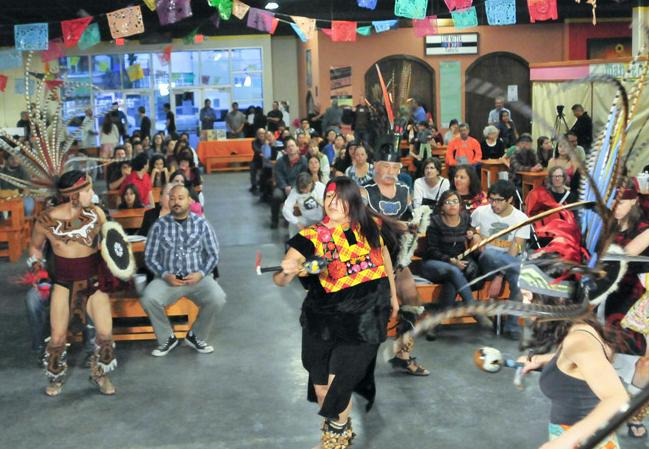
The annual LaborFest kicks off the arts portion with an all-day reading series at the Mission Cultural Center for Latino Arts. Speakers, poets, and authors like award-winning Sean Burns with his biography, Archie Green, The Making of a Working Class Hero will be present as testament to the longstanding collaboration between labor, community, and art. 

Sun/22, 10am-9pm, free

Mission Cultural Center for Latino Arts

2868 Mission, SF

www.laborfest.net

Dana Johnson and Paula Priamos

Dana Johnson and Paula Priamos paint an ironically dark picture of sunny Southern California as they read from their two books Elsewhere, CA and The Shyster’s Daughter. Johnson’s novel follows the search for self-discovery of Avery, a black girl growing up in Los Angeles who doesn’t seem to fit in to her community’s vision of ideal femininity and ideal blackness. Priamos’ book takes a memoir-turned-noir tone, remembering her own family’s actions and anxieties after the conviction of murderer Kevin Cooper for murdering an innocent family in a neighborhood not far from their very own. 

Mon/23, 7pm, free

Books, Inc.

601 Van Ness, SF

www.booksinc.net

Sketch Tuesdays

The ultimate place to see and be seen. Sketch Tuesdays brings a night of live art making and artist-to-buyer exchange to 111 Minna. This Tuesday’s artsy attendees can look forward to an all-female lineup of live artists and International Museum of Women, a full bar, music from DJ Pre-K, and current exhibition, “Shinkasen Conspiracy” by Last Gasp Publishing. 

Tue/24, 6-10pm, free

111 Minna, SF

www.sketchtuesdays.com

The Feds are watching — badly

9

yael@sfbg.com

So, you’re a law enforcement officer in training for participation on a local Joint Terrorism Task Force. Or a student at the United States Military Academy at West Point, involved in the counterterrorism training program developed in partnership with the FBI. Or you’re an FBI agent training up to deal with terrorist threats.

Get ready for FBI training in dealing with Arab and Muslim populations.

Take note that “Western cultural values” include “rational, straight line thinking” and a tendency to “identify problems and solve them through logical decision-making process” — while “Arab cultural values” are “emotional based” and “facts are colored by emotion and subjectivity.”

Be advised that Arabs have “no concept of privacy” and “no concept of ‘constructive criticism'” and that in Arab culture it is “acceptable to interrupt conversations to convey information or make requests.”

“Westerners think, act, then feel,” an FBI powerpoint briefing notes, while “Arabs feel, act, then think.”

Those are some of the most dramatic examples of racial profiling and outright racist stereotyping revealed in thousands of pages of documents obtained under the Freedom of Information Act by the Bay Guardian, the ACLU of Northern California and the Asian Law Caucus.

The documents show a pattern of cultural insensitivity, sometimes bordering on the ridiculous, not only tolerated by promoted as official instructions by the FBI. The records also show a broad pattern of surveillance of people who have engaged in no criminal activity and aren’t even suspected of crimes, but have been targeted because of their race or religion.

Pieces of this story have come out over the past year as the ACLU has charged the FBI with racial profiling and Attorney General Eric Holder has insisted it’s not happening. And some of the documents — which are not always properly dated — may be a few years old.

But none of it is ancient history: All of the material has been used by the FBI in the past few years, under the Obama administration.

This is the first complete report with the full details on a pattern of behavior that is, at the very least, disturbing — and in some parts, reminiscent of the notorious (and widely discredited) COINTELPRO program that sought to undermine and disrupt political groups in the 1960s.

The information suggests that the federal government is using methods that are not only imprecise and xenophobic but utterly ineffective in protecting the American public.

“This is the worst way to pursue security,” Hatem Bazian, professor of Near East Studies at UC Berkeley, told us.

CULTURAL STEREOTYPES

Dozens of documents attempt to describe “Arabs and Muslims” but other groups aren’t left out of the sweeping stereotyping and blatant racism and xenophobia that the FBI has used in its training guides. One training presentation is titled “The Chinese.” The materials give such tips as “informality is perceived as disrespectful.” The presentation warns “expect your gift (money) to be refused” but advises to give “a simple gift with significant meaning- tangerines or oranges (with stems/leaves.)” But “never give a clock as a gift! (death!)”

And if those in the training on “The Chinese” find themselves in “interactions with the opposite sex,” then “touching, too many compliments, may imply a romantic liaison is desired — be careful!”

The vast majority of the “cultural awareness” training materials imply that the authors believe that the law enforcement personnel receiving the training will never be female or interact with female members of the groups they describe. Some warn repeatedly to never ask Arabs how “females in their family” are doing in polite conversation.

A presentation on “Arab and Muslim culture” compares the western thought process with that of all Arabs. According to the FBI, westerners are “rational” thinkers; Arabs, on the other hand, are “emotion based.” A slideshow on cross-cultural interrogation techniques says, “It is characteristic of the Arabic mind to be swayed more by words than ideas and more by ideas than facts.”

Bazian said the FBI’s generalizations about the Arab intellect are “ideological constructs reflective of the orientalist discourse.”

“Many of these individuals have not done any primary sociological, psychological, or historical work in the Arab/Muslim world,” said Bazian, who works on UC Berkeley’s Islamophobia Research & Documentation Project. “What they basically do is take a text from a particular historical period and pick these points and put it as reflective of contemporary Muslim society. Most of these statements have no basis in any critical analysis. They’re not rooted in any type of research.”

Included in the FBI’s recommended reading list for counterterrorism agents-in-training is the “Politically Incorrect Guide to Islam,” in which “Islam expert Robert Spencer reveals Islam’s ongoing, unshakeable quest for global conquest and why the West today faces the same threat as the Crusaders did.”

It’s not exactly an academically sound piece of work, Bazian told us. Spencer and his cohorts are “political hacks,” the professor said. “They come from neo-con backgrounds. Even saying ‘extreme right wing’ is giving them credit; they’re way down below the cliff. They create this contrast between western society and the rest of the world based on a nostalgic idea of western society.”

Arab culture is often the target these days, but the rhetoric recalls that used during the Chinese Exclusionary Act era, and toward Latinos in the United States today, Bazian said.

“They pick on the weakest, most vulnerable people in western society at a particular time and lay blame on them,” he said.

The FBI’s xenophobic approach to interrogation training—which involves warning new agents that “If an Arab is scared, he will often lie to try to avoid trouble”—is not even productive, Bazian said.

“If you go to people with professional training in interrogation and investigation, they’ll say none of this gives them access to security. If anything, it creates a greater global misunderstanding.”

RACIAL MAPPING

And the creation of misunderstanding doesn’t stop there. The FBI is also involved in an intelligence-gathering method known as racial mapping. Racial mapping involves local FBI offices tracking groups in their “domains” based on race and ethnicity.

In blog post, the ACLU writes, “Empirical data show that terrorists and criminals do not fit neat racial, ethnic, nation-origin or religious stereotypes, and using such flawed profiles is a recipe for failure.” In the Counterterrorism Textbook read by all trainees the FBI seems to agree, warning multiple times that there is no such thing as a typical terrorist and that making assumptions based on stereotypes is dangerous and unproductive.

Yet the FBI files we’ve acquired reveal that the bureau consistently does just that. Though the Department of Justice prohibited race from being “used to any degree” in law enforcement investigations in 2003, a convenient and potentially unconstitutional exception allows racial profiling in national security matters.

When the FBI created its Domestic Investigation and Operations Guide in 2008, it used that loophole to permit the mapping of racial and ethnic demographic information and to keep tabs on “behavioral characteristics reasonably associated with a particular criminal or terrorist element of an ethnic community,” the ACLU reported.

Communities in San Francisco have been the victims of this prejudicial loophole more than once. In 2009, the ACLU reported that the FBI justified mapping and investigating the Chinese American population in the city because “within this community there has been organized crime for generations.” Likewise, the bureau collected demographic data on the Russian population because of the “Russian criminal enterprises” known to exist in San Francisco.

The loophole, however, may not even apply to these investigations in the first place.

According to Michael German, a 16-year veteran of the FBI and senior analyst with the ACLU, these investigations don’t fit the national security description. “In intelligence notes on Chinese and Russian organized crime, those are not national security issues,” German told us. “Those are all clearly criminal investigations.”

German has brought attention to another troubling use of racial mapping — documents revealing that the FBI’s Atlanta bureau tracks Georgia’s African American population.

The stated reason is a threat of black separatist groups; the documents name the New Black Panther Party and the Black Hebrew Israelites as the black separatist groups that pose a threat.

German wrote about this problematic practice in a May 29 article on the website Firedoglake.

“The problem with these documents,” German told us, “is that it’s not black separatists or alleged black separatists who are being tracked — it’s the entire black community in Georgia.”

“Those individuals and those communities are being targeted only for their race,” German said. “Were it not for their race they wouldn’t be part of that assessment. There is no reason to do that, accept to treat that community differently than the way it treats other communities. It’s problematic from a constitutional standpoint.”

The New Black Panther Party was founded in Dallas and has mostly East Coast chapters. According to the Southern Poverty Law Center, which tracks hate United States hate groups, “The group portrays itself as a militant, modern-day expression of the black power movement (it frequently engages in armed protests of alleged police brutality and the like), but principals of the original Black Panther Party of the 1960s and 1970s— a militant, but non-racist, left-wing organization — have rejected the new Panthers as a ‘black racist hate group’ and contested their hijacking of the Panther name and symbol.” The Black Hebrew Israelites is another fringe group, an apocalyptic group whose ideology holds that black Americans are God’s chosen people.

Both groups have written and spoken record of racist and violent rhetoric, but record of violent or criminal acts are hard to find.

“I’d say they’re a fairly small part of the radical right, and generally quite small. As far as we know, there is virtually no connection between these groups and criminal activity,” Mark Potok, a senior fellow with the SPLC, told the Guardian.

According to Potok, the center’s list of hate groups in operation in 2011 includes four organizations classified as black separatist, which, between them, have 140 chapters. Those chapters are counted as 140 of the list’s 1,018 groups.

“Most of the rest of the list are white supremacist groups,” Potok notes. “There are some exceptions — anti-gay groups and anti-Muslim groups.” After a quick count, Potok found 688 groups to be “straight-up white supremacist.”

The majority of these hate groups may be white supremacist — but the FBI is not involved in tracking white populations.

Last October, the FBI’s press office responded to the ACLU’s concerns with racial mapping. “These efforts are intended to address specific threats, not particular communities,” the agency’s statement reads.

“These domain management efforts seek to use existing, available government data to locate and better understand the communities that are potential victims of the threats. There must be an understanding of the communities we protect in order to focus our limited human and financial resources in the areas where those resources are most needed.”

With that defense, resources continue to pour into racial mapping efforts.

Black separatist organizations are not the only groups to be targeted for political beliefs. Groups such as “anarchist extremists” and “animal rights/environmental extremists” are also, according to the FBI, groups to watch out for.

A training presentation for the Bay Area’s Joint Terrorism Task Force includes a list of those groups: “animal rights/eco terrorism, anarchists, white separatists, black separatists, militia/sovereign citizens, and ‘lone offender’.”

How do you spot a potential “animal rights extremist”? According to the documents, “ideology and concepts” found among this group includes a “complete vegan lifestyle,” and activities include the promotion of “anti-capitalist literature.” In other words, your roommate is probably a terrorist.

SPYING ON MUSLIMS

Racial mapping is not the only FBI practice that targets people just for being members of groups “associated with crimes.” The FBI routinely gathers information on Muslims through deceptive “community outreach” programs.

Memoranda we’ve obtained reveal that FBI agents, operating under the guise of community outreach, attended various events hosted by local Muslim organizations in order to gather intelligence between 2007 and 2009.

When agents attended Ramadan Iftar dinners in San Francisco, they wrote down participants’ contact information and documented their conversations and opinions. At an alleged outreach event at CSU Chico, they recorded a conversation with a student about the Saudi Student Association’s activities and even took the student’s picture. That information was sent to the FBI in Washington, DC, the ACLU reported.

Writing down information on individuals’ First Amendment activities—in this case without any evidence that they were notified or asked—violates the federal Privacy Act, the ACLU says. Using access to community events to gather personal information undermines the FBI’s stated effort to form relationships with Muslim leaders and community members.

And covert surveillance can also have an immediate and hazardous impact on the unwitting subjects.

“It’s becoming more of a public discourse that these FBI background checks are affecting immigration status, the ability to send money back home, and generally creating an environment of fear,” said Miriam Zouvounis, membership coordinator with San Francisco’s Arab Resource and Organizing Center.

The organization has helped clients who have been detained for months because their names were mistakenly placed on a no-fly list, and others whose immigration processes have taken up to ten years because they were erroneously perceived as threatening, Zouvounis said.

“The process of information collecting on covert and overt levels is accelerating, and definitely a present reality in San Francisco. People don’t want to be civically engaged if that material’s being used against them,” she said.

ONLINE SPYING

“Extremism online is the most serious international terrorist threat in the world.” Or so says FBI training materials in a presentation entitled “Extremism online,” meant for those training to be online covert employees. The documents teach OCEs to scan through comment threads and enter chat rooms, searching for people whose speech may be “operational.”

This surveillance has led to investigations.

Some of the documents are individual files and summaries of individual files, and many note that the person (often someone who was convicted, so the name isn’t redacted in the documents) was “detected via the Internet.” Some examples: “Mohamad Osman Mohamud, detected via the Internet, discussing Jihad plans” and “Hosam Smadi, detected via the Internet: online chats.” Both men were 19 when they were convicted of crimes.

These men — and the many more who have not been accused of any criminal activity but are likely under surveillance or investigation by OCEs — could have been “detected via the Internet” in a variety of ways, according to German.

“It could be that the chats were open source, or that an informant was in the chat room, or a person participating simply turned them over to the FBI, none of which would require any legal process,” German explained.

“It could also be monitored under FISA [ the Foreign Intelligence Surveillance Act] or traditional criminal wiretaps, which would require court warrants (secret ones under FISA). Finally, the stored chat logs retained on third party servers could have been obtained with Patriot Act Section 215 orders, or what’s called a “D” order under the Stored Communications Act (if held for over 180 days),” German detailed in an email.

So what kind of speech are OCEs looking out for to peg potential terrorist threats? The Extremism Online presentation has a list of “major themes and language used in online extremist writings,” which includes Islam-related terms such as “Caliphate, Al-Ansar, Al-Rafidah, Mushrik, and Munafiq” as well as the Arabic words “Akhi, Uhkti, Ameen, Du’aa, Shari’ah, and Iman” (brother, sister, amen, prayer, Islamic law, and faith.) Other words the agents are told to look out for: “crusaders, hypocrites, dogs and pigs,” and any discussion of “occupation of Muslim lands.”

The FBI can really get into your business if agents confiscate your possessions. Personal computers, cell phones, and other electronic devices, according to the documents, are routinely checked out at Regional Computer Forensics Labs.

The nearest one to San Francisco is in Menlo Park, where employees brag of having investigated thousands of pieces of data.

Law enforcement routinely confiscates property after arrests, and if local cops are involved with the FBI through the Joint Terrorism Task Forces or other partnerships, they may very well send the belongings of those arrested to be checked out at a local RCFL. But there are other ways the FBI can obtain your electronics.

“Certainly the FBI has the authority to obtain computers and other devices with search warrants, either traditional search warrants where the individual is given notice or expedited warrants where the person isn’t aware,” German told the Guardian, noting that the second type of warrant is the preferred method, for obvious reasons, when the Feds plan to search a confiscated computer.

“The FBI also works with immigrations and customs enforcement, so laptops and other devices seized at the border the FBI can gain access to. There are myriad ways they can get them.”

“DISRUPTION”

A 2009 FBI memorandum on investigating suspected terrorists reveals that the Bureau encourages its agents to implement a “disruption strategy” that German wrote is “eerily reminiscent” of the COINTELPRO tactics used to stop political organizers in the1960s. “If the risk to public safety is too great, or if all significant intelligence has been collected, and/or the threat is otherwise resolved, investigators may, with substantive desk coordination and concurrence, implement a disruption strategy,” one memo reads. Investigators can conduct interviews, make arrests, or use any number of other undefined “tools” to “effectively disrupt subject’s [sic] activities.” Such disruption strategies have been used in the past to investigate and shut down First Amendment-protected activity, German said. The reintroduction of such tactics could open the door for a major breach of the subjects’ constitutional rights.

A MATTER OF PRIORITIES 

“After September 11th, 2001, the FBI realigned its mission and purpose to reflect the global and domestic threats that face the US,” begins an orientation packet for members of Joint Terrorism Task Forces. “FBI director Robert M. Meuller III defined the following as the top ten priorities (in order of importance) that confront the Bureau today,” Number one on the list: Protect the United States from terrorist attack.

Indeed, after 9/11, the FBI prioritized terrorism investigations, a shift from the previous focus on criminal investigations. Classified as national security threats, these investigations are not subject to the same type of privacy and anti-racial discrimination protections that other criminal investigations might be.

Terrorist threats, apparently, are to be found in mosques, in online conversations that involve criticism of US foreign policy, in entire populations of African Americans or Chinese Americans in given areas. In recent years, simply speaking Arabic online or being black makes a person a suspect and potential target of surveillance.

Look out America, especially members of that celebrated “melting pot.” The feds are watching.

7 spots for mental regeneration this week

0

Pride is over, and we’re willing to wager your depleted brain cells could stand for some stimulus. Whether you’re into sitting in dimly-lit rooms in North Beach listening to fiction read in a thick Hungarian accent, or dressing to the nines and perusing some edgy new performance art, here are seven cultural hot spots in the city this week.

László Krasznahorka

A Hungarian author emerges from his reclusivity in the hills of Szentlászló in order to present the San Francisco literati with a reading from his novel of scheming, sex, failure, hope, communism, freaky farm collectives, tango, and the devil. Sounds like a can’t-miss situation. City Lights will host celebrated author László Krasznahorka to read Satantango (yes, that’s satan-tango), the book that inspired the seven-and-a-half hour film by remodernist filmmaker, Béla Tarr. 25 years after its original publication date, the novel has finally been translated by George Szirtes, so now we plebeian Californians can get our Hungarian apocalyptic fix. 

Thu/28 7:30pm, free

City Lights Bookstore

261 Columbus, SF

(415) 362-8193

www.citylights.com

Kala Art Institute artist talks 

The busy thoroughfare of Berkeley’s San Pablo Avenue makes an appropriately unsettling backdrop for the Kala Art Institute’s first night of artist talks. From large-scale industrial sculpture, to dystopian watercolor, to engineered photographs of imaginary landscapes, artists Randy Colosky, Vanessa Marsh, and Alison Frost’s work treads an uncanny path between real and surreal. It defamiliarizes the familiar in a fashion of which even Freud would be proud. This series of talks features discussions from Kala fellows during their residencies at the gallery, so look forward to more free inspiration (and free refreshments, which are, um, always a welcome addition for any easel-toting San Francisco artist) in July, August, and September.

Wed/27, 7pm, free 

Kala Gallery 

2990 San Pablo, Berk 

(510) 841-7000

www.kala.org

Raw SF Solstice 

Despite its strictly fashionable cocktail attire mandate and swanky SOMA venue, June’s Raw SF installation offers something for even the freakiest. With a mission to showcase and support emerging, underground artists during the first 10 years of their careers, RAW displays innovative visual art, film, fashion, music, hair and makeup artistry, photography, modeling, and performance art. San Francisco’s installation attendees can also expect henna, organic refreshments, food trucks, a DJ, and a ceremonial tea service.

Thu/28, 7pm-12am, $10 pre-sale tickets, $15 door, $5 after-party (after 9pm)

1015 Folsom, SF

(888) 729-7545

www.rawartists.org

Readers Café and Bookstore poetry series

In support of the San Francisco Public Library, the dusty shelves of Readers Café and Bookstore will be available after hours for the last installment of the shop’s Thursday night poetry readings. Palestinian American poet and historical children’s fiction writer Lorene Zarou-Zouzounis and San Francisco beatnik Martin Hickle will read from their respective collections, and special prices on food and drink will be on offer as you contemplate questions of life and poetry while you gaze out at the Bay from this Fort Mason storefront. 

Thu/28, 6:30pm, free

Readers Bookstore

Building C, Room 165, Fort Mason Center, SF

(415) 771-1076

www.friendssfpl.org

“Evolve: A Woman’s Journey”

Turn what was intended to be a sangria-fueled and nail-painting girls’ night into a celebration of femininity with some real punch. The Fort Mason center showcases Patrick Stull’s work in a diverse series of art from almost all mediums – digital, oil, graphite, sculpture, casting, mixed media, and even original music that chronicles the emotional and physical experience of pregnancy. Much of the art is built to a life-size scale to deal with a subject matter that is as life-large as it gets. 

Fri/29, 9pm, $25

Fort Mason Center

2145 3rd St., SF

www.patrickstull.com

“Only Birds Sing the Music of Heaven in This World”

A million thanks to whoever decided to make food trendy. Combining some of the things NorCal natives hold dear (that’d be food, art, and agriculture) the Museum of Craft and Folk Art hosts a show with curator Harrell Fletcher that displays past and contemporary representations of agriculture, farming, and labor. With a certain focus on alternative farming project imagery, the show links agriculture art with social activism and community building through engaging with various genres, including folk art, outsider art, and craft. 

Sat/30, 11am-6pm, GA $5

Museum of Craft and Folk Art

51 Yerba Buena, SF

(415) 227-4888 

www.mocfa.org

Librotraficante Bay Area Banned Book Reading

As school board officials threaten to ban ethnic studies books and authors — not to mention the subject entirely — in Arizona, Libotraficante is hosting this afternoon of readings from banned books. With more than a dozen performers set to read from controversial tomes, the event is sure to be anything but boring. 

Sun/1 noon-4:30pm, free

Koret Auditorium, San Francisco Public Library

100 Larkin, SF

www.sfpl.org

Don’t funk with THEESatisfaction’s groove

0

Cat Harris-White and bandmate Stasia Irons know how to write a memorable lyric. “Queens of the Stoned Age/and princess of time/feel our energy/floating through your mind.”

The totally DIY hip-hop duo, which makes up THEESatisfaction, earlier this year released groundbreaking, 30-minute debut LP awE NaturalE. But they’ve long been a part of the emerging Seattle art scene. In it, they’ve been creating a nearly incomparable sound, at least, galaxies away from swag, with roots in soul and jazz overlaid by spacey electronic beats, cosmic funk zaps, and unexpected twists, along with eloquent sing-rapped verses.

Each track on the record holds a mini story, another sound exploration. The chopped, wordless R&B opener “awE” blends easily into funky beat-poetry style “Bitch,” on which the duo sings, “I’m always finding a time/when I feel I need to please you/but why do I even give a fuck/A fuck about/how the world trails off/off.” Fade out.

There’s floaty, twinkling “Juiced” and powerful closer “Naturale”. Synthy, whistle-dropping, hand-clapping jam “QueenS” should, in a perfect world, be the summer anthem of 2012. On it, their mission statement: “Leave your face at the door/turn off your swag /check your bag.”

I talked with both Harris-White and Irons about all this – musical origins, the nature of DIY creation, being sci-fi Trekkies, Seattle’s current hip-hop surge, harmonizing with Drake, and memorable personal anthems (hint: Montell Jordan) –  prior to their SF show this weekend:

SFBG How was the Europe tour?

Cat Harris-White It was really good, we did 12 shows out there in two weeks so it was kind of intense, but the crowds were really cool. We got to see a lot of cool people and go to different places we’ve never been – we went to the Netherlands, where we’ve never been before, and Brussels.

Stasia Irons This time we got to go up to Sweden and Belgium, we even dipped into Germany, we didn’t have a show there but we passed through Dusseldorf, Germany, so that was awesome. We went out in Scotland to a nightclub and [laughs] we had a lot of fun. We were out pretty late, but that’s how they party.

SFBG It must be much easier to get around on tour with just the two of you, as opposed to a larger backing band, or with roadies?

SI Yeah, it’s much easier, you can take the train.

SFBG [THEESatisfaction] comes from a pretty DIY sensibility, a scene where you’re making your own handmade CDs and tapes?

CHW Definitely, we were doing our own thing. We’re self-managed. It’s just a totally different experience, because we get to make the decisions and decide what we’re doing.

SFBG Does that also influence the style of music you’re making?

SI Yeah, when we first started off we just made music for ourselves, just to enjoy at home and play around. We kind of developed the way we sound over time just listening to a lot of different kinds of music and figuring out what we wanted.

We really like gospel and jazz. We both come from those genres. I was more heavily in gospel and Cat was well-versed in jazz. So we started there. And then since we’re doing it ourselves, we can go anywhere we want with it.

SFBG I’ve seen a lot of comparisons, to acts like Shabazz Palaces or even ESG, but beyond that I feel like it does have a very different sound, and it probably comes from that DIY sensibility – how do you feel about comparisons to other acts?

CHW I accept them, and it’s cool that people can draw those lines. I’m never really offended. I like when they’re able to pick out people who I really like. Someone told us that we reminded them of TLC and SWV and Digable Planets.

http://www.youtube.com/watch?v=qGWFBt_IPOg

SFBG On the album, there are such interesting turns of phrases, and wordplay, I was wondering where that came from – are you voracious readers, students of hip-hop?

SI We read a lot, especially now more than ever. When we first started out we were just listening to a lot of music, and not really reading a lot. But now, since we did the album, we were heavily in to black sci-fi authors. I went to school for English, and Cat went to school for vocal jazz, so that’s the reason too.

SFBG There are some sci-fi sounds, outer-space atmospheres on the album — was that sort of spacey vibe intentional?

CHW Yeah, we’ve always been into sci-fi too, I’m totally a Trekkie and everything like that. We’ve always been into outer-space and exploring beyond what’s here on earth, and exploring deeper into what is here on Earth. Where we come from, where we’re going. We’re researchers and historians. We’re always interested in finding out different information, I guess that comes out in our sound.
SFBG Who are some of the authors you’re reading currently?

CHW Right now we’re reading a lot of Octavia Butler.

SI Toni Morrison. Oh, Shakespeare.

CHW Shakespeare definitely. Alice Walker as well.

SFBG I feel like “Queens” is a really anthemic song – a song that people want to shout out the lyrics to – what were the anthems of your youth?

CHW Growing up I listened to a lot of George Clinton and P-Funk and Parliment. “We Want the Funk” and just all their songs. You know what I’m saying? Those songs go on for like 10 minutes and they’re just chanting and harmonizing and blending things, so those kind of songs were anthemic, but also songs from Chic and SOS Band and other songs like that that have the same kind of vibe.

SI My mom listened to R&B a lot — so “This Is How We Do It” comes on, obviously I’m going to be reciting all the lyrics. Party jams like that. A lot of New jack swing and shit too.

http://www.youtube.com/watch?v=0hiUuL5uTKc

SFBG What’s your music scene like in Seattle?

CHW Yes, Seattle is poppin’ right now, as far as music. A lot of friends are involved in it, not necessarily only music, but arts, authors. A lot of artsy people. But hip-hop is what’s really going on right now. It used to be a lot of grunge and indie bands and they’re still there, but I see like a lot of different kinds of hip-hop coming out of Seattle right now.

As you said Shabazz, and then there’s Champagne Champagne, a lot of great hip-hop DJs – Chocolate Chuck. There’s punk hip-hip, party hip-hop, sad hip-hop [laughs], Christian hip-hip.

SFBG Christian hip-hop?

CHW [Laughs] there’s a lot of that going on. That’s actually how I started getting involved [with music]. When I was kid, going to church, there was a group called Cave and I didn’t know they were Christian hip-hop, they never cursed or anything but their songs were just really good and usually gospel hip-hop isn’t all that good, but they were pretty dope.

SFBG Any thoughts on the current state of mainstream hip-hop? I guess “mainstream” is kind of a fast and loose description, but radio-popular hip-hop in 2012?

CHW I don’t have a problem with it essentially in a big way, because there’s always a certain place for it, on the radio and TV. There’s always been a popular format of music, music that’s highly promoted to the world. The music you’ll hear when you go places – you’ll hear Flo Rida or Odd Future or Nicki Minaj, or maybe LMFAO. There’s music that will always be promoted because there’s a certain force behind it and that’s fine. It’s been around as long as radio’s been around.

SFBG Do you have any dream collaborators?

CHW Fantasy-wise, Prince or Stevie Wonder. Missy Elliot, Timbaland too. Esperanza Spalding. Drake [laughs], we can harmonize with Drake.

 

THEESatisfaction
WIth Le Vice
Fri/22, 9pm, $14
Independent
628 Divisadero, SF
(415) 771-1421
www.theindependentsf.com

Destroyer’s Dan Bejar on Orson Welles, desert island records, and more

0

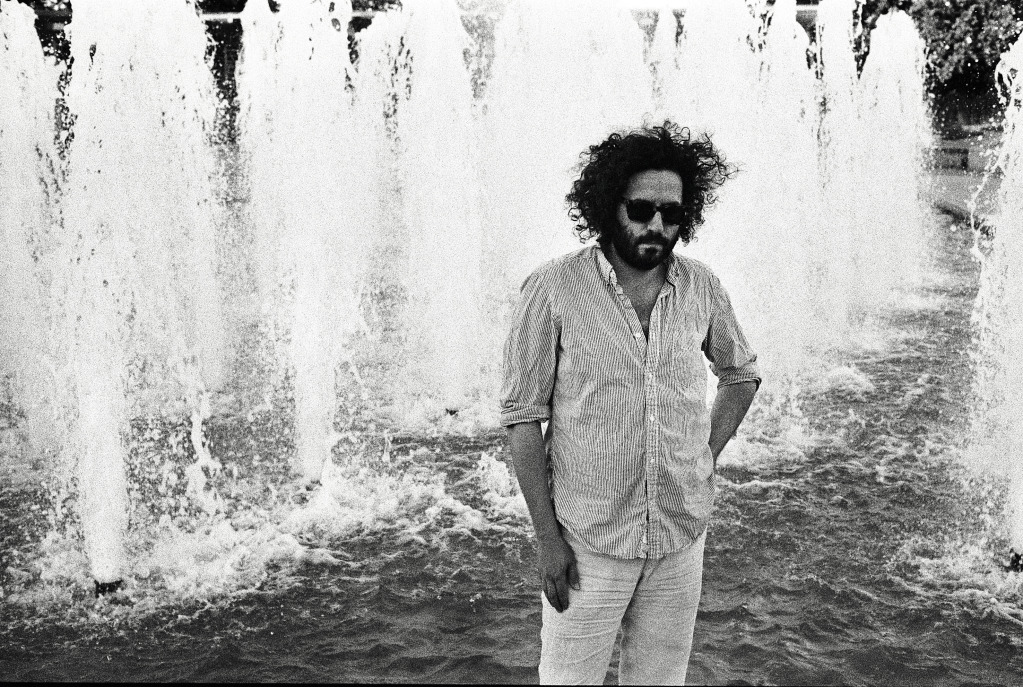
Destroyer’s Dan Bejar is a songwriter’s songwriter, revered within indie rock circles for his dense, erratic lyric sheets, and sharp, confrontational vocal delivery. So, naturally, when he dove head-first into synth-laden yacht-rock on last year’s Kaputt, the Interwebs went abuzz.

The current Destroyer lineup is set to grace the Fillmore next Tuesday, for their second SF appearance since the album’s release. I interviewed Bejar about the upcoming tour over the phone last week, and unsurprisingly, he’s quite a talker. So much so, that my Destroyer feature in this week’s issue only scratched the surface.

For more juice on Kaputt, musings on Dean Martin and Orson Welles, and an impulsive list of desert island records, read on:

SFBG Your lyrics and your vocal delivery on Kaputt evoke this really strong sense of personality and point of view that I haven’t quite heard on another Destroyer record. I’ve read comparisons to Humphrey Bogart, to Bill Murray, to Dean Martin. Any way you cut it, there’s this sense of cool detachment at the center that makes people think of specific personalities. Were the lyrics on Kaputt, written and delivered with an established personality in mind?

Dan Bejar That’s kind of an interesting question. I think of them as kind of the most natural and least constructed lyrics and vocal turns that I’ve ever done. So, it’s funny that they evoke a strong sense of persona, because what I was trying to evoke was as much blankness as possible.

Just like, iterate the words, and try and hit the notes, and leave as much room for the music, you know? And, the sense of space was always very important. There’s probably half the word count that there is on any other Destroyer album.

It’s kinda like… that’s actually the exact opposite of how I picture it, but you never know when your intentions and when the reality of what you’re doing match up. I just tried to keep it real natural and simple. Maybe I am a Dean Martin character and I just don’t know it. Which would be cool, but you’d think someone would have told me by now.

http://www.youtube.com/watch?v=puu3IvKnSb4&ob=av2e

SFBG Another big talking point in discussing your career is these transitions, namely Kaputt and Your Blues in 2004. Are there any artists, musicians, you take inspiration from when you’re making a stylistic shift with your career?

DB You mean, like people who have jumped around a lot, and not fallen on their face completely, doing it?

SFBG Right.

DB I don’t know… I don’t really think of it as that, that forest, or like me putting on different Halloween costumes. I just think the traditional rock-band model didn’t really fit, you know? I think, if you look at the career of most singer-songwriter types, any of them who’ve managed to last more than ten years, they’ve probably jumped around a fair bit.

I think, for the most part Kaputt‘s an exception, the writing and the singing is fairly consistent. If you scroll the credits of Destroyer records, all nine of them, you’ll probably find a lot of the same names, you know, but just doing different stuff, or in different formations.

I kind of like the jazz model, where everyone plays on different records, and it’s just more like, session based, as opposed to everyone having to dress up in leather jackets and act like a gang. Most of my inspiration comes from Miles Davis, on a daily basis, anyway.

SFBG There’s a rhythm and a density to your lyrics, that people compare to… Bob Dylan’s thrown around a lot, Joni Mitchell sometimes. But, beyond songwriters, are there any authors, or actors, or public figures, whose patterns of speech and word choice you take inspiration from in your work?

DB Beyond authors?

SFBG Authors included.

DB Oh, authors included. Just beyond songwriters, yeah. There’s too many to choose from. That was the entire project of Destroyer, from the first record up until Kaputt, where the project kind of shifted to become, like I said before, like a singer, and not a chest with poetry.

But, before then, the entire thing was to try and insert words that you would find from outside of a typical rock song, into a typical rock song. That was, kind of, half the thing… Whether it was, like, Orson Welles, or Shakespeare. Or, actually, specifically, Orson Welles’ Shakespeare. That’d be a good one. [Laughs].

Actually, most of Destroyer is inspired by Orson Welles’ take on Shakespeare… [but] I will say that Kaputt is the first record to take most of its inspiration from nonverbal things.

SFBG When you come through San Francisco to tour, hang out, whatever, what do you like doing here?

DB Man, I’d love to have an actual free day in San Francisco, just to walk around. Generally, when I’m on tour, I don’t take too much advantage of where I am. I’m more like a gladiator who paces the bus, or a dank back-room and then is let out of his cage to go onstage. I might hit a bookstore or something.

Finally, Bejar’s impulsive list of five records he finds inspiring, right now. In no particular order:

The Tony Bennett / Bill Evans Album (1975)
– Bark Psychosis: Hex (1994)
– Charlie Haden: Liberation Music Orchestra (1969)
– The Church: Priest=Aura (1992)
– Cliff Martinez: Solaris OST (2002)

Destroyer
With Sandro Perri, Colossal Yes
Tue/5, 9pm, $25
Fillmore
1805 Geary, SF
(415) 346-6000
www.thefillmore.com

Stage Listings May 23-29, 2012

0

Stage listings are compiled by Guardian staff. Performance times may change; call venues to confirm. Reviewers are Robert Avila, Rita Felciano, and Nicole Gluckstern. Submit items for the listings at listings@sfbg.com. For further information on how to submit items for the listings, see Picks.

THEATER

OPENING

Othello Phoenix Theatre, 414 Mason, SF; www.brownpapertickets.com. $15-18. Opens Thu/26, 8pm. Runs Thu-Sat, 8pm. Through June 9. Ninjaz of Drama performs Shakespeare’s classic in a contemporary setting.

Slipping New Conservatory Theatre Center, 25 Van Ness, SF; www.nctcsf.org. $25-45. Previews Wed/23-Fri/25, 8pm. Opens Sat/26, 8pm. Runs Wed-Sat, 8pm; Sun, 2pm. Through July 1. New Conservatory Theatre Center performs Daniel Talbott’s drama about a gay teen who finds new hope after a traumatic breakup.

BAY AREA

God of Carnage Marin Theatre Company, 397 Miller, Mill Valley; www.marintheatre.org. $34-55. Previews Thu/24-Sat/26, 8pm; Sun/27, 7pm. Opens Tue/29, 8pm. Runs Tue and Thu-Sat, 8pm (also June 2 and 16, 2pm; June 7, 1pm); Wed, 7:30pm; Sun, 2 and 7pm. Through June 17. Marin Theatre Company performs Yasmina Reza’s Tony-winning comedy about two sets of parents who meet after their children get into a schoolyard fight.

ONGOING

“Best of PlayGround 16: A Festival of New Writers and New Plays” Thick House, 1695 18th St, SF; www.playground-sf.org. $10-40. Thu/24-Sat/26, 8pm; Sun/27, 7pm. Seven short plays and musicals by Bay Area authors, plus a staged-readings series.

“DIVAfest” Exit Theatreplex, 156 Eddy, SF; (415) 673-3847, www.theexit.org. $15-25. Through Sun/27. Entering its second decade, the estrogen-centric DIVAfest at the Exit is so jam-packed with activities — workshops, burlesque, symposiums, readings, singer-songwriter nights — you’d be forgiven for not realizing that plays are also on the menu. But in fact, they are the main course. This year’s smorgasbord features three very different solo shows, each encapsulating a wholly unique female voice. Genevieve Jessee’s Girl in, but not of, the ‘Hood, which won a “Best of the Fringe Festival” award in 2011, has since been reworked with a new director, Exit Theatre stalwart Michelle Talgarow, rendering it sharper and more comic without minimizing the inner turmoil experienced by the main character, Jessee herself. Catherine Debon’s Alma Colarada, which also won a “Best of the Fringe” in 2011, is an emotionally-charged, experimental roller-coaster ride that appropriately begins and ends on a train. Detailing a family history fraught with World War II resistance fighting, concentration camps, communist sympathies, and endless trains, Debon nimbly vacillates between the neuroses of the present day and the deep despair of the past, while still finding a way to end to piece on a triumphal note. Last but by no means least, the laugh-out-loud romantic farce Pussy, by Maura Halloran, details the tricky intricacies of a lesbian-feline-nosy neighbor ménage à “cat-re”. Yes, it’s about a cat … hmmm, or is it? You should really take the opportunity to find out. (Gluckstern)

Down to This Exit Stage Left, 156 Eddy, SF; www.sleepwalkerstheatre.com. $12-20. Thu/24-Sat/26, 8pm. Thirty-something Charlie (Derek Fischer) plays this little game with himself where he tosses a rotten egg at the kitchen trash as if he were making a free-throw in sudden-death overtime. This little moment, innocent and ordinary on the surface, puzzles one-night stand Donna (Tonya Narvaez) after she happens on the scene. That she would be baffled, even momentarily disturbed by so common a flight of sports-dude imagination is our first taste of the strained mechanics of Adam Chanzit’s slight pulp revenge tale: sure enough, this game of chance turns out to be a (pretty ridiculous) psychopathology ruling Charlie’s world. When a moment later his equally imbalanced and estranged wife (Kendra Lee Oberhauser), fresh from prison and packing heat, bursts in on the two lovebirds, Charlie’s fate-game will become the tortured trope in a table-turning showdown between all three — plus Charlie’s hapless roommate (Jomar Tagatac) and his crew-cut–sporting sidekick (Shane Rhoades). Chanzit offers some mild surprises and amusing banter along the way in Sleepwalkers’ world premiere — helmed by artistic director Tore Ingersoll-Thorp — but the plot and characters are stretched thin, and the tension often grows slack despite the able and likable cast. By the time the story climaxes in a coin-toss of an ending (designed to work out one of two ways, depending), it’s too big a muddle to generate more than a momentary quiver of anticipation over anybody’s fate. (Avila)

Endgame and Play American Conservatory Theater, 415 Geary, SF; (415) 749-2228, www.act-sf.org. $10-95. Tue-Sat, 8pm (also Wed, Sat-Sun, 2pm; no matinee Wed/23). Through June 3. ACT presents two absurd dark comedies by Samuel Beckett.

Fwd: Life Gone Viral Marsh San Francisco, 1062 Valencia, SF; (415) 282-3055, www.themarsh.org. $20-50. Thu, 8pm; Sat, 8:30pm; Sun, 7pm. Through June 10. The internet becomes comic fodder for creator-performers Charlie Varon and Jeri Lynn Cohen, and creator-director David Ford.

It’s All the Rage Studio Theater, Marsh San Francisco, 1062 Valencia, SF; (415) 282-3055, www.themarsh.org. $15-50. Thu/24, 8pm; Sat/26, 8:30pm, Sun/27, 7pm. Longtime comedian and radio host Marilyn Pittman’s solo play wrestles with the legacy of her parents’ violent deaths in a 1997 murder-suicide initiated by her father. It’s disturbing material that Pittman, a stout middle-aged woman with a gregarious and bounding personality, approaches indirectly via a good deal of humor — including recounting the first time she did her growing-up-lesbian bit before her mother in a DC comedy club. But the pain and confusion trailing her for 13 years is never far behind, whether in accounts of her own battle with anger (and the broken relationships it has left in its wake) or in ominous memories of her too complacent mother or her charming but domineering father, whose controlling behavior extended to casually announcing murderous dreams while policing the boundaries of his marriage against family interference. A fine mimic, Pittman deploys a Southern lilt in playing each parent, on a stage decorated with a hint of their Southwestern furnishings and a framed set of parental photographs. In not exactly knowing where to lay blame for, or find meaning in, such a horrifying act, the play itself mimics in subtler form the emotional tumult left behind. There’s a too brief but eerie scene in which her veteran father makes reference to a murder among fellow soldiers en route to war, but while PTSD is mentioned (including as an unwanted patrimony), the 60-minute narrative crafted by Pittman and director David Ford wisely eschews any pat explanation. If transitions are occasionally awkward and the pace a bit loose, the play leaves one with an uncomfortable sense of the darker aspects of love, mingled with vague concentric histories of trauma and dislocation in a weird, sad tale of destruction and staying power. Note: review from the show’s 2009 run at the Marsh San Francisco. (Avila)

My Tia Loca’s Life of Crime Bindlestiff Studio, 185 Sixth St, SF; www.brownpapertickets.com. $20. Thu-Sat, 8pm. Through June 2. Guerrilla Rep performs a new play by Roy Conboy, chair of SF State’s Playwriting Department.

A Raisin in the Sun Buriel Clay Theater, African American Art and Culture Complex, 762 Fulton, SF; 1-800-838-2006, www.african-americanshakes.org. $10-35. Sat/26, 8pm; Sun/27, 3pm. African-American Shakespeare Company performs Lorraine Hansberry’s classic drama.

Tenderloin Exit on Taylor, 277 Taylor, SF; (415) 525-1205, www.cuttingball.com. $10-50. Thu/24, 7:30pm; Fri/25-Sat/26, 8pm (also Sat/26, 2pm); Sun/27, 5pm. Annie Elias and Cutting Ball Theater artists present a world premiere “documentary theater” piece looking at the people and places in the Cutting Ball Theater’s own ‘hood.

To Be Young, Gifted and Black: Honoring Lorraine Hansberry In Her Own Words Gough Street Playhouse, Trinity Episcopal Church, 1620 Gough, SF; www.custommade.org. $22-28. Thu/24-Sat/26, 8pm; Sun/27, 7pm. Custom Made Theater and Multi Ethnic Theater collaborate on this tribute to the groundbreaking playwright.

The Waiting Period MainStage, Marsh San Francisco, 1062 Valencia, SF; (415) 282-3055, www.themarsh.org. $15-50. Fri, 8pm; Sat, 5pm. Extended through July 7. Brian Copeland (comedian, TV and radio personality, and creator-performer of the long-running solo play Not a Genuine Black Man) returns to the Marsh with a new solo, this one based on more recent and messier events in Copeland’s life. The play concerns an episode of severe depression in which he considered suicide, going so far as to purchase a handgun — the title coming from the legally mandatory 10-day period between purchasing and picking up the weapon, which leaves time for reflections and circumstances that ultimately prevent Copeland from pulling the trigger. A grim subject, but Copeland (with co-developer and director David Ford) ensures there’s plenty of humor as well as frank sentiment along the way. The actor peoples the opening scene in the gun store with a comically if somewhat stereotypically rugged representative of the Second Amendment, for instance, as well as an equally familiar “doood” dude at the service counter. Afterward, we follow Copeland, a just barely coping dad, home to the house recently abandoned by his wife, and through the ordinary routines that become unbearable to the clinically depressed. Copeland also recreates interviews he’s made with other survivors of suicidal depression. Telling someone about such things is vital to preventing their worst outcomes, says Copeland, and telling his own story is meant to encourage others. It’s a worthy aim but only a fitfully engaging piece, since as drama it remains thin, standing at perhaps too respectful a distance from the convoluted torment and alienation at its center. (Avila)

The Wrong Dick Dark Room Theater, 2263 Mission, SF; www.darkroomsf.com. $20. Thu/24-Sat/26, 8pm. Ham Pants Productions presents a noir-inspired comedy set in San Francisco.

BAY AREA

Crevice La Val’s Subterranean, 1834 Euclid, Berk; www.impacttheatre.com. $10-20. Thu-Sat, 8pm. Through June 9. Just in case you were feeling panicked about the persistently recessed state of the economy and what might be your own less than ideal place in it, the Impact Theatre and Playground co-presentation of Lauren Yee’s Crevice might help to put your woes into perspective. That’s because slacker sibs Liz (Marissa Keltie) and Rob (Timothy Redmond) are only slightly exaggerated representatives of Generation Next whose penchant for making lackluster life choices has sentenced them to an indefinite prison term of couch-surfing and Teen Mom marathons in their childhood home. Naturally, they desire change, but it’s not until their mother (Laura Jane Bailey) starts having a hot fling with a younger man that things do. In an egregious breach of the TMI line, it appears that Mom’s orgasms open a “crevice” into an alternate reality that Rob and Liz subsequently fall into. Thus removed from the entropy of their former reality they begin testing the parameters of their new one, quickly coming to the realization that sometimes the alternatives to what you already have are even worse. Getting home again is a convoluted, not fully mapped-out process, but in the interim, their navigation of their erstwhile wonderland offers most of the play’s best lines as well as the uncomfortably effective transformation of Reggie D. White from Liz’s nerdish best buddy to multi-lingual Mafia killer and casual sadist. (Gluckstern)

The Great Divide Ashby Stage, 1901 Ashby, Berk; www.shotgunplayers.org. $20-30. Previews Wed/23-Thu/24, 7pm. Opens Fri/25, 8pm. Runs Wed-Thu, 7pm; Fri-Sat, 8pm; Sun, 5pm. Through June 24. Shotgun Players performs Adamn Chanzit’s drama about the hot topic of fracking, inspired by Ibsen’s An Enemy of the People.

*The Kipling Hotel: True Misadventures of the Electric Pink ’80s New venue: Marsh Berkeley, 2120 Allston, Berk; (415) 282-3055, www.themarsh.org. $20-50. Sat, 8:30pm; Sun, 7pm. Extended through June 10. This new autobiographical solo show by Don Reed, writer-performer of the fine and long-running East 14th, is another slice of the artist’s journey from 1970s Oakland ghetto to comedy-circuit respectability — here via a partial debate-scholarship to UCLA. The titular Los Angeles residency hotel was where Reed lived and worked for a time in the 1980s while attending university. It’s also a rich mine of memory and material for this physically protean and charismatic comic actor, who sails through two acts of often hilarious, sometimes touching vignettes loosely structured around his time on the hotel’s young wait staff, which catered to the needs of elderly patrons who might need conversation as much as breakfast. On opening night, the episodic narrative seemed to pass through several endings before settling on one whose tidy moral was delivered with too heavy a hand, but if the piece runs a little long, it’s only the last 20 minutes that noticeably meanders. And even with some awkward bumps along the way, it’s never a dull thing watching Reed work. (Avila)

Not Getting Any Younger Marsh Berkeley, 2120 Allston, Berk; (415) 282-3055, www.themarsh.org. $15-50. Fri, 8pm; Sat, 5pm. Extended through June 30. Marga Gomez is back at the Marsh, a couple of too-brief decades after inaugurating the theater’s new stage with her first solo show — an apt setting, in other words, for the writer-performer’s latest monologue, a reflection on the inevitable process of aging for a Latina lesbian comedian and artist who still hangs at Starbucks and can’t be trusted with the details of her own Wikipedia entry. If the thought of someone as perennially irreverent, insouciant, and appealingly immature as Gomez makes you depressed, the show is, strangely enough, the best antidote. Note: review from the show’s 2011 run at the Marsh San Francisco. (Avila)

The Odyssey Angel Island; (415) 547-0189, www.weplayers.org. $40-76 (some tickets include ferry passage). Sat-Sun, Fri/25, and June 1, 10:30am-4pm (does not include travel time to island). Through July 1. We Players present Ava Roy’s adaptation of Homer’s epic poem: an all-day adventure set throughout the nature and buildings of Angel Island State Park.

The World’s Funniest Bubble Show Marsh Berkeley, TheaterStage, 2120 Allston, Berk; (415) 826-5750, www.themarsh.org. $8-50. Sun/27, June 3, 10, 16, 24, and 30, 11am. Louis “The Amazing Bubble Man” Pearl returns with this kid-friendly, bubble-tastic comedy.

PERFORMANCE/DANCE

BATS Improv Bayfront Theater, Fort Mason Center, Marina at Laguna, SF; www.improv.org. Fri/25, 8pm: “Director’s Cut!,” $20. Sat/26, 8pm: “Improvised Murder Mystery,” $20.

“Bitter Melon” Dewey Monument, Union Square, Stockton at Geary, SF; www.pushdance.org. Fri/27-Mon/28, 8pm (or sundown). Free. Push Dance Company and Union Square Live present a world premiere by Raissa Simpson.

“Des Voix … Found in Translation” Z Space, 450 Florida, SF; www.desvoixfestival.com. Fri/25-Sun/27, times vary. $20-75. Playwrights Foundation and Cultural Services of the Consulate General of France/SF present this first-ever festival of newly translated plays by vanguard French authors.

“Dionysian Festival” Mary Sano Studio of Duncan Dancing, 245 Fifth St, Ste 314, SF; (415) 357-1817, www.duncandance.org. Sat/26, 8pm; Sun/27, 6pm. $18. Mary Sano and her Duncan Dancers present the 15th annual festival honoring the birthday of modern dance pioneer Isadora Duncan. Program includes Duncan repertoire as well as new works by Sano.

“Elect to Laugh” Studio Theater, Marsh San Francisco, 1062 Valencia, SF; (415) 282-3055, www.themarsh.org. Tue, 8pm. Ongoing through Nov 6. $15-50. Will Durst and friends perform in this weekly political humor show that focuses on the upcoming presidential election.

“Litquake’s Epicenter: A Night of Edith Piaf” Tosca Café, 242 Columbus, SF; www.litquake.org. Tue/29, 7pm. Free. Litquake and City Lights Books celebrate the French chanteuse with author Carolyn Burke (No Regrets: The Life of Edith Piaf) and singer Betty Roi.

“Parkour Deux” CounterPULSE, 1310 Mission, SF; www.counterpulse.org. Fri/25-Sun/27 and June 1-3, 8pm (also June 3, 2pm). $15-22. Scott Wells and Dancers perform new work. *


State of debate

yael@sfbg.com

On May 24, a panel of three Jewish activists and authors from the Bay Area will discuss the historical figures and ancestors that inspire their work today. The event was originally scheduled to take place at the Jewish Community Library, operated by the Bureau of Jewish Education (BJE), which is largely supported by the Jewish Community Federation (JCF, or “the Federation”).

Leaders at the BJE canceled the event in January after discussions about its content with organizers of the panel, who then found another venue: Congregation Sha’ar Zahav. That seemed like a harmless turn of events that has nothing to do with the Israeli-Palestinian conflict, at least not directly.

But with the current state of discourse in the Bay Area’s Jewish community, just beneath the surface are complex dynamics that raise issues of censorship, bonds forged by religion, whether certain criticisms of Israel should be off-limits, and a battle for the hearts of minds of Jews in the diaspora.

Anti-war activist Rae Abileah has found herself at the middle of this battle. She is on the panel to discuss her great uncle Joseph Abileah, an Israeli pacifist who was charged and tried in 1949 after he refused to join the army as part of Israel’s mandatory military service.

Abileah is a member of Code Pink who is outspoken about her opposition to the Israeli occupation in Palestine. The panel is meant to discuss decades-old work, not the current state of affairs domestically or in Israel, but Abileah’s inclusion made it too political for some.

In March, the panelists — which also include Julie Gilgoff and Elaine Elinson — and event organizer Diana Scott wrote an open letter to the Jewish Community Library saying, “We find it particularly troubling that an act of censorship has occurred at the Library — an institution that it supposed to be a symbol of open thought in learning in the Jewish Community.”

David Waksberg, the director of the BJE who was instrumental in the decision-making process, said it was nothing of the sort. “We had very honest, productive, and respectful discussions about why the program wasn’t for us,” he told me.

The letter concludes: “We seek to make clear that Federation policies, designed to foster the appearance of Jewish solidarity by shutting down the vital exchange of ideas in the Jewish community, are divisive and intolerable. They are also ultimately ineffective in suppressing dissent, and, paradoxically, undermine the values and mission of some of our most cherished Jewish institutions.”

“The Jewish Community Federation didn’t tell us whether or not to do this program,” Waksberg insists. “They didn’t pressure us one way or another.”

The open letter also discusses funding guidelines, adopted in 2010 by the Federation. The guidelines restrict funding for events that “endorse the BDS (boycott-divestment-sanctions) movement or positions that undermine the legitimacy of the State of Israel.”


DELEGITIMIZING ISRAEL?

The guidelines have meaning beyond these specific circumstances. They represent a conflict in what counts as diversity of opinion, what counts as dissent, and the incredibly loaded concept of “delegitimizing Israel.”

The guidelines were a response to a controversial 2009 screening of Rachel, a documentary on the life of Rachel Corrie, a 24-year-old who was killed when she stood in front of a bulldozer on its way to level a Palestinian home. The film was screened at the San Francisco Jewish Film Festival followed by speaker Cindy Corrie, Rachel’s mother. The film-going crowd yelled and booed, and the Federation threatened to quit funding the festival.

The next year was declared by some Jewish leaders to be the Year of Civil Discourse. The Jewish Community Relations Council (JCRC), the self-described “central public affairs arm of the organized Bay Area Jewish Community,” organized a year of programming and discussion, with an aim to “elevate the level of discourse in the Jewish community when discussing Israel.” The J Weekly, the magazine of the Jewish Bay Area, reported that “[organizers] agree that the Year of Civil Discourse was a success,” though these organizers acknowledged their work was far from over.

Indeed, the controversies rage on. Two months before the Year of Civil Discourse officially ended Dec. 13, the Museum of Children’s Art in Oakland canceled an exhibit, “A Child’s View from Gaza”, that would have showcased drawings by Palestinian children, after pressure from Jewish organizations.

The director of the JCRC, Doug Kahn, became a spokesperson against the exhibit, butting up against groups like the Middle East Children’s Alliance and Bend the Arc (formerly Progressive Jewish Alliance). In March, an event that would have featured author and journalist Peter Beinart lost support after the JCC of the East Bay learned that one of the event’s moderators was on the board of Bend the Arc. Add this panel to the mix, and the six months since the Year of Civil Discourse ended have proven how taboo topics like BDS and Israeli violence in Palestine remain volatile.

BDS in particular has emerged as an untouchable issue. The campaign is a result of a 2005 Palestinian call for boycott and divestment from Israeli companies, and economic sanctions on Israel. BDSmovement.net, which provides news and background information regarding BDS efforts, lists three goals to the protest: “Ending [Israel’s] occupation and colonization of all Arab lands and dismantling the Wall; recognizing the fundamental rights of the Arab-Palestinian citizens of Israel to full equality; and respecting, protecting and promoting the rights of Palestinian refugees to return to their homes and properties as stipulated in UN resolution 194.”

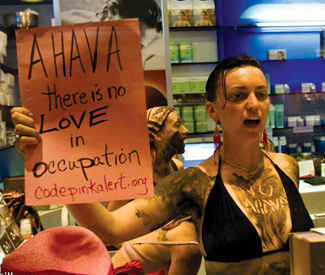
The campaign has seen effects worldwide. Abileah has organized to promote BDS, in particular working to get Bay Area stores to stop carrying Ahava, skin-care products made in what she calls an illegal Israeli settlement in Palestine.

The BDS campaign is “a tried and true nonviolent tactic to get the Israeli government to uphold international law,” Abileah told me. “We decided to be in solidarity.”

But some Jewish leaders feel BDS goes too far.

“The term delegitimizing Israel refers to the intent to eliminate the Jewish and democratic State of Israel by portraying it as an illegitimate nation,” Kahn wrote in an email. “The boycott/divestment/sanctions movement’s leadership has made clear that this is their ultimate agenda and one of the movement’s explicit objectives would achieve that aim resulting in a dire threat to nearly half of the world’s Jewish population that lives in Israel.”

BDS is mentioned several times in the Federation funding guidelines, and stands out as the only specific example of what it means to “undermine the legitimacy of the state of Israel.”


ISOLATE THE EXTREMISTS

But organizations like the Federation and the JCRC aren’t the only ones interested in the path that Israel-Palestine discourse among Bay Area Jews takes. The Reut Institute, a think tank based in Tel Aviv, “has been committed to responding to the assault on Israel’s legitimacy since 2008,” according to the introduction to its 2011 report: “San Francisco as a Delegitimization Hub.”

The report ranks San Francisco and London among the “few global hubs of delegitimization.” It also warns of the dangers of San Francisco in particular as top-delegitimizing city, noting “the role of the San Francisco Bay Area as a generator and driver of broader trends, or as a hub of social experiments…What won’t pass in San Francisco won’t pass anywhere else, and what happens in San Francisco doesn’t stay in San Francisco.'”

San Francisco gets this attention from Reut because of dissent within its Jewish community, which the institute calls globally unparalleled. “While in London delegitimization is being promoted primarily by groups that are not part of the Jewish community…an increasing number of Jews in the San Francisco Bay Area have become ‘agnostic’ towards Israel, and are fueling the delegitimization campaign.”

The report’s authors, Reut’s “national security team,” do not spend much time explaining what “delegitimizing Israel” means. When it does, BDS again stands out as one of the only concrete examples. According to the report, in the Bay Area “the number of individuals who are willing to stand up for Israel is declining while others have been fueling the delegitimization campaign, many times unintentionally, by engaging in acts of delegitimization — namely, actions or campaigns framed by their initiators as a reaction to a specific Israeli policy, which in practice aim to undermine Israel’s political and moral foundations. Examples include support for the BDS movement and the 2010 Gaza Flotilla,” a protest in which ships full of supporters and cargo tried to make it to Palestinian land in violation of an Israeli embargo.

The report labels those looking to delegitimize Israel “extremists.” It warns, however, that those questioning Israel’s policies, when rebuked by its “tradition defenders,” may be swayed into trusting the extremists. It therefore advocates a “broad tent approach,” advising that Jews in the Bay Area initiate a “community-wide deliberation” with an “aim to…drive a wedge between the extremists and those who principally support the legitimacy of Israel’s existence regardless of policy agreements.”

It’s important, according to the report, to make sure that supporters of BDS are seen as “extremists.” The “broad tent” is supposed to contain all Jews, with a diversity of opinions — except those supporting BDS and other acts of “delegitimization.” In light of this goal, the report praises the Federation’s funding guidelines and the Year of Civil Discourse.

“Through the funding guidelines drafted by a JCRC-JCF Working Group…the San Francisco Bay Area has set the standard nationally as the first American Jewish community to develop guidelines delineating red lines that go hand-in-hand with the broad tent approach,” Reut reports. “Additionally, we regard the Year of Civil Discourse…led by the JCRC, as important best practices that could be emulated in other places.”


ORTHODOXY

The Bay Area’s left-leaning Jewish organizations may be influential, but under such a hot spotlight, they tread carefully. Congregation Sha’ar Zahav is one such organization. Last year, the synagogue surveyed its members to test opinions on Israel.

“In general, the survey shows that we have a liberal left-leaning congregation,” said Terry Fletcher, a member of Sha’ar Zahav who now heads a committee created to follow up on the survey results. “People tend to blame, shall we say, both sides of the conflict, both Israelis and Palestinians, somewhat equally.”

Fletcher’s committee has organized events and discussions in the wake of the survey since January. “One idea was that we would start with something non-controversial,” Fletcher told me. “But we couldn’t think of anything that everyone on the committee considers non-controversial.”

The programming has featured discussions on evolving relationships with Israel and questioned their nuances. But Fletcher says they haven’t been able to venture into BDS territory.

“I would love it if we could get to a place where we could actually address that,” Fletcher reflected. “And we would want to do it from a balanced perspective. But it’s such an emotional issue.”

There are practical concerns as well. According to Fletcher, the Federation gives a small amount of funding for scholarships for Sha’ar Zahav’s religious school. The money that funded Fletcher’s committee’s programming came from Sha’ar Zahav’s general fund, when there was enough of it. She says that the committee is now operating without a budget due to tight finances. Even so, if the committee’s programming were to breech the Federation’s funding guidelines, it might put the program in jeopardy.

“To me, that’s what’s so problematic about these guidelines,” Fletcher said. “The guidelines are saying, if you want money from us, we have restrictions on what your organization can do. Even though our programming is not funded by the Federation, because it funds something completely unrelated, it could get cut.”

Fletcher also questions that paradigm of “delegitimizing Israel.”

“I think this is a term that people who defend Israel use to label people who criticize Israel in a certain way,” she said. “Many of us would answer that it’s Israel’s own policies that are delegitimizing Israel in the eyes of the world. I don’t find it a useful term.”

Sha’ar Zahav will be hosting the Reclaiming Jewish Activism panel. Davey Shlasko, a member of the congregation who helped facilitate the new arrangement, thinks the concern about Abileah’s associations were misplaced.

“I think it is unfortunate that the predicted objection to Rae’s other work was enough of a concern to cancel an event that is actually about drawing inspiration from our ancestors,” Shlasko told me via email.

But it’s in looking back at history that the panel acquires so much meaning. “It is safe to say that living in the United States, Jews have never been more empowered, safe, and connected to the community they live in,” mused one source, who wished to remain anonymous. “It is inevitable that with such success, the need to band together changed. The group identity changes. Sometimes it’s that fight, that need to rally together, that keeps the group intact.”

For Abileah, “the event will be Jewish activists talking about our ancestors.” She’s upset about the event’s cancellation, but not surprised.

“For a lot of Jewish people it can be challenging to speak out against this issue because you don’t know where your friends stand on this, or your synagogue or even your family,” she said. “There are a lot of people who we say are PEP: progressive except Palestine. My family and community have been supportive, but I’ve gotten hate mail and threats of violence.”

“It sounds like these Jewish institutions that are censoring have so much power, like they’re the mainstream Jewish voice. But I think the majority of Jewish Americans want a resolution to the conflict and are opposed to the occupation,” she said.

And how does she think Joseph Abileah would react to this situation? “I’d like to think that he would be shocked and hurt by it,” she said. “It’s sad to see so much fracture in the Jewish community over this issue.”

‘Reclaiming Jewish Activism’: easier said than done

0

This article has been updated

A panel in which three local activists will talk about how their Jewish ancestors inform their present-day work seemed harmless enough. But in the Bay Area’s friction-prone Jewish community, its cancellation has led the organizers to write a letter in protest and accusations that one of the area’s biggest funders of Jewish events, the Jewish Community Federation (JCF), is participating in McCarthy-style censorship.

The panelists- Julie Gilgoff, Elaine Ellinson, and Rae Abileah- are all authors and activists. Bend the Arc (formerly the Progressive Jewish Alliance) and the Workmens Circle organized the event. They planned to hold the panel in the Jewish Library, run by the Bureau of Jewish Education (BJE), which funds most of its grants and programming through the JCF.

In late January, the Library cancelled the panel. It will now be held at Congregation Sha’ar Zahav.In an open letter to the Library, the event organizers write, “six decades after McCarthyism’s assault on progressives and their values, we reassert that censorship by association is dangerous and unconscionable.”

David Waksberg, CEO of the Bureau of Jewish Education, said that the BJE didn’t want to suppress the event all together. “In the end we decided not to do it with the understanding that they would be going forward at another location,” he said.

“I don’t know how it’s censorship when you agree, you guys go have your meeting, just don’t have it at my place. How is that censorship? No one’s telling them they can’t speak,” Waksberg said.

“The program involves two authors who have written about activism domestically,” Waksberg explained, “and another individual who has been involved with BDS related to Israel.”

BDS-  the boycott, divestment and sanctions campaign that activists throughout the world have used as a protest against the Israeli occupation in Palestine- is at the center of the conflict, right beside Rae Abileah.

Abileah will take part in the panel to discuss her great uncle, Joseph Abileah, an influential Israeli peace activist and war resister in the 1940s. 

“I grew up in the Bay Area Jewish community,” Abileah told us. “I was part of the Diller Teen Fellowship,” a program BJE puts on, “where we had Jewish gatherings, trainings and meetings.”

She’s also outspoken in her opposition to Israeli occupation in Palestine.

Abileah works for CODEPINK Women for Peace and Jewish Voice for Peace. She has travelled to Gaza CODEPINK in 2009 for a Gaza Freedom March with participants worldwide. She has also organized BDS campaigns.

“In 2005 the Palestinian civil society called for BDS as tried and true nonviolent tactic to get the Israeli government to uphold international law. We decided to be in solidarity,” said Abileah. She has since organized to spread a boycott of Ahava products, “Dead Sea beauty products made in an illegal settlement in the West Bank.”

According to Abileah, “several stores in the Bay Area have stopped carrying it.”

Abileah says she is proud to support nonviolent forms of protest like BDS and hunger striking, noting the lengthy hunger strike undertaken by Palestinian prisoners that ended just yesterday.

The hunger strike was successful. Israel agreed to prisoners’ demands to end solitary confinement (for 19 prisoners), allow more family visits, and to free some of those held in “administrative detention,” or imprisonment without trial, although the demand to end administrative detention was not met.

BDS has had successes worldwide as well. And it has become a controversial issue in the Bay Area.

Waksberg said, “we were concerned this would be an event that would have a lot of people yelling at each other.” This would not be unprecedented.

The ongoing rift is possibly best exemplified by the controversy surrounding the 2009 screening at the SF Jewish Film Festival of Rachel, a documentary about the life of 24-year-old Rachel Corrie. Corrie was killed in 2003 when, as part of a campaign to stop Israeli settlements, she stood in front of a bulldozer on its way to demolish a Palestinian family’s home.

The showing of the film, as well as the festival board’s decision to invite Corrie’s mother to speak after the film, sparked outrage. A portion of the audience booed and hissed at supportive references to the Israeli government.

Largely in response to that event, the JFC rewrote its funding guidelines in 2010. The guidelines outline a policy of not funding organizations that promote violence, attempt to “proselytize Jews away from Judaism” or work on “undermining the legitimacy of Israel.”

The idea of fighting for or against “Israel’s legitimacy” is invoked often but is vague- what exactly does it mean to oppose Israel’s “legitimacy” or “right to exist”? In In the guidelines, one thing seems to clearly do so: BDS campaigns.

In the guidelines’ section on “potentially controversial Israel-related programming,” the types of programs “not consistent with JCF’s policy” has three bullet points, all singling out support for BDS as unacceptable. The programs that are inconsistent are ones where the “overall experience” “endorse or prominently promote the BDS movement,”  “Individual programs that endorse the BDS movement or positions that undermine the legitimacy of the State of Israel,” and co-sponsoring public programs featuring supporters of BDS.

The open letter states that “The Federation’s 2010 revised funding guidelines, which prohibit grant recipients from associating with organizations and individuals who oppose its strong support for Israel, apparently triggered the cancellation.”

Wakberg says that these guidelines didn’t play a role in the BJE’s decision to drop the Reclaiming Jewish Activism panel.

“The JCF didn’t tell us whether or not to do this. This was our decision about what we thought was right for the library,” he said.

“There was going to be an event,” Waksberg said, “and there is going to be an event.”

Yes, the event will go on. But so, it seems, will tensions in the Bay Area’s Jewish community.

Stage Listings May 16-22, 2012

0

Stage listings are compiled by Guardian staff. Performance times may change; call venues to confirm. Reviewers are Robert Avila, Rita Felciano, and Nicole Gluckstern. Submit items for the listings at listings@sfbg.com. For further information on how to submit items for the listings, see Picks.

THEATER

OPENING

My Tia Loca’s Life of Crime Bindlestiff Studio, 185 Sixth St, SF; www.brownpapertickets.com. $20. Opens Thu/17, 8pm. Runs Thu-Sat, 8pm. Through June 2. Guerrilla Rep performs a new play by Roy Conboy, chair of SF State’s Playwriting Department.

BAY AREA

The Great Divide Ashby Stage, 1901 Ashby, Berk; www.shotgunplayers.org. $20-30. Previews Wed/16-Thu/17 and May 23-24, 7pm; Fri/18-Sat/19, 8pm; Sun/20, 5pm. Opens May 25, 8pm. Runs Wed-Thu, 7pm; Fri-Sat, 8pm; Sun, 5pm. Through June 24. Shotgun Players performs Adamn Chanzit’s drama about the hot topic of fracking, inspired by Ibsen’s An Enemy of the People.

ONGOING

“Best of PlayGround 16: A Festival of New Writers and New Plays” Thick House, 1695 18th St, SF; www.playground-sf.org. $10-40. Thu-Sat, 8pm; Sun, 7pm. Through May 27. Seven short plays and musicals by Bay Area authors, plus a staged-readings series.

“DIVAfest” Exit Theatreplex, 156 Eddy, SF; (415) 673-3847, www.theexit.org. $15-25. Through May 27. Entering its second decade, the estrogen-centric DIVAfest at the Exit is so jam-packed with activities — workshops, burlesque, symposiums, readings, singer-songwriter nights — you’d be forgiven for not realizing that plays are also on the menu. But in fact, they are the main course. This year’s smorgasbord features three very different solo shows, each encapsulating a wholly unique female voice. Genevieve Jessee’s Girl in, but not of, the ‘Hood, which won a “Best of the Fringe Festival” award in 2011, has since been reworked with a new director, Exit Theatre stalwart Michelle Talgarow, rendering it sharper and more comic without minimizing the inner turmoil experienced by the main character, Jessee herself. Catherine Debon’s Alma Colarada, which also won a “Best of the Fringe” in 2011, is an emotionally-charged, experimental roller-coaster ride that appropriately begins and ends on a train. Detailing a family history fraught with World War II resistance fighting, concentration camps, communist sympathies, and endless trains, Debon nimbly vacillates between the neuroses of the present day and the deep despair of the past, while still finding a way to end to piece on a triumphal note. Last but by no means least, the laugh-out-loud romantic farce Pussy, by Maura Halloran, details the tricky intricacies of a lesbian-feline-nosy neighbor ménage à “cat-re”. Yes, it’s about a cat … hmmm, or is it? You should really take the opportunity to find out. (Gluckstern)

Down to This Exit Stage Left, 156 Eddy, SF; www.sleepwalkerstheatre.com. $12-20. Thu-Sat, 8pm. Through May 26. Thirty-something Charlie (Derek Fischer) plays this little game with himself where he tosses a rotten egg at the kitchen trash as if he were making a free-throw in sudden-death overtime. This little moment, innocent and ordinary on the surface, puzzles one-night stand Donna (Tonya Narvaez) after she happens on the scene. That she would be baffled, even momentarily disturbed by so common a flight of sports-dude imagination is our first taste of the strained mechanics of Adam Chanzit’s slight pulp revenge tale: sure enough, this game of chance turns out to be a (pretty ridiculous) psychopathology ruling Charlie’s world. When a moment later his equally imbalanced and estranged wife (Kendra Lee Oberhauser), fresh from prison and packing heat, bursts in on the two lovebirds, Charlie’s fate-game will become the tortured trope in a table-turning showdown between all three — plus Charlie’s hapless roommate (Jomar Tagatac) and his crew-cut–sporting sidekick (Shane Rhoades). Chanzit offers some mild surprises and amusing banter along the way in Sleepwalkers’ world premiere — helmed by artistic director Tore Ingersoll-Thorp — but the plot and characters are stretched thin, and the tension often grows slack despite the able and likable cast. By the time the story climaxes in a coin-toss of an ending (designed to work out one of two ways, depending), it’s too big a muddle to generate more than a momentary quiver of anticipation over anybody’s fate. (Avila)

Endgame and Play American Conservatory Theater, 415 Geary, SF; (415) 749-2228, www.act-sf.org. $10-95. Opens Wed/16, 8pm. Runs Tue-Sat, 8pm (also Wed, Sat-Sun, 2pm; no matinees Wed/16 or May 23; Tues/22 performance at 7pm). Through June 3. ACT presents two absurd dark comedies by Samuel Beckett.

Fwd: Life Gone Viral Marsh San Francisco, 1062 Valencia, SF; (415) 282-3055, www.themarsh.org. $20-50. Thu, 8pm; Sat, 8:30pm; Sun, 7pm. Through June 10. The internet becomes comic fodder for creator-performers Charlie Varon and Jeri Lynn Cohen, and creator-director David Ford.

*Hot Greeks Hypnodrome Theatre, 575 10th St, SF; www.brownpapertickets.com. $30-35. Thu/17-Sat/19, 8pm. Cheap thrills don’t come much cheaper or more thrilling than at a Thrillpeddlers musical extravaganza, and their newly remounted run of Hot Greeks affords all the glitter-dusted eye-candy and labyrinthian plot points we’ve come to expect from their gleefully exhibitionist ranks. Structured as loosely as possible on Aristophanes’ Lysistrata, Greeks appropriately enough follows the trials and tribulations of a college sorority tired of “losing” their boyfriends to the big football match every year (Athens U vs. Sparta Tech). Pledging to withhold sex from the men unless they call off the game results in frustration for all, only partially alleviated by the discovery that sexual needs can be satisfied by “playing the other team,” as it were. But like other Cockettes’ revivals presented by the Thrillpeddlers, the momentum of the show is carried forward not by the rather thinly-sketched narrative, but by the group song-and-dance numbers, extravagant costuming (and lack thereof), ribald wordplay, and overt gender-fuckery. In addition to many TP regulars, including a hot trio of Greek columns topped with “capital” headdresses who serve as the obligatory chorus (Steven Satyricon, Ste Fishell, Bobby Singer), exciting new additions to the Hypnodrome stage include a bewigged Rik Lopes as stalwart sister Lysistrata, angelically-voiced Maggie Tenenbaum as the not-so-angelic Sodoma, and multi-faceted cabaret talent Tom Orr as heartthrob hunk Pendulum Pulaski. (Gluckstern)

It’s All the Rage Studio Theater, Marsh San Francisco, 1062 Valencia, SF; (415) 282-3055, www.themarsh.org. $15-50. Thu, 8pm; Sat, 8:30pm, Sun, 7pm. Extended through May 27. Longtime comedian and radio host Marilyn Pittman’s solo play wrestles with the legacy of her parents’ violent deaths in a 1997 murder-suicide initiated by her father. It’s disturbing material that Pittman, a stout middle-aged woman with a gregarious and bounding personality, approaches indirectly via a good deal of humor — including recounting the first time she did her growing-up-lesbian bit before her mother in a DC comedy club. But the pain and confusion trailing her for 13 years is never far behind, whether in accounts of her own battle with anger (and the broken relationships it has left in its wake) or in ominous memories of her too complacent mother or her charming but domineering father, whose controlling behavior extended to casually announcing murderous dreams while policing the boundaries of his marriage against family interference. A fine mimic, Pittman deploys a Southern lilt in playing each parent, on a stage decorated with a hint of their Southwestern furnishings and a framed set of parental photographs. In not exactly knowing where to lay blame for, or find meaning in, such a horrifying act, the play itself mimics in subtler form the emotional tumult left behind. There’s a too brief but eerie scene in which her veteran father makes reference to a murder among fellow soldiers en route to war, but while PTSD is mentioned (including as an unwanted patrimony), the 60-minute narrative crafted by Pittman and director David Ford wisely eschews any pat explanation. If transitions are occasionally awkward and the pace a bit loose, the play leaves one with an uncomfortable sense of the darker aspects of love, mingled with vague concentric histories of trauma and dislocation in a weird, sad tale of destruction and staying power. Note: review from the show’s 2009 run at the Marsh San Francisco. (Avila)

A Raisin in the Sun Buriel Clay Theater, African American Art and Culture Complex, 762 Fulton, SF; 1-800-838-2006, www.african-americanshakes.org. $10-35. Fri-Sat, 8pm (no show May 25); Sun, 3pm. Through May 27. African-American Shakespeare Company performs Lorraine Hansberry’s classic drama.

“San Francisco International Arts Festival” Various venues, SF; www.sfiaf.org. Free-$70. Through Sun/20. Performance festival featuring theater and dance from Cuba, Iran, Russia, the U.S., China, Japan, Estonia, and more.

Tenderloin Exit on Taylor, 277 Taylor, SF; (415) 525-1205, www.cuttingball.com. $10-50. Thu, 7:30pm; Fri-Sat, 8pm (also Sat, 2pm); Sun, 5pm. Through May 27. Annie Elias and Cutting Ball Theater artists present a world premiere “documentary theater” piece looking at the people and places in the Cutting Ball Theater’s own ‘hood.

To Be Young, Gifted and Black: Honoring Lorraine Hansberry In Her Own Words Gough Street Playhouse, Trinity Episcopal Church, 1620 Gough, SF; www.custommade.org. $22-28. Thu-Sat, 8pm; Sun, 7pm. Through May 27. Custom Made Theater and Multi Ethnic Theater collaborate on this tribute to the groundbreaking playwright.

The Waiting Period MainStage, Marsh San Francisco, 1062 Valencia, SF; (415) 282-3055, www.themarsh.org. $15-50. Fri, 8pm; Sat, 5pm. Extended through July 7. Brian Copeland (comedian, TV and radio personality, and creator-performer of the long-running solo play Not a Genuine Black Man) returns to the Marsh with a new solo, this one based on more recent and messier events in Copeland’s life. The play concerns an episode of severe depression in which he considered suicide, going so far as to purchase a handgun — the title coming from the legally mandatory 10-day period between purchasing and picking up the weapon, which leaves time for reflections and circumstances that ultimately prevent Copeland from pulling the trigger. A grim subject, but Copeland (with co-developer and director David Ford) ensures there’s plenty of humor as well as frank sentiment along the way. The actor peoples the opening scene in the gun store with a comically if somewhat stereotypically rugged representative of the Second Amendment, for instance, as well as an equally familiar “doood” dude at the service counter. Afterward, we follow Copeland, a just barely coping dad, home to the house recently abandoned by his wife, and through the ordinary routines that become unbearable to the clinically depressed. Copeland also recreates interviews he’s made with other survivors of suicidal depression. Telling someone about such things is vital to preventing their worst outcomes, says Copeland, and telling his own story is meant to encourage others. It’s a worthy aim but only a fitfully engaging piece, since as drama it remains thin, standing at perhaps too respectful a distance from the convoluted torment and alienation at its center. (Avila)

The Wrong Dick Dark Room Theater, 2263 Mission, SF; www.darkroomsf.com. $20. Thu-Sat, 8pm. Through May 26. Ham Pants Productions presents a noir-inspired comedy set in San Francisco.

Zorba Eureka Theater, 215 Jackson, SF; (415) 255-8207, www.42ndstmoon.org. $20-50. Wed/16, 7pm; Thu/17-Fri/18, 8pm; Sat/19, 6pm; Sun/20, 3pm. 42nd Street Moon performs Kander and Ebb’s musical salute to Greece.

BAY AREA

Crevice La Val’s Subterranean, 1834 Euclid, Berk; www.impacttheatre.com. $10-20. Thu-Sat, 8pm. Through June 9. Just in case you were feeling panicked about the persistently recessed state of the economy and what might be your own less than ideal place in it, the Impact Theatre and Playground co-presentation of Lauren Yee’s Crevice might help to put your woes into perspective. That’s because slacker sibs Liz (Marissa Keltie) and Rob (Timothy Redmond) are only slightly exaggerated representatives of Generation Next whose penchant for making lackluster life choices has sentenced them to an indefinite prison term of couch-surfing and Teen Mom marathons in their childhood home. Naturally, they desire change, but it’s not until their mother (Laura Jane Bailey) starts having a hot fling with a younger man that things do. In an egregious breach of the TMI line, it appears that Mom’s orgasms open a “crevice” into an alternate reality that Rob and Liz subsequently fall into. Thus removed from the entropy of their former reality they begin testing the parameters of their new one, quickly coming to the realization that sometimes the alternatives to what you already have are even worse. Getting home again is a convoluted, not fully mapped-out process, but in the interim, their navigation of their erstwhile wonderland offers most of the play’s best lines as well as the uncomfortably effective transformation of Reggie D. White from Liz’s nerdish best buddy to multi-lingual Mafia killer and casual sadist. (Gluckstern) (Gluckstern)

A Hot Day in Ephesus Live Oak Theatre, 1301 Shattuck, Berk; info@aeofberkeley.org. $12-15. Fri/18-Sat/19, 8pm. Actors Ensemble performs the world premiere of a musical based on Shakespeare’s Comedy of Errors.

*The Kipling Hotel: True Misadventures of the Electric Pink ’80s New venue: Marsh Berkeley, 2120 Allston, Berk; (415) 282-3055, www.themarsh.org. $20-50. Sat, 8:30pm; Sun, 7pm. Extended through June 10. This new autobiographical solo show by Don Reed, writer-performer of the fine and long-running East 14th, is another slice of the artist’s journey from 1970s Oakland ghetto to comedy-circuit respectability — here via a partial debate-scholarship to UCLA. The titular Los Angeles residency hotel was where Reed lived and worked for a time in the 1980s while attending university. It’s also a rich mine of memory and material for this physically protean and charismatic comic actor, who sails through two acts of often hilarious, sometimes touching vignettes loosely structured around his time on the hotel’s young wait staff, which catered to the needs of elderly patrons who might need conversation as much as breakfast. On opening night, the episodic narrative seemed to pass through several endings before settling on one whose tidy moral was delivered with too heavy a hand, but if the piece runs a little long, it’s only the last 20 minutes that noticeably meanders. And even with some awkward bumps along the way, it’s never a dull thing watching Reed work. (Avila)

Not Getting Any Younger Marsh Berkeley, 2120 Allston, Berk; (415) 282-3055, www.themarsh.org. $15-50. Fri, 8pm; Sat, 5pm. Extended through June 30. Marga Gomez is back at the Marsh, a couple of too-brief decades after inaugurating the theater’s new stage with her first solo show — an apt setting, in other words, for the writer-performer’s latest monologue, a reflection on the inevitable process of aging for a Latina lesbian comedian and artist who still hangs at Starbucks and can’t be trusted with the details of her own Wikipedia entry. If the thought of someone as perennially irreverent, insouciant, and appealingly immature as Gomez makes you depressed, the show is, strangely enough, the best antidote. Note: review from the show’s 2011 run at the Marsh San Francisco. (Avila)

The Odyssey Angel Island; (415) 547-0189, www.weplayers.org. $40-76 (some tickets include ferry passage). Sat-Sun, May 25, and June 1, 10:30am-4pm (does not include travel time to island). Through July 1. We Players present Ava Roy’s adaptation of Homer’s epic poem: an all-day adventure set throughout the nature and buildings of Angel Island State Park.

The World’s Funniest Bubble Show Marsh Berkeley, TheaterStage, 2120 Allston, Berk; (415) 826-5750, www.themarsh.org. $8-50. Extended run: May 5-27 (Sat-Sun, 11am); June 3-July 15 (Sun, 11am). Louis “The Amazing Bubble Man” Pearl returns with this kid-friendly, bubble-tastic comedy.

PERFORMANCE/DANCE

BATS Improv Bayfront Theater, Fort Mason Center, Marina at Laguna, SF; www.improv.org. Fri, 8pm, through May 25: “Director’s Cut!,” $20. Sat, 8pm, through May 26: “Improvised Murder Mystery,” $20.

“A Celebration of Harold Pinter” Royce Gallery, 2901 Mariposa, SF; www.brownpapertickets.com. Fri/18-Sat/19, 7:30pm. $30. John Malkovich directs Julian Sands in this tribute to the famed author and playwright.

“Chanticleer and the Fox: Nun’s Priest’s Tale” Seventh Avenue Performances, 1329 Seventh Ave, SF; www.chaucertheater.org. Sat/19, 7:30pm. $20. Also Sun/20, 2pm, Christ Presbyterian Church, 620 del Ganado, San Rafael. Chaucer Theatre performs musical theater inspired by Canturbury Tales.

City Ballet School Cowell Theater, Fort Mason Center, Marina at Laguna, SF; www.fortmason.org. Sat/19-Sun/20, 2pm. $28. “Spring Showcase” featuring new choreography by Yuri Zhukov.

“Die Blonde Cabaret” Stage Werx Theatre, 446 Valencia, SF; www.stagewerx.org. Mon/21, 6:30pm. $5. Stand-up and burlesque performer Marié Lake presents her comedy cabaret.

“Drinking/Songs: A Night of Beer and the Music That Goes With It” 50 Mason Social House, 50 Mason, SF; www.brownpapertickets.com. Wed/16, 8pm. $20. Singing, beer-drinking, a drinking-songs competition, and more.

“Elect to Laugh” Studio Theater, Marsh San Francisco, 1062 Valencia, SF; (415) 282-3055, www.themarsh.org. Tue, 8pm. Ongoing through Nov 6. $15-50. Will Durst and friends perform in this weekly political humor show that focuses on the upcoming presidential election.

“The Heart of Mexico” Yerba Buena Center for the Arts, Novellus Theater, 700 Howard, SF; (415) 978-2787, www.ybca.org. Sun/20, 3pm. $20-39. Folkloric dance from Mexico performed by the acclaimed Compañia Mazatlán Bellas Artes.

“The Keys to Heaven” Exit on Taylor, 277 Taylor, SF; www.cuttingball.com. Sun/20, 1pm. Free. Cutting Ball Theater presents this August Strindberg reading as part of its “Hidden Classics” series.

“Low Down” Z Space, Theater Artaud, 450 Florida, SF; www.levydance.org. Thu/17-Fri/19, 8pm; Sat/20, 2pm. $18-25. LEVYdance and the Foundry present a world premiere collaboration exploring the body’s ability to tell a story.

“Man vs. Wild: Tales of the Great Outdoors!” Intersection for the Arts, 925 Mission, SF; www.litupwriters.com. Wed/16, 7:30pm. $7. Humor reading with the LitUp Writers.

“Martini Cabaret Burlesque” Biscuits and Blues, 401 Mason, SF; www.eventbrite.com. Sun/20, 6pm. $20. Tasteful striptease with costumes and props.

“Porchlight Storytelling Series: I Surrender” Verdi Club, 2424 Mariposa, SF; www.brownpapertickets.com. Mon/21, 8pm. $15. True tales with Harold Atkins, Dennis Collinson, Heather Gold, and more.

“Previously Secret Information” Stage Werx Theatre, 446 Valencia, SF; www.stagewerx.org. Sun/20, 7pm. $15. Storytelling with Paul Myers, Josh Healey, and Joe Klocek.

“Qcomedy Showcase” Stage Werx Theatre, 446 Valencia, SF; www.stagewerx.org. Mon/21, 8pm. $8-20. With Lisa Geduldig, Matina Bevis, and more.

“Ruth Asawa San Francisco School of the Arts 30th Year Anniversary Dance Concert” Palace of Fine Arts, 3301 Lyon, SF; www.sfsota.org. Fri/18-Sat/19, 8pm. $18-28. Student dancers, guests, and artists in residence perform to celebrate the 30th anniversary of this arts and educational institution.

“Smack Dab” Magnet, 4122 18th St, SF; www.magnetsf.org. Wed/16, 8pm. Free. Open mic with featured reader Jai Arun Ravine.

“Tales of Pangu: Lifting Up the Sky” CounterPulse, 1310 Mission, SF; www.counterpulse.org. Sat/19, 8pm. $10-20. Eth-Noh-Tec storytelling theater and Gay Asian Pacific Alliance present this multimedia performance collaboration.

“The Vagina Monologues” Castro Theatre, 429 Castro, SF; (415) 621-6120. Thu/17, 7:30pm. $30. A one-night-only performance in honor of Asian Pacific American Heritage Month.

“Verbatim Verboten” Garage, 715 Bryant, SF; www.brownpapertickets.com. Fri/18-Sat/19, 8pm. $15. The “invasion-of-privacy revue” created by Michael Martin and hosted by Wonder Dave Crady.

11th Annual Pagan Festival and Parade

0

Join us at the 11th Annual Pagan Festival & Parade honoring 2012 Keeper of the Light-T. Thorn Coyle with a day of music, dance, speakers, altars, vendors, Druid Story Telling Pavilion, Authors’ Circle, Children’s Crafts, and Community Info Booths. Performers: Evelie Posch with KSME, Shay Black, Ariellah & Deshret Dance Company-Dark Fusion Belly Dance, Anaar-Dark Imaginations Dance, Land of the Blind, Amelia Hogan, the DulciMates and The Empress. Speakers and Authors: Diana L. Paxson, Anne Hill,  Rabbit Matthews, Joi Wolfwomyn, Glenn Turner, Crystal Blanton and Stan Morey II. Best Costume Awards for Youth and Adults. Parade at noon in the streets of downtown Berkeley. More info here.
 
Saturday, May 12 from 10am-5:30pm @ Civic Center Park, Berk. | Free

On the Cheap May 9-15, 2012

0


WEDNESDAY 9

They Make Us Dangerous author reading and chitchat Modern Times Bookstore Collective, 2919 24 St., SF. (415) 282-9246, www.mtbs.com, 7-10pm, free. Step onto the Cold War battlefield that was Bolivia from 1964 to 1980, as you listen to the first hand account of a Catholic nun from the US’s Midwest whose doctoral research takes her to this mesmerizing but poverty-stricken region. As revolution clashes with oppression and boils over in dictatorship, author Frances Payne closes the book to answer and discuss your thoughts and inquiries.

Local Authors Night Hayward Area Historical Society, 22380 Foothill Blvd., Hayward. (510) 581-8172, www.haywardhistory.org, 7pm, free. Prepare your have your hairs stand on end as East Bay author Alec Nevala-Lee reads part of his thriller, The Icon Thief, and buckle up for an emotional ride as David Teves, also of the East Bay, reads his novel, A Matter of Time, and takes you one man’s journey through his own personal hell.


THURSDAY 10

Plantosaurus Rex prehistoric plant exhibition and time warp Conservatory of Flowers, 100 JFKennedy Dr., SF. (415) 831-2090, www.conservatoryofflowers.org, 10am-4pm Tuesdays-Sundays, $5 general for youth, seniors, students and those with proof of SF residency. $7 general. Today, the Conservatory kicks off a five-month exhibit (ending Oct. 21) that transports you 250-65 million years back in time on a journey through the living plant life and model animals of the Mesozoic Era.


FRIDAY 11

MFA Graduate Student Art Exhibition opening reception Phoenix Hotel, 601 Eddy St., SF. www.sfai.edu. noon-10pm, free. The San Francisco Art Institute introduces you to the love-labors of 100 MFA grad students to tantalize your senses with work from across the artistic disciplines, as you meander through the open guestrooms and poolside courtyard of this funky hotel.

SFAI MFA Student Film Screening SFMOMA, Phyllis Wattis Theater, 151 3 St., SF. www.sfai.edu. 1pm-3pm, free. From an experimental documentary about the Occupy movement to an animated short starring an otter and lemur living in a submarine, these works by graduating MFA film students will introduce you to the filmmakers of the future.


SATURDAY 12

Making Mothers Visible Pop-Up Photography Arts Event San Francisco Main Public Library, Civic Center, 100 Larkin St., SF. www.imow.org. 10am-3pm, free. Just in time for Mother’s Day, the International Museum of Women invites you to celebrate moms the world around. Watch as volunteers install more than 50 large-scale photographs of mothers and midwives on the exterior of the library. This family-friendly day also features free art activities including face painting for kids and a hands-on art workshop for adults.

Paradigm Shift Pagan Festival and Parade Martin Luther King Jr., Civic Center Park, 2151 Martin Luther King Jr. Way, Berkeley. www.thorncoyle.com. 10am-5:30pm, free. March amid belly dancers, storytellers, music, and merriment in the eleventh annual procession of the Pagan Festival. You and your brood could win a best costume award if you arrive decked out in your finest tribal attire.

Rocket Dog Rescue Happy Hour Benefit Bliss Bar, 4026 24 St., SF. (877) 737-3647, adopt@rocketdogrescue.org. 5pm-7:30pm, free with $10 recommended donation. Bliss out at the bar with fellow K-9 lovers as you enjoy the music of Bright Side Band. All proceeds will benefit dogs in need via Rocket


SUNDAY 13

How Weird Street Faire, Electronic Music Festival Howard and 2nd St., SoMa SF. www.HowWeird.org. 12pm-8pm, $10 donation requested. When the Dalai Lama was asked what the average person could do to promote world peace, he replied, “They can make festivals, bring people together.” So: 13 stages of music will dot 13 city blocks for this 13th annual party to celebrate peace and creativity via technical sounds, visual innovations and thousands of people.


MONDAY 14

Coit Tower celebrate historic murals at Booksmith The Booksmith, 1644 Haight St., SF. (415) 863-8688, www.booksmith.com. 7:30pm, free. On the June 5 ballot, local voters will consider Prop. B, an initiative asking the city to prioritize restoration and preservation of 27 New Deal-era murals at Coit Tower atop Telegraph Hill. This literary evening is dedicated to reading about and reliving the history of Coit Tower and its art-laden walls.

SHOUT Storytelling Grand Lake Coffee House, 440 Grand Ave., Oakl. www.theshoutstorytelling.com. 7:30pm, $5–<\d>$20, pay what you will. Listen to true but incredible 10-minute stories from the lives of local raconteurs in an informal coffee house setting that will feel like a party in your own living room (that you don’t have to clean up). Feeling the gift of gab? Throw your name into the hat in hopes of getting picked for one of the six-minute wild card slots.


TUESDAY 15

Feast of Words; A literary potluck to laugh with a funny lady SOMArts Cultural Center, 934 Brannan St, SF. Feastofwords.somarts.org, feastofwords@somarts.org. 7pm-9pm, $10 advance, $5 with potluck dish, $12 at door. Following a nationwide tour, Oakland-based funny girl writer, Cassie J. Sneider, reads from her new book Fine, Fine Music at this monthly potluck. This intimate party brings writers, foodies, and any combination of the two, together to — well — eat, write, and laugh.

20 percent by 2020

52

steve@sfbg.com

There’s no doubt that San Francisco is one of the best cities in the United States for bicyclists, a place where near universal support in City Hall has translated into regular cycling infrastructure improvements and pro-cyclist legislation, as a slew of activists and politicians will attest to on May 10 after dismounting from their Bike to Work Day morning rides.

But even the most bike-friendly U.S. cities — including Portland, Ore., Davis, Chicago, and New York City — are still on training wheels compared to our European counterparts, such as Amsterdam and Copenhagen, where around 30 percent of all vehicle trips are by bike. By comparison, even the best U.S. cities are still in the low single digits. [Correction: Davis, which stands alone among U.S. cities, is actually at about 15 percent bike mode share]

Board President David Chiu and other city officials proposed to aggressively address that gap two years ago after returning from a fact-finding trip to Europe that also included Ed Reiskin, executive director of the San Francisco Municipal Transportation Agency (SFMTA), the agency charged with implementing city policies that favor transit riders, cyclists, and pedestrians over motorists.

Chiu sponsored legislation setting the goal of having 20 percent of all vehicle trips in San Francisco be by bike by the year 2020 and calling for the SFMTA to do a study on how to meet that goal. It was overwhelmingly approved by the Board of Supervisors and signed by Mayor Ed Lee, who has regularly cited it and proclaimed his support for what it now official city policy.

But the city will fail to meet that goal, probably by a significant amount, unless there is a radical change on our roadways.

The latest SFMTA traffic survey, released in February, showed that bikes represent about 3.5 percent of vehicle trips, a 71 percent increase in five years. While the San Francisco Bicycle Coalition (SFBC) lauded that gain as “impressive,” it would mean a 571 percent increase in the next seven years to meet the 2020 goal.

The SFMTA study on how to meet the goal is long overdue, with sources telling us its potentially controversial conclusions have it mired by internal concerns and divisions. SFMTA spokesperson Paul Rose told us in March that it was coming out in April, and now he won’t say when to expect it and he won’t even make its authors available to answer our questions.

“We want to make sure everything is addressed before the plan is finalized,” he told us, acknowledging that it’s been a difficult process. “The challenge of reaching the goal is ambitious.”

Chiu acknowledges that the goal he set probably won’t be met and expressed frustration with the SFMTA. “I’m disappointed that two years after we set that goal, there is still no plan,” he told us, adding that to make major gains “will take leadership at the top” and a greater funding commitment to this cost-effective transportation option: “We’re spending budget dust on something that we say is a priority for the city.”

Reiskin also seemed to acknowledge the difficulty in meeting the goal when we asked him about it and he told us, “To get to 20 percent would be a quantum leap, no question, but the good news is there’s strong momentum in the right direction.”

Yet on Bike to Work Day, it’s worth exploring why we’re failing to meet our goal and how we might achieve it. What would have to happen, and what would it look like, to have 20 percent of traffic be people on bikes?


CLOSING THE GAP

SFBC Executive Director Leah Shahum said that all the group’s studies show safety concerns are by far the biggest barrier to getting more people on bikes. Most people are simply scared to share space with automobiles, so SFBC’s top priority has been creating more bikes lanes, particularly lanes that are physically separated from traffic, known as cycletracks, like those on a portion of Market Street.

“We’ve seen it time and again, when you build, they will come,” Shahum said. “People want to feel safe. They want dedicated space on the roadways.”

SFBC’s Connecting the City proposal calls for the creation of four crosstown colored cycletracks totaling 100 miles. Other bike activists emphasize the importance of projects that close key gaps in the current bike network, such as the dangerous section along Oak and Fell streets that separates the Panhandle from the Wiggle, scary spots that deter people from cycling.

That safety concern — and the possibilities for making cycling a more attractive option to more people — extends to neighborhood streets that don’t have bike lanes, where Shahum said measures to slow down automobile traffic and increase motorist awareness of cyclists would help. “What we’re talking about is a calmer, safer, greener, neighborhood-focused street,” she said.

Bike advocates say the goal is to make cycling a safe and attractive option for those 8 to 80 years old, a goal that will require extensive new bike infrastructure — not just new bike lanes, but also more dedicated bike parking — as well as education programs for all road users.

“What I hope is on the drawing board is infrastructure that will make more people feel safe riding, particularly women,” SFMTA board member Cheryl Brinkman, a regular cyclist, told us.

Shahum also praised the Bay Area Rapid Transit District’s new Bike Plan, which seeks to double the percentage of passengers who bike to stations (from 4 percent now up to 8 percent in 10 years), saying Muni should also take steps to better accommodate cyclists. And she praised the city’s bike-sharing program that will debut in August, making 1,000 bikes available to visitors.

But to realize the really big gains San Francisco would need to hit 20 percent by 2020 would take more than just steadily increasing the mileage of bike lanes, says Jason Henderson, a San Francisco State University geography professor who is writing a book on transportation politics. It would take a systemic, fundamental shift, one either deliberately chosen or forced on the city by dire circumstances.

“If gasoline goes to $10 per gallon, sure, we’ll get to 20 percent just because of austerity,” Henderson said. But unless energy prices experience that kind of sudden shock, which would idle cars and overwhelm public transit, thus forcing people onto bikes, getting to 20 percent would take smart planning and political will. In fact, it will require the city to stop catering to drivers and accommodating cars.

Henderson noted that bicycle mode share is as high as 10 percent in some eastern neighborhoods, such as the Mission District, Lower Haight, and in some neighborhoods near Civic Center. “In this part of the city, Muni is crowded and young people get tired of Muni being such a slow option,” Henderson said. “If you live within a certain radius of downtown, it’s easier to bike.”

To build on that, he said the city needs to limit the number of parking spaces built in residential projects in the city core even more than it does now, as well as adding substantially more affordable units. “The most bikeable parts of the city have massive rent increases,” he said. “We have to make sure affordable housing is wrapped around downtown.”

Henderson said city leaders need to show more courage in converting car lanes and street parking spaces into bike lanes, creating bike corridors that parallel those focused on cars or transit, and exempting most bike projects from the detailed environment review that slow their implementation. At the same time, he said the city needs to drastically expand Muni’s capacity to give people more options and compensate for bike improvements that may make driving slower.

“If you want 20 percent bike mode share, you need 30 percent on transit,” he said, noting that public transit ridership in San Francisco is now about 17 percent, far less than in the great bike cities of Amsterdam and Copenhagen, which made a commitment to reducing reliance on the automobile starting in the 1970s. “It’s like a puzzle.”


BARRIERS AND BACKLASH

The kind of active urban planning that Henderson advocates would be anathema to many San Franciscans, particularly people like Rob Anderson, the blogger and activist who sued San Francisco over the lack of studies supporting its Bike Plan and created a four-year court injunction against bike projects that just ended two years ago.

“The only way you could get to 20 percent is creating gridlock in San Francisco. I don’t think it’s going to happen. City Hall is adopting a slogan as transportation policy,” he told us. “It’s a statement of pro-bike, anti-car principle, but it’s not a realistic transportation policy.”

Anderson considers bicycles to be dangerous toys that will never be used by more than a small minority of city residents, believing the majority will always rely on automobiles and there will be a huge political backlash if the city continues to take space from cars for bikes or open space.

Many city officials and cycling advocates say making big gains means convincing people like Anderson that bicycles are not just a viable transportation option, but an important one to facilitate given global warming, oil wars, public health issues, and traffic congestion that will only worsen as the population increases.

“We need to help all San Franciscans see cycling as a legitimate transportation option,” Chiu said. Or as Shahum put it, “It’s prioritizing space for biking, walking, and transit over driving.”

Shahum said the city’s political leaders seem to get it, but she doesn’t feel the same sense of urgency from the city’s planners.

“I feel like the bureaucracy needs to get on board. We have strong political support and the public support is growing,” Shahum said. “We’ve set ambitious, worthwhile, and I think achievable goals, yet nobody is holding the city accountable….It can’t just be a political platitude, it needs to be an actual plan with measureables and people held accountable.”

She cited studies showing that the most bike-friendly cities in the U.S. are spending between $8 million and $40 million a year on bike infrastructure and education programs, “but San Francisco is spending more like $2-3 million, which is peanuts…San Francisco has got to start putting its money where its mouth is to improve biking numbers.”

It’s cheap and easy to stripe new bike lanes. “It’s one of the best investments we can make in terms of mode share,” Reiskin said. That makes cycling advocates question the city’s true commitment to goals like the 2020 policy. “We will need more investment,” Chiu said, “but compared to other modes of transportation, it is far cheaper per mile.”


POLITICAL WILL

So why then has San Francisco slipped back into a slow pace for doing bike projects following a year of rapid improvements after the bike injunction was lifted? And why does the city set arbitrary goals that it doesn’t know how to meet? The answer seems to lie at the intersection of the political and the practical.

“We need a more detailed and comprehensive strategy that says this is where we need to be in five years and this is how we get there,” Sup. David Campos, who chairs the San Francisco Transportation Authority, told us. “I feel like the commitment is there, but it’s a question of what resources you have to devote to that goal.”

But it’s also a question of how those resources are being used, and whether political leaders are grabbing at low-hanging fruit rather than making the tough choices to complete the city’s bike network and weather criticisms like those offered by Anderson.

It often seems as if SFMTA is still prioritizing political projects or experimenting in ways that waste time and money. For example, the most visible improvement to the bike network in the last year, and the one most often cited by Mayor Lee, is the new cycletracks on JFK Drive in Golden Gate Park. But they do little to make cycling more attractive and they may even exacerbate tensions between cyclists and drivers.

It was one of two major bike projects that Mayor Lee announced on Bike to Work Day last year, and it seemed to have more to do with politicians announcing more bike lane mileage that with actually improving the bike network.

The other project Lee announced, just a few blocks of bike lanes on Fell and Oak streets, really was a significant bike safety advance that SFBC has been seeking for several years. But Lee failed to live up to his pledge to install them by the end of 2011 after neighbors complained about the lost parking spots, and the project was pushed back to next year at the earliest.

“We’re talking about three blocks. It’s relatively small in scope but huge in impacts,” Shahum said of the project. “If the pace of change on these three blocks is replicated through the city, it’ll take hundreds of years to meet the [20 percent] goal.” But Lee Press Secretary Christine Falvey said: “The mayor is very much committed to the aggressive goals set to get to 20 percent by 2020 and the city is moving in the right direction. He has also always supported the Oak Fell project and we’re seeing progress.” Yes, but not the kind of progress the city would need to make to meet its own goal. “Chicago is really the leader right now,” Shahum said, noting Chicago Mayor Rahm Emanuel’s commitment to building 25 miles a year of new cycletracks and the city’s advocacy for getting more federal transportation money devoted to urban cycling improvements. “Where does San Francisco fit in this? Do we want to be at that level or not?”

Sam McPheeters is not the angriest man in the world

0

Sam McPheeters has a way with words, and that has translated from lyrics to journalism to his first official solo novel, The Loom of Ruin (Mugger Books, 2012).

The former frontperson to a trilogy of exciting punk and experimental acts (Born Against, Men’s Recovery Project, Wrangler Brutes) has long written columns for the likes of VICE Magazine and more, along with his own fanzines. But his first published output came at age 12, Travelers’ Tales – a patched-together local legends book assembled with a neighborhood teen.

Now he comes full circle, back to book publishing, though this time it’s a bit different. He’s rather grown, married, and writing exquisitely detailed, dark and humorous Los Angeles fiction about the angriest man in the world. Far from grumpy himself, the amusing gent was once known to recite Patrick Henry’s famous “Give me liberty, or give me death” speech during shows.

Last week, on the eve of McPheeter’s book tour to SF, I spoke with the candid author from his home in Pomona about The Loom of Ruin, life beyond the bands, his love for Microsoft Excel, and a brand new literary rag:

SFBG You’ve been writing for so long in different formats, why finally put out your first solo novel now?

Sam McPheeters I’ve been writing fiction for a long time, so I have a large stockpile of unpublished fiction. There came a point about six years ago where I realized I needed to really reconfigure what I was doing.

Part of that was that I was writing fiction on my terms [and] the fiction I was writing was very serious – I really put my heart and soul into it – and it read like that, it was a little labored and probably hard to read. I realized there was a disconnect. A lot of the art that I like – music, fine art, movies – is all on the audiences’ terms. I don’t like really high brow stuff in my media.

I like music that is written for the enjoyment of the listener, that is not for the artist, the musician, to work out whatever demons he or she is trying to work out. I realized I had not been doing that with my fiction. I’d been doing it with some of my journalism – for example I did a long piece for VICE that I was really proud of about Doc Dart, the singer for the Crucifucks and I took pains to provide context for everything, so that you can read it not knowing anything about punk music and still get the gist of the article.

I wanted to start writing fiction in that style and this book came out of that. I wouldn’t say it was easy, it was very arduous, but it was much easier, labor aside, to really get out what I wanted to do and have it flow quickly.

SFBG I’ve just read the first three chapters on VICE.com so I can’t speak with total authority, but to me if feels like a humorous take on modern noir. Was that intentional, to be a modern Los Angeles noir story?

SM I’m way, way, way too close to it. That wasn’t my intention but it sort of developed that way. As a reader I’m really far behind the curve, I feel like I’m playing catch-up. I only started reading my first Raymond Chandler book this year and I’m really enjoying it but I don’t feel equipped at all to be able to hold my own in a conversation about the literature of Los Angeles, especially noir literature, not just Los Angeles – [all of] California. But I think it definitely unconsciously developed that way, which is great. I’m pleased, but that wasn’t the original intention.

SFBG So where did you come up with the idea for this main character [Trang]?

SM You know, I’m not sure. It’s odd to me, a lot of people who talk to me about the book have said the character really resonated with them, which surprises me. I liked the idea of writing a character who was self-consciously one-dimensional. From page one you’re told this character only has one emotional setting – I think that’s a really neat comedic device that hasn’t really been done the way I did it. You can do a lot of funny things with a character who is only angry. I’ve had those experiences in my life with a couple different employers that verged into this realm so some of this is just really crazy caricatures of past bosses I’ve had.

SFBG What were some of the jobs you had, where you had these bosses?

SM I’ve worked a lot of retail, I’ve worked in a bunch of health food stores, I’ve worked in a couple different industrial painting companies, a lot of restaurant jobs. I am kind of scraping out a living now being a freelance writer but it’s very tricky so I’m always looking to supplement it with whatever else I can get.

My job stories are profoundly uninteresting, the only interesting job I had was for six weeks, for a company that designed “things” – I signed a contract explicitly stating that I would never discuss my actual work….I remember thinking, as I was signing the contract, “god dammit, this would make a really good article.”

SFBG Where did you come up with the ideas for your VICE column, they were so varied.

SM Part of that is the same process as fiction. I use spreadsheets for everything, I have for a long time. A job I had six years ago…I got my employer to pay for me to go to a seminar on Microsoft Excel. Honest to god it was like a – I don’t want to say religious – but it was like a serious heavy-duty religious conversion or something where I realized how much of the philosophy of Microsoft Excel I could apply to my life.

So I keep these vast spreadsheets for everything, and part of it is just lists of ideas. I do triage, maybe that’s a good non-fiction idea, but that’s a good idea for fiction….I’m a really good hoarder of ideas. Anyone can come up with stuff on the spot but I don’t need to, I have this tool.

I’m very careful whenever anyone comes over, if the spreadsheets are on my computer, I minimize it, because it looks like I’m a crazy person. The spreadsheet I had for Loom of Ruin was this massive color-coded thing. One friend saw it once, and they said ‘I don’t think that’s how a book is made.’ I said, ‘that’s very much how a book is made. You need these little road maps.’

SFBG Are you also still making music?

SM No, the last band I was in ended at the end of 2004 and I realized that was a good way to just, gracefully bow out. I had some talent as for dramatics on stage, I think when I wanted to be I was a good performer. But there’s not much range in what I can do. I can yell and I can do some funny voices and that’s it. At a certain point it really felt like I was repeating myself. Also I just am not excited about music right now anymore. The bands I listen to – with a few exceptions – it’s all the same music I listened to in high school and I stopped trying to fight that.

http://www.youtube.com/watch?v=ySGLH6XKCgY&feature=endscreen

SFBG So you don’t miss the performing aspect of it?

SM No, no, oh my god no. I would get headaches as I got older. I was in a band in my mid-30s and I’d get really intense headaches, headaches that felt wrong, like I was doing some kind of damage to some part of my brain.

I realized at one point – in the middle of a show that people aren’t designed to scream. I mean, we can scream for certain things but to scream every night for 40 minutes straight is not something we’re built for physically and it does really weird things to you. So I think even if I wanted to I might be prevented anyway.

SFBG As someone who wrote zines when you were younger and has always had a DIY approach to creativity, how has the rise of blogs and the Web in general affected your work?

SM I really enjoy my blog, the way it fulfills my life is absolutely the spot that fanzines used to inhabit. In 1999 and 2000 for awhile I was all set to do a weekly fanzine – I mean, it’s a blog! It just didn’t occur to me that I could do this online.

I was really excited about [the weekly fanzine], but when I sat down and did the math…I got really discouraged, it didn’t make sense. And even this book actually, was supposed to be originally a series of 10 fanzines and the skeleton of that design is still kind of there. So it took awhile for me to shift, to realize that doing a blog filled that spot in my life perfectly.

The big disadvantage obviously, is that it’s harder and harder to find an audience, just ’cause your slice of the pie is getting smaller and smaller every year, there’s just more and more competition. The people who read my stuff now, and also the people who are paying attention to my book, are almost entirely my pre-existing audience, it’s been really hard for me to find new people to notice my stuff.

I think a big part of that is just too much competition. It’s nice to have a physical book, it turned out the design looks really nice and it’s a solid object you can hold. There had been some talk for awhile about doing only e-publishing and I’m completely receptive to e-publishing and all its formats, but it feels like it takes the very high hurdle of having something physical to get people to take notice.

SFBG Are you currently working on anything else?

SM Of course, yeah, I’m starting a new magazine with Jesse Pearson, former editor of VICE. It’s called Exploded View, it’s a literary quarterly that will attempt to fill the gap between very saccharine twee lit magazines and super-serious chore lit magazines that one wants to read to be a good person but that are just simply not fun. We want to find a middle ground between [those].

Good long-form journalism, a lot of fiction, a lot of photography, a strong emphasis on humor. It’s just been a huge amount of work, and clearly this is the wrong time in my life to take it on, while I’m doing a 40-city book tour, but this is what I’ve been shooting for for a long time. It’s an odd coincidence that all these things converged on 2012 for me, but I got what I asked for and I absolutely cannot complain.

The first issue will be out in September. My god, which is only what, four months away? That’s a little scary.

The Loom of Ruin reading
Wed/2, 5-7pm, free
Needles+Pens
3253 16th St., SF
(415) 255-1534
www.needlesandpens.com

Sam McPheeters spoken word
Wed/2, 7pm, $5 donation
FB: The Secret Alley
(415) 553-8944

www.thesecretalley.com

The Loom of Ruin reading
Thu/3, 7:30pm, free
1234Go Records
420 40 St., Oakl.
(510) 985-0325
www.1234gorecords.com

Talking with Etgar Keret (supposedly)

0

You can’t imagine the writerly crisis I experienced typing up the questions for my Etgar Keret interview. What responses could I possibly elicit from Israel’s most prominent fabulist that would rival the odd, sparkling stories of his latest, Suddenly, a Knock on the Door (FSG Originals, 208pp, $14)? Better just to publish one of his pieces, perhaps the titular account of a man forced at gunpoint to overcome writer’s block or the story of the guy who falls (via a buried gumball machine) into a world populated by characters from the fibs he’s told over the year.

But running through the — dare I say — whimsy of his work, there is a metallic vein of reality about life in the Middle East. Far be it for me to deprive Guardian readers of the chance to hear original thought from Keret. And so I wrote, and he wrote back, and I wrote again, and he wrote back again, and so it went until we had fashioned a call-and-response that just nearly did justice to his books. He’ll be in town, in conversation with Michael Chabon at the Jewish Community Center on Mon/23. That’ll be a fun thing to hear, also.

>>Ira Glass reads the titular story from Suddenly, a Knock on the Door. For more information on the book’s star-studded audio release featuring Willem Dafoe, Ben Marcus, Gary Shteyngart, Michael Chabon, and others, click here

SFBG: Hi Etgar. We’re conducting this interview via email, can you please tell me how my readers and I know it’s really you answering the questions?

EK: Well, to be honest, it isn’t really me answering this. It is the same guy who writes my stories. He is really good and hardworking and starting June 1 he’ll start walking the dog and playing with the kid too.

SFBG: Speaking of language boundaries. Do you ever chat with the folks who translate your work before they start? What advice do you give them?

EK: I always try to have a dialogue with my translators. Some of them are happy with it, others openly admit that they prefer translating dead authors who are not trying to befriend them or send them 15 consecutive emails about a story’s title. The bottom line is that translator is the boss but I’m very happy to help if they are willing to let me. 

SFBG: How do Israeli and United States audiences react to the work? Can you sense a national difference in its reception?

EK: There is something very intimate with a Israeli audience, the most common Israeli question I get is if a certain story is about a guy that served in the army with them. It is fun to be close to your readers but it is also very rewarding to have a dialogue with readers who come to my stories tabula rasa and who don’t personally know your mom.

SFBG: You went through a spate of writer’s block before writing Suddenly, a Knock on the Door that you once attributed to the change in lifestyle you underwent when you became a family man. How did that writer’s block feel?

EK: Most of the time I didn’t feel it. But there were those moments when I thought I had a story to write but when I sat down in front of the computer I found out I didn’t, which felt very much like a phantom pain.

SFBG: How did you pull out of it?

EK: I’m not sure. After a very long time thinking that I have a story to tell and then discovering I don’t know how to tell it, I sat down next to a computer and a story did come out.

SFBG: Have you gone through spates since in which you weren’t inspired?

EK: I hardly wrote any fiction in the past 18 months. But know, after I’ve overcame a block, it feels slightly less fatal. (But it is still very scary.)

SFBG: Do we get the full experience of your stories when we read them in English?

EK: They read very differently in any language which isn’t Hebrew. The thing I like the most about Hebrew colloquial speech is that it allows you to switch between registers mid-sentence. A typical Hebrew slang sentence would be reconstructed both from ancient biblical words and from Russian, English, Arabic, or simply made-up ones. There is something about this tension between the ancient and the traditional on the one hand and the chaotic and the contemporary on the other that creates an amazing and explosive energy in almost any random sentence. Many times my stories intentionally and unintentionally tap into that energy and this is one thing that inherently doesn’t pass translation. I couldn’t wish myself for better translators to English but there are times in which the only thing that we can all do after looking together at some Hebrew sentences is to start crying or to bang our head into a wall.    

SFBG: Tell us about your writing routine. Has it changed over time?

EK: For me, the term “writing routine” sounds like an oxymoron. It is a bit like saying “having-a-once-in-a-lifetime-insight-which-makes-you-want-to burst-into-tears routine.” There has never been anything routine-like about writing for me. I sit down and start writing only when I have a story in mind. In my 20s this could have happened three times a week, these days it happens much less often but when it does, it feels much more like getting an unexpected present than like something I actually initate.

Etgar Keret in conversation with Michael Chabon

Mon/23 7pm-8:30pm, $17-$25

Jewish Community Center

3200 California, SF

(415) 292-1200

www.jccsf.org

So you want to be a time traveler!

0

If you’re an aspiring time traveler, you need to pick up a copy of the brand-new how-to book So You Created a Wormhole: The Time Traveler’s Guide to Time Travel (Berkley Trade, 326pp., $15). If you are already a time traveler, you should probably pick up a copy, read it, then go back in time till before you time-traveled in the first place, and use your new knowledge wisely.

Wait, does that make any sense? Time travel is some intense and tricky stuff. I got ahold of authors and time-travel experts Phil Hornshaw and Nick Hurwitch for further intel on the matter.

SFBG The book contains several film references (Back to the Future, Bill and Ted’s Excellent Adventure, The Terminator, etc). In your opinion, which film offers the most accurate depiction of time travel? Which is the least accurate?

Phil Hornshaw Back to the Future is a pretty reliable resource for the perils of time travel, even if it does take a few liberties in the service of being awesome. Granted, you can’t go into the future and find yourself there — how could you be there in the future if you left from the past? — but the ideas of timelines being corrupted and for the most part, of needing antecedents in the past in order to create the future, is handled pretty deftly in Back to the Future.

http://www.youtube.com/watch?v=2SrV13F3x7Y

McFly: accurate.

Conversely, Terminator is a pretty terrible time travel movie, even though evil robots are super-cool, because of the problem of Kyle Reese going back, creating John Connor, and then getting sent back by John Connor in order to create John Connor in order to get sent back by John Connor. Those kinds of stories can work, but they make your brain ache. And that’s just not very nice, James Cameron. But really, there’s not really a “worst” time travel movie because they’re pretty universally terrible at being time travel movies. That was a big reason for the Time Traveler’s Guide in the first place.

Nick Hurwitch Agreed. You can’t go wrong with the Holy Trilogy — that’s Back to the Future, not Star Wars, kids. But the time travel movies that always bug me are those that send their characters to the era during which the film was made for the rest of the movie. For example, in Time After Time, the movie starts out in the late 19th Century, but the hero and the villain are quickly sent to San Francisco, 1979. The movie was made in, you guessed it, 1979.

That’s to say nothing of all the hundreds of movies and television shows that get time travel completely wrong — but at a minimum, don’t be lazy. Hopefully after reading this guide, the audience at large will have a better grasp of what works in a time travel movie and what doesn’t.


SFBG The book points out that time travel can have catastrophic results when executed improperly. Which rule of time travel is the most important?

NH You should never, under any circumstances, visit yourself in the past. History is easy enough to screw up simply by hopping around through time, but any interactions with other versions of yourself increase the risk of paradoxes exponentially. You could prevent yourself from traveling back in the first place, get yourself killed, be mistaken for yourself, or, more often than not, engage in hand-to-hand combat to the death with yourself. If you’re going to mess up time for the rest of us, at least stick to stepping on butterflies.

PH Yeah, that’s a good one. Also don’t make out with your mom or dad. That actually applies all the time. You don’t have to be a time traveler to apply that to your life.


SFBG Is time travel an activity suited for beginners? What kind of pre-training do you recommend, and will a montage be necessary?

PH The biggest danger of time travel is getting killed within the first 10 minutes of your arrival, so if there’s one thing a novice time traveler should be good at, it’s running. We also recommend bringing along a firearm, so if you’re looking for a montage, I’d recommend track-running and then gunplay. We don’t recommend them at the same time as that’s generally frowned upon no matter what time you’re visiting, but both are useful skills.

NH Many idiots less prepared and less intelligent than your readers have shot off through spacetime and managed to make it back alive, or at least only partially maimed. That’s a crapshoot, though. The best way to get your feet wet (or singed by electricity, as the case may be) is to sign up for the Qualified Users And Negotiators of Time Travel Universal Ministry (QUAN+UM) internship program, WEDGIE (the Wormhole Educational Development and Guided Internship Experience). It’s the bottom rung of time travel, sure, but you learn the ins and outs of quantum physics, proper shotgun etiquette, laboratory-mopping, and sandwich-making. 


SFBG Two of the most obvious reasons to attempt time travel are the “do-over” — re-living some important past event — and the “betting on sports games/lotteries in the past after learning the final score/winning number in the future.” The book strongly discourages both. Can you elaborate on why?

PH Do-overs never go all that well. When you head to the past to do over something you already did, you have your past-self to deal with. He or she is, you know, there doing the thing. Doing it poorly, usually. How do you get rid of yourself in order to do something over? You can’t kill them or really remove them from the situation because you risk further complications. Plus, you’re Old You and they’re Younger You and it gets all complex and confusing. It’s generally inadvisable. As for time gambling, it has to do with the Biff’s World Effect which is that acquiring a bunch of money through time travel generally makes you a jerk.


SFBG If a time traveler finds your book mid-journey, which is the first chapter he or she should read?

NH That of course depends on what era they find themselves in. The survival guide portion of the book is organized by era, so should they be in Prehistory in need of shelter or a dino pal, then the Prehistory chapter is for them. Or, if they’re next up to joust at the Renaissance Festival an actual festival during the Renaissance the chapter on medieval times might just get them out alive. For general panic on the run, however, Chapter IV: The Perplexing Pandemic of Potential Paradoxes, is your one-stop shop for things you’re likely about to screw up.

PH There’s a lot of generalized knowledge right at the front of the Survival Guide portion of the book. Really, though, you should never time travel without reading the whole book. And you should always have a copy. And a backup copy. As many copies as you can comfortably carry. The more copies you have, the safer you probably are. We have no science to back that up.


SFBG Which do you prefer, traveling forward in time or backward? Why? And what is the time and place of your favorite or ideal destination?

PH There’s a period right before the Robot Uprising and subsequent Robopocalypse when things are pretty great. Robotic butlers, plenty of technology, food for everyone generally, everything is beaches and mai tais. Immediately after this comes the Robot Uprising, life underground and the near destruction of humanity, and after that comes peace between robots and humans, immediately after which aliens arrive and subjugate Earth for quite a while. But after that things are pretty cool. Especially if you like space adventures, which everyone does, obviously.

NH Riding dinosaurs is one of the most underrated facets of human existence, sadly underserved due to a lack of time travel. It’s also pretty neat using just a single leaf as a blanket. But if you put a gun to my head, nothing beats forming a ragtag team of castoffs and space aliens and bounding around the universe as a smuggler and/or freedom fighter.


SFBG QUAN+UM is a mysterious entity often referenced in the book. What are you at liberty to reveal about the organization? Why are the official colors purple and orange?

NH Only that they have the best damned bowling team this side of the Cretaceous. As for the colors: it’s a science-y thing. You wouldn’t understand.

PH Purple and orange are great colors for intern time travel test jumpsuits because they stand out when you’re trying to recover bodies, but have you seen them together? It’s so horrific, it has been known to drive people insane. Also, as it happens, purple and orange are radioactive when combined.


SFBG Do you think time travel will ever be an option for uber-rich tourists like Richard Branson and Ashton Kutcher, a la space travel? Would this be a disastrous business venture that would ultimately require a hero or machine-man to travel back from the future to prevent?

NH If we learned anything from Jurassic Park, and we did, it’s that tourism and playing God with science do not mix.

http://www.youtube.com/watch?v=g5gbNtYw9KA

“Hold onto your butts.”

PH QUAN+UM exists because of jerks with money and crazy people in their basement, making radioactive mini-fridges and trying to ride in them to visit the Wild West. We’re not really supposed to talk about it, but to answer your questions, yes. And yes. Repeatedly. In fact, that’s kind of what we’re doing in 2012 right now. We won’t say who needs a strict talking to, however. He knows what he did.


SFBG What’s the most dangerous foe (dinosaurs, wizards, Nazis, alien overlords, etc.) one might encounter while traveling through time? What’s the most important thing to know about them?

NH Yourself. No other foe is as dangerous to you or to the sanctity of the timeline. The most important thing to know about them is that they know everything about you. The second most important thing to know about them is that they will turn hostile, inevitably. It’s best to be unpredictable and use moves and tactics that you would never use, otherwise they’ll have a leg up in the battle. Or … a leg even, anyway.

PH Also dragons.

***

Bonus round:

SFBG This sign appeared last year outside of the Guardian offices. Please advise.

NH Uh-oh. What was the date, exactly? Looks like another intern is trying to “take matters into his own hands.”


Check out Hornshaw and Hurwitch’s web site for more info on So You Created a Wormhole: The Time Traveler’s Guide to Time Travel, which contains extended discussions on riding dinosaurs, the Robot Uprising, and other topics.

The Performant: Ferocious many

0

The Ferocious Few and the Anarchist Bookfair disturb the peace.

In the as-yet unwritten book of Bay Area music, at least one chapter should be devoted solely to the bands whose crowd-wrangling skills and attention-grabbing music was honed on the mean streets. From the Mission District’s once-infamous “Live at Leeds” location, inaugurated by punk band Shotwell and later championed by the imitable Rube Waddell (the band, not the ballplayer), to the wriggling mass hysteria of a Gomorran Social Aid and Pleasure Club Parade, to the compact cacophony of one-person clown band Masha Matin, and the finger-pickin’ good Americana of Brian Belknap, the streets of San Francisco, like the infamous hills, are alive with the sound of music.

Of the current ranks of street-side crooners, The Ferocious Few have come to embody the best qualities of the breed. Combining sheer persistence with a driving, southern-rock-influenced, guitar-and-drum combo, at a volume constantly pushing at the edge of 11, the Few prove that safety may be in numbers, but that rock music was never meant to be safe.

However, headlining the Great American Music Hall is a considerable step up from frolicking anonymously in the gutters, and it may be for this reason that when the Few took the stage after a blistering set from Zodiac Death Valley, they had morphed into the many — five rather than two. The focal point was still frontman Francisco Fernandez, whose full-throttle guitar-playing and aggressive, sandpaper-and-moonshine vocals have remained the constant of the Few through several lineups.

Joined by Fred Barnes on Bass, Kevin Oliver on Guitar and keys, and not one but two rock-solid drummers, Jeremy Black, and an effervescent Andrew Laubacher, Fernandez did stray from the Ferocious formula a couple of times, even edging into noodly psych-band territory, but for the most part, adding new musicians to the mix merely meant adding an extra boost to the overall Ferocious sound. But the question remaining is, does this show herald the beginning of a new era for the not-quite-as-Few, or a temporary enhancement of the old? Either way, you’ll want to stay tuned.

Another constantly morphing, scrappy San Francisco stand-by is the annual Anarchist Bookfair, now in its 17th year. One part bookseller’s convention, one part soapbox, and one part educational forum, the Bookfair pulls together a more or less unified presence from a variety of splinter factions from the activist frontlines: radical librarians, punk rock zinesters, oral historians, animal liberators, intentional communities, ideological theorists, and more. Speakers and panels are a big part of the draw, and every year it seems like there’s someone new to the lineup, a reason to keep coming back for more.

This year’s wild card event was a panel somewhat opportunistically entitled “Occupy the Future: Science Fiction writers on radical visions of tomorrow,” featuring sci-fi authors Rudy Rucker, John Shirley, and Terry Bisson. Beginning by positing the question of whether or not the future might include an “anarchist society that works,” the three alternated between discussing technology vs. its breakdown, cooperation vs. chaos, cyberpunk vs. technological singularity, and whether or not humanity has the capability to change with or without a tech “fix.” It was by far the most engaging conversation I encountered at the fair all weekend, though no group consensus was ever reached as to what the future might hold. Hopefully, at a minimum, it will hold more bookfairs.

On the Cheap Listings

0

On the Cheap listings are compiled by Soojin Chang. Submit items for the listings at listings@sfbg.com. For further information on how to submit items for the listings, see Picks.

WEDNESDAY 28

"Chaos and Catastrophe: Worst Days of Our Lives" humor reading series Intersection for the Arts, 925 Mission, SF. (415) 626-2787, www.litupwriters.com. 7:30 p.m., $5. As terrible and awful as life may get sometimes, it’s better to laugh about things than spiral into never-ending pits of misery. The performers at humor storytelling series LitUp Writers celebrate the fact that self-deprecation is so much entertaining than self-pity.

"Sex, Race, and Class: The Perspectives of Winning" Selma James activism tour CounterPULSE, 1310 Mission, SF. (415) 626-4114, www.counterpulse.org. 7:30 p.m., free. In the early 1980s, Selma James was one of the leading activists who fought to make the world recognize the value of unwaged women workers. Her efforts encouraged helped convince the government start tracking unwaged work in national statistics. Her newest book includes a selection of writings that track social struggles from 1952 to 2011.

"The Attack on Women" discussion North Berkeley Senior Center, 1901 Hearst, Berk. (510) 548-9696, www.berkeleygraypanthers.mysite.com. 1:30 p.m., free. Dr. Carole Joffe of UC San Francisco’s Bixby Center for Reproductive Health has notes from the field regarding the battle being waged on reproductive rights.

THURSDAY 29

Emerging Writer’s Festival University of San Francisco, Marasachi Room in Fromm Hall, 2130 Fulton, SF. (415) 422-4298, www.usfca.edu. Panel discussion noon-2 p.m.; author readings 7:30 p.m., free. Being a writer often means not having a concrete career plan and pursuing the art relentlessly nonetheless, even with the high chance that you may end up living in a box. This is all kinds of scary, so look to the festival’s five emerging writers who are currently establishing themselves in the literary world for inspiration and pointers.

FRIDAY 30

"Where in the world is Jeju Island?" symposium Redwood Gardens, 2951 Derby, Berk. (510) 549-2210. 6:30 p.m., bring a dish to share. Jeju-do is South Korea’s largest island. The province has a rough political history that is almost never heard of, and because of its geographic isolation, retains a colorful and distinctive culture. Recent visitor to the island Ann Wright will share her experiences and examine the island’s transnational concerns during this potluck dinner presentation.

SATURDAY 31

Bay Area Anarchist Book Fair San Francisco County Fair Building, 1199 Ninth Ave., SF. (415) 431-8355, www.sfbookfair.wordpress.com. Through Sun/1. Fair hours Sat. 10 a.m.- 6 p.m.; Sun. 11 a.m.- 5 p.m., free. This book fair is not just a normal book fair, more a mix of a theoretical summit and a big, happy, radical family reunion. By no means must you be an anarchist to enjoy the impressive lineup of publishers and distributors, plus panel discussions with activists, philosophers, and authors.

"The Clubman’s All-British Weekend" motorcycle show Santa Clara County Fairgrounds, 344 Tully, San Jose. (408) 494-3247, www.classic-british-motorcycles.com. 8 a.m.-4 p.m., $5. This all-volunteer motorcycle show is proud to present 150 pre-war and post-war classics, customized choppers, military machines, and contemporary British racers, all in pristine condition.

Wag Hotels Easter egg hunt Wag Hotels, 25 14th St., SF. (415) 876-0700, www.waghotels.com. 11 a.m.- 1 p.m., $20 per family. If children had a dog’s sense of smell, egg hunts would end so much quicker. To test Fido’s keen olfactory skills, Wag Hotels is hiding 1000 eggs filled with yummy treats, and five eggs with especially awesome prizes. Easter attire is encouraged for pets (and you too).

"Reflections 2012" charity art exhibition The Cannery, Suite 111, 2801 Leavenworth, SF. (415) 772-0918, www.northbeachcitizens.org. Through April 26. 10 a.m.-5 p.m., free. Artists utilize a mirror (maximum size three by four feet) in their creative expression of the meaning of self-reflection and transformation. All works of art sold in this exhibition will benefit North Beach Citizens, a community program that assists San Francisco’s homeless in attaining a mailing address, library card, clothing, and food resources.

April Fool’s Day at Playland-Not-At-The-Beach Playland-Not-at-the-Beach, 10979 San Pablo, El Cerrito. (510) 592-3002, www.playland-not-at-the-beach.org. Through April 1. 10 a.m.-5 p.m., $15 for general admission; $10 for children and seniors. There is no better place to celebrate the day of tricks than an amusement park full of magic shows, haunted houses, and clowns. Playland is built entirely by volunteers and houses over 20 interactive exhibits of fun.

"In the Aftermath of Prospect.1 and Hurricane Katrina" artist conversation Yerba Buena Center for the Arts, 701 Mission, SF. (415) 978-2787, free with gallery admission; $7 regular; $5 students, seniors, teachers. "Mithra" is an ark that was originally created as a contemporary art exhibition for Prospect New Orleans, that Katrina-ravaged city’s town-wide art festival. Join artist Mark Bradford as he reflects on the status of cultural regeneration in the post-disaster city.

SUNDAY 1

"Careers in Animation" panel discussion San Francisco State University, August Coppola Theatre, Fine Arts Building Room 101, 1600 Holloway, SF. (415) 338-1629, www.sfsu.edu. 1 p.m., free. Professional writers, animators, and directors working in stop-motion, 2D, and 3D animation are coming to share their Technicolor knowledge on how to cue up your career.

MONDAY 2

"The Comatose, the Cadaver, and the Chimera" lecture Banatao Auditorium, 310 Sutardja Dai Hall, UC Berkeley. (510) 495-3505, bcnm.berkeley.edu. 7:30 p.m.-9 p.m., free. Stelarc is an Australian performance artist who blends experimental theatre, new music, and dance with medical instruments, prosthetics, robotics, and virtual reality systems. Come hear him speak of the cadavers of the future, and other esoteric artistic matters.

National Poetry Month poem sharing The Booksmith, 1644 Haight, SF. (415) 863-8688, www.booksmith.com. 7:30 p.m., free. Your favorite poem is your favorite poem because of the meaning that you have attached to the words. Share a poem that plucks at your heartstrings in your own style and hear others as they bring a whole new light to their favorite works.

TUESDAY 3

Jay Rubin and J. Philip Gabriel discuss the art of translation and collaboration 111 Minna Gallery, 111 Minna, SF. (415) 974-1719, www.111minnagallery.com. 12:30 p.m.- 1:30 p.m., free. So much of world literature could have never have reached their audience without the efforts of highly talented translators. Join Jay Rubin and J. Philip Gabriel for lunch as they discuss the decades-long translation collaboration they’ve enjoyed with Haruki Murakami.

Open sketchbook workshop Actual Cafe, 6334 San Pablo, Oakl. (510) 653-8386, www.actualcafe.com. 5 p.m.-8 p.m., free. Bring your sketchbook and come draw alongside local working artists in a bohemian atmosphere of artistic creation and expression.

"Kasher in the Rye" author discussion Jewish Community Center of San Francisco, 3200 California, SF. (415) 292-1233, www.jccsf.org/arts. 7 p.m., $10-15. Moshe Kasher was raised by deaf parents in Oakland and was one of the only Jewish kids at his school. He started obsessing over hip-hop, then drugs and gangs, and luckily for us, now directs his energy in finding brilliant humor in those unique beginnings.

Alerts

0

yael@sfbg.com

THURSDAY 29

End hunger and poverty

Keith McHenry is one of the founders of Food Not Bombs. The group’s simple concept—find some extra food in your area and feed your local people—took off worldwide and has endured for decades, still serving home-cooked meals in public spots and getting in trouble with police for serving food without commercial permits a few times a year. Join McHenry and local artist Carol Denney for a benefit for FNB’s East Bay chapter, and, of course, some delicious food.

6pm, donation suggested

Berkeley Art House

2905 Shattuck, Berk.

berkeleyarthouse.wordpress.com


SATURDAY 31

Anarchist Bookfair

You don’t want to miss this legendary San Francisco event, hosted annually by Bound Together Bookstore. It’s unclear whether another world is possible, but in a room jam-packed with books, pamphlets, zines and art, inspiring people, and 20 educational sessions per day, you may start to feel that it is. Learn about uprising from Haiti to China, surrealism and anarchism, art and anarchism, gender and anarchism, economics and anarchism, and the prospects of electoral politics (hint: hopeless.) Learn about the history of the commons, its relationship to communes, and what it means that so many people have been occupying them lately. Bay Area authors will talk about their work on everything from black power and social movements of the past to radical science fiction visions of the future. There will be free bike valet parking and a kids’ space.

10:30 am, Saturday and Sunday, free

County Fair Building

1199 9th Ave, SF

bayareaanarchistbookfair.wordpress.com


SUNDAY 1

We won’t get fooled again

People in 13 cities will take to the streets to demand an end to the criminalization of homelessness. And San Francisco, from sit-lie bans to “illegal lodging” laws, can’t seem to leave people on the street in peace. Show up for music, street theater, and teach-ins.

2pm, free

Union Square

www.cohsf.org


Sister Spit tour kick-off

Michelle Tea helped to found Sister Spit in 1994, and since then, the female writers tour has graced nationwide audiences with its “fantastically queer, profoundly talented” lineup. They will hit the road again this April, but not before a kick-off event in the city where it all began. Comic book authors, playwrights and poets will unite, and there will be cookies.

2pm, free

Koret Auditorium, San Francisco Public Library main branch

100 Larkin, SF

Facebook: Sister Spit San Francisco