Art

Our Weekly Picks: February 27- March 5, 2013

0

WEDNESDAY 27

Lisa Fagan and Alison Williams

At the Garage, you get to see a lot of choreography in progress, which is a pleasure in itself because you can imagine what the final product might be like. Not this time. Lisa Fagan and Alison Williams — friends and colleagues, who first met during that hotbed of incubation, ODC’s Pilot Programs — are offering finished work. The evening, about an hour of choreography, comes with a bonus. Fagan calls her trio, Full Grown Baby Lemon, “a dance work of fiction,” and it has a definitely odd set of characters. Williams’ Edit promises to be rollicking duet between pop and geology. That’s where the bonus comes in. Her music will be live and includes an after-performance dance party where you can dive into dubstep. (Rita Felciano)

8pm, $10–$20

Garage

715 Bryant, SF

www.brownpapertickets.com


Fresh and Onlys

Noise Pop borrows its name from a mid-1980s genre that merges contradictions. Noise is edgy and gritty; pop is sunny and easily digestible. The Fresh and Onlys, a San Francisco band that has taken off since its ’08 formation, represents a ’13 incarnation of these oppositions. In “20 Days and 20 Nights,” the opener of last fall’s Long Slow Dance, “I cry” repeats over and over against bright harmonies and an upbeat piano hook, leaving the listener to bop along to the singer’s misery. It is an intriguing sensation caused by the balanced mix of grit and sunshine that continues throughout the vibrant album. The band invites you to bop along to its Noise Pop contradictions at Bottom of the Hill. (Laura Kerry)

With R. Stevie Moore, Plateaus, Burnt Ones

8pm, $14

Bottom of the Hill

1233 17th St., SF

(415) 621-4455

www.bottomofthehill.com


Ceremony

Through the progression of its three studio albums, Rohnert Park’s Ceremony has evolved from unbridled, no-nonsense bursts of hardcore punk to a more slow-burning and equally devastating aggression. While it’s certainly not unusual for punk bands to shine on stage rather than on recordings, Ceremony’s live show takes the cake. Vocalist Ross Farrar is reminiscent of Ian Curtis as he lurches, jerks, and occasionally collapses across the stage, moaning, howling, and screeching as guitarist Anthony Anzaldo and bassist Andy Nelson leap and high-kick around him. The result is a cacophonous and tightly-coiled energy that is deliciously cathartic and at times transcendent in the pissed-off way only a punk band from the suburbs can produce. (Haley Zaremba)

With Terry Malts, Comadre, Perfect Ruin, Synthetic ID

8pm, $12

Rickshaw Stop

155 Fell, SF

(415) 861-2011

www.rickshawstop.com


THURSDAY 28

Other Minds 18

Noise Pop isn’t the only contemporary music and art festival rolling into town this week. Other Minds, an annual event that invites composers and artists to share their avant-garde work, launches its 18th year on Thursday with performances of music from far-away places such as Denmark and India. Each of the three nights includes a panel discussion and a performance to fully engage the world of music outside the mainstream. Don’t come to Other Minds expecting the same finger-snapping tunes as the other festival in town; do come to hear some innovative music and to learn something along the way. (Kerry)

Through Sat/2, 7pm, $30-$115 (festival pass)

Jewish Community Center

3200 California, SF

(415) 292-1200

www.otherminds.org


Punk in Africa

How much do you know about origins of global underground punk scenes? Beyond the live shows, Noise Pop always shows a handful of creative takes on the usual music doc; Punk in Africa is no exception. It explores a too-infrequently examined continent’s aggressive punk roots, from “the underground rock music of early 1970s Johannesburg, the first multi-racial punk bands formed in the wake of the Soweto Uprising and the militant anti-apartheid hardcore and post-punk bands of the ’80s to the rise of celebratory African-inspired ska bands, which sprang up from Cape Town to Maputo in the democratic era of the ’90s.” It also spotlights current acts battling political bombs with explosive lyrics and pounding drumbeats in Zimbabwe and South Africa. (Emily Savage)

7pm, $10

Artists’ Television Access

992 Valencia, SF

(415) 824-3890

www.atasite.org


FRIDAY 1

Peter

Following last November’s potent For the Love of Emptiness (danced by Jorge De Hoyos), San Francisco-based choreographer Sara Shelton Mann presents the second solo in her fascinating “Eye of Leo Series.” Peter reteams the long esteemed, ever-searching Mann with video-light designer David Slaza, joined by composer Robbie Beahrs and performer Jesse Hewit. In these highly dynamic collaborations, Mann is wont to hover on the fringes, interacting variously with the performance space. “I open the ground and track it as a guide and follow the progress of the terrain chosen by the individual,” explains Mann. “Some chose the difficult path, some chose the surreal dream of extinction, some the practice of perfection. . . . I have chosen and I do not choose. People find me. I have become a hermit in a cage and those who find me have to find the key to the door.” (Robert Avila)

Through Sat/2, 8pm, $15

Joe Goode Annex

499 Alabama, SF

www.brownpapertickets.com

www.sarasheltonmann.org


Shih Chieh Huang: Synthetic Seduction

If a work of art had a spirit soundtrack, what would it be? Considering the use of industrial materials such as plastic bags, electrical sensors, and colored lights, one would expect Shih Chieh Huang’s installations to play to the the robotic pop of Daft Punk. Past pieces, though, including one at the National Museum of Natural History, achieve an organic quality that recalls the sound of being submerged in water. Continuing to explore the creation of technological landscapes while engaging in the theme of psychedelia, the artist’s Yerba Buena Center for the Arts installation conjures the image of a Jimi Hendrix solo played backwards over a heart monitor. Huang’s art certainly dances to the beat of its own drummer. (Kerry)

Through June 30 Noon, $10

Yerba Buena Center for the Arts

(415) 978-2700

www.ybca.org


SATURDAY 2

“Voices of Afghanistan”

Ustad Farida Mahwash and Homayoun Sakhi — both legends in their own right — will return to Cal Performances tonight (for the first time in two years) for a pleasant and educational evening of live traditional and contemporary Afghan music. Mahwash, a popular vocalist in her home country known as “the voice of Afghanistan,” will sing over rubâb virtuoso Sakhi and his ensemble in Wheeler Auditorium. The Sakhi Ensemble is a quartet employing instruments such as the harmonium, tula, doyra, tabla, and Sakhi’s rubâb — a lute-like instrument played with a bow that’s one of Afghanistan’s national instruments; it’s likely the sound you imagine when you think of mesmerizing Middle Eastern music. (Savage)

8pm, $36

Wheeler Auditorium, UC Berkeley Campus

Bancroft Way at Telegraph, Berk.

(510) 642-9988

www.calperformances.org


Sonny and the Sunsets

San Francisco’s Sonny Smith has already done more in the past few years than most of us will accomplish in our lifetime. The singer-songwriter-illustrator-playwright has more side projects than Jack White and a seemingly bottomless reserve of creative energy. In 2010, Smith released 200 songs at once that he had recorded for his 100 Records exhibition, and instead of swearing off music for a period like an exhausted person might, he soon began writing the next Sunsets album, worked on 100 Records: Vol. 3 (released this January) and began planning another exhibition, basing songs off protest signs. This project, tentatively titled “Protest Factory,” is still gestating, but last year saw the release of the Sunsets’ third full-length album, which carried on Smith’s tradition of engaging narrative lyrics, though with a surprisingly fantastic country twist. (Zaremba)

With Magic Trick, Cool Ghouls, Dune Rats

Bottom of the Hill

9pm, $12

1233 17th St., SF

(415) 626-4455

www.bottomofthehill.com


SUNDAY 3

“Balboa Birthday Bash”

San Francisco is all about celebrating the newest, hottest place — that pizza restaurant where you wait a full hour for a gourmet pie; that bar where each drink is hand-crafted using 11 exotic ingredients. So why not tip your top hat to an 87-year-old veteran: the Balboa Theatre, keeping the avenues cinematically rockin’ since Feb. 7, 1926? The party gets started at 4pm today with a 35mm screening of the 1924 silent version of Peter Pan, featuring live accompaniment by Frederick Hodges; come to the evening show for a repeat screening, plus a live vaudeville show, birthday prizes, and treats. Roaring Twenties attire encouraged! (Cheryl Eddy)

4 and 7pm, $10

Balboa Theatre

3630 Balboa, SF

www.cinemasf.com


“Tom Fest” Benefit for Tom Mallon

While he may not be a household name, Tom Mallon had a huge influence and impact on the San Francisco music scene, beginning the mid-1970s. As a musician, Mallon has performed with American Music Club and Toiling Midgets among others, and as a producer and engineer, he provided acts with low-cost studio time and guidance that helped document the work of countless artists. A host of musicians he has worked with over the years are performing tonight at “TomFest,” a special tribute and benefit concert for Mallon and his family (along with the SF Brain Tumor Support Group at UCSF), including Chuck Prophet, Toiling Midgets, Fright Wig, Penelope Houston, Ugly Stick, Peter Case, members of American Music Club, and many more. (Sean McCourt)

7:30pm, $25

Great American Music Hall

859 O’Farrell, SF

(415) 885-0750
www.slimspresents.com

Film Listings

0

Film listings are edited by Cheryl Eddy. Reviewers are Kimberly Chun, Dennis Harvey, Lynn Rapoport, and Sara Maria Vizcarrondo. For rep house showtimes, see Rep Clock.

OPENING

Jack the Giant Slayer Bryan Singer directs this live-action, CG-enhanced spin on the classic fairy tale. (1:55) Presidio.

The Jeffrey Dahmer Files See "American Horror Story." (1:16) Roxie.

The Last Exorcism Part II Ashley Bell reprises her role as the possession-prone Nell. (1:28)

Lore Set in Germany amid the violent, chaotic aftermath of World War II, Lore levels some brutally frank lessons on its young protagonist. Pretty, smart 14-year-old Lore (Saskia Rosendahl) is tasked with caring for her twin brothers, sister, and infant brother when her SS officer father (Hans-Jochen Wagner) and true-believer mother (Ursina Lardi) depart. Her seemingly hopeless mission is to get what’s left of her family across a topsy-turvy countryside to her grandmother’s house, a journey that’s less a fairy tale than a kind of inverted nightmare — yet another dystopic vision — as seen by children who must beg, barter, and scrounge to survive when they aren’t singing songs in praise of the Third Reich. Enter magnetic mystery man Thomas (Kai Malina), who offers Lore life lessons about the assumed enemy. Tarrying briefly to savor the sensual pleasure of a river bath or the beauty of a spring landscape, albeit one riddled with bodies, director and co-writer Cate Shortland rarely averts her eyes from the sexual and psychological dangers of her charges’ circumstances, making us not only care for her players but also imparting the dark magic of a world destroyed then born anew. (1:48) Embarcadero, Shattuck. (Chun)

No Long before the Arab Spring, a people’s revolution went down in Chile when a 1988 referendum toppled the country’s dictator, Augusto Pinochet, thanks in part to an ad exec who dared to sell the dream to his countrymen and women — using the relentlessly upbeat, cheesy language of a Pepsi Generation. In No‘s dramatization of this true story, ad man Rene Saavedra (Gael Garcia Bernal) is approached by the opposition to Pinochet’s regime to help them on their campaign to encourage Chile’s people to vote "no" to eight more years under the brutal strongman. Rene’s well-aware of the horrors of the dictatorship; not only are the disappeared common knowledge, his activist ex (Antonia Zegers) has been beaten and jailed with seeming regularity. Going up against his boss (Alfredo Castro), who’s overseeing the Pinochet campaign, Rene takes the brilliant tact in the opposition’s TV programs of selling hope — sound familiar? — promising "Chile, happiness is coming!" amid corny mimes, dancers, and the like. Director-producer Pablo Larrain turns out to be just as genius, shooting with a grainy U-matic ’80s video camera to match his footage with 1988 archival imagery, including the original TV spots, in this invigorating spiritual kin of both 2012’s Argo and 1997’s Wag the Dog. (1:50) Embarcadero. (Chun)

Phantom Ed Harris and David Duchovny star in this Cold War tale set aboard a Russian nuclear submarine. (1:37)

A Place at the Table Obesity gets all the concern-trolling headlines, but America’s hunger crisis is also very real — and the two are closely related to each other, as Kristi Jacobson and Lori Silverbush’s sobering, informative documentary investigates. A Place at the Table assembles a mix of talking-head experts, celebrities (actor and longtime hunger activist Jeff Bridges; celebrity chef Tom Colicchio, who’s married to Silverbush), and (most compellingly) average folks dealing with "food insecurity:" a Philadelphia single mom who joins the Witnesses to Hunger advocacy project; a pastor in small-town Colorado who oversees his struggling community’s crucial food bank; the Mississippi elementary-school teacher who uses her own struggles with diabetes to educate her students about nutrition. The film digs into the problem’s root causes (one being a government that prefers to subsidize mega-farming corporations that produce ingredients used in processed food), and conveys its message with authentic urgency. (1:24) Embarcadero, Shattuck. (Eddy)

The Sweeney Based on the 1970s British TV series, Nick Love’s action drama is bolstered enormously by Ray Winstone’s snarling-bulldog lead performance. He plays skull-cracking cop Regan, head of an elite unit that has relied upon freely violent, rule-bending methods to bust many an in-progress armed robbery. As his worried boss (Homeland‘s Damian Lewis) warns, internal affairs has taken an interest in Regan’s activites, and the situation isn’t helped by the fact that Regan is having an affair with a comely co-worker (Hayley Atwell) who is married to IA’s prick-in-chief (Steven Mackintosh). When a Serbian assassin enters the picture and monkey-wrenches Regan’s career, love life, and tenuously calibrated moral compass, all hell predictably breaks loose. Shot in moody, London-appropriate gray and blue monochrome, and featuring bravura set pieces (a shootout in Trafalgar Square) and a supporting cast that includes rapper Ben Drew (a.k.a. Plan B) and Downtown Abbey‘s Allen Leech, The Sweeney doesn’t surprise much with its beat-by-beat plot. But it’s enjoyable — maybe not enough to travel to Antioch (its only local theatrical opening) to see it, but worth a look on its simultaneous VOD release. (1:52) AMC Deer Valley. (Eddy)

21 and Over Even an important med-school interview can’t get in the way of some wild birthday shenanigans, because YOLO, amirite? (1:33)

ONGOING

Amour Arriving in local theaters atop a tidal wave of critical hosannas, Amour now seeks to tempt popular acclaim — though actually liking this perfectly crafted, intensely depressing film (from Austrian director Michael Haneke) may be nigh impossible for most audience members. Eightysomething former music teachers Georges and Anne (the flawless Jean-Louis Trintignant and Emmanuelle Riva) are living out their days in their spacious Paris apartment, going to classical concerts and enjoying the comfort of their relationship. Early in the film, someone tries to break into their flat — and the rest of Amour unfolds with a series of invasions, with Anne’s declining health the most distressing, though there are also unwanted visits from the couple’s only daughter (an appropriately self-involved Isabelle Huppert), an inept nurse who disrespects Anne and curses out Georges, and even a rogue pigeon that wanders in more than once. As Anne fades into a hollow, twisted, babbling version of her former self, Georges also becomes hollow and twisted, taking care of her while grimly awaiting the inevitable. Of course, the movie’s called Amour, so there’s some tenderness involved. But if you seek heartwarming hope and last-act uplift, look anywhere but here. (2:07) Albany, Clay, Smith Rafael. (Eddy)

Argo If you didn’t know the particulars of the 1979 Iranian Revolution, you won’t be an expert after Argo, but the film does a good job of capturing America’s fearful reaction to the events that followed it — particularly the hostage crisis at the US embassy in Tehran. Argo zeroes in on the fate of six embassy staffers who managed to escape the building and flee to the home of the sympathetic Canadian ambassador (Victor Garber). Back in Washington, short-tempered CIA agents (including a top-notch Bryan Cranston) cast about for ways to rescue them. Enter Tony Mendez (Ben Affleck, who also directs), exfil specialist and father to a youngster wrapped up in the era’s sci-fi craze. While watching 1973’s Battle for the Planet of the Apes, Tony comes up with what Cranston’s character calls "the best bad idea we have:" the CIA will fund a phony Canadian movie production (corny, intergalactic, and titled Argo) and pretend the six are part of the crew, visiting Iran for a few days on a location shoot. Tony will sneak in, deliver the necessary fake-ID documents, and escort them out. Neither his superiors, nor the six in hiding, have much faith in the idea. ("Is this the part where we say, ‘It’s so crazy it just might work?’" someone asks, beating the cliché to the punch.) Argo never lets you forget that lives are at stake; every painstakingly forged form, every bluff past a checkpoint official increases the anxiety (to the point of being laid on a bit thick by the end). But though Affleck builds the needed suspense with gusto, Argo comes alive in its Hollywood scenes. As the show-biz veterans who mull over Tony’s plan with a mix of Tinseltown cynicism and patiotic duty, John Goodman and Alan Arkin practically burst with in-joke brio. I could have watched an entire movie just about those two. (2:00) Marina, Opera Plaza, Sundance Kabuki. (Eddy)

Beasts of the Southern Wild A year after winning the Grand Jury Prize at Sundance (and a Cannes Camera d’Or), Beasts of the Southern Wild proves capable of enduring a second or third viewing with its originality and strangeness fully intact. Magical realism is a primarily literary device that isn’t attempted very often in U.S. cinema, and succeeds very rarely. But this intersection between Faulkner and fairy tale, a fable about — improbably — Hurricane Katrina, is mysterious and unruly and enchanting. Benh Zeitlin’s film is wildly cinematic from the outset, as voiceover narration from six-year-old Hushpuppy (Quvenzhané Wallis) offers simple commentary on her rather fantastical life. She abides in the Bathtub, an imaginary chunk of bayou country south of New Orleans whose residents live closer to nature, amid the detritus of civilization. Seemingly everything is some alchemical combination of scrap heap, flesh, and soil. But not all is well: when "the storm" floods the land, the holdouts are forced at federal gunpoint to evacuate. With its elements of magic, mythological exodus, and evolutionary biology, Beasts goes way out on a conceptual limb; you could argue it achieves many (if not more) of the same goals Terrence Malick’s 2011 The Tree of Life did at a fraction of that film’s cost and length. (1:31) Opera Plaza. (Harvey)

Beautiful Creatures In the tiny South Carolina town of Gatlin, a teenage boy named Ethan Wate (Alden Ehrenreich) finds himself dreaming about a girl he’s never met (Alice Englert), until she shows up at school one day with an oddly behaving tattoo on her wrist and the power to disrupt local weather patterns when she loses her temper. Thus begins Richard LaGravenese’s adaptation of the first installment in Kami Garcia and Margaret Stohl’s four-book YA series the Caster Chronicles. The girl of Ethan’s dreams, Lena Duchannes, is the youngest member of a reclusive local family long suspected by the town’s inhabitants of performing witchcraft and otherwise being in league with Satan. They’re at least half right, though Lena and her relatives (among them Jeremy Irons, Emma Thompson, and Emmy Rossum) prefer the term caster to witch, a slur inflicted on them by mortals. As for the diabolical part, casters are, it seems, slaves to essentialism: their coming-of-age rite at age 16 entails learning whether their true nature will turn them toward the forces of darkness or light. Lena’s special birthday, as it happens, is coming up, a circumstance complicating the romance that sparks between her and Ethan. Though the altitude is lower, and the sweeping pans of coniferous forests have been replaced by claustrophobic shots of swampland and live oaks draped with Spanish moss, comparisons to the Twilight franchise are inevitable. But while we’re not unfamiliar with the arc of a human teenage protagonist who is drawn into the orbit of an alluring supernatural and finds life forever changed, Beautiful Creatures‘ young lovers are more relatable, less annoying and creepy, and smaller targets for an SNL spoof. (2:04) 1000 Van Ness, SF Center. (Rapoport)

Bless Me, Ultima A mysticism that melds the Latin American shamanism with old-world Catholicism suffuses this bildungsroman of a memory movie, warmly rendered by director Carl Franklin, perhaps best known for his noirish tendencies in Devil in a Blue Dress (1995) and One False Move (1992). Here, working with Rudolfo Anaya’s landmark Chicano novel and material steeped in curandera, or shamanistic, folkways, he continues to exhibit that close attention to detail and the emotional truth of his characters that he brought to his more sensational genre work. This is a smaller, yet no less powerful, story: Antonio (Luke Ganalon) is the youngest son of a vaquero father (Benito Martinez) and a mother (Dolores Heredia) who hails from a farming family — yet perhaps his most important connection is with the woman who midwifed him, Ultima (Miriam Colon), who is taken in by his family out of respect for her deep folk magic and knowledge as a healer. Under Ultima’s close tutelage — while faithfully attending church and working his uncles’ fields —Antonio learns about life and the earth’s bounty, dangers, and cycles, particularly when one of his uncles falls prey to wicked brujas who practice blood sacrifice and Ultima is called in to help him. All of which makes for emotionally resonant storytelling that imparts the impact of Anaya’s tale and his reverence for spiritual practice — of all sorts — and our planet’s power and magic. (1:46) SF Center, Sundance Kabuki. (Chun)

Chronicle of My Mother (1:59) Four Star.

Dark Skies The Barretts are a suburban family stuck together with firm-enough glue of love and habit, even if they’re suffering from some unfortunately typical current problems: architect dad (Josh Hamilton) has been out of work for some time, mom’s (Keri Russell) own job isn’t going gangbusters, they’re mortgaged to the hilt, and the fiscal prognosis is not good. These issues are stressing their marriage, and that vibe is stressing their sons, a 13-year-old (Dakota Goya) and a 6-year-old (Kadan Rockett). So initially it seems somebody might be acting out when they begin experiencing nocturnal disturbances that could be chalked up to an intruder if there were any sign of forced entry. But soon the disturbances grow inexplicable by any normal standard, and it begins to seem they might be having unwelcome "visitors" of the evil-E.T. kind. Writer-director Scott Stewart’s prior features were breathless, ludicrous, FX-cluttered fantasy action films (2010’s Legion, 2011’s Priest); this goes in the opposite direction by carefully building atmosphere, character, and credibility while withholding spectacle for as long as possible. That’s an admirable approach, and Dark Skies duly holds attention — but one wishes the basic ideas were a little more original, and the payoff a little more substantial. (1:35) Metreon, 1000 Van Ness. (Harvey)

Django Unchained Quentin Tarantino’s spaghetti western homage features a cameo by the original Django (Franco Nero, star of the 1966 film), and solid performances by a meticulously assembled cast, including Jamie Foxx as the titular former slave who becomes a badass bounty hunter under the tutelage of Dr. Schultz (Christoph Waltz). Waltz, who won an Oscar for playing the evil yet befuddlingly delightful Nazi Hans Landa in Tarantino’s 2009 Inglourious Basterds, is just as memorable (and here, you can feel good about liking him) as a quick-witted, quick-drawing wayward German dentist. There are no Nazis in Django, of course, but Tarantino’s taboo du jour (slavery) more than supplies motivation for the filmmaker’s favorite theme (revenge). Once Django joins forces with Schultz, the natural-born partners hatch a scheme to rescue Django’s still-enslaved wife, Broomhilda (Kerry Washington), whose German-language skills are as unlikely as they are convenient. Along the way (and it’s a long way; the movie runs 165 minutes), they encounter a cruel plantation owner (Leonardo DiCaprio), whose main passion is the offensive, shocking "sport" of "Mandingo fighting," and his right-hand man, played by Tarantino muse Samuel L. Jackson in a transcendently scandalous performance. And amid all the violence and racist language and Foxx vengeance-making, there are many moments of screaming hilarity, as when a character with the Old South 101 name of Big Daddy (Don Johnson) argues with the posse he’s rounded up over the proper construction of vigilante hoods. It’s a classic Tarantino moment: pausing the action so characters can blather on about something trivial before an epic scene of violence. Mr. Pink would approve. (2:45) Metreon, 1000 Van Ness, Sundance Kabuki. (Eddy)

Escape from Planet Earth (1:35) Metreon, 1000 Van Ness, Shattuck.

56 Up The world may be going to shit, but some things can be relied upon, like Michael Apted’s beloved series that’s traced the lives of 14 disparate Brits every seven years since original BBC documentary 7 Up in 1964. More happily still, this latest installment finds nearly all the participants shuffling toward the end of middle-age in more settled and contented form than ever before. There are exceptions: Jackie is surrounded by health and financial woes; special-needs librarian Lynn has been hit hard by the economic downturn; everybody’s favorite undiagnosed mental case, the formerly homeless Neil, is never going to fully comfortable in his own skin or in too close proximity to others. But for the most part, life is good. Back after 28 years is Peter, who’d quit being filmed when his anti-Thatcher comments provoked "malicious" responses, even if he’s returned mostly to promote his successful folk trio the Good Intentions. Particularly admirable and evidently fulfilling is the path that’s been taken by Symon, the only person of color here. Raised in government care, he and his wife have by now fostered 65 children — with near-infinite love and generosity, from all appearances. If you’re new to the Up series, you’ll be best off doing a Netflix retrospective as preparation for this chapter, starting with 28 Up. (2:24) California, Opera Plaza. (Harvey)

The Gatekeepers Coming hard on the heels of The Law in These Parts, which gave a dispassionate forum to the lawmakers who’ve shaped — some might say in pretzel form — the military legal system that’s been applied by Israelis to Palestinians for decades, Dror Moreh’s documentary provides another key insiders’ viewpoint on that endless occupation. His interviewees are six former heads of the Shin Bet, Israel’s secret service. Their top-secret decisions shaped the nation’s attempts to control terrorist sects and attacks, as seen in a nearly half-century parade of news clips showing violence and negotiation on both sides. Unlike the subjects of Law, who spoke a cool, often evasive legalese to avoid any awkward ethical issues, these men are at times frankly — and surprisingly — doubtful about the wisdom of some individual decisions, let alone about the seemingly ever-receding prospect of a diplomatic peace. They even advocate for a two-state solution, an idea the government they served no longer seems seriously interested in advancing. The Gatekeepers is an important document that offers recent history examined head-on by the hitherto generally close-mouthed people who were in a prime position to direct its course. (1:37) Embarcadero, Shattuck. (Harvey)

A Good Day to Die Hard A Good Day to Die Hard did me wrong. How did I miss the signs? Badass daddy rescues son. Perps cover up ’80s era misdeeds. They’re in Russia&ldots;Die Hard has become Taken. All it needs is someone to kidnap Bonnie Bedelia or deflower Jai Courtney and the transformation will be complete. What’s more, A Good Day is so obviously made for export it’s almost not trying to court the American audience for which the franchise is a staple. In a desperate reach for brand loyalty director John Moore (2001’s Behind Enemy Lines) has loaded the film with slight allusions to McClane’s past adventures. The McClanes shoot the ceiling and litter the floor with glass. John escapes a helicopter by leaping into a skyscraper window from the outside. John’s ringtone plays "Ode to Joy." The glib rejoinders are all there but they’re smeared by crap direction and odd pacing that gives ample time to military vehicles tumbling down the highway but absolutely no time for Bruce’s declarations of "I’m on VACATION!" Which may be just as well — it’s no "Yipee kay yay, motherfucker." When Willis says that in A Good Day, all the love’s gone out of it. I guess every romance has to end. (1:37) Metreon, 1000 Van Ness, Sundance Kabuki. (Vizcarrondo)

Happy People: A Year in the Taiga The ever-intrepid Werner Herzog, with co-director Dmitry Vasyukov, pursues his fascination with extreme landscapes by chronicling a year deep within the Siberian Taiga. True to form, he doesn’t spend much time in the 300-inhabitant town nestled amid "endless wilderness," accessible only by helicopter or boat (and only during the warmer seasons); instead, he seeks the most isolated environment possible, venturing into the frozen forest with fur trappers who augment their passed-down-over-generations job skills with the occasional modern assist (chainsaws and snowmobiles are key). Gorgeous cinematography and a curious, respectful tone elevate Happy People from mere ethnographic-film status, though that’s essentially what it is, as it records the men carving canoes, bear-proofing their cabins, interacting with their dogs, and generally being incredibly self-reliant amid some of the most rugged conditions imaginable. And since it’s Herzog, you know there’ll be a few gently bizarre moments, as when a politician’s summer campaign cruise brings a musical revue to town, or the director himself refers to "vodka — vicious as jet fuel" in his trademark droll voice over. (1:34) California, Opera Plaza, Smith Rafael. (Eddy)

The Hobbit: An Unexpected Journey Make no mistake: the Lord of the Rings trilogy represented an incredible filmmaking achievement, with well-deserved Oscars handed down after the third installment in 2003. If director Peter Jackson wanted to go one more round with J.R.R. Tolkien’s beloved characters for a Hobbit movie, who was gonna stop him? Not so fast. This return to Middle-earth (in 3D this time) represents not one but three films — which would be self-indulgent enough even if part one didn’t unspool at just under three hours, and even if Jackson hadn’t decided to shoot at 48 frames per second. (I can’t even begin to explain what that means from a technical standpoint, but suffice to say there’s a certain amount of cinematic lushness lost when everything is rendered in insanely crystal-clear hi-def.) Journey begins as Bilbo Baggins (a game, funny Martin Freeman) reluctantly joins Gandalf (a weary-seeming Ian McKellan) and a gang of dwarves on their quest to reclaim their stolen homeland and treasure, batting Orcs, goblins, Gollum (Andy Serkis), and other beasties along the way. Fan-pandering happens (with characters like Cate Blanchett’s icy Galadriel popping in to remind you how much you loved LOTR), and the story moves at a brisk enough pace, but Journey never transcends what came before — or in the chronology of the story, what comes after. I’m not quite ready to declare this Jackson’s Phantom Menace (1999), but it’s not an unfair comparison to make, either. (2:50) Metreon, Shattuck. (Eddy)

Identity Thief America is made up of asshole winners and nice guy losers — or at least that’s the thesis of Identity Thief, a comedy about a crying-clown credit card bandit (Melissa McCarthy) and the sweet sucker (Jason Bateman) she lures into her web of chaos. Bateman plays Sandy, a typical middle-class dude with a wife, two kids, and a third on the way. He’s always struggling to break even and just when it seems like his ship’s come in, Diana (McCarthy) jacks his identity — a crime that requires just five minutes in a dark room with Sandy’s social security number. Suddenly, his good name is contaminated with her prior arrests, drug-dealer entanglements, and mounting debt; it’s like the capitalist version of VD. But as the "kind of person who has no friends," Diana is as tragic as she is comic, providing McCarthy an acting opportunity no one saw coming when she was dispensing romantic advice on The Gilmore Girls. Director Seth Gordon (2011’s Horrible Bosses) treats this comedy like an action movie — as breakneck as slapstick gets — and he relies so heavily on discomfort humor that the film doesn’t just prompt laughs, it pokes you in the ribs until you laugh, man, LAUGH! While Identity Thief has a few complex moments about how defeating "sticking it to the man" can be (mostly because only middle men get hurt), it’s mostly as subtle as a pratfall and just as (un-)rewarding. (1:25) 1000 Van Ness, SF Center, Sundance Kabuki. (Vizcarrondo)

The Impossible Spanish director Juan Antonio Bayona (2007’s The Orphanage) directs The Impossible, a relatively modestly-budgeted take on the 2004 Indian Ocean tsunami, based on the real story of a Spanish family who experienced the disaster. Here, the family (Naomi Watts, Ewan McGregor, three young sons) is British, on a Christmas vacation from dad’s high-stress job in Japan. Beachy bliss is soon ruined by that terrible series of waves; they hit early in the film, and Bayona offers a devastatingly realistic depiction of what being caught in a tsunami must feel like: roaring, debris-filled water threatening death by drowning, impalement, or skull-crushing. And then, the anguish of surfacing, alive but injured, stranded, and miles from the nearest doctor, not knowing if your family members have perished. Without giving anything away (no more than the film’s suggestive title, anyway), once the survivors are established (and the film’s strongest performer, Watts, is relegated to hospital-bed scenes) The Impossible finds its way inevitably to melodrama, and triumph-of-the-human-spirit theatrics. As the family’s oldest son, 16-year-old Tom Holland is effective as a kid who reacts exactly right to crisis, morphing from sulky teen to thoughtful hero — but the film is too narrowly focused on its tourist characters, with native Thais mostly relegated to background action. It’s a disconnect that’s not quite offensive, but is still off-putting. (1:54) Metreon. (Eddy)

Life of Pi Several filmmakers including Alfonso Cuarón, Jean-Pierre Jeunet, and M. Night Shyamalan had a crack at Yann Martel’s "unfilmable" novel over the last decade, without success. That turns out to have been a very good thing, since Ang Lee and scenarist David Magee have made probably the best movie possible from the material — arguably even an improvement on it. Framed as the adult protagonist’s (Irrfan Khan) lengthy reminiscence to an interested writer (Rafe Spall) it chronicles his youthful experience accompanying his family and animals from their just shuttered zoo on a cargo ship voyage from India to Canada. But a storm capsizes the vessel, stranding teenaged Pi (Suraj Sharma) on a lifeboat with a mini menagerie — albeit one swiftly reduced by the food chain in action to one Richard Parker, a whimsically named Bengal tiger. This uneasy forced cohabitation between Hindu vegetarian and instinctual carnivore is an object lesson in survival as well as a fable about the existence of God, among other things. Shot in 3D, the movie has plenty of enchanted, original imagery, though its outstanding technical accomplishment may lie more in the application of CGI (rather than stereoscopic photography) to something reasonably intelligent for a change. First-time actor Sharma is a natural, while his costar gives the most remarkable performance by a wild animal this side of Joaquin Phoenix in The Master. It’s not a perfect film, but it’s a charmed, lovely experience. (2:00) 1000 Van Ness. (Harvey)

Lincoln Distinguished subject matter and an A+ production team (Steven Spielberg directing, Daniel Day-Lewis starring, Tony Kushner adapting Doris Kearns Goodwin, John Williams scoring every emotion juuust so) mean Lincoln delivers about what you’d expect: a compelling (if verbose), emotionally resonant (and somehow suspenseful) dramatization of President Lincoln’s push to get the 13th amendment passed before the start of his second term. America’s neck-deep in the Civil War, and Congress, though now without Southern representation, is profoundly divided on the issue of abolition. Spielberg recreates 1865 Washington as a vibrant, exciting place, albeit one filled with so many recognizable stars it’s almost distracting wondering who’ll pop up in the next scene: Jared Harris as Ulysses S. Grant! Joseph Gordon-Levitt as Robert Lincoln! Lena Dunham’s shirtless boyfriend on Girls (Adam Driver) as a soldier! Most notable among the huge cast are John Hawkes, Tim Blake Nelson, and a daffy James Spader as a trio of lobbyists; Sally Field as the troubled First Lady; and likely Oscar contenders Tommy Lee Jones (as winningly cranky Rep. Thaddeus Stevens) and Day-Lewis, who does a reliably great job of disappearing into his iconic role. (2:30) Metreon, Shattuck. (Eddy)

"Oscar Nominated Short Films 2013: Animated" If you caught Wreck-It Ralph, nominated in the Best Animated Feature category, you’ve already seen John Kahrs’ Paperman, about a junior Mad Men type who bumbles through his pursuit of a lovely fellow office drone he spots on his commute. (Clearly, its charm won over Oscar voters, since it picked up the gold man Feb. 24.) Or, if you saw Ice Age: Continental Drift, you’ve seen Maggie Simpson in The Longest Daycare, starring Homer and Marge’s wee one as she grapples with the social order at the Ayn Rand School for Tots. Among the stand-alones, Minkyu Lee’s Adam and Dog features a quick appearance by Eve, too, but the star is really the scrappy canine who gallops through prehistory playing the world’s first game of fetch with his hairy master. Two minutes is all PES (nom de screen of Adam Pesapane) needs to make Fresh Guacamole — which depicts grenades, dice, and other random objects as most unusual ingredients. The only non-US entry, UK director Timothy Reckart’s Head Over Heels, is about an elderly married couple whose relationship has deteriorated to the point where they (literally) no longer see eye to eye on anything. The program is rounded out by three more non-Oscar-nominated animated shorts: Britain’s The Gruffalo’s Child, featuring the voices of Helena Bonham Carter and Robbie Coltrane; French art-thief caper Dripped; and New Zealand’s sci-fi tale Abiogenesis. (1:28) Opera Plaza, Shattuck, Smith Rafael. (Eddy)

"Oscar Nominated Short Films 2013: Documentary" (3:29) Smith Rafael.

"Oscar Nominated Short Films 2013: Live Action" (1:54) Opera Plaza, Shattuck, Smith Rafael.

Quartet Every year there’s at least one: the adorable-old-cootfest, usually British, that proves harmless and reassuring and lightly tear/laughter producing enough to convince a certain demographic that it’s safe to go to the movies again. The last months have seen two, both starring Maggie Smith (who’s also queen of that audience’s home viewing via Downton Abbey). Last year’s The Best Exotic Marigold Hotel, in which Smith played a bitchy old spinster appalled to find herself in India, has already filled the slot. It was formulaic, cute, and sentimental, yes, but it also practiced more restraint than one expected. Now here’s Quartet, which is basically the same flower arrangement with quite a bit more dust on it. Smith plays a bitchy old spinster appalled to find herself forced into spending her twilight years at a home for the elderly. It’s not just any such home, however, but Beecham House, whose residents are retired professional musicians. Gingerly peeking out from her room after a few days’ retreat from public gaze, Smith’s Jean Horton — a famed English soprano — spies a roomful of codgers rolling their hips to Afropop in a dance class. "This is not a retirement home — this is a madhouse!" she pronounces. Oh, the shitty lines that lazy writers have long depended on Smith to make sparkle. Quartet is full of such bunk, adapted with loving fidelity, no doubt, from his own 1999 play by Ronald Harwood, who as a scenarist has done some good adaptations of other people’s work (2002’s The Pianist). But as a generator of original material for about a half-century, he’s mostly proven that it is possible to prosper that long while being in entirely the wrong half-century. Making his directorial debut: 75-year-old Dustin Hoffman, which ought to have yielded a more interesting final product. But with its workmanlike gloss and head-on take on the script’s very predictable beats, Quartet could as well have been directed by any BBC veteran of no particular distinction. (1:38) Albany, Embarcadero, Piedmont, Presidio, Smith Rafael. (Harvey)

Safe Haven Over a decade and a half, as one Nicholas Sparks novel after another has hit the shelves and inexorably been adapted for the big screen, we’ve come to expect a certain kind of end product: a romantic drama that manages, in its treacly messaging and relentless arc toward emotional resonance, to give us second thoughts about the redemptive power of love. The latest, Safe Haven, directed by Lasse Hallström (2011’s Salmon Fishing in the Yemen, 1993’s What’s Eating Gilbert Grape), follows the formula fairly dutifully. Julianne Hough (2012’s Rock of Ages) plays Katie, a Boston woman on the run from the kind of terrifying event that causes a person to dye their hair platinum blond and board a Greyhound in the middle of the night, a trauma whose details are doled out to us in a series of flashbacks. Winding up in a small coastal town in North Carolina, she meets handsome widower and father of two Alex (Josh Duhamel), who runs the local general store and takes a shine to the unfriendly new girl. Viewers of last year’s Sparks adaptation The Lucky One will find some familiar elements (the healing balm of a good man’s love, cloying usage of the paranormal), as will viewers of 1991’s Sleeping with the Enemy, another film that presents the fantasy of a fresh start in Smalltown, U.S.A. (1:55) 1000 Van Ness, SF Center. (Rapoport)

Side Effects Though on the surface Channing Tatum appears to be his current muse, Steven Soderbergh seems to have gotten his smart, topical groove back, the one that spurred him to kick off his feature filmmaking career with the on-point Sex, Lies, and Videotape (1989) and went missing with the fun, featherweight Ocean’s franchise. (Alas, he’s been making claims that Side Effects will be his last feature film.) Here, trendy designer antidepressants are the draw — mixed with the heady intoxicants of a murder mystery with a nice hard twist that would have intrigued either Hitchcock or Chabrol. As Side Effects opens, the waifish Emily Taylor (Rooney Mara), whose inside-trading hubby (Tatum) has just been released from prison, looks like a big-eyed little basket of nerves ready to combust — internally, it seems, when she drives her car into a wall. Therapist Jonathan Banks (Jude Law), who begins to treat her after her hospital stay, seems to care about her, but nevertheless reflexively prescribes the latest anti-anxiety med of the day, on the advice of her former doctor (Catherine Zeta-Jones). Where does his responsibility for Emily’s subsequent actions begin and end? Soderbergh and his very able cast fill out the issues admirably, with the urgency that was missing from the more clinical Contagion (2011) and the, ahem, meaty intelligence that was lacking in all but the more ingenious strip scenes of last year’s Magic Mike. (1:30) California, Metreon, 1000 Van Ness, Presidio, Sundance Kabuki. (Chun)

Silver Linings Playbook After guiding two actors to Best Supporting Oscars in 2010’s The Fighter, director David O. Russell returns (adapting his script from Matthew Quick’s novel) with another darkly comedic film about a complicated family that will probably earn some gold of its own. Though he’s obviously not ready to face the outside world, Pat (Bradley Cooper) checks out of the state institution he’s been court-ordered to spend eight months in after displaying some serious anger-management issues. He moves home with his football-obsessed father (Robert De Niro) and worrywart mother (Jacki Weaver of 2010’s Animal Kingdom), where he plunges into a plan to win back his estranged wife. Cooper plays Pat as a man vibrating with troubled energy — always in danger of flying into a rage, even as he pursues his forced-upbeat "silver linings" philosophy. But the movie belongs to Jennifer Lawrence, who proves the chops she showcased (pre-Hunger Games megafame) in 2010’s Winter’s Bone were no fluke. As the damaged-but-determined Tiffany, she’s the left-field element that jolts Pat out of his crazytown funk; she’s also the only reason Playbook‘s dance-competition subplot doesn’t feel eye-rollingly clichéd. The film’s not perfect, but Lawrence’s layered performance — emotional, demanding, bitchy, tough-yet-secretly-tender — damn near is. (2:01) Four Star, Marina, 1000 Van Ness, Piedmont, SF Center, Shattuck, Sundance Kabuki. (Eddy)

Snitch (1:35) Metreon, 1000 Van Ness.

Warm Bodies A decade and a half of torrid, tormented vampire-human entanglements has left us accustomed to rooting for romances involving the undead and the still-alive. Some might argue, however, that no amount of pop-cultural prepping could be sufficient to get us behind a human-zombie love story for the ages. Is guzzling human blood really measurably less gross than making a meal of someone’s brains and other body parts? Somehow, yes. Recognizing this perceptual hurdle, writer-director Jonathan Levine (2011’s 50/50, 2008’s The Wackness) secures our sympathies at the outset of Warm Bodies by situating us inside the surprisingly active brain of the film’s zombie protagonist. Zombies, it turns out, have internal monologues. R (Nicholas Hoult) can only remember the first letter of his former name, but as he shambles and shuffles and slumps his way through the terminals of a postapocalyptic airport overrun by his fellow corpses (as they’re called by the film’s human population), he fills us in as best he can on the global catastrophe that’s occurred and his own ensuing existential crisis. By the time he meets not-so-cute with Julie (Teresa Palmer), a young woman whose father (John Malkovich) is commander-in-chief of the human survivors living in a walled-off city center, we’ve learned that he collects vinyl, that he has a zombie best friend, and that he doesn’t want to be like this. We may still be flinching at the thought of his and Julie’s first kiss, but we’re also kind of rooting for him. The plot gapes in places, where a tenuous logic gets trampled and gives way, but Levine’s script, adapted from a novel by Isaac Marion, is full of funny riffs on the zombie condition, which Hoult invests with a comic sweetness as his character staggers toward the land of the living. (1:37) 1000 Van Ness, SF Center, Shattuck. (Rapoport)

Zero Dark Thirty The extent to which torture was actually used in the hunt for Osama Bin Ladin may never be known, though popular opinion will surely be shaped by this film, as it’s produced with the same kind of "realness" that made Kathryn Bigelow’s previous film, the Oscar-winning The Hurt Locker (2008), so potent. Zero Dark Thirty incorporates torture early in its chronology — which begins in 2003, after a brief opening that captures the terror of September 11, 2001 using only 911 phone calls — but the practice is discarded after 2008, a sea-change year marked by the sight of Obama on TV insisting that "America does not torture." (The "any more" goes unspoken.) Most of Zero Dark Thirty is set in Pakistan and/or "CIA black sites" in undisclosed locations; it’s a suspenseful procedural that manages to make well-documented events (the July 2005 London bombings; the September 2008 Islamabad Marriott Hotel bombing) seem shocking and unexpected. Even the raid on Bin Ladin’s HQ is nail-bitingly intense. The film immerses the viewer in the clandestine world, tossing out abbreviations ("KSM" for al-Qaeda bigwig Khalid Sheikh Mohammed) and jargon ("tradecraft") without pausing for a breath. It is thrilling, emotional, engrossing — the smartest, most tightly-constructed action film of the year. At the center of it all: a character allegedly based on a real person whose actual identity is kept top-secret by necessity. She’s interpreted here in the form of a steely CIA operative named Maya, played to likely Oscar-winning perfection by Jessica Chastain. No matter the film’s divisive subject matter, there’s no denying that this is a powerful performance. "Washington says she’s a killer," a character remarks after meeting this seemingly delicate creature, and he’s proven right long before Bin Ladin goes down. Some critics have argued that character is underdeveloped, but anyone who says that isn’t watching closely enough. Maya may not be given a traditional backstory, but there’s plenty of interior life there, and it comes through in quick, vulnerable flashes — leading up to the payoff of the film’s devastating final shot. (2:39) Four Star, 1000 Van Ness, Presidio, SF Center, Sundance Kabuki. (Eddy)

Morale, management, and money

3

rebecca@sfbg.com

The lack of a director at the Fine Arts Museums comes at a time when staff members say morale is low and some key employees have been dismissed. The agency is still suffering from the fallout of the firing of Lynn Orr, former Curator in Charge of European Art, who was stationed at the Legion of Honor and is widely respected in international art circles.

Orr planted the seed to bring Dutch paintings to the de Young in 2007, when she traveled to Maastricht and had tea with the former chief of collections at Mauritshuis, The Royal Picture Gallery. He’d told her that museum renovations would soon be in the works, so she encouraged him to schedule a tour and add San Francisco to the list of venues.

Yet when “Girl with a Pearl Earring: Dutch Paintings from the Mauritshuis” opened at the de Young on January 26, Orr was not invited, she told the Guardian.

“I was told on Tuesday before Thanksgiving at 4:30 in the afternoon that I was terminated immediately, with no prior discussion, no prior warning,” Orr explained. When she demanded to know why she was being fired, “they said it was for performance reasons,” she recounted. However, “They gave no specific examples.”

Orr was employed at the museum for 29 years, and considered it her life’s work. Her recent Victorian exhibit had been lauded in Apollo Magazine, an arts publication, and she had brought other celebrated exhibitions to the museum over the years. “The job of curator not just doing exhibitions,” she explained. “It’s being the steward of the city of San Francisco’s public collection.” The de Young’s European collection, she added, is “one of the most distinguished collections in the country. It generates a huge amount of scholarly research and correspondence. It’s an important city asset.”

Since June, Orr said, more than half a dozen staff members have been fired from the de Young. Among them “are seasoned professionals who have been with the museum for decades,” she explained. While some city employees hold some staff positions at the FAMSF, Orr’s employer was COFAM. An email forwarded to the Guardian showed that the most recent notice of termination was handed down to Bill White, who managed the de Young’s Exhibition Design department and worked at the museum for more than three decades. His assistant is also being let go. Reached by phone at the museum on Feb. 21, White told the Guardian he was unable to discuss his pending termination.

Orr said she was deeply affected by the news that two more long-term staff members would no longer be a part of the museum. In the meantime, she has hired an attorney and plans to challenge her own abrupt dismissal. “To fire me after 29 years without any prior notice, having received nothing but very positive feedback regarding my performance during that entire time, and to then refuse to provide me any detail or information about the supposed performance issues,” Orr said, “not only seems deceptive and unprofessional — but also affects my professional reputation.” Yet she is heartened by the fact that many have rallied to her defense. “I’ve heard from almost 100 people directly: Former directors, former colleagues, arts historical and curatorial colleagues all across the country.”

In another incident raising serious questions about leadership at FAMSF, records provided to the Guardian show that museum staff were involved in reducing the value of a painting on government forms, apparently to avoid customs payments.

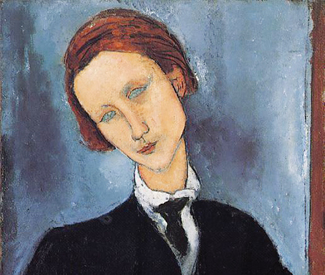
An oil painting was being sent to Paris in September 2012 for authentication, where experts at the Wildenstein Institute would determine whether it was the work of Italian painter Amedeo Modigliani. Its value, originally reported on an accompanying pro forma export invoice at $500,000, could have risen considerably depending on the results of the evaluation.

At the last minute, however, when the painting was already on a pallet at the airport, museum staff learned that they would be subjected to a nonrefundable customs fee amounting to $35,000. To resolve the matter, “the decision is to have Maria issue a new Pro Form [sic] Invoice with a value of $15,000 so that the French customs fee would be lower,” Director of Registration Therese Chen wrote in an email to several staff members including Maria Reilly, then a senior registrar. Reilly, another staff member who has since been let go from the museum, balked. “With all due respect, I am quite uncomfortable working with two sets of values for one painting,” she responded via email, documentation shows.

Orr, the European exhibits curator, was also included on that thread. “I think $15,000 is absolutely unacceptable,” she wrote in an email in response. When asked during a telephone interview about this email thread, Orr confirmed to the Guardian that the exchange was authentic, and added that she had been overruled.

Ken Garcia, spokesperson for the museums, told us: “For security reasons, we do not disclose information about the value of works in the Fine Art Museums of San Francisco’s collection. Although we can’t discuss the value of specific works in our collections, we can say that prior to expert authentication, the estimated values of art works naturally fluctuate and may be difficult to determine.”

An undated statement sent to the Guardian expressing “points of great concern amongst a broad range of professional staff” at FAMSF suggests that, while no one is prepared to come forward and say so publicly, some employees are unhappy with the way things are going at the museums. “While recognizing and appreciating the dedication and support of all the Board of Trustees, members of FAMSF staff are alarmed with recent decisions made and the current lack of clear direction of the museums,” the statement begins. It concludes with, “The general morale among staff is at a low point. Many believe that the recent personnel decisions … will make it difficult to attract the caliber of staff that is needed to move the Museums forward in the coming years.”

Garcia declined to discuss personnel issues, citing employee privacy. There’s no evidence that Dede Wilsey had anything whatsoever to do with the dismissals, the morale problems, or the financial issues. But she is the president of the board, and it’s happening on her watch.

Mrs. Wilsey’s fine art

66

rebecca@sfbg.com

A little more than a year ago, Therese Chen, director of registration at San Francisco’s de Young Museum in Golden Gate Park, sent an email to another staffer concerning “Mrs. Wilsey’s new Matisse.”

That would be Diane “Dede” Wilsey, the wealthy art collector who is also president of the Board of Trustees of the Fine Arts Museums of San Francisco.

Chen asked Steve Brindmore, then a museum staff member who also runs a personal art crating business, whether he had a crate for the oil painting, which is titled “The Pink Blouse.” According to records from Sotheby’s New York auction house, the estimated value of this painting is between $3 and $4 million.

“The painting is on an A-frame in the Examination Room,” Chen wrote. “I’m taking the painting over to Dede on Wednesday … for [an event], and then it will come back here to the de Young to be crated for Portland around the week of Jan. 23.”

The exchange suggests that public museum facilities were being used to store and crate a piece of art from Wilsey’s personal collection.

Timestamps show that the exchange happened around 1:30 on a Monday, during museum hours. The correspondence was sent using museum staff email. It’s unclear what, if anything, this task had to do with the operations of a public museum. But FAMSF clearly handled a painting from the growing private art collection maintained by Wilsey, a major donor and key FAMSF fundraiser who loves Impressionist paintings and seems to gravitate toward works incorporating the color pink.

Beth Heinrich, a spokesperson for the Portland Art Museum, confirmed to the Guardian that a Matisse titled “The Pink Blouse” was indeed loaned to the museum from a private collection, and placed on display in its Impressionist galleries in February of 2012.

The email exchange between Chen and Brindmore is just one thread in a trove of correspondence, invoices, and other documentation anonymously submitted to the Guardian. Put together, the information shows museum staff being asked, during normal business hours, to handle, photograph, crate or arrange shipments for more than a dozen different pieces from Wilsey’s personal art collection in just the past two years. The documentation also shows several examples in which museum employees were directed by Chen to digitally reproduce works from Wilsey’s private collection.

It’s not uncommon for art collectors to put private pieces in the collection of a museum, nor it is unusual for collectors to lend out art to other museums. And if the de Young received some benefit from its association with Wilsey’s art, it wouldn’t be surprising (or inappropriate) for the museum to help reproduce or ship it.

On the other hand, if Wilsey is loaning out the pieces on her own, from her private collection, and using museum resources, it could raise conflicts of interest.

The de Young, for example, wasn’t cosponsoring the Portland exhibit where the Matisse was shown. Since Wilsey just bought the Matisse, it couldn’t have been part of the de Young’s collection.

There’s no indication that it was anything but her personal loan of a valuable painting — facilitated by the staff of a nonprofit that runs a city museum.

Invoices show that some staff members were paid separately for assisting with Wilsey’s art collection, in some cases through independent businesses.

WHO’S IN CHARGE?

The Fine Arts Museums include the de Young and the Legion of Honor. Included as charitable trust departments under the City Charter, they are governed by a 43-member Board of Trustees, which is responsible for appointing a director. Wilsey has presided over the body as board president since the 1990s. The bylaws of the board were changed to eliminate term limits for the president, meaning she could stay in the post for as long as her board colleagues want.

The FAMSF has been leaderless since director John Buchanan died in December, 2011.

Though the museums are public institutions, their governance structure is similar to that of a public-private partnership, since a private nonprofit organization called the Corporation of Fine Arts Museums of San Francisco handles museum administration and employs a number of museum staff, including curators and other professionals.

The city contributes some public funding to FAMSF, but the majority of revenue is derived from private sources. Wilsey, a multi-millionaire, contributed $10 million to the de Young, and spearheaded a 10-year fundraising campaign that culminated in 2005 with more than $180 million raised to rebuild the museum.

The socially connected philanthropist, known for throwing Christmastime bashes that attract a roster of powerful luminaries from government and big business to her Pacific Heights mansion, is often the subject of press reports or gossip surrounding San Francisco high society. Her stepson, Sean Wilsey, famously characterized Wilsey as his “evil stepmother” in his memoir, “Oh, the Glory of It All,” which includes an unflattering scene in which she is said to have pinned $200,000 brooches onto her bathrobe one Christmas morning.

She owns a fair amount of art — and apparently moves it around. In August of 2011, for instance, email threads show that Chen, using her FAMSF email address, contacted Jamil Abou-Samra of Masterpiece International, the shipping company, regarding “Mrs. Wilsey’s Degas.” Chen wrote: “I brought the Degas to the de Young last week for glazing. It should be ready for Steve to measure for crating any days [sic] now. Are we still looking at August 30, Tuesday, for pick up?” The thread indicates that the painting was destined for the Royal Academy of Arts, in London.

An Internet search shows that the Royal Academy indeed hosted an exhibit titled “Degas and the Ballet,” which opened in September of 2011. Press reports highlighting the artwork on display include an image of a Degas credited to “Collection of Diane B. Wilsey.”

There is no mention of the de Young or the Fine Arts Museums of San Francisco anywhere in the web or press materials discussing the exhibition. Numerous other cooperating museums are identified by name.

When the Guardian reached Abou-Samra by phone, she indicated that she was not at liberty to discuss any of Masterpiece International’s handling of art shipments.

OFF TO PARIS

In February of 2011, email records show, Chen contacted Brindmore on his FAMSF email regarding a crate for a painting by Jean-Louis Forain that was bound for an exhibition at the Petit Palais, in Paris. The Parisian exhibit was launched in partnership with a Forain exhibit at Dixon Gallery and Gardens in Memphis.

“Dede has a Forain painting that needs to be packed and crated … The painting is currently in our storage and [FAMSF staff member Steven Correll] knows the exact location,” Chen wrote to Brindmore. A few weeks later, Chen provided some special handling instructions for the Forain in an email to Samra, of Masterpiece International, just before it was transported to the airport.

There are established professional standards governing the operations of art museums, and the Guardian phoned several experts to determine whether it’s common practice for a member of the Board of Trustees to call upon museum staff members to handle their personal artwork. In response, communications director Dewey Blanton of the American Alliance of Museums highlighted an ethical standard stating, “No individual can use his or her position with the museum for personal gain.”

The code of ethics at the Boston Science Museum put it quite clearly: “When Museum of Science Trustees seek staff assistance for personal needs they should not expect that such help will be rendered to an extent greater than that available to a member of the general public in similar circumstances or with similar needs.”

It’s unlikely that a member of the general public who wanted to ship artworks would have the staff of the de Young at his or her disposal.

The Guardian telephoned a number believed to be Wilsey’s seeking comment, and was greeted with a receptionist who answered with the bright greeting, “Wilsey residence!” After being informed that Wilsey was traveling, we requested comment from her via email, explaining that documentation appeared to show use of museum time to manage her personal art collection. She had not responded by press time.

Ken Garcia, press spokesman for the Museums, told us “there are situations in which the museum facilitates loans to the Corporation of the Fine Arts Museums (COFAM), loans to other museums, and in other ways assists with the care and handling of artworks for private collectors, including trustees when there is significant value to our museum.” He added: “The reasons for museum staff to have handled the board president’s private art collection reflect standard practice for exhibitions and loans.”

He noted: “Reproductions of artworks (2D) are routinely requested by collectors when the loan of a picture conflicts with the lenders need for privacy, represents a potential security issue, or interrupts the continuity of the enjoyment of a collection. FAMSF provides for the photographic reproduction of artworks as an appreciative acknowledgment of the negotiated loan. Mrs. Wilsey has on occasion requested a reproduction be made of a loaned picture but on each occasion has generously assumed responsibility for the associated costs.”

Maybe it’s all perfectly fine and normal, “standard practice.” But there’s a lot of it going on, and some is at the very least curious.

Watching models eat: On and off-runway shots at NY Fashion Week

1

New York inspires me to be more ambitious and to push my work to higher levels,” reflected Academy of Art University shutterbug Aldo Carrera on his recent trip to document his school’s Fashion Week runway collections.

“I also love watching models eat.”

Truly, that most elusive of NYFW moments.

As it turns out, AAU sends one of its own each year to document the proceedings on its NYFW. (Coincidentally, ur intern Jessica Wolfrom who was in NYC reporting for the Guardian on a few shows is a AAU student as well.) We checked in with Carrera upon his return to San Francisco to hear about what it was like to student-snap the shows. He told us he’s big into fashion photogs who push the limits of documenting lewks — Helmut Newton and Nick Knight among them. 

SFBG: Tell us about your degree program. How does school prepare you for fashion photojournalism?

Aldo Carrera: At the Academy of Art my focus is fine art and fashion photography. Mixing the two actually is what I enjoy most. As far as photojournalism, I would say it is something that comes as more of an instinct, I don’t think any school can teach a photographer how to be at the right place and right time with your camera. Especially now with our cell phones, anyone can be a great photojournalist. Although, being in school I have learned how to tell a story with my camera.

SFBG: What do you think fashion photojournalism is lacking these days?

AC: Sometimes it seems as though photographers these days care more about constantly clicking their shutter rather than reading into their subject.

SFBG: What was your favorite part of New York Fashion Week? Least favorite? How long were you out there?

AC: This was actually my first time being able to attend a show for NYFW, being around the amazing work of emerging artists and designers have their work recognized with such honor. It was truly inspiring to be around (and be able to photograph) that type of creative energy. The only negative moment I can think of the experience is how cold New York can get! Following the show, I stayed in the city for another week to do some of my own editorial shoots.

SFBG: How did it come about that you came to be shooting your school’s NYFW show?

AC: The PR department at the Academy invited me to shoot backstage. It was also an incredible experience to see some of my friends in the knitwear department throughout their processes and then able to see it go down the runway in a Mercedes-Benz NYFW show. 


A fine use for Larry’s fine art

23

A loyal reader contacted us with a great suggestion to solve all the fundraising problems of the America’s Cup.

This summer, it turns out, will be about more than racing for the city’s mega-billionaire yacht-race king. The Asian Art Museum’s latest program guide notes that from June 28-Sept. 22, the museum will host “In the Moment: Japanese Art from the Larry Ellison Collection.”

The museum will present “works from the rarely seen collection of Larry Ellison, owner of cup defender Team Oracle USA. The exhibition introduces about 80 artworks spanning 1,300 years. Included are works of the Momoyama (1573-1615) and Edo (1615-1868) periods.” According to the Metropolitican Museum of Art, “this period was characterized by a robust, opulent, and dynamic style, with gold lavishly applied to architecture, furnishings, paintings, and garments.”

Oh, and it’s worth noting that the Momoyama and Edo periods were also marked by the dominance of brutal warlords who claimed much of the nation’s wealth while most subjects lived in dire poverty.

At any rate, I’m sure the stuff is nice. Beautiful, even. And pricey. Bet a philanthropist of Ellison’s stature could auction off just a couple of those 80 pieces and raise enough to pay off the entire AC budget deficit. Eh, Larry?


The World’s Best Artist©: Getting weird with Mitch O’Connell

0

Can you guess which of the 290 pages of Mitch Connell‘s jampacked new, puffy-covered-like-cheap-tablecloth art anthology he is most proud of? It is not the vaguely seedy Hanna Barbera art, commissions all for Warner Brothers that were never utilized commercially. It’s not the illustrations for porno mags, the public works benches in Chicago, several Newsweek covers, untold numbers of event flyers, or his late-1980s pop art aerial views of reclining women hoisting hot dogs.

It’s the crazy shit he drew after he discovered his wife had been chronically cheating on him. You thought the rest of it was wacky!

But hoist a copy of Mitch O’Connell: The World’s Best Artist — you should, it’s awesome — and there’s no telling where you’ll get lost amid the artist’s decades of work. The book is a (puffy-covered) homage to an insane career of drawing and illustration, accomplished by a man (PS, not this guy) who has managed to raise a family on his skills while steadfastly pushing the bounds of good taste. The Chicago-based artist is coming to the Bay Area tonight (Thu/21, Berkeley) and tomorrow (Fri/22, San Francisco) for book tour dates. If you like insane, and talent, and professionally insane talent, you’ll most likely be there. 

We email-interviewed him, to talk.

SFBG: You did a few series of drawings for Warner Bros., how on earth did that come about? What was your highest hope for that collaboration?

 Mitch O’Connell: After doing this drawing thing forever, it would be hard NOT to accumulate a long list of clients. If I hadn’t, I’d be writing this from my cardboard box estate situated on the sidewalk of Michigan Avenue.

I’ve done little bits and pieces for Warner Brothers over the years, working with art directors who must have just seen my art here and there, but the “Hanna Barbera” series was the most fun and involving. I think I pushed a few of the paintings into PG-13 territory, but they encouraged me to be irreverent. Which might not have been a good thing. Once they got the finished art and started pondering how it might look on a kid’s lunchbox it seems they rethought their initial enthusiasm and put the job on the shelf. Where it’s still collecting dust. But I still like ’em!

Your next lunchbox

SFBG: You’re favorite and/or most disturbing tattoo you’ve done?

MO: ALL the tattoos I actually tattooed into peoples flesh were disturbing. Mostly because the clients kept on squirming, screaming, and bleeding. How the hell am I supposed to get any work done with those type of folks?! Actually, now I’m just sticking with simply designing the tattoos, and leaving the actual permanent engraving to the professional tattooists. It was much too nerve-wracking trying to get the art right the first time. As for my best ones, I’m working on my fourth set off flash [ink newbs: “flash” refers to the 11″x14″ sheets of sample ink that hang in tattoo parlors] now, and I like how it’s turning out the best of all. But I’m biased. Tattoo shops, start clearing some room on the walls!

SFBG: How long did your “covering up the naughty bits” gig for Fox Magazine last?

MO: The Fox mascot will hopefully be on the cover blocking out nipples and vaginas as long as there’s a Fox magazine. I did the painting a dozen years ago, it’s all up to them where/when/how often it appears. The more the merrier!

SFBG: Besides its puffy cover (please explain that feature) what are you most proud about with this book?

MO: The graphic design work of my pal Joseph Allen Black (yes, that would be www.josephallenblack.com). He took my rough placement of where I wanted everything and made it look stunning. Think of me as the guy who delivers the 4000-pound block of marble to Michelangelo. As for the puffy glittery cover, a) I loved the look, and b) wanted my book to stand out from the millions of others. At least I’ll have a better chance of folks actually picking it up out of curiosity. Then, considering what’s inside, the better chance of them putting it back.

I kid! They’ll LOVE it!

SFBG: Advice for aspiring freelance illustrators?

MO: Try to be more creative, distinctive, easy to work with, and talented than anyone else. Sadly, you’ll never be able to be the best, because I’ve already copyrighted it.

SFBG: We must know: What does makes you the World’s Best Artist?

MO: One reason was that no matter who reviews it, they have to use the title [of the book]. That way if the opinion is “Mitch O’Connell the World’s Best Artist sucks!” I can turn that into “‘The world’s best artist!,’ raves the New York Times!”

Also, if you keep on repeating something, at some point folks might start falling for it. Think “weapons of mass destruction,” “trickle down economics,” and “guaranteed to add inches to your penis!”. And I’m STILL waiting for my money back!

Mitch O’Connell: The World’s Best Artist book tour

Thu/21, 7-9pm, free

Pegasus Books

2349 Shattuck, Berk. 

www.pegasusbookstore.com


Fri/22, 7-9pm, free

Mission Comics and Art

3520 20th St., SF

www.missioncomicsandart.com

Party Radar: Terracotta Warriors come out to plaaa-aay

0

I’ve dreamt of traveling to Xi’an, China and witnessing the ancient army of buried terracotta warriors practically my whole life. The uncanny legions frozen in fired clay, each individual’s features uniquely fashioned, were discovered underground in 1974, a kinda creepy burial accompaniment of the first emperor Qin Shihuang (259-210 BCE), in a tomb complex the size of a city.    

Now, some of those mesmerising warriors are coming to me, via the Asian Art Museum‘s “China’s Terracotta Warriors: The First Emperor’s Legacy” where a selection of life-size figures and related objects will be exhibited Feb 22-May 27.

So of course it’s time to party, electro ’80s cult B-movie style!

In an inspired touch, the everyone-should-be-there opening party on Thu/21 will feature Cheryl, a surrealist disco performance quartet — think retro-future aerobics meets electro Warriors — from New York, as well as DJs Pink Lightning (Stay Gold), Nick, and Bay favorite Hokobo kicking out gritty jams. And, in fact, that staple of ’80s sci-fi playlist movie musts, Warriors, is providing the theme. Although with Cheryl, you never know where that theme is gonna go. Somewhere cosmically Warrior-y, I’m sure.

(I’ll be there of course, but I’m also gonna get to Xi’an someday — the food is supposed to be bonkers good.)

Thu/21, 7-11pm, $15 advance, $18 door. Asian Art Museum, 200 Larkin, SF. www.asianart.org/ party


PS The Asian Art Museum has been doing these cute promotional spots from famous San Franciscans, looking for a lost terracotta warrior:

Pressure, two ways: Academy of Art and Project Runway at NY Fashion Week

2

While hyperbolic coverage of what many news pundits called the ‘storm of the year’ raged across the Tri-State area, Manhattan’s would-be-mammoth blizzard arrived in the Big Apple as a pint-sized flurry that the Weather Channel dubbed Nemo. Nemo did little to deter the stilettoed, snow-shoeing pack of fashion-forward who started the morning of Feb. 8 filing into the tents at Lincoln Center for New York Fashion Week hullabaloo around 6 am.

This is the world of fashion, where a steel backbone is required. Plus, “this is New York, we have noreasters,” said a publicist with whom I scored post-show beers. “This is not a some kind of apocalypse blizzard. This is a snow storm. Put on your big girl boots and get over it.”

The action outside the white-tent runway shows of NYFW has become something of a spectacle recently thanks to the hyper-documentation of show attendees by bloggers, fashion journos, and Instagrammers. The evolution of the street scene has become almost as hyped as the collections themselves — outside-the-tent has converted into a place where writers, buyers, and industry professionals rub shoulders with blogosphere self-starters and editorial wanna-bes. Once you’ve crossed the threshold, however — moved past security and secured your seat — the herd thins out. Inside the shows, attention shifts from the amateur peacocking out front onto the belabored fashion lines themselves.

I attended two shows on February 8 — Project Runway‘s, and that of my Bay Area peers from the Academy of Art University. 

Project Runway: Lacking any true designer start that has emerged from this TV series, the jury is still out on whether reality show competition breeds success or mediocrity. Regardless of who will sink or swim in Project Runway’s 11th season, fierce competition certainly yielded entertainment at NYFW.

Usually by Fashion Week, the Project Runway panel — composed of designers Michael Kors and Zac Posen, fashion editor Nina Garcia, and supermodel host Heidi Klum — has winnowed competitors down to the final three. This season, NYFW crowds were treated to the work of seven. The normal Project protocol was thrown to the wind, each designer remaining anonymous, a move that forced them to compete solely on the strength of their garments, without the crowd bias based on on-air personality.

Fashion is an exhibitionist’s sport, but flashiness is not always effective when it comes to style. Some collections at the show came out swinging, trying too hard to define a point of view. Others showed up more quietly, using complicated shapes and silhouettes without appearing self-indulgent. Most resisted the urge to disguise imperfect results with fluff. Michelle Lesniak Franklin’s collection hit the highest note, with several structured pieces rendered in soft quilted fabric, giving way to an ethereal easiness. It appeared elfin or even Zelda-esque, but retained it’s modernity in the silhouette and layering. She took the road less traveled, mixing 1980s-inspired jacket shapes with earth tones, rendering their severe structures soft in wools and knits.

In short, the show was a mixed bag, and no one went home a true winner.

Academy of Art University:  Pressure is an odd catalyst. Some respond to it favorably, combining time and tension to yield extraordinary results. For others, pressure works against success, internal combustion evident in the resulting design.

Where Project Runway’s contestants are forced into a pressure cooker for 12 weeks to design, shop for, sew, and style their collections, San Francisco Academy of Art University students are incubated in a better-paced program. Here, years of planning and months of preparation produce the impressive work that the school has come to be known for. These student-designers are not working for cheap airtime or a bump in ratings for their network television handlers, but instead are putting in the hours of work for genuine academic recognition, fashion futures the old-fashioned way.

As an Academy fashion journalism student myself, I have witnessed the rigorous, extremely exhausting, but equally rewarding process firsthand. In last weeks leading up to the end of the semester, there is a pronounced hush in campus design studios, the only audible noises come in deep hums of the sewing machines, the incessant clicking of mechanical needles, and the hissing of industrial-grade irons. Each student, earbuds in, rips, measures, presses, tapes, pins, and repeats. One feels guilty even walking past such determination on the way to the bathrooms, so intense is the creative process.

This year, the collections from AAU’s multi-national student body were marked by a range of culture fusions. The show’s focal point was the visual negotiation between student, fabric, form, and heritage.

The runway sequence ebbed and flowed between moments of sparse minimalism, as in Yuming Weng ‘s simple monochromatics and plays on texture and structure, in Chenxi Li’s over-sized crushed velvet coats, rendered unique by combining elements of ‘50s Americana with traditional Chinese armor. Knitwear student Heather Scholl’s sexually charged, gender-explorative neon psychedelics stalked the lane.

Stand-out collections included show openers Janine M. Villa and Amanda Nervig’s marriage of tailored suiting and free-falling knitwear, which gave the rigid geometric patterns that adorned both fabrics fluidity, and embued the suiting with an astonishing sense of movement. Inspired by traditional Welsh blankets, Villa and Nervig’s work felt eclectic and free-spirited on the runway, the print-on-print combinations of chunky knits and embellished tailoring gave the collection an exciting and unexpected visual depth.

Heather McDonald took taut silhouettes to new heights with soaring shapes that defied gravity. These exaggerated forms were rendered in deeply-saturated angoras and wools, which brought the avant-garde down to earth. The final act was perhaps the most impressive. Qian Xie’s crystal-encrusted coat dresses and lattice-woven leather overcoats followed her apt theme “50 Shades of Grey”, and the results were lust-worthy.


The Performant: Love bites

0

Celebrating romance with power ballads, Spandex leggings, fancy panties

Although there are about 364 days of the year when I can do without it—one day of the year seems custom-made to celebrate the ignoble rise of hair metal and its greatest contribution to the musical landscape — the power ballad. From “Love Bites” to “Is This Love,” “(I Can’t Live Without) Your Love and Affection,” to “The Power of Love” — all the saccharine sentiment of brooding, pouty millionaires in ripped jeans, tight leather, and all those glorious manes — power ballads can and probably should form the soundtrack to Saint Valentine’s Day now and forever. They so perfectly tap into both the cynicism of the single person facing “the dread VD” alone, as well as offering a soaring guitar-solo boost to the cuddly nostalgia of the happily coupled.

While innamorati for hundreds of years have used February 14 as a date to shower their beloved in flowers and cards, Jeff Ross and the SF IndieFest team have used it as another excuse to party, with an annual Power Ballad Sing-along at the Roxie Theatre. Just three years after its San Francisco debut (a similar party tears it up each year in Brooklyn), PBS pours its sugar and motors through the packed house, screening subtitled MTV videos turned up to 11 of all the best bands you’d love to forget to a theatre full of eager inebriates, cutting loose in a veritable bacchanalia of communal song.

If you’re lucky enough to squeeze into the perpetually sold-out event, you’ll be handed a lighter at the door, the essential prop of the power ballad lover and although no extra credit points are handed out for costumes, this being San Francisco, plenty of people do show up in them. Spandex leggings, ripped stonewash denim, studded wristbands, and plenty of Aquanet. One enterprising soul even comes dressed as Slash — right down to the guitar — a handy prop during the obligatory screening of Guns ‘N Roses’ nine-minute orchestral dirge “November Rain”.

Unlike a karaoke night full of awkward people who have to be cajoled into singing at all, let alone bellowing REO Speedwagon songs at full volume, a sing-along allows everyone to a) hide in the dark and b) therefore sing with the full confidence that almost everyone around them sounds even worse than they do, especially after the effects of cheap whiskey and rampant silliness settles in. It’s about as egalitarian as it gets, and even though this year’s blowout was marred by technical difficulties, my sorrow at missing out on the ultimate elation of singing “You Give Love a Bad Name” en masse couldn’t spoil the gleeful satisfaction of mangling an otherwise extensive playbook of all the worst bands with the best hair: Def Leppard, Cinderella, Whitesnake, Journey.

Meantime, just up the block at the Little Roxie, Liz Worthy’s window display aka “Heist Boutique” offers a poignant love letter to the ever-changing landscape of the Mission district via a few carefully-curated *objets d’art* used to represent a psychogeographical survey of “old-school” Mission businesses taken over by others in recent years. There’s the Self Edge VHS tape (asking price $714, in honor of the address), commemorating previous tenant and nostalgic favorite Leather Tongue video store (represented cheekily by a pair of red jeans), a pair of Modern Times sunglasses ($888) named for the bookstore that until recently inhabited the space where Fine Arts Optical now resides, a Wang Fat Fish Market bikini in turquoise and red ($2199) honoring the fish store of yore, (now Zoe Bikini). The display will be up until at least the middle of March, so swing by soon to relive your own fond memories of a Mission gone by. It may be too late to hang out at the Café Macondo or Jivano’s Cutlery, but, like the power ballads of the past, it’s still not too late to reminisce about them awhile.

On the Om Front: Bhakti by the Bay

3

Some people go out to bars and drink on a Friday. But, you want to know what I do for a good time? I chant. I chill in a room full of yogis and I sing mantras in Sanskrit and I get really happy.

If you’re in the yoga tribe, you might be nodding your head here. If you’re not, you may be thinking I sound like a New Age freak who’s sniffed a little too much patchouli. I understand. I’m the city girl who first resisted yoga 15 years ago, when I moved to San Francisco, saying, “Yeah, right, I’m going to just sit there and breathe.” Like yoga, chanting can be something of an acquired taste. But, also like yoga, it can be acquired very quickly. The biggest obstacle is just getting into the room for the first time to do it.

Chanting events are often called kirtan, which is call-and-response singing led by a kirtan artist (also known as a kirtan wallah). The chants are in Sanskrit, a language that has an innate meditative quality, and the repetition of the words put you into an ecstatic mindset. Though the songs are mostly honoring Hindu gods — like Rama, Lakshmi, and Shiva — you don’t have to be Hindu (or a theist at all) to sing them. I mean, anyone can find joy in offering a Christmas gift, or have a spiritual experience while eating a latke, right? The gods are thought by most to be symbolic, representing different aspects of life and humanity. Ultimately, kirtan is a practice of devotion or bhakti. It doesn’t matter what it is you are devoted to — God, trees, your pup or your honey — so long as love is at the center.

There are kirtan events frequently happening in the Bay (see the listings below), and there are touring kirtan bands constantly coming through here to share their music. One of my favorite kirtan musicians is David Newman (aka Durga Das), a Philly-born yogi who has the soul of an angel and the vibe of an indie rock singer-songwriter. He and his band (pictured above: Dave Watts, Clay Campbell, David Newman, and Philippo Franchini) played a small, intimate house concert this past weekend. It was my favorite kind of Friday night: music, tea, a dimly lit room, and a feeling like each person in the room was somehow destined to be there. But that’s often what it feels like at kirtan. It’s as if time somehow stops, and we’re all just there to linger in the pause.

Video of David Newman and band by Dazza Greenwood:
http://www.youtube.com/watch?v=UNzopGaXyQA

Karen Macklin is a writer and yoga teacher in San Francisco — her On the Om Front column appears biweekly here on SFBG.com.


PLACES TO FIND KIRTAN IN THE BAY AREA

by Joanne Greenstein

Weekly:

Wednesday Night Kirtan around the fire pit
8pm–9pm, by donation
Yoga Society, 2872 Folsom, SF.
More info here

Sunday Night Kirtan
7pm, $10-$15
First Sunday: Stephanie Winn
Second Sunday: Kozmik Kirtan with Evelie Posch
Third Sunday: Art of Living Foundation
Last Sunday: Sean Feit
Yoga Tree Telegraph, 2807 Telegraph, Berk.
More info here

Monthly:

Open Secret Kirtan with Mirabai & Friends
3rd Thursday of the month
This month: Thursday, 2/21, 7:30–9pm, $10-$20
Open Secret, 923C Street, San Rafael
More info here

Kirtan: An Evening of Devotional Chanting & Music with Bhakti Heart
Last Saturday of the month with some exceptions
This month: Saturday, 2/23, 7:45–9:15pm, by donation
Mindful Body, 2876 California, SF.
More info here

Upcoming:

Community Kirtan with Andrew Thomas Fisher and Erin Lila Wilson
All are invited to lead a chant, join in the response or listen to the sweet sounds.  Feel free to bring instruments.
Sat, 2/23, 7–8:30pm, by donation
Integral Yoga Institute, 770 Dolores, SF.
More info here

Complete Immersion:

Bhakti Fest
A full-on kirtan festival in the Joshua Tree desert, the September Bhakti Fest (and its May sister festival, Shakti Fest) features around-the-clock chanting, premiere yoga classes and inspiring lectures.  All the top international kirtan artists play at these festivals.
Shakti Fest, May 17-19
Bhakti Fest, September 5-9
More info here


The unheard music

0

arts@sfbg.com

VISUAL ART “Silence,” the large new thematic show at Berkeley Art Museum and Pacific Film Archive, might have been titled in the plural, since it approaches silence from various angles phenomenological, political, and cultural. Co-curated by BAM/PFA and the Menil Collection, “Silence” takes its inspiration from one of the most famous 20th-century artworks in any medium, John Cage’s 4’33” (1952).

As you almost certainly already know, Cage’s 4’33” entails having the audience listen to ambient and accidental sounds of the auditorium while a pianist closes and opens a piano keyboard cover three times at set intervals but without touching the keys, both performing the difference between silence and quiet, and demonstrating the omnipresence of music wherever attentiveness is present. Cage’s work anchors the tone and scope of the show, and so from all possible kinds of silences, the exhibition limits to works by some 30 artists wherein silences are productive, pregnant, or impossible. Cage here is represented by scores for the performance as well as by several works that served as inspirations, descendants and tangents of his work.

Most directly, the show includes Robert Rauschenberg’s monochrome White Painting (Two Panel) (1951), which Cage cited as partial inspiration for 4’33” next to Ad Reinhardt’s all-black Abstract Painting (1965). If you know a bit of art history, then you get the curatorial statement here: aside from standing in for all sorts of minimalist silences, the yin and yang of Rauschenberg’s pregnant meditation juxtaposed with Reinhardt’s zero-degree absolutism are the boundaries for the gamut of representational possibilities that Cage and subsequent modernists have been sifting through. Of all Cage’s descendents, nobody gets that as well as Steve Roden, represented here by several conceptual and generative works based on 4’33”. Roden, who lives in Pasadena, crosses freely between sound and visual art in works that map, translate, and draw attention to the structures of sounds and the activity of listening. Alongside paintings and sculptures that take their generative cues from the text that accompanies the Cage piece, Roden is also exhibiting 365 x 433, (2011) three books of text that document and reflect on his daily performance of 4’33” over the course of a year.

Several other artists make explicit reference to silence and its relationship to listening, especially in social context. Brooklyn artist Jennie C. Jones uses materials commonly found in recording studios to make paintings that absorb and quench sounds in the spaces where they hang. Sustained Black with Broken Time and Undertone (2011) wraps around the corner on two walls of the gallery space, drawing attention to silence’s active relationship to architecture. Kurt Mueller’s Cenotaph (2011–13), a 100-CD jukebox filled with recordings of moments of silence called for by public figures, lays bare the thorny absurdity of state-imposed silence as ritual. On one jukebox panel, for example, you can choose between playing the moments of silence called for (from top to bottom) trapped miners, Michael Jackson, Corey Haim, or Ted Kennedy. Represented here by letters and photographs, Tehching Hsieh’s One Year Performance 1978–1979 (1979) casts silence as a form of cultural askesis. In that performance Hsieh locked himself in a cell inside his New York City loft for a year without talking, reading, writing, or entertainment.

Overlapping existential and cultural silences, the first gallery in the exhibition features several of Andy Warhol’s electric chair silkscreens (1965 and 1967), interspersed with Christian Marclay’s Silence paintings (all 2006), which appropriate a cropping from Warhol’s source photographs of the execution chamber and the “Silence” sign above the door that illuminated to alert attendees that the execution was about to take place. Also shown are extensive sketches from Marclay, showing his ongoing interest in these particular Warhols. As a framing device for the show, the pairing of Warhol and Marclay helps illustrate the pregnant potentials within Warhol’s bleak, lovely fascination with death imagery, and inverts the pairing of Rauschenberg and Reinhardt. Warhol’s particular silence, the attenuation and emptying of visual meanings through repetition, is taken up again by Marclay as productive fodder for an entire body of investigations.

Throughout February, film screenings addressing various kinds of cinematic and personal silences accompany the show. February 27, short experimental works that incorporate complications on sound and silence will include Darrin Martin’s Monograph in Stereo (2005), which addresses silence via hearing loss. *

SILENCE

Through April 28

Berkeley Art Museum and Pacific Film Archive

2575 Bancroft, Berk.

bampfa.berkeley.edu


Travels well

0

caitlin@sfbg.com

STREET SEEN I was going to write this column about what it was like to be art star Kehinde Wiley’s model. It was supposed to be an eloquent reflection on musedom, and I’d locked down a post-performance chat with Ethiopian Israeli rapper Kalkidan, who stars in several of Wiley’s portraits in the current show at the Contemporary Jewish Museum.

But you know what, Tel Aviv to San Francisco is a long flight and I’ll wager that if you followed up the same journey with two hip-hop sets in front of the opening night Contemporary Jewish Museum hoi polloi — whose hosted-bar pink cocktails gave birth to some very art-world dance moves — you would wind up much the same way Kalkidan did for our chat. Call it jet lag. Our interview veered towards monosyllabic, though I did manage to gather he’d seen the Wiley paintings in which he stars two times before, when the exhibition toured LA and New York. And that he’s an Aquarius.

“Leviathan Zodiac”

… Leaving me to my own devices with you, dear reader. Well, not entirely. I did have a chance to ask Wiley about the direction he gives to his “painfully young and present models,” as he calls them, mere minutes after his flight touched down from New York. (Right before another journalist saw fit to ask him about Frank Ocean? Has a moratorium been decreed on talking to black queers, or anyone even tangentially related to hip-hop, about anything else?)

Insight into Wiley’s models seems central to his gorgeous “World Stage” series, for which he poses young men of color in classic historical poses, with ornate backgrounds and rarified postures mimicking 18th and 19th European portraiture, among other influences. The conceit started when the San Francisco Art Institute grad moved to New York, and he’s painted other chapters of “World Stage” starring men in India, Nigeria, Brazil, China, and elsewhere.

Kalkidan on “World Stage: Israel” opening night at the Contemporary Jewish Museum. Photo by David Schnur

Coupled with his subjects’ vivid streetwear, which Wiley and his assistants (the artist is well-known for employing staff that contribute the pieces’ background, if not more) render faithfully, and region-specific background motif, the series is a gorgeous homage to modern brown and black manhood, with a swagger that is decidedly hip-hop.

“There is an aspect of black American creative culture that has become globalized. Every country finds their own response to this evolving reality,” reads a Wiley quote that greets visitors to the CJM exhibit. How has a culture that’s made its way everywhere still so vilified?

Wiley allowed to our group of arthounds at the preview that he does tend to capture men who are gorgeous — you won’t miss the fact once surrounded by his canvas gods — but that his choice has less to do with his own personal preferences. “You can’t know who’s zooming who,” he said. “Nor is it a particular interest of mine.” I overheard curator Karen Tsujimoto tell another reporter that she didn’t believe sexuality played a role in his work.

I guess I buy that. Wiley said that painting beautiful men is about highlighting factors rarely pulled out to the front in the art world. “Male beauty seems to be the elephant in the room when it comes to the history of painting,” he reflected.

“The World Stage: Israel” Through May 27. Contemporary Jewish Museum, 736 Mission, SF. www.thecjm.org

BOYCHILD DOES BIG APPLE

I’d be wrong if I didn’t laserpoint out that drag (is that term adequate still?) babe boychild for bringing genderphucked Bay Area fierce to the runway for the Hood By Air-New York Fashion Week collection named, yeah, “boychild.” You know you’re the buzz when you’re overshadowing rapper A$AP Rocky, who also walked in the show. The look? Wetsuits and sportswear with glittering detail: canary yellow do-rags with blonde extensions, pearl-headphone earrings, French manicure. Strong, kinda freaky, hella pretty. Just like our child.

Our Weekly Picks: February 20-26, 2013

0

WEDNESDAY 20

Mega Shark vs. Giant Octopus

Head on down to the waterfront tonight for a hilarious night of bad B-movie fun! Where could be better to watch the schlocky sci-fi flick Mega Shark vs. Giant Octopus (featuring over-the-top cheesy performances from Deborah Gibson and Lorenzo Lamas) than an actual aquarium on the San Francisco Bay? Part of Aquarium of the Bay’s “Octopalooza,” a week-long fete celebrating cephalopods, the price of admission to this “Bad Movie Night” will include two drinks, popcorn, admission to the aquarium, and live satiric commentary about the film from Dark Room Theater. (Sean McCourt)

6pm, $16

Aquarium of the Bay, Bay Theater

Pier 39, SF

(415) 623-5300

www.aquariumofthebay.com


Patricia Schultz

Travel writer Patricia Schultz explained how she selected entries for her New York Times-bestseller 1,000 Places to See Before You Die in the book’s introduction: “In the final analysis, the common denominator I chose was a simple one: that each place impress upon the visitor — and, I hope, upon the reader — some sense of the earth’s magic, integrity, wonder, and legacy.” Lately, Schultz seems like she is looking for the next 1,000 places to pass on to readers. She has made stops in Connecticut, Boston, and California this month, and has a 10-day jaunt through Ethiopia in April ($5,400 to join her) followed by a 19-day cruise ship voyage near the Antarctic coast in November ($9,500). Interested (and perhaps more frugal) travelers can listen in tonight on her latest adventures. (Kevin Lee)

7pm, $12–$20

Oshman Family Jewish Community Center

3921 Fabian Way, Palo Alto

(415) 597-6700

www.commonwealthclub.org


THURSDAY 21

“Migration Now!”

The creators of the fabulous People’s History poster series, Justseeds, and Culturestr/ke have assembled a poster show to heal the psychic wounds you’ve done to yourself listening to the Right rage on against immigrants ruining our country. Seriously, this is the antidote: undocumented queer activist Julio Salgado’s peaceful odes to cross-border gay marriage, the flock of monarch butterflies that Portland, Ore.’s Roger Peet has conjured, alighting on a human skull in protest of the War on Drugs. King of the subversive poster Emory Douglas will also show work, along with many others. The opening reception features hip-hop performance, panel discussion, an appearance by the Filipino Caregiver Theater Ensemble, and more. (Caitlin Donohue)

Through Feb. 28

Opening reception: 6-10pm, free

Eric Quesada Center for Culture and Politics

518 Valencia, SF

www.justseeds.org

www.migrationnow.com


“Fabulous Artistic Guys Get Overtly Traumatized Sometimes: the Musical!”

After a sold-out weekend premiere in October, DavEnd’s sharp-witted, madcap, acronym-inviting musical comes back for another raucous binge of self-obsession and doubt before the bedroom mirror. Fabulous Artistic Guys Get Overtly Traumatized Sometimes features writer, composer, performer, chanteuse, accordionist, and costume designer extraordinaire DavEnd as, who else, queer artist DavEnd and her active — very active — imagination. Upon reflection (her own that is, courtesy of a full-length looking-glass (Maryam Farnaz Rostami)), solipsism turns to schism as DavEnd confronts a fractured fashion show of ideal or not-so-ideal types, MC’d by her Fairy Drag Mother (luminous burlesque star World Famous *BOB*). Discerning direction by D’Arcy Drollinger and musical director Chris Winslow support a pitch-perfect combo of the effervescent and deadpan, in a comedy that actually asks stark present-day questions about difference, acceptance, and validation of the self. (Robert Avila)

Through Sun/24, 8pm; (also Sun/24, 3pm), $20–$25

Counterpulse

1310 Mission, SF

(415) 626-2060

www.counterpulse.org


CHERYL at the Asian Art Museum

In the third century BCE, a Chinese emperor wanted to defeat death by commissioning a life-size terracotta army of over 7,000 warriors. In 2013, New York-based art collective CHERYL wants to defeat convention by throwing a party in honor of 10 of these warriors. At the opening of the Asian Art Museum’s “China’s Terracotta Warriors: The First Emperor’s Legacy,” the collective, joined by DJ Hakobo and the Extra Action Marching Band, will set up a video installation, an excellent set of tunes, and a bar, and they invite you to join them (preferably in a costume of your choosing). Probably not what the emperor had in mind, but it just might work. (Laura Kerry)

7pm, $18

Asian Art Museum

200 Larkin, SF

(415) 581-3500

www.asianart.org


FRIDAY 22

“Sexual Politics”

The full title of the Roxie’s first post-SF Indiefest event is “Sexual Politics: The Occasionally Autobiographical and Always Personal Films of Joe Swanberg,” a mouthful befitting a prolific filmmaker who is only 31 and yet has already made nearly 20 films. His debut, 2005’s Kissing on the Mouth, isn’t included here, but his second and third films are — LOL (2006) and Hannah Takes the Stairs (2007), both of which rushed him to the forefront of the lo-fi, low-budget, mostly-improv’d genre known (for better and worse) as “mumblecore.” (Both also star Hollywood’s next big thing, Greta Gerwig.) Among the 12 Swanberg selections is IndieFest closer All the Light in the Sky, a 2012 release that isn’t even his most recent (that’s be Drinking Buddies, which just screened at Sundance). Never sleep, Joe. (Cheryl Eddy)

Fri/22-Mon/25, $6.50–$10

Roxie Theater

3117 16th St, SF

www.roxie.com


Dave Alvin and Marshall Crenshaw

Fans of Americana, rockabilly, and roots music — or just plain old fashioned rock’n’roll — are in for a special treat tonight as two of the greatest singer-songwriters-guitarists of the past 30 years come to town on tour together — Dave Alvin and Marshall Crenshaw. First displaying his formidable chops as a member of the Blasters, Alvin has gone on to a distinguished solo career, as has Crenshaw, who gained mainstream exposure with his 1981 hit “Someday, Someway,” and portrayed Buddy Holly in the 1987 film La Bamba. Get ready for a night of shredding Stratocasters as these two tunesmith titans, who just keep getting better with age, play live backed by the Guilty Ones. (McCourt)

8pm, $22

Great American Music Hall

859 O’Farrell, SF

(415) 885-0750
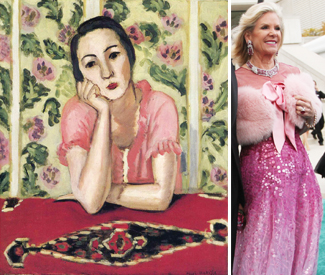
www.slimspresents.com


Chrome Canyon

At this rate, I’ll never make it to the future. But when I do, I know exactly what would make the perfect soundtrack. Giorgio Moroder’s Metropolis, Wendy Carlos’s Tron, John Carpenter’s Escape From New York, Michael Jarre’s Dreamscape, and Hirokazu Tanaka’s Metroid. Of course, that’s too much for one Walkman, but since I’ll be going that direction anyway, I’ll make a point to procure a copy of Elemental Themes, the recent analog synth saturated non-soundtrack from Brooklyn’s Chrome Canyon. It captures the mood. First order of business: find a place that sells cassettes. Second: restore causality. (Ryan Prendiville)

Voltaire Records and Stones Throw Present, with Peanut Butter Wolf (DJ set), Jonas Reinhardt, Shock, Chautauqua (DJ set)

9pm, $13-15

Mezzanine

444 Jessie, SF

(415) 625-8880

www.mezzaninesf.com


SATURDAY 23

FaltyDL

Producer Drew Lustman may hail from New York, but his newest release Hardcourage impressively fuses the pace and smoothness of Chicago house with the synths and bleeps found in Detroit techno. The result is a multilayered work that leans more toward spacey introspection than frenetic movement, a somewhat surprising departure from vintage FaltyDL productions of two-step and UK-influenced garage. Consistent throughout Lustman’s discography is an emphasis on melody and texture that is quite fitting, given Lustman played upright bass and piano in jazz groups and counts Miles Davis as a big influence. How Lustman mixes groovier works like the luscious “She Sleeps” with harder-stepping garage in the tighter confines of Public Works’ loft space will bear watching. (Lee)

9:30pm, $10–$20

Public Works

161 Erie, SF

(415) 932-0955

www.publicsf.com


SUNDAY 24

Morrissey

It’s difficult to describe the voice — a tinge of a yowl but always fluid and warm. Then there’s the songwriting — mysteriously transcendent. And the incredible style that is both quirky and catchy. OK, this might be gushing, but come on, it’s Morrissey, and he’s coming to Davies Symphony Hall (and we’re keeping our fingers crossed that he actually makes it to the Bay this time). The influential artist, who established his reputation with the Smiths in the ’80s, will release a “very best of” album in April. Even though he’s looking back on career classics, he wants to show us he can still rock out. Morrissey, we wouldn’t doubt you for a second. (Kerry)

With Kristeen Young

8pm, $50-$90

Davies Symphony Hall

201 Van Ness, SF

(415) 864-6000

www.daviessymphonyhall.org


Matmos

Relax. Try to concentrate. I’m going to play some sounds. Tell me what you see. A triangle? No. Try again. A velvet blivet? No. Focus, please. What? I assure you, no one has had sex on this table. One more. A damn deacon? Please, there’s no call for that sort of language. Fail, a complete fail. Correct answer was A Marriage of True Minds, an auditory experiment into ESP by former SF — now Baltimore — residing duo Matmos. Yes, extra-sensory perception. Telepathy for the layperson like you. Here, give it a listen the next time you’re in the flotation tank. (Prendiville)

With Horse Lords, C.L.A.W.S. (DJ set), Kit Clayton, and visuals by Golden Suicide

8pm, $10

Public Works

161 Erie St., SF

(415) 932-0955

www.publicsf.com


MONDAY 25

Surfer Blood

Surfer Blood has discovered a magical formula. When the band came together in ’09, it united with the simple goal to produce an album and go on tour, but with the album and EP it has released since that time, the quartet has earned impressive recognition for its unceasingly gratifying pop-rock. Surfer Blood’s four-year-old goal continues with the launch of another tour leading up to the June release of Pythons. In the single, “Weird Shapes,” the magic continues in a catchy tune that somehow recalls both the Strokes and the Beach Boys. Come see what other tricks it has up its sleeve. (Kerry)

With Grand Rapids, Aaron Axelsen

8pm, $11

Brick and Mortar Music Hall

1710 Mission, SF

(415) 800-8782

www.brickandmortarmusic.com

Stage Listings

0

Stage listings are compiled by Guardian staff. Performance times may change; call venues to confirm. Reviewers are Robert Avila, Rita Felciano, and Nicole Gluckstern. Submit items for the listings at listings@sfbg.com. For further information on how to submit items for the listings, see Picks.

THEATER

OPENING

The Lisbon Traviata New Conservatory Theatre Center, 25 Van Ness, SF; www.nctcsf.org. $25. Opens Fri/22, 8pm. Runs Wed-Sat, 8pm; Sun, 2pm. Through March 24. New Conservatory Theatre Center performs Terrence McNally’s play, a mix of comedy and tragedy, about the relationship between two opera fanatics.

Steve Seabrook: Better Than You Marsh San Francisco, 1062 Valencia, SF; www.themarsh.org. $15-50. Opens Fri/22, 8pm. Runs Fri, 8pm; Sat, 8:30pm. Through March 22. Kurt Bodden’s San Francisco Best of Fringe-winning show takes a satirical look at motivational speakers.

BAY AREA

Dostoevsky’s The Grand Inquisitor Berkeley City Club, 2315 Durant, Berk; www.centralworks.org. $15-28. Previews Thu/21-Fri/22, 8pm. Opens Sat/23, 8pm. Runs Thu-Sat, 8pm; Sun, 5pm. Through March 31. Central Works performs Gary Graves’ adaptation of the story-within-a-story from The Brothers Karamazov.

My Recollect Time South Berkeley Community Church, 1802 Fairview, Berk; (510) 788-6415. $12-25. Opens Fri/22, 9pm. Runs Sat/23-Sun/24, Feb 28, March 2, 7, and 9, 8pm; March 1, 8, 9pm; March 3, 5pm. Through March 9. Inferno Theater performs Jamie Greenblatt’s play about the life of former slave Mary Fields.

ONGOING

Dear Harvey New Conservatory Theatre Center, 25 Van Ness, SF; www.nctcsf.org. $25-45. Wed/20-Sat/23, 8pm; Sun/24, 2pm. There’s always room in San Francisco for milk — Harvey Milk, that is, our very own out-and-proud crusader for equal rights for all, whose election as city supervisor in 1977 and assassination in 1978 galvanized the LGBT movement on a national level. Part history lesson, part memorial tribute, the Patricia Loughrey-penned Dear Harvey offers details of the extent of his influence, mostly in the realm of the political, collected from interviews with over 30 of Milk’s associates and friends. Interspersing testimonials with Bay Area Reporter headlines, fan mail, and projections of Daniel Nicoletta’s candid photos of the era, each member of the ensemble cast assumes multiple roles throughout the piece including Harvey’s activist nephew Stuart Milk, the "Queen Mother of the Americas" Nicole Murray-Ramirez, openly-gay politician Tom Ammiano, former youthful aide and prominent AIDS activist Cleve Jones, Milk’s spitfire campaign manager Anne Kronenberg, and even Milk himself. At its core, Dear Harvey plays out mainly like a talking head-style documentary, the disparate strands of monologue woven together providing a composite image of a single character. But as endearing in many ways that character is, it’s not enough to sustain the overall piece, which never develops its other, often fascinating, characters enough for the audience to feel much of a connection to the stage, no matter how much, personally, they might feel a connection to Milk himself. (Gluckstern)

Foodies! The Musical Shelton Theater, 533 Sutter, SF; www.foodiesthemusical.com. $30-34. Fri-Sat, 8pm. Open-ended. AWAT Productions presents Morris Bobrow’s musical comedy revue all about food.

God of Carnage Shelton Theater, 533 Sutter, SF; www.sheltontheater.org. $38. Thu-Sat, 8pm. Through March 30. Shelton Theater presents Yasmina Reza’s Tony-winning comedy about upper-middle-class parents clashing over an act of playground violence between their children.

Hedwig and the Angry Inch Boxcar Playhouse, 505 Natoma, SF; www.boxcartheatre.org. $25-40. Wed-Sat, 8pm (also Sat, 5pm). Through March 2. Hold onto your hairpiece, Boxcar Theatre is reprising their all-too short summer run of Hedwig and the Angry Inch, and just in case you think you saw it already, be forewarned — you ain’t seen nothing yet. Recast, redesigned, and re-vamped, this outcast-rock musical familiarly follows the misadventures of one Hedwig Robinson (né Hansel Schmidt) with glam, guts, and glitter. But unlike the movie version penned by and starring John Cameron Mitchell as the titular chanteuse, or other staged versions, director Nick A. Olivero splits the larger-than-life, would-be rock sensation into eight different characters, who are each given a solo turn as well as plenty of ensemble harmonizing during the course of the two hour-plus performance. The effect is often electric, and just as frequently hilarious, as when the four female actors playing the role stomp across the stage swinging imaginary dicks in the air to the lyric "six inches forward and five inches back, I got a, I got an angry inch!" Supported by a tight quartet of rock musicians led by Rachel Robinson, and the phenomenal Amy Lizardo as Hedwig’s beleaguered "man Friday" Yitzhak, Hedwig keeps on extending for what appears to be an indefinite run, employing the time-honored Thrillpeddlers’ tradition of rotating cast members and comeback performances, which means you could theoretically go multiple times and never see quite the same show twice. I certainly plan to. (Gluckstern)

Jurassic Ark Exit Theatre, 156 Eddy, SF; www.theexit.org. $15-25. Fri-Sat, 8pm. Through March 16. Writer-performer David Caggiano’s zany, well-executed solo play centers on a Christian televangelist who is unwaveringly bent on making a big-budget movie about a cowboy-like Biblical Noah, his Ark, and the largely lovable dinosaurs callously left out of the story — a project he sees delivering a decisive blow to the Darwinians, while turning cineplexes across the land into celluloid cathedrals. Brother Dallas and his proselytizing pitch eventually find receptive ears in a trinity of movie-industry heavies, whose collective business acumen demands a few changes to the script. Meanwhile, the intoxicating power of it all leads to a lapse in Brother Dallas’s righteousness and a scandal reminiscent of Hugh Grant’s career. Dallas rebounds from this bout with the Devil and sees his movie made — but surely only he is unaware that the Devil keeps a Hollywood address. Smartly directed by Mark Kenward, this low-frills production relies almost exclusively on Caggiano’s sturdy ability with quick-change characterizations (couched in Dylan West’s modest lighting design and a suggestive soundscape by sound editor–musician John Mazzei). The fitful satire trades in pretty orthodox caricature and, in Brother Dallas, lacks a very compelling or sympathetic central figure; but it unfolds with a very cinematic imagination that, while formulaic, is itself one hell of a movie pitch. (Avila)

The Little Foxes Tides Theatre, 533 Sutter, SF; www.tidestheatre.org. $20-38. Wed/20-Sat/23, 8pm. Tides Theatre Company performs a modern take on the Lillian Hellman classic.

The Motherfucker with the Hat San Francisco Playhouse, 450 Post, SF; www.sfplayhouse.org. $30-70. Tue-Thu, 7pm; Fri-Sat, 8pm (also Sat, 3pm). Through March 16. A fine cast makes the most of Stephen Adly Guirgis’s deceptively coarse, often amusing little play, The Motherfucker with the Hat, which receives its local premiere in a sure and rowdy production from SF Playhouse. Director and designer Bill English’s striking two-tier set almost belies the intimate nature of the quirky story, which concerns a hapless parolee and recovering alcoholic named Jackie (a winningly frazzled, bumptious Gabriel Marin) who retreats to his AA sponsor’s apartment to pine and plot revenge after he discovers a stranger’s hat in the bedroom of his longtime Puerto Rican girlfriend, Veronica (played vividly by an at once edgy and vulnerable Isabelle Ortega). But Ralph, his suave and persuasive sponsor (played with unctuous charm gilded by just a hint of ineptitude by an excellent Carl Lumbly), may not be the guy he wants in his corner. Not that Jackie can see that — he’s got a man-crush on Ralph that dwarfs his already ambivalent affection for much put-upon but stalwart cousin Julio (a sharply funny Rudy Guerrero) and blinds him to the warning signals from Ralph’s own disgruntled wife (a coolly disgusted Margo Hall). Throughout, these working-class New York borough dwellers display their wit and shield their soft underbellies with a rapid-fire barrage of creative swearing. English and cast display a real comfort with this kind of material (this is SF Playhouse’s fourth Girguis play), which drapes its soft heart in the intimations of violence more than the real thing. If the heat and imaginative cursing also seem to cover up for a play with little dramatic purpose beyond a gentle and somewhat pat exploration of loyalty, maturity, and trust, there’s pleasure to be had in the unfolding. (Avila)

Not a Genuine Black Man Marsh San Francisco, 1062 Valencia, SF; www.themarsh.org. $25-50. Fri/22, 8pm; Sat/23, 5pm. What, the unapologetically middle-class Brian Copeland asks, is the real meaning behind the phrase "a genuine black man"? By way of an answer, the stand-up comic and KGO radio host offers up a simultaneously funny and disarmingly frank story about growing up African American in the racist suburb that was San Leandro in the early 1970s. Letting his narrative bounce back and forth between his boyhood memories and a period of depression that overtook him as a parent in 1999 — and interlacing the autobiography with verbatim utterances from both sides of the fight his family joined to desegregate the city — Copeland brings admirable chops as a comedian to bear on some difficult and disturbing, if ultimately hopeful, material. Note: review from an earlier run of the same show. (Avila)

Sex and the City: LIVE! Rebel, 1760 Market, SF; trannyshack.com/sexandthecity. $25. Wed, 7 and 9pm. Open-ended. Lady Bear, Trixie Carr, Heklina, and D’Arcy Drollinger star in this drag tribute to the long-running HBO show.

The World’s Funniest Bubble Show Marsh San Francisco, 1062 Valencia, SF; www.themarsh.org. $8-50. Sun, 11am. Extended through March 17. The Amazing Bubble Man (a.k.a. Louis Pearl) continues his family-friendly bubble extravaganza.

You Know When the Men Are Gone Z Space, 450 Florida, SF; www.zspace.org. $30-55. Wed/20-Thu/21, 7pm; Fri/22-Sat/23, 8pm; Sun/24, 3pm. Word for Word mounts two related short stories from the titular collection by Siobhan Fallon about the home-front impact of warfare on the families of an American army base. In The Last Stand, an injured soldier (Chad Deverman) returns home to his young wife (Roselyn Hallett) to find she has decided to leave him. In Gold Star, a wife (Arwen Anderson) learns of her soldier husband’s (Ryan Tasker) death — the officer who died saving the life of the young soldier in the first story. Reeling from grief, she innocently hangs on the words of the young soldier (Deverman) as he comes to visit her. Beautifully designed — with shrewd use of Z Space’s large, potentially engulfing stage by Jacqueline Scott (set), Drew Yerys (lighting, sound), Delia McDougall (costume, props), and Andrea Weber (choreography) — directors Joel Mullennix (Last Stand) and Amy Kossow (Gold Star) show an imaginative command of the material that has made the company’s trademark verbatim staging of literature a viable theatrical undertaking in its own right, with much to admire and ponder in the juxtaposition of words, blocking, characterization, and imagery. Moreover, the ensemble (rounded out by Marilet Martinez and Armando McClain) is very strong, with standout turns from the mutually sympathetic but achingly at-odds characters played by Deverman and Hallett in the first half, and by Anderson’s shattered, erratic, yet highly attuned new widow in the second. As for the stories themselves, certain details of base life (such as the prime parking spaces eerily and crassly allotted widows of soldiers killed in combat) reveal the author’s firsthand knowledge as the wife of an active-duty soldier, adding a sense of authenticity to these intimate, heartfelt, and movingly told stories. Their essentially everyday tragedies, however, remain tightly focused on the subtleties of grief rather than any larger contextualizing of the immediate political and moral dimensions of the American imperial machine in which all characters ultimately serve. That leaves largely intact and unexamined the usual allusions to sacrifice, service, nationhood, duty, and traditional modes of male and female heroism in war, which is perhaps the most distressing thing about these otherwise quietly troubled stories. (Avila)

BAY AREA

The Fourth Messenger Ashby Stage, 1901 Ashby, Berk; www.thefourthmessenger.com. $23-40. Wed-Thu, 7pm (no show Wed/20); Fri-Sat, 8pm; Sun, 2pm. Through March 10. It’s been some time since a work by local playwright Tanya Shaffer last graced our stages, not since 2005 to be precise, and in keeping with her penchant for multicultural themes, her latest piece, The Fourth Messenger, is a reimagining of the Siddhartha story, written as a musical in collaboration with composer Vienna Teng. Raina (Anna Ishida), a "hungry" journalism intern with a secret agenda, pitches her first scoop — the debunking of a beatific guru named Mama Sid (Annemaria Rajala) — and embeds herself in a meditation retreat where she can get close to the famously private teacher and uncover her past. Neither as humorous or as merciless as Jesus Christ Superstar or as exuberant as Godspell (though the excellent song "Monkey Mind" crackles with wit and trenchant observation, and the tender "Human Experience" genuinely uplifts), Messenger does offer a fairly solid primer to the path of spiritual enlightenment including its all-too-human fallout and sacrifices. The white-on-wood set design by Joe Ragey frames the action in a deceptively delicate layer of gauze and mystery, and the capable ensemble inhabit their multiple roles with ease — from jaded newsies to loyal disciples. Which makes it doubly unfortunate that the jazzy, piano-driven score seems pitched just outside of most of the actor’s ranges, even those of the notably skilled Ishida and Rajala, an admitted distraction for the monkey-minded, which is to say most of us. (Gluckstern)

Our Practical Heaven Aurora Theatre, 2081 Addison, Berk; www.auroratheatre.org. $32-60. Tue and Sun, 7pm (also Sun, 2pm); Wed-Sat, 8pm. Through March 3. Anthony Clarvoe’s new play receives its world premiere as a 2011 prizewinner in Aurora’s Global Age Project (GAP), which cultivates new work addressing life in the 21st century. In the case of this labored and dull effort, the young century and its anxious outlook come refracted through three generations of women who gather for holidays at a seaside home whose own future is threatened by, first, financial and, ultimately, climatic conditions. Neurotic, self-absorbed Sasha (Anne Darragh) and capable businesswoman Willa (Julia Brothers) are middle-aged best friends forever who grew up in the home of Sasha’s mother (Joy Carlin) and late father. Joining Sasha’s two daughters by separate husbands, Suze (Blythe Foster) and Leez (Adrienne Walters), is Willa’s daughter, Magz (Lauren Spencer), who suffers from a debilitating disease. Despite many personal and generational differences — and a rising conflict over the house — all six women share in a traditional bout of bird watching in this fragile nature "refuge" for bird and human alike. While bird watching supplies the play’s operative metaphors, however, it does little to actually bring these characters together in any compelling or convincing way. In fact, respective backstories are pretty sketchy in general, dialogue strained and broadcasting, and performances correspondingly patchy. The three stage veterans in director Allen McKelvey’s cast — Brothers, Carlin, and Darragh — go furthest toward making Clarvoe’s leaden exposition somewhat buoyant, but the momentary pleasure they provide can’t stem the overall tide. (Avila)

PERFORMANCE/DANCE

"Analog: New Work by Katharine Hawthorne" Joe Goode Annex, 401 Alabama, SF; analogdance.eventbrite.com. Fri/22-Sat/23, 8pm. $15-25. A full evening of choreography inspired by the intersection of art and science.

BATS Improv Bayfront Theater, Fort Mason Center, Marina at Laguna, SF; www.improv.org. Sat/23, 8pm. $20. The company performs "Warp Speed: An Improvised Trek!"

"Comedy Night at the Presidio" Presidio Café and Golf Course, 300 Finley, SF; www.presidiocafe.com. Thu/21, 8pm. $10. With Will Durst, Andrew Holmgren, and host Justin Gomes.

"Dance and Diaspora" ODC Theater, 3153 17th St, SF; www.odctheater.org. Fri/22-Sat/23, 8pm. $25-30. Featuring the work of belly dance artist Jill Parker and Afro-Brazilian choreographer Tania Santiago.

"Fabulous Artistic Guys Get Overtly Traumatized Sometimes: The Musical!" CounterPULSE, 1310 Mission, SF; www.counterpulse.org. Thu/21-Sun/24, 8pm. $20-25. DavEnd’s performance extravaganza promises "singing pink cakes, dancing mirrors, and couture genitalia."

"Killing Me Softly With Jazz Hands" Stage Werx Theatre, 446 Valencia, SF; (415) 517-3581. Wed/20, 8pm. $10. Comedian Becky Pedigo performs.

"Megillah 3.0" Intersection for the Arts, 925 Mission, SF; www.killingmylobster.com. Sat/23, 7pm, $20. Killing My Lobster launches its online collection of original videos, music, and performance with a Purim carnival, featuring live sketch shows, KML comedy videos, and more.

"Our Voices, Our Stories Play Reading Festival" San Francisco Playhouse, 450 Post, SF; www.sfplayhouse.org. Mon/25, 7:30pm. Free. Readings of in-development works Without and Opportunity for Defense and Obeah.

"San Francisco Magic Parlor" Chancellor Hotel Union Square, 433 Powell, SF; www.sfmagicparlor.com. Thu-Sat, 8pm. Ongoing. $40. Magic vignettes with conjurer and storyteller Walt Anthony.

"Smack Dab" Magnet, 4122 18th St, SF; www.magnetsf.org. Wed/20, 8pm. Free. Open mic featuring Randy Alford.

"Solo Sundays: Family Blend, the Sweet and the Bitter" Stage Werx Theatre, 433 Valencia, SF; www.brownpapertickets.com. Sun/24, 7pm. $12. With Susan Ito, Lisa Marie Rollins, and Zahra Noorbakhsh.

Tanya Bello’s Project. B. and Karen Reedy Dance ODC Dance Commons, 351 Shotwell, SF; www.odcdance.org. Sat/23, 8pm; Sun/24, 7pm. $22. Featuring the world premiere of Bello’s Games We Play(ed).

BAY AREA

"One-Off Wednesdays (or sometimes Two-Off)" Marsh Berkeley, 2120 Allston, Berk; www.themarsh.org. Wed/20, 8pm. $15-50. This week: Wayne Harris in The Letter: Martin Luther King at the Crossroads.

Music Listings

0

Since club life is unpredictable, it’s a good idea to call ahead or check the venue’s website to confirm bookings and hours. Prices are listed when provided to us. Visit www.sfbg.com/venue-guide for venue information. Submit items for the listings at listings@sfbg.com. For further information on how to submit items for the listings, see Picks.

WEDNESDAY 20

ROCK/BLUES/HIP-HOP

Apopka Darkroom. Bleached Palms Hemlock Tavern. 8:30pm, $6.

Guido vs Jason Marion Johnny Foley’s Dueling Pianos. 9pm, free.

Jesus and the Rabbies, Cello and the Beggers Who Give Boom Boom Room. 8pm, $10.

Keith Crossan Blues Showcase with Tom Lindsay Biscuits and Blues. 8pm, $15.

Leftover Salmon Great American Music Hall. 9pm, $29-$34.

Terry Savastano Johnny Foley’s. 9pm, free.

Shannon and the Clams, Mallard, Blasted Canyons, Swiftumz Brick and Mortar Music Hall. 9pm, $10-$100. Benefit for 23 Street/Capp fire victim Ursula Rodiriguez.

Sir Richard Bishop Independent. 8pm, $15.

Spell, Rosa Grande, Future Space and Time Elbo Room. 9pm, $6.

Spooky Flowers, Standard Poodle, Big Long Now Bottom of the Hill. 9pm, $8.

JAZZ/NEW MUSIC

Dink Dink Dink, Gaucho, Eric Garland’s Jazz Session Amnesia. 7pm, free.

Terry Disley’s Mini-Experience Burritt Room, 417 Stockton, SF; www.mystichotel.com. 6-9pm, free.

Freddie Hughes Royal Cuckoo, 3203 Mission, SF; www.royalcuckoo.com. 7:30-10:30pm, free.

Ricardo Scales Top of the Mark, 999 California, SF; www.topofthemark.com. 6:30pm, $5.

FOLK/WORLD/COUNTRY

Daniel Seidel Plough and Stars. 9pm.

Timba Dance Party Bissap Baobab, 3372 19th St, SF; www.bissapbaobab.com. 10pm, $5. Timba and salsa cubana with DJ Walt Diggz.

THURSDAY 21

ROCK/BLUES/HIP-HOP

Meg Baird, Daniel Bachman, Luke Sweeney Hemlock Tavern. 8:30pm, $7.

Steve Bernstein/Sex Mob, Deep Space Quartet, Klaxon Mutant Allstars Brick and Mortar Music Hall. 9pm, $10-$13.

Coheed and Cambria, Between the Buried and Me, Russian Circles Warfield. 8pm, $32.

Robert DeLong, Neighbourhood Rickshaw Stop. 9:30pm, $13-$15.

Doro, Sister Sin, Bottom Thee Parkside. 9pm, $16.

John Lawton Trio Johnny Foley’s. 9pm, free.

Kid Ink, DJ Jack DNA Lounge. 8pm, $20

Lisa Loeb, Satellite Independent. 7:30pm, $25.

Night Marchers, Intelligence, Mrs. Magician Cafe Du Nord. 8:30pm, $12.50-$15.

Pansy Division El Rio. 8:30pm.

Papa Bear’s Birthday Bonanza with Baby Bear, Easy Love, Mowgli’s, Whiskerman, Sufis Great American Music Hall. 8:30pm, $14.

JC Rockit vs Guido Johnny Foley’s Dueling Pianos. 9pm, free.

Salvador Santana, Scribe Project Slim’s. 8pm, $16.

Chris Slebert Royal Cuckoo, 3203 Mission, SF; www.royalcuckoo.com. 7:30-10:30pm, free.

“Stevie Ray Vaughan Tribute” Biscuits and Blues. 8 and 10pm, $20. With Alan Iglesias and Crossfire.

Our Vinyl Vows, Pounders, Dangermaker Bottom of the Hill. 9pm, $10.

JAZZ/NEW MUSIC

Stompy Jones Top of the Mark, 999 California, SF; www.topofthemark.com. 7:30pm, $10.

FOLK/WORLD/COUNTRY

Gustaf Sjokvist Chamber Choir Grace Cathedral, 1100 California, SF; www.cityboxoffice.com. 7:30pm, $15-$50.

Gayle Lynn and Her Hired Hands Atlas Cafe, 3049 20th, SF; www.atlascafe.net. 8pm, free.

Tipsy House Plough and Stars. 9pm.

Twang! Honky Tonk Fiddler’s Green, 1330 Columbus, SF; www.twanghonkytonk.com. 5pm. Live country music.

DANCE CLUBS

Afrolicious Elbo Room. 9:30pm, $8. DJs-hosts Pleasuremaker and Senor Oz spin Afrobeat, Tropicália, electro, samba, and funk.

All 80s Thursday Cat Club. 9pm, $6 (free before 9:30pm). The best of ’80s mainstream and underground.

Ritual Temple. 10pm-3am, $5. Two rooms of dubstep, glitch, and trap music.

Tropicana Madrone Art Bar. 9pm, free. Salsa, cumbia, reggaeton, and more.

Twista, King Most, Ant-1 1015 Folsom, SF; www.1015folsom.com. 9pm, free with RSVP.

FRIDAY 22

ROCK/BLUES/HIP-HOP

ALO, Diego’s Umbrella Fillmore. 9pm, $22.50.

Dave Alvin and the Guilty Ones, Marshall Crenshaw Great American Music Hall. 8pm, $22.

Back Pages Johnny Foley’s. 9pm, free.

Big Sandy and His Fly-Rite Boys Elbo Room. 9pm, $18.

Jules Broussard Royal Cuckoo, 3203 Mission, SF; www.royalcuckoo.com. 7:30-10:30pm, free.

Con Brio, Justin Ancheta Band Independent. 9pm, $18.

Funk Revival Orchestra Boom Boom Room. 8pm, $15.

Indians, Night Beds, Cat Martino Brick and Mortar Music Hall. 9pm, $12.

Limousines, Doe Eye DNA Lounge. 9pm, $20.

Midtown Social, Sufis Cafe Du Nord. 9:30pm, $10.

Sellassie and Rakim 1015 Folsom, SF. 9pm, $20.

Seshen, Guy Fox, Ash Reiter Rickshaw Stop. 9pm, $10.

Somebody’s Darling, David Luning, Elliot Randall, Andrew Blair Thee Parkside. 9pm, $8.

“Stevie Ray Vaughan Tribute” Biscuits and Blues. 8 and 10pm, $20. With Alan Iglesias and Crossfire.

Tambo Rays, Sunbeam Rd., Thralls Hemlock Tavern. 9:30pm, $7.

Wallpaper, Con Bro Chill, Jhameel Slim’s. 9pm, $16-$18.

Greg Zema, Jeff V., Jason Marion Johnny Foley’s Dueling Pianos. 9pm, free.

JAZZ/NEW MUSIC

Audium 1616 Bush, SF; www.audium.org. 8:30pm, $20. Theater of sound-sculptured space.

Black Market Jazz Orchestra Top of the Mark, 999 California, SF; www.topofthemark.com. 9pm, $10.

FOLK/WORLD/COUNTRY

Baxtalo Drom Amnesia. 9pm, $7-$10. Live music, gypsy punk, belly dancing.

Get Offa My Lawn Plough and Stars. 9pm.

Inspector Gadje, Gomorran Social Aid and Pleasure Club, La Dee Da Bottom of the Hill. 9pm, $15.

“One Great City: Alexandra Iranfar and Timothy Sherren” Unitarian Universalist Society of SF Chapel, 1187 Franklin, SF; www.tangentsguitarseries.com. 7:30pm, $10-$15.

Trio Troubadour Bissap Baobab, 3372 19th St, SF; www.bissapbaobab.com. 7pm, free.

DANCE CLUBS

DJ Sneak, Doc Martin, James What Public Works. 9:30pm, $20.

Hegemoney presents Lil Texas, B. Bravo, Swerve, Trill Team 6, Pyramids/Ka$hmir F8, 1192 Folsom, SF. 9pm, $5-$10.

Joe Lookout, 3600 16th St.,SF; www.lookoutsf.com. 9pm. Eight rotating DJs, shirt-off drink specials.

Old School JAMZ El Rio. 9pm. Fruit Stand DJs spinning old school funk, hip-hop, and R&B.

Paris to Dakar Little Baobab, 3388 19th St, SF; (415) 643-3558. 10pm, $5. Afro and world music with rotating DJs.

SATURDAY 23

ROCK/BLUES/HIP-HOP

ALO, California Honeydrops Fillmore. 9pm, $22.50.

Blues Ambassadors Biscuits and Blues. 8 and 10pm, $22.

Burn River Burn, Disastroid, Fortress Thee Parkside. 9pm, $8.

Foxtail Somersault, Tomihira, Astral, United Ghosts Bottom of the Hill. 9pm, $10.

Fusion Johnny Foley’s. 9pm, free.

Hammond Organ Soul Blues Party Royal Cuckoo, 3203 Mission, SF; www.royalcuckoo.com. 7:30-10:30pm, free.

Middle Class Murder, Imperial Pints Thee Parkside. 3pm, free.

Permanent Collection, Cobalt Cranes, Legs Hemlock Tavern. 9:30pm, $7.

Phenomenauts, La Plebe, Dirty Hand Family Band, Bruises Slim’s. 9pm, $15.

Radical Something Brick and Mortar Music Hall. 6:30pm, $12-$30.

Rangda, Blues Control Chapel, 777 Valencia, SF; www.chapelsf.com. 9pm, $18-$22.

Revivalists, Great White Buffalo, Solwave Independent. 9pm, $14.

Spindrift, Gram Rabbit, Matthew Tow, Pow! Brick and Mortar Music Hall. 10pm, $10-$12.

Tracorum and Sean Leahy Boom Boom Room. 9pm, $10.

Jeff V., Jason Marion, Greg Zema Johnny Foley’s Dueling Pianos. 9pm, free.

Tyrone Wells, Graham Colton, Brett Young Great American Music Hall. 8pm, $18.

JAZZ/NEW MUSIC

Audium 1616 Bush, SF; www.audium.org. 8:30pm, $20. Theater of sound-sculptured space.

FOLK/WORLD/COUNTRY

Culann’s Hounds Plough and Stars. 9pm.

Sex With No Hands Connecticut Yankee. 10pm, $5.

DANCE CLUBS

Bootie SF: Rihanna Mashup Night DNA Lounge. 9pm, $10-$15. With A Plus D, Smash-Up Derby, and more.

120 Minutes Elbo Room. 10pm, $10. With Venus X, resident DJs S4NtA MU3rTE and Chauncey CC.

Paris to Dakar Little Baobab, 3388 19th St, SF; (415) 643-3558. 10pm, $5. Afro and world music with rotating DJs.

Temptation Cat Club. 9:30pm. $5-$8. Indie, electro, new wave video dance party.

SUNDAY 24

ROCK/BLUES/HIP-HOP

Brickbat, Hank IV, Hot Lunch, Mitchell and Manley Bottom of the Hill. 3pm, $15. Benefit for Scott Jones.

Bex Marshall Biscuits and Blues. 7 and 9pm, $15.

David Crosby, Marty Balin and Friends, MC Country Joe McDonald Great American Music Hall. 8pm, $50. Benefit for Slick Aguilar.

Judgement Day, Satya Sena, Iron Mountain, Armed for Apocalypse Hemlock Tavern. 6pm, $8.

Spencer Moody, Corey Brewer Hemlock Tavern. 10:30pm, $7.

Morrissey Davies Symphony Hall, 201 Van Ness, SF. 8pm, $49.50-$89.50.

Grant-Lee Philips, Garrin Benfield Cafe Du Nord. 9pm, $20.

Residents Bimbo’s. 8pm, $35.

Lavay Smith Royal Cuckoo, 3203 Mission, SF; www.royalcuckoo.com. 7:30-10:30pm, free.

Swingin’ Utters, Inciters, Impalers Slim’s. 8pm, $16.

Velvet Acid Christ, Twilight Garden, Vile Augury DNA Lounge. 9pm, $14.

FOLK/WORLD/COUNTRY

Brazil and Beyond Bissap Baobab, 3372 19th St, SF; www.bissapbaobab.com. 6:30pm, free.

Jack Gilder, Darcy Noonan Plough and Stars. 9pm.

Heel Draggers Amnesia. 8pm, $5-$10.

Twang Sunday Thee Parkside. 4pm, free. With Mad Mama and the Bonafide Few, Rocketship Rocketship.

DANCE CLUBS

Deep Fried Soul Dance Party Boom Boom Room. 8pm, free.

Dub Mission Elbo Room. 9pm, $6. With DJ Sep, Vinnie Esparza, Jah Yzer.

Jock Lookout, 3600 16th St, SF; www.lookoutsf.com. 3pm, $2.

Scraps! DJ Night Chapel, 777 Valencia, SF; www.chapelsf.com. 8:30pm, free.

MONDAY 25

ROCK/BLUES/HIP-HOP

Roem Baur Osteria, 3277 Sacramento, SF; (415) 771-5030. 7pm, free with RSVP.

Down Dirty Shake, Mean Streets, Han Cholo, Broonies Elbo Room. 9pm.

Surfer Blood, Grand Rapids, Aaron Axelson Brick and Mortar Music Hall. 8pm, $10.53.

Touche, Starskate, Teenage Sweater Cafe Du Nord. 9pm, $7.

DANCE CLUBS

Crazy Mondays Beauty Bar, 2299 Mission, SF; www.thebeautybar.com. 10pm, free. Hip-hop and other stuff.

Death Guild DNA Lounge. 9:30pm, $3-5. Gothic, industrial, and synthpop with Joe Radio, Decay, and Melting Girl.

M.O.M. Madrone Art Bar. 6pm, free. DJs Timoteo Gigante, Gordo Cabeza, and Chris Phlek playing all Motown every Monday.

Soul Cafe John Colins Lounge, 138 Minna, SF; www.johncolins.com. 9pm. R&B, Hip-Hop, Neosoul, reggae, dancehall, and more with DJ Jerry Ross.

Vibes’N’Stuff El Amigo Bar, 3355 Mission, SF; (415) 852-0092. 10pm, free. Conscious jazz and hip-hop with DJs Luce Lucy, Vinnie Esparza, and more.

TUESDAY 26

ROCK/BLUES/HIP-HOP

Animal Friend, Turn Me on Dead, Treehouse Orchestra Bottom of the Hill. 9pm, $8.

Bobb Saggeth, Killbossa, SFO+H Amnesia. 9pm, $10.

Body/Head, Horsebladder, Burmese, Noel Von Harmonson Rickshaw Stop. 8pm, $15.

Butt Problems, Secret Secretaries, Sweat Lodge Knockout. 9:30pm, $6.

John Garcia Band Biscuits and Blues. 8 and 10pm, $15.

Jason Lytle of Grandaddy, Jenny-O, Will Sprott Brick and Mortar Music Hall. 8pm, $14.

Philistines, Nomad, Control-R Elbo Room. 9pm, $5.

Qumran Orphics, Eye of Satan Hemlock Tavern. 8:30pm, $6.

Soul Mechanix Boom Boom Room. 8pm, $5.

Stan Erhart Band Johnny Foley’s. 9pm, free.

Stick to Your Guns, Vera Project, Saint Vernon, Murder DNA Lounge. 8pm, $15.

Used, We Came As Romans, Crown the Empire, Mindflow Fillmore. 7pm, $27.50.

JAZZ/NEW MUSIC

Terry Disley’s Mini-Experience Burritt Room, 417 Stockton, SF; www.mystichotel.com. 6-9pm, free.

FOLK/WORLD/COUNTRY

Brazilian Zouk Bissap Baobab, 3372 19th St, SF; www.bissapbaobab.com. 9:30pm, $5-$12.

Seisiun Plough and Stars. 9pm.

DANCE CLUBS

Stylus John Colins Lounge, 138 Minna, SF; www.johncolins.com. 9pm. Hip-hop, dancehall, and Bay slaps with DJ Left Lane.

Takin’ Back Tuesdays Double Dutch, 3192 16th St,SF; www.thedoubledutch.com. 10pm. Hip-hop from the 1990s.

Film Listings

0

Film listings are edited by Cheryl Eddy. Reviewers are Kimberly Chun, Dennis Harvey, Lynn Rapoport, and Sara Maria Vizcarrondo. For rep house showtimes, see Rep Clock. Due to the Presidents’ Day holiday, theater information was incomplete at presstime.

OPENING

Bless Me, Ultima A mysticism that melds the Latin American shamanism with old-world Catholicism suffuses this bildungsroman of a memory movie, warmly rendered by director Carl Franklin, perhaps best known for his noirish tendencies in Devil in a Blue Dress (1995) and One False Move (1992). Here, working with Rudolfo Anaya’s landmark Chicano novel and material steeped in curandera, or shamanistic, folkways, he continues to exhibit that close attention to detail and the emotional truth of his characters that he brought to his more sensational genre work. This is a smaller, yet no less powerful, story: Antonio (Luke Ganalon) is the youngest son of a vaquero father (Benito Martinez) and a mother (Dolores Heredia) who hails from a farming family — yet perhaps his most important connection is with the woman who midwifed him, Ultima (Miriam Colon), who is taken in by his family out of respect for her deep folk magic and knowledge as a healer. Under Ultima’s close tutelage — while faithfully attending church and working his uncles’ fields —Antonio learns about life and the earth’s bounty, dangers, and cycles, particularly when one of his uncles falls prey to wicked brujas who practice blood sacrifice and Ultima is called in to help him. All of which makes for emotionally resonant storytelling that imparts the impact of Anaya’s tale and his reverence for spiritual practice — of all sorts — and our planet’s power and magic. (1:46) SF Center, Sundance Kabuki. (Chun)

Chronicle of My Mother Japanese import about the post-war relationship between a successful but arrogant writer, who bases his novels on his own life experiences, and his aging mother. (1:59) Four Star.

Dark Skies Keri Russell and Josh Hamilton star in this aliens-in-suburbia thriller. (runtime not available)

The Gatekeepers Coming hard on the heels of The Law in These Parts, which gave a dispassionate forum to the lawmakers who’ve shaped — some might say in pretzel form — the military legal system that’s been applied by Israelis to Palestinians for decades, Dror Moreh’s documentary provides another key insiders’ viewpoint on that endless occupation. His interviewees are six former heads of the Shin Bet, Israel’s secret service. Their top-secret decisions shaped the nation’s attempts to control terrorist sects and attacks, as seen in a nearly half-century parade of news clips showing violence and negotiation on both sides. Unlike the subjects of Law, who spoke a cool, often evasive legalese to avoid any awkward ethical issues, these men are at times frankly — and surprisingly — doubtful about the wisdom of some individual decisions, let alone about the seemingly ever-receding prospect of a diplomatic peace. They even advocate for a two-state solution, an idea the government they served no longer seems seriously interested in advancing. The Gatekeepers is an important document that offers recent history examined head-on by the hitherto generally close-mouthed people who were in a prime position to direct its course. (1:37) (Harvey)

Happy People: A Year in the Taiga The ever-intrepid Werner Herzog, with co-director Dmitry Vasyukov, pursues his fascination with extreme landscapes by chronicling a year deep within the Siberian Taiga. True to form, he doesn’t spend much time in the 300-inhabitant town nestled amid “endless wilderness,” accessible only by helicopter or boat (and only during the warmer seasons); instead, he seeks the most isolated environment possible, venturing into the frozen forest with fur trappers who augment their passed-down-over-generations job skills with the occasional modern assist (chainsaws and snowmobiles are key). Gorgeous cinematography and a curious, respectful tone elevate Happy People from mere ethnographic-film status, though that’s essentially what it is, as it records the men carving canoes, bear-proofing their cabins, interacting with their dogs, and generally being incredibly self-reliant amid some of the most rugged conditions imaginable. And since it’s Herzog, you know there’ll be a few gently bizarre moments, as when a politician’s summer campaign cruise brings a musical revue to town, or the director himself refers to “vodka — vicious as jet fuel” in his trademark droll voice over. (1:34) Smith Rafael. (Eddy)

Snitch The Rock goes undercover for the DEA to help clear his son’s name. What could possibly go wrong? (runtime not available)

ONGOING

Amour Arriving in local theaters atop a tidal wave of critical hosannas, Amour now seeks to tempt popular acclaim — though actually liking this perfectly crafted, intensely depressing film (from Austrian director Michael Haneke) may be nigh impossible for most audience members. Eightysomething former music teachers Georges and Anne (the flawless Jean-Louis Trintignant and Emmanuelle Riva) are living out their days in their spacious Paris apartment, going to classical concerts and enjoying the comfort of their relationship. Early in the film, someone tries to break into their flat — and the rest of Amour unfolds with a series of invasions, with Anne’s declining health the most distressing, though there are also unwanted visits from the couple’s only daughter (an appropriately self-involved Isabelle Huppert), an inept nurse who disrespects Anne and curses out Georges, and even a rogue pigeon that wanders in more than once. As Anne fades into a hollow, twisted, babbling version of her former self, Georges also becomes hollow and twisted, taking care of her while grimly awaiting the inevitable. Of course, the movie’s called Amour, so there’s some tenderness involved. But if you seek heartwarming hope and last-act uplift, look anywhere but here. (2:07) Smith Rafael. (Eddy)

Argo If you didn’t know the particulars of the 1979 Iranian Revolution, you won’t be an expert after Argo, but the film does a good job of capturing America’s fearful reaction to the events that followed it — particularly the hostage crisis at the US embassy in Tehran. Argo zeroes in on the fate of six embassy staffers who managed to escape the building and flee to the home of the sympathetic Canadian ambassador (Victor Garber). Back in Washington, short-tempered CIA agents (including a top-notch Bryan Cranston) cast about for ways to rescue them. Enter Tony Mendez (Ben Affleck, who also directs), exfil specialist and father to a youngster wrapped up in the era’s sci-fi craze. While watching 1973’s Battle for the Planet of the Apes, Tony comes up with what Cranston’s character calls “the best bad idea we have:” the CIA will fund a phony Canadian movie production (corny, intergalactic, and titled Argo) and pretend the six are part of the crew, visiting Iran for a few days on a location shoot. Tony will sneak in, deliver the necessary fake-ID documents, and escort them out. Neither his superiors, nor the six in hiding, have much faith in the idea. (“Is this the part where we say, ‘It’s so crazy it just might work?'” someone asks, beating the cliché to the punch.) Argo never lets you forget that lives are at stake; every painstakingly forged form, every bluff past a checkpoint official increases the anxiety (to the point of being laid on a bit thick by the end). But though Affleck builds the needed suspense with gusto, Argo comes alive in its Hollywood scenes. As the show-biz veterans who mull over Tony’s plan with a mix of Tinseltown cynicism and patiotic duty, John Goodman and Alan Arkin practically burst with in-joke brio. I could have watched an entire movie just about those two. (2:00) Castro. (Eddy)

Beasts of the Southern Wild A year after winning the Grand Jury Prize at Sundance (and a Cannes Camera d’Or), Beasts of the Southern Wild proves capable of enduring a second or third viewing with its originality and strangeness fully intact. Magical realism is a primarily literary device that isn’t attempted very often in U.S. cinema, and succeeds very rarely. But this intersection between Faulkner and fairy tale, a fable about — improbably — Hurricane Katrina, is mysterious and unruly and enchanting. Benh Zeitlin’s film is wildly cinematic from the outset, as voiceover narration from six-year-old Hushpuppy (Quvenzhané Wallis) offers simple commentary on her rather fantastical life. She abides in the Bathtub, an imaginary chunk of bayou country south of New Orleans whose residents live closer to nature, amid the detritus of civilization. Seemingly everything is some alchemical combination of scrap heap, flesh, and soil. But not all is well: when “the storm” floods the land, the holdouts are forced at federal gunpoint to evacuate. With its elements of magic, mythological exodus, and evolutionary biology, Beasts goes way out on a conceptual limb; you could argue it achieves many (if not more) of the same goals Terrence Malick’s 2011 The Tree of Life did at a fraction of that film’s cost and length. (1:31) (Harvey)

Beautiful Creatures In the tiny South Carolina town of Gatlin, a teenage boy named Ethan Wate (Alden Ehrenreich) finds himself dreaming about a girl he’s never met (Alice Englert), until she shows up at school one day with an oddly behaving tattoo on her wrist and the power to disrupt local weather patterns when she loses her temper. Thus begins Richard LaGravenese’s adaptation of the first installment in Kami Garcia and Margaret Stohl’s four-book YA series the Caster Chronicles. The girl of Ethan’s dreams, Lena Duchannes, is the youngest member of a reclusive local family long suspected by the town’s inhabitants of performing witchcraft and otherwise being in league with Satan. They’re at least half right, though Lena and her relatives (among them Jeremy Irons, Emma Thompson, and Emmy Rossum) prefer the term caster to witch, a slur inflicted on them by mortals. As for the diabolical part, casters are, it seems, slaves to essentialism: their coming-of-age rite at age 16 entails learning whether their true nature will turn them toward the forces of darkness or light. Lena’s special birthday, as it happens, is coming up, a circumstance complicating the romance that sparks between her and Ethan. Though the altitude is lower, and the sweeping pans of coniferous forests have been replaced by claustrophobic shots of swampland and live oaks draped with Spanish moss, comparisons to the Twilight franchise are inevitable. But while we’re not unfamiliar with the arc of a human teenage protagonist who is drawn into the orbit of an alluring supernatural and finds life forever changed, Beautiful Creatures‘ young lovers are more relatable, less annoying and creepy, and smaller targets for an SNL spoof. (2:04) (Rapoport)

Bullet to the Head Not to be mistaken for the John Woo passion play, this head wound of a revenge flick instead pits a hired assassin (Sylvester Stallone) against an outsider cop (Sung Kang), the corroded action star who emerged from the thicket of ’70s Italian American iconic actors against a smooth-faced Asian American indie actor associated with the Fast and Furious franchise. Sly’s James Bonomo and his partner have been set up by a set of tepid bad guys (Oz fave Adewale Akinnuoye-Agbaje, here sleep-raging his way through Bullet; a very unpumped Christian Slater; and Jason Momoa, who glowers like he’s still playing a warlord on Game of Thrones). So Bonomo and Kang’s Taylor Kwon — the former’s got the brawn, the latter’s got the smartphone with access to criminal databases — must reluctantly team up to mete out some kind of justice. Yawn. The uninspired oh-so-gritty camera effects don’t help matters when it comes to staving off the sleepies induced by this tired enterprise — director Walter Hill certainly seems to have succumbed to the big snooze. The only real fun to be gleaned here is in watching your random, uh, ax fight and studying the Stallone’s weirdly crumbling yet inert rubble of face, which almost seems to scream to us about — yo, not Adrian, but the ravages of age, surgery, and excess. (1:32) (Chun)

Django Unchained Quentin Tarantino’s spaghetti western homage features a cameo by the original Django (Franco Nero, star of the 1966 film), and solid performances by a meticulously assembled cast, including Jamie Foxx as the titular former slave who becomes a badass bounty hunter under the tutelage of Dr. Schultz (Christoph Waltz). Waltz, who won an Oscar for playing the evil yet befuddlingly delightful Nazi Hans Landa in Tarantino’s 2009 Inglourious Basterds, is just as memorable (and here, you can feel good about liking him) as a quick-witted, quick-drawing wayward German dentist. There are no Nazis in Django, of course, but Tarantino’s taboo du jour (slavery) more than supplies motivation for the filmmaker’s favorite theme (revenge). Once Django joins forces with Schultz, the natural-born partners hatch a scheme to rescue Django’s still-enslaved wife, Broomhilda (Kerry Washington), whose German-language skills are as unlikely as they are convenient. Along the way (and it’s a long way; the movie runs 165 minutes), they encounter a cruel plantation owner (Leonardo DiCaprio), whose main passion is the offensive, shocking “sport” of “Mandingo fighting,” and his right-hand man, played by Tarantino muse Samuel L. Jackson in a transcendently scandalous performance. And amid all the violence and racist language and Foxx vengeance-making, there are many moments of screaming hilarity, as when a character with the Old South 101 name of Big Daddy (Don Johnson) argues with the posse he’s rounded up over the proper construction of vigilante hoods. It’s a classic Tarantino moment: pausing the action so characters can blather on about something trivial before an epic scene of violence. Mr. Pink would approve. (2:45) (Eddy)

Escape from Planet Earth (1:35)

56 Up The world may be going to shit, but some things can be relied upon, like Michael Apted’s beloved series that’s traced the lives of 14 disparate Brits every seven years since original BBC documentary 7 Up in 1964. More happily still, this latest installment finds nearly all the participants shuffling toward the end of middle-age in more settled and contented form than ever before. There are exceptions: Jackie is surrounded by health and financial woes; special-needs librarian Lynn has been hit hard by the economic downturn; everybody’s favorite undiagnosed mental case, the formerly homeless Neil, is never going to fully comfortable in his own skin or in too close proximity to others. But for the most part, life is good. Back after 28 years is Peter, who’d quit being filmed when his anti-Thatcher comments provoked “malicious” responses, even if he’s returned mostly to promote his successful folk trio the Good Intentions. Particularly admirable and evidently fulfilling is the path that’s been taken by Symon, the only person of color here. Raised in government care, he and his wife have by now fostered 65 children — with near-infinite love and generosity, from all appearances. If you’re new to the Up series, you’ll be best off doing a Netflix retrospective as preparation for this chapter, starting with 28 Up. (2:24) Smith Rafael. (Harvey)

Gangster Squad It’s 1949, and somewhere in the Hollywood hills, a man has been tied hand and foot to a pair of automobiles with the engines running. Coyotes pace in the background like patrons queuing up for a table at Flour + Water, and when dinner is served, the presentation isn’t very pretty. We’re barely five minutes into Ruben Fleischer’s Gangster Squad, and fair warning has been given of the bloodletting to come. None of it’s quite as visceral as the opening scene, but Fleischer (2009’s Zombieland) packs his tale of urban warfare with plenty of stylized slaughter to go along with the glamour shots of mob-run nightclubs, leggy pin-curled dames, and Ryan Gosling lounging at the bar cracking wise. At the center of all the gunplay and firebombing is what’s framed as a battle for the soul of Los Angeles, waged between transplanted Chicago mobster Mickey Cohen (Sean Penn) — who wields terms like “progress” and “manifest destiny” as a rationale for a continental turf war — and a police sergeant named John O’Mara (Josh Brolin), tasked with bringing down Cohen’s empire. The assignment requires working under cover so deep that only the police chief (Nick Nolte) and the handpicked members of O’Mara’s “gangster squad” — ncluding Gosling, a half-jaded charmer who poaches Cohen’s arm candy (Emma Stone) — know of its existence. This leaves plenty of room for improvisation, and the film pauses now and again to wonder about what happens when you pit brutal amorality against brutal morality, but it’s a rhetorical question, and no one shows much interest in it. Dragged down by talking points that someone clearly wanted wedged in (as well as by O’Mara’s ponderous voice-overs), the film does better when it abandons gravitas and refocuses on spinning its mythic tale of wilder times in the Golden State. (1:53) (Rapoport)

A Good Day to Die Hard A Good Day to Die Hard did me wrong. How did I miss the signs? Badass daddy rescues son. Perps cover up ’80s era misdeeds. They’re in Russia&ldots;Die Hard has become Taken. All it needs is someone to kidnap Bonnie Bedelia or deflower Jai Courtney and the transformation will be complete. What’s more, A Good Day is so obviously made for export it’s almost not trying to court the American audience for which the franchise is a staple. In a desperate reach for brand loyalty director John Moore (2001’s Behind Enemy Lines) has loaded the film with slight allusions to McClane’s past adventures. The McClanes shoot the ceiling and litter the floor with glass. John escapes a helicopter by leaping into a skyscraper window from the outside. John’s ringtone plays “Ode to Joy.” The glib rejoinders are all there but they’re smeared by crap direction and odd pacing that gives ample time to military vehicles tumbling down the highway but absolutely no time for Bruce’s declarations of “I’m on VACATION!” Which may be just as well — it’s no “Yipee kay yay, motherfucker.” When Willis says that in A Good Day, all the love’s gone out of it. I guess every romance has to end. (1:37) (Vizcarrondo)

Hansel & Gretel: Witch Hunters So here’s something you may not have been wondering: what exactly happened to Hansel and Gretel after they killed the gingerbread-house witch and made their way to freedom? Did they really live happily ever after? Did they land in the foster care system? Did they enter adulthood bearing the deep psychic wounds a person might well suffer after shoving a living creature into an oven and listening to her agonized howls as she burned alive? Or did they realize they’d discovered their life’s vocation without even having to complete the Myers-Briggs test? Shutting his eyes and pointing at random, director and screenplay cowriter Tommy Wirkola (2009’s Dead Snow) chooses the latter scenario, keeping his eyes closed to stab out some weak dialogue and half a plot for a script that leans heavily on the power of 3D technology to send eviscerated-witch guts and other biological shrapnel flying toward the eyeballs of audience members. Hansel (why, Jeremy Renner?) and Gretel (Gemma Arterton) have grown up to share the intense sibling bond and wandering ways you might expect from a brother and sister abandoned at a tender age to starve and be rent limb from limb by wild animals. They’ve also taken full advantage of a niche witch-slaying market in and around the gloomy forest where they made their first kill. When they’re hired to track down a particularly loathsome practitioner of the dark arts (Famke Janssen) who’s been snatching up local children, multidimensional mayhem ensues. Arterton’s Gretel is pretty much a badass and the brains of the operation, while Renner’s Hansel is more of a strong, silent, and occasionally shit-faced type. Neither makes for a particularly memorable protagonist, but that flat look on their faces could just be disappointment or boredom with the material. (1:41) (Rapoport)

The Hobbit: An Unexpected Journey Make no mistake: the Lord of the Rings trilogy represented an incredible filmmaking achievement, with well-deserved Oscars handed down after the third installment in 2003. If director Peter Jackson wanted to go one more round with J.R.R. Tolkien’s beloved characters for a Hobbit movie, who was gonna stop him? Not so fast. This return to Middle-earth (in 3D this time) represents not one but three films — which would be self-indulgent enough even if part one didn’t unspool at just under three hours, and even if Jackson hadn’t decided to shoot at 48 frames per second. (I can’t even begin to explain what that means from a technical standpoint, but suffice to say there’s a certain amount of cinematic lushness lost when everything is rendered in insanely crystal-clear hi-def.) Journey begins as Bilbo Baggins (a game, funny Martin Freeman) reluctantly joins Gandalf (a weary-seeming Ian McKellan) and a gang of dwarves on their quest to reclaim their stolen homeland and treasure, batting Orcs, goblins, Gollum (Andy Serkis), and other beasties along the way. Fan-pandering happens (with characters like Cate Blanchett’s icy Galadriel popping in to remind you how much you loved LOTR), and the story moves at a brisk enough pace, but Journey never transcends what came before — or in the chronology of the story, what comes after. I’m not quite ready to declare this Jackson’s Phantom Menace (1999), but it’s not an unfair comparison to make, either. (2:50) (Eddy)

Identity Thief America is made up of asshole winners and nice guy losers — or at least that’s the thesis of Identity Thief, a comedy about a crying-clown credit card bandit (Melissa McCarthy) and the sweet sucker (Jason Bateman) she lures into her web of chaos. Bateman plays Sandy, a typical middle-class dude with a wife, two kids, and a third on the way. He’s always struggling to break even and just when it seems like his ship’s come in, Diana (McCarthy) jacks his identity — a crime that requires just five minutes in a dark room with Sandy’s social security number. Suddenly, his good name is contaminated with her prior arrests, drug-dealer entanglements, and mounting debt; it’s like the capitalist version of VD. But as the “kind of person who has no friends,” Diana is as tragic as she is comic, providing McCarthy an acting opportunity no one saw coming when she was dispensing romantic advice on The Gilmore Girls. Director Seth Gordon (2011’s Horrible Bosses) treats this comedy like an action movie — as breakneck as slapstick gets — and he relies so heavily on discomfort humor that the film doesn’t just prompt laughs, it pokes you in the ribs until you laugh, man, LAUGH! While Identity Thief has a few complex moments about how defeating “sticking it to the man” can be (mostly because only middle men get hurt), it’s mostly as subtle as a pratfall and just as (un-)rewarding. (1:25) (Vizcarrondo)

The Impossible Spanish director Juan Antonio Bayona (2007’s The Orphanage) directs The Impossible, a relatively modestly-budgeted take on the 2004 Indian Ocean tsunami, based on the real story of a Spanish family who experienced the disaster. Here, the family (Naomi Watts, Ewan McGregor, three young sons) is British, on a Christmas vacation from dad’s high-stress job in Japan. Beachy bliss is soon ruined by that terrible series of waves; they hit early in the film, and Bayona offers a devastatingly realistic depiction of what being caught in a tsunami must feel like: roaring, debris-filled water threatening death by drowning, impalement, or skull-crushing. And then, the anguish of surfacing, alive but injured, stranded, and miles from the nearest doctor, not knowing if your family members have perished. Without giving anything away (no more than the film’s suggestive title, anyway), once the survivors are established (and the film’s strongest performer, Watts, is relegated to hospital-bed scenes) The Impossible finds its way inevitably to melodrama, and triumph-of-the-human-spirit theatrics. As the family’s oldest son, 16-year-old Tom Holland is effective as a kid who reacts exactly right to crisis, morphing from sulky teen to thoughtful hero — but the film is too narrowly focused on its tourist characters, with native Thais mostly relegated to background action. It’s a disconnect that’s not quite offensive, but is still off-putting. (1:54) (Eddy)

Life of Pi Several filmmakers including Alfonso Cuarón, Jean-Pierre Jeunet, and M. Night Shyamalan had a crack at Yann Martel’s “unfilmable” novel over the last decade, without success. That turns out to have been a very good thing, since Ang Lee and scenarist David Magee have made probably the best movie possible from the material — arguably even an improvement on it. Framed as the adult protagonist’s (Irrfan Khan) lengthy reminiscence to an interested writer (Rafe Spall) it chronicles his youthful experience accompanying his family and animals from their just shuttered zoo on a cargo ship voyage from India to Canada. But a storm capsizes the vessel, stranding teenaged Pi (Suraj Sharma) on a lifeboat with a mini menagerie — albeit one swiftly reduced by the food chain in action to one Richard Parker, a whimsically named Bengal tiger. This uneasy forced cohabitation between Hindu vegetarian and instinctual carnivore is an object lesson in survival as well as a fable about the existence of God, among other things. Shot in 3D, the movie has plenty of enchanted, original imagery, though its outstanding technical accomplishment may lie more in the application of CGI (rather than stereoscopic photography) to something reasonably intelligent for a change. First-time actor Sharma is a natural, while his costar gives the most remarkable performance by a wild animal this side of Joaquin Phoenix in The Master. It’s not a perfect film, but it’s a charmed, lovely experience. (2:00) (Harvey)

Lincoln Distinguished subject matter and an A+ production team (Steven Spielberg directing, Daniel Day-Lewis starring, Tony Kushner adapting Doris Kearns Goodwin, John Williams scoring every emotion juuust so) mean Lincoln delivers about what you’d expect: a compelling (if verbose), emotionally resonant (and somehow suspenseful) dramatization of President Lincoln’s push to get the 13th amendment passed before the start of his second term. America’s neck-deep in the Civil War, and Congress, though now without Southern representation, is profoundly divided on the issue of abolition. Spielberg recreates 1865 Washington as a vibrant, exciting place, albeit one filled with so many recognizable stars it’s almost distracting wondering who’ll pop up in the next scene: Jared Harris as Ulysses S. Grant! Joseph Gordon-Levitt as Robert Lincoln! Lena Dunham’s shirtless boyfriend on Girls (Adam Driver) as a soldier! Most notable among the huge cast are John Hawkes, Tim Blake Nelson, and a daffy James Spader as a trio of lobbyists; Sally Field as the troubled First Lady; and likely Oscar contenders Tommy Lee Jones (as winningly cranky Rep. Thaddeus Stevens) and Day-Lewis, who does a reliably great job of disappearing into his iconic role. (2:30) (Eddy)

Les Misérables There is a not-insignificant portion of the population who already knows all the words to all the songs of this musical-theater warhorse, around since the 1980s and honored here with a lavish production by Tom Hooper (2010’s The King’s Speech). As other reviews have pointed out, this version only tangentially concerns Victor Hugo’s tale; its true raison d’être is swooning over the sight of its big-name cast crooning those famous tunes. Vocals were recorded live on-set, with microphones digitally removed in post-production — but despite this technical achievement, there’s a certain inorganic quality to the proceedings. Like The King’s Speech, the whole affair feels spliced together in the Oscar-creation lab. The hardworking Hugh Jackman deserves the nomination he’ll inevitably get; jury’s still out on Anne Hathaway’s blubbery, “I cut my hair for real, I am so brave!” performance. (2:37) (Eddy)

“Oscar Nominated Short Films 2013: Animated” If you caught Wreck-It Ralph, nominated in the Best Animated Feature category, you’ve already seen John Kahrs’ Paperman, about a junior Mad Men type who bumbles through his pursuit of a lovely fellow office drone he spots on his commute. Or, if you saw Ice Age: Continental Drift, you’ve seen Maggie Simpson in The Longest Daycare, starring Homer and Marge’s wee one as she grapples with the social order at the Ayn Rand School for Tots. Among the stand-alones, Minkyu Lee’s Adam and Dog features a quick appearance by Eve, too, but the star is really the scrappy canine who gallops through prehistory playing the world’s first game of fetch with his hairy master. Two minutes is all PES (nom de screen of Adam Pesapane) needs to make Fresh Guacamole — which depicts grenades, dice, and other random objects as most unusual ingredients. The only non-US entry, UK director Timothy Reckart’s Head Over Heels, is about an elderly married couple whose relationship has deteriorated to the point where they (literally) no longer see eye to eye on anything. The program is rounded out by three more non-Oscar-nominated animated shorts: Britain’s The Gruffalo’s Child, featuring the voices of Helena Bonham Carter and Robbie Coltrane; French art-thief caper Dripped; and New Zealand’s sci-fi tale Abiogenesis. (1:28) (Eddy)

“Oscar Nominated Short Films 2013: Documentary” (3:29)

“Oscar Nominated Short Films 2013: Live Action” (1:54)

Quartet Every year there’s at least one: the adorable-old-cootfest, usually British, that proves harmless and reassuring and lightly tear/laughter producing enough to convince a certain demographic that it’s safe to go to the movies again. The last months have seen two, both starring Maggie Smith (who’s also queen of that audience’s home viewing via Downton Abbey). Last year’s The Best Exotic Marigold Hotel, in which Smith played a bitchy old spinster appalled to find herself in India, has already filled the slot. It was formulaic, cute, and sentimental, yes, but it also practiced more restraint than one expected. Now here’s Quartet, which is basically the same flower arrangement with quite a bit more dust on it. Smith plays a bitchy old spinster appalled to find herself forced into spending her twilight years at a home for the elderly. It’s not just any such home, however, but Beecham House, whose residents are retired professional musicians. Gingerly peeking out from her room after a few days’ retreat from public gaze, Smith’s Jean Horton — a famed English soprano — spies a roomful of codgers rolling their hips to Afropop in a dance class. “This is not a retirement home — this is a madhouse!” she pronounces. Oh, the shitty lines that lazy writers have long depended on Smith to make sparkle. Quartet is full of such bunk, adapted with loving fidelity, no doubt, from his own 1999 play by Ronald Harwood, who as a scenarist has done some good adaptations of other people’s work (2002’s The Pianist). But as a generator of original material for about a half-century, he’s mostly proven that it is possible to prosper that long while being in entirely the wrong half-century. Making his directorial debut: 75-year-old Dustin Hoffman, which ought to have yielded a more interesting final product. But with its workmanlike gloss and head-on take on the script’s very predictable beats, Quartet could as well have been directed by any BBC veteran of no particular distinction. (1:38) Smith Rafael. (Harvey)

Rust and Bone Unlike her Dark Knight Rises co-star Anne Hathaway, Rust and Bone star Marion Cotillard never seems like she’s trying too hard to be sexy, or edgy, or whatever (plus, she already has an Oscar, so the pressure’s off). Here, she’s a whale trainer at a SeaWorld-type park who loses her legs in an accident, which complicates (but ultimately strengthens) her relationship with Ali (Belgian actor Matthias Schoenaerts, so tremendous in 2011’s Bullhead), a single dad trying to make a name for himself as a boxer. Jacques Audiard’s follow-up to 2009’s A Prophet gets a bit overwrought by its last act, but there’s an emotional authenticity in the performances that makes even a ridiculous twist (like, the kind that’ll make you exclaim “Are you fucking kidding me?”) feel almost well-earned. (2:00) (Eddy)

Safe Haven Over a decade and a half, as one Nicholas Sparks novel after another has hit the shelves and inexorably been adapted for the big screen, we’ve come to expect a certain kind of end product: a romantic drama that manages, in its treacly messaging and relentless arc toward emotional resonance, to give us second thoughts about the redemptive power of love. The latest, Safe Haven, directed by Lasse Hallström (2011’s Salmon Fishing in the Yemen, 1993’s What’s Eating Gilbert Grape), follows the formula fairly dutifully. Julianne Hough (2012’s Rock of Ages) plays Katie, a Boston woman on the run from the kind of terrifying event that causes a person to dye their hair platinum blond and board a Greyhound in the middle of the night, a trauma whose details are doled out to us in a series of flashbacks. Winding up in a small coastal town in North Carolina, she meets handsome widower and father of two Alex (Josh Duhamel), who runs the local general store and takes a shine to the unfriendly new girl. Viewers of last year’s Sparks adaptation The Lucky One will find some familiar elements (the healing balm of a good man’s love, cloying usage of the paranormal), as will viewers of 1991’s Sleeping with the Enemy, another film that presents the fantasy of a fresh start in Smalltown, U.S.A. (1:55) (Rapoport)

The Sessions Polio has long since paralyzed the body of Berkeley poet Mark O’Brien (John Hawkes) from the neck down. Of course his mind is free to roam — but it often roams south of the personal equator, where he hasn’t had the same opportunities as able-bodied people. Thus he enlists the services of Cheryl (Helen Hunt), a professional sex surrogate, to lose his virginity at last. Based on the real-life figures’ experiences, this drama by Australian polio survivor Ben Lewin was a big hit at Sundance this year (then titled The Surrogate), and it’s not hard to see why: this is one of those rare inspirational feel-good stories that doesn’t pander and earns its tears with honest emotional toil. Hawkes is always arresting, but Hunt hasn’t been this good in a long time, and William H. Macy is pure pleasure as a sympathetic priest put in numerous awkward positions with the Lord by Mark’s very down-to-earth questions and confessions. (1:35) (Harvey)

Side Effects Though on the surface Channing Tatum appears to be his current muse, Steven Soderbergh seems to have gotten his smart, topical groove back, the one that spurred him to kick off his feature filmmaking career with the on-point Sex, Lies, and Videotape (1989) and went missing with the fun, featherweight Ocean’s franchise. (Alas, he’s been making claims that Side Effects will be his last feature film.) Here, trendy designer antidepressants are the draw — mixed with the heady intoxicants of a murder mystery with a nice hard twist that would have intrigued either Hitchcock or Chabrol. As Side Effects opens, the waifish Emily Taylor (Rooney Mara), whose inside-trading hubby (Tatum) has just been released from prison, looks like a big-eyed little basket of nerves ready to combust — internally, it seems, when she drives her car into a wall. Therapist Jonathan Banks (Jude Law), who begins to treat her after her hospital stay, seems to care about her, but nevertheless reflexively prescribes the latest anti-anxiety med of the day, on the advice of her former doctor (Catherine Zeta-Jones). Where does his responsibility for Emily’s subsequent actions begin and end? Soderbergh and his very able cast fill out the issues admirably, with the urgency that was missing from the more clinical Contagion (2011) and the, ahem, meaty intelligence that was lacking in all but the more ingenious strip scenes of last year’s Magic Mike. (1:30) (Chun)

Silver Linings Playbook After guiding two actors to Best Supporting Oscars in 2010’s The Fighter, director David O. Russell returns (adapting his script from Matthew Quick’s novel) with another darkly comedic film about a complicated family that will probably earn some gold of its own. Though he’s obviously not ready to face the outside world, Pat (Bradley Cooper) checks out of the state institution he’s been court-ordered to spend eight months in after displaying some serious anger-management issues. He moves home with his football-obsessed father (Robert De Niro) and worrywart mother (Jacki Weaver of 2010’s Animal Kingdom), where he plunges into a plan to win back his estranged wife. Cooper plays Pat as a man vibrating with troubled energy — always in danger of flying into a rage, even as he pursues his forced-upbeat “silver linings” philosophy. But the movie belongs to Jennifer Lawrence, who proves the chops she showcased (pre-Hunger Games megafame) in 2010’s Winter’s Bone were no fluke. As the damaged-but-determined Tiffany, she’s the left-field element that jolts Pat out of his crazytown funk; she’s also the only reason Playbook‘s dance-competition subplot doesn’t feel eye-rollingly clichéd. The film’s not perfect, but Lawrence’s layered performance — emotional, demanding, bitchy, tough-yet-secretly-tender — damn near is. (2:01) (Eddy)

Skyfall Top marks to Adele, who delivers a magnificent title song to cap off Skyfall‘s thrilling pre-credits chase scene. Unfortunate, then, that the film that follows squanders its initial promise. After a bomb attack on MI6, the clock is running out for Bond (Daniel Craig) and M (Judi Dench), accused of Cold War irrelevancy in a 21st century full of malevolent, stateless computer hackers. The audience, too, will yearn for a return to simpler times; dialogue about “firewalls” and “obfuscated code” never fails to sound faintly ridiculous, despite the efforts Ben Whishaw as the youthful new head of Q branch. Javier Bardem is creative and creepy as keyboard-tapping villain Raoul Silva, but would have done better with a megalomaniac scheme to take over the world. Instead, a small-potatoes revenge plot limps to a dull conclusion in the middle of nowhere. Skyfall never decides whether it prefers action, bon mots, and in-jokes to ponderous mythologizing and ripped-from-the-headlines speechifying — the result is a unsatisfying, uneven mixture. (2:23) (Ben Richardson)

Stand Up Guys Call it oldster pop, call it geriatricore, just don’t call it late for its meds. With the oncoming boomer elder explosion, we can Depends — har-dee-har-har — on the fact that action-crime thrillers-slash-comedies like 2010’s Red, 2012’s Robot and Frank, and now Stand Up Guys are just the vanguard of an imminent barrage of grumpy old pros locking and loading, grousing about their angina, and delivering wisdom with a dose of hard-won levity. As handled by onetime teen-comedy character actor Fisher Stevens, Stand Up Guys is a warm, worthy addition to that soon-to-be-well-populated pantheon. It grows on you as you spend time with it — much like the two aging reprobates at its core, Val (Al Pacino) and Doc (Christopher Walken). Val, the proverbial stand-up guy who took the fall for the rest of his gang, has just completed a 25-year-plus stint in the pen. There to meet him is his only pal, and former partner in crime, Doc, who has been leading a humble life but has one last hit to commit for their old boss Claphands (Mark Margolis), who’s inexplicably named after a Tom Waits song. Sex, drugs, and some Viagra commercial-esque bluesy guitars are in order, but first Val and Doc must find their drive, in the form of their old driver buddy Hirsch (Alan Arkin), who they break out of a rest home, and, perhaps, their moral compass, which arrives with the discovery of a victim (Vanessa Ferlito) of baddies much less couth than themselves. The pleasure comes with following these stand-up guys as they make that leap from craven self-preservation to heroism, which might seem implausible to some. But to the cast’s, and Stevens’s, credit, they make it work — and even give the sentiment-washed finale a swashbuckling buddy-movie romanticism, the kind that a young Tarantino might dislike and an older Tarantino would be loathe to begrudge his lovable louses. (1:34) (Chun)

Warm Bodies A decade and a half of torrid, tormented vampire-human entanglements has left us accustomed to rooting for romances involving the undead and the still-alive. Some might argue, however, that no amount of pop-cultural prepping could be sufficient to get us behind a human-zombie love story for the ages. Is guzzling human blood really measurably less gross than making a meal of someone’s brains and other body parts? Somehow, yes. Recognizing this perceptual hurdle, writer-director Jonathan Levine (2011’s 50/50, 2008’s The Wackness) secures our sympathies at the outset of Warm Bodies by situating us inside the surprisingly active brain of the film’s zombie protagonist. Zombies, it turns out, have internal monologues. R (Nicholas Hoult) can only remember the first letter of his former name, but as he shambles and shuffles and slumps his way through the terminals of a postapocalyptic airport overrun by his fellow corpses (as they’re called by the film’s human population), he fills us in as best he can on the global catastrophe that’s occurred and his own ensuing existential crisis. By the time he meets not-so-cute with Julie (Teresa Palmer), a young woman whose father (John Malkovich) is commander-in-chief of the human survivors living in a walled-off city center, we’ve learned that he collects vinyl, that he has a zombie best friend, and that he doesn’t want to be like this. We may still be flinching at the thought of his and Julie’s first kiss, but we’re also kind of rooting for him. The plot gapes in places, where a tenuous logic gets trampled and gives way, but Levine’s script, adapted from a novel by Isaac Marion, is full of funny riffs on the zombie condition, which Hoult invests with a comic sweetness as his character staggers toward the land of the living. (1:37) (Rapoport)

West of Memphis At this point, it’s hard to imagine a present-day murder trial more painstakingly documented than that of the so-called West Memphis Three. West of Memphis can be considered a crash course for those who somehow missed the Bruce Sinofsky and Joe Berlinger-directed Paradise Lost trilogy; it’s an evenly-paced montage of talking heads, archival trial footage, and interviews with investigators and legal experts, with additional focus on the relationship between former death row inmate Damien Echols and his wife Lorri Davis. (The other two accused men do appear in the film, but Echols is the focal point.) The doc traces the entire case, from the initial news reports of the disappearance of eight-year-olds Christopher Byers, Michael Moore, and Steve Branch, to the supporter-funded, post-conviction investigation and appeals process still unfolding today. Over the years, Echols’ defense team had gradually amassed testimony from a slew of high-powered experts, which not only pointed away from the West Memphis Three, but also suggested new suspects. Despite this seemingly compelling material, Echols’ appeal hit a wall in 2008, when then-Circuit Court judge David Burnett, who had presided over the original trials, denied a new hearing, citing “inconclusive” evidence. At that point, Peter Jackson and Fran Walsh, who had privately bankrolled much of the investigation leading to the DNA appeal, decided produce a doc; Amy Berg (2006’s Deliver Us from Evil) was tapped to direct. Whether or not this film advances the legal process any further remains to be seen, but it does offer a telling portrait of a deeply-flawed criminal justice system at work. (2:26) (Nicole Gluckstern)

Yossi A decade after Yossi (Ohad Knoller) lost his secret lover Jagger in a night raid during their Israeli Army service, the former is no longer a strapping, macho figure but a prematurely middle-aged sad sack. He works to the point of exhaustion as a Tel Aviv cardiologist, and his home life is pathetically lonely — an attempt to step out of the closet with an internet hookup turns out so humiliatingly that it seems he might as well shut the door on love for keeps. But forced to take a vacation, he finds some measure of hope in a chance encounter with four young soldiers who remind him of himself and still-mourned Jagger back when — except times have changed, and the gay identity he still hides even from closest colleagues doesn’t phase them in the least. Eytan Fox’s 2002 breakthrough Yossi & Jagger (originally made for Israeli TV) was sexy, then tragic, then stinging — consistently surprising and nuanced, with a memorably bitter resolution of social injustice. A sequel was theoretically a good idea, but the choices Fox has made for it (and for Yossi) are at once depressing and pat. It’s one thing that our hero has turned into such a piteous loser — these things happen, though the original edition didn’t seem like he’d give up so easily — quite another that his salvation comes in an all-too-convenient, movie wish-fulfillment form. As a stand-alone, melancholic character-study drama, Fox’s latest has its points. As a follow-up to what’s still his best film, however, it’s a bit more deflating and deflated than necessary. (1:24) (Harvey)

Zero Dark Thirty The extent to which torture was actually used in the hunt for Osama Bin Ladin may never be known, though popular opinion will surely be shaped by this film, as it’s produced with the same kind of “realness” that made Kathryn Bigelow’s previous film, the Oscar-winning The Hurt Locker (2008), so potent. Zero Dark Thirty incorporates torture early in its chronology — which begins in 2003, after a brief opening that captures the terror of September 11, 2001 using only 911 phone calls — but the practice is discarded after 2008, a sea-change year marked by the sight of Obama on TV insisting that “America does not torture.” (The “any more” goes unspoken.) Most of Zero Dark Thirty is set in Pakistan and/or “CIA black sites” in undisclosed locations; it’s a suspenseful procedural that manages to make well-documented events (the July 2005 London bombings; the September 2008 Islamabad Marriott Hotel bombing) seem shocking and unexpected. Even the raid on Bin Ladin’s HQ is nail-bitingly intense. The film immerses the viewer in the clandestine world, tossing out abbreviations (“KSM” for al-Qaeda bigwig Khalid Sheikh Mohammed) and jargon (“tradecraft”) without pausing for a breath. It is thrilling, emotional, engrossing — the smartest, most tightly-constructed action film of the year. At the center of it all: a character allegedly based on a real person whose actual identity is kept top-secret by necessity. She’s interpreted here in the form of a steely CIA operative named Maya, played to likely Oscar-winning perfection by Jessica Chastain. No matter the film’s divisive subject matter, there’s no denying that this is a powerful performance. “Washington says she’s a killer,” a character remarks after meeting this seemingly delicate creature, and he’s proven right long before Bin Ladin goes down. Some critics have argued that character is underdeveloped, but anyone who says that isn’t watching closely enough. Maya may not be given a traditional backstory, but there’s plenty of interior life there, and it comes through in quick, vulnerable flashes — leading up to the payoff of the film’s devastating final shot. (2:39) (Eddy)

On the Cheap Listings

0

WEDNESDAY 20

Red Hots Burlesque Show El Rio, 3158 Mission, SF. www.redhotsburlesque.com. 7:30, $5. Get ready for some hot bods, pasties, and outrageous costumes. Head over to El Rio beforehand to take advantage of its happy hour from 5-8pm with pints and wells for just three bucks.

THURSDAY 21

sfnoir Remixology Otis Lounge, 25 Maiden, SF. www.sfnoir.org. 6-9pm, free. Marking the start of sfnoir, a four-day culinary festival honoring black cuisine, some of the city’s top African-American mixologists have created an original cocktail menu starring fresh remixes of traditional favorites, as well as libations representing manifestations of the African diaspora all over the world.

There’s Nothing Beautiful Around Here book release SF Camerawork, 1011 Market, SF. www.owlandtiger.com. 6-9pm, free. Bay Area photographer Paccarik Orue likes to leave viewers with more questions than answers and his new photobook, There’s Nothing Beautiful Around Here does just that. The 48-page book spotlights the city of Richmond, California — not necessarily an area known for it’s beautiful scenery. Orue gives us a closer look at the city and proves that beauty can appear where you might least expect it.

“No Bones About It: The Diversity of Gelatinous Invertebrates in the Deep Sea” The Bone Room, 1573 Solano, Berkl. 7pm, free. www.boneroompresents.com. If you think the giant squids popping up in Monterey are awesome, wait until you find out what other crazy creatures call the Northern Coast home. Many of these species are so fragile they have only recently been observed, filmed, and collected. Tonight Dr. Steve Haddock of the Monterey Bay Aquarium Research Institute will discuss and introduce you to some of the strangest animals our sea has to offer.

FRIDAY 22

“Sugar Does San Francisco” Project One, 251 Rhode Island, SF. www.sugarartandfashionshow.com. 8pm-2am, $15. Purchase tickets online. A cultural smorgasbord showcasing some of San Francisco’s most creative ladies in music, fashion, photography, fine art, and graffiti art. An artist and photography showcase will begin at 8pm, followed by a fashion show featuring emerging and underground local fashion and accessory designers.

SATURDAY 23

Year of the Snake celebration Chinese Historical Society of America, 965 Clay, SF. www.chsa.org. 1pm, free. To celebrate its 50th anniversary the museum is offering free admission in February and holding special events this month and next. Getting the show started is James Beard-awarded Grace Young, author of Stir-Frying to the Sky’s Edges. Young will give a demonstration of her cookbook, impart some wok wisdom and share Chinese New Year culinary customs and superstitions.

San Francisco Crystal Fair Fort Mason Center, Bldg. A, SF. www.crystalfair.com. 10am-6pm, $6 for adults, free for children 12 and under. Crystals, jewels, and minerals, oh my! The 26th annual San Francisco Crystal Fair returns to add some sparkle to your weekend. In addition to the crystals, jewels, and minerals there will also be psychic readings, jewelry, and metaphysical healing tools from over 40 vendors.

Rubberband bookmaking Bayview Branch Library, 5075 Third St., SF. www.sfmcd.org. 12:30-2pm, free. Bookmaking doesn’t have to complicated. The Museum of Craft and Design wants to help you create a handmade book using only two materials — paper and colorful rubber bands. Use your new treasure as a journal, photo album, planner, or whatever you damn well please!

SUNDAY 24

“The World’s Funniest Bubble Show” The Marsh, 1062 Valencia, SF. www.themarsh.org. 11am, $8 for children under 12, $11 for adults. Blowing bubbles in the backyard is entertaining, but this is hour-long show nothing like that. Bubble artist Louis Pearl’s mix of comedy, artistry, and audience participation is captivating enough to keep both children and adults mesmerized. Expect to see square bubbles, bubbles inside bubbles, fog-filled bubbles, bubble volcanoes, and plenty of other bubbly shenanigans.

MONDAY 25

“Nerd Nite East Bay” The New Parkway Theatre, 474 24th St., Oakl. eastbay.nerdnite.com. 8pm, $8. Nerd out and pick up some trivia that is sure to pay off at your next pub quiz. Jessica Richman shares a bit about the microbial cells found in you that outnumber your own cells 10-to-one. Will Fischer will speak about modern manufacturing, and you’ll take a trip to Mars with Guy Pyrzak as he explains how we can take a 249 million miles road trip.

TUESDAY 26

“Snow Falling on Cedars” screening SF State University, Coppola Theatre, 1600 Holloway, SF. creativestate.sfsu.edu. 4:10-8pm, free. This 1999 Academy Award-nominated murder mystery flick “Snow Falling on Cedars” is set in the quiet community of San Piedro where a murder trial has severely disrupted the tranquil norm. Local reporter (Ethan Hawke) gets sucked into solving the case when he discovers his ex-lover was involved. After the screening will be a Q&A with one of the film’s executive editors and Hollywood veteran Lloyd A. Silverman.


Next chapter: Adobe Books hopes to transition into co-op

0

Adobe Books lives on… we hope. The Mission’s beloved 23-year-old bookshop – which reported it would be going out of business multiple times last year – now has plans to stay open as a collective.

Adobe owner Andrew McKinley first reported his shop would be closing in spring of 2012, and then again late summer. His reason: an excessive rent increase for his storefront, in a building at 16th and Valencia Streets. Unless someone was planning to swoop down to be the store’s financial superhero, the proposed rent was too high and McKinley was sure he could no longer afford to keep the shop afloat.

In January, Adobe announced it would hold a final farewell celebration honoring what McKinley has done for the neighborhood. But despite this so-called goodbye ceremony, the shop did not close. McKinley’s superheroes have at long last arrived, in the form of a co-op board.

http://vimeo.com/59473131

Jeff Ray, a longtime member of the Rainbow Grocery collective, is a main player in Adobe’s new phase. Ray became a Mission resident 15 years ago. He remembers Adobe as one of the first neighborhood spots he connected with. “They call it the living room of the Mission and it was kind of my living room for awhile,” he says. “I went to a lot of events and met a lot of people there.” 

Ray and fellow Adobe collective member Kyle Knobel say the first thing they are working out is a location. They are in the process of negotiating the costly rent that was McKinley’s stumbling block, but are also considering relocating to different space nearby if necessary.

The nine-or-so core members – who meet at Adobe on a weekly basis – are also sorting out what type of co-op suits them best. Ray mentions following the business model of Chicago–based co-op, Seminary Bookstore – who list Michelle and Barack Obama as members. With over 50,000 members, anyone can buy in when they purchase three $10 shares. Seminary Bookstore has shareholders all across the globe, a worldwide support system Ray would love for Adobe. 

Ray and Knobel say they envision incorporating additional elements to their new shop’s bookshelves to keep it profitable. The recession-friendly phrase “pop-up” is thrown around quite a bit. Ray says they plan to set up a small pop-up space with Inner Richmond retail shop and art gallery Park Life and has an idea for transforming bookcases into miniature pop-ups for local music labels and magazine companies, possibly selling original artwork, maybe even setting up an art subscription for interested customers. All of this will not be possible without a little help, which is why they have recently launched a fundraising IndieGoGo campaign.

Will the shop’s current beloved owner Andrew McKinley be sticking around? Ray says, “we wanted to make sure he was part [of the switch]. He has been present at every meeting and is hopefully going to stay on.”

On paper, these plans sound ideal – a dying bookshop rising from the ashes in a familiar, yet updated form. It will likely be a long process before the new collectively-run shop becomes a reality. But if we’ve learned anything about the seemingly invincible Adobe Books, it’s that it will manage to stick around, somehow.