Activism

Jaded activist attends rally in Madison

3

Jess Brownell is a freelance writer living in Milwaukee.

So here you are, 75 years old, tired, bitter, after many years of political semi-activism deeply cynical about that process (and most others as well), in a car on a blustery March morning on the way to Madison, Wisconsin, a town you’ve never much liked, to participate in a goddamn protest rally. Why are you doing this?

Could be that the celebratory “Walker Wins” headline in what passes locally for a daily newspaper, the Milwaukee Journal-Sentinel (your Bay Guardian publisher once worked in those precincts, but that was long, long ago) had something to do with it. “Packers Win” is fine any time it happens. Everybody loves the Packers. Everybody does not love Scott Walker. On the other hand, the paper actually endorsed Walker, so what could you have expected?

Your wife, with you today, has been here several times before to protest Walker’s budget, as have many friends and neighbors. You could say that you owe them this one. But then, you owe a lot of people a lot of things, and it doesn’t often get you off the couch.

Maybe you’re just looking for a chance to call a Republican legislator an ass-licking whore; there would be some satisfaction in that. But it’s the weekend and the ass-licking whores will all be in some safe place where crazy old men can’t call them names. And that’s probably for the best. You have always tried to be a mannerly person and a phrase like “ass-licking whore” is hard to work into polite conversation.

Or maybe it’s the involvement in Wisconsin of the Koch brothers, those strange and malevolent creatures who have burst in a most unseemly way into the national spotlight. Time enough on the ride to consider the eagerly gobbled-up myths they have spread about themselves. They are Libertarians, they claim, and global warming skeptics. If they are Libertarians, why are they spending millions of dollars in the hope that government will restrict the freedom of people in Wisconsin? As Libertarians, shouldn’t they just leave us alone? And if they are global warming skeptics, why are they so anxious to destroy whatever vestiges of the labor movement are left in the Great Lakes states? Have they not in fact realized that as the south and southwest become less and less habitable the real money will have to be made in places with ample water? Sure they have. They’re evil, not stupid. They are not here, though, to vocally accost, and are not likely ever to be.

Hey, it’s tractorcade day. Are you by any chance here to see the tractors? There’s a long parade of them. Haven’t seen this many tractors since the Centennial in your hometown in Nebraska. Some of them are huge, today’s models, designed as much for combat as agriculture, it seems, and thus in the right place today — or would be if there were any ass-licking whores here to run over. Others are vintage and have names you had all but forgotten – Case and Oliver and Massey-Ferguson. A little twinge of nostalgia there, yes, but hardly enough to justify your presence.

All of them seem to be driven by real farmers, too, and it’s nice to think so many farmers took the time and effort to show support for the rights of teachers and public employees. But you grew up on a farm. You’ve seen a lot of farmers. Not here for that.

Tony Shalhoub is at the rally today. He’s the actor best known for starring in “Monk,” though his career would be substantial without that. He’s from Green Bay and has a sister who’s a teacher there. Apparently he doesn’t like the way Scott Walker and the Republicans are fucking over his sister. Not that they care about anybody’s sister. Dalai Lama got a sister? Bring her on. (Have they thought ahead on this? Scott Walker has promised to create 250,000 jobs. What if the teachers take 59,000 of them? What then, Scott?)

Good for Tony Shalhoub, but you have worked in the theater and met a lot of actors and liked most of them. You’re not here to see another one.

Is it the Capitol itself, that beautiful and venerable building? On the whole you think not. Your most vivid recollection of the Capitol is of a day spent years ago as part of a group lobbying for money for the arts, a laughable notion in today’s political climate but not unthinkable at the time. You had a sore back, spent hours walking those marble floors, and as far as you can remember the only tangible result was the worst case of sciatica you have ever had. Don’t want to go back in. Might not want to go in even if there were ass-licking whores in there to yell at.

If it’s not actors or tractors, buildings or buddies, what is it? Might as well face the facts. It’s the people. You’ve always had a taste for low-life, for cheap saloons and marginal characters. You’re really here to mingle with the thugs and slobs who have turned out in full force – some 70,000 or more – to march and protest and chant. These greedy parasites are your kind. You are one with the venal and self-serving pair carrying that Solidarity banner around Capitol Square, one with the misfits in the firemen’s uniforms and the drop-outs pretending to be retirees. Don’t let the friendly smiles fool you, all this “excuse me” and “thank you” business. These are the dregs of society, unproductive at best, vicious when aroused, in need of a firm hand. Why, if there were still a Welfare program you could all be Welfare cheats together. You have found your place, you fall into step, you stride out purposefully . . .

Damn. Felt that in the back, didn’t you?


Party Radar: Happy birthday, sexy Lexy

0

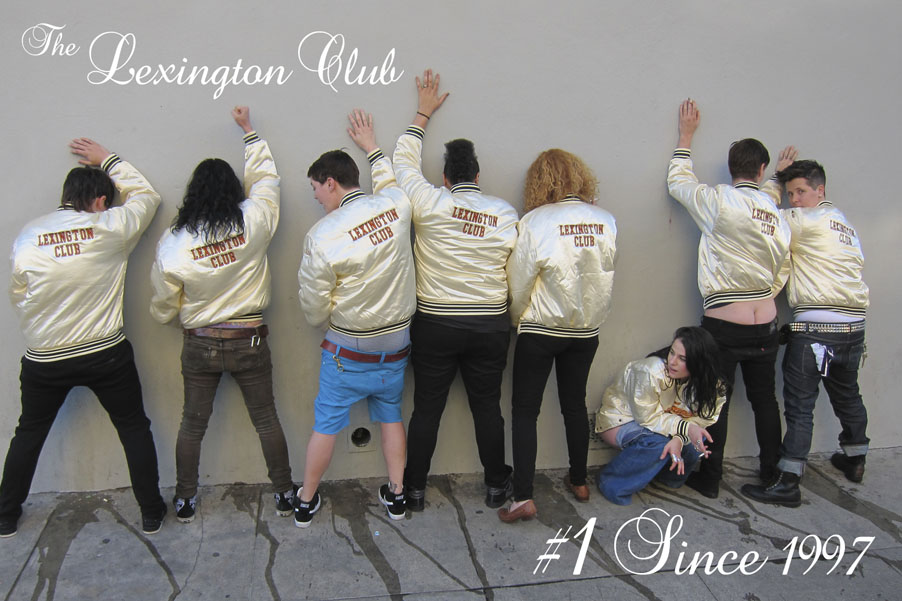
Gosh and begorrah, I know you’re hungovah — from all that St. Paddy’s Day grog or whatever. Don’t worry, you’ll feel better by Saturday, just in time to celebrate the Lexington Club‘s 14th anniversary, huzzah! Unfamiliar with this rowdy party dyke landmark? Hot chicks, get hip real quick at this blowout, featuring DJs Jenna Riot and Miss Pop, sexy-sexy dancers, no cover, and of course stiff drinks.

After the jump, a Super Ego clubs column from 2007 devoted to the Lex’s 10th anniversary (which was the perfect antidote to the L Word phenomenon of the time), giving you a wee bit o’ lesbian history.

LEXINGTON CLUB 14TH ANNIVERSARY Sat/19, 9 p.m., free. Lexington Club, 3464 19th St., SF. www.lexingtonclub.com

(originally published 4/10/07):

HOT LEX

10 years of hot dykes and cold beer at the Lexington Club

SUPER EGO Lesbians: is there nothing they can’t do? They can run a contemporary art gallery in thigh-baring Versace, tossing back their Paul Labrecqued locks as they leap from their roofless 330Ci. They can go from homeless crack addict to nude Hugo Boss model without gaining a single ounce. They can be a smokin’-hot Latina named Papi, a sassy, brassy canoodler who just happens — surprise! — to be a whiz at hoops. Astonishing lesbians!

Oh, wait. That’s The L Word — about as far from the real world of gloriously rambunctious, wild San Francisco dykes as you can get without scarfing down a gift sack of MAC Pervette lip frost, doing Pilates to Ashlee Simpson (“I am me!”), and microwaving Cheeto, your stump-tailed calico cat. Yes, yes, I know the writhing isle of televised lesbos that L makes LA out to be is one big, fat, easy, anorexic target. Don’t get your Mary Green panties in a bunch, Caitlyn. Just lie back, relax, and think of Joan Jett and Carmen Electra. It’s OK. But just as Chuck D. once bemoaned the fact that most of his heroes don’t appear on no stamps, so my homo heroes don’t appear on no Showtime.

Case in point: Lila Thirkield, the superhumanly vivacious owner of SF sapphic outpost the Lexington Club. When I first moved here in the early ’90s, I almost turned straight or something. The San Francisco my naive dreams envisioned was full of hot, scruffy, tattooed boys into hip-hop and punk, all of them on goofy, gleaming bicycles, occasionally in drag. What I got were mostly overgymed proto–circuit queens in pink spandex thongs and cracked-out twinks you could practically see through. Great if I needed to floss, but … And while all the cute ex–ACT UPers were somewhere adrift — busy shearing sleeves off flannels, maybe — it was the rough-and-tumble sistas who really dotted the t’s on my fanboy résumé. Dykes ruled it.

That was back when wallet chains were radical and FTMs were the new It girls. I’m dating myself, but who wouldn’t, hello? Alas, despite all those Sister Sledge–soundtracked strides up the rainbow of equal signs, women could still get kicked out of bars for making out. Wha? It was a gay man, man, man’s world, and the few lesbian watering holes hewed strictly to the old-school standards: alternadykes, calm down.

Thirkield, a spiky-souled kid at the time, stepped up and opened the Lexington in 1997 to give dykes of a different stripe a dive of their own. Like all bars clever enough to fill a cultural gap, the Lex galvanized its community and reinforced the new, boisterous lesbo aesthetic that combined street activism, machismo appropriation, punk rock attitude, and a winking yen for girly pop culture. And hot sex, of course.

“It seemed so important to have a space where we could be creative, where artists, street kids, and young people could hook up and express themselves,” Thirkield says. “It was my first time running a bar, but it was like the whole community was running it with me.”

Over the past decade the Lex has persevered in the same spirit. “The economics of the city have really changed,” Thirkield says. “Our crowd has a really hard time living here now — that’s why we never charge a cover and we always support other things going on. But really, we’re doing better than ever.”

The young drinking dyke crowd has also expanded, finding homes over the years in such spaces as the Phone Booth and Pop’s, as well as legendary joints such as Sadie’s Flying Elephant and the Wild Side West. New bar Stray is catering to a mostly female clientele, and, although lesbian spaces Cherry and the old Transfer have succumbed, a slew of roving dyke dance parties have taken root.

“The dyke scene has changed in the past 10 years too,” Thirkield says. “It’s more diverse. Certain aspects of it are more visible in the media — some people expect different things. We get a lot more complaints from people coming in for the first time, saying things like ‘It’s such a dive!’ Well, yes, that’s exactly what it is. I mean, it’s great that lipstick types exist. I hope they find a place that makes them happy. But if you want to flick your lighter and sing along to old Journey songs with a roomful of babes from around the world — like during Pride last year — this is the place.”

And what about that pesky L Word? “We get a big crowd to watch it on Sunday nights — mostly because they can’t afford cable. Then they stay for an hour afterward, drinking and bitching about it. So it’s great for business!”

Alerts

0

WEDNESDAY 16

Anarchist salon and potluck

Get together with other anticapitalist and establishment-challenging folk at this month’s anarchist salon, a monthly gathering and conversation followed by a potluck social. This month’s focus is on radical mental health and wellness.

7–-9:30 p.m., $2–$5 suggested donation

Station 40

3030B 16th St., SF


Screening plus potluck

Enjoy a special screening of A Crude Awakening: The Oil Crash, an alarming documentary about the pervasiveness of crude oil in our everyday lives — from the products we buy to the food we eat.

7:30–9:30 p.m., $5 suggested donation

Humanist Hall

390 27th St., Berk.

www.humanisthall.org


THURSDAY 17

International media conference opener

The UC Berkeley two-day conference “Crossing Boundaries” looks at new media and the shape of international news in this age of Internet and cell phone reporting. Speakers include Alan McClain of WikiLeaks, Joaquin Alvarado of American Public Media, and many more. Conference continues on March 18. Check the website for schedule.

9 a.m.–7 p.m., $150–$250

Sutardja Hall

UC Campus, Berk.

www.crossongboundaries2011.org


FRIDAY 18

Amnesty International conference opener

Celebrate 50 years of high-impact activism by Amnesty International with an all-weekend event featuring an array of notable guests including Joan Baez, Steve Earle, Christy Turlington Burns, Jahi, and many more — and that’s just day one. Conference continues March 19 and 20. Check the website for schedule.

8 a.m.–5 p.m., $40–$125

Fairmont Hotel

950 Mason, SF

(202) 509-8194

www.amnestyusa.org


SATURDAY 19

Girls rock!

Join Bay Area Girls Rock Camp, a nonprofit dedicated to empowering girls through music, and its after-school program participants for a rockin’ recital spotlighting the culmination of 10 weeks’ worth of hard work. Fifty-five gals in 12 bands showcase their original songs written at the camp. Enter the drawing for an extra $5 for a chance to win sweet new ax — a cherry red Gretsch Electromatic guitar. Proceeds go to ensure that the after school program continues to rock on.

1–3 p.m., $10 suggested donation

Malonga Casquelourd Center for the Arts

1428 Alice, Oakl.

www.bayareagirlsrockcamp.org


Antiwar demonstration

Protest the war in Iraq on the eighth anniversary of the occupation. Gather at the U.N. Plaza with your signs and radical spirit, then march to two boycotted hotels and demand an end to the “war” on working people.

Noon– 4 p.m., free

UN Plaza

Seventh and Market, SF

www.answersf.org

Facebook: National Day of Action Against the Wars


MONDAY 21

World Water Day

Wise up, get down, and take action — learn more about local and global water issues with live music, live painting, dance performances, spoken word, and more. Proceeds benefit water projects in the Bay Area and Kenya.

6:30–9:30 p.m., $10–$15

The New Parish

579 18th St., Oakl.

www.baylaurelproductions.com

Mail items for Alerts to the Guardian Building, 135 Mississippi St., SF, CA 94107; fax to (415) 437-3658; or e-mail alert@sfbg.com. Please include a contact telephone number. Items must be received at least one week prior to the publication date.

A meeting of Mayor Lee and Bloomberg’s minds

0

Mayor Ed Lee described New York Mayor Michael Bloomberg as “a model of mine” as the two men exchanged gifts in the Mayor’s Office, and reporters unsuccessfully tried to figure out which of the two men is taller.

Bloomberg gave Lee a box of golf balls, Lee gave Bloomberg a trolley bell, organic hot dogs, a lifetime membership to the San Francisco Museum of Modern Art, and the two men had a meeting of the minds when it came to the need for big cities to reduce greenhouse gas emissions.

Lee prefaced his gift giving by saying he intended to make Bloomberg an honorary citizen of San Francisco.

“Does that mean I’ll have to pay taxes?” Bloomberg quipped.
“If they go up, you’ll be the first to know,” Lee replied.

Bloomberg said it was “fun to talk” with Mayor Lee about energy conservation and environmental activism. “Things like the environment are things mayors have to deal with every day,” Bloomberg said, noting that cities account for 70 percent of the world’s greenhouse gas emissions.”

Bloomberg praised San Francisco for approving an ordinance that requires owners of non-residential buildings to make public how much energy each building consumes each year. The legislation is meant to improve energy efficiency in existing buildings, reduce greenhouse gas emissions, lower energy costs and create green jobs. It also requires commercial buildings over 10,000 square feet to conduct energy-efficiency audits every five years.

“Each can profit from each other’s experiences,” Bloomberg said, noting that because NYC has a more carbon efficient mass transit than most U.S. cities, its buildings are responsible for creating 80 percent of NYC’s emissions. 

Asked about a lawsuit that his transportation commissioner Janette Sadik-Khan reportedly triggered by installing a bike lane along the boundary of an affluent Brooklyn neighborhood, Bloomberg flashed a smile that didn’t suggest he thinks Sadik-Khan is now a PR liability for his administration.

“Change is difficult,” Bloomberg replied, acknowledging that there are “battles between those who drive cars and ride bikes.”

“Mass transit is the solution for every big city,” he continued. “And the bicycle is one of the answers, but they can be dangerous. Roads are not just for motor vehicles. They are also for bikes and pedestrians. The key is pedestrian safety.”

“Our transportation commissioner is very innovative,” Bloomberg continued, referring back to the reportedly embattled Sadik-Khan. “She therefore does come under criticism, but I should be the one taking the heat, not her!”

“Closing Times Square was one of the most successful things we’ve done,” he added, referring to another initiative that Sadik-Khan championed, in addition to installing bike lanes on crowded streets and proposing to shut part of NYC’s 34th Street to cars.

Asked for his impressions of San Francisco’s homeless problem, Bloomberg pointed out that he had just traveled straight from the airport to City Hall by BART, and therefore didn’t have a deep grasp of the issue locally. “I don’t know the specifics,” he said.

But he was happy to outline how New York set “a very aggressive goal” of reducing its homeless population that it then failed to meet it, in part because the economy tanked. “The numbers are down about 13 percent each year,” he said, noting that he hasn’t seen the 2010 statistics.  “But only a small number sleep on the streets,” he continued, noting that folks in NYC, “have to work to qualify for rental assistance.”

Asked to give Lee some mayoral advice, Bloomberg said, “The public wants elected officials who are genuine, who are doing things for what they think are the right reasons.

Asked to give Lee specific advice on how to stay out of trouble as the city’s top official, Bloomberg joked that Lee should move to New York until the end of the year, when his term as interim mayor expires. “But then he’d get into trouble for doing that,” he said. And then he and his coterie of security guards and photographers were out of the press conference and into the elevators, faster than a cabbie trying to beat a red light on a sweltering night in the Big Apple.

Where were you?

1

marke@sfbg.com

FILM Amid the worshipful bromides that attended the 100th birthday of zombie Ronald Reagan on Feb. 6, gay blogger Joe.My.God. helped bring back to light a transcript of a 1982 press briefing Q&A session between Reagan administration spokesman Larry Speakes and journalist Lester Kinsolving. It’s the first known time that AIDS was brought up at the White House.

Lester Kinsolving: Larry, does the president have any reaction to the announcement — the Centers for Disease Control in Atlanta, that AIDS is now an epidemic and have over 600 cases?

SPEAKES: What’s AIDS?

LK: Over a third of them have died. It’s known as “gay plague.” (Laughter.) No, it is. I mean it’s a pretty serious thing that one in every three people that get this have died. And I wondered if the president is aware of it?

SPEAKES: I don’t have it. Do you? (Laughter.)

LK No, I don’t …

SPEAKES: How do you know? (Laughter.)

LK: In other words, the White House looks on this as a great joke?

The answer, as the briefing spiraled into hysterics, was yes. It’s long been a source of bitterness that Reagan didn’t publicly refer to AIDS until 1987, after the disease had officially killed 20,849 Americans, been identified in 113 countries, and started to be “normalized” by the infection of young white children and closeted Hollywood superstars. But it was the laughter as gays lay dying that brought an angry population together, and that still rings in the ears of those who survived.

Reagan isn’t mentioned in David Weissman’s important and moving new documentary about San Francisco’s early response to the AIDS epidemic, We Were Here — although his communications director Pat Buchanan and Moral Majority leader Jerry Falwell get split-second references, as does the heinous Proposition 64, the heroically defeated 1986 California ballot measure that could have led the way to quarantining gays. We Were Here isn’t a political polemic about the lack of governmental support that greeted the onset of the disease. Nor is the film a kind of cinematic And the Band Played On, exhaustively laying out all the historical and medical minutiae of HIV’s dawn. (See PBS Frontline’s engrossing 2006 The Age of AIDS for that.) There’s no mention of crystal meth, the Internet, the HIV denialist movement, protease inhibitors, depression, or survivor guilt. ACT-UP and the AIDS quilt are discussed only briefly. And you’ll find virtually nothing about the infected world outside the United States or the ongoing fight against the disease.

A satisfying 90-minute documentary couldn’t possibly cover all the aspects of AIDS, of course, even the local ones. Instead, Weissman’s film, codirected with Bill Weber and full of often astonishing tidbits, concentrates mostly on AIDS in the 1980s and tells a more personal and, in its way, more controversial story. What happened in San Francisco when gay people started mysteriously wasting away? And how did the epidemic change the people who lived through it?

The first question provides the narrative framework of the film. In the beginning, we’re introduced to five quintessentially San Franciscan characters, identified only by their first names: Ed, Paul, Daniel, Guy, and Eileen. As they tell their stories about how and why they came to San Francisco, and familiar-yet-still-striking archival photos of an unfettered 1970s Castro District fill the screen, you begin to realize Weissman’s impressive canniness in choosing to focus on these wise and almost preternaturally calm people, who turn out to be major players in the horror that slowly engulfs the film. (And We Were Here is indeed structured like a horror flick, with subtle early notes of discord foreshadowing the graphic images to come. The only thing missing is the screaming.)

Guy, for example, is Guy Clark of the legendary Guy’s Flowers in the Castro. He leads the story from the “San Francisco (Be Sure to Wear Flowers in Your Hair)” era through the flower-bedecked funerals of the stricken — touching for a moment on the reaction in SF’s African American community — before bearing witness to a recent miraculous recovery, a man actually rising from a wheelchair to walk again. Other participants tell the stories of SF General Hospital’s groundbreaking AIDS Ward 5B/5A, the Shanti Project, Visual AIDS, and the “San Francisco model” of multifaceted, compassionate care for people with AIDS* before contemporary treatments became available.

The tales are well told and expertly woven together, as in Weissman’s earlier doc The Cockettes. Most of these people necessarily focused on the daily work of trying to help in order to stay sane. But where We Were Here really hits home is in its foregrounding of many unspoken or buried truths about that specific AIDS period that are in danger of being lost (one of which is that people who lived with HIV back then were often scaldingly candid about what was happening to their bodies.)

AIDS was annoying — it just went on and on. Participant Ed talks honestly about how he had to give up caring for patients out of exhaustion. AIDS got gay people where it really hurt: their vanity. The whole thing really fucked with your look. AIDS was bewildering. Suddenly people who had dropped out and run away to the Gay Mecca had to become medical experts, their recreational chemicals replaced with excruciating concoctions of exotic panic treatments. And women actually existed during AIDS. One of the most touching stories is about how the lesbian community rushed to donate blood.

The biggest act of emotional archeology, however, is the acknowledgement that some good came of AIDS. Not just in the well-known sense that it brought a marginalized community together and showed gay people as humans. It also personally transformed the narrators. Most of them found their calling, maybe lifelong satisfaction, during the AIDS crisis. We Were Here will affect viewers on a deep level, perhaps allowing many to weep openly about what happened for the first time. But it’s no mere sobfest. (My dead friends would have hated that.) It’s a testament to the absolute craziness of life, and the strange places it can take you — if you survive it.

WE WERE HERE OPENING PARTY with Rufus Wainwright Fri/25, 7:30 p.m., $25. Castro Theatre, 429 Castro, SF. Film plays the Castro Theatre through March 3. www.castrotheatre.com, www.wewereherefilm.com

*An earlier version of this article used the term “AIDS victims” to refer to those who had passed away from the disease. That term has a long and derogatory history, and still offended some readers, even when not used to refer to persons living with AIDS (PWAs), so we have replaced it above. It’s good evidence of how this film is re-enlivening debates. 

When radical protest works

18

It’s easy to get turned off by protests, to say that direct action, sit-ins, arrests are counterprodcutive and don’t make any difference. But then you read something like this and you realize that, over time, in-your-face activism can have a very direct impact.


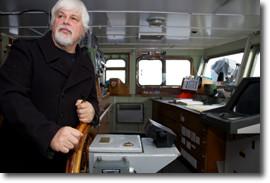
Paul Watson founded the Sea Shepherd Society in 1978, after he left Greenpeace (which he also help found) in a battle over tactics. Greenpeace was always scrupulously nonviolent; Watson wanted to take things a step further. He bought a boat and started hunting down whaling ships; his first victim was a pirate whaler called the Sierra. He rammed his boat repeatedly into the Sierra’s hull off the coast of Portugal in 1979, nearly sinking it. An anonymous bomber finished the job a year later, blowing a huge hole in the whaler’s hull while it was in port.


Since then, Watson and his crews have made life miserable for whaling ships (check out this picture of a Sea Shepherd crewmember tossing a bottle of butyric acid — which is harmless but stinks really, really bad and would make conditions on the boat almost intolerable).


And it’s working: It took years, but Japan is now pulling back its whaling fleet, blaming the Sea Shepherds in part for making whale hunting too costly.

Our Weekly Picks: February 16-22

0

WEDNESDAY 16

MUSIC

Dum Dum Girls

Dee Dee, bandleader of Dum Dum Girls, a 1960s pop-meets-early punk, all-girl four piece, is no dummy. Named not for the lollipops, but after the Vaselines’ album Dum-Dum and the Iggy Pop song “Dum Dum Boys,” DDG was initially a solo project on Dee Dee’s DIY record label, Zoo Music. To take her music beyond her bedroom, she called on the help of her friends: Jules (guitar and vocals), Bambi (bass), and Sandy (drums and vocals). DDR’s most recent album, Sub Pop release I Will Be, features Nick Zinner of the Yeah Yeah Yeahs, Crocodiles’ Brandon Welchez, and Los Angeles musician Andrew Miller. (Jen Verzosa)

With Minks and Dirty Beaches

9 p.m., $12

Bottom Of The Hill

1233 17th St., SF

(415) 621-4455

www.bottomofthehill.com


THURSDAY 17

EVENT

The Tribes of Burning Man

Either you are or you aren’t: I’m an aren’t. As in, not a Burning Man person. But that won’t stop me from trumpeting the release of The Tribes of Burning Man, the end result of six years of work by Steven T. Jones, known around the Guardian as Steve the City Editor and on Burning Man’s playa as “Scribe.” Chances are you’ve seen Jones’ Burning Man coverage in the Guardian’s pages over the years; his new book examines the history and philosophy of the annual event, as well as the ways that Burning Man has become a year-round lifestyle for some and a (counter-) cultural touchstone for hundreds of thousands of desert-goers. The Tribes launch party features readings by Jones and appearances by Burning Man leader Larry Harvey, circus performers Fou Fou Ha, beat boxer Kid Beyond, and other colorful characters from the book. (Cheryl Eddy)

7 p.m., $5 ($20 with book)

Project One

251 Rhode Island, SF

www.p1sf.com


MUSIC

3 Inches of Blood

Though it has endured many lineup changes, 3 Inches of Blood is always instantly recognizable, thanks to the falsetto assault of vocalist Cam Pipes (his real name). Drawing on power metal and thrash but hewing closely to the classic sounds of the New Wave of British Heavy Metal, Pipes and his Vancouver-based band have plied their rock the world over. Fire Up the Blades (2007) experimented with polished, immaculate production, with Slipknot drummer Joey Jordison producing, but 2009 release Here Waits Thy Doom stripped away the gloss, returning the band to its raw, urgent roots. Now that it’s coming to town, you won’t have to wait for your doom any longer. (Ben Richardson)

With Eluveitie, Holy Grail, System Divide

7:30 p.m., $20

Slim’s

333 11th St., SF

(415) 255-0333

www.slims-sf.com


FILM

“Around the World in 33 Films: The Jeonju Digital Project”

The still-young Jeonju International Film Festival is exceptional for privileging film culture over film markets. To take one significant example of this emphasis, for each edition the festival commissions three half-hour digital films by major auteurs. It’s almost impossible to imagine an American festival apportioning funds in this internationalist, art-first manner. Yerba Buena Center for the Arts screens all 33 Jeonju commissions from 2000-10 over the next two weeks. It’s an ambitious — and, one imagines, costly — program, so make it count. This first show features an especially strong class of 2010 (James Benning, Denis Côté, and Matías Piñeiro), with works by the new century’s preeminent film artists (Pedro Costa, Apichatpong Weerasethakul, Jia Zhangke, etc.) waiting in the wings. (Max Goldberg)

Feb 17–27 (2010 program: tonight, 7:30 p.m.), $8

YBCA Screening Room

701 Mission, SF

(415) 978-2700

www.ybca.org


FRIDAY 18

MUSIC

Chromeo

At first listen, Chromeo’s music would seem to run the risk of being a little tough to take seriously — if only it wasn’t so damn well-executed. Instead, the Montreal-based electro-funk duo creates perfectly retro-minded jams that skimp refuse to scrimp on creative songcraft or purely visceral dance floor diversion. The fantastic talk box solos don’t hurt either. Taking its cues from classic era funk, Hall and Oates-style blue-eyed soul, and modern synthpop, Chromeo’s 2010 album Business Casual has led to a slew of strong reviews, festival appearances, and a top 10 slot on Billboard’s dance/electronic chart. (Landon Moblad)

With MNDR and the Suzan

8 p.m., $25

Fox Theater

1807 Telegraph, Oakl.

(510) 548-3010

www.thefoxoakland.com


MUSIC

Bart B More

How old is Bart B More? In videos from his recent Asian tour, he’s got the pallid complexion that my friends did in high school. Maybe a result of the DJ lifestyle, spending too much time in clubs around 2 a.m. (or being Danish). The rest of Bart B’s existence, from what I can tell, consists of lifting weights and looking at Lamborghinis. Ah, to be an international beat maker, an up-and-comer who’s reputedly worth checking out. Anyway, Blasthaus resident Nisus has proven himself a reliable dance floor driver, delivering a binaural set at the Treasure Island Music Festival and excellently setting up the Twelves earlier this month. (Ryan Prendiville)

With Nisus and Tron Jeremy

9 p.m., $12.50

Rickshaw Stop

155 Fell, SF

(415) 861-2011

www.rickshawstop.com


MUSIC

Mark Growden

Back from another long stretch of touring and recording, wandering minstrel Mark Growden lands at the Brava Theatre with a brand new album Lose Me in the Sand and a posse of old-school Tucson troubadours as the backing band. Less sweepingly-thematic than 2010’s Saint Judas, the new album combines oddments of philosophy, romance, humor, and reminiscence, covering familiar tunes in startlingly unfamiliar ways, plus a handful of originals including a breakneck-paced courting song “Settle in a Little While” and a sepia-toned hometown lament “Killing Time.” Growden’s long-time collaborator and Porto Franco labelmate Seth Ford Young opens and also releases his eponymous debut album. (Nicole Gluckstern)

With Seth Ford Young

Fri/18–Sat/19, 8 p.m., $20–$50

Brava Theatre

2781 24th St., SF

(415) 641-7657

www.brava.org


PERFORMANCE

Move Thru Me

“I’m with the band” may sound smoother than “I’m with the dance company,” although either could be stated by the performers of Move Thru Me, a collaboration of Christine Cali’s Cali & Co Dance and Matthew Langlois’ the Welcome Matt band. A hybrid of rock ‘n’ roll and modern dance, the performance responds to the pursuit of a creative life and ongoing artistic practice. Prior to joining forces, Cali and Langlois each worked as independent artists for more than 15 years. The work includes a soundtrack of original music as well as online dance videos. As with any good concert tour — T-shirts! (Julie Potter)

Fri/18–Sat/19, 8 p.m. (also Sun/20, 5 p.m.), $10–$20

Dance Mission Theater

3316 24th St., SF

(415) 826-4441

www.dancemission.com


SATURDAY 19

EVENT

“From Produce to Production: New Traditions in Bay Area Food Culture”

Bay Area Now (BAN6), a triennial celebrating local artists from diverse disciplines, begins with a series of Bay Area-centric conversations about food, environmentalism, futurism, community activism, radical identities, and technology. The first roundtable discussion addresses new practices for growing, preparing and shopping for food, during which YBCA Executive Director Ken Foster will speak with food luminaries Bryant Terry, eco-chef and activist from Oakland and author of Vegan Soul Kitchen; Novella Carpenter, journalist, farmer and author of Farm City; and Leif Hedendal, a self-educated chef at San Francisco’s Greens and Oakland’s Citron restaurants, whose Bay Area culinary events combine art and food. (Potter)

1 p.m., free

Yerba Buena Center for the Arts

701 Mission, SF

(415) 987-2787

www.ybca.org


EVENT

The Fortune Cookie Chronicles

Planning on consuming a little New Year’s nosh during this weekend’s bunny-fueled festivities? Then you might be interested to know that the Japanese — not Chinese — invented the fortune cookie; Chinese takeout cartons can be found everywhere but China; and chop suey may or may not be an elaborate American hoax. I see all you smartphone nerds plinking “chop suey” into snopes.com right now, but save yourselves the trouble: New York Times reporter and author of The Fortune Cookie Chronicles Jennifer 8. Lee is here to unravel the history of Chinese cookery — and just in time for the Chinese New Year. The book is also seasoned with a healthy smattering of SF history to spice things up. (Emily Appelbaum)

2:30–4 p.m., free

San Francisco Public Library

Chinatown Branch

1135 Powell, SF

(415) 557-4400

www.sfpl.org


SUNDAY 20

EVENT

“San Francisco Mixtape Society presents Guilty Pleasures”

Listening to Ke$ha on repeat? Excited about Britney Spears’ upcoming release, Femme Fatale? Love to share music? Then the San Francisco Mixtape Society has you covered. It presents “Guilty Pleasures,” a night of music mixtape exchanges. Assemble a mixtape according to the theme in any format — cassette, CD, or USB — and leave with a fellow attendee’s mixtape; they’ll be exchanged throughout the evening via a raffle. Those who come armed with tunes will receive a free drink — and all the joy guilty pleasures can provide. (Verzosa)

4–6 p.m., free

Make-Out Room

3225 22nd St., SF

(415) 647-2888

www.sfmixtapesociety.com


MONDAY 21

EVENT

“The Cleveland Confidential Book Tour”

As the guitarist for Rocket from the Tombs and the Dead Boys, Cheetah Chrome helped write the sonic blueprint for punk rock — and now he’s written an autobiography, Cheetah Chrome: A Dead Boy’s Tale From The Front Lines of Punk Rock, which chronicles his explosive life and his role in one of the most infamous movements in modern pop culture. Joining him for “The Cleveland Confidential Book Tour” are Mike Hudson from the Pagans and Bob Pfeifer from Human Switchboard; don’t miss your chance to hear the story straight from the mouths of a triumvirate of punks’ founding fathers. (Sean McCourt)

Tonight, 6 p.m., $10

Hemlock Tavern

1131 Polk, SF

(415) 923-0923

www.hemlocktavern.com.

Tues/22, 7 p.m., free

Moe’s Books

2476 Telegraph, Berk.

(510) 849-2087

www.moesbooks.com

Feb. 23, 7 p.m., free

Gallery Fifty24

218 Fillmore, SF

www.noisepop.com


TUESDAY 22

MUSIC

Odd Future

The Internet has birthed yet another rap group with disturbing lyrics (see also: Die Antwoord), but this time there’s no doubt regarding the collective’s genuine intentions. Members of Los Angeles hip-hop skate crew Odd Future Wolfgang Kill Them All (OFWKTA) range in age from 16 to 23 and wax philosophical about typical teenage concerns, from school and love to murder and bondage. Sometimes the music comes off like a hip-hop parallel to horror metal, but ultimately Odd Future is less about fetishizing violence than it is about offering an unfettered forum for the group’s personalities. Though their ages imply novelty, listening to the sharp, dense flow of Earl Sweatshirt or the lo-fi contorted funk of Tyler the Creator confirms there can be no doubt that these kids are headed for big, big things. (Peter Galvin)

9 p.m., $16

Slim’s

333 11th St., SF

(415) 255-0333

www.slims-sf.com

The Guardian listings deadline is two weeks prior to our Wednesday publication date. To submit an item for consideration, please include the title of the event, a brief description of the event, date and time, venue name, street address (listing cross streets only isn’t sufficient), city, telephone number readers can call for more information, telephone number for media, and admission costs. Send information to Listings, the Guardian Building, 135 Mississippi St., SF, CA 94107; fax to (415) 487-2506; or e-mail (paste press release into e-mail body — no text attachments, please) to listings@sfbg.com. Digital photos may be submitted in jpeg format; the image must be at least 240 dpi and four inches by six inches in size. We regret we cannot accept listings over the phone.

Our Weekly Picks: February 2-8

0

WEDNESDAY 2

MUSIC

Billy and Dolly

Have you noticed? Like clockwork, the buds on the ornamental plum trees are starting to power pop their thin pink petals, making sidewalks more poetic all across the city. Ephemeral yet impressive, the changing season awakens melodies of Billy and Dolly, the local singing and songwriting duo formerly of the Monolith. The guy-girl combo is backed by the Tell-Tale Hearts, a sonic unity of 20 Minute Loop’s rockin’ guitar-bass team and the Monolith’s drummer. The harmonies are deliciously poppy and achingly bittersweet, reminiscent of Elliott Smith, were he not so chronically bummed and had a lovely lady voice as a complement. Beware: between the trees and the tunes, it’s all so pretty, it just might hurt your heart. (Kat Renz)

With Tristen and the Corner Laughers

8 p.m., $10

Rickshaw Stop

155 Fell, SF

(415) 861-2011

www.rickshawstop.com


MUSIC

Hymn For Her

You think living in a studio apartment with two roommates is cozy? Well, think again. ‘Cause you’ve got nothing on Lucy Tight and Wayne Waxing, of Americana duo Hymn For Her that live, record, and tour in their 16-foot, 1961 Bambi Airstream trailer — along with a baby and dog. And they somehow manage to fit a three-stringed, broom-handle cigar box, banjo, dobro, bass drum, hi-hat, and harp in there, too. In true Hymn For Her fashion, its newest release, the cleverly spelled Lucy and Wayne and the Amairican Stream, was recorded at various campgrounds and friends’ driveways while on tour. Better catch them before they pack up Bambi and hit the road. (Jen Verzosa)

With Tippy Canoe

Wed/2, 7 p.m., free

Mama Buzz Café

2138 Telegraph, Oakl.

(510) 465-4073

www.mamabuzzcafe.com

With That Ghost

Thurs/3, 9 p.m., call for price

Amnesia

853 Valencia, SF

(415) 970-0012

www.amnesiathebar.com

Sun/6, 9 p.m., $6

Hemlock Tavern

1131 Polk, SF

www.hemlocktavern.com


THURSDAY 3

DANCE

Jess Curtis/Gravity

Jess Curtis/Gravity is a company that lives up to, and defies, the connotations in that noun attached to the name of its artistic director. Choreographer-performer Curtis and his eclectic collaborators display an alternately cool and passionate, always irreverent intelligence, wholly immersed in the unfathomable ocean of the human body. They’re the Jacques Cousteaus of this deep: its champions and endlessly curious, enthralled students. For audiences, that means a good time, a weird time, a heavy-breathing and emotionally up-heaving time, and a time to question things we thought we knew. The company’s latest voyage, Dances for Non/Fictional Bodies, is a sprawling work whose central event — a subjectivity-shifting convergence of “nontraditional” dancer-bodies — sets sail this weekend. (Robert Avila)

Thurs/3–Sat/6, 8 p.m., $25

Yerba Buena Center for the Arts

701 Mission, SF

(415) 978-2787

www.ybca.org


MUSIC

Ozzy Osbourne

Though he’s backed by a new lead guitarist (Greek virtuoso Gus G.) and brandishing a new album, Ozzy Osbourne isn’t likely to conquer much new territory on his 2011 Scream tour. Nor does anyone want him to. The Prince of Fucking Darkness is still revered by a healthy portion of the headbanging public, a polity that will undoubtedly spend the show demanding a hearty helping of songs from his ant-snorting, dove-decapitating, “Crazy Train”-riding salad days. Whatever your opinion on the world’s most incomprehensible celebrity, his charisma can still get an arena rocking. Whether that’s because of — or in spite of — his infallible propensity for mooning the audience, no one can say. But as the Blizzard of Ozz would no doubt put it: “who fucking cares?” (Ben Richardson)

With Slash featuring Myles Kennedy

7:30 p.m., $44–$92

H.P. Pavilion

525 West Santa Clara, San Jose

(408) 287-7070

www.hppsj.com


FRIDAY 4

EVENT

“San Francisco Bike Party February 2011 Ride: Love Your Bike”

It’s prettiest much the buzziest thing on SF bikes since American-made handlebar beer can — uh, cup — holders: the SF Bike Party, spawned from the San Jose Bike Party and a member of the same family as the East Bay Bike Party. Sources say the mass bike ride, which makes complete stops for traffic lights and the occasional drink-and-mingle sidewalk party, marks a logical evolution for the city bike activism. Despite what the comments on SF Gate say, cycles in the city are no longer the purview of a handful of iron-calved fixie followers — there’s room for a little softness among the two-wheeled, which explains this month’s V-Day-ready ride theme: “love your bike.” A map of the route will be available on the group’s website closer to push-off. (Caitlin Donohue)

7:30 p.m., free

www.sfbikeparty.wordpress.com


MUSIC

Madlib

Titles are de rigueur in hip-hop. O.D.B. once attended a debutante ball that ended before his introduction finished. (His date was devastated.) Otis Jackson Jr., best known as Madlib and other variations (Madvillain with fellow schizo MF Doom, Jaylib with late sobriquet champion J Dilla) has racked up numerous names over the last two decades. For Madlib, the aliases are appropriate given the diverse projects he tackles as DJ, producer, MC, and uber stoner (expect at least a contact high.) His latest release, Madlib Medicine Show, is a gargantuan monthly series of 12 albums that attempt to fill in the blanks on your understanding of hip-hop. (Ryan Prendiville)

With Robot Koch, Change the Beat, and more

10 p.m., $15

103 Harriet, SF

(415) 431-1200

www.1015.com


DANCE

“Rotunda Dance Series: Leung’s White Crane Chinese Lion Dancing”

Just a day after Chinese new year begins, the blaring drums, clashing cymbals, soaring lions, and dancing dragons of Leung’s White Crane Chinese Lion Dancing appear in San Francisco City Hall, bringing the colorful ancient tradition to the free lunchtime Rotunda Dance Series, copresented by Dancers’ Group and World Arts West. The three Leung brothers — Kuen, Kwan and Allen — moved to SF in the 1970s, carrying the Lion Dancing teachings of their master Kwong Boon Fu from Hong Kong. Performing internationally and teaching in Chinatown for more than 35 years, they are treasured for their larger-than-life performances in the city’s Chinese New Year Parade. (Julie Potter)

Noon, free

San Francisco City Hall

One Dr. Carlton B. Goodlett Place, SF

(415) 720-8830

www.dancersgroup.org


SATURDAY 5

EVENT

“Free University of San Francisco Teach-in”

An idea this crazy just might work! Sick of the gouge-y tuition hikes in our public and private education systems, a band of merry SF radicals have decided to launch an ambitious campaign to free learnin’. After a surprisingly light number of planning meetings, this is the first of the Free University’s offerings: a weekend of classes to inspire and hopefully serve as a community-builder for those who think our current university system is broken. On the lectern: beat poet Diane di Prima on 19th century visionary poetry, revolutionary poet Bobby Coleman on SF labor history, classes on criminal procedure, paganism, Kerouac, and more. (Donohue)

Sat/5, 9:30 a.m.–4 p.m.;

Sun/6, 9 a.m.–4 p.m., free

Viracocha

998 Valencia, SF

www.fusf.wordpress.com


SUNDAY 6

FILM

Every Man for Himself

Forever the enfant terrible of cinema, Jean-Luc Godard is skipping the lifetime achievement lineup at this year’s Oscars. This has stirred up a predictably dumb controversy in the American press over bullshit claims that Godard is anti-Semitic. Never mind the philistines — we’re still awaiting a local screening of the maestro’s 2010 Film Socialism. In the meantime, a 35mm restoration of 1980’s Every Man for Himself at the Red Vic does nicely. Godard called this lyrical examination of art and commerce intertwined his second first film, and its formal ingenuities and philosophical knots remain refreshing. Support the Red Vic by ponying up for extra popcorn! (Max Goldberg)

Sun/6–Mon/7, 7:15 and 9:15 p.m.

Also Sun/6, 2 and 4 p.m., $6–$9

Red Vic Movie House

1727 Haight, SF

(415) 668-3994

www.redvicmoviehouse.com


MONDAY 7

EVENT

Replikaaa Silent Happening: A Multimedia Performance Art Event”

Sometimes you just don’t have much to say. Or perhaps your ears are ringing from all those noisy bars. To exercise the other senses visit this chic silent cocktail party where guests practice the art of nonverbal communication, watching and connecting without words. The unusual and participatory social experience presented by Al’Myra Communications includes a preview screening of Tayeb Al-Hafez’s silent film Replikaaa, a mysterious and futuristic work about five DNA and organ traffickers, to be followed by local artist performances. Reserve a free ticket online and then shut your mouth. Whether you wink, gesticulate, or show some funky dance moves is up to you. Chatty Cathys discouraged. (Potter)

7 p.m., free

Z Space

450 Florida, SF

(415) 891-9544

www.replikaaathemovie.com


TUESDAY 8

MUSIC

Sebadoh

In the vein of Guided By Voices and Pavement, Sebadoh has been dubbed “the quintessential indie rock band of the 1990s” — and like that decade’s flannel-shirt trend, they’re back. After getting the heave-ho in 1988 as bassist of alt-rock band Dinosaur Jr. (he rejoined in 2005), multi-instrumentalist Lou Barlow focused on the DIY project he had started with Eric Gaffney. Sebadoh soon became infamous for its bipolar swings from lo-fi, touchy-feely folk to experimental noise rock. With the addition of bassist Jason Loewenstein, the three-piece became a hit among the hip. Eventually Gaffney jumped ship (he rejoined in 2007) and was replaced by drummer Bob Fay. This lineup recorded the band’s most accessible albums, 1994’s Bakesale and 1996’s Harmacy, both of which are being re-released by Sub Pop Records this year and are the reason for the current tour. (Verzosa)

With Quasi

7 p.m., $20

Great American Music Hall

859 O’Farrell, SF

www.gamh.com


FILM

The Ipcress File

Move over, Christopher Walken: there’s a new star du jour for celebrity imitation freaks. You can’t help but try your hand at Michael Caine’s Cockney accent after watching the hilarious clip from the BBC show The Trip of comedians Steve Coogan and Rob Brydon engaging in a rousing round of dueling Caine-jos. (Search “This is how Michael Caine speaks” on YouTube. You’re welcome.) Polish your early-period Caine impersonation by checking out a rare screening of 1965 secret-agent thriller The Ipcress File, which showcases the legendary actor in his first starring role. The film plays as part of four nights of highlights from the “Mostly British Film Festival,” with other entries hailing from New Zealand and Australia. (Cheryl Eddy)

7 p.m., $10.25

Christopher B. Smith Rafael Film Center

1118 Fourth St., San Rafael

(415) 454-1222

www.cafilm.org


The Guardian listings deadline is two weeks prior to our Wednesday publication date. To submit an item for consideration, please include the title of the event, a brief description of the event, date and time, venue name, street address (listing cross streets only isn’t sufficient), city, telephone number readers can call for more information, telephone number for media, and admission costs. Send information to Listings, the Guardian Building, 135 Mississippi St., SF, CA 94107; fax to (415) 487-2506; or e-mail (paste press release into e-mail body — no text attachments, please) to listings@sfbg.com. Digital photos may be submitted in jpeg format; the image must be at least 240 dpi and four inches by six inches in size. We regret we cannot accept listings over the phone.

Why I may run for Congress

12

OPINION One of the most inspiring political leaders in recent decades, Sen. Paul Wellstone (D-Minn.), famously declared: “I represent the democratic wing of the Democratic Party.” Today we need progressives in Congress who will represent the progressive wing of the Progressive Caucus.

That’s the largest caucus on Capitol Hill — but having 80 members on the roster won’t do much good if many cave under pressure.

For 18 years, the North Bay has been represented in Congress by Rep. Lynn Woolsey. Her strong antiwar voice and very progressive voting record have endeared her to a lot of constituents. Now she’s publicly saying that she may choose to retire instead of seeking reelection.

This week, after decades of working for progressive social change, I’m announcing a federal exploratory committee for Congress (www.NormanSolomonExploratory.com). If Rep. Woolsey doesn’t run in 2012, I will.

Across the country, alarm is rising as corporate power escalates at the intersection of Wall Street and Pennsylvania Avenue. An egregious factor is the deference to such power from some elected officials who rely on a progressive base for votes but shrug off tangible accountability to that base.

Dysfunctional relationships between liberals in Congress and progressive social movements serve as enablers for endless war, massive giveaways to Wall Street, widening gaps between the rich and the rest of us, erosion of civil liberties, outrageous inaction on global warming, and so much more.

Back in congressional districts, the only way to beat corporate Astroturf is with genuine grassroots activism — committed to creating a very different kind of future for the next generations.

At a time when high unemployment is becoming more protracted in tandem with a gargantuan warfare state, we’re in the midst of what Martin Luther King Jr. called “the madness of militarism.”

So-called moderates are adept at fine-tuning rather than challenging a destructive status quo. But there’s nothing moderate about helping to fuel the engines of social inequity, eco-disaster and perpetual war.

Eight decades ago, much of the U.S. press was hostile to a new president named Franklin D. Roosevelt, and many of his political enemies called him a dangerous radical. But there was — and is — nothing unduly radical about supporting economic fairness and social justice.

Before the end of his first term, FDR denounced “the economic royalists.” He said: “They are unanimous in their hate for me — and I welcome their hatred.” He did not say, “They hate me — and I want them to like me.”

Today, big money and mega-media power are dominant; yet progressives who are principled, determined, and methodical can prevail in a big way. That’s what happened last year when activists defeated PG&E’s monopolistic Proposition 16 despite being outspent by more than 400 to 1.

Living in the North Bay for more than a dozen years, I’ve often been moved by the extent of local progressive passions. Antiwar, environmental, and social justice outlooks are widespread — and deserve forthright representation in Congress.

Paul Wellstone was vitally correct when he said: “In the last analysis, politics is not predictions and politics is not observations. Politics is what we do. Politics is what we do, politics is what we create, by what we work for, by what we hope for, and what we dare to imagine.”


Norman Solomon is national co-chair of the Healthcare Not Warfare campaign, launched by Progressive Democrats of America. His books include War Made Easy: How Presidents and Pundits Keep Spinning Us to Death. For more information go to www.NormanSolomonExploratory.com.

SF’s new political era

31

news@sfbg.com

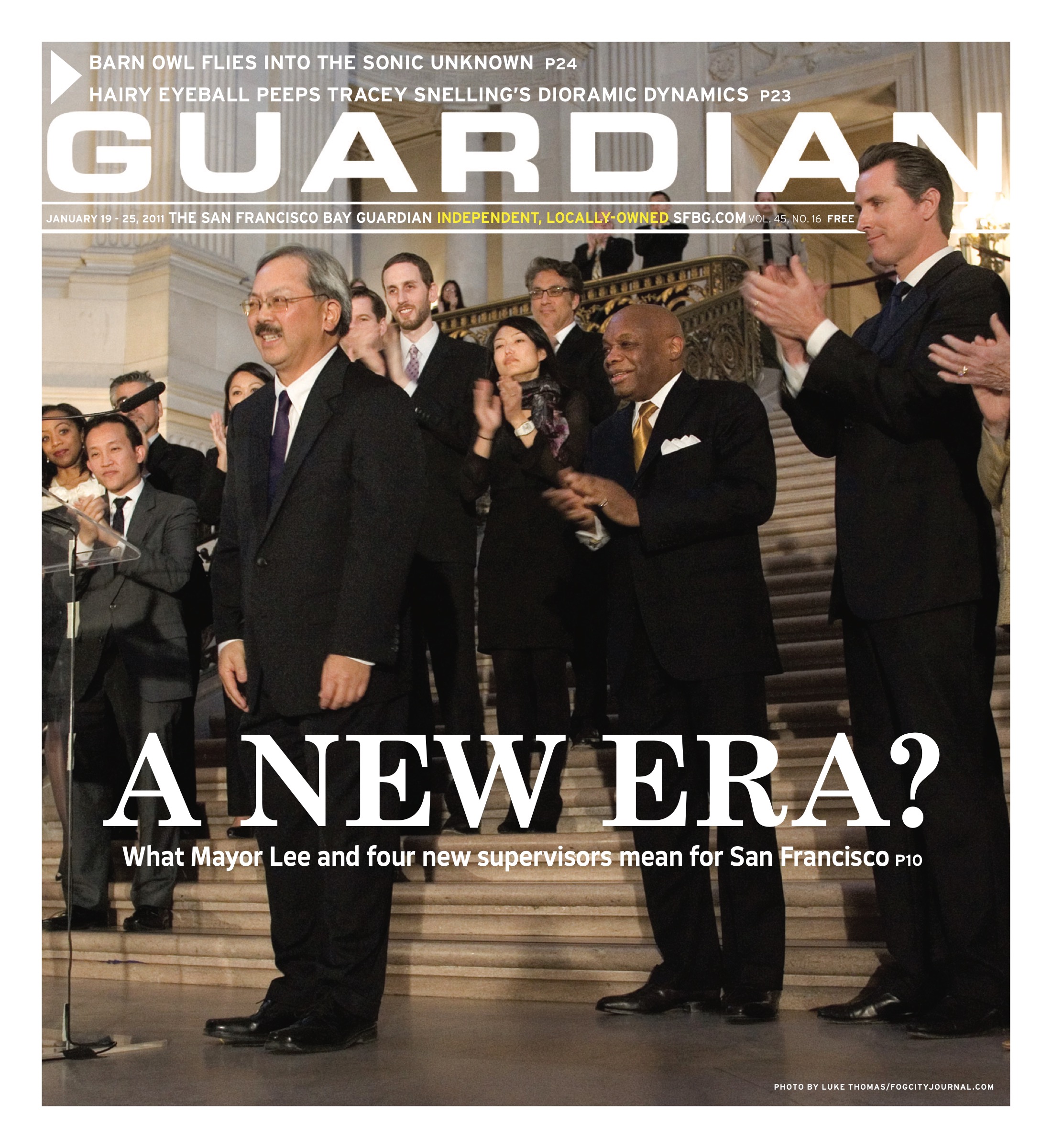
You can argue about what the word “progressive” means, and you can argue about the process and the politics that put Ed Lee in the Mayor’s Office. And you can talk forever about which group or faction has how much of a majority on the San Francisco Board of Supervisors, but you have to admit: this city has just undergone a significant political realignment.

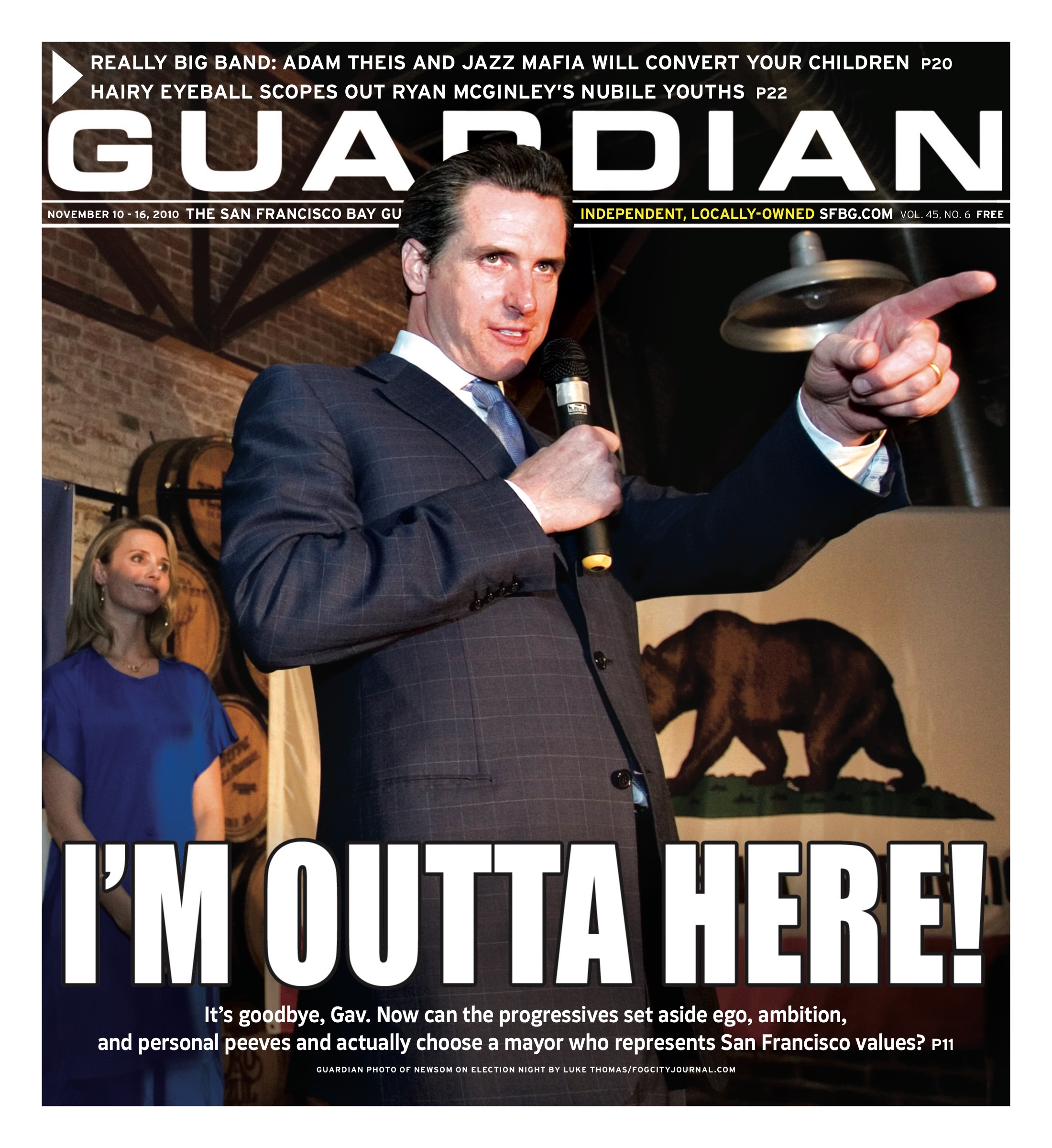
Some of that was inevitable. The last members of the class of 2000, the supervisors who were elected in a rebellion against the sleaze, corruption, and runaway development policies of the Willie Brown administration, have left office. Gavin Newsom, the mayor who was often at war with the board and who encouraged a spirit of rancor and partisanship, is finally off to Sacramento. For the first time since 1978, the supervisors will be working with a mayor they chose themselves.

For much of the past 15 years, progressive politics was as much about stopping bad things — preventing Brown and then Newsom from wrecking the city — as it was about promoting good things. But the “politics of anti,” as San Francisco State political scientist Rich DeLeon describes is, wasn’t a central theme in the November elections, and this generation of supervisors comes into office with a different agenda.

Besides, one of the clear divisions on the board the past seven years was the Newsom allies against the progressives — something that dissipated instantly when Lee took over.

But the realignment goes deeper.

Until recently, the progressives on the board had a working majority — a caucus, so to speak — and they tended to vote together much of the time. The lines on the board were drawn almost entirely by what Newsom disparagingly calls ideology but could more accurately be described as a shared set of political values, a shared urban agenda.

There are still six supervisors who call themselves progressives, but the idea that they’ll stick together was shattered in the battle over a new mayor — and the notion that there’s anything like a progressive caucus died with Board President David Chiu’s election (his majority came in part from the conservative side, with three progressives opposing him) and with Chiu’s new committee assignments, which for the first time in a decade put control of key assignments in the hands of the fiscal conservatives.


A PROGRESSIVE MAJORITY?

The progressive bloc on the board was never monolithic. There were always disagreements and fractures. And, thanks to the Brown Act, the progressives don’t actually meet outside of the formal board sessions. But it was fair and accurate to say that, most of the time, the six members of the board majority functioned almost as a political party, working together on issues and counting on each other for key votes. There was, for example, a dispute two years ago over the board presidency — but in the end, Chiu was elected with exactly six votes, all from the progressive majority that came together in the end.

That all started to fall apart the minute the board was faced with the prospect of choosing a new mayor. For one thing, the progressives couldn’t agree on a strategy — should they look for someone who would seek reelection in November, or try to find an acceptable interim mayor? The rules that barred supervisors from voting for themselves made it more tricky; six votes were not enough to elect any of the existing members. And, not surprisingly, some of the progressives had mayoral ambitions themselves.

When state Assemblymember Tom Ammiano — who would have had six votes easily — took himself out of the running, there was no other obvious progressive candidate. And with no other obvious candidate, and little opportunity for open discussion, the progressives couldn’t come to an agreement.

But by the Jan. 4 board meeting, five of the six had coalesced around Sheriff Mike Hennessey. Chiu, however, was supporting Ed Lee, someone he had known and worked with in the Asian community and whom he considered a progressive candidate. And once it became clear that Lee was headed toward victory, Sup. Eric Mar announced that he, too, would be in Lee’s camp.

A few days later, when the new board convened to choose a president, the progressive solidarity was gone. Sups. David Campos, John Avalos, and Ross Mirkarimi, now the solid left wing of the board, voted for Avalos. Chiu won with the support of Mar, Sup. Jane Kim, and the moderate-to-conservative flank.

Now the Budget Committee — long controlled by a progressive chair and a progressive majority — will be led by Carmen Chu, who is among the most fiscally conservative board members. The Land Use and Development Committee will be chaired by Mar, but two of the three members are from the moderate side. Same goes for Rules, where Sup. Sean Elsbernd, for years the most conservative board member, will work with ideological ally Sup. Mark Farrell on confirming mayoral appointments, redrawing supervisorial districts, and promoting or blocking charter amendments as Kim, the chair, does her best to contain the damage.

You can argue that having independent-minded supervisors who don’t vote as a caucus is a good thing. You can also argue that a fractured left will never win against a united downtown. And both arguments have merit.

But you can’t argue any more that the board has the same sort of progressive majority it’s had for the past 10 years. That’s over. It’s a new — and different — political era.

What happens now? Will the progressives hold enough votes to have an influence on the city budget (and ensure that the deficit solutions include new revenue and not just cuts)? What legislative priorities will the supervisors be pushing in the next year? How will the votes shake out on difficult new proposals (and ongoing issues like community choice aggregation)?

Mayor Lee has pledged to work with the board and will show up for monthly questions. How will he respond to the sorts of progressive legislation — like tenant protections, transit-first policies, immigrant rights measures, and stronger affordable housing standards — that Newsom routinely vetoed?

How will this all play out in a year when the city will also be electing a new mayor?


IDENTITY POLITICS?

When Sups. Chiu, Mar, and Kim broke with their three progressive colleagues to support Chiu for board president — just as Chiu and Mar helped clear the path for Ed Lee to become mayor days earlier — it seemed to many political observers that identity had trumped ideology on the board. There’s some truth to that observation, but it’s too simple an explanation. There’s also the fact that Chiu strongly supported Kim, who is a personal friend and former roommate, in her election, so it’s no surprise she went with him for board president.

And the phrase itself is so laden with baggage and problems that it’s hard to talk about. It has come to signify a wide range of political activity and theorizing founded in the shared experiences of injustice of members of certain social groups. “Rather than organizing solely around belief systems, programmatic manifestoes, or party affiliation, identity political formations typically aim to secure the political freedom of a specific constituency marginalized within its larger context,” says the Stanford Encyclopedia of Philosophy, an ongoing research project by the students and faculty at Stanford University.

Although the notion of identity politics took hold during the social movements of the 1960s and ’70s — when liberation and organizing movements among women and various ethic and other identity groups fed a larger liberal democratic surge that targeted war, economic inequity, social injustice, and other issues — it’s also a political approach that has divided the populace.

“One of the central charges against identity politics by liberals, among others, has been its alleged reliance on notions of sameness to justify political mobilization,” says the Stanford Encyclopedia. “Looking for people who are like you rather than who share your political values as allies runs the risk of sidelining critical political analysis of complex social locations and ghettoizing members of social groups as the only persons capable of making or understanding claims to justice.”

Mar explains that the reality of identity politics and whether it’s a factor in the current politics at City Hall is far more complex.

“With me, David Chiu, and Jane Kim as a block of three progressive Asians — and I still define David Chiu as a progressive though I think some are questioning that — we all come out of what I would call a pro-housing justice, transit-first, and environmental sustainability [mindset],” Mar told us. “But I think because of our ethnic background and experiences, we may have different perspectives at times than other progressives.”

For example, Mar said, many working class families of color need to drive a car so they’ll differ from progressives who want to limit parking spaces to discourage driving. He also has reservations about the proposed congestion pricing fee and how it might affect low-income drivers.\

“I think often when progressive people of color come into office — Jane Kim might be one of the best examples — that sometimes there’s an assumption that her issues are going to be the same as a white progressive or a Latino progressive,” he said. “But I think kind of the different identities that we all have mean that we’re more complex.”

Campos, a Latino immigrant who is openly gay, noted that “as a progressive person of color, I have at times felt that the progressive movement didn’t recognize the importance of identity politics and what it means for me to have another person of color in power.”

But, he added, “I don’t think identity politics alone should guide what happens. A progressive agenda isn’t just about race but class, sexual orientation, and other things. It’s not enough to say that identity politics justifies everything.”

University of San Francisco political science professor Corey Cook told the Guardian that identity has always been a strong factor in San Francisco politics, even if it was overshadowed by the political realignment around progressive ideology that occurred in 2000, mostly as a reaction to an economic agenda based on rapid development and political cronyism.

“I’m not sure that identity wasn’t relevant, but it was swamped by ideology,” Cook told the Guardian. Now, he said, another political realignment seems to be occurring, one that downplays ideology compared to the position it has held for the last 10 years. “I’m not sure that ideology is dead. But the dynamics have definitely changed.”

Cook sees what may be a more important change reflected in Chiu’s decision to put the political moderates in control of key board committees. But he said that shift was probably inevitable given the difficulties of unifying the diverse progressive constituencies.

“It’s hard to hold a progressive coalition together, and it’s amazing that it has lasted this long,” he said.

There’s another kind of identity politics at play as well — that of native San Franciscans, who often express resentment at progressive newcomers talking about what kind of city this is, versus those who see San Francisco as a city of immigrants and ideas, a place being shaped by a wider constituency than the old-timers like to acknowledge.

“I’m honored to join Sups. Elsbernd and Cohen in representing the neighborhoods they grew up in,” Sup. Mark Farrell said during his opening remarks after being sworn in Jan. 8., sobbing when he thanked his parents for their support.

As he continued, he fed the criticism of the notion of ideology-based politics that has been a popular trope with Gavin Newsom and other fiscal conservatives in recent years, telling the crowd he wanted “to turn City Hall into a place based on issues and ideas, not ideology.”

Cohen also placed more importance on her birthright than on her political philosophy, telling stories about entering board chambers through the back door at age 16 when she was part of a youth program created by then-Mayor Frank Jordan, and with former Mayor Dianne Feinstein coming to speak at Cohen’s third-grade class. “I am a San Francisco native, and that is a responsibility I take seriously,” said Cohen, who graduated from the Emerge Program, which grooms women for political office,

“We will have another woman as president of the Board of Supervisors, and we will have a woman as mayor of San Francisco,” she added. And as the sole African American on the board, she also pledged, “I will be working to add more members of the African American community to the elected family of San Francisco.”

But what issues she plans to focus on and what values she’ll represent were unclear in her comments — as they were throughout her campaign, despite the efforts of journalists and activists to discern her political philosophy. In her public comments, her only stated goal was to build bridges between the community and City Hall and let decisions be guided by the people “not political ideologies.”

Oftentimes in recent San Francisco history, identity and ideology have worked in concert, as they did with former Sup. Harvey Milk, who broke barriers as the first openly gay elected official, but who also championed a broad progressive agenda that included tenants rights, protecting civil liberties, and creating more parks and public spaces.

Sup. Scott Wiener, shortly after being sworn into office, acknowledged the legacy of his district, which was once represented by Milk and fellow gay progressive leader Harry Britt, telling the crowd: “I’m keenly aware of the leadership that has come through this district and I have huge shoes to fill.”

Yet Wiener, a moderate, comes from a different ideological camp than Milk and Britt and he echoed the board’s new mantra of collaboration and compromise. “I will always try to find common ground. There is always common ground,” he said.


GETTING THINGS DONE?

Chiu is making a clear effort to break with the past, and has been critical of some progressive leaders. “I think it’s important that we do not have a small group of progressive leaders who are dictating to the rest of the progressive community what is progressive,” he said.

While he didn’t single out former Sup. Chris Daly by name, he does seem to be trying to repudiate Daly’s leadership style. “I think that while the progressive left and the progressive community leaders have had very significant accomplishments over the past 10 years, I do think that there are many times when our oppositional tactics have set us back.”

When Chiu was reelected board president, he told the crowd that “none of us were voted into office to take positions. We were voted into office to get things done.”

Some progressives were not at all happy with that comment. “I thought that was a terrible thing to say,” Avalos told the Guardian, arguing the positions that elected officials take shape the legislation that follows. As an example, he cited the positions that progressive members of Congress took in favor of the public option during the health care reform debate.

Talking about getting things done is “a sanctimonious talking point that fits well with what the Chronicle and big papers want to hear,” Avalos said. He said the Chronicle and other downtown interests are more interested in preserving the status quo and blocking progressive reforms. “It’s what they want to see not get done.”

Campos even challenged the comment publicly during the Jan. 11 board meeting when he said, “It’s important to get things done, but I don’t think getting things done is enough. We have to ask ourselves: what is it that we’re getting done? How is it that we’re getting things done? And for whom is it that we’re doing what we’re doing? Is it for the people, or the downtown corporate interests? I hope it’s not getting things done behind closed doors.”

Chiu said that, for him, getting things done is about expanding the progressive movement and consolidating its recent gains. “I think we all share a political goal. As progressives, we all share a political goal of getting things done and growing mainstream support for our shared progressive principles so that they really become the values of our entire city.”

To do that, he said, progressives are going to need to be more conciliatory and cooperative than they’ve been in the past. “I think it’s easy to slip into a more oppositional way of discussing progressive values, but I’m really pushing to move beyond that.”

The biggest single issue this spring will be the budget — and it’s hard to know exactly where the board president will draw his lines. “I have spoken to Mayor Lee about the need for open, transparent, and community-based budget processes and he’s open to that,” Chiu told us — and that alone would be a huge change. But the key progressive priority for the spring will be finding ways to avoid brutal budget cuts — and that means looking for new revenue.

When asked whether new general revenue will be a part of the budget solution, instead of Newsom’s Republican-style cuts-only approaches, Chiu was cautious. “I am open to considering revenues as part of the overall set of solutions to close the budget deficit,” he said. “I am willing to be one elected here that will try to make that argument.” But with his political clout and connections right now, he can do a lot more than be one person making an argument.

Chiu has always been open to new revenue solutions and even led the way in challenging the cuts-only approach to both the city budget and MTA budget two years in a row, only to back down in the end and cut a deal with Newsom. When asked whether things will be better this year given his closer relationship to Lee, Chiu replied, “I think things are going to be different in the coming months.”

During the board’s Jan. 7 deliberation on Lee, Sup. Eric Mar also said that based on his communications with Lee, Mar believed that the Mayor’s Office is open to supporting new revenue measures. He echoed the point later to us.

In addition to supporting the open, inclusive budget process, Mar called for “a humane budget that protects the safety net and services to the most vulnerable people in San Francisco is kind of the critical, top priority.

“I think it’s going to be difficult working with the different forces in the budget process,” he added. “That’s why I wish it could have been a progressive who was chairing the budget process.”

Mar said progressive activism on the budget process is needed now more than ever. “The Budget Justice Coalition from last year I think has to be reenergized so that so many groups are not competing for their own piece of the pie, but that it’s more of a for-all, share-the-pain budget with as many people communicating from outside as possible, putting the pressure on the mayor and the board to make sure that the critical safety net’s protected.”


CUTS WILL BE CENTER STAGE

But major cuts — and the issue of city employees pay and benefits — will also be center stage.

At the board’s Jan. 11 meeting, before the supervisors voted unanimously to nominate Lee as interim mayor, Sup. Elsbernd signaled that city workers’ retirement and health benefits will once again be at the center of the fight to balance the budget.

Elsbernd noted that in past years he was accused of exaggerating the negative impacts that city employees’ benefits have on the city’s budget. “But rather than being inflated, they were deflated,” Elsbernd said, noting that benefits will soon consume 18.14 percent of payroll and will account for 26 percent in three years.

“Does the budget deficit include this amount?” he asked.

And at the after-party that followed Lee’s swearing-in, Public Defender Jeff Adachi, who caused a furor last fall when he launched the ill-considered Measure B, which sought to reform workers’ benefits packages, told us he is not one to give up lightly.

“We learned a lot from that,” Adachi said. “This is still the huge elephant in City Hall. The city’s pension liability just went up another 1 percent, which is another $30 million”

Chu agreed that worker benefits would be a central part of the budget-balancing debate. “Any conversation about the long-term future of San Francisco’s budget has to look at the reality of where the bulk of our spending is,” she said.

Avalos noted that he plans to talk to labor and community based organizations about ways to increase city revenue. “I’m going to work behind the scene on the budget to make sure the communities are well-spoken for,” Avalos said, later adding, “But it’s hard, given that we need a two-thirds majority to pass stuff on the ballot.”

Last year, Avalos helped put two measures on the ballot to increase revenue: Prop. J, which sought to close loopholes in the city’s current hotel tax and asked visitors to pay a slightly higher hotel tax (about $3 a night) for three years, and Prop. N, the real property transfer tax that slightly increased the tax charged by the city on the sale of property worth more than $5 million.

Prop. N should raise $45 million, Avalos said. “I’ve always had my sights set on raising revenue, but making cuts is inevitable.”


THE IDEOLOGY ARGUMENT

Newsom and his allies loved to use “ideology” as a term of disparagement, a way to paint progressives as crazies driven by some sort of Commie-plot secret agenda. But there’s nothing wrong with ideology; Newsom’s fiscal conservative stance and his vow not to raise taxes were ideologies, too. The moderate positions some of the more centrist board members take stem from a basic ideology. Wiener, for example, told us that he thinks that in tough economic times, local government should do less but do it better. That’s a clear, consistent ideology.

For much of the past decade, the defining characteristic of the progressives on the board has been a loosely shared urban ideology supported by tenants, immigrant-rights groups, queer and labor activists, environmentalists, preservationists, supporters of public power and sunshine and foes of big corporate consolidation and economic power. Diversity and inclusiveness was part of that ideology, but it went beyond any one political interest or identity group.

It was often about fighting — against corruption and big-business hegemony and for economic and social equality. The progressive agenda started from the position that city government under Brown and Newsom had been going in the wrong direction and that substantive change was necessary. And sometimes, up against powerful mayors and their well-heeled backers, being polite and accommodating and seeking common ground didn’t work.

As outgoing Sup. Daly put it at his final meeting: “I’ve seen go-along to get along. If you want to do more than that, if you think there’s a fundamental problem with the way things are in this world, then go-along to get along doesn’t do it.” When Chiu announced that the new progressive politics is one of pragmatism, he was making a break from that ideology. He was signaling a different kind of politics. He has urged us to be optimistic about the new year — but we still don’t know what the new agenda will look like, how it will be defined, or at what point Chiu and his allies will say they’ve compromised and reached out enough and are ready to take a strong, even oppositional, stand. We do know the outcome will affect the lives of a lot of San Franciscans. And when the budget decisions start rolling down the pike, the political lines will be drawn fairly clearly. Because reaching across the aisle and working together sounds great in theory — but in practice, there is nothing even resembling a consensus on the board about how the city’s most serious problems should be resolved. And there are some ugly battles ahead.


Alerts

0

news@sfbg.com

WEDNESDAY, DEC. 22

Floyd Westerman Retrospective

You may remember him for his role in “Dances with Wolves” as Chief Ten Bears and as a country western singer/songwriter. But Floyd Westerman, a.k.a. Red Crow, was also an outspoken activist for Native Americans and the environment. A new documentary by Steve Jacobson explores his later life and activism. Along with the film, there will also be a social hour at 6:30 and a discussion following the film.

7:30–9:30 p.m., $5 suggested donation

Humanist Hall

390 27th St., Oakl.

510-681-8699

Real Mercantile Holiday Bazaar

If you still have some holiday shopping to do and just can’t summon the will to hit the stores or feed the machine, you can get some great stuff while supporting the local arts community and underground economy at the Real Mercantile Holiday Bazaar. held at arts impresario Chicken John spacious home and performance space. Homemade gifts and food are all available in a festive and very San Francisco atmosphere.

5–9 p.m., free

Chez Poulet

3359 Cesar Chavez, SF

www.therealmerchantile.com

THURSDAY, DEC. 23

Festivus 2010

San Francisco’s legendary Sisters of Perpetual Indulgence and pot activist Ed Rosenthal’s Green Aid unite to present a night of fundraising for the Medical Marijuana Legal Defense and Education Fund. The bash features an airing of grievances, feats of strength, the annual meeting of Dessert First Club, and live music and entertainment including The Phat Fly Girls and burlesque. Creative dress and cross-dressing encouraged.

7:30–11:30 p.m., $50 presale, $60 at door

SomArts

925 Brannan, SF

415-515-7483

SUNDAY, DEC 26

Get Your Spawn On

Join Brent Plater on a stroll through Muir Woods National Monument to learn more about coho and steelhead salmon and how to help them survive. The walk also features a search for endangered salmon in Redwood Creek. Make sure to wear something warm and bring your hiking boots.

10–12 p.m., free with RSVP

Meet at the Dipsea Trail trailhead

Muir Woods National Monument, Mill Valley

www.wildequity.org/events/3166

TUESDAY, DEC 28

Castro Queer-in

Join concerned local resident ins protesting the recently passed sit/lie ordinance more formally known as Proposition L. Bring out any and all musical instruments, games, food to share, face-painting kits, and any items to barter. Everyone will gather outside of Harvey Milk’s former camera store.

Noon–2 p.m., Free

575 Castro

Mail items for Alerts to the Guardian Building, 135 Mississippi St., SF, CA 94107; fax to (415) 437-3658; or e-mail alert@sfbg.com. Please include a contact telephone number. Items must be received at least one week prior to the publication date.

How to fight the GOP

0

OPINION Now what?

Now we need to build a grassroots progressive movement — wide, deep, and strong enough to fight the right and challenge the corporate center of the Democratic Party.

The stakes are too high and crises too extreme to accept “moderate” accommodation to unending war, regressive taxation, massive unemployment, routine foreclosures, and environmental destruction.

A common formula to avoid is what the Rev. Martin Luther King Jr. called “the paralysis of analysis.” Profuse theory + scant practice = immobilization.

It’s not enough to denounce what’s wrong or to share visionary blueprints. Day in and out, we’ve got to organize for effective and drastic social change, in all walks of life and with a vast array of activism.

Yes, electioneering is just one kind of vital political activity. But government power is extremely important. By now we should have learned too much to succumb to the despairing claim that elections aren’t worth the bother.

Such a claim is false. For instance, consider the many hundreds of on-the-ground volunteers who rejected the paralysis of analysis by walking precincts and making phone calls to help reelect progressive Rep. Raul Grijalva (D-Arizona). Grijalva won a tight race in the state’s southwestern district and will return to Congress next year — much to the disappointment of the corporate flacks and xenophobes who tried to defeat him because of his strong stance against the state’s new racial-profiling immigration law.

The mass-media echo chamber now insists that Republicans have triumphed because President Obama was guilty of overreach. But since its first days, the administration has undermined itself — and the country — with tragic under-reach.

It’s all about priorities. The Obama presidency has given low priority to reducing unemployment, stopping home foreclosures, or following through with lofty pledges to make sure that Main Street recovers along with Wall Street.

Far from constraining the power of the Republican Party, the administration’s approach has fundamentally empowered it. The ostensibly shrewd political strategists in the White House have provided explosive fuel for right-wing “populism” while doing their best to tamp down progressive populism. Tweaks aside, the Obama presidency has aligned itself with the status quo — a formula for further social disintegration and political catastrophe.

The election of 2010 is now grim history. It’s time for progressives to go back to the grassroots and organize with renewed, deepened commitment to changing the direction of this country. If we believe that state power is crucial — and if we believe in government of, by, and for the people — it’s not too soon to begin planning and working for change that can make progressive victories possible in future elections. 

Norman Solomon is co-chair of the Healthcare Not Warfare campaign, launched by Progressive Democrats of America. His books include War Made Easy: How Presidents and Pundits Keep Spinning Us To Death.

Prison for killer cop

0

rebeccab@sfbg.com

On Nov. 5, former BART Police officer Johannes Mehserle was sentenced to two years in state prison for fatally shooting Oscar Grant, a 22-year-old African American rider, on the Fruitvale train platform on New Year’s Day 2009.

Mehserle, who is white, was convicted of involuntary manslaughter in July in an incident that has become charged with racial undertones. He received credit for 292 days served in jail so far, which will considerably reduce his time in prison. It was the lightest prison sentence he could have received for the crime.

Grant supporters gathered in Frank Ogawa Plaza in downtown Oakland to express anger and sorrow upon hearing news of the sentence. “I’m not shocked,” said Cat Brooks, who helped organize an afternoon rally for the Coalition for Justice for Oscar Grant. “But I’m disgusted and distraught. It seems like the justice system didn’t work.”

After the rally came to a close and night fell, protesters spilled into the streets and marched toward the Fruitvale BART Station, the scene of the crime. But after a dozen car windows were smashed along the way, police officers in riot gear corralled the group into a residential neighborhood. Police then placed 152 protesters under mass arrest, mostly on charges of unlawful assembly. Roughly two-thirds of those arrested were Oakland residents, according to the Oakland Police Department, while others were from Berkeley, San Francisco, Hayward, and other local cities.


COMMUNITY RESPONDS

A stage outside Oakland City Hall was transformed into a venue for personal expression in the wake of the sentencing. Community members lined up to air their frustrations and resolve to keep fighting. They piled flowers onto a shrine that had been created with a picture of Grant’s face. Some painted pictures, while others gave spoken word or hip-hop performances. Several told stories of loved ones who’d died in police shootings.

Cephus Johnson, Grant’s uncle, was at the Los Angeles courtroom where Mehserle was sentenced, but shared some thoughts with the Guardian beforehand. Asked what he’d thought when the verdict had been announced, Johnson said, “My first thought was that we’re witnessing the criminal justice system failing to work as it should have worked.” If the sentence fell short of the 14-year maximum, he said, “it will be another slap in the face, signifying that black and brown men are worthless.”

East Bay labor organizer Charles Dubois was among those attending the Nov. 5 rally. “Every black parent, every brown parent, lives with this nightmare of their children being killed by some cops because they thought they had a gun,” Dubois said in an interview with the Guardian. “It’s been happening since I was a kid. It’s been happening then and it’s happening now, and it’s going to keep happening until we do something.”

California Assemblymember Tom Ammiano (D-SF) also weighed in during a phone call with the Guardian. “This verdict is outrageous,” he said. “It’s Dan White all over again.”


JUDGE DROPS GUN ENHANCEMENT

Judge Robert Perry sided with arguments presented by Mehserle’s defense attorney, Michael Rains, when he levied a reduced punishment. Mehserle could have served up to 14 years prison for involuntary manslaughter committed while wielding a gun, but Perry tossed out the firearm enhancement.

“No reasonable trier of fact could have concluded that Mehserle intentionally fired his gun,” the judge was quoted in media reports as saying. But that appears to be what the jury found, as the prosecution argued in a presentencing memorandum.

“The evidence was presented regarding the use of the gun, and in discussing the use of the gun in the jury room, somehow or another the jury decided he had used the gun illegally,” criminal defense attorney and National Lawyers Guild observer Walter Riley told the Guardian. “One has to believe the jury expected him to have exposure to a greater amount of jail time because of that.”

Perry said he believed Mehserle suffered a “muscle memory accident” that led him to draw and fire his service weapon instead of his Taser, a cornerstone of the defense’s case.

Rains wrote to the court prior to sentencing that jurors should never have been allowed to apply the firearm enhancement to an involuntary manslaughter conviction “because in this case, there is no logical way to square a verdict of involuntary manslaughter and a finding that Mehserle intended to use his gun.”

Prosecutor David Stein of the Alameda County District Attorney’s Office countered that the jury’s conviction showed they believed Mehserle intended to shoot, but not to kill, Grant. Yet Perry agreed with the defense, conceding he had mistakenly permitted the jury to enhance Mehserle’s sentence.

Riley said he sympathized with frustrations over the gun enhancement getting dismissed. “The use of guns is too prevalent in circumstances where law enforcement comes in contact with young black people,” he said. “Our society — our civil society, our judicial authority, and our communities — have to hold government and law enforcement officers to a higher level of accountability in their interactions with citizens. When people with guns shoot an inordinate number of people of one group, it’s worth tremendous scrutiny.”


ANOTHER NIGHT IN JAIL

Twice before, activists took to the streets in furious protest over this case. In January 2009, things escalated to the point where cars were set ablaze. In July 2010, a street rally gave way to rioting and looting. So on Nov. 5, many downtown Oakland storeowners boarded up and closed business early in anticipation of a third wave of vandalism.

Yet the turnout was smaller than the previous events. And while there were reports of smashed car windshields and other instances of vandalism along the circuitous path of the march, there was far less property destruction.

The community affair outside Oakland City Hall ended around 6 p.m., when the permit expired. Soon after, activists spilled into the intersection of 14th and Broadway streets, then began advancing down 14th Street chanting “No Justice! No Peace!” and “The whole system is guilty!” The march turned right onto Madison Street, then left onto 10th Street.

A police helicopter with a spotlight kept pace overhead while it progressed, and when protesters reached Laney College, police officers in riot gear blocked them in. So protesters cut through a park and wandered in a pack until they reached the intersection of East 18th Street and Sixth Avenue in a residential neighborhood. Once again, police surrounded the protesters. This time, the crowd was trapped.

Rachel Jackson, an activist who was barricaded in, began sounding off. “We were going to Fruitvale,” she explained. “We wanted to go to the scene of the crime. All night the police have been trying to suppress our free speech.” When a nearby TV news reporter asked her about windows that had been busted along the march, she was incensed. “We will not equate glass with Oscar Grant’s life!” she responded. “If we have to come out ourselves and board up windows, we’ll do that. But what we are concerned with right now is murder.”

Reporters were allowed to exit the confined area, but if anyone else had been inclined to leave peacefully, they were unable to. Police issued a call on a megaphone telling activists, “You are all under arrest. Do not resist arrest.” By the time the mass arrest was underway, public information officer Jeff Thomason told a group of reporters that there were more police officers on the scene than protesters.

“When the rocks were being thrown, it was declared an unlawful assembly,” Thomason explained. He said a dispersal order had been issued simultaneously. Yet it would have been impossible for the trapped crowd to comply with such an order.

Meanwhile, a resident of the Oakland neighborhood who had come outside when the commotion began told the Guardian that she sympathized with the protesters. “The only thing I don’t condone is the vandalism,” said Dyshia Harvey, who surveyed the scene from behind a fence with her six-year-old son.

Harvey had been anticipating word of Mehserle’s sentencing. “I was upset. I was frustrated, angry, and hurt” by the outcome, she said. But she wasn’t surprised. “I already knew we weren’t going to get no justice,” she said. “For taking a life, 14 years isn’t enough. It makes you feel like there’s no justice in the justice system.”


NOT OVER YET

Alameda County District Attorney Nancy O’Malley has not stated whether her office will appeal Perry’s ruling. Rains told reporters in L.A. that he would appeal Mehserle’s involuntary manslaughter conviction.

Meanwhile, the Civil Rights Division of the U.S. Department of Justice released a statement indicating that a federal investigation is in the works. “The Justice Department and the U.S. Attorney’s Office for the Northern District of California have been closely monitoring the local prosecution of this case,” a USDOJ prepared statement notes. “Now that the state prosecution has concluded and consistent with department policy, we will thoroughly review the prosecution and its underlying investigation to determine whether further action is appropriate.”

BART settled a civil lawsuit filed on behalf of Grant’s daughter in January that is likely to total $5.1 million, according to civil rights attorney John Burris’ website. Two other lawsuits, one on behalf of Grant’s mother and one on behalf of five other men on the Fruitvale station platform that night, have been consolidated into a single trial that will begin in May 2011, Burris told the Guardian.

Meanwhile, Grant’s death marked just one of three police shootings that occurred Jan. 1, 2009 — the other two cases also sparked allegations of civil-rights violations, since both victims were African American men. Adolph Grimes, 22, was fatally shot 14 times, including 12 times in the back, by a group of New Orleans police officers, who erroneously believed he was a suspect who’d fled the scene of a shooting.

The same night, Robert Tolan, 23 — the son of a Major League Baseball player — was shot and seriously injured outside his home in an upscale Houston suburb by a police officer who mistakenly believed Tolan had stolen the vehicle he was driving. Sgt. Jeffrey Cotton, the white officer who shot him, was ultimately acquitted.


CREATIVE OUTLET

Not everyone in Oakland reacted to Mehserle’s sentence by charging through the streets. The Oscar Grant Foundation, which facilitated live art performances at Frank Ogawa Plaza Nov. 5, is calling for youth groups, Bay Area schools, and adults to participate in an art and poetry showcase inspired by Grant. Information can be found online at IamOscarGrant.org. The foundation is advertising a $1,000 grand prize. Three artists from the Trust Your Struggle Collective didn’t wait to join a contest, however, and spent the afternoon of Nov. 5 adorning plywood covering the Youth Radio building windows at 17th Street and Telegraph Avenue, a few blocks from Frank Ogawa Plaza.

The mural displayed a prominent image of Grant holding his daughter, Tatiana, who was four years old when Grant was killed. The pair are flanked by the names and figures of more than 20 people killed by police.

“We asked the youth inside what they wanted to see,” Miguel Perez, an artist with the Trust Your Struggle Collective, told the Guardian as he looked over the mural. “They said they wanted to see the names of people killed by police nationwide, not just in the Bay Area. The list is so huge, it’s hard to pick out specific names.”

Perez said Trust Your Struggle is a group of artists and educators with social-justice backgrounds who create art as activism. “Being a person of color, I’ve had racist stuff said to me by the police,” Perez said. “It seems like it’s slowly been changing for the past hundreds of years, but it’s still not enough — enough being fairness.” *

Alerts

0

alert@sfbg.com

WEDNESDAY, NOV. 10


Protest a Mexican dam

Help keep a village in Mexico from being flooded. Come to the Mexican Consulate to protest construction of the El Zapotillo Dam, which would submerge the town of Temacapulín, Jalisco, and provide water to a neighboring state that already loses 40 percent of its water supply in transmission. Join families of Temacapulín in a musical and peaceful protest to stop the dam.

12 p.m.–1p.m., free

Mexican Consulate

532 Folsom, SF

www.internationalrivers.org/node/5908

THURSDAY, NOV. 11


SF Public Press party

Join the nonprofit SF Public Press for drinks and appetizers, pick up a free copy of its latest newspaper, and meet the people who pull it all together.

5:30 p.m., $20 general admission

The Mechanics’ Institute

57 Post, SF

www.sfpublicpress.org


Watch The Big One

Michael Moore’s hilarious cross-country road movie plumbs the depths of corporate America, asking the question: at a time when corporations are posting record profits, why are so many Americans still in danger of losing their jobs? Moore embarks on a one-man campaign to persuade Fortune 500 companies to reconsider their downsizing decisions.

7:30 p.m., $5 donation

Humanity Hall, 390

27th St., Oakl.

www.humanisthall.net/wp/2010/10/17/film-the-big-one-2/


Rally Against KPFA’s cuts

Union workers at America’s first listener-sponsored radio station, KPFA 94.1 FM, have mobilized to oppose imminent cuts to KPFA staffing by their parent organization, the Pacifica Foundation. The Morning Show, Against the Grain, Hard Knock Radio, and KPFA Evening News all appear slated for severe program changes and/or decimating cuts.

4:30–6:30a.m., free

1925-29 Martin Luther King Jr. Way, Berk.

www.kpfaworker.org

SATURDAY, NOV. 13


Indybay’s 10th Anniversary Celebration

Indybay, a hub for independent progressive news and activism, has been thriving for a decade, along with SF Bay Area and Santa Cruz Independent Media Centers and other projects. To celebrate and honor its many contributors, come hear form a diverse lineup of speakers from across Northern California discussing independent media’s role in social and environmental justice movements.

12 p.m., $10 donation

Continental Club

1658 12th St., Oakl.

www.indybay.org/newsitems/2010/09/11/18658427.php

SUNDAY, NOV. 14


Cultivating a Legacy of Hope

Be a part of the Filipino/American Coalition for Environmental Solidarity (FACES) first-ever community celebration, marking 10 years of building environmental justice and solidarity between the U.S. and the Philippines. Event features a palengke (market) of sustainable crafts, live performances from spoken word poet Aimee Suzara, Diwa Kulintang Ensemble, and guitarist Theresa Calpotura, along with delicious Filipino foods and more.

2–4:30 p.m., free

Bayanihan Community Center

1010 Mission St., SF

www.facessolidarity.org 2

Mail items for Alerts to the Guardian Building, 135 Mississippi St., SF, CA 94107; fax to (415) 255-8762; or e-mail alerts@sfbg.com. Please include a contact telephone number. Items must be received at least one week prior to the publication date.

Hold onto yer Wiggs, change comin’ to Western Addy

0

Morgan Fitzgibbons isn’t thinking small when it comes to goals for his Western Addition sustainability group, the Wigg Party. “We want to make our community a leader in the transformation in resilience,” he tells me during our coffee date to discuss the group’s upcoming anti-boycott “carrotmob” at Matching Half Cafe (Sat/23). 

It’s no coincidence that his language sounds a little new age-y. The basis for Fitzgibbons’ vision for the Wigglers seems grounded in the PhD of Philosopy, Cosmology, and Consciousness he received at California Institute for Integral Studies. “We’re these sacred beings,” he tells me earnestly of his San Francisco community. “This is a sacred movement – I want people to look back in a hundred years and see that.”

Woo-woo? Well yeah, but hold your jaded mutterings until you hear what the guy’s done with his convictions in “cosmological evolution,” as he puts it. Fitzgibbons has assembled a core group of Western Addition residents who operate in four different arenas of turning the area around SF’s “Wiggle” (the well-trafficked bike route through the Panhandle and between the hills in Lower Haight and Duboce Triangle) into a leader in scaled-back, neighborhood-focused living.

Bicycling barristers: Morgan Fitzgibbons and Wigger Dave Bryson on a city-wide urban farms bike tour. Photo by Jenny Sherman

Their areas of attack, you ask? There’s a sustainable business group, who works on incentives for local outfits that find ways of greening their ways. For example, this Saturday’s carrotmob (you can read more about the nationally recognized concept here) is a concentrated effort to storm Matching Half’s doors with business in support of their pledge to buy a bike trailer to transport farmer’s market-purchased goods, switch to organic milk, and chuck the plastic wrap for reusable food containers. 

There’s also a local food group who works with local markets to freecycle unpurchased produce at the neighborhood’s Hayes Valley Farm, a “rescaling” group focusing on ways to limit commercial consumption, and the Wiggle Transformers, who are collaborating with the SF Bike Coalition on the Wiggle portion of their Connecting the City Initiative, a comprehensive plan to improve bike passage throughout San Francisco.

Like I said, comprehensive. And most of the core group – which Fitzgibbons pegs at around 20 party members – are under 30 years old. Which is neat-o, and most likely made possible by the group’s party ethos when it comes to fighting for what they believe. I mean, I say fighting but I think I really mean loving, or something equally hippie. A bunch of them live in a place called the Sunshine Castle, for god’s sakes, where they throw “shenanigans” (according to Fitzgibbons) after-parties for their events, like the recent 10/10/10 day of action that saw the Wigglers conduct a 50-60 person bike tour of the city’s urban farms and a coordinated garden plant in collaboration with Kitchen Garden SF

In the works are plans for a Bernal Bucks-esque local currency, which the group hopes will inspire Western Addition residents to patronize more heavily the wealth of small businesses along the Divisadero Corridor and surrounding areas (holler, happy hour at Bean Bag). 

Fitzgibbons says the hyper-localism of the Wigg Party is perfectly suited for the history and relative youth of the Western Addition neighborhood.

The Wiggle itself provides a apt symbol for the group. The Wiggle Transformers’ work is making bike traffic better for everybody, but also a physical passage that Fitzgibbons hopes will say “you’re stepping into a different place now” to bikers entering the Western Addition.

“San Francisco has always been a seed of revolution,” he reflects. “Of the younger neighborhoods – the Mission and Western Addition – Western Addition is a lot less nihilistic. With University of San Francisco near the area, there’s always going to be a lot of young people living out here, and that’s who our message resonates with. It’s such a new community.”

This last comment raises a red flag in my mind. The parties, the bike tours, it all sounds grand, but given that all this is coming from a twenty-something guy with a complicated mullet and a hoody, how much does the Wigg Party truly represent the Western Addition, an area that’s been wracked by recurring waves of gentrification and is subject, like everywhere else in the city these days, to ever-increasing rent prices and displacement of long time residents? Despite the free food at Hayes Valley, are we being sustainable, or are we being hipster-sustainable? 

“To be a truly successful movement, we’ll have to organize everybody,” Fitzgibbons says, who himself has lived in the neighborhood for three years. Among those that regularly attend Wigg meetings, there is but one long-time resident, he tells me, who plays an active role advising on how to better integrate with the neighborhood’s ongoing goals and activities. Past that, “there’s tacit support among the long-term residents, and we get a lot of family participation in our Wiggle events,” Fitzgibbons tells me.

But I trust that he’s learning as he goes. After all, in explaining his philosophy on activism to me, Fitzgibbons appropriates that sustainability champion himself: Socrates. “The only thing I know is I don’t know everything,” he smiles. “We don’t have to have all the t’s crossed and i’s dotted, but we can whip up excitement and hopefully inspire people to do this in their communities. Create that showcase.” And if figuring it all out looks like a party in the streets, sayeth the Wigglers, so be it. 

Wigg Party Carrotmob

Matching Half Cafe

Sat/23 3-6 p.m., free

1799 McAllister, SF

www.wiggparty.org


The test of the Tenderloin

16

caitlin@sfbg.com

This is a story about love and money. Or a story about love, money, and location. — Rebecca Solnit, Hollow City (Verso 2000)

It’s a sunny day in the most maligned neighborhood in San Francisco. I’m walking down a busy sidewalk with an excited Randy Shaw, long-time housing advocate. He’s giving me a tour of his Tenderloin.

“There’s history everywhere you look here,” he notes as we rush about the dingy blocks of one of the city’s most densely populated, economically bereft communities. In a half-untucked navy button-down and square-frame glasses, Shaw reels off evidence of this legacy faster than I can write it down and still maintain our walking pace.

To our left, Hyde Street Studios, where the Grateful Dead recorded its 1970 album American Beauty. Across the street, a ramshackle building that once housed Guido Caccienti’s Black Hawk nightclub, where the sounds of jam-fests by the likes of Billie Holiday and John Coltrane would echo out onto the streets during its heyday in the 1950s. Throughout its history, the Tenderloin has been renowned for its nightlife: music, theater, sex work — and the social space that occurs between them.

Shaw came to the Tenderloin 30 years ago as a young law student and founded and built the Tenderloin Housing Clinic, a nonprofit agency that is now one of the largest property owners in the neighborhood and employs more than 250 full-time workers. Shaw has spent the last few decades fighting to improve conditions in the single-room occupancy hotels, or SROs, once notorious for malfunctioning heating systems and mail rooms that would dump the letters for their hundreds of low-income residents into a pile on the floor rather than fit them into personal lock boxes (which now line the walls of THC’s lobbies).

But that activism isn’t the reason for this tour. No, today Shaw is showing me why tourism can work in the Tenderloin. The heavy iron gate of an SRO is quickly buzzed open as the doorman recognizes him. Inside, working-class seniors mill about aided by walkers — this particular property is an old folks’ home — but over our heads, affixed to a majestically high ceiling, looms a triple-tiered glass and metal chandelier, evidence of the area’s architecturally important past.

“When I show people this,” Shaw smiles at my amazement at this bling in a nonprofit apartment building, “they’re amazed at the quality of the housing.” Further down the road, we peep in at a vividly Moorish geometric vaulted ceiling and a lobby that once housed a boxing gym where Miles Davis and Muhammad Ali liked to spar. Both are now home to the inner city’s poorest residents.

Of course, it’s not just tours that we’re talking when it comes to Shaw’s plans for the future. Shaw has acquired a 6,400-square-foot storefront in the Cadillac Hotel on the corner of Eddy and Leavenworth streets, where he plans to open the Uptown Tenderloin Museum in 2012. He says it will showcase the hood’s historical legacy as well as house a nighttime music venue in the basement. The increased foot traffic, he says, will do good things for public safety (a problem that has been identified as a high priority by the resident-run Tenderloin Neighborhood Association) and bring business to the neighborhood’s impressive collection of small ethnic restaurants.

An increased focus on the Tenderloin’s heritage and public image, Shaw says, will translate to more jobs and a better quality of life for the people who live here. “My goal is to have this be the first area in an American city where low income people have a high quality of life,” he says.

If Shaw is correct, it will indeed be a first. Many cities have attempted to transform low income areas with arts districts — and the end result has typically been the displacement of the poorer residents. Coalition on Homelessness director Jennifer Friedenbach described the process: “Gentrification follows a very specific path. First come police sweeps, then the arts, then the displacement. That’s the path that we’re seeing. Hopefully we’ll be able to avoid the displacement part,” she says.

It’d be great if the Tenderloin took the road less traveled — but will it?

Shaw’s best-case scenario seems unlikely, according to Chester Hartman, a renowned urban planning scholar and author of the numerous studies of San Francisco history and the activist handbook Displacement: How to Fight It (National Housing Law Project 1982). Hartman doubts the Tenderloin will remain a housing option for the city’s poor, given its central location and market trends. “The question is, what proportion will move and what will stay?” he said in a phone interview.

Earlier this summer, the National Endowment of the Arts awarded the SF Arts Commission $250,000 toward an arts-based “revitalization of the mid-Market neighborhood.” The area, which is adjacent to the Tenderloin, is considered by many to be the more outwardly visible face of the TL. In truth, the two neighborhoods share many of the same issues and public characteristics, including high density living and prominent issues with drugs.

Amy Cohen, Mayor Gavin Newsom’s director of neighborhood business development, said the Newsom administration is using the money “to implement arts programming that would have an immediate impact on the street. These activities would then build momentum for the longer-term projects.” At this point, plans for that “immediate impact” have started with the installation of lights on Market Street between Sixth and Eighth streets. Two other projects are also in effect: a city-sponsored weekly arts market on United Nations Plaza and an al fresco public concert series.

It’s hard to distinguish these moves from a general trend toward rebranding the image of the Tenderloin. These streets have already seen Newsom announce a historic preservation initiative that put $15,000 worth of commemorative plaques on buildings; it was also announced they would be added to the National Register of Historic Places, a move that allows property owners deep tax cuts for building renovations.

Cohen said her office has spent time trying to attract a supermarket (something the neighborhood, although flush with corner stores, currently lacks), but efforts seem to be faltering. “Grocery store operators and other retailers perceive that the area is unsafe and have expressed concerns about the safety of their employees and customers,” Cohen said. “The arts strategy makes sense because it builds on the assets that are there. Cultivating the performing and visual arts uses that are already succeeding will ultimately enhance the neighborhood’s ability to attract restaurants, retail, and needed services like grocery stores.”

These days, many of the small businesses in the area have window signs hyping “Uptown Tenderloin: Walk, Dine, Enjoy” over graphics of jazzy, people-free high-rises. Looking skyward, one observes the recent deployment of tidy street banners funded by the North of Market/Tenderloin Community Benefit District that pay homage to the number of untouched historic buildings in the neighborhood. The banners read “409 historic buildings in 33 blocks. Yeah, we’re proud.”

Figuring out who benefits from these new bells and whistles can seem baffling at times. Even the museum plan, which Shaw says will draw inspiration in part from New York’s Tenement Museum, has drawn criticism. A July San Francisco Magazine blog post was subtitled “An indecent proposal that puzzled even the San Francisco Visitors Bureau” and likened Shaw’s attempts to the “reality tourism movement” that takes travelers through gang zones in L.A. and poverty-stricken townships in South Africa.

This seems to be a misconstruction of what he’s attempting. “You know what no one ever calls out? The Mission mural tours, the Chinatown tours,” Shaw says.

And Shaw scoffs when I bring up that PR bane of the urban renewer: gentrification. He takes me through a brief rundown of the strict zoning laws in the Tenderloin, adding that many people don’t believe that poor people have the right to live in a high-quality neighborhood: “I haven’t been down here for 30 years to create a neighborhood no one wants to live in.”

Indeed, thanks to the efforts of Shaw and others, it would be hard for even the most determined developers to get rid of the SRO housing in the Tenderloin.

In the 1980s, community activists struggled to change the zoning designation of the neighborhood, which lacked even a name on many city maps. The area was zoned for high-rise buildings and was being encroached on by the more expensive building projects of tourist-filled Union Square, Civic Center, and the wealthier Nob Hill neighborhood. Their success came in the form of 1990s Residential Hotel Anti-Conversion Ordinance, which placed strict limits on landlords flipping their SROs into more expensive housing.

Hartman remains unconvinced of the efficacy of the protective measures activists have won in years past; indeed, even SRO rental prices have soared. According to the Central City SRO Collaborative, in the decade after the Anti-Conversion Ordinance, rental prices increased by 150 percent, not only pricing residents out of the Tenderloin but out of the city. “Where do they move?” Hartman asked. “It’s probably the last bastion of low-income housing in the city. That changes the class composition of the city.”

“The neighborhood has been changing slowly but steadily,” says District Six Sup. Chris Daly when reached by e-mail for comment on the Tenderloin’s future. He writes that rents in the neighborhood have been consistently rising and that several condo development proposals have crossed his desk. Daly has been involved in negotiating “community benefits” and quotas for low income housing in past mid-Market housing projects, but has been disappointed by subsequent affordable housing levels in projects like Trinity Plaza on the corner of Sixth and Market streets. In terms of the Tenderloin, he said, “it is untrue to say that the neighborhood is immune from gentrifying forces. It is shielded, but not immune.”

But some see the influx of art-based attention to the area as a possible boon to residents. Debra Walker, a San Franciscan artist who is running for the District 6 supervisor post, said she believes arts can be used “organically to resolve some of the chronic problems in the Tenderloin, street safety being the primary one in my mind.”

Though most of her fellow candidates expressed similar views when contacted for this story, western SoMa neighborhood activist Jim Meko said he thinks artists in the area are being used to line the pockets of the real estate industry. “The idea of creating an arts district is an amenity that the real estate dealers want to see because it makes the neighborhood less scary for their upper class audience” he says.

The area clearly has a rich legacy of nightlife, arts, and theater. The Warfield is here, as is American Conservatory Theater, the Orpheum, and the Golden Gate. So is the unofficial center of SF’s “off-off Broadway district,” which includes Cutting Ball Theater and Exit Theater. The Exit has been located in the TL since its first performance in 1983, held in the lobby of the Cadillac Hotel, and sponsors the neighborhood’s yearly Fringe Festival. There are art galleries and soup kitchens, youth and age, and more shouted greetings on the streets than you’ll hear anywhere else in the city.

No one is more aware of this diversity of character than Machiko Saito, program director of Roaddawgz, a TL creative drop-in center and resource referral service for homeless youth. I met Saito in the Roaddawgz studio, which occupies a basement below Hospitality House, a homeless community center that also houses a drop-in self-help center, an employment program, men’s shelter and art studio for adults in transition.

Despite its being empty in the morning before the open hours that bring waves of youth to its stacks of paints and silk-screens, Roaddawgz is in a glorious state of bohemian dishevelment that implies a well-loved space. It could be a messy group studio if not for the load-bearing post in the center of the room covered with flyers for homelessness resource centers and a “missing” poster signed “your Mom loves you.”

We talk about how important it is that the kids Saito works with have a place like this, a spot where they can create “when all you want to do is your art and if you can’t you’ll die.” A career artist herself, she cuts a dramatic figure in black, safety pins, and deep red lipstick painted into a striking cupid’s bow. Her long fingernails tap the cluttered desk in front of her as she tells me stories from the high-risk lives that Roaddawgz youth come to escape: eviction, cop harassment, theft, rape.

The conversation moves to some of the recent developments in the area. Saito and I recently attended an arts advisory meeting convened by the Tenderloin Economic Development Corporation’s executive director, Elvin Padilla, who has received praise from many of the TL types I spoke with regarding his efforts to connect different factions of the community. Attendees ranged from a polished representative from ACT, which is considering building another theater, for students, in a space on Market and Mason streets, to heralded neighborhood newbies Grey Area Foundation, to Saito and longtime community art hub Luggage Store’s cofounder Darryl Smith. Talk centered on sweeping projects that could develop a more cohesive “identity” for the neighborhood.

I ask Saito how it felt for her to be involved with a group whose vision of the neighborhood might be focused on slightly different happenings than what she lives through Roaddawgz. She says she’s been to gatherings in the past where negative things about the Tenderloin were highlighted. Of Padilla’s arts advisory meeting, she says, “I think that one of the reasons I wanted to go was that it’s important [for attendees] to remember that there’s a community out there. Things can get really complicated. It’s hard to come up with decisions that affect everyone positively. If we’re going to say, ‘The homeless are bad; the drug addicts are bad; the business owners that don’t beautify their storefronts…” She trails off for a moment. “I don’t want to lose the heart of the Tenderloin.”

In yet another Tenderloin basement — this one housing the North of Market-Tenderloin CBD, an organization that is known for its work employing ex-addicts and adults in transition — Rick Darnell has created the Tenderloin Art Lending Library. The library accepts donated works from painters and makes them available for use by Tenderloin residents, many of whom have recently moved into their SRO housing and are in need of a homey touch.

Darnell is rightfully ecstatic at the inclusive nature of his library, but has been hurt over its reception at an arts advisory meeting he attended to publicize its creation. “Someone whispered under their breath ‘I would never lend anything to anyone in the Tenderloin,’ ” he tells me. The exclusion that Saito and Darnell sometimes feel highlights the reality that the definition of the Tenderloin might well vary, even among those who are set on making it “a better place.” The arts community appears to suffer from fractures that appear along the lines of where people live, their organizational affiliation, their housing status, and how they think art should play a role in community building.

Sammy Soun is one Tenderloin resident who would welcome an increased focus on art in the Tenderloin. Soun was born in a Thailand refugee camp to Cambodian parents fleeing the civil wars in their country. He grew up in the Tenderloin, where his family lived packed into small studios and apartments.

But he was part of a community, with plenty of support, and lives in the neighborhood to this day, as do one of his four siblings and his daughter. Soun paints, does graffiti, draws — he’s considering transferring from City College to the San Francisco Art Institute. He has worked at the Tenderloin Boys and Girls Club for nine years, giving back to the kids he says “are the future. They’re going to be the ones that promote this place or keep it going — if they want to.” His sister, cousins, and uncles still live in the neighborhood. You might say he has a vested interest in the area’s future.

He finds the incoming resources for the Tenderloin arts scene to be a mixed bag. Soun has never been to the Luggage Store, although it’s one of the longtime community art hubs in the area. He can’t relate to the kinds of art done at the neighborhood’s recent digital arts center, Grey Area Foundation for the Arts, though he says the space has contacted him and friends to visit. His disconnect from the arts scene implies that future arts projects need to work harder on their community outreach — or even better, planning — with artists who call the Tenderloin home.

But Soun loves the new Mona Caron mural the CBD sponsored on the corner of Jones Street and Golden Gate Avenue. Well-known for her panoramic bike path mural behind the Church Street Safeway, Caron painted “Windows into the Tenderloin” after dozens of interviews and tours of the neighborhood with community members. Its “before and after” panels are a dummies’ guide for anyone seeking input on ways to strengthen the Tenderloin community — though the “after” does show structural changes like roads converted into greenways and roof gardens sending tendrils down the sides of buildings, the focal point is the visibility of families. Where children were ushered through empty parking lots single-file in the “before” section, the second panel shows families strolling, children running, a space that belongs to them.

Our interview is probably the first time somebody has asked Soun where he thinks arts funding in the Tenderloin should go. “For projects by the kids in the community,he said.

Truth be told, more art of any kind can only make the Tenderloin a better place — but if you’re trying to improve quality life, focus needs to be on plans that positively affect residents of all ages — art can be a vital part of that, but it should be one part of a plan that ensures rent control, safe conditions, and access to services. After all, if you’re going to rebrand the Tenderloin, you might want to look at the painting on the wall.

Women in the sky: Flyaway Productions is bold

1

By Emmaly Wiederholt

Recently I’ve been volunteering with an older blind woman. During our last volunteer session I mentioned I was attending Flyaway Productions’ Singing Praises: Centennial Dances for The Women’s Building (Sept. 10-18) and asked if she had heard of The Woman’s Building. She practically laughed out loud, and I was surprised to learn she was very familiar with it as an active member of the second-wave feminist movement during the ’70s and ’80s. She described the struggle against sexual and gender inequality in the workplace, in the family, and in reproductive rights.

That night as I stared at the brilliantly lit murals of The Women’s Building with aerial dance artists scaling the walls and windows, I thought again of my blind friend’s activism and pondered what it meant to be a woman watching this particular dance performance. So many of the values I cherish about being a woman were present in the bold women flying above.

These women were strong. While dance requires a certain amount of brawn in itself, aerial dance requires much more abdominal and upper body strength than in most dance forms. This may seem self-evident, but in the context of the piece it was particularly telling that these were women with musculature. These women took risks. Hanging suspended over asphalt by a harness requires a certain amount of fearlessness. The risks inherent in this type of dance lent to the thrill audiences felt as dancers swung upside down or sideways high above the ground. These women challenged each other. Much of Jo Kreiter’s choreography consisted in the dancers pushing and pulling at one another, not as antagonists, but as competitors, driving each other to new physical heights. And finally, these women were intuitive. Dance in unison is difficult. Three women, each positioned on a different flight of stairs on the fire escape, danced in tandem though they could hardly see each other. Rather, they had to feel one another’s energy, a feat that takes sensitivity and practice to perfect.

Aside from the lovely testament to women inherent in the dancing, I also enjoyed how unassumingly the performance garnered an audience. Passersby stopped and looked up in wonder. Cars slowed. Buses full of people crammed to look out the window and see what was going on. The performance ran about one half hour in length and by the end quite a crowd had accrued. This rapt community of onlookers, some there by chance and others by premeditation, were yet another demonstration of the role The Women’s Building plays in bringing people together.

Nearing the end of the performance, a dancer stood on the corner of the colorful four story building, her body illuminated in white light, her clothing and hair billowing frantically in the wind. She looked seven feet tall and practically biblical in effect.  Looking around, I noticed the now sizeable crowd, their faces upturned towards the Amazonian woman atop the poignantly muraled walls, a veritable bastion of womanhood in the sky.
    

Sunny Sunday smile

1

arts@sfbg.com

MUSIC Michael Franti has definite ideas on the best manner in which to enjoy his music. "I wanna see you jumping!" the dreadlocked star of conscious pop music repeats numerous times throughout last weekend’s Power to the Peaceful concert in Golden Gate Park. But the crowd of 80,000 doesn’t mind — in fact, judging from the beaming faces in Speedway Meadow, Franti’s fervent messaging, mixed with liberal doses of dub sounds, reggae, hip-hop, and sunshine positivity, is the reason they came to the event in the first place.

Good thing, because Franti’s touch is everywhere. He started Power to the Peaceful in 1998 in Dolores Park to promote advocacy for death row prisoner-activist Mumia Abu Jamal. The concert’s date, Sept. 11, was chosen to highlight the urgency of Abu Jamal’s release, though now the event also honors victims of the World Trade Center attacks. Franti’s earnest odes to social justice attracted a crowd of 3,500 that first year, and twice that the next. Now Power to the Peaceful is a three-day event (Sept. 10-12) that includes mass yoga sessions, social justice organizations, and a weekend of benefit concerts at the Fillmore.

The vibe is feel-good to the point of theatrics. Throughout Saturday’s program, there was much turning to one’s neighbor and embracing. That many people wishing the world peace in synchronicity is heady, no doubt — but at one point during the yoga (while we are helping our partners, who are lying on their bellies, to "fly") I catch four face-painted Juggalos sniggering at the sheer compassion of it all.

"In order to sustain your activism, you have to have something inside you." Mid-interview, the six-foot, six-inch Franti is sitting cross-legged at my knee in a tapestried tent behind Saturday’s main stage. "It’s easy to get frustrated — you have to have something in your life to give you that fire." He smiles with the same easy grace he bestows throughout the weekend on everyone from toddlers to police officers. He likens PTTP to the battery recharging stations found in airport terminals.

This kind of spiritual activism and change through the shaking of hips hasn’t always been Franti’s modus operandi. At the start of his career, as an adopted kid in the Bay Area sick of hearing the n-word thrown at him (Franti’s birth father is Native American-black; his birth mother white), he called his first group the Beatnigs. Their hip-hop industrial punk songs railed against Ronald Reagan and the CIA.

But over the years, the anger behind Franti’s voice segued into something else. Sample lyric: "Even our worst enemies/ They deserve music." That music he slaps his guitar to, prances across the stage with, and compels us to jump in last weekend’s September sun is less "them" and more "us."

Which isn’t to say he’s given up on making a difference. Before his 2006 album Yell Fire (Anti) Franti, a staunch opponent of U.S. wars in the Middle East, took his show on the road to Iraq, Palestine, and Israel. He played for anyone who’d listen, from war zone families to American troops.

He’s still talking about the issues, just changing the approach. His most recent offering is The Sound of Sunshine (Capitol), whose album cover’s sweet scrawl of a boombox smiling bears the Franti signature. Live performances are ecstatic, infectious recitations of all things beautiful: multiculturalism, celebration, and the line "How ya feeeelin!" — a trademark he booms 11 times on Saturday.

By the family matinee concert Sunday at the Fillmore (a benefit for Hunter’s Point Family, a support center in the neighborhood that Franti has called home for 14 years), it’s clear that his appeal goes beyond the straightforward lyrics and infectious glee of his hits, which make a perfect fit for the little ones hoisted on their parents’ shoulders. He knows — as we do — the world’s got problems. But we do ourselves no favors if we don’t meet them with a smile.

Editor’s Notes

4

Tredmond@sfbg.com

We’ve been doing a lot of reporting on Steve Moss, a candidate for supervisor in District 10 who lived in District 8 when he filed his initial election papers and launched his campaign. Moss, who owns a residential building on Liberty Street near Dolores Park, insists he is now a full-time resident of Potrero Hill, renting a nice place at 18th and Vermont — and that he moved in long before the legal deadline for declaring an official candidacy.

It’s actually not a high standard — city law says you only have to live in a district for 30 days prior to the filing deadline. And since Moss is hardly the only candidate to make a relatively recent relocation, it’s worth asking the question: how important is long-time residence to a candidate for district supervisor — and how long is long enough?

I’ve always supported district elections, in part — and this is critically important — because you can win in a district without raising a huge amount of money. When the universe of voters you’re trying to reach numbers around 30,000, you don’t need $500,000. You can knock on doors, go to neighborhood forums, mobilize volunteers for a get-out-the-vote operation, and get elected with the kind of money you can raise in a real grassroots campaign. That means downtown, the landlords, the developers, and big business interests don’t carry the day, the way they did when the board was elected at-large.

But the other goal of district elections was to ensure that every part of town got represented on the board — and to bring legitimate activists with roots in a community to the table. That means people who have more than a passing interest in where they live.

The first few times around, it wasn’t much of an issue — with the obvious exception of Ed Jew, and the possible exception of Michela Alioto-Pier, everyone who has been elected so far under the district system ran from a neighborhood where he or she had be living, and doing community work, for years.

But this time, people have been venue-shopping. I heard a lot of potential candidates over the past year talk about moving into one district or another to run, and I think we’ll see more of it in the future. It can get tricky; Moss, for example, owns the Potrero View newspaper and lived in D-10 for years, then moved out and bought a place near Dolores Park. When he decided to run for supervisor, he moved back. At least he has some history and ties to the community — but I don’t think there’s a lot of dispute over the fact that he moved back to run for office, and that if he hadn’t decided to run, he’d still be living on Liberty Street.

Jane Kim, president of the School Board, moved into District 6 about a year and a half ago — about the same time she started talking about running for supervisor from that district. Again: perfectly legal — although her ties to the neighborhood and to neighborhood activism aren’t anywhere near as strong as some of the other candidates in the race.

We’re going to have to watch this, carefully — and the 30-day requirement is clearly too weak. You should have to live in a district for at least a year before you can file even exploratory papers — and every neighborhood questionnaire should ask candidates to list every address they’ve lived in for the past five years. That might slow down the shopping a bit.

School board race shouldn’t be personal

36

The backroom anti-Brodkin campaign has to stop

EDITORIAL There are plenty of issues to talk about in the San Francisco School Board race. The new student assignment process marks a dramatic shift in the way parents and kids get to choose schools. The district’s decision to pursue federal Race to the Top money was a mistake. There are too many charter schools, and not enough money for basic programs. The district has made great strides in closing the achievement gap, but there’s more to do. Many school facilities still need upgrades, meaning — potentially — more bond acts. The austerity budget has meant teacher layoffs. Overall, the district is in better shape than it was five years ago, but the goal of quality education for all kids is still a long way off.

This is what candidates and interest groups ought to be talking about. Instead, it seems as if the entire race is about one candidate: Margaret Brodkin.

Brodkin, the former director of Coleman Advocates for Children and Youth and former head of the Mayor’s Office of Children, Youth, and Families is by all accounts among the most experienced people ever to run for the office. She’s also strong-willed, forceful, and sometimes difficult. That’s what’s made her such a successful advocate. Over the past 30 years, she’s been involved in almost every progressive cause involving children and youth in the city, from the creation of the Children’s Fund to the battle against privatization in the public schools.

You think she’d at least be considered a serious candidate and that elected officials and political groups would give her the respect she deserves as someone who has devoted her life to activism on behalf of children.

But some incumbent board members have been engaged in a full-scale, anti-Brodkin campaign the likes of which we’ve rarely seen, even in the rough and sometimes brutal politics of this city. It’s mostly quiet, backroom stuff — and as far as we can tell, it’s not about issues. But they’ve approached just about everyone in local politics to badmouth Brodkin.

Let us stipulate: there are issues, real issues, progressives can disagree on with Brodkin. We’ve fought with her ourselves over some of the programs she implemented when she worked in the Newsom administration. Brodkin was far too supportive of former school superintendent Arlene Ackerman, who was secretive and imperious, for far too long. She’s also a close ally of board member Jill Wynns, who was wrong on a lot of issues over the past few years.

Brodkin has extensive proposals about education reform that she has discussed over and over; if you don’t like them, then don’t vote for her. If you think her proposals would be bad for the kids in the public schools — and in the end, that’s what this is all about — then work to elect somebody else. That’s how politics works.

But the misleading whisper campaign annoys us, and is often based on inaccurate information. Brodkin, we’ve been told, opposed voting rights for noncitizens back in 2004. Not true — she personally wrote a ballot argument in favor of the law. She told us, for the record, on tape, that she disagrees with Wynns and opposes JROTC in the public schools.

There’s also the line (and it’s somewhat reminiscent of some of things that were said about Hillary Clinton during the presidential campaign) that she’s hard to get along with, that she won’t be collegial on the board. At her campaign kickoff, incumbent Hydra Mendoza praised the lack of conflict on the current board and said she wanted to preserve that — the implication being that Brodkin would bring disunity.

But unanimity and lack of conflict isn’t always good for a public board. Too much consensus leads to complacency — and that’s always a big problem, particularly when it comes to oversight.

We’ll issue our endorsements Oct. 6, when we’ve had a chance to talk to all the candidates — and right now we’re not ready to give the nod to Brodkin or anyone else. And we’d be the first to say that she has made mistakes and they ought to be taken into account in any endorsement process.

But we don’t like personal attacks, and we don’t like the politics of personal destruction. It’s not good for the schools, not good for democracy, not good for San Francisco. Argue issues, debate public problems — but this nasty whisper campaign has to stop.

School board race shouldn’t be personal

4

EDITORIAL There are plenty of issues to talk about in the San Francisco School Board race. The new student assignment process marks a dramatic shift in the way parents and kids get to choose schools. The district’s decision to pursue federal Race to the Top money was a mistake. There are too many charter schools, and not enough money for basic programs. The district has made great strides in closing the achievement gap, but there’s more to do. Many school facilities still need upgrades, meaning — potentially — more bond acts. The austerity budget has meant teacher layoffs. Overall, the district is in better shape than it was five years ago, but the goal of quality education for all kids is still a long way off.

This is what candidates and interest groups ought to be talking about. Instead, it seems as if the entire race is about one candidate: Margaret Brodkin.

Brodkin, the former director of Coleman Advocates for Children and Youth and former head of the Mayor’s Office of Children, Youth, and Families is by all accounts among the most experienced people ever to run for the office. She’s also strong-willed, forceful, and sometimes difficult. That’s what’s made her such a successful advocate. Over the past 30 years, she’s been involved in almost every progressive cause involving children and youth in the city, from the creation of the Children’s Fund to the battle against privatization in the public schools.

You think she’d at least be considered a serious candidate and that elected officials and political groups would give her the respect she deserves as someone who has devoted her life to activism on behalf of children.

But some incumbent board members have been engaged in a full-scale, anti-Brodkin campaign the likes of which we’ve rarely seen, even in the rough and sometimes brutal politics of this city. It’s mostly quiet, backroom stuff — and as far as we can tell, it’s not about issues. But they’ve approached just about everyone in local politics to badmouth Brodkin.

Let us stipulate: there are issues, real issues, progressives can disagree on with Brodkin. We’ve fought with her ourselves over some of the programs she implemented when she worked in the Newsom administration. Brodkin was far too supportive of former school superintendent Arlene Ackerman, who was secretive and imperious, for far too long. She’s also a close ally of board member Jill Wynns, who was wrong on a lot of issues over the past few years.

Brodkin has extensive proposals about education reform that she has discussed over and over; if you don’t like them, then don’t vote for her. If you think her proposals would be bad for the kids in the public schools — and in the end, that’s what this is all about — then work to elect somebody else. That’s how politics works.

But the misleading whisper campaign annoys us, and is often based on inaccurate information. Brodkin, we’ve been told, opposed voting rights for noncitizens back in 2004. Not true — she personally wrote a ballot argument in favor of the law. She told us, for the record, on tape, that she disagrees with Wynns and opposes JROTC in the public schools.

There’s also the line (and it’s somewhat reminiscent of some of things that were said about Hillary Clinton during the presidential campaign) that she’s hard to get along with, that she won’t be collegial on the board. At her campaign kickoff, incumbent Hydra Mendoza praised the lack of conflict on the current board and said she wanted to preserve that — the implication being that Brodkin would bring disunity.

But unanimity and lack of conflict isn’t always good for a public board. Too much consensus leads to complacency — and that’s always a big problem, particularly when it comes to oversight.

We’ll issue our endorsements Oct. 6, when we’ve had a chance to talk to all the candidates — and right now we’re not ready to give the nod to Brodkin or anyone else. And we’d be the first to say that she has made mistakes and they ought to be taken into account in any endorsement process.

But we don’t like personal attacks, and we don’t like the politics of personal destruction. It’s not good for the schools, not good for democracy, not good for San Francisco. Argue issues, debate public problems — but this nasty whisper campaign has to stop.