2012

5 Things: March 2, 2011

0

Each day, our staff picks five (or so) things that may interest you

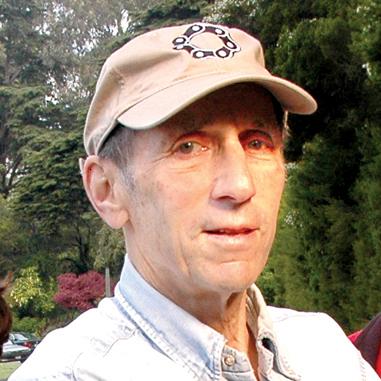
>>1. FAREWELL, FUDDLED FERNER True local character Henry Africa, the inventor of the fern bar, has died. Long live the fern bar!

Barhopping locals of a certain vintage would know him from the legendary, fern-filled Henry Africa’s bar in the ’60s Polk area, yuppies would know him as the owner of one of the storied “Bermuda Triangle” bars in the Marina, Dartmouth Social Club, in the ’80s. And young bucks would recognize him as the guy in the easy chair with oxygen tubes in the window of hanging-motorcycle bar Eddie Rickenbacker’s near downtown. A life planted in bars, one might say…

>>2. OSCAR IN HER MOCKET Now that the mobs stoning James Franco (if he could be any more stoned) and perma-giddy Anne Hathaway have dispersed, let’s turn our attention to a bright spot in this year’s Academy Award ceremony. The Bay Area’s Audrey Marrs had an Oscar for Best Documentary Feature bequeathed to her by none other than the almighty force known as Oprah, and she was one of the evening’s best-dressed attendees and most well-spoken winners. Marrs (whose sister Stella pioneered indie crafts long before they became a commercial juggernaut) has frequently been written about by the Bay Guardian as a member of the rock groups Mocket and Bratmobile, and she struck Oscar gold with only her second venture as a feature producer. Congrats Audrey!

>>3. PEOPLE GET READY We were already getting all futsy about the looming 2012 presidential elections (Newt? Really?) when we caught sight of this new, impending apocalypse billboard from the windows of the heathen SFBG offices. No way, May 21st, 2011 is Judgement Day? This 4/20 we can cheef like there’s no tomorrow — and mean it! P.S., proceed with caution to the website indicated by billboard ‘o doom, unless you have a mind for a good old-fashioned San Francisco: Sodom screed. 

Oh, and for all you faux-Mayan maniacs (and disaster flick addicts) who though 2012 was our expiration date? Um, suck it

>>4. STRATEGIZE WITH ME Here’s a smooth new clip from up-and-coming local rapper DaVinci:

>>5. GUSTON IN THE WIND The publication of local poet and rascal Patrick James Dunagan’s first book There Are People Who Say That Writers Shouldn’t Talk: A GUSTONBOOK is proving to be timely. It can function as a discursive counterpoint to University of California Press’s expansive and just-issued Philip Guston: Collected Writings, Lectures, and Conversations. Also, on March 14, Dunagan is joining Guston’s friends and collaborators Bill Berkson and Clark Coolidge for “Philip Guston: A Life Lived + Discussed,” a program at the Balboa Theatre that includes discussion and a screening of Michael Blackwood’s 1981 documentary Philip Guston: A Life Lived, which is narrated by the artist himself. 

(Poetic trivia alert: the evening’s bookstore-record store sponsor,Bird & Beckett, has a little thing in common – namely, the initials BB – with 2008 Goldie winner Berkson.)

Warren Hellman: The rich are undertaxed

31

I couldn’t reach financier Warren Hellman before I wrote my column in this week’s paper talking about the employee pension discussions. But he called me yesterday (Feb. 16) after he’d seen it, and I expected he’d give me some shit.


Wrong.


In fact, Hellman had only one problem with my analysis: “Your article is didn’t go far enough.” Turns out he thinks I was a bit too easy on the billionaires.


“When you compare upper-echelon tax rates [in America] to any developed country in the world,” Hellman said, “the rich pay very low taxes here. You’re article is exactly correct — the wealthy are undertaxed.” He told me that he’s stopped trying to amass more personal wealth (“it’s all going into a foundation”) because he realizes that he couldn’t possibly spend all the money he has “and all that happens if you leave it all to the next generation is that you spoil your kids.” 


Quite a statement coming from one of the city’s richest and most influential business leaders.


Of course, putting all the money in a foundation isn’t the only answer.   The only way to address the wealth gap, and the decline in social, education and infrastructure spending, to for the government to get more involved — and that means collecting more tax money from the people who can afford to pay it. Hellman told me that he’s not about to accept a reduction in his lifestyle — but we both agreed that he doesn’t have to. He could pay a lot more in taxes and still be really, really rich.


So we talked about my proposal, which goes like this:


I’ve got a suggestion for the pension reform negotiators. Why not talk a little about parity.


 Yes, pensions have to be fixed; let’s start at the top. Maybe nobody should have a pension of more than $100,000 a year; certainly, a former police chief shouldn’t get $250,000 a year for life. Maybe the highest-paid city employees should have to pay more into the pension system to protect the pensions of the people who make less. I could easily support progressive pension reform that would save the city money.


 I just think tax reform should also be part of the equation.


 Hellman wants $300 million in pension savings? Good — how about pairing it with $300 million in new taxes on the wealthy? How about big business and rich people give up something this time around, instead of all of the cuts falling on public employees and poor San Franciscans?


And Hellman, to his credit, didn’t disagree with the concept. His problem he said, was with the politics. “Taxes are the third rail of politics,” he said. “I’ve gotten my head handed to me three times now when I’ve supported tax increases.” 


But I still think there’s a way to move forward here. The city employee unions agree to some sort of pension reform, which starts with a pension cap and higher payments from higher earners (not with what amounts to a pay cut for lower-wage employees who have already taken pay cuts in the past few years). Then Hellman, Mayor Ed Lee and Sup. Sean Elsbernd agree to support a progressive tax measure that would bring in badly needed revenue for public services and education.


It’s possible that the tax measure would have to wait until Nov. 2012, when it would only require a 50 percent vote. Maybe both measures go on that ballot. And Hellman, Elsbernd and Lee use their clout with downtown to push the Chamber of Commerce and the Commitee on JOBS to at least stay neutral and cut off any big-money campaign against the tax measure. Then they all agree to help raise money and campaign to pass it. And labor agrees to work for both measures.


Hellman said he feared that “one would kill the other” and both measures might fail. But I believe the people of San Francisco are willing to support new taxes — progressive new taxes — if they don’t think the money’s going to waste. And pairing pension refrom with new taxes sends a strong message: We’re all sharing the pain. Particularly if Hellman, Elsbernd and Lee can sell the tax package part of the deal to the business community.


It’s worth a try. Because otherwise, we’re going to have another Prop. B battle, both sides are going to spend a ton of money, and nobody’s going to walk away happy.


“It’s worth thinking about,” Hellman told me. I hope so.

Division of labor

0

sarah@sfbg.com


In the wake of a three-day protest by unemployed workers outside UCSF’s Mission Bay hospital construction site — and under pressure from city leaders — UC officials have announced voluntary local hiring targets at the $1.5 billion complex.


Targets start at hiring 20 percent of the project’s workers in San Francisco during 2011 and increase that by 5 percent each year until the hospital complex is completed, UCSF news director Amy Pyle told us. But she denies that UC was pressured into its decision. UC is a state agency that is exempt from local rules when it builds facilities for UCSF and other campuses.


“Our voluntary goals are not a result of their protest,” Pyle insisted. “We have been aware of the local hire concerns since before they were protesting.”


The protests have focused on the need to hire workers for southeast San Francisco, where unemployment rates are the highest in the city, particularly among the city’s African American population.


“Of course we are looking to be good neighbors and hire people from an area we know has been hard hit,” Pyle said, clarifying that under the University of California’s hiring program, “local residents mean people who live in San Francisco generally.”


Mission Bay Hospitals Projects executive director Cindy Lima said uproar at the site stemmed in part from perceptions that lots of work is available now, but she said that isn’t true.


“Job opportunities should ramp up in May, but right now, they are installing structural piles,” Lima said. “So if there is an opportunity for a carpenter or a laborer to get decks built, we call the union.” UC’s voluntary local hire announcement came after Mayor Ed Lee urged UC officials to formalize a community hiring plan for Mission Bay, and Aboriginal Blackmen United (ABU) president James Richards agreed to call off his group’s protest outside UC’s Mission Bay hospital complex, at least for now.


ABU member Fred Green, an unemployed construction worker who has lived in the Bayview for 50 years and has five children, said the protesters tried to remain peaceful. “But an empty belly makes you do strange things,” Green said. “If there’s enough work for everybody, why should we be stuck at home while someone comes into my community and takes food out of my kids’ mouths?”


Troy Moor, who has lived in the Bayview for 47 years and has two kids, speculated that if ABU blocked both gates to the project, it would cost UC thousands of dollars a day in lost productivity. “Here at the front gates, we are visible. But we figure that if by next week, nothing is happening, we’ll start making them lose money,” he said.


Michelle Carrington is a 58-year-old flagger and operating engineer from the Bayview who has been unemployed for 10 years. She said Dwayne Jones, who worked in the Mayor’s Office and helped her graduate from Young Community Developers, was “working to try and get us jobs.”


Jones, who is now with Platinum Advisors as a consultant to DPR Construction, UC’s prime contractor at its Mission Bay site, put in an appearance on day three of ABU’s protest. But he said his work with DPR had nothing to do with the ABU protest.


“UC is very committed to maximizing local hire where we can,” Lima told the Guardian. “It’s unfortunate there is a protest because it gives the sense we haven’t been working with the community when in fact we have been working with the Mayor’s Office, CityBuild, and every stakeholder interested in this project, including ABU.”


Richards said ABU mounted its protest to challenge UC’s claims that it has hired more local residents at the site. They were also angry over a flyer that encouraged residents interested in working at the site to sign up with the San Francisco Workforce Collaborative, in partnership with Rev. Arelious Walker’s BayView Hope Community Development Corporation, feeling as if the UC was trying to divide their community. Walker did not return our calls for comment.


“We were with Walker when he was fighting the Nation of Islam’s attempt to stop development at the shipyard, so it hurts so bad to see this,” Richards said. “Never again will we stand by and let people come into the southeast community and take our jobs. We’re going to fight until the end. If the community doesn’t work, no one works.”


But even as UC announced its voluntary Mission Bay goals, community advocates pressed UCSF to set higher targets, citing the city’s failure to attain 50 percent local hire goals under San Francisco’s decade-long policy of seeking to hit that goal.


Joshua Arce of the Brightline Defense Project said he is glad Lee expressed support for Sup. John Avalos’ local hire legislation, “but we are waiting to see if he implements the law as written or a watered-down version.”


Then-Mayor Gavin Newsom allowed Avalos’ legislation to become law without signing it, bowing to the veto-proof 8-3 majority that approved it. But in a 12/23/10 letter explaining his position, Newsom recommended modifications to accommodate the concerns of the building trades, whose members come from across the Bay Area.


“I know the passage of this policy has created high expectations among some residents of San Francisco,” Newsom wrote. “The city owes it to them to implement this policy in a way that will result in a successful program that is fiscally responsible and reflects the best thinking of the many stakeholders invested in San Francisco.”


But with Newsom moving to Sacramento, California Assembly member Tom Ammiano and Sens. Mark Leno and Leland Yee are urging legislators to support San Francisco’s newly approved local hire law as approved.


In a Jan. 25 letter that Leno and Yee signed, Ammiano encouraged Bay Area officials to work with the city to explore mutually beneficial “reciprocity agreements” in which local cities would support one another’s programs “aimed at providing disadvantaged job seekers opportunities in the construction sector.”


“In neighborhoods like the Bayview, the Mission, and the Western Addition, the promise of jobs — particularly living wage construction jobs — has been an unfulfilled promise for generations,” Ammiano wrote.


But in a Jan. 28 press release, UC officials clarified that “as one of 10 campuses of a statewide constitutional corporation and public trust,” UCSF is not subject to Avalos’ mandatory requirement and is prohibited from adopting mandatory requirements based upon residency.


Instead, UC promised to do more community outreach and try to carve out financial incentives to encourage contractors to hit UC’s targets at Mission Bay.


Lima said the hospital complex is a historic opportunity to put as many San Franciscans to work as possible. “We have set an ambitious hiring target but we recognize that the economic activity generated by the project can significantly benefit our neighbors and local residents,” she said


After his Jan. 27 meeting with UC, Richards told ABU members that “when DPR needs someone for a job, they’re gonna call Dwayne Jones, and then Dwayne will let us know. There are hundreds of jobs, but I don’t know if they are in every trade. So, I feel good. But not so good that I can say that 10 carpenters will be hired tomorrow. There’s not enough need for that right now. But the work that’s there, when they call, you’re going to know it.”


Lima said UC’s meeting with Richards was “positive”.


“We clarified some misunderstandings and made some progress,” Lima said, noting that work at the site will become increasingly available starting in May. “Our goal is still to create jobs for San Francisco residents and make this project happen. We are continuing to try and match people who need to go to work with available job opportunities. The bottom line is that there are a lot of people in this city who are out of work and a lot of groups with different intentions in mind and we get tangled in that process.”


Lima vowed to work closely with DPR Construction and major subcontractors to ensure qualified local residents — including those from neighborhoods closest to the site — can access the construction jobs. And she promised that results will be reported regularly and the size of the workforce will increase steadily, peaking with 1,000 workers in 2012.


“We are mindful that while these goals challenge us, they are also within reach,” Lima said, noting that UCSF has been engaged in creating job opportunities in the construction trades for San Franciscans since 1993. “Our success will depend on the participation and commitment of the broader community and the trade unions.”


UC’s move comes less than two weeks after Lee announced at the annual San Francisco Labor Council Martin Luther King Jr. Day breakfast that one of his top priorities is implementing Avalos’ mandatory local hire policy.


Lee’s comments suggest a different approach from Newsom’s, but it’s still not clear whether Lee intends to follow the “critical steps” that Newsom felt the city should take “to ensure the responsible and successful implementation of Avalos’ legislation.”


Arce said he was happy to see Lee address the issue at the MLK Day event. “Lee said that if we are using local dollars to create local jobs, those jobs should go to local workers,” Arce recalled, noting that the following week Lee started to coordinate with the Office of Economic and Workforce Development and CityBuild to engage community stakeholders and lay out a road map to implement Avalos’ legislation.


“They set a deadline of March 25 as the target date by which the language of Avalos’ mandatory legislation must be included in all public bids and contracts,” Arce said. “And it’s our understanding that Mayor Lee called UC Chancellor Susan Desmond-Hellmann directly on the morning of Jan. 27 [before ABU’s Richards met with UC officials] to ask that UCSF formalize a community hiring plan for Mission Bay as soon as possible.”


Avalos said he was “very encouraged” by Lee’s remarks. “To say that at the Martin Luther King Labor Breakfast was a big deal,” Avalos said, noting that the building trades were also in the room. “I feel Ed Lee wants to implement the legislation how it is written. He needs help doing that. He needs to create a process to make it happen, and I believe the folks who helped draft the legislation will be ready to do that. That’s not to say that this couldn’t go wrong, but I feel pretty confident that he will implement as strong a local hire model as possible.”

State of the weed

22

steve@sfbg.com

CANNABIS When we did our first Cannabis Issue a year ago, the Bay Area’s medical marijuana industry was booming, and there was high anticipation that California would soon legalize weed for everyone.

Proposition 19 divided even those who fully support decriminalizing cannabis — partly because the existing system was working so well in San Francisco and many other cities, so people were wary of an uncertain future — and voters rejected the measure in November.

But only the most dogmatic anti-drug warrior would take that vote as a repudiation of the wonder weed, because California’s love affair with its top crop today is stronger than ever. And the burgeoning industry that grows, processes, and delivers marijuana continues to expand rapidly amid a stagnating larger economy.

Three new high-end cannabis dispensaries have opened in San Francisco in the last six months, bringing to 25 the number of licensed clubs, and the selection and quality of indoor and outdoor buds, concentrates, and edibles has never been greater. The industry’s many opportunities are starting to attract top talent from unrelated sectors of the economy, such as Mark Williams and Nic duTemps.

Williams recently quit his job at Apple to start CloudNine, which is developing a high-quality portable vaporizer called Firefly that will be assembled here in San Francisco and released this summer. Unlike current vaporizers made of plastic that use butane heaters to release the cannabanoids from the weed without burning it, Firefly is made of metal and glass with customizable wood inlays, uses advanced batteries in its heating element, and will retail for about $300.

“I decided now is the time,” Williams, 42, said of his decision to leave the corporate cubicle world after 20 years. “The market is maturing and the users’ ability to make a discerning choice about how they’re going to take marijuana is maturing.”

DuTemps worked in public relations for many years and she also jumped ship to do something she loves a few years ago: landscaping backyard gardens. “But then the bottom fell out of the economy,” she said, and people growing marijuana were the only ones who still wanted her expertise.

Yet the supply of cannabis products had grown faster than the number of dispensaries and delivery outlets in recent years. “The clubs were becoming incredibly flooded,” duTemps said. “People have found themselves with copious amounts of product and nowhere to sell it.”

So she decided to marry her PR expertise with her cannabis connections and last month started Sweeter Made, a medical marijuana cooperative and delivery service that uses an old meter maid vehicle for deliveries. DuTemps said she loves “the secret thrill of delivering medical cannabis, hash, and edibles in something that used to give people parking tickets.”

They’re just a couple of the countless Bay Area residents involved in the pot business, an expanding and evolving sector of the economy that even cash-strapped government agencies are getting involved in.

Oakland city officials recently stepped back from their ambitious plan to permit large-scale pot farms in industrial warehouses, mostly because of legal concerns, but that city and Berkeley last year moved forward with plans to legitimize and tax the industry at a higher rate. And the big next step — full legalization of weed for even recreational users — is still lingering on the horizon.

Oaksterdam University founder Richard Lee, who bankrolled placing Prop. 19 on the ballot, has announced that he’ll try again on the November 2012 ballot. He told the Guardian that he’s currently developing his battle plan, consulting his allies, and determining what the measure will look like.

“We’re still doing research on what went right and what went wrong,” Lee told us. “There were lots of people who were for legalization that didn’t like the details [of Prop. 19].”

For example, the measure allowed counties to set different legal standards, potentially creating a logistical nightmare for distributing the product. Lee said the new measure will probably include statewide standards and some degree of local control, but he’s still working with groups ranging from the Drug Policy Alliance to the NAACP to develop it. Meanwhile, CaNORML, the state chapter of the National Organization for the Reform of Marijuana Laws, will be gathering movement leaders together in Berkeley on Jan. 29 for a daylong conference titled “Marijuana Reform: Next Steps for California.”

While there are differing visions for where the movement is headed and over how hard and quickly to push for full legalization, it’s undeniable that the industry is thriving and here to stay.

Why I may run for Congress

12

OPINION One of the most inspiring political leaders in recent decades, Sen. Paul Wellstone (D-Minn.), famously declared: “I represent the democratic wing of the Democratic Party.” Today we need progressives in Congress who will represent the progressive wing of the Progressive Caucus.

That’s the largest caucus on Capitol Hill — but having 80 members on the roster won’t do much good if many cave under pressure.

For 18 years, the North Bay has been represented in Congress by Rep. Lynn Woolsey. Her strong antiwar voice and very progressive voting record have endeared her to a lot of constituents. Now she’s publicly saying that she may choose to retire instead of seeking reelection.

This week, after decades of working for progressive social change, I’m announcing a federal exploratory committee for Congress (www.NormanSolomonExploratory.com). If Rep. Woolsey doesn’t run in 2012, I will.

Across the country, alarm is rising as corporate power escalates at the intersection of Wall Street and Pennsylvania Avenue. An egregious factor is the deference to such power from some elected officials who rely on a progressive base for votes but shrug off tangible accountability to that base.

Dysfunctional relationships between liberals in Congress and progressive social movements serve as enablers for endless war, massive giveaways to Wall Street, widening gaps between the rich and the rest of us, erosion of civil liberties, outrageous inaction on global warming, and so much more.

Back in congressional districts, the only way to beat corporate Astroturf is with genuine grassroots activism — committed to creating a very different kind of future for the next generations.

At a time when high unemployment is becoming more protracted in tandem with a gargantuan warfare state, we’re in the midst of what Martin Luther King Jr. called “the madness of militarism.”

So-called moderates are adept at fine-tuning rather than challenging a destructive status quo. But there’s nothing moderate about helping to fuel the engines of social inequity, eco-disaster and perpetual war.

Eight decades ago, much of the U.S. press was hostile to a new president named Franklin D. Roosevelt, and many of his political enemies called him a dangerous radical. But there was — and is — nothing unduly radical about supporting economic fairness and social justice.

Before the end of his first term, FDR denounced “the economic royalists.” He said: “They are unanimous in their hate for me — and I welcome their hatred.” He did not say, “They hate me — and I want them to like me.”

Today, big money and mega-media power are dominant; yet progressives who are principled, determined, and methodical can prevail in a big way. That’s what happened last year when activists defeated PG&E’s monopolistic Proposition 16 despite being outspent by more than 400 to 1.

Living in the North Bay for more than a dozen years, I’ve often been moved by the extent of local progressive passions. Antiwar, environmental, and social justice outlooks are widespread — and deserve forthright representation in Congress.

Paul Wellstone was vitally correct when he said: “In the last analysis, politics is not predictions and politics is not observations. Politics is what we do. Politics is what we do, politics is what we create, by what we work for, by what we hope for, and what we dare to imagine.”


Norman Solomon is national co-chair of the Healthcare Not Warfare campaign, launched by Progressive Democrats of America. His books include War Made Easy: How Presidents and Pundits Keep Spinning Us to Death. For more information go to www.NormanSolomonExploratory.com.

Cannabis Club Guide

8

CANNABIS CLUB GUIDE 2012 When we first created our detailed local Cannabis Club Guide two years ago — which you can find at www.sfbg.com/cannabisguide — it seemed as if the marijuana business had entered a golden age of openness and professionalism in San Francisco. But with a federal crackdown shuttering at least a half-dozen dispensaries in the Bay Area (Market Street Collective, Sanctuary, Mr. Nice Guy, Medithrive, Divinity Tree, Marin Alliance for Medical Marijuana) things have changed. Luckily for needy patients and stoners alike, San Francisco has always been a resourceful city, so those meddling feds have actually done very little to disrupt the free flow of the world’s best marijuana.

Even before the cannabis industry moved above ground and into brick-and-mortar storefronts, there were always pot delivery services here. Now they’re really proliferating, so we thought it was high time to add them to our guide. And once we delved into this realm, we found that it was every bit as civilized and professional as a visit to our friendly neighborhood dispensary — and perhaps even more convenient and cost-effective.

The process seems just as secure and legally compliant as it is at the clubs, with most reputable delivery services requiring that you become a member before accessing their products. That means sending them copies of your doctor’s recommendation and California ID, which can be even done from a photo on your smart phone. After the services verify you, you’re good to go.

We’re starting the guide with just a trio of the most high-profile delivery services, as well as a couple more dispensaries, but we’ll be adding to the online guide throughout the year, so check back frequently for more updates.

DELIVERIES

THE GREEN CROSS

This is one of San Francisco’s premier cannabis clubs, setting the standard for everyone else in terms of quality, professionalism, and advocacy for the industry. My sources had long been telling me that the Green Cross carries the best weed in the city — information validated by the long string of awards it accumulates at cannabis competitions. And founder Kevin Reed has been a passionate, high-profile leader in the community for years.

But I became even more impressed once I actually used the service. Its great website features the best descriptions of its nearly two dozen strains of lab-tested marijuana, including where and how it was grown, as well as products ranging from inexpensive pipes to eye drops. I settled on a $40 eighth of Blue Deliah, a sativa-dominant hybrid that looked both cheap and good.

Within about 30 minutes, the friendly delivery guy showed up at my apartment, handed me a white paper bag full of goodies, and charged me $35 with my new customer discount. Inside the bag, there was a grinder, a cool jar, rolling papers, a lighter and other Green Cross swag, a pot cookie, non-medicated munchies, an information packet, a receipt stuck to the inside of the bag — and a baggie of beautifully trimmed buds.

www.thegreencross.org

(415) 648-4420

Opened in 2004

Price: Low to average

Selection: Huge and high-quality

Delivery time: Super fast

Sketch factor: Very low

Access: Secure but easy to use


MEDITHRIVE

When Medithrive opened as a dispensary in my Mission District neighborhood, it became one of my favorite clubs, so I was disappointed to see it shut down by threats from the federal government late last year. But it immediately reinvented itself as a delivery-only club, and it still retains the friendly service and large selection that first endeared me to it.

“It’s definitely been a change for us, but if patients can handle the delivery thing, it ends up being better for everyone,” said the employee who took my order: the Apocalypse Medi-Mix, a mix of high-quality small buds (better for vaporizers) for $40 for four grams. And because I was a newbie to its delivery service, they threw in a free joint.

I called at 3 p.m. and was told to expect delivery between 4:15 p.m.-4:45 p.m. — and it actually showed up at 4 p.m. It wasn’t a problem because I was working at home all afternoon, but I can imagine such a long arrival window wouldn’t be ideal for some. And frankly, the buds were pretty dry, perhaps the result of not moving as much inventory as Medithrive is used to.

But on the whole, it’s still a solid dispensary and a very friendly staff that’s still worth using.

www.medithrive.com

(415) 562-MEDI

Opened in 2010

Price: Average with good deals

Selection: Large

Delivery time: Fast but uncertain

Sketch factor: Low

Access: Secure but easy to use


FOGGY DAZE DELIVERY

This place pops up prominently when people Google marijuana delivery services in San Francisco, but other parts of its operation don’t seem quite as tight as its search engine savvy. Even its readily available website, I learned while trying to order, has an outdated menu of available items. For what it actually offers, customers need to visit www.weedmaps.com, where the guy said the menu would quickly appear when I typed in “foggydaze,” but it didn’t.

Finally, I just asked him to recommend a good sativa strain, and he mentioned just two that they had in stock: Headband and Cheezle. Shooting in the dark, I went with an eighth of Cheezle for $45, and he offered me a new member gift of a joint or sample of equal or lesser priced weed. I opted for the joint because it just seemed easier at that point, particularly since my initial call went to voicemail and then I had to wait 45 minutes to get my information verified. An hour later (he said it would be 45 minutes), I had my weed.

Compared to the bad old days of ordering whatever my underground drug dealer had and jumping through whatever hoops he required, Foggy Daze is much better. But in the modern marijuana scene in this highly evolved city, Foggy Daze doesn’t quite measure up as is.

www.foggydazedelivery.com

(415) 200-7451

Price: Average

Selection: Small

Delivery time: OK, but slow on verification

Sketch factor: Medium

Access: Pretty good


DISPENSARIES

APOTHECARIUM

It was only a matter of time before someone had the idea to really emphasize excellent personal service with high-end products in an elegant environment — but the folks at Apothecarium have done it in a way that really sets them apart from the rest of the pack. This place is an experience more than just a place to score weed, much the same way adventurous bars like Alembic aren’t just about getting tipsy but appreciating just what a cocktail can become in the right hands.

Visitors to the Apothecarium are warmly greeted and seated in front of an extensive (and well-designed) menu, which an knowledgeable staffer patiently and enticingly walks you through, focusing exclusively on you and your needs. Once you finally find what you want, a large jar of your chosen buds emerge, and the employee uses long silver tweezers to place the prettiest ones on a display tray in front of you to inspect while he weighs out your choice of small or large buds with an air of showmanship.

2095 Market, SF

(415) 500-2620

www.apothecariumsf.com

Buds weighed on purchase

Opened in 2011

Price: High to low (“compassionately priced” strains available)

Selection: Large, extremely informative menu available

Ambiance: Looks like a fancy hair salon, hardwood floors and patterned wallpaper

Smoke on site: No

Sketch factor: Low

Access/security: Secure but easy access


1944 OCEAN COLLECTIVE

Despite a somewhat forbidding waiting room, this neighborhood dispensary on a mellow stretch of Ingleside’s Ocean Avenue has a real family feel once you step onto the salesfloor.

I was in the market for edibles when I went to 1944, and chatted with the jocular sales staff about which available edible wouldn’t give me couch lock or paranoia — a fully-functioning treat, as it were. My budtender pointed me towards a sativa-based peanut butter cookie with high potency, and then made me feel OK about our difficulty making a decision. “We’re all stoners here,” he laughed.

Once you make your selection among the edibles, flowers, and tinctures on offer, head to the back of the low-glitz, comfortably appointed room to give your money at the cash register. Head back to the bud counter to pick up your selection — if you’re lucky you can grab a brownie bite, cup of tea, or apple from the buffet to assuage your munchies. There’s even a sign that announces the dispensary’s job counseling and resume writing classes. A somewhat cold exterior sure, but it belies a warm heart. (Reviewed by Caitlin Donohue)

1944 Ocean, SF.

(415) 239-4766

Buds weighed on purchase

Opened in 2004

Price: From cheap to high

Selection: Large

Ambiance: Comfortable seating, jovial staff, family feel

Smoke on site: No

Sketch factor: Forbidding waiting room, friendly inside

Access/security: Tight 


2011 REVIEWS

SPARC

The San Francisco Patient and Resource Center, or SPARC (1256 Mission, SF) immediately set a new standard for dispensaries when it opened last August, combining a stunningly beautiful facility with deep connections to the medical marijuana community and a strong commitment to taking care of patients and moving the movement forward.

Even the casual observer can see what a unique place this is. A selection of almost three dozen bud varietals is presented in the style of a Chinese apothecary, each strain laboratory-tested for strength and purity and labeled with THC and CBD levels. The facility was lovingly designed from scratch with state-of-the-art humidors and security systems, creating an environment that is warm, friendly, and secure, with more employees per customer than other clubs.

Below the surface, SPARC is also setting a standard. Founder Erich Pearson and others involved with the club have been movement leaders for many years and they have deep connections with growers, patient groups, and the progressive political community. So they offer everything from free acupuncture and other services to generous compassionate giving programs to strong support for all aspects of the vertically-integrated collective.

But it is the experience of visiting that is most striking. Get expert advice on choosing from a huge range on indoor and outdoor strains and then settle into one of the tables, load a bowl into the high-end Volcano vaporizer, and taste the fruits of SPARC’s expertise.

There are always lots of great deals to choose from, from one-pound bags for baking for $300 to eighths of the finest outdoor weed for as low as $28.

SPARC is truly an industry leader, setting a high bar for what dispensaries can be.

Prepackaged buds

Opened in 2010

Price: Wide range

Selection: Huge!

Ambiance: Warm, comfortable, hip

Smoke on site: Vaporizing only

Sketch factor: Low

Access/security: Tight but welcoming

———–

IGZACTLY HEALTH CENTER

Opening in late 2010, Igzactly (527 Howard, SF) is the new kid of the block — but it’s already establishing itself as one of the best cannabis clubs around. With a rotating supply of almost 40 varieties of buds to choose from at a full range of prices, it has the biggest selection in town. I asked the bud tender how the club is able to offer such a wide array of high-quality buds, and he said it’s because they’re using a different model than most clubs. Rather than buying the buds from growers, Igzactly uses a consignment system, splitting the proceeds with the growers.

Complementing the huge stock of dried buds, Igzactly also has a large selection of cannabis-infused edibles, concentrates, tinctures, ointments, and just about anything you can get weed into. On top of that, Igzactly has a comfortable lounge and is one of just a handful of clubs that allows vaporizing on site, giving clients a choice of using the top-end Volcano or the Zephyr (my personal favorite) vaporizer models. They even offer complimentary teas and coffee.

The staff there is friendly and customer-oriented. For example, when the club opened, it offered prepackaged buds like most clubs, but it heeded customer input and quickly switched to displaying all their buds in huge jars and weighing them out on purchase, which many patients prefer. And he said the club plans to expand the lounge soon and to add on-site laboratory services by year’s end.

If Igzactly is a sign of where the industry’s headed, the future looks bright and verdant.

Buds weighed on purchase

Opened in 2010

Price: From cheap to average

Selection: Huge!

Ambiance: Green, friendly, inviting

Smoke on site: Vaporizing only

Sketch factor: Low

Access/security: Secure but easy access

———–

SHAMBHALA

I visited Shambhala (2441 Mission, SF) on its second day open, when the smell of paint was stronger than that of weed, so it’s hard to judge it fairly. Check-in for new patients was maddening slow to an almost comical degree, they weren’t yet taking credit cards and had no ATM on site, and they offered a bigger selection of rolling papers than bud varieties.

But I still liked this place, the only one in that stretch of Mission Street. The staff is very friendly and they seem to really know their products. Unlike many clubs that offer a few good deals, the only cheap weed here was Afgoo for $25 per eighth, less than half the price of most of the 13 varieties they offered. When I asked why it was so much cheaper, the bud tender explained that the buds weren’t as tight or well-trimmed as the dispensary expects, although it still proved to be plenty strong and tasty.

Beyond the buds, Shambhala is also part head shop, selling lots of nice glass bongs, a display case filled with pipes, and rolling papers of all shapes and flavors. And while its selection of edibles is small, they do feature all of Auntie Dolores’ yummy cookies and savory snacks, even displaying the pretzels, chili-lime peanuts, and caramel corn in large glass jars on the counter.

Once Shambhala finds its groove, it will be a solid addition to the city’s dispensary network.

Prepackaged buds

Open since 2011

Price: Moderate

Selection: Limited buds, lots of paraphernalia

Ambiance: Clean, open, friendly

Smoke on site: No

Sketch factor: Low

Access/security: Tight

———-

MARKET STREET COOPERATIVE

It’s easy to overlook this place (1884 Market, SF), as I did last year when I first began to compile this guide. Nestled into the back of a wide sidewalk courtyard where Market meets Laguna just up the street from the LGBT Center, Market Street Cooperative has low-key signage and doesn’t seem to do much advertising or outreach, particularly compared to marketing-savvy clubs such as the Vapor Room, Medithrive, and SPARC.

But the operators clearly know what they’re doing, offering a wide product selection in a quiet, clean, no-nonsense environment. They offer a choice of buds for every taste and use, from the best high-end buds at a good price down to eighths for a dirt-cheap $18 and three different grades of shake, which many vaporizer users prefer over the tight buds that they need to grind themselves.

Access is limited to members, and the club insists on being able to verify the recommendation of users in a phone call to their doctors, a stricter standard that most clubs use and one that can get users turned away if their visit is after normal business hours (as they unapologetically did to my friend, the first time a club had denied him entry).

But once you’re in, you’re in, and this long-running club will take good care of you. 

Prepackaged buds

Opened in 1999

Price: Moderate with lots of good deals

Selection: High

Ambiance: Low-key and business-like

Smoke on site: No

Sketch factor: Very low

Access/security: Tight 


RE-LEAF HERBAL CENTER

I wasn’t terribly impressed by ReLeaf (1284 Mission, SF) when I first reviewed the club in 2010, so at their owner’s request I returned recently to give them another look. They have definitely improved in both the feel of the club and its customer service, but it still suffers from some of the same shortcomings I noticed last year.

While they allow smoking on site, which is great, they don’t have any vaporizers or bongs on hand for patients to use, making it seem a little sketchy. The selection of buds is also fairly limited, with about a dozen varieties divided into two pricing tiers (although only a couple selections on each tier really looked and smelled great), and the clones they had on sale during my visit looked scraggly and sickly.

But the employees there are very nice and helpful, and the atmosphere in the club has become more inviting. There carry a large stock of edibles not available in other clubs, including smoothies and other refrigerated snacks that require a special permit from the city to sell. And the customer appreciation barbecue events they offer are a nice touch.

For a small storefront operation, Releaf does a fine job and it’s worth a visit. But with the way in which the bar has been raised for dispensaries in this city, I wouldn’t put Releaf in the top tier. Sorry guys, maybe next year.


Buds weighed on purchase

Open since 2007 ( with three years at previous SF location)

Price: Moderate

Selection: Limited

Ambiance: A loud head shop that also has some weed

Smoke On Site: Yes

Sketch factor: Low

Access/Security: Moderate

—————

2010 REVIEWS

DIVINITY TREE

While the reviews on Yelp rave about Divinity Tree (958 Geary St.), giving it five stars, I found it a little intimidating and transactional (although it was the first club I visited, so that might be a factor). But if you’re looking to just do your business in a no-frills environment and get out, this could be your place.

The staff and most of the clientele were young men, some a bit thuggish. One worker wore a “Stop Snitching” T-shirt and another had “Free the SF8.” But they behaved professionally and were knowledgeable and easy to talk to. When I asked for a strain that would ease my anxiety but still allow me enough focus to write, my guy (patients wait along a bench until called to the counter) seemed to thoughtfully ponder the question for a moment, then said I wanted a “sativa-dominant hybrid” and recommended Neville’s Haze.

I bought 1/16 for $25 and when I asked for a receipt, it seemed as though they don’t get that question very often. But without missing a beat he said, “Sure, I’ll give you a receipt,” and gave me a hand-written one for “Meds.”

Buds weighed on purchase

Open for: four years

Price: Fairly low

Selection: Moderate

Ambiance: A transactional hole in the wall

Smoke On Site: No

Sketch factor: Moderate

Access/Security: Easy. Membership available but not required

————-

GRASS ROOTS

Located at 1077 Post St. right next to Fire Station #3, Grass Roots has the feel of a busy saloon. Indeed, as a worker named Justin told me, many of the employees are former bartenders who know and value customer service. With music, great lighting, and nice décor, this place feels comfortable and totally legit. Whereas most clubs are cash-only, Grass Roots allows credit card transactions and has an ATM on site.

The steady stream of customers are asked to wait along the back wall, perusing the menus (one for buds and another with pictures for a huge selection of edibles) until called to the bar. When asked, my guy gave me a knowledgeable breakdown of the difference between sativa and indica, but then Justin came over to relieve him for a lunch break with the BBQ they had ordered in and ate in the back.

Justin answered my writing-while-high inquiry by recommending Blue Dream ($17 for a 1.2-gram), and when I asked about edibles, he said he really likes the indica instant hot chocolate ($6), advising me to use milk rather than water because it bonds better with the cannabinoids to improve the high. Then he gave me a free pot brownie because I was a new customer. I was tempted to tip him, but we just said a warm goodbye instead.

Buds weighed on purchase

Open for: six years

Price: Moderate

Selection: High

Ambiance: A warm and welcoming weed bar

Smoke On Site: No

Sketch factor: Low

Access/Security: Easy

————–

HOPENET

Hopenet (223 Ninth St.) is one of the few places in the city where you can smoke on site, in a comfortable, homey style, as if you’re visiting a friend’s apartment. In addition to the loveseat, two chairs, and large bong, there is a small patio area for smoking cigarettes or playing a guitar, as someone was doing during my visit.

Although the small staff is definitely knowledgeable, they all seemed stoned. And when I asked about the right weed for my writing problem, a gruff older woman impatiently dismissed any indica vs. sativa distinctions and walked away. But I learned a lot about how they made the wide variety of concentrates from the young, slow-talking guy who remained.

He weighed out a heavy gram of White Grapes for $15, the same price for Blue Dream, and $2 cheaper than I had just paid at Grass Roots. That was in the back room, the big middle area was for hanging out, and the front area was check-in and retail, with a case for pipes and wide variety of stoner T-shirts on the walls.

Buds weighed on purchase

Open for: eight years

Price: Low

Selection: Moderate

Ambiance: Like a converted home with retail up front

Smoke On Site: Yes!

Sketch factor: Low

Access/Security: Easy

————

VAPOR ROOM

Vapor Room (607A Haight, www.vaporroom.com) is San Francisco’s best pot club, at least in terms of feeling like an actual club and having strong connections to its community of patients. It’s a large room where customers can smoke on site, giving this collective a warm, communal vibe that facilitates social interaction and fosters a real sense of inclusiveness.

Each of the four large tables has a high-end Volcano vaporizer on it, there’s a big-screen TV, elegant décor, and large aquarium. There’s a nice mix of young heads and older patients, the latter seeming to know each other well. But, lest members feel a little too at home, a sign on the wall indicates a two-hour time limit for hanging out.

Its early days in the spot next door were a bit grungier, but the new place is bright and elegant. It has a low-key façade and professional feel, and it strongly caters to patients’ needs. Low-income patients are regularly offered free medicine, such as bags full of vapor prepared by staff. Mirkarimi said the Vapor Room is very involved in the Lower Haight community and called it a “model club.”

But they’re still all about the weed, and they have a huge selection that you can easily examine (with a handy magnifying glass) and smell, knowledgeable staff, lots of edibles and concentrates, a tea bar (medicated and regular), and fairly low standardized pot prices: $15 per gram, $25 per 1/16th, $50 per eighth. And once you got your stuff, grab a bong off the shelf and settle into a table — but don’t forget to give them your card at the front desk to check out a bowl for your bong. As the guy told me, “It’s like a library.”

Buds weighed on purchase

Open for: seven years

Price: Moderate

Selection: High

Ambiance: Warm, communal hangout

Smoke On Site: Yes!

Sketch factor: Low

Access/Security: Easy, but membership required

————-

MEDITHRIVE

The newest cannabis club in town, MediThrive (1933 Mission, www.medithrive.com) has a bright, fresh, artsy feel to it, with elegantly frosted windows and a welcoming reception area as you enter. This nonprofit coop takes your photo and requires free membership, and already had almost 3,000 members when I signed up a couple weeks ago. Tiana, the good-looking young receptionist, said the club recently won a reader’s choice Cannabis Cup award and noted that all the art on the walls was a rotating collection by local patients: “We’re all about supporting local art.”

The decorators seemed to have fun with the cannabis concept, with a frosted window with a pot leaf photo separating the reception area from the main room, while the walls alternated wood planks with bright green fake moss that looked like the whole place was bursting with marijuana. There’s a flat-screen TV on the wall, at low volume.

The large staff is very friendly and seemed fairly knowledgeable, and the huge selection of pot strains were arranged on a spectrum with the heaviest indica varieties on the left to the pure sativas on the right. Lots of edibles and drinkables, too. The cheapest bud was a cool steel tin with a gram of Mission Kush for $14 (new members get a free sample), while the high rollers could buy some super-concentrated OG Kush Gold Dust ($50) or Ear Wax ($45) to sprinkle over their bowls.

Prepackaged buds

Open for: one year

Price: Moderate

Selection: High

Ambiance: Professional, like an artsy doctor’s office

Smoke On Site: No

Sketch factor: Very low

Access/Security: Easy, but membership required

————

KETAMA COLLECTIVE

At 14 Valencia St., Ketama is a testament to how silly it is that clubs within 1,000 feet of schools aren’t permitted to allow smoking on site. This former café has a large, comfortable seating area and full kitchen, both of which have had little use since a school opened way down the street last year, causing city officials to ban smoking at Ketama.

Pity, because it seems like a great place to just hang out. Yet now it just seemed underutilized and slow. The staff is small (one door guy and a woman hired last summer doing sales), and we were the only customers during the 20 minutes I was there (except for the weird old guy drinking beer from a can in a bag who kept popping in and out).

But it still had jars of good green bud, several flavors of weed-laced drinks and edibles, and a pretty good selection of hash and kief at different prices, and the woman spoke knowledgeably about the different processes by which they were created. To counteract the slow business, Ketama has a neon sign out front that explicitly announces its business — another indication the industry has gone legit.

Buds weighed on purchase

Open for: six years

Price: Low

Selection: Limited

Ambiance: Hippie hangout, but with nobody there

Smoke On Site: No

Sketch factor: Low

Access/Security: Easy, but free membership required

————

MR. NICE GUY

Belying its name, Mr. Nice Guy (174 Valencia St.) thrilled and scared me, but not necessarily in a bad way. Located across the street from Zeitgeist, the thug factor here was high and so was the security, allowing no human interaction that wasn’t mediated by thick Plexiglass, presumably bulletproof.

After initially being told by a disembodied voice to come back in five minutes, I submitted my doctor’s recommendation and ID into the slot of a teller’s window, darkened to hide whoever I was dealing with. Quickly approved, I was buzzed into a small, strange room with three doors.

I paused, confused, until the disembodied voice again told me, “Keep going,” and I was buzzed through another door into a hallway that led to a large room, its walls completely covered in brilliant murals, expertly painted in hip-hop style. Along the front walls, a lighted menu broke down the prices of about 20 cannabis varieties.

Then finally, I saw people: two impossibly hot, young female employees, lounging nonchalantly in their weed box, like strippers waiting to start their routines. The only other customer, a young B-boy, chatted them up though the glass, seemingly more interested in these striking women than their products.

I finally decided to go with the special, an ounce of Fever, normally $17, for just $10. I opened a small door in the glass, set down my cash, and watched the tall, milk chocolate-skinned beauty trade my money for Fever, leaving me feeling flushed. It was the best dime-bag I ever bought.

Prepackaged buds

Price: Moderate, with cheap specials

Selection: High

Ambiance: Hip hop strip club

Smoke On Site: No

Sketch factor: High

Access/Security: High security but low scrutiny

————-

BERNAL HEIGHTS COLLECTIVE

Bernal Collective (33 29th St. at Mission) seemed both more casual and more strict than any of the other clubs in town — and it also turned out to be one of my favorites.

After refusing to buy pot for a guy out front who had just been turned away, I entered the club and faced more scrutiny than I had at any other club. It was the only club to ask for my doctor’s license number and my referral number, and when I tried to check an incoming text message, I was told cell phone use wasn’t allowed for “security reasons.” On the wall, they had a blown-up copy of their 2007 legal notice announcing their opening.

But beyond this by-the-book façade, this club proved warm and welcoming, like a comfortable clubhouse. People can smoke on site, and there’s even a daily happy hour from 4:20–5:20 p.m., with $1 off joints and edibles, both in abundant supply. Normal-sized prerolled joints are $5, but they also offer a massive bomber joint with a full eighth of weed for $50.

The staff of a half-dozen young men were knowledgeable about the 20 varieties they had on hand and offered excellent customer service, even washing down the bong with an alcohol-wipe before letting a customer take a rip from the XXX, a strong, sticky bud that was just $15 for a gram.

Buds weighed at purchase

Open for: six years

Price: Fairly low

Selection: High

Ambiance: A clubhouse for young stoners

Smoke On Site: Yes

Sketch factor: Low

Access/Security: Fairly tight

————-

LOVE SHACK

This longtime club (502 14th St.) has had its ups and downs, the downs coming mostly because of its location on a fairly residential block. After taking complaints from neighbors, the city required Love Shack to cap its membership, although that seems to be changing because the club let me in, albeit with a warning that next time I would need to have a state ID card. It was the only club I visited to have such a requirement.

Once inside this tiny club, I could see why people might have been backed up onto the street at times. But the staff was friendly and seemed to have a great rapport with the regulars, who seemed be everyone except me. The knowledgeable manager walked me through their 20-plus varieties, most costing the standard street price of $50 per eighth, or more for stronger stuff like Romulan.

On the more affordable end of the spectrum was the $10 special for Jack Herrer Hash, named for the longtime legalization advocate who wrote The Emperor Wears No Clothes, a classic book on the history of the movement.

Buds weighed at purchase

Open for: nine years

Price: Moderate

Selection: High

Ambiance: Small, like a converted apartment

Smoke On Site: No

Sketch factor: Moderate

Access/Security: Tight

————-

COFFEE SHOP BLUE SKY

Blue Sky (377 17th St., Oakland)is based on the Amsterdam model of combining marijuana dispensaries with coffee shops, although it suffers a bit from Oakland’s ban on smoking. Still, it’s a cool concept and one that Richard Lee sees as the future of marijuana-related businesses because of the synergy between smoking and grabbing a bite or some coffee.

Most of Blue Sky is a small coffee shop and smoothie bar, but there’s a little room in back for buying weed. “We’ve got the best prices around,” said the guy who checked my ID, and indeed, $44 eighths and $10 “puppy bags” were pretty cheap. Customers can also sign up to do volunteer political advocacy work for free weed.

The only downside is the limited selection, only four varieties when I was there, although the woman at the counter said the varieties rotate over the course of the day based on the club’s purchases from growers.

Prepackaged buds

Open for: 15 years

Price: Low

Selection: Very limited

Ambiance: A fragrant little room behind a coffee shop

Smoke On Site: No

Sketch factor: Low

Access/Security: Easy

————–

HARBORSIDE HEALTH CENTER

I have seen the future of legitimized medical marijuana businesses, and it’s Harborside (1840 Embarcadero, Oakland). With its motto of “Out of the shadows, into the light,” this place is like the Costco of pot — a huge, airy facility with a dizzying number of selections and even a “rewards card” program.

All new members are given a tour, starting with sign-up sheets for daily free services that include yoga, chiropractic, acupuncture, reiki, consultations with herbalists, and classes on growing. Then we moved to a section with the clones of dozens of pot plant varieties available for purchase (limit of 72 plants per visit), along with a potted marijuana plant the size of a tree.

Harborside is also blazing the trail on laboratory services, testing all of its pot for contaminants and THC content, labeling it on the packaging just like the alcohol industry does. Some of the smaller clubs don’t like how over-the-top Harborside is, and they complain that its prices are high. But those profits seem to be poured back into the services at this unique facility.

Prepackaged buds

Open for: four years

Price: High

Selection: Huge

Ambiance: A big, open shopping emporium

Smoke On Site: No

Sketch factor: Low

Access/Security: Tight

————-

SANCTUARY

The people who run Sanctuary (669 O’Farrell St.), the first club to fully comply with the new city regulations and get its permanent license, have been active in the political push for normalizing medical marijuana, as a wall full of awards and letters from politicians attests. Owner Michael Welch was commended for his work by the Harvey Milk LGBT Democratic Club, where Sanctuary employee Tim Durning has been an active longtime member and former elected officer.

Sanctuary has a generous compassionate giving program and caters to lots of poor residents of the Tenderloin neighborhood. While the club is prohibited from allowing smoking, they fudge the restriction with a Volcano vaporizer. “A lot of patients are on fixed income and live in the SROs, where they can’t smoke, so we let them vaporize here whether they buy from us or not,” Durning told us.

Those who do buy from them find a huge selection — including 20 different kinds of hash and 17 varieties of buds — at a wide price range. Staffers know their products well and take their business seriously, giving a regular spiel to new members about responsible use, which includes maintaining neighborhood relations by not smoking near the business.

Buds weighed on purchase

Open for: six years

Price: Low to moderate

Selection: High

Ambiance: Campaign headquarters for the marijuana movement

Smoke On Site: No, but vaporizing OK

Sketch factor: Low

Access/Security: Easy

————–

GREEN DOOR

If low prices or a huge selection of edibles are what you seek, Green Door (843 Howard St., www.greendoorsf.com) could be the club for you.

Eighths of good green buds start at a ridiculously low $25 and go up to just $50 (the cheapest price for eighths at many clubs and also the standard black market price). If that’s not low enough, super-broke users can buy a quarter-ounce bag of high-grade shake for $40.

If you didn’t already have the munchies going in, you’ll get them perusing the huge menu of edibles: from weed-laced knockoffs of Snickers bars and Reese’s Peanut Butter Cups for just $5 to cupcakes, ice cream, or Chex party mix. They have lots of hash and other concentrates as well.

Somehow, the club also manages to have a strong compassionate giving program and contibutes to local civic organizations that include the Black Rock Arts Foundation, Maitri AIDS Hospice, and Friends of the Urban Forest.

The club itself is a little sterile and transactional, with an institutional feel and employees stuck behind teller windows. But even though that and the steady flow of tough-looking young male customers raise its thug factor a bit, the employees all seemed friendly and helpful, giving free edibles to first-time customers.

Prepackage buds

Open for: nine years (five here, four in Oakland)

Price: Cheap

Selection: High for edibles, moderate for weed

Ambiance: Like a community bank of cheap weed

Smoke On Site: No

Sketch factor: Moderate

Access/Security: Easy access, high security

————–

 

Blue Shield: pay up or die

0

A Blue Shield customer from San Diego emailed Consumer Watchdog recently to complain about a 59 percent rate hike. his comment, according to Consumer Watchdog’s Jamie Court:


There is no market for health insurance. You have two choices: 1. Pay whatever they say. 2. Die.


That’s about it, right there.


You know why nobody in Sacramento can do anything about health insurance rates? It’s because by law our state Insurance Commissioner is really just a car-insurance and home-insurance commissioner with little authority over health insurers. That goes back to Prop. 103, the landmark ballot measure that created an elected insurance commissioner and dramatically restricted unfair practices by liability insurers. But Prop. 103 (thanks to the one-subject rules for initiatives) couldn’t take on health insurance.


Now there’s a bill in Sacramento, AB 52, that would give the insurance commissioner the ability to regulate health insurance rates — and the lobbyists are going nuts. But as Court says, Blue Shield made a big mistake — not only by radically raising rates but by refusing a request by Insurance Commissioner Dave Jones for a 60-day delay. “They have become the poster child for rate regulation,” Court told me. And if the Legislature doesn’t pass the bill (a similar effort failed last year) Court and Consumer Watchdog are looking at a major mesure for the 2012 ballot that would be the health-insurance equivalent of Prop. 103, a measure to control rates — and mandate a public option for Californians.


“We will have the same conditions in 2014 that we had with car insurance in 1984,” he said. “The government says you have to buy it, but there’s no regulations on cost.”


There’s more info about it here and you can contact your legislator here.


They have issues: Members of the new Board speak

20

Board President David Chiu touched off a broad political discussion in recent weeks with his statement that officials were elected “not to take positions, but to get things done.” Delivered just before his reelection as Board President with the solid backing of the board’s moderate faction, Chiu’s comment has been viewed in light of City Hall’s shifting political dynamic, a subject the Guardian explores in a Jan. 19 cover story. Politics aside, Chiu’s statement also begs the question: Just what do members of the board hope to get done, and how do they propose to accomplish the items on their agenda?
Last week, Guardian reporters tracked down every member of the board to find out. We asked, what are your top priorities? And how do you plan to achieve them? Some spoke with us for 25 minutes, and others spoke for just 5 minutes, but the result offers some insight into what’s on their radar. Not surprisingly, getting the budget right was mentioned by virtually everyone as a top priority, but there are sharp differences in opinion in terms of how to do that. Several supervisors, particularly those in the moderate wing, mentioned ballooning pension and healthcare costs. Aiding small business also emerged as a priority shared by multiple board members.

Sup. Eric Mar
District 1

Issues:
*Budget
*Assisting small businesses
*Programs and services for seniors
*Food Security
*Issues surrounding Golden Gate Park

Elected in 2008 to represent D1, Sup. Eric Mar has been named chair of the powerful Land Use & Economic Development Committee and vice chair of the City Operations and Neighborhood Services Committee.

Asked to name his top priorities, Mar said, “A humane budget that protects the safety net and services to the must vulnerable people in San Francisco is kind of the critical, top priority.”

It’s bound to be difficult, he added. “That’s why I wish it could have been a progressive that was chairing the budget process. Now, we have to work with Carmen Chu to ensure that it’s a fair, transparent process.”

A second issue hovering near the top of Mar’s agenda is lending a helping hand to the small businesses of the Richmond District. “There’s a lot of anxiety about the economic climate for small business. We’re trying to work closely with some of the merchant associations and come up with ideas on how the city government can be more supportive,” he said. Mar also spoke about the need to respond to the threat of big box stores, such as PetCo, that could move in and harm neighborhood merchants. “I’m worried about too many of the big box stores trying to come in with an urban strategy and saying that they’re different — but they sure have an unfair advantage,” he noted.

Programs and services for the senior population ranked high on his list. Mar noted that he’d been working with senior groups on how to respond to a budget analyst’s report showing a ballooning need for housing – especially affordable housing – for seniors. “It’s moving from the Baby Boom generation to the Senior Boomers, and I think the population, if I’m not mistaken, by 2020 it’s going up 50 percent,” he said. “It’s a huge booming population that I don’t think we’re ready to address.”

Addressing food security issues through the Food Security Task Force also ranked high on Mar’s list, and he noted that he’s been working with a coalition that includes UCSF and the Department of Public Health to study the problem. “We’ve had a number of strategy meetings already, but we’re trying to launch different efforts to create healthier food access in many of our lowest income neighborhoods,” Mar said.

Finally, Mar talked about issues relating to the park. “I do represent the district that has Golden Gate Park, so I’m often busy with efforts to preserve the park, prevent privatization, and ensure enjoyment for the many residents not just in the Richmond but throughout the city that enjoy the park.” Although it’s not technically in his district, Mar noted that he is very supportive of HANC Recycling Center – and plans to advocate on their behalf to Mayor Lee.

Sup. Mark Farrell
District 2
Issues:
*Pension reform
*Long-term economic plan for city
*Job creation
*Quality-of-life issues

Elected to replace termed-out D2 Sup. Michela Alioto-Pier, Farrell has been named vice-chair of the Government Audits & Oversight Committee and a member of the Rules Committee. A native of D2, Farrell told the Guardian he believes his roots in the city and background as a venture capitalist would be an asset to the city’s legislative body. “I know at the last board, Carmen [Chu] was the only one who had any finance background,” he said. “To have someone come from the private sector with a business / finance background, I really do believe … adds to the dialogue and the discussion here at City Hall.”

Along those lines, Farrell said one of his top priorities is the budget. “I’m not on the budget and finance committee this time around, but given my background, I am going to play a role in that,” he said.

So what’s his plan for closing the budget deficit? In response, he alluded to slashing services. “In the past, there have been views that we as a city don’t provide enough services and we need to raise revenues to provide more, or the perspective that we first need to live within our means and then provide more services. Everyone’s going to disagree, but I’m in the latter camp,” he said. “I do believe we need to make some tough choices right now – whether it be head count, or whether it be looking at …pension reform. I do believe pension reform needs to be part of the dialogue. Unfortunately, it’s unsustainable.”

He also said he wanted to be part of “trying to create and focus on a framework for a long-term financial plan here in San Francisco.”

Secondly, Farrell discussed wanting to put together a “jobs bill.”

“Jobs is a big deal,” he said. “It’s something I want to focus on. There are only so many levers we can pull as a city. I think the biotech tax credits have spurred a lot of business down in Mission Bay.”

Next on Farrell’s agenda was quality-of-life issues, but rather than talk about enforcing San Francisco’s sit/lie ordinance – supported by political forces who organized under the banner of maintaining ‘quality-of-life’ – Farrell revealed that he is incensed about parking meter fines. “It is so strikingly unjust when you are 1 minute late to your parking meter and you have a $65 parking fine,” he said.

Farrell also mentioned development projects that would surely require time and attention. “CPMC is going to be a major dominant issue,” he said. He also mentioned Doyle Drive, and transitional age youth housing projects proposed in D2 – but as far as the housing project planned for the King Edward II Inn, which has generated some controversy among neighborhood groups, he didn’t take a strong position either way, saying he wanted to listen to all the stakeholders first.

Board President David Chiu
District 3
Issues:
*Budget
*Preserving neighborhood character
*Immigrant rights
*Preserving economic diversity
*Transit

Elected for a second two-year term as President of the Board, D3 Sup. David Chiu is rumored to be running in the mayor’s race, after he turned down former Mayor Gavin Newsom’s offer to appoint him as District Attorney. That offer was made after Kamala Harris won the state Attorney General’s race this fall. And when Chiu turned it down, former Mayor Gavin Newsom shocked just about everybody by appointing San Francisco Police Chief George Gascon, who is not opposed to the death penalty and was a longtime Republican before he recently registered as a Democrat, instead.

A temporary member of the Board’s Budget acommittee, Chiu is also a permanent member of the Board’s Government Audits & Oversight Committee.

Asked about his top priorities, Chiu spoke first and foremost about  “ensuring that we have a budget that works for all San Franciscans, particularly the most vulnerable.” He also said he wanted to see a different kind of budget process: “It is my hope that we do not engage in the typical, Kabuki-style budget process of years past under the last couple of mayors, where the mayor keeps under wraps for many months exactly what the thinking is on the budget, gives us something on June 1 for which we have only a couple of weeks to analyze, and then engage in the tired back-and-forth of debates in the past.” Chiu also spoke about tackling “looming pension and health care costs.”

Another priority, he said, was “Ensuring that our neighborhoods continue to remain the distinctive urban villages that they are, and protecting neighborhood character,” a goal that relates to “development, … historic preservation, [and] what we do around vacant commercial corridors.”

*Immigrant rights also made his top-five list. “I was very sad that last November we didn’t prevail in allowing all parents to have a right and a voice in school board elections,” he said, referencing ballot measure Proposition D which appeared on the November 2010 ballot. “I think we are going to reengage in discussion around Sanctuary City, another topic I have discussed twice already with Mayor Lee.”

Another issue for Chiu was  “ensuring again that hopefully San Francisco continues to remain an economically diverse city, and not just a city for the very wealthy.” He spoke about reforming city contracts: “In particular, dealing with the fact that in many areas, 70 to 80 percent of city contracts are awarded to non-San Francisco businesses. … I think there is more significant reform that needs to happen in our city contracting process.” Another economic-diversity measure, he said, was tax policy, “particularly around ensuring that our business tax is incenting the type of economic growth that we want.”

Finally, Chiu spoke about “Creating a transit-first city. This is not just about making sure MUNI is more reliable and has stable funding, but ensuring that we’re taking steps to reach a 2020 goal of 20 percent cycling in the city. Earlier this week I called for our transit agencies to look at pedestrian safety, because we are spending close to $300 million a year to deal with pedestrian deaths and injuries.”

Sup. Carmen Chu
District 4
*Budget
*Core Services
*Jobs
*Economy

Chiu has just named Sup. Carmen Chu as chair of the powerful Board and Finance Committee. And Chu, who worked as a budget analyst for Newsom’s administration, says the budget, core services, employment and the economy are her top priorities.

“My hope is that this year the budget is going to be a very collaborative and open process,” Chu said.

Chu believes workers benefits will be a central part of the budget-balancing debate.
“Any conversation about the long-term future of San Francisco’s budget has to look at the reality of where the bulk of our spending is,” she said.

Chu noted that the budget debate will have to take the state budget into account.
“At the end of the day, we need to take into account the context of the state budget, in terms of new cuts and taxes, because anything we do will be on top of the state level.

“We need to ask who do these measures really impact,” she added, noting that there were attempts to put revenue measures on the ballot last year.

Sup. Ross Mirkarimi
District 5
* Local Hire / First Source / Reentry programs
* Budget / generating revenue
* Infrastructure improvements
*Reversing MTA service cuts

With only two years left to serve on the Board, D5 Sup. Ross Mirkarimi has been named chair of the Board’s Public Safety Committee and vice-chair of the Budget and Finance Committee.

“One of my top priorities is building on and strengthening the work that I’ve already done and that Avalos is doing on mandatory local hire and First Source programs,” Mirkarimi said. He also spoke about “strengthening reentry programs for those coming out of the criminal justice system, because we still have an enormously high recidivism rate.”

The budget also ranked high on Mirkarimi’s list, and he stressed the need for “doing surgical operations on our budget to make sure that services for the vulnerable are retained, and looking for other ways to generate revenue beyond the debate of what’s going on the ballot.

“For instance, I helped lead the charge for the America’s Cup, and while the pay-off from that won’t be realized for years, the deal still needs to be massaged. What we have now is an embryonic deal that still needs to be watched.”

Mirkarimi mentioned safeguarding the city against privatization, saying one of his priorities was “retooling our budget priorities to stop the escalating practice of privatizing city services.”

 He spoke about “ongoing work citywide to make mixed-use commercial and residential infrastructure improvements, which coincide with bicycle and pedestrian improvements.”

Finally, Mirkarimi said he wanted to focus on transportation issues. “As Chair of the Transportation Authority, if I even continue to be chair, to take the lead on signature transit projects and work with the M.T.A. to reverse service cuts.”

Sup. Jane Kim
District 6
Issues:
*Jobs
*Economic Development
*Small Business
*Pedestrian Safety
*Legislation to control bedbug infestations

Elected to replace termed-out D6 Sup. Chris Daly, Kim has been named chair of the Rules Committee and a member of the Budget & Finance committee.

Kim believes that she will prove her progressive values through her work and she’s trying to take the current debate about her allegiances on the Board in her stride.

“The one thing I learned from serving on the School Board was to be really patient,” Kim told me, when our conversation turned to the issue of “progressive values.”

“I didn’t want to be President of the School Board for the first few years, because I loved pushing the envelope,” Kim added, noting that as Board President David Chiu is in the often-unenviable position of chief negotiator between the Board and the Mayor.

But with Ed Lee’s appointment as interim mayor, Kim is excited about the coming year.
“There are a lot of new opportunities, a different set of players, and it’s going to be very interesting to learn how to traverse this particular scene.”

Kim is kicking off her first term on the Board with two pieces of legislation. The first seeks to address bedbug infestations. “Particularly around enforcement, including private landlords,” Kim said, noting that there have also been bedbug problems in Housing Authority properties.

Her second immediate goal is to look at pedestrian safety, a big deal in D6, which is traversed by freeways with off-ramps leading into residential zones.
“Pedestrian safety is a unifying issue for my district, particularly for all the seniors,” Kim said, citing traffic calming, speed limit enforcement and increased pedestrian traffic, as possible approaches.

Beyond those immediate goals, Kim plans to focus on jobs, economic development and small businesses in the coming year. “What can we do to create jobs and help small businesses? That is my focus, not from a tax reduction point of view, but how can we consolidate the permitting and fees process, because small businesses are a source of local jobs.”

Kim plans to help the Mayor’s Office implement Sup. John Avalos’ local hire legislation, which interim Mayor Ed Lee supports, unlike his predecessor Mayor Gavin Newsom.

“Everyone has always liked the idea of local hire, but without any teeth, it can’t be enforced,” Kim observed. “It’s heartbreaking that young people graduate out of San Francisco Unified School District and there’s been not much more than retail jobs available.”

She noted that jobs, land use and the budget are the three overarching items on this year’s agenda. “I’m a big believer in revenue generation, but government has to come half-way by being able to articulate how it will benefit people and being able to show that it’s more than just altruistic. I think we have to figure out that balance in promoting new measures. That’s why it’s important to be strong on neighborhood and community issues, so that folks feel like government is listening and helping them. I don’t think it’s a huge ask to be responsive to that.”

Kim said she hoped the new mayor would put out a new revenue measure, enforce local hire, and implement Sup. David Campos’ legislation to ensure due process for immigrant youth.

“I think Ed can take a lot of the goodwill and unanimous support,” Kim said. “We’ve never had a mayor without an election, campaigns, and a track record. Usually mayors come in with a group of dissenters. But he is in a very unique position to do three things that are very challenging to do. I hope raising revenues is one of those three. As a big supporter of local hire, I think it helps having a mayor that is committed to implement it. And I’m hoping that Ed will implement due process for youth. For me, it’s a no brainer and Ed’s background as a former attorney  for Asian Law Caucus is a good match. Many members of my family came to the U.S. as undocumented youth, so this is very personal. Kids get picked up for no reason and misidentified. People confuse Campos and Avalos, so imagine what happens to immigrant youth.”

Sup. Sean Elsbernd
District 7
Issues:
*Parkmerced
*Enforcing Prop G
*Pension & healthcare costs
*CalTrain

With two years left to serve on the Board, D7 Sup. Sean Elsbernd has been named vice-chair of the Rules Committee and a member of the City Operations & Neighborhood Services Committee. He was congratulated by Chinatown powerbroker Rose Pak immediately after the Board voted 11-0 to nominated former City Administrator Ed Lee as interim mayor, and during Lee’s swearing-in, former Mayor Willie Brown praised Elsbernd for nominating Lee for the job.

And at the Board’s Jan. 11 meeting before the supervisors voted for Lee, Elsbernd signaled that city workers’ retirement and health benefits will be at the center of the fight to balance the budget in the coming year.

Elsbernd noted that in past years, he was accused of exaggerating the negative impacts that city employees’ benefits have on the city’s budget. “But rather than being inflated, they were deflated,” Elsbernd said, noting that benefits will soon consume 18.14 percent of payroll and will account for 26 percent in three years. “Does the budget deficit include this amount?” he asked.

And at the afterparty that followed Lee’s swearing in, Public Defender Jeff Adachi, who caused a furor last fall when he launched Measure B, which sought to reform workers’ benefits packages, told the Guardian he is not one to give up lightly. “We learned a lot from that,” Adachi said. “This is still the huge elephant in City Hall. The city’s pension liability just went up another 1 percent, which is another $30 million.”

As for priorities, Elsbernd broke it down into district, city, and regional issues. In D7, “Hands-down, without question the biggest issue … is Parkmerced,” he said, starting with understanding and managing the environmental approval process. If it gets approved, he said his top concerns was that “the tenant issue. And the overriding concern of if they sell, which I think we all think is going to happen in the near-term – do those guarantees go along with the land?”

Also related to Parkmerced was planning for the traffic conditions that the development could potentially create, which Elsbernd dubbed a “huge 19th Avenue issue.”

Citywide, Elsbernd’s top priorities included enforcing Proposition G – the voter-approved measure that requires MUNI drivers to engage in collective bargaining – and tackling pension and healthcare costs. He spoke about “making sure that MTA budget that comes to us this summer is responsive” to Prop G.

As for pension and healthcare, Elsbernd said, “I’ve already spent a good deal of time with labor talking about it, and will continue to do that.” But he declined to give further details. Asked if a revenue-generating measure could be part of the solution to that problem, Elsbernd said, “I’m not saying no to anything right now.”

On a regional level, Elsbernd’s priority was to help CalTrain deal with its crippling financial problem. He’s served on that board for the last four years. “The financial situation at CalTrain – it is without question the forgotten stepchild of Bay Area transit, and the budget is going to be hugely challenging,” he said. “I think they’ll survive, but I think they’re going to see massive reductions in services.”

Sup. Scott Wiener
District 8
Issues:
*Transportation
*Reasonable regulation of nightlife & entertainment industry
*Pension reform

Elected in November 2010 to replace termed-out D8 Sup. Bevan, Wiener has been named a temporary member of the Board’s Budget and Finance Committee and a permanent member of the Land Use and Economic Development Committee.

“Transportation is a top priority,” Wiener said. ‘That includes working with the M.T.A. to get more cabs on the street, and making sure that the M.T.A. collectively bargains effectively with its new powers, under Prop. G.”

“I’m also going to be focusing on public safety, including work around graffiti enforcement, though I’m not prepared to go public yet about what I’ll be thinking,” he said.

“Regulating nightlife and entertainment is another top priority,” Wiener continued. “I want to make sure that what we do is very thoughtful in terms of understanding the economic impacts, in terms of jobs and tax  revenues, that this segment has. With some of the unfortunate incidents that have happened, it’s really important before we jump to conclusions that we figure out what happened and why. Was it something the club did inappropriately, or was it just a fluke? That way, we can avoid making drastic changes across the board. I think we have been very reactive to some nightclub issues. I want us to be more thoughtful in taking all the factors into consideration.”

“Even if we put a revenue measure on the June or November ballot, we’d need a two-thirds majority, so realistically, it’s hard to envision successfully securing significant revenue measure before November 2012,” Wiener added. “And once you adopt a revenue measure, it takes time to implement it and revenue to come in, so it’s hard to see where we’ll get revenue that will impact the 2012 fiscal year. In the short term, for fiscal year 2011/2012, the horse is out of the barn”

“As for pension stuff, I’m going to be very engaged in that process and hopefully we will move to further rein in pension and retirement healthcare costs.”

Sup. David Campos
District 9
Issues:
*Good government
*Community policing
*Protecting immigrant youth
*Workers’ rights and healthcare

Elected in 2008, D9 Sup. David Campos has been named chair of the Board’s Government Audit & Oversight Committee and a member of the Public Safety Committee. And, ever since he declared that the progressive majority on the Board no longer exists, in the wake of the Board’s 11-0 vote for Mayor Ed Lee, Campos has found his words being used by the mainstream media as alleged evidence that the entire progressive movement is dead in San Francisco.

“They are trying to twist my words and make me into the bogey man,” Campos said, noting that his words were not a statement of defeat but a wake-up call.

“The progressive movement is very much alive,” Campos said. “The key here is that if you speak your truth, they’ll go after you, even if you do it in a respectful way. I didn’t lose my temper or go after anybody, but they are trying to make me into the next Chris Daly.”

Campos said his overarching goal this year is to keep advancing a good government agenda.

“This means not just making sure that good public policy is being pursued, but also that we do so with as much openness and transparency as possible,” he said.

As a member of the Board’s Public Safety Committee, Campos says he will focus on making sure that we have “as much community policing as possible.

He plans to focus on improving public transportation, noting that a lot of folks in his district use public transit.

And he’d like to see interim mayor Ed Lee implement the due process legislation that Campos sponsored and the former Board passed with a veto-proof majority in 2009, but Mayor Gavin Newsom refused to implement. Campos’ legislation sought to ensure that immigrant youth get their day in court before being referred to the federal immigration authorities for possible deportation, and Newsom’s refusal to implement it, left hundreds of youth at risk of being deported, without first having the opportunity to establish their innocence in a juvenile court.
‘We met with Mayor Lee today,” Campos told the Guardian Jan. 18. “And we asked him to move this forward as quickly as possible. He committed to do that and said he wants to get more informed, but I’m confident he will move this forward.”

Campos also said he’ll be focusing on issues around workers’ rights and health care.
“I want to make sure we keep making progress on those fronts,” Campos said.

“It’s been a rough couple of days,” Campos continued, circling back to the beating the press gave him for his “progressive” remarks.“But I got to keep moving, doing my work, calling it as a I see it, doing what’s right, and doing it in a respectful way. The truth is that if you talk about the progressive movement and what we have achieved, which includes universal healthcare and local hire in the last few years, you are likely to become a target.”

Sup. Malia Cohen
District 10
Issues:
*Public safety
*Jobs
*Preserving open space
*Creating Community Benefit Districts
*Ending illegal dumping
Elected to replace termed-out D10 Sup. Sophie Maxwell, Cohen has been named chair of the City & School District committee, vice chair of the Land Use and Economic Development Committee and vice chair of the Public Safety Committee.

Cohen says her top priorities are public safety, jobs, open space, which she campaigned on, as well as creating community benefits districts and putting an end to illegal dumping.

“I feel good about the votes I cast for Ed Lee as interim mayor and David Chiu as Board President. We need to partner on the implementation of local hire, and those alliances can help folks in my district, including Visitation Valley.”

“I was touched by Sup. David Campos words about the progressive majority on the Board,” she added. “I thought they were thoughtful.”

Much like Kim, Cohen believes her legislative actions will show where her values lie.
“I’d like to see a community benefits district on San Bruno and Third Street because those are two separate corridors that could use help,” Cohen said. 

She pointed to legislation that former D10 Sup. Sophie Maxwell introduced in November 2010, authorizing the Department of Public Works to expend a $350,000 grant from the Solid Waste Disposal Clean-Up Site trust fund to clean up 25 chronic illegal dumping sites.
“All the sites are on public property and are located in the southeast part of the city, in my district,” Cohen said, noting that the city receives over 16,000 reports of illegal dumping a year and spends over $2 million in cleaning them up.

Sup. John Avalos
District 11
*Implementing Local Hire
*Improving MUNI / Balboa Park BART
*Affordable housing
*Improving city and neighborhood services

Sup. John Avalos, who chaired the Budget committee last year and has just been named Chair of the Board’s City Operations and Neighborhood Services Committee, said his top priorities were implementing local hire, improving Muni and Balboa Park BART station, building affordable housing at Balboa, and improving city and neighborhood services.

“And despite not being budget chair, I’ll make sure we have the best budget we can,” Avalos added, noting that he plans to talk to labor and community based organizations about ways to increase city revenues. “But it’s hard, given that we need a two-thirds majority to pass stuff on the ballot,” he said.

Last year, Avalos helped put two measures on the ballot to increase revenues. Prop. J sought to close loopholes in the city’s current hotel tax, and asked visitors to pay a slightly higher hotel tax (about $3 a night) for three years. Prop. N, the real property transfer tax, h slightly increased the tax charged by the city on the sale of property worth more than $5 million.

Prop. J secured only 45.5 percent of the vote, thereby failing to win the necessary two-thirds majority. But it fared better than Prop. K, the competing hotel tax that Newsom put on the ballot at the behest of large hotel corporations and that only won 38.5 percent of the vote. Prop. K also sought to close loopholes in the hotel tax, but didn’t include a tax increase, meaning it would have contributed millions less than Prop. J.

But Prop. N did pass. “And that should raise $45 million,” Avalos said. “So, I’ve always had my sights set on raising revenue, but making cuts is inevitable.”

Mirkarimi and mayoral hopefuls launch D5 Dem Club

4

Democratic Party clubs are one of the most basic political building blocks in this basically one-party town, so it’s odd that politically active District 5 (the Haight and Western Addition) didn’t have one. But that changed last night with the launch of the District 5 Democratic Club, with fuel provided by current D5 Sup. Ross Mirkarimi and mayoral contenders Leland Yee and Dennis Herrera and with several potential Mirkarimi successors on-board.

“We saw it was a huge opportunity this year to get people engaged and involved,” newly elected D5DC president Jen Longley, a progressive activist who calls herself a “campaign gypsy,” told a gathering of about three dozen people at Cafe Divis. And she thanked Mirkarimi, who switched from the Green to Democratic parties about a year ago, for supporting the club’s creation. “This party would not have happened if not for the help of Ross Mirkarimi.”

And it wouldn’t have met its $1,000 fundraising goal if Yee and Herrera didn’t kick in big as they court D5 voters as part of their mayoral campaigns. Mirkarimi gave the keynote speech, calling D5 the “hippest district in the city” and one of its most progressive, something he wants to see the club help project onto the rest of the city. “I’m delighted to be a part of it,” he said, urging attendees to contribute financially.

In addition to being active in next year’s mayor’s race, the club will also play a role in determining who will succeed Mirkarimi in 2012, and there were some likely contenders for that slot on hand, including City College of San Francisco Trustee John Rizzo, progressive activist Julian Davis, and club owner Michael O’Connor, with labor activist Gabriel Haaland also supporting the club’s creation.

Longley noted that D5 has lots of very active neighborhood association, but few political organizations, and she said that she feel honored to be leading one at such a pivotal political moment.

ACLU demanding more death-drug documents

0

The ACLU is going back to court to demand that the California Department of Corrections and Rehabilitation quit stalling and hand over the remaining documents showing how the state has scrambled to procure a drug for executions.


The group has been trying since October to get records that would show a full picture of how prison officials wound up obtaining a drug that is not currently made in the United States.


On November 30, a Superior Court judge ordered CDCR to hand over any documents that were used in the procurement of the death drug sodium thiopental.


But of the 989 pages that CDCR sent to the ACLU, about 670 of those pages were redacted. Some pages were redacted  to an even indecipherable extent. The ACLU attorneys were back in court this week  trying to pry the remaining information from the CDCR’s stubborn and iron grip.


The legal documents posted on the ACLU site include declarations from ACLU Death Penalty Project Director Natasha Minsker and Bay Guardian Exective Editor Tim Remond, both arguing that the public ought to know the full story behind the execution drug.


According to the ACLU’s legal filings, much of the redacted information doesn’t even fall under the types of information they are allowed to withhold in the first place.


According to the the legal briefs, “the CDCR acknowledges that it has withheld five categories of information.” However, the statement claims that the CDCR withheld information that was outside the boundaries of these categories, from the identity of the physician who ordered the drug purchased from the CDCR to the drug’s packaging information.


CDCR has a record of delaying the release of information. We send our public records request (similar to the ACLU’s) on Oct. 20th, and have received nothing at all in response. Now if we want the information from November and December, we would have to submit yet another request. At this rate, we will be well into 2012 before we truly get all of the information we want.


According to Minsker, “the judge is now giving the CDCR more time to brief the issues and has asked us and CDCR to confer, to see if we can agree on any of the records.”


She also stated in an e-mail  that the next briefs are due January 6th and the next hearing is on January 10.


The end of Obama’s presidency?

6

The tax-cut deal with the Republicans is almost unfathomable. It’s the most dramatic sign of President Obama’s failure as a leader, his refusal to stand up for the platform he ran on — and it could mark the end of his presidency. I mean, he’ll still be in office for two more years — but now that he’s rolled over and given the Republicans everything they want, he has no moral or political authority left, no national constituency to back him up and he might as well be a lame duck. He’s certainly finished as far as most of the progressive movement is concerned. Kos:


This shouldn’t be worrisome to the White House because these people won’t vote for him in 2012. They probably will. But will they give money and knock on doors and make phone calls and drag their social circle to the polls? Nope. They didn’t in 2010. And at this rate, they sure as hell won’t in 2012.


Already, some Obama supporters are starting to ask whether we all should have backed Hillary Clinton.


So far, Nancy Pelosi is standing up to the “compromise,” which essentially gives the Republicans everything they want. And the House can still call the GOP bluff: Refuse to reauthorize tax cuts for the rich — and force the Republicans to vote to raise taxes on the middle class and deny unemployment benefits to a few million Americans. That’s the only way to salvage the situation.


The Dec. 7 press conference was terribly disappointing. Obama said, in effect, that he — the president of the United States — is powerless against a Republican minority in the Senate. “I have been unable to budge them,” he announced. He’s decided to negotiate with terrorists, to let a few right-wingers hold him and the millions of unemployed Americans hostage. The polls are on his side, the public sentiment is on his side — and he’s acting as if he’s being forced to negotiate from weakness.


The real-time Washington Post poll shows that 66 percent think Obama made a bad deal. 


The big problem here is that Obama looks shaken, doesn’t look tough, is on the defensive. A very sad moment.  


The biggest fish

6

rebeccab@sfbg.com

Shortly after Larry Ellison, the billionaire CEO of Oracle Corp. and owner of the BMW Oracle Racing Team, won the 33rd America’s Cup off the coast of Valencia, Spain, in February 2010, a reception was held in his honor in the rotunda at San Francisco City Hall.

The event drew members of Ellison’s sailing crew, business and political heavyweights such as former Secretary of State George Schultz, and other VIPs. Attendees posed for photographs with the tall, glittering silver trophy at the base of the grand staircase.

As part of the celebration, Ellison helped Mayor Gavin Newsom into an official BMW Oracle Racing Team jacket, and Newsom granted Ellison a key to the city, a symbolic honor usually reserved for heads of state and the San Francisco Giants after they won the World Series. Shortly after, the mayor and the guest of honor, whom Forbes magazine ranked as the sixth-richest person in the world, sat down for a face-to-face.

That meeting marked the beginning of the city’s bid to host the 34th America’s Cup in San Francisco in 2013. Since securing the Cup, Ellison has made no secret of his desire to stage the 159-year-old sailing match against the iconic backdrop of the San Francisco Bay, a natural amphitheater that could be ringed with spectators gathered ashore while media images of the stunningly expensive yachts are broadcast internationally.

Newsom and other elected officials have feverishly championed the idea, touting it as an opportunity for a boost to the region’s anemic economy. The city’s Budget & Legislative Analyst projects roughly $1.2 billion in economic activity associated with the event — the real prize, as far as business interests are concerned. It would also create the equivalent of 8,840 jobs, mostly in the form of overtime for city workers and short-term gigs for the private sector.

While the idea has won preliminary support from most members of the Board of Supervisors, serious questions are beginning to arise as the finer details of the agreement emerge and the date for a final decision draws near.

Ellison and the race organizers would be granted control of 35 acres of prime waterfront property in exchange for selecting San Francisco as the venue for the Cup and investing $150 million into Port of San Francisco infrastructure. But the event would result in a negative net impact to city coffers.

Hosting the event and meeting Ellison’s demands for property would cost the city about $128 million, according the Budget & Legislative Analyst, just as city leaders grapple with closing a projected $712 million deficit in the budget cycle spanning 2011 and 2012.

Part of the impact is an estimated $86 million in lost revenue associated with rent-free leases the city would enter into with Ellison’s LLC, the America’s Cup Event Authority (ACEA). In exchange for selecting San Francisco as a venue and investing in port infrastructure, ACEA would win long-term control of Piers 30-32, Pier 50, and Seawall Lot 330 — waterfront real estate owned by the Port of San Francisco, with development rights included. Seawall Lot 330, a 2.5-acre triangular parcel bordered by the Embarcadero at the base of Bryant Street, would either be leased long-term or transferred outright to ACEA.

The most vociferous opponent of the America’s Cup plan is Sup. Chris Daly, who has voiced scathing criticism of the notion that the city would subsidize a billionaire’s yacht race at a time of fiscal instability. “The question is whether or not the package that San Francisco’s putting together is good or bad for the city,” Daly told the Guardian, “and whether or not it’s the best deal the city can get.”


THE CREW

According to a Forbes calculation from September 2010, Ellison’s net worth is $27 billion, making him several times wealthier than the City and County of San Francisco, which has a total annual budget of about $6 billion. Ellison reportedly spent $100 million and a decade pursuing the Cup.

As soon as Ellison expressed interest in bringing the Cup to San Francisco, Newsom began charting a course. Park Merced architect and Newsom campaign contributor Craig Hartman of the firm Skidmore, Owings & Merrill was tapped to reimagine the piers south of the Bay Bridge as the central hub for the event, and soon Hartman’s vision for a viewing area beneath a whimsical sail-like canopy was forwarded to the media.

The mayor also issued letters of invitation to form the America’s Cup Organizing Committee (ACOC), a group that would be tasked with soliciting corporate funding for the event. ACOC was convened as a nonprofit corporation, and it’s a powerhouse of wealthy, politically connected, and influential members.

Hollywood mogul Steve Bing, who’s donated millions to the Democratic Party and funded former President Bill Clinton’s 2009 trip to North Korea to rescue two imprisoned American journalists, is on the committee. So is Tom Perkins, a Silicon Valley venture capitalist, billionaire, and former mega-yacht owner who was once dubbed “the Captain of Capitalism” by 60 Minutes. George Schultz and his wife, Charlotte, are members. Thomas J. Coates, a powerful San Francisco real estate investor who dumped $1 million into a 2008 California ballot initiative to eliminate rent control, also has a seat. Coates resurfaced in the November 2010 election when he poured $200,000 into local anti-progressive ballot measures and the campaigns of economically conservative supervisorial candidates.

Billionaire Warren Hellman, San Francisco socialite Dede Wilsey, and former Newsom press secretary Peter Ragone are also on ACOC. There are representatives from Wells Fargo, AT&T, and United Airlines. One ACOC member directs a real estate firm that generated $2.5 billion in revenue in 2009. Another is Martin Koffel, CEO of URS Corp., an energy industry heavyweight that made $9.2 billion in revenue in 2009. There’s Richard Kramlich, a cofounder of a Menlo Park venture capital firm that controls $11 billion in “committed capital.” And then there’s Mike Latham, CEO of iShares, which traffics in pooled investment funds worth about $509 billion, according to a BusinessWeek article.

There’s also an honorary branch of ACOC composed of elected officials including House Minority Leader Nancy Pelosi, Gov. Arnold Schwarzenegger, Sen. Dianne Feinstein, and others. Their role is to help the Cup interface with various governmental agencies to control air space, secure areas of the bay exclusively for the event, set up international broadcasts, and bring foreign crew members and fancy sailboats into the United States without a hassle from immigration authorities.

ACOC is expected to raise $270 million in corporate sponsorships for the America’s Cup. That money will be funneled into the budget for ACEA. It’s unclear whether the $150 million ACEA is required to invest in city piers will be derived from ACOC’s fund drive.

The city also anticipates that ACOC would raise $32 million to help defray municipal costs. “However,” the Budget & Legislative Analyst report cautions, “there is no guarantee that any of the anticipated $32 million in private contributions will be raised.”

A seven-member board, chaired by sports management executive Richard Worth, will direct the ACEA, according to Newsom’s economic advisors, but the other six seats have yet to be filled. ACEA’s newly minted CEO is Craig Thompson, a native Californian who previously worked with a governing body for the Olympics and has helped coordinate major sporting events internationally. In an interview with sports blog Valencia Sailing, Thompson provided some insight on why major corporations might be inspired to donate to the cause. Basically, the Cup is the holy grail of networking events.

“It’s a very difficult economic situation we are going through, and it’s not the best time to be looking for sponsors for a major event,” Thompson acknowledged. “On the other hand, the America’s Cup is one of the very few activities … that offer access to really top-level individuals in terms of education or economic situation. The America’s Cup is a unique platform for a lot of companies that want access to those individuals that are very difficult to reach under normal circumstances. I can tell you for example that Oracle is very pleased with the marketing opportunity the America’s Cup has presented to them. They invite their best customers and are very successful in turning the America’s Cup into a platform for generating business. The same thing can be true for a lot of different companies that need access to wealthy individuals.”

But should San Francisco taxpayers really be subsidizing a networking event for the some of the business world’s richest and most powerful players?


TRANSFORMING THE WATERFRONT

Over the past four months, Newsom’s Office of Economic and Workforce Development (OEWD) has been negotiating with race organizers to hash out a Host City Agreement outlining the terms of bringing the America’s Cup to San Francisco.

The proposal will go before the Board of Supervisor’s Budget & Finance Committee on Dec. 8, and to the full board Dec. 14. A final decision on whether San Francisco will host the race is expected by Dec. 31. ACEA and ACOC will each sign onto the agreement with the City and County of San Francisco.

From the beginning, the event was envisioned as “the twin transformation,” according to OEWD — the America’s Cup would be transformed by attracting greater crowds and heightened commercial interest while San Francisco’s crumbling piers would be revitalized through ACEA’s $150 million investment in port infrastructure.

The plan paints downtown San Francisco as the “America’s Cup Village” during the sailing events, and a study produced by Beacon Economics estimates that the financial boost would come primarily from hordes of visitors flocking to the event — more than 500,000 are expected to attend. The city expects a minimum of 45 race days, including one pre regatta in 2011 and one in 2012 (or two in 2012 if the one in 2011 doesn’t happen), a challenger series in 2013, and a final match in 2013.

The transformation of the city’s waterfront would be dramatic. In addition to the rent-free leases for Piers 30-32, 50, and Seawall Lot 330, ACEA would be granted exclusive use of much of the central waterfront, water, and piers around Mission Bay, and water and land near Islais Creek during the course of the event. Under the Host City Agreement, race organizers would have use of water space spanning Piers 14 to 22 ½; Piers 28, 38, 40, 48, and 54, a portion of Seawall Lot 337, and Pier 80, where a temporary heliport would be sited.

Seawall Lot 330, a 2.5-acre parcel valued by the Port at $33 million, lies at the base of Bryant Street along the Embarcadero and has a nice unimpeded view of the bay. Piers 30-32 span 12.5 acres, and Pier 50 is 20 acres.

The Budget & Legislative Analyst’s study predicts that the ACEA could opt to build a 250-unit condo high-rise on Seawall Lot 330, deemed the most lucrative use. Under the Host City Agreement, the city would be obligated to remove Tidelands Trust provisions from Seawall Lot 330, which guarantee under state law that waterfront property is used for maritime functions or public benefit. Tweaking the law for a single deal would require approval from the State Lands Commission, but Newsom, in his new capacity as lieutenant governor, would cast one of the three votes on that body.

The combination of construction, demolition, lost rent revenue, police and transit, environmental analysis, and other event costs would hit the city with a bill totaling around $64 million, according to the Budget & Legislative Analyst study. Since city government would recoup around $22 million in revenue from hosting the Cup, the net impact would be around $42 million. That doesn’t include the potential $32 million assistance from ACOC.

At the same time, the city would stand to lose another $86.2 million by granting long-term development rights to 35 acres of Port property for 66 to 75 years without charging rent, bringing the total cost to $128 million. OEWD representatives played down that loss in potential revenue, saying past attempts to redevelop piers hadn’t been successful because none could handle the upfront investment to revitalize the crumbling piers.

The Host City Agreement has raised skepticism among Port staff and the Budget Analyst that tempered initial enthusiasm for the event. “The terms of the Host City Agreement will require significant city capital investment and will result in substantial lost revenue to the Port,” a Port study determined. Faith in that plan seems to be eroding and it may be scrapped for an alternative plan that’s cheaper for the city.

The Northern Waterfront alternative substitutes Piers 19-29 as the primary location for the event and eliminates the Mission Bay piers from the equation. Under this scenario, ACEA would invest an estimated $55 million, instead of $150 million. In exchange, it would receive long-term development rights to Piers 30-32 and Seawall 330 on “commercially reasonable terms,” according to a Port staff report.

Board of Supervisors President David Chiu requested that the Port explore that second option more fully, and the Port report notes that it would reduce the strain on Port revenue. The Northern Waterfront plan would cost the Port a total of $15.8 million, instead of $43 million, the report notes. Port staff recommended in its report that both the original agreement and the alternative be forwarded to the full board for consideration.


PHANTOM BIDS?

Under the competition’s official protocol, Ellison, as defender of the Cup, has unilateral power to decide where the next regatta will be held. Race organizers have said it’s a toss-up between San Francisco and an unnamed port in Italy — though it’s anyone’s guess how seriously a European site is being considered by a team headquartered at the Golden Gate Yacht Club, a stone’s throw from the Golden Gate Bridge.

According to a San Francisco Chronicle article published in early September, Newsom issued a memo stating that San Francisco was competing against Spain and Italy to become the chosen venue. Valencia was said to be offering a “generous financial bid,” and a group in Rome was rumored to have offered some $645 million to bring the Cup to Italian shores, the memo noted. It was a call for the city to present Ellison with the most attractive deal possible to compel him to pick San Francisco.

Speaking at an Oct. 4 Land Use Committee hearing, OEWD director Jennifer Matz told supervisors: “San Francisco was designated the only city under consideration back in July. Now we are competing against the prime minister of Italy and the king of Spain.”

However, the veracity of those claims came into question in mid-November. Daly, incensed that the Mayor’s Office never communicated with him about the Cup despite wanting to hold it in his sixth supervisorial district, launched his own personal investigation. He fired off an e-mail to Team Alinghi, a prior America’s Cup winner, and began communicating with other European contacts until he got in touch with someone in Valencia’s municipal government.

“I got a call back from a representative who basically said I should know something,” Daly recounted. Valencia, his source said, never submitted a bid to host the Cup. At a Nov. 13 press conference, Valencia’s mayor Rita Barbera confirmed this claim, according to a Spanish press report, expressing disappointment that the city had been eliminated from consideration as a host venue. “There was no formal bidding process,” she charged. She also denied reports that any money had been offered.

Meanwhile, the Budget Analyst was unable to find any concrete evidence that other host city bids had been submitted. “We have nothing to confirm that other offers have been made,” Fred Brousseau of the Budget Analyst’s office told the Guardian.

In response to Guardian queries about whether the Mayor’s Office had evidence that Italy had indeed submitted a bid, Project Manager Kyri McClellan of the OEWD forwarded a one-page resolution from the Italian prime minister assuring race organizers that there would be tax breaks, accelerated approvals, and other perks guaranteed if the Cup came to Italy. However, an Italian journalist who looked over the resolution told the Guardian that the document didn’t appear to be a formal bid, merely a response to a query from race organizers.

Daly has his doubts that either Valencia or the Italian port were ever seriously considered. “I think they were phantom bids,” he said, “created by either Larry Ellison or the Newsom administration … to place pressure on the Board of Supervisors.”

A representative from OEWD told the Guardian that officials have no reason to doubt that the European bids, and accompanying offers of money, were real. However, the city wasn’t privy to race organizer’s discussions about possible European venues. A final decision is expected before the end of the year.

Daly hasn’t held back in voicing opposition to the America’s Cup and blasted it at an Oct. 5 Board meeting. “This tacking around Sup. Daly will not get you in calmer waters,” Daly said. “I told myself I was not going to make a yachting reference. But I will bring a white squall onto this race and onto this Cup, and I will do everything in my power starting on Jan. 8 to make sure these boats never see that water.”


WIND IN WHOSE SAILS?

The America’s Cup would undoubtedly bring economic benefit to the area and create work at a time when jobs are scarce. Police officers would get overtime. Restaurant servers would be scrambling to keep up with demand. Construction workers seeking temporary employment would get gigs. Hotels would rake it in. Pier 39 would be booming. However, the Budget Analyst report cautioned: “It is unlikely that any labor benefits would remain in the years after the America’s Cup event is completed.”

Certain small businesses would catch a windfall. John Caine, owner the Hi Dive bar at Pier 28, didn’t hesitate when asked about his opinion on the city hosting the Cup. “Please come fix our piers. It’s a shout-out to Larry Ellison,” he said. Caine said he supports the America’s Cup bid 100 percent, and is excited about the boost it could give his business. The Hi Dive would not be required to relocate under the proposal, he added.

At the same time, other small business would be negatively affected, particularly those among the 87 Port tenants who would be forced to relocate to make way for the America’s Cup. The Budget Analyst’s report also notes that retail businesses in the area whose services had no appeal to race-goers might suffer from reduced access to their stores, since crowding and street closures would shut out their customers.

The sailing community has rallied in support of the Cup, and Newsom has received hundreds of e-mails from yachting enthusiasts from as far away as Hawaii and Florida promising to travel to San Francisco with all their sailing friends to watch the world-famous vessels compete.

Ariane Paul, commodore of a classic wooden boat club called the Master Mariners Benevolent Association, told the Guardian that she was excited about the opportunity for the America’s Cup to showcase sailing on the bay. “In the long term, it’s a win-win,” Paul said. “It would be great to have that boost.” As for the financial terms of the deal, she remained confident, saying, “I don’t think that the city is going to let Larry Ellison walk all over them.”

Sup. Ross Mirkarimi is often politically aligned with Daly, but not when it comes to the issue of the America’s Cup. As a kid growing up on the island of Jamestown, a tiny blue-collar community located off the coast of Rhode Island, Mirkarimi learned to sail and occasionally spent summers working as a deckhand. Every few years, the America’s Cup would come to nearby Newport, transforming the area into a bustling hub and bringing the locals into contact with famous sailors. It left an everlasting impression. When the BMW Oracle Racing Team secured the 33rd Cup off the coast of Valencia, Mirkarimi did a double-take when he saw a photograph of the winning team — his childhood friend from Rhode Island was on the crew.

Mirkarimi told the Guardian he supports bringing the Cup to San Francisco because of the economic boost the area will receive — if the Cup continues to return to San Francisco as it did for 53 years in Newport, he said, the city could look forward to a free gift in improved revenue associated with the event, and that could help quiet the tired annual debates over painful budget cuts.

At the same time, he acknowledged that the Budget Analyst report had prompted what he called healthy skepticism. “I think the onus is on the city and Cup organizers to make sure the benefits far, far outweigh the investment,” Mirkarimi said. “This effort is not just about making one of the wealthiest men in the United States that much more wealthy … That can’t be the case,” he said. “It has to be about what will the Cup do in order to be a win-win for the people of San Francisco.” Mirkarimi said he expected scrutiny of the details of the agreement at the Dec. 8 Budget and Finance Committee hearing: “Naturally, in this time of economic downturn … people want to know, what’s the outlay of cost, and what are we going to get in return?” 

Released, Steve Li urges passage of DREAM Act

8

On a cold and sunny morning in late November, as sharp winds stirred up fallen leaves, and most folks were beginning to slow down in anticipation of Thanksgiving, Shing Ma “Steve” Li, a 20-year-old nursing student from San Francisco who narrowly avoided deportation to Peru, whipped the local media into a energized frenzy by advocating for the passage of the DREAM Act during a press conference at the Asian Law Caucus, whose offices sits close to the Transamerica Pyramid, and a stone’s throw from the lantern-decorated streets of Chinatown and the neon-lit strip clubs of North Beach, in San Francisco.

The purpose of the press conference was to give thanks for Li’s release four days earlier from a federal detention facility in Arizona, outline why a hardworking student who has lived in San Francisco since he was 12, has no criminal record, and speaks Cantonese, English, French and Spanish, was incarcerated for two months and threatened with deportation. And ultimately, the event was aimed to stir up support for the DREAM ((Development, Relief and Education for Alien Minors) Act, bi-partisan legislation that leading congressional Democrats plan to put to a vote this month.

Senate Majority leader Harry Reid and House Speaker Nancy Pelosi have promised to move to a vote on the DREAM Act on November 29, during Congress’ lame duck session, a brief window of opportunity to complete action on stalled bills, before Republicans take charge of the House, and Democrats see their majority in the Senate shrink, come January 2011.

Li, his family and his legal counsel Sin Yen Ling, a senior staff attorney at the Asian Law Caucus, kicked off the press conference by acknowledging the many supporters whose phone-calling, letter writing and protesting outside Sen. Barbara Boxer’s offices in San Francisco, helped secure Li’s Nov. 19 release from a federal detention center in Arizona, after Sen. Dianne Feinstein introduced a private bill to delay Li’s deportation.

“I believe his removal would be unjust before the Senate gets to vote on the DREAM Act,” Feinstein said in a Nov. 19 press statement. Feinstein’s bill guarantees Li protection for 75 days after Congress’ lame-duck session end. And Li’s attorney Ling says Feinstein may reintroduce her private bill next year, and that ICE isn’t likely to deport Li in future, now that he is no longer considered a fugitive.

“We don’t feel that Feinstein’s private bill will pass, because of the result of the Nov. 2 election and the reality of partisan politics, but it’s unlikely that Steve will get deported again,” Ling said.

If passed, the DREAM Act would grant undocumented immigrants a pathway to citizenship, if they entered the United States before age 15 and have attended college or served in the military for two years.

Li’s ordeal—and his ensuing conversion to an ardent DREAM Act advocate—is happening against the backdrop of an increasingly anti-immigrant mood in the United States, as witnessed in Arizona, where state legislators passed SB 1070 earlier this year, and now in California, where a Tea Party member from Belmont wants California voters to weigh in on a similar initiative in 2012. And then there’s the sobering reality that come January, congressional Republicans, who are facing challenges from the far right-wing Tea Party,  take control of the House and are unlikely to advocate for immigration reform.

But Li, who is ethnically Chinese, and was born and raised in Peru until he was eleven years old, after his parents left China in the 1980s to escape its one-child policy, remained optimistic, as he drew on his recent experience to illustrate why Congress needs to passes the bi-partisan DREAM Act now.

“I’m still at risk of being deported,” Li said, noting that, each year, about 65,000 U.S.-raised students graduate from high school and would qualify for the DREAM Act, which addresses the fact that federal immigration law has no mechanism to consider the circumstances of youth who were brought here as minors and call the U.S. home, but can’t work legally, face barriers to accessing higher education, and live in constant fear of deportation.

“We have to work to do something to stop these students from being deported,” said Li, who wasn’t aware that a final deportation order had been issued against his family, when he was 14 years old and the U.S. denied his parents’ application for political asylum. “It’s important we push Congress, so no other student has to go through the same thing I did.”

“How many future doctors, engineers and scientists will the US lose,” Li added, questioning whether the US could end up deporting geniuses who might otherwise have discovered a cure for cancer, or invented ground-breaking sustainable energy technologies. “We are America’s future and we want to make a difference,” he said. “I still believe America is a great nation, a moral nation, and that Americans, if given all the information, will do the right thing.”

Li’s legal counsel Ling, recalled how Li and his parents were arrested on Sept. 15 by Immigration and Customs Enforcement (ICE) agents, and detained at ICE’s offices in downtown San Francisco, before being transferred to a jail in Sacramento County. “They were arrested as part of ICE’s fugitive operations program, which targets people who have failed to comply with final deportation orders,” she said.

The family was held there for three weeks, Ling said, before Li’s parents were released back to San Francisco, wearing electronic monitoring anklets. But Li was involuntarily transferred to a federal detention facility in Florence, Arizona, where he remained until mid-November. His transfer also made it impossible for his parents to visit, since, under the terms of their electronically monitored release by ICE, they are not allowed to leave San Francisco.

Ling said ICE blames a lack of bed space in the Bay Area for why they must transfer folks from San Francisco to Arizona, Texas or a facility near Bakersfield, California. But either way, the practice serves to isolate immigrant detainees from family and friends as they await deportation.

“Steve was released from Florence, Arizona, on Friday, Nov. 19, and then took a Greyhound bus, which arrived in San Francisco Saturday afternoon,” Ling said, noting that ICE wasn’t planning to notify her or Li’s family of his release, and that they typically drive folks to Phoenix and drop them off at the bus station.

Li’s mother Maria addressed the media in Cantonese, as she thanked Sen. Feinstein for allowing her son “to return to his mother’s embrace.”

And then Li, who says he is “a huge Giants fan” and “grew up reciting the pledge of allegiance at school, just like everybody else”, described his ordeal
.
“I always viewed myself as an American,” Li said, recalling how that perception was challenged when ICE raided his home and threw him in jail, this fall.
“I was shocked and confused, I felt it must have been a mistake” Li said, recalling that he was in the bathroom getting ready for school when the doorbell rang on Sept. 15.
“I didn’t expect anyone, so I woke up my mother, and she answered the door,” Li said.“Next thing, immigration agents came into the house. I didn’t know what was going on.They said they had to take me somewhere, that I had to be deported. “

Li said he was immediately separated from his mother and not allowed to ask ICE questions.
‘They searched me, threw me in the car, handcuffed me and took me to the immigration center,” Li said, referring to ICE’s office in downtown San Francisco.
“It was intimidating. I was scared of what was going to happen to me,” Li continued, describing how he was held for the rest of the day in a cell that contained 20 other people, some of whom had been transferred from other detention facilities and were already wearing prison clothing.

“I was fingerprinted, my photograph was taken and my situation was explained to me,” Li said, describing his shock at then being transferred in handcuffs and shackles by bus to a jail in Sacramento County with his parents, who were also handcuffed and shackled.
“It was traumatic to see my parents, who are hard-working people, be treated like that,” he said,

In Sacramento County, Li and another detainee were placed in a cell that contained bunk beds, a small table, a toilet and a sink.
“We could only go to the day room and watch TV for one hour a day,” he said. “The immigration authorities didn’t tell me anything, they just threw me from place to place.”

After three weeks, Li thought he was going to be released, when the prison authorities returned his clothes and got him to sign some paperwork. But instead, he was transferred to ICE’s San Francisco office on Sansome Street, put him in a holding cell, and told him he was being sent to Arizona to be processed for deportation,

“My whole world came down,” Li said. “I couldn’t talk to my parents, who had already been released. I thought of never being able to see my family and friends again. It was depressing.”

Things got worse when he was shackled, handcuffed, and loaded onto a bus which took him to Oakland airport, where he was put on a plane with a bunch of other deportation detainees.
“We were handcuffed and shackled to our seats, and I wondered what would happen if the plane went down,” Li said, describing a seemingly interminable journey to Arizona, which involved making landings in Los Angeles and San Diego.
“In San Diego, they took Mexicans off the bus, presumably to drive them to the border,” Li said.

Arriving in Arizona the following morning, Li was driven to an isolated federal detention facility in Florence, which is about 800 miles from San Francisco, where he was only allowed outside his cell for an hour a day.
“We were incarcerated all day and body searched multiple times in a facility, where there were three toilets and four showers between 64 people,” he said.

Locked up with 400 fellow detainees, Li heard a lot of stories that were similar to his: students who’d received a higher education and were very talented, but didn’t have legal status.

In particular, Li remembers one student he met during his Arizona incarceration.
“Like me, he came here with his parents and had no say in that decision, but was picked up as a result of new legislation in Arizona, “ he said.

Li’s arrest means he missed a semester of school, but he vows to continue his studies. And despite his traumatic experience, Li says he is not bitter.
“It went through my mind,” he said, “But I have learned a lot, including the fact that we have a broken immigration system. I urge everyone who qualifies for the DREAM Act to use their voice. They need to find the courage to use it and fight to change the law.”


Delta death

5

By Patrick Porgans and Lloyd Carter

news@sfbg.com

While Californians were held captive waiting for Gov. Arnold Schwarzenegger and the Legislature to agree on spending cuts and adopt a budget, state officials were throwing hundreds of millions of dollars down the drain and compounding California’s water crisis.

Water officials have wasted more than $10 billion and 35 years in extended delays in their failed attempt to carry out their legal mandates to protect the waters of the state and restore the San Francisco Bay-Delta Estuary. The result: water quality in the estuary is rapidly declining; fisheries are in crisis; and the proposed solution, an $11 billion bond act set for the ballot in 2012, will only make things worse.

The primary source of the water-quality crisis is a toxic mix of salt and chemicals discharged from lands irrigated by subsidized water delivered by the federal Central Valley Project to contractors farming on the arid west side of the San Joaquin Valley.

The salt comes from several sources. Irrigation water — particularly from the delta, where the water is somewhat brackish — contains salt. There also is salt and traces of much more toxic selenium in the soil. Industrial fertilizers add more dangerous chemicals to the mix. And since crops grown in the Central Valley don’t absorb much salt and the constant flushing with irrigation water leaches the selenium out of the soil, a nasty stew starts to build up.

This U.S. Geological Survey map shows a plan by federal and state regulators to divert toxic water more directly into the Sacramento Delta. All these diversion plans ignore the fact that poorly drained land isn’t suitable for farming.

If the irrigation water isn’t drained off, the salt buildup in the groundwater renders the land unusable to farming. In essence, farmers have been dumping the runoff water — laden with salt and selenium, along with mercury and boron — into the San Joaquin River, which carries it back into the delta and the bay.

All this is being done as the government declares its intent to save the San Francisco Bay-Delta Estuary.

How much salt are we talking about? According to a 2006 U.S. Geological Survey report, it amounts to about 17 railroad cars a day, each capable of carrying 100 tons of salt, as well as selenium and mercury. That’s 3.4 million pounds of salt a day being dumped in the lower San Joaquin River.

Of course, the river is a freshwater habitat, so all that salt damages plant and fish life.

Some experts say that part of the toxic stew is ultimately flushed out to sea, and the rest perhaps enters the aquatic food chain or at least degrades cleaner delta water.

As far back as the 1998, the state Water Board staff reported that salt loads in the valley were doubling every five years. Toxic salt-loading is not only taking its toll on the river and Bay-Delta Estuary, it’s draining the state treasury since myriad publicly funded programs for drainage, water quality improvement, fisheries restoration, and others continue to be financed with borrowed money from the deficit-ridden General Fund.

The water quality problem was identified as a potential crisis in the 1950s and has contributed to the pollution of a significant length of the 330-mile San Joaquin River. According to the U.S. Environmental Protection Agency, 215.4 miles of the river are on the list of waterways so polluted they’re unfit to swim in. And some species of fish from the river aren’t safe to eat.

On a 1999 EPA map, the valley is the single largest “more serious water quality problem — high vulnerability” area in the nation.

Water officials, drainers, and the major environmental groups forged a deal in 1995 to permit the toxic drainage to continue until October 2010, at which time the discharges were to end. But that hasn’t happened; the water boards have approved a new target date for compliance (2019) and sanctioned continued dumping of toxic drainage. The train wreck in the making will be allowed to continue dumping and pumping toxic salts every day into the waters of the state for the rest of this decade.

The tons of toxics salts being discharged into the waters of the state are only the tip of the iceberg. An unfathomable amount of toxic salts are also being stored in the soil underground, contaminating groundwater basins throughout the valley.

State and federal officials have put a lot of faith in a federal Bureau of Reclamation project known as the Grasslands Bypass, which is designed to send contaminated agricultural water through a part of the old San Luis Drain (that once led to the contamination of the Kesterson Wildlife Refuge) into a San Joaquin tributary known as Mud Slough.

The Grasslands Bypass Project, begun in 1995, is operated by the Department of the Interior’s Bureau of Reclamation. It reroutes subsurface agricultural drainage water around wetlands on its way eastward to the San Joaquin River.

Originally the agricultural runoff traveled through Salt Slough (a San Joaquin River tributary), which passed through wetlands on the way to the river. The Grasslands Bypass Project uses the San Luis Drain to reroute that runoff around approximately 100,000 acres of land between Firebaugh and Los Banos and into Mud Slough (another tributary of the San Joaquin River).

Carolee Krieger, president of the California Water Impact Network (C-WIN), says the Grasslands Bypass Project misses the point. The best solution, she said, is to stop farming altogether on the poorly-draining western valley along the San Joaquin River.

The project protects the wetlands but hurts the river itself. Dennis Lemly, research professor of biology at Wake Forest University in Winston/Salem, N.C., confirmed in December 2009 that the continuation of the Grasslands Bypass Project will cause a 50 percent mortality among juvenile Chinook salmon and Central Valley Steelhead in the San Joaquin River. Furthermore, the state water board lists both the Carquinez Strait and Suisun Bay, both downstream from the San Joaquin River, as “impaired” for their excessive selenium content.

At best, the bypass project can only slightly mitigate the damage. The only real way to resolve the discharge of the tons of toxic salts is to stop irrigating land that has known drainage problems.

In the early 1980s, the discharge of the toxic salts into the now-closed Kesterson National Wildlife Refuge, located in the San Joaquin Valley, was the site of one of the worst government-induced wildlife crises in American history. Several studies have since been conducted and numerous Band-Aid-type fixes have been implemented, costing taxpayers hundreds of millions of dollars. So far officials have failed to identify a viable cost-effective solution to the toxic agricultural drainage crisis and estimate a pilot program will cost at least $2 billion.

Meanwhile, the Legislative Analyst reported in 2008 that the state and federal government have spent $5 billion on projects to improve the Delta.

This is one of the ways your tax dollars fund the destruction of the San Francisco Bay-Delta ecosystem.

Patrick Porgans is a Sacramento-based water-policy consultant. Lloyd Carter, a former UPI and Fresno Bee reporter, has covered water issues in California for more than 30 years. For more information, go to www.lloydgcarter.com and www.planetarysolutions.org. Additional research was done by Noah Arroyo.

The next mayor

108

tredmond@sfbg.com

By the time a beaming Mayor Gavin Newsom took the stage at Tres Agaves, the chic SoMa restaurant, on election night, enough results were in to leave no doubt: the top two places on the California ballot would go to the Democrats. Jerry Brown would defeat Meg Whitman in the most expensive gubernatorial race in American history — and Newsom, who once challenged Brown in the primary and dismissed the office of lieutenant governor, would be Brown’s No. 2.

It might not be a powerful job, but Newsom wasn’t taking it lightly anymore. “We can’t afford to continue to play in the margins,” he proclaimed proudly, advancing a vague but ambitious agenda. “There is absolutely nothing wrong with California that can’t be fixed with what’s right with California.”

But around the city, as results trickled in for the local races, the talk wasn’t about Newsom’s role in the Brown administration, or the change the Democrats might bring to Sacramento. It was about the profound change that could take place in his hometown as he vacates the office of mayor a year early — and opens the door for the progressives who control the Board of Supervisors to appoint a chief executive who agrees with, and is willing to work with, the majority of the district-elected board.

At a time when the Republican takeover of Congress threatens to create gridlock in Washington, there’s a real chance that San Francisco’s government — often paralyzed by friction between Newsom and the board — could take on an entirely new direction. It’s possible that the progressives, long denied the top spot at City Hall, could put a mayor in office who shares their agenda.

This could be a turning point in San Francisco, a chance to put the interests of the neighborhoods, the working class, small businesses, the environmental movement, and economic justice ahead of the demands of downtown and the rich. All the pieces are in place — except one.

To make a progressive vision happen, the fractious (and in some cases, overly ambitious) elected leaders of the progressive movement will have to recognize, just for a little while, that it’s not about any individual. It’s not about David Chiu, or Ross Mirkarimi, or Chris Daly, or John Avalos, or Eric Mar, or David Campos, or Jane Kim, or Aaron Peskin. It’s not about any one person’s career or personal power.

It’s about a progressive movement and the issues and causes that movement represents. And if the folks with the egos and personal gripes and career designs can’t set them aside and do what’s best for the movement as a whole, then the opportunity of a generation will be wasted.

Folks: this is a hard thing for politicians to recognize. But right now it’s not about you. It’s about all of us.

It’s an odd time in San Francisco, fraught with political hazards. And it’s so confusing that no one — not the elected officials, not the pundits, not the lobbyists, not the insiders — has any clear idea who will occupy Room 200 in January.

Here’s the basic scenario, as described by past opinions of the city attorney’s office:

Under the state Constitution, Newsom will take office as lieutenant governor Jan. 3, 2011. The City Charter provides that a vacancy in the Mayor’s Office is filled by the president of the Board of Supervisors until the board can choose someone to fill the job until the end of the term — in this case, for 11 more months.

So if all goes according to the rules (and Newsom doesn’t try to play some legal game and delay his swearing-in), David Chiu will become acting mayor on Jan.3. He’ll also retain his job as board president.

On Jan. 4, the current members of the Board of Supervisors will hold a regularly scheduled Tuesday meeting — and the election of a new mayor will be on the agenda. If six of the current supervisors can agree on a name (and sitting supervisors can’t vote for themselves) then that person will immediately take office and finish Newsom’s term.

If nobody gets six votes — that is, if the board is gridlocked — Chiu remains in both offices until the next regular meeting of the board — a week later, when the newly elected supervisors are sworn in.

The new board will then elect a board president — who will also instantly become acting mayor — and then go about trying to find someone who can get six votes to take the top job. If that doesn’t work — that is, if the new board is also gridlocked — then the new board president remains acting mayor until January 2012.

There are at least three basic approaches being bandied about. Some people, including Newsom and some of the more conservative members of the board, want to see a “caretaker” mayor, someone with no personal ambition for the job, fill out Newsom’s term, allowing the voters to choose the next mayor in November, 2011. That has problems. As Campos told us, “The city has serious budget and policy issues and it’s unlikely a caretaker could handle them effectively.” In other words, a short-termer will have no real power and will just punt hard decisions for another year.

Then there’s the concept of putting in a sacrificial progressive — someone who will push through the tax increases and service cuts necessary to close a $400 million budget gap, approve a series of bills that stalled under Newsom, take the hits from the San Francisco Chronicle, and step out of the way to let someone else run in November.

The downside of that approach? It’s almost impossible for a true progressive to raise the money needed to beat a downtown candidate in a citywide mayor’s race. And it seems foolish to give up the opportunity to someone in the mayor’s office who can run for reelection as an incumbent.

Which is, of course, the third — and most intriguing — scenario.

The press, the pundits, and the mayor have for the past few months been pushing former Sup. Peskin as the foil, trying to spin the situation to suggest that the current chair of the local Democratic Party is angling for a job he wouldn’t win in a normal election. But right now, Peskin is no more a front-runner than anyone else. And although he’s made no secret in the past of wanting the job, he’s been talking of late more about the need for a progressive than about his own ambitions.

“If the board chose [state Assemblymember] Tom Ammiano, I would be thrilled to play a role, however small, in that administration,” Peskin told us.

In fact, Peskin said, the supervisors need to stop thinking about personalities and start looking at the larger picture. “If we as a movement can’t pull this off, then shame on us.”

Or as Sup. Campos put it: “We have to come together here and do what’s right for the progressive movement.”

Two years ago, the San Francisco left was — to the extent that it’s possible — a united electoral movement. In June, an undisputed left slate won a majority on the Democratic County Central Committee. In November 2008, Districts 1, 3, 5, and 11 saw consensus left candidates running against downtown-backed opponents — and won. In D9, three progressives ran a remarkably civil campaign with little or no intramural attacks.

The results were impressive. As labor activist Gabriel Haaland put it, “we ran the table.”

But that unity fell apart quickly, as a faction led by Daly sought to ensure that Sup. Ross Mirkarimi couldn’t get elected board president. Instead that job went to Chiu — the least experienced of the supervisors elected in that class, and a politician who is, by his own account, the most centrist member of the liberal majority.

This fall, the campaign to replace Daly in D6 turned nasty as both Debra Walker and Jane Kim openly attacked each other. Walker sent out anti-Kim mailers, and Kim’s supporters charged that Walker was part of a political machine — a damaging (if silly) allegation that created a completely unnecessary rift on the left.

And let’s face it: those fights were all about personality and ego, not issues or progressive strategy. Mirkarimi and Daly have never had any substantive policy disagreements, and neither did Walker and Kim.

In the wake of that, progressives need to come together if they want to take advantage of the opportunity to change the direction of the city. It’s not going to be easy.

“We’re good at losing,” Daly said. “I’m afraid we’re doing everything we can to blow it.”

The cold political calculus is that none of the current board members can count on six votes, and neither can Peskin or any of the other commonly mentioned candidates. The only person who would almost certainly get six votes today is Ammiano — and so far, he’s not interested.

“I know you never say never in politics, but I’m happy here in Sacramento. Eighty-six percent of the voters sent me back for another term, and I think that says something,” he told us.

It’s hardly surprising that someone like Ammiano, who has a secure job he likes and soaring approval ratings, would demur on taking on what by any account will be a short-term nightmare. The city is still effectively broke, and next year’s budget shortfall is projected at roughly $400 million. There’s no easy way to raise revenue, and after four years of brutal cuts, there’s not much left to pare. The next mayor will be delivering bad news to the voters, making unpleasant and unpopular decisions, infuriating powerful interest groups of one sort or another — and then, should he or she want the job any longer, asking for a vote of confidence in November.

Yet he power of incumbency in San Francisco is significant. The past two mayors, Newsom and Willie Brown, were reelected easily, despite some serious problems. And an incumbent has the ability to raise money that most progressives won’t have on their own.

Chiu thus far is being cautious. He told us his main concern right now is ensuring that the process for choosing the next mayor is open, honest, and legally sound. He won’t even say if he’s officially interested in the job (although board observers say he’s already making the rounds and counting potential votes).

And no matter what happens, he will be acting mayor for at least a day, which gives him an advantage over anyone else in the contest.

But some of the board progressives are unhappy about how Chiu negotiated the last two budget deals with Newsom and don’t see him as a strong leader on the left.

Ross Mirkarimi is the longest-serving progressive (other than Daly, who isn’t remotely a candidate), and he’s made no secret of his political ambitions. Then there’s Campos, an effective and even-tempered supervisor who has friendly relationships with the board’s left flank and with centrists like Bevan Dufty. But even if Dufty (who I suspect would love to be part of electing the first openly gay mayor of San Francisco) does support Campos, he’d still need every other progressive supervisor. Campos also would need Chiu’s vote to go over the top. Which means Chiu — who needs progressive support for whatever his political future holds — would have to set aside his own designs on the job to put a progressive in office.

In other words, some people who want to be mayor are going to have to give that up and support the strongest progressive. “If there’s someone other than me who can get six votes, then I’m going to support that person,” Campos noted.

Then there are the outsiders. City Attorney Dennis Herrera has already announced he plans to run in the fall. If the board’s looking for a respected candidate who can appeal to moderates as well as progressives, his name will come up. So will state Sen. Mark Leno, who has the political gravitas and experience and would be formidable in a re-election campaign in November. Leno doesn’t always side with the left on local races; he supported Supervisor-elect Scott Wiener, and losing D6 candidate Theresa Sparks. But he has always sought to remain on good terms with progressives.

All that assumes that the current board will make the choice — and even that is a matter of strategic and political dispute. If the lame duck supervisors choose a mayor — particularly a strong progressive — you can count on the San Francisco Chronicle, Newsom, and the downtown establishment to call it a “power grab” and cast doubt on the legitimacy of the winner.

“But choosing a mayor is the legal responsibility of this board and they ought to do their jobs,” Peskin said.

The exact makeup of the next board was still unclear at press time. Jane Kim is the likely winner in D6 and has always been a progressive on the School Board. She’s also close to Chiu, who strongly supported her. If Malia Cohen or Lynette Sweet wins D10, it’s unlikely either of them will vote for a progressive mayor.

Newsom also might try to screw things up with a last-minute power play. He could, for example, simply refuse to take the oath of office as lieutenant governor until after the new board is seated.

Chiu’s allies say it makes sense for the progressives to choose a mayor who’s not identified so closely with the left wing of the board, who can appeal to the more moderate voters. That’s a powerful argument, and Herrera and Leno can also make the case. The progressive agenda — and the city — would be far better off with a more moderate mayor who is willing to work with the board than it has been with the arrogant, recalcitrant, and distant Newsom. And if the progressives got 75 percent of what they wanted from the mayor (as opposed to about 10 percent under Newsom), that would be cause to celebrate.

But to accept that as a political approach requires a gigantic assumption. It requires San Franciscans to give up on the idea that this is still, at heart, a progressive city, that the majority of the people who live here still believe in economic and social justice. It means giving up the dream that San Francisco can be a very different place, a city that’s not afraid to defy national trends and conventional wisdom, a place where socioeconomic diversity is a primary goal and the residents are more important than the big companies that try to make money off them. It means accepting that even here, in San Francisco, politics have to be driven by an ever-more conservative “center.”

It may be that a progressive can’t line up six votes, that a more moderate candidate winds up in the Mayor’s Office. But a lot of us aren’t ready yet to give up hope.

Additional reporting by Noah Arroyo.

Editor’s Notes

0

tredmond@sfbg.com

Way back in 1986, Tom Hsieh Sr., an architect and one of the most conservative members of the Board of Supervisors, called his colleague Harry Britt — by all accounts the most liberal supervisor — and asked for a meeting. The way both men described it to me at the time, Britt was a little mystified; why would someone who was on the opposite end of the political spectrum want to be pals?

Well, it turned out that Hsieh had a message for his colleague. "Someday," Hsieh told Britt, "the gays and the Asians will be running this town, and we might as well get along."

It’s taken a while, but Hsieh (whose son is a moderate-to-conservative political consultant and activist) was prophetic. One of the little-noticed facts about this supervisorial election is that the majority of the members of the next Board of Supervisors will be either Asian or gay. And the odds are pretty good that the person in the Mayor’s Office in 2012 will be Asian (David Chiu, Leland Yee, Phil Ting) or gay (Tom Ammiano, David Campos, Mark Leno).

I mention that bit of interesting history as a sort of a prelude to the fascinating historic challenge facing progressives in San Francisco today. At a time when the rest of the country seems to be drifting (at least for the moment) to the right, San Francisco has a chance to go to the left. There hasn’t been a mayor the progressives supported in this town in at least 20 years (and that’s if you count Art Agnos, which is a bit of a stretch). With Gavin Newsom (will he be San Francisco’s last straight white mayor?) leaving early in his term, the supervisors could profoundly change the direction of the city.

And they could also duck, punt, or make a terrible mistake.

If the board wants to appoint someone who’s going to promote a progressive agenda, that person not only needs to be able to get six votes in January, but hold on to the seat until November — when the competition will be intense. And any progressive mayor will be vilified by the local daily papers, mocked by the national media, and held to an almost impossible standard by his or her constituents.

You wonder why anyone would want the job.

But taking on that insane challenge is also about history, and about proving that this city is (still) different. And the person in the job is going to need a whole lot of help and support. I have to believe that we’re up to it.

Why Prop. 19 went up in smoke

31

Hopes of legalizing marijuana may have gone up in smoke after Prop. 19’s defeat by a slim margin, but proponents are far from giving up. Groups such as Drug Policy Alliance, Just Say Now, and Bay Area proponents are already looking forward to 2012 to score more voters and support. But to win, they’re going to have to find solutions to the challenges they faced in this election.

While proponents are trying to rally people for 2012, others are scratching their heads and wondering what went wrong. Surprisingly, Prop. 19 failed to capture the vote in Humboldt, Mendocino and Trinity counties, one of the most pot friendly areas of California. According to Mother Jones, the initiative failed there because the growers in the so called Emerald Triangle fear the loss of their own pot heavy economy.

But our neighbors to the north aren’t the only reason why the initiative failed. Government opposition also turned away the vote along with the worry of the Fed, especially Attorney General Eric Holder fighting California on future marijuana issues. People are also speculating on a few other factors such as the small turnout of the younger generation of voters. Even though many are in favor, they did not turn out en masse to show their support and the vote went instead to the older generations.

And of course there was the vocal opposition of the proposition. In a recent post by Ryan Grim on the Huffington Post, the opposition ad campaign verged into paranoia. “A new Chamber of Commerce radio ad warns that in a dystopian, post-legalization world a Californian could be maimed in a car accident caused by a stoned driver and then treated in the hospital by nurses high off their gourds — all of it perfectly legal if the proposition passes, according to opponents,” wrote Grim.

Even with the loss, proponents are still hopeful for the future and see Prop. 19 as a stepping stone towards a future victory. According to Oaksterdam University Richard Lee, who funded the drive to create Prop. 19, the measure demonstrated a shift in opinions and a trend towards approving legalizing marijuana. “While we didn’t bring in enough votes tonight to pass Prop. 19, we know that we have achieved an enormous moral victory, and that there are millions of people across the country who are prepared to help finish the job they started here today when we come back to the polls stronger than ever in 2012,” Lee said in a statement following the defeat of the proposition.

Pelosi seeks to remain her party’s leader

3

Nancy Pelosi has announced that she is running for House minority leader, citing the need to defend health care and Wall Street reforms and Social Security and Medicare. And my friend Donnie Fowler, a top national Democratic Party consultant, thinks that’s a very good thing, even if I have a few doubts.

“She is a fighter and can bring the majority back in 2012 and no one more progressive would beat her,” Fowler said as he shared the news of Pelosi’s announcement, responding to my skeptical initial reaction. He said that having Pelosi remain in a leadership position was the best hope for pushing San Francisco values in a tumultuous country that has moved the House far to the right.

The Bay Guardian and other leading San Francisco progressive voices have criticized Pelosi for allowing the wars in Iraq and Afghanistan to drag on, for not taking stronger stands on gay rights (from same-sex marriage to the military’s “don’t ask, don’t tell” policy), and for pushing flawed reforms of Wall Street and the health care system that left big corporations with too much power.

Fowler said Pelosi is “better in term of ideology and she’s a strong fighter,” but he conceded that she’s also a pragmatist, so she’ll often fight for outcomes that are not nearly as progressive as she would prefer, as she’s done recently. “She fights hard for what she can get today,” said Fowler, who has played leading roles in Democratic presidential and other campaigns and came in second in the race to chair the national party a few years ago. “Over the last two years, she has felt throttled by other parts of the Democratic Party and other leaders in Washington.”

But many of the moderate to conservative Democrats who have made Pelosi’s life so difficult were voted out of office on Tuesday, leaving a far more liberal caucus. “The biggest hit was to moderates and Blue Dogs, just because of where they live,” Fowler said, citing people such as Rep. Chet Edwards, who represented George W. Bush’s Crawford, Texas district, which now went Republican. “The caucus is going to be more liberal.”

Does that mean that Pelosi could sound a more full-throated defense of progressive values as minority leader? Yes, Fowler said, she could and should, but he’s still not sure whether she will. “The Democrats have got to say what they believe, they have to stand up for progressive values, and they have to be unashamed about it,” he said, noting that the centrist waffling was a factor in the party’s defeat this week, moreso than a genuine desire of the electorate to bring back the Republicans. “If you won’t stand up for yourself, people won’t believe that you’ll stand up for them.”

Right now, moderate Democrats are already starting to make the case that the party needs to be more economically conservative. Rep. Heath Shuler, a Blue Dog Democrat from North Carolina, has announced his intention to run for minority leader on a pro-business platform. It’s also possible progressives could mount a challenge from Pelosi’s left, such as Reps. Barbara Lee (who was the only vote against invading Afghanistan in 2001), Dennis Kucinich, or Raul Grijalva (the Arizona Democrat who co-chairs the Progressive Caucus with Rep. Lynn Woolsey).

Yet Fowler continues to believe that Pelosi is the best person to lead the party back through what’s expected to be a difficult couple years. But does it play into Republican hands to stick with their greatest foil, someone whose liberal politics and connection to a famously liberal city made her the focus in GOP attack ads?

Fowler dismissed that notion, saying that Republicans are going to demonize whoever leads the party. He said the Democrats could elect the most conservative good ole boy with a thick Southern accent “and they’ll still call him a liberal socialist.”

So then why not nominate an actual liberal socialist, someone who can bring a stronger critique of this country’s economic and political systems and set the country up for a more fundamental shift in 2012, someone like Lee, Kucinich, Grijalva, or Woolsey? To Fowler, that’s a bridge too far. Even with a more progressive caucus, he doesn’t think they could win, and he doesn’t think the party ought to move that far to the left anyway.

But what do you think, Guardian readers? Is this a time for Democrats to stay the course, or is this perhaps a moment for progressives to step up – unafraid of the Tea Party rhetoric – and start pushing everyone from President Obama on down to finally address inherent flaws in this country’s unsustainable economic and political systems?

Editor’s Notes

1

tredmond@sfbg.com

Here’s what really scares me about Republicans in Washington: they don’t want the economy to get better.

I’m not just saying that they’re wrong on the issues, or that their prescriptions — tax cuts for the rich, fewer regulations for big business, privatization of health care and Social Security — will only make things worse. I’m saying that, right now, in November 2010, the GOP leaders want continued high unemployment. They want Americans to suffer. They want conditions to get worse and worse — because all they really care about right now is defeating Barack Obama in 2012. And they know and I know and everyone else knows that if the economy improves, he’ll be a two-term president.

I’m not the only one who sees this open conspiracy. Former Secretary of Labor Robert Reich has been Twittering about it, and bloggers have been floating it out, but the mainstream news media doesn’t’ seem to want to take the risk of saying what’s right in front of everyone’s face: Republicans are lying, outright. They’ve campaigned on the promise that their ideas and agenda will put America back to work — but they know that’s not true. What the agenda is going to be is obstruction.

The Democrats have never done that, at least not in recent history. Oh, they fought W. on all sorts of policy issues, but they never tried to make sure that the country collapsed. That’s a big difference between the two parties, and it comes down to a basic question: How many people are you willing to hurt, how much suffering are you willing to promote, just to get back in power??

I’ve been talking to a lot of political activists, elected officials, and outside agitators of late about the next president of the Board of Supervisors (with all that implies) and I keep hearing the same name: David Campos.

Campos has been one of the great success stories of the class of 2008, an effective legislator who can work with just about everyone. He’s a solid progressive, but with a gentle personality — someone who sticks to his principles but doesn’t pick personal fights. I don’t know how he puts together six votes, but he might surprise us.

I’m writing this the day before the election and it comes out the day after, by which time Jerry brown will be the governor-elect, Barbara Boxer will have won another Senate term, and the Giants will be holding their World Series victory parade. You read it here last.

FEAST: Distilled genius

1

It’s a thrilling time in Bay Area spirits. The same players who’ve made us proud in years past continue to reinvent themselves, while newcomers add flavor — literally — to the scene. In visits to four local distilleries, I came away inspired by their inventiveness and skill. And while none of the spirits I tasted use extracts or flavorings (like many of their big-brand counterparts), they do manage to fit in countless pounds of local, unexpected fruits, even natural herbs.

Even more exciting to the small batch booze enthusiast? Most of the following distilleries open their tasting rooms by schedule or appointment so the tippling public can discover for itself the motto emblazoned on the bottles of Old World Spirits: “Good stuff needs no special effects.”

ST. GEORGE’S SPIRITS

At the mighty St. George, inventiveness reigns, with a rock star attitude to boot. The distillery’s small staff experiments broadly and distillers Lance Winters and Dave Smith drive this license into genius. A behind-the-scenes journey through their labs unveiled nothing short of a wonderland apothecary: test tubes and bottles of spirits flavored with herbs, fruits, vegetables, foie gras — even beef jerky. You may (rightly) love their eaux de vie, absinthe, agave spirits, rum, vodkas, and whiskeys, but have you heard they’re toying with a carrot brandy? Clear and vegetal, it showcases the essence of the orange vegetable with a delicate hand. We can only pray they’ll bottle this one.

I also sampled St. George’s bourbon aging in charred American white oak that was a few years away from being officially bottled. Only five months young and made from the required minimum amount of corn (it needs at least 51 percent to qualify as bourbon) plus barley, crystal malt, wheat, and rye, it’s full of malty, rich promise. The same holds true of its white dog (clear-white whiskey) made from the same grains — one we could possibly see sooner on the shelves.

St. George’s next single malt whiskey, Lot 9, has been aging five to 12 years in barrels blended with 17 woods, including used American bourbon oak, sherry refills, port refills, and French oak. If you’re lucky, you soon may be able to purchase (in limited quantities) a single malt-single barrel selection that has been aged eight years in bourbon barrels then finished for four years in French oak apple brandy barrels. It is a wonder of complexity compared to their regular whiskey releases.

Only the brave attempt to down the scorching fire that is St. George’s in house habanero vodka. Grown men confessed of crying or throwing up just sipping it — only a handful of people have downed a legitimate amount and have been permitted to sign the distillery’s bottle of the burn. But my name is on that bottle — no tears, no throwing up, just a raging habanero sizzle.

2601 Monarch, Alameda. (510) 769-1601. www.stgeorgesspirits.com


CHARBAY

On a winding road above St. Helena and under peaceful Spring Mountain pines, there’s more going on than this distillery’s impeccable line of vodkas. Thirteen generations have gone into this family business, founded in 1983 and run by Miles and Susan Karakasevic, their son Marko, and his wife Jenni. The distillery’s lineage is evident to the discerning tippler who sips their port, rums, pastis, brandy, grappa, wines — even their herbaceous tequila. Charbay’s father-son distilling duo traveled to Mexico to painstakingly learn traditional tequila-making technique, which they expertly riff on to make their distinct blends.

Don’t even get me started on Release II of Charbay whiskey! 110 proof, aged six years with a pilsner beer base, it’s a stratospheric $325, but one of the most exceptional things I’ve ever tasted. From its astounding complexity, I caught everything from hops to echoes of the pine trees surrounding the distillery. I also sampled an unreleased 12-year version of Release II: higher proof, rich, a stunner.

But there’s no rest for the Karakasevics. Future whiskeys are already aging in French oak barrels — the one I’m most thirsty for, a stout whiskey, won’t be ready until 2012. If early tastes are any indication, it’s already brilliantly complex with coffee, spice, and dark chocolate notes. Made with neighboring Bear Republic’s stout in copper alembic stills, it’ll age for two years to reach 90 proof and is expected to retail around $90 — part of a younger, more affordable line of whiskeys compared with the divine but costly Release II. The bold explorer spirit that propels Charbay to Mexico to make a fine tequila shines in their future whiskeys.


TEMPUS FUGIT SPIRITS

These importers have already made waves with their Swiss-produced Gran Classico Bitter, which I hailed for reinventing classic cocktails like the Negroni. They also import some of the best French and Swiss absinthes in existence. Absinthe historians and spirits experts Peter Schaf and John Troia are the masterminds behind Tempus Fugit — and owners of one of the finest vintage absinthe poster collections in the world. It was a thrill to check out these rare pieces while tasting the history and forward-thinking vision in their bitters and liqueurs.

Tempus Fugit’s modus operandi is reinventing classic recipes and distilling them locally. Petaluma-produced Liqueur de Violettes is next up for the duo, a taste along the lines of Creme de Violette and other violet liqueurs yet somehow unlike any of them. Made with less sugar, the liqueur is a more appropriate cocktail ingredient — it’s less cloying, more purely floral and light. Each time I sample it, its bouquet blossoms like a layered wine: a sophisticated, botanical aperitif.

Tempus Fugit future project (a two-man team, after all, only has four hands) is Crème de Cacao-Chouva, a chocolate liqueur that will change chocolate cocktails the way St. George’s Firelit transformed coffee liqueur. It’s dark, lightly sweet, lush and earthy. Tasting it, I envision a resurgence of my guilty pleasure cocktail, the Grasshopper, refined and grown up with Crème de Cacao-Chouva and creme de menthe. It came alive with soda water — an elevated egg cream soda materialized in my cocktail windshield.

Keep an eye on these guys. They have more spirits and bitters as exciting as the ones I’ve listed in the works. Their dizzying knowledge of the history and intricacies of forgotten or neglected spirits, along with refined taste, suggests revelatory possibilities for the future pours of Tempus Fugit.

(707) 789-9660, www.tempusfugitspirits.com


OLD WORLD SPIRITS

Just north of San Carlos in a nondescript smattering of office buildings, is Old World Spirits, which has been in production since 2009. Davorin Kuchan, its third-generation distiller from Croatia, says family plays an irreplaceable part in the operation, as is evident from the photos lining the walls of the distillery. The whole clan is involved — Kuchan’s young daughter even drew the girl peeking out from foliage that graces Old World’s playful absinthe label. The output of both Davorin and business partner Joseph Karakas is astounding for a two-person operation, with two absinthes, a gin, a black walnut liqueur, three eaux de vie/brandies, and more liquors slotted for future release.

Old World uses custom-made German stills and local fruits like the Indian blood peach, which Davorin calls the “heirloom tomato” of stone fruit. As with the best natural fruits, the Indian blood has cracks and flaws, its lower sugar content imparting a lush understatement of taste. Though he grew the peaches himself in Croatia, in California Davorin orders in from Placerville’s Goldbud Farms. The clear blood peach eau de vie impresses with notes of ripe, juicy fruit flesh and spicy skin. I found Old World’s eaux de vies well-balanced, both the pear-inflected Poire Williams and the three- to seven-months oak-aged O’Henry Peach. I sipped a raspberry eau di vie it has yet to release: clear and lightly floral, free of the cloying sugar common in raspberry liqueurs.

Watch for Old World’s sold out dark black walnut liqueur — another batch is out in two years. Kuchan’s Blade Gin stocks the shelves of many a Bay Area bar, journeying down a nontraditional, California-inspired gin route with whispers of ginger, citrus, cilantro, lemon verbena, and black cardamom. Two kinds of absinthe, a green (verte) and clear blanche/white (referred to as Bleue, as in Switzerland), take cues from classic absinthes but resound with Davorin’s interpretation of 20 percent more herbs than what enlivens a traditional absinthe. Old World’s next release: a Cognac-style double barrel brandy aged in French and American oak and finished in Kentucky bourbon casks, which they hope to release soon. My early taste straight from the barrel yielded an already rich, spicy brandy.

Thirsty yet? Visit Davorin and Joseph during their monthly Friday Flight nights. Davorin will turn on some fine French pop tunes as both pour spirits, transforming the distillery into a warm familial party.

121 Industrial, Belmont. (650) 622-9222. www.oldworldspirits.com 

You can also find these spirits at Cask (17 Third St., SF), John Walker & Co. (175 Sutter, SF), and K&L Wine Merchants (638 Fourth St., SF).


On the edge

0

rebeccab@sfbg.com

It’s a strange and daunting time for anyone just starting out, but youth who age out of foster care are up against particularly harsh challenges.

In July, the national unemployment rate for 16- to 24-year-olds reached a staggering 51 percent, according to the Bureau of Labor Statistics. A recent article in The New York Times Magazine described how, in the face of a bleak job market, 20-somethings today are far more likely than those in past generations to go back to school, travel, volunteer, or complete unpaid internships — extending a phase of impermanence and financial dependency for years beyond what used to be considered the norm. Studies show that nearly half of youth between ages 18 and 25 move back home with their parents at least once.

But young people aging out of the foster care system typically have to face this world of churning uncertainty without the benefit of a safety net. Many post-foster care youth don’t have the luxury of “failing to launch,” embarking on an early career path without pay, or landing back home if nothing else pans out. Foster youth lose their support base at 18, when the state ceases to be their legal guardian. For these young people, who are often the least equipped to achieve financial self-sufficiency, becoming emancipated as a legal adult is no cause for celebration; rather, it’s a source of anxiety.

Most foster youth lack the skills, connections, and resources they would need to transition to independence at age 18 — a prospect that would be difficult even for youth with greater access to resources and no major family history problems. Studies measuring the outcomes for this population paint a grim picture: many wind up homeless, incarcerated, or at risk of losing children of their own by the time they reach their early 20s.

There’s a growing awareness that many of the approximately 5,000 youth who age out of foster care in California every year are slipping through the cracks. Local and state programs have been initiated to improve their chances of achieving independence, but efforts on both fronts have run up against obstacles.

In Sacramento, Assembly Bill 12 — which extends key services for foster youth to age 21 — was signed into law several weeks ago, but the intentions behind it were undermined when Gov. Arnold Schwarzenegger issued a line-item veto of $80 million in funding for child welfare programs. In San Francisco, a housing facility designed for youth at risk of homelessness seems to hold promise as an effective model, yet it has encountered resistance from local neighborhood organizations.

The plight of these young people is both a measure of our compassion and potentially a harbinger of larger societal problems to come.

HIGH STAKES

Kirsten Johnson-Bell is an emancipated youth who turned 18 in January. She has six siblings still in foster care in the East Bay, and she says she has been in more than 20 foster care placements since 2007.

Johnson-Bell told the Guardian that she has housing assistance that will last for 18 months — but she’s already beginning to wonder what will happen after that. “Where am I supposed to go?” Johnson-Bell wondered. If the experience of her peers who’ve exited the system is any indication, her concern is well founded.

Nationwide, nearly 40 percent of post-foster-care youth have been homeless at some point by the time they turn 24, according to survey results released by the University of Chicago and Partners for Our Children at the University of Washington. Just 6 percent had completed college degrees by that age, and only 48 percent were working — mostly in low-wage jobs. More than half of the young men had been convicted of crimes, and roughly three-quarters of the young women had received government benefits to meet basic needs. Teen pregnancy is statistically higher among young women exiting foster care.

Most youth in foster care aren’t housed continuously with a single caregiver, but bounce from place to place, making it tough to form long-lasting relationships. “It’s a fairly rare experience that youth stay in one home, and that means moving schools and moving friends,” notes Rachel Antrobus, executive director of Transitional Age Youth San Francisco (TAY SF), a city-funded nonprofit. Many foster kids take medication for behavioral problems, and it’s common for them to experience emotional upheaval.

“It’s practically inevitable that they’re going to have long-term emotional impacts,” Antrobus said, noting many bear the long-term scars of abuse, neglect, or forced separation from their families for some other reason. “It’s a much longer road, and they have to do it with deeper wounds. Even the kids that are the most together … will likely experience some really dark places in their 20s.”

In San Francisco, there are 1,400 young people in the foster care system, and all but about 500 are in placements outside the city. Lynette Davis, who turned 18 this year, moved from San Francisco to Oakland when she first entered foster care in the eighth grade. Davis acknowledges that she was one of the lucky ones. Rather than move in with a stranger, she went to live with her godmother and remained there until her 18th birthday.

Davis is now living with her boyfriend and his family in Oakland — and the household was in the process of moving when the Guardian spoke with her. Her godmother offered to continue housing her after she turned 18, Davis noted. “But she’s got her own kids. I felt like I should be able to go off and do my own thing.” The requirement in either housing situation is that she must work, go to school, or both, Davis said. She’s attending classes at Oakland’s Merritt College. In the meantime, she’s mired in the frustrating exercise of applying for job after job.

“It’s been pretty ridiculous,” Davis said of her fruitless job hunt. “Sometimes it makes me want to stop and give up. But as long as you’ve got people around you who care about you, it’s okay.”

Many foster kids who didn’t have the support network that Davis did are up against alarmingly high stakes as they age out. “Some people are mothers and they have to pay rent and are looking for more than two jobs,” she said. Asked what she thought were the greatest challenges facing foster youth in San Francisco, she mentioned poverty, gangs, and a lack of job opportunities.

“To be successful, you have to be financially stable,” she said. “With some youth, that’s hard. They don’t have jobs, or they can’t get jobs. They want to find an easy way out.” That’s when they become more susceptible to gangs or drugs, she said. Davis says she was a “rebellious youth” at a younger age, but now she’s focused on her goal of obtaining a degree in psychology so that one day she can go into counseling. When she became a member of California Youth Connections, which aids youth with transitional support, she met other foster youth and realized she could really have an impact.

HELP OR HARM?

The difference between ages 18 and 21 can be critical, so foster youth advocates throughout the state cheered Sept. 30 when AB12, California’s Fostering Connections to Success Act, was signed into law. It allows California to make use of federal matching funds to provide transitional support for qualifying foster youth until age 21. It also authorizes the state to take advantage of a federal subsidy for an existing guardianship program for relatives of foster youth who want to become caregivers. Many foster youth advocates have thrown support behind the kin caregiver model — it can be less traumatic for youth to move in with a grandparent than being suddenly dropped into a strange place.

A major sponsor of A 12 was the John Burton Foundation for Children Without Homes, and policy director Amy Lemley hailed its passage as “the biggest child-welfare improvement in 20 years.” Studies show that youth who receive support beyond 18 are 200 percent more likely to be working toward completion of a high school diploma, 65 percent less likely to have been arrested, and 54 percent less likely to have been incarcerated than those who exit with no support. The benefits could also generate savings by reducing the number of people in prison, on welfare, or in need of publicly funded health and human services. The law will be implemented in 2012.

The law also will provide new housing options. The federal government will chip in to cover more placements in the Transitional Housing Program Plus — nearly axed during the last budget cycle — which offers supervised transitional housing for emancipated youth. Youth may also receive a rent subsidy that could apply in a dorm, a shared-living situation, or another arrangement that fits the youth’s needs. This flexibility is a positive change, Lemley noted. “We’re not telling young people ‘it’s our way or the highway,'<0x2009>” she said.

“If a state like California can do this in the context of its current fiscal deficit, it sends a strong signal to other states,” Lemley said. However, an unexpected line-item veto put a damper on the landmark achievement. Schwarzenegger dealt a blow to the child-welfare system by cutting $80 million in funding for programs the California Legislature had restored, which actually amounts to more like $133 million due to the loss of federal matching funds.

“It’s really just a schizophrenic policy on the governor’s part,” Lemley said. “We were hoping he would have a legacy of the foster care governor, but now it doesn’t seem as if he will have that legacy at all.”

While the deep budget cut isn’t aimed at AB12 directly, Lemley said, it erodes funding for child-welfare workers and forces counties to make painful funding cuts. The overarching effect is that abuse and neglect may go undetected more often, and youth in the system will have fewer available resources once they’re placed.

ANOTHER CHANCE

Of all the challenges facing foster youth who age out of the system, housing is among the most critical, particularly in San Francisco. A partnership between the city, Larkin Street Youth Services, and nonprofit developer Community Housing Partnership (CHP) aims to address this by providing a space for transitional-age youth who wouldn’t otherwise be able to afford housing in the city. Located at the King Edward II Inn near Cow Hollow and the Marina district, the facility would house 24 young people, ages 18 to 24, who are at risk of homelessness.

“By definition, that includes youth aging out of foster care,” explains David Schnur of CHP. The nonprofits are working in tandem with the city’s Human Services Agency and Mayor’s Office of Housing.

Youth housed at Edward II would have access to physical and mental health care, substance abuse and HIV-related services, education and job training, coaching in basic life skills such as budgeting and personal hygiene, and case management, Schnur said. They would be required to contribute a portion of their income, whatever the amount, toward rent.

However, an organized force of opposition has already surfaced from the surrounding community, which comprises one of San Francisco’s wealthiest neighborhoods. “I think people are just nervous about what it means to have a building of this type in the neighborhood,” Schnur noted. To assuage neighborhood concerns, the nonprofits have set up a project advisory committee in hopes of talking it out and bringing everyone on board.

Patricia Vaughey, with the Marina-Cow Hollow Neighbors, is actively opposed to the project but insists that it isn’t out of NIMBY (Not In My Backyard) concerns. “We are not NIMBYs,” she told the Guardian. “We want to find a location that’s suitable. We want to make sure those kids are safe.” She said that criminal activity in the neighborhood made the inn a poor choice. Yet advocates insist that for the youth, the program could mean the difference between a lifetime of hardship and a chance to get their lives on track at a crucial age. “The safety net for these young people is so thin,” Lemley noted. “You might have one person, you might have another. But then the winds of change blow and suddenly the bloom falls off the rose.”

Our 44th Anniversary Issue also includes stories by Sarah Phelan on SF’s disadvantaged youth, Caitlin Donohue’s account of the Haight street kids, and Tim Redmond’s editorial on the issues facing our rising generation

Big Oil’s false choice

0

rebeccab@sfbg.com

Tapping into voters’ economic insecurities at a time of record high unemployment rates, out-of-state oil interests say addressing global warming will cost California more jobs. But a broad coalition that includes environmentalists and top business groups argue that just the opposite is true, saying the economy will suffer if we suddenly kill the incentives now driving the clean energy industry, one business sector that actually grew during the recession.

Proposition 23 would indefinitely suspend Assembly Bill 32, California’s Global Warming Solutions Act. Texas oil companies are bankrolling the initiative, spending millions of dollars to convince voters that they must choose between saving jobs and saving the environment. Since jobs are more important right now, they argue, the environment will have to wait.

But the other side — which includes groups such as the Chamber of Commerce, whose top priority is always job creation — is promoting the compelling idea that the path to economic recovery lies in rising to the challenge of climate change. They argue that addressing global warming now isn’t just about avoiding more out-of-control wildfires, diminishing crop yields, prolonged intense droughts, coastal flooding, and other calamities that climate scientists say global warming will bring to California. It’s also about creating jobs now and trying to lower California’s 12.4 percent unemployment rate, the third highest nationwide.

The push to defeat Prop. 23 has brought together prominent business people, public-health advocates like the American Lung Association, big green organizations such as the Sierra Club, and environmental-justice advocates who are pushing for green jobs as a way to fend off poverty and tackle air quality problems in disadvantaged neighborhoods. If the coalition of unlikely allies is successful, Big Oil’s comfortable lock on the energy market could be thrown off balance by California’s emerging green economy.

“Ultimately, we think it’s going to be a David vs. Goliath battle, because they have very deep pockets,” said No on 23 campaign spokesperson Steve Maviglio. “The proponents are playing to the fears of those most affected by the economy.”

When voters decide on this one, it will signify a choice to proceed down one of two paths at an important crossroads. A global climate summit in Copenhagen late last year failed to produce an effective response to climate change. A push for a federal cap-and-trade system to combat global warming yielded similarly disappointing results. AB32 presents a third chance to set a new standard, and a precedent, for curbing greenhouse gas emissions. But if Prop. 23 passes, environmentalists will have struck out.

A report issued in July by the National Academy of Sciences lays bare the far-reaching implications of policy decisions around climate change. “Emissions reductions choices made today matter in determining impacts experienced not just over the next few decades,” the report notes, “but in coming centuries and millennia.”


CLOSE RACE

In 2006, Gov. Arnold Schwarzenegger signed AB32, mandating a statewide reduction of greenhouse gases to 1990 levels by the year 2020. The law is slated to go into full effect in January 2012, when a cap-and-trade system will make it more costly and burdensome for major polluters to continue burning high quantities of fossil fuels, among other strategies.

The law helps alternative energy companies and creates incentives for large and small businesses to green their operations. Prop. 23, deceptively titled the “California Jobs Initiative,” would suspend AB32 until the state’s unemployment rate drops to 5.5 percent for four consecutive quarters. A decade could pass before such a market condition is in place — in the past 40 years, it’s occurred just three times.

Speaking at the Commonwealth Club in Santa Clara in September, Schwarzenegger blasted Texas-based oil companies Tesoro Corporation and Valero Energy Corporation, which have contributed a combined $5.6 million to the Prop. 23 campaign, for trying to deceive California voters. “They are creating a shell argument that this is about saving jobs,” Schwarzenegger said. “Does anybody really believe that these companies, out of the goodness of their black oil hearts, are spending millions and millions of dollars to protect jobs? It’s not about jobs at all, ladies and gentlemen. It is about their ability to pollute and thus protect their profits.”

Prop. 23 has been unpopular even among many traditional right-wing and business interests. Oil giants Chevron and BP have remained neutral on it. Republican gubernatorial candidate Meg Whitman also renounced it, but straddled the fence by vowing to suspend AB32 for a year anyway.

According to a breakdown of campaign spending issued by opponents, oil interests contributed 97 percent of the funding for Prop. 23, while out-of-state interests were responsible for 89 percent. Kansas-based Koch Industries, run by billionaire siblings David and Charles Koch, dropped $1 million into the effort. The Koch brothers have been singled out as the financial backbone of the Tea Party.

Yet despite bipartisan opposition in Sacramento, polls suggest Prop. 23 could be a close race. A recent Los Angeles Times poll showed a dead heat among California voters, with 40 percent in favor, 38 percent opposed, and about one-fifth of likely voters undecided. The television commercials advocating Yes on 23 drive home a simple yet misleading message: “Save jobs. Stop the energy tax.” A spokesperson from the Yes on 23 campaign did not return the Guardian’s calls seeking comment.

Ironically, jobs are also the cornerstone of the No on 23 campaign’s arguments. “We have very heavy hitters who see this as a job killer,” Maviglio said. The campaign is highlighting the fact that the only economic area that has experienced growth amid the recession is green tech.

Democratic gubernatorial candidate Jerry Brown referenced green jobs as a bright hope for economic recovery in a televised debate against Whitman, and the prospect of green job creation as a way to alleviate poverty is clearly articulated in The Green Collar Economy, a widely influential book by Green for All founder Van Jones. Green for All has joined the Greenlining Institute and a host of 80 organizations statewide in a united front against Prop. 23, called Communities United Against Prop. 23, which is part of the larger opposition campaign dubbed Communities United Against the Dirty Energy Prop.

Low-income communities and communities of color will be disproportionately affected if Prop. 23 wins, said Orson Aguilar, executive director of the Greenlining Institute. “The communities we represent are feeling a double impact,” Aguilar noted. “They’re suffering from pollution,” since power plants and polluting industries tend to be sited in low-income communities, “and they’re suffering from unemployment and the economic crisis. There definitely is a double-whammy.”


LOCAL MOMENTUM

At a recent green business symposium hosted by Urban Solutions, a nonprofit that aids small businesses and seeks to create job opportunities in low-income communities, a Castro District merchant explained her decision to enter green-business certification process. “I’m dedicated to going green because, No. 1, it’s the right thing to do,” said Elaine Jennings, who runs Small Potatoes Catering & Events. “No. 2, it’s the right thing to do. And No. 3, it’s the right thing to do.”

But the moderator of the panel, a business reporter, wasn’t as interested in the moral rationale — instead, she followed up by asking whether going green was a wise financial move. Anthony Tsai, green business program manager at Urban Solutions, made the case that it is. Water bills have gone up 40 percent since 2000, Tsai said. Electricity costs have gone up 60 percent and waste disposal fees have increased 250 percent. By conserving energy and water and reducing waste, small businesses can save money during tough economic times.

Aguilar sees energy-efficiency building retrofits as an opportunity to create jobs for disadvantaged populations. In order to comply with the climate regulations under AB32, energy-efficiency retrofits would have to be completed to hit conservation targets. “We have thousands, if not millions, of buildings in California that need to be retrofitted,” he said. “A lot of people who are out of work are in the construction industry. Latinos and African Americans were hit hard when construction fell.” With energy retrofits and solar-panel installations on the agenda, AB32 could be good news for electricians, too, Aguilar said.

There are signs that AB32 is already giving green business a lift. A manufacturer of electric delivery trucks, for example, relocated from Mexico to California’s Central Valley late last year. A wind-energy company recently relocated to San Diego from Spain. The solar industry is growing faster in California, particularly in the Bay Area, than anywhere else nationwide. And in the past five years, roughly $9 billion in venture capital investment has gone into clean tech industries, with more going to California than any other state.

“Prop. 23 would essentially pull the rug out from under this explosive growth, which we’re experiencing during a recession,” Maviglio noted.

Jeanine Cotter, CEO of Luminalt, an independently owned San Francisco solar and installation company, is active in the campaign to defeat Prop. 23. “There is an entire ecosystem that feeds off of good policy,” Cotter said. If Prop. 23 passes, “we will lose the spark that we have and we will go backward.”

Despite the economic downturn, Luminalt experienced its best year in 2009 in the six-year history of the company, and if AB32 goes into effect in 2012 as planned, the demand for new solar installations will only grow. But with less than a month to go before the election, Cotter said she was alarmed by the lack of awareness about Prop. 23, even among environmentalists.

“We were at West Coast Green with No on 23 literature,” she said, referencing a widely attended green-business conference, “and I was shocked at how many people didn’t know what it is.”


RISKING IT

Small business owners and conscience-driven activists aren’t the only ones touting this theory of a new energy economy. The San Francisco Chamber of Commerce, a fiscally conservative business association that is often at odds with environmentalists and progressives, is actively campaigning against Prop. 23 — and it’s not out of any sense of moral duty.

If Prop. 23 succeeds, explained Chamber spokesperson Rob Black, it will scare off the venture capitalists. “For them, water’s like money,” he explained. “It will flow to the easiest place to invest.” Regulation like AB32 guarantees a return on investment for climate-friendly technology, he added. But if that regulatory structure is thrown into question, investors may flee overseas because investing would be too risky. “If we walk away from clean tech, the next Microsoft will be a Chinese company,” Black said.

Donnie Fowler, a political consultant who has worked for Al Gore and other top Democrats, is a senior adviser to the Clean Economy Network and a leader in the effort to defeat Prop. 23. Oil companies “went to Washington and spent hundreds of millions” lobbying against climate change regulations, Fowler pointed out. “Now they’ve opened up a second front. If California goes backward, all of those senators and Congressional representatives will say, ‘No way … I’m surely not taking a political risk. If they went backward, there’s no reason we should go forward.'”

Fowler said that for environmentalists, voting No on 23 could be seen as an affirmation of statewide efforts to address climate change in a meaningful way. “This is a real opportunity,” he said, “for Californians to stand up and say we’ve had enough. We are going to take a stand — right now.”

www.stopdirtyenergyprop.com

www.communitiesagainstprop23.com

Endorsements 2010: State ballot measures

25

PROP. 19

LEGALIZE MARIJUANA

YES, YES, YES

The most surprising thing about Prop. 19 is how it has divided those who say they support the legalization of marijuana. Critics within the cannabis community say decriminalization should occur at the federal level or with uniform statewide standards rather that letting cities and counties set their own regulations, as the measure does. Sure, fully legalizing marijuana on a large scale and regulating its use like tobacco and alcohol would be better — but that’s just not going to happen anytime soon. As we learned with the legalization of marijuana for medical uses through Prop. 215 in 1996, there are still regional differences in the acceptance of marijuana, so cities and counties should be allowed to treat its use differently based on local values. Maybe San Francisco wants full-blown Amsterdam-style hash bars while Fresno would prefer far more limited distribution options — and that’s fine.

Other opponents from within marijuana movement are simply worried about losing market share or triggering federal scrutiny of a system that seems to be working well for many. But those are selfish reasons to oppose the long-overdue next step in legalizing adult use of cannabis, a step we need to take even if there is some uncertainty about what comes next. By continuing with prohibition Californians and their demand for pot are empowering the Mexican drug cartels and their violence and political corruption; perpetuating a drug war mentality that is ruining lives, wasting resources, and corrupting police agencies that share in the take from drug-related property seizures; and depriving state and local governments of tax revenue from the California’s number one cash crop.

Bottom line: if there are small problems with this measure, they can be corrected with state legislation that Assemblymember Tom Ammiano has already pledged to carry and that Prop. 19 explicitly allows. But this is the moment and the measure we need to seize to continue making progress in our approach to marijuana in California. Vote yes on Prop. 19.


PROP. 20

CONGRESSIONAL DISTRICT REAPPORTIONMENT

NO

Prop. 20 seeks to transfer the power to draw congressional districts from elected officials to the 14-member California Citizens Redistricting Commission, the state agency created in 2008 to draw boundary lines for California state legislative districts and Board of Equalization districts.

Supporters argue that Prop. 20, (which is backed by Charles Munger Jr., the heir to an investment fortune) would create more competitive elections and holds politicians accountable. And indeed, there’s been some funky gerrymandering going on the the state for decades.

But the commission is hardly a fair body — it has the same number of Republicans as Democrats in a state where there are far more Democrats than Republicans. And most states still draw lines the old-fashioned way, so Prop. 20 could give the GOP an advantage in a Democratic state. States like Texas and Florida, notorious for pro-Republican gerrymandering, aren’t planning to change how they do their districts.

That’s why former state Assemblymember John Laird (D-Santa Cruz), who lost his recent bid for the State Senate thanks to gerrymandering and an August special election, calls Prop. 20 “the unilateral disarmament of California.”

It could also create a political mess in San Francisco, Laird said. “An independent commission could end up dividing the city north/south, not east/west. Or it could throw Sen. Mark Leno and Leland Yee into the same district.” Vote no.


PROP. 21

VEHICLE LICENSE FEE FOR PARKS

YES

Part of the reason California is in the fiscal crisis it is now facing — underfunding schools, slashing services, and considering selling off state parks — is because Gov. Arnold Schwarzenegger ran for office on a pandering pledge to deeply cut the vehicle license fee, costing the state tens of billions of dollars since then. It was the opposite of what this state should have been doing if it was serious about addressing global warming and other environmental imperatives, not to mention encouraging car drivers to come closer to paying for their full societal impacts, which study after study shows they don’t now do. This measure doesn’t fully correct that mistake, but it’s a start.

Prop. 21 would charge an $18 annual fee on vehicle license registrations and reserve at least half of the $500 million it would generate for state park maintenance and wildlife conservation programs. As an added incentive, the measure would also give cars free entrance to the state parks, a $50 million perk. Of the remaining $450 million, $200 million could be used to back-fill state general fund revenue now going to these functions, which means most of this money would go to parks and wildlife.

We’d rather see funds derived from private car use go to mass transit and other alternatives to the automobile, but we’re not going to quibble with the details on this one. California desperately needs the money, and it’s time for drivers to start giving back some of the money they shouldn’t have been given in the first place.


PROP. 22

LOCAL REDEVELOPMENT FUNDS

NO

This one sounds good, on the surface: Prop. 22 would prevent the state from taking money from city redevelopment agencies to balance the budget in Sacramento. But it’s not so simple: Sometimes it actually makes sense to use redevelopment money to fund, say, education — and only the state can do that. Besides, this particular bill only protects cities, not counties — so San Francisco will take even more of a hit in tough times. Vote no.


PROP. 23

SUSPENDING AIR POLLUTION CONTROL LAWS

NO, NO, NO

Think of Prop. 23 as a band of right-wing extremists orchestrating a sneak attack on the one hope this country has for removing its head from the tarball-sticky sand and actually doing something, for real this time, about global warming. Assembly Bill 32, California’s Global Warming Solutions Act, imposes enforceable limits on greenhouse gas emissions by 2012 — and now, Big Oil is drilling deep into its pockets in an effort to blow up those limits.

Funded by Texas oil companies Tesoro Corporation and Valero Energy Corporation in conjunction with the Koch brothers, billionaires who have been called the financial backbone of the Tea Party, Prop. 23 would reverse a hard-fought victory by suspending AB32 until unemployment drops to 5.5 percent for four consecutive quarters — not likely to happen anytime soon. In truly sleazy fashion, proponents have dubbed Prop. 23 the “California jobs initiative.”

The environmental arguments for rejecting Prop. 23 are obvious, but this time there’s a twist — even the business community doesn’t like it. Take it from Rob Black of the San Francisco Chamber of Commerce, which is actively opposing Prop. 23. “There is a fear that clean energy policy is a communist plot,” Black explained. “We actually think it’s a good capitalist strategy.” To most business leaders, AB32 is like the goose that laid the golden egg — it encourages investment in green technology, which is probably California’s best future economic hope. Vote no on 23.


PROP. 24

BUSINESS TAXES

YES

Prop. 24 repeals some special-interest tax breaks that the Legislature had to accept as part of the latest budget deal. In essence, it restores about $1.7 billion worth of taxes on corporations, particularly larger ones that hide income among various affiliates. Vote yes.


PROP. 25

SIMPLE MAJORITY BUDGET PASSAGE

YES, YES, YES

Prop. 25 would be a step toward ending the budget madness that defines California politics every year. It would allow the state Legislature to pass a budget and budget-related legislation can be passed with a simple majority vote.

It’s not a full solution — a two-thirds vote would still be required to pass taxes. But at least it would allow the majority party to approve a blueprint for state spending and help end the gridlock caused by a small number of Republicans. Vote yes.


PROP. 26

TWO-THIRDS VOTE FOR FEES

NO, NO, NO.

Prop. 26 would require a two-thirds supermajority vote in the Legislature and at the ballot box in local communities to pass fees, levies, charges and tax revenue allocations that under existing rules can be enacted by a simple majority vote

It’s supported by the Chamber of Commerce, Chevron, Occidental Petroleum, the Wine Institute, and Aera Energy.

Opponents argue that Prop. 26 should be called the “Polluter Protection Act” because it would make it harder to impose fees on corporations that cause environmental or public health problems. For example, it would be harder to impose so-called “pollution fees” on corporations that discharge toxics into the air or water. It would also make it nearly impossible for San Francisco to impose revenue measures like the Alcohol Fee sponsored by Sup. John Avalos. It’s another in a long line of attempts at the state level to block local government from raising money. Vote no.


PROP. 27

ELIMINATING REDISTRICTING COMMISSION

YES

We opposed the 2008 ballot measure creating the redistricting commission, arguing that, while allowing the state Legislature to draw its own seats is a problem, the solution would make things worse. The panel isn’t at all representative of the state (it has an equal number of Republicans and Democrats) and could be insensitive to the political demographics of California cities (it makes sense, for example, to have Senate and Assembly lines in San Francisco divide the city into east and west sides because that’s how the politics of the city tend to break).

This measure abolishes that panel and would allow the Legislature to draw new lines for both state and federal offices after the 2010 census. We don’t love having the Legislature handle that task — but we like the existing, unaccountable, unrepresentative agency even less. Vote yes.


>>BACK TO ENDORSEMENTS 2010