2012

Film Listings

0

Film listings are edited by Cheryl Eddy. Reviewers are Kimberly Chun, Max Goldberg, Dennis Harvey, and Lynn Rapoport. For rep house showtimes, see Rep Clock.

OPENING

The Babymakers The Babymakers would be better titled The Anxiety-Wracked Sperminators. Longtime couple Audrey (Olivia Munn) and Tommy (Paul Schneider) have it all — good looks, smart mouths, crazy-cute chemistry — except the requisite rug rats. Despite Tommy’s trepidation, they try and try and try, only to discover, after much tortuous testing of the neurotic would-be baby daddy, that the man has been shooting sleepy and unmotivated seed. Fortunately, Tommy sold a batch of the still-vital stuff to a local sperm bank in order to buy Audrey’s ring five years ago. So swallowing the shame of purchasing nuptial bling with said whack-off money, Tommy and his gang (Kevin Heffernan, Wood Harris, and Nat Faxon) enlist the help of Indian mobster Ron Jon (director Jay Chandrasekhar, channeling Alfred Molina in Boogie Nights) embark on likely the first sperm bank break-in in cinematic history. With Chandrasekhar (2005’s The Dukes of Hazzard) in the director’s seat, the overall effect is that of a slightly ham-fisted indie striving for sitcom-like appeal — its easy laughs fall slightly short of cheap-date status, and the narrative contortions The Babymakers undergoes to achieve its tidy wrap-up undercut the revelry. Too bad for its attractive leads: the bright and beautiful Munn has been languishing in second-banana parts for too long, and the woefully neglected Schneider has a talent for bringing an angry edge-slash-intensity to every role. (1:38) (Chun)

Bill W. Even longtime AA members are unlikely to know half the organizational history revealed in this straightforward, chronological, fast-moving portrait of its late founder. Bill Wilson was a bright, personable aspiring businessman whose career was nonetheless perpetually upset by addiction to the alcohol that eased his social awkwardness but brought its own worse troubles. During one mid-1930s sanitarium visit, attempting to dry out, he experienced a spiritual awakening. From that moment slowly grew the idea of Alcoholics Anonymous, which he shaped with the help of several other recovering drunks, and saw become a national movement after a 1941 Saturday Evening Post article introduced it to the general public. Wilson had always hoped the "leaderless" organization would soon find its own feet and leave him to build a separate, sober new career. But gaining that distance was difficult; attempts to find other "cures" for his recurrent depression (including LSD therapy) laid him open to internal AA criticism; and he was never comfortable on the pedestal that grateful members insisted he stay on as the organization’s founder. Admittedly, he appointed himself its primary public spokesman, which rendered his own hopes for privacy somewhat self-canceling — though fortunately it also provides this documentary with plenty of extant lecture and interview material. He was a complicated man whose complicated life often butted against the role of savior, despite his endless dedication and generosity toward others in need. That thread of conflict makes for a movie that’s compelling beyond the light it sheds on an institution as impactful on individual lives and society as any other to emerge from 20th-century America. (1:43) Elmwood, Roxie. (Harvey)

Crazy and Thief Former S.F. resident Cory McAbee of the Billy Nayer Show, as well as cult film faves The American Astronaut (2001) and Stingray Sam (2009), returns for one night only in this multimedia event under the umbrella of his new enterprise "Captain Ahab’s Motorcycle Club." The Vogue Theatre event will offer music and conversation after a screening of McAbee’s latest. Crazy and Thief stars his children, two-year-old Johnny and slightly senior Willa, in a 52-minute adventure that has them following a "star map" all by themselves around Brooklyn, then journeying out to the country via train. En route they improvise nonsense songs, cross paths with strange adults suspicious and helpful, ride a Mickey Mouse hobby horse, and so forth. A color effort that’s sort of an elaborate home movie compared to the director’s fancifully comic, black and white prior films, it nonetheless gets pretty far on the cuteness of toddlers and a soundtrack of original songs that find McAbee rocking like a five-year-old might — something that’s also pretty cute. (:52) Vogue. (Harvey)

The Devil, Probably This seldom-revived 1977 feature from late French master Robert Bresson was his penultimate as well as most explicitly political work. Newspaper clips at the start betray where these 95 minutes will be heading: they introduce Parisian Charles (Antoine Monnier) as a casualty, a suicide at age 20. The reasons for that act are probed in the succeeding flashback, as we observe his last days drifting between friends and lovers, quitting student activist groups, and generally expressing his disillusionment with everything from politics to religion to human interaction. Then 70, Bresson expresses his own disenchantment in solidarity with the youthful characters by including documentary shots of pollution, clubbed baby seals, A-bomb explosions, and other dire signs of "an Earth that is ever more populated and ever less habitable." That essential message makes The Devil, Probably more relevant than ever, but unfortunately it’s also one of the filmmaker’s driest, most didactic exercises. There are a few odd, almost farcical moments (as when the constant pondering of man’s fate extends to a spontaneous philosophical debate between passengers on a public bus), but the characters are too obviously mouthpieces with no inner lives of their own. In particular, Charles remains an unengaging blank in Monnier’s performance, which is all too faithful to the director’s usual call for "automatic," uninflected line readings from his nonprofessional cast. Nothing Bresson did is without interest, but here his detached technique drains nearly all emotional impact from a film ostensibly about profound despair. (1:35) SF Film Society Cinema. (Harvey)

Diary of a Wimpy Kid: Dog Days The titular hero (Zachary Gordon) returns in the third family comedy adapted from Jeff Kinney’s YA novels. (1:34) Presidio.

Girlfriend Boyfriend The onscreen title of this Taiwanese import is Gf*Bf, but don’t let the text-speak fool you: the bulk of the film is set in the 1980s and 90s, long before smart phones were around to complicate relationships. And the trio at the heart of Girlfriend Boyfriend is complicated enough as it is: sassy Mabel (Gwei Lun-Mei) openly pines for brooding Liam (Joseph Chang), who secretly pines for rebellious Aaron (Rhydian Vaughan), who chases Mabel until she gives in; as things often go in stories like this, nobody gets the happy ending they desire. Set against the backdrop of Taiwan’s student movement, this vibrant drama believably tracks its leads as they mature from impulsive youths to bitter adults who never let go of their deep bond — despite all the misery it causes, and a last-act turn into melodrama that’s hinted at by the film’s frame story featuring an older Liam and a pair of, um, sassy and rebellious twin girls he’s been raising as his own. (1:45) Metreon. (Eddy)

The Imposter See "Foolin’." (1:39) Lumiere, Shattuck.

Killer Joe See "The Friedkin Connection." (1:43) Embarcadero.

Klown A spinoff from a long-running Danish TV show, with the same director (Mikkel Nørgaard) and co-writer/stars, this bad-taste comedy might duly prove hard to beat as "the funniest movie of the year" (a claim its advertising already boasts). Socially hapless Frank (Frank Hvam) discovers his live-in girlfriend Mia (Mia Lyhne) is pregnant, but she quite reasonably worries "you don’t have enough potential as a father." To prove otherwise, he basically kidnaps 12-year-old nephew Bo (Marcuz Jess Petersen) and drags him along on a canoe trip with best friend Casper (Casper Christensen). Trouble is, Casper has already proclaimed this trip will be a "Tour de Pussy," in which they — or at least he — will seize any and every opportunity to cheat on their unknowing spouses. Ergo, there’s an almost immediate clash between awkward attempts at quasi-parental bonding and activities most unsuited for juvenile eyes. Accusations of rape and pedophilia, some bad advice involving "pearl necklaces," an upscale one-night-only bordello, reckless child endangerment, encouragement of teenage drinking, the consequences of tactical "man flirting," and much more ensue. Make no mistake, Klown one-ups the Judd Apatow school of raunch (at least for the moment), but it’s good-natured enough to avoid any aura of crass Adam Sandler-type bottom-feeding. It’s also frequently, blissfully, very, very funny. (1:28) Roxie. (Harvey)

Searching for Sugar Man See "The Comeback King." (1:25) Embarcadero.

Total Recall Frankly, the 1990 Verhoeven-Schwarzenegger version didn’t need remaking, but Len Wiseman (of Underworld series fame) and star Colin Farrell are here with a new take on Philip K. Dick’s short story "We Can Remember It For You Wholesale" anyway. (1:58) California, Presidio.

ONGOING

Abraham Lincoln: Vampire Hunter Are mash-ups really so 2001? Not according to the literary world, where writer Seth Graham-Smith has been doing brisk trade in gore-washing perfectly interesting historical figures and decent works of literature — a fan fiction-rooted strategy that now reeks of a kind of camp cynicism when it comes to a terminally distracted, screen-aholic generation. Still, I was strangely excited by the cinematic kitsch possibilities of Graham-Smith’s Lincoln alternative history-cum-fantasy, here in the hands of Timur Bekmambetov (2004’s Night Watch). Historians, prepare to fume — it helps if you let go of everything you know about reality: as Vampire Hunter opens, young Lincoln learns some harsh lessons about racial injustice, witnessing the effects of slavery and the mistreatment of his black friend Will. As a certain poetic turn would have it, slave owners here are invariably vampires or in cahoots with the undead, as is the wicked figure, Jack Barts (Marton Csokas), who beats both boys and sucks Lincoln’s father dry financially. In between studying to be a lawyer and courting Mary Todd (Mary Elizabeth Winstead), the adult Lincoln (Benjamin Walker) vows to take revenge on the man who caused the death of his mother and enters the tutelage of vampire hunter Henry (Dominic Cooper), who puts Abe’s mad skills with an ax to good use. Toss in a twist or two; more than few freehand, somewhat humorous rewrites of history (yes, we all wish we could have tweaked the facts to have a black man working by Lincoln’s side to abolish slavery); and Bekmambetov’s tendency to direct action with the freewheeling, spectacle-first audacity of a Hong Kong martial arts filmmaker (complete with at least one gaping continuity flaw) — and you have a somewhat amusing, one-joke, B-movie exercise that probably would have made a better short or Grindhouse-esque trailer than a full-length feature — something the makers of the upcoming Pride and Prejudice and Zombies should bear in mind. (1:45) SF Center. (Chun)

Ai Weiwei: Never Sorry Unstoppable force meets immovable object — and indeed gets stopped — in Alison Klayman’s documentary about China’s most famous contemporary artist. A larger than life figure, Ai Weiwei’s bohemian rebel persona was honed during a long (1981-93) stint in the U.S., where he fit right into Manhattan’s avant-garde and gallery scenes. Returning to China when his father’s health went south, he continued to push the envelope with projects in various media, including architecture — he’s best known today for the 2008 Beijing Olympics’ "Bird’s Nest" stadium design. But despite the official approval implicit in such high-profile gigs, his incessant, obdurate criticism of China’s political repressive politics and censorship — a massive installation exposing the government-suppressed names of children killed by collapsing, poorly-built schools during the 2008 Sichuan earthquake being one prominent example — has tread dangerous ground. This scattershot but nonetheless absorbing portrait stretches its view to encompass the point at which the subject’s luck ran out: when the film was already in post-production, he was arrested, then held for two months without official charge before he was accused of alleged tax evasion. (He is now free, albeit barred from leaving China, and "suspected" of additional crimes including pornography and bigamy.) (1:31) Lumiere, Shattuck, Sundance Kabuki. (Harvey)

The Amazing Spider-Man A mere five years after Sam Raimi and Tobey Maguire’s Spider-Man 3 — forgettable on its own, sure, but 2002’s Spider-Man and especially 2004’s Spider-Man 2 still hold up — Marvel’s angsty web-slinger returns to the big screen, hoping to make its box-office mark before The Dark Knight Rises opens in a few weeks. Director Marc Webb (2009’s 500 Days of Summer) and likable stars Andrew Garfield (as the skateboard-toting hero) and Emma Stone (as his high-school squeeze) offer a competent reboot, but there’s no shaking the feeling that we’ve seen this movie before, with its familiar origin story and with-great-power themes. A little creativity, and I don’t mean in the special effects department, might’ve gone a long way to make moviegoers forget this Spidey do-over is, essentially, little more than a soulless cash grab. Not helping matters: the villain (Rhys Ifans as the Lizard) is a snooze. (2:18) Metreon, 1000 Van Ness. (Eddy)

Beasts of the Southern Wild Six months after winning the Grand Jury Prize at Sundance (and a Cannes Camera d’Or), Beasts of the Southern Wild proves capable of enduring a second or third viewing with its originality and strangeness fully intact. Magical realism is a primarily literary device that isn’t attempted very often in U.S. cinema, and succeeds very rarely. But this intersection between Faulkner and fairy tale, a fable about — improbably — Hurricane Katrina, is mysterious and unruly and enchanting. Benh Zeitlin’s film is wildly cinematic from the outset, as voiceover narration from six-year-old Hushpuppy (Quvenzhané Wallis) offers simple commentary on her rather fantastical life. She abides in the Bathtub, an imaginary chunk of bayou country south of New Orleans whose residents live closer to nature, amid the detritus of civilization. Seemingly everything is some alchemical combination of scrap heap, flesh, and soil. But not all is well: when "the storm" floods the land, the holdouts are forced at federal gunpoint to evacuate. With its elements of magic, mythological exodus, and evolutionary biology, Beasts goes way out on a conceptual limb; you could argue it achieves many (if not more) of the same goals Terrence Malick’s 2011 The Tree of Life did at a fraction of that film’s cost and length. (1:31) Bridge, California, Embarcadero, Smith Rafael. (Harvey)

Bernie Jack Black plays the titular new assistant funeral director liked by everybody in small-town Carthage, Tex. He works especially hard to ingratiate himself with shrewish local widow Marjorie (Shirley MacLaine), but there are benefits — estranged from her own family, she not only accepts him as a friend (then companion, then servant, then as virtual "property"), but makes him her sole heir. Richard Linklater’s latest is based on a true-crime story, although in execution it’s as much a cheerful social satire as I Love You Philip Morris and The Informant! (both 2009), two other recent fact-based movies about likable felons. Black gets to sing (his character being a musical theater queen, among other things), while Linklater gets to affectionately mock a very different stratum of Lone Star State culture from the one he started out with in 1991’s Slacker. There’s a rich gallery of supporting characters, most played by little-known local actors or actual townspeople, with Matthew McConaughey’s vainglorious county prosecutor one delectable exception. Bernie is its director’s best in some time, not to mention a whole lot of fun. (1:39) Opera Plaza, Shattuck, Smith Rafael. (Harvey)

The Best Exotic Marigold Hotel (1:42) Opera Plaza, Shattuck.

Brave Pixar’s latest is a surprisingly familiar fairy tale. Scottish princess Merida (voiced by Kelly Macdonald) would rather ride her horse and shoot arrows than become engaged, but it’s Aladdin-style law that she must marry the eldest son of one of three local clans. (Each boy is so exaggeratedly unappealing that her reluctance seems less tomboy rebellion than common sense.) Her mother (Emma Thompson) is displeased; when they quarrel, Merida decides to change her fate (Little Mermaid-style) by visiting the local spell-caster (a gentle, absent-minded soul that Ursula the Sea Witch would eat for brunch). Naturally, the spell goes awry, but only the youngest of movie viewers will fear that Merida and her mother won’t be able to make things right by the end. Girl power is great, but so are suspense and originality. How, exactly, is Brave different than a zillion other Disney movies about spunky princesses? Well, Merida’s fiery explosion of red curls, so detailed it must have had its own full-time team of animators working on it, is pretty fantastic. (1:33) 1000 Van Ness, SF Center, Shattuck. (Eddy)

Dark Horse You can look at filmmaker Todd Solondz’s work and find it brilliant, savage, and challenging; or show-offy, contrived, and fraudulent. The circles of interpersonal (especially familial) hell he describes are simultaneously brutal, banal, and baroque. But what probably distresses people most is that they’re also funny — raising the issue of whether he trivializes trauma for the sake of cheap shock-value yuks, or if black comedy is just another valid way of facing the unbearable. Dark Horse is disturbing because it’s such a slight, inconsequential, even soft movie by his standards; this time, the sharp edges seem glibly cynical, and the sum ordinary enough to no longer seem unmistakably his. Abe (Jordan Gelber) is an obnoxious jerk of about 35 who still lives with his parents (Mia Farrow, Christopher Walken) and works at dad’s office, likely because no one else would employ him. But Abe doesn’t exactly see himself as a loser. He resents and blames others for being winners, which is different — he sees the inequality as their fault. Dark Horse is less of an ensemble piece than most of Solondz’s films, and in hinging on Abe, it diminishes his usual ambivalence toward flawed humanity. Abe has no redemptive qualities — he’s just an annoyance, one whose mental health issues aren’t clarified enough to induce sympathy. (1:25) Smith Rafael. (Harvey)

The Dark Knight Rises Early reviews that called out The Dark Knight Rises‘ flaws were greeted with the kind of vicious rage that only anonymous internet commentators can dish out. And maybe this is yet another critic-proof movie, albeit not one based on a best-selling YA book series. Of course, it is based on a comic book, though Christopher Nolan’s sophisticated filmmaking and Christian Bale’s tortured lead performance tend to make that easy to forget. In this third and "final" installment in Nolan’s trilogy, Bruce Wayne has gone into seclusion, skulking around his mansion and bemoaning his broken body and shattered reputation. He’s lured back into the Batcave after a series of unfortunate events, during which The Dark Knight Rises takes some jabs at contemporary class warfare (with problematic mixed results), introduces a villain with pecs of steel and an at-times distractingly muffled voice (Tom Hardy), and unveils a potentially dangerous device that produces sustainable energy (paging Tony Stark). Make no mistake: this is an exciting, appropriately moody conclusion to a superior superhero series, with some nice turns by supporting players Gary Oldman and Joseph Gordon-Levitt. But in trying to cram in so many characters and plot threads and themes (so many prisons in this thing, literal and figural), The Dark Knight Rises is ultimately done in by its sprawl. Without a focal point — like Heath Ledger’s menacing, iconic Joker in 2008’s The Dark Knight — the stakes aren’t as high, and the end result feels more like a superior summer blockbuster than one for the ages. (2:44) Balboa, Marina, Metreon, 1000 Van Ness, Sundance Kabuki. (Eddy)

Farewell, My Queen (Benoît Jacquot, France, 2012) Opening early on the morning of July 14, 1789, Farewell, My Queen depicts four days at the Palace of Versailles on the eve of the French Revolution, as witnessed by a young woman named Sidonie Laborde (Léa Seydoux) who serves as reader to Marie Antoinette (Diane Kruger). Sidonie displays a singular and romantic devotion to the queen, while the latter’s loyalties are split between a heedless amour propre and her grand passion for the Duchess de Polignac (Virginie Ledoyen). These domestic matters and other regal whims loom large in the tiny galaxy of the queen’s retinue, so that while elsewhere in the palace, in shadowy, candle-lit corridors, courtiers and their servants mingle to exchange news, rumor, panicky theories, and evacuation plans, in the queen’s quarters the task of embroidering a dahlia for a projected gown at times overshadows the storming of the Bastille and the much larger catastrophe on the horizon. (1:39) Albany, Embarcadero, Piedmont. (Rapoport)

Ice Age: Continental Drift (1:27) Metreon, 1000 Van Ness.

The Intouchables Cries of "racism" seem a bit out of hand when it comes to this likable albeit far-from-challenging French comedy loosely based on a real-life relationship between a wealthy white quadriplegic and his caretaker of color. The term "cliché" is more accurate. And where were these critics when 1989’s Driving Miss Daisy and 2011’s The Help — movies that seem designed to make nostalgic honkies feel good about those fraught relationships skewed to their advantage—were coming down the pike? (It also might be more interesting to look at how these films about race always hinge on economies in which whites must pay blacks to interact with/educate/enlighten them.) In any case, Omar Sy, portraying Senegalese immigrant Driss, threatens to upset all those pundits’ apple carts with his sheer life force, even when he’s shaking solo on the dance floor to sounds as effortlessly unprovocative, and old-school, as Earth, Wind, and Fire. In fact, everything about The Intouchables is as old school as 1982’s 48 Hrs., spinning off the still laugh-grabbing humor that comes with juxtaposing a hipper, more streetwise black guy with a hapless, moneyed chalky. The wheelchair-bound Philippe (Francois Cluzet) is more vulnerable than most, and he has a hard time getting along with any of his nurses, until he meets Driss, who only wants his signature for his social services papers. It’s not long before the cultured, classical music-loving Philippe’s defenses are broken down by Driss’ flip, somewhat honest take on the follies and pretensions of high culture — a bigger deal in France than in the new world, no doubt. Director-writer Olivier Nakache and Eric Toledano aren’t trying to innovate —they seem more set on crafting an effervescent blockbuster that out-blockbusters Hollywood — and the biggest compliment might be that the stateside remake is already rumored to be in the works. (1:52) Clay, Piedmont, Shattuck. (Chun)

Jiro Dreams of Sushi Celebrity-chef culture has surely reached some kind of zeitgeist, what with the omnipresence of Top Chef and other cooking-themed shows, and the headlines-making power of people like Paula Deen (diabetes) and Mario Batali (sued for ripping off his wait staff). Unconcerned with the trappings of fame — you’ll never see him driving a Guy Fieri-style garish sports car — is Jiro Ono, 85-year-old proprietor of Sukiyabashi Jiro, a tiny, world-renowned sushi restaurant tucked into Tokyo’s Ginza station. Jiro, a highly-disciplined perfectionist who believes in simple, yet flavorful food, has devoted his entire life to the pursuit of "deliciousness" — to the point of sushi invading his dreams, as the title of David Gelb’s reverential documentary suggests. But Jiro Dreams of Sushi goes deeper than food-prep porn (though, indeed, there’s plenty of that); it also examines the existential conflicts faced by Jiro’s two middle-aged sons. Both were strongly encouraged to enter the family business — and in the intervening years, have had to accept the soul-crushing fact that no matter how good their sushi is, it’ll never be seen as exceeding the creations of their legendary father. (1:21) Four Star, Opera Plaza. (Eddy)

Madagascar 3: Europe’s Most Wanted (1:33) SF Center.

Magic Mike Director Steven Soderbergh pays homage to the 1970s with the opening shot of his male stripper opus: the boxy old Warner Bros. logo, which evokes the gritty, sexualized days of Burt Reynolds and Joe Namath posing in pantyhose. Was that really the last time women, en masse, were welcome to ogle to their heart’s content? That might be the case considering the outburst of applause when a nude Channing Tatum rises after a hard night in a threesome in Magic Mike‘s first five minutes. Ever the savvy film historian, Soderbergh toys with the conventions of the era, from the grimy quasi-redneck realism of vintage Reynolds movies to the hidebound framework of the period’s gay porn, almost for his own amusement, though the viewer might be initially confused about exactly what year they’re in. Veteran star stripper Mike (Tatum) is working construction, stripping to the approval of many raucous ladies and their stuffable dollar bills. He decides to take college-dropout blank-slate hottie Adam (Alex Pettyfer) under his wing and ropes him into the strip club, owned by Dallas (Matthew McConaughey, whose formidable abs look waxily preserved) and show him the ropes of stripping and having a good time, much to the disapproval of Adam’s more straight-laced sister Brooke (Cody Horn). Really, though, all Mike wants to do is become a furniture designer. Boasting Foreigner’s "Feels like the First Time" as its theme of sorts and spot-on, hot choreography by Alison Faulk (who’s worked with Madonna and Britney Spears), Magic Mike takes off and can’t help but please the crowd when it turns to the stage. Unfortunately the chemistry-free budding romance between Mike and Brooke sucks the air out of the proceedings every time it comes into view, which is way too often. (1:50) 1000 Van Ness, SF Center, Sundance Kabuki. (Chun)

Moonrise Kingdom Does Wes Anderson’s new film mark a live-action return to form after 2007’s disappointingly wan Darjeeling Limited? More or less. Does it tick all the Andersonian style and content boxes? Indubitably. In the most obvious deviation Anderson has taken with Moonrise, he gives us his first period piece, a romance set in 1965 on a fictional island off the New England coast. After a chance encounter at a church play, pre-teen Khaki Scout Sam (newcomer Jared Gilman) instantly falls for the raven-suited, sable-haired Suzy Bishop (Kara Hayward, ditto). The two become pen pals, and quickly bond over the shared misery of being misunderstood by both authority figures and fellow kids. The bespectacled Sam is an orphan, ostracized by his foster parents and scout troop (much to the dismay of its straight-arrow leader Edward Norton). Suzy despises her clueless attorney parents, played with gusto by Bill Murray and Frances McDormand in some of the film’s funniest and best scenes. When the two kids run off together, the whole thing begins to resemble a kind of tween version of Godard’s 1965 lovers-on the-lam fantasia Pierrot le Fou. But like most of Anderson’s stuff, it has a gauzy sentimentality more akin to Truffaut than Godard. Imagine if the sequence in 2001’s The Royal Tenenbaums where Margot and Richie run away to the Museum of Natural History had been given the feature treatment: it’s a simple yet inspired idea, and it becomes a charming little tale of the perils of growing up and selling out the fantasy. But it doesn’t feel remotely risky. It’s simply too damn tame. (1:37) Balboa, California, Metreon, 1000 Van Ness, Piedmont, Presidio, SF Center. (Michelle Devereaux)

Prometheus Ridley Scott’s return to outer space — after an extended stay in Russell Crowe-landia — is most welcome. Some may complain Prometheus too closely resembles Scott’s Alien (1979), for which it serves as a prequel of sorts. Prometheus also resembles, among others, The Thing (1982), 2001: A Space Odyssey (1968), and Event Horizon (1997). But I love those movies (yes, even Event Horizon), and I am totally fine with the guy who made Alien borrowing from all of them and making the classiest, most gorgeous sci-fi B-movie in years. Sure, some of the science is wonky, and the themes of faith and creation can get a bit woo-woo, but Prometheus is deep-space discombobulation at its finest, with only a miscast Logan Marshall-Green (apparently, cocky dude-bros are still in effect at the turn of the next millennium) marring an otherwise killer cast: Noomi Rapace as a dreamy (yet awesomely tough) scientist; Idris Elba as Prometheus‘ wisecracking captain; Charlize Theron as the Weyland Corportation’s icy overseer; and Michael Fassbender, giving his finest performance to date as the ship’s Lawrence of Arabia-obsessed android. (2:03) Metreon. (Eddy)

The Queen of Versailles Lauren Greenfield’s obscenely entertaining The Queen of Versailles takes a long, turbulent look at the lifestyles lived by David and Jackie Siegel. He is the 70-something undisputed king of timeshares; she is his 40-something (third) wife, a former beauty queen with the requisite blonde locks and major rack, both probably not entirely Mother Nature-made. He’s so compulsive that he’s never saved, instead plowing every buck back into the business. When the recession hits, that means this billionaire is — in ready-cash as opposed to paper terms — suddenly sorta kinda broke, just as an enormous Las Vegas project is opening and the family’s stupefyingly large new "home" (yep, modeled after Versailles) is mid-construction. Plugs must be pulled, corners cut. Never having had to, the Siegels discover (once most of the servants have been let go) they have no idea how to run a household. Worse, they discover that in adversity they have a very hard time pulling together — in particular, David is revealed as a remote, cold, obsessively all-business person who has no use for getting or giving "emotional support;" not even for being a husband or father, much. What ultimately makes Queen poignantly more than a reality-TV style peek at the garishly wealthy is that Jackie, despite her incredibly vulgar veneer (she’s like a Jennifer Coolidge character, forever squeezed into loud animal prints), is at heart just a nice girl from hicksville who really, really wants to make this family work. (1:40) Embarcadero, Shattuck, Smith Rafael. (Harvey)

Romantics Anonymous An awkward, bumbling Parisian chocolatier named Jean-Rene (Benoît Poelvoorde) falls for his gorgeous, equally awkward sales rep, Angélique (Isabelle Carré), while never missing an opportunity to say the wrong thing, surrender to shyness, or panic under pressure. It’s crucial for films involving such protracted awkwardness to give the audience something to cling to emotionally, but instead we’re handed a limp, formulaic story, sorely underdeveloped characters, and lazy writing in which the protagonists act uncharacteristically stupid/gullible/oblivious for the sake of plot-expedience. Amélie (2001) mined similar thematic territory, but its success lay in the depth of its characters; Romantics Anonymous is about little more than the idea of two hopeless romantics, and that’s simply not enough to hold interest. It’s beautifully scored, lovingly shot, and steeped in vintage French atmosphere — but that doesn’t compensate for sketchy characterization and weak, predictable storytelling. (1:20) Roxie. (Taylor Kaplan)

Ruby Sparks Meta has rarely skewed as appealingly as with this indie rom-com spinning off a writerly version of the Pygmalion and Galatea tale, as penned by the object-of-desire herself: Zoe Kazan. Little Miss Sunshine (2006) directors Jonathan Dayton and Valerie Faris helm this heady fantasy about a crumpled, geeky novelist, Calvin (Paul Dano), who’s suffering from the sophomore slump — he can’t seem to break his rock-solid writers block and pen a follow-up to his hit debut. He’s a victim of his own success, especially when he finally begins to write, about a dream girl, a fun-loving, redheaded artist named Ruby (scriptwriter Kazan), who one day actually materializes. When he types that she speaks nothing but French, out comes a stream of the so-called language of diplomacy. Calvin soon discovers the limits and dangers of creation — say, the hazards of tweaking a manifestation when she doesn’t do what you desire, and the question of what to do when one’s baby Frankenstein grows bored and restless in the narrow circle of her creator’s imagination. Kazan — and Dayton and Faris — go to the absurd, even frightening, limits of the age-old Pygmalion conceit, giving it a feminist charge, while helped along by a cornucopia of colorful cameos by actors like Annette Bening and Antonio Banderas as Calvin’s boho mom and her furniture-building boyfriend. Dano is as adorably befuddled as ever and adds the crucial texture of every-guy reality, though ultimately this is Kazan’s show, whether she’s testing the boundaries of a genuinely codependent relationship or tugging at the puppeteer’s strings. (1:44) Metreon, Shattuck, Sundance Kabuki. (Chun)

Sacrifice Power-mad General Tu’an (Wang Xueqi) engineers the slaughter of the entire Zhao clan — including the newborn son who’s the last of the line. But the baby’s been swapped with the child of the doctor, Cheng Ying (Ge You), who delivered him, and the deception train pretty much goes off the rails after that. Suffice to say the Zhao heir survives while Cheng Ying’s wife and infant do not, and Tu’an is none the wiser. Revenge seems the only logical move, so Cheng Ying patiently waits years for the boy to grow up and learn martial arts from Tu’an, plotting that he’ll reveal the truth when the (kinda bratty) child becomes capable of killing his beloved "godfather" — a.k.a. the guy who massacred his family (and the family of his adoptive father). If that sounds complicated, know that this epic from Chen Kaige (1993’s Farewell My Concubine) has over two hours to get through all those plot mechanics. Also, it’s gorgeously shot, mixing the classy trappings of a big-budget historical melodrama with thunderous battles and scenes of brutal violence. (2:10) Four Star, SF Film Society Cinema. (Eddy)

Safety Not Guaranteed San Francisco-born director Colin Trevorrow’s narrative debut feature Safety Not Guaranteed, written by Derek Connolly, has an improbable setup: not that rural loner Kenneth (Mark Duplass) would place a personal ad for a time travel partner ("Must bring own weapons"), but that a Seattle alt-weekly magazine would pay expenses for a vainglorious staff reporter (Jake Johnson, hilarious) and two interns (Aubrey Plaza, Karan Soni) to stalk him for a fluff feature over the course of several days. The publishing budget allowing that today is true science-fiction. But never mind. Inserting herself "undercover" when a direct approach fails, Plaza’s slightly goth college grad finds she actually likes obsessive, paranoid weirdo Kenneth, and is intrigued by his seemingly insane but dead serious mission. For most of its length Safety falls safely into the category of off-center indie comedics, delivering various loopy and crass behavior with a practiced deadpan, providing just enough character depth to achieve eventual poignancy. Then it takes a major leap — one it would be criminal to spoil, but which turns an admirable little movie into something conceptually surprising, reckless, and rather exhilarating. (1:34) SF Center, Shattuck. (Harvey)

Savages If it’s true, as some say, that Oliver Stone had lost his way after 9/11 — when seemingly many of his worst fears (and conspiracy theories) came to pass — then perhaps this toothy noir marks his return: it definitely reads as his most emotionally present exercise in years. Not quite as nihilistic as 1994’s Natural Born Killers, yet much juicier than 2010’s Wall Street: Money Never Sleeps, this pulpy effort turns on a cultural clash between pleasure-seeking, honky Cali hedonists, who appear to believe in whatever feels good, and double-dealing Mexican mafia muscle, whose apparently ironclad moral code is also shifting like drifting SoCal sands. All are draped in the Stone’s favored vernacular of manly war games with a light veneer of Buddhistic higher-mindedness and, natch, at least one notable wig. Happy pot-growing nouveau-hippies Ben (Aaron Johnson), Chon (Taylor Kitsch), and O (Blake Lively) are living the good life beachside, cultivating plants coaxed from seeds hand-imported by seething Afghanistan war vet Chon and refined by botanist and business major Ben. Pretty, privileged sex toy O sleeps with both — she’s the key prize targeted by Baja drug mogul Elena (Salma Hayek) and her minions, the scary Lado (Benicio Del Toro) and the more well-heeled Alex (Demian Bichir), who want to get a piece of Ben and Chon’s high-THC product. The twists and turnarounds obviously tickle Stone, though don’t look much deeper than Savages‘ saturated, sun-swathed façade — the script based on Don Winslow’s novel shares the take-no-prisoners hardboiled bent of Jim Thompson while sidestepping the brainy, postmodernish light-hearted detachment of Quentin Tarantino’s "extreme" ’90s shenanigans. (1:57) 1000 Van Ness, SF Center. (Chun)

Shit Year Santa Cruz artist Cam Archer’s 2006 debut feature Wild Tigers I Have Known was a texturally gorgeous but content-lite exercise that often seemed like an extended audition for the role of Next Gus Van Sant. (The real one was, in fact, its executive producer.) This sophomore effort strikes pretty much the same (im-) balance. Colleen West (Ellen Barkin) is a famous, now middle-aged actress who decides to retire — why, we don’t know, particularly since she only seems more brittle, dissatisfied, and hollow upon retreating to an isolated home in a woodsy area. (She doesn’t even seem to like nature.) There, she tolerates a sorta-friendship with an irritatingly chirpy neighbor (Melora Walters), endures a visit by the irritatingly uncomplicated, stable brother she was never close to (Rick Einstein), and recalls an unfulfilling affair with her much younger co-star in a play (Luke Grimes). She also imagines (?) appointments with a terse interrogator (Theresa Randle) offering some sort of futuristic experience-simulation service in an eerie all-white environ. While one questions whether there actually was one, per se, Archer’s fragmentary script alternates these flashbacks, surreal interludes, and present-tense expressions of existential ennui ("I’m surrounded by a world of nothing," Colleen moans) into pretty formations. The film’s B&W photography (by Aaron Platt), editing, production design, musical choices, etc. are all impeccably mannered. But our protagonist’s bored self-absorbsion and self-pity, lacking any backgrounding psychology, is ultimately as vacuous a dead-end as it is when Vincent Gallo is baring his soul. Having a bitchy, platinum-haired Barkin do the job for Archer makes the effect a little campier, but no more resonant. That said, this movie would probably seem brilliant if watched on quaaludes. (1:35) Roxie. (Harvey)

Step Up Revolution The Step Up franchise makes a play for the Occupy brand, setting up its fourth installment’s Miami street crew, the Mob, as the warrior dance champions of the 99 percent — here represented by a vibrant lower-income neighborhood slated for redevelopment. Embodying the one percent is a hotel-chain mogul named Bill Anderson (Peter Gallagher), armed with a wrecking ball and sowing the seeds of a soulless luxury monoculture. Our hero, Mob leader Sean (Ryan Guzman), and heroine, Anderson progeny and aspiring professional dancer Emily (Kathryn McCormick), meet beachside; engage in a sandy, awkward interlude of grinding possibly meant to showcase their dance skills; and proceed to spark a romance and a revolution that feel equally fake (brace yourself for the climactic corporate tie-in). The Mob’s periodic choreographed invasions of the city’s public and private spaces are the movie’s sole source of oxygen. The dialogue, variously mumbled and slurred and possibly read off cue cards, drifts aimlessly from tepid to trite as the protagonists attempt to demonstrate sexual chemistry by breathily trading off phrases like "What we do is dangerous!" and "Enough with performance art — it’s time to make protest art!" Occasionally you may remember that you have 3D glasses on your face and wonder why, but the larger philosophical question (if one may speak of philosophy in relation to the dance-movie genre) concerns the Step Up films’ embrace of postproduction sleights of hand that distance viewers from whatever astonishing feats of physicality are actually being achieved in front of the camera. (1:20) 1000 Van Ness, SF Center, Shattuck. (Rapoport)

Take this Waltz Confined to the hothouse months of a summer in Toronto, Take This Waltz is a steamy, sad takedown of (rather than a take on) the romantic comedy. That’s only because it’s very romantic and very funny, often at once, but otherwise the film has nothing in common with its generic sistren. It’s a feel-good movie for the cynics, directed by actor turned director Sarah Polley (2007’s Away From Her). Margot (Michelle Williams) is a writer married to Lou (Seth Rogen), who is sweet and caring and cooks chicken for a living. Both are in their late 20s, and they are obviously each others’ first loves. It is a love like that of children: idealistic and blooming, but they never have a serious conversation. Enter neighbor Daniel (Luke Kirby) — a conventionally sexier man than Lou, more swarthy and sweaty. Soon, Margot is conflicted and confused, torturing herself with some heavy emotional gymnastics and flip-flopping. Williams is always good at using her face to convey feeling. In one of two scenes of the film set on a Scrambler carnival ride, the entire arc of Margot registers on her facial gestures, from scared to elated to uncertain as the Buggles’ "Video Killed the Radio Star" surrounds her. Margot may be indecisive, but she is never docile about her desires. She does, inevitably, make a decision and there is eventual closure, unlike most everything else out there in the indie ether. (1:56) Opera Plaza, Smith Rafael. (Ryan Lattanzio)

Ted Ah, boys and their toys — and the imaginary friends that mirror back a forever-after land of perpetual Peter Pans. That’s the crux of the surprisingly smart, hilarious Ted, aimed at an audience comprising a wide range of classes, races, and cultures with its mix of South Park go-there yuks and rom-commie coming-of-age sentiment. Look at Ted as a pop-culture-obsessed nerd tweak on dream critter-spirit animal buddy efforts from Harvey (1950) to Donnie Darko (2001) to TV’s Wilfred. Of course, we all know that the really untamable creature here wobbles around on two legs, laden with big-time baggage about growing up and moving on from childhood loves. Young John doesn’t have many friends but he is fortunate enough to have his Christmas wish come true: his beloved new teddy bear, Ted (voice by director-writer Seth MacFarlane), begins to talk back and comes to life. With that miracle, too, comes Ted’s marginal existence as a D-list celebrity curiosity — still, he’s the loyal "Thunder Buddy" that’s always there for the now-grown John (Mark Wahlberg), ready with a bong and a broheim-y breed of empathy that involves too much TV, an obsession with bad B-movies, and mock fisticuffs, just the thing when storms move in and mundane reality rolls through. With his tendency to spew whatever profanity-laced thought comes into his head and his talents are a ladies’ bear, Ted is the id of a best friend that enables all of John’s most memorable, un-PC, Hangover-style shenanigans. Alas, John’s cool girlfriend Lori (Mila Kunis) threatens that tidy fantasy setup with her perfectly reasonable relationship demands. Juggling scary emotions and material that seems so specific that it can’t help but charm — you’ve got to love a shot-by-shot re-creation of a key Flash Gordon scene — MacFarlane sails over any resistance you, Lori, or your superego might harbor about this scenario with the ease of a man fully in touch with his inner Ted. (1:46) Metreon, 1000 Van Ness, Shattuck, Sundance Kabuki. (Chun)

To Rome with Love Woody Allen’s film legacy is not like anybody else’s. At present, however, he suffers from a sense that he’s been too prolific for too long. It’s been nearly two decades since a new Woody Allen was any kind of "event," and the 19 features since Bullets Over Broadway (1994) have been hit and-miss. Still, there’s the hope that Allen is still capable of really surprising us — or that his audience might, as they did by somewhat inexplicably going nuts for 2011’s Midnight in Paris. It was Allen’s most popular film in eons, if not ever, probably helped by the fact that he wasn’t in it. Unfortunately, he’s up there again in the new To Rome With Love, familiar mannerisms not hiding the fact that Woody Allen the Nebbish has become just another Grumpy Old Man. There’s a doddering quality that isn’t intended, and is no longer within his control. But then To Rome With Love is a doddering picture — a postcard-pretty set of pictures with little more than "Have a nice day" scribbled on the back in script terms. Viewers expecting more of the travelogue pleasantness of Midnight in Paris may be forgiving, especially since it looks like a vacation, with Darius Khondji’s photography laying on the golden Italian light and making all the other colors confectionary as well. But if Paris at least had the kernel of a good idea, Rome has only several inexplicably bad ones; it’s a quartet of interwoven stories that have no substance, point, credibility, or even endearing wackiness. The shiny package can only distract so much from the fact that there’s absolutely nothing inside. (1:52) Albany, Lumiere, Marina, Sundance Kabuki. (Harvey)

The Watch Directed by Lonely Island member Akiva Schaffer (famed for Saturday Night Live‘s popular digital shorts, including "Dick in a Box"), The Watch is, appropriately enough, probably the most dick-focused alien-invasion movie of all time. When a security guard is mangled to death at Costco, store manager and uber-suburbanite Evan (Ben Stiller, doing a damn good Steve Carell impersonation) organizes a posse to keep an eye on the neighborhood — despite the fact that the other members (Vince Vaughn as the overprotective dad with the bitchin’ man cave; Jonah Hill as the creepy wannabe cop; and British comedian Richard Ayoade as the sweet pervert) would much rather drink beers and bro down. Much bumbling ensues, along with a thrown-together plot about unfriendly E.T.s. The Watch offers some laughs (yes, dick jokes are occasionally funny) but overall feels like a pretty minor effort considering its big-name cast. (1:38) Four Star, 1000 Van Ness, Presidio, SF Center. (Eddy)

The Well-Diggers Daughter Daniel Auteuil owes a debt of gratitude to Marcel Pagnol, courtesy of his breakthrough roles in the 1980s remakes of the writer and filmmaker’s Jean de Florette and Manon of the Spring. He returns the favor with his debut directorial work, reworking the 1940s film and crafting a loving, old-school tribute to Pagnol. The world is poised on the edge of World War I; Auteuil plays salt-of-the-earth Pascal Amoretti. The poor widower does the town’s dirty work (oh, the dangerous symbolism of hole-digging) and cares for his six daughters — his favorite, the eldest and the most beautiful, Patricia (Astrid Berges-Frisbey), has caught the eye of his assistant, Felipe (Kad Merad). The happy home — and tidy arrangement — is shattered, however, when Patricia meets an inconveniently dashing pilot Jacques Mazel (Nicolas Duvauchelle), who sweeps her away, in the worst way possible for a girl of her day. "You’ve sinned, and I thought you were an angel," says the stunned father when he hears his beloved offspring is pregnant. "Angels don’t live on earth," she responds. "I’m like any other girl." Faced with the inevitable, Auteuil and company shine a sweet but, importantly, not saccharine light — one that’s as golden warm as the celebrated sunshine of rural Provence — on the proceedings. And equipped with Pagnol’s eloquent prose, as channeled through his love of the working folk, he restores this tale’s gently throwback emotional power, making it moving once more for an audience worlds away. (1:45) Opera Plaza, Shattuck. (Chun)

Compromise measures

3

news@sfbg.com

San Franciscans are poised to vote this November on two important, complicated, and interdependent ballot measures — one a sweeping overhaul of the city’s business tax, the other creating an Affordable Housing Trust Fund that relies on the first measure’s steep increase in business license fees — that were the products of intense backroom negotiations over the last six months.

Mayor Ed Lee and his business community allies sought a revenue-neutral business tax reform measure that might have had to compete against an alternative proposal developed by Sup. John Avalos and his labor and progressive allies, who sought around $40 million in new revenue, although both sides wanted to avoid that fight and find a compromise measure.

Meanwhile, Mayor Lee was having trouble securing business community support for the housing trust fund that he pledged to create during his inaugural address in City Hall in January. So he modified his business tax proposal to bring in $13 million that would be dedicated to the Affordable Housing Trust Fund, but that didn’t satisfy the Avalos camp, who insisted the city needed more general revenue to offset cuts to city services and help with the city’s structural budget deficit.

Less than a day before the competing business reform measures came before the Board of Supervisors on July 24, a compromise was finally struck that would bring $28.5 million a year, with $13 million of that set aside for the affordable housing fund, tying the fate of the two measures together and creating a kumbaya moment at City Hall that was reminiscent of last year’s successful pension reform deal between labor and the business community.

But there was one voice raised at that July 24 meeting, that of Sup. David Campos, who asked questions and expressed concerns over whether this deal will adequately address the “crisis” faced by the working class in a city that will continue to gentrify even if both of these measures pass. Affordable housing construction still won’t meet the long-term needs outlined in the city’s Housing Element that indicates 60 percent of housing construction would need public subsidies to be affordable to current city residents.

It’s also worth asking why a business tax reform measure that doubles the tax base — just 8.4 percent of businesses in San Francisco now pay the payroll tax, whereas 16.4 percent would pay the gross receipts tax that replaces it — doesn’t increase its current funding level of $410 million (the $28.5 million comes from increased business license fees). Some industries — most notably the technology and restaurant industries that have strongly supported Mayor Lee’s political ambitions — could receive substantial tax cuts.

Politics is about compromise, and Avalos tells us that in the current political climate, these measures are the best that we can hope for and worthy of progressive support. And that may be true, but it also indicates that San Francisco will continue to be more welcoming to businesses than the working class residents struggling to remain here.


SOARING HOUSING COSTS

As Mayor Lee acknowledged during his inaugural speech, the boom times in the technology industry has also been driving up commercial and residential rents, he sought to create “housing for the 100 percent.”

The median rent in San Francisco has been steadily rising, jumping again in June an astounding 12.9 percent over June of last year, according to real estate monitor RealFacts, leaving renters shelling out on average an extra $350 a month to landlords.

Driven by a booming tech industry and a lag in new housing, the average San Francisco apartment now rents for $2,734. That’s an annual increase of $4,000 per unit over last year, in a city that saw the highest jumps in rent nationally in the first quarter of 2012. Even prices for the average studio apartment have edged up to $1,800 a month.

The affordability gap between housing and wages in the city is stark. Somebody spending a quarter of their income on rent would need to be making $85,000 a year just to keep up with the average studio. With a mean wage of $64,820 in the San Francisco metro area, even middle class San Franciscans have a difficult time affording a modest apartment. For the city’s lowest paid workers, even earning the country’s highest minimum wage of $10.25 an hour, even devoting every earned dollar to rent still wouldn’t pay for the average small studio apartment.

For those looking to buy a home in the city, it can be a huge hurdle to put aside a down payment while keeping up with the city’s high rents. Almost 90 percent of San Franciscans cannot afford a market rate home in the city. The average San Francisco home price was up 1.9 percent in June over May, climbing to $713,500, or a leap of $50,000 per unit over last year’s prices.

In the 2010 census, before the recent boom in the local real estate market, San Francisco already ranked third in the nation for worst ratio between income and home ownership prices, behind Honolulu and Santa Cruz.

But as the city leadership grapples to mitigate the tech boom’s effects, the lingering recession and conservative opposition to new taxes have gutted state and federal funds for affordable housing. Capped off last December by the California Legislature’s decision to dissolve the State Redevelopment Agency, a major source of money for creating affordable housing, San Francisco has seen a drop of $56 million in annual affordable housing funds since 2007.

Trying to address dwindling funding for affordable housing, the Board of Supervisors voted 8-2 on July 24 to place the Affordable Housing Trust Fund measure on the fall ballot. Only the most conservative supervisors, Sups. Sean Elsbernd and Carmen Chu, opposed the proposal. Sup. Mark Farrell, who has signaled his support for the measure, was absent.

“Creating a permanent source of revenue to fund the production of housing in San Francisco will ensure that San Francisco is a viable place to live and work for everyone, at every level of the economic spectrum. I applaud the Board of Supervisors,” Mayor Lee said in response.

At the heart of the program, the city hopes to create 9,000 new units of affordable housing over 30 years. The measure would set aside money to help stabilize the ongoing foreclosure crisis and replenish the funds of a down payment assistance program for those earning 80 to 120 percent of the median income.

To do so, the city anticipates spending $1.2 billion over the 30-year lifespan of the program, with a $20 million annual contribution the first year increasing $2.5 million annually in subsequent years. It would fold some existing funding in with new revenue sources, including $13 million yearly from the business tax reform measure. Language in the housing fund measure would allow Mayor Lee to veto it is the business tax reform measure fails.

The board was forced to delay consideration of the business tax measure until July 31 because of changes in the freshly merged measures. That meeting was after Guardian press time, although with nine co-sponsors on the board, its passage seemed assured even before the Budget and Legislative Analysts Office had not yet assessed its impacts, as Campos requested on July 24.

“I do believe that we have to ask certain questions when a proposal of this magnitude comes forward,” Campos said at the hearing, later adding, “When you have a proposal of this magnitude, you’re not going to be able to adjust it for some time, so you want it to be right.”

The report that Campos requested, which came out in the late afternoon before the next day’s hearing, agreed that it would stabilize business tax revenue, but it raised concerns that some small businesses exempt from the payroll tax would pay more under the proposal and that it would create big winners and losers compared to the current system.

For example, it calculated that between the gross receipts tax and business license fee, a sample full service restaurant would pay 69 percent less taxes and a supermarket 33 percent less taxes, while a commercial real estate leasing firm would pay 46.7 percent more tax and a large engineering firm would see its business tax bills more than double.

Board President David Chiu, who has co-sponsored the business tax reform measure with Mayor Lee since its inception, agreed that it is a “once in a decade reform,” calling it a “compromise that reflects the best sense of that word.” And that view, that this is the best compromise city residents can expect, seems to be shared by leaders of various stripes.


BACKING THE COMPROMISE

The business community and fiscally conservative politicians have long called for the replacement of the city payroll tax — which they deride as a “job killer” because it uses labor costs to gauge the size of company’s size and ability to pay taxes — with a gross receipts tax that uses a different gauge. But the devil has been in the details.

Chiu praised the “dozens and dozens and dozens of companies that have worked with us to fine-tune this measure,” and press reports indicate that representatives of major corporations and economic sectors have all spent hours in the closed door meetings shaping the complicated formulas for how they will be taxed, which vary by industry.

When the Guardian made a Sunshine Ordinance request to the Mayor’s Office for a list of all the business representatives that have been involved in the meetings, its spokespersons said no such list exists. They have also asked for a time extension in our request to review all documents associated with the deliberations, delaying the review until next week at the earliest, after the board approves the measure.

But the business community seems to be on board, even though some economic sectors — including real estate firms and big construction companies — are expected to face tax hikes.

“The general reaction has been neutral to favorable, and I expect we’ll be supportive,” Jim Lazarus, the vice president of public policy for the San Francisco Chamber of Commerce, who participated in crafting the proposal but who said the Chamber won’t have an official position until it votes later this week.

Lazarus noted the precipitous rise in annual business license fees — the top rate for the largest companies would go from just $500 now to $35,000 under the proposal, going up even more in the future as the Consumer Price Index rises — “but some of it will be offset by a drop in the payroll tax,” Lazarus said.

He also admitted that the new tax system will be “hugely complicated” compared to the payroll tax, with complex formulas that differ by sector and where economic transactions take place. But he said the Chamber has long supported the switch and he was happy to see a compromise.

“I’m assuming it will pass. I don’t believe there will be any major organized opposition to the measure,” Lazarus said.

Labor and progressive leaders also say the measure — which exempts small businesses with less than $1 million in revenue and has a steeply progressive business license fee scale — is a good proposal worth supporting, even if they didn’t get everything they wanted.

“We fared pretty well, the royal ‘we,’ with the mayor starting off from the position that he wanted a revenue-neutral proposition,” Chris Daly, who unsuccessfully championed affordable housing ballot measures as a supervisor before leaving office and becoming the political director for SEIU Local 1021, the largest union of city employees.

Both sides say they gave considerable ground to reach the compromise.

“Did we envision $28.5 million in new revenue? No,” said Lazarus, who had insisted from the beginning that the tax measure be revenue-neutral. “But we also didn’t envision the Affordable Housing Trust Fund.”

Daly and Avalos also said the measures need to be considered in the context of current political and economic realities.

“We were never going to be able to pass — or even to craft — a measure to meet all of the unmet needs in San Francisco,” Daly said. “Given the current political climate, we did very well.”

“If we had a different mayor who was more interested in serving directly the working class of the city, rather than supporting a business class that he hopes will serve all the people, the result might have been different,” Avalos said. “But what’s significant is we have a tax measure that really is progressive.”

Given that “we have an economic system that is based on profits and not human needs,” Avalos said, “This is a good step, better that we’ve had in decades.”


THE HOUSING CRISIS

The tax and housing measures certainly do address progressive priorities — bringing in more revenue and helping create affordable housing — even if some progressives express concerns that conditions in San Francisco could get worse for their vulnerable, working class constituents.

“I don’t know if the proposal before us is aggressive enough in terms of dealing with a crisis,” Campos told his colleagues on July 24 as they discussed the housing measure, later adding, “As good as this is, we are truly facing a crisis and a crisis requires a level of response that I unfortunately don’t think we are providing at this point.”

Not wanting to let “the perfect be the enemy of the good,” Campos said he still wanted to be able to support both measures, urging the board to have a more detailed discussion of their impacts.

“I wish this went further and created even more funding for critically needed affordable housing,” Sup. Eric Mar said before joining Campos in voting for the proposal anyway. “I think they need to build 60 percent of those units as below market rate otherwise we face more working families leaving the city, and the city becoming less diverse.”

Yet affordable housing advocates are desperate for something to replace the $56 million annual loss in affordable housing the city has faced in recent years, creating an immediate need for action and potentially allowing Lee to drive a wedge between the affordable housing advocates and labor if the latter held out for a better deal.

Many have heralded the mayor’s process in bringing together developers, housing advocates, and civic leaders to build a broad political consensus for the measure, particularly given the three affordable housing measures crafted by progressives over the last 10 years were all defeated by voters.

“One of the goals of any measure like this is for it to gain broad enough support to actually pass,” Sup. Scott Wiener said at a Rules Committee hearing on the measure.

In the measure’s grand bargain, developers receive a reduction in the percentage of on-site affordable housing units they are required to build, from 15 percent of units to 12 percent. The city will also buy some new housing units in large projects, paying market rate and then holding them as affordable housing — the buying power of which could be a boon to developers while creating affordable housing units.

At its root, the measure shifts some of the burden of funding affordable housing from developers to a broader tax base and locks in that agreement for 30 years, which could also spur market rate housing development in the process.

A late addition to the proposal by Farrell would create funding to help emergency workers with household earnings up to 150 percent of average median income buy homes in the city, citing a need to have these workers close at hand in the event of an earthquake or other emergency.

While some progressives have grumbled about the givebacks to developers and the high percentage of money going to homebuyer assistance in a city where almost two-thirds of residents rent, affordable housing advocates are pleased with the proposal.

“Did we gain out of this local package? Yes, we got 30 years of local funding. We came out net ahead in an environment where cities are crashing. We essentially caught ourselves way early from the end of redevelopment funds,” said Peter Cohen, executive director of the San Francisco Council of Community Housing Organizations.

Without it, Cohen says many affordable housing projects in the existing pipeline would be lost. “This last year was a bumpy year, and we will not be back to the same operation level for a number of years,” Cohen said. “There was a dip and we are coming out of that dip. It will take us a while to get back up to speed.”

The progressive side was also able to eliminate some of the more controversial items in the original proposal, including provisions that would expand the number of annual condo conversions allowed by the city and encourage rental properties to be converted into tenancies-in-common.

With ballot measures notoriously hard to amend, the Affordable Housing Trust Fund measure is a broad outline with many of the details of how the fund would be administered yet to be filled in. If passed, it will be up to Olson Lee, head of the Mayors Office on Housing and former local head of the demised redevelopment agency, to fill in the details, folding what was essential two partnered affordable housing agencies into a single local unit.

But even the most progressive members of the affordable housing community said there was no other alternative to addressing affordable housing in the wings — which is indeed a crisis now that redevelopment funds are gone — making this measure essential.

As Sara Shortt of the Housing Rights Committee of San Francisco told the Rules Committee, “We lost a very important funding mechanism. We have to replace it. We have no choice.”

Corporations, people, money, and speech

4

tredmond@sfbg.com

On July 24, the San Francisco Board of Supervisors weighed in on a policy debate that’s become a powerful cause on the American left. By a unanimous vote, the supervisors placed on the November ballot a measure calling for a Constitutional amendment to end corporate personhood.

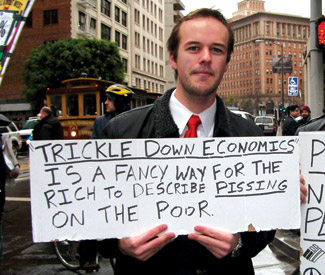
“We’re living in a time of trickle down economics and tax breaks for the rich,” Avalos said, later adding, “Big corporations [are] able to spend vast amounts of money” and have “the greatest influence on the outcome of elections.

“We need to look at our Constitution and have it amended so we aren’t looking at corporations as living, breathing people,” Avalos said.

That’s an immensely popular sentiment in this country, and it’s been stirred up by the US Supreme Court’s 2010 decision in Citizens United v. Federal Election Commission, a ruling that has come to represent all of the evils of big-money politics rolled into one two-word phrase.

More than 80 percent of Americans say they want the decision overturned. Six states, including California, have passed resolutions calling for a Constitutional amendment. Occupy protesters have made it a big issue. Marge Baker, policy vice president for People for the American Way, wrote a Huffington Post piece calling the campaign “A Movement Moment.”

But while Citizens United is a great rallying point, the challenge here goes way beyond one court decision. Citizens United didn’t create corporate personhood. Repealing the decision won’t end the flow of money in politics — and a lot of First Amendment experts are exceptionally nervous about anything that seeks to mess with this central part of the Bill of Rights.

And for all the denunciation of Citizens United, the solution — drafting the actual language of a new Constitutional amendment — turns out to be more than a little tricky.

MICHAEL MOORE AND HILARY CLINTON

Citizens United v. FEC has a complicated history. In 2002, Congress passed the McCain-Feingold Act, which barred corporations and unions from funding “electioneering” activities in the period right before an election.

The right-wing group Citizens United complained that Michael Moore’s documentary Fahrenheit 911 was an attack on George W. Bush and intended to influence the 2004 election, and the courts dismissed that complaint, saying that there was no evidence the independent documentary was an illegal campaign contribution.

Citizens United then started making its own “documentaries,” including one in 2008 that many saw as a campaign commercial against Hillary Clinton. The FEC found that the video was, in fact, “electioneering,” and the case wound up at the Supreme Court.

The legal decision was complicated, but among other things, the court ruled that a ban on independent corporate spending on election campaigns was a violation of the First Amendment rights of those business entities.

That was amplified when Republican presidential candidate Mitt Romney uttered his famous line, “corporations are people.”

But in reality, Citizens United alone hasn’t caused the tsunami of big money that’s poured into elections, including the 2012 campaigns. Much of the cash contaminating the presidential coffers this year comes not from corporations effected by the ruling but from individuals and private trusts that have been free to throw money around for decades.

“The flood of money is disgusting and corrupting,” Peter Scheer, director of the California First Amendment Coalition, told us. “But it isn’t coming from public corporations. It’s mostly wealthy people and private trusts, and they didn’t need Citizens United to do this.”

In fact, the groundwork for modern sleaze was set a long time ago, in 1976, when the Supreme Court ruled in Buckley v. Valeo that, in effect, money was speech — and that any rich individual could spend all he or she wanted running for office.

What the Supreme Court has done, though, is set the modern political tone for campaign finance — among other things, invalidating a Montana law that barred corporate contributions to campaigns. And in the majority ruling and the assenting opinions, the court made clear that it doesn’t think government has any role in leveling the campaign playing field — that it’s not the business of government to decide that the money and speech of rich people and big business is drowning out the opinions and speech of the rest of the populace.

SO NOW WHAT?

So now that every decent-thinking human being in the United States agrees that there’s too much sleazy money in politics and that it’s not a good thing for government to be for sale to the highest bidder, the really interesting — and difficult — question comes up: What do we do about it?

There are a lot of competing answers to that question. And frankly, none of them are perfect.

That may be one reason why the ACLU is mostly on the sidelines. When I contacted the national office to ask if anyone wanted to talk about the efforts to overturn Citizens United, spokesperson Molly Kaplan sent me an email saying “we actually don’t have anyone available for this.”

But on its website, the organization — in a nuanced statement on campaign reform — notes: “Any rule that requires the government to determine what political speech is legitimate and how much political speech is appropriate is difficult to reconcile with the First Amendment.”

In an ACLU blog post, Laura Murphy, director of the group’s Legislative Office in Washington DC, argues that “a Constitutional amendment—specifically an amendment limiting the right to political speech—would fundamentally ‘break’ the Constitution and endanger civil rights and civil liberties for generations.”

But David Cobb, one of the organizers of Move To Amend, which is pushing a Constitutional amendment, told me that “the idea that spending money is sacred is part of the problem, the reason that we don’t have a functioning democracy.”

There are two central parts to the problem: The notion that corporations have the same rights to free speech as people, and the notion that money is speech. Eliminate the first — which is immensely popular — and you still allow the Meg Whitmans and Koch brothers of the world to pour their personal fortunes into seeking political office or promoting other candidates.

Eliminate the second and you open a huge can of worms.

“It would be a disaster, in my view,” Scheer said. “As a general principle, I’m frightened by the concept of tampering with the Constitution.”

Money may not equal free speech, but it’s hard to exercise the right to free speech in a political campaign without money. And there are broader impacts that might be hard to predict.

But Peter Schurman, one of the founders of MoveOn.org and a leader in Free Speech for the People, told me that “it’s a false premise that money equals speech. The point is to get a level playing field.”

THE PROPOSALS

Move to Amend and Free Speech for People are promoting similar approaches, Constitutional amendments that, in fairly simple terms, would radically and forever alter American politics. Several members of Congress have offered Constitutional amendments that include similar language.

The Move to Amend proposal is the broadest and cleanest. It states: “The rights protected by the Constitution of the United States are the rights of natural persons only. Artificial entities, such as corporations, limited liability companies, and other entities, established by the laws of any State, the United States, or any foreign state shall have no rights under this Constitution and are subject to regulation by the People, through Federal, State, or local law.”

It goes on to say: “Federal, State and local government shall regulate, limit, or prohibit contributions and expenditures, including a candidate’s own contributions and expenditures, for the purpose of influencing in any way the election of any candidate for public office or any ballot measure.”

It also includes this statement: “Nothing contained in this amendment shall be construed to abridge the freedom of the press.”

Free Speech for the People is simpler. It only addresses the corporate speech issue: “People, person, or persons as used in this Constitution does not include corporations, limited liability companies or other corporate entities established by the laws of any state, the United States, or any foreign state, and such corporate entities are subject to such regulations as the people, through their elected state and federal representatives, deem reasonable and are otherwise consistent with the powers of Congress and the States under this Constitution.”

Cobb notes that the Move to Amend measure doesn’t say how political speech should be regulated; it just opens the door to that kind of lawmaking. “The question of how to protect the integrity of the electoral process is a political question, not a Constitutional question,” he said. In the end, there’s a huge issue here. The framers of the Constitution, their political consciousness forged in a battle against big and repressive government, feared as much as anything the notion of rulers controlling the rights of the people to speak, write, assemble, publish (oh, and carry firearms) freely. Corporate interests (with the possible exception of the British East India Company, which monopolized the tea trade) weren’t a major concern.

And First Amendment purists still recoil at the idea that government, at any level, could make decisions limiting or regulating political speech. I sympathize. It’s scary. But in 2012, it’s easy to argue that the power of big money and big business has far eclipsed the power of government, that for all practical purposes, the rich and their corporate creations are the government of the United States — and that the people, assembled and exercising the power envisioned under the Constitution, need to make rules to, yes, level the playing field. Not rashly, not in crazy ways, with full cognizance of the risks — but also with the recognition that the current situation is fundamentally unacceptable, and that the potential dangers of messing with the First Amendment have to be balanced with the very real dangers of doing nothing.

Bay Area activists join in anger over Anaheim police shootings

24

Last weekend in Anaheim, police shot and killed two young men. Every day since, protesters have taken to the streets. This weekend, a national day of protest following the killings helped spread the call for justice in Anaheim spread to the Bay Area. 

Manuel Diaz, 25, was unarmed when he was killed by Anaheim police July 21. When a crowd gathered at the scene as Diaz lay bleeding, police fired rubber bullets and pepper balls into the crowd. One police dog got loose, charged at a baby, and bit the child’s father. Police say they used crowd control because the people had grown rowdy, and that some were throwing rocks. The next day, police shot a 21-year-old, Joel Acevedo, who they say shot at officers while fleeing. 

Anaheim police shot another man the next day, a suspected burglar, marking the eighth officer-involved shooting in Anaheim so far this year. Five of the shootings resulted in death, and all but one of those killed were Latino.

“What’s going on here in Orange County is symbolic of a problem with the system,” Eduardo Perez, a 21-year-old student who attended Sunday’s protest told the Orange County Register. “This wouldn’t happen to white people. This is racism, simple as that.” 

Saturday was a designated a national day of action, and protests in New York, Oakland, Seattle, and Chicago took place, while a smaller group marched Friday in San Francisco. 

Tensions boiled over between protesters and Anaheim police Tuesday. Police say that protesters smashed windows and set fires. They shot at a crowd of hundreds with rubber bullets, beanbags and pepper balls, arresting 24 by the end of the night. That was what an Occupy Oakland medic, who preferred to be quoted as Elle, want to head down. 

“I saw an insane amount of force being used to disperse protesters who I think are rightfully angry. I noticed there was nobody there as a medic, reaching out to do first aid,” Elle said. 

On Sunday, protesters rallied at the APD headquarters and attempted a march to Disneyland. Law enforcement officers in camoflauge uniforms, toting tear gas launchers, blocked them the crowd from getting near Disneyland.

“They were stopped by the SWAT team that apparently wears desert camo,” said Elle, noting that Anaheim police and Orange County sheriff’s deputies, many on horseback, also confronted the march. 

Although Elle says that she did observe mounted police “using their horses almost as batons to shove and hit protesters onto the street,” she only treated minor injuries as a medic. 

”The unfortunate thing about being a medic is that these people who are being arrested need your help the most,” she said.

“The arrests they made were pretty violent, the ones that I saw. They hit one guy over the head with their baton as they were taking them to the van. They carried another woman out from a back alley, and she was crying and terrified. They were pretty brutal to the people they were arresting.”

Elle says she wanted to go help in Anaheim in part to help build a unified movement.

“We’re building a movement in Oakland around a really similar situation,” she said.

“If our state, community, country is going to make these murders stop all these communities need to rise up together and say this is unacceptable, we need to stop. It’s going to take a lot of people getting out there into the streets and building constant popular support to say this is an unacceptable use of our tax dollars.”

That “constant popular support” has been mounting in the Bay Area so far in 2012. Occupy Oakland started off the year with a march to the Oakland City Jail, and, the next day, joined with the Oscar Grant Committee for a march and rally commemorating his death. As officer-involved shootings have continued throughout the year, family and supporters have continued to take to the streets in response. 

“I also wanted to help build a bridge between Oakland and Anaheim,” Elle says of her trip. 

“If every community is issuing statements saying we want police to be held accountable for these deaths, we want to revoke the police officers’ bill of rights, we want active legislation preventing stop and frisk, active legislation to protect people’s fourth amendment rights, I think it could accomplish something,” Elle said.

The British press: “Nowhere Man” and “Mitt the Twit”

0

I like one liners that make the point.

As Maureen Dowd put it in her Sunday (7/29/2012)  column in the New York Times  on “Mitt’s Olympic Meddle,”

“The alarming thing about Romney is that he has been running for president for  years, but he still doesn’t know how to read a room.”

Shearwater descends on Bottom of the Hill

2

Back in 2008, someone at a Shearwater show in Chicago posted a shaky video to YouTube, in which the Austin-based ensemble covered Talk Talk’s “The Rainbow,” the ambitiously panoramic opening track from the seminal Spirit of Eden (1988).

Not only did the 10-minute clip showcase a band masterfully replicating a piece of music, previously determined by its creator to be unplayable in a live setting; it demonstrated just how far Shearwater has come since its beginnings in 2001 as a quiet, low-key spinoff of alt-country institution Okkervil River.

The band’s breakthrough effort, Rook (2008), raised the stakes considerably, treating the spacious, naturalistic folk-rock of their earlier output with a loosely psychedelic propulsion (somewhere in between Pink Floyd’s “Echoes” and Neil Young’s “Down By the River”) and a significant expansion of their dynamic range.

Fast-forward to 2012, and the release of Animal Joy: Shearwater’s most unrelentingly loud/quiet/loud statement to date. Last Tuesday, frontman Jonathan Meiburg, and his current, five-piece lineup of supporting players, stopped by Bottom of the Hill in support of their seventh full-length, and first release on Sub Pop.

After two competent, but ultimately dispensable, opening sets from Seattle folk revivalists Gold Leaves, and Australian psych-popsters Husky, Shearwater took the stage authoritatively, beginning with “The Snow Leopard” – the dramatic, erratic climax from Rook.

https://www.youtube.com/watch?v=5dcFdcsAOdw

Undeniably one of the highlights of the evening, it neatly encapsulated Meiburg’s thorough understanding of tension and release, its eerily quiet piano intro crashing into an explosive, beautifully cathartic jam, complete with thunderous drums and crunchy guitar stabs. Did the band shoot their collective wad early on? Arguably. But, what a first impression.

Another outstanding moment came halfway through the show, with “Insolence”, the similarly complex centerpiece from Animal Joy. Shifting between ruminative ballad-territory, and forceful, post-rock aggression, it exemplified Shearwater’s greatest asset: shapeshifting mini-epics whose loud and quiet sections feed symbiotically off one another.

Both “The Snow Leopard” and “Insolence” played to the strengths of Meiburg’s voice, which is a dramatic, versatile instrument, with the soft quiver of Aaron Neville or Roy Orbison, but the ability to pounce like Jeff Buckley at his most confrontational. However, the quieter songs left Meiburg’s vocals longing for the musical backbone they need to truly shine.

Therein lies Shearwater’s greatest fault; about half the time, the vocals are rendered over-theatrical by the the band’s incapacity to keep them in check. So, either the music needed beefing up, or the vocals required a dose of restraint, but something about the status quo certainly felt off.

Meiburg’s facial expressions were compelling, though, in their Jim Varney-esque elasticity. His eyes and mouth opened ferociously wide during more expressive moments, emoting with a “call-the-exorcist” level of wildness.

After a 90-minute set, Meiburg returned to the stage for an encore, which, at some point, crossed the line between “generous” and “overlong.” About half the bearded, bespectacled, plaid-wearing crowd filtered out, as Meiburg shared solo material, paid an a capella tribute to Scott Walker, and invited the band back onstage to close with a cover of REM’s “These Days.”

Though not exactly a hostage situation, one couldn’t help but long to give Meiburg the age-old “less is more” lecture. Still, he looked happy and engaged, so it feels a bit unfair to fault him for going overboard out of the goodness of his heart.

Even a decade into their career, Shearwater keeps searching, and refining their sound. Certain elements pale in comparison to others, as evidenced by their inconsistent appearance last Tuesday, but the stronger moments hint at a project with promising shelf life, and massive potential. Give them another ten years, they might bestow us with their Spirit of Eden moment.

Queens, aliens, isles of wonder, and more: what to watch this week

0

My pick for movie of the week is The Queen of Versailles, a likely (I’m callin’ it in July) inclusion on my top 10 list for 2012. Seriously, this doc is revealing, timely, surprising, beautifully lensed (by photographer-turned-director Lauren Greenfield), and affords an insidery peek into the mysterious borderlands between extreme weath and excessive tackiness.

Hollywood would like you to see either an alien-invasion comedy with Ben Stiller or the fourth Step Up entry … you could do worse, but you could do better. Frankly, I’d pencil in The Queen of Versailles for your Saturday night, and settle in tonight for the 2012 Summer Olympics Opening Ceremony, which comes complete with the amusement park-ish title “Isles of Wonder.” All the buzz indicates that the extravaganza, directed by Danny Boyle (not known for his subtlety), will be one for the ages, or at least supply some juicy fodder for the meme generation.

Reviews of everything opening this week (spoiler: there’s a lot) below the jump.

http://www.youtube.com/watch?v=uoVRetUMub0

Ai Weiwei: Never Sorry Unstoppable force meets immovable object — and indeed gets stopped — in Alison Klayman’s documentary about China’s most famous contemporary artist. A larger than life figure, Ai Weiwei’s bohemian rebel persona was honed during a long (1981-93) stint in the U.S., where he fit right into Manhattan’s avant-garde and gallery scenes. Returning to China when his father’s health went south, he continued to push the envelope with projects in various media, including architecture — he’s best known today for the 2008 Beijing Olympics’ “Bird’s Nest” stadium design. But despite the official approval implicit in such high-profile gigs, his incessant, obdurate criticism of China’s political repressive politics and censorship — a massive installation exposing the government-suppressed names of children killed by collapsing, poorly-built schools during the 2008 Sichuan earthquake being one prominent example — has tread dangerous ground. This scattershot but nonetheless absorbing portrait stretches its view to encompass the point at which the subject’s luck ran out: when the film was already in post-production, he was arrested, then held for two months without official charge before he was accused of alleged tax evasion. (He is now free, albeit barred from leaving China, and “suspected” of additional crimes including pornography and bigamy.) (1:31) (Dennis Harvey)

The Queen of Versailles Lauren Greenfield’s obscenely entertaining The Queen of Versailles takes a long, turbulent look at the lifestyles lived by David and Jackie Siegel. He is the 70-something undisputed king of timeshares; she is his 40-something (third) wife, a former beauty queen with the requisite blonde locks and major rack, both probably not entirely Mother Nature-made. He’s so compulsive that he’s never saved, instead plowing every buck back into the business. When the recession hits, that means this billionaire is — in ready-cash as opposed to paper terms — suddenly sorta kinda broke, just as an enormous Las Vegas project is opening and the family’s stupefyingly large new “home” (yep, modeled after Versailles) is mid-construction. Plugs must be pulled, corners cut. Never having had to, the Siegels discover (once most of the servants have been let go) they have no idea how to run a household. Worse, they discover that in adversity they have a very hard time pulling together — in particular, David is revealed as a remote, cold, obsessively all-business person who has no use for getting or giving “emotional support;” not even for being a husband or father, much. What ultimately makes Queen poignantly more than a reality-TV style peek at the garishly wealthy is that Jackie, despite her incredibly vulgar veneer (she’s like a Jennifer Coolidge character, forever squeezed into loud animal prints), is at heart just a nice girl from hicksville who really, really wants to make this family work. (1:40) Smith Rafael. (Dennis Harvey)

Red Lights Skeptics and budding myth busters, get ready. Maybe. Director-writer Rodrigo Cortés blends the stuff of thrillers and horror in this slippery take on psychics and their debunkers. Psychologist Margaret Matheson (Sigourney Weaver) and her weirdly loyal assistant Tom (Cillian Murphy) investigate paranormal phenomena — faith healers, trance mediums, ghost hunters, and psychics — in order to peer behind the curtain and expose all Ozs great and small. Spoon-bending blind ESP master Simon Silver (Robert De Niro) is their biggest prize: he’s come out of retirement after the death of his most dogged critic. Has Silver learned to kill with his mind? And can we expect a brain-blowing finale on the same level as The Fury (1978)? Despite all the high-powered acting talent in the room, Red Lights never quite convinces us of the urgency of its mission — it’s hard to swallow that the debunking of paranormal phenomenon rates as international news in an online-driven 24/7 multiniched news cycle — and feels like a curious ‘70s throwback with its Three Days of the Condor-style investigative nail-biter arc, while supplying little of the visceral, camp showman panache of a De Palma. (1:53) (Kimberly Chun)

Ruby Sparks Meta has rarely skewed as appealingly as with this indie rom-com spinning off a writerly version of the Pygmalion and Galatea tale, as penned by the object-of-desire herself: Zoe Kazan. Little Miss Sunshine (2006) directors Jonathan Dayton and Valerie Faris helm this heady fantasy about a crumpled, geeky novelist, Calvin (Paul Dano), who’s suffering from the sophomore slump — he can’t seem to break his rock-solid writers block and pen a follow-up to his hit debut. He’s a victim of his own success, especially when he finally begins to write, about a dream girl, a fun-loving, redheaded artist named Ruby (scriptwriter Kazan), who one day actually materializes. When he types that she speaks nothing but French, out comes a stream of the so-called language of diplomacy. Calvin soon discovers the limits and dangers of creation — say, the hazards of tweaking a manifestation when she doesn’t do what you desire, and the question of what to do when one’s baby Frankenstein grows bored and restless in the narrow circle of her creator’s imagination. Kazan — and Dayton and Faris — go to the absurd, even frightening, limits of the age-old Pygmalion conceit, giving it a feminist charge, while helped along by a cornucopia of colorful cameos by actors like Annette Bening and Antonio Banderas as Calvin’s Big Sur-dwelling boho mom and her furniture-building boyfriend. Dano is as adorably befuddled as ever and adds the crucial texture of every-guy reality, though ultimately this is Kazan’s show, whether she’s testing the boundaries of a genuinely codependent relationship or tugging at the puppeteer’s strings. (1:44) (Kimberly Chun)

http://www.youtube.com/watch?v=AW1aAxBG_50

Sacrifice Power-mad General Tu’an (Wang Xueqi) engineers the slaughter of the entire Zhao clan — including the newborn son who’s the last of the line. But the baby’s been swapped with the child of the doctor, Cheng Ying (Ge You), who delivered him, and the deception train pretty much goes off the rails after that. Suffice to say the Zhao heir survives while Cheng Ying’s wife and infant do not, and Tu’an is none the wiser. Revenge seems the only logical move, so Cheng Ying patiently waits years for the boy to grow up and learn martial arts from Tu’an, plotting that he’ll reveal the truth when the (kinda bratty) child becomes capable of killing his beloved “godfather” — a.k.a. the guy who massacred his family (and the family of his adoptive father). If that sounds complicated, know that this epic from Chen Kaige (1993’s Farewell My Concubine) has over two hours to get through all those plot mechanics. Also, it’s gorgeously shot, mixing the classy trappings of a big-budget historical melodrama with thunderous battles and scenes of brutal violence. (2:10) SF Film Society Cinema. (Cheryl Eddy)

http://www.youtube.com/watch?v=nBw1PFjKnrs

Shit Year Santa Cruz artist Cam Archer’s 2006 debut feature Wild Tigers I Have Known was a texturally gorgeous but content-lite exercise that often seemed like an extended audition for the role of Next Gus Van Sant. (The real one was, in fact, its executive producer.) This sophomore effort strikes pretty much the same (im-) balance. Colleen West (Ellen Barkin) is a famous, now middle-aged actress who decides to retire — why, we don’t know, particularly since she only seems more brittle, dissatisfied, and hollow upon retreating to an isolated home in a woodsy area. (She doesn’t even seem to like nature.) There, she tolerates a sorta-friendship with an irritatingly chirpy neighbor (Melora Walters), endures a visit by the irritatingly uncomplicated, stable brother she was never close to (Rick Einstein), and recalls an unfulfilling affair with her much younger co-star in a play (Luke Grimes). She also imagines (?) appointments with a terse interrogator (Theresa Randle) offering some sort of futuristic experience-simulation service in an eerie all-white environ. While one questions whether there actually was one, per se, Archer’s fragmentary script alternates these flashbacks, surreal interludes, and present-tense expressions of existential ennui (“I’m surrounded by a world of nothing,” Colleen moans) into pretty formations. The film’s black and white photography (by Aaron Platt), editing, production design, musical choices, etc. are all impeccably mannered. But our protagonist’s bored self-absorbsion and self-pity, lacking any backgrounding psychology, is ultimately as vacuous a dead-end as it is when Vincent Gallo is baring his soul. Having a bitchy, platinum-haired Barkin do the job for Archer makes the effect a little campier, but no more resonant. That said, this movie would probably seem brilliant if watched on quaaludes. (1:35) Roxie. (Dennis Harvey)

Step Up Revolution The Step Up franchise makes a play for the Occupy brand, setting up its fourth installment’s Miami street crew, the Mob, as the warrior dance champions of the 99 percent — here represented by a vibrant lower-income neighborhood slated for redevelopment. Embodying the one percent is a hotel-chain mogul named Bill Anderson (Peter Gallagher), armed with a wrecking ball and sowing the seeds of a soulless luxury monoculture. Our hero, Mob leader Sean (Ryan Guzman), and heroine, Anderson progeny and aspiring professional dancer Emily (Kathryn McCormick), meet beachside; engage in a sandy, awkward interlude of grinding possibly meant to showcase their dance skills; and proceed to spark a romance and a revolution that feel equally fake (brace yourself for the climactic corporate tie-in). The Mob’s periodic choreographed invasions of the city’s public and private spaces are the movie’s sole source of oxygen. The dialogue, variously mumbled and slurred and possibly read off cue cards, drifts aimlessly from tepid to trite as the protagonists attempt to demonstrate sexual chemistry by breathily trading off phrases like “What we do is dangerous!” and “Enough with performance art — it’s time to make protest art!” Occasionally you may remember that you have 3D glasses on your face and wonder why, but the larger philosophical question (if one may speak of philosophy in relation to the dance-movie genre) concerns the Step Up films’ embrace of postproduction sleights of hand that distance viewers from whatever astonishing feats of physicality are actually being achieved in front of the camera. (1:20) (Lynn Rapoport)

http://www.youtube.com/watch?v=9G8rzHJsWpM

The Watch Directed by Lonely Island member Akiva Schaffer (famed for Saturday Night Live’s popular digital shorts, including “Dick in a Box”), The Watch is, appropriately enough, probably the most dick-focused alien-invasion movie of all time. When a security guard is mangled to death at Costco, store manager and uber-suburbanite Evan (Ben Stiller, doing a damn good Steve Carell impersonation) organizes a posse to keep an eye on the neighborhood — despite the fact that the other members (Vince Vaughn as the overprotective dad with the bitchin’ man cave; Jonah Hill as the creepy wannabe cop; and British comedian Richard Ayoade as the sweet pervert) would much rather drink beers and bro down. Much bumbling ensues, along with a thrown-together plot about unfriendly E.T.s. The Watch offers some laughs (yes, dick jokes are occasionally funny) but overall feels like a pretty minor effort considering its big-name cast. (1:38) (Cheryl Eddy)

http://www.youtube.com/watch?v=_5Z2zG6xMA0

The Well-Diggers Daughter Daniel Auteuil owes a debt of gratitude to Marcel Pagnol, courtesy of his breakthrough roles in the 1980s remakes of the writer and filmmaker’s Jean de Florette and Manon of the Spring. He returns the favor with his debut directorial work, reworking the 1940s film and crafting a loving, old-school tribute to Pagnol. The world is poised on the edge of World War I; Auteuil plays salt-of-the-earth Pascal Amoretti. The poor widower does the town’s dirty work (oh, the dangerous symbolism of hole-digging) and cares for his six daughters — his favorite, the eldest and the most beautiful, Patricia (Astrid Berges-Frisbey), has caught the eye of his assistant, Felipe (Kad Merad). The happy home — and tidy arrangement — is shattered, however, when Patricia meets an inconveniently dashing pilot Jacques Mazel (Nicolas Duvauchelle), who sweeps her away, in the worst way possible for a girl of her day. “You’ve sinned, and I thought you were an angel,” says the stunned father when he hears his beloved offspring is pregnant. “Angels don’t live on earth,” she responds. “I’m like any other girl.” Faced with the inevitable, Auteuil and company shine a sweet but, importantly, not saccharine light — one that’s as golden warm as the celebrated sunshine of rural Provence — on the proceedings. And equipped with Pagnol’s eloquent prose, as channeled through his love of the working folk, he restores this tale’s gently throwback emotional power, making it moving once more for an audience worlds away. (1:45) (Kimberly Chun)

Two calls to investigate SF restaurant surcharges as consumer fraud

49

The surcharges that many San Francisco restaurants charge their customers – ostensibly to help cover their employee health care obligations, although in practice it has often just padded their profits – should be investigated by the District Attorney’s Office as consumer fraud, according to Sup. David Campos and San Francisco’s Civil Grand Jury, which recently issued a scathing report scrutinizing the practice.

Campos raised the issue during Tuesday’s Board of Supervisors meeting, calling for a criminal investigation and City Hall hearing. He even questioned whether businesses that have been so hostile to city’s Health Care Security Ordinance – the landmark 2008 measure that created the Health San Francisco universal care program and required businesses to help pay for their employees’ health coverage – should benefit from the tax cuts it would receive under a business tax reform ballot measure the board also considered that day.

“In the restaurant industry, we have an issue that remains unresolved,” Campos said during the business tax debate, after earlier in the meeting calling for the DA “to begin an investigation for fraud against the people of San Francisco by businesses that use this surcharge.”

DA’s Office spokesperson Stephanie Ong Stillman confirmed that the office is looking at the issue: “The Grand Jury report was just released and we are in the process of evaluating the results.”

Mayor Ed Lee last year vetoed legislation by Campos that would have banned the practice and prevented businesses from simply pocketing money from Employer Health Reimbursement Accounts they create to comply with the mandate (federal law bars the city from dictating how businesses cover employee health care) at the end of each year. Lee later signed a watered down version sponsored by Board President David Chiu requiring employers to keep the money in the fund for two years, to let their employees know about the fund on a quarterly basis, and to dedicate surcharge revenue to employee health care.

Rob Black, executive director of Golden Gate Restaurant Association – which unsuccessfully sued the city over the employer mandate and appealed the case all the way to the US Supreme Court – criticized Campos and the Grand Jury, saying they were relying on data from last year and that the situation has improved since Chiu’s legislation went into effect (Chiu told us data collection from his legislation will allow the city to better assess what’s happening).

“Supervisor Campos know this information is based on data that was prior to the new ordinance,” Black told us, acknowledging that many restaurants profited from the surcharges “but that was before the law was changed.” Campos responded by saying the grand jury concluded that the Chiu legislation didn’t go far enough the prevent the abuses, which are tough to detect because they are based on self reporting by the businesses.

The Grand Jury looked at 38 restaurants, of which 25 used the surcharges and 22 use the reimbursement accounts rather than either health insurance or Healthy San Francisco, which health care experts uniformly say are better options for employees. It analyzed data submitted to the city by these 22 restaurants with a total of 1,562 employees, finding that of the more than $2 million earmarked for the health reimbursement funds, just $123,612 was paid to employees and $1.9 million was kept by the employers.

Black said the quarterly noticing requirement in the Chiu legislation is already helping with the low reimbursement rate: “My hope is, and my belief is, we’re going to see significant…improvements in utilization rates in people taking advantage of their benefits, and that’s great.”

The grand jury also looked specifically at the health care surcharges collected by 18 restaurants with almost $64 million in gross revenue. Despite collecting almost $2.2 million in the surcharges it placed on customers bills, they reimbursed their employees for $1.16 million medical expenses and kept the more than $1 million that remained as profits.

Black criticized the grand jury for selectively picking the restaurants in its study and for targetting private sector businesses rather than the public agencies it traditionally investigates. “They’re outside of what the government charter calls for,” he said.

But Mark Busse, the chair of the Grand Jury Health Committee that led the study, told the Guardian that while it’s unusual to look at the private sector, there was a legitimate public policy interest here and its work was approved and overseen by Presiding Judge Katherine Feinstein (who happens to be the daughter of US Sen. Dianne Feinstein, San Francisco’s former mayor).

He also denies hand-picking the restaurants, saying he asked jurors to simply keep the receipts from all restaurants they frequented. While that may not be representative of all restaurants, he said it was a large enough sample to draw some conclusions and that he was more surprised than anyone at their findings.

“I thought our results would be totally different. I didn’t think they would be that abusive, I really didn’t. I thought we would find we have some outstanding restaurants and entrepreneurs,” Busse said, adding that he was alarmed by their actual findings. “It turned our stomachs. It makes us sick. It is not a level playing field. There are legitimate businesses that accept the spirit of the law and are taking care of their employees, but a lot of them aren’t.”

Given that these employees handle the food of city residents, he said that they should get the health care to which they’re entitled. As Busse told us, “The intention of the jury was to make sure the workers are getting health care and the customers aren’t getting deceived.”

7/27 Update: We heard back from the Mayor’s Office, whose Chief Deputy Communications Director Francis Tsang wrote: “Mayor Lee is a strong supporter of the Healthcare Security Ordinance. The Civil Grand Jury surveyed only 38 restaurants and its report restates facts we already know – some businesses add a surcharge and in the past, it was not well regulated.  Working with Supervisors, Mayor Lee strengthened practices effective January 2, 2012 to ensure employees could make better use of the program.  We will know the results in 2013, when we collect and report on 2012 data informed by the new regulations.”

15th annual United Nations Association Film Festiva

0

The United Nations Association Film Festival was originally conceived to celebrate the 50th anniversary of the signing of the Universal Declaration of Human Rights. The 15th annual UNAFF will be held from October 18-28, 2012 in Palo Alto, Stanford University, East Palo Alto and San Francisco. The theme for this year is Human Dignity.

UNAFF celebrates the power of films dealing with human rights, environmental themes, women’s issues, population, homelessness, racism, children, health, universal education, war and peace. In the past fifteen years, UNAFF has attracted a broad audience from the San Francisco Bay Area with regards to ethnicity—many finding the screenings to be a rare chance to see the state of human rights and culture in their own native countries. UNAFF promotes education, awareness and social change through images, dialogue and action. 

October 18-28 @ Palo Alto, East Palo Alto, San Francisco and Stanford University

For more information click here.

Best of the Bay 2012: BEST ROBOT DUNGEON

0

From the outside, it’s an unassuming Mission District storefront, infrequently open to the public. But inside, Area 2881 reveals a rare glimpse into the private lives of robots. Perched on miniature foot-lit pedestals, two robot slaves dance for roving audiences, their slightly jerky motions belying the complexity of their 41 meticulously designed joints. The slaves appear both vulnerable yet indestructible, humanoid yet alien, and the weird spectacle of their forced entertaining is both unsettling and strangely affecting. The rest of the room is a whirring, spinning, buzzing paroxysm of light and kinetic sculpture, ushered into this world from a parallel plane by the human hands of mild-mannered applications engineer by day, mad scientist by night, Carl Pisaturo.

2881 23rd St., SF. www.carlpisaturo.com

Best of the Bay 2012: BEST BAR TO TATTOO ON YOUR BICEP

1

Some may have seen the deserted stretch of Harrison Street as a business liability, but Jay Beaman and Oliver Piazza of Thieves Tavern and Dirty Thieves didn’t let the low walk-up potential dissuade them from opening Dear Mom. We’re glad. Because if they had, we’d be bereft of their expansive boozery (once the salsa club El Rincon) flush with affordable booze, a photobooth, beckoning seating areas, and a kitchen that hosts pop-up eateries hawking sushi, fried green tomato hamburgers, and everything in between. The one thing Mom needs to be an SF standard is cheapo local icon Broke Ass Stuart hawking picklebacks (whiskey shots with pickle juice chaser, duh) on Wednesday nights in his never-ending quest to pay rent. Oh wait, that actually happens.

2700 16th St., SF. (415) 625-3362

Localized Appreesh: Rin Tin Tiger

0

Localized Appreesh is our weekly thank-you column to the musicians that make the Bay. To be considered, contact emilysavage@sfbg.com.

San Francisco’s Rin Tin Tiger does it raw. The alt-folk trio just wrapped up recording an organic (no vocal editing here) live album at Tiny Telephone Studios.

The resulting record, Toxic Pocketbook, roars like the soul of a wild cat trapped in a faithful pup’s skin. It scoots along with twangy riffs infused with a rough rock’n’roll edge, and “a good thump” (as the band describes it below), with untouched – and gleefully twangy – vocals pumping up the natural energy. 

In celebration of their respective new releases, the band co-headlines the Great American Music Hall this week with fellow locals Tumbleweed Wanderers. First, Rin Tin Tiger swipes its striped paw across Localized Appreesh’s ruddy cheek.

http://www.youtube.com/watch?v=JpIg0x_w808

Year and location of origin: 2011 – San Francisco, Calif.

Band name origin: Kevin wanted to call the band Rin Tin Tin after the dog but the name was already taken.  As a joke Andrew said Rin Tin Tiger.  We brushed it off and then had nightmares about it for eternity.  Thus, RTT was born.

Band motto: Murk as much as possible.

Description of sound in 10 words or less: High energy, lyric heavy alt folk with a good thump.

Instrumentation: Acoustic guitar, electric bass, drums, harmonica, cries, calls & hollers.

Most recent release: Toxic Pocketbook (2012)

Best part about life as a Bay Area band: Being able to busk the streets of SF as well as play all of the amazing venues in the city and the ability to play different markets like the Oakland or San Jose within a 45 minute drive.

Worst part about life as a Bay Area band: Cost of living/Rent.

First album ever purchased: Kevin: N’Sync, Home for Christmas; Sean: Weird Al Bad Hair Day; Andrew: Michael Jackson, Black Or White.

Most recent album purchased/downloaded: Kevin: I’ve been revisiting Underoath, The Changing of Times; Sean: the amazing new releases from local bands Picture Atlantic, Tumbleweed Wanderers, Owl Paws, Loquat and Dogcatcher!; Andrew: Fleetwood Mac, Rumors.

Favorite local eatery and dish: Indian Pizza at Zantes and The Classic cheeseburger at Burgermeister.

Rin Tin Tiger and Tumbleweed Wanderers
With Ghost and the City
Thu/26, 8pm, $15
Great American Music Hall
859 O’Farrell, SF
(415) 885-0750
www.slimspresents.com

8 cultural happenings this week in the big, best, beautiful Bay

0

It is inevitable after reading today’s Best of the Bay 2012 issue that your heart will be swole with pride for our beautiful Bay Area By the Bay. Seize the moment! There are a plethora of arts and culture happenings this week that are perfect examples of — as our managing editor Marke B. put it in his intro to BOB — “the sheer gorgeousness, thriving alternative culture, and promise of freedom and acceptance that are unique to our shores.” Cheers!

CELLspace open critical studio

Turns out, artists aren’t always their best critic. That’s why CELLspace’s open critical studio is such a great opportunity for creatives. Come discuss your art, discover the work of others, and — hopefully — take away a dose of constructive criticism that every creator needs from time to time. 

Wed/25, 7-10pm, free

CELLspace

2050 Bryant, SF 

www.cellspace.org

Cobb’s Comedy Club Showcase

Though it’s one of the city’s premier comedy clubs, Cobb’s isn’t stupid enough to forget the little guys. This Wednesday, check out the club’s up-and-comer showcase, where you can see some of the Bay’s funniest fledglings before they hit it big and really start taking your money. 

Wed/25, 8pm, $12.50

Cobb’s Comedy Club

915 Columbus, SF

www.cobbscomedyclub.com 

SF International Poetry Festival

The San Francisco International Poetry Festival brings you tons of excuses to brood in a vaguely-Italian coffee house while penning lines into your journal. The series of readings from poets of international acclaim — from Iraq to Italy, Sweden to Malta — kicks off this Thursday. Set ever-so aptly in Jack Kerouac Alley, hosts Jack Hirschman, Lawrence Ferlinghetti, and city librarian Luis Herrera will introduce the festival’s lineup of poets with the accompaniment of a modern concert from Neeli Cherkovski, Matt Gonzales, and Jonathan Richman. 

Thu/26, 7-9:00pm, free.

Kerouac Alley, SF

www.sfipf.com

The Wizard of Oz movie night with the San Francisco Symphony

Join the San Francisco Symphony for a unique screening of America’s favorite kids-movie-that’s-not-actually-a-kids-movie. Beyond the fantastical plot line of The Wizard of Oz, the film’s striking visual elements and majestic music and score are part of what has made it the timeless classic it is today. Bridge the gap between silly and sophistication this Thursday by dressing up in your favorite Oz costume, watching the movie, and listening to the SF Symphony perform the score live.

Fri/27, 7:30pm, $12.50-$70

Davies Symphony Hall

201 Van Ness, SF

www.sfsymphony.org

“Re: Told” closing night 

If you missed this month’s run of Root Division’s modern story-telling art exhibit, you still have a chance to catch this glamorous culmination, closing reception, and publication release. Taking a page from Ernest Hemingway, “Re: Told” reframes cultural narratives in order to create a contemporary storytelling experience, yielding an accessible look into some very intimate realities.

Fri/27, 6-9pm, $1-$20

Root Division

3175 17th St., SF

www.rootdivision.com 

Naoya Hatakeyama: Nature Stories 

Prominent Japanese nature photographer Naoya Hatakeyama shows us the dualistic relationship between man and nature in this large-scale photography exhibit illustrating man’s attempt to control nature and, in the wake of the Tohuku earthquake and tsunami. The austere power of nature over humans’ best attempts to rein it in figures prominently in “Natural Stories,” which possesses an ironically calm visual approach to such a powerful concept. 

Through Nov. 4

Opening reception: Sat/29, 10am-5:45pm, $18 (adult general) 

SFMoMA

151 Third St., SF

www.sfmoma.org 

Ohlone basket welcoming ceremony 

The native Californian basket collection at the Oakland Museum of Art would, from a novice’s eye, seem to be complete. Yet due to the Ohlone tribe’s tradition of burning their possessions after death, the tribe’s baskets are scarcely represented among the collection’s 2,500 pieces. To remedy this dearth, the museum commissioned Ohlone artist and scholar Linda Yamane to create a basket. After a two-year documented process, we have an opportunity to welcome the 20,000-stitch, several thousand feathers, and 1,200-bead that make up the Ohlone basket into the museum’s collection with a day of festivity, including story-telling, dance, and song. 

Sat/28, 1-3pm, $12 general. 

Oakland Museum of California

1000 Oak, Oakl. 

www.museumca.org

The Coming Century of War Against Your Computer

Hey you, the one with the oversized headphones and approximately windows to burn open on your laptop, listen up. As part of its specialization in the speculative — that is, fantasy, horror, and science fiction — Borderlands Books presents Corey Doctorow and his book The Coming Century of War Against Your Computer. Copyright laws, net neutrality, and SOPA may be much more serious indicators of the technology takeover than we thought, so let this be your opportunity to decide whether you’re going to let technology-driven measures govern your life.  

Tue/31, 7:30pm, $10

Borderlands Cafe

870 Valencia, SF

www.borderlands-books.com 


Best of the Bay 2012: BEST ARTS HIGH NOTE

1

Whether it’s the free yoga classes, creative summer art camp, or Saturday afternoon alfresco concerts, the Bayview Opera House‘s offerings are as vibrant and active as they were when the building was built in 1888 (maybe more so? The Guardian wasn’t around back then). The historic landmark community center supports the still-diverse neighborhood of Bayview-Hunters Point, hosting awesome fundraisers like Black Men Can Cook and Mendell Plaza Presents, a 12-week concert series that transforms a little triangle of pavement into a full-on dance floor featuring local neighborhood musicians — not to mention domino tables and BBQ — alongside a community garden filled with vibrant veggies. Kids from the 100% College Prep Club make up much of the musical talent. Here’s to 125 more amazing years.

4705 Third St., SF. (415) 824-0386, www.bvoh.org

Best of the Bay 2012: BEST NIGHT IN THE MUSEUM

0

Afterhours museum parties full of bright young things witnessing cool artistic happenings are anything but a rarity in our forward-thinking area. And really, we wouldn’t have it any other way. May we especially highlight the amazing series that is L@TE: Friday Nights at BAM/PFA? This is — probably — the only such affair at which an “electric orchestra of pickle jars accompanied by abstract lighting machines” and the occasional pop-in by Devendra Banhart are a given. The wonderfully heady and innovative social gatherings fill the Berkeley Art Museum with experiential art and music (construct rainbow prisms, listen to Negativland, deconstruct Scritti Politti records, join an avant-cabaret) and light up the Pacific Film Archives with glorious 16mm and 35mm prints of rare and recently restored films. Also: dancing! If you’ve ever dreamt of meeting a soul mate while watching 3-D animation, participating in interactive dance performances, and peeping the latest emerging local artists, you need to get L@TE.

Occasional Fridays, 5:30-9pm, $7. Berkeley Art Museum, 2626 Bancroft Way, Berk. (510) 642-0808, www.bampfa.berkeley.edu

Best of the Bay 2012: BEST ESOTERIC GUIDEBOOK

0

City Notes: San Francisco will never counsel you to try the chowder bowl at Fisherman’s Wharf. Nor will it prove useful in finding the best way to walk between Chinatown and the Ferry Building. It won’t give you directions at all, for that matter. The artful wood-bound guidebook, put together by a team of Wesleyan alumni headed by Jesse Coburn, is comprised of quiet shots and histories behind 25 little-known sites in San Francisco, such as the Columbarium, Molinari-Mana Park, Mount Davidson, and the Swedenborgian Church. City Notes doesn’t spill the address beans, making it the perfect treasure hunt for the urban explorer-wanderer. The book’s covers are hand-bound to the velvety sheets within; its producers had so much fun making the finely crafted object, in fact, that they plan on putting together similar guides for other cities around the world.

www.terrywarnerpress.com

Best of the Bay 2012: BEST ALL-AROUND GRRRL POWER

0

Basic bar moves and halting hip-hop steps may be what stuck with you from the dance classes of your youth, but (thankfully) today there’s a new kind of movement program that’s all about teaching confidence and power, in addition to how to rule a dancefloor. We’re talking about Grrrl Brigade. Dance Mission Theatre hosts this series of classes in hip-hop, jazz, modern, and taiko (that’s Japanese drum dancing) for nine to 18-year-old females. As they rock the courses, their leadership develops along with their dance skills. Grrrl Brigade students roar with self-esteem, thrive on collaboration, and have been known to pound away on gigantic drums, taking the stage each year in a young person’s version of The Nutcracker, and in a springtime show focusing on real-life issues the performers deal with when they’re not in the spotlight.

Dance Mission Theater, 3316 Mission, SF. www.dancemission.com

Best of the Bay 2012: BEST FOGOLYSTICS

0

Since 1989, when the troupe was founded by community leader Carlos Aceituno, Fogo Na Roupa has been taking to the streets, the stages, and the dance studios with its rhythmic, Latin-African-hip-hop fusion beats. Where might you have seen them perform? Perhaps during its be-feathered, be-dazzled promenades through SF Carnival — with as many as 200 performers in a single appearance, the group is hard to miss. If you’re feeling the fogolystics — the term the troupe has coined to describe its powerful mix of musical genres — you can add your sparkle to the mix. On Tuesdays and Saturdays they hold an open practice at Mission Cultural Center that you can jump in for just $10. Seriously, everyone is invited — the group prides itself on performers ranging from kids to senior citizens.

(510) 286-7926, www.gofogo.com

Best of the Bay 2012: BEST SUPPORT SYSTEM FOR CIRCUS FREAKS, ACOUSTIC GEEKS, AND SOLO EXHIBITIONISTS

0

How does Stagewerx proprietress Ty McKenzie do it? She always finds the way to a “yes” where others might jump to a “no.” In both its old location on Sutter Street and its brand-new digs on Valencia, Stagewerx has created a supportive environment par excellence for performers of every discipline, amateurs and seasoned pros alike. From ongoing performance series such as Solo Sundays and Previously Secret Information to the raucous hi-jinks of Picklewater Clown Cabaret and Circus Finelli; from Tom Sway’s low-key, lo-fi music series Underground Sound to ambitious runs of new works by companies such as PianoFight, Wily West Productions, and Foul Play, Stagewerx’s focus on helping quirky and emerging artists find a “yes” of their own is more than refreshing — it’s essential.

446 Valencia, SF. www.stagewerx.org


Best of the Bay 2012: BEST YOU BETTA WORK

0

Voguing — that drop-dead fabulous and seriously competitive gay African American dance-battle art form — has recently come back into the spotlight, with a new generation of club kids and art queens taking to the floor to chop, mop, drop, drag, gag, and get “cunty.” San Francisco, of course, has put its own spin on the high-attitude, limb-flinging style that originated in the ’70s in underground ballrooms on the East Coast, transforming the dance into a way to get in shape. You may not have come from the streets, but you’re going to leave Vogue and Tone with amazing thighs, honey. The wiggy workout class — Tuesdays, 7-8:30pm, at Dance Mission Theater and Thursdays, 8:30-9:45pm, at ODC Commons — is led by kicky, spinny showman Sir JoQ, a.k.a. Jocquese Whitfield. The dance has also hit the club circuit, leaping on a recent trend of retro-style dance-floor workout sessions, so be on the lookout and don’t throw shade. If all you know of vogue is that old Madonna track, it’s time to get in-shape and up-to-date.

www.dancemission.com

Best of the Bay 2012: BEST TECHNO OUR WAY

1

In response to the onslaught of mass-produced, sugar-rush electronic sounds ruling the pop charts these days, many finer San Francisco dance floors have returned to a more underground aesthetic. This renaissance of sophisticated techno plugs into a global movement — unabashedly intelligent, yet still madly danceable. And while many fantastic local party promoters have emerged, the As You Like It crew has been on a massive tear like no other. In just two years, they have risen from a nomadic underground existence to pack larger legal venues with dozens of parties that feature uncompromising local and international talent, yet never lose that singular, slightly extra-legal vibe and attention to detail. Some of the most exciting names in dance music have passed through the Bay Area thanks to As You Like It’s dedication, helping to make our party scene an essential destination for dance fanatics. To fittingly repurpose one of the crew’s favorite adjectives: quality.

www.ayli-sf.com

Best of the Bay 2012: BEST FAIRY EXPLOSION

0

Once every year, right around Pride time in June, a fantastical fey Imaginarium of uninhibited queer art, dance, theater, ecology, lube-wrestling, puppy piles, porn debuts, and fearlessly naked fabulosity pops up in the old Tower Records building in the Castro. This is the fag-ulous Faetopia festival which, for one delirious week, complements the corporate-sponsored and slickly marketed Pride happenings with a burst of summer solstice fairy dust. The event comes courtesy of the Radical Faeries, those scruffy pan-sexual Pagan sprites whose naturist movement has a long history in the Bay Area, where they spread their gay-gay wings from untamed redwood groves to notorious Burning Man camps. More than 50 artists join forces to create programs — like Gay Hist-Orgy (performer Ian McKinnon’s “cruise of gay historical figures”) and Flaming Queens on Fire! (fire-dancing lessons) — that stuff some good ol’ polymorphous perversity into Pride’s polished corners. And at the very center? Faetopia’s there too, with the hippie-chill Fairy Freedom Village area within the Civic Center festival itself.

www.faetopia.com

Best of the Bay 2012: BEST DECEPTIVELY EPHEMERAL FILM FEST

0

Really though, Disposable Film Festival is a misnomer. Founded in 2007, with an inaugural event at Artists’ Television Access in early 2008, DFF has since evolved into a traveling-fest juggernaut with screenings in Paris, Beijing, Brazil, Macedonia, Argentina — basically, anywhere with open-minded audiences hungering for unique short films. Here’s where the “disposable” part comes in: the films are made DIY-style, using technology of the hand-held, pocket-sized, and easily-accessible-to-everyone variety, like cell phones and webcams. And though its festival screenings are a global phenomenon, DFF also hosts workshops, panel discussions, and other events (bike-in movies!) aimed at inspiring artists — especially young folks who are just discovering the wide world of creative filmmaking beyond those 3D superheroes at the multiplex.

www.disposablefilmfest.com