SFBG Blogs

Dick Meister: Honor a legendary organizer

0

Dick Meister, former labor editor of the San Francisco Chronicle, is co-author of A Long Time Coming: The Struggle to Unionize America’s Farm Workers (Macmillan)

There’s still time, if you hurry, to join a nationwide campaign  to posthumously award the Presidential Medal of Freedom to legendary organizer Fred Ross. For more than a half-century he was among the most influential, skilled, dedicated and successful of the community organizers who have done so much for the underdogs of American society.

Most people have never heard of Fred Ross, which is exactly how he wanted it. He saw his job as training others to assume leadership and the public recognition that accompanies it.  And train them he did, hundreds of them, including farm worker leaders Cesar Chavez and Dolores Huerta, who were previously awarded the Presidential Medal of Freedom.

Chavez and Huerta were typical Ross trainees ­­ poor, inexperienced members of an oppressed minority who were inspired to mobilize others like them to stand up to their oppressors.

“Fred did such a good job of explaining how poor people could build power I could taste it,” Chavez recalled.


Chavez was among the Mexican Americans living in California’s barrios in the 1950s that Ross, then with Saul Alinsky’s Industrial Areas Foundation, was helping form political blocs to demand improvements in the woefully inadequate community services provided them.

Ross’ approach was, as always, to get people to organize themselves, and he sensed correctly that young Chavez was “potentially the best-grass-roots leader I’d ever run into.”

Within just a few years, the small organizations formed by the residents of the particular barrios joined into a potent statewide group, the Community Services Organization, headed by Chavez.

A few years later, Chavez and Huerta founded what became the United Farm Workers Union. It was the country’s first effective organization of farm workers precisely because it was built in accord with Ross’ principles ­­ from the ground up by farm workers relying heavily on such non-violent tactics as the boycott.

Ross had started out to be a classroom teacher after working is way through the University of Southern California in 1936. But he could find no teaching jobs in that dark year of the Great Depression. He took other public work, eventually managing the federal migratory labor camp near Bakersfield, California, that novelist John Steinbeck used as a model for the camp that had a central role in “The Grapes of Wrath.”

Fiction though it was, Steinbeck’s account was accurate. Conditions in the camp were deplorable. So were the conditions imposed on the migrants by the local growers for whom they worked.

But the migrants organized themselves to win better living and working conditions, thanks to young Fred Ross. He went from cabin to cabin and tent to tent every morning after daybreak, encouraging camp residents to form the organizations that helped improve their conditions,

Ross had found his life’s work. He would become a full-time organizer, a task he described as being “a social arsonist who goes around setting people on fire.” Never was Ross paid more than a marginal salary, sometimes no more than room, board and expenses, but never would he falter.

His goal was “to help people do away with fear­­ fear to speak up and demand their rights ­ ­ to push people to get out in front so they could prove to themselves they could do it.”

Ross left the migrant group to work with the Japanese Americans on the West Coast who were herded into internment camps during World War II. Ross, then with the American Friends Service Committee, helped internees win release by finding them jobs in the manpower-short steel plants and other factories in the Midwest that produced vital war materials.

After the war, he returned to southern California, to help African Americans and Mexican Americans fight against housing and school segregation.  They fought effectively, too, against police brutality and helped elect Los Angeles’ first Hispanic city councilman.

Ross also worked in Arizona, helping Yaqui Indians get sewers, paved streets, medical facilities and other basic needs that had been denied their communities.

Ross’ most ambitious and probably most satisfying work came during his 15 years of training hundreds of organizers and negotiators for the United Farm Workers from the UFW’s inexperienced and long-oppressed rank-and-file members.

Ross kept at it for virtually the rest of his life, joining his son, Fred Jr., a highly regarded organizer himself, in grass-roots campaigns for liberal politicians and progressive causes. He actively supported a wide variety of international as well as domestic issues, much of the time working with anti-nuclear and peace groups.

It was not until four years before his death in 1992, when Alzheimer’s Disease struck, that he finally stopped.

Fred Ross was an organizer’s organizer, a trailblazer, a pioneer. He was ­­and he remains ­­ a vitally important model for those seeking to empower the powerless and to truly reform, if not perfect, this imperfect society.

“Fred fought more fights  and trained more organizers and planted more seeds of righteous indignation against social injustice than anyone we’re ever likely to see again,” noted Jerry Cohen, formerly the UFW’s general counsel.

House Minority Leader Nancy Pelosi noted  that Ross “left a legacy of good works that have given many the courage of their convictions, the powers of their ideals, and the strength to do heroic deeds on behalf of the common person.”

Honoring Ross, said his son, would be recognizing “the foot soldiers in all struggles that do the day to day work but rarely get acknowledged for their labors. It’s about honoring the farm workers, low- wage urban workers, and all those fighting for social justice against what many see as insurmountable odds.”

To add your voice to those urging President Obama to award the Presidential Medal of Freedom to Fred Ross, send an email before Feb. 28 to presidential aide Julie Chavez Rodriquez at Julie_C_Rodriguez@who.eop.gov. Please send a blind copy to Fred Ross Jr. at fredross47@gmail.com. You might also ask your House and Senate representatives to join others in Congress who have signed a letter urging the President to act.

Dick Meister, former labor editor of the San Francisco Chronicle, is co-author of A Long Time Coming: The Struggle to Unionize America’s Farm Workers (Macmillan)

 

Can we have cool new additions without gentrifying the Mission?

44

Do livability and gentrification go hand-in-hand? In other words, as you improve a neighborhood like the Valencia Street corridor with bike lanes, wide sidewalks, parklets, and other improvements that are part of the so-called “livability agenda,” does that necessarily drive up rents and force out the working class?

That was a contention made to me recently by owner of nightclubs and small business advocate Michael O’Connor, who has been critical of the Valencia Street improvement project and other initiatives supported by the group Livable City and its Executive Director Tom Radulovich. And it’s part of a larger discussion about whether neighborhoods pay a price for their own success.

O’Connor says the toll taken by livability projects is just too high in the form of rising rents and lost diversity, which is why he’s focused on Oakland for his latest business ventures. Radulovich understands the concern, but he says that safety measures like pedestrian-friendly design and lighting improvements shouldn’t be avoided simply because they make a neighborhood more attractive, and that the answer is making sure social justice and equity remain part of these political conversations.

Frankly, as a resident of the Mission, I had to admit O’Connor’s point that the Valencia Street Improvement Project – in combination with condo conversions, the latest dot-com boom (those dreaded Google-busers), and other upward pressures on cost of living – had the the effect of sterilizing and gentrifying that once-vibrant corridor.

Now, those who want to open cool new businesses in the area have turned to Mission Street, where the commercial rents are still reasonable but also rising, and there are some people wringing their hands about that now too. It’s sort of an economic development domino theory in reverse.

The Mission Local blog last month ran a post that mentioned my friend Illy McMahan’s groovy new store on Mission near 20th Street: Carousel SF, a consignment store featuring the stylishly re-purposed furniture, golden flea market finds, and the works of local artists (many from the Burning Man world, where McMahan met her business partner Kelley Wehman among the indie circus freaks of the Red Nose District).

The article presented that and other more upscale new Mission Street businesses – including Hi-Lo BBQ and Mission Oyster Bar – as spilling over from their “saturation” of Valencia Street, and some comments denigrated the “yuppie real estate developers” behind the trend and said, “Will the last Latino left in the Mission please turn off the lights on the way out.”

I understand the sentiment, but I’m still troubled by it in the same way that I am with O’Connor’s belief that livability improvements should be abandoned because they can gentrify an area. As I’ve argued before, it’s up to San Francisco’s political class to find a way to maintain the city’s affordability and diversity and balance that against its relentless economic development promotion.

After all, McMahan is a single mother of modest means, and the fact that she has an opportunity to start a business based on her sense of style and network of contacts with artists should be a good thing for San Francisco. She and Weham went through The Women’s Initiative training program to learn about operating a small business, getting a loan to open through its Working Solutions affiliate.

“Since 1988, Women’s Initiative has been assisting high-potential low-income women who dream of business ownership,” reads a description on its website, noting that 99 percent of participants are low-income women and 78 percent are women of color. Combine that with McMahan and Wehman’s artistic roots in the Burning Man world — and the need for artists to have outlets to sell their works here — and it’s hard to imagine a business that is more quintessentially San Francisco than this one.

“This store represents our take on aesthetics and our mutual love for all things previous and peculiar. It also gives us the opportunity to showcase the incredibly talented artist communities we’re fortunate to be a part of, while keep the pricing at an affordable level throughout the store,” McMahan says in a press release announcing the recent opening of Carousel SF.

Will this cool new business attract other ones near it? I’m sure they hope so. Will that begin to cause Mission Street to go the way of that parallel universe a block away on Valencia, with rising rents and the calls for livability improvements that inevitably follow? I sure hope not. But our challenge now is to facilitate the dreams of low-income women who strive to be small business owners while ensuring that they can remain welcome and stable in the neighborhoods that they’re helping to improve.

Girl Scouts versus Scott Weiner versus Naked Sword: Here’s your week in sexy events

2

There are few things that San Franciscans love more than Thin Mints, and local Girl Scouts found out what those were on Sunday when a troop conviniently posted up in front of the deceased Diesel store at Castro and Market. The whippersnappers paid witness not only to another nude-y demonstration against the city’s new ban on public nudity, but also to said demonstration’s infiltration by dapper members (ahem) of local porn outfit Naked Sword [as Castro Biscuit reported.] They’re making a send-up of the nudity ban starring an ambitious politician, surname: Cox. Wink.

The flick will star Guardian cover boy Leo Forte, Dale Cooper as Cox, Christian Wilde as Officer Dick — who, we will note, was the only “cop” making arrests at the porn shoot-protest. Though there were six members of SFPD there by Castro Biscuit’s count and many exposed sets of genitalia, not a single arrest was made. If you’re going to have a nudity ban, might as well be a selectively-enforced one — all the better for climate-of-fear creating, amiright?

Adult Entertainment Virtual Convention 

Perhaps you were unable to attend the AVN porn awards in Vegas this year, or last weekend’s transgender version, the Tranny Awards in Los Angeles. How will you supplant the opportunities you forewent to rub elbows with your favorite adult stars in a vast, drafty hotel conference room? Might we recommend this peculiar, multi-day event hosted by porn critics Xbiz and sex-only Second Life-esque world Red Light Social Center. Now in its second year, you can prowl the halls of the convention avatar-like, taking in a Q&A with James Deen (Sat/23, 10am), daily industry networking hours, and expert panels on social media and branding for adult brands (Wed/27, 2pm) and online possibilities for sex work (Fri/22, 2pm).

Wed/20-Sat/23, free with online registration. www.adultvirtualconvention.com

Bawdy Storytelling: “One Night Stand” slam

It’s another edition of this XXX storytelling series’ amateur hour — not in a bad way! We’re just trying to say the field is open to all comers. Come at 7:30pm to sign up for a five-minute slot, all for you to lay bare your tale of one-off sexual shenanigans. The winner gets to compete in an upcoming championship round of some sort. Good luck, truth teller. 

Thu/21, 8pm, $10. Cafe Royale, 800 Post, SF. www.bawdystorytelling.com

Antique vibrator talk with Rachel Maines

Rachel Maines was actually researching a different kind of poke entirely when she came across the world of vibrator history — the scholar, who is currently a visiting scientist at Cornell University’s School of Electrical and Computer Engineering, first saw mention of old school vibes in antique needlepoint magazines. Her interest piqued, Maines embarked on a study of the vibrator’s origins in private homes and as a tool used by doctors to treat “hysteria” among the female population. Today, she gives a talk surrounded by Good Vibrations founder Jodi Blanks’ formidable collection of vibrators throughout history — and of course, alongside some modern-day versions you can buy for your newly-educated self. 

Fri/22, 6:30pm, free. Good Vibrations, 1620 Polk, SF. www.goodvibes.com

Sex Worker Outreach Project meeting

Current and former sex workers are invited over to talk justice at SWOP’s regular meeting of the minds. The national organization fights for social justice for sex workers, working particularly on anti-violence issues. SWOP was behind a failed bid to decriminalize prostitution in 2004, and every year leads the way with the International Day to End Violence Against Sex Workers — check it out. 

Feb. 28, 6pm, free. Harm Reduction Coalition, 1440 Broadway, Suite 510, Oakl. www.swopbay.org

“Hard Day at the Office: Sex Workers on the Job”

… Speaking of SWOP, if you didn’t make it to that meeting — or aren’t a current or former sex worker, but still want to support the group’s work — or just like lit, get over to this evening of spoken word performances about the world’s oldest profession. Contributing to the program: Apaulo Hart, Carol Queen, Chad Litz, Cho Whoreingsly Prancypants, Daphne Gottlieb, Jacques LeFemme, Janetta Johnson, Miss Lola Sunshine, and Shelley “Muffie” Mays. 

Sat/23, 8pm, $10-20 sliding scale. Center for Sex and Culture, 1349 Mission, SF. www.sexandculture.org

Sundance 2013: a local tragedy, an ongoing romance, and top picks

1

Ryan Coogler’s Bay Area story Fruitvale picked up the Audience Award and the Grand Jury Prize; it is, of course, based on the life and death of Oakland’s Oscar Grant, a young man gunned down by a BART cop on New Year’s Day 2009. I emerged from this important, wonderfully-made debut like everyone around me in the sold-out theater — in devastated tears.

Lead actor Michael B. Jordan is absolutely gripping as Oscar — no surprise for anyone who saw him as Wallace on the first season of HBO’s The Wire, or as one of Josh Trank’s accidental superheroes in 2012’s surprisingly gritty Chronicle. Coogler is a skilled director; the way he slowly builds toward his story’s inevitable conclusion is worthy of praise.

But as I thought about it in the days after the screening, I realized I had some reservations about Fruitvale‘s script, despite all of its good intentions. Its characters, including the BART policemen and Oscar, tend to be one-dimensional, which drains the story of nuance. Instead of guiding the viewer though the situation, it ends up telling us what its point of view is.

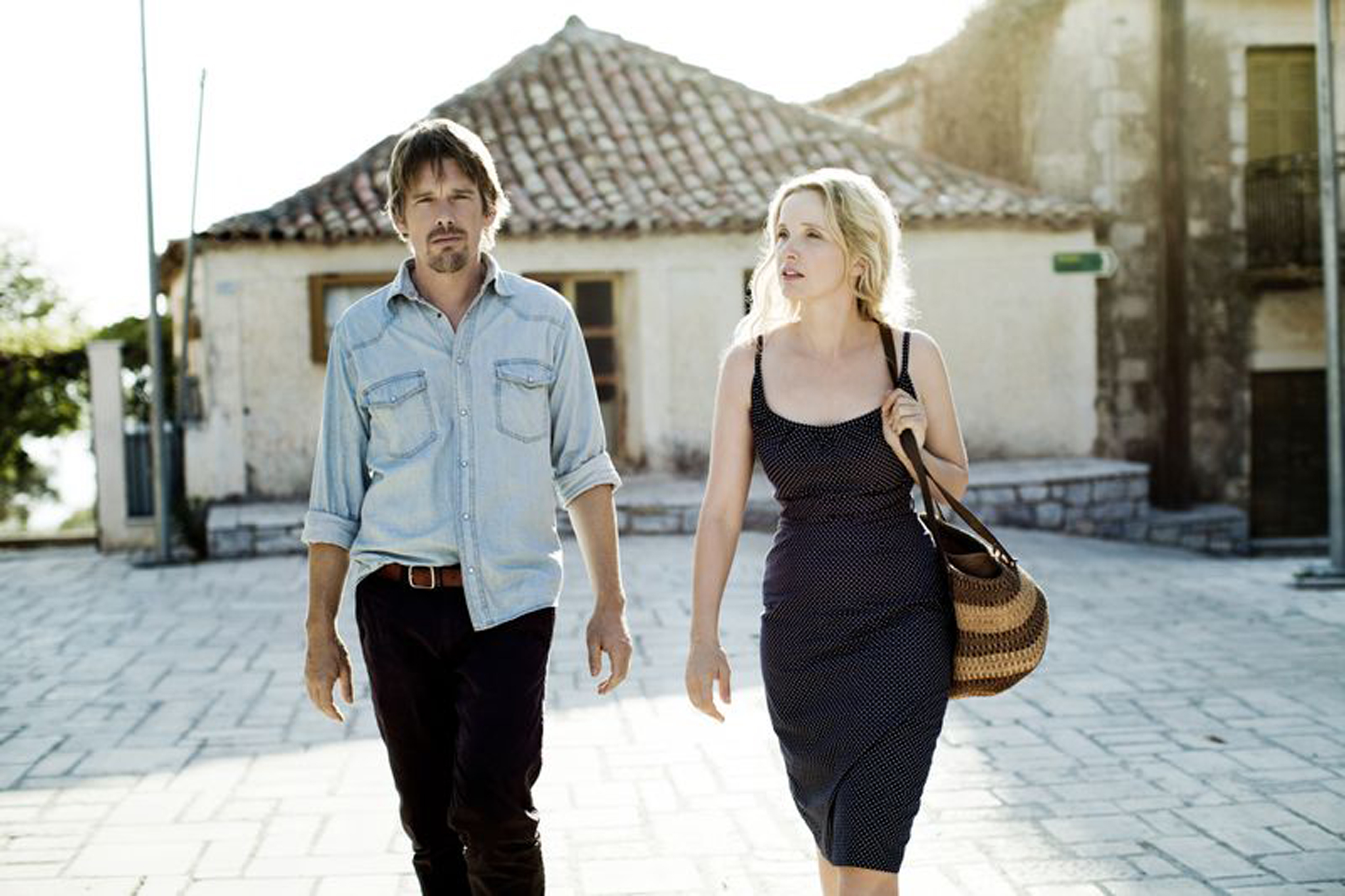
Rounding out this year’s Sundance picks is the latest film in Richard Linklater, Julie Delpy, and Ethan Hawke’s Before series, Before Midnight. I heard multiple critics complaining that they were annoyed with “yet another entry;” frankly, that made me wonder if they themselves are tired of their own lives. The random-yet-precise-ness that Linklater, Hawke, and Delpy have allowed these two characters to explore over 18 years has to be experienced to be understood.

Before Sunrise
(1995) is perhaps the series’ most relatable, since it embodies the excitement of traveling around in one’s carefree early 20s. Hawke and Delpy embodied their characters’ journey so well that I have actually plotted my own travels over the years with that film in mind.

Then came Before Sunset (2004), with the characters in their mid-30s, and their lives haven’t necessarily gone the way they’d hoped. If you revisit Sunset you may find how spot-on Linklater and company are in capturing the progressive pitfalls of the know-it-all generation.

Heartbreaking and somehow still romantic, neither film can prepare you for what Before Midnight has to offer. Now in their 40s, both Hawke and Delpy have said in interviews that they developed the characters of Jesse and Céline alongside their own hopes and dreams, and use these alter-egos to help understand their own limitations in life.

As for Linklater — who emerged on the Sundance scene with 1991’s Slacker, losing the Grand Jury prize to Todd Haynes’ Poison — even if you don’t have a mini-breakdown as each Before film ends (every time … sniff), there’s no denying his spontaneous yet meticulous Before series has produced magic over 18 years, and is on its way to being the narrative equivalent of Michael Apted’s monumental Up series.

TOP FILMS OF SUNDANCE (and SLAMDANCE) 2013

1. Jane Campion’s Top of the Lake (UK/New Zealand)
2. Richard Linklater’s Before Midnight (USA/Greece)
3. Andrew Bujalski’s Computer Chess (USA)
4. Sebastián Silva’s Magic Magic (Chile)
5. Matt Johnson’s The Dirties (Canada)
6. Anurag Kashyap’s Gangs of Waaseypur (India)
7. Sebastián Silva’s Crystal Fairy (Peru/USA)
8. Nicole Teeny’s Bible Quiz (USA)
9. Alexandre Moors’ Blue Caprice (USA)
10. James Ponsoldt’s The Spectacular Now (USA)
11. Zachary Heinzerling’s Cutie & the Boxer (USA)
12. Sean Ellis’ Metro Manila (UK/Philippines)
13. Michael Winterbottom’s The Look of Love (UK)

Is the trailer for ‘The Internship’ the most cringe-worthy of all time?

2

The answer is yes. “THE INTERNSHIP stars Owen Wilson and Vince Vaughn as salesmen whose careers have been torpedoed by the digital world. Trying to prove they are not obsolete, they defy the odds by talking their way into a coveted internship at Google.” Is this movie from 1998? Eeugh.

Here is your Trannyshack Star Search winner, riding a giant ejaculating donkey

11

Congratulations and ejaculations to you, Sue Casa — a new “talent” taking it back to the Trannyshack old school last Friday. (Hey, she beat out the poop-eating.)

Small space, big ideas: New City Company debuts

0

Ten years ago, Kim Jiang-Dubaniewicz sat outside the Chinatown gates nursing an existential crisis; she had serious doubts about pursuing her longtime dream of a career in acting. Just then, she looked up and saw a familiar face drinking coffee next to her. It was Sean Penn, and she asked him for a cigarette even though she didn’t smoke. He told her to stick with acting.

Apparently one doesn’t ignore the advice of Sean Penn.

After several years of acting, the discovery of a store that sold 25-cent paperbacks (including the works of playwrights William Saroyan and Eugene O’Neill), and a move to San Francisco, Jiang-Dubaniewicz wanted to try something new. Last October, she embarked on her first production as a director. The resulting work, The Saroyan O’Neill Project, just finished a twoweekend run at the Postage Stamp Theater in the Potrero Hill Neighborhood House.

In a room that hosts senior lunches by day in a building that has served as a community gathering place for a almost a century, her New City Company staged an energetic piece that worked best in the narrowly focused and understated moments when the play made no attempts to disguise the modesty of the production (the simplicity of the set in the second of two one-acts, a panel of bars in the center of the stage, was probably a reflection both of artistic choice and of the fact that practicing for free in the community room of a police station tends to impose some limits). Hello Out There, the starker of the plays with two characters continuing a mostly linear dialogue that builds into romance, came across beautifully. Gift Harris gave a tight and compelling performance as Photo-Finish, taking us with him through the varying shades of desperation, loneliness, and hope in the repeated cry, “Hello out there!” from which the play earns its name. 

The director cast the play well. In the script of Hello Out There, Saroyan describes Photo-Finish simply as “A Young Man,” a phrase that certainly contained an internal set of assumptions about race and ethnicity in 1941 when the play was written. Jiang-Dubaniewicz chose Harris, an African American man who has performed a number of roles on television and stage, because he just seemed to fit. Similarly, she decided to cast The Long Voyage Home, an Irish play from 1917, without regards to race or other qualities that typically account for typecasting in theater.

Discussing what she refers to as “inclusive casting,” the director cites her own experiences struggling with the scarcity of roles for Asian American actors. The same is true with other racial minorities, she says. Many of the African American actors in her cast have opted not to join Actor’s Equity because the number of available roles doesn’t justify the union fee. Not only does Jiang-Dubaniewicz view this as an injustice, but she also sees it as a failure to mirror the reality of the world around us, an aim of theater. “This is our city,” she says. “This is what we look like.”

The “we” implicates the audience, merging the play and the community. The direction of the show emphasized this. Little separated the two rows of guests and the stage, and while this was sometimes unsettling —  the larger cast and chaotic drunken merriment of A Long Voyage Home at times felt too big for the space and distanced the audience — it mostly added to the feeling of intimacy. In the quieter, more finely tuned Hello Out There, the characters spoke facing outward toward the audience, inviting us into the burgeoning love between outcasts.

And the audience participation did not end with the bows. At the end of the performance, Lewis Campbell, the indispensable executive producer, addressed the audience with a half-joking plea for help transforming the space back to its daytime function. In 30 minutes, it would become a senior lunch room once again. 

Will the senior lunch room ever transform back into The Postage Stamp Theater? Jiang-Dubaniewicz is considering a number of future projects for the New City Company, including more of the rich anti-hero tales of Saroyan and O’Neill. After the success of this first project, hopefully she won’t need a fortuitous Sean Penn run-in to make it happen.

Next chapter: Adobe Books hopes to transition into co-op

0

Adobe Books lives on… we hope. The Mission’s beloved 23-year-old bookshop – which reported it would be going out of business multiple times last year – now has plans to stay open as a collective.

Adobe owner Andrew McKinley first reported his shop would be closing in spring of 2012, and then again late summer. His reason: an excessive rent increase for his storefront, in a building at 16th and Valencia Streets. Unless someone was planning to swoop down to be the store’s financial superhero, the proposed rent was too high and McKinley was sure he could no longer afford to keep the shop afloat.

In January, Adobe announced it would hold a final farewell celebration honoring what McKinley has done for the neighborhood. But despite this so-called goodbye ceremony, the shop did not close. McKinley’s superheroes have at long last arrived, in the form of a co-op board.

http://vimeo.com/59473131

Jeff Ray, a longtime member of the Rainbow Grocery collective, is a main player in Adobe’s new phase. Ray became a Mission resident 15 years ago. He remembers Adobe as one of the first neighborhood spots he connected with. “They call it the living room of the Mission and it was kind of my living room for awhile,” he says. “I went to a lot of events and met a lot of people there.” 

Ray and fellow Adobe collective member Kyle Knobel say the first thing they are working out is a location. They are in the process of negotiating the costly rent that was McKinley’s stumbling block, but are also considering relocating to different space nearby if necessary.

The nine-or-so core members – who meet at Adobe on a weekly basis – are also sorting out what type of co-op suits them best. Ray mentions following the business model of Chicago–based co-op, Seminary Bookstore – who list Michelle and Barack Obama as members. With over 50,000 members, anyone can buy in when they purchase three $10 shares. Seminary Bookstore has shareholders all across the globe, a worldwide support system Ray would love for Adobe. 

Ray and Knobel say they envision incorporating additional elements to their new shop’s bookshelves to keep it profitable. The recession-friendly phrase “pop-up” is thrown around quite a bit. Ray says they plan to set up a small pop-up space with Inner Richmond retail shop and art gallery Park Life and has an idea for transforming bookcases into miniature pop-ups for local music labels and magazine companies, possibly selling original artwork, maybe even setting up an art subscription for interested customers. All of this will not be possible without a little help, which is why they have recently launched a fundraising IndieGoGo campaign.

Will the shop’s current beloved owner Andrew McKinley be sticking around? Ray says, “we wanted to make sure he was part [of the switch]. He has been present at every meeting and is hopefully going to stay on.”

On paper, these plans sound ideal – a dying bookshop rising from the ashes in a familiar, yet updated form. It will likely be a long process before the new collectively-run shop becomes a reality. But if we’ve learned anything about the seemingly invincible Adobe Books, it’s that it will manage to stick around, somehow.


Live Shots: Tomahawk at the Great American Music Hall

2

Tomahawk gave two rare live performances this weekend at the Great American Music Hall, the second of which this photographer attended, and — as to be expected from most things involving Mike Patton — it was flawless, aggressive, and there were lots of dudes in the crowd.  

The night started interestingly enough, waiting in line behind Jello Biafra at will-call and hearing him give his name to the woman behind the glass, while a few people behind me whispered, “that’s Jello Biafra.”  I don’t think he remembered me, but he stepped on me during the last Melvins show I photographed at GAMH. That time, I looked up and he said, “sorry” and I was like, “awesome.” 

Anyway, back to the show. Aside from a stricter than usual photo policy forcing me up into the balcony (there was no way I was pushing up front, Patton fans worshippers are rabid), it was spectacular. Tomahawk opened with “Mayday,” from Mit Gas, Patton quickly emerging from behind his computer and drum machines and charging towards the crowd, whipping it up and still giving plenty of attention to the band, often turning to face drummer, John Stanier, to whom he remained precisely, rhythmically locked all night.

The band maintained the same level of energy throughout most of the show, with the occasional pause to simultaneously admonish the audience and make sure everyone was having fun. One audience member who made the mistake of having his iPad out during the show, presumably to take a photo, clearly provoked Patton’s ire, and was called a “fucking idiot” from the stage and told to “put it back in his man purse.”

The set included a healthy dose of songs from every album, culminating in a highly energetic performance of “Laredo,” in which Patton used the repeating line “The cat’s in the bag and the bag’s in the river” to showcase the full range of his vocal, tics, growls, and whispers.

The group returned to the stage for two encores, the first being the jazzy “Rise Up Dirty Waters” off of its new album, appropriately titled Oddfellows. Duane Denison remarked that he was nervous to play this one, as it had not been performed live before, but they all seemed to nail it, with Trevor Dunn’s walking bass line and the Lynchian vocal-guitar melody putting what many thought was a quiet cap on the night.

But no, Tomahawk returned to the stage again, this time Patton in a hockey mask, the eyehole of which he fed his microphone through and proceeded to blast into Bad Brains’ “Pay to Cum” and “How Low Can a Punk Get.”

Vocally, he was a pretty convincing HR and although he didn’t do any backflips, he did manage to get a few stage-dives in, much to the chagrin of security who immediately found themselves engaged in a tug-of-war, Patton as the rope, against the crowd. It was an exciting end to a highly entertaining show. Also, props to the guy that jumped off the balcony on to the speaker stacks.

Setlist:

Mayday

Flashback

Oddfellows

101 north

Stone Letter

Birdsong

Rape This Day

Honeymoon

Capt Midnight

White Hats

God Hates a Coward

IOU

Rotgut

Southpaw

Point and Click

Laredo

Encores:

Rise Up Dirty Water

Pay to Cum

How Low Can a Punk Get


Solomon: What Obama said–and what he meant–about climate change, war and civil liberties

1

By Norman Solomon

Norman Solomon is co-founder of RootsAction.org and founding director of the Institute for Public Accuracy. His books include “War Made Easy: How Presidents and Pundits Keep Spinning Us to Death.” He writes the Political Culture 2013 column.

The words in President Obama’s “State of the Union” speech were often lofty, spinning through the air with the greatest of ease and emitting dog whistles as they flew.

Let’s decode the president’s smooth oratory in the realms of climate change, war and civil liberties.

“For the sake of our children and our future, we must do more to combat climate change.”

We’ve done so little to combat climate change — we must do more.

“I urge this Congress to get together, pursue a bipartisan, market-based solution to climate change…

Climate change is an issue that can be very good for Wall Street. Folks who got the hang of “derivatives” and “credit default swaps” can learn how to handle “cap and trade.” The corporate environmental groups are on board, and maybe we can offer enough goodies to big corporations to make it worth their while to bring enough of Congress along.

“The natural gas boom has led to cleaner power and greater energy independence. We need to encourage that.”

Dual memo. To T. Boone Pickens: “Love ya.” To environmentalists who won’t suck up to me: “Frack you.” (And save your breath about methane.)

“That’s why my administration will keep cutting red tape and speeding up new oil and gas permits.”

Blow off steam with your demonstrations, you 350.org types. I’ll provide the platitudes. XL Keystone, here we come.

“After a decade of grinding war, our brave men and women in uniform are coming home.”

How’s that for an applause line? Don’t pay too much attention to the fine print. I’m planning to have 32,000 U.S. troops in Afghanistan a year from now, and they won’t get out of there before the end of 2014. And did you notice the phrase “in uniform”? We’ve got plenty of out-of-uniform military contractors in Afghanistan now, and you can expect that to continue for a long time.

“And by the end of next year, our war in Afghanistan will be over.”

If you believe that, you’re the kind of sucker I appreciate — unless you think “our war in Afghanistan” doesn’t include killing people with drones and cruise missiles.

“Beyond 2014, America’s commitment to a unified and sovereign Afghanistan will endure, but the nature of our commitment will change. We’re negotiating an agreement with the Afghan government that focuses on two missions: training and equipping Afghan forces so that the country does not again slip into chaos, and counterterrorism efforts that allow us to pursue the remnants of al Qaeda and their affiliates.”

We’re so pleased to help Afghan people kill other Afghan people! Our government’s expertise in such matters includes superb reconnaissance and some thrilling weaponry, which we’ll keep providing to the Kabul regime. And don’t you love the word “counterterrorism”? It sounds so much better than: “using the latest high-tech weapons to go after people on our ‘kill lists’ and unfortunately take the lives of a lot of other people who happen to be around, including children, thus violating international law, traumatizing large portions of the population and inflicting horrors on people in ways we would never tolerate ourselves.”

“We don’t need to send tens of thousands of our sons and daughters abroad, or occupy other nations. Instead, we’ll need to help countries like Yemen, Libya and Somalia provide for their own security, and help allies who take the fight to terrorists, as we have in Mali. And, where necessary, through a range of capabilities, we will continue to take direct action against those terrorists who pose the gravest threat to Americans.”

We don’t need flag-draped coffins coming home. We’re so civilized that we’re the planetary leaders at killing people with remote control from halfway around the world.

We must enlist our values in the fight. That’s why my administration has worked tirelessly to forge a durable legal and policy framework to guide our counterterrorism efforts. Throughout, we have kept Congress fully informed of our efforts. And I recognize that, in our democracy, no one should just take my word for it that we’re doing things the right way. So, in the months ahead, I will continue to engage Congress to ensure not only that our targeting, detention and prosecution of terrorists remains consistent with our laws and system of checks and balances, but that our efforts are even more transparent to the American people and to the world.”

I’m sick of taking flak just because I pick and choose which civil liberties I want to respect. If I need to give a bit more information to a few other pliant members of Congress, I will. The ones who get huffy about the Bill of Rights aren’t going to get the time of day from this White House. I recognize that some of my base is getting a bit upset about this civil-liberties thing, so I’ll ramp up the soothing words and make use of some prominent Democratic members of Congress who are of course afraid to polarize with me. Don’t underestimate this president; I know how to talk reverentially about our great nation’s “checks and balances” as I undermine them.

“The leaders of Iran must recognize that now is the time for a diplomatic solution, because a coalition stands united in demanding that they meet their obligations. And we will do what is necessary to prevent them from getting a nuclear weapon.”

Maybe it’s just about time for another encore of “preemptive war.”

Norman Solomon is co-founder of RootsAction.org and founding director of the Institute for Public Accuracy. His books include “War Made Easy: How Presidents and Pundits Keep Spinning Us to Death.” He writes the Political Culture 2013 column.


Oil pipeline protest coming to San Francisco

Forward on Climate, an event billed as the largest climate rally in history, will have a presence in San Francisco on Feb. 17. With most activity centered in Washington, D.C., organizers of the nationwide mobilization hope to convince President Barack Obama to reject the development of the Keystone XL pipeline, an extension of a tar-sand oil pipeline that connects Alberta, Canada and multiple Midwest cities.

In San Francisco, protesters plan to surround the U.S. State Department building at One Market Plaza to demonstrate opposition the pipeline project. “Since the pipeline crosses the international boundary with Canada, the State Department has to approve the permit, so symbolically that’s why we chose it,” explained Taylor Hawke of 350 Bay Area.

More than 70 organizations are partnering to promote the event, including 350.org, the Sierra Club, the National Resources Defense Council, CREDO Action and others. Sup. John Avalos will join student groups, indigenous organization Idle No More, and others in speaking at the rally. Organizers expect a turnout of more than 2,000 with participants traveling to San Francisco from Chico, Sacramento, Santa Cruz and University of California campuses at Davis and Merced.

Jessica Dervin-Ackerman of 350 Bay Area says activists “intend to send a strong message to President Obama that immediate action is needed to stop climate disruption and to protect current and future generations,” and that “the U.S. needs to be an international leader in the diplomacy of cutting greenhouse-gas emissions.” A recent HSBC report underscored the role of national governments in fighting climate change, noting that 90 percent of the world’s oil and gas is held by governments or state-owned oil companies.

Some climate activists aren’t waiting until Feb. 17 to get their message across. Protestors from 350.org and the Sierra Club, along with many other organizations, sat outside the gates of the White House Feb. 13 in an act of civil disobedience meant to raise awareness about the Keystone XL pipeline extension. Many were arrested, including actress Daryl Hannah, and released the following day.

Bill McKibben, co-founder of 350.org, touched on Obama’s apparent contradiction on climate change in a recent Rolling Stones article. While the President has made promises to work on wind and solar energy, McKibben said, he’s also emphasized a goal of “producing more oil and gas here at home.” The pipeline would financially benefit the Canadian government, which is anxious to export its most lucrative commodity. The tar sands in Alberta contain as much as 240 gigatons of carbon, representing half the amount carbon scientists say can be “safely” burned by 2050.

Big oil companies stand to lose the most if the Forward on Climate movement succeeds. Oil reserves represent corporate assets that lay buried underground, and that’s where organizations like 350.org want them to stay. “The key to everything is this,” Hawke said: “From the latest science, we now know that the climate crisis is the greatest moral issue of our time.”

TransCanada, the pipeline developer, claims the project would provide tens of thousands of jobs, but the U.S. State Department estimates that it would be closer to five or six thousand temporary construction jobs. A more sustainable approach, says Frances Aubrey of 350.org, would be to create new jobs by investing in renewable energy. The only ones who will benefit from fossil fuels, she added, are the oil companies and the politicians whose campaigns they fund. “Oil companies are willing to change the planet beyond what people can survive,” says Aubrey, “to make a profit.”

Will it fly? Drones in Alameda County and (almost) San Francisco

During what one official called the “show-and-tell” portion of a public hearing held yesterday by a committee of the Alameda County Board of Supervisors, a representative from the Sheriff’s Office held up a drone so the crowd of 100 or so attendees could have a look. The small, lightweight device consisted of a plastic box to house technical equipment, a camera, and four spidery legs affixed with tiny black propellers.

“It’s cuute!” someone exclaimed. But that was likely a sarcastic wisecrack – concerned citizens had packed the board chambers in hopes of convincing the two-person Public Protection Committee that the civil liberties implications of surveillance drones were too great to justify flying them over Oakland and other cities. 

Last summer, Alameda County Sheriff Gregory Ahern submitted a Department of Homeland Security (DHS) grant request for an “unmanned aircraft system” (UAS), police-speak for drone. The agency intends to purchase one or two, depending on the manufacturer, for uses ranging from thermal imagery to crime detection.

The Sheriff now seeks supervisors’ approval, and is working to secure a Certificate of Authorization (COA) from the Federal Aviation Administration, required for aircraft flown at 400 feet. But the Sheriff’s plan has been met with strong resistance from civil liberties advocates worried that drones would open the gates to aerial surveillance and runaway data collection.

Concerns revolve around surveillance

Representatives from the Northern California chapter of the American Civil Liberties Union (ACLU), the Electronic Frontier Foundation (EFF) and the grassroots Alameda County Against Drones voiced myriad concerns about what they viewed as flimsy privacy protections put forward by the department. “The potential concerns with drones are too great to justify any use of drones at all in Alameda County,” said Nadia Kayyali of Alameda County Against Drones.

In turn, Sheriff representatives sought to defend its plan to use the devices, at one point practically asking critics to think of the children.

“We get several hundred calls a year for search and rescue, and deployment of our teams, to find lost children, lost hikers, or elderly persons,” Capt. Tom Madigan explained, and his co-presenter even referenced the case of famed kidnap victim Jaycee Dugard as a possible scenario where a drone could have been deployed. Commander Tom Wright assured supervisors that the drones would not be equipped with weapons, and stated that UAS devices would “not be used for indiscriminate mass surveillance.”

Yet the use of drones for surveillance and intelligence gathering lies at the heart of the controversy. “Data collected in the name of search and rescue could be retained for intelligence gathering and analysis,” ACLU staff attorney Linda Lye warned in comments delivered to the Public Protection Committee. “In conjunction with other existing policies, this would lead to the submission of UAS-collected data to the Northern California Regional Intelligence Center, also known as a ‘fusion center,’ where data – in some instances, about constitutionally protected activity –are stockpiled and analyzed in the name of so-called terrorism prevention.”

According to documents obtained by EFF and MuckRock News, the Sheriff’s Office indicated in its grant request that the unmanned aircraft could be used for “surveillance (investigative and tactical),” “intelligence gathering,” “suspicious persons” or “large crowd control disturbances,” the latter bringing to mind street clashes that flared up in downtown Oakland in 2011 when riot police sought to crush protests organized under the banner of Occupy Oakland. 

If the Alameda County Sheriff’s Department obtains drones, the unmanned aircraft could be deployed anywhere from Monterey to the Oregon border, Madigan noted, if regional law enforcement agencies determined that emergency circumstances warranted jurisdictional waivers.

Technology advancing

Unlike helicopters, drones can gather high-resolution footage and other kinds of data without detection, transmitting live video feed to a command post for real-time viewing. While the Sheriff’s Department is eyeing drones that travel a quarter of a mile from base with a 25-minute flight time capacity, the technology is advancing quickly. It’s technically possible for drones to be equipped with facial recognition technology, radar, or license-plate readers.

Those growing capabilities are part of the reason civil liberties advocates are so focused on hammering out strong privacy safeguards. “We’re wading into uncharted waters here,” Lye cautioned, noting that any privacy safeguards established for these drones would apply to more advanced models down the line. “We have to bake in the privacy safeguards into this template.”

The Alameda County Board of Supervisors held off on approving a drone purchase by the Sheriff Department late last year when faced with controversy. It was originally included as an agenda item before any public meeting had been scheduled, but was later removed after civil liberties advocates intervened. At a December meeting, Undersheriff Richard Lucia told supervisors that including drone approval on the agenda had been “an oversight.”

If Alameda County obtains a drone, it will be the first California law enforcement agency to do so. Several other cities are proceeding cautiously: Last week, for example, Mayor Mike McGinn of Seattle canceled a drone program amid heated controversy.

San Francisco also sought a drone 

Meanwhile, the Alameda County Sheriff’s Department is not the only Bay Area law enforcement agency eyeing unmanned aircraft devices. According to a document unearthed by an EFF and MuckRock News, the San Francisco Police Department (SFPD) submitted a $100,000 funding request to the Bay Area Urban Areas Security Initiative for a “remote pilot video camera,” basically a drone, that could be outfitted to “transmit real-time, geo-coded data to command centers.” The SFPD initially hoped to clear the FAA approval process by June of 2013, according to the document. However, its funding request was rejected. (It is unclear why San Francisco’s funding request for a drone was more than three times the funding request submitted by Alameda County.)

The grant request form notes that Lieutenant Thomas Feledy of the SFPD’s Homeland Security Unit sought funding for “the deployment of mobile compact video cameras in the visual and infrared spectrum … to provide live overhead views of critical infrastructure” in the event of a terrorist attack or natural disaster.

“It was rejected,” Officer Albie Esparza told the Guardian when we called SFPD media relations to ask about it. “And we have no plans of getting a drone.”

Supes scramble to find TIC deal

158

Some San Francisco supervisors are scrambling to find an acceptable compromise that would prevent condo-conversion legislation by Sups. Scott Wiener and Mark Farrell from becoming a bitter battle that could be a no-win situation for centrists.

Board President David Chiu is meeting with tenant groups and trying to craft an alternative to the proposal, which would allow some 2,000 tenancy in common units to convert to condominiums. Wiener says the legislation is needed to provide housing stability to people in the almost-but-not-quite-a-condo world of TICs. Tenant activists who have met with Chiu say he’s discussing ways to limit speculation, which might include a five-year ban on the resale of converted condos. But that won’t be anywhere near enough for the tenant groups.

In fact, tenant and landlord groups are both talking to Sup. Norman Yee, who will be one of the swing votes, and who could introduce a series of amendments to the Wiener/Farrell bill that would be more palatable to tenants.

“They’ve had a couple of meetings,” Yee told me. “We’re just examining the issues to see if there’s a compromise. It would be great if we could work something out so the supervisors could feel better about voting on this.”

But any deal, Ted Gullicksen of the San Francisco Tenants Union told me, would require “structural reform of the future condo-conversion process.”

Yee could probably get away with that — he’s never relied on landlords or real-estate interests for his campaign money, and there aren’t that many TIC owners in his district, which is largely single-family homes. This won’t be a vote that will make or break his future in District 7.

On the other hand, it could be a huge issue for Sup. London Breed, who represents a district with a huge majority of tenants and the most progressive voting record in the city. Breed insists that she hasn’t made up her mind on the issue, and she told me she agrees she’s on the hot seat here: Much of her political and financial support came from Plan C and real-estate interests that want more condo conversions, but she would face furious policial fallout if she voted against tenants. “I am open to a compromise, but only if it’s good policy for the city,” she said.

Supervisors David Campos and John Avalos are strongly against the TIC bill, and it’s likely that Sups. Eric Mar (who got immense support from tenants in his recent re-election) and Jane Kim (who didn’t support the measure in committee) will oppose it unless it’s altered in a way that tenants can accept.

Naturally, Farrell and Wiener are on the yes side, as is, almost certainly, Sup. Carmen Chu.

That leaves Breed, Chiu, Yee, and Sup. Malia Cohen — and three of them have to vote Aye for the bill to pass. Chiu wants to run for state Assembly from the tenant-heavy side of the city, but, as always, he’s looking for a way to avoid an ugly fight.

The problem is that the tenants aren’t going to sign off on anything modest; if they’re going to accept the conversion of 2,000 units that used to be rental housing, they’re going to want to be absolutely certain it doesn’t happen again — and that there are new rules in place that halt the rampant assault on existing rent-controlled housing.

So either the folks in the center — Yee, Breed, Chiu, and Cohen — are going to have to force the landlords to accept some long-term reforms that they won’t like, or politicans like Breed are going to be forced to take a yes or not vote that could come back to haunt them.


SFMOMA reveals new look, it is sexy

1

We were a bag of mixed artfan emotions when SFMOMA sent us a peek at what the museum will look like in early 2016, when the renovations that will shutter its doors in June are complete. The bad: our city’s preeminent modern art museum will be sorely missed — after all, who else would have let us bring Boychild, Lil Miss Hot Mess, and Lady Bear to run amok in the upstairs cafe on a Thursday night? (Memories.) But, the good: there is a lot of good. Read on for the highlights of what we can expect from the museum’s new incarnation, and what’s going to be happening while we wait.

– In the new building, designed by Oslo-NYC firm Snøhetta, gallery capacity expanded by 130,000 square feet. 

– That number up there includes a 15,000 ground floor that won’t have to pay to access, but which is nonetheless packed with exhibitions. For when the admisison price just isn’t stoking your creative fires.

– SF’s largest public native plant vertical garden, located on a brand-new seventh-floor outdoor terrace. The perfect place for checking out the expressive skyline that exists in those parts of downtown — two floors higher than the sculpture garden, two floors of view, baby. 

– A new all-white performance space that’ll be the spot for dance, sound, etc. in addition to the Phyllis Wattis Theater, which is also getting a facelift.

– More space designated for education — that means the amount of schoolchildren benefiting from programming will go up to 55,000 from 18,000. 

– “SFMOMA is more than just a building,” said SFMOMA director Neal Benezra in the press release. “We’re a set of intersecting cultural communities.” That’s good for us — it means the museum’s collections won’t be moldering in a basement somewhere (entirely) during the two-and-a-half years of renovations. First up: “100 Years of the Spiritual in Modern Art,” a multi-denominational show that opens June 27 that examines art inspired by faith, at the Contemporary Jewish Museum. 2014 offerings will include a multimedia meditation on intimacy during apartheid in South Africa at Yerba Buena Center for the Arts and a look at what “gorgeous” means by divergent art pairings at the Asian Art Museum.

– Other things to look forward to include a Chrissy Field site-specific installation of Mark di Suvero sculptures, the largest exhibition of the work of that artist, who moved to SF from Shanghai and was constantly inspired by the same Golden Gate Bridge that’ll look over the exhibition, which’ll set up shop in June through May 2014. That’s the first of many SFMOMA outdoor exhibitions that’ll take place in Los Altos and elsewhere.

More details on the renovations available here and here

The Performant: Playing in the Sandbox

1

SF Playhouse’s Sandbox Series puts play back into playwriting

It’s getting harder each year to determine when exactly the “off-season” is in terms of things to do in the City, considering that this past, random weekend in February alone saw collisions of three major festivals — SF Sketchfest, SF Indie Fest, and SF Beer Week — on top of all the usual openings and closings and goings on. In fact, it’s been so hectic (albeit muy divertido) that the Performant is going to break protocol and look ahead to an event lingering just on the horizon, to ensure it doesn’t get lost in the onslaught of events to come.

Founded in 2010, SF Playhouse’s Sandbox Series is a play series (beginning Feb. 27) that inhabits a region somewhere between staged reading and full production — offering new plays a full run and technical support, without breaking the bank on design and promotion.

Past playwrights have included William Bivins (“The Apotheosis of Pig Husbandry”), Daniel Heath (“Seven Days”), and Kenn Rabin (“Reunion”). This year, the ladies will take centerstage with Inevitable, penned by SF Playhouse’s own Literary Manager, Jordan Puckett, and the next play in the series a commissioned piece from Lauren Gunderson on the life of artist Rudolf Bauer.

I caught up with SF Playhouse artistic director Bill English and artistic associate Lauren English to get the scoop on playing in the “Sandbox.”

SFBG When you founded the Sandbox Series in 2010 did you anticipate it having this kind of staying power?

SF Playhouse (Initially) we were worried we were taking on too much by starting an alternate season of World Premieres, but this is our fourth year and the funding has miraculously kept up with our needs.

SFBG
What’s the selection process for plays like?

SFP We started by soliciting scripts from the outside and three of our Sandbox plays were commissions of Playground—a new play incubator—that provided part of their funding. Now we are trying to feed our own commissions into the Sandbox, while still accepting scripts from outside SF Playhouse

SFBG It appears that these productions straddle a line between staged reading and full production, care to break down the dynamic a bit.

SFP The gulf between readings and full productions is an area where not many theatres dare to tread, but one where there is a great need. Sandbox offers a unique experience for both the playwright and the audience. It’s not a full production nor is it a staged reading, it’s in that gorgeous “in-between” phase of play development that is not often seen by the public. We look to create simple design gestures to support the story, while keeping the focus on the story itself. We try to stick with scripts that have five or less actors and fairly simple technical demands.

SFBG Have any of these plays gone on to fully staged productions at SF Playhouse or elsewhere? What is the future for a Sandbox series play?

SFP Not yet, but we are still working on some of them and our aim is to have Sandbox plays track to the mainstage or productions at other theatres. We always meet with the playwrights after run closes to do a post mortem and make recommendations.

SFBG Anything you’d like to add?

SFP If theater is to continue to be a part of our culture and thrive into the future, it is essential to develop new voices. Playwrights are the prophets of our culture, with sensitive antennae poised to see, hear, and feel the essentials of being alive in our time and to translate those insights into stories that give us much needed perspective on our lives. We need them and our Sandbox program is our commitment to nurture these voices.

SF Playhouse Sandbox Series
previews begin Feb 27, $20
Unscripted Theatre
533 Sutter, SF
(415) 677-9596
www.sfplayhouse.org

Black Choreographers Festival takes flight

0

This weekend, go watch some dance. Sam Love and I stopped by Dance Mission this week to check out a final rehearsal of a piece choreographed by Gregory Dawson and left feeling elated. Dawson has gathered a group of ridiculously limber and supremely talented dancers for refined, minimalist, yet achingly beautiful pieces that pulse with a strong, affirming spirit. His company is just one of several featured at the Black Choreographers Festival, a celebration of African American dance, art and culture. The piece we saw clearly stemmed from classical ballet roots, but also found inspiration in contemporary dance, creating a performance that displayed awe-inspiring athleticism (those extensions!) as well as thought-provoking drama, tension, and story. Go get your tickets already. It will be fabulous!

Black Choreographers Festival

Fri/15-Sun/17 and Feb. 22-24, various times, $15

Dance Mission Theater 

3316 24th St., SF 

www.bcfhereandnow.com

Love for women flows through the streets of San Francisco

0

Can you feel the love, San Francisco? Cuz it’s flowing through the streets right now, taking many forms on this unusually busy and politically active Valentine’s Day, with a strong theme of protecting the interests of women.

As I write these words, hundreds of SEIU Local 1021 members – many clad in Cupid-inspired costumes – are rallying outside the San Francisco Department of Human Resources office at 1 South Van Ness. They’re calling for the city not to slash the salaries of 43 different city job classifications that are disproportionately staffed by women and minorities (check my story in this week’s paper for details on that issue).

Meanwhile, over in Dolores Park, members of the Mission Rising collective are massing up amid live bands and other festivities and preparing to dance their way through way through the Mission this afternoon en route to join us with the One Billion Rising movement protesting violence against women and girls in all its many forms. Check the One Billion Rising website for live feeds from about 200 events around the world.

The biggest local manifestation of that global event will start at 4pm outside of City Hall, with speakers and a massive flash mob dance party at 5:30pm (as the Guardian’s Rebecca Bowe reported yesterday, the One Billion Rising event will even include a flash mob dance party within San Francisco County Jail, as well as an event at 3pm in Union Square focused on migrant women).

Or if you prefer your flash mob madness to be politics-free, there’s always the annual Valentine’s Day Pillow fight in Justin Herman Plaza at 5:30pm, which is always a feather-filled good time. However you choose to spend your day, do it with love.

Live Shots: Soundgarden at the Fox Theater

8

It took Soundgarden a full 10 songs before it began to flex its muscles at the Fox Theater on Tuesday night, before the band dialed in and proved what out-and-out Badmotorfingers the four musicians can be. I doubt that the enamored (and now half-deaf) crowd leaving the Fox would have agreed with me on this point about the band’s early setlist sluggishness. Soundgarden delivered in a big way, and you would have been hard-tasked to find an audience member complaining after the dynamic, eardrum-crippling, 27- song performance.

Even still, the band languished a bit in that first third of the set, partly a result of a muddy sound mix that rendered hard-charging classics like “Flower” and “Jesus Christ Pose” to just a massive rumble. But mostly, it was the stream of tracks off of its painfully tepid new album, King Animal, that kept the early set surprisingly disjointed. 

Yes, you’d be inclined to think that a Soundgarden album titled King Animal might infer some epically heavy songs, the growl of some primordial beast lurching forth from the muck of Puget Sound. Instead, it’s a creature without teeth, a ho-hum late career effort (think Jane’s Addiction’s Strays or the Stooges’ The Weirdness), with long odds on breaking its rusty cage.

So it wasn’t until Soundgarden delved into the snarl and sludge of “Nothing to Say” – off its fledgling 1988 debut Screaming Life/Fopp album – that the band tapped into its nerve center, of biting Black Sabbath riffs hooked around a punk mindset, to the sound of a band formed by a city with a heavy heroin addiction and a weather forecast of perpetual rain. 

“Nothing to Say” stood out as the tipping point, and the band soon gained its momentum, mostly from a big section of Down on the Upside crowd pleasers that took the lion’s share of the spotlight during the latter part of the set – “Pretty Noose,” “Burden in My Hand,” “Ty Cobb,” “Blow Up the Outside World,” and the lesser known “Tighter and Tighter.”

Nearing the end of its North American tour dates, Soundgarden is in serious fighting form these days, a spectacle to watch from song to song, from individual members to the collective sum: Kim Thayil’s livewire guitar work amid Ben Sheperd’s hefty bass lines, all set against Matt Cameron’s furious backbeat. At 48, Chris Cornell’s voice is still (amazingly) in formidable shape, seeming to gain greater strength as the night wore on.

The band closed with a stunning five-song encore of classic tracks – “Black Hole Sun,” “Mailman,” “Hands All Over,” “Superunknown” – that brought the place to a fever pitch by the time it reached “Rusty Cage” to end the night. 

Cornell sang the final verse in a wailing falsetto that tested the limits of the house sound system, as the band pushed and pulled the song to its crashing close, finally driving home what it really means by King Animal.


Should city employees be commissioners?

6

Mayor Ed Lee had to do something radical with the Housing Authority, and I’m glad he did. The commissioners who oversee this mess, particularly the chair, Rev. Amos Brown, were nothing but syncophants for Director Henry Alvarez, who clearly has to go. Firing all but one of the commissioners was the right way to go.

(Although technically, the mayor must have gotten them all to resign. The City Charter says a Housing Authority Commission member can only be removed “for inefficiency, neglect of duty, or misconduct in office, after serving written charges and providing an opportunity for a hearing.”)

That said, his replacement commissioners raise an interesting question. Every one of them is a city employee. Four of the five are either department heads or senior staffers, all of whom work for the mayor or one of his appointees. The other is a deputy district attorney.

Commissions are set up to provide a degree of indepedent oversight over city agencies; there’s a reason the mayor doesn’t directly hire and fire the police chief, the fire chief, the planning director, etc.; there are commissions to give members of the public some role in monitoring those departments. Obviously, the mayor appoints most of the commissioners, and most mayors expect a degree of loyalty, but there’s a least  a chance that appointees will speak up when the mayor is doing the wrong thing. (Planning Commissioner Dennis Antennore used to defy Mayor Willie Brown routinely; he ultimately got fired for it, but at least the public got a chance to hear another point of view.)

Now we have people whose day job — and income — depends directly on the mayor’s will (these are not civil servants; they’re all high-level workers who can be fired any time) running a commission. The idea that any of them will ever cross the mayor is now out of the question.

Oh — and do you think there might ever be a time when the District Attorney’s Office has to investigate the Housing Authority for criminal conduct? Maybe? Could that ever happen? And how would Deputy D.A. and Commissioner Eric Fleming handle that?

It’s perfectly legal for city employees to be commissioners, according to a detailed 2010 memo from the City Attorney’s Office. Former Sup. Aaron Peskin tried before he left the board to change that, but he fell short (in part because labor didn’t like the idea; why should city workers be deprived of the ability to participate in the public process?) But we’re not talking about rank-and-file workers who have union protections and can speak their minds and engage in political action freely; we’re talking about direct appointees of the mayor and the city administrator who have no choice but to do the bidding of their bosses.

This just doesn’t seem like a good idea.


Sundance 2013: love and confusion

0

I only got to experience half of this year’s US Dramatic Competition films (unfortunately, missing David Lowery’s buzzed-about Ain’t Them Bodies Saints, which shared the Best Cinematography Award with Andrew Dosunmu’s breathtaking Mother of George).

Still, among the films I saw, I was pleasantly surprised by James Ponsoldt’s brutally poignant coming-of-age drama The Spectacular Now. With a straight-ahead script that avoids clichés, the film benefits greatly from a pair of standout performances by its young stars. Miles Teller, from John Cameron Mitchell’s Rabbit Hole (2010) and Craig Brewer’s underrated remake of Footloose (2011), perfectly embodies a high-school asshole, while Shailene Woodley (so good in Alexander Payne’s 2011 The Descendants) is spot-on as the class loner.

The Spectacular Now offers a reminder that high school sucks just as much as it did when you were a teenager. Along with last year’s The Perks of Being a Wallflower, it’s John Hughes, 21st-century style.

Elsewhere, Shane Carruth’s Upstream Color (following his much-praised, much-debated 2004 Primer) put me into an Inception-like trance, to the point of me probably needing to see it again before I can speak logically about it. Jill Soloway’s Afternoon Delight won the Best Directing award and featured noteworthy performances by Kathryn Hahn and Juno Temple, but its bafflingly regressive conclusion has left me wondering if a studio forced the director to change it at the last minute. (That said, I enjoyed it immensely.)

Lynn Shelton’s latest entry Touchy Feely was only superficially engaging; it seemed to lack the bold direction and poignancy of Humpday (2009) and Your Sister’s Sister (2011). Jordon Vogt-Roberts’ Toy’s House sent the audience into hysterical laughter (supposedly at every screening) due to a memorable performance by Disney Channel star Moises Arias as the creepy third wheel in what’s more or less a suburban Lord of the Flies. (Fans of NBC’s Parks and Rec won’t want to miss Nick Offerman in this, either.) Could Toy’s House be this year’s Little Miss Sunshine?

It’s about housing, not taxes

48

Texas Guv Rick Perry made a spectacle of himself trying to take businesses away from California, but as everyone with any sense predicted, his trip was a bust. Fact is, very few businessess anywhere make major relocation decisions because of taxes and regulations. But as Calitics points out (with a nice chart), the real reason people have left California of late is the cost of housing.

The so-called “job creators” have enough money to afford to live here, so they aren’t going anywhere. What’s happening is that the rest of the workforce, particularly the middle-class workforce, is finding the gap between the amount they can earn and the amount they have to pay for a home is getting so radical that they’re leaving altogether.

That’s happening in San Francisco, as evictions are driving people out of the city. Some may move to other parts of the Bay Area, creating what most environmentalists and economists agree is an unsustainable situation: Workers living so far from their jobs that vast amounts of energy have to be expended getting them back and forth. But the data shows that people are leaving California altogether. Calitics:

If we are to really continue our growth, we must address the housing crunch that is going on, especially along the coast. That isn’t accomplished through slashing services and budgets, but rather working to create new affordable housing solutions and ways for young families to stay here in California, where most would rather stay.

And let’s remember: One of the biggest factors that does drive business location decisions is the availability of skilled labor. If people are leaving the state because they can’t afford to live here, who’s going to work in the industries that are the biggest employers in San Francisco (hint: It’s not tech)? Tourism is this city’s greatest economic engine, and jobs in the hospitality industry don’t pay enough for housing in the city that depends on it.

That’s a dilemma we all ought to be talking about — and Rick Perry trying to get businesses to go to Texas is not.


From the counter: Shots from Reformation Foods’ pop-up dinner

2

“This should be put in a frame and hung on the wall,” said our table mate Jo. The food really did look like pieces of fine art. Chef Keven Wilson has an eye for color. He said he even has a painting in his home that he made using spoons as the brushes. A true chef-artist! We were all gathered around a kitchen counter in a large Victorian in the Mission for a Sunday evening five-course tasting menu that used local, fresh ingredients.

Each course brought together a balance of wonderful textures (think crunchy hazelnut and soft pork belly, ending with smooth chocolate milk) and a wild variety of flavors (horseradish, sea urchin, even squab). Although there were other tables around the building, our kitchen counter was the best spot in house because that’s where all the action was happening. We had great foodie discussions with our two counter friends Jo and Colin, and as soon as a new dish arrived, we all whipped out our cameras to take a snapshot of the edible masterpiece placed before us. Portions were generous and very filling and chef Keven even wrapped up some of our leftovers so we could take them home. A few pieces of succulent squab came home wrapped in a tinfoil squab. Pretty adorable.

Be sure to check out more fun pop-up events with the Naked Kitchen in the coming months – they are bound to be scrumptious gatherings!


Technical difficulties mar main Burning Man ticket sale

5

So much for the lack of drama around ticket sales for Burning Man this year. Today at noon was when 40,000 tickets went on sale to the general public, and while some burners got their tickets in less than an hour, others endured a frustrating wait of several hours and then found themselves unexpectedly kicked out of line.

There was lots of online grumbling about the bad old days when demand for tickets would often crash the servers and griping about why the generally tech-savvy Black Rock City LLC and their inTicketing partners seem to have such a hard time building a more robust system.

“I think there have been some technical difficulties, but we’ve seen worse,” BRC board member Marian Goodell told the Guardian. She said high demand pushed the system toward a crash, so they slowed the queue and added more servers. “The queue should start moving pretty soon,” she said at 4:30pm.

With people being denied tickets, the rumor circulated online around mid-afternoon that the event had already sold out, as it has each of the last two years, which BRC employees denied. [UPDATE: Tickets sold out that evening, a couple hours after this post wentup.] Some of those who got kicked off received this perplexing message: “At this time Burning Man Tickets does not have any tickets available for purchase for this event. Note: This does not mean this event is sold out. Contact the venue to purchase tickets.”

But Goodell said that as of now, there are still tickets available and she wouldn’t offer a prediction about whether they will sell out today. For those who don’t get tickets now and still want to go, BRC has an online ticket exchange started Feb. 28 and it will make at least another 1,000 tickets available shortly before the late-August event.