SFBG Blogs

Desperate for support, 8 Washington developers run ads proclaiming: “Stop the 1%”

With a July 8 deadline fast approaching, the developers behind the 8 Washington project are taking steps to ensure their measure to approve one of the priciest condo projects ever contemplated in San Francisco ends up on the November ballot.

David Beltran, a spokesman for 8 Washington’s campaign “Open Up the Waterfront,” says they are “on track” to collect the 9,000 signatures needed to place their measure – which would counter a measure opposing the project – on the ballot. But in a seemingly desperate move, the project proponents are paying a higher-than-average rate of $3 per signature. According to a voicemail left for petition gatherers, they’re trying to gather all the signatures by June 30, less than a week away.

“They have spent $220,000 on the campaign trying to qualify the counter measure for the ballot,” according to Jon Golinger, who ran the referendum campaign opposing the project.

Meanwhile, an online ad circulated by “Open Up the Waterfront” reads: “Stop the 1%. Don’t let the 1% prevent open access to the waterfront.” The ad makes no mention of the condos at the heart of the project. Apparently the deep-pocketed project proponents believe the best way to garner popular support is through vague messaging that sounds aligned against the superrich. “A corporate developer is posing as an Occupy activist and attacking the millionaires he is trying to build his luxury condos for,” Golinger says. “What’s next, Larry Ellison walking the picket line to protest the America’s Cup fiasco?”

Beltran, however, counters that “Open Up the Waterfront” is supporting the 99 Percent. “The 8 Washington plan will provide $11 million for the creation of new affordable housing, create 250 good paying construction jobs and 140 permanent jobs and generate over $100 million in benefits to the city,” he said. “Opponents of 8 Washington are selfishly asking San Franciscans to give all of this up, in order to protect the status quo: an asphalt parking lot and a private club that provides zero benefits to working families.”

In the end, Golinger says the developers will most likely obtain the signatures that are needed to land their measure on the ballot. “They have a harder road, but they have enough money and bodies on the street to get signatures,” he said.

Solomon: The pursuit of Edward Snowden: Washington in a rage, striving to run the world

18


By Norman Solomon


Norman Solomon is co-founder of RootsAction.org and founding director of the Institute for Public Accuracy. His books include “War Made Easy: How Presidents and Pundits Keep Spinning Us to Death.”

Rarely has any American provoked such fury in Washington’s high places. So far, Edward Snowden has outsmarted the smartest guys in the echo chamber — and he has proceeded with the kind of moral clarity that U.S. officials seem to find unfathomable.

Bipartisan condemnations of Snowden are escalating from Capitol Hill and the Obama administration. More of the NSA’s massive surveillance program is now visible in the light of day — which is exactly what it can’t stand.

The central issue is our dire shortage of democracy. How can we have real consent of the governed when the government is entrenched with extreme secrecy, surveillance and contempt for privacy?

The same government that continues to expand its invasive dragnet of surveillance, all over the United States and the rest of the world, is now asserting its prerogative to drag Snowden back to the USA from anywhere on the planet. It’s not only about punishing him and discouraging other potential whistleblowers. Top U.S. officials are also determined to — quite literally — silence Snowden’s voice, as Bradley Manning’s voice has been nearly silenced behind prison walls.

The sunshine of information, the beacon of principled risk-takers, the illumination of government actions that can’t stand the light of day — these correctives are anathema to U.S. authorities who insist that really informative whistleblowers belong in solitary confinement. A big problem for those authorities is that so many people crave the sunny beacons of illumination.

On Sunday night, more than 15,000 Americans took action to send a clear message to the White House. The subject line said “Mr. President, hands off Edward Snowden,” and the email message read: “I urge you in the strongest terms to do nothing to interfere with the travels or political asylum process of Edward Snowden. The U.S. government must not engage in abduction or any other form of foul play against Mr. Snowden.”

As the Obama White House weighs its options, the limits are practical and political. Surveillance and military capacities are inseparable, and they’re certainly huge, but constraints may cause major frustration. Sunday on CNN, anchor Don Lemon cited the fabled Navy Seals and said such commandos ought to be able to capture Snowden, pronto.

The state of surveillance and perpetual war are one and the same. The U.S. government’s rationale for pervasive snooping is the “war on terror,” the warfare state under whatever name.

Too rarely mentioned is the combination of nonviolence and idealism that has been integral to the courageous whistleblowing by Edward Snowden and Bradley Manning. Right now, one is on a perilous journey across the globe in search of political asylum, while the other is locked up in a prison and confined to a military trial excluding the human dimensions of the case. At a time of Big Brother and endless war, Snowden and Manning have bravely insisted that a truly better world is possible.

Meanwhile, top policymakers in Washington seem bent on running as much of the world as possible. Their pursuit of Edward Snowden has evolved into a frenzied rage.

Those at the top of the U.S. government insist that Edward Snowden and Bradley Manning have betrayed it. But that’s backward. Putting its money on vast secrecy and military violence instead of democracy, the government has betrayed Snowden and Manning and the rest of us.

Trying to put a stop to all that secrecy and violence, we have no assurance of success. But continuing to try is a prerequisite for realistic hope.

A few months before the invasion of Iraq, looking out at Baghdad from an upper story of a hotel, I thought of something Albert Camus once wrote. “And henceforth, the only honorable course will be to stake everything on a formidable gamble: that words are more powerful than munitions.”

Edward Snowden’s honorable course has led him to this historic moment. The U.S. government is eager to pay him back with retribution and solitary. But many people in the United States and around the world are responding with love and solidarity.
 
Norman Solomon is co-founder of RootsAction.org and founding director of the Institute for Public Accuracy. His books include “War Made Easy: How Presidents and Pundits Keep Spinning Us to Death.”

(Bruce B. Brugmann, who signs his blogs and emails b3, is the editor at large of the Bay Guardian.  He is the former editor and co-founder and co-publisher of the Bay Guardian, 1966-2012. He can be reached at bruce@sfbg.com)

Protesters to be awarded $1 million settlement in mass arrest lawsuit

A federal judge has granted preliminary approval for a settlement of more than $1 million to a group of 150 activists who were mass arrested in Oakland three years ago. The National Lawyers Guild filed the federal class action civil-rights suit on behalf of the protesters, who in some cases were held for more than 24 hours despite never facing formal charges.

The mass arrest took place on Nov. 5, 2010, when activists marched in opposition to the light sentence handed down to Johannes Mehserle, the former BART officer who was tried for murder after he shot and killed unarmed BART passenger Oscar Grant.

After winding through the streets in downtown Oakland, protesters took a turn toward Fruitvale Station, where Grant was fatally shot. But instead, police in riot gear forced them into a residential neighborhood where they were kettled in and mass-arrested for unlawful assembly.

There’s a process for making mass arrests that is clearly laid out in OPD’s crowd control policy, “to comply with California law and the U.S. constitution. That would involve giving a warning, and then allowing people to disperse,” Rachel Lederman of the NLG points out. “This was a perfectly legal demonstration,” and with the exception of one or two individuals who vandalized bus windows during the march, the vast majority of protesters did not engage in illegal activity.

Instead of being cited and released, or simply allowed to disperse once police declared the march to be “unlawful,” the 150 demonstrators who were penned in by police were sent through a long and uncomfortable booking process, Lederman said. They were left sitting on the street, then loaded onto buses and vans where they were made to wait, still handcuffed, for up to 6 hours in some cases. (Note: This reporter was kettled in along with protesters initially but then allowed to leave when police created an exit for members of the media. From there, all reporters were sent to an area cordoned off by police tape, where it was difficult to observe the arrests. So reporters were essentially given the choice between being sent to jail, which would have made it difficult to file a timely story, or being roped off in an area far from where police activity could be observed. But that’s a different story.)

The Alameda County Sheriff’s Department then sent demonstrators through a lengthy jail booking process, even though in similar circumstances, arrestees have typically been cited and released. They were placed in overcrowded, temporary holding cells with no beds and no chairs. “People needed medical attention that they didn’t get,” Lederman said. “No food was provided for more than twelve hours after our initial detention,” noted plaintiff Katie Loncke. “There was no room to lie down. I sat up against a wall for the entire night.”

Lederman said she expects protesters who were part of the class action suit to receive somewhere around $4,500 each in settlement payments. In addition to the monetary payment, the settlement agreement reaffirms and reincorporates OPD’s crowd control policy for up to seven years.

That policy dates back to 2004, when the NLG and the American Civil Liberties Union jointly drafted the regulations in the wake of an anti-war demonstration where police fired rubber bullets into the crowd, resulting in serious injuries and intense scrutiny on the police department’s practices.

While OPD complied with the crowd control policy in the first years after it was implemented, Lederman said, there were relatively few mass mobilizations in the streets of Oakland until those mounted in response to the Oscar Grant shooting. Those street demonstrations were followed by 2011 mass marches organized in conjunction with the Occupy movement.

“Our primary goal, and our clients’ primary goal, was to stop” unlawful police practices that violated OPD’s crowd control policy, Lederman said, “so that people can be freer to organize on the streets.”

Did the Hayes Valley Farm occupation help or hurt the cause of liberating urban space?

16

Did the recent activist occupation of a temporary urban farming plot help “liberate the land,” as they claimed, or might it actually make property owners less likely to allow community-based temporary uses on land awaiting development? And did the farmers of this once-fallow land inadvertently provide a new toehold to challenge a proposed housing project?

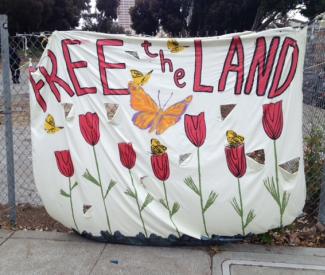
Promptly after Hayes Valley Farm ended its three-year stint to make way for long-planned housing that would be built on the lot, a group of activists (many from Occupy San Francisco) calling itself Liberate the Land took residency for nearly two weeks, renaming it Gezi Gardens in solidarity with protesters at Gezi Square in Turkey. At 2am on June 13, Gezi Gardens was raided by police and the activists ejected.

The rise and fall of Gezi Gardens has had some people within the San Francisco urban agriculture community questioning whether or not the occupation was helpful in promoting the cause for more green space in the city. For some involved in the urban agriculture community, the end of Hayes Valley Farm reflects a not-so-distant future for other green spaces in the community.

Pastor Megan Rohrer is executive director of Welcome: A Communal Response to Poverty and project coordinator for The Free Farm, a community garden on St. Paulus Lutheran Church’s land on Gough and Eddy Street. That plot, temporarily turned into green space with permission from the landlord, St. Paulus Lutheran Church, is scheduled to end its three-year stint in December to make way for housing construction, much like Hayes Valley Farm.

The Free Farm’s land will sprout a housing project with all low-income housing units, whereas the project being built on the Hayes Valley Farm site will have 40 low-income units out of 180 total condos. Regardless, the possibility of a similar situation to what happened with Hayes Valley Farm has Rhorer on edge.

“I have a nervous feeling that what happened with Hayes Valley Farm may happen with my garden. I just want everything to end smoothly and peacefully,” Rohrer said. “I respect what the Occupy folks are doing in bringing awareness, but feel that what they did was a little disingenuous. Since the start of Hayes Valley Farm, there was an understanding that condos would be built over it. It was going to happen eventually.”

Longtime San Francisco activist Diamond Dave Whitaker was one of the people that occupied Gezi Gardens. He’s not sure if the occupation will be prove helpful to the urban agriculture movement in San Francisco.

“I’m not sure. What I do know is that Gezi Gardens was one of the few wild spaces left here,” Whitaker said. “Not everything has to be done within the law. Time will tell if what happened there helped urban agriculture here.”

Katy Broker-Bullick, a site steward at the 18th and Rhode Island community garden, told us the occupation of Gezi Gardens served to spark a dialogue about green spaces in San Francisco.

“I appreciate what the Occupiers are doing at Hayes Valley Farm in so much as it draws attention to innovative, community-based green spaces in San Francisco, and serves to foster a balanced, open discussion of the function and importance of such sites for community connection and innovation in urban spaces,” Broker-Bullick said.

Assemblymember Phil Ting (D-SF) is also weighing in on the discussion of urban green spaces in the city. Although he does not have a stance on the occupation of Gezi Gardens, he has made strides in trying to make urban agriculture more accessible with San Francisco’s Urban Agriculture Incentive Zones Act, Assembly Bill 551. It calls for property owners to sign a contract that would zone their land strictly for agriculture for 10 years in exchange for decreased property taxes.

Ting doesn’t necessarily support those who occupied Gezi Gardens, but said this: “What I do believe is that we should be doing what we can to keep green spaces in San Francisco.”

Some groups in the city may respect what the Liberate the Lands attempts at occupying Gezi Gardens, but the politically active Hayes Valley Neighborhood Association wasn’t one of them.

On June 7, nearly a week before the raid of Gezi Gardens, HVNA President William Bulkley penned a letter to Mayor Ed Lee, pleading to end the occupation of that land: “The HVNA board of directors feels that the current situation on Parcels O and P places a health and safety risk to both the participants and our neighbors. We respectfully request that, as mayor, you direct your staff to take appropriate action in a swift and timely fashion.”

Yet Rohrer also said Occupy activists are a much-needed part of San Francisco’s urban agriculture community. “It’s because of the hard work from people who have been connected to Occupy that spaces, like the Free Farm, are running,”  Rohrer said. “We have a lot of Occupy folk who volunteer that put their hearts and souls into the soil.”

There are efforts to halt building on Gezi Gardens, though many of the people who had occupied the lot have “scattered to the wind,” Whitaker said.

Mona Lisa Wallace, an attorney working with Liberate the Land, is attempting to halt construction based on the grounds that an accurate environmental impact report was not done because the land was found to be exempt from a more current report. Wallace said the last report was done five years ago when Parcels O and P were classified as “disturbed land.” Since then, plants and wildlife have flourished on Hayes Valley Farm.

She said an appeal to the exemption from a current environmental impact report will be filed at the the Board of Supervisor’s office on Friday. “Over the years a habitat has been created for hummingbirds, bees, crows, and quail,” Wallace said. “The exemption from the environmental impact report does not free them from being in compliance with federal and state law.”


Netroots Nation: How to make a comeback

At Netroots Nation the central focus on the how, and not so much the why. Everyone here knows why austerity is devastating, why women need ready access to birth control, and why blank-industrial complex is morally reprehensible. But not everyone necessarily knows how marriage equality made a comeback in 2012, or how one goes about convincing your Nebraska Republican farmer father to believe in climate change. At Netroots, your network is your net worth. 

A noteworthy panel of the day was “Moving the Needle: How We Won the Gay Marriage Fight,” spotlighting an issue where the left has made considerable progress. Remember the days when Feinstein was trying to stop Newsom from issuing gay marriage licenses? That was less than a decade ago; today, even Republican senators from Alaska endorse gay marriage.

In 2009, the pro-gay marriage team lost at the ballot by 33,000 votes, three years later the good guys won by 38,000. Ian Grady, communications director for Equality Maine, explained “that their main message of ‘equal rights for all’” lacked the emotional resonance to persuade swing voters and “left the LGBT community vulnerable to the civil unions argument.” In 2012 when Equality Maine pivoted to showcasing a marine talking about his two moms and a grandfather’s emotional speech about wanting to see his granddaughter get married, their research overwhelmingly showed that the impact of emotional persuasion. PR pro tip for liberals and progressives: evaluate and reevaluate ideas that look like no-brainers to you and know that style (communication) is just about as important as substance (ideas).

Closing out the first day was the pep rally! Liberal stalwarts Howard Dean and Barney Frank, activist Sandra Fluke, Speaker of the California House John Perez, Senator Jeff Merkeley, and a video appearance from Obama all reiterated the message, and provided a much-needed respite from the dysfunctional state of our government by reminding us of the progress our issues have made and inspired us to keep on keeping on.

Netroots Nation Stats:

# of Google Glass Sightings: 2

# of White people flubbing “Si Se Puede!”: 3

# of Ignored interview requests sent from me to Congresswoman Pelosi’s office: 4

# of Times I heard “The president is not perfect” or some variation there of: 6

# of Times some crazy guy called the American people slaves to Congressman Mike Honda’s staff: I lost count after 6.

# of points Chris Bosh and Mike Miller scored in game 7 of the NBA Finals: 0

# of New media/tech-oriented panels on day one: 12

Party Radar: Disco Daddy, Ed Rush, Dimitri from Paris, James Holden, BiBi, Fake Blood, more

0

There is absolutely no way I am going to shoehorn my bowlful of Jell-O into that sparkly rainbow thong next weekend — and that’s cool, pigging out on Turtle Tower pho and Bob’s crullers is my way of dealing with stress, and Pride season brings no shortage of that! (Also I heart chubbies, so no prob.)

Luckily, Pride also brings a ton of opportunities to dance, on top of the already insane dance card SF scrawls out on the regular, so I’ll be sweatin’ like the oldies and giving you booty for daaaays (no twerking please) at these hella gay and not-so-gay-yet-still-gay-friendly pre-Pride joints:


>>JAMES HOLDEN

The Border Community label head honcho casts a deep electronic spell, charming your feet while binding your mind. At the As You Like It party with Bells and Whistles, MossMoss, more.

Fri/21, 9pm-4am, $20. Monarch, 101 Sixth St., SF. www.monarchsf.com


>>ED RUSH & OPTICAL 

Heck yes, as ’90s retro progresses, drum ‘n bass is having its return-to-jiggly-spotlight moment. These two bigtime old school, hard school daddies will have you jumping for joy. (Can a boy hope that this also augurs the return of actual crazy, arms-waving dancing in clubs? Tired of this slopey-dopey-boppy thing that’s been going.) Supported by the cream of SF’s classic dnb scene, don’t miss.

Fri/21, 9pm-3am, $15-$20. Public Works, 161 Erie, SF. www.publicsf.com


>>INNERSPACE HALFLIFE

Heady, deep ‘n groovy Chicago duo perform live, as does cool-kid extraordinaire Ital (you may know him from a little band called Mi Ami) at the always surprising, consistently yummy Icee Hot party

Fri/21, 10pm-3am, $10-$15. Public Works Loft, 161 Erie, SF. www.publicsf.com


>>FAKE BLOOD

UK funboy Fake Blood was alsways one of the most promising producers at the tail end of hardcore electro era, but lately he’s blasted off into sheer brilliance, making some real poetry of the remains of that party-hearty sound which, alas, was co-opted to death by the pop-EDM crowd. Fake found a way out. Supported by the energetic Alex Metric. 

Sat/22, 10pm-late, $15 advance. Mezzanine, 444 Jessie, SF. www.blasthaus.com


>>DIMITRI FROM PARIS

High on the list of parties that changed my life: The Playboy Mansion party at WMC 2000 in Miami. Upon entrance, someone handed me an egg-shaped maraca, Dimitri hit the decks, and I was gone for six hours. I had never heard disco mixed with house like that — Dimitri was the king of re-edit sophistication long before it became a laptop whip-up thing. I mean, I melt: 

Sat/22, 10pm-late, $20. Mighty, 119 Utah, SF. www.mighty119.com


>>BIBI

Middle Eastern queers (and friends of all rainbow backgrounds) unite: This annual Pride kick-off party is a truly special event, packed with unfamilair hotties, sweet tunes, and drums and belly dancers even. “Shake those hips” with DJs Emancipacion and Nile, and the Shabnam Dace Company. 

Sat/22, 9pm, $10-$12. Club OMG, 43 Sixth St., SF. Advance tickets here.


>>DISCO DADDY

More Pride kick-off shenanigans, this time in the form of beloved rare-find bathhouse disco king DJ Bus Station John taking to the decks all Sunday evening at the Eagle! Disco at the Eagle — somehow it makes sense but breaks the brain. Sweaty tunes (hi-NRG!) ‘n cruisy men — what more could you ask for? Oh yes, cheap beer. And menergy.

Sun/23, 7pm-midnight, $5. SF Eagle, 398 12th St., SF. www.sf-eagle.com


A hackivist’s call for a culture of engagement

By Shava Nerad

[Editor’s note: Last week, the Guardian reached out to a number of experts and technologists to gauge reactions on revelations of the massive National Security Agency spying program that recently came to light. Shava Nerad, who started her career as a software engineer and was previously involved with the Tor Project, which offers online anonymity in web browsing, has also been engaged in various forms of political activism. Nerad submitted comments via email in response to the Bay Guardian’s request for an interview. We’ve published an edited version of her thoughts here.]

My dad worked with MLK and the SCLC [Southern Christian Leadership Conference] every summer of the early/mid 60s — and the FBI knew who he had lunch with every day of those summers — this stuff isn’t really that new, it’s just automated. I got to go from “We Shall Overcome” to making sure that the Tor Project could get US nonprofit status, a good foundation of funding, a great reputation internationally, and become infrastructural for free press, free speech, and free expression on the net.

I come from a family of old style liberals from a time before the 60s, when intellectual liberals were in the military, in finance, in civil service and all parts of civic life. We moderated all parts of American society. After the 60s, to a large extent, it became uncool for liberals and intellectuals (even non-hippie types) to go into these Establishment pastimes, especially the volunteer or low paying scutwork that keeps this country running. So after half a century, what are we seeing? Largely unmoderated by liberal intellectual thought, with two generations of kids who don’t even know how to go to a public meeting or why or how politics actually works at most levels in this country, we are a goddamn mess.

I have a son in the military, and I have friends in the [Department of Homeland Security], law enforcement, a friend who’s a retired CIA analyst. But many of my friends consider me an outspoken lefty liberal (I don’t) because I am a Democratic Party activist, a strong civil libertarian, a union member … and a sort of hippie chick.

I love this wonderful flawed country. I want to tell every one of my folks here, get out of your ergonomic chairs … and get involved. Congress’ approval rating is up two percent since March to fifteen percent — and they won’t fix the USA PATRIOT Act because they aren’t a bit afraid of your disapproval!  In fact, if you say you disapprove, they will make googly eyes at you, and say “Oooooo TERRORISTS!!!” and expect you to back down and shut up — and unfortunately they are probably right.

If we are the engineers and the scientists, the innovators and the entrepreneurs — can’t we find the best way to fix our culture of engagement?  Make our culture a culture where the makers learn applied civics and share their successes on social networking?

Many of us who are “hactivists” are post-conventional thinkers, if you are familiar with that concept. Most of us do not believe that the system is irrevocably broken — we are not revolutionaries or traitors or terrorists. This is why we are making moves that are aimed toward waking up the public, not blowing them up.  If that isn’t clear enough, I can’t see what would be — we certainly have ample examples of violence in the world. We are sending signals that say, “Please, see that everything is not exactly as you have been told. You are citizens of a Republic. Take the reins and bring it back to rights. Your rights.”

Civil disobedients, whistleblowers, leakers, facilitators like Bradley Manning, Edward Snowden, William Binney, Nicholas Merrill, Jake Appelbaum and more — these people should be honored rather than vilified as people who were willing to risk everything they had in order to send up a distress signal to the nation to say, “All is not right.”

But if every person of good character left all the military, law enforcement, DHS, government — then we would be a mess. Not everyone can leave. Someone has to break ranks, betray unit cohesion, take these risks, and risk being branded as a traitor even (and all of those men have been by some people).  

The American public has to wake up and understand that all is not right BECAUSE IT IS NOT.  DHS cannot fix the USA PATRIOT Act. Congress won’t fix it so long as the people moan about it on blogs and don’t insist that action be taken.

I have spoken to people in DHS since 9/11 who have been waiting to exhale for over a decade. Do you understand the situation that many in the career diplomatic services believed that they were in during [George W. Bush’s]’s administration? That they were hanging on by their fingernails, as professional diplomats and civil servants? 

Well, oddly, when Obama came in, State gave a great many of these people an opportunity to exhale. But … oddly, the new boss, and the Congress just piled on more of the same. No reprieve.

So we have the State Department declaring Internet Freedom and distributing Tor overseas, and Prism turned inward at our own people?  What sense does this make?  Praising the Arab Spring, and chasing American citizens with drones?  

The nation is sleeping or ostriching, and I’m sorry, but the press is sleeping or at the least, distracted by survivability issues. We need to turn this into a great and heroic national adventure story, or it’s going to turn into a national tragedy.

Netrootin’: Dispatches from the progressive tech networking confab

4

George McIntire is reporting live from Netroots Nation ’13 in San Jose

Good morning all you liberals, progressives, socialists, leftists, environmentalists, civil libertarians, feminists, queer activists, radical freegan communists and everyone else! Today is the first day of the 8th annual running of the liberals more commonly know as the Netroots Nation Conference and your correspondent for the three-day liberalchella (I promise that’s the only time I’ll use that term) has just arrived in beautiful San Jose.


Everyone is buzzing about the issues du jour of gay marriage (SCOTUS ruling coming soon), immigration (the one issue Congress might actually work on), and civil liberties (all your phone calls are belong to NSA). Will there be a schism due to the Obama’s administration’s abhorrent record on civil liberties? Or perhaps a new era of progressivism will ignite? Maybe Pride will just kick in and everyone will throw on a wig and rainbow boa. Stay tuned to find out!

For the next 60 hours I will be reporting, blogging, and tweeting on the panels, talks, keynote speeches, attendees, and anything else I see fit to report (in addition to photographing the event). Unfortunately for me the paradox of choice will be in full effect and I do not have a way to clone myself. There are 14 events to choose from during the 3-4:15pm time slot and 16 events during the 4:30-5:45 slot, not to mention all the after parties. Here is the schedule.

So I call on you Guardian faithful to help me decide which events to cover. Should I check out “Moving the Needle: How We Won Gay Marriage in 2012” or “Smoke Signals: The Next Steps in Marijuana Reform” or “Beating Back Mansplaining & Sexism in Politics & Organizing”. Please let me know in the comments or you can tweet at me at @gorejusgeorge.

Go see Dirty Wars and meet film director

First, some sad news: Michael Hastings, the journalist whose Rolling Stone profile of General Stanley McChrystal resulted in the firing of the commander of U.S. forces in Afghanistan, is dead at 33.

In honor of journalists brave enough to shed light on the inner workings of overseas defense operations, it might be worth attending one of four upcoming screenings of Dirty Wars, a film that brings the grisly reality of U.S. military operations in Afghanistan, Yemen and Somalia to the big screen. Dirty Wars is also the name of the book by investigative reporter Jeremy Scahill, national security correspondent at The Nation, which the film is based on.

Film director Richard Rowley will lead post-screening discussions on Friday and Saturday, at Embarcadero Center Cinema in San Francisco, and Shattuck Cinemas in Berkeley.

“After he gets wind of a deadly nighttime raid on a home in rural Afghanistan, Scahill does his best to investigate what really happened,” SFBG Senior Editor of Arts and Entertainment Cheryl Eddy writes in her film review, “though what he hears from eyewitnesses doesn’t line up with the military explanation — and nobody from the official side of things cares to discuss it any further, thank you very much.” Dirty Wars snagged a cinematography award at Sundance earlier this year.

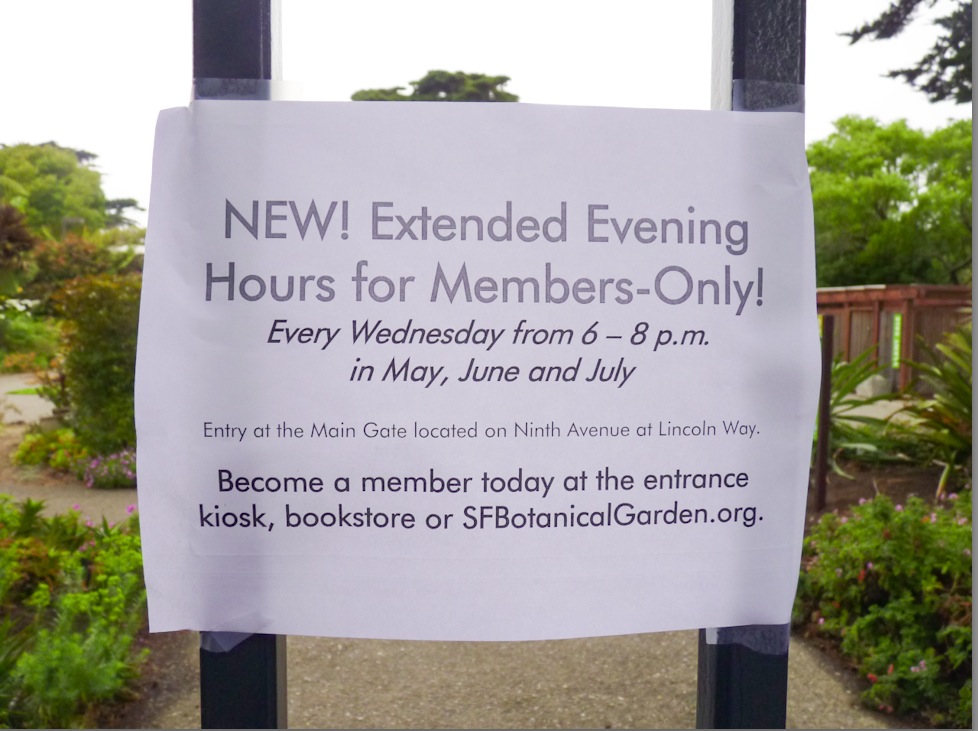
Last chance to save the Botanical Gardens

133

GUARDIAN OP-ED Riddle me this: When is a public space a private space? Answer: When it is controlled by a “nonprofit” in a “public-private partnership.”

For more than two decades, the San Francisco Botanical Garden Society attempted to obtain entry fees to Strybing Arboretum. It first changed its name from the Strybing Arboretum Society, then hired a lobbyist to push through changes to the name of the Arboretum itself, reasoning that the new name was more commercial.

When, in 2009, it found that it could not find support for fees for everyone, it chose to hire lobbyist Sam Lauter, at a cost of hundreds of thousands of dollars, to push through a $7 “nonresident” fee for a one-year “trial”. Gates were closed; entrance hours were extended; and people (many of them residents, yet undocumented) turned away in droves.

Despite this fact, and counter to the recommendations of Harvey Rose and Associates, the fees (which include steep rate rises for rentals at the Hall of Flowers) were extended for a year.

The ruse of “revenues” notwithstanding, the fees are really a tax on working people, one designed to keep people out. As any visitor on a sunny day can attest, it has acheived dramatic events: The gardens are empty! Members of the San Francisco Botanical Garden Society, however, enter for free and benefit from the tax dollars of Californians, many of whom must pay for entry. Mysteriously, the Society received a $725,000 grant in 2012 and one for $400,000 in 2011.

This July 20th, the Recreation and Park Department will present its budget with a Trojan Horse hidden in it — a contract which will effectively privatize these precious 55 acres for perpetuity, making all of us all second-class citizens in our own City.

Philip A. Ginsburg, manager of the Recreation and Park Department, negotiated this contract behind closed doors. We taxpayers wil be on the hook for paying electricity at their new building, a sprawling walled complex covering two football fields which will require a new road, fell some 50 trees and will endanger the habitat of Mark Twain’s frog. The fact that this building — to be used for parties, a store and offices — will be called a “Center For Sustainable Gardening” makes me feel that we have entered an era in which irony can no longer outdo reality.

Is a vision of a future filled with food trucks, ritzy private events and complete control over public space (by a small number of wealthy people with no accountability to the public), what Helene Strybing had in mind? Will a Supervisor not have the courage to step forward and demand that this set of legislation be considered on its own?

If we fail to act one thing is certain: In the coming years we will find an increasingly commercialized with an entrance charge in the double digits for all and sundry.

READ THE BOTANICAL GARDENS CONTRACT HERE (PDF, 25MB)

Panel sees Orwellian overtones in NSA spying scandal

1

It is now public knowledge that the NSA has been spying on us (unless you’ve been living under a rock and, lucky for you, exempt from digital surveillance) thanks to the information leaked by Edward Snowden last week.

In the wake of this scandal, people crowded into St. John’s Presbyterian Church in Berkeley on Tuesday, June 11, to participate in a panel discussion titled “Our Vanishing Civil Liberties,” centered around the intricacies of government intrusion and spying in the age of the War on Terror.

Among the panel members were Daniel Ellsberg, famed leaker of the Pentagon papers; Birgitta Jónsdóttir, member of the Icelandic Parliament; Normon Solomon, activist and author; and Nadia Kayyali, a legal fellow with the Bill of Rights Defense Committee.

As Kayyali noted, we now know about the NSA’s capability of obtaining the metadata for all domestic phone calls in the United States, which can include the call length, who you’re calling and in some cases the location of the phone calls.

So is Snowden a patriot or a traitor? For the panel members, the answer was obviously in support of the former. However, for California’s own US Sen. Dianne Feinstein, whose name the crowd constantly met with a crescendo of hissing, Snowden is a criminal, guilty of treason.

Solomon rallied against officials like Feinstein, who he believes should not be entrusted with the protection of our privacy. “What we discover is that the leaders in Congress, the leaders in the White House, the leaders in the courts unfortunately as well cannot be trusted with our lives and that includes our civil liberties,” he said.  

Ellsberg spoke of the comparisons between Snowden and Bradley Manning, an ex-U.S. soldier arrested in 2010 for leaking classified information to WikiLeaks, noting that Manning’s leaks dealt solely with issues “over there,” specifically in Iraq and Afghanistan, while Snowden’s case is inherently more domestic.

“The American people, like other humans, are unfortunately not that concerned about what is done to people over there,” said Ellsberg. “Especially when their leaders tell them that it is necessary to their safety. What strikes me about Snowden is that it affects us, you, everybody.”

However, the repercussions of Snowden’s leak are not solely rooted in America. Jónsdóttir informed the crowd that many European Union countries are concerned with the extended power of the NSA. 

“Our leaders in the many different countries in Europe are so worried about this probing into the privacy of citizens of the EU that they are thinking of building a fortress around Europe to protect us against the surveillance and the invasion of our privacy from the United States,” said Jónsdóttir.

Our challenge now, as Ellsberg stated, is escaping the abyss of unchecked government surveillance. But can we do it? For this question, Ellsberg didn’t have an answer.

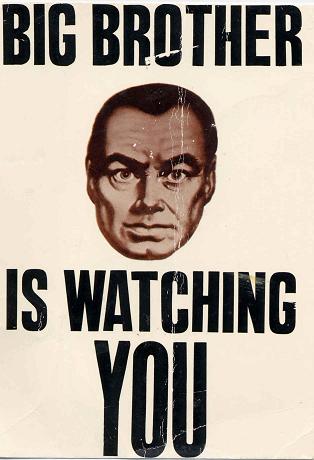
The panel raised intertwining issues of government overreach and public apathy, painting the picture of a United States embodying the Orwellian dystopia of 1984 combined with Aldous Huxley’s portrait of apathetic hedonism in Brave New World.

However, Kayyali appeared optimistic for the future, calling upon education and public discussion as the only potential to escape from the intrusive acts of the NSA.

“Never stop educating yourself,” Kayyali told the crowd. “Take everything that you’ve learned here tonight and share it with those around you. The only way we are going to see any change is if we have an educated populace, something that we are severely lacking right now.”

Without action, Ellsberg warned of the potential for a country in which privacy is nonexistent, or what he colloquially refers to as, “The United Stasi of America.”

In her closing statement, Jónsdóttir offered this coda in the form of a poem: Now is the time to yield to the call of growth, to the call of action. You are the change makers. Sleepers of all ages, wake up now.”

Republicans are just plain daft, part 2

29

One of the most prosaic lines in film history is in 1974’s Godfather II. When Vito Corleone (Robert DeNiro) is asked by Peter Clemenza (Bruno Kirby) if he checked out the package of oily guns Clemenza had left him as the NYPD was hauling Clemenza away, Corleone replies coolly that “I’m not interested in things that don’t concern me”.

At that point, we realize that the future Don was not a Republican.

Today’s GOPster clown cultist is obsessed with things that do not concern them. Embryos and fetuses germinating in women they’ve never met. Same sex couples marrying thousands of miles from them. The well-being of the same plutocracy that do not pay them the same mind back in the least.

Conversely, when it is things that do concern them–Gulf oil spills, rising seas, warrantless searches of emails and phone calls, endless wars—oddly indifferent.

When someone prioritizes the irrelevant over the important, what else can one say?

They’re fucking daft.

Q&A: Vela Eyes on passing out in the studio, taping merch to the car hood, and becoming ‘a real band’

0

Vela Eyes is a relatively new indie-pop act right out of San Francisco that combines a huge, spaciously synthesized sound with the personality and camaraderie one can only find in decades-old friends. It’s a perfect fusion of the rawness of punk influences with the technical proficiency and sampling-song mapping of a DJ set.

The group has been playing packed shows throughout the Bay since its inception mere months ago, most recently an album release party for its first EP, The Pleasure Sunrise, last week at the Elbo Room. Get to know Vela Eyes before the band’s next local gig (you’ve got ‘till July 26):

SFBG So you guys don’t have a van and had to come up with a crazy wacky maneuver to get your gear back from your record release show?

Julia Johari We had to make three trips to get all of our stuff there. But at the end of the night we realized we didn’t want to make multiple trips to get our stuff back. So I just remember Nate being like “I’m going to tape the merch to the hood of my car!”

Ian Zazueta Luckily I brought that big roll of red duct tape. I knew it would come in handy.

SFBG Tell me about playing the Elbo Room for the record release show.

Jef Pauly I actually had the place in mind after playing there a few times. It’s got a very intimate atmosphere and packs a crowd close together.

Nate Higley That’s a P.C. answer. Truth is we knew we couldn’t sell out Mezzanine.

JJ We knew we would be able to pack Elbo Room.

Florie Maschmeyer And the sound was really important, we’ve always felt we sounded really good in the Elbo Room.

IZ It’s kind of a give and take. You want a location that’s a good fit for you, but you don’t want to sacrifice a good on-stage sound or the sound that’s directed at the audience.

SFBG Where does your sound start?

FM We kind of conceptually write. For example, I would call and be like “I just had the weirdest dream, you want to hear me out?”

IZ And I would honestly take notes and stuff while she was talking and start coming up with some things. Then Florie would add some more and we’d build a song around it. Then Nate brings in a lot of creativity and musical contrast and intelligence to it. We’re finally starting to develop our style.

NH Yeah, it doesn’t take like a year to write a song anymore! [Laughs]

JP We’re basically hitting phase two now that we’re a “real band.”

IZ Oh, you mean since you joined the band! [Everyone laughs]

JP Well, did you have any drummer before me?

IZ Yeah we did, it was called Logic Pro and it wouldn’t talk back. [Everyone laughs]

SFBG So Jef, as a drummer, you always play to a click track?

JP Every practice, every show.

IZ For me, who creates a lot of our sequences and samples, having someone who can be able to do that adds so much more to our creativity and allows so much more potential for pushing our product. A lot of people would see playing to a click as being more rigid, but once we establish the right tempo to the song, in terms of manifesting a product, it gives us so much more freedom.

SFBG So any time I see you guys play live anywhere it will have the exact same tempo?

IZ Yep.

FM Especially because we have trigger sequences that happen all throughout the track.

SFBG The trigger sequences are something you’ve designed ahead of time to drop at a specific point with the metronome in the course of the song without physically having to push a button to turn whatever sound on?

FM Yeah, it’s in the song already. So Jef gets the count-in and then the song starts.

JP There really is no room for messing up. There’s just a count-off at the beginning and if I miss the start, it’s all over.

SFBG On multiple occasions I’ve heard you refer to your music as “the product,” what does this mean?

FM We refer to it as product because it takes our music and makes it a sellable package. That’s what you have to do if you want to be in the music industry, you need to have a product, which means your image, your music, your presence. In the end that’s what we pay for, that’s what we record and what we sell. It’s always important that we think of the product as a whole because we’ve got so many different songwriters in this. Egos can battle, but we always agree on what’s good for the project. The music is a separate entity who’s not one individual person. At different points anyone in the band might be leading the song, but it always comes down to what’s right for the product, the band as the whole is separate from us individually at this point.

SFBG What, in one sentence, is the selling point for me to come to your next show?

FM It’ll be a sexy kick in the teeth. I think you’ll love it.

SFBG So let’s close this out with another awesome rock and roll story, shall we?

FM Remember when we got all hammered and passed out in the music studio, sleeping on the floor, spooning? Then I pissed my pants.

IZ No, the funny thing is that she tried to blame me. Like, after she peed all over me. Florie’s like “how do you know it wasn’t you?”

SFBG Were you playing a show beforehand or something?

NH No, this was just a typical Thursday night.

Vela Eyes plays next July 26 at Bottom of the Hill, with the Orange Peels and the Corner Laughers.

The Performant 150: We are the 99% (gay)

0

Celebrating Pride Month in the the-ah-tah

We’re already halfway through Pride Month, but there’s no end in sight for the mad whirl of activities you could be availing yourself of. Proud or not, there’s no excuse for a blank social calendar at this time of year. Hate the club scene? Don’t overlook the très gay possibilities of a night in the theatre (Truman Capote wouldn’t). For starters, you might check out one of the ongoing shows over at the venerable New Conservatory Theatre Center, or one by queer theatre stalwarts Theatre Rhinoceros, but for campier fun, The Performant has a few favorites of her own to recommend (being gay not required).

What’s more gay than Marga Gomez at the Mission’s beloved Latino drag bar, Esta Noche (which thankfully seems to have staved off closing, for now)? It’s Marga Gomez at Esta Noche with a stellar line-up of out-and-proud comedians, a special Pride Month version of her regular weekly “Comedy Bodega” shows she’s entitled The 99% Gay Comedy Fest. I’m not sure who comprises that other one percent — perhaps some asexual socialite who’s slumming on the queer comedy circuit — but as laughter is a universal experience, they’d doubtlessly fit right in. Unlike most other comedy shows around town, Comedy Bodega is totally free, and although there is a one drink minimum (it is a bar, after all), well drinks are only $3.50, leaving you that much more money in your pocket to tip the performers. Everybody wins.

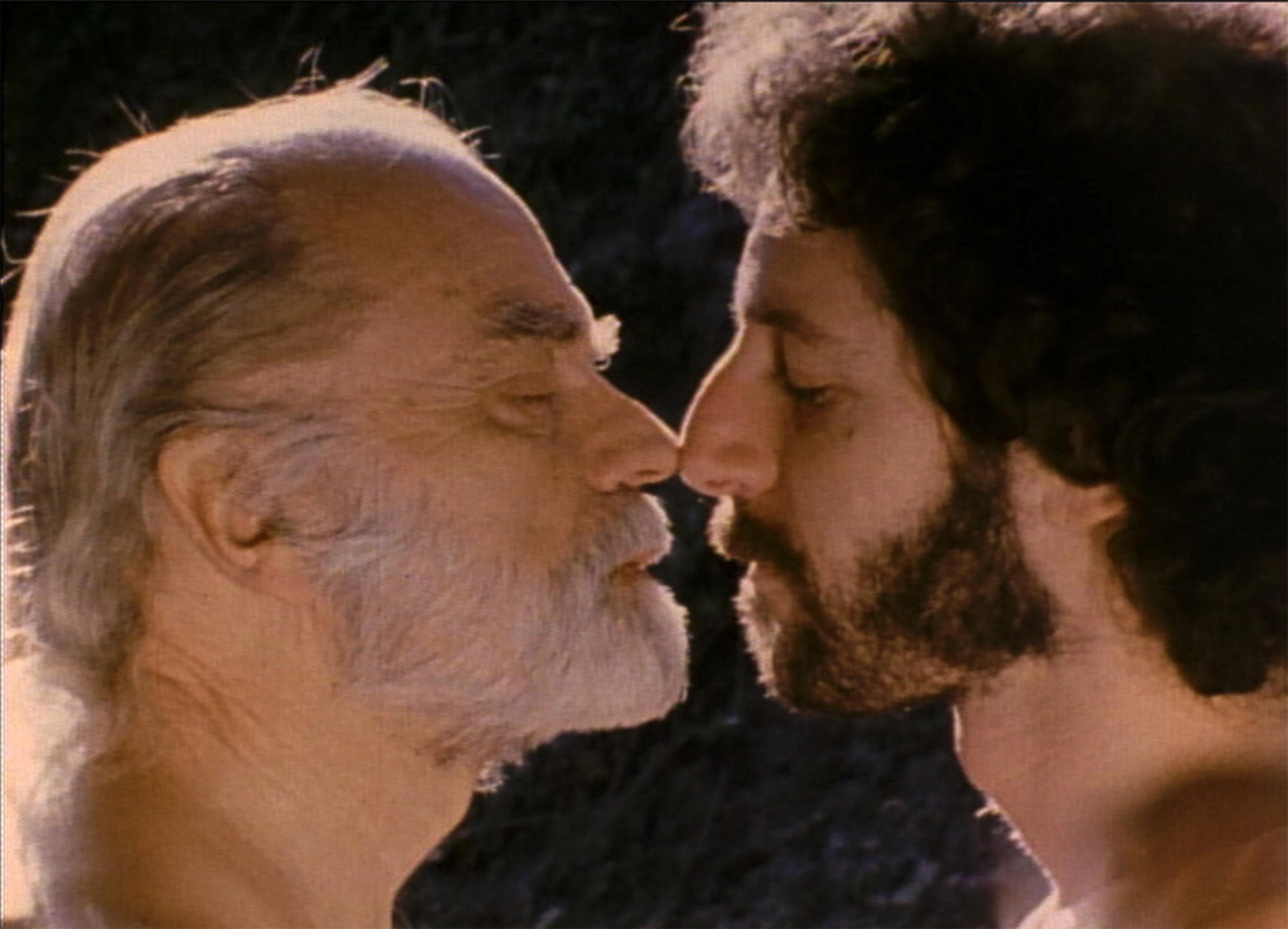
Speaking of wins, psychedelic-era, gender-bending performance troupe the Cockettes have permeated both sides of the Bay with the ongoing (extended to July 27) Thrillpeddlers’ revival of one of their outrageous stage shows, Tinsel Tarts in a Hot Coma, as well as an entire room of historical memorabilia at Mills College Art Museum as part of their “West of Center: Art and the Counterculture Experiment in America, 1965-1977” exhibition, which runs through Sept. 12. Also free to the public, the exhibition includes a June 26 screening of a pair of short films, Palace and Elevator Girls in Bondage, featuring key Cockettes including Rumi Missabu, Fayette Hauser, Hibiscus, and Miss Harlow.

Not free to the public, but always worth the price of admission, Tinsel Tarts is the fourth revived Cockettes’ show at the Hypnodrome, and it’s quite possibly the most outrageous one to date. In 1971, critic Rex Reed described it as “a spangled chaos of flesh, a seething mass of lurching bodies in lavish hock-shop costumes, doing their thing for freedom,” which well describes the Thrillpeddlers’ experience to a tee. If you’re lucky (as I was) you might get a chance to see not one but three original Cockettes strutting their stuff onstage: Missabu, Sweet Pam Tent, and fearless musical director (and “Chico Marx”) Scrumbly Koldewyn.  
 
And on the subject of ongoing revivals, if you’ve yet to see Boxcar Theatre’s rambunctious revamp of Hedwig and the Angry Inch, now is the perfect time to remedy that. Not only has the show scored a float in this year’s Pride parade, but it just celebrated its 100th performance of its high-octane version of the John Cameron Mitchell/Stephen Trask musical, featuring an octet of sexy Hedwigs swarming the stage at the same time. Punks, trollops, glam girls, rocker boys, and soul singers, each more endearing than the last, no matter which performer lurks behind the wig (the cast rotates every few weeks). After numerous extensions, the show will close for good on August 10, so get proud, get drunk, and get a ticket while you still can.

The Performant: (Somewhat) lost in translation

0

“Infinite Closeness” was a little ways off

Reminiscent of Mission parlor-art space The Red Poppy Art House, Subterranean Arthouse in Berkeley, upon entrance, is a lot like entering the living room of an artsy friend. Comfortably mismatched chairs and a few scattered cushions, a kitchenette behind the stage curtains, inviting visitors to endless cups of tea, hardwood floors gleaming below a strand of primitive lighting instruments.

Just four years old as a venue, the Arthouse nonetheless gives off the vibe of a place that’s been around forever, lurking just below the radar, if not actually under the ground (unlike La Val’s Subterranean, it’s actually located at street level). In short, it’s about time I got around to attending an event there.

The piece, “Infinite Closeness” is a solo offering of Hungarian performer Csaba Hernadi, an entirely mimed evocation of the poetess Mari Lukacs, whose life spanned the horrors of the Holocaust, the communist regime, and the usual traumas and blessings of a life lived for poetry.

The stage is set with a few scattered props: couch, table, coat-rack, a cracked and legless mannequin. Some pieces such as a dressmaker’s dummy and what appears to be a kneeling refugee from a carousel menagerie lurk in unclaimed corners of the stage, perhaps conjuring the crowded edges of a mind in turmoil. Truthfully it’s not entirely clear what purpose they serve, which is presumably the point.

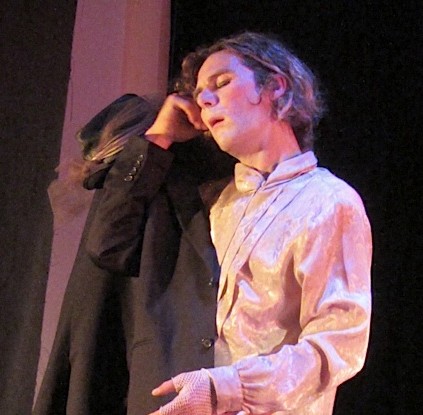
Clad in a modest high-collared blouse of cream and long black skirt that hangs just above unwomanly large bare feet, Hernadi “awakens” on his couch as a swell of sound, murmur and rushing wind, moves him forward. Stiffly seated at a “dressing table,” Hernadi as Lukacs brushes his/her hair and then takes up an onion, peels it, and presses it abruptly to his/her eyes, a visceral pantomime of grief.

Or at least that’s what it appears to be. Even more enigmatic than the unfamiliar strains of Hungarian would be are the broad strokes of silence that shield the piece from easy interpretation. My trusty theatre-companion V. gets restless. “There should be subtitles” he mutters near the end, though as the piece is silent, maybe he means inter-titles. I know what he means, though. Context is everything.

For just as art interprets us, so do we interpret art. And while we are by no means unwilling to follow Harnadi’s Lukacs’ down the various rabbit holes that turbulent times pulled her down throughout the years, lacking any prior knowledge of her biography makes extrapolating it from the raw movement onstage a challenge. Even the presence of a blurb in a program or a single line of her poetry would have served to round out our interpretation of the event in a way that Hernadi’s tender dances with the broken mannequin and an empty suit jacket don’t quite manage.

And while his reverence for his subject is evident and moving, ultimately the focus of the piece remains on him rather than her, as he is in the room with us in a way she is never quite allowed. Still, I’m grateful to Hernadi, and by extension Lukacs, for bringing me to The Subterranean Arthouse at last. I’ll be sure to not let another four year go by before I return.      

Ultimate solution

10

What would happen if all Americans simply paid cash for everything?

Can’t afford it, don’t buy it. And always pay cash for all day to day items so that your purchases do not go into a database.

You say you have had it with a power structure that puts you in debt and tracks your every move? And you don’t wanna go through your life with a hook in your mouth and obligated to remain at a soul-starving day job you despise.

This would do it, wouldn’t it? Of course, if you’re happy being in hock, wage-slaving and a marketer’s dream, carry on, by all means.