SFBG Blogs

The Performant: The Real Patriot Act

0

Celebrating Freedom of Expression with Tourettes Without Regrets

I’m as susceptible as the next ‘Murican to the social imperative of observing certain time-honored holiday traditions, particularly the ones that involve drinking and blowing shit up, but still I appreciate the opportunity to mix things up in that milieu. Which is why this Fourth of July, heading over to the Oakland Metro for Tourettes Without Regrets was the perfect way to celebrate my inalienable right to get freaky.

Probably the least predictable and therefore most electric variety show in the Bay Area, TWR has been throwing down the gauntlet of weird since 1999, a mad mashup of foul-mouthed comedians and spoken word performers, battle rappers, burlesque beauties, and sheer, unbridled chaos. Can YOU guess what’s in host Jamie DeWolf’s pants? Would you fuck a pie onstage? Compete for the prized “golden dildo”? Participate in a bout of pants-off musical chairs? Be forewarned,
there are no true bystanders at TWR and nobody is innocent.

“Everyone is a part of this fucking event,” warns DeWolf at the top of the show, and although his smile is deceptively genial, the cold steel glint in his watchful eyes tells you he means it.

Freedom of speech is so important to our national identity that it was the first right to be codified in the Bill of Rights, way back in 1791. Of course efforts to chip away at that right have been in play from both sides of the political spectrum ever since, and speech considered to be hateful, obscene, seditious, or libelous has been under almost continual attack for centuries. And though much of Tourettes Without Regrets keeps its tongue firmly planted in cheek (any cheek), a paranoid visitor from planet normal could get nervous about the broadness of the show’s interpretation of protected expression.

Dirty Haiku and a sexy pie-eating contest (won handily by a lesbian couple) could easily be viewed in the heartland as obscene, rude Battle Rap as slander, a downright lascivious fantasy about hate-humping Sarah Palin and a joyous spot of burlesque flag-burning as borderline seditious. No stranger to the controversial, the charismatic DeWolf provides as much distraction as direction, deploying an arsenal of colorful tangents and unflinching observations, gleefully pushing the buttons of anyone within earshot, and at some point almost everyone in the freewheeling oddience has at least one chance to squirm uncomfortably beneath the onslaught of freedom we are fortunate enough to take for granted.

Special July 4th additions to the evening’s festivities include a spontaneous shower of sparklers, burlesque dancers in camouflage and red-white-and-blue toting guns and six-packs of cheap beer, and a guest appearance by the Bay Area’s finest amateur wrestling and performance troupe, Hoodslam, who provided their signature wrestling ring to be the event stage, as well as a couple of whirlwind melees involving some of their most iconic players including Johnny Drinko Butabi (sporting stars-and-bars tights with wild fringe), the preternaturally handsome Anthony Butabi, the user-friendly Stoner Brothers, the perpetual user Drugz Bunny, the menacingly masked Scorpion, and the formidable Ultragirl.

And because nothing spells M-U-R-I-C-A so much as conspicuous consumption and wanton destruction, a bout of toilet paper dodgeball involving the entire crowd “wrapped up” the evening in one delightfully riotous exemplar of our constitutional right to make asses of ourselves in public. Now that’s independence!

First Thursdays
8:30pm, $10
Oakland Metro
630 Third Street, Oakl.
www.touretteswithoutregrets.com

Opponents of City College takeover to march through SF

15

Opponents of last week’s decision to revoke the accreditation of City College of San Francisco and place the district under state control until that death sentence becomes official in July 2014 plan to rally and march through San Francisco today [Tues/9] at 4pm.

The procession will begin at the CCSF’s downtown campus at 88 Fourth Street and end outside the U.S. Department of Education — whose policy of coercing colleges to focus on job training and university prep led to the crackdown on CCSF, as we report in tomorrow’s Guardian — at 50 Beale Street.

Among the local officials who will join the march are Assemblymember Tom Ammiano, San Francisco Central Labor Council Executive Director Tim Paulson, and Alisa Messer, president of the American Federation of Teachers Local 2121, who this morning issued statements condemning the decision by the Accrediting Commission for Community and Junior Colleges.

“This decision is nothing less than an attack on the people of San Francisco,” Ammiano said. “All of us benefit from having this great 78-year-old institution, whether we take courses or not. San Francisco voters recognized that at the polls just last fall when they passed Proposition A to support the college financially. In addition, the appointment of a state official to manage the school takes away the local voice of CCSF’s duly elected trustees.”

“The quality of education at City College is not in question,” said Messer, who is also an English teacher at the college. “For the last year this institution has turned itself upside down to address the recommendations of the Commission, with employees putting in thousands of hours of effort and making huge sacrifices. To be told at the end of this process that the effort has had no impact is simply outrageous.”

“City College is vital and has made major progress in turning around many of the shortcomings identified by the Commission,” said Paulson. “The actions of the ACCJC – an organization accountable to no one — have unnecessarily put at risk the livelihoods of the nearly 2,500 hard-working men and women at the college. What’s more, their move to deny CCSF accreditation has imperiled the future of San Francisco’s working people, who rely heavily on a CCSF education for workforce training, language learning, and a pathway to better futures for themselves and their communities.”

“The Accrediting Commission’s handiwork has not improved educational quality at CCSF,” said Messer. “We want a stronger, better college, but in many instances direction from the ACCJC has moved us in the wrong direction. The Accrediting Commission should be accountable for the impact of its actions.”

 “The accrediting agency has only worked half-heartedly to support City College, and instead seems bent on tearing it down,” Ammiano said. “The decision needs to be reversed so we can all go to work building on the successes and fixing the few problems, instead of spending our time starting over from scratch because the school was destroyed by naysayers.”

Heads Up: 7 must-see concerts this week

2

This week I learned that if I should ever be presented with the chance to interview Selena Gomez, I should decline. The Toronto Star published this biting commentary on the current state of press interviews with pop stars, and had more information leading up to the interview than the actual chat. Recommended reading: “Meeting Selena Gomez rule No. 1: Do not mention Justin Bieber.”

Often, the story behind the stage is even more compelling. And there are some storied acts playing live in SF this week: local emcee DaVinci busts out with a freebie, the long-running Flamin’ Groovies are back, as are LA’s Happy Hollows, after a lineup shift and with a new album; we also welcome Weedeater, Japonize Elephants, and Acid Pauli. Plus the return of reliably great outdoor fest Phono Del Sol (Thee Oh Sees and YACHT headline this time).

Here are your must-see Bay Area concerts this week/end:

DaVinci
Fillmore District-raised emcee DaVinci plays this free show alongside fellow burgeoning local rap duo Main Attrakionz, Young Gully, Shady Blaze, Ammbush, and Sayknowledge. DaVinci has been releasing tracks for a few years, in late 2012 dropping full-length The MOEna Lisa with an ode to SF in track “In My City” with the telling lyric, “Trying to push us out of the city/but we ain’t leaving,” in a hoarse whisper, but also referencing favorite spots like the waffle house at Fillmore and Eddy (Gussies).
Wed/10, 9pm, free
Brick and Mortar Music Hall
1710 Mission, SF
www.brickandmortarmusic.com
http://www.youtube.com/watch?v=8PMgStbVNYk

The Flamin’ Groovies
Influential 1960s rockers the Flamin’ Groovies — who delivered wailing cult classics like “Slow Death,” “You Tore Me Down,” and “Shake Some Action” (you know this last one from its resurrection in the film Clueless) — have gone through some serious band changes over the past four decades, with more than 15 members rotating through the legendary group and some legendary rifts in the mix as well. Roy Loney has moved on to Roy Loney and the Phantom Movers. This current lineup is a circle back to Cyril Jordan, Chris Wilson, and George Alexander, who all overlapped in the group from 1971 through ’80. That powerpop lineup played a hastily arranged show in SF earlier this year, its first time together since ’81, but now it’s given you more advance notice. The current crew is rounded out by drummer Victor Penalosa. Don’t miss it again.
With Deniz Tek (Radio Birdman), Chuckleberries, DJ Sid Presley
Wed/10, 9pm, $25
Chapel
777 Valencia, SF
www.thechapelsf.com
http://www.youtube.com/watch?v=EI7-ol-TG2o

Happy Hollows
Happy Hollows, the LA group now made up of Sarah Negahdari, Charlie Mahoney, and Matthew Fry, will release its sophomore album Amethyst on July 30. Produced by Fools Gold guitarist Lewis Pesacov, the record has that shimmering indie thing down, especially on single, “Endless.” With “Endless,” you can squeeze your eyes shut and practically see the stars bouncing through the sky along with the beat, or perhaps the neon pink signs flickering down Sunset Boulevard. And then there’s bubbly electro “Galaxies,” (sensing a theme here?), used in the album trailer. They both present a compelling, synth-looped step away from 2010’s Spells.
With Nightmare Air, Broadheds
Wed/10, 9pm, $12
Café Du Nord
2170 Market, SF
www.cafedunord.com
http://www.youtube.com/watch?v=cJ5ZYMe2bIY

Japonize Elephants
The elegant yet spooky old-world-carnival act Japonize Elephants — noted for drawing sounds from eclectic styles like gypsy jazz, bluegrass, and klezmer — will celebrate the vinyl release party for newest album Mélodie fantastique, this week at Amnesia. Go, and witness all the instrumentation you can handle (fiddle, banjo, glockenspiel, vibraphone, accordion, percussion, surf guitar), along with four-part vocal harmonies. A group of waltzing ghosts, like the ones you find on the Haunted Mansion ride, wouldn’t seem out of place here.
Thu/11, 9:30pm, $7–$10
Amnesia
853 Valencia, SF
www.amnesiathebar.com
http://www.youtube.com/watch?v=axWdjXBZqIo

Weedeater
After last year’s triumphantly heavy opening slot before LA doom metal group Saint Vitus at the Indy, North Carolina sludge metal act Weedeater returns to the Bay to play a far more appropriate venue, the dank, dark cave of the Oakland Metro. And this time, local metal duo Black Cobra and fellow NC stoner act ASG will pummel the crowd first, setting up the perfect spotlight for the grimy Weedeater. Here’s hoping there’s another Southern Lord release on the horizon for Weedeater (the band’s most recent LPs, 2007’s God Luck and Good Speed and 2011’s Jason…The Dragon, were both put out by the well-curated metal label).
With ASG, Black Cobra
Fri/12, 9pm, $13
Oakland Metro
630 Third St., Oakl.
www.oaklandmetro.org
http://www.youtube.com/watch?v=3ZSN-d0e_bg

Acid Pauli
“Punk bands, Bjork productions, hip-hop projects, an ambient album on Nicolas Jaar’s label, mixes for Crosstown Rebels: Martin Gretschmann has many musical roles and aliases. In DJ mode as Acid Pauli, the guy sends me Googling every time, re-energizing my excitement for new sounds. Half the time it’s something I’ve never heard like the wonky jazz romp of Der Dritte Raum’s “Swing Bop,” or tectonically teutonic deep house of Gunther Lause’s “Mountain.” (Where the school children astral pop on Jan Turkenburg’s “In My Spaceship” came from I. Just. Don’t. Know.) Even when it’s as familiar as Nancy Sinatra or Johnny Cash, Gretschmann reworkings are something else entirely. At this debut three+ hour set, I expect to see at least few cell phones on the dance floor, Shazam-ing to keep up.” — Ryan Prendiville
With Eduardo Castillo (Crosstown Rebels/Voodoo),
Fri/12, 9pm-3:30am, $12 presale
Public Works
161 Erie St., SF
(415) 932-0955
www.publicsf.com
http://www.youtube.com/watch?v=PvwCggxOaKc

Phono Del Sol

In these past three years, Phono Del Sol has built itself up into a tastemaker midsummer’s indie music fest — and it’s one to watch. It makes sense: the one-day fest is curated by on-the-pulse local blog, the Bay Bridged. And beyond the interesting (and mostly local) band choices — the first year featured Aesop Rock and Mirah, last year the Fresh and Onlys and Mwahaha, and this year Thee Oh Sees, YACHT, Bleached, and K. Flay will headline — there’s something about the approach and atmosphere that calms the nerves. One of the newest bands on this year’s bill fits this feeling as well, the young garage pop four-piece Cool Ghouls will be bringing a horn section to Phono Del Sol this year.
Sat/13, 11:30am-7pm, $20
Potrero Del Sol Park
25th Street at Utah, SF
www.phonodelsol.com
http://www.youtube.com/watch?v=TuCx9kgtr38
http://www.youtube.com/watch?v=aeD3-sdGf1c

Is Larry Ellison cheating?

If you’re wondering why the hell there was only one boat was out there “racing” in the first match of the America’s Cup on Sunday, here’s the rundown on “Ruddergate,” yet another contentious chapter in the 162-year history of the America’s Cup.

At issue is the size and shape of the rudders on the twin hulls of the AC72s. Original design parameters were established back in 2010 when, in the interest of fairness, details of the boats were agreed upon by all teams — so exactly this kind of conflict wouldn’t occur. A “box rule” was applied, which means the boats won’t be identical, but they will be similar (Emirates Team New Zealand and Luna Rossa actually have near-identical boats as the Italians came late to the party and bought New Zealand’s design to save time.)

Then, after Andrew Simpson was killed when Artemis’s boat capsized on May 9, regatta director Iain Murray made 37 new safety recommendations, which the Coast Guard made into requirements when they permitted the race.

“Basically, for marine events, marine event sponsors are responsible for the safety of the events,” U.S. Coast Guard chief Mike Lutz explained, noting that the 37 rule changes originated with Murray and were approved by the Coast Guard as a package.

Some of those changes are straightforward and simple, like no guests aboard during races, more body armor, buoyancy and other personal safety gear, and no racing in winds over 23 knots (That one is actually a hindrance for ETNZ and Luna Rossa, who deliberately built for prevailing San Francisco Bay conditions, i.e. as much as 35 knots of wind.) 

But that’s not what the two teams are protesting. They don’t like new size and shape rules for the rudder elevators, which are designed to stabilize the boat when it’s foiling. Oracle has a pretty good description of how they work here.

The new rule lays out minimum and maximum area, depth, and span and says they should be symmetrical. None of the 36 other safety recommendations touch on design elements. The fishy part is that Oracle has been practicing with a bigger, symmetrical rudder elevator since they launched their second boat on April 24. Before Simpson died, before Murray’s new safety rules, Oracle was using what would be considered an illegal rudder. And now, voila, it’s legal.

The Kiwis immediately filed a protest to the rule, on June 28, and four days later Luna Rossa joined them.

“I’m not saying all the changes have been made for them, but it’s nothing related to safety. What really upsets me is that there is one boat sailing since they launched on April 24 who has been sailing out of the class rule,” Luna Rossa’s Max Sirena told the media on July 2. “Why design a boat that doesn’t comply with the class rule? And then one week before the Louis Vuitton Cup, you ask the other teams to change the position of the rudders and the elevators…”

In the meantime, rather than delay the first race or move up the date of the protest hearing, Murray said it was okay for the Kiwis and Italians to race without the “safer” rudder elevators, to which ETNZ’s Grant Dalton said, “The point is that under the recommendations you can run both. The question is why?  Because, if you can run both, then why do you need the ones that aren’t rule compliant?”

Dalton also thinks this design change could make the boats more dangerous because the rudder elevators would extend wider than the maximum beam of the boat and could slice a sailor in half if he slips over the side of the hull.

He hasn’t said something dirty’s going down. He told the media, “If the question is, has that rule been put in there deliberately to help Oracle, then no I don’t think it has – I don’t think for a second Iain Murray has done that. Is it helping them as a kind of byproduct of it, then yes it is.”

Luna Rossa’s Max Sirena has been more critical. “It is not safety related at all … It is the first time in the history of the America’s Cup that they can change the class rule just like that, just because they want to change it and with no reason. To change a class rule you need unanimity. Why when Oracle capsized last October did they not come up with this change then?”

Luna Rossa boycotted until the jury made a decision, stating that it would seem like silent affirmation if they raced. A last minute deal to get them on Sunday’s course fell through and for the time being, the Italians are sticking to their principles – they were out practicing yesterday, showing their boat is more than capable of performing with the smaller, asymmetrical, noncompliant rudders.

“The teams don’t believe it’s proper to change the class rule without a vote of the teams,” said America’s Cup spokesperson Sean McNeill. “They believe [Murray] didn’t have the authority to make such a change.”

If the jury rules in favor of Luna Rossa and ETNZ, Murray would have to go back to the Coast Guard with a new safety plan in order to obtain a new racing permit. “If there’s any change, they would have to submit an updated safety plan,” Lutz noted, saying he was confident that it could be reviewed in a short time and a second permit could be issued without too much of a delay.

The jury convened yesterday to hear the protests and a decision is due Wednesday, but this debacle raises a couple of questions. Why didn’t they hear the protests prior to the first race? That race day was established a long time ago, and hasn’t changed. The jury had at least five days to review the protests – ample time if the race organizers were really concerned with keeping the event from totally losing face.

Instead, two of the three boats were out of the race before it had even begun, creating animosity among the handful of sponsors still involved. Louis Vuitton’s Bruno Trouble – who initially anticipated 15 contenders, then 8, and certainly no less than 5 – is pissed that not even two could show up and the event has been very far from the big splash it was billed to be. Meanwhile, international media aren’t holding back the ridicule. Fairfax NZ’s Duncan Johnstone called it “a hugely embarrassing situation for regatta organisers, a major dent for the on-shore festivities and massive sponsorships that envelop this ridiculously expensive event.”

And, if the larger rudder elevators really are safer, why didn’t Oracle say something back in April before Simpson died? Or in October when their boat capsized? Instead, they’ve been very mum on the subject. Control is going to be as important as speed in this Cup and with the Kiwis and Italians burnt by the lowered wind limits, it looks like Ellison is hoping to top them in the control category. Larger rudders create more drag and less speed, but may get Oracle foiling for longer periods with enhanced stability – which they desperately need.

ETNZ and Luna Rossa have indicated it would be impossible for them to adapt their rudders now that racing has begun. Meanwhile, Oracle gets to hang back until the finals in September, practicing their moves while Ellison carries on with acting too rich too fail.

Rebecca Bowe contributed to this report.

In the moment: At City Hall for the Supreme Court’s same-sex wedding decisions

0

Still beaming from the Supreme Court’s DOMA and Prop 8 decisions? If you’ve come down with the Monday blues, here are some great photos from Amanda Rhoades of that historic moment in City Hall on June 26.

Mime Troupe debuts its usual political satire in stripped down fashion

2

The San Francisco Mime Troupe overcame its recent financial troubles and debuted the SFMT’s latest season of free, socially-relevant theater in Dolores Park yesterday (Thu/4), a rollicking send-up on the political culture and Chevron’s greedy plunder of Ecuador, delivered by a smaller than usual cast.

“We all felt really great just to have the opportunity to do the show because of the financial issues,” Pat Moran, one of the SFMT’s head writers, told the Guardian.

“It came very close to not happening this year,” Moran said. “There was a period of about a month or a month and a half when the show wasn’t going to happen, but we had to keep writing as if there were going to be one.”

After a “successful grassroots fundraising effort,” according to the SFMT website, the Troupe knew for sure there would be a show, and was able to resume rehearsal in April. But it was a show marked by austerity measures that slashed the number of actors and musicians involved in the performance. There were just four actors who hurried through various costume changes to fill all the parts.

Moran helped write the SFMT’s two-part “Oil and Water” that debuted Thursday. The first part “Deal with the Devil” begins in the White House Oval Office, set in the future, where a secret service agent finds the President dead on the day of an important speech on environmental issues. The second part “Crude Intentions” focuses on Chevron, whose headquarters is now in San Ramon, CA, but was previously in San Francisco.

The performance “continues in a noir style with some slapstick comedy,” according to Moran. And as it has done since its beginning in 1959, the SFMT hits strongly on the political in “Oil and Water,” focusing on Chevron’s mounting counter-suits and millions of dollars spent in order to fend off the settlement requirements that an Ecuadorian judge awarded to its people for damages Chevron committed.

“We focus on Chevron as a specific and local entity, but also as a way to focus on the larger issue of how oil companies use tactics to control their image in public, from National Public Radio donations and advertisements,” Moran said.

These SFMT shows rely on foundational grants and on-the-spot cash donations from audiences. And earlier this year, the SFMT’s financial situation worsened due to the loss of foundation money, including its long-held National Endowment for the Arts grant and others. In addition, cash donations have gone down since, as Moran observed, “people carry less money around now” when they come to SFMT shows in the park.

“But at this point, we are optimistic. We have a show up, and that’s our focus,” Moran added. Although up and running now until its last show September 2nd, come the end of the season the SFMT may have to rethink doing its performances in public space for free, Moran said.
“In September we might have to re-imagine the show. We may not be able to make shows happen in park, or at least free with donations; it may not work out. We might have to figure out something new, rather than strip away the elements of the current show so we can afford it.”

When things get weird: X-Day, Weird Al, and more

2

Today is weird. It’s in that black hole gap between a nationally recognized holiday (er, Fourth of July) and the actual weekend, which begins for many traditional workers around 5pm on Fridays. So with this weirdness, we celebrate both X-Day, a parody of cult holidays, and the more literal, Weird Al — he shines down on the Alameda County Fair tonight with a beam of frizzy light.

Let’s get to Al, straightaway. While he used to be big-time MTV stock, parodying Michael Jackson and Madonna types, Weird Al has done something interesting in the past few years, and gone cult. It may have started with his cartoon-genius take on R. Kelly’s masterpiece, “Trapped in the Closet” (by the way, the Castro is having a “Trapped in the Closet” sing-along later this month). Weird Al made it better with strangely appealing “Trapped in the Drive-Thru.”

http://www.youtube.com/watch?v=SHnTocdD7sk

But before that, there were bona fide hits, this strange musical landscape, including “I Lost on Jeopardy,”  “Fat,” and Coolio’s worst nightmare, “Amish Paradise.” More recently, there was meh Gaga takedown “Perform This Way.”

And now he’s on the county fair circuit (full disclosure: I saw him on said same county fair circuit more than a decade ago, and loved every obnoxious moment, especially the costume changes).

Here’s the info on the fair and concerts. Show starts at 7pm tonight (July 5), and all concerts are free with paid admission to the fair.

http://www.youtube.com/watch?v=lOfZLb33uCg

And then there’s X-Day. It’s a faux-holiday celebrated every July 5 as part of the Church of the SubGenius — “a religion formed as a parody of cults and extreme religious groups.”

For X-Day, the church prophesized that an army of weirdo alien invaders would land their spaceship on earth and destroy all the normals, those without sin.

While celebrated worldwide, in Orange County, Calif. for many years and through the late ‘90s there was a nonprofit all-ages venue called Koo’s, which celebrated X-Day with a punky band called the Four Letter words — and a paper mache spaceship. The Four Letter words returned recently for a few reunion shows, and one can only hope that was in part in allegiance with X-Day, the Church of the Subgenius, and the Church’s leader, Bob Dobbs.

https://www.youtube.com/watch?v=vj127gtcqdk

http://www.youtube.com/watch?v=APSP0fjHqGQ

Or you could keep the weirdness more local tonight, and see Bart Davenport live in Oakland at the Uptown. The now LA-based leader of the avant-electro group Honeycut did the most surprising thing when he went solo a decade or so back, and put out tender, soulful pop songs, all about gooey love.

http://www.youtube.com/watch?v=7g-DOc9gVhM

He plays a free First Fridays show tonight with Extra Classic, Legs, and She Owl.
Fri/5, 6pm, free. Uptown, 1928 Telegraph, Oakl. www.uptownnightclub.com.

Depp stinks but Death rules: new movies!

0

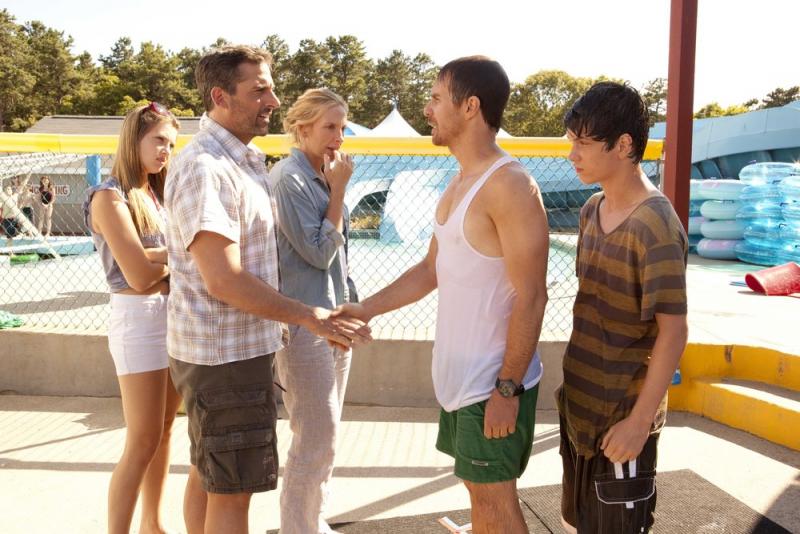
By now you’ve heard how much The Lone Ranger sucks (for more on that, my review here), so what else should you be spending your weekly movie-theater budget on? Well, the Roxie just opened a doc about Detroit band Death (Dennis Harvey breaks it down here), plus there’s a new Pedro Almodóvar joint, a coming-of-age summer flick starring Sam Rockwell and Steve Carell as cool and not-so-cool father figures, and (since one Carell movie ain’t enough) Despicable Me 2  — just the thing for the kidz who’ve already seen Monsters University.

Read on for our takes on these films, and more!
http://www.youtube.com/watch?v=irSSZumpYS4

Augustine When a 19-year-old Parisian kitchen maid (single-named French musician Soko) has a dramatic seizure during dinner service, she makes for Salpêtrière Hospital, where she becomes the superstar patient of Dr. Charcot (Vincent Lindon) — a real-life 19th century professor and neurologist who later mentored Sigmund Freud. There’s no “talking cure” at work here, though; Augustine’s medical treatment consists mostly of naked poking and prodding, as well as hypnosis-induced episodes of her increasingly sexualized “ovarian hysteria.” The tension builds as Charcot struggles against popular disdain for his methods (read aloud to him from newspapers by his coolly elegant wife), as well as his forbidden attraction to Augustine. Occupying the same moody, sensual milieu as David Cronenberg’s too-talky A Dangerous Method (2011), first-time feature writer-director Alice Winocour approaches her tale of misunderstood madness from a point of view that’s more emotionally-driven, with some subtle feminist undercurrents. Points deducted, though, for some obvious symbolism — like costuming Augustine in a brand-new red dress right after she starts her period for the first time. (1:42) (Cheryl Eddy)

http://www.youtube.com/watch?v=KtVEj86Vmzo

Deceptive Practice: The Mysteries and Mentors of Ricky Jay David Mamet fans will recognize Ricky Jay from multiple appearances in the director’s work; he’s also been in films like Boogie Nights and Tomorrow Never Dies (both 1997). But Jay’s true passion is stage magic, specifically card and other sleight-of-hand tricks, performed with a skill so dazzling that it’s tempting to believe he really does have supernatural powers. He’s also a witty, self-deprecating, and sometimes “irascible” (to quote a word used in Molly Bernstein and Alan Edelstein’s doc) character — and has a vast, ever-expanding interest in magic history. Using first-hand interviews, TV and stage-show clips, and some wonderful vintage footage, Deceptive Practice traces Jay’s career (he was a child prodigy in the 1950s, thanks to his supportive grandfather), pausing along the way to pay tribute to the men who influenced him and, in many cases, taught him their top-secret techniques. Throughout, Jay is seen demonstrating his own mind-bending tricks — as “simple” as changing a card’s suit, as elaborate as making it sail across the room and plunge like a knife into a watermelon rind — although never, of course, revealing how he does it. (1:28) (Cheryl Eddy)

Despicable Me 2 The laughs come quick and sweet now that Gru (Steve Carell) has abandoned his super-villainy to become a dad and “legitimate businessman” — though he still applies world-class gravitas to everyday events. (His daughter’s overproduced birthday party is a riot of medieval festoonage.) But like all the best reformed baddies, the Feds, or in this case the Anti-Villain League, recruit him to uncover the next international arch-nemesis. Now a spy, he gets a goofy but highly competent partner (Kristen Wiig) and a cupcake shop at the mall to facilitate sniffing out the criminal. This sequel surpasses the original in charm, cleverness, and general lovability, and it’s not just because they upped the number of minion-related gags, or because Wiig joined the cast; she ultimately gets the short end of the stick as the latecomer love-interest (her spy gadgets are also just so-so). However, Carell kills it as Gru 2 — his faux-Russian accent and awkward timing are more lived-in. Maybe the jokes are about more familiar stuff (like the niggling disappointments of family life) but they’re also sharper and more surprising. And though the minions seemed like one-trick ponies in the first film, those gibberish-talking jellybeans outdo themselves in the sequel’s climax. (1:38) (Sara Maria Vizcarrondo)

I’m So Excited I’m So Excited may be to Pedro Almodóvar what Hairspray (1988) was for director John Waters: a kind of low-intensity, high-fluff gateway drug for a filmmaker who’s otherwise an “acquired taste.” (Note: unlike Hairspray, this is not a family movie.) Almodóvar’s previous pictures were far more explicit about their obsessive thinking: mothers suffered (1999’s All About My Mother); sex was deadly (1990’s Tie Me Up! Tie Me Down!) and men were dishonorable (all of them). But in this drug and booze-addled flame-fest, Almodóvar takes one of his lesser themes (the joy of confinement) and transforms a flight from Madrid to Mexico into the funniest soap opera to ever feature cabaret and S&M talk. Early in the flight we learn the landing gear is shot; this means the flight’s dueling pilots have to find a place to host an emergency landing while Europe is on holiday. They anesthetize all of coach (um…metaphor, anyone?), leaving the rich to bellyache over their lost children, lost happiness, and stubborn virginity. Business class is full of drama queens so the flamboyantly gay attendants spike a cocktail with ecstasy (to make everyone get along) and an orgy ensues, complete with a seemingly victimless rape and multiple change-overs from hetero to homo. Almodóvar does have a knack for make-believe, but his biggest gift for fantasy happens in his stress-free transitions; oh, that coming out could be so liberating — but living in a Catholic country lousy with sexual disorientations, maybe the only place that can happen is at 30,000 feet. (1:35) (Sara Maria Vizcarrondo)

http://www.youtube.com/watch?v=NX9gUw3Kwb4

Kevin Hart: Let Me Explain The comedian (2012’s Think Like a Man) performs in this concert film, shot at Madison Square Garden during his 2012 stand-up tour. (1:15)

Maniac And it came to pass that William Lustig’s trashy classic Maniac (1980) was remade, with Elijah Wood assuming the role of twisted killer Frank, a role closely associated with its originator, the late, great cult actor Joe Spinell. Lustig is credited with a producing credit on this otherwise largely French effort, directed by Franck Khalfoun and co-written by Alejandre Aja and Grégory Levasseur — who also worked together on the 2006 remake of The Hills Have Eyes. Though it’s set in contemporary Los Angeles (complete with dating websites and cell phones), Maniac is shot to mimic the original film’s late-1970s New York (cabs, deserted subways, grimy streetscapes), with a synth-heavy score enhancing the retro vibe. Frank is still obsessed with mannequins, scalps, and his dead mother, with shades of both Psycho (1960) and The Silence of the Lambs (1991) filtering through. When Frank meets Anna (Nora Arnezeder), a beautiful French photographer whose preferred subject is mannequins, he grows ever more confused — and more violent. The entire movie is shot from Frank’s POV (we see Wood’s face only in mirrors and photographs), an off-putting gimmick that fails to add much in the way of suspense or scares. As for the gore, there’s nothing amid the CG enhancements that matches the work of special effects genius Tom Savini, whose memorable exploding-head scene plays just as repulsively effective in 2013 as it did in 1980. If you really wanna be freaked out by a movie maniac, skip this so-so do-over and spend some quality time with Spinell instead. (1:29) Roxie. (Cheryl Eddy)

http://www.youtube.com/watch?v=mK7AS_cITKI

The Way, Way Back Duncan (Liam James) is 14, and if you remember being that age you remember the awkwardness, the ambivalence, and the confusion that went along with it. Duncan’s mother (Toni Collette) takes him along for an “important summer” with her jerky boyfriend, Trent (Steve Carell) — and despite being the least important guy at the summer cottage, Duncan’s only marginally sympathetic. Most every actor surrounding him plays against type (Rob Corddry is an unfunny, whipped husband; Allison Janney is a drunk, desperate divorcee), and since the cast is a cattle call for anyone with indie cred, you’ll wonder why they’re grouped for such a dull movie. Writer-directors Nat Faxon and Jim Rash previously wrote the Oscar-winning screenplay for 2011’s The Descendants, but The Way, Way Back doesn’t match that film’s caliber of intelligent, dry wit. Cast members take turns resuscitating the movie, but only Sam Rockwell saves the day, at least during the scenes he’s in. Playing another lovable loser, Rockwell’s Owen dropped out of life and into a pattern of house painting and water-park management in the fashion of a conscientious objector. Owen is antithetical to Trent’s crappy example of manhood, and raises his water wing to let Duncan in. The short stint Duncan has working at Water Wizz is a blossoming that leads to a minor romance (with AnnaSophia Robb) and a major confrontation with Trent, some of which is affecting, but none of which will help you remember the movie after credits roll. (1:42) (Sara Maria Vizcarrondo)

Dick Meister: Celebrating July Fourth with the enemy

1

By Dick Meister
Dick Meister is a veteran Guardian columnist and freelance writer.

The Fourth of July, as we all know, is Independence Day. Hurray for George
Washington and the revolutionaries, down with King George and the British.
That sort of thing.

But have you ever wondered what it’s like on the other side? Have you ever
celebrated the Fourth across the border in Canada, in that territory settled
by pro-British “Loyalists” who fled the United States after the
Revolutionary War? It is a most peculiar experience for one accustomed to
the American way of viewing the events of 1776.

My wife Gerry and I observed the Fourth on the other side a few years back
— in Fredericton, the beautiful little capital of New Brunswick, named in
honor of King George’s second son, Frederic. Going into Fredericton meant
going into the camp of a former enemy — a friend now, but a former enemy
who openly hails the “Loyalists” who fought for them against us. I mean
people who opposed our revolution and never even said they were sorry.

Our first stop was the hallowed Loyalist Cemetery near the banks of the
Saint John River at the far end of Waterloo Row, burial ground of
Fredericton’s revered founders — anti-American tories, the lot of them. We
trudged down a muddy path to a ring of trees around a swampy grass clearing
in which the tory heroes lay, prepared to utter a revolutionary sentiment or
two over them in honor of the holiday.

We managed to get a quick look at a couple of thin, well-worn, tottering
slate headstones — but that was all. Before we could even open our mouths,
they struck — angry swarms of dread North woods mosquitoes. Backwards we
dashed. Quickly. Very quickly. We slapped at each other as we squished
awkwardly over the wet ground, batting mosquitoes off hair, face, neck,
arms, clothes. Much buzzing. Much stinging. They were everywhere. The
tories’ revenge. For days afterward, we bore the swollen red marks of the
Loyalists.

More insults were to come, in the Legislative Assembly chambers downtown.
The chambers are elegant: ornately carved desks, elaborately patterned silk
wall covering, thick crimson carpeting. But look up on the walls, in the
places of honor on either side of the Speaker’s chair. To the left there’s a
portrait of George III, the very monarch we made a revolution against, to
the right a portrait of his queen, Charlotte — and both painted by no less
a master than Joshua Reynolds.

George is in fact treated much better in New Brunswick than he generally is
in Great Britain. Historians there ridicule him for being a bit of a loon
and for such loony acts as overtaxing the American colonists and
overreacting to their protests by then waging war against them. In
Fredericton, they think George did the right thing.

In the United States, of course, we celebrate the end of colonialism. But in
Fredericton they seem to yearn for its return. Union Jacks fly from staffs
all over town and portraits of Queen Elizabeth and her consort hang in
government and private buildings everywhere. Ceremonial guards outside City
Hall wear the white pith helmets, long crimson jackets and black uniform
trousers of the British colonial soldier.

Just behind City Hall stand the restored quarters of the British garrison
that was stationed in the city for more than a century, one of the buildings
now housing a museum full of anti-revolutionary twaddle. Captions below
portraits of leading Loyalists praise them for “faith, courage, sacrifices”
against Yankees, who are for the most part described as violent, crude, rude
and vulgar. Here, too, a portrait of George III hangs in a place of honor.
Among the Loyalists singled out is that other fine fellow, Benedict Arnold,
who lived in New Brunswick before slinking off to Mother England in 1791. At
least the museum keepers have the decency to own up to Arnold’s “reputation
for crookedness.”

Loyalists also are favorites in New Brunswick’s neighboring province of Nova
Scotia, particularly in the capital of Halifax. There, the American
revolutionaries are portrayed as bad guys who would have made Nova Scotia a
U.S. colony if the British hadn’t beefed up their garrison on Citadel Hill,
a massive fortress that towers high above the city, guarding every access,
be it by land or by sea.

The champion Loyalist stronghold is the New Brunswick city of Saint John.
“Loyalist City,” it’s called. It has a Loyalist Burial Ground, naturally,
but also a Loyalist Trail, Loyalist Apartments, Loyalist Coin & Collectibles
shop, Loyalist Pub and, among many other things loyalistic, Loyalist Days,
an annual week-long festival honoring Saint John’s founders. At a high point
in the festival 100 or so appropriately costumed Loyalists — “His Majesty’s
Loyal Troops” — fend off a brigade of actors portraying American rebels
attempting to “capture” Saint John.

The latter-day Loyalists claimed to like us nevertheless. In Fredericton,
for instance, a half-dozen U.S. flags fluttered smartly outside the Lord
Beaverbrook Hotel, the city’s finest, and the marquee proclaimed, “We Salute
our American Friends. Happy 4th of July.”

Sure thing. But watch out for the mosquitoes.

Dick Meister is a veteran Guardian columnist and freelance writer.

(Bruce B. Brugmann, or B3 as he signs his emails and blogs, is the editor at large of the Bay Guardian and former editor and co-founder and co-publisher with his wife Jean Dibble, 1966-2012. He can be reached at the Bruce blog at sfbg.com.)


)
       

Celebrating independence, embracing wage slavery

50

On the eve of Independence Day, too many San Franciscans seem eager to give up on the very idea of independence, instead willingly buying into the divide and conquer strategies of those who seek to control and exploit us. Just consider the big news of the day.

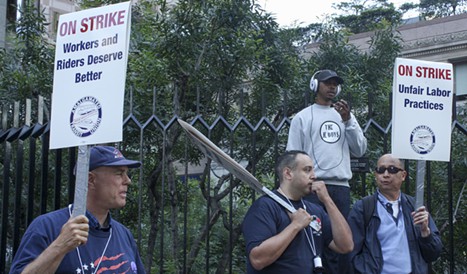
On Day Three of the BART strike, mainstream and social media are once again awash with angry anti-union diatribes by people who are resentful of the fact that some workers in this society still manage to earn the pensions and decent salaries that most of us wage slaves are being denied.

Pensions are the one thing that allows the working class some degree of independence during its twilight years. And the average BART salary of $72,000 annually shouldn’t be considered excessive in an expensive city that will chew up at least a third of that in housing costs.

But they are each more than most of us are getting, so it’s easy to turn many people against their fellow workers, even though the real targets of our ire should be the bosses and economic system that are denying us our independence and the means to pursue our happiness.

It’s a similar story with the breaking news of the day: City College of San Francisco losing its accreditation and being turned over to state control. While there are some reasons to criticize how this important institution has been managed over the years, it was still being managed by locally elected trustees who made the best decisions they could under bad circumstances.

They made decisions to maintain a broad-based curriculum that this community wanted and needed, and to avoid exploiting the faculty like so many other educational institutions are doing, in the process taking a gamble with lower reserves than may be needed. And the voters of San Francisco stepped up to support CCSF with a parcel tax that was helping to ease it away from the brink, acting as a proud and independent community does during troubled times.

But a commission of unelected bureaucrats on a ideological mission to transform educational institutions into something less than the broad-based community resources that CCSF has strived to be decided to make an example of San Francisco. And they did so with the full support of Mayor Ed Lee, who issued a statement today criticizing local officials for not embracing even harsher austerity measures than they did, and saying “I fully support” the state takeover.

Lee’s hand-picked panel recommending reforms of the Housing Authority is also proposing to sacrifice the independence of poor San Franciscans in favor of ever-more subsidies to real estate developers, according to a story in today’s San Francisco Chronicle.

Among the “reforms” is a proposal to divert federal money from the Section 8 program that offers rent-subsidies to the poor, as Chron reporter John Cote described like this: “A terribly run program that provides low-income residents with vouchers for private housing would be administered by the city, rather than the federally funded public housing agency. The vouchers would be prioritized for certain affordable housing projects, creating dedicated revenue to help secure loans to build them.”

So the vouchers that allow low-income people some independence — rather than living in squalid, chronically mismanaged public housing projects in San Francisco — will instead subsidize development projects. Yes, we do need to subsidize affordable housing development, which this city is underfunding, but we shouldn’t be taking the meager resources of society’s least fortunate families to do so.  

I have no doubts that Lee will jump at this suggestion (although its unlikely to be so eagerly embraced by federal regulators at HUD) given his penchant for shady real estate schemes that line the pockets of the powerful, like the one that the Center for Investigative Reporting uncovered this week.

CIR reported that the San Francisco Bay Area Regional Center — a for-profit company connected to Willie Brown that is arranging immigration visas for Chinese nationals who invest in Lennar’s Hunters Point housing development — is getting key help from Lee and members of his staff.

This project was already looking like a bait-and-switch scam, as we also reported this week, with Lennar being guaranteed profits without even putting up its own money, thanks to Lee’s willingness to use the power of his office to solicit funds on behalf of the country’s biggest residential developer.

If Lennar wasn’t going to build the affordable housing we need on the front end, or put up the money itself, why didn’t the city just administer this project and give the work to local contractors? What exactly is this Florida-based corporation doing in exchange for being handed some of the most valuable real estate in the city, except for helping its powerful local friends who pulled strings on its behalf?

What’s motivating Lee these days? Well, considering that Brown and other power brokers placed him in the Mayor’s Office after a career at City Hall doing their bidding — a role he seems to be still playing today in his powerful new role — I’d say it was a lack of independence.

It’s all pretty depressing, but at least we have a holiday tomorrow to celebrate our independence. Happy Fourth of July, comrades.  

8 Washington opponents try to torpedo counter-initiative

Opponents of 8 Washington, a hotly contested development project that would erect 134 new condos priced at $5 million apiece and up along the San Francisco waterfront, are seeking to thwart a counter-initiative developers have launched to solicit voter approval for the project on the November ballot.

In a July 1 letter from The Sutton Law Firm to Hanson Bridgett LLP, a firm representing the project proponents, political lawyer and fixer Jim Sutton highlights “fatal legal flaws” he claims would invalidate each and every signature collected in support of the 8 Washington initiative. It’s likely a precursor to a lawsuit. Apparently, Sutton got involved through his connection with former City Attorney Louise Renne, who opposes the 8 Washington plan.

Organized under No Wall on the Northeast Waterfront, opponents circulated petitions of their own earlier this year to challenge San Francisco Board of Supervisors’ approval of 8 Washington, asking voters to weigh in on the Board’s waiver of building height limit restrictions. Polling has indicated they’ll succeed (a win in their case is a majority of “no” votes), effectively sinking the project. That prompted 8 Washington proponents to generate their own counter-initiative.

Sutton’s letter demands that 8 Washington proponents not submit the initiative to the Department of Elections for signature verification, unless they first re-circulate the petitions. Of course, that would torpedo the whole endeavor, since there’s no way proponents could gather enough signatures in time for the imminent filing deadline.

The aforementioned “fatal legal flaws,” meanwhile, seem to illustrate why high-powered attorneys like Sutton rake in the big bucks. Apparently, the initiative proponents neglected to attach a few maps detailing the height limit increases, in violation of a requirement that proponents present the “full text” of a proposal to voters. And then there’s this:

Whether it’s a photocopying error or an attempt at obfuscation, the map on the left (circulated by the pro-development camp) makes it impossible to read the height limit increase. (The map on the right was circulated by opponents.) This seemingly minute detail matters, according to No Wall on the Northeast Waterfront spokesperson Jon Golinger, because “the whole point of this is the height increase.”

David Beltran, a spokesperson for the pro- 8 Washington folks, responded to a Guardian request for comment by saying, “Our opponents are offering up yet another baseless claim.” He called it a distraction “from having to justify why they are asking our City to give up new parks, jobs, and housing and millions of dollars in city benefits that includes $11 million for new affordable housing—to protect an asphalt parking lot and private club,” referencing a recreational center that’s served a predominantly middle class clientele for years that would be razed to make way for 8 Washington.

Beltran also attached a complaint Hanson Bridgett had filed with the San Francisco Ethics Commission, charging that No Wall on the Northeast Waterfront had failed to meet campaign filing deadlines, and urging city officials to “immediately investigate the delay” and impose fines of $5,000 per violation.

The Fourth of July: Remembering the good old days in Rock Rapids, Iowa, circa 1940s to 1950s

0

By Bruce B. Brugmann

(Note: In July of 1972, when the Bay Guardian was short a Fourth of July story, I sat down and cranked out this one for the front page on my trusty Royal Typewriter. I now reprint it each year on the Bruce blog, with some San Francisco updates and postscripts.)

Back where I come from, a small town beneath a tall standpipe in northwestern Iowa, the Fourth of July was the best day of a long, hot summer.

The Fourth came after YMCA camp and Scout camp and church camp, but before the older boys had to worry about getting into shape for football. It was welcome relief from the scalding, 100-degree heat in a town without a swimming pool and whose swimming holes at Scout Island were usually dried up by early July. But best of all, it had the kind of excitement that began building weeks in advance.

The calm of the summer dawn and the cooing of the mourning doves on the telephone wires would be broken early on July Fourth: The Creglow boys would be up by 7 a.m. and out on the lawn shooting off their arsenal of firecrackers. They were older and had somehow sent their agents by car across the state line and into South Dakota where, not far above the highway curves of Larchwood, you could legally buy fireworks at roadside stands.

Ted Fisch, Jim Ramsey, Wiener Winters, the Cook boys, Hermie Casjens, Jerry Prahl, Elmer Menage, and the rest of the neighborhood gang would race out of  their houses to catch the action. Some had cajoled firecrackers from their parents or bartered from the older boys in the neighborhood: some torpedoes (the kind you smashed against the sidewalk); lots of 2 and 3-inchers, occasionally the granddaddy of them all, the cherry bomb (the really explosive firecracker, stubby, cherry red, with a wick sticking up menacingly from its middle; the kind of firecracker you’d gladly trade away your best set of Submariner comics for.)

Ah, the cherry bomb. It was a microcosm of excitement and mischief and good fun. Bob Creglow, the most resourceful of the Creglow boys, would take a cherry bomb, set it beneath a tin can on a porch, light the fuse, then head for the lilac bushes behind the barn.

“The trick,” he would say, imparting wisdom of the highest order, “is to place the can on a wood porch with a wood roof. Then it will hit the top of the porch, bang, then the bottom of the porch, bang. That’s how you get the biggest clatter.”

So I trudged off to the Linkenheil house, the nearest front porch suitable for cherry bombing, to try my hand at small-town demolition. Bang went the firecracker. Bang went the can on the roof. Bang went the can on the floor. Bang went the screen door as Karl Linkenheil roared out in a sweat, and I lit out for the lilacs behind the barn with my dog, Oscar.

It was glorious stuff – not to be outdone for years, I found out later, until the Halloween eve in high school when Dave Dietz, Ted Fisch, Ken Roach, Bob Babl, and rest of the Hermie Casjens gang and I made the big time and twice pushed a boxcar loaded with lumber across Main Street and blocked it for hours. But that’s another story for my coming Halloween blog.

Shooting off fireworks was, of course, illegal in Rock Rapids, but Chief of Police Del Woodburn and later Elmer “Shene” Sheneberger used to lay low on the Fourth. I don’t recall ever seeing them about in our neighborhood and I don’t think they ever arrested anybody, although each year the Lyon County  Reporter would carry vague warnings about everybody cooperating to have “a safe and sane Fourth of July.”

Perhaps it was just too dangerous for them to start making firecracker arrests on the Fourth – on the same principle, I guess, that it was dangerous to do too much about the swashbuckling on Halloween or start running down dogs without leashes (Mayor Earl Fisher used to run on the platform that, as long as he was in office, no dog in town would have to be leashed. The neighborhood consensus was that Fisher’s dog, a big, boisterous boxer, was one of the few that ought to be leashed).

We handled the cherry bombs and other fireworks in our possession with extreme care and cultivation; I can’t remember a single mishap. Yet, even then, the handwriting was on the wall. There was talk of cutting off the fireworks supply in South Dakota because it was dangerous for young boys. Pretty soon, they did cut off the cherry bomb traffic and about all that was left, when I came back from college and the Roger boys had replaced the Creglow boys next door, was little stuff appropriately called ladyfingers.

Fireworks are dangerous, our parents would say, and each year they would dust off the old chestnut about the drugstore in Spencer that had a big stock of fireworks and they caught fire one night and much of the downtown went up in a spectacular shower of roman candles and sparkling fountains.

The story was hard to pin down, and seemed to get more gruesome every year – but, we were told, this was why Iowa banned fireworks years before, why they were so dangerous and why little boys shouldn’t be setting them off. The story, of course, never made quite the intended impression; we just wished we’d been on the scene.  My grandfather was the town druggist (Brugmann’s Drugstore, “Where drugs and gold are fairly sold, since 1902″) and he said he knew the Spencer druggist personally. Fireworks put him out of business and into the poorhouse, he’d say, and walk away shaking his head.

In any event, firecrackers weren’t much of an issue past noon – the Fourth celebration at the fairgrounds was getting underway and there was too much else to do. Appropriately, the celebration was sponsored by the Rex Strait post of the American Legion (Strait, so the story went, was the first boy from Rock Rapids to die on foreign soil during World War I); the legionnaires were a bunch of good guys from the cleaners and the feed store and the bank who sponsored the American Legion baseball team each summer.

There was always a big carnival, with a ferris wheel somewhere in the center for the kids, a bingo stand for the elders, a booth where the ladies from the Methodist Church sold homemade baked goods, sometimes a hootchy dancer or two, and a couple of dank watering holes beneath the grandstand where the VFW and the Legion sold Grainbelt and Hamms beer  at 30¢ a bottle to anybody who looked of age.

Later on, when the farmboys came in from George and Alvord, there was lots of pushing and shoving, and a fist fight or two.

In front of the grandstand, out in the dust and the sun, would come a succession of shows that made the summer rounds of the little towns. One year it would be Joey Chitwood and his daredevil drivers. (The announcer always fascinated me: “Here he comes, folks, rounding the far turn…he is doing a great job out there tonight…let’s give him a big, big hand as he pulls up in front on the grandstand…”)

Another year it would be harness racing and Mr. Hardy, our local trainer from Doon, would be in his moment of glory. Another year it was tag team wrestling and a couple of barrel-chested goons from Omaha, playing the mean heavies and rabbit-punching their opponents from the back, would provoke roars of disgust from the grandstand. ( The biggest barrel-chest would lean back on the ropes, looking menacingly at the crowd and yell, “ Aw, you dumb farmers. What the hell do you know anyway? I can beat the hell out of any of you.”   And the crowd  would roar back in glee.)

One year, Cedric Adams, the Herb Caen of Minneapolis Star-Tribune, would tour the provinces as the emcee of local  variety shows. “It’s great to be in Rock Rapids,” he would say expansively, “because it’s always been known as the ‘Gateway to Magnolia.” (Magnolia, he didn’t need to say, was a little town just over the state line in Minnesota which was known throughout the territory for its liquor-by-the-drink roadhouses. It was also Cedric Adams’ hometown: his “Sackamenna,” as Caen would say.  Adams kissed each girl (soundly) who came on the platform to perform and, at the end, hushed the crowd for his radio broadcast to the big city “direct from the stage of the Lyon County Fairgrounds in Rock Rapids, Iowa.”

For a couple of years, when Rock Rapids had a “town team,” and a couple of imported left-handed pitchers named Peewee Wenger and Karl Kletschke, we would have some rousing baseball games with the best semi-pro team around, Larchwood and its gang of Snyder brothers: Barney the eldest at shortstop, Jimmy the youngest at third base, John in center field, Paul in left field, another Snyder behind the plate and a couple on the bench. They were as tough as they came in Iowa baseball.

I can remember it as if it were yesterday at Candlestick, the 1948 game with the Snyders of Larchwood. Peewee Wenger, a gawky, 17-year-old kid right off a high school team, was pitching for Rock Rapids and holding down the Snyder artillery in splendid fashion. Inning after inning he went on, nursing a small lead, mastering one tough Larchwood batter after another, with a blistering fastball and a curve that sliced wickedly into the bat handles of the right-handed Larchwood line-up.

Then the cagey Barney Snyder laid a slow bunt down the third base line. Wenger stumbled, lurched, almost fell getting to the ball, then toppled off balance again, stood helplessly holding the ball. He couldn’t make the throw to first. Barney was safe, cocky and firing insults like machine gun bullets at Peewee from first base.

Peewee, visibly shaken, went back to the mound. He pitched, the next Larchwood batter bunted, this time down the first base line. Peewee lurched for the ball, but couldn’t come up with it. A couple more bunts, a shot through the pitcher’s mound, more bunts and Peewee was out. He could pitch, but, alas, he was too clumsy to field. In came Bill Jammer, now in his late 30’s, but in his day the man who beat the University of Iowa while pitching at a small college called Simpson.

Now he was pitching on guts and beer, a combination good enough for many teams and on good days even good enough  to take on the Snyders. Jammer did well for a couple of innings, then he let two men on base, then came a close call at the plate. Jammer got mad. Both teams were off the bench and onto the field and, as Fred Roach wrote in the Reporter, “fisticuffs erupted at home plate.” When the dust cleared, Jammer had a broken jaw, and for the next two weeks had to drink his soup through a straw at the Joy Lunch cafe, John Snyder, it was said later, came all the way in from center field to throw the punch, but nobody knew for sure and he stayed in the game. I can’t remember the score or who won the game, but I remember it as the best Fourth ever.

At dusk, the people moved out on their porches or put up folding chairs on their lawns. Those who didn’t have a good view drove out to the New Addition or parked out near Mark Curtis’ place or along the river roads that snaked out to the five-mile bridge and Virgil Hasche’s farm.

A hush came over the town. Fireflies started flickering in the river bottom and, along about 8:30, the first puff of smoke rose above the fairgrounds and an aerial bomb whistled into the heavens. BOOM! And the town shook as if hit by a clap of thunder.

Then the three-tiered sky bombs – pink, yellow, white, puff, puff, puff. The Niagara Falls and a gush of white sparks.

Then, in sudden fury, a dazzling display of sizzling comets and aerial bombs and star clusters that arched high, hung for a full breath and descended in a cascade of sparks that floated harmlessly over the meadows and cornfields. At the end, the flag – red, white and blue – would burst forth on the ground as the All-American finale in the darkest of the dark summer nights. On cue, the cheers rolled out from the grandstand and the cars honked from the high ground and the people trundled up their lawn chairs and everybody headed for home.

Well, I live in San Francisco now, and I drive to Daly City with my son, Danny, to buy some anemic stuff in gaudy yellow and blue wrapping and I try unsuccessfully each year to get through the fog or the traffic to see the fireworks at Candlestick. But I feel better knowing that, back where I come from, everybody in town will be on their porches and on the backroads on the evening of the Fourth to watch the fireworks and that, somewhere in town, a little boy will put a big firecracker under a tin can on a wood porch, then light out for the lilacs behind the barn.

P.S. Our family moved in l965 from Daly City to a house in the West Portal area of San Francisco. There are, I assure you, few visible fireworks in that neighborhood. However, down at the bottom of Potrero Hill, the professional and amateur action is spectacular on the evening of the Fourth of July.

From any Potrero Hill height, you can see the fireworks in several directions: the waterfront fireworks in the city, fireworks on the Marin side of the Golden Gate bridge, fireworks at several points in the East Bay, fireworks along the Peninsula coast line.

And for the amateur action, parents with kids, kids of all ages, spectators in cars and on foot, congregate after dusk along Terry Francois Boulevard in San Francisco along the shoreline between the Giants ballpark and the  Mission Rock restaurant.

The action is informal but fiery, fast, and furious: cherry bombs, clusters, spinning wheels, high flying arcs, whizzers of all shapes and sizes. The cops are quite civilized and gingerly patrol the perimeter but don’t bother anybody. I go every year. I think it’s the best show in town. B3.


City College loses accreditation, throwing its future into doubt

79

City College of San Francisco will lose its accreditation, it was announced today, and the venerable local college may not survive. With its impending death, the future of thousands of San Franciscans seeking education and a better life are in limbo.

The loss of accreditation becomes effective in one year, and the decision is being appealed, during which time local control is being transferred to a state trustee. The California Community College Chancellor’s Office has not yet named the trustee that it will appoint, and officials say the trustee will be given full authority to make decisions in the place of the current Board of Trustees.

“I think state intervention is going to be necessary,” said Mayor Ed Lee told reporters this afternoon.

“It’s imperative City College stay open for business and education the 85,000 students it serves” Lee said in a conference call with reporters. “I’m concerned about the devastating impact City College’s termination would have on our great city.”

The long-awaited decision was expected sometime around this long holiday weekend, and officials knew losing the accreditation was a possibility, but most said privately that they didn’t think the Accrediting Commission of Community and Junior Colleges would actually pull the trigger. So right now, everyone is still reeling from the news.

“It’s too soon to say who that special trustee will be at that point,” State Community College Chancellor Brice Harris said. 

Locally elected Trustee Rafael Mandelman said that the locally elected board will continue operating until July of 2014, when the termination of the accreditation becomes effective, but it’s unclear what authority it will now have. 

“It’s disappointing, it’s outrageous, I don’t think it’s called for. I don’t think it’s the right outcome. I don’t think the state is going to do a better job running the school than a local board could,” he told us.

“We believe that the best way to bring the college from certain closure is to put the college under trusteeship of certain powers,” Harris said, adding that the search for a new chancellor for CCSF will now be accelerated. The current chancellor is an interim chancellor, the second one in a year after chancellor Don Griffin left the school due to an illness.

“We are disappointed in the Commission’s decision. We will be filing a request for review and will do everything in our power to have this decision reversed,” Chancellor Thelma Scott-Skillman said in a prepared statement. “What is of utmost importance at this time is that City College remains open, and instruction and services will continue. We want to assure our students and their families that we will serve them and continue to provide the high quality education that they expect from City College. We will continue to register new and returning students for the Fall semester and look forward to their arrival on campus in August.”

City College was put on sanction by the commission back in July of 2012 after allegedly failing to fix issues identified by the commission six years prior. Since then, the college has been in panic mode. 

The threat of closure brought drastic changes at whip lash speed over the past few months: two campuses shuttered, over 40 counselors and support staff were laid off, faculty took a 7 percent pay cut and student enrollment has plummeted.

Vice Chancellor of Administration and Finance Peter Goldstein put the college’s finances this way, “This has been a nightmare of a fiscal year.”

But there were positive improvements as well, said Alisa Messer, an English teacher and faculty union president of City College’s local AFT 2121. 

“Faculty have banded together and worked hard to address the requirements around student learning outcomes,” Messer said. SLOs, as they’re commonly known, measure student learning over the course of a class and in a student’s college career. 

“The accrediting commission felt it wasn’t integrated throughout the college, but they would be hard pressed to say it isn’t now,” she said.

Despite City College’s improvements the California Federation of Teachers is set on fighting the accreditation commission’s decision. They filed a massive 280-plus page complaint to the U.S. Department of Education alleging that the accreditation commission violated many of its own rules in evaluating CCSF.


The commission responded by locking out over 30 faculty and concerned citizens from its most recent public meeting, even barring a reporter from the SF Chronicle from entering.  

Now the commission has asked visiting accreditation teams, who evaluate colleges on site, to shred their documentation to make such complaints harder to research, which was originally reported on by the Chronicle of Higher Education.

“The work you do here is a position of trust, the documents you receive are given to you in that light.” said a faculty member who had served on prior accreditation teams, but did not wish to be named because they are not approved to speak on behalf of the accreditation commission. “When you’re done fulfilling your responsibility its good policy to dispose of them, and its the commission’s expectation.”

Some of the documents are proprietary information at for-profit colleges, such as Heald. It makes sense to protect that private information. The visiting team has “a look behind the curtain,” the faculty member said. 

But Messer isn’t buying it. “We’ve asked they be more transparent, they’ve done the opposite of that,” Messer said.

On the college’s Ocean campus, just outside the Chancellor’s office in a retro brown speckled hallway, Dennis Garcia walked by with his City College registration info in hand.

He’s ready for his next semester, and unlike the thousands of students that didn’t enroll in City College this year, he forged ahead.  

“I decided to come because I’m not scared or nervous about the school going down,” he said.

Garcia is an 18-year-old criminal justice major and SF native who dreams of transferring to San Francisco or San Jose State Universities. He wants to be a star soccer player while in school.

But why did he stay when so many others fled? 

“Why City College? It’s home,” he said. “People say, coming here is not successful, but I mean, sometimes you don’t have money and you’re not an A or B student, but you get your math and English done and you go from there. College is college.”

Now, whether City College remains a college this time next year is still an open question.


“Eviction Free Summer” activists show up outside a landlord’s office to protest an eviction

On July 2, activists from “Eviction Free Summer,” formed to defend tenants facing eviction, gathered outside landlord Rick Holman’s South Park office building in San Francisco to protest an eviction he’d initiated against a Mission-based activist collective.

Organizer Fred Sherburn-Zimmer said it was one of many peaceful protests the housing activists plan to stage against property owners this summer. “We’re taking it to the landlord’s homes and offices,” Sherburn-Zimmer said. “They can’t pretend they’re not ruining people’s lives by displacing them.”

This past April, collective members from In The Works, an organization that rents space in what is often called the “17 Reasons” building, at 17th and Mission streets, received an eviction notice from Holman alleging illegal subletting.

Holman is a managing partner at Asher Investment Group, and from the perspective of Sherburn-Zimmer and other protesters, his move to evict the collective is helping to propel a trend of gentrification in the Mission. “We need this space, and if the whole neighborhood is high-end realty, then it’s not really helping the community,” Sherburn-Zimmer said.

The In The Works Collective bills itself as an anti-authoritarian, anti-capitalist arts and events collective, which regularly hosts skill-sharing workshops and other activism-oriented events. A collective member who introduced herself as Madeline said Holman has not been the most hospitable landlord.

“When he first came to talk to us, he said we had bad posture and body language,” she recounted. “The day after we got the three-day notice, the locks were changed.” 

When the Guardian reached Holman this past May seeking comment for a longer article about widespread evictions, he declined to comment on the matter but emphasized that he planned to keep the building as commercial office space rather than convert it into high-end condos, and said his other tenants had expressed no complaints.

Like many folks facing eviction from San Francisco rental properties, In The Works may be forced to find another space. Currently, Madeline says the collective is paying 72 cents a square foot for the 5,200 square foot place — and it’s highly unlikely that they’ll find a place in the Mission for a similar price. That’s why they welcomed support from the activists at Eviction-Free Summer.

“I totally respect them helping us out,” Madeline said. “It’s important that we stick together. Our place has always been big on solidarity and community building.” 

Eviction Free Summer hasn’t revealed what other landlords they might target, yet they plan to continue staging protests outside landlords’ homes and offices in coming months. “This is just the beginning of this direct action group,” Sherburn-Zimmer said. “We will do anything to prevent people from losing their homes and spaces.”

City budget boosts homelessness spending, but not enough to meet demand

6

The city budget that is now awaiting approval by the Board of Supervisors includes new funding for individuals and families facing homelessness, but community advocates say it doesn’t devote enough of the city’s rebounding revenues to addressing this growing problem.

Last Thursday, the Board of Supervisor’s Budget and Finance Committee approved $2.4 million in “add-backs” to homeless services, on top of the $2.3 million that Mayor Ed Lee pledged to supplement the city’s initiatives to curb the burgeoning number of San Francisco’s individuals and families becoming homeless.

The committee’s proposed budget will go before the full Board of Supervisors’ for a vote this month, devoting at least $2 million for this fiscal year and $1 million the next in to continue the successful Homelessness Prevention and Rapid Re-housing (HPRP) program that provides eviction defense and rent and utility vouchers to residents at-risk of homelessness.

Other homelessness initiatives in the proposed budget include extending the Lower Haight First Friendship shelter for homeless families to a year-round schedule, permanent housing units at 5th and Harrison streets for transitional age youth, 33 Local Operating Subsidy Program (or LOSP) subsidies for low-income homeless individuals and families, and funding to construct 24 shelter beds for the City’s first LGBTQ-focused homeless shelter at Dolores Street Community Center.

But for many residents and families, these initiatives may not be enough to stay in their homes, or re-house themselves after becoming homeless. And as the rent prices continue to drastically rise in San Francisco as the city’s economy heats up, the search for affordable housing or shelter beds has become more and more desperate.

January’s point-in-time homeless count identified 6,436 homeless persons on the streets and in the shelters in the city, a majority of which became homeless as San Franciscans. The current number on the city’s wait list is 220 families with an expected wait of seven to eight months, according to the Human Services Agency, which runs the city’s homeless shelter system. This is slightly down from 268 families earlier this year, then the largest in city history.

As the Guardian reported recently, the number of eviction notices in San Francisco hit a 12-year high this year, indicating an increase in displacement that may compound the number of families on the emergency shelter waiting list.

Bevan Dufty, the mayor’s point person on homelessness, told the Guardian that “the city definitely is not seeking to expand the shelter system,” despite the near-record waiting list.

 “Yes, we have lost shelter beds in recent years, and the 24 we are adding at Dolores Street Community Services is a minimal number,” Dufty added. “But you have to have a toolbox to respond in different ways.” And Dufty claims that re-housing families through programs like HPRP services in the budget has been shown to be the best way to prevent homelessness.

In response, Jennifer Friedenbach of the Coalition on Homelessness told the Guardian that, although the $1 million of HPRP services did prevent 1,300 San Francisco households from becoming homeless last year, it only covered 15 percent of the city’s overall need based on the number of people seeking services through San Francisco’s Eviction Defense Collaborative.

When asked to respond to the Coalition’s estimate, Dufty replied that he could not comment on its accuracy, but he conceded that the HPRP funding is “certainly not going to satisfy all the need.”

Dufty stressed that the city has been able to reduce the number of homeless veterans and has responded to a noticeable outcry in the need for more transitional housing, especially from LGBTQ community activists. Although the version of the budget making it to the Board of Supervisor’s vote this month would not expand the homeless shelter system beyond the Dolores Street Community Services project, it would improve the city’s oft-criticized shelter reservation system for single adults.

Along with Dufty and the Mayor Lee’s support, Friedenbach advocated in the homeless community to change the current line-based system to a lotterized system run through the city’s 311 system.

“The current shelter waitlist system is really archaic,” Friedenbach told the Guardian. “People spend 17 hours a day trying to get a bed at night.” Mayor Lee proposed this change in his budget, especially so the indigent and elderly no longer have to stand for hours waiting in line for a bed.

Though Friedenbach acknowledges the positive in the budget initiatives, she pointed out that there is still only one shelter spot for every six homeless persons in San Francisco, and that she “doesn’t know what standard you can go by to say that is too much.”

The new revenue from November’s business tax reform measure, won through a ballot initiative pushed by on-the-ground community groups like the Coalition on Homelessness, should “go back to low-end communities who are hurt from years of reduced services in mental and public health,” Friedenbach said.

Last month, the Coalition on Homelessness and other advocates pushed the Budget and Finance Committee to double Mayor Lee’s proposed $1 million for HPRP for 2013-2014 and an additional 75 LOSP rental subsidies on top of the 25 the Mayor had already pledged. At its last meeting before the new fiscal year, the Budget and Finance Committee pledged an addition $1 million for HPRP, but only added eight new LOSP subsidies.

Friedenbach attributed the lower number to the city’s logistical problems of trying to find additional service providers for subsidies. The “add-backs” marked “a lot of progress for poor folks,” Friedenbach said, although the city will still have “a situation where a lot of money is coming in, but not trickling down.”

“San Francisco is at a critical juncture,” Friedenbach prefaced her public comment at a Budget and Finance hearing last month. “The influx of wealth is pushing the heart of the city—the working class and poor—out.”

The budget approved by the Budget and Finance Committee last Thursday will likely go to the full Board of Supervisors starting next week, July 9.

Possibly the coolest queer mental health concert tour ever

1

Accidental Bear Queer Music Summer Tour Benefit for LGBTQ Mental Health Services and Suicide Prevention. Now, that’s a mouthful.

“It’s the longest, most ridiculous title ever,” Accidental Bear blog owner and founder Mike Enders said in a Guardian interview.

It’s basically a really queer, really cool music concert series travelling to five cities with performances by Logan Lynn, Big Dipper, Conquistador, Darling Gunsel, and Rica Shay, who all put a different spin on the concept of “queer music.”

But it’s also a two-fer. It’s giving exposure to the bands playing while raising money to donate to LGBT foundations in support of mental health including the San Francisco-based Stonewall Project, the LAGay and Lesbian Center, Ali Forney Center, Pride Foundation, and Q Center.

“All of these people [performing] are up-and-coming and some people have been around longer than others,” Enders said. “I wanted to have people who are going to draw a crowd and each one of these bands has their own group or pull.”

There are some big characters and personalities performing, and it’s going to be a high energy show. It’s also something you don’t want to bring your grandma to.

“Parts of the show are going to be X-rated,” Enders said. “Not like, nude, but Big Dipper, he has a lot of songs about his private parts. His version of the twerking that’s going on, is a song he has out called ‘Dick Bounce.’”

The Accidental Bear Tour is going to be a fun, queer time that also aims to eliminate the stigma that surrounds mental health and bring awareness to the alarming rates of suicide in the LGBTQ community.
Enders has a personal connection to the cause as well.

“In 2007, I started having these out-of-the-blue horrible panic attacks. And, being someone who didn’t have a lot of money, that was uninsured, I couldn’t find a resource, couldn’t find anybody to help,” Enders said.

He went to LGBT-specific services that couldn’t help due to him being uninsured, or being put on the end of a waiting list.

“I ended up in the emergency room,” Enders said. “If you’re unaware of what’s actually happening with a panic attack, a lot of times people think they’re having a heart attack. It was just kind of an eye opener. Luckily, I had good support around me, but I just realized there’s a real lack in services.

“The fact is, everyone in their life has dealt with a mental health issue. It’s kind of embarrassing admitting it now. It’s weird with the stigma to it.”

Tickets start at $15, and are on sale now. The tour kicks off here in San Francisco on July 5 at Beatbox, and will travel to LA, Portland, Seattle, and finish in New York City on the 19th.

“This is something that the queer world is missing right now,” Enders said. “Everything right now’s like DJs and dance music.”

The Accidental Bear Tour features dance, rap, hip hop, and electro music – a little something for everyone.

It’s going to be a great, big, gay time, with awesome performances while simultaneously fighting for a good cause.

AB SUMMER TOUR

8pm, $15
Beatbox
314 11th St., SF.
www.accidentalbear.com

Heads Up: 6 must-see concerts this week

0

Not to give this family any more attention, but here I go. Are you aware of the fact that the Balloon Boy is now a long-hair tween, in a darker Hanson trio with his brothers, singing operatic heavy metal bits? It’s all here, in a Gawker long-read post. The article notes that the group (Heene Boyz) considers itself the “World’s Youngest Metal Band.” — don’t we have that already here in the Bay with our own Haunted by Heroes? Take that, Balloon Boy. (Whatever, technically they’re billed as “The World’s Youngest Rock Band.”)

But my real point is this: America, home of the free, free to whore oneself and one’s family out on reality TV, to sneak kids into homemade balloon UFOs, to shoot for fame from birth. Happy Fourth of July week, everyone. Celebrate it with the bedlam of Bob Log III, the annual Big Time Freedom Fest at El Rio or Fillmore Jazz Festival, dreamy R&B producer Giraffage, or, the snacktastic Burger Boogaloo fest with headliners Redd Kross, the Oblivians, the Trashwomen, and more! Paint your face red, white, and blue, stick a sparkler behind your ear, and rage out into the night, it’s what the founding fathers would have wanted.

Here are your must-see Bay Area concerts this week/end:

Bob Log III
What’s more US of A than a lone multi-instrumentalist on stage in a glittery bodysuit and microphone-affixed motorcycle helmet, looking like a futuristic Bowie-esque alien, and sounding like a punky blues madman, or a scrappier Bo Diddley meets the Coachwhips, on slide guitar. As the Kansas City Star puts it, “If he hired a drummer, ditched his helmet, and requested a standard swizzle stick to stir his scotch, Bob Log III would still draw an audience. His music is that entertaining.”
With The Okmoniks, Los Vincent Black Shadows (Mexico City).
Wed/3, 8:30pm, $15
Hemlock Tavern
1131 Polk, SF
www.hemlocktavern.com
http://www.youtube.com/watch?v=UQmX4LzaDDU

Big Time Freedom Fest
It’s back, El Rio’s annual Fourth of July patio party Big Time Freedom Fest is here again, and this time brings out the worthy local Black Sabbath tribute act that is Bobb Saggeth, fronted by wailing female powerhouse Meryl Press. The band isn’t nearly as active as I’d prefer, but always plays parties on Halloween and Fourth of July, usually at places like Thee Parkside, Hemlock Tavern, and yes, El Rio. Plus, newish local heavy-psych band Golden Void headlines the show, and Wild Eyes, Couches, and Upside Drown open. And it’s all on the back patio, so you can officially say you spent the holiday outdoors, (with your favorite local rock‘n’rollers).
Thu/4, 3:30pm, $8
El Rio
3158 Mission, SF
www.elriosf.com
http://www.youtube.com/watch?v=Ebe9BtnD6wQ
http://www.youtube.com/watch?v=BmXB7-plWrY

Giraffage
“San Francisco-based futuristic dream R&B producer Charlie Yin has made some big leaps in 2013, with a performance at SXSW along with upcoming gigs at Southern California’s Lightning in a Bottle festival and SF’s Treasure Island Music Festival. His new album Needs on Los Angeles label Alpha Pup Records is a thesis in music manipulation, a comprehensive counterargument to straightforward 4/4. Vocal samples are up-shifted in tempo to lend a playful mood. Tracks are sometimes dipped in sonic mud halfway through, decelerating to a crawl before jumping back to normal time. But Needs never feels jerky, which owes to Yin’s tight transitions and harmonious melodies throughout. The sensual, infectious, shifty third track “Money” sounds like it will be played in lounges in 2050.” — Kevin Lee
With Mister Lies, Bobby Browser
Thu/4, 9:30pm, $13–$15
Rickshaw Stop
155 Fell
(415) 861-2011
www.rickshawstop.com
http://www.youtube.com/watch?v=6PVWP1Zrh4Q

Fillmore Jazz Festival
“Live jazz music, crafts, and gourmet food, all in one place (and most of it is free to check out). The Fillmore Jazz Festival is the largest of its kind on the West Coast, reportedly luring in a mind-blowing 100,000 visitors over the two-day event. Sultry local vocalist Kim Nalley will again bring her jazzy blues blend to the stage, as will instrumentalist-composer Peter Apfelbaum, Mara Hruby, John Santos Sextet, Beth Custer Ensemble, Crystal Money Hall, Bayonics, and Afrolicious, among many others.” — Hillary Smith
Sat/6-Sun/7, 10am-6pm, free
Fillmore Street between Jackson and Eddy, SF (800) 310-6563
www.fillmorejazzfestival.com
http://www.youtube.com/watch?v=5XRE8FSkxQg
http://www.youtube.com/watch?v=hall_F7pTbg

Woolfy
“I miss Kevin Meenan’s show listings at epicsauce.com. At one time it was a go-to for highlights of small shows going on in the city, filler free, and super reliable for finding a new act to see live. Meenan has since dropped the showlist (perhaps made redundant with the availability of social apps), but is still active with his regular event Push The Feeling. This edition features a DJ set by English born, LA musician, Simon ‘Woolfy’ James, whose eclectic and spacey post-punk dance sensibility first got my attention with the caressingly Balearic “Looking Glass” and the recent James Murphy-esque snappy cut on Permanent Release, ‘Junior’s Throwin’ Craze.’” — Ryan Prendiville
With Bruse (Live), YR SKULL, and epicsauce DJs
Sat/6, 9pm-2am, $6, free before 10 w/ RSVP
Underground SF
424 Haight, SF
www.undergroundsf.com
http://www.youtube.com/watch?v=R9WMPPiBimc

Burger Boogaloo
We blurbed this early: everyone is talking about the disparate headliners early LA punk band Redd Kross and Modern Lover/singer-songwriter Jonathan Richman — and rightfully so, they are incredible — but can we also take a minute to thank satan for the Trashwomen addition to the lineup? For those somehow unaware, the Trashwomen are Bay Area noisy surf-punk royalty, born of the ‘90s, and featuring Tina Lucchesi (of every band, ever), Danielle Pimm, and Elka Zolot (Kreayshawn’s hot mama). Check the paper this week for an interview with the Trashwomen. And check Mosswood Park for a sloppy soul dance party.
With the Zeroes, Oblivians, Fuzz, Mikal Cronin, Audacity, Guantanamo Baywatch, Mean Jeans, Pangea
Sat/6-Sun/7, noon-9pm, $25
Mosswood Park
3612 Webster, Oakl.
www.burgerboogaloo.com
http://www.youtube.com/watch?v=QP4hxwyWxHY
http://www.youtube.com/watch?v=eJx5c_cFq5o
http://www.youtube.com/watch?v=jI3XM-X72eQ

The Performant: People are Strange

0

Ape faces and hocus-pocuses

She was a medical marvel in an age where such marvels were not entirely uncommon. Forced into sideshows or the superficially more genteel lecture circuit, these Victorian-era human wonders were often exploited by their handlers and employers, but in an age where there were already limited possibilities for earning one’s keep, the ability to transform a physical disability into a money-making attribute was at least a more attractive proposition than starving.

For Julia Pastrana, the so-called “Nondescript,” her unusual condition — a form of hypertrichosis which covered her body in thick black hair and deformed her face — touring the world was better than staying in her home state of Sinaloa, Mexico, where she was a marginalized house servant. By all accounts, many of which are recited verbatim onstage in May van Oskan’s The Ape Woman, which played at the EXIT Theatre last weekend, she was an intellectually curious woman who spoke three languages, had a beautiful singing voice and a gracious manner, and even believed in romantic love, even though to outsiders her own marriage had the appearance of an exploitative measure on the part of her husband, Theodore Lent, who also happened to be her “manager”.

In van Oskan’s musical enactment of the Pastrana saga (billed as a “rock opera” despite long passages of spoken text), Julia, at last, is given a voice — and a ukulele — plus a backing band of folksy musicians. Portrayed by van Oskan, who eschewed appearing in “apeface,” which would certainly be a distraction, this Julia lulled us into a kind of melancholy trance as she related her troubled childhood; her escape, of sorts, into the exhibition business; and her journey into adulthood as medical curiosity, wife, and, briefly, mother to a child whose difficult birth resulted in both of their deaths.

Her external circumstances mainly described by a parade of carnival barkers, anatomists, and her exhibitor-turned-husband, Julia’s internal landscape was illuminated through song, a blend of harmony and shimmering introspection, of gracious acceptance of her strange lot, and a wistful yearning for normalcy.

“I keep letting the dreams in,” she confessed in song, as she reminisced over her unusual life path, from obscurity to celebrity, like a reverse kind of supermodel, an exploitable image for others to hang their fantasies and preconceived perceptions on, without taking into account the human soul beneath the exposed skin.

Unusual life paths are what the Dark Room Theater’s summertime Twilight Zone series is all about. Now entering its tenth year, The Twilight Zone is a collection of new plays written to vaguely resemble the Twilight Zone episodes of yore, taking ordinary people and dropping them into unexplainable scenarios that defy reason. This past weekend, a small-town hanging in I Am the Night, Color Me Black, became a metaphor for a creeping wave of hatred that threatened to engulf, not only the stage, but the entire world, and a small-town liar became an unlikely ambassador to the outer reaches of the galaxy in Hocus Pocus and Frisby.

Spoof commercials, a dreadlocked “Rod Serling,” and an intriguing implication for pool noodles reminded the odd-ience that they were no longer in Kansas, nor even in any stale remake, but in a uniquely San Francisco kind of world, where the unlikely lurks around every corner, and the curiosities are all of us.

Community awaits benefits as Lennar finally breaks ground in Hunters Point

26

More than five years after San Francisco voters approved a massive redevelopment plan for the Hunters Point Shipyard and much the southeast part of the city — giving Lennar Corp., the country’s biggest home builder, the largest tracts of open land in the city — that project is now finally, slowly, getting underway.

But activists who have been following the project say the city is getting played by Lennar because of an agreement that lacks performance standards and has allowed the company to drag its feet to maximize its profits despite an affordable housing crisis in the city. And some community members say Lennar hasn’t lived up to promises of jobs and other benefits.

“The modus operandi of Lennar is bait and switch and delay,” Saul Bloom of Arc Ecology, who consulted on this development deal for the Redevelopment Agency before his contract was dropped in 2010 after publicly raising concerns, told us. Bloom and his firm have decades of experience analyzing complex development deals, and he has been tracking Lennar’s pattern of behavior around the country. 

Bloom said that when Lennar cut its initial deals with then-Mayor Willie Brown and other local officials in 1997, the company said it needed no external financing and that it would build housing affordable to Hunters Point residents, including rentals. Since then, the deal has gotten steadily better for the company and worse for San Francisco, and the groundbreaking date has been repeatedly pushed back.

“The city was not smart enough to build in liquidated damage and a performance schedule and that kind of thing,” Bloom said. “Lennar tells them what they want and the city tends to roll over, and there’s been no pushback.”

When Lennar ended up needing financing after all, the project stood by while a $1.7 billion deal with the China Development Bank Corp. was structured in 2012. Despite Mayor Lee personally participating in the quest for capital in China alongside the developer, the deal quickly collapsed. It is yet to be seen how Lennar will satisfy its commitments in the Bayview and at its separate Treasure Island site since the plug was pulled on the loan deal.

Lennar Urban Director of Community Affairs Cheryl Smith referred our questions to communications consultant David Satterfield of G.F. Bunting, who said that he passed them on to Lennar officials and, “They don’t have anything to say.” The Mayor’s Office also has not responded to our request for comment on the issues that Bloom is raising.

With a weak agreement and a lack of political will to push the company to expedite construction of affordable housing, Bloom said Lennar has simply waited for housing prices to increase and for other developers to lead the way in gentrifying Bayview Hunters Point before moving forward on the nearly 1,400 acres of land it controls in San Francisco — an area equivalent in size to the Presidio.

“Their incentive is to wait for the property values to rise…Lennar understands how much this land is worth,” Bloom said. “What Lennar has done is crafted a strategically smart box that the city is in.”

Yet after years of delays, the project did officially get underway last week (Wed/27), with a well-attended hilltop ceremony.  Mayor Ed Lee, former Mayor Willie Brown, District 10 Sup. Malia Cohen, and Cohen’s predecessor, Sophie Maxwell, joined Lennar Urban President Kofi Bonner to speak at the long-anticipated event.

Lennar’s local subsidiary, Lennar Urban, unveiled a master plan to convert the land to a brand new mixed-use community. At the ceremony, Brown remarked that “there is no other piece of soil that is as lucrative” as the Bayview Hunters Point peninsula and that it promises to be the “ideal place to live.”

The Hunters Point Shipyard, occupies roughly 500 acres of southeastern San Francisco and when taken together with neighboring Candlestick Point and parts of Bayview, it is the largest single tract of land in San Francisco designated for redevelopment. The other big redevelopment site in the city, Treasure Island, is also controlled by Lennar and its partners.

A former naval base, the shipyard was transferred to the city in 2004. Most naval operations there had ceased in 1974 and commercial uses declined in the 20 years that followed, steadily displacing black workers employed on the premises.

Affordable housing and job creation for neighborhood locals were two major stipulations in the ballot measure San Francisco voters approved in 2008. The “Bayview Jobs, Parks, and Housing Initiative,” however, entrusted that goal fulfillment almost wholly to Lennar and Bloom now questions whether that trust was well placed.

Phase 1 of the project will consist of construction of 1,400 new residential units in the shipyard, approximately 30 percent of which will one day be affordable housing. But Bloom said that Lennar has delayed construction of the affordable units until after much of the more lucrative market rate housing is done.

At the event, Bonner enthusiastically outlined the goal of having 800 of 1,100 market rate homes in this first phase constructed and occupied within 36 months time and Mayor Lee opened his remarks with the celebratory chant “Welcome to The Bayview! We need housing for everybody!”

But Bloom said that the city is rapidly gentrifying as Lennar waits to meet its affordable housing obligations, noting that the city was 11 percent African-American when Lennar cuts its first deal to develop Hunters Point in 1997, and that population is now 4 percent and falling.

Reconstruction of the Alice Griffith Public Housing Project will help Lennar to satisfy its affordable housing quota. Announcements of these plans garnered large applause from community activists in attendance, though they are slated for the project’s second phase, which likely won’t begin for years.

“They could build all of Alice Griffith on Parcel A, but they’re not going to do it,” Bloom said. “When is this community going to get what was promised to them?”

A group of picketers from Aboriginal Blackman United (ABU) was contained by SFPD at the bottom of the hill during the afternoon’s proceedings. As black town cars chauffeured officials to the event site, the protesters’ cries were drowned out by the music of Miles Davis playing from stage speakers.

ABU was protesting non-inclusive hiring practices at the shipyard site. Members, who were outnumbered by police 2-to-1, argued that they were being wrongfully barred access to the ceremony above and by the event’s conclusion, they had been relocated from the main intersection at Innes Avenue and Donahue Street to a side access road.

Job creation was trumpeted generally in the afternoon’s speeches, with Sup. Cohen applauding the public-private partnership between Lennar and Bayview organizations and Mayor Lee praising the project for “honoring labor and honoring local residents.” However, ABU’s founder and president, James Richards, said “we’re not getting the jobs or the contracts that the community people are supposed to get and that’s why we’re out here.”

Though ABU wants to see local residents of color placed in many of the new positions opening up, workers in the community have only been promised good faith consideration rather than actual job guarantees by the San Francisco Building and Construction Trades Council, which is in charge of staffing the project. Attempts to reach Michael Theriault, Secretary-General of the Council, were unsuccessful.

Bloom said Lennar has insulated itself from community criticism with an agreement that promises money to community groups that refrain from publicly criticizing Lennar or the project. He said Lennar has followed a similar pattern here as it has elsewhere, using its clout and political contacts to get lucrative redevelopment deals, then using delay and bait-and-switch tactics to make those projects more lucrative. He cited Lennar’s Mare Island project, which is now in bankruptcy, and its massive Newhall Ranch project north of Los Angeles.

In that latter deal, the California Public Employees’ Retirement System lost the $970 million it paid Lennar in 2007 for part of its stake in Newhall Land Development Co., which went bankrupt when the housing market crashed the next year. But Lennar built in an option to reclaim the shares, which a bankruptcy judge allowed Lennar to do in 2009 for just $138 million.

Bloom said that deal is typical behavior for a manipulative company that has a history of acting contrary to the public interest, but in which local political officials have given tremendous control over the city’s future.

“We remain skeptical about their commitment to getting it done,” Bloom said of the affordable housing that Lennar has promised. “What we’d like to see is some real action on the promises that were made to the public.”

BART on strike

BART drivers and maintenance workers went on strike after a weekend of negotiations failed to result in a contract agreement, essentially bringing the transit system to a halt.

The unions who moved ahead with the strike just as their contracts expired at the end of June 30 are SEIU 1021, representing about 1,400 BART inspectors and maintenance workers, and the Amalgamated Transit Union Local 1555, representing BART drivers.

This morning I stopped by Civic Center plaza, where union reps were camped out with signs and distributing fliers about the strike. I spoke with Karen Joubert, vice president of representation for SEIU Local 1021. She told me the ten-hour “negotiating session” that transpired at BART’s Oakland headquarters this past weekend was not really much of a negotiation at all. Instead of considering new proposals or hashing out details, little exchange took place between the union representatives and the transit agency, Joubert said.

“It’s been, come back at 1, come back at 3, come back at 6,” to no avail, she said. Since no progress was made, the workers went ahead with the strike they had authorized days prior, which was mounted due to concerns around safety issues, workers’ requested wage increases, higher health care costs, and pension contributions. (More background here.)

“We’re meeting this morning and we’re trying to get them back to negotiate,” Joubert said.

Anti-gentrification activists “GET OUT” with Pride

A group of activists used the Pride Parade to make a political statement by marching with a faux Google bus, an action meant to call attention to gentrification in San Francisco. They rented a white coach and covered it with signs printed up in a similar font to Google’s coroporate logo, proclaiming: “Gentrification & Eviction Technologies (GET) OUT: Integrated Displacement and Cultural Erasure.”

Some trailed the faux Google bus with an 8-foot banner depicting a blown-up version of an Ellis Act evictions map.

Others donned red droplets stamped with “evicted” to signify Google map markers, while a few toted suitcases to represent tenants who’d been sent packing.

However, their ranks were thin in comparison with the parade contingents surrounding them, which included crowds of workers representing eBay, DropBox, and, of course, Google.

A member of the small anti-gentrification contingent gazes in the direction of the Google contingent, where a crowd of tech workers is bursting with energy and carrying balloons.

A member of the anti-gentrification part of the march gazes in the direction of the Google contingent, where a huge crowd of tech workers was bursting with energy.


Google workers clad in identical tees wore colorful sunglasses, carried balloons and held a banner.

Activist Leslie Dreyer was one of six activists who put together the faux Google bus contingent. She used crowd-funding to raise roughly $2,000 for parade registry, bus rental, and custom-made decals.

“All of us have either been affected, or are in a position where we wouldn’t be able to afford to stay in the Bay Area if something were to happen to our housing situations,” Dreyer said. “There’s really no security to stay here.”

They selected the Google bus as a symbol because “we think the tech boom is directly responsible for creating a population of people who can actually afford these market-rate rents,” while also fueling real-estate speculation and giving rise to a deep-pocketed political lobby. “It’s not targeting tech workers individually,” Dreyer added.

Zeph Fishlyn, a sculptor and activist who earns a living as a tattoo artist, also helped launch the Pride Parade action. “My communities that I’m a part of – not just the queer community, but also artists and activists – are being forced out,” said Fishlyn, who suffered through two separate evictions in 2012. “I know 34 people who got evicted last year.”

Housing advocates are gearing up for a campaign targeting landlords that are infamous for gobbling up rental properties and serially evicting long-term San Francisco renters. Dubbed Eviction Free Summer, the campaign could get underway in coming weeks.

Activists handed out fliers encouraging people to join them by visiting heart-of-the-city.org.

City College students a step closer to earning SF minimum wage

Student workers at City College may soon be paid San Francisco’s minimum wage of $10.55 an hour, thanks to a motion made by Student Trustee Shanell Williams at last night’s college board meeting.

It was Williams’ first night on the job, and she drew cheers from students and faculty when she voiced support for students’ fair pay. 

“The (federal) loans for students are set to double in days,” Trustee Chris Jackson told the board and more than 75 meeting attendees gathered at the college’s Ocean Campus. “It’s hard working nine dollars an hour and maintaining residency in San Francisco.”

Francisco employs student workers for a myriad of positions, from clerical workers to advertising agents on the school newspaper. Students are required to be enrolled in at least six credit units in order to enter the college’s work-study program, and must also file an application for federal aid. Notably, San Francisco’s minimum wage is the highest in the country – but according to a recent article in the San Francisco Public Press, it is not widely enforced.

As a state agency housed in state facilities, City College is exempt from the city’s minimum wage ordinance, according to the city’s Office of Standards and Labor Enforcement. The institution is only required to pay its employees the state minimum wage of $8 an hour, though it pays them $9 an hour. 

Williams’ motion came as the college’s Chief Financial Officer, Peter Goldstein, outlined the potential budget future of the school.

“This has been a nightmare of a fiscal year. We’re holding onto any balance that we could to end it on a positive side,” he said. 

Goldstein couldn’t provide an exact number on how much a minimum wage increase for student workers would cost the school, but told the Bay Guardian it could amount to hundreds of thousands of dollars out of City College’s nearly $200 million budget. At the meeting, Williams was asked where she would draw the money for the wage increase. 

“I would like to amend that our CFO Peter Goldstein analyze the budget, look at consulting, and move that funding to raise student wages,” she said. 

When she met resistance for suggesting that funding be diverted from consulting, and the motion was nearly killed.

Trustee Rafael Mandelman voiced opposition to pulling funding from college consultants, which include public relations and technology professionals. 

“I am relatively supportive of the idea of paying our student workers the city minimum wage,” he said. “But I am not going to vote for that amendment tonight because I want to know how much that will cost. I’m nervous about making a bunch of changes on the spot.”

Student Lalo Gonzalez then addressed the board in public comment, taking aim directly at Mandelman. “Back in November, I passed out signs saying, ‘vote for Mandelman, he’ll save City College,’ but you just said you wouldn’t vote on raising student minimum wages,” she said. “Who are you trying to save?”

Ultimately, Goldstein was directed to determine the total cost of raising the student minimum wage, and to identify potential places where funding could be diverted from the budget to fund the wage increase. The board will take up the matter again at its next meeting in July. 

The college’s newspaper, The Guardsman, reported on the school’s lack of adherence to the San Francisco minimum wage in 2012. In an article by student reporter Lance Kramer, 21-year-old student Kirk Ireland said he depended on his job as a docent for City College’s Diego Rivera Theater, which houses Diego’s historic painting “Pan-American Unity.” Ireland told Kramer: “I don’t have to go home and I don’t have to commute to a job later at night, so it actually helps a lot. It’s part of my success that I attribute to working on campus.”

Before Outside Lands: Youth Lagoon on Art Garfunkel, the spiritual significance of pelicans

0

Youth Lagoon, the aloof youth that is Trevor Powers, has explored new land in latest album Wondrous Bughouse (Fat Possum). Revealing, yet withholding, the album proved his ability to not just create cosmic bliss, but deliver a few deep messages while doing it.

With the album, the 24-year-old Idaho native takes us through the fires of temptation in song “Mute,” dances with death on “Raspberry Cane” and paints an immensely disturbing and bloody image of love and sacrifice in “Pelican Man.”

Currently on tour in Europe, Powers will be here in SF to perform at Outside Lands this Aug. 9-11 (he plays Saturday, Aug. 10).The professional effects tinkerer and melody craftsman talked with me about his afro days, his penchant for destroy-and-create-again style of making music, and how bloody violence can really be sweet: 

San Francisco Bay Guardian Most of the songs on Wondrous Bughouse sound melancholic, pensive, or a bit glum. Would you say this was a reflection of where your mind was at when recording this album or have you simply felt more compelled to write songs of this nature?

Trevor Powers I always feel pulled different ways at different times, so what I write is always a reflection of where I am at the moment. I stay in certain obsessions for long periods of time so when I write for months at a time, usually those blocks of time show a type of consistency with whatever I’m working on.

I’ll have periods where I hate melody or how it’s portrayed, and other times where I go back to it and take the music and rip it into pieces mentally to see how I can put it back together. With this record, I wanted to go a deeper with the melancholy.

SFBG You have said before that you’re getting more into heavy expressive sounds lately and in Wondrous Bughouse,’is there something this specific style of music does for you that maybe straight rock or grunge doesn’t?

TP I guess I don’t usually think of music in styles like a lot of people. I just hear sounds being used in altered ways. Maybe I’m just desensitized to it all by now. Everybody hears sounds differently. Something I find relatable or exciting that I show to someone else could make the other person cringe, and vice versa. So it really has nothing to do with musical styles, but with speaking through sounds and noise, and that never looks the same.

SFBG What’s the best concert you have ever been to and why?

TP Art Garfunkel — it was my first concert and I was a little boy with an afro.

SFBG  Could you talk a little bit about the meaning of song “Pelican Man”?

TP Pelicans have a lot of history for spiritual significance. There are legends that say when a pelican’s babies are starving, the mother will stab her own breast with her beak to draw blood that her children can then drink. She’ll bleed out so her babies can drink her up, giving her life for theirs. A sacrifice similar to that of Jesus. Lyrically, that idea is contrasted with one of murder and serial killing. Violence out of ultimate love juxtaposed with violence out of complete hate.

SFBG Are there any artists at Outside Lands you’re looking forward to seeing?

TP I’m actually not sure who is playing so I’ll have to look up the schedule tonight and start getting my planning on. I will wear my new camouflage jumpsuit.

http://www.youtube.com/watch?v=SvWDUN57Cko