SFBG Blogs

Activists urge Gov. Brown not to veto the Domestic Workers Bill of Rights again

5

Supporters of the California Domestic Workers Bill of Rights are gathering outside the State Capitol Building this afternoon (Tues/13), culminating caravans that began with rallies in a half-dozen cities (including San Francisco this morning), hoping to extend basic labor protections to the people who care for our children and grandparents and clean our homes.

Although activists want to reach members of the California Senate, where Assembly Bill 241 awaits approval after clearing the Assembly (it now awaits action by the Senate Appropriations Committee), their main target is Gov. Jerry Brown, who vetoed a similar bill last year.

As we wrote in an April cover story on the issue, “Do We Care?,” Brown cited concerns that extending overtime, minimum wage, and other basic labor standards to domestic workers — who, along with farm workers, are the only workers exempt from federal labor laws — could cause employers to lay off or reduce the hours of domestic workers.

Activists said they were insulted by that paternalistic approach. Nonetheless, the bill was modified to address some of those concerns, said Carlos Alcala, spokesperson for Assemblymember Tom Ammiano, who sponsored the bill last year and again this year. For example, he said it eliminated the need for state agencies to write new regulations to enforcement the measure.

“It now puts the rules into the code. There’s more than one way to skin a cat. If we write the rules, then the rules say what we want,” Alcala told us. Still, he said they’ve gotten no indications from the Governor’s Office that Brown would sign this version: “It’s really hard to read where he is, but the good thing is we’ve already been through this.”

Activists with the California Domestic Workers Coalition — which brings together domestic workers, their employers, labor unions, and progressive groups — say they’ve been lobbying the Governor’s Office but they don’t know where he stands.    

“Gov. Brown has not given any indication he’s going to sign the bill,” said Katie Joaquin, who is coordinating the campaign. “This caravan has involved numerous leaders from various communities urging Gov. Brown to work with us.”

Light Asylum, Miami Horror, Hercules, whips, chains, etc.: Lineup for Folsom announced

7

Folsom Street Fair: yes to fisting, whipping, piercing. But the September 29 event has also morphed, through the auspices of kicky executive director Demetri Moshoyannis and his crew, into a huge music festival as well, attracting a young and adventurous crowd who may not know they’re into slings and harnesses — yet.

(“It’s one of my favorite things,” Demetri told me recently, “to watch newbies show up for the music, their eyes wide at what’s going on around them. And then later to see them tied up or in thigh-high boots and a paddle or whatever.”)

This year’s main stage line-up is cute and true to Demetri’s electro roots: Hercules and Love Affair, Miami Horror, Light Asylum, Icky Blossoms, the return of local all-drag rock band Pepper Spray, and more. Plus the dance area has Mark Moore from S’Express! (And insanely great and cute techno dude Boris.)

Full release, heh, after the jump. Oh and don’t miss the awesome official Folsom “Deviants Arcade” party, happening within the fair itself (and afterwards), with Honey Soundsystem, Hard French, MATRIXXMAN, Olga T, Aaron Clark, and Boris. Eep!

http://www.youtube.com/watch?v=YPhoE9yz-nI

August 13, 2013
FOLSOM STREET EVENTS® ANNOUNCES MAIN STAGE PERFORMANCES AT HISTORIC 30TH FOLSOM STREET FAIR®
Miami Horror and Hercules and Love Affair to co-headline world’s largest fetish event

On Sunday, September 29th from 11:00am – 6:30pm, Folsom Street Events’ annual Folsom Street Fair presents a hugely impressive line-up. The nonprofit event producers hope to showcase a broad presentation of music with ‘a little something for everyone.’ Folsom Street Fair will feature only one live “main” stage, continuing the fierce momentum of featuring live indie music and electronic dance music as a highpoint of the fair. This year’s main stage headliners are Hercules and Love Affair and Miami Horror as well as Light Asylum.

Hercules and Love Affair is a musical project from New York-based DJ Andy Butler, who gives us a new take on classic disco and house anthems while showcasing some of the best up-and-coming vocalists in the industry. The band’s self-titled debut album has been critically acclaimed and charted in the Top 40 in several countries. The first single “Blind,” co-written by and featuring guest Antony Hegarty (lead vocalist of Antony & The Johnsons), was awarded Best Song of 2008 by Pitchfork Media. The follow up album, Blue Songs, offered the stirring singles “Painted Eyes” and “My House.” New music is forthcoming soon.

Miami Horror is one of the top acts from Australia that best characterizes the Nu-Disco dance genre, taking influences from dance-pop artists of the 1970’s and 1980’s as well as progressive rock acts and combining it with modern production techniques from styles such as house music and classic disco. The debut album, Illumination, featured an abundance of fresh tracks, including “I Look To You (featuring Kimbra),” “Sometimes,” and “Moon Theory” among others. A sophomore album is in the works.

Light Asylum is heavily influenced by 1980’s music, especially the works by the likes of Grace Jones and Alison Moyet. It was the mutual love of Clan of Xymox that brought Shannon and Bruce together. Light Asylum’s style incorporates elements of industrial and post-punk music into something uniquely formidable. Shannon’s rich contralto brings a complementary humanity to their cold electronic beats. Check out the band’s 2012 self-titled debut album.

Joining the headliners at the main stage are other indie and electronic artists from around the world and here at home. They include: Aiden James (New York); Vixen Noir (California); Pepperspray (California); Heloise & the Savoir Faire (Vermont); and, Icky Blossoms (Oklahoma). DJ Rotten Robbie will serve as the Main Stage DJ.

10TH STREET MAIN STAGE

MCs: Monistat, MuthaChucka, Visa De Klein

11:00am…Aiden James

11:50am…Vixen Noir

12:40pm…Pepperspray

1:10pm…Leather Titleholders

1:30pm…Heloise & the Savoir Faire

2:25pm…Icky Blossoms

3:25pm…Light Asylum

4:30pm…Miami Horror

5:40pm…Hercules and Love Affair

According to Folsom Street Events Executive Director Demetri Moshoyannis, “I am in love with every single one of our Main Stage acts! They are offering up an impressive range of alternative music – from neo-folk and rock and roll to electro-pop and four-on-the-floor house music. It’s an extremely diverse offering that I believe will appeal to a vast range of our fair-goers. I hope everyone discovers some new music!”

In addition to the main live performance stage, Folsom Street Fair will feature two dance areas: Magnitude Dance Area on Folsom Street between 11th and 12th Streets and the DEVIANTS Dance Area on Folsom between 7th and 8th Streets. These stages are named and programmed after the two popular Folsom Street Events parties that take place during the same weekend. Headlining the Magnitude Dance Area are circuit legends, Jamie J. Sanchez and Tony Moran. Headlining the DEVIANTS Dance Area are house and techno legends Mark Moore of S’Express fame and Boris from the renowned Berghain in Berlin.

DEVIANTS DANCE AREA

MCs: Suppositori Spelling and Grace Towers

11:00am…DJ Bus Station John

12:30pm…Harry + JPEG

2:00pm…Dabecy

3:30pm…Mark Moore // S’Express

5:00pm…Boris (Ostgut Ton, Berghain Resident / Berlin)

PG&E union spreads lies about CleanPowerSF

San Francisco’s municipal power agency is gearing up to launch one of the most climate-friendly alternative energy programs in the country, but the forces behind a misleading opposition campaign seek to torpedo that effort.

This past weekend, glossy ads depicting seashells and spilled oil blanketed the doorknobs of Noe Valley residences. Paid for by IBEW 1245, the union that represents employees of Pacific Gas & Electric Co., the door hangers conveyed the fear-mongering message that CleanPowerSF “isn’t clean. It’s dirtier than our current power.”

To put it bluntly, that’s bullshit.

Taking them at face value, you might conclude that Shell was about to begin drilling offshore in the San Francisco Bay and that city officials were planning to meet the city’s energy needs with a polluting power plant run solely off tar sands oil. They might even club some baby seals while they were at it.

What’s really happening is that the San Francisco Public Utilities Commission is gearing up for a hearing on Tue/13 to discuss rate setting for CleanPowerSF, a municipal green energy program that’s been in the works for years. As the power agency inches closer to a full program launch, PG&E and its employees are worried they’ll lose business when San Francisco customers are automatically enrolled in the CleanPowerSF program.

The new power program will continue to use PG&E infrastructure and its existing billing system, but customers’ homes will be powered with a greener electricity mix procured through the city-run program, which is contracting with Shell Energy North America to purchase electricity on the open market from a variety of green power sources.

Naturally, San Francisco is teeming with savvy environmentalists who aren’t buying the slick oppositional blitzkrieg. On Aug. 13, some will band together to set the record straight when a host of representatives from the Sierra Club and others rally at City Hall at noon to express support for immediate implementation of CleanPowerSF.

“Clean energy aggregation is on the rise across the country, making an immediate and direct impact on climate emissions,” said Shawn Marshall, Director of LEAN Energy US. LEAN works with organizations that use the municipal power-purchasing model that CleanPower SF is based on. “The only thing blocking progress in San Francisco is corporate politics, and we encourage the city to deliver on its environmental promises by pressing ahead with CleanPowerSF.”

In a letter to San Francisco Mayor Ed Lee, former EPA administrator and World Wildlife Fund Chairman Emeritus William K. Reilly emphasized that CleanPowerSF “is a crucial step for achieving California’s 2020 greenhouse gas goals. It’s also an essential model for California and the rest of the country as cities and communities are compelled to address the problems fueled by climate change.”

Back to those misleading ads. While it is true that Shell is an oil company with a shoddy track record of human rights abuses, it is not true that the energy supplied by CleanPowerSF will be dirtier than electricity provided by PG&E.

To the contrary, only 20 percent of PG&E’s energy mix is derived from green power sources, while the majority of its electricity is generated by nuclear facilities or natural gas power plants. PG&E is also the company responsible for the hexavalent chromium groundwater contamination in the California town of Hinkley, in the Mojave Desert, which provided the basis for the movie Erin Brockovich.

And more recently, PG&E was responsible for the deadly pipeline explosion in San Bruno, which leveled an entire neighborhood. In comparison, CleanPower SF will offer a 100 percent renewable energy mix out of the starting gate.

Some of that mix will initially be derived from renewable energy credits. Called RECs, they’re cheaper because they are “credits” accounting for green power generated somewhere, as opposed to actual green power coming straight over the power lines.

But it’s important to note that the initial use of RECs is a pricing strategy designed to put the agency in a financial position to support green power projects here in San Francisco a little further down the road.

The long-term plan of constructing green power facilities locally would create permanent, decent-paying jobs. It would also supply San Franciscans with electricity generated with technology that can harness the unlimited power potential of the California sun, or the wind that blows in off the Pacific Ocean. This is the outcome that PG&E affiliates seek to thwart, because they fear profit loss.

A few months ago, in an interview with the Guardian, SFPUC spokesperson Charles Sheehan emphasized that it had taken many conversations to get to the point that the agency has finally reached.

“We’ve lowered the rate, we’re now more competitive with PG&E’s baseline offering, and we’re on parity with their potential green tariff program,” he explained. Speaking of a dedicated revenue stream that would go toward funding local clean-power projects, he said, “That line item is really critical to get us to the build-out that we’ve all collectively envisioned as a staff, and as a community.”

Prison hunger strike enters month two

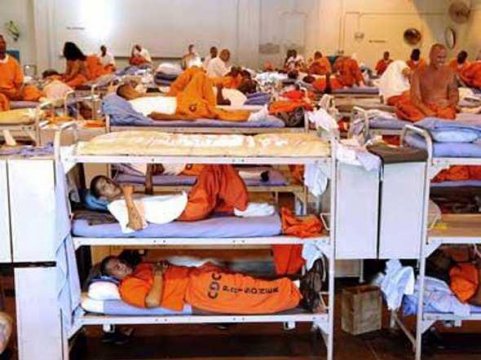
As a hunger strike staged across California prisons enters its second month, inmates and their advocates are mourning the loss of Billy “Guero” Sells, a Corcoran State Prison inmate who committed suicide on July 22 after 14 days of fasting.

Advocates with the Prison Hunger Strike Solidarity Coalition counts Sells as the first casualty of the mass protest. Donna Willmott, a member of the coalition’s media committee, told the Bay Guardian that “people who knew him  believe that [suicide] was very uncharacteristic of him. As a coalition, we’re not saying, ‘no he didn’t commit suicide,’” Willmott added, “but we still think that the CDCR is responsible for what happened to him.”

State Assembly Member Tom Ammiano noted in an Aug. 1 statement that “although the death of a prisoner who had participated in the hunger strike has been ruled a suicide, I can’t be comforted by the knowledge that conditions in taxpayer funded institutions have led to unusual rates of suicide instead of reasonable rates of rehabilitation.”

Ammiano said he “remain[s] concerned about the hundreds of prisoners still participating in a hunger strike to protest conditions. These are not minor prisoner complaints; they are violations of international standards that have drawn worldwide attention. To keep anyone in severe isolation for indefinite amounts
of time does not meet norms of human rights that civilized countries accept.”

On August 8, the California Department of Corrections and Rehabilitation (CDCR) released a tally of 349 inmates in seven prisons who had skipped the last nine consecutive state-issued meals, including 193 who hadn’t eaten at all since the strike began on July 8.

Strike leaders at Pelican Bay State Prison have demanded reforms surrounding solitary confinement. They have asked the CDCR to address the unreliable method by which inmates are flagged for segregated housing, conditions in confinement, indeterminate and long sentences, and the lack of clear and fair guidelines on how inmates can work towards being released back into the prison’s general population.

Activists have organized a number of recent events to demonstrate support for the inmates. Demonstrators picketed outside of San Quentin State Prison recently. On Aug. 5, seven protesters were arrested after locking themselves to the front doors of the Elihu M. Harris State Building in Oakland.

The loss of Sells spurred a renewed sense of urgency amongst prisoners’ rights advocates. Danny Murillo, a formerly-incarcerated student at UC Berkeley, told the rallying crowd in Oakland that “as time progresses, we do need to put pressure, because we’ve already seen one of our brothers fall.”

Sanyika Bryant, a Civic Engagement Organizer at Causa Justa, added that “when people are going to go on a hunger strike, that’s really a last stand. The conditions are just so bad that you have to take your life on the line to stand up.” He added, “this is for real life and death.”

District 11 Supervisor John Avalos participated in a day of action on July 31 by forgoing meals. “I’m fasting today in solidarity,” he told the Guardian on that day, and went on to describe long-term solitary confinement as “completely inhumane. You take away so much liberty. You shouldn’t take away their humanity. People should have the ability for self-actualization.”

So far, a team of mediators has made little progress in reaching an agreement with state prison officials that could put an end to the strike. In the meantime, California Correctional Health Care Services (CCHCS) says it’s adhering to a care guide crafted by CDCR, outlining the protocol for dealing with inmates who reach the point of starvation.

Care providers are required to conduct body-mass index (BMI) determinations, and after 14 days of striking, fasting prisoners receive informational notifications from CDCR staff, informing them of their options if they reach a critical medical condition. Some inmates have reported not receiving BMI determinations, and being subjected to increased isolation or excessive heat or air conditioning, to the point of severe discomfort.

Ron Ahnen, Associate Professor of Politics at St. Mary’s College and President of the human rights non-profit California Prison Focus, expressed concern about “the coming tsunami of people collapsing and having serious medical issues. Especially all at the same time.”

Inmates have the right to refuse medical treatment, explained Joyce Hayhoe, Director of Legislation and Communications for CCHCS. “We cannot force them to eat or take measures to force them to eat without a court order. We do have inmates that fill out advance directives. If, for some reason, an inmate lost consciousness and there was not an advance directive, doctors would take whatever steps were necessary to preserve their life.” This could include feeding tubes, she said.

Melissa Guillen, who is 22, said her father Antonio Guillen is a strike organizer who has spent a decade in solitary at Pelican Bay. She’d heard from his counselor that “he’s doing okay. That he’s strong. He’s not planning on stopping anytime soon. But, you know, they’re getting weak.” She added, “We know he’s strong. I hope he gets what he wants out of this.”

When it rains hydrant crash photos, it pours

11

Our story last week on the Uber driver who plowed into a fire hydrant got a lot of attention, but apparently it’s not so rare for errant drivers to create sudden urban showers. Reader JJ Harris sent us this shot from a crash early this morning at 1450 Valencia, where a woman who appeared to be intoxicated plowed through the parklet in front of EHS Pilates and into this fire hydrant. Thanks for sharing, JJ.

Solomon: Memo from Oslo: If peace is prized, a Nobel for Bradley Manning

22

Norman Solomon is co-founder of RootsAction.org and founding director of the Institute for Public Accuracy. His books include “War Made Easy: How Presidents and Pundits Keep Spinning Us to Death.”

Oslo, Norway: The headquarters of the Nobel Committee is in downtown Oslo on a street named after Henrik Ibsen, whose play “An Enemy of the People” has remained as current as dawn light falling on the Nobel building and then, hours later, on a Fort Meade courtroom where Bradley Manning’s trial enters a new stage — defense testimony in the sentencing phase.

Ibsen’s play tells of mendacity and greed in high places: dangerous threats to public health. You might call the protagonist a whistleblower. He’s a physician who can’t pretend that he hasn’t seen evidence; he rejects all the pleas and threats to stay quiet, to keep secret what the public has a right to know. He could be content to take an easy way, to let others suffer and die. But he refuses to just follow orders. He will save lives. There will be some dire consequences for him.

The respectable authorities know when they’ve had enough. Thought crimes can be trivial but are apt to become intolerable if they lead to active transgressions. In the last act, our hero recounts: “They insulted me and called me an enemy of the people.” Ostracized and condemned, he offers final defiant words before the curtain comes down: “I have made a great discovery. … It is this, let me tell you — that the strongest man in the world is he who stands most alone.”

Alone, Bradley Manning will stand as a military judge proclaims a prison sentence

As I write these words early Monday, sky is starting to lighten over Oslo. This afternoon I’ll carry several thousand pages of a petition — filled with the names of more than 100,000 signers, along with individual comments from tens of thousands of them — to an appointment with the Research Director of the Norwegian Nobel Committee. The petition urges that Bradley Manning be awarded the Nobel Peace Prize. Like so many other people, the signers share the belief of Nobel Peace laureate Mairead Corrigan-Maguire who wrote this summer: “I can think of no one more deserving.”

Opening heart and mind to moral responsibility — seeing an opportunity to provide the crucial fuel of information for democracy and compassion — Bradley Manning lifted a shroud and illuminated terrible actions of the USA’s warfare state. He chose courage on behalf of humanity. He refused to just follow orders.

“If there’s one thing to learn from the last ten years, it’s that government secrecy and lies come at a very high price in blood and money,” Bradley Manning biographer Chase Madar wrote. “And though information is powerless on its own, it is still a necessary precondition for any democratic state to function.”

Bradley Manning recognized that necessary precondition. He took profound action to nurture its possibilities on behalf of democracy and peace.

No doubt a Nobel Peace Prize for Bradley Manning is a very long longshot. After all, four years ago, the Nobel Committee gave that award to President Obama, while he was escalating the war in Afghanistan, and since then Obama’s dedication to perpetual war has become ever more clear.

Now, the Nobel Committee and its Peace Prize are in dire need of rehabilitation. In truth, the Nobel Peace Prize needs Bradley Manning much more than the other way around.

No one can doubt the sincere dedication of Bradley Manning to human rights and peace. But on Henrik Ibsen Street in Oslo, the office of the Nobel Committee is under a war cloud of its own making.

Norman Solomon is co-founder of RootsAction.org and founding director of the Institute for Public Accuracy. His books include “War Made Easy: How Presidents and Pundits Keep Spinning Us to Death.”

(Bruce B. Brugmann edits and writes the Bruce blog. He  is the editor at large of the Bay Guardian and the former editor of the Guardian  co-founder and co-publisher with his wife Jean Dibble 1966-2012.)

Bay Area Walmart employees say they were fired in retaliation for striking

After working for nearly two years at Walmart in San Leandro, Dominic Ware said he’d witnessed too many co-workers struggle to make ends meet, and had felt disrespected for long enough. A co-worker recruited him to join Organization United for Respect at Walmart, or OURWalmart, a national group of Walmart associates organizing for better workplace conditions and pay.

“She couldn’t even pass the pen fast enough,” said Ware. Last October, he participated in the first mass-strike of American workers in Walmart’s history.

In May, Ware joined a hundred others in the longest Walmart workers’ strike yet, lasting from May 29 through June 8, to demand protection for strikes, livable wages, the option for full-time shifts, and respect in the workplace. After two weeks of striking, a legally protected activity for all workers, Ware went back to work. Things were normal at first. But in mid-July, he was fired.  

Raymond Bravo, a maintenance associate at the Richmond Walmart, also joined Ware and other OURWalmart members on a caravan of striking workers to demonstrate outside Walmart’s corporate headquarters in Bentonville, Arkansas in May.

“I saw the lack of respect and favoritism,” said Bravo. “I wanted to join because I had no voice at Walmart, and I believe we should stand together.”

Like Ware, Bravo returned to the job after Arkansas with little fuss. “My next scheduled day was June 12, and nothing happened,” said Bravo. But two weeks down the line, Walmart began coaching associates for absences, and changing his schedule.

“I knew my days were numbered,” said Bravo. “I had already been disciplined for striking last year, and I’d heard from other associates that their hours were cut. That was kind of fishy.” Roughly two weeks after returning, Bravo was fired.

It appears that Ware and Bravo’s terminations weren’t isolated incidents. Around 60 Walmart associates across the country were disciplined or terminated after participating in the strike, according to OURWalmart. Since termination in retaliation for striking activity is illegal under the National Labor Relations Act, both Ware and Bravo plan to embark in legal battles to get their jobs back.

Walmart may rightfully fire an individual employee after he violates the company’s absence policy by missing work, Walmart spokesman Dan Fogleman told the Guardian. In Bravo’s case, “the decision has nothing to do with a specific protest or activity of that nature,” said Fogleman. “We have a strict policy against retaliation.”

Fogelman claims the OURWalmart demonstrations were not legitimate strikes, but “made for TV” publicity stunts for the union that has leant support for OURWalmart, the United Food and Commercial Workers. Walmart made a similar claim in response to the October 2012 strikes. The nation’s largest private employer, Walmart employs roughly 1.4 million American workers, all non-unionized.

“Walmart didn’t want to recognize a strike as strike,” said Ware. “But they are playing with people’s lives. Those who are working 45 hours a week, that’s not a lot, but that’s all they have, and if you take that away, they’ll lose everything they have.”

According to a report issued by American Rights at Work, a nonprofit that advocates for democracy in the workplace, OURWalmart received more than 150 accounts of individual incidents of harassment, threats, changes to shifts and hours, and retaliatory discipline, including termination, from workers who participated in the wave of work stoppages and demonstrations that began last October.

Bravo has filed a wrongful termination affidavit with the National Labor Relations Board. “Walmart is pushing the envelope right now,” said Bravo, “but I know that I’ll get my job back.”

But according to John Logan, professor and director of labor and employment studies at San Francisco State University, the law may protect work stoppage and protests but does not necessarily protect low-wage workers like Ware and Bravo from the damages of retaliation.

“In a very large employer like Walmart, in a non-union environment, protections are very weak and penalties for violations are very ineffectual,” said Logan. “In reality, you are only slightly better off than if you have no legal protections at all.”

When asked about the effectiveness of filing a complaint with the labor board, Logan said that process is long and painful, and may accomplish little for the worker in the end. “These cases often move at a glacial speed at the labor board,” said Logan. “Even if they were to get the original position they are legally entitled, in a lot of instances, workers who go back stay for a very short period of time because the working conditions are intolerable, or made to be intolerable.”

“The obvious point is that clearly, the effect on the worker is the same whether or not they were fired for strike or absentee policy,” said Logan. “They lost their job.”

Breathe Owl Breathe’s van and gear stolen in Berkeley

3

Below is a note from the touring musicians of indie folk group Breathe Owl Breathe — their van was stolen last night in Berkeley, and they need your help in tracking it down. Sadly, all of their musical equipment, gear, clothing, and laptops were in the vehicle.

The band has provided a list of the specific instruments taken. Here’s the info they sent:

OUR VAN WAS STOLEN!!!!

Last night between midnight and 11 am from the Berkeley Hills area (Oakland, CA). Everything we own was in the vehicle. All of our musical equipment, including a laptop, and clothing. Please share this post far and wide- help get the word out! If you see a 1998 Ford Econoline Van (see picture) anywhere in the Bay Area or beyond, call the Oakland Police Department (510) 777-3333.

One way you could help is to search Craigslist, or local flea markets, for any of the more unique instruments that were with us in the van:

-Amati Cello (in blue hard shell case)
-Lowrey Wandering Genie keyboard/organ
-Lowrey Genie Mach III Plus
-Larivee Acoustic Guitar
-1965 Fender Pedal Bass
-Mint Green Fender Excels
-Holy Grail Reverb Pedal (older style, large version)
-Roland SP-404 sampler (with dent on bottom face)
-Lyle semi-hollow body electric guitar
-Fender Vibroverb Guitar amp
-Roland KC-550 Keyboard amp
-Fishman acoustic amp
-4 piece Adonis drumset (wood finish)

(Breathe Owl Breathe was profled last year on SFBG.com)

Taxis reinvent themselves to be more like Lyft

For all the (justified) grumbling about the business models of ridesharing services like Lyft and Uber, the so-called ridesharing revolution may prove to be a catalyst for a taxi industry overhaul.

“We’re adding hundreds more taxis, and our board has approved regulations for each vehicle to provide real-time locational information,” San Francisco Municipal Transportation Agency spokesperson Paul Rose told me in an interview yesterday.

“One of our goals is to move forward with making the data available to our customers to hail a cab with an app,” Rose added, referencing a plan unveiled by the transit agency several weeks ago. Faced with stiff competition from random vehicles adorned with garish pink mustaches, the taxi industry is taking a stab at evolution, or at least imitation.

This week’s issue of the Guardian includes a story by journalist and part-time Lyft driver Josh Wolf, exposing a catch-22 facing Lyft drivers seeking full-coverage auto insurance. On our Politics Blog, reporter Joe Fitzgerald highlights a similar question that surfaced around ridesharing after an Uber driver’s involvement in a terrible accident.

The question of who foots the bill after someone gets crippled in a rideshare wreck is one of many accompanying the rise of unregulated app-connected cabs. Customers hailing a car with Uber have nowhere to turn in the event of a bad encounter, in contrast with the SFMTA’s complaint system for monitoring registered cabbies.

The SFMTA receives 100 to 120 cab-related complaints each month, and requires the city’s 311 information hotline info to be posted in every registered vehicle. “We follow up with every incident,” Rose said. “Results range from addressing or notifying the driver, to the very extreme – a revocation of a permit.”

To be a cab driver right now, paying off the pricey medallion they must purchase in order to operate while oblivious new transplants rake in the cash without following the same set of rules, must be infuriating.

At the same time, let’s be honest here. There’s a reason people are ditching conventional cabs and climbing into cars with random strangers who may be beckoned with the tap of a smartphone. And it has nothing to do with passengers’ sentiments about government regulation or newly minted tech millionaires.

Head over to Yelp (sorry, but it’s instructive) and read the comments yourself: Services like Lyft, Uber, and Sidecar are garnering rave reviews (Homobiles actually seems to have won the most ardent fans of all), while Yelpers use the online forum for virtual venting sessions to describe their frustrating taxi experiences. Maybe it’s a skewed sample, but there seem to be lot of people out there who were left languishing while waiting for a cab, and they’re pissed. No wonder Silicon Valley investors think it’s a good idea to dump $60 million into some faux-taxi scheme lacking clarity on even the basic question of insurance.

Wolf wrote about his experience as a Lyft driver; here’s my personal anecdote as a taxi patron. I called for a cab on a recent weekday and it never showed. When I phoned again to ask where it was, a robotic voice intoned, “an error has occurred,” and then the line went dead. Twice. When I dialed a second company, the dispatcher told me flat out that there were no cars close by. He suggested I just call someplace else, because he couldn’t help. 

Fail.

The taxi industry lags far behind the lightning-speed reality many Bay Area residents have come to inhabit, but if it weren’t for the competition, they might not have any incentive to change.

Rideshare services might be your quintessential rogue tech companies backed by nauseating sums of venture capital, but at the end of the day, people also want taxi service that does not suck. The Lyft drivers I’ve met tend to be people like Wolf – young, idealistic, bent on pursuing a creative passion despite the city’s high cost of living, and grateful for flexible work hours that make it possible to follow that dream and still make rent.

With that, here’s a sappy breakup letter composed to Yellow Cab by one Cori D., a Yelper. “I just don’t love you anymore,” she writes. “You’ve left me waiting on the curb one too many times now without a word. No ‘I’ll be a little late’ or ‘sorry you’re late for work now.’ … So I’m leaving you. In fact, I’ll confess that I’ve been cheating on you. Uber is just so handsome and reliable. … You might even say he bends over backward for me.”

True story? Or just some clever guerilla marketing orchestrated to plug Uber? Like most things pertaining to San Francisco’s information-age gold rush, it’s impossible to know for sure.

Lawsuit over injury from airborne fire hydrant tests Uber’s insurance practices

103

Uber’s policy on insuring its drivers will soon be taken for a test drive, as the company that runs the mobile app-based ride requesting service and a driver were served with a court summons last week from a woman severely injured after a crash near a San Francisco intersection.

Those insurances policies were said to meet brand new regulatory requirements on rideshare services introduced by the California Public Utilities Commission on July 30, which was meant to solve the longtime regulatory battle between rideshare services and local governments.

The plaintiff in the suit, Claire Farhbach, was a bystander, not a customer, and that unique twist in the injury suit has experts from the taxi industry waiting to see if Uber will step up to the plate to pay for Farhbach’s injuries, or if Uber will leave driver Djamol Gafurov on the hook for the bill.

Fahrbach was walking up Divisadero street near Hayes at quarter of midnight March 12 when Gafurov’s black town car, operating as a private taxi, collided with another car on Divisadero while turning left. One of the cars then collided with a fire hydrant, and in the words of the civil suit, “this impact caused the fire hydrant to be violently sheared from its base and propelled through the air a number of feet northbound…when the fire hydrant struck (Farhbach) with a tremendous amount of force.”

The hydrant flew 81 feet from its original position, according to the police report.

The suit notes that Fahrbach sustained lacerations to her body, a fracture in her lower leg, and multiple herniated discs that “more likely than not will require surgical intervention in her future.”

Gafurov’s private taxi was operating as a “partner” of Uber, which is how the company defines its relationship to the network of drivers on its website. No private taxis or drivers are considered to be employees of Uber, as the company has repeatedly maintained. Uber provides software that lets passengers connect with drivers, like a digital dispatch, and the ridesharing service then takes a cut of the fare.

The image above is a modified police report from the fire hydrant incident, with numbers added: 1) site of the initial collision 2) where the vehicle hit the fire hydrant 3) where the hydrant hit Farhbach.

Yet that distinction has made their insurance liabilities nebulous, and local officials have taken notice. Officials at SFO last week started arresting rideshare operators in and around the airport, and the SFMTA, which regulates taxis, also considers them a problem.

The San Francisco Airport Commission and the SFMTA submitted concerns to the California Public Utilities Commission, charging that a “lack of adequate liability insurance, criminal background checks, driver training and regular vehicle inspections all decrease public safety, and although some [transportation network companies] represent that they do all of the above, the Airport Commission is asking for regulatory verification.” according to a CPUC report. “The SFMTA asserts that TNCs have a negative effect on public safety because of a lack of regulatory oversight.”

Cab drivers have long been regulated by the state, and these agencies contend that not only are rideshare companies like Uber dangerous, but the lack of insurance can be financially ruinous to pedestrians and drivers alike.

“Because it’s a pedestrian suing, that opens up a whole can of worms, and Uber may try to put the liability on the driver,” said Trevor Johnson, director of the San Francisco Cab Driver’s Association. A former cabbie himself, he’s been on both sides of that sort of litigation, as well as in legal actions with tech companies like Uber.

Johnson is not confident the driver will be covered by his own insurance plan, because in its current pseudo-taxi company state, many insurers consider you not quite a taxi but not a private driver, putting these tech-cabbies in an awkward limbo.

“He may be left with a big judgment, and his insurance may opt to not cover him because he’s with Uber,” he said.

This is backed up in our current issue of the Guardian, where Lyft driver Josh Wolf wrote from personal experience that it is difficult for Lyft drivers to obtain full insurance coverage for their vehicles.

A rideshare driver criticized Uber in a letter he wrote to the Guardian after reading that article. “I work for a limo company, I’m fully insured, the car is fully insured, but Uber takes absolutely no responsibility for its drivers,” the driver, who wanted to be identified as “Zark,” told us. He said he feared joining the ranks of self-employed cabbies, who often are under-insured. “[Uber] holds their customers in really high regard, but they don’t hold their drivers in any regard.”

Uber maintains that the drivers, and their actions, are not their responsibility.

In response to a query about the lawsuit, Uber spokesperson Andrew Noyes stated repeatedly that drivers are not employees of the rideshare company.

“Our legal team took a look at the files you sent. This is not an ‘Uber’ driver, they’re not employed by us. They’re employed by their licensed and insured limousine company,” he said. “The important thing is that theres no characterization of a driver as a driver at Uber.”

But Gafurov, the driver named in the accident, isn’t actually employed by a limo company.

Gafurov declined to speak to the Guardian, but after some digging, a disgruntled bystander, angry with Gafurov, found that he is self-employed and registered with the CPUC as the “Limo Car Service Corporation.”

Gafurov was driving with liability insurance, his CPUC registration shows — but he not did not have excess liability insurance, which would be needed to cover extraordinary damage caused by the flying fire hydrant. The gaping hole left by the hydrant spilled water out onto all the surrounding businesses, causing intense damage, and everyone affected is seeking compensation.

Fahrbach’s lawyer, Doug Atkinson, told us the cost of the accident will be enormous.

Notably, few independent drivers have excess liability insurance.

“A lot of carriers don’t have it, because it’s expensive,” Johnson told us. “This is a case for the excess insurance, as it stands right now with that much damage and that many people after him, unless Uber steps in and helps him save the day this driver is going to be in the hole for the next 20 years.” He added, “This guy’s life is over.”

Atkinson is hopeful that getting Uber to pay that insurance won’t be a hard sell. “I’m not looking for some protracted legal battle, I want to see a company that will do the right thing, who’s saying ‘I’m revolutionizing cab driving.’”

In order to persuade the CPUC of its viability during the regulatory proceeding, Uber told them it has the very excess liability insurance that Gafurov needs, in excess of $5 million, according to CPUC documentation from an April workshop.

But having that insurance in place is different from using it to cover damages when needed. According to Uber’s partner agreement with its drivers, “Uber and/or its licensors shall not be liable for any loss, damage or injury which may be incurred” by a driver.

Asked if Uber will help Farhbach pay her medical bill, Noyes responded, “You’re writing about a specific case and I don’t think I can say much more. A professionally licensed driver is protected by their company, it’s not really my issue to weigh in on.”

Meanwhile, Fahrbach isn’t doing very well at all, she wrote in an email. Her injuries forced her to leave her two jobs in San Francisco, one at a farmer’s market and another at a cafe, and she moved back in with her family in North Carolina to recover.

“My recovery has been a slow steady process laced with many ups and downs,” she said. “Having been immobile for the better part of three months has had an everlasting effect on my physical state. I will most likely be dealing with spinal problems for the rest of my life, but have tried to remain positive and grateful for the progress I have made.”

Fahrbach said she doesn’t have the money to cover her medical bills out-of-pocket, and this frightens her. “Frankly, if there is insufficient insurance to cover my injuries and losses, my financial future will be dismal.”


Final Burning Man ticket sale brings total to 61,000 sold for $23 mil

11

With the final official Burning Man ticket sale going off without a hitch yesterday, Bay Area burners are now in mad preparation mode, with DPW setup crews arriving on the playa this week, early art crews heading out next week, and everyone else anxiously awaiting the official start of the annual Nevada desert bacchanal in 27 days.

With the US Bureau of Land Management recently awarded the event a permit and population cap of 68,000 — a big jump from last year’s 60,000 cap — Black Rock City LLC decided to bump up yesterday’s “OMG! Sale” ticket offering from the initially planned 1,000 up to 4,000.

“The sales yesterday went breathtakingly smoothly,” event spokesperson Jim Graham tells the Guardian.

Yesterday’s ticket sales brings the total number of tickets sold up to 61,000. Accounting for the expensive early sale tickets (3,000 at $650 each), low-income tickets (4,000 at $190), and 54,000 at this year’s standard $380 price, that brings the LLC’s gross revenue from ticket sales (not counting fees) to $23.23 million. The LLC also gives away thousands of tickets each year to volunteers, art crews, and VIPs.

No wonder this ambitious organization could afford to hire Graham as yet another official spokeperson, joining Megan Miller (US Sen. Barbara Boxer’s former flak) and longtime spokesperson Marian Goodell, an LLC board member.  

After last year’s stressful scramble for tickets, availability seems to be pretty good this year. Craigslist has lots of tickets still available for face value, and while Stubhub is still listing 223 tickets starting at $550 each (burners consider it bad form to charge more than face value), anecdotal evidence suggests that’s just wishful thinking by scalpers still hoping for a big score.

My advice: don’t pay more than face value, and if you’re willing to wait until the very last minute, you’ll probably get one for even cheaper than that.

Or as Graham told us, “Everybody who wants to get to the event will certainly get a ticket.”

Richmond gets radical, seizing foreclosed homes from banks

21

As a rule of thumb, we at the Guardian tend to believe that if the banking and real estate industries are against something, then we’re probably in support of it. But that’s not the only reason that I’m so intrigued about the possibilities of Richmond taking ownership of hundreds of foreclosed homes, using eminent domain laws as needed, to keep people from being evicted and rejuvenate the community.

Richmond officials want to take over 624 homes that are underwater in that foreclosure-plagued city, becoming the first city in the country to do so. San Bernardino had considered and rejected the idea earlier, largely because of opposition from banks and threats that they might stop lending in the city. But Richmond officials appear to be holding tough against such extortionary threats and moving forward.

KQED’s Forum did an interesting segment on the situation this morning, following up a report from Democracy Now! on Tuesday (KALW also did something on this last month), with the bankers and Realtors offering up all kinds of unfounded concerns and fear mongering to confuse the issue. Because this is a truly radical action that Richmond is considering, in the best sense of that term: banks and those who control property have too much power over our lives, and it’s about time a city takes some of that power back on behalf of its people.

This is like nationalizing the assets of corrupt capitalists who have gone too far in subverting the broad public interest, a populist shot over the bow of the people who consider themselves our economic masters, from Wall Street right down San Francisco’s Chamber of Commerce and Association of Realtors.  

As Richmond Mayor Gayle McLaughlin told Democracy Now: “The banks sold our community predatory loans, and now they have no solution that they’re presenting for this crisis. So we are stepping in to fix the situation. We’re stepping in by taking these troubled loans off the hands of the banks. And we’re paying them fair market value for these loans, and then we’re working with the homeowners to refinance and modify loans in line with current home values. So we call on the banks to voluntarily sell us these loans. And if they don’t cooperate, we will be considering eminent domain.”

Just think about the possibilities of this: cities could seize all their most distressed properties, then pay fair market value (which would be at fire sale prices for rundown homes in communities with high foreclosure rates), have the residents work with city officials to turn the area around and thus substantially increase the value of those homes, and eventually sell those homes at a profit, either to their current occupants or some other city residents (choosing buyers based on social considerations, not strictly financial ones). If it works on a small-scale, it could be ramped up to larger and larger scales, with cities selling bonds to buy real assets that would only go up in value as properties get more attention than these absentee bankers have been giving them.

If predatory entrepreneurs can buy these short-sale properties and flip them for a profit, why can cities do the same thing and do some good for their people in the process?

Agency official under fire for development project endorsement

Did a high-ranking official of a regional conservation authority improperly use her influence to secure $10,000 for a nonprofit she chairs the board of? That’s the allegation raised against San Francisco Bay Conservation and Development Commission Vice-Chair Anne Halsted in a complaint filed with the Fair Political Practices Commission, a statewide ethics agency.

Halsted appeared in a campaign ad produced by Open Up the Waterfront, which is pushing a San Francisco ballot measure seeking public approval for 8 Washington, a controversial waterfront development project that has become a political flashpoint in San Francisco.

https://www.youtube.com/watch?v=VF6OrFcwzn0&feature=youtu.be

Halsted also chairs of the board of directors of SPUR, a member-supported San Francisco nonprofit focused on planning issues.

In addition to publicly endorsing Open Up the Waterfront, SPUR received a $10,000 donation from San Francisco Waterfront Partners, the 8 Washington developers and major funders of the ballot initiative, sometime between May and the end of June. The campaign ad was posted to YouTube on July 22.

Geraldine Crowley, a volunteer working on a competing ballot measure campaign formed in opposition to 8 Washington, No Wall on the Waterfront, seized on this donation in her FPPC complaint. Crowley charged that Halsted violated conflict-of-interest rules under the California Political Reform Act, saying Halsted “used [her] official position to influence a governmental decision in which the official knows or has reason to know that he or she has a financial interest.”

“I would just like to have her portion of the commercial erased,” Crowley said in an interview. “What she says in the commercial does not reflect how all of BCDC feels about Open Up The Waterfront.” 

The video also features an appearance by Will Travis, retired director of BCDC. “This appears to be a violation of the conflict-of-interest rules designed to prevent financial gifts from influencing public officials entrusted to steward public assets  such as the Bay,” said Jon Golinger, a spokesperson for No Wall on the Waterfront. 

Halsted didn’t respond to our request for comment, but she did contact BCDC Chair Zack Wasserman to address the concerns raised by No Wall on the Waterfront in a message that was later forwarded to the Guardian.

“For several years [I] have supported a project called 8 Washington which is near the waterfront, but totally outside BCDC’s jurisdiction. Because a recent video advocating the project indicated that I, a supporter of the project, am vice chair of BCDC, some have worried that it implies BCDC support – something I have never envisioned or contemplated!  Please be assured that my advocacy is personal because I believe it is an excellent project, not because any organization with which I associate has voted to endorse the project!  Sorry if this confused anyone.”

Whether Halsted influenced the $10,000 donation to SPUR in connection with her support for the project remains unclear. The organization’s operating budget exceeded $3 million during the 2011-2012 year, according to SPUR’S annual report.

“When it comes to conflict-of-interest violations, it needs to be found that a public official is making governmental decisions based on money that has been given to them,” Gary Winuk, chief of the enforcement division at FPPC said. “After we receive the complaint, we wait 10 days for the person accused to respond, then launch an investigation and review all the facts if there is just cause.” 

David Beltran, spokesperson for Open Up the Waterfront, criticized the complaint as “a reckless and meritless attempt to suppress free speech.”

It’s likely to be a week or more before the FPPC determines whether Crowley’s complaint has any validity. If the FPPC determines that that Halsted did indeed violate the conflict-of-interest rules under the California Political  Reform Act, she may face penalties such as a misdemeanor and $5,000 per violation.

Larry Goldzband, the commission’s executive director, noted that BCDC has yet to endorse the project.

“The multi-use project proposed at 8 Washington Street in San Francisco is not in the jurisdiction of the San Francisco Bay Conservation and Development Commission,” Goldzband said. “BCDC has neither considered nor endorsed the project, nor has any Commissioner asked that the Commission review the project in any manner.”

Last tango: Investigators sort through BART’s labor impasse

123

Much of BART’s dirty laundry was aired at the first hearing on the negotiations in Oakland today, part of a seven-day investigation called by Gov. Jerry Brown after Sunday night’s talks between unions and management threatened the Bay Area with another strike.

The particulars of each side’s bargaining offers are normally hush-hush, but the hearing was a chance for the public to get a peek into what each side has been asking for. As the three-person panel on the governor’s fact-finding board sat at a long table facing the audience, management and unions sat on separate tables, much like that in a courtroom. 

Amid all the particulars of wages and economics, the unions levied  major allegations over safety concerns, saying that BART management hasn’t incorporated safety changes after the deaths of workers.

Saul Almanza, a BART representative from SEIU Local 1021 and a 17-year railroader, showed the board a set of photos of the places where BART workers had been killed on the job. 

“I’d like to start out with the picture with the part where Robert [Rhodes] was killed,” he said. “The area where Mr. Rhodes was killed was very dark, and remains that way today. Look at the picture to the left, and that’s where Mr. Rhodes was standing as the southbound train proceeded through the interlock. It was dark and loud, and that’s where he was struck as he stood there with no place to go.”

Almanza said that he brought up lighting improvements to his management at many levels, many times. When no improvements were made, that’s when the safety issues became a major point in bargaining, one sticking point that led to the four-day strike in early July. 

Paul Oversier, BART’s general manager of operations, made it a point to hammer home how pained the Bay Area was during the strikes, alleging that “people who depend on BART, who want to fill their prescriptions” may have been delayed, among others. 

He also touted some drastic numbers, saying the direct cost of the BART strike to the Bay Area was estimated at about $73 million per a weekday. 

“That doesn’t include empty tables at Bay Area restaurants, higher day care payments for working parents, or the  overall increase in personal stress throughout the region,” Oversier said. “None of these are counted in the economic model used for the BART strike.” 

But the union said that management did everything short of inviting them to strike, repeatedly used stalling tactics, making counter-offers that had changes of “point five percent” from their previous offers, and avoiding bargaining for as long as 33 hours at a time. 

Vincent Harrington has represented BART unions in contract negotiations since 1978, but he said this negotiation has had more hardball tactics than he’s seen in any negotiation. “This time around, we couldn’t even reach an agreement on ground rules,” he told the board. 

He also said that management used the media as a way to spread inaccurate information. He wanted to use the hearing as a chance to air the “facts versus myths.”

One commonly misreported figure is that BART workers pay only $92 per month into their healthcare, he said. “That doesn’t tell the full story. These workers contributed 1.627 percent of their wages into a fund to cover not only the ongoing health care of active employees, but also the retirees. There are 3,000 employees in the plans,” he said.

That brings the total to about $180 per person, he said, with a caveat. Some time ago, employer-provided healthcare was capped. “Additional costs beyond that cap would be on the workers and their families, not on BART,” he said.

Harrington also brought up a point of contention in negotiations that is familiar to regular BART riders: how bathrooms in the station are routinely locked and unavailable for use.
“We want BART to reopen bathrooms for patrons. We are not aware of a single transit station today that keeps the bathrooms locked. What does that mean for workers and our patrons? Where do they go? That means they relieve themselves in the stations,” he said. The bathrooms were locked since the 9/11/01 terrorist attacks at nearly every station. “We asked them to open them up. BART has said no.”

Management and the unions both presented their idealized BART systems, with management reiterating their need to invest in new trains and to control pension costs, and unions saying their workers deserve a living wage.

This will be the only public hearing day, and afterward the panel of Jacob Applesmith, Micki Callahan, and Robert L. Balgenort will put together a draft report for Brown, which is due Sunday. 

This could lead to a 60-day cooling off period where no strikes could take place, or Monday morning we could find ourselves with no BART trains and negotiations again at a standstill.

BART union negotiators said that they were willing to talk, and that they could even hammer out a deal with management by Sunday — if management is willing to bargain in good faith.

“It’s like a textbook on how to bargain but not actually be bargaining,” Harrington said. “It’s like a tango: you can’t do it by yourself very effectively.”

Any member of the public that wishes to send a comment about the BART negotiations may do so to communications@dir.ca.gov until 9am tomorrow [Thu/8]. The board said its report, once sent to the governor, would also be made public and likely available on the governor’s website.


Jack Spade tries to sneak into a beloved Mission spot, triggering a community backlash

16

The Stop Jack Spade Coalition is throwing an impromptu fundraiser tonight (Wed/7) at the Make-Out Room to help support local business and oppose chain store blight in the Mission.

Jack Spade, an upscale men’s clothing chain owned by Liz Claiborne, has plans to set up shop at 3166 16th Street, once home to Adobe Bookstore. The community bookseller of 25 years moved south to 24th Street in June, having been ousted from the space by two consecutive rent hikes. The second time, Adobe General Manager Chris Rolls tells us, “the landlord rejected continuation of the lease, which was outrageously expensive and, for this neighborhood, a bit alarming.”

Opponents of the deal say the men’s clothing retailer signed a $12,000 per month agreement on the storefront shortly after Adobe failed to meet its landlord’s exorbitant demands. (Note: A Jack Spade representative contacted the Guardian after this story was published to say this figure was “exaggerated,” but would not disclose any other financial details.)

Jack Spade has gotten this far by failing to apply for a conditional use permit, a pesky little measure imposed by voters in 2006 to thwart corporations chomping at the bit to turn San Francisco neighborhoods into sanitized strip malls.

Turns out Jack Spade is a subsidiary of one such corporation, Liz Claiborne, a fact downplayed in the chain’s original application to the Planning Commission. Even a modest 10 storefronts nationwide, sadly, doesn’t confer small business cred on a menswear line owned by a company with a $2.88 billion market capitalization.

Conveniently, the Jack Spade label has just one too few stores to be formally defined as “formula retail” by Proposition G.  But the Valencia Corridor Merchants Association has been hot on the case, circulating a petition that Jack Spade play by the rules of other big businesses and submit to a public hearing anyway.

A similar effort was successful in preventing an American Apparel store from opening just up the street in 2009 and in slowing the insatiable gentrification that has steamrolled local culture in many other once-unique and affordable cities.

Tonight’s event will feature live music and stand up comedy.  Chicken John Rinaldi promises to host an auction and “talks about what we can do to stop this bullshit.” Doors open at 7pm and $5-$15 will be collected at the door, with proceeds to benefit the campaign for a public hearing next week.

Community-based journalists also raising Airbnb’s issues in SF

111

Mainstream media outlets in San Francisco may be slow to pick up on how Airbnb and other online home rental companies are violating local laws and dodging local taxes — the subject of our cover story this week — but both international and community-based journalists are paying attention to this growing problem.

The excellent bilingual newspaper El Tecolote covered some of the same ground we did in its cover story this week, “Unregulated Rental Business Takes Over Housing,” focused on how Airbnb is contributing to gentrification and displacement in the Mission District.

Reporter Jackson Ly found a couple that turned a rent-controlled apartment on 24th St. into a $249 per month de facto hotel room, booking it for 24 nights in August and making $5,976 in just one month, on top of the $3,069 they’re making in August renting out the guest room in the apartment where they actually live for $99 per night.

“It’s cheating the people that pay taxes,” Maria, who lives in the unit below this couple’s investment apartment and is tired of the rotating stream of tourists in her building, told the newspaper.

I got ahold of El Tecolote Managing Editor Iñaki Fdez. de Retana, who told me, “it seems like we’re on the same page,” noting the Guardian has also recently written about the prison hunger strike and some other issues that his paper has covered.

He said that housing issues like this one are extremely important to the Latino community that lives in the Mission, and he’s been surprised that Mayor Ed Lee has been unwilling to address the impacts of Airbnb and other tech community contributors to the problem.

“It is very important,” he told us, noting that visiting European tourists are changing the character of the neighborhood. “In particular on 24th Street, which was once seen as the heart of the Mission, it’s changing overnight and [Airbnb and other housing rental websites] is a big part of that.

Meanwhile, we’re still waiting for a substantive response from Airbnb to the issues that we and a handful of other journalists are raising. CEO Brian Chesky, who was an amateur competitive bodybuilder before founding Airbnb in 2008, would apparently rather flex his muscles than deal directly with the community where his company is based.

Tenant defenders, hate-free billboards and budget hackers

Tech sector startups aren’t the only folks “disrupting” things in the Bay Area as of late. Social justice activists are mounting their own creative, grassroots responses to unjust practices – and while they don’t often have deep pockets, they’ve got the collective momentum of people who give a damn propelling them onward. Below, a few examples of what’s percolating on this front.

Landing at the landlord’s

Earlier this year, we told you about Jeremy Mykaels, a tenant and disabled senior living with AIDS who has rented his apartment in the Castro for more than four decades, and is now battling eviction. Here’s his story, posted to a website he created where he also lists other properties where seniors have been targeted with evictions.

Eviction Free Summer, a group of tenant activists who made a splash at the San Francisco Pride Parade this past June with a faux-Google bus, has started rallying people together to show up outside the homes and offices of landlords after they issue eviction notices. On Sat/10, they’re planning to caravan to Union City, where they’ll stage a protest outside the homes of the property owners who are evicting Mykaels. More information can be found here.

Disruptive enough for you?

Hate is lame

In response to a series of anti-Muslim ads that appeared on San Francisco transit vehicles, a group of online activists seeks to drown out the hate speech by taking things to a whole new level. Yes, they’re posting their anti-hate message onto a billboard.

From Aug. 5 until Sept. 1, a billboard at 10th and Howard streets will proclaim: “Hate Has No Place in Our City: San Francisco Embraces Diversity and Acceptance, Not Hate and Bigotry.”

The effort was crowd-funded through Louder, a platform for crowd promotion, through about $3,000 in donations from 100 individuals from throughout the country. It was spearheaded by San Francisco resident Christie George, who teamed up with New Yorker Ateqah Khaki to get the project off the ground.

 “When I read about the ads in other cities, I was horrified by how hateful they were. But when I learned that they were coming to San Francisco, I felt like I couldn’t be silent, and was compelled to do something to celebrate how much this city embraces diversity,” George said.

Next Thursday, Aug. 15, the “No Place For Hate” team will host a meet-up for contributors and supporters, featuring talks from the campaign organizers and some comments by Louder founder Colin Mutchler.

Budget for direct democracy

Meanwhile, in Oakland, the effort to hack Oakland’s budget with a ballot measure that would put discretionary spending in the hands of ordinary people is starting to pick up speed.

As Community Democracy Project co-director Sonya Rifkin explained in this interview with Shareable: “We care about a wide range of issues and lot of problems come back to questions of power – access to resources and self-determination and being engaged in decisions that affect our lives. Problems arise in politics from the right people not being invited to the table. The strength of this process is people getting connecting and understanding each others’ perspectives and empowering communities, which can have far reaching potential for enabling people to solve their own problems.”

Bonus: Sounds of badass señoras

Lastly, the Pacifica Radio Archives has received a $128,000 matching grant from the National Archives – the largest-ever grant for a public radio project, according to spokesperson Stephenie Hendricks — to restore historic recordings of powerful women. Once completed, the recordings will be made available – for free! – to colleges and universities through the archive’s “Campus Campaign.” Pacifica doesn’t accept corporate funding, and it’s hoping to fundraise a matching amount from its listeners.

The recordings were made between 1963 and 1987, and we even have a sample for you. This is the voice of Bella Abzug, a member of the House of Representatives and leader of the women’s movement, recorded in 1981.

Bomb the Music Industry!’s Jeff Rosenstock: Poster boy for manic depression in DIY rock’n’roll

0

To get a feel for why Jeff Rosenstock plays the way he does, you have to go back almost a decade to the sweaty, now-defunct scene in New Jersey and Long Island that caught the tail-end of the big ska-punk boom and the beginning of the emo explosion.

In the late ‘90s-early 2000s, word-of-mouth was still king in that local music scene. Many bands, like Rosenstock’s pre-Bomb the Music Industry! group, the Arrogant Sons of Bitches, entertained consistently at all-age, low-budget shows. It got to a point where kids in nearly every skank pit in the area knew the band’s songs by heart. They had no real radio play, and were seen mostly on shaky handheld video camera footage from Bloomfield Ave Cafe or the like, but still were on tour forever, had discernable sing-along singles, and (almost) released a split in Japan.

Personally, I remember coming home from their shows realizing I knew all the words to a song that wasn’t on any of the albums I owned. They had a frenetic, punkish wall-of-sound that required so many members that climbing on stage for a dive almost guaranteed you a chance to snag a microphone. Hell, they encouraged it.

http://www.youtube.com/watch?v=iKTqkrDYnwM

As Rosenstock recalls, the end of Arrogant Sons of Bitches was not easy. “We all just really wanted different things from life but were really steadfast on keeping this band together. It all ended in a big band fight. I just shouted ‘I don’t even want to press records! I’m sick of t-shirts and shit, I hate this!’ and [other band members] were like ‘but that’s what we should do because we’re a band!’”

So when ASOB did finally break up in 2005, Jeff immediately formed Bomb the Music Industry! Instead of pressing merch, he’d bring a printer to shows and encourage fans to attend with blank shirts. And he opened up Quote Unquote records to release his music for free online and host the music of his friends on a donation-based Paypal system.

The uncertainty surrounding his own abilities to breakthrough with this new collective — after 10 years in ASOB — enveloped the first few bedroom EPs that Rosenstock released as BTMI! These were snotty songs about losing a band and trying to self-righteously save one’s foothold in a music scene while battling depression. Many of the tracks had to do with still drunkenly chasing the dream of rock stardom over day jobs while his friends were either succeeding at their musical ends or working their own dead-end jobs.

Rosenstock took the manic, convoluted ska-punk sound of ASOB and flipped it new wave with intricately synthesized backing tracks layered thick over his guitar, horns, and vocals. Check out “It Ceases To Be ‘Whining’ If You Stop ‘Shitting Blood’” on 2006’s Album Without Band. According to the diary-like song explanations, which used to accompany Rosenstock’s releases, this one was “about all the pressures of being in a band that is about to break and feeling like if you DON’T break, you’re personally responsible for all of it. It’s also about the machine that a band creates when it decided to buy a van, sell merch, put out records, et cetera.”

The year 2005 also saw the beginning of BTMI! as a live band.

“I called up a few friends to see if they wanted to play [shows],” Rosenstock says. “ASOB, at some point, had 12 to 15 people in it —  we all grew up playing music together. It would have been pretty hard [not to play with] anybody from that band. Then everybody couldn’t go on tour for a while, that’s when I had those one-man tours. Anyone who showed up would go ‘oh, it’s just you and an iPod.’ I didn’t want to bum anyone out.”

http://www.youtube.com/watch?v=Ass-JUyWFfs

But bumming people out, especially through verbose confessions of desolation and broken friendships, is a core tenant of Rosenstock’s music.

The album Scrambles (2009) found Rosenstock in New York City, up to his eyeballs in debt and living in a van after grabbing an assortment of musicians and moving to Athens, Ga. to write a concept album chronicling the experience. The resulting album, Get Warmer, was the first BTMI! album recorded with a live band — not just Rosenstock on his computer.

Scrambles hits a high note with the piano-driven, almost Andrew WK-esque rocker “Fresh Attitude, Young Body.” With his voice cracking amid what sounds too resigned to be a full-on panic attack, Rosenstock shouts “You’re alone and you’re wet in a hospital bed and your family and friends will inherit your debt as you breathe from machines/Yeah, I know it sounds mean but you’re probably gonna die alone.”

BTMI!’s music is the nagging voice in the back of your head that just won’t allow you to forget your hangups and have a good time. People relate to Rosenstock and there is a slew of YouTube fan videos from around the world to prove it.

“I’m just like ‘holy shit, I can return the favor!’” Rosenstock tells me. “Because growing up, if I didn’t have Operation Ivy records, I would have gone completely insane. At the same time, it’s interesting because the songs I write go into a lot of stuff in my life but that doesn’t necessarily mean I’m good at talking about it. When people come up to me at shows I’m just like ‘okay, uh, cool!’”

His albums are like an ongoing journal, which chronicles his journey from teenage singer in a regionally successful ska-punk band to doing dishes in a car during New York winters, and taunting slumlords. “I ain’t giving you shit, I ain’t paying my rent til I got hot water and my toilet’s fixed. I don’t care. Try to kick me out if you want to” he says in a track off 2010’s Adults!!!: Smart!!! Shithammered!!! and Excited By Nothing!!!!!!!

http://www.youtube.com/watch?v=XQTJZ-Oix7k

“Maybe I’m just not that good at writing about other people. Maybe I’m just too self-centered to figure that out, I don’t know” he says. “I get stressed out about just about everything, [writing songs] is a way to help me vent about all the little minutiae that gets to you in your day.”

He adds, “I end up writing songs about really specific stuff. [But right now] I have my home situation on lock. It took a while. I wouldn’t happily go back to living out of a van with my girlfriend and staying at people’s houses every night, getting dressed in a van and trying to somehow work up the courage to go into a job interview when you look like shit, feel like shit, and smell terrible.”

When I ask about the recent breakup of Bomb the Music Industry!, Jeff says that what started as a collective gained enough momentum and support that members became irreplaceable. “Bomb has always taken up all my energy and all my focus. So to have that be a once a year kind of thing [to accommodate irreplaceable members moving out-of-country] didn’t really feel right.”

Jeff Rosenstock
With Sean Bonnette (Andrew Jackson Jihad), Dog Party, Hard Girls
Aug. 13, 9pm, $10
Bottom of the Hill
1233 17th Street SF
www.bottomofthehill.com

California’s refusal to reduce its prison population is a sign of deeper problems

40

California just doesn’t get it when it comes to criminal justice. We have among the highest incarceration rates in the world (just below Russia’s, and about four times the European average); our prisons eat up far too much of our state budget; they are shamefully overcrowded, secretive, and inhumane; yet politicians from Gov. Jerry Brown on down refuse to show the courage or leadership to try a different approach.

When the conservative-dominated US Supreme Court — which on Friday upheld the lower court requirement that California reduce its prison population by 10,000 by the end of the year — is more progressive and enlightened than California’s leaders, you know there’s something seriously wrong here.

Rather than finally doing the right thing and complying with court orders to reduce a population that is still more than 43 percent over design capacity — despite reducing the population by 46,000 since 2006 because of court orders related to woefully inadequate health care in prisons — Corrections Secretary Jeffrey Beard yesterday responded to last week’s news by saying he will send more inmates to prisons in other states, at a high cost to California taxpayers.

What’s wrong with these people?!?! California prisons already lock up 124,363 people as of July 31, with another 8,959 inmates locked up in Arizona, Mississippi, and Oklahoma prisons at our expense. Tens of thousands more have been sent back to county jails under the state’s Realignment policies (which San Francisco, to the credit of its progressive approach to criminal justice, has managed to absorb and still reduce our jail population, thanks to smart alternatives to incarceration). And yet state officials still can’t get our prisons back to anywhere close to their design capacity?!?!

Of course, doing so would require rethinking decades of mindless “tough-on-crime” legislation that swelled our prison population. They’d probably also need to address the gutting of reentry and rehabilitation programs in the state, as well as conditions in some prisons that drive inmates mad (the subject of an onoing prison hunger strike). And they might even need to reform an economic system that is squeezing those on the bottom — sowing widespread economic insecurity that drives even law-abiding citizens to contemplate desperate measures —  just to maintain the wasteful churn of modern capitalism and the obscenely inequitable concentration of wealth at the top.

Hmm, I do believe that I’m starting to understand the motivations of our elected officials after all, those guardians of status quo power and privilege from both major parties. But if we’re ever going to move toward justice and sustainability, California’s prison system is probably a good place to start. 

Heads Up: 7 must-see concerts this week

2

Yes, Outside Lands is back this weekend in Golden Gate Park. So that’s a given, especially if you’ve already got tickets to the sold-out festival. But there’s also night shows plus unrelated evenings out with White Fence, King Tuff, Glass Candy, Icky Boyfriends, Paige & the Thousand, and Lightning Dust with Louise Burns and Spells. So be sure to check those out as well, you over-committers.

Also this week, the annual Hardly Strictly Bluegrass guess-the-lineup game came buzzing back to the web. Listen here to make your guesses.

Here are your must-see Bay Area concerts this week/end:

Lightning Dust, Louise Burns, and Spells
There seems to be an uptick in occult fascination lately, or am I just now really paying attention? This whole lineup — a free show through Wood Shoppe — has the witchy vibe, with Vancouver’s Lightning Dust and Louise Burns, and SF’s own Spells. Lightning Dust’s Amber Webber (of Black Mountain) and Josh Wells began as a whispery folk duo in 2007. However, their spooky third LP, June’s Fantasy (Jagjaguwar), is said to be inspired more by “skeletal synth pop, modern R&B beats, the films of John Carpenter and…absolute minimalism.” Louise Burns has that chilled ’80s darkwave thing down. And Spells, the newest project from songwriter Jennifer Marie, incorporates synth and vintage organs into eerie, lovely nightmarescapes (check locally appropriate “Fog”).
Tue/6, 8pm, free
Brick and Mortar Music Hall
1710 Mission, SF
www.brickandmortarmusic.com
http://www.youtube.com/watch?v=lmWdd2j5XrE

MC Chris
“MC Chris marches to the beat of his own drum machine. The pint-sized Chicago-area rapper is technically a hip-hop artist, but this is likely not the kind of hip-hop you’ve heard before. In his characteristic chipmunk chirp, MC Chris raps about Star Wars, DQ Blizzards, and lots of computer geek nerdiness. In addition to being the world’s unlikeliest rapper, he has also worked as an animator, voice actor, and songwriter for a handful of Cartoon Network Adult Swim shows, including Aqua Teen Hunger Force. In his free time (ha) MC Chris is working on a recently Kickstarted comic and acts as an advocate for the Cystic Fibrosis Foundation. He and his hyper-dedicated fans have raised over $100,000 for the cause.” — Haley Zaremba
With Dr. Awkward, Jesse Dangerously, Tribe One
Tue/6, 8pm, $15
Slim’s
333 11th St., SF
(415)-255-0333
www.slimspresents.com
http://www.youtube.com/watch?v=z0BIazf-7j4

White Fence

Listen to White Fence’s psych-folk track “To The Boy I Jumped In The Hemlock Alley,” off the spring-released full-length Cyclops Reap, and it may renew your faith in classic songwriting. Or at least make you feel like you’re listening to the Beatles for the first time on acid. The woozy tune has a consistently mellow flow sliced through with glistening pysch riffs that sound like a flaming saw singeing through campfire wood. The album picks up quicker elsewhere, in blistering, boiling Nuggets-fashion on electrifying “Pink Gorilla.” But this much is now expected from LA/SF songwriter-guitarist Tim Presley — he’s the main force of White Fence — a consistently compelling and inventive musician, and frequent collaborator with the likes of Ty Segall. The show tonight includes essential openers like local singer-songwriter Jessica Pratt and Foxygen’s Bob Dylan-esque singer Jonathan Rado performing his solo work, Law and Order.
Wed/7, 8pm, $12
Rickshaw Stop
155 Fell, SF
(415) 861-2011
www.rickshawstop.com
http://www.youtube.com/watch?v=1YjfsFfnN9A

Icky Boyfriends
Ew, gross, Icky Boyfriends are back. JK, each successive grave-rise from the trashy ’90s-born Bay Area “noisefuck” band is worth mentioning because the local band is just that entertaining live. To get the full lo-fi freakout inherent in the Icky Boyfriends experience, listen to 2005’s 61-track career retrospective A Love Obscene, which features tracks such as “Burrito,” “Passion Assassin,” “Kids in Fresno,” and “King of Zeitgeist.” You might also note the band features current Hemlock booker/guitarist-singer of Hank IV, Anthony Bedard, on drums. Also, I’ve recently uncovered the fact that Bedard and burlesque legend Dixie Evans once went on the talk show Maury, for the episode “My Sexy Lover Is My Complete Opposite.” YouTube it, immediately.
With Wet Illustrated, Violent Change
Thu/8, 9pm, $8
Eagle Tavern
3981 12th St., SF
www.sf-eagle.com

Rotfest IV with 3 Stoned Men, Cameltoe, UKE Band
Sat/10, 5pm, $10
Hemlock Tavern
1131 Polk, SF
www.hemlocktavern.com
http://www.youtube.com/watch?v=uRfbBUn8nX8

Paige & the Thousand
Paige & the Thousand has roots similar to Lindsay Paige Garfield’s previous seven-piece band Or, the Whale but now solo, she also travels to different offshoots of twangy folk, country, and Americana, even dipping into Celtic traditions, and showing similar chord progressions to her own rich history of Jewish music, which she long ago sang in synagogue choir as a child. (For more on Paige & the Thousand, see this week’s paper.)
With Robb Benson & the Shelk, EarlyBizrd & the Bees
Fri/9, 8pm, $7
Awaken Café
1429 Broadway, Oakl.
www.awakencafe.com
http://www.youtube.com/watch?v=p1kA8J7LdTM

Glass Candy
The synth-heavy, electro-punk group that is Glass Candy returns to San Francisco this weekend, fresh off a jarring slot at that oh-so-hip Pitchfork Music Festival. The broader crowds still, after all these years, seem not quite sure what to make of the amorphous, experimental, and ever-evolving duo. And that’s precisely what keeps it interesting. Producer Johnny Jewel (also of Chromatics, and co-owner of dance label Italians Do It Better) and casual, Nico-esque vocalist Ida No have been doing this whole Glass Candy gig since ’96, yet each tour, each new release (2003’s Love Love Love, 2007’s B/E/A/T/B/O/X) brings some different flavor of stimulating Italo-disco glitter cut with speed and Kraut. This is also why those who’ve fallen in line behind the duo have long been itching for a new record, the promised Body Work, which is purportedly coming out soon, after a teaser single of “Halloween” released on Oct. 31, 2011.
With Omar Perez, Stanley Frank, Bus Station John
Fri/9, 9pm, $20
Mezzanine
444 Jessie, SF
(415) 625-8800
www.mezzaninesf.com
http://www.youtube.com/watch?v=Akjt-RuNc6U

King Tuff
“King Tuff, the man, the myth, the guy with the “sun medallion” is coming along with his pals and bandmates to play at Brick and Mortar Music Hall the day before his Outside Lands performance. Mixing glam and garage rock, King Tuff crafts music that makes you want to shuffle on the dance floor. He’s come into success with career milestones such as being added to the lineup at OSL — he’s usually known for playing smaller fests like Burger Record’s Burgerama and 1-2-3-4 Go! Records’ Go! Go! Fest. The artist has also reached #8 in Billboard’s Heatseeker Albums with Was Dead, after its late May reissue on Burger Records. In short, come see this animal before it disappears into the vast expanse known as Golden Gate Park (for Outside Lands, duh)!” — Erin Dage
With the Men, Twin Peaks
Sat/10, 10pm, $20
Brick and Mortar Music Hall
1710 Mission, SF
(415) 371-1631
www.brickandmortarmusic.com
http://www.youtube.com/watch?v=g3hnMDx0PIo

The Performant: The Stiltwalkers Union

2

In an iconic sequence from Winsor McCay’s eccentrically beautiful Little Nemo in Slumberland, Nemo’s bed sprouts elongated legs and strolls through the city as Nemo and his cantankerous friend Flip cling to the bedsheets and try not to fall out. Whenever I see performers on stilts, the exaggerated limbs of that unexpectedly animated furniture are one of the first things that spring to my mind, their death-defying acrobatics furthering the resemblance to an unnerving dream sequence.

Tapping into both the whimsical and the deeply unsettling nature of stiltwalking as art form, San Francisco’s Carpetbag Brigade and Nemcatacoa Teatro from Colombia performed their unique brand of physical theater in tandem over the weekend, along with Tucson, AZ’s VerboBala and Hojarasca Andina from Colombia, as part of their transcontinental “Bi-Cultural Road Show.”

At Dance Mission, Carpetbag Brigade’s Callings featured a quintet of stiltwalkers, suggesting the virtually alien clime of the deep sea with nothing more than a few rowboat paddles and a soundtrack heavy on implication. A trio of overall-clad performers with impossibly long legs moved in and out of the center point of the stage, paddles aloft, menacingly brandished as weapons, then put to more utilitarian purpose as propellers. A single performer clad all in white held another aloft like a seagull skimming the surface of the waves. Performers recreated the motion of rolling waves and tempestuous storms in synchronized group groundwork and intense, contact improv-style duets.

An innocuous wooden swing on a sturdy rope lost all innocence, serving both as life preserver and obstacle to the performers as they grasped for it from the “sea” and became entangled in it, singly and in pairs, as the pre-recorded music shifted from darkly ominous underwater electronica to sprightly accordion tunes to dramatic strings and clattering percussion in the style of Cirque de Soleil.

Meanwhile, outside the 24th Street BART station, Nemcatacoa Teatro was embarking on a site-specific exploration of the area as part of its “Landscape Re-Invention Society” series. Like reanimated Diggers or extraterrestrial visitors, the troupe turned the mundane into occasion for wonder. Painted black-and-white and clad all in fluttering white garments (streaked, perhaps inadvertently, by their body paint), the stiltwalking group towered above the crowd and many of the familiar landmarks of the area: the metal fences surrounding the station entrances, the busses pulling up to the stop outside El Farolito, the looming McDonalds across the street.

Followed by Hojarasca Andina, a trio of enigmatic musicians with pan pipes, the intrepid bunch felt their way boldly from corner to corner, gazing in puzzlement through windows, hugging trees, tumbling across pavement, and lounging along the BART station walls (the latter segment inadvertently bringing to mind the recent tragic breakdown of Colombian acrobat Yeiner Perez though fortunately for all, the mood is strictly playful, not aggressive), until at last they came to rest, posed flat against the vibrantly-painted mural outside Dance Mission.

Sorry you missed the spectacle? Watch all four companies (Carpetbag Brigade, Nemcatacoa Teatro, VerboBala, and Hojarasca Andina) in their collaborative piece Dios de la Adrenalina at Union Square Sun/11 at 2 p.m., and Yerba Buena Gardens on August 17 at 2:30 p.m.

(Don’t panic! The Performant will be on hiatus for one week as she packs her bags for the Canadian Fringe Festival circuit. Check out her tweets for up-to-the-minute dispatches from the Great North @enkohl)

With a rising profile, King Tuff still prefers music that sounds like it came out of a trashcan

0

Garage rock troubadour King Tuff is no stranger to playing outdoor venues like Golden Gate Park for Outside Lands.

“One time I played in my parents backyard — another time I played in a shed in Massachusetts, called the Shed, that could literally fit only three people,” says Kyle Thomas, the man, the figurehead behind King Tuff.

But this will be a little different than his parents backyard or a shed in Massachusetts. Outside Lands is a decidedly bigger event  — already sold out for 2013, and attracting 65,000 people alone in 2012.

King Tuff — who claims he represents rock n’ roll, freedom, sex, and magic — will bring an entirely different flavor to the festival, whose major headliners include folks like a legendary former Beatle, NIN, and Daryl Hall and John Oates.

“I feel great about it,” Thomas says, punctuated with a giggle. “I’m just excited to play with Paul McCartney and the Red Hot Chili Peppers.”

Every answer from him ends in a giggle.

Though one may glean that the King Tuff sound gets its influences from classic glam and garage rock, Thomas says he’s influenced by genres across the board.

“Pretty much everything, there’s not just one band I really want to sound like,” Thomas said. “There’s so much music going into my head that it’s hard to decipher everything.”

Suffice to say, King Tuff is most known for his release, Was Dead, which reached #8 on Billboard’s Heatseekers in June upon its late May reissue. Also in his arsenal is his self-titled album, released May 2012 by Sub Pop and a seven-inch dubbed Screaming Skull, released October 2012.

But one thing Thomas has had to deal with upon the success of Was Dead rising to popularity in 2008, is talking about it. Constantly.

“Oh god, I just hate to talk in general,” Thomas says. “I don’t mind talking about it, it just gets tiring coming up with answers to the same questions that I get asked over and over again.”
Noted.

Many things have changed since Southern California garage rock label, Burger Records, put out its cassette issue of Was Dead five years ago. As the sixteenth cassette released, the record label has gone on to add dozens of bands to its roster and put out hundreds more cassettes.

“It’s been quite a few years since that  was released and it’s definitely blossomed a lot into what it is now,” Thomas says. “There’s a lot of good bands on Burger Records now, but I just want to hear something that sounds like it actually came from a garage.”

Thomas would like to a see a grittier approach to garage rock, in terms of presentation and recording quality.

“Like, with some dudes with some missing teeth that are playing in a garage and sing about yard sales,” Thomas says. “A lot of music is produced on a laptop, and I want to hear something that sounds like it came out of a trashcan.”

Known for having gold teeth, Thomas may just want to have validation of some sort. As they say, imitation is the sincerest form of flattery.

King Tuff, gold teeth and all,  will be taking his own personal brand of music and flair to a town near you later this year.  Starting in late September, King Tuff will hit the road with Wavves and Jacuzzi Boys, touring the US for a few weeks.

Other than ample tour dates, can we expect anything new from King Tuff? Maybe.

“I got a lot of stuff in the works,” Thomas says, noncommittally.  “It’s just all sort of invisible, in my head.”

In the end, if Kyle Thomas wasn’t King Tuff, a guy venturing throughout the country spreading garage rock gospel, he would take on a more lax occupation. As some sort of mutant “frog man.”

“If I wasn’t King Tuff I would be a frog man, that’s how I feel, I feel like a frog man,” Thomas said. “I just like chilling out on a lily pad, sticking my tongue out and watching the fruit flies.”

Though Outside Lands may be sold out, you can see King Tuff, or just the frog man, here:
 
King Tuff
With the Men, Twin Peaks
Sat/10, 10pm, $20
Brick and Mortar Music Hall
1710 Mission, SF
www.brickandmortarmusic.com