SFBG Blogs

Joyful noise

0

Even if Music by Prudence’s recent Oscar win for Best Documentary Short is currently garnering more blog pixels for its producer’s Kanye-like acceptance speech takedown, African music is experiencing an upsurge in attention these days. We could all use some uplift every now and again, and artists from the developing world, many of them singing through years of conflict and soul crushing poverty, somehow make that missed bus- even that found pink slip- seem like less of an end game.

Plus, some of them sing with the conviction and force of angels.

I’d like to introduce you to the Soweto Gospel Choir. A 26 singer strong troupe of some of the best singers in South Africa, the Grammy award winning Choir performs in big bright dashikis an interesting blend of traditional Zulu songs and “Many Rivers to Cross,” a combination that when stirred together in an exuberant pot yields African gospel. They’re coming to the Paramount Theater (Sat/27), and the show should be great. Their music gets soaring, it gets heartfelt, it gets jazzy- it’s an epic listening experience that recalls what it means when the people you’re watching onstage are singing to carry out their mission on earth.

So what is that mission? Well, besides to have what looks to be a grand old time dancing and singing with their bandmates in front of audiences that have included Nelson Mandela, Archbishop Desmond Tutu (the group’s “patron”) and Oprah, the aim of the Soweto Gospel Choir is to give back to the community that birthed them.

Children in South Africa nosh down thanks to Soweto Gospel Choir

South Africa has the highest amount of children left without parents from AIDS in Africa- 1.4 million by 2007 estimates- a cloudy future for the country’s next generation. Every performance by the Soweto Gospel Choir sends 50% of their net earnings towards helping these overlooked victims of the AIDS epidemic.

In 2003, the group created Nkosi’s Haven Vukani, a long term residential care center that provides safe shelter for infected mothers and their children, shelter that remains available to the children in the event that the mother passes away. So far, the group’s ecstatic sounds have garnered over $3 million for Nkosi’s- helping to feed over 9,000 kids.

Which means that watching the troupe rock and roll through their soul clapping renditions of “Amazing Grace” and “O Nkosi Yam” might get a ‘hallejuah’ out of even the nonbelievers in the stands. 

Soweto Gospel Choir

8 p.m., $25-$65

Paramount Theatre

2025 Broadway, Oakland

(415) 575-6100

www.ciis.edu

Thrifting for the the perfect song with tUnE-yArDs

0

The deep piles of used goods can be a bit daunting at some of the best thrift stores, but when you find that shimmering prize, the fuzzy feeling is relative to winning a race or seeing your worst enemy trip into a puddle. For the sole member of tUnE-yArDs, musician Merrill Garbus— playing Sat/20 at Bottom of the Hill— her ultimate find was a white purse with row after row of luscious beads.

“I was in high school, living in Connecticut and we’d take trips into New York City to shop at thrift stores,” she recalls, talking to me over the phone while walking in her Oakland neighborhood. “I used to collect purses, even though I never used them.”
Recently she bought up a desk and an entire wardrobe of tour clothes, all without spending more than 20 bucks. Garbus says she uses thrift stores as a way to try on different personalities and I’m guessing she finds a little inspiration in there, too.

Plainly stated, Garbus’ music is lo-fi, indie-folk, but beneath the glorious yodeling and ukulele strumming are lyrical melodies, strong heart beats and interesting percussion made from banging and clanking on found objects. Her latest album, BiRd-BrAiNs (Marriage, 2009) was recorded through a hand-held voice recorder and mixed on her laptop— total DIY style.

http://www.youtube.com/watch?v=AwDEQWaSiEU

Dig through her multitude of songs and you’ll find outside sounds, children talking about fruit and all sorts of one-of-a-kind clips that wear just like your favorite Goodwill-adopted sweatshirt. She’s a one-woman version of Yeasayer and you can hear Garbus’ love of African music, more specifically notes borrowed from her visit to Swahili.

As I talked to her, Garbus was getting ready for the launch of the tour— the car needed an oil change and she needed to get rid of a nasty cold.

“I’m struggling with being human right now— sick, tired and overworked,” she said with a cough. “But I think I’ll be fine and remarkably, my singing voice comes from a different place.”

Still thinking about thrifting and the old white purse, I wondered if Garbus had ever thought about who was the bag’s previous owner. I like to imagine who bought the item new and I always hope to channel some sort of energy through the garment– to see if I can stake out any secrets from its past life. I asked Garbus if she puts subliminal messages into her music for a similar effect.

“I don’t think so,” she laughs. “But maybe a really cheesy message of love? These songs take time and sort of fold and unfold, exposing miniature worlds inside each of them. They’re a labor of love and I guess that’s the message. Yes, love…. Sorry to cheese out.”

tUne-yArDs w/Xiu Xiu
Sat/20, 8:30pm, $12
Bottom of the Hill
1233 17th Street, SF
www.bottomofthehill.com

Oh “Mother,” where art thou?

0

You can guarantee that a movie titled Mother is not gonna be a love fest, ever. And through the lens of The Host (2006) director-writer Bong Joon-ho, motherly love becomes downright monstrous — though altogether human.

Much credit goes to the wonderful lead actress Kim Hye-ja as the titular materfamilias, who’s frantically self-sacrificing, insanely tenacious, quaintly charming, wolfishly fearsome, and wildly guilt-ridden, by turns. On the surface, she’s a sweetly innocuous herbalist and closet acupuncturist — happily, and a wee bit too tightly, tethered to her beloved son Yoon Do-joon (Won Bin). He’s a slow-witted, forgetful, and easily confused mop-top who flies into deadly rages when taunted or called a “‘tard.” When Do-joon is quickly arrested and charged with the murder of schoolgirl Moon Ah-jung (Mun-hee Na), Mom snaps into action with a panic-stricken, primal ferocity and goes in search of the killer to free her boy. But there’s more to Do-joon, his studly pal Jin-tae (Ku Jin), and Moon Ah-jung than meets the eye, and Mother discovers just how much she’s defined, and twisted, herself in relation to her son. Bong gives this potentially flat and cliched noirish material genuine lyricism, embedding his anti-heroine in a rural South Korean landscape like a penitent wandering in an existential desert, gently echoing filmmakers such as Ingmar Bergman and Abbas Kiarostami and beautifully transcending genre.

Mother opens Fri/19 in Bay Area theaters.

Closer edits: An interview with classic DJ dynamo Greg Wilson

0

In this week’s issue of the Guardian, I finally got the total fanboy pleasure of writing about, and talking to, one of my true DJ inspirations, electro-funk originator and dance edit king Greg Wilson. (He’ll be performing at Triple Crown on Fri/19). Kicking his career off in 1975, the man has the kind of stamina and skills most spinners can only dream about. (And I didn’t even get into the fact that he was the first professional DJ hired for a regular gig at the hugely influential Hacienda club in Manchester.) In the late ’70s and early ’80s, Wilson provided a crucial link between the often segregated black soul and white dance scenes — he was known as a “black music specialist,” eek — and his panoramic edits were the fruitful results of his colorblind cross-pollination. Here’s our email chat in full, his replies coming after a “brilliant night in Melbourne,” Australia.

http://www.youtube.com/watch?v=zY-EgzcN6_k

SFBG: It’s such perfect timing to have you come to SF for the tour. We’re finally getting an edit fan scene going here, as well as our usual host of groove revivalists and analogue equipment fetishists. As to the US edit scene in general, I’m wondering if you’ve heard and what you think of some of the newer acts and labels like Wolf + Lamb, Soul Clap, Tensnake, and SF’s own King & Hound. I’m also curious as to your thoughts on more established soul re-editors like Moodymann. Are there any other Americans you particularly admire? I’d like to try to tease out some of the influence you’ve had here in the past 20 years.
Greg Wilson: I suppose it’s been more the other way around, with me editing or mixing tracks by US artists. On [recently released compilation] Credit To The Edit Vol 2, a third of the album is made up of US tracks — “Don’t Turn it Off” by 40 Thieves, “Starlight” By Escort, “Oh Snap!” by Nick Chacona & Anthony Mansfield and ‘One Life Time To Live’ by Gary Davis. I’ve obviously picked up on some of the US edits, via Prince Language, Rong, Rvng Of The Nrds etc, but there’s probably loads of good stuff I’m missing out on.

http://www.youtube.com/watch?v=AWiKEBuFiNY

SFBG: Can you tell me the story of your relationship with [musician, DJ, and Green Gorilla crewmember] Anthony Mansfield? You talk about it a bit in the liner notes for Credit to the Edit Vol 2. I’m hoping you can expand upon that a bit, since he’s such an integral part of the scene here.
GW: Anthony introduced me to a lot of the people on the San Francisco scene when I was last over. The remix I did of ‘Oh Snap!’ was a big tune for me, and we’ve become friends as a result. When I came over in 2008 he took me to Haight-Ashbury, which, being a ’60s obsessive, was the first place on my to go to list. He also took me across the Golden Gate bridge and right up to where you look out over the Pacific. The fog was rolling in and it felt like we were at the edge of the world, which I suppose we were in a sense. It really was one of the most incredible sights I’ve ever seen.

Greg in one of his 1984 electro promos

SFBG: Obviously and strangely for the US, it was the excellent BBC Essential Mix that reintroduced you to many of the heads here, even though you’d been active again for years before that. Of course, the only way we heard that mix was over the Internet, which brings me to my question. One of the differences from when you were DJing before your retirement period has got to be the ways in which DJs and  music-makers distribute music and promote themselves. I know you’re open to using the latest technology to make tracks. How do you feel about the current digital distribution era, and can you talk a bit about what it was like in the past? It seems a far cry from the record pool and radio days.
GW: Yes, two very different times — back in the 70s and early 80s, I received promo copies from all the UK companies, and bought US imports from a shop called Spin Inn in Manchester, which was the only place in the North to shop if you wanted to be taken seriously as a black music specialist. It was these two sources that kept me ahead of the game back then. During the Electro era I also began receiving promos from a few New York labels, which gave me exclusives on a few tracks like ‘E.T Boogie’ by the Extra T’s and Indeep’s ‘Last Night A DJ Saved My Life’.

Nowadays most of the stuff I pick up on is sent directly to me online. I still buy stuff from places like Juno and Piccadilly, and have records and CDs posted to me, but the majority of newer tracks I play come to me via online contacts. The Internet is key to everything I do, without it I could never have returned to deejaying in the way I have, and certainly not toured around the world.

I think it’s an exciting time. Some people pine for the old days, but, as great as they were, I don’t like to dwell on the past too much in a nostalgic way, but use it to inform the future. I like the way younger people, who didn’t have direct experience of the original disco era are drawing influence from it and re-shaping from their own perspective here and now. For me, music, not matter how old it might be, is always alive and evolving, so I’m all for bringing it into a new context.

My Essential Mix illustrated this, balancing the past with the present. This is what I always strive for — connecting back, but moving on. I was shocked at the overwhelming positivity response to the Essential Mix. I’d expected it to appeal to some, but not to others, but it was almost totally positive. I also hadn’t taken into account that within days of it being broadcast in England, it would be uploaded onto blogs worldwide. I had no idea that it would have global impact.

Greg in 1976

SFBG: One of the reasons I think the edit scene is so hot in the US right now is not just because editing technology is so readily available, but because edits are a slight technological tweak to classics that serve to introduce these songs to a new generation in a relatable way. They’re not the exhaustive distortions of techno dance remixes, but neither are they the technophobic “rare grooves” Holy Grails of the purists. The sound seems to be a perfect balance of creative manipulation and relaxed classicism, which seems right for the times. Am I just pissing on myself theoretically?     
GW: For me, it’s as simple as putting together a version of a track to play out yourself. This may be a straightforward edit, or a little bit more involved, bringing in outside elements. It might be a simple extension, or it could be a track you love everything about, but for one part, which you can now cut out. It gives older music a contemporary twist, which I’m all for if it’s done with love and respect for the original.

http://www.youtube.com/watch?v=PMhnX0En9eQ

SFBG: About that wonderful Revox B77 of yours. Can you get a bit wonky  about it — what’s the model, how do you store it and transport it, and how do you keep it up? Fanboys are dying to know!
GW: I have my own B77s (flight-cased) for UK gigs and we hire them in when I play overseas (Revox R99’s also work for me). I used to take my own on the flights around Europe, but it could be steep on the XS. It can give the promoters a bit of a headache tracking them down, but everyone has managed to find a unit somewhere. People would be disappointed if I turned up without one, as it’s an essential part of what I do – spinning sounds, samples, and textures over the tracks I play, and creating dub fx. It’s become my trademark and on the rare occasions when I do DJ without it I feel really weird. I don’t know where to put my hands!

Uproot: Feminism and the food movement

0

By Robyn Johnson

Peggy Orenstein’s essay “The Femivore’s Dilemma” has caused a bit of a dither, but then gender issues never make for easy conversation. Some light mocking has arisen over Orenstein’s coinage of the term femivore, which, as has been pointed out in innumerous blog comments, means one who eats women. But yes, I think we can agree it’s intended as a portmanteau of feminist and locavore. And it’s the relationship that she draws between these two movements as a way to redefine homemaking that has many people talking.


Orenstein writes:

“Femivorism is grounded in the very principles of self-sufficiency, autonomy and personal fulfillment that drove women into the work force in the first place. Given how conscious (not to say obsessive) everyone has become about the source of their food — who these days can’t wax poetic about compost? — it also confers instant legitimacy. Rather than embodying the limits of one movement, femivores expand those of another: feeding their families clean, flavorful food; reducing their carbon footprints; producing sustainably instead of consuming rampantly. What could be more vital, more gratifying, more morally defensible?”

And this had been troubling for both feminists and food movementists. Do homemakers need to be legitimized by raising their own chickens instead of shopping at Safeway? Do these gender roles even matter anymore for third-wave feminism? Is this just useless “hand-wringing” over what is really a non-issue in terms of food politics?

I, myself, am a little uncomfortable at drawing a more feminist-than-thou distinction between the urban homesteader and the regular Walmart-patronizing stay-at-home mom. But I understand the anxieties that Orenstein discusses, and I would lying if I said that never experience doubt time to time when I do traditionally sanctioned “women’s work.” The legacy of the previous waves runs deep for a lot of us.

I also agree that this conversation needs to happen as more and more dialogue, like this NYT piece by Michael Pollan, addresses the problems of processed food by imploring both sexes to return to the kitchen, a place, still very symbolically loaded for many women, that will need redefinition.

What do you think?

alt.sex.column: Ti-ming

0

Dear Andrea:

My boyfriend and I have been dating for three years and we have always had the same issue. It takes a long time for him to come, whether I am performing oral sex or we are having anal sex. We’ve talked about it, and I am always trying to understand what I can do to make him come. Since it takes so long, he always ends up finishing off himself. I would like to be the one who makes him come when I give him a blow job, but I don’t know what to do. Please help.

Love,

Spectator

Dear ‘Tator:

I understand that you want to be the one who “makes” him come. And if it’s blow-job-to-ejaculation you’re after and not getting, I also understand that there could be some considerable loss of sensation/pay-off/money shot for you, too. And I understand that we (that would be humans) often enjoy the giddy sense of accomplishment and mastery we get from creating and controlling an enjoyable experience for our partners. I don’t imagine, though, that this is the first time I have had to sing this old song to one of my correspondents: You really can’t always get what you want. However …

There may be something going on with your boyfriend physically or emotionally that can be addressed, but I actually kind of doubt it. I’d imagine that he would have come out with it by now or you would have sussed it out yourself. I’m going to assume that all of the “a little harder/softer/shallower/deeper/faster/slower/wetter/drier/firmer/softer/did I miss any? issues have already been addressed. Is he on any medication that could cause the unfortunately-named “retarded ejaculation?” One kind of hopes so, since a medication change can just wave the problem away like a magic wand.

If no such insta-fix is available, what are the quickish fixes, and what are the more gradual, therapy-based approaches, and are any of them likely to work? The answer is a resounding “maybe!” All I can do is throw suggestions at the wall and see what sticks.

It’s somewhat painful to admit that one’s partner is insufficiently aroused, but as long as you take care not to end that sentence with “by me” you should be able to work through this without too much ego-bruising. He does need something extra, so figure out together if there’s a fantasy component missing. Or maybe he has accustomed himself to some form of arousal or fantasy that you can’t reasonably imitate for him, and you will need to work together to replace that with something you can supply.

Maybe he has control issues — what often looks, to the frustrated partner, like an inability to give turns out to be, on closer inspection, an inability to take. Or maybe he just wants a hand job? That wasn’t on your list of things that aren’t working, so … ? And finally, have you tried just doing what you’re doing, then turning it over to him as though for the big finish, and then, on his signal, jumping back in? That isn’t cheating. That’s timing.

Love,

Andrea

Got a question? Write Andrea at andrea@mail.altsexcolumn.com

Bay Area black metal: Ludicra’s gripping new “Tenant”

0

It’s hard to believe, but black metal is around 20 years old. During its second decade, the music has been gradually subsumed into the metal mainstream, cannibalized, recombined, and reinvented. Pulled in one direction by the commercialization of bands like Dimmu Borgir, and in the other direction by the hermetic inaccessibility of solo studio acts like San Francisco’s Leviathan, fans and metal taxonomers have circled the wagons around arbitrary criteria, judging bands on whether or not they use a keyboard, or whether or not they’re from Scandinavia.

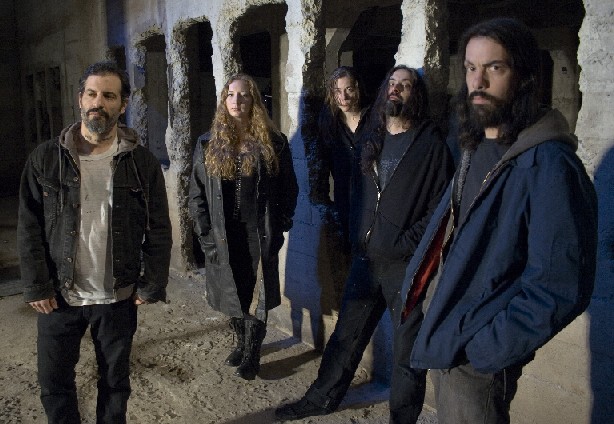
Thankfully, in the Bay Area, we’ve got a black metal band who couldn’t care less what the guarantors of kvlt (sic) purity have to say. San Francisco’s Ludicra hit stores with their fourth full-length today, and Tenant (Profound Lore Records) showcases an act at the height of their considerable powers, churning out organic-sounding, progressive black metal mixed with affecting, punk-rock humility. In place of frozen Norwegian rivers or blood-soaked Vikings, the album derives its themes from the eerie, uncanny, and horrifying aspects of urban living, as its title eloquently suggests.

Guitarists John Cobbett (also of Hammers of Misfortune) and Christy Cather favor warmer guitar tones of the type that won Wolves in the Throne Room so much critical aplomb, and they’re buttressed in this choice by the throat-shredding vocals of Laurie Sue Shanaman, which give the music a visceral, catharctic potency. Drummer Aesop Dekker is nimble if understated, and brings a welcome humanity to a genre that is generally so chops- and blast-beat-heavy.

The scything 6/8 riff that begins album opener “Stagnant Pond” is a harbinger of things to come, ascending into meditative chaos before giving way to the stately, mid-tempo blast that opens “A Larger Silence.” “In Stable” is the LP’s barn-burner, with its pulsing, black ‘n’ roll verse and massive ending build.

All of the album’s seven tracks are longer than five minutes, and two top nine, so it’s a testament to the Ludicra’s arranging talent that the songs breeze by as fast as they often do. Whether it’s a stop-on-a-dime meter shift or a clever bit of pagan-folk filigree, its hard not to be impressed by the band’s songwriting acumen. “Clean White Void” displays a notable NWOBHM influence, a stark contrast to the relentless blast beats on “Truth Won’t Set You Free” and the meditative chanting in the album-closing title track “Tenant.” Taken as a whole, the album is a gripping evocation of anger, fear, and sadness – what’s more black metal than that?

Who profits from ICE’s electronic monitoring anklets?

1

One of the many troubling things to emerge from the threatened deportation of the wife and stepsons of Muni bus driver Charles Washington is the extent to which the Department of Homeland Security (DHS) is using electronic monitoring bracelets to track immigrants–and is turning to private contractors to deliver these services.
Take the Washingtons’ case. Charles Washington told reporters that US Immigration and Customs Enforcement (ICE) told him they would release his teenage stepson, if his wife Tracey, went to ICE’s Sansome Street office in San Francisco and agreed to wear an electronic anklet (pictured below).

Tracey's anklet
Tracey Washington agreed to the deal, worried about her 13-year old son, who had spent close to a week in detention at juvenile hall, after he got into a fight at school over 46 cents, and who was now in the hands of federal immigration authorities. And she had cause to worry. The feds have been known to transfer teenage immigrants arrested in San Francisco to detention facilities in Florida, Virginia and Oregon, while their deportation is pending.
So, the Washingtons hurried down to Sansome Street to retrieve their son.  And, there Tracey Washington was given deportation orders for herself and her son, and an electronic monitoring device, which contains a GPS device to monitor her movements 24/7, was placed around her ankle.
Tracey says the device was too tight at first, and, though it has since been adjusted, wearing it makes her feel as if she has committed a serious crime. But so far, no one in her family has actually been found guilty of a crime in this Kafkaesque episode.
Instead, her 13-year-old son has been charged with felony robbery, assault and extortion, charges that sound serious but have yet to be adjudicated in a juvenile justice court, and that were made in the wake of a schoolyard fight, which did not involve weapons, after the parent of the victim called the police.
But these felony charges are the reason why a juvenile probation officer called ICE, who picked up the boy, and, within 5 hours, released him to his mother, once they’d locked an electronic monitoring device on her ankle.
As for the question of the Washingtons’ visa overstay, which is ICE’s grounds for the anklet, the couple say they called the US Citizenship and Immigration Service (US CIS), not once, but twice, two days after they got married in April 2009, when Tracey, who met Charles on vacation six years ago, was midway through a 90-day visa waiver.
The couple say they were given misinformation on the phone about the urgency of applying for a green card, and that’s how they came to be only at the beginning of that process when their son got nabbed—a lag that Charles Washington attributes to the time it took for his family to save up the thousands of dollars that green card applications cost.
And apparently there is no way for the Washingtons or the US government to verify what happened when the couple called US CIS, and spoke to an operator. US CIS spokesperson Sharon Rummery told the Guardian that it is impossible to ascertain if a contractor with the US government misinformed the family.
‘I can’t say that it’s true or not, because it was a private conversation between one of the operators who works on our customer service line,” Rummery said. “Our operators are highly trained and are backed up by our trained officers,” Rummery continued, confirming that the operators are contractors, not US CIS staff.
Either way, Tracey Washington is left wearing an anklet. And as a hard-working, bus-driving US citizen, her husband Charles is not pleased that his tax dollars are being put to use in a way that leaves his wife stressed and feeling like a criminal.

“It’s my belief they are wasting tax payer money,” Washington said, eight days after US ICE granted his wife and stepson 60-day deportation reprieve. “With all the publicity this case has received, and the fact that our green card application has been sent in, I don’t see why she needs to be on the anklet. Everything that immigration has requested, we have complied with.”

So, just how widely spread is the use of anklets to track immigrants?

In 2002, federal immigration authorities created a $3 million Alternatives to Detention (ATD) program, to ensure that “aliens released from detention appear for their court hearings,” according to a 2010 ICE report.Fast forward to 2010 and the program’s FY 2010 budget is set at $69.9 million.
And somewhere along the way, the program began requiring immigrants who are in the process of applying for residency to wear electronic monitoring ankle bracelets 24/7—a requirement otherwise reserved for rapists, child molesters and other convicted criminals on parole.
This pilot program, which began in eight cities, including San Francisco, has since grown to a nationwide multimillion opportunity for contractors and now involves at least 30 cities: Atlanta, Charlotte, Baltimore, Boston, Hartford, Buffalo, Chicago, Kansas City, Dallas, Denver, Detroit, El Paso, Houston, Los Angeles, Delray Beach, Miami, Orlando, Newark, New Orleans, New York, Philadelphia, Phoenix, Portland, Seattle, San Francisco, Salt Lake City, San Antonio, San Diego, St. Paul and Washington.
In July 2009, DHS/ICE’s office of Detention and Removal Operations (DRO) awarded a $372 million, 5-year contract to BI Incorporated, a Boulder Colorado-based company, to provide support services for its Intensive Supervision Appearance Program  (ISAP) 11, as the federal government previously called its electronic monitoring program.
G4S Government Services of Atlanta, Georgia, which held the previous ISAP’s pilot contract, and put in a S489 million bid for ISAP 11, protested the BI award, arguing that DHS’ evaluation and BI’s price proposal were “unreasonable.”
Either way, DHS’ “statement of work” documents, which were posted online as part of that contract bid, suggest that ICE plans to use ATD on an even wider basis, in future.
“Approximately, 32,000 persons are held in secure detention by DRO each day,” the contract’s statement of work (SOW) section states, noting that this figure includes “aliens in the United States who are in violation of the Immigration and Nationality ACT (INA) who pose a threat to community safety, national security, and/or may be a flight risk, in addition to those aliens required to be detained under specific provisions of the INA.”
“Limited detention capacity and an increasing detainee population coupled with the need to lower alien absconder rates have sparked national efforts over the past several years to integrate into DRO’s general practices the use of various alternatives to detention for aliens who do not require mandatory detention in accordance with the INA,” the contract continues. “Alternatives to detention offer the prospect of a considerable cost savings over secure detention for eligible aliens.”
“Depending on available funding during the execution of the ISAP 11 contract, DRO intends to expand its ISAP coverage,” the contract notes. An attached appendix shows a list of 165 cities in which the program would operate nationwide. In addition to San Francisco and Los Angeles, California cities on the list include Bakersfield, San Diego, El Centro, Fresno, Imperial, Lancaster, Lompoc, Sacramento, San Jose, San Pedro, Santa Ana, Stockton, and Ventura.
Under the current contract, BI was expected to be fully prepared with sufficient staff and equipment to fulfill all statement of work requirements for 16,750 ISAP II slots, within two months of assuming control of the program. San Francisco was expected to fill 850 of these slots, putting it in fourth place behind Los Angeles (3,400 slots), New York, (1,500 slots) and Washington, D.C., (1,025).
And by the end of the five-year contract, the numbers of slots are expected to rise to 27,237 slots—a 10,487 increase, along with a steady increase in participating cities. Under those estimates, San Francisco is expected to have 957 slots five years from now,
The federal government touts ISAP, which relies on telephonic reporting, unannounced home visits, and regular face-to-face interviews, as well as electronic GPS monitoring devices, as a “cost-effective alternative to detention for aliens being processed through the Immigration Court system.”
ICE’s Lori Haley stressed that the program, with its focus on alternatives to detention, is part of the department’s “commitment to immigration reform.”
“Our mission is to ID non-citizens here without legal status and move them through the immigration process how the court sees fit,” Haley said.
She also stressed that the anklet program is preferable to detention and is suitable for folks with families who are not posing a danger to their community.
“We also found that as people get closer to the conclusion of the process, they may need a stronger level of monitoring,” Haley added, alluding to the reaction of folks on realizing that they are going to be deported after all.
These statistics paint a perhaps surprising picture to the average American, who likely wasn’t aware that there are thousands of immigrants in the US, who haven’t committed a serious crime, yet are walking around wearing these onerous, privacy-invading devices, hidden beneath their pants, or while they shower, or go to bed, while they await a ruling from the courts on their request to stay here permanently.
And these numbers are only going to grow bigger, if ICE has its way.
“Depending how long an alien remains in the ATD program and the number of individuals enrolled in the ATD program, implementing ATD nationwide would require between $88 million and $513 million,” ICE stated in its 2010 report to Congress. “The most realistic scenario for expansion requires a reduction in the average length in the ATD program to 180 days, down from the current average of 310 days. Reducing the average length on the program requires significant coordination within the Department of Justice, Executive Office for Immigration Review.”
“310 days in an anklet” sounds like the name of a funny film. Unfortunately for the 800 people in San Francisco, including Tracey Washington, who are apparently walking around wearing these devices in any given year, the situation is not funny, but it is all too real. And is this really the way to reform the federal immigration system in a humane and meaningful way?

Appetite: Scotch dreams come true

1

For someone whose every day is a taste adventure, I will say a recent, private Russell’s Room tasting at Bourbon & Branch of Highland Park scotches was one of the most memorable I’ve ever been privileged to be a part of. There were only two such tastings in the country: here and in New York. I felt lucky to be one of less than 10 around the table (and only 2 women – scotch remains predominantly a man’s world?) tasting HP’s awesome 18, 25, 30 and 40 year scotches. But the magnificent centerpiece was a just-released, $3999 per bottle, limited-edition 1968 vintage. 

At Whiskyfest last year, HP’s 30-year was among my favorites. To take it two steps further (the 40 year alone is a $2000 per bottle imbibement), was my Scotch dream come true.

HP brand ambassador, Martin Daraz, is a charming, hilarious host. Add in pairings from cheese guru, Wil Edwards, of SF Cheese School, and it was unforgettable. All five cheeses were thrilling, from a gorgeous, balanced Abbaye de Belloc, produced by Benedictine monks, to the butterscotch notes of Saenkanter Gouda. Who could choose favorites among such uniquely different cheeses? I couldn’t believe the grainy, melt-in-your-mouth intensity of a goat’s milk Bleu du Bocage… surprisingly, it did not overpower HP’s 25-year scotch. Isle of Mull Cheddar (from Scotland, naturally), is a memorable ivory-colored cheddar made from happy cows who’ve been ingesting spent whiskey grain. If this is an example of the wide-reaching range of cheeses Wil can lead you through, I’d sign up for one of his classes at the Cheese School now.

Back to Highland Park’s ‘68 vintage… it literally defined “smooth”, with a gentle sweetness, refined toasted oak notes, and hints of spice. I don’t know how else to describe the finish other than that it keeps going. One layer unfolds after the other… as I was in conversation after our last glass, wave after wave of flavor continued to roll over my tongue. If you ever get near a bottle, taste and consider yourself lucky.

Willie Brown to speak in favor of Prop 16 tomorrow

A public forum will be held tomorrow at the California Public Utilities Commission to discuss Proposition 16, the ballot initiative that PG&E is bankrolling in order to require a two-thirds majority vote before any municipality can become an electricity provider.

The Guardian has received word that former San Francisco Mayor Willie Brown will be speaking in support of Prop. 16. We initially heard that he would be speaking on behalf of the California Chamber of Commerce, so we placed a call with the COC to verify whether that was the case. That prompted Robin Swanson, spokesperson for the Yes on 16 Campaign, to call and clarify that Brown is speaking on his own behalf. “He’s just speaking in support of Prop 16,” she said, speculating that maybe he was interested in the issue due to his own experience in local government.

Willie Brown formerly worked for PG&E providing “consulting services,” according to a 2007 annual report.
When asked whether Brown was approached by either PG&E or the Yes on 16 Campaign to speak in support of the initiative, Swanson said, “I don’t know how that came about.”

We placed a call to Brown to ask him directly, but haven’t heard back yet.

The public forum, which will begin with a press conference on the steps of the CPUC building at 505 Van Ness, will be held from 1 p.m. to 5 p.m. Additional information can be found here.

Editorial: Who wins with the Transamerica condos?

4

The developers aren’t offering to build something that will create permanent jobs for local residents. They want a huge favor from San Francisco: they want the city to ignore its own planning rules, ignore its park-shadow ordinance, and hand over a piece of city street, just to make their project more profitable.

EDITORIAL  As the Planning Commission prepares to vote March 18 on a pointless and overly large condominium complex next to the Transamerica Pyramid, let us take a moment to look at who would benefit from the project’s approval.

The project sponsors, Aegon USA and Lowe Enterprises, would get the right to shadow public parkland, turn a city street into a private parking garage, and construct a project far beyond the allowable height for the location. They’d construct 248 luxury condos, which the city doesn’t need and will do nothing for the housing crisis. The developers would also make a lot of money on the deal; that’s why they want spot zoning to double the allowable height. When it comes to these sorts of projects, taller is more profitable.

And the two companies asking for these civic favors aren’t exactly San Francisco outfits that share the city’s values.

Aegon is a giant insurance and finance company based in the Netherlands that bought out the local Transamerica Company in 1999. The money Aegon makes on the deal won’t stay in San Francisco; even Aegon’s American subsidiary doesn’t have a home office here.

The company’s PAC is a major contributor to Republican causes and candidates (although some Democrats get money, too, particularly the likes of Sen. Blanche Lincoln of Arkansas, one of Aegon’s top-dollar friends, who is among the main reasons the Senate won’t pass a public option for health insurance). And over the past 10 years, Aegon PAC has contributed $39,500 to Lifepac, a Columbus, Ohio-based anti-abortion group.

Then there’s Lowe Enterprises, based in Los Angeles. The company’s chairman, Robert Lowe, and his employees were among Arnold Schwarzenegger’s top donors, with a whopping $159,500 in contributions to the Republican governor. Lowe is also a big supporter of Meg Whitman’s campaign for governor, and is on her finance committee.

So here we are in Democratic San Francisco, with a mayor who will be running on a Democratic ticket for statewide office (and a mayor, by the way, who loves to talk about supporting small local business and keeping money in the local economy) preparing to give a huge financial gift to a pair out out-of-town companies that share their wealth with right-wing Republicans.

Of course, it’s no surprise that a real estate developer would support Republican candidates — and it’s no surprise an insurance company would be working against health care reform. And if the city granted or denied building permits based on the politics of the applicant, there’d be serious legal consequences (and there should be). These things ought to be decided on the merits; developers who contribute to Democrats (like the Shorenstein Company) deserve the same scrutiny as the ones who give to Republicans.

But this isn’t a typical development deal. Aegon and Lowe aren’t asking for a permit for a project that meets the current zoning laws. They aren’t offering to build something that will create permanent jobs for local residents. They want a huge favor from San Francisco: they want the city to ignore its own planning rules, ignore its park-shadow ordinance, and hand over a piece of city street, just to make their project more profitable — and to give them more money that can go to opposing health-care reform and opposing abortion rights and electing right-wing Republicans. And they’re offering the city nothing in return.

On the merits, the project richly deserves to be rejected. The only reason to approve it is to grant a civic boon to a bunch of out-of-town corporations that ought to be embarrassed to be asking a favor from San Francisco. And the Planning Commission should be embarrassed to consider granting it.

Oakland’s Camaron Ochs may inspire folk-pop Barbie

1

Big blonde hair, rosy cheeks, and an adorable little frame … folk-pop songstress Camaron Ochs — who’ll be performing Wed/17 at Cafe Du Nord — is a doll. Coincidentally, she is also being stalked by one— the Oakland singer-songwriter has seen quite a lot of Barbie in the past year, the long plastic limbs have been spotted at two East Bay venues where Ochs took the stage: the Stork Club, where the bar is decorated with stacks of cased holiday Barbies and Mama Buzz, the coffee shop/art gallery that hosted an art exhibit of the dolls in adult-style dioramas.


“There’s a Bat Girl Barbie at the Stork Club and I want it,” she says with a warm smile. “And I really liked the Barbie on the unicorn at Mama Buzz.”

Besides the constant grin, Ochs has nothing in common with her 11.5-inch stalker. An extensive travel record and a day job as a lab manager for emotion research means this pretty lady’s personality is far from plastic. Ochs’ brand of folk-pop is light and sweet, with genuine lyrics that ask listeners to live with their “heartforward”; a term Ochs coins as her philosophy on life and the title of her debut album. 


“I came up with the term when I was living in Nepal. I was learning all about the seven chakras— the heart is the fourth,” she explains at a coffee shop in her sunny Temescal neighborhood. Skipping a few details, Ochs summarizes that being ‘heart forward’ literally means setting yourself up to take in the endless possibilities that surround us. “It’s about putting yourself out there, not just in a romantic sense, but in a life-sense.”


Bright guitar strums and a beautiful, rich voice flutter throughout Ochs’ songs, lyrics exploring relationships and offering insightful snapshots into lessons she’s learned while visiting cities around the world. Inspiration stems from other indie-folk blends, like The Weepies and yet also carry a more country tone, like that of her other favorite artist, Patsy Cline. There’s an audible optimistic bliss in her music and an honest indication that the woman behind the strings is a solid, well-rounded being. 


Born a California girl, Ochs grew up with an interest in music, taking notes from her grandparent’s love of classic country and learning to sing in multiple languages. In college Ochs started her own A Cappella group, but it wasn’t until her study abroad experience in the Netherlands that she picked up a guitar. 


“I decided to do the college thing— get a guitar. But I wasn’t any good at it. I would play on the streets of Amsterdam and then I even tried to sell it on the street, but no one wanted it.”


Eventually she gave it to a boyfriend and headed back home. A few months later, Ochs realized she missed her box of strings. 


“So I borrowed a backpacker, basically just the neck of a guitar without the body, and brought it with me into the mountains of Nepal.” The trip included a flight over Kathmandu, a six-hour bus ride, five hours in a taxi and a ten-hour walk straight up into the mountain to where she would take residency for the next six weeks. 


A girl on her own in a foreign land, Ochs had no choice but to keep an open mind and her ‘heartforward.’


“The first two weeks, I cried and cried. All I could focus on was how much different everything was there,” she says recalling the trip. “And then I realized that when you strip away everything you’ve ever had in your entire life, that’s when you see what you really are and who you really want to be.”


She met a couple of traveling Canadians and together they would play music, battling the inconsistent electricity with late night guitar parties. Building on that experience and developing her own relationship with the instrument once she returned home, Ochs is now playing confidently and taking on stages across the Bay with a full band. She couldn’t have been happier when her CD release party sold out. 


“I think I’m really lucky. But I’m working really hard, so I guess it’s really not luck afterall.”


Camaron Ochs

Wed/17, 8:30pm, $12

Café Du Nord

2170 Market, SF

www.cafedunord.com


Steve Poizner is scary!

10

I knew that Republicans have gotten pretty loony these days, but gubernatorial hopeful Steve Poizner was downright scary in his debate with Meg Whitman yesterday, threatening to create racial unrest and bankrupt the state in the name of being more conservative-than-thou.

He wants to deny all public services to undocumented immigrants and chided Whitman for not currently supporting Prop. 187, the 1994 measure that was struck down by the courts as unconstitutional. And after correctly saying California was “on the brink of economic collapse,” he went on promote that collapse by calling for a 10 percent reduction in sales, corporate, and income taxes, which really would bankrupt a state government that is already wrestling with a multi-billion-dollar budget deficit.

Now, I know that he’s pandering to the right-wing lunatic fringe of California, where Republicans are less than a third of voters and shrinking, and they’re all riled up these days from drinking too much Fox-brewed tea. But damn, this guy has really lost his mind.

Hot sex events this week: March 17-23

0

Break out the green latex, St. Patty’s day has unleashed an Irish car bomb of sex events. So whether you’re in the mood to perfect your rub skills, bid high for a quality sub, or land you a chubby hubby, the following events will have you dancing a jig. You know, a sexy jig.

Sex Workers’ writing workshop

No matter if you’re out on the street or breathing heavy on the phone line, if you’re a sex worker, you have a story to tell. Learn the skills you need to bare all (on paper) in the supportive environment of this regular workshop at CSC.

Wed/17 6-8 p.m., $10-20 sliding scale

Center for Sex & Culture

1519 Mission, SF

(415) 255-1155

www.sexandculture.org

– – – – – – – – – – – – – – – –  

Discover the Beauty of your Body: the “Ins and Outs” of Female Masturbation

Breath: essential to life, a calming force, an orgasm upgrade. Learn how your breathing can enhance your self lovin’, and get the inside scoop on technique, toys and ambience from Good Vibes staffer Lolo Winters.

Wed/17 8-10 p.m., $25-30

Good Vibrations

603 Valencia, SF

(415) 522-5460

www.goodvibes.com

– – – – – – – – – – – – – – – –  

Kumimonster’s St. Patty’s Day Massacre

Fetish muse Kumimonster is celebrating her birthday in style- she’ll be performing the American debut of her new bondage routine with Midori and will be accompanied by a full slate of aerial performers, burlesquers and all manner of fetish pleasing wonders.

Wed/17 8 p.m., $10-20

Glas Kat Supper Club

520 4th St., SF

(415) 495-6620

www.glaskat.com

www.fetishmuse.com

– – – – – – – – – – – – – – – –  

Kinky Knitters

So at long last your crocheted ball gag is almost ready- you just can’t figure out that last drop stitch. Blast! Never fear, for this naughty sewing circle at SF’s sex positive coffeehouse assembles just the crafters to ask.

Thurs/18 7-10 p.m., free

Wicked Grounds

289 8th St., SF

(415) 503-0405

www.wickedgrounds.com

– – – – – – – – – – – – – – – –  

Master’s Den Auction

Stefano and Chey, SF’s “king and queen of the perverts,” supervise this male dom- female sub playground, which begins with separate briefings for the sexes on protocol, and features an auction of lovely lady submissives up for sale to their most compatible master.

Fri/19 7:15 p.m.-1 a.m., $20-30

SF Citadel

1277 Mission, SF

(415) 626-1746

www.sfcitadel.org

– – – – – – – – – – – – – – – –  

Jamie Gillis memorial

Jamie Gillis’ memory won’t be fading anytime soon. The 470 pornos he acted in over the course of his life- not to mention his kinky and gonzo directing credits- pretty much guarantee that, but that’s no reason to miss this weekend’s tribute to the man. Bring your video clips and memories to share.

Sat/20 3-6 p.m., free

Center for Sex & Culture

1519 Mission, SF

(415) 255-1155

www.sexandculture.org

– – – – – – – – – – – – – – – –  

Big

Big boys get their due at this monthly party, where the jelly bellies and the boys that love them mix and mingle. Plus, the first half of the night is happy hour!

Sun/21 6-11 p.m., $5

Stud

399 9th St., SF

www.studsf.com

www.phattestevents.com


On excessive usage of flat screens and greased up women

0

It’s a good week for hip-hop. After my interview with Chilean rapera Ana Tijoux, I caught this vid, thanks to the homeboys over at Mission Mission.

So thanks to you, Seattle based beat box yuckster Reggie Watts, for reaffirming my sense that hip-hop is alive, well, and still has a sense of humor about it all. In this video, he releases an extensive daisy chain of expletives onto walls and into glass bowls, then nicely illustrates and explicates the consumerism and chauvinism in mainstream rap/muck. It’s nice, you’ll like it.


Behind the Mexican drug war

1

Editors note: The killings of three U.S. consular employees in Ciudad Juarez has brought increased press attention in this country to the violence of Mexico’s drug gangs.  Our Mexico City correspondent, John Ross, reports on the background story.

MEXICO CITY – Last July, in a meticulously planned raid reminiscent of the classic guerrilla jail breakouts that are legend in Latin America, a commando force of 20 heavily armed fighters freed 53 comrades from a prison in the northern state of Zacatecas. Were the perpetrators in fact guerrilleros from some as-yet unknown revolutionary foco or narcos emulating a guerrilla-style jailbreak intent on freeing their own?


Recent assassination attempts against high-ranking state officials — Sinaloa’s Secretary of Tourism (successful), Coahuila’s Attorney General (the restaurant at which he was dining with a Texas mayor was sprayed with automatic weapon fire), and a Baja California finance undersecretary (hung by the neck from a Tijuana freeway overpass) — suggest revolutionary retribution in a year that marks the 100th anniversary of the Mexican Revolution in which jitters of new uprisings are legion. January 1st was welcomed in with anarchist bombs, sabotage, and “expropriations” in Mexico City and Tijuana on the northern border.

Although the incidents cited suggest revolutionary subversion, they were all the handiwork of Mexico’s five narco cartels, which are locked in an intractable war with both President Felipe Calderon’s military and federal police — and reportedly hundreds of U.S. drug warriors — that has now taken more than 19,000 lives since December 2006.

The jail breakout in Zacatecas and the Sinaloa and Coahuila shootings are attributed to the syndicates headed by Joaquin “El Chapo” Guzman, his former associates in the Beltran Leyva gang, and the notorious Zeta cartel.

The hanging of Baja California state finance official Rogelio Sanchez Jimenez was charged to a blood-drenched capo Teodoro Garcia Simentel, a.k.a. “El Teo” or “Three Letters” who is deemed responsible for hundreds of hangings, beheadings, and excessively violent homicides — an associate, Santiago Meza (“El Pozalero”) has reportedly confessed to dissolving 300 victims in vats of acid. Most of the victims were allies of the fading Arellano Felix clan, with whom El Teo is contesting Tijuana.

Simentel was captured this past January 14th in an upscale residential neighborhood of La Paz in adjourning Baja California Sur state, the second top-rung narco purportedly taken down by Mexican authorities in a month. The bust earned bouquets of kudos from Washington, which is financing Calderon’s drug war under the $3,000,000,000 Merida Initiative.

The U.S. role in the capture of El Teo and Arturo Beltran Leyva, “the Boss of Bosses,” who was gunned down by Mexican marines December 16th, appears to have been purposefully downplayed. According to an unidentified member of Calderon’s Security Cabinet as reported by Gustavo Castillo, a La Jornada correspondent with exceptional sources, Simentel was located by the U.S. Department of Homeland Security’s Immigration & Customs Enforcement, a first indication that ICE is now being deployed in Mexico’s drug war.

The Drug Enforcement Administration and the FBI are also thought to have armed agents on the ground here under provisions of the Merida Initiative and the North American Security and Prosperity Agreement.    

The Calderon government vehemently denies that participation of U.S. agents led to the capture of El Teo or Beltran Leyva, although it acknowledges enhanced cooperation between the two nations’ drug fighters. The suggestion that Washington has assets on the ground here is not acceptable to many Mexicans, whose country has been repeatedly invaded and even annexed by U.S. troops, and is regarded as a violation of national sovereignty.

The number of U.S. security agents working in Mexico is closely held, but observers of Washington’s presence here such as specialist Jorge Camil affirm that it has been rising dramatically since the 9/11 terror attacks on New York and Washington and now totals in the hundreds. The DEA and the FBI now have offices in provincial capitals such as Tuxtla Gutierrez Chiapas, close to the Guatemalan border and multiple smuggling routes.

Mexico is not only in the crosshairs of the U.S. security apparatus because of the flourishing drug trade — the infiltration of terrorists across the porous border also excites attentions, although all reported incidents to date have proven to be false alarms.

Of increasing interest to Washington is the possible alliance of narco gangs with Mexico’s fledgling guerrilla cells, an interpolation of the Colombian model.

The concept of narco-guerrilla coalescence was first proffered in the mid-1980s, soon after Ronald Reagan officially proclaimed the War on Drugs. Then-veep George H.W. Bush, a Navy man, was placed in charge of overseeing interdiction efforts in the Caribbean to stop the Colombian cocaine flow into the southern United States.

Under Bush’s watch, intelligence reports placed the onus on the Marxist-Leninist Revolutionary Armed Forces of Colombia (FARC), the Army of National Liberation (ELN), and M-19, a left nationalist movement later decimated by the Colombian army, for extending protection to such world-class kingpins as Pablo Escobar.

The truth was, however, more diffuse: paramilitary units such as the United Auto-Defenders of Colombia (AUC) armed by right-wing rural “terratenientes” (rich land owners) and the Colombian military were the big players in the so-called “narco-guerrillas,” although several FARC fronts openly provided protection to the druglords.

The narco-guerrilla thesis eventually became the underlying reason d’etre for Plan Colombia, in which the twin wars on drugs and terrorism were married. Since the late 1990s, Washington has pumped billions into Colombia to sustain this counter-insurgency strategy. The Merida Initiative, signed in that Yucatan city by George Bush and Felipe Calderon in 2007, is often referred to as Plan Mexico.

As recipients of billion-dollar boodles in U.S. drug war largesse, Colombia’s Alvaro Uribe and Mexico’s Calderon are Washington’s most significant allies on a continent where the left has taken power in a majority of countries.

Today, despite a decade of Plan Colombia, Colombian cocaine production has held steady and the FARC ranks as Latin America’s most powerful narco-guerrilla group. Although Mexico has no known counterpart, FARC activities here are closely monitored. FARC offices were shuttered during the presidency of Vicente Fox (2000-2006) — the FARC and Colombian president Andres Pastrana entabled negotiations in Mexico City in the 1990s.

A Colombian-born National University graduate student was deported to Bogotá last year on terrorism charges for sympathizing with the FARC, and Uribe has issued extradition warrants for a Mexican student who survived the bombing of the Ecuadorian jungle camp of FARC leader Raul Reyes (not his real name) in 2008.

One connection: FARC operators are said to consort with the Valle del Norte Cartel, the main Colombian supplier for El Chapo’s Sinaloa Cartel. A purported 2007 jungle tete a tete between Reyes, and an unidentified cartel representative suggested the possibility that the Sinaloa boys would buy cocaine directly from the Colombian rebels rather than deal with a series of middlemen suppliers.

Mexico’s armed leftists take pain to steer clear of association with drug gangs. Military intelligence first identified the Zapatista Army of National Liberation (EZLN) as drug and gunrunners on the Guatemalan border, an estimate said to have been backed up by CIA satellite overflights. The Zapatistas have dodged the stigma by waging a vigilant crusade against drugs in their autonomous communities in southeastern Chiapas. Cultivation of marijuana by militants is severely punished by banishment from the EZLN. Nonetheless, the Mexican Army has repeatedly stormed into Zapatista villages on the pretext of marijuana patch sightings.

Mexico’s homegrown guerrilla bands have their roots in the north of the country where this distant neighbor nation’s 1910-1919 revolution first germinated. Revolutionary martyrs Francisco Madero, Pancho Villa, Venustiano Carranza, and Alvaro Obregon were all northerners who marched their armies south to seize power. In 1965, Arturo Gamiz, a disaffected rural schoolteacher, and 12 rebels laid siege to army barracks in Ciudad Madero, Chihuahua; all were killed in the assault. Six years later, the September 23rd Communist League based in the northern industrial city of Monterrey took its name from the date of the assault; 15 armed groups of which the September 23rd league was the most prominent operated throughout Mexico in the 1970s. The Forces of National Liberation (FLN), also based in Monterrey, gave birth to the EZLN in Chiapas. A sister guerrilla group, the Villista Army of National Liberation in Chihuahua, was never consolidated.

Conditions in the north of Mexico where both the narco cartels and the military concentrate their forces are propitious for a resurgence of guerrilla activity.

Unemployment in the region, driven by the decline of the maquiladora industry (many assembly plants have moved to China), is at a 15-year high. The rural economy has been eclipsed by neo-liberal adventures such as the North American Free Trade

Agreement and the deepening recession, the worst in 80 years, is forcing campesinos to abandon their land. A hundred years ago in this vast, mineral-rich region of deserts and scarred mountains, landless peasants and displaced farmers formed the nucleus of Pancho Villa’s revolutionary army.

In 2010, many survive the economic crisis by turning to drug cropping — a half million Mexicans are said to earn their living in the drug economy. One indication of increasingly close ties between militant farmers and the drug cartels was the slaying of Margarito Montes Parra, longtime leader of the leftist UGOCEP (General Popular Union of Workers and Farmers) who was ambushed by cartel gunmen in Ciudad Obregon last fall.

Widespread human rights abuses by federal troops who combat the narcos along the northern border has provoked a wave of anti-army, anti-government anger in many northern states and conditions for a Gamiz-like assault on military installations cannot be discounted should drug gangs and armed radicals find common cause.

For prospective guerrilla formations, alliance with narcos has its perks: weapons and money. Both the narcos and the radicals are interested in subverting the state, although their motives may be distinct. For anti-imperialist revolutionaries, poisoning the Yanquis with drugs is a weapon of class war. But negatives abound: everything the cartels touch is corrupted by profit-driven mercantile greed that is at odds with revolutionary ideals, although there are always those who will argue that the end justifies the means.

For Homeland Security and Washington’s security apparatus, the nightmare prospect of a coalition of narcos and guerilleros cruising the border is reason enough to sustain agents on the ground south of the border whether or not Mexican authorities are prepared to admit their presence. Indeed, this January, Obama’s Justice Department announced the merger of its International Terrorism and Narcotics investigation units to prepare for just such an eventuality. The vision of Mexico as a potentially failed narco-state advanced by the Pentagon and the Joint Chiefs of Staff in a 2008 evaluation is a five-star national security issue for Washington and the option of a U.S. preventative invasion is always on the table.          

John Ross continues to slog across Obama’s America now in the second month of his monster book tour with “El Monstruo – Dread & Redemption In Mexico City” (“gritty and pulsating” – NY Post.) The author will be in Madison Wisconsin, Traverse City, Grand Rapids Michigan and Chicago (Heartland Café March 31st) during the final two weeks of March.  Consult johnross@igc.org or www.nationbooks.org for local dates.

Music for all those left behind by SXSW

0

The rapture that is South By Southwest has taken all that’s good and pure to Texas for Austin’s week of non-stop music, showcasing bands that have descended from the heavens themselves. Reading this post means you too have been left behind, your friends, family, music store clerks and critics disappeared over the weekend and didn’t even bother to leave you a mix-tape. Thou shall not fear, my friends. Austin may be wining and dining some of your favorite bands this week, or maybe each and every goddamned one, but thank the Lord San Francisco has your best interests at heart with plentiful options for entertainment.


Cheer up, my child and in the name of SXSW, expand your horizons and enjoy a new genre each night of this week. Amen.

MON/15
Get Hustle
Passionately chaotic, Portland’s Get Hustle lets their guitars run wild, tearing up the neighborhood with sharp, scissor-like vocals, psychedelic keys and erratic percussion. They are slightly scary, possibly foaming from the mouth, and definitely ready to bite. 9pm, $10, Elbo Room

TUES/16
Shotgun Wedding Quintet
This week’s Jazz Mafia night at Coda features The Shotgun Wedding Quintet, a 5-piece blend of jazz and rap that pays homage to the art of improvisation and the days when San Francisco was Mob-run and wild. 9pm, $7, Coda

WED/ 17
Madam and the Ants
The night is intended to be a salute to Irish Bands of the ‘80s and this San Francisco Adam and the Ants tribute band will bring you right back to the new-wave, post-punk era with a sassy front woman and band of fury. 7:30, $5, Make-Out Room

THUR/18
My Barbarian
Somehow this L.A.-based band promises a rock opera of choreographed dances and finely tuned numbers about cross-dressing sailors, mermen, pagan rites in the desert, and all kinds of politics with flamboyant flair. 9pm, free with museum admission, SFMOMA

FRI/19
Groove Armada
An electronic music duo that isn’t afraid to mix in a little funk. It’s been over a decade for the UK DJs and they’re still hard set on making you dance in slow-motion form. 9pm, $30, Fillmore

SAT/20
Rosin Coven
Rosin Coven are the ‘World’s Premier Pagan Lounge Ensemble” hailing from Oakland with a small string orchestra, a few horns, lots of hats, great mustaches, and feather embellishments. A carnival full of kink. 9pm, $15, Café Du Nord

SUN/21
Marabelle Phoenix
Marabelle Phoenix strums light and sets the perfect Sunday night mood with rusty tones and porch-friendly lyrics. 9pm, Bluesix Acoustic Room

U.S. Census begins, officials work to quell fears

14

By Adrián Castañeda

Federal Census forms are being mailed out today, March 15. It’s a massive government effort to count everyone who lives in the United States that comes every 10 years, and it’s being matched by an equally strong effort by nonprofit groups to ensure that even marginalized residents get counted.

In a country that once counted slaves as 3/5 a person and did not count Native Americans at all, it appears that the 2010 census will come the closest to counting all people living in the U.S. Millions of dollars are being spent to inform people of the importance, and the function, of responding to the decennial census – and saving the feds from spending further millions on door-to-door enumerating. 

Among other things, the population count is used to determine the apportionment of public funds to various communities and of seats in the U.S. House of Representatives. Despite all the immigrant-bashing by right-wingers who claim to revere the U.S. Constitution, that guiding document requires that all persons, not just citizens, be counted. It is for this reason that special care is being taken to include the historically undercounted communities such as low-income families, non-English speakers, and immigrants both undocumented and documented.

For Alex Darr, office manager of the San Francisco census office that covers all of the Mission and Bayview districts, the task is difficult but familiar. A veteran of the 2000 census, when some estimates say as many as 100,000 San Francsicans were not counted, Darr says the census has evolved in both form and execution. 

What used to be a multi-page document with as many as 52 questions per person has now been whittled down to just 10. “Ten questions in ten minutes, we like to say around here,” says Darr. The questions are of the most basic sort, requesting the age, sex and race of every member of a household. It does not ask about citizenship. Even more reassuring to immigrants, 2010 is the first census that will be available en Español. Spanish language forms will be arriving in the Mission, but that and the laws that require participation may not be enough to encourage people to respond.

 The U.S. Census Bureau is actively recruiting bilingual speakers to work in the Mission and educate residents of the importance of the census for things like social services and infrastructure. Employing residents of the area, Darr says, will reassure people that responding to the census is not a risk when census-takers begin knocking on doors in late May because, “it’s easier to hear this from your neighbor.”

A document released by the census bureau estimates that for each percentage point of the population that does not return its census form by the April 14th deadline, the government will spend $80-90 million sending out census-takers to visit homes. Darr says that his office’s efforts will, “save [residents] some trouble, save the government some money as well.” San Francisco’s census-takers, with a starting salary of $22 per hour, will be among the highest paid in the country.

In addition to the boost in recruitment, Darr’s office has teamed up with a variety of community organizations to form the Mission Complete Count Committee and build on the existing relationships with residents. Rosario Anaya of the Mission Language and Vocational School (MLDS) says students at the center are being urged to pass on information about the census to their families and the building is being used as a training center for census workers. Anaya says the response has been good but there is hesitation. Some residents have told her, “We get counted but there’s no services coming back to us.”

Joel Aguiar of the SF Day Laborer program says his group trained day laborers and domestic workers to go out and engage their friends in discussion about the census. “When they think of the census, they’re not going to think of somebody knocking on their door,” Aguiar says of their program. Many of the workers are worried that by responding to the census, they would put their housing at risk by inadvertently revealing to the landlord or housing authorities how many live in their crowded homes.

But Aguiar says the laborers found that, “really a lot of their fears are unfounded.” Many of the community groups in the Mission will also be hosting Questionnaire Assistance Centers starting March 19th, with multilingual staffs to help anyone who needs help filling out forms. Information on individual QAC sites and much more on the census will be printed in El Tecolote’s late March issue.

MLDS is one of several groups who participated in conjunction with the city and the SF Recreation and Parks Department in a community soccer tournament over the weekend at Garfield Park. The tournament featured both adult and children’s teams representing the various social justice groups as well as a team fielded by the census bureau. Aguiar says the soccer games strengthened the census education effort by “associating it with something which is already a community event.”

The Mission is also home to a number of single room occupancy hotels, or SROs, that are another community that was vastly undercounted by the last census. “Many SROs don’t have buzzers, have absent managers, or have managers who will not let us in,” says Kendra Froshman of the Mission SRO Collaborative. In response, the Mission SRO has joined a citywide coalition formed by the Community Housing Partnership to push for legislation that would change SRO visitor policies to allow census workers to enter.

The Mission is not the only area on Darr’s agenda. While citizenship is not a major issue in Bayview-Hunter’s Point, investigation into the low mail-back rate after the 2000 census found that many residents did not return their forms simply because they did not have a mailbox on their street. It remains unclear if mailbox distribution is one of the many things the government uses census data to calculate, but for the 2010 census, the Postal Service and the Housing Authority have set up various locations in the neighborhood where people can drop off their completed forms to be mailed.

“We are starting at a new beginning point for people to understand the importance of being counted,” Bayview Census representative Omar Khalif says of the outreach effort he has been working on since last July. Khalif attributes the low return rate to misinformation, saying many of the people in the area are hesitant to divulge personal information to the government despite being on government assistance and living in government housing.

As part of the effort, many different groups, such as the SF Housing Development Corporation, have come together to form the Bayview Complete Count Committee and host a series of community events such as a Gospel feast on March 28, giving residents a chance to win prizes for turning in their forms early. Flyers posted in community centers urge residents that being counted could mean thousands of government dollars in funding for their neighborhood. Working with all the established groups has given the census office better access to an often-disenfranchised community, Khalif says: “This is something that benefits us as a whole.”

The first census since the 9/11 attacks and the federal government crackdown that followed has many has many people understandably worried about giving too much personal information to the government. Census data is used by a variety of government agencies as well as private entities for everything from allocating federal funds to academic research and even advertising.

Many undocumented people fear that participating in the Census will tip off ICE agents. However, personal census information, including names, is strictly confidential even to other agencies within the government. “If the president asked me for your census form, I can say ‘No, you can’t get it,'” U.S. Census Bureau Director, Robert Groves recently told a crowd of immigrants in a Texas bordertown.

The long form of the 2000 census asked a variety of questions including employment, living expenses, and citizenship. These questions are now found on the American Community Survey (ACS), which is sent out every year to a small percentage of homes and gives the Department of Commerce more up to date and in depth data on how Americans live. Yet fears on both sides of the issue persist.

Some Latino advocacy groups such as the National Coalition of Latino Clergy and Christian Leaders (CONLAMIC) have launched a campaign urging Latinos to boycott the census until Congress passes comprehensive immigration reform. “Before you count us you must legalize us,” proclaims the president and founder of CONLAMIC, Rev. Miguel Angel Rivera, on his website. Similarly, several conservative politicians have spoken out about counting non-citizens, as it will shift Congressional power and federal money to areas with high populations of immigrants.

Conservative U.S. Rep. Michelle Bachman (R-Minnesota) briefly called for a boycott of the census, saying on air that the survey is intrusive but does not ask the right questions. “This would be your perfect opportunity to find out how many illegal aliens are in [the] United States,” she suggested. She also cited the internment of Japanese-Americans in World War II as a misuse of Census data. Census Bureau officials have stated that the USA Patriot Act does not override the explicit, legally mandated confidentiality of the census. Government assurances do little to quell public fears, but it is possible that the boots on the ground work done by census takers and their partners in the various community groups around the city will make the 23rd census a success.

Downtown’s DCCC slate fizzles

9

I’m actually a bit surprised that Gavin Newsom’s allies haven’t made a bigger push to take back control of the San Francisco Democratic Party, which will play a key role in the fall supervisorial races. It looked for a while as if the downtown folks were organizing to put a slate of strong candidates with solid name recognition on the ballot. But when the Department of Elections closed Friday afternoon, and the deadline for filing passed, there weren’t that many new names on the ballot. Here’s the list. (PDF).


Twelve candidates will get elected in each of the two San Francisco Assembly districts. On the east side of town, in AD 13, eight progressive incumbents, including Sups. David Campos and David Chiu, former Sup. (and current DCCC chair) Aaron Peskin are running. So is School Board member Kim-Shree Maufas and former state Sen. Carole Migden. Supervisorial candidates (and incuments ) Rafael Mandelman and Debra Walker are running, as are former supervisorial candidates Eric Quezada and Alix Rosenthal.


Not a lot of star power in the more moderate camp. Other than former Sup. (and incumbent) Leslie Katz and sup. candidate (and incumbent) Scott Wiener, it’s not a powerful crew. So the progressives look to do well — as they usually do — in D 13.


D-12 is a little more conservative in general — and there are lots and lots of candidates, meaning name recognition is even more important. I’d thought maybe somebody would talk Sup. Sean Elsbernd or Sup Carmen Chu into running. But no: the only elected officials on the list are progressives, including Sups. John Avalos and Eric Mar, School Board member Sandy Fewer, and Community College Board member Milton Marks. Then there’s incumbent (and former Sup.) Jake Mcgoldrick.


The moderate, pro-Newsom camp — the folks who would try to shift the Democratic Party endorsements away from progressives in swing supervisorial districts — may be large, but not terribly deep. Incumbents Tom Hsieh and Megan Levitan are, of course, running again, and there’s Bill Fazio, who once ran for district attorney.


Myra Kopp, wife of former state Sen. (and retired judge) Quentin Kopp, is a candidate, and while she may be a little more politically conservative than Avalos and Mar, she’s not going to be in the Newsom camp, either; she’s more of an independent wild card.


Paul Hogart agrees with me that the progressives seem well situated to keep control of the DCCC, although it’s never a sure thing: there are no contribution limits for these races, and since it’s a low-profile office, big money can make a big difference. Let’s see what downtown tries to do to buff up and promote its candidates in the next two months.


Rapera rules everything around her: Ana Tijoux rising

8

As ever and ever the divide grows between what we hear on the radio versus what’s truly fly in hip hop these days, Ana Tijoux plots her coming to America. Born to Chilean parents who fled from the brutal reign of Augusto Pinochet, the MC’s life reads as the manifesto for the counterculture universality of hip hop. How to express the feelings stirred up by moving across the world at 14? How about coming to a country whose democratically elected president was slaughtered, replaced by a dissident-torturing dictator, that happens to be where your parents grew up? Tijoux found her anger reflected in the rhymes of the American rappers of the early ’90s- and shortly after, used their “force” to raise her own voice. She’s been a player on the South American hip hop scene ever since, and is releasing her second solo album, 1977, which may be her most personal project yet, looping scenes from a remarkable life story with her direct, staccato flows. Here in the Bay, we’re getting a chance to catch her beats live (Thurs/25, La Peña Cultural Center), not too long after her debut among the gringos at South by Southwest. She wanted me to tell you that if you were born in 1977, you get into the Berkeley show for free. Read on to our telephone chat with Tijoux, an awesome conversation tweaked but a little by the intricacies of chatting with a translator and my own gradually stiffening Spanish.

San Francisco Bay Guardian: Your family fled Chile to escape Pinochet’s dictatorship. How old were you when your family moved back to? What led them to move back at that time?

Ana Tijoux: I was born in Peru, but after the coup my parents moved to France. I was 14, and it was 1990 when we moved back to Chile. It was always our plan that when we could come back to Chile, we would come back as a family. My childhood was fantastic, but all I knew of Chile were the stories my parents had told me. I had an image of the country, but when I got back, it was very different. There was another way for everything, another way to go to school. Now that I’m older, though, I can see that [adjusting to my new life] was one the things that made me strong.

SFBG: Tell me about how you got involved in hip hop.

AT: I began to rhyme in Chile, but when we lived in France my mother used to work with [homeless teenagers], who loved to listen to hip hop. I used to go with mother to her work and listen to NWA and other hip hop groups from France. I began to listen to hip hop thanks to my mother! In Chile I found the way to say everything that I was feeling through rhyming. I began to rhyme when I was 18 or 19.


Dig Tijoux’s life, animated- and the sexiest Public Enemy tee ever- on the video from 1977’s title track


SFBG: What was the hip hop scene like in Chile back in those days?

AT: What happened with Chile in hip hop, the scene is very strong in relation to the rest of Latin America. It was very strong then, but it’s even bigger now.


SFBG: What, if any, challenges did being a rapera in a budding hip hop scene bring?

AT: There were none. I always felt the support of my friends. I never felt different because I was a female. Maybe there was more respect, they wouldn’t say bad words in front of me. My colleagues were proud there was a woman on stage.


SFBG: Your upcoming tour will be the first time you’ve performed in the United States. What are your feelings on bringing your music up here?

AT: I’m happy and more anxious than nervous, because whenever I travel to another country there’s a new energy. I’ve toured in France, Spain, Switzerland, Argentina, Venezuela, Cuba, Mexico- all over.


SFBG: Is hip hop culture different here in the States?

AT: Of course it will be different- different and similar. But it will be the same music and the same energy.


SFBG: You mentioned in one article I read that you wanted to bring back the hip hop of ’92-’95- what is it about that era that you like?

AT: I feel that hip hop was more simple then, more to the point. It was more personal, the golden age of hip hop. For me, all the albums from that time are classic. I like the force and anger. I’m sure it’s nostalgic too- those were the years I learned I could make something, say what I was thinking. One of my favorite albums is Enter the Wu Tang (36 Chambers), but there are so many good ones.


SFBG: What shows will you be checking out when you’re not performing at South by Southwest?

AT: Flying Lotus.


SFBG: Why’d you name your album 1977— I know that’s the year of your birth, what were you trying to say by invoking that time?

AT: That’s also the name of a song on the album. I wanted to make a number in the album.


ANA TIJOUX

Thur/25 8 p.m., $12-15

La Peña Cultural Center

3105 Shattuck, Berkeley

(510) 849-2568

www.lapena.org

Melissa Febos whips it good

0

Whip Smart
By Melissa Febos
(Thomas Dunne Books)

In her new memoir, Whip Smart, Melissa Febos — who’ll be reading at Eros on April 4 — examines, with frankness, generosity, and unexpected grace, the four years she spent working as a dominatrix in a midtown Manhattan dungeon. Readers are invited into the world of high-price humiliation, in dungeon rooms decked to the nines in the accoutrements of masochistic fantasy, where Wall Street types pay huge sums to be flogged, diapered, and pissed on. Her revelations are often funny, occasionally sad, and fearlessly candid. Febos also writes of the heroin habit that led her to accept the job, and details the emotional strain and psychological effort of kicking addiction. She speaks with the SFBG about life as a professional domme and the process of turning that life into memoir.


SFBG: What is the single most frequent question you get asked when people confront your history as a dominatrix?

Melissa Febose: There’s really a list, and they usually come in rapid succession, and they are basically the same questions I answered repeatedly when I was a domme: What did your clients most commonly want? What did you wear? Did your parents know? How much money did you make?  People are pretty predictable.  I get really excited when people ask original questions, when people ask about the writing process, or the experience of publishing such a personal story.  It has been so long since I was a domme, and all the questions are answered very quickly in the actual book.  To me, the process of creating art out that experience is much more interesting than the actual job was. 

SFBG: Before your sessions, you write that you’d be in a state of “happy absence, whose vacancy made room for some other, unnamed thing”. You were free of all sexual desire and you “reveled in its absence”. This seems to me almost like a description of Zen, a sort of ’emptying out’ of ones desires. As you were writing about your experiences.

MF: Well, I don’t think my mental state pre-session could most accurately be described as Zen. I think of a Zen state as actually being a very present state.  There was a way that working as a domme necessitated a kind of presence, a clearheadedness, but I also think I was pretty detached emotionally from a lot of those experiences.  When I showed people early versions of chapters, they all loved the material, were intrigued and compelled, but felt there was an emotional element missing; they sensed that absence.


SFBG:
How did you access the highly specific memories, both physical and emotional, that you describe in your book? What was it like to enter, from a state of “absence”, one of presence?

MF: So when I really dug into writing it, I knew I had to enter, as you say, a state of presence with the experiences I was recounting.  Essentially, I had to experience them emotionally for the first time.  I think this was possible only with the distance I had from those years.  I had thawed out a lot between quitting and writing the book.  Frankly, I wouldn’t have been able to write this book, do the story justice, without a good therapist.  People don’t imagine memoirists doing much research, but that’s a misconception.  I did a lot of research for this book, and some of it was internal.

SFBG: What were the things you enjoyed the most about being a dominatrix, and what did you enjoy the least?

MF: I loved the feeling of power that it gave me, that having a secret life gave me.  I genuinely enjoyed the work, a lot of the time, and I loved many of the women whom I worked with.  Now, I love how much I learned about myself, and the way it made my heart bigger. I didn’t love a lot of the sessions – the way that I compromised what I was comfortable with in some of them. Clients who topped from the bottom also drove me bananas.

SFBG: Judging from the experiences you describe in your book, you pretty much saw the extremes of human sexual behavior. What was the craziest thing you saw during your days as a pro-domme? Does anything surprise you in the bedroom anymore?

MF: Well, I’ve always kept my personal sex life and my work in the sex industry pretty separate. Many of the things I did in session never came up in my own bed, and probably never will.  And if they do, it’s a very different experience. At work, I saw pretty much everything – sweater fetishes, bug fetishes, poop fetishes. You have to read the book for the goods on that front.

SFBG: Have any of your former clients contacted you since your memoir was published?

MF: Yeah, I’ve gotten a couple emails. All friendly. Though they haven’t read the book yet.

SFBG: Once you made the decision to publish your work under your real name, was there a moment between when you signed the contracts and before the book hit the stands, that you had a legitimate freak out?

MF: No, actually that moment didn’t happen until the book hit the stands.  Intellectually, I understood that the book was very, very candid, and that it would probably end up being a lightening rod for all sorts of opinions, judgments, projections, assumptions, and more.  But when the fact of that really hit my heart, it was pretty staggering.  I’m actually a very sensitive person; I want to be liked, I want to be considered for my full complexity as a human being, and when you publish a book about a single narrative from your past, inevitably, the public’s perception of you will be reductive.  That’s unavoidable.  But still pretty painful. 

I seriously considered publishing it under a pseudonym, but I couldn’t stomach the irony of publishing a book partly about eschewing secrecy under a secret identity.  Also, it was important to me that it be clear that I saw my experiences as valuable, not something to be ashamed of.  I love the fact that I am a living example that you can be a sex worker, a heroin addict (now former heroin addict), and also a college professor, a writer, a thoughtful person, an emotionally balanced person, a feminist – these identities are not in conflict. My past and present are all part of a continuum that makes perfect sense.  I want that to be visible.

SFBG: What are you working on now that we should keep our eyes out for?

MF: I’ve got a few novels gestating – when I have time to delve into a long-term project, I’ll see which one calls the loudest. In the meantime, I’ve been working on a bunch of short essays, which will probably be enough in number for a collection at some point. I blog regularly for The Nervous Breakdown, which is a fabulous site, full of great writing.


Those interested can meet the author in person during one of her upcoming San Francisco book readings. She will be reading at Eros (2501 Market, SF) on Sunday, April 4, as part of the K’vetsh Reading Series, at 8pm. On Tuesday, April 6, she will read at a RADAR Reading Series event at the San Francisco Public Library, Main Branch, at 7pm.

farm:table brings deliciousness into the round

0

Newish restaurant farm:table floods the Tenderloin with seasonal delights and “camp cooking.” Gourmet hardboiled eggs, anyone?

Snap Sounds: Bassekou Kouyate and Ngoni Ba

0

Four ngonis — that’s a lot of ngonis! Bassekou Kouyate — Malian maestro of the stringed instrument which not only calls up the resounding Middle Eastern oud, the plucky Appalachian banjo, and the freewheelin’ Greek zither — has built a legendary sound around a quartet of ngonis (not as dirty as it sounds, but quite sexy), and has just released a bumptious and beguiling album, I Speak Fula (Sub Pop). He’ll be bringing his multitudinous band and joyfully haunting sound to Slim’s on Thu/11.

Expect high-spirited fingerplay and duelling ngonis aplenty, as Kouyate calls up visions of his Motherland and shows off the bonafide chops he’s honed while jamming with Bela Fleck, Bonnie Raitt, Vieux Farka Toure, and Bono.

For me, though, it’s the absolutely wondrous voice of his wife, Amy Sacko, that really tugs me by the ear into this music. Her bright tones sheer off into rasps or soar into rebellious calls at heart-stopping moments. What’s the word for wanting to smile through tears? That’s the word I’d describe her with, and yes I’m totally crushed out. Several times on the new album Kouyate and Sacko’s voices mesh in a playful interplay that shimmers with broad calm, the calm of true partners. Live, real sparks should fly, ngonis or no.

Bassekou Kouyate and Ngoni Ba
Thu/18, 7:30pm, $20 advance/$25
Slim’s
333 11th St., SF.
www.slims-sf.com

Sit-lie gets skeptical reception

35

By Skyler Swezy

On Wednesday, the Coalition on Homelessness held a press conference on City Hall’s front steps to denounce the proposed sit-lie ordinance shortly before the Police Commission convened to discuss the topic. Symbolically choosing to sit, more than 35 members of various San Francisco rights and neighborhood organizations. Speakers passed the microphone before a sparse group of journalists.

Joey Cain, representing the Haight-Ashbury Neighborhood Council, told the gathering, “There’s a lot of people from the Haight who oppose this law and we’re going to show up at every meeting to fight this thing.”

Inside City Hall, Assistant Chief Kevin Cashman gave a power point presentation before the Police Commission, explaining the sit-lie ordinance would prohibit sitting or lying on a public sidewalk between 7 a.m. and 11 p.m. and emphasized a warning would be issued before a citation.

“Our goal with this ordinance is not to cite everyone. Our goal is to change behavior,” Cashman said.

He said the police receive constant complaints from business owners in the Haight about people lying in front of their stores, however these owners rarely file an official complaint because they say they fear retaliation. He said that under current law, willful intent to obstruct must be proven in court and a third party must testify, thus the law is ineffectual.

Commissioner Petra DeJesus was the most skeptical of the proposal and thorough in her questioning of the police. “So under this new law, just the act of sitting would be a criminal act?” she asked, drawing laughter from the audience.

“Do you have any examples of how many people are blocking the sidewalks and what their status is?” she asked.

The police could not provide related statistics.

Police Capt. Teresa Barrett, whose jurisdiction includes the Haight, said local business owner and resident complaints at community meetings prompted the push for a new ordinance.

“In November, we were starting to see a trend they [community members] had not seen in many years in the Haight,” she said. However, when pressed by Commissioner Dejesus, Capt. Barret could not produce statistics or numbers that would indicate a rise in thuggish behavior or community complaints.

“Let’s do our homework and gather statistics, and see whether or not we are really having serious problems,” said Commissioner Dejesus. She remained doubtful that proper enforcement of current laws would be unable to solve aggressive or criminal behavior in the Haight.

During public commentary, anti sit-lie speakers far outnumbered those in support of a new ordinance. The creation of a “forced march”, further marginalization of troubled youth and an open-ended law that could be abused in the future, were among the fears voiced.

One long-time resident in favor of the ordinance said 20-somethings she knew avoided the bars and restaurants of Haight because of the panhandlers. “Our economy is failing because of these aggressive thugs,” she said.


Ultimately, it is the Board of Supervisors who will vote on the issue, which was filed by the Mayor’s office on March 1 and is currently under 30 day rule.