SFBG Blogs

Utility PR 101: Glossy mailers galore!

PG&E’s public-relations playbook (“Defending Your Shareholder-Owned Electric Company Against New Municipalization Threats, authored by San Francisco PR firm Solem & Associates), Tab IV, Section 17, instructs: “Design and implement a direct-mail program.”

“A general rule of thumb is that a campaign should send at least three pieces of mail to targeted voters. Direct mail allows the campaign to target messages to specific voter groups. The research program will help you determine which messages are most effective for each targeted voter group. If your community includes ethnic groups with significant numbers that speak other languages, you may want to produce bilingual mail pieces.”

PG&E is obviously going whole hog on this one, as it has apparently felled a few forests in order to send out gigantic fold-out mailers communicating to voters that community choice aggregation is a risky plot crafted by “the politicians.” These portable billboards are glossy and colorful, and do not seem like they can be safely composted or burned.  The mailers repeat the phrase “fraught with risk,” which is coincidentally the No. 1 line in the playbook under Tab V, “Sample Campaign Messages.”

If the bilingual mailer that went out recently is any indication, PG&E’s PR consultants have determined that it’s important to target San Francisco’s Asian population, and that they are most likely to respond to pictures of giant microscopes. This mailer is about five feet long when you unfold it all the way, and it also features photos of Asian people peering through enormous magnifying glasses. The mailers seem to refer to “politicians” in the same way die-hard environmental activists talk about “corporations.”  

“Repo Men” not exactly full of tense situations

0

By Peter Galvin

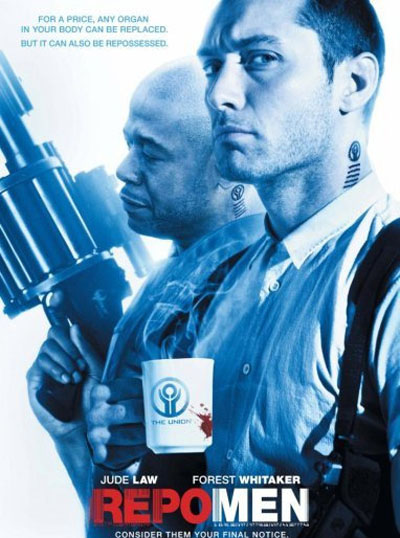
If you are considering going to see Repo Men you’ll need to go ahead and turn off your brain first — the guy who wrote it sure did. The script is jam-packed with contrivances and tonal inconsistencies, which is a shame because the plot had potential.

In a near future when mechanical replacement organs are a reality, Jude Law plays Remy, an ex-soldier hired by the Union to find recipients that cannot afford their bills and repossess their artificial organs to return to the manufacturer. After a freak accident, Remy needs a replacement organ himself and when he can’t pay, the Union sends his childhood friend and ex-partner Jake (Forest Whitaker) to retrieve it. Repo Men is at its best when it embraces its cartoonishness, when the film is so stupid that it transcends the hodge-podge story and glows with goofy grotesque action. If you can, stick around ‘til the climax that includes an Old Boy (2003) homage (rip-off) and one of the more laugh-out-loud ridiculous endings I’ve seen in a long time. But high-art, this ain’t.

Repo Men is now playing in Bay Area theaters.

Project One’s mural community

2

There’s a mural by my work I pass everyday that is visually astounding. It’s a super burner- a big, looping maze of letters, or maybe just design, that must represent in its whorls every color of the rainbow. It takes up the street side of a long building on a background of black-on-black fluer de lis design at Turk and Mason. Not to trivialize the sweet and sour roughness of ‘Loin life, but it gives the dope heads, the police cruisers and the general down-and-outery of the ‘hood an air of artistry. 

You don’t see color like that just anywhere.

Which was why it was so nice to put a face to the piece during my trip down to Project One gallery to check out their current show “Four Squared,” a collaborative project between Chor Boogie, Apex One, Jet Martinez, and David Chong Lee. Apex One (who spray painted the mural in the Tenderloin) was there putting up a fresh new entryway sign for the gallery, and we got the chance to chat on how the group partnership came to be.

“We all knew each other,” Apex, an SF native, tells me. In what sounds like a phone tree among soccer moms, the four creative graf art legends decided to create what now hangs in Project One- two huge murals, each made of 90 square foot pieces that gallery owner Brooke Waterhouse hopes will enable the younger art fans to buy a piece of the action. 

Check out “Foursquared” at Project One to see Apex One’s entry way design, pictured here mid spray

“I’ve been waiting to do that for awhile; have it set up so you can take a piece of the mural home with you,” says Apex. Painting largely simultaneously (check the vid here for installation shots), the artists created wall sized wonderlands that loosely relate their motifs to each other. A Boogie bird nestles on a Chong Lee design. It makes you wonder what would happen if street artists could drop the tag-on-tag wars forever and instead use their designs to augment the craft already on the wall in front of them. Wouldn’t that be nice?

Project One is also featuring individual works by each of the men on opposing walls from their group effort. They act as a stylistic key to the murals. Here, you can pick out Jet Martinez’s delicate cherry blossom sprigs- there, a lavender tag by Apex, its chunky and curved three dimensional form reminiscent of the architectural detailing on the Victorians he grew up amidst. Chor Boogie’s polychromed tiling work, Chong Lee’s eyeball studded Death Star.

It’s an engaging show to check out in the comfortable space at Project One, happy hour beer in hand. Nicer still? Well, for one, the fact that spring is here. More to the point, the fact that, somewhere, chances are that one of these guys is painting on a wall to beautify your walk to work. And for that, let’s give thanks.


“Four Squared”

through April 5th

Project One gallery

251 Rhode Island, SF

(415) 938-7173

www.p1sf.com

Developers win, but just this round

16

So the developers won the first round of the 555 Washington battle — and the role of the Recreation and Parks and City Planning Commissions said a lot about the state of local politics today. In both cases, you had the equivalent of a party-line vote: Every commissioner appointed by Mayor Gavin Newsom voted in favor of the project, and every commissioner appointed by the Board of Supervisors voted against it.


And since the Rec-Park commission is entirely made up of mayoral appointees, that vote was unanimous.


The fact that there were dissenting views on the Planning Commission is a clear indication of why it’s so important that the supes and the mayor both get to name members of that panel. And perhaps it’s time to apply the same standard to Rec-Park.


A sign of how bad it was at planning: Toward the end of the discussion on the certification of the environmental impact report, after board-appointed commissioner Christina Olague complained about the threats to the redwood trees on the site, commissioner Bill Lee insisted on taking some expert testimony on the issue. And who did he call up? The landscape architect for the project sponsor. Guess what? She thought the trees would be just fine.


But this shady deal is not done yet. The Planning Commission was set to vote not only on the EIR but on the other various approvals the project needs, but Sue Hestor, a lawyer and project foe, pointed out that the developer had made some last-minute changes to the plans, and by law, the public needed more time to review the new material. And the City Attorney’s Office, to its credit, agreed, and told the commission to continue that part of the vote for two weeks.


Meanwhile, it’s pretty clear that opponents will appeal the EIR certification to the Board of Supervisors — and the board will also have to approve the zoning changes and the sale of a public street that are necessary for the project to go forward.


And interesting twist at the commission meeting: Former Sup. Aaron Peskin pointed out that in 1992, a similar project came before the Recreation and Parks Commission — similar except that it was about half as tall. And the commission rejected it because it would cast shadows on public parkland.


And yet, a much bigger project, which must more extensive shadows, sailed through Newsom’s park panel — with no discussion at all. “This thing was a greased as it gets,” Peskin told me.


In the wake of March 4, education battles continue

Two weeks after protests against cuts to education filled Bay Area streets (and one freeway) on March 4, employees in the public-education sector are still engaged in a fight against budgetary rollbacks. But it’s an uphill battle, as was made clear at a briefing organized by United Educators of San Francisco at City College of San Francisco March 18.

At El Dorado Elementary School in the Bayview, 11 of 15 teachers were issued pink slips, according to elementary school teacher Megan Caluza (featured in the video above). While this doesn’t mean all 11 teachers are on their way out the door, it does mean that none of them knows for sure whether there’s a guaranteed job in the school district in the coming year. Since the budget cuts hit, Caluza says she’s been spending just as much time “fighting to teach” as she has in the actual classroom.

Elementary schools aren’t the only places being hit hard. Statewide, more than 23,000 layoff notices were sent to K-12 teachers recently, with no one knowing for sure which recipients will stay or face job losses.

“What is more important to you, corporate tax loopholes, or teachers in your daughter’s classroom?” asked Dennis Kelly, president of United Educators of San Francisco. “A college education for your son to get ahead, or tax breaks for the wealthiest Californians?”

Meanwhile, community colleges throughout the state face fee hikes even as classes are being cancelled, summer programs are being scaled back or eliminated altogether, and staff faces layoffs and furloughs. According to AgainstCuts.org, a group that was instrumental in organizing March 4 activities, the student population at California community colleges is comprised of more than 50 percent women and people of color, with around 80 percent of students working while taking classes. Blows to this educational system impedes opportunities for career advancement for the nearly 3 million community college students, which is bad news not just for students with lifelong dreams and high hopes, but California’s economy as a whole.

On Monday, March 22, more than 3,000 students, faculty members and others from City College of San Francisco plan to hold a march and rally in Sacramento to highlight the impact of cuts to community colleges. Around 62 buses will be leaving SF early in the morning to arrive in Sacramento for a 10 a.m. rally on the steps of the State Capitol Building.

Joining students and teachers at CCSF yesterday was a representative from Californians for Democracy, an organization that is pushing a November ballot initiative, authored by University of California Berkeley Professor George Lakoff, that would change the two-thirds majority vote requirement for the state Legislature to pass a budget or raise taxes to a simple majority vote. While the initiative is still circulating petitions to gather signatures, it seems to have found allies in the growing movement against cuts to education.  

March 4 represented “the first time we’ve ever done an all-education action,” Joan Berezin, a faculty member at Berkeley City College for 20 years, told the Guardian. “We’re trying to build the broadest coalition possible.”

Mom was a mess (and then she rubbed all up on me)

0

Going in to Thee Parkside on Fri/5, I didn’t know what to expect from the show’s openers. Considering Mom’s antics, it’s probably best that I didn’t do any pre-show research. In a nutshell, Mom was a mess.

Mom slithered and writhed around on- and offstage (mostly off). She wore a red dress that ended up beer-soaked, while she sort of sang into a microphone with heavily distorted cartoonish effects. It was like a demonic version of Minnie Mouse (she had the ears and everything). The whole experience was surreal. Maybe nightmarish is a better word. Mom’s trashed red dress would slide up over her waist, exposing all of her, since she wore no panties. Her one ruby red slipper slid around the floor while the other foot remained bare and got all gunked up from cement during some staggered dance moves.

If shock value was what Mom was going for…then mission accomplished. Just when I thought the spectacle was winding down, I went to the smoking patio to answer my brother’s phone call. I figured I’d chat him up about my parents’ upcoming visit from the Midwest. Immersed in conversation, I was suddenly interrupted by a sweaty, messy Mom, who accosted me and began to rub herself on me as I laughed and backed away while onlookers got an eyeful. Considering that the ‘Loin is now my home base, it didn’t phase me much. I continued talking on the phone, giving my brother the play-by-play. Mom quickly lost interest and stumbled away. I have a feeling real Mom wouldn’t approve.

After the onslaught, I hung out a bit longer on the patio. I was offered some sympathy by a certain unmasked someone who may or may not have been the show’s headliner. He asked if Mom had gotten any blood on me. I replied “No,” adding that I actually had gotten egged. Apparently she threw one at the ceiling and got some yolk and shell on me. Another audience member initially thought it was the sound of breaking glass.

Act two was traditional by comparison, considering it involved drum, bass and guitar. I didn’t think I had seen them before, based on their name, but once I went back inside to check them out I recognized the front man of the Outdoorsmen. They had improved. They did Misfits covers and it was sort of endearing how the lead singer/ guitarist would crack bad jokes into the mike. He mostly cracked himself up. The highlight of their set was a Standells-sounding number dedicated to “cock suckers of the middle of the night”. He was referring to cops.

The outstanding performance of the night came from Indiana’s TV Ghost. The Midwest was represented well here when they took to the stage. Their lanky lead man twitched about with great presence; his guitar in tow and a Dwyer-esque oral fixation with his microphone (inserts into mouth). I guess it sounded like Link Wray meets post-punk, or maybe the Cramps in surf style. In any event it was good to see them again. The first time I witnessed their live act was at the Hemlock, where they played to a nearly empty hall, but they had performed as if they the bar was at capacity or like it was for a televised performance. Such showmanship.

Last but not least, Nobunny seemed to have a stash of new material and it was stage antics and comical-shtick as usual when the costumed “boys and squirrels” played rock and roll that had the crowd eating it up with a spoon. All in all it was a good night — even if Mom took me by surprise.

SXSW: See me! Hear me!

0

The days tend to blur here at SXSW. The festival’s sponsors and participants are pouring information and alcohol in you everywhere you go. You forget that you are an autonomous being, not just a receptacle for emails and fliers and Sobe in small plastic cups and little goo bars that taste like chocolate stuck in carpet that are thrown — literally thrown — at you on every street corner.

Yesterday (Wed/17), however, was met with a distinct shift: awkward blue jeans and collared short sleeves were exchanged for tight black jeans and tattoo sleeves. Yes, music has come to town, which sends home the silicon boys (and a few girls), and officially ends the “interactive” portion of the festival. Austin’s Convention Center is no longer busy with necks stretched over tech, but with eyes scanning fashion and badges in order to discern the music artists from the look-a-likes. No longer am I getting stares for having an outdated laptop; rather, quick judgement looks assessing my dress and doppelgänger effect.

But this all comes with the territory of a major tech/film/music festival; everyone is trying to be seen and heard. Some more than others.


Anti-war movement seeks allies

7

By Jobert Poblete

This Saturday (March 20) will mark the seventh anniversary of the Iraq war and local groups are mobilizing for another round of protests to oppose the occupation of Iraq and the expansion of the war into Afghanistan. But this year’s program will also highlight local struggles as well, with speakers delving into the fight for more public education funding and the march passing by two hotels where union workers are in strained negotiations for a new contract.

The protest is being organized by ANSWER – Act Now to Stop War and End Racism – a coalition notorious for its everything-but-the-kitchen-sink approach to protest. Besides its plugs for Iraq, Afghanistan, public education, and local labor struggles, flyers promoting Saturday’s protest include demands around jobs, Palestine, Latin America, and Haiti. ANSWER organizer Chris Banks told us that these seemingly disparate issues are connected.

“There is a finite amount of resources in our society,” Banks said. “And if those resources are used on wars and to bail out banks, then we can’t use them for schools, health care, and public transit. The wall between foreign policy and domestic policy is a fictitious wall.”

This year’s protest will focus on the economic crisis and on “bailing out people instead of banks.” Students who helped organize the recent March 4 Day of Action are part of the coalition mobilizing for the Saturday protest and students and teachers will be among the speakers at the rally at Civic Center. Protest endorsers include the United Educators of San Francisco, a union that represents more than 6,000 public school employees. Dennis Kelly, president of UESF, told us that the protest “ties directly in with our concerns about the California state budget, that the priorities being set are the wrong priorities.”

The rally will be followed by a march that will pass by the Hilton and the Four Seasons, two hotels where members of Unite Here Local 2 are without a contract because of a negotiating impasse with management. The biggest point of contention between the hotels and union is over health care. (Union members currently pay $10 a month for family coverage but the hotels want to increase that to $200 a month.)

Israel Alvaran, a community organizer at Local 2, said that the health care issue provides a connective thread between the anti-war movement and his union’s struggles. “We believe in stopping the wars in the Middle East,” Alvaran said. “They’re driving the war economy that’s preventing people at home from getting affordable health care, public education, programs for creating jobs and building the economy.”

Alvaran hopes the March 20 protest will help raise the visibility of hotel workers and show the hotel corporations that the union has broad community support. He also said that including workers’ struggles in the protest is important because it exposes young activists joining the anti-war movement to labor and union issues.

Banks echoed this desire to raise public consciousness about local issues. “As much as possible, we want people to make the connection between local struggles and imperialist wars,” Banks said. “People go into political motion for different reasons. We want them to come out on March 20 and they’ll have opportunities to hear speakers representing different movements.”

Saturday’s protest will begin with a rally at Civic Center Plaza at 11 a.m. At noon, protesters will march through downtown San Francisco before returning to Civic Center. 

Cinnamon buns: your gateway drug to hardcore vegan sweets?

0

By Robyn Johnson

For all you vegan sweet snackum lovers — and curious crumb-lappers — the ladies behind Fat Bottom Bakery and Cinnaholic have a sale on Sat/20 that you just might egg-free love.

They’ll be hosting the second East Bay Vegan Bakesale, right outside of Issues (‘Magazines and More!”) on Glen Avenue in North Oakland. Personally, I’ve had a rocky relationship with vegan baked foods, but these Cinnaholic cinnamon buns might finally be the gateway pastry to bring me over to the animal product-free side, at least for frequent visits:

Proceeds go to the Haitian Emergency Relief Fund and Animal Place, a farm animal sanctuary.

Vegan Bake Sale
Sat/20, 11am-4pm
Issues
20 Glen Avenue, Oakl.
510-652-5700
www.issuesshop.com

Snap Sounds: The Consulate General

0

THE CONSULATE GENERAL

Person Number

(Circle Into Square)

We loved him when he was creating music under the moniker Boy In Static and I think a few tears may have been shed when Alexander Chen left the Bay and unpacked his instruments in Gothenburg, Sweden. Like anyone who has ever taken residency in that beautiful country, Chen’s creativity has flourished and his new solo project, The Consulate General, is a breath of fresh Nordic air. 


The debut album, Person Number, is set to release April 6, so until then, Chen is offering up track one, “What Time Is It Now,” as a beautiful teaser to what’s in store. Cheery and pleasant, this track makes me feel all nice about life, even when a hundred things around me are swirling out of place. Airy, ambient electronics mix and mingle with chimes and bells, while the harmonizing male vocals from Chen and guest vocalist Antoine Bedard (Montag) offer the perfect calm, brushing your hair and tickling your back— that or whatever else puts you at ease.

The Consulate General, “What Time Is It Now” by SFBG

Besides music, Chen has also been showing his interactive sound art in galleries around the world and to stop us from biting our lips until April, Chen has made a special musical toy for our screens. The playful piece was built using samples from the Person Number track, “On the Run” and is great for afternoons spent hiding under your desk. Just roll your mouse over the pigeons and play away at www.theconsulategeneral.com


Sunshine sleuth nets $3.5 million for SF

Sunshine advocate Kimo Crossman is sometimes counted as a thorn in the side of city government agencies due to his tendency to pepper them with public-records requests. But in the last couple days, he earned a gold star from the San Francisco Assessor-Recorder for pointing out that when Morgan Stanley walked away from five high-profile San Francisco properties, it neglected to pay a transfer tax. Thanks to an email from the ever-inquisitive Crossman, the assessor-recorder was able to collect roughly $3.5 million and feed it to the city’s ailing General Fund.

It started when Crossman read an article on Bloomberg.com about Morgan Stanley walking away from five San Francisco skyscrapers last December that it purchased in 2007: One Post, Foundry Square I, 201 California St., 60 Spear St. and 188 Embarcadero — collectively valued at around $279 million.

He was annoyed. “Individuals can’t walk away from their obligations,” he said. But for the huge financial firm, “it doesn’t appear that they have any negative repercussions.”

The surrender of properties was described as a “transfer,” so he sent a note to the city asking, “is the SF city transfer tax incurred when Morgan Stanley walks away from SF office buildings which they are calling a ‘Transfer’?”

Why indeed it is, came the reply.

“Some transactions trigger transfer tax, while others may not trigger transfer tax because of an existence of an exlusion in the SF Real Property Transfer Tax Ordinance,” explained Zoon Nguyen, deputy assessor-recorder, in an email. “I wanted to let you know that no exclusion was applied toward the Morgan Stanley transaction. As a result, the Assessor-Recorder’s Office collected about $3.5M in transfer tax revenue for the City and County General Fund. I want to thank you, once again, for being engaged in these tax issues. I certainly appreciate knowing that there are people, like you, who are also monitoring these transactions. I would ask that you continue to send us these emails.”

Crossman told the Guardian, “I did it just to help the city and because I was mad at the banks walking away from their loans.”

However, this might just turn out to be the most lucrative cut-and-paste that Crossman has ever executed. There is a possibility of earning a “taxpayers reward” for bringing this to the city’s attention, he tells us. According to legislation passed by the Board of Supervisors in 2006, taxpayers who sniff out tax evasions such as this can, in certain cases, earn up to 10 percent of the collected tax revenue as a bonus — in this case, the maximum would be a whopping $350,000. But it’s entirely at the discretion of the assessor-recorder, and Crossman isn’t holding his breath.

“I’m not the most favorite person in City Hall,” he laughed. We placed a call to the assessor-recorder for details, but haven’t heard back yet.

Yee asks DA to drop charges against reporters

0

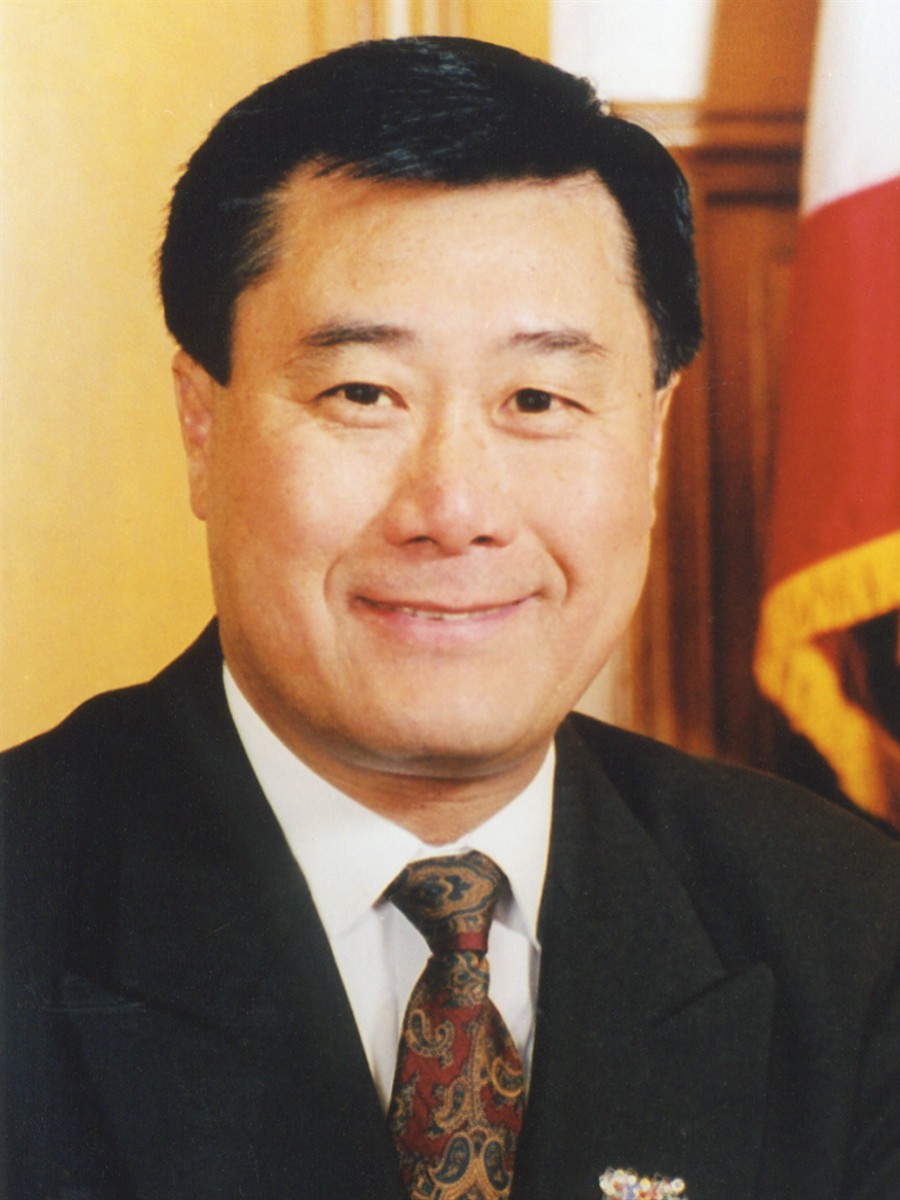
State Sen. Leland Yee has asked the Alameda County district attorney to drop all charges against reporters who were arrested while covering the protests over education cuts. In a March 8 letter to D.A. Nancy O’Malley, Yee noted that “at least two of the individuals arrested were journalists covering a legitimate news story.”


That adds to the pressure on O’Malley not to press charges against reporters. But we’re still waiting to hear from the D.A.’s office.


You can read the letter here.

Prop 17 discourages going car-free

6

Efforts to encourage car-sharing and ways of getting around that don’t involve owning a car would be undermined by Proposition 17, a June ballot measure that I wrote about in this week’s cover story. While I didn’t mention that impact in the story, it is of real concern to people like me who don’t own cars and encourage others to try the car-free lifestyle on for size.

The measure, sponsored by Mercury Insurance, allows companies to substantially increase monthly premiums on customers who haven’t had continuous insurance coverage. That would be one more barrier to people making the leap of faith to give up their cars and rely on bicycles or public transit, a switch that ought to be encouraged in increasingly traffic-congested cities such as San Francisco.

As I wrote about in another cover story last year, I made the decision several years ago to give up my car, although I still sometimes rent cars to visit my children. Consumer advocates say the cost of renting cars or using car-sharing services – particularly locally owned companies that can’t self-insure like the corporate behemoths – could increase and there would be a disincentive to consider trying it.

 “Anyone who has used car sharing (or for that matter rental cars) as their means of transportation would almost certainly not be considered continuously insured and would face the Prop 17 surcharge if they had to go back to private insurance at some point,” Doug Heller, an insurance expert with Consumer Watchdog, told me.

Currently, the law allows insurance companies to issue discounts to those who have maintained continuous policies with them (Prop. 17 would expand that to allow drivers to change companies and keep their discounts, which would be offset by surcharges on customers who were new or had a lapse in their coverage), and those companies use that discount to actively try to discourage people from experimenting with car-free lifestyles.

Brian Smith, who works for an environmental nonprofit in Oakland, recalls getting that kind of hard sell when he made the leap and got rid of his car.

 “When I cancelled my car insurance, AAA warned me not to. They said, ‘We will make it much more expensive when you come back.’ I said, ‘I sold my car, I don’t need car insurance.’ They said ‘We are just giving you a warning, Sir.’ I said, ‘Cancel it you fucking bastards. I’m never coming back.’ That was 10 years ago.’” Smith wrote to me about the issue.

Proponents of the measure say it would save some drivers $250 per year, while opponents (citing data from Mercury) say the surcharges for everyone else would be about $1,000 per year. So for the soldiers who go off to boot camp, the college students who get an internship in a city with good public transit or bikeways, unemployed individuals who need to trim expenses, or people who want to experiment with going car-free, they would all pay for more for insurance if they went back to driving a car than those who continuously maintained a car-dependent existence.

So, add this to the list of good reasons – and there are many of them in this week’s cover story — to oppose Prop. 17. 

If we’re going to be whores, let’s at least get paid

2

The San Francisco City Planning Commission will be voting March 18th on a proposal to build luxury condos next to the Transamerica building. The developers are two out-of-town outfits that support Republican candidates. And therein lies an interesting tale.


Back in 1984, when dinosaurs roamed the Earth and newspapers made a lot of money and Dianne Feinstein was mayor, San Francisco was host to the Democratic National Convention, which nominated a guy named Walter Mondale (talk about dinosaurs) to run against Ronald Reagan for president. Running the convention, and all the parties and galas, cost a fair amount of cash, and Feinstein hit up all the big civic donor types to chip in.


One of the people atop her list was Walter Shorenstein, the local real-estate tycoon who was a huge donor to Democratic Party candidates (Bill Clinton used to stay at Shorenstein’s house when he was in town). Shorenstein was also trying to get permits to build some new highrises — and some of his buildings were so grossly out of proportion that even Feinstein’s Planning Commission, which loved all things big and highrise, was balking a little.


So Walter calls the mayor and says this: Don’t you dare ask me to donate to your Democratic Convention if your planners are going to jerk me around on my permits. And Feinstein, of course, made sure the Planning Commission backed down and Shorenstein got exactly what he wanted.


We did a big story, and even the Chronicle, which wasn’t big on criticizing Feinstein or Shorenstein, wrote about it, and there was all manner of outrage — as there should have been. It was terribly unseemly, and made the city look bad, and made Feinstein look like she could be pushed around by developers ….


And for all that, at least the special favors were going to a local guy who was donating money to Democrats and to the city’s convention efforts. Hideous as it was, as least San Francisco (and Feinstein, and Mondale) were getting something out of it.


Fast forward to today — when Gavin Newsom’s Planning Commission is considering an awful, out-of-scale project that even architecture magazines don’t like. And who benefits from the special favors? Not a local guy helping out with a local project, but an offshore corporation and a developer from L.A. who is on Meg Whitman’s Finance Committee.


I mean, if we’re going to be whores here in Democratic San Francisco, shouldn’t we at least get paid for it? 


Herrera stands up to PG&E

Yesterday, at the California Public Utilities Commission, PG&E executives raised some eyebrows with their presentation about Proposition 16, the ballot initiative designed to make it difficult for municipalities to enter the electricity business. CPUC President Michael Peevey expressed his skepticism about a measure that would require only a simple majority vote to set up a two-thirds majority system.

Today, PG&E might suddenly have bigger problems on its hands than scolding remarks from the CPUC and the Legislature, thousands of pissed off SmartMeters customers, the threat of competition from municipalities, and a slew of editorials from newspapers throughout the state chiding the utility giant for trying to amend the state’s constitution for its own financial gain.

San Francisco City Attorney Dennis Herrera is leading a lawsuit to strike Proposition 16 from the June ballot. The complaint calls Prop 16 “wholly false and misleading” and said the company “profoundly misled the citizens who were induced to sign the petition.”

“We’re not seeking to fix it, we’re seeking to nix it,” Herrera’s press secretary Matt Dorsey explained.

The lawsuit was filed jointly by the San Francisco Local Agency Formation Commission, the City and County of San Francisco, the Sacramento Municipal Utility District, the City of Moreno Valley, the City of Redding, the California Municipal Utilities Association, the San Joaquin Valley Power Authority, the Modesto Irrigation District, and the Merced Irrigation District.

A hearing date has been set for May 4 in Sacramento Superior Court, according to Dorsey.

Trash Lit: Spenser says goodbye in ‘The Professional’

0

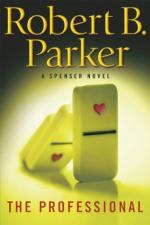
The Professional
Robert B. Parker
Penguin Books, 289 pages, $26.99

I just read the last Spenser novel, ever.

That’s a hard sentence to write. Spenser’s been around a long time, and I’ve read all 37 of Robert B. Parker’s classic tough-guy detective books, and even though they all have the same characters, similar plots, similar dialogue and similar themes, they’re all good. Every last one of them.

And I think it’s probably a good thing that this was the last one of them. I don’t know if Parker realized he was coming to the end of his life as he wrote The Professional, but you get the sense that Spenser is coming to the end of his. Not that the guy’s going to die – like Travis McGee, Spenser will long outlive his creator. But this book has a sort of melancholy sadness to it, a sweet sort of swan song feeling, and by the time you get to the end, you sense that Spenser’s pretty much done.

The plot is typical Parker: A sleazy con man is seducing young women who have rich older husbands. He videotapes the encounters and then threatens the clueless chicks with blackmail. He wants money, big money, or he’ll tell the hubbies – and the days of living large (and waiting to inherit the cash) will come to an end. The women are afraid to go to the cops, of course, so they go to Spenser. His job is to make the con man back off.

It’s the sort of thing that in an earlier version of Spenser would have been too simple to drag out into an entire novel. He’d go with his buddy Hawk, warn the sleazeball that the future was looking pretty shaky, maybe smack him around a bit just for good measure, the dude would split town and all would be well.

But this time, Spenser can’t do it. He almost kinda likes the creep, who is utterly straightforward about his lust for young women, his love for the chase and the score and his gleeful wonder at the fact that he’s figured out a way to make money at the game. Spenser and his main squeeze, Harvard shrink Susan Silverman, puzzle over the bad guy, polyamory relationships and the ethics of sex, while one of the rich hubbies, who has figured things out, sends two dumb-as-a-box-of-rocks thugs to kill Mr. Smooth. So Spenser has to stop them, but as it turns out, he kind of likes the thugs, too, since they are, after all, totally authentic: Marginal men who realize they have no value to society except for their ability to be half-rate muscle.

In the end, there’s a murder, and Spenser makes everything (almost) right. But his heart really isn’t in it.

In fact, this is the first and only Spenser book I’ve ever read that had an overdone edge to it. The dialogue is what makes Parker’s stuff work, and the interactions between Spenser and Silverman and Hawk in The Professional were predictable and dull. It’s as if the master of modern pot-boilers, the Man himself, Robert B. Parker, author of more than 50 top-rate books, was finally running out of steam.

There are the usual literary references (including a nice plug for Janet Evanovich, one of my longtime faves), but they seemed forced. The violence is tired. I was almost ready to give up, but I stuck around for the end, which was worthwhile – if only because it told me that this was the last we’d be hearing from Spenser.

The Professional reminded me of The Green Ripper, John D. MacDonald’s latter-era McGee book, where the author is clearly done with the character but cranks him up for one last stand, one final favor to the fans, a victory lap that gets more and more painful as it nears the finish line.

If you’re a Parker fan, you need to read The Professional. It’s a wake, of sorts; a chance to say goodbye. And it may have been Parker’s way to telling his fans that the fun is finally over.

Snap Sounds (and Q&A): Art Museums

0

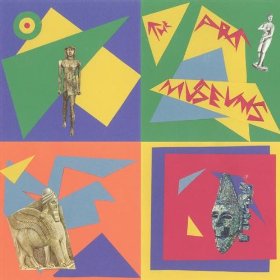
THE ART MUSEUMS

Rough Frame

(Woodsist)

San Francisco’s Josh Alper and Glenn Donaldson lightly place these love songs within comic frameworks. The opening track describes a shy, lovelorn music fan too shy to twist and shout, peppering the scenario with observations such as, “He’s worn his pants like that / For a very long time.” It also mentions a Buggles record, but Television Personalities and Guided By Voices are better reference points to the Art Museums’ sound. In their world, a sculpture garden is a good place to discuss cinema. The Bay Area fey pop tradition carried on by Slumberland bands gets a wry twist here with couplets like “What’s this rain inside my eye / She’s always been a better man than me.” Want to know more? Donaldson was gracious enough to answer some questions about the Art Museums’ aesthetic.

SFBG What are some of your favorite museums? What do you like about them?
ART MUSEUMS Record stores. The records.

SF What sculpture gardens do you like? If you could design one, what would be in it?
AM I prefer arboretums.

SFBG You’re at a Paris cafe — what would you order, and what would you want to do there?
AM After cappuccino, I would take the train to Barcelona.

SFBG If you could bring only one book of poetry to the cafe, what would it be?
AM Anything by Johnny Rogan.

SFBG What are your favorite films about mods? Who do you enjoy discussing cinema with?
AM The Style Council — Far East and Far Out. Girls who wear glasses.

SFBG When the Art Museums hits the road, what do you pack in your suitcases?
AM Corduroy pants, vintage guitars, Roland electronic drums and Walgreens sunglasses.


Banks declare SF Weekly and parent company in loan default

7

The Bay Guardian’s lawsuit against SF Weekly and its parent company took a dramatic turn this week when a banking syndicate announced that Village Voice Media has defaulted on its $77 million loan.


San Francisco Superior Court Commissioner Everett A. Hewlett, Jr. also ordered that all of the Weekly’s advertising income be sequestered in an account designated by the Guardian and held there until April 5, when the Guardian will ask the court to appoint a receiver to take control of the Weekly’s assets.


The Weekly and its parent owe the Guardian more than $21 million as the result of a 2008 lawsuit verdict. A San Francisco jury found that the Weekly had sold ads below cost in an effort to damage the Guardian.


The case is on appeal, but the Weekly and Village Voice Media haven’t posted an appeal bond — essentially an insurance policy that would guarantee payment of the judgment. So the Guardian has the legal right to collect the money.
VVM has been hiding its money behind a complex corporate structure,
but in recent weeks the Guardian has won a series of court decisions that have allowed us to seize two Weekly vehicles, all of the income that the newspaper’s subtenants pay for leasing office space, and 50 percent of the Weekly’s ad revenue (and 100 percent of the revenue from credit card payments).


In an effort to block us from collecting that revenue, the Weekly filed a motion March 16 seeking a restraining order that would have stopped the Guardian from contacting Weekly advertisers. The court refused to issue the order – but as part of its application, VVM disclosed some rather dramatic facts.


Among the exhibits filed in court: A March 12 letter from the Bank of Montreal, which leads a banking syndicate that has helped VVM expand and advance its alternative newspaper empire. The letter, signed by Managing Director Thomas McGraw, states that because of the “recent economic downturn and the resulting financial difficulties,” VVM had been “unable to meet its amortization payments” and had been forced to renegotiate the loan in June, 2009. That new agreement had required that VVM send all of its profits — that is, “all revenue above its costs, plus a minimal operating cushion” — directly to the bank.


And now that the Guardian has been awarded a lien on all of the Village Voice papers and the right to half the Weekly’s income, the bank had declared VVM in default on the entire loan, which now stands at $77 million.


The default allows the bank to claim that it has the first right to any Weekly ad revenue, and VVM lawyer Randall Farrimond tried to make that argument to Commissioner Hewlett. But Hewlett was skeptical: “The Court never determined that the Bank of Montreal had any rights that had been adjudicated yet,” Hewlett said at a March 16 hearing. In fact, after hearing that the bank had sent its own letters to Weekly advertisers ordering them to send payments directly to the bank, Hewlett noted:


“Now, I’m not terribly sympathetic with Bank of Montreal doing what they did. “I mean it is possible that, absent some adjudication of their interests, that they are in contempt of court by interfering with the Court’s order.”


Hewlett said he had no intention of granting the restraining order or changing the essence of his earlier ruling — that the Guardian had the right to half SF Weekly’s income stream. But to save the advertisers from confusion over who to pay, he ordered that all money collected from advertisers be placed in a bank account chosen by the Guardian, in a bank that was not part of Bank of Montreal’s syndicate.


The Guardian will be back in court April 5 to ask for the appointment of a receiver, who would take control of the Weekly’s business operations and, under court guidance, divide any revenue between the Guardian and any other creditors.
In the meantime, VVM and the Bank of Montreal have asked a judge in Delaware – where SF Weekly is formally incorporated – to block collection efforts in California.


At a surprise hearing where the Guardian’s lawyers were given only five minutes warning and had no opportunity to present any evidence, the Delaware Chancery Court was nonetheless very skeptical of Bank of Montreal’s claims, and essentially ruled only to maintain the status quo until the Court could make a more informed decision.


The case continues to draw extensive news media interest; the Stranger, a Seattle alternative paper, ran a lengthy, detailed story on the case March 17.


You can read the key documents (including a declaration from Weekly publisher Josh Fromson and the bank letters) in the recent filing here. (PDF)

Google sez bike this way

0

Just in time for the sun’s critically acclaimed debut, the Internets has once again plotted to increase our digital dependence. Google Maps now has a bicycling option!

If you’re a biker in San Francisco or Oakland, you don’t need me to tell you that you gotta pick your routes around these cities. One false move and you’re falling into the ruts of MUNI train tracks or on a freeway on-ramp (don’t laugh, it happens… to me). But no longer, or at least less often, will you have to deal with these small catastrophes.

Just type in your start and finish and the Goog has your most two wheel friendly route between A and B sorted. Sure, it’s basically an algorithm that connects the marked paths and wide shoulders easily visible on your SF Bike Map– Google’s still at beta when it comes to the ins and outs of our city’s considerable altitude changes, or our multi-tiered, if not hierarchical ways of getting the bridge and tunnelers in and out of here. A quick search for the route between my pad and my night job advised me to head up Eddy Street, which my quads tend to eschew for the less demarcated, but more planar blocks of Turk and Golden Gate. And tell the site you’re headed for a wild night out from SF to East Bay to see that new William T. Wiley showing at UC Berkeley and the site will recommend pedaling across the Bay Bridge- via the Ferry Building. But they’re trying, goddammit.

At least now your out of town houseguests won’t wind up hyperventilating on Van Ness Avenue on that loaner cruiser bike anymore. So for today, digital corporate megalith, you get golf claps- you are one step closer to becoming the website I go to for everything, all the time, always.

Fine hike was like seeds in a bag of good weed

2

By Jobert Poblete

Legislation designed to help pot smokers instead had many of them going all like, “Dude, what the fuck?!?!” But the author is now telling everyone to chill out, no problem, he’s got it under control.

California Sen. Mark Leno (D-SF) introduced a bill last month that would make possession of up to one ounce of marijuana an infraction instead of a misdemeanor. As introduced, the bill – Senate Bill 1449 – would also raise fines to $250 from $100, which pot advocates and their allies thought was a serious bummer. But Leno called this a “drafting error” that he intends to correct with an amendment this week.

Marijuana possession is currently the only misdemeanor on the books that does not result in a jail sentence. Leno told us that SB 1449 would correct this irregularity. Leno also said that the bill would save the state time and money. Unlike infractions, misdemeanor charges give defendants the right to costly jury trials and access to public defenders.

“Because of the allowance for a jury trial, a lot of time, money, and effort is wasted when it’s an infraction, misnamed,” Leno told us. “Either we call it what it is – a $100 fine is an infraction – or if it is a misdemeanor, then increase the penalty to include jail time. But no one wants to do that.”

Similar bills have failed in the Senate before. But Leno thinks that the economic crisis and changing attitudes have changed the climate in Sacramento. He cited polls that show a majority of Californians support decriminalizing marijuana possession altogether and an initiative to do just that could appear on the November ballot.

Drug policy reform advocates supported the move to make possession an infraction instead of a misdemeanor but raised concerns about the possible increase in fines. “We have always supported making marijuana possession an infraction instead of a misdemeanor,” said Dale Gieringer, vice chair of the National Organization for the Reform of Marijuana Laws.

Aaron Smith, California policy director at the Marijuana Policy Project, raised concerns about the possible increase in fines and emphasized the need to focus on broader efforts to decriminalize marijuana. “Everyone should be focusing on making marijuana taxed and regulated instead of fiddling with the fines,” Smith said.

Leno considers his bill complementary to the broader efforts to legalize marijuana. “If we’re going to decriminalize and tax, we’re really going from infraction to decriminalization,” Leno said. “It’s really an infraction, so let’s call it that.”

Occupation! exhibit highlights racism at SF businesses

1

By Cécile Lepage

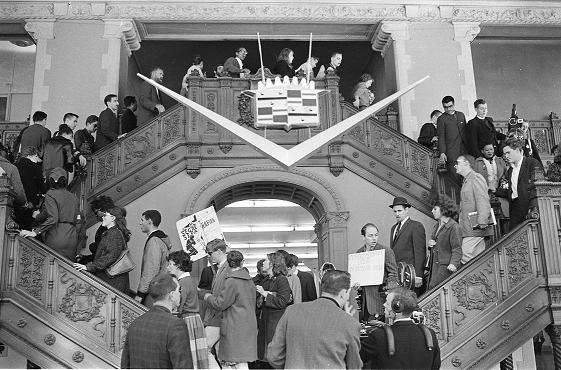
San Francisco has always had a liberal streak, but not so its business community, as a current exhibit highlights. In 1963 and ‘64, San Francisco was hit with massive demonstrations that denounced businesses’ discriminatory hiring practices and demanded equal work opportunity for African-Americans. Crowds picketed on Auto Row, in front of Mel’s Drive-In, Lucky Store, the Sheraton Palace Hotel, and Bank of America.

The Main Library exhibit “Occupation! Economic Justice as a Civil Right in San Francisco, 1963-64” retraces a struggle for economic justice that was specific to the city by the Bay, where thousands of African-Americans had moved to during World War II to work on the shipyards. When the war effort wound down, they were the first to be fired. Only direct actions—sit-ins, sleep-ins, and shop-ins—were able to shake the status quo: they led to more than 260 employment agreements for minority workers. There’s only a few days left to discover this important yet underrepresented piece of SF history: the display ends on March 27.

We spoke with curator Nancy J. Arms Simon about the exhibit and its relevance:

SFBG: How did this exhibition come to be?

NAS: It was actually the brainchild of Susan Goldstein, from the San Francisco History Center, and Catherine Powell, the director of the Labor Archives and Research Center. They had talked about collaborating on an exhibit related to labor, drawing from both collections.

In the meantime, I had fallen in love with the photographs of the photojournalist Phiz Mezey that I had discovered at the Labor Archives. She documented the April ‘64 demonstrations on Auto Row. So, it was a perfect blending. Those pictures are amazing because esthetically they’re incredible. On every single one of them, the layout just keeps your eyes circling. And the other part is that Phiz Mezey had been removed from her position at San Francisco State University, where she had been a professor. She had refused to sign the Communist Levering Act that all public employees were required to sign. In the 1950s, anyone who worked for a state agency had to sign an anti-communist oath.

While she was petitioning San Francisco State for years to get her job back, which she did in 1978, she was also trying to support herself and her kids. And so she became a documentary photographer. So I had become intrigued with her and with that story. When I started the project, I thought it would be an exhibit on the Auto Row protests. I didn’t even realize that this was part of a greater series of events that had spanned for two years.

SFBG: What were people asking for?

NAS: What they wanted was jobs, what I refer to as front-end jobs. I don’t like the idea of using the terms skilled and unskilled labor, because too many things that are very skilled get lumped under unskilled labor.

Blacks in San Francisco were assigned to jobs where they didn’t interact with the public. Basically, they weren’t allowed to. So they were allowed to be mechanics, janitors, but they weren’t allowed to be service people: bank tellers, waitresses, salesmen. There were two big pushes conjointly going on. There was the push for equality in housing, to end the segregation in housing, and also this push for jobs. If you don’t have access to jobs, there’s so much that you lose along with that. There’s that compounded effect of not saving to send your kids to college or provide for your own retirement… 

SFBG: But during the Second World War, [President] Roosevelt had enacted the Fair Employment Practices Act that made discrimination unlawful with companies that held government contracts.

NAS: But it was slated to end once the war was over. It was voted through to continue slowly across the country state by state, but it wasn’t nationwide until ‘64, when LBJ signed the Civil Rights Act. So for 20 years, from 1945 to 1964, people who had known a certain quality of life were fighting just to maintain it. Laws to promote equality might have been enacted, or agreements might have been signed, but having the law didn’t mean anything. There was this understanding that you can never let out the pressure; you have to keep pushing to make sure that that equality is actually enacted.

SFBG: How did the protesters organize their actions?

NAS: There’s a lot of lessons on how you effectively make change. There was a lot of unity amongst the groups, CORE, the WEB Du Bois Club, and the Ad-hoc Committee to End Discrimination. They had lawyers in place. Before a protest, they would decide who could afford to get arrested, and who couldn’t. So the people who could afford to get arrested would go to a certain level, they would maybe go inside the building. And all the leaders always made a point to get arrested, because they knew that that would get more press. And they also intentionally clogged the courts. They made sure that hundreds of people would get arrested just to slow things down and make it more difficult on the system.

It was really effective. And I think there’s a lot of these lessons that we miss today. They started with Mel’s Diner and they did get the owner to sign the agreements. Over at Lucky Store grocery, they did a shop-in. This is non-violent protest at its most beautiful! They went in and filled their shopping carts, they got to the counter and got them all run through. Remember, this is all scanned by hand. And then, once everything was scanned, they would say, “I will pay for these groceries once you give better jobs to Blacks,” and then they would leave. And all these bagged groceries filled the entire floor! All this stuff had to be put away. Plus people were picketing outside the store. So not only are you creating this major headache and throwing this wrench in the wheel, you’re also blocking people from shopping. So they were significantly cutting into their income.

SFBG: The Sheraton Palace Hotel rally was the biggest protest to take place.

NAS: It was really hard to narrow it down to a few statements to get into a showcase! About 1,500 protesters surrounded the hotel on March 6, 1964. There were other events leading up to that, though, they had tried negotiations, they had started smaller pickets outside. There would have been a court order to end the picket. So this is all building up.

During the major protest, I think 450 people entered the building and wouldn’t leave the lobby. The police carried them out, but they came back. They slept in overnight. And then the mayor, Jack Shelley, stepped in. He worked on the negotiation process and made it happen. After that, literally, the day they signed the agreement, they started picketing on Auto Row. This is how well organized they were. At the same time, other businesses were signing agreements for hiring Blacks, because they didn’t want this kind of press to happen. Remember, this is all happening in “liberal” San Francisco, so the fact that this is not good press for them counted.

SFBG: In the outcomes, you were careful to underline how these events had an impact on individuals’ lives.

NAS: It’s so easy for us in hindsight to know that civil rights were the right thing to fight for. But just think about what it would take out of somebody to get arrested. Tracy Sims, who later became Tamam Tracy Moncur, basically took the fall for her group. Because there were so many people arrested, they sent them to court in groups of 10 to12 people. She ended up getting 60 days in jail, plus a $200 fine. It was horrible for her. She was an idealistic 18-year-old. She knew she was doing the right thing. They were successfully changing laws just to confirm she was doing the right thing. And then she’s punished. After she served her time, her mother was already back on the East Coast, and she went to live with her mom.

SFBG: You were able to gather artifacts to tell this story, pins in particular.

NAS: These are all part of the Labor Archive collection. Graphically, they’re so simple, easy to read. You see them in photographs and they absolutely pop out. My favorite one is this “= Quality” one. It’s timeless. You’ve got the word play of equality equals quality. It’s got the silhouettes of a white child and a black child. What does equality really mean? It means equal quality for everybody. It’s not just a word. I really love that one, because it’s still so contemporary. Objects have got a power of their own. If you can stop and think of what’s involved, why they were created, and all the places they’ve been to… Some of the old pins will have the printer’s union stamp and the sheet metal workers’ stamp Look at that! That’s pride in your work right there.


Personal shopping at Collage Clothing

4

The perfect wardrobe is a collection of vintage beauties and trendy new things, but shopping in this form takes devotion. Thrashing through thrift stores may not be your style and consignment shops often have a tendency to overwhelm with rack after rack of fashion-flops. Alas, Collage Clothing and its queen bee Erica Skone-Rees are making your life easier. The closet-size shop in Potrero Hill hosts an ever-changing assortment of local designers, consignment and vintage pieces, meaning you can leave the hunting and gathering to someone else. 


Every inch in the adorable shop is carefully attended— manager and buyer Skone-Rees is a former merchandiser with a gift for making each item in the store look irresistible. Collage Clothing opened its French doors in November as the new neighbor to its mother store, Collage Gallery, an 18-year-old, Potrero Hill staple for vintage furniture and locally made jewelry. 


The front-window display alone is enough to get people inside and browsing— from mannequins to antiques, Skone-Rees rearranges the display every two days, paying mind to details and setting up featured items as if they were famed works of art. 


“Runners will go by in the morning and send me emails once they get home, telling me ‘the window looked great today’,” she says with a proud smile. “And guys from Blooms (Bar across the street) will stand outside, smoking their cigarettes and watch me change the display. People really get a kick out of this window.”


The store carries items for both men and women, and if you’re clueless about what to try on or just in need of some direction, Skone-Rees is one to ask. The first time I went into the shop, I came out with a sexy blue-suede dress straight out of the 90s. Skone-Rees and I chatted while I walked around the store in my new body-glove, chatting like we were old pals. As special as it was, Skone-Rees offers this kind of big-sister service to all of her customers. 


“This store is like my baby— I eat, sleep and breath Collage and I love it.”


Each month Collage Clothing and Collage Gallery host a double-trunk show, offering customers a chance to meet and greet local designers, buy up some goods and toast with champagne. This month’s event— Thurs/18 from 6-9pm— features the FLEECE-A-NISTA collection by Jeanne Feldkamp and Topi Hat Designs. 


Check out the gallery for current items hot on the rack this week.


Collage Clothing

1331 18th St

(between Texas St & Missouri St) 

San Francisco, CA 94107

(415) 755-8306

www.collage-gallery.com/