SFBG Blogs

The dubious high-speed rail report

1

The Chron’s blast at the state’s high-speed rail system is a big headline, but the report it’s based on is pretty dubious.


As the always-insightful Robert Cruikshank at Calitics points out, the state auditor is trying to blame the High Speed Rail Authority for the fact that federal funding for the project isn’t yet in place. But there’s no reason to believe that situation will remain forever; both Congress and the Obama administration have been friendly toward high-speed rail, and California is in line to get a significant amount of it.


And in the worst-case scenario, if there’s no federal funding at all, the money California voters have already approved won’t go to waste — it will go, for example, to improve the existing Caltrain lines.


Cruikshank:


For some HSR critics and skeptics, the uncertainty around federal funding is a reason to either not build the project, or to not build it in their backyard. The proper response, however, is not to be a passive actor, but to instead actively work to secure federal funding for HSR. You can go to the FourBillion.com site and told their Congressional representatives they want $4 billion in the FY 2011 budget, as a first step toward advocacy for the $50 billion in the transportation bill reauthorization.


MLBPA opposes Arizona immigration bill

2

The Major League Baseball Players Association Executive Director Michael Weiner sent out a letter this afternoon stating that the MLBPA opposes the immigration law recently passed by the state of Arizona.

In his letter, which was sent to City Attorney Dennis Herrera following Herrera’s call to find an alternative to Phoenix for the 2011 All-Star game, Weiner acknowledges that law’s passage “could have a negative impact on hundreds of Major League players who are citizens of countries other than the United States.”

“These international players are very much a part of our national pastime and are important members of our Association,” Weiner states.”Their contributions to our sport have been invaluable, and their exploits have been witnessed, enjoyed and applauded by millions of Americans. All of them, as well as the Clubs for whom they play, have gone to great lengths to ensure full compliance with federal immigration law.”

“The impact of the bill signed into law in Arizona last Friday is not limited to the players on one team,” Weiner continues.”The international players on the Diamondbacks work and, with their families, reside in Arizona from April through September or October. In addition, during the season, hundreds of international players on opposing Major League teams travel to Arizona to play the Diamondbacks. And, the spring training homes of half of the 30 Major League teams are now in Arizona. All of these players, as well as their families, could be adversely affected, even though their presence in the United States is legal. Each of
them must be ready to prove, at any time, his identity and the legality of his being in Arizona to any state or local official with suspicion of his immigration status. This law also may affect players who are U.S. citizens but are suspected by law enforcement of being of foreign descent.

“The Major League Baseball Players Association opposes this law as written,” Weiner concludes. “We hope that the law is repealed or modified promptly. If the current law goes into effect, the MLBPA will consider additional steps necessary to protect the rights and interests of our members. My statement reflects the institutional position of the Union. It was arrived at after consultation with our members and after consideration of their various views on this controversial subject.”

Reupholstering “Defenestration”

0

 all photos by Erik Anderson

“Can you wait about fifteen minutes?” Brian Goggin asks as he climbs into the harness that will lift him up to the fourth floor of the abandoned building on Sixth and Howard. Out of respect for this remarkable artist (and rapt awe his elevation has on the observer), we wait, standing to the side on the pavement below. Goggin’s restoration of his iconic piece of public art, “Defenestration,” bears witnessing.
Since its installation in 1997, the piece has become a Fellini-esque addition to its rough SOMA street corner. Its canvas is large, rundown building, its doors and windows boarded up since the owner’s renovations stalled in the ‘80s from permit violations. Pieces of furniture — chairs, lamps, coffee tables with their telephones still clinging to them — fling themselves from the roof and windows, causing passer-bys to gaze upward, wary of falling sofas. It’s like a free for all from a sinking ship.

But the wooden legs are beginning to rot, the upholstery fraying and tearing from 13 years of exposure to the elements. The area’s been targeted in a beautification campaign, and the city recently seized the property, citing eminent domain. There are vague plans to tear it down to make way for more low income housing, along the lines of the flashy edifice that stands kitty corner to “Defenestration.” Goggin is determined to give the piece a last hurrah. “If the wrecking ball does come, at least it will be dressed up for the occasion,” he says, looking up at his masterpiece.

It’s a labor of love. Goggin had done other public art before, and since “Defenestration” (the flying books on Columbus and Broadway, “The Language of the Birds,” is another one of his works), but few pieces have captured the city’s imagination like the building on Sixth and Howard. He estimated it would take $75,000 to fully restore the work.

“I had done similar pieces before “Defenestration.” my piece “Herd Mentality” in the Yerba Buena Gardens is a bunch of Queen Anne tables climbing up a wall, jumping over, and running across the lawn — like a herd of wild buffalo roaming through the plains,” says Goggin of the providence of the leaping living room sets at Sixth and Howard. “This one I wanted to do in a neighborhood where people were finding creative ways to uplift their life.”

He originally envisioned the work on an occupied building, explaining to property owners in the area “all I wanted to do was drill big holes in their walls and stick furniture to them. None of them were interested.” Eventually, walking down Sixth Street he saw a sign with a number to call regarding interest in an abandoned building there. He called. The owner was away on a trip to Gujurat, but his daughter was intrigued by Goggin’s preliminary sketches of the project. “She told me I could install the piece if I could do it by the time her dad got back,” the artist remembers.

Eight months later, with the help of somewhere between 30 to 70 volunteers, “Defenestration” was up, making an impression on Sixth Street residents in the process.

One neighbor put a sign in their window that said “get out of the neighborhood art fags,” but for the most part, people were curious about Goggin’s leaping tables. “Everyone seemed to understand [“Defenestration”] without question,” says the artist. “They even started bringing me furniture. I appreciated their eccentricities, and they appreciated mine.”

We chat on the sidewalk while Goggin and his assistant, Valerie Levy, mix epoxy with rubber gloved hands. We are interrupted sporadically by people walking by with questions about all the pulleys and caution tape surrounding us.

“What, you’re tearing this down?” one man asks us in disbelief. “It’s been here for 35 years! It’s a landmark!” “102 years! We‘re putting up condos!” Goggin calls after him with a grin. It must be rewarding to see one’s work become such an accpeted feature in it’s environment.

Though he was working on the site nearly every day when he started in December, Levy and Goggin have cut back to two days a week after a beautiful exhibit of photos taken of the site that was held across the street at 1AM Gallery failed to raise sufficient funds. He’s collected $20,000 now, with an adjusted goal of $10,000 more. “The dream is to rent a boom lift,” Levy confides as she shows us around the interior of the building.

Entering into the gloom inside the metal door, the magic of the site is easy to absorb. Save for the original hotel lobby on the ground floor, it’s an absolute mess. Orange spray paint marks the rotten spots in the floorboards, walls have been knocked down, debris is everywhere. But the filth creates a certain, raw magic.

Large porcelain tubs remain from the SRO’s original residents. A natural camera obscura from holes in a boarded up window projects an image of the sky and buildings across the street, upside-down, on the wall. Pigeons have laid claim to entire floors, particularly the room with the dining room set one of Goggin’s friends arranged for a formal dinner party as a surprise birthday present for his girlfriend. The vast, “over engineered,” steel frames that secure the hanging furniture seem to be the only solid parts of the structure (“they had to do that,” explains Levy. “otherwise, you can’t really have sofas hanging over peoples’ heads”). The squatters that occupied the building before Goggin returned for restoration have cleared out, ingratiating his project to the managers of the property.

The whole thing has an air of the absurd.

Goggin has nurtured, and embraced the oddness of it all. Sideshow freak panels from the “Urban Circus” he threw in 1997 for the piece’s debut still cling to the walls outside and sit in stacks within the workshop.

“The question of restoration was one I pondered for a number of years,” he tells us, a bit tired from another trip up the wall to fix a coffee table. “I liked the idea of revisiting it, of going back to the community to see whether this was something they wanted, if it was important to them.”

But it’s clear, from the smile on his face, and they way he lights up to discuss the job, that “Defenestration” is important to Goggin, as well — a feeling that is contagious to those around him. “I’m interested in perpetuating the joy, fun, and absurdity of it all,” he concludes, and we leave him to his work.

To donate to the “Defenestration” restoration project, go here.

Fun with political ads

0

Wowee wow, the political ads are getting strange.


Steve Poizner, desperate to find some kind of traction in the final weeks of the GOP primary campaign, has released a new attack on Meg Whitman that continues in a long line of weird Republican animal flicks. It’s not quite as odd as Carly Fiorina’s demon sheep, but still: There are vultures flying around, vulture squawks in the background, and at one point, a vulture lands on the ground and starts chowing on some carrion.


But there’s a serious point here, too. The ad attacks Whitman for her ties to Goldman Sachs, and points out that she was making big money on dubious insider stock deals just as the rest of the nation’s economy was going to hell. ANd if Poizner thinks this will play with conservative voters, imagine what the Democrats will be able to do with it in the fall.


Then there’s Gavin Newsom’s ad, which starts out reminding us all that his state of the city speech was seven hours long (this is something we want to remember?) then lists all the great accomplishments he’s taking credit for, even though none of them were his initiatives. He talks about San Francisco having the best urban school district in California (although the mayor has no control at all over the schools, and the main reason the district’s finances aren’t worse is because of the Rainy Day Fund, a project of Tom Ammiano). He talks about paid sick leave (which came from the Board of Supervisors, not the mayor’s office) and universal health care (which was sponsored by Ammiano, not Newsom).


Then the ad winds up with Newsom walking back to his office and finding that Willie Brown is sitting in his chair. That, I guess, is a joke — but it only serves to remind viewers that (1) Newsom owes his political life to Brown, one of the most corrupt mayors in San Francisco history and (2) if Newsom wins, he’ll be leaving office early, allowing the supervisors to vote in a new mayor.


Did Gavin’s people even make this ad?

Local superhero vs. evil plastic bag

One unintended, positive side-effect of San Francisco’s plastic bag ban: Fewer opportunities for free-floating bags to lodge themselves into cylcists’ derailleurs, as happened to me this morning on my way to work. It’s still two weeks before the official Bike to Work Day, but I thought I’d share today’s bike-commute anecdote, which belongs in the Restoring Faith in Humanity department.

I was biking through the intersection at Third and Mariposa when it became nearly impossible to pedal, and a passing cyclist yelled out, “There’s something in your derailleur!” I pulled over to check it out, and sure enough, discovered a mangled mess. A black plastic bag had wedged itself so deeply into the gears with just a rotation or two of the pedals that I wondered if I was going to have to tear the whole thing into pieces to free it.

After a minute or so of wrestling with the demonic bag, my fingers were coated in grease and I was beginning to think angry thoughts about whomever let this non-biodegradable menace loose on the world. And then suddenly, from out of nowhere, this random dude on a bike swooped in and asked, “Do you need some help with that?” Er, yes.

This stranger was amazingly helpful, and I don’t know his name, but I feel I ought to thank him (for about the fifth time) here in print. After a couple seconds of wriggling the wedged plastic bag around, he instructed me to rotate the pedals forward some, and voila! It came free, and the curse was lifted. There are cool people in San Francisco. Gracias, mystery cyclist!

Take me out to the ball game (just not in Arizona)

1

City Attorney Dennis Herrera and Supervisor David Campos are asking Major League Baseball Commissioner Bud Selig to seek an alternative to Phoenix, Arizona to host the 2011 All-Star Game, unless that state’s controversial immigration law is repealed.
The move follows Herrera and the Board of Supervisors call to boycott Arizona, following Arizona’s accidental Gov. Jan Brewer’s infamous April 23 signing of SB 1070.

In their letter to the MLB’s Selig, Herrera and Campos call the new Arizona law, “an unambiguous and direct threat to the liberty of millions of Americans who are Latino or who may appear to be of foreign origin. And it comes as the debate over immigration ramps up nationwide, spilling over into city council chambers and federal court houses, as well as onto baseball fields, as rightwing electeds in Texas, Colorado and now Oklahoma boast of plans to introduce similar legislation to Arizona.

“Arizona’s new law goes far beyond merely pushing the envelope of a politically contentious issue,” Campos and Herrera state. “It is a direct and tangible threat to the fundamental rights of many Major League Baseball players and fans, and an affront to millions of Americans who are — or who may appear to be — of foreign heritage.”


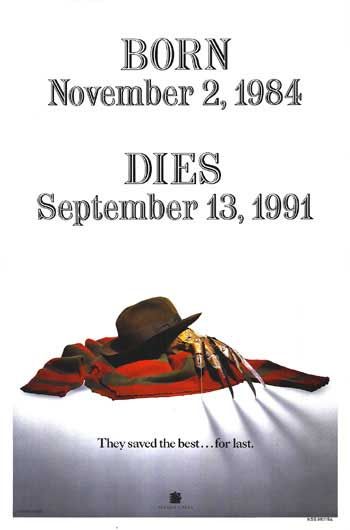
Welcome to Elm Street: The Remake

0

I’ll say this about the remake of A Nightmare on Elm Street: it could have been worse. Yes, it’s pointless and unimaginative and producer Michael Bay should still be ashamed, but I didn’t hate every minute of it. I can’t say the same for Rob Zombie’s dreadful take on Halloween (2007) or the unholy mess that is 2009’s Friday the 13th.

Don’t get me wrong, A Nightmare on Elm Street is not good. It’s not terrible, if only because it has a few decent scares — all of which are, of course, shamelessly lifted from the original. (Tina’s death is still Tina’s death, even if her name is Kris and she’s played by Katie Cassidy.) It’s clear that this remake — like all of the other recent horror rehashings — was designed to bring new fans to the series. And how do you appeal to kids today? Lots of jump scares, apparently.

And here’s where I have to admit something: I was more startled watching the 2010 A Nightmare on Elm Street than I ever was watching the original. Jump scares are effective, because they are loud and jarring and — in this case — constant. So is the new Nightmare scary? Sure. I wasn’t exactly on the edge of my seat: it would be more accurate to say I was slumped down in my seat with my fingers in my ears. But yes, I jumped. A lot. Does that mean the remake is somehow more successful than the original? Please. I may have been freaked watching that movie on the big screen, but it’s never going to, you know, give me nightmares. In contrast, the original haunted my childhood to the extent that I had to make a pact with my subconscious never to dream about Freddy Krueger. (This is entirely true and adorable.)

Jump scares are cheap and they’re easy to avoid. When you’ve seen them once, they’re ruined forever. Good horror may employ a jump scare or two, but it doesn’t rely on them. In the 2010 Nightmare, they are relentless. I will concede that there one or two memorable visuals: Kris being tossed around in the air and dragged onto the ceiling, Nancy seeing her dead friend taunt her from a body bag, Freddy’s glove emerging from the bathtub. But wait, we’ve seen these already. Yep, they’re nearly shot-for-shot “borrowed” from the 1984 original. Lazy. Oh, and the classic shot of Freddy emerging from the wall above Nancy? Ruined by half-assed CGI. When will they learn?

The cast is passable. I’ve always liked Kyle Gallner and Thomas Dekker, and Katie Cassidy somehow didn’t turn me off forever with her role on (the remade) Melrose Place. (Actually, she was one of the few good things about that show.) Rooney Mara takes on Nancy, and she’s fine but forgettable. All of these talented young actors have the misfortune of appearing in a film that doesn’t let them do much of anything. Maybe the next Johnny Depp is among the bunch, but no one gives anything resembling a breakout performance.

And where to begin with Jackie Earle Haley’s Freddy? Haley was doomed from the moment he was cast, just by virtue of not being Robert Englund. It’s one of the major problems with this remake. No one cares who’s under Jason’s hockey mask or wielding Michael Myers’ knife. But Freddy Krueger is Freddy Krueger — accept no imitations. If the film wanted to completely recreate the character, then why use the familiar striped sweater and fedora? It only makes Haley’s status as not-Robert-Englund more noticeable. This Freddy is more brutal, to be sure, but he’s also far less fun. The nightmares he creates are means to an end, lacking any sense of irony or humor. He only speaks one pun (I know, right?), and it’s lifted shamelessly from part five. Wisecracking is essential to Freddy’s persona. Just imagine if Jason or Michael suddenly got chatty: it would be equally jarring and, well, stupid.

But, much as it pains me to admit this, Englund’s Freddy isn’t scary anymore. The franchise fell apart with sequels that were too campy to be taken seriously. Even Freddy vs. Jason (2003), which ups the gore, is mostly just silly. To which I say, so what? I’d rather have another preposterous sequel that’s messy and fun than a soulless adaptation. Or hey, no more sequels at all. Let’s make some good new horror — brutal, sharp, original. The French have been doing it for years. But I digress.

Here’s the part where I tell you to look away if you care about getting spoiled, because I’m about to give away the ending. Normally, I wouldn’t, but a) I don’t give a crap, and b) so many of this movie’s problems are located in its final act.

Let’s start with the big reveal that’s obvious after the first five minutes: the victims in the 2010 A Nightmare on Elm Street were abused by Fred Krueger as children. That’s right, he wasn’t a child killer in this version — he messed around with them instead. Now don’t get me wrong, that’s still really fucked, but it also destroys any semblance of logic the original had. (‘80s horror: not big on making sense.) In the 1984 movie, the parents had to kill Freddy before he killed more of their own. The legal system had let them down, and they were forced to take matters into their own hands. The parents here, however, never even bothered reporting Krueger to the police — they just chased and torched him. Maybe this is supposed to be commentary on our desensitization to violence or the threat of mob rule, but it’s a huge and improbable leap. Anyone who’s seen Last House on the Left — the 1972 original, damn it — knows that parents only kill psychos as revenge for murder. Eye for an eye, duh.

But more importantly, all this child molestation nonsense is icky. It’s uncomfortable for the wrong reasons. There’s a whole bit with Nancy and Quentin (Gallner) deciding that they made it all up. You know, like kids do. I’m sorry, but implying that kids aren’t to be trusted when it comes to reporting the bad touch is tacky — even if, eventually, they realize Krueger really was a creep. That scene is equally awkward, with Nancy looking through a series of dirty Polaroids taken of her at age five. The audience squirms for all the wrong reasons. This kind of shock factor is manipulative and, honestly, more distracting than anything else.

And then there’s the ending, which is similar to the original’s except somehow more nonsensical. My main issue with it? Quentin, Nancy’s would-be boyfriend, lives. This is the problem in most ‘80s horror updates. The originals almost always have one survivor, the so-called Final Girl. (Just read Carol Clover’s Men, Women, and Chain Saws, if you haven’t already.) But new horror can’t seem to do this, as though the idea of one teenage girl outlasting a movie monster is too much to believe. Instead, the boyfriend has to come to the rescue, as in the aforementioned Friday the 13th remake. How can there ever be another “scream queen” a la Jamie Lee Curtis if we keep sheltering our final girls? The slasher movie doesn’t need a hunky male hero (or Gallner, who is more cute than hunky) to protect its female lead. Perhaps, as Cheryl suggested while we were talking about this, it’s just easier for a modern male audience to identify with a dude than — God forbid — a girl. To which I say, man up and take it like a woman.

Look, I’m obviously very attached to the Nightmare on Elm Street series. I’ve spent the past week rewatching and reviewing the films to the extent that I’m (almost) burned out. And this review-turned-rant is fast approaching 1300 words. So, yes, I’m passionate and any remake was bound to disappoint me on some level. The new Nightmare may not be the worst ever, but it’s still a misguided mistake. And if I have to sit here and blather on so that New Line (a.k.a. “The House that Freddy Built,” now a part of Warner Bros.) doesn’t make another sequel — because they care — then so be it.

If you’ve read all the way through — not just this epic post, but also the ones preceding it — then many thanks. I hope Cheryl and I were able to help you remember or discover horror’s greatest series.

For now: good night, folks. Sweet dreams.

http://www.youtube.com/watch?v=B-tSvrkKx2Y

The Daily Blurgh: Drop that cornhole, Bieber!

0

Curiosities, quirks, oddites, and items from around the Bay and beyond

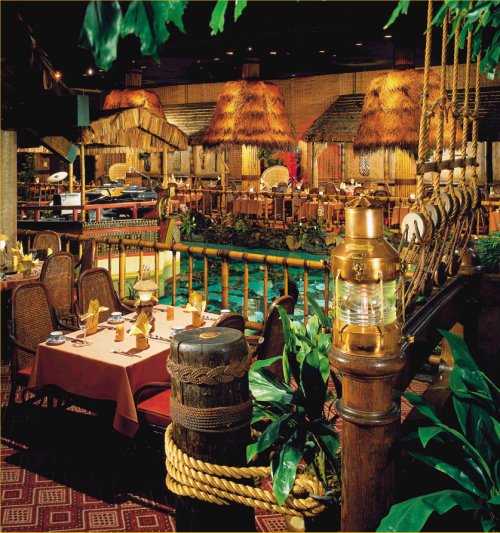
Is the Tonga Room saved? A City Planning Commission report may indicate yes. The report concludes that San Francisco’s finest (imperiled) tiki bar is covered in enough irreplaceable tchotkes and gewgaws to make it a “historical resource.” That might not stop those same tchotkes and gewgaws from being removed, “for public information and education, and/or reuse in an alternate off-site location.” But what about the indoor rainstorm over the lagoon?!?!

*****
Discuss: Michael Bauer notes of his top 10 list of the best breakfasts in San Francisco that many of the restaurants that made the cut “include a woman’s name.” (Also: Boogaloo’s? Really?)

*****

Heil Bieber!

******

Conscientious objection is not an option: “During his tenure as Archbishop of San Francisco, Cardinal William Levada chose not to inform police about a priest who admitted molesting an adolescent boy, an AP story reports. Cardinal Levada is now prefect of the Congregation for the Doctrine of the Faith, which handles disciplinary cases involving sexual abuse by priests.”

*****

Today in unicorns: Unicorn corn holders, ‘Cornz II Men, and a unicorn’s cornhole (SFW).


*****

“[Gary] Gilmore, the notorious spree-killer, uttered the words “Let’s do it” just before a firing squad executed him in Utah in 1977. Years later, the phrase became the inspiration for Nike’s “Just Do It” campaign.”

******

The ever-awesome Ubuweb has uploaded some of the animated films of local artist Kota Ezawa. Here is his rendition of the delivery of the verdict in the O.J. Simpson trial.


Newsom’s puppet show

0

Mayor Gavin Newsom, who has been doing exactly what Pacific Gas and Electric Co. wants at City Hall, is complaining that some of the supervisors are Bay Guardian puppets.


Big package in the Castro

0

While walking through the Castro I was pleasently surpised (well, sort of surprised) to catch a glimpse of this big, hard package chillin’ in the middle of the street. There are numerous sex toy havens within a few blocks of one another and somebody picked up a big, fat treat this afternoon. Apparently the new owner couldn’t wait until reaching home to unwrap this Wildfire “Real Man Bangin’ Boner”, skipping the ‘Try Me’ test material on the side and undressing that bad boy right there on the 18th Street sidewalk. I wish I could’ve seen their face as the plastic ripped open– I’m imaging a huge goofy smile, Christmas-morning, under-the-tree style.

Instead, I was treated with a look of shock and confusion from a passing tourist and his wife as they watched me take a photo of the cock casing. I giggled awkwardly and hoped he too would snap a shot with the camera hanging from his neck– he did not.

Wild Fire

My curiousity burned and as soon as I got to a computer I googled the missing man shape. Mystery solved: This is the boner who previously inhabited the massive plastic shell. Standing tall with eight and a quarter insertable inches, he vibrates and dances, meaning someone in the neighborhood had or is still having, a superb afternoon with their new friend. Jealous?

Supes try applying pressure to urge CCA contract

At the April 27 Board of Supervisors meeting, Sup. David Campos made a motion to push back board approval for San Francisco Public Utilities Commission infrastructure improvement projects until a contract was in hand for the city’s Community Choice Aggregation program. If a contract isn’t signed by June 8, when voters will decide on Pacific Gas & Electric Co.’s Prop 16 in the June election, the city could be vulnerable to a legal strike against its green municipal power program from PG&E.

“Having watched the very slow process” of negotiating a contract, “I believe CCA should be the top priority,” Campos said.

Sup. Ross Mirkarimi, who chairs the Local Agency Formation Commission (LAFCo) and has been the primary driver behind CCA on the board, acknowledged that asking the board to withhold funding for city infrastructure projects was “an extraordinary act,” but warned that the imminent threat of Prop 16 called for drastic measures. “Given this external threat from a corporation that is doing everything in its power to subvert and deny San Francisco’s right to move forward, it alarms me, like I know some of you, that we do not have a contract in hand … knowing very well the kind of resources and fervor that have been demonstrated or exemplified in the past by the PUC or by the administration or by whatever other combinations of political forces who insist on something getting done by certain timelines and deadlines,” Mirkarimi said.

But while Campos and Mirkarimi won the support of Sups. Chris Daly and Eric Mar, they failed to bring the others around. The tactic of withholding approval on an ordinance in order to send a clear message to a city department about a separate issue “sets a real, real bad precedent for how we’re going to be doing our work here,” Avalos said, though he did voice his support for CCA.

Sup. Sean Elsbernd came out strongly against the move, and made a motion to table Campos’ initial motion to push the vote back for two weeks until a CCA contract was finalized. Then, in one of those dizzying contests the Supes sometimes get into, Daly made a motion to table Elsbernd’s motion to table Campos’ motion to table the vote.

To put it simply, six supervisors voted to move forward with the vote as scheduled, while four voted to hold back on approving funding for SFPUC projects until a finalized CCA contract was in hand. Sups. Mirkarimi, Chris Daly, and Eric Mar voted with Campos to hold off; Sups. Bevan Dufty, John Avalos, David Chiu, Michela Alioto-Pier, and Carmen Chu voted with Elsbernd to proceed. (Sup. Sophie Maxwell was absent.) After that skirmish went down, all ten voted to approve the funding for the SFPUC infrastructure projects.

When reached later by phone, Board President David Chiu said, “We are fully committed to seeing a CCA contract happen before the June election,” and noted that he brought up the urgency of the matter in a meeting with the mayor, who in turn voiced his own commitment.

Welcome to Elm Street (and Crystal Lake): Part Eight

0

In honor(?) of the new A Nightmare on Elm Street, we’re recapping all of the Elms so far. Find more on the Pixel Vision blog.

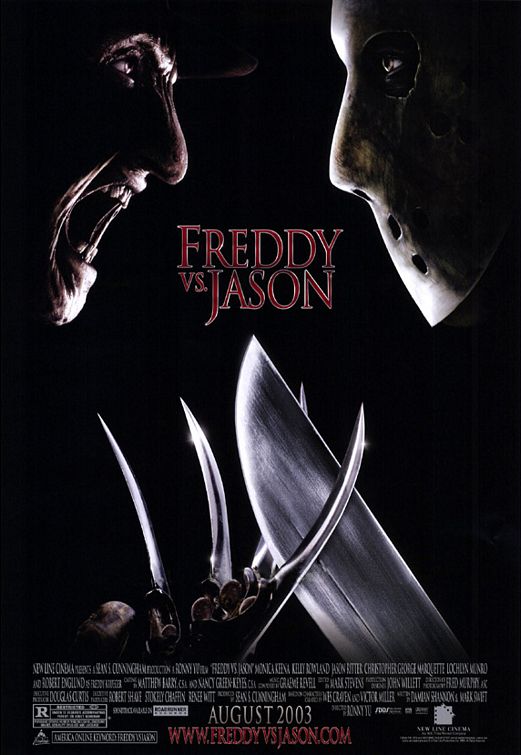
The stage was set for Freddy vs. Jason (2003) long before Freddy’s glove made a cameo at the end of Jason Goes to Hell: The Final Friday (1993) — yet another in a long line of misleadingly-titled films promising the last stand of the boogeyman in question (lest ye forget, Jason X came out in 2001). Who didn’t want to see the wisecracking scourge of Springwood go glove-to-machete with Camp Crystal Lake’s burly maniac? Truly, it would be a grudge match for the ages, with two of the most franchise-able movie monsters (combined total in 2003: 17 films) poised to lure both long-standing loyalists and new blood into the theaters. (And even if the entire film was simply a canny marketing tactic, it worked — Freddy vs. Jason was a huge hit, earning $82 million in the United States alone.)

It goes without saying that all viewers must choose a side. And I don’t mean choosing the side of the generic teen actors (Monica Keena, Jason Ritter, Destiny’s Child-er Kelly Rowland)  — after all, it’s only fun when the bodies start dropping, so that ain’t even an option. I remember attending the Freddy vs. Jason press screening and being outraged that the promotional giveaway item was a paper Jason mask. Hold the (tongue-twisting) phone! No glove bedecked with cardboard razors? No disposable fedora? Clearly, favoritism was being displayed! UNFAIR TO FREDDY!

Um, anyway. Nearly 10 years later, I still have that paper hockey mask, but I hadn’t re-watched the movie since its release. Looking at it again last night, I remembered why: it’s just sort of blah. A huge amount of exposition — wherein we learn that the powers of Freddy (Robert Englund) have been nullified because Springwood grown-ups have taken drastic steps to make all the wee ones forget about him, and if nobody remembers him, they can’t fear him, and if they don’t fear him, he has no strength to sweeten anyone’s sleepytime, etc. etc. — leads to Freddy rousing his fellow hell-dweller, Jason (Ken Kirzinger), from whatever stasis the superhuman killing machine happens to be in this year. (For the record, I kinda liked Jason X. Jason in outer space was such an awesome idea, I didn’t really mind that the movie was so insanely formulaic otherwise.)

Anyway, Jason rises, again, lumbers over to Elm Street, and starts taking out the local under-18 population. Word gets out, thanks to some indiscreet cops and a couple of kids who’ve been institutionalized and medicated for the sole purpose of silencing the Ballad of Freddy Krueger. Oops. There are slicings, dicings, a rave in a corn field (wait — a rave? With glow sticks? In 2003? I hope this is a sign of the sense of humor that enabled director Ronny Yu to helm 1998’s Bride of Chucky), and all manner of bloodshed; at a certain point, Freddy gets pissed at Jason (“That hockey puck!”) for killing wide-awake kids he was hoping to slaughter in their dreams. Important lesson, everyone: it’s hard to reason with a voiceless, soulless, heavily armed killing machine.

SO. One thing leads to another, and Jason gets tranquilized. Freddy goes into his dream, and pretends to be Jason’s nagging-from-the-grave mother, kind of a Mrs. Bates in a turtleneck. Despite all efforts, Jason won’t die, of course. (Is it possible Freddy never saw a Friday movie? That’s Jason’s magic power! He is evil immortal! Like, duh!) The kids intervene by driving Jason’s snoozing body to Camp Crystal Lake. (All this time it was terrifyingly close to Springwood — who knew?)

Elm Street dweller Lori (Keena, whose character’s name may or may not be a reference to Laurie Strode from the Halloween movies) has the bright idea of bringing Freddy into the real world, which is exactly what happened in Freddy’s Dead (1991) and probably a few other Nightmares as well, but at this point, I’m having trouble keeping track. Pretty much, it’s breasty Lori’s only contribution to the film, even though she’s positioned as a Nancy Thompson-style last girl standing. Oh, how times have changed … and gotten worse.

Anyway, at last, Freddy and Jason have it out on the shores of Crystal Lake. There is fire, there are explosions, there’s a beheading, and if you really want to know, neither guy wins. There’s no winner! Haha, sucker! Argh. But, I suppose, the end result was convincing enough to pave the way for another clash of horror titans, Alien vs. Predator (2004), which in turn brought us Aliens vs. Predator: Requiem (2007), which in turn probably helped this summer’s Predators get made, and Predators looks awesome, so I’m not complaining. However, the success of Freddy vs. Jason also no doubt inspired last year’s Friday the 13th remake, which was utter shit (in 3-D), and the brand-new A Nightmare on Elm Street, which opens tomorrow, featuring Jackie Earle Haley instead of Robert Englund in the striped-sweater hot seat. How will Freddy fare? Stay tuned for Louis Peitzman’s review!

Keep watching the skies! “Birdemic” is coming!

1

By Peter Galvin

Birdemic: Shock and Terror: it’s heeeere! This underlit, out-of-focus and erratically-edited independent film is America’s newest cult obsession, recently booking a West Coast theater tour (including Fri/30-Sat/1 at the Roxie) on the back of some impressive press coverage and a thumbs-up from Adult Swim superstars Tim and Eric. It’s the story of a freak eagle attack on Half Moon Bay, and there’s no pussyfooting around the reality that Birdemic is an amateur work. If it weren’t for the awkward fades between scenes, I wouldn’t have been surprised to learn that the film was cut entirely in-camera. With all the fuss building around the picture, the allure must be in laughing at it, and setting out to laugh at a bad film can be a tricky endeavor. Searching for whimsy in a poorly-made film can be an infuriating struggle of highs and lows, a pitfall Birdemic avoids by being laughably inept in every frame.

Thank goodness that Birdemic is so devoted to its deficiencies, or it might have been disappointing to find that the first half is eagle-free. We awkwardly meet Rod (Alan Bagh), a big shot salesman with enough cash flow to spend 19 grand on a solar panel and drive a blue Mustang that “gets 100 em-pee-gees.” Rod awkwardly meets Nathalie (Whitney Moore), a fashion model who loves cats (“if I could afford it, I’d have ten of them!”). Naturally, the pair is drawn to each other and falls passionately in love, but their first night together is interrupted by a screaming eagle blitzkrieg, trapping Don and Nathalie in their motel room.

No one actor in Birdemic has the inverse charisma of Tommy Wiseau, director and actor of that other cult favorite The Room (2003), but the CG eagles come close. They look like clip art, hovering in the air accompanied by a grating, looped cawing sound, before divebombing houses and causing them to explode into flames. Are they enraged by global warming? If the terrorizing birds are eagles, are they a metaphor for America? Birdemic poses a number of heavy questions, but the one on the tip of my tongue is whether or not it’s rude to heap praise on the film for being bad. It’s pretty clear that director James Nguyen didn’t set out to make a comedy, but his straight-faced seriousness is much of what makes Birdemic so funny. Appearing along with his cast to support the film’s Roxie screening, Nguyen seems willing to take his success whichever way he can get it.

http://www.youtube.com/watch?v=jrmt-EMqzgo&feature=related

BIRDEMIC

Fri/30-Sat/1, 11 p.m., $9.75

Roxie, 3117 16th St, SF

www.roxie.com


CounterPULSE’s three day maypole

1

It’s a big weekend for celebration. May 1st is International Worker’s Day, it’s the day when winter has finally left the Northern Hemisphere building, and marks the dawn dances of the pagan Beltane. All in all, it’s an apt time for rejoicing in the people and places what that make our world beautiful.

And given that we’re in the Bay, one of the Earth’s great cradles of populist art, there may be no better place to do that than CounterPULSE, the community art performance space that is celebrating 20 years (five in their current location) of helping cool artist do what they do. CounterPULSE has been sponsoring classes, performances, and residencies for some of our most progressive and exciting artists over the past decades — and they’re making it easy for you to throw some dough their way with three days of diverse, exciting programming that could really only happen here in San Francisco
“We’ve planned the weekend with three events that show the three sides of CounterPULSE,” says PULSE Executive Director, Jessica Robinson Love. In her ten years with the group, Love has seen it through a relocation from it’s old haunts of 848 Community Space to it’s current perch on Mission Street, as well as a tenfold increase in budget.

Simply put, here’s the schedule: Friday = politics, Saturday = art as experience, Sunday = movement. But screw putting it simply — it’s all so much fun that you should hear about each night in detail:

Friday: “This night is going to be about really big issues, but it will be a really fun show,” says Robinson Love of CounterPULSE’s political agitprop cabaret night, which highlights the center’s focus on free speech. The San Francisco Mime Troupe will be performing, along with W. Kamau Bell, famous for racially charged comedic performances, and porn star Annie Sprinkle. 

Saturday: “We’re calling it the Happening — we modeled Saturday on the Andy Warhol events at the Factory. It’ll be a sequence of surprises,” says Robinson Love. Wandering attendees will bumble about from room to room — a trapeze artist here, crocheting there, Fauxnique over yonder, maybe even bumping into Philip Huang to hear a rant about Jesus Christ and Pink Floyd keeping Jews and homosexuals off the moon

Sunday: Dance party! “It’s all our favorite dance companies from the Bay area,” Robinson Love tells me. Tapping their feet to the beat will be many of the groups that CounterPULSE has provided a warm nest to over the years, who are now flapping their wings mightly around the city. Among those that will be represented; ODC Dance, Axis, and the Joe Goode Performance Group.

May Day @ CounterPULSE
Fri/30 – Sun/2 8 p.m., $25-200
CounterPULSE
1310 Mission, SF
(415) 626-2060
www.counterpulse.org

Welcome to Elm Street: Part Seven

0

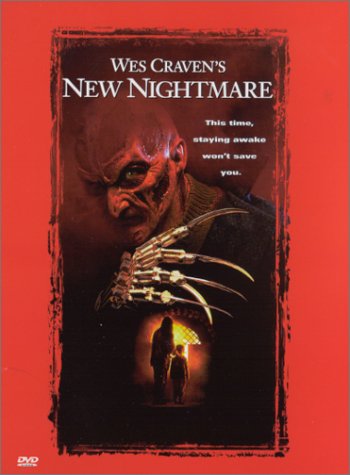
Before Wes Craven got meta with Scream (1996), he tried his self-referential hand at the Nightmare on Elm Street series. The result was New Nightmare (1994), which reunited Heather Langenkamp and Robert Englund as … Heather Langenkamp and Robert Englund. Also playing themselves: actor John Saxon, writer-director Wes Craven, producer Robert Shaye, and Freddy Krueger. Yep, that’s how he’s credited.

Where was there to go after the dreadful Freddy’s Dead (1991)? Not because of the title’s finality — see also: the so-called Final Chapter (1984) of Friday the 13th — but rather its inescapable shittyness. Part six offered more comedy than horror, with lazy deaths, bad acting, and weak puns — even by Freddy standards. But New Nightmare was a reinvention in the truest sense. It’s a film that, while far from perfect, was well ahead of its time. In fact, Craven pitched it as the plot for part three, but the studio decided against it.

That’s probably for the best. New Nightmare works well when it’s referencing its predecessors: that’s kind of the whole point. Part three would have been too soon — that film could have been clever, but it wouldn’t be full of the Easter eggs that make New Nightmare such a treat for longtime fans. And, yes, I’ve been rewatching these movies for the past week and am, in general, above-average geeky: this film works for me in a way it might not work for others. But I think that’s OK. Scream is broader (and better) because it appeals to fans of all ‘80s horror — New Nightmare is just for Freddy Krueger devotees.


Here are 20 references that I picked up on. Some were certainly intentional. Others are the product of my overactive imagination.

1.    The first few shots show the creation of Freddy’s new animatronic glove. A Nightmare on Elm Street (1984) begins with Freddy fashioning his glove.
2.    At the talk show where Robert Englund surprises Heather in full Freddy regalia, he taunts the audience with, “You are all my children now,” a line from Freddy’s Revenge (1985).
3.    Heather’s son Dylan (Miko Hughes) repeats “Never sleep again” and other lines from the rhyme first heard in part one and chanted in all Nightmare films.
4.    Robert Shaye jokes, “I guess evil never dies, right?” One of the taglines to part four, The Dream Master (1988), was “Pure evil never really dies.”
5.    Heather’s husband Chase (David Newsom) crashes his car when he falls asleep and gets attacked by Freddy. Dan (Danny Hassel) died similarly in part five, The Dream Child (1989).
6.    Just as Freddy made Dan’s corpse speak to Alice (Lisa Wilcox), he has Chase talk to Heather when she falls into his coffin.
7.    Heather and Dylan’s conversation about God recalls Tina (Amanda Wyss) pleading for God in part one. Freddy’s response? “This is God.”
8.    Dylan invites Heather to join him in his dreams. Bringing people into dreams was the power Kristen (Patricia Arquette/Tuesday Knight) displayed in Dream Warriors and Dream Master.
9.    When Heather calls Robert, he’s painting freaky Freddy art. Kristen couldn’t stop drawing Nancy’s house (and Freddy) in part three.
10.    To replicate Freddy’s glove, Dylan tapes knives to his fingers. In the first Nightmare, the glove is referred to as his “fingerknives.”
11.    The phone receiver turns into Freddy’s mouth and tongue, as it did in part one.
12.    Freddy needs to cross over into our world by getting past Heather, the gatekeeper. There was plenty of talk about gates and gatekeepers in Dream Master, but to be honest, I wasn’t paying much attention to the plot by that point.
13.    Heather wakes from a nightmare with a grey streak in her hair, just like Nancy in part one.
14.    A nurse tells Heather she’ll need a pass to get into the hospital’s restricted area, to which Heather replies, “Screw your pass.” This is another line from part one.
15.    Heather reminds Dylan, “Whatever you do, don’t fall asleep.” She said the same thing to Glen (Johnny Depp) as Nancy in the first Nightmare.
16.    An invisible Freddy lifts Julie (Tracy Middendorf) into the air, then drags her up the wall and onto the ceiling. This is almost exactly how Tina died in part one.
17.    Dylan’s a sleepwalker, which is bad news in these movies. In Dream Warriors, Phillip (Bradley Gregg) suffered from the same problem.
18.    Heather tells John Saxon that Fred Krueger killed Chase. By part two, Krueger was known as “Freddy,” so this is likely an allusion to part one. Of course, that’s underscored by the TV playing a similar scene from the first movie.
19.    The references get even more overt when Heather and John take on their original roles as Nancy and Lt. Thompson, down to wearing the same clothes they had on at the end of the first Nightmare.
20.    While trying to rescue Dylan from Freddy, Heather gets caught climbing the stairs, which turn into goop. This also happened in part one.

Be still, my nerdy heart. I have to admit that New Nightmare isn’t quite as good as it could have been. Freddy’s new makeup, which is supposed to be scarier, pales in comparison to his earlier incarnations. In fact, all of the scenes involving Freddy are somewhat lacking: this is really Heather Langenkamp’s movie. Still, without this film, there would be no Scream. And without Scream — well, I don’t even want to think about that.

PG&E pitches the Guardian for support

1

You know that Pacific Gas & Electric is carpet-bombing voters with its campaign to kill the CleanPowerSF program and pass Proposition 16 – which would prevent such renewable public power programs in the future – when one of their minions calls the Bay Guardian City Editor at his desk at work with their pitch.

That’s what happened this week when a representative of a PG&E front group, the Common Sense Coalition, called me to warn about San Francisco’s “dangerous energy scheme.” I listened for awhile, and then asked the guy a few of my own questions.

“What is the Common Sense Coalition?” I asked, a seemingly straightforward question that I already knew the answer to. I could hear him fumbling through his notes looking for the answer, and when he finally started to read me his deceptive script about “concerned citizens,” I asked another, “Where does the Common Sense Coalition get its funding?’

He didn’t seem to know, so I told him that PG&E Corp. has dedicated at least $35 million in ratepayer money – that is, profits from the high electricity rates paid by San Franciscans and PG&E’s other captive customers – to the campaign being waged by its front groups.

That campaign includes slick mailers and ads on websites (including the New York Times), television, and print publications, asking, “Do you think voters deserve the right to have the final say on how our money is spent?” Actually, the measure requires a two-thirds vote, which is nearly impossible to obtain when PG&E spends tens of millions of dollars to distort the truth in every election that its market share is threatened.

And the truth is that we do have a right to vote on the elected officials who pursue programs like CleanPowerSF, but we don’t have a right to vote on whether we get our power from PG&E or whether it uses our own money against us.

The invaluable legacy of Willard Wirtz

2

Dick Meister, formerly labor editor of the SF Chronicle and KQED-TV Newsroom, has covered labor and politics for a half –century.

Never has there been a greater champion of U.S. workers than former Secretary of Labor Willard Wirtz, who died on April 24 at 98. Certainly in more than a half-century of covering labor, I’ve never met anyone more dedicated – or more effective – in winning and preserving vital protections for working people.

That was the lifelong task of Wirtz, who served as secretary under presidents Kennedy and Johnson from 1962 to 1969, a brilliant, charming Harvard Law School graduate who spent his life helping ordinary Americans, especially the poor.

Much can be said of Wirtz’ long and distinguished career in government and academia, and his work in government and private practice as a mediator and arbitrator who helped prevent or settle many strikes and resolve many other serious labor-management disputes.

Wirtz expanded the Labor Department’s job-training and education programs that were developed especially for the underemployed and undereducated and at-risk youth, increased unemployment assistance for those who lost jobs to foreign trade, created literacy programs for workers and sharply and publicly chastised construction unions for their bias against African-American workers.

Wirtz was also a leader in the passage of laws that prohibit discrimination against women and older workers in pay and otherwise. And he was one of the first to call for laws protecting workers with disabilities from discrimination.

Wirtz clearly was what current Labor Secretary Hilda Solis calls “President Johnson’s general in the war on poverty.”

Wirtz himself said of his time as secretary that “If there was a central unifying theme . . . It was in the insistence that wage earners – and those seeking that status – are people, human beings for whom ‘work,’ but not just ‘labor’ . . . constitutes one of the potential ultimate satisfactions.”

I particularly remember a trip Wirtz made to California in 1965 in response to grower requests for creation of an “emergency program” that would in effect restore the highly exploitative Bracero Program that for more than two decades had enabled growers to hire underpaid, overworked and generally mistreated poverty-stricken Mexicans.

The Braceros had to silently accept the rotten conditions or be sent back to Mexico to be replaced by other poverty-stricken Braceros. And domestic workers had to uncomplainingly accept the conditions or be replaced by Braceros – if they were even hired, Growers much preferred the necessarily compliant Mexicans.

Wirtz did his utmost to enlighten the general public about the abysmal conditions of those who harvest most of our fruits and vegetables. He took a whirlwind tour of California’s lush farmlands with a planeload of reporters in a battered DC3, popping up unannounced at farms to ask embarrassing questions and point to conditions that most newspaper readers and television viewers associated only with the dim past recorded by John Steinbeck in “The Grapes of Wrath.” Growers tried to limit his agenda to farms where they had hastily and improved conditions for a token number of workers. But Wirtz would not be denied.

By closely examining the true conditions of Mexican and domestic workers alike, Wirtz was hoping to show the rest of the country the need for major reforms that would promise decent pay and working conditions and deny growers their request for Mexican workers under an “emergency program.”

On the ground, he sped with a busload of reporters over dusty roads from one huge square patch of green and brown to another. We had a hard time keeping up with Wirtz, Neither his good humor nor his seemingly inexhaustible energy lessened as he put probing questions to men and women working in the fields.

At one stop in Southern California, for instance, he strode briskly down one long dirt row after another, a pipe gripped tightly in his teeth, shoes covered with dust, to greet workers as they stooped painfully, grasping the short-handled hoes used to weed and otherwise prepare the strawberry, sugar beet and lettuce crops for harvest.

“Wirtz is my name, good to see you” was a typical icebreaker – first voiced at 5:30 a.m. – only five hours after Wirtz had gone to bed.

At another stop, he walked away shuddering from the communal lavatory in the center of a circle of a ramshackle two- and three- room buildings overrun with barefoot children.

He greeted me, his face twisted in disgust.

“Did you see it?” he asked. “God!”

At yet another stop, Wirtz stood in the center of a field, surrounded by workers, looking out over tall rows of asparagus that covered the land in all directions.

“Where,” he asked the grower, “are the toilets?” The grower, genuinely incredulous that the question would even be asked, explained that “there are none.”

Elsewhere, Wirtz paid a surprise visit to a farm labor camp at breakfast time, finding conditions that “make me ashamed anything of this kind exists in this country. Looking at the food, I wonder how anyone can eat it!”

Wirtz returned from California determined to greatly limit, if not halt, the flow of Mexican workers that growers hired in lieu of improving conditions to attract domestic workers.

As Wirtz and others predicted, curtailing grower use of Mexican workers forced growers to improve conditions in order to attract more domestic workers. The improvements were generally short-lived, however, as growers turned to the masses of undocumented Mexicans for workers.

Yet thanks in large part to Willard Wirtz, the country had seen clearly the great need to improve the conditions of some of our most necessary but most exploited workers. That helped lay the groundwork for Cesar Chavez and the United Farm Workers and others who are continuing the struggle today for decent farm labor conditions.

That’s but a small part of the invaluable legacy of Willard Wirtz, who helped guarantee decent conditions to millions of working people in a wide variety of fields.

What’s not generally known is Wirtz’ role in desegregating the Labor Department staff.  As former Labor Department Director of Information John Leslie notes, at the time that Wirtz became Labor Secretary in 1962, the only African Americans on the staff were messengers and drivers. Leslie recalls that “Bill decided to send a message by starting in the deep South . . .We went to Atlanta and called all the regional directors together . . . and immediately drew agitated opposition.

“Every excuse not to hire blacks in professional positions was given – history, local custom, no qualified Blacks, employee relations ” and more, including an assertion that “our female staff won’t go to the bathroom with Blacks “… Bill quietly answered, ‘Then they will be mighty uncomfortable by the end of the day.'”

Despite the objections of his regional directors, Wirtz prevailed. The Labor Department staffs were integrated, in the South and elsewhere.

We shouldn’t forget, either, Wirtz’ courageous stand against the Vietnam War, including the bombing of North Vietnam ordered by his boss, President Lyndon Johnson. That drew a demand from Johnson in 1968 that Wirtz resign. But two days later, Johnson relented, fearing that Wirtz’ resignation would embarrass him and hurt Hubert Humphrey, the Democratic presidential nominee. Wirtz stayed on, but didn’t mute his opposition to the war.

EVERY CRANNY AND CROOK

Among his other considerable talents, former Secretary of Labor Willard Wirtz was one of the country’s foremost collectors of malaprops. His collection, naturally, was studded with gems from Washington, that font of bureaucratese and other language butchery.

Wirtz, for instance, told of a Labor Department official who insisted that “it’s just a matter of whose ox is being goosed.” And there was:

A newspaperman who ‘d “been keeping my ear to the grindstone.”

A bureaucrat who was certain that “we’ve got to do something to get a toe hold in the public eye.”

A politician who demanded that “we hitch up our trousers and throw down the gauntlets.”

A corporate official who wanted to know “if you’ve got any plans underfoot.”

 Another official who warned that “if this keeps up, we’ll all go down the drain in a steamroller,” One official was concerned that “we’re being sold down the drain.”

But not to worry, said an optimistic official, “We can get this country out of the eight ball.”

“It may not work,” said a high union official, “but let’s take a flying gambit at it.” An Agriculture Department official insisted that “we have to deal with the whole gambit of this affair.”

And that wasn’t the half of it. Consider these gems, also uttered by labor and management leaders and, of course, bureaucrats:

“That kind of business gets my dandruff up.”

“When I smell a rat, I nip it in the bud.”

“That idea doesn’t have a Chinaman’s chance in hell.”

“Let’s don’t go off the deep end of the reservation.”

“If we try this we’re likely to have a bear by the horns.”

“Somebody’s going to think there’s dirty work behind the crossroads.”

“Let’s grasp this nettle by the horns.”

“Somebody’s likely to rear up on his back.”

Wirtz himself was no slouch at malaprops. For example, there was his, “We’ve got to be careful about getting too many cooks in the soup.”

But few men, the secretary included, are likely to top the explanation of an unsuccessful candidate for the Maryland Legislature that Wirtz recalled.

“I think I deserved to win,” he told a gathering of his supporters after his defeat. “I went to every cranny and crook in this district.”

Dick Meister, formerly labor editor of the SF Chronicle and KQED-TV Newsroom, has covered labor and politics for a half-century. Contact him through his website, www.dickmeister.com, which includes more than 250 of his recent columns.


The Daily Blurgh: No more toys for you

0

The Black and White Ball: Not just for the city’s elite anymore.

*****

The Prop 8 trial could wrap in time for Pride, causing either waves of rainbow-colored jubilation to ripple across the LGBT populace or a massive flashback to the bummer November of ’08.

******

“Just because David Morales Colón is dead doesn’t mean he can’t also be stylish. According to Primera Hora, the 22-year-old Puerto Rican man was murdered in his San Juan neighborhood last Thursday. As a tribute to the young man, the Marin Funeral Home treated the body and then dressed him up in his typical riding outfit complete with helmet on top of the Honda CBR600 F4 the man’s uncle had given to him.” (h/t Slog)

*****

Today in local, misguided attempts to legislate the well-being of children: making it illegal for fast food restaurants to pass out toys in kiddie meals.

*****

“Child pornography is great. It is great because politicians understand child pornography. By playing that card, we can get them to act, and start blocking sites. And once they have done that, we can get them to start blocking file sharing sites.” (So, people, can we please create an equivalent to Godwin’s Law for egregious (mis)uses of “child porn” as a rhetorical trump card?)

*****

Will hearing classic children’s books read aloud in the manner of Werner Herzog ever get old? No.

Welcome to Elm Street: Part Six

0

In honor(?) of the new A Nightmare on Elm Street, we’re recapping all of the Elms so far. Find more on the Pixel Vision blog.

By 1991, when the optimistically-titled Freddy’s Dead: The Final Nightmare rolled around, the Elm Street series was still making money, but delivering few scares. Not like the series’ beloved hero cared, really — Freddy Krueger was as popular as ever. Just look at the opening credits of Freddy’s Dead, which equate Krueger and Nietzsche as quotable icons (“Welcome to prime time, bitch!” remains a phrase of note among philosophers, I’m sure.)

The only Nightmare film directed by a woman (Rachel Talalay, who made her directing debut; she later made 1995’s Tank Girl and has since helmed a shit-ton of TV shows), and the only to utilize 3-D (more on that later), Freddy’s Dead is set ten years in the future (so, 2001?) Freddy has slaughtered every kid in Springwood; the adults who remain are bonkers. The sole survivor is a height-phobic teen (Shon Greenblatt) we only ever know as John Doe; the film’s opening sequence pays homage to both The Twilight Zone and The Wizard of Oz (1939) as John ejects from a freaky airplane ride into a house spinning through a wind storm. Do I really have to tell you Freddy sails by on a broom stick? “I’ll get you, my pretty — and your little soul, too!”

John lives, but barely — battered and with no memory, he’s picked up by cops in Depressed Americatown, USA, and taken to a run-down shelter for troubled teens staffed by Maggie (Lisa Zane — yes, Billy’s sister!) and Doc (the Yaphet Kotto). In short order, we’re introduced to a ragtag crew of Dream Warriors 2.0: dope-smoking video game addict Spencer (future movie and TV semi-star Breckin Meyer); tough bitch Tracy (Lezlie Deane); and hearing aid-wearing Carlos (Ricky Dean Logan). In keeping with a series theme that’s especially pronounced here, all three have abusive parents.

The fact that John Doe has violent, vivid nightmares is intriguing to both Doc — who specializes in “dream therapy” — and Maggie, who suffers her own disturbing dreams. When it becomes apparent that Maggie and John are having variations on the same dream (though Maggie’s play out more like flashbacks, or sinister home movies), she hustles him into the youth center’s comically beat-up van for a visit to Springwood. Hey, maybe it’ll jog his memory — or hers.

OF COURSE, the three reckless youths with obviously identifiable weaknesses happen to stow along for the ride. Bad move. Springwood proves to be empty, save for a few insane adults (including Roseanne and Tom Arnold, at the height of their tabloid fame). While Maggie and John search for clues to their dark pasts, Spencer, Tracy, and Carlos explore an abandoned house — on Elm Street. Freddy appears and immediately begins fucking with all involved: for example, the deaf kid gets a Freddy-style hearing aid that makes everything painfully loud, and is then subjected to the sound of Freddy gleefully scratching his claws along a chalkboard. Needless to say, Carlos’ head explodes; needless to add, Freddy’s kiss-off is “Nice hearin’ from ya!”

Spencer’s death is far more humorous, and is probably the best example of how un-terrifying Freddy has become by now. As the stoner dozes, a busted TV comes to life. Johnny Depp does a rememberin’-my-roots cameo in a fake TV commercial, which is interrupted by Freddy. “Hey Spence — let’s trip out!” Droopy-eyed Spence grins as Iron Butterfly plays and psychedelic waves suck him into the set. Suddenly, he’s a character in a video game, being pounded first by his domineering father (“Be like me!”) and then Freddy himself, who’s also manning the joystick in some alternate reality to this alternate reality. As Maggie and Tracy watch in horror (and, presumably, the audience howls in delight), Spence sleepwalks all over the house, punching walls and bouncing into the ceiling. “Great graphics,” gamer Freddy murmurs in approval.

Anyway. Spence dies, and a sleeping John Doe can’t be roused to prevent his own untimely end (it involves a parachute and a bed of nails). Earlier, he and Maggie had learned from Springwood’s orphanage that Freddy Krueger’d had a kid, current whereabouts unknown. John had thought he was Krueger Jr., safe from Freddy’s wrath. But no! His last words, to Maggie: “It’s not a boy!”

So, Maggie the nightmare-having doctor realizes what we’ve known all along: Freddy Krueger is her father! ZOMG! Freddy’s Dead takes the opportunity to sketch in a backstory for our favorite child killer: he’s seen pulverizing a hamster as his eight-year-old classmates chant “Son of a hundred maniacs!”; he’s seen enjoying a beating from his stepfather (the Alice Cooper); he’s seen, through Maggie’s eyes, murdering his wife after she discovers a secret room in their Springwood house (contents: gloves, weird things in jars, cookies). Young Maggie, or Katherine, or whatever her birth name was, was sent to the orphanage soon after, giving Freddy further motivation to kill every kid in town. Or something. Apparently he was a devoted father.

Meanwhile, back at the shelter, Doc immediately understands the situation, unlike every other authority figure in the series EVER: “He’s fucking with the line between dreams and reality!” Seems Freddy is also trying to get Maggie to bring him more victims, allowing for this crowd-pleasing exchange:  “But this isn’t Springwood!” “Every town [dramatic pause] has an Elm Street!”

It is soon decided that Maggie, being Freddy’s spawn, is the only one who can enter his thoughts, get ahold of him in dreamville, and bring him into the real world, where he can be killed the fuck dead. “You’ll use these,” Doc says, pulling out a pair of 3-D glasses. While it might’ve been easier for the filmmakers to just insert a title card reading “PUT ON THE GLASSES NOW Y’ALL,” I suppose this was a somewhat more subtle way to issue the same orders.

Anyway, there’s an extended tussle in shoddy 3-D. Freddy finally dies (Maggie spears him with his own glove, for maximum irony). The end credits, which offer a memorializing highlight reel of Freddy’s greatest kills, unspool over what has to be Iggy Pop’s least-popular song of all time, “Why Was I Born? (Freddy’s Dead).” And horror fans finally know the answer to the question that’d gripped their dreams for nearly a decade: how do you kill Freddy Krueger? You could believe the movie’s harebrained plot. Or you could believe the evidence presented by the movie itself: kill the monster by transforming him into a campy, cackling, comedian.

Don’t worry — there are two more Freddy movies, plus the new flick, to go on our series. Grab a cup of coffee, kids!

http://www.youtube.com/watch?v=YmdityGT-R8&feature=related

Whitman and Goldman should be rich fodder for Democrats

12

Democrats are now benefiting from the confluence of the public’s outrage over reckless self-dealing on Wall Street, debate over a Democratic bill to regulate such casino-style financial practices, and prosecution of Goldman Sachs for profiting from an economic collapse it helped cause. But the bigger question is whether top Democrats are willing to make the sustained case that it’s the rich who have screwed over the vast majority of Americans, and it’s time to recover that plundered wealth to deal with pressing problems like poverty, global warming, and infrastructure needs.

Central to that question is Meg Whitman, the Republican gubernatorial candidate who should be a poster child for a campaign against the predatory rich, whose increasing wealth has come at the expense of the working class and public institutions. As the Sacramento Bee reports today, Whitman is a former Goldman Sachs board member who profited from insider trading deals that are now illegal. And now she’s using her ridiculously over-inflated net worth to try to buy the governor’s office with unprecedented spending, something that should profoundly offend our basic democratic values.

Presumptive Democratic gubernatorial nominee Jerry Brown and some union officials have tried to highlight Whitman’s extensive Wall Street connections, but Brown has been way too tepid. Maybe that’s because he has his own Goldman Sachs ties, as the Los Angeles Times reported this week, although they pale in comparison to Whitman’s, which continue to this day and help pay for her takeover of California airways with her deceptive yet poll-tested propaganda.

As we wrote in our endorsement of Brown this week, it’s frustrating that Brown has been so unwilling to go after the rich, whether it be raising income taxes on millionaires (who have weathered the Great Recession far better than working stiffs) or letting commercial property be assessed at fair market value (since Prop. 13 passed, corporations that used to pay about two-thirds of the property taxes in California now pay about one-third, with individual property owners now paying two-thirds).

This is fertile ground for some long-overdue class warfare on behalf of the vast majority of people whose livelihoods have been threatened by the greedy, self-dealing rich. Anger at Wall Street for destroying the economy and then being bailed out by the federal government cuts across traditional ideological lines. It is felt by progressives, by conservative members of the Tea Party movement, and even by many political moderates.

At this point, few people trust the Democratic Party to lead the way toward a real accounting for the financial collapse, a recovery of the money from those who profited from the disaster, and an application of that money toward the most pressing public problems.

That’s a shame, but it’s also a real opportunity for a Democrat-led populist movement that unites disaffected factions on the left and right. After all, the problem only lies with about the richest 5 percent of Americans, those who have used elaborate financial ruses and tax shelters to hoard the wealth this country needs, even as the rest of us have lost financial ground. If there is any real democracy left in this country, it shouldn’t be that difficult for 95 percent of Americans to act in their own best interests.

After all, just this afternoon, even the most stubborn Republican leaders relented on allowing debate on the Democrats’ financial regulatory legislation, bowing to the very political pressures that I’m talking about. But if the Democrats want to try to regain their status as the party of the people, and begin to finally deal with this country’s long-neglected needs, they’ll need to see this as just the first small step down a path they should have taken decades ago.

Hot sexy events: April 28 – May 4

0

It’s time to take control, cats and kittens. And no, I don’t mean you’ve gotta throw away all those naughty thoughts of ropes and handcuffs — rather, it’s time to lay claim to your own sex life. This week’s sexy events give you ample room to play with this concept, be it Cleo Dubois (2008 leather Marshall of the Pride parade)’s weekend long intensive on mastering the whip for female dominants, or Julian Wolf’s class at Good Vibes on reaffirming the divine in your S&M. For a different take, head to Wicked Grounds’ Festish Munch, where you can calmly meet and greet potential playmates with as much discretion as you have over your extra foamy latte… or was that a mocha with whip? Regardless, get out there and make it how you want to.

S&M: Spirit & Meaning
Julian Wolf shows the way to BDSM scenes that inspire spiritual awakening, making it possible to be a sexy person, and a spiritual person, all in the same moment.
Wed/28 8-10 p.m., $25-30
Good Vibrations
603 Valencia, SF
(415) 552-5460
www.goodvibes.com

Fetish Munch
Do you like fetish play, dress up, BDSM fun, and “dark and sexy” music — but find it hard to really get to know your partners in the thick of the party? Take time to come discuss your passions over a cup of coffee at SF’s sexiest cafe, Wicked Grounds.
Wed/28 8-9:30 p.m., free
Wicked Grounds
289 8th St., SF
(415) 503-0405
www.wickedgrounds.org

Amazing Grace

The first movie to touch on AIDS issues in Israel, Amazing Grace witnesses the relationship between upstairs and downstairs neighbors. The film screens as part of the SF Jewish Film Festival and the “Out in Israel” LBGT Culture Festival.
Thur/29 9 p.m., free
Roxie Cinema
3125 16th St., SF
(415) 863-1087
www.sfjff.org

Cleo Dubois’ Women’s Erotic Dominance Weekend
A full weekend of women learning how to maximize their power in the dungeon. Feedback from previous attendees: “the course gave me more than I had anticipated or hoped for and I had hoped for quite a lot.” Time to get some more confidence in your life, starting with your sexual dynamics.
Starts Fri/30 7 p.m. @ private SOMA residence
Day long courses Sat/1 & Sun/2 @ SF Citadel
1277 Mission, SF
(650) 326-3269
cleodubois@sm-arts.com

Burlesque ‘N Brass
Blue Bone Express provides the jazz melodies to which lovely ladies will shake their spangles. Raise a glass (I hear they have good grapefruit juice cocktails, just a thought), and watch out for dangerous curves.
Sat/1 8:30 p.m.-12:30 a.m., $10
Café Van Kleef
1621 Telegraph, Oakland
(510) 763-7711
www.cafevankleef.com

SF Citadel Play Party
Romp amongst the slings and arrows, outrageous fortune pretty much guaranteed at this frisky get together for the leather community! The event is only open to members, but unaffiliated pervs, you’re in luck — you can buy in for a full year at the Citadel for just $10. They’re also open to work/play exchanges, if you’d like to volunteer for a shift.
Sat/1 8 p.m.-1 a.m., $25 for members
SF Citadel
1277 Mission, SF
(415) 626-1746
www.sfcitadel.org

Thrillpeddlers Present: “Hot Greeks”
The Thrillpeddlars follow up the wild success of “Pearls Over Shanghai” with this sassy little stage number, which tells the story of the Tri Thigh sorority girls’ quest to find the Oracle of Delphi (otherwise known as the Hot Twat of Tangier). The pricey tickets are a partner price for the special “shock box” seating. Oooo…
Sun/2 7 p.m., $30-69
Hypnodrome Theater
575 10th St., SF
(415) 377-4402
www.thrillpeddlers.com

Mommy’s Playdate
Madres only at this mingle fest for those with little ones. Leave the kiddies at home, and instead pick up “mommy-tini,” and get a one on one consultation from the Good Vibes staff sexologist. And a makeover… of what you’ll have to attend to find out.
Tues/4 7-9 p.m., free
Good Vibrations
1620 Polk, SF
(415) 345-0400
www.goodvibes.com