

Today’s Look: Kazu, Chris, and Angeline at SF State
Tell us about your look:
Kazu: “This shirt is from my dad.”
Chris: “I like to get my clothes from H&M.”
Angeline: “I got these boots from the store The Stars Shine Bright in Japantown.”

Today’s Look: Kazu, Chris, and Angeline at SF State
Tell us about your look:
Kazu: “This shirt is from my dad.”
Chris: “I like to get my clothes from H&M.”
Angeline: “I got these boots from the store The Stars Shine Bright in Japantown.”

Curiosities, quirks, oddites, and items from around the Bay and beyond
Large, hairy gay men fashionably invaded Berkeley Art Museum on Mother’s Day in honor of large, hairy Belgian fashion designer. Did you go? We’d love to hear your on-the-scene reports. (Alas, we were dining with Mum).
*****
Welcome to Yuba County, SF’s rural dumping ground.
******
Flashmobs: the new unions?
******
Pop artists’ estate’s grasp on copyright loosened by artist’s “popular” source material: “Roy Lichetenstein’s estate has seen the light. After threatening copyright litigation against an indie band whose CD cover remixed the same comic book panel that the pop artist made famous, the estate has withdrawn the threat and no longer claims to own the rights to everything that rips off the same stuff that Lichtenstein copied.”
******
SFMOMA has announced the shortlist of architects in consideration for its $250 million expansion. The final four are: Foster + Partners, Diller Scofidio + Renfro, David Adjaye Associates, and Snøhetta.
******
Forget prostituting yourself for American Apparel. Can you make sexyface while wearing a messenger bag? Then Timbuk2 wants you!

******
Sam McPheeters: I saw John Carpenter speak in 2002. He was 54 then, but he looked ten years older, and he talked for a while about his sagging energy levels. You’re the same age now, right?
Glenn Danzig: Give or take.
SM: Well, you look my age and it’s kind of weirding me out. Do you ever have problems with your energy levels?
GD: No.
SM: What’s your secret?
GD: I don’t know. I don’t eat shit food. I don’t do drugs. I don’t know what else to tell you.
SM: I’m 40. I don’t do any of those things. I eat salad for lunch. And I wake up almost every day feeling like a wet bag of sand.
GD: Salad is terrible if you put creamy crap on it.
SM: It’s low-fat creamy crap!
GD: There’s no such thing.
******
Speaking of a comic Danzig:

******
Today in “no, The Onion didn’t make this shit up” campaign ads:
http://www.youtube.com/watch?v=umTITWQuXwY

City Grazing, the adorable weed-eating goat herd in Bayview, has a ton of upcoming events, starting tomorrow, May 12, at 6 p.m., when City Grazing founder David Gavrich will talk at a community forum on the urban farming movement at the Commonwealth Club.
Other speakers include Novella Carpenter (author of Farm City), Jason Mark, manager of Alemany Farm and editor of Earth Island Journal. Tickets are $20 and the price includes local, sustainable food.
On Sunday, June 20, City Grazing’s ambassador Momma Goat will be at the Giants County Fair with her two 3-month-old kids as part of CUESA’s Urban Eats program
And on Sunday June 27, City Grazing will make goat history by providing the first goats ever to join the SF Pride Parade! So, keep an eye out for their Goat Float.
The organization is also finalizing its new state of the art goat shelter design, redesigning its website, and looking for volunteers. Maa!
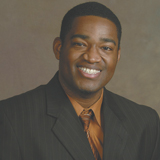
Community College Board Trustee Chris Jackson has thrown his hat into the District 10 Supervisor race. The move is guaranteed to upset the already crowded field of candidates in the district. District 10 lies in the city’s southeast sector and is home to San Francisco’s largest remaining African American community, and some of its most economically disadvanted communities and environmentally polluted lands.
Jackson was elected to the Community College Board in 2008, winning more than 8,000 votes in District 10, as part of that citywide election. And he has done a good job on the Board ever since.
The only African-American male currently holding elected public office in San Francisco, Jackson works as a policy analyst for the San Francisco Labor Council. That position is sure to raise questions about Jackson’s ties to Lennar’s redevelopment proposal at Candlestick Point and the former Hunters Point Naval Shipyard. The Labor Council entered a community benefits agreement with the developer shortly before the June 2008 election on Prop. G. and Labor Council representatives appear to be proponents of Lennar’s draft environmental impact report (DEIR). A final version of that report is expected to come before the Board of Supervisors for approval in June.
But Jackson told us that he will fight to keep District 10 a middle-class district and not a neighborhood dominated by millionaire’s condos.
Julieta Venegas is a sparkling bubble of cuteness, with maybe just a hint of Amy Sedaris and Frida Kahlo mixed in.
The Mexican singer and musician performed to an ecstatic crowd on Cinco de Mayo at the Fox Theater, as part of her tour to celebrate her new album “Otra Cosa.” The first time I heard Julieta was in Puerto Rico while on family vacation. I was watching music videos (a great way to learn about new music while traveling, I’ve found) and “Lento” came on:
http://www.youtube.com/watch?v=yK4EUL4EEyE
It’s probably the most adorable music video ever made and I immediately decided I wanted Julieta to be my new best music buddy. Her music is so happy and full of sunshine; yet, it still brims with complex melodies and rhythms, creating pristine pop/rock perfection. Her tunes have been the soundtracks to many of my dinner parties, road trips, and workouts over the years. I loved being at the concert with so many other die-hard fans, belting out Julieta’s all-Spanish lyrics at the top of our lungs. Ceci Bastida opened for Julieta with some spunky rock pieces that definitely set the mood for the evening of fantastic music. It was by far the best concert I’ve been to all year. Julieta … TE AMO!
Caught by the hairily wonderful DJ Rotten Robbie (and via The Awl), a “brief” look at designer Walter Van Beirendonck‘s furry fashion extravaganza that had all the cubs panting in Berkeley this past Sunday. Let the fur fly free! (Can you name all the bears?) Maybe NSFW?
EDITORIAL The 2007 ballot measure that was supposed to give Muni more political independence and more money has failed to provide either. It’s time to say that Proposition A, which we supported, hasn’t worked — in significant part because the administration of Mayor Gavin Newsom hasn’t allowed it to work. It’s time for a new reform effort, one that looks at Muni’s governance structure, funding, and the way it spends money.
There are several proposals in the works. Sup. David Campos has asked for a management audit of the Municipal Transportation Agency, which runs Muni, and that’s likely to show some shoddy oversight practices and hugely wasteful overtime spending. Sup. Sean Elsbernd wants to change the way Muni workers get paid, and Sups. Ross Mirkarimi and David Chiu are talking about changing the way the MTA board is appointed. There are merits to all the reform plans, but in the end, none of them will work if they don’t address the fundamental fact that Muni doesn’t have enough money to provide the level of transit service San Francisco needs.
The basic outlines of what a progressive Muni reform measure would look like are pretty obvious. It ought to include three basic principles: work-rule and overtime reform; a change in the way other departments, particularly the police, charge Muni for work orders — and a sizable new source of revenue.
The work orders are, in many ways, the easiest issue. Last year, the San Francisco Police Department charged Muni more than $12 million in work orders. For what? Well, for doing what the Police Department gets paid to do anyway: patrolling Muni garages, putting cops on the buses, and dealing with Muni-related traffic issues. And a lot of that $12 million is police overtime.
The labor and revenue issues are trickier — mostly because they’re being addressed separately. Elsbernd, for example, wants to Muni workers to engage in the same collective bargaining that other city unions do, which makes a certain amount of sense. But he’s wrong to make it appear that the union and the workers are the major source of Muni’s financial problems — and that approach won’t get far. The bus drivers and mechanics didn’t make millions on large commercial developments that put a huge strain on the transit system — and the developers who profit from having bus service for the occupants of their buildings have never paid their fair share. Nor is it the fault of the union that car traffic downtown clogs the streets and makes it hard for buses to run on time.
We agree that the transit union needs to come to the table and talk, seriously, about work-rule changes. Every other city union, particularly SEIU Local 1021, whose members are among the lowest-paid workers in the city, has given something up to help the city’s budget problems.
But any attempt to change Muni’s labor contract needs to be paired with a serious new revenue program aimed at putting the transit system on a stronger financial footing — and traffic management plans that give buses an advantage over cars. The city can add a modest fee on car owners now, and if a Democratic governor wins in November, it’s likely that state Sen. Mark Leno’s bill to allow a local car tax will become law. That’s part of the solution, as is expanded parking meter hours. (And someone needs to talk about charging churchgoers for parking in the middle of the streets on Sundays.) But Muni also needs a regular stream of income from fees on developers.
And a seven-member MTA appointed entirely by the mayor does nothing for political independence; at the very least, the supervisors should get three of the appointments.
The city badly needs Muni reform — and the elements are all in place. But it can’t be a piecemeal approach.
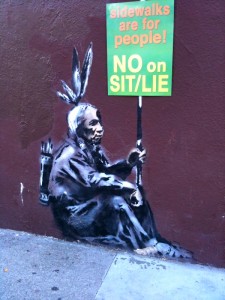
It’s really amusing to read the recriminations and second-guessing from the most vociferous proponents of criminalizing sitting or lying on San Francisco sidewalks after yesterday’s Public Safety Committee hearing on the matter. And the funniest part is their failure to understand that this punitive, overreaching law just isn’t needed to deal with aspects of street life that scare them most, as the police reluctantly testified.
Chronicle columnist C.W. Nevius and Haight Street resident Arthur Evans have been the two most vocal promoters of the sit-lie ordinance, and both sounded similar criticisms of the Police Department and the Mayor’s Office (as well as progressives, their usual target), Nevius in the paper and Evans on the Guardian’s Politics blog (last comment on this item). They call on the so-called “moderates” step up their games or be defeated.
But they miss the point, and falsely believe that “common sense” is on their side. Certainly police officers have the ability to deal with rowdy groups of vagrants who are blocking the sidewalks and intimidating people. They do it all the time, and simply walking a beat usually prevents such behavior. To argue that tough police officers are powerless to deal with thugs defies common sense. And Assistant Chief Kevin Cashman even testified that police don’t need an official citizen complaint to deal with people who are blocking the sidewalk, debunking a fallacy that is oft-cited by Evans and others.
But the efforts by Evans and the Chamber of Commerce to rebrand the sit-lie ordinance as the Civil Sidewalks Law – and to threaten to use it as a wedge issue on the November ballot – reveals their true intentions. The bottom line is they don’t like the more unruly aspects of urban life, and they believe that they can legislate “civility” and have the cops enforce it.
That’s a scary notion, and it’s part of larger campaign to, as Nevius writes, “demonstrate to the far-left supervisors that they were seriously out of step with the residents of the city.” Nevius, who is not a resident of this city, wants San Francisco to be a bit more like his hometown of Walnut Creek. But San Franciscans shouldn’t fall prey to their divisive fear-mongering, and supervisors like Sup. David Chiu – who has publicly toyed with the idea of compromising on sit-lie with some kind of restorative justice program – should heed the message of this hearing and resist creating an unnecessary new law that the community opposes.
Unfortunately, that didn’t happen yesterday as the committee voted to continue the matter for two weeks. And you better believe that next time, the Evan-Nevius crowd will come back strong, with more fearful anecdotes than ever. But the opposition campaign to sit-lie has been strong, creative, and effective — the true voice of San Francisco — and it seems up to the fight.
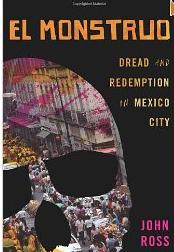
Editors note: John Ross is finishing up a book tour across the United States, and sending us his impressions of Obamalandia. You can read some of his previous posts here, here and here.
I. Baltimore/Washington
The Amtrak rumbles into the back end of Baltimore past block after block of abandoned, boarded-up row houses ripe for burning. This city of such magnificent renegades as Edgar Allen Poe, John Wilkes Booth, and Billie Holliday is mapped by grimy pocket ghettoes that made Baltimore a perfect stage-set for “The Wire.” When contrasted against the gleaming, refurbished downtown, these crime-scene neighborhoods incubate urban uprising. Red Emma’s is one of a skein of anarcho bookstores with names like Sedition, Monkeywrench, and Bluestockings that have welcomed me on this grueling odyssey across the underbelly of Obamalandia. I’m enlivened by the energies these oases exude. Contemporary anarchists seem to have little time for the crippling ideological jousting that drained the lifeblood of my generation. Those bad old days of Marxist Leninist Maoist Trotskyist Stalinesque backbiting seem an absurd nightmare on the barricades of change these days.
Tiffany, a tenor saxophonist who day gigs at OSHA over in D.C. and puts in after hours at the bookstore-cafe, and I pitch in to unload a busload of Bread & Puppet props for a zany, Zen show at a cavernous performance space Red Emma’s maintains in a vacated church. I get to trundle in the head of Ben Franklin, the villain in B&P’s latest mini-extravaganza in which $100 bills are the most pertinent puppets. A half century after its founding even before Vietnam caught fire, the puppeteers are still serving bread and aoeli to grateful audiences.
In D.C., I speak at the Institute for Policy Studies, a perennial leftist sounding board four blocks north of the White House and a billion light years from power, about how Washington has hooked Mexico on drug war. It is my first visit to the nation’s capitol with a black president in residence in the house that slaves once built. The Capo de Tutti Capos of the most grotesque criminal conspiracy on earth is too overwhelmed by swelling catastrophe offshore in the Gulf that will make Katrina look like a summer squall, impending car bombs in Times Square, and an economy that continues in freefall, to take time out for a chitchat.
On the day I speak in Washington, Teabaggers and their ilk are massing across the Potomac in an open-carry anti-Obama rally — newspaper photos depict white American males with what look like rocket launchers slung over their shoulders. The threats of this nativist scum are not idle ones. The economic collapse has stoked the bumfires that burn fiercely in the dormant craters of the American volcano.
II. New York
My roots on the North American landmass snake under the lower east side of Manhattan. The Ross (nee Grossinsky) DNA is imprinted everywhere on these mean streets. My grandma Mamie Zief (Ellis Islandese for “Jew”) relocated from Poland to a Rivington Street tenement at the turn of the 20th Century. Although I grew up in the West Village, I went east at an early age; after fleeing the family nest I squatted in the Shastone Monument building on Essex and Houston before escaping to Mexico in the late 1950s. Two of my kids grew up on Second Street and Avenue A, and my son the hiphop mogul still lives 500 yards away from the old homestead (Dante and I are working on a book that bounces off our mutual addictions to black music.)
My presentations in the Big Apple fit neatly into this geographical schema. I lecture at NYU’s King Juan Carlos Center, once the site of concrete basketball courts where I expanded oodles of adolescent energies. I talk to the Friends of Brad Will at the Sixth Street Community Center where the slain Indymedia journalist, a lower east side rabble-rouser during the darkest days of the Giuliani dictatorship, regularly practiced yoga. Justice for Brad Will remains undone.
And I am lured into Amy Goodman’s state-of-the-art lair for 20 minutes of fame. Democracy Now even sends a car to fetch me up to Chelsea and I induce the stern goddess of left radio to smile — but perhaps it was merely a grimace.
New York is chockablock with “I Love/Hate New York” minutes. One morning I descend from Dante’s sixth story inferno for a double espresso and the Lowisaida is infested with cops. I approach one of New York’s Finest, an amiable Caucasian, and inquire about the blue plague: “it’s the Will Smith show,” he smiles mischievously. Just then a motorcade of 50 bullet-proofed black vehicles swings off Houston with their lights flashing and sirens screaming and heads down the Bowery to Cooper Union where our commander-in-chief is to make a major speech addressing financial “reform” (in Mexico, we call this “plugging up the hole after the baby has drowned.”)
Goldman Sachs vultures in dark suits and furrowed brows listen intently but go mum to the press when they deadhead downtown back to Wall Street to continue fleecing the public’s pocket.
I step around the corner onto Houston, where a large enigmatic Shepard Fairey montage that references climate change has just been tagged (Dante who is well-versed in such iconography, speculates that the culprit is a tagger named “Nah” who is dedicated to dissing the public art of the stars of this genre.) Gallery slaves have been bussed in to erase the offending stains. I am wearing my Mexican Electricity Workers tee-shirt, whose black and red colors and clenched fist logo match Fairey’s throw-up, and I am suddenly surrounded by a bevy of documenterians, at least one of whom is just off the boat from Andalusia. They pose me against Fairey’s wall for a thousand-click fashion shoot. New York New York!
Ironically (a word that doesn’t have much scratch here in Gotham), the Banksy flick “Exit Through The Gift Shop” is playing at a grind house across Houston, a cheese ball mockumentary that destroys this world-famous outlaw’s once-pristine reputation for thumbing his nose at power. Indeed, the best thing about the movie is that it is playing right next door to the Yonah Schimmil knishery. I order a kasha knish and sign the guest book with Subcomandante Marcos’s rubric.
Also a mandatory dining stop in the old neighborhood: the immortal Katz’s (“Send a salami to your boy in the Army”) where pushy New Yorkers of the Hebraic persuasion scuffle to be next in line at the counter of this now 100% Puerto Rican-run deli. The brisket is still to die for.
New York City and environs is now home to a half million Mexicans, mostly from Puebla state, whose slow country drawls are a foil for the tropical machine-gun accents of Puerto Ricans and Dominicans. The Poblanos work in the kitchens of yupped-up food palaces (16 Oaxaquenos were burnt to a crisp walloping pots up in “Windows On The World” on the 108th floor of the Twin Towers on 9/11 day) or slave in 24-hour grocery stores run by Arabs and Hindus and Koreans.
Mexican elites who have fled here from their imploding fatherland do not much rub elbows with their impoverished compatriots, except when they employ them as maids and babysitters One of the few upsides of the new Arizona Breathing While Brown law is that former pundit and Foreign Minister Jorge Castaneda might be jailed by Sheriff Joe Arpaio and his storm troopers and forced to don pink underwear if he were to be stopped without papers in Maricopa County.
III. BOSTON
The new Boston Tea Party that catapulted Scott Brown into the suddenly Kennedy-less Senate is not an anomaly in a city where the name of Charles Stuart (Google him up) still rings a bell.
I speak at the Harvard Coop to a handful of bedraggled Harvard Square denizens who have found sanctuary from a driving rainstorm in this hallowed readery. I am invited to the David Rockefeller Center for Latin American Studies to rant at the future leaders of Latin America — but none show up. I spend an engaging evening with Jack Womack, whose “Zapata & The Mexican Revolution” is still the definitive text on the struggle of the incorruptible revolutionary. Jack, now emeritus in Harvard Yard, recently rebuked the Mexican government by turning down a literary prize because of President Felipe Calderon’s role in the firing of 43,000 workers in an undisguised ploy to privatize electricity generation in Mexico, and is currently chipping away at his life work, a history of working class struggle in the state of Veracruz. Jack and I converse in an argot stippled with so many arcane references to social upheaval south of the border that FBI eavesdroppers could surmise we are planning a new Mexican revolution — which, 100 years to the date of the last one, is not such a bad idea.
I warm up for May 1st rallies by urging attendees at community meetings at the UNITE building in Chinatown and a U-U church in Jamaica Plains to join the protests. There are two marches and rallies set for International Workers Day in Beantown, the bitter fruit of a split in the movement the seeds of which I could not divine.
On the Boston Commons, I spiel about the first May 1st back in 1886 when 80,000 immigrant workers stomped through Chicago to demand the eight-hour day, a day of solidarity and struggle around the world everywhere except in the country where it was birthed. The Haymarket Martyrs join us for a stroll through the streets of downtown Boston, held aloft by the ubiquitous Bread & Puppet comrades.
All across Amerikkka, immigrant workers, incensed by the enactment of a law that makes inhaling the air of Arizona a jailable crime if you are a person the color of the earth, were on the march, perhaps a half million (high end estimates) strong — as many as 200,000 in Los Angeles and another 100,000 in Chicago; 25,000 more in Dallas and significant turnouts in New York and Washington but only 6,000 or so in Boston to which Mexicans have migrated in smaller numbers.
This year’s surge, which was dwarfed by the gargantuan outpourings of 2006, featured a marked absence of Mexican flags as undocumented workers chose to cloak themselves in the Stars and Stripes in response to the feeding frenzy of the Fox News lynch mob.
Although the condemnation of Arizona Goddamn was vibrant, it must be noted that there have been as many ICE raids under the Obaminators as under Bush and the crackdown on employers is targeting union-organized janitors. David Bacon, whose reportage remains a light in this darkness, recently noted that 175 SEIU janitors are about to be fired in San Francisco, once a sanctuary city for labor.
The People the Color of the Earth rolled through the streets of east Boston with gusto. “No One Is Illegal!” Sandra, my displaced Chilanga guardian angel, and I yodeled in unison with the compas. “Do I Look Illegal?” read the homemade banner draped around the shoulders of a skinny pre-teener. Many high schoolers wore caps and gowns to highlight the prohibitions on financial aid that doom their college educations to MacDonald’s Hamburger U.
Speaker after speaker in a park down by the harbor — where, indeed a few hundred years back down the pike the original Boston Tea Party was staged — raged against a system that still consigns immigrant workers to the lowest step on the American food chain. “Justicia! Justicia!” they clamored and their cries were no less relevant than those uttered by the “Martires de Chicago,” as the Haymarket martyrs are known throughout Latin America. By the time I took the mic, all the words had already been spoken but I finished up with the chant of the pensioners’ movement in Mexico City in whose ranks I am enrolled: “Parar Es Morir!” — To Stop Is To Die!
Me and the Monstruo have come to the end of our three month 66 performance journey through Obamalandia but there’s one thing you can count on: “Parar Es Morir.” I’m not planning on stopping (or dying) any time soon.
John Ross will be returning to Mexico in mid- May to begin work on a new book, “From Bebop To HipHop – Fathers & Sons.” You can consult him on particulars at johnross@igc.org

Meli Burgueno is the woman pedaling hard behind the killer San Francisco blog, Bikes And The City and after catching a glimpse of her always adorable road-friendly attire, it was time to get behind the chains and cranks to get a few style fashion-dos from the bicycle lover herself. Poking in and out of her favorite stores on Polk Street, Meli shows ladies the rules for hot cruisin’…of which she says there are none.
She rolls up on her companion of choice, “Frenchie” and parks her next to the coffee shop. Meli is sporting her usual cute; a flirty spring dress, black cardigan, gray tights and low black heels; the epitome of fearless femininity on wheels. As a biker myself, Meli and I agreed that looking lady-like in the bike lane often attracts glances from the other riders and drivers alike– there seems to be an assumption that biking requires spandex, jeans or some other bike ‘intended’ fabric. This is not true.
“The key to bike fashion is finding stylishly comfortable pieces, which is basically anything,” says Meli with a shrug. “If you can walk comfortably in that shirt, dress or pants, you can bike comfortably in it, too.”
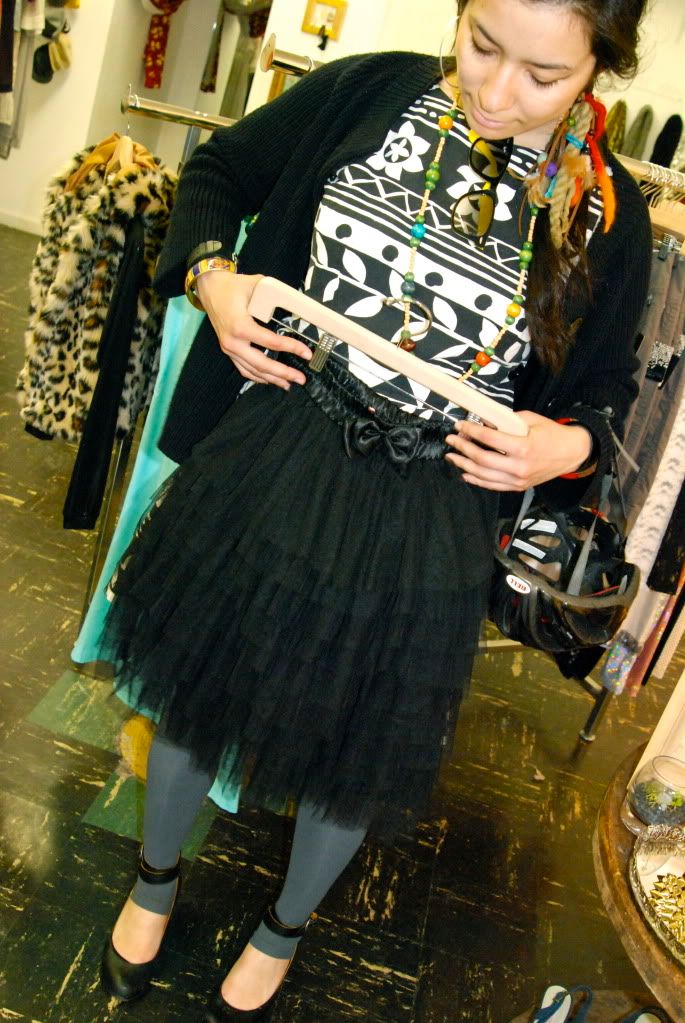
We step into Tedda Hughes and Meli’s grin goes ear to ear. “I’m a terrible shopper, but I love this store,” she says while flipping through the racks. Meli has been biking since 2003, making cycling her main mode of transportation and a huge part of her life. She encourages other women to hop on wheels and quit fussing over the details.
“You have to get over your questions and just try it. Sometimes my shoes get dirty, but they can always be washed. And yes, sometimes I get sweaty– but isn’t that what bodies are for?”
She picks out a frilly black skirt, made by store owner Tedda Hughes herself. Meli never wears jeans. “I have a pair, yes, but I haven’t worn them for about four years. I can’t believe people bike in jeans…but then again, I don’t think they’re comfortable to walk in.”
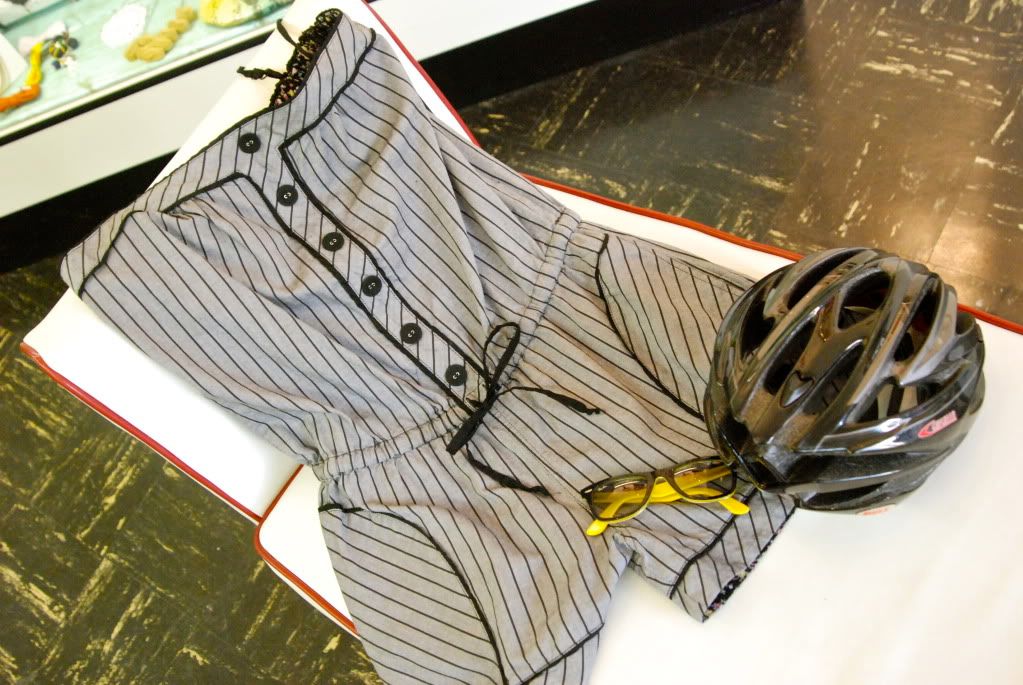
We spot this lovely Gentle Fawn jumper, which is perfect for riding around town on a summer day– comfy, sweet and ideal for modest girls won’t have to worry about flashing their panties.

Meli loves bright colors, which not only look stellar, but they’re great for visibility reasons; get attention from sexy bike lane buddies and angry taxi drivers alike. This red, polka dot baby doll adaptation is another Tedda Hughes creation and Meli was drawn to the light, breathable fabric.
“I also really like wool. It’s a great fabric for absorbing sweat and it dries fast.”

These marine blue, suede pumps by Charlotte Ronson may look a bit freaky compared to the average bike sneaks, but Meli assures that heels are totally cool for cycling, as long as you can stand on them at the stoplight. The heel hooks around the pedal and acts like a clip, making them surprisingly ok for riding. The heels on Meli’s toes have rubber soles, which are also complimentary for her pedal style and help with grip.

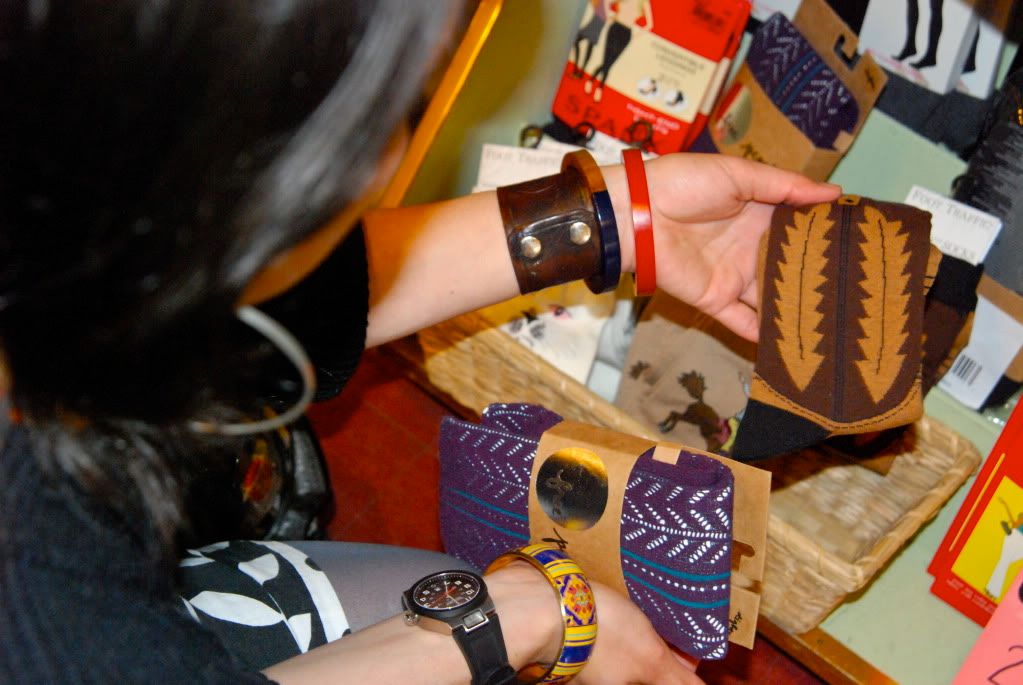
We walk down the block and browse through another of Meli’s must-visit shops, Picnic, which is filled with fun wares, gifts and chunky accessories. Meli is all about layers and being prepared for the various micro-climates in the city. These Tullette finger-less mitts are an ideal friend for evening rides. And then she spots the basket of tights.
“I’m a tights whore,” she says digging through the pack and making comments about each gem she finds.

A fine day of shopping and it’s time to hit the road. Unlocking her bike, Meli has one final bit of advice to tote before jetting off into the sunset.
“Basically I think you should just wear it– no hesitations, no questions. If you like pants or whatever you feel good in, you should wear it and just ride.”
Catch more of Meli @www.BikesAndTheCity.blogspot.com
You know it’s a good day when you’re getting cold beer in the mail! Imagine our delight and surprise at opening up a chilly box of Pyramid Brewery’s new Haywire Hefeweizen… in a can! Hello burners, you have a new option for playa fun time.
Pyramid, we all know you have the most extreme beer names in the game. Your seasonal brews include Fling, Curveball, Juggernaut, and Snow Cap — and don’t even mess with the Ignition Series; Barbed Wire and Outburst. But as extreme as you are, how the hell did you get cold beer to me, via snail mail no less?
Your publicity person is too busy to talk about it. But it’s all good. Your light brew (good for summertime pounding, not so flavorless that you might as well be drinking Bud) floated down to my tummy in a sparkly, drinking in the office kind of way. And with offices from Seattle to Walnut Creek, you’re not quite local-local, but at least you’re West Coast-local. And you make lovely brews. So yaya to that!
Pyramid Alehouse, Brewery and Restaurant
901 Gilman, Berkeley
(510) 528-9880
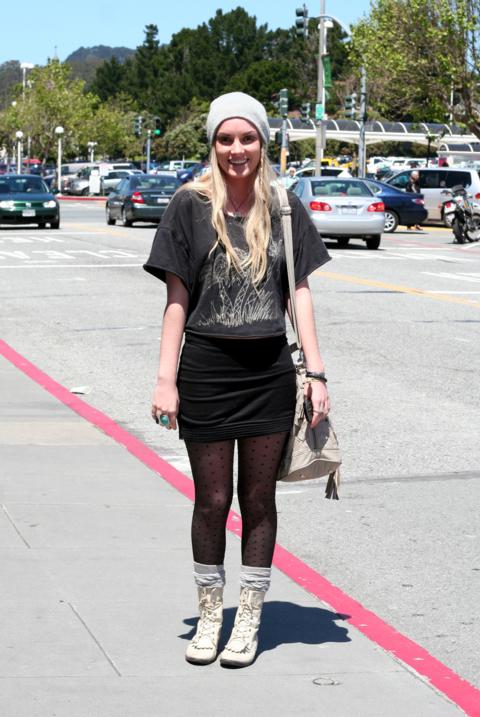
Today’s Look: Kate, Stonestown
Tell us about your look: “Comfort and I love crop tops for summer. I always gotta wear boots and tights always jazz up an outfit.”

Get out your crayons, pencils, pens and chalk and pretend like you know how to draw for Dr. Sketchy’s 2nd annual Cute Girls on Bicycles tonight (5/11). Three lovely SF bike ladies will pose on their favorite pair of wheels while the crowd is free to oogle and sketch for 20 minute intervals. Sweeeeet!
Dr. Sketchy’s Anti-Art School is a monthly gig that allows anyone to join in on a night of drinking and drawing. This month’s theme coincides with Bike To Work Day— Thurs/13– and along with the lovely ladies, the stage will feature four hot rides for participants to express their artistic skills, including a sassy orange mixte from PUBLIC bikes.
The lovely models include bike blogger, Meli Burgueno of BikesAndTheCity, Pelican builder Constance Cavallas and Amanda Lanker, leader of the Pushbike Ladies Ride. No they won’t be naked, you dirty fools, but they may sport a sexy helmet, grip gloves, blinkies and a messenger bag, all great objects to test your creative mind. Don’t worry if you’re not an A+ art student, this event is for sketchers of all abilities– sexy stick figures on bikes are welcome, too.

Check out this Chick and Bikes blog for some pre-Sketchy’s inspiration…www.chicksandbikes.blogspot.com/
Dr. Sketchy’s Cute Girls on Bicycles
Tues/11, 7-10pm, $10
111 Minna Gallery
111 Minna, SF
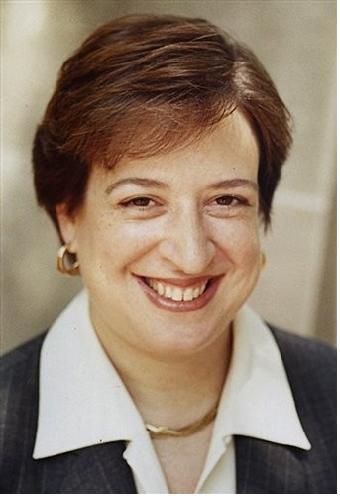
The White House barely had time to announce President Obama’s latest Supreme Court nominee, Elena Kagan, before the spin controllers were scrambling to deal with rumors that — gasp! the horror! — she might be gay.
The Chron blamed “the lesbian rumor” on “conservatives.” The Washington Post (and the White House) blamed CBS for letting a right-wing blogger report as a fact that Kagan likes girls, leading to this great moment in American politics:
“An administration official, who asked not to be identified discussing personal matters, said Kagan is not a lesbian.”
And of course, no Washington rumor should ever be believed until an official source who won’t be named officially denies it.
The real question here is: Who cares? It’s actually worth discussing.
Andrew Sullivan kind of mangles logic in a post called “So is she gay?” . He starts off saying “it should mean nothing either way,” but then argues that it does:
“To put it another way: Is Obama actually going to use a Supreme Court nominee to advance the cause of the closet (as well as kill any court imposition of marriage equality)? And can we have a clear, factual statement as to the truth? In a free society in the 21st Century, it is not illegitimate to ask. And it is cowardly not to tell.”
Harvey Milk, of course, always said that everyone should be out, and that the cause of queer rights depended on tearing open the closet door. But that was then, and this is now, and I wonder: Has the United States, and the queer community, reached a point where it’s okay for someone to say that his or her sexuality is none of anyone’s business?
Judge Vaughn Walker, who’s handling the Prop. 8 case, is gay — but has never made a big deal of it one way or the other. I guess he’s sorta in the closet, but not really — he just keeps his personal life to himself.
What if Kagan’s the same way? What if she’s got a lesbian partner but isn’t going to talk about it? What about if she’s straight and isn’t going to talk about it? How can the White House prove she’s not gay, anyway — is her confirmation hearing going to feature a ten-minute televised session of her making out with a man? (And how would we know she wasn’t just acting, anyway?
Obviously, if she is gay, and she came out, having a lesbian on the Supreme Court would be a huge deal to the queer community, a major breakthrough in one of the highest offices in the land. And you can certainly argue that she shouldn’t be hiding anything, that the whole denial and ducking is an admission that homosexuality is something to be hidden in the first place. And that’s really sad.
In a perfect world, none of this would matter at all, and she could freely talk about her sexuality without any impact on her political career. But in a perfect world, could she also just say: Ain’t none of your business?
And are we anywhere close to that today?
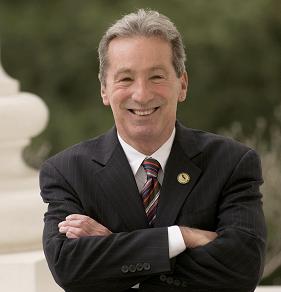
A bill by Assemblymember Tom Ammiano that would have a huge impact on the state’s budget and close a serious loophole in Prop. 13 cleared the Revenue and Taxation Committee today. AB 2492 won approval on a strict party-line 6-3 vote, with every Democrat in favor and every Republican opposed.
The measure is brilliant: It doesn’t undo Prop. 13 (which a lot of us would love to see, but is politically almost impossible). Instead, it simply defines property transfer in a way that forces commercial property owners to play by the same rules as everyone else.
It would bring in billions for the state — and has a great political twist. Homeowners, for better or for worse, are a powerful voting bloc — and although there hasn’t been much talk about it, over the years, residential property has had to shoulder more and more of the total tax burden. So if Ammiano can keep this debate alive, those more conservative homeowners who would never accept a change in Prop. 13 that might undermine their precious tax break might slowly come to realize that the law, as it’s written, is screwing them. (It’s particularly screwing people who brought property at the height of the boom, and are paying taxes far higher than their neighbors who bought a few years earlier.)
Ammiano told me he was encourged by the vote. The bill now goes to Appropriations, which shouldn’t be a problem since it won’t cost the state anything. And in a few weeks, it will be on the Assembly floor.
I don’t expect this governor to sign it, but if he vetos, it could be a great campaign issue — the Republicans are on the side of big landlords — and against homeowners.
By the way, our old pal Matt Smith at SF Weekly decided to take a swipe at me and the Guardian for our support for AB 2492, arguing that somehow it would benefit those of us who own homes. It’s a refrain I’ve heard from Smith before, and in the caption on his blog picture he talks about “getting in the game early and pulling up the ladder behind you.” I guess that’s about my opposition to more condos for millionaires, which has nothing to do with anything and no basis in reality. Building market-rate housing isn’t going to do anything to help middle-class people (and I assume Matt Smith falls in that category) buy homes in San Francisco.
The point of his blog is that we’re somehow pushing to protect our privileged position under Prop. 13. But anyone who knows me (and reads the Guardian) knows that’s nuts: I have long advocated the complete repeal of Prop. 13, and I’m one of the few people in town who wants higher taxes on myself. Besides, the Guardian’s owners, Bruce Brugmann and Jean Dibble, also own the commerical office building where we do business. So anything that could raise taxes on commerical landlords would directly affect the paper –and we still support it.
I called Smith today to give him a hard time about his item; you can accuse me of a lot of things, and attack my political positions (that’s easy; there are a lot of them, and some are pretty far out there). But don’t say I want to preserve my own (relatively) low property taxes, because that’s demonstrably wrong.
I’ll give Smith credit — he listened to me and reported my comments. But we could have avoided all of this if he’d just called me first.

Curiosities, quirks, oddites, and items from around the Bay and beyond
Don’t worry, San Franciscans: Your Internet friends don’t hate you and you will be followed once again
******
Speaking of friends, whatever happened to N.W.A..’s posse?
******
Me talk pretty one day, indeed. Do you speak Globish? You probably have. And so does the rest of the world.
******
RIP Ms. Horne
*****
Newsflash! Oversharing online can come back to bite you in the ass: “While participation in social networks is still strong, a survey released last month by the University of California, Berkeley, found that more than half the young adults questioned had become more concerned about privacy than they were five years ago — mirroring the number of people their parent’s age or older with that worry.”
*******
This brave, local blogger waited four and a half hours for a bowl of fancy “test ramen” so you wouldn’t have to.
******
Today in corporate sponsorships: Wynnona Judd to shill for Cracker Barrel. I want a pair of the sunglasses. “I love the rocking chairs and I feel really good when I go to Cracker Barrel,” she says. Sparkle Winnie! Sparkle!


Today, the always calm, moderate and soft-spoken Johnny Angel Wendell talks to Tim Redmond about how the insanity of immigration politics in Arizona is going to impact the races for governor and senate in California. You can listen after the jump.
When it comes down to it, we’re all a bit weird. At the back of every person’s drawer there’s at least one pair of sparkle-farkle leggings and a purple wig. (Weird!) After a long winter, the annual, music-filled How Weird Street Faire came at just the right time for everyone to go wacko and let loose for some spring silliness. Check out some of the looks.
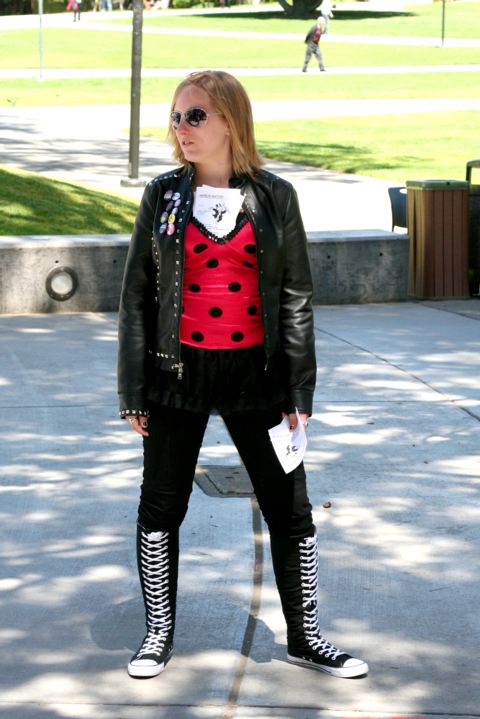
Today’s Look: Cate, SF State
Tell us about your look: “It’s inspired by our Improv Nation club. Today is Crazy Character Day.”
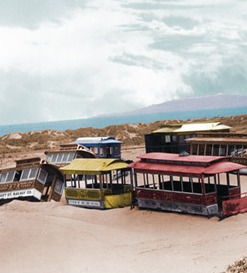
Repurposed streetcars perch haphazardly in dunes not yet cowed by asphalt and the Java Beach coffeeshops. They’re homes to a community of urban escapists and artists. Some of them have front porches, some of them house bicycle clubs. It’s like a Dali painting, it’s like the boxcar children — but it’s also an accurate picture of the first non-indigenous inhabitants of the Sunset, on whom local historian Woody LaBounty has written an awesome book, Carville-by-the-Sea.
The book’s images of 19th century Carville are chicken soup for the boho soul. I want one. My room mate wants one. LaBounty himself says he’d live in one — were the lone streetcars still surviving in the western neighborhoods’ not firmly in the grips of their current owners. There’s even one still-standing house built in 1908 that’s made of three cars; a two street car living room, and a bedroom from one that was horse drawn.

One of Carville-by-the-Sea‘s trippy colorized historical photographs
There used to be hundreds of these things. People moved out to Ocean Beach despite the subpar public transit service that places without sidewalks are often subject to — when the community was first started in 1895 was a steam car that ran out Lincoln Way down to the Cliff House, a service intended mainly for the weekend day trippers. They went to escape the city, to improve their health. There were bars and restaurants in street cars, shoe repair stores, artist studios.
So how did I not know about these things before? LaBounty says he grew up in the Richmond in the ‘60s and 70’s, a few blocks from one of the surviving streetcars, which latched a steampunk-sized hold in his childhood psyche.

More pages from Carville-by-the-Sea. Where’s a Delorean when you need one?
“I loved planes, trains, and automobiles, so living in a street car — it just seemed like the coolest thing in the world,” says LaBounty, who is one of the founders of the Western Neighborhoods Project, proprietor of what is reportedly the most popular SF history website/propagator of history walks, plays, and films by teenagers who interview older residents in their neighborhoods. “I used to watch Wild, Wild West, the ‘60s TV show, and they were living in a train, which I thought was great.”
To research, he began interviewing historians he knew, and motor vehicle enthusiastists, and learning all he could about the old community on the beach. Though he’s privy to all kinds of juicy info on the town’s colorful past, LaBounty found interest in his stories of the bohos and families living on the cars really captured listeners. “We all thought, there needs to be a book on this,” he says. “And then I realized that I should probably write it.”
So here it is, colorized like the postcards of yore for that extra oomph of fantasy creation. Newspaper articles from the 19th century on the streetcars, biographies of the community’s founding members, lots of lovely photos from the dunes.
La Bounty’s doing a series of live talks on his Carville expertise which are open to the public. Just be forewarned: he’s not versed in how to get you a steetcar of your own. Still fun to hear, though.
Carville-by-the-Sea presentation
Wed/19 7 p.m., free
History Guild of Daly City/Colma
Doelger Senior Center
Westlake Park
101 Lake Merced, Daly City
www.carville-book.com

In what appears to be another fatal blow for San Francisco’s sanctuary laws–and due process in general— officials for U.S. Immigration and Customs Enforcement (ICE) say the fingerprints of juvenile immigrants charged with serious offenses will also be automatically forwarded to ICE
“My colleagues in SF advise that the fingerprints of juveniles arrested for criminal offenses will also be vetted through Secure Communities,” Virginia Kice, ICE’s Western Regional Communications Director, told the Guardian.
“If that’s the case, that’s pretty significant,” said Sup. David Campos, who was under the impression that the Secure Communities initiative would not touch juveniles. The thinking, Campos said, was that juveniles’ fingerprints were handled through a separate database and therefore would be exempt from the new federal initiative.
Sheriff Mike Hennessey, who does not handle juvenile detainees, told the Guardian, “If I had to guess, I would say that Ms. Kice is correct, but it’s possible that the computer could be bifurcated.”
Calls to Mayor Gavin Newsom, San Francisco Juvenile Probation Department Chief William Siffermann and California Attorney General Jerry Brown (whose office maintains fingerprinting databases) remained unanswered, as of blog posting time.
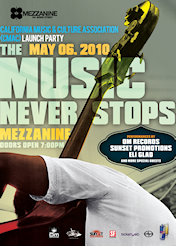
In the ongoing War on Fun in San Francisco, a new combatant officially entered the battlefield last night with the launch of the California Music And Culture Association (which strangely goes by the acronym CMAC rather than CMCA). It aims to be a political advocacy organization and to provide members with services such as neighbor relations advice, group insurance, and discounted legal services.
“We’re here to celebrate a new era of nightlife and entertainment in San Francisco,” CMAC President Sean Manchester, owner of Mighty and Wish, told a crowd at Mezzanine that included club owners, lawyers, promoters, performers, and politicians ranging from supervisorial candidates Scott Wiener from D8 to Debra Walker in D6. California Sen. Mark Leno also sent a formal resolution of support for CMAC.
A video prepared for the event included an even wider array of local figures extolling the importance of nightlife to San Francisco, including SF Convention & Visitors Bureau chief Joe D’Alessandro and San Francisco Planning and Urban Research Association (SPUR) director Gabriel Metcalf, who said, “I think it’s great that the nightlife industry is getting organized.”
That organization was prompted by threats and harassment from the San Francisco Police Department, the California Department of Alcoholic Beverage Control, neighbors of some clubs, and Mayor Gavin Newsom and others who have been on a campaign to demonize the industry and its regulation by the Entertainment Commission.
It’s a trend that the Guardian has been writing about for years, and one that I’ll be discussing this Tuesday as part of a panel assembled by SPUR that includes representatives from the SFPD and Entertainment Commission, as well as Sup. Bevan Dufty, who spearheaded the cancellation of Halloween in the Castro.

As Scopitone Week draws to a close on the Daily Blurgh, I wanted to save the best for last. Behold, the curvaceous wonder that is Joi Lansing, Queen of Scopitone.
As Wikipedia tells us, “A model and actress, Lansing was often cast in roles similar to those played by her contemporaries, Jayne Mansfield and Mamie Van Doren. She was frequently clad in skimpy costumes and bikinis that accentuated her attractive figure, but never posed nude.”
And what costumes they are! Here’s a double-shot of Miss Lansing to jump-start your weekend.
“Web of Love”
http://www.youtube.com/watch?v=quzqSPT13-A&feature=related
and “The Silencer”
http://www.youtube.com/watch?v=cpbF9H0Taa0&feature=related
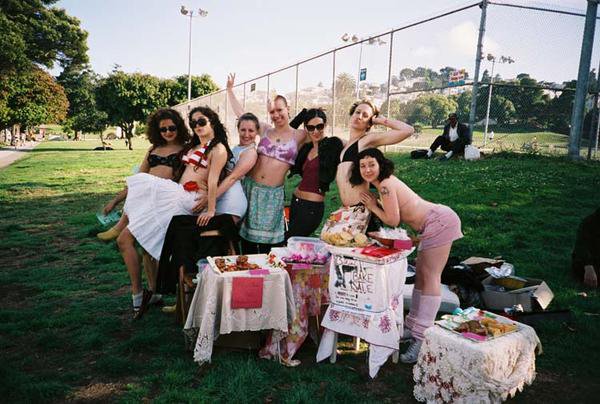
The lovely ladies from the Lusty Lady will be at Dolores Park on Sun/9 raising money for their SF Pride float. “11am-until we run out of treats, fresh baked ho-cakes made with love,” is how one of the Lusty’s dancer put it.
“Come get a yummy treat, and while you’re at it, buy a cookie!”
She also included two post scripts:
“p.s. Treats made by strippers can cure hangovers, and mend broken hearts.”
“P.p.s. Treats made by strippers can lead to drunken love.”
Sounds like a yummy event, whichever way you cut it.

Better than sexy? You can have both!