

Today’s Look: Tayler, SF State
Tell us about your look: “I bought it at Target.”
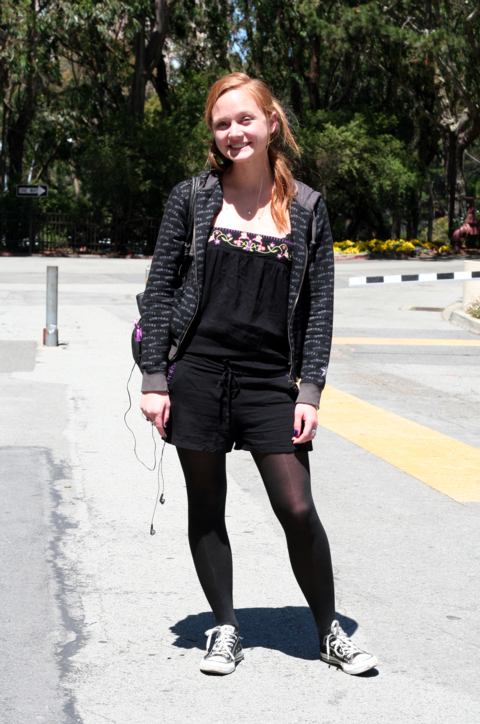
Today’s Look: Tayler, SF State
Tell us about your look: “I bought it at Target.”
Curiosities, quirks, oddites, and items from around the Bay and beyond
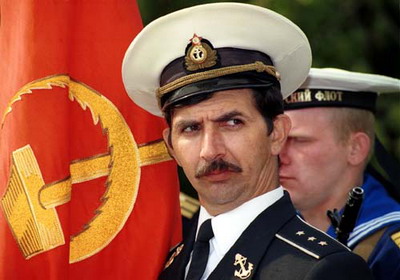
Greasy Russian sailors, unearthed ships, and shanghaied coppers: Chris Carlsson sails through tales of maritime transit from SF’s past.
*****
Today in sad local business news: Berkeley’s Reel Video to close. People love Ike’s too much. Facebook (hey, don’t they count as local?) navel-gazes about its growing unpopularity.
*****
Oh, honey don’t forget to stop in at Walgreens on your way home and pick up some shampoo, trash bags, and a DNA test.
*****
“There is a cynicism to this project that suggests that the producers did not feel much need to do it very well just because they have some terrific character actors in all the leading roles (save maybe for Sam Rockwell as Justin Hammer), and even in some minor ones (Samuel L. Jackson, Jr., mails in his one scene as Nick Fury, making me wish they’d gotten Laurence Fishburne). Just fill it out with special effects & heavy metal music & take it to the bank. Getting the director of Elf to helm the project is just one index of how Marvel cut costs wherever it was felt they weren’t necessary. Like direction.” Poet Ron Silliman reviews Iron Man 2.
*****
People who say, “bleachedcarbsdairyanythingtoxinfilledeverything makes me feel ill,” please stop hyperventilating. You aren’t actually allergic.
*****
Honor the late, great fantasy painter Frank Frazetta by raising a horn of mead tomorrow at Mission Comics & Art’s “Memorial Drink and Draw.”
*****
Wake up Gary!
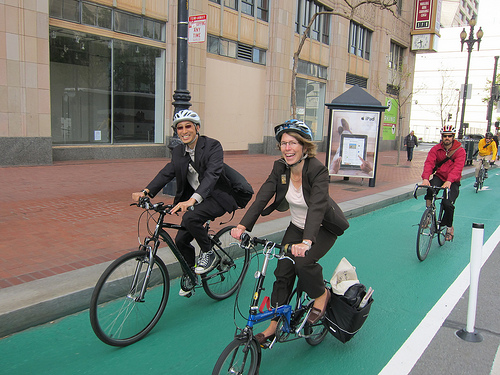
It was only two years ago that bicycle advocates celebrated Bike to Work Day traffic surveys that for the first time counted more bikes than cars on Market Street during the morning commute, a feat repeated last year. But today (5/13), that ratio had jumped to three bicycles for every car. The counts, which found a record-breaking 75 percent of vehicles were bikes, were performed by employees of the San Francisco Municipal Transportation Authority and announced in a press release from the San Francisco Bicycle Coalition.
“I was thrilled to ride alongside Mayor Newsom and scores of smiling people this morning in the newly separated and green Market Street bike lanes. So many more people are bicycling on Market, because they feel safer in these separated, green bike lanes,” Renee Rivera, acting Executive Director of the SF Bicycle Coalition, said in the press release, which also quoted Newsom as saying, “We are taking hold of an incredible opportunity to transform Market Street into one of the greatest streets in the world. San Francisco is an innovator and this newly separated, green bike lane is one example of how we can make Market Street safer and more bike friendly for the tens of thousands of people who use it everyday.”
For his part, Newsom seemed to be riding a cooler bike than in years past, when he rode a Blazing Saddles rental. But some bike advocates still grumbled about his choice of attire: he once again donned a sweat suit, rather than work clothes, which doesn’t exactly send the message that cycling can be an everyday transportation option. But for bike advocates, this was a day for celebration, both of the huge numbers and recent improvements such as the five on-street bicycle parking areas that have been added to Valencia Street in the last week, part of a trend toward rethinking the streets of San Francisco.

When I saw that the Danish rock-duo, The Raveonettes, are playing this weekend’s SF Oyster Fest— Sat/15 at Fort Mason– I was quite curious how the two band members felt about the animal/food at the heart of the party. Strangely enough, I found a blog post that lifted the mystery and erected another.
Sune Rose Wagner and Sharin Foo are an interesting pair of slightly awkward and wonderful creatures who pluck out stellar ’50s summer-style pop hooks, add in tainted surf guitar and sweetly sing lyrics that aren’t afraid to address the shitty things in life: rape, drugs addiction, betrayal and other Debbie Downers. I can imagine their sound blasting under the San Francisco sun to an outdoor crowd, but thought it was funny to imagine them strumming at an event created for the consumption of bivalve molluscs, or easier known as oysters or shelled ocean friends. I wondered if their publicist/tour manager had to ask them if they liked eating these slimy things before agreeing to take the stage?

Due to the fact that a quick internet browse came up with a blog post from Wagner and Foo themselves, I’m guessing there were no hesitations. The post explains an evening dining experience in New York, chomping on none other than oysters. The photos were obviously taken via camera phone and apparently their waitress “was the best part about the meal.” But here’s what the post had to say about shells:
Foo: “We love oysters. It’s always so interesting to try different oysters at different restaurants.”
Wagner: “They were really great! Well served, fresh, with a nice little sauce that went with them.”
Foo: “Well also, the fact they’re an aphrodisiac, we’ll have to deal with that later on too…”

Have to “deal with that later?” Aphrodisiacs? What??? Foo didn’t believe him either and writes something about not “feeling anything yet” while chugging her glass of wine. But with another quick interweb click, I discover that oysters are in fact a sexy food. Here’s how LiveScience.com described this weird fact:
“Many foods (bananas, asparagus, carrots, avocados) are considered aphrodisiacs because they resemble the penis or testicles. Oysters resemble a vagina. The Romans placed the oyster high on their list of prized aphrodisiacs. Casanova, the legend goes, would eat 50 raw oysters for breakfast. Yet interestingly, oysters (and pine nuts, another ancient aphrodisiac) are high in zinc, which is necessary for sperm production. Raw oysters are also high in D-aspartic acid and N-methyl-D-aspartate, which increased testosterone levels in one study on male rats, which could in theory increase libido, according to Karen Boyle of Johns Hopkins Hospital. “The data is questionable and mixed, but oysters do make a nice appetizer,” she said.”
Oysters resemble the female genitalia? Well, ok yes. Eat up San Francisco…

The Raveonettes w/Cake, Jackie Greene, Thao & The Get Down Stay Down
Sat/15, 11am, $30
The Great Meadow at Fort Mason
(Intersection of Bay and Laguna Streets)
www.oreillysoysterfestival.com/

Sat/22 — hereforthwith known to the State of California and someday to the US and World as Harvey Milk Day — is going to be a big gay deal. One of the primo partyish events, however, will be the tricycle-team race Tour de Castro, put on by those gloriously roamin’-handed Sisters of Perpetual Indulgence. Grab two-to-five friends to make your trike-team, and register by Sat/15 for a totally fun-filled way to celebrate Ms. Milk AND raise money for AIDS. Straight people totally accepted! (We’re open like that). Bonus: It’s also a bar crawl. Details after the jump.
FROM UNDER THE DESK OF SISTER VIVA L’AMOUR
The Tour de Castro is a race, bar crawl, costume, raffle, and fundraiser extravaganza benefiting AIDS/LifeCycle 9 bike riders who are still need of donations to reach the minimum $3,000 required to participate in the annual ride. As in previous years, the Sisters of Perpetual Indulgence want to make sure everyone rides!
Teams of 2 to 5 riders will race to several Upper Market/Castro neighborhood “pit stops”. Participants are asked to find sponsors who pledge a donation to the riders for each stop they successfully complete. A grand prize is awarded to the team raising the most donations. The first three contestants to win the “race” also will win prizes. Other prize categories include best gluts [sic], best costume, most outrageous and best decorated tricycle.
REGISTER ONLINE AT http://www.thesisters.org/tdc
Last week I was able to go on Miguel Pendás’ Vertigo tour. Creative Director at the San Francisco Film Society, Pendás led a group of ten on a van journey that concluded at the foot of the Golden Gate Bridge.
The day was warm and sunny, which didn’t stop some of the film’s — and the city’s — heralded sites from throwing moody shade. You can never learn enough about Vertigo, a fictive story that stems from a tale by Ambrose Bierce but has roots in the Californian dirt and a romantic attraction to the depths of the ocean. Hitchcock’s reflecting pool for the screen taps into history and myth in myriad interwoven ways.
Did you pedal today, on Bike to Work Day? And if so, did you wear a helmet? I biked without a helmet, and in the eyes of some, that makes me reckless and irresponsible. Similarly, they say the Guardian has done a disservice to the community by featuring photos of cyclists-sans-helmets in our current issue, a criticism we also received about our Bike Issue last year. It’s an interesting enough debate that I thought I’d move it from the comments section on my latest story up into its own blog post.
“Helmets save lives. I was amazed to go through the entire issue and not see one helmet on your biker models. Please mention this in your paper,” Jim A wrote in our comments section. And when I responded that it was a personal decision for adults (children are required by law to wear them), another commenter wrote, “So isn’t requiring bicyclists to wear helmets something that would benefit all of us in terms of preventing injuries we all pay for (not to mention emergency room costs and police reports, ambulances etc) — and therefore much more than a ‘personal decision?’”
It’s certainly true that helmets make cyclists safer and that’s why most cyclists in San Francisco wear them, but there is a significant minority who regularly ride without head protection, for reasons ranging from a simple preference to philosophical opposition to the notion that cycling is dangerous enough to require armor. The best way to make cyclists safe is to prevent them from crashing, and that means wide, hazard-free bike lanes and awareness by motorists of cyclists and our right to share the road.
“It’s an extremely fraught and charged issue. People have very strong views on both sides,” says Andy Thornley, program director with the San Francisco Bicycle Coalition. The SFBC does bike safety and urban cycling classes, which include instruction on properly fitting one’s helmet, but they stop short of exhorting everyone to wear them.
In fact, Thornley is among those who rarely wears a helmet. “On balance, you’re going to be a little safer riding with a helmet,” he told me.”But I choose not to for my own personal reasons.”
Context is important here. The most recent federal statistics on bicyclist accidents shows there were 716 bicyclists killed on roadways in the U.S. in 2008, or about 2 percent of all traffic fatalities. Certainly, helmets might have prevented some of those deaths, but from public health or statistical perspectives, this is a pretty low number.
By contrast, there were 4,378 pedestrians killed in traffic that year, but nobody is suggesting they should wear helmets, even though it’s likely helmets would have saved many of their lives. So this is about how much risk adults are willing to accept, and Thornley argues that if you’re safely cycling at the typically leisurely pace that most people ride at in cities, you’re unlikely to ever need your helmet.
“We want bicycling to be something that everyone can do without special clothing or gear or feeling the need to wear armor on their heads,” Thornley said.
He notes that in the most bike-friendly cities in the world, such as Amsterdam and Copenhagen, helmets are rare because riding a bike is widely seen as a safe, everyday activity. It would be a bit like pedestrians strapping on a helmet to cross the street, something most would interpret as slightly paranoid overkill.
Yet Thornley also admits that he’s perhaps a little ahead of his time for San Francisco, a city with few separated bike lanes or other features that would make cycling safer. But that’s starting to change, particularly on a day like today when there are so many cyclists the road, something that studies show makes them safer because motorists are more aware of them and drive more carefully.
Personally, I wear a helmet when I go mountain biking, when it’s raining, when I go for long recreational rides, sometimes when I’m wearing headphones, or if I’m just feeling unlucky or not on my game – but most of the time, I don’t. And I resent the condescending criticism that I’m being irresponsible or that I somehow deserve to be injured.
But what do you think?
P.S. BTW, those federal statistics also show that about a quarter of the bicyclists who were killed were legally drunk at the time, something to keep in mind if you hit any of the BTWD evening afterparties, including the SFBC event at Rickshaw Stop, the Rock the Bike event at the Academy of Sciences, or the Timbuk2 party at their 583 Shotwell Street headquarters. Come think of it, perhaps I should swing by my apartment on the way and grab my helmet.
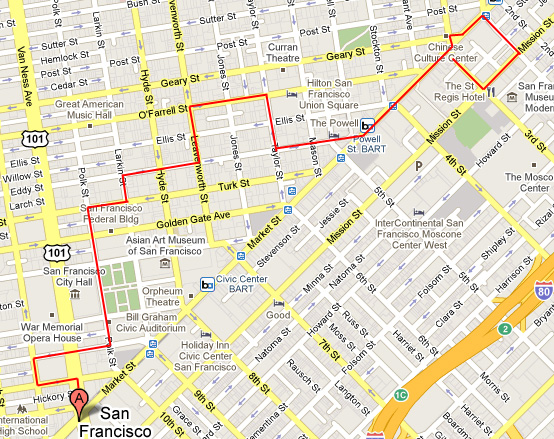
On Friday, May 7 at 12 p.m., I stood at the intersection of Van Ness and Market with a pen, notepad, and die in hand. The pen and notepad were used to capture discernable language overheard, while the die served to dictate the initial direction of my walking as well as the decision made at each new intersection. The following is a transcription of one-hour of that journey—eventually the die led me to the ocean—or an attempt to quilt together found language from San Francisco’s streets.
Van Ness: “Bastard! Mother fucking wrinkle-ass… jump on the girl…”
Fell: “…are you serious!?… “ “…I don’t know what happened yesterday…” “…no, the reason it’s an awkward…”
Franklin: “Oops, sorry.”
Hayes: …
Van Ness: “…not at all, not at all…”
Polk: “… get a phone number from this person…” “…that lady got on my nerves…” “Yeah, yeah, uh-huh, yeah…” “Hello sir, how are you? I’m handing out information; it concerns worker’s rights.” “I just wanna be like…” “…uh-huh…” “Hey, Sweetheart: let’s get breakfast…” “…know what I’m sayin’?”
Turk: “…that’s like all the banks…” “…so anyway, they said all you can do is get me the…”
Larkin: …
Eddy: “…what if when I’m really saying, it, it’s really time…” “…donde estas…” “…really spazzy in the car…” “Mami!” “Huh!? Huh?” “…what you talking about?” “Tattoo with color… in five minutes… we be walking down right now…”
Leavenworth: “I double dip! Take two, two, two, and two…” “Wussup, wussup, yo?” “I didn’t forget about… I forgot…”
O’Farrell: “…and it’s Divisadero… hit Taylor and… “I think she said it… Isadora Duncan…” “From my understanding the Isadora building is… uh…” “And sometimes this one…” “Hey, Eddy…” “Hi, I’m here…”
Taylor: …that’s not like… give me a hug!… c’mon!…
Eddy: “…lemme talk…” “I’m gonna help you out: get to the point…” “Bitch-ass nigga…” “Make sure I don’t get up—you better knock me out…” “Did you just fall down? Want me to call someone? Want me to call 911?” “…I think that’s a good idea…” “She fell twice…” “Put all three of our names on the guest list…” “…it’s hopeless…” “…uh, just left…”
Market: “…15 years…” “That’s part of it in, yep…” “…last time, oh yeah…” “Oh my god…” “…then I gotta put the locks in…” “Excuse me, you know where Macy’s is?” “Uh-huh, back that way and…” “…it’s okay… no, I’m excited!“”…she, she…” “Five o’clock? Alright, bye…” “…but I think it’s all…” “So where we going?” “…so you pay like what?” “…yeah, that’s true…” “…very pragmatic person, and then he got this bad rap…
Kearny: “…but I like it…” “I don’t…”
Geary: “I’m sure she has…”
Market: “…oh, you know, we need a crew here and…” “…my congratulations…”
New Montgomery: “…it’s not me…” “Oh, I know…” “…and she just, oh I don’t know…” “Will that fit in there? Yeah, all right…”
Mission: “…which, I don’t know, maybe people just fuck you know?” “…two a month, two a month…” “so this is where this place is…”
3rd: “…it’s at 3rd and Howard… this is 3rd…” “Goddamned people…” “I appreciate your work, when you gonna…” “…he’s from Utah; he’s Mormon—looks just like a city boy… he’s popular: all the girls want him… hard body; hair all tweaked up… I know! That’s what I’m sayin’…”

Today the Planning Commission holds a hearing about Lennar’s massive development plan for Candlestick and Hunters Point Shipyard, a plan the Guardian has been critically tracking for years, but the Mayor’s Office and a non-profit called the Center for Creative Land Recycling have been busily promoting (check out the above video clip). But one thing they won’t be talking about is the Alternatives For Study that Arc Ecology proposed, Bionic developed and Urban Strategies reviewed two years ago, in an effort to improve the developer’s otherwise Foster City-like vision for the heart of District 10 in the city’s southeast sector.
And that’s ironic, because the AFS proposal just received an honor award.(Scroll to bottom of AFS proposal link to see award.)
Saul Bloom, Arc Ecology’s excutive director, explains why Bionic got the award, and who was involved in the AFS proposal.
“Bionic is our landscape architectural and planning consultant,” Bloom said. “We do the conceptual planning and they do the detail, design and associated planning work. So in AFS, I worked with Bionic to develop the land use plans and analysis. I conceptualized where they would put various features of the plan, they either agreed, offered alternatives, or argued why I didn’t know what I was talking about. It was then my decision as to what went forward to the draft document.Once the draft document was produced Eve Bach [recently deceased], Ruth Gravanis, Arthur Feinstein, Junious and Anne from Urban Strategies and a number of other folks reviewed the materials and edited text. Bionic then finalized the design, I gave final approval and the document was published. As such it really was a team planning effort.However because Bionic is the landscape architecture firm – they get the fame. Because of Arc’s karma we get the infamy.”
So, is it fair to say that none of the AFS proposal are in the plan that will be the subject of today’s hearing, which promises to focus on the below-market rate housing plan, the community benefits plan, workforce development and local hiring policies?
“Not entirely,” Bloom quipped. “They have been integrated into the study in order to reject them.”
Travis Mathews is quickly making a name for himself in the San Francisco film scene. A short film culled from his In Their Room series earned him top honors at the Good Vibrations’ Independent Erotic Film Festival last year. Now he’s working on I Want Your Love, a full-length scripted feature. Although Mathews has only completed one demo scene, the project is already generating online buzz. I spoke to Mathews about his inspiration for I Want Your Love and how the short scene fits into the bigger picture.
San Francisco Bay Guardian: The last time I interviewed you, we were talking about In Their Room. What brings you back to erotic film?
Travis Mathews: I have always liked to see people be really candid, honest, raw, intimate, vulnerable. And I think there’s a lot of different ways that you can show that and reveal that in movies, and one of the ways you can do it is through sex. But strangely, I think that’s what’s missing in a lot of porn, is that all of those things that I just mentioned are missing from porn. Instead, it’s just the very carnal “money shot” where it seems often divorced from feeling, from interpersonal relationships, and then all those other things I mentioned, like intimacy, vulnerability, honesty. I consume porn like most people do, and I myself feel disconnected from it, and I don’t really feel engaged with it and I don’t expect much from it. And I hear a lot of other people complaining or echoing similar thoughts. It just seems crazy to me that there aren’t more depictions of real people—whatever real people means—but not chiseled, “I go to the gym four hours a day, six days a week” people, having sex in a believable scenario that doesn’t seem stagey or ridiculous.

Jesse in I Want Your Love
SFBG: The scenario you present in this scene from I Want Your Love is definitely relatable—two friends who haven’t had sex with each other but are thinking about giving it a try. It’s something that many gay men have experienced. What brought you to that scene?
TM: It’s a scene that’s been stretched for the demo for a feature that I wrote. So it’s one of among a lot of other things going on, a lot of scenes and a lot of other mini-dramas. It goes back to the original thing I told you: I want to write stuff and I want to show stuff that people can respond to that feels honest to them, even if they don’t totally relate to it. Like, maybe someone hasn’t had that same experience, but it is an experience that a lot of gay men have had. I think a lot of people can make that leap, that like, “I get that. I think that’s probably something that really happens.” I’m not interested in creating big dramas that overshadow the intimacy and the more nuanced stuff.
SFBG: One thing I really liked about the scene is how natural it felt. Was everything there scripted or was there improvisation as well?
TM: That was all scripted. The only thing that was improvised is when they’re having sex—there’s lines when they have sex that are scripted, but the only thing that’s improvised is, there’s a moment when they’re having sex when Jesse says, “Oh, this feels so good. Oh, I like it so much.” And then he checks in with Brenden, and says, “Are you OK? Do you want more?” And Brenden says, “Yeah.” Like, really soft, and I like that a lot. But everything else was scripted. So I gave them the script for the scene and they basically memorized it, and they knew about it, and we had talked about it. During our first rehearsal, it was more of a workshop. I told them from the beginning, “I’m not so married to this script that we can’t deviate from it. I want you guys to bring parts of your real self to it, and I also want you to give me feedback on whether this feels like something you or your character would say.” So we massaged it together as a team and it was definitely at that point a collaborative effort. It was very democratic at that point. Me, Jesse, and Brenden, and my DP/producer Keith sat together and went through the script and tried out lines that I had written to see how they worked.

Jesse from “In Their Room”
SFBG: It’s impressive to me that it’s scripted, because it does feel so real. You don’t really get the sense that they’re acting.
TM: That was at the top of my list of things that I really wanted to keep an eye on, is bad acting. I feel like there’s a lot of other things that you can massage or you can hide or you can choose not to include and insert something else. But if you’ve got bad acting, it’s really hard to recover from that, I think. Because as a viewer, when I see something that’s poorly acted, I lose interest and I just don’t believe it. And I feel disengaged from it, which goes back to the problem of so much porn that tries to be cinema or tries to be like a regular movie.
SFBG: So let’s talk about casting. I know you worked with Jesse on In Their Room, but how did you decide on these guys?
TM: The first time I met Jesse was when I basically knocked on his door and went to shoot him for In Their Room. And then, we had a mutual friend in common, and then we had other friends in common, and we became friends. And I also really liked the way Jesse looked on the camera. Not necessarily physically—although I think that he’s really a sexy, handsome guy—but how the camera would catch his eye, or I would be able to catch him doing something really small that seemed to say a lot more. He’s really good at just leaning into really quiet moments that we all engage with when we’re by ourselves. He’s a performance artist, so I think that’s part of it. I also think that there’s a comfort level that goes along with that. He does it in a way that’s so natural. He knew from the beginning—we talked very little about, with In Their Room, what my intention was, but he knew what I was getting very quickly. And with his own work, he deals with issues of masculinity and things like that, so it’s not like what I’m doing is divorced from the stuff he’s doing. So he got it right away, and that was really refreshing. So I knew I wanted to work with him again, and I was starting to write this feature toward the middle of last summer, and I definitely knew that I wanted him in it in some capacity. When we went forward to do the demo, I told him about the project, I told him I wanted him in it as this character, and he was enthusiastic about it and wanted to be involved.
So then it was a process of finding the person who was going to play opposite to him. We had a casting call on Butt Magazine’s blog, and I put the word out there among boys in San Francisco. We probably had less than a dozen serious contenders, and we auditioned a bunch of people. Brenden was actually the first person that we auditioned. I had seen Brenden out and told him I was interested in having him audition again, and he did. He and Jesse have really, really good chemistry together. They can be playful and sexy together, and that was key for me. A lot of these other guys would have been great, I’m sure, some of them, but it needed to feel like—because they were supposed to be old friends or best friends—it needed to feel like they were comfortable inhabiting each other’s space, and that it was a familiar thing for them to be doing that. So that’s what I was looking for. If it felt like these were two people who had just met each other yesterday, and now they’re pretending to be close friends, it wouldn’t have worked.
SFBG: So the movie extends past these two friends, then. Can you talk a little about what’s going on in the full feature?
TM: What’s potentially confusing, I think, to people is that, you don’t have any sense in just watching the demo, you don’t have any real sense of what this whole feature is about. Or I think people think they do. But the basic log line for it is, Jesse’s character has been living in San Francisco for a decade, and for reasons I’m going to leave a little bit vague, there’s money issues and he has to leave the city. He can’t afford to live here anymore, and he’s moving back to the Midwest to live with his dad. So it’s kind of an opposite Tales of the City story where he’s not coming bright-eyed and bushy-tailed into this Emerald City where everything’s new and he’s going to experience everything for the first time. It’s like he’s done it and the thing that he’s grappling with is how much he’s failed this experiment of moving to San Francisco, or how much the city’s failed him. And the movie takes place in the last 24 hours before he leaves San Francisco. There’s a party that happens the night before he leaves, so there’s all these opportunities for these friends that are interconnected and then with himself to have a lot of quiet moments and reflection and introspection and things about what it’s been like living here, and what it means to be leaving it. There’s also a lot of opportunities for playfulness and sexy times.
SFBG: There’s a thin line between “porn” and “erotic film,” if there is one. I wanted to ask you about your reaction to the term “porn,” and also some of the more recent variations, like “hipster porn” and “mumblecore,” which are kind of contentious.
TM: Honestly, I’m kind of entertained in hearing different people label it different things, and I’ve decided—before I even released this—to not get engaged with debates or arguments or getting in a place where I’m being defensive about what it is. I feel like, I’m going to hopefully get to make the movie that I want to make, and there’s going to be sex in it, and yes, it’s going to be produced by a porn company. If people want to stop there and just label it porn, they’re going to do that. I can’t control how people are going to respond to it, so I’ve kind of let go of that. Some of these terms, I think are funny. Like, “hipster porn,” I know that that has a—what did you say, “contentious”?
SBFG: Just because a lot of people immediately reject the term “hipster.”
TM: Sure. Yet at the same time, I think if you’re somebody who’s well-tuned with the word “hipster” and you heard “hipster porn,” I think your interest would be peaked and you would be like, “What is that? I want to see that.” Although, you know, you might have a knee-jerk reaction and be like, “Ugh, hipster porn.” So I don’t think it’s as simple as it being a pejorative thing. And “mumblecore,” I love Funny Ha Ha (2003). I think it’s amazing, and I actually think “mumblecore” is a funny term. I like it. I know the guys that are sort of spearheading that whole scene kind of hate that they’re reduced to that. I like the intention of mumblecore movies. I think that they’re often really poorly executed, but I think Humpday (2009) was a good movie. I think the dialog was fantastic and it seemed real. And I also think that about Funny Ha Ha. But I mean, you go further: sort of the grandfather of mumblecore movies is Cassavetes. He would shoot things in this cinema verite style and get people to bring their real selves to their performances.
SFBG: You said in another interview that you’d like I Want Your Love to feel very San Francisco, and I was hoping you could elaborate. Why is that important to you?
TM: I come from the country, Ohio—I’m a country boy from Ohio. I don’t mean that I’m a country bumpkin, but I still feel wide-eyed and really grateful for the fact that I live in San Francisco, and that I’m able to survive here. The city has its problems, but I love living here. For a long time now, I’ve wanted to do something that was, in some ways, a tribute to the city without being cheeseball or so obvious but more nuanced. But then, I also felt that there’s a particular brand—there’s a regional gay in San Francisco. I wanted to document the people that I know in San Francisco in a way that felt authentic to me. Not in a way to be like, “Look at us, we’re so cool!” But in a way to show these guys—and there will be women in the feature, too—in the most candid way that I can show. The more I do the In Their Room stuff, or after having done that, I realized how much the guys I shot for the most part and the spaces that they inhabit just ooze San Francisco, without me trying to do that. So that was part of the momentum as I was writing the feature. I was realizing that without really doing a lot of work or without really trying to do this explicitly, I was going to be able to showcase San Francisco in a very nuanced kind of way.
You can view the demo scene from I Want Your Love free of charge at Naked Sword. Perhaps needless to say, it’s NSFW. For more information about Travis Mathews, check out his Web site.
Intimacy and personal space play a large role in Charles Slender’s new dance-theater production entitled The Consumption Series from dance company Fact/SF. (The show continues through Sat/15.) As my girl date for the night, Suzy Q, put it: “I’ve never been that close to live dancers in my whole life!”
They were so close that you could see individual beads of sweat dripping down their faces and feel their bodies graze your legs as they scooted on their bellies under your seat. That’s pretty close and intimate. Running 75 minutes, this performance is chock-full of emotion, energy, laughter and evokes a little bit of Rihanna’s “disturbia” too. The show takes a penetrating look at the many apects of consumerism.
Sometimes the dancers are sexy, flirting with themselves in a huge floor length mirror. Sometimes they are vicious, devouring whole tangerines and spitting them out. Sometimes they are bizarre, dancing with buckets on their heads and cradling huge headless plastic dolls in their arms. You never know what’s coming next, but you know it’s going to be interesting and beautiful. The show runs ’til May 15th, so go treat yourself to a night of totally consuming entertainment.
THE CONSUMPTION SERIES
continues May 13-15
8pm, $20
Mama Calizo’s Voice Factory
1519 Mission, SF.
www.factsf.org
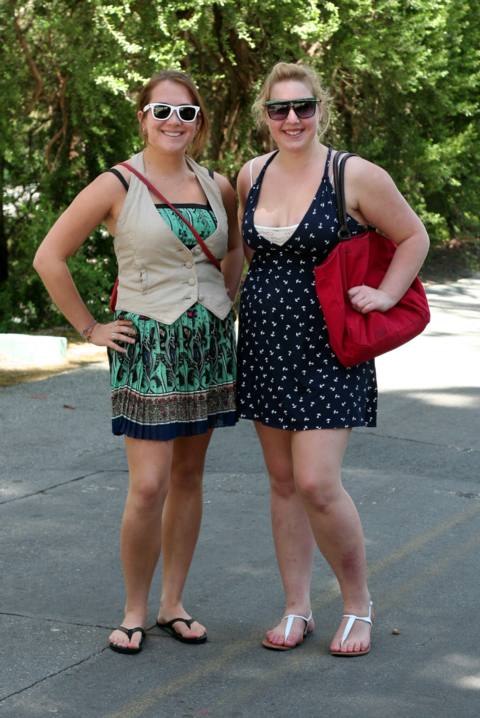
Today’s Look: Natalie and Beth, SF State
Tell us about your look:
Natalie: “Causal and cute!”
Beth: “Kinda funky and just putting things together.”

Curiosities, quirks, oddites, and items from around the Bay and beyond
Forget the Double Down: Here’s a map of the Bay Area’s best fried chicken spots
*****
The privacy-scoffing overlords at Facebook have created a nefarious, new metric to measure the country’s emotions: it’s called the Gross National Happiness. Unsurprisingly, Americans seem most happy just before Christmas and very unhappy around Tax Day. Don’t like no privacy? Try this, maybe soon.
*****
Fry toys: Scientific American picks 169 best illusions
******
“It’s not you, it’s me” : An insider explains why your favorite TV show was canceled.
*****
On-street bicycle parking on Valencia now a reality.
*****
RIP Doris Eaton Travis, last of the Ziegfeld Girls
For decades, respected consumer advocate Harvey Rosenfield has been battling Mercury Insurance and other corporations that have sought to undermine Proposition 103, the landmark car insurance regulatory measure that he wrote and California voters approved in 1988. But he’s never felt the need to advertise on television, until now.
Today in San Francisco, Rosenfield and the organization he founded, Consumer Watchdog, unveiled a 15-second commercial urging voters to reject Proposition 17, an effort by Mercury Insurance to overturn part of Prop. 103 to allow big surcharges on new drivers or those who have let their coverage lapse for even one day.
Mercury has spent more than $10 million and counting to blanket the media with its messaging, while Rosenfield has scraped together just $250,000 for a one-week Bay Area ad buy.
“We’ve never done this before, but given that Mercury Insurance is carpet bombing the airwaves with 30-second lies all over the state, we thought we’d do the equivalent of David’s slingshot,” Rosenfield told the Guardian.
Most newspapers, consumer groups, and other public interest entities have come out strongly against both Prop. 17 and Prop. 16, an effort by Pacific Gas & Electric to consolidate its monopoly and stop local governments from doing clean energy projects. But these two corporations are expected to spend about $35 million to fool Californians into voting against their interests and to increase corporate profits.
For more, read “Buying Power,” our recent investigation into these companies and their deceptive tactics.
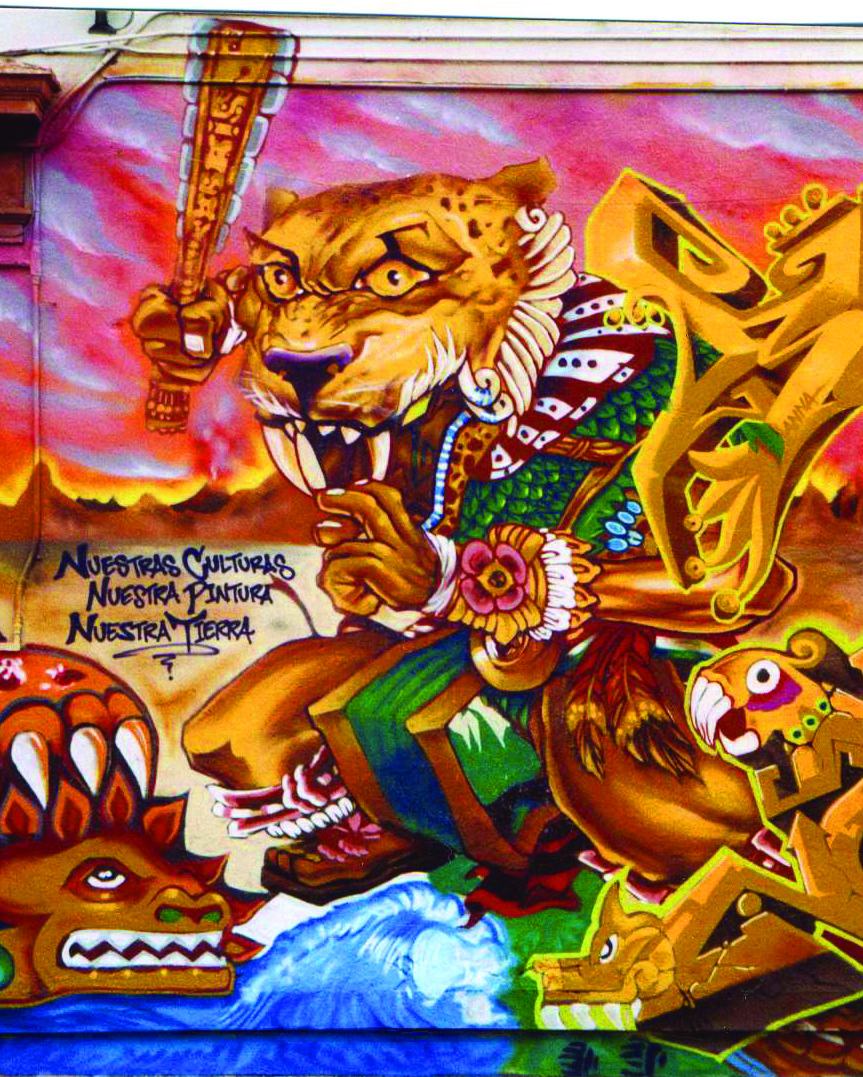
If you live in San Francisco and pay attention to public art, you might already be familiar with the work of longstanding Bay Area graffiti crew Inner City Phame (ICP). Their prolific murals – diverse in style and magnetic in form – grace walls across the city. There’s a tribute to Malcolm X on Third and Kirkwood in Bayview-Hunters Point, featuring intricately crafted aliases free floating among inspired quotes. On a vibrant wall on the corner of 19th and Mission, comic book characters from Ironman to Dr. Evil swing between stylized names forged in cracked stone. An Azteca-themed mural up the street on 25th has a jaguar warrior getting down with the gods. And ICP also curates the street level walls of the Defenestration building on 6th and Howard (that old tenement hotel with furniture flying out of the windows), making a dynamic open-air gallery out of abandoned space. Wait, who said graffiti wasn’t art?
“The first graffiti I saw when I was a kid growing up in the Mission was the Chicano writing on our walls,” says Twick, ICP veteran and original member of the group of close-knit friends, founded by Il Charo (then named Jes 446) back in 1988. “We called it Cholo writing, because that’s what it was. The walls decorated the names of the gang members of the neighborhood.” Surprisingly little of San Francisco’s Cholo writing has been documented, although street art researches have traced the origins of its Los Angeles cousin back to eastside barrios in the 1930s. What we do know is that today’s hip-hop tradition of graffiti didn’t take off in the Bay until ’83, a year that marked the momentous PBS broadcast of Henry Chalfant’s and Tony Silver’s Style Wars. After watching the stunning documentary about New York’s burgeoning youth culture, thousands of kids around the world racked some aerosol cans and took to the streets. A thirteen-year-old Twick, who had already tried to his hand at Cholo graffiti, was one of them.
“I fell in love with the art form right away and wanted to duplicate what the writers in New York were doing,” Twick recalls. Along the way Twick found a mentor in Antie 67, who introduced to him the values and elements of hip-hop culture – from the craft of lettering to break dancing and emceeing. It was an apprenticeship. Like many other kids, Twick felt pulled into an exciting and creative underground world, one that for the most part, kept him out of the real trouble. “I didn’t choose my destiny my destiny chose me,” he says.
Soon enough more and more crews popped up, a unique Bay Area style developed and an ever-evolving ICP made a name for itself on the walls across the city. “We dubbed the style we do Phunk,” Twick explains, “meaning, knowing the foundation of a letter and creating from that: stretching it here and there, adding connections – some arrows and a few bends in the right places with a shadow or a 3d.” Funkified calligraphy is readable, unlike widlstyle, which has helped ICP garner a large audience of appreciators and street notoriety.
In recent years San Francisco has taken an active role on trying to eliminate graffiti. City policies have enforced strict regulations on private property owners to buff vandalism and enacted tougher surveillance and punishments on the writers. Graffiti is known as a quality of life crime, but it seems easy enough make just the opposite case. “We don’t destroy neighborhoods and communities – we beautify them,” Twick says. While ICP now paints many legal murals and members sell canvases in galleries, Twick still highlights that the practice is fundamentally rooted in both an unsanctioned approach and the aesthetics of the tag. So, ICP maintains a balance between two worlds. “The most important thing we stand for is our family and our cultures, inspiring young minds through art – not violence – and blessing our community with colorful murals,” says Twick. “And we will continue to be one of the top crews in the Bay Area.”
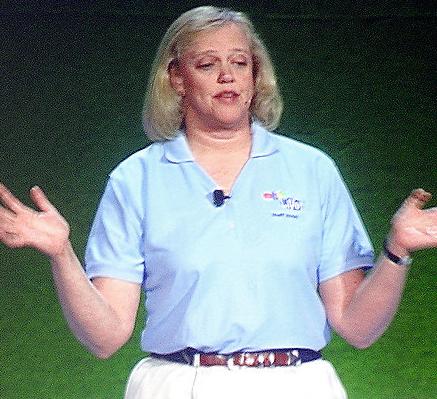
On today’s SFBG Radio, Tim Redmond and Johnny Angel Wendell talk about the sudden collapse of Meg Whitman’s once-mighty lead in the GOP primary and the nomination of Elena Kagan to the Supreme Court. You can listen after the jump.
The No on Prop 16 campaign is fighting back against Pacific Gas & Electric Co.’s advertising blitzkrieg for Proposition 16, the anti-democratic ballot initiative it has bankrolled to secure its monopoly in the San Francisco Bay Area.
No on Prop 16 Films, created in response to Prop 16, has produced a series of 10 short clips explaining to voters why they should vote no on the PG&E-bankrolled initiative, which will appear on the June 8 ballot. The reasons offered include “It’s antidemocratic,” “it denies consumer choice,” and “it’s a power grab.”
Here’s one. (Note: if you are unable to view the film, try viewing this post using a different browser, such as Internet Explorer.)
http://vimeo.com/11585131
Visit this web site to see the rest.
Prop 16 proposes a two-thirds majority vote requirement for alternative energy programs run by local governments. In the case of San Francisco, the municipal alternative would offer a power mix that surpasses PG&E’s renewable-energy portfolio by a long shot. If the progam were subjected to a supermajority vote at the ballot, it would be far more difficult to move forward, and the predictable result would be to lock in PG&E’s monopolistic grip.
The films are professional, high quality, and ready for prime time. Trouble is, as the filmmakers note on the No on Prop 16 Films Web site, “Unlike the supporters of Prop 16 we do not have 35 million of taxpayers money to buy air time and send everyone flyers.” They put the resources they did have — a crew of volunteers, some borrowed equipment, and the Internet — to good use, but unless these films, produced by a labor of love, are seen by a wider audience, they aren’t likely to affect the outcome of this crucial vote. As long as funding for air time remains elusive, No on Prop 16 campaigners are hoping to spread the word via Facebook, Twitter, and living room screenings that would bring people together and spread the word.
It’s a modern-day David vs. Goliath story, and it’s a sign of the times that a single corporation is attempting to single-handedly alter the state’s constitution using money derived from ratepayers, while the grassroots opponents have so far been unable to muster the resources for a TV ad to debunk PG&E’s propaganda. There’s always the chance, though, of an online campaign going viral.
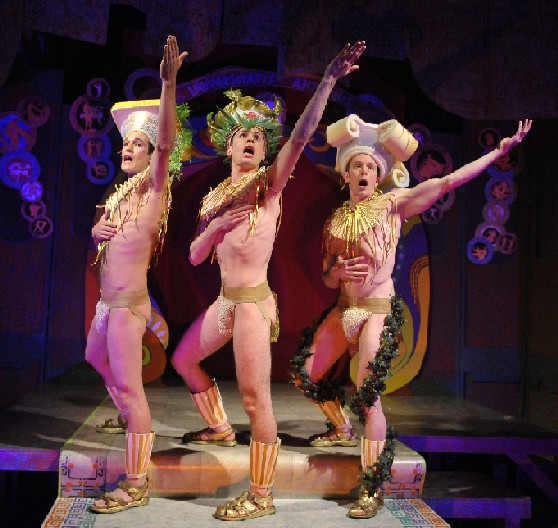
Thrillpeddlers peddle more Cockettes in Hot Greeks and SF Playhouse gets kinda Guignol with Slasher
On the principle that when you’ve got it you should really flaunt it, San Francisco’s Thrillpeddlers essay their second revival of a musical by the storied Cockettes. Hot Greeks, which premiered in midnight performances at the old Palace Theater in 1972, was the gleefully crazed cross-dressing troupe’s only other fully scripted musical besides, of course, Pearls Over Shanghai, which Thrillpeddlers revived to long-running fame almost a year ago and which will run in repertory with the limited-run Greeks.
While not the Oresteia or anything, Hot Greeks is more than an excuse for a lot of louche, libidinous hilarity. Okay, not much more. But it is a knowing little romp — supported by some infectious songs courtesy of Martin Worman (book and lyrics) and Richard “Scrumbly” Koldewyn (music and additional lyrics, and musical director-accompanist for the revival) — wedding trashy high school romance with the trashy ancient Greece of Aristophanes and the Peloponnesian War.
As Athens U. prepares for the big game against traditional rival Sparta, pent-up frustrations on and off the field reach new heights when Tri Thigh Sorority’s own buxom-and-then-some head cheerleader, Lysistrata (played to deadpan perfection by Michael Soldier), leads her squad in a revolt against male domination, leaving the boys literally hard up (prostheses and the rest of the wonderful costuming on display by Kara Emry and Morningwood). A little gridiron frisking around (encouraged by the rousing patriotic ditty, “Everybody’s Got a Buddy on the Front,” featuring the always impressive Connie Champagne as dean’s wife Clitoristra) and finally a little sexual affirmative action by Lysistrata make everything all right in the end.
You’d expect Pearls to be a hard act to beat, but director Russell Blackwood’s Greeks is a blast — lovingly detailed, gamely performed, and voiced by a diverse and charmingly pan-sexual cast, and carefully choreographed, it’s a shrewd and sharply executed production that manages to remain always rambunctiously carefree in tone. But there’s more Cockettes mayhem in the second half of the evening, which is devoted to a floorshow menagerie of greatest hits and a chronological musical trip down memory lane with narrator Scrumbly Koldewyn, who begins things in Gertrude Stein drag for a rendition of “Gert’s Postcard” from the 1971–72 New Years Eve show Les Etoiles de Minuit, before taking over at the piano.
Together with Hot Greeks, the brightly executed and equally entertaining pieces on display in the floorshow serve to remind audiences of the perennial zest in much Cockettes material as well as the considerable talent that was there under all that glitter and pubic hair.
Texas cinematic massacre
Male domination gets a feminist comeuppance in Slasher, at SF Playhouse, but the effort seems both more serious and less supple than the joyfully subversive sexual pandemonium in Hot Greeks.
As the only breadwinner for her meds-addled wheelchair-bound mother (Susi Damilano) and kid sister (Melissa Quine), Sheena (Tonya Glanz) suffers run-of-the-mill humiliation and exploitation as a waitress at an Austin eatery frequented by film nerds like shaggy good-natured acquaintance Jody (Cole Alexander Smith). When Jody convinces an aging low-budget horror meister (Robert Parsons) to meet him there, the leering eye of the filmmaker takes in Sheena and convinces her to take the starring role as “the last girl” in his latest project, Blood Bath. Sheena’s big break, if that’s what it is, gets put in jeopardy by her vengeful haute-feminist mother, who plans to disrupt the shoot in no uncertain terms.
Unfortunately, no amount of stage blood can brighten the dreary sense of predictability in Slasher, though capable performances from an impressive cast directed by Jon Tracy go some way toward alleviating the chill lack of chills or the ho-hum aspect of its hardly fresh or revelatory feminist angle on the horror genre. Playwright Allison Moore has a talent for dialogue, though, and this regional premiere still manages to show her off as someone to watch.
Hot Greeks
Through June 27
Thurs, 8 p.m.; Sun, 7 p.m., $30-69
Hypnodrome Theatre, 575 Tenth St, SF
1-800-838-3006, www.thrillpeddlers.com
Slasher
Through June 5
Tues, 7pm; Wed-Sat, 8 p.m. (also Sat, 3 p.m.), $40
SF Playhouse, 533 Sutter, SF
(415) 677-9596, www.sfplayhouse.org
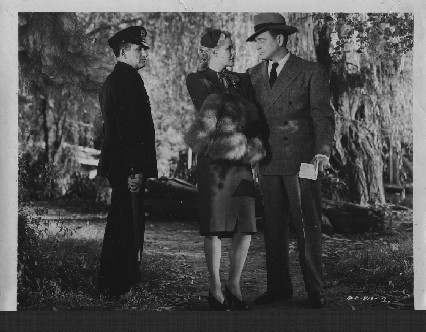
It’s hard to guess what fictive icons of popular culture will endure and which will evaporate from the collective memory. In the 1940s, probably few would have imagined kiddie heroes Batman or Superman retaining marquee value into the next century. Bigger bets would no doubt have been placed on the Shadow, the Saint, and the Whistler, long-running radio men of mystery with uncanny (but not exactly supernatural, or super-heroic) abilities to witness the moral misdeeds of mortal men, not to mention their inevitable comeuppance.
In fact, the S-men usually doled out that payback themselves. Even more evanescent than his compatriots, the Whistler was less hands-on, more a Greek chorus sardonically telling the tale of each episode’s protagonists, gloating over the impending arrival of their just desserts. He was never a participant — was even a He, or an otherworldly It? He was, simply, a gimmicked-up omniscient narrator, the storyteller’s own voice turned into a character slash-framing device.
As a result the Whistler probably didn’t seem natural movie material — what can you do with a character that isn’t seen and doesn’t interact with others? Yet the 13-year series’ popularity was such that Columbia Pictures took the plunge anyway. The result was eight films made between 1944 and 1948, six showing during the two weeks of “I Still Wake Up Dreaming!,” Elliot Lavine’s latest noir revival extravaganza at the Roxie — in restored 35mm prints struck for the occasion, yet. (The Whistlers will also play Berkeley’s Pacific Film Archive May 29-June 5.)
These “B” programmers were economical in budget and length. But on both levels they got a lot out of a little: benefiting fully from Columbia’s production gloss despite their humble status (destined for the lower half of double bills), often packing an almost epic narrative arc and tonal gamut into about 65 minutes. They weren’t great movies, but they were great examples of the solid craft and pulp entertainment value “golden era” Hollywood managed even (or even especially) when just churnin’ them out.
Each opens with a silhouette in trench coat and fedora floating along sidewalks and alley walls, uncredited actor Otto Forrest’s voice intoning “I am the Whistler … I know many strange tales, hidden in the hearts of men and women who have stepped into the shadows.” He then guides our attention to this particular case’s subject, who’s either planning something terrible or oblivious to the terrible something about to befall them.
If these central protagonists seemed oddly alike, that was because they were all played by one actor. Richard Dix was a big star of the 1920s and early 30s who was by then in his 50s, and looked it. He could credibly sport a tuxedo, bum’s rags, or murderous glare. Yet by and large he struck a placid, almost disinterested attitude throughout the series, despite his characters’ wildly varied circumstances. These included playing men who lose their identity (an amnesiac in 1945’s Power of the Whistler) or steal the wrong one (1944’s Mark of the Whistler); a terminally ill tycoon who marries a gold digger (1945’s Voice of the Whistler); or a gold digger sniffing inheritance dough (1946’s Secret of the Whistler, 1946’s The Mysterious Intruder).
The basic plot elements were interchangeable. But the particulars (often penned by pulp masters like Cornell Woolrich) were complex — so many hitherto lawful characters turning homicidally venal on a dime — the support casts colorful, and execution snappy or moody as needed. (Directing four entries was William Castle, who’d turn to more garish thrills as the showman behind such gimmick-driven horror potboilers as 1964’s Strait-Jacket and 1965’s I Saw What You Did.)
There are a lot of other rarities in the Roxie fortnight, highlights including the entirely SF-shot 1949 cheapie Treasure of the Monte Cristo and Phil Karlson’s excellent 1953 99 River Street. Particularly fascinating are late entries showing in studio archive prints: 1958’s flop-sweaty NYC-set Cop Hater; 1963’s crazily cast (Mort Sahl! Sammy Davis Jr.! Pre-Bewitched Elizabeth Montgomery!), quite nasty mafioso meller Johnny Cool; and 1959’s The Fearmakers. The latter’s finger-waggling about “packaged politicians,” “well-heeled lobbyists,” and “phony front groups” muddying D.C. democracy played Red-scary then, but sure sound prescient in our post-Cold War now.
“I Still Wake Up Dreaming: Noir is Dead!/Long Live Noir!”
May 14-27, $5-9.75
Roxie, 3117 16th St, SF
(415) 863-1087, www.roxie.com
Sup. Bevan Dufty brought a surprise guest to the “Death of Fun” panel at SPUR that we each served on last night: Steve Hardy, director of the California Department of Alcoholic Beverage Control, an agency that has played a key role in the crackdown on San Francisco nightlife.
Hardy sounded a conciliatory tone, telling me that ABC agent Michelle Ott is no longer working with SFPD officer Larry Bertrand – the undercover duo has wreaked havoc on clubs and parties – and telling the large crowd that he’s trying to heed the criticisms and change his agency’s ways. Well, sort of.
“We’re working very hard to create an image that does not draw so much hostility,” Hardy said, later complaining about the state budget shortfall’s squeeze on his agency and saying, “It’s wearing thin and there’s no relief.”
Hardy said he was raised and still lives in San Francisco and served as an SFPD beat cop before a 25-year career staffing the California Legislature, mostly with the Senate Committee on Government Organization. Three years ago, he was appointed by Gov. Arnold Schwarzenegger to run the ABC, an agency that has cited many SF clubs for noise complaints and not serving enough food with their booze, and private parties for serving alcohol without permits.
“We do have a tremendous relationship with the SFPD,” he told the crowd, as if that weren’t already clear.
SFPD Inspector Dave Falzon of the Vice Crimes Division, another panelist, repeatedly emphasized the department’s desire to improve communications with the community, which has organized against the crackdown by forming the California Music and Culture Association. And Falzon announced a new SFPD initiative to centralize and streamline its permitting functions for clubs and special events.
But when I was answered a question about what we’d like to see in terms of improved communication by saying I wanted the SFPD to finally grant the Guardian’s longstanding request to interview Bertrand (whose brutal and illegal actions have been publicly condoned by his captain) and to directly address the community’s concerns about the SFPD’s hostility to nightlife, I didn’t get much of a responsive answer from Falzon.
Two separate legal teams who are suing the department for its overreaching tactics are also seeking to depose Bertrand and his superiors, and to review Bertrand’s personnel file, but the city has so far been stonewalling them. The consensus on the panel was that city leaders haven’t adequately valued nightlife or special events or sent the message to various city departments that protecting the urban culture from bureaucratic excess is important.
For example, in the current budget crisis, most departments that deal with clubs and special events have adopted full cost recovery policies, and then jacked up those costs with demands that promoters pay for excessive police protection and other services. Just a few weeks ago, the Municipal Transportation Agency approved a budget that made full cost recovery official policy, thus jacking up prices for all events that require street closures or Muni diversions.
Who’s to blame? Well, Dufty and Sup. Ross Mirkarimi (who also served on the panel) each laid the blame squarely on Mayor Gavin Newsom, who they say has abdicated his responsibility to lead city departments through the sometimes complicated balancing act between protecting the urban culture and being sensitive to neighborhood concerns, leaving the city essentially rudderless on an issue vital to maintaining San Francisco’s status as a world-class city.
Literary readings, book tours, and talks this week
Norris Chruch Mailer, Daniel Clowes, real live magic, authors on immigration, the urban farming movement, and more.
Wednesday, May 12
Cakewalk
Hear author Kate Moses disuss her new memoir about being a self-taught baker whose appetite for sugar helped her to survive a tumultuous sixties-era childhood and the friendships she forged with famous authors while working in the editorial department of the North Point Press in Berkeley.
7:30 p.m., free
The Booksmith
1644 Haight, SF
(415) 863-8688
www.booksmith.com
Chronic
Hear D.A. Powell read from his new book of poetry.
6 p.m., free
University Press Books
2430 Bancroft, Berk.
www.universitypressbooks.com
“Urban Farming Movement”
Join leaders of the urban farming movement as they discuss their aspirations to shift our culture away from chain grocery stores in favor of local urban businesses. Featuring Jason Mark, manager of Alemany Farm and editor-in-chief of Earth Island Journal, Novella Carpenter, author of Farm City, and Christopher Burley, founder of Hayes Valley Farm.
6:30 p.m., $20
Commonwealth Club
595 Market, 2nd floor, SF
www.commonwealthclub.org
Thursday, May 13
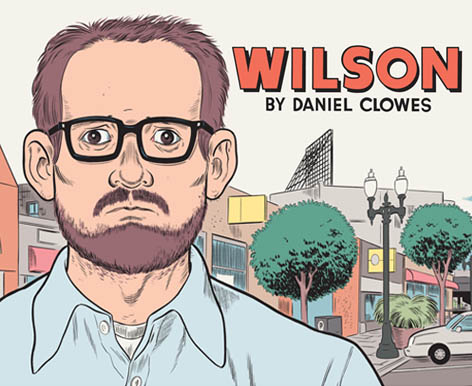
Daniel Clowes
Enjoy a visual presentation and conversation with Oscar-nominated screenwriter and award-winning cartoonist, Daniel Clowes, about his new graphic novel, Wilson.
7:30 p.m., free
The Booksmith
1644 Haight, SF
(415) 863-8688
www.booksmith.com
Jamy Ian Swiss
Enjoy some live magic and conversation with slight-of-hand artist Jamy Ian Swiss, author of Shattering Illusions and The Art of Magic. In conversation with Adam Savage.
8 p.m., $20
Herbst Theater
401 Van Ness, SF
www.cityboxoffice.com
Saturday, May 15
Unbound: A true tale of war, love, and survival
Hear author Dean King discuss his new book about 30 women who participated in China’s Long March in 1934.
2:30 p.m., free
San Francisco Public Library
Chinatown Branch
1135 Powell, SF
www.shanghaicelebration.com
West Coast Live
Attend this live radio broadcast with host Sedge Thomson and guests Norris Church Mailer, author of A Ticket to the Circus, Eric Puchner, author of Model Home, Abraham Verghese, author of Cutting Stone, and more.
10 a.m., $18
Freight and Salvage
2020 Addison, Berk.
www.wcl.org
Monday, May 17
Authors on Immigration
Hear Peter Schrag, author of Not Fit for Society, discuss the modern immigration controversy within the context of three centuries of debate and Tyche Hendricks, author of The Wind Doesn’t Need a Passport, talk about her experience in the U.S.-Mexico borderlands and the ordinary Americans and Mexicans who live there.
7:30 p.m., free
The Booksmith
1644 Haight, SF
(415) 863-8688
www.booksmith.com
Counselor: Life at the Edge of History
Hear author Theodore Sorensen recount his experience as former Special Counsel and Advisor to President John F. Kennedy, including his significant input into JFK’s most important speeches.
6 p.m., $20
Commonwealth Club
595 Market, 2nd floor, SF
www.commonwealthclub.org
The Frugal Foodie Cookbook
Learn some tips on “Frugal Beauty” from author Lara Starr like how to make “sugar-free spa candy” and “wake up and smell the coffee scrub” as she discusses her new book, The Frugal Foodie Cokbook: Waste not recipes for the wise cook.
7:30 p.m., free
Pegasus Books Downtown
2349 Shattuck, Berk.
www.pegasusbookstore.com
Norris Church Mailer
Hear Norris Church Mailer discuss her new memoir, A Ticket to the Circus, that depicts the evolution of her marriage to Norman Mailer, as well as her early years in Little Rock Arkansas, where she was a young beauty queen who dated Bill Clinton.
8 p.m., $18-$20
Jewish Community Center of San Francisco
Kanbar Hall, 3200 California, SF
(415) 292-1233
www.jccsf.org/arts
Tuesday, May 18
Point Dume
Hear author Katie Arnoldi talk about her new novel set in Malibu where she takes on the death of surf culture, human trafficking, drug cartels, and the environmental devastation caused by illegal pot farms on public lands.
7:30 p.m., free
The Booksmith
1644 Haight, SF
(415) 863-8688
www.booksmith.com
Wordcatcher
Hear Phil Cousineau discuss his new book, Wordcatcher: An odyssey into the world of weird and wonderful words.
6 p.m., $12
Mechanics’ Institute
Room 406
57 Post, SF
www.milibrary.org

Ways to have fun while giving back this week
Wednesday, May 12
Eat Drink Change
Enjoy some of the best Peruvian food in the Bay Area while helping to raise money for Small Schools for Equity (SSE), an organizing project that implements innovative education reform policies and programs to help diverse urban youth achieve their full scholastic potential and develop socially just communities. The June Jordan School for Equity, the pilot school for this project, boasts a 75% college acceptance rate for it’s graduates, ninety-nine percent of which are minorities. So raise a glass of sangria for social justice and 25% of the proceeds will benefit SSE and the leaders of tomorrow.
5:30 p.m., free admission
Mochica
937 Harrison, SF
(415) 278-0480
Piqueos
830 Cortland, SF
(415) 282-8812
www.jjse.org
www.smallschoolsforequity.org
Thursday, May 13
The Arc of San Francisco
Celebrate disability, diversity, and pride at this LGBTQQ community fundraiser for the Arc of San Francisco, a non-profit that serves adults with developmental disabilities. Featuring circus performers, cocktails, a drag show, and a special guest San Francisco Supervisor Bevan Dufty.
7 p.m., $100
Cirque de l’Arc
1500 Howard, SF
www.thearcsf.org/cirque
Bubbles and Bivalves
Learn more about native oysters while helping to support the Oysters on the Half Shell program and efforts to restore the critical underwater ecosystem of the San Francisco Bay. Featuring emcee Wendy Tokuda, CBS 5 news anchor, oysters, hors d’oeuvres, champagne, and libations from regional sustainable restaurants.
7 p.m., $50
The Aquarium of the Bay
Pier 39, SF
www.thewatershedproject.org
Rendezvous of Victory
Attend this benefit for the Middle East Children’s alliance featuring historian Norman Finkelstein, author of This Time We Went Too Far: Truth and Consequences of the Gaza Invasion, and a performance by Iraqi/UK hip hop artist Lowkey.
7:30 p.m., $15
Martin Luther King Jr. Middle School
1781 Rose, Berk.
(510) 548-0542
www.mecaforpeace.org
Friday, May 14
Inside/Out #20
Attend this issue release party and fundraiser for Hyphen, a volunteer-run non-profit magazine that focuses on the Asian American community, including cultural trends, art, and politics. Featuring DJs Franchise, Esquire, and Citizen Ten, a food cart appearance by Adobo Hobo, live art, and more.
9 p.m.; $10, $20 with subscription
Som. Bar
2925 16th St., SF
www.hyphenmagazine.com
Marin Services for Women Benefit Dinner
Attend this dinner themed “Celebrating Strong Women,” featuring Emmy Award winning actor Mariette Hartley, Jan Wahl, live music, a delicious meal, live and silent auctions, and more. Marin Services for Women is a non-profit that provides a full continuum of alcohol and drug treatment programs specifically designed for women, their children, and their families.
6:30 p.m., $150
Mill Valley Community Center
180 Camino Alto, Mill Valley
(415) 924-5995, ext. 128
www.marinservicesforwomen.org
Saturday, May 15
Beautiful Dreamers
Help keep art alive in Alameda at this benefit for Autobody Fine Art Inc., a non-profit that helps emerging and mid-career artists from the East Bay and surrounding areas, featuring a silent auction, a raffle of art related gifts, services, and local restaurants, cocktails and hors d’oeuvres, and live music.
5 p.m., $15
Autobody Fine Art
1517 Park Street, Alameda
(510) 865-2608
www.autobodyfineart.com
Paul “The Lobster” Wells’ Birthday Bash
Enjoy readings, a silent auction, rare rock n’ roll memorabilia, and live entertainment with David Denny, Barry “the Fish” Melton, Joli Valenti, Mitchell Holman, Carlos Reyes, Mindy Canter, Thrasher, Jamie Clark and the Players, and more. Proceeds to benefit the Leukemia and Lymphoma Society.
8:30 p.m., $30-$50
Broadway Studios
435 Broadway, SF
(415) 291-0333
Petchitecture 15
Attend this auction of dog houses and cat condos, created by San Francisco architects and designers, to benefit Pets Are Wonderful Support (PAWS), a non-profit that helps people with illnesses keep their pets. Featuring food, drinks, pups, and live and silent auctions of unique pet habitats. Fully licensed and vaccinated pups on leash are welcome.
6:30 p.m., $150
Palace Hotel
2 New Montgomery, SF
www.pawssf.org
Sunday, May 16
Lagunitas Beer Circus
Attend this fundraiser for the Petaluma Music Festival featuring carnival games, aerialists, contortionists, sideshow freaks, great food, beer from ten local breweries, live music, and more.
1 p.m., $35
Lagunitas Brewery
Parking lot and beer sanctuary
1280 N. McDowell, Petaluma
(707) 769-4495
Monday, May 17
Spelling “Bee-In”
Attend this spelling bee to benefit Small Press Distribution (SPD), a non-profit distributor of small press books, featuring local literati attempting to show off their spelling acumen.
7:30 p.m., $75
Crown Point Gallery
20 Hawthorne, SF
www.spdbooks.org/bee
By the looks of things, I’m set to become the sexiest lady in San Francisco. After all, two of my favorite activities, reading and riding bikes, are being sex-a-fied and objectified this week — and I kinda like it. Check out Dr. Sketchy’s Cute Girls on Bicycles, and Naked Girls Reading for a double dose of tame-ass female hotness (Sketchy’s girls will have clothes on, but the bookworms will be in all their literary glory). Geez, I hope next week doesn’t bring a Naked Girls Drinking Beer night, or a Naked Girls Using Too Many Adjectives In Their Writing night — they’ll be ripping off my clothes in the streets!
Some Like It Hot: Spice Play
Those spices. Not only do they make your food more delicious, but now they can add a mouth-watering dimension to your BDSM play. This paidiea (“learning through play”) evening starts out with a brown bag dinner/munch, progresses to hands-on demonstration, and ends up with an open play sesh, so that you can put into practice the tasty recipes you’ve learned.
Thurs/11 7:30-10:30, $25 sliding scale, $3 materials
SF Citadel
1277 Mission, SF
——————————————-
Dr. Sketchy’s Cute Girls on Bicycles
Ah, the voluptuous curve of the fender, the power and thrust of a true wheel, the tough love of a Brooks saddle… bikes are sexy enough, and when you pair them with lovely ladies — well the result just makes you want to draw! So goes the reasoning of Dr. Sketchy, who is showcasing bike blogger Meli Burgueño, builder of Pelican bikes Constance Cavallas, and Amanda Lanker of Pushbikes Ladies Ride.
Thurs/11 7-10 p.m., $7-10
111 Minna Gallery
111 Minna, SF
——————————————-
Kevin Simmonds’ MASS
Witness a poetic recasting of male sexuality at this multimedia work by renaissance man Kevin Simmonds, who will utilize the bodies of 30 men to pose as St. Sebastian in this mass. Promises to be nothing like your altar boy experience, although the homo-erotic overtones of the Catholic Church might just poke their head out from under the priestly robes.
Sat/15 7 p.m.-8:30 p.m., free
Good Vibrations
1620 Polk, SF
(415) 345-0400
——————————————-
Personal Thinking Patterns and Sex
How come dirty talk, costume play, and quickie stroking gets some people off and gets some people to flee? Well, apparently it has to do with the makeup of your “personal thinking pattern,” and hypnotherapist Heron Saline is here to introduce you to the driving manual of your mind. The class also allows time for sexual goal strategizing, which is nice.
Sat/15 10 a.m.- 5 p.m., $75-90
Center for Sex and Culture
1519 Mission, SF
(415) 706-9740
——————————————-
Naked Girls Reading
Nothing more pleasing than a thrilling climax… in a book’s plot. This event really makes those “Reading is Sexy” bumper stickers put their money where their mouth (and boob) is, and features the out-loud talents of burlesque beauties Dottie Lux, Isis Star and Ruby Vixen.
Sat/15 7-9 p.m., $15 general admission, $20 front row
Center for Sex and Culture
1519 Mission, SF
——————————————-
Men in Gear
Time to get all kitted out in your finest leather and spurs — Chaps is throwing it’s weekly party for men who wear their hearts on their assless chaps and stompin’ boots. Drink specials for all those who come appropriately attired. And no cover!
Sat/15 9 p.m. – 12 a.m., free
Chaps
1225 Folsom, SF
(415) 863-1699
——————————————-
Age Play Adventure
Bring your Little to this special day of Citadel fun for those into age play. Diapering service provided, rumors of a dirty pediatrician on-site are unconfirmed, but probably true.
Sun/16 1-5 p.m.
SF Citadel
1519 Mission, SF
For more information email monikahottie@yahoo.com
Bartenders extraordinaire, Jeff Hollinger (also author of The Art of the Bar) and Jonny Raglin of Absinthe, debut Comstock Saloon, scheduled for a May 20 opening date.
This long-anticipated bar is in the former SF Brewing Company on Columbus, a 1907 building on the Barbary Coast trail with a Barbary Coast past honored in the restoration of mahogany bar, Victorian furniture, turn-of-the-century saloon look and menu (Beef Shank with Bone Marrow Pot Pie, anyone?) from Chef Carlo Espinas, formerly of Piccino Cafe. Cocktails ($8-12) are the classics, the kind found in pages of The Savoy Cocktail Book or Charles H. Baker’s Gentleman’s Companion, and all-time greats like a Negroni or Sazerac (two of my favorites).
COMSTOCK SALOON
155 Columbus Ave, SF.
(415) 617-0071
