SFBG Blogs

Slow man

0

Dear Andrea:

My male friend ( I’m a woman) and I have been together on and off for a little over a year. The problem is, it takes him a very long time to ejaculate. He is really turned on but it still takes a long time. Is it me or him?

Love,

Slowpoked

Dear Slow:

An eternal question, but a bad one. Do you really want to know whose “fault” it is, or how to fix it?

Your letter raises more questions than it asks. The big ones: Has this always been an issue for him? Is it true of all activities, or only intercourse? Did he happen to start taking antidepressants around the time this started? Oh, and one more: Who is this a big problem, you, him, or both? It would be great to hear that it’s a problem only for you, since then I could say (in the nicest way possible, of course,),”Get over it.”

Yes, it’s a problem if intercourse drags on way past your turn-on, past any orgasms that might have been achieved or are still achievable, and straight into “getting sore now, that was great, thanks, now get out.” But a dysfunction (not that there is one) isn’t one unless he says it is. One hopes he is not blithely sawing away while you lie there in increasing discomfort. But if he’s happy with the status quo, you’re kind of stuck.

So better for you if he’s also feeling frustrated. It would be great if we could blame Prozac or one of its relatives, and that he could easily switch to a different but equally effective medication. So make sure he isn’t taking anything that could cause delayed gratification, and then, assuming he isn’t, we move on.

Next: is he only a slow-poke when penises meet vaginas, or is it a universal thing? If it’s only intercourse, then we blame intercourse. It’s too something for him: too dry, too wet, too loose, too condom’d, too shameful, not shameful enough … who knows? Men are fragile creatures. If he easily gets off on hand jobs, blow jobs, or any other sort of jobs, then your job is to figure out what he likes about the other sensations and try to recreate them.

Now let’s say that it takes that long no matter what you’re doing. What about no matter what he’s doing? Like when you’re not there? Much as masturbation can be used to unlearn premature ejaculation, it can cause the post-mature kind. Some guys are so good at getting themselves off that, frankly, no partner can compete. People — male, female, and otherwise — can get habituated to a particular, usually very strong and very focused sort of stimulation and find it hard to respond to the more diffuse and occasionally off-target sensations another human is able to provide.

The cure for this, oddly, is also masturbation. But instead of doing it efficiently, like most people do, you take your time and learn to respond to slightly less exactly-the-way-I want-it-when-I want-it stimulation.

None of this is going to happen unless you two talk about it, though.

Love,

Andrea

Got a question? E-mail andrea@mail.altsexcolumn.com

Sheriff: ICE referrals will leap from 2,000 to 40,000

4

There was a strong showing of supervisors, activists and community members at today’s rally to urge San Francisco to opt out of the Secure Communities Initiative, an automated fingerprint screening system that U.S. Immigration and Customs Enforcement (ICE) plans to switch on, in San Francisco on June 1—just two weeks ago.

The program links local law enforcement agencies to the Department of Homeland Security’s biometric system through interoperability agreements with each state. Scott Lorigan in the California Department of Justice’s Bureau of Criminal Identification and Information reportedly signed such an agreement with John P. Torres, acting assistant Secretary of ICE, over a year ago, on April 10, 2009. And according to ICE, As April 2010, biometric identification has been activated in 169 jurisdictions in 20 states:

In California, the system has already been activated in Alameda, Contra Costa, Fresno, Imperial, Los Angeles, Monterey, Orange, Sacramento, San Bernadino, San Diego, San Joaquin, San Luis Obispo, Santa Barbara, Solano, Sonoma, Stanislaus, and Ventura.But as speakers pointed out at today’s rally, the supervisors and the communities they represent would not have even known that this system was about to go live in San Francisco, had it not been for San Francisco Sheriff Mike Hennessey, who spoke out after ICE informed local law enforcement agencies about the program three weeks ago.

Eric Quezada of Mission-based Dolores Street Community Services kicked off the rally with a rousing speech in which he warned that this “draconian Policy” was happening in the “shadow of Arizona.

Sup. Eric Mar warned that ICE’s proposed program will not make communities more safe.
”It was developed in the dead of night,” Mar said. “The police-ICE entanglement will hurt our communities and tear families apart.”

The Bush administration introduced the Secure Communities Initiative in March 2008. But as Mar observed, it is now being expanded under President Obama.“Many people accused of minor crimes will see families torn apart,” Mar said, citing statistics to show that  “90 percent of those IDed have been arrested for minor, less severe crimes.

“The shadow of Arizona is starting to cover other cities,” Mar continued. “We can’t let Arizona come to SF.”

Sheriff Hennessey told the crowd that he had written to California Attorney General Jerry Brown asking for his assistance in opting San Francisco out of the ICE program.“The Sheriff already has the authority to report foreign born folks charged with serious  felonies,” Hennessey explained.

In a May 18 letter to AG Jerry Brown, Hennessey wrote that he believed that Brown’s agency “has the technological capability to isolate by agency the information linked to ICE.”

““I ask that you isolate transactions from the San Francisco Sheriff’s Department because Secure Communities conflicts with local laws,” the Sheriff continued. “My department already has a system in place that reports individuals to ICE and I do not wish it to be replaced by Secure Communities.”

Hennessey also expressed concern about the unintended consequences of ICE technology interfacing with that of the Department of Justice’s fingerprint database, which also holds fingerprints collected for non-criminal justice purposes such as employment applications. And he warned that the number of ICE referrals could explode under the new system.
Under this system, we’ll be fingerprinting 35,000-40,000 persons annually, “ Hennessey said. “I think that’s excessive.”

Currently the Sheriff’s Dept. reports foreign-born individuals arrested on a felony crime or found during the booking process to have a felony of a previous ICE contact in their criminal histories.

‘Since 2007, the department has delivered more than 3,100 individuals to ICE, and has reported at least twice that number,” Hennessey wrote. “I would like to keep system that way.”

At the rally, Hennessey warned that the new system will widen excessively to include folks who were charged with misdemeanors, infractions and traffic violations, but failed to show up in court.

“ICE has a record of secrecy. They won’t tell me what happened to folks they picked up, they won’t say if they are still in custody, been released or deported,” Hennessey said.

Sup. John Avalos said the Secure Communities Initiative is yet another example of why the nation needs comprehensive immigration reform.
“I don’t know if we have the ability to opt out, there are a lot of obstacles in our oath, right now.”

But he warned that the nation is passing laws that “stand at odds” with the U.S. Constitution and the Bill of Rights “And we have rogue departments in the Obama administration, “ Avalos added. “ I consider ICE a rogue department. “
 
Rev. Phillip Lawson, a retired Methodist minister said he wanted to stand in solidarity with “resident aliens”.
“As black people, we know what it’s like to be aliens in our own land. And this enlarges the net of ICE. We will soon not be able to tell any difference between the police and ICE. And no one will trust the police.”

“I give thanks to the courage of folks here for instituting this attempt to say, no we will not cooperate…And we can also resist the law.”

Sup. David Campos, who provided much leadership in the last two years around the city’s sanctuary legislation, thanked Hennessey for blowing the whistle.

“None of us would have known this was happening,” Campos said. “This is the time for all San Francisco’s elected officials to stand up in support of the principles that led us to establish a sanctuary city. It’s not just the Board, but also the mayor who needs to step up and say that what just happened is not acceptable. This program eviscerates sanctuary city.”

Campos warned that the community has already lost trust in the local police, over the last two years, thanks to the city’s policy of referring juveniles to ICE when they are booked.

“If we cooperate [with SCI] that lack of trust will intensify,” he warned. “I applaud the sheriff, but we also need the police department to come forward.”

Campos laid the blame at Obama’s door.
“This is a Democratic president, who was elected with the support of the Latino and the immigrant community, but is engaging in practices worse than any other president.”

Tim Paulson, executive director of the Labor Council spoke on behalf of 150 unions in town. “Our work is dependent on the immigrant community,” He said. “Secure Communities is absolutely divisive and unconstructive. It pits worker against worker, families against families.”

Heidi Li of Asian Pacific Islander Legal Outreach warned that victims of domestic violence, trafficking and elder abuse would be at risk from ICE’s program.

“It will result in a situation where folks who need trust and assurance the most, will not feel safe and will no longer report to the police when they are the victims of abuse,” Li said.

At rally’s end, Hennessey told the Guardian, “The basis of Sanctuary city is to protect immigrants who are not doing anything wrong or serious. When ICE grabs someone who failed to pay a traffic ticket, and that person is supporting a family, I don’t think those crimes should rise to the level of deportation.”

Warning folks that folks did not know that SCI had been activated in Alameda and Contra Costa counties, Hennessey said all he can do is “raise the issue” of opting out. 

Sup. Mar told the Guardian that the request to opt out is a “unique and creative tactic.”

“We have the strong legal backing from organizations around the country, but SFPD Chief George Gascon doesn’t seem convinced,” Mar observed

Christine Gasparac, Attorney General Jerry Brown’s press secretary told the Guardian that they received Hennessey’s May 18 letter requesting to opt out and are reviewing it.

“To clarify, the California Department of Justice manages the statewide database of fingerprints that are essential to solving crimes, but we have no direct role in enforcing federal immigration laws,” Gasparac said. “We were informed by ICE yesterday that they will work with counties to opt out of their program. Because that is a process directly between the county and ICE, we are advising local authorities who want to opt out to contact ICE directly.

Virginia Kice, ICE’s Western Regional Communications Director said, “under Secure Communities jurisdictions can choose not to receive the immigration-related information on individuals who are fingerprinted, but that information will still be provided to ICE.

As April 2010, biometric identification has been activated in 169 jurisdictions in 20 states. Since it’s unclear, which communities know about the program, the Guardian is posting the list here:

In Arizona:  Cochise, Maricopa, Pima, Pinal, Santa Cruz, Yavapai and Yuma

In California Alameda, Contra Costa, Fresno, Imperial, Los Angeles, Monterey, Orange, Sacramento, San Bernadino, San Diego, San Joaquin, San Luis Obispo, Santa Barbara, Solano, Sonoma, Stanislaus, and Ventura

In Delaware: Kent, New Castle and Sussex

In Florida: Brevard, Browar, Charlotte, Clay, Collier, Duval, Escambia, Highlands, Hillsborough, Lake, Leon, Manatee, Marion,Miami Dade, Monroe, Orange, Osceola, Palm Beach, Pinellas, Polk
Sarasota, St. Johns, St. Lucie, Volusia

In Georgia: Clayton, DeKalb and Gwinnett

In Hawaii: Oahu

In Illinois: DuPage, Kane, Lake, Madison, McHenry, St. Clair, Will and Winnebago

In Lousiana: Jefferson Parrish

In Maryland: Frederick, Prince George’s, Queen Anne’s and St. Mary’s.

In Massachusetts: Suffolk

In Michigan: Wayne

In North Carolina: Brunswic, Buncombe, Cabarrus, Catawba, Columbus , Cumberland, Dare , Duplin, Durham, Gaston, Halifax, Harnett, Henderson, Jackson, Lee, Mecklenburg, New Hanover,
Orange, Transylvania, Union and Wake.

In New Mexico: Bernalillo, Dona Ana, Grant, Hidalgo, LunaOhio, Cuyahoga and Franklin

In Oklahoma: Oklahoma, TulsaOregon and Clackamas

In Pennsylvania: Bucks, Montgomery and Philadelphia

In Utah: Box Elder, Davis, Salt Lake, Utah and Weber

In Virginia: Alexandria City, Arlington, Fairfax, Fauquier, Henrico, Loudoun, Norfolk City, Prince William, Rappahannock. Richmond City and Virginia Beach City

In Texas: Bexar, Brazoria, Brewster, Brooks, Collin, Culberson, Dallas Dallas County Jail, Dallas Farmers Branch PD, Dallas Irving PD, Dallas and Collin Richardson PD, Dallas and Kaufman Mesquite PD, Dallas, Collin, Denton Carrollton PD, Denton, Dimmit, El Paso, Fort Bend, Galveston
Grayson, Harris, Hidalgo, Hudspeth, Hunt, Jeff Davis, Jefferson, Jim Wells, Johnson, Kaufman, Kenedy, Kinney, Kleberg, Maverick, McLennan, Montgomery, Nueces, Pecos, Presidio, Real, Starr, Tarrant, TDCJ, Terrell, Travis, Uvalde, Val Verde, Webb, Willacy, Williamson, Zapata and Zavala.


Darryl gets live: Craig Robinson hits SF stand up

0

Perhaps you’ve heard of Craig Robinson. You’ve certainly seen him — between The Office, turns in Knocked Up, Pineapple Express, Hot Tub Time Machin\e — plus guest appearances on pretty much every single successful sitcom of the past decade or so — he’s totally “that guy” these days. You know, “that funny guy,” “that bouncer guy,” even “that black guy” (groan, racial identifiers). But when we chatted over the phone a few weeks ago in anticipation of his upcoming stand up show at Cobb’s Comedy Club (starts Thurs/27), the turbo calm Robinson let me know that “hey man, where do I know you from?” is only the second most popular line he’s approached with these days.

“They ask me, ‘can we make love?’ ” he deadpans. Right. Wasn’t expecting that. And then laughs as I scrabble together a follow up question. “No, the number one is ‘hey you’re that guy!’ ”

Robinson’s been playing the comic foil for some time now. He got his start in stand up at Chicago’s Second City, perfecting an dry act that featured the big man sitting down at a piano for little forays into melodic riffing. Despite his triumph on the big and little screens, he’s not trying to reinvent the wheel with it.  “My act is unchanged. I’m not looking for new stuff. My fans are going to love that I’m still doing it, and the people who are, like oh I’ve seen it, well hopefully they won’t come.”

His characters have typically been back up players — the overly honest bouncer in Knocked Up, Darryl the warehouse manager of The Office — but they’re far from overshadowed by his more famous co stars. Robinson’s roles tear holes in standard power structures, makes us an observer of the scene through his eyes. Maybe that’s why Darryl’s getting called up to the main character echelon of The Office. Maybe people just dig the way Robinson does things.

Or maybe not. When I ask him about his newfound centrality in the show’s episodes, I can hear the shrug in the short silence that follows. “I don’t know,” he tells me. “I wish I could say, yeah, the people demanded more Darryl. But I don’t know how it happened. One day my manager says, they’re talking about moving you up.”

Robinson seems to enjoy his tenure on network TV’s send up of corporate culture. He’s a big Steve Carrell fan (“You knew right away Steve was the man. He threw the ball from one side of the court to the other side,”) and certainly the show’s made his face a no-brainer for more high profile comic roles.

But not everyone wants him for his looks. He recently lent his other talents to the team behind Shrek 4. “The director Mike Mitchell and I played with the character until we came up with an she-ogre named Cookie. Let the games begin,” he says with a chuckle.

Craig Robinson
Thurs/27-Sun/30 8 p.m. (also 10:15 p.m., Fri and Sat), $23.50-25.50
Cobb’s Comedy Club
915 Columbus, SF
(415) 928-4320
www.cobbscomedyclub.com

The Daily Blurgh: Flipper goes commando and Gidget almost loses it (again)

0

Curiosities, quirks, oddites, and items from around the Bay and beyond

In the near future, Navy Marine Mammals will prevent the next diabolical underwater plot hatched by marine-loving terrorists. In fact, they’re doing it off the coast of California right now. Lest you be worried that these aquatic freedom defenders are “canaries in a coalmine” (but in water!), rest assured that, “None of the animals have been harmed in the anti-terrorist work. They never have to carry potentially catastrophic mines.”

*****
The sexual history of “Gidget.”

*****

UC Berkeley plans on asking incoming freshman and transfer students to submit DNA samples swabbed from their inner cheeks, “in an effort to introduce them to the emerging field of personalized medicine.” Yeah right. We know that UCB is going to take a page from Philip K. Dick and use the genetic data to blackmail the students when they attempt to do things like go on hunger strikes or protest budget cuts.

*****

Boing Boing has a neat-o preview of this year’s Maker Faire.

*****

Garderobe, a word now extinct, went through a similar but slightly more compacted transformation. A combination of “guard” and “robe”, it first signified a storeroom, then any private room, then (briefly) a bedchamber and finally a privy. However, the last thing privies often were was private. The Romans were particularly attached to the combining of evacuation and conversation. Their public latrines generally had 20 seats or more in intimate proximity, and people used them as unselfconsciously as modern people ride a bus.

*****

Creepiest headline of the day: Slain woman found in suitcase off Embarcadero 

*****

Most delicious word of the day: “maize’wiches

*****

Piece of Internet wisdom of the day, courtesy of Slog commenter gloomy gus:

“The internet is 45% sadness, 45% anger, and 10% things to soothe the sadness and anger, meaning: cats and advice.”


Quick Lit: May 19-May 25

0

Literary readings, book tours, and talks this week

Michael Chabon, Chuck Palahniuk, a celebration of Bukowski, Carol Queen revisits exhibitionism, Rebecca Solnit and Mona Caron create a California bestiary, and more

Wednesday, May 19

A California Bestiary
Authors Rebecca Solnit and Mona Caron partnered to create their own book of magical California beasts inspired by medieval bestiaries that were more fanciful than factual.
7 p.m., free
Green Arcade
1680 Market, SF
(415) 431-6800

Celebrate Bukowski
Celebrate the release of Absence of the Hero: Uncollected Stories and Essays by Charles Bukowski with editor David Calonne in conversation with Garrett Caples and readings from Stephen Elliot and Daphne Gottlieb.
7 p.m., free
City Lights Bookstore
261 Columbus, SF
(415) 362-8193

The Empire Strikes Out
Author Robert Elias reads from his new book The Empire Strikes Out: How baseball sold U.S. foreign policy and promoted the American way abroad, which takes an eye-opening look at baseball’s relationship to the American empire, from the revolutionary era to the present.
7:30 p.m., free
Pegasus Books Downtown
2349 Shattuck, Berk
(510) 649-1320

Michael Chabon
Join bestselling and Pulitzer Prize-winning author Michael Chabon as he discusses his new memoir, Manhood for Amateurs.
7:30 p.m., free
The Booksmith
1644 Haight, SF
(415) 863-8688

“Massive Stars and Their Temper Tantrums”
Join UC Berkeley professor Dr. Nathan Smith as he discusses the properties of the most massive stars, and the life and death of large, unstable stars, such as Eta Carinae.
7:30 p.m., free
Randall Museum
199 Museum Way, SF
(415) 554-9600
www.randallmuseum.org

Carol Queen
Attend a book party for Queen’s 1996 book, Exhibitionism for the Shy, featuring new chapters on internet exhibitionism and added interviews. Dress up, show off, and talk hot at this discussion on finding your own erotic identity and comfort zone to become the erotically outgoing soul you’d like to be.
6:30 p.m., free
Good Vibrations Berkeley
2504 San Pablo, Berk.
http://events.goodvibes.com

Thursday, May 20

An evening with Chuck Palahniuk
Hear the famed author of Fight Club discuss his new book Tell All, a Sunset Boulevard homage to Old Hollywood, filled with name-dropping and nostalgia.
7:30 p.m., $36
Swedish American Hall
2174 Market, SF
(415) 863-8688

California Condors
Learn more about the reestablished population of California Condors after their near extinction 30 years ago at this talk with National Park Service wildlife biologist Daniel George titled, “The Natural History and Future of California Condors.”
7:30 p.m., free
First Unitarian Universalist Church
1187 Franklin, SF
www.goldengateaudubon.org

The Food Industry
Hear Pulitzer Prize winner and New York Times reporter Michael Moss discuss lapses in food safety, nutrition related issues, the White House’s war on obesity and more in conversation with KQED reporter Sarah Varney.
Noon, $20
Commonwealth Club
2nd floor
595 Market, SF
(415) 597-6700

Hearts for Madeline
Hear author Page Hodel talk about her new book about when she met Madelene Rodriguez, who soon after died of cancer, and how she still leaves crafted hearts on her doorstep to say ‘I love you.’
7:30 p.m., free
Books Inc.
2275 Market, SF
(415) 864-6777

InsideStorytime: Crime
Enjoy readings from crime writers Lisa Lutz, author of The Spellmans Strike Again, Mark Coggins, author of The Big Wake-up, Seth Harwood, author of Jack Wakes Up, Mitzi Ngim, and Julie Graham with MC Ransom Stephens.
6:30 p.m., $3-$5 sliding scale
Café Royale
800 Post, SF
(415) 505-0869
www.insidestorytime.com

Low Bite
Attend this launch of Sin Soracco’s new prison novel about survival, dignity, friendship, and insubordination inside a women’s prison.
7 p.m., free
Modern Times Bookstore
888 Valencia, SF
www.mtbs.com

“Lyman vs. Niman: Can you be a good environmentalist and still eat meat?”
Raising livestock is resource-intensive and, we are beginning to learn, a significant contributor to greenhouse gas emissions. Nicolette Hahn Niman, a Marin rancher and author of Righteous Porkchop, will argue that there is an ecologically sustainable way to eat meat against Howard Lyman, the author of Mad Cowboy: Plain truth from a cattle rancher who won’t eat meat.
7 p.m., $10-$20
David Brower Center
Richard & Rhoda Goldman Theater
2150 Allston, Berk.
(510) 859-9100

Friday, May 21

To Teach: The Journey, In Comics
Graphic artist Ryan Alexander-Tanner brings William Ayers’ memoir To Teach: The journey of a teacher to life in this new graphic novel.
7 p.m., free
Green Arcade
1680 Market, SF
(415) 431-6800

Saturday, May 22

“Shanghai”
Attend an Asian Art Museum docent talk featuring a lecture and slideshow presentation about the museum’s exhibition “Shanghai.” The talk will be in English and Cantonese.
2:30 p.m., free
Chinatown Branch Library
Community Room
1135 Powell, SF
(415) 355-2888

Very Good-Looking Seeks Same
Author Robert Philipson will read from his new book, Very Good-Looking Seeks Same: Gay profiles in search of love, a new volume of transgressive, internet inspired poems, at this event featuring refreshments and live jazz music.
5 p.m., free
San Francisco LGBT Center
4th floor
1800 Market, SF
(415) 865-5555

Sunday, May 23

Broken Promises, Broken Dreams
Hear author Alice Rothchild explore the complexities of Jewish Israeli attitudes and the hardships of Palestinians living in the West Bank and Gaza through personal narratives based on work with medical delegations in the region.
3 p.m., free
Modern Times Bookstore
888 Valencia, SF
www.mtbs.com

Monday, May 24

Sunnyside
Bay Area author Glen David Gold discusses his new American epic, Sunnyside, starring Charlie Chaplin, about dreams, ambition, and the birth of modern America.
7:30 p.m., free
The Booksmith
1644 Haight, SF
(415) 863-8688


War: As Soldiers Really Live It

Hear Sebastian Junger discuss his new book about the reality of combat, the fear, honor and trust among men in an extreme situation whose survival depends on their absolute commitment to one another. His on-the-ground account follows a single platoon through a 15 month tour of duty in the most dangerous outpost in Afghanistan’s Korengal Valley.
7:30 p.m., $12
First Congregational Church of Berkeley
2345 Channing, Berk.
(510) 848-6767

Tuesday, May 25


A Poem for Mother Earth

Attend this poetry sharing and community healing ceremony featuring poetry, spoken word, and music from migrant Raza, indigenous youth, adults, and elders in poverty focused on the impacts of climate change  on indigenous peoples and poor people of color.
Noon, free
Galleria de la Raza
2857 24th St., SF
www.poormagazine.org

Will cyclists and motorists ever get along?

34

Bicyclists and motorists often clash in San Francisco, over space on the roadways and in conversations about each others’ behaviors, often in the most acrimonious fashion imaginable. My recent writing on bike issues has prompted lots of feedback and controversy – including lovely comments such as “Steve, keep riding your bike without a helmet, with any luck you’ll get in an accident and what little brains you have will spill out onto the street and we won’t have to read your smug condescending bullshit about bikes anymore.” – but I’m not the only one interested in trying to figure out how this gulf got so wide or how to bridge it.

The San Francisco Civil Grand Jury recently issued a report entitled “Sharing the Roadway: From Confrontation to Conversation,” that identifies strife between cyclists and drivers as a serious problem and seeks “to move towards everyone seeing him/her self as part of the community sharing the roadway.”

It’s an admirable goal that echoes that of the SF Bicycle Plan, and the 40-page report occasionally offers some insight into diagnosing why the problem exists, although it focuses mostly on the behaviors of bicyclists and the view by motorists that people who bike are arrogant, dangerous, irresponsible, erratic, inconvenient, vulnerable, and despised, all adjectives it gleaned for a 2002 study in Scotland, for some reason.

The report calls for more education and enforcement that targets all road users, but it seems most focused on criticizing bicyclists for running stop signs and other traffic violations, noting how cyclists are rarely given citations and saying that’s at least partly because cyclists have become politically powerful and are more likely to file complaints about cops who ticket them. In other words, we cyclists are the overentitled special interest that the angriest motorists say we are.

The report even discusses such radical ideas as requiring cyclists to get licenses, pay registration fees, and buy insurance, but it gives no mention to radical ideas on the other end of the spectrum, such as importing traffic laws from Idaho, where cyclists legally treat stop signs as yield signs and stop lights as stop signs, which conforms to current behaviors and the laws of momentum and doesn’t steal anyone’s right-of-way. Clearly, this was not a report written by cyclists.

“If San Francisco truly wants to increase responsible bicycle use, it will need to solve the issues of anger, misunderstanding, and mistrust between motorists and cyclists, and increase everyone’s view of shared responsibility on the roadway,” recommends the report.

I thought it was a bit vague and one-sided, but San Francisco Bicycle Coalition acting director Renee Rivera said it strongly supports the SFBC-backed Bike Plan, which was its target subject. “The report goes into a lot of anecdotal detail, but the recommendations are pretty good stuff,” she said, adding that SFBC’s members aren’t exclusively cyclists, “but people using different modes at different times for different reasons.”

On the other end of the spectrum are people like local bike messenger Adam Shapiro, who says he also wants to improve communication between cyclists and motorists, but he’s come up with a different kind of conversation starter, one he’s been handing out to fellow cyclists.

It’s a magnetized “Yellow Card” that cyclists can toss onto a car that reads, “This magnet was tossed onto your car by a cyclist who felt that you had been driving in a way that could endanger their life. They chose to toss this magnetic note because it can neither damage your automobile, nor will it disrupt your driving. It serves as our communication in a world buffered by steel, glass, and speed. With mutual respect, we can each adjust our behavior to allow all people to live in safety. This is a yellow card, your awareness can keep us out of the Red.”

Shapiro said he heard about the idea from East Coast cyclist Peter Miller, who he met and borrowed the concept from, changing the wording on his version. “This is starting a conversation between two human beings who can be more civil to each other than they have been,” Shapiro told me. Shapiro said he’s experienced the full range of emotional responses to threatening behavior by motorists, from fear to rage to “dreary acceptance,” but that lately, “I’ve shifted away from cycling as war.”

He still rides quite aggressively, in a fashion likely to anger many biker-haters, and he says that his Yellow Card is actually made more for good, respectful cyclists that want to communicate their fear and vulnerability to distracted or self-centered motorists, but who often feel powerless to do so in a highly buffered urban culture. “This subversion of that is unique in saying, ‘We can communicate in a way that’s non-violent,” he said.

And perhaps that’s true, although I tend to think that neither the yellow cards nor educational campaigns are likely to lessen the tension anytime soon. There’s still too much resentment on both sides, with motorists feeling judged for their wasteful and dangerous transportation choice and outraged that bicyclists flout traffic laws, and bicyclists feeling judged for riding in a way that makes sense (even to The Ethicist Randy Cohen) and doesn’t hurt anyone and outraged for being the target of such scorn for choosing such a widely beneficial way of getting around.

But Rivera said she thinks tensions will wane as traffic design improvements “lessen the places where friction develops on the streets,” and the growing number of cyclists forces everyone to get used to each other and figure out strategies for peaceful coexistence.

Benefits: May 19-May 25

0

Ways to have fun while giving back this week

Friday, May 21


Threatened, Endangered, Extinct

Celebrate 2010 Endangered Species Day at this lively discussion with experts currently creating strategies to protect biodiversity and convert consumers worldwide featuring cocktails, hors d’oeuvres, a silent auction including travel, restaurants, jewelry, limited edition signed wildlife prints, and more.
6 p.m., free
The University Club
800 Powell, SF
RSVP to sullivan@wildaid.org

Three-Minute Picture Show
Shake your booty to the music of Ron Silva and the Monarchs and enter to win raffle prizes from 3 Fish Studios, Books Inc., Gregory Cowley Photography, Interior Design Fair, Madrone Art Bar, and more at this benefit soiree featuring a screening of past Three-Minute Picture Show audience favorites.
7:30 p.m., $7
Make-Out Room
3225 22nd St., SF
www.threeminutepictureshow.com

Saturday, May 22

Bachelor Firefighter Auction
Bid on a smokin’ hot bachelor and enjoy raffle prizes, music, and other suprises at this fundraiser for the Alisa Ann Ruch Burn Foundation, a nonprofit dedicated to enhancing the lives of burn survivors and promoting burn prevention education.
8 p.m., $35
Sir Francis Drake Hotel
450 Powell, SF
http://buyfiremen.eventbrite.com

Harvey Milk Diversity Brunch
Celebrate the birthday and life of Harvey Milk, the first openly gay elected official. Enjoy well-known speakers from the LGBT community, food from Hott Box Catering, and more at this fundraiser for La Cocina, a small business support resource.
10:30 a.m., $65
The Arc of San Francisco
1500 Howard, SF
www.milkday.org

Public Glass Auction
Attend this benefit auction featuring the work of more than 60 renowned glass artists, wine, and hors d’ oeuvres. Proceeds will go towards Public Glass’ education program that reaches 300 students a year.
4:30 p.m., $50
First Unitarian Universalist Church and Center
1187 Franklin, SF
www.publicglass.org

Reliquarium
Attend this auction of reliquary-like objects representing the artistic DNA of writers and artists, housed in an attractive container. Participating artists include Justin Timberlake, Lemony Snicket, Jonathan Lethem, Anne Waldman, and more. Proceeds to benefit Small Press Traffic, an organization that brings together independent readers, writers, and presses.
5:30 p.m., $20 includes refreshments
California College of the Arts
Graduate Writing Studio
195 De Haro, SF
www.sptraffic.org

Sunday, May 23

Backyard BBQ for Chile
Join the Art House Gallery at this backyard potluck BBQ to benefit the Chile Earthquake Relief Effort featuring live music by Rafael Manriquez, Esteban Bello, Clara Bellino, and more. Look for the balloons.
Noon, $5-$50
Edith between Cedar and Lincoln, Berk.
(510) 472-3170

Castro County Fair
Join AIDS Emergency Fund on Harvey Milk weekend for a one of a kind county fair and fundraiser, featuring a dog-owner look alike contest, carnival games, country western dancing, a pie baking contest, an orchid show, field day events, and more.
10 a.m., $25
The Armory
14th at Mission, SF
www.castrocountyfair.org


Chance for Change

Enjoy a night of food, music, an auction, and a tribute to the struggles of homeless women and children at this fundraiser for Berkeley Women’s Daytime Drop-In Center, a daytime program for homeless women and their children.
3 p.m., $50
St. Alban’s Episcopal Church
1501 Washington, Albany
(510) 548-2884
www.womensdropin.org

Hidden Gems Garden Tour
Take a look at ten inspiring private gardens and public spaces with gardeners on hand to answer questions at this fundraiser for the new Potrero Hill Library.
10 a.m.; $25, $40 for two
Christopher’s Books
1400 18th St., SF
(415) 255-8802
All States Best Foods
1607 20th St., SF
(415) 642-3230

BP still claiming exploded oil rig was safe and reliable

0

The corporate communications industry has gotten so ridiculous, so disconnected from reason and a sense of shame, or an obligation to provide some semblance of truth or credibility, that it’s amazing we still listen to these people at all anymore. And the best example of that right now is BP, the oil giant that is well on its way being responsible for the worst oil spill in history.

Beyond the sheer magnitude of this Gulf of Mexico spill, there have been well-sourced media reports that political appointees in the regulator agencies ignored the warnings of Minerals Management Services scientists that a devastating spill was a real possibility and that even BP employees warned that a spill could happen and that internal documents were a mess.

But rather than simply accepting responsibility and their newfound infamy and humbly trying to make amends, BP’s flaks have instead been sending out regular press releases attacking the media reports and making claims that this rig was safe, well-operated, and aggressively regulated – all evidence to the contrary.

“As CEO Tony Hayward constantly makes clear, safe and reliable operations are his number 1 priority for BP and the company has a very strong record of safe and reliable operations in the Gulf of Mexico,” the company wrote. “It is completely erroneous to suggest that the minor internal process issue we identified and immediately amended last year on the Atlantis platform suggests anything different.”

Sure, our rig blew up and created an oil gusher that we have no idea how to stop, but that doesn’t mean we aren’t “safe and reliable,” right? Um, actually it does, otherwise this wouldn’t have happened. BP even tries to claim credit for the fact that this spill didn’t happen even earlier.

“The Atlantis field has been in service since October 2007 and has safely produced many million barrels of oil. The platform was successfully maintained through the course of two major hurricanes in 2008. Its safety, operations and performance record is excellent,” they wrote.

Sure, right up until it was terrible. But even now, with the irreparable devastation this company has caused, they are also trying to sound like good guys for generously offering to pay for some of the ancillary damage they caused. Here’s what the company sent out under the cheery heading, “BP Announces Tourism Grants to Four Gulf States”:

“BP is today announcing grants to each of the states of Florida, Alabama, Mississippi and Louisiana to help their Governors promote tourism around the shores of the Gulf of Mexico over the coming months. This is part of our ongoing commitment to help mitigate the economic impact of the oil spill.

BP is providing $25 million to Florida and $15 million each to Alabama, Mississippi and Louisiana. “The Gulf Coast is our home too. We are doing everything we can to plug the leak, contain the spill offshore and protect the shoreline.  With the deployment of the riser insertion tool yesterday, we made important progress in containing the spill, and that will further strengthen our ability to keep oil off the shore,” said Tony Hayward, BP’s Group Chief Executive.

Sure, BP and their allies in the oil industry and the conservative movement put a cap of $75 million on how much the U.S. government can make oil companies pay to clean up their messes, but they’re happy to promote the area they marinaded in crude oil as a tourist destination. This is a weird world we live in.

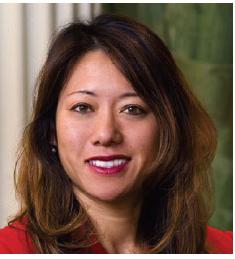
Fiona Ma’s cash machine

6

Why does Assembly member Fiona Ma take on odd causes like ending rent control for trailer parks?


Maybe it’s because almost 90 percent of the money she raises comes from outside her district. From the Chron today:


But San Francisco’s Fiona Ma, who was elected in 2006 and quickly rose to power within the Democratic Caucus, took the top spot when it came to sheer cash collected out of district: $1.68 million. Ma, now speaker pro tempore, raised more campaign cash from outside her district than either of the leaders of both houses. Her outside contributions made up 88 percent of the money she raised, placing her 29th in funds raised outside the district. Ma attributed the prolific fundraising to her involvement in statewide issues, such as high-speed rail, agriculture and domestic violence, that take her on the road. She said that as a member of the Assembly’s Democratic leadership – and someone from a safe Democratic district – she funnels a lot of money to other candidates. But she said the interests of her San Francisco constituents are well served because her high profile helps her promote those interests.


UC, CSU chiefs need to quit the Chamber of Commerce board

1

The California Chamber of Commerce is one of the most consistently right-wing organizations in the state, particularly on economic issues. The Chamber’s against pretty much all taxes and supports pretty much all cuts in government spending.

So why are the heads of the three largest public educational institutions in California, the University of California, California State University, and the California Community Colleges, members of the Chamber board?

It’s a tradition at the Chamber to put the UC president and the CSU and CCC chancellors on the board, which has about 100 members. But the three educators came under fire recently when the Chamber put out a blatantly partisan ad attacking Jerry Brown

And in fact, UC President Mark Yudof told the Chamber’s fundraising chair last year that he couldn’t donate to the CalChamberPAC because that group was trying to make sure that Democrats don’t win enough seats in the Legislature to hold a two-thirds majority. “As president of a public institution that is both in practice and in policy nonpartisan, I must decline your request for a contribution,” Yudof wrote in an Oct. 9, 2009 letter, a copy of which I obtained under the state’s Public Records Act.

But Yudof also stated: “As a member of the Board of Directors, I appreciate the Chamber’s engagement in the political process and its advocacy for a strong and vibrant California economy.”

The truth is, the Chamber’s “engagement in the political process” is almost always adversarial to the interests of the state’s public education system. The fundraising letter Yudof was responding to specifically sought money to block Democrats from holding enough seats to raise taxes — and the refusal of the governor and his GOP colleagues to seek any new revenue sources has been the major reason the state’s budget is so horribly messed up. And that’s the main reason the University of California and CSU have faced such alarming budget cuts.

Why are the people in charge of promoting public higher education willingly putting their names, and their credibility, behind what’s really a Neanderthal institution? Because that’s what’s going on here — Yudof, CSU Chancellor Charles Reed and CCC Chancellor Jack Scott aren’t on the Chamber board to offer advice. They’re on the board to give the Chamber more credibility. They help make the organization seem more friendly, more concerned with the public interest.

They help make an organization devoted to reducing the role of the public sector in this state seem supportive of public education. They help propagate a political lie.

I asked Yudof, Reed and Scott why they’re still on the board, and got pretty weak responses. Here’s Yudof’s spokesperson, Peter King:

[President Yudof] considers the California business community to be one of several key constituency groups that are important to the University, which is why traditionally higher education leaders in California have held seats on the Chamber board. In general, President Yudof has found the Chamber to be highly supportive of higher education in California. He cannot recall in his tenure as President a single Chamber proposal to reduce funding for higher education.

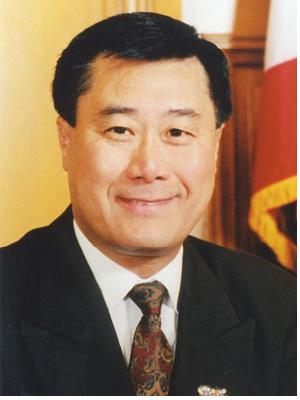
Um, actually that’s not true at all. The Chamber just released its 2010 “job killer” list — a roster of bills that the organization will oppose on the grounds that they’re bad for business. Among them: Assemblymember Tom Ammiano’s bill to fix a loophole in Prop. 13 (and provide more money for public education), and a bill by Sen. Leland Yee that would allow the state to recapture tax-credit money if the company that got the credits (for increasing employment in the state, for example) winds up leaving California or shipping jobs elsewhere. That money would be available for higher education.

 Passage of those bills would allow the state to stop cutting UC and CSU. The Chamber wants to kill them.

King did say, however, that after the Brown ad aired, he “has informed the Chamber that he will continue to serve on the board only if his status is changed to that of an ex officio member.” But that doesn’t mean anything; it’s his name on the letterhead that matters.

Reed’s press person, Erik Fallis, was even more vague. He would only refer me to a statement Reed and Yudof issued after the Brown ad controversy, which said, in part:

We value our inclusion on the Chamber board, which provides an opportunity to interact with business leaders on issues that are of vital importance to the future of California. This is a dialogue that has been of great benefit to higher education, the business community and the state as a whole.

Actually, the inclusion of top state education officials  is detrimental to the public interest, detrimental to public education and really bad form. Particularly now, when the Chamber is going out of its way to make sure that the state budget crisis is solved with nothing but cuts.

Scott has been openly complaining about budget cuts (PDF) but his office hasn’t responded to my questions.

Yee, a frequent critic of UC management, responded, though, and he didn’t mince words:

It would be one thing if President Yudof and Chancellor Reed used their positions on the California Chamber of Commerce board to support more revenue for our beleaguered public universities.  Unfortunately, the CalChamber is categorical in its opposition to new revenues and has become nothing short of a mouthpiece for the Republican Party.  The Chamber benefits from the prestige that Yudof and Reed bring to the table, and uses it to advance a right-wing agenda that includes questioning the validity of global warming (AB 32, 2006) and the need to protect workers from discrimination (AB 793, Jones, 2009), blocking universal health care (SB 810, Leno, 2010), and holding corporations accountable to their promises to create jobs (SB 1391, Yee, 2010).  It is outrageous that Yudof and Reed would serve as accomplices to killing bills that would increase revenue for higher education.

The top education executives need to resign from the Chamber board, now.

Street Threads: Look of the Day

0

Today’s Look: Katherine, SF State

Tell us about your look: “It’s my ‘going on BART’ comfy outfit and it’s a nice day!”

Supes to SF: Let’s opt out of ICE’s automatic fingerprint referral program

8

Just two weeks before a controversial collaboration between local police and ICE is set to get switched on in San Francisco, Sups. Eric Mar, John Avalos, David Campos, Chris Daly and Sophie Maxwell are introducing a  resolution that calls on the city to opt out of a program that could undermine public safety and threaten innocent community members with deportation.

Sheriff Michael Hennessey, who blew the whistle on this program, and Labor Council Executive Director Tim Paulson will join the supervisors May 18,  9 a.m. on the steps of City Hall. The resolution will be formally introduced at the Board’s afternoon meeting.

Sup. Mar’s legislative aide Lin-Shao Chin told the Guardian that it looks like an opt-out option is possible.
“It’s very vague, the way it’s written,” Chin said, referring to the contract that the Department of Homeland Security has drafted and that cities are required to sign onto, via a statement of intent.”So, while it doesn’t say you can opt out, it’s very vague, and from what we’ve heard, so far it’s all just been verbal communication between the law enforcement agencies.”

The fed’s proposed Secure Communities Initiative (SCI) has been criticized by civil rights experts.They say the program causes immigrants to be reported for deportation without due process and that it destroys trust between the police and immigrant communities.

The program seeks to check the immigration status of anyone whose fingerprints are taken by law enforcement personnel by cross-checking fingerprints through a federal database. They warn that  immigrants who are simply charged with very  minor charges – such as selling ice cream bars without a permit– or those who are overcharged on arrest–could end up torn from their families without due process and reported for deportation.
 
Advocates see similarities between the program and Arizona’s SB1070, since SCI gives discretion to individual police officers, who may mistakenly arrest or overcharge innocent immigrant residents, thereby triggering their deportation. 

“ICE’s own statistics, cited in news reports, indicate that some 88 percent of the 33,000 immigrants deported to date under the program had committed non-violent offenses or no offense at all,” community advocates note.

“Five percent of people tagged are actually documented, and only 10 percent are actually felons,” Chin claimed, warning that there is also, “the  potential for a whole bunch of databases, including those containing information on legal citizens, to be hooked together in ways that pose civil liberty concerns.”

Earlier this month, Washington, DC’s City Council unanimously introduced legislation that would prohibit local police from sharing arrest and booking information with ICE. But the Board’s resolution will be the first in the nation to urge an opt-out.

“The feds didn’t present opting-out as an option, they made it sound compulsory, but immigrant groups who met with ICE were verbally told the could opt out,” Chin claimed.
“Immigrant advocates in Contra Costa and Alameda counties didn’t even know their cities had opted into the program, until folks were referred to ICE. The good news is that we are touching this before we have been hooked into the program.”

Chin said it seems the SFPD CHief George Gascon’s office is “under the impression that the program is mandatory, but that’s not the impression we get from ICE.”
Chin also noted that the SCI is an “unfunded mandate,” since there could be costs to cities and municipalities who have to hold folks in jail longer than usual, while they wait for the feds to come and pick them up.

“From what we have heard, these [SCI] contracts are negotiated at the state level,” Chin added, suggesting that the ball on this issue in California lies within Attorney General and gubernatorial candidate Jerry Brown’s court.
 

The Daily Blurgh: Creepy mannequins, big words

0

Curiosities, quirks, oddites, and items from around the Bay and beyond

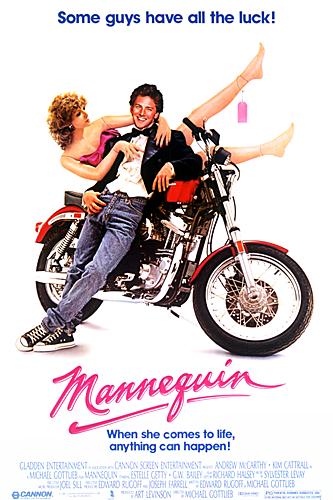
An ode to the creepy child mannequins of Siegel’s Fashions for Men and Boys on Mission.

*****


“There is nothing postmodern about the electric chair. It takes a living human being and turns him into a piece of meat. Imagine you – you the young journalists of tomorrow – being strapped into an electric chair for a crime you didn’t commit. Would you take comfort from a witness telling you that it really doesn’t make any difference whether you are guilty or innocent? That there is no truth? ‘I think you’re guilty; you think you’re innocent. Can’t we work it all out?'”

*****

Haight-dwellers, meet SOPA.

*****

Today, in you can’t make this stuff up: “In 1997, a Mexican woman who was living in Cuernavaca looked at the cover of the magazine Contenido—a Reader’s Digest-y sort of publication—and saw on it the face of her common-law husband. She had been his partner for 21 years and borne him two children, and she knew him as a private detective or ‘CIA agent’ who, for understandable work-related reasons, put in only occasional appearances at home. Now she learned that he was a priest and and that his real name was Marcial Maciel. He was, the magazine said, the head of an order whose strictness and extreme conservatism appeared to hide some vile secrets: the article, picking up information first brought to light in an article by Jason Berry in the Hartford Courant, revealed that nine men, one a founder of the Legionaries, another still an active member, and the rest all former members of the order, had informed their superiors in Rome that Maciel had abused them sexually when they were pubescent seminarians under his care.”

*****

This sentence cannot be found guilty of the linguistic sin of mytacism.

*****

Oh yeah. That lumbering mass of drunk people in funny outfits happened Sunday. Brittney Gilbert rounds up web coverage.

*****

“You’re gonna get all krauty”
http://youtube.com/watch?v=Q5BWFIx8Ijs

OMFG, Meg Whitman’s a smut dealer!

1

Or so Steve Poizner says, in a battle of the airwaves that’s getting completely insane.


In a new ad, Poiz charges that Whitman, as CEO of EBay, allowed (oh no!) dirty movies to be sold on EBay. You can buy other dirty things there, too, like a Voodoo Hot Sex Life Improvement Love Spell (bidding starts at $9.99). And it’s all Meg’s fault!


The problem with this approach is that I suspect a lot of Republicans may also shop on EBay, and some of them may want their own copy of the official Naughty and Bawdy Songs of England CD — or maybe something even a little naughtier. And they may not be that upset that ol’ Meg allowed them an easy and discreet way to buy the things that the GOP kinks in the closet wouldn’t want to be seen picking up at the mall. (That kind of thing gets around.)


Now Meg will have to respond with something even more harsh about Poizner. What fun.


SFBG Radio: Johnny and Tim on the worst state budget ever

0

In today’s SFBG.COM Radio, Johnny and Tim talk about the worst state budget proposal ever, why higher taxes won’t drive rich people and businesses out of California and how the next budget battle will play out in Sacramento. You can listen after the jump.

SFBGRadio5/17/2010 by SFBG

Arnold’s attack on the poor

5

As usual, Robert Cruickshank at Calitics has it exactly right: The governor’s budget isn’t just bloody and brutal, it’s a direct attack on poor people — and an effort to divide the interests of the poor and the middle class. If the new round of budget cuts had continued to hit public schools, higher education, state parks and other things that benefit the middle class and the people who are slightly better off, there might be a huge public backlash. Instead, almost everything that he’s hacking away is a program that helps the most needy:


Arnold is implicitly telling the middle-class “either you screw these poor families or we’re cutting something you want” and counting on the middle-class to react the same way they did in the ’80s and ’90s – by saying “go ahead, we won’t stop you.” 


In a sick way, it’s brilliant; it worked so well for Ronald Reagan, and Schwarzenegger figures it might work for him, too.


So this budget battle will not just be a test of whether the Democrats have the spine to stand up to the guv and the political skill to outflank the Republicans; it will be a test of whether they — and the better-off among the voters — are willing to go beyond narrow self-interest and stand up for the people at the bottom.


If not, what the governor is proposing will be the creation of a permanent underclass in California.

An environmental and worker disaster

0

Dick Meister, former labor editor of the SF Chronicle and KQED-TV Newsroom, has covered labor and politics for a half-century


It‘s coming up on 10 o’clock in the evening aboard a massive oil rig, the Deepwater Horizon, 130 miles off the Louisiana coast in the Gulf of Mexico. It’s Tuesday, April 20. The rig sways gently in the calm waters. Then, suddenly . . . BOOM!

A huge explosion rocks the rig, releasing tons of oil that soon will spread over an area of at least 2,500 square miles. Of course it’s an environmental disaster, probably the worst oil spill ever. That’s what draws massive attention from the media. But what of the workers aboard the rig, who suffered terrible trauma, serious injury and death?

Too often, the mainstream corporate media all but ignore workers’ suffering in such disasters. They sometimes seem more concerned with the degradation of the environment than with the suffering of humans. They focus almost solely on the environmental damage, and its cost to those who employ the workers.

Too often, the workers are treated as mere numbers. Eleven dead, 17 injured, said the media accounts of the Deepwater Horizon explosion.  But just what does that mean? Precisely how were the workers made to suffer? Might they suffer in the future because of their injuries? What can and should be done to make future work safer for them and others? The mainstream media rarely ask such questions. Working people, be they on land or sea, are of secondary concern to them.

The explosion was horrendous. It turned the Deepwater Horizon’s deck into what one worker described as “like a war zone.” One of his co-workers told of seeing “guys burning” and “some guy missing limbs.” The scene was indeed what he recalled as “extremely gruesome.”

Flames from the burning oil shot into the sky, high as a multi-story building, as some of the 126 people on board leaped overboard to reach lifeboats waiting in the water 80 feet below. It took 45 minutes for Coast Guard rescue boats and helicopters to reach the rig, the heat of the oil flames so intense by then it melted paint off the rescue boats.

Some survivors were rescued by a supply ship operated by British Petroleum (BP), which had leased the Deepwater Horizon from the Transocean corporation. Seven BP executives who were on board were injured, but that didn’t move them to express any concern for the future safety of their employees.

Transocean, meanwhile, has tried to keep the workers from filing for legal judgments that would grant them compensation for any alleged negligence that caused the explosion and for any psychiatric problems and other injuries that stemmed from the blast.
The workers were rushed under employer escort to hospitals and a New Orleans hotel immediately after rescue and not allowed to contact their families or anyone else who might advise them on whether they should agree to initial forms that Transocean lawyers insisted they initial.

The form said in effect that the worker had been on the rig when it exploded, but had seen nothing or did see something and was or was not hurt.

In the meantime, the media continue to report in detail about the serious effects the explosion has had on the environment while all but ignoring its serious effects on the workers involved.

To concerned environmentalists, the accident is yet another strong argument against the folly of offshore oil drilling, But a more immediate concern should be the dangers faced by workers involved in the continued drilling. For if the drilling is not to be halted, there’s a great need for much greater safety procedures.

Accidents have taken the lives of nearly 70 oil rig workers over the past nine years, including the 11 who died in the Gulf of Mexico. Protect the environment, yes.
But first, protect human lives.

Dick Meister, former labor editor of the SF Chronicle and KQED-TV Newsroom, has covered labor and politics for a half-century.  Contact him through his website, www.dickmeister.com, which includes more than 250 of his recent columns.

Never mind the budget, Gavin’s worried about himself

2

So this afternoon, the governor released a truly horrifying mid-year budget revise, a bloody proposal that would eliminate CALWORKS, the state’s major welfare program, and cut billions out of other essential services. Calitics puts it nicely:


At today’s press conference unveiling the May Revise of the 2010-11 budget, Arnold Schwarzenegger said “the budget should be a reflection of California’s values.” If that’s the case, then California’s values are protecting the wealthy and the large corporations from having to contribute anything to this society while making old people and children suffer. Arnold’s California is a place where if you aren’t wealthy, you don’t deserve to have health, food, or any other form of economic security.


And about an hour later, the mayor of San Francisco sends a text to Assemblymember Tom Ammiano, who represents the city. Was he asking for Ammiano’s help in fighting the budget cuts? Was he suggesting they work together on strategy to save the city’s most needy from the governor’s axe? No. Here’s what the text from Newsom, who is running for Lt. Governor, said:


I hear you voted for Hahn at the convention.


That’s right — a month after the state Democratic Convention, Newsom is complaining that Ammiano voted for his opponent in the endorsement derby. That’s what he cares about? More than the worse budget in state history?


Ammiano’s response:


And what???


Good question.


Pelosi needs to support the Fair Elections Act

8

In the wake of the horrible Supreme Court decision in Citizens United, Rep. John Larson of Connecticut has introduced a bill that would reform substantially the way members of Congress are elected. It’s not perfect, but it’s a big step. The Fair Elections Now Act, H.R. 1826, would create partial public funding for Congressional races, with a 4-1 match for contributions of $100 or less. The money would come from a small fee on goverment contractors.


There are now more than 130 co-sponsors in the House, and they’re pusing for a floor vote. But Speaker Nancy Pelosi hasn’t decided whether to allow the bill to come to the floor.


The politics of that are crazy. If the Democrats want to keep control of the House, they need to have something to campaign on this fall. During the presidential campaign, the party promise reform — but so far, other than a mild health care bill, there’s no real reform on the table.


“If Democrats don’t have a real reform agenda that includes election reform — and that shows the party wants to change how business is done in Washington — we could be in big trouble in the fall,” Steve Hildebrand, a former Obama strategist who is helping the Fair Elections Now Act folks, told me.


So what’s up. Nancy?  Why not at least give the bill a chance.


Hayes Valley Farm grows an urban farming community

3

Don Wiepert hasn’t always enjoyed the view out his bedroom window as much as he does now. An eight year resident of Oak Street, the senior citizen has a wonderful vantage point of the highway on-ramp covered in potted fruit trees and fava beans by Hayes Valley Farm, where he volunteers on a weekly basis. Before the community farming effort, he says, the parcel of land’s only crops were slightly less savory.

“This was a place for homeless living,” he tells me on my recent trip to see the fruits of the exciting new neighborhood project. “It was fenced off, ugly, inaccessible. Now it’s wonderful.”

His enthusiasm seems to be shared by everyone who enters into the Hayes Valley lot. On this windy Thursday afternoon, volunteers are collaborating on the various steps needed to make this exercise in urban farming a success. In one corner, a greenhouse is being erected. Over there, fellow volunteers plant the seedlings nutured in Wiepert’s own living room. Small hills that were once home to nothing but trees languishing under ivy covered, and oil soaked ground support rows of fava beans, and young lettuce.

Organizer Jay Rosenberg explains the process to me as we tour the fields he helped to envision. Back in 1964, neighborhood activists, including the Hayes Valley Neighborhood Association organized to stop the progress of the central freeway that would connect US-101 to the Golden Gate. The show of community force was impressive, but it stranded the planned highway on and off-ramps on a block of land between Octavia and Laguna Streets. “They left them here standing like ruins,” Rosenberg tells me. “This was a 2.2 acre forgotten space.”

The blocks, designated parcels “P” and “O” by the city, devolved into a gothic, ivy covered problem for the neighborhood. They were claimed by drug users and homeless tent communities — until Rosenberg, Christopher Burley, and David Cody, three young men with experience in sustainable entrepreneurship and permaculture, identified the land as yhe ideal spot to bring a self-sustaining food system into the neighborhood.

At first meeting weekly with community members at nearby Suppenkuche, the three formulated a plan to start an urban farming education and research center. On January 22nd, 2010, after months of permit-wrangling with the city and work with the Office of Economic and Workforce Development, they had the keys to the cyclone fences that surround the property.

Which really, was just the beginning. The trees on the lot were slowly being choked by the insidious ivy that had infiltrated the area, and the soil itself was highly toxic from years of brake dust, lead-based oils, and carbon monoxide emissions from cars. Even what crops to plant was at issue. Due to it’s heavy winds, chilly summer nights and minimal rainfall “San Francisco is a cool, Mediterranean-like, foggy desert,” says Rosenberg, making for unique agricultural conditions.

All sizable challenges, but they’re no match for the combined brain power of the Hayes Valley Farm team. The three, and an ever-growing army of neighborhood volunteers, got to work planting fava beans; natural nitrogen producers whose very shoots enrich the soil around them, as well as producing food. They’re adding the chopped down ivy to 80,000 pounds of donated cardboard, and mulch from the city’s regular landscaping program to turbo-fertilize their new farm.

They’ve also found ways to kickstart the harvest while the soil repairs itself. Rosenberg proudly walks me down the rows of what volunteers like to call “San Francisco’s largest patio garden,” over 150 sapling fruit trees and 1,500 plants that sit happily on Parcel P’s old freeway on-ramp. The “freeway food forest,” as Rosenberg calls it, is already helping to feed the 1,000 community members who have already put in 4,000 hours of volunteer time on the farm since January.

It’s merely the beginning for the farm. Although organizers have heard rumors that the city intends on building condos on their land in the next three to five years, Rosenberg says “We championed to be here in a temporary fashion.” An interactive classroom is in the works, one wall to be formed by a mural painted by students at the Chrissy Field Center. Although someday Rosenberg envisions produce and fruit tree sales, he hopes to continue offering the volunteers that help the farm flourish fruits and veggies to take home with them.

For Wiepert, though, the farm is more than just an outdoor larder. “I appreciate the opportunity to hang out with the younger people and their energy here,” the man tells me, moments before flinging a stick for one of the farm’s part-time dogs to chase after. “I think this place facilitates a feeling for a lot of people that they’re doing something meaningful,”

To welcome the farm into the neighborhood, organizers are planning a series of outdoor screenings of films that educate on soil depletion and other environmental topics. Popcorn and live entertainment included.

Hayes Valley Farm Film Night feat. Dirt! The Movie
Tues/18 Gates open at 7:30 p.m., films start at 8:15, $5-18
Hayes Valley Farm
450 Laguna, SF
www.hayesvalleyfarm.com

SFBG Radio: Tim and Johnny on Pelosi and how Newsom could be really green

0

Today on SFBG.COM Radio: Tim and Johnny talk about why Nancy Pelosi isn’t more of a progressive — and how Gavin Newsom could follow the lead of a Republican from Utah and cut down dramatically on car use in San Francisco. You can listen after the jump.

SFBG.COM Radio 5/14/2010 by SFBG

Streets of San Francisco: Benjamin Barnes

0

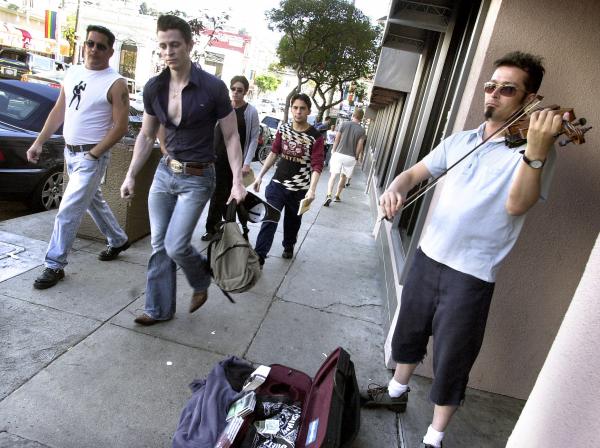
Benjamin Barnes is one of the street musicians interviewed within our “Streets of San Francisco” issue. He’s played with Mr. Bungle, DJ Disk, and a host of other musicians and bands, and he teaches music. His current group Swindlefish is playing a show on Sunday, May 16 at 2 p.m. at Caffeinated Comics Company. It’s the store’s first live music show, though they also have karaoke. Treat your eyes to some comics and your ears to some music.

Name Benjamin Barnes

What styles of music do you play? I play guitar and viola, but violin projects better than those and I know a lot of repertory. I’ve got maybe three hours of Bach memorized. It’s a meditative thing.

There’s six sonatas and and six cello suites and I play the cello suites on viola and violin. They’re nice profound pieces and sometimes people will stop and listen.
I was playing the Bach Chaconne and this guy stopped and listened to the whole piece and tipped me afterward. Several times when I play someone will stop and listen for a while. That’s why I do it.

Where are your favorite sites to play? The first place I played was Powell Street station. It was 1989. I remember I put my can down and basically practiced and made 15 dollars. I packed it all up and went home and threw the money on my bed and laughed. I was working at a coffee shop and putting myself through school and I realized I didn’t have to work at the coffee shop.
In college I had a string quartet [Rilke String Quartet]. We used to play at Montgomery and Embarcadero and people enjoyed it and would hire us out to gigs like weddings and street fairs. We called it practicing guerrilla warfare — we were guerrilla musicians. We’d set up and play for a few hours and sell a lot of CDs at the street fair.
I like to play at 24th Street station. The acoustics aren’t bad — you get a little reverb like you would in a hall sometimes. Now I’m not out there just trying to make a buck, it’s a personal thing.

How long have you been playing in the streets or underground? For several years I didn’t — I just recently started playing again. I also sometimes play with my brother, he plays guitar. We play jazz songs and Beatles songs and David Bowie songs.

What do you like about it, and why do you do it? I used to get stressed out if I didn’t make any money, because I was using it to pay my rent. Now I have students — sometimes they’ll stop by. I do a lot of teaching and I’m not tied to needing to make the money at the BART station. When I do make money it’s always nice, but I can’t be in the mindset where I have to make money — your playing suffers because you’re not playing from the heart.
The Pacbell Canon will bring in tips. The [Rilke] String Quartet would play it for a few hours at Embarcadero and Montgomery and we’d make a fair amount of money. What I’m doing now is a little more artistic. I’ve been working on memorizing all these pieces and finding new ways to interpret them as I play them. If people stop and listen I might get nervous and get some adrenaline going. These pieces are masterpieces for the violin, I have five of the six cello suites memorized.
There’s a few fiddle players [playing outside in SF] and sometimes it’s hard to get a spot. It’s first come, first served. In order to get the spot you have to have the right attitude. It’s good to have extra spending money because times are rough. This buys me coffee and allows me to take my girlfriend someplace nice. I try to put away about half the money I make and save it for special occasions.
I was just in New York and I saw people busking in Central Park and Greenwich Village, but not on the subway because people were rushing by. There’s a famous violinist, Joshua Bell, who played in the New York subway for a couple of hours, and no one recognized him, or that he was playing on a Stradivarius. Most people walked by, or gave him a dollar, and one kid played air violin. He made 26 dollars.

Do you have recordings and/or a website? If anyone’s interested I have a lot of songs and string quartet and solo viola stuff that I’ve written and played on the website. You can download it for free. There’s a spot where you can make a donation. I’ve gotten 26 dollars (laughs).
I think some people have become students because they liked the music, or gone to shows by my band. I’m playing a free show at Caffeinated Comics on the 16th. It’s a great place. We’re going to play an acoustic show, with songs I wrote, Bowie covers, Beatles covers, Led Zep and “Devil Went Down to Georgia.” We have an upright bass, two guitars, and an excellent singer who does lead and backup.

What are your best and worst experiences playing? I’ve had a lot of great experiences and bad ones. Lately I’ve been playing really well and there’s one guy that tips me a 20 every couple months. One time a junkie tried to brush me away from my spot and started yelling at me with a story of how long I’d been there. I get a little worried sometimes. You get some pretty rough-looking characters, but most will like what you’re doing. Mostly I’m out here because I have fun and I like people and I’ve spent my life on music. It’s nice to be appreciated and have people enjoy what your’re doing.

SWINDLEFISH

Sun/16, 2 p.m.

Caffeinated Comics Company

3188 Mission, SF

(415) 829-7530

www.caffcom.com

Live Shots: Diane Birch, The Independent, 5/13/2010

1

I’ve never been brought to tears listening to Haddaway’s “What is love,” but when Diane Birch sang it at the Independent this past Thursday, the waterworks erupted.

Diane Birch sings with such a high level of emotion and craft that she can mold any song into her own, even if it is a classic electro-pop dance song from the 90s. “Welcome to the Birch church,”  the singer said, letting us know that we were perhaps in for more than a usual concert event. The daughter of a preacher, Birch is making her debut tour with her first album Bible Belt, that incorporates blues, folk, gospel and lots of soul.

Each of her songs comes with a story. In “Don’t Wait Up,” Birch recalls her goth days and the awkwardness of coming home late at night, decked out in scary black make-up, to find her dad sitting in the living room reading his bible.

“Ariel” is about the frustration of not being able to communicate with her boyfriend who was travelling in China, despite the age of advanced technology we live in. Her voice is absolutely gorgeous and as the evening progressed the audience was experiencing high levels of euphoria as this was a true musical religious experience.

If you haven’t yet, check out her super-cute video for “Valentino”: