SFBG Blogs

What the “Defund ACORN Act” is really about

13

Last September, the US Congress approved the Defund ACORN Act without investigating the charges leveled against ACORN.

Bertha Lewis, ACORN’s CEO, claims that these charges were nothing more than a massive “propaganda campaign” and that ACORN was targeted because it was successful at organizing low-income communities–the very folks that rich corporate interests don’t want to see voting and otherwise standing up for their rights.

Now with a hearing scheduled for June 24, Lewis is asking folks to stand up and fight what she describes as an assault on the Constitution itself.

“Congress’ move, singling out one organization for sanctions without investigation, is called a “bill of attainder” and it is expressly prohibited by the Constitution of the United States,” Lewis stated in a press release issued today.

” If this attack is allowed to stand, then any other organization that displeases those with power in the United States can be similarly attacked and, potentially, destroyed,” Lewis said.

As she notes, ACORN has been investigated by four separate and independent, sources – former Massachusetts Attorney General Scott Harshbarger; the Brooklyn District Attorney’s office; the California Attorney General; and the Government Accountability Office (GAO).

“Each of them has cleared ACORN of any wrongdoing,” Lewis observed. “ Three investigations reviewing the videos used to attack ACORN determined that they were “splice jobs” in which “the truth is on the cutting room floor”. The fourth, from the GAO, concluded that ACORN had not misused any of the Federal funds it had received. In other words, the entire set of attacks was a witch hunt driven using modern propaganda techniques and with millions of dollars in dedicated air time on a “news” channel and talk radio.”

Lewis thinks she knows why these attacks happened.

” We were simply too good at what we did – engaging low- and moderate-income families and families of color in America’s democratic system,” she said. “ If we hadn’t helped 860,000 new voters get on the voter rolls since 2004 (we believe this is the largest non-partisan voter registration effort ever carried out by a single non-profit organization), if we hadn’t helped raise the minimum wage in seven states, if we hadn’t blown the whistle about predatory lending in the sub-prime market back in 1999, and if we hadn’t brought in over $15 billion in direct benefits to America’s low- and moderate-income neighborhoods from 1994 – 2004, then we wouldn’t have been the targets of smears and attacks going back to the 2004 election. Smears that were exposed during the height of the scandal surrounding the firing of US Attorneys like David Iglesias in New Mexico, who refused to trump up phony voter fraud charges against ACORN.”

Lewis comments that if the attacks leveled against ACORN had really been about misusing taxpayer dollars, then defense contractors like Xe (formerly Blackwater), Halliburton, and Kaman Dayron, all of whom have been found guilty of either committing actual crimes or of collectively defrauding the American people of hundreds of millions of dollars, would have been the subject of their own Defund Corporate Criminals Act.

”But, of course, they aren’t,” Lewis concluded.  Because, unlike ACORN’s low- and moderate-income membership, these corporations can buy influence in the highest levels of political power in the United States. So, our lawsuit against the unconstitutional Defund ACORN Act is not about ACORN and its past federal funding. It is about justice for all organizations that fight for the interests of regular folks against the most powerful interests in America.”

Old reliable true confessions — John Waters on secret idols, polar opposites, and role models

0

By Ryan Lattanzio

John Waters. Forefather of filth, pundit of provocation. Not to be mistaken, of course, for 1934 Academy Award recipient John Waters, who kept coming up in my research of the other John Waters.


There’s no point in introducing the man, because — well, if you’re reading this, chances are you’re doing so deliberately. No one ever picked up Pink Flamingos by accident and if they did, I’m sorry. His latest book, a collage of candid essays entitled Role Models (Farrar, Straus, and Giroux; 320 pages; $25) is like Hollywood Babylon meets Sodom and Gomorrah. He even tells us, “I know your eyes are not garbage cans, but somehow I feel it is my duty to share with you the depths of depravity some of our long-lost brothers have fallen to.”

Waters is a writer who has seen all tiers of the entertainment industry’s caste system. For him, perversity is pleasure — something to revel in. The titular role models are his own: some are cult figures and pop cultural pariahs, while others are famous figures with whom he’s found inspiration, friendship, and frustration.

There’s little to say on Waters in terms of biography that hasn’t already been said –- the man defines himself. Still, his material is entirely fresh. He remains, and likely always will be, culturally relevant. “I also like Alvin and the Chipmunks better than the Beatles, Jayne Mansfield more than Marilyn Monroe, and, for me, the Three Stooges are way funnier than Charlie Chaplin,” he writes in “The Kindness of Strangers,” an essay on Tennessee Williams.

Waters begins Role Models with a piece on Johnny Mathis, who represents more or less the beginning of what would become his long line of pop cultural idolatry, an ancestry that runs from Rei Kawakubo to NSFW porn auteur Bobby Garcia. “Is it because Johnny Mathis is the polar opposite of me?” he wonders, puzzling over the source of his Mathis fixation. “Do we secretly idolize our imagined opposites, yearning to become the role models for others we know we could never be for ourselves?”

Role Models is eight chapters total, with a few photographs culled from Waters’ grotesque archive. Each chapter is rather long, as he oscillates between discussing the role model in question and discussing himself -– and there’s plenty of the latter. Then again, no one ever looked to John Waters for brevity. In the course of his name-dropping, shit-talking, and first-person autobiographical passages, he places his audience within close emotional proximity. His approach is never didactic. When he comes clean – but when is it ever clean? – it is often shocking and hilarious. No surprise there.

In the flight path of his name-drops, Waters inconspicuously troubles what we know about certain celebrities, and what we’re comfortable knowing. Considering all the people that can be found in his Rolodex, he traffics in some dubious social territory, like his longtime friendship with convicted ex-Charles Manson groupie Leslie Van Houten. His acquaintances also include Little Richard (the progenitor of the pencil-thin moustache!) and pornographer David Hurles, for whom “danger is the turn-on.”

http://www.youtube.com/watch?v=QlJDAPlg8rY

Hurles, for one, films “psychos. Nude ones. Money-hungry drug addicts with big dicks. Rage-filled robbers without rubbers. And of course, convicts — his ultimate Prince Charmings.” In Waters’ terms, what would seem like the material for a Hubert Selby, Jr. tragedy or a J.G. Ballard nightmare is actually treated with levity. He makes these misfits, these role models, entirely human — even if their occupations suggest otherwise. Still, the book is rife with freakiness of all shapes and sizes. Waters even recommends Ivy Compton-Burnett as one of his most influential writers.

Waters’ persona is so founded on equal parts artifice and honesty that in deconstructing himself, even the artifice we know and love can be overwhelming. I don’t want the perfectly preserved Waters I imagine in my head to be ruffled. I certainly don’t want to know that his moustache is sometimes penciled on. At this point Waters is such a god-among-gods that the everyday nature of his autobiographical confessions can be jarring.

“I’m so tired of writing ‘Cult Filmmaker’ on my income tax forms,” Waters declares near the close of Role Models. “If only I could write ‘Cult Leader,’ I’d finally be happy.” Such humanizing, humbling moments like these unravel the Waters we normally know to be tethered to a pedestal in the art world. Though he wears his sexuality like a bejeweled blazer, he still defies or subverts gender norms. He’s the prince of filmmaking.

Role Models certainly isn’t the final word on Waters, nor is it the first. This isn’t Waters For Beginners, nor is it Advanced Waters, and anyone will find both comfort and trouble in this book. As an autobiography, Role Models isn’t thorough. But like the Love Map he describes in “Outsider Porn” – an estimate of one’s sexual trajectory spanning their entire lives – this book is a way to trace the path of the artist and really get to the roots. Or maybe it’s more of a palimpsest, something Waters will return to, erase, revise, and rewrite as he gets older. Thankfully, in his case, getting older doesn’t mean maturing.

The real issue in Afghanistan

0

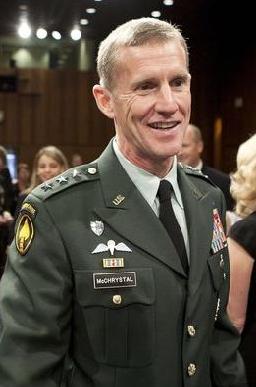
The Rolling Stone article on Gen. Stanley McChrystal has the blog and pundit world all atwitter, with calls for the general’s resignation, deep sighs of remorse, lofty comments about the sanctity of the commander in chief and the chain of command and lots more. The dude screwed up; you don’t let your aides dis the president like that. But that’s really off the point.


Frankly, if there were a way for the U.S. to be successful in Afghanistan, and McChrystal were the guy to do it, Obama shouldn’t care what the guy says. Whatever; you mean you never griped about your boss? It happens. Calling dinner with a French cabinet minister “fucking gay” is pretty fucking stupid, I admit. Overall, the interviews show astonishly bad judgment. (Oh, and General, sir: Don’t go out drinking and get shitfaced with a reporter if you don’t want to look bad in print.)


But the real point of the Rolling Stone story comes at the very end:


Whatever the nature of the new plan, the delay underscores the fundamental flaws of counterinsurgency. After nine years of war, the Taliban simply remains too strongly entrenched for the U.S. military to openly attack. The very people that COIN seeks to win over – the Afghan people – do not want us there. Our supposed ally, President Karzai, used his influence to delay the offensive, and the massive influx of aid championed by McChrystal is likely only to make things worse. “Throwing money at the problem exacerbates the problem,” says Andrew Wilder, an expert at Tufts University who has studied the effect of aid in southern Afghanistan. “A tsunami of cash fuels corruption, delegitimizes the government and creates an environment where we’re picking winners and losers” – a process that fuels resentment and hostility among the civilian population. So far, counterinsurgency has succeeded only in creating a never-ending demand for the primary product supplied by the military: perpetual war. There is a reason that President Obama studiously avoids using the word “victory” when he talks about Afghanistan. Winning, it would seem, is not really possible. Not even with Stanley McChrystal in charge.


In other words, who cares if the commanding general is a moron with a staff made up of armed frat boys? We can’t win anyway. And we don’t belong there. That’s the only thing that matters.


Street Threads: Look of the Day

0

Today’s Look: Katie, 18th Street and Guerrero

Tell us about your look: “I got this dress and belt at a thrift store and the shoes are Campers.”

Hands Across the Sand says “No to offshore drilling, yes to clean energy”

0

I got an email today from Moveon.org advising me, “There’s a huge event happening this weekend at a beach near you.”
“In the wake of the giant BP oil spill in the Gulf, tens of thousands of people are getting together on beaches around the world for a massive event called “Hands Across The Sand,” the moveon.org folks said.
And so far, I’ve seen press advisories saying a Hands Across the Sand event is happening at Ocean Beach and China Beach In San Francisco, and at Crown Memorial Beach on Alameda Island, with folks gathering around 11 a.m. in preparation for non-violent hand-holding at 12 noon, on Saturday, June 26.
And the really cool and catchy part of this idea is that anyone on any beach anywhere in the world can join in, simply by grabbing the nearest person’s hand.

Dave Rauschkolb, who founded the first Hands Across the Sand event earlier this year, is a surfer and owner of three restaurants on the beach in Seaside, Florida, on the northern Gulf Coast between Pensacola and Panama City.
Rauschkolb spoke to me by phone today, shortly after US District Court Judge Martin Feldman ruled against  Obama’s deepwater drilling moratorium, claiming the Obama Admin “overreached”. and just the tar balls were starting to come up on the beach near Rauschkolb’s restaurants in Florida.

These incoming tar balls are an especially heartbreaking sight for Rauschkolb, given that he helped successfully organize the first Hands Across the Sand event on Feb. 13, 2010, when over 10,000 people joined hands on nearly 100 beaches along the coastline to stop the expansion of offshore oil drilling. But hopefully, terrible sights like this will be the impetus that finally gets U.S. citizens to break their addiction to oil.

“We gathered to stop the expansion of oil drilling in our coastal waters,” Rauschkolb said, referring to how folks protested efforts by the Florida Legislature and the U.S. Congress to lift the ban on offshore oil drilling.

“Now, just a few months later our entire Gulf of Mexico marine environment and
coastal economy is at risk from the very thing we tried to stop: offshore oil drilling off
our coast,” he continued. “The Deepwater Horizon disaster is a wake up call. Even as the Gulf disaster grows, British Petroleum and other oil companies continue to push for new offshore drilling anywhere oil might be found regardless of the risks they pose. The offshore drilling industry is a dirty, dangerous business and no one industry should be able to place entire coastal economies and marine environments at risk. Why is this allowed to happen?”

Rauschkolb said he blames BP to the extent that we should hold them accountable for what happened with the Deepwater Horizon disaster,
“However, I also hold the entire offshore oil industry accountable as well, because any company could have had this happen, “ he told me, pointing to a blow out off the Australian coast that took three months before a relief well could be drilled.

Concerned that the U.S. government and the oil industry will seek to make BP the scapegoat, in an effort to avoid imposing stricter regulations, Rauschkolb said such a response wouldn’t be a good outcome.

“America could be, should be one of the world’s leaders in expanding cleaner energy sources yet, our political process is paralyzed by oil money and influence. It is time for our leaders in all countries to take bold, courageous steps and open the door to clean energy and renewables and finally extend a hand to free our countries from our addiction to oil.”

“This is a critical turning point in finally changing our prehistoric energy policy towards the light of clean energy,” Rauschkolb concludes. “ Let us work together and share our passion and energies to protect our coastal economies, our oceans, our beaches, our waterfowl and our marine life. On behalf of those who have been and continue to be affected by this disaster of epic proportions in our Gulf of Mexico we extend our deepest appreciation to all of you for Joining Hands across America and the world on June 26.”

Rauschkolb invites folks to visit the Hands Across the Sand website and sign up to organize a beach or city.
Sounds like a great way to spend a Saturday. And if you do, you’ll be joining a movement that’s exciting interest around the world. According to Rauschkolb, as of today, 627 events are scheduled to take place on June 26 in 451 U.S. cities, with another 45 events scheduled outside the U.S. in 20 separate countries.

Think Global. Go clean energy.

Celebration at Big Sur — 2010 edition

0

Watching Celebration at Big Sur, the film that documents the 1969 Big Sur Folk Festival, I witness the crystalline Pacific Ocean, members of the audience freaking out in face paint, and Crosby, Stills, Nash and Young, Joan Baez, Joni Mitchell and more singing merry tunes about coming together and putting a lil’ love in your heart.

This is not the ’60s, this is not the Summer of Love  – this is the first Great Recession of the 21st century. At the Woodsist celebration at Big Sur on June 12th, 2010, we did not “freak-out.” Instead, we lied around on flannel blankets, baking in the sun. Everyone we met at the festival had come from urban zones, from Brooklyn, from Portland, from special San Francisco, or even from Hollywood – like Kirsten Dunst, as well as drummer Jason Boesel and Jenny Lewis of Rilo Kiley.

In between sets, we explored the woods behind Henry Miller Library, hiking through creeks and over fallen trees. We drank cold beers or sipped on cocktails mixed in water bottles as we listened to bands hailing from Brooklyn’s Woodsist label, founded by Jeremy Earl of Woods. We were happy for the freedom to forget.

http://vimeo.com/12755753

The Art Museums, a San Fran/Santa Cruz band at the end of their very first tour, performed with a unified front, as if ready to play Red Rover and decisively send anyone back who might try to break their ties. In between songs, while amps were tweaked, cute stage banter was in effect, with drummer Virginia Weatherby talking about lady bugs. San Francisco’s the Mantles, who include Weatherby on a complete drum set instead of a drum kit, had a few mishaps. Guitarist-vocalist Michael Olivares’ guitar strap malfunctioned, but such issues suited the group’s goofy good-time vibe.

Portland’s Eat Skull, about to move and realign, performed a stripped-down collection of songs that perhaps came up wanting. Philly’s Kurt Vile climbed on stage to join the group for a cover of Spaceman 3’s “Come Down Easy,” and then played an acoustic set while the sun speckled the stage. Letting his long locks cover his face, he stared at his strings and intricately finger-picked. Later, as he tuned his guitar, he asked if we were prepared for the weather to get cold.

San Fran’s the Fresh & Onlys played two new tracks, including “Waterfall.” Moon Duo, a new San Fran psych-band, played as the sun set and ended up in the dark — and the cold that Vile had predicted. The group’s guitarist Ripley Johnson (also of Wooden Shijps) is a madman on the guitar.

After Moon Duo, NY’s Woods mesmerized with a tripped-out opening and all their quintessential hits. The festival ended with Real Estate, who, like many of the bands, craft anthems for our times. Take these lines, from “Green River”: “Hey green river, what can I do?/If it’s alright I’ll walk next to you/Sit in the shade of your beechwood trees/Don’t you know these days I ain’t hard to please.”

Native American artists take back culture of their art

0

“Museums are, historically, piles of loots with a roof on them,” says Kim Shuck as she carefully beads a black raven onto the back of a pow-wow vest in the de Young’s Kimball education gallery. I go to touch her intricate stitching, then draw my hand back. Shuck is telling me about her work’s cultural significance, the struggle of the Native American community to coexist with the white art world. Am I really about to manhandle her sacred creation? “I appreciate your impulse to touch, and then not be sure if you can,” she says laughing, as she grants her approval for me to poke and prod the curving lines of tiny beads. Moments like these are what her current project’s about – exposing folks to indigenous art, and teaching them the limits and guidelines to their interaction with it.

Shuck co founded the museum’s Native American Programs Board five years ago to address concerns from the indigenous community that their tribes’ artifacts were being treated disrespectfully by the museum. The board’s efforts have birthed a change in the way the de Young curates its Native American art – a change embodied in Shuck and artist Michael Horses’ living art display, which includes studio space so that visitors can interact with the artists as they continue to create. The work is been shown at the museum through Sun/27 and on Fri/25 they’ll celebrate the space with a closing reception. 

Horse and Shuck’s work, steeped in traditional mediums, is nonetheless an expression of Native Americans in the modern world. Horse is an imposing man who has been an activist since the days of the 1969-’71 Alcatraz occupation, owns Gathering Tribes gallery with his wife, and is a multi generation jewelery maker. He also played Deputy Hawk on TV’s “Twin Peaks.” His contribution to the exhibit, besides his silver kachina doll rings, is ledger art – traditional form paintings that he etches onto documents from the early 21st century days of Native American resettlement. In one farm, cavalry dashes across the canvas blasting horseback native warriors with their muskets. It is painted onto a general store’s ledger from the late 1800s, a clear comment on the presence of commerce in the tribe’s land. The artist periodically invite dancer friends to bless the space, creating kind of a party atmosphere. “We have people stop by here all the time, just to come see us,” says Shuck.

“Being an indigenous person is a constant state of explanation,” says artist Michael Horse of his modern day take on Native American resettlement. Photo by Caitlin Donohue

The basic problem their advisory board was formed to address, as Shuck and Horse expressed to me, is that many of the cultural objects that museums display as static art pieces were never meant to sit under a glass case. Native American art can be very place specific. Some accessories and apparel was painstakingly hand made to be used in special ceremonies, and not viewed by the public at all. To show a piece correctly, one must be aware of its nuances, and respectful of the object’s spirit and purpose. Moreover, the way Western institutions have “gathered” items in the past is a cause of great concern. “I don’t go into some of the cemeteries here and dig up Grandma because I want to see what pearls she wore,” Horse tells me.

But the de Young, to its credit, is one institution that is examining its collection, and seeking ways to collaborate with community members on its presentation and treatment. After the museum fielded a series of complaints from Native American activists on the way their heritage was being displayed, de Young director of public programs Renee Baldocchi contacted Shuck, an artist-professor that was active in SF State’s pioneering Native Studies program, for help. Understandably, Shuck was initially a bit distrustful of the olive branch the museum was extending.

“She wouldn’t even look me in the eye when we shook hands,” Baldocchi tells me. “But something happened, and a relationship was formed.” Shuck was struggling with anger about how her culture’s art had been treated in the past, but saw a benefit in working on change in the future. “Do we release [this art], ignore it, pretend it doesn’t exist? Some people do that, but it’s not my modality,” she tells me. A challenging partnership was born.

When the temporary storage of an important collection of baskets was proposed, museum officials worked with the activists and elders on the advisory board to make sure the vessels were given an appropriate send off. Traditional musicians played, and a microphone was provided so that those from the indigenous community could share their feelings on the baskets’ departure. “This museum is on the right pathway,” Horse tells me. “They’re small steps, but they’re sincere,” Baldocchi says.

On the whole, it reflects the museum’s realization that the way art from different cultures has been handled in the past was no longer good enough. “Instead of looking for that scholar voice, we were looking for people with a connection [to the art],” says Baldocchi, who has arranged similar efforts to the Native American board for other exhibits, such as their recent showing of crafts from Oceania. 

Even the dadas have had their day. For a surrealism show in 2000, the de Young summoned another marginalized SF community to inform them of the arts portent; the city’s dadaists. Like the Native American advisory board, they were locals who could shape their city museum’s look at their culture. The Bay area’s diversity is one more reason why the de Young can provide such diverse art coverage, says Baldocchi. “SF is an amazing resource right in our own backyard.”

June Artist in Residence: Kim Shuck and Michael Horse

through Sun/27, free

Kimball Education Gallery

de Young Museum

50 Hagiwara Tea Garden, SF

(415) 750-3600

www.famsf.org


We tax, they spend

8

There’s nothing terribly new about this data, but it’s still worth a look. Guess who pays most of the taxes in California? The Democratic counties whose legislators don’t mind raising revenue to solve the budget crisis. And guess who gets the greatest share of that tax money? The counties dominated by Republicans, who want to cut services and keep taxes low.


In other words, the tax-and-spend liberals like me are trying to get more money that will go to the folks who elect those assholes that take the “no-new-taxes-ever” pledge.


A little bit of lovely irony for this fine summer day.

How SF can get $50 million a year from PG&E

1

EDITORIAL Sup. John Avalos, who chairs the Budget Committee, is looking for ways to bring another $100 million into the city’s coffers this year. There’s a hotel tax initiative headed for the fall ballot. He’s talking about an increase in the real-estate transfer tax for high-end properties. And he and his colleagues are looking into a tax on commercial rents.

Those are all valid ideas. But there’s another way the city can bring in as much as $50 million more a year — without raising anyone’s taxes. It just involves increasing the franchise fee Pacific Gas and Electric Co. pays to the city.

PG&E uses the city’s streets and rights-of-way to run its gas lines and electricity cables; the company doesn’t pay rent for that space. Instead, it pays an annual franchise fee to the city, a percentage of its gross sales. Other utilities pay, too — Comcast, for example, pays 5 percent of its gross to San Francisco every year for its cable-TV franchise.

PG&E pays 0.05 percent for electricity sales, and 1 percent for natural gas.

That deal was reached in 1939. The Board of Supervisors back then gave PG&E the lowest franchise fee in California, a pittance, a fraction of what other cities and counties charge — and the contract has no expiration date. It’s a perpetual deal, something highly unusual.

Sup. Ross Mirkarimi wants to open up the 72-year-old contract for renegotiation and raise the fee significantly. It seems like a perfectly reasonable idea — Berkeley charges PG&E 5 percent for electricity. San Diego charges 3.5 percent. If the city is desperately scrambling for money to close the budget gap, why are we leaving so many millions on the table?

The numbers are big. In 2008, according to the Controller’s Office, PG&E paid San Francisco $3.5 million for electricity sales and $3.16 million for gas. If the city raised both fees to the level that cable TV providers pay, the general fund would pick up another $50 million.

It seems crazy that a franchise deal signed seven decades ago, by a board that was in PG&E’s pocket, should tie the hands of elected officials today. Most legislative bodies have rules barring any laws that would tie the hands of future legislators forever.

It’s particularly ironic for this to happen in the only city in the United States that is mandated by federal law (the Raker Act) to run a public power system.
But according to City Attorney Dennis Herrera, raising the fee would be very difficult; California law allows perpetual utility franchises. If Herrera is right (and no city attorney has ever been willing to challenge PG&E on this), then the state Legislature needs to act.

One idea from Mirkarimi’s office: simply mandate that all perpetual utility franchises increase every year by the cost of living index, up to a maximum of, say, 5 percent. If all the years since 1939 were counted, the city would be at the max today.

An even simpler option: the state could outlaw perpetual franchise deals — something that should have been done years ago — and mandate that all existing deals expire on, say, Jan. 1, 2011. That would give San Francisco six months to negotiate a new deal with PG&E, and the money from that deal would save a lot of city services.

Both Assembly Member Tom Ammiano and state Sen. Mark Leno have expressed interest in a bill that would open up San Francisco’s franchise fee, and both told us that they’re looking into it. Leno already has a bill barring PG&E from using ratepayer money on political campaigns; potentially, a franchise fee amendment could be added to it. The deadline for introducing bills for this session has already passed, so it would be a little tricky to find a way to change state law in the next few months. But it’s worth a try: there’s never been a time when PG&E was less popular in Sacramento. The company violated its own agreement with the Legislature, promising to support the law authorizing local community choice aggregation systems then turned around and spent nearly $50 million to overturn it.

Leno and Ammiano should pursue a bill as soon as possible to get rid of one of the great scandals in city history, a sweetheart deal in 1939 that has saved PG&E billions and cost the city dearly.

Judge orders UC police to hand over journalist’s photographs

Remember when a crowd of angry student protesters surrounded the home of UC Berkeley Chancellor Robert Birgeneau last December, and broke some windows? And then Gov. Arnold Schwarzenegger called them terrorists?

That eventful night touched off a months-long court battle for David Morse, a journalist who was arrested at the chancellor’s residence along with seven protesters but later had his charges dropped entirely. After a June 18 court ruling in his favor, Morse will finally have his photographs from the protest returned to him.

The win signifies a major victory for the First Amendment Project, which represented him pro bono, and strengthens the principle that journalists’ unpublished photographs and information should not be seized by police and used for law-enforcement purposes.

Morse was at the fiery Dec. 11 march not to protest, but to report on it for Indybay, the San Francisco Bay Area Independent Media Center. He wore a press badge, and repeatedly identified himself as a reporter to University of California police officers when they detained him. Nonetheless, campus police seized his camera and arrested him, initially charging him with several felonies. “They said to me, ‘you were taking pictures of us. We want your camera,’” Morse recalled.

As the scene at the chancellor’s residence made headlines the following morning, Morse was sitting in jail in Santa Rita. “My voice as an eyewitness was completely silenced,” he told the Guardian when we interviewed him for an earlier story.

His charges were dropped, and his camera was returned within a few weeks. However, he’s been in court for about six months trying to get his digital photos back. 

State law prohibits the issuance of search warrants for unpublished journalistic materials. The idea behind this is to protect journalists from serving law enforcement’s agenda against their will, which could limit the flow of information by causing sources to clam up. Yet the UC police department obtained a search warrant for Morse’s unpublished photos, which were stored on a memory disc seized along with his camera.

The First Amendment Project stepped in on his behalf. FAP attorney Geoff King said the affidavit that triggered the issuance of the warrant failed to mention that Morse had identified as a journalist. It was a strange omission, King said, since the police report included several references to Morse’s assertion that he was there as a reporter. Since the affidavit didn’t describe Morse as a journalist, the judge had no way of knowing that the warrant was illegal.

On June 18, Morse and FAP claimed victory as an Alameda Superior Court judge quashed the warrant. The court also ordered UCPD to return all of Morse’s photographs, including any copies, and to declare under oath what other agencies had received copies.

While the decision is a major win for press freedom, UC police used the illegally obtained photographs for their own purposes in the interim. Morse’s photos of activists were uploaded onto a “Wanted” website maintained by UCPD, but have since been removed, King said. The university has also indicated that it wanted to use the photos in a series of disciplinary hearings targeting students who engaged in on-campus activism protesting tuition hikes.

In a San Jose Mercury News article, UCPD Capt. Margo Bennett was quoted as saying the department has not considered changing the way it deals with journalists.

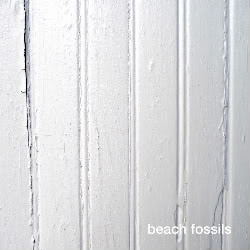
Snap Sounds: Beach Fossils

0

BEACH FOSSILS
Beach Fossils
(Captured Tracks)
Your pretty guitar — or in Beach Fossils’ case, your gorgeous guitars. Lyrics and vocals are virtually beside the point, considering how poetic the guitar sounds are on these songs. Beach Fossils is well-listened enough to admire McCarthy and the Go Team. On “Youth” and “Wide Awake,” the group comes up with something deeply emotive. You have to make the jump and join me on the other side to find out.

Meklit Hadero in full bloom

0

Born in Ethiopia and raised in the U.S., songstress Meklit Hadero‘s musical endeavors span latitudes and genres. But there’s also a timeless quality to her warmth and soulfulness that’s reminiscent of archetypes like Nina Simone and Billie Holiday. A former director of the Mission’s Red Poppy Art House, her recent debut album On A Day Like This was heavily influenced by her experiences as an integral part of the Mission scene. In May an exuberant crowd celebrated the release of Meklit’s CD at Bimbo’s, and soon afterward we got to spend an afternoon with her while roaming the hills of West Marin.

SFBG Have you always been a musician?

MEKLIT HADERO Music has always been essential. I’d always wanted to do it, but didn’t know how to give myself the space. Then I made a commitment to develop in public … nothing compares to the growth that happens through performance. People like to see other people being free.

SFBG I noticed your willingness to share that vulnerability at your CD release party, that you didn’t put on airs like “it’s showtime!” There was a moment between songs where there was huge applause and you had to take a couple of extra breaths because of all the emotion. It was really beautiful.

MH I had such a great time at that show. There was so much love in that room.

SFBG Any interesting cover songs on the horizon?

MH I can’t tell you exactly what my plans are because part of the fun is when covers surprise people. I’ve been relatively slow to add covers into my sets, but there will be more. Right now I’m learning a traditional Ethiopian folk song called “I Like Your Afro” [laughs]. Actually, the lyrics are just gorgeous.

SFBG And you have a Stern Grove show coming up?

MH Which is such a dream! I’m so excited about that. Stern Grove is one of the best things about being here in the summer … going early, picking nasturtiums for the salad …

SFBG Of course … you’re the flower lady! You always have flowers in your hair. Any other favorite flowers?

MH Well one of the favorite categories is “flowers that are good for your hair.” Speaking of which, the other day at the Poppy — this resident artist named Fernando Diaz has a cat named Eskimo that he brings everywhere in a sling like a baby. I was holding Eskimo and he climbed up my shoulder, climbed onto my afro, traversed my afro to the other side, and began furiously attacking my flower. It was so funny. Anyway, flat flowers are good or flowers with a short cone. Gardenias are lovely but hard to attach. I don’t know how Billie Holiday did it.

MEKLIT HADERO AT THE STERN GROVE FESTIVAL
Aug. 1, 2 p.m., free
19th Ave. and Sloat, SF
www.sterngrove.org

Sunday Streets contrasts with SF’s bike injunction

1

A day after bicyclists and pedestrians took over the streets of the Mission for the popular, incident-free Sunday Streets, and a day before the court hearing on whether to end the four-year-old injunction against bike-related projects in San Francisco, Judge Peter Busch today (6/21) issued a noncommital tentative ruling in the case, indicating he needs a hearing on myriad technical details to reach a decision.

Most members of the city’s bicycling community see the injunction as surreal and are simply unable to understand how the California Environmental Quality Act could be used to hinder a transportation option that is clearly a boon for the environment. The answer, say critics, lawyers, and Judge Busch, is that the city should have done an expensive EIR first to probe the finest of details of exactly how more bike lanes would disrupt traffic.

Or as Busch put it in his temporary ruling, he wants to explore questions such as: “1) WHAT OTHER ALTERNATIVES OR MITIGATION MEASURES DOES PLAINTIFF CONTEND RESPONDENT SHOULD HAVE ANALYZED OR CONSIDERED? 2) WAS RESPONDENT REQUIRED TO INCLUDE DATA UNDERLYING TRAFFIC LOS AND, IF SO, DID IT SATISFY THE REQUIREMENT? 3) DID RESPONDENT ABUSE ITS DISCRETION BY USING A SIX-MINUTE THRESHOLD TO ANALYZE TRANSIT IMPACTS?”

It’s a level of detail that only lawyers and traffic engineers can appreciate, and to the casual observer, it’s a level of detail that could maddeningly extend this entirely unreasonable injunction. And Sunday Streets was a great example of why it’s so unreasonable. Here’s an event that disrupted far more cars and buses than the Bike Plan would over a month, and it was done with no EIR and with no major problems.

Why? Because CEQA has an exception for temporary events, which is certainly a good thing. But if CEQA is used to extend this injunction for another month, or a year, then it’s time to revisit this unreasonable law and whether this was ever a reasonable ruling.  Because the harm he’s doing by dragging this case out for a year after the city completed the EIR – to bicyclist safety and to the environment when people are afraid to bike and choose to drive — certainly outweighs any harm this plan will do.

The Daily Blurgh: Corpse flower is not a ’90s Goth band

1

Curiosities, quirks, oddites, and items from around the Bay and beyond

I would love to hear what Judge Judy would say to the Petaluma mother who, passed out after drinking tequila, let her 2-year-old daughter wander out of her house. Barefoot. Oy.

*****
Where exactly is the Tenderloin?

*****
These are the people in your neighborhood: Mythbusters host Adam Savage has moved to the Mission.

*****
“Porn is like sausage, it tastes better when you don’t see how it’s made.” Thankfully, SFBG alum Josh Rotter went to a local, ahem, sausage factory so you wouldn’t have to.

*****
I hope this sort of thing never happens in San Francisco.

*****
Even if it didn’t have such a fucking cool name, you should still check out the rare Corpse Flower at the UC Botanical Garden. It’s supposed to be in full bloom around July 1st, but will only stay open for a day or two.

Solstice fun: Brown and Whitman’s birthday personalities

0

I’m probably going to get into all kinds of trouble for this post, but seeing as today is the summer solstice, and I have hay fever, now (as I wait for the antihistamine to kick in) feels like the perfect moment for fun with politicians’ personalities, beginning with California’s gubernatorial candidates, Jerry Brown and Meg Whitman.

“Many people have long suspected, as astrologers believe, that the day you were born affects your personality,” states the dust jacket of The Secret Language of Birthdays (Penguin, 1994). This weighty 832-page tome claims to be a guide to personality based on “psychology, history, numerology, tarot and astrology.”

So, what light, if any, does this tome shed on Brown and Whitman?

We learn that Brown and the Buddha were both born April 7, a birthday this tome characterizes as The Day of Enthusiastic Belief. (William Wordsworth, Billie Holiday, and Francis Ford Coppola apparently also emerged on this day)

Whitman, who was born August 1, shares a birthday with Yves St. Laurent, Jerry Garcia, Moby Dick author Herman Melville and Claudius 1, (who became Roman emperor after Caligula’s murder), a day the Secret Language of Birthdays characterizes as The Day of Original Style.

“It is not uncommon for April 7 people to reach a point in their lives when they can spiritually progress no further and have to make a very big change,” states the tome, which actually includes Brown in its list of famous April 7 folks. “If April 7 people pass through this crossroads, well, they are capable of even greater success in their life. They may feel less impelled to throw themselves at the world, and instead allow the world to come to them.”

“April 7 people do well in public positions in which they can inspire others to higher achievement through their own example,” the tome concludes. “They should continually work toward being realistic in their view of everyday life, and must not be carried away by illusions. They should also avoid reacting in an angry fashion if their expectations are not met by others.”

As for Whitman and other August 1 people, the tome claims that, “Not content with the knowledge that they are the best in what they do, they must force others to this realization either through the quality of their work or the sheer persuasiveness of their personalities. They may suffer many setbacks, frustrations and disappointments along the way, but rarely give up on their endeavors.”

‘Those born on August are not the easiest people to get along with,” the tome warns. “Since they themselves are the only boss they tolerate, they are generally unsuited for jobs where they must work with superiors…Those born in August 1 are often caught up in the middle of a swirling world of controversy. No matter what they do, they seem to arouse the interest and sometimes antagonism of others.”

Okay, well there you have it with the fun stuff. And now that the antihistamine finally feels like it’s working, I’m ready to enjoy some politically meatier stuff at Politics Verbatim, a website California Watch and the Center for Investigative Reporting just launched “to hold California’s two major gubernatorial candidates accountable in the most straightforward way possible: by collecting and categorizing the promises, proposals, arguments and attacks that they make on the campaign trail.”  (But don’t forget to watch out for the personalities behind the promises: They could just be each campaign’s (not so) secret weapon.)


=

SCOBY SCOBY do’s and don’ts: Notes on the Kombucha craze

2

By Katie Gaydos

For me, the words “kombucha on tap” evoke images of endless streams of free-flowing fizzy ambrosia. Unfortunately, while many San Francisco health food markets and juice bars now carry kombucha on tap, kegstands are not an option. Alas, a mere 12 oz. cup of the stuff sets you back anywhere from $3 to $6. Kombucha may be on tap, but as long as it remains on its designer drink pedestal, it’ll cost you. But wait a second, kombucha is virtually cost-free to make. It’s only tea, sugar, water and a SCOBY (Symbiotic Culture/Colony of Bacteria and Yeast). So what’s the deal? How did kombucha become a trend to the degree that people are willing to empty out their wallets?

With health benefits that supposedly include aiding digestion, increasing metabolism, detoxifying the liver, and promoting an overall sense of well-being, it’s no wonder that kombucha has long been considered a valuable elixir. But in the past ten years, ever since G.T. Dave started packaging his Synergy brew in signature bottles, the drink has initiated a consumer craze. More and more health food stores, restaurants, and even liquor stores boast a quickly growing selection.

This is certainly the case in health-conscious, trend-setting San Francisco. In search of all the kombucha this city has to offer, I embarked on an epic hunt and found a wide range of choices (both on tap and bottled) and prices.

Want a fresh ginger elixir? Or perhaps an apple-lemon-ginger kombucha? You got it! Sidewalk Juice (3287 21st St, 415.341,8070) has Lev’s Original Kombucha on tap. The small walk-up bar serves up half-kombucha, half-fresh juice concoctions. Prices range from $4.25 for a 12 oz. serving of coconut kombucha (a.k.a. “The Hangover”) to $7 for a 16 oz. cup of green tea kombucha.

Heading to the Ferry Building? The market Farm Fresh To You (1 Ferry Building #9, 415.834.9981) offers Lev’s original kombucha on tap. For $5 you get a 16 oz. cup with fresh-squeezed apple or orange juice. Farm Fresh also carries 16 oz. bottles of Lev’s (with flavors like mango, fresh mint, and hibiscus) for $4.49. Beware, though: bottled kombucha at Farm Fresh is priced significantly higher than at other SF health food stores — Synergy runs $4.19, and House Kombucha is $5.89 a bottle.

Where can you find the cheapest bottled kombucha? Rainbow Grocery (1745 Folsom, 415.863.0620) offers the widest selection of bottled kombucha at some of the lowest prices I’ve seen: High Country is on sale at $2.59 a bottle; Synergy and Vibranz are $2.99 a bottle; Healing Springs is $3.18 a bottle; Lev’s and Kombucha Botanica are $3.69 a bottle; Rejuvenation Company is $3.79 a bottle; and House Kombucha is $4.69 a bottle.

Where can you find the cheapest kombucha on tap? The Whole Foods Market branches in Potrero Hill and Noe Valley sold Kombucha Botanica at $2.40 for 16 oz., and $3.60 for 24 oz. (Note: Kombucha Botanica on tap is significantly less strong and less carbonated than Lev’s.) But on June 17, the Associated Press reported that Whole Foods temporarily stopped selling kombucha on tap and bottled kombucha for fear that it may contain elevated levels of alcohol.

Will other health food stores follow suit? We’ll have to wait and see. Perhaps the time is right to start brewing your own kombucha — it’s easy to do, and significantly cheaper than store-bought kombucha. You can order a starter kit online for $25 at Bay Area Kombucha Kollective

Mundo Via Afrika: Roll up your shorts and kick it

0

World Cup fever has produced its share of pop tributes and hot girls visuals. You get both combined in the vibrant video for local boy Gavin Hardkiss‘ “Mundo Via Afrika!”

Ammiano wants to clean up crime labs

1

Why could the San Francisco crime lab operate with so many problems for such a long time? One reason: There’s little or no effective state oversight or regulation of local crime labs in California.


That seems like a glaring problem — crime labs can mean the difference between guilt and innocent, the difference between a long prison term and a free life, between an innocent party getting wrongly convicted and a guilty party getting away with murder.


Assemblymember Tom Ammiano told me he’s worried that problems in cities and counties are going to continue unless somebody’s paying attention — so he’s introducing a bill that would create some form of state oversight body to monitor crime labs and make sure they maintain credible standards.


“I think it’s like the BART Police, they aren’t going to reform unless the state tells them they have to,” Ammiano said. He’s going to have legislation drafted shortly.

SFBG Radio: Tim and Johnny on channeling the inner Huey Long

1

Today, Tim and Johnny talk about GOP loonies, Carly and Sarah and the case for our inner Huey Long. You can listen after the jump.

sfbgradio6212010 by bgedit

Janelle Monáe: Soul with perfect teeth

1

By Ryan Lattanzio

Janelle Monáe has the most beautiful teeth I’ve ever seen. No, really. If you ask me, their pearly whiteness is unmatched.

Just as much as she bared her teeth on Friday afternoon at Rasputin in Berkeley, she bared a little slice of her soul. Monáe stripped her many layers of production and favored an acoustic set – something she said she loves – performing “Tightrope,” the single off this year’s The ArchAndroid (Atlantic), and the gorgeous “Smile” from the 2008 EP Metropolis: The Chase Suite (Atlantic).


http://www.youtube.com/watch?v=pwnefUaKCbc

After arriving an hour late (“Janelle Monáe’s in the house!” or “She’s putting change in the meter!” the emcee told us), Monáe was nearly done as soon as she started. Despite probably being tired – she had a show later with Erykah Badu at the Paramount – Monae made those two short songs very sweet.

Like in the music video for “Tightrope,” she wore her trademark futuristic bouffant and button earrings that matched so well with her Spats. And then there are those teeth again.

As in-store appearances go, Monáe was exceptional, entertaining, and of course, maintained the necessary sense of brevity. I wish she could’ve put on an entire show.

http://www.youtube.com/watch?v=Ys4GpR6v0TQ

Live Shots: 54th Annual North Beach Festival, 6/20/10

0

You know it’s summer time in the City when the smell of smoky meat wafts up your nostrils and jazzy tunes wind their way down the streets. As the marathon of fairs and festivals continues, where better to spend this weekend than at the North Beach Festival?

There were some amazing chalk artists scratching masterpieces into the asphalt, sweet tunes sung by the lovely Amanda King, sunbathers in Washington Square Park and lots of local vendors hawking their unique wares. Did I mention that the sun came out to play, too? It was a San Francisco wonder.

The insanity of cutting pensions

15


The New York Times has picked up the pension-reform banner, promoting the issue to the lead story on the front page of the June 20th issue.


If, as the Times reports, some of the reformers want to cap pensions – that is, go for the folks at the very top of the pile – it’s worth discussing. But most of the “reform” ideas involve either cutting the take-home pay of existing employees, cutting the take-home pay of pensioners or making sure that future workers don’t get as much of a pension.
The problem with that is simple: We’re in a deep recession. And the last thing we need to do is cut paychecks and encourage people not to spend money.


Let me quote from a brilliant blog post on Calitics.com from the always insightful Robert Cruickshank:


Cutting pensions would be like taking a shotgun, aiming it at our feet, and pulling the trigger. It would cause a cascade of economic problems that would dramatically worsen our economic crisis…


And yet the solution being proposed – slashing benefits – will do absolutely nothing to make state government fiscally solvent. It will mean there’s less money available to spend, meaning less sales tax revenue. Less consumer activity means there’ll be less jobs available, meaning less income tax revenue. With fewer jobs available, and wage stagnation, and now the added financial burden of paying the costs of retired family members that used to be borne by the pensions and other state services that have been cut, younger folks won’t be able to sustain the economy. Retirees and baby boomers will have to sell their homes for the cash, and in a recessionary environment where the young aren’t able to afford the present market value, home values will spiral downward, causing further economic ripple effects as well as reducing property tax revenues.
 
… The notion that ‘everyone needs to give back’ just doesn’t make sense given our economic distress. We’ve already given back too much. We gave back our wages. We gave back our ability to afford health care and housing and transportation. We gave back the robust public sector services that created widespread prosperity in the 1950s and 1960s. We gave back affordable, quality education. And too many of us have given back our future.
No, it’s time for someone else to give back. It’s time for the wealthiest Californians, and the large corporations, to give back. For 30 years now they have benefited from economic policy designed to take money and benefits from the rest of us and give it to those who already have wealth and power.
We are now experiencing the predictable outcome of such policies – the worst recession in 60 years, an intractable downturn. The way out isn’t to worsen the crisis by slashing pensions. The way out is to return to the sensible tax rates of the 1950s and 1960s and make the rich pay.


That’s what I’m talking about.

God’s not on the side of the union busters

6


Dick Meister, former labor editor of the SF Chronicle and KQED/TV Newsroom, has covered labor and politics for a half-century. Contact him through his website, www.dickmeister.com, which includes more than 250 of his recent columns.


God may or may not be on the side of unions, but a Catholic scholars group says that being on the other side, that is being against unions, is a “grave violation” of the church’s social doctrine. Opposing unions is, in fact, a mortal sin. And should be.

Anti-union actions violate both the letter and spirit of Catholic social doctrine, declared the Massachusetts- based Catholic Scholars for Worker Justice in a document distributed recently by the Catholic News Service.

 Specifically, say the scholars, it violates church doctrine to try to block union organizing campaigns, stall in union contract talks, unilaterally roll back wages and benefits and violate existing labor contracts and other labor-management agreements.

Those tactics are far too common among the tactics used against unions by far too many employers, including many who are Catholic and presumably follow church teachings.  That’s not to mention the lay employers who operate Catholic hospitals and other facilities for the church and are openly – sometimes fiercely – anti union.

The Catholic scholars make an irrefutable case. As they say, Catholic social doctrine is “forthright and unambiguous ” in regard to unions. “It states boldly that they are essential to the universal common good.”

 The scholars note that in supporting unions, the church is supporting the vital philosophical principle of freedom of association and the vital moral principle of “a just and or living wage.”

From the scholars’ point of view, it boils down to this: “The right to form unions is rooted in divine law, ” and man-made law and the enforcement of it should reflect that.  Opposing unions – that is, opposing the workers’ natural right of free assembly and right to decent wages and benefits – harms not only the workers directly involved. It also hurts society-at-large by lessening overall income and social solidarity and thus diminishing the universal common good.

The scholars’ statement stemmed primarily from concern over an increase in the use of anti-union tactics in recent years by some Catholic dioceses and Catholic organizations that obviously are not practicing what they preach.

 “There are many Catholic institutions that live up to Catholic teachings,” said Joseph Fahey, a Manhattan College professor of Religious Studies who chairs the Catholic Scholars for Worker Justice. “But there are some, either by ignorance or by design, that ignore Catholic teaching.”

Those who violate workers’ rights of unionization, added Fahey, “are involved in the grave matter of mortal sin.”

Fahey and his fellow scholars are particularly critical of the sponsors and managers of Catholic institutions who hire “union avoidance firms” to help them block their employees from unionizing or to help employers oust – or “bust” – unions that previously won the legal right to represent their employees on setting pay, benefits and working conditions.

Ousting or breaking unions in that way – or any other way – amounts to “wage theft” and “the theft of the human right of free association,” say the scholars.

Whatever your religion, or lack of it, you have to agree they’re absolutely correct. You have to agree there’s a great need for the spread of unionization to bring about the truly just society that the Catholic scholars, the nation’s union leaders and members and so many others of varying backgrounds seek.

Dick Meister, former labor editor of the SF Chronicle and KQED/TV Newsroom, has covered labor and politics for a half-century. Contact him through his website, www.dickmeister.com, which includes more than 250 of his recent columns.

Street Threads: Look of the Day

0

Today’s Look: Cortland and Andover

Tell us about your look: “I’m more put together that I usually am because I have an event tonight.”