This morning, I wrote this blog post about last night’s Commonwealth Club double feature on the authors of the book The Facebook Effect and the Atlantic Monthy article “Is Google Making Us Stupid.” I Googled the Commonwealth Club, Peter Norvig, and authors David Kirkpatrick and Nicholas Carr. I Googled “Is Google Making Us Stupid,” (which I felt weird about) in which Carr got some of today’s genuises to admit that they can no longer sit and read an entire book. Every once in awhile, my inbox tab would inform me that I had a new email waiting for me, and compelled by a small spur of urgency, I’d spend around 15 seconds reading about the upcoming pie bake-off or exhortation from my editor. Or, you know, Facebook would draw me in like that mean popular girl whose requests you can’t quite ignore. Oh yay, Allen posted the photos from Harmony Festival! My ex-boyfriend has changed his relationship status to “married”? What an idiot… and so on, until the irony of the fact I was writing about what social networking and search engines are doing to our brains threatened to explode my cerebellum in a glorious rocket blast of irony.
Focus. In the end, it’s what all of last night’s presenters wanted to discuss. How we’re focusing, the merit of what we’re focusing on, what this means for a society of focusers. The first half of the evening was dedicated to a discussion between Michael Arrington, founder of the website TechCrunch, and David Kirkpatrick, whose book The Facebook Effect says that the networking website has upended the very process of communication, and may well play a role in unifying this crazy old world of ours.
Which seemed a little wacky to me. The author called CEO Mark Zuckerberg a mind “of the highest caliber,” who is approaching Bill Gates level innovation. He said the CEO had plans from the get for a website whose communication systems would take on levels of ubiquity typically reserved for governmental entities. Frightening, particularly when Arrington raised the point of Facebook’s repeated user privacy infractions and Kirkpatrick replied “Mark thinks it’s better for you if you share more,” a view that has the 26-year old feigning contriteness at each uproar, then biding his time for it to settle down before enacting yet another round of security breach.
Author of The Facebook Effect David Kirkpatrick talks newsfeed whilst TechCrunch founder Michael Arrington contemplates breaches of privacy
Kirkpatrick quit his gig at Fortune magazine and began writing the book when Facebook had a mere 55 million users, peanuts compared to the half billion profiles that stalk its newsfeed today. He sees no end to the expansion, noting that other developing countries have a higher percentage of users, and sees the one potential threat to Facebook’s supremacy as governmental pushback. Why this popularity? Something to do with the way it changes the flow of communication. Every other media in history has forced us to make an outgoing effort to speak to someone. On Facebook, you essentially subscribe to a person by becoming their friend, receiving “updates” on them when the site’s algorithms have deemed you interested in what they have to say.
If he’s to be believed, we should all start paying closer attention to our online personalities. Don’t wanna get hacked? Stop friending people you don’t know. Don’t wanna be embarassed? Stop putting info on there that “you wouldn’t want to see on the front page of the newspaper,” Kirkpatrick says.
Because, like it or not, the Internet is how casual acquaintances are learning about us these days – and it’s how we are learning about them, and the world around us.
But to what extent are we really learning anything? That was the subject of the night’s second exchange, a rather heated debate between Carr and Norvig, who would appear to be natural enemies in the wild, given that the thesis of Carr’s latest book, The Shallows, is that search engines like Google have led to “a constant state of digital distractedness,” as he put it last night.
Norvig, attired in a dadaist version of a Hawaiian shirt and two charmingly disparate shades of black, tried to embody Carr as a old fogey, reading quotes from epochs past that lamented “kids these days.” Why not attack the clock, the map, he asked – aren’t these all examples of the mechanization of our thought process? Isn’t “all new technology seen as panacea,” he asked? Isn’t it the personal choice of how to use it that dictates the depth of your thought?
“We’re redefining knowledge as a society to be all about access, skimming… I think the nature of the ‘net allows us to be constant browsers of information,” Carr replied, unwilling to focus on a particular age group as the standard bearers for this type of shallow thought. He explicated a two stage process of knowledge; the exploration phase, and the focus stage, in which you dive deeper into a source identified by your intellectual foraging. Carr thinks the Google effect on the Internet has stranded us in the first, making the second difficult to achieve when there is a constant stream coming into your RSS feed.
The two went back and forth on scriptura latina, frontal cortez overloads, etc. But at the end of the evening, a mention Carr made about McDonald’s seemed to strike to the heart of the matter. Mickey D’s does have “salads and fruit cups on the menu. But people go more for the Big Macs.”
So, are we going to ban “trans fats” from the Internet? What about those days when you just want a little bit of intellectual junk food, perhaps a YouTube video binge, or a link to link surf session? Will this make us forever confined to learning about our friends based on the “Likes and Interest” section of their Facebook profile? Does that mean we’ve lost the ability to use the vast information available on the Internet for deep thinking?
At the moment, it seems we’re going to have to wait and see what the history books have to say on the matter. Happy surfing, people.
Of all the theories about why McChrystal let his hair down in front of a reporter no less, the idea that he did it to get the hell out of “Chaos-istan” may be the most credible. On the other hand, McChrystal sounds like the kind of guy who wouldn’t want to see his men (and women) put in harm’s way, if he wasn’t around to support them. But today’s announcement that Petraeus supports a July 2011 withdrawal deadline means any perceived failure will ultimately end up pinned to Petraeus tail.
It’s no surprise the C.W. Nevius thinks the city has too many public services and that “some have to go.” Nonprofits that get city funds are an easy target. Some of them aren’t too good at paperwork, and have a hard time providing tangible evidence of results. (If you run a violence-prevention program for kids, and some of them still get in trouble, can you”prove” that the others didn’t because of your help? Of course not.) And there’s no doubt some waste and duplication of services in the system.
Some perspective: When I was on the Board of Trustees of Wesleyan University (as an elected member from the Wesleyan Progressive Alumni Network), I constantly complained about waste in the budget. I wanted to know why we spent so much money on dinners for the trustees (most of whom could well afford their own food and wine) when we were cutting ethnic studies programs and tightening up on financial aid. Colin Campbell, the president, gave me a very good answer:
In any $60 million budget, for any public or nonprofit organization, there’s going to be some waste. It’s unavoidale. And, he said, there are also going to be things that ought to be in the budget but aren’t.
(By my second year on the board, they did cut back on wine at lunch, which may have been due to my complaints but was more likely a result of too many of the older board members getting a little looped and falling asleep during the afternoon meetings.)
So yeah, there are things that could be eliminated in the current nonprofit system. There are also a lot of services that ought to be in the city budget, but aren’t.
C.W.:
There’s just one flaw in our civic personality.
Tough choices.
We’d rather not make them.
That’s correct, and it’s true for everyone in California, probably everyone in the United States. We want good schools, clean streets, nice parks, plenty of cops and firefighters .. and we don’t want to pay for it.
Taxes in this state, and in this country, are the lowest they’ve been in decades. State spending is back to early 1990s levels. State cuts have forced cities to take on more and more burdens.
So the tough choice isn’t whether we can afford to provide public services. It’s whether we have the courage to demand that the people who have seen their tax rates plummet while social problems skyrocket pay their fair share. How about that one, Chuck?
In totday’s installment, Johnny and Tim talk about whether McChrystal is the fall guy for a failed war, Meg’s foolish fight with the nurses — and a very strange Pew poll on the return of Jesus Christ. You can listen after the jump.
A fundraiser is planned for this weekend at The Old Clamhouse to help Alan Casajeros, one of four cyclists injured on June 2 when a motorist intentionally plowed into them with a sport utility vehicle.
Casajeros, 39, endured 19 hours of intensive surgery at San Francisco General Hospital after becoming a victim of the six-minute hit-and-run rampage, which occurred in San Francisco’s Mission and Potrero Hill neighborhoods. He was the most critically injured of the four victims. The impact left him with serious head injuries, including bleeding in the brain, damage to his face, and the loss of his front teeth. He was released from the hospital on June 14, according to SFGH spokesperson Rachael Kagan.
Casajeros has worked as a waiter at The Old Clamhouse on Bayshore Boulevard for 12 years, according to coworker Maria Anderson, who said he was “an excellent employee.” Anderson said she received a call from SF General Hospital after the accident occurred. While hospital staffers were unable to get much information to find out who they should notify, he mentioned in his delirium that he had to call in sick at the Clamhouse, Anderson said, so they phoned the restaurant.
“It was horrendous,” Anderson said. “He literally was going from his home to pick up milk.” According to a friend of Casajero’s, Kellie Arechiga, he was biking home when the blue Nissan Rogue SUV struck him.
Arechiga said Casajeros is the best friend of her children’s father, and like a member of the family. She said he loves going for bike rides with the kids, and he often cycles to and from work. Since his release from the hospital, he’s been staying with Arechiga and her family in Redwood City, she said. “He’s just recovering. He knows us, and remembers everything,” she added.
Meanwhile, his friends and coworkers organized the fundraiser to help out with his monthly expenses, and visited him in the hospital. Many cyclists and supporters have come forward to donate money and lend helping hands. “The outpouring of support has been really kind, and really sweet,” Anderson said.
David Mark Clark, 39, is facing trial for the June 2 road rampage, and is being held without bail in the San Francisco County psychiatric lockup. Clark pleaded not guilty to four counts of attempted murder, four counts of assault with a deadly weapon (to wit: a car) and three counts of battery causing serious bodily injury. His next court date is July 27, to set a date for a preliminary hearing.
The fundraiser will be held on Sunday, June 27, from 3 p.m. to 10 p.m. at The Old Clamhouse, 299 Bayshore Blvd, near Oakdale Avenue. $20 gets you a plate of food, one free drink, and two raffle tickets. There will also be live music and a DJ.
***UPDATE: Casajeros’ attorney, Claude Wyle, has set up a special account at Wells Fargo for donations to Alan, whose legal name is Rolando Casajeros. Donations should be made directly to account No. 7734751691, with checks payable to Rolando Casajeros and attorney Claude Wyle.***
**Note: This file has been updated from an original version.
Alas, we have no year-round Big Gay Ice Cream Truck like they do in the Big Apple. But, as SFist alerted us today (via Haighteration), our own beloved zany-zygote Three Twins Creamery has gone all light in its scoopers for Pride weekend, Fri-Sun offering such lavender lickers as “Rainbow/Gay Sherbet, Pink Triangle (‘a fruity chocolate base with pink chocolate triangles’), Pride Vanilla, Hot Cookie (‘with cookies from the Castro’s favorite cookie shop’), Don’t Ask Don’t Tell (‘vanilla ice cream with blueberry dessert from military rations mixed in’), Rice Milk Harvey Milk and Cookies, and Salted Nuts.” Plus, well, lavender.
Sounds delish. And we have some more ideas.
As SFist editor Brock Keeling suggests, why not “Juanita More Dulce de Leche Please? Sondheim ‘God That’s Good’ Swirl? Bambi Lake‘s Butterscotch Stain?” Here’s our own list of confection suggestions named for notable local homos, beyond Ms. Milk:
Bay Area-based anti-war organizations were disappointed that President Barack Obama reaffirmed his support for war in Afghanistan while ousting the commanding general there, saying the doomed and dangerous military intervention is a bigger problem than the generals involved in executing it.
General Stanley McChrystal was today relieved from his post by the president for exhibiting an openly contemptuous view of the Obama administration and other civilian leaders in a recent interview with Rolling Stone magazine, replacing him with General David Petraeus, pending approval from Congress.
“There is a change in personnel, but not a change in policy,” President Obama said during his announcement in the Rose Garden.
That was precisely what the anti-war crowd didn’t want to hear.
“Although there is a personnel change, there is no change in the occupation of Afghanistan,” Nancy Mancias of Code Pink told the Guardian. “The troops are still present. Local groups need to remain focused on bringing our troops home, halt funding and stop the continued occupation overflowing into Pakistan.”
Instead of finding red flags in McChrystal’s insubordinate comments or the RS article’s quotes from disgruntled soldiers and dubious diplomats, Obama simply used the occasion to mix up the staff hierarchy running a war that few think is going well.
“It has proven an incredible waste of resources,” Richard Becker, regional director of the Act Now to Stop War and End Racism (ANSWER) Coalition, told the Guardian. “No one can pretend that anything resembling progress has been made. In fact, it’s just the opposite.”
More deaths have occurred over the last 10 months than have taken place in the last five years of combat. In addition to the staggering number of casualties accompanying the war, it also boasts a hefty price tag. According to organizational leaders, expenditure on the war has just exceeded the $1 trillion mark with no end in sight.
“The war — which will soon enter its tenth year – has meant a complete disaster for the people of our nation, a continuation of disasters for U.S. policy, and has inflicted disaster on the people of Afghanistan,” Becker said.
Considering the tripped-out journeys of its songs, it comes as no surprise that Fat Freddy’s Drop was born of psychedelic experimentations. A top seller in its native New Zealand, FFD focuses on maintaining a stellar groove — you’d be hard-pressed to find a Fat Freddy track clocking in at less than six minutes. The seven-member band dropped into town last fall to play to a ravenous, sold-out Independent crowd. While its devoted kiwi fanbase is regularly treated to FFD’s funkafied, reggae-infused performances, the Independent show was the first U.S. appearance since a one-off back in 2004. With more SF shows this time around, it seems like the septet is really gaining traction on this side of the Pacific. Saxophonist Chopper Reeds gave us the lowdown on the Drop.
SFBGWhat’s the name Fat Freddy’s Drop about? CHOPPER REEDS We’re probably stepping all over Bay Area counterculture royalty here but, as you probably know, Fat Freddy was one of the Fabulous Furry Freak Brothers. And he had a cat — a feline of somewhat loose morals. The cat had a cult following here in Wellington among a party-loving crowd. So we bastardized his name and embraced his vibe.
SFBGWhat are you looking forward to on this tour? CR Some proper Mexican food. And looking for records. Oh, and playing for our U.S. friends. The reaction to our first West Coast gigs was fantastic. The band is in great form, so I think we’ll have something fresh for people to see.
SFBGHow have influences from the western hemisphere — dub, soul, funk — filtered into your music? And how did singer Joe Dukie develop his unique vocal style? CR Filter is the right word. We can only really access that music through records or if we get a chance to see someone live when we’re traveling. We’re not purists — we’re seven rabid fan boys all diggin’ on some Al Green, Delroy Wilson, Prince, or Fela Kuti and trying to work out how we can cop that vibe rather than copy the notes. As for Dukie, well I can’t answer for him. All I can say is, he is a deep pool. By that I mean he draws out his lyrics in a very considered and powerful way.
SFBG What about the mix of New Zealand-Pacific Islander backgrounds in the group and how that plays out in the music? CR We’ve got one Samoan, three Maori, and three European New Zealanders. But our outlook is pretty internationalist, so we’re prepared to steal musical influences from anywhere.
SFBGTo me the music of Fat Freddy’s Drop drips of summer. Is that just the general vibe of New Zealand, or is it particular to the group? CR I like to think that the music can transport you. New Zealand can be a pretty grim place in winter, and the country’s thoughts are very much on sunshine and warmth. Themes of family, love, and renewal are in all music. That sounds like a good summer to me.
FAT FREDDY’S DROP Fri/25 and Sat/26, 9 p.m., $20 The Independent 628 Divisadero, SF www.independentsf.com
Norman Solomon is executive director of the Institute for Public Accuracy. His books include “War Made Easy: How Presidents and Pundits Keep Spinning Us to Death.”
When the wheels are coming off, it doesn’t do much good to change the driver.
Whatever the name of the commanding general in Afghanistan, the U.S. war effort will continue its carnage and futility.
Between the lines, some news accounts are implying as much. Hours before Gen. Stanley McChrystal’s meeting with President Obama on Wednesday, the New York Times reported that “the firestorm was fueled by increasing doubts — even in the military — that Afghanistan can be won and by crumbling public support for the nine-year war as American casualties rise.”
It now does McChrystal little good that news media have trumpeted everything from his Spartan personal habits (scarcely eats or sleeps) to his physical stamina (runs a lot) to his steel-trap alloy of military smarts and scholarship (reads history). Any individual is expendable.
For months, the McChrystal star had been slipping. A few days before the Rolling Stone piece caused a sudden plunge from war-making grace, Time Magazine’s conventional-wisdom weathervane Joe Klein was notably down on McChrystal’s results: “Six months after Barack Obama announced his new Afghan strategy in a speech at West Point, the policy seems stymied.”
Now, words like “stymied” and “stalemate” are often applied to the Afghanistan war. But that hardly means the U.S. military is anywhere near withdrawal.
Walter Cronkite used the word “stalemate” in his famous February 1968 declaration to CBS viewers that the Vietnam War couldn’t be won. “We have been too often disappointed by the optimism of the American leaders both in Vietnam and Washington to have faith any longer in the silver linings they find in the darkest clouds,” he said. And: “It seems now more certain than ever that the bloody experience of Vietnam is to end in a stalemate.”
Yet the U.S. war on Vietnam continued for another five years, inflicting more unspeakable horrors on a vast scale.
Like thousands of other U.S. activists, I’ve been warning against escalation of the Afghanistan war for a long time. Opposition has grown, but today the situation isn’t much different than what I described in an article on December 9, 2008: “Bedrock faith in the Pentagon’s massive capacity for inflicting violence is implicit in the nostrums from anointed foreign-policy experts. The echo chamber is echoing: the Afghanistan war is worth the cost that others will pay.”
The latest events reflect unwritten rules for top military commanders: Escalating a terrible war is fine. Just don’t say anything mean about your boss.
But the most profound aspects of Rolling Stone’s article “The Runaway General” have little to do with the general. The takeaway is — or should be — that the U.S. war in Afghanistan is an insoluble disaster, while the military rationales that propel it are insatiable. “Instead of beginning to withdraw troops next year, as Obama promised, the military hopes to ramp up its counterinsurgency campaign even further,” the article points out. And “counterinsurgency has succeeded only in creating a never-ending demand for the primary product supplied by the military: perpetual war.”
There was something plaintive and grimly pathetic about the last words of the New York Times editorial that arrived on desks just hours before the general’s White House meeting with the commander in chief: “Whatever President Obama decides to do about General McChrystal, he needs to get hold of his Afghanistan policy right now.”
Like their counterparts at media outlets across the United States, members of the Times editorial board are clinging to the counterinsurgency dream.
But none of such pro-war handwringing makes as much sense as a simple red-white-and-blue bumper sticker that says: “These colors don’t run . . . the world.”
Fierce controversy has focused on terminating a runaway general. But the crying need is to terminate a runaway war.
_________________________________________
Norman Solomon is executive director of the Institute for Public Accuracy. His books include “War Made Easy: How Presidents and Pundits Keep Spinning Us to Death.”
Tension hung over the Civic Center Plaza World Cup watchers this morning like Ocean Beach fog.
The US soccer team faced elimination throughout a nerve-wracking battle with Algeria. Conspiracy theories were abound after the referees called back an early US goal in the first half, echoing a similar controversial call from last Friday’s tie game against Slovenia. Fans went through a wide range of emotions until the final minutes when US star Landon Donovan followed up on a loose ball in front of the Algerian goal. Pandemonium broke out among the few hundred gathered in the plaza as 90 tense minutes were finally absolved. Now, on to round 16!
Seven songs of drifter daydreams. There is something so beautifully lonely and core-hitting about the way Vile’s sprawling songs continue to evolve. He can’t be written off to any scene or fad — he’s one of the most poignant, affecting songwriters around. Check out one reason why after the jump.
A long version of the interview in the current issue of SCENE:
If I’m going to stay up late and go as deep as I can into the night, so far that I’m just about lost and in trouble, I want the sounds of Shannon and the Clams with me. The Oakland group’s album I Wanna Go Home (1-2-3-4-Go! Records) is packed with songs that have been there and will shine a light to lead you back into the day, while letting you have a sip or two and an adventure or three along the way. This is rock ‘n’ roll music, electric-charged by bassist Shannon Shaw’s wild wonder of a voice, guitarist Cody Blanchard’s flair for classic crooning and crying, and drummer Ian Amberson’s fierce reliability. See Shannon and the Clams live. You will believe.
SFBGShannon, when did you start to sing for fun? What singers did you love as a kid? What kind of stuff forms what you’ve called a “rage cage,” and does singing help you break out of it? SHANNON SHAW I have been making up songs since I could talk at the ripe age of two. The first song I remember in full came about because I was cast off to spend time in my room for being bad. There, I formed a rage cage (rage cage: an explosion of anger you can’t escape from) and sang a song that lasted the duration of my time out. The lyrics were something like: ‘I’m really a princess, and my mom doesn’t know because she’s evil, and I’m a princess, and my gramma is my real mom who is a queen and she loves me and lives in a castle…my castle, I’m a princess, where’s my castle?” Very sophisticated, eh? I think I was 4ish at the time. My favorite singers growing up were definitely Roy Orbison, Kermit the Frog, the Mouse Girl from An American Tale, Mrs. Brisby from The Secret of N.I.M.H., Eric Burdon, George Strait, Les Claypool, Ronnie Spector, Shelley Fabares, the Supremes, and Connie Francis. I know it’s a strange combo, but it’s true.
http://www.youtube.com/watch?v=ndApsVCeM54
SFBGDid you all meet at California College of the Arts? What was that experience (meeting and being there) like? CODY BLANCHARD Yeah, I met Ian and Shannon [during] my second year there. And me and Ian lived in a big house together with 5 people, but we were always really busy with school stuff, so we didn’t even hang out much. We used to have crazy gigantic parties there — that’s where Shannon and the Clams started playing as a band. I wasn’t in the band yet, but I would listen to them practice. IAN AMBERSON Cody and I used to live together, but we all joined forces by way of CCA. The music my peers introduced me to had a big impact on my knowledge and taste. CCA is so small that sometimes you form relationships and exchange ideas with people at a higher rate, just by your proximity to others in a context that attempts to promote creativity.
SFBGCody, you sing an amazing song called “Warlock in the Woods.” Can you tell me a bit about the warlock? CB The warlock was a child whose mother didn’t want him and ditched him in the forest and tied him up with tree roots. The roots started to grow around him and tell him their secrets and poison his mind. He sort of went into a cocoon of roots, then was released decades later, very mixed-up and manipulated by the dark spirits of the forest. He took a cave as his new home and was convinced that he must capture the hearts of young children and travelers in the woods and put them inside this amulet, which the trees had given him, in order to find his way home and to be free of the forest. In the end, he realizes that all the hundreds of hearts he has taken have done nothing for him and he was still living in a cave, lost in the woods, and that he was tricked by the evil forest into doing their bidding. I like to write songs about fantastical stuff these days, weird little stories set to song. That’s my favorite kind of song; one that tells a tiny story that you are easily able to follow just by listening.
SFBGWhat is your favorite item of clothing right now? CB A rope belt. SS A ripped-up white Adam Ant V-neck T-shirt that Seth of Hunx and His Punx gave me. While I was on tour with them in France I saw him wearing it one day and said, “I love Adam Ant, I need your shirt.” He took it off of his back and handed it to me. What a good friend! He stood there, nearly naked as a jaybird, to give me the shirt of my dreams. I wear it every Friday night if you ever wanna see it.
SFBGWhose sense of style do you admire? CB The members of the Lollipop Guild — you know, from The Wizard of Oz. We represent the Lollipop Guild! SS A really pleasant pie-baking mother of the ’50s, mixed with an ’80s skateboardin’ bad boy.
SFBGWhat do you like and not like about Oakland? CB I love that’s it’s not too big or too busy, not overwhelming. All of the neighborhoods are really small and you can find a totally hip fancy neighborhood and then walk a few blocks and be in some scary warehouse district full of abandoned hot dog stands. I like that it’s kind of like San Francisco’s more relaxed little brother. Less freaks here, more quiet — less happening, but still tons of cool stuff. I like a place that doesn’t have too much going on. I love that there is crazy scary Ghost Town and West Oakland, but then there’s also the Oakland hills with amazing parks like Tilden and Joaquin Miller. I generally wish there were more trees and foliage. I thrive on fauna, and I grew up in a very woodsy suburb. I love the Berkeley Bowl — I guess that’s in Berkeley. One thing I’m on the fence about is gentrification. On one hand, I don’t like burned-out neighborhoods, but on the other, I hate really expensive stuff and excess and money as an oppressive force. And I know all that stuff is catering to people like me. It makes me feel mixed-up and bad. It sort of destroys the charm of a more naturally evolved neighborhood. IA Oakland is just a great hub. It sort of feels like being in the middle of a giant cultural sample platter. Having places like Berkeley and San Francisco nearby is nice, while not having to live in those more demanding environments.
SFBGWhere do you like to go out at night?
CB I love movie theaters so much. Usually they’re too expensive, though. My favorite thing is when a theater plays an old movie. I’ve seen Blade Runner, El Topo, The Thing, Jurassic Park, Maximum Overdrive and a bunch of other stuff in the theater. I also love to go to the video store and rent movies. It’s way more fun than Netflix or something, because it’s impulsive and you’re not sure what to get and all these other movies or snacks can catch your eye. Or I love to be around a BBQ or a campfire. My parents have a fire pit. And if there can be fireworks too, then it’s my #1 dream. Or bicycling through the empty night. Or being in a car or a train going across the country, staring out the window.
SS If I had my choice, I would hang out in a wooded area by some railroad tracks with a boombox and a bike.I used to hand out at this old Sunsweet prune factory by train tracks in an old deserted part of downtown Napa. I loved it so much. It was super overgrown with weeds, and surrounded by foliage and abandoned factories. There was a little campfire area nearby and a perfect place to sip on a Friday night sneaky flask. I think I like the feeling of being kind of like a hobo, waiting to hop a train, or camping all hidden in the middle of town. I like having freedom and privacy outside. Part of why Oakland is so rad.
SFBGShannon, your brothers were at one of your recent shows. What’s it like to have them in the audience? SS Lucky for me they come to most of my shows. I like them a lot. They are giant and hilarious and love to shake it. They both walk around and seem to have these magic invisible love vests on at all times. It’s really nice to see them dancing around and making people happy.
SFBGCody, why do think there have been so many great songs about crying? CB Umm, well crying is something you do instinctively as a baby, and you do it all the time. I guess you laugh and shit and barf a lot too. But maybe when people think of crying it brings them back to that primal state — baby times. It’s a very powerful, uncontrollable emotion. People are drawn to powerful things like that, like when a song has so much power over you it brings you back to a time when you had no control, crying. It is attractive because it is so powerful and so rare. And we try not to cry, so when there’s a song that lets us feel as if we are crying, maybe we love it because we miss that feeling. Or maybe people just want to pretend they are babies. A song about crying might make you feel like a helpless baby, which can be fun. I like to do that. Like Muppet Babies.
SFBGHow about death songs, doomed teenage romance or otherwise – do you have any favorites? SS“Johnny Angel” by Shelley Fabares, “Earth Angel” by the Penguins, “Leader of the Pack” by the Shangri-Las, “Little Town Flirt” by Del Shannon, “I Think We’re Alone Now” by Tommy James and the Shondelles, “Last Kiss” by Ricky Nelson, “Patches” by Dickey Lee. So tragic. Listen to those lyrics — oh my! CB I love “The Gypsy Cried” by Lou Christie as a doomed romance song. Mostly because the music is soooo great. But also because you don’t really get an answer in that song; the man goes to the gypsy to see what the future holds for his love, and the premonition is so sad and devastating that the gypsy can’t even speak, all she can do is cry. “Snowman” by Diane Ray is awesome, it’s about building a snowman to replace your former lover. “Don’t Drag No More” by Susan Lynne includes death, and the hook and title are grammatically incorrect — that’s awesome.
SFBGWho are your favorite record producers, past and present? CB I really love Joe Meek. Ian turned me on to him. Such a weirdo, and his stuff is so experimental for the time [when he was recording]. And he was crazy, which is double interesting, also gay and he couldn’t play any instruments or read notation. So I hear. Also, Giorgio Moroder is incredible, both his crazy awesome stuff with Donna Summer and his solo stuff. I think he produced the theme for The Neverending Story. Ennio Morricone is so awesome, such an experimental freak. Big influence. I so dearly love the music from Leon Schlesinger and Harman & Ising cartoons, MGM and Warner Bros. studios. Not sure who was in charge of the music. Also, those Italian synth weirdos who did soundtracks for all those ’70s Lucio Fulci movies, like Fabio Frizzi and Claudio Simonetti.
SFBGShannon, what were some of your wildest and favorite experiences on the road in Europe with Hunx and the Punkettes, and what were some of your favorite ones? SS Probably full-group ghost hunting in underwear in Liege, Belgium, in this abandoned college where we had to sleep. Lots of screaming and giggling and inappropriate flashlight shining. Also, maybe full-band nude sauna with King Khan and his wife and kids. Those Europeans are quite comfortable with nudity. ‘Twas hard for me, because I’m a former Mormon and a bit of a chunker if you haven’t noticed. In the end, no one gave a shit and it was fun! Glad I did it. In Paris, we played along a canal that was basically a gypsy camp. Seth wore a banana hammock made of candy that broke at a very inconvenient time. Instead of helping him with his suddenly public family jewels, some demon of entertainment overtook me and made me tear the remaining candies off his bod and throw them to the audience. I think he thought it was funny.
SFBG If you could set up a dream bill packed with bands you’ve never played a show with, who would be on it? What place would be the venue? SS Gene Pitney, Roy Oribson, Gem, Danzig, Lou Christie and the Tammys, and the Muppet Band. CB Oh boy, Ennio Morricone, the Lollipop Guild, the Ramones, Devo, King Tuff, Best Coast, Mark Sultan, the Ooga Boogas, Pissed Jeans, the Seven Dwarves (from the Disney cartoon), Roger Miller, King Louie (from The Jungle Book), Motorhead, Jonathan Richman, the Monks and the Frogs.
SFBGRollercoasters or haunted houses?
SS Haunted houses. Not the fake kind at fairs and stuff. Real ones. IA Haunted houses. Our favorite is in the Enchanted Forest theme park in Salem, Oregon. It has lots of creepy automatons and surprisingly scary uses of compressed air to scar the crap out of ya. CB Gosh, tough call. Haunted houses. They have more character and their creation and construction is a more nuanced art form I think. They’re longer and more entertaining and weird and freaky. Although I do love rollercoaster art more than almost anything. The glitter and lightbulbs and bold stripes and stuff. So wonderful, so American.
SFBGHot dogs or hamburgers? SS Hamdoggers, I think. IA The process leading up to both is disgusting, but I really prefer a well-cooked brat over a patty of beef. Hot dogs are so much more mysterious, and have a pleasant snap to them. CB Hamburger, no contest. Hamburgers are bigger and more filling and it’s easier to fit more cool toppings on them, like cheese and mayonnaise and avocado and pickles and onions and stuff. Although Pink’s Hot Dogs in LA makes me think twice about that statement. Also, vegetarian hot dogs taste like a garbage can, and vegetarian burgers come in all types of weird flavors and textures.
SFBG45 record parties or drive-in double features? SS Drive-in! I’ve never been to one. Somebody wanna give me a ride? CB Drive-in for sure. I go to record parties all the time, but I never get to go to the drive-in because they are so rare these days. I love movies so much, and the drive-in is the ultimate movie experience. You’re outside in the magical summer night and you can do whatever you want in your car. It’s very nostalgic for me. I saw Honey, I Shrunk the Kids at a drive-in when it came out. I don’t think I’ve been to one since.
SFBGHave any of you ever had a curfew, and if so, did you break it? Do you like staying up late at night, and if so, why? SS Our curfew system at both houses was crappy and confusing. My mom only had one if she was mad or awake, so most of the time me and my brothers would stay under the radar because she went to bed so early. My little brother Paddy and I would sleep way deep out in our field with our dogs at night when it was hot in the summer. We would wait until we were sure Mom was passed out and then go sneak around in the country with sticks to hit stuff, or dig holes, or whatever hilbilly kids do. And at my dad’s house the curfew was always conveniently right before Are You Afraid of the Dark? came on Nickelodeon or X-Files started. He hates “scary stuff” so much. He didn’t want me and my bros exposed to it because he saw the original Mummy in the ’50s when he was little and is still scarred from it. CB Yes, I had a curfew, and yes, I broke it constantly. I got grounded once because me and my neighbor friends camped in my backyard with a bunch of TVs and video games and Doritos and 2-liter Cokes and we got bored and snuck out of the yard and ran around the neighborhood, hid from cars, and climbed on the roof of the junior high. When we came back to go to sleep, my parents were waiting and came out with flashlights. A flashlight in your face is so disturbing. We got grounded from each other for a month. I like the late night and early morning equally. The only thing I don’t like about the late night is that you will probably miss the early morning. Both times are really quiet and there are certain things that are off-limits, like calling people and going to the store. It limits your activity in a fun way. You have to find something weird to do. Someone once told me that there’s a theory that, since more people are asleep at night, there’s less “psychic energy” flying around at night, and so your mind feels different, quieter, more focused. I’m not sure, but I like to believe it.
SFBGIt’s perfect that you’ve performed at the Stud. Etta James used to sing there, and Shannon’s vocal on “Troublemaker” reminds me of her. Do either of you ever feel the presence of ghosts or artists or people you love when writing or performing a song? Who would you most like to join you on stage? IA I think it would be really awesome to jam with Dick Dale or maybe the piano stylings of Zombies-era Rod Argent. CB I don’t think think about songwriting enough to feel that. Or maybe I think about it too much. I like to think about Marc Bolan when I sing some new thing to myself. He seemed so enchanted and magical and possessed by some uncontrollable musical spirit. I like to think part of his ghost is inside me, like maybe just the ghost of his hair or something. Or I like to think at least that his ghost likes what I’m singing, and he can hear me through all the noise of the astral plane, because we are alike somehow. I would most like to share a stage with Marc Bolan. We would dress like psychedelic elves and do duets. SS Roy Orbison is totally my #1, Gene Pitney is my #2, Frankie Valli is my #3, the Beach Boys are my #4, Danzig is my #5. What would I give to do a show with Roy O.? I don’t think I coild ever have enough gold, doubloons, or talent to sign with him or his ghost. He was so special and unique and genuine. You can feel his troubles and pain like they’re yours when you listen. Earthshattering heartache and longing is his forte.
SFBGWhat are the Clams up to these days? Are you recording a new album? Can you tell me about some of your new songs? IA We should be recording our new stuff soon, but soon might mean in several months. We are playing with the Pharmacy and Guantanamo Baywatch at Pissed Off Pete’s on 25th. That will be a show worth going to. CB We’re getting a bunch of material ready for a new album. We have a 7″ of some really old awesome stuff coming out on Southpaw Records, it’s called “Paddy’s Birthday” and it’s so good. We’re trying to lay off playing so much, we overwork and distract ourselves doing so many shows, although it seems like Oakland loves it when we play two parties a week. We love them! We’re spending some money on recording equipment. The new stuff has some Buddy Holly-type poppy sparse hop jump fun songs and some dark scary Disney soundtrack haunted forest type stuff, like “Teddy Bear’s Picnic.” Also a lot of ballads like we’ve always done, but they’re vocally weirder, lots of weird doo-wop yelps, Muppet singing and Morricone primal yowling. We’re trying to finally perfect some powerful Everly Brothers/girl group-style harmonies. And we’re experimenting with some super-evil-sounding ’80s punk thrash stuff. I can’t wait to record ’em!
The Sierra Club, the Golden Gate Audubon Society, the California Native Plant Society’ and San Francisco Tomorrow have filed an appeal with the Board of Supervisor’s and the city’s Planning Department over the Planning Commission’s June 3 certification of the city’s controversial final environment report (FEIR) for Lennar’s Candlestick Point/ Hunters Point Shipyard redevelopment project.
The move means that the FEIR, which otherwise would not have come before the Board for review, now heads to the Board for a hearing within 30 days of the group’s June 21 appeal filing. The move also means that the City, which laid out an aggressive schedule for seeking approvals from a myriad of government agencies and departments, cannot seek further approval actions on the project until the Board holds a hearing, which will likely occur on or before July 20.
The San Francisco Bay chapter of the Sierra Club, the Golden Gate Audubon Society, the California Native Plant Society’s Yerba Buena Chapter and San Francisco Tomorrow cited nine major deficiencies in their appeal , but noted that by removing plans to a) build a bridge over Yosemite Slough, b)erect luxury condos on state parkland and b) compromise clean-up efforts at Parcel E2, which is the most polluted land at the shipyard, resolution of many of these disputed issues could be expedited.
“If the Board of Supervisors acts promptly, revisions to the EIR may be made quickly and result in a minimal delay in the progress of the project,” the appeal warns. “Alternately, resolution of many of these disputed issues may be expedited by a decision to remove from the FEIR and Project Plan the provisions for the bridge over the Yosemite Slough, the transfer of land in Candlestick Point State Recreation Area, and compromised clean-up efforts at Parcel E2.”
In their appeal, the four groups noted that they each group and its members represent “a sizeable constituency that has been actively participating in the development of the EIR” for almost a decade and that has conducted or funded studies to inform the Draft EIR and has filed comments to the DEIR and other planning documents.
“Unfortunately, the data, comments and testimony provided by the Appellants and their members have been dismissed or outright ignored by the Planning Department and the developer in this process, resulting in fatal flaws in the FEIR and necessitating this appeal,” the four groups state.
‘Because many portions of the FEIR are inaccurate and incomplete, the Planning Commission erred in adopting several findings and certifying the FEIR,” the appeal concludes. ‘Therefore, we are appealing the FEIR because: 1. The FEIR failed to adequately analyze an alternate Bus Rapid Transit (BRT) router around Yosemite Slough; 2. The FEIR failed to adequately assess impacts resulting form the landfill cap on Parcel E2, which is a lower standard for the clean-up than required by San Francisco voters as expressed in Proposition P; 3. The FEIR inaccurately and incompletely assessed the impacts from transferring approximately 20 acres of public shoreline land in Candlestick Point State Recreation Area to the developer for construction of high-end housing; 4. The FEIR failed to analyze those elements of the project’s Sustainability Plan that could have significant environmental impacts, including two proposed heating and cooling plants (which appear to be power plants) to serve at least 10,500 units in the Project and a Project-wide recycling collection system; 5. The FEIR failed to adequately consider impacts to the bird-nesting island component of the Candlestick Point State Recreation Area’s proposed 34-acre Wetland Restoration Project, which is already permitted and planned for construction this year; 6. The FEIR failed to adequately address impacts to eight MUNI lines, which would significantly increase transit times, increase delays during peak hours, potentially dissuade ridership, and/or require increased service, busses, or drivers; 7. The FEIR failed to adequately assess impacts resulting from the construction and maintenance of the Project’s underground utility matrix; 8. The FEIR failed to adequately address the fact that the Project will result in increases in air pollution that will exceed existing air quality standards—indeed even though the FEIR admits exceedences of air quality levels will occur, those statements are underestimates because the FEIR failed to consider that the development in combination with other development plans will result in significant traffic congestion on Highway 101 and Interstate 280 and fore more traffic onto surface streets; and 9. The FEIR included conclusions based on false, inaccurate and/or biased statements as “evidence,” including (but not limited to) that one cannot have an ‘undisturbed nature experience” in an urban area as a rationale for dismissing impacts that will inevitably result from construction of the bridge over Yosemite Slough and/or the reduction of public land in the Candlestick Point State Recreation Area.
In their appeal, Mike Lynes, Conservation Director Golden Gate Audubon Society, Linda J.Shaffer, Vice President, California Native Plant Society, Yerba Buena Chapter, Jennifer Clary of San Francisco Tomorrow, and Arthur Feinstein, Sierra Club, San Francisco Bay Chapter, promised that each of the abovementioned deficiencies will be further documented by additional submissions to the record prior to a hearing on this appeal by the Board. So, stay tuned.
After what seems like months of pre parties, Pride has finally strapped on its bedazzled platforms and waltzed into our lives, so y’all are probs up to your ears in sexy this week. (If you’re not, be sure you head over to this week’s SFBG rundown of all things to be Proud of). But – sigh – soldier on we must! Here’s a few choice flakes from the snow storm of flesh that will soon envelope us all.
Annie Sprinkle and Beth Stephens: “Sybaritic Cougars with Ecosexual Tendencies”
Annie Sprinkle has done it all, and she’s done it all on camera. The feminist porn star started flashing those big old breasties back in the ‘70s, and god damn it, she’s earned the right to create whole new sexualities – the lady must get bored sometime! She and partner Beth Stephens have developed an art form surrounding “ecosexuality,” the sensual love of earth and sea that has them staging elaborate art weddings to mountains and ocean all over this crazy globe. Check out what they’ve been up to at this exhibit. Ooo, and check out what went down when I went to hang at her house the other week, while you’re at it.
How does a lady write such hot, steaming gay romance? Must be an ardent lover of the adventures of the shaft. But the author of such bestsellers as Getting it in the End, Driving Hard, and Leather Boys does quite well for her and her sticky fingered readers – and she’s making a Pride week appearance to sign some new and lightly used literature. Hit her up between happy hour and your Thursday night romp of choice.
Oh lord, what is that? That, my friend, is what we call a vulva. I know that here in town we are blessed with quite a few gentlemen that are unacquainted with its charms, but c’mon guys – human body beautiful, education is power, etc., etc. Playa players Comfort and Joy is organizing this class geared at male homos that explains the intricacies of that whorled conch that each bio femme carries around with her. It’ll be enlightening, it’ll be squishy, it’ll make them less scary. Or you’ll be traumatized. Either way…
So you’ve taken in the Dyke March, and it was fantabulous – but where did that float inhabitant get that wonderful Mustang Vix Skin for her strap on? Good Vibes has all you need in the way of dyke-y glory, plus their post parade party is just a hop, skip, and a jump from the parade route. DJs, snacks, and prizes galore. And no cover, Hallelujah!
What’s up with all the labels? Can’t we just stick what we want, where we want, without worrying about what kind of “sexual” it is? Mission Control and Kinky Salon are here to tell you that you sure can; in fact, that’s the San Francisco way. So come on through, and get all inclusive with your loving at this party. Wear your latex, leather, and lace – just no street clothes please, this is the city of freak fashion we’re talking about here.
What does it mean, exactly, when the SF Citadel hosts an event that is “not a play party”? Ostensibly, it should imply there’s no BDSM romping going on, but at this particular post Pride “cool down,” there will be all the Citadel regulars showing off their skills – piercing demonstration, suspension performance, primal play and all – and naked people are definitely not a no-no. The event announcement is also quick to note that “naughty behavior [is] always welcome at the Citadel.” I say, carry on as you will, no one’s watching. Actually, a lot of people will be, but you know what I’m saying.
The big bold headline on the front page of the Ex: Lights out for power project. The article actually isn’t that bad, although it’s framed as a setback for public power.
But that spin is completely wrong. A huge victory for public power — the defeat of Prop. 16 — gives the city a little breathing room to get a better contract. That’s all that’s happening.
Sup. Ross Mirkarimi was pushing hard to get the San Francisco Public Utilities Commission to sign at least a tentative deal to get the city’s community choice aggregation program locked in before June 8, just in case Prop. 16 passed. The artificial deadline set by Pacific Gas and Electric Company was, frankly, forcing the city to get the best deal possible in a short time frame. And even an imperfect deal would have been preferable to losing out on CCA altogether.
But now that threat is gone, and the city has a little breathing room to negotiate — and to nobody’s suprise, the SFPUC, with Mirkarimi’s full support, is taking advantage of it. CCA isn’t dead; it’s not “lights out.” It’s not even that far off schedule. If the PUC doesn’t drag its feet, the program can be up and running early next year.
So there’s no cause for alarm or panic. The city will probably get a better deal now, anyway.
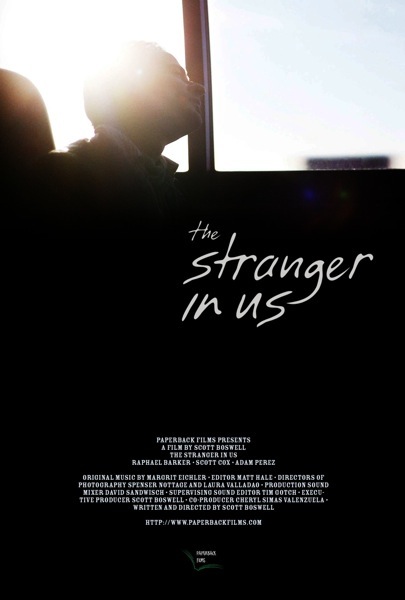
Local filmmaker Scott Boswell may not have set out to make the film he ended up with, but he stands behind the finished product. The Stranger In Usstars Shortbus’ Raphael Barker as Anthony, a young man who moves from Virginia to San Francisco in order to live with his boyfriend Stephen (Scott Cox). When the relationship turns violent, Anthony finds solace in his friendship with Gavin (Adam Perez), an underage street huster. I spoke to Boswell and Barker about the film’s origins, its unique content, and what this year’s San Francisco International LGBT Film Festival says about the future of queer cinema.
San Francisco Bay Guardian: What was your inspiration for The Stranger In Us? Where did the story come from?
Scott Boswell: Ultimately the story ended up being fairly autobiographical. But it started in a different place. Originally — and Raphael knows this because we talked about it — originally, I had intended to do a much more experimental film, kind of a hybrid documentary-narrative, because of my fascination with the Polk Street, Tenderloin area, which I’ve always had since I moved here in the mid ‘90s. I had considered doing a bit of a portrait of the neighborhood, and kind of infusing actors into it, just shooting a lot of footage and seeing what we came up with. There’s a part of me that wishes I had still done that, but in all honesty, I can say that after Raphael expressed some interest in the project, I suddenly felt like it needed to be more narrative in its scope. He didn’t suggest that. It was just my intuition around the project. So I had been talking to him about doing it for months, without even having a complete script, and continued writing it and auditioning actors. Eventually it became much more traditional in terms of its narrative. It became what it is now.
SFBG: And Raphael, what brought you onto the project?
Raphael Barker: Scott. There wasn’t really a finished script and a lot of it was sort of up in the air, but I was just really comfortable with the process and how it evolved, because it was Scott. He and I just hit it off really well.
SFBG: Did you collaborate at all in terms of creating the character of Anthony or writing the script?
SB: Not so much on the script. I run a screenwriting group, here in the city. It’s a small group and we meet a couple times a month, and they had the most impact on the final script. However, there are quite a few places in the script where it suddenly says, “We’re gonna improv here.” And there are definitely scenes where the actors brought the dialog to the scene. Quite a few, actually, especially between his character and Gavin, the street kid. Largely because they had such wonderful chemistry, and I felt like I could trust them to pull it off.
SFBG: Raphael, can you talk about how the improv process was, as an actor?
RB: Scott would set up the scene and then let us go, and just see what happens. And then would make comments as necessary and readjustments. But I felt very free to just let the scene kind of take over and do its thing. I think Scott and I are just both very instinctual. Like, “That’s not how I planned it, but I kind of like it that way. Let’s play with that.” I think especially when you’re talking about Gavin, there was something almost unwritten about our relationship that was allowed to evolve through improv.
SB: Right, because there’s a piece that’s semi-autobiographical that has a place in history, and then there’s the piece that — I feel like Gavin’s character brings a newness, a sort of unfinished, still to be defined ending. There was something about the energy that really brought novelty to the script.
SFBG: You said originally you wanted to showcase this particular neighborhood in your film, and then it became more of a narrative. But it’s still a very San Francisco film. How did you go about capturing that?
SB: The main thing was choosing that location as his studio that he moves into after leaving Stephen, which actually wasn’t true to my experience. However, the person on which Stephen is most based actually lives there, so I kind of flipped it. And the character on whom Gavin is based actually hung out in the Castro, not the Tenderloin. So I flipped those around, and then because the character is so stuck and lost and wandering, he was able to go out into the street and that became the portrait of the neighborhood right there. We had spent a lot of time trying to work out just how we were going to portray that, and ultimately he’s always in the space. I actually did go out and shoot footage of the neighborhood without Raphael, and none of that is in the film.
SFBG: Anthony moves to San Francisco from Virginia, so he’s experiencing the city from an outsider’s perspective. Why did you decide to write him that way? And Raphael, how did that affect your performance?
SB: I think it’s a very common experience in San Francisco. It seems like the majority of people I meet here have migrated from somewhere else. And I think especially for gay men, when we arrive here, we don’t always quite find what we’re expecting, and especially for queer youth, which is an idea that Gavin embodies. I’m very interested in that sort of push-pull between the desire to be in the city of San Francisco and the challenges that you can face when you arrive. So I was interested in exploring that experience, and I’ve found subsequently that quite a few people — they’re almost always gay men — have come to me and said that they relate to that experience. Different generations of men, and different decades of coming here. It seems to be a continuing phenomenon in a way. In that sense, I think it’s very much a San Francisco story, even though it could probably happen in just about any urban area, especially when someone who doesn’t have experience in an urban environment suddenly arrives and is just thrown into it.
RB: I experienced something very similar coming out here to chase after someone I was pretty in love with, and then being dumped like a week and a half after moving here. And just feeling like I didn’t have that orientation anymore, and everything in the city was associated with this person. I’m sure I’ve one of millions of stories of people — with San Francisco being a kind of pilgrimage, then as soon as we get here we complain about it. But we wouldn’t want to be anywhere else, so there’s kind of that love-hate relationship with it. So I could definitely relate to coming out here to be with someone and having all that kind of expectation and hope, and then me kind of losing that central focus and orientation and realizing, “Now what?” I think that’s a theme that’s not just gay or even queer, but it seems like anyone I talk to who comes from a different place has that similar experience. They knew they needed to be out of wherever they were at, but they weren’t sure what they were exactly coming into.
SFBG: The film also deals with an abusive relationship, which is something we don’t see a lot of in queer cinema. I was wondering why you think that is, and also why you wanted to include it in your movie?
SB: I don’t know why it is, but because it is [not often seen] is one of the main reasons I wanted to include it. Hustlers and street kids appear in a lot of gay cinema — and just to go down that tangent for a second — which is why I chose to not make that character the protagonist but a supporting role. In terms of same sex domestic violence, it is an issue that permeates probably just about any community, but I have seen and heard very little about it among same sex couples. There are some things, some things written and there’s an organization in San Francisco called Community United Against Violence that works to combat and end violence. So there are resources out there, but I wanted to explore it because it’s an issue that’s personal for me, on several levels. It’s something that I’ve experienced and it’s also something that I just personally have always cared about. I volunteered to do work at battered women’s shelters in the past—this was actually in Madison, Wisconsin, long before I’d ever had any kind of experience with it. What I find really interesting is the degree to which people don’t really understand it. No one thinks they’re going to enter a relationship like that. I certainly didn’t think so. I thought I understood it.
RB: Much less something that’s so countercultural in some sense.
SB: Yes, exactly.
RB: Like, “Oh, if I can requite this kind of relationship, that’s kind of the end game.”
SB: The thing is you don’t necessarily recognize it when you’re there. People always say, many people say and have said about this film, “Why does he stay? Why doesn’t he leave?” It’s interesting that people continue to not understand that issue, because it’s clearly a very common human experience. So I guess in a sense, that question to me opens up a dialog on the issue that I find very important. I’ve been asked that a lot from people, and so far, that’s only come from the very limited number of people who have seen [the film].
SFBG: Well, without sounding like I’m trying to justify the abuse at all, these characters are complex enough that you get a sense of why they’re together. You can see how they got to that point. How did you go about creating that, and making sure they weren’t too clear cut or one-dimensional?
RB: I think to show just how much we loved each other is one way to do it.
SB: Yeah, that was important. I approached this very much as a character piece. I mean, that’s what interests me as a filmmaker and as a writer. In terms of the kind of genres I might be able to work in, I think it’s an area I probably have more of a knack for. But I think it’s true for any genre you’re working in, you have to rewrite. You have to be able to get down the ideas and the scenes on paper, and then take a look at them and be open to feedback. And assessing where it is that they’re black-and-white or flat and one-dimensional, and trying to create scenes that are more organic and layered. So that’s what we did. Once I knew what the story was, it still took me a good nine months to write the thing before we started shooting.
SFBG: One last, much broader question. How have you seen queer cinema change over the years, and what is the direction that you see it taking?
SB: In just the past few days, in the films that I’ve seen at Frameline this year, I’m very excited. I think queer cinema has gotten better and better. I have reaffirmed my understanding of the necessity of LGBT festivals, because it has definitely gone through phases. There was kind of an indie new queer cinema in the early ‘90s, when Gus Van Sant was coming on the scene, and Gregg Arraki and Todd Haynes. Then in the later ‘90s and maybe early 2000s, it kind of evolved into a lighter, more mainstream cinema, which I actually don’t relate to as much. But the best of them are actually quite good. What I’ve seen more recently, and I hope our film falls into that, is really kind of the ability to look more closely at ourselves and tell our own stories without any kind of concern about the broader mainstream appeal. I know that those kinds of films still exist. I think that independent cinema has gotten to a place where it’s not just simply seeing ourselves portrayed on screen anymore, but it has to be good cinema now.
RB: I saw a lot of films at the Frameline festival two or three years ago when the documentary about the making of Shortbus came out, and it just made me realize that the quality — instead of it being a kind of niche genre, I don’t want to say the opposite of what you’re saying, but I almost see Frameline as becoming redundant, because the films are good enough to stand on their own. They don’t have to be a genre film or a niche or a sexuality genre film. We have to keep working and working toward the specific, and then eventually the specific becomes universal. And I think that’s the beauty of the films that are starting to come out. In the Frameline context, it’s going to actually make it almost redundant because they’re just going to be good films, period. That’s what excites me, because everyone’s experience is so unique. And sure, we’re working within paradigms and categories, but I think it’s just getting better.
SB: It’s interesting looking at where these films fit in in terms of festivals and markets and things like that. I guess what I was trying to say is that I feel like Frameline still needs to be around in order for these films to get shown, because they’re not all going to fit into SF International, they’re not all going to fit into all of the big festivals. The sort of bigger queer films coming out may not need Frameline. There have been a quite a few in recent years: Bad Education, Mysterious Skin, Capote. They’re playing at the bigger festivals or getting distribution without festivals. There is sort of a distinction there. But when I see something like I Killed My Mother, which just kind of knocked me on my ass because I thought it was so brilliant, I don’t know where else I would have seen it.
I’ve been obsessed with bees in general, and bumble bees in particular for some time now. I’m fascinated by the bumble bee’s thick tundra- adapted pelt that allows it to forage for nectar in way colder temperatures than your average sun-loving Italian honey bee. And then there’s the bumble bee’s relatively hardcore social structure, in which only the young bumble bee queens over winter, emerging alone in the spring to start colonies afresh.
I’ve even read that the first generation of a bumble bee queen’s colony can be stunted because the young queen had to do everything herself—gathering pollen and nectar, building the nest, tending to her developing brood—unlike the honey bee queen, which forms a permanent colony and has multiple female workers to help raise the young, clean the hive and gather necessary provisions each day.
But above all, I’m fascinated by the fact that something as small as a bumble bee plays such an important role when it comes to pollinating plants. Experts say that native bumble bee pollinators are important to the reproduction of many native flowering plants and food crops. And in Britain and the Netherlands, researchers have actually noticed a decline in the abundance of certain plants where multiple bee species have also declined. Then there’s the fact that for many crops, such as greenhouse tomatoes, blueberries and cranberries, the buzzier bumble bees are better pollinators than honey bees, and some species are produced commercially for their use in pollination.
So, I’ve been troubled by reports that some native bumble bee species are in decline, and that commercially reared bumble bees, reared on the East Coast and then imported to the West to buzz pollinate hothouse tomatoes, could be the cause.
And now the Xerces Society for Invertebrate Conservation and bumble bee scientist Dr. Robbin Thorp have petitioned the U.S. Fish and Wildlife Service requesting Endangered Species Act protection for Franklin’s bumble bee.
”This mostly black bumble bee was readily found throughout its range in southern Oregon and northern California in the early 1990s,” stated the Xerces Society in a press release. “Twelve years of surveys conducted by Dr. Robbin Thorp clearly show that this species has declined steadily. The decline has been so severe that only a single Franklin’s bumble bee was observed in 2006 and none since.”
“Over the last 12 years I have watched the populations of this bumble bee decline precipitously,” said Thorp, who is Professor Emeritus at UC Davis “My hope is this species can recover before it is too late.” The Xerces press release notes that the cause of the catastrophic decline of Franklin’s bumble bee is hypothesized to be an escaped exotic disease that may have spread from commercial bumble bee colonies to wild bumble bee populations.
“Research in Dr. Sydney Cameron’s lab at the University of Illinois is underway to test this hypothesis,” the press release notes. “Other threats that may be harming Franklin’s bumble bee populations include habitat loss and degradation, climate change, pesticide use, and invasive plant species. Recognizing the decline of Franklin’s bumble bee and numerous other North American bumble bees, the Xerces Society, Thorp, Defenders of Wildlife and the Natural Resources Defense Council recently petitioned the USDA’s Animal and Plant Health Inspection Service to protect wild bumble bees from the threat of disease by regulating commercial bumble bees.
Specifically, the petition asked the USDA-APHIS to create rules prohibiting the shipment of commercial bumble bees outside of their native ranges and to regulate the interstate transport of commercial bumble bees within their native ranges by requiring permits that show that bumble bees are certified as disease-free prior to movement.
“It is vital that the U.S. Fish and Wildlife Service Act quickly to protect this bumble bee,” said Sarina Jepsen, Endangered Species program director at Xerces. “We hope that an Endangered Species Act listing will encourage the USDA-APHIS to protect wild bumble bees from future threats posed by nonnative, commercial bumble bees.”
“The decline in Franklin’s bumble bee should serve as an alarm that we are starting to lose important pollinators,” said Scott Hoffman Black, Executive Director of The Xerces Society. “We hope that Franklin’s bumble bee will remind us to prevent pollinators across the U.S. from sliding toward extinction.”
Respect for civilian control over the military chain of command. That’s what Obama talked about in his comments on “accepting the resignation of” (that is, firing) Gen. Stanley McChrystal. And it was the right point to make. The president noted that McChrystal’s conduct “doesn’t meet the standard of a commanding general,” and I think what he was really saying was this:
I may be a Democrat, and I may be (something of) a liberal, and I may never have served in the armed forces, and the military officer corps tends to be overwhelmingly Republican and conservative, but guess what: I’m still the boss. Don’t forget it.
I still think the real issue here isn’t McChrystal — it’s the fact that the war in Afghanistan was and is a mistake, and we can’t possibly win, and the president can shuffle the generals around all he wants, but it won’t change the doomed nature of this pointless mission.
But it seems pretty clear from the tone of Obama’s remarks that he saw a need to remind the military about respect for the commander in chief. And that’s a good thing: When the military starts getting uppity, and the senior officers start acting as if they know more about running things than the elected leaders, you plant the seeds for some very nasty trouble.
And by the way: What a coup for Rolling Stone, for Michael Hastings and for the world of in-depth reporting. It took Hastings more than a month to get this story; without the support of a magazine that could pay for that kind of work, we never would have learned how the military leadership in Afghanistan feels about the president. A reminder that despite the light-speed pace of modern journalism, paying writers to take the time they need to get big stories is still central to democracy.
What’s your favorite World Cup song? We’ve covered some smoothies in Gavin Hardkiss’ “Mundo Via Afrika,” and chatted with Eux Autres about their contribution to the games. Salon.com just poured a cooler of haterade all over Shakira’s head for her “Waka Waka,” (probably because they don’t like Fozzie Bear). But there’s tons of delightfully earnest attempts to encapsulate-cash in on the futbol crazy sweeping the globe for the next month. Angelique Kidjo has hit us up with a Curtis Mayfield cover for Africa, and K’Naan… well I love K’naan. His video has a lot of backflips on beaches, which I support. But did you know that SF has a hat-tricking local troubador of our own?
Yes sir, meet Nader DeAik, who had me believing he was a pop star from Bethlehem who was throwing the Bay a bone with a few shows here and there to entertain us with his greatness. But no! He lives here! He is a curly haired, jovial looking man who wants to entertain us with his smiles and Americanized wardrobe (don’t believe me? check out his earlier video shot at the de Young – now that’s an “international” pop star!). He has recorded a song called “Strike!” that you must set aside your criticism, and just revel in.
Glory in his greatness. San Francisco, you are now represented at the World Cup. I hear Henry Thierry bumps this in the locker room:
Why’d Nader feel compelled to unleash this into our world? “I’m a huge soccer fan, and a player as well,” the soft spoken pop star told me in a recent phone interview. “I wanted to share my excitement and celebration with soccer fans worldwide. I decided to make a song full of energy and spirit.”
So… did tapping into the billions of soccer fans out there (three billion alone took in the opening game this year) up Nader’s bottom line? “It’s a world sport, it’s one of the biggest events in the world. Its great exposure for me. I’ve been getting a lot of great feedback regarding the song.”
“It’s been playing on radio stations in the Middle East, and it’s been playing in clubs here,” says Nader, who added he wasn’t aware of any other Bay composed World Cup songs this year, and that DJs get hyped to play a local joint to whip up soccer spectators into a frenzy.
Fab, Nader. DeAik’s clearly a big believer in the power of the soccer ball to bring people together, so tell us – is it important for the Bay to be represented by a World Cup song (one at least, right?) “Yes absolutly,” he decided. “Soccer is very popular in the Bay area, and I think it’s great not only for the Bay area, but the US as well. The other day I was at a soccer field and I was shooting parts of the music video with the youth. Watching the youth play soccer, sing along to the song. It was just great.”
Nader DeAik
Aug 8, check website for times and prices
The Bethlehem Association 25th Anniversary Convention
The fate of San Francisco’s Bicycle Plan and the four-year-old court injunction against implementing its projects remains unclear following a nearly three-hour hearing today that delved deeply into the minutiae of traffic studies, mitigation requirements, and the dictates of the California Environmental Quality Act.
But Superior Court Judge Peter Busch did make a few things clear, most notably that it’s a legitimate decision for city leaders to give more street space to bikes, even if it slows down cars or Muni. “That’s the policy question that’s not for the court to decide,” he said, cutting off plaintiff attorney Mary Miles’ repeated arguments that the city shouldn’t be favoring bicyclists because they are a minority of road users. He later repeated the point: “I don’t get to decide that the Board of Supervisors’ policy is misguided.”
The issue at hand – which was argued to a level of detail that only a lawyer or traffic engineer could really appreciate – was whether policymakers had the benefit of a full analysis of all the various impacts and options before they unanimously decided to certify the four-volume EIR and green light 45 of the 60 near-term bike projects it studied.
“The analysis had to occur before the city approved the project,” Miles, who sued the city along with anti-bike activist Rob Anderson back in 2005, told the court today, charging that “there’s no mitigation or analysis in the EIR” that their suit forced the city to prepare and adopt last year.
Deputy City Attorney Audrey Williams Pearson strongly disagreed, asserting that “one of the great things about this EIR is the breadth of alternatives studied” and noting, “For complicated projects, caselaw is clear that it’s almost impossible to eliminate all impacts.”
And this is certainly a complicated case, as all sides acknowledged. Part of the reason for that was the city’s 2004 decision to mention dozens of specific projects in the plan – a legal strategy some bike activists have criticized – without doing a full EIR, which has proven to be a complicated endeavor that took two years and blazed a new regulatory trail because of all the intersections and factors it needed to study.
“There probably has never been an EIR for a project like this. This is a strange project to prepare an EIR for,” Busch acknowledged, noting the difficulty in deciphering what is then legally required by CEQA. In the end, he gave no indication how he was leaning, asking both sides to submit proposed orders by July 6 and responses to those orders by July 13, meaning that it will likely be at least another month (and up to 90 days) before we have a ruling.
But Busch certainly didn’t seem to buy Miles argument that this was a fatally flawed study that did little to study alternatives or mitigation measures, which she charged was a gross violation of CEQA and abuse of the city’s discretion.
Miles seemed to be throwing out a wide range of accusations hoping that something would stick, belittling every city claim to have diligently looking at alternatives and employing hyperbole and sweeping denunciations with such regularity that Busch finally challenged her on it.
“That’s such an over-argument it leaves me wondering about the rest of your argument,” Busch said after Miles asserted that the voluminous EIR contained no references to any of its underlying studies and source data.
Busch also noted the contradiction between her complaints that the EIR didn’t include all the traffic count data that went into its formulas for determining changes to the level of service at intersections and her complaint that the EIR was too big and unwieldy. “So you’re saying the info should have been added to what you say is already an overlarge EIR?” Busch asked.
Later, he took Miles to task for advocating that the threshold the EIR used for determining whether delays to Muni service rose to the level of a significant impact should have been the subject of separate public hearings, just as she argued that virtually every detail in the plan should have been explicitly laid out in full detail and subject to challenge.
“You’re describing an endless process that would be impossible to comply with,” Busch told Miles.
In fact, Pearson said CEQA specifically says such fine details shouldn’t be in EIRs. For example, while the EIR discusses impacts to the level of service at every intersection affected by the plan – a complicated formula involving 30 different data points, which were in a Transportation Impact Study that the EIR referenced – she said it didn’t need to all be in the EIR. “If this detail was in the EIR, it would turn the four-volume EIR into an eight-volume EIR,” she said.
Miles challenged the city on not going into that same level of detail in justifying why potential mitigation measures for each impact weren’t included in the EIR, something Pearson argued isn’t legally required (although she did trip up in citing a case that did require such analysis, saying that court ruling was wrong and earning a rebuke from Busch, who said it’s not in his power to overrule a higher court’s ruling).
Pearson also noted that for all the complaints about not studying enough alternatives, neither Miles nor Anderson have suggested any. “I think it’s telling that the petitioners haven’t come up with a single alternative that we should have looked at,” Pearson said before acknowledging the point by Miles and Busch that’s not incumbent upon petitioners in cases like this.
But Pearson seemed more persuasive when she noted that in a built out city, there’s only so much the city can do to find creative ways to offset the traffic impacts of giving more space to bikes. “This is not your typical project. We are not working on a blank slate. We are working within the constraints of the city’s existing roadways,” Pearson said.
In the end, Busch asked both sides what the remedies might be if he finds some flaws in the EIR, expressing a desire to wrap this case up without extending the current wide-ranging injunction against all bike projects. But Anderson said the hearing gave him hope that the judge might not let the plan proceed without more work: “It’s taken longer than I thought, which tells me he has some serious concerns.”
Nah, I’m not really going to saddle you with a “clips” column — that would be cheesy. But I do happen to have a bunch of interestingish non-question stuff from my inbox, so bear with me.
First up, an article from The New York Times called “The Perils Of Sexual Roundelays,” which is kind of refreshing because, despite the title, it actually pokes some holes in the “ZOMG hooking up and friends with benefits will be the death of love and marriage as we know it” cultural panic usually expressed in articles called “the perils of sexual” whatever. Sort of. The article (www.nytimes.com/2010/05/09/fashion/09Studied.html) describes what may be the first major study of non-monogamous behavior among adults). The study sets out to examine whether what the researchers call “non-serious relationships,” (a.k.a. “hooking up”) lead to “concurrent partnerships” (hooking up with lots of people, a.k.a. being a big old’ slut”).
The writer, Pamela Paul, keeps her head better than most, but even so it’s interesting to note the way the article treats non-monogamy not as a risk factor for STDs or eventual loneliness and heartbreak, but as an unquestioned Big Bad all on its own, something to be avoided even by those who appear to want it.
Eventually, though, Paul does come around to the sensible conclusion that “all this doesn’t necessarily mean hooking up leads to non-monogamy.”
On to the next item, a press release that may be of interest to you job hunters who may be just a little bit curious about what it might be like to work in the sexual entertainment industry. As a code monkey.
The sex industry’s premier trade show — CyberNet Expo — takes place July 8-10 in San Francisco.
This year exhibitors are making a real effort to attract and meet with jobseekers who have Web design, programming, and technical skills.
The adult online industry is hiring! Hiring companies are meeting with professionals who have skills in Web designing, photo and video editing and encoding, Web hosting and billing, and technical programming of any online language (PHP, C++, Java, etc.). Consultant and freelancers are in demand, too. Bring your resume and receive 20 percent off admission fee
You’re welcome. Good luck.
My last item is more in the way of a question for you intrepid sex scouts. I got a come-on from one of my favorite independent sexe shoppes, Babeland, and was reminded that I haven’t had an opportunity to examine either the SaSi, the very expensive smart not-a-vibrator that was last year’s big sex-toy sensation, or the more recent, vaguely comical “Sqweel oral sex simulator.” The Sqweel is a disk-shaped apparatus that resembles a small, pornographic Ferris Wheel, or my asthma meds dispenser — if my asthma meds dispenser could perform cunnilingus. It’s a little wheel studded with cute little pink “tongues” and it’s so peculiar yet promising that I need to hear from someone who’s encountered one in real life. Does it work? Does it get, um, tangled? Can you use it without laughing?
Kylie Minogue’s take on “The Locomotion” has been a highlight of Hunx’s DJ sets. It set the dancefloor afire at a Goldies party a few years back. His version is buoyed by Nick Weiss’ Hi-NRG-meets-happy-house production.
The wacky Drac attack “I Vant to Suck Your Cock” finds the two playing with haunted house dick shtick. “Can a Man Hear Me” is the highlight, its me-as-may vocals like Stephen “Tin Tin” Duffy with a swagger. A different side of Hunx, and more proof that TeengirlFantasy‘s Weiss is pretty brilliant.
It’s no battleship Potemkin but the cruiser Varyag, which recently docked in our waters, is no slouch. Neither is its “relaxation cabin.”
***** Speaking of Russia, a Moscow metro station was recently made-over in honor of Fyodor Dostoevsky and the morbid results sound both hideous and captivating: