SFBG Blogs

The Performant: We want the airwaves

0

Aeriel Art Soars at Theatre Artaud and Teatro Zinzanni

Do you dream of the day when you finally learn how to fly? For aerielists, that future is now, and that dream an everyday reality. It’s a career choice not for the faint of heart — right up there, I’d say, with driving a fire truck or sailing around the world on a catamaran made of plastic bottles. But I imagine the psychic rewards to be tremendous. Life on the edge. Teasing gravity, tempting fate. To soar—perchance to jetstream.

During “Burning Libraries: Stories from the New Ellis Island” at Theatre Artaud, the oral histories of children take flight with the help of four dancers, two of whom (Susan M. Voyticky and Kerri Kresinski) spend considerable time in the air—elevating the simple text to reverent heights. Swooping from moonbeams made of aerial silks, Voyticky escapes from the segregated south, and later in the production, Voyticky and Kresinski dance in the sky, side by side, as fireworks (projection provided by Ian Winters) explode around them.

They collect eggs from the “tops of trees” and, in a wrenching history about the Port Chicago disaster, they go up in flames, and then form, with their earthbound companions, a monument to their own memories, shrouded behind the silks, frozen in time. The entire performance reminds somewhat of Blixa Bargeld’s “The Execution of Precious Memories” enacted on the same stage two years ago, right down to some of the same flaws (nagging paucity of cohesion and character depth) but the sheer pleasure of watching the unencumbered flights of the aerialists cannot be understated.

There’s something about watching an aerial performance unfolding genteelly on a stage, and quite another thing again about watching it swooping right over the dinner table (“Oh waiter! There’s a ‘flyer’ in my soup!”). You probably won’t regret it for the rest of your life if you happen to miss attending the latest Teatro Zinzanni  production “License to Kiss II, a Sweet Conspiracy” but if you’ve got some well-heeled relatives hanging around for the holidays, then what the heck.

Get them to take you and hang on to your soup spoon when sensuous Seattlite Kari Podgorski eats some magic love cherries and takes to the air in racy red lace lingerie. Beautifully framed by the antique swoop of the one-hundred year-old Speigeltent, her aphrodisiac acrobatics are a sweet treat. Twice as nice, the dynamic husband-and-wife Vertical Tango team (Sam Payne and Sandra Feusi), play out a passionate courtship in the air, spinning sinuously along the length of an impressively girthed stripper pole.

And just for the nervously giggling patrons inevitably seated in the font rows of tables, an interlude with a giant teddy bear on a tightrope will make the familiar pull of gravity seem curiously comforting—once he’s well out of pointblank crashdive range, that is.

Breaking down the cost of hosting the America’s Cup

0

San Francisco’s Budget and Legislative Analyst has released a report outlining the costs and benefits of hosting the 34th America’s Cup in San Francisco. Bottom line: If the world-famous yacht race is held here, it will cost the city an estimated $42 million.

The Guardian will publish a more detailed report in coming weeks, but for now, here are a few highlights from the report, which was requested by Sup. Chris Daly and released to the media on Nov. 18.

* The overall cost breaks down like this: The Budget Analyst estimates that the city would receive an estimated $22 million in revenue, and incur new costs of $64 million, resulting in a net loss of $42 million.

* The city would receive an estimated $3.6 million from property tax revenues from new development (probably luxury condos) if the event organizers built on the port properties they’d receive as part of the deal. Billionaire Larry Ellison, who has the ultimate say in selecting the venue for the America’s Cup, would receive several port properties rent-free for 66 to 75 years, under leases which haven’t yet been formally approved. However, if the city obtained a private developer through a competitive process instead, it could receive increased tax revenues of $89.8 million. According to the Budget Analyst, this estimated net loss of $86.2 million “is in addition to the estimated net loss … of $42.1 million.”

* The major benefit to hosting the prestigious yacht race in San Francisco would be an estimated $1.2 billion in new spending in San Francisco’s economy, and the Budget Analyst predicts a range of $928 million to $1.6 billion in economic activity – undoubtedly a good thing for a troubled economy.

* However, the creation of “9,000 jobs” you may have heard about isn’t as simple as it sounds. According to the report: “All ‘jobs’ predicted … are not permanent full time jobs, and therefore would not result in hiring 8,840 employees.” Instead, the Budget Analyst prefers to frame it in terms of work hours, noting that the additional work would be either absorbed by the existing workforce (as in a server waiting on more customers per hour), greater overtime for the existing workforce (think police), or temporary jobs.

The Budget Analyst is careful to state that the report is not meant as a recommendation one way or another for hosting the America’s Cup. “However,” it states, “it is the responsibility of the Budget and Legislative Analyst to report the facts to the Board of Supervisors.”

Live Shots: Amy Sedaris, Herbst Theater, 11/15/2010

0

“You gotta come see this!” called my roommate Melbell from her bedroom. It was my junior year in college and Melbell and her beau Goose were curled up on her futon, their eyes glued to her laptop.

A crazy lady with buck teeth and caked on purple eye shadow was dancing around on the screen, wearing mom pants and a turtleneck. For the next half hour I watched in horror and joy as Jerri Blank ran through the halls of Flatpoint High School, in what was my virgin experience of watching “Strangers with Candy” and the incredibly funny Amy Sedaris. Sedaris is on tour for her new fantastic how-to book, titled Simple Times: Crafts for Poor People.

She explained at her evening appearance at Herbst Theater that the book has been a collaboration between friends, family, and little children, and that most of the crafts in the book do not exceed the ability of a five year old. Some of the chapters include coconut crafts, potholders (her favorite) and also “The Ten Commandments of Crafting”. During the show she also showed off her new felt phone, on which she received several calls and had to excuse herself to the host while she answered them. Sedaris’ ability to make anything funny, including a felt phone, is why so many people love her. I’m sure everyone left the theater that night with sore cheeks from laughing for hours on end and a pocket full of handy ideas on how to get uber-crafty this holiday season.


People’s history: the writing’s on the wall… and now, in a book

0

A thousand pox upon the head of traditional history books. Leaving aside all matters of sexism, classism, imperialism, and plain old fact suppression, they’re usually a pretty boring read on top of it all. But the writing’s on the wall: Celebrate People’s History is releasing its own version of “how we got here”’s greatest hits — and the book release party is Sat/20.

Josh MacPhee has been making unsung history the writing on the wall since 1998. Though technically he sees himself as an anarchist, MacPhee is the putative head of the poster collective CPH, having commissioned over 100 original radical history posters over the years. Those prints have made their way around the world, to classrooms and street corners. The signs join a legacy that MacPhee identifies — in Celebrate People’s History‘s introduction — as having begun with Cuba’s Organization in Solidarity with the People’s of Africa, Asia, and Latin America (OSPAAAL)’s work during the ’60s, and which stretches to include the pieces done locally by artists of the Mission School and the Billboard Liberation Front. 

What’s special about the CPH pieces among this line of populist propaganda are a proactive focus on history’s shining moments, those points in time where people came together and resistence against hegemony held. MacPhee’s book includes posters of Harriet Tubman’s historic crossing of 750 escaping slaves over the Combahee River in South Carolina in 1863 (with the aide of Union troops, the only female-led military action in the history of the country) and the 2003 city shutdown of San Francisco in response to the bombing of Baghdad.

This is how the book looks. Right page: duo-tone poster. Left page: typed-out version of its text. The codification on the pages make the triumphs seem more real, somehow — like most things do when they are written down. 

MacPhee writes that he felt the need to bind the posters together to make visible the “broader sweeps of the past,” and the evolution of radical social movement. The end product may be a lot less exciting than seeing a CPH poster on your corner’s electrical box, but it is a gas to see them neatly placed on pages, next to their message codified into uniform typeface. 

In the wake of sit-lie’s triumphant refutation of the freedom of public space and in a time where some are questioning poor people’s right to even live in this city, I think the questions below, posed by MacPhee in his introduction to the book, is pretty pertinent:

Can our streets become active galleries of ideas and information we can use to understand who we are and where we come from? Can these galleries evolve and change, instead of calcifying, fading, and cracking, and make room for new ideas, images, and conversations?

Here’s hopin’… 


Celebrate People’s History book release

Sat/20 7 p.m., free

Center for Political Education 

522 Valencia, SF 

(415) 431-1918

www.politicaleducation.org


About that “far left beating…”

61

Our old pal Chuck Nevius is gloating about how the “far left” (I guess that means the people who would have been called mainstream Democrats a generation ago, the ones who believe in the public sector and think economic equality matters) got beaten badly in the supervisors races. And he uses Aaron Peskin as the personification of the far left (amusing, because if you actually talk to Peskin, and look at his record, he’s hardly a crazy leftist. And I say that as someone who is. A crazy leftist, I mean.)

Anyway, here’s what Nevius missed:

Malia Cohen is on the Board of Supervisors because of Aaron Peskin.

Look at what happened in the ranked choice voting. Cohen came from back in the pack because of second-place votes — and a lot of that was because the Democratic County Central Commitee put her as its #2 choice, after DeWitt Lacy, who didn’t run much of an effective campaign.

How did she get the #2? How did a candidate who is bad on tenant issues beat out Tony Kelly, who was by far the most progressive contender, at the supposedly “far left” DCCC? That was the work of Peskin — who, to the chagrin of a lot of progressives (including me) decided to vote for and promote Cohen as the second choice on the slate.

First of all, that was hardly the move of a “far leftist,” since Cohen certainly ran as a more moderate candidate. Second, it showed that the “far left” isn’t some giant organized hippie commie bloc led by Commisar Peskin; it’s a sometimes-united, often-fractious coalition that shares some interests and agendas but doesn’t always have its shit together.

Then there’s this notion the moderates swept into power. Actually, by chance of the way lines are drawn, the even-numbered seats have always been more conservative than the odd-numbered ones. In this case, in many of the races, the progressives were (to quote Calvin Welch) “playing with the house’s money.” Check it out:

D2: Janet Reilly would have been much more reasonable than Michela Alioto-Pier, but Mark Farrell won’t be any worse. Almost by definition, he can’t be any worse than Alioto-Pier. That was a conservative seat, and still is.

D4: No change at all, still Carmen Chu, still a moderate-to-conservative seat.

D6: I supported Debra Walker, but by no stretch of the imagination is Jane Kim anything but a progressive. She’ll be more conciliatory than Chris Daly, but that’s not difficult; Walker would have been more conciliatory, too. Different people, different personalities. But in the end, Kim will be a progressive vote; I mean, she started out as a Green Party leader. The “far left” held that district.

 D8: Definitely the house’s money. Scott Wiener won’t be a whole lot different on the issues than Bevan Dufty. If Rafael Mandelman had won, it would have been a net pickup for the left, but as it is, I’d call it a wash. Sure, the DCCC endorsed Mandelman and he lost, but we all know that was an uphill battle; Wiener has been working that district for years, had plenty of money, was better-known, had the support of Mark Leno, who once held that seat and is immensely popular in the district.   

D10: Sophie Maxwell was never part of the progressive bloc on the board. Sometimes she voted with them; sometimes she didn’t. Tony Kelly would have increased the size of the progressive majority; Malia Cohen doesn’t change it.

In two years, five key progressive seats will be on the ballot — Eric Mar seeking re-election in D1, David Chiu in D3, Ross Mirkarimi termed out and an open race in D5, and David Campos and John Avalos running again in D9 and D11. That’s where the battle to hold the progressive majority will be fought — and those are districts where the DCCC has more influence anyway.

In other words, since the return of district election, the progressives — the “far left” if that’s what you want to call us — have only held one of the five even-numbered seats, and still do. That’s not spin, Chuck; that’s reality.

 PS: Just for fun, I went back four years and checked out our endorsements for supervisor the last time the even-numbered seats were up. W endorsed Sophie Maxwell for re-election in D10 (with reservations, and lacking a credible progressive alternative) and Daly was re-elected with our support in D6. But our candidates lost in D2, D4 and D8.  Nobody talked about the left getting destroyed.

Memo to Jerry: Yes, you can raise taxes

6

The students and professors at UC have come up with all sorts of creative ways to avoid or minimize tuition hikes, but there’s an option that the Regents (and so far, the new governor) haven’t put on the table: An income tax surchage on the irch and big corporations to pay for public education. Guees what? A majority of Californians are in favor of that approach. In fact, according to the Public Policy Institute, which generally produces some of the most accurate polls in the state, Californians are far more willing to see their own taxes go up than to see student fees raised.


And PPIC didn’t ask the direct question that I would have asked — would you favor a small tax increase for the wealthiest Californians to pay for reduced tuition at California’s public universities? — but based on the poll results in general, I think the response would be a resounding yes.


So there you go, Jerry — a chance to immediate take a stab at the budget crisis in a way that would be popular almost across the board.  

Inside the UC protests

1

Hundreds of students showed up at the Mission Bay campus Nov. 17 to protest the eight percent tuition hike that UC Regents are expected to approve on Thursday, Nov.18.


The protests turned violent after police tried to prevent students – and members of the public – from attending a public meeting on the finances of a public university.


The latest hike would amount to a cumulative tuition increase of 40 percent this year alone, bringing the cost of what was once a free public education, and as recently as 1995 was just $1,300 a year, to more than $10,000 — pushing a lot of students out.


Nathan Brostom, vice president of UC business operations, told the Regents that although the university’s balance sheet looks good, its liabilities are growing. Future increases are a possibility, he said, in light of a state budget that leaves less and less for public education.


Of course, UC is also lot of money on campus expansion.


The students made it clear where they stand on this issue: they refuse to believe that tuition hikes are the only way. And there’s a strong case to be made that the university has other options; Bob Meister, a professor of political and social thought at UC Santa Cruz and president of the Council of UC Faculty Organizations, released a detailed letter to the Regents explaining several options for avoiding the increase. He spoke to the board during the public comment part of the meeting.


You can read his letter here (PDF)

At a press conference during the event, UCSF Police Chief Pamela Roskowski noted: “I want to acknowledge that tensions are high.” That was an understatement.


Protests lasted all day, leading to 13 arrests.


The first major police backlash happened when protestors attempted to rush a police barricade, which stood between them and the regents inside the community center. Police lined the barricade’s inner wall and pushed back as the wave of sign-holding students swelled against it.


Roskowski referred to the “angry, unruly, aggressive” protestors and said that they picked up a part of the barricade and used it as a weapon, injuring at least one officer. She also said that protestors tried to pull an officer over the railing and onto their own side. This was when police retaliated with pepper spray — and, by the looks of what was caught on camera, loads of the stuff.


Roskowski defended the use of pepper spray, saying it is the least lethal weapon that officers carry, and that police used it here “in lieu of a baton.” The video shows police spraying protesters with what looks like a hose.


In a separate confrontation, a large group of protestors apparently attempted to enter the community center from a walkway in the adjacent parking garage. Video shows protestors pushing against a wall of police officers, who stood as a human barricade.


In another video, one of the officers breaks away and enters the crowd. He then struggles with protesters momentarily before he regains his footing and stands in the crowd’s center — with his gun drawn and pointed at the crowd.


Roskowski said the officer attempted to fend off the protestors, but that they took his baton from him and struck his head with it, and he pulled out his gun in self-defense.


We’ve looked at the video a number of times, though, and while the scene is chaotic and it’s not always possible to see the officer every moment, and he does lose possession of his baton at one point, there’s no clear visible evidence of any protester taking it from him. And there’s no evidence at all of anyone hitting the helmeted officer with the baton.


In fact, it’s hard to figure out why he charged into the crowd in the first place.


Look for yourself.


The student who allegedly attacked the officer with his own baton has been charged with assault with a deadly weapon. The remainder have been charged with obstructing an officer from the discharge of his/her duties, which is a misdemeanor.


When asked whether there would be an investigation into whether today’s police response was appropriate, Roskowski said “There is always an investigation.”


The police force present at the Regents meeting consisted of 60 UC officers and 35 borrowed from the University of San Francisco.

Folsom gives good skrill at the Armory

0

I’ll admit I went to Kink’s baroque bordello atop the Mission Tuesday night to check out the fine china and torpedo breasted, roped-up female statues  – but I stayed to watch men in leather pants give away monies to local angels. 

Those dashing fellows would be Folsom Street Events, who used the ambiance of the Amory’s penthouse to donate $326,161 in 2010 proceeds from the Fair, Up Your Alley, and Magnitude to their 16 beneficiary non-profits. It was a gentle flog on the ass of a reminder to anyone who says that perverts never did anything for our city, not to mention a welcome sign that our great grant-making institutions haven’t completely gone under yet.

Who got their sticky paws on the giant cardboard signifier? Everyone from Pets Are Wonderful, the support agency for low income patients and their animals, to the Queer Cultural Center, to SF Sex Information (for a full list of the leather set’s lucky ones go here). The presenter and announcer of all this do-gooding fuzziness celebrated our momentouxxx surroundings by thanking Kink creator Peter Acworth, who was padding about in baggy jeans and flip-flops, for using the space “even if we don’t enjoy it quite the way you do – or maybe we do, just in different clubs.”

FSE executive director Demetri Moshoyannis told me that the most that his organization has ever donated in a year is $350,000 – but at close to $4.5 million over the history of the fair, Folsom’s making the SF’s charitable contributions look like they just got done skinny dipping in a frigid mountain pool. 

But who can focus on non-profit pissing matches when there’s cock ring cake to be had? Not to mention the well-scrubbed, epically proportioned dinner tables on which one ponders setting down one’s app plate, the chains hanging becomingly from the rather sumptuous ceilings, and the fifteen-foot high oil painting in the Amory stairwell of a well dressed woman offering scraps to a dignified greyhound and crouching blonde clad in nothing but a leather doggie mask? 

Fire and Icing cock ring cake: so good, it was real hard to get a slice. Photo by Caitlin Donohue

“Did you notice the statue?” a spiky haired attache in leather pants inquired in the midst of our reluctant retreat from the Armory’s philanthropic festivities. We had, possessing the facility of sight and rudimentary powers of observation – she stands four feet tall and occupies the center stage of the sitting room upstairs. 

“Did you know that Peter Acworth’s mother sculpted that?” We are treated to the history of the busty bust, who apparently went through three drafts before Acworth told Momma that her lady’s tits were of a prominence suitable for placement in his debauched drawing room. 

As this conversation took place alongside a glass case containing Kink’s gift shop, we had the chance to admire the red and black towels for sale (at one point complimentary clean ups for the on-screen talent, recently put into production when guests started filching them for their own). And then off into the night we went, grateful to see that San Francisco’s sex community is still well endowed in the areas of financial generosity, artistic vision, and commercial enterprise. 


Processing the mayoral transition

5

The question of who will be the next mayor of San Francisco wasn’t any clearer by the end of the Nov. 16 Board of Supervisors meeting, but many expressed a desire for an open and transparent process with accountability to the public. The board approved a motion by Board President David Chiu to have the Clerk of the Board propose an process for selecting a successor mayor, which will come under consideration at the next meeting. But with only a handful of board meetings left before the new board is sworn in on Jan. 8, there is a high level of anticipation.

Clerk of the Board Angela Calvillo confirmed that her office is drafting a proposed process for mayoral selection. Calvillo said the proposal would be submitted for consideration at next week’s meeting, and it will be available to the public on the city website by Friday, Nov. 19.

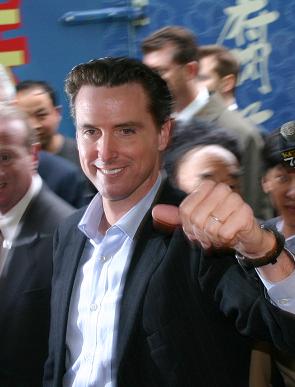
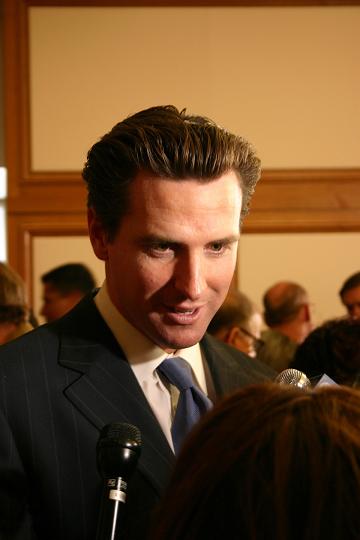
Essentially, the board could choose from a number of options at its next meeting on how to appoint a successor mayor once Mayor Gavin Newsom vacates office. Whatever the Board decides prior to Jan. 3, when Newsom is sworn in as Lt. Governor, will not have the force of law, since there won’t yet be a vacancy. So a second vote will have to be taken Jan. 4 to make the official appointment. Newsom has said he is “99 percent sure” that he will vacate the Office of the Mayor on Jan. 3.

According to Santa Clara County attorneys — who are filling in for City Attorney Dennis Herrera since he has a conflict-of-interest as a mayoral candidate — neither the Charter nor the Municipal Code dictates a specific process for the Board to use in selecting a successor mayor. So, the board could either follow the regular appointments procedure under the current Board Rules, or it could devise its own process.

The Clerk of Board is now hammering out that unique process, as directed by the board, and the board may vote to modify and adopt that process next week — but since a vote to adopt it would constitute an amendment to the board rules, it would require a super-majority of eight votes.

If there aren’t eight votes, then the board may still opt to set forth an appointment process under the current board rules. “I strongly believe that we do have the ability to effectuate an appointment without amending the board rules,” Sup. Chris Daly said. Daly told the Guardian that he has submitted a motion to take nominations and appoint a successor mayor, which will appear on the adoption without committee reference calendar at next Tuesday’s Board meeting. However, a similar motion put forth by Sup. John Avalos wasn’t able to gain the needed support.

If the board went through the normal appointments process, it would require sending nominees through the Rules Committee for consideration – but since it wouldn’t be practical to have just three members of the board recommend a mayoral appointment to the full board, all 11 supervisors could sit as a Committee of the Whole instead.

The timing is important because if supervisors cannot agree upon a process, or gain enough support for a single nominee, then the task will fall to the new Board of Supervisors, who will be sworn in Jan. 8. If the current board doesn’t reach a decision by Jan. 4, Board President David Chiu will automatically become acting mayor. Once the new board is sworn in, it can continue whatever appointment process has been set in motion or decide to initiate a new process for appointing a successor mayor. If the current board appoints a successor mayor, however, the new board cannot revoke or otherwise affect that appointment.

There are a slew of questions still at play. For example, under conflict-of-interest laws, when some one is nominated as successor mayor, he or she must leave the room and is barred from influencing the process in any way. The idea was bandied about at the Nov. 16 Board meeting to require nominees to respond to questions from the board as part of a public forum, but it’s unclear how a supervisor who has been nominated could respond to questions from his or her colleagues while being sequestered and prohibited from influencing the process.

Although word went out that interested members of the public should show up at City Hall around 4 p.m. Nov. 16 to weigh in on the discussion about appointing a successor mayor, the conversation didn’t get underway till much later.

Sup. John Avalos had submitted a motion to vote on an interim mayor and then vote a second time to ratify that appointment once Mayor Gavin Newsom had vacated office. However, his motion was amended to simply take public input and discuss the process of appointing a successor mayor.

Members of the public waited patiently, and when it was time, they lined up behind the speakers podium wearing neon sunburst stickers that read, “Let the Sun Shine In!” Local writer, artist, and activist Tommi Avicolli Mecca even sang the refrain of the song by that name, before imploring the Supes to “Get this done now, and give us a good, progressive interim mayor.”

Labor activist Gabriel Haaland urged the current board to agree upon an appointment instead of handing the responsibility over to the next board. “People who’ve never held an office hour in their life should not be making this decision,” Haaland said.

Christopher Cook highlighted the challenges that the new mayor would face. “We’re talking about a less-than-average amount of time to prepare for an absolute maelstrom,” with regard to the city budget, Cook noted.

“Let the sun shine in” seemed to be the catchphrase of the evening. Before the public weighed in, Sup. Chris Daly called for an open, transparent process for the appointment of the new mayor. “Conversations about mayoral transition have been happening behind closed doors, not in public session, for the better part of this past year,” Daly charged. “It’s time to hear from the public.”

But just how, exactly, the appointment process will work is anything but clear and sunny – at least for the time being.

Meanwhile, Judge Quentin Kopp, who was a member of the Board of Supervisors when a successor mayor was appointed on Dec. 4, 1978 — one week after the assassinations of Mayor George Moscone and Sup. Harvey Milk — said the process of choosing a new mayor was simpler back then.

In that case, then-Sup. Dianne Feinstein was the only nominee. She was appointed with six votes. Two, including Kopp, voted no, and there were two absences (Harvey Milk had been assassinated one week prior, and Dan White was in jail). Feinstein, who was made to leave the room during the vote, abstained. However, before the vote was called, Feinstein was able to vote against a motion for a continuance — a power she likely would not have had if current political-reform laws were in place.

“It’s simple,” Kopp said. “Why are they complicating it?”

He scoffed at the circuitous discussion happening now, and said some one else had called him with the same inquiry earlier that same day. “Once again, our overpaid supervisors are making work for themselves,” he said. “It’s called busywork.”

And that might be the most insightful statement yet – after all, while the process points are debated over and over again, there is more time for supervisors to determine just who might be able to collect the six votes needed to be elected mayor of San Francisco.


Hot sexy events November 17-23

0

You think that time you had a bad dream and awoke abruptly to the sounds of creaking in the bedroom next door was bad? What if that scene was being filmed, and instead of mom and marital romanticism at issue, Dad was boning Bambi Woods to shouts of “More ass! I need to see more ass!”? Such was the life (well, maybe the filming itself wasn’t going down in his family abode) of Bobby Gordon. Dad in this case was Howie Gordon, Playgirl’s 1979 Man of the Year and star of over 100 pornographic titles. Well hell, you’d make a movie about it too. See’s Bobby’s at Center for Sex and Culture Sat/20.


The ‘O’ of Eros: Evolving Your Orgasms

Goddess bless sexual enrichment coach Amy Cooper, for she has discovered the wisdom of the ages: how to make your climaxes more climactic. Erotic pleasure your game? Then surely you will dive right into Cooper’s one-time course on how to make your o’s easier, more meaningful, more intense, and (surely she must mean “or”!) longer lasting.

Wed/17 6-8 p.m., $20-25

Good Vibrations

1620 Polk, SF

(415) 345-0500

www.goodvibes.com


Laura Antoniou book release and BDSM party 

Leatherwoman extraordinaire and author of the successful series Marketplace, Laura Antoniou is in town to run a series of classes and events at Femina Potens for kinky women. Tonight features a recreated BDSM scene from one of her books – black tie and flogger please, ladies.

Fri/19 8 p.m., members only

Femina Potens 

2199 Market, SF

(415) 864-1558

www.feminapotens.org


Carnival Midway Sextravaganza

Is that ringmaster get-up eating a hole in your closet? Break out the bullwhips and boobies – Mission Control’s acting up again with one of their be-costumed swinger parties. This week you can screw kind strangers while the folks in charge raffle Annie Sprinkle boob prints, a ropes class with Midori, gift certificates for cosetry Dark Garden, and much more.

Fri/19 9 p.m.-2 a.m., $25-30 members only

Mission Control 

www.missioncontrolsf.org


Debbie Does My Dad

You’d think that a tale of a dad going porn star would fall into one of two categories: slapstick comedy or teary-eyed, Vaselined-lens rememberance. Shows what we know. Bobby Gordon’s movie about growing up “in the shadow of dad’s erection” (ha!) treads a middle ground to talk about the effect his dad’s romps had on his own experience of masculinity that is neither unsexy nor unhappy.

Sat/20 8 p.m., $15

Center for Sex and Culture

1519 Mission, SF


(415) 552-7399

www.sexandculture.org


Full Moon Fetish Party

So drop that jock down around your ankles – it’s time to give full moon. The crazies will be out in about for this once a month get-down at the locker room scene of your dreams. Open 24 hours a day, baby.

Sun/21, $5 for one time membership

Steamworks

2107 Fourth St., Berk.

(510) 845-8992

www.steamworksonline.com


Beginning Animal Roleplay

Do you long to have your hooves cleaned, coat stroked, a nice new rhinestone collar perhaps? (I hear catnip has it’s upside…) Anna is here to attune you to the ins and outs of animal role play. She herself is a seasoned pony and is ready and willing to school you on the art of finding your inner critter, the equipment you’ll need, care and training, etc. Get furry with it. 

Tue/23 8-10:30 p.m., $20

SF Citadel

1277 Mission, SF

(415) 626-2746

www.sfcitadel.org


SFBG Radio: The matador and the bull

3

Today we talk about the American public, the bull that has been slashed and stuck with knives and abused by the matador that is the ruling class, and Johnny asks: When is the bull going to stop falling for that dumb red cape trick and start to fight back? You can listen after the jump.

sfbgradio11/17/2010 by endorsements2010

Radical diplomacy: an interview with Guillermo Gómez-Peña

3

“It welcomes hipsters, but advocates for a more intelligent hipsterism.”

Performance artist Guillermo Gómez-Peña is sitting in his unexpectedly luxurious Outer Mission live-work space, surrounded by walls of fake masonry, stacks of props for his work, and velvet paintings of lucha libre wrestlers, police officers, and John Wayne that have accumulated in the 16 years that Gómez-Peña has rent-controlled the place. In anticipation of his upcoming performance at Galeria de la Raza‘s 40th anniversary gala (Sun/21), we’re trying to figure out a few minor details about life in 21st century America.

On the table is our two shot glasses of cachacha (he’s recently returned from a performance in Brazil) immigration politics, the fate of artistic San Francisco, the role of current events in art – just the sort of small talk one always embarks upon when meeting a stranger best known to you for crucifying himself on Ocean Beach and spending time in traditional indigenous Amerindian garb, trapped in a cage stationed in the lobbies of fine art museums’. Gómez-Peña is letting me hold his chihuahua Babalú while he (Gómez-Peña, that is) chain smokes, wearing a black cowboy shirt, bolo tie, and traces of kohl smudged along his lower eyelids.

His hipster comment is about la Galeria. Gómez-Peña has been involved there for 26 years, ever since moving up from Mexico City via Los Angeles. He had heard San Francisco was good for artists, and in Galeria de la Raza, he found spiritual resonance.

“It is one of the most original Chicano-American spaces in the country,” he tells me. Gómez-Peña, whose wife, Carolina Ponce de León, is now the executive director of the gallery, says that he feels a “sentimental connection” with the place. Ever since 1984, when then-director Rene Yañez invited his Border Arts Workshop to stage their first performance in the gallery, he has made a point to bring some version of each of his projects at la Galeria. 

“The Chicano Vampire” shreds border politics, Sun/21

It’s the space’s anti-nationalist viewpoint that draws him. Gómez-Peña, a native of Mexico City, is a man who has made his life on the border, examining the border, erasing the border. In the mid ’90s, the fake masonry that now dominates his ruby-red living room formed a part of “Temple of Confessions,” for which the artist, attired in tribal splendor, and a man dressed as a cholo gang member, sat ensconsed in Plexi-glass – end of the century saints incarnate. They encouraged visitors to approach their “confessionals” and divulge their secret thoughts about Mexico, Mexicans, race, nation.  

I ask him what secrets they told him, how he thinks those secrets would be different now, in the age of SB 1040 and yet another peak of anti-immigrant hysteria. “At that time,” he begins, drawing on his Marlboro, “the pop culture views about Mexico were much more varied. Nowadays the dominant opinion is one of a country of ingovernability, a potential trampoline for drug smugglers and terrorists. There are no longer any redeeming mythologies.”

Gómez-Peña tells me that he thinks that in the age of strife in the Middle East and grave problems within both their interiors, the United States and Mexico are no longer looking at each other. “There is a lot of silence, indifference at the border,” says the man who has staged elaborate stunts at the nations’ fracture point, including a “border wedding” in which the bride and groom stood on either sides of the wall separating us from our neighbors to the south. He says people can’t – or don’t – tell the difference between narco traficantes and migrant workers.

It’s this miasma which makes the art done at Galeria de la Raza all the more important. The space has always been a place where cultures mixed, and where Latinos found ways to enter the psyche of the American zeitgeist. Gómez-Peña says the Chicano spoken word movement got its start there on the corner of 24th Street and Bryant, as did Frida Kahlo-mania. 

But things have been changing, even for this stalwart of the San Francisco neighborhood art scene. For one thing, it’s not so neighborhood anymore. The Mission has transformed into what Gómez-Peña calls, in his typically luminous style, “a bohemian theme park.” Many of the young Chicano artists that “inform the Galeria’s aesthetics” have hightailed it out of here for the easel space and relatively easy rent checks of the East Bay and beyond. 

Obama has disappointed Gómez-Peña. In the wake of a campaign that everyone believed in, wanted to believe in, the arts funding promised hasn’t been delivered. Nowadays, the artist sees fellow creatives having to work two times as hard for their paycheck, even a brain drain of people leaving for the more affordably fertile soils of Buenos Aires and Lisbon. It’s one of the subjects of his performance piece on Sunday, which he calls Strange Democracy. The program will also honor Yañez, House on Mango Street author Sandra Cisneros, and Tomas Ybarra-Frausto, the acclaimed Chicano Studies professor.

But through the slings and arrows of political misfortune, Gómez-Peña has found ways to be proactive. His Pocha Nostra group is one way, a program that hosts artists in both Tempe, Arizona and Oaxaca in forming multi-cultural, politically striking performance pieces – and, as he riffs, contributes to the “trafficking of artists across the border – we’re intellectual coyotes!” 

And on Sunday, he can contribute his unique style to that of Galeria — a place where he says there is “radical cultural diplomacy, a place for different cultures to meet in a time in which the whole country is becoming divided ideologically and when Latinos are being demonized.” A place where we can all meet and talk in the kingdom of confessions, cachaca, and Babalú.


“40 Years Adelante!”: Galeria de la Raza benefit performance and awards ceremony

Sun/21 4-9 p.m., $40-65

Brava Theatre Center

2781 24th St., SF

(415) 826-8009

www.galeriadelaraza.org


Do San Francisco cyclists need a lift?

10

The abundance of hills in San Francisco may prove to be a formidable obstacle to the city’s goal of increasing the percentage of commuters who use bicycles, particularly for hilltop residents leery ending their days with steep climbs. But motorized lifts could prove to be a potential solution, one now being pondered by public officials and cycling advocates.

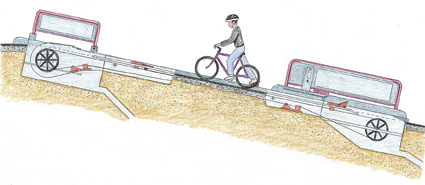
Bike lifts are used in several European cities, including Brussels, Belgium and Trondheim, Norway. It consists of a foot plate on a motorized track that pushes riders up the hill at a speed of about three to seven miles per hour.

At a San Francisco Transportation Authority Plans and Programs Committee meeting last month, Sup. David Chiu mentioned seeing the lifts while on his recent trip through the Netherlands, where he went to get ideas for San Francisco to expand bicycle ridership to a full 20 percent of vehicle trips by 2020, a goal set by the Board of Supervisors shortly after that discussion.

“We’re talking about the hilly terrain that can be dealt with in many different ways, but not without investment,” SFTA Director Jose Luis Moscovich said at the meeting. Using the lifts was an idea raised by Renee Rivera, acting Executive Director of the San Francisco Bicycle Coalition. Moscovich responded to the proposal by saying, “We’d probably need to invest in some of those.”

“It’s an idea we’ve shared often and the response is, ‘Hey, I want one of those for my hill,’” Rivera told us. “It’s certainly something that has resonated with some folks, but we think we’ve got some more basic questions to deal with first and that really is improving our network of bike routes here in San Francisco so that they really carry people where they need to go.”

SFBC has had discussions with the Presidio Trust about installing a lift that would take people from the Fort Point parking lot up to the visitor’s center. “It would be in itself a fun attraction for people going to the Golden Gate Bridge because there’s kind of a climb getting up to the bridge,” Rivera said.

While the idea might sound a little far fetched, the flood gates have opened for bicycle-friendly projects in San Francisco. A four-year court injunction that prohibited city engineers from implementing the San Francisco Bicycle Plan was lifted in August and the Board of Supervisors voted in October to approve a resolution to increase the number of trips taken by bicycle to 20 percent of the transportation share by the year 2020. Currently, about 7 percent of the trips within the city are made by bicycle, a figure that has doubled in recent years.

Trampe is the name of the Norwegian lift and the system’s website notes, “In a user survey, 41 percent of the lift users claim they are using the bicycle more often due to the installation of Trampe,” and 72 percent said they would like to see more lifts in Trondheim.

What do you say, San Franciscans, you want one on your hill as well?

Reilly and Kelly concede D2 and D10 races

9

Two weeks after the Nov. 2 election, D2 candidate Janet Reilly and D10 candidate Tony Kelly issued concession statements, as ranked choice voting counts, which will certified by November 30, placed them second: Reilly trailing Mark Farrell in D2, and Kelly behind Malia Cohen in D10.

For Reilly, the disappointment was sharpened by the knowledge that she received more first-place votes than any other D2 candidate. She won 9,625 first place votes (41.15 percent of vote) compated to Farrell’s 9,442 votes (40.37 percent).

But with neither Reilly or Farrell winning an outright majority, second and third place votes were factored in under the city’s ranked choice voting system. And that calculation tipped the balance in favor of Farrell, who finished with 11,105 votes, (50.62 percent) compared to Reilly’s 10,835 votes (49.38 percent).

Reilly tried to put on a brave face in face of adversity.
“I have spent many years serving people outside public office — on the Golden Gate Bridge Board, at Clinic by the Bay, at Catholic Charities CYO, through our family’s high school scholarship program and at many other institutions,” she aid. “Now that the campaign is finished, I will be able to resume these activities.”

But she voiced her belief that attack campaign prevent potentially good candidates from running for political office. Acknowledging that “public service is an honor” and that it is “an integral part of our democratic tradition for candidates to pass a series of difficult tests before earning the right to hold office,” Reilly  added that she “understands why many bright, capable people choose not to run for office when I see how poisonous and cynical the process can be.”

 “In my own race, an independent expenditure committee armed with $230,000 leveled an 11th-hour smear campaign against me,” Reilly noted. “They violated a litany of election laws while peddling gross distortions and outright lies. This is simply wrong. Actions like this deter many good people from public service.”

That said, she ended on a positive note.

 “I am truly proud of the campaign we ran,” Reilly said. “We never wavered in the face of adversity and we continued bringing our positive message to the voters of D2 all the way through Election Day, You can count on me to be fighting by your side every step of the way for the good of the city.”

For his part, Kelly offered congratulations to Cohen and asserted his relative success in the complex D10 race in which race, class and geographical location had a profound impact on voting patterns—and the ultimate results of the supervisor election

”I came in second in the ranked-choice runoff, by a few hundred votes,” Kelly said, alluding to a race in which Lynette Sweet  won most first place votes (2,059, 12.06 percent), ahead of Kelly (2,035 votes, 11.92 percent) and Malia Cohen and Marlene Tran tied third (2001 votes, 11.72 percent of vote). But once second and third place votes were counted, the importance of strategic alliances, positive campaigns and widespread appeal became clear, as Cohen polevaulted into the lead (4,173 votes, 52.60 percent) ahead of Kelly 3, 761 votes (47.40 percent), while Tran remained in third place (3,256 votes, 30.44 percent) and Sweet dropped to a distant fourth (3077 votes, 23.87 percent).

Kelly acknowledged the importance of running grassroots campaigns under this system.
“We had more donors from D10 than anyone, more volunteers from D 10 than anyone, and just as many first-place votes in D 10 as any other campaign,” Kelly observed. “So we know the voters heard us. They, like us, want a supervisor who will listen to all our concerns, bring real progressive ideas to the Board, and ensure that the City’s resources work much harder for the people of District 10.”

He offered an olive branch to the incoming supervisor and her allies by encouraging his supporters to work with Cohen to win the best future for the district.

“Neighborhood leadership is not about one person, or one campaign,” Kelly observed. “The alliances that came together during this year must continue, and I urge everyone interested in my candidacy to work with Sup.  Cohen to show City Hall how to create local jobs, clean up our environment, support our families, and use common sense ideas to fix our budget. In years to come, we will all continue to fight for the people of D10 with courage, compassion, better ideas and hard work.”

And then he signed off with a peace note
”My love to you all, and many thanks, on behalf of my entire staff and the hundreds of volunteers who gave of themselves over the past nine months,” Kelly said.

Peace out to Reilly, Kelly and all the candidates in these long, exhausing and ultimately brutal races.


A word from the sheriff on the mayoral mix

0

One of the names that’s getting thrown around a lot in the discussions of the interim mayor is Sheriff Mike Hennessey, who’s been in his job longer than I’ve been in mine, and that’s a good while. The idea is that Hennessey — generally a good progressive, and lately very outspoken on Sanctuary City — would serve for the rest of Newsom’s term, but not run for re-election; he wold be the classic “caretaker” mayor.


I’m dubious about the caretaker idea. A short-termer would have to deal with massive budget problems — but without any real power to make long-term decisions. But as far as I can tell, nobody in the local press has bothered to call Hennessey and ask what he thinks, so I gave him a jingle today. As always, he called me right back and was friendly and spoke off the cuff with his usual sense of humor.


The bottom line: He’s fine with the job he has now. He’s never really wanted to be mayor. But if the supes wanted him, he wouldn’t say no.


“It’s realy not something I’m lusting after,” Hnnessey said. “But if the supervisors decide they need a steady hand, someone who has been before the voters, I’d be willing to do it.”


He would also be utterly uninterested in running for re-election. In fact, he’s not even sure he’s going to run for sheriff again; he’s still relatively young (early 60s) but has 32 years in the job and is probably looking forward to a nice semi-retirement. Serving out Newsom’s term would make that decision easy.


On the other hand, he was quick to point out that a caretaker mayor couldn’t do a lot. “The first five months you’d be working on the budget, then the election cycle would start up and you’d just have to try to stay out of the way,” he told me. “You can’t municipalize PG&E in one year.”


Which I think is about right. There are some key pieces of legislation that Newsom has vetoed that a short-termer like Hennessey might be willing to sign, but all the real major decisions would be put off for a year. And the progressives would be giving up the chance to put someone in the mayor’s office would could run for re-election on a progressive platform.


Mike’s not to fond of my bright idea of asking all the potential mayoral candidates to show up and answer questions at a public board hearing, either. “I think that’s a really bad idea,” he said with a laugh. “Because I wouldn’t want to do it.”


A fitting end to Dellums’ mayoral tenure

3

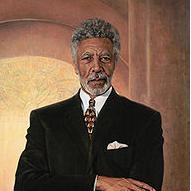
Oakland Mayor Ron Dellums has announced that he won’t give his final State of the City speech tomorrow in person as scheduled, instead performing the legally required duty by simply sending in a written report and video, a fitting end to his terrible tenure as mayor.

“In lieu of a public address this Wednesday, Mayor Dellums has opted to provide a comprehensive, printed State of the City report and accompanying video chronicling his four-year administration. These will be available on line at www.oaklandnet.com on November 17, 2010,” read a memo released yesterday by the Mayor’s Office.

It will be an ignominious end for a legendary political figure who rose from the black power movement of the ’60s to serve a remarkable 13 terms in Congress, where he was a leading voice against war and wasteful military spending. But as mayor, Dellums simply failed to lead a city that desperately needed him, ducking the city’s biggest problems and any sense of public accountability.

When Dellums came to the Bay Guardian offices four years ago to seek our endorsement (which we gave him, hoping he would be better than then-frontrunner Ignacio De La Fuente), Executive Editor Tim Redmond asked him what qualified him to be mayor and whether he was up for coming out of retirement to take on such a demanding job. Dellums responded with fiery indignation – how dare we question his fitness for such a piddling office after such a distinguished political career.

In retrospect, it was a good question, and a telling non-answer. Luckily for Oakland, after two mayors in a row that were legendary if imperious political figures, the city will now have a mayor – Jean Quan (who narrowly beat a man who would have followed in the Jerry Brown/Ron Dellums model: Don Perata) – who is committed to doing the hard work on this very difficult job. We wish her well.

Live Shots: Rufus Wainwright and SF Symphony, 11/12/2010

0

Donning a huge red rose on his breast, Rufus Wainwright looked quite regal standing with the San Francisco Symphony this past weekend, performing musical renditions of five Shakespeare sonnets.

Wainwright was commissioned by the Symphony to create the pieces. Always ambitious, he wrote an entire orchestral score to accompany his magical voice. Singing in iambic pentameter is no simple feat, but to also make it sound incredibly beautiful, with hints of melancholy and pure joy, made the performance a total coup. It was also great to see such a mix of people in the audience, from classy bourgeois peeps in elegant silk dresses, to young hipsters in mix-matched plaids — but all of them giddy to see Rufus with orchestra.

Here’s a Youtube vid of part of the performance:


SF local artist’s purpose within reach

0

“I wanted to teach people, tell them how to do it. I always dream about taking back the city through art.” Reynaldo Cayetano Jr. is showing me his photographic prints in a Lower Haight coffee shop. He’s explaining to me how a guy who grew up in San Francisco came to be on the brink of his third art show in San Francisco (Purpose: Beyond Reach, coming up on Sat/20 at Rancho Parnassus).

Is it weird that this trajectory needs explaining? Common sense says that growing up in a world-class art city would give you a leg up on an career amidst darkrooms and gallery openings. But that’s not the case in cities, really. Local kids get the boot for all kinds of reasons in today’s 21st century – especially creative types who aren’t ready to divest their days to the rat race necessary to stay and live in our great urban spaces.

Maybe to look for real, SF-grown artists you have to see beyond the standard downtown gallery scene. Cayetano’s art shows take place at non-traditional venues – the most recent of which was Bayanihan Community Center on Sixth Street, in the neighborhood that Cayetano grew up. The 23 year old populates the shows half with friends he grew up with and half simpatico souls he meets around the city (full disclosure: my boyfriend falls into this category for the upcoming Sat/20 show). 

Cayetano (Rey to friends) says he’s always been “a spectator of art.” He began sketching as a teen, copying his older brothers who liked to draw. “But soon I was getting better than they were,” he tells me, smiling over coffee and a pastry at the round table we’re sitting at with fellow Inks of Truth artist, photographer Chris Beale (whose shots illustrate this article). 

We’re passing around the portfolio of the two men, who met in a City College photojournalism class and bonded over being the only ones working with film in a digital world (“making it, like, twice as hard on ourselves,” they tell me, clearly relishing the challenge). Cayetano’s folder of prints shows street scenes from his recent trip to the Phillipines — a journey he’s made only twice since his father, mother, two brother, and he moved to California in 1993. 

Real talk: Reynaldo Cayetano and a new friend downtown. Photo by Chris Beale

I turn the page and there is a black and white closeup of his uncle’s knotted hands, then photos from his life in SF: friends, protesters at immigration rallies, corners and streets he’s walked for years. Beale, a long time SF resident originally hailing from Baltimore, has crisply developed shots of Rey in his own book, a dissenter giving the finger to City Hall’s golden cupola, an image of the two’s friend – and emcee who’ll be playing his new album at Saturday’s event – Patience the Virtuous, gazing into the MUNI bus yards. 

Rey started curating his group shows — which display the work of a loosely bound collective called Inks of Truth — to fight ignorance in the SF community. Ignorance of pedestrians, that is. Spurred by a good friend’s death on the Alemany and San Jose S-curve (the young woman for whose 21st birthday present the camera he shoots with was intended), he brought together creative acquaintances for an event that “was supposed to be an art show, but leaned towards awareness.”

Photos from that show and Rey’s second depict a crowd of young people enjoying themselves amidst the physical evidence of their collective creativity, at one point clearing the floor for some b-boys to get in on the show and tell. It’s hardly the scene you see at many wine and cheese receptions that mark the debut of an artist’s work at other places around the city.

The events’ orchestration were big moves for a guy that has trouble seeing himself as a professional artist. “As soon as I call myself that, it comes with… I don’t want to say baggage, but it implies a lot of knowledge,” Rey tells me. “At first I thought that I shouldn’t have a show because I’m not a photographer, but then I thought no – that’s why I should do it.” When I ask him whether he sees a lot of the peers he grew up with in the Sixth Street neighborhood getting in on the SF art scene, he’s hesitant to make sweeping statements. “I feel like it’s lagging, but it’s not to the point where it’s hopeless.”

Perhaps this lag is what gives Cayetano the motivation for his inclusive shows. Saturday’s will feature works by sixteen artists in a variety of mediums. Cayetano is hungry to give others the adrenaline rush and fufillment that comes from finally, seeing one’s work on the wall. 

But it’s not always easy. In the midst of his own worry over producing events without professional guidance, Rey’s dealing with the varying levels of commitment of artists showing their beloved creative mindsprings for the first time. But overall, the process is one he seems to take inspiration in. “It’s great to give them that kind of anxiety, it’s a good stress. If you’re not stressing in the process, it’s not explosive,” he reasons.

In addition to bringing a taste of artistic involvement to the talented around him, the upcoming Purpose: Beyond Reach show at the Sixth Street cafe has another, even more salient community connection. It’s a food drive for Martin de Porres House of Hospitality, a place that Beale says is the soup kitchen of choice for many of the homeless people he’s spoken with. 

Cayetano elected Martin de Porres as the beneficee for its relatively small capacity. After speaking with representatives from larger shelters like Glide, he discovered “even if you raise a lot of cans, for a big shelter it will be gone within a meal.” Art show attendees are expected to load down their backpacks for entrance: those over the age of 21 are expected to donate at least five cans of food. 

For Cayetano, it was important that his third show reflect the entirety of the community where he was raised.  “It’s a testament of growing up on Sixth Street. The people out on the street now are the same ones that were there when I was growing up.” All the better to reflect the real community of San Francisco — if not that, then what are we painting for?


“Purpose: Beyond Reach”

Sat/20 4-10:30 p.m., free with can donation (21 and up, five to seven; 20 and younger three to five) 

Rancho Parnassus

132 Sixth St., SF

(415) 503-0700

www.wix.com/purposebeyondreach/inksoftruth


Live Shots: Dance Brigade, 11/12/2010

0

They are part bird and part woman — the dancers in the all-female dance company Dance Brigade, in a current program entitled “Manifest!val for Social Change: Like Oil and Water, from Gaza to the Gulf,” moved between flight and rest.

Their dance tells the story of women in the Middle East, their movements hinting to a tragic ballet and the music being a version of the classic score from The Dying Swan. The dancers ability to combine pure grace and total frenzy was incredible, creating both an image of beauty and struggle in the same instant. Through Nov. 20, Dance Mission Theater will host fifteen different dance groups, as part of Dance Brigade’s Manifest!val for Social Change, which is a great opportunity for anyone to see some amazing local dancers, but also a chance to promote social awareness and community.

For more information about this weekend’s program, click here.

PS — and check out this preview video for Dance Brigade’s next program, “The Great Liberation Upon Hearing” coming in July 2011

Gavin Newsom, Republican

1

I mean, isn’t this exactly what the Republicans have been saying in Sacramento, paralyzing the state by refusing to accept any new taxes? Is that the attitude Newsom wants to bring to his new job? What’s he going to do when Jerry Brown announces a package of tax hikes for the June ballot and wants his loyal Lt. to go around the state and campaign for them? Or is there a different standard for the state budget?


I don’t get it, Gav. 

Will reapportionment change California?

21

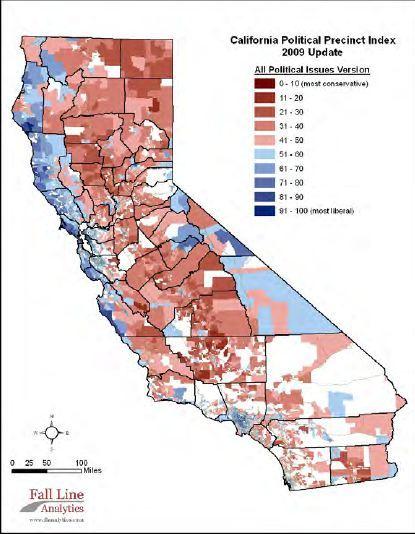
Probably not. The voters confirmed that the job of drawing new district lines next spring will be done by an independent (and unaccountable) commission whose makeup will not reflect California’s. (Five Republicans and five Democrats in a state where Democrats far outnumber Republicans?) But Brian at Calitics makes the case that it won’t matter much — and he’s hit on a really important point about California politics.


The voters have already gerrymandered themselves, in a sense. The liberals tend to live with liberals, the conservatives with conservatives. And any reasonably compact, fair district lines will reflect that.


In fact, the Fall Line Analytics map that Calitics cites makes an excellent case for splitting California into two or three states — one along the coast from Sonoma to Los Angeles, one in the Central Valley (including San Diego) and perhaps a third including the far-northern counties, which have wanted to secede for a while anyway. Then the coastal residents could have a progressive state with taxes on the wealthy to fund services, and the conservatives can try to survive in a low-tax heaven of their own. (And if you really think wealthy people will leave San Francisco and Silicon Valley and L.A. to move to Fresno for lower taxes, you’re as crazy as some of our blog trolls.)


The interesting twist on this all, though, is that there’s pretty good evidence that the population in California has shifted somewhat away from the coasts in the last decade and moved somewhat inland. Which means that Los Angeles and the Bay Area may wind up losing Congressional and state Legislative seats to the traditionally more conservative areas.


The data also suggests, though, that a lot of the new residents of the inland areas are Latino — and the way that Latino vote breaks may play a far more significant role than the redistricting commission.


Questions for the next mayor

19

 The progressives on the Board of Supervisors are a long way from united on a possible mayoral candidate, and if they can’t come together, the person who finishes Gavin Newsom’s term will be a compromise candidate, either a short-term caretaker (not the greatest option) or someone who’s more in the moderate camp but a candidate the left can work with for 2011 and possibly four years after that.

We’re glad to see the proposal by Sup. John Avalos to begin the mayoral selection process early. Picking a mayor in a mad scramble on the day Newsom steps down is a recipe for chaos and potentially a bad outcome. And as the process begins, the last thing the city needs is a mayor chosen through a backroom deal.

But it’s entirely appropriate for progressive board members to set some standards and to ask the people who are angling for the job to make clear exactly what their positions would be on key policy issues.

In other words, anyone who wants to be the interim mayor and possibly mayor for the next five years or longer should have to answer, directly and without hedging, question like these:

How much new revenue does San Francisco need to solve its budget problems, and where, specifically, should it come from? This is the central issue facing the city, now and for the indefinite future. San Francisco’s budget has a structural deficit of at least $250 million, and it simply can’t be closed by cuts alone. What taxes will you pledge to support and put political capital and fundraising clout behind when they go on the ballot?

What specific programs ought to be cut? Everyone likes to talk about the city living within its means, but that ends up leading to a series of death-by-1,000-cuts decisions that year after year devastate services to the poor. Don’t tell us you need to look at budget figures and work it out later; the big-ticket items are no secret. What’s on the chopping block and what isn’t?

Will you work to promote public power? How will you expedite community choice aggregation, and will you support a ballot measure to replace Pacific Gas and Electric Co. with a full-scale municipal electric utility?

What are your law enforcement priorities? If money’s tight, should the San Francisco police be hassling nightclubs, or should more resources go into the homicide division? How important are foot patrols, and which neighborhoods should get them? Will the SFPD and juvenile authorities continue to turn young people over to federal immigration authorities?

Who should pay to fix Muni? Should the burden of paying for the transit system fall primarily on the riders (through fare increases and reduced services) or should big downtown businesses and retailers (the major beneficiaries of the system) pay more? Should car owners pay higher fees (including parking fees and congestion management fees) to subsidize transit? Which specific fees would you be willing to push for?

Who should the city build housing for? Right now, much of the new housing stock is aimed at the very rich and San Francisco is turning into a bedroom community for Silicon Valley. Would you set housing policy to conform with the city’s General Plan assertion that more than half of all new housing should be below market rate? How would you make that balance happen? Should the city spend a significant amount of money for affordable housing, and who should pay for it?

Do you agree that public sector jobs are as important as private sector jobs in San Francisco? Would you support the tax plan proposed by Sup. David Chiu?

Do you support giving the supervisors appointments to all major commissions?

Do you think the city should be doing more to stop TICs and condo conversions and to preserve existing rental housing?

That’s just the beginning of a long list of questions but the progressives and other supervisors  on the board should make sure they have answers before agreeing to support anyone, as a caretaker or interim mayor.


Replacing Newsom: no reason to wait

11

Randy Shaw’s calling on the supervisors to wait, and let the next board pick the next mayor. I don’t get his argument. In fact, it seems to me that there’s every reason for this board do its Charter-mandated job.


Think about it: everyone on the board has served for at least a year and a half, and some for a lot longer. They’ve been around enough to have some sense about how political decisions are made and some experience making tough calls. Two of the people who appear to be the new supes — Malia Cohen and Mark Farrell — have never held any elective office before. And if the decision is left to the new board, the first thing that group of 11 people, including four newcomers, will have to do — minutes after they’ve taken the oath of office — is make perhaps the most important decision any of them will face as supervisors.


And in that case, backroom deals made in the interregnum will play and even bigger role.


There’s no “rush.” I don’t think the board should choose a new mayor tomorrow. But I think the supes ought to get the process going — and do it in a way that is open and honest and gives the public faith in the results.


If you want to be appointed by the board to a commission or task force, you have to go before the Rules Committee and be vetted. The committee members ask questions. There’s testimony. Why should the mayor’s job be any different?


The process that makes the most sense would go like this: Starting this week, the supervisors nominate candidates for interim mayor. Everyone nominated is contacted and asked if he or she is interested in the job. Then the ones who want to serve — either as a “caretaker” or with the hope of running in the fall — appear at a series of hearings of the full board, sitting as a Committee of the Whole. Every supervisor gets to ask questions; the candidates respond, and the whole thing is open to the public.


When that’s done — in a couple of weeks — the board can select the best candidate. That person would then start forming a transition team and prepare to take office January 4th, when Newsom becomes lieutenant governor; the board would simply ratify its choice that day.


I’m not going to argue about whether the incoming board is more or less “progressive” than the current board. I am going to suggest that experience matters, that there are serious problems for the new mayor to take on, that the mad scramble approach (the way board presidents are elected) is a bad way to choose a new mayor and that there’s plenty of time to do this right, in the open, between now and January.


Red-eyed and happy at the Cannabis Competition

9

All photos by Erik Anderson

Somewhere amidst the marijuana energy drinks and exuberantly filled bags of Volcano vapor at yesterday’s fourth annual Cannabis Competition, a young lady named Lacey was making a name for herself. 

“Sales have been excellent – we’ve cornered it! I think the best sellers have been the shortbread cookies. You can have them alone or we also make them into filled sandwiches,” said the fetching entrepreneur of Laced Cakes, who sat with her girl friends behind stacks of individually packaged marijuana edibles, all attired in vintage approximations of boho homemakers.

The trio joined proud purveyors of marijuana energy drinks, handmade color-changing coffee mugs, and raw organic hemp rolling papers — not to mention the more urban, less crunchy beats than Competitions past by Bayonics, Manicato, and Mystic Roots — in a celebration of gourmand greens. Set in Terra’s be-succulented patio and indoor space, the Competition was a happy, if slow moving refutation of the fact that pot heads can’t party.

Lesson of the day? There is life post-Prop 19. Even while plagued with last-minute venue kerfuffle and copyright blowback from the OG cannabis cuppers, High Times, the Cannabis Competition hit it big with SF indian summer weather to die for and an enthusiastic crowd. “It was an extremely successful event in terms of people having fun,” said Kevin Reed, CEO of the Green Cross, the pot delivery service that sponsored the event. 

“I think that [the venue change] probably did keep a lot of people home – anything that has to do with the police department will do that – but it did get us some mentions in the press,” Reed continued. He said that a few vendors also backed out at last minute for fear of conflict with the law. 

But the trepidation of the competition suited Lacey (real name: Courtney, she didn’t want her surname in the press) just fine. Laced Cakes has been around since 2007, but lack of consistency with her inventory – “you know how that happens,” she smiles – led to Lacey losing her regular selling gig at the Green Door, a SoMa dispensary. 

Six days before the Competition, the buyer at the Green Door mentioned there was an empty vendor booth still available – would Laced Cakes like an expo debut? Lacey sprung into action and baked up some product, even learning a recipe for caramel that looked like a success from where I was standing and admiring her cakes. Her other offerings? Zucchini bread, vegan butter, take and bake cookies with their own little tubs of frosting – all “medicated,” all preciously packaged and ready for action. 

Which was kind of a shame, because by the time I ran across her booth, I was in no shape to eat any more weed. In fact, by the end of the eight hours of Cannabis Comp, it was fair to say that not many were – particularly the judges of the Patient’s Choice contest itself. I spoke with one judge, who paid $250 for the privilege of weighing in on the Bay’s best buds. The Green Cross mails these brave arbiters 43 strains of weed (a gram of each), 17 kinds of weed edibles, and eight weed concentrates. 

Ahem, a mere 10 days before the competition. Clear your schedule! Reed says some patients – you have to have your medical marijuana card to participate – hosted tasting parties with their similarly-carded friends to help share the burden of the position. 

I got a chance to check out the tiny microscopes included in the judge’s package of fun (the Green Cross hands them out to all its patients who place orders with them). Equipped with a button to turn regular or black light on your bud of choice, the ‘scope revealed a tiny new land of purples and greens and complex crystal formations. The whole thing looked a lot like some dendrite-heavy sea creature. An pungent anemone, maybe. Or maybe I was just stoned.  

Makes you think differently about marijuana – the intent, surely, of a peaceful party packed with pot. Maybe the rest of the state’s not ready for legalizing the dro, but it would seem that for San Francisco, a lot of the victory would be a symbolic one. Symbols, man. 


2010 Cannabis Competition Patient’s Choice award winners (congrats!)

Best Edibles: First place – Scott Van Rixel’s Bang Dark Chocolate

Second place – (tie) Auntie Dolores’ chili-lime peanuts, The Green Door’s Buddies peanut butter pucks

Third place – Sean Polly’s Hash on the Mountaintop 


Best Concentrates: First place – (tie) The Green Cross’ Frosty Oil, The Vapor Room Co-operative’s Blue Moonrocks

Second place – The Green Door’s G18

Third place – The Green Cross’ Sour diesel keef 


Best Cannabis: First place – Boss’ OG Kush

Second place – (tie) Allen Wrench’s Island in the Sky, The Green Door’s Granddaddy, The Green Cross’ Kryptonite

Third place (tie) – Earth Green Cali Farm’s Jack Hare, Dutch Treat by San Francisco Medical Cannabis Garden