SFBG Blogs

The Performant: Beats and Beuys – is anything sacred?

0

Melting the masters with Oddball Films and Keith Hennessey

In a scene from the hilariously boffo short film Pull My Daisy an unruly gang of beatniks (Allen Ginsberg, Peter Orlovsky, and Gregory Corso) grill their pal’s invited guest, “The Bishop” (Richard Bellamy) about the relative holiness of the world around them, from baseball to cockroaches to the male organ. Is this-and-that holy, is such-and-such holy? they slur via Jack Kerouac’s partially-improvised narration. Their good-natured interrogation is doubtlessly modeled on Ginsberg’s “Footnote to Howl”—that affirmative litany asserting the holiness of cocks, typewriters, and “the bop apocalypse”. Throughout, their commitment to proving the divine in the human gives their tactless party-crashing a metaphysical justification and an almost wide-eyed innocence.

 The tiny screening room of Oddball Films, might seem at a casual glance to lack a direct conduit to heaven, but scouring the stacks one does find all manner of human concerns. Animated shorts, trailers, features, industrial, educational and other “ephemeral” flicks fill the warehouse-like space in leaning towers of film cans. During last Friday’s screening of beat and beat-themed films (Bongo Beatin’ Beatniks), metaphysics, innocence, and the meaning of art collided with the carnal, the craven, and the brazen, especially through a series of clips from “beat-sploitation” classics such as Beat Girl and the Bloody Brood. A touch of dada surfaced in the wonderfully bizarre Help, my Snowman’s Burning Down, and the earthly pleasure of music-making was encapsulated by jazz short Jammin’ the Blues. Tucked away on the second floor of a furniture warehouse on Capp Street, Oddball Films screens its collection of weird gems on a regular basis, and seems as good a place as any to spend time considering the archived intersection between flesh and spirit.  

Meanwhile, at a performance of Keith Hennessey’s “Crotch: all the Joseph Beuys references in the world cannot heal the pain…” the intersection between art and philosophy was humorously relayed via a quick lecture which began with Plato, Hegel, and Judith Butler, and ended somewhere around Arendt, Focault, and Wagner. Fortunately, you don’t win prestigious dance awards by spending all your stage time talking about Rudolf Steiner, so eventually Hennessey relented, took off his pants, and donned a “Scream” mask.

His body—squatting, hopping, attempting to stand on its head—asked that question which the mind has a hard time answering. Is this-and-that holy, is such-and-such holy? All joking aside, he removed the mask, helped his stage manager strike a part of his set, and nailed two boards together—a cross to bear—and balanced it on his head, slowly moving across the stage in tears. In a final act of acceptance, he barricaded his genitals behind a wall of lard, invited us onstage with him, and with needle and thread, sewed the visible scars on his body to the clothing of the three nearest audience members, covered himself in a rain of glitter, and inserted a set of misshapen Halloween teeth for good measure. In unison, we sang along to the Nirvana tune hypnotically playing in the background (“Something in the Way”), until almost without warning, the performer was gone—but the audience was still connected. Flesh and spirit.

Live Shots: Robyn, The Warfield, 11/23/2010

2

It’s not until I really started thinking about it that I realized how much I love Sweden. My best friend Karin is part Swedish. The American Girl Doll I had when I was little was the Swedish immigrant girl Kristen, decked out in her Saint Lucia holiday outfit. I used to work at a cafe in Seattle that served the best Swedish pancakes, ever, topped with lingonberry sauce. And the gorgeous singer Robyn is from Sweden, too.

She took the stage at the Warfield Theater last night as part of her US tour for her new three part album entitled Body Talk. Everyone and their hot boyfriends were at the show, some waving Swedish flags of robin egg blue and lemon yellow. Robyn has incredible energy on stage and authentic dance moves that make it obvious that she’s really having too much fun.

Her music appeals to everyone and on that note I’d like to mention the adorable 12 year old and her mom who I was standing next to during the show. 12-year-old-cutie was so excited to be there, along with the hordes of 20 to 30 somethings, who were serious about throwing back those cocktails. I dig all of Robyn’s new tracks, including the super hot “Dancing on My Own,” but then I remembered being thirteen again and listening to “Show Me Love” just really brings it all back.


Chronicle finally uses the P word: Progressive

41

The San Francisco Chronicle ran a good story yesterday on progressives hopes for appointing one of our own as the next mayor. But beyond being fair to progressives that are often demonized by a newspaper whose political sympathies lie with the downtown crowd, the article was notable for something else: it’s use of the word “progressive.”

For years, Chronicle editors have refused to use the word that is most commonly used to describe the people and ideology that controls a majority of the Board of Supervisors, opting instead to label progressives as “far-left” or “ultra-liberal,” while the economic conservatives in town get the reasonable-sounding label “moderate.”

Sources tell the Guardian that this bit of Orwellian wordsmithing started with former Editor Phil Bronstein and was fueled by Mayor Gavin Newsom complaining to Chronicle editors that calling his political enemies “progressives” made us sound too reasonable, rather than the wild-eyed radicals he considered us to be.

I and others have discussed this with Chronicle Metro Editor Audrey Cooper, and her bewildering argument is that progressive “is a politically loaded term that doesn’t mean much to our readers.” I’ve pointed out that the word is quite descriptive and has deep historical roots in California and its own caucus in Congress – and that labeling us “ultra-liberal” is far more loaded and pejorative – but to no avail.

I ran into the writer of yesterday’s story – Rachel Gordon, a solid reporter and former colleague from the City Desk NewsHour television program – at the Board of Supervisors meeting yesterday afternoon and she said that political reporters at the Chronicle have long been pushing to use “progressive” and the editors finally changed the policy.

I have a message in to Cooper and I’ll follow up in Comments if I learn anything more about how and why the decision was made. But it’s good to know the paper of record is now letting progressives be progressives. Maybe now we can get rid of the “moderate” label. How about SoLibEconoCons (socially liberal economic conservatives)? OK, maybe that still needs some work.

Released, Steve Li urges passage of DREAM Act

8

On a cold and sunny morning in late November, as sharp winds stirred up fallen leaves, and most folks were beginning to slow down in anticipation of Thanksgiving, Shing Ma “Steve” Li, a 20-year-old nursing student from San Francisco who narrowly avoided deportation to Peru, whipped the local media into a energized frenzy by advocating for the passage of the DREAM Act during a press conference at the Asian Law Caucus, whose offices sits close to the Transamerica Pyramid, and a stone’s throw from the lantern-decorated streets of Chinatown and the neon-lit strip clubs of North Beach, in San Francisco.

The purpose of the press conference was to give thanks for Li’s release four days earlier from a federal detention facility in Arizona, outline why a hardworking student who has lived in San Francisco since he was 12, has no criminal record, and speaks Cantonese, English, French and Spanish, was incarcerated for two months and threatened with deportation. And ultimately, the event was aimed to stir up support for the DREAM ((Development, Relief and Education for Alien Minors) Act, bi-partisan legislation that leading congressional Democrats plan to put to a vote this month.

Senate Majority leader Harry Reid and House Speaker Nancy Pelosi have promised to move to a vote on the DREAM Act on November 29, during Congress’ lame duck session, a brief window of opportunity to complete action on stalled bills, before Republicans take charge of the House, and Democrats see their majority in the Senate shrink, come January 2011.

Li, his family and his legal counsel Sin Yen Ling, a senior staff attorney at the Asian Law Caucus, kicked off the press conference by acknowledging the many supporters whose phone-calling, letter writing and protesting outside Sen. Barbara Boxer’s offices in San Francisco, helped secure Li’s Nov. 19 release from a federal detention center in Arizona, after Sen. Dianne Feinstein introduced a private bill to delay Li’s deportation.

“I believe his removal would be unjust before the Senate gets to vote on the DREAM Act,” Feinstein said in a Nov. 19 press statement. Feinstein’s bill guarantees Li protection for 75 days after Congress’ lame-duck session end. And Li’s attorney Ling says Feinstein may reintroduce her private bill next year, and that ICE isn’t likely to deport Li in future, now that he is no longer considered a fugitive.

“We don’t feel that Feinstein’s private bill will pass, because of the result of the Nov. 2 election and the reality of partisan politics, but it’s unlikely that Steve will get deported again,” Ling said.

If passed, the DREAM Act would grant undocumented immigrants a pathway to citizenship, if they entered the United States before age 15 and have attended college or served in the military for two years.

Li’s ordeal—and his ensuing conversion to an ardent DREAM Act advocate—is happening against the backdrop of an increasingly anti-immigrant mood in the United States, as witnessed in Arizona, where state legislators passed SB 1070 earlier this year, and now in California, where a Tea Party member from Belmont wants California voters to weigh in on a similar initiative in 2012. And then there’s the sobering reality that come January, congressional Republicans, who are facing challenges from the far right-wing Tea Party,  take control of the House and are unlikely to advocate for immigration reform.

But Li, who is ethnically Chinese, and was born and raised in Peru until he was eleven years old, after his parents left China in the 1980s to escape its one-child policy, remained optimistic, as he drew on his recent experience to illustrate why Congress needs to passes the bi-partisan DREAM Act now.

“I’m still at risk of being deported,” Li said, noting that, each year, about 65,000 U.S.-raised students graduate from high school and would qualify for the DREAM Act, which addresses the fact that federal immigration law has no mechanism to consider the circumstances of youth who were brought here as minors and call the U.S. home, but can’t work legally, face barriers to accessing higher education, and live in constant fear of deportation.

“We have to work to do something to stop these students from being deported,” said Li, who wasn’t aware that a final deportation order had been issued against his family, when he was 14 years old and the U.S. denied his parents’ application for political asylum. “It’s important we push Congress, so no other student has to go through the same thing I did.”

“How many future doctors, engineers and scientists will the US lose,” Li added, questioning whether the US could end up deporting geniuses who might otherwise have discovered a cure for cancer, or invented ground-breaking sustainable energy technologies. “We are America’s future and we want to make a difference,” he said. “I still believe America is a great nation, a moral nation, and that Americans, if given all the information, will do the right thing.”

Li’s legal counsel Ling, recalled how Li and his parents were arrested on Sept. 15 by Immigration and Customs Enforcement (ICE) agents, and detained at ICE’s offices in downtown San Francisco, before being transferred to a jail in Sacramento County. “They were arrested as part of ICE’s fugitive operations program, which targets people who have failed to comply with final deportation orders,” she said.

The family was held there for three weeks, Ling said, before Li’s parents were released back to San Francisco, wearing electronic monitoring anklets. But Li was involuntarily transferred to a federal detention facility in Florence, Arizona, where he remained until mid-November. His transfer also made it impossible for his parents to visit, since, under the terms of their electronically monitored release by ICE, they are not allowed to leave San Francisco.

Ling said ICE blames a lack of bed space in the Bay Area for why they must transfer folks from San Francisco to Arizona, Texas or a facility near Bakersfield, California. But either way, the practice serves to isolate immigrant detainees from family and friends as they await deportation.

“Steve was released from Florence, Arizona, on Friday, Nov. 19, and then took a Greyhound bus, which arrived in San Francisco Saturday afternoon,” Ling said, noting that ICE wasn’t planning to notify her or Li’s family of his release, and that they typically drive folks to Phoenix and drop them off at the bus station.

Li’s mother Maria addressed the media in Cantonese, as she thanked Sen. Feinstein for allowing her son “to return to his mother’s embrace.”

And then Li, who says he is “a huge Giants fan” and “grew up reciting the pledge of allegiance at school, just like everybody else”, described his ordeal
.
“I always viewed myself as an American,” Li said, recalling how that perception was challenged when ICE raided his home and threw him in jail, this fall.
“I was shocked and confused, I felt it must have been a mistake” Li said, recalling that he was in the bathroom getting ready for school when the doorbell rang on Sept. 15.
“I didn’t expect anyone, so I woke up my mother, and she answered the door,” Li said.“Next thing, immigration agents came into the house. I didn’t know what was going on.They said they had to take me somewhere, that I had to be deported. “

Li said he was immediately separated from his mother and not allowed to ask ICE questions.
‘They searched me, threw me in the car, handcuffed me and took me to the immigration center,” Li said, referring to ICE’s office in downtown San Francisco.
“It was intimidating. I was scared of what was going to happen to me,” Li continued, describing how he was held for the rest of the day in a cell that contained 20 other people, some of whom had been transferred from other detention facilities and were already wearing prison clothing.

“I was fingerprinted, my photograph was taken and my situation was explained to me,” Li said, describing his shock at then being transferred in handcuffs and shackles by bus to a jail in Sacramento County with his parents, who were also handcuffed and shackled.
“It was traumatic to see my parents, who are hard-working people, be treated like that,” he said,

In Sacramento County, Li and another detainee were placed in a cell that contained bunk beds, a small table, a toilet and a sink.
“We could only go to the day room and watch TV for one hour a day,” he said. “The immigration authorities didn’t tell me anything, they just threw me from place to place.”

After three weeks, Li thought he was going to be released, when the prison authorities returned his clothes and got him to sign some paperwork. But instead, he was transferred to ICE’s San Francisco office on Sansome Street, put him in a holding cell, and told him he was being sent to Arizona to be processed for deportation,

“My whole world came down,” Li said. “I couldn’t talk to my parents, who had already been released. I thought of never being able to see my family and friends again. It was depressing.”

Things got worse when he was shackled, handcuffed, and loaded onto a bus which took him to Oakland airport, where he was put on a plane with a bunch of other deportation detainees.
“We were handcuffed and shackled to our seats, and I wondered what would happen if the plane went down,” Li said, describing a seemingly interminable journey to Arizona, which involved making landings in Los Angeles and San Diego.
“In San Diego, they took Mexicans off the bus, presumably to drive them to the border,” Li said.

Arriving in Arizona the following morning, Li was driven to an isolated federal detention facility in Florence, which is about 800 miles from San Francisco, where he was only allowed outside his cell for an hour a day.
“We were incarcerated all day and body searched multiple times in a facility, where there were three toilets and four showers between 64 people,” he said.

Locked up with 400 fellow detainees, Li heard a lot of stories that were similar to his: students who’d received a higher education and were very talented, but didn’t have legal status.

In particular, Li remembers one student he met during his Arizona incarceration.
“Like me, he came here with his parents and had no say in that decision, but was picked up as a result of new legislation in Arizona, “ he said.

Li’s arrest means he missed a semester of school, but he vows to continue his studies. And despite his traumatic experience, Li says he is not bitter.
“It went through my mind,” he said, “But I have learned a lot, including the fact that we have a broken immigration system. I urge everyone who qualifies for the DREAM Act to use their voice. They need to find the courage to use it and fight to change the law.”


Hot sexy events: November 24-30

1

Femina Potens is moving up and out! But not too far. According to an email sent by the gallery featuring a look back by director-founder Madison Young, SF’s favorite woman-run, sex-positive workshop/art show/bacchanal is celebrating its 10th anniversary this month with a move to a larger space that will still be on Market Street.

Says Young of the initial creation of FP, which she named after a tattoo meaning “powerful women” that she saw on a woman’s arm: “I was only 20 years old but felt a very clear calling to create space for people to feel comfortable to express and explore their identity, their bodies, their boundaries, with out shame through art, sexuality, and education.” Oh, and she’ll be incepting a little something of her own: this hot mama’s preggers. Come March 2011, she’ll there will be another MILF on the scene, plus one more body-positive little girl in the world.

Busted: Nips!

Just in case all that bare turkey flesh you’ll be feasting on tomorrow isn’t enough tender meat for you, Chaps is holding the nipples edition of their Busted! fetish nights – eat your nips with a $2.50 Bridgeport IPA or grab a nipple clamp, the evening’s 4 dollar Rolling Rock pint and Tullamore Whiskey shot special.

Wed/24 all night

Chaps 

1225 Folsom, SF

(415) 255-2427

www.chapsbarsanfrancisco.com


Free Entry at Eros

Let’s give thanks for a city that allows us to frolick freely, to share our true selves with a like-minded community, to go to a sex club, expect sweaty satisfaction, and get it – all night long. Eros is certainly down to say grace. The club is inviting all men to make a shower stop for free on this day of gratitude – so carve some hunky turkey and mash those potatoes good. 

Thurs/25 6 p.m.-12 a.m., free

Eros 

2051 Market, SF

(415) 864-3767

www.erossf.com


Traditional Thanksgiving Potluck

A couple reasons why this yearly Citadel event isn’t really all that traditional: one, it’s on the Friday after gobblin’ day. Two, the scene is less in-laws and more BDSM playmates. Three, although it’s not explicitly meant to turn into whippin’ time after the food’s shared, the event description does allow that “being the kinky folks we are….well, ya just never know!” A great way to burn off pie calories, no?

Fri/26 5-9 p.m., free with dish to share

SF Citadel

1277 Mission, SF

(415) 626-2746

www.sfcitadel.org

RSVP: melanie.a.derby@gmail.com


Post Turkey Twist and Shout

Red Hots Burlesque assembles a crack cast of some of the burlesque troupe’s long lost favorites – Fannie Fuller of the Diamond Daggers is here visiting from Portland, Oregon for her solo debut at Red Hots Burlesque and the Flying Fox has spread her wings all the way from New York City. Whatever their mailing zip codes now, these ladies plan to un-zip some serious coquettish talent.

Fri/26 7:30 p.m., $5-10 sliding scale

El Rio

3158 Mission, SF

(415) 282-3325

www.elriosf.com


The 15 Association Party

The longest-standing West Coast gay male BDSM organization, 15 Association is run entirely by volunteers that want to ensure you have a good, safe time in the dungeon of your dreams. This party is meant to be for experienced doms and subs, but if you’re new to the game you can speak with the Association for an invitation at their website

Sat/27 8 p.m.-1 a.m., $25

SF Citadel

1277 Mission, SF

(415) 626-2746

www.sfcitadel.org


Beautiful Bondage

Tying your lovely up need not detract from their genuine preciousness. This course examines the art of bondage with an emphasis on the aesthetic. Harnesses, immobilizing ties, and techniques of upping the sweet torment involved will all be covered in the class, as well as the requisite safety talk.  

Tues/30 8-10 p.m., $20

SF Citadel

1277 Mission, SF

(415) 626-2746

www.sfcitadel.org


Good for the Jews vs. the San Franciscan Nazi

0

Rob Tannenbaum is a man with opinions on holidays. Thanksgiving, transcendent: “if it were up to me, I would be drinking turkey gravy.” Christmas, yawn: “it’s the most boring time of year. There’s not too much to do past stay at home and watch It’s a Wonderful Life on TV. 

And Hanukkah, time to go see his comedy-music duo Good for the Jews (Cafe Du Nord, Dec. 1): “There’s a long and storied tradition of Jews in San Francisco. I hope that we will see evidence of that.” Tickets would make a great present for the first of those eight crazy nights… 

Tannenbaum and partner David Fagin (who respectively moonlight as music editor of Blender and frontman for nice guy-pop band The Rosenbergs) sing well placed mockeries of Jewaphrenalia, my favorite of which being “Rueben the Hook-Nosed Reindeer,” though I’m also partial to the lounge stylings of “Going Down to Boca.” Their work comes as a follow up to Tannenbaum’s previous comedy project: What I Like About Jew, an act performed at New York’s The Knitting Factory that sold out shows six years running. 

Tannenbaum is aware of what his audience wants, mainly because it’s what he himself wants out of Judaic entertainment. “When I was kid and they played Jewish music in our synagogue, it was always so horrible. It was earnest and boring, like a cross between the Indigo girls and the Old Testament.” In Good for the Jews’ creation, he was looking to capitalize on the legacy of mischief and humor inherent in Jewish consciousness, the same legacy from whence he says come Sarah Silverman and Jon Stewart’s riffs. “I wanted to start a show that was traditionally Jewish but didn’t make being Jewish seem like the most boring thing in the world,” he says. 

His tongue-in-cheek celebration of his faith – well hold up, because maybe “faith” is a bad word for how Tannebaum experiences being a Jew. He told me in our recent phone interview that he only darkens temple’s door a few times a year on the high holidays, but that he likes the idea of people getting into a room to celebrate shared heritage. “The same thing is true at our show, but at our show you can drink, which I don’t think you can do at temple,” he quips. His Jewishness, he says, lies in “the things I eat, the things I laugh at, the books I read, the TV shows I watch – they’re not Jewish themed, but my gestalt is Jewish. As is my circumsized penis.”

Okay, so his tongue-in-cheek celebration of his gestalt-penis, then, delights the crowds that go to see it, most of whom have been urban, many secular Jews like himself – but diverse in ways he didn’t expect  they would be when the duo launched a tour that included dates in Utah, Colorado, and New Mexico earlier this year. He says at a few gigs Fagin and himself outnumbered the amount of Jews in the audience. “But sometimes those shows are more rewarding,” he says.  

But the duo’s frank irreverence has been known to attract negative attention as well. Which brings us to our next topic: San Franciscan Nazis.

The last time the Good for the Jews duo played SF, they were greeted by a chap goose-stepping to some inner notion of bigot matyrdom: an Aryan Pride guy who’d come to protest their show. Tannenbaum recalls the situation in his standard one liner manner (“He felt that we were representative of the Jewish-owned media. If we’re representing Zionist power, then why am I staying at a Holiday Inn?”) 

But somewhere in his memory of the event lurks the indignation it triggered: the experience of being a musician about to play a show at a respectable venue who runs into the very prejudice that his ironic music implicitly calls passé. Tannenbaum tells me he actually went outside to have a conversation with the fellow, but had to retreat when he felt himself approaching the thought of violence. “When you hear someone insulting your ancestors it tends to rile up the blood a little bit.” 

The incident, in a strange way, speaks to why he’s looking forward to next week’s comedy show. “This sounds like malarky, but I really do love San Francisco. It’s the only city where I think, yeah I could live here.” Nazis and all. “It’s the end result of so much tolerance: if you’re going to tolerate people you have to tolerate Nazis, too.”


Good for the Jews

Wed/1 8 p.m., $12-15

Cafe Du Nord

2170 Market, SF

(415) 292-1233

www.cafedunord.com


Progressives show unity as board approves mayoral succession process

21

The San Francisco Board of Supervisors unanimously approved a process for replacing Mayor Gavin Newsom last night after the progressive majority stuck together on a pair of key procedural votes and some parliamentary jousting provided a preview of the high-stakes power struggle that will begin Dec. 7.

Sup. Sean Elsbernd led the board moderates (Sups. Carmen Chu, Michela Alioto-Pier, Bevan Dufty, and Sophie Maxwell) in trying to dilute the voting power of the six progressives on the board (Sups. David Chiu, Chis Daly, David Campos, Eric Mar, Ross Mirkarimi, and John Avalos) and ensure they can’t vote as a bloc to choose the new mayor.

State conflict-of-interest rules spelled out by the California Political Reform Act and associated rulings prevent supervisors from voting in their economic interests, as becoming mayor would be. So Board Clerk Angela Calvillo and the Santa Clara County Counsel’s Office (legal counsel in the matter after our own City Attorney’s Office recused itself) created procedures whereby all nominees leave the room while the remaining supervisors vote.

But as Daly noted, clearing several supervisors from the room would make it unlikely that those remaining to come up with six votes for anyone. He also said the system would deny too many San Franciscans of a representative in this important decision and allow sabotage by just a few moderate supervisors, who could vote with a majority of supervisors present to adjourn the meeting in order to push the decision back to the next board that is sworn in on Jan. 11.

“The process before us is flawed,” Daly said.

So Daly sought to have the board vote on every nomination as it comes up, but Elsbernd argued that under Robert’s Rules of Order, nominations don’t automatically close like that and to modify a board rule that contradicts Robert’s Rules requires a supermajority of eight votes. Calvillo, who serves as the parliamentarian, agreed with that interpretation and Chiu (who serves as chair and is the final word on such questions) ruled that a supermajority was required.

Although some of his progressive colleagues privately grumbled about a ruling that ultimately hurt the progressives’ preferred system, Chiu later told the Guardian, “I gotta play umpire as I see the rules…We need to ensure the process and how we arrive at a process is fair and transparent.”

Nonetheless, Chiu voted with the progressives on the rule change, which failed on a 6-5 vote. But Daly noted that supervisors may still refuse nominations and remain voting until they are ready to be considered themselves, which could practically have the same effect as the rejected rule change. “If we think that’s a better way to do it, we can do it, but we don’t need to fall into the trap and subterfuge of our opponents,” Daly told his colleagues.

Elsbernd then moved to approve the process as developed by Calvillo, but Daly instead made a motion to amend the process by incorporating some elements on his plan that don’t require a supermajority. After a short recess to clarify the motion, the next battleground was over the question of how nominees would be voted on.

Calvillo and Elsbernd preferred a system whereby supervisors would vote on the group of nominees all at once, but Daly argued that would dilute the vote and make it difficult to discern which of the nominees could get to six votes (and conversely, which nominees couldn’t and could thereby withdraw their nominations and participate in the process).

“It is not the only way to put together a process that relies on Robert’s Rules and board rules,” Daly noted, a point that was also confirmed at the meeting by Assistant Santa Clara County Counsel Orry Korb under questioning from Campos. “There are different ways to configure the nomination process,” Korb said. “Legally, there is no prohibition against taking single nominations at a time.”

So Daly made a motion to have each nominee in turn voted up or down by the voting board members, which required only a majority vote because it doesn’t contradict Robert’s Rules of Order. That motion was approved by the progressive supervisors on a 6-5 vote.

Both sides at times sought to cast the other as playing procedural games, and both emphasized what an important decision this is. “This is without a question the most important vote that any of us will take as a member of the Board of Supervisors and one that everyone is watching,” Elsbernd said of choosing a new mayor.

So after the divisive procedural votes played out, Chiu stepped down from the podium and appealed for unity around the final set of procedures. He said that San Franciscans need to have confidence that the process is fair and accepted by all, and so, “It would be great if we have more than a 6-5 vote on this.”

As the role call was taken, Carmen Chu was the first moderate to vote “yes,” and her colleagues followed suit on a 11-0 vote to approve the process. At that point, the board could have begun taking nominations, but it was already 7 p.m. and both Daly and Chiu argued to delay that process by couple weeks.

“We owe it to ourselves and this city to have a discussion [of what qualities various supervisors want to see in a new mayor] before we get into names and sequestration,” Daly said.

He and other progressive proposed to continue this discussion to Dec. 7, but Elsbernd – who was visibly agitated by the discussion – suddenly moved to table the item (which would end the discussion without spelling out the next step), a motion rejected on a 4-7 vote, with Maxwell joining the progressives.

The discussion ended with a unanimous vote to continue the item to Dec. 7, when supervisors will discuss what they want in a new mayor and possibly begin the process of making and voting on nominations. Anyone who receives six votes will need to again be confirmed during the board meeting on Jan. 4, a day after Newsom assumes the office of lieutenant governor.

Prison report: The madness of parole

10

By Just A Guy

Editors Note: For much of 2009, Just A Guy wrote reports for us from a California state prison (here’s an example). He was released last November, but continues to send us commentary every now and then.

 
So, it’s been some time since any of you have heard anything from me. Here’s a story for you about how poorly the parole system works.

As many of you will remember, I was released in November of last year, but paroled to a state out of California.


Since that time I have had no problems whatsoever, have been very successful on parole, worked and travelled for business all over the country, supported my family, and been an upstanding citizen.

Earlier this year, I met some people at an industry meeting, and the discussion resulted in my being offered a job that required my moving to a state different than where I was on parole. The transfer paperwork allowing me to move from the controlling state to the new state was initiated a short time after I accepted the position, but the paperwork that was submitted through the Interstate Compact Office was somehow lost.
 
Meanwhile, I moved to the new state in order to start my new position; though I was having to go back monthly to my old state to report for parole, as one isn’t allowed to be out of state on a travel permit for more than 30 days without reporting back to the controlling state. In the beginning of October — three months later — I found out that the transfer paperwork had been lost and had to be re-submitted; meanwhile I had to spend a minimum of $600 a month to go back to my controlling state and report in. Being proactive, I called the out-of-state parole office in California to find out what was going on and explained the situation. California “fast-tracked” my paperwork to get the out-of-state transfer done. Fortunately my parole officer at the time was very understanding and didn’t make me come in to report the last time I was supposed to since the paperwork was confirmed as being processed by California.

Ultimately, in the last week of October, my transfer paperwork came through and I am now officially under the supervision of the new state.

Why does any of this matter? It’s been a year since I left prison, and my parole should be ending. I would have been a “no brainer” to be discharged from supervision in the state I just transferred out of — but because I just moved to a new state, the California Parole Division has recommended I remain on parole because I don’t have a proven track record of success in the new state — even though I have been successfully employed here for four months, and was previously successfully employed in the old state for eight months.

Apparently, it doesn’t matter — because I’m in a new environment and they want to make sure I’m abiding by the rules and regulations of parole in the new environment, which, really are about the same as the old environment.

The irony of all of this is that I went above and beyond in trying to make sure I was doing things right and following the rules of California and the other two states. I even called the California Interstate Office to find out what the problems in facilitating my transfer were and got them resolved. Had I just gone back and forth between the state where I was residing and working (costing $600 a month in travel) and let the system do its slow meandering work, my transfer probably still wouldn’t have gone through — it would have shown I was successful in the “old state” and I would be recommended for discharge.
Now, because I tried to keep things on the up and up, I’m getting punished.

It’s very frustrating. I have to travel with some frequency for my job, but the new state is less permissive with business travel and that affects my ability to do my job and support my family and be successful. I have always been under the impression that parole was meant to help protect the public AND help the parolees make a successful transition back to society. I have done everything humanly possible to be successful, but the process just gets in the way.

I am being recommended to be retained on parole because I started a new job – crazy, since that makes our family’s life better.

Another crazy thing, the reason I had to call the California Interstate Office, is that parole agents are not allowed to contact each other directly. In other words, my parole agent in the state I transferred out of is not allowed to contact the parole office in California directly. I can do it but she can’t. EVERYTHING has to go through Interstate Compact; no direct interaction between agencies is allowed. How’s that for effective.

Bottom line, there’s still a chance the Board of Parole may grant my discharge against the recommendation of the California Parole Unit, but what’s the likelihood of that? After all, now that I’m not in California it doesn’t cost them any money to keep me on parole in the new state! I promise you if I were in California or the previous state it would be rubber stamped.

The worst part is, I don’t get an opportunity to argue my case in front of the board, I don’t get to see the recommendation, I don’t even know when the discharge hearing is going to be.
Result: stuck on parole for another year for doing things the right way, ability to affectively my business greatly disabled. Way to go California, keep up the good work.

Live Review: Deerhunter turns up the volume at Great American

0

Before our car ride home discussion of some of our favorite parts of the show, my friend and I had already agreed on something; holy shit that was loud. Playing to a sold-out crowd in its first of two back-to-back San Francisco shows (10/29), Deerhunter put on a raw, visceral, sometimes loose but often amazing set that pierced through the relatively small confines of the Great American Music Hall.

Walking onstage, front man Bradford Cox grabbed the mic and gazed into the crowd. “You guys look like you wanna have fun. I like that in an audience,” he said. After someone screamed out his love for him, Cox quickly replied, “Don’t forget about Lockett Pundt (guitar),” just as the band launched into the Pundt-penned and -sung “Desire Lines.” While Cox usually and deservedly gets a lot of Deerhunter’s press attention, it should be noted that Pundt is a spectacular guitarist and songwriter in his own right, and seems to be a huge part of the band’s sound.

The opener set the tone for what naturally would be a set heavy on tunes from the band’s excellent new album, Halcyon Digest (4AD). What I hadn’t expected was the blistering distortion and pounding drums that a couple of that album’s mellower, poppier songs would take on. The twisted, bubblegum pop of “Don’t Cry” transformed into a grungy monster with a life of its own, while “Memory Boy” sped up a tad to add to the urgency of Cox singing “It’s not a house anymore” in the chorus.

A couple opportunities to show off the band’s more precise, ambient style arose throughout the set. The deceptively dreamy “Helicopter” translated perfectly and drummer Moses Archuleta included what sounded like sampled drum hits coupled with his live kit. Halcyon Digest’s closer, the seemingly African-influenced “He Would Have Laughed” floated along on a repeating, looped guitar line while waves of controlled noise and feedback ebbed in and out.

After a few minutes offstage, Cox came back solo for an encore that started with him covering Scott Walker’s “30 Century Man” with just an acoustic guitar. He played it straight, which was nice and almost surreal to see after the wall of noise throughout the night. Next, the rest of the band rejoined him and launched into a ten-minute jam that had Cox aggressively attacking his guitar to pull out short bursts of dissonant squeals and screeching solos. The song built up tension slowly (maybe a little too slowly) and then eventually released with a closing minute or so of loud thrashing. A little more paring down would have added to the overall effect, but it was still a solid way to end the evening.

Deerhunter’s widening appeal became glaringly obvious as I walked out amongst groups of grungy teenagers, appreciative old-timers, stoic hipsters, and the annoying drunk guy who had been stepping on everyone’s feet and obnoxiously trying to start out-of-rhythm, mid-song clap-along sessions all night (Hey man, you’ve successfully pulled everyone’s attention away from the band and onto you. You win!). But ultimately, even the kid holding his head throughout the show with a look of “I didn’t realize I’d signed up for this eardrum fucking” walked out with a big smile on his face.

Tofurky no! 3 veggie vittles for your day of thanks

1

Hello vegetarians. I’m checking in for quick sec – are we braving the snarky Tofurky asides and dietary litigation with the extended fam well this year? I hopes. 

The holidays can be a trickily-navigated time for the meatless maverick – but they also present a sweet opportunity to show your loved ones that this whole rejection of the agro-business line can be both heart and belly-warming. Call it culinary evangelism if you must. Read on for some gems from the newest crop of vegan and vegetarian cookbooks that’ll have everyone at the table giving thanks.


Cranberry–cashew biryani 

From Isa Chandra Moskowitz’s Appetite For Reduction (Da Capo, 336 pages, $19.95)

Moskowitz is royalty in the vegan punk cupcake world, and her knack for the realm of savory snacks seems to have hit a nerve with her last popular release, Veganomicon. Appetite For Reduction (set for release Dec. 7) follows the same straight-forward format, this time focusing on vegan foods that are exceptionally good for the old waist line for all you double-time health nuts. This Indian-inflected rice dish will be the perfect substantial side to impress on your parents that you’ve learned to cook, suddenly, somehow. Throwing your own pilgrim party? Moskowitz’s excellent food blog, Post Punk Kitchen has a mega-recipe for vegan Thanksgiving in an hour. AN HOUR. Rock. For the purpose of this biriyani, by the way, cashew pieces equals roughly chopped nuts. 

Serves 4 

1 teaspoon vegetable oil

1 teaspoon cumin seeds

1 teaspoon mustard seeds

3 cloves garlic, minced

1 cup small-diced carrots

1 cup brown jasmine or basmati rice

1 teaspoon garam masala

1/4 teaspoon turmeric

1/4 teaspoon red pepper flakes

1/2 teaspoon salt

2-1/2 cups water

1 tablespoon tomato paste

1/4 cup dried cranberries

1/4 cup roasted cashew pieces

1/2 cup frozen peas

chopped fresh cilantro, for garnish (optional)

Preheat a 2-quart pot over medium heat. Pour the oil into the pot and mix in the cumin and mustard seeds. Cover the pot and let the seeds pop for about a minute, or until the popping slows down, mixing once. If the seeds don’t pop, turn up the heat a bit until they do.

Add the garlic and sauté for about a minute. Add the carrots, rice, garam masala, turmeric, red pepper flakes, and salt, and stir constantly for about a minute. Add the water and tomato paste. Cover and bring to a boil. Once boiling, lower the heat as low as it will go and cook, covered, for about 40 minutes.

After 40 minutes the water should be mostly absorbed. Stir in the cranberries, cashews, and peas. Cook for another 15 minutes or so, until the water is completely absorbed. Fluff the rice with a fork and serve topped with the cilantro, if using.


Shepard’s pie with chard-lentil filling and onion gravy

From Kim O’Donnel’s The Meat Lover’s Meatless Cookbook (Da Capo, 264 pages, $16.95)

A pie plate of power – even if the stuffing’s got pork and the carrots came into an unholy alliance with chicken stock, this shepard’s pie will be at the ready to guide you into fields of fullness at your family’s table. O’Donnel, a one-time writer for the Washington Post, has put together a satisfying bunch of recipes in this book, which empowers the reader to make cruelty-free concotions that mimic even the most traditional of comfort foods. The recipe bellow has got a lot going on, stove-top acreage requirement wise – O’Donnel recommends starting the lentils first, then working on the gravy while they simmer.

Serves 6

Wine-braised lentils

1 tablespoon vegetable oil

1/2 cup onion, diced

1/4 cup carrot, peeled and diced

1 sprig fresh thyme, or

1/2 teaspoon dried

1/2 cup dried brown or green lentils, rinsed (the smaller French lentilles du Puy, with a more refined texture, are my preference, but they’re not always available. Use what you can find in your local market.)

2 tablespoons red wine you enjoy drinking

3/4 to 1 cup water

1/4 to 1/2 teaspoon salt

In a small saucepan, heat the oil over medium heat and add the onion, carrot, and thyme. Cook for about 5 minutes, until slightly softened. Add the lentils and stir to coat. Add the red wine (if using) and bring to a lively simmer. The wine will reduce a bit. Add 3/4 cup of thewater, return to a lively simmer, then lower the heat, cover and cook until fork tender, about 40 minutes. Check and add a little extra water if need be, to keep the lentils from drying out completely. Stir in ¼ teaspoon of the salt, taste, and add the remaining salt, if needed.

Makes 11/2 cups. If you love these lentils, amounts may be doubled for a big pot that will keep for days and pair up seamlessly with your favorite grain.


Onion gravy

3 tablespoons butter

2 cups onions, sliced thinly into half-moons

1 or 2 sprigs fresh thyme

1 tablespoon balsamic vinegar

2 cups water

1 tablespoon cornstarch dissolved in 1 tablespoon water

1/2 teaspoon salt

Pinch of sugar

1 teaspoon soy sauce

In a deep skillet, melt the butter over medium heat and add the onions and thyme. With tongs, toss to coat the onions with the butter and cook over medium-low heat, until softened, reduced, and jamlike, about 25 minutes.

Add the balsamic vinegar, stir, and cook for an additional 5 minutes.

Add the water and bring to a lively simmer. Reduce by half, about 15 minutes. Stir in the cornstarch mixture and cook for an additional 5 minutes; the gravy will continue to reduce. Stir in the salt and sugar, and taste. Finish off with the soy sauce.

Turn off the heat, cover, and gently reheat at a simmer, just before serving with pie.

Makes approximately 11/2 cups


Shepard’s pie

1 cup wine-braised lentils

11/2 cups onion gravy 

2 pounds medium-size potatoes

(4 to 5 potatoes; my favorites are Yukon Gold or Yellow Finn), washed, trimmed/peeled as needed, and cut into quarters

2 teaspoons salt

3 cloves garlic, peeled but left whole

5 tablespoons olive oil

Ground black pepper

3 to 4 cups chard (from 1 bunch), washed, stemmed, and chopped finely into “ribbons”

1 clove garlic, chopped roughly

1/4 teaspoon freshly grated nutmeg

1/4 cup grated Parmigiano-Reggiano cheese

Grease a 9-inch pie plate.

Fill a medium-size saucepan with 4 cups of water, and add the potatoes and salt. The water should just barely cover the potatoes. This is important.

Cover and bring to a boil. Add the whole garlic. Return the lid and cook until fork tender, about 30 minutes.

Preheat the oven to 350°F.

With a slotted spoon or skimmer, transfer the potatoes and garlic to a large mixing bowl and mash with a hand masher. Stir in the reserved cooking liquid as necessary to moisten the potatoes. Add 3 tablespoons of the olive oil and stir in vigorously with a wooden spoon. Taste for salt, pepper, and texture and season and stir accordingly; mashed potatoes should be smooth and well seasoned.

In a large skillet, heat the remaining olive oil over medium heat and cook the chard with the chopped garlic, until wilted, 3 to 5 minutes, regularly tossing with tongs to cook evenly. Stir in the nutmeg and season with more salt to taste, if needed. Transfer to a medium-size bowl.

Portion out 1 cup of the lentils (the rest is cook’s treat) and stir into the chard until well combined.

Assemble the pie: Transfer the chard mixture to the greased pie plate. Top with the mashed potatoes, and with a rubber spatula,

smooth the mash so that it’s evenly distributed and completely covers the surface. Top off with grated Parmigiano-Reggiano.

Place the dish in the oven and heat through, 20 to 25 minutes. During the final 2 minutes of cooking, set the oven to the broil setting to brown the cheesy-mashed top.

Remove from the oven, slice into wedges, and eat hot with a ladleful of onion gravy.


Butternut squash and vanilla bean risotto

From Jenn Shagrin’s Veganize This! (Da Capo, 256 pages, $19)

True to its name, Veganize This! takes on the challenge of de-meatifying things that you never knew could be made animal-free (sea bass and beef ragu, anyone?) Sadly, this means it relies a lot on processed meat substitutes, but the end result of all the Mimicreme and soy products does tend to be delicious. The book includes an entire chapter on surviving the holidays, veganism intact — from whence sprang this recipe. Originally seen on Giada De Laurentiis’ Italian cooking show, this risotto is raring to go for Turkey Day. You gotta check out the book’s Jewish treats, too: vegan matzo ball soup and kugel! 

Serves 6

4 cups vegan vegetable broth

1 large vanilla bean

12 ounces butternut squash, peeled and cubed

3 tablespoons vegan margarine

3⁄4 cup onion, chopped finely

11⁄2 cups arborio rice

1⁄2 cup dry white wine

1⁄2 cup nut cheese (any flavor), grated finely, or 1⁄4 cup vegan parmesan blend plus 1⁄4 cup vegan mozzarella, grated finely

1⁄2 teaspoon salt

Cracked white peppercorns

2 tablespoons chives, chopped finely (for garnish)

Warm the vegetable broth in a saucepan over medium-high heat. Split the vanilla bean in half lengthwise, scrape out the seeds, and add, along with the empty bean pod, to the broth.

Bring to a simmer, then lower the heat to low. Add the squash to the simmering broth, and cook until desired tenderness, about 10 minutes. Remove the squash with a slotted spoon and set aside. Lower the heat to low and cover the pot.

While the broth is covered and simmering, take a large, heavy saucepan and melt 2 tablespoons of the margarine over medium heat. Add the onion and sauté until tender, about 3 minutes. Add the rice and stir well with the margarine.

Add the wine and simmer until it has almost completely evaporated, about 3 minutes. Add 1⁄2 cup of the simmering broth and stir until almost completely absorbed, about 2 minutes. Continue cooking the rice, adding the broth 1⁄2 cup at a time, stirring constantly. Allow each addition of the broth to absorb before adding the next, until the rice is tender but still firm to the bite and the mixture is creamy, about 20 minutes total.

Discard the vanilla bean pod. Turn off the heat. Gently stir in the butternut squash, cheese, the remaining tablespoon of margarine, and the salt.

Transfer the risotto to a serving bowl and sprinkle with chives. Serve!

 

Supreme Court rejects SF Weekly appeal

14

The California Supreme Court let stand Nov. 23rd a landmark ruling protecting small business from predatory chains, denying without comment an attempt by SF Weekly and its chain parent to get the high court to hear the case.


The decision brings to an end more than two years of appeals by the Weekly and Village Voice Media and effectively concludes the legal case.


The Bay Guardian sued the Weekly and the New Times chain, now known as Village Voice Media, in 2004, charging that the Weekly had systematically sold ads below cost in an effort to harm the local, independent competitor. By taking advantage of the resources of a large company, the Weekly was able to stay in business despite losing money every year, and was using below-cost pricing as a way to take ads away from the Guardian.


“We have before us the case of an ongoing, comprehensive, below-cost pricing scheme,” the Appeals Court concluded. You can read that ruling here (pdf)


The Appeals Court noted that shortly after New Times bought SF Weekly in 1995, New Times Executive Editor Mike Lacey announced that he would use the chain’s deep pockets to assault the Guardian. “The essence of Lacey’s message was that he wanted to ‘put the Guardian out of business,'”he ruling states. “The sales representatives were made aware that advertising could be ‘sold below cost’ if needed ‘in order to make a sale’ and the resources of New Times would cover the loses, even over a term of many years.”


That sort of behavior is specifically barred by California’s Unfair Practices Act, which was designed to protect small business from big chains.


SF Weekly and VVM tried to argue in their appeals that the state law should be consistent with federal antitrust law, which sets a much higher standard for proving predatory pricing. But the Appeals Court and the Supreme Court disagreed. California, the ruling now says, has every right to provide greater protections for small business than the federal government does.


There are 20 other states that have laws similar the the California Unfair Practices Act.


The ruling is a victory not just for the Bay Guardian but for small business across the state. The appellate courts have made it clear that predatory pricing is a violation of law — and the ruling can now be used by any independent merchant fighting big chains. As Ralph Alldredge, one of our laywers, noted after the Appeals Court ruling: “Think of what that means for big-box retailers, which have used below-cost selling on some products to attract customers away from small, independently owned grocery, hardware, drug, and department stores.”


Whip your hair back: Disney’s “Tangled” stars speak

0

Walt Disney was right all along: dreams do come true. That is, if you’re Zachary Levi and Mandy Moore, and your dream is to be in an animated Disney movie. Levi and Moore star as Flynn and Rapunzel in Tangled, a fresh adaptation of the fairy tale about the princess with way too much hair. While Levi admits an affinity for Aladdin, Moore was always an Ariel fan.

“For our generation, I feel like that’s what every girl wanted to be,” Moore says. “What little girl doesn’t dream of being a Disney princess?” Both actors were also thrilled to be working with noted (and Academy Award-winning) Disney composer Alan Menken. Levi expressed a lifelong devotion to 1992’s Newsies, though he’s a fan of Menken’s other work as well.

“[Working with Alan Menken] is bucket list,” Levi says. “It’s crazy, crazy bucket list. We both grew up knowing and singing all the songs to Little Mermaid, Beauty and the Beast, Aladdin.”

Moore continues, “I just found out he did Little Shop of Horrors last night, and I about lost it.”

According to the actors, one of the strangest aspects of the voiceover experience was not working directly with co-stars. While Levi and Moore did collaborate on their duet, most of their acting was done separately and pieced together after they were finished.

“We never worked with each other at all on the movie, except for the duet,” Moore notes. “That is a total testament to the directors for cobbling these performances and creating the chemistry.” In some ways, that made things easier — especially for Moore, who admits to being shy.

“There was a whole session when it was like, ‘And now you’re running from the water that’s chasing you, and now you have to jump and leap and cry and eek,’” she recalls. “I was definitely sort of like, ‘Phew, I’m glad no one’s here to see me make a fool of myself.’”

Because Levi and Moore were somewhat removed from the filmmaking process, neither was sure what Tangled would look like as a finished product. Once they did get to see it in its entirety, they were pleased by how it all came together.

“I’m a dude,” Levi says. “I really liked all the action and the comedy. I loved [the supporting characters] Maximus and Pascal — they steal the movie.”

Moore enjoys the unique perspective voiceover work affords. “It was a treat to kind of feel like a real audience member and get to participate in watching the film unfold,” she explains.

These actors are genuinely excited about their work—and who can blame them as Disney fans? They’re also two people with vivid, Mouseketeer-approved imaginations, as evidenced when they were asked where Rapunzel and Flynn would be now.

“I feel like perhaps she would be doing something involved in the beauty world, since she has so much experience with hair,” Moore suggests. “Princess is sort of the ultimate job, but perhaps that’s just something she does on the side as a hobby.”

For reformed thief Flynn, Levi has something different in mind. “I think Flynn would be in security,” he says. “He would be helping companies learn how to safeguard their goods. He’d be that guy who goes and intentionally breaks into a place and says, ‘This is what your problems are.’”

Tangled opens Wed/24 in Bay Area theaters.

Editorial: The screwy process for selecting a mayor

19

The clerk of the Board of Supervisors, at the request of Board President David Chiu, has released a proposal for the selection process for a new mayor, and it’s about as complicated and confusing as everyone expected. That’s in part the result of the vagueness of the City Charter, which simply specifies that a vacancy in the office of mayor shall be filled by a San Francisco registered voter chosen by a majority of the supervisors but offers no procedural clues on how to get there. And the Political Reform Act sets very strict limits on conflicts of interest for elected officials in California; a supervisor, for example, can’t vote for himself or herself or do anything to promote his or her candidacy for an office that comes with a pay raise.


In the end, the proposal leaves limited room for public input — and makes it very difficult for any sitting supervisor, particularly one of the progressives, to wind up winning the job.


The way the rules are laid out, the board would accept nominations — but any sitting supervisor who accepted the nomination would have to leave the room at once, cease all communication with his or her colleagues, and play no role in further deliberations or voting. Since it’s entirely possible that several supervisors — and possibly several progressives — could be nominated, the process would cripple the final outcome since the only ones allowed to vote would be the remaining board members whose names aren’t in the mix.


That skews the outcome heavily toward one of two options: the supervisors appoint someone who isn’t on the board — or Chiu winds up as both acting mayor and board president because nobody else can muster six votes. The only other option: The progressives all stick together, line up in advance behind a candidate who’s currently on the board, and find one more vote for that person.


The whole thing is so screwy that the supervisors ought to make some changes before they adopt it and try, to the extent that it’s legal, to inject some sanity into the process.


For example: Instead of opening the nominations, collecting a long list of names, sending all of the sitting supervisors on that list out of the room and then voting, the board could take the names one at a time. A supervisor gets nominated, leaves the room, and the votes are tallied; if he or she has fewer than six, the process starts again. (The problem: who goes first — because the first person eliminated can’t be nominated again. To be fair, there would have to be some sort of random drawing of which supervisor could make the first nomination — which alone might add too much random chance to the outcome.)


Then there’s the question of when this all takes place. If the process starts now and an interim mayor is chosen, the board will have to reconfirm that person Jan. 4 when Gavin Newsom actually resigns to take over as lieutenant governor. There’s a chance something could go wrong in the meantime and the board would have to change its vote, and there’s a chance that state law would prevent a supervisor who won from acting in any way to influence the final vote. But those are better risks than the option of leaving everything to the last day. And if the board decides that it can’t or shouldn’t act until Jan. 4, special meetings ought to be calendared for Jan. 5, 6, and 7 to give the current board more than one day to make the final decision.


And before anything happens, the board needs to schedule at lest one open hearing to get input from the public on the qualifications for the next mayor and on potential candidates.


The bottom line: any candidate who wants to get progressive support needs to be willing to do more than sign legislation and manage the city. He or she needs to be willing to use political capital and the mayor’s bully pulpit to make the case for progressive change — on taxes, services, the budget, and an overall civic vision. And the six board members on the left need to stick together, or that won’t happen.

The mayoral selection last time

3

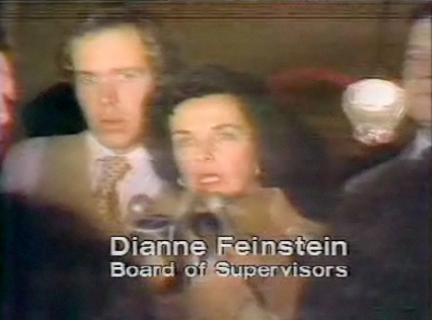
The last time the Board of Supervisors had to pick a mayor, things were very different. Former Sup. Dan White had just murdered Mayor George Moscone and Sup. Harvey Milk. The city was in shock. Board President Dianne Feinstein became acting mayor, and one week later, on Dec. 4, six of her colleagues — the narrowest possible margin — elected her to fill out Moscone’s term.

It’s worth looking back at what happened that week, not only because it’s a fascinating bit of political history, but because it gives some insights into how the current process should and shouldn’t go.
We’ve gone back and pulled not only the minutes of that meeting, but all of the relevant articles and editorials from the San Francisco Chronicle, the old San Francisco Examiner and the Bay Guardian, and while newspaper accounts are only the first, and often imperfect draft of history, the Chron had a good City Hall reporter, Jerry Burns, and you can get a lot from the day-by-day accounts.

For starters, everyone (even the Guardian) agreed that Feinstein did a good, almost uncanny job of keeping it together and managing the city in the week after the horrendous murders. But she was by no means the only, or consensus candidate for the job — Sup. Robert Gonzales announced his candidacy Dec. 1, and others were in the running until the end. The Guardian wrote at the time that Feinstein was fine as acting mayor – but shouldn’t be in office for the final 13 months of Moscone’s term.

Among the interesting elements of the drama:

— The process was riddled with Brown Act violations, and the selection of Feinstein was, in retrospect, almost certainly based on illegal meetings.  “Feinstein spent yesterday at her Pacific Heights home,where she talked with most of the supervisors,” a Dec. 4, 1978 Chronicle article by Burns noted. That would amount to an illegal meeting; under state law, then and now, meeting individually and serially in private with all or most of the members of a public board is a clear violation of the Brown Act.

At the time, however, nobody challenged Feinstein’s actions.

— Then, as now, there was a move to name a “caretaker” mayor who would fill out the remaining 13 months of Moscone’s term — and vow not to run again. But the conservative Examiner said that was a bad idea: In a Dec. 3 editorial, the paper, then owned by Hearst Corp., noted: “The City should not have to accept a “caretaker” mayor invested with only a thin veneer of authority.” The notion went nowhere.

— At least one name that was bandied around back then is in play again today: Then-Assembly Member Willie Brown.

— Feinstein got exactly six votes. Although in most casual historical accounts, she’s described as a clear, almost unanimous choice, that was far from true. In fact, Sup. Ron Gonzalez, who described himself as the board member most in synch with Moscone’s agenda, announced his candidacy Dec. 1, and as of Dec. 3, the day before the final vote, Russ Cone of the Examiner reported that “earnest and secretive negotiations among San Francisco’s nine supervisors to agree upon a mayor to replace the slain George Moscone today entered the final, feverish hours with no candidate ready to claim victory.”

At the Dec. 4th board meeting, Sup. Quentin Kopp moved to continue the decision for a week. Kopp – unlike most of his colleagues – had been avoiding the political furor in the days after the assassinations, saying it was unseemly to be making deals when city leaders ought to be in mourning. Feinstein and the six others who would ultimately elect her voted against the motion.

That would be a clear violation of law today; as a candidate, Feinstein would be unable to vote on anything that could promote her ascension to mayor. But no matter: The motion needed six votes, and only Kopp and Sup. Lee Dolson said Aye.

When the motion was made to name Feinstein as interim mayor, Kopp tried to ask her a few questions – particularly about her plans for various department heads. The city attorney quickly shut him down, saying Feinstein couldn’t legally answer or get involved in any debate.

Then six supervisors voted for Feinstein. Kopp and Dolson dissented. Feinstein by law had to abstain. And there were, of course, two empty seats; Dan White had just resigned and was in jail, and Harvey Milk was dead.

Why did Kopp vote no? There’s a back story, a key part of San Francisco political lore.

Feinstein had run for mayor twice before, in 1971 and 1975, both times finishing well out of the money. After her second defeat, she vowed she’d never do it again. In fact, the day before the assassinations, she had just returned from a trip to Nepal with her then-boyfriend (now husband) Richard Blum, and reporters asked her if she was going to run in 1979. “Not this time,” she said.

She and Kopp, longtime rivals, had cut a deal the year before. Feinstein wanted to be board president; Kopp wanted to be mayor. And Feinstein vowed that if Kopp would support her for board president, she’d stay out of the mayor’s race in 1979 and leave the field open for him.

And of course, immediately after the killings, she changed her mind. Kopp thought what was a bit slimly, and refused to vote for her for mayor. He challenged her in 1979, and narrowly lost, and her political career, so recently in the doldrums, was off and running again.

The next mayor: A very funny video

4

This is a truly enjoyable (if a little off-base) video about the selection process for the next mayor. I particularly like the part about the duties of the acting mayor. Check it out after the jump


SFBG Radio: Beyond body scans and patdowns

2

Today we talk about the anger over full-body scans and patdowns at airports — and why the critics are missing the point. Body scans are far less intrusive than the sort of data mining, wiretaps and assaults on personal privacy that go on every single day in both the public and private sector. Listen after the jump.

sfbgradio11/22/2010 by endorsements2010

What I remember of my interview with Yard Dogs Road Show

0

“I brought my costume, it’s in this bag. Well except for the pants.” The song and dance man of the Bay’s vaudevillian acid bordello, Broadway Freddie (aka Miguel Strong, or Michael if you’re trying to get technical about it) is already seated at a corner table at the Right Spot Cafe when I arrive to chat about Yard Dog Road Show‘s first headlining show in San Francisco in years (The Independent, Sat/20). 

Broadway-Miguel is wearing a striped tie, suit jacket, and dapper fedora, which by Yard Dogs Road Show standards seems vaguely pedestrian. But then he stands up. Electric blue, leopard print, so-skinny-they’re-emaciated jeans. “Miley Cyrus,” he confides, tossing his shoulder length blonde locks.

It is fitting that Broadway be a theater of the absurd. He is one of the original three progenitors (in addition to founder-manager-hype man Eddy Joe Cotton, who also wrote the heart-stoppingly wanderlustful memoir Hobo, and filmmaker Fletcher Fledujon) of the theatrically absurd touring troupe with which he makes his livelihood. He is artfully decorative in speech — as befits a man who has spent the last eight years of his life in pursuit of a vision received en route to one of Ken Kesey’s acid tests. 

I can’t say he gives me too many tangibles to work with during the course of our conversation, which is fine, because he has given me some lovely images to share in the article. The Yard Dogs Road Show milieu he finds “beyond English or current events, a landscape of dreams.” Also, it is “a sequined and glittered ceremony, a joyous one.” Fledujon, Cotton, and Strong met “organically destined to be in the same constellation of stars.” Broadway himself is “an electron,” a good show is when “the wind goes through you – you’re not doing it, it’s doing you.”

“Would you like a drink?” I ask him. “Oh, well I’m supposed to be” were finger quotes involved here? “On the wagon. But yes, I’ll have one. What are you drinking – a beer? Yes, I’ll have one of those.”

Things that we do manage to establish: the members of Yard Dogs Road Show – all “fifteen or sixteen” of them, travel together in a vintage Greyhound bus, in which none of them have their own beds save Kid Casbah, this because he is “the golden leopard, untouchable.” They are good house guests. One of their pinnacle moments as a troupe was a performance in an old opera house in Braga, Portugal — a performance that took place under an omnibus of a chandelier on a tour that took them to quite a few grand opera houses, the one in Braga being the grandest. 

The gang’s all here, in the Sonoma Hills. Photo by Hilary Hulteen

Its upcoming shows – the first time the group has had its own night in the Bay in two years — is for friends and family, in the looser sense of those words. New material will be debuted, this new material involving a carousel of prancing, bejeweled pony girls that Broadway and I conclude will resemble “peeking inside a Faberge egg,” a rocket man, and the Queen of Pineapple Island. We would be remiss if we did not mention that the talents of Scotty the Blue Bunny, aerialist Abigail Munn, DJ Shawna, and belly dance impresario Zoey Jakes, will be making their appearances over the two-night run.

At this point, beers have been had. We are touching on the art of the interview. Broadway says the back and forth is a skill he cherishes, and that his last two talks with a journalist were conducted from his bathtub and shower, respectively. “Do you know what would make this a truly great interview?” Broadway leans across our table, holding my gaze. “If we got absolutely wasted! The bartender can finish asking us the questions.” 

I mention I enjoy Bulleit bourbon and it is liberally applied to our conversation. At this point we must rely on my trusty notebook for the gems that were imparted. 


(This in the hand of the friendly bartender, who had been reading an Us Weekly upon our interruption)

Q: How do you feel about J. Simpson’s engagement?

B- Holy f…

C- Nick f??? friend Courtney or danced w/ her at club.

Q: What celebs met recently

B- Garry Busey on tour bus in Malibu. Friendly, liked bus. Wrote # on cigarette pack.

C- Paul Mooney – belligerent interview. Stressed out. Kathy Griffin was a total bitch. 

B- Oscar Grant? Don’t want to go there. What art school CC of A & Crafts

(Drawing of a cell phone with a line drawn over it)

C- 3 beers: surprisingly drunk

S- what kind of whiskey would you like?

(In my handwriting)

happy excess

(sketch by Broadway of suspended circles and stars)


I think Broadway then banged out a few impromptu tunes on The Right Spot’s piano, we drank more whiskey, shenanigans, and we called it a night.

More concrete information is to be had from the Yard Dogs Road Show website itself. For instance, after a bit of digging one can turn up a rider that states that the group requires eight vegetarian and seven omnivorous meals from show venues that do catering, tortilla chips and spicy salsa “of the health food store variety” if not. Three bottles of red wine and 24 bottles of “Stella beer or comparable” either way. To me, this says a conscious approach to health in solid foods, followed by a healthy disregard for matters of the liver. 

Here’s how the “great” (it really was) interview ended: Broadway and I mutually supporting each other outside the cafe, a freak November monsoon raging around us. “So. Did we cover everything?” he wonders. “I think we did a good job,” I slur at him before giving my final regards to Broadway and tripping away in the rain. I still believe it to be the case.

(Sorry about leaving you the tab, Miguel!)

Yard Dogs Road Show

With El Radio Fantastique, Zoe Jakes, DJ Shawna, and more 

Fri/26 and Sat/27 9 p.m., $20

The Independent

628 Divisadero, SF

(415) 771-1421

www.theindependentsf.com


Investing in the future

0

Dick Meister, former labor editor of the SF Chronicle and KQED-TV Newsroom has covered labor and politics for a half-century. Contact him through his website, www.dickmeister.com, which includes more than 250 of his columns.

The nation’s crumbling infrastructure is in very serious need of rebuilding. There’s absolutely no doubt about that.

Miles and miles of roads, highways and airport runways need to be repaired or replaced, as do miles and miles of railroad track. Many bridges and other public structures need to be fixed. So do many streets and many street lights, many water and flood control systems, many park and recreation and port facilities’ high speed train systems need developing and so does very much more that’s vital to our daily lives.

Look around you. You can’t possibly miss examples of crumbling infrastructure.

The AFL-CIO and its affiliated unions have been pointing that out for many years, and noting that the obviously needed repair and replacement work would provide jobs for many thousands, if not millions, of the unemployed, who need work as badly as the infrastructure needs it. Those jobs are good, relatively well-paying jobs – exactly what we need to escape the Great Recession that’s continuing to plague the nation.

It’s pretty much what was done during the Great Depression of the 1930s, when President Franklin Roosevelt, with the support of Congress, put together the Works Projects Administration, or WPA, to put millions of jobless Americans to work on building and repairing the infrastructure. It worked then, and it would work now.

Last month, President Obama’s Council of Economic Advisers and the Treasury Department issued a report detailing the benefits of doing the needed infrastructure work, including the “long term economic benefits.” The report also noted that a huge majority of Americans support spending tax money on infrastructure improvement.

President Obama’s labor-endorsed plan for infrastructure improvements over the next six years calls rebuilding 150,000 miles of roads, laying and maintaining 4,000 miles of  railroad tracks, and creating a new air traffic control system that would reduce delays.

President Edward Wytkind of the AFL-CIO’s Transportation Trades Department hailed the president’s plan for its promise of “putting millions of Americans to work in the type of good jobs that transportation investments have supported for more than a century.”

Laborers Union President Terry O’Sullivan noted that “time is running out.” He said, “We need to invest in our country, and we need to create jobs as soon as possible. It’s a no-brainer – let’s build our country, create jobs, keep America competitive in the 21st century and leave behind real assets  for future generations.”

Author Ezra Klein, writing in the Washington Post, put it this way:  “infrastructure investment creates the right jobs, for the right people, doing the right things – and at the right time. Or, to say it more clearly, infrastructure investment creates middle-class jobs for workers in a sector with high unemployment and it puts them to work doing something that we actually need done at a moment when doing it is cheaper than it ever will be again.”

He’s right. Boy, is he right.  Yet there’s a considerable body of naysayers in Congress – most of them Republicans, as you might expect – who threaten to block the bills necessary for implementing Obama’s ambitious infrastructure plans.

We need those bills passed in a hurry. We need the millions of jobs they’ll provide. We need to carry out the long delayed modernization of our crumbling infrastructure.

Cynthia Hopkins brings success/failure to YBCA

0

A rare flying object has been spotted this weekend at Yerba Buena Center for the Arts, namely Cynthia Hopkins, as intergalactic space pilot Ruom Yes Noremac, a post-human “Druoc” in a floppy silver space suit hovering high above the stage of the Novellus Theatre. She’s returning from the far distant future to, what?, “save the earth, of course.”

The Success of Failure (Or, the Failure of Success), making its Bay Area premiere tonight and tomorrow, makes up part three of the wildly inventive Accidental Trilogy developed by New York–based artist-musician Hopkins and company Accinosco. I caught it last night, and while a full review will have to wait until next week, I can say that the sight of her twirling there before a sprawling spacescape projected across an enormous screen — in a comical operetta musing on “the pros and cons of evolution,” above a stage aglow and twinkling with arch sci-fi phantasmagoria, and in an all-pervading atmosphere of nostalgia and regret — seemed indeed to defy a certain gravity through the power of deft spectacle and ethereal song.

The real high-wire act, however, lays ahead, in the second half of the piece, after the conclusion of the wacky and yearning sci-fi bedtime story narrated from a billion years hence by a silvery flashing orb to her smaller, highly inquisitive offspring. Now the stage empties itself of all pretense and everything but the barest of effects, leaving just the 38-year-old artist, Cynthia Hopkins, and her story. Surrounded by a clutter of musical instruments and backed by a hand-drawn star-chart of personal crisis and loss, Hopkins here manages a feat of confessional theater characterized by uncommon, at times unnerving frankness and poise, as we watch the planetary grief and trepidation resolve into a hauntingly brazen concern with saving herself.

This is a close encounter you want to have.

http://www.youtube.com/watch?v=pOJCgs1px2A

THE SUCCESS OF FAILURE (OR, THE FAILURE OF SUCCESS)
Fri/19-Sat/20, 8 p.m., $25
Yerba Buena Center for the Arts
Novellus Theater, 700 Howard, SF
(415) 978-2787
www.ybca.org

Are you ready for GWAR??

1

Apparently, even the massive, all-powerful aliens and scumdogs of the universe known as GWAR have trouble with reception on their iPhones.

While conducting a phone interview before a show in Hollywood, band leader Oderus Urungus’ connection cut out twice, leaving him grumbling, “Maybe I’m clutching my iPhone too tightly!”

Perhaps it was his giant claws proving to be too much for our puny human technology to handle — either way, once the connection was re-established, the intergalactic beast that has led GWAR for more than a quarter century had no shortage of hilarious and outrageous things to say.

Having just finished taping a segment for the Fuel TV show Daily Habit, Oderus was being informed that he had revealed a bit more of himself to the television audience than he had thought. “I just did the show apparently with my balls hanging out the entire time and nobody told me! That’s not like a big thing for Oderus, my balls usually are hanging out — but to try to get on national TV, I’m willing to do the ball tuck, but apparently the ball tuck didn’t work, it was horrible, it looked like a duck-billed platypus coming out of a burrow or something!”

Although someone out there in TV land was undoubtedly offended by this show of alien masculinity, they can just add themselves to the scores of non-believers and critics who have unsuccessfully assailed the musical and cultural force that is GWAR over the past couple of decades. Currently celebrating their 25th anniversary, the heavy metal space gang that brought our planet recorded gems such as Scumdogs of the Universe and This Toilet Earth are back in all their unholy glory with a new album, The Bloody Pit of Horror (Metal Blade).

Propelled by the first sleazy single, “Zombies, March!,” Oderus Urungus and his cohorts have returned in fine beastly form, ready to again spread their love to fans around the globe — which of course means spraying audiences with all manner of fake blood, bodily fluids, and god knows what else.

At a time when many bands their age would be mellowing out and producing so-called “mature” material, GWAR has shown that they are only getting dirtier and heavier with time, as any fan should expect from a group with their background and history.

“With any of the records we’ve made, we didn’t really go into it with a preconceived notion of what it was going to sound like. We just went at it and tried to make the record that was appropriate to what we felt like at the time, and I guess we were feeling particularly ferocious [with this one],” says Oderus. “We just wanted to emphasize how fucking awesome we are, and recall a day not so long ago when bands actually put out an album about once a year — nowadays that just doesn’t happen, bands take forever in between albums, and half the time they’re full of re-mixes, or tracks from other albums that got cut.

We just wanted to have a whole bunch of great music for our fans, and just celebrate the idea of GWAR. One of the things about this album that’s a little different that gives it that ferocious sound is that we tuned down I believe to F#, which is basically the loosest that guitar strings can be and still stay on the neck — it sounds like the guitars are vomiting — in a good way! I think it makes for a very powerful record.”

When asked if his band of rubber aliens, mutants, deviants and demons ever looks back on their history and thinks about the fact that they’ve been  doing what they do successfully for so long, the answer is a firm “No.”

“If we took the time to go back and actually examine what we were doing, we’d be so shocked and appalled that we’d stop doing it. It’s better to just keep mindlessly plugging onward,” laughs Oderus. “[With that being said] we are very well aware of just how awesome it is what we’ve managed to do, and we intend to keep doing it as long as possible — or until we escape the planet Earth, whichever comes first.”

With the release of The Bloody Pit of Horror, GWAR have been hitting the road in support, crossing the United States and making an appearance on national late night television, with a performance last month on Late Night with Jimmy Fallon.

“We did Springer and Joan Rivers like 20 years ago, and it took them 20 years to let us back on television!”

Oderus himself has been making several more recent appearances on TV, however — in the last year or so he’s been a regular guest on, of all places, a Fox News program, Red Eye. Although it does sound like an awfully strange pairing, the intergalactic barbarian thinks that Fox sees in him a potential for higher ratings, thus justifying having a giant space beast running around their studios.

“It is an odd match that they would put GWAR in a position where I can not only comment on society but do it over and over again, but obviously they’re having a little fun with it. It’s pretty funny to be walking around the Fox studios in New York City and run into Glenn Beck…yeah, Oderus and him are hanging out, backstage buddies!”

Having toured all over the world in the past 25-plus years, Oderus and his bandmates have seen all manner of crazy and twisted things, but the singer says that no place can hold a candle to what’s he’s seen and experienced right here in San Francisco.

“Pretty much every time we’ve been to San Francisco, it’s been insane, since the very first GWAR tour where we showed up in an old school bus, and ended up parked in the Tenderloin for a week straight, that neighborhood was really bad. And then our show at the Warfield where the bums were dropping dead right outside of the venue; the line was going around the block, they were three dead homeless people laying on the sidewalk, and out fans were just very politely stepping over their corpses, that was pretty weird!”

He also mentions a doorman selling crack by the side of the stage within just a few feet of a nearby cop — one that at first the band didn’t even believe was a real officer. “I thought he was a guy that dressed up in a joke cop outfit, because his uniform was so fucked up and dirty, and he was driving this cop car that was all beat to shit, the fenders were even hanging off it!”

With that said, Oderus is eagerly looking forward to playing here in the city on Sunday, and has some words of praise for his local fans.

“San Franciscans — you still have a complete, stone cold lock on the sickest, weirdest, most fucked up town in the United States. New Orleans has nothing on you people!”

http://www.youtube.com/watch?v=qusEPwdM7B8&feature=related

GWAR

With the Casualties, Infernaeon, and Mobile Death Camp
Sun/21, 7:30 p.m., $22-$25
Regency Ballroom
1290 Sutter St., SF
(800) 745-3000
www.theregencyballroom.com

Broadway cabaret with Pascal and Rapp!

0

The Fairmont Hotel’s storied Venetian Room, a.k.a. the San Francisco club where Tony Bennett first left his heart, has recently re-opened its doors to live music, courtesy of Marilyn Levinson’s Bay Area Cabaret series. Chita Rivera wowed them earlier this month, and this weekend Adam Pascal and Anthony Rapp do their thing, some of which you may have caught last year when they appeared in the touring revival of Rent at the Curran, in the roles they originated of Mark and Roger.

Expect some songs from that Broadway show, as well as Spring Awakening, Aida, Cabaret, and Chess, among other musical offerings in “The Rent Guys – Live.”

“The Rent Guys – Live”

Sun/21, 7 p.m., $20-$75

Venetian Room of the Fairmont San Francisco

950 Mason St, SF

www.bayareacabaret.org

Lust for justice, Tony Serra style

0

“So Paulette Frankl, why did you want to write a book about Tony Serra?” It seems like a reasonable question. After all, the “long hair” woman before me spent a good 17 years of work on her biography of San Francisco’s most famous counter culture lawyer (book release party at Fort Mason Sat/20, btw). Her answer was a bit surprising. 

“I didn’t want to write a book about him! I wanted to be his artist!”

The inability (or lack of desire) to shape her own involvement in his life speaks to the abject admiration and connection to Serra that has been borne over the last few decades by Frankl. It’s a pull that led her to accompany the lawyer to hearings, speeches, client meetings, and quiet afternoons in Bolinas in the pursuit to capture his inner essence. It’s a pull that seems to baffle even her. 

She’s right when she says she didn’t set out to be a biographer. While living in a planned community (read: commune) outside the city, Frankl agreed to drive a friend to a three-day exam the friend was taking in San Francisco. While she was there, Frankl, a long time painter and sketcher, decided to follow up on a vague interest she’d had to get into court illustration. 

“I thought the lawyers always had money – the worse things get, the more money they get!” In Lust For Justice, her recently completed Serra biography, she tells the story of the first case she saw. A young woman apprehended in a drug bust was being pumped for the names of the dealers involved. In Lust for Justice, Frankl writes that woman said “if I rat they’ll kill me. I’ll be out of prison sooner than I’ll get out of the grave.” 

The pathos in the room was palpable, and it got her creative fruits juiced. Frankl was hooked on the court scene. But when she saw Serra, an SF native given to wearing thrift store finds in the court room and who makes a career of defending those against whom society’s odds were stacked – high profile cases like Huey Newton, Bear Lincoln, minorities facing racist institutions – she was no longer interested in drawing the cross-examination of any other defense counsel. 

Feel like a hung jury yet? Frankl captures the high Serra in Lust for Justice

“I sensed his energy,” she remembers. “I got him on an emotional basis.” Serra is prone to stalking like a lion in court rooms, using his whole body to put on courtroom theater that strikes past juries’ preconceptions to get to understanding on some archetypal level. Frankl shouldered her notepad and resolved to become his traveling court illustrator. “If I can ever capture this man and express him, I will have arrived as an artist,” she recalls thinking.

Serra eventually assented to her demands, and during the Ellie Nestler case – in which a mother from a small town in the Sierra Nevadas shot and killed her six year old son’s molester at the man’s preliminary hearing  –  she realized there was a larger story there, that of Serra’s unflinching dedication to repairing society’s inequities. 

“I said Tony, where’s the book about you? Let’s do it – my art, your words.” They drew up an informal contract on the hood of the car and away they went.

Only, not. Because the very reason Frankl was writing the book about him inevitably became the reason why she’d never have a co-collaborator on the project. “He just always in trial,” she sighed. Forget writing his autobiography, she soon found herself lucky if she could get an hour of his time to talk about the parts of his life she couldn’t see: his childhood, his underlying motivations. 

Many, faced with such apparent disinterest in their project, would have stepped back a bit, but speaking with Frankl it becomes clear that she saw this as no option at all. So enraptured of the man was she that to render his evocative court appearances she devised a new, impressionistic style of court illustration. One drawing (they are neatly captured throughout the self-published Lust for Justice) shows Serra’s hand extended in the closing arguments of the 1997 trial of a Native American charged with a cop killing. A bear crouches over Serra, an animal spirit that Frankl saw vividly during the trial itself.

Trippy? Well, yeah. Frankl’s ethos is firmly grounded in the LSD mind expansion of the ’60s. One chapter attributes Serra’s ability to transcend in his lawyerly duties, to whit: “he willed himself to align his body, mind, and soul with the highest calling of the law: the cause of justice.” The emotional connection she feels with Serra informs the book, which borders on the overly effusive praise of a disciple. But not a disciple that can’t get pissed off at their savior. “I don’t think I overglorify him,” Frankl told me, perhaps prepping for this inevitable assessment of her work. “I mean, he can be a real pain to be around! I wanted this to be my experience of him, though – and I do think of him as a great defense lawyer.”

As he is. And though perhaps Frankl isn’t a master wordsmith (to be fair, she doesn’t claim to be for a moment), but Serra’s story deserves to be available in book form. It’s is a story of a man who doesn’t compromise on anything – from courtroom theatrics to lost cause cases to getting high and/or performing Natvie American protective rites before court sessions. And he’s had some amazing legal victories for defendants against whom the odds were stacked, in a system that oftentimes seems as though it was designed to prevent that from happening.

Told by a woman who was there for much of the story, Lust for Justice certainly lives up to its red-blooded title. To check out the man himself, you can either start hanging out with in judge land, a la Frankl, or hit up her book release party tomorrow, where Tony Serra will be in attendance, no doubt holding court. 

Lust for Justice book release party

Sat/20 5-8 p.m., free

Room C-370

Fort Mason, SF

www.lustforjustice.net


also:

Lust for Justice book reading

Sun/21 1 p.m., free

Modern Times Bookstore

888 Valencia, SF

(415) 282-9246

www.mtbs.com


Hey, gay men: Are you “Between Sizes”?

0

It may be a mainstream cliche that gay men are obsessed with their weight and appearance, but — hey presto! — it’s also pretty true. It’s also something not much discussed aloud in the gay community, although the bear movement of the 1990s managed to at least squeeze an entire subculture out of the topic. This Saturday evening, Andy Bydalek, director of last year’s Frameline festival fave, Skinnyfat! The Movie (which dealt with the plight of two characters panicked over the loss of their six packs — neither of whom would qualify for “The Biggest Loser” anytime soon), is organizing an important, local-luminary-studded panel at the LGBT Community Center called “Between Sizes” to address the issues of body image in the gay community after a screening of the director’s cut of Skinnyfat! Lose your issues, not your tissue. Trailer and info after the jump.

Following its sold‐out premiere at Frameline 2010 and packed festival screenings in Austin, Seattle, New Mexico, Oslo (Norway) and more, director Andy Bydalek’s comic short Skinnyfat returns to San Francisco for a one‐time encore presentation paired with special group discussion on gay body image with local luminaries!

Army of Lovers, QCC, Comfort & Joy and Frameline proudly present: “Between Sizes: An Evening with Skinnyfat!” Saturday, Nov. 20, 7pm at the LGBT Center.

In addition to the hilarious film about two skinny gay guys who are convinced they’re overweight, the program includes the world premiere of a sexy companion film, a Q&A with the director and stars, and a group discussion on gay body image with comedian Philip Huang, large‐community advocate Dan Taylor, psychologist James Guay, clinical nurse and The Adonis Factor star Derek Brocklehurst, and androgynous performance artist Phatima Rude.

This special event will be hosted by drag star Martha T. Lipton (The Failed Actress), and like the film itself, it’s sure to be a lively and thought‐provoking affair!

Between Sizes: An Evening with “Skinnyfat”

Sat/20, doors and reception, 6:30pm, screening 7pm

$10 Advance tickets at BrownPaperTickets.com. (Or very limited tickets at the door on night of event.)

San Francisco LGBT Community Center

1800 Market, SF


Sync up, time’s come for Zion I’s Atomic Clock

0

Bay Area hip-hop heads are grateful that Zion I walks these mean streets. Emcee Zumbi and DJ Amp Live have been expanding the boundaries of what dope beats and lifted lyrics can be ever since they fled the industry culture of Atlanta and hit the Oakland scene with 1997’s underground hit Enter the Woods. Their vibe’s stayed positive while resisting major label affliation and a lot of the turf warring that plagues hip-hop in a weird, stereotype-enhancing way around some of the Bay’s venues.

We spoke with Morehouse College grad Zumbi over the phone on the cusp of the duo’s weekend-long Slim’s celebration (Sat/20 and Sun/21) in honor of new album Atomic Clock, and the gig will be the duo’s last before hitting the road on tour. Clock is a bangin’, lifted affair studded with gems like “Always” and “Girlz” featuring Martin Luther’s sweet hook — but all the same, we still found ourselves talking politics. Sheesh.

San Francisco Bay Guardian: What’s your definition of a conscious emcee? I hear a lot of people call themselves “backpack rappers” and then come out with a song telling girls to shake faster, make that money. How can you tell who the conscious rappers are? 

Zumbi: For one, I don’t think consciousness is dictated by sexuality. For instance Common is a cat who’s a pretty consistently conscious person. But then he comes out talking about getting head — I think in most of his music there’s an awareness. For me, Jacka has conscious music because he reflects on spirituality and Allah. Even though he’s got the gangster stuff he’s analyzing society and spirituality, mixing it together. It’s about the dominant sense you get from the music. I feel you though, there are people that say they’re a conscious rapper and then their album just doesn’t feel that way. For me, consciousness doesn’t make you dope necessarily, even though most of the people I respect have it. 


SFBG: I’ve read in past interviews that your parents attended the March on Washington and that you were at the Million Man March yourself. Can you tell me what your political beliefs are? 

Z: I don’t really think of myself as a political person. I don’t totally believe in Democrats and Republicans and voting. I’m not sold on those things. I think there’s manipulation involved in all of that, and I don’t consider myself political, because I don’t think the political system is just. I just think people should be able to get what they need, that they should be able to have a full life. That’s why I’ve chosen music: it’s a little more direct. People have to jump through hoops with politics, I see it as kind of fraternity. 

Zion I’s latest, Atomic Clock, tells the time

SFBG: But you have musical talent you can use as a forum to express your beliefs – how do people make a difference who don’t have that platform?

Z: By being present and really standing for what you believe – just show up. I don’t call myself political, but take something like Oscar Grant, I was down there at the BART station, I was at City Hall the second time, I was taking pictures and trying to get footage. I think it’s more about that: standing up and making your voice known. Your clothes, your fashion sense, riding a bike instead of driving cars. There’s a disconnect between what people want and how people live their lives. You don’t want to be a slave to the system, so why do you put on clothes you don’t want to wear and go do something that someone tells you that you don’t want to do every day of your life? That’s what life is about, what you choose to do. Living in the United States, we can pretty much say what we want to say. It’s not a country that’s overly oppressive on the intellectual level. Physically it is, but you can pretty much say what you want. Just get out there and be it instead of complaining about everything, be the change you want to see in the world.


SFBG: Tell me your take on Obama’s presidency so far.

Z: It’s very interesting. You couldn’t write this stuff, this is a movie in action. When he got elected there was this passion, everyone was so over George Bush. It was like we were ushering in this whole level of politics in the US. And then, because things didn’t change… for me, I voted for Obama, but I don’t think the president makes all the decisions. He’s just the face man for the government. It’s not like this guy was going to change all evils in the world! But now reality is setting in. And because he is Black, it’s encouraged this other thing, the Tea Party? That’s just ridiculous, it’s engendered this backlash, there’s this ideal that there is no racism but in reality there’s more racism than before. Michael Vick — whose dog killed a man on his property — he served two years. Obama to me is a symbol of something – I’m not sure what it is yet, some kind of transformation hopefully, but people are pushing back against what change could be because they’re frustrated, there’s no jobs – they’re looking for a way out. It’s a strange story, it’s like a movie I’m watching. 


SFBG: I’ve heard that in Zion I, one of you studied to be a doctor and another, a psychologist. Which is which? How’d you chose that course of study?

Z: (laughs) I might again, you never know, I was just looking at grad schools online. The fact that it had to do with the mind in general. In college I was undeclared for the first two years and then I was getting to that point, so I was like psychology. I like the power of the mind, what the new age thing-movement is all about now, meditation, clearing your mind, intuition,


SFBG: Atomic Clock has been described as “moody and emotional.” Are you guys getting moody these days?

Z: Yeah a bit. The record, we did it really quickly in two and a half, three weeks. We proposed it to the label, hoping that they’d pass on it initially but they optioned it. It was a quick sprint all of a sudden, it went from this cool idea to something we had to rush to finish it. Because of that we had a moody attitude to it, the timing added this urgent feeling. Also, like the thing about Obama, it’s where things are, everything is in this transitional period, everyone’s stressed. 


SFBG: What do you think of the influx of dance beats in hip hop these days?

Z: I think its cool. I n the beginning, hip hop was always dance music. Sugar Hill Gang was the first quote-unquote rap record. For cats to be doing [dance beats], it’s a natural thing. That’s a part of hip hop. In the late ’90s, early ’00s hip hop kind of left the club, and then the South brought us back into the club. This music is about celebrating, having a good time. 


Zion I Atomic Clock CD release parties

Sat/20: featuring Locksmith, Hold Up, Bayliens, DJ Kevvy Kev

8:30 p.m., $20-23

Sun/21: featuring Eligh w/ Scarub, Bang Data, Hold Up, Oakland Faders

8 p.m., $20-23

Slim’s

333 11th St., SF

(415) 255-0333

www.slims-sf.com