SFBG Blogs

Hip-hop heroes

3

I’m rolling with the big timers: the executive director and founder of a community circus arts program, an after-school program b-boy teacher, the most beautiful family in Bay Area hip-hop, and my boyfriend, who is snapping photos on his Nikon of the rest of us. We’re standing under the high ceiling of Acrosports, in a room filled with trapezes, a balancing beam, an over-sized trampoline, and the contorting, jack-knifing bodies of young, aspiring circus professionals. The people assembled (minus me and my man) are using the power of hip-hop to bring a cultural skill swap to underprivileged youth in Zanzibar.

It’s a feel good moment, particularly because it comes during a week that hosted some of the darkest days in the past century of the labor movement, the start of unimaginable hardship in Japan, and disheartening scenes from our nation’s leaders’ announced Muslim witch hunt. But enough of that for now, Zumbi’s talking:

“This is the first time we’ve done a tour that benefited charities, which is cool… but it’s like, why has this taken so long to do? Why don’t more people do this?”

The emcee from Zion I is makes uplifting Bay Area hip-hop without major label representation, and now it’s been announced that his, DJ Amp Live, and the Grouch’s upcoming tour will be benefiting local community organizations at each of its 36 gigs on its “Healing of the Nation” tour — which is named after the artists’ second collaboration album, Heroes in the Healing of the Nation.

In the Acrosport’s basement, breakdancing students get their new skills battle-ready. Photo by Erik Anderson

“This album, it’s more focused, it’s about communities, families, self. It’s needed! These days, you’ve got Charlie Sheen occupying more time onscreen than the Middle East. Everybody’s all caught up on tiger blood,” Zumbi tells me. It’s positive music, much like the first Zion I-grouch collab, 2006’s Heroes in the City of Dope, but it’s far from Public Enemy-style protest rap. 

Track eight on the new album is entitled “Be A Father To Your Child,” in the chorus of track two the Grouch asserts “I’m a leader/I don’t want to be a follower,” pledging allegiance to self-motivation. There’s a song called “I Used to Be Vegan” on the album that I find particularly resonant given my own struggles with evading cheese. The message is: be a positive force, don’t get swept up in the forces that try to disempower you and make you sad. It’s conscious music, but conscious music meant to have a good time to.

Today we also meet Zumbi’s beautiful partner Tiffany and their three-month old prince, Kodi Shaddai. They pose prettily by the catapulting acrobats behind them and Zumbi tells me that Kodi may well make a cameo appearance in the album’s upcoming music video. He tells me he used to do capoeira himself and jokes about his bad knees with B-Boy Black, a.k.a. Ed Johnson, Acrosports’ outreach director and breakdance teacher who will be one of the leaders on the Zanzibar trip.

Acrosports’ professional track performers practice across the street from Kezar Stadium. Photo by Erik Anderson

Is Zion I’s hip-hop philanthropy new? Certainly not, but what is novel is the group’s maturing image. Zumbi says that Heroes in the City of Dope was “more commentary, more getting fresh.” Heroes in the Healing of the Nation focuses more on creating positive space — reflective of the three men’s new roles as fathers and, gulp, role models. Looking into the future (though he’s far from hanging up his touring hat), Zion I’s emcee tells me that he sees his role in hip-hop as that of mentor to youngsters coming up in the ranks. 

My star-struckedness aside, I should probably be spending more of this article talking about Acrosports and its planned trip to Africa. You wanna see bringing uplift to the people? The place is pretty incredible, offering classes in breakdancing, capoeira, tumbling, and parkour to community members from 10 months of age and up. They run after-school programs in over 20 school, YMCAs, and Boys & Girls Clubs whose philosophy is to empower kids through positive motivation and access to non-traditional sports. 

Community activist Dorrie Huntington founded the place 20 years ago when she realized the building she lived next door to was sitting empty after years as a high school, and then a homeless shelter. Some unemployed members of the Moscow Circus proposed that they start teaching tumbling classes. Soon the team was repurposing sleeping mats from the homeless shelter and donated paint to create the center, all with very little resources. “It took a lot of sweat equity,” Huntington smiles. But that was 20 years ago and the perspiration paid off – now the city has a place where people of all ages and levels of fitness can come to learn how to move their bodies in joyous, creative ways. 

In 2009, Huntington went to Africa to volunteer in a Tanzanian orphanage, and on a vacation ran into some kids flipping out on a beach in Zanzibar. “Their skills were so amazing. They had this truck tire wedged in the sand and they were doing flips off of it.” She struck up a friendship with the amateur acrobats and vowed to return with teachers that could help the kids develop their performance skills. 

It’s a mission that resonates with her staff. “Growing up in a black community,” says Johnson, “going to Africa was seen as learning about your roots. I want to go out there and meet these amazing artists.” I ask him how he felt when he learned that Zion I and the Grouch were dipping into ticket sales to help him and his team realize the dream and he gets a little bashful. “I had to keep my composure,” he tells the group, and turns to Zumbi. “I have the vinyl record of The Bay! I don’t even have a record player, I was just like, I got to have that album!”

Inspiring people creating space for each other to make great things happen. Like a little feedback loop of positivity, it was. And a real good break from the heartache of the news channels.


Zion I and the Grouch

Sat/19 9 p.m., $25

The Fillmore 

1805 Geary, SF
www.zioniandthegrouch.com


Lit: A Slow Death: 83 Days of Radiation Sickness

3

This review originally appeared in the Jan. 7-13, 2009 issue of the Bay Guardian:

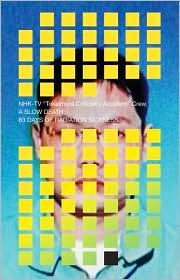
John Gall’s art for A Slow Death: 83 Days of Radiation Sickness (Vertical 160 pages $19.95) is unique in a gaze-snatching fashion. It combines hues of yellow and green, block patterns, and a news photo backdrop into an attractive, enigmatic, and faintly disturbing image that makes a browser wonder, “What exactly is inside this book?”

The answer is an account of a nuclear plant worker’s gradual demise after he was accidentally exposed to 20,000 times the maximum tolerable amount of neutron beam radiation. As some alleged environmentalists (including figureheads such as Al Gore) have begun touting the benefits of “non-carbon sources” of energy — an evasive way of saying “atomic power” — Hisashi Ouchi’s death comes across as an extreme cautionary tale.

Credited to NHK-TV “Tokaimura Criticality Accident Crew” and constructed from a television documentary about the nuclear accident, A Slow Death bluntly but compassionately renders Ouchi’s physical symptoms, which included massive skin loss, and the emotional impact his plight had on the doctors and nurses who treated him. The last extraordinary aspect of Ouchi’s story involves his heart, which persevered and remained relatively healthy while the rest of him demonstrated the impact of radiation. As the book puts it, “it continued living amidst the destruction of virtually every other cell in his body.” 

Taxes = prosperity

4

I found this nifty chart on DailyKos, along with an article about the idiot who wants to cut taxes on the rich again. I realize it’s a little hard to read the exact dates, but here’s the overall point:


High taxes on the wealthy, generally speaking, correspond to periods of economic prosperity. Low taxes on the rich, generally speaking, correspond to bad economic periods.


Gee, could there be a connection here?

SxSW Music Diary: Day 1

0

After making it to Dallas on the early flight from SFO we found gate A36 (connecting to Austin), a hipster ghetto in DFW’s sea of middle Americans. A friend spotted Toro y Moi in the crowd… and off we were to the live music capital of the world.

We got credentialed and then attempted to go to Fader Fort to check out Raphael Saadiq who was going on soon. But the line to get wristbands stretched literally as far as the eye could see, wrapping around a huge field. The best estimate I got for the wait was over 2 hours. Nevermind.

Back under the I35 to the Palm Door showcase on their deck over a creek… Anamanaguchi came on frenetically. According to their blog they make “hyper-active, hyper-positive, 8-bit jams” that center around a hacked Nintendo from 1985. It was pretty irresistible power pop.

Later that eve is was off to the Brooklyn Vegan showcase at Swan Dive. Olof Arnalds sweet Icelandic troubadour style won over the earnest crowd. And after filing into the hotel shuttle I heard an amazing version of “Benny and the Jets” filtering down the street. It was Brooklyn-based Marco Benevento showing the crowd (and those gathered on the street around the huge simulcast) his incredible piano chops.

SFBG Contributing Photographer Matt Reamer went off on his own adventure of a slightly heavier variety, check the slideshow for more on that.

It’s hard to avoid the constant feeling of missing out on something here… something that’s inherent to the SxSW experience. More to come…

Simulation of dispersal routes of radioactive pollution cloud

0

The Belgium Institute for Space Aeronomy has posted simulations of the dispersion routes of clouds of radioactive pollution emitted by the explosion in Daiichi Building-3 nuclear power plant in Fukushima in Japan.
“This simulation is one of the first to take into account the leaching by rain as the cloud on the route,” their website notes. “This results in a much faster decrease of the concentration of particulate pollutants. Based on these projections (which extend up to this Saturday), the cloud will disappear before they reach U.S. shores.  This simulation is based on the hypothetical initial cloud between 0 and 1500 m altitude. We tested the sensitivity to this assumption with another simulation where the initial cloud rises up to 3000 m. Thanks to leaching by rainfall, the result is almost the same: the cloud of radioactive pollution disappears over the Pacific Ocean.”

You can watch more cloud dispersal simulations by clicking here. And you can read updates on the nuclear power plants in Japan by checking out the International Atomic Energy Agency’s website.

Thornfield calling! Director and star discuss the new “Jane Eyre”

0

It’s not exactly the oldest story in the book, but with an 1847 publication date and dozens of adaptations, Jane Eyre has been done before. That presented director Cary Fukunaga, an Oakland native, with a unique challenge — making his 2011 film version of Jane Eyre (out Fri/18) different from what had been done in the past. But after his last movie, 2009’s critically acclaimed Sin Nombre, it was a project he was eager to take on.

“[Jane Eyre] was a story I knew as a kid,” he said in a recent roundtable interview. “The ’44 version Bob Stevens directed was one of my favorites. After spending six years on my last film, I really wanted to do something different in terms of scenery and style and location and even time period.”

But despite Jane Eyre’s status as 19th Century Gothic romance, Fukunaga felt it worked for a modern audience. Mia Wasikowska, who stars in the titular role, was inclined to agree.

“It kind of doesn’t need reinterpreting,” she reflected. “The popularity, as a character and a story, it hasn’t died down — it’s continued to grow, and people continue to connect to her story. If you took away all the costumes and the setting, at the heart of it is a story about a young girl trying to find love and a family, and that’s so, so much a part of what happens every day here.”

For Fukunaga, it was important to adhere closely to the novel, whose tone he believed had often been muddled in film adaptations. His Jane Eyre is consistently dark, with elements of mystery and suspense that remain even for those who know the story well.

“I wasn’t trying to make it more gothic than the novel,” he explained. “It was more that other adaptations had stayed more in the period drama sort of realm, and whenever you had elements of the story that seemed gothic or suspenseful, they seemed tonally out of the film you were watching.”

Fukunaga also split the story up in a non-linear fashion, a more modern conceit that adds to Jane Eyre’s tension and helps speed the classic romance along. With flashbacks throughout, the film reveals itself over time while engaging its viewers in a complex mystery.

“The structure was a way to turn the story into a modern tale,” Fukunaga said. “Typically these days you want to lure an audience into a story with just bits of information. Especially with our attention spans the way they are now, you don’t want to … start with just a chronological tale.”

Of course, it helps that Jane is such a timeless, relatable character. She’s more assertive than some of her literary counterparts, making independent choices that were uncommon among her contemporary women. Wasikowska fell in love with Jane when she was reading the novel for the first time, to the extent that she asked her agent to look for any upcoming Jane Eyre projects before Fukunaga’s adaptation was announced.

“What I love about her is that she has such a strong sense of self and a strong sense of who she is and what’s right and what’s wrong by her,” Wasikowska offered. “She’s not going to compromise herself for somebody else, and that’s the best thing. She’s going to make sure that before she commits herself to somebody, she’s a fulfilled individual and that she’s done everything she could to be that.”

While Fukunaga and Wasikowska reflected positively on the filming experience, it had its share of ups and downs. The tight schedule forced a lot of work in a short period of time. Meanwhile, Wasikowska had to contend with a different kind of tightness, squeezing into a corset for period realism.

“Painful. Awful. Everyone says corsets are hell, and I understand that, but until you’re really in there, it’s like a whole other thing,” she said. “They’re really helpful physically for the character. You really get a sense of the repression and the restriction.”

Fukunaga elaborated. “It basically takes your guts and squeezes them in half, and some of the guts go down and some of the guts go up,” he explained. “It’s really unhealthy.”

But the pain was worthwhile — Wasikowska’s portrayal of Jane Eyre is certain to be celebrated. Fukunaga’s interpretation as a whole is one of the story’s best cinematic adaptations. Perhaps some of the success comes from the deep understanding the director and actor had for the original novel.

When Fukunaga was asked about his interest in Jane Eyre, he rejected the common perception and offered his own analysis instead.

“For me, it’s not the bodice-ripping,” he said. “It’s more, I think, probably this kid’s journey and the person she became … Love can be all-consuming, and too often people compromise what they are in order to achieve it. And it’s the rare individual who can not do that.”

Jane Eyre opens Fri/18 in Bay Area theaters.

American Idol: Elvis and the Lion Queen

0

I was out at the SPJ FOI Awards event early in the evening, so I missed the first few performances, but no worries: Vivian and Michael were taking excellent notes and filled me in. And the best stuff came at the end anyway.


First: What was UP with J-Lo’s hair? I can’t find any pix on the web (Idol is insanely protective of its imagery) but trust me: She looked like something out of the Lion King. And the leopard-print dress didn’t help much. It’s a jungle out there, Jennifer. Grrr.


Next: The background video/light show continues to be utterly moronic, mixing psychedelia and syrup pretty much at random. With the millions they’re making from the Ford commercials, they could get a decent designer.


Also: These people are all so young. The night’s theme was picking a song from the year you were born; for Scotty, that was 1993. As his backstage producers noted, “I have a pair of jeans that were born in 1993.” Five of the finalists aren’t even old enough to buy a drink. No OGs in the lineup this year; Paul clocks in as the senior citizen at 26.


The baby and kid pics were cute; I loved watching Scotty as Halloween Elvis. And with 12 contestants, there wasn’t a whole lot of time for nonsense; the show kept moving. Oh: Casey’s back form the hospital and seems fine.


The details: Naima does “What’s Love Got To Do With It.” Eh. From Viv: “J-Lo thought it was a little pitchy and Randy agreed. Really, it was just okay.”


Paul: Elton John. “I Guess That’s Why They Call It the Blues.” Not Sir Elton’s best song, not Paul’s best performance.


Thia: “Colors of the Wind.” Again, nothing special.


So overall a slow start — until James hit the stage with Bon Jovi. Steven Tyler was so impressed he offered to quit Aerosmith (can you really quit a band that isn’t really there anymore?) and join him onstage. The kid can rock.


Haley: Whitney Houston. Oops.


Stefano, the guy who almost got sent home, turned the entire show around with “If You Don’t Know Me By Now.” His parents weren’t out of diapers when Harold Melvin and the Blue Notes first released that, but somebody else did it 22 years ago, so it counts. Perfect song for him, perfect rendition of a tough piece.


Pia: Whitney Houston, too. The girl is drop-dead beautiful and has a stunning voice — but that horrid white outfit looked like someone had wrapped her in a plastic garbage bag. (“You can’t say it made her look fat,” Jean told me harshly. And it didn’t, really, because she isn’t, but it might have.) Hideous, I almost couldn’t listen to the song. 


Scotty is always solid, born to be a country singer. He’s so good it’s almost boring.


Karen: Marge Simpson hairdo. Devo-meets-Vegas outfit. The song was okay, and the interview with her mom was too cute for words, but next time let mom check the look before you go out the door, okay?


Casey went on with his bass and tried to be Kurt Cobain — and oddly, it worked. Kind of scary, actually. But it worked. Steven: “Crazy and talented — that’s the goop that great stuff was made of.” J-lo still thinks he’s sexy. Grrrr, Lion Queen.


Lauren’s got the flu, but did a great job with Melissa Ethridge. Jacob tried Heart, and failed.


Naima, Haley and Jacob — bottom three. And Naima’s going home. Tune in tomorrow; I’m never right.

Hot sexy events: March 16-22

1

Although it’s not often that the Wall Street Journal alerts us to convincing arguments for the existence of prostitution, that seems to be the case today. The Journal published findings from a Duke University paper done on sex workers in Kenya that concluded that many prostitutes found relief in hard times from their clients. Illnesses in the family, unexpected handicaps, and staggering funeral bills were all cited as instances in which sex workers fell back on the largesse of their regular clients for financial support. 

Respectful relationships between sex workers and johns – yet another nail in the coffin for those that would ban the industry on the basis of worker exploitation.


The Art of 8 Limbs

Leave your bag of tools at home this time, kinky community. Disciple, local expert in kinky grappling and cell popping, will be teaching this class in utilizing one’s own body as an implement in body impact play and striking. And just to make sure you’re not inflicting pain on unsuspecting parties, part of the night will be devoted to stretching exercises you can perform before you put the techniques into play.

Thurs/17 8-10 p.m., $20

SF Citadel

1277 Mission, SF

(415) 626-2746

www.sfcitadel.org 


Exiles Mini Un-Conference

What’s an un-conference? Well, it’s unplanned, unpredictable, and undone when The Exiles, women’s BDSM group are running it. Come with something to teach and you can sign up on a schedule grid. Come with something to learn and you’ll do just that. After the impromptu workshops, the group is holding its officer elections, so a return to order is inevitable. Women-identifying folks only, please. 

Fri/18 7:30-10:30 p.m., free

Women’s Building 

3543 18th St., SF

www.theexiles.org


Kinky Salon Mardi Gras

This pansexual swinger’s party will probably be the easiest place in town to give away your beads. Get frisky while Bombshell Betty, Fromagique, Dangerous Delilah, and more take turns onstage to burlesque and brass band your inhibitions away.

Sat/19 10 p.m.-late, $25-35 members only

Mission Control

www.missioncontrolsf.org


Chaps Closing Party

You may have heard Chaps is closing. To send you leather lusties into the next few weeks without a cruise bar at 1225 Folsom, the bar is holding this sayonara party. Chuck Slaton and Ron Morrison, owners of the original Chaps, will be on hand, so take that shot, bend over, and wave – it’s been a heady three years. 

Sat/19 9 p.m.-late, free

Chaps 

1225 Folsom, SF

(415) 255-2427

www.chapsbarsanfrancisco.com


“Ask Me, I’ll Tell You: Men and Women Talk Out Loud About Sex and Aging”

How does down and dirty change when gravity comes to roost and you’re staring down retirement? Good question, one that even those approaching that age don’t rightly know how to answer. Joan Price gives this lecture on spicing up senior sex, lessons that you can also cull from her books,  Better Than I Ever Expected: Straight Talk about Sex After Sixty and Naked at Our Age: Talking Out Loud about Senior Sex.

Tues/22 6-8 p.m., $25-30

Good Vibrations

1620 Polk, SF

(415) 345-0500

www.goodvibes.com 


Sex Work Shop Talk

Take a load off those stilettos for a chat with your peers – that’s the mission of these semi (check the sexworkshoptalk.com website for the next date) weekly meet-ups for members of the sex trade just for industry types to connect on work-related topics. This week the get-together will also feature makeup tips for all genders, and a clothing/toy/makeup swap. Oh, and chocolate. There will be chocolate.

Tues/22 6:30 p.m., $3-10 suggested donation

Center for Sex and Culture

1349 Mission, SF

(415) 552-7399

www.sexandculture.org


SFBG Radio: Wavy Gravy on Owsley

2

In a special episode today, Johnny talks to Wavy Gravy, founder of the Hog Farm, patron of Camp Winnarianbow, MC at Woodstock and close friend of Stanley Owsley, the late acid avatar. Hear him talk about Owsely’s home in Australia, the dangers of the platypus, the acid test days, the all-meat diet and much more after the jump.

sfbgradio3/16/2011 by endorsements2010

Ammiano: what about the hospitals?

2

One of the most frightening aspects of an major earthquake in the Bay Area is the potential destruction of some of the big  local hospitals. “If it happened today, we’d have no SF General, no Kaiser,” Assembly Member Tom Ammiano told me. St. Lukes? I wouldn’t bet on it. And considering the conditions in Sendai, that’s not a pleasant prospect.


State law requires all hospitals to undergo seismic upgrades by 2013 — but the deadline keeps getting pushed back. Ammiano said there are more delays pending, more bills in the Legislature that would allow some operators (particularly private hospitals) to miss the deadline without penalty.


Both Stanford and CPMC has tried to claim that they can’t do the work yet because of local obstacles. (Actually, there are no local obstacles to upgrading exisiting CPMC facilities, just to the construction of a new hospital on Cathedral Hill.)


Sme public hospitals say they lack the money. “But in Francisco, we did the right thing. We passed a hospital bond,” Ammiano said. “When my colleagues from other areas say they can’t meet the deadline, I ask them — did you vote for a hospital bond?”


Ammiano plans to introduce legislation to pre-empt any further delays and get this process back on track. “It’s horrifying to see what happened to the hospitals in Japan,” he said. “We need to be prepared in California.”


Finally, the Chron’s against nuclear power

17

Well, maybe not entirely against nuclear power, but in a rather surprising editorial, the paper noted:


Suddenly, nuclear doesn’t seem so safe. The truth is that it never has been. As we’re learning from Japan, it’s impossible to ensure full stability with the nuclear energy production process. Japan was known for being extraordinarily cautious with its nuclear energy plants and safety procedures, and disaster still struck. All that means is that there are too many contingencies and too many opportunities for things to go wrong.


Damn. I wish we’d had that sort of editorial support when we were fighting PG&E over Diablo Canyon. That plant was a serious mistake, is still a serious mistake and ought to be shut down. But in the long, long years of protests against the plant’s construction, licensing and operations, I don’t remember the Chronicle ever saying that nuclear power “has never been safe.” We were up against the pro-PG&E press as much as we were up against PG&E.


So now the paper has figured out that boiling water with a nuclear fission reaction to generate electricity is a bad idea. Now we need the Chron to come out in strong opposition to the relicensing of Diablo Canyon and start calling for the plant to be decomissioned. Starting now.


The GOP convention dilemma

9

Word in Sacramento is that five Republicans may be close to going along with the governor’s plan to put $12 billion in tax extensions (NOT tax increases, just extensions of existing taxes) before the voters. The problem: They don’t want to vote for taxes and then have to show up at the state convention March 18 — where there’s a move afoot (I kid you not) to pass a resolution (thanks, CalBuzz) that calls on the party to censure any “traitorous Republicans-in-Name-Only, ask for their resignation from their positions within the California Republican Party, pledge to endorse and support efforts to recall them from office, and direct the California Republican Party staff, agents and officers to refuse to provide them with funding or assistance in future elections.”


Why can’t the Democrats do shit like this? Censure and abandon any Democrat-in-Name-Only who supports continuing the wars in Iraq and Afghanistan and refuses to increase taxes on the rich? (Oh, wait — then we wouldn’t have very many Democrats left. Which, I guess, is the GOP problem.)


At any rate, the Legislature is going into session this afternoon to try to push this package through — and it could be one of those marathon sessions that lasts all night. Or maybe the Republicans will vote for the budget plan — but only if they can wait until Monday.


By the way: Isn’t it odd that two crazy talk-show hosts in L.A. can hold an entire state hostage? How come we don’t have a couple of crazy talk show hosts in San Francisco who can make very Democrat in Sacramento pay attention?

5 Things: March 15, 2011

0

>>1. (PARTY) HELP FOR JAPAN SF’s nightlife community is already pulling out the fundraiser stops for Japan. First up: Thursday night’s Good Foot party at SOM, a rad hip-hop and funk-soul affair with special superstar guests Lyrics Born and Trackademics. They’re donating a dollar for everyone who comes, so bring your crew and dancing shoes.

>>2. YUM, BUT NO SCRUBDOWN Around Union Square, it’s hard to find upscale dining that isn’t aimed at the hordes of hungry tourists. But for authentic Italian, Fino really is fine – no need to navigate the North Beach girly bars for excellent alfredo or crisp, light veal piccata. The restaurant is in an old Turkish bathhouse – waiters argue over where the pool was, with most agreeing on the kitchen – and the crème brulee is to die for.

>>3. ALL THINGS GREEN (AND VEGAN) In and of itself a halfway admissable reason to have a break in your veganism: your Guinness contains animal products, probably. (Thank fur-stroking Paddy, then, for Jameson.) But to assuage your grief and make sticking to the critter-free lifestyle easier, PETA has assembled a lovely list of recipes for vegan, Irish-inspired savories for St. Patrick’s Day – as well as contributions to the fine American tradition of adding green dye to every damn thing.

>>4. ON THE UP AND UP A Bay Area classic that everyone should check out, Stairway Walks in San Francisco, has been updated and just rereleased. 670 stairways? That’s a lot of bun-firming.

>>5. FEELIN’ SAXY and whisperin’ careless!

SF health food stores selling out of potassium iodide **UPDATED**

***UPDATE***

OK, we’ve got some new information here, which is different from what the California Department of Public Health told us a little while ago: U.S. Surgeon General Regina Benjamin told media she supports the idea of buying potassium iodide as a “precaution.”

Here’s a quote from an NBC Bay Area news story: “Dr. Benjamin said although she wasn’t aware of people stocking up, she did not think that would be an overreaction. She said it was right to be prepared.”

Here’s the original story:

Evidently, folks in the Bay Area are worried that the ongoing nuclear problem in Japan could cause a health hazard in San Francisco, which lies about 5,000 miles across the Pacific Ocean from Japan’s damaged Fukushima Daiichi nuclear plant. We phoned several Whole Foods stores in San Francisco to find out if potassium iodide was flying off the shelves, and sure enough, it was the same story at every location.

“We’re all sold out,” one customer service representative said. “Too many people are asking me about this stuff,” said another. Three Whole Foods locations were out of the product, and a fourth didn’t carry it but was all out of kelp, which is also believed to protect the thyroid against radiation exposure.

Our rather unscientific poll seems to reflect the situation in other locations — several national news reports noted that drugstore sales of potassium iodide had increased dramatically.

Are people overreacting? Health officials seem to think so, particularly if they’re ingesting it. “Potassium iodide tablets are not recommended at this time,” said California Department of Public Health spokesperson Ken August. The United States Nuclear Regulatory Commission recently issued a statement indicating that at present, Japan’s nuclear emergency presents no risk to California. “Because there is no indication of any type of radiation exposure as a result of the nuclear power plant problem in Japan, people would be ill-advised to take potassium iodide,” August said.

According to the Centers for Disease Control, potassium iodide is a salt of stable (not radioactive) iodine, a chemical that the body uses to make thyroid hormones. If radioactive iodine is inhaled or ingested into the body following a nuclear emergency, the thyroid absorbs it, which can lead to serious health problems such as cancer in the long-term. Potassium iodide can block radioactive iodine from entering the thyroid, according to the CDC, but it cannot prevent radioactive material from entering the body.

August noted that taking potassium iodide could cause health problems for people with allergies to iodine or shellfish, or for people with thyroid problems. “They could have an undiagnosed health condition,” he added. The CDC also notes that taking it can cause side effects such as intestinal upset and rashes, and that it could pose risks to people with certain kinds of skin disorders. Ingesting very high dosages of the stuff can kill you, the CDC warns.

So there you have the risks. For people who are going to take it anyway, it’s probably a good idea to read up on it.

And if a worst-case scenario ever did come to pass? August said that evacuation was the first step that officials would take if there were a serious risk of radiation exposure, and he noted that opting to stay put and take potassium iodide in that scenario would increase health risks, since it only guards against injury to the thyroid gland. The state’s Department of Public Health website notes that California does keep a supply of potassium iodide tablets for emergencies — but only for the area around the San Onofre nuclear power plant in Southern California.

August said air monitoring is conducted in 10 locations throughout California to determine atmospheric levels of radiation, on a weekly basis. He said monitoring of food, water, and ambient radiation is also conducted, on a monthly basis.

How taxes on millionaires could save the NBA

6

March is heaven for basketball junkies. The NCAA tournament goes full-tilt boogie and for fans of the pro game, playoff jockeying intensifies into overdrive. As a member of the latter camp whose team sits atop the NBA East, there is a river of joy flowing through the ventricles of my pumping heart.


But this year, the happy is tempered with the specter of dread. In July, the NBA’s collective bargaining agreement expires and it is a near certainty that there will be a lockout. Despite a projected revenue increase of anywhere from 3-5% in this allegedly recuperating economy of ours, the owners will padlock their doors shut, terminating contracts they signed in supposedly good faith, because they claim that they lost $370 million last season (the union disputes this). Who loses ultimately is the game itself–fan goodwill can only bend so far.


There’s plenty of blame to go around, but ultimately all of it rests with the owners who flout their own salary caps with ridiculous deals to borderline players like a Hedo Turkoglu or a Rashard Lewis, as well as the talent dilution in having teams in exotic locales that can’t support them (e.g. The Memphis Grizzzlies and the soon to be in Anaheim Sacramento Kings). But much of the issue of inflated salaries comes back to the same problem that is plaguing the entire economy–low taxation on the very wealthy has priced the NBA out of profitability.


Suppose the 91% tax in place during the 50’s was reinstated for people making over 10 million dollars a year (it used to be over a million to be in that bracket, let’s adjust for inflation). Why would a player demand a salary of 20 million a year (or Kobe Bryant’s 24M escalating to 32M due next year), when the net wouldn’t exceed 11M? Makes no economic sense. A GM can offer a ten year deal at 99M instead of 5 years/20M, same amount of money (not counting bonuses, endorsements and the like).


What low tax proponents never ever grasp is that lower taxes on the top 1% inevitably lead to these situations, the NBA is a micro in the macro of Wall Street, CEO compensations, estates. When massive amounts of money accumulate with the few (even hard earned, no one can deny the skill and work ethic of a LeBron or a Ray Allen), the ripple effect is that the system cannot sustain–the fans will not pay higher tickets and greater merchandise charges forever. The players and owners have effectively killed off the golden goose–let’s take the ax from their hands with reasonable taxes from now on in ours.


Johnny Angel Wendell  is a talk show host at KTLK AM1150 in Los Angeles, webcaster at sfbg.com and a 30 plus year veteran of the American music scene.
 

Board considers extra $75.4 million for Mission Bay redevelopment

0

UPDATE: An earlier version of this post reported that the Board was meeting in closed session. This was incorrect.

The Board is meeting today  to consider amending the San Francisco Redevelopment Agency’s (SFRA)  budget to issue an additional $70 million in tax increment bonds and appropriate $75.4 million ($70 million in bond proceeds, plus $5.4 million tax increment). The request, which comes on the heels of last year’s $64 million request, represents a 109.4 increase of tax increment bonds in 2010-2011. The city says thiis has nothing to do with Gov. Jerry Brown’s proposal to eliminate redevelopment agencies. But the last-minute timing of today’s session looks a tad fishy at best. And it’s playing out as a vote on Treasure Island’s final environmental impact report approaches, and against a backdrop of extreme funcertaintly related to all things Redevelopment, as Mayor Ed Lee and other city leaders try to figure out ways to prevent or reduce the affordable housing fallout from the governor’s elimination proposal.

According to a Budget and Legislative Analyst’s summary of today’s request, the requested bond issuance and expenditure is part of the “SFRA’s normal course of fulfilling its obligations under the tax increment allocation pledge agreements between the city, SFRA and FOCIL-MB (Catellus’ successor entity at the Mission Bay redevelopment sites), and not as a result of the Governor’s proposal to eliminate local redevelopment agencies. Ms. Lee [deputy executive director at the SFRA] states, that, as of the writing of this report, the impact of the Governor’s proposal on the Mission Bay Redevelopment Project is currently unclear and ambiguous as to whether approval of the Governor’s proposal would affect the requested bond issuance and expenditure authority.”

“At the time of the development and approval of the FY 2010-2011 budget, the Agency and Tax Assessor did not have available tax roll information that resulted in a significant increase in property taxes in Mission Bay due to the accelerated assessment agreement between the Assessor and the Agency,” states today’s Board resolution that Mayor Lee sponsored, explaining why there’s a request for an additional $70 million in bonds, so soon on the heels of the $64 million that the Board approved last year.

“The Agency wishes to amend its budget for the fiscal year 2010-2011 to permit the receipt of additional tax increment of $5.44 million and bond proceeds in the amount of $70 million for the purposes of low moderate housing and for the reimbursement of public improvements made by Catellus pursuant to the tax increment allocation pledge agreement between the City and County of San Francisco, San Francisco Redevelopment Agency and Catellus made in November 16,1998 for Mission Bay North and South,” the resolution continues.

 Mission Bay North and South are two separate redevelopment areas that encompass 303 acres, bounded by King Street and AT&T Park on the north, the San Francisco Bay and the I-280 freeway on the east and west, and Mariposa Street to the south, according to Redevelopment Agency documents.

The Budget and Legislative Analyst notes that of the $5.4 million in additional tax increment, an estimated $3.48 million would fund a portion of the Agency’s required educational revenue augmentation fund payment to the state for FY 2010-2011. And that the remaining $1.95 million would be distributed to tax entities, with $870,400 to be expended on the agency’s low and moderate income housing fund.

 The BLA notes that the proposed sale of $70 million in tax increment bonds will provide $60.345 million bond proceeds, including $12 million (20 percent) to fund the construction of 1180 4th Street, a development of 150 units of family rental housing, including 25 units for formerly homeless families and $48. 276 million (80 percent) to reimburse Catellus’ successor, FOCIL-MB, LLC, for public infrastructure development that FOCIL-MB constructed..

“If the proposed resolution is approved, of the $177 million total estimated debt service, $100, 890,000 or 57 percent will be paid from the City’s General Fund. The City’s General Fund estimated additional annual cost would be $3,648,000 for the first 20 years, decreasing to $2,793,000 for the next ten years.” The BLA concludes, explaining that approval of the proposed resolution is a Board policy decision because it adds up to a total General Fund cost of more than $100 million.

 According to the BLA report, Amy Lee, SF Redevelopment Agency deputy executive director, the requested $70 million in tax increment bonds would be sold in late March 2011, “such that no debt service payments would be required in FY 2010-2011.

 The BLA also notes that if the Board approves the proposed resolution, the net effect of each property tax dollar expended for tax increment that is provided to SFRA would result in a reduction of $0.57 on each dollar from the city’s General Fund.

“In other words, for each tax increment dollar provided to SFRA, the City would no longer have to provide payments to other tax entities,” the BLA observes.

These entities include the city’s Children’s Fund, Library Preservation Fund, Open Space Acquisition Fund, and the General City Bond Debt fund, the Community College district, the San Francisco United School District, BART, and the Bay Area Air Quality Management District, which total approximately $0.43 of each property tax dollar.

It’s because of these property tax dollar equations that the annual cost to the city’s general fund for proposed increased debt service would rise, if the Board approves today’s Redevelopment resolution, by more than $100 million over the next 30 years.

And as local Democratic Party chair and former Board President Aaron Peskin explains, there’s nothing much the Board can do about the deal today, but they might want to reconsider getting into more deals like this at Treasure Island and beyond, in future.

“A deal is a deal is a deal,” Peskin said. ‘So, there’s nothing the Board could do differently, but that’s $3.648 million that otherwise would be going into the General Fund, and it’s a sign we should pay attention to, when considering Treasure Island, as deals like this will continue to impoverish the General Fund.”

 “Even though they deny it has nothing to do with Gov. Jerry Brown’s pending legislation to eliminate redevelopment agencies, I have never seen something scheduled so quickly,” Peskin added, noting that the Board’s agenda is published Thursday evening or Friday morning, but this item wasn’t on that agenda, hence the need to publish a separate notice.

Meanwhile, Treasure Island’s final environmental impact report has been released, and the way the current plan looks, will forever alter our view of the Bay.

“It will have enormous impacts on services for the City and traffic for the entire Bay Area,” Saul Bloom, executive director of Arc Ecology, told the Guardian.

On April 7, a joint session of the San Francisco Planning Commission and Treasure Island Development Authority will be meeting to consider certifying the EIR, but Arc is asking for an extension of two more weeks to provide the public with 42 days for review.

“Fourteen additional days for public review is a very modest request for a project with such significant impacts yet, the City has thus far refused,” Bloom notes.

Editorial: The Willie Brown loophole

0

As the stories in this issue show, open government laws are critical to democracy. Without the city’s sunshine law, we wouldn’t know how the proposal to give Twitter a tax break ballooned into a major giveaway. Without the sunshine laws, Tim Crews, the embattled publisher of the Sacramento Valley Mirror, wouldn’t have been able to use his small paper to hold public officials accountable.

That’s why the laws on the books need to be enforced — and sometimes strengthened. One example in San Francisco is the lobbyist registration requirement.

Here’s the problem: Former Mayor Willie Brown, who now works for at least two major outfits with business before City Hall. As Tim Redmond reports on page 10, Pacific Gas and Electric Co. paid Brown some $480,000 in 2007 and 2008. And although Brown is a lawyer, nobody can honestly believe that was for legal work. He was clearly paid to give the embattled utility political advice and to pull political strings. And PG&E has major interests at City Hall — San Francisco is trying to set up a community choice aggregation system that PG&E opposes, and (of course) the utility has spent almost 90 years trying to block public power in this town. There are dozens of other city issues, from facility safety to the franchise fee, that affect PG&E’s bottom line.

Has Brown tried to influence city officials on behalf of the utility? The public has no way to know. By law, any individual who lobbies for a private client (and earns more than $3,000 a quarter doing so) has to register with the Ethics Commission, reveal his or her clients, and report on all contacts with city officials. Brown has never done that.

Brown also works for the owners of the Fairmont Hotel, who want the right to convert hotel rooms to condos. Mayor Ed Lee just submitted legislation giving the hoteliers what they want, and Brown is Lee’s political mentor. Connection?

The public has a right to know who’s trying to do what deals behind closed doors; that’s why the city has a lobbyist registration law. The voters have a right to know whether lobbyists are giving money to elected officials; that’s why the law requires registered lobbyists to itemize those contributions. But it’s not always honored — and as Brown shows, it can be openly defied. And nothing happens.

Part of the problem is that the Ethics Commission has been far too lax in pursuing enforcement of the laws. The agency lacks the resources to do serious investigations. As a result, its director John St. Croix told us, all the staff can do is respond to complaints. But even with the limited money it has, the commission can do a lot more. Public hearings on the failures of lobbyist registration and campaign contribution reporting would be a good first step. And how hard would it be to cross-check campaign filings with lobbyist filings to see which lobbyists don’t properly report their contributions? A simple computer program could do that in a few minutes.

The commission also needs to do a better job making its funding case to the supervisors. The utter lack of serious enforcement of laws involving powerful interests doesn’t instill confidence in the agency.

But the law is also vague in parts, and the supervisors need to fix it. A clearer definition of “lobbyist” is a clear mandate. And enforcement needs to be increased. Willful violation of the state’s Political Reform Act is a misdemeanor crime. Violating the city’s lobbyist law should be too.


Eating green, gay crow

10

Well it looks like our St. Patrick’s Day coverage included more disreprencies than just last week’s nomenclature kerfuffle. As Rob Blackwell, president of the Lesbian and Gay Band Association informed us via email yesterday, the Key West, Queens, and San Francisco St. Paddy’s promenades are not, as we reported in the March 8 “March to the rainbow” article, the only shamrock shuffles in this country that welcome the participation of the LGBT community. In fact, writes Blackwell: 

This year and every year, several member organizations from the Lesbian and Gay Band Association march in similar events across the United States.

For the past 27 years, the Mile High Freedom Band has been participating in the Denver St. Patrick’s Day Parade. The band’s participation is one of the highlights of their annual calendar and a long-standing tradition in Colorado.

In Kansas City, the Mid America Freedom Band participates in the annual Brookside St. Patrick’s Day Parade. And while not included in their hometown parade, the Freedom Trail Band of Boston has marched on several past occasions in the Cambridge St. Patrick’s Day Parade.

While we are proud of the San Francisco Lesbian/Gay Freedom Band and their participation in your local St. Patrick’s Day Parade, your omission of these other important contributions lessens the important work our organization is doing to propagate music, visibility and pride in our national community.

So consider us corrected. In a good way – we’re all for truthiness in the Guardian, but addendums that prove social justice is high-stepping along quicker than we thought really twirl our green bowties. 


Looky-loos and show ponies: A day in the life at the BNP Paribas Open

0

On one side of the main stadium at the Indian Wells Tennis Garden, white picket fences separate the players, their entourages, and assorted tour types from the fans. There’s a small plot of green grass near the practice courts, where the athletes jog after matches, or – like Scotland’s Andy and Jamie Murray – kick a soccer ball around to pass the time. The setup has a looky-loo and show pony quality, like a human version of horses being led around before a race, though in truth, the BNP Paribas Open presents one of the most free and easy atmospheres in terms of player-fan interaction, with many of the pros walking through the complex amongst the general public.

In the cafeteria, a young Belgian female player and a French former doubles and current serve-and-volley specialist wait for pressed sandwiches from a discombobulated culinary institute intern. At tables, the players fraternize with one another, sometimes across national lines, while an older women’s champion and a famous trainer sit alone. The one moment that even some pros dispassionately turn to stare is when Rafael Nadal ducks in to grab a quick bite before his first-round singles match, dropping his ID card as his transaction is rung up by a girl with Snooki- or Adele-like mascara.

Out in the practice area, some members of the Spanish Armada – Tommy Robredo, David Ferrer, and Ferrer’s coach, Javier Piles – hang out in the sole shady corner of a court in the early afternoon, then Robredo gets up and hits serves. To sunscreen or not to sunscreen? The question is moot these days for health reasons, yet there’s still a contrast between the hordes, mostly players, who look healthily tanned, and the smaller contingent, primarily older male coaches, who have taken on a leathery appearance. For the latter, this facet conveys experience and a certain kind of hardened masculinity, like that of a war admiral’s.

The French players Richard Gasquet and Gilles Simon rally and volley in the piercing sun, their styles a study in contrasts. Gasquet, once heralded as Federer’s heir apparent, has compact, classical strokes and a bullish physique, while the gangly Simon, who has outperformed expectations, is all looping limbs in comparison.

The largest crowd is gathered for Roger Federer’s practice session with compatriot and doubles partner Stanislas Wawrinka. A giant Swiss flag with ‘Rogelio’ and a jeweled crown on it is unfurled on the fence of one side of the court. Federer’s posture and gestures are of a different sort than the other athletes here, if not kingly then debonair and large, like an old-time matinee idol, whether he’s sitting with legs crossed or outstretching an arm near Wawrinka’s chair.

At night, as two junior players make up for their short stature with loud grunts on the next court, Croatia’s Marin Cilic gets in a practice session under the eye of his coach, Bob Brett. After a promising beginning, Cilic’s 2010 was a bit of a disaster, but he’s gradually been regaining confidence, and is assured on court, winning almost all of the practice points he plays.

A lithe Ana Ivanovic, fit and focused in a way that should prove interesting in the coming months – particularly clay season — has a playful warm up with ESPN’s and Adidas’s Darren Cahill overseeing on one of the main practice courts. Her round of hitting begins with an amazingly long rally, and a few minutes later, she chases down a lob and hits a ‘tweener shot to the crowd’s approval. Her opponent that night, Kimiko Date-Krumm, practices on the furthest corner court to a much smaller gathering of onlookers, one day after an earthquake and tsunami have wreaked devastation in her home country. Date-Krumm is the oldest player on the WTA tour, and her flat-hitting technique, catching the ball early on the rise, is of an entirely different era.

At the end of the evening, the rising young ATP player Adrian Mannarino has a clowning session with a hitting partner on an another obscure side court. The pair begin each rally by placing the ball atop the net, then they gently nudge it back and forth within the service lines in a manner that combines slapstick physicality with characteristic French finesse. Next to no one is watching them, they’re simply enjoying the game.

>>MORE: The net: Young victory and top-ranked tennis musings at the BNP Paribas Open