SFBG Blogs

The madness of nuclear power

0

By Norman Solomon

Norman Solomon is president of the Institute for Public Accuracy and a senior fellow at RootsAction. His books include “Killing Our Own: The Disaster of America’s Experience with Atomic Radiation” (1982), co-authored with Harvey Wasserman.
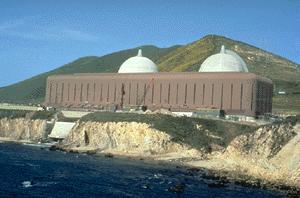

Like every other president since the 1940s, Barack Obama has promoted nuclear power. Now, with reactors melting down in Japan, the official stance is more disconnected from reality than ever.

Political elites are still clinging to the oxymoron of “safe nuclear power.” It’s up to us — people around the world — to peacefully and insistently shut those plants down.

There is no more techno-advanced country in the world than Japan. Nuclear power is not safe there, and it is not safe anywhere.
As the New York Times reported on Monday, “most of the nuclear plants in the United States share some or all of the risk factors that played a role at Fukushima Daiichi: locations on tsunami-prone coastlines or near earthquake faults, aging plants and backup electrical systems that rely on diesel generators and batteries that could fail in extreme circumstances.”

Nuclear power — from uranium mining to fuel fabrication to reactor operations to nuclear waste that will remain deadly for hundreds of thousands of years — is, in fact, a moral crime against future generations.

But syrupy rhetoric has always marinated the nuclear age. From the outset — even as radioactive ashes were still hot in Hiroshima and Nagasaki — top officials in Washington touted atomic energy as redemptive. The split atom, we were to believe, could be an elevating marvel.

President Dwight Eisenhower pledged “to help solve the fearful atomic dilemma” by showing that “the miraculous inventiveness of man shall not be dedicated to his death, but consecrated to his life.”

Even after the Three Mile Island accident in 1979 and the Chernobyl disaster in 1986 — and now this catastrophe in Japan — the corporate theologians of nuclear faith have continued to bless their own divine projects.

Thirty years ago, when I coordinated the National Citizens Hearings for Radiation Victims on the edge of Capitol Hill, we heard grim testimony from nuclear scientists, workers, downwinders and many others whose lives had been forever ravaged by the split atom. Routine in the process was tag-team deception from government agencies and nuclear-invested companies.

By 1980, generations had already suffered a vast array of terrible consequences — including cancer, leukemia and genetic injuries — from a nuclear fuel cycle shared by the “peaceful” and military atom. Today, we know a lot more about the abrupt and slow-moving horrors of the nuclear industry.

And we keep learning, by the minute, as nuclear catastrophe goes exponential in Japan. But government leaders don’t seem to be learning much of anything.

On Sunday, even while nuclear-power reactors were melting down, the White House issued this statement: “The president believes that meeting our energy needs means relying on a diverse set of energy sources that includes renewables like wind and solar, natural gas, clean coal and nuclear power. Information is still coming in about the events unfolding in Japan, but the administration is committed to learning from them and ensuring that nuclear energy is produced safely and responsibly here in the U.S.”

Yet another reflexive nuclear salute.

When this year’s State of the Union address proclaimed a goal of “clean energy sources” for 80 percent of U.S. electricity by 2035, Obama added: “Some folks want wind and solar. Others want nuclear, clean coal and natural gas. To meet this goal, we will need them all — and I urge Democrats and Republicans to work together to make it happen.”

Bipartisan for nuclear power? You betcha. On Sunday morning TV shows, Republican Sen. Mitch McConnell voiced support for nuclear power, while Democratic Sen. Chuck Schumer offered this convoluted ode to atomic flackery: “We are going to have to see what happens here — obviously still things are happening — but the bottom line is we do have to free ourselves of independence from foreign oil in the other half of the globe. Libya showed that. Prices are up, our economy is being hurt by it, or could be hurt by it. So I’m still willing to look at nuclear. As I’ve always said it has to be done safely and carefully.”

Such behavior might just seem absurd or pathetic — if the consequences weren’t so grave.

Nuclear power madness is so entrenched that mainline pundits and top elected officials rarely murmur dissent. Acquiescence is equated with prudent sagacity.

In early 2010, President Obama announced federal loan guarantees — totaling more than $8 billion — to revive the construction of nuclear power plants in this country, where 110 nuclear-power reactors are already in operation.

“Investing in nuclear energy remains a necessary step,” he said. “What I hope is that, with this announcement, we’re underscoring both our seriousness in meeting the energy challenge and our willingness to look at this challenge, not as a partisan issue, but as a matter that’s far more important than politics because the choices we make will affect not just the next generation but many generations to come.”

Promising to push for bigger loan guarantees to build more nuclear power plants, the president said: “This is only the beginning.”

_______________________________________

Norman Solomon is president of the Institute for Public Accuracy and a senior fellow at RootsAction. His books include “Killing Our Own: The Disaster of America’s Experience with Atomic Radiation” (1982), co-authored with Harvey Wasserman.

Delhi 2 Dublin brings the St. Paddy’s bhangra

0

It’s St. Patrick’s Day and everyone is Irish. Truly — the West coast brand of ethnic identity is a far cry from that of New England and New York, where families ran straight from the Potato Famine to set up shop in certain neighborhoods, maintaining their Celtic colors even now. Nope, by the time the gene pool wagon-wheels its way to California, most people are some amalgamation of several cultures. Which is to say that the Vancouver-based Celtic electro-bhangra of Delhi 2 Dublin should be seen as less of a new bastardization of world musics as much as a let’s-all-get-down reflection of who we are today.

But I’m waxing more sociological (per usual) than the band does itself. We caught the group’s DJ, Tarun Nayar, on a layover in an airport he was having trouble identifying (“Baltimore?” he guessed). The only concrete location we were able to get out of him is that the band is playing Mezzanine on St. Patrick’s itself, Thurs/17, after its show at the Aubergine in Sebastopol on Tues/15. Other sureities? Go to either and you’re gonna have a high-energy, border-blurring dance party on your Guinness-wielding hands.

San Francisco Bay Guardian: So you guys are playing your St. Patrick’s Day show here. In honor of the holiday, can you run down the group’s Celtic connection for me?

Tarun Nayar: Well the group was born on St. Patrick’s Day five years ago, so the Celtic connection is really important to us. The ex-director of the Vancouver Folk Festival called me to do an Irish-themed event. I was an electronica DJ and I was like, I don’t think we’re going to be able to put together enough material for you. He suggested that we blend together Indian and Celtic music. At the last minute we got together with a Punjabi singer. It’s always been easy to blend the two together since then. 


SFBG: Is there any actual Irish heritage in the group?

TN: There is – I’m half Irish-Scottish, and our fiddle player Sara Fitzpatrick is – ha, obviously.


SFBG: Why does that mix work so well, do you think?

TN: It’s the world’s two greatest drinking cultures! No, but really I think that two types of music – and we also play with North Indian influences – can be really happy, but have a real melancholy, introverted streak too. Plus, there’s all these historical theories that the Celts and the gypsies of North India have common ancestors. But we don’t really philosophize about it, we just play what sounds good. 


SFBG: Is there a single genre that describes Delhi 2 Dublin?

TN: We say “world fusion.” But that sounds so lame to me – it has these connotations to it. I just like to say good music.


SFBG: You’ve also got some interesting solo side projects…

TN: Yeah, I have a solo CD that came out March first in the States and Canada. It sums up my experience traveling around the world – it doesn’t really have anything to do with electronic music or Punjabi music. I sometimes do the scores of movies too, I just did work on a really gritty film about sex workers north of Bombay. 


SFBG: I hear a lot about Vancouver’s incredible cosmopolitan nature, and diversity. How did the city influence your music?

TN: Vancouver has one of North America’s strongest South Asian music scenes. Without the light of that community and the strength of its culture Delhi 2 Dublin definitely couldn’t have made it. Our singer and dhol player are out of that tribe. Without the open-mindedness of the people of Vancouver also, I don’t think we’d be around. We’ve always felt that San Francisco is a bigger version of Vancouver. San Francisco was one of the first cities on the West coast to embrace us. 


Delhi 2 Dublin 

With Señor Oz, Pleasuremaker, and DJ Dragonfly

Thurs/17 9 p.m., $18

Mezzanine 

444 Jessie, SF

www.mezzaninesf.com

Nuclear meltdown: It could happen here

67

The death toll from the earthquake and tsunami in Japan is horrible, and it’s going to get worse. In fact, it could get a whole lot worse, if one of the nuclear power plants now on the edge of disaster actually melts down or cracks open. Either way, a huge amount of radioactive material could be dispersed in an densely populated area. It’s a nightmare that a lot of us have been worried about for years.


I got my start in politics in California organizing against the construction of Pacific Gas and Electric Co.’s Diablo Canyon nuke. It was a long, sometimes brilliant, sometimes frustrating struggle. We tried to warn people about rate hikes (which happened) and about the lack of a solution for the nuclear waste (still a problem) and the immense cost ($7 billion, about 200 times as much as projected) and the potential for accidents. But the argument that I always found most compelling, even with people who sorta, kinda supported nuclear power, was this:


Diablo Canyon is built on an active earthquake fault.


In fact, it’s built on a fault similar to the one that just shook Japan. The Hosgri is what’s called a “thrust fault,” meaning that the tectonic plates slide over each other. (The San Andreas, near San Francisco, is a slip fault, meaning the plates slide next to each other.) And the plant is perched on the edge of the Ocean.


PG&E has always insisted that the plant is built to withstand the greatest likely earthquake (about a 7.7 Richter). I don’t trust the company, but let’s say that’s true.


It’s also true that the Japanese plants (unlike, say, Chernobyl) were built to the highest standards. Japan was about as well prepared for this sort of disaster as a rich, industrized country could be. Japanese engineers are as good as any in the world, and the plants were well monitored and inspected. It’s just that the experts never predicted that a quake this large, and flooding this severe, could possibly happen.


Ths thing about major industrial accidents (and I learned this years ago researching the TMI near-meltdown for a book I was writing) is that they happen not because of one bad event but because of several unpredictable events happening at once. TMI was a series of errors. The plants in Japan are in trouble because the quake knocked out power (predictable) then the tsunami knocked out the backup generators (not as predictable) and the intense flooding also fried the emergency batteries. Three systems, all reliable, all redundant — and they all failed at once.


Oddly enough, the greatest danger to a nuke (other than a terrorist attack) is a loss of electric power. If there’s no power, you can’t pump cooling water into the core — and things get nasty really fast. The overheated core produces hydrogen gas, which can explode; that makes the mess even worse. If it gets bad enough, the 4,000-degree fuel rods melt right through the concrete and steel containment facility — and you have a catastrophic release of some of the world’s most toxic material.


Could a larger-than-predicted quake on the Hosgri Fault — combined with, perhaps, some human error of the sort PG&E is famous for, combined with bad weather and high seas — put Diablo in the same precarious situation as the Japanese plants? Of course it could. Is there any human way to put a nuclear plant on an active earthquake fault and make sure there’s zero potential for disaster? Of course not.


Now: You can argue that other forms of energy generation are also dangerous (coal miners die; natural gas facilities pollute the water etc., though I’ve never heard of a death from solar panels). But these things have to be discussed in terms of the disaster potential — and the potential of a massive radiation release on the California Coast, close enough to both San Francisco and Los Angeles to cause horrendous loss of life, makes almost any odds unacceptable.

SFBG Radio: What is NPR afraid of?

4

Today we discuss why everyone seems to be afraid of a few right-wing nuts and why an undercover videographer whose work is consistently shown to be shoddy keeps getting all this attention. Listen after the break.

sfbgradio3/24/2010 by endorsements2010

Local efforts to help Japan

Several prominent international charities are accepting donations for Japan’s earthquake relief efforts, but many local organizations have stepped up to the plate too. Here’s a roundup of Bay Area organizations we’ve found that have set up relief funds or are hosting benefits to help Japan in the aftermath of the devastating earthquake and tsunami.

Ebisu, one of San Francisco’s oldest Japanese restaurants, will donate some of its profits toward earthquake relief.

The Japanese Cultural and Community Center of Northern California has set up an earthquake relief fund.

The Japantown Merchants Association is accepting donations for earthquake relief at all area Union Bank locations, under the reference Japan Earthquake Relief Fund.

There is a benefit planned for April 13 for Japanese relief efforts featuring DJ Kentaro at Public Works in San Francisco, with all proceeds going to Global Givings Japan Earthquake and Tsunami relief fund.

The Japan Exchange & Teaching Program Alumni Association of Northern California (JETPAA) has set up a relief fund.

San Francisco-based Give2Asia has set up a Japan Earthquake & Tsunami fund.

Did we miss something? Please let us know.

Do the leprechaun swing

0

Does the standard set of St. Patrick’s Day festivities leaving you feeling a little bit like boiled cabbage? We rounded up a shamrock patch full of St. Paddy’s events this year, but you might also try celebrating the Celts with a bit more steam — punk, that is. Get hep with San Fran swingers (dance, you filthies!) Swing Goth at the third annual Steam Punktrick’s Day. The event will feature Nathanial Johnstone, intrepid violinist from steampunk band Abney Park, donning his fiddler’s cap with his side project, the Nathanial Johnstone Band.

So if you like mixing your corned beef with corsets and bagpipes with balboa, then break out your fishnets and mini-kilts and head on over to 50 Mason Social House, the TL’s newest wine and beer bar that provides solace from the bright lights and overpriced pints of Union Square’s tourist traps, as well as nightly line ups of live music.

No swing experience necessary for Steam Punktrick’s — those already familiar with Swing Goth will know that no music is too punk to partner dance to, and for newbies, a dance lesson will be offered from 8:30 to 9:30 p.m.


Third annual Steam Punktrick’s Day Featuring the Nathanial Johnstone Band

With Heavy Sugar and Standfire Collective

9:30 p.m., lesson at 8:30 p.m., $12

50 Mason Social House

50 Mason, SF

(415) 433-5050

www.brownpapertickets.com


A meeting of Mayor Lee and Bloomberg’s minds

0

Mayor Ed Lee described New York Mayor Michael Bloomberg as “a model of mine” as the two men exchanged gifts in the Mayor’s Office, and reporters unsuccessfully tried to figure out which of the two men is taller.

Bloomberg gave Lee a box of golf balls, Lee gave Bloomberg a trolley bell, organic hot dogs, a lifetime membership to the San Francisco Museum of Modern Art, and the two men had a meeting of the minds when it came to the need for big cities to reduce greenhouse gas emissions.

Lee prefaced his gift giving by saying he intended to make Bloomberg an honorary citizen of San Francisco.

“Does that mean I’ll have to pay taxes?” Bloomberg quipped.
“If they go up, you’ll be the first to know,” Lee replied.

Bloomberg said it was “fun to talk” with Mayor Lee about energy conservation and environmental activism. “Things like the environment are things mayors have to deal with every day,” Bloomberg said, noting that cities account for 70 percent of the world’s greenhouse gas emissions.”

Bloomberg praised San Francisco for approving an ordinance that requires owners of non-residential buildings to make public how much energy each building consumes each year. The legislation is meant to improve energy efficiency in existing buildings, reduce greenhouse gas emissions, lower energy costs and create green jobs. It also requires commercial buildings over 10,000 square feet to conduct energy-efficiency audits every five years.

“Each can profit from each other’s experiences,” Bloomberg said, noting that because NYC has a more carbon efficient mass transit than most U.S. cities, its buildings are responsible for creating 80 percent of NYC’s emissions. 

Asked about a lawsuit that his transportation commissioner Janette Sadik-Khan reportedly triggered by installing a bike lane along the boundary of an affluent Brooklyn neighborhood, Bloomberg flashed a smile that didn’t suggest he thinks Sadik-Khan is now a PR liability for his administration.

“Change is difficult,” Bloomberg replied, acknowledging that there are “battles between those who drive cars and ride bikes.”

“Mass transit is the solution for every big city,” he continued. “And the bicycle is one of the answers, but they can be dangerous. Roads are not just for motor vehicles. They are also for bikes and pedestrians. The key is pedestrian safety.”

“Our transportation commissioner is very innovative,” Bloomberg continued, referring back to the reportedly embattled Sadik-Khan. “She therefore does come under criticism, but I should be the one taking the heat, not her!”

“Closing Times Square was one of the most successful things we’ve done,” he added, referring to another initiative that Sadik-Khan championed, in addition to installing bike lanes on crowded streets and proposing to shut part of NYC’s 34th Street to cars.

Asked for his impressions of San Francisco’s homeless problem, Bloomberg pointed out that he had just traveled straight from the airport to City Hall by BART, and therefore didn’t have a deep grasp of the issue locally. “I don’t know the specifics,” he said.

But he was happy to outline how New York set “a very aggressive goal” of reducing its homeless population that it then failed to meet it, in part because the economy tanked. “The numbers are down about 13 percent each year,” he said, noting that he hasn’t seen the 2010 statistics.  “But only a small number sleep on the streets,” he continued, noting that folks in NYC, “have to work to qualify for rental assistance.”

Asked to give Lee some mayoral advice, Bloomberg said, “The public wants elected officials who are genuine, who are doing things for what they think are the right reasons.

Asked to give Lee specific advice on how to stay out of trouble as the city’s top official, Bloomberg joked that Lee should move to New York until the end of the year, when his term as interim mayor expires. “But then he’d get into trouble for doing that,” he said. And then he and his coterie of security guards and photographers were out of the press conference and into the elevators, faster than a cabbie trying to beat a red light on a sweltering night in the Big Apple.

Dick Meister: Teachers Need Strong Unions

5

Like many people, I’m sure, Washington Post writer Matt Miller is confused about, “where to come down on the question of who should ‘win”” in the struggle of public employees against attempts to strip them of collective bargaining rights and otherwise weaken them.

I know which side I’m on – the public employees and their unions.  But though highly sympathetic to the public employees cause, Matt Miller is not against the employees and their unions losing some of their powers and benefits – with one major exception: Teachers.

Again, I make no exceptions. I think we should rally around the cause of all public employees. But though Miller doesn’t necessarily agree, he does make a strong argument for making special efforts in behalf of teachers. For “the  future of the country depends on the public-sector workers known as teachers.”

I guess I should make a full disclosure here:  I was formerly a member of the AFL-CIO’s American Federation of Teachers and my wife Gerry is a current member. So I’m probably prejudiced. And should be.

Anyway, Miller makes a very strong case for paying close attention to the needs and demands of teachers. As he says, “We’ll never attract the kind of talented young people we need to the teaching profession unless it pays more than it does today.”  With starting teachers pay averaging  $39,000 a year nationally and rising to a maximum of merely  $67,000, it’s no surprise to Miller that “we  draw teachers from the bottom two-thirds of the college class. For schools in poor neighborhoods, teachers come largely from the bottom third.”

Adds Miller: ” We’re the only leading nation that thinks it can stay a leading nation with a ‘strategy’ of recruiting mediocre students and praying that they’ll prove to be excellent teachers.”

Miller may not be an outright supporter of teacher unions, but he does point out that the highest performing school systems in the world all have strong teacher unions. He means the systems in countries such as Finland, Singapore and South Korea, where school administrators work closely with unions to continually improve their schools’ performances.

Stanford University’s Linda Darling-Hammond, a leading expert on the subject, says the highest performing countries have educational systems that are built around attracting, rigorously training and retraining top talent for teaching. The stress is on supporting good teachers – not on getting bad teachers out. That’s partly because there just aren’t that many bad teachers in those countries.

I agree with Matt Miller that what’s clearly needed is a national strategy to make teaching the career of choice for talented young people. Wisconsin’s math scores, for instance, put its students not only behind Korea, Finland and Taiwan, but behind Slovenia, Estonia and Lithuania. But, hey, they still outpace students in Latvia and Bulgaria . . . though barely.

As Miller notes, the only people who can change that, the only ones who can provide decent educations to Wisconsin’s children, are public employees , teachers  – teachers, furthermore, who must be given a strong voice, a unionized voice in setting their pay, benefits and working conditions.

Teachers need the firm right to collective bargaining no less than Wisconsin’s other public employees, no less than the public employees of every other state.


Dick Meister, former editor of the SF Chronicle and KQED-TV Newsroom, has covered labor and politics for a half-century. Contact him through his website, www.dickmeister.com, which includes more than 250 of his columns.

The craziest local tsunami video you’re likely to see

2

So that duffel bag you packed at five this morning when your aunt from Maryland woke you up heaving with the news from Japan ended up staying in your vestibule. Man, does San Francisco love a good tsunami warning – so much so that we drop everything and head to the beach to watch for chance of impending watery doom! But things did get a little crazy around the Santa Cruz marina, and lucky for us rubber neckers video artist Allen David was there to catch the mast slammery (what’s up with the piano trill at 1:16, AD?):

Sorry ’bout your boat man

5 Things: March 11, 2011

0

>>SHE WANTS TO BE WHERE THE PEOPLE ARE For years Ariel Soto has been documenting her fashion finds found while hitting the streets of San Francisco on sfbg.com. She’s finally compiled her satorial spreads into a book, and will be giving sneak peaks of it to the lucky trendoids that find their way to her photo show at Density tomorrow, from 7-9 p.m. We’ll be in attendance to see if our off-shoulder velour onesie made it into her best-of pics – and of course, to check for Herald and Biko.

>>LEND A HAND Now that your East Coast relatives have been assured you’re not washed out to sea floating on nothing but your bedroom door and trusty, humanized volleyball, you can turn your thoughts to the next item of business re: the Japanese tsunami disaster. That being how to help the earthquake and ensuing waves’ survivors. Here’s a good place to get started.

>>WITHOUT APPS WE’D BE RUNNING AROUND NAKED The proliferation of completely uneccesary apps – well to be calling it a problem would be giving excess technology too much creedence, so let’s just saying it’s fucking irritating. But seriously, this one is growing on us: swackett, which has taken the head scratching out of our daily what-do-I-wear conundrum.

Seesaw: sleek and stain-resistant

>>LARGE COFFEE WITH ROOM FOR CHILDREN We’re tickled pink by some of the new cafes opening up around town (including Tell Tale Preserve Co.‘s pop-up pastry-and-coffee-stop in Big Daddy’s Antiques, Tell Tale Trunk Show). But then, we’re old enough to walk into any patisserie in town and no one’s gonna groan and roll their eyes. Not so for those under the age of eight! And so it for youngster’s rights that we welcome the arrival of Seesaw, a stark Hayes Valley joint recently opened by a child psychologist that incorporates an airy, engaging play space into the cafe’s floor plan. Parents (and those that don’t mind youngsters dashing about during laptop time) can order a tasty sandwich and a cuppa from the joint’s impressive tea menu and chill while their youngster attends one of Seesaw’s convivial “brunches,” which focus on developing social awareness, grace, and friendship-building skills.

>>SHAKE IT, DWIGHT This Yello song from 1980 has been following us around to a bunch of different clubs lately — from alternative hip-hop, to minimal techno, to soulful house, to new school vogue. Could it be the dance music version of “The Office,” embodying a weird nostalgia for a faceless manufacturing and processing sector in a recession and outsource culture that’s all but decimated it? Maybe, but it’s still a jam.

Business groups defend unsolicited Yellow Pages distribution

20

A smorgasbord of groups including the SF Chamber of Commerce, the International Brotherhood of Electrical Workers, and LGBT publishers announced their opposition to the proposed ordinance to stop distributing the print Yellow Pages to everyone who doesn’t specifically request not to receive them.

A press release by the Yellow Pages Association claims that the coalition is “concerned that the move would put hundreds of San Francisco residents out of work, limit small businesses’ marketing, and hurt the city’s fragile economic future.”

However, many of the small businesses the Guardian spoke with in its previous article on the subject repeatedly said the same thing— that the print edition no longer serves as a helpful advertising source.

It basically becomes a battle of opt-out v. opt-in. The YPA and the groups that announced their opposition choose the opt-out system because the Yellow Pages can go on printing and wasting as usual, without consumers doing much about it. The opt-in system eliminates the waste problem while allowing groups, perhaps the ones mentioned above the option to advertise and market in that medium.

The release also cited concerns such as limiting the distribution of directories to “target demographics” (i.e. minorities), the cost on the publishers for those who decide to have home deliveries, and the potential court battle over constitutionality, as the YPA may argue that the print edition is protected under the First Amendment.

One has to wonder how distributing costs will be more if the opt-in option is passed, with ultimately less phone books piling up on in apartment foyers and overflowing recycling bins. Phone books, it appears, that neither consumers, nor businesses, are using.

If the print Yellow Pages is as effective as the YPA wants the public to believe then having an opt-in system shouldn’t be a problem for it, as a lot of businesses and consumers will choose to opt-in and be happy with advertising and utilizing the phone book to those who actually get something out of it, and the opt-in system will also benefit those who are looking to never receive an unsolicited phone book again.


American Idol: Adam Lambert and Diddy

36

My first question: How are they going to fill an hour getting rid of one person (when Survivor does it at the end of the show in about five minutes)?


Answer: The 13 contestants engage in a Michael Jackson medly, a couple of shots of the Idol mansion (a giant Beverly Hills house converted into a luxury hostel where the boys and the girls each share a giant bedroom), a long, bizarre promo for a movie, and a music video for Ford. That, plus a stunning performance the great Adam Lambert and a mediocre gig by Diddy — and the requisite amount of melodrama and tears.


The Jackson thing wasn’t so bad, and some of the singers were great. The mansion is what you’d expect — except that it must be built for 20 bedrooms but has been converted to force all the contestants to bunk in some sort of giant rec rooms. Weird.


Then, in an all-new low for Idol (and that’s saying something)  the contestants all had to do a commercial for Ford. After than, in another all-new (and utterly transparent) low, they did the equivalent of a movie trailer for Red Riding Hood, featuring a meet and greet with the stars, a lot of trailer shots and some footage of the Idol folks registering shock and alarm as they watched the film. Gawd. The Coke bottles everywhere were bad enough. Now half the show is an ad.


But: How cool is Adam Lambert? I loved his unplugged version of his new song — or rather, I loved the way he sang it. He’s not showing great talent as a songwriter, not yet, anyway, and the words and music were pretty banal. Still: All the profits are going to the “It Gets Better” project.


Diddy’s backup singers were great. He wasn’t. And I don’t think he’s donating anything to anyone.


On to the elimination round: Three at a time, I got a little nervous when Karen, my favorite female, was in the bottom three, but it all worked out. Ashton was clearly the weakest of the singers, and we all knew she was going home; it was almost too sad to force her to sing a Diana Ross song (again) and miss some of the notes (again) and cry when the judges said No. I mean, human drama is great, but in the end, this was just needlessly harsh.


On to the round of 12.

SFBG Radio: The end of Democrats?

11

Today, Johnny Angel (check out his new tune here) and Johnny Venom talk about the situation in Wisconsin, how the Republicans are trying to defund the Democratic Party — and why they may live to regret it. Listen after the jump.

EndOfDemocrats by endorsements2010

Census no surprise to outmigration taskforce

37

 “San Francisco is losing its black population faster than any other large city in the United States — and the trend is unlikely to stop unless the city takes immediate action.” That’s what the Guardian wrote in August 2008, when we covered a draft report that the Mayor’s African American out-migration task force produced.

But despite the taskforce’s dire warnings, the Mayor’s Office didn’t hold a press conference when the final report was published in 2009. Instead, it was quietly posted on the Redevelopment Agency’s Website, where you can still find it today tucked into the bottom lefthand corner.

And despite the report’s numerous recommendations, taskforce members say that little funding had been made available to turn their ideas into realities.
So, it comes as no surprise that San Francisco’s black population continues to shrink while that of Asian Americans and Latinos make big gains.
According to newly released 2010 Census figures, San Francisco’s total population grew by 3.7 percent to 805,235 in the past decade, the Asian and Latino populations each swelled by 11 percent, the white population shrank by 12.5 percent—and the black population shrank by 22.6 percent.

This means, San Francisco now has 337,451 white residents (42 percent of total population), 265,700 Asian residents (33 percent of population), 121,774 Latinos (15.1 percent of the population), and 46,781 blacks (5.8 percent of population).
In 2009, the out-migration task force, which used 2005 US Census and state demographic data, placed the city’s African American population at 1/16 of San Francisco’s total population, compared to its two largest minorities, Asians and Hispanics, which made up 1/3 and 1/8, respectively.

“We saw that the African American population has declined by 40.8 percent since 1990, and as a share of the population decreased from 10.9 percent in 1990 to 6.5 percent in 2005,” the AAOMTF’s 2009 report states.

(As it happens 6.5 percent of the population in 2005 translated into 46,779 black residents. So, while the black population appears to have grown by two people, when viewed as a share of the city’s entire population in 2010, it can be seen to have shrunk by 22.6 percent, reflecting a flight to the East Bay and other states.)

“That’s not enough people to fill Candlestick Park,” Fred Blackwell, executive director of the San Francisco Redevelopment Agency, stated in 2008, during a presentation about the taskforce’s draft report. He cited a lack of affordable housing and educational and economic opportunity, severe environmental injustice, an epidemic of violence, and lack of cultural and social pride, as the reasons blacks were leaving.

But sadly not much has changed, including the frustration of local black leaders.
“We could paper the walls of this building with reports that have been made on this issue,” task force chair Aileen Hernandez said in 2008, pointing to similar studies that were done in 1995 and 1972, while fellow task force member Barbara Cohen said the draft recommendations “should have long ago been called the final recommendations.”

Reached by phone today, AAOMTF task force member Sharen Hewitt recalled how she and London Breed called for the creation of the taskforce, only to see many crucial recommendations ignored.
“We called for the creation of the taskforce in face of an imminent threat to the sustained presence of African Americans in San Francisco, especially low-income residents,” Hewitt said. “The taskforce’s draft report did not capture 80 percent of the discussion.”
Hewitt says a key flaw was the absence of a “real plan to address the fate of  African Americans who live in subsidized low-income housing.”

Fellow AAOMTF task force member Regina Davis, director of the San Francisco Housing Development Corporation, agrees that a lack of action didn’t help.
“Today’s numbers could have looked different based on actions,” Davis said.
She hopes that today’s increasingly dire financial system will be a call to action.
“Especially with the threat of the elimination of redevelopment agencies, because a lot of the housing for low-income folks is jeopardized in ways we haven’t experienced for three decades,” she said. “People are understanding that this is a market they haven’t seen before.”

Davis remains optimistic that the 2010 Census figures will galvanize folks.
“I’ve been mystified why people haven’t protested the war more,” she mused. “Maybe they will now that dollars they have taken for granted aren’t on the table. And maybe they’ll start to realize that tax cuts cost money. I don’t know where folks get the notion that tax cuts are free.”

Other AAOMTF members say the whole taskforce process was very discouraging for those who worked so diligently to find solutions.

”After all that intense work, we were all left with no notable action taken, (At least no action that I am aware of),” wrote AAOMTF member Larry Saxxon in an email. “At the least, the report should have been released to the general public for their review and feedback. It left me questioning the motives for the process from a political point of view.”

Saxxon said that because of feeling a great deal of dissatisfaction with the AAOMTF’s Education Committee’s findings, he and fellow taskforce member Barbara Cohen wrote a minority report on the needs for greater educational services for the African American community.

In their report, Cohen and Saxxon noted that there was a need to increase awareness and advocacy for African American students who are classified as special needs students.

And in his email, Saxxon noted that as an African American and an active advocate for the African immigrant community, he strongly suggested that AAOMTF include the presence of the African immigrant community in the final report as this was the only known incoming source of Blacks arriving in San Francisco. 

“From the statistical data that we had access to, we know that the African immigrant comprises, at a minimum, of 10 percent of the overall African American presence in San Francisco. This 10 percent is only counting those that are documented.  When we view the ratio of undocumented African immigrants… that number increases considerably! Sadly, that fact never manifested in the final report.”

“This is an issue that is very dear to my heart, as I too feel like an endangered species as an African American man and father trying to survive, and indeed thrive, in San Francisco,” he said. “The prospects seem to get dimmer as the months and years go by.”

Saxxon was pleased Mayor Ed Lee “did at least acknowledge the nature of
the problem and also by his alluding to the fact that some concerted action
needs to be taken.”

And it’s true that Lee has signaled a commitment to the African American community through his support for Sup. John Avalos’ local hire legislation, which kicks in March 25. (The AAOMTF identified jobs, as well as housing, education, economic development, cultural and social life, and public safety and quality of life as key policies and practices that can “help stem the outflow and even entire more African-Americans to make a home and establish roots in San Francisco, while making them feel like an integral part of the City’s stability and vibrancy.”)

But will Lee take other significant steps to stem the outflow in his ten remaining months in office (assuming he doesn’t throw his hat into the ring of the mayoral race, after all?) And will the plight of the city’s African American community even become an issue in the 2011 mayoral race?

What has happened to America?

13

I’m serious. I listened to the news this morning on the radio, and I started to wonder if I hadn’t gone through some kind of a time warp, back to the 1950s. The House Homeland Security Committee is actually holding hearings on whether members of a certain religion have become too radical — and what the U.S. government can do about it.


Richard Nixon used to say that the Jews were part of the Commie Radical Conspiracy, and J. Edgar Hoover thought that black religious leaders, including the Rev. Marting Luther King, Jr, were linked to the Communist Party, but it’s been a while since the U.S. government officially investigated an entire religion on the grounds that it might contain radical elements.


Of course, as Rep. Loretta Sanchez (D-Calif.) notes:


Yet, since September 11, 2001, there have been at least 78 terrorist attacks around the world which did not involve Muslim perpetrators. During the same period, there were 45 incidents connected to Islamic radicals.


Same thing in the United States. Timothy McVeigh? Not a Muslim.


Here’s Rep. Dan Lundgren (R-Calif.) telling us all about this particular scare:


I think moderate voices in this country are intimidated by the radicals. If we hide this and pretend that it doesn’t exist, we’re ignoring reality.


It’s funny — I could make that same argument about the Republican Party. The moderates (if any are left) are intimidated by the Tea Party and anti-tax radicals. Now we have a HUAC-style investigation of the Muslims.


And then in Wisconsin, one of the birthplaces of the modern labor movement in America, the state Legislature is stripping public employees of almost all collective bargaining rights. Forget wages and benefits, which the unions have already agreed to open up for discussion. This is about the most central tenet of organized labor — the right to collective bargaining. It’s as if all the victories we’ve won in the past half century (or more) are going away. With a Democrat in the White House.


It’s funny: I was drinking beer with my neighbor the other night and talking about tax policy (you wonder why I have so many friends) and he told me he’d  given up any thoughts of socialist revolution or radical change: “I’d just take the 1950s,” he said.


Because in the 1950s, the rich people paid taxes.


So now we’ve got the worst of both worlds: We have 50s-era witch hunts and union busting — and we don’t even have 50s-era taxes. What the fuck?   


An agenda as clear as 1, 2, 3

16

Downtown hates democracy. Entities like the San Francisco Chamber of Commerce and San Francisco Chronicle prefer elections with well-financed frontrunners willing to do their bidding. They don’t like messy democratic exercises like this year’s mayoral elections, in which the crowded field of solid, evenly matched candidates will be looking for support from progressives as part of their ranked-choice voting strategies and any of several candidates could win.

That’s why the Chamber/Chronicle are hyperventilating about the ranked-choice voting system, which resulted in a candidate from outside the acceptable establishment becoming mayor of Oakland, a result they fear might also happen here. The latest attacks come in a pair of misleading stories in today’s Chronicle, based on a loaded Chamber poll.

The main story ran front page above the fold, the big headline calling the seven-year-old voting system “a mystery” because the poll found many voters didn’t know precise details about how votes are tabulated. And even though the poll found “voters evenly split on whether they prefer the current system or a runoff,” according to the story, columnist CW Nevius writes that the poll shows voters “would prefer a two-candidate runoff.”

No, Chuck, you and your fearful downtown cronies prefer elections like that: costly, low-turnout elections in which the better financed and more conservative candidate wins every time. But most people are content with the current system, and they have a strong record of knowing how to use it and how it basically works, which why the paper reluctantly admits at the end of the story that voters preferred this system more than 2-1 in a 2009 poll.

Even without knowing how the Chamber asked the question (we’re still waiting for a response to our request to review the poll questions and data) in the current poll, and even in a newspaper with a consistent record of wanting to repeal this voting system along with other progressive reform like district election and public financing, as many respondents to this obviously leading poll said they preferred this system as did those who don’t like it.

But you better believe that the Chronicle/Chamber are going to do everything they can to scare and confuse voters into losing confidence in ranked-choice voting. Spotting these thinly veiled Chronicle/Chamber crusades is as easy as 1, 2, 3.

UPDATE: The Chamber did forward us its poll questions, including this one: “As far as you know, in an election that uses ranked choice voting, if your first choice, second choice and third choice candidates are all eliminated when the votes are tallied, what happens …. (ROTATE) is your vote counted or is your vote not counted … (READ LAST) or are you unsure?”

The results: 55 percent unsure, 29 percent “your vote is counted,” 15 percent “your vote is not counted.” And this confusing question is the basis for the Chron’s conclusion that “a majority of voters don’t know how the system works.” Actually, voters seem to understand just fine that they get three choices, that they ranks them in order of preference, and that there is a system for reassigning their votes as their top choices are eliminated. In this question, one might argue that the voters whose top three candidates were eliminated had their votes counted three times. Or you could say it wasn’t counted. It’s basically a philosophical question that was clearly intended to confuse respondents, and it worked. But they only way that would justify the screamer headline and high play for this story is if the Chron/Chamber was pushing an agenda.

American Idol: Easy on the lipstick, Jennifer

0

So J-Lo walks out with the other judges in a kind of a three-way hug (with the girl in the middle, of course; this is American Idol, after all) and the first thing I can see is that massive glob of bright-red lipstick, so overwhelming and dominant that it’s almost like some of those earliest colorized movies Ted Turner did, where the tinting is way off and it looks too weird. Course, as my daughter Vivian noted, her nails matched her lips, and that’s cool. But all night, I couldn’t even look at the panel without seeing: Giant. Red. Mouth.


Easy, girl, easy. Trust me, you look just fine without the flaming lips. (Can you imagine kissing her? Of course you can, I mean, but: My mustache would look like I’d stuck my face in a bowl of strawberry Jello.)


Now then, onto the music.


The theme was songs from your favorite idol, meaning your personal top musician. Lauren, who is Vivian’s fave, picked Shania Twain, and frankly, it wasn’t up to her potential. Casey went next, with the Joe Cocker version of “Little Help From My Friends” — and damn, he was good. Perfect choice, strong delivery — he’s a shoo-in for the next round and is going to be one of the final half dozen.


Ashton. Diana Ross. Don’t do it unless you can do it. She didn’t.


Pia. Best in the show last week. This time she tried Celine Dion, “All By Myself.” (Didn’t Eric Carmen do that song first? The man who sang the Raspberries hit, “Hey Baby Go All the Way?” I suppose “ABM” was a step up from that, but not much.) I’m biased because I hate the song, but I like Pia, and she didn’t pull it off.


On the other hand: James did “Maybe I’m Amazed” better than Paul McCartney. Seriously. The original’s not Sir Paul’s best effort, but this kid (who, with the departure of Brett, gets the Best Hair In Show Award) is awesome. If he weren’t such a hard-rock-guy-with-a-fauxhawk, he’d be my pick for the final.


Haley. She’s 16. “Blue.” Better than the other girls, but it was the guys’ night.


Jacob. “I Believe I Can Fly.” Horrible, stupid song that belongs in a Kindergardent graduation ceremony. And God — the background! The clouds zipping by! I was waiting for the Rapture. The man can sing, but this one? No.


Thia tried Michael Jackson. Not that good.


Stefano tried Stevie Wonder. J-Lo loves him (watch out for the strawberry Jello, dude), and both of my kids think he’s a winner, but I’m not that impressed. 


Karen is my favorite of the women. She did Selena, and (according to the adorable video) she was doing Selena when she was about six. She’s got charm, personality, sings better in Spanish than English .. and this wasn’t her night. I voted for her anyway.


Scotty, of course, did country, Garth Brooks singing about a river. Again, the background was ridiculous; folks, the song’s about a river. We get that. You don’t need to flash slides of rivers on screen. But he’s just so cute and talented that it didn’t matter. Another one for the final grouping (but can he get beyond country?)


Tonight: The endless, endless, endless drama of who goes home.   

Don’t miss the free MUNI youth bus pass!

4

If you do down to the BART station at 16th and Mission today (Thursday) from 3-5 p.m., you’ll see banners that read ‘Get Your Free Fast Pass.” The PR blitz is the work of the MORE Public Transit Coalition, which is conducting a series of community bus pass clinics in the Mission, the Bayview and Chinatown in the coming weeks to help low-income families apply for free MUNI youth passes. 

Last week, at the urging of the MORE Public Transit Now Coalition and Sup. David Campos, the MTA Board approved the Youth Lifeline Program, which will provide 12,000 low-income youth with free MUNI bus passes in April, May and June.

But to access the free bus pass program, low-income families need to fill out an application and return it to the MTA Office. As a result, community organizers are setting up the bus pass clinics to inform low-income parents and students about the program and to help them to apply.

“We fought hard to get these free bus passes,” Gloria Esteva of POWER (People Organized to Win Employment Rights) said in a press release. “Now we want to make sure that children get these passes in their hands and don’t have to worry having bus fare in order to make it school each day.”

More than 20,000 transit dependant students in San Francisco rely on public transit to travel to and from school daily. But last year, the price of the Youth Fast Pass doubled from $10 to $20.

“We take the bus everywhere we go,” Un Un Che from the Chinese Progressive Association. Said. “My family depends on MUNI to get to school, to work, to the doctor.  Buses are not a luxury; they are a necessity.”

A similar clinic will be held in the Bayview on Monday March 14 at the Mandela Plaza at the corner of 3rd Street and Palou. A second clinic will be held in the Mission on Thursday March 17 and a second in the Bayview on Monday March 21. Future clinics are planned for Chinatown, though dates are not yet available. But applications will be available at all locations in English, Spanish, and Chinese, and assistance will be provided in all three languages.
 Organizers note that while the program is a positive step, the 12,000 passes still fall short of meeting the need for affordable public transportation in San Francisco.
 
“We know that next year the city plans to continue to cut yellow school buses,” POWER organizer Beatriz Herrera said.  “We need a permanent program that will ensure that our children can travel safely around the city, get to school each day, and meet their basic transit needs.”

The Performant: Lady in Red

0

Cirque Noveau and Carletta Sue Kay blaze and seduce 

Even though nothing I saw over the weekend had anything remotely to do with Mardi Gras (Sunday’s Motown Parade in the Fillmore, was on the radar, but I melt in the rain), subtle little visuals kept it very much on my mind. In fact, as I type this, it nags me that I’m missing out on another Rosenmontag, Rose Monday, which is being celebrated all across Germany, a blowout which rivals the best Carnival celebrations from around the world, packed with parades, costumed revelry, and oceans of bier. I’m trying to compensate with a Rammstein CD and a 21st Amendment IPA, but really, it isn’t the same. Let “next year in Cologne” be the rallying cry! There are so many ways to dream.

Despite there not being any roses in my Montag, rose red colored my weekend. First found swirling in the startling tsunami of stage blood spilled by Impact Theatre in their Russian-mafia-meets-Romeo-and-Juliet adaptation, it also glowed wickedly, stretched across the muscled torsos of the performers of Cirque Noveau, in a production that closed last weekend entitled Devil Fish

Somewhat hampered by a plot line as thin as a contortionist’s body-stocking, the Circus improved immensely whenever they dropped the narrative and amped up the acrobatics. The sultry “Devil’s Advocate” Haley Vilora, in glittering red tiger stripes, contorted her body across the stage and through the air, a mesmerizing, gelatinous ooze. Peruvian performer (and show director) Angelo Rodriguez strutted across the stage as the Devil, and also took to the air with his signature cube. And Calvin Kai Ku entertained as a lovelorn clownfish with the hots for aerialist Morgaine Rosenthal, who floated on a set of straps with partner Ryan Webb, her red dress fluttering in the spotlight, a victory banner. 

Something tells me that recondite crooner Carletta Sue Kay knows a little about victory. I first encountered the beau-dazzling alter ego of Randy Walker in a whorehouse off the Carquinez Straits, singing longingly as if to an empty room of heartbreak, male beauty, and candy canes. Part torch singer, part small-town librarian with a knack for Karaoke show-stoppers, Carletta Sue’s enviable pipes turn often hilarious lyrics into rough gems of wisdom such as “is there a lot of dog shit in Paris?/I don’t know why I never noticed it before/Until you said goodbye to me in Paris/it’s just not the same to me anymore.” 

At Sunday’s show at the Makeout room (with the Suicide Dragons and the Sandwitches), the stage was lit red as always, which took the frump out of an embroidered sweater and peasant skirt combo and infused CSK with outlaw glamour, especially when she wailed into the mic like a soul train diva. The crowning moment of the show was definitely the stirring rendition of “If I Was Your Woman,” a song that Carletta promised would fuck her up. I don’t know how she sounds today, rasping through Rosenmontag like some film noir private eye, but on Sunday, her voice was a banner, bathed in red. 


Is David Crane just another Kochhead?

24

This week the Chronicle majorly attacked State Sen. Leland Yee, claiming Yee tried “to distort the words” of billionaire investment banker and UC Regent David Crane on collective bargaining.

The Chron’s attack came on the heels of Yee’s attempt to block Crane’s UC Regents confirmation. And Yee’s attempt to block Crane came in response to an op-ed Crane wrote for the Chron titled “Should public employees have collective bargaining rights?”

In its counter-counter attack editorial this week, the Chronicle accused Yee of falsely claiming that Crane had “called for an end to collective bargaining rights for California teachers, nurses, firefighters, university employees and other public sector worker.”

“What the former adviser to Gov.Arnold Schwarzenegger did was present a history of collective bargaining in California and explain how a 1977 law had changed the balance of power by giving public employees power over their compensation and benefits,” the Chronicle stated. “Crane did assert that extending collective bargaining to employees who already have civil service protections ‘serves to reduce benefits for citizens and to raise costs for taxpayers. Anyone who would argue with that fact has not been paying attention to what is happening with state and local budgets lately.”

The Chronicle finished by praising Crane, who is currently a lecturer on Public Policy at Stanford University and is reportedly working with former Fed Chairman Paul Volcker to form a task force to examine current state budget practices. Crane, the Chron asserted, has “long been widely respected as a teller of inconvenient truths about the rising costs of public-employee pensions and benefits. He should not be silenced – or misquoted by opportunistic politicians. The Senate should vote to confirm him as regent.”

Now, when Schwarzenegger appointed Crane as a UC Regent in December 2010 as one of his last acts as Governor, the Sacramento Bee described Crane as Schwarzenegger’s “chief public employee pension critic.” But here in San Francisco, the Chron didn’t bother to flesh out Crane’s history of employment, campaign contributions, prior statements on collective bargaining, and financial investments.

Maybe it was because these public records reveal Crane to be less a dyed-in-the-wool Democrat and more of a Bushocrat, an ultra-rich investor who supported G.W. Bush through two elections, and repeatedly frames the collective bargaining rights of government employees as an obstacle standing in the way of pension reform and budget balancing.

Campaign finance records show that in March 1999, when Democrats were trying to hang onto the White House in the wake of Clinton’s sex scandals, Crane gave $1,000 to Bush. And in June 2003, just three months after Bush invaded Iraq on a false pretext, Crane saw fit to give Bush another $2,000.

The good news? Crane didn’t support Sarah Palin and John McCain in 2008. But he did donate $7,200 to Republican Tom Campbell’s unsuccessful 2010 bid for US Sen. Barbara Boxer’s seat. And here in San Francisco, Crane was one of several billionaires who wrote big fat checks last fall in support of Measure B, which sought to curb the pension and health benefits of city workers, most of whom will make a fraction in their lifetime of what Crane rakes in each year from his widely diversified financial portfolio.

Crane’s 2009 statement of economic interest shows he has over $1 million invested in Farallon Capital Partners, one of the world’s largest hedge funds, many of whose investors include top university endowments.

Crane also has over $1 million invested in Acacia Partners, over $1 million in Bislett Partners, over $1 million in Kensico Partners, over $1 million in Semper Vic Partners, over $1 million in Berkshire Hathaway, whose CEO is Warren Buffet, over $1 million in the HCP Absolute Return Fund, whose Board includes Warren Hellman, and up to $1 million in Hall Capital Management, whose Board includes Hellman and Gap heir John Fisher. Crane also owns several million dollars stake in real estate investments, and has sizeable stock in Wells Fargo, Chesapeake Energy, Microsoft, Google, Pangloss Oil, Whole Foods Market, M&T Bank Corp., IBM, American Express, WalMart and Exxon.

And he gets income from Acacia Partners and Babcock & Brown, where he was a former partner from 1979 to 2003. While at Babcock, Crane reportedly brokered a controversial jet-lease deal between Arnold Schwarzenegger and Singapore Airlines that allowed Schwarzenegger to defer taxes on millions of dollars. And in 2004, Crane went to work for then Republican Gov. Schwarzenegger as special advisor for Jobs and Economic Growth. The Terminator returned the favor by appointing Crane to the California Commission in Economic Development and the California High Speed Rail Authority. But Crane was rejected in Senate confirmation proceedings for a position on the board of California State Teachers Retirement System.

Now, clearly it’s not a crime to be a billionaire, even though the way some folks make their billions is criminal. But you have to wonder if UC really needs another ultra-rich Regent on its Board. You also have to wonder why the wealthy Crane sought reimbursements of $2,812 from UC in 2009, if he cares about saving the state money.

And Crane has made plenty of statements about collective bargaining rights and pension reform in recent months that seem to frame government employees as the bogey men, not just in California, but across the entire nation.

Take his April 2010 comments to the Los Angeles Times: “State legislators are afraid even to utter the words ‘pension reform’ for fear of alienating what has become — since passage of the Dills Act in 1978, which endowed state public employees with collective bargaining rights on top of their civil service protections — the single most politically influential constituency in our state: government employees,” Crane said.

Or what he said in August 2010 to the Fox Business Network: “Even if you took care of every one of these spiked above the iceberg level pensions in California, you would not take care of the pension problem in California, which is true of virtually every state in the country, at least those where, you know, government employees have collective bargaining rights,” Crane said

In December 2010, he told the L.A. Times that the year 1978, ”wasn’t notable just because of Proposition 13. That was also the year public employees gained a power Franklin D. Roosevelt had warned against: collective bargaining rights.”

“California hasn’t been the same since,” Crane continued. “Public workers have gained at the expense of private workers as government spending was redirected from infrastructure and education to higher salaries, pensions and other benefits.”

And in his Feb. 27 Chronicle op-ed, Crane claimed that, “The battle in Wisconsin is not over collective bargaining rights generally but rather the appropriateness of those rights in the public sector ”

“Collective bargaining is a good thing when it’s needed to equalize power, but when public employees already have that equality because of civil service protections, collective bargaining in the public sector serves to reduce benefits for citizens and to raise costs for taxpayers,” Crane continued. “Citizens and taxpayers should consider this as they watch events unfold in Madison.”

As of today, letters are circulating in Sacramento opposing Crane’s confirmation. And Sen. Ted W. Lieu (D-Torrance), Chair of the Labor and Industrial Relations Committee in Sacramento, has already signaled his opposition.

“I cannot support someone for the powerful post of UC Regent who continues to perpetuate the myth that collective bargaining caused our state economic crisis and has a fundamental misunderstanding of how our state budget operates,” Lieu said in a statement. He noted that in the Chron op-ed Crane claimed that because of collective bargaining, “general fund spending on higher education, parks and environmental protection was flat or lower.” 
“As a matter of historical fact, that is false,” Lieu countered. “ Our general fund spending generally declined because of a national economic recession.  The recession was not caused by collective bargaining or public sector unions, but by private sector, out of control Wall Street firms at the time.”

“The specific reason our general fund spending sharply declined was because the person Mr. Crane advised, former Gov. Arnold Schwarzenegger, reduced the Vehicle License Fee and replaced it with . . . nothing,” Lieu continued. “As a result, the state general fund lost over $5 to $6 billion in revenues per year for every year Mr. Schwarzenegger was in office.  The VLF reduction has resulted in a total loss of over $30 billion to the state, an amount in excess of the current California budgetary shortfall.  How conveniently Mr. Crane forgot to mention that critical fact when it doesn’t suit his ideological assault on public sector unions.”

“Now that Mr. Crane senses his confirmation may be in jeopardy, he attempts to marginalize his own Op-Ed by releasing a new statement saying he really didn’t mean to attack all public sector unions, just those who happen to have statutory civil service protections,” Lieu added. “For those in Ivory Towers that distinction may have some academic meaning, but for everyone else in the real world that is a distinction without a difference. Civil Service protections do not prevent employees from being terminated or laid off, they provide standards for government to follow when firing or disciplining employees. Such protections do not guarantee appropriate wages or benefits, nor address a plethora of other issues, such as workforce safety issues.”
 
“Mr. Crane’s Op-Ed also discusses political spending by public sector unions, “Lieu concluded. “In his world view, political spending by the California Teachers Association is inappropriate, but the massive political spending by the Koch Brothers would presumably be acceptable. I cannot, and will not, support someone for the post of UC Regent who blames public sector employees, such as teachers, for somehow being responsible for our economic crisis or the resulting decline in general fund spending.  We need UC Regents who are interested in solving problems, not those who twist historical facts to suit an ideological agenda.”

So, as I wait for Crane to return my call, I’ll leave you with something reporter Peter Byrne, who authored the award-winning investigative series ‘Investor’s Club” How the Regents of the University of California spin public funds into private profit,” said to me yesterday when I asked him about the wisdom of putting investment bankers on the UC Regents Board. “Putting investment bankers in front of a plate of $63 billion is like putting a pound of hamburger in front of a bunch of feral cats. They are going to eat it. It’s in their nature.”

So, would confirming Crane be like adding another feral cat to the mix? Is he just another Kochhead? Or is he just maligned and misunderstood, as the Chron vehemently implies?

More than 80 percent of Americans want to tax the rich

9

Senator Bernie Sanders (I-VT) is calling for an emergency surtax on millionaires as a way to combat the deficit. Which, of course, is a great idea. His colleague Chuck Schumer (D-NY) is on the same page. And the polls show that most of the country agrees with the concept; in fact, a Wall Street Journal/NBC News poll says that a staggering 81 percent of Americans think it’s basically a good idea to increase taxes on incomes of more than $1 million a year.


I imagine that the population of San Francisco is somewhat more liberal on the issue of taxes than the nation as a whole, which leads me to believe that a very substantial percentage of the city’s residents (including some of the very rich ones) was support increased local taxes that would require the wealthy to pay more to preserve city services.


There are, I’m sure, plenty of creative ways to do that. But it doesn’t seem to be at the top of the budget discussion at City Hall.


I realize that it would require a two-thirds vote in November for any tax hikes — unless the supervisors declared a financial emergency. And it certainly seems as if we’re in a state of emergency — and if the governor can’t find a couple of Republicans to vote for his budget package, it’s going to get much worse, very quickly.


If we can’t do that, and we have to wait a year and do it next fall, we still ought to be starting now — and the supervisors ought to be telling every community that’s facing cuts that there won’t be any more reductions without at least a plan for new revenue.