SFBG Blogs

Art walk used to protest Chase Bank

8

This week’s Thursday evening Divisadero Art Walk is going to combine local culture with a clear political message. Local activists have dubbed the night the “No Chase Block Party” to protest a banking giant’s unwelcome entry in their neighborhood. Many in the neighborhood pride themselves on staving off the corporate chains, but now J.P. Morgan Chase is set to open a new branch at the intersection of Divisadero and Oak streets. Previously, the retail location held three locally owned shops including a specialty cheese vendor.

“We are intentionally choosing to have the action as part of the Divisadero Art Walk to both celebrate and participate in the creative community that exists and is blossoming here,” said Ilyse Magy, a local resident helping with the outreach. “The Block Party will be just that, a block party, a chance for neighbors to meet neighbors and have actual conversations about what they want their neighborhood to look like.”

Magy and others will present an art project in which resident that walk by can brainstorm and write down ideas for the neighborhood. Additionally, information about local credit unions will be available, she said.

As for corporate chains, two other Chase branches lie within a 10-block radius, and a Bank of America is around the corner, indicating there is no shortage of banking options in the area. The location, however, is excellent for displaying an advertising logo considering the immense traffic on that stretch of Divisadero.

The community action is happening in conjunction with formal appeals to the San Francisco Planning Commission. City law requires chain businesses that move into certain neighborhoods to undergo a conditional use permit hearing. But the Planning Department has interpreted the law to exempt banks, thus preventing a hearing that would empower community voices and local concerns.

SFBG Radio: Deborah Iyall

1

Today, Johnny has a special guest, Deborah Iyall, formerly of Romeo Void, who talks about how she was forced out of SF by the dot-com boom, her new band and how the hell they made the drums and bass so loud on “Never Say Never.” Listen after the jump.

DeborahIyall by endorsements2010

Question time’s a waste of time

8

I strongly supported the measure that mandates that the mayor of San Francisco appear before the supervisors once a month to take questions. But the rules adopted by the board — with waaay too much consultation between Mayor Ed Lee and Board president David Chiu — have turned this great idea into a farce.


The supervisors have to submit questions in writing a week in advance. The mayor in essence stands there and reads pre-written answers. Aaron Peskin, one of the backers of question time, sent a text to Sup. Chiu’s office during the April 12th board meeting and made the point:


“Your idiotic question time rules have led 2 an absurd charade of folks reading (poorly) 2 eachother.  What a joke.” 


It’s embarassing. The board needs to rewrite the rules, now, and allow some actual interchange and debate, which is what the whole thing was supposed to be about in the first place.

Live Shots: Queens of the Stone Age, Fox Theater, 4/11/11

0

Racing up and down the pavement on Telegraph Avenue, the scalpers were grinding hard outside the Fox Theater on Monday night, perhaps with an inkling that the venue might not be standing by the time the Queens of the Stone Age left the stage in a few hours. True to form, Josh Homme and crew all but blew the Fox to pieces with a monstrous rendering of their debut album, as well as two hefty encores that showcased the stoner age rock royalty in all of their primal glory.

Winding down a ferocious “Walkin’ on the Sidewalks” behind their Mongol-on-a-warpath drummer Joey Castillo, keyboardist Dean Fertita (recently of Dead Weather fame) dialed up the intro for Homme to lay into the sleazy start-and-stop riff of “You Would Know.”  They were barely a half dozen songs in, but it was apparent that the juggernaut assault of the Queens’ self-titled debut was offering the audience a glimpse into the band’s nerve center, to the raw and infectious source of one of the best rock outfits of the past decade.

Though his has been dubbed stoner rock, Homme seems to have delved deeply into his Southern California music environment, with traces of Jane’s Addiction-channeling-Zeppelin against Hollywood glam and a dark dose of Doors psychedelia. Songs like “Mexicola” and “You Can’t Quit Me Baby” matched live wire energy against stunning musicianship. 

The following encores included a great cross section of the band’s more recent material, with radio hits “Little Sister” and “Go With the Flow” receiving the biggest ovations. But it was a pair of fan favorites – “Better Living Through Chemistry” and “Song for the Dead” – that capped off the performance with proper might, and caused you to wonder why so few live shows these days ever achieve such sonic magnitudes.

The crowd spilt out of the theater half dazed and nearly deaf, but mostly satisfied. Although this show at the Fox showcased the Queens at their beginning, it left you anxious for what they will do next.


Setlist:

Regular John

Avon

If Only

Walkin’ on the Sidewalks

You Would Know

How to Handle a Rope

Mexicola

Hispanic Impressions

The Bronze

Give the Mule What He Wants

I was a Teenage Hand Model

You Can’t Quit Me Baby


Encore:

Monster in the Parasol

Burn the Witch

Make It Wit Chu

Little Sister


Encore 2:

Better Living Through Chemistry

Go With the Flow

A Song For the Dead


Snap Sounds: Jessica 6

0

JESSICA 6
“White Horse” and “Fun Girl”
(Peacefrog)

Siren of the dance floor Nomi Ruiz is looking and sounding even better outside of Hercules and Love Affair; in fact, depending on the petty commercial whims and deeper prejudices of the world, she could be the most alluring pop diva since Aaliyah. Washing in on peerless cymbal-sprays, “White Horse” comes on like the 21st-century answer to Shannon’s “Let the Music Play” while also notching top spot in the current Madonna revival. Its video sashays through the kind of N.Y. nighttime sleaze that just about disappeared with the Gaiety, and does so with style. The older “Fun Girl” has traces of the Hercules sound as well as Janet Jackson’s and Aaliyah’s feline flirtations with guitar rock, and a warped horror-tinged sound that make sense when one considers Jessica 6’s original name was Deep Red. Check out the flawless combo of windblown hair/keyboard at 1:14. Can’t wait for the album. Videos after the jump.

Jessica 6, “White Horse”:

Jessica 6, “Fun Girl”:

Ma’s bill would make it harder to resist big city trash

0

Assemblymember Fiona Ma has thrown another curve ball at San Francisco’s already hotly contested plan to dispose trash in Yuba County: Ma recently introduced AB 1178 which would authorize a local agency to assess special fees, rather than local cities and counties. Currently, local cities and counties hold the authority to “assess special fees of a reasonable amount on the importation of waste from outside of the county to publicly owned or privately owned facilities.” And that’s exactly what Yuba County has been discussing in face of having San Francisco’s trash buried in its backyard, starting 2015.
Equally importantly, Ma’s bill seeks to prohibit a city, county, or local agency from otherwise restricting or limiting in any way the importation of solid waste into that city or county based on place of origin. And that’s another topic that’s been hotly debated in Yuba County as residents there have come to realize that their local dump will quickly get filled by San Francisco’s big city trash–ultimately forcing Yuba County to export its own trash elsewhere in coming years.The rationale given in Ma’s bill for trying to amend the law to stop local municipalities from being able to restrict waste importation?

“Because ensuring adequate and appropriate capacity for disposal of solid waste is a matter of state and regional concern,” AB 1178 states.

So far there have been no votes on this bill, which was introduced in mid-February, and was referred to the Committee on Natural Resources on March 17, read and amended, then re-referred to the Committee on Natural Resources at the beginning of April.

But lest anyone doubts who is supporting or opposing this bill, an analysis of contributions undertaken by Maplight.org show that
a) supporters outspent the opposition by a ratio of 5:1. ($243,347 v $46, 165).
b) California Refuse Recycling Council, Recology Inc and Waste Connections, which would benefit from the legislation support the bill, and
c) the Sierra Club Solano County, Yuba Group Against Garbage, and Sustainability, Parks, Recycling and Wildlife Legal Defense Fund.

Maplight’s analysis also reveals that Ma received $5,000 from “interest groups that support” this bill.

And the Sacramento Bee has a detailed account of other municipalities, including Solano County, that stand to be impacted if Ma’s bill, which argues that decisions about how much trash goes where are better made at the state and regional level rather than by individual counties, endures. And the Sac Bee article includes a revealing quote from Ma spokesperson Nick Hardeman: “If every county decides to adopt ordinances that discriminate based on the waste’s (origin), then the system breaks down,” Hardeman said.

All this is coming to a head as the San Francisco Local Agency Formation Commission (LAFCO) is preparing to hold a hearing on its recently commissioned report examining how other municipalities handle their trash collection, consolidation and disposal process compared to San Francisco…The LAFCO hearing will be held at City Hall at 10 a.m. on Monday April 18.

Calvin Trillin, Deadline Poet

0

A Bare-Bones Analysis of Tim Pawlenty’s Candidacy

The news from Minnesota’s Tim Pawlenty

Is Tim Pawlenty’s in New Hampshire plenty.

He hopes to win in ’12, ’16, or ’20

But that’s not likely, say the congoscenti.

Editorial: Link pension reform to tax reform (Second in a series on pension reform)

14

Mayor Ed Lee has released a draft set of proposals for pension reform, and union leaders continue to meet with financier Warren Hellman to try to craft an alternative. Meanwhile, Public Defender Jeff Adachi is narrowing his options and appears ready to move forward to put his own plan on the ballot.

Everyone involved claims to be interested in a compromise, in some proposal that would reduce the city’s burden of paying $350 million this year (and potentially as much as $790 million in five years) into the employee pension fund. We support that idea, too — there are plenty of necessary, progressive moves to fix the city’s pension system and free up more cash for local programs.

But so far, none of the proposals on the table include any new revenue sources — which means, in effect, that the mayor, Hellman, and Adachi all want city workers to bear the entire brunt of the impact of a Wall Street-driven recession. The message: only city employees should share the pain; the wealthiest San Franciscans and biggest, richest businesses don’t have to contribute at all.

It’s a dangerous part of the tax mythology that Pulitzer Prize-winning reporter David Cay Johnston discusses on page 10. He notes that the argument in favor of tax cuts for the rich — that lower taxes will lead to more investment and thus more jobs — has been tested in this country for 30 years. And it hasn’t worked.

Most San Franciscans probably realize that. Most city officials vote for Democrats, opposed the Bush-era tax cuts on the rich, and argue for more federal aid to cities. This is a progressive town.

But when it comes to something as fundamental as local economic policy — who pays for city services and who gets the benefits — the story becomes completely different.

The mayor and eight of the 11 supervisors are celebrating a broad-based tax cut as a way to create jobs in the Tenderloin and mid-Market (although the evidence that tax cuts don’t create jobs is overwhelming). The mayor is looking at the equivalent of a cuts-only budget (although everyone at City Hall opposes the notion of a cuts-only budget in Sacramento). And while it’s almost certain that some sort of pension reform will be on the November ballot, none of the players involved in the negotiations have openly taken what seems to us to be the only logical position:

Pension reform has to be linked to tax reform — a commercial rent tax, a progressive gross receipts tax, a city income tax, an increase in the Pacific Gas and Electric Co. franchise fee or something else that hits those who can afford to pay. Otherwise, we can’t support it.

Even the city employee unions are being awfully quiet about the need for a deal that includes new taxes. They ought to be leading the charge here, telling everyone that a cuts-only pension deal isn’t going to be acceptable. (The tax measures could hold until the November 2012 budget, when they’ll be easier to pass — if there’s a firm assurance that the mayor, Hellman, Adachi, the supervisors, and all the other players will support them.)

City employees are being asked to take what amount to pay cuts — which will reduce their purchasing power and have a depressing impact on the local economy. Taxing the wealthy (who spend a much smaller percentage of their income) has no such depressing impact. Those are hard, cold facts. They need to be part of the discussion.

Robert Reich, the former labor secretary who now teaches at the University of California, Berkeley, has an interesting essay on his blog April 9 that discusses Obama’s budget capitulations. The president, he notes, “is losing the war of ideas because he won’t tell the American public the truth: that we need more government spending now — not less — in order to get out of the gravitational pull of the Great Recession. That we got into the Great Recession because Wall Street went bonkers and government failed to do its job at regulating financial markets … That the only ways to deal with the long-term budget problem is to demand that the rich pay their fair share of taxes.

“And that, at a deeper level, the increasingly lopsided distribution of income and wealth has robbed the vast working middle class of the purchasing power they need to keep the economy going at full capacity.”

That’s as true here as it is in Washington. And if city officials want progressive support for pension reform, they need to acknowledge it.

Hererra decries “the real outrage” of PG&E delay

The California Public Utilities Commission (CPUC) considered whether or not to accept a deal with Pacific Gas & Electric Co. (PG&E) at its April 11 meeting in which the company would pay a relatively lenient $3 million fine for failing to turn over safety records for its network of natural gas pipelines to the regulatory agency by the March 15 deadline. The CPUC had demanded that the utility turn over the information in the wake of the San Bruno explosion. Prior to crafting the deal, PG&E had faced a possible $1 million-per-day penalty for every day it failed to comply.

The CPUC did not vote on the deal, but the meeting apparently featured tough questions from commissioners and a very long discussion centering on whether PG&E was saying it would promise to do what the CPUC told them, or only “consider” doing it. (You can read the Chronicle’s account here.)

Meanwhile, City Attorney Dennis Herrera issued a press release before the start of the meeting to highlight official commments his office submitted to the CPUC on behalf of the City and County of San Francisco.

“The real outrage is that seven months after the San Bruno tragedy, not a single PG&E gas transmission line prone to similar ruptures has been replaced,” Herrera said. “Yes, I think a $3 million fine for a utility giant that flouts regulatory orders is too lenient. But the imperatives of human life and safety ought to take precedence over punishing PG&E over slipshod recordkeeping.” Herrera’s office urged the CPUC to require PG&E to immediately begin testing and replacement work on the 152 miles of gas transmission lines.

“What is of concern to Dennis is that we’re getting lost in a discussion about records,” said Herrera spokesperson Matt Dorsey, when the focus should be on addressing unsafe gas transmission lines. Dorsey added that one pipeline in particular runs right through the Dogpatch neighborhood, near Herrera’s house.

The Performant: Here be pirates

0

Joining the saltwater chorus at the monthly Chantey Sing at Fisherman’s Wharf

Landlubbers arise. San Franciscans of the not long-distant past were a sea-faring folk, and you don’t have to scratch the surface very far to dig up old salt. Sailboats, houseboats, fishing boats, and ferries all still have their place in the bay, churning in the wake of container ships and visiting cruise lines, and the waterfront pubs are still prime locations to be regaled by gusty tall (ship) tales by grizzled old-school longshoremen and maritime amateurs alike.

One of the most unexpected legacies of our boating heritage is the monthly Chantey Sing aboard The Balclutha, a historic square rig docked at the end of the Hyde Street Pier. Six months shy of its 30-year anniversary, the Chantey Sing is one of those wonderfully hidden-in-plain-view pockets of locals-only camaraderie that you could spend years of urban assimilation hoping to stumble upon.

That singing in public is one of the top-rated social anxieties in America is a statistic that has blissfully passed the Balclutha by, and on the first Saturday of every month its shelter deck fills up with as mixed a group in terms of age, background, musical ability, and general sea-worthiness as any 120 year-old square-rigger could possibly hope to attract. Anchored at the end of Hyde Street pier and maintained by the National Park Service, the Balclutha sails no more, but when night falls and the tourist dives on Fisherman’s Wharf become flatlander-infested, the comfortable embrace of the historic ship welcomes Chantey novices and old hands alike.

Like any style of call-and-response work song, the typical sea chantey takes its rhythm from the work involved, in this case a slowly rolling pace punctuated by rollicking bursts of chorus, meant to be sung while heaving to or hoisting sails. Themes revolve predominantly around certain bodies of land or water, ladies left behind, dangerous capes, and rough seas, with songs of a salacious nature given a deserved airing after the 11 p.m. mark. Anyone is free to lead a song, and although some chanteys are certainly more immediately recognizable than others – the Pogues-immortalized “South Australia” for instance — the wealth of material ensures a comfortable four-hour singalong with no repeats. 

There’s a certain campfire chumminess about the event, right down to the marshmallows in the hot chocolate (bring your own mug!) but instead of wandering off to get lost  in the woods, the restless patron of the Chantey Sing can wander off to explore the ship itself: the captain’s close quarters, the vast cargo hold, the galley, the poop deck. And though the proceedings are considerably less rum-soaked and catastrophic than the typical night-out-at-sea in 1886 might have been, the experience does provide a bracing injection of salt-sea mystique to even the most landlocked veins. 


Chantey Sing

First Saturdays of the month 8 p.m., free

The Balclutha, Hyde Street Pier

2905 Hyde, SF

(415) 561-7171

www.nps.gov/safr/historyculture/chantey-sing.htm


Avalos for mayor? He’s talking about it

130

The San Francisco mayor’s race is taking a new twist: Sup. John Avalos — one of the best, most consistent and productive progressives on the board — is looking at running.


Avalos told me he wasn’t interested in the interim mayor job and “this was never on my mind when I ran for supervisor.” But the process of selecting an interim mayor and the politics of Sup. David Chiu’s re-election as board president left him deeply disturbed. “I was blown away by how the process was perverted into a backroom deal based on personal ambition,” he said. “The side of the progressive movement that’s about good government and transparency was lost.”


So he’s been meeting with potential supporters and discussing what an Avalos for Mayor campaign would look like.


Although he’s only been in office two years, Avaos has been Budget Committee chair and has a solid and impressive legislative record (the local hire law being his most recent accomplishment). He has as much experience as Matt Gonzalez did when he ran for mayor (and, obvioulsy, as much experience as Chiu, who is also running.)


He makes the case that the progressive movement is better off in the long term if there’s a strong progressive in the race: “If we don’t have someone running, we won’t do as well in district elections next time,” he said, noting that the progressive victories in 2000 and 2004 were helped by the energy generated by Tom Ammiano’s mayoral campaign in 1999 and the Gonzalez campaign in 2003.


Not everyone in progresive poltics agrees with that analysis; I’ve heard from a number of community leaders who question whether what everyone agrees would be a longshot mayoral campaign is the best use if prorogressive resources right now.
But Avalos, to his immense credit, isn’t going to do this on his own. “I don’t believe in just announcing one day,” he told me. “I’m going to talk to people, and if there’s enough support for me, fine, and if there isn’t, I won’t run.”


That’s a sharp contrast to Chris Daly, who has pretty much announced that if no other progressive runs, he will. And with all due respect to the former District 6 supervisor — who has done a tremendous amount of good for the city, and I mean that with all sincerity — Daly’s not the right person to carry the progressive standard in the November mayor’s race.

Bloggers sue over $315 m HuffPo deal

4

The Guardian UK has some great quotes in its story about how Arianna Huffington, her website and AOL have been slapped with a $105 million class action suit. The suit was brought by a bunch of bloggers who are majorly pissed that she sold the Huffington Post for $315 without sparing them a dime. And the story shines more light on the growing dilemma facing members of the “new media,” a world in which a “full-time employee” is as rare as a 100-page issue of a print newspaper.

“Huffington bloggers have essentially been turned into modern day slaves on Arianna Huffington’s plantation” complained Jonathan Tasini, who humself wrote hundreds of unpaid posts for HuffPo until the website was sold to AOL this year.

“People who create content … have to be compensated,” Tasini argued. He and his attorneys contend that some 9,000 people also wrote for the site on an unpaid basis – and their work helped contribute a third of HuffPo’s eventual sale price.

Tasini reportedly led a successful suit on behalf of freelancers against the New York Times a decade ago, winning a 2001 supreme court ruling that copyright for print and online versions of an article are separate. And now he’s taking on Huffington and Ken Lerer, who founded HuffPo in 2005, featured some well-known writers, but relied heavily on unpaid bloggers, too.

In a press release, HuffPo said the lawsuit was “completely baseless”.
“Our bloggers utilise our platform to connect and ensure that their ideas and views are seen by as many people as possible,” the website claimed. “It’s the same reason hundreds of people go on TV shows – to broadcast their views to as wide an audience as possible.”

But Tasini vows to “picket” Huffington’s home.

iPod voyeur: YACHT looks into the future of the past

0

The future has potential to be totally fun. Eco-friendly flying cars, new friends from outer space and moon parties sound like a great way to spend the year 3000, but these are only amateur, optimistic predictions. The Portland-bred dance duo YACHT has been surveying the possibilities for years, taking notes and spacey tips from musical scientists of days past. And today, a retro-futuristic playlist has been born. 

Don’t panic– the near future still looks hot. YACHT is currently touring its upcoming album, Shangri-La, their follow-up to 2009’s See Mystery Lights, coming out on DFA in June. And they’re playing a yet to be sold-out show at Bimbos (Wed/13) this week. 

Beyond that, there’s good news and there’s bad news. Looks like band members Jona Bechtolt and Claire L. Evans aren’t thinking things will turn out so hot, hence their own new song, Dystopia, a totally amazing African-inspired electronic track about upcoming apocalyptic events. The good news: they’re not scared of fire nor jackals. I’m thinking they have a collection of magic lasers and protective suits prepared. 

The Guardian has requested proof of their research in playlist form; their current top 10 most-played tracks. Take note, drink water and wear comfortable shoes.


Zager & Evans, “In the Year 2525”

This song is the musical equivalent of one of our favorite books, Olaf Stapledon’s “Last and First Men,” a science-fiction future history that tells the tale of the next two billion years of time, touching on eighteen distinct versions of the human race, from regular flesh-and-blood people to birdlike creatures living on Neptune. Zager & Evans only go about ten thousand years into the future, put they hit some classic sci-fi themes on the way, like genetic engineering, mechanical automation, and test-tube babies.  


Chromium, “Fly On UFO”

This is a sentiment we at YACHT can all get down with. You see a UFO in the sky, beaming with promise, lights in primary colors like an 80s movie, and you yell up to the sky: “Come back later!”


Incredible String Band — Way Back in the 1960s

A psychedelic future-past ballad, about an old-timer looking back fondly on the 1960s — a time before World War three, before England “went missing and we moved to Paraguay,” and we still used the wheel. 


Cerrone. “Supernature”

In a world of depleted resources, the ambitions of science have no limits. Wouldn’t we do anything to feed the starving masses? Including poison the world with chemicals that would create mutants “down below”? If Mary Shelley  was a French disco producer, “Frankenstein” would have sounded like Supernature.


Hawkwind. “Silver Machine”

Simplicity is king. This song has the best lyrics in the world: “I just took a ride/ in a silver machine/ and I’m still feeling mean/I got a silver machine.” This is like ZZ Top for space hogs, an all-night truckin’ jam for the long haul to Alpha Centauri.  


Ganymed, “Future World”

Sick, almost disgustingly slick space disco from a band whose whole deal was wearing full-deck silver space costumes. 


Dee D. Jackson, “Automatic Lover”

Amid a soft pink haze, Miss Jackson looks at the erotic robot in her bed, polished chrome gleaming under white satin sheets, come-hither, raises her perfectly glossed lip in a snarl, and utters: “Your body’s cold.”


Marvin Gaye, “A Funky Space Reincarnation”

Is the future going to be a cold impersonal landscape dictated by the efficient will of our machine overlords? Or, light years ahead, are you and me going be getting down on a space bed, smoking some new shit from Venus? The prophet Marvin Gaye proposes the latter. 


Toni Basil, “Space Girl Blues”

Toni Basil is known for “Hey Mickey (You’re So Fine),” a song so ubiquitous in the brain of kids who grew up in the 80s that it doesn’t even seem like it should have an author. She also did this bonkers cover of Devo’s “Space Girl Blues,” perfectly embodying the new-wave space girl, cold as ice, destroying your mechanism. 


Charlie, “Spacer Woman”

Neo, neo, neo, neo, neo, neo, neo-feminism. In 2096, what wave will we be on?


YACHT
w/Bobby Birdman and DJ Pickpocket
Wed/13, 7:00pm
Bimbo’s 365 Club
1025 Columbus Ave, SF
www.Bimbos365Club.com

Ethics Commissioner: No surprises, please

The San Francisco Ethics Commission voted unanimously on April 11 to amend a post-employment ban under the city’s Campaign and Governmental Conduct Code, creating a provision that’s designed to allow Mayor Ed Lee to resume his post as City Administrator following the completion of his term as interim mayor.

The change allows an appointed mayor to obtain city employment immediately after serving out a term, provided that he or she doesn’t pull papers to run for office, was previously employed by the city, and doesn’t receive a salary that’s higher than the last year of city employment prior to taking office. The amendment builds in an exception to a rule banning the mayor and members of the Board of Supervisors from obtaining city employment for one year after leaving office.

Ethics Commission staff had recommended that this provision be expanded to apply to appointed members of the Board of Supervisors. While Mayor Lee’s circumstance is a rare occurrence, supervisors are appointed far more often. “The underlying ordinance applies only to the mayor and the board, so we thought, why just do one, why not do both?” Ethics Commission director John St. Croix explained.

But a couple commissioners took issue with that idea, saying it was too far outside the scope of the law that voters enacted, and it ultimately did not win approval. “I don’t see the compelling reason to include the supervisors,” noted commissioner Charles Ward, “and I expect that members of the public are going to be awfully surprised. As a member of the public, I’d be surprised myself.”

SFBG Radio: Obama is no Chicago politician

4

If Barack Obama has his roots in Chicago poltiics — where people play for keeps — why is he such a candyass who gets rolled by an orange-faced guy who’s half in the bag? Johnny Angel and Johny Venom discuss after the break.


ObamaCandyassOrRepublican by endorsements2010

The loveliness of libraries, now at your local library

0

En route to City Hall the other day, the wind must have been at my back. Because? I got there very early, nearly a half hour before the intermidable Board of Appeals hearing I’d convinced myself was a good idea to attend was slated to begin. A couple options here:

a. Arrive at City Hall early and see how the government is coping with loiterers these days. 

b. Lounge about on the wind-swept tundra that the Civic Center often becomes in this uncertain world in which we live

c. Go to the library.

So thank goodness for the library. Of course, my holds queue is currently stuffed with requests for Joan Didion and David Byrne’s The Bicycle Diaries, but even setting aside its magic book-producing capabilities, consider what the institution of the free library brings to us all. A place to hang or hide or study, mercifully free of commerce, the last place in polite society where you can use someone else’s computer.

Charming people, those libraries. Sadly, along with everything else that is neither money-grubbing nor environmentally harmful, they are on the chopping block of many a local government these days. And though here in San Francisco we’d be able to go make asses of ourselves in any number of community and cultural centers across town, in many places in America if the library closes, it marks the end of any indoors public space not geared towards selling stuff. Or specifically built for the education of children, who get all the breaks. 

At any rate, it is a good moment to breathe in the steadfastness of the library, illustrated nicely in the photos of Robert Dawson and on display in our main library through June. Our main library, by the way, has these amazing historical-artistic exhibitions, on view free of charge of course, all the time. Last go-round, it was a round-up of San Francisco restaurant ephemera.

Dawson is showing up later today to do an artist Q&A on what would appear to be a very nice road trip he took all about the country, snapping shots of our book receptacles, public rec rooms, bastions of civilization. I’d like to ask him how big of a late fee balance it is acceptable to carry, in this era of cash-strapped social services and people. 

For a more extensive slideshow of Dawson’s libraries, you can go here


“Public Library: An American Commons”

Through June 12

Artist talk with Robert Dawson:

Tues/12 6 p.m., free

Koret Auditorium

Main Library

100 Larkin, SF

www.sfpl.org


Rule change for Mayor Ed Lee could expand beyond special case

Last week, the Guardian reported on the Ethics Commission’s decision to waive two post-employment bans for city officials in order to allow mayoral staffer Kyri McClellan to take a job as executive director of the America’s Cup Organizing Committee, a role that will put her into direct contact with the same office she’s departing from as a representative of private-sector interests.

The April 11 Ethics Commission meeting will feature another discussion on whether to bend the rules on post-employment for city officials.

Shortly after former City Administrator Ed Lee was appointed as interim Mayor, Board President David Chiu introduced legislation that would modify post-employment restrictions to allow Lee to go back to his former job directly after serving out his mayoral term. Under the Campaign and Governmental Conduct Code, the mayor and members of the Board of Supervisors must wait a full year after serving office to obtain employment with the city. Unlike in McClellan’s case, this rule cannot be waived for an interim mayor, so the law must to be changed to include an exception to accommodate Lee in this special case.

As it stands, “This rule is designed to restrict these elected officials from using their influence to create golden parachutes as they leave office,” according to a memo issued by Ethics Commission Deputy Executive Director Mabel Ng.

Yet Ng’s memo proposes expanding the reach of the rule change, advocating for it to apply not only to an interim mayor but any appointed member of the Board of Supervisors who does not plan to seek office after filling out a term.

“If the commission approves this legislation, staff recommends that the Commission also extend the exception to a member of the Board of Supervisors in the same circumstances,” Ng’s memo notes. “Staff makes this recommendation because the same arguments supporting an exception for appointed mayors like Mayor Lee apply equally to appointed members of the board.”

Not so fast, says Jon Golinger of San Franciscans for Clean Government, who issued a press release warning of the possible rule change on April 11. While Lee’s case is rare indeed, supervisors are appointed to fill vacant seats far more frequently, Golinger pointed out. “It introduces a whole new level of uncertainty and political abuse,” he charged. “We don’t want our top officials playing games with public funds so that they can have a job with the city” after leaving office.

Golinger said his group thought the provision that would allow for Lee to resume his old post should include a sunset clause to make it a temporary change, since in his view, “there’s no reason that should be a permanent change.”

As for going a step further to include appointed members of the board, “It’s a major change,” Golinger said, “and it does raise the broader issue of whether Ethics Commission reform is needed.”

In order to be approved, the rule change would have to win at least four votes at the Ethics Commission and at least eight votes at the Board of Supervisors.

Ng’s memo noted that a representative of Chiu’s office would attend the April 11 meeting and respond to questions from staff about the proposed legislation to create an exemption from the post-employment ban for Lee. Reached by phone, Chiu’s legislative aide Judson True said his office had not yet formed an opinion on whether the rule change ought to be extended to the Board of Supervisors.

Proposed SFPD crackdown on clubs gets a hearing

9

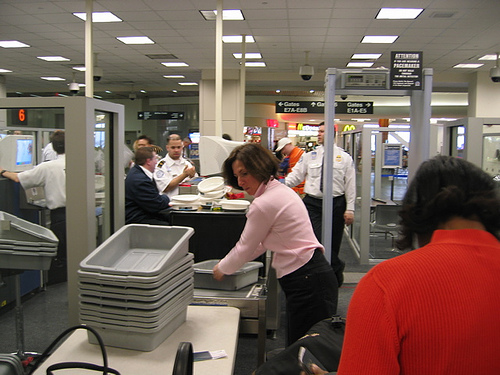
A draconian proposal by the San Francisco Police Department to require all visitors to nightclubs in the city to scan their identity cards into a database and go through metal detectors while being filmed by security cameras will be held tomorrow night (Tues/12) by the Entertainment Commission, but an expanding coalition of opponents are rallying against it.

As we reported in December, club owners and nightlife defenders (including the California Music and Culture Association) overwhelmingly oppose the plan, which the American Civil Liberties Union says raises constitutional invasion of privacy issues. In addition, a new coalition of young people called Save the Rave – which turned out hundreds of people for a recent commission hearing on a proposed crackdown on dance parties – is also organizing against the new restrictions.

Police representatives have told us that the proposal stems from concerns about violence in and around nightclubs, that the provisions would allow police to more easily identify suspects when crimes occur, and that police should be trusted not to exploit the data that they’re collecting.

But critics of the legislation call it a gross overreaction to a handful of incidents that have happened around nightclubs and they say the SFPD has shown unreasonable bias against one of the city’s biggest industries. Sup. Scott Wiener recently asked city staff to prepare a study of the economic impact of nightlife in order to defend clubs against crackdowns like this.

The proposal would also require clubs to have one security guard for every 50 patrons, which club owners say would be an economic hardship for an industry opening on thin margins of profitability. The hearing begins at 6:30 pm in City Hall Room 400.

Survivin’ sunshine: Sunday Streets Great Highway, 4/10/11

2

A friend made a good point today: in case shit hits the fan, you could do worse than own a bicycle. Think about it: earthquake, tsunami, governmental shut-down, what have you — gas is not going to be cheap or easy to get, and you’re still going to need to be able to get around. Why the morbid turn of conversation? Probs because we spent today cruising through (a completely unmorbid) Sunday Streets, Great Highway edition.

Crashing waves and hordes of bikers, you see, were the catalyst for all the survivalist talk — as well as my own, admittedly poor follow-up thought that bike folk could build coalitions with the gun rights groups over the question of self-sufficiency.

But around me, folks were reveling in their break from excessive use of fossil fuels, not morosing out. The second Sunday Streets of the year was not the most densely packed and attraction-studded event the series has held (the Mission, etc., makes for better people watching, strictly speaking) but it was the most pleasant this year to traverse on a bike.

Long, glorious stretch of beachside road, the SF Arts Commission Streets Smarts program’s DIY mural wallRock the Bike utilizing its double decker pedal tree to pump up the crowd and simultaneously get people stoked for June’s Bicycle Music Festival, a Twister game courtesy of the Urban Diversion folks greeted bikers emerging from Golden Gate Park, locally screen-printed whale tees hawked by a guy who lives across the street — not to mention your usual Sunday afternoon Lindy Hop session and an attempt at breaking the Guinness record for longest chain of roller skaters, both out on JFK Drive by the deYoung. And the bao truck, of course. 

Anyway, just another sunny weekend in SF. I’m sure you were braving the sunshine and high winds somewhere equally lovely, but all the same you might like to see how your city brethren survived their Sunday.