SFBG Blogs

What the Republicans agree on (scary)

32

The most interesting thing about the Republican debates is not where the candidates disagree — it’s where they all seem to agree. And it’s pretty fucked up.

My friends at CalBuzz say this is the big story missing from the MSM coverage of the campaign so far. They point to a remarkable article in The New Republic titled “Five Things All The GOP Candidates Agree On (They’re Terrifying).”

He notes:

Add all this up, and it’s apparent the Republican Party has become identified with a radically conservative world-view in which environmental regulations and collective bargaining by workers have strangled the economy; deregulation, federal spending cuts, and deflation of the currency are the only immediate remedies; and the path back to national righteousness will require restoration of the kinds of mores—including criminalization of abortion—that prevailed before things started going to hell in the 1960s. That Republicans hardly even argue about such things anymore makes the party’s transformation that much more striking—if less noticeable to the news media and the population at large.

And you wonder why Johnny Wendell wants to change the name from the GOP to the Shit Head Party.

The Hangover: Sept. 30-Oct. 2

0

Jounce with us, if you will, through the Guardian staff’s frenzied weekend. Here’s our live reviews, hot raging, random sightings.

**The wonderfully energetic (and wonderfully tall) Robin Simmons puts on an occasional gig in the middle of Dolores Park called the Boombox Affair, hooking up a wall of old boomboxes as turntable speakers and letting disco-minded DJs go nuts with their all-vinyl obsessions. On Friday’s Odyssey party at Deco Lounge, he went indoors and at night hosting a three-hour set by DJ David Harness that reminded of those ancient “back in the day” days. Just 30-40 freaks, many of whom were previously unfamiliar to each other, jacking all night in the dark to some heavy tunes as the walls sweat and pounded. Hopefully the party will come back around soon. (Marke B.)

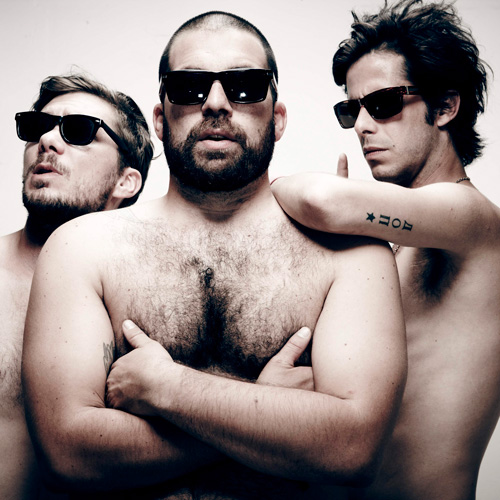
**I was not acquainted with the work of dOP before I attended Friday night’s Liaison Showcase at Public Works — the French techno trio has some excellent grooves and an absurdly over-the-top “sexy” aesthetic that would make their hits like “Horny” hilarious, if they weren’t actually very, very horny. Example: the chain-smoking boys are just fine wiggling around onstage half-naked, and the singer-rapper-screamer is one of the hottest little tattooed bear cubs I’ve ever seen. He spent most of the set playing with his nipples and shaking sweat from his shoulder hair. The crowd ate it up. (Marke B.)

**Saturday at the Warfield for Amon Tobin’s ISAM tour was like entering the 22nd century, except surrounded by young Pixar workers who couldn’t stop screaming, “Amaaazing!” everytime one of the realtime 3-D effects of the stage set was unveiled. Why? Because it really was amaaazing. Opener Eskmo did an entrancing job live-sampling cookware and plastic Coke bottles to build left-field grooves that weren’t afraid of floor-bending tempo changes. (Marke B.)

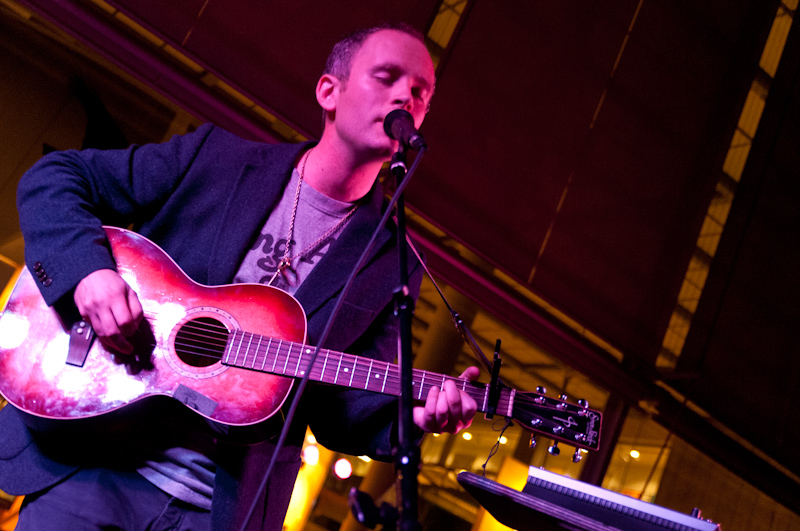
**With flickering string lights strung from the center of the grand ballroom and splayed out brass instruments across the stage, Beirut’s performance at the Fox Theater in Oakland on Saturday warmed like a fancy indoor county fair. The sound, which can be bass-problematic at the Fox, was good this evening, near perfect for the otherworldly folk-marching band from Santa Fe. Ringleader Zach Condon switched back and forth from ukulele to his beloved trumpet, singing in deep baritone throughout, once stepping to his newly rediscovered favorite, the keys. Here’s our interview with Condon from last week. (Emily Savage)

**What else is there to say about Saturday’s Hard French party besides the fact that Scott Weiner got to express his gratitude to us for his official Guardian ass towel? The queer patio shakefest at El Rio (theme: “Hardly Strictly French.” Overalls.) featured hand-wagging talents of many of the candidates for November’s city elections. Plus, Sups. Weiner and Jane Kim tagged along for the ride and they aren’t even running for anything. (Caitlin Donohue)

**The crowd at Odd Future’s show at the Warfield on Friday may have looked like Warped Tour cool kids, but you couldn’t fault them on their choice in music. The crew from Compton bug-eyed and jello-kneed through and generally crushed their set, although we were all out of their by 11 p.m. What Warfield, not into bands hurling their most enthusiastic devotees back into the crowds spine-first? Here’s the full review, btw. (Caitlin Donohue) 

**So we only made it to Sunday of Hardly Strictly Bluegrass, but damn if that afternoon’s Devotchka set and red wine from the bottle wasn’t a welcome entree to sunny banjo strumming. Even the crowd itself was hotter than ever (where did all these surfer-hippie hotties come from and to whence have they now returned?) — and in contrast to Outside Lands’ frenzied crowds, filtered through the fenceless areas calmly and happily. Yay free concerts! Happy birthday, Mr. Hellman. (Caitlin Donohue)

Endorsement interviews: Terry Baum

26

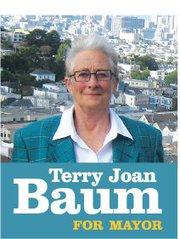
Terry Joan Baum is the Green Party candidate for mayor. She told us she got in the race to get progressive issues out and on the agenda; she was a candidate before Sup. John Avalos announced, and she says she’d be supporting him if she weren’t a candidate. She told us she’s the only candidate calling for criminal charges against PG&E in the San Bruno explosion. “I understand that I’m a longshot,” she said, “but I’ve already influenced the debates.” Listen to the interview and watch the video after the jump.


Baum by endorsements2011

Taking sit-lie lying down: Graduate student beds down on Haight Street

3

Some things seem strange even for San Francisco. The pedestrian double take was in full effect at the Haight Street curb where Bennett Austin fed the meter for his bed last Thursday. And it wasn’t even Parking Day

Austin hoped to create awareness about the homeless youth who wander, sleep, and hang out on Haight Street. The graduate school student set up a bed to demonstrate that the only safe space for the homeless to sleep in public are curb spots that they must pay for by the hour, joining the tradition of artists speaking out against sit-lie. 

His campaign, “Keep the Meter Running,” spun from last year’s sit-lie ordinance, which prohibits sitting or lying on the sidewalk or public spaces for more than three minutes at a time. Although this law is nominally meant to be enforced uniformly, it is widely understood that it targets the homeless. 

Austin wanted to do something. “I wanted to put creative efforts to solutions,” he told the Guardian that day on Haight Street. He contacted the Homeless Youth Alliance (HYA), a youth-focused organization in the Haight-Asbury which provides food, clothing, showers, counseling, and mental health and medical services to the homeless. Within three weeks his idea was in action. 

The project was also accepting donations for HYA’s HIV prevention program, whose  funding was recently cut, reducing the organization’s total funds by one-third. Mary Howe, founder and executive director for HYA, said she and her staff was very open to Austin’s advertising idea.

“It brings attention to the sit-lie law, which doesn’t solve the problem [of homelessness],” Howe said.  

Austin said he understands that everyone’s circumstances are different and he is hoping his campaign can help people become more open-minded. He said he has received very few negative responses. The first six people to donate to the HYA, Austin said, were homeless youth themselves.

Because the parking spot is paid for and Austin moves the bed every two hours (to comply with San Francisco parking laws) everything he is doing is legal. “Keep the Meter Running,” is costing Austin $16 per day to advertise on a historic street. For him, it is the cheapest and easiest way. 

“I’m reclaiming public space,” he added. “Because these kids are just as much a part of the Haight as the Haight is a part of them.”

Bevan Dufty loves Muni

8

The award for the best political ad of the year (so far) goes (no surprise) to Bevan Dufty, who is the only mayoral candidate willing to laugh about himself and the only one who could pull off an ad that’s a love poem to Muni.

I’m sympathetic: I love Muni, too. But I’m not running for mayor and trying to explain why the system is so fucked up.

Still: It’s great to see Dufty on the train with his kid, and it’s great to remember how exciting Muni is for kids, and I laughed when I saw the ad. Which is something.

Check it out:


SFBG Radio: The GOP or the SHP?

3

Today Johnny makes a modest proposal: Instead of calling the Republicans the Grand Old Party, let’s be honest and call them the Shit Head Party. Listen up after the jump.

TheShitheadParty2 by endorsements2011

Live Shots: Odd Future at the Warfield, 9/30/11

3

Hello, and welcome to the worst concert photography post ever! Let me explain. Odd Future’s sold-out show at the Warfield on Friday was not a hip-hop show. Or it was – the group’s wordplay and Shaolin-esque mythological persona is pretty unimpeachable – but it was mainly a grimy, sweaty, hopped-up-on-youth punk show.

Odd Future presents the conscientious music conundrum: can one like a band whose lyrics are reprehensible? The crew from Compton is way more attractive than the Insane Clown Posse, but the milieu that they’ve conjured, complete with darkly nonsensical terminology and sheer, bounding disregard for niceties, strike similar notes.

The stage’s backdrop was a massive image the Golf Wang tour’s kitty mascot, introduced by the group as Sharkcat. 

“Look at Sharkcat’s eyes! Aren’t you scared?” The audience roared back, completely not scared by whatever the group had to offer. 

Odd Future’s songs focus on the going insane, violence, and getting head. The meat of the masses was young men dressed in the same sneaker, tee, and cutoffs look of the men onstage, but a large portion of the crowd at the Warfield was in fact, young women. They screamed along to every lyric and when Tyler the Creator, the group’s brave young leader, surged to their side of the stage, they rushed forward with elbows just as pointed as the ones their masculine counterparts were flinging side-to-side and backwards in the frenzied mosh pit that would usually resolve with a security guard roughly shoving a key instigator out the theater to sure doom and no-reentry on the twinkling mid-Market strip. 

“We really cater to the ladies,” Tyler snarked at one point, thanking the XX-chromosoned for braving the rough-and-tumble front rows. Or maybe he was serious – his washboard abs, unveiled midway through the show, winked knowingly at this being the case. 

And because of that, I’m real sorry that my photos suck. Consider them rather a homage to the general feeling of the show rather than literal documentation. They’re worth a look though, because the set kicked ass. Odd Future is real, real good. The group’s appeal to the skaters, the hip-hop kids, and the yelping R&B babies is the kind of connection that didn’t need that Late Night with Jimmy Fallon Show performance to cement itself — the artists are really artists, they’re deranged-sexy, and they’re bringing through a kind of hip-hop that has little to do with the consumerist posturing we see most of the time.

“I am not a fucking role role model!” one of the group members bellowed. Well, yeah. We didn’t think you were.

By the time the show ended (at 11 p.m.?! One wonders if the Warfield got nervous about the would-be stage climber the band flung the 15 feet back down into the crowd, spine first, just as he had ascended to the level of his beloved rap crew) one of Odd Future’s emcees was leading the crowd in their customary chant: “KILL PEOPLE BURN SHIT FUCK SCHOOL.” It’s all real ignorant, but looking at the kids around me I couldn’t help but be glad that they were here and not at an ICP show. 

And that conundrum? Consider it tabled for the moment. I think I was singing along. 


Jens Lekman, penguins, and choice words for Kirsten Dunst at the California Academy of Sciences

0

Last Thursday, two girls rushed to the front of the stage at the California Academy of Sciences, one visibly shaking with a mix of excitement and concern, her friend trying to calm her. They stood particularly near the stage in the thin crowd watching Geoffrey O’Connor, where otherwise only photographers dared to tread. After bouncing through a song, they turned to each other, then tentatively towards me. “This isn’t Jens Lekman yet, is it?” one asked. “No, not until 8:30,” I said, and she shook my shoulders as a sign of approval, before being pulled away by her friend, to skip off together back inside the Academy, presumably to have a few more cocktails and look at the penguins. (I can relate to the confusion, though, I’m a huge Kanye West fan, even though I have no idea what he looks or sounds like.)

O’Connor, of Australian band the Crayon Fields, in all likelihood took no notice. With his spindly body, pale skin, and (above all) accent, the confusion with fellow singer songwriter (and main attraction) Lekman probably happens all the time. But O’Connor seemed perfectly at home with an audience of polite people holding back. He switched from the mic to guitar over programmed beats, taking a moment here or there to lean against a speaker, striking a pose and looking directly into the cameras. During “Idle Lover” he left the stage, walking through the East Garden, to stand on a chair to finish his song, perched above a few party goers previously engaged in conversation. Above all he brought a certain nonplussed laconic humor. “This next song is my most apologetic,” he said. “It’s called ‘So Sorry.’” When he finished, the once reserved crowd reenacted the land grab scene from Far and Away (1992).

Lekman was unimposingly charming, able to make stage banter seem like choice b-sides and unfinished lyrics. Introducing “Waiting for Kirsten,” a new song off his great An Argument with Myself EP, the raconteur said, “The thing about Kirsten Dunst is, she said in an interview once that she liked my music…and I’ve been trying to not be too impressed by that.” The song details the actress’s failure to get into a club in Lekman’s homeland of Sweden. “In Gothenberg they don’t have VIP lines,” the chorus says, and Lekman went on to explain that “you won’t get in just because you have the right clothes, or a lot of money, or you made out with Spider-Man.” After a set of new material alongside older favorites, including a softer version of “Black Cab” and “The Opposite of Hallelujah” nicely mixed with a bit of The Chairmen of the Board’s “Give Me Just a Little More Time,” Lekman immediately went into two short encores, since he said the crowd was too thick to get offstage. When he finally did step down, a few excited fans made an arch with their arms for him to pass through. He went around.

Photo  by Stephen Ho.

SFBG Radio: A left-wing tea party?

38

In this episode, Johnny and economist Johnny Venom talk about the Wall Street protests, what will and won’t work, whether the system is too rigged — and possibly the birth of a left-wing tea party. Check it out after the jump.

FivePointsOfVenom by endorsements2011

The price of civilization: high taxes to support a high level of government services

8

Jeffrey D. Sachs
Jeffrey D. Sachs is Professor of Economics and Director of the Earth Institute at Columbia University. He is also Special Adviser to United Nations Secretary-General on the Millennium Development Goals.

NEW YORK – We live in an era in which the most important forces affecting every economy are global, not local. What happens “abroad” – in China, India, and elsewhere – powerfully affects even an economy as large as the United States. 

Economic globalization has, of course, produced some large benefits for the world, including the rapid spread of advanced technologies such as the Internet and mobile telephony. It has also reduced poverty sharply in many emerging economies – indeed, for this reason alone, the world economy needs to remain open and interconnected.

Yet globalization has also created major problems that need to be addressed. First, it has increased the scope for tax evasion, owing to a rapid proliferation of tax havens around the world. Multinational companies have many more opportunities than before to dodge their fair and efficient share of taxation.

Moreover, globalization has created losers as well as winners. In high-income countries, notably the US, Europe, and Japan, the biggest losers are workers who lack the education to compete effectively with low-paid workers in developing countries. Hardest hit are workers in rich countries who lack a college education. Such workers have lost jobs by the millions. Those who have kept their jobs have seen their wages stagnate or decline.

Globalization has also fueled contagion. The 2008 financial crisis started on Wall Street, but quickly spread to the entire world, pointing to the need for global cooperation on banking and finance. Climate change, infectious diseases, terrorism, and other ills that can easily cross borders demand a similar global response. 

What globalization requires, therefore, are smart government policies. Governments should promote high-quality education, to ensure that young people are prepared to face global competition. They should raise productivity by building modern infrastructure and promoting science and technology. And governments should cooperate globally to regulate those parts of the economy – notably finance and the environment – in which problems in one country can spill over to other parts of the world.

The need for highly effective government in the era of globalization is the key message of my new book, The Price of Civilization. Simply put, we need more government nowadays, not less. Yet the role of government also needs to be modernized, in line with the specific challenges posed by an interconnected world economy.

I wrote The Price of Civilization out of the conviction that the US government has failed to understand and respond to the challenges of globalization ever since it began to impact America’s economy in the 1970’s. Rather than respond to globalization with more government spending on education, infrastructure, and technology, Ronald Reagan won the presidency in 1980 by pledging to slash government spending and cut taxes.

For 30 years, the US has been going in the wrong direction, cutting the role of government in the domestic economy rather than promoting the investments needed to modernize the economy and workforce. The rich have benefited in the short run, by getting massive tax breaks. The poor have suffered from job losses and cuts in government services. Economic inequality has reached a high not seen since the Great Depression.

These adverse trends have been exacerbated by domestic politics. The rich have used their wealth to strengthen their grip on power. They pay for the expensive campaigns of presidents and congressmen, so presidents and congressmen help the rich – often at the expense of the rest of society.  The same syndrome – in which the rich have gained control of the political system (or strengthened their control of it) – now afflicts many other countries.

Yet there are some important signs around the world that people are fed up with governments that cater to the rich while ignoring everyone else. Start with the growing calls for greater social justice. The upheavals in Tunis and Cairo were first called the Arab Spring, because they seemed to be contained to the Arab world. But then we saw protests in Tel Aviv, Santiago, London, and now even in the US. These protests have called first and foremost for more inclusive politics, rather than the corrupt politics of oligarchy.

Moreover, US President Barack Obama is gradually shifting toward the left. After three years in which his administration coddled corporate lobbyists, he has finally begun to emphasize the need for the rich to pay more taxes. This has come late in his term, and he might well continue to favor the rich and Wall Street in exchange for campaign contributions in 2012, but there is a glimmer of hope that Obama will defend a fairer budget policy.

Several European governments, including Spain, Denmark, and Greece, also seem to be moving in the same direction. Spain recently imposed a new wealth tax on high-net-worth taxpayers. Denmark elected a center-left government committed to higher government spending financed by new taxes on the rich. And Greece has just voted for a new property tax to help close its yawning fiscal deficit.

The European Commission has also called for a new Financial Transactions Tax (FTT) to raise around $75 billion per year. The Commission has finally agreed that Europe’s financial sector has been under-taxed. The new FTT might still face political opposition in Europe, especially in the United Kingdom, with its large and influential banking sector, but at least the principle of greater tax fairness is high on the European agenda.

The world’s most successful economies today are not in Asia, but in Scandinavia. By using high taxes to finance a high level of government services, these countries have balanced high prosperity with social justice and environmental sustainability. This is the key to well-being in today’s globalized economy. Perhaps more parts of the world – and especially the world’s young people – are beginning to recognize this new reality.


Jeffrey D. Sachs is Professor of Economics and Director of the Earth Institute at Columbia University. He is also Special Adviser to United Nations Secretary-General on the Millennium Development Goals.

Copyright: Project Syndicate, 2011.
www.project-syndicate.org

On the streets with Occupy San Francisco

31

The messages sounded yesterday on the streets of San Francisco – delivered in speeches, chants, signs, songs, interviews, and the petition handed to Chase Bank officials by a half-dozen protesters before their arrest – should resonate with most Americans. After all, while rich corporations and individuals have been accruing ever more wealth, the vast majority of us have been falling behind.

“Banks get bailed out, we get sold out,” was one of those chants by the several hundred people who marched through the Financial District – our OccupySF effort building off the two-week Occupy Wall Street events – targeting some of the villains of the economic meltdown: JPMorgan Chase, Bank of America, Citibank, Charles Schwab, the Federal Reserve, and Goldman Sachs.

They may be relatively small and easy to ignore, these “occupations” of Wall Street and San Francisco and other cities that are entering their third week, but they’re being driven by a palpable anger and stirring critiques of economic and political systems that exploit the powerless. But as the foreclosures, layoffs, and other hardships continue, this nascent movement could have some staying power.

“I think it’s starting to wake people up out of their complacent distraction,” Robin Kralique, a 26-year-old SF resident holding a sign that read “Let’s have the GDP measure happiness,” told the Guardian. “We’re planting the seeds for a better future, and I’m hoping it wakes some people up.”

Like many of the young protesters gathered outside the corporate office building at 555 California at the start of the march, she was inspired by Occupy Wall Street. They’re angry watching their economic opportunities evaporate as more and more of the country’s wealth accumulates in fewer and fewer hands.

“There’s an insane amount of greed in this country,” 24-year-old Erin Kramer, a dancer and performance artist stuck in a corporate job she needs to get by, told me. Her sign read, “Don’t be afraid to say revolution!”

And many weren’t, with calls for revolution on the tips of many lips, albeit tempered with healthy doses of realism. “Even if it isn’t at critical mass yet, it sets the stage for the next revolution,” Kralique said when I asked her what she hoped this moment would accomplish.

Sup. John Avalos, a progressive mayoral candidate who spoke at the rally, is pushing legislation to create a municipal bank in San Francisco, one that would invest far more money in local projects and small businesses than Bank of America, which manages most of the city’s money.

“We have to figure out new ways to use our local dollars to help our economy,” Avalos told us. “The message here is we’re pulling our dollars out of these banks unless they help us.”

Before Avalos spoke – asking the boisterous crowd, “Have you ever felt like you’ve been had?” – activist Bobbi Lopez was on the microphone decrying the “lack of accountability for the people responsible for this decline.”

And then, the march was off – flanked by dozens of San Francisco Police officers on motorcycles, riding bicycles, and in cars – to deliver creative forms of protest around the Financial District, including a funny song and dance routine by Fresh Juice Party in front of the Schwab office, singing, “Land of the free, home of the brave, this is the street our labor paved.”

In fact, that was almost literally true at the San Francisco march, which was shepherded by off-duty city workers from SEIU Local 1021.

“This Wall Street thing is really spreading. The message of a small group of people in New York has really spread…Wall Street is a symbol of all this corruption, cronyism, and greed,” Gabriel Haaland, an organizer with SEIU Local 1021, told me at the start of the march. “It’s really resonated with our members…It’s been picking up steam as things have been unraveling over the last year.”

An hour or so later, Haaland was one of six people who staged an occupation of the Chase branch at Market and 2nd streets, along with two women in his union who have been unsuccessfully battling bank foreclosures on their homes – Brenda Reed and Tanya Dennis – and three other activists: William Chorneau, Manny S. Tucker, and Claire Haas.

Tipped off by Haaland, I was inside the bank lobby as the march approached and a police officer on a bicycle came inside to warn bank officials, “The protest is headed your way, you may want to secure the premises.”

He and another officer helped prevent protesters from getting inside, but the six protesters had already infiltrated the building. They began chanting and pulled blankets out of a suitcase, laying them out and placing them on the ground.

Reed spoke for the group, demanding to meet with JPMorgan Chase & Co. CEO Jamie Dimond to present a petition calling for a halt to the bank’s foreclosures. Through tears, she told the story of her long struggle to protect her home from foreclosure by Chase, which had taken her loan over from another lender.

SFPD Lt. M.E. Mahoney told the group, “You’re not going to be able to camp out here and wait for the CEO to come talk to you,” asking store managers whether they wanted to make a citizen’s arrest. They did, but Mahoney also told Reed that he would watch as she handed the petition to store managers.

“I’m here today because for two and a half years, I have desperately tried to get Chase to work with me,” Reed told a bank employee as hundreds of protesters outside looked on and chanted their support. “You have put me through hell. You’ve destroyed my health, you’ve destroyed my business, and it’s not fair what you’ve done.”

After she was finished, another bank manager (who refused to give his name) told Reed, “Just to let you know, we are compassionate to your cause,” drawing from the protesters the frustrated retort, “No you aren’t!” Through the day, protesters noted that the banks have been profitable and don’t need to be foreclosing on so many homes, sitting on so much capital, and funneling their profits out of desperate communities and into the accounts of wealthy investors – particularly after being bailed out by taxpayers in 2008.

Outside, the crowd chanted “Go, Brenda, go!” and “Let those people go, arrest the CEO!”

The crowd remained outside for more than an hour as police tried to wait them out, finally arresting the occupiers on trespassing charges and quickly citing and releasing them, apparently in the hope it would clear the people out of congested Market Street. “That was my quickest arrest ever,” Haaland, a veteran of many labor actions and progressive protests over the years, told me afterward.

Reed addressed the crowd on a bullhorn, explaining that she refinanced her home in 2007 with a shady “pretender lender” who misrepresented what her monthly payments would be. They ballooned to a level she was unable to cover and she sought a loan modification from Chase, which had taken over the loan from the now defunct Washington Mutual.

“Chase Bank is trying to steal my home of 38 years,” she told the crowd. “Jamie Dimond, come out from under your rock and let me talk to you.”

She decried how government bailed out the banks and then allowed them to aggressively foreclose on homes whose mortgages they didn’t originate, but who acquired the title out of the complex financial derivatives that has sliced and diced mortgages into complex financial instruments.

“It’s government-sanctioned fraud,” she said. Despite what she said were Chase’s plans to auction her home in Oakland next month, she pledged, “You will not get my home. You will not get what belongs to me.”

But whether that kind of fierce resolve – voiced over and over again, by hundreds of activists fed up with economic injustice – translates into any kind of real change is yet to be determined.


The instruments of my life: Q&A with Beirut’s Zach Condon

1

Zach Condon, the pied piper of Beirut, is known for a great many things – his quavering voice and heart-tugging music (watch the new video for “Santa Fe” and try not to weep, I dare you), the global journeys on which he embarked to gain such a worldly sound, and, perhaps above all else, his skilled takes on an array of string and horn instruments. He employs their use to enable listeners an audio-vacation: the far corners of Eastern Europe and the Balkans, to the chateaus of French chansons, to his mariachi-filled hometown of Santa Fe, New Mexico.

As Beirut’s two Bay Area shows this weekend (at the Fox Theater in Oakland and the Independent in SF) are very, very sold out, I’m assuming there are a few of you out there grasping tickets as you read this. And if not, there are always scalpers (note: we do not condone buying from scalpers).

In a phone call a few weeks back from his current home of Brooklyn, Condon gave me the rundown on the instruments of his life:

San Francisco Bay Guardian: What’s the first instrument you ever played?
Zach Condon: I have to be honest, even though it makes for a jarring twist in the story. It was actually a guitar. When me and my two brothers were really young, my dad bought us an electric guitar. A Peavey Raptor if I remember correctly – it’s kind of a generic Stratocaster or something? I don’t know, I really don’t know guitars very well. And then some sort of cheap amp for it. Then he signed us up for some lessons. And I just remember thinking distortion was really funny and interesting but hating the lessons that I was taking.
SFBG: Why weren’t you interested?
ZC: I guess I’ve always had some sort of problem with authority. But it also felt like I hadn’t chosen the instrument. My dad, it’s really great that he did that, but he was really intense about us learning to play an instrument because his grandfather was a multi-instrumentalist. My dad was an obsessive guitar player so it always felt like, oh I don’t want to do that, that’s what my dad does.
SFBG: So what was the first instrument that you chose?
ZC:
That’s the funny part, I was also supposed to play saxophone, which is what [my dad] also played. My older brother and I signed up for band – this was probably about fifth grade – and I walked in the first day and they asked me what I was going to play. I said trumpet. I went home and told my parents some bullshit story about how they had too many saxophone players and they wanted a trumpet player. I don’t think they believed me but you know how when you’re a kid you kind of think that you got away with something? I think they were just like ‘well if he wants the instrument whatever, let’s just get him an instrument.’ They took me to a shop and I bought a pawn shop box student model trumpet That was an immediate love.
SFBG: What specific instruments did you play on 2006’s Gulag Orkestar?
ZC:
I played my grandmother’s accordion. She had died three or four years before that, and I had asked my grandfather to send me all her instruments that he could pack, which ended up only being the accordion. But she also played bagpipes, piano, organ. She was a good singer too. So he sent me her accordion and I had it fixed up a little, and I had a better trumpet at that point. At this point the family had finally gotten a real piano in the house and I had first bought a ukulele a year before that. Just this really janky little soprano uke from a guitar shop. I bought it as a joke at first then I totally fell in love with it.
Outside of that I had some percussion that I’d assembled from friends and neighbors – weird things. I remember thinking at the time, if I’m going this route then I probably shouldn’t use a general rock drumkit. So I was collecting tambourines and little hand drums. My neighbor in Santa Fe had this really funny conga djembe drum, which ended up being the basis for most of the percussion that Jeremy Barnes didn’t play on the record. Every songs is like eight tracks of me hitting the conga drum and then a bunch of tambourines.
SFBG: And 2007’s The Flying Club Cup?
ZC:
A bunch of the songs were written on this organ that someone had actually donated to me. There was a movie theater I worked at for quite a while, and I ended up developing a relationship with the people there. They were also attached to a theater that would have these weird traveling acts and there was this faux-circus cabaret act that had come through at some point and while they were there, they were taking this beautiful Farfisa organ which had broken down in Santa Fe and the guy just left it. They said, ‘if you can fix it, you can have it.’ I was able to fix it just enough. There are still notes on there that don’t work, so I had to write every song around certain notes, the entire album is almost in the same key. The rest was me picking up new brass instruments, phoneom and French horn, trying to open up on the brass front a little bit. And of course my grandmother’s accordion, although I bought a new one later that year from this mariachi shop, I don’t even remember the brand, because my accordion player can run circles around me blindfolded, so there’s kind of no point.
SFBG: Most recently, on The Rip Tide, what were some of the instruments you picked up for that?
ZC:
Not so much picked up, but went back to. The main one there would be the piano. I actually bought my first piano –I’d never had one of my own. I bought this Yamaha upright from this guy in Jersey and I had it shipped to upstate New York where I was writing, and I just spent a lot of time with this piano, writing these loops and chord progressions and melodies. A lot of this was based on me hammering around on the piano until I felt like I was sufficient. There’s just something cool about the piano, being next to it, it just wraps you up like a warm blanket. It’s such a big instrument. When you start playing the big chords on it, the acoustics are so interesting.
SFBG: Which instrument stands out as the most important to you? Your grandma’s accordion?
ZC:
To an extent yes, because it’s part of me writing songs. But I can’t help but feel like it was the trumpet that made me fall in love with writing and making music in the first place. As a kid it was the first instrument that I connected with. It was the first time I was proud of making a new note. There were a few false starts, between guitar and saxophone, it may never have happened if I hadn’t just randomly stumbled upon an instrument that immediately spoke to me.

Sat/1, sold out
Fox Theater
1807 Telegraph, Oakl.
www.thefoxoakland.com

Sun/2, sold out
The Independent
628 Divisadero, SF
www.theindependentsf.com

City College execs get away with it

3

What a deal. Former City College Chancellor Phil Day and one of his associates have agreed to a plea bargain in the City College corruption case. There will be no jail time for Day and Stephan Herman; they’ll pay a fine ($30K for Day, $20K for Herman), make some sort of undetermined “restitution” and walk away with no felony convictions on their records. Cris Arguedas, Day’s celeb attorney (who also represents Barry Bonds), did a hell of a job turning all the years of sleaze at City College into a relatively modest non-event. Ho hum. Pay a fine (which, with his string of well-compensated jobs, he can certainly afford — he clearly paid Arguedas more than the fine will ever be), walk away. No big deal.

But as G.W. Schulz reported for us over the years, this wasn’t just a little tiny mistake. There’s been a pattern of underhanded operations out on Phelan Ave. for years — and now the office of District Attorney George Gascon is allowing it all to disappear under the well-worn rug.

Damn.

Here’s what I wonder: Does anybody really believe that Day and Herman acted alone — that nobody on the Community College Board knew what they were doing? Did the chancellor cook up this whole scheme to ship money to a bond campaign without any of the elected officials who were directly involved in that campaign realizing what was going on?

I realize that the majority of the folks on the college board today are trying to clean up the mess that Day left behind and move the institution forward, but I have always thought that there was more here than the formal legal charges indicated. And now we’ll never know.


Period Piece: Mission Creek houseboat community rocks with the tides

3

Period Piece is Lucy Schiller’s recurring feature on the hidden histories of San Francisco. Give her a shout at culture@sfbg.com if you know of some hot dirt on olden times in the city

Few wander into Mission Creek’s small houseboat community. It’s hard to find, unless you live in the luxury condos across the channel or are tailgating in a nearby parking lot for a Giants game. But tucked under the I-280 ramp floats a tiny neighborhood, an undiscovered fixture of San Francisco.

On a recent visit, I am shown a residence festooned with skulls and racks of antlers, another with windowboxes full of carnivorous plants, and another with a ghoulishly grinning blowfish decorating the front door. Neighbors here include stingrays, anchovies, pelicans, seals, and – according to one resident – an on-again-off-again sea lion visitor of rather large proportions.  During the small-scale tsunami in March, the floating community felt their homes rise up by about three feet. When asked if any families lived in the boats, one resident responded sharply, “Yes. We’re all a family.” It couldn’t get any quainter, really. 

The short waterway has a long history. Before the white settlement of San Francisco, Ohlone Indians lived and boated along Mission Creek’s course, which was then much wider and longer, stretching almost from Twin Peaks to the Bay. Fast-forward some years and butchers were sending unwanted guts downstream, railroad companies were slowly paving it over to make way for new transportation networks, and Del Monte was setting up shop, using cheap labor to offload and can fruit in massive volume.

Today, a few of the creek’s residents are descendents of the dockworkers who worked to unload shipment after shipment of bananas. The houseboat community first began taking form in the early 1960s, with many of the original members moving from neighborhoods only a stone’s throw away. 

Now, the small settlement seems comprised of individuals filling strangely specific roles – I met and heard of the caretaker, the doctor, the weaver, the ex-taxi driver-current waterway historian. A small but productive community garden grows on a nearby bank. Needless to say, all who live here hold their patch of water very dear.

And it has changed considerably. In the still-recent past, San Francisco’s skyline gleamed through the boats’ kitchen windows; façades of the Berry Street condos have replaced that view. Mission Creek Park, a winding green space running parallel to the creek, is also a recent development. The inherent charm of living on a houseboat in the middle of the city is pretty obvious to outsiders, and residents worry about being slowly bought out by folks less devoted to the existing community. After recently renewing a lease with the Port Authority, however, the boaters should be sitting pretty till at least 2043, to the nightly sounds of shrieking egrets and Giants fans alike.


Six arrested protesting bank foreclosures during Occupy SF

131

Six activists protesting bank foreclosures were arrested after occupying Chase bank on Market Street in downtown San Francisco this afternoon (Thurs/29) as part of a broader action organized to mirror the Occupy Wall Street protests in New York City.

Brenda Reed, Tanya Dennis, William Chorneau, Manny S. Tucker, Gabriel Haaland, and Claire Haas were all arrested inside Chase on Market and Second streets while hundreds rallied outside, according to Guardian City Editor Steven T. Jones, who is there at the scene. The occupation was staged following a march that originated at San Francisco’s Goldman Sachs offices at 555 California Street and then progressed to the offices of CitiBank, Charles Schwab, and Chase.

The arrests prompted protesters to chant, “Let those people go! Arrest the CEO!” They also chanted, “Go, Brenda, go!” and “Shame on Chase!”

When they first entered the downtown San Francisco bank, Reed, who has battled a Chase foreclosure for two years, demanded to speak to the CEO. “You have put me through hell, and devastated my health,” she told the bank manager.

“Just to let you know, we are compassionate to your cause,” the manager responded, but was greeted by shouts of “No, you’re not!” from the crowd.

When Reed and her small group of supporters were asked to leave, they refused. As of 5:20 p.m., there was still a crowd of hundreds protesting out front.

UPDATE: They’ve been released, and Reed made the following statement to the crowd: “Chase Bank is trying to steal my home of 38 years.”

She said, “It’s government-sanctioned, nationalized fraud,” and added, “there are thousands and thousands and thousands of people like me, all over California.”

Video by Steven T. Jones


Will Brown sign Leno’s VLF bill?

11

We’re still waiting. A bill that could bring San Francisco another $75 million a year — just by restoring the vehicle license fee that people in this city paid before Arnold Schwarzenegger gutted it — is still sitting on Gov. Jerry Brown’s desk. And we have no idea what action he’s going to take on Sen. Mark Leno’s SB 223.

The good news is that he has already signed one bill that grants local governments in the East Bay to raise sales taxes with a vote of the people. So he’s clearly open to the idea. Leno told us he remains hopeful. “We’ve been working on this for eight years,” he told me. “And there’s never been a time when local government needs it more.”

Mayor Ed Lee has voiced his support; so has the Board of Supervisors. The SF Chamber of Commerce and the Labor Council are on board. “You can’t get much more broad-based support than we have in San Francisco,” Leno said.

There’s a form to email the governor here.

Occupy Wall Street comes to SF: VIDEO

24

Guardian City Editor Steven T. Jones is out in the streets this afternoon (9/29) covering the Occupy Wall Street protests that were brought to San Francisco by a coalition of labor and economic justice advocates, and inspired by ongoing demonstrations in New York City. Mayoral candidate Sup. John Avalos was spotted mixing with demonstrators as they flew signs calling for taxes on the rich.

“People are understanding that we’ve had the wool pulled over our eyes,” Avalos said, “and they’re fighting back.”

Here’s footage from the scene shot outside 555 California, a San Francisco skyscraper that was the former Bank of America headquarters and now houses offices for Goldman Sachs and other major financial players.

Video by Steven T. Jones

Your Sunday meal plan: Sweet treats, Latino eats at this weekend’s food events

1

After the demise of the Underground Market, a bit of a streetside, downlow foodie vacuum has developed in SF. Sure, we’ve still got Off the Grid, Mission Community Market, and for the moment at least, the Free Farm Stand — but it’s not enough food-themed events for a town that rejoices in innovation and knowing what to eat before one’s coworker does. Hot! New! More! Luckily this Sunday there’s ample opportunity to get your locally-sourced snack on, in style.

Street Sweets

A bright-faced gentleman with a messenger bag arrived at our office to drop off samples of the SF-made snacks that will be sold at this pop-up underground dessert market. That clandestine terminology perhaps best described the reasoning behind the “bacon crack” from chocolatiers Nosh This (which also produces homemade limoncello, soups, and Frito pies). Our meat-eating staffers found it “delicious, really delicious,” but give those people salt and pig fat and they’ll eat anything, really.

Also on the menu: raw milk ice cream from Jilli’s. This arrived in darling little jam jars that you can peep on the website, stuffed with the brand’s super-creamy blackberry flavor. Jacky Hayward, owner of Jilli’s, says that she’ll be serving it Sunday with a hot crumble on top and whipped cream. Surely your brain will collapse from all the refined sugar (ours did!) after sampling these PLUS mango blueberry white chocolate masala cookies from baker-blogger Irvin Lin, a.k.a. Eat the Love, the third partner in this secretive sweetfest. 

Sign up on the website and you’ll find out where it is on Sat/1. Just don’t tell the New York Times about it, mmkay?

Sun/2 1-6 p.m., free

Undisclosed location, SF

www.sfstreetsweets.com


El Mercado

No need to keep this one on the DL: this Latin American-themed food fair is comprised of vendors on the up and up with the Health Department – most notably El Taco Bike, which serves steamed tacos de canasta from the back of a three-wheeled, pedal-powered, self-made contraption, as we reported in our interview with creator and restaurant owner Alfonso Dominguez (vegans take note, a similar operation has been spotted in the Mission). 

But it’s not all buche and carnitas. Cerveza and tragos will be available for passers-by, as well as Latin American crafts, live music onstage by DJ Wonway Posibul of the Latin Soul Brothers, Vanessa Ayala, and an acoustic set by badass electro-hip-hop-Latin beatmaker Bang Data. Even an on-site curandera? I mean, tell the New York Times about it already. 

Sun/2 noon-6 p.m., free

Era Art Bar and Lounge

19 Grand, SF

Facebook: El Mercado 


Endorsement interviews: Sharmin Bock

4

Sharmin Bock is one of just two candidates for district attorney ever to try a criminal case in court. In fact, she’s tried plenty of them in a 23-year career as an Alameda County prosecutor. She’s lived in San Francisco all that time, commuting across the Bay because, she told us, Alameda County had one of the two best D.A.’s offices in the country. (Not a nice assessment of the office she’s seeking; her implication is that she didn’t want to work at home because the office was never up to her standards).

Bock really pushed the experience line, saying that a candidate who hadn’t been in the trenches couldn’t lead a team of lawyers on the path toward reform. She told us she doesn’t think low (or maybe even mid-level) drug dealers should be in jail, and is big on changing the was cases are charged. She told us she opposes the death penalty, would never charge a non-violent felony as a third strike, and would focus on fixing the crime lab problems. She also vowed to be aggressive about municipal corruption.

Check out the audio and video after the jump.


Bock by endorsements2011

Hardly Strictly’s fresh blood

0

Hardly Strictly Bluegrass is a badge of San Francisco life. You move here and inevitably in your citywide journeys you’re part of a conversation debating the lineup of this unbelievably free, always-entertaining fall fest that takes in Golden Gate Park the first weekend of October each year.

It’s become a staple of the fall calendar, because well, the bands are good and we like our events free in this town. Now in its 11th year, there are still many new-to-HSB acts, along with the yearly frequenters Steve Earle, Emmylou Harris, Robert Earl Keen, and Ralph Stanley. Festival publicist Tracey Buck says there are at least half a dozen new local bands in 2011, and roughly 50 new touring acts.

Acquaint yourselves with a few from this year’s HSB freshman class. (Though keep in mind: they may be fresh blood at Hardly Strictly, but most have been at this whole music thing for quite some time.) The big weekend is pretty much here: Fri/30-Sun/2.

Locals:
Nell Robinson & Jim Nunally: Honky tonk at its finest. Robinson’s voice quavers like a modern-day Patsy Cline, on par with her contemporary (and fellow HSB performer) Emmylou Harris. Robinson lends her voice more to vintage sounds, than bending to current trends. It’s old time twang and classic country. (Sat/1, 6:05 p.m., Porch Stage)

The Devil Makes Three: One of the new locals that can rep the “bluegrass” marker of Hardly Strictly, Devil Makes Three plays a swinging mix of blues, rockabilly, ragtime, and yes, bluegrass. It’s roots American music with a hint of sinister mischief, all tattooed and bearded, whiskey-ed up toe-tapping fun. It’s been described as “dark bluegrass.”  Expect to hear tracks off the trio’s newest output, live album Stomp and Smash, which comes out Oct. 25. (Sun/2, 1:10 p.m., Arrow Stage)

Bob Mould:
Can you believe it’s Bob Mould’s first Hardly Strictly appearance? With all his local appearances, prestige, and now current Bay Area address, we could have sworn we’d seem him there before. The former Husker Du and Sugar frontperson, and current globally-adored indie rock solo artist (and recent memoirist/Herbst Theater interviewee) even inspired a tribute concert – it goes down in Los Angeles in November with Ryan Adams and No Age among others. But first, the rocker will appear at HSB. Perhaps he’ll read a passage or two from his new book See A Little Light: The Trail of Rage and Melody. (Sun/2, 2 p.m., Towers of Gold Stage)

Nationals/Internationals:
Kurt Vile & the Violators: One of the festival’s always-welcome surprises. Who would have guessed that straggly Mr. Vile would be playing the same event as Merle Haggard ? But actually, it makes sense. He of jangly guitars and mumbly, hoarse vocals, Vile has said that he grew up inspired by vintage records and is vocally inspired by Townes Van Zandt and Gram Parsons The critically acclaimed rocker will likely be one of the event’s highlights this year. (Fri/1, 2:25 p.m., The Rooster Stage)

http://www.youtube.com/watch?v=Y4-vvlkWE4Q

Thurston Moore: Catching Moore is a pretty big coup for festival organizers and goers alike. And his slot at HSB is well-earned. After years of beating guitars to a bloody pulp with Sonic Youth, he debuted the elegant, nearly all acoustic solo album, Demolished Thoughts, this year, produced by fellow luminary, Beck. I mean, the man was named one of Rolling Stones “100 Greatest Guitarists of All Time” – he can play his instrument damn well. (Fri/30, 5 p.m., Arrow Stage)

Broken Social Scene: While it’s Broken Social Scene’s first time at HSB, it may also be its last, at least for the time being. Following the Canadian indie (super)group’s highly anticipated show at the Fillmore on Oct. 1 (i.e. a few hours after its Hardly Strictly appearance), the massive act will go on indefinite hiatus. Here’s your chance to catch it in the fog-hampered sunshine, free of cost. (Sat/1, 3:25 p.m., Towers of Gold)

The Performant: Weekend in Wonderland

4

ALICE and Folsom Street Fair fall down different holes

From North Beach to South of Market, clowning to carousing, the weekend offered up a veritable smorgasbord of sensory overload and playful edge. First off, a debut performance of a quirky bit of deconstruction in new kid venue on the North Beach block, The Emerald Tablet. Written and conceptualized by two spirited performers (Edna Miroslava Barrón and Karen Anne Light), “ALICE: Down the Rwong Wrabbit Whole” offered a welcome introduction to both the space and the still-fresh faces of the presenting duo.

Billed as a version of Alice in Wonderland in which the two performers play “all 359 characters” (they don’t quite make it) the performance quickly becomes more of an exploration of the creative life rather than a linear narrative based on that classic tome. In a schizophrenic, sometimes mimed, frenzy, Barrón and Light assume and discard a handful of roles in rapid-fire sequence—Alice, Dinah the cat, the White Rabbit, the Caterpillar—but the characters that wind up with the most stage time are themselves as they jostle each other for center stage. Light launching into a series of poker-faced monologues regarding the importance of art and professionalism in theatre; Barrón undermining her pedantic pomposity at every turn with unscheduled pee breaks and incandescent bursts of childish enthusiasm.

“We’re like a pear and an orange,” she confides, referring to her and Light’s working relationship. “Totally different…but we still taste good together.”

“Actually we’re more like a pineapple and a quasar,” retorts Light, re-entering the scene after a brief jaunt into Salvador Dali territory. Supported throughout the performance by Barrón’s idiosyncratic sound design (she moonlights as DJ Nobody of KUSF/KUSF-in-Exile), and punctuated by moments of brilliance (a water-logged Mad Hatter’s Tea Party scene, for example), “Rwong Wrabbit Whole” plays for the most part like a string of firecrackers. Plenty of bang, despite lacking a particular climactic epiphany.

Sunday dawned damp, but fortunately by the afternoon it was downright balmy, just perfect for the parade of fantasy and flesh that is the Folsom Street Fair. Though it’s safe to say no-one really heads down to the Fair for the music, every year there’s always at least one standout act, and this year that act was the sultry electro-soul chanteuse Billie Ray Martin. Although late in the day, the sweet pulse of the music infused the worn and torn crowd with blissed-out euphoria. Although perhaps best known by the club kids for her stint in 90’s house music ensemble Electribe 101, Martin’s husky, powerful vocals would not be out of place shimmering on the soundtrack for the next James Bond flick, or tucked into a Gladys Knight tribute album. And the buoyant electro-clash of songs such as “Sold Life,” “Undisco Me,” and Hard Ton duet “Fantasy Girl,” juxtaposed against her rough diamond voice and Kit Kat Klub cabaret style offer a compelling combination you wouldn’t want to miss no matter the occasion.

“ALICE: Down the Rwong Wrabbit Whole”
through October 15
The Emerald Tablet
80 Fresno, SF
(415) 500-2323
RwongWrabbitWhole.webs.com

Style Paige: Welcome Stranger rides the Hayes Valley range

0

Follow Paige A. Ricks as she paws through local designers, boutiques, and street trends. Her first SFBG feature focuses on high end Western wear in a Hayes Valley boutique

Inimitably structured leather wallets by Maxx and Unicorn Co., paisley bow ties, old Americana: these are the style cues at Welcome Stranger.

Upon entering the store, you’re greeted with a welcome mat, of course. Before even touching a wool-blend shirt or a pair of dark denim jeans, take in the vintage pieces that decorate the room: picture-less picture frames, rifles, a deer head hanging on the wall, large old trunks and fake novels with wallpaper covers. 

The boutique is inspired by the outdoors, carrying brands like A.P.C Jeans, Burkman Bros, and Pendleton — all Western-style brands that mix plaids, denim, and suede fabrics in their pieces. But store mannequins are dressed San Francisco-appropriate with leather messenger bags and army green military jackets. From corduroy blazers to rainbow socks one could imagine wearing with Oxford shoes, there’s enough variety in the boutique to create an outfit from head to toe. An amazing pair of sunglasses made from bamboo by Waiting for the Sun would pair nicely with most of the outdoorsy, chic designs.

The store is owners Catherine Chow and Corina Nurimba second project on Gough Street – the two also own Azalea Boutique, located across the street from Welcome Stranger. 

As America enters into its fifth year of the recession, a high-end men’s clothing boutique seems like the dubious financial investment. But for these two stores financial worries haven’t been an issue — although there are few items under $100, a diverse clientele seems undeterred from shopping. Welcome Stranger attracts the hipsters, the hip-hop heads, the mountain men, and the well-established businessmen. 

Lesley Tanaka, Welcome Stranger general manager, said soon the store would begin selling their own Welcome Stranger clothing collection. The store already sells a few items under the Welcome Stranger brand – especially eye-catching are the cow skin satchels, which are reconstructed from vintage army sacks.

They epitomize the shop’s rugged flair. This is the kind of place that can make a man really feel at home. 


Welcome Stranger

Open 11 a.m.-6 p.m. daily

46 Gough, SF

(415) 864-2079

www.welcomestranger.com


Progressives battle downtown over economic and political reforms

63

Battles between progressive members of the Board of Supervisors and downtown power brokers such as the San Francisco Chamber of Commerce defined City Hall politics for much of the last decade, until the new politics of “civility” and compromise took hold this year, a dynamic that has favored downtown interests. But now, a pair of important, high-profile issues headed to the full board on Tuesday has revived the old dynamic. And in both cases, wealthy interests are putting enormous pressure on the board.

The first involves a proposal – put forward by Sups. Sean Elsbernd and Mark Farrell, the two most conservative supervisors – to gut the city’s system for publicly financing campaigns because downtown is threatening a lawsuit. They propose to end San Francisco’s program of giving publicly financed candidates more money when a privately funded candidate exceeds the spending cap because the Supreme Court recently struck down similar provisions in Arizona.

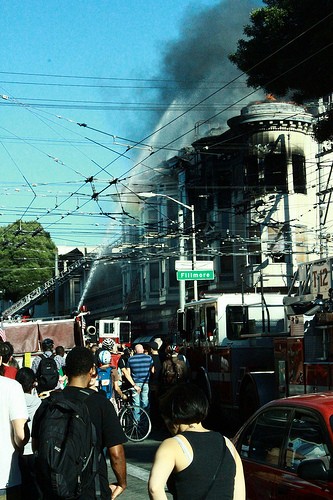
This week, after convening in closed session to discuss the threat of litigation by downtown groups, the board voted 7-3 – with Sups. David Campos, Jane Kim, and Eric Mar opposed, and Sup. Ross Mirkarimi absent because he rushed out to large structure fire in his district – for the Elsbernd/Farrell measure, one vote short of the supermajority needed to amend the current city law.

Campaign finance reform advocates such as Steven Hill argue that it’s unfair to modify the city program right in the middle of an election season in which Mayor Ed Lee and the wealthy independent expenditure groups supporting him are poised to spend millions of dollars to defeat a large field of mostly publicly funded mayoral candidates.

Hill and his allies are appealing to Mirkarimi – who told the Chronicle that he is leaning toward supporting the amendment when the measure returns to the board on Tuesday – not to support what they consider an overly broad capitulation to downtown’s threats. They’re also lobbying Sup. John Avalos to switch his vote, while downtown players are putting the screws to supervisors as well.

In an interview with the Guardian, Mirkarimi clarified his stance, noting that he was the sponsor of the original public financing law and his goal is to protect it, even if it needs to be modified to withstand a legal challenge. “I’m looking for alternatives to fortify San Francisco’s program,” he told us, noting that he missed some of this week’s discussion and he’s hoping something can be done to retain provisions that level the financial playing field with wealthy candidates.

Meanwhile, downtown forces are pulling out the stops to kill Sup. David Campos’ legislation that would prevent San Francisco businesses from pocketing money they set aside for their employees’ health care under a city mandate that they provide health coverage – totaling about $50 million last year – legislation that gets its first hearing tomorrow (Friday/30) at 10 am.

Board President David Chiu has put forward competing legislation that is more to the Chamber’s liking, letting businesses (mostly restaurants that are even placing surcharges of customers’ bills, ostensibly to subsidize their legal obligations) keep the money. But Campos and his labor allies believe they have the six votes they need to pass the legislation, thanks largely to moderate Sup. Malia Cohen’s pledge to support the measure.

While even some supporters have quibbled with the timing of this measure, Campos notes the urgency of keeping money intended for workers in their hands. “It’s an outrage and the longer we wait, the worse it gets,” Campos tells us, noting that the practice, “is what many of us consider fraud.”

Unfortunately, even if the board approves the measure this Tuesday, it will still need the signature of Mayor Lee to become law. While he hasn’t formally taken a position, given that his political base is the downtown crowd, he’s expected to veto the measure. But we’ll ask him about it tomorrow when he’s scheduled to meet with the Guardian for an endorsement interview at 2 pm.