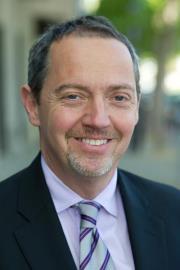
Bevan Dufty’s been running for mayor for about two years now. He’s often the star of the debates — if only because he has an engaging personality and is willing to laugh at himself, a rare trait in a politicians. And although he way typcially aligned with the fiscal conservatives on the Board of Supervisors, he has the support of the progressive SEIU Local 1021 — in large part because he’s talking about working with city employees instead of demonizing them. He also told us that the next mayor of San Franciisco needs to have a black agenda — to address the alarming outmigration of African Americans and the economic damage that’s been done to that community. You can listen to the full interview and watch video after the jump.
SFBG Blogs
Alioto-Pier plays the school card

Former Supervisor Michela Alioto-Pier is barely registering in the mayoral polls and at this point has about zero chance of getting elected. So she’s thrown out a desperation pitch, trying to get votes from people who think kids should all go to neighborhood schools.
A mailer that I got yesterday shows two sad looking children in front of a Muni bus with the line: “Our ride to school is longer than our parents’ ride to work. Who will stand up and fight for us?”
There are shades of the old (sometimes racist) anti-busing stuff here — why should kids have to ride buses – buses — to go to a school that isn’t right in the neighborhood? There’s also very much a class issue — the public schools in rich neighborhoods have resources (that is, rich parents) that schools in poor neighborhoods don’t. So kids who grow up in (still segregated) poor neighborhoods won’t get a chance to have the same quality education as kids who had the skill and drive that it took to be born to wealthy parents.
Sure, we could “make every school a great school,” as the neighborhood schools crew likes to say — but that would take money. Tax money. Lots more tax money. And I don’t hear Alioto-Pier talking about repealing Prop. 13.
Here’s the reality: In most public schools, parents have to raise money to supplement what the district can offer. You want smaller classes, or language options? Fine — come up with $50,000. Hold fundraisers, write grants, beg and plead — and some school communities are very good at it. Clarendon routinely raises $200,000 or more a year. My daughter’s school, McKinley, holds a car was and Dog Fest, and we got a corporate grant to rebuild the playground. Those things take (a) parents who have time and (b) parents with the skills to write grants and (c) parents who have money to contribute on their own.
You segregate school attendance by neighborhood and you’ll get some schools that have a lot of a, b, and c — and some that have almost none. Now, you could “tax” the good fundraisers — force, say, the Clarendon and McKinley parents to give 25 percent of everything they raise to other schools that don’t have the same parent resources. I’m not actually against that. But it’s almost impossible to administer and unlikely to happen.
Or you could say that parents all over town have the right to choose a school anywhere, including one of the ones in the wealthier parts of town. Then the parents who have resources wind up helping out kids who come from poorer families, because the schools are more socio-economically diverse.
There’s also the fact that San Francisco is a pretty small city; taking a bus from my neighborhood, Bernal Heights, to my son’s middle school, Aptos — in a different neighborhood in another part of town — isn’t that big a deal.
And there’s the indisputable fact that most parents don’t want to be limited to their neighborhood schools. They want choice. There are different types of programs for different kids — and you can’t have Mandarin, Spanish and Japanese immersion all offered at every single elementary school.
And by the way: Most parents who want to send their kids to the nearby schools get their way already. The new assignment policy gives priorioty to neighborhood residents. And 80 percent of the parents who enter the lottery get one of their seven choices. (Enter the lottery and chose your neighborhood school and the odds are pretty good that you’ll get it. But a lot of people don’t do that — they want a different program or opportunity somewhere else. San Francisco very rarely forces kids to take long bus rides; those kids mostly go to schools that their parents chose for them.) It’s not a perfect system, but as a parent who’s been through it (twice), I can tell you it’s really not that bad.
Then there’s the fact that the mayor doesn’t actually get to decide any of this. The school assigment policy is set by the School Board. So even if Alioto-Pier got elected, there’s no way she could implement the “neighborhood school plan” that she’s talking about.
This is just outright pandering to a West Side crowd. And it’s probably a waste of paper and ink — Alioto-Pier’s not going back to City Hall.
SFPD raids OccupySF camp, seizes gear, but protesters remain
Last night, San Francisco Police officers showed up at Occupy San Francisco for the first hostile altercation that the SF movement has had with cops so far, and among the first police crackdowns on the larger Occupy Wall Street movement. The encampment was cleared of tents and supplies, but protesters remained at the site and the incident could serve to broaden the movement and strengthen its resolve.
Around 9:30 pm, a police officer pulled up in an unmarked car and, with little comment, distributed fliers amongst the approximately 200 protesters camped out in front of the Federal Reserve building at 101 Market Street, where I was camping with the protesters and reporting a story for next week’s Guardian.
The fliers stated that we were in “violation of one or more of the following local ordinances or state laws,” and then listed six laws, including open flames on a city street without a permit, lodging in a public place, preparing or serving food without a permit, and violating the city’s sit/lie ordinance. The order did not look legitimate, as it did not include an author, a timeline for the police action, or any dates. The atmosphere turned tense as protesters tried to decide how to react.
The camp had substantial infrastructure at this point, with a kitchen area, medical tent, supplies tent, tech area, and about 20 other tents for meeting and for lodging. The kitchen was largely set up by Food Not Bombs and had a propane-powered stove. Kitchen committee members immediately turned off the stove and closed the kitchen upon receipt of the notice, eliminating any open flames and serving of food.
A general assembly was called and emotions ran high as protesters fleshed out the intricacies of nonviolent protest, resistance, and the consensus-based decision making system that had served them so well in past weeks, when faced with a more urgent and high-stakes situation. Despite anger and disagreements, the group vowed to remain nonviolent.
A call was put out via Twitter, Facebook, email, and phone for supporters to come to the scene. Within a half hour at least 100 more people had come, including members of Occupy Oakland, which just began this week.
Around 11 pm, about 60 cops showed up as well as four Department of Public Works trucks. The cops stood on the far side of Main Street, seemingly awaiting orders. Thirty minutes later one protester, Alexandra List, told the General Assembly that she had speaking to the commanding officer, Captain Charlie Orkes. He told her that if the camp and all the food, equipment, and other items that the camp had amassed were not completely removed in 30 minutes, they would arrest everyone.
Some protesters sprang to action taking down tents, while others discussed the possibility of risking arrest. It was unclear what would happen to confiscated items and for many travelers and homeless individuals currently living and organizing at the camp, they risked losing most or all of their personal belongings. All the tents were taken down, but the stuff was not removed. The camp had been receiving truckloads of donations per day, and finding a vehicle and destination to transport it all was difficult.
Fear and anticipation mingled with the excitement of having so much support and interest, locally and around the country. One protester, Zaigham Kabir of Oakland, said “There’s been a lot of confusion. It looks like a couple hundred people just came here. I also heard that there’s 10,000 people watching on livestream right now.”
Sup. John Avalos – the only mayoral candidate to take part in last week’s rally and march – came to the site around 12:40 am. He spoke several times with Capt. Orkes and also reportedly called Police Chief Greg Suhr in an attempt to mediate the situation and protect the protesters. He was the only supervisor or mayoral candidate to arrive on the scene.
Around 1 am, protesters saw cops put on riot gear and bring out batons. They then marched up Main to Market and formed a line around the remainder of the physical encampment, blocking protesters from their belongings. As protesters sat on the ground, imploring the cops to leave their things alone and chanting “Join Us! You’re the 99 percent too!” DPW workers loaded everything into five trucks. Tubs of food were spilled on the ground as they dismantled the kitchen, taking donated food, water. and supplies (there was so much food in the kitchen that only hours before, protesters had begun turning away food donations).
It was 1:45 am when protesters began taking to the streets to block the trucks. About 20 ran in front of the line of trucks to link arms and stacked wooden pellets, which had been used to elevate the camp during the rain, to form a barricade. One man lay down in front of the truck, smiling with his banjo in hand. They yelled, “That’s not trash! Don’t throw it away!” Soon, about 250 protesters were linking arms, surrounding the line of trucks. A few brought over municipal trash cans and road blocks to form a barricade around the perimeter.
Throughout the night, many protesters reported conflicted expressions on officers’ faces. One such officer stood now in front of a truck with an American flag that had flown in the camp still valiantly flying from its post in the DWP truck-bed garbage heap.
Eventually, the trucks backed out of the circle and began driving down Main Street, when protesters ran to try stand, sit, and lie in front of them. While trying to remove the protesters, one woman was hit and pushed and another man was beaten down and reportedly kneed in the stomach. There was one arrest. It has been reported that the officer responsible for most of this behavior was Officer Pascua, who apparently said to several protesters, including Dylan Brignon of Fremont, “I can’t wait til I get the chance to beat your faces in.”
The Guardian has called Chief Suhr, Mayor Ed Lee, and the SFPD and is awaiting a statement on the tactics and decision to raid the camp.
The trucks made it out of there by about 2:30 am. About 50 cops and 100 protesters remained in a standoff on Main and Market, and protesters chanted, sang, and held a large sign reading “We love you” and police stayed in a silent line, batons in hand.
By 3 am, protesters had regrouped. All of the structure was gone, but the occupation was still there. Protesters pledged to remain indefinitely despite the night’s events, and to continue to grow. Around 4 am, some cops returned to the site, and throughout the night there were seven or eight police cars circling the block at all times.
Protesters awoke this morning to a dozen or so police officers guarding the Federal Reserve building. There had already been donations of money, blankets and sleeping bags at 3 am in response to the events, and at 7 am the first food donation since raid came in and the protesters ate a free breakfast.
Said Kabir, “The fact is, we’re all here in solidarity. We’re still here. And we’re not leaving.”
BREAKING: SFPD threatening to break up Occupy S.F. encampment
San Francisco city government is cracking down on the Occupy S.F. movement, with public officials waiting until around 11 p.m. on Oct. 5 to move in and try to clear out the camp.
Police appeared on the scene in front of the Federal Reserve at the foot of Market Street in downtown San Francisco where roughly 200 protesters were camped out as part of the Occupy SF movement, and threatened to make arrests if protesters did not clear out completely within 30 minutes. The protest was a peaceful affair and the encampment had been in place since Sept. 29. The protest was called to mirror the growing Occupy Wall Street movement to oppose corporate greed and highlight the role of financial institutions in an economic decline resulting in a rising wave of foreclosures, unemployment, and cuts to public services.
Yael Chanoff, who was at the encampment on behalf of the San Francisco Bay Guardian, phoned in to report that police officers had issued notices telling people that they had to clear out because they were in violation of local city ordinances such as public nuisance laws, rules requiring permits for temporary structures, and the newly adopted sit/lie ordinance. Officers were taking photographs of the camp, presumably for evidence. Trucks from the city’s Department of Public Works had lined up on the street, she said.
Roughly 50 police officers in standard uniform were there, carrying “stacks of zip ties,” she added. Alexandra List, a protester, said that a commanding officer on the scene had told her no one would be arrested if the structures were removed completely within 30 minutes. Chanoff estimated that there were about 20 structures.
Chanoff said protesters were meeting to try and find out how to proceed, but some had decided to begin taking down the tents.
UPDATE: The Guardian spoke with SFPD public information officer Albie Esparza, who told us, “the sidewalks are being cleared of debris,” and mentioned that protesters had been in violation of certain codes, such as a fire code prohibiting open flames that applied to outdoor cooking setups. “They have the right to protest as individuals, obviously,” he said. Asked why it was so urgent that these codes be enforced at 11 p.m. when the streets are virtually empty, Esparza said, “I don’t know what the reason was for the timing.”
Yael Chanoff contributed to this report.
Occupy SF marches on the banks again
Occupy San Francisco — the local manifestation of the Occupy Wall Street movement that is spreading across the country — took to the streets today with a rally numbering in the hundreds. Marching up Market Street and through the heart of the Financial District, protesters met supportive car horns as often as tight-lipped disapproval. Today’s protest followed a similar one last week when six activists were arrested, with no arrests reported this time.
“We are the 99 percent!” was the most resounding chant, one that prompted several onlookers to join in. “We are 99 cents,” replied one man, walking through the crowd as they strode through the Tenderloin. Signs ranged from the plain – “Stop this” – to the hard-hitting: “Greedy Bastards!”
“I saw them on my way to get her immunization record,” related one woman, gesturing at a sleeping toddler in a stroller. “And I had to join in.” Visibly swelling in size throughout the two-hour march and stretching as far as six blocks at a time, the rally stopped in front of Wells Fargo, Chase Bank, and City Hall before ending back at the Federal Reserve Building where it began and where protesters have been camped out.
“Whose streets?” yelled a megaphone-toting activist. “Our streets!” the crowd bellowed back, spilling off the sidewalks and into the roadway. As rain threatened the Financial District, the protesters’ chants and shouts were not dampened.
Photos by Lucy Schiller
The goals of Occupy Wall Street

Occupy Wall Street is an easy target — a group of protesters taking on one of the most powerful institutions in the country, with loose spinoffs in cities all over, and no clear leadership or (many would say) agenda. The Atlantic’s business writer, Danile Indiviglio, weighed in Oct 5 with an essay he called “Five Reasons Occupy Wall Street Won’t Work.” Some of it’s your typical musings from a guy in a suit who doesn’t understand direct action (“But the Occupy Wall Street movement’s anger is directed at bankers. Here’s the problem: they really don’t care.”)
But his main pitch is one that I’m sympathetic to, and so are a lot of other supporters of the growing movement. He says the protesters don’t know what they want:
Any protest that hopes to accomplish some goal needs, well, a goal. If a demonstration like this lacks concrete objectives, then its purpose will be limited at best and nonexistent at worst. At this time, all the protest really appears to stand for is a general dislike of Wall Street. But what does that mean?
And that’s where I think he’s wrong. The occupiers may have started off with only vague objectives, but some tangible, progressive goals are starting to emerge — and they don’t in any way require the bankers to care.
The Wall Street protests are growing — and some of the people getting involved have a very clear agenda. The most dramatic evidence is the growing role of organized labor in the actions. The nurses marched Oct. 5 — and they have a very specific platform, well thought-out, that calls for a financial transactions tax. AFSCMA, CWA and the city’s transit workers joined the march, too. And the head of the AFL-CIO, Richard Trumka, is now on board. And while Trumka made it clear that labor isn’t going to try to dominate the spontaneous protests,
The labor leader was specific as he summarized his demands: make Wall Street invest in creating jobs for Americans, stop foreclosures and write down problem mortgages. Paying for government programs would come from a “very tiny” tax on speculation, he said.
I’m not seeing any kind of political turf war here — the original Occupy Wall Street folks seem happy to have labor on the team. And once you get tens of thousands of labor activists in the streets — and using the media and the growing groundswell of support for the protests to push a Congressional agenda — then something potentially powerful is happening.
Lee seeks to lessen political damage from his promised veto

Mayor Ed Lee says he will veto legislation that the Board of Supervisors approved yesterday that would have banned San Francisco businesses from keeping money they’re required to set aside for employee health care costs. But he seems to be worried about how that move will be seen by voters, touting his support for a “consensus strategy” that doesn’t yet exist and might not be possible given the fundamentally different way both sides see the issue.
The legislation by Sup. David Campos addresses the $50 million per year that businesses have been taking from their employees’ health savings accounts, which they set up to comply with city law requiring them to cover employee health care costs and which many restaurants subsidize by placing a 3-5 percent surcharge on their customers’ bills.
The San Francisco Chamber of Commerce and opponents of the Campos legislation defend the practice and cast efforts to reserve that money for employee health care as a job-killing loss to the business community, although some have finally come around to calling the practice a “loophole” that should be addressed with minor reforms. Yet labor groups and consumer advocates say businesses have no valid claim to that money, making it difficult to see where this elusive common ground might lie.
Supporters of the legislation – including mayoral candidates Leland Yee, Dennis Herrera, John Avalos, and Phil Ting, as well as Assemblymember Tom Ammiano, who authored the Health Care Security Ordinance as a supervisor – rallied on the steps of the City Hall today, calling for Lee to sign the legislation.
Shortly thereafter, the Mayor’s Office issued a press release with the headline “Mayor Lee Convenes Group to Improve Health Care Access & Protect Job,” announcing a “consensus building effort” that includes business groups and Campos and other supporters of the measure. Campos tells the Guardian that he did get a call from the Mayor’s Office today and he agreed to take part in the effort – just as he did in fruitless negotiations with Chamber officials – but he still has a fundamental disagreement with Lee and other Chamber allies over the issue.
“I talked to the Mayor’s Office about their proposal and I have indicated my concerns,” Campos said. He noted that both Lee’s proposal and another alternative by Board President David Chiu – who was quoted in Lee’s press release saying “I am committed to continuing the collaborative effort to ensure health care access to workers while protecting jobs.” – let businesses profit from money that’s supposed to be dedicated to employee health care
“So far, none of the proposals except for mine ensure that whatever consumers pay goes to health care,” Campos said, expressing confidence that public opinion is on his side. “It’s one of those issues that the more everyday San Franciscans hear what’s happening, the more outraged they are.”
But while Lee and Chiu each use the language of seeking compromise and trying to “close the loophole,” both rely on the basic Chamber paradigm that this money belongs to the businesses and setting it aside for employee health care as city law calls for would hurt “jobs.”
When Lee was asked about the issue by a group of reporters today, he said: “Next week, we’re forging a labor and management entities’ meeting with the Mayor’s Office and supervisors to try to forge changes to the Campos legislation. I cannot sign it the way it is now, because of two reasons. One, it does not focus on the healthcare needs of the employees; and two, it will force the employers to just keep millions of dollars lying around without any use and that will decrease the efforts to create more jobs. So both objectives have to be reflected in the ordinance, and I want to make the changes appropriate for that.”
The first reason seems to ignore the fact that the city is barred by federal ERISA law from telling businesses how to provide health coverage, which is why so many of them opted to create these health savings accounts – which are almost useless for people facing serious medical costs – rather than providing health insurance or paying into the city’s Healthy San Francisco program. And supporters of the legislation simply reject the validity of Lee’s second reason.
“That position is based on a false premise. This money belongs to the workers and it’s something that consumers are paying for,” Campos said. “We have a fundamental disagreement.”
Maximum Consumption: The Treasure Island Festival musical tasting menu
So excited for Treasure Island Music Festival, you can taste it? Yes, you can. Thanks to graffEats and Noise Pop, you can literally taste it with a gourmet menu inspired by the upcoming festival. It’s a feast for all senses tomorrow night at the Treasure Island Pop Up Shop; everything can be shot, sucked, or eaten with fingers. Each item on the six-course tasting menu takes after a different artist from the 2011 festival lineup, and will be paired with wine.
Try the Death Cab For Cutie-matched tomato and peach Caprese with sweet balsamic and aged cheddar. There’s a gourmet spin on chicken and waffles in honor of Malkmus and the Jicks. For dessert, enjoy an extravagant all-gold Empire Of The Sun peach push-pop. Of course, this magical evening will be accompanied by an awesome soundtrack.
Partial Menu:
Death Cab for Cutie:Tomato and peach “Caprese,” sweet balsamic, aged cheddar, smokey almond pesto
Flying Lotus:Angel-spiced halibut, caramelized onion and fennel, black olive oil
Stephen Malkmus and the Jicks:Beer-fried game hen and yeast-risen waffle, mustard, radish
Death From Above 1979: Berber spiced lamb, grilled paneer, baby eggplant and minted yogurt
Empire of the Sun:“Head On A Stick”– Golden peaches-and-cream push pop, star anise salt and gold
Aloe Blacc:Foie gras bon bon, dark chocolate, plum, sea salt
Indulge your senses with fellow music enthusiasts and food lovers. It’s the perfect way to prepare for the fast-approaching festival weekend.
Treasure Island SoundBite: A Musical Tasting Menu
Brought to you by graffEats and Treasure Island
Thurs/6, 7:30 p.m., $45 (includes wine pairings)
Treasure Island Pop Up Shop @ San Franpsycho Store
1314 Grant, SF
www.graffeats.com
Tickets
Period Piece: Life and death at the Columbarium
“This place scared the crap out of me,” says Emmitt Watson, caretaker, historian, and tour guide at the San Francisco Columbarium, the only nondenominational spot in San Francisco to be laid to rest. “When I opened the doors, the first thing I saw were two raccoons.”
The Columbarium is a remnant of an earlier era in San Francisco, an era when everything west of Laurel Heights was pretty much a huge graveyard. Built in 1898, the building with a stone rotunda was a landmark in a sea of headstones.
As San Francisco expanded in physical size and population, the Western cemeteries became a contentious issue. Smell, crime, homeless encampments, and something referred to vaguely as the “putrefactive germ” in newspaper articles were all reasons that were cited to move the dead elsewhere and make room for the living.
So elsewhere it was. Colma, home to 16 cemeteries, became the destination for many a deceased San Franciscan.
The large-scale digging-up and hauling-out took place over the course of the 1930s. Headstones were refashioned into Buena Vista Park’s gutters and a sea wall at Ocean Beach. Remains not claimed and paid for by family members were reburied in mass graves. No new cemeteries could be built within city limits, and in the midst of the literal upheaval, the Columbarium housed the cremated remains that were to stay.
The building is endowed with a cathedral’s glory – all gleaming copper, huge archways, and light filtering down from a domed top. But the Columbarium spent almost half a century in utter neglect and abandonment before 1979. That’s when Watson’s employer, the Neptune Society (a cremation and funeral planning company), bought the property. Watson, responsible for this gleaming cache of human remains, struggled with cobwebs as big as his arm, broken stained glass windows, and feral animals. Now, the place is spotless, and smells faintly like a florist’s refrigerated stockroom.
The building sits abruptly at the end of a residential cul-de-sac. Emmitt Watson lives right next door. In a sense, his neighbors include Harvey Milk and Chet Helms, as well as at least 30,000 others (many stashed in the same urn).
“Evidently it was meant for me,” says Watson of the Columbarium, and many San Franciscans apparently feel the same way. Glass cases along all three floors of the building display yellow “Reserved” signs. “Your niche in history,” reads a Neptune Society brochure.
San Francisco Columbarium
Mon.-Fri., 8 a.m.-5 p.m.; Sat-Sun, 10 a.m.-3 p.m.
One Loraine, SF
(415) 752-7891
City contractors plunk down for Lee
Representatives from Stellar Services, an IT infrastructure services provider that also does business as 4 U Services, contributed a total of $7,500 in support of Mayor Ed Lee’s bid for a full term, filings with the San Francisco Ethics Commission show. The New York-based company holds a contract with the San Francisco Public Utilities commission (SFPUC) and has been paid $91,737.80 to date for programming and coding services.
Lee also received a maximum $500 contribution from a senior vice president at AECOM, another city contractor. While the contributions may have squared with campaign finance law, significant support from companies doing business with the city nevertheless give the impression of businesses attempting to advance their own interests through political influence.
The majority of the contributions from Stellar came in the form of a $5,000 donation from 4 U Services to the Committee for Effective City Management, an independent expenditure committee created in support of Lee that recently hosted a Lee fundraiser in Millbrae honoring special guests Sup. Jane Kim and former Mayor Willie Brown.
4 U, according to its website, also does business as Stellar Services, a company based in New York that has an office in San Francisco. “Stellar is currently a sub-consultant that is working to develop our new online invoicing system called SOLIS,” SFPUC spokesperson Tyrone Jue told the Guardian. “The invoicing system centralizes and streamlines the invoicing process, makes invoicing transaction transparent to all users, increases reporting and transparency, and makes invoicing completely paperless.” Jue noted that the contract was signed in July 2009, and the SOLIS pilot program is underway.
The remainder of contributions from Stellar were made to Lee’s official mayoral campaign. Five individuals who listed Stellar Services or 4 U Services as their employer, including company founder and president Liang Chen, made maximum contributions of $500, according to a report filed with the San Francisco Ethics Commission.
Shaista Shaikh of the Ethics Commission noted that it is legal for city contractors to make contributions to independent expenditure committees formed in support of a candidate for public office. City contractors run afoul of ethics law if they make campaign contributions to an elected official who must approve the contract at any time during contract negotiations or until six months have passed from the date of contract approval, she explained. Since the contract with Stellar was approved in 2009, the contribution would have been made well past the six-month mark — so it apparently squares with the campaign finance reform ordinance.
Reached by phone, Lee spokesperson Tony Winnicker told the Guardian that if the contract was approved in 2009, it would not be included in a database of city contractors maintained by the campaign, since “there’s no prohibition” against accepting campaign money after the six-month ban has passed. “So that should not be a concern to the Guardian,” he said.
On Sept. 17, Lee received a maximum $500 contribution from Joseph G. Moss, Jr., who listed his occupation as a senior vice president of AECOM in Atlanta, according to an Ethics filing. Lee received another $875 in contributions from AECOM employees, Ethics records show. According a press release on the AECOM website which seems to have been taken down since the Guardian highlighted it, an AECOM joint venture was awarded a $150 million contract for program management services for the SFPUC’s wastewater improvement program on Aug. 16. AECOM is also a partner in a joint venture working on construction of the controversial Central Subway project.
Since the contractor contribution ban (Section 1.126 of the city’s campaign finance reform ordinance) sets a number of parameters for determining the legality of contributions, it wasn’t immediately clear whether the contributions from AECOM were in line with the ordinance.
Regardless of whether the campaign cash falls on the right side of the law, however, substantial support for Lee from city contractors is likely to raise eyebrows, especially in light of concerns progressives have raised that San Francisco is about to witness a resurgence of the pay-to-play politics that characterized City Hall under Brown.
Feminist dance pop: Q&A with MEN’s JD Samson

Just as she did with Le Tigre, JD Samson blurs the lines between feminist theory and modern pop music with her most recent musical endeavor, MEN. The experimental art-pop band, which began in 2007, is a collective with fellow Le Tigren Johanna Fateman – among others – that’s as subversive as it is danceable.
The New York band is currently on tour with Brazil’s CSS – the road show hits SF tomorrow at the Fillmore – and to celebrate, the groups released a tour-only split 7″ vinyl called “We Are Friends.” Earlier this week, I got the rundown on MEN, trashed humanity on the Web, and the possibility of another JD’s lesbian calendar:
San Francisco Bay Guardian: Where did the idea for MEN originate? What was the original concept and how has that changed?
JD Samson: Well, that’s a complicated question because MEN’s original concept was a couple different concepts that kind of became enmeshed at a certain point. When Johanna and I started MEN as a remix/ production/ DJ/ Original music team. We kind of imagined that we wanted to continue making music together and wanted to make dance music. So we went for it. But then MEN combined with another project I was working on with Michael O’Neill, Emily Roysdon, and Ginger Brooks Takahashi. That project was called Hirsute and our concept was to creative an artist/music collective of people that came in and out of the project freely. I think both concepts show themselves at different points to us and work in harmony to give us what we want at any given time.
SFBG: Why name the band MEN?
JDS: The idea for the name came out of a feminist confidence boosting philosophy that Johanna was teaching me. If you are in a club and the promoter is being a dick, don’t apologize to them, or feel guilty for existing. what would a man do? at the time she was telling me this, we were asked for a name for the project and we decided to go with MEN.
SFBG: How did you hook up with CSS? Can you tell me a little about the tour split record?
JDS: I have known CSS for a while now. Luiza Sa and I are friends from NYC and I have hung out with the band several times at different festivals and stuff. Yhey asked us to go on tour and we were so so so excited and happy that they wanted us to support them. We had the idea for MEN and CSS to remix each other and to create a tour only 7 inch. Lovefoxx made one part of the artwork and I did the other. I’m super into how it turned outSFBG What is your song writing process like? Where do you most like to create?
SFBG What is your song writing process like?
JDS: Usually our song writing starts with a sample or a beat and then moves forward into a melody and then words get thrown down. Either words that were already written or words that the song feels like. Michael and I do it all together actually, which is a cool process. We love completely changing songs after we have sat with one idea and it isn’t feeling perfect. It’s fun to remix ourselves.
SFBG: Can you tell me about making the videos for “Off Our Backs” and “Who Am I To Feel So Free”
JDS: Well its important to us to be involved in the conceptual arena of our work at all times. I am also a visual artist and MEN prides itself on existing within an art community so it is important to us to go to any lengths for this. Bryce Kass directed the “Off Our Backs” video and created magic from an idea I came up with on a phone call to him. Techa Noble and Paola Maorabito from Sydney did an amazing job with both the concept and follow through for the “Who am I” video. I have known Techa for years and she does amazing work so it was a dream of mine to work with her
SFBG In some ways, it seems like MEN would appeal to a wide audience because, while the lyrics and ethos are about sexual liberation, the sound is upbeat, it’s danceable pop — would you agree? Was this intentional?
JDS: I think we hoped we could appeal to a large audience, yes. We had no idea what to expect, and honestly didn’t expect too much. We were just ourselves. So it was a great experiment. Unfortunately I would say that I think we are still much a part of the gay ghetto in a lot of ways.
SFBG: Conversely, I see a lot of disheartening misogyny and homophobia in the Web comments — how do you combat those?
JDS: Well I don’t read the web comments, but thanks for the heads up! Ha. No. Seriously it rolls off my back. I’ve been looking like this for a long time. I’m proud of that at least. But in terms of the Internet. people say fucked up shit. That’s just the deal with not having to look someone in the eye and say something shitty. It’s cowardly and it’s all about trying to get attention and trying to be as cruel as possible. The internet has done wonders in some ways, but literally trashed humanity in another.
SFBG: Is music itself liberating?
JDS: I think music is whatever you want it to be. it can be inspiring and at the same time completely oppressive. I feel so free with music, and my body, and I wish to create a space where everyone can feel safe to do so.
SFBBG: Who inspires you musically and otherwise?
JDS: Talking Heads, Tearist, Das Racist.
SFBG: Is Le Tigre writing songs or planning any future albums?
JDS: Nope, not at this time, sorry. Kathleen [Hanna] is doing Julie Ruin again, which is rad!
SFBG Will you ever do another ‘JD’s Lesbian Calendar’?
JDS: Hmmm. maybe. I hope. If I feel good enough about myself. Ha.
MEN
With CSS
Thurs/6, 8 p.m., $35
Fillmore
1805 Geary, SF
www.thefillmore.com
Who Am I to Feel So Free:
Jerry Brown has lost his mind
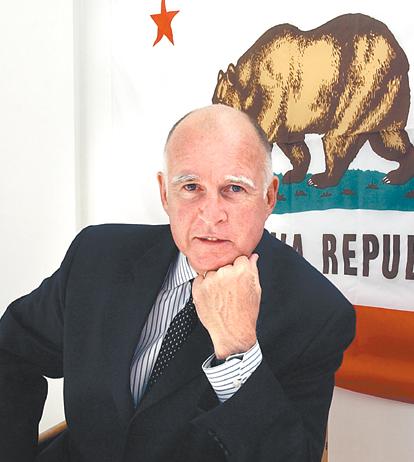
He’s all for “realignment” — giving counties more responsibility for public services. He’s all for environmental initiatives that decrease the state’s reliance on fossil fuels. But when a measure comes along that does both — at no harm to anyone in Sacramento, and has the support of just about everyone in San Francisco from the Chamber of Commerce to the Labor Council — he vetoes it.
Brown just announced that he won’t sign Sen. Mark Leno’s SB 223, which would have allowed San Francisco to bring in as much as $75 million a year in new revenue by raising license fees on cars.
Let’s look at this for a moment. New revenue to handle increased state mandates — without Brown having to raise anyone’s taxes. Local control (San Franciscans would have to vote to tax themselves on car use.) A rejection of his Republican predecessor’s unliateral decimation of the state budget. And someting that discourages car use in the process.
A winner on every account. A perfect piece of Jerry Brown legislation that fits in precisely with everything he’s been talking about as governor.
And yet, he vetoes the bil, issuing a ridculous statement calling Leno’s bill “piecemeal” and asking for “a broader revenue solution to the state’s fiscal crisis” — something he knows the Republicans won’t allow and thus will not happen any time soon.
I dunno. Looks to me like Jerry’s gone off the deep end.
Live Shots: Dum Dum Girls/Crocodiles at the Great American Music Hall
The new Dum Dum Girls album, Only in Dreams, has left such an indelible impression on me, that I was surprised when the four-piece surf-garage band jumped into “Bhang Bhang, I’m a Burnout” for its second song last night at the Great American Music Hall. I’d all but forgotten about the song, a tune that I’d fallen in love with – hard – not more than a year prior when it appeared on the band’s debut, I Will Be. It was a welcome reminder, as was the rest of the set, of both its strong lo-fi past, and hard-earned rock future – those descriptors mostly applying to electrifying frontperson Dee Dee.
She looks like a rocker, in signature striped black tights (which I also spotted on at least two other females in the crowd) and black leather jacket, along with the fringe of black bangs. But it’s her style, her commanding voice, and quick snarls with squeezed shut eyes that solidify the role. In between Dee Dee’s husband’s set (he of the quite fun retro Jesus and Mary Chain-esque San Diego act Crocodiles), and the Dum Dums, the house spun ’60s girl groups chant-alongs, a good choice for the night’s entertainment. Once the Dum Dums appeared, a few males shouted flirtatious admiration. The non-stop talking duo of middle-aged white men in front of me seemed appreciative too, yet never lulled their own veryimportant chatter. I did the twist out of that section.
There were a few technical difficulties, problems with the rhythm guitar sound apparently, and extra-long tuning, but it hardly detracted from the main show. The Dum Dums play enjoyable music, period. It’s reminiscent of Leader of the Pack-girl gangers but has that great fuzzy garage guitar edge. It’s all I wanted as a teenage girl looking for something vintage-modern that spoke to me. I wanted the Switchblade Sisters in rock form. I just had to wait a decade.
The biggest moment of the night came at the very end during the the brief encore when the quartet returned to play Only in Dreams‘ echoing, rolling epic, “Coming Down.” The strength of Dee Dee’s voice when the song breaks and she hits “here I go-o-o” rang through the Great American with raw power — the crowd cheered when she reached that high note. It was like exorcizing demons, or willfully falling down the rabbit hole. We were then left to fend for ourselves out in that cruel rainy abyss of the Tenderloin.
All photos by Chris Stevens.
Will Mayor Lee veto legislation that helps workers and protects consumers?

After the Board of Supervisors today voted 6-5 to bar San Francisco businesses from pocketing money they and their patrons set aside for employee health care, Mayor Ed Lee faces a tough but telling choice: Whether to heed business community demands that he veto legislation that has wide labor and consumer support.
A veto is widely expected, but complicating that decision is the position that was staked out today by one of his main rivals as a mayoral candidate, Leland Yee, who issued a statement echoing supporters claims that this is an issue of workers’ rights and consumer protection versus corporate greed: “This is a defining issue of who we are as a city. If Ed Lee vetoes this legislation, one of my first acts as Mayor will be to reverse his veto and sign this legislation into law.”
Neither Lee’s mayoral nor campaign spokespersons answered a Guardian email about whether he will veto the measure, which would kill it unless two supervisors who opposed the measure (David Chiu, Sean Elsbernd, Mark Farrell, Carmen Chu, and Scott Wiener) break ranks, which is unlikely given the polarization on this measure. San Francisco Chamber of Commerce officials have made a top priority of killing the measure, even threatening to withdraw support from Prop. C, the pension reform measure that they helped create with Lee.
At issue is the roughly $50 million per year that San Francisco businesses have been taking from health savings accounts they create for employee health care – funds that are often subsidized by 3-5 percent surcharges that many restaurants have chosen to tack onto their customers bills – under legislation that then-Sup. Tom Ammiano created to require employers to provide health care coverage for their employees.
The position of the Chamber – which fought Ammiano’s legislation and supported years of unsuccessful lawsuits challenging it – is that this $50 million “loss” to city businesses would be a “job killer.” Chiu has also accepted that paradigm and introduced legislation that would let businesses use that money, but require them to let employees know they can tap into it and other reforms. But supporters of the legislation say these businesses are deceiving their customers, defying city law, and stealing from their employees.
“People have tried to complicate this issue, but it is a simple issue. It’s about the right of workers to have health care,” Sup. David Campos, the author of the legislation, said at today’s hearing.
Campos said he would limit his comments, given how widely the issue has already been discussed, and he announced a limitation on how long employees could tap the fund after their termination “in the spirit of compromise.” But then opposing supervisors attacked the measure, its timing, and supporters’ refusal to “compromise,” with Elsbernd chiding Campos that his legislation is “not the best way to encourage jobs.”
So Campos went into more detail about why his measure was needed, noting that Chiu’s alternative would cap an employee’s access to health care at just $4,300, far less than the cost of a night’s hospital stay and a small fraction of the cost of a serious ailment. “You’re looking at a situation where very little could be provided for them,” Campos said.
He also said how important it is to ban the fraudulent practice of restaurants charging customers for employee health care costs and then simply keeping the money, a practice that a recent Wall Street Journal investigation discovered was widespread. Campos said 80 percent of the money collected on diners’ bills is pocketed by the restaurants.
“When consumers are paying for this, the expectation is that workers will have basic coverage,” Campos said, noting that his legislation would guarantee that “every cent that that consumer pays is actually spent on health care…This is not just about workers, it’s about consumer protection.”
Even worse, Campos noted that these consumers are actually paying twice for restaurant employees’ health coverage, first on their dinner bills, and then again as taxpayers when those uninsured employees end up in General Hospital with their expenses paid for by the city.
Under the federal ERISA law – which was the basis for the failed lawsuit challenging the city program, brought primarily by the Golden Gate Restaurant Association – the city cannot tell employers how to provide health coverage, and so they have the option of providing health insurance, paying into the city’s Healthy San Francisco plan, or providing the medical savings accounts that this legislation addresses.
Sup. Jane Kim said she supported the legislation largely because of the horror stories she’s heard from employees who not only weren’t told of the existence of these accounts, but who were denied payment for medical procedures even after they learned about them. She also said the city could be vulnerable to another ERISA lawsuit if it took Chiu’s approach of directing how businesses used their funds, citing an earlier discussion of the board’s role in protecting the city from litigation.
On that issue, Kim today introduced an alternative to legislation by Farrell and Elsbernd that would end the city’s program of providing matching funds to publicly financed mayoral and supervisorial candidates once their privately financed competitors break the spending cap. The US Supreme Court recently ruled a similar program in Arizona to be unconstitutional.
The Chamber and other downtown groups – mostly supporters of Mayor Lee, who are close to breaking the spending limits – had signaled their intent to sue the city over the issue. The Farrell/Elsbernd legislation, which needed eight votes to change the voter-approved program, today failed on a 6-5 vote, with Sups. Campos, Kim, John Avalos, Eric Mar, and Ross Mirkarimi opposed.
Trash Lit: Robert Ludlum is (really) dead

The Ares Decision
By Kyle Mills
Grand Central Publishing, 410 pp $27.99
The official title of this particular work of literary art, as it were, is “Robert Ludlum’s (TM) The Ares Decision.” That because the name Robert Ludlum sells — still, long after he left for the Great Bestseller List In The Sky. See, Ludlum — by many accounts the modern master of the international spy/thriller genre — died in 2001. But they made movies and they’ve made sequels and they’ve made more sequels and they’ve made movies out of stuff Ludlum never wrote. Jason Bourne is almost the new James Bond — a character who far outlives the guy who created him.
So they’ve found other writers to pretend they’re Ludlum and write stuff that maybe the Late Great might have done if he had lived forever (TM).
And as long as people keep making money on this shit, the producers are going to keep producing it.
In fact, there’s a whole lotta James Bond going on in this latest “Robert Ludlum’s (TM)” book. I can tell you this: It reads sometimes like a script for a Bond movie (which is embarassing). It reads sometimes like a Tom Clancy novel (which is not all bad). It hardly ever reads like something that Robert Ludlum would have written.
Here’s the deal:
There’s some nasty parasite that turns people into living zombies — they feel no pain, just anger, and fight and kill until their bodies are so hacked up that they can’t move any more. Of course, the little bug is very fatal; the living zombies only last a few hours before they die almost as horribly as the people they killed along the way.
Perfect bio-weapon, no?
Well, the Iranians (of course) think so, and they’re trying to force a young biologist who just wants to study ant parasites into turning this thing into a weapon. (The ant girl, Sarie Van Keuren, is the best character in the book, a gin-driniking scientist who is excellent with guns, a first-rate mechanic and a total space cadet. She has more depth than any of the rest of the sterotypes who people the sordid tale.)
Naturally, the CIA is involved, and naturally, it’s trouble: The director really wants the Iranians to use the zombie weapon so he’ll have an excuse to get the president to nuke the whole country back to the stone age. He doesn’t want too many people to die though; just a few million Americans, enough to create the political climate for mushroom clouds over the Middle East.
And he’s a bad guy, the CIA director, a nasty dude who puts secret paralysis death drugs in the General Tso’s Chicken.
There’s a looney Kurtz-style African strongman who has something of a cult. He is in the employ of Iran, and has an undergound fortress lab in Central Uganda, where the kidnapped Dr. Van Keuren is put to work. The only one who can save her is a super-secret operative who works directly for the president in an off-the-books op called Covert-One (how imaginative).
Along the way, there’s more living zombie attacks, crazed infected monkey attacks, machete attacks, a severed-head-in-the-back-of-a-pickup scene and a little bit of conventional warfare.
I read the whole thing. I liked Sarie enough to keep going. And it’s got an interesting plot, in a sick Clancy-ish way. But don’t name this stuff after Robert Ludlum; he had a lot more class.
Eat and drink (quite well!) to help the Lower Haight fire victims
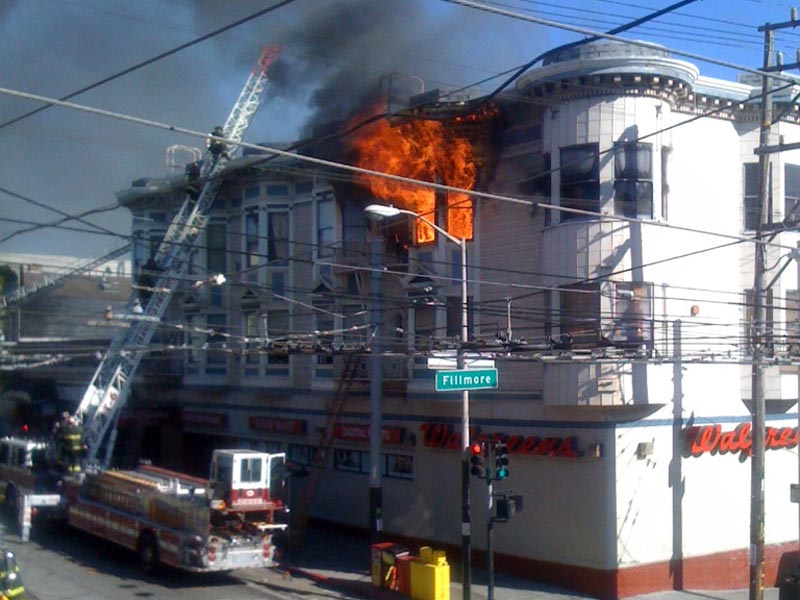
Hey community helpers/scarfers: Tonight (Tue/4) from 7pm-10pm, gather at the Peacock Lounge in Lower Haight for a fundraiser to help out the victims of that awful recent four-alarm fire that displaced dozens, closed several businesses indefinitely, and caused buttload$ of damage. For $10 you can enjoy some tasty neighborhood eats and treats from the following (plus of course help people in need — and meet some hot Lower Haighters!):
Mad Dog in the Fog (beer)
and more, plus a raffle with big prizes.
HAIGHT AND FILLMORE FIRE RELIEF FUNDRAISER
Tue/4, 7pm-10pm
Peacock Lounge
(552 Haight, 415-621-9850)
Facebook info here
The novelty doughnut grows up

Having come of age in Portland at a time that coincided with the rise of Voodoo Doughnut, the novelty doughnut trend has had ample time to lose its luster for me. It is easy to be jaded when you grew up with 2 a.m. Nyquil-glazed treats. But today I had a rhubarb doughnut from Dynamo and my essential understanding of the fancy doughnut meme has shifted forever.
Acquaint yourself with this one. I know that Dynamo is all the rage right now, and its essential yuppie-ness makes its location on 24th Street… well one of the many things on 24th Street that harbinge ethnic, class, and culture sea changes. But on days like today, when you don’t want to get to work so quick, the darling awning and clever curbside coffee line has a way of just enveloping you.
A rhubarb doughnut?
This was a new concept to me — the doughnuts in my life have been of the maple bar sort, and then of the shaped-like-a-joint sort at Voodoo, and then more recently, from the shaped-like-a-person-in-a-straightjacket school of thought that birthed the South Bay’s Psycho Donuts. But Dynamo’s rhubard had no gimmicky, arranged sprinkles. Nor is this doughnut a mere vehicle for the numbing consumption of empty calories.
It had style. A sweetness, yes (don’t worry I’m still all jacked up on refined sugars), but also taste. A fully conceived dessert, and yes I was eating it at 10 in the morning. I wanted to give into Dynamo’s lemon-pistachio and coconut varieties, but I resolutely walked off down the road.
Just like the doughnut, we are growing up.
Dynamo Donuts
Open Tues.-Sat., 7 a.m.-5 p.m.; Sun, 9 a.m.-4 p.m.
2760 24th St., SF
(415) 920-1978
Rick Perry’s nutcase preacher

Did anyone else catch Terry Gross’s brilliant interview with C. Peter Wagner, the leader of the New Apostolic Reformation? He’s one of Rick Perry’s peeps, and his crew was involved in Perry’s big prayer meeting a few months back.
Lord, the guy is off his tree. I mean, full-on wackamole batso crazy.
Japan, for example, is in deep economic decline because it’s controlled by demons who were allowed to take over the country when the emperor had sex with the Sun Goddess. (She’s not a nice girl, the Sun Goddess.) Wagner isn’t sure how that happened, physically, but he’s certain that it did (since humans have been known to have sex with the incubus and succubus).
Must have been hot.
And, of course, there are a lot of demons in Congress — and not only Democrats. There might be some demonic Republicans, too. They have to be diagnosed with a five-page questionnaire so the demons can be cast out.
Oh, and some whole cities are controlled by demons. (I wonder which ones those might be?)
When you talk about demons over cities, we’re talking about what — sometimes what we refer to as territorial spirits, and they’re more high-ranking spirits in the hierarchy of darkness and they’re more powerful and they require different approaches, and it’s not as easy as commanding them to leave in the name of Jesus. So sometimes there has to be repentance, sometimes there has to be — there has been bloodshed in that city that needs to be repented of, there has been idolatry in the city that has ruined the land. There’s been immorality that needs to be repented of, and there are several social things that people really need to acknowledge that they’re bad and repent of them and ask forgiveness.
Mercy.
So this is the kind of dude who will be hanging around the White House in the Perry Administration. Talk about demons overhead.
The occupiers of SF, NYC, and next DC gain momentum

It’s been almost three weeks and they’re still there. It’s been raining, and they’re still here. Not only that, but their numbers are growing. The Occupy Wall Street movement – and its local counterpart, the Occupy San Francisco group that has been camped in front of the Federal Reserve at the foot of Market Street – is showing real staying power as it demands social and economic justice.
Following last week’s march through the Financial District, the local group plans to brave the rain storm expected to hit tomorrow (Wed/5) and to stage another march on the banks and big financial players that they blame for crashing the economy and transferring more and more wealth from the bottom to the top. The fun begins at noon outside the Federal Reserve, 101 Market Street.
Then, the next day, protesters plan to gather outside the Federal Building at Mission and 7th streets from 3-6 pm to voice solidarity with the latest big city occupation that starts that day: the “Stop the machine! Create a new world!” occupation of Freedom Plaza in Washington D.C., which organizers intend to last throughout the month.
And on Friday, the 10th anniversary of the U.S. military campaign against Afghanistan, anti-war groups will again gather at the Federal Building for a rally and march starting at 4:30 pm, with a message that seeks to link this country’s ongoing wars with the messages being sounded by the occupiers in the streets, that it’s time to divert resources being wasted on war and Wall Street toward the 99 percent of Americans who could really use them right now.
The mainstream media has been struggling with how to cover that linkage and convey the protesters’ long list of grievances and demands. But as groups of teachers and pilots and other exploited professionals join the Occupy Wall Street movement, and as noted economists and celebrities stop by to show their support, the effort is entering a new phase, and we should all seek to understand what’s driving it and where this might be headed.
Localized Appreesh: The Soft White Sixties
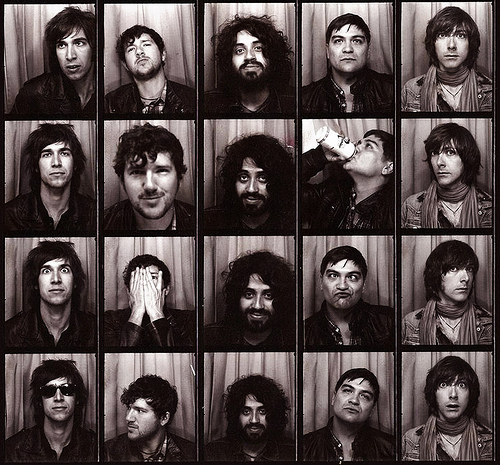
Localized Appreesh is our weekly thank-you column to the musicians that make the Bay. Each week a band/music-maker with a show, album release, or general good news is highlighted and spotlit. To be considered, contact emilysavage@sfbg.com.
You know that feeling when you’re aware you’re hearing a song for the first time, yet it feels as though it’s always been there? It’s new-to-you but there’s something familiar, reassuring – it just works right, pinging back and forth through your ear drums and pulsating brain muscle. That’s how I felt when I first listened to the cool swagger of San Francisco’s the Soft White Sixties. The hard rocking quintet, formed by Mexican-American singer-songwriter Octavio Genera, has a real tight grip (full disclosure, “real tight grip” is a lyric from SWS’s song “Too Late”) on classic Seventies rock’n’roll – with all the shoulder-shaking percussion, the bluesy rock riffs, and Genera’s soul-tinged Southern rock bravado.
The band had a pretty memorable year, performing with pals the Stone Foxes at Great American Music Hall during Noise Pop, hitting SXSW, touring the States, and at the start of summer, appearing at the Harmony Festival in Sonoma and the High Sierra Music Festival. Now summer is officially over, and the boys are back in town. Next up, a show at Bottom of the Hill tomorrow night.
Year and location of origin: 2008, the Haight.
Band name origin: Somebody had a bright idea
Band motto: “Wear it a lot, wash it a little”
Description of sound in 10 words or less: Rock ‘n’ roll, heavy on the roll, dipped in soul
Instrumentation: Guitar, keys, bass, drums, and vocals – and a runaway tambourine
Most recent release: self-titled EP (April 2011) – get it here.
Best part about life as a Bay Area band: The coastal fog and burritos
Worst part about life as a Bay Area band: Bridge tolls and parking tickets
First record/cassette tape/or CD ever purchased:
Octavio: Sound Effects Vol.1 (Track 25, “Car Starting” was a favorite).
Joey: Jodeci.
Ryan: Skid Row s/t (cassette), Wreckx N Effect Hard or Smooth (CD).
Aaron: Probably something like Enema of the State or Punk in Drublic.
Josh: The Simpsons Sing the Blues.
Most recent record/cassette tape/CD/or Mp3 purchased/borrowed from the Web:
Octavio: Black Girl (iTunes single Lenny Kravitz).
Joey: 100 classic French songs for $9.99.
Ryan: Wilco The Whole Love, Belle & Sebastian “The Blues Are Still Blue” iTunes single.
Aaron: Portugal. The Man – In the Mountain In the Cloud.
Josh: Blakroc
Favorite local eatery and dish: La Santeneca(3781 Mission St), best pupusas in the city.
The Soft White Sixties
With Mona and Funeral Party
Weds/5, 9 p.m., $12
Bottom of the Hill
1233 17th St., SF
www.bottomofthehill.com
Style Paige: Tie-dye your hair

It’s temporary, it’s original, and it’s a fly summer style that can transition into fall. Even better, you probably learned how to do it during summer camp: tie-dye your hair, why don’t you?
Pictured is a woman in the Haight Ashbury who used blue and purple dye. For fall, you can use darker tones like rust or burgundy.
First, highlight the tips of the hair using hair bleach. Don’t fret, if you use the correct amount of bleach, you won’t damage your hair. Fold the hair into a piece of foil to let the bleach process. After shampooing and conditioning the hair, blow-dry — if it’s wet it will absorb less color. Then, using whatever hair dye you chose (blue, teal, pink, purple, etc.) begin painting the tips of the hair with a color brush. Using a brush will help the colors blend together.
For more details check The Beauty Department’s gorgeous pictorial how-to
Beirut brings the county fair to the Fox
We teased you with the show mention in the Hangover column, now here’s the goods:
With flickering string lights strung from the center of the grand ballroom and splayed out brass instruments across the stage, Beirut’s performance at the Fox Theater in Oakland on Saturday warmed liked a fancy indoor county fair. The sound, which can be bass-problematic at the Fox, was good this evening, near perfect for the otherworldly folk-marching band from Santa Fe. Ringleader Zach Condon switched back and forth from ukulele to his beloved trumpet, singing in deep baritone throughout, once stepping to his newly rediscovered favorite, the keys.
The setting was such that you could almost conjure a sea of couples waltzing in calico, Condon with a bolo-tie and trio of fiddles. However that was just a daydream while I waited in a very long line for the ladies room. In truth, hip couples were smashed against one another at the sold-out show, raising cups of beer and whooping for nearly every song, Condon wore his typical Communist-muted button-up and slacks, and sang backed by a trio of powerful horns — not fiddles — and a talented accordionist. As Condon pointed out via our conversation a few weeks back, “my accordion player can run circles around me blindfolded, so there’s kind of no point” (…in picking that up mid-performance in addition to all the other instruments he plays).
A few crowd-pleasers (excessive applause and energy): Gulag Orkestar‘s “Scenic World” and “Postcards from Italy,” The Flying Club Cup‘s “A Sunday Smile,” the tuba-heavy, mariachi-oom-pah of “The Shrew.” The best moments of the night came when all horns would swell together, like the aforementioned Shrew. But those slow, melancholy songs were perked up by the shorter cuts off new album The Ripe Tide. A new favorite, and the first single off The Ripe Tide, “Santa Fe” garnered less of an enthusiastic response than I expected, though some hollers nonetheless. In a few years, it will gain even more claps. Though Condon did remark, “There must be a few Santa Feans here.” At least, I think that’s what he said, his few words were muffled in my corner of the room.
After a tight, hour-and-some-change-long set, the band returned, as expected, for a requisite encore (side note: can someone please explain to me why the encore has become so requisite?). After playing two songs they again retreated. This time, for the second encore, Condon came out on stage alone, holding just a uke, spotlit and beaming. This is, after all, where Beirut started. A man alone with his instrument. Really, pretty epic stuff. He knows how to work a crowd, but minus the schmaltz. While the songs sometimes hint maudlin, Condon maintains a cool-cucumber presence of stage. After his moment alone, the rest of the band swarmed around him again and we were treated to a satisfying tuba solo.
True story: the next night, after Beirut played a far more intimate set at the Independent that I did not attend, the tuba player stood out on Divisadero blowing his horn at near midnight. I woke up from the sound, threw on a peacoat and slippers and hazily asked “where did you come from?” (It was the only sentence my deep sleep-addled brain could form.) He cocked an eyebrow and said “My mother’s uterus.” He, and a few stray musicians, then marched off to another corner, still playing.
The lights go on, the lights go off.
Note: I did not shoot this video, clearly, but I do love it: