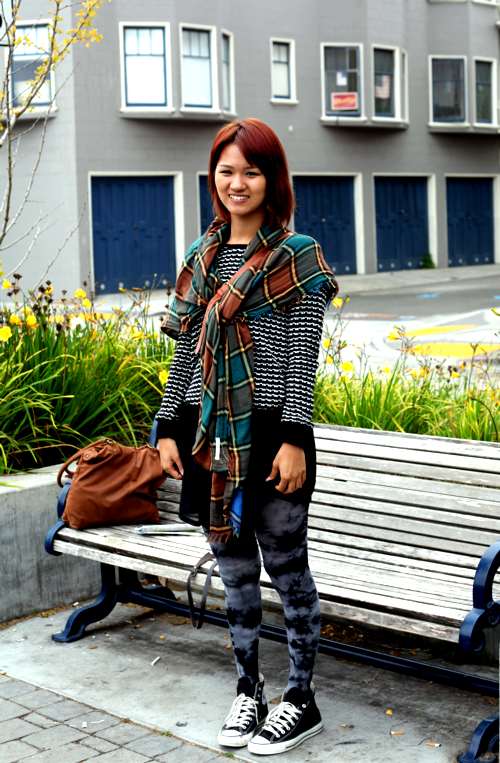
Today’s Look: Eleonore, Yse, and Phoebe, Octavia and Hayes
Describe your look:
Eleonore: “Paris”
Yse: “Not my own clothes”
Phoebe: “Fun!”
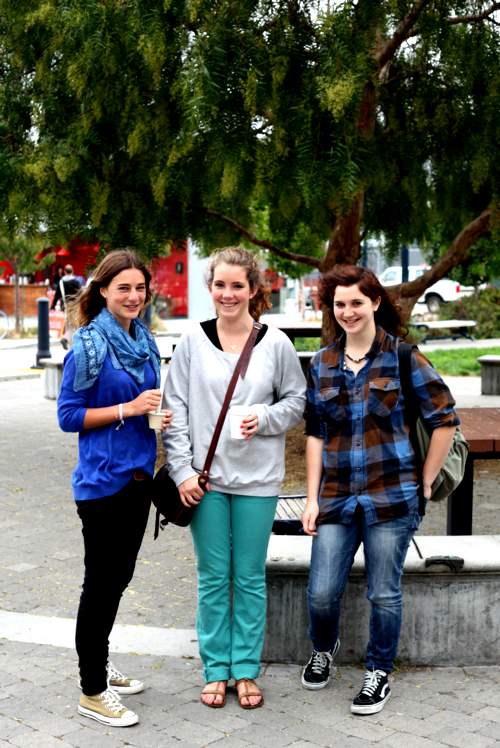
Today’s Look: Eleonore, Yse, and Phoebe, Octavia and Hayes
Describe your look:
Eleonore: “Paris”
Yse: “Not my own clothes”
Phoebe: “Fun!”

I talked for some time yesterday with Gen Fujioka, an attorney at the Chinatown Community Development Center (CCDC), about an editorial he wrote criticizing a San Francisco Chronicle story revealing stunningly high payments to CCDC for subcontracting work on the Central Subway. (A better read, we must say, than Randy Shaw’s whining about how he’s a real journalist, he really really is, and it’s a grave injustice that someone denied him a press release.)
Fujioka claimed that the Chronicle had used fuzzy math, saying the per-hour breakdown of payments to the affordable housing nonprofit were lower in reality than the apalling $750 fee reported in the Chron. He said the management meetings listed in the purchase order actually took eight or nine hours per week to prepare for, which would bring the hourly payment closer to $102 an hour, which still strikes us as kind of steep.
Fujioka also took issue with the Chron’s report that CCDC received $25,000 for holding a single meeting.
We asked the city to send us the documents so we could have a look for ourselves. The $25,000 piece refers to two payments listed under “community relations / public outreach management” on the purchase order for CCDC’s subcontracting work with the Central Subway Partnership. CCDC, which is engaged in affordable housing work, will work with low-income tenants who will be uprooted and relocated as a result of Central Subway construction.
Essentially, the city paid CCDC $15,000 to “plan, coordinate, and implement Chinatown community briefings in cooperation with the San Francisco Municipal Transportation Agency (SFMTA),” plus another $10,000 to “collect and analyze input from community briefings, provide written report of recommendations, implement and support staff and social media at 821 Howard.” Next to each of those items is listed “Quantity: 1.” This seems to explain why the Chron reported that the combined payments were $25,000 for one meeting — the first payment was apparently to plan and host the meeting, while the second seemed to be for processing information gleaned from it.
Fujioka stressed that the description referred to briefings, plural, and that the item “is not one meeting — it’s one of that set of activities. The quantity is not ‘1.’ It’s the category of work.”
Other items on the purchase order, which totaled $410,500, show that the affordable housing nonprofit received $8,000 per month to develop and staff a Central Subway Development liason to publicize the transit project and create informational workshops, $35,000 to develop and implement an outreach plan for Chinese-language media, $95,000 to work with the SFMTA to create a public process for coordinating the design of the Chinatown station and transit-oriented development, and $10,000 to “attend meetings for and provide support services to Chinatown Public Art Plan.”
Fujioka claimed the article was an example of the media being used by one mayoral campaign to attack another, and hinted in his editorial that there was some kind of coordinated media campaign against his nonprofit.
The Chron story spurred a press conference by mayoral candidate and Sen. Leland Yee on Monday, who said he was submitting a request for all correspondence between CCDC, Chinatown power broker Rose Pak, and the mayor’s office in light of this information to pin down all instances of waste and abuse relating to the Central Subway. (Of course, he might want to look beyond CCDC — while the nonprofit may have ties with Lee and Pak, you can be sure that Aecom, the general contractor which has already secured multiple city contracts worth millions of dollars, is doing alright for itself in the Central Subway deal too.) Sources from Yee’s campaign told the Guardian that the senator might hold another press conference if he doesn’t get all the information he asked for, but Lee spokesperson Tony Winnicker told me on Monday that the information would be released “within hours.”
Meanwhile, there’s another interesting tidbit buried in this whole flap. The Chron ran a photograph with its article showing a chalkboard at CCDC offices depicting a power map of the city, with Mayor Ed Lee’s name appearing at the top as interim mayor. The caption said the snapshot was taken before Lee was appointed — which would suggest that CCDC had prior knowledge that Lee would be tapped to serve as caretaker mayor. Yet Fujioka claimed the photo was really taken after Lee had already been installed, and said the drawing was simply “a power map of the city, with the new mayor.” There was no timestamp on the grainy photo, so it’s impossible to verify.
So who’s the mystery photographer? The Chron lists it as an anonymous source.
Someone from Herrera’s camp told me that she’d heard rumors the photo was submitted by a “mole from Leland’s camp.” However, a source in Yee’s camp blatantly rejected that idea, telling me he was certain that it didn’t come from anyone working on Yee’s campaign — and had confirmation from campaign manager Jim Stearns to that effect.
Fujioka didn’t name the source, but said he was pretty sure he knew who it was. “We have a pretty strong suspicion it was a visitor to our office who happened to be there on behalf of a developer who was trying to promote a project,” he said. “He actually is a supporter of one of the other candidates.”
View our full coverage of the OccupySF movement here.
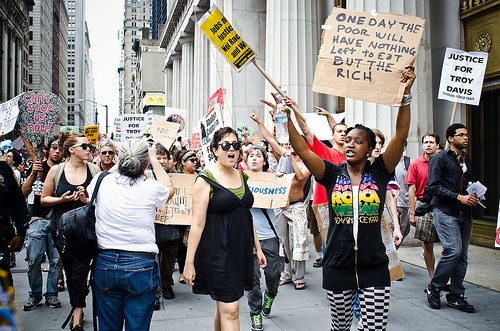
As the Occupy Wall Street demonstration enters its 12th day in New York City – and as progressive activists protest in cities across the country – Bay Area residents are preparing for a mass mobilization on the streets of San Francisco tomorrow afternoon (Thurs/29), targeting financial institutions and other entities that they blame for the economic plight of the average American.
While the mainstream media has alternatively tried to ignore the uprising or scoffed at its wide range of complaints, the activists involved say it boils down to the powerful doing well at the expense of the powerless, and actively widening that divide. And the manifestations are many: layoffs and employee benefit cuts by profitable corporations, a worsening foreclosure crisis and lack of affordable housing, small businesses that can’t get access to capital, political corruption that scuttled real fiscal reforms, deep cuts to government services made worse by the right-wing’s refusal to tax rich corporations and individuals, shady corporate tax avoidance schemes, an education system under assault, refusal to seriously address global warming and economic injustice, and a litany of problems created by the same small group of power brokers.
“It’s along the lines of saying: Look, these people are screwing us in every way they can,” Alysabeth Alexander, the political director of Servie Employees International Union Local 1021, told us.
That union and many others are part of the broad coalition – a group that includes university students, social service providers, religious leaders, economic justice advocates, the online collective Anonymous, and others – that is organizing tomorrow’s protests in San Francisco, which will peak between 3-6 pm at selected targets around the Financial District, such as Bank of America, Wells Fargo, Chase, and Goldman Sachs.
“Big banks crashed our economy and destroyed our communities. Budget cuts threaten our schools, libraries, and social services. We bailed out the banks. Now they need to pay,” organizers wrote in an event invite on Facebook.
One of those organizers is Sarah Page, who has been helping coordinate various Occupy San Francisco events, which begin tomorrow with a 7:30 am “wake-up call” at the “night camp” at Steuart Street near Embarcadero and continue through a 4 pm demonstration outside the Federal Reserve Building and into the evening.
Her group’s week of protest began last Saturday with a General Assembly in Union Square and will end with another one there this Saturday at noon. “There’s more people camping and they’ve gotten very organized. Every day it seems like there’s more people showing up,” she told us. “There aren’t really leaders, the people at the camp are really organizing themselves.”
The week of protests, dubbed the Refund California Week of Action, has also been organized and chronicled by the website Make Banks Pay California, which says that this week’s protests throughout the Bay Area will be followed up next week by protests in Los Angeles.
Will the protests that began on Wall Street and trickled into cities around the country catch fire in the same way those in the Arab Spring have? I suppose that depends on who shows up and what happens tomorrow. But we at the Guardian will be out on the streets, chronicling the action with words and images here and tweets here or here, so follow along or join the moment.
Yael Chanoff contributed to this report.

In her soon-to-be-released look at the Bay Area BDSM scene, Techniques of Pleasure: BDSM and the Circuits of Sexuality (2012, Duke University) Margot Weiss raises some tough questions for those that would tout the pansexual “new guard” scene – the techie, mostly white, mostly hetero clique in the Bay’s BDSM panoply – as subverting societal norms.
In its reliance on expensive classes and even more expensive gadgetry as condition for entry, she sees silent class division. When familiar societal situations are re-enacted on the kink stage, Weiss sees not a refutation of incest, slave auctions, and male dominance over females, but instead a neoliberal refusal by the practioners involved to accept their position in society.
Weiss would probably be down, then, with this week’s Arse Elektronika tech-sex syposium (Thu/29-Sun/2). The event raises tough issues like whether having the lifestyle that allows one to enjoy kink is a luxury, class struggle among perverts, and the fossil footprint of a technologically-assisted orgasm. There will be talks and workshops, inventions and performance – go to question the meanings of desire.
The League
A hint of Barbary Coast class, please: this is Mission Control’s cigar club night. Regardless of the gender you walked in with, tonight’s an opportunity to go dapper dandy (ascots and pinstripes), or va-va-voom (backseams and lace straps).
Thu/29 8 p.m.-midnight, $20 free membership required
Mission Control
Arse Elektronika
This symposium on issues surrounding the politics and point of alt sex takes place from the Center of Sex and Culture to Chicken John Rinaldi’s Chez Poulet. Check here for a full schedule of events.
Thu/29-Sun/2 $10-50
Various locations, SF
“An Afternooon Delight with Reid Mihalko and Susie Bright”
What don’t you know about sex activist Susie Bright’s work? The woman’s done more than most for sex-positive feminism — even writing woman-friendly erotica reviews for Penthouse in the 1980s. Today, she sits down with sex educator Reid Mihalko (who, by the way, submitted a rambunctious threesome story to our call for Bawdy Storytelling’s greatest hits).
Sun/2 1-3 p.m., $10-40 sliding scale
Center for Sex and Culture
1349 Mission, SF
Rites of Love and Math
Last time we wrote about Berkeley math professor Edward Frenkel and the erotic movie he made and starred in, the film played to a packed house. “We had to turn away more than 100 people,” Frenkel wrote to us in an email announcing his next Berkeley screening, which is coming up on Sun/2. Inspired by Yukio Mishima’s samauri movie Yukoku, this skin-heavy film has scared up its fair share of controversy in radical-prude Berkeley.
Sun/2 7:05 p.m., $15
Landmark Shattuck Cinemas
2230 Shattuck, Berk.
(510) 843-3699
The stage was sheathed in a cloak of purple smoke, that coated the dancer’s skin as they whirled their way across the black floor. Smuin Ballet was doing a final run through of their piece Tango Palace at the Palace of Fine Arts last week, in preparation for opening night, and I was there to snap a few photos of those final moments of rehearsal on 9/23/2011.
The dance piece, which is supposed to invoke “the brothel, the barrio, and the barroom,” mixed classic tango with hints of ballet, just along the fringes of the dancer’s dresses. The dancer’s strong, sculpted bodies moved with each beat to create a theatrical sense of old-time tango, whose Argentinian roots were brimming with passion and romance, and quite a bit of naughtiness.
Here’s a video from earlier this year of the company in rehearsal:
SMUIN BALLET
Through Oct 1, various times and prices
Palace of Fine Arts
www.smuinballet.org

Check out parts one (here) and two (here).
21) Wuthering Heights (Andrea Arnold, UK) Adapting Emily Brontë’s novel from 1847 is a perfect project for the stark realist Andrea Arnold. Her previous films Fish Tank (2009) and Red Road (2006) have captured audiences with their brutal honesty and inspired storytelling. With perhaps the most visually poetic atmosphere since Lynne Ramsey and Claire Denis, Arnold manages to emphasize every snowflake in this austere tale of lost love without a single lazy hint of narration. Do not miss this for the world.
22) The Kid with a Bike (Jean-Pierre Dardenne and Luc Dardenne, Belgium/France/Italy) Can these Belgian brothers make a bad film? Seriously? Like their Rosetta (1999), The Son (2002), and L’enfant (2005), this is yet another hypnotic neo-realist journey portraying modern-day youth like no other in cinema. Every character makes unexpected and inevitable decisions. No moment is false. The Dardennes create movies that make life feel more real.
23) God Bless America (Bobcat Goldthwait, USA) Of all the films at Toronto this year, though it may not be as fully realized or neatly trimmed as others, Bobcat Goldthwait’s low-budget quickie has the most immediacy. Blending Todd Solondz and Oliver Stone, the fiery God Bless America follows a couple of frustrated and nihilistic characters as they rant and rave their way across the country, incessantly exposing every annoying detail about this past decade. The film takes out everything from American Apparel to American Idol; in the Q&A following the film’s midnight screening, Goldthwait shocked audiences when he called out Kevin Smith and referred to Oprah Winfrey as the devil.
Even though Goldthwait’s constant, unmuzzled, reactionary explosions may ultimately overstay their welcome by the last act, God Bless America does something unlike any comedy I’ve seen this year: it cares enough about our country to get mad as hell and not want to take it anymore.
24) Trishna (Michael Winterbottom, UK) Deconstructing the Bollywood genre by simply removing the gloss from the top, Winterbottom has crafted a Thomas Hardy-inspired (yet modern) tale of life in the big city (in this case, Rajasthan). As a young woman (Freida Pinto of 2008’s Slumdog Millionaire) attempts to transcend her family’s poverty, she meets hip young tourist Jay (Riz Ahmed, 2006’s The Road to Guantanamo Bay) who falls for her beauty. What follows is a Robert Bresson-esque tale with spectacularly nuanced acting and editing that has the possibility of leaving you absolutely breathless.
25) Shame (Steve McQueen, UK) Gasps fluttered through the air as Michael Fassbender wandered around his apartment naked in the opening sequence of Steve McQueen’s sophomore output (after 2008’s Hunger, also with Fassbender). Shame explores the concept that the desire for sex consumes many of our lives; it’s a mesmerizing film that plumbs darker depths than anyone in the theater was prepared for. Containing hands-down one of the greatest and bravest roles of the decade (Fassbender took the acting award in Venice) — Shame also features a heart-wrenching Carey Mulligan performance, as Fassbender’s seriously self-destructive sister. Bearing the imminent scarlet letter of NC-17 (which most US movie chains won’t screen), Shame is still a movie not to be missed.
26) Your Sister’s Sister (Lynn Shelton, USA) The sleeper of TIFF 2011, Lynn Shelton’s follow-up to her genre-defining bromance Humpday (2009) is a pitch-perfect indie flick. Depressed and confused 30-something Jack (played by Mark Duplass, master of casual awkwardness) heads off to a remote island to figure out his life. The only trouble: his best friend (a mesmerizing Emily Blunt) also has a lesbian sister (Rosemarie DeWitt) who is already there doing her own soul searching. With this contemplative, honest, and hilarious film, Shelton is turning out to be quite a splendid voice for our current generation of progressive pitfallers.
27) Melancholia (Lars von Trier, Denmark/Sweden/France/Germany) Lars von Trier’s infamous press conference at Cannes (in which he compared himself to Hitler among other things) should not dissuade any cinephiles from seeing his evocatively profound latest film. In fact, this sci-fi (by way of John Cassavetes) entry proves that the auteur not only dares to explore panic attack-inducing subject matters (comparing the anxiety towards marrying the wrong person with, say … the end of the world), but he’s able to do it with horrific beauty. As a result, Melancholia might be his most accessible and most traumatizing film to date.
28) We Need to Talk About Kevin (Lynne Ramsey, UK/USA) There are some films that need to be seen more than once. There are are some filmmakers who need to make more than one movie every eight years. Enter Lynne Ramsey. Adapted from Lionel Shriver’s book of the same title, Ramsey’s epic descent into the difficult relationship between a mother and son doesn’t just beautifully weave through the universal moments of familial love and hate (similar to Terrence Malick’s 2010 Tree of Life), it teleports you visually without relying on a single shred of narration, explanatory dialogue, or without ever condescending to the audience.
Kevin boasts stunning performances by Tilda Swinton and Ezra Miller as the mother and son; what could’ve been a tossed-off husband role is made hauntingly sweet by the almighty John C. Reilly. Here’s hoping the success of this film will insure the kind of industry (and financial) attention that’ll allow Ramsey to shorten the gaps between her films. We Need to Talk About Kevin, but more importantly, we need to talk about Lynne Ramsey!
Jesse Hawthorne Ficks teaches full time as the Film History Coordinator at the Academy of Art University; he also curates the film series Midnites for Maniacs, which celebrates dismissed, underrated, and overlooked films.
SFBG videographer Ariel Soto-Suver spent the afternoon with SF act Dominant Legs to shoot a mini-concert on its back porch, just before the band’s national tour.
Last Saturday, the website 350.org encouraged people met up to protest dependence on fossil fuels and celebrate community-based activism. The result was 2,000 events across the world for a day of action called Moving Planet Day, a dispersed mix that illustrated how climate change is affecting and being worked on in different parts of the world. We checked in with organizers in San Francisco and Buenos Aires last week (check shots from the celebration in San Francisco’s Civic Center Plaza here) and will round out the series with news from activists in San Antonio, Tex. and Suva, Fiji. Their answers spoke to the breadth of the day’s significance.
Mobi Warren, founder of 350SanAntonio.org and Moving Planet volunteer coordinator, helped organize two events in her city — one at a community garden and one at a repurposed brewery, at the same time as a farmers market.
SFBG: What was the goal of Moving Planet Day in your town?
MW: Increased awareness among citizens; expanded partnerships and new alliances between environmental, civic, non-profit, and local governmental organizations who engage with the issue of climate change from different perspectives; momentum and inspiration for all the hard work that lies ahead.
SFBG: How did people mark the day? What was going on in San Antonio?
MW: We had [Moving Planet Day] events at two venues. One was sponsored by the Health Collaborative, a non-profit that works in local schools and that has a beautiful community garden (next door to the school where I am a fifth grade math teacher — the Roots and Shoots Environmental Club I sponsor at my school partners with the garden) — they offered several family-friendly, hands-on activities that explored community gardens and local food as one of the solutions to climate change. They also had two huge pinatas in the shape of Hummers filled with green surprises that children broke open as a symbolic way of breaking an addiction to fossil fuel.
The second event was a larger awareness fair that took place at a popular San Antonio gathering place — the historical Pearl Brewery — a completely solar-powered space that has been repurposed and that holds a popular farmer’s market every Saturday that draws a good crowd. Twenty groups set up tables with hands-on activities and info related to climate change solutions: green building, alternative transportation, recycling, community gardening, etc. Sierra Club members took on the task of inviting an impressive slate of speakers for the Pearl event. We had state representative Mike Villareal, two Texas Climate Scientists, Gunnar Schade and Gerald North who gave terrific and informative presentations, and Congressman Lloyd Doggett, a strong advocate of 350.org. There was even a poetry reading as part of Moving Planet in the local bookstore at the Pearl, The Twig. Poets read poems on the theme of climate change and environmental issues.
SFBG: Your favorite part of the day?
MW: The entire event was pretty amazing. We estimate 800 to 1000 people passed through the awareness fair and there was a lot of engagement and conversation going on the whole time. Seeing citizens stay after the speakers’ presentations to ask questions and discuss with them how we can better work together on the urgent issue of climate change made me feel that awareness and momentum is growing here in the heart of Texas. But maybe the most inspiring moment was seeing the face of one of my students who came to both venues with her mom and siblings (and this is a low income family that gets everywhere by bus or foot) — explaining to her family what 350.org means.
Ewan Cameron celebrated two Moving Planet Days — roughly the first and last ones in the world. The coordinator for the Pacific chapter of Moving Planet Day and part of the organizing committee for Moving Planet Samoa, he participated in a Suva, Fiji walk-bike-canoe-run event. We caught up with him via email before he flew the 719 miles — and 22 hour time difference — to Samoa to participate in festivities there.
SFBG: What is your role in your city’s Moving Planet Day events?
Ewan Cameron: I am the Pacific coordinator for Moving Planet as well as a part of the Samoa Moving Planet organizing committee.
SFBG: What inspired you to get involved?
EC: The problems that small islands face, the interactiveness of 350.org, the friendship and inspiration of others, and the passion.
SFBG: What did Suva get up to on Saturday?
EC: We paddled a six-person canoe, sailed, walked, ran, and cycled from Suva Point to Suva’s grammar school and back.
SFBG: What, for you, was the most inspiring moment?
EC: Sharing this moment with fellow Pacific Islanders, and with the rest of the entire world, in addition the fact that the Pacific officially began the campaign with in Tonga, and we in Samoa will be the last country to close the campaign. I am fortunate at this moment to be in Fiji participating in the Moving Planet event in Suva, I was here attending a 2 week training, and then I fly out tonight back to Samoa where I live to celebrate our event in Samoa which is the last event on the planet. So I will be in two different time zone.
SFBG: How many people attended the event?
EC: Over 50 people participated.
SFBG: Why was this such a big deal?
EC: Because the climatic impacts are already being felt, people, and communities within the Pacific are being forced to relocate and are being displaced. These problems are not being exaggerated, Coastal areas are eroding, saltwater from king tides are damaging staple foods that people rely on, climate change is a real issue. The science is there, it can be proven, and on top of that major emitters are violating people rights!
SFBG: What do you hope that Saturday’s activities achieve?
EC: Major public pressure on governments to commit to a emissions reduction target that will bring the planet down below the safety level of 350ppm, and a serious, rapid display of movement towards the use of cleaner energy sources.
SFBG: How did you transport yourself to the festivities?
EC: I walked.
SFBG: Complete this sentence: We can reverse the causes of man-made climate change if we…
EC: … stop burning coal, and not allow the burning of tar sands.
On the purposefully unmarked road heading into Bolinas, there is a very wonderful spot you don’t want to miss. The Gospel Flat Farm is a family-run organic edible haven, with an honor-based farm stand that is open 24 hours a day.
Sam Love and I were introduced to the farm when we met a couple of wonderful free spirits, Kalie and Scott, while hiking in Samuel P. Taylor Park a few weeks back. Scott is the resident bread baker at the farm’s wood powered oven, and he and Kalie invited us to a photography show and autumnal equinox gathering down at the farm. So last Friday, after a sun-soaked hike on Mt. Tam, we wended our way down the hill to Bolinas to explore the farm.
By the time we got there, the stone oven was already working away, roasting a huge platter of fresh farm veggies, and while he gave the vegetables a turn, Scott told us about the relationship he has formed with the ancient-looking oven. Baking bread becomes a two-day process, starting the night before, when he loads the oven with wood, lights it, and then comes back the next morning to remove the embers. The oven reaches almost 1000 degrees, which then cools throughout the day, and the heat gets used to bake and then, later on, to roast our dinner.
Inside the farm stand, Kalie showed us her beautiful photographs, that document the wood fire baking process. The images are evocative and also mysterious, capturing the beauty and power of traditional breadmaking.
We sat and drank fresh peppermint tea with other guests, and helped make a batch of guacamole, while we waited for the veggies to finish roasting. Before we left, we picked out some precious artichokes from the farm stand and a bunch of flowers. Sam Love and I were so relaxed and contented, having escaped the rush of the city and made new friends — with our bellies full with farm delights. Hugs all around and then it was time to leave.
A coyote watched us from the side of the road as we slowly wiggled our way along Stinson Beach, back home to San Francisco.

Today we talk about why California should follow North Dakota and create a state bank — and why San Francisco needs a public bank, too. Listen after the jump.
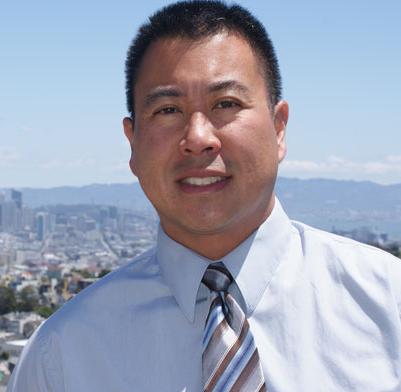
Paul Miyamoto is a captain in the Sheriff’s Office and is running for the top job. He told us that at a time when significant change is coming — from the retirement of longtime Sheriff Mike Hennessey to state realignment on prison policy — it’s important to have “someone from within, someone who’s been doing the job.” He vowed (as did all the candidates) to continue Hennessey’s progressive policies, but was a little fuzzy in some areas. He said, for example, that he’s against privatizing jail health services — but would be willing to examine the issue if there were a viable alternative. Audio and video after the jump.
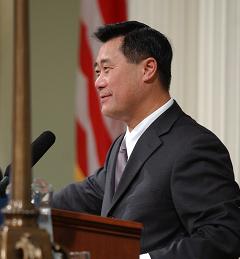
State Sen. Leland Yee, who is running for mayor, has been involved in local politics since the 1980s, when he joined the School Board. He’s been a supervisor elected at-large, a district supervisor, a state Assembly member and now a senator. And he stirs up strong passions in the city — supporters of Mayor Ed Lee say they urged him to get into the mayor’s race in part to stop Yee from winning. Yee was a fiscal conservative on the Board of Supervisors, but in Sacramento, he’s been a foe of budget cuts. And he told us he wants to see new revenue — including a city income tax — to make sure that “the people who need services get them.”
You can listen to our interview with Yee and see the video after the jump.

Three top candidates for district attorney held a joint press conference this morning calling out District Attorney George Gascon for refusing to release a controversial memo by a consultant hired by the DA’s office outlining problems with DNA analysis in the city’s crime lab, which was overseen at the time by then-Police Chief Gascon.
Instead of obeying a judge’s order that he release the document, Gascon is clinging to a thin legal interpretation that it is a work product that he can withhold, choosing instead to spend city resources appealing the ruling. Journalist Peter Jamison has repeatedly written about the memo and the crime lab in the SF Weekly, but it was the Bay Guardian who got Gascon’s most extensive comments to date on it during his endorsement interview with us last week.
Starting just after the 23 minute mark when I asked about the memo and continuing for more than 10 minutes, Gascon – who earlier presented himself as one of the state’s most progressive law enforcement officials – takes credit for exposing problems with the crime lab but offers a fairly tortured rationale for hiding a document that might prove embarrassing during election season.
The California Public Records Act allows limited disclosure exceptions for what’s called “work product,” or drafts of internal documents meant to be works in progress, but it doesn’t require those documents to remain secret (as with personnel records, for example). Gascon admits that he could release the document but that he chooses not to.
“There are several concerns here. This is a memo that is largely the opinions of an individual that is a work product, it is within the office of the District Attorney’s Office, and there is good public policy as to why you have work product. You want to have robust discussions and honest self assessment of what works and what doesn’t work,” he said.
We noted that the consultant, Rockne Harmon, was brought in to bring problems with the crime lab to light so they could be addressed (not attorneys discussing the strengths and weaknesses of a case, the example Gascon cited), that Harmon actually wants to memo to be released, and that no possible public harm could come from this.
Gascon even agreed with that last point, telling us, “This document is quite harmless, but it’s the concept of the ability of people to have honest self-assessment and self-critical discussions.” He said they were reviewing the judge’s ruling and “we’ll comply with the court.” Then, the very next day, he announced that he would appeal the ruling.
Clearly – as DA candidaes David Onek, Sharmin Bock, and Bill Fazio noted this morning – Gascon is hiding the document because he’s worried it will make him look bad. And as our discussion with Gascon illustrates, he is not someone who places a high value on transparency, which is a real problem given the history of damaging secrecy in both the SFPD and the DA’s office.
So give a listen to a candid discussion about a breaking news story on an important issue and weigh in with your thoughts. BTW, as an added bonus, keep listening to the interview to hear the perspective of an unlikely supporter that Gascon brought with him: attorney Matt Gonzalez, who galvanized the progressive movement with his 2003 mayoral run.
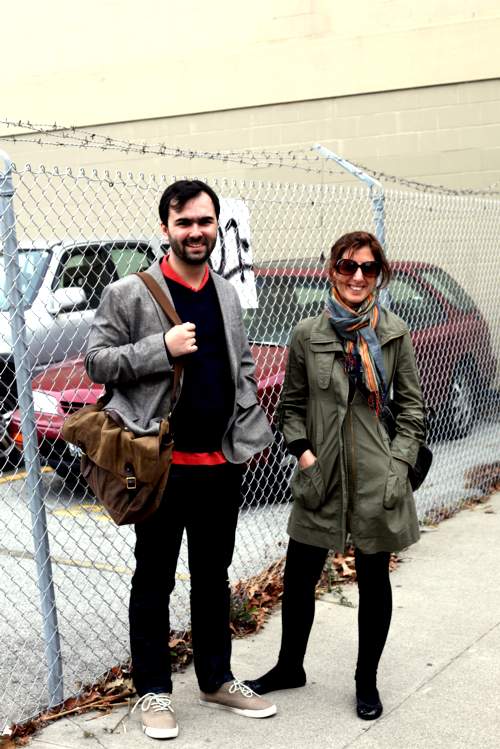
Today’s Look: Pedro and Natalia, Gough and Grove
Describe your look:
Pedro: “Casual”
Natalia: “Estilo de turista”
ATTACKING PUBLIC FINANCE, COURTESY OF SUPERVISORS SEAN ELSBERND AND MARK FARRELL WHO ARE CARRYING THE WATER FOR THE DOWNTOWN GANG AND ITS WELL-FUNDED CANDIDATE MAYOR ED LEE
Impertinent questions for the supervisors:
Why are you discussing amending/gutting a damn good thing (the public finance system) for reasons of “liability” when nobody has sued the city?
Why not tell Mayor Ed Lee to start showing up at debates and forums instead of hiding behind the gushers of PG&E/Chamber/downtown/real estate money flowing into his campaign? B3
EDITORIAL: The two most important political reforms in modern San Francisco history were the restoration of district elections and the creation of a public-finance system for mayoral and supervisorial elections. Both give candidates who lack big-business support a chance to win elective office. Both give independents a chance to compete against the downtown interests. Both have improved local government considerably in the past decade. And now public financing is directly under attack.
The Board of Supervisors was slated to meet in closed session Sept. 27 to discuss amendments to the public disclosure law — allegedly, according to Supervisors Mark Farrell and Sean Elsbernd, to avoid legal liability. The U.S. Supreme Court struck down in July that an Arizona law giving increased public money to candidates who were being badly outspent by well-financed opponents. One aspect of the city’s law, which allows extra public money for candidates once their opponents break the spending cap, might fall under the high court’s ruling.
But the city’s right in the middle of a heated mayoral election, and all of the candidates entered knowing the current rules — and more important, nobody has come forward to sue, or even threaten to sue, over the city’s law. So there’s no urgent reason to rewrite the ordinance.
The very fact that so many qualified candidates are in the race is an argument for public financing. Many of the current candidates would be unable to raise the vast sums required for a serious campaign without the help of public finance — and that opens up the field to more ideas, more debate, more policy discussions. It also gives the voters more of a choice — which, is, after all, what democracy is about.
Besides, as activist Larry Bush pointed out to us, “you have two choices with money in elections — you can pay up from with public funding or you can pay afterward with sweetheart contracts. And we all know which one is cheaper.”
Mayor Ed Lee, who has refused to take public money (because he doesn’t have to — he’s got plenty of rich and powerful backers) is attacking the campaign law, complaining in a TV ad that his opponents are “using taxpayer money” for “attack ads” — and that’s spurring discussion about whether there ought to be limits on how public money can be used. Any move in that direction would undermine the whole point of the law — if candidates can’t do negative ads (which, like it or not, are part of the modern campaign world) with public funds, they’ll raise outside money instead.
There are plenty of ways to improve the city’s public finance law (increasing disclosure requirements for late money and expanding the restrictions on donation by city contractors would be a good start). But amending the law in the middle of a campaign when there are no existing legal threats is a bad idea, and the supervisors should scrap it.
PS: If Lee wants to be mayor, he needs to start showing up — at debates and forums. That’s part of the job.
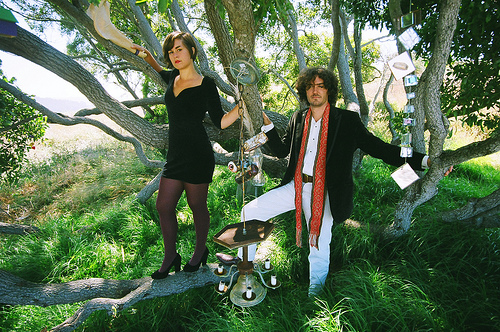
Localized Appreesh is our weekly thank-you column to the musicians that make the Bay. Each week a band/music-maker with a show, album release, or general good news is highlighted and spotlit. To be considered, contact emilysavage@sfbg.com.
The voice of Billie Holiday blended with a drop of folk and an electro-infused ka-pow of Afro-pop. It’s the stuff of dreams, isn’t it? Sort of. Dreams, besides being the mind’s subconscious porthole, is a new East Bay indie supergroup. Lead by Emily Ritz (of Honeycomb and Yesway) and keyboardist Rob Shelton (of the Moanin Dove) and backed by steel guitar, vibraphone, and a hand-held rhythm section (along with drums), the group skips through genres, time, and traditional percussion expectations.
It’s been a pretty big month for the seven-piece act. First, it was featured as one of the first bands on Porto Franco Records’ new video series (see vid below), then it released its first single, and this week, Dreams plays a magical musical single release extravaganza: Thursday at Beatbox. The show, which includes a free copy of the single for the first 30 attendees, will also have some fun non-musical elements. The band invited artists and projectionists to add visual elements. And the release warns, “Expect mimes.” Also, how weird is it that scientists may now be able to recreate scenes from our subconscious using imaging technology?
Year and location of origin: Rob: Emily and I started experimenting with sounds and writing songs together in 2009, but we didn’t really settle on the full band with all the members until we started recording earlier this year. We first started playing in the converted basement of a 1906-era emergency shelter in Oakland, Calif.
Band name origin: I had the idea to create this band while traveling in Ecuador and Peru in 2008, and was originally going to call it Los Suenos, but since none of really speak Spanish, I thought it would be better it in our native tongue. When I first presented it to the band, we weren’t really sure if we wanted to use it, so we’d show up to rehearsal and just sit there spitting out out band names for hours. Some of the losers: Goodie Bag, Boyfriend, Chimera, Blood Orange.
Band motto: Lush
Description of sound in 10 words or less: Electric Afro psych popscicle (faux pop).
Instrumentation: Rhodes and synth bass: Rob Shelton; Vocals and Jawbone: Emily Ritz; Drums: Jake Nochimow; Vibraphone, Percussion: Andrew Maguire; Percussion, Vibraphone: Geneva Harrison ; Bass, Lap Steel Guitar: Jesse Cafiero; Electric Guitar: Zac Rubin-Rattet
Most recent release: We’re doing our first release on September 29. An A & B side single entitled “With You,” which has Thao Nguyen guesting on back-up vocals. We’ve been recording at San Francisco’s Tiny Telephone studios on and off for the past four months, and it’s really exciting to finally be releasing something.
Best part about life as a Bay Area band: Being around such a vibrant and diverse music scene and being able to collaborate with all different types of artists.
Worst part about life as a Bay Area band: We’ve got it pretty good here, and almost the whole band is living in Oakland now, which makes it easy to rehearse. Probably the worst part is that BART doesn’t run super late, so when you’ve got fans coming from Oakland to SF, everyone’s catching that 12:20 train back under the bay, sometimes in the middle of your set.
First cassette record/cassette tape/or CD ever purchased: Embarrassing, Twenty Eight Teeth by Buck O’ Nine. I used to be in a ska band.
Most recent record/cassette tape/CD/or Mp3 purchased/stolen from the Web: Purchased – Age of Adz by Sufjan Stevens. Stolen/Borrowed: Laughing Stock by Talk Talk
Favorite local eatery and dish: Shakin’ Jesse at Rudy’s Can’t Fail Cafe. Guinness, espresso, and ice cream – can’t go wrong with that.
UnderCover Presents: Dreams Single Release Party
With Tartufi, and Debbie Neigher
Thurs/29, 8:30 PM doors, $10 cover
BeatBox
314 11th St, SF
www.beatboxsf.com
Facebook: Event
Porto Franco Records captures Dreams:
http://www.youtube.com/watch?v=Ebe0gbOcc6Y:

Check out part one here and part three here. More from the man who slept nary a wink at TIFF 2011 (or so it seems!) follows.
11) Twenty Cigarettes (James Benning, USA) Following the basic concept of 20 different people smoking an entire cigarette gives each segment its own time frame. It allows the viewer to get into a rhythm that becomes as addictive as smoking itself. Being a non-smoker, I found myself hypnotized by each person’s physical stance and style as well as what each participant must have been thinking about during the five to eight minute process. Museum cinema at its finest.
12) La folie Almayer (Chantal Akerman, Belgium/France) Adapting Joseph Conrad doesn’t sound that exciting, even for fans of Chantal Akerman (Jeanne Dielman, 1975). But there is something absolutely alluring about this experimental mood piece. Feeling abandoned and lost in the jungle becomes a state of mind here; the film sincerely builds towards two of the most beautiful shots Akerman has ever created. With an audacity that can infuriate even the most weathered cinephile, this 65-year-old French auteur has created a new work that is crisp, inventive, and quite alive. For anyone who was also ignited by Godard’s most recent abstraction, 2010’s Film socialisme — here’s another from an innovator who we too often take for granted.
13) Damsels in Distress (Whit Stillman, USA) Whit Stillman’s much-anticipated return (showcasing mumblecore queen Greta Gerwig) has all the elements you’d expect from the maker of Metropolitan (1990) and The Last Days of Disco (1998). But this is his first film since Disco, and Damsels somehow feels like a half-step behind Tina Fey’s Mean Girls (2004) and Greg Araki’s Kaboom (2010). Have people been so influenced by his films that they’ve all caught up with him by now? It’s good to have you back, Mr. Stillman, but I’m looking for you to pave some new roads with your next one.
14) Comic-Con Episode IV: A New Hope (Morgan Spurlock, USA) How has this documentary not been made until now? Spurlock (who already had a film out this year, inspired product-placement doc The Greatest Movie Ever Sold) takes a break from being in front of the camera and delivers a straightforward look at a handful of Comic-Con attendees as they hope to achieve their respective goals at the ever-growing event. As the film follows a couple of animators, a costume designer, a guy who wants to propose to his girlfriend, and a comic book seller who’s ironically trying to figure out how to sell comic books at the largest comic book convention in the world, this celebratory (if not a bit too self-congratulatory) journey refreshingly doesn’t have a shred of mean-spirited irony in a single edit. This is a movie that considerately allows its subjects to freely wear their nerd status on their sleeves.
15) Twixt (Francis Ford Coppola, USA) Val Kilmer hilariously leads the way in this low-budget, campy, sometimes-in-3D horror flick that even sports narration by Tom Waits! While being both surreal and boring, this mish-mash of genres has some particularly classic moments when master of impressions Kilmer and the magical Elle Fanning are given free reign to eat up the scenery. While seemingly inspired by John Carpenter’s In the Mouth of Madness (1995), this Edgar Allen Poe tale feels like something fun you make with your friends while you’re prepping for the next project to finally get started. Except it’s by Francis Ford Coppola.
16) The Skin I Live In (Pedro Almodóvar, Spain) Before this film’s world premiere, star Antonio Banderas gave a speech about Pedro Almodóvar and reminded everyone that even though the director is considered one of our era’s most celebrated and critically acclaimed filmmakers, it hasn’t been an easy road. Almodóvar has constantly dared to explore subject matter and characters that are still not accepted in most circles of the world. His films aim to open people’s hearts and minds, rather than reinforce already-accepted attitudes. What could be more amazing than this introduction? How about the film itself, The Skin I Live In, which could be Almodóvar’s most cryptic and difficult film to watch yet?! Don’t read any more about it. Just go experience it.
17) Livid (Alexandre Bustillo and Julien Maury, France) Creating a follow-up to this directing duo’s brilliantly feminist horror film Inside (2008) — which had more stomach-churning, psychotic gross-out sequences than Peter Jackson’s whole career combined — was a tough task. Yet this low-budget, surreal fantasy subverts every convention, twists every cliché, and culminates with a lingering aftertaste that leaves you wanting even more. It’s hard not to get excited about these filmmakers, who are clearly unafraid to push their imaginations to the limit.
18) Drive (Nicholas Winding Refn, USA) With this combination of David Lynch’s Lost Highway (1998) and Luc Besson’s Transporter (2001), all wrapped up in a John Hughes soundtrack, Refn has designed a minimalist genre classic for the Y2teens. Ryan Gosling gives an adorable performance that is sure to evoke giggles and swoons from both women and men alike (a la Steve McQueen in 1968’s Bullitt), while Albert Brooks does wonders with his deliciously demented deliveries. This is a romantic-violent cult classic has the possibility to even make some money at the box office. And, unlike any other movie on this list, it’s out in theaters now. Go see it … multiple times!
19) Crazy Horse (Frederick Wiseman, USA/France) I can’t think of a more exciting concept for Frederick Wiseman’s 40th film: a beautiful exploration of France’s most famous burlesque strip club, the Crazy Horse. Delivering both tantalizing and uneven performances (surprisingly similar to Paul Verhoeven’s misunderstood 1995 Showgirls) combined with profoundly insufferable yet oddly relatable conversations about artistic dilemmas, this two hour and 15 minute experience perfectly encompasses everything you wanted to know about strip clubs but were afraid to ask.
20) Life Without Principle (Johnnie To, Hong Kong) Reinventing himself once again, Hong Kong auteur Johnnie To was often finishing script pages the night before scenes were to be shot, forcing this financial fable to be three years in the making. The inventive editing interweaves a disconnected group of fools who were caught within the weekend of our most recent stock market crisis. Director To painstakingly exposes how sketchy our banks and investments are contrasted with one of the best Method acting performances HK legend Lau Ching-Wan has ever given. He’s a bumbling, blinking wannabe gangster — the perfect martyr for an era that truly lives up to the title of this existential action film.
Check back soon for Jesse Hawthorne Ficks’ final eight picks from TIFF 2011! When he’s not mainlining celluloid at festivals, Ficks teaches film history at the Academy of Art University and curates the film series Midnites for Maniacs, which celebrates dismissed, underrated, and overlooked films.
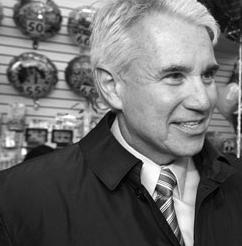
George Gascon is, as far as we can determine, the only police chief in the country ever to become a district attorney. It’s put him in an odd position, particularly given the recent problems in the SFPD: He has to monitor and possibly prosecute people who used to work for him. That conflict has been a big part of the campaigns against him.
Gascon discussed the situation at length, telling us that he’s proud to be “a progressive chief of police who became district attorney.” He said that he was the one who brought some of the department’s problems (the crime lab, the lack of a Brady policy) to light. “I have taken on police corruption aggressively,” he said.
You can listen to the full interview (and see the video) after the jump.
It was an idea whose time had come. In response to Scott Weiner’s proposal that all of San Francisco’s nudes had to place something under their rear when sitting in public, we published the official SFBG Butt Guardian in the paper last week (tagline “If you go bare, put ‘er there”). Last weekend being on of the more naked ones of the year in San Francisco between the Folsom Street Fair and Sat/24’s Castro Nude-In, we took hand-silkscreened versions of these beloved ass towels to the streets.
And the nudes loved them. And so did the Chronicle (despite its earlier ragefests against the nudes in question). And hell, so did the New York Times. Baxter the cat, even, seemed pleased with his brand new ass towel. By the time Saturday afternoon rolled around, Weiner himself was calling to reserve a towel of his own.
Missed the assouvenir wave? No worries, friend. Print out the pdf version here.


Cloudy skies may have kept the crowds down at Saturday’s Moving Planet Day celebration in Civic Center Plaza, but the people that did show up could see light shining through. For being a climate change demonstration, the tone was pretty sunny. After marching from Justin Herman Plaza through downtown, a passel of environmental speakers, from 350.org founder Bill McKibbon to Richmond mayor Gayle McLaughlin, took the stage to talk about ongoing clean energy projects — and to exhort attendees to keep doing their part to reduce fossil fuel reliance. Click here to check out our interview from last week with one of the day’s organizers. Check back tomorrow, when we’ll run photos and talk to organizers from Moving Planet Days around the world.
If you truly believe that music is moving entirely forward – not cyclical – you need only to have peeked inside during any given moment of last night’s Diamond Rings/Twin Shadow live musical appearances at the Great American Music Hall. Your impressions would shift. New wave revival remains viable, those electro-soaked keyboard jams on stage, the half-shaved heads and feathered accessories in the crowd (including the feathery bits attached to the young miss thang who was removed quickly after Twin Shadow began thanks to an illegal sip of costly beer). It’s something I’ve grumbled about in the past, but for no good reason.
Twin Shadow could be described as both a Brooklyn quartet and, more accurately, as the stage name of George Lewis Jr. — who looked like Morris Day plus Bruno Mars with that skinny mustache, gold bib necklace, and fashion chapeau last night, but in my mind sounds more like a R&B-shot Morrissey. Midway through a fine synth-saturated, occasionally keyboard tinny set that included most tracks off Lewis Jr.’s danceable debut album Forget, the band broke into “Yellow Balloon,” a pulsating ode shot directly backwards into the not-so-distant musical past, with Lewis Jr. in full swoon mode.
That’s when I felt it: despite my bitter blathering, this nostalgic jolt of colorful energy feels damn good, especially compared to the fuzzed out, slow-moan apocalyptic nature of the music I’ve been vibing as of late; bring on Adam Ant warrior eye-makeup (as opener Diamond Rings sports in the video for his song “Something Else” — last night’s set closer) and Siouxsie and the Banshees bird’s nest hair fluff (as seen in the audience). If it keeps feeling this good, I too won’t soon Forget. Oh, the heart-felt sentiment and cutesy outro. That’s another thing I remember from the 80s.

It was standing room only, and not even much of that left, when I arrived at the memorial for community organizer and Mission District icon Eric Quezada Sept 25. “It is,” my friend Chri Cook noted, “as if the entire San Francisco left is here.”
Well, maybe not quite — but close. The auditorium at Horace Mann Middle School couldn’t hold the huge, diverse crowd that packed the downstairs and the balcony and flowed out the doors and into the halls. The speakers talked of Eric’s life — as an activist, a soccer player and a father — but also, in a dramatic way, about the part of the Mission, the part that doesn’t live off tapas and $12 martinis on Valencia Street, a community that fought displacement in the dot-com era, that fights evictions and condo conversions and high-end housing developments every day, that supports artists and musicians and immigrants and working-class people … Eric Quezada’s Mission. Long may it live.
The family needs help with medical expenses — and also to help with the education of Eric’s daughter, Ixchel. Contributions can be made to the Ixchel Quezada education fund or mailed to 470 Columbus Ave., Suite 211, San Francisco, 94133. Checks should be made payable to Eric Quezada Memorial Fund. A fundraiser is being held at Jane Morrison’s home at 44 Woodland Ave. on Oct. 16 between 3 and 5 p.m.