In a rather appetizing blend of vegan culinary skill and music, The Museum of the African Diaspora will soon play host to cookbook author Bryant Terry and a smattering of local musicians.
The event goes down Jan. 24 at the museum. It’s to commemorate and celebrate the release of Terry’s newest book, The Inspired Vegan: Seasonal Ingredients, Creative Recipes, Mouthwatering Menus, and, it’s Terry’s birthday party. He’s an Oakland-based eco-chef and food justice activist who was a Food and Society Policy Fellow with the W.K. Kellogg and Fair Food Foundations.
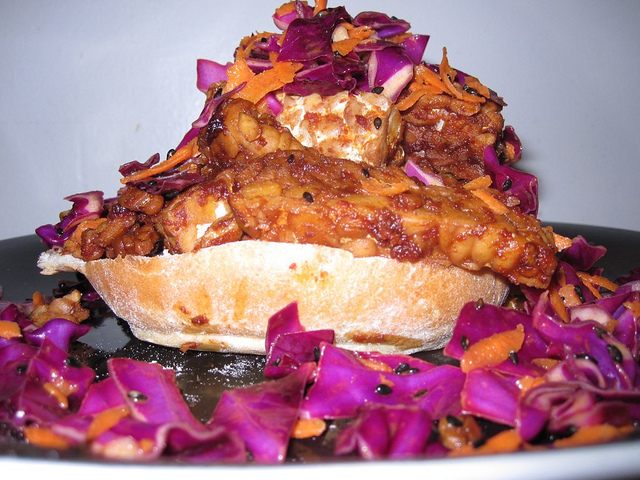
I know from first-hand experience the joy of Terry’s teaching, having devoured his 2009 book, Vegan Soul Kitchen. That book came with a soundtrack to each dish, a feature I dig in any cookbook but especially Vegan Soul Kitchen. My favorite meal was the open-faced barbecue tempeh sandwich with cayenne-carrot coleslaw. The crunchy-spice of the coleslaw on that rich barbecue protein is heavenly. It’s making me hungry just thinking about it.
And yes, I know what you’re thinking; there will indeed be seasonal, creative, and mouthwatering food at the party itself. The event features food by Roger Feely and Soul Cucina food truck with recipes from The Inspired Vegan and drink from Slow Down Wines.
http://www.youtube.com/watch?v=7OM2rmOdZzQ
Also worth the price of admission ($15-$30 by the way): an appearance by the finger-snapping jazz group the Marcus Shelby Trio, lead by award-winning composer and bassist Marcus Shelby, along with performances by Renee Wilson, and DJs Max Champ and Ellen Choy.
Book Release and Birthday Party with Bryant Terry Jan. 24, 7:30 p.m., $15-$30 (with signed book) Museum of the African Diaspora 685 Mission, SF (415) 358-7200 www.moadsf.org
Nothing makes people more angry than when the city tries to take away their free street parking. The San Francisco Municipal Transportation Agency was reminded of that fact at a City Hall hearing this morning when residents and business owners unleashed a storm of angry criticism over a proposal to install new parking meters in Potrero Hill, Dogpatch, Mission Bay, and parts of the Mission District.
The plans for this pilot program, which were released on Dec. 20, are intended to address the increased demand for parking in the “Mission Bay Parkshed” from development now underway in the area, as well as concerns about increased demand for street spaces once the parking lot at Folsom and 17th Street is converted into a park.
As with previous SFMTA proposals for extended parking meter hours – which were also met with angry criticism – the idea is to encourage increased use of transit and to free up more street parking space for business customers by discouraging local residents from taking up street parking spots for extended periods of time.
But even people who support that idea in concept say that the SFMTA plans are badly designed and don’t take into account the conditions on the ground, largely because they say planners did an abysmal job of outreach and gathering community input before creating the plans.
“I’m urging a cooling off period,” said Tony Kelly, president of the Potrero Boosters Neighborhood Association. He wants to see more active parking management of that neighborhood, but said planners need to better consult local residents. “We’ve earned that right in our neighborhood and you have not earned our trust.”
And that was among the more mild criticisms at this sometimes raucous hearing, where there were standing room only crowds in the main hearing room and an overflow room showing the hearing on television. Officials were accused of hostility to working families, incompetence, arrogance, and with trying to drive businesses out of town.
“Are you insane?” asked one commenter, while another asked, “How do you look at yourself in the mirror?” Several business owners said they would leave the city in the plans were implemented, and one said half of his employees were driven to tears over the proposals. “I don’t hear anyone asking for meters,” said one commenter. “I don’t hear anyone saying this is good.”
But there are those who say the city shouldn’t be expected to supply free parking to residents who choose to own cars, particularly given the SFMTA’s tight budget situation and the role that drivers searching for limited street parking spaces play in increasing traffic congestion in the city, thus slowing down Muni.
“On behalf of Livable City (and as a Mission District resident), I want to express our support for the expansion of SFpark meters into the Mission Bay, 12th and Folsom, and 17th and Folsom neighborhoods,” Livable City Executive Director Tom Radulovich wrote in a recent letter to the SFMTA. “Each of these areas is seeing intensified activity – new residents, new businesses, and new restaurants, bars, and entertainment venues – and each is badly in need of intelligent parking management. The expansion of metered spaces will provide the parking turnover that neighborhood-serving businesses need. SFpark metering and pricing will also reduce cruising for parking in these neighborhoods.”
But the opinions expressed at the hearing were almost uniformly critical, saying the plans actually call for meters on streets that are mostly residential and that they need more work. We’ll have more detailed analysis of the proposals and related issues in upcoming issues of the Guardian.
Mugwumpin’s deconstructive history of Tesla electrifies
It is one day and 69 years after prolific inventor and notable oddball Nikola Tesla died of a heart attack, yet in the raw, unfurnished basement of the Old Mint, he stands quite alive before a contingent of captive theatre-goers, explaining his views on solitude.
“Be alone. That is the secret of invention,” he assures us, smiling in the manner of a man who knows he is about to be disagreed with. He has a lot of opportunities to display that same tight-lipped countenance throughout Mugwumpin’s “Future Motive Power,” as being disagreed with is one of the most recurring themes of Tesla’s biography. A man of compulsive and erratic habits and stubbornly-held views on the future impact of his own inventions, Tesla’s indomitable personality could be as hard to fathom as his scientific contributions were impossible to discredit. Channeled by Mugwumpin artistic director Christopher W. White, he alternates — in a manner akin to his most famous electrical system — between comedic mania and tragic inflexibility, as the patterns of his life entwine literally and figuratively with those of his dearest-held principles and hard-won triumphs.
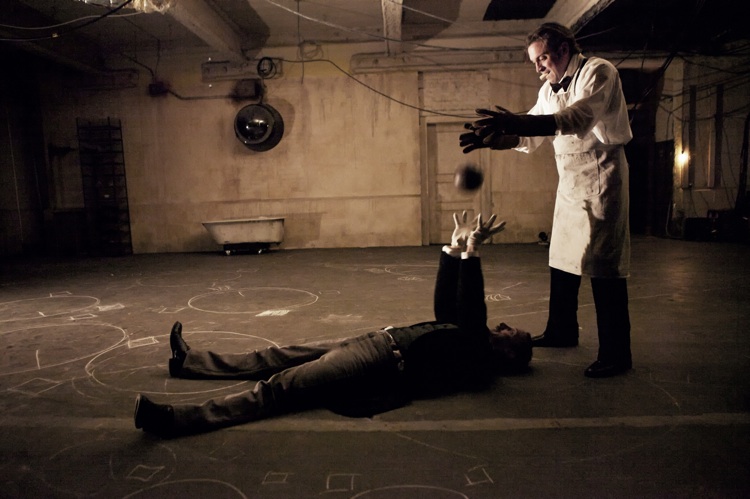
As kinetic as White’s performance is, the attention is grabbed initially by a trio of players: Misti Boettiger, Natalie Greene, and Rami Margron, who personify, among other things, electrical forces, rotating magnetic fields, flocks of pigeons, and Greek choruses of skeptics and admirers, buzzing and zapping across the stage or encircling Tesla with a web of cables or a Kabbalistic variety of diagrams chalked out on the bare concrete floor. Founding company member Joseph Estlack plays a rough-necked, cigar-chomping Thomas Edison — one of Tesla’s main rivals — with gusto, parroting banal platitudes while swaggering around the stage. (Read Guardian writer Robert Avila’s review here.)
“Genius is one percent inspiration and 99 percent perspiration,” he boasts to Tesla with a wink, to which Tesla responds dryly that he certainly does seem to sweat a lot. A disagreement over money and methods is further exacerbated by an aggressive game of catch with a leather ball, and a charged scene involving the first execution by electric chair gives Edison the opportunity to assert that death by “electricide” should bear Tesla’s name, just as the unfortunate guillotine bears the name of its own well-meaning champion.
Like many site-specific performances, part of the pleasure of the production lies within its use of space, especially a space as intriguing as the Old Mint, and about three-quarters of the way through the piece, we are split into two groups and given brief reign to explore the warren of small brick rooms and an oppressively weighted corridor that take up the rest of the lower level. Eventually reunited, we are led to the end of the hall by a frail, geriatric Tesla, who lies on a single bed, surrounded only by his beloved pigeons. “Never mind my absence in body,” he assures before his dying, “it is no consequence. I am with you in spirit.” And when the lights come back on for the curtain call, in a blaze of AC glory, you see exactly what he means.
After an incredibly steep hike up 24th Street, Sam Love and I arrived on the doorstep of Culture Kitchen, a traveling cooking class that hires immigrant women to teach their home recipes and share spicy and savory secrets of their culture.
Using the kitchen that a friend offered up, our chef for the night was Maria, a native of Peru, who gave us a lesson in ceviche — that beloved raw fish dish one “cooks” in lime juice — a classic chicken dish called aji de gallina, and sweet filled alfajores.
We all got to work squeezing limes, chopping onions, mixing dough, and swapping travel-food stories. We discovered some great cooking tips, like how to make instant dulce de leche by sticking a can of condensed milk in a boiling pot of water and letting it simmer for a few hours. We also learned how to properly plate Peruvian ceviche, a style that includes two kinds of corn, yam, iceberg lettuce (for show. Ok, I ate it!) and of course delicious white fish, smothered in onions and tangy lime juice.
Two hours after we started, we all sat down at a long communal table, the full moon glistening over the city (the kitchen we were using had the most amazing view. Bonus!), to enjoy the foods of our labor. We asked Maria how she learned to cook and she said that in Peru, her abuela is a master home chef and taught her all these recipes. She also told us that her abuela won’t like her sharing them with us. Good cooking is a way to a man’s heart and you don’t want just anyone to know how to make all the good dishes. Sworn to secrecy, Sam Love and I left that evening with over-stuffed bellies, a few lovely new friends, the recipes to throw a super-authentic Peruvian dinner party (that not even friends of Abuela can replicate) and, I kid you not, leftovers.
It’s difficult to find anything negatively written about Justin Torres’ debut fiction novel, We the Animals — and that’s probably because nothing negative has yet been written. Dorothy Allison called it, “a miracle in concentrated pages,” and Michael Cunningham said it was, “a dark jewel of a book.” So Torres is a literary wunderkind of sorts, but despite the buzzy accolades, the current Stegner fellow and queer scribe is still humbly bewildered by the success of a book by a gay brown author – especially his very own.
We the Animals tells the story of a Puerto Rican father and his Caucasian wife raising a family of sons: the narrator and his two brothers. At the beginning, the boys are joined at the hips — hungry and eager for life. But as the brothers age, the narrator becomes dislodged from the family unit and struggles to form his own identity and find a new form of emotional stability for himself.
Torres is the first author invited to participate in the Magnet Book Club. (We’ll be running a series of interviews with authors appearing at the nonprofit space.) The gay men’s health center in the Castro will host Torres on Jan. 31 at 7:30pm for an intimate, wine-induced discussion of We the Animals. To lead up to that event, we spoke Torres sober.
SFBGYou used to work at Modern Times. What role do you think independent bookstores play in an author’s career?
JT Even before Modern Times, I used to work at a bookstore in New York, so I’ve been an avid supporter of indie bookshops for a while. There is nothing like that face-to-face interaction with readers. I don’t think this much word-of-mouth would have been generated through Facebook, or whatever. I’m old-fashioned, but it’s a very tricky industry.
SFBGJumping off on that, you’re a first time author. What was your biggest misconception about the publishing process?
JT This whole entire experience has been unexpected. This is not a conventional novel, it’s short and not chronological, and so I had no expectations. I never thought I’d get written about in The New York Times, let alone have it be something positive. I never thought I’d be dealing with “buzz.” I hate that word, but that’s what they call it.
SFBGSo what were your expectations?
JT I just wanted to write something that I felt was right. Now that I’m starting to work on a second book, it’s actually harder. I read a lot of reviews, so now I have a lot of different voices in my head. But even though I’m contractually obligated to turn something in by a certain deadline, I’d rather break that and have my publishing house get mad at me than turn something I can’t stand by.
SFBGMichael Cunningham, who blurbed We the Animals, once said he doesn’t want to be referred to as a “gay author” but just an author who happens to be gay. How do you feel about those types of labels?
JT I think they’re unnecessary. Yes, there are major gay tropes – coming out, AIDS – or stories with a certain queer sensibility. But now there are more straight authors writing about gay characters. I refer to myself as a “queer author.” It makes sense for me.
SFBG Plus it sounds more literary.
JT Exactly [laughs]. It empowers my writing, and it’s important, but it’s also incidental.
http://www.youtube.com/watch?v=eY2hfaWaLUM
SFBGMajor publishing houses have a bad rep of shying away from queer narratives. What’s been your experience with your publisher, Houghton Mifflin Harcourt? JT My sexual orientation has never been an issue with my publishing house. They’ve never tried to de-gay me, or whatever. SFBGDo you think there is a more embracing shift happening in publishing?
JT Well, I had no idea exactly how few queer pieces have been published in The New Yorker. After I was published, I received so many notes saying it was the first queer story in a decade. I want to say change is happening, but I’m skeptical. You read the best of lists every year and ten out of ten, maybe nine out of ten, are straight white male authors. Publishing still has that East Coast, Ivy League sensibility. Why can’t we broaden that? SFBGYou’re kind of the living testament against that though.
JT I guess. I didn’t grow up in a literary household. I grew up with this wild hunger for mixes race and queer stories. When I finally got my hands on a copy of Bastard Out of Carolina, it was like oxygen.
SFBGWhat interested you about showing up to this book club?
JUSTIN TORRES As an author, you mostly get two types of feedback. Your friends get a certain kind of reading and book critics have their take on things. But to meet real people who see it through a true reader’s eyes – that’s a wonderful experience. It’s a shock to see what they focused on while reading it, what caught their attention, what they found parallel in their own lives.
SFBGYou were on the list of Salon’s sexiest men of 2011, so what we all really want to know is, are you single?
JT I’m actually engaged. My man proposed right before the book came out. But I want that to be the first line in my bio.
Justin Torres will be Magnet Book Club’s guest of honor on Tuesday, January 31 at 7:30pm. Book club is open to the public and copies of We the Animals are available at Books, Inc. in the Castro for 15% off. Magnet is located at 4122 18th Street (between Castro and Collingwood).
By Dominique Moisi Dominique Moisi is the author of The Geopolitics of Emotion.
PARIS – Is democratic time too slow to respond to crises, and too short to plan for the long term?
At a time of deepening economic and social crisis in many of the world’s rich democracies, that question is highly relevant. In Italy, for example, Prime Minister Mario Monti has the necessary and legitimate ambition to carry out comprehensive reform. He is both competent and honest, but faces a quasi-structural impediment: whereas leaders once had three years to convince voters of their policies’ benefits, they now have three hours to convince global financial markets to back their approach.
Caught between Italian legislators who, deep down, do not understand that change and markets in quest of near-immediate certainties, can Monti transcend his natural prudence and act with sufficient clarity and decisiveness?
In the United States, too, the political system is becoming increasingly dysfunctional. The political philosopher Francis Fukuyama goes so far as to say that “vetocracy” could triumph over democracy, regardless of who wins the 2012 presidential election. The separation of powers, a principle established by the US founders under the influence of philosophers such as Montesquieu, is leading today to near-paralysis.
Democracies suffer not only from their slow reaction time at moments of crisis, but also from the difficulty that they face in projecting themselves into the future and planning for the long term. On both sides of the Atlantic, political leaders know what they must do for their countries, but don’t know how to get re-elected if they actually do it. They seem to be structurally condemned to short-termism.
But it is not because democracies have a “time problem” that their era seems to some to be over. China is rightly proud to be able to project itself into the twenty-second century. But China owes that quality of long-term thinking much more to its culture than to the nature of its political system. Chinese think long term because they are Chinese, not because they are not democrats.
China’s leaders can, of course, react to events without much regard for Chinese public opinion. After all, the great majority of Chinese do not dream of democracy, even if something like a civil society is emerging, generating new interests and demands that can no longer be totally controlled or manipulated, as in the past.
But that is precisely the weakness of non-democratic regimes in a global age dominated by transparency: Who dreams of becoming a Chinese citizen, or even a citizen of Singapore? In the aftermath of North Korea’s hereditary succession, strategic thinkers rightly emphasize China’s key role in shaping the peninsula’s future. But, despite the scenes of hysteria that followed the death of the “Great Leader” Kim Jong-il, most North Koreans probably dream of joining democratic South Korea (even if many South Koreans fear that prospect).
The majority of Chinese may not want to be governed like Westerners, but it would be wrong to assume that their only ambition is to spend like Westerners. The more successful they are, the more individualistic they will become and the more they will expect the respect and consideration of those who govern them.
By contrast, if China’s economic growth slows, which is likely in the coming years, protest against corruption – a source of fragility for any regime – will escalate. Indeed, it is important to bear in mind that, ahead of the upcoming Chinese leadership transition, new occupants for only the top two posts have been chosen, and that through a process of gradual anointment by roughly a hundred people at most.
The current crisis in the advanced countries, which may very well lead to a global recession (if it is not already doing so), not only reveals the many maladies of democratic regimes, but also acts as their incubator and accelerator. And yet the crisis may turn out to have an even greater impact on non-democratic systems that seem to be more efficient, but are in reality much more fragile. We see this in mounting unrest in both Russia and China.
Contrary to what one might think, democracy is more resilient than the alternatives in the long run. This will remain true as long as democrats remain convinced of it. Non-democratic models cannot truly challenge democracy. Only the misbehavior of democrats can do that.
Dominique Moisi is the author of The Geopolitics of Emotion.
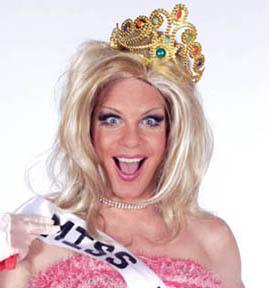
Here’s some good news for some bleak days: Anna Conda, whose given name is Glendon Hyde, is set to become the first drag queen to serve as president of the Milk Club. Glendon, a well known and exceptionally talented local performer, ran for District 6 supervisor in 2010 as a strong progressive and has been active in district as well as citywide politics as a member of the Entertainment Commission.
Gabriel Haaland reminds me that Anna Conda will not be the first trans person to serve as Milk Club president — Haaland had the job years ago. But still: Politics is serious, and Anna Conda takes it seriously — but a little fun in life makes it all bearable. And I suspect that Anna will make the Milke Club meetings lively. Congratulations!
With the upcoming anniversary of the Citizens United decision, the U.S. Supreme Court ruling that allowed corporations to make unlimited campaign contributions, California Assembly member Julia Brownley (D-Santa Monica) is pushing a bill to ensure that corporate entities making political donations are required to at least disclose those contributions.
The California Disclose Act, AB 1148, specifically addresses accountability in election campaign ads, forcing corporate sponsors to step out from behind cryptic political action committee (PAC) names when they fund political advertisements.
“Currently the top two donors must be disclosed on political ads, usually behind meaningless campaign committee ads,” said Michelle Romero, manager of the Our Democracy program at the Greenlining Institute, which is supporting the legislation. “We hope to really pierce through the committee names to the top three donors behind ballot measure expenditure campaigns.”
Romero’s ideal realization of this bill would be to require political ads to list donors by the name of the corporation, rather than just its made-up PAC name. “Instead of saying, ‘This ad was paid for by the Committee for Responsible California,’ the ad would list the logos and names of top donors,” said Romero. “For example: the donors are Chevron, Comcast, etc.”
Yet other states have taken even bolder steps to counteract the Citizens United decision. The Montana Supreme Court recently affirmed a ban on unlimited corporate spending on political campaigns, seemingly defying the U.S. Supreme Court. But the Montana judges said that due to the rural state’s low-budget elections and the ability of a few large corporations (particularly mining interests) to drown out everyone else, the Citizens United case did not apply to Montana’s Corrupt Practices Law, which bars corporations from using company resources to make political contributions.
“The government is supposed to represent the people,” Romero said, “not corporate interests.” said Romero.
Stirring together a mix of contemporary theater and actual traditional ceremonies, New Fire (which opened last night and runs through Jan. 29) is a play that gives its audience insight into the beautiful world of Indigenous American culture.
The performance attempts to show how ancient ceremonies are relevant in today’s modern society, especially in a world with so much suffering. There is wonderful live music, video montages, dancing, and a trouble-making Coyote, that is always getting herself into mischief. The Brava Theater is celebrating 25 years of women’s theater and this play, by Cherríe Moraga, is a perfect way to commemorate two-and-a-half decades of female-fueled creativity on stage.
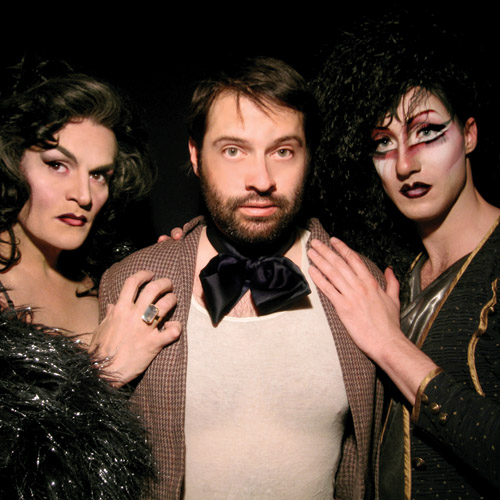
As I affirm in this week’s Super Ego clubs column, I adore the weekly Some Thing drag party every Friday at the Stud — and now it’s turning two years old. The special Some Thing confluence of onstage shoestring razzle-dazzle, challenging themes, uninhibited embrace of drag diversity, afterhours dancing to braintickling tunes, DIY genius Haute Gloo’s craft table, and hot-hot crowd has strengthened the city’s club scene, although to many it still remains a secret.
I’m fine with keeping this wonderfully successful event just between you and me, but why? Joy like this should be shared. And I already made out with you anyway.
In anticipation of Some Thing’s big fourth anniversary party this Fri/13, I conversated over email with the ever-lovely — and Best of the Bay-winning — proprietors, Glamamore, VivvyAnne Forevermore, and DJ down-E, about the current nightlife scene, the challenges of runnning a weekly party in this economic climate, and the future of alternative drag performance. (And in the spirit of the fourth anniversary theme — duet and group numbers — Glama and down-E responded together to some questions).
SFBG Some Thing is generally credited with bringing an appreciation for unabashed dramatic theatricality, classic show showbiz, and old school drag iconography — plus an artistic approach to contemporary pop — to a new generation (or two). What do you think of the drag scene in general right now, and what are your hopes for the future of this kind of performance?
GLAMAMORE Let’s see… The drag scene right now… Broad and amusing. For the future Glama hopes that they change, challenge, grow, adapt, and adopt.
DJ DOWN-E My hope is that the drag scene continues to provide things that surprise me.
VIVVYANNE FOREVERMORE The drag scene is too broad and constantly shifting to really pin down. I agree with down-E I hope that the style of drag performance in sf continues to surprise me. I’m constantly inspired by the new baby queens and also my peers and elders. I’m really into the super art moments that are mixing it up on stage with the classic sequin gown moments. Seeing folks like Gina LaDavina talking with newbies like DIAmanda Kallas or Charity Buckets backstage warms my heart There’s been a lovely crossover between the performance art world and drag world at SOME THING with folks like Phillip Huang or Jorge Rodolfo Jr. performing, and even Martha T. Lipton/Evan Johnson. I hope it continues.
SFBGYou’ve been doing Some Thing for like 200 years now 😉 How do you keep it fresh, and what are some of the challenges you face in terms of operating a smaller party in this economic and cultural climate?
GLAMADOWN-E more than anything, we’re determined to have fun at our party. That keeps it fresh for us. The challenge for us is keeping the harmony between all the different kinds of people we work with. That is integral to keeping it fun. Also, we don’t just bring drag queens together. The fun starts when you walk into the room with the craft table manned by Haute Gloo, and continues late into the night with dancing by the best djs from San Francisco and all over the world. It is important to have a place in the city where people can go dancing after hours. It is the definition of nightlife.
VVFM: To be honest the economic climate hasn’t affected us much. We started with a tiny party (Tiara Sensation, which ran on Mondays at the Stud for several years) that catered to the weirdos, freaks, DJs, drag queens, and hardcore nightlifers, those might be considered our challenging times, we were on a Monday night. But some of the best performances came out of those moments when therewere more folks in our cast then on the dance floor. There’s a magic that can happen when folks don’t have enough, or think they don’t have enough, they make worlds out of cardboard, their lipsynchs are better because they don’t have the lettuce to buy that new wig. The worse the economy gets the more inspired I am to make a space for everyone — EVERYONE — to come together and celebrate. It’s really about inspiring ourselves and each other. I feel that the weirder and more outlandish we get the more permission we are all granted to be different/ourselves, thusly less defined by our “haves” or our dollars. Also to echo my partners, it’s about FUN for us. So the weirder the world gets the more things we have to have fun with.
SFBGI want to ask about the concept of “alternative” vs. “mainstream,” especially now that “trash drag” has gone bigtime and punkish drag tribute nights sell out large venues. Some Thing non-ironically embraces everything from current top 40 to obscure showtunes (although I’m still waiting for a killer ’90s Belgian techno number). And yet, even as it breaks down the boundary between underground and mainstream, the party retains an alternaqueer context. Do you have any thoughts about that? Is there such a thing as alternative vs mainstream when it comes to drag anymore? Or is it all just a matter of quality and sincerity?
GLAMADOWN-E I like how much variety (a pu pu platter) there is in characters in our world–drag or otherwise. I like how a kid who has only performed once or twice in his/her/their life can get on the same stage as Nikki Starr or a Gina La Divina or a Phatima or Fauxnique who has been performing for decades. I love how it can go from a lip sync to a live song to a burlesque dance to a performance art piece in the course of a single show. And I love that how all the performers get along backstage.
VVFM Thank you for calling us alternaqueer. I think alternatve and mainstream exist on a continuum, and they are not mutually exclusive. Our “job” as performers in the nightlife or as drag queens is often to reframe larger things happening in the world or in our neighborhoods or in pop music (or maybe our jobs are to be just entertaining), so doing a pop song doesn’t make you a mainstream queen, and doing a Dead Kennedys song doesn’t make you underground, it’s all context and all tools. There is what we see on Rupaul’s Drag Race … but there’s so much variety even in those queens. It’s exciting.
SFBG What special things do you have planned for the anniversary — and for the future? What about individually for the future, as in personal projects?
GLAMADOWN-E For the anniversary, we’re asking everybody to do a duet or group number. It makes all of these disparate performers work together. Creating a party that we can get excited about before during and after is important. Coming up we have our annual Some Are Camp retreat. A weekend chock full of cool wet drag under the hot sun. We’re also looking at taking a little Some Thing worldwide in the near future. Glama is celebrating doing 30 years of drag this year with a retrospective produced with Juanita More. Down-E is always helping artists learn how to make a living doing their art.
VVFM I have an artist in residence at CounterPULSE showing in March, and I’m also working on the Work MORE! tour for next fall.
SFBGCan I ask about the division of labor? Who does what? And do you claw each others’s eyes out like sisters? Because none of those seams ever show.
GLAMADOWN-E There’s never any actual clawing. The three of us mostly just entertain each other. Half of our weekly meetings are spent giggling at each others dumb jokes. We each have our own roles, but all of us are involved in every decision of the party.
VVFM While we do have distinct roles, those roles are fluid, and as much as there are hard core tasks (ie flyer design, booking talent) there’s also alot of intuitive work too, like feeling out the best theme, or the right cast. Sometimes it takes us a few ridiculous hours of laughter to get the names right for each theme. It’s fun.
SFBGI feel that Some Thing’s rise has coincided with and abetted a new kind of sophistication in Bay Area nightlife that reflects the flow of social information and diversification of taste. People don’t justlike one easy kind of thing anymore, and they expect entertainment and a crowd that is open to all kinds of things. Some Things. What other parties do you admire and what are some of your general thoughts about nightlife now?
GLAMADOWN-E I enjoy that in San Francisco you can go out on any night of the week to a party put together by thoughtful creative people who want you to have a good time. From Vienetta Discotheque to High Fantasy to Oh!, Stay Gold, Mary Go Round, Booty Call to Tubesteak Connection, Dial Up, Cheap, I Love Cochina Tonga’s, Red Hots Burlesque, Trannyshack, the Hot Boxxx Girls, Go Bang, Dark Room, Beat Pig, Hard French, Love Will Fix It, It’s Five O’clock Somewhere, Ice Cream Queens, and Honey Soundsystem. Yes, we go out every single night. But we’re always looking for more fun clubs.
VVFM How democratic of my cohorts to list all these parties. I personally have a sweet spot for High Fantasy because I bartend there (Tuesday nights at Aunt Charlie’s Lounge), but they are doing some really silly brokedown high camp drag there. The nightlife is exciting. There’s alot of creativity flowing and it feels alot like family without much competiting (in the parties listed above). It’s nice to have each promoters phone number on speed dial, we really like collaborating with folks. It’s fun to book our friends and other promoters and DJs, and instead of homogenizing the “scene” it seems to be diversifying and enhancing it.
SFBGFinally, how the hell do you corral like 20 queens every week to perform?
GLAMADOWN-E That’s the magic. We do it with pokers and branding irons.
VVFM Have you heard of the phrase “hearding cats”? It’s like that but they have heels and false eyelashes.
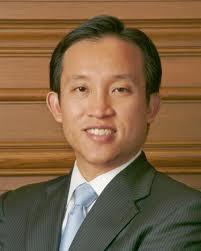
Board President David Chiu has released the new committee assignments for 2012, and they aren’t a whole lot different from last year’s — except in a few areas. And they aren’t exactly an indication of progressive power.
The three most conservative supervisors — Mark Farrell, Sean Elsbernd and Carmen Chu — all were named to chair committees. Supervisors Eric Mar and John Avalos also are committee chairs, although David Campos was relegated to the joint City and School District Select Commitee, which is important but takes no votes and has no role in the legislative process.
Word is, however, that Campos may wind up chairing the Transportation Authority.
The Budget and Finance Committee is run by Chu, but Avalos and Jane Kim are also members, giving a majority to the progressives. But during the budget season, that panel expands to five members — and the additional two, Scott Wiener and Malia Cohen, are both decidedly on the moderate side. That means progressives will not have a majority on the panel that plays the central role in setting the city’s budget.
The Rules Committee is improved from last year — Kim is the chair, joined by Campos and Farrell. But Land Use and Economic Development — possibly the second most important committee after Budget and Finance — is dominated by moderates; Mar is the chair but Cohen and Wiener will have a 2-1 majority.
State Assemblymember Tom Ammiano told me he’s concerned that the two openly gay members of the board, Campos and Wiener, aren’t in more prominent roles. “It seems like there are two very hardworking people who were slighted here,” he said.
But Chiu disagrees, saying that the assignments “reflect the diversity of the board and the city.” He added: “Last year (when conservatives were given key posts) everyone thought the sky would fall, and it didn’t.”
The sky falling is pretty dramatic; I suspect it won’t. But there’s a difference between the sky falling and the progressive agenda moving forward.
Overriding the Rules Committee recommendation and dissing Sup. Scott Wiener – who has taken a lead role on protecting nightlife from critical cops and NIMBY neighbors – the Board of Supervisors yesterday voted to appoint Glas Kat Supper Club owner Steven Lee to the Entertainment Commission, even though he doesn’t live in the city and needed a special residency waiver. UPDATE (1/12, 3 PM): Sup. Sean Elsbernd informs us that the City Attorney’s Office has ruled residency waivers can’t be used with Charter Commissions such as Entertainment, thus invalidating this appointment.
Why would supervisors do so when Castro club owner Tim Eicher, Wiener’s pick and the Rules Committee’s choice, was well-qualified, anxious to serve, and actually lives in the city? Maybe it has something to do with the fact that sources say Chinatown political fixer Rose Pak and Pak protege David Ho are close to Lee and have been lobbying on his behalf. Or that Wiener said Lee supporters have been making the argument that there are already too many gay men on the commission.
“Nightlife issues are important tot he LGBT community,” Wiener said, noting that he was disappointed that Lee supporters have made that argument, particularly because he noted the LGBT people are underrepresented on many city commissions, particularly the powerful Planning and Airport commissions, where there are none.
Whatever the case, it made for a tense discussion at the board yesterday, followed by a vote that didn’t break along normal ideological lines. The motion by Sup. Eric Mar to substitute Lee for Eicher was approved on a 6-5 vote, with Sups. David Campos, Carmen Chu, Sean Elsbernd, Mark Farrell, and Wiener opposed.
Lee supporters noted that he has lived and worked in San Francisco for decades even though he has recently moved down the peninsula to help care for an aging father and disabled brother. For three generations, Lee’s family has been opening and operating businesses in San Francisco, including nightclubs.
“I felt his experience was somewhat superior,” Sup. John Avalos said of his reason for backing Lee.
But those who voted against Lee said it’s a troubling precedent to choose an out-of-towner over a city resident. “To grant a residency waiver for someone when we have a qualified San Francisco candidate is something we just don’t do,” Farrell said.
Sup. Jane Kim cited examples of other appointees that had such waivers, but Elsbernd angrily retorted that those were for seats that no city residents had applied for. And if Sup. Malia Cohen gets her way, there will be even more non-residents being appointed to city commissions. She said that she intends to recommend African Americans who have left the city to serve on various commissions, and she told her colleagues that she expects their future support for that effort.
After the hearing, both Lee and Ho downplayed Pak’s role in the move, telling the Guardian that Lee had key supporters in many of the supervisorial districts. “I’ve been doing this on my own,” Lee said. “I never asked Rose to help me.”
As for his priorities on the Entertainment Commission, Lee said, “Obviously, our main goal is public safety, but also working with the neighbors.”
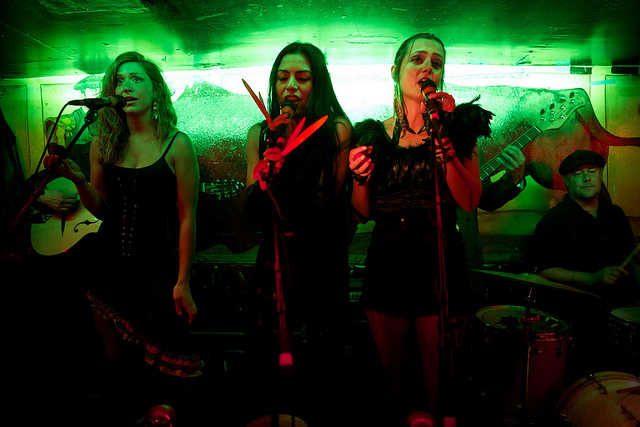
With nine members currently blending Afro Balkan and Middle Eastern sounds and dance moves, Califa certainly refrains from limiting itself. The new Los Angeles-based ensemble – which features members of Fishtank Ensemble, Plotz, and Ballet Asaneh – is something of a world music supergroup. It’s a blend of other acts, and of live music, live dancing, and obscure instruments.
Still in its infancy (it formed in May 2011) Califa takes its first tour up the northern coast this week, with show stops in the Bay Area at Red Poppy Art House and Ashkenaz Music & Dance Center. I spoke with band member Ursula Knudson, who sings and plays theremin along with the occasional hand-held percussion instrument, on the eve of the tour and got the lowdown on Califa’s origins, its interest in global music, and the group’s desire to draw out movement in crowds.
San Francisco Bay Guardian:How did Califa form, and where does the group write its music? Ursula Knudson: Originally the idea was to have a group of all women superstars who could sing, dance, and play instruments. We decided to have a mixed group because we knew we didn’t want to limit the quality of the musician by sex – meaning if there was a kickass bass player that was female we’d take her but if there was an even better one who was a man, we wanted that choice as well.
Basically, we wanted our dream group. Different members of the group offer either arrangements or original compositions, and with nine people, there is a lot of choice! The original concept was [created by] our singer Rosa Rojas, and my husband Fabrice Martinez, also with Fishtank Ensemble, they were the two who dreamed up the group.
SFBG:Why did Califa decide to focus on the music of North and East Africa, the Balkans, and the Middle East? UK: Like I mentioned, this is intended to be our dream band, so even though those [sounds] are what we are focusing on now because it is our new interest, whatever else strikes anyone’s fancy could be pursued later.
We wanted beautiful singers, rock players, traditional players, experimental plays, and it seems we are getting all of it! Right now we chose those regions because most of us have experience already with Balkan music or Middle Eastern music, we have a Morrocan in the band, and ever since I visited Senegal last year I have been in love with the music of West Africa.
SFBG:And are there personal connections with those regions within the band? UK: Momo Loudiyi is from Morroco and plays sintir and got our violinist is playing bendir, and he brings an awesome North African love power vibe to the group. Four members of the group are in a band called the Plotz, which is like crazy Balkan time signature rock, and of course Fabrice and I are both in Fishtank Ensemble which is known to play a lot of Eastern European/Balkan music, so that is our connection as well. And Rosa Rojas, our other singer, has spent years studying the dances of the Silk Road and performed for a while with Ballet Afsaneh in Bay Area.
SFBG: How do you incorporate those styles into your music? UK: We play some original songs composed by various members in certain ethnic styles (rhumba, a Ukrainian song that sounds slightly African, Momo’s music) and also the Balkan and Middle Eastern songs, already in our repertoire, that we have arranged for this particular ensemble.
SFBG:Was it intentional to create a sound that encourages dance? UK: Of course! The show should extend beyond the stage; it should encompass the whole room!
Califa Thurs/12, 7 p.m., $15 Red Poppy 2698 Folsom, SF (415) 826-2402 www.redpoppyarthouse.com
With Inspector Gadje Sat/14, 8:30pm Ashkenaz 1317 San Pablo, Berkl. (510) 525-5054 www.ashkenaz.com
Bonus related show: Fishtank Ensemble With George Cole Quintet Jan. 27, 8 p.m., $22.50 Freight & Salvage 2020 Addison, Berkl. (510) 644-2020 www.thefreight.org
In my Herbwise marijuana column in this week’s Guardian, I wrote about my epic meeting with a one Coral Reefer, 23-year old Twitter queen and self-styled cannabis activist (whose infamous shots of herself smoking a bejeweled bong in the nude may or may not have contributed to her popularity). When the deadline smoke had cleared, however, much remained to be said about this living, thriving Reefer. Below, some dense nuggets of well-crystalled wisdom about the smoking savant.
1. She was born in the Virgin Islands, but her parents fled when Hurricane Hugo hit. She has never owned a passport.
2. She decided to create her own website when she realized TwitPic technically owned all the photos she was posting on Twitter.
3. She was on “Weed Wars”episode No. 2 (briefly — she’s the bleached blonde in the denim shorts with her back to the camera @42:00. Watch the show all the way through though, mainstream media portrayal of Oakland’s Harborside Health Center, really interesting stuff)
4. She embellished her Hello Kitty bong herself, but now think it is evil: “I loved that bong, but it was just so fickle.”
5. Her grandmother, Mrs. China, was well known for her weed brownies, and raised cannabis herself: “I have a picture of her with the leaf of the plant that she grew. Finding out about my family history just made this seem right.”
In this week’s paper we poured out our thoughts on two delicious new additions to the East Bay bar scene, Honor Bar and the New Easy. Below, we glass up some other exciting East Bay drink destinations we think are worth your swizzle:
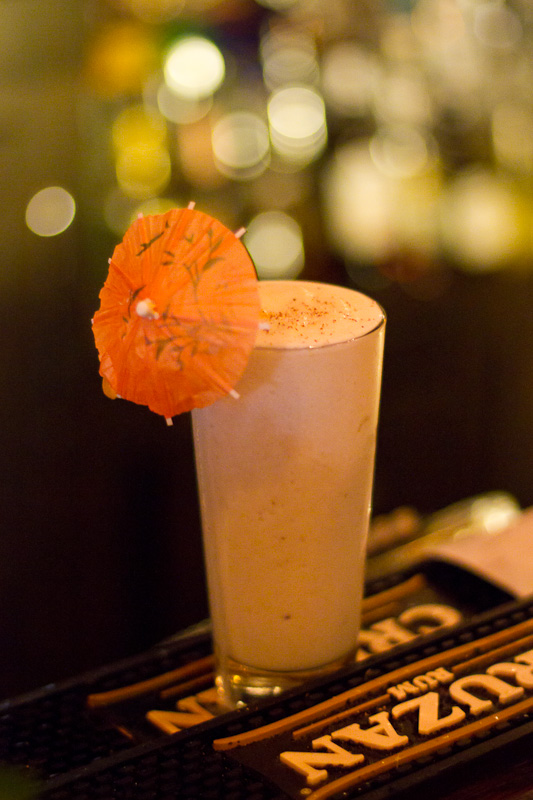
Oakland boasts the biggest concentration and range for East Bay cocktails, some of its consistent best at Adesso, casual drinks with bocce ball at Make Westing, elegant classic-style at Flora, pizza with cocktails at Marzano and Boot & Shoe Service, Miel for tequila/mezcal drinks, Conga Lounge and divey Kona Club for tiki kitsch. Berkeley keeps it real with organic drinks at Gather, and artisanal cocktails at Revival Bar & Kitchen. The little island of Alameda hosts the beloved tiki gem, Forbidden Island, launched in part by tiki/rum expert Martin Cate who went on to open SF’s Smuggler’s Cove. Here, cheesy B-movie tribute nights and stmulating live music flow along with Banana Mamacows. As mentioned above, Emeryville now has two destination-worthy bars for cocktail lovers: Prizefighter and Honor Bar.
Albany is blessed with three old school classics merely blocks from each other along San Pablo Ave.: the musty, tiki vibe of Club Mallard, the mid-century, retro swank of Kingman’s Ivy Room, and the edgy comfortability of Hotsy Totsy Club. Though none of these three are exactly craft cocktail bars, Hotsy Totsy comes closest, with house cocktail sodas, gracious bar manager Jessica Maria, and stellar guest bartenders like Scott Baird of The Bon Vivants, who bartends here weekly. They’ve kept on longtime bartender Chet, in his 70’s, who has been tending there the better part of a couple decades. Their gorgeous, restored Wurlitzer jukebox is a treasure of rare and popular 45s, which you can play for free to your hearts content. Hotsy Totsy encourages lingering with friends under pressed tin ceilings, rocking out to excellent tunes hand-selected by staff. Funky ’70’s garage sale paintings line the walls and hilariously creepy movies (like For Your Height Only starring Weng Weng) play silently on the flat screen, add to the edgy, blissfully divey, convivial spirit.
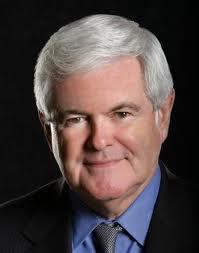
Actually, more likely Newt Gingrich, Scorched Earth Opportunist, but whatever, we’ll take it: Newt — he the friend of plutocrats and one-time lobbyist for predatory lenders — is launching an assault on Mitt Romney, calling him, in essence, a capitalist pig who exploits the workers.
The fact that it’s true makes the story even more fun. As does the fact that Romney has run so far to the right in the primaries that Obama — by any standard in serious trouble — now has a natural line of attack against the candidate most likely to offer him a credible challenge.
The Occupy Wall Street movement has succeeded in pushing the issue of the nation’s vast wage and wealth disparity onto the agenda of the 2012 campaign. While Republicans in the past have been successful in dismissing discussion and debate about the Third World levels of wealth concentration in the U.S. as unpatriotic “class warfare,” the inarguable facts about the massive gap between the wealthiest Americans and everyone else are now well-known by many mainstream voters, at a time when Romney stands as a central casting character representing the 1%.
Paul Hogarth at BeyondChron says that ” many of us wish that Democrats had the chutzpah to be this scathing and direct,” and I can’t argue with that. The good news is that the Newtclear Bombs in South Carolina will probably work: Romney’s going to win the nomination, and everybody knows it, but the blitz of revenge ads may wound Romney enough to convince the Obama folks that this is the line of attack to use during the general election.
In other words, Newt is pushing the Democratic party to the left, legitimizing the class warfare that the Republicans so love to denounce as unAmerican.
I’ve heard complaints that the Occupy movement doesn’t have a clear message, but Saturday night you could read it from a passing car. At an intersection off of Broadway, where a large crowd had gathered, a few people held up a giant banner on the corner that read “FUCK THE POLICE.” And as we passed groups of officers in riot gear and searched for parking among the cop cars on nearly every block, it was also obvious that a confrontation was brewing.
It may have been N.W.A. out on the streets, but inside the New Parish where a show was taking place, it was strictly no beefing. Rapper Phonte and DJ/producer 9th Wonder, formerly members of North Carolina’s alternative hip-hop group Little Brother, were finally performing together after settling some outstanding public grievances.
Addressing the crowd midway through the show, Phonte — in a playfully straight-forward manner — explained that he’d done a lot of growing in the last year, and that he’d learned that mistakes have a way of living on the Internet. Recalling some Southern gospel preaching, he asked the audience to repeat the word “perpetuity” after him, on top of turning to their neighbors and saying “You got to own up to your own shit.”
Support included local openers including Richmond’s Locksmith and D.U.S.T. from Zion I’s crew as well as tour mates Median and Rapsody, but the focus of the show was definitely Phonte and 9th, who ripped through a set of material including both LB and more recent solo work. Part of their speed was necessity. “Grown man rap time,” Phonte called it, explaining that being an aging artist meant that you have an aging audience, with children, bills, and responsibilities, well past the point where “you can spend the whole god damn night at the rap show.”
On the plus side, having an older audience means that they are also likely to be more familiar with your work. When the beat dropped on “Lovin’ It,” a major track from LB’s 2005 concept album, The Minstrel Show, the whole crowd went off.
But what really surprised me was to see a couple upstairs singing to each other the call and response section of “Make Me Hot,” a short proto-soul/Percy Miracles from LB’s 2003 debut The Listening. There was a sense of coming together (if you put the civil unrest an police action going down half a mile away out of mind.).
And considering that Phonte said it was his first sold out “solo” show in the Bay Area, definitely a long time coming. Which may have been why, despite expressing a plan to “Come to the show, spit these raps, take my ass home,” he didn’t seem to be rushing it.
For this week’s Winter Looks issue, we rounded up some of the Bay’s hautest dressers to show us how to step out right when the weather’s wrong
We’ve been big fans of Hayes Valley boutique Welcome Stranger for awhile now. There’s something crisp, yet real comfortable about the shop’s selection of flannels, jeans, and leather bags — this is the place for San Francisco’s urban cowboys. Store manager Justin Hagar was good enough to pose for us in the store’s winter best.
“The jacket makes sense for rainy weather because it’s waxed,” he told us at the Guardian cover shoot. Well-dressed and smart?
Welcome Stranger “Waxed Safari Jacket,” Life After Denim “Lineage Crew” sweater in Flax/Midnight, Gant “New Haven Chambray Button Down Shirt” in Chambray, General Assembly “Original Pant” in Navy (all available at Welcome Stranger)
Norse Projects “Anton Wool Shirt,” Barbour “Down Wax Gilet Vest,” Velour “Adan Chino,” Eastland “Sherman Boots,” Miansai “Beacon Leather Bracelet,” thrift store corduroy hat (all available at Welcome Stranger)
For this week’s Winter Looks issue, we rounded up some of the Bay’s hautest dressers to show us how to step out right when the weather’s wrong
Erin Hagstrom has a cuter closet than you. The East Bay resident specializes in cobbling together sweet, retro-styled ‘fits from new and used clothing, often hitting up Bay Area flea markets. The fruits of her shop-’til-you-drop labors are on display at Calivintage, her impeccably photographed fashion blog.
Clear vinyl raincoat from Storets.com, Mini dress by Family Affairs, Vintage Salvatore Ferragamo Vara Flats, Vintage wicker umbrella purse, Vintage hat (Mars Vintage)
Trovata coat, Kitty pocket dress by Rachel Antonoff (ModCloth.com), Hansel from Basel Tights, Vintage L.L.Bean Duck Boots, purchased at Thrift Town for $10
For this week’s Winter Looks issue, we rounded up some of the Bay’s hautest dressers to show us how to step out right when the weather’s wrong
Stylist Leah Perloff is a woman that can’t let chilly winds keep her at home. In addition to her stylist gigs, Perloff moonlights as DJ Rapid Fire, booty-bouncer at the monthly queer throwdown Stay Gold. When asked how she chose the layered looks she sported in photographer Matthew Reamer’s studio for our shoot, Perloff sassed back: “Winter is so whatever in San Francisco that you can even integrate things you would wear during the summer.”
Tardy Platform Boot by Jeffery Campbell (Shoe Biz), Groupie Flare Jeans by BDG, Zach Godiva Tee by All Saints, Twisted Yarn Cardigan by Zara, Vintage Denim Jacket by Levi’s, ROZI Hooded Infinity Scarf by Ryan DeBonville Knitwear (Mission Statement), Basenji Clutch by Aldo, Earrings, Rings, and Necklaces by Babe Alert Jewelry (Stone Pony)
Crisson Ankle Bootie by Aldo, pants by Ever, Dune Tee by Eighteenth (Mira Mira), LEAH Oversized Infinity Scarf by Ryan DeBonville Knitwear (Mission Statement), jewelry by Babe Alert (Stone Pony)
I get it: Life in the Soviet Union under Stalin and Krushchev was pretty bad. Food was sometimes scarce, spies were everywhere, people got locked up in jail for disloyalty to the State … I know all that. I read The Gulag Archipelago when I was in High School. It made me more wary of powerful governments than it did of Communism, but whatever — I’ll stipulate that the Soviet Union of that era was not exactly the great workers paradise it was supposed to be. (We had a few problems with repression here at home, too.)
But Child 44, Tom Rob Smith’s bestselling 2008 thriller about Leo Demidov, an idealistic Soviet security officer, is still hard to read. Every single person in the Soviet government is corrupt and evil. Every aspect of life is absolutely miserable. There is no hope, just bleakness; the only way anyone can do any good at all is either by mistake or by subversion. Child 44 just drips of the sort of anti-Communist propaganda I was fed in grade school, and while it’s a brilliantly constructed crime mystery, I had to put it down every few pages and say:
Really?
So I opened the sequel, Agent 6, with some hesitation. These books are long and thick, and some of the references are obscure, so you have to pay attention. And I wasn’t sure I wanted to wade through another 467 pages of Commie Plot Nightmare.
But Agent 6 is a pleasant surprise. It’s much lower on the bleakness scale and much more of a serious international novel of intrigue, with realistic characters, some good action and (of course) not much sex. I guess they don’t do that in Russia. Maybe it’s too cold.
The plot actually stretches from the Cold War to the present, but the heart of the matter occurs in 1965, when out hero Demidov (dismissed from the security service in some sort of disgrace, downgraded to a minor plant manager with a crummy apartment) discovers that his schoolteacher wife, Raisa, has been asked to take her students on a friendship tour of the United States. Of course, the couple’s two teenage daughters will be going along — but not poor Leo. He’s been such a bad boy that he can’t leave the country.
Then there’s an African American singer who was a huge star — and an outspoken commie — in the U.S. in the 30s and 40s, but has since been blacklisted and driven to poverty by the American version of Soviet repression. He, like Leo, has a shitty apartment in a slum. But the singer, Jesse Austin, gets invited by some shady crew that may be part Soviet propaganda machine and may be part FBI/CIA op, to sing at the friendship event — except that he’s not really officially invited, so he stands outside on a box — and winds up dead. One of Leo’s daughters is arrested for the murder, Leo’s wife is killed along the way — and the former Soviet cop spends the rest of his life trying to figure out what happened (and for his efforts is exiled to Soviet-occupied Afghanistan).
What happened is a good tale. The parallels between the way the Americans treated a one-time commie and the commies treated a one-time cop make this a lot more intellectually interesting than the first book. The scenes (and lessons) from the Soviet disaster in Afghanistan are a good real, and relevant to anyone who thinks it’s every possible for a foreign nation to invade that country. The depressing ending is about what you’d expect from a writer who makes his living describing depressing conditions and sad people, but it works.
I’m changing my mind about Tom Rob Smith. And while this is being sold as the last one, I suspect he’s got another Leo Demidov story in him somewhere.
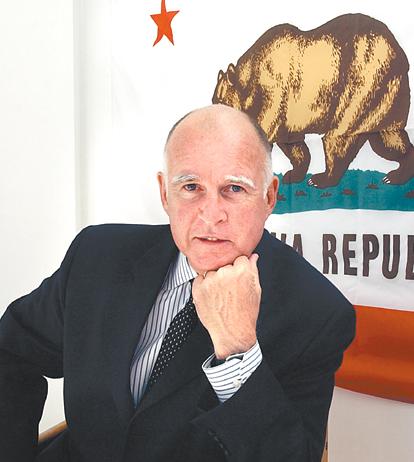
The state of the state tax measures is more and more confusing; as Calitics notes, Jerry Brown, who has a half-assed tax plan that relies too much on sales taxes, wants everyone else out of the way, but you don’t say things like that to really, really rich people, and a really rich person wants her own tax measure, which is much more progressive but earmarks the money just for schools, which isn’t particularly helpful.
And there may be more.
The always-insightful and hardly-ever wrong folks at CalBuzz say Jerry’s got to stop everyone else from cluttering the ballot, else all of the plans will fail. Which is definately CW — but it doesn’t always work that way. There were five competing ballot measures aimed at insurance reform (some of them industry fakes) in 1998, and the voters still approved the real one, Prop. 103.
But taxes are a bit different — and if the voters see the various options not as alternatives but as many ways to raise taxes higher and higher, they might all go down.
And there’s another factor here: I’m hoping that there’s a serious business-tax reform measure on the San Francisco ballot. And if there are several state tax measures (attracting intense and big-money opposition) and there’s another one on the local ballot, we might be in trouble.
Maybe Jerry should get with Molly Munger and cut a deal: The guv makes his plan more progressive, Munger helps fund it — and local governments can join in the fight to “tax the 1 percent.” Then we can all win. Maybe.
There’s not going to be a new billion-dollar football stadium in San Francisco, and for one very good reason: Nobody wants to pay for it. With all the financial problems facing this city, there’s no way the taxpayers are going to cough up that kind of money. Mike Antonini’s shadowy “investment company” doesn’t seem likely to put up the money; that’s not how stadiums are built. And the Niners owners, who could afford it, have made it clear they want public money to pay for their grand spanking new private castle.
When the Giants were talking about bulding a new stadium downtown, team representatives got the message loud and clear: San Francisco wasn’t going to pay the tab. So the team raised the money itself, got the approvals and built a park that has brought a significant amount of new economic activity into the city. It’s helps immensely that the Giants did something else — they didn’t try to build a parking lot. No public money, no parking — and look what we got: A stadium people walk or bike or ride transit to — and a thriving business district that lives off the money people spend drinking and eating before and after the games.
You don’t get that at Candlestick. Everyone drives in, watches the game, and drives away. That’s partially a football culture thing — football fans tend to like tailgate parties. But businesses in the area don’t get a whole lot of patronage from Niners fans (many of whom come from the Peninsula anyway).
So losing the team — other than the indignity of somebody talking about the “Santa Clara 49ers” — isn’t such a big deal for San Francisco. It’s too bad — done right, in the right location, a privately funded football stadium with very limited parking could be a cool thing for this city. But that’s not what the York family wants. So let the suckers in Santa Clara spend their money on it — and deal with the traffic and the fact that nobody will stick around after the game for a beer or a burger in any local restaurant.
Besides: Anyone with any sense knows that baseball is better live and football is better on TV.
Localized Appreesh is our weekly thank-you column to the musicians that make the Bay. Each week a band/music-maker with a show, album release, or general good news is highlighted and spotlit. To be considered, contact emilysavage@sfbg.com.
Perhaps it’s a sign of these chilling, uneasy times, but there seems to be an opera-meets-electro thing happening right now (looking at you, Austra), and I’m not about to complain. The removed digital synth laid over with dramatic, emotion-packed operatic vocals is a shivery, highly effective combo. Local digi-folkster Prize knows this firsthand. A classically trained musician, she fled the world of strict opera and meshed her given skill with the digital toys of the future. Plus, she threw in a dash of Victorian cabaret.
This weekend at Hotel Utah she premieres the music video for her song “Terror Machine” – machine, check, high drama, check – off The Split EP, recorded by Ian Pellicci at Tiny Telephone. At the show you can expect a gothy carnival of lasers, lights, and shredded lace. Year and location of persona origin: I had been writing my own music while studying at the conservatory for a bit before I came up with Prize. It was probably around 2010, when I started becoming sick of the tightly-laced opera world, when I came up with my deconstructed Victorian aesthetic. Performer name origin: I came up with the name as I was falling asleep- I had a story running in my head about a young child finding a Crackerjack prize. I thought it captured a feeling of curiosity and excitement, and I had a feeling that the name would make me feel sparkly. Performer motto: Drink more water than whisky. Description of sound in 10 words or less: Minimal, electro-orchestral arrangements of siren songs. Primadonna folk-punk. Instrumentation: Vocals, guitar, drums, synth, violin, cello. Most recent release:The Split EP. Best part about life as a Bay Area performer: I have performed at the coolest places even as a young singer, and I didn’t have to live in LA. Worst part about life as a Bay Area performer: Well, I have a Master’s in Music and I still had to live out of my van for four months to make things work. First record/cassette tape/or CD ever purchased: I had the entire Madonna discography on cassette tape by the time I was 11. Most recent record/cassette tape/CD/or Mp3 purchased/borrowed from the Web: I recently downloaded ill.Gates’ free track, a freakybass remix of Die Antwoord. Favorite local eatery and dish: Millenium for overall vegetarian dining experience, and the garlic spread from Stinking Rose for the best actual thing to put in my mouth.
http://www.youtube.com/watch?v=MeVDVGUYAII
Prize With the Cuss, and Deeper Fr/13, 9 p.m., $8 Hotel Utah 500 Fourth St., SF (415) 546-6300 www.hotelutah.com