SFBG Blogs

Chucho Valdés and the Afro-Cuban Messengers score a standing ovation at Herbst Theatre

0

Last week, Cuban pianist Chucho Valdés demonstrated a shared skill set with San Francisco 49er tight end Vernon Davis. Both are impressively big men whose physical presence belies a breathtaking agility. 

Performing in front of a packed Herbst Theatre last Monday evening, the 70-year-old Valdés spent the majority of the 90-minute concert alternating between Latin and jazz, delegating and allowing his Afro-Cuban Messengers to shine. Many of the tracks were off Valdés’ recent album Chucho’s Steps (Four Quarters Records), with the constant shifts of “Zawinul’s Mambo” and the cool, breezy “New Orleans” serving as highlights. Valdés, resplendent in a violet velvet sportcoat and purple tones, spoke little, allowing a gesture here and a glance there to guide his team.


With time running out, the Cuban superstar took over with a game-winning score. Accompanied by bassist Lázaro Rivero Alarcón  and drummer Juan Carlos Rojas Castro, Valdés moseyed into a blues ditty before embarking on a solo run. His fingers leapt into a stunning series of trills, dancing from one side of the piano to the other with an absurd combination of power and grace. Here was a man using all of his beguiling dexterity to build the Herbst crowd into a frenzy, on a blues track no less. After performing the piano equivalent of bulldozing five defenders, Valdés, the good teammate that he is, brought Alarcón and Castro in for the finish. The crowd gave a well-deserved standing ovation.

One of Valdés teammate got a bit enthusiastic with the touchdown celebration. During the deserved encore, bata drummer and vocalist drummer Dreiser Bambolé bounded offstage, somersaulted into the aisle, leapt back onstage and snaked his way around Valdés and the band. A nearby usher, entranced by the enthusiastic percussionist, busted out some salsa moves while waving his hands and imploring the crowd to dance. Few of the crowd obliged; they were still basking in the greatness from the previous performance.

Dramatic change in the America’s Cup deal

25

Mayor Ed Lee has announced dramatic changes in the deal for the America’s Cup race, essentially eliminating the massive real-estate development contract with Oracle CEO Larry Ellison.

Under the new agreement, the city will work with Ellison to host the race — but that’s about the beginning and the end of it.

“There is no long-term development,” Stepahnie Martin, spokesperson for the America’s Cup Event Authority, told me.

The previous deal, set for a Board of Supervisors vote Feb. 28, has been scrapped, so there won’t be any board action tomorrow, Judson True, an aide to Board President David Chiu, told me.

That deal would have given the world’s sixth richest person a swath of valuable waterfront property, with 66-year leases and development agreements, in exchange for Ellison investing millions in renovating the aging piers.

But criticism over what some called a huge giveway of public land was diverting discussion of the yacht race and threatened to undermine the city’s ability to serve as the venue host. Some supervisors were demanding more guarantees that the city wouldn’t lose money on the deal, and Ellison’s team was unwilling to budge.

In a Feb. 27 press release, Lee announced that the teams will be building a race village at Piers 27-29 and consolidating the boat launching facilities at Pier 80, on the southern waterfront. The race village will be temporary, and when the yachts leave, Ellison won’t have title to that property.

He won’t have title or development rights at Pier 80, either, and the plan to let him build on Piers 30-32, 26 and 28 as well as a lot across the Embarcadero appears to be dead.

So the America’s Cup is moving back to what it should be — a sporting event, a race on the Bay, and not some bloated development agreement that involves leases lasting more than half a century.

It’s still not clear how this happened — except that the numbers clearly weren’t working out for either side. The scaled-back agreement prevents the city from losing a fortune if the race doesn’t draw the anticipated crowds, and protects Ellison from losing money on waterfront development plans that regulators (including the Bay Conservation and Development Commission) might never have approved.

The city will still pay the ACEA about $16 million to fix a few things necessary to make the race work, and it’s not clear where that money will come from,

Aaron Peskin, a leading critic of the old deal, told me he’s cautiously optimistic. “It sounds promising, we’re getting this event down to the proper size,” Peskin said.

But he said that he hasn’t seen a written agreement “so it’s hard to tell what is and isn’t still in the deal.”

No mattter what the final agreement looks like, it’s clear that Ellison’s control of the future of the central waterfront has been radically reduced. And it’s clear that the deal former Mayor Gavin Newsom cut with Ellison wasn’t going to work for the city.

It also showed something that I’ve seen over and over again in these city deals with private parties: If the public refuses to go along, most of the time the Larry Ellisons of the world — the same people who insist they won’t move an inch and that the deal can’t be changed — will eventually back down.


Snap Sounds: Void

2

VOID
SESSIONS 81-83

(DISCHORD)

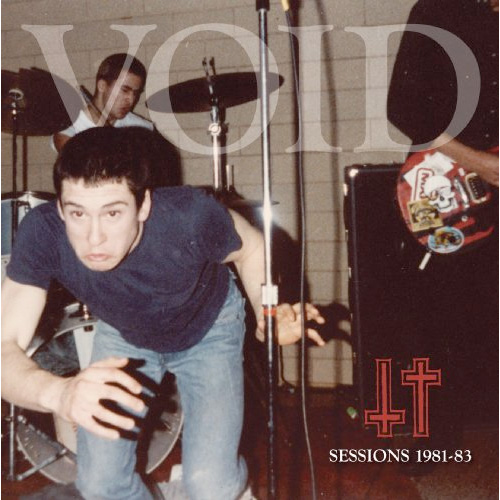
Void was hardcore in a blender. It was loud, frantic, messy, and fast as hell. A brief yet seminal (there’s that word again) punk act, formed in 1979 D.C., Void was known equally for its early mix of hardcore and thrash, as its frenzied live shows, which often turned violent. And for such a memorable act, we future listeners were left with little to actually, well, listen to. It was all buried in seven-inches, splits, and hard-to-find comps.

Nearing the end of 2011, Dischord announced it would release a comprehensive catalogue of the long-gone band’s songs, and it delivered. Sessions 81-83 essentially spans the life of Void in 34 songs, and includes 20 unreleased tracks, live performances, standouts like “Dehumanized,” and thrashy covers (Black Flag’s “Wasted”). Fittingly, the disc ends with a live “My Rules,” recorded in ’83, which simply cuts out, like someone unplugged the amps and walked away. 

“Dehumanized” audio track:
http://www.youtube.com/watch?v=ukqm91gz7hs

With moving pictures, Void is even better:
http://www.youtube.com/watch?v=2JXLM8fS2jU

Noise Pop Roundup 2: Cursive, Budos Band, Emily Jane White, DRMS, Atlas Sound

0

My personal strategy for Noise Pop 2012 was to pack in as diverse a personal schedule as possible, taking into account old obsessions (Cursive, Bradford Cox) and favored newer acts (Allah-Las, DRMS), national and local bands and musicians, weird and precious live indie music.

I also wanted to spread my time over multiple venues, so this time around I hit up the Independent, Bimbo’s, Great American Music Hall, Swedish American, and Mezzanine. I walked the length of the city, racked up some high bus and cab bills, likely imbibed too frequently and caught some stellar live music. My head, feet, and note-scribbling hand are sore, but it was worth it.

WEDNESDAY: Cursive at Great American Music Hall

It was mid-song (“The Martyr,” 2000’s Domestica), mid-set (Noise Pop), of Cursive’s likely sold-out performance at Great American Music Hall. I opened my eyes, scanned the room, and saw we were all singing along breathlessly. Plaid-shirted forearms thrust towards stage, fringed heads bobbing, and everyone within earshot hollering towards the center. There in the middle stood grizzled singer-guitarist Tim Kasher, leader of the Omaha-bred longtime Saddle Creek Records fixture Cursive, as well as the Good Life. Parsing his words carefully, Kasher spoke for nearly the first time after a quick-fire opening shot of beloved Domestica and Ugly Organ tracks, interspersed with brand newer, understandably less-clapped-for I Am Gemini cuts. “Let’s get candid,” he understated. Full review here.

THURSDAY: Allah-Las and Budos Band at Independent

If you could handpick its most redeeming qualities and inhabitants from any time period in the past half century, Los Angeles could actually be a rather magical place. Pluck the psychedelic guitar strains reverberating through Laurel Canyon, scoop a fistful of bronzed sun-kissed surfers and sparkling waves from the coast, add two shakes of downtown weirdness, and you’d likely come up with something along the lines of Allah-Las, the quartet that opened for Budos Band during the Noise Pop lineup at the Independent Thursday. Full review here.

FRIDAY: Emily Jane White and DRMS at Swedish American Music Hall

The first time I saw dark folk songstress Emily Jane White live was at an ornate church on a hill (RIP EpiscoDisco) so this Noise Pop stop at the Swedish American Music Hall last Friday brought back some particular memories. Memories of an elegant, otherworldly setting and the singer-guitarist who encapsulates the venue’s charms.

With nary a smile, the black cloth-and-lace-swaddled White beautifully finger-picked and sang original tracks off 2009’s Victorian American and 2010’s Ode to Sentience, backed by a seated guitarist, a fellow on bass clarinet, and later, a violinist, who added even more depth to haunting closing song, “Victorian America” – a piece that showcases the bold yet breathy strength of White’s voice. Seated in folding chairs at the Swedish American, surrounded by dark wood trim, the audience clapped politely then grabbed between-act beers from guest bartender John Vanderslice.

Upon my return from Vanderslicing, I saw that DRMS (formerly known as Dreams) had splayed across the relatively small church-like stage, a clump of seven musicians with an interesting mixture of instruments and styles. Behind the retro 1920s blues vocals, the Afro-folk band incorporated more traditional instruments along with melodica, vibraphone, and some sort of bag of shimmering noise, all rainstick-like. Live, the intimate set felt like it could be happening anywhere in the world, a group of friends playing jumbly music with hints at a grab-bag variety of genres and cultures. This could work anywhere, yet still the venue felt the ideal setting.

SATURDAY: Atlas Sound at Bimbo’s

Three of the four acts Saturday night at Bimbo’s were solo dudes on guitar making sounds far beyond the basic limitations of the instrument. These were experiments in experimenting, Carnivores, Frankie Broyles, and of course, the man who likely influenced the others in some form or another, Atlas Sound (aka Bradford Cox, also of Deerhunter).

With a courteous “hello,” Cox picked up one of his magic vintage guitars – one attached to so many pedals and looping mechanisms that one pictures a jumble of chords slithering snake-like up his thigh – and opened up to a captive Bimbo’s crowd with his hypnotic near-soundscapes.

Not knowing quite what to expect live, I was, for whatever reason, somewhat surprised to see only Cox on stage at Bimbo’s (another grand San Francisco venue, for those keeping track of the prettiest music spots to visit) playing music so full it sounded like a full band. Perhaps a ghost band sat behind him, guiding the chord snakes.

Though it’s his solo project, it’s still mystifying to me that he can create such a beautiful noise alone. Cox’s swirling, pulsating loops of guitar and drum sounds picked up speed at times, revving up those in the audience as well, particularly during “Shelia” off 2009’s Logos and more so tracks off most recently released record Parallax: “Te Amo”  and “Terra Incognita.”

The front row of the ballroom was packed with youthful obsession (the excited youngsters sat up front on the dancefloor ground from the time the doors opened at 7 p.m. ’till Atlas Sound’s set at 11). Those kids provided fodder for Cox’s eccentric on-stage musings later in the evening, when he brought a boy on stage and said he looked like a younger version of him. I also heard later that young fans swarmed Cox after the set to gush and thank him for saving their lives, with his music.

Muralation: Swoon’s wheatepaste is reborn, in color this time

4

Swoon’s work has been haunting me. On a recent trip to DJ Rusty Lazer’s house in New Orleans it was there, bedecking a rundown Bywater neighborhood fence that concealed a village of homes that can be played as a symphony (she also designed a structure for the mini-city, a dream tree house atop stilts). As one strolls though the world one sees it here, there – fairy webs of delicate wheatpaste strands on city walls. 

So it’s no surprise that the Mission’s been eager to replace the wheatpaste Swoon (also known as Caledonia Curry) installed on Tony’s Market at 24th Street and Hampshire. Rejoice: after the original was defaced in August 2011, the female street artist’s new piece will finally adhere to Tony’s on Tue/28.

Goddess knows there are superlative female street artists based in San Francisco. Mona Caron, Juana Alicia — but here as in other places in the world women still (still!) haven’t gained the firmest of footholds in the street art world. Swoon is probably the best-known XX-chromosoned public artist out there, along with NYC’s Lady Pink.

So it was nice to have her around the city. Mission Local’s Molly Oleson penned a rather lovely little account of how Swoon’s piece — originally an image of a woman who had been kidnapped in Mexico’s spates of femicide — came to be on 24th Street and Hampshire. It has to do with Chicken John’s house, says Chicken John. 

The neighborhood liked it very much. But in one of the more bizarre cases of vandalism I’ve heard of, someone wrote the word ‘VOTE’ over it in big, artless red letters last August. Subsequent efforts to scrub off the letters half-obliterated Swoon’s work, so a team of concerned creative types including street art book editor Annice Jacoby, Lesley Freeman, and Chicken John contacted Swoon for a replacement, which she was reportedly happy to make. Oleson’s story includes a slightly humorous retelling of the moment when the team realized the replacement piece Swoon had sent wasn’t going to work out — happily for San Francisco, she was happy to create a second version of the replacement. 

This version, Swoon says in an artist’s statement, is a commentary on water issues surrounding the Gulf disaster in New Orleans. And the rendering that’s been done of the piece shows that its in color, not always the case in Swoon’s body of work. You’re welcome to go check out the piece getting put up tomorrow, and hear more about the inspiration behind the design in the video Swoon shot for Time Out New York below: 

Swoon mural re-installation

Tue/28 noon, free

Tony’s Market

24th Street and Hampshire, SF


I came, I saw, I glittered: Monthly live sex show debuts in the Mission

46

The only other time I had been to a live sex show was in the Red Light District of Amsterdam. The thing was crude – even amid the slew of debauchery that makes up tourist Amsterdam. Mostly, that was because of the concrete venue, Eurotrash techno, and slimy men masturbating and jeering behind me. But the Saturday night debut of Cum and Glitter at an underground venue in the Mission was an entirely different experience. Hosted by the elegant and welcoming Ginger Murry of Whore Magazine, the show is the brainchild of Ava Solanas and Maxine Holloway, who started the new monthly event as an expressive outlet for the sex worker community.

The show started at a little past ten p.m. Attendees descended wooden steps to an intimate underground event space that resembled a 1920’s speakeasy. The room was dimly lit, dotted with small round tables, and overflowing with anticipation. Garter belts and playsuit-flaunting babes appeared, accompanied by the deep, warm bellows of a cello being played by the artist Unwoman that vibrated through the air. 

The series’ first performance, an enchanting strip tease by Dorian Faust, set a sexy mood that carried through the rest of the evening, despite ensuing acts that registered higher on the comedy scale. Faust looked like a mermaid in her sequined outfit of varying blue hues, and her nimble body moved in waves, creating an optical illusion that carried on until she was stripped down to just her gold and blue glitter and thong. 

Next on stage were Courtney Trouble and Maxine Holloway, the latter of whose nipples were swiftly cinched with clothes pins, mouth gagged with her brunette mane. The evening proceeded in this manner, switching off between sensual and expressive solo dances and the longer duo role-plays that involved plenty of spankings, toys, and at times, ordinary household items used in surprisingly creative ways. 

Eden Alexander’s lesson on how to be a dominatrix was awe-inspiring to say the least. She spoke with comedic conviction as she took charge of her male submissive, who was ordered to worship his mistress — when he wasn’t being used as a standing surface for her stillettoes. Alexander’s delightful sass was perfectly complemented by her — even sassier — hot pink latex floor-length dress. 

Dialogue and interactions were clearly exaggerated, and the performance was more stylized than realistic. However, the sheer and genuine excitement of the performers made the show feel unforced. The audience reaped all the usual benefits of watching a performance in a small venue, and we were able to intimately enjoy every soft moan and fleeting expression –- moments that are normally missed entirely in onscreen porn. Being eye-level with the action literally involved the audience that much more in the ecstasy of the performers — when Solanas squirted in all her glittering glory to the swells of the cello mere feet to her right, barely missing my shoe in the process, it was as if she was coming for all of us. 

It is billed as a live sex show, but don’t be misled — the first installation of “Cum and Glitter” was not simply an explicit display of intercourse as it was a series of rather light-hearted scenarios acted out by nine gorgeous women who understand how pleasurable the mix of consent and wild imagination can be.  Whether your fantasy is a naughty baby sitter, sexy shoeshine, or being gagged with a rubber chicken, there was an elated smile on everyone’s face by the end of the night — it was clear that everyone left the show feeling quite satisfied. 

Check out Cum and Glitter’s website for information on the collective’s next show 

Noise Pop Roundup 1: Shannon and the Clams, Die Antwoord, Glass Candy, last-minute parties

0

May I first say thanks to Noise Pop for bringing a sense of urgency to my concert-going behavior. I am nothing if not a festival junkie, and the sheer mass of shows that this particular festival coordinated was awe-inspiring and more than a little anxiety-provoking for those of us who feel the need to go to everything, always. Plus: badges. There is nothing like walking around feeling like you have special access to an entire city, at 24 venues in total from Bimbo’s up in North Beach to the Golden Gate Park-clad California Academy of Science.

Fresh off of a week in New Orleans for Mardi Gras, I couldn’t do it all. But here’s how I tried:

WEDNESDAY: Die Antwoord at Regency Ballroom 

This was the show I was most excited about seeing, and the South African hip-hop trio (emcees Ninja and Yolandi Vi$$er, and DJ Hi-Tek) were definitely worth their sold-out hype-age. Even if you can’t get down with their ultra-aggressive lyrics, you can’t quibble with Die Antwoord’s showmanship – even while spinning around like a demented, shaved head-top and bounding across the stage Vi$$er and Ninja managed to hit every lyric like wow. Sadly, the show opened with DJ Hi-Tek’s Mike Tyson-inspired homophobic rantings, and that was tough-impossible to get past. Is Hi-Tek gay? Who cares. Full review here

THURSDAY: Shannon and the Clams at Cafe Du Nord

One of the greatest things about Noise Pop is that the fest brings new audience to local favorites – and I found, conjures up concert experiences that are a lot different than if you saw your Bay-Bays in the same old venue with the same old crowd as always. Such was Thursday night’s lineup of the Soft Pack, Shannon and the Clams, Fidlar, and Surf Club. (Check Ryan Prendiville’s review of these last two acts here) It was actually my first time catching the Clams, but seeing the group slay it at Du Nord cast them in a different light than if my first time had been moshing in a room-capacity sweaty knot at, say, the Knockout. The Clams came across as a band that is expanding its reach beyond the dark rooms of the Bay Area. After the show lead singer Shannon Shaw told us that the group was in the process of recording its next album, so yay. 

FRIDAY: Glass Candy at Mezzanine

I wasn’t wearing neon, but Portland’s Glass Candy still moved my ass out of the upstairs VIP booth we’d somehow scammed and into the throngs for the middle and end of Ida No and Johnny Jewel’s set. The Chromatics are fine, but that group’s live set (which we tasted pre-Candy) was the teensiest bit slow, not compelling enough to leave the cold leather fishbowl that was the booth. Not so No and Jewel, who satisfied all the jumping grindsters with ecstatic chords and No’s prancing. 

SATURDAY: Big Queer Dance Party at Public Works

Headliner Big Freedia canceled in a medical emergency, but the crew behind this event decided to keep the ‘big’ and go along with it. Was it a Noise Pop event? Besides Freedia, the schedule, venue, and lineup had remained the same, but staff at the door told me that it was no longer part of the festival, so Noise Pop badge holders had to pay again to enter. Seemed like a boner move, but I was glad to be there once I was inside, if only to check out Double Dutchess’ beautiful boys getting hyped onstage. Their raybeams were reflected in the crowd for the rest of the night – DJ Bus Station John, Stay Gold’s DJ PinkLightning, and DJ Laydown (Hard French crewmember Timothy Strong in his debut on the decks) kept everything really sweaty – which was great because after that much Noise Pop I had some toxins to sweat out. 

Video admitted in Mirkarimi trial

90

A videotape and related statements that the prosecution said was critical to the domestic violence case against Sheriff Ross Mirkarimi will be admitted at a trial set to begin Feb. 28, Judge Garrett Wong has ruled.

The ruling allows prosecutors to show the roughly 50-second video in which Mirkarimi’s wife, Eliana Lopez, tearfully recounts the incident of New Years’s Eve, 2011 and shows a bruise on her arm.

“Without this evidence we have no legal recourse to completely move forward with this case,” prosecutor Elizabeth Aguilar-Tarchi told the judge, reflecting what observers have been saying for weeks: The case against the sheriff could hinge on how the trial judge interprets a complex part of the state’s Evidence Code.

At issue is whether a statement that would normally be excluded as hearsay can be allowed in court as a “spontaneous or excited utterance” — a statement made after a crime when a victim or witness hasn’t had time to reflect on the events or plan to fabricate or alter the story of what happened.

In this case, the video was made a day after the alleged violence, and Mirkarimi’s lawyer, Lidia Stiglich, argued that it was carefully scripted and staged for reasons that had little to do with Mirkarimi’s specific behavior the day before.

In fact, she said, Lopez and Ivory Madison, a neighbor who made the video, discussed how the information would only be used if Mirkarimi and Lopez divorced or had a custody fight over the couple’s two-year-old son, Theo.

Lopez was hardly still excited or emotional over the incident, Stiglich said: “There is evidence that Ms. Lopez went shopping, made phone calls, including two calls to Ms. Madison, and texted [Madison’s] husband.”

The video, Stiglich argued, “was the antithesis of a spontaneous statement” — it was made after Lopez had a day to calm down and was made specifically for evidence in a child-custody case, the attorney noted.

But Aguliar-Tarchi insisted that Lopez was sufficiently emotional that the time frame wasn’t the central issue — and Judge Wong agreed. “Time is a factor to consider, but not determinative,” he said from the bench. “What is crucial is the mental state of the speaker.”

The ruling complicates Mirkarimi’s defense: Photos released by the District Attorney’s Office from the video show a clearly upset Lopez showing the camera a bruise on her upper arm and saying that this wasn’t the first such incident.

If Wong hadn’t accepted the video, it’s likely that the District Attorney’s Office would have to drop the charges, since Lopez has refused to testify and the rest of the case is so thin and circumstantial that it would be hard to present it to a jury. “This is the focal point and crux of our case,” Aguilar-Tarchi said.

Now Mirkarimi will have to come up with a more compelling narrative as to why the story that his wife described to a camera wasn’t an accurate reflection of the facts. 

The ruling could certainly be grounds for appeal — based on the courtroom discussion, the video falls very close to the line in what can and can’t be admitted, and while the judge has broad discretion on these issues, criminal defendants have challenged such rulings in higher courts numerous times. But the jury — and the news media, and thus the public — will now be allowed to see what is by any definition a very damaging video that will hurt Mirkarimi’s political career, whatever the outcome of the trial.


Promising newish acts at Noise Pop 2012: Surf Club and FIDLAR

0

He asked if there were drink tickets. The bartender nodded, saying that the band could have wine now, and then beers on stage. Neither of those options would work for Stockton’s Surf Club, whose members were all sporting big black X’s — the mark of the underaged — at their Café Du Nord Noise Pop appearance.

When Surf Club played, melancholic Stratocaster led pop, that youthful innocence was obvious in its music. Well, let’s not say innocence, maybe timidity? The lead singer was a big guy with a small voice, like Frank Black (or Kim Deal? someone from the Pixies) in quieter moments.

The softness fit with the lyrics, mostly teen angst songs void of irony with small goals and wants: just to be friends, just to get out of bed. Surf Club seems to be off to a good start, keeping it simple, strumming along to a speedy drum beat. We’ll see what happens when the shyness wears off.

The following band, LA’s FIDLAR (which, if you’re keeping score at home was 75% over legal drinking age) had absolutely no issues with confidence. Hell, with a name like Fuck It Dog Life’s A Risk, you know the band’s got to be somewhat carefree, if not downright cocky.

“This song is called ‘Stoked and Broke,’” the band’s most talkative, spastic member introduced the first song, explaining, “because we’re stoked and broke.” What followed was a frenetic set of punk fueled, stripped down rock. With a rollicking tightness that reminded me of Thee Oh Sees, FIDLAR shot along, keeping the energy up by alternating singers.

Simple can be a conscious choice, and for FIDLAR that meant shouting through a song entirely consisting of the words “I drink cheap beer. So what? Fuck You!” with just enough attitude to make it work. Recently signing to Mom+Pop and with a full slate at this year’s SXSW, FIDLAR was definitely one of the better surprises at Noise Pop so far.

Occupy and Castlewood Workers to join up for “perhaps the biggest and most vibrant march Pleasanton has ever seen”

10

Organizers hope for a big turnout Feb. 25 for the latest protest in a two-year saga to demand a better contract.

Food service workers at Castlewood Country Club were put on lockout on Feb. 25, 2010 when they refused the terms of a contract with the club. The contract stipulated that workers pay $849 per month for health care, a change from the free health care the contract had previously provided.

Lockouts, when employers refuse to let employees come back to work until they agree to contract terms, are a rare but powerful tool used against unions.

“A lockout is the opposite of a strike,” said Sarah Norr, organizer with UNITE HERE local 2850, which represents the Castlewood workers.

Since the lockout began, the club has hired non-union replacement workers and most of the union workers have taken other jobs. But, in order to end the lockout legally, the company must resolve the contract issues.

According to Norr, “It’s illegal to permanently replace locked out workers.”

Workers brought the case to the National Labor Relations Board (NLRB), which filed a complaint against Castlewood August 30, 2010. The complaint states that the club “has been interfering with, restraining, and coercing employees in the exercise of the rights guaranteed in Section 7 of the [National Labor Relations] Act” and “has been failing and refusing to bargaining [sic] collectively and in good faith with the exclusive bargaining representative of its employees.”

An ongoing NLRB hearing on the case is expected to conclude on March 1.

Meanwhile, workers have been picketing daily since the lockout began two years ago. This has sometimes resulted in dramatic clashes with the club members.

One of the workers’ protests last June. Golfers’ reponses, complete with property desctruction, begin around 1:35

“Members of the club harass them on a daily basis. Hitting golf balls at them, throwing racial slurs at them. Some of them are really supportive but some are not so nice,” said Norr.

But workers persevere, and tomorrow they hope for a larch march on the club, joined by OccupySF and Occupy Oakland.

Said Norr, “It’s going to be a big, vibrant march, perhaps biggest and most vibrant march Pleasanton has ever seen. There will be a babies’ and children’s brigade.”

For Occupy organizers, joining up with the protest makes perfect sense.

“Many of Castlewood’s member-owners spent $25,000 for their memberships,” said Ann Worth, a longtime union member and participant in Occupy Oakland, in a press release. “They can justify spending that kind of money to play golf, but they still think it’s okay to squeeze more out of the people who work for them for $10 or $12 an hour. They expect workers to subsidize their expensive game by giving up affordable health care for their kids. It’s a perfect example of what’s been going wrong in this country: the rich are getting richer by denying everyone else their share in the American Dream.”

Calvin Trillin: Romney unconcerned about the poor

0

Romney says he’s not concerned about the poor

The remark about the poor immediately became catalogued in a growing list of awkward comments by Mr. Romney.” –The New York Times

His profile’s divine.

His shoes have a shine;

They’re almost as shined as his hair.

And voters ignore

That seeking Mitt’s core

Has failed because nothing is there.

So Mitt’s way ahead.

The pundits have said

That Newt might be almost kaput.

But Mitt still might lose

If he puts those shoes

Much more in his mouth with his foot.

Calvin Trillin: Deadline Poet  (The Nation, 2/27/2012)


Have conservatives hijacked the Small Business Commission?

19

Is the Small Business Commission really advocating for small businesses, or has the commission been hijacked by bankers and real estate developers aggressively pushing a right-wing agenda of unchecked growth and cuts to government regulation, programs, and fees? And why has the Mayor’s Office stacked the commission with these ideologues and worked behind-the-scenes to keep them in leadership roles?

Those are just a couple of the questions that have been raised by Mayor Ed Lee’s recent effort to amend the charter to give this commission broad authority over the city’s legislative agenda, which was dropped in the face of widespread opposition, and by his office’s alleged calls to their appointees urging them to vote for developer Luke O’Brien as vice president and banker Stephen Adams as president (simply reversing the roles they had played last year).

Traditionally, sources say the commission has sought to balance leadership between the mayor’s four appointees and the three appointed by the Board of Supervisors. But these days, the Mayor’s Office (mostly Chief of Staff Steve Kawa, we’re told) and its appointees (which include two bankers and one developer), at the urging of pro-development groups Coalition for Responsible Growth (CRG) and Plan C, seems to want to consolidate their control and push their agenda.

Neither Kawa nor Press Secretary Christine Falvey would address our direct question about the Mayor’s Office interfering with the internal working of supposedly independent commissions, but the Examiner today had a story about the Mayor’s Office doing the same thing on the Planning Commission with its leadership vote this week.

“If the Mayor’s Office feels the need to interfere in commission votes, it interferes with internal commission matters and the spirit of the commission,” Board President David Chiu, who has been following the Small Business Commission dynamics, told the Guardian.

Outgoing commission member Janet Clyde, who runs the legendary Vesuvio bar in North Beach, said she has long been bothered by the changing tone and dynamics on the commission: “There is definitely an agenda that is driven by the Mayor’s Office, a more conservative view…There is a big business agenda in small business clothes.”

And she said that change has been pushed by Plan C, CRG, and other fiscally conservative groups that backed Lee’s mayoral campaign. “They really saw an opportunity to use the Small Business Commission to push their agendas.”

The CRG board includes three members of Murphy O’Brien Real Estate Investments, including O’Brien and Mel Murphy, who is a mayoral appointee to the Building Inspection Commission, where he also regularly advocates for real estate interests. CRG, which did not return our calls for comment, testifies regularly at City Hall in favor of development and against regulation. Clyde and current commission member Kathleen Dooley say O’Brien has been especially aggressive in pushing his ideological agenda.

O’Brien ignored repeated Guardian requests for comment, and when we finally reached him by phone, he said, “I have no interest in talking to you.”

In December, in his role as president, O’Brien called a special hearing to discuss the Eastern Neighborhoods Plan, the massive land use plan passed a few years ago after dozens of public hearings to work out its myriad complicated details and balance the preservation of light industrial properties with housing development, providing city services, and other considerations.

“This thing really needs to be thought out a little bit more,” O’Brien said at the hearing in a video clip that is prominently displayed on the CRG website.

Commission Executive Director Regina Dick-Endrizzi defended that hearing and others that have ventured into planning, regulation, and land uses issues that seem to be the purview of other city commissions. “Every business we talk to that wants to be in a brick-and-mortar space, it’s all about land use,” she said, noting that at the commission’s last annual retreat, “they decided to take a look at impact fees and their implications.”

She also noted that the city defines small businesses as having fewer than 100 employees, and that both developers and bankers are legitimate small business advocates, noting how important loans and other capital sources are to small business survival. Mayoral spokesperson Christine Falvey also defended the appointments and their focus: “The Commission has a diverse group of individuals to represent small business. The agenda is not controlled by any one group. There is a diverse group of voices and all deserve to be heard.”

Falvey also said it’s important to have bankers like Adams, a branch manager of Sterling Bank & Trust, on the commission: “The Mayor understands the important link between conventional banks and micro lenders. While there are moderate improvements in the lending environment, understanding the current status of access to capital is critical information for the Commission in its role to advise and make recommendations to the Mayor and Board of Supervisors on policy matters and City regulations that affect either the ease or difficulty in doing business in San Francisco.”

But progressive members of the Board of Supervisors – including Sup. Christina Olague, a mayoral appointee, in her recent interview with the Guardian – have regularly derided the narrow focus and ideological agenda of the commission, particularly its mayoral appointees. Some privately call it the “Small-Minded Business Commission.”

“We need some diversity on this commission. It can’t be all white men with a particular point of view,” Dooley said.

That could begin to happen on Tuesday when the Board of Supervisors is slated to replace two of its outgoing appointees, Michael O’Connor and Janet Clyde, with two that have been recommended by the Rules Committee: Monette White, who runs Food for Soul, “an upscale restaurant and holding company,” and William Ortiz-Cartagena, CEO of Gentle Parking, which managing parking lots in the city.

But that won’t go very far in changing a commission that seems focused on using the “small business” fig leaf to push a more broad and ideological pro-business agenda. Even Chiu, who is strongly pro-business, told us, “The Small Business Commission needs to be focused on the plight and issues of small businesses.”

What’s wrong with the America’s Cup deal? A lot

21

Let’s start out with a premise that even Larry Ellison’s minions have come to accept: The race is happening here. Too late now to move it to another city. Worst-case scenario, according to Stephen Barclay, the point person for the world’s sixth-richest man: “If we don’t meet those dates, the teams will be forced to relocate to other places around the bay.”

That’s right — the teams will relocate to other places around the bay. The host city will still, for all practical purposes, be San Francisco; the races will happen off SF’s waterfront (where the Coast Guard is willing to allow them and the conditions are right) and the rich tourists will stay here, not in Burlingame or Fremont.

If Ellison decides the city’s not giving him enough, he won’t put up $55 million to fix up some of the waterfront piers. The city may decide that a development deal of some sort with him makes economic sense. But it’s a real-estate deal at this point, not a deal for the race. At least, that’s what the Ellison team seems to be confirming.

And I fear that the real-estate deal that the Board of Supervisors Finance Committee sent forward yesterday, 2-1, is a bad deal for the city.

The terms are really complicated, and it makes my head hurt just trying to figure it all out — and still, the supes are expected to vote on the 120-plus-page document Feb. 28. Here’s what we do know, though:

The supervisors originally came to a deal with the America’s Cup Event Authority back in December. The concept was — and is — pretty straightforward, the same sort of deal the city has done (or, certainly, the Redevelopment Agency has done) many times in the past. In exchange for putting cash into renovating several piers, Ellison’s group would get long-term leases and development rights on the property. The idea: The city can’t afford to fix the piers. Ellison’s organization can. And once the property is renovated, the developer can make back that initial investment, and a profit, by building commercial space, condos and whatever else the Port decides to allow.

In a perfect world, San Francisco (and the state and the feds) would tax the hell out of people like Ellison, and there’d be public money to rebuild the waterfront as public open space, recreational facilities and the like. And wouldn’t that be utterly cool? Wouldn’t this city have the most awesome waterfront in the world?

But no: The only way the piers are going to anything but a place to park cars until they fall into the bay is if some private developer gets the rights to build something that I won’t like.

Supervisors Jane Kim and Mark Farrell, who don’t agree on a lot of things, both agreed with my basic analysis of the politics here: We shouldn’t let the excitement over the prospect of a boat race get in the way of analyzing this for what it is: A financing tool for the Port to get its infrastructure fixed up. Without a private investor, “they just don’t have the capacity to do that,” Kim told me.

So let’s just stipulate for a moment that this is the best, maybe the only way the city can restore the Port. Then it comes down to the real issue: Has the Mayor’s Office negotiated a good enough deal? Is San Francisco getting enough out of this? Or is everyone so hyper-buzzed about fancy carbon-fiber boats in the water (and I admit, they’re pretty cool) and free-spending tourists in the hotels and restaurants that we’re letting Mr. Ellison — who didn’t get so stinky rich by being a weak negotiator — walk away with most of the cookies?

Remember: Ellison’s not doing the city any favors. He’s only fixing up the piers that he will effectively own (as least for most of the rest of this century).

Back in December, the rough outlines looked like this: A corporation set up by Oracle, called the America’s Cup Event Authority, would put $55 million into repairing and renovating piers, then would get  66-year leases and development rights on piers 30-32, 26 and 28, as well as seawall lot 330, across the Embarcadero, which Ellison’s team wants to turn into more condos for rich people. If that’s not enough to pay for Ellison’s investment, Ellison’s heirs or successors get half the rent for the piers for another 15 years. That’s 81 years.

The original deal mandated that the city would collect a 1 percent fee on the re-sale of the new condos. It also had a requirement that Ellison share with the city any profits he made by flipping the long-term leases.

That’s a big deal, because almost nobody in the city actually holds onto development entitlements anymore. A developer wins the right to build an office building — and next week, he or she sells that right to somebody else. It’s almost certain that at some point, Ellison — whose sole goal here is going to be making a profit off city land — will decide that the best way to make money is to cash out. He’ll keep his 66-year leases for a few years, maybe lobby his way to approvals for office, condos, time-shares (gasp! yeah, they’ll do that if it’s legal) restaurants or whatever — then sell the remaining time on the leases, plus the development rights, to somebody else. And because he’s Larry Ellison, he’ll wind up making a nice tidy profit.

That used to be what happened with Port property (see: Pier 39) but lately, the Port’s gotten a bit wiser and has, in some cases, insisted that part of the profit from flipping a lease goes back to the city. In the original discussions, Ellison was going to have to pay the Port 15 percent of any net gains he made from the almost inevitable sale of the valuable leases.

But that’s gone now. After the board approved Newsom’s deal, the former mayor — who was always terrible at negotiation with the rich and powerful and always gave away the store — went back and monkeyed around with it. He and Sup. David Chiu insisted that the changes were just technical, not substantive enough to require a new board vote — but the current deal has no 15 percent cut for the Port, and the 1 percent levy on condo sales only applies after the second owner sells — which will be years down the road.

Then there’s the part where the city has to reimburse Ellison if the cost of renovating the piers exceeds what’s expected (oh, and we have to pay him 11 percent interest, which is about ten times what I get on my bank account; how about you?) There’s no cap on what the city might have to pay. And Ellison gets to develop a new marina.

And while Pier 29 is no longer a part of the deal, the city has to give Ellison $12 million — or rights to a pier to be named later. (Maybe Ellison figures that in a few years the people who opposed Pier 29 development will be out of office and he can convince the new mayor and supervisors to give Pier 29 back. It’s not legally excluded.)

Kim told me she’s going to insist that the final deal include a local-hire provision, which the rest of the board would be crazy not to support (and which Ellison, despite his company’s problems with local labor laws in the past, would be crazy not to accept).

But overall, Kim — who with Sup. Carmen Chu was part of the 2-1 majority sending the package to the full board — told me she thought the city got a good deal. “It took me a while,” she said. “But [Port Director] Monique Moyer convinced me that this was good for them.”

Sup. John Avalos, the dissenting vote on the Finance Committee, isn’t convinced. He’s got a long list of concerns, starting with the fact that he thinks the projected attendance and economic benefits are a bit delusional. “The figures seem farfetched,” he told me. “I’m seeing a lot of pumped up numbers. And those numbers drive whether this is a good deal for the city or not.”

He’d like to see the 1 percent rule apply to the second condo sale, not the third. He’d like to see the Port get 15 percent of the profits from any sale. And he’d like a cap on the reimbursements the city has to give to Ellison.

But here’s the problem: When the development agreement comes before the board, sitting as a Committee of the Whole Feb. 28, it will be hard to put any of that back in the agreement. This is a contract, and while the board can pass a resolution asking for more, in the end, it’s a matter of voting it up or down.

Vote yes and it’s done — more or less as is — although Kim says there will be another chance to make changes down the road, since the board and the Planning Commission will have to sign off on whatever type of development Ellison wants to do. The problem with that scenario? Ellison’s lawyers will wave this development agreement around like a Giants victory towel and proclaim that it binds the city and limits any ability to demand any more changes later. That’s how these people operate.)

Vote no and the ball goes back to Larry’s Court: His group can sit down with the Mayor’s Office and make some changes, or they can walk away (and build their boat sheds in …. where? Oakland? Foster City? Who’s got waterfront that can handle this?)

When the Finance Committee send the package to the full board, Avalos said, “we pretty much lost our ability to influence the agreement. Now we have to decide if we want to call [Ellison’s] bluff.”

PS: One of the lingering issues is whether the America’s Cup Organizing Committee can raise the $30 million-odd that is needed to make the numbers pencil out. If I were a rich person and Mark Buell, the ACOC point person, called me for money, here’s what I’d say:

How much is Larry Ellison contributing?

See, Ellison’s improvements on the waterfront aren’t charity. He’s looking to make a buck off everything he does. In past eras, the great robber baron capitalists would donate civic monuments — libraries and museums and stuff — and by any traditional standard of great wealth, Ellison ought to be writing a personal check for that $30 million. Or at least for some of it.

But so far, he hasn’t given a penny. The sixth richest man in the world isn’t actually donating anything to San Francisco. Yeah, he’s gracing us with his lordly presence, but cash? Nada.

Good luck with that one, Mark.

PPS: This whole concept that the city needs to fix the “crumbling” piers ought to be examined. First of all, nobody’s ever said that Pier 29 was in anything but fine shape. But beyond that, the Bay Conservation and Development Commission considers piers to be bay fill, and in the long term, wants San Francisco to get rid of some of them. “Maybe it’s a good thing if some of the piers fall into the bay,” former Sup. Aaron Peskin told me. “Then we’ll have more leeway with BCDC when we want to fix up some of the others.”

Research assistance by Royce Kurmelovs

From California to Ethiopia with Allah-Las and the Budos Band

0

If you could handpick its most redeeming qualities and inhabitants from any time period in the past half century, Los Angeles could actually be a rather magical place. Pluck the psychedelic guitar strains reverberating through Laurel Canyon, scoop a fistful of bronzed sun-kissed surfers and sparkling waves from the coast, add two shakes of downtown weirdness, and you’d likely come up with something along the lines of Allah-Las, the quartet that opened for Budos Band during the Noise Pop lineup at the Independent Thursday.

Sporting a bolo tie and an acoustic guitar, lead singer Miles Michaud ran the band through a tight set of exhaustively pleasant, twist-worthy folk-adelia – with the kind of echoing vocals that shoot you back to a simpler time of black-and-white TV rock’n’roll. Perhaps behind those smiling, hair shaking acts of Ed Sullivan yore, a secret hallucinatory tab or barbiturate ran through the blood streams; if you could somehow bring those mysteries pumping through warm veins to the surface, you could get the Allah-Las set. Likewise, it could have replaced Strawberry Alarm Clock in Beyond the Valley of the Dolls, had any of its members been alive at the time.

Maybe most of the 20/30-something, casually hippie crowd was not there for these openers (or the other opening acts), because they seemed mostly stoic – and this sound pleaded for shaking, at least a few hip-swivels. Something. 

And from this vintage California boardwalk postcard of a band, we were flown around the world to Ethiopian jazz-via-Staten-Island. The instrumental Budos Band headlined the night and crushed its set – after an abnormally boiling, sticky half-hour wait that left a nearby fan audibly exasperated, and a trail of cool sweat down my back.

The 10-13-piece – counted nine on stage last night – Afro-funk band sauntered out with brassy swagger, clasping large horns (sax, trumpet), traditional vestiges of rock’n’roll (guitar, bass), and plenty of African percussion, amidst a hovering cloud of herbal smoke. Never have I seen such a charismatic baritone saxophonist as Jared Tankel, taking control of the stage with his impressive horn and skill, a maestro of groove, eliciting excitement from the audience by pumping one arm up when freed from the keys.

(The below video was not shot at the Indy, but in Washington a few days earlier) http://www.youtube.com/watch?v=GjPhtjIKjpc

With an instrumental set, the mind naturally wanders, and with this one, it brought me to Bill Murray. Specifically, the downtrodden, graying Murray driving around listening to Ethiopian jazz artist Mulatu Astatke in Broken Flowers. Though I see Budos Band too as perfect driving music, the audience moved far more for during this round, hooting and hollering, shifting and swaying to the consistent beat, laid down by bongos, congas, tambourine, clave, and West African shekere.

The walls were dripping with sweat by the end of it all, and though it was not the transnational journey I’d conjured, the few hour brain-vacation boded well.


All photos by Chris Stevens.

Dick Meister: The IWW Legacy

0

By Dick Meister

Dick Meister, former labor editor of the SF Chronicle and KQED-TV Newsroom, has covered labor and politics for more than a half-century. Contact him through his website, www.dickmeister.com, which includes more than 350 of his columns.

The Occupy Wall Street Movement and the other anti-capitalist forces of today could find no greater inspiration than the Industrial Workers of the World – the IWW, one of the most influential organizations in U.S. history, that was founded in Chicago in 1905 by a band of fiercely dedicated idealists.

The Wobblies, as they were called, battled against overwhelming odds. Their only real weapon was an utter refusal to compromise in a single-minded march toward a Utopia that pitted them against the combined forces of government and business.

Their weapon, their goals, the power of their opponents, the imperfect world about them made it inevitable that they would lose. But this is not to say the Wobblies failed because they didn’t reach their goal of creating “One Big Union” to wage a general strike that would put all means of production in the hands of workers and transform the country into a “Cooperative Commonwealth of Workers.”

To say the Wobbles failed would be to misinterpret the history of the Wobbly battle that left the world, as few battles leave it, a little less imperfect.

You need not believe in the simple Marxism and direct action techniques of the Wobblies to appreciate their great contribution to democracy, to union theory and practice, to folk music and literature, to the American idiom.

The IWW was founded by a group of socialists and dissident union organizers as an alternative to the American Federation of Labor, which they saw as an elitist and racist handmaiden of the capitalist class that controlled the economy. They denounced the AFL for ignoring the racially and ethnically mixed mass of unskilled workers in favor of the far fewer skilled and semi-skilled white craftsmen who were organized into separate unions according to their crafts.

The Wobblies would bring all workers, all of them members of the working class, into the “One Big Union” regardless of their race, nationality, craft or work skills.

Wobbly organizers crisscrossed the country on freight trains to spread their message. They mounted street corner soapboxes in many cities, often battling police and vigilantes who tried to silence them. They organized lumberjacks, mine workers, farm workers, factory and mill hands. They led strikes.

The speeches, the written statements and the songs of the Wobblies were powerful, simple, direct and moving. So were the cartoons, posters and other material that filled the IWW’s tremendous outpouring of publications, among them a dozen foreign-language newspapers that were distributed among the many unskilled immigrants from European nations where unions had goals similar to those of the IWW.

Much of what was said and sung and written is still with us, a century later. Probably most important are the brilliant insights of the IWW’s chief leaders, Bill Haywood and Elizabeth Gurley Flynn, and the songs of famed IWW martyr Joe Hill, those simple satirical rhymes set to familiar melodies that focused workers on a common body of ideals.

You’ve probably heard at least one of Hill’s songs. Remember? “You will eat, bye and bye/ In that glorious land above the sky/ Work and pray, live on hay/You’ll get pie in the sky when you die.”

The IWW legacy goes far beyond words and song. There’s still much of value that we can draw from its history, sadly including what the IWW’s ultimate fate tells us about how excessively undemocratic our government can be if left unchecked.

The Wobblies’ refusal to support U.S. entry into World War I and their refusal to abandon strikes and other organizational activities during the war were used as an excuse by officials at all levels of government to side with employers. They called out troops and police to attack non-violent IWW strikers and raid IWW offices. They encouraged vigilantism and lynchings and generally raised public hysteria against “IWW terror” that allegedly hampered the war effort.

After the war ended in 1918, officials seized on the IWW’s open support for the Bolshevik revolutionaries in Russia as an excuse to crush Wobbly strikes and organizing efforts by mass arrests and imprisonment of strikers and IWW leaders for engaging in “Bolshevik conspiracies.”

The IWW was all but destroyed. Membership shrank steeply and steadily, to the point that today the organization has only a relative handful of members, most of them employed at coffee shops, bookstores and other small businesses, their message spread primarily via websites.

Make no mistake, though. Employers did make some concessions in response to the IWW, and the very example of the Wobblies, their spirit of protest, their tactics, their history, and their courage continue to inspire labor and political activists worldwide.

As author Joyce Kornbluh notes in her magnificent IWW anthology, “Rebel Voices,” the Wobblies made “an indelible mark on the American labor movement and American society” – laying the groundwork for later mass unionization, inspiring the formation of groups to protect the civil liberties of dissidents, prompting prison and farm labor reforms and leaving behind “a genuine heritage … industrial democracy.”

Dick Meister, former labor editor of the SF Chronicle and KQED-TV Newsroom, has covered labor and politics for more than a half-century. Contact him through his website, www.dickmeister.com, which includes more than 350 of his columns.


Bounce to this: Rusty Lazer does Mardi Gras

1

Due to health problems, Big Freedia had to cancel her and Rusty Lazer’s Noise Pop gig at Public Works Sat/25. The event been transmutated into a big gay dance party with Double Duchess, DJ Bus Station John, and more. You should still read this interview, though.

With all its technicolor thrift flair, Mardi Gras costumes in state of midway-preparedness, and sleepy passels of breakfast-cooking houseguests, Jay Pennington’s New Orleans clapboard house is pretty hallucinatory on the Saturday afternoon of Carnaval weekend. Staring out the window waiting for the bounce DJ to call me up for our interview, I was to be excused for imagining that the shed in the side lot was producing actual chords while the New Orleans monsoon that raged outside hit it.

When I come across him in his bedroom, Pennington – who is also known as Rusty Lazer, and is the now-famous transgender NOLA bounce artist Big Freedia’s DJ and informal manager – is threading colored paper onto a string. He was going to be Hanuman the monkey god at the Mardi Gras parades on Sunday, his day off from work over Mardi Gras weekend. Around him, the city has ballooned with tourists and locals chucking beads at targets, high-stepping through brass numbers, eating frosted king cake, and peeing in inappropriate places.

I braved the rain that afternoon to talk about bounce music and Mardi Gras with Pennington, so it was kind of a surprise when our conversation swerved into the intricacies of 501(c)3 registration. It shouldn’t have been. He is a lot like New Orleans itself, a town that counts as a centuries-old melting pot, where the frat boys hang at the same bars as the career jazz musicians hang at the same bars as the pretty queer kids who sometimes party at dark gay leather bars (I was privy to this last comingling within six hours of landing in the Big Easy, at Daddy Aki’s Peacock party at the Phoenix Eagle Leather Bar where Pennington and his new managee Nicky Da B spun). [Correction: An earlier version of this article identified Peacock as Jay Pennington’s party. It is actually organized by Daddy Aki. Our bad.]

If you are a NOLA entertainer, Mardi Gras weekend counts among the most hectic of the year. Pennington had evenly informed me that my suggested meet-up time of noon was at least two hours too early considering the aftermath of the night shift on the decks he’d pulled before and that he would surely pull again that evening. But it’s two thirty now and for the moment, he’s able to focus on Hanuman, and attempt to tell me what’s so special about his city.

Hands-on Hanuman: Rusty Lazer in mid-Mardi Gras repose. Guardian photo by Caitlin Donohue

Though the DJ is playing less and less a role in Big Freedia’s career as she blows up and sells out shows around the country, Pennington continues to be a driving force in bounce’s dispersal outside NOLA. He signed his first official managerial contract with Nicky Da B, an adorable local whose track with Diplo hit Soundcloud last week. Bounce is indigenous to New Orleans — like Chicago’s juke and Detroit’s jit — a Caribbean-inflected dance music that is well known for the way its dancers pop their hips at machine gun rates.

Pennington is also is the co-founder along with Delaney Martin of New Orleans Air Lift, an international program he made to support local artists post-Katrina. This loosely-incorporated organization (it’s not 501(c)3 and relies instead on private donations, like the sales of the work of Swoon, one of the few females in the upper echelons of the street art world – her intricate, delicate wheatpastes blanket the fence next to Pennington’s house.) The Airlift Project has sponsored trips by New Orleanian artists to Berlin, even the import of Siberian breakdancer Ivan Stepanov to New Orleans.

This last story illustrates one of Pennington’s biggest turn-ons — fostering the artistic combustion that happens when a bunch of different energies get together. As illustration, he shows me a high fashion video shoot made by Lady Gaga’s stylist Nick Knight featuring the 19-year-old local bounce dancer Quack. 

After seeing a video of the improbably Barbie-bodied dancer, Knight contacted Pennington to ask if she’d care to do the same dance wearing Alexander McQueen for a fashion film series. Quack didn’t have a passport, but she went and got one with Pennington. The next day they went to London, found themselves “sitting in a room with nothing but Amazonian models.” Quack danced for eight hours to make the video, which turned out to be a testament to not just the extreme sexuality of bounce music, but also its athleticism, and emotional panacea. 

“This is the music that makes people forget that they’re hungry,” Pennington tells me, excitedly clicking through videos of schoolkids bouncing in rec centers, and endless YouTube clips of home bounce practice, done against a wall, ass to the camera. “It’s finally tuned to helping you forget your problems.” He wants to “take a New Orleans plane full of people all over the world,” to teach bounce to the masses. “In case anybody around here has forgotten how to have fun.”

The music lends itself to teaching — singers often give specific commands in songs, a popular request being for everbody to bend over and keep their ass popping. “Bounce is all instructions,” Pennington says.

The ability to move among social groups is one of the reasons why Pennington fell in love with New Orleans. 

“Here, you’re part of a community, not just part of a scene,” he reflects. “The difference is that the communities include all the people in your community. I don’t feel that in Portland or Austin.” He says the young arrivals in other artsy, liberal towns “hang out in mirrored social groups. I don’t know if that means anything, but it makes sense to me.” Pennington considers the neighborhood connections he’s made through participating in NOLA’s famous informal second line parades as, if not more, crucial than the ones he’s made with fellow travelers who have alit upon New Orleans as a haven for weirdos and music freaks. “New Orleans black community is nothing if not family-oriented,” he says.

Those mirrored social groups are a concept that should make sense to those beyond DJ Rusty Lazer. Part of what makes gentrification such a bummer is that when young bohos move into low-rent, family-oriented neighborhoods, they don’t form connections with the existing culture, imposing their own wacky adventures on top of the landscape as though they’re the first to really enjoy it. 

This missed connection leads newcomers away from frequenting established neighborhood businesses, and doesn’t provide for enough interconnectedness to get any kind of organizing come when rents start to rise and the condos come in. So good for New Orleans, and especially the rapidly changing Bywater neighborhood if they can avoid the typical storyline of minority community attracting broke artists attracting yuppies who can pay first, last, second, and third months’ rent in cash. 

Not the town doesn’t have other defense mechanisms. “The heat, the bugs, that lack of industry, the violence — that keeps it from growing out of control,” says Pennington. “It keeps the excessively ambitious away. When this place piles it on, it really piles it on. You can’t just casually live in New Orleans.” Wise words to the San Franciscan exodus that will surely come in the next months after tech boom 2.0

And for the record, I wasn’t hallucinating the house making music. The Ninth Ward’s musician mad scientist Quintron installed a rain organ into the Music Box, a small village of structures built in Pennington’s sideyard by 70 people to be played like a symphony, complete with Quintron playing conductor and a capacity crowd crammed into bleacher seating and crouching amid the structures themselves. At recent performances during last fall, 750 people showed up to watch the show. There was space for 250 in the sidelot. 

Live Shots: Grimes, Born Gold, oOoOO, and Yalls at Rickshaw Stop

0

Cecil Frena described the lineup at Rickshaw Stop last night simply as “weird music.” He should know. Performing with his synth-fueled electronic dance trio, Born Gold (formerly Gobble Gobble,) Frena stood in front of a camera-slash-iPad pulpit, singing and conducting a third of the group’s sound via a motion-captured, clearly homemade, Janet Jackson Rhythm Nation era-esque military jacket.

Definitely the strangest thing I’d seen all night, until Born Gold started its second song, at which point one of the other members strapped on a pair of stilts and began marching through the audience, playing a custom instrument consisting of a Roland SP-404 affixed to a snow shovel blade. The lighting for the theatrical set was either pitch black or blazing multicolored strobes, including a pair of handhelds that Born Gold used to blind part of the audience after covering them with a black tarp.

In more subdued moments Born Gold did synchronized dances with folding fans or put on helmets and beat each over the head with drum sticks.

As much as I noticed the music with all that going on, I’d say Born Gold was a decent fit with the first opener, Yalls. Yalls’s Dan Casey also played largely vocal driven electronic, although typically at a slower tempo and with a quirkier, less sexy lyrical sense. (Did Yalls just say something about living off the pennies in his moustache?) The clipped female R&B samples that made up a sizable portion of one of his beats recalled the time that Ben Gibbard dug up J Dilla’s grave to form the Ghostal Service and cut a chillwave album.

It was clear that most people in the sold out crowd were there to see the very buzzed about Grimes, particularly the wave of hardcore photographers who emerged and cut to the front just before the night’s second to last act, oOoOO (pronounced, by Frena as “Oh, upper case and lower case.”) With a heavy, grim quality that thematically might have fit with Grimes, in terms of the night’s lineup oOoOO was just slotted wrong, as the set was an experiment in how slow one can go. The answer? Really fucking slow. Put a cassette of dirty hip hop — with lots of syncopated hi hats and claps — into a boombox, wait for the batteries to die, record the last ten seconds, loop it, and you’ll get the idea. It’s perfect music to use when training your sloth Barbara to give a lap dance.

Still, it was fairly amazing watching the pros go to great lengths to get the perfect shot of oOoOO’s parka, although the one next to me spent most of the set texting and updating her blog, which was maybe less insulting to the musician than when she was playing Words with Friends while Release to the Sunbird opened for the Flaming Lips the night before. Hopefully as a joke, oOoOO ended his set by throwing the bouquet of flowers from the cover of Power, Lies & Corruption into the audience.

Grimes was on after. She performs with the same sort of spread arm, ambidextrous style as the keyboardist from Battles, and met expectations. She had support from Born Gold, as well as a sinister, largely vestigial dancer, whose main move consisted of adjusting her hood. Weird.

After Pressure from Occupy Bernal, Wells Fargo execs fly across country to meet with Bernal Heights man

50

People facing eviction and foreclosure often report hardly being given the time of day by banks and lenders. But yesterday, three top Wells Fargo executives flew to San Francisco to meet with Alberto Del Rio, a Bernal Heights resident facing foreclosure.

Del Rio’s parents purchased their home in 1973. The home was refinanced multiple times, he says “for a better life” for his family. The most recent refinance, in 2007, was a result of lenders convincing Del Rio’s mother that refinancing would be an easy to pay for some of her retirement. 

“It sounded really great because my mother had no monies for retirement. The loan officers told her pull out some cash and reinvest it so she could have a better retirement. They told her, ‘after two years, you’ll be able to refinance out of this,’” said Del Rio.

The loan she got was a pick-a-pay loan, one of the most notoriously predatory loans that banks offered in the years leading up to the 2008 crash.

After continued requests from Bernal resident Alberto Del Rio and support from that neighborhood’s foreclosure-focused branch of the Occupy movement, Del Rio was finally given the time of day- by top executives in the Wells Fargo home preservation department.

The executives, including Sharon Zuniga and Shawn Woods, who flew in from Wells Fargo’s headquarters in Texas, met with Del Rio Feb. 22 at the San Francisco offices of Consumer Credit Counseling Services for about an hour and a half.

Del Rio says they gave him three options: to move out of his home and convert it into rental units, allow a short sale on the house and accept $3,000 to move, or let foreclosure proceedings continue as planned.

“They flew a guy here all the way from Houston to try to bully him into giving up,” said Buck Bagot, an organizer with Occupy Bernal.

But the fact that they took the time to do that was a result of continued pressure from Del Rio and his supporters.

“It was a good thing,” said Del Rio.

“But it also felt like they were trying to pressure us into doing something they wanted us to do rather than what we wanted to do.”

Del Rio says he’s grateful to Occupy Bernal for supporting him thus far. And when the Wells Fargo executives pled with him to give up his home, he refused.

“I’ve made up my mind. I told them, if I’m going to lose the house I’m going to lose the house to a fight, to what I want.”

His perseverance worked to a degree; the bankers agreed to give Del Rio 90 days to “increase his income,” and then, potentially, work towards loan modification. Del Rio, an independent contractor, thinks its possible.

Meanwhile, Occupy Bernal will continue to struggle others who, often, are ignored by banks when they express their need for loan modification.

“Looking at everybody that I’ve been meeting that’s going through foreclosure and eviction, every single person is either a person of a minority group, a senior citizen, disabled, or someone else that would be easily influenced when approached with a better life, a better financial life. It can be seen in all their faces,” Del Rio told me.

Occupy Bernal has help postpone and prevent dozens of evictions, including that of Monica Kenney yesterday morning. They are planning a forum tonight on foreclosures to be held at the Bernal Heights Neighborhood Center.

5 reasons to attend this weekend’s online porn convention

0

Looking for a reason to spend this unseasonably warm weekend hovering over your computer? The sluttiest ticket of them all: the Adult Virtual Convention, an online version of the time-tested, fan-approved pornography fan expo that will go live from Fri/24-Sun/26 on your computer. Yes sir, just as the DVD porn industry has mourned the loss of revenue to low-budget Internet blue film, soon porn conventioneers might be feeling the pinch as well. Here’s a list of reasons why cyber conventioneering just might be better than the real thing: 

1. No need to agonize over which that baseball cap makes you look like a slobby creep, or whether you should wear the tee with your favorite starlet’s face on it: AVC is being conducted through Utherverse, an “online adult social center” that to the untrained observer seems a lot like Second Life. Like that site, you’re welcome to concoct your own avatar that may have very little to do with your meat physique. Goodbye wardrobe issues, hello black chaps and a bikini (one of the default ‘fits for women — you can also opt for flame pants or “Hit Me Baby One More Time.”)

2. Could-be interesting lectures. On Sun/26 at 3 p.m. “A Look Inside the Profession of a Virtual Sex Worker” seems like it could be pretty illustrative. How do you get people to pay you for cyber sex? Utherverse minx Ronnie Turner has done it, and has signed onto share the secrets of how she got there. The convention’s Sat/25 noon keynote conversation is entitled “Surviving Porn’s Evolution: A Darwinian Perspective,” and will feature Evil Angel Video’s Christian Mann being interviewed by Colin Rowntree, the founder of one of the Internet’s first BDSM-alternative sexuality sites. 

3. Real-life porn movers-and-shakers. Xbiz’s Man of the Year and founder of Girlfriends Films (who I interviewed in a recent cover story on the AVN Awards in Vegas) Dan O’Connell — or at least, O’Connell’s avatar — will be around at 2 p.m. on Sat/25 to talk about how to produce porn. He should know, he’s written and shot over 1500 scenes, by his own count. Sabrina Deep will explore the issues of condom usage in the porn industry on Sat/25 at 3 p.m. Perhaps you’re familiar with Deep’s work from her record-breaking 2007 gang bang with no less than 77 fans from her website over the course of eight hours. She was subsequently named Queen of Bukkake and Gangbangs by Howard Stern, who you may not be surprised to learn is considered a type of royalty himself among porn types. 

4. You can be as scandalous as you like. Feel free to explore any fantasy you like while being respectful — no one knows that’s you in the bulging muscles and acid-washed jeans. I mean, you can already do that on the Internet, but whatever. Ultraverse is expecting 20,000 attendees, so get buck. 

5. It’s free. Let me tell you, porn conventions are never free. At all. And this one is — well. You do have to pay for outfits beyond the standard defaults. Because no one’s avatar should be poorly dressed for the porn convention. 

For more information on the first-ever AVC go here

Antwon’s new video for ‘Helicopter’ is rooted in Bay Area connections

1

San Jose rapper Antwon’s new video for “Helicopter” (directed by Brandon Tauszik) splits time between the Steve McQueen classic Bullitt (1968), filmed on the mean streets of San Francisco, and present-day Oakland; the modern shots are of Antwon and friends including Squadda B and Mondre MAN of Oakland’s Main Attrakionz hanging out around the city, along with some gratuitous Sriracha pouring.

Snap Sounds: Islands

0

ISLANDS
A SLEEP & A FORGETTING

(ANT-)

Nick Thorburn started constructing A Sleep & A Forgetting alone, on a piano, while processing a painful breakup. His soul-exposing lyrics carry questions and incredulity. Although there aren’t many uplifting spots in here — literally every song is sad — his voice oscillates between sunny and depressive, heartfelt and sardonic. Quite a conceptual turn from Islands’ last album, Vapours, which featured upbeat, carefree love songs.

In a daring act of honesty Thorburn, who says he’s “always hidden behind devices and humor” in his music, directly places himself in “This is Not a Song” through a third-person reference (“Nick, if you ever learn, it never shows”). The final, and perhaps most impactful, track — “Same Thing” — simulates a hanging sense of hopelessness and craze-inducing monotony via robot-like drum machine. A resigned melancholy permeates this album and leaves you meditating on love’s foreboding nature.


Please enjoy these dancing skeletons:


Motion could cripple case against Mirkarimi if granted

162

(UPDATE 2/27: The judge today denied the defense motion to suppress this video. More details here.) The domestic violence case against Sheriff Ross Mirkarimi could be dealt a crippling blow if the judge approves yesterday’s defense motion to bar videotaped testimony that his wife, Eliana Lopez, gave to their neighbor, Ivory Madison. But even if Mirkarimi beats the criminal rap, his political future could still depend on finally offering a detailed explanation of exactly what happened during that New Year’s Eve incident.

Yesterday’s motions were the subject of a cover story in today’s San Francisco Examiner, but they were strangely buried on page C2 in the San Francisco Chronicle, which also chose not to provide details of the motion, which makes a fairly compelling case for barring the videotape that is the only evidence that Lopez may have had a bruise on her arm, allegedly inflicted by Mirkarimi.

The motion argues that the videotape is inadmissible hearsay evidence that doesn’t meet the legal standard of an immediate reaction to a crime. Not only was it recorded the next day, but both Lopez and Madison say on the tape that it was intended to be used only if Lopez left Mirkarimi and sought sole custody of their two-year-old son, Theo.

“The videotape itself was the product of a reflective and deliberate decision to create evidence for purposes of a custody proceeding,” Mirkarimi attorney Lidia Stiglich argued in her motion, citing caselaw that makes such considered actions inadmissible. As the Examiner noted, the motion suggested Lopez might have ulterior motives in such an instance, making it possible that she misrepresented to Madison what had happened. Lopez denies that Mirkarimi abused her and is not cooperating with the prosecution.

Madison is quoted in the motion as saying the video was being made in case there was ever a child custody case and that “I really don’t know” what happened that night, but she believed it wasn’t an isolated incident, allegedly telling police, “she definitely didn’t describe it as ‘he grabbed my arm one time and left this mark.’”

Stiglich told the Guardian that barring the videotape from admission would be huge: “It’s a significant piece of evidence.” Some legal observers have even said the entire case against Mirkarimi could crumble if that evidence is barred, and that the ruling on its admissibility could really go either way depending on which judge gets assigned to the case tomorrow.

“We are not suprised nor concerned with the motion filed by Mr. Mirkarimi’s attorney and we will continue to handle legal issues in the courtroom and not in the media,” District Attorney’s Office spokesperson Omid Talai told us. He wouldn’t characterize how important that evidence is to the case, but he did say, “Every case is filed based on the totality of evidence.”

Yet Stiglich said much of the case rests of that videotaped evidence, which she believes presents a distorted view of what happened. “These statements are essential to their case, and there are issues with that type of testimony,” Stiglich told us.

Yet if Mirkarimi beats the criminal rap by suppressing that evidence, it’s unlikely to help him in the court of public opinion. Neither Mirkarimi nor Lopez have provided a full explanation or alternative narrative of what happened that night, how the alleged injury occurred, or other crucial details, and Stiglich said she doesn’t think now is the time for that kind of tell-all.

“I don’t think anyone should be making factual statements outside the courtroom at this point,” Stigich told us, confirming that she has advised against Mirkarimi making those kind of public statements, although she said he has been anxious to do so.

Motions in the case could be heard as soon as tomorrow, but Stiglich said she doesn’t expect opening statements in the case to take place under the week after next. She estimates witness testimony in the case will take about a week.

Then, after it’s all over and the jury renders a verdict, we’ll all see how much Mirkarimi’s team discloses about what actually happened that night and with earlier instances where Mirkarimi allegedly got physical with Lopez and a previous girlfriend, Christina Flores, who prosecutors also hope to put on the witness stand.

And if there are still questions to be answered, then we can all push Mirkarimi for a fuller accounting, render our own judgments, and determine where we think the truth lies and what that says about the public officials involved in this case.

6 great author readings in the next 12 days

0

Opt for a night sans sloppy drunks, covers, reality TV, or morning-after regret. Opt for a book reading — here, we’ll get you started with a list of upcoming page-turners. 

Joshua Foer: Moonwalking with Einstein

Foer investigates the inner workings of our brain by drawing on scientific research, cultural history of memory, and personal explorations of different memory techniques.  

Fri/5 7:30 p.m., free. The Booksmith, 1644 Haight, SF. (415) 863-8688, www.booksmith.com.

Karen Joy Fowler: The Jane Austen Book Club 

Fowler is an American science fiction and fantasy author who writes mostly about the lives of women. Her readings will be a part of Babylon Salon’s Spring 2012 reading and Performance event. 

Sat/ 3 7 p.m., free. Cantina SF, 580 Sutter, SF. (415) 398-1095, www.cantinasf.com. 

Joy Wilson: Joy the Baker Cookbook

Wilson loves butter, sugar, and dark chocolate, and shares her creative and delicious baking methods in her cookbook. We’re hoping she’s bringing brownies. 

Sun/4 3 p.m., free. Omnivore Books, 3885 Caesar Chavez, SF. (415) 282-4712, www.omnivorebooks.com. 

Kim Harrison: Perfect Blood

Harrison’s newest book is centered on a witch turned day-walking demon who is fleeing from human hate groups. She has fought against vampires and werewolves before, but humans are turning out to be the trickiest opponent of all.  

Mon/5 7 p.m., free. Borderlands Cafe, 870 Valencia, SF. (415) 970-6988, www.borderlands-cafe.com. 

Aaron Shurin: Citizen

Shurin uses lyrical prose and visceral language as he explores the nuances of civic and domestic life in his collection of poems. 

Mon/5 7:30 p.m., free. Moe’s Books, 2476 Telegraph, Berk. (510) 849-2133, www.moesbooks.com. 

Pamela Druckerman: Bringing Up Bebe

Druckerman investigates cultural differences involved in American and Parisian childbearing. 

Tues/6 7 p.m., free. Bookshop West Portal, 80 West Portal, SF. (415) 564-8080, www.bookshopwestportal.com


Why do evictions continue despite widespread banking fraud?

9

Do you think a groundbreaking report – showing that 84 percent of foreclosures in San Francisco over the last three years involved faulty paperwork, some of it amounting to fraud – would finally mean swift justice for victims of those crimes?

Think again.

According to Assessor-Recorder Phil Ting, whose office produced the astonishing report, government action is certainly appropriate in the follow-up to the report. “There are potential legal action on behalf of the attorney general and potential policy solutions at the state level,” said Ting.

But these solutions will likely take their long, bureaucratic time. And in the meantime, San Francisco homeowners — many of whom say that they were lied to, tricked, or defrauded by the lenders or beneficiaries of their mortgage loans — will continue to be kicked out of their homes with no legal oversight.

People have been claiming these injustices for years. Now, the report has proven that the vast majority of them are probably right.

“Until now, public information in California regarding improper foreclosure practices has been largely anecdotal. This report is important because it is the first to provide a rigorous, quantifiable analysis of the nature and frequency of foreclosure irregularities in California,” said Lou Pizante of Aequitas, a mortgage investigation firm that partnered with the Assessor-Recorder’s office to produce the report, in a press release.

The report focuses on six areas: assignments, notice of default, substitution of trustee, notice of trustee sale, suspicious activities indicative of potential fraud, and conflicts relating to MERS (short for Mortgage Electronic Registration Systems, Inc.).

In 99 percent of loans, the report identifies “one of more irregularities.” In 84 percent, there were “what appear to be one or more clear violations of the law.”
These violations include forging signatures, failing to file proper paperwork, failing to notify borrowers of things that they are legally required to know such as changes in the owners of their mortgages and notices that they have been put on track for foreclosure. And lots of felony fraud. 

Yet Ting told us it will be difficult to use these findings to hold banks and other lenders accountable, at least any time soon.
The report is likely the beginning of a lengthy process that will, at best, involve investigations from several city and state departments.
Matt Dorsey, press secretary for the city attorney’s office, confirmed that “we’re working with our client department the Assessor-Recorder,” but couldn’t say much else.

District Attorney George Gascon released a statement addressing the report, which says that “Mortgage-related fraud is a top priority in my office will prosecute those who pray on vulnerable homeowners. Many people have lost their homes due to foreclosures, tearing apart families and communities.”

But according to Assistant District Attorney Omid Talai, the DA’s office cannot begin looking into the cases until it receives documents from the Assessor-Recorder detailing the allegations in the report.

Talai emphasized that “our door remains open, and we would always welcome anyone with any kind of information”; homeowners with documents that they believe contain proof of invalid foreclosure proceedings can go to the DA themselves.

But will the release of the report help these homeowners?
 
When asked if people who believe they were a victim of these “irregularities” and “felony crimes” could use the report to challenge their lenders, Ting replied, “they could potentially.”

But, “the alternate question would be asked, which is: were they actually making payments on their homes? If they weren’t, they would have a very hard time challenging their foreclosure.”

Yet, anecdotally, lenders often tell consumers that they need to stop making loan payments in order to qualify for loan modification. They then get put on the fast track for foreclosure. Ting said his office heard these anecdotes too.

“Unfortunately, oftentimes when that happens, it’s done verbally. We also heard that. But it becomes almost impossible to prove,” Ting told me.

So banks can lie to consumers, thus potentially immunizing themselves from prosecution based on crimes committed against consumers. Then to top it all off, when folks get evicted and become homeless, they can be ticketed or jailed for sitting on the sidewalk. Thanks, justice system.

Hopefully, this report can act as an important step in the right direction.

“I’m proud of the fact that this is the first report of its kind, in the state, really identifying these issues on a systematic basis,” said Ting.

At least now the thousands of San Francisco residents that have lost their homes can point to evidence proving that this is a more complicated problem than people borrowing money that they can’t afford to pay back.

As the report states, “Reckless borrowing notwithstanding, much publicly available evidence suggests that there are indeed many legitimate victims of abusive lending and service practices.”

These people didn’t need the report to tell them that they were “legitimate victims.” But let’s hope that, with its help, they can see some justice.