• No categories

Politics Blog

The Obama budget, beyond the politics

3

Man, the way the president’s talking it sounds as if he’s appointed the General Assembly of OccupySF to write his budget plans. He’s going to make everyone pay a fair share of taxes. He’s going to invest in affordable higher education. He’s going to spend $350 billion on jobs programs. Just about everyone in the news media is calling it a “populist budget.

I love the politics. It’s the year Occupy will dominate the national political debate, and for Obama to decide that he wants to hitch his wagon to the tax-the-rich star can only be a positive development. Washington is listening, and is starting to talk. We’re making progress.

But we haven’t made that much. Because the actual Obama budget isn’t such a radical departure from what he and his predecessors have been doing for years: Spending far too much on the military, cutting tax rates for high incomes and leaving largely intact the class divide.

There’s a good NYT analysis here but you have to go through it carefully. Here’s what our populist leader wants to do:

1. He’s going to spend $613.9 billion on the military, more than most other departments combined. When you add in the $64 billion we’re spending to clean up the human costs of former wars (which isn’t enough) and the $40 billion we’re spending on Homeland Security, that’s a big, big number. Yeah, it’s about 2 percent less than last year. It’s still far too large, dwarfing all other federal spending. And we’re supposed to be winding down wars.

2. He’s not going to raise the marginal tax rate on the rich. In fact, he’s talking about lowering it. That’s crazy, that’s criminal, that’s a recipe for continued deficits and increased wealth disparity. All he’s proposing is to raise the tax rate on stock dividends — yeah, that’s something that mostly benefits the wealthy (although also some middle-class retired people), but it’s a tiny fraction of the money that would be available if the top bracket was raised just a little bit. His goal for new taxes? About $20 billion a year. Peanuts.

3. He’s not investing heavily in critical transportation priorities like high-speed rail. The funding for the transpo system of the nation’s future: $47 billion over six years. That’s less than $8 billion a year, which won’t build much track. His annual commitment to a project that would create tens of thousands of jobs and go a long way to end fossil-fuel reliance? About what the Pentagon will spend every four days. Whoopee.

So while I get the rhetoric, and it demonstrates that he’s going to make a few nods to the left during the campaign, I wouldn’t get too excited about this budget. It’s really business as usual.


Missed the state Dem party convention? No worries

3

I missed the state Democratic Party convention, too — had the kids all weekend while the partner was partying in Vegas. But that’s OK — lots of other people were there, and while the MSM mostly missed what was going on, the bloggers had it covered.

If you want the live blow-byblow and some excellent post-prandial analysis, CalBuzz had the scoop. Mostly: Jerry Brown was acting like, well, Jerry, and ducking the major issue of the competing tax measures. John Burton said fuck a lot. Kamala Harris had the best speech (and is already positioning herself to run for guv or maybe senate, maybe against Gavin Newsom, who was working every room).

If you want all the drama around the Howard Berman v. Brad Sherman battle, John Meyers of KQED has the story and the audio.

If you want to know — suprise, surprise — how the Old Guard in the party (once again) screwed the grassroots activists and kept an iron fist of control over the outcome of some of the key votes, Paul Hogart tells the sad, predictable tale here and Brian Leubitz at Calitics has an overview here.

And if you’ve read all of that and still need to know more about the insides of the San Diego Convention Center, then you’re a sicker soul than I.

Would Sept. elections be better than RCV?

25

A proposal by Supervisors Sean Elsbernd and Mark Farrell to end San Francisco’s experiment with Ranked Choice Voting will come before the board Feb. 14, and RCV suporters are organizing to fight it. According to an email I just got from Steve Hill, one of the leaders in the RCV movement, “the vote is going to be close.”

The first version of the Elsbernd-Farrell legislation would have returned the city to the pre-RCV situation — the general election for city offices would take place in November, and runoffs in any race where nobody got a majority (almost every contested city race these days) would take place in December. 

The December turnout in Board of Supervisors races was always way lower that the turnout in the November election (although that hasn’t always been the case in mayoral races — more people voted in the Matt Gonzalez-Gavin Newsom runoff than voted in that year’s general election).

But the two conservative supervisors have backed off that plan and replaced it with another one: The first election (in effect, the primary) would be held in September, with the runoff in November.

Some years, that would be three elections in the city in five months — the normal June state election, a September city election, and a November general election.

I realize that a lot of people, including some of my friends on the left, aren’t thrilled with RCV. If the mayor’s race had a runoff, it would have been a head-to-head contest between Ed Lee and Dennis Herrera, and that would have been fun. (Where would David Chiu, who got stabbed in the back by Lee and who criticized him during the general election, have gone in the runoff? What about Leland Yee?)

But I have to say, a September election seems like a really terrible idea. When are the candidates going to campaign — during August, when about half of the city is out of town? Would the candidates all have to trek out to Burning Man? (You can’t send direct mail flyers to the playa.) Maybe you hold the election late in September — but then the absentee ballots would arrive when, over Labor Day weekend? Talk about low turnout.

The whole idea of RCV was to get more people involved in electing their representatives at City Hall. You can talk about whether it helps the left or the right or incumbents or whatever, but it’s really all about turnout. One election: More people vote. Two elections: Fewer people vote. September election: Very few people vote.

Then in November, when the turnout is highest, the choice will be lowest, because the candidates who did well in the low-turnout election (typically the more conservative candidates) will be the only ones on the ballot.

On balance, I’m sticking with RCV — but if you have to change it, why not make the primary election in June? There’s already a June election in even-numbered years, it’s no added expense — and there’s the additional value of forcing candidates for mayor and supervisor to declare their intentions and get in the race early on. No more Ed Lee August surprise.

I asked Elsbernd about it and he told me that New York City holds its primary in September, and that’s an effective model. And, he pointed out, there’s no June primary in the odd-numbered years, when the mayor, sheriff, city attorney, treasurer and public defender are on the ballot.

True — but if you’re going to have a special municipal election anyway, June makes more sense to me. People are used to voting in June. I worry about September.

Federal government sets its sights on 12 more SF dispensaries

19

Bad news for medical marijuana patients in the Bay Area: as reported by the SF Examiner, the DEA has requested records from the city’s Department of Public Health for 12 of San Francisco’s existing 21 cannabis dispensaries. This is the same move the DEA made before sending the threatening letters to five other cannabis collectives last fall. Those five dispensaries are now closed.

In fall of 2010, US Attorney Melinda Haag targeted five SF dispensaries in school zones with letters declaring them in violation of federal law. In the face of potential jail time for dispensary staff and even the landlords of the buildings that housed the dispensaries, they shut their doors. Now, more than 50 percent of the city’s dispensaries could have to follow suit. 

The really upsetting part about all of this? The sheer randomness of it all. In our recent Cannabis Issue, the Guardian interviewed Assemblymember Tom Ammiano, who said that in his meeting with Haag over the matter, the US Attorney said the orders to persue the dispensaries came from above. “She said she was only doing what the boss was telling her to do,” Ammiano told the Guardian. “We had a hard time with that.” The Obama Administration has been frustratingly opaque about the motives behind, and future plans for, persecuting an industry that Attorney General Eric Holder once called a “low priority” for federal law enforcement. 

The Guardian has sent an email to Mayor Ed Lee for his comments on the request for records, and will update this post when we hear back. Even then-Mayor Gavin Newsom, as the Examiner pointed out, sent a letter in 2008 to Congress to encourage it to act against the DEA’s attempts to intervene in California’s medical marijuana industry.

Assemblymember Ammiano and Senator Mark Leno are leading the efforts to establish a statewide regulatory board cannabis that would, among other things, demonstrate to the feds that the industry is being well-regulated in California. Americans for Safe Access and UFCW (the union representing cannabis workers in California) have also introduced a ballot initiative called the Medical Marijuana Regulation, Control, and Taxation Act that would establish a regulating board made of patients, government representatives, medical professionals, and cannabis industry folks. A poll conducted by Probolsky Research recently put voter support for that measure at 59.2 percent.  

But who knows if California voters will get a chance to regulate marijuana as they see fit. If these requests for records proceed as the last round of them did, SF could be down to nine dispensaries in a city with not only a large base of cannabis patients, but also a thriving cannabis culture. 

The dispensaries whose records were requested by the DEA were: 

Bay Area Safe Alternatives Collective

Emmalyn’s

Good Fellows Smoke Shop

Grass Roots

The Green Cross

Hope Net

Re-Leaf Herbal Center

SF Medical Cannabis Club

Shambala Healing Center

Valencia Street Caregivers

Vapor Room

Waterfall Wellness

Hearing today on bizarre Occupy Oakland stay-away order case

8

The first Occupy Oakland protester to allegedly be in violation of a stay-away order has a hearing today.

Joseph Briones, 30, was arrested along with 408 others at an Occupy Oakland protest Jan. 28. He is one of 12 who were apparently issued the restraining orders, and is therefore barred from being within 300 yards of Oakland City Hall, potentially for the next three years, according to Alameda County Deputy District Attorney Teresa Drenick.

But based on a Feb. 8 hearing, Briones and his lawyer understood that he did not have a stay-away order against him, said Occupy Oakland media committee member Omar Yassin.

“That’s why he was at the plaza, carefree, on Wednesday,” said Yassin. That’s when Briones was arrested.

In a Feb. 9 press release, Officer Johnna Watson of Oakland Police media relations said that “Joseph Briones is one of four individuals charged with a violent felony offense stemming from the Jan. 28 protest.” But according to records at the District Attorney’s office, that’s incorrect; Briones is charged with three misdemeanors.

While everyone scrambles to get their story straight, Briones is still in jail. He has a hearing at 2 o’ clock today. If found to have violated a stay-away order, he could face six months in prison.

So far, Briones is legally innocent of any crime; he has not been convicted of any of the charges leveled on him in connection with Jan. 28. None of the other 11 who are prohibited from going near City Hall have been convicted of anything either.

Besides all that, the stay-away orders may be entirely illegal.

According to Jivaka Candappa, one of the attorneys working on the stay-away order cases, “the orders are unconstitutional and unreasonable.”

Most of the charges on the twelve are as benign as blocking the sidewalk and remaining at the scene of a riot (the latter is the same charge that was placed on  hundreds who were cited and released with no bail, and whose charges will likely be dropped—including me.) Even the felony charges, such as assault of a police officer, are common charges leveled on protesters that are usually dismissed. It is highly unusual to ban individuals from any public place, for any reason, let alone City Hall and a public plaza so obviously necessary for access to First Amendment rights, under any circumstances.

“This is legitimate action in, for example, a domestic violence situation. Here, protesters have not attacked anybody and they’re not a physical threat,” said attorney Mike Flynn, president of the San Francisco chapter of the National Lawyers Guild.

Candappa says that he and his colleagues may file motions in the Alameda County Superior Court challenging constitutionality of the stay-away orders.

Said Candappa, “preventing someone from exercising their First Amendment rights doesn’t promote public safety. Courts are very reluctant to restrain someone’s expressive rights, because its really a cornerstone of any democracy and if you want to be able to participate in democracy you’ve got to have a right to express yourself. To take away that fundamental right to express yourself is something courts are very reluctant to do, especially when those conditions are applied against someone who has not yet been convicted.”


Trader Joe’s signs agreement in labor victory

6

Trader Joe’s, known for being really more of a snack emporium than a grocery store, can now be known for something else; buying tomatoes picked by people with basic human rights.

Feb. 9, it became the second grocery store chain– the first was Whole Foods– to sign an agreement with the Coalition of Immokalee Workers (CIW), a group based in Immokalee, Florida famous for its successful Fair Food campaign.

By signing a Fair Food agreement with the CIW, Trader Joe’s pledged to buy their Florida tomatoes only from companies that comply with the CIW’s list of working conditions. According to Bay Area CIW solidarity organizer Liz Fitzgerald, a 23-year-old San Francisco resident, the “code of conduct” includes “zero tolerance for sexual harassment or modern day slavery, having places where farmworkers can wash their hands, basic human rights like that.

The agreement also includes an increase in price for tomatoes—one penny per pound—to augment workers salaries.

Its just pennies, and its only tomatoes. But the Fair Food Campaign is one of the most successful farmworkers rights efforts in past decades, and seems to be growing stronger still.

Acitivists in Florida teamed up with allies across the country for the two-year campaign it took to win over Trader Joe’s, mainly consisting of protests and educational campaigns complementing behind-the-scenes meetings. The efforts targeting Trader Joe’s were amicable compared to their first campaign, aimed at Taco Bell, when begin in 2001. Then, the CIW led a nationwide boycott of the fast food chain and a “Boot the Bell” effort to get Taco Bells off college campuses. Taco Bell finally agreed to sign the agreement after four years of pressure.

Since then, the Fair Food Agreement has gained an impressive list of adherents. After Taco Bell, McDonalds, Burger King, and Subway signed on. In April 2009, CIW made a deal with Compass Group, the world’s largest contract food service provider. Industry giants Bon Appetit Management Company, Aramark, and Sodexo have also signed on to the agreement.

“The goal of the Fair Food Program is to promote the development of a sustainable Florida tomato industry that advances both the human rights of farmworkers and the long-term interests of Florida tomato growers,” according to a joint CIW-Trader Joe’s press release.
Fitzgerald says that, after two years organizing on the steering committee of the Bay Area’s Student-Farmworker alliance (highlights include a Lady Gaga impersonation during a flash mob-style protest last year), she is eager to keep up the fight.

“Its incredible because this is one of so many victories…CIW, along with allies, we are an unstoppable force. This makes me want to not stop until we change this entire agricultural system that’s so exploitative,” said Fitzgerald.

Larry Ellison won’t miss $22 million

52

If the America’s Cup fundraising committee can’t come up with $32 million, the city’s going to be on the hook for a big chunk of change — as much as $22 million — budget analyst Harvey Rose says. Just for the record, I’d like to point out that the America’s Cup won’t just be an economic bonanza for the city (if it in fact turns out to attract a lot of people) — it will be a huge advertising and public-relations boon for Oracle Corp, which will have its singature logo and the sail of its boat. Larry Ellison, who will be helping skipper the boat, will be all over the news. You won’t be able to read a newspaper or watch the TV news or read anything online about the cup race without seeing the Oracle logo. You can’t buy that kind of exposure for any level of money.

And as far as I know, Ellison hasn’t contribute a dime to this fundraising committee.

For the record — and I’m pretty sure I have the math right — $22 million would be less than one tenth of one percent of Ellison’s net worth.

Larry, for god’s sake: Write out a check.

Wiener wants a sunshine audit

44

Sup. Scott Wiener is calling for an audit of the costs of complying with the city’s Sunshine Ordinance — a move that could lead to some great ideas for better public access to records or to a dangerous attack on one of the city’s most important local laws.

I first learned about Wiener’s proposal from the Petrelis Files, which posted Wiener’s letter asking the ciyt’s budget analyst to determine how much each city department spends annually complying with the law, including staff time. That could turn out to be a fairly big number, the sort of thing that will make Matier and Ross and lead to headlines about a few crazy sunshine activists costing the taxpayers millions.

There will be a lot less discussion about the cost to the city and the taxpayers of government secrecy, which Wiener agrees is substantial but can’t be quantified.

Wiener told me he thinks the Sunshine Ordinance is important — “its value goes without saying.” He also said the Sunshine Ordinance Task Force is “poorly run and inefficient.” Wiener, who has been the subject of a sunshine complaint that wound up with the Task Force finding him in violation of the law, said city employees often have to spend hours and hours waiting at Task Force meetings. “They’re collecting overtime and sitting there waiting for their case to be called for five, six, seven hours,” he said. “Then it’s my understanding that sometimes the case doesn’t even get called.”

I called Rick Knee, who has been on the Task Force for many years, and he told me he agreed that there were probably some inefficiencies. But he said that in the past year, there’s been a huge backlog of complaints.

“Maybe that’s because of increased public awareness of the Task Force and the ordinance,” he said. “But I think there’s also an increase in sunshine problems.” Why? Well, for one thing, the Ethics Commission — which has enforcement power — almost never acts on Task Force findings. “The word has gotten out at City Hall that you can violate the sunshine law and skate,” Knee told me.

As for city employees having to wait around all day? “What about the people whose rights have been violated? They have to wait, too, and they aren’t even getting paid.”

No matter what Wiener’s survey finds, it’s pretty clear that the Task Force has saved both the city and the public money by resolving a lot of cases outside of court. Without the Task Force, the only recourse sunshine complainants have is to sue — which costs everyone involved a lot more than a few hours in a hearing room.

I’m not going to argue that the Task Force always operates with maximum efficiency or that there aren’t ways to make the hearings easier on both complainants and respondents. But there’s a much easier solution for everyone involved:

Make it easier to get public records in the first place.

I’ve been reporting on San Francisco City Hall for a long, long time, and I can tell you that, more often than not, it’s difficult and frustrating to get access to even basic records that ought to be handed over instantly. Why waste all of our time? Why not just make every document created by any city employee immediately available in an online database? Easy to do, cheap to do — and simple to check a box that would keep those very, very few records that truly ought to be confidential out of the public eye.

Wiener agreed there was merit to that suggestion, and I hope his audit looks beyond the dollars and cents of city workers complying with a city law and looks at the reason we have all these problems. The best way to save money on sunshine fights is not to force the public to fight to get access to information.


WTF, Debra Saunders?

12

I really, really can’t figure out what the Chron’s only local editorial page columnist, the conservative Debra Saunders, is trying to say. If I read her Feb. 8 column right, she’s opposing the Appeals Court ruling on same-sex marriage — and she seems to be saying that Mayor Gavin Newsom was wrong to allow gay marriages and that the whole matter ought to be decided by a statewide vote:

When the California Supreme Court ruled in favor of same-sex marriage, Newsom stood on the steps of City Hall crowing, “It’s going to happen – whether you like it or not.” Newsom didn’t bother trying to win Californians over to his cause. He figured the courts would impose same-sex marriage on them. And then voters don’t have to like it.

Again — I don’t get it. By the tone of her column, you could almost get the impression that she’s against same-sex marriage. At the very least, she doesn’t seem to fathom that some basic civil and human rights aren’t and never have been subject to the will of the voters. If you asked the voters in Topeka, Kansas in 1954 whether the local schools should be forcibly desegregated, I think it’s a good bet that segregation and racism would have won at the ballot box. Is she trying to argue against Brown v. Board of Education?

I wrote her an email and asked her to explain — really, Debra, I want to understand, but I’m baffled — and I gave her all day to get back to me, but I haven’t heard.


Campaign to regulate health insurance premiums launched in SF

68

Representatives from Consumer Watchdog and other groups today launched a ballot measure campaign to regulate health insurance rates in California with an event outside the San Francisco headquarters of Blue Shield of California, which is in the process of substantially increasing health premiums for a second consecutive year despite sitting on billions of dollars in cash reserves.

Consumer Watchdog President Jamie Court told us the measure and the campaign to gather the 505,000 valid signatures needed to qualify it for the November ballot would be similar to the group’s landmark 1988 campaign to pass Prop. 103, which regulated car insurance rates. That will include an extensive effort to mail petitions directly to voters and seek donations for the efforts, supplemented this time by an e-mail campaign.

“On 103, they got all but 100,000 signatures that way,” Court said, adding, “This is Prop. 103 for health insurance.”

The 800-word measure would require health insurance companies to publicly justify their rate increase requests, make the company CEOs affirm that financial data under penalty of perjury, and make the rate increases subject to approval by California’s Insurance Commissioner.

Significantly, the first person to sign the petition was U.S. Sen. Dianne Feinstein, who Court told us is co-chairing the campaign. “She has a real passion for the issue,” he said, describing how she was so outraged by a Blue Shield executive’s testimony to Congress over its double-digit proposed rate hike last year that she sponsored legislation to regulate health insurance premiums, which was defeated.

Blue Shield is officially a nonprofit company, and Court said its public filings show it has $3.4 billion in reserves, with is about 1400 percent more than the state requires. He also said many Blue Shield customers will be hit with a 15 percent rate hike on March 1, and he cited California Healthcare Foundation figures showing health insurance premiums have increased 153 percent in the last decade, while inflation increased by just 29 percent.

Calls to Blue Shield’s press office have not been returned, but I’ll update this post if/when they call.

Bay Citizen and CIR announce merger of their newsrooms

13

The Bay Citizen and Center for Investigative Journalism have formally announced their intent to merge under the leadership of Phil Bronstein, who plans to cut almost $2 million from the combined newsrooms. As I wrote last week: How can this possibly be good for local journalism? It will take 30 days to seal the deal and we’ll have more reporting and analysis in the coming weeks.

Catholic hospitals and birth control

7

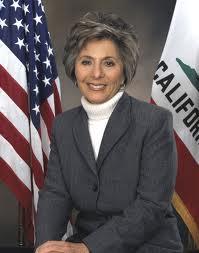
I’m glad Sen. Barbara Boxer, along with Sens. Patty Murray and Jeanne Shaheen, are supporting the Obama administration’s decision to mandate contraceptive coverage at Catholic hospitals. I read the Wall Street Journal editorial denouncing it as an assault on religious freedom, and I think there’s something that is too easily overlooked here.

Religious institutions like the Catholic Church are not just churches these days; they’re major employers and the operators of major health-care facilities that are intertwined with insurance companies. And for a lot of employees and patients, there isn’t any choice.

People who work for the hundreds of nonprofit social-service agencies run by the Catholic Church aren’t necessarily Catholics, or even religious. They might be receptionists, or janitors, or computer systems operators, or counselors who needed a job and happened to get hired by an agency that needed their (secular) skills. Jobs are hard to come by these days; a person who works in an administrative job at a Catholic nonprofit and is trying to pay the rent and support a family may not have the option of simply leaving because she doesn’t agreed with the Church’s position on birth control. She’s got a health plan paid for by her employer, just like most of the rest of us, and if that plan doesn’t cover contraception, she’s SOL. It’s not fair.

My health-insurance plan recently decided not to do business any more with Brown and Toland medical group and instead contract with Hill Physicians. I had nothing to do with that decision, which was based on some financial negotiations around reimbursement rates that were entirely out of my control, part of an ongoing fight between major hospital groups, physician groups and insurance companies that leave patients entirely out of the loop.

So I had to leave the doctor I’d been seeing for many years (who was a member of Brown and Toland and affiliated with the Sutter-owned California Pacific Medical Center) and I was reassigned to a new doctor, who is a member of Hill — and because of economic issues that have nothing to do with religion, my Hill doc is affiliated with Catholic Healthcare West. So now any major medical treatment I need is at St. Mary’s, or St. Francis, or Seton — all excellent hospitals, and I have no complaints. My new doctor is great, and frankly, the medical staff who are part of what happens to be a Catholic Church affiliated hospital chain aren’t a whole lot different from the medical staff at the secular CPMC — skillful, devoted, caring, and so far as I can tell, entirely free of any type of evangelism. I have no idea what, if any, religious affiliation the doctor who patched my broken hand back together last year had; it wasn’t an issue. Who cares?

But still: It’s a Catholic hospital chain. With all the issues that creates. And it’s part of the city’s public-health infrastructure. A lot of us didn’t choose a religious-based medical center; our insurance company did that for us.

Catholic Healthcare West just changed its name to Dignity Health, apparently for marketing reasons (interesting that they chose the name of a longtime group of gay Catholics) but according to the group’s website:

All of our Catholic hospitals, as well as those that may join the system at a later date, will continue to be Catholic and follow the Ethical and Religious Directives for Catholic Health Care Services (ERDs).

Among the rules that guide those ERDs:

First, Catholic health care ministry is rooted in a commitment to promote and defend human dignity; this is the foundation of its concern to respect the sacredness of every human life from the moment of conception until death. … Catholic health care does not offend the rights of individual conscience by refusing to provide or permit medical procedures that are judged morally wrong by the teaching authority of the Church.

I’m all for religious freedom. But under our current healthcare system, a lot of people have no choice as to their employer or their health-care system. And as long as that’s the case, I don’t see why the Church (which has to pay payroll tax on its employees and abide by the state’s employment laws) shouldn’t fall under the same health-insurance rules as everyone else.


Plastic bags banned from all SF stores

12

The Board of Supervisors voted to expand a 2007 ban on plastic checkout bags to cover all retail and food establishments.

The law bans all businesses from providing plastic bags to customers. It also requires a ten cent fee for paper bags, to be pocketed by the store. With the ban, only paper bags, compostable bags, and reusable bags will be permitted at checkout. The city hopes to encourage shoppers to carry reusable bags.

Supervisors acknowledged that this ordinance could create confusion and inconvenience for business owners.

Many supervisors, notably Chiu and Weiner, emphasized that in the past few months they had done outreach in their districts, explaining the bill at open forums and neighborhood association meetings, and getting community feedback.

Two amendments– an exemption of certain items, such as fresh flowers, bulk candy and loose nails, and a cap of the paper bag cost at ten cents- -were the were results of community feedback.

With the amendments, the ban passed unanimously, with ten votes (Supervisor David Campos was ill and not in attendane.)

Melanie Nutter, Director of the city’s Department of the Environment, helped lead the outreach efforts.

“I am pleased. The legislation being considered today will encourage customers to reuse their bags. This will dramatically reduce the impact of hundreds of millions of disposable bags currently in use in our city. These bags end up on our streets, in our bay and oceans, and in landfills,” said Nutter.

The most notorious effect of plastic pollution on the Pacific Coast is the “Great Pacific Garbage Patch,” a floating conglomeration of trash that has been known to kill marine life and has been a target of environmental concern.

The ban will take effect Oct. 1.

Nutter said that the city is looking into a bag giveaway program to ease access to reusable and compostable bags for consumers and businesses. She added that, for businesses that are not able to use up their inventory of plastic bags by Oct. 1, some exemptions to the implementation date may be made.

Original legislation to ban plastic bags from grocery stores and chain pharmacies passed in 2007.  Since, several California cities have followed suit, including Malibu, Palo Alto, Los Angeles, San Jose and Long Beach.

“Now, it’s time for San Francisco to catch up and continue to show environmental leadership,” said Supervisor Christina Olague.

The marriage decision, for better and for worse

7

The Ninth Circuit Court of Appeals judges cited both Groucho Marx (“marriage is a great institution, but who wants to live in an institution?”) and Marilyn Monroe (what if the movie was called “Who Wants to Enter Into a Domestic Partnership With a Millionaire?”) in discussing the importance of the word “marriage.” Justice Stephen Reinhardt’s ruling made clear that the only purpose of Proposition 8 was to “lessen the status and dignity of gays and lesbians in California.” The decision makes clear that the law against same-sex marriage is by its nature discriminatory.

But in the end, the ruling was very narrow. If you read the entire decision, it’s not a sweeping affirmation of the legal rights of Americans to marry the person of their choice. The court basically concluded that California voters had no legal right to take away marriage rights that had previously existed. Since the state Supreme Court had granted marriage equality, and 18,000 people got married before Prop. 8 passed, the ballot measure was in fact a reduction in rights, which, the court said, requires a different level of scrutiny and analysis.

The Chronicle calls it a “wise decision,” but in political terms, it’s a bit wimpy: It stops far short of where Judge Vaughn Walker went in his original ruling on this case, which essentially said that marriage is a fundamental right for all.

The good news: If the ruling stands up, same-sex marraige will be legal in the state of California. The bad news: If the ruling stands up, it’s likely that it will apply only to California.

But that could be good news in a sense, too. Here’s why.

The proponents of Prop. 8 are going to appeal to the U.S. Supreme Court. Everyone knows that. And if the 9th Circuit had come out with a sweeping ruling stating that the right of gays and lesbians to marry is fundamental and can’t be abridged under any circumstances, it’s almost certain the the Supreme Court would hear the case. That might be wonderful; the Supremes could come down with a decision like Brown v. Board of Education  that forever changes the civil rights landscape and ensures full equality for the LGBT community in every aspect of society.

On the other hand, I worry that if this current Supreme Court heard Brown, five members might have sided with the Board of Education.

In other words, there are four very conservative justices who could easily proclaim the sanctity of heterosexual marriage in a ruling that would set us back years — and depending on how Justice Anthony Kennedy was feeling that day, he could go either way. So giving the current Supreme Court a chance to rule on the larger issue was, and is, risky. Now, Justice Reinhardt’s decision repeatedly cited a case that Kennedy had personally written, the 1996 Romer v. Evans, which would have made it harder for the swing judge to reverse the 9th Circuit — but you never know.

As it is, there’s a good chance now that the High Court will just take a duck. That would mean that same-sex marriage was restored to legal status in California (and there’s no way that another Prop. 8 will ever pass in this state, ain’t happening, don’t waste your money, bigots — this train is only going in one direction, and the population has already changed enough that same-sex marriage would easily win at the polls). And it will be legal in eight other states and D.C., and the movement will continue and in a few years, it will be legal everywhere, without the U.S. Supreme Court making the final call. (Or Kennedy will retire and Obama will be re-elected and it won’t matter because the Supreme Court will no longer have a troglodyte majority.)

And even if the court takes the case, it’s possible that Kennedy would go along with the narrow ruling (Reinhardt has been around a long time and he’s no fool — he knows who his audience is on a final appeal, and it’s one Supreme Court justice). It’s possible Kennedy might agree that you can’t take away existing rights, which would be good news for California and not terrible news for the rest of the country.

That’s the cautious approach. I’m the sort who usually wants to push issues as far as we can (wouldn’t a showdown over the defining LGBT issue of the day at the Supreme Court be exciting? Wouldn’t it be amazing to see Justice Scalia try to argue, in 2012, that it’s okay to deny marriage rights to lesbians and gay people?) And I believe that both the legal and political ground is shifting fast on this issue and we might get a grounbreaking Supreme Court decision the way we did in Lawrence v. Texas. But the downside is potentially huge.

So while I was disappointed in the rather limited scope of the decision, I suspect a lot of the lawyers who support marriage equality are quietly pleased. This is a big victory, and it might actually last.


San Francisco celebrates same-sex marriage ruling

30

While the usual procession of heterosexual couples beamed as they said their wedding vows on City Hall’s Grand Staircase this morning, a historic celebration took place in the South Light Court: hundreds applauded the announcement that same-sex couples are a big step closer to achieving equality in the basic right to marry.

The Ninth Circuit Court of Appeals held today that Proposition 8, which eliminated same sex marriage rights for couples in California, violates the Equal Protection Clause of the U.S. Constitution.

The court ruled that Prop. 8 served no purpose but to discriminate against one class of people, and the Constitution does not allow for “laws of this sort.”

The ruling specifically addressed the arguments advanced by proponents of Prop 8 that gay marriage would interfere with childrearing and religious freedom in the state.

“All parties agree that Proposition 8 had one effect only. It stripped same-sex couples…of the right to obtain and use the designation ‘marriage’ to describe their relationships. Nothing more, nothing less,” the judges wrote.

The ruling does not mean that marriage licenses will immediately be issued to same sex couples. A stay on the ruling has not been lifted. But the stay could be lifted in as early as 21 days from now. But more probably, it will take months or even years; the case is likely to go to the U.S. Supreme Court.

Chief Deputy City Attorney Terry Stewart – the lead attorney that defended San Francisco’s 2004 decision to issue marriage licenses to same-sex couples, which later triggered the Prop. 8 campaign – said the city is eager to see marriage equality, and that “city mechanisms and machinery stand ready to do whatever we can to expedite the process.”

The decision was based partly on logic that, since LGBTQ Californians already have parental rights and the right to domestic partnerships, denying them the right to marry could not be rationalized. City Attorney Dennis Herrera said that this is a “narrow decision,” meaning that if the Supreme Court upholds the ruling, it would apply only to California.

There remains a possibility that the Supreme Court will reject the case, and in that situation the Ninth Circuit decision striking down Prop. 8 would take immediate affect.

Members of the Bay Area coalition of Welcoming Congregations were present at the announcement.

“I’m jubilant,” said Rev. Roland Stringfellow of the Pacific School of Theology in Berkeley. “When it comes to equality, this is something we preach.”

He adding that his church had been performing same-sex marriages since the 1970s, and that he eagerly awaits legal recognition of his own union with his partner.

Sup. Scott Wiener acknowledged, “the fight is not over yet.”

But he said, “Every so often we get a court ruling that reaffirms our faith in the judicial system…this is a time for us to come together and celebrate.”

California political leaders issued several statements praised the court’s decision.

“The court has rendered a powerful affirmation of the right of same-sex couples to marry. I applaud the wisdom and courage of this decision,” said Gov. Jerry Brown.

Mayor Ed Lee issued a statement saying:
“I celebrate the decision by the Ninth Circuit Court today. This is a great day for marriage equality and a great day for California families. The Court affirmed today that there is nothing in the Constitution that allows discrimination and we are on our way to protecting the fundamental rights of everyone in our State. And, we will continue the fight until everyone is treated equally.  

“San Francisco stands ready to begin marrying same sex couples, and we remain as deeply committed to the fight for marriage equality today as we did nearly eight years ago when then Mayor Gavin Newsom started one of the most important civil rights issues of our generation to ensure equality for all.

“I would also like to acknowledge the tireless work of our City Attorney Dennis Herrera and his team in defense of marriage equality and the California Constitution these last eight years. Together, we will take this fight all the way to the nation’s highest court, if necessary.”

Conflicted Chron buries the lead in city corruption case

67

UPDATE 2/15: READ OUR CURRENT STORY ON THE CASE HERE. The San Francisco Chronicle’s Matier and Ross love to poke snarky fun at progressives such as Matt Gonzalez, as they did again today when they wrote about his work on the Cobra Solutions vs. San Francisco case, for the second time. But they waited until the last paragraph in this second-to-last item in their column to reveal the real news: Mayor Ed Lee was deposed in the case last week and may be called as a witness.

Wow, talk about burying the lead. Here you have a sitting mayor implicated in a major corruption scandal – acting on orders from then-Mayor Willie Brown, who last year helped elevate Lee into Room 200 (and who just happens to write a weekly column for the Chronicle) – in a case that could cost city taxpayers $16 million.

The Chron hasn’t really covered the substance of the case, but Guardian readers may remember our investigative report on it last year. That’s when we unearthed evidence that Ed Lee, who was the city purchaser at the time, approved a fraudulent city contract – overruling city staff in the process – allegedly on orders from Brown.

It’s a complicated case and a long story well worth reading, but essentially it involves a company called Government Computer Sales Inc. (GCSI) that had ties to Brown. It’s accused of improperly getting a multi-million-dollar city contract with Lee’s help and then soliciting kickbacks from its subcontractors, including Cobra Solutions.

Cobra claims it didn’t know payments to GCSI were kickbacks and that it was damaged by the accusations and being frozen out of its city work by the City Attorney’s Office (under Dennis Herrera, who has his own interesting conflicts in the case). Also implicated in the case are SFPUC Director (and then-Controller) Ed Harrington; Monique Zmuda, still a top official in the Controller’s Office; and Steve Kawa, the chief-of-staff for Lee, Brown, and Gavin Newsom, and a powerful player at City Hall.

In a deposition, a city computer operations manager named Deborah Vincent-James testified that she and other city staffers knew GCSI was a fraudulent company, but that they were placed in the Computer Store (a list of qualified city contractors) to do work for the Department of Building Inspection on orders from above: “[Lee] was directed by the Mayor’s Office and told to do an evaluation process. They evaluated them. They were put in the store.”

UPDATE 2/7: Mayor Lee took the witness stand in court yesterday, where he was questioned by attorney Whitney Leigh about overruling staff to certify GCSI, which the City Attorney’s Office has deemed a fraudulent company that has since left town and evaded justice. More on what he said later.

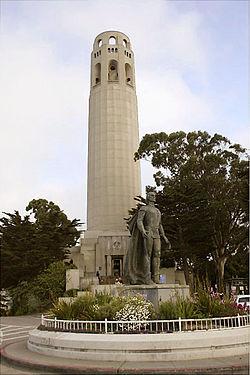
Coit Tower battle: How do we fund the parks?

59

The emerging battle over whether San Francisco should allow private parties at Coit Tower is really part of a much larger political debate: How do we fund public parks? Is public space something that resources are put into, something that’s paid for by tax money and preserved and made available for everyone — or should part of the role of parks be to generate cash?

The Republicans in Congress, with the help of San Francisco’s own Rep. Nancy Pelosi, came down clearly on the side of self-funding around the Presidio, and it’s been a disaster.

I have friends who work at Rec-Park, and they tell me that at least the new revenue initiatives have prevented layoffs and kept some programs going. Which is true. But it’s the wrong question.

Parks are public commons. They’re not supposed to be private space (yeah, they rent out space for weddings in the park, but that’s a pretty minor deal). The city ought to be funding the parks. The city ought to be raising taxes enough to do it. Yeah, I know — you’re bored. I’m tired of saying it, too.


Bronstein and mergers are not what local journalism needs

11

Local, independent, public interest journalism – which is what Warren Hellman sought to create by founding the Bay Citizen in 2009 – could be undermined by a proposed merger between that newsroom and the Center for Investigative Reporting (CIR) under the leadership of former San Francisco Chronicle Editor Phil Bronstein.

It is unseemly that Bronstein is claiming support for the idea from Hellman, who died in December, making comments to the Bay Citizen that misrepresent Hellman’s intentions. How do I know? Because I spoke with Hellman about his concerns about the Bay Area media landscape and what it needed several times before he announced its creation – a story that I broke on the Guardian website, scooping this incipient newsroom and others by a day.

“We’re forming a new media news center. Basically, it will be a not-for-profit 501c3 that will be source of Bay Area news,” Hellman said in that article. “It will focus on local news events, including politics and the arts, the kind of thing that is just dying at the Chronicle.”

That interview was a culmination of conversations that I’d had with Hellman on the subject for more than a year. He thought the Chronicle was doing a terrible job at covering the city – a legacy that began under the leadership of Bronstein, who was always more concerned with high-profile projects that might win awards and with expanding the paper’s reach and focus into suburbia than the bread-and-butter local coverage of issues and events that were important to San Franciscans.

In his comments to Bay Citizen, Bronstein (who has not returned our request for comment) cynically leaves the impression that Hellman would have supported his takeover bid, and that what he wanted was a combination of investigative reporting and quirky features like “Rascal of the Week, Crook of the Week, hilarious stuff.”

He might as well be describing the Chronicle, which was not what Hellman was seeking to duplicate. Nor was he pursuing the CIR model of using philanthropy and grants to fund journalism projects that would run in the Chronicle and other mainstream newspapers. No, what Hellman wanted was more media outlets with less dependence on advertising revenue, not to simply subsidize a newspaper that he thought was lacking.

Frankly, this whole proposal is very suspicious. Bronstein officially left Hearst Newspapers, which owns the Chronicle, just last month to play an unspecified new role at CIR, where he sits on the board. He and other Chronicle brass opposed and belittled the Bay Citizen when it was created, but since then, the Bay Citizen has been real bright spot on the local media landscape, often scooping the Chronicle on important stories that run in the New York Times, for which BC supplies content. And now, Bronstein wants to execute a deal that would potentially kill that competition.

I’m really not sure what’s going on at the Bay Citizen these days, or why all its top brass seems to be jumping ship. But it’s clearly not all bad. The departure of top executive Lisa Frazier – who consulted on BC’s creation and then gave herself a ridiculously high salary – seems like good news, at least for BC’s bottom line. I acknowledge that some kind of change might be needed.

But whatever happens, it should be about maintaining and improving strong local news coverage. The BC board only has one token journalist on it, and that’s not a good sign. CIR does good work and has a good journalistic ethos, but its board should realize that merging with BC (and cutting almost $2 million from their combined operations, as Bronstein is reportedly proposing) is bad for local journalism and bad for San Francisco.

Corporate journalism is the problem to which nonprofit journalism was the supposed antidote. That was Hellman’s vision. But we’re all in trouble if this experiment gets co-opted by a longtime Hearst company man, the very person who undermined local coverage and public interest journalism in the first place, a corporatist with a history of undermining competition with his illegal Chronicle-Examiner JOA, his backroom deal with Media News Group, and other bottom line tactics.

That’s bad enough, but to falsely invoke the spirit of the recently deceased to justify it, that’s just disgusting.

Some reality about the jobs report

6

The Obama Administration is thrilled with the new employment figures, and it’s clear the president will use this as a key part of his campaign (as long as the recovery keeps going and doesn’t sputter again). The Republicans, of course, are complaining that it’s not enough, that “we could do better,” but that sounds awfully hollow and fits into the narrative that the GOP doesn’t want anything to improve this year because the entire goal of the party is to defeat Obama in the fall.

But really, while it’s encouraging, the new unemployment figures are still bogged down by two things: The labor force is growing faster than the nation is creating jobs — and layoffs in the public sector are still a drag on the recovery.

There’s a pretty good analysis on DailyKos, talking about the labor force issue. But there’s more: Among people without a college education, the jobs picture is still really bleak. Same for people who have been unemployed for a while now and for youth. I could go on and on about the failure of trickle-down spending, but the reality is that the economy is still far too top heavy to all for a real recovery. Income inequality isn’t just a political and moral issue; it’s an economic downer. The U.S. economy depends overwhelmingly on consumer spending, and since all of the new new wealth of the past 20 years has gone to the very rich, most consumers don’t have enough money to spend enough to keep the economy buzzing. And a few new IPOs that make a few more people rich isn’t going to solve the problem.

Note that the one sector of the economy that is still losing jobs is government. That’s a result of low taxes that can’t fund public services (and can’t provide the generally decent unionized jobs, including jobs for people without college degrees, that exist in the public sector).

I was intrigued by the Congressional Budget Office report comparing federal and private-sector workers, which the Republicans (and, I’m sure, some of my beloved trolls on this blog) will use as evidence that government is bloated and public-sector workers are overpaid. But that’s not exactly what the report says:

CBO found that those without a college degree fared better as federal employees, since their pay was 36% higher than that of private-sector employees–particularly when it came to benefits. Those with advanced degrees such as doctorates, however, were generally better off in private industry, strictly from a monetary viewpoint–government pay was 18% lower than that of comparable individuals in the private sector.

In other words, federal pay is a lot more like the private sector used to be, back before the United States became one of the most socially stratifed societies in the developed world. The folks at the bottom do better, and the folks at the top don’t get as rich, and the gap between the highest paid and the lowest paid is a lot smaller.

Which is one reason that Republicans hate public-sector unions and government employment — it’s better for the 99 percent.

A new district elections map

6

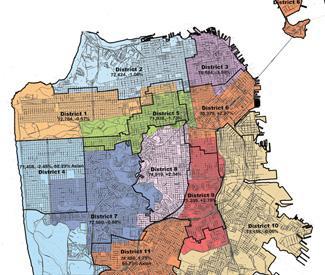
There’s only about a month left before the Redistricting Task Force starts to finalize a new map for supervisorial districts in San Francisco. You can look at the draft map the task force is working on here. The Guardian held a forum on the topic Jan 26 and that’s lead to an alternative community map, which is here. The group that worked on the draft community map is continuing to meet, and I’d love to hear more feedback on it. You can email comments to map@sfbg.com or just post them as comments here.

Presidio Trust gets sued — for good reason

14

The Sierra Club and the Presidio Historical Association have filed suit in federal court charging that the Presidio Trust violated environmental laws when it approved a new luxury hotel for the Main Post area.

The suit reflects the essential problem of the semi-private trust: When you force a national park to make enough money to pay its own way, and you stock the governing board with people who think like real-estate developers, then you create the near inevitability of serious problems.

The complaint, filed by lawyers at the Stanford Environmental Law clinic, argues that the construction of a 95,000-square-foot hotel, consisting of 14 buildings, “will degrade the historic, cultural, and aesthetic values and character of the main post, in direct violation of the duty imposed on the Trust by the National Historic Preservation Act.”

The suit also challenges the adequacy of the environmental impact statement the Trust prepared on the proposal.

The whole idea of a luxury hotel in an urban national park is a bit odd — but then, so is the idea of an 850,000-square-foot commercial office building owned by George Lucas’s outfit and built with a $60 million tax break.

That’s what privatization inspires. That’s why the entire foundation of the Presidio Trust and the law that created it are so fundamentally flawed.

In the meantime, we have this fancy hotel, which ought to go the way of the Fisher museum. It’s so clearly inappropriate for the site (which, by the way, is one of the most important historic sites on the west coast) that it’s hard to imagine how it got this far. (No it’s not — the Presidio Trust is a real-estate development outfit, not a national parks outfit. I keep forgetting.)

So now maybe this lawsuit will stop it in its tracks. Maybe at some point Congress will realize that national parks aren’t supposed to pay for themselves (shall we sell naming rights to the Grand Canyon to Disney?) and repeal the Presidio Trust Act. In the meantime, thanks to the folks who are trying to keep the damage under control.

Santorum lives for donuts and venison

0

I love Bad Lip Reading. And the Rick Santorum ad is the best one ever.

We are all homosexuals.

The big fat chick stunk … like beef.

I hold it like it’s a fancy fist for joy.

I had some porn, and I swore, and some weird witch gagged me.

I’m living for donuts and venison.

The first time I drank I had my shoes under my arm.

Diarrhea is OK.

Check it out.