• No categories

Politics Blog

Journalists express doubts about nonprofit media merger

2

Will the Bay Area’s two biggest nonprofit newsrooms — Bay Citizen and the Center for Investigative Reportingmerge and what would that mean for local journalism? While we await votes as soon as next week on the first part of that question, I explored the second part in last week’s Guardian. But for the old-fashioned reason of limited space in the paper, I couldn’t use another set of interviews that I’d gathered for the story at the recent launch party for San Francisco Public Press’ sixth print edition.

In many ways, the Bay Citizen and Public Press are mirror images of one another. Both pursued the nonprofit, noncommercial, reader-supported model for doing local journalism with an emphasis of media partnerships. But while the Bay Citizen tapped wealthy benefactors to fund well-paid leadership and full-time reporters, the Public Press has been a labor of love put out on a shoestring budget largely with volunteer labor, although its journalists are now getting small stipends.

I played a role in the launch of both newsrooms. In 2008, I was one of the founding board members of the Public Press, working with director Michael Stoll (the Examiner’s former city editor and a current journalism professor) to help launch the project and hire its first paid editor, consulting with them periodically thereafter. I had also developed a good working relationship with billionaire financier Warren Hellman and helped spark his interest in reversing the decline in local journalism, which led to Hellman’s founding the Bay Citizen with $5 million in seed money in 2009. Before that, I helped set up a mutually beneficial meeting between Hellman and Stoll (Hellman got some good advice for his project while the Public Press soon secured its first $35,000 grant from San Francisco Foundation, run by Hellman’s family).

Yes, the journalism community in the Bay Area seems just that small at times and – despite our fiercely competitive impulses at times – we all have an interest in promoting good reporting on local institutions. It’s just something we believe in, and something that we don’t like entrusting to the big, out-of-town corporations that own the San Francisco Chronicle and Examiner.

So, as Stoll and his Public Press colleagues celebrated their latest print edition – a solid effort featuring investigations of human trafficking that go beyond the hype of activists and pandering politicians, as well as follow-ups on their last issue’s coverage of Healthy San Francisco – at Booksmith on Haight Street, I asked what they thought of the proposed merger.

“Hopefully the marriage of the two will be better than either of them are independently,” Stoll said.

He praises the statewide work CIR has done under director Robert Rosenthal, a respected journalist, but it hasn’t helped fill the gaping hole in Bay Area journalism created by years of media mergers and layoffs. And while Stoll thinks Bay Citizen has done some good work, it hasn’t had the local impact one might expect with a $17 million budget over the last three years.

“If I had the millions of dollars they had, I would have done some things differently,” he said.

Praveen Madan, who owns Booksmith and has worked as an editor for Public Press, is even more critical of Bay Citizen, calling it a “misguided philanthropic activity” that lacks the independence journalistic outlets need to be credible and effective.

“It’s about public education,” Madan said, calling the proposed CIR-Bay Citizen merger “a terrible idea.” Madan has been in the business world for 20 years and has consulted on mergers and acquisitions, and he said that 60 percent of mergers fail, usually because of differences in the culture and values of the entities. And he said media mergers are an especially bad idea.

“Independent media means you need lots of independent organizations reporting on the community,” Madan said.

He also criticized the proposal that the merged newsrooms would be led by Phil Bronstein, who ran the Examiner before taking over as editor of the Chronicle when Hearst Corp. bought it. “He is the person who presided over the failure of the Examiner,” Madan said.

Stoll agrees that Bronstein could be problematic as a leader, if for no other reason than the symbolism: “He has had such an influence on the quality of journalism in San Francisco that it’s tough to distinguish between him and the problems we’re trying to address.”

Public Press Publisher Lila LaHood also expressed reservations about Bronstein and the merger: “One runs the risk of having one voice homogenizing both the corporate and nonprofit journalism in San Francisco.”

When I asked Bronstein about that issue for my last article, he said, “I don’t know that I’m the best person to take it over. That’s something other people should determine, not me.”

But Stoll thinks the merger itself might help each entity make up for the others’ shortcomings. “If CIR can provide the leadership that the Bay Citizen has been lacking, and if Bay Citizen can provide some of the magic and capital that the Bay Citizen had, it may work,” Stoll said.

“They’re going through a lot of changes and permutations, and who knows what their future is,” Stoll said of the Bay Citizen.

Its funding model has been working well, but it doesn’t seem to have a guiding vision of the role that it wants to play in San Francisco or the kind of journalism that the city needs. And for Stoll’s crew, the problem is how to find the resources to fund the community-based journalism they believe in.

“We had a vision and we still have that vision, but the goal is not as close at hand as it seemed four years ago when we started this,” Stoll said. “If it’s not sustainable, it’s not going to help anyone.”

But, like Bronstein and Rosenthal both told me, Stoll said it’s important that these conversations and efforts are taking place because of the important role journalism plays in this country and in the Bay Area: “We’re all trying to do something to keep journalism alive and keep public service journalism alive.”

Sorting out the America’s Cup re-do

8

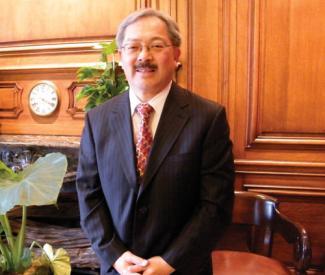
I have to say this for Mayor Ed Lee: He’s not so stubborn or egotistical. He’s willing to listen. And when something really, really doesn’t make sense, he’s willing to let it slide.

Not like Gavin Newsom.

If Newsom were still the mayor (ick! gasp!), he’d be desperately trying to keep together the deal that gave five pieces of the waterfront to the sixth richest person on Earth for more than two-thirds of a century. He’d refuse to admit that maybe the promises of vast wealth accruing to the city from what’s really an untested event might be a little lower than projected. He’s be sucking up madly to Larry Ellison, promising him more and more city money if only His Larryness would bestow the greatness of his hotel, restaurant and condo manna upon us poor lowly San Franciscans.

The current mayor has a little more sense. But then, I don’t think Ed Lee spends much time dreaming about the Oval Office.

So now that Ellison’s team realized they weren’t going to be guaranteed enough of a profit on waterfront development and Lee realized that giving away any more of the store, or rushing this through any faster, was bad for the city, we have a deal that’s based on San Francisco hosting a sports event, not on extensive real-estate development on the waterfront. It’s better than it was, and I give the mayor credit for that.

But a few things are worth remembering:

The proverbial devil is in the proverbial details, and right now they aren’t so proverbial. There’s the minor matter of about $15 million worth of upgrades and repairs to the waterfront that’s needed for the race — and the city’s on the hook for it. Right now, it’s not clear where that money’s going to come from.

One option: The city could go back to giving Ellison some property or development rights. The Chron quotes Jennifer Matz, the mayor’s economic development director, saying that the rights to Seawall Lot 330 are still on the table (bad, bad idea). Stephanie Martin, spokesperson for Ellison’s operation, told me there are no long-term development plans included at all. Maybe the city will just pay cash from the General Fund to Ellison (seems unlikely; I’d love to watch that Budget and Finance Committee meeting.) Maybe the Port will sell revenue bonds and pay Ellison out of the projected new income from the event.

Or maybe some other deal that will be bad for the city and good for Larry will emerge, and we’ll all have to fight that one.

I realize that, if the attendance figures are anywhere near what’s projected, the city will still wind up millions of dollars to the good.

But I still don’t understand: Why are we paying Ellison to hold his race here? Yeah, it will bring tourists to the city — but as former Sup. Aaron Peskin points out, we don’t pay the Navy to bring Fleet Week and the Blue Angels to town. If anything, we should be charging these folks for the right to use so much public property for their own commercial gain. (Yes, the America’s Cup involves commercial gain. Ellison does it because he loves yacht racing and likes to win shit, but you don’t think that giant Oracle logo in 80 million pictures in newspapers and on TV isn’t worth a whole lot of money?)

Why isn’t a guy who counts as one of this generation’s great industrialists, with a fortune rivaling the Rockefellers and the Morgans and that gang, donating anything at all to San Francisco? Those old robber barons built libraries and museums and stuff for the benefit of the public. Come on, Larry — step up and help out here. Do the race, defend your Cup, then give something back to the city instead of asking the taxpayers to cover your tab.

PS: I read Randy Shaw’s attack (if that’s what this odd little piece was) on Aaron Peskin, and I wonder — what’s wrong with being a maverick who works from the outside to try to defend the city’s interests? I don’t always agree with Peskin (see: Home Depot) but I can tell you: There are a lot of people inside City Hall who are really, really happy that he’s out there doing what he’s doing. If nobody on the outside was taking on the America’s Cup deal, the city would absolutely be worse than it is. Peskin’s trying to save the city money. Why is that a bad thing?

Here’s what made me really laugh, though: Shaw criticizes Peskin for failing to support Malia Cohen and Jane Kim for supervisor, saying that he could have been mayor if he’d been working for candidates who ended up winning. Huh? Don’t progessives usuall go after pols who sell out their principles for political gain? If Peskin thought that Debra Walker and Tony Kelly would be better supervisors than Cohen and Kim, shouldn’t he be working for them instead of thinking about his own political future?

Odd where Randy Shaw is going these days.


Cole Hardware pleads guilty in SFPUC scam

1

We at the Guardian have long celebrated small businesses as more beneficial to San Francisco than large corporations, which often extract wealth from the community and use it for competitive advantage or political corruption. But a recent criminal case shows that even a beloved local business – in this case, Cole Hardware – can get caught up in shady dealings.

The District Attorney’s Office yesterday announced the settlement of a procurement scam case involving the San Francisco Public Utilities Commission (SFPUC) and employees of Cole Hardware. The company pled guilty to felony charges and has agreed to pay $51,545 in restitution to the SFPUC and $650 in court fines and fees.

“Our city will not tolerate city vendors who steal taxpayers’ money. We are pleased Cole Hardware has accepted responsibility for their role in this multi-level scheme to defraud the SFPUC,” District Attorney George Gascón said in a public statement.

Court records detail a scam that ran from April 2003 to October 2007 in which Cole Hardware and another city vendor worked with former SFPUC manager Donnie Alan Thomas – who pled guilty to his role in the scheme last year – to submit false invoices to the SFPUC for personal purchases.

Cole Hardware has issued a public statement explaining its role in the case and reasons for accepting the guilty plea: “For more than 50 years, Cole Hardware has stood for integrity, excellence and good citizenship in San Francisco. Unfortunately, a few years ago two trusted 20+ year employees submitted misleading invoices to the City, thereby facilitating a fraud by some of the City’s P.U.C. workers. At the time, Cole Hardware’s ownership was not aware of this misconduct. When we learned the details we terminated both employees, fully cooperated with the District Attorney’s investigation, adopted new internal policies to prevent future misconduct and offered to reimburse the City for any losses attributable to our employees. Sadly, after more than two years of huge expenses fighting the charges in court, Cole Hardware has reluctantly accepted a plea bargain. This is purely an economic decision. Cole remains committed to our mission of serving those living and working in San Francisco.”

SFPUC General Manager Ed Harrington noted in his public statement how important it is to take a hard line against this kind of fraud: “Today we have sent a strong message that the City will not tolerate public servants or vendors who attempt to fleece our hardworking taxpayers.”

There are six other co-defendants who have already pled guilty in this case: Donnie Thomas, Jean Quiroz, Centennial Distributors, Inc., John Rauch, Robert Mazariegos, and Vincent Padilla. There are three other co-defendants who have not yet pled guilty and who await their preliminary hearing: Miles Bonner, Tri-Delta Electric, and Elizabeth Bradford.

Dramatic change in the America’s Cup deal

25

Mayor Ed Lee has announced dramatic changes in the deal for the America’s Cup race, essentially eliminating the massive real-estate development contract with Oracle CEO Larry Ellison.

Under the new agreement, the city will work with Ellison to host the race — but that’s about the beginning and the end of it.

“There is no long-term development,” Stepahnie Martin, spokesperson for the America’s Cup Event Authority, told me.

The previous deal, set for a Board of Supervisors vote Feb. 28, has been scrapped, so there won’t be any board action tomorrow, Judson True, an aide to Board President David Chiu, told me.

That deal would have given the world’s sixth richest person a swath of valuable waterfront property, with 66-year leases and development agreements, in exchange for Ellison investing millions in renovating the aging piers.

But criticism over what some called a huge giveway of public land was diverting discussion of the yacht race and threatened to undermine the city’s ability to serve as the venue host. Some supervisors were demanding more guarantees that the city wouldn’t lose money on the deal, and Ellison’s team was unwilling to budge.

In a Feb. 27 press release, Lee announced that the teams will be building a race village at Piers 27-29 and consolidating the boat launching facilities at Pier 80, on the southern waterfront. The race village will be temporary, and when the yachts leave, Ellison won’t have title to that property.

He won’t have title or development rights at Pier 80, either, and the plan to let him build on Piers 30-32, 26 and 28 as well as a lot across the Embarcadero appears to be dead.

So the America’s Cup is moving back to what it should be — a sporting event, a race on the Bay, and not some bloated development agreement that involves leases lasting more than half a century.

It’s still not clear how this happened — except that the numbers clearly weren’t working out for either side. The scaled-back agreement prevents the city from losing a fortune if the race doesn’t draw the anticipated crowds, and protects Ellison from losing money on waterfront development plans that regulators (including the Bay Conservation and Development Commission) might never have approved.

The city will still pay the ACEA about $16 million to fix a few things necessary to make the race work, and it’s not clear where that money will come from,

Aaron Peskin, a leading critic of the old deal, told me he’s cautiously optimistic. “It sounds promising, we’re getting this event down to the proper size,” Peskin said.

But he said that he hasn’t seen a written agreement “so it’s hard to tell what is and isn’t still in the deal.”

No mattter what the final agreement looks like, it’s clear that Ellison’s control of the future of the central waterfront has been radically reduced. And it’s clear that the deal former Mayor Gavin Newsom cut with Ellison wasn’t going to work for the city.

It also showed something that I’ve seen over and over again in these city deals with private parties: If the public refuses to go along, most of the time the Larry Ellisons of the world — the same people who insist they won’t move an inch and that the deal can’t be changed — will eventually back down.


Video admitted in Mirkarimi trial

90

A videotape and related statements that the prosecution said was critical to the domestic violence case against Sheriff Ross Mirkarimi will be admitted at a trial set to begin Feb. 28, Judge Garrett Wong has ruled.

The ruling allows prosecutors to show the roughly 50-second video in which Mirkarimi’s wife, Eliana Lopez, tearfully recounts the incident of New Years’s Eve, 2011 and shows a bruise on her arm.

“Without this evidence we have no legal recourse to completely move forward with this case,” prosecutor Elizabeth Aguilar-Tarchi told the judge, reflecting what observers have been saying for weeks: The case against the sheriff could hinge on how the trial judge interprets a complex part of the state’s Evidence Code.

At issue is whether a statement that would normally be excluded as hearsay can be allowed in court as a “spontaneous or excited utterance” — a statement made after a crime when a victim or witness hasn’t had time to reflect on the events or plan to fabricate or alter the story of what happened.

In this case, the video was made a day after the alleged violence, and Mirkarimi’s lawyer, Lidia Stiglich, argued that it was carefully scripted and staged for reasons that had little to do with Mirkarimi’s specific behavior the day before.

In fact, she said, Lopez and Ivory Madison, a neighbor who made the video, discussed how the information would only be used if Mirkarimi and Lopez divorced or had a custody fight over the couple’s two-year-old son, Theo.

Lopez was hardly still excited or emotional over the incident, Stiglich said: “There is evidence that Ms. Lopez went shopping, made phone calls, including two calls to Ms. Madison, and texted [Madison’s] husband.”

The video, Stiglich argued, “was the antithesis of a spontaneous statement” — it was made after Lopez had a day to calm down and was made specifically for evidence in a child-custody case, the attorney noted.

But Aguliar-Tarchi insisted that Lopez was sufficiently emotional that the time frame wasn’t the central issue — and Judge Wong agreed. “Time is a factor to consider, but not determinative,” he said from the bench. “What is crucial is the mental state of the speaker.”

The ruling complicates Mirkarimi’s defense: Photos released by the District Attorney’s Office from the video show a clearly upset Lopez showing the camera a bruise on her upper arm and saying that this wasn’t the first such incident.

If Wong hadn’t accepted the video, it’s likely that the District Attorney’s Office would have to drop the charges, since Lopez has refused to testify and the rest of the case is so thin and circumstantial that it would be hard to present it to a jury. “This is the focal point and crux of our case,” Aguilar-Tarchi said.

Now Mirkarimi will have to come up with a more compelling narrative as to why the story that his wife described to a camera wasn’t an accurate reflection of the facts. 

The ruling could certainly be grounds for appeal — based on the courtroom discussion, the video falls very close to the line in what can and can’t be admitted, and while the judge has broad discretion on these issues, criminal defendants have challenged such rulings in higher courts numerous times. But the jury — and the news media, and thus the public — will now be allowed to see what is by any definition a very damaging video that will hurt Mirkarimi’s political career, whatever the outcome of the trial.


Occupy and Castlewood Workers to join up for “perhaps the biggest and most vibrant march Pleasanton has ever seen”

10

Organizers hope for a big turnout Feb. 25 for the latest protest in a two-year saga to demand a better contract.

Food service workers at Castlewood Country Club were put on lockout on Feb. 25, 2010 when they refused the terms of a contract with the club. The contract stipulated that workers pay $849 per month for health care, a change from the free health care the contract had previously provided.

Lockouts, when employers refuse to let employees come back to work until they agree to contract terms, are a rare but powerful tool used against unions.

“A lockout is the opposite of a strike,” said Sarah Norr, organizer with UNITE HERE local 2850, which represents the Castlewood workers.

Since the lockout began, the club has hired non-union replacement workers and most of the union workers have taken other jobs. But, in order to end the lockout legally, the company must resolve the contract issues.

According to Norr, “It’s illegal to permanently replace locked out workers.”

Workers brought the case to the National Labor Relations Board (NLRB), which filed a complaint against Castlewood August 30, 2010. The complaint states that the club “has been interfering with, restraining, and coercing employees in the exercise of the rights guaranteed in Section 7 of the [National Labor Relations] Act” and “has been failing and refusing to bargaining [sic] collectively and in good faith with the exclusive bargaining representative of its employees.”

An ongoing NLRB hearing on the case is expected to conclude on March 1.

Meanwhile, workers have been picketing daily since the lockout began two years ago. This has sometimes resulted in dramatic clashes with the club members.

One of the workers’ protests last June. Golfers’ reponses, complete with property desctruction, begin around 1:35

“Members of the club harass them on a daily basis. Hitting golf balls at them, throwing racial slurs at them. Some of them are really supportive but some are not so nice,” said Norr.

But workers persevere, and tomorrow they hope for a larch march on the club, joined by OccupySF and Occupy Oakland.

Said Norr, “It’s going to be a big, vibrant march, perhaps biggest and most vibrant march Pleasanton has ever seen. There will be a babies’ and children’s brigade.”

For Occupy organizers, joining up with the protest makes perfect sense.

“Many of Castlewood’s member-owners spent $25,000 for their memberships,” said Ann Worth, a longtime union member and participant in Occupy Oakland, in a press release. “They can justify spending that kind of money to play golf, but they still think it’s okay to squeeze more out of the people who work for them for $10 or $12 an hour. They expect workers to subsidize their expensive game by giving up affordable health care for their kids. It’s a perfect example of what’s been going wrong in this country: the rich are getting richer by denying everyone else their share in the American Dream.”

Have conservatives hijacked the Small Business Commission?

19

Is the Small Business Commission really advocating for small businesses, or has the commission been hijacked by bankers and real estate developers aggressively pushing a right-wing agenda of unchecked growth and cuts to government regulation, programs, and fees? And why has the Mayor’s Office stacked the commission with these ideologues and worked behind-the-scenes to keep them in leadership roles?

Those are just a couple of the questions that have been raised by Mayor Ed Lee’s recent effort to amend the charter to give this commission broad authority over the city’s legislative agenda, which was dropped in the face of widespread opposition, and by his office’s alleged calls to their appointees urging them to vote for developer Luke O’Brien as vice president and banker Stephen Adams as president (simply reversing the roles they had played last year).

Traditionally, sources say the commission has sought to balance leadership between the mayor’s four appointees and the three appointed by the Board of Supervisors. But these days, the Mayor’s Office (mostly Chief of Staff Steve Kawa, we’re told) and its appointees (which include two bankers and one developer), at the urging of pro-development groups Coalition for Responsible Growth (CRG) and Plan C, seems to want to consolidate their control and push their agenda.

Neither Kawa nor Press Secretary Christine Falvey would address our direct question about the Mayor’s Office interfering with the internal working of supposedly independent commissions, but the Examiner today had a story about the Mayor’s Office doing the same thing on the Planning Commission with its leadership vote this week.

“If the Mayor’s Office feels the need to interfere in commission votes, it interferes with internal commission matters and the spirit of the commission,” Board President David Chiu, who has been following the Small Business Commission dynamics, told the Guardian.

Outgoing commission member Janet Clyde, who runs the legendary Vesuvio bar in North Beach, said she has long been bothered by the changing tone and dynamics on the commission: “There is definitely an agenda that is driven by the Mayor’s Office, a more conservative view…There is a big business agenda in small business clothes.”

And she said that change has been pushed by Plan C, CRG, and other fiscally conservative groups that backed Lee’s mayoral campaign. “They really saw an opportunity to use the Small Business Commission to push their agendas.”

The CRG board includes three members of Murphy O’Brien Real Estate Investments, including O’Brien and Mel Murphy, who is a mayoral appointee to the Building Inspection Commission, where he also regularly advocates for real estate interests. CRG, which did not return our calls for comment, testifies regularly at City Hall in favor of development and against regulation. Clyde and current commission member Kathleen Dooley say O’Brien has been especially aggressive in pushing his ideological agenda.

O’Brien ignored repeated Guardian requests for comment, and when we finally reached him by phone, he said, “I have no interest in talking to you.”

In December, in his role as president, O’Brien called a special hearing to discuss the Eastern Neighborhoods Plan, the massive land use plan passed a few years ago after dozens of public hearings to work out its myriad complicated details and balance the preservation of light industrial properties with housing development, providing city services, and other considerations.

“This thing really needs to be thought out a little bit more,” O’Brien said at the hearing in a video clip that is prominently displayed on the CRG website.

Commission Executive Director Regina Dick-Endrizzi defended that hearing and others that have ventured into planning, regulation, and land uses issues that seem to be the purview of other city commissions. “Every business we talk to that wants to be in a brick-and-mortar space, it’s all about land use,” she said, noting that at the commission’s last annual retreat, “they decided to take a look at impact fees and their implications.”

She also noted that the city defines small businesses as having fewer than 100 employees, and that both developers and bankers are legitimate small business advocates, noting how important loans and other capital sources are to small business survival. Mayoral spokesperson Christine Falvey also defended the appointments and their focus: “The Commission has a diverse group of individuals to represent small business. The agenda is not controlled by any one group. There is a diverse group of voices and all deserve to be heard.”

Falvey also said it’s important to have bankers like Adams, a branch manager of Sterling Bank & Trust, on the commission: “The Mayor understands the important link between conventional banks and micro lenders. While there are moderate improvements in the lending environment, understanding the current status of access to capital is critical information for the Commission in its role to advise and make recommendations to the Mayor and Board of Supervisors on policy matters and City regulations that affect either the ease or difficulty in doing business in San Francisco.”

But progressive members of the Board of Supervisors – including Sup. Christina Olague, a mayoral appointee, in her recent interview with the Guardian – have regularly derided the narrow focus and ideological agenda of the commission, particularly its mayoral appointees. Some privately call it the “Small-Minded Business Commission.”

“We need some diversity on this commission. It can’t be all white men with a particular point of view,” Dooley said.

That could begin to happen on Tuesday when the Board of Supervisors is slated to replace two of its outgoing appointees, Michael O’Connor and Janet Clyde, with two that have been recommended by the Rules Committee: Monette White, who runs Food for Soul, “an upscale restaurant and holding company,” and William Ortiz-Cartagena, CEO of Gentle Parking, which managing parking lots in the city.

But that won’t go very far in changing a commission that seems focused on using the “small business” fig leaf to push a more broad and ideological pro-business agenda. Even Chiu, who is strongly pro-business, told us, “The Small Business Commission needs to be focused on the plight and issues of small businesses.”

What’s wrong with the America’s Cup deal? A lot

21

Let’s start out with a premise that even Larry Ellison’s minions have come to accept: The race is happening here. Too late now to move it to another city. Worst-case scenario, according to Stephen Barclay, the point person for the world’s sixth-richest man: “If we don’t meet those dates, the teams will be forced to relocate to other places around the bay.”

That’s right — the teams will relocate to other places around the bay. The host city will still, for all practical purposes, be San Francisco; the races will happen off SF’s waterfront (where the Coast Guard is willing to allow them and the conditions are right) and the rich tourists will stay here, not in Burlingame or Fremont.

If Ellison decides the city’s not giving him enough, he won’t put up $55 million to fix up some of the waterfront piers. The city may decide that a development deal of some sort with him makes economic sense. But it’s a real-estate deal at this point, not a deal for the race. At least, that’s what the Ellison team seems to be confirming.

And I fear that the real-estate deal that the Board of Supervisors Finance Committee sent forward yesterday, 2-1, is a bad deal for the city.

The terms are really complicated, and it makes my head hurt just trying to figure it all out — and still, the supes are expected to vote on the 120-plus-page document Feb. 28. Here’s what we do know, though:

The supervisors originally came to a deal with the America’s Cup Event Authority back in December. The concept was — and is — pretty straightforward, the same sort of deal the city has done (or, certainly, the Redevelopment Agency has done) many times in the past. In exchange for putting cash into renovating several piers, Ellison’s group would get long-term leases and development rights on the property. The idea: The city can’t afford to fix the piers. Ellison’s organization can. And once the property is renovated, the developer can make back that initial investment, and a profit, by building commercial space, condos and whatever else the Port decides to allow.

In a perfect world, San Francisco (and the state and the feds) would tax the hell out of people like Ellison, and there’d be public money to rebuild the waterfront as public open space, recreational facilities and the like. And wouldn’t that be utterly cool? Wouldn’t this city have the most awesome waterfront in the world?

But no: The only way the piers are going to anything but a place to park cars until they fall into the bay is if some private developer gets the rights to build something that I won’t like.

Supervisors Jane Kim and Mark Farrell, who don’t agree on a lot of things, both agreed with my basic analysis of the politics here: We shouldn’t let the excitement over the prospect of a boat race get in the way of analyzing this for what it is: A financing tool for the Port to get its infrastructure fixed up. Without a private investor, “they just don’t have the capacity to do that,” Kim told me.

So let’s just stipulate for a moment that this is the best, maybe the only way the city can restore the Port. Then it comes down to the real issue: Has the Mayor’s Office negotiated a good enough deal? Is San Francisco getting enough out of this? Or is everyone so hyper-buzzed about fancy carbon-fiber boats in the water (and I admit, they’re pretty cool) and free-spending tourists in the hotels and restaurants that we’re letting Mr. Ellison — who didn’t get so stinky rich by being a weak negotiator — walk away with most of the cookies?

Remember: Ellison’s not doing the city any favors. He’s only fixing up the piers that he will effectively own (as least for most of the rest of this century).

Back in December, the rough outlines looked like this: A corporation set up by Oracle, called the America’s Cup Event Authority, would put $55 million into repairing and renovating piers, then would get  66-year leases and development rights on piers 30-32, 26 and 28, as well as seawall lot 330, across the Embarcadero, which Ellison’s team wants to turn into more condos for rich people. If that’s not enough to pay for Ellison’s investment, Ellison’s heirs or successors get half the rent for the piers for another 15 years. That’s 81 years.

The original deal mandated that the city would collect a 1 percent fee on the re-sale of the new condos. It also had a requirement that Ellison share with the city any profits he made by flipping the long-term leases.

That’s a big deal, because almost nobody in the city actually holds onto development entitlements anymore. A developer wins the right to build an office building — and next week, he or she sells that right to somebody else. It’s almost certain that at some point, Ellison — whose sole goal here is going to be making a profit off city land — will decide that the best way to make money is to cash out. He’ll keep his 66-year leases for a few years, maybe lobby his way to approvals for office, condos, time-shares (gasp! yeah, they’ll do that if it’s legal) restaurants or whatever — then sell the remaining time on the leases, plus the development rights, to somebody else. And because he’s Larry Ellison, he’ll wind up making a nice tidy profit.

That used to be what happened with Port property (see: Pier 39) but lately, the Port’s gotten a bit wiser and has, in some cases, insisted that part of the profit from flipping a lease goes back to the city. In the original discussions, Ellison was going to have to pay the Port 15 percent of any net gains he made from the almost inevitable sale of the valuable leases.

But that’s gone now. After the board approved Newsom’s deal, the former mayor — who was always terrible at negotiation with the rich and powerful and always gave away the store — went back and monkeyed around with it. He and Sup. David Chiu insisted that the changes were just technical, not substantive enough to require a new board vote — but the current deal has no 15 percent cut for the Port, and the 1 percent levy on condo sales only applies after the second owner sells — which will be years down the road.

Then there’s the part where the city has to reimburse Ellison if the cost of renovating the piers exceeds what’s expected (oh, and we have to pay him 11 percent interest, which is about ten times what I get on my bank account; how about you?) There’s no cap on what the city might have to pay. And Ellison gets to develop a new marina.

And while Pier 29 is no longer a part of the deal, the city has to give Ellison $12 million — or rights to a pier to be named later. (Maybe Ellison figures that in a few years the people who opposed Pier 29 development will be out of office and he can convince the new mayor and supervisors to give Pier 29 back. It’s not legally excluded.)

Kim told me she’s going to insist that the final deal include a local-hire provision, which the rest of the board would be crazy not to support (and which Ellison, despite his company’s problems with local labor laws in the past, would be crazy not to accept).

But overall, Kim — who with Sup. Carmen Chu was part of the 2-1 majority sending the package to the full board — told me she thought the city got a good deal. “It took me a while,” she said. “But [Port Director] Monique Moyer convinced me that this was good for them.”

Sup. John Avalos, the dissenting vote on the Finance Committee, isn’t convinced. He’s got a long list of concerns, starting with the fact that he thinks the projected attendance and economic benefits are a bit delusional. “The figures seem farfetched,” he told me. “I’m seeing a lot of pumped up numbers. And those numbers drive whether this is a good deal for the city or not.”

He’d like to see the 1 percent rule apply to the second condo sale, not the third. He’d like to see the Port get 15 percent of the profits from any sale. And he’d like a cap on the reimbursements the city has to give to Ellison.

But here’s the problem: When the development agreement comes before the board, sitting as a Committee of the Whole Feb. 28, it will be hard to put any of that back in the agreement. This is a contract, and while the board can pass a resolution asking for more, in the end, it’s a matter of voting it up or down.

Vote yes and it’s done — more or less as is — although Kim says there will be another chance to make changes down the road, since the board and the Planning Commission will have to sign off on whatever type of development Ellison wants to do. The problem with that scenario? Ellison’s lawyers will wave this development agreement around like a Giants victory towel and proclaim that it binds the city and limits any ability to demand any more changes later. That’s how these people operate.)

Vote no and the ball goes back to Larry’s Court: His group can sit down with the Mayor’s Office and make some changes, or they can walk away (and build their boat sheds in …. where? Oakland? Foster City? Who’s got waterfront that can handle this?)

When the Finance Committee send the package to the full board, Avalos said, “we pretty much lost our ability to influence the agreement. Now we have to decide if we want to call [Ellison’s] bluff.”

PS: One of the lingering issues is whether the America’s Cup Organizing Committee can raise the $30 million-odd that is needed to make the numbers pencil out. If I were a rich person and Mark Buell, the ACOC point person, called me for money, here’s what I’d say:

How much is Larry Ellison contributing?

See, Ellison’s improvements on the waterfront aren’t charity. He’s looking to make a buck off everything he does. In past eras, the great robber baron capitalists would donate civic monuments — libraries and museums and stuff — and by any traditional standard of great wealth, Ellison ought to be writing a personal check for that $30 million. Or at least for some of it.

But so far, he hasn’t given a penny. The sixth richest man in the world isn’t actually donating anything to San Francisco. Yeah, he’s gracing us with his lordly presence, but cash? Nada.

Good luck with that one, Mark.

PPS: This whole concept that the city needs to fix the “crumbling” piers ought to be examined. First of all, nobody’s ever said that Pier 29 was in anything but fine shape. But beyond that, the Bay Conservation and Development Commission considers piers to be bay fill, and in the long term, wants San Francisco to get rid of some of them. “Maybe it’s a good thing if some of the piers fall into the bay,” former Sup. Aaron Peskin told me. “Then we’ll have more leeway with BCDC when we want to fix up some of the others.”

Research assistance by Royce Kurmelovs

After Pressure from Occupy Bernal, Wells Fargo execs fly across country to meet with Bernal Heights man

50

People facing eviction and foreclosure often report hardly being given the time of day by banks and lenders. But yesterday, three top Wells Fargo executives flew to San Francisco to meet with Alberto Del Rio, a Bernal Heights resident facing foreclosure.

Del Rio’s parents purchased their home in 1973. The home was refinanced multiple times, he says “for a better life” for his family. The most recent refinance, in 2007, was a result of lenders convincing Del Rio’s mother that refinancing would be an easy to pay for some of her retirement. 

“It sounded really great because my mother had no monies for retirement. The loan officers told her pull out some cash and reinvest it so she could have a better retirement. They told her, ‘after two years, you’ll be able to refinance out of this,’” said Del Rio.

The loan she got was a pick-a-pay loan, one of the most notoriously predatory loans that banks offered in the years leading up to the 2008 crash.

After continued requests from Bernal resident Alberto Del Rio and support from that neighborhood’s foreclosure-focused branch of the Occupy movement, Del Rio was finally given the time of day- by top executives in the Wells Fargo home preservation department.

The executives, including Sharon Zuniga and Shawn Woods, who flew in from Wells Fargo’s headquarters in Texas, met with Del Rio Feb. 22 at the San Francisco offices of Consumer Credit Counseling Services for about an hour and a half.

Del Rio says they gave him three options: to move out of his home and convert it into rental units, allow a short sale on the house and accept $3,000 to move, or let foreclosure proceedings continue as planned.

“They flew a guy here all the way from Houston to try to bully him into giving up,” said Buck Bagot, an organizer with Occupy Bernal.

But the fact that they took the time to do that was a result of continued pressure from Del Rio and his supporters.

“It was a good thing,” said Del Rio.

“But it also felt like they were trying to pressure us into doing something they wanted us to do rather than what we wanted to do.”

Del Rio says he’s grateful to Occupy Bernal for supporting him thus far. And when the Wells Fargo executives pled with him to give up his home, he refused.

“I’ve made up my mind. I told them, if I’m going to lose the house I’m going to lose the house to a fight, to what I want.”

His perseverance worked to a degree; the bankers agreed to give Del Rio 90 days to “increase his income,” and then, potentially, work towards loan modification. Del Rio, an independent contractor, thinks its possible.

Meanwhile, Occupy Bernal will continue to struggle others who, often, are ignored by banks when they express their need for loan modification.

“Looking at everybody that I’ve been meeting that’s going through foreclosure and eviction, every single person is either a person of a minority group, a senior citizen, disabled, or someone else that would be easily influenced when approached with a better life, a better financial life. It can be seen in all their faces,” Del Rio told me.

Occupy Bernal has help postpone and prevent dozens of evictions, including that of Monica Kenney yesterday morning. They are planning a forum tonight on foreclosures to be held at the Bernal Heights Neighborhood Center.

Motion could cripple case against Mirkarimi if granted

162

(UPDATE 2/27: The judge today denied the defense motion to suppress this video. More details here.) The domestic violence case against Sheriff Ross Mirkarimi could be dealt a crippling blow if the judge approves yesterday’s defense motion to bar videotaped testimony that his wife, Eliana Lopez, gave to their neighbor, Ivory Madison. But even if Mirkarimi beats the criminal rap, his political future could still depend on finally offering a detailed explanation of exactly what happened during that New Year’s Eve incident.

Yesterday’s motions were the subject of a cover story in today’s San Francisco Examiner, but they were strangely buried on page C2 in the San Francisco Chronicle, which also chose not to provide details of the motion, which makes a fairly compelling case for barring the videotape that is the only evidence that Lopez may have had a bruise on her arm, allegedly inflicted by Mirkarimi.

The motion argues that the videotape is inadmissible hearsay evidence that doesn’t meet the legal standard of an immediate reaction to a crime. Not only was it recorded the next day, but both Lopez and Madison say on the tape that it was intended to be used only if Lopez left Mirkarimi and sought sole custody of their two-year-old son, Theo.

“The videotape itself was the product of a reflective and deliberate decision to create evidence for purposes of a custody proceeding,” Mirkarimi attorney Lidia Stiglich argued in her motion, citing caselaw that makes such considered actions inadmissible. As the Examiner noted, the motion suggested Lopez might have ulterior motives in such an instance, making it possible that she misrepresented to Madison what had happened. Lopez denies that Mirkarimi abused her and is not cooperating with the prosecution.

Madison is quoted in the motion as saying the video was being made in case there was ever a child custody case and that “I really don’t know” what happened that night, but she believed it wasn’t an isolated incident, allegedly telling police, “she definitely didn’t describe it as ‘he grabbed my arm one time and left this mark.’”

Stiglich told the Guardian that barring the videotape from admission would be huge: “It’s a significant piece of evidence.” Some legal observers have even said the entire case against Mirkarimi could crumble if that evidence is barred, and that the ruling on its admissibility could really go either way depending on which judge gets assigned to the case tomorrow.

“We are not suprised nor concerned with the motion filed by Mr. Mirkarimi’s attorney and we will continue to handle legal issues in the courtroom and not in the media,” District Attorney’s Office spokesperson Omid Talai told us. He wouldn’t characterize how important that evidence is to the case, but he did say, “Every case is filed based on the totality of evidence.”

Yet Stiglich said much of the case rests of that videotaped evidence, which she believes presents a distorted view of what happened. “These statements are essential to their case, and there are issues with that type of testimony,” Stiglich told us.

Yet if Mirkarimi beats the criminal rap by suppressing that evidence, it’s unlikely to help him in the court of public opinion. Neither Mirkarimi nor Lopez have provided a full explanation or alternative narrative of what happened that night, how the alleged injury occurred, or other crucial details, and Stiglich said she doesn’t think now is the time for that kind of tell-all.

“I don’t think anyone should be making factual statements outside the courtroom at this point,” Stigich told us, confirming that she has advised against Mirkarimi making those kind of public statements, although she said he has been anxious to do so.

Motions in the case could be heard as soon as tomorrow, but Stiglich said she doesn’t expect opening statements in the case to take place under the week after next. She estimates witness testimony in the case will take about a week.

Then, after it’s all over and the jury renders a verdict, we’ll all see how much Mirkarimi’s team discloses about what actually happened that night and with earlier instances where Mirkarimi allegedly got physical with Lopez and a previous girlfriend, Christina Flores, who prosecutors also hope to put on the witness stand.

And if there are still questions to be answered, then we can all push Mirkarimi for a fuller accounting, render our own judgments, and determine where we think the truth lies and what that says about the public officials involved in this case.

Why do evictions continue despite widespread banking fraud?

9

Do you think a groundbreaking report – showing that 84 percent of foreclosures in San Francisco over the last three years involved faulty paperwork, some of it amounting to fraud – would finally mean swift justice for victims of those crimes?

Think again.

According to Assessor-Recorder Phil Ting, whose office produced the astonishing report, government action is certainly appropriate in the follow-up to the report. “There are potential legal action on behalf of the attorney general and potential policy solutions at the state level,” said Ting.

But these solutions will likely take their long, bureaucratic time. And in the meantime, San Francisco homeowners — many of whom say that they were lied to, tricked, or defrauded by the lenders or beneficiaries of their mortgage loans — will continue to be kicked out of their homes with no legal oversight.

People have been claiming these injustices for years. Now, the report has proven that the vast majority of them are probably right.

“Until now, public information in California regarding improper foreclosure practices has been largely anecdotal. This report is important because it is the first to provide a rigorous, quantifiable analysis of the nature and frequency of foreclosure irregularities in California,” said Lou Pizante of Aequitas, a mortgage investigation firm that partnered with the Assessor-Recorder’s office to produce the report, in a press release.

The report focuses on six areas: assignments, notice of default, substitution of trustee, notice of trustee sale, suspicious activities indicative of potential fraud, and conflicts relating to MERS (short for Mortgage Electronic Registration Systems, Inc.).

In 99 percent of loans, the report identifies “one of more irregularities.” In 84 percent, there were “what appear to be one or more clear violations of the law.”
These violations include forging signatures, failing to file proper paperwork, failing to notify borrowers of things that they are legally required to know such as changes in the owners of their mortgages and notices that they have been put on track for foreclosure. And lots of felony fraud. 

Yet Ting told us it will be difficult to use these findings to hold banks and other lenders accountable, at least any time soon.
The report is likely the beginning of a lengthy process that will, at best, involve investigations from several city and state departments.
Matt Dorsey, press secretary for the city attorney’s office, confirmed that “we’re working with our client department the Assessor-Recorder,” but couldn’t say much else.

District Attorney George Gascon released a statement addressing the report, which says that “Mortgage-related fraud is a top priority in my office will prosecute those who pray on vulnerable homeowners. Many people have lost their homes due to foreclosures, tearing apart families and communities.”

But according to Assistant District Attorney Omid Talai, the DA’s office cannot begin looking into the cases until it receives documents from the Assessor-Recorder detailing the allegations in the report.

Talai emphasized that “our door remains open, and we would always welcome anyone with any kind of information”; homeowners with documents that they believe contain proof of invalid foreclosure proceedings can go to the DA themselves.

But will the release of the report help these homeowners?
 
When asked if people who believe they were a victim of these “irregularities” and “felony crimes” could use the report to challenge their lenders, Ting replied, “they could potentially.”

But, “the alternate question would be asked, which is: were they actually making payments on their homes? If they weren’t, they would have a very hard time challenging their foreclosure.”

Yet, anecdotally, lenders often tell consumers that they need to stop making loan payments in order to qualify for loan modification. They then get put on the fast track for foreclosure. Ting said his office heard these anecdotes too.

“Unfortunately, oftentimes when that happens, it’s done verbally. We also heard that. But it becomes almost impossible to prove,” Ting told me.

So banks can lie to consumers, thus potentially immunizing themselves from prosecution based on crimes committed against consumers. Then to top it all off, when folks get evicted and become homeless, they can be ticketed or jailed for sitting on the sidewalk. Thanks, justice system.

Hopefully, this report can act as an important step in the right direction.

“I’m proud of the fact that this is the first report of its kind, in the state, really identifying these issues on a systematic basis,” said Ting.

At least now the thousands of San Francisco residents that have lost their homes can point to evidence proving that this is a more complicated problem than people borrowing money that they can’t afford to pay back.

As the report states, “Reckless borrowing notwithstanding, much publicly available evidence suggests that there are indeed many legitimate victims of abusive lending and service practices.”

These people didn’t need the report to tell them that they were “legitimate victims.” But let’s hope that, with its help, they can see some justice.

The ‘ruination’ of Peter Gleick

27

Oooh, sfgate has dropped climate scientist Peter Gleick’s column on the City Brights section of the site. Harsh, man; I guess that’s enough to “damage, if not ruin” the reputation of one of the world’s leading authorities on climate change. Fired by City Brights; I bet he feels as if he’s been unfriended by Garrison Keillor.

I continue to be amazed at the ethics of the San Francisco Chronicle, which can’t tolerate Gleick but still allows Willie Brown to write a column in the news section of the paper.

And I’m amazed at all the handwringing over this incident. I means, what, exactly did Gleick do that is going to destory his scientific reputation after years of unimpeachable work? Here’s what he did: He contacted the nuts at the Heartland Institute and asked them to send him some material. Oh, and he didn’t give his real name.

It doesn’t appear that he broke into the Heartland office, or hacked into the Heartland server, or went in under false pretenses and made a bogus video. In fact, I’d argue that, whatever the Chron’s legal sources say, it’s pretty hard to call this “stealing.”

Look, if my phone rang and the person on the line said his name was Warren Buffet and he asked me to send him confidential Guardian business information because he was thinking about investing $1 billion in the alternative press, I’d make a coupla phone calls first — wouldn’t you? If I ran a right-wing nonprofit and somebody called and said she was a board member and could you please send a package of sensitive internal documents to an address in Oakland, California, I’d call back at the number I had for her and ask if she’d move to crazyland — wouldn’t you? Who on Earth sends that kind of material out without making sure it’s going where it’s supposed to go — unless the vast majority of what Heartland sent Gleick was in fact the same sort of stuff that the loonies there regularly ship out to other loonies who they think might agree that Al Gore was born a thetan and is secretly plotting the United Nations takeover of the planet so that nobody can have round light bulbs any more.

I’m not condoning this sort of behavior — although the history of journalism (sometimes excellent, important journalism) is filled with examples of reporters using what some would call dubious methods to get through what Robert Scheer used to call “the palace guard.” But compared to shit the right wing pulls routinely, as a matter of practice, this is hardly a major crime. And you have to put some of the blame on whatever fool at the Heartland Institute mailed the company secrets off without checking where they were going.

And isn’t it good that we now know how the oil industry is trying to create a K-12 curriculum that denies climate change?


Campaign cash roundup and questions about our sleeping watchdog

3

Oliver Luby – the last true public-spirited employee at the Ethics Commission (a campaign lapdog when it should be a watchdog) before being forced out in 2010 – has written an insightful and comprehensive analysis of spending by candidates and outside groups during last year’s election. It’s published by CitiReport.

Among his findings are that the largely unregulated spending by supposedly independent third-party groups totaled $3.6 million, with $1.4 million of that going to support Mayor Ed Lee, and much of it coming so late in the race that voters weren’t able to factor its sources into their decisions.

Those outside groups spent almost as much to elect Lee as the campaign itself raised, which was almost $1.6 million. When those two figures are combined, and one subtracts the $419,891 in independent expenditure (IE) spending in opposition to Lee, the appointed mayor and his supporters spent $33.87 for each first place vote he received, or about 2.5-times that of second-place finisher John Avalos, whose $757,327 in “supportive financing” works out to $13.25 per vote.

Luby has long called for Ethics to get tougher on violators of campaign finance law, playing whistleblower at several key points in his career, starting in 2004 when he and then-staffer Kevin DeLiban exposed notorious campaign attorney Jim Sutton’s alleged scheme to illegally launder unregulated funds being collected for then-Mayor Gavin Newsom’s inauguration into paying off some of his $550,000 campaign debt.

In his latest piece, Luby again calls out his old bosses at Ethics for ignoring local laws against maxing out donations to many candidates in order to buy influence at City Hall. Donors are limited to an “overall contribution limit” that equals the maximum individual donation of $500 times the number of offices open, which was three in this election. It allows the city recoup from the campaigns money collected in excess of that, which Luby said totals $29,111 in this election.

“The SF Ethics Commission does not enforce this law. Supervisor Scott Wiener wants to help them get rid of it,” Luby wrote. Ethics Commission Executive Director John St. Croix was out of the office and hasn’t returned a Guardian call for comment.

Among those whose excessive contributions would be diverted to city coffers are Planning Commissioner Michael Antonini (perhaps the city’s most powerful Republican), PR powerhouse Sam Singer, medical marijuana activist Kevin Reed, political fundraiser Wade Randlett, city staffer-turned-developer Michael Cohen, moderate Democrat Mary Jung, and Coalition for Responsible Growth (a pro-development group) President Rodrigo Santo. Not surprisingly, they all contributed to Lee, whose campaign would be on the hook for the most in givebacks, $7,725, followed by David Chiu’s mayoral campaign at $4,700.

Finally, for all their talk about fiscal responsibility, Lee and his supporters couldn’t seem to live within their means in this election. Lee’s campaign finished about $275,000 in debt, while two of the pro-Lee IEs also finished in the red: SF Neighbor Alliance ($11,338) and Progress for All ($35,890), the ethically challenged creators of the “Run Ed Run” campaign that purported to talk Lee out of his pledge not to run for a full term in the office he’d been appointed to.

These are just some of the findings in Luby’s voluminous reporting, so check it.

Occupy 4 Prisoners hits San Quentin

5

About 800 protesters marched to San Quentin’s East Gate in a day to protest what they called inhumane conditions in prison Feb. 20

Protesters called for an end to the practice of trying children as adults, three strikes laws, life sentences, life without the possibility of parole, and the death penalty.They did not call for the dismantling of the prison system or an end to the practice of incarceration, as Chip Johnson implies here.

In San Quentin– and in prisons across the country—inmates are subjected to solitary confinement, sometimes for decades. Kids as young as 13 are tried as adults and sometimes sentenced to life without the possibility of parole. In three-strikes states, people are sentenced to decades in prison for non-violent crimes that sometimes amount to less than a couple hundred dollars in damages. And in death penalty states, state-sponsored execution means that lives, sometimes innocent, are thrown away.

Twenty-four US states do not have three strikes laws, many countries cap prison sentences at 15 years regardless of the severity of the crime, and only one European country- Belarus- continues to impose the death penalty. The United States incarcerates its citizens at a rate that far surpasses any other country in the world; second on the list in Rwanda.

Conditions and laws like these have spurred decades of prison reform and prison abolition activism, both from inmates and supporters on the outside. Feb. 20, this movement joined with Occupy Oakland to protest outside San Quentin prison and demand that these issues be addressed.

As protesters arrived, organizers blasted music, hoping to reach the ears of prisoners. Dozens of prison guards and representatives from the Marin County sheriff’s department were stationed in front of the prison gate, and well as on hills looking down on the protest group.

The loud music continued with a performance from the Brass Liberation Orchestra, and subsequently a drumming ritual.

“As First Nations people, we’re no strangers to occupation. We’re also no strangers to prison. The first prisons were the reservation and the slave plantation,” said George Galvis, Executive Director of Communities United for Restorative Youth Justice.

“We have post-colonial stress disorder in our communities,” added Galvis.

Author, film producer (Redemption: The Stan Tookie Williams Story) and 2006 California gubernatorial candidate Barbara Becnel helped facilitate the event.

In her opening statements, Becnel praised the crowd, packed with Occupy activists, family members of incarcerated people, formerly incarcerated people, and others.

“We should really be proud of ourselves today. Because today, we are history makers. We have merged the prison rights movement with the Occupy movement,” said Becnel to an eruption of applause.

Throughout the program, speakers read solidarity statements addressed to Occupy Oakland from prisoners across the country, including Mumia Abu Jamal, Leanard Peltier, Kevin Cooper, and group statements from Pelican Bay human rights organizers, and those involved in state-wide prison strikes in Georgia.

A movement has coalesced around the claim that Cooper, a death row inmate at San Quentin since 1985, is innocent. Cooper was denied an appeal in 2009 in a ninth-circuit court case in which five judges dissented, declaring that, “the state of California may be about to execute an innocent man.” Their 103-page dissent statement includes descriptions of evidence tampering leading to Cooper’s conviction.

Cooper helped call for the Occupy 4 Prisoners day of action.

Speakers at the rally called for Cooper’s freedom, and for the end of death row entirely.

Becnel related a story about some prisoners, charged with life without the possibility of parole, that she had met while campaigning against the death sentence for Stan “Tookie” Williams.

The men, Becnel said, told her: “We only leave here in a casket also. We are also dead men walking.”

Speakers also decried the use of solitary confinement as a punishment in prisons.

Sarah Shourd, known for her imprisonment in Iran after accidentally crossing the border during a hike, spoke along with fellow imprisoned hikers Josh Fattal and Shane Bauer.

Shourd, who was held in solitary confinement for 14 months, related her experiences.

“After just two months my mind began to slip. I would spend large portions of my day crouched down by a small slot in my door, listening for any sounds from the outside that might distract me from the sheer terror of my isolation.”

A statement from a Texas prisoner, read by an Occupy Wall Street organizer, also addressed solitary confinement.

“We tend to think of man as a collection of individuals, each complete in himself, who just happen to come together to satisfy certain needs. Actually, however, there is nothing distinctly human that can be exhibited by an individual in isolation,” said the philosophical letter.

The Pelican Bay Hunger Strike last year highlighted solitary confinement, and prisoners demanded an end to the practice, in which inmates are held in isolated rooms with no sunlight for 23 hours a day, often for years on end. Some inmates at Pelican Bay have been held in these conditions for over 30 years.

Organizers of the hunger strike called it off when the California Department of Corrections promised to investigate the issue, but started to strike again several months later when no changes had been made to any of the conditions that they were protesting.

Kelly Turner, 42, who was sentenced to 25 years to life for writing a bad check for $146.16 in 1997, was also placed in solitary confinement for one year. However, she focused her speech at the rally on California’s three strikes law, the legislation that turned what would have been a three-year sentence for forgery into a possible life sentence for Turner. Turner said she was lucky that good pro bono lawyers defended her, and would likely still be in prison had they not; she now owns her own business.

Turner, who advocates for Families to Amend California Three Strikes (FACTS), urged the crowd to vote for an initiative to amend the law that is slated to appear on the California ballot this November. 

In her speech, Turner described meeting women in the Central California Women’s Facility is Chowchilla that were also serving decades-long sentences after having been charged with a third strike.

“I am here today for the woman that was on my dorm that had 27 years to life for drinking a 99 cent lemon line soda out of a store. Or the woman who stole a jar of Vaseline, a bottle of vitamins, two pairs of boxers,” said Turner.

Tatiana, a young prisoners rights advocate who spent time in juvenile hall, read a statement from incarcerated youth Veronica Hernandez.

Hernandez, 20, has been imprisoned since age 16.

She was tried as an adult, an outcome that she attributes to a public defender who did not do his best to fight for her.

“There are no law libraries or legal services at juvenile hall, so a juvenile, for better or for worse, is entirely dependent on his or her court-appointed attorney, and must trust that he or she will lead them in the right direction. Unfortunately for me, that direction was to adult court. I now face a life sentence should I be convicted,” said Hernandez in her statement.

No speaker argued for the dismantling of the prison system, instead focusing on what they saw as unjust sentencing and inhumane treatment in prisons.

In a statement calling for Occupy 4 Prisoners, Kevin Cooper connected a call to end the death penalty with struggle for correct racial and economic justice and an end police brutality:

“America has a deep-seeded philosophy in which it only allows for the execution of its poorest people. These seeds have taken root and have grown in such a way that no person who this system sees as a ‘have-not’ is safe from the death machine. Whether they are within (San Quentin) or on a BART platform.”

Bauer also expressed the importance of tying prison rights to the Occupy movement, saying, “This Occupy movement needs to permeate the prisons. God forbid one day some people here will be on the other side of this fence. But when movements get strong, people start getting locked up. We should know this. This happens in every country. Prisons are places where movements are killed. But at the same time, when movements successfully permeate prisons, a space built to break people down, the movement is at its strongest. This is true all over the world.”

Occupy Oakland organizers have already been hit with bizarre and seemingly invalid charges, such as “lyching,” “bike,” “boat,” and umbrella. In one of the most extreme cases, Khali, an Occupy Oakland protester, may face life in prison after being arrested for a allegedly taking a blanket out of a garbage can. Advocates for Khali say that he was denied prescription medications in jail for ten days before allegedly assaulting a police officer; his third strike.

Well-known prison rights advocate and former Black Panther Elaine Brown ended the program. After remarking that “there aren’t enough songs in this movement,” she sang Oh, Freedom as the crowd peacefully exited the site, as several volunteers picked up any trash that was left behind.

“Before I’ll be a slave, I’ll be buried in my grave, and go home to my comrades and be free,” sang Brown.

Will shutting down two businesses really ‘clean up’ the Tenderloin?

21

It was noon on the Jan. 30 when I broke the news to 24-year-old Amer Mousa that the City of San Francisco was filing a civil suit to shut down Walid Abdulrahman, his friend and owner of the Razan Deli on Ellis Street in the Tenderloin.

Two hours earlier, City Attorney Dennis Herrera and San Francisco Police Chief Greg Suhr held a press conference out the front of the Azaal Market on the corner of Leavenworth and Turk streets in the Tenderloin to announce the dual lawsuits against the markets owners, Jaber A. Algahim and Walid Abdulrahman, for maintaining a public nuisance. Our efforts to get comments from Algahim and Abdulrahman were not successful, but Mousa spoke freely about the situation.

The City’s complaint says the deli is a safe haven for criminal activity and that Abdulrahman either allows it to continue unabated or is actively involved himself. It is not hard to understand the logic behind the suit; shut down problem businesses and the neighborhood will heal. But in a City with a history of going after small businesses as if they are the root cause of all criminality, the question remains about whether this is really about helping the neighborhood or about being seen to help.

Abdulrahman does not speak English well, so it was Mousa who answered the phone. When first asked about the store’s involvement in illicit activity, Mousa became flustered, confused, and denied any knowledge of drug activity within the store. “Maybe outside, in the neighborhood, but I wouldn’t risk my job like that,” he said at the time.

Both Abdulrahman and Mousa are from Jordan. Abdulrahman is a close friend of Mousa’s father, so close Mousa refers to him as “uncle.” Mousa came to the U.S. on a greencard in 2009 and has been studying to be a nurse. He met his future wife in school and they married in 2010. Every day he heads into San Francisco from Daly City to work in deli from 10pm until 6am to support his young family.

The Razan Deli is a pokey little deli open 16 hours a day that does not sell alcohol and keeps little stacked on the shelves. It caters for the homeless and street population with candy, burritos, and cheap pre-made frozen meals. Bigger items are left to liquor-selling competitors across the road whose owners refuse to say anything about what happens outside their doors, lest some doped-up gang member decide to make an example of them. When asked, they just stare at the ceiling and say they put their faith in God.

Outside, Ellis Street is quiet, at least during the day, with the exception of a woman in a wheelchair and another leaning against a wall who mumbles something about robbery and cackles to herself. Stopping at any intersection along Turk Street invariably means being approached by dealers. The greatest concentration stand just outside the Azaal Market while they chatter constantly and offer passers-by narcotics with incomprehensible street names.

The lawsuit was the result of a two-year undercover operation by the SFPD that claimed to have found evidence of a “pattern of illegal activity” at each business. The complaint and police statements claim the deli acted as a safe-haven and intermediary for drug dealing and buys stolen goods for resale. To build the case, undercover officers visited a local Walgreen’s and asked the business to donate items before trying to re-sell the product to businesses in the Tenderloin, while slipping in the fact that they were stolen goods.

Police statements say Abdulrahman bought stolen goods and helped facilitate undercover officers buying drugs from the dealers loitering outside the shop. Mousa does not deny that Abdulrahman took the bait on the two occasions he was present. “Look, we’re not angels,” he says. “When the undercover police came, they gave us razors, you know like Gillette, and my uncle bought some stolen merchandise for personal use. He didn’t buy all, he just bought some.”

If true, that would be a very different accusation than the one being made by the city in its civil suit, which has asked the court to close the business and impose an initial penalty of $25,000, additional penalties of $2,500 for “each act of unlawful business practice” and costs for the suit and investigation. In a criminal prosecution, Abdulrahman might receive up to a year in jail for receiving stolen goods of around $200 in value and a separate charge for being an accessory to the sale of a small quantity illicit substances. That is, assuming he is guilty of everything the police say he is. And they have evidence.

Yet none of that matters. Abdulrahman cannot afford an attorney; he will appear self-represented. Either he will be sent into bankruptcy or he will be run out of business. This legal fight seems lopsided, to say the least.

The City of San Francisco has a history of going after small liquor shops and markets in the Tenderloin and the Mission on a crusade to shut down criminal “safe-havens” or “magnets of drug dealing,” as Matt Dorsey, media liaison for the City Attorney’s Office, framed it during a phone conversation about the city’s tactics in choosing to bring a civil claim against Abdulrahman. “Civil cases have lower standard of evidence. Effectively we’re going to try and shut the business down. As they say, the City’s Attorney tries to take their money. The District Attorney puts people in jail,” he said.

The theory goes that shutting down such places will force the criminal element out, leave them nowhere to go and ultimately make the neighborhood a safer place. Randy Shaw, Director of the Tenderloin Housing Clinic (THC) and editor of BeyondChron, has endorsed this view and has said he “cheered” the litigation.

Shaw’s hostility for the Azaal Market, alternatively known as the Barah Market, was plain. His tone indicated the market’s continued existence was a personal slight. “We sued the Maryland and the Barah markets in the 90’s and the Maryland hasn’t been a problem since,” said Shaw, a housing right attorney turned Tenderloin political power broker. Shaw said he welcomes any city efforts to try to clean up the neighborhood. But it’s hard to see how this action will make much difference, particularly given the neighborhood’s open criminality.

“I called the police more than seven or eight times, from the cell phone,” Mousa said. “What did they do? Nothing. They know who the drug dealers are. There’s just two to four drug dealers on the whole block. Most of the others just work for them. If police don’t come and do their job, what am I supposed to do? Start shooting? … If I keep calling the police I’m going to get shot. All I can do is tell them to get outside the store. Go sell your shit outside the store.”

Abdulrahman’s shop will close, that seems like the likely outcome. Once the shutters are drawn, the City Attorney and the Chief of Police will hold another press conference and claim a great victory in their fight to “clean up the neighborhood” in the name of “families and the elderly.” It will sound good on television, and read well in the papers. Everyone will clap and agree that the streets are a safer place for it, but it seems like a huge stretch of imagination to blame the Tenderloin’s problems on these two small businesses.

“I’m a full time student, I have a wife, I’m not living by myself, I cannot live by myself or with some buddies, I need to have a home. After the store closes, what’s going to happen to me? There are no jobs right now. Even if I get a full-time job, how much am I going to make?” Mousa says. “This is just going to destroy two families, two households. What’s going to happen? Nothing’s going to change. There are still going to be drug dealers outside… This neighborhood is broken. It was broken when we got here, it will be broken when we leave.”

Burning Man winners: theme camps, and maybe ticket scalpers

35

Burning Man organizers faced at least two serious problems created by its flawed new ticketing system, and they chose to deal with just one of them yesterday in announcing that the open sale of the final 10,000 tickets would be canceled and those tickets would instead be sold through the theme camps, art collectives, and volunteer groups that make Black Rock City what it is.

But Black Rock City LLC has decided not to address – at least not yet – its other major problem, which was scalpers and ticket agencies gaming the new ticket lottery to snap up tickets and sell them for huge profits. I and many others have long suggested the LLC register tickets to individual buyers and regulate their exchange to prevent gouging, and after announcing the new system last night, the company got such fierce criticism from online commenters arguing that point that it felt compelled to amend the post a few hours later to address the issue.

“If we don’t fill the holes in the social fabric, who cares about the scalpers, because then we’ve got nothing,” Marian Goodell, the LLC board member who authored last night’s announcement, told me this morning, explaining the emphasis on theme camps.

Without ensuring the city’s art, entertainment, and infrastructure gets build, Burning Man could suffer a fatal blow to its reputation, she said, making the theme camp decision a tough but necessary one. But creating what she called “identity-based tickets” is a far more complicated issue, and she just doesn’t think the scalper problem is as big as many burners believe.

But she doesn’t know for sure. “Nobody knows, it’s all speculation,” Goodell said, and that’s part of the problem. All they really know is demand for tickets this year far exceeded anyone’s expectations – Goodell will only confirm that there were 80,000-120,000 requests for the 40,000 ticket allocated on Feb. 1 – and that tickets often sold for double face value last year after the event sold out a month early for the first time in its 25-year history.

“Is it 100 people or 1,000 people that are going to take advantage of the community, and can we just discourage that?” Goodell said of the number of multiple-ticket-buying profiteers, reiterating her hopes that burners will starve out the scalpers by refusing to pay more than face value for tickets, which is part of the culture’s ethos.

And if it’s just 100, or even 1,000, she said it might not be worth it for the LLC to require the 40,000 people whose tickets will be mailed in June to register by name and to try to bar entry to those whose tickets don’t match their names, particularly given the chance for human error and the remoteness of this temporary city. “How do you punish them? What do you do?” she said, noting that the LLC has delayed the decision on registration while it gathers more information.

But what if the profiteers have managed to wrangle 10,000 tickets? Some bloggers out there have demonstrated how easy it is to generate multiple credit card numbers and argued that scalpers must have done so, despite the LLC claims to have ferreted out the obvious scalper scams before tickets were awarded. “There’s no way it’s 10,000,” Goodell said confidently, although she was also confident that this system would work well, and then that there would be enough extra tickets circulating in the community to satisfy most of the demand, which so far doesn’t seem to be true, with most theme caps reporting that less than a one-third of their members have scored tickets, far less in some cases.

Goodell and the LLC are counting on the STEP ticket exchange system whose registration launches on Feb. 29, but the details of that also generated controversy last night and forced Goodell to say it may still tweak the system. It allows people to sell back their unwanted tickets, with the LLC covering the normal $12 restocking fee. They will then be resold to people who register on a first come, first served basis, but they’ve decided to limit purchases to one per person and only to people who registered and were denied tickets on Feb. 1. Couples were irked that it punishes people who tried to buy two tickets at the main sale using only a single entry, so Goodell said they’ll take another look.

“We are trying to make the STEP system be fluid, so if there’s only a limited number of tickets available then more people can get them,” Goodell said. “We want STEP to work.”

But many burners just don’t think it will. Burning Man tickets have suddenly become a hotter commodity than ever, and even community-minded burners who aren’t seeking to make a profit will probably prefer to sell any extra tickets to someone directly, or to hang onto them for awhile, rather than give them up now to some random people who will then be forced to wait at the gate in the long will-call line, which is a new anti-scalping precaution that Goodell announced.

And then there’s the major thrust of yesterday’s announcement: distributing tickets through theme camps. I and most of the online commenters generally support that decision – at least as the best of a bad set of options – even though it’s certainly a controversial one that values one type of citizen over another and seems to fly in the face of the event’s principle of “radical inclusion.”

Yet it seems to be one that creates some difficult decisions ahead for the LLC. The criteria they laid out say the decisions will be made based on a camp’s history (both its longevity and record of leaving no traces of litter, which the LLC monitors in a very detailed way), what it offers to the city each year, and its adherence to the event’s 10 Principles.

Goodell confirmed my observation of how subjective that judgment will be – something that has spurred criticism that camps cozy with the LLC will get favorable treatment – but she said the large team of volunteers that work with theme camps and volunteer crews each year have already made many of those judgments and determined who will get tickets.

“We already did the math,” she told me. “Just because you’re a theme camp on the map doesn’t entitle you to x-number of tickets.”

While there may be about 700 registered theme camps in recent years, Goodell said the LLC is focused on getting tickets to camps that are truly interactive or offer entertainment, transportation, art, or volunteers to key functions such as the Lamplighters or Gate crew. “And we know who they are,” she said.

For everyone else, there are still a couple more chances to get tickets, beyond just the open market. There will be 4,000 low-income tickets (just $160) offered through a process that will likely be more competitive than ever, with registration beginning Feb. 29. And then there are the major art projects that receive grant funding and free tickets for crew members from the LLC, with the announcements of winners expected next month.

So now, burners and outside observers will just have to wait and see – first how the LLC’s solutions work, then this summer to see how the scalpers’ really did – as Burning Man muddles through what is proving to be a pivotal year.

Lackluster finish to case that made serious political charges

9

A jury awarded the City and County of San Francisco $24,498 yesterday following its deliberations of a complicated civil case filed by the city in 2003 against a minority-owned computer services company accused of fraud and breach of contract, a company that countersued with a claim of being harmed by top city officials.

But that paltry sum and the jury’s verdict of shared responsibility in failing to root out corruption in city government belied the more politically significant accusations made through depositions in the case that Mayor Ed Lee and former Mayor Willie Brown overrode city staff to give contracts to a “fraudulent” yet politically connected company, which proved to be a tangential issue that was left largely unexplored at trial.

In CCSF vs. Cobra Solutions, the jury found that both the city and Cobra Solutions failed in their responsibilities to prevent a former Department of Building Inspection information technology manager, Marcus Armstrong, from fraudulently bilking the city out of at least $482,000 between 1999 and 2001. An alleged Armstrong accomplice, Government Computer Sales, Inc. – which witnesses said Brown and Lee improperly certified, and which they say they don’t remember – fled and was never brought to justice.

Cobra Solutions, which was awarded master contract status in 1998, was bound by a provision in its agreement with the city that required Cobra to “supervise” sub-contractors. The allegation of fraud against Cobra, however, was effectively dropped from the city’s complaint, but not until the end of the trial when consideration of fraud was omitted from the city’s closing arguments.

The award to the city was the difference between the monies paid by the city to Cobra Solutions ($269,739.93) and the monies paid by Cobra Solutions to Armstrong’s phony companies ($245,241.93), or the markup Cobra Solutions received from the city following the submission of several fraudulent invoices from two phony sub-contractor companies, Monarch Enterprises and Mindstorm technologies, set up by Armstrong.

Following the verdict announcement, a juror who did not want to be identified, said there wasn’t a single piece of evidence that was most compelling, but that, “the city proved its case. Cobra failed to prove its case.” The “vast majority” of jurors shared that opinion, the juror said. “It wasn’t even close.”

“The jury thought there was obviously a failure to supervise,” the juror continued. “[Cobra Solutions] took on work without even knowing who the party was that was working for them. Who was Monarch?”

Several invoices from Armstrong’s phony companies contained different addresses that the juror described as “a bit of a red flag.”

“If I’m in business, I’m not going to have someone working for me who I don’t know, and I’m not going to be paying them checks,” the juror said.

“The city also bore responsibility” in its failure to detect Armstrong’s kickback scheme, the juror said, mirroring the same sentiment echoed by then-City Controller Ed Harrington, who took the stand and conceded the city’s internal controls – as well as those of Cobra Solutions – failed to detect Armstrong’s kickback scheme.

Cobra had sought damages for breach of contract (the city’s failure to pay monies owed Cobra) and due process violations in connection with the city’s alleged debarment of Cobra from doing further business with the city.

“I’m disappointed,” said Cobra Solutions founder and president James Brady. “Life goes on. We’ll continue to move forward and repair our damaged reputation, raise our grandchildren, and focus on our families.”

Asked about the issue of sub-contractor supervision, Brady said, “I don’t think anybody could supervise a con man and the city was negligent in hiring this guy – they wouldn’t even bring him in the courtroom – so it’s just betrayal. And it’s a sad day that you hire con man and you won’t take any responsibility for his actions and you blame the small business. That’s not the American way.”

On the jurors finding that Cobra was not intentionally or defacto debarred from doing further business with the city, Brady said, “I think they got it wrong. I have no doubt about that.”

“The jury missed a lot of important facts,” said Mr. Brady’s wife, Deborah Brady, a co-founder of Telecon, the parent company of Cobra Solutions. The city had originally sued Telecon in its case-in-chief, but pursued no claims against Telecon at trial. “I don’t know how they missed them, but they missed them.”

Ms. Brady said the city gave another company, Desktop, the opportunity to defend itself against debarment, but “they never gave us that opportunity.”

“Judith Blackwell, she told the whole story in terms of Monique Zmuda saying they wanted us out, that we’re crooks,” Ms. Brady continued. “They accused us… and never gave us the opportunity to respond, ever.” Monique Zmuda is the deputy City Controller.

“I feel really betrayed by a city that I used to really love and [City Attorney] Dennis Herrera, who is our private attorney, betrayed us,” a tearful Ms. Brady said. “Ed Lee, who claims he barely knew us, betrayed us. Ed Harrington? I don’t know what that was all about, or Monique Zmuda… but Ed Lee and Dennis Herrera, they let down really good people who used to live in this city and loved this city and did all that we could to do good in the community and this city. “

“So I pretty much call it, ‘The City of Betrayal.’”

Cobra’s lead counsel in the case, Whitney Leigh, told us, “The jury made its decision. We’re concerned that the jury was allowed to find that Cobra could have breached the contract by refusing to submit to an audit by the City Attorney. So we believe there are some issues that need to be researched, so we’ll be looking at those issues.”

Asked if there would be post-trial motions, Leigh said, “Post trial motions and/or appeal.”

“Obviously we’re disappointed,” Leigh added, “but we’ll review the transcripts and see what options are available.”

Because of the possibility of an appeal, Herrera was unable to comment on the verdict or to discuss city’s costs in trying the case, said Herrera spokesperson Matt Dorsey.


Valentine’s Day dump the banks rally: If only all break-ups involved this much singing (VIDEO)

7

Protesters across the country participated in “break up with your bank” day on Feb. 14. Several protesters happened throughout the Bay Area, including a demonstration organized by Causa Justa :: Just Cause, Occupy Bernal, Occupy SF Housing, and the San Francisco Tenants Union.

In past months those organizations have variously stopped evictions and foreclosures, prevented homes from being auctioned off, and organized mass protests. They’ve created trouble shutting down bank branches, sometimes for hours, on dozens of occasions.

For Valentine’s Day, protesters decided to have a little fun.

“Our intention is not to shut down the banks,” insisted Causa Justa organizer Maria Zamudio. “Just to break up with them.”

About 60 marched through the financial district Feb. 14, presenting large red broken hearts and “dump the banks” banners decorated with pink balloons.

http://www.youtube.com/watch?v=6-f6pHXQkbs

Security guards at the banks that the group approached locked their doors. Protesters, amused, began chanting “the banks shut themselves down.”

Bank of America building locked their doors when they saw the protest approaching. At the Wells Fargo west coast headquarters around the corner, a representative who identified himself as David accepted the card.

Afterwards, a dozen members of the group headed to City Hall for a Board of Supervisors meeting in support of a resolution brought by Supervisor John Avalos and co-sponsored by Supervisor Eric Mar. The resolution supports the city treasurer’s office in its recent efforts to include social responsibility and community reinvestment in its evaluation criteria as it searches for new banks in which to invest San Francisco’s money. The resolution passed.

“It’s not a victory, but a great step in the right direction,” said Zamudio. She hopes that the social responsibility assessment will look at a bank’s history with predatory loans, investment in small businesses, and refinancing mortgages.

Conversation on Golden Gate Park concerts continues

11

“I call for this hearing each year,” said District 1 Supervisor Eric Mar. The focus of the hearing was large events in Golden Gate Park, and each year, hundreds of San Franciscans have something to say about it.

At the Land Use Committee meeting Feb. 13, the room was packed with concert industry representatives, local artists, police officers, a couple dozen members of the Carpenters In Action from the United Brotherhood of Carpenters Local 22, and neighbors. Lots and lots of neighbors.

Many of the Richmond and Sunset residents who spoke are furious with the many large concerts that take place in Golden Gate Park throughout the year, including Hardly Strictly Bluegrass, Alice’s Summerthing, Outside Lands, and Power to the Peaceful.

They spoke of unbearable noise, impossible parking, and crime spilling over from the event crowds. One man said that during Outside Lands, his house shakes so much that he feels “trapped inside an acoustic guitar for three days straight.”

The Recreation and Parks Department has implemented several measures addressing these ongoing concerns since the first annual hearing on this topic in 2009. Dana Ketchum and Nick Kinsey represented the department at the hearing, speaking in detail of tightened permitting measures, increased outreach to the community about upcoming events, and a hotline set up so neighbors can call in noise complaints more efficiently during large concerts and performances.

Ketchum said that noise complaints have resulted more than once in Rec and Parks representatives threatening to pull the plug on amplified sound in the park if partiers don’t turn it down. One neighbor called the hotline, “more useless than yesterday’s spit.”

Proponents of the events, too, were passionate.

Local hip hop artist Tom Shimura, aka Lyrics Born spoke on the importance of the events to the San Francisco music scene. Shimura praised how the Outside Lands lineup is 20 percent local artists.

“These festivals launch careers and create Bay Area success stories,” said Shimura.

“I just wanted to say that I’m a big fan,” said Supervisor Mar.

Many supporters cited a recently released San Francisco State University Study, which finds that Outside Lands generates “more than $60 million for the San Francisco economy,” and even claims the festival creates “683 full-time equivalent jobs” in the city.

Some Richmond residents demanded that all the festivals be cancelled, and, barring that, that they be issued the personal cell phone numbers of the Rec and Parks staff.

“It’s clear everyone supports these events,” said Supervisor Mar at the hearing’s conclusion.

“It’s a matter of collaboration.”

GOP race is all about poo-poo

1

And you thought it was all about birth control.

Can anybody seriously say that all the reporters and editors who write these stories and headlines about Santorum surging from the bottom and Santorum surging from behind don’t know what they’re doing?

Can anybody seriously say that the gooey brown liquid that the esteemed senator is getting sprayed with in this new ad doesn’t look just like the stuff on the spreading Santorum website?

And is there really a new defintion for the word “Romney?

I’m afraid it’s all rolling downhill from here.

Is SF’s DA investigating Rose Pak?

18

Well, Ms. Pak thinks he is. At the Chinese New Year parade, where she wields the mic at the reviewing stand and typically makes nasty comments about local politicians, she was relatively muted this year –– except when D.A. George Gascon rode by. “I read in the blogs that you’re still investigating me,” she shouted. “What the hell did I do? I just elected the first Chinese American mayor. You will find nothing, except that I swear a lot.”

Gascon has for more than four months been investigating irregularities in the Ed Lee campaign, including charges of illegal campaign contributions and voter fraud. Gascon’s office issued a press release Feb. 14 announcing the indictments of Go Lorries and two of its senior employees. The airport shuttle outfit allegedly laundered campaign money by asking its employees each to donate the maxium $500 to Lee’s campaign and then paying them back from company funds. From the release:

The defendants are accused of making an unlawful $11,500 campaign contribution from GO Lorrie’s to the Ed Lee campaign by passing it through GO Lorrie’s drivers and staff. … “Campaign finance and disclosure laws help to ensure fairness and transparency in our elections,” said District Attorney George Gascón, “and my office takes the violation of these laws very seriously.  After a thorough investigation, we have found clear evidence to charge Go Lorrie’s and two of its employees with making illegal campaign contributions.”

Nobody from the Lee campaign has been charged with anything.

So what about the other apparent violations? Is that still under investigation? Is Rose Pak a target? I asked Stephanie Ong Stillman, Gascon’s spokesperson, and she told me that she can’t confirm or deny that there’s any further investigations under way or that any specific individual is under investigation.

So I’m glad to see the Go Lorries indictment, which marks a rare instance of somebody taking campaign laws seriously. But there’s a lot more here, and I hope Gascon doesn’t think that nailing one company that everyone will insist acted on its own with no support from or connection to a pretty darn sleazy campaign will end the controversy.


Before Burning Man’s big announcement, some final bits and bytes…

27

[UPDATE: Goodell posted details on the new system, which distributes remaining tickets through theme camps. We’ll have interviews and analysis tomorrow.]  Burning Man participants are anxiously awaiting tomorrow’s (Wed/15, release expected at 6:30 pm) announcement by Black Rock City LLC about how it will solve this year’s ticket fiasco that left most veteran burners – those who work through theme camps and art collectives to create the event’s infrastructure, entertainment, and artistic offerings – without tickets.

As I reported last week, sources say all or most of the remaining 10,000 tickets will likely be distributed through these theme camps and collectives, and representatives from many of the major ones have been invited to a meeting at Burning Man’s mid-Market headquarters tomorrow to discuss the new system.

Sources say the LLC is also trying to implement a system of having those who were awarded tickets on Feb. 1 register those tickets to specific individuals before they are mailed out in June and to create a regulated aftermarket ticket exchange in order to prevent scalpers from charging more than face value. The LLC has resisted creating such a system, which many burners have suggested since the event sold out for the first time last year and scalpers gouged buyers.

LLC board member Marian Goodell still has not returned my repeated calls for comment, so we can’t say exactly what the new system will look like, or how the LLC will decide which of the hundreds of theme camps that have registered over the years get tickets. Or how the registration system will work, or to sort out many of the other tricky details associated with this mess.

Hopefully, much of that will become clear tomorrow, and I’m sure there will still be many issues to explore then. But for now, I’d like to do a bit of a notebook dump to air a few of the interesting bits from the voluminous input that has been coming my way since I started writing (and being interviewed by the Sacramento Bee and New York Times) about the snafu a few weeks ago:


CHICKEN THE SCALPER

The LLC has been urging burners to freeze out ticket scalpers and refuse to pay more than face value for a ticket, urging the community to stick together. “You’re really hurting your community if you’re treating this like a commodity,” Goodell told me in late January, a message that I helped to convey.

As hundreds of burners commented on my stories and others, I was a bit surprised by the silence of longtime burner Chicken John Rinaldi, who has been a regular vocal critic of the LLC’s leadership since I first started reporting on Burning Man for the Guardian in late 2004 and who then became a major character in my book.

Chicken had predicted the new ticket lottery system would fail and be gamed by scalpers, so when I finally talked to him late last week, I asked about his relative recent silence. “I really don’t think I belong in this conversation because I’m the scalper,” he told me. “I got dozens of tickets and I’m planning to make tens of thousands of dollars.”

Chicken said he used confederates and multiple credit cards to game the system, just like the scalpers. And to justify his mercenary approach, he cited last year’s announcement by event founder Larry Harvey that he and the other five LLC board members are in the process of cashing out their ownership interest over the trademarks and logos for significant sums of money before turning control of the event over to a new nonprofit.

“They want capitalism. Larry wants to make millions of dollars off of this, so I’m going to make some money, too,” Chicken said. “I deserve that money.”

Now, I don’t know whether Chicken is telling the truth or just making a provocative point, but he does say that he’s only taking this tack because the LLC has commodified Burning Man and failed to heed community input and guard against scalpers. “If I ran Burning Man, I wouldn’t let people make tens of thousands of dollars off my members,” he said. “Our community needs some leadership.”


SERVING THE DISABLED

Many theme camp members have publicly said that their camps won’t be able to attend this year because so few of their campmates got tickets, making it impossible to pull off large scale projects, thus diminishing Black Rock City. But there was one story I found particularly poignant, and one that the LLC might be forced to help.

For the last six years, the Black Rock Department of Mobility (formerly known as Hotwheelz) has been providing shuttle services and electric wheelchairs to those with disabilities, helping them to get around a city where private cars aren’t allowed to drive during the week and where dusty, uneven terrain can to be problematic for the disabled.

But this year, camp founder Wayne Merchant told me, the Southern California-based camp scored just three tickets for its 27 active members. Already, he said they lined up almost 10 golf carts to do shuttles, nine electric wheelchairs for people to use, a few art cars with lifts, and at least 10 clients with disabilities have signed up for their services.

“I have the best core team that we’ve ever had on this camp,” he said, “but this is totally putting us out of business.”

He also raised the specter that without the voluntary services that this camp provides, the event itself might be out-of-compliance with the Americans with Disabilities Act (ADA), possibly exposing the LLC to legal liability: “It will basically dump all the ADA compliance on Burning Man.”

“Depending on what happens tomorrow,” said Merchant, who plans to the attend the meeting at BM HQ, “I could be totally be done with Burning Man.”


WAITING ON THE FEDS

Many burners have suggested the LLC deal with this year’s ticket demand issues by simply increasing the city’s population, but organizers have said that’s not really within their power. Not only are there transportation and other logistical constraints, but determining the population cap is at the sole discretion of the Bureau of Land Management, which manages the Black Rock Desert.

More precisely, it is at the sole discretion of Rolando Mendez, the BLM field manager for the region, who I interviewed last week, along with assistant field manager Cory Roegner. And one of the things I learned that I found most interesting is that the population cap won’t even be set until this June, after all the tickets have been distributed.

“Black Rock City LLC is free to sell as many tickets as they’re inclined to,” Mendez said. “That’s a calculated business decision on their part, but I would expect Black Rock City LLC to live by the population cap that I set.”

Right now, both the LLC and BLM are awaiting completion of an Environmental Assessment (EA) report on the LLC’s request for a five-year permit that seeks a population cap that would gradually increase from 58,000 to 70,000. A draft report is expected next month, after which there will be a public comment period, with the final report expected in June.

“I have not determined how to allocate that population cap over time,” Mendez said, expressing concerns over limited highway access to the site and other factors. “Too sudden of a change at too great a level could overwhelm the system.”

Both Mendez and Goodell say the two entities have a good working relationship. “We work together at problem solving and brainstorming,” Mendez said. “But right now, I’m depending on the EA.”

While he did indicate that Burning Man will probably be allowed to maintain at least its current size, as the LLC is relying on, even that isn’t guaranteed. It all depends on what the report says. So what happens if the LLC sells too many tickets now? Mendez said that’s not his call: “I don’t know the business strategy Black Rock City LLC is using or what their contingency plans are.”


CHANGING NUMBERS

When Goodell and Harvey called me on Jan. 27 to let me know that requests for tickets had far exceeded supply and to enlist my help in spreading the word that people should remain calm, rely on those in the community who had most of the extra tickets, and avoid buying from scalpers, I asked how many ticket requests there were.

They refused to tell me. I’ve been a journalist for 20 years, so I’m used to corporations denying me financial information that I’ve sought. And it wasn’t even a surprise from this LLC, which claims financial transparency but which has refused to disclose lots of information that I’ve sought over the years.

But as it became clear that their initial beliefs about how many tickets would be available within the community proved overly optimistic, and as pressure grew from both the Burning Man community and other journalism organizations, the LLC went into damage control mode and started to be a little more forthcoming.

So, how many ticket requests did they actually have? Well, it depends on who you believe. Goodell told the New York Times and other outlets that it was about 80,000 requests. But longtime event spokesperson Andie Grace – in a post that was widely lauded for a frankness and contrition that had been lacking in earlier communications from the LLC – wrote “we had nearly three times the number of tickets requested than we had available tickets.”

So, was 80,000 or 120,000? That’s a pretty big difference, particularly given that all the official posts so far have claimed that scalpers gaming the new system wasn’t as big a factor as is widely believed, although few have offered convincing evidence for that self-serving belief (after all, if it was scalpers gaming the system, than its creators made a mistake).

Personally, I’ve long believed that the LLC should be more transparent. As I discuss in my book, the LLC reveals general expenditure data (sometimes belatedly), but no information on revenues or current balances. The most recent report, for 2010, shows total expenses of $17.5 million, which includes a payroll of $7.3 million and fees to BLM and other agencies of more than $1.5 million.

Harvey has said that everything will be opened up once control is turned over to the nonprofit Burning Man Project in two to five years, but Chicken and others have complained that the board members will already have made off their their payouts by then and that those have contributed their sweat equity for decades have a right to know how much that is.

Maybe a bit more consistency in numbers and transparency now would help quell some of this restive community’s concerns, but clearly we’re not the ones making those kinds of decisions.

Why is this not a structural budget deficit?

30

The economy’s improving. Tax revenue is up. So why is the city still facing a budget deficit of more than $200 million? Easy: San Francisco has, and will continue to have, a structural budget deficit. The amount of money that comes in from taxes in all but an unusual boom year isn’t enough to cover the cost of providing the services the city has taken on. Some of those services are things that the state and feds used to provide. Some are things that San Francisco does because it’s a decent and humane city. All of those things cost money, and our tax base doesn’t generate enough to pay for them.

It’s easy to blame the problem, as the Examiner does, on “employee costs.” But city employees have already taken significant pay cuts and layoffs. The pension-reform plan passed last year reduced costs further. The reality is that the city has never taken seriously the need to raise enough revenue to cover its operating costs. That’s why we see headlines like this every single year, and it’s not going to change.

And that’s why city officials who deny that there’s a structural problem are kidding themselves.

By the way: The economy’s improving around the nation. It’s not just because of Ed Lee.