• No categories

Politics Blog

Whitman’s global warming positions leave her stand unclear

2

Gubernatorial candidate Meg Whitman is playing both sides of the fence on the issue of global warming, belatedly opposing Prop. 23 – the measure that would suspend AB 32, California’s long-term plan for reducing greenhouse gas emissions and promoting clean technology – but promising to delay implementation of AB 32 for a year anyway.

Yet the California Air Resources Board, the department tasked with drafting the regulations for the bill, isn’t even scheduled to finish drafting all the rules for the measure until Jan 1, 2011, and those rules wouldn’t go into effect for another year anyway. So it appears that Whitman’s stand is simply pandering to those who don’t see global warming as a pressing problem, in the process leaving uncertainty about how she would handle the issue if elected.

Still, her stance worries a swath of businesses that were hoping to cash in on a renewable-friendly economy. “There are already 500,000 Clifornian’s working in the clean energy sector and around 160,000 of them are in construction and manufacturing,” Donnie Fowler, senior advisor at the Clean Economy Network, told us.

Fowler is part of a campaign to promote the growth of the renewable economy. However, their pressing task is raising awareness of the potentially damaging effects if Prop 23 is passed. The measure would suspend the regulations within AB32 indefinitely and require, potentially, a citizen’s initiative to overturn it. The other option would be to wait until the unemployment rate drops below 5.5 percent for four consecutive quarters – a rare occurrence – at which point the suspension would automatically be lifted.

The LA Times released a poll last week that has Prop 23 winning by a slight margin, with 40 percent in favor of the initiative and 38 percent opposed. The proposition’s current success is largely a result of large donations from Texas based oil companies Tesoro Corp and Valero Energy Corp. and multibillionaire libertarian brothers David and Charles Koch.

Much of the opposition to AB32, however, has arisen from the anti-tax fervor sweeping the country – which Whitman has played on. Before she started making her rhetorical sojourn to the middle, coming out against Prop. 23 just last month, she told the San Jose Mercury that I probably would today, I need to think about that,” when asked whether she would veto AB32. Well, she thought about it and has since maintained that she would only suspend the bill long enough to assess what impact it would have on California jobs. Yet, the phrase job killer remains on her website.

Derek Walker, Director of the California Climate Initiative, thinks she is probably smart enough to understand what kind of impact suspending AB32 would have on renewable energy businesses currently operating in California.

But, if she is elected, will she have the political will to renege on her promised moratorium? And what would her position be if Prop 23 is passed?  Would renewable energy companies be left high and dry? Would she come to their aid?

“It would be very uncertain in the absence of AB32. However, the overwhelming support would almost require a plan to keep California’s clean energy economy growing,” Walker said.

SFBG Radio: A modest (boycott) proposal

3

In today’s episode, Johnny puts forth a modest proposal. Plenty of big American companies are sitting on piles of cash right now, money they’ve made in part because they aren’t hiring anyone. Of course, businesses don’t exist to create jobs, they exist to make money — but consumers ought to have a say, too. So Johnny suggests that we all boycott big companies that have lots of money on hand, but refuse to spend it in a productive way — that is, by hiring people. You can listen to his proposal after the jump.

sfbgradio10/6/2010 by endorsements2010

Who’s Endorsing Whom

6

Political endorsements matter in SF. (You can find ours here.) We regularly run this Who’s Endorsing Whom table (PDF) summarizing endorsements by various groups and officials, including some we don’t agree with — but we encourage honest, open debate and informed political participation. Feel free to add other endorsements in the comments sections and we’ll periodically update the chart. 


D8 debate: “Filling Harvey’s Shoes”

0

Editors note: I ran out of space for opinion pieces this week (endorsements just ran too long) so I’m posting this timely oped here.

By Jeff Sheehy

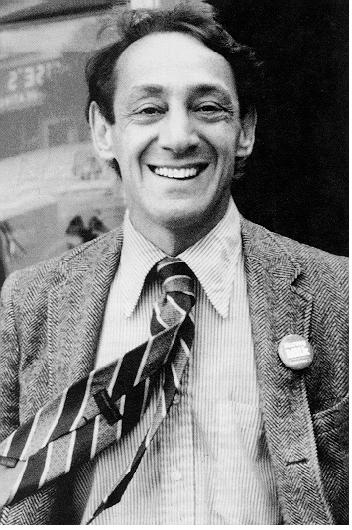
Harvey Milk Civil Rights Academy, a public elementary school in the heart of the Castro, is hosting a debate between the four candidates for District 8 Supervisor on Friday, October 8 at 7 pm.   The school, formerly Douglass Elementary, was named for Milk in 1996. 

The community that comprises the school has adopted an unique mission to honor Milk’s life: to empower student learning by teaching tolerance and non-violence, celebrating our diversity, achieving academic excellence, and fostering strong family-school-community connections.
 
The theme of the debate—“Filling Harvey’s Shoes”— centers on the values inspired by Harvey Milk’s life that have now been enshrined in the mission of the school named after him. Cynthia Laird, the editor of the Bay Area Reporter, and Christina Velasco, principal of Harvey Milk Civil Rights Academy, will moderate, asking questions themselves, taking questions from the audience and reading questions submitted by Harvey Milk students.

One of the candidates was quoted in this paper a couple of weeks ago saying about the race: “It’s a definitional fight about what the queer community is about in 2010.”  This debate offers the candidates the opportunity to directly address this “definitional” question.

In many ways, the LGBT community is at a crossroads. For those with good jobs and good incomes and the means to rent or own a house in District 8, much of the struggle for LGBT civil rights in San Francisco must feel more like history than a critically important issue for someone who seeks election in his former district.

However, I wonder if Harvey’s oft-referenced kid from Altoona hopping a bus to San Francisco in search of freedom would feel the same way. The kids arriving here are much more likely to be kids of color, transgender or undocumented. To what degree does District 8 or even San Francisco offer a place to live or real economic opportunity? Is Harvey’s legacy a gentrified Oz, great for those who can afford it, but little solace to those desperately seeking haven?

Plus, what is Harvey’s larger legacy?  Harvey Milk Civil Rights Academy defines one vision. Kids from under-resourced areas and under-represented communities are actively recruited to the school as part of its commitment to teaching tolerance and diversity. The LGBT experience is presented as one among the many struggles that communities of color, women, the undocumented and working people have fought in America to create a more just and tolerant society. Consciousness of shared struggle and the necessity of creating community amongst the disenfranchised and marginalized are crucial values inculcated at the school. The school’s pledge sums up this vision of Harvey’s legacy:  “I pledge allegiance to the world, to cherish every living thing, to care for earth and sea and air with peace and freedom everywhere.”

My husband and I thought deeply about community and values when we were deciding where to send our daughter to school. We felt that our daughter should begin to understand the world and how to act in it in the context of struggles for civil rights and social justice.  

I hope others in the LGBT community will take a moment and think about their values, hopefully attend the debate on Friday, and recognize that the election for this seat is about the future direction of the community.

Indeed, next May would have been Harvey’s 80th birthday and one wonders which candidate he would have endorsed and in what direction he would have advised the LGBT community to take had he lived.

Sheehy is the parent of a kindergartener at Harvey Milk Civil Rights Academy 

The debate will be held in the auditorium at Harvey Milk Civil Rights Academy at the corner of 19th and Collingwood, in the Castro.

Torture: The new national pastime

2

SAN FRANCISCO (Oct. 6th)  — The return of liver cancer has afforded me an unexpected opportunity to contemplate the National Pastime. 


As I emerged from a bout of chemotherapy in late September, the San Francisco Giants were locked in a neck-and-neck drawdown with the San Diego Padres for a post-season play-off spot and Baghdad-by-the-Bay was abuzz with pennant fever. 


The Padres, who had dominated the National League West since the early days of the 2010 season, had suddenly plummeted into an unprecedented funk, at one point losing ten straight games in a row.  Bare percentage points separated the two teams as they entered the final weekend of the pennant race with the local heroes only having to win one out of three games here at home. 


They, of course, lost the first two and die-hards cringed that déjà vu was about to drop all over again.  I have been a Giants fan since the day when the Polo Grounds, a misshapen stadium in upper Manhattan, was their chosen field of battle, and the scenario is an achingly familiar one for me. 


Suddenly, the wind had been sucked out of the Giants’ pennant hopes.  The orange “rally rags” that management distributes free of charge to the aficionados (it’s good for business) stopped twirling, altering wind currents over AT&T park.  Those idiotic panda hats issued during the pre-season to hype the disappointing exploits of third baseman Pablo Sandoval AKA “Kung Fu Panda,” lay dormant splayed upon the scalps of the fanaticos.  No one “Feared the Beards,” the fake whiskers that transform mild-mannered fans into facsimile Mad Bombers and remind the opposition that ace reliever Brian Wilson would soon be on the mound to rescue the locals.  No kind of mumbo jumbo seemed to snap the Giants out of their trance.


I saw the first hand-scrawled signs during the late innings of the Friday night series opener.  As usual, the Giants had been unable to put two hits together and were deep in the hole in yet another nail-biter with the Padres. Two young people of indeterminate sex squatted down by the first base boxes to display their homemade handiwork.  The wording, as best as I can remember, underscored that it was “torture” to be a Giants’ fan these days. 


“Did you see that?” I turned aghast to my fellow couch surfer, the notorious peoples’ lawyer Dennis Cunningham.  Dennis, who of late has been trying to prevent the feds from destroying fragments from the bomb that blew up Judi Bari and her Earth First! comrade Daryl Cheney in 1990, reasoning that that the threatened disappearance of the evidence would absolve the FBI of complicity in the matter, was similarly provoked.


Let me delineate the reasons for our dismay.  Torture, in my dictionary, means the egregious and prolonged physical abuse governments inflict upon those they suspect of harboring information detrimental to their interests.  When I speak of torture, I mean Abu Ghraib, Bagram, Guantanamo, CIO “black sites” — not an afternoon outing at Pac Bell Park. 


When I speak out against torture, I mean waterboarding, having your fingernails pulled out one by one and your scrotum sliced by a razor, electrical currents shoved up your anus, extreme sensory deprivation — not having to endure a close shave out at the old ballgame. 


When I speak out against torture, I think of the unending agony the Israelis inflict upon the Palestinian people, the castration of those who marched with Monsignor Romero, Victor Jara’s skull being shattered on the soccer stadium steps in Santiago — not Buster Posey and the “tools of ignorance.”


As the weekend progressed and the Giants continued to lose impossibly low-scoring games, the “Torture” syndrome gained increasing currency. Legions of Giants fans were now showing up to wave signs spotlighting the torture motif.  Now the offending word was spelled out in Giants’ colors and decorated with hearts and care bears.  Both the Chronicle and the Examiner (free — and worth every penny of it) were running the T-word in their leads. 


The kicker was a phone call from an old friend who has marched through this city for years decrying torture, injustice, and imperialist occupations.  “It’s torture to be a Giants fan,” she chirped merrily.  I just about did a Mike Tyson and bit her ear off to reciprocate. 


The mindless drumbeat mounted last weekend at AT&T Park trivializes torture, transforming horrendous crimes against humanity into a sports slogan to be inserted somewhere between the Stars Spangled Banner and God Bless America and further converting professional sports into a willing shill for U.S. domination of the Planet Earth.  First and foremost, baseball is a business and I expect torture will soon be deployed to sell everything from beer and sushi to seasons’ tickets.  The possibilities are depressingly endless.


“FANS JUMP ON THE TORTURE BANDWAGON,” the Morning Chron, about the poorest excuse for a daily newspaper in this benighted land, headlines this morning (Weds. Oct. 6th), guaranteeing that torture will be a part of the Giants’ sales pitch as they enter the second round of the play-offs.   Perhaps my illness has magnified the malaise but this past weekend’s low-jinks seem to underscore the premise with which I launched this screed: Torture is indeed the new national pastime.  


John Ross, author of “El Monstruo – Dread & Redemption in Mexico City,” will be covering the new national pastime while recuperating from chemotherapy.

Chron drops the “i” bomb, again

2

Today’s article on the front page of the Chronicle’s Bay Area section doesn’t use  “illegals” in its actual story about undocumented students and in-state college fees.

But it does use it in its headline.

This headline-text disconnect suggests that Chron reporter Bob Egelko wasn’t part of the decision to run today’s “Tuition break for illegals targeted” headline.

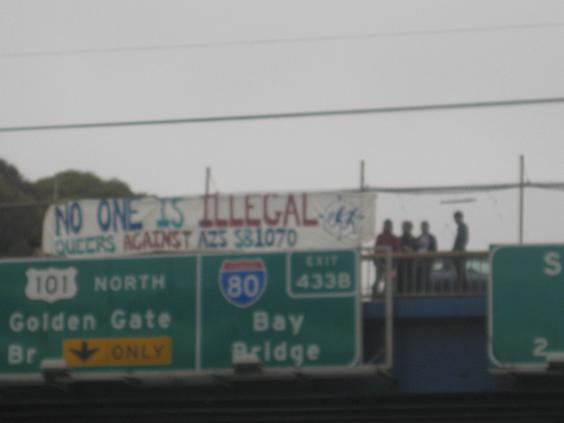
That’s the good news. The bad news is that it’s 2010, but some folks still don’t get what’s offensive about using the “i” word when referring to immigrants without paperwork—a situation that doesn’t make them “illegal,” no matter what right wing fear-mongers say.

As the National Association of Hispanic Journalists points out, in its guidelines for covering immigration, being here without paperwork is a civil violation, not a crime.

In an article published in September 2009, NAHJ said it was troubled with a growing trend in the news media to use the word “illegals” as shorthand for “illegal aliens”.

“Using the word in this way is grammatically incorrect and crosses the line by criminalizing the person, not the action they are purported to have committed,” NAHJ stated, as it called on the media to never use “illegals” in headlines.

“Shortening the term in this way also stereotypes undocumented people who are in the United States as having committed a crime. Under current U.S. immigration law, being an undocumented immigrant is not a crime, it is a civil violation,” NAHJ continued. “Furthermore, an estimated 40 percent of all undocumented people living in the U.S. are visa overstayers, meaning they did not illegally cross the U.S. border. In addition, the association has always denounced the use of the degrading terms ‘alien’ and ‘illegal alien’ to describe undocumented immigrants because it casts them as adverse, strange beings, inhuman outsiders who come to the U.S. with questionable motivations. Aliens is a bureaucratic term that should be avoided unless used in a quote.”

I’m pretty sure there’d be an uproar if the Chron used the “n” word to describe black people or the “f” word to describe gays—unless they were quoting racists or homophobes. So, please, guys, get a clue and stop dropping the “i” word, even if it takes up less room in your headlines.


Get a clue, Randy Shaw

29

I read BeyondChron every day, and Randy Shaw, who operates the site, and Paul Hogarth, his managing editor, often have interesting commentary. But I’m constantly annoyed by people who run what by any stretch is a journalistic operation, but don’t follow the basic rules of (even alternative, activist) journalism: When you’re going to say something nasty about somebody, you call that person for comment.


Randy never called me, or Steve Jones, or Bruce Brugmann, before he launched an attack on the Guardian as part of a political machine. If he had — or if he’d done any reporting work and called around town — he might have learned something.


Randy’s argument is that the “machine” — including the Bay Guardian — is trying to block Jane Kim’s election as D6 supervisor. Let’s examine that for a minute.


There are plenty of people in San Francisco who would love to have a political machine. But it’s just not happening. The very fact that Jane Kim has the support of so many progressives — including the Board president, David Chiu, and Supervisors Eric Mar and John Avalos (all part of what Shaw calls the “machine”) suggests that nobody has to clout — not even me — to tell a candidate whether she can run for office, to control (or cut off) campaign contributions, or to wire an election.


In the days when Willie Brown ran San Francisco, the machine really did keep people from running for office. It really did close off avenues to political advancement. And if the machine was against you, it was really hard to raise money. If Brown were still the boss, and he didn’t want Kim to run, she would have been frozen out of much of the support and money she has today. Instead, Brown was at her campaign kickoff — and nobody’s manged to intimidate her many supporters and campaign contributors.


And guess what? The Guardian — the axis of the machine evil trying to freeze out Kim — endorsed her as our second choice.


I stand by what I said months ago — there’s nobody in San Francisco today — and no cadre or group — with the clout to operate as a political machine.


Nobody can line up six automatic votes on the Board of Supervisors. Even the progressives on the Democratic County Central Committee can’t always seem to get it together (note that Aaron Peskin, the chair and supposed machine honco, supported Tony Kelly for supervisor, and the DCCC didn’t put Kelly on its slate).


Right now, power in this city is fairly diffuse. That’s both a good and a bad thing. Good because machines are exclusionary, bad because it means the progressives can’t always function on a level that gets the right candidates elected and the right legislation through. Good because the left in this city is aggressively, almost happily disorganized and politically diverse, full of characters, voices, interest groups, candidates and elected officials who don’t always agree with each other and take orders from nobody. Bad because when we’re disorganized, we tend to lose.


Jane Kim didn’t get the DCCC endorsement. Nobody talked to me about that; I’m not on the panel and none of the members called to ask my advice. I would have said what the Guardian said in our endorsement package: There are exactly two progressive candidates who are qualified to be the next D6 supervisor, and their names are Debra Walker and Jane Kim. I still don’t understand why Kim entered the race against an established candidate with whom she has no substantial policy disagreements; I think that, before Kim moved to the district and entered the race, Walker was the clear consensus candidate of progressives, and as a matter of strategy, since Kim and Walker are both on the same side on the key issues, it might have made more sense for the left to unite behind one candidate.


But that’s not the issue anymore; Kim had every right to run, and now any cogent, honest ranked-choice voting strategy includes both her and Walker.


That statement alone makes clear that the Guardian’s not exactly in synch with the DCCC or any of Shaw’s other “machine” operations. The DCCC decided that the top candidate in D10 should be DeWitt Lacy, and left Tony Kelly off the slate entirely. We endorsed Tony Kelly as our first choice. The labor activists on the DCCC (and in the “machine”) are dead set against Margaret Brodkin winning a seat on the Board of Education; we endorsed her.


I would have explained our positions to Randy Shaw if he’d called or emailed me; I’m really easy to reach. And slapping people around without talking to them is bad journalism and bad progressive politics. Randy and I have disagreements, but I don’t consider him the enemy; we’re both part of a larger progressive community, and while I love (and thrive on) disputes in that community, we ought to be civil about it.


(I always contact Randy before I write about him. I did that yesterday, and asked him a series of questions, including why he never called me for comment. His non-response: “I write 3-4 articles a week and have published three books. You are free to quote from anything I have written without asking me about it.”)


Herb Caen used to say (somewhat in jest) that if you “check an item, you lose it.” In other words, once you start talking to everyone involved in an issue, you sometimes find out that the story isn’t at all the way you heard it.


That’s what should have happened with Shaw’s completely inaccurate claim about Steve Jones.


BeyondChron says that Jones was trying to get Kim to challenge Carmen Chu in D4 because they’re both Asian-American, ” in effect saying that as an Asian-American Jane should run among ‘her people,’ implying that demographics prevailed over issues and political stands.”


I talked to Steve about it; he did, indeed, talk to Jane Kim when Kim was shopping around for a district to run in. What he told her — and would have told Randy Shaw — was that it would be great for Kim, a school board member with citywide name recognition, to knock off Carmen Chu and expand the progressive majority rather than going after a strong progressive candidate in a solidly progressive seat. Race had nothing to do with it.


In fact, just about everything we’ve written about Kim comes down to the same argument: Sometimes, you have to think about the larger progressive movement, not just about yourself.


I sometimes wish the all the people who say the Bay Guardian is part of a powerful Peskin Machine were right: I’d love to pass a city income tax, hit the wealthy up for about half a billion dollars a year, eliminate the budget deficit without cutting services, municipalize PG&E (and have municipal cable TV and broadband), ban cars on a lot of streets, create 25,000 units of affordable housing … I’ve got a great agenda. And the Guardian’s so powerful that none of it ever happens.


Randy Shaw and I were both around for the tail end of the Burton Machine, and I think he gives the brothers Phil and John Burton too much credit. They were great on national issues, progressive champions in Congress. But they weren’t progressive leaders on local issues.


The Burton Machine was nowhere on the fights against overdevelopment and downtown power. Phil Burton rarely used his clout to support progressive causes and candidates at home. The machine got Harvey Milk fired from a commission appointment when he announced he was going to run for state Assembly against Art Agnos. The machine came together to make sure that Nancy Pelosi, an unknown who had never held office, got elected to Congress instead of Harry Britt, the most progressive elected official in the city at the time. The machine never helped out on public power, the numerous anti-highrise initiatives, rent control, or much of anything else that challenged the real estate interests like Walter Shorenstein, who gave vast sums of money to the Democratic Party.


Yes, George Moscone, a Burton ally, supported district elections, but once he got elected he stopped challenging downtown power.


And, of course, when Willie Brown emerged as heir to the machine throne, he was a disaster for progressives. He also at one point controlled an unshakable majority on the Board of Supervisors; he could call up votes whenever he needed.


The progressives in San Francisco today share an ideology on local issues — tough local issues that involve powerful economic forces at home.


And honestly, Randy: It’s not all about Jane Kim.


Getting out the in-jail vote

1

Sheriff’s Department spokesperson Eileen Hirst reminded me today that 75-80 percent of the people behind bars at the San Francisco County Jail are still in the pre-trial stage. Hirst first shared that stastic with me earlier this year, when the jail got dumped from the list of buildings that will be earthquake retrofitted, if voters approve Proposition A this fall.

And today the percentage resurfaced in the context of efforts to get out the vote. Because if your case is pre-trial, this means that you have not yet been found guilty and so are still eligible to vote—provided that you are not on parole for a felony conviction. And with several races and measures still in play on the ballot, this means that in-jail voters could be of pivotal importance this November. 

Either way, Hirst tells me that the Department of Elections and the Sheriff’s Department are  working hard to educate inmates about their voting rights.

“We have an office called Prisoners Legal Services, where they do voter education and facilitate applications for absentee ballots,” Hirst said. “We work closely with the Department of Elections to make sure prisoners are aware of their rights, and we carry applications and absentee ballots back and forth, between Elections and the jail.”

According to the Department of Elections’ Voting Guide for Ex-Offenders, a person who has been convicted of a felony can still register and vote if they have completed their prison term for a felony, including any period of parole or supervised release.

are on federal or state probation; and/or are incarcerated in county jail as a condition of felony probation or as a result of a misdemeanor sentence.

“If you have been convicted of a misdemeanor, you can register and vote, even while on probation, supervised release, or incarcerated in county jail,” the Elections Department brochure states.

“To restore your right to vote if you have been convicted of a felony, you only need to complete and return a voter registration form,” the brochure continues. “No other documentation is required.”

Hirst estimated that on any given day, there are 1800-1825 prisoners at the county jail, but she did not have up-to-date information on which districts these prisoners are from.

“Years and years ago, we did a pin map by hand, and we found that they came from every district in town, but were concentrated in the Bayview, the Western Addition and the Mission,” Hirst recalled.

She noted that the county jail population is 50-55 percent African American, 25-30 percent Latino, and the remainder is “white, Asians and other”—statistics that suggest that the D10 and D6 races will likely be the most impacted by the in-prison vote.

She also noted that C.L.A.E.R. executive director Sharen Hewitt has been one of the leading figures in San Francisco in terms of getting out the in-jail vote.

“Sharen really made it a priority and educated a lot of prisoners,” Hirst said.


Opinion: For Democratic unity

6

We ran out of space in today’s print edition and couldn’t publish either of the two opeds I wanted to run, so I’m posting them here. The first one is by the chairman of the SF Democratic Party.

By  Aaron Peskin

As one of the most Democratic cities in California, San Francisco has a special responsibility to make sure we help elect a Democratic ticket on November 2nd.  We always take that responsibility seriously – but this year we will have the pleasure of helping elect our own to statewide office: Gavin Newsom as Lt. Governor, Kamala Harris as Attorney General and even native son Jerry Brown as California’s next Governor.

Because so many of our nominees are from San Francisco – and because San Francisco is so Democratic – and because so many of the statewide elections are so, so close – what we do to turn out the vote here in San Francisco could very well be the difference between victory and defeat for many statewide candidates. 

A quick look at the numbers shows just how important San Francisco could be in this year’s statewide races. In November of 2008, a total of 388,112 San Franciscans cast ballots. In November of 2006, the last gubernatorial contest, just 253,719 San Franciscans voted. That is a difference of 134,393 votes.

Local Democratic Party leaders agree a coordinated campaign could turn out at least 20% of these “occasional” voters and probably many more.  That means we could add a minimum of more than 25,000 votes from this Democratic base to the statewide total.

In a year in which the polls show razor-thin margins separating the winners from the losers, a 25,000 vote margin could make the difference between Democratic policies like support for schools, investing in green jobs and protecting a woman’s right to choose and the Republican reaction supported by Meg Whitman, Carly Fiorina, Steve Cooley and Able Maldonado.
Considering how important Democratic unity is to our city and our state – we need to pay it more than lip service. And that’s what our local party is trying to do.

It is certainly true that there are important local issues upon which we disagree. For example, I certainly take issue with some of Mayor Newsom’s positions – such as his so-called Sit/Lie ordinance. I know that he takes issue with many of my positions.

There are many in our party unhappy with Newsom for putting an attack on the ballot on the elected members of the local party in this crucial election.  Again, I know Mayor Newsom has expressed his displeasure with the local party for not supporting some of his candidates and positions.

But these local disagreements are small in comparison to what is at stake for Californians. They are actually small compared to what is at stake for San Franciscans – a city that relies on state aid to support our schools and colleges, much of our local health services and many other important programs.

That’s why unity is the only sensible policy in this crucial 4-weeks of voting until the November 2nd election. And that’s why I have a simple and genuine invitation to Mayor Newsom and the other statewide candidates.

Come help us help you.

We are gathering every day at our headquarters at 1261 Howard Street to knock on doors, register voters and make phone calls to get out the vote.  Come show with your presence that turning out the vote is so important that we will turn aside both petty differences and legitimate policy disagreements on local concerns.

Across California our opponents are attacking “San Francisco” Values. Come show that a core value of San Francisco Democrats is uniting to support the greater good.

The D6 Ranked Choice debacle

10

I must admit, I was pretty astonished when I read that Jane Kim had endorsed two other candidates in District 6, and Debra Walker wasn’t among them.


I understand that there’s bad blood here — Walker’s supporters are pissed that Kim moved into the district and entered a race that Walker had been working on for years. She effectively challenged another progressive with whom she has no substantive policy disagreements, and it looked a lot like personal ambition trumping progressive strategy. And the Walker team managed to keep Kim off the Democratic County Central Committee slate.


But please, folks: The real issue here is Theresa Sparks — and the possibility that we’ll lose D6 to a downtown candidate. And there are only two people in the race capable of beating Sparks, and they’re Walker and Kim. I’ve been wrong before, but I don’t think I’m wrong here — this is a three-person race at this point. And two of those people are qualified progressives.


It took me a while to reach Jane Kim, but I finally talked to her today, and I had one basic question: Does she really think her candidates would be better supervisors than Debra Walker? Well, she said her endorsement strategy was only to support people who were also doing ranked-choice endorsements, and Walker had declined to do that. (Correct: I called Walker, who told me she’s not endorsing anyone for the second and third slots).


But come on: If you want to be a progressive leader, you have to be responsible not just to yourself but to the movement — and the only way we’re going to save D6 is if Walker or Kim wins the election. And the best way to help Theresa Sparks is for Kim to snub Walker and urge her supporters to vote for someone who isn’t likely to win.


I’m one of the people who has publicly questioned whether Kim should have entered this race, and I’ve argued — to Kim, and to anyone else willing to listen — that while she had every right to run for supervisor, and is by any account a qualified progessive candidate, she risked splitting progressive resources and energy and, purely from the perspective of a larger progressive movement, running against Walker might not have been the smartest strategy. Kim’s response: Well, that’s why we have ranked-choice voting, so nobody becomes the spoiler.


Again: True. And that’s why when you use ranked-choice voting, you don’t play the spoiler.


Kim told me that if Walker would also do ranked-choice, she’d reconsider her endorsements. (That’s tough, too — what, is she going to un-endorse someone?) And honestly, it’s better for Walker to do no endorsements than to endorse two candidates and leave Kim off. But at this point, with big money pouring into the district for Sparks, everyone’s got to take the high road and work on the real issue. 

The strangest election ever

2

It’s getting really wierd out there. There’s a campaign video featuring the white face of a dark-haired politician emerging from an all-black background and proclaiming:


“I am not a witch.”


And she’s a serious (more or less) candidate for the United States Senate. Check out the strangest campaign ad of the year after the jump.Huffington Post interviewed a Wiccan, who complained about the demonizing of witches; Wicca is an ancient religion that, typically, doesn’t involve blood sacrifices on altars.


But I have to say, Christine O’Donnell’s plea reminds me of the last time I remember someone saying “I’m not a witch.”


Hotel plan revives old question: Can the Presidio Trust be trusted?

2

In San Francisco’s Presidio, one of the few national parks that is mandated to pay for its operations with the proceeds from development, historic preservation is often undermined by commercial concerns. And critics contend the proposal for a big new hotel at the Main Post is a prime example of that model’s shortcomings.

The Presidio Trust, a seven-member board that presides over the historically significant park, is considering a proposal by the Larkspur Hotel Group to build an 88,000-square-foot luxury hotel complex of 12 new buildings and another two current and historic buildings that would be remodeled as part of the project. Opponents say the project runs counter to the Trust’s mandate of protecting the historical and environmental character of the Presidio’s Main Post.

Originally, the Trust set out a management plan that allows for only minor construction projects at the Main Post, but the body is now seeking to amend the plan to include the massive new hotel development. When it announced its plans at a recent public meeting, it was met with overwhelming opposition from neighborhood and local preservation groups

Gary Widman, president of the Presidio Historical Association, sees the move to amend the plan as emblematic of the Trust’s refusal to work collaboratively with the community. “People are frustrated by what they see as the Trust trying to put this amendment into place in a ‘stealth’ move. The Trust is not holding hearings explicitly on its proposed amendments,” he said.

Widman was also concerned with the impact that the hotel and the changes to the Presidio would have on the environment, calling the changes “consumptive, anti-sustainable and not in line with them claiming to be a green organization.”

Another opponent of the plans for the hotel is Boyd de Larios, a representative of Descendants of the Anza and Portola Expeditions (DAPE), who expressed concerns about local heritage being lost forever if the trust went ahead with its plans.

“Presidio doesn’t need a hotel. People aren’t looking for another Coney Island,” he said. “They do some wonderful things but no one trusts the trust anymore.”

After the base closure in 1994, the Trust was set up to make the park self sustainable by 2013 through the use of real estate leasing and renovations to the post buildings to make the park more desirable for the private sector. Among the projects added to the park in recent years is the Walt Disney Family Museum.

Trust officials did not responded to repeated Guardian calls for comment on the issue and any additional future plans. Similarly, others have been unable to get the answers they are searching for from the trust. One community member, Richard Hanlin has been questioning the future of the Presidio for years but has still not found answers to his questions. Hanlon said he worries about the Presidio’s future.

“As it stands [the Trust] is in a very weak position,” Hanlin said, focusing on the ability of the trust to maintain and protect its valuable assets. Hanlin went on to predict the barracks buildings will be ensconced by fences and without any renovations by the end of 2013 when the federal subsidies of the Trust runs out. The lack of renovation and preservation of the old barracks buildings are particularly troubling to Hanlon, especially since they represent the roots of the Presidio as a strategically important military installation.

“History matters,” Hanlin said. “Lots of young men spent their last night there and never came back.”


SFBG Radio: Is the Republican Party a cult?

4

In today’s epidsode, Johnny and Tim talk about the showdown in Fresno, the Dream Act — and whether the Republican Party has become a cult. Listen after the jump.

sfbgradio1042010 by endorsements2010

Hotel Frank fires key union organizer

6

Managers at Hotel Frank, who have been sparring with their employees since taking over the financially troubled hotel following a bank foreclosure earlier this year, last week fired an outspoken union organizer on the day after the hotel was targeted by a boisterous picket line. But the employee, longtime bellman Marc Norton, said this transparent effort to intimidate the workers won’t work.

“They think if they get rid of me their problems will go away, but it’s closer to the opposite that’s true,” Norton, a longtime local progressive activist, told the Guardian. “They think they got rid of me, but now they’ve turned me into a full-time organizer.”

Norton and his union, Unite-Here Local 2, will fight back starting tomorrow (Tues/5) with another protest in front of the hotel, 386 Geary Street, starting at 4:15 pm. Hotel Frank, which was named after notorious landlord Frank Lembi, is one of 10 local hotels on the boycott list of Local 2, whose workers have been agitating for a new contract since theirs expired last year.

The Hotel Frank and its sister Hotel Metropolis in May were taken over by Wells Fargo, which turned over management to the Portland, Ore-based Provenance Hotels, whose local managers unilaterally increased workloads and slashed employee benefits at the unionized hotels, according the employees and their union. Provenance officials refused to comment for my last story and did not return another phone call today on the firing of Norton and another union organizer.

In addition to the protests, Norton has filed a complaint with the National Labor Relations Board alleging that his dismissive was illegal retaliation for legally protected union organizing, a complaint that Norton believes will be decided in his favor: “It’ll happen, it’s just a matter of when.”

Downtown money hits district races

42

Downtown cash is pouring into the district supervisorial races.

Ethics Department filings show that an alliance backed by the Chamber of Commerce, the SF Police Officers Association and United Health Care Workers West is dropping major money on Steve Moss in D10, Scott Wiener in D8 and Theresa Sparks in D6. 

Called the “Alliance for Jobs and Sustainable Growth,” the coalition supports the building of a mega-hospital on Cathedral Hill.

The independent expenditure alliance puts UHW, part of the Service Employees International Union, in the odd position of using membership money to attack progressive politics in San Francisco – potentially undermining years of work by another SEIU affiliate, Local 1021.

Campaign disclosure forms show that the Chamber-Police-UHW alliance has spent $20,000 on bilingual (English/Chinese) door hangers for Moss that feature photos of Chamber of Commerce President Steve Falk and United Healthcare Workers political director Leon Chow.

These same interests also spent $20,000 on robo-calls for Moss, with a heavy focus on Visitacion Valley in an effort to secure the Asian vote in the crowded D10, where there is a strong likelihood that the race will be decided by second and third place votes

Word on the street in the Bayview is that former Mayor Willie Brown is pissed off that the Chamber is backing Moss, instead of African American candidate Lynette Sweet, and that termed out D10 Sup. Sophie Maxwell is angry that big corporations are trying to buy an election in the poorest and most ethnically diverse district in town.

But unlike the rumor mill, the money trail doesn’t lie. And from that perspective this is looking like a replay of the June 2008 election, when big businesses bought support for Lennar’s Candlestick Point/shipyard development by claiming it would create thousands of jobs building condos that most workers can’t afford—jobs that have yet to materialize.

This time the battle cry is for jobs building a massive hospital, even though few workers will likely get service from this hospital, which is designed to serve as a regional center for high-end health care.

So far, the same alliance of police and corporate money has plunked down $17,000 for bilingual (English and Chinese) door hangers in support of Theresa Sparks in D6 and another $17,000 for bilingual robo-calls in support of Sparks.

And so far, Scott Wiener has gotten the relatively short end of the corporate money stick: the Alliance has only spent $15,000 on a door hanger in support of Wiener.

This means that the alliance spent $90,000 in a two-week period in September. The numbers lend credence to DCCC Chair Aaron Peskin’s belief that the alliance has a war chest of $800,000, which it intends to use to put pro-downtown candidates into power.

Asked about the support of this alliance, Sparks, Wiener and Moss gave markedly different replies that reveal as much about each candidate as the money behind them.

D6 candidate Theresa Sparks suggested that the Alliance was spending more on her and Moss’ D10 campaign, because it felt Wiener was further ahead in the D8 race than she is in D6 or Moss is in D10.

And Sparks was openly supportive of the Cathedral Hill hospital project. “I’ve been very supportive of that project,” Sparks told us.

Sparks also observed that it was logical that the Chamber would support her.

“D6 has one of the largest numbers of small businesses and one of my biggest platforms has been economic growth, and I think the Chamber has been very supportive of job creation,” Sparks said.

By comparison, Scott Wiener told the Guardian that he has not taken a position on CPMC’s proposed mega hospital on Cathedral Hill.

“Those kind of issues could come before the Board, in terms of CEQA issues, and so I could be conflicted out,” Wiener said.

When the Guardian noted that the Alliance has so far not spent any money on phone banking for Wiener in D8, Wiener said, “I have volunteers doing phone banking.”

As for Moss, he told the Guardian that said he doesn’t have a position on the mega-hospital.

“I haven’t seen the plan,” Moss said. “But I understand that there seems to be an agreement that would maintain St. Luke’s with about 300 beds, but that there is a deep suspicion among the nurses that it’s not economically viable. And there seems to be a much greater need for a hospital in the southeast.”

Moss, however, is with downtown on other key issues: He supports the sit-lie legislation on the November ballot. He also reiterated that he likes the rabidly anti-tenant Small Property Owners Association, whose endorsement he called a “mistake” during a previous interview with the Guardian.

“Landlords feel that they are responsible for maintaining costly older buildings and that they are not provided with ways to upgrade their units in ways that share costs with tenants,” Moss, who sold a condo on Potrero Hill in 2007 for the same price that he paid for the entire building in 2001, and owns a 4-floor rent-controlled apartment building in D8, near Dolores Park, that he bought for $1.6 million in 2007, and where he lived from December 2007 to February 2010.

Moss refused to provide a copy of the lease on his current rental at Vermont and 18th St—something that the Guardian requested in light of an email from his wife that indicated that the family intended to move back to Dolores Park of Moss loses the race.
‘That’s private information,” Moss said, claiming that he does not plan to move back into his apartment building in D8, if he loses in November.

Moss claimed that UHW endorsed him because his position on politicians and unions.
“I agreed that politicians should get not involved in union politics,” Moss said. “The United Healthcare Workers seem to be a worthy group,” he added. “All they said was that they wanted to make sure that they had access.”

All this campaign money drama is playing out against the backdrop of a punishing battle between United Healthcare Workers West and the rest of SEIU. And as these recent filings show, UHW is spending a huge amount of its membership dues to undermine the city’s progressive infrastructure by trying to elect candidates who are not progressive, even though its progressive sister union has endorsed Rafael Mandelman in D8.

SEIU 1021 member Ed Kinchley, who works in the Emergency Room at SF General Hospital, is furious that UHW is pouring all its money into downtown candidates like Moss, Sparks and Wiener and trying to undermine everything that its progressive sister union is trying to do.

“UHW basically isn’t participating in the Labor Council, it’s just doing its own thing,” Kinchley said.

Kinchley noted that UHW is currently in trusteeship, and is being controlled by its International, and not its local membership, thus explaining why it’s doing this dance with forces like the Chamber and the Building Owners and Managers Association, which have long been the enemy of labor.

“Sutter wants a monopoly on private healthcare, and people like Rafael Mandelman in and Debra Walker have been strong supporters of public healthcare,” Kinchley said, Kinchley also noted that he wants supervisors who are willing to state their support for public health care, rather than dodging the issue and hedging their bets, right now.

“I want someone who can straight-up say, here’s what’s important for families in San Francisco, especially something as important as healthcare,” Kinchley said. “but it sounds like UHW is teaming up with the Chamber and supporting people who are not progressive.”

“And it’s not OK for somebody in D10 to say they haven’t seen CPMC’s plans, when people from D10 use St. Luke’s all the time for healthcare, because it sounds like Sutter wants to change St. Luke’s into an out-patient clinic for paying customers,” he continued.

SEIU 1021 activist Gabriel Haaland accused the Chamber, the Building Owners and Managers Association, UHW and the Police Officers Association of putting together a massive political action committee, “to try and steal the election through corporate spending.”

All this leaves the Guardian wondering how Leon Chow, the political director of UHW, who has done good work in the past on health care issues, is feeling about seeing his photograph spreads all over town alongside that of Chamber of Commerce President Steve Falk on door hangers in support of Sparks, Wiener and Moss.
 
As of press time, Chow had not returned our calls, but if he does, we’ll update this post.

SFBG Radio: Whitman’s immigration problem

14

Today Johnny and Tim talk about why Meg Whitman won’t recover from her immigration problems — and whether the roomate who drove a gay college student to suicide should wind up in prison. Listen up after the break.

sfbgradio1012010 by endorsements2010

The Governator: Fighting oil villains or making life easier for them?

Today’s San Francisco Chronicle contains an opinion piece by David Horsey commending Gov. Arnold Schwarzenegger, a Republican, for taking Texas oil companies Tesoro and Valero to task for attempting to subvert California’s landmark global warming legislation, AB 32.

Titled “The Governator battles villains with ‘black oil hearts,’” the piece casts Schwarzenegger as an environmental superhero facing off against a band of greedy cowboys. Tesoro and Valero have sunk millions into Proposition 23, the deceptively titled “California Jobs Initiative,” which would suspend implementation of the greenhouse-gas reduction law until unemployment drops to 5.5 percent for four consecutive quarters. Prospects are dim for such a market condition anytime soon.

“It is electrifying to hear a Republican politician expose the big corporations that relentlessly subvert public policy and the national interest,” Horsey notes. “Arnold Schwarzenegger might be leaving office with a mixed record of accomplishment, but when it comes to challenging these modern-day bandits of industry, he could be the boldest action hero we’ve got.”

Schwarzenegger deserves credit for taking a stand against oil-industry giants on this particular issue, but he’s no environmental action hero. On Sept. 30, The Governator vetoed legislation that would have improved the state’s capability to respond to oil spills.

AB 234, authored by Assembly Member Jared Huffman, would have required large vessels to deploy oil containment booms prior to fuel transfers. The Dubai Star oil spill occurred during a fuel transfer, and the precautionary measure could have lessened the impact.

Additionally, the bill would have increased existing oil fees to bolster funding for the state’s oil spill prevention and response efforts. And it would have required the State Lands Commission to report on safeguards for offshore oil drilling and response plans in the event of the failure of an oil rig’s blowout preventer. The BP oil spill demonstrated how dire the consequences can be if such a failure occurs.

“With his veto of AB 234, Governor Schwarzenegger failed miserably when it came to protecting California’s environment, public health, seabirds, and our coastal waters from oil spills,” said Marcie Keever, Oceans & Vessels Campaign Director at Friends of the Earth, which sponsored the bill along with Pacific Environment.  “Assembly Member Huffman and the Legislature worked extremely hard this year to craft AB 234 to protect the people and resources of the state of California — and with a few strokes of his pen the Governor struck a significant blow to public health and our environment.”

Schwarzenegger may have publicly reprimanded the Texas oil cowboys for bankrolling Prop. 23, but he’s no Captain Planet.

Who’s trying to fast-track Parkmerced?

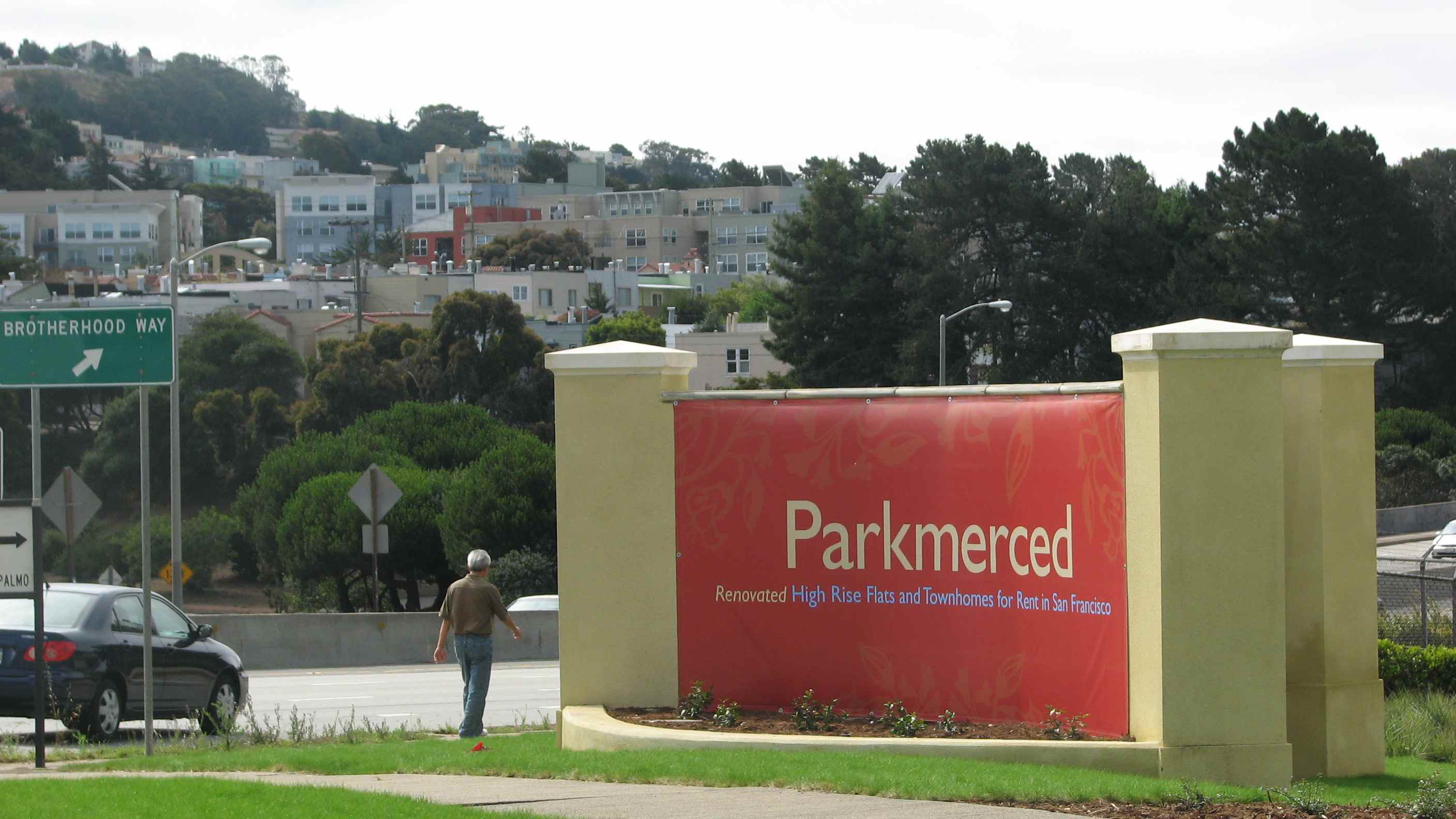
At a Sept. 30 Planning Commission meeting, several commissioners and community members raised concerns that project approval for Parkmerced, a development that will add thousands of new housing units to an existing residential complex, had been scheduled before anyone was really prepared to discuss it. It’s since been pushed back, but the attempt to rush it through drew fire nonetheless.

Land use attorney Sue Hestor said she’d discovered the day before the Planning Commission meeting that a final project EIR would be made available Oct. 7, with an approval hearing scheduled just two weeks later, on Oct. 21. That came as a surprise even to Hestor, who closely monitors development projects. “You cannot just drop a complex legal document on people two weeks before the hearing and say that is sufficient,” Hestor said. “Two weeks for a staff report for this project is insulting.” Prior to this notice, the hearing on Parkmerced was widely expected later in the year.

Christina Olague, vice-president of the Planning Commission, said during the meeting that the accelerated timeline was highly unusual. “I was hearing that we were going to be attempting to initiate this project on the 7th of October with an approval calendared for the following week,” she said. “And I was concerned that it felt, at that point, that it was a little bit out of the hands of the planning commission. When it comes to projects of this size, I just felt like that was too much of a rush to get it through, especially given that we are in the middle of CPMC with comments due the 19th of October.”

Olague said the process made her uncomfortable. “I felt a lot of our say was being removed from our realm and there were outside forces … other departments in the city that were kind of influencing it in a way that didn’t feel comfortable to me,” she said. “Also, historically … we have never done it that way. Usually we calendar an item for one week and then there’s a 20-day noticing period that allows members of the public to digest the information and review the information.” She added, “I just didn’t want the public to get the impression that we were favoring one project over other projects.”

Calvin Welch, an affordable housing activist, noted that Parkmerced developers have a laudable goal of preserving onsite rent-controlled units at the housing complex — but he had yet to see a draft of a development agreement outlining the details of that plan. The planning commissioners hadn’t seen that document, either. Welch suggested more time was needed to review the terms of the agreement.

If the Planning Commission had approved Parkmerced on this accelerated schedule, it might have gone to the Board of Supervisors for approval before the end of the year, so the votes would’ve easier to count than if the project went before a new class of Supes in 2011.

The Guardian reported earlier this month that Mayor Gavin Newsom received a $1,000 campaign contribution for his bid for lieutenant governor from Craig Hartman, a design partner for Parkmerced, plus $2,000 from two executives associated with the project. AECOM, which is completing technical studies for the project, gave him campaign donations totaling $13,000.

Speaking to a crowd of real-estate professionals and representives from the business community a couple weeks ago, Newsom urged them to get involved in district elections in order to avoid “a dramatic shift” that would occur if the wrong people get elected to local office in November.

Did the mayor’s office lean on the planning department to rush the approval of Parkmerced in order to ensure a more predictable outcome? We emailed Newsom’s press secretary, Tony Winnicker, with questions, and we’ll be sure to post a response if we receive one.


Nevius pushes for another crackdown, but it’s not an agenda

28

At last week’s California Music and Culture Association forum on San Francisco’s war on fun, I was on a media panel with San Francisco Chronicle columnist CW Nevius that answered questions posed by the audience, and Nevius steadfastly denied that he has any kind of agenda in writing so regularly about the need to crackdown on nightlife and streetlife. But his column today is yet another example proactively pushing that very agenda.

Nevius (who didn’t respond to my inquiry on the issue this morning or a follow-up this afternoon) was a Chronicle sportswriter for 20 years before being given a Metro news column that consistently has a reactionary, politically unsophisticated take on San Francisco life, following in the mold of predecessor Ken Garcia. His recent crusades include calling for crackdowns on the homeless in Golden Gate Park, on young people on the streets of the Haight and downtown, and on nightclubs whose patrons have engaged in violence, trumpeting “public safety” as the political priority that trumps everything else.

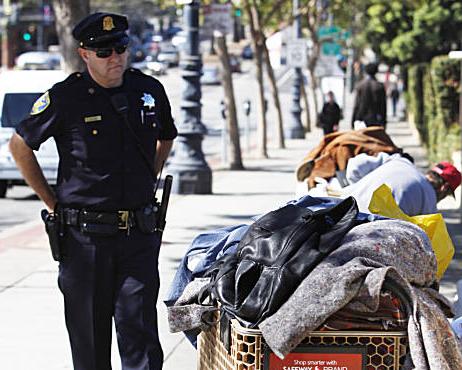
On Sept. 19, Nevius published yet another column promoting the sit-lie ordinance that he has championed since even before its official inception, which Mayor Gavin Newsom placed on the November ballot as Measure L. In that column, “City citations show need for sit-lie,” Nevius detailed how those cited for quality-of-life infractions such a blocking sidewalks or public drinking or urination – mostly poor vagrants on the margins of society – rarely get significantly punished by the courts. Using painfully tortured logic that I still don’t understand, he used that situation as an argument for creating a new quality-of-life infraction – sitting or lying on sidewalks – that would probably be similarly ignored by both its targets and the courts.

“Only the most stubborn sidewalk sitter stays in place, daring the officer to write a citation. Sit/lie, by encouraging that kind of common sense compliance, should actually cut down on the number of cases coming through the court system, a system that is demonstrably ineffective,” Nevius wrote, making the argument that a new category of crimes will somehow lower the number of people headed into the court system. Again, I don’t understand the logic either, and Nevius hasn’t responded to my inquiries.

But today, Nevius follows up that column with the “news” that some city officials are now considering developing a pilot program for socking it to the top 40 “sidewalk scofflaws,” as Nevius labels them. Both columns feature the same cop, Officer Gary Buckner, who writes a lot of these quality-of-life tickets, and the same officials who share Nevius’ public safety priorities and love to score political points with conservatives and moderates by scapegoating the poor and homeless.

During the CMAC forum, I copped to the Guardian’s perspective and the fact that we do promote an agenda that seeks to make San Francisco a more progressive and tolerant place, acknowledging and sometimes celebrating urban realities, even when they are sometimes loud, stinky, and perhaps a little scary. Hey, that’s life the big city.

But Nevius and the Chronicle pretend that they aren’t pushing back with an agenda of their own, one that seeks to impose on this great city the conservative values of Walnut Creek, where Nevius lived until earlier this year, where everything is well-scrubbed and the poor are effectively policed into the shadows or edges of town. Nevius says that he’s just an objective journalist covering the news, something that most San Franciscans see as laughably dishonest.

Of course they’re pushing an agenda in collaboration with the cops, Mayor Gavin Newsom and reactionary politicians of his ilk, and the downtown interests who value tourist dollars more than the lives and rights of the poorest San Franciscans. And if they were more honest about that intention, and willing to publicly debate our respective positions in good faith, I’m confident that most San Franciscans would share the Guardian’s agenda for the city.

C’mon, Chuck, what do you say?

Arlington & Santa Clara join SF in requesting S-Comm opt-out

1

The County Board in Arlington, Virginia and the Santa Clara Board of Supervisors both voted unanimously September 28 to opt out of S-Comm, a controversial Immigration and Customs Enforcement (ICE) data-sharing program also known as Secure Communities.

This means San Francisco is no longer the only municipality requesting to opt out of ICE’s S-Comm program. (Washington, D.C’s metropolitan Police Department is the only jurisdiction to date to successfully terminate its S-Comm Memorandum of Agreement with ICE.) The program automatically shares fingerprints with ICE that are taken by local law enforcement immediately after individuals are arrested, even if criminal charges are eventually dismissed or were the result of an unlawful arrest.

The opt-out resolutions in Santa Clara and Arlington came a day before 578 national and local organizations delivered a letter to President Barack Obama condemning the merger of criminal justice and immigration systems and demanding an end to practices that harm diverse communities throughout the country.

S-Comm has already met with opposition from civil rights organizations, law enforcement, and city officials from Washington, D.C. to San Francisco, over concerns it is being forced on hundreds of counties without oversight or accountability.

As a result of this opposition, ICE issued a statement in August that confirmed that local jurisdictions have a right to opt out by sending a written request.

And recently, Homeland Security Secretary Janet Napolitano and U.S. Attorney General Eric Holder also confirmed in writing that local jurisdictions can opt of S-Comm by requesting to do so in writing.

San Francisco Sheriff Mike Hennessey has already submitted this request in writing on at least two occasions, most recently on August 31st. And on May 18, San Francisco’s Board of Supervisors passed a resolution to opt out of S-Comm.

And Angela Chan, staff attorney at the Asian Law Caucus in San Francisco, repeated her request that ICE comply with its own opt-out procedure for all requesting counties.

“SF has done everything required of us to opt out,” Chan said in a press release. “Sheriff Hennessey and our Board of Supervisors have voiced our request to opt out of S-Comm loud and clear. It’s now ICE’s turn to follow through on their word and allow counties to do what has been within our right all along. Only then will we be able to focus our local resources back on local law enforcement. S-Comm has no place in our counties because it makes immigrant victims and witnesses afraid to come forward and cooperate with local law enforcement.”

In response to Santa Clara’s opt-out request, ICE’s Assistant Director David Venturella sent a letter to Santa Clara’s legal counsel Miguel Marquez in which he sought to clarify how S-Comm works:

“Secure Communities is ICE’s comprehensive strategy to improve and modernize the identification and removal of criminal aliens from the United States,” Venturella wrote. “As part of this strategy, ICE uses a federal biometric information sharing capability to more quickly and accurately identify aliens when they are booked into local law enforcement custody.”

“ICE uses a risk-based approach that prioritizes immigration enforcement actions against criminal aliens based on the severity of their crimes, focusing first on criminal aliens convicted of serious crimes like murder, rape, drug trafficking, national security crimes, and other “aggravated felonies,” Venturella continued.

But critics of S-Comm have noted that the majority of folks identified by this program are not criminal aliens at all. These critics argue that the program is undermining community policing efforts, since a person who has not committed a serious crime can now be referred to ICE simply because they were arrested (perhaps falsely) of a crime—and ICE can initiative deportation proceedings before that person can prove that they aren’t a felon.

And as Venturella acknowledges in his letter to Santa Clara, “Under this strategy, ICE maintains the authority to enforce immigration law.”

But Venturella confirmed that local municipalities have the right to request that their jurisdictions S-Comm program not be activated. And he clarified that ICE won’t be requiring local jurisdictions to sign statements of intent, or any other document to participate in S-Comm.

He also explained that ICE defers to the California State Attorney General on how state, county and local law enforcement agencies within California will share biometric data.

Venturella clarified that the purpose of local law enforcement receiving a fingerprint “match message” is to provide any additional identity information about the subject, including aliases, from the Department of Homeland Security’s biometric database. This database stores over 100 million records that, according to Venturella’s letter, “may not have been available based only on a criminal history check.”

But he noted that “receiving a ‘match message’ does not authorize or require any action by local law enforcement.”

“ICE views an immigration detainer as a request that a local law enforcement agency maintain custody of an alien, who may otherwise be released, for up to 48 hours (excluding Saturdays, Sundays and holidays),” Venturella explained. “This provides ICE time to assume custody of the alien.”

Venturella noted that ICE is not responsible for the incarceration costs of such individuals and does not reimburse localities for detaining any individual until ICE assumes custody.

But he points out that there is no statutory requirement that localities notify ICE if a subject is to be released 30 days in advance of any release or transfer.
‘The notification of ICE of inmate transfer or release within 30 days is pursuant to ICE’s request for such information,” Venturella stated.

Venturella clarifies that there is a legal basis for requiring ICE officers to conduct inmate interviews “to determine alienage and any possibilities for relief or protection from removal.”

But he also points out that local officials are not required to assist the feds in acquiring information about detainees.
“Assisting ICE in acquiring detainee information is not a legal requirement,” Venturella states.

Sfbg Radio: The debate and the wealth gap

3

In today’s episode, Johnny and Tim deconstruct the Whitman-Brown debate — and talk about how the gap between the rich and the poor is so unsustainable that it’s taking the nation down a very dangerous road. Check it out after the jump.

sfbgradio9292010 by endorsements2010

Whitman calls out SF and immigrants, and karma calls back

22

During last night’s gubernatorial debate, Republican nominee Meg Whitman bashed “illegal” immigrants and singled out San Francisco as the state’s worst coddler of those without proper immigration papers. But today, it was revealed that Whitman employed an undocumented Mexican immigrant as her housekeeper and nanny from 2000 until last year. Ah, karma, the great leveler.

After being asked what California should do about immigration issues, Democratic nominee Jerry Brown gave a reasonable answer that should have appeal to people of all political stripes, calling for halting illegal immigration by securing the border with fences and modern technology that electronically verifies the status of visitors, but bringing the state’s 2 million undocumented immigrants out of the shadows by creating a way for them to achieve legal residency status.

“We can’t just round them up and deport them like they did in Eastern Europe,” Brown said, an incendiary analogy that was nonetheless true, reminding voters of the police state implications of the right-wing approach to the immigration issue.

Yet Whitman then essentially called for doing just that with increased enforcement, albeit with a slightly more polished approach than most angry nativists, saying the presence of “illegal immigrants” was a serious threat to California. “We have got to eliminate sanctuary cities,” Whitman said, naming San Francisco as the worst culprit, and saying, “We have to hold employers accountable for hiring undocumented workers.”

So should Whitman be held accountable for employing Nicandra Diaz-Santillan for almost a decade? Maybe not to legal authorities, but certainly to voters who will now question her integrity and whether she has been hypocritically grandstanding on such a politically divisive issue.

Whitman’s excuse is that she didn’t know her housekeeper was undocumented because she was provided false paperwork, an excuse that most California employers could also offer, showing just how ridiculous Whitman is for pretending that being “tough” can solve this “problem.”

That was one of many Whitman forays into fantasyland, such as equating with “independence” a campaign funded almost entirely with her Wall Street windfalls, one she is using to advocate for aggressively cutting taxes on big business and the rich. And then pretending that’s somehow a plan to close the state’s massive budget deficit. Pure nonsense.

By contrast, Brown seemed firmly grounded in reality, leveling with viewers that the state faces difficult problems that will require hard work and experience fighting with the “sharks in Sacramento” and calling for “the powerful to sacrifice first.” On the whole, the debate made clear the stark differences between these two candidates, which is perhaps the best we can hope for during a dismal political year.