• No categories

Politics Blog

The mayoral selection last time

3

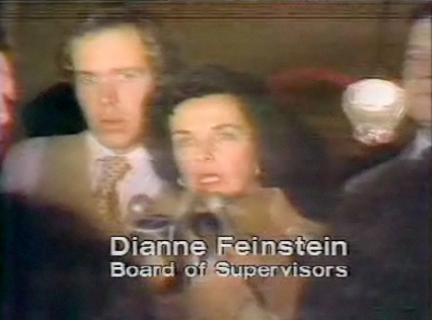
The last time the Board of Supervisors had to pick a mayor, things were very different. Former Sup. Dan White had just murdered Mayor George Moscone and Sup. Harvey Milk. The city was in shock. Board President Dianne Feinstein became acting mayor, and one week later, on Dec. 4, six of her colleagues — the narrowest possible margin — elected her to fill out Moscone’s term.

It’s worth looking back at what happened that week, not only because it’s a fascinating bit of political history, but because it gives some insights into how the current process should and shouldn’t go.
We’ve gone back and pulled not only the minutes of that meeting, but all of the relevant articles and editorials from the San Francisco Chronicle, the old San Francisco Examiner and the Bay Guardian, and while newspaper accounts are only the first, and often imperfect draft of history, the Chron had a good City Hall reporter, Jerry Burns, and you can get a lot from the day-by-day accounts.

For starters, everyone (even the Guardian) agreed that Feinstein did a good, almost uncanny job of keeping it together and managing the city in the week after the horrendous murders. But she was by no means the only, or consensus candidate for the job — Sup. Robert Gonzales announced his candidacy Dec. 1, and others were in the running until the end. The Guardian wrote at the time that Feinstein was fine as acting mayor – but shouldn’t be in office for the final 13 months of Moscone’s term.

Among the interesting elements of the drama:

— The process was riddled with Brown Act violations, and the selection of Feinstein was, in retrospect, almost certainly based on illegal meetings.  “Feinstein spent yesterday at her Pacific Heights home,where she talked with most of the supervisors,” a Dec. 4, 1978 Chronicle article by Burns noted. That would amount to an illegal meeting; under state law, then and now, meeting individually and serially in private with all or most of the members of a public board is a clear violation of the Brown Act.

At the time, however, nobody challenged Feinstein’s actions.

— Then, as now, there was a move to name a “caretaker” mayor who would fill out the remaining 13 months of Moscone’s term — and vow not to run again. But the conservative Examiner said that was a bad idea: In a Dec. 3 editorial, the paper, then owned by Hearst Corp., noted: “The City should not have to accept a “caretaker” mayor invested with only a thin veneer of authority.” The notion went nowhere.

— At least one name that was bandied around back then is in play again today: Then-Assembly Member Willie Brown.

— Feinstein got exactly six votes. Although in most casual historical accounts, she’s described as a clear, almost unanimous choice, that was far from true. In fact, Sup. Ron Gonzalez, who described himself as the board member most in synch with Moscone’s agenda, announced his candidacy Dec. 1, and as of Dec. 3, the day before the final vote, Russ Cone of the Examiner reported that “earnest and secretive negotiations among San Francisco’s nine supervisors to agree upon a mayor to replace the slain George Moscone today entered the final, feverish hours with no candidate ready to claim victory.”

At the Dec. 4th board meeting, Sup. Quentin Kopp moved to continue the decision for a week. Kopp – unlike most of his colleagues – had been avoiding the political furor in the days after the assassinations, saying it was unseemly to be making deals when city leaders ought to be in mourning. Feinstein and the six others who would ultimately elect her voted against the motion.

That would be a clear violation of law today; as a candidate, Feinstein would be unable to vote on anything that could promote her ascension to mayor. But no matter: The motion needed six votes, and only Kopp and Sup. Lee Dolson said Aye.

When the motion was made to name Feinstein as interim mayor, Kopp tried to ask her a few questions – particularly about her plans for various department heads. The city attorney quickly shut him down, saying Feinstein couldn’t legally answer or get involved in any debate.

Then six supervisors voted for Feinstein. Kopp and Dolson dissented. Feinstein by law had to abstain. And there were, of course, two empty seats; Dan White had just resigned and was in jail, and Harvey Milk was dead.

Why did Kopp vote no? There’s a back story, a key part of San Francisco political lore.

Feinstein had run for mayor twice before, in 1971 and 1975, both times finishing well out of the money. After her second defeat, she vowed she’d never do it again. In fact, the day before the assassinations, she had just returned from a trip to Nepal with her then-boyfriend (now husband) Richard Blum, and reporters asked her if she was going to run in 1979. “Not this time,” she said.

She and Kopp, longtime rivals, had cut a deal the year before. Feinstein wanted to be board president; Kopp wanted to be mayor. And Feinstein vowed that if Kopp would support her for board president, she’d stay out of the mayor’s race in 1979 and leave the field open for him.

And of course, immediately after the killings, she changed her mind. Kopp thought what was a bit slimly, and refused to vote for her for mayor. He challenged her in 1979, and narrowly lost, and her political career, so recently in the doldrums, was off and running again.


The next mayor: A very funny video

4

This is a truly enjoyable (if a little off-base) video about the selection process for the next mayor. I particularly like the part about the duties of the acting mayor. Check it out after the jump


SFBG Radio: Beyond body scans and patdowns

2

Today we talk about the anger over full-body scans and patdowns at airports — and why the critics are missing the point. Body scans are far less intrusive than the sort of data mining, wiretaps and assaults on personal privacy that go on every single day in both the public and private sector. Listen after the jump.

sfbgradio11/22/2010 by endorsements2010

Breaking down the cost of hosting the America’s Cup

0

San Francisco’s Budget and Legislative Analyst has released a report outlining the costs and benefits of hosting the 34th America’s Cup in San Francisco. Bottom line: If the world-famous yacht race is held here, it will cost the city an estimated $42 million.

The Guardian will publish a more detailed report in coming weeks, but for now, here are a few highlights from the report, which was requested by Sup. Chris Daly and released to the media on Nov. 18.

* The overall cost breaks down like this: The Budget Analyst estimates that the city would receive an estimated $22 million in revenue, and incur new costs of $64 million, resulting in a net loss of $42 million.

* The city would receive an estimated $3.6 million from property tax revenues from new development (probably luxury condos) if the event organizers built on the port properties they’d receive as part of the deal. Billionaire Larry Ellison, who has the ultimate say in selecting the venue for the America’s Cup, would receive several port properties rent-free for 66 to 75 years, under leases which haven’t yet been formally approved. However, if the city obtained a private developer through a competitive process instead, it could receive increased tax revenues of $89.8 million. According to the Budget Analyst, this estimated net loss of $86.2 million “is in addition to the estimated net loss … of $42.1 million.”

* The major benefit to hosting the prestigious yacht race in San Francisco would be an estimated $1.2 billion in new spending in San Francisco’s economy, and the Budget Analyst predicts a range of $928 million to $1.6 billion in economic activity – undoubtedly a good thing for a troubled economy.

* However, the creation of “9,000 jobs” you may have heard about isn’t as simple as it sounds. According to the report: “All ‘jobs’ predicted … are not permanent full time jobs, and therefore would not result in hiring 8,840 employees.” Instead, the Budget Analyst prefers to frame it in terms of work hours, noting that the additional work would be either absorbed by the existing workforce (as in a server waiting on more customers per hour), greater overtime for the existing workforce (think police), or temporary jobs.

The Budget Analyst is careful to state that the report is not meant as a recommendation one way or another for hosting the America’s Cup. “However,” it states, “it is the responsibility of the Budget and Legislative Analyst to report the facts to the Board of Supervisors.”

About that “far left beating…”

61

Our old pal Chuck Nevius is gloating about how the “far left” (I guess that means the people who would have been called mainstream Democrats a generation ago, the ones who believe in the public sector and think economic equality matters) got beaten badly in the supervisors races. And he uses Aaron Peskin as the personification of the far left (amusing, because if you actually talk to Peskin, and look at his record, he’s hardly a crazy leftist. And I say that as someone who is. A crazy leftist, I mean.)

Anyway, here’s what Nevius missed:

Malia Cohen is on the Board of Supervisors because of Aaron Peskin.

Look at what happened in the ranked choice voting. Cohen came from back in the pack because of second-place votes — and a lot of that was because the Democratic County Central Commitee put her as its #2 choice, after DeWitt Lacy, who didn’t run much of an effective campaign.

How did she get the #2? How did a candidate who is bad on tenant issues beat out Tony Kelly, who was by far the most progressive contender, at the supposedly “far left” DCCC? That was the work of Peskin — who, to the chagrin of a lot of progressives (including me) decided to vote for and promote Cohen as the second choice on the slate.

First of all, that was hardly the move of a “far leftist,” since Cohen certainly ran as a more moderate candidate. Second, it showed that the “far left” isn’t some giant organized hippie commie bloc led by Commisar Peskin; it’s a sometimes-united, often-fractious coalition that shares some interests and agendas but doesn’t always have its shit together.

Then there’s this notion the moderates swept into power. Actually, by chance of the way lines are drawn, the even-numbered seats have always been more conservative than the odd-numbered ones. In this case, in many of the races, the progressives were (to quote Calvin Welch) “playing with the house’s money.” Check it out:

D2: Janet Reilly would have been much more reasonable than Michela Alioto-Pier, but Mark Farrell won’t be any worse. Almost by definition, he can’t be any worse than Alioto-Pier. That was a conservative seat, and still is.

D4: No change at all, still Carmen Chu, still a moderate-to-conservative seat.

D6: I supported Debra Walker, but by no stretch of the imagination is Jane Kim anything but a progressive. She’ll be more conciliatory than Chris Daly, but that’s not difficult; Walker would have been more conciliatory, too. Different people, different personalities. But in the end, Kim will be a progressive vote; I mean, she started out as a Green Party leader. The “far left” held that district.

 D8: Definitely the house’s money. Scott Wiener won’t be a whole lot different on the issues than Bevan Dufty. If Rafael Mandelman had won, it would have been a net pickup for the left, but as it is, I’d call it a wash. Sure, the DCCC endorsed Mandelman and he lost, but we all know that was an uphill battle; Wiener has been working that district for years, had plenty of money, was better-known, had the support of Mark Leno, who once held that seat and is immensely popular in the district.   

D10: Sophie Maxwell was never part of the progressive bloc on the board. Sometimes she voted with them; sometimes she didn’t. Tony Kelly would have increased the size of the progressive majority; Malia Cohen doesn’t change it.

In two years, five key progressive seats will be on the ballot — Eric Mar seeking re-election in D1, David Chiu in D3, Ross Mirkarimi termed out and an open race in D5, and David Campos and John Avalos running again in D9 and D11. That’s where the battle to hold the progressive majority will be fought — and those are districts where the DCCC has more influence anyway.

In other words, since the return of district election, the progressives — the “far left” if that’s what you want to call us — have only held one of the five even-numbered seats, and still do. That’s not spin, Chuck; that’s reality.

 PS: Just for fun, I went back four years and checked out our endorsements for supervisor the last time the even-numbered seats were up. W endorsed Sophie Maxwell for re-election in D10 (with reservations, and lacking a credible progressive alternative) and Daly was re-elected with our support in D6. But our candidates lost in D2, D4 and D8.  Nobody talked about the left getting destroyed.

Memo to Jerry: Yes, you can raise taxes

6

The students and professors at UC have come up with all sorts of creative ways to avoid or minimize tuition hikes, but there’s an option that the Regents (and so far, the new governor) haven’t put on the table: An income tax surchage on the irch and big corporations to pay for public education. Guees what? A majority of Californians are in favor of that approach. In fact, according to the Public Policy Institute, which generally produces some of the most accurate polls in the state, Californians are far more willing to see their own taxes go up than to see student fees raised.


And PPIC didn’t ask the direct question that I would have asked — would you favor a small tax increase for the wealthiest Californians to pay for reduced tuition at California’s public universities? — but based on the poll results in general, I think the response would be a resounding yes.


So there you go, Jerry — a chance to immediate take a stab at the budget crisis in a way that would be popular almost across the board.  

Inside the UC protests

1

Hundreds of students showed up at the Mission Bay campus Nov. 17 to protest the eight percent tuition hike that UC Regents are expected to approve on Thursday, Nov.18.


The protests turned violent after police tried to prevent students – and members of the public – from attending a public meeting on the finances of a public university.


The latest hike would amount to a cumulative tuition increase of 40 percent this year alone, bringing the cost of what was once a free public education, and as recently as 1995 was just $1,300 a year, to more than $10,000 — pushing a lot of students out.


Nathan Brostom, vice president of UC business operations, told the Regents that although the university’s balance sheet looks good, its liabilities are growing. Future increases are a possibility, he said, in light of a state budget that leaves less and less for public education.


Of course, UC is also lot of money on campus expansion.


The students made it clear where they stand on this issue: they refuse to believe that tuition hikes are the only way. And there’s a strong case to be made that the university has other options; Bob Meister, a professor of political and social thought at UC Santa Cruz and president of the Council of UC Faculty Organizations, released a detailed letter to the Regents explaining several options for avoiding the increase. He spoke to the board during the public comment part of the meeting.


You can read his letter here (PDF)

At a press conference during the event, UCSF Police Chief Pamela Roskowski noted: “I want to acknowledge that tensions are high.” That was an understatement.


Protests lasted all day, leading to 13 arrests.


The first major police backlash happened when protestors attempted to rush a police barricade, which stood between them and the regents inside the community center. Police lined the barricade’s inner wall and pushed back as the wave of sign-holding students swelled against it.


Roskowski referred to the “angry, unruly, aggressive” protestors and said that they picked up a part of the barricade and used it as a weapon, injuring at least one officer. She also said that protestors tried to pull an officer over the railing and onto their own side. This was when police retaliated with pepper spray — and, by the looks of what was caught on camera, loads of the stuff.


Roskowski defended the use of pepper spray, saying it is the least lethal weapon that officers carry, and that police used it here “in lieu of a baton.” The video shows police spraying protesters with what looks like a hose.


In a separate confrontation, a large group of protestors apparently attempted to enter the community center from a walkway in the adjacent parking garage. Video shows protestors pushing against a wall of police officers, who stood as a human barricade.


In another video, one of the officers breaks away and enters the crowd. He then struggles with protesters momentarily before he regains his footing and stands in the crowd’s center — with his gun drawn and pointed at the crowd.


Roskowski said the officer attempted to fend off the protestors, but that they took his baton from him and struck his head with it, and he pulled out his gun in self-defense.


We’ve looked at the video a number of times, though, and while the scene is chaotic and it’s not always possible to see the officer every moment, and he does lose possession of his baton at one point, there’s no clear visible evidence of any protester taking it from him. And there’s no evidence at all of anyone hitting the helmeted officer with the baton.


In fact, it’s hard to figure out why he charged into the crowd in the first place.


Look for yourself.


The student who allegedly attacked the officer with his own baton has been charged with assault with a deadly weapon. The remainder have been charged with obstructing an officer from the discharge of his/her duties, which is a misdemeanor.


When asked whether there would be an investigation into whether today’s police response was appropriate, Roskowski said “There is always an investigation.”


The police force present at the Regents meeting consisted of 60 UC officers and 35 borrowed from the University of San Francisco.

Processing the mayoral transition

5

The question of who will be the next mayor of San Francisco wasn’t any clearer by the end of the Nov. 16 Board of Supervisors meeting, but many expressed a desire for an open and transparent process with accountability to the public. The board approved a motion by Board President David Chiu to have the Clerk of the Board propose an process for selecting a successor mayor, which will come under consideration at the next meeting. But with only a handful of board meetings left before the new board is sworn in on Jan. 8, there is a high level of anticipation.

Clerk of the Board Angela Calvillo confirmed that her office is drafting a proposed process for mayoral selection. Calvillo said the proposal would be submitted for consideration at next week’s meeting, and it will be available to the public on the city website by Friday, Nov. 19.

Essentially, the board could choose from a number of options at its next meeting on how to appoint a successor mayor once Mayor Gavin Newsom vacates office. Whatever the Board decides prior to Jan. 3, when Newsom is sworn in as Lt. Governor, will not have the force of law, since there won’t yet be a vacancy. So a second vote will have to be taken Jan. 4 to make the official appointment. Newsom has said he is “99 percent sure” that he will vacate the Office of the Mayor on Jan. 3.

According to Santa Clara County attorneys — who are filling in for City Attorney Dennis Herrera since he has a conflict-of-interest as a mayoral candidate — neither the Charter nor the Municipal Code dictates a specific process for the Board to use in selecting a successor mayor. So, the board could either follow the regular appointments procedure under the current Board Rules, or it could devise its own process.

The Clerk of Board is now hammering out that unique process, as directed by the board, and the board may vote to modify and adopt that process next week — but since a vote to adopt it would constitute an amendment to the board rules, it would require a super-majority of eight votes.

If there aren’t eight votes, then the board may still opt to set forth an appointment process under the current board rules. “I strongly believe that we do have the ability to effectuate an appointment without amending the board rules,” Sup. Chris Daly said. Daly told the Guardian that he has submitted a motion to take nominations and appoint a successor mayor, which will appear on the adoption without committee reference calendar at next Tuesday’s Board meeting. However, a similar motion put forth by Sup. John Avalos wasn’t able to gain the needed support.

If the board went through the normal appointments process, it would require sending nominees through the Rules Committee for consideration – but since it wouldn’t be practical to have just three members of the board recommend a mayoral appointment to the full board, all 11 supervisors could sit as a Committee of the Whole instead.

The timing is important because if supervisors cannot agree upon a process, or gain enough support for a single nominee, then the task will fall to the new Board of Supervisors, who will be sworn in Jan. 8. If the current board doesn’t reach a decision by Jan. 4, Board President David Chiu will automatically become acting mayor. Once the new board is sworn in, it can continue whatever appointment process has been set in motion or decide to initiate a new process for appointing a successor mayor. If the current board appoints a successor mayor, however, the new board cannot revoke or otherwise affect that appointment.

There are a slew of questions still at play. For example, under conflict-of-interest laws, when some one is nominated as successor mayor, he or she must leave the room and is barred from influencing the process in any way. The idea was bandied about at the Nov. 16 Board meeting to require nominees to respond to questions from the board as part of a public forum, but it’s unclear how a supervisor who has been nominated could respond to questions from his or her colleagues while being sequestered and prohibited from influencing the process.

Although word went out that interested members of the public should show up at City Hall around 4 p.m. Nov. 16 to weigh in on the discussion about appointing a successor mayor, the conversation didn’t get underway till much later.

Sup. John Avalos had submitted a motion to vote on an interim mayor and then vote a second time to ratify that appointment once Mayor Gavin Newsom had vacated office. However, his motion was amended to simply take public input and discuss the process of appointing a successor mayor.

Members of the public waited patiently, and when it was time, they lined up behind the speakers podium wearing neon sunburst stickers that read, “Let the Sun Shine In!” Local writer, artist, and activist Tommi Avicolli Mecca even sang the refrain of the song by that name, before imploring the Supes to “Get this done now, and give us a good, progressive interim mayor.”

Labor activist Gabriel Haaland urged the current board to agree upon an appointment instead of handing the responsibility over to the next board. “People who’ve never held an office hour in their life should not be making this decision,” Haaland said.

Christopher Cook highlighted the challenges that the new mayor would face. “We’re talking about a less-than-average amount of time to prepare for an absolute maelstrom,” with regard to the city budget, Cook noted.

“Let the sun shine in” seemed to be the catchphrase of the evening. Before the public weighed in, Sup. Chris Daly called for an open, transparent process for the appointment of the new mayor. “Conversations about mayoral transition have been happening behind closed doors, not in public session, for the better part of this past year,” Daly charged. “It’s time to hear from the public.”

But just how, exactly, the appointment process will work is anything but clear and sunny – at least for the time being.

Meanwhile, Judge Quentin Kopp, who was a member of the Board of Supervisors when a successor mayor was appointed on Dec. 4, 1978 — one week after the assassinations of Mayor George Moscone and Sup. Harvey Milk — said the process of choosing a new mayor was simpler back then.

In that case, then-Sup. Dianne Feinstein was the only nominee. She was appointed with six votes. Two, including Kopp, voted no, and there were two absences (Harvey Milk had been assassinated one week prior, and Dan White was in jail). Feinstein, who was made to leave the room during the vote, abstained. However, before the vote was called, Feinstein was able to vote against a motion for a continuance — a power she likely would not have had if current political-reform laws were in place.

“It’s simple,” Kopp said. “Why are they complicating it?”

He scoffed at the circuitous discussion happening now, and said some one else had called him with the same inquiry earlier that same day. “Once again, our overpaid supervisors are making work for themselves,” he said. “It’s called busywork.”

And that might be the most insightful statement yet – after all, while the process points are debated over and over again, there is more time for supervisors to determine just who might be able to collect the six votes needed to be elected mayor of San Francisco.

SFBG Radio: The matador and the bull

3

Today we talk about the American public, the bull that has been slashed and stuck with knives and abused by the matador that is the ruling class, and Johnny asks: When is the bull going to stop falling for that dumb red cape trick and start to fight back? You can listen after the jump.

sfbgradio11/17/2010 by endorsements2010

Do San Francisco cyclists need a lift?

10

The abundance of hills in San Francisco may prove to be a formidable obstacle to the city’s goal of increasing the percentage of commuters who use bicycles, particularly for hilltop residents leery ending their days with steep climbs. But motorized lifts could prove to be a potential solution, one now being pondered by public officials and cycling advocates.

Bike lifts are used in several European cities, including Brussels, Belgium and Trondheim, Norway. It consists of a foot plate on a motorized track that pushes riders up the hill at a speed of about three to seven miles per hour.

At a San Francisco Transportation Authority Plans and Programs Committee meeting last month, Sup. David Chiu mentioned seeing the lifts while on his recent trip through the Netherlands, where he went to get ideas for San Francisco to expand bicycle ridership to a full 20 percent of vehicle trips by 2020, a goal set by the Board of Supervisors shortly after that discussion.

“We’re talking about the hilly terrain that can be dealt with in many different ways, but not without investment,” SFTA Director Jose Luis Moscovich said at the meeting. Using the lifts was an idea raised by Renee Rivera, acting Executive Director of the San Francisco Bicycle Coalition. Moscovich responded to the proposal by saying, “We’d probably need to invest in some of those.”

“It’s an idea we’ve shared often and the response is, ‘Hey, I want one of those for my hill,’” Rivera told us. “It’s certainly something that has resonated with some folks, but we think we’ve got some more basic questions to deal with first and that really is improving our network of bike routes here in San Francisco so that they really carry people where they need to go.”

SFBC has had discussions with the Presidio Trust about installing a lift that would take people from the Fort Point parking lot up to the visitor’s center. “It would be in itself a fun attraction for people going to the Golden Gate Bridge because there’s kind of a climb getting up to the bridge,” Rivera said.

While the idea might sound a little far fetched, the flood gates have opened for bicycle-friendly projects in San Francisco. A four-year court injunction that prohibited city engineers from implementing the San Francisco Bicycle Plan was lifted in August and the Board of Supervisors voted in October to approve a resolution to increase the number of trips taken by bicycle to 20 percent of the transportation share by the year 2020. Currently, about 7 percent of the trips within the city are made by bicycle, a figure that has doubled in recent years.

Trampe is the name of the Norwegian lift and the system’s website notes, “In a user survey, 41 percent of the lift users claim they are using the bicycle more often due to the installation of Trampe,” and 72 percent said they would like to see more lifts in Trondheim.

What do you say, San Franciscans, you want one on your hill as well?

Reilly and Kelly concede D2 and D10 races

9

Two weeks after the Nov. 2 election, D2 candidate Janet Reilly and D10 candidate Tony Kelly issued concession statements, as ranked choice voting counts, which will certified by November 30, placed them second: Reilly trailing Mark Farrell in D2, and Kelly behind Malia Cohen in D10.

For Reilly, the disappointment was sharpened by the knowledge that she received more first-place votes than any other D2 candidate. She won 9,625 first place votes (41.15 percent of vote) compated to Farrell’s 9,442 votes (40.37 percent).

But with neither Reilly or Farrell winning an outright majority, second and third place votes were factored in under the city’s ranked choice voting system. And that calculation tipped the balance in favor of Farrell, who finished with 11,105 votes, (50.62 percent) compared to Reilly’s 10,835 votes (49.38 percent).

Reilly tried to put on a brave face in face of adversity.
“I have spent many years serving people outside public office — on the Golden Gate Bridge Board, at Clinic by the Bay, at Catholic Charities CYO, through our family’s high school scholarship program and at many other institutions,” she aid. “Now that the campaign is finished, I will be able to resume these activities.”

But she voiced her belief that attack campaign prevent potentially good candidates from running for political office. Acknowledging that “public service is an honor” and that it is “an integral part of our democratic tradition for candidates to pass a series of difficult tests before earning the right to hold office,” Reilly  added that she “understands why many bright, capable people choose not to run for office when I see how poisonous and cynical the process can be.”

 “In my own race, an independent expenditure committee armed with $230,000 leveled an 11th-hour smear campaign against me,” Reilly noted. “They violated a litany of election laws while peddling gross distortions and outright lies. This is simply wrong. Actions like this deter many good people from public service.”

That said, she ended on a positive note.

 “I am truly proud of the campaign we ran,” Reilly said. “We never wavered in the face of adversity and we continued bringing our positive message to the voters of D2 all the way through Election Day, You can count on me to be fighting by your side every step of the way for the good of the city.”

For his part, Kelly offered congratulations to Cohen and asserted his relative success in the complex D10 race in which race, class and geographical location had a profound impact on voting patterns—and the ultimate results of the supervisor election

”I came in second in the ranked-choice runoff, by a few hundred votes,” Kelly said, alluding to a race in which Lynette Sweet  won most first place votes (2,059, 12.06 percent), ahead of Kelly (2,035 votes, 11.92 percent) and Malia Cohen and Marlene Tran tied third (2001 votes, 11.72 percent of vote). But once second and third place votes were counted, the importance of strategic alliances, positive campaigns and widespread appeal became clear, as Cohen polevaulted into the lead (4,173 votes, 52.60 percent) ahead of Kelly 3, 761 votes (47.40 percent), while Tran remained in third place (3,256 votes, 30.44 percent) and Sweet dropped to a distant fourth (3077 votes, 23.87 percent).

Kelly acknowledged the importance of running grassroots campaigns under this system.
“We had more donors from D10 than anyone, more volunteers from D 10 than anyone, and just as many first-place votes in D 10 as any other campaign,” Kelly observed. “So we know the voters heard us. They, like us, want a supervisor who will listen to all our concerns, bring real progressive ideas to the Board, and ensure that the City’s resources work much harder for the people of District 10.”

He offered an olive branch to the incoming supervisor and her allies by encouraging his supporters to work with Cohen to win the best future for the district.

“Neighborhood leadership is not about one person, or one campaign,” Kelly observed. “The alliances that came together during this year must continue, and I urge everyone interested in my candidacy to work with Sup.  Cohen to show City Hall how to create local jobs, clean up our environment, support our families, and use common sense ideas to fix our budget. In years to come, we will all continue to fight for the people of D10 with courage, compassion, better ideas and hard work.”

And then he signed off with a peace note
”My love to you all, and many thanks, on behalf of my entire staff and the hundreds of volunteers who gave of themselves over the past nine months,” Kelly said.

Peace out to Reilly, Kelly and all the candidates in these long, exhausing and ultimately brutal races.


A word from the sheriff on the mayoral mix

0

One of the names that’s getting thrown around a lot in the discussions of the interim mayor is Sheriff Mike Hennessey, who’s been in his job longer than I’ve been in mine, and that’s a good while. The idea is that Hennessey — generally a good progressive, and lately very outspoken on Sanctuary City — would serve for the rest of Newsom’s term, but not run for re-election; he wold be the classic “caretaker” mayor.


I’m dubious about the caretaker idea. A short-termer would have to deal with massive budget problems — but without any real power to make long-term decisions. But as far as I can tell, nobody in the local press has bothered to call Hennessey and ask what he thinks, so I gave him a jingle today. As always, he called me right back and was friendly and spoke off the cuff with his usual sense of humor.


The bottom line: He’s fine with the job he has now. He’s never really wanted to be mayor. But if the supes wanted him, he wouldn’t say no.


“It’s realy not something I’m lusting after,” Hnnessey said. “But if the supervisors decide they need a steady hand, someone who has been before the voters, I’d be willing to do it.”


He would also be utterly uninterested in running for re-election. In fact, he’s not even sure he’s going to run for sheriff again; he’s still relatively young (early 60s) but has 32 years in the job and is probably looking forward to a nice semi-retirement. Serving out Newsom’s term would make that decision easy.


On the other hand, he was quick to point out that a caretaker mayor couldn’t do a lot. “The first five months you’d be working on the budget, then the election cycle would start up and you’d just have to try to stay out of the way,” he told me. “You can’t municipalize PG&E in one year.”


Which I think is about right. There are some key pieces of legislation that Newsom has vetoed that a short-termer like Hennessey might be willing to sign, but all the real major decisions would be put off for a year. And the progressives would be giving up the chance to put someone in the mayor’s office would could run for re-election on a progressive platform.


Mike’s not to fond of my bright idea of asking all the potential mayoral candidates to show up and answer questions at a public board hearing, either. “I think that’s a really bad idea,” he said with a laugh. “Because I wouldn’t want to do it.”


A fitting end to Dellums’ mayoral tenure

3

Oakland Mayor Ron Dellums has announced that he won’t give his final State of the City speech tomorrow in person as scheduled, instead performing the legally required duty by simply sending in a written report and video, a fitting end to his terrible tenure as mayor.

“In lieu of a public address this Wednesday, Mayor Dellums has opted to provide a comprehensive, printed State of the City report and accompanying video chronicling his four-year administration. These will be available on line at www.oaklandnet.com on November 17, 2010,” read a memo released yesterday by the Mayor’s Office.

It will be an ignominious end for a legendary political figure who rose from the black power movement of the ’60s to serve a remarkable 13 terms in Congress, where he was a leading voice against war and wasteful military spending. But as mayor, Dellums simply failed to lead a city that desperately needed him, ducking the city’s biggest problems and any sense of public accountability.

When Dellums came to the Bay Guardian offices four years ago to seek our endorsement (which we gave him, hoping he would be better than then-frontrunner Ignacio De La Fuente), Executive Editor Tim Redmond asked him what qualified him to be mayor and whether he was up for coming out of retirement to take on such a demanding job. Dellums responded with fiery indignation – how dare we question his fitness for such a piddling office after such a distinguished political career.

In retrospect, it was a good question, and a telling non-answer. Luckily for Oakland, after two mayors in a row that were legendary if imperious political figures, the city will now have a mayor – Jean Quan (who narrowly beat a man who would have followed in the Jerry Brown/Ron Dellums model: Don Perata) – who is committed to doing the hard work on this very difficult job. We wish her well.

Gavin Newsom, Republican

1

I mean, isn’t this exactly what the Republicans have been saying in Sacramento, paralyzing the state by refusing to accept any new taxes? Is that the attitude Newsom wants to bring to his new job? What’s he going to do when Jerry Brown announces a package of tax hikes for the June ballot and wants his loyal Lt. to go around the state and campaign for them? Or is there a different standard for the state budget?


I don’t get it, Gav. 

Will reapportionment change California?

21

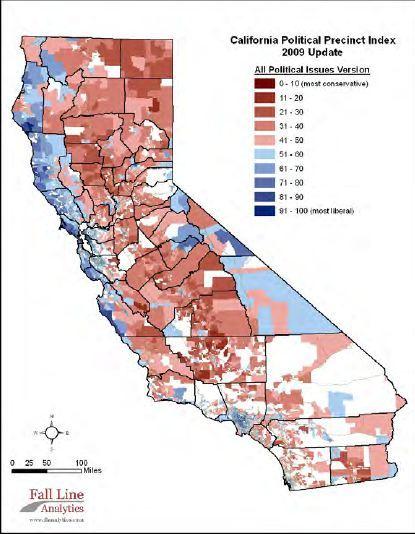
Probably not. The voters confirmed that the job of drawing new district lines next spring will be done by an independent (and unaccountable) commission whose makeup will not reflect California’s. (Five Republicans and five Democrats in a state where Democrats far outnumber Republicans?) But Brian at Calitics makes the case that it won’t matter much — and he’s hit on a really important point about California politics.


The voters have already gerrymandered themselves, in a sense. The liberals tend to live with liberals, the conservatives with conservatives. And any reasonably compact, fair district lines will reflect that.


In fact, the Fall Line Analytics map that Calitics cites makes an excellent case for splitting California into two or three states — one along the coast from Sonoma to Los Angeles, one in the Central Valley (including San Diego) and perhaps a third including the far-northern counties, which have wanted to secede for a while anyway. Then the coastal residents could have a progressive state with taxes on the wealthy to fund services, and the conservatives can try to survive in a low-tax heaven of their own. (And if you really think wealthy people will leave San Francisco and Silicon Valley and L.A. to move to Fresno for lower taxes, you’re as crazy as some of our blog trolls.)


The interesting twist on this all, though, is that there’s pretty good evidence that the population in California has shifted somewhat away from the coasts in the last decade and moved somewhat inland. Which means that Los Angeles and the Bay Area may wind up losing Congressional and state Legislative seats to the traditionally more conservative areas.


The data also suggests, though, that a lot of the new residents of the inland areas are Latino — and the way that Latino vote breaks may play a far more significant role than the redistricting commission.


Replacing Newsom: no reason to wait

11

Randy Shaw’s calling on the supervisors to wait, and let the next board pick the next mayor. I don’t get his argument. In fact, it seems to me that there’s every reason for this board do its Charter-mandated job.


Think about it: everyone on the board has served for at least a year and a half, and some for a lot longer. They’ve been around enough to have some sense about how political decisions are made and some experience making tough calls. Two of the people who appear to be the new supes — Malia Cohen and Mark Farrell — have never held any elective office before. And if the decision is left to the new board, the first thing that group of 11 people, including four newcomers, will have to do — minutes after they’ve taken the oath of office — is make perhaps the most important decision any of them will face as supervisors.


And in that case, backroom deals made in the interregnum will play and even bigger role.


There’s no “rush.” I don’t think the board should choose a new mayor tomorrow. But I think the supes ought to get the process going — and do it in a way that is open and honest and gives the public faith in the results.


If you want to be appointed by the board to a commission or task force, you have to go before the Rules Committee and be vetted. The committee members ask questions. There’s testimony. Why should the mayor’s job be any different?


The process that makes the most sense would go like this: Starting this week, the supervisors nominate candidates for interim mayor. Everyone nominated is contacted and asked if he or she is interested in the job. Then the ones who want to serve — either as a “caretaker” or with the hope of running in the fall — appear at a series of hearings of the full board, sitting as a Committee of the Whole. Every supervisor gets to ask questions; the candidates respond, and the whole thing is open to the public.


When that’s done — in a couple of weeks — the board can select the best candidate. That person would then start forming a transition team and prepare to take office January 4th, when Newsom becomes lieutenant governor; the board would simply ratify its choice that day.


I’m not going to argue about whether the incoming board is more or less “progressive” than the current board. I am going to suggest that experience matters, that there are serious problems for the new mayor to take on, that the mad scramble approach (the way board presidents are elected) is a bad way to choose a new mayor and that there’s plenty of time to do this right, in the open, between now and January.


SFBG Radio: The next counterculture

5

Today, Johnny’s got the apolitical blues, so we talk about the next counterculture — and why it might not come from San Francisco. Check it out after the jump.

sfbgradio11/15/2010 by endorsements2010

SFBG Radio: The next step for weekly newspapers

0

Today we talk about the future of weekly newspapers — what’s the role of a weekly in an era of 24-hour news cycles? And how will weeklies make money in the digital era? Listen after the jump.

sfbgradio11/12/2010 by endorsements2010

Only a miracle can save Steve Li now

41

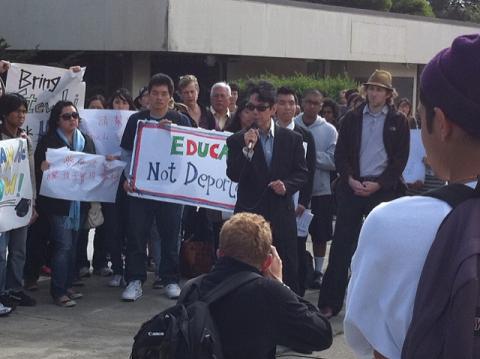
Supporters of Shing Ma “Steve” Li, a 20-year-old nursing student, gathered outside the offices of Sen. Barbara Boxer today to urge her to sponsor a private bill in a last ditch effort to halt Li’s deportation to Peru, which is scheduled to take place Monday, November 15—two months after ICE (Immigration and Customs Enforcement) agents arrested Li in San Francisco.

“While we do not introduce private bills, our staff is happy to meet with Mr. Li’s family and his attorneys to discuss his case,” Boxer spokesperson Zachary Coile emailed the Guardian, as protesters delivered stack of letters to Boxer’s office, asking that she intervene in Li’s case.

Unlike Sen. Dianne Feinstein who has sponsored private bills in the past, Boxer has no record of intervening in this way. But advocates were hopeful that now that she has survived the November 2010 election, Boxer will pull off a miracle before Monday.

This afternoon, Li’s attorney Sin Yen Ling texted the Guardian that her request for deferred action had been denied, meaning that Li will be on a plane to Peru on Monday, baring some last minute miracle.

“Our office has been in touch with ICE and is exploring the options,” Gil Duran, media spokesperson for Sen. Dianne Feinstein told the Guardian, half an hour after Li’s request for deferred action was denied.

And Boxer spokesperson Zachary Coile said the senator’s staff met with Li’s mother, his attorney, his City College professor and others, this afternoon.

“While we do not introduce private bills, our staff was happy to meet with Steve Li’s family and his attorney to discuss his case,” Coile stated. “We reiterated Senator Boxer’s strong support for the DREAM Act, which would provide a path to citizenship for tens of thousands of undocumented students who go to college or serve in the military. Senator Boxer will keep working in the Senate until it becomes law.”

And tonight, Drew Hammill, press secretary to Speaker Nancy Pelosi emailed the following statement to the Guardian:

“Speaker Pelosi believes that Steve Li’s case is a textbook example of the pressing need for comprehensive immigration reform and passage of the DREAM Act. Speaker Pelosi is working with other Members to recommend that ICE grant deferred action in this case.”

Boxer, Feinstein and Pelosi, who have both been strong supporters of the DREAM Act, have vowed to keep working until it is passed.

Earlier this fall, on Sept. 14—the day before ICE arrested Li– Senate Majority Leader Harry Reid announced plans to add the DREAM Act as an amendment to the Department of Defense authorization bill.

But that effort was blocked by Senate Republicans. And after the bloodbath that congressional Democrats endured this November, it’s unclear if the DREAM Act has a prayer, though Nancy Pelosi vowed to move it forward during Congress’ upcoming lame-duck session, and it has continued to attract bi-partisan support since it was first introduced in 2001 by Senators Richard Durbin (D-Il) and Richard Lugar (R-IN).

At today’s protest, Li’s legal counsel, Sin Yen Ling, decried the federal government’s decision to deport her client.

“A 20-year-old City College student is not a threat to our national security,” Ling said. “We need to bring Steve Li home as soon as possible.”

According to Ling, Li has not seen his mother Maria, who divorced Li’s dad for years and lives with Li in San Francisco, since his Sept. 15 arrest, when  ICE picked up Li and his mother in Ingleside on Sept. 15 and placed them in separate cars. The car carrying Li then picked up Li’s  father in the Richmond, and all three family members were processed at ICE’s Sansome Street office in downtown San Francisco, before being transferred to Sacramento County Jail. But Li was then involuntarily transferred to an ICE detention facility in Arizona. Meanwhile, Li’s parents were released from detention when ICE determined that China does not want them back because they left China seeking political asylum. But they are now required to wear cumbersome electronic monitoring anklets, because they are deemed a flight risk, and are not allowed to leave San Francisco.

As a result, Li’s parents have been unable to visit their son in Arizona. And should he be deported to Peru, it’s not clear if they will be permitted to follow. And should if they decide to travel to Peru, they will not be allowed to reenter the U.S. for at least ten years, further complicating a complex situation.

At today’s rally, Li’s mother Maria spoke in public for the first time,  breaking down into tears, as she begged Sen. Boxer and the U.S. government to help.

“He has no money, no clean clothes, how will he get by?” she asked, referring to ICE’s plan to put her son on a plane to Lima, Peru, where he reportedly knows no one.  “Sen. Boxer, will you just watch and pretend you didn’t see anything? Today, when you see all of us standing here begging you, will you respond to us? I hope you can understand it from a mother’s perspective and meet with me to discuss how we can help Steve.”

Ling said Li’s mother decided to speak because of the direness of her son’s situation, even though she was wearing a federally-mandated monitoring anklet.
“She felt it was now or never,” Ling said.

Li’s teacher Sang Chi also spoke, praising Li as a model student and a prime example of the kind of person that should be eligible for the DREAM Act. And then the Rev. Norman Fang led Li’s supporters in a prayer.

‘We ask that a miracle take place and that Steve’s mom and San Francisco can be happy again, that the heart and soul of what is morally right can overcome regulations,” Fang said, noting that 100 years, his family members were detained at Angel Island “for no other reason than they were Chinese. ‘There is only one border in our world—the one that separates Heaven and Earth.”

Li’s attorney Sin Yen Ling clarified that she doesn’t believe that ICE singled Li out.
“He’s just been swept up as part of a larger program,” Ling said, noting that actions that split families apart and target folks who came to this country as undocumented children have inspired a movement of DREAMers—folks who support the DREAM Act.

Every year, about 65,000 U.S. raised students, who would qualify for the DREAM Act’s proposed benefits, graduate from high school, according to the National Immigration Law Center (NILC).

“These include honor roll students, star athletes, talented artists, homecoming queens, and aspiring teachers, doctors and U.S. soldiers,” states a NILC press release. “They are young people who have lived in the U.S. for most of their lives and desire only to call this country their home. Even though they were brought to the U.S. years ago as children, they face unique barriers to higher education, are unable to work legally in the U.S. and often live in constant fear of detection by immigration authorities.”

Asked how ICE caught up with Li, who does not have a criminal record, Ling pointed to modern technology
“In this day and age, you can track anyone down,” Ling said.” And it’s a priority for ICE to identify people with final deportation orders,” she continued. Ling was referring to the fact that Li’s parents were denied their request for political asylum from China and issued a removal order, unbeknownst to their son Steve, who was born in Peru, came to the U.S. when he was 12 and was 14, when his parents’ asylum request was denied.

But Ling did not blame President Barack Obama, who promised to bring millions of undocumented residents out of the shadows, when he was running for president in 2008.
“It’s tough to criticize the president when he had five different priorities coming into office, including healthcare. His administration probably miscalculated how long it would take to pass healthcare. And part of the problem is partisan politics around immigration.”

Ling estimates that there are two million young people currently in the U.S. who would benefit from the passage of the DREAM Act, but blamed partisan politics for why the legislation failed to pass by only 3 votes in the Senate in September.

Sup. David Campos showed up at the rally and told Li’s supporters that the Board of Supervisors unanimously approved a resolution Nov. 9 calling for ICE to defer Li’s deportation.

“The Board is not always on the same page, but on this issue we were unanimous,” Campos said. “We get it, we understand the tragedy that this deportation would result in. And we remain hopeful that something will happen. There are millions of young people in the same predicament, and the solution is not deportation. The solution is passing comprehensive immigration reform. Until then, we need an intervention.”

Meanwhile, somewhere in Arizona, Steve Li sits in a jail cell, hoping, praying and dreaming…

PG&E’s priorities and the San Bruno pipeline

0

A few weeks ago, the Guardian reported that Pacific Gas & Electric Company was granted $5 million to upgrade a portion of its San Bruno gas pipeline, but never got around to doing it. A rupture along that section of pipe caused the deadly Sept. 9 explosion that took the lives of eight people, destroyed 37 homes, and left an entire San Bruno neighborhood traumatized.

What did PG&E spend the money on instead? Presumably, the $5 million went toward other repairs that were deemed to be higher priorities. But in the meantime, the company also managed to bankroll an eight-figure CEO salary, a state ballot initiative, and a controversial SmartMeter program, just to name a few. Just for comparison, here are a few examples of how $5 million breaks down for PG&E.

·    It’s less than half the boss’ pay. According to Forbes.com, PG&E CEO Peter Darbee earned $10,559,428 in 2009 in total compensation. $5 million represents 47 percent of the top exec’s pay.

·    It’s 10.8 percent of what PG&E spent on Proposition 16. The utility spent $46 million on Prop. 16, a failed June ballot initiative that would have effectively snuffed out PG&E’s competition from community choice aggregation programs. Had it poured just $41 million down the toilet instead, there might have been some left over for things like aging infrastructure.

·    It’s .22 percent of PG&E’s SmartMeter program budget. Recent news reports about the former SmartMeter director, better known as a sock puppet, note that he presided over a $2.2 billion program before submitting his resignation. $5 million represents a mere fraction of one percent of the budget for the controversial SmartMeter program.

KPFA’s Morning Show purged

43

KPFA has always been part radical-left radio station and part radical-left soap opera. It’s a collection of talented shit disturbers supervised at times by wildly incompetent managers who report to a highly political elected board that is so packed with agendas it’s hard to imagine how anything ever gets done.


Every time KPFA and its parent Pacifica Foundation have money problems — and like most progressive organizations, money problems are a fact of life — there are layoff talks and discussions of cutbacks that lead to protests, counterprotests, and full-blown rehtorical wars.


And yet, every morning, I tune my radio to the Morning Show, and somehow, what comes over the airwaves is solid progressive journalism. Hosts Brian Edwards-Tiekert and Aimee Allison, with  the support of news director Aileen Alfandary, always put on a good show (full dislosure: I’ve been a guest on it a few times).


So I was startled Nov. 10th to hear a show piped in from Los Angeles — and to learn that the entire Morning Show crew, including both Edwards-Tiekert and Allison, had been summarily fired.


The way Pacifica Executive Director Arlene Englehardt has described it, the move was made entirely for budgetary reasons. No question: KPFA’s budget is in the red, and that station had to borrow money to make payroll recently. And since the KPFA staff is unionized, layoffs are supposed to be made by seniority, which Englehardt also said tied her hands.
But actually, Edwards-Tiekert has more seniority than other people who weren’t alid off — and I have to say, this looks a lot more like a programming decision than a simple layoff.


It’s also a kind of crazy move: KPFA lives on listener support, and the Morning Show is the most lucrative program on the station when it comes to pledge drives. KPFA listeners want local content; in fact, since the Morning Show staff was laid off, listenership has plummetted. Figures I’ve obtained on web listenership (which is easy to track, and at KPFA ultimately tends to be similar to the overall listenership tends) show that the peak audience dropped more than 60 percent after the station started piping in outside content.


I can’t get Englehardt on the phone (possibly because of the Veterans Day holiday) but she made her case on KQED’s Forum Nov. 10th. You have to listen to this show; it’s only half an hour. Elglehardt is on with Larry Bensky, a former KPFA staffer, Polk Award winner, and one of the most respected progressive media voices in the country. And frankly, Bensky tears her arguments apart (in his brilliant, logical way) pointing out the insanity and inconsistency of what she’s done here.
 
I guess they’re going to try to do a new Morning Show, but I don’t know who is going to host it; according to Edwards-Tiekert, the unionized staff have agreed not to take each other’s jobs. And it’s hard to find people with the kind of experience and skill it takes to do something as complicated as hosting the Morning Show on KPFA.


I’ve tried in the past year to stay out of the drama at KPFA — I’m a KPFA member, a longtime supporter and a fan of what the station does, and I don’t think contant media scrutiny and leftist harping about every single cut and personnel decision in tough financial times does any good for the progressive cause. But this one seems to be a big mistake, and I don’t see how Englehardt is going to fix it.


You can listen to the last Morning Show talking about all of this and read the staff’s comments, and the details of how this went down, at the KPFA staff blog here.


Downtown’s one-two punch on RCV

20

Examiner columnist Ken Garcia and Chronicle columnist C.W. Nevius – the Tweedledum and Tweedledee of pro-downtown propagandists – today put out a pair of hit pieces on San Francisco’s ranked-choice voting system, with Garcia stridently calling for its repeal. But if there was ever a good argument for ranked-choice voting, it’s the fact that these two bozos don’t like it.

They use this election’s results to make a case that this system is confusing, slow, and undemocratic, even though the reality is closer to the opposite. They moan that some supervisorial races don’t have clear outcomes yet and that doing RCV tabulations requires more work now by election’s officials, conveniently leaving out the fact that all four contested supervisorial election would be headed for costly and divisive runoff elections a month from now under the old system.

As for being undemocratic, it’s anything but. Would it be more democratic if the D10 race was decided by a runoff between Marlene Tran and Tony Kelly because the African-American vote was divided among too many candidates, rather than going to Malia Cohen, who most D10 voters voted for as one of their top three choices? Doesn’t it count for anything that a majority of D2 voters apparently didn’t want Janet Reilly to represent them? Similarly, in Oakland, it seems clear that a majority of voters did not want Don Perata to be their mayor, and so they listed Jean Quan in their top three votes. And did anyone really want to see progressive Jane Kim and Debra Walker slug it out in a D6 runoff election?

No, what this coordinated attack on RCV is really about is how democratic it really is, letting the people rank their choices from a plethora of options, rather than having our leaders chosen in a low-turnout election when downtown and the rich have a far better opportunity to determine the winner. It’s just too bad that these two columnists aren’t honest enough to admit who they’re shilling for.

As for my more detailed reporting on RCV and its renewed chances for promoting real political coalition-building – the essence of democracy – check out next week’s Guardian.

Steve Li to be deported to Peru on Monday

12

Immigrant advocates report that the deportation of Steve Li, an honors student who was studying at City College until  ICE (immigration and Customs Enforcement) picked him up in September, has been scheduled for Monday, November 15.

Advocates have argued that Li, who has lived here since he was 12 and apparently knows no one in Peru, where ICE plans to deport him, is eligible for the DREAM Act. So, they were especially upset when news of Li’s scheduled deportation hit the same day that Nancy Pelosi announced that she wants to move the DREAM Act during the lame duck session

In response, Li’s supporters are planning an all-day action at Sen. Barbara Boxer’s office at 1700 Montgomery Street on Friday November 12.

“People will be dressing in caps and gowns or nursing scrubs (Steve is a nursing student)” states a press release from Li’s supporters, who promise to phonebank ICE/Boxer/Feinstein and deliver letters to Boxer’s office tomorrow.

“Time is of the essence, we need Boxer or Feinstein to sponsor a private bill, or for John Morton at ICE to grant the deferred action before Steve is scheduled to aboard the plane on Monday,” the statement, which lists the phone numbers of Feinstein, Boxer and ICE’s John Morton, concludes.


Portrait of a San Francisco construction worker

1

One of the many fascinating pieces of data to emerge in the discussion about Sup. John Avalos’ proposal to mandate local hiring is a recently published analysis of the characteristics of construction workers whose primary workplace is San Francisco.

In October, L. Luster & Associates published a labor market analysis, using data from EDD payrolls and the U.S. Census American Community Survey, that shows there were 14,629 construction workers employed in San Francisco in June 2010. And that five trades currently dominate this workforce and constitute more than 75 percent of the total numbers of construction workers employed in the city.

Carpenters are the biggest group (4,623 workers) followed by construction laborers (2,796 workers) painters (1,459 workers), electricians (1,119 workers) and plumbers, pipe fitters and steamfitters (1,023 workers).

But while this population shows racial diversity (whites and Latinos each make up about 40 percent of the workforce, followed by Asians and Pacific Islanders at 17 percent) African Americans and women each account for only 3 percent of this market. In other words, only 440 African Americans and 405 women were construction workers in June 2010, compared to 5,830 Latinos, 5673 whites, 2,528 Asians and Pacific Islanders.

So, how do these ethnic percentages compare with San Francisco’s overall distribution?
 “Latinos make up a considerably larger portion of workforce than they do the overall population (40 percent of construction workforce v. 13 percent of city’s population),” the Luster report states. “ All other major racial categories constitute a smaller portion of the construction workforce than they do of the total population: Whites (39 percent of construction workforce compared to 49 percent of city population overall) followed by Asian and Pacific Islanders (17 percent compared to 28 percent overall) and African Americans (3 percent compared to 6 percent overall.)

(That last statistic should be a shocker: What?! Only six percent of San Francisco’s current residents are African American?! But the city produced a report two years that detailed the “black out migration” –but provided little money or authority to help follow through on the report’s various recommendations).

Meanwhile, Luster’s report concludes that, “the main imbalance between the employed construction workforce and the San Francisco population lies with the gender distribution. Women comprise only 3 percent of the 14,629 construction workers in San Francisco, whereas they account for nearly half of the overall population.”

Next up in the Luster report was the question of residency. And according to its findings, only 39 percent of workers employed in San Francisco’s construction industry call the city and county of San Francisco their home.

San Mateo County is home to 18 percent of this workforce, Alameda County accounts for another 17 percent, Contra Costa County is home to 13 percent, Sonoma and Marin each are home to 8 percent, and Napa and Solano County each account for a further 5 percent.

These numbers are significant in a number of ways. For instance, 2, 636 workers commute in from San Mateo, 2,418 from Alameda, 1,929 from Contra Costa, 1,197 from Sonoma and Marin, and 773 workers from Napa and Solano, all of which adds up to wear and tear on roads, impacts on air quality, and increased levels of greenhouse gas generation (depending on whether these workers take public transit, car pool or drive the freeways solo, of course).

It also means that when communities oppose aspects of a local construction project—be it a proposed bridge over Yosemite Slough, or a proposed mega-hospital on Cathedral Hill—they are likely to encounter opposition from a workforce that increasingly lives outside San Francisco,  faces a 40 percent unemployment rate, and can be mobilized to show support for these projects, either through showing up physically at meetings or through union dues that can be used to wage political wars with far-reaching percussions for the ability of local residents to influence local land use and economic development decisions.

So, why do so many construction workers live outside San Francisco? The obvious reasons are their relatively low income levels and their related inability to afford housing in the city.
According to Luster’s report, “nearly 33 percent of these workers report earnings of less than $30,000 per year” (based on data that incorporates union and non-union workers, and part-time workers).

Another way of looking at this is to study Luster’s analysis of construction workers who currently live in San Francisco.

“From EDD payroll data and from historic employment relationships between San Francisco, San Mateo, and Marin counties, we estimate there were 7,855 construction workers residing in San Francisco and who were employed as of June 2010—roughly 1 percent of total residents in the city,” Luster reports.

The Luster report also notes that the same five trades make up an even higher proportion of the resident employed construction workforce than they did the total employed construction workforce in the city (86 percent v 75 percent). But now the top two places are reversed: Construction Laborers is the largest trade with 2,442 workers, followed by Carpenters (1,914 workers), Painters (1,122 workers), Electricians (814 workers) and Plumbers (484 workers).

The ethnic distribution of these resident workers is also diverse. Whites (34 percent,) Latinos (31 percent), Asians and Pacific Islanders (30 percent, which is considerably higher than for the overall workforce employed in San Francisco) and African Americans (5 percent).

But women, once again, make up only 3 percent of residents in construction employment.

The Luster report takes the analysis one step further by looking at age distribution. This criterion reveals that the white resident construction workforce is aging, as is the Asian resident construction workforce, though to a lesser extent.

“By contract, the Latino workforce is concentrated among the younger age groups, particularly among the 25-34 age group,” Luster notes. “Of note, 47 percent of the resident San Francisco construction workforce is over the age of 45. Moreover, 23 percent is already 55 years and older. Currently, the number of workers aged 55-64 is 1,544 and declines to 264 for workers aged 65 and older, dropping from 20 percent of the workforce to 3 percent. If construction workers continue to leave the sector in the same proportions by the time they reach 64, a sizeable number of new openings will be created.”

The report, which goes into detailed breakdowns of apprentices (each of the four largest ethnic groups have almost equal shares, and women have 10 percent), the construction trades (which has a greater participation of white workers) and journey people, also gets into workforce projections (the bulk of the jobs generated by the city’s Capital Plan will be generated within the first five years) local hire programs and policy issues. As such, it’s  a must-read for those following Avalos’ proposed local hire legislation, and you can view the full report by clicking here.