


In today’s episode, we ask: If the polls show that some 75 percent of the American people think Congress ought to raise taxes on the rich and cut defense spending, why doesn’t either party talk about it seriously? Listen after the jump.
- No categories
Politics Blog
D10 nail biting continues, but Cohen remains in lead
When the city’s Department of Elections ran its second preliminary round of ranked choice voting scores Nov. 9, neither of the leading D10 contenders was in attendance. Malia Cohen, who was sick last week, was still under the weather, according to her campaign manager Megan Hamilton. And Tony Kelly was at home “reading the Bible and eating chocolate,” as he jokingly told the Guardian earlier that afternoon. All of which was hardly surprising since the stress of the unrevolved races in D10 (and D2) is beginning to fray the nerves of even the most hardened elections veterans.
But Marlene Tran, who ended up in third place after yesterday’s RCV count, was waiting outside the Elections office, which is located in the basement of City Hall. And she openly talked about the stress of waiting for the ranked choice results, the failure of English-speaking media to cover issues that concern non-English speaking residents, the unexpected attacks she endured on Chinese radio, and her hope that all the D10 candidates will work together to make the district and its various communities and neighborhoods a better place to live, regardless of who wins.
“I’ve been trying to take care of all my mail and petting my cat, who is extremely demanding,” Tran told the Guardian, when asked how she was dealing with a waiting game that has had campaign managers and members of the media descending daily on the Elections Department at 4 p.m. to get updated results.
Finally, Elections Department director John Arntz emerged and sat on a table outside the Department of Elections office as he gave his daily update.
“We did a big push over the weekend to get 95 percent of the cards processed,” Arntz said, noting that 10,000-11,000 vote-by-mails remain to be counted citywide. He also noted that of the 1,275 provisional ballots from D10, 1,044 have been accepted, and another 231 have been challenged.
“We’ll have a tally sheet tomorrow with reasons why the provisionals were challenged,” Arntz added, observing that one reason provisionals get challenged is when it turns out that folks who voted provisionally aren’t actually registered to vote in San Francisco.
“I think it will be next week until we get to all the provisional ballots,” Arntz continued.“But it’s not like I am trying to prolong anything. I’m guesstimating that all the vote-by-mail ballots will be counted by Friday. So, we may do another ranked choice count on Friday.”
Arntz clarified that the 75 ballots that were found floating in the Palace of Fine Arts pond in the Marina district originated from a polling station in D11—and therefore will not impact the as yet unresolved supervisoral races in D10 and D2, where Janet Reilly leads Mark Farrell in raw first choice votes, but has been slipping into second place when the ranked choice votes are calculated.
“The bag is sealed, but the ballots are damp,” Arntz said of the missing D11 ballots.
After Arntz was done with his daily dose of explaining, the ever outspoken Sharen Hewitt, executive director of the C.L.A.E.R. project, warned of the importance of counting every provisional vote.
‘If anyone touches my granddaughter vote, they’ll be a tsunami,” Hewitt warned, referring to the fact that her 18-year-old granddaughter Tiara voted provisionally this year. “And it seems that a disproportionate numbers of challenged provisionals seem to be coming from Bayview Hunters Point.”
Afterwards, as the running dogs of the media rushed off to file stories, Tran lingered long enough to tell the Guardian how she was attacked on afternoon programs on Chinese radio after she announced that Tony Kelly was her second choice in the race (with her first choice being herself, natch.)
“I was called a traitor, I was told I was too old to run, that I can hardly walk around, that I didn’t do anything for the community in 20 years,” Tran recalled. “It was very humiliating.”
But she believes the attacks may have backfired.
“The radio programs in the evening addressed the question of whether Tran deserved to be a traitor—and everyone was very supportive of me,” Tran said. “And everybody who heard about these attacks was very angry, so maybe they worked harder to support me.”
Tran says she didn’t hire a political consultant to manage her campaign, but still found herself ahead of most of the other 21 candidates in this hotly contested race.
“I did a lot of stuff with volunteers, and for the first few months I did everything myself, including the design and layout of my fliers,” Tran confided, showing me a tri-lingual flier which includes translations from Chinese media outlets Sing Tao, which called her the “Guardian Angel of Immigrants.”
Tran, who was born in Hong Kong, and came to the United States when she was 19, says she is grateful that she got to live and work in such a beautiful city, and that many first-time voters got invigorated and decided to participate in the election because she was running.
“Whoever gets elected, I’ll support that person, because this is about D10 and San Francisco,” Tran said. ‘but many voters are now wondering if ranked choice is the best thing, because of the endless wait.”
She also ruminated on what she describes as the “chasm of a communication problem between the ethnic and Western press” and how that worked for and against her in past elections.
“When I ran for DCCC in 1998, I felt like a grain of sand in the Sahara,” Tran said, recalling how folks were surprised when she won that race. “And this time, my results are pretty healthy in the D10 race, and people are also surprised.”
Many of the absentee ballots that have been counted in recent days originated in Viz Valley, giving Tran a boost that takes her to second-place once ranked choices get reassigned, and helps Cohen vault over Lynette Sweet and into first place. But as they say, it ain’t over ’til the fat lady sings, so stay tuned…
Pot competition survives SFPD crackdown
Prop. 19 may have been defeated last week, but marijuana is still the state’s top cash crop, and one where agricultural artisanship continues to flourish within the medical marijuana movement. The best of Northern California’s pot crop will be on display this weekend, Nov. 14, for the Fourth Annual Medical Marijuana Competition. The event features judging and awards in a variety of categories, from best bud to the best concentrates and edibles. The event, which will also feature information booths and entertainment, will be held at Terra Galley, 511 Harrison Street, SF. Tickets are $18.
But this was one party that almost wasn’t. Event organizers had to scramble for a new location after the San Francisco Police Department denied them a permit to hold event in the previous year’s location in Cafe Cocomo. According to David Goldman, a competition organizer and member of the Americans for Safe Access (ASA), the California department of Alcoholic Beverages Control even threatened to revoke Cafe Cocomo’s liquor license should they house the event. Café Cocomo has had recent problems, includng a shooting out front on Oct. 9, but club operators declined to comment on those incidents or the cops blocking their pot party.
Organizers say the ensuing scramble for a new location cost the event, which is a fundraiser for ASA, over $10,000. “It’s been a nightmare to throw this party,” Kevin Reed, co-chair of the event and president of the Green Cross, told us. But even with the cost of the move, Reed is hopeful about the new venue and the turnout. “Last year we had about 600 or 700 people and this year we anticipate 1,200 to 1,500.”
All of the proceeds of the upcoming competition will go to support ASA, a nonprofit group that holds weekly meetings at Bowzer’s Pizza that aim to educate patients on medical marijuana issues. “It’s amazing how pizza keeps it all together,” Reed said of the community that has formed up around these ASA meetings.
Yee launches mayoral bid as supervisors consider their options

Amid the jockeying for position on who will be San Francisco’s next mayor, Sen. Leland Yee this morning filed paperwork at the SF Elections Department to form a mayoral exploratory committee before a throng of journalists who were invited yesterday for a big “announcement.”
Yee diligently hit his talking points and did little to divert from a script emphasizing his deep local roots, his belief in being a humble public servant, and how this action was “beginning a conversation with San Franciscans” about “what they want of their city government and their next mayor.” Yee used the word “conversation” so many times that an AP reporter asked him to explain his issues and reasons for running without using the word “conversation,” a word Yee still slipped into his answer.
Meanwhile, members of the Board of Supervisors yesterday introduced competing motions for naming an interim mayor to replace Gavin Newsom while he leaves in January to become lieutenant governor. Sups. John Avalos, David Campos, and Chris Daly are seeking to have the board vote on a replacement mayor as soon as next week, while Board President David Chiu asked the board clerk’s office to develop a framework and process for choosing a new mayor. Asked whether he has the six votes needed to take up the matter next week, Avalos told the Guardian, “That’s my hope, but we’ll see.”
While Yee seems focused on winning the mayoral election next fall, rather than winning six votes on the board now, he told reporters, “I have the highest regard for members of the Board of Supervisors…They have a tremendous challenge in front of them and I wish them well.”
In his prepared statement that listed his contact person as Jim Stearns, a political consultant who usually works for progressive candidates and ballot measures, Yee sought to differentiate himself from Newsom, who has had hostile relations with the board throughout his seven-year tenure. “I want to see the Mayor work with, and not against the Board of Supervisors,” Yee said in that statement.
Asked by the Guardian to elaborate on what appears to be a critique of Newsom, Yee demurred. “I’m not going to judge this mayor. History will do that,” he said.
Playing it safe for now could be a sound strategy for Yee, who would be the city’s first Chinese-American mayor and who has a history of endorsing progressive candidates and positions, but who also just raised and spent more than $1.2 million (much of it in big corporate donations that far exceed limits on local donations that his committee will now allow him to begin collecting) on his uncontested Senate reelection, including giving six-figures to Stearns and spending almost as much on polling.
Stearns tells the Guardian that, consistent with his message today, Yee will run a very positive campaign. “We’re going to run a different kind of campaign, a very collaborative campaign,” he said. “This city deserves a different kind of campaign where people are just firing their guns at each other.”
PG&E exec fails as a spy

You’d think California’s largest utility company would know a thing or two about spying. From toxic groundwater plumes to deadly pipeline explosions, Pacific Gas & Electric Company has given plenty of Californians reason to mobilize against their practices, and countless campaigns have been launched against the monopolistic energy giant. Yet former SmartMeter program director William Devereaux revealed himself to be an amateur when he tried using an anonymous email address to infiltrate his activist opponents — with an account that displays his real name.
The Chronicle is reporting that Devereaux resigned from his post as director of the $2.2 billion SmartMeter program once the news broke that he’d been outed by the very anti-SmartMeter activists he later admitted to keeping tabs on.
It wasn’t too difficult to figure it out. Devereaux attempted to join an activist listserv for the EMF Safety Coalition, an organization that opposes SmartMeter installations. Apparently assuming that his name would be hidden, he signed his e-mail to Sandi Maurer, the group moderator, as “Ralph.” Here’s the message:
On Nov 4, 2010, at 3:23 PM, William Devereaux <manasota99@gmail.com> wrote:
Hi Sandi,
Sorry for the delay in getting back to you, I’ve been travelling a lot. I live in Oakland where Smart meters have been sweeping across town and wanted to learn more about them and join the conversation to see what I can do to help out here.
Thanks,
Ralph
Just a regular old SmartMeter-hating guy called Ralph. Except that until the news story broke, a Google search of the name beside his email address yielded countless PG&E press releases in which the utility executive publicly extolls the virtues of the electricity-usage meters, which activists fear will expose people to unhealthy levels of radiation. Now that he’s been outed, said Google search speaks to Devereaux’s rather deficient skills as an infiltrator instead.
“We think he’s been lurking on one of our lists for a couple of months,” activist Joshua Hart with Stop Smart Meters told the Guardian. Hart said SmartMeter protesters got a surprise when they showed up at a Sonoma County location a couple weeks ago to stage a demonstration against the PG&E contractor hired to install SmartMeters. By the time they got there, all of the contractor’s trucks and signs had vanished. It was like they’d known what to expect. “His judgment has been called into question,” Hart said, “and his honesty has been called into question.” Apparently, his career has now been called into question too.
Ranked-choice voting tally in SF doesn’t change
Another preliminary run of ranked-choice ballots in the San Francisco supervisorial races this afternoon shows the same winners as Friday’s run: Malia Cohen, Scott Wiener, Jane Kim, and Mark Farrell.
Although it still won’t be final until the Elections Department finishes counting ballots over the next few days, in each case the winner widened his or her winning margin over the second place finisher as compared with Friday’s run, which could indicate these results will stick (barring legal challenge).
One change from Friday’s results was in District 10, where Lynette Sweet was eliminated before Marlene Tran in this run. And even though Tran’s votes broke 277-178 in Kelly’s favor, the previous round was so lopsided in Cohen’s favor that it put her within close reach of the 51.5 percent of the vote she ended up with. Of Sweet’s votes, 531 went to Cohen, 175 to Kelly, and 89 to Tran.
Cohen seemed to be a popular second-choice with many D10 votes, moving from fourth place (and just four votes from fifth place) up into the lead.
The “Democratic Machine” myth

Okay, I read the gloating from Randy Shaw about Jane Kim defeating the “Democratic Party Machine,” which, as far as I can tell, seems to consist of the Democratic County Central Committee and the Bay Guardian. (As I’ve said before, if I were that powerful, things would change around this city ….)
It annoys me because machine politics were once a harsh reality in this town. But not these days.
Let’s look seriously at the supposed immense clout of the DCCC. Everyone from Shaw to The Chron’s C.W. Nevius has been freaking out over the ability of the local Democratic Party to control who gets elected to the Board of Supervisors. And while I think it’s a good idea to have prgoressives control the local party (this is, after all, San Francisco), even a cursory look at election results suggests that this vaunted machine isn’t really running much of anything.
In every contested race for supervisor — every single one — the candidate endorsed first by the DCCC appears headed for defeat. It’s not just D6; The DCCC endorsed DeWitt Lacy in D10, and he finished well out of the picture. The person leading that race today, Tony Kelly, wasn’t even in the DCCC’s top three. The panel backed Rafael Mandelman in D8; Scott Wiener won. The party gave its nod to Janet Reilly in D2, and if early RCV results hold, she’s in serious trouble.
Here’s the facts: With district elections, and a weak mayor, power is far too diffuse in San Francisco today for anyone to operate a political machine. District races this time around weren’t about the DCCC; they were about local campaigns organizing around local issues.
The DCCC helped Debra Walker somewhat in D6 , but it also hurt: In the end, Kim won with a campaign that painted Walker as an old-school machine party politician — and, interestingly enough, according to Paul Hogarth, she won by reaching out to the more conservative voters:
We focused on pitching her biography as a Stanford and Berkeley graduate, who is a civil rights attorney. And Jane Kim was the kind of young professional these voters could relate to.
If Randy Shaw was right, and a powerful Democratic party machine ran city politics, we wouldn’t all be scratching our heads and wondering who the hell the next mayor will be. I can tell you right now: Aaron Peskin, the titular head of this mighty machine, is pretty far out of the running. Sup. David Chiu, who has pretty much cut ties with Peskin and worked to elect Kim, is one of the top mayoral contenders. It’s also entirely possible that Mark Leno — who is by no means part of any Peskin operation — will wind up in Room 200.
Labor — supposedly part of this machine, too — can’t even agree half the time on its own endorsements — witness the United Healthcare Workers local splitting dramatically with its Local 1021 brothers and sisters in SEIU. UHW backed Wiener, Theresa Sparks and Steve Moss — all candidates opposed by Local 1021.
It’s an unsettled time in local politics, and I hope that the progressives who care about issues, not personalities and silly labels, can come together and choose a mayor who will support a progressive agenda. But that will be a close call, and no doubt will involve a temporary coalition that will fall apart as soon as the deal is done.
Because right now, nobody’s calling the shots in local politics. Just look at the facts on the ground.
Oakland mayor’s race shows the power of coalitions in RCV elections
The Oakland mayor’s race appears to be demonstrating the ability of political coalitions to use a ranked-choice voting strategy to topple an established frontrunner, overturning the conventional wisdom that the top finishers on election day will usually hold their leads through the tally of everyone else’s second and third place votes.
That anomaly is also on display in San Francisco, where it appears the top finishers in supervisorial districts 2 and 10 may lose to the second or even third-place finishers. A preliminary run of the ranked-choice voting (RCV, also known as instant-runoff voting) tally was run in SF on Friday, and elections officials will do another one this afternoon, although votes are still being tabulated and the final results won’t be known for several days.
“Ninety-five percent of the time, RCV doesn’t topple the top finisher,” political analyst Alex Clemens said at SPUR’s post-election wrap-up on Nov. 4, a point echoed by his co-presenter, political consultant David Latterman, based on their research of voting pattern in Australia and other countries that have used the system for some time.
They said the results only change when the candidates finish within a few percentage points of one another, as is the case in San Francisco. But in Oakland, mayoral candidate Don Perata finished almost 10 percent points in front of Jean Quan (34 percent to 24.6 percent), with Rebecca Kaplan close behind at 21.5 percent.
Yet Perata, a classic Democratic Party power broker who once served as president of the California Senate, is disliked and distrusted among the progressives and other grassroots voters who liked both Quan and Kaplan, who encouraged their supporters to rank the other candidate second. And that strategy appears to have paid off.
After 10 round of eliminating candidates and redistributing their votes – with Kaplan the last go, and her votes breaking 3-1 in Quan’s favor – the preliminary results show Quan winning with 51.1 percent of the vote to Perata’s 48.9 percent.
Wow, talk about the power of political coalition-building.
Is pot worse than death?

So let’s see if I have this American system of justice right:
You pull a gun and kill and unarmed man, under color of law, and you get two years in prison and wind up serving even less.
You grow a few pot plants and you get five years.
So marijuana is worse than murder. Hell of a system.
SFBG Radio: How ugly are the next two years?

In today’s episode, we talk about how ugly the next two years are going to be — and why Obama absolutely, positively must let the Bust tax cuts for the rich expire. Listen after the jump.
Advocates say Steve Li is DREAM Act eligible
The Board of Supervisors plans to introduce a resolution at their Nov. 9 meeting denouncing the deportation of Shing Ma “Steve” Li, a 20-year-old DREAM Act student at City College of San Francisco, calling for Immigration and Customs Enforcement to grant him deferred action status, and urging Congress to pass the DREAM (Development, Relief and Education for Alien Minors) Act.
The move comes the same day San Francisco Unified School District Board President Jane Kim (leading in the as yet unresolved race to replace termed-out D6 Sup.Chris Daly) plans to introduce a similar resolution at the SFUSD Board meeting, and a week after City College Board Trustee Lawrence Wong introduced a resolution supporting Li, who has lived in California since 2002 and is studying to be a nurse , but is now in an immigration detention center in Arizona.
“It’s unreal how fast things change”, Li said in a statement made from Arizona, just seven weeks after ICE raided his home and arrested him.
Li, who is ethnically Chinese, was born in Peru as his parents fled political persecution in China. And ICE is allegedly preparing to deport him to Peru, which he left when he was 12. (Calls to ICE had not been returned as of blog post time, but I’ll update this blog, when I get a reply.)
“He knows no one in Peru,” said Li’s lawyer, Sin Yen Ling, senior staff attorney at the Asian Law Caucus, as she described how Li’s grandma returned to China, when his grandfather died.
Five years ago, the U.S. denied Li’s parents political asylum from China and issued a removal order. But Li says he was unaware of his immigration situation until his home was raided, and advocates and community members believe his case illustrates how the U.S.’s immigration system tears up families and targets contributing members of society.
Li’s Sept. 15 arrest occurred one week before Congress failed to vote on the DREAM Act, which would provide a pathway to legalization to undocumented students who’ve grown up in the US and atten two years of college or served two years of the military.
“It’s critical to pass the DREAM Act before the new Congressional session, but Steve literally cannot wait and is set for deportation any day now, that’s why we need our Senators’ leadership today,” Li’s attorney Sin Yen Ling told me, noting that so far their has been no response from Sen. Dianne Feinstein, and that advocates are planning to target Sen. Barbara Boxer, now that the election is over.
In their resolution, Board President David Chiu and Sups. Eric Mar, John Avalos, David Campos and Ross Mirkarimi note that the DREAM Act is “bipartisan legislation that addresses the situation faced by young people who were brought to the United States years ago as undocumented immigrant children, and who have since grown up here, stayed in school, and kept out of trouble.”
These five supervisors note that each year, 65,000 U.S.-raised students who qualify from the DREAM Act’s benefits graduate. They also note that Democratic Sen. Dick Durbin and Republican Sen. Richard Lugar asked Department of Homeland Security Secretary Janet Napolitano on April 21, 2010 to halt the deportation of immigrant students who could earn legal status under the DREAM Act, which has the support of the House and Senate leadership, all of the relevant committee chairs, the nation’s military leaders, and President Barack Obama.
“I will do whatever it takes to support efforts to pass this bill so I can sign it into law on behalf of students seeking a college education and those who wish to serve in our country’s uniform. It’s the right thing to do,” Obama told the Congressional Hispanic Caucus on September 15, 2010—the same day that Li was arrested in San Francisco.
Update: Since writing this blog, I got a call back from ICE’s Lori Haley, who said she was limited in how much information she could share, but sent me this statement concerning Li:
“Shing Ma Li was taken into custody by ICE Fugitive Operations team officers on September 15, 2010, based upon a final order of removal issued by an immigration judge in 2004. In 2005, the Board of Immigration Appeals (BIA) reviewed his case and upheld the immigration judge’s decision. Shing Ma Li currently remains in ICE custody while the agency seeks to make arrangements for his removal.”
ABU to UCSF: adopt local hire plan or halt Mission Bay hospital construction
Aboriginal Blacks United (ABU) President James Richards has asked UCSF Chancellor Susan Desmond-Hellmann to meet with the community before Nov. 15 about UCSF’s local hiring plan, or halt all work at its Mission Bay Hospital construction site.
Noting that ABU is still waiting for a call regarding a Nov. 2 letter that ABU hand delivered to the Chancellor’s office, requesting a meeting to discuss the lack of community jobs or even a community hiring policy at UCSF’s Mission Bay Hospital project, Richards is asking UCSF to “halt all work at the UCSF construction site until you sit down to sign a community hiring plan, one that guarantees local workers will perform half the work required to build the new Mission Bay Hospital.”
In his Nov. 2 letter to Desmond-Hellmann, Richards stated, “You are spending $1.7 billion on this construction right here in our backyard, but you and UCSF have no policy or plan in place to put San Francisco residents, especially those from neighboring committees such as Bayview-Hunters Point, to work on your project.”
‘Your staff’s excuse is that work has not yet started at the site and they are working on a plan,” Richards added. “This however is an untruth as there are people out there at the construction site as we speak and we have already seen your team’s haphazard attempts to hite a community worker only to fire them within a matter of days.”
“We represent men and women, black, brown, white and everything else, union workers from Bayview Hunters Point and the southeast sector, workers from our community, a community that no one gives a damn about,” Richards continued. “We believe that if the community doesn’t work, no one works and never again will we allow the lost opportunities before us pass us by as we struggle to survive and stay in the City.”
“Many hours have been wasted by many people in many meetings with various staff over the past year and a half, so now we come to meet with you,” Richards concluded.“We ask you to stop all work at the hospital immediately until you have a community hiring plan in place that has consensus approval from the community.”
Richard’s latest missive comes the same day that the Board’s land use and economic development committee is holding an informational hearing at 2 p.m. in Room 263 on San Francisco’s local hiring policy. And comes shortly after Barbara French, UCSF’s vice chancellor for university relations, told the Guardian that UCSF is working to evaluate hiring needs for phase of the project, talking to the unions, and intends to make its findings public in December.
“We have had a voluntary local hiring policy since 1993,” French told the Guardian, confirming that in the past 17 years, the university has reached a 12 percent local hire rate on average. “Sometimes it was 7 percent, sometimes it was 24 percent … Our [goal] is to reach a number that is beyond what we reached before but which is realistic.”
French also recently told community-based organizations that UCSF hadn’t signed a contract with the contractor at its Mission Bay hospital project, didn’t have the permits yet, and that the recent community celebrations didn’t mark the start of active construction at the site. French said general hiring at Mission Bay will begin in December. “We don’t get any city funds at this site, so our commitment is voluntary. But we feel very strongly that we have to reach out.”
To date, Sup. John Avalos, who has introduced legislation to impose phased-in fines on contractors that don’t achieve local hiring goals, has acknowledged that UC is not under San Francisco’s jurisdiction and can’t be compelled to do more local hiring.
“But we know that they are doing a critical amount of building and investing taxpayer dollars, and that this land use impacts the surrounding community,” Avalos told the Guardian. “So it makes sense that we have local hire legislation and access to serious end-use jobs at the hospital.”
Provisional ballots could be pivotal

With preliminary ranked choice results showing Mark Farrell ahead by a slim margin in D2 and Malia Cohen leading narrowly in D10, provisional ballots could prove to be of pivotal importance in these two races.
Or as Sharen Hewitt, executive director of the D10-based C.L.A.E.R. project, put it, “Never before has the weight of the provisional ballot counted so much.”
As Hewitt points out, folks who are in hospital, jail or serving in the U.S. military are voted most likely to be casting provisional or absentee ballots. And their votes need to be counted, just like anyone else’s. So, let’s keep asking how many provisional and absentee votes were cast and in which districts, before officially declaring who won the 2010 election.
Cohen and Farrell come from behind in early ranked-choice tally
A preliminary run of the ranked-choice ballots in San Francisco Board of Supervisors races shows D10 candidate Malia Cohen and D2 candidate Mark Farrell winning come-from-behind victories in those races while Jane Kim in D6 and Scott Wiener in D8 maintain their current leads to win their races. Yet with about 50,000 ballots citywide remaining to be counted, Election Department head John Arntz warned those results aren’t final.
“It’s going to change. Nothing is permanent, nothing is final. We have to go through every single ballot,” he told the Guardian.
Still, the results are interesting and could predict the final outcomes, which won’t be known for about another week. In the free-for-all that was the D10 race, Tony Kelly maintained his election night lead throughout 18 rounds of redistributing votes, with Kelly at 35.33 percent, Cohen at 33.44 percent, and Lynette Sweet at 31.23 percent. But on the next round, 429 of Sweet’s votes went to Cohen and 139 to Kelly, giving Cohen a 152-vote margin of victory: 51.4 percent to 48.6 percent.
In D2, the elections chart appears to show all four also-rans being eliminated at once (normally, the last place candidate is knocked out round by round) and that redistribution gives Farrell the edge over Reilly by just 97 votes, or having 50.3 percent of the vote. But given that there’s still lots of votes to count in high-turnout D2, that could change.
In D6, where there was a shootout between two progressives, Kim and Debra Walker, the two candidates appeared to hold their five-point margin of difference through nine rounds of elimination, until the downtown-backed candidate Theresa Sparks was eliminated in round 10, with 769 of her votes going to Kim and 572 to Walker, giving Kim a winning percentage of 54 percent to Walker’s 46 percent.
And in D8, the counting of ranked choice ballots shows election night winner Scott Wiener extending his seven-point election night lead to beat Rafael Mandelman with 55.65 percent of the vote.
Arntz said there are about 50,000 ballots remaining, maybe more once provisional ballots are tallied, and the department has been counting them at a rate of 15,000-18,000 per day. So ranked-choice tallies with all the ballot will probably occur by the end of next week, with the final canvassing and certification expected in about 20 days.
Guardian intern Nicole Dial contributed this report.
Why Prop. 19 went up in smoke

Hopes of legalizing marijuana may have gone up in smoke after Prop. 19’s defeat by a slim margin, but proponents are far from giving up. Groups such as Drug Policy Alliance, Just Say Now, and Bay Area proponents are already looking forward to 2012 to score more voters and support. But to win, they’re going to have to find solutions to the challenges they faced in this election.
While proponents are trying to rally people for 2012, others are scratching their heads and wondering what went wrong. Surprisingly, Prop. 19 failed to capture the vote in Humboldt, Mendocino and Trinity counties, one of the most pot friendly areas of California. According to Mother Jones, the initiative failed there because the growers in the so called Emerald Triangle fear the loss of their own pot heavy economy.
But our neighbors to the north aren’t the only reason why the initiative failed. Government opposition also turned away the vote along with the worry of the Fed, especially Attorney General Eric Holder fighting California on future marijuana issues. People are also speculating on a few other factors such as the small turnout of the younger generation of voters. Even though many are in favor, they did not turn out en masse to show their support and the vote went instead to the older generations.
And of course there was the vocal opposition of the proposition. In a recent post by Ryan Grim on the Huffington Post, the opposition ad campaign verged into paranoia. “A new Chamber of Commerce radio ad warns that in a dystopian, post-legalization world a Californian could be maimed in a car accident caused by a stoned driver and then treated in the hospital by nurses high off their gourds — all of it perfectly legal if the proposition passes, according to opponents,” wrote Grim.
Even with the loss, proponents are still hopeful for the future and see Prop. 19 as a stepping stone towards a future victory. According to Oaksterdam University Richard Lee, who funded the drive to create Prop. 19, the measure demonstrated a shift in opinions and a trend towards approving legalizing marijuana. “While we didn’t bring in enough votes tonight to pass Prop. 19, we know that we have achieved an enormous moral victory, and that there are millions of people across the country who are prepared to help finish the job they started here today when we come back to the polls stronger than ever in 2012,” Lee said in a statement following the defeat of the proposition.
Mehserle gets two years, Oakland braces for reaction
***UPDATED with video***
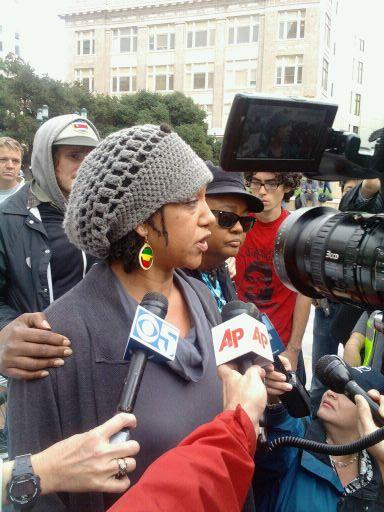
Activists gathered in Oakland are reacting to the sentencing of former BART cop Johannes Mehserle, who has reportedly received a two-year prison sentence – the minimum possible of what could have been a 14-year sentence – for shooting Oscar Grant to death on a train platform early New Year’s Day 2009.
“We will provide a place for people to express their emotion. Civil disobedience is absolutely called for. We will continue to organize and mobilize. The nation has said, ‘No more!’,” said Cat Brooks, an organizer with the Coalition for Justice for Oscar Grant.
A television reporter asked whether she was saying that a violent reaction would be justified, and she corrected him by saying, “I said the anger was righteous.”
Listening to the verdict via a telephone call, Brooks literally shook with anger and sorrow when she initially thought that Mehserle got off with just probation. “This is beyond unacceptable,” she said, offering her “deepest, deepest sympathy” to Grant’s family members and those who “witnessed the execution of their friend.”
The judge reportedly threw out a gun enhancement charge, saying it was not justified, and that he believed the shooting was a tragic accident, not an intentional killing by Mehserle. The judge also gave Mehserle credit for the 292 days he’s already served in custody, meaning that with time off for good behavior, he’ll likely serve less than another year. The Guardian has reporters and photographers with the crowd in Oakland, so check back for updates.
Video by Alex Emslie
Pelosi seeks to remain her party’s leader

Nancy Pelosi has announced that she is running for House minority leader, citing the need to defend health care and Wall Street reforms and Social Security and Medicare. And my friend Donnie Fowler, a top national Democratic Party consultant, thinks that’s a very good thing, even if I have a few doubts.
“She is a fighter and can bring the majority back in 2012 and no one more progressive would beat her,” Fowler said as he shared the news of Pelosi’s announcement, responding to my skeptical initial reaction. He said that having Pelosi remain in a leadership position was the best hope for pushing San Francisco values in a tumultuous country that has moved the House far to the right.
The Bay Guardian and other leading San Francisco progressive voices have criticized Pelosi for allowing the wars in Iraq and Afghanistan to drag on, for not taking stronger stands on gay rights (from same-sex marriage to the military’s “don’t ask, don’t tell” policy), and for pushing flawed reforms of Wall Street and the health care system that left big corporations with too much power.
Fowler said Pelosi is “better in term of ideology and she’s a strong fighter,” but he conceded that she’s also a pragmatist, so she’ll often fight for outcomes that are not nearly as progressive as she would prefer, as she’s done recently. “She fights hard for what she can get today,” said Fowler, who has played leading roles in Democratic presidential and other campaigns and came in second in the race to chair the national party a few years ago. “Over the last two years, she has felt throttled by other parts of the Democratic Party and other leaders in Washington.”
But many of the moderate to conservative Democrats who have made Pelosi’s life so difficult were voted out of office on Tuesday, leaving a far more liberal caucus. “The biggest hit was to moderates and Blue Dogs, just because of where they live,” Fowler said, citing people such as Rep. Chet Edwards, who represented George W. Bush’s Crawford, Texas district, which now went Republican. “The caucus is going to be more liberal.”
Does that mean that Pelosi could sound a more full-throated defense of progressive values as minority leader? Yes, Fowler said, she could and should, but he’s still not sure whether she will. “The Democrats have got to say what they believe, they have to stand up for progressive values, and they have to be unashamed about it,” he said, noting that the centrist waffling was a factor in the party’s defeat this week, moreso than a genuine desire of the electorate to bring back the Republicans. “If you won’t stand up for yourself, people won’t believe that you’ll stand up for them.”
Right now, moderate Democrats are already starting to make the case that the party needs to be more economically conservative. Rep. Heath Shuler, a Blue Dog Democrat from North Carolina, has announced his intention to run for minority leader on a pro-business platform. It’s also possible progressives could mount a challenge from Pelosi’s left, such as Reps. Barbara Lee (who was the only vote against invading Afghanistan in 2001), Dennis Kucinich, or Raul Grijalva (the Arizona Democrat who co-chairs the Progressive Caucus with Rep. Lynn Woolsey).
Yet Fowler continues to believe that Pelosi is the best person to lead the party back through what’s expected to be a difficult couple years. But does it play into Republican hands to stick with their greatest foil, someone whose liberal politics and connection to a famously liberal city made her the focus in GOP attack ads?
Fowler dismissed that notion, saying that Republicans are going to demonize whoever leads the party. He said the Democrats could elect the most conservative good ole boy with a thick Southern accent “and they’ll still call him a liberal socialist.”
So then why not nominate an actual liberal socialist, someone who can bring a stronger critique of this country’s economic and political systems and set the country up for a more fundamental shift in 2012, someone like Lee, Kucinich, Grijalva, or Woolsey? To Fowler, that’s a bridge too far. Even with a more progressive caucus, he doesn’t think they could win, and he doesn’t think the party ought to move that far to the left anyway.
But what do you think, Guardian readers? Is this a time for Democrats to stay the course, or is this perhaps a moment for progressives to step up – unafraid of the Tea Party rhetoric – and start pushing everyone from President Obama on down to finally address inherent flaws in this country’s unsustainable economic and political systems?
Mayoral question perplexes the pundits

Today’s post-election analysis session at the San Francisco Planning and Urban Research Association featured the usual room full of smart political minds from across the ideological spectrum – including those of hosts Alex Clemens and David Latterman – but nobody had any real insights into the big question on everyone’s minds: who will be the next mayor?
Everyone agrees that Gavin Newsom is headed to Sacramento in January, and state law calls for him to become lieutenant governor (and resign as mayor) on Jan. 3. At that point, Board President David Chiu becomes acting mayor, and the current Board of Supervisors is scheduled to meet Jan. 4 and could vote for a new interim mayor. The newly elected board takes office a week later and as its first order of business it will elect a new president, who becomes the new acting mayor, and if the old board can’t elect an interim, then the new one could elect an interim mayor, who would serve until after the mayoral election in November.
It’s tough enough for anyone to get to six votes, particularly considering supervisors can’t vote for themselves, but the deal-making could also involve the district attorney’s job. If Kamala Harris holds her slim current lead for attorney general, the new mayor would get to appoint her replacement. And if Rep. Nancy Pelosi decides to resign, that plum job would mix things up further. So everything is revolving around the vote for mayor right now.
“Everything comes back to this,” Latterman said, as he and Clemens basically had to shrug off questions about who has the inside track to be mayor. There are just too many variables involved, too many possible deals that could be cut, too many ambitious politicians in the mix, not to mention innumerable outsiders who could be tapped (hmmm…Mayor Jones, it does have a ring to it).
Latterman, a downtown consultant who helps update the Progressive Voter Index (created by SF State Professor Rich DeLeon), noted that the citywide results in the election once again showed that the overall city electorate is more moderate than progressive, particularly because the districts that have the strongest voter turnout (Districts 2, 4, and 8) are also some of the city’s most conservative.
As a result, he said, “The city is not voting for a far left mayor come November, so [progressives] will do whatever they can to get a mayor now.” Progressives are indeed hoping to get one of their own into Room 200 in January, and they hope that would allow whoever is chosen to win over enough voters to remain after November.
As a result, conservatives and most moderates will dig in, with many pushing the idea of a “caretaker mayor” so the playing field between left and right is still fairly even this fall.
“This is a World Series for political junkies,” Clemens said, who had the funniest way of casting the question: Normally, about 11 people run for mayor and the whole city picks one, he said, “but this is the opposite.” These 11 supervisors have the whole city to pick a mayor from, and at this point, it’s anyone’s guess who that will be.
Election 2010: How the late absentees are breaking
Lots of votes still to count in San Francisco — as of this morning, the Department of Elections said there were about 80,000 absentee and provisional ballots in the hopper. But some have been counted yesterday and today, and we can draw some conclusions.
Typically election-day absentees break fairly close to the way election-day votes break, and Kamala Harris is citing that — and her campaign’s own analysis — to claim victory;
“Uncounted ballots will only bolster Kamala Harris’s lead, as they will reflect Harris’s strong Election Day advantage.”
In San Francisco, though, I’ve seen progressive measures that won on election day go down to defeat when the late votes, which were not as conservative as the early absentees but more conservative than election-day votes — were counted.
We now have the newest results from the DOE, and a little quick math gives us some interesting trends. In D2, Janet Reilly has (marginally) increased her lead over Mark Farrell. She’s gone from 6253 yesterday to 6512 today, a pickup of 259 votes. Farrell picked up only 223. So Reilly will probably still lead this race when all the votes are counted, but the RCV calculation will depend entirely on whether supporters of the third and fourth candidates, Abraham Simmons and Kat Anderson, were voting for Anyone But Reilly or were willing to put Reilly as a second choice.
In D6, Jane Kim picked up about 100 votes over Debra Walker, enough to make her the clear front-runner. Again, though: Do the more conservative Theresa Sparks votes go to Kim, whose supporters tried to portray Walker as part of a liberal machine and who touted her support for Prop. G, or do a sizable number go to Walker, another LGBT candidate?
D10? Not much has changed. Tony Kelly picked up 65 votes. Lynette Sweet picked up 80. Malia Cohen picked up 72. Steve Moss picked up 64. The rankings aren’t going to change much. But this will be the mother of all RCV elections — and we’ll know more tomorrow, when DOE does its first RCV pass.
D10 crapshoot
Right now, D10 watchers are driving themselves crazy trying to predict the ranked choice math in a 22-candidate race. And so far it looks like it’s a toss-up between Tony Kelly, Lynette Sweet and Malia Cohen, with Steve Moss and Marlene Tran trailing in fourth and fifth place in a contest in which race, neighborhood and inter-campaign alliances will likely prove to be the decisive factors.
So far, about 10,000 votes have been cast and counted in D10. Based on a preliminary vote count yesterday, Kelly was leading (13.19 percent, 1,310 votes) Sweet is in second place (12.29 percent, 1,220 votes) and Cohen is in third place (11.90 percent, 1,182 votes) yesterday. And as of 4 p.m. Thursday, Nov. 4, , Kelly remains first( 12.77 percent, 1, 375 votes), Sweet is second (12.08 percent, 1,300 votes), and Cohen is third (11.65 percent, or 1254 votes).
Together this trio account so far for 36.50 percent of the vote. But according to the Elections Department, there are 71,000 vote-by-mail ballots that have yet to be counted and 14,000 provisional ballots, so the outcome continues to be far from certain.
But of these 85,000 citywide votes, only 8 percent are estimated to be from D10. Still, it’s too early to count out Steve Moss and Marlene Tran. Moss was in fourth place (11.33 percent, or 1,125 votes) and Tran was in fifth place ( 9.91 percent, or 984 votes) yesterday. And as of 4 p.m. this afternoon, Moss remained fourth (11.13 percent, or 1198 votes) and Tran remained fifth ((10.83 percent, or 1,166 votes), and the odds remain against them. And here’s why:
The majority of the remaining 16 bottom-ranked candidates are based or have roots in the Bayview. And it seems fair to predict that their supporters will cast their second and third-place votes primarily along race and neighborhood lines, which will likely benefit Cohen and Sweet.
But the November 2010 election also illustrates the growing importance of the Asian-American vote in D10, as evidenced by Tran and Teresa Duque’s relatively strong showing. Kelly is most likely to benefit from Tran’s candidacy, since she endorsed Kelly as her 2nd choice, but that’s presuming that her supporters actually follow her advice.
Less clear is where Moss and Tran will get second or third place votes. Some observers believe Moss could benefit from Kristine Enea supporters and Tran could benefit from Kelly’s. But at this point, the money is on Sweet being pushed over the finish line by Cohen’s supporters, unless Cohen and/or Kelly manage to win a significant number of second and third-choice votes, district wide.
Elections will post a preliminary ranked-choice voting report at 4 p.m. Friday, November 5, so stay tuned. But Elections spokesperson Rachel Gosiengfiao warns that this report will “only provide a snapshot and not a final report”.
“We still have the vote-by-mails and the provisionals,” Gosiengfiao said.
In the meantime, here’s the complete list of the updated D10 results, so that you can look at the numbers and play the ongoing D10 crapshoot game :
ASHLEY H RHODES 173 1.61%
MARLENE TRAN 1166 10.83%
MALIA COHEN 1254 11.65%
JAMES M. CALLOWAY 272 2.53%
STEPHEN WEBER 221 2.05%
DIANE WESLEY SMITH 239 2.22%
TONY KELLY 1375 12.77%
KRISTINE ENEA 324 3.01%
NYESE JOSHUA 77 0.72%
ELLSWORTH ”ELL” JENNISON 40 0.37%
CHRIS JACKSON 645 5.99%
DEWITT M. LACY 793 7.37%
M.J. MARIE FRANKLIN 46 0.43%
LYNETTE SWEET 1300 12.08%
ERIC SMITH 295 2.74%
JACKIE NORMAN 103 0.96%
GEOFFREA MORRIS 202 1.88%
STEVE MOSS 1198 11.13%
ED DONALDSON 129 1.2%
TERESA DUQUE 778 7.23%
RODNEY HAMPTON, JR. 134 1.24%
Here come the sidewalk sitters
As soon as it became clear on election night that Prop. L had passed, I wondered if opponents would organize some sort of mass sit-down or sleep-in as a response. Today, it appears that some San Franciscans are orchestrating just that. I’ve been alerted via Facebook to two different sidewalk sits in response to the passage of Prop. L.
Sidewalk sitters plan to stage the first one outside the Westfield Shopping Center on Sunday, Nov. 7. Here’s an excerpt from the event description, written in such colorful language that it almost comes off as a parody: “We are going assert our right (and the right of the homeless and homeless veterans) to sit anywhere we damn well fucking please by having lunch on the aforementioned fucking sidewalk in front of Westfield shopping center… this Sunday @ 1:00. The purpose is to hang out, have lunch, be visible, embody TRUE San Francisco values, network with folks about the next steps in the anti-prop L fight and to have fun. Of course getting cited for sitting on the sidewalk is a totally glamorous possibility that we will opportunistically use to the most dramatic effect possible. This is lunch, but it’s also a protest.” It urges participants to bring food to share. The post also encourages people to bring their kids along.
The second event is planned for Monday, Nov. 8, outside San Francicsco City Hall, and its organizers are more succint:
“calling all san franciscans and all humanity to a solidarity sit-in against the passage of proposition L–the so-called Sit/Lie law. bring your ASSets to city hall on monday, nov. 8 at 12 noon. if you can’t make it to city hall, sit on the closest sidewalk.”
Not sure if “all humanity” will mobilize for the cause, but it should be interesting.
Meanwhile, the drivers behind the official No on L campaign seem to be focusing their efforts on a more, um, lawful plan of attack. “We’re taking L to court,” declares a message posted today on the No on L campaign page on Facebook. “But we’re still ironing out the fundamentals of strategy. Keep an eye out for an announcement in the coming week.”
San Francisco voters approved Prop. L, the ordinance that bans sitting and lying down on city sidewalks, with 53 percent of the vote.
What beard does Newsom fear?
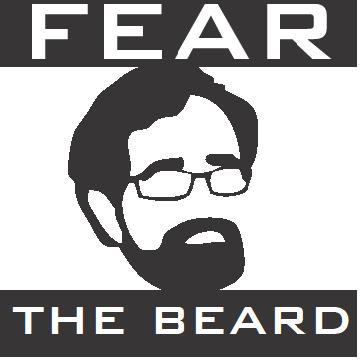
Mayor Gavin Newsom seemed to jokingly endorse Giants closer Brian Wilson for mayor at the parade Nov. 3rd (and Wilson might have endorsed his BDSM-loving neighbor), but maybe the mayor’s words have been misinterpreted. Maybe he was referring to another local player when he proclaimed the words “fear the beard.” Just a thought.
Ranked choice vote tallying starts tomorrow
With four of the five Board of Supervisors races awaiting ranked-choice voting tallies, the San Francisco Department of Elections says it will run a preliminary ranked choice voting tally tomorrow (Friday) afternoon.
The department says there are still at least 52,000 ballots left to count (14,000 provisional ballots and 38,000 absentee ballots dropped off at the polls), plus an unknown number of absentee ballots still arriving by mail, so tomorrow won’t be the final word on who wins. But it will give a good idea where people’s second choices are going.
In District 10, just 90 votes separate leader Tony Kelly from runner-up Lynette Sweet, while Jane Kim has 470 votes more than Debra Walker in D6, and Janet Reilly is leading Mark Farrell by just 361 votes in D10. Looking slightly more settled is D8, where Scott Wiener leads Rafael Mandelman by 1,168 votes, particularly given the third place finisher is Rebecca Prozan. Like Wiener, she is a moderate former president of the Alice B. Toklas Democratic Club.
Election officials say they don’t have a breakdown of the outstanding votes by district.