• No categories

Politics Blog

Warren Hellman: The rich are undertaxed

31

I couldn’t reach financier Warren Hellman before I wrote my column in this week’s paper talking about the employee pension discussions. But he called me yesterday (Feb. 16) after he’d seen it, and I expected he’d give me some shit.


Wrong.


In fact, Hellman had only one problem with my analysis: “Your article is didn’t go far enough.” Turns out he thinks I was a bit too easy on the billionaires.


“When you compare upper-echelon tax rates [in America] to any developed country in the world,” Hellman said, “the rich pay very low taxes here. You’re article is exactly correct — the wealthy are undertaxed.” He told me that he’s stopped trying to amass more personal wealth (“it’s all going into a foundation”) because he realizes that he couldn’t possibly spend all the money he has “and all that happens if you leave it all to the next generation is that you spoil your kids.” 


Quite a statement coming from one of the city’s richest and most influential business leaders.


Of course, putting all the money in a foundation isn’t the only answer.   The only way to address the wealth gap, and the decline in social, education and infrastructure spending, to for the government to get more involved — and that means collecting more tax money from the people who can afford to pay it. Hellman told me that he’s not about to accept a reduction in his lifestyle — but we both agreed that he doesn’t have to. He could pay a lot more in taxes and still be really, really rich.


So we talked about my proposal, which goes like this:


I’ve got a suggestion for the pension reform negotiators. Why not talk a little about parity.


 Yes, pensions have to be fixed; let’s start at the top. Maybe nobody should have a pension of more than $100,000 a year; certainly, a former police chief shouldn’t get $250,000 a year for life. Maybe the highest-paid city employees should have to pay more into the pension system to protect the pensions of the people who make less. I could easily support progressive pension reform that would save the city money.


 I just think tax reform should also be part of the equation.


 Hellman wants $300 million in pension savings? Good — how about pairing it with $300 million in new taxes on the wealthy? How about big business and rich people give up something this time around, instead of all of the cuts falling on public employees and poor San Franciscans?


And Hellman, to his credit, didn’t disagree with the concept. His problem he said, was with the politics. “Taxes are the third rail of politics,” he said. “I’ve gotten my head handed to me three times now when I’ve supported tax increases.” 


But I still think there’s a way to move forward here. The city employee unions agree to some sort of pension reform, which starts with a pension cap and higher payments from higher earners (not with what amounts to a pay cut for lower-wage employees who have already taken pay cuts in the past few years). Then Hellman, Mayor Ed Lee and Sup. Sean Elsbernd agree to support a progressive tax measure that would bring in badly needed revenue for public services and education.


It’s possible that the tax measure would have to wait until Nov. 2012, when it would only require a 50 percent vote. Maybe both measures go on that ballot. And Hellman, Elsbernd and Lee use their clout with downtown to push the Chamber of Commerce and the Commitee on JOBS to at least stay neutral and cut off any big-money campaign against the tax measure. Then they all agree to help raise money and campaign to pass it. And labor agrees to work for both measures.


Hellman said he feared that “one would kill the other” and both measures might fail. But I believe the people of San Francisco are willing to support new taxes — progressive new taxes — if they don’t think the money’s going to waste. And pairing pension refrom with new taxes sends a strong message: We’re all sharing the pain. Particularly if Hellman, Elsbernd and Lee can sell the tax package part of the deal to the business community.


It’s worth a try. Because otherwise, we’re going to have another Prop. B battle, both sides are going to spend a ton of money, and nobody’s going to walk away happy.


“It’s worth thinking about,” Hellman told me. I hope so.
Adachi and Ballard’s pension reform gloves come off

64

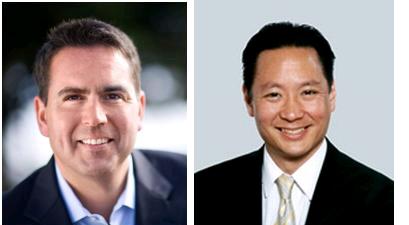
Yesterday, I talked to Public Defender Jeff Adachi about the latest efforts to address pension reform in San Francisco. Readers may remember that Adachi roused the ire of the labor unions last year, with the ultimately unsuccessful Proposition B. At the time, most folks felt Adachi’s measure didn’t have a snowball’s chance because it asked public employees to bear the brunt of the city’s ballooning retirement and health plan costs. Yet, they all praised Adachi as a great city leader who has been on the right side of many other battles in this city’s rich political history.
But the pension reform issue hasn’t gone away, and now that Adachi is threatening to introduce another measure this fall, the gloves have apparently come off, as witnessed by a Bay Citizen article that reported that union leaders don’t want Adachi to be part of a pension-reform working group at City Hall
In that Bay Citizen article, Nathan Ballard, who served as communications director for former Mayor Gavin Newsom from 2007 to 2009, said, “Inviting Jeff Adachi to our talks would be like inviting Sarah Palin to speak at the Democratic convention.”
The Bay Citizen characterized Ballard as “a Democratic strategist who has been involved in the working group since its inception.” And it noted that Mayor Lee had reached out to Adachi—an effort that it framed as a “complicating move.”
But it didn’t get Adachi’s thoughts on Ballard’s comments. So, I asked Adachi how he felt about being compared to Sarah “Moose in the headlights” Palin.
“It’s ironic that a spokesperson from Burson-Marsteller, which is headed by Republican operatives such as President Bush’s former press secretary (Dana Perino) and represents some of the most reactionary corporate interests, such as USA Blackwater, is accusing me of being a Republican for trying to solving our city’s pension crisis,” Adachi replied, referring to the fact that Burson-Marsteller, a global public relations firm, appointed Ballard as a managing director in March 2010.
“This is a company that is known for representing the worst corporate criminals in modern history,” Adachi continued. “They organized a campaign against civil rights in Argentina, supported a government massacre in Indonesia and tried to justify the killing of over 2,000 people in India’s Bhopal disaster. You have a hired mouthpiece, Nathan Ballard, who’s been paid $50,000 out of union member dues deciding who can attend meetings at City Hall. “
Asked for his thoughts on Adachi’s response, Ballard replied, “Burson-Marsteller employs talented operatives from both sides of the aisle. Although I won’t speak to the specifics of Jeff Adachi’s allegations, Burson is well known as the world’s go-to firm for crisis communications, and that tends to involve handling high-stakes disputes for controversial clients. As a criminal defense lawyer, Jeff Adachi should resist the temptation to assign blame to an advocate for accusations made against a client.”

So, buckle your seats, ladies and gentlemen. The pension reform battle is ON. And if the exchange posted above is any indication, it’s only going to get uglier

Muni looks for money — but not downtown

12

The San Francisco Municipal Transportation Agency is looking for new ways to bring in money, which is a fine thing. I think taxes for transportation make perfect sense. And while not everything in government gets better when you throw money at it, Muni generally does. Some of the ideas are pretty sound and take a progressive approach; it’s hard to argue against a vehicle impact fee, since private cars on the road increase traffic and slow down the buses. I’m all for higher parking rates, and an off-street commercial parking fee is a great idea (even though the Guardian, which owns a building that has a small parking lot, would have to pay the fee).


But the list is missing the most obvious and the most fair element: A special tax assessment for downtown commercial property. We know, because the city has done numerous reports on this, that office developers don’t pay anywhere near the real cost of providing Muni service to their buildings. We know that most of the Muni lines, and certainly the ones with the heaviest traffic, exist to take commuters downtown. We know that decent transit is critical to the success of the entire central office district.


So why is there nothing on this list to address that? Why not an annual fee per square foot of commercial office space in the area zoned C-3-0 (highrise offices)? That ought to be part of any Muni funding plan.


I tried to get the folks at Muni to respond to my question, but I haven’t heard back. I’ll update as soon as I do.

Ammiano goes after tax cheats

3

Assemblymember Tom Ammiano is moving to close a huge tax loophole that costs state and local government millons — and while his last attempt failed, this year he has a much better shot. The measure will probably make it out of the Legislature (hard to argue against something that doesn’t raise taxes at all but just makes sure nobody cheats) and I can’t imagine Jerry Brown deciding to veto it.


The bill, AB 448, would force companies that sell or transfer propetry to report it as an ownership change, which triggers a new assessment under Prop. 13. It’s one of the oldest loopholes in the book: I create a corporation or LLC to hold a piece of property, and when I want to sell, I simply transfer stock in the corporation or membership in the LLC to the buyer — and the property deed isn’t changed.


The California Tax Reform Association tracks this stuff, and you can see some examples here.


Ammiano’s been working with San Francisco Assessor Phil Ting, who told me “it’s a simple issue of fairness. Homeowners face reassessment when they buy property; why shouldn’t corporations?”


The stakes are high. It’s impossible to say how much San Francisco would pick up every year, but over time, it could be many millions of dollars (and about 57 percent of property tax revenue goes to the General Fund, the rest to the state, which returns most of it it the public schools).


Perhaps the Democrats should simply include this projected revenue in their budget; that way, Brown would have an even greater incentive to sign it.

Green Bay Packers’ Desmond Bishop drops in on Lee

3

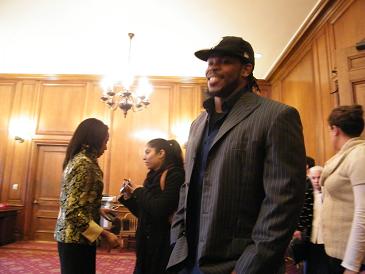
So, there I was sitting in the Mayor’s Office with fellow Guardian reporter Rebecca Bowe waiting to see Mayor Ed Lee when in walks Green Bay Packers linebacker and D10 native Desmond Lamont Bishop, who helped win the Super Bowl XLV, this month.

Turns out Bishop was there to see Lee, shortly before D10 Sup. Malia Cohen honored Bishop during the Board’s Black History month commendations’ ceremony.

We didn’t get a chance to interview Bishop (he was whisked into Lee’s office super quick), but Bowe and I surfed the web while waiting for our appointment with Lee and soon learned that Bishop was born in San Francisco on July 24, 1984, is 6 feet 2 inches tall, weighs 238 pounds, and was at Cal in 2005/06, before being drafted by the Packers in 2007, where he wears jersey number 55.
 
Cohen later confirmed that Bishop was born in Hunters Point and went to Visitacion Valley Junior High, before going to high school in Fairfield, and then returned to San Francisco to attend City College before heading to the University of California.

“Desmond is also deeply involved in his community,” Cohen said in a press release, which notes that Bishop started the Desmond Bishop Football Camp and participates in programs to help kids to be healthy and learn to read, including the Boys and Girls Club.“The Bishop family moved to San Francisco over 50 years ago, and Desmond’s grandfather still lives in Bayview Hunters Point.”

Too bad we didn’t have a chance to get Bishop’s autograph, but hopefully next time…

Mayor Ed Lee willing to disclose work calendar

1

Among the many issues that rankled progressives under Mayor Gavin Newsom’s administration was Newsom’s unwillingness to turn over his work calendar to members of the public who formally requested it. Beginning in 2006, a group of sunshine activists routinely submitted public-information requests for the mayor’s daily schedule in hopes of finding out who Newsom was meeting with, what events he attended, and just how he spent his time on the job as mayor of San Francisco. After years of battle, Newsom finally agreed to release a watered-down calendar containing very little information.

On this matter, it does not seem as if Interim Mayor Ed Lee will follow in the footsteps of his predecessor.

In an interview with Guardian reporters today, Mayor Lee indicated that he would be willing to make his calendar available to the public. “Sure,” he said when we asked him about it. “I have no problem with that.”

Lee noted that he has complied with similar requests in the past. “I’ve had those already reviewed as the City Administrator, so I’m used to it,” Lee said.

He added that while he was willing to share his work-related calendar, “I may not want to share where I privately go every night.”

That’s OK. Thanks to former Mayor Willie Brown, we already know Lee went out to dinner in North Beach the other night with Brown, Rose Pak, and several others.

The WMD lies, confirmed

1

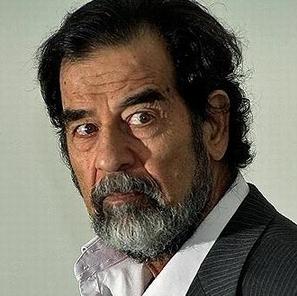
I don’t even know where to begin with this story. The U.K. Guardian reports today that the Iraqi defector who convinced the U.S. that Saddam Hussein had weapons of mass destruction now says he fabricated that story:


Rafid Ahmed Alwan al-Janabi, codenamed Curveball by German and American intelligence officials who dealt with his claims, has told the Guardian that he fabricated tales of mobile bioweapons trucks and clandestine factories in an attempt to bring down the Saddam Hussein regime, from which he had fled in 1995.


“Maybe I was right, maybe I was not right,” he said. “They gave me this chance. I had the chance to fabricate something to topple the regime. I and my sons are proud of that and we are proud that we were the reason to give Iraq the margin of democracy.”


So: The U.S. went to war, at a cost of hundreds of billions of dollars and many thousands of lives, on a pretext created by an unreliable defector who made the whole thing up. And either lots of CIA officials, and people up to and including Colin Powell, believed this character (who had no corroborating evidence, of course, because there wasn’t any) or they used what they knew was dubious intelligence to dupe the public.


You wonder: If everyone who has a good reason to gripe about his or her former country goes and makes up a story like this, how many wars will we wind up fighting?


It’s kind of like the old commie-plot days, when the very mention of the word “communist” could ruin someone’s life.


The Clarence Thomas conflicts

3

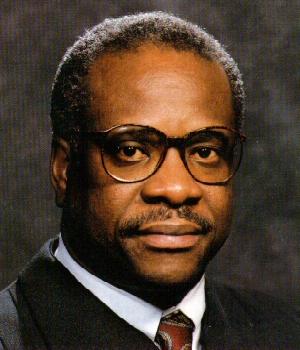
All I can say about this is that it’s pretty flagrant, pretty bad — and will probably amount to nothing, since the Supreme Court makes its own rules. But just imagine what would have happened if one of the more liberal justices had done something like this. I can hear Glenn Beck right now.

Leno forces GOP hand

5

For whatever tactical reason (or other inexplicable Jerry Brown rationale), the governor has refused to tell Californians what he would cut if he can’t get his tax extensions approved. And the Republicans refuse to say what they would cut instead of letting the taxes continue.


So Sen. Mark Leno did it for them. Leno asked the Legislative Analyst to explain what $13 billion in budget cuts — the “no-new-taxes” budget the GOP wants — might look like.


It’s really, really scary.


For starters, take $4.5 billion away from K-12 education. That means the end to class-size limits for K-3. It’s a huge deal: The Gray Davis measure that limited those classes to 20 students probably did more than anything in decades to save public education in California. You want 40 kids in a kindergarten class with one teacher? You think any of them will be learning to read? Oh, and the state could save $700 million by delaying kindergarten for kids; guess who that impacts? Those kids are going to spend more time in pre-school which either (a) is subsidized by the taxpayers or (b) comes out of the hides of working parents.


Oh, and we’d eliminate food stamps for noncitizens. So people won’t be able to feed their kids. You think crime might become more of a problem? But wait: No room in the prisons.


Then we put college out of the financial reach of middle-class kids and expect to build a 21st century economy. And that’s just the beginning.


Leno deserves thanks for putting this list out; it ought to be in the ballot handbook along with the proposal to continue (not RAISE, just continue) some taxes. And we should all be asking every Republican in Sacramento: Is this what you want? If not, give us an alternative. 


Hellman and Obama feel your pain

29

The Bay Citizen has a detailed report on the backroom discussions taking place around pension reform, and there aren’t any real surprises. The cops and firefighters seem to be leading the talks from the public-employee union perspective, although the other unions are there, and Mayor Lee has taken over the gavel from financier Warren Hellman. Sean Elsbernd is involved, but they’ve kept Jeff Adachi out. (And what the hell is Nathan Ballard doing in this mix?)


But what got me when I read the story this weekend was the quote from Hellman:


In an interview Thursday afternoon, Hellman said the group must come up with annual savings of $300 million to $400 million. (Proposition B was to have saved the city $120 million.)


“I hate that it comes out of the hide” of city workers, particularly those making modest salaries, Hellman said. “It is going to be really painful.”


It reminds me of Obama’s comments on his budget cuts: They’ll be painful and he hates to do it, but these tough decisions have to be made for the good of all of us.


My question: Why doesn’t anything ever come out of the hides of the billionaires?


From the start of this recession, working-class people, public employees and the poor have taken huge hits. Nothing — nothing — has happened to the top echelon of society. If anything, they’ve only gotten richer. The bankers who destoryed the economy with financial instruments even they didn’t understand? They’re not in the poor house. They haven’t had their homes foreclosed. They’re all doing just fine.


In fact, the United States government just kindly allowed them to keep their tax cuts for another two years.


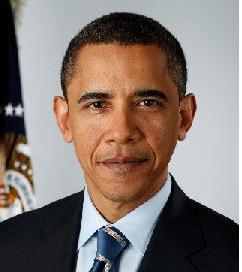
Obama isn’t going to miss any meals. His kids will still have their fancy private school. He won’t have to worry about his pension vanishing or eating cat food in his old age. Same goes for Hellman; there’s nothing in the world that he could possibly want to buy that he can’t have.


So it makes me really mad to hear them talk about feeling bad about budget cuts and reducing pensions. If they feel bad, then why not do something about it?


Hellman’s not a bad guy. I’ve met him, he’s pleasant and polite and sincere about wanting to help the city. I couldn’t reach him on the phone today, but I’ll keep trying, because I have a question:


Over the past five years, city employees have given back hundreds of millions of dollars in wage and benefit concessions. Social programs have been cut by hundreds of millions more. And the rich in this town have given back nothing. Mr. Hellman: Is that fair?


I’ve got a suggestion for the pension reform negotiators. Why not talk a little about parity.


Yes, pensions have to be fixed; let’s start at the top. Maybe nobody should have a pension of more than $100,000 a year; certainly, a former police chief shouldn’t get $250,000 a year for life. Maybe the highest-paid city employees should have to pay more into the pension system to protect the pensions of the people who make less. I could easily support progressive pension reform that would save the city money.


I just think tax reform should also be part of the equation.


Hellman wants $300 million in pension savings? Good — how about pairing it with $300 million in new taxes on the wealthy? How about big business and rich people give up something this time around, instead of all of the cuts falling on public employees and poor San Franciscans?


I’m good with pension reform, really I am. And I’m not involved in the negotiations. But I’m a San Francisco progressive who will have to vote on the ultimate outcome. Give me something to work with here, guys.


Political activists still oppose Chiu’s handbill regulation

12

Progressive political activists and First Amendment advocates continue to have concerns about how Sup. David Chiu’s legislation to regulate handbill distribution will affect low-budget political campaigns, despite Chiu’s efforts to address the criticism.

Two weeks ago, he delayed deliberation on the measure, saying it wasn’t his intention to curtail political speech. The measure returns to the Board of Supervisors tomorrow (Tues/15), but the activists are asking that it be sent back to committee for more work.

Chiu and the Department of Public Works Menu and Flyer Littering Task Force introduced the legislation in an effort to clean up littering and to effectively penalize handbill distribution that doesn’t meet the new regulations of securing literature and ensuring it does not become litter. The new law would require handbills to be securely fastened on doorways or placed under doormats preventing them from becoming litter on the sidewalks and streets.

“You can’t just throw something on a stoop that can be blown away,” Catherine Rauschuber, one of Chiu’s legislative aides who worked on the measure, told us. Handbills can be anything from a menu for a local restaurant to a flyer promoting a community event to campaign advertising and political information. Newspapers are exempt.

But critics of the measure, including California First Amendment Coalition Director Peter Scheer, say it needs a lot more work to pass constitutional muster and safeguard free speech rights.

“The proposed amendment to the San Francisco ordinance is not a ‘reasonable’ regulation of handbills and leaflets because it leaves the distributor of such constitutionally protected materials in doubt as to how to comply,” he told the Guardian. “Specifically, the materials are required to be ‘secured.’ However, the most efficient means of doing so—using tape or other adhesive—is itself prohibited.”

Littering a neighborhood with unsecured handbills is already a criminal infraction, one that is rarely enforced, and Chiu’s legislation would make it an administrative penalty managed at the discretion of DPW. Rauschuber said the penalty would usually be a fine of around $100.

The DPW requested the authority to administer the penalties because it wasn’t a priority of the District Attorney’s Office to prosecute violators, and DPW officials said it would be more effective in lowering the instances of littering, Rauschuber told us.

Political activists such as Karen Babbitt worry about the effect the new legislation will have on grassroots campaigns. She believes that the language of the ordinance creates a disadvantage to political candidates with low-budget campaigns.

“If you place a piece of literature under a doormat and it still somehow ends up on the sidewalk, the campaign can be fined,” she told the Guardian. “I can’t think of a way that I, as a volunteer, could prove that I’d initially placed the piece of lit securely. I try to place them securely, but the wind sometimes still blows them away—especially in windy neighborhoods like Diamond Heights.”

The board’s Land Use and Economic Development Committee approved the measure on Jan. 24, and while political activists say it needs more work, those concerned about litter welcome the change.

Dawn Trennart, a member of the Middle Polk Neighborhood Association and the Menu and Flyer Littering Task Force, saw the handbills become a litter problem in her neighborhood last spring and brought it to Chiu’s attention.

“It is a litter and security problem,” said Trennart said. “The handbills get stuck in doors and cannot lock properly.”

The law would also allow buildings to post a smaller “no handbills” sign with 30-point font, instead of the current requirement of eight square inches, to prohibit distribution. Babbitt believes the ordinance is superfluous to the efforts political volunteers already make.

“Most folks I’ve volunteered with over the years already try to place pieces of literature in ways that keep them from blowing away. It makes your candidate look bad, after all, to have her or his literature blowing all over the neighborhood,” she said.

But she and other activists complain that the new law would presume the campaigns are guilty without offering proof. Scheer also pointed to a 1943 U.S. Supreme Court ruling in the case of Martin v. City of Struthers, which found that litter is not a compelling enough argument to regulate handbill distribution.

Scheer believes that, in order to satisfy the First Amendment, the ordinance should not only state what handbill distributors cannot do, but also state what they can do to avoid penalties, which is commonly called a “safe harbor” provision.

Still, political activists complain that they were not involved in the drafting of the ordinance. While the Sierra Club, ACLU, SF Labor Council, and other groups that distribute political handbills were not consulted, the activists note that Golden Gate Restaurant Association and other business groups were brought in to help shape the legislation.

By asking for the measure to be sent back to committee, where public testimony is taken, the political activists hope their concerns will finally be addressed.

“Flex” keeps marine scientists guessing

3

I received a call last Friday from Nicole Catalano of Pacific Environment, an environmental nonprofit focusing on marine conservation. An endangered gray whale was headed for California, she told me, and I could follow its movements online. “We expect it to be in California either now, or any day now,” Catalano said.

“Flex,” as researchers have named him, is one of an estimated 120 western Pacific gray whales. The highly endangered species has fared much worse than the related eastern gray whale, which has an estimated population of around 20,000.

The whale was tagged last October as part of a research project geared toward offering the mammoth creatures better safeguards against extinction. “They were going to tag many of them,” Catalano explained, but so far, Flex is the only whale researchers have succeeded in making contact with.

The Marine Mammal Institute at Oregon State University has created a website, updated weekly, to track Flex’s transoceanic journey. So far, he’s gone from Russia, to the Bering Sea, to the Gulf of Alaska, to the coast of Oregon, to the coast of California.

Researchers have been suprised by his progress, and don’t know what to expect next. “Flex’s route may or may not be typical of what western gray whales do — there could be three or four other whales from the western population making this same trip, or Flex could take an entirely different route next year,” said Bruce Mate, director of the Marine Mammal Institute.

The international environmental community’s interest in western Pacific gray whales stems in part from monitoring offshore oil and gas drilling near Russia, Catalano noted. Seismic testing for offshore development is known to impact marine mammals, and some of this activity is occurring nearby the whales’ feeding areas. In 2006, the Western Pacific Gray Whale Advisory Panel was convened by scientists to provide independent recommendations on how oil and gas companies can minimize risks to rare creatures.

SFBG Radio: Howie Klein, part II

0

In today’s installment, Johnny continues his interview with Howie Klein, founder of 415 records, contemporary of Harvey milk and Bill Graham. Listen after the jump.

Howie2 by endorsements2010

It’s a sign: MUNI passsenger angst

7

It’s raining for the first time in weeks, and you know what that means. Somewhere in San Francisco, someone is standing on an outdoor MUNI platform and wondering why those stylish, clear sloping roofs fail so miserably when it comes to keeping the rain out. And while MUNI drivers should not take the blame for this and other transit-system flaws, we cannot help but feel the pain of the passenger who vented their frustration by leaving this bombastic complaint at the T-Third 20th Street station.

Obama’s going to screw California

6

The giant cuts proposed by the Obama Administration (and worse ones suggested by the GOP) will hurt the economic recovery, hurt the poor, hurt the nation’s future — and hurt California. Let’s remember, as Brian Leubitz notes at Calitics, we live in a net donor state — for every dollar Californians send to Washington, the state gets 80 cents back. And now the president wants to make cuts that will further mess up the state budget — and since Gov. Jerry Brown is sending a lot of Sacramento’s work back to the counties, the shit will keep rolling downhill.


It’s true that Obama is also talking about tax hikes, but that’s going to be hard to get through the House. And even if he gets his higher taxes on oil and gas producers and high-income individuals, he still wants to cut spending — that is, non-military spending.


So over the next few months, as Washington politicians try to out-cut each other and talk about “living within our means” (except for wars that nobody wants to pay for but we keep fighting anyway), look for the budget crisis in Sacramento and San Francisco to get worse.


One ray of hope: If Jerry Brown is willing to back up his “local-government-does-it-better” campaign by giving local government the right to raise taxes abit more easily, then he’ll support Sen. Mark Leno’s bill to allow counties to raise the Vehicle License Fee. That might even come close to saving SF what Washington and Sacramento take away.

We are worse than Egypt

5

The revolution in Egypt was about a demand for democracy and resistance to repression — but it was also spurred in part by legions of angry young people who have no economic opportunity. And since the dramatic inequalities in Egypt were a factor in a stunning popular uprising, it’s worth noting an interesting fact:


Things are even worse here. According to Richard Eskow at the Campaign for America’s Future:


Here’s the reality: Income inequality is actually greater in the United States than it is in Egypt. Politicians here have close financial ties to big corporations, both personally and through their campaigns. Corporate lawbreakers often do go unpunished. Poverty and unemployment statistics for US minorities are surprisingly similar to Egypt’s.


Now, I’m not saying that poverty in the U.S. is worse than Egyptian poverty — the poor in Cairo are way worse off than the poor in New York or San Francisco. But when you compare the two countries, you get some disturbing similarities:


19.6% of Egyptians and 14.5% of Americans live below the poverty line. 21% of Egyptians are considered “near poor,” and 40% of Americans will fall below the poverty line at some point in their lives. One in six American children lives in poverty. So do one in four African Americans, which means the poverty rate for African Americans is greater than it is for Egyptians.


So why aren’t we out marching in the streets and demanding change? (Oh, wait, we did that two years ago, when we elected President Obama.)

SFBG Radio: Talking to Howie Klein

1

Today we continue Johnny’s interview with local music legends — he talks to Howie Klein, the co-founder of 415 Records, about his start in the music industry, Harvey Milk, Bill Graham, and more. We’re keeping these things short, so this is part one; we’ll post part two to the interview Feb. 14. Listen after the jump.

Howie1 by endorsements2010

Hyatt targeted as labor impasse drags on

0

Hundreds of Hyatt hotel workers and supporters represented by the UniteHere Local 2 union continued their 18-month long struggle against the Hyatt Corporation yesterday (Thu/10) by protesting outside the Hyatt Regency Hotel near the Embarcadero.

The Hyatt Regency was one of six hotels where demonstrations took place in a National Day of Action against Hyatt management. Local 2 said many issues still need to be negotiated, such as decreasing the current health care costs of $200 a month for a family plan, raising pensions from $900 to $1200 a month, and taking steps to reduce injuries to Hyatt employees.

“We want to draw attention to the injury rate that Hyatt has been witness to,” Local 2 spokeswoman Riddhi Mehta-Neugebauer said.

The protest, which started at 4:30 p.m., surrounded the front entrance of the Hyatt Regency on Drumm and Market Streets, with protestors sitting in front of its turnstile doors. About two dozen protestors were arrested, cited and released on charges of misdemeanor trespassing.

The Hyatt Corporation’s statement on yesterday’s actions tried to turn the blame on the union, stating they haven’t been willing to come to the bargaining table. “Once again, the leadership of UniteHere Local 2 is putting its own agenda ahead of the needs of its members,” the statement said.

Cynthia Reed, a telephone operator with the Hyatt for 22 years, who was a part of the protest, was angered that she has been without a fair contract since August 2009.

“I feel as though we are being oppressed,” she told the Guardian. “We, the workers, are living off $38,000 a year with $12,000 in taxes. We can’t live like this in San Francisco. We just want a living wage.”

Reed noted that some of her co-workers include parents of multiple children and cancer patients, while others are over retirement age. “If the union doesn’t stand up for us, who will?” Reed asked. “Why patronize these facilities when all the money is going to a few at the top?” she wondered before going back to a line of picketers chanting, “Union bustin’ is disgustin’!”

Peter Hillan, a spokesman that represents the Hyatt, was at the scene to give the corporation’s point of view. “It’s street theater,” he said of the event. “It’s taking revenue away from the business that could be going to the employees.”

Hillan said that over the past 18 months, the protests and the union’s call to boycott the hotels have taken about $10 million of convention business away from San Francisco’s Hyatts.

A meeting to discuss contract negotiations with the Hyatt Corporation and Local 2 is set for Feb. 24.

More questions about death drug

7

The Food and Drug Administration has finally released some more documents about the state’s procurement of its death drugs. The Guardian and the ACLU requested the material under the Freedom of Information Act. You can see the latest here.


A lot of it is just dry correspondance between agencies; the FDA was apparently a bit slow at releasing the imported drugs from customs. But there’s some interesting details in the mix.


For one thing, California and Arizona aren’t the only states that bought death drugs from England. A U.K. company named Dream Pharma also got orders from South Carolina, Arkansas and Georgia. And that pipeline is now shut off; the U.K. will no longer allow companies to export drugs for executions. (Civilized nation there.)


There’s also the interesting issue of whether the stuff that California bought is up to U.S. standards. The records show that the U.K. company doesn’t know if the Sodium Thiopental it sells meets U.S. standards; the company isn’t approved by the FDA. That means a hospital would have trouble buying and using the stuff for clinical purposes — but apparently it’s okay to use on condemned prisoners.


The issue is more than academic. The thiopental is supposed to render the prisoner unconsious and unable to feel pain before the next two drugs paralyze his breathing and stop his heart. If the stuff doesn’t work, then death could be very painful; imagine being awake as your lungs seized up and your heart stopped beating. In fact, the courts have been very clear on this point: Injecting the two final drugs into a person who is consious amounts to cruel and unusual punishment and is illegal.


So how do we know if the stuff the state bought works as advertised? How do we know what the proper dose is (you can’t exactly test it on someone first)? Is CDCR going to pay for a full chemical analysis to make sure they’re using the right amount of the right stuff?


Man, this is grisly. No wonder most civilized countries reject capital punishment.


Jerry Hill grandstands on local hire

15

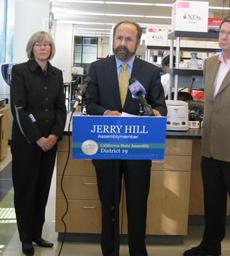
Assemblymember Jerry Hill — who’s facing term limits and reapportionment — has launched a pretty silly attack on San Francisco’s local hire law. He wants to make sure that no state money is used on local-hire projects (because the San Mateo County folks are mad about it.)


But the law doesn’t apply to projects funded with state money anyway, and it only mandates 50 percent local hire, and Hill’s bill will probably go down the crapper because the San Francisco legislators, who have a fair amount of clout up in Sacramento these days, aren’t going to support it. Assemblymember Tom Ammiano and state Sens. Mark Leno and Leland Yee have all signed a letter supporting the city’s local hire law.


And, of course, the Hill bill could mess with local hire efforts elsewhere.


Looks like a cheap publicity stunt to me.


Also in the Chron’s news briefs: A plan to raise the salaries of School Board members may make it to the ballot in San Francisco. I’ve been pushing this for years. It’s crazy to pay $500 a month to people who oversee a half-billion budget and do one of the most important jobs in the city — a job that by any account is a full-time-occupation. Yeah, it seems crazy to spend money on school board salaries when the district is laying off teachers, but some very good board members have quit because they can’t afford to have a job, a family and a seat on the School Board, and that’s nuts.


Twitter tax break could help a well-connected landlord

34

Opposition to the proposal to give millions of dollars in city payroll tax breaks to Twitter and other companies that open for business in the mid-Market area has focused on the bad precedent of caving into demands for corporate welfare and the lead role that two people who call themselves progressives – Sup. Jane Kim and Board President David Chiu – are taking in pushing the deal.

But behind-the-scenes, there’s another aspect of the deal that is troubling to advocates for transparent government that acts in the broad public interest, rather than that of powerful individuals. And once again, the specter at the center of this insider deal-making is none other that former mayor Willie Brown, whose close allies seem to once again have the run of City Hall.

The mid-Market property that Twitter wants to move into is San Francisco Mart, a million-square-foot building at Market and 9th streets, which sources say has been having a hard time finding tenants to fulfill its ambitious plan to “transition and reinvent” the old furniture outlet as a modern home for high-tech businesses. Most recently, they were unable to seal the deal with Twitter – until the tax break proposal popped up.

The building is owned by millionaire developer Alwin Dworman, founder of the ADCO Group and someone who has had a 30-plus-year friendship with Brown, who sang Dworman’s praises in this 2007 article from the San Francisco Business Times discussing this property and others. The property is also operated by Linda Corso, longtime partner of Warren Hinckle, a local media figure with close ties to Brown (as well as Gavin Newsom, who last year named Hinckle as his alternative representative to the DCCC). Reached by phone yesterday, Corso said she wasn’t directly involved in the negotiations with Twitter and would have someone call us, but nobody did.

Brown’s name has been popping up quite a bit in recent months as he and his allies re-exert their deal-making influence on the city, starting four months ago with his stealth support for Kim’s campaign and continuing with his role in elevating his protege Ed Lee to the interim mayor post (the way the pair ran City Hall when Brown was mayor is also the subject of an investigative report in this week’s Guardian) and placing ally Richard Johns onto the Historic Preservation Commission over progressive objections that he was unqualified.

Reached on his cell phone, Brown refused to comment, telling us, “I don’t want to talk to the the Bay Guardian ever in my life. Goodbye.” There is no indication that Brown or other representatives for Dworman lobbied the supervisors over the deal, and both Kim and Chiu say they weren’t contacted. “I’ve never spoken to the man and I don’t know much about his business,” Chiu said of Dworman, although he said that he was told by people in the Mayor Office, which brokered the deal, that Twitter was looking at moving into Dworman’s building.

Kim has maintained that she has very little contact with Brown and doesn’t know why he supported her candidacy. And she said the benefits for Dworman and other big mid-Market landlords who will profit from her legislation wasn’t a factor in her decision to sponsor it. In a prepared statement to the Guardian, she wrote, “I am not aware of any lobbyists for the Mid-Market legislation and therefore certainly have not met with any.  I have communicated directly with Twitter, who are [sic] excited to be a part of revitalizing the Mid-Market corridor and about partnering with community-based organizations and schools who serve the neighboring communities of SOMA and the Tenderloin.  Our office has convened neighborhood stakeholders who will be directly impacted by this legislation and they are currently committed to being a part of this dialogue over the next month.”

Kim told us last week that she philosophically opposes business tax breaks, but that she wanted to help stimulate the mid-Market area and keep Twitter from following through on its threat to leave town. Despite calling himself a progressive, Chiu has supported using targeted tax breaks as a economic development tool, including the biotech tax credit. And yesterday, he told us, “I would love to bring more companies in the mid-Market area…If we don’t do this policy, we will see future years of zero economic activity in that area.”

But progressives say these tax breaks are nothing but corporate welfare that will exacerbate the city’s budget deficit. During a benefit event for Lyon Martin Health Services last night at the Buck Tavern, which is owned by Kim predecessor Chris Daly, signs plastered throughout the bar urged the public to oppose the Twitter tax break in order to preserve public health and other vital city services.