• No categories

Politics Blog

Finally, the Chron’s against nuclear power

17

Well, maybe not entirely against nuclear power, but in a rather surprising editorial, the paper noted:


Suddenly, nuclear doesn’t seem so safe. The truth is that it never has been. As we’re learning from Japan, it’s impossible to ensure full stability with the nuclear energy production process. Japan was known for being extraordinarily cautious with its nuclear energy plants and safety procedures, and disaster still struck. All that means is that there are too many contingencies and too many opportunities for things to go wrong.


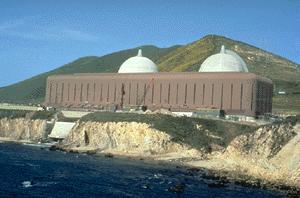
Damn. I wish we’d had that sort of editorial support when we were fighting PG&E over Diablo Canyon. That plant was a serious mistake, is still a serious mistake and ought to be shut down. But in the long, long years of protests against the plant’s construction, licensing and operations, I don’t remember the Chronicle ever saying that nuclear power “has never been safe.” We were up against the pro-PG&E press as much as we were up against PG&E.


So now the paper has figured out that boiling water with a nuclear fission reaction to generate electricity is a bad idea. Now we need the Chron to come out in strong opposition to the relicensing of Diablo Canyon and start calling for the plant to be decomissioned. Starting now.


The GOP convention dilemma

9

Word in Sacramento is that five Republicans may be close to going along with the governor’s plan to put $12 billion in tax extensions (NOT tax increases, just extensions of existing taxes) before the voters. The problem: They don’t want to vote for taxes and then have to show up at the state convention March 18 — where there’s a move afoot (I kid you not) to pass a resolution (thanks, CalBuzz) that calls on the party to censure any “traitorous Republicans-in-Name-Only, ask for their resignation from their positions within the California Republican Party, pledge to endorse and support efforts to recall them from office, and direct the California Republican Party staff, agents and officers to refuse to provide them with funding or assistance in future elections.”


Why can’t the Democrats do shit like this? Censure and abandon any Democrat-in-Name-Only who supports continuing the wars in Iraq and Afghanistan and refuses to increase taxes on the rich? (Oh, wait — then we wouldn’t have very many Democrats left. Which, I guess, is the GOP problem.)


At any rate, the Legislature is going into session this afternoon to try to push this package through — and it could be one of those marathon sessions that lasts all night. Or maybe the Republicans will vote for the budget plan — but only if they can wait until Monday.


By the way: Isn’t it odd that two crazy talk-show hosts in L.A. can hold an entire state hostage? How come we don’t have a couple of crazy talk show hosts in San Francisco who can make very Democrat in Sacramento pay attention?

SF health food stores selling out of potassium iodide **UPDATED**

***UPDATE***

OK, we’ve got some new information here, which is different from what the California Department of Public Health told us a little while ago: U.S. Surgeon General Regina Benjamin told media she supports the idea of buying potassium iodide as a “precaution.”

Here’s a quote from an NBC Bay Area news story: “Dr. Benjamin said although she wasn’t aware of people stocking up, she did not think that would be an overreaction. She said it was right to be prepared.”

Here’s the original story:

Evidently, folks in the Bay Area are worried that the ongoing nuclear problem in Japan could cause a health hazard in San Francisco, which lies about 5,000 miles across the Pacific Ocean from Japan’s damaged Fukushima Daiichi nuclear plant. We phoned several Whole Foods stores in San Francisco to find out if potassium iodide was flying off the shelves, and sure enough, it was the same story at every location.

“We’re all sold out,” one customer service representative said. “Too many people are asking me about this stuff,” said another. Three Whole Foods locations were out of the product, and a fourth didn’t carry it but was all out of kelp, which is also believed to protect the thyroid against radiation exposure.

Our rather unscientific poll seems to reflect the situation in other locations — several national news reports noted that drugstore sales of potassium iodide had increased dramatically.

Are people overreacting? Health officials seem to think so, particularly if they’re ingesting it. “Potassium iodide tablets are not recommended at this time,” said California Department of Public Health spokesperson Ken August. The United States Nuclear Regulatory Commission recently issued a statement indicating that at present, Japan’s nuclear emergency presents no risk to California. “Because there is no indication of any type of radiation exposure as a result of the nuclear power plant problem in Japan, people would be ill-advised to take potassium iodide,” August said.

According to the Centers for Disease Control, potassium iodide is a salt of stable (not radioactive) iodine, a chemical that the body uses to make thyroid hormones. If radioactive iodine is inhaled or ingested into the body following a nuclear emergency, the thyroid absorbs it, which can lead to serious health problems such as cancer in the long-term. Potassium iodide can block radioactive iodine from entering the thyroid, according to the CDC, but it cannot prevent radioactive material from entering the body.

August noted that taking potassium iodide could cause health problems for people with allergies to iodine or shellfish, or for people with thyroid problems. “They could have an undiagnosed health condition,” he added. The CDC also notes that taking it can cause side effects such as intestinal upset and rashes, and that it could pose risks to people with certain kinds of skin disorders. Ingesting very high dosages of the stuff can kill you, the CDC warns.

So there you have the risks. For people who are going to take it anyway, it’s probably a good idea to read up on it.

And if a worst-case scenario ever did come to pass? August said that evacuation was the first step that officials would take if there were a serious risk of radiation exposure, and he noted that opting to stay put and take potassium iodide in that scenario would increase health risks, since it only guards against injury to the thyroid gland. The state’s Department of Public Health website notes that California does keep a supply of potassium iodide tablets for emergencies — but only for the area around the San Onofre nuclear power plant in Southern California.

August said air monitoring is conducted in 10 locations throughout California to determine atmospheric levels of radiation, on a weekly basis. He said monitoring of food, water, and ambient radiation is also conducted, on a monthly basis.

How taxes on millionaires could save the NBA

6

March is heaven for basketball junkies. The NCAA tournament goes full-tilt boogie and for fans of the pro game, playoff jockeying intensifies into overdrive. As a member of the latter camp whose team sits atop the NBA East, there is a river of joy flowing through the ventricles of my pumping heart.


But this year, the happy is tempered with the specter of dread. In July, the NBA’s collective bargaining agreement expires and it is a near certainty that there will be a lockout. Despite a projected revenue increase of anywhere from 3-5% in this allegedly recuperating economy of ours, the owners will padlock their doors shut, terminating contracts they signed in supposedly good faith, because they claim that they lost $370 million last season (the union disputes this). Who loses ultimately is the game itself–fan goodwill can only bend so far.


There’s plenty of blame to go around, but ultimately all of it rests with the owners who flout their own salary caps with ridiculous deals to borderline players like a Hedo Turkoglu or a Rashard Lewis, as well as the talent dilution in having teams in exotic locales that can’t support them (e.g. The Memphis Grizzzlies and the soon to be in Anaheim Sacramento Kings). But much of the issue of inflated salaries comes back to the same problem that is plaguing the entire economy–low taxation on the very wealthy has priced the NBA out of profitability.


Suppose the 91% tax in place during the 50’s was reinstated for people making over 10 million dollars a year (it used to be over a million to be in that bracket, let’s adjust for inflation). Why would a player demand a salary of 20 million a year (or Kobe Bryant’s 24M escalating to 32M due next year), when the net wouldn’t exceed 11M? Makes no economic sense. A GM can offer a ten year deal at 99M instead of 5 years/20M, same amount of money (not counting bonuses, endorsements and the like).


What low tax proponents never ever grasp is that lower taxes on the top 1% inevitably lead to these situations, the NBA is a micro in the macro of Wall Street, CEO compensations, estates. When massive amounts of money accumulate with the few (even hard earned, no one can deny the skill and work ethic of a LeBron or a Ray Allen), the ripple effect is that the system cannot sustain–the fans will not pay higher tickets and greater merchandise charges forever. The players and owners have effectively killed off the golden goose–let’s take the ax from their hands with reasonable taxes from now on in ours.


Johnny Angel Wendell  is a talk show host at KTLK AM1150 in Los Angeles, webcaster at sfbg.com and a 30 plus year veteran of the American music scene.
 

Board considers extra $75.4 million for Mission Bay redevelopment

0

UPDATE: An earlier version of this post reported that the Board was meeting in closed session. This was incorrect.

The Board is meeting today  to consider amending the San Francisco Redevelopment Agency’s (SFRA)  budget to issue an additional $70 million in tax increment bonds and appropriate $75.4 million ($70 million in bond proceeds, plus $5.4 million tax increment). The request, which comes on the heels of last year’s $64 million request, represents a 109.4 increase of tax increment bonds in 2010-2011. The city says thiis has nothing to do with Gov. Jerry Brown’s proposal to eliminate redevelopment agencies. But the last-minute timing of today’s session looks a tad fishy at best. And it’s playing out as a vote on Treasure Island’s final environmental impact report approaches, and against a backdrop of extreme funcertaintly related to all things Redevelopment, as Mayor Ed Lee and other city leaders try to figure out ways to prevent or reduce the affordable housing fallout from the governor’s elimination proposal.

According to a Budget and Legislative Analyst’s summary of today’s request, the requested bond issuance and expenditure is part of the “SFRA’s normal course of fulfilling its obligations under the tax increment allocation pledge agreements between the city, SFRA and FOCIL-MB (Catellus’ successor entity at the Mission Bay redevelopment sites), and not as a result of the Governor’s proposal to eliminate local redevelopment agencies. Ms. Lee [deputy executive director at the SFRA] states, that, as of the writing of this report, the impact of the Governor’s proposal on the Mission Bay Redevelopment Project is currently unclear and ambiguous as to whether approval of the Governor’s proposal would affect the requested bond issuance and expenditure authority.”

“At the time of the development and approval of the FY 2010-2011 budget, the Agency and Tax Assessor did not have available tax roll information that resulted in a significant increase in property taxes in Mission Bay due to the accelerated assessment agreement between the Assessor and the Agency,” states today’s Board resolution that Mayor Lee sponsored, explaining why there’s a request for an additional $70 million in bonds, so soon on the heels of the $64 million that the Board approved last year.

“The Agency wishes to amend its budget for the fiscal year 2010-2011 to permit the receipt of additional tax increment of $5.44 million and bond proceeds in the amount of $70 million for the purposes of low moderate housing and for the reimbursement of public improvements made by Catellus pursuant to the tax increment allocation pledge agreement between the City and County of San Francisco, San Francisco Redevelopment Agency and Catellus made in November 16,1998 for Mission Bay North and South,” the resolution continues.

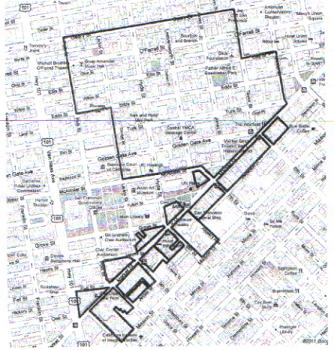
 Mission Bay North and South are two separate redevelopment areas that encompass 303 acres, bounded by King Street and AT&T Park on the north, the San Francisco Bay and the I-280 freeway on the east and west, and Mariposa Street to the south, according to Redevelopment Agency documents.

The Budget and Legislative Analyst notes that of the $5.4 million in additional tax increment, an estimated $3.48 million would fund a portion of the Agency’s required educational revenue augmentation fund payment to the state for FY 2010-2011. And that the remaining $1.95 million would be distributed to tax entities, with $870,400 to be expended on the agency’s low and moderate income housing fund.

 The BLA notes that the proposed sale of $70 million in tax increment bonds will provide $60.345 million bond proceeds, including $12 million (20 percent) to fund the construction of 1180 4th Street, a development of 150 units of family rental housing, including 25 units for formerly homeless families and $48. 276 million (80 percent) to reimburse Catellus’ successor, FOCIL-MB, LLC, for public infrastructure development that FOCIL-MB constructed..

“If the proposed resolution is approved, of the $177 million total estimated debt service, $100, 890,000 or 57 percent will be paid from the City’s General Fund. The City’s General Fund estimated additional annual cost would be $3,648,000 for the first 20 years, decreasing to $2,793,000 for the next ten years.” The BLA concludes, explaining that approval of the proposed resolution is a Board policy decision because it adds up to a total General Fund cost of more than $100 million.

 According to the BLA report, Amy Lee, SF Redevelopment Agency deputy executive director, the requested $70 million in tax increment bonds would be sold in late March 2011, “such that no debt service payments would be required in FY 2010-2011.

 The BLA also notes that if the Board approves the proposed resolution, the net effect of each property tax dollar expended for tax increment that is provided to SFRA would result in a reduction of $0.57 on each dollar from the city’s General Fund.

“In other words, for each tax increment dollar provided to SFRA, the City would no longer have to provide payments to other tax entities,” the BLA observes.

These entities include the city’s Children’s Fund, Library Preservation Fund, Open Space Acquisition Fund, and the General City Bond Debt fund, the Community College district, the San Francisco United School District, BART, and the Bay Area Air Quality Management District, which total approximately $0.43 of each property tax dollar.

It’s because of these property tax dollar equations that the annual cost to the city’s general fund for proposed increased debt service would rise, if the Board approves today’s Redevelopment resolution, by more than $100 million over the next 30 years.

And as local Democratic Party chair and former Board President Aaron Peskin explains, there’s nothing much the Board can do about the deal today, but they might want to reconsider getting into more deals like this at Treasure Island and beyond, in future.

“A deal is a deal is a deal,” Peskin said. ‘So, there’s nothing the Board could do differently, but that’s $3.648 million that otherwise would be going into the General Fund, and it’s a sign we should pay attention to, when considering Treasure Island, as deals like this will continue to impoverish the General Fund.”

 “Even though they deny it has nothing to do with Gov. Jerry Brown’s pending legislation to eliminate redevelopment agencies, I have never seen something scheduled so quickly,” Peskin added, noting that the Board’s agenda is published Thursday evening or Friday morning, but this item wasn’t on that agenda, hence the need to publish a separate notice.

Meanwhile, Treasure Island’s final environmental impact report has been released, and the way the current plan looks, will forever alter our view of the Bay.

“It will have enormous impacts on services for the City and traffic for the entire Bay Area,” Saul Bloom, executive director of Arc Ecology, told the Guardian.

On April 7, a joint session of the San Francisco Planning Commission and Treasure Island Development Authority will be meeting to consider certifying the EIR, but Arc is asking for an extension of two more weeks to provide the public with 42 days for review.

“Fourteen additional days for public review is a very modest request for a project with such significant impacts yet, the City has thus far refused,” Bloom notes.

Nuclear meltdown: It could happen here

67

The death toll from the earthquake and tsunami in Japan is horrible, and it’s going to get worse. In fact, it could get a whole lot worse, if one of the nuclear power plants now on the edge of disaster actually melts down or cracks open. Either way, a huge amount of radioactive material could be dispersed in an densely populated area. It’s a nightmare that a lot of us have been worried about for years.


I got my start in politics in California organizing against the construction of Pacific Gas and Electric Co.’s Diablo Canyon nuke. It was a long, sometimes brilliant, sometimes frustrating struggle. We tried to warn people about rate hikes (which happened) and about the lack of a solution for the nuclear waste (still a problem) and the immense cost ($7 billion, about 200 times as much as projected) and the potential for accidents. But the argument that I always found most compelling, even with people who sorta, kinda supported nuclear power, was this:


Diablo Canyon is built on an active earthquake fault.


In fact, it’s built on a fault similar to the one that just shook Japan. The Hosgri is what’s called a “thrust fault,” meaning that the tectonic plates slide over each other. (The San Andreas, near San Francisco, is a slip fault, meaning the plates slide next to each other.) And the plant is perched on the edge of the Ocean.


PG&E has always insisted that the plant is built to withstand the greatest likely earthquake (about a 7.7 Richter). I don’t trust the company, but let’s say that’s true.


It’s also true that the Japanese plants (unlike, say, Chernobyl) were built to the highest standards. Japan was about as well prepared for this sort of disaster as a rich, industrized country could be. Japanese engineers are as good as any in the world, and the plants were well monitored and inspected. It’s just that the experts never predicted that a quake this large, and flooding this severe, could possibly happen.


Ths thing about major industrial accidents (and I learned this years ago researching the TMI near-meltdown for a book I was writing) is that they happen not because of one bad event but because of several unpredictable events happening at once. TMI was a series of errors. The plants in Japan are in trouble because the quake knocked out power (predictable) then the tsunami knocked out the backup generators (not as predictable) and the intense flooding also fried the emergency batteries. Three systems, all reliable, all redundant — and they all failed at once.


Oddly enough, the greatest danger to a nuke (other than a terrorist attack) is a loss of electric power. If there’s no power, you can’t pump cooling water into the core — and things get nasty really fast. The overheated core produces hydrogen gas, which can explode; that makes the mess even worse. If it gets bad enough, the 4,000-degree fuel rods melt right through the concrete and steel containment facility — and you have a catastrophic release of some of the world’s most toxic material.


Could a larger-than-predicted quake on the Hosgri Fault — combined with, perhaps, some human error of the sort PG&E is famous for, combined with bad weather and high seas — put Diablo in the same precarious situation as the Japanese plants? Of course it could. Is there any human way to put a nuclear plant on an active earthquake fault and make sure there’s zero potential for disaster? Of course not.


Now: You can argue that other forms of energy generation are also dangerous (coal miners die; natural gas facilities pollute the water etc., though I’ve never heard of a death from solar panels). But these things have to be discussed in terms of the disaster potential — and the potential of a massive radiation release on the California Coast, close enough to both San Francisco and Los Angeles to cause horrendous loss of life, makes almost any odds unacceptable.

SFBG Radio: What is NPR afraid of?

4

Today we discuss why everyone seems to be afraid of a few right-wing nuts and why an undercover videographer whose work is consistently shown to be shoddy keeps getting all this attention. Listen after the break.

sfbgradio3/24/2010 by endorsements2010

Local efforts to help Japan

Several prominent international charities are accepting donations for Japan’s earthquake relief efforts, but many local organizations have stepped up to the plate too. Here’s a roundup of Bay Area organizations we’ve found that have set up relief funds or are hosting benefits to help Japan in the aftermath of the devastating earthquake and tsunami.

Ebisu, one of San Francisco’s oldest Japanese restaurants, will donate some of its profits toward earthquake relief.

The Japanese Cultural and Community Center of Northern California has set up an earthquake relief fund.

The Japantown Merchants Association is accepting donations for earthquake relief at all area Union Bank locations, under the reference Japan Earthquake Relief Fund.

There is a benefit planned for April 13 for Japanese relief efforts featuring DJ Kentaro at Public Works in San Francisco, with all proceeds going to Global Givings Japan Earthquake and Tsunami relief fund.

The Japan Exchange & Teaching Program Alumni Association of Northern California (JETPAA) has set up a relief fund.

San Francisco-based Give2Asia has set up a Japan Earthquake & Tsunami fund.

Did we miss something? Please let us know.

A meeting of Mayor Lee and Bloomberg’s minds

0

Mayor Ed Lee described New York Mayor Michael Bloomberg as “a model of mine” as the two men exchanged gifts in the Mayor’s Office, and reporters unsuccessfully tried to figure out which of the two men is taller.

Bloomberg gave Lee a box of golf balls, Lee gave Bloomberg a trolley bell, organic hot dogs, a lifetime membership to the San Francisco Museum of Modern Art, and the two men had a meeting of the minds when it came to the need for big cities to reduce greenhouse gas emissions.

Lee prefaced his gift giving by saying he intended to make Bloomberg an honorary citizen of San Francisco.

“Does that mean I’ll have to pay taxes?” Bloomberg quipped.
“If they go up, you’ll be the first to know,” Lee replied.

Bloomberg said it was “fun to talk” with Mayor Lee about energy conservation and environmental activism. “Things like the environment are things mayors have to deal with every day,” Bloomberg said, noting that cities account for 70 percent of the world’s greenhouse gas emissions.”

Bloomberg praised San Francisco for approving an ordinance that requires owners of non-residential buildings to make public how much energy each building consumes each year. The legislation is meant to improve energy efficiency in existing buildings, reduce greenhouse gas emissions, lower energy costs and create green jobs. It also requires commercial buildings over 10,000 square feet to conduct energy-efficiency audits every five years.

“Each can profit from each other’s experiences,” Bloomberg said, noting that because NYC has a more carbon efficient mass transit than most U.S. cities, its buildings are responsible for creating 80 percent of NYC’s emissions. 

Asked about a lawsuit that his transportation commissioner Janette Sadik-Khan reportedly triggered by installing a bike lane along the boundary of an affluent Brooklyn neighborhood, Bloomberg flashed a smile that didn’t suggest he thinks Sadik-Khan is now a PR liability for his administration.

“Change is difficult,” Bloomberg replied, acknowledging that there are “battles between those who drive cars and ride bikes.”

“Mass transit is the solution for every big city,” he continued. “And the bicycle is one of the answers, but they can be dangerous. Roads are not just for motor vehicles. They are also for bikes and pedestrians. The key is pedestrian safety.”

“Our transportation commissioner is very innovative,” Bloomberg continued, referring back to the reportedly embattled Sadik-Khan. “She therefore does come under criticism, but I should be the one taking the heat, not her!”

“Closing Times Square was one of the most successful things we’ve done,” he added, referring to another initiative that Sadik-Khan championed, in addition to installing bike lanes on crowded streets and proposing to shut part of NYC’s 34th Street to cars.

Asked for his impressions of San Francisco’s homeless problem, Bloomberg pointed out that he had just traveled straight from the airport to City Hall by BART, and therefore didn’t have a deep grasp of the issue locally. “I don’t know the specifics,” he said.

But he was happy to outline how New York set “a very aggressive goal” of reducing its homeless population that it then failed to meet it, in part because the economy tanked. “The numbers are down about 13 percent each year,” he said, noting that he hasn’t seen the 2010 statistics.  “But only a small number sleep on the streets,” he continued, noting that folks in NYC, “have to work to qualify for rental assistance.”

Asked to give Lee some mayoral advice, Bloomberg said, “The public wants elected officials who are genuine, who are doing things for what they think are the right reasons.

Asked to give Lee specific advice on how to stay out of trouble as the city’s top official, Bloomberg joked that Lee should move to New York until the end of the year, when his term as interim mayor expires. “But then he’d get into trouble for doing that,” he said. And then he and his coterie of security guards and photographers were out of the press conference and into the elevators, faster than a cabbie trying to beat a red light on a sweltering night in the Big Apple.

Business groups defend unsolicited Yellow Pages distribution

20

A smorgasbord of groups including the SF Chamber of Commerce, the International Brotherhood of Electrical Workers, and LGBT publishers announced their opposition to the proposed ordinance to stop distributing the print Yellow Pages to everyone who doesn’t specifically request not to receive them.

A press release by the Yellow Pages Association claims that the coalition is “concerned that the move would put hundreds of San Francisco residents out of work, limit small businesses’ marketing, and hurt the city’s fragile economic future.”

However, many of the small businesses the Guardian spoke with in its previous article on the subject repeatedly said the same thing— that the print edition no longer serves as a helpful advertising source.

It basically becomes a battle of opt-out v. opt-in. The YPA and the groups that announced their opposition choose the opt-out system because the Yellow Pages can go on printing and wasting as usual, without consumers doing much about it. The opt-in system eliminates the waste problem while allowing groups, perhaps the ones mentioned above the option to advertise and market in that medium.

The release also cited concerns such as limiting the distribution of directories to “target demographics” (i.e. minorities), the cost on the publishers for those who decide to have home deliveries, and the potential court battle over constitutionality, as the YPA may argue that the print edition is protected under the First Amendment.

One has to wonder how distributing costs will be more if the opt-in option is passed, with ultimately less phone books piling up on in apartment foyers and overflowing recycling bins. Phone books, it appears, that neither consumers, nor businesses, are using.

If the print Yellow Pages is as effective as the YPA wants the public to believe then having an opt-in system shouldn’t be a problem for it, as a lot of businesses and consumers will choose to opt-in and be happy with advertising and utilizing the phone book to those who actually get something out of it, and the opt-in system will also benefit those who are looking to never receive an unsolicited phone book again.


American Idol: Adam Lambert and Diddy

36

My first question: How are they going to fill an hour getting rid of one person (when Survivor does it at the end of the show in about five minutes)?


Answer: The 13 contestants engage in a Michael Jackson medly, a couple of shots of the Idol mansion (a giant Beverly Hills house converted into a luxury hostel where the boys and the girls each share a giant bedroom), a long, bizarre promo for a movie, and a music video for Ford. That, plus a stunning performance the great Adam Lambert and a mediocre gig by Diddy — and the requisite amount of melodrama and tears.


The Jackson thing wasn’t so bad, and some of the singers were great. The mansion is what you’d expect — except that it must be built for 20 bedrooms but has been converted to force all the contestants to bunk in some sort of giant rec rooms. Weird.


Then, in an all-new low for Idol (and that’s saying something)  the contestants all had to do a commercial for Ford. After than, in another all-new (and utterly transparent) low, they did the equivalent of a movie trailer for Red Riding Hood, featuring a meet and greet with the stars, a lot of trailer shots and some footage of the Idol folks registering shock and alarm as they watched the film. Gawd. The Coke bottles everywhere were bad enough. Now half the show is an ad.


But: How cool is Adam Lambert? I loved his unplugged version of his new song — or rather, I loved the way he sang it. He’s not showing great talent as a songwriter, not yet, anyway, and the words and music were pretty banal. Still: All the profits are going to the “It Gets Better” project.


Diddy’s backup singers were great. He wasn’t. And I don’t think he’s donating anything to anyone.


On to the elimination round: Three at a time, I got a little nervous when Karen, my favorite female, was in the bottom three, but it all worked out. Ashton was clearly the weakest of the singers, and we all knew she was going home; it was almost too sad to force her to sing a Diana Ross song (again) and miss some of the notes (again) and cry when the judges said No. I mean, human drama is great, but in the end, this was just needlessly harsh.


On to the round of 12.

SFBG Radio: The end of Democrats?

11

Today, Johnny Angel (check out his new tune here) and Johnny Venom talk about the situation in Wisconsin, how the Republicans are trying to defund the Democratic Party — and why they may live to regret it. Listen after the jump.

EndOfDemocrats by endorsements2010

Census no surprise to outmigration taskforce

37

 “San Francisco is losing its black population faster than any other large city in the United States — and the trend is unlikely to stop unless the city takes immediate action.” That’s what the Guardian wrote in August 2008, when we covered a draft report that the Mayor’s African American out-migration task force produced.

But despite the taskforce’s dire warnings, the Mayor’s Office didn’t hold a press conference when the final report was published in 2009. Instead, it was quietly posted on the Redevelopment Agency’s Website, where you can still find it today tucked into the bottom lefthand corner.

And despite the report’s numerous recommendations, taskforce members say that little funding had been made available to turn their ideas into realities.
So, it comes as no surprise that San Francisco’s black population continues to shrink while that of Asian Americans and Latinos make big gains.
According to newly released 2010 Census figures, San Francisco’s total population grew by 3.7 percent to 805,235 in the past decade, the Asian and Latino populations each swelled by 11 percent, the white population shrank by 12.5 percent—and the black population shrank by 22.6 percent.

This means, San Francisco now has 337,451 white residents (42 percent of total population), 265,700 Asian residents (33 percent of population), 121,774 Latinos (15.1 percent of the population), and 46,781 blacks (5.8 percent of population).
In 2009, the out-migration task force, which used 2005 US Census and state demographic data, placed the city’s African American population at 1/16 of San Francisco’s total population, compared to its two largest minorities, Asians and Hispanics, which made up 1/3 and 1/8, respectively.

“We saw that the African American population has declined by 40.8 percent since 1990, and as a share of the population decreased from 10.9 percent in 1990 to 6.5 percent in 2005,” the AAOMTF’s 2009 report states.

(As it happens 6.5 percent of the population in 2005 translated into 46,779 black residents. So, while the black population appears to have grown by two people, when viewed as a share of the city’s entire population in 2010, it can be seen to have shrunk by 22.6 percent, reflecting a flight to the East Bay and other states.)

“That’s not enough people to fill Candlestick Park,” Fred Blackwell, executive director of the San Francisco Redevelopment Agency, stated in 2008, during a presentation about the taskforce’s draft report. He cited a lack of affordable housing and educational and economic opportunity, severe environmental injustice, an epidemic of violence, and lack of cultural and social pride, as the reasons blacks were leaving.

But sadly not much has changed, including the frustration of local black leaders.
“We could paper the walls of this building with reports that have been made on this issue,” task force chair Aileen Hernandez said in 2008, pointing to similar studies that were done in 1995 and 1972, while fellow task force member Barbara Cohen said the draft recommendations “should have long ago been called the final recommendations.”

Reached by phone today, AAOMTF task force member Sharen Hewitt recalled how she and London Breed called for the creation of the taskforce, only to see many crucial recommendations ignored.
“We called for the creation of the taskforce in face of an imminent threat to the sustained presence of African Americans in San Francisco, especially low-income residents,” Hewitt said. “The taskforce’s draft report did not capture 80 percent of the discussion.”
Hewitt says a key flaw was the absence of a “real plan to address the fate of  African Americans who live in subsidized low-income housing.”

Fellow AAOMTF task force member Regina Davis, director of the San Francisco Housing Development Corporation, agrees that a lack of action didn’t help.
“Today’s numbers could have looked different based on actions,” Davis said.
She hopes that today’s increasingly dire financial system will be a call to action.
“Especially with the threat of the elimination of redevelopment agencies, because a lot of the housing for low-income folks is jeopardized in ways we haven’t experienced for three decades,” she said. “People are understanding that this is a market they haven’t seen before.”

Davis remains optimistic that the 2010 Census figures will galvanize folks.
“I’ve been mystified why people haven’t protested the war more,” she mused. “Maybe they will now that dollars they have taken for granted aren’t on the table. And maybe they’ll start to realize that tax cuts cost money. I don’t know where folks get the notion that tax cuts are free.”

Other AAOMTF members say the whole taskforce process was very discouraging for those who worked so diligently to find solutions.

”After all that intense work, we were all left with no notable action taken, (At least no action that I am aware of),” wrote AAOMTF member Larry Saxxon in an email. “At the least, the report should have been released to the general public for their review and feedback. It left me questioning the motives for the process from a political point of view.”

Saxxon said that because of feeling a great deal of dissatisfaction with the AAOMTF’s Education Committee’s findings, he and fellow taskforce member Barbara Cohen wrote a minority report on the needs for greater educational services for the African American community.

In their report, Cohen and Saxxon noted that there was a need to increase awareness and advocacy for African American students who are classified as special needs students.

And in his email, Saxxon noted that as an African American and an active advocate for the African immigrant community, he strongly suggested that AAOMTF include the presence of the African immigrant community in the final report as this was the only known incoming source of Blacks arriving in San Francisco. 

“From the statistical data that we had access to, we know that the African immigrant comprises, at a minimum, of 10 percent of the overall African American presence in San Francisco. This 10 percent is only counting those that are documented.  When we view the ratio of undocumented African immigrants… that number increases considerably! Sadly, that fact never manifested in the final report.”

“This is an issue that is very dear to my heart, as I too feel like an endangered species as an African American man and father trying to survive, and indeed thrive, in San Francisco,” he said. “The prospects seem to get dimmer as the months and years go by.”

Saxxon was pleased Mayor Ed Lee “did at least acknowledge the nature of
the problem and also by his alluding to the fact that some concerted action
needs to be taken.”

And it’s true that Lee has signaled a commitment to the African American community through his support for Sup. John Avalos’ local hire legislation, which kicks in March 25. (The AAOMTF identified jobs, as well as housing, education, economic development, cultural and social life, and public safety and quality of life as key policies and practices that can “help stem the outflow and even entire more African-Americans to make a home and establish roots in San Francisco, while making them feel like an integral part of the City’s stability and vibrancy.”)

But will Lee take other significant steps to stem the outflow in his ten remaining months in office (assuming he doesn’t throw his hat into the ring of the mayoral race, after all?) And will the plight of the city’s African American community even become an issue in the 2011 mayoral race?

What has happened to America?

13

I’m serious. I listened to the news this morning on the radio, and I started to wonder if I hadn’t gone through some kind of a time warp, back to the 1950s. The House Homeland Security Committee is actually holding hearings on whether members of a certain religion have become too radical — and what the U.S. government can do about it.


Richard Nixon used to say that the Jews were part of the Commie Radical Conspiracy, and J. Edgar Hoover thought that black religious leaders, including the Rev. Marting Luther King, Jr, were linked to the Communist Party, but it’s been a while since the U.S. government officially investigated an entire religion on the grounds that it might contain radical elements.


Of course, as Rep. Loretta Sanchez (D-Calif.) notes:


Yet, since September 11, 2001, there have been at least 78 terrorist attacks around the world which did not involve Muslim perpetrators. During the same period, there were 45 incidents connected to Islamic radicals.


Same thing in the United States. Timothy McVeigh? Not a Muslim.


Here’s Rep. Dan Lundgren (R-Calif.) telling us all about this particular scare:


I think moderate voices in this country are intimidated by the radicals. If we hide this and pretend that it doesn’t exist, we’re ignoring reality.


It’s funny — I could make that same argument about the Republican Party. The moderates (if any are left) are intimidated by the Tea Party and anti-tax radicals. Now we have a HUAC-style investigation of the Muslims.


And then in Wisconsin, one of the birthplaces of the modern labor movement in America, the state Legislature is stripping public employees of almost all collective bargaining rights. Forget wages and benefits, which the unions have already agreed to open up for discussion. This is about the most central tenet of organized labor — the right to collective bargaining. It’s as if all the victories we’ve won in the past half century (or more) are going away. With a Democrat in the White House.


It’s funny: I was drinking beer with my neighbor the other night and talking about tax policy (you wonder why I have so many friends) and he told me he’d  given up any thoughts of socialist revolution or radical change: “I’d just take the 1950s,” he said.


Because in the 1950s, the rich people paid taxes.


So now we’ve got the worst of both worlds: We have 50s-era witch hunts and union busting — and we don’t even have 50s-era taxes. What the fuck?   


An agenda as clear as 1, 2, 3

16

Downtown hates democracy. Entities like the San Francisco Chamber of Commerce and San Francisco Chronicle prefer elections with well-financed frontrunners willing to do their bidding. They don’t like messy democratic exercises like this year’s mayoral elections, in which the crowded field of solid, evenly matched candidates will be looking for support from progressives as part of their ranked-choice voting strategies and any of several candidates could win.

That’s why the Chamber/Chronicle are hyperventilating about the ranked-choice voting system, which resulted in a candidate from outside the acceptable establishment becoming mayor of Oakland, a result they fear might also happen here. The latest attacks come in a pair of misleading stories in today’s Chronicle, based on a loaded Chamber poll.

The main story ran front page above the fold, the big headline calling the seven-year-old voting system “a mystery” because the poll found many voters didn’t know precise details about how votes are tabulated. And even though the poll found “voters evenly split on whether they prefer the current system or a runoff,” according to the story, columnist CW Nevius writes that the poll shows voters “would prefer a two-candidate runoff.”

No, Chuck, you and your fearful downtown cronies prefer elections like that: costly, low-turnout elections in which the better financed and more conservative candidate wins every time. But most people are content with the current system, and they have a strong record of knowing how to use it and how it basically works, which why the paper reluctantly admits at the end of the story that voters preferred this system more than 2-1 in a 2009 poll.

Even without knowing how the Chamber asked the question (we’re still waiting for a response to our request to review the poll questions and data) in the current poll, and even in a newspaper with a consistent record of wanting to repeal this voting system along with other progressive reform like district election and public financing, as many respondents to this obviously leading poll said they preferred this system as did those who don’t like it.

But you better believe that the Chronicle/Chamber are going to do everything they can to scare and confuse voters into losing confidence in ranked-choice voting. Spotting these thinly veiled Chronicle/Chamber crusades is as easy as 1, 2, 3.

UPDATE: The Chamber did forward us its poll questions, including this one: “As far as you know, in an election that uses ranked choice voting, if your first choice, second choice and third choice candidates are all eliminated when the votes are tallied, what happens …. (ROTATE) is your vote counted or is your vote not counted … (READ LAST) or are you unsure?”

The results: 55 percent unsure, 29 percent “your vote is counted,” 15 percent “your vote is not counted.” And this confusing question is the basis for the Chron’s conclusion that “a majority of voters don’t know how the system works.” Actually, voters seem to understand just fine that they get three choices, that they ranks them in order of preference, and that there is a system for reassigning their votes as their top choices are eliminated. In this question, one might argue that the voters whose top three candidates were eliminated had their votes counted three times. Or you could say it wasn’t counted. It’s basically a philosophical question that was clearly intended to confuse respondents, and it worked. But they only way that would justify the screamer headline and high play for this story is if the Chron/Chamber was pushing an agenda.

Don’t miss the free MUNI youth bus pass!

4

If you do down to the BART station at 16th and Mission today (Thursday) from 3-5 p.m., you’ll see banners that read ‘Get Your Free Fast Pass.” The PR blitz is the work of the MORE Public Transit Coalition, which is conducting a series of community bus pass clinics in the Mission, the Bayview and Chinatown in the coming weeks to help low-income families apply for free MUNI youth passes. 

Last week, at the urging of the MORE Public Transit Now Coalition and Sup. David Campos, the MTA Board approved the Youth Lifeline Program, which will provide 12,000 low-income youth with free MUNI bus passes in April, May and June.

But to access the free bus pass program, low-income families need to fill out an application and return it to the MTA Office. As a result, community organizers are setting up the bus pass clinics to inform low-income parents and students about the program and to help them to apply.

“We fought hard to get these free bus passes,” Gloria Esteva of POWER (People Organized to Win Employment Rights) said in a press release. “Now we want to make sure that children get these passes in their hands and don’t have to worry having bus fare in order to make it school each day.”

More than 20,000 transit dependant students in San Francisco rely on public transit to travel to and from school daily. But last year, the price of the Youth Fast Pass doubled from $10 to $20.

“We take the bus everywhere we go,” Un Un Che from the Chinese Progressive Association. Said. “My family depends on MUNI to get to school, to work, to the doctor.  Buses are not a luxury; they are a necessity.”

A similar clinic will be held in the Bayview on Monday March 14 at the Mandela Plaza at the corner of 3rd Street and Palou. A second clinic will be held in the Mission on Thursday March 17 and a second in the Bayview on Monday March 21. Future clinics are planned for Chinatown, though dates are not yet available. But applications will be available at all locations in English, Spanish, and Chinese, and assistance will be provided in all three languages.
 Organizers note that while the program is a positive step, the 12,000 passes still fall short of meeting the need for affordable public transportation in San Francisco.
 
“We know that next year the city plans to continue to cut yellow school buses,” POWER organizer Beatriz Herrera said.  “We need a permanent program that will ensure that our children can travel safely around the city, get to school each day, and meet their basic transit needs.”

Is David Crane just another Kochhead?

24

This week the Chronicle majorly attacked State Sen. Leland Yee, claiming Yee tried “to distort the words” of billionaire investment banker and UC Regent David Crane on collective bargaining.

The Chron’s attack came on the heels of Yee’s attempt to block Crane’s UC Regents confirmation. And Yee’s attempt to block Crane came in response to an op-ed Crane wrote for the Chron titled “Should public employees have collective bargaining rights?”

In its counter-counter attack editorial this week, the Chronicle accused Yee of falsely claiming that Crane had “called for an end to collective bargaining rights for California teachers, nurses, firefighters, university employees and other public sector worker.”

“What the former adviser to Gov.Arnold Schwarzenegger did was present a history of collective bargaining in California and explain how a 1977 law had changed the balance of power by giving public employees power over their compensation and benefits,” the Chronicle stated. “Crane did assert that extending collective bargaining to employees who already have civil service protections ‘serves to reduce benefits for citizens and to raise costs for taxpayers. Anyone who would argue with that fact has not been paying attention to what is happening with state and local budgets lately.”

The Chronicle finished by praising Crane, who is currently a lecturer on Public Policy at Stanford University and is reportedly working with former Fed Chairman Paul Volcker to form a task force to examine current state budget practices. Crane, the Chron asserted, has “long been widely respected as a teller of inconvenient truths about the rising costs of public-employee pensions and benefits. He should not be silenced – or misquoted by opportunistic politicians. The Senate should vote to confirm him as regent.”

Now, when Schwarzenegger appointed Crane as a UC Regent in December 2010 as one of his last acts as Governor, the Sacramento Bee described Crane as Schwarzenegger’s “chief public employee pension critic.” But here in San Francisco, the Chron didn’t bother to flesh out Crane’s history of employment, campaign contributions, prior statements on collective bargaining, and financial investments.

Maybe it was because these public records reveal Crane to be less a dyed-in-the-wool Democrat and more of a Bushocrat, an ultra-rich investor who supported G.W. Bush through two elections, and repeatedly frames the collective bargaining rights of government employees as an obstacle standing in the way of pension reform and budget balancing.

Campaign finance records show that in March 1999, when Democrats were trying to hang onto the White House in the wake of Clinton’s sex scandals, Crane gave $1,000 to Bush. And in June 2003, just three months after Bush invaded Iraq on a false pretext, Crane saw fit to give Bush another $2,000.

The good news? Crane didn’t support Sarah Palin and John McCain in 2008. But he did donate $7,200 to Republican Tom Campbell’s unsuccessful 2010 bid for US Sen. Barbara Boxer’s seat. And here in San Francisco, Crane was one of several billionaires who wrote big fat checks last fall in support of Measure B, which sought to curb the pension and health benefits of city workers, most of whom will make a fraction in their lifetime of what Crane rakes in each year from his widely diversified financial portfolio.

Crane’s 2009 statement of economic interest shows he has over $1 million invested in Farallon Capital Partners, one of the world’s largest hedge funds, many of whose investors include top university endowments.

Crane also has over $1 million invested in Acacia Partners, over $1 million in Bislett Partners, over $1 million in Kensico Partners, over $1 million in Semper Vic Partners, over $1 million in Berkshire Hathaway, whose CEO is Warren Buffet, over $1 million in the HCP Absolute Return Fund, whose Board includes Warren Hellman, and up to $1 million in Hall Capital Management, whose Board includes Hellman and Gap heir John Fisher. Crane also owns several million dollars stake in real estate investments, and has sizeable stock in Wells Fargo, Chesapeake Energy, Microsoft, Google, Pangloss Oil, Whole Foods Market, M&T Bank Corp., IBM, American Express, WalMart and Exxon.

And he gets income from Acacia Partners and Babcock & Brown, where he was a former partner from 1979 to 2003. While at Babcock, Crane reportedly brokered a controversial jet-lease deal between Arnold Schwarzenegger and Singapore Airlines that allowed Schwarzenegger to defer taxes on millions of dollars. And in 2004, Crane went to work for then Republican Gov. Schwarzenegger as special advisor for Jobs and Economic Growth. The Terminator returned the favor by appointing Crane to the California Commission in Economic Development and the California High Speed Rail Authority. But Crane was rejected in Senate confirmation proceedings for a position on the board of California State Teachers Retirement System.

Now, clearly it’s not a crime to be a billionaire, even though the way some folks make their billions is criminal. But you have to wonder if UC really needs another ultra-rich Regent on its Board. You also have to wonder why the wealthy Crane sought reimbursements of $2,812 from UC in 2009, if he cares about saving the state money.

And Crane has made plenty of statements about collective bargaining rights and pension reform in recent months that seem to frame government employees as the bogey men, not just in California, but across the entire nation.

Take his April 2010 comments to the Los Angeles Times: “State legislators are afraid even to utter the words ‘pension reform’ for fear of alienating what has become — since passage of the Dills Act in 1978, which endowed state public employees with collective bargaining rights on top of their civil service protections — the single most politically influential constituency in our state: government employees,” Crane said.

Or what he said in August 2010 to the Fox Business Network: “Even if you took care of every one of these spiked above the iceberg level pensions in California, you would not take care of the pension problem in California, which is true of virtually every state in the country, at least those where, you know, government employees have collective bargaining rights,” Crane said

In December 2010, he told the L.A. Times that the year 1978, ”wasn’t notable just because of Proposition 13. That was also the year public employees gained a power Franklin D. Roosevelt had warned against: collective bargaining rights.”

“California hasn’t been the same since,” Crane continued. “Public workers have gained at the expense of private workers as government spending was redirected from infrastructure and education to higher salaries, pensions and other benefits.”

And in his Feb. 27 Chronicle op-ed, Crane claimed that, “The battle in Wisconsin is not over collective bargaining rights generally but rather the appropriateness of those rights in the public sector ”

“Collective bargaining is a good thing when it’s needed to equalize power, but when public employees already have that equality because of civil service protections, collective bargaining in the public sector serves to reduce benefits for citizens and to raise costs for taxpayers,” Crane continued. “Citizens and taxpayers should consider this as they watch events unfold in Madison.”

As of today, letters are circulating in Sacramento opposing Crane’s confirmation. And Sen. Ted W. Lieu (D-Torrance), Chair of the Labor and Industrial Relations Committee in Sacramento, has already signaled his opposition.

“I cannot support someone for the powerful post of UC Regent who continues to perpetuate the myth that collective bargaining caused our state economic crisis and has a fundamental misunderstanding of how our state budget operates,” Lieu said in a statement. He noted that in the Chron op-ed Crane claimed that because of collective bargaining, “general fund spending on higher education, parks and environmental protection was flat or lower.” 
“As a matter of historical fact, that is false,” Lieu countered. “ Our general fund spending generally declined because of a national economic recession.  The recession was not caused by collective bargaining or public sector unions, but by private sector, out of control Wall Street firms at the time.”

“The specific reason our general fund spending sharply declined was because the person Mr. Crane advised, former Gov. Arnold Schwarzenegger, reduced the Vehicle License Fee and replaced it with . . . nothing,” Lieu continued. “As a result, the state general fund lost over $5 to $6 billion in revenues per year for every year Mr. Schwarzenegger was in office.  The VLF reduction has resulted in a total loss of over $30 billion to the state, an amount in excess of the current California budgetary shortfall.  How conveniently Mr. Crane forgot to mention that critical fact when it doesn’t suit his ideological assault on public sector unions.”

“Now that Mr. Crane senses his confirmation may be in jeopardy, he attempts to marginalize his own Op-Ed by releasing a new statement saying he really didn’t mean to attack all public sector unions, just those who happen to have statutory civil service protections,” Lieu added. “For those in Ivory Towers that distinction may have some academic meaning, but for everyone else in the real world that is a distinction without a difference. Civil Service protections do not prevent employees from being terminated or laid off, they provide standards for government to follow when firing or disciplining employees. Such protections do not guarantee appropriate wages or benefits, nor address a plethora of other issues, such as workforce safety issues.”
 
“Mr. Crane’s Op-Ed also discusses political spending by public sector unions, “Lieu concluded. “In his world view, political spending by the California Teachers Association is inappropriate, but the massive political spending by the Koch Brothers would presumably be acceptable. I cannot, and will not, support someone for the post of UC Regent who blames public sector employees, such as teachers, for somehow being responsible for our economic crisis or the resulting decline in general fund spending.  We need UC Regents who are interested in solving problems, not those who twist historical facts to suit an ideological agenda.”

So, as I wait for Crane to return my call, I’ll leave you with something reporter Peter Byrne, who authored the award-winning investigative series ‘Investor’s Club” How the Regents of the University of California spin public funds into private profit,” said to me yesterday when I asked him about the wisdom of putting investment bankers on the UC Regents Board. “Putting investment bankers in front of a plate of $63 billion is like putting a pound of hamburger in front of a bunch of feral cats. They are going to eat it. It’s in their nature.”

So, would confirming Crane be like adding another feral cat to the mix? Is he just another Kochhead? Or is he just maligned and misunderstood, as the Chron vehemently implies?


More than 80 percent of Americans want to tax the rich

9

Senator Bernie Sanders (I-VT) is calling for an emergency surtax on millionaires as a way to combat the deficit. Which, of course, is a great idea. His colleague Chuck Schumer (D-NY) is on the same page. And the polls show that most of the country agrees with the concept; in fact, a Wall Street Journal/NBC News poll says that a staggering 81 percent of Americans think it’s basically a good idea to increase taxes on incomes of more than $1 million a year.


I imagine that the population of San Francisco is somewhat more liberal on the issue of taxes than the nation as a whole, which leads me to believe that a very substantial percentage of the city’s residents (including some of the very rich ones) was support increased local taxes that would require the wealthy to pay more to preserve city services.


There are, I’m sure, plenty of creative ways to do that. But it doesn’t seem to be at the top of the budget discussion at City Hall.


I realize that it would require a two-thirds vote in November for any tax hikes — unless the supervisors declared a financial emergency. And it certainly seems as if we’re in a state of emergency — and if the governor can’t find a couple of Republicans to vote for his budget package, it’s going to get much worse, very quickly.


If we can’t do that, and we have to wait a year and do it next fall, we still ought to be starting now — and the supervisors ought to be telling every community that’s facing cuts that there won’t be any more reductions without at least a plan for new revenue.


Rec & Park begins HANC eviction before Board vote

Just as the Board of Supervisors was gearing up to vote at its Mar. 8 meeting on a resolution defending the Haight Ashbury Neighborhood Council (HANC) Recycling Center against eviction from Golden Gate Park, Sup. Ross Mirkarimi noted that the Recreation & Parks Department had already filed an unlawful detainer against HANC, the first legal move in an eviction process. “I think that only escalates the matter, in what I believe is an unprincipled way,” Mirkarimi said.

“It’s very unfortunate that we did have this unlawful detainer action being filed,” Sup. David Campos noted. “I am hopeful that the city reconsiders that action.”

Mirkarimi had originally drafted the resolution to urge Rec & Park to “rescind the eviction of the HANC Recycling Center from Golden Gate Park.”
Board President David Chiu made a move to amend Mirkarimi’s resolution, replacing the part about rescinding the eviction with some language calling for Rec & Park to “negotiate in good faith.” Mirkarimi’s resolution also requested the Rec & Park and the Department of the Environment to establish a “comprehensive Parks recycling program utilizing the expertise, volunteer base, and facilities of the HANC Recycling Center in Golden Gate Park.”

Mirkarimi stressed the need for the city to assist HANC in finding a new location, and questioned how the loss of the recycling service offered by HANC could possibly be replaced by vending machines in nearby grocery stores. “We’re going to have a people-traffic problem … I guarantee that that problem’s going to escalate exponentially,” Mirkarimi said.

Mirkarimi’s resolution passed 6-5, with Sups. Scott Wiener, Carmen Chu, Malia Cohen, Sean Elsbernd, and Mark Farrell dissenting. However, the District 5 supervisor acknowledged in his comments that Rec & Park is not accountable to the board, so the resolution may not have any effect on the outcome. “Let’s keep in mind, decisions by Rec & Park — it’s one of two commissions citywide whose decisions are not appealable by the Board of Supervisors,” Mirkarimi said. “They work as a parallel government.” As things stand, Rec & Park commissioners are appointed by the mayor. Alluding to a charter amendment that would have changed that governance to include Board of Supervisors’ appointees, Mirkarimi said, “I’m sure soon that that’s going to come back.”

Reached by phone, Rec & Park Policy and Public Affairs Director Sarah Ballard did not directly answer a question about why Rec & Park went ahead with the legal filings for HANC’s eviction before the Board had a chance to vote on Mirkarimi’s resolution. “We have plans to build a community garden at that site,” Ballard said. “And we’d like to get started.”

Eric Brooks, speaking on behalf of Our City, did not mince words during public comment. “This is an agency that is out of control, totally full of itself, and belligerent to the Board of Supervisors and toward the public when it comes to these issues,” Brooks said. “I think it’s really time for the Board of Supervisors to take strong action to democratize Rec & Park, to change the way that the Rec & Park Commission is constructed so that the Board has a majority of those selected — until this agency can show that it’s not a rogue agency.”

Board to approve highly staged mayoral question time

8

When San Franciscans voted on two occasions to require the mayor to meet publicly with the Board of Supervisors to answer questions – most recently in November when voters approved a binding measure after Gavin Newsom ignored the preview measure – I don’t think they had in mind the sterile, staged process that the board is poised to approve today.

Sponsored by Sups. David Chiu and Eric Mar (an early endorser of Chiu for mayor) and rubber-stamped by the Chiu-stacked Rules Committee, the procedures are a far cry from England’s raucous question time, which supporters and critics have always compared the proposal to. And it seems to let board-appointed Mayor Ed Lee and his successor off very easy.

The rules call for the mayor to appear on the second regular board meeting of each month (meaning Lee’s first session will be five months after voters approved it) and for only supervisors from odd-numbered districts to be allowed to ask questions one month, followed by even-numbered supes the next.

Supervisors are then required to submit their questions in writing almost a week in advance – and even then a supermajority of eight supervisors can vote the question down, meaning the mayor won’t have to answer. Conversely, a supermajority can also approve questions after the deadline when they arise about pressing business.

That’s quite a neat and tidy little democratic exercise that the new powers-that-be at City Hall are trying to create.

UPDATE: Chris Daly, who authored the question time measure as a supervisor, told us that neither of its sponsors nor any Rules Committee members who asked him about the legislative intent of the measure or the language he wrote in it, which Daly said the board and the mayor are violating.

“The intent of the charter amendment was to increase the dialogue and discourse, but the rules seem to dampen the ability of that discourse to take the city somewhere,” Daly told us. He also said that the measure calls for the mayor to appear monthly before the board and it contained no provision suspending that requirement while the board and mayor spend months coming up with ground rules, so “the mayor has been in violation of the charter since then.”

Board to vote on resolution opposing HANC eviction

Last week, Mayor Ed Lee met for around 45 minutes with Ed Dunn and Jim Rhoads of the Haight Ashbury Neighborhood Council (HANC) Recycling Center, Melanie Nutter of the Department of the Environment, and some others who have been in discussions over HANC’s pending eviction from Golden Gate Park.

“The mayor wanted us to consider alternatives to the site we’re in,” Rhoads told the Guardian after the meeting. He noted that ideas had been floated about relocating HANC to a parcel owned by the Port of San Francisco in District 10, or creating a mobile recycling unit.

“He clearly had been lobbied hard by his own staff,” Rhoads said of Lee, referring to Rec & Park General Manager Phil Ginsburg and others in that department who recommended HANC’s removal from Golden Gate Park.

But HANC doesn’t want to relocate, and the organization has the support of several members of the Board of Supervisors. At today’s March 8 Board of Supervisors meeting, the board will vote on a resolution “requesting the Recreation and Parks Department to rescind the eviction of the HANC Recycling Center from Golden Gate Park,” sponsored by Sups. Ross Mirkarimi, John Avalos, Eric Mar, and David Campos. While the Board cannot compel the Recreation & Park department to reverse its decision, Lee does have that authority.

Meanwhile, HANC’s attorney, Robert DeVries, believes that the notice of termination issued by Rec & Park was improper under state tenant laws, and he issued a letter to the city last week stating as much. March 4, the date Rec & Park named as the termination of HANC’s lease, came and went without incident, and HANC is likely to file a lawsuit if the city moves to carry out an eviction.

Until that happens, “We’re just going to continue to operate,” Rhoads said, “for what period of time, I don’t know.”