• No categories

Politics Blog

Barry Bonds trial: Why?

14

Can somebody pleae explain why the United States government is spending all this money trying to put someone in jail who is clearly no threat to society, already has had his career ruined (unlike the Wall Street guys who actually damaged the economy and got away not only without criminal charges but with increased riches) and at worst, lied about something that he knew would leak out?


Remember: Bonds was worried from the start that his grand jury testimony would not remain confidential. And it didn’t.


I don’t know. The case is weak, the prosecution is weak, I don’t care about the size of his testicles and this is all costing the taxpayers millions of dollars. Why can’t the U.S. attorney prosecute some real bad guys? How about investigating municipal corruption?


Okay, I’m done now.

Where’s Jerry Brown’s leverage?

17

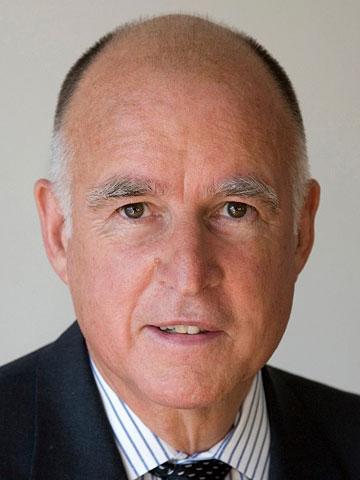
Jerry Brown’s travelling around the state, trying to get Republican voters to urge their legislators to go along with his budget plans. And he’s telling the harsh truth: If he’s forced to do an all-cuts budget, not just the poor but the middle class will get hammered. One of the most dramatic changes will be in higher education.


Brown says that if he has to make another $15 billion in cuts, the price of a year at UC will go up to $20,000. That’s going to price a lot of kids out of the college market and undermine one of the pillars of California society — the provison of affordable higher education for all. It will have another insidious impact: More kids will graduate deeper in debt — and will be unable to pursue public-interest occupations that don’t pay well.


Think about it: You graduate with $80,000 in debt, it’s much harder to work at a community-based nonprofit, or even as a teacher. God forbid you decide to go to law school or medical school; by the time you’re out, there’s no way you’re doing public interest law or working in a community clinic.


That, of course, is part of the hidden agenda here: The people who want tax cuts and small government also want to get rid of those pesky social change organizations and povery lawyers.


Here’s the odd thing, though, about Brown’s barnstorning tour:


He’s going into Republican districts — and threatening to do exactly what the Republicans in Sacramento want. They want an all-cuts budget, and they want a Democrat to have to take responsibility. So Brown what Brown is saying to the GOP legislators is: Do what I ask — or I’ll give you everything you want. Not exactly an offer they can’t refuse.


His big mistake was assuming that the Republicans would ever work with him. He should have started back in January with a signature drive to put an all-taxes (or mostly taxes) solution on the ballot. You want to block my half-cuts, half-taxes budget? Fine — I’ll give you a budget with no cuts at all. That’s how you deal with assholes.


And that’s why the Democrats need to be pushing their own ballot initiative(s) — now.

Jane Kim’s credibility problem

96

(UPDATED AND CLARIFIED ON 4/7 BELOW) Two weeks ago, when Sup. Jane Kim voted to move the Twitter/mid-Market/Tenderloin tax exclusion zone forward before Twitter had agreed to a community benefits agreement (CBA), over the objections of Sup. Ross Mirkarimi and other opponents of the legislation who wanted a chance to review the CBA, she announced at the Budget & Finance Subcommittee meeting that she would delay the vote if the CBA wasn’t approved by the day before the hearing.

Today, the full board is scheduled to consider approving the legislation and Twitter has not yet agreed to a CBA, which is the only thing the city gets in return for giving the company a $57 million tax break. So, during a rally this morning at City Hall against the CPMC project, I asked Kim whether she would keep her word and delay the legislation.

No, she said, they will be voting today to approve it and then they’ll approve the CBA later as trailing legislation. When I pointed out that she was going back on her word and reminded her of the comments she made publicly two weeks ago, she said, “Well, the community understands and wants us to move this forward.”

What community, I asked, noting that much of the community opposes the legislation. She said, “SOMCAN is OK with this,” referring to the South of Market Community Action Network, whose members were perhaps the most vociferous opponents of the legislation at that March 23 committee hearing, their members uniformly asking that the legislation be delayed until after a CBA is approved by Twitter and subjected to community input.

After that conversation, a SOMCAN member who overheard the exchange confirmed that the organization continues to oppose the legislation, although City Hall sources tell us that Kim’s office has assured the group that it will get money out of the final CBA. It is illegal for supervisors to direct funding to specific groups in such agreements, which are negotiated by the Office of Economic and Workforce Development, as Deputy City Attorney Cheryl Adams testified at the March 23 hearing.

UPDATE AND CLARIFICATION: Kim legisiative aide Matias Mormino and SOMCAN organizational director Angelica Cabande strongly deny the organization was promised financial compensation from the Twitter CBA, saying the only assurance the organization was given was Kim’s pledge to create legislation designed to prevent the displacement that SOMCAN fears this legislation will create. Cabande also told us, ” The CBA will keep the corporation accountable to our neighborhood and residents’ concerns by specifically defining how Twitter’s presence will benefit the surrounding low-income communities.” 

Kim has made several statements about this legislation that weren’t true or were contradicted by the testimony of City Economist Ted Egan, as we’ve reported. Previously, she has also lied to others about statements I’ve made in conversations with her and about whether she’s ever met privately with Willie Brown, who supported her supervisorial campaign with an independent expenditure mailer that was illegally created in her campaign manager’s office.

Kim’s sponsorship of this tax break legislation comes despite the fact that she’s said she generally opposes such supply-side economic schemes. In his economic analysis of the legislation, Egan recommended doing a parcel tax on vacant commercial property as a better way to address vacant storefronts in mid-Market, the problem that Kim and others have claimed that this legislation is about.

I asked her about that recommendation during the March 16 committee hearing and she said that she strongly supports the proposal and that she has directed her staff to work on it. Is she going to keep her word and follow through on that pledge? I’ll believe it when I see it.

SFBG Radio: Will Obama be re-elected?

4

Will Obama be re-elected in 2012? Will you want to work for him, or give him money, or vote for him? Johnny and Tim talk about the future of the president. Listen after the jump.


sfbgradio442011 by endorsements2010

How to move 200,000 people around America’s Cup

3

I’ve been wondering how the city plans to move the thousands of spectators expected to show up for a series of regattas in 2012 and 2013, leading up to and including the 34th America’s Cup Final.

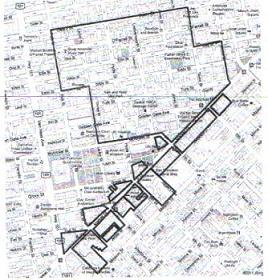
And today I had a chance to start perusing the city’s draft People Plan which aims to move up to 200,000 residents and visitors daily to the city’s waterfront and is promising to be “the most transit, bicycle and pedestrian-friendly major sporting event in history.”

(Note to compulsive printers of online government documents: thanks to some nifty maps in this document, your printer may experience replication difficulties. For instance, I had to print everything but the maps on pages 13 and 14 of the document.)

Anyways, my preliminary review revealed that there is a special section in the draft dedicated to the “special transportation needs” of America’s Cup “participants” and that these participants include teams, event staff and, ta da!, accredited media.

“Special transportation needs for the ‘participant” group include but are not limited to staff access to race-related areas and other constricted waterfront areas,” states the plan. “These activities may require unique and frequent vehicle access to various sites.”

[Note to self: Remember to check out what is required to qualify as “accredited media” for a seat in one of the vehicles frequently accessing the area.]

Just kidding, and now, back to the needs of regular people who want to see the event.

“Part of the appeal that brought the Events to San Francisco Bay was the opportunity to create a new kind of viewing experience for the highest level of competitive sailing, with races held in close proximity to urban areas and accessible shoreline instead of open seas,” states the plan’s “Strategic Adaptability” section.

“The novelty of this concept creates excitement but it also creates uncertainty, in that there are few instructive examples of how spectators will choose to attend an America’s Cup Final-level sailing event in the middle of a weekend day, or how a large event in San Francisco Bay during a weekday will affect the ability of Bay Area residents to commute to work or their other daytime destinations,” the section notes.

{This sounds like the city is trying to figure out how many of us will choose to be anywhere but San Francisco on the weekends in question, how many of us who work in San Francisco are planning to play hookey to attend week day events, and how many will show up even if the Bay is swathed in fog.]

Un its draft plan,  the city promises  “to seed the strategies set forth in the People Plan with a measure of adaptability to allow for the strategic deployment of a finite amount of transportation resources across the spectrum of transportation demands associated with the Events in accordance with the expected demands of each day.”

Beyond that, the document is divided into three main parts. One itemizes likely destinations, the next describes transportation strategies to serve these key destinations, and the final section describes “additional considerations and strategies.”

To learn a) which race facilities, waterfront locations, and race viewing locations will be accessible to the public, b) which bus, rail, cable car, bike, automobile and ferry routes will be modified, and c) which parking and special locations will be added, be sure to check out the plan. And then eave your comments at the city’s feedback site here.

For, as the city’s website warns, “The early draft of the People Plan is the product of analysis by city and SFMTA staff, with early input from stakeholder groups. The draft People Plan announced today will also undergo significant and further revisions, following input from members of the public, advocates, city and agency staff, the environmental community and other stakeholders in the coming months. Final approval and consideration will occur following the completion of environmental review.”

In other words, review the documents now and speak your piece soon, otherwise your ideas won’t have any chance of making it into the final plan.

Or at Mayor Ed Lee put it in a press release, “We are moving rapidly to meet our commitments to host a spectacular 34th America’s Cup in 2013 and set a new standard for sustainable event-planning. The America’s Cup is a unique opportunity to leverage our region’s transportation resources and our enthusiasm to deliver the most transit, bicycle and pedestrian-friendly international major sporting event in history for residents and visitors alike.”

And here’s hoping that we will all be “moving rapidly” when the regatta finally rolls into town…

St. Stupid’s Day Parade mocks economic and religious institutions

0

The 33rd Annual St. Stupid’s Day Parade careened through the Financial District this afternoon, with hundreds of colorful self-styled idiots offering spirited and incisive send-ups of corporate and religious power and clearly having a great time in the process.

The always lively April 1 countercultural ritual was infused by fabulous weather and a nearby gathering of Burning Man regional representatives from around the world, a conference at the Bently Reserve where head honcho Larry Harvey will be giving a heavily touted speech this evening in which he’s expected to announce the formation of a nonprofit group that will eventually take over Burning Man from Black Rock City LLC.

But it’s tough to upstage the First Church of the Last Laugh on its holiest of days, and the crew led the parade of costumed followers through some of its regular rituals, including the tightening of the lug nuts that connect old San Francisco to the new landfill at Battery and Bush streets and throwing socks at the old Pacific Stock Exchange Building.

Along the way, they stopped to make noise and jokes directed at the Federal Reserve, Well Fargo, Bank of America, and other titans of capitalism and corruption, offering chants that included “Go back to work” and “No more chanting.” Lobbies were raided and icons mocked, but with such a good nature and self-deprecating style that even the initially nervous-looking suits and security guards ended up smiling.

Happy St. Stupid’s Day, everyone, now go have some fun.


Redmond traded for Nevius in mid-season shocker

4

Bay Guardian Executive Editor Tim Redmond has been traded to the San Francisco Chronicle for columnist C.W. Nevius and a right-wing associate editor to be named later, it was announced today.

As part of the deal, the Chronicle will pick up the remainder of Redmond’s $25.3 million contract. In addition to a future editor, the Chron will pay the Guardian an undisclosed amount of money “just to get Nevius the fuck out of here,” Chronicle Editor Ward Bushee said.

“We respect all that Chuck has done for us, but when we realized he couldn’t even get a hippie recycling center evicted by the deadline, we knew it was time to make a change. This is the big leagues, boyo.”

Former Sup. Michela Alioto-Pier, one of the many die-hard Nevius fans who has become disillusioned of late, was more harsh. “Nobody pays any attention to his shit anymore,” she said.

Nevius, a former sportswriter, has been struggling lately with the transition to a political position. His Column Effectiveness Percentage has dropped to .212 and his embarrassing play on the Haight Asbury Neighborhood Council Recycling Center and the Park Merced development have spurred calls for his removal.

Redmond has been struggling, too, and is widely considered to be grossly overpaid. His CEP fell below .300 for the first time this year, a problem he has blamed on age and brain damage. He recently cut his hair in an effort to clear some of the heat from his leftist political rhetoric, but his last four pieces on tax policy have been complete failures – not one politician has held a hearing, made a statement or done anything but quietly murmur that Redmond “has gone off the deep end.” He has refused repeated calls to open up his stance.

Redmond insists that none of his problems are his own fault, and suggested that his lack of effectiveness is due to some sort of shadowy “juice” at City Hall. “David Chiu and Jane Kim can’t possibly be throwing curve balls like that on their own,” he said.

Under the terms of the deal, Nevius will immediately take over Redmond’s job and Redmond will become the Chron’s Conservative Suburban Twit.

Redmond announced that he will be selling his house in Bernal Heights and moving to a gated community in the East Bay. “If I’m going to trash San Francisco every day, I need to be living in a place where there’s no music and the cops shoot homeless people on sight,” he said. “If I’m going to become a conservative, it’s important to eliminate any actual connection to the people I’m writing about.”

April Fool’s.

The Guardian endorses: Jello Biafra for Mayor!

On every level, the San Francisco mayor’s race is critical. San Franciscans will decide whether a fiscally conservative candidate backed by downtown interests will continue Gavin Newsom’s legacy of gutting critical services while refusing to raise taxes, or if a progressive will lead the city into a new era.

San Francisco needs a mayor who is motivated not by campaign donations from corporate fat cats, but by true San Francisco values. The city needs some one who is ready to fight the war on fun, by boldly having more fun than the warmongers can possibly stand.

What San Francisco needs is Jello Biafra. In a rare early endorsement, the Guardian has thrown its support behind Biafra for mayor. Formerly the lead singer of legendary punk rock group the Dead Kennedys, he is now the front man of Jello Biafra and the Guantanamo School of Medicine. In 1979, Biafra ran for mayor against former Mayor Dianne Feinstein and former state Sen. Quentin Kopp. His campaign motto was There’s Always Room for Jello.

“I am honored,” Biafra said when he was notified that he had received the Guardian’s endorsement for mayor. “After all, how could I be any worse than the last elected mayor, who turned out to be a horrible Frankenstein of Dianne Feinstein, Gray Davis and Tom Cruise?”

Biafra went on to talk about his campaign platform. “I would immediately reverse all [Newsom’s] mean-spirited, bigoted, anti-homeless laws, and instead hire all the panhandlers to work for the city on a 50 percent commission to help balance the budget,” he said.

Biafra said San Francisco could take a cue from Austin, Texas for another revenue-generating measure. “I would … declare the outlying strip on 11th and Folsom to be a music district, like they did on Sixth Street in Austin Texas, instead of having the police harass them and shut them down. This has brought in a huge amount of tax revenue for Austin, by the way.”

As part of this plan, the city could “use the revenue to buy back KUSF for the people of the city,” he added.

Biafra has a refreshing approach to ending police misconduct and promoting reform within the San Francisco Police Department. “Police officers should be an elected position,” he told the Guardian. “Every four years, you run for election, voted on by the district you patrol. You couldn’t just run off and hide in Novato after beating and shooting people anymore.”

An honest mayoral candidate, Biafra doesn’t pull any punches – not even when it comes to criticizing the Guardian, which has been the only publication to endorse his campaign so far. “I think the Guardian blew it when they came out against the initiative to rename our sewage plant after George W. Bush,” he said. “I think that would be a great idea. I’ll bring that one back, too.”
Rather than minimum wage, Biafra would like to implement a maximum wage, which has been proposed by the California Green Party.

“What should the wage be? Let’s be generous: Two hundred grand, and then you’re done,” Biafra decided. “You can live really well on that kind of money. Everything else goes back to the public purse, and you’ve got schools, you’ve got health care for everybody, transportation for everybody, people can even go to law school on the public’s dime – and why not? I mean, what about just giving some of that money back to people who didn’t make the $200,000 and guarantee people income, instead of talking about welfare cheats?”

When he ran for mayor in 1979, Biafra generated a great deal of attention with his proposal to require businessmen to wear clown suits between the hours of nine and five. But he said this required some explanation: “This is only in downtown,” he noted, “because this is a response to Feinstein’s campaign to clean up Market Street. She meant the Tenderloin, I meant downtown where Chevron and Bechtel and Bank of America and the other looters hold court.”

http://www.youtube.com/watch?v=bPhfUOsT71c&feature=related

Biafra said he also planned to bring back another proposal from his first mayoral bid: “Create a board of bribery, to set fair standards and public rates for liquor licenses, building code exemptions, police protection, and most importantly, protection from the police,” he explained.

As for the re-naming of Candlestick Park, Biafra had a flash of inspiration during his endorsement interview. “Isn’t there those little bags of junk food under the brand Emperor Norton for, you know, dried bread chips and stuff? How about, if they’re going to sell off the name Candlestick Park — or for that matter, finally name our baseball stadium after something other than a phone company — how about Emperor Norton Park?” Biafra suggested.

Vote for Jello Biafra for Mayor of San Francisco. After all, as he told us, “I would definitely be better than the last elected mayor. Then again, so would a cockroach.”

Vote early, vote often, and vote like your city depended on it!

P.S.: If Jello Biafra doesn’t win, we’ll kill ourselves.

Jello Biafra and the Guantanamo School of Medicine will launch their latest album, Enhanced Methods of Questioning, at Slim’s on June 4.

April Fool’s. Kinda.

Books, borders, and official ridiculousness

10

In the pantheon of ridiculousness going on in this country, this may not rate highly, but it seems telling enough to share anyway. For the last two months, I’ve been selling my new book, The Tribes of Burning Man, through my website: taking payments through PayPal, signing the books, and mailing through out through the Post Office, which is cheaper than FedEx or UPS for one-pound books.

It’s gone pretty well so far, with the exception of a couple empty envelopes being delivered and the books never found, which I’ve had to replace out of my pocket. But then today, I got one of the books I tried to send to a customer in Colorado (only one of the two I sent that day, mind you) back from USPS, with two stickers on it.

One says “Surface Transportation Only” and has a picture of a plane crossed out, and the other reads, “We regret that your mail was not collected or is being returned to you due to heightened security requirements. All mail that bears postage stamps and weighs more than 13 ounces MUST be taken by the customer to a retail service associate at the Post Office.”

I already have to go to the Post Office when I send my book to other countries and fill out a silly little US Customs form, and I’m told by customers that the books sometimes get hung up in Customs holds for weeks. Now, they can’t even send a book to Colorado without freaking out that I may be a terrorist sending bombs? It’s a six-by-nice-inch softcover book, you idiots, do you really lack the technology to figure that one out? And will it really make a difference if I drop it at the Post Office myself considering that they don’t ask for ID or provide any other security anyway?

WTF?!?! OK, readers, thanks for indulging my little rant. Now back to your regularly scheduled news coverage.

SF in top 38 counties nationwide that deport “non-criminal aliens”

38

So much for San Francisco being a sanctuary city. The National Day Laborer Organization (NDLON) and two other organizations have unearthed statistics that show San Francisco in the nation’s “top 38” counties, when it comes to deporting immigrants who had not been convicted of crimes.

The statistics, which the U.S. Immigration and Customs Enforcement Department provided as part of a public records request,  also show that California is the top state in the nation, when it comes to deporting “non-criminal aliens,” which is how federal authorities categorize immigrants who lack visas and green cards, since both are simply violation of civil administrative law, and not criminal acts.

These revelations come as internal documents, procured by the New York Times, suggest that federal immigration officers, facing resistance from Chicago and Cook County to join ICE’s controversial Secure-Communities program, pushed local officials to secure the participation of reluctant police departments.

Immigrant advocates say these newly released documents are fueling concerns that S-Comm is being used to circumvent due process for immigrants, and futher illustrate the need for reform, at the statewide level, to avoid abuse.

But ICE refutes charges that it is circumventing due process and primarily deporting immigrants who have not committed serious crimes.
“Secure Communities is a comprehensive initiative to modernize the criminal alien enforcement process,” an ICE spokesperson told the Guardian. “While ICE prioritizes the removal of convicted criminal aliens, the agency still enforces the law with regard to other aliens who are subject to removal. In addition to criminal aliens, ICE’s priorities include other individuals who pose a potential threat to public safety – such as those with known gang affiliations and prior drunk driving arrests – as well as immigration fugitives and individuals who have tried to game the immigration system.”

ICE officials also said that their review of the latest S-Comm statistics for San Francisco County show that “more than 60 percent of the aliens who’ve come into ICE custody since Secure Communities’ local activation are convicted criminals. What’s more, nearly one third of those cases involve individuals who’ve been convicted of Level 1 offenses [felony crimes].

But NDLON spokesperson B. Loewe said the newest data show that, several years into the S-Comm program, problems that immigrant advocates have been raising since S-Comm began, are continuing.
“There is no protection for the innocent, or even victims of crime, and the program appears to lend itself to circumventing due process,” Loewe said. “The latest numbers should raise concerns for anyone who cares not just fro civil rights but also for public safety for all.”

The S-Comm statistics emerged as part of a Freedom of Information Act request that NDLON, the Center for Constitutional Rights, and the Immigration Justice Clinic of the Benjamin N. Cardozo School of Law filed pertaining to ICE’s controversial Secure -Communities program.

Launched in Texas in March 2008, S-Comm involves state and local entities in the enforcement of federal immigration law by turning on a mechanism to run fingerprints through various databases when individuals are arrested, even if those individuals are brought in on minor charges or if their charges are subsequently dismissed.

“What’s most significant is that San Francisco is among the top 38 counties nationwide, and among the top 13 California counties,” said Jon Rodney, communications project coordinator at the California Immigrant Policy Center.

“The numbers speak for themselves,” said Angela Chan, a San Francisco Police Commissioner and Asian Law Caucus staff attorney. Chan noted that between October 2008, when California began implementing S-Comm, and February 2011, California has deported 35,643 local residents.
“That’s 10,000 more than Texas, which deported 24,152 residents,” Chan observed. She also noted that California is the state that deports the highest numbers of residents nationwide.
 
The top 13 counties in California deporting the highest percentage of non-criminal?  Merced, Fresno, Tulare, Solano, Monterey, Kern, San Luis Obispo, San Francisco San Joaquin, Contra Costa, Riverside, Sonoma, and Alameda, in that order.

This latest round of charges comes ten months after S-Comm was first activated in San Francisco, and fresh on the heels of Assemblymember Tom Ammiano’s announcement of AB 1081, a bill that would honor the right of local governments to opt out of the federal S-Comm and set basic safeguards for those municipalities that do decide to participate.

Chan notes that the Assembly’s Public Safety Committee will hold a hearing on AB 1081 on April 26.

“Ammiano’s bill is timely and crucial,” Chan said, noting  that California signed an S-Comm agreement without public input, notice or negotiations.

“That [process] raised concerns that California signed a boilerplate agreement that was dictated by ICE” Chan said. “And it’s part of the reason why we have such high numbers of deportations,” she continued, noting that Ammiano’s bill “connects to an existing clause,” in the memorandum of understanding  that the California Attorney General’s Office signed with ICE, back when Gov. Jerry Brown was still California Attorney General.

Ammiano’s bill would require the California Bureau of Criminal Identification and Information to modify the agreement it entered into with the US Department of Homeland Security in May 2009, regarding S-Communities. 

Meanwhile, in a March 7 memo (a copy was procured through NDLON’s public records request) ICE noted that its Secure-Comm program produced over 133,000 matches in the first five months of 2011, compared to 248,000 matches in 2010.

ICE also noted that since the program was first activated in Harris County, Texas, on Oct. 27, 2008, the agency has removed over 94,000 aliens and over 24,600 criminal aliens convicted of Level 1 (felony offenses) that were identified through the program.

“Deployment continues to be the primary driver for increased identifications,” ICE stated, observing that in the first five months of 2011, ICE will deploy S-Comm in 409 new jurisdictions. This means that by the end of May, 1,067 jurisdictions will be activated in 39 states, “covering 70 percent of the foreign non-citizen population.”

ICE’s goal is to deploy the program to an additional 488 jurisdictions by the end of 2011, bringing the total jurisdictions deployed by year’s end to 897.

But as Chan notes, Ammiano’s AB 1081 has implications for how and whether S-Comm gets activated in any more California counties,
“AB 1081 requires needed modifications to California’s S-Comm agreement, which was signed in April 2009 by California,” Chan said. “ It was one of the first, if not the first, agreement signed by a state to enter into S-Comm.  AB 1081 taps into this contract term, which allows modification and termination of the agreement, to allow counties to opt in or out of the deeply flawed program.”


Board delays Yellow Pages vote

3

In an attempt to assuage big business interests, the Board of Supervisors decided yesterday (Tues/29) to delay the vote on an ordinance regulating the Yellow Pages, a piece of legislation that would create a three-year pilot program to rid the city of unsolicited phone books. A vote on the legislation is set for May 10.

The ordinance by Board President David Chiu passed the Land Use Committee on March 22. In attendance was a large opposition including the Yellow Pages Association, representatives of International Brotherhood of Electrical Workers and AT&T Advertising Solutions to stress the importance of the directory to small businesses and local jobs.

Although it appears the votes are there to pass it, supervisors including progressive David Campos and business-friendly Sean Elsbernd pushed for the delay so the city’s chief economist could undertake an analysis to understand how the “ban” would affect city businesses and to allow the public to continue to voice its opinions on the issue.

According to a previous Guardian article on the ordinance, many local businesses have chosen to advertise elsewhere, and many residents, including populations generally seen to use the Yellow Pages such as the elderly and non-English speakers, will still be able to easily obtain phone books if need be.

Alexia Marcous, Vice President of the Green Chamber of Commerce and a strong advocate in favor of the ordinance, said she was disappointed that the board chose to delay the vote.

“It’s politically motivated,” she told the Guardian. “Instead of doing what’s best for the city, they are stalling.”

While Marcous noted that it’s always prudent to obtain more information, it was unnecessary for the public to “provide further rebuttal” on the ordinance that she believes already has overwhelming support. Marcous states that some of the consequences of delaying the vote include the costs the city incurs for “dealing with the blight and litter and diverting the vital funds from more important issues.”

If the board decides to authorize the ordinance, Marcous sees San Francisco as a success story for other cities to emulate.

“It shows we are willing to do something about the egregious distribution practices that are only helping the Yellow Pages,” she said.

YPA Vice President of Public Policy and Sustainability Amy Healy posted on the Yellow Pages blog last week, before the vote was made, that the Yellow Pages Coalition “will be working diligently over the next week to influence the other members of the Board of Supervisors.”

Rent control is sticking point in Parkmerced debate

After a marathon debate at the March 29 Board of Supervisors meeting lasting several hours, a vote to certify the environmental impact report (EIR) for the masssive Parkmerced overhaul was pushed back until May 24.

Sup. David Campos raised concerns about the plan, saying the outstanding issue for him was questions surrounding whether a provision of the development agreement guaranteeing preservation of rent control could be enforced. He said he did not feel supervisors could rule on the EIR without having that issue settled. Campos made the motion to continue, which was seconded by Sup. Sean Elsbernd and agreed upon unanimously.

“I have to say that for me, there is still a question that remains that has to do with the potential loss of rent control housing,” Campos said. “I understand that there are differences of opinion with respect to that issue, but I am still puzzled as to whether or not we have all the information that needs to be had to make an informed decision here. I think that something as important as this project requires that we have as much information as we can.”

Elsbernd, whose District 7 includes Parkmerced, raised concerns about the impact to residents of living in a long-term construction zone, but he said he was convinced that the project could help improve public transit and serve to limit congrestion on the western side of the city. “It’s one step backward to get two steps forward,” he said of the increase in roughly 6,000 parking spaces that would go along with the project. “The west side is dramatically underserved when it comes to public transit, and it’s only going to improve with a project like this.”

But Campos, who sparred with Elsbernd at many turns throughout the lengthy discussion, said it was hard to see how traffic along 19th Avenue would improve with the addition of so many more cars. “You’re talking about 9,450 parking spaces, plus 1,681 street parking spaces, so the total number is 11,131. … So I’m trying to understand how such a significant increase will actually help congestion, which is what was said earlier. How’s that something that will actually make things better, not worse?”

Understanding radiation

41

The Bradbury Science Museum in Los Alamos, New Mexico contains a bunch of exhibits about the history of Los Alamos National Laboratory and its science and research work. And with alarm bells continuing to sound around the world in light of Japan’s troubled efforts to contain a nuclear contamination crisis at its Fukushima Daiichi plant, (and folks on the West Coast and beyond stockpiling potassium iodide for fear of exposure to drift) I found myself drawn to the “Understanding Radiation” display during a recent visit to the museum, which includes a chart to help folks calculate their annual radiation dose (scroll down to the end of this post to figure out your own personal annual dose.)

The display notes that the three main sources of radiation for folks in the United States are from outer space, fallout from past nuclear testing and nuclear power plants.

“Exposure doesn’t make you radioactive but can cause biological harm measured in units called rems,” the display stated, noting that our exposure to ionizing radiation is measured by a unit called a rem.
“On average, each of us receives a total dose of about one-third of a rem (362 millirem) per year, from all sources,” the display notes.

The average American receives about 360 millirems in one year, according to the Bradbury Science Museum, and the display includes a pie chart that shows that the biggest slice of our annual dose comes from natural sources, starting with radon gas, which is present in most rocks and soil and building materials, is produced in small amounts in buildings, and can build up indoors, especially in basements and tightly sealed buildings.

The second highest source is a combination of natural cosmic radiation (the dose you receive from the sun and outer space) and terrestrial radiation (the dose you receive from the ground).

The third largest dose comes from medical and dental procedures, including X-rays.

That’s followed by internal radiation (what comes from our bodies), consumer products, other sources, and lastly, an average annual but very small dose from Los Alamos National laboratory activities.

UPDATE: A spokesperson for the Los Alamos National Laboratory clarified that the small dose from the lab’s activities opnly applies to folks living in the immediate area. “Our exhibit notes that Laboratory activities contribute about 1/10 millirem to the public – to a person who lives in Los Alamos year-round,” they clarified. “ It doesn’t apply to someone living in say, the Bay Area, let alone a person who lives in the Bay Area and doesn’t visit Los Alamos (or the nearby Lawrence Livermore National Laboratory for that matter).” [So, my apologies for my misinterpretation, and thanks for the clarification!]

Now, maybe, like me, you did not pay attention/or did not retain the information from your chemistry classes on nuclear fission, fusion and fallout. If so, what follows could be of interest to you.

And if you did pay attention, rest assured that I’m trying to figure out if folks will need to start factoring in a new annual dose level related to leaks from the Fukushima Daiichi plant. (Today’s news is all about how marine life faces a threat from the runoff: high levels of radioactive cesium have been detected in seawater near the damaged nuclear reactors, and this is raising the disturbing prospect that radiation could enter the food chain. Cesium 137 levels have been detected at 20 times the normal level at 1,000 ft from the effluent at the plant. These levels are far less than the iodine 131, which has been found spilling from the plant at concentrations of more than 1,150 times the maximum allowable levels. But the problem is that unlike iodine 131 which degrades relatively quickly, (it becomes half as potent every 8 days), cesium 137 has a half life of 30 years and is absorbed by marine plants, which are eaten by fish, and tends to bioaccumulate (become more concentrated) as it moves up the food chain (as big fish eat smaller fish).

Anyways, I’ll update this post, when we get more information about the size and nature of the leaks, which are thought to have occurred when seawater was dumped on the overheating reactors. (The idea is that the seawater picked up the radiation before it washed back out to sea, but other sources are also thought to be possible).

In the meantime, read on if you want to brush up your understanding of radiation/or better understand the sources of your annual personal radiation dose:

“Radiation is energy in the form of waves or particles,” the BSM display observes. “Radiation is energy traveling at the speed of light. It makes up familiar parts of our world, such as visible light, ultraviolet light and infrared light, radio and television waves, X-rays and microwaves.”

That said, the display goes on to explain that the problem is with ionizing radiation.

“Is radiation harmful?” the display asks. “Most radiation is not, but some radiation carries enough energy to separate molecules or remove electrons from atoms and this can damage living tissue. This type of radiation is called ionizing radiation. It includes particles and energy emitted from radioactive elements and the X-rays used in medicine or at airports. A less energetic form of radiation, ultraviolet rays from the sun, can burn our skin.”

So, how can we protect ourselves from ionizing radiation?
“We can protect ourselves from the effect of ionizing radiation by applying three principles: time, distance and shielding,” the display states.

“We use time to allow a radioactive material to decay and thus decrease its radioactivity. Or we limit the amount of time we are exposed to the source of radiation.”

“We use distance between us and the source to decrease the likelihood it will reach us.”

“We use shielding between us and the source of radiation to absorb or stop radiation before it reaches us.”

“We can protect ourselves from the effects of ionizing radiation from internal hazards (inhaling or ingesting radioactive material) through the use of engineered controls (like containment and ventilation) and personal protective equipment (like anti-contamination clothing and respirators).

Ionizing radiation comes in two forms: a) Waves or rays and b) particles.

One type is similar to visible light and occurs as waves or rays, e.g. gamma rays, X-rays. And, as the museum explains, gamma radiation and X-rays can easily penetrate our bodies and so are external hazards. They can be stopped by dense material such as lead, concrete and steel. Examples of gamma-emitting radionuclides are cesium-137 and cobalt-60, uranium-235 and plutonium-239, in addition to being alpha-emitters, also emit gamma radiation.

The other type of ionizing radiation is known as alpha, beta and neutron radiation and is produced by energetically charged particles.

Alpha radiation
Alpha particles (two protons and two neutrons) can be stopped by a single sheet of paper and cannot penetrate clothing or the outer layer of skin. So externally, alpha radiation is not a hazard. But if alpha particles enter your body by breathing and eating, then they can be an internal hazard. [Examples of alpha-emitting radionuclides are Uranium-235 and plutonium-239. And as recent reports from Japan have explained, plutonium has been found at the Fukushima Daiichi plant. While the source is currently not clear, the reactors could be a source, as could tests of tests of nuclear weapons in the atmosphere, because even though these ended in 1980, they left trace amounts of plutonium around the world. This is worrying because Plutonium-239 has a half-life of 24,000 years and can cause healthy tissue to turn cancerous if it gets deep inside the body.)

Beta radiation:
Most beta particles are negatively charged and have a short range in air and cannot penetrate other substances very deeply. But if beta radiation has enough energy, it can penetrate your skin, so it’s considered an external hazard. It can be stopped by plastic, aluminum, wood, and clothing. Examples are phosphorous-32 and hydrogen-3 (tritium) which is deemed to be a very low hazard.

Neutron radiation
Neutrons are neutrally charged, subatomic particles emitted during a nuclear reaction in radiation-generating devices like accelerators and nuclear power plants.
They are also emitted by special radionuclides like californium-252 or by ionization of materials like plutonium plus berrylium. Highly penetrating, water, concrete and hydrogen-rich materials make effective shields.”

How to measure your exposure
Our exposure to ionizing radiation is measured by a unit called a rem.
“On average, each of us receives a total dose of about one-third of a rem (362 millirem) per year, from all sources,” the museum display notes.

How to calculate your personal annual radiation dose.

1.    Calculate your Cosmic radiation level
The level of cosmic radiation depends on your altitude:
If you live at sea level, you receive 26 millirem, a year.
If you live at 0-1,000 ft above sea level, it’s 28 millirem.
If you live at 1,001-2,000 ft, it’s 31 millirem.
If you live at 2,001-3000 ft,  it’s 35 millirem.
If you live at 3,001-4,000 ft, it’s 41 millirem.
If you live at 4,001-5,000 ft, it’s 47 millirem.
If you live at 5,001-6,000 ft, it’s 52 millirem.
If you live at 6,001-7,000 ft, it’s 66 millirem.
If you live at 7,001-8.000 ft, it’s 79 millirem.
If you live at 8,001 ft and plus, it’s 96 millirem.

2.    Now add the terrestrial radiation, the dose you receive from the ground:
If you live closest to the Atlantic Coast, add 23 mrem.
If you live closest to the Gulf of Mexico, add 23 mrem.
If you live closest to Colorado Plateau (AZ, Utah, Colorado, New Mexico) add 90 mrem.
If you live closest to the MidWest, add 46 mrem.
If you live closest to the Pacific Coast, add 46 mrem.
If you live closest to Alaska, add 46 mrem.
If you live closest to Hawaii, add 46 mrem.

3.    Add your radon gas dose
Add 200 mrem (the U.S. Average) for radon gas we breathe.

4.    Add natural radiation dose for food and water
Add 40 mrem for average natural radiation from food we eat and water we drink.

5.    Fallout from past atmospheric testing of nuclear devices
Add 0.5 mrem for fallout from past atmospheric testing of nuclear devices.

6.    Occupational exposure
Add 44 mrem if you work at the Los Alamos National Laboratory as a radiation worker, or your occupational dose from your job.

7.    Radiation from different medical treatments
If you have X-rays of the arm, hand, foot, or leg, add 1 mrem.
If you have Xrays of the chest, add 6 mrem.
If you have X-rays of the pelvis/hip, add 65 mrem.
If you have X-rays of the skull/neck, add 20 mrem.
If you have barium enemas, add 405 mrem.
If you have upper gastrointestinal tract radiography,    add 245 mrem.
If you have dental X-rays, add 2 mrem.
If you have CT (computed tomography) scans, add 110 mrem.
If you have a plutonium-powered pacemaker, add 100 mrem.
If you have a thyroid scan, add 14 mrem.
If you have porcelain crowns or false teeth, add 0.07 mrem.

8.    Depending on your lifestyle, place of residence, here are more factors to add:

If you travel by air plane, add 0.5 mrem per hour in air.
If your luggage is inspected, add 0.002 mrem.
If you live within 50 miles of a coal-fired electric utility plant, add 0.03 mrem.
If you live within 50 miles of a nuclear reactor, add 0.01 mrem (not counting Japan).
If you smoke 1/2 pack of cigarettes per day, add 500 mrem.
If you smoke 1 pack of cigarettes per day, add 1,000 mrem.
If you smoke 11/2 packs per day, add 1,500 mrem.
If you smoke 2 packs per day, add 2,000 mrem.
If you have a smoke detector, add 0.008 mrem.
If you live in a stone, adobe, brick, or concrete building, add 7 mrem.
If you wear a luminous wristwatch, add 0.06 mrem.
If you use a gas compression lantern, add 6.2 mrem.

9.    Average annual dose from the Los Alamos National Laboratory, add O.1 mrem.
 
The museum notes that this dose is, “a small fraction of the amount the public receives from some consumer products and our natural environment.” And it clarifies that a mrem, or millirem, is one thousandth of a rem.

So, you’ve added up your annual dose, but what does this mean in terms of health?

“Radioactive materials give off ionizing radiation that can alter the chemical makeup of human tissue,” the museum display notes. ‘The amount of damage depends  on the amount of radioactivity.” (And the time, distance and shielding involved, see above).

‘It’s clear that very high exposures such as those experienced at Chernobyl can be fatal,” the display continues, noting that 31 people died within the first few weeks at Chernobyl after receiving radiation doses in excess of 1,000 rems, and that many others, who were exposed to doses of 100 rems, have a 1 in 100 chance of developing cancer.

“It’s very difficult to determine at exactly what level exposure to radioactivity becomes dangerous,” the display states, noting that worldwide the number of fatalities over the next 50 years were estimated to be as high as 17,000. (Again, this was before the March 2011 triple disaster in Japan.)

The display observes that a 1991 study by the International Atomic Energy Agency measured no increase in any radiation-related illnesses in villages near the site.
“But the study did not look at the highest-risk populations closest to the site,” the display added, noting that there were no fatalities in 1979 at Three Mile Island, when reactor failure allowed “small amounts of radioactive water and steam to be released from the containment structure.”

“Exposure levels to folks nearby were less than 100 millirem per year, which is about one third of the normal background yearly dose,” the display observed.

It also noted that strontium and radium are biologically active, which means they can migrate to bone tissue and stay there a long time. And that radioactive iodine can replace the stable iodine which is very important to human health. “Radioactive iodine is taken up by the thyroid and can pose a significant health risk.” (Hence the rush on potassium iodine, even though radioactive iodine degrades fairly fast, and the radioactive risk can be combated by banning fishing and the consumption of seafood for a period of time as Japan is already doing.)

The display clarifies that exposure doesn’t make you radioactive, but it can cause biological harm, and that medical X-rays are by far the largest artificial source of radiation for the average American.

For more information, you can also check this chart from the Public Domain here

Chauncey Bailey killer struggles with testimony

1

Report from The Chauncey Bailey Project, of which the Guardian is a member:

By Thomas Peele and Josh Richman

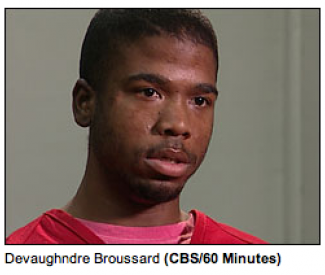
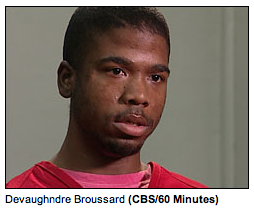
OAKLAND — Devaughndre Broussard, the admitted killer of Oakland Post Editor Chauncey Bailey, struggled through testimony Thursday morning against former Your Black Muslim Bakery leader Yusuf Bey IV, the man he says ordered him to commit two murders.

Broussard entered Judge Thomas Reardon’s courtroom at 11:39 a.m. wearing shackles and a red jail jumpsuit. He passed in front of the defense table where Bey IV and co-defendant Antoine Mackey sat staring at him intently; he didn’t meet their eyes. Bey IV wore a tan suit and a bow tie — the symbol of the Black Muslim movement that Broussard said he himself joined in 2006.

Within minutes, Broussard was asking for questions to be repeated, and seemed to find it difficult to formulate answers. Bey IV court-appointed lawyer, Gene Peretti, made numerous objections in the first few minutes.

Reardon frequently jumped in, trying to clarify and simplify Krum’s questions about how Broussard came to join the bakery.

Broussard said Richard Lewis, a close family friend who was in a San Francisco jail with him, had also spent time with Bey IV when Bey IV was awaiting bail in a vehicular assault case. Broussard was due to be discharged the next day and Lewis asked him his plans.

“Probably going back and hanging out in the streets,” Broussard said he replied. Lewis, though, offered Broussard an alternative: joining the ranks of so-called soldiers working for Bey IV at his bakery in Oakland.

Lewis said Bey IV needed “people he could depend on,” Broussard told a jury of seven women and five men.

When Krum next asked him “what agenda (Bey IV) had,” Broussard said, “I am not understanding.”

The attorney who negotiated Broussard’s plea bargain two years ago, LeRue Grim, watched from the front row.

“That’s just him,” Grim said outside of court about Broussard’s labored answers. “He’s a little bit meticulous.”

Grim said Broussard told his family to stay away from court on Thursday because he feared for their safety.

“He thought they might be in danger,” Grim said of Broussard’s stepfather and half sister, who had wanted to attend.

Speaking in the courthouse lobby during Thursday’s lunch recess, Peretti said he had no idea why Broussard would believe his family would have anything to fear.

“I don’t think he’s going to be found credible,” he said, noting Broussard has to deliver compelling testimony to keep up his part of a plea deal that will keep him from a life sentence. “There is no prosecution case without Broussard … and he’s told many, many versions of what happened.”

“He is a liar, that’s my opinion — he is an admitted liar,” Peretti added.

The lawyer said his client, Bey IV, is “more than disappointed, he’s outraged” at Broussard’s plea deal and testimony. He also said Bey IV “never wanted to be CEO of the bakery.” He reluctantly took the job following his elder brother’s murder and lacked the business experience and maturity to make it work, Peretti said.

As for the bow tie Bey IV wore Thursday, Peretti said, “There’s no significance to that — it was the one tie that matched his suit.”

Earlier Thursday morning, jurors flinched — and some looked away — when shown an autopsy photo of Bailey’s face, blasted away by pellets from a 12-gauge shotgun.

Krum displayed the photo on a large screen as the forensic pathologist who performed Bailey’s autopsy, Dr. Thomas Rogers, described the wound. One juror, a bald man in glasses, grimaced noticeably.

The photo showed what Rogers described as an eight-inch wound of his “face bones, brain, skull, teeth.” Bey IV and Mackey glanced at it and then looked away.

Krum asked Rogers the condition of Bailey’s left eye. “It was basically destroyed,” Rogers replied.

Lawyers for Bey IV and Mackey asked Rogers no questions.


A creative way out of the state budget mess

36

With no Republicans willing at this point to go along with the governor’s June election plans, Jerry Brown has quite the problem on his hands. There never really was a Plan B. And now he’s got to find one, fast. He’s already made the cuts, and they’re awful. He’s not going to get his own party to go along with much more. But it’s legally dubious whether he can put taxes on a special election ballot without any Republican support, and he clearly doesn’t want to.


So what’s the best option? Well, the deep thinkers over at CalBuzz have a brilliant scheme. The idea: Pass an all-cuts budget, a devastating, ugly, puke-inducing thing — then


gather signatures to place that on the November ballot, with a provision that if the measure fails the cuts will not occur because the 2009 taxes and fees will be re-instated for five years. As a practical matter, cuts can be delayed to occur after November. And costs can be shifted to local government for local responsibilities whether the measure wins or loses.


Then let Grover Norquist, Jon Fleischman, radio heads John and Ken and the rest of their not-our-problem cadre be forced to argue for the budget ballot measure while Democrats and labor argue against it.


It’s much easier to get a vote against something in California — particularly when that something contains provisions that nobody wants. A No vote means Yes on taxes and No on cuts.


Man, why aren’t these guys running for office?


Housing: Density and affordability

44

The way the Chron describes it, the debate over the city’s updated Housing Element is all about density. And that’s part of the issue, no doubt: For years, people on the west side of town have resisted any increased density, meaning all the new housing has to get crammed into the eastern neighborhoods. And increased density, on some level, is going to have to be part of the future in San Francisco.

But there’s another, more important, piece of the puzzle. The Housing Element draft acknowledges that, based on community needs, more than 60 percent of all new housing in San Francisco should be affordable — that is, below market rate. And the draft admits that’s not about to happen:

However, even with these strategies the City will not likely see the development 31,000 new units, particularly its affordability goals of creating over 12,000 units affordable to low and very low income levels projected by the RHNA.

In other words: Existing city policy is inadequate to meet the needs that the city formally agrees must drive public policy.

The Planning Department won’t come right out and say it, but the message is pretty clear: Our current planning and housing policy — driven primarily by the needs of the private sector — is not going to come remotely close to solving the housing crisis. Either San Francisco has to come up with a huge amount of public money — billions of dollars — to underwrite new affordable housing construction or there has to be a much greater requirement that private developers chip in.

Building market-rate condos in San Francisco is a lucrative business. It does nothing to meet the city’s needs. There’s a disconnect here, and until we resolve it, the affordable housing crisis will continue.