
Today, Johnny A. and Johnny V. talk about why privatization and outsourcing don’t work for local government. Tune in and check it out after the jump.
OutsourcingBlows by endorsements2010- No categories
Politics Blog
AT&T wants 726 new boxes on the street

I’m all for cable competition, and I am no fan of Comcast. Maybe if AT&T gets into the cable TV business, Comcast will have to try a little harder to make its gear work and provide better service.
But I’m a little dubious about this deal to let AT&T put 726 new metal boxes on the street. And I have to say: Concluding, as the City Planning Department did, that there’s no need for an environmental impact report, is a bit of a stretch.
Comcast, for all its problems, has most of its equipment undergound. That’s a better option. I’m not quite as offended by the sight of boxes on the street as San Francisco Beautiful is (hey — why not ask local artists to paint cool stuff on them? Turn them into street art instead of ugly metal contraptions covered with graffiti) but there’s a larger point here: AT&T is about to get a huge amount of public sidewalk space — essentially free.
Do the math: 726 boxes, each one taking up eight square feet of sidewalk space. That’s 5,808 square feet of prime real estate in one of the most dense, congested cities in the country. You know what it would cost to lease that space in a storefront downtown? Well, you can look here and here and you get an idea — that kind of space is worth at least $15,000 a month, maybe a lot more.
And AT&T says it has another 1,200 existing boxes on the street.
Why are we giving this public space away to a giant corporation? I’m getting sick of seeing all this money left on the table — Twitter gets a tax break, PG&E has a crazy-low franchise fee, the garbage company has no franchise fee at all … it’s like we’ve become Corporate Giveaway City.
The issue coming before the supervisors at 4 p.m. April 26th is whether the city should force AT&T to do an environmental impact report. AT&T hates that idea — because if the company has to do an EIR here, it will have to do an EIR in every other city in California before it installs above-ground cable boxes. And it seems like SF Beautiful has a good argument in favor of the EIR.
But the supervisors should go further: Why not open up the AT&T franchise agreement and charge more for the new boxes? Then at least the city will get some cash out of this.
UPDATE: Eric Potasner, who is working for AT&T on this measure, just called to tell me that AT&T will pay 5 percent of its video revenue to the city. No boxes, no video, no revenue. Of course, if I switch from Comcast (which already pays 5 percent) to AT&T, which I suspect will be the vast majority of the AT&T business — and I might switch, since Comcast has been so bad to me — the city gets the same money. No new revenue. (If I switch from Comcast to satellite, which is actually a different kind of service, the city gets nothing at all. So you could argue that the boxes bring the city some money. But I wonder how much — AT&T, like Comcast, will offer bundled web, voice and video; satellite TV doesn’t do that. Mostly, they’ll be stealing from each other.)
Still: They are putting up large pieces of metal on city sidewalks. I hope it leads to more revenue, but can’t we at least charge them rent — some minium amount each month — to be sure the city gets something out of this?
Follow the pension reform money to Wisconsin

For those tracking pension reform, here’s a handy way to follow the money in Wisconsin, which arguably birthed a heated nationwide discussion about public workers’ collective bargaining rights: MapLight.org, a nonpartisan organization that tracks the influence of money in politics, has launched a new website that provides what it calls “transparency tools that show a simple dashboard view of money’s role in the Wisconsin State Legislature.”
“The goal of our Wisconsin site is to provide quick and easy access to information about campaign contributions, the interests of the groups that make them, and how the lawmakers that receive them vote, drawing back the curtain on how money influences legislation around the issues that people care most about,” said Daniel Newman, MapLight.org’s executive director.
This isn’t the first time that MapLight has tracked the money in key issues, but it is the first occasion that its engineers have combined three crucial databases—campaign contributions, legislative votes, and interest group support and opposition—to reveal the intersection between money and votes in the Wisconsin State Legislature.
“By centralizing data on contributions and votes, and combining that information with research on interest group bill support and opposition, MapLight.org will provide Wisconsin’s watchdogs with insights critical to the functioning of our democracy, in a fraction of the time it would take to otherwise assemble these facts from disparate sources,” said Andy Hall, executive director of the Wisconsin Center for Investigative Journalism.
Under an agreement with MapLight.org, the Wisconsin Center For Investigative Journalism will investigate money and politics issues and serve as a resource to news organizations in Wisconsin, supported with a grant from the Open Society Institute, which philanthropist George Soros founded in 1984.
MapLight.org’s data partner for campaign contributions is the Wisconsin Democracy Campaign. Mike McCabe, WDC’s executive director, said “This collaboration creates new opportunities for investigative journalism and citizen exploration of the impact of special interest money in Wisconsin politics”
One of the new website’s legislative data tools shows detailed records of bills, votes, legislators and interest group support and opposition. And the first example it provides is an analysis of, you guessed it, JR1AB 11—“an act relating to state finances, collective bargaining for public employees, compensation and fringe benefits of public employees, the state civil service system, the medical assistance program, etc.
:
And so far, the analysis reveals that opponents of the bill, which include major unions, have spent $280,000, or 6.7 times as much as supporters, who spent $42,000 and include residential construction, general business advocates, Conservative/Republican groups and Chambers of Commerce.
PG&E, AT&T, Recology and Malia Cohen

I got a flyer the other day announcing a District 10 merchants meeting featuring Sup. Malia Cohen — no big deal, district supervisors do this stuff all the time, and they should. The invite (PDF) reads:
The Office of Supervisor Malia Cohen, the San Francisco Chamber of Commerce and local business and merchant associations are pleased to present the District 10 Neighborhood Business Summit. The event will bring merchants together with their Supervisor and other city officials to discuss local business concerns.
Okay, fine. But down at the bottom are the logos of the sponsors: AT&T, Recology and PG&E.
AT&T is trying to get city permission to build hundreds of cable boxes on city sidewalks and is contesting a ban on the delivery of phones books. Recology is in the middle of a huge, high-stakes fight over its $275 million no-bid garbage contract. PG&E is fighting the city over community choice aggregation.
In other words, all three companies have major deals, involving millions of dollars, coming up at the Board of Supervisors. Cohen will be voting in the next few weeks — that is, pretty much right now — on the garbage and cable boxes and phone books. Isn’t it a little unseemly to have these three corporations sponsoring her event?
I called to ask her and she agreed the timing was “unfortunate.” But since it’s a Chamber of Commerce event, she said, it’s not clear what she could do about it.
Um, supervisor: You’re the boss here. Meeting doesn’t happen without you. The Chamber folks should have told you that three companies that need your vote would be sponsoring the event, and if they didn’t, you ought to have a word with them. Either way, those sponsors have to go.
Covering the royal wedding

The New York Times has a revealing article about how US networks have been adding Britons to their coverage of the royal wedding this coming weekend.
“As long as you have an English accent, you’ll work,” joked Rob Silverstein, executive producer of “Access Hollywood,” which is moving to London for a week.
Actually, if Silverstein really wanted to impress, he should have said, “As long as one has an English accent.”
But then who in the US gives a flying fig about the royal wedding?
Apparently, a disturbing number of people who otherwise like to brag about how the US gave the Brits a royal boot up the ass around the Boston Tea Party.
Now, I get the fascination in the U.K. itself, where the royal family is the Brits’ version of Hollywood. Just without the sunny locations and with the good looks supplied by aristocratic outsiders, like Diana, or non-royals, like Kate, who the royals, I kid you not, call “commoners.”
But as a commoner who left rain-soaked Britain shortly before Charles and Diana tied their ill-fated knot, I’m relieved to be escaping royal wedding fever for the second time in my life.
And while I do so hope the latest royal pair have a happier and more honest relationship than Charles and Di, I don’t plan to spend time cooing over the details of their carriages and tiaras. In fact, the latest episode in the never-ending royal saga reminds me that Queen Elizabeth only agreed to pay income taxes, give up the royal yacht, and limit the number of royals receiving government money in my own lifetime…
Besides, isn’t covering politics in California, where folks seem to like to elect celebrities as their governors and mayors, enough royal-watching for anyone?
Photo: 1,000 bottles of Royal Virility beer — containing herbal viagra, chocolate, goat weed and “a healthy dose of sarcasm” — is now available at www.brewdog.com
Busy week for immigration reform advocates

On Tuesday, April 26, the California Assembly’s Public Safety Committee holds a hearing on AB 1081, Assemblymember Tom Ammiano’s Transparency and Responsibility Using State Tools (TRUST) Act. The TRUST Act seeks to allow local governments to opt out of US Immigration and Customs Enforcement (ICE’s) controversial “Secure Communities” program and to set standards for jurisdictions that chose to participate in S-Comm.
Also on Tuesday, Congressmember Luis Gutierrez kicks off his “Change Takes Courage” immigrant rights tour in seven California cities. Gutierrez lands in San Francisco Wednesday, April 27, and the Bay Area immigrant community and LGBT leaders will host him on the steps of City Hall, as Gutierrez asks President Obama to stop the record number of deportations of immigrant families and students that have already occurred under the Obama administration.
Joining Ammiano in Sacramento on Tuesday as co-sponsors of the TRUST Act are Assemblymembers Gil Cedillo (D-LA) and Bill Monning (D- Carmel) and Sen. Leland Yee (D-SF). Endorsers include 80 organizations, local governments and elected officials, including the Santa Clara and Santa Cruz County Boards, San Francisco Sheriff Michael Hennessey and retired Sacramento Police Chief Arturo Venegas, and civil rights and faith groups, including the California Partnership to End Domestic Violence, the California Labor Federation, the San Bernardino Catholic Diocese and Equality California.
SF Sheriff Michael Hennessey blew the whistle on S-Comm last May, but was unable to stop the feds from activating the program in San Francisco last June. And the most recent batch of S-Comm statistics show that San Francisco, once famed as a sanctuary city, now ranks in the top 38 counties nationwide that deport “non-criminal aliens,” which is ICE-speak for immigrants whose primary misstep is that they are in the country without the requisite paperwork.
Ammiano’s Trust Act hearing comes just days after Congressmember Zoe Lofgren (D- San Jose) called for an investigation into the conduct of ICE officials around advising local municipalities whether they are required to participate in ICE’s S-Comm program.
“You can’t have a government department essentially lying to local government and to members of Congress. This is not OK,” Lofgren said April 22, following the disclosure of hundreds of ICE documents that allegedly show that the agency has been giving intentionally contradictory and misleading information about S-Comm to local officials.
“From then-Attorney General Brown on down, it’s painfully clear ICE deceived Californians about S-Comm,” said Angela Chan, a staff attorney with the Asian Law Caucus. “That’s unacceptable behavior for a government agency in a democracy.”
Advocates hope that Ammiano’s TRUST Act will restore balance and accountability to the nation’s otherwise broken immigration system. They charge that S-Comm’s misleading focus, over-broad reach and lack of transparency have eroded trust between police and immigrant communities, making victims and witnesses to crimes reluctant to come forward.
The TRUST Act would make S-Comm an “opt-in” program so local governments can tailor their participation based on local needs.
The bill would also set safeguards for municipalities that do elect to participate in S-Comm to guard against racial profiling and would ensure that children and domestic violence survivors are not swept up by S-Comm.
The TRUST act also upholds the right to a day in court by only reporting for deportation individuals convicted – not merely accused – of crimes.
Tuesday’s hearing will be followed by Congressman Luis Gutierrez’s Wednesday appearance in San Francisco, which the African Advocacy Network, Asian Law Caucus, Central American Resource Center, Chinese for Affirmative Action, People Organized to Demand Environmental and Economic Rights, Out4Immigration, San Francisco Interfaith Coalition on Immigration, and Dolores Street Community Services sponsored.
Sups David Campos, John Avalos, and David Chiu will join Gutierrez and their message to President Obama is laid out in the following press statement:
“We need administrative relief to uphold the values of opportunity, justice, and human rights for all to move our country forward. With the stroke of a pen, President Obama could put a halt to the rapidly increasing deportations that are taking place. We need to stop deporting parents and ripping apart all families, including same-sex partners. We need to stop deporting students who would have been eligible for the DREAM ACT. Last year, the U.S. deported an estimated 400,000 immigrants, the highest number of deportations per year in the history of our nation. We must allow our counties to opt out of “S-Comm” (Secure Communities), which is making our communities less secure, and we support Congressman Gutierrez in these courageous requests. Immigrants are part of the fabric of our communities, and we need to fix our immigration system so everyone who lives here can continue to live as a full member of society without constant fear of safety, security, and livelihood being jeopardized at any moment.”
SFBG Radio: The weird cult of Ayn Rand
Today Johnny V. and Johnny A. talk about recall elections in Wisconsin, revolts against tax cuts for the rich — and why it is that Republican nuts are so enamoured of Ayn Rand. Listen after the jump.
PG&E CEO Peter Darbee stepping down

Word’s out that Peter Darbee, the Chief Executive Officer of Pacific Gas & Electric Corporation, is stepping down. Darbee’s departure comes amid a federal investigation into the deadly San Bruno pipeline explosion, which resulted in tragic loss of life, devastated an entire neighborhood, and served to highlight safety issues with the utility’s vast network of underground gas transmission pipelines.
Longtime energy industry observer John Geesman, who blogged about PG&E’s bid to eliminate community choice aggregation last year with the statewide ballot initiative Proposition 16, offered some rather interesting insights on Darbee in a series of posts last year. In one titled, “How Much of the Goldman Sach’s Kool-Aid did PG&E’s Peter Darbee Drink?”, he reflected on Darbee’s past experience on Wall Street: “Peter Darbee has been CEO of PG&E Corporation since 2005. He was an investment banker at Goldman Sachs from 1989 to 1994.”
Darbee was one highly paid CEO. Geesman pointed out that he “massaged PG&E’s internal system to produce a $10.6 million gusher for himself in 2009 — that’s 74 percent above the median for large utility CEOs measured in the Wall Street Journal’s annual compensation survey.”
Prop. 16 went down in flames, of course, after a majority of voters from PG&E’s service territory rejected it (Darbee had this to say for himself in the aftermath). Yet that entire debacle was soon forgotten once the tragic Sept. 9, 2010 pipeline explosion occurred.
Michael Peevey, president of the California Public Utilities Commission, issued this statement soon after Darbee’s resignation announcement: “The CPUC today learned of the resignation of Mr. Darbee from PG&E Corp. While obviously the company under his leadership has been responsible for several poor and consequential decisions, Mr. Darbee’s commitment to PG&E and its constituents is unquestioned. As PG&E’s Board of Directors recruits a successor, the CPUC urges the company to return to its roots by hiring the most technically competent person; someone with a long-standing history of performance in the energy industry.”
The Chronicle’s reporting that Darbee’s retirement package will total $34.7 million.
When former PG&E Senior Vice President Nancy McFadden resigned at the end of last year, she was awarded a severance payment of $1,040,400, plus an undisclosed payout in stocks. McFadden was the architect behind Prop. 16, and she wasn’t unemployed for long. In January, she was appointed to serve as Gov. Jerry Brown’s Executive Secretary for Legislation, Appointments and Policy in the Office of the Governor. That job pays $175,000 per year.
This post has been updated from an earlier version.
Let cities raise taxes
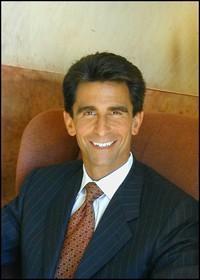
There’s a move in the California legislature to allow local government much broader authority to raise taxes — and the GOP types have their panties in a major bunch.
Dan Morain at the Sacramento Bee says it’s all a tactical move: The Republicans won’t allow any tax hikes at the state level, but the Democrats, by simple majority vote, can authorize cities and counties to do all kinds of things that the no-tax crowd hates. Maybe, Morain suggests, this is just a way to bring the recalcitrant Reps back to the budget table. But I don’t know about that: Senate President Darrel Steinberg may be playing games, but his legislative partner, Budget Chair Mark Leno, has been pushing for years to allow cities to raise their own vehicle license fees.
Leno’s brought that bill back this year, and it’s going to commitee next week. And I have to say, tactical or not, the Steinberg bill (PDF) is one of the best things I’ve seen out of Sacramento in years. It would allow local government agencies to impose an income tax, a car tax, an oil severance tax, and a series of excise taxes. It could make the budget deficit in San Francisco vanish.
I agree with Brian at Calitics: There are problems here.
What we’ll end up with is Bay Area counties with more stable revenue streams, while the Central Valley faces ever deepening cuts. The inequality would be both troubling, and possibly violate some laws.
And if the state Legislature weren’t paralyzed by a ridiculous two-thrids rule and a handful of die-hard no-tax Republicans, we might not need to go in this direction. But even so, it’s fair to ask: Why can’t the San Francisco voters decide they’d rather pay higher taxes than see the schools collapse?
It’s the same reason I’ve argued in favor of splitting California into three states. Those of us who live in the Bay Area have a very different vision of government than those who live in the no-tax districts. Why should they be able to hold us hostage?
Yes, there will be inequities. But there are only a few parts of the state that so utterly lack economic activity and wealth that there simply is nothing to tax (and the state would have to help them out). Much of Ag Land (and much of no-tax burbland) has plenty of wealthy people and businesses. The poverty is as much a result of inequality as it is a bum economy. In other words: those places can raise taxes, too.
And maybe over time the people in those crumbling tax-free towns will look over at San Francisco, with good schools, healthy, well-educated kids, clean, well-maintained streets, professional fire and police services and the like and say: Why can’t we have that?
And the answer will be: You can.
1964 all over again?
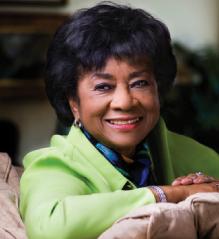
Outstanding piece on Calbuzz about the new Belva Davis book, “Never in My Wildest Dreams: A Black Woman’s Life in Journalism.” The Calbuzzers recount the vicious racist attacks Davis endured during the 1964 Republican convention in San Francisco, when the Goldwater forces were in control:
As we began our descent down the ramps of the Cow Palace, a self-appointed posse dangled over the railings, taunting. “Niggers!” “Get out of here, boy!” “You too, nigger bitch!” “Go on, get out!” “I’m gonna kill your ass!”
I stared straight ahead, putting one foot in front of the other like a soldier who would not be deterred from a mission. The throng began tossing garbage at us: wadded up convention programs, mustard-soaked hot dogs, half-eaten Snickers bars. My goal was to appear deceptively serene, mastering the mask of dispassion I had perfected since childhood to steel myself against any insults the outside world hurled my way.
Then a glass soda bottle whizzed within inches of my skull. I heard it whack against the concrete and shatter. I didn’t look back, but I glanced sideways at Louis and felt my lower lip began to quiver. He was determined we would give our tormentors no satisfaction.
“If you start to cry,” he muttered, “I’ll break your leg.”
Davis, of course, survived and when on to a storied career locally. The scary thing: There are a lot of parallels between the 1964 Goldwaterites and the tea partiers of today. Calbuzz:
Nearly 50 years later [the Goldwater platform] might serve as a manifesto for today’s Tea Party Republicans.
Attacking Democrats as “Federal extremists,” who have “enslaved” and “seek to master” ordinary Americans, the platform vowed , among other things, that Republicans would make deficit reduction their highest economic priority, oppose the “compulsory Democratic scheme” of Medicare and roll back actions of the Kennedy-Johnson Administration that “violently thrust Federal power into the free market.”
And race is still very much a part of what’s going on:
As evidence of the role that race still plays in conservative politics, Davis cited the Tea Party’s embrace of “birthers,” the slurs and spittle hurled by activists at Representatives and civil rights leaders John Lewis and James Clyburn at health care bill protests, and the recent email depicting Obama as a chimpanzee that was sent out by Tea Partier and Orange County Republican Central Committee member Marilyn Davenport.
Back to the future. And it isn’t pretty.
Get baked with Obama

Whoa, dude. Back up. What?
Well, sort of. We all have heard about the $35,800 dinner that President Obama will be feasting upon tonight in Nob Hill, so needless to say, the man is in town. And the Green Door, one of San Francisco’s premier marijuana dispensaries, has tipped their patients off to some very top secret information – The president’s motorcade, according to the Green Door’s website, is expected to serendipitously drive past the shop, located at 843 Howard, at approximately 4:20 p.m., on this, the unofficial stoner holiday we affectionately call 4/20.
Just about every marijuana dispensary in the city is having some sort of patient appreciation party and tokefest, and the Green Door is no exception. All day they will be offering product deals and giveaways with raffle prizes, Djs, and munchies, so if you’re lucky enough have made it inside the shop before the police temporarily close off Howard – sometime between 3 and 4 p.m., the Green door says, though we were unable to verify any specifics with the SFPD – you will be able to “inhale to the chief.”
Happy 4/20!
New development planned for site of demolished historic cottage

About two years ago, the Guardian reported on the demolition of one of San Francisco’s oldest buildings — the Little House, a cottage on Russian Hill that stood for 148 years at 1268 Lombard Street.
The demolition drew the ire of the Russian Hill Neighbors Association and local historic preservationists, because the historic property came down in the blink of an eye after the owners were granted an emergency demolition permit from the Department of Building Inspection. At the time, surrounding neighbors raised concerns that the Little House had been purposefully neglected in order to get it to a demolish-able condition, so that the lot could be cleared for development without undergoing the standard environmental review process.

Co-owners of the lot (pictured in the box) where the Little House once stood now want to construct a 4-unit building.
The agenda for today’s Board of Supervisors meeting includes a public hearing on a conditional use permit for a new building at 1268 Lombard, deemed to be an infill project because it’ll be constructed on what’s now an empty lot. Co-owners James Nunenbacher and Michael Cassidy are requesting city approval to construct a four-unit, 40-foot high residential project there.
Expect fireworks, as residents such as F. Joseph Butler, an architect with the Little House Committee, haven’t forgotten the loss of the cottage, which was one of the only structures on Russian Hill that emerged unscathed after the 1906 earthquake and ensuing fires.
“I think that the project sponsors … should not be rewarded for tearing down one of our most historic properties,” a woman from the preservation community noted at a Feb. 17 Planning Commission meeting about the conditional use permit.
At today’s meeting, supervisors could vote either to approve or disapprove the conditional-use permit.
***UPDATE*** No fireworks after all, the item was continued.
The Treasure Island nightmare
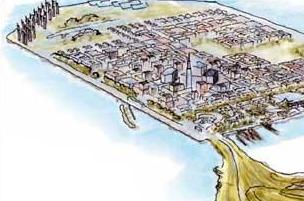
There are times when people like me, who think development should be driven by public needs, not private profit, are in something of a bind. I don’t like the Lennar plan for Bayview Hunters Point — but I agree that doing nothing isn’t a very good alternative. Sometimes, the “no-project” alternative isn’t an alternative at all — which gives the developers a huge hand up in negotiations with the city. Gee, you want affordable housing? We can give you 15 percent — or we can walk away and you’ll get nothing.
But when it comes to Treasure Island, I think we’re in a different situation. The proposed development is so out of whack, so looney, that it makes no sense to me — and the alternative of doing nothing, at least for now, isn’t so bad at all.
The plan calls for 19,000 new residents on the 403-acre artificial island in the Bay. At most, 25 percent of the units would be below-market. Which means some 13,700 rich people, virtually all of them with jobs in San Francisco, the Peninsula or the East Bay, would be plunked into a place with no viable transportation alternatives.
I wonder if any of these planners have ever tried to leave TI by car; it’s a nightmare. And there’s no way to fix it: Even if they build a new acceleration ramp (the current stop-and-go into 60-mile-an-hour traffic is a death trap), the Bay Bridge is already at full capacity during a very long rush hour in the morning and evening. And does anybody really think those 13,700 people will all take the ferry to work every day?
Impossible: There’s no way to provide enough ferry service for that population at anything resemble the cost the developers are willing to pay. How about all the Google and Yahoo and Genentech employees (and that’s a big part of the population buying new high-end condos in San Francisco)? You think they’re all going to take a ferry to downtown SF then hop on a bus or train then take another bus to the office? Not these folks. A lot of them will want to drive.
And the bridge, which is already backed up, will back up further, driving more traffic onto the streets of SOMA and creating a slowdown all the way back to Berkeley.
Meanwhile, the island is sinking, and water levels are rising. Forget the fancy engineering plans to sink stone columns deep into the clay under the Bay; what happens when the water rises? Are we going to surround the entire place with seawalls?
And here’s the bottom line: The current situation isn’t all that awful. There’s a small amount of housing out there, some of it affordable. There’s lots of open space. A little effort and the playing fields and parkland could be upgraded and TI could, for the intermediate term, be a day-use area for the city. Not a terrible alternative.
At some point, either the island’s going to sink back into the Bay or it’s going to have to be completely redeveloped. But right now, with no public money available, we’re at the whims of private developers. And what they’re offering doesn’t even remotely meed the city’s needs — and will create a catastrophic transportation problem.
So the supervisors are in a great position to negotiate. We want 50 percent affordable housing, we want the developer to pay for substantially increased bus and ferry service (or maybe we want to add a rail line to the Bay Bridge). And if that’s not something the developers want to do, fine: we’ll wait. Nothing wrong with that.
SFBG Radio: US bond ratings and federalism

What does it mean that the bond rating agencies are considering downgrading U.S. government debt? Is another financial crisis on the way — and is there a progressive vision of returning some federal powers to the states? Johnny Angel and Johnny Venom discuss after the break.
sfbgradio4192011 by endorsements2010Extra! Nevius finds a bad landlord!

Our old buddy C.W. Nevius actually found a landlord he doesn’t like — a guy named Peter Iskander who is trying to toss some seniors and disabled people out on the streets. In a classic bleeding-heart column April 17, he lamented the pending evictions, which would pave the way for the landlord to turn some rental units into tenancies in common:
Imagine the sight of Carlo Tarrone, who is in his 70s and uses a walker, and Sandy Bishop, who is 70 and has lung cancer, forced out of their homes.
Avalos gets into mayor’s race
Sup. John Avalos has confirmed that he will run for mayor and plans to file campaign papers this afternoon at City Hall. As the first truly progressive candidate to get into the race, the announcement is sure to be greeted with great excitement by San Francisco’s leftists, who have been bitterly frustrated by the political realignment that has taken place at City Hall this year, with one-time progressive Sups. David Chiu and Jane Kim joining the moderate faction on the highest profile votes this session.
Over the weekend, when we caught up with Avalos at Mercury Lounge for a birthday celebration for his board aide Raquel Redondiez, he said that he was just days or hours from making a decision that we first reported on last week. Over the weekend, he and his wife, Karen Zapata, decided to launch the campaign to give the progressive movement a political vehicle.
In that conversation, Avalos (with Kim standing next to him talking to Zapata) had notably sharpened his analysis of or and rhetoric toward Chiu, saying he has betrayed the progressive movement and begun practicing a divisive brand of politics, starting with his decision in January to stack the board committees in favor of moderates, such as the Rules Committee, where fiscally conservative Sups. Sean Elsbernd and Mark Farrell have been torpedoing progressive appointees and initiatives.
Kim chairs that committee and remains close to Avalos, who endorsed her bid for supervisor and has encouraged the Guardian not to be too hard on her as she pushed the Twitter/mid-Market tax break and took other positions that have angered her progressive base. Kim is also close to Chiu, but she has so far withheld her endorsement in the mayor’s race even as Sup. Eric Mar, who has often voted with the progressives, gave Chiu his early endorsement.
While some individuals that have been associated with the progressive movement are likely to support Chiu, and others will be supporting Leland Yee (who has a history of endorsing progressive and labor positions and candidates), the decision by Avalos to get into this race and sound the progressive position will make him an instant favorite among progressives.
UPDATE AT 1:20 PM: Avalos told the Guardian, “I’m running because I want to use my leadership to bring out the best in San Francisco. I want to put together an administration that will fight for working people, that will deal with the widening disparities in wealth in this city. I want to bring integrity back to City Hall and I want to make sure people can stand for something here, take positions on issues, and use their leadership to find solutions to the problems we face.”
SFBG Radio: Why is Donald Trump leading the polls?

what does it mean when Donald Trump leads all of the Republican candidates in the newest polls? Johnny and Tim discuss after the jump.
Unions didn’t cause the financial crisis

It’s been said before and will be said again, but still worth noting: The bipartisan U.S. Senate report on the financial meltdown concludes that, as Calitics notes:
Our financial crisis and resulting recession occurred as a result of risky, unethical and likely criminal behavior by reckless Wall Street institutions and the regulators that failed to stop them.
In other words, the worst of the recession — and the plummeting economy, and sharp loss of revenue to states, cities and counties, which precipitated several rounds of bloody budget cuts — wasn’t caused by labor contracts, or pensions, or local government waste and bloat.
I’m not saying that pension reform shouldn’t be part of the solution, but let’s all keep this in mind. I don’t see anywhere near the same push for financial-sector reform and givebacks as there is for union givebacks. And they ought to be at least in the same discussion.
Talking to Twitter
A great irony of Twitter, Inc. struck me today as I tried unsuccessfully to reach the company for comment on a story. While millions of people can talk to each other using Twitter’s platform, it is exceedingly difficult to talk to Twitter.
The story I’m working on has nothing to do with the mid-Market payroll tax exclusion zone — but it does concern Twitter. The company does not publish any phone numbers on its website. So, using an online media inquiry form, I sent Twitter a message seeking comment. Here’s the automatically generated response I received almost immediately, from something called “Zendesk Admin 01”:
Thanks for your inquiry. We are a small communications team based in San Francisco within a growing global company. Due to the high volume of requests we receive, unfortunately, we are not able to respond to many inquiries. When our team grows, we’ll be able to respond in a more timely manner. For now, we will capture your contact information so that we can be in touch in the future.
In the meantime, follow @Twitter for news, interesting user stories, and updated stats about the company. Note that we currently only release global metrics and do not break out usage data on a country-by-country basis.
Thanks,
Twitter Comms
So my inquiry wasn’t important enough to warrant a response — but not to worry, they are going to “capture” my contact information. OK.
Undeterred, I set out looking for a phone number. Sometimes, if you type the address of an organization into a search engine, the phone number will pop up. Sure enough, a Google search yielded this: 415-778-6470.
A pre-recorded message thanked me for calling Twitter after several rings. I was then given the option of pressing 1, 2, or 3.
If I was a law enforcement officer and wanted to leave a message, 1.
For communications, 2.
For staffing, 3.
I pressed 2, and a robotic voice informed me that the voice mailbox was full. So I hung up and called back.
I listened to the three choices again. Then I heard this message: “If you know your party’s extension, please dial it now. To hear these choices again, press star.”
I pressed star. “If you know your party’s extension, please dial it now. To hear these choices again, press star.”
A loop! Groan.
I punched in “111” at random to see what would happen, and got another robotic message about the voice mailbox being full.
Guardian City Editor Steve Jones did manage to communicate, via email, with Twitter’s CFO Ali Rowghani when he was writing about the payroll tax-exclusion zone — but one of his email requests was completely ignored, and the only way he knew who to contact in the first place was by sifting through hundreds of pages of documents gathered through a public-records request.
Twitter has in its possession data associated with millions of users. It will benefit from legislation crafted specifically to keep the company headquarters within San Francisco city limits. Yet it seems next to impossible to talk to a representative of this company on the phone.
Why does Twitter have such poor communication skills? Let’s Tweet about it.
American Idol: Bye, Paul

I finally got one right, and so did America.
Well, I almost got it right — I predicted that Paul, Stefano and Lauren would be in the bottom three, and it turned out to be Paul, Stefano and Haley, but whatever — after last week’s fisaco with Pia, I’m just glad that the 53 million votes went in the right direction.
No offense, Paul, but the rest of the group (except maybe Stefano) is in a different class. And you notice that the judges didn’t cry or express any shock; they all knew this was coming.
And it’s true that the guys this time are overall better than the women, but since the voting started, the loser every week has been female.
Nice to see Kelly Clarkson back. Rihanna did that thing with the dancers on the floor and the smoke, which has been done so many times it’s become trite, and her new song isn’t anything special. (Not like “What’s My Name,” which at least has the classic lyrics “The square root of 68 is 8 somethin’, right?”).
Next week: Stefano goes home. If only because Haley and Lauren are getting a pass while the gender balance stays out of whack.
Anti nuclear movement gears up

The ongoing battle to stop Pacific Gas and Electric Co. from renewing its license to operate the Diablo Canyon nuclear plant continued April 14th as part of a nationwide antinuclear campaign. In the wake of the disaster at Japan’s Fukushima nuclear facility, activists around the country are calling on the California Public Utilities Commission and the U.S. Nuclear Regulatory Commission to cease issuing license renewals.
A demonstration of about four dozen lively activists on the steps of the CPUC office across from City Hall followed a public hearing at which more than 30 speakers expressed concern about the presence of nukes in California. “This is basically an introduction event,” Jason Ahmadi, an Oakland resident and member of the April Action Committee, the group that organized the protest, told the Guardian. “We came out today to make the statement to shut down nuclear facilities.”
“The PUC acts as an interface between the industry and residents,” Jan Lundberg, oil analyst and founder of the nonprofit Culture Change, said. “The system is out of control. We are trying to keep the truth about nuclear power out there.” The truth, Lundberg, who spoke in front of the CPUC, includes the irresponsibility of plants creating radioactive waste that will be toxic for thousands of years — and the risk factors associated with generating nuclear power and maintaining nuclear facilities.
“I do not approve of nuclear power,” he said. “It’s my planet too. There is a vast overabundance of energy in California. We need to conserve. We need to share.”
Activists also presented arguments in favor of phasing out nuclear power in California at the Senate Energy Committee in Sacramento today.
On another anti-nuclear front, close to 45 organizations filed a petition challenging the way the NRC conducts business. NRC officials are required to respond to the petition, according to Jane Swanson, spokesperson for the San Luis Obispo-based Mothers For Peace spokesperson. The petition calls for the suspension of six existing reactor license renewal decisions, including Diablo Canyon as well as permit decisions for 21 proposed nuclear reactor projects in 15 states, according to a Physicians for Social Responsibility news release.
Swanson told us she thinks it’s possible that the NRC will suspend nuclear licenses. “I don’t think this many groups would be working so hard these last few days without a strong possibility of it happening,” Swanson said
“There is precedent. Lessons have been learned,” she said. The historical precedent Swanson mentioned was a review of all U.S. nuclear facilities after the Three Mile Island accident in 1979, a review that triggered the NRC to suspend all licensing decisions of nukes at that time.
Currently, Mothers for Peace is suing the NRC and PG&E to require seismic studies of earthquake faults around the plant that have only been recently discovered before PG&E’s license is renewed. PG&E requested in a letter to the NRC on April 10 that the commission delay the final processing of the application to renew its license, which would keep DCPP operating until 2045, until 3-D seismic studies— studies the CPUC approved funding for in August of last year— were completed. In response to the company’s attempt to assuage the public’s concern over Diablo Canyon’s long-term safety Swanson said, “PG&E is not really interested in working with anyone, they only care about profits.”
Mothers for Peace will hold a rally in opposition of license renewal on April 16, in Avila Beach adjacent to the DCPP in San Luis Obispo.
Mayor derails hearing on nightclub crackdown
Will entering a large nightclub in San Francisco be akin to a TSA pat down? We won’t know for a while, as the proposal for heightened security measures by San Francisco Police has caught the interest of Mayor Ed Lee and further discussion has been stalled pending his analysis.
A hearing last night (Tues/12) at the Entertainment Commission proved to be a disappointment for the dozens of people who attended in hopes of getting closure on the hotly contested proposal, which has drawn criticism for its infringement on freedom and privacy and burdensome cost to club owners, as well as being the latest battle in San Francisco’s War on Fun.
“We need to protect our events,” said Liam Shy of the organization Save the Rave, a coalition of people dedicated to keeping electronic dance parties alive. “They are in a state of crisis right now, and this would make it much worse.”
Shy and fellow Save the Rave member Matt Kaftor saw the mayor’s interest in the issue was a good indication that community dissent has been heard.
“I would be truly shocked if this passed,” said Kaftor. “If it does, we will be protesting constantly.”
The proposal would require all venues with an occupancy of 100 or more people to record the faces of all patrons and employees and scan their IDs for storage in a database, which would be available to law enforcement on request for at least two weeks. Metal detectors, security cameras and brighter lights in the venues would also be required. The proposal was created in response to recent violence in and around nightclubs, most notably the shooting outside Suede in Fisherman’s Wharf last year that resulted in the closing of the club.
However, critics say this is an overreaction that unfairly targets events as sources of violence.
“What I keep getting from measures like this is that police work is hard,” said SF resident Jonathan Duggan. “But instead of doing their hard work, they are just creating another avenue for privacy invasion that shifts the responsibility to everyone else.”
Although the main target is nightclubs, many events in San Francisco would be affected. Events with strong cultural, ideological, and political components are frequently held at venues that would be affected by these rules.
Eva Galperin of the Electronic Frontier Foundation showed up last night prepared to give the commission a piece of her mind. She shared a letter with us outlining her concerns, which listed the support of many other civil liberty and privacy protection groups such as the Bill of Rights Defense Committee.
“The city of San Francisco has a long history of political activism and cultural diversity which would be profoundly threatened by this proposed rule,” Galperin wrote. “Scanning the IDs of all attendees at an anti-war rally, a gay night club, or a fundraiser for a civil liberties organization would result in a deeply chilling effect on speech…This would transform the politically and culturally tolerant environment for which San Francisco is famous into a police state.”
District 8 Supervisor Scott Weiner, who has been instrumental in the effort to keep events in San Francisco alive, told us that he does not support the proposal. His resolution to protect events passed the Board of Supervisors on March 29 and focuses on collaboration between city agencies and nightclub owners to combat violence rather than simply cracking down on entertainment venues.
“It’s one thing for a large club with a history of problems to receive those kinds of exceptional security measures, but for the majority of clubs, it strikes me as overkill as well as invasion of privacy,” Weiner told us.
Jocelyn Kane, executive director of the Entertainment Commission, could not give any indication as to when another hearing would be or what prompted the mayor’s decision. Neither she nor the mayor’s office could elaborate on whether the mayor has problems with the proposal or is simply responding to the public outrage.
Supes vote on Botanical Garden fees
The Board of Supervisors voted on April 12 to keep in place nonresident fees at the San Francisco Botanical Garden for at least another two years, rejecting a proposal by Sup. John Avalos to do away with the fees and make up for the shortfall with a portion of revenues brought in by a real-estate transfer tax that was approved by voters last year.
Advocating for his position, Avalos stood to tell a story about his last visit to the Botanical Garden. “A couple months ago, I was able to go there with my kids,” he began. “I went in, I was asked for my ID, I showed my ID. I noticed the next person who came in after me looked very agitated when she got to the gate. She said the F-word very loud, and she started to walk away. I approached her, and I said, ‘hey what’s going on?’ And she said, ‘I come here everyday, and I’m being asked for my ID, and I have to go back to my house to get it because I don’t have it with me today.'”
She wasn’t the only person who seemed disgruntled by the gatekeeper that day. “On my way out, I noticed a few tourists coming up,” Avalos continued. “It looked like they were from Germany. They walked up to the gate and then they walked back away from the gate. They clearly did not go in because they did not want to pay the fee.” A couple in their 60s tried to enter, but they did not go in because they didn’t have their IDs proving that they lived in San Francisco, he added.
Bottom line: “The gate and the fee has really diminished what people’s enjoyment of the park has been like for decades,” he said. “Can’t there just be one fee that we don’t raise? Can this be that one fee? I don’t think that’s asking too much.” He also noted that budget analyst’s report showed that the fees did not bring in the revenue that had been anticipated, a point echoed by Sups. Ross Mirkarimi and David Campos.
Yet Avalos’ pitch wasn’t enough to persuade his colleagues. On the question of whether money from the real-estate transfer tax revenues should be used to make up for the nonresident fees so that the Botanical Garden could be free for everyone, supervisors said no on a 7-4 vote, with Sups. Eric Mar, Mirkarimi, Campos, and Avalos voting yes.
The board also voted on whether the nonresident admission fees should be extended beyond June 30, 2011 (a date set when the fee was initially imposed), as proposed by Mayor Ed Lee. Board President David Chiu offered an amendment that the fees would only remain in place for two years, after which point the debate could be rehashed. The amendment was adopted, and the mayor’s proposal passed on a 6-5 vote, with Sups. Jane Kim, Mar, Mirkarimi, Avalos, and Campos voting no.
So, that’s how it went down at the board. If you’re a nonresident, the Botanical Garden still isn’t free.
Since Kim and Avalos both shared their accounts of visiting the Botanical Garden, I thought I’d share my own photos and impressions from a visit on a recent afternoon, when I had several hours to myself to explore Golden Gate Park’s haven of greenery. Admission was free, since I’d planned ahead to bring my ID.
The day was sunny and warm, and I spent a long time photographing the light streaming through a cluster of bamboo and sitting by a pond watching some water bugs skip around on the surface. It was a welcome escape from city life with an element of educational value, since all the plants are labeled with plaques identifying their Latin names, common names, and places of origin.
I noticed two people sitting wordlessly together in the sun. The woman, who seemed to be a caregiver, was seated on a bench, and beside her was an elderly man in a wheelchair with a blanket over his lap. The man seemed to be very frail. Yet he wore a serene expression, and was clearly enjoying the calm and quiet afternoon.
I don’t know if they paid to get in or not. As Board President David Chiu noted at the meeting before voting in favor of keeping the fee in place, “We don’t live in a perfect world.” You can argue about the privatization of parks, or about the need to find all possible sources of revenue in order to fend off cuts to city-funded services. Nevertheless, it’s sad to think of the folks who would be barred from the simple pleasure of sitting in the sun surrounded by natural beauty, because they can’t afford to pay.