• No categories

Pixel Vision

Work the throne: Interviews with the San Francisco Empress 2011 candidates

25

Update: Saybeline has been crowned the new Empress. Congratulations to both the outstanding candidates, and warm wishes for the future.

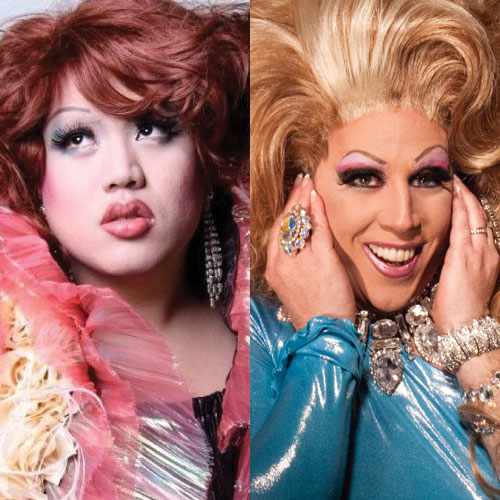
In this week’s Super Ego column in the paper, I give a grateful nod to our esteemed – if little acknowledged — Imperial Court system, an incredible, drag-based 45-year-old institution that raises tens of thousands of dollars for charitable Bay Area causes. (Really, do yourself a historical favor and check out the recently revamped Imperial website.) Below are my full interviews with the candidates, Saybeline and Monistat.

The annual elections for Empress of San Francisco are coming fast upon us (Sat/19, free. Noon–7 p.m. at Castro Muni Station, Castro and Market, and 11 a.m.–6 p.m. at Project Open Hand, 730 Polk, SF.) The winner will devote the next year of her life to raising funds and repping SF — after she graciously endures a daylong coronation ceremony on Sat/26, one of the city’s true mind-blowing spectacles. (The winner will be announced at Coronation.)

I emailed a series of questions to both candidates in order to get a better sense of who they are and why we should vote for them. They each bring a different, welcome perspective to the competition that ultimately helps refresh this cherished local tradition.

SFBG  What is your Empress platform?

MONISTAT My mission to become Empress is to bridge communities together. We all know that Marlena’s [Bar in Hayes Valley] is the seat of power for the Imperial Court of San Francisco, and I being the outsider candidate promise to outreach to the members of this community. As Empress, I will be the Empress of San Francisco, not just the Castro, but the entire city. There are so many great facets of this town, and so much talent that I can use at my disposal to do some really good work! Being part of an amazing club scene in this town, I have been fortunate enough to work with some of the best promoters, DJs, performance artists, and venues, so why not refresh their eyes and give them something a little different.

SAYBELINE First and foremost, I offer an experienced continued commitment to service in our community. Additionally, I offer a continued commitment to honoring the 45-year history and traditions of the Imperial Council of San Francisco and the many Empresses and Emperors that have paved the way for many like myself, making a difference and serving in our community. Most importantly, my motivation comes from wishing to take on an expanded leadership role spearheading much needed grass roots community fundraising for our local network of diverse community based charitable organizations struggling to make ends meet.

I have actively been involved (both as a gay man and the persona of Saybeline Fernandez) in some way serving the LGBT community of San Francisco for over two decades. In those 20-plus years, I have giving my own money and served the community volunteering on the front lines for our LGBT political and human rights causes, volunteering for HIV/AIDS support services, services for our LGBT youth and services for our marginalized diverse communities. Additionally, I have lent my professional experience in event-planning to many fundraising events that have raised thousands of dollars and awareness, supporting and serving San Francisco. I also feel that one of the biggest differences in this campaign is that I have the ability and experience to energize and engage younger members of our community to become more actively involved in serving the community.

SFBG What would your first act as Empress be?

MONISTAT OMG Coronation is usually six hours long, and ends at midnight with the crowning of the new Empress. Its a long-held tradition. But of course win or lose, I’ll be out that night after the ball partying my brains out, to thank myself for finishing this amazing campaign. I will probably never sleep that night if I win, because usually I have to cart myself to all the bars that have sponsored me with the crown on my head, then have to be up and ready by 7am to go the Emperor Norton’s Cemetery all the way in Colma, in full mourning drag, with a veil on and everything (I secretly love all this pomp and circumstance). Then after a round of partying for three more days, I have to get working on my official Investiture, which naturally will be a fundraiser.

SAYBELINE This is easy for me. It’s sooo important to me that we get more younger members of our community actively involved in serving our community…. So many want to be involved but don’t know how. We have to open the doors, and engage and encourage them to have a greater presence in being of service.

SFBG How long have you wanted to be Empress?

MONISTAT What a loaded question. I believe that every queen is royalty and should be treated that way. The title of Empress just means you have to be in drag more than everyone else. I went to coronation last year. I’ve never won a title in my entire my life — all of my friends have kind of created their own niches and scenes in the city, so I thought, “Hey, why not do something my friends will never do?” So after talking to my closest pals, I decided to go for it and take the bull by the horns. Trust me, running for Empress is harder than most people think.. and it has taught me a lot of lessons about myself and growing up. It’s incredibly challenging to be put under a microscope 24/7 when everyone is watching you and every mistake you make is blown up 20,000 percent.

SAYBELINE I have been actively involved with the Imperial Council of San Francisco for a little over five years. And the thought of becoming Empress first crossed my mind some three years ago. As much as I may have wanted to run in previous years, I knew it was important to gain more experience within the court of San Francisco and the International Court System. Being Empress means both making a large personal financial committment and an expanded committment of one’s personal time. One has to have both in place in order to be successful. And after planning and getting things in order personally, the timing was finally right for me to throw my hat in and become a candidate and with the support of our community hopefully become the next elected Empress.

SFBG In one sentence, why should we vote for you as empress?

MONISTAT I’m young — my youthful energy combined with fresh ideas and the willingness to learn, plus my hands-on approach to things, is the perfect cure to a traditional court that needs to be shaken up a bit. My experience as a club promoter and my connections in this city will make for a great year as Empress. the Imperial Court is nearing its 50th year, there is need for new blood. I’m that queen. Oh yeah, I was also voted Best Drag Queen by the readers of SF Bay Guardian, enough said.

SAYBELINE A vote for Saybeline Fernandez is a vote for someone that offers leadership and experience — and someone committed to welcoming and encouraging younger members of our community to become more actively involved serving the community, raising much-needed funding for our local network of community-based charitable organizations.

Rock you like a hurricane: Brontez and Brilliant Colors at BAM

1

Brontez brought new energy to the “L@te: Friday Nights at BAM/PFA” series on Fri/11. The evening began with DJing by Myles Cooper, then an all-too-brief ear-scouring set by Brilliant Colors that left the audience asking for an encore. Next, people crawled over Thom Faulders’ orange BAMscape sculpture to see a series of short dance films by Gary Gregerson that was one of the evening’s highlights: the sound boomed from the speakers and the stark-black-and-white imagery popped from the screen, a lively marriage between Brontez’s spirited choreography and Gregerson’s affectionate knowledge of vintage TV dance shows. The centerpiece of the program, curated by Betty Nguyen, was a live performance by the Brontez Purnell Dance Company that, at its best, met raging two-piece rock accompaniment with spine-chilling results. After an improv dance class, the evening drew to a close with some music by Adeptus.

Live Shots: Belly Dance Show and Kardash, Red Poppy Art House, 2/10/11

2

I’m all for intimate venues and performances — and the shows at the tiny Red Poppy Art House literally happen in your lap — but it’s kinda scary when the performers are wielding huge swords and you wonder if you’ll go home missing the tip of your nose.

Luckily, these blade-brandishing belly dancers knew what they were doing and even though there were several sharp shiny weapons balancing precariously on the head of a dancer at one point, just about two feet from my face, I felt OK.

The performance at Red Poppy not only featured belly dancing, but also the groovy fusion beats of Kardash and several of their musical friends. Their sound had a Middle Eastern flare to it and there was one moment that stuck with me the most during the show. One musician played the tambourine for a piece with such precision, isolating the drum and then the bells around the edge of the instrument, that it created a totally foreign sound like nothing I’ve ever heard before. It was truly beautiful.

The dancers also showed their considerable talents, especially Elizabeth Strong in a dance titled “Mata Hari,” about the infamous exotic dancer who was also a spy. Donning red lilies in her hair, Strong started the dance very slowly, creating a mesmerizing concoction of mystery and movement, but ended with a feverish mix of whirling hips and flying scarves.

And guess what? At the end of the night, I left with all my “Jewish princess nose” (as my mother likes to call it) fully intact.

All roads lead to tandoori: Lahore Karahi’s Zulfiqar Haider speaks

1

I spoke with Zulfiqar “Guddu” Haider, the man behind Lahore Karahi, late one Wednesday evening. The last customers were making their way out the door of his unassuming Tenderloin Pakistani restaurant after a busy night, the kitchen staff had begun to clean up and head home. Haider led me over to one side of his dining room, a wall lined with glowing Yelp and Zagat reviews, and newspaper features with pictures of Haider front and center, dramatically holding out a steaming sautee pan and smiling boldly.

A tall, mustached man with a smile that could melt your heart, Haider is the owner and head chef at Lahore. He prepares every dish that comes out of the kitchen. “You have to try the tandoori fish,” he gushes. “Nobody doesn’t like it!” It’s not just Haider’s cheerful demeanor and his smoky tandoori fish that brings the crowds to Lahore – eating here doesn’t leave a dent in your wallet. Most dishes are between $5 and $12 each, with naan and appetizers all under five dollars. Haider says he’s never felt pressure to raise prices.

Friends that know him well call him Guddu, a nickname that loosely translates to baby and was first given to him by his mother. His pet name seems fitting in the best sense of the word – even at the end of a long day in the kitchen, his face lights up with a youthful glee as talks shop at his Tenderloin mainstay. 

Born in Sahiwal Punjab in Pakistan, Haider says he was a goalie on his university’s soccer team. He came to the States in 1994 and after his first stint in the restaurant industry at a pizza and pasta shop, took a job as cook at Shalimar, another popular Indian and Pakistani restaurant in the TL. Soon he was opening Taj Mahal, his first restaurant, in 1996, and then a Fremont location in 2003 named Curry Palace before he left to return to the city. “I live on Gough and Oak,” he says. “I wanted to be able to work close to where I live.” 

That led Haider to his next project, the challenging space that was Lahore Karahi. “The previous owners of this restaurant left because the location was hard. I took over and kept the name the same.” But the cooking was all his own, recipes passed down to Haider from his family in Pakistan. “All of my dishes come from my mother. She’s always close to my heart. It’s like she’s in front of me when I’m cooking.” 

A fresh option from Lahore. Photo by Alex Fine

And while Haider struggled with his TL location to begin with, he was able to take his business to his current award-winning level. “At first, taxi drivers made this place run,” he remembers. “It was mostly all taxi drivers coming in and eating here — but soon more and more people came.” He smiles as if to reflect my own unspoken thought: and the rest is history. With a packed house late on a Wednesday, a wall full of good press, and a perma-smile, it’s not difficult to see how far Haider has come in the seven years that Lahore Karahi has been his own.

Lahore Karahi

Tue – Sun 11:30 a.m. – 10:30 p.m.

612 O’Farrell, SF

(415) 567-8603

www.lahorekarahisanfrancisco.com

Beer and Wine

MC/V

Moderately Noisy

Wheelchair Accessible


Dad, Millennium. Millennium, Dad

0

San Francisco is composed of many worlds: in one, men and women wear suits and whiz up high-speed elevators to the top of the Transamerica building (until recently, I held to the belief that the uppermost floor is built entirely from Lindor truffles and boasts a wine fountain). In a cross-town galaxy, “Transamerica” might be a documentary on one’s downstairs neighbor.  

But the great thing about the city is that its various worlds frequently overlap – in laundromats, at last call, and in the occasional rare dining experience that leaves everyone happy and full, even in the wallet. Case in point: Millennium, an artful mash-up of hippie and high class.

This weekend, I experienced just such a coalescence when my father, a venerable business-type, flew in for a meeting and informed me that the highest occupiable floor of the Transam Pyramid is just an inconveniently small conference room. After introducing him to my roommate Bella Donna (formerly Donald), I wanted to treat him to a taste of the city that would satisfy his unabashedly carnivorous appetite, impress him with SF’s classy culture, and yet not leave me scrambling to find a menu item that didn’t involve au jus.

I settled on Millennium, a veggie-only venue in the Hotel California, and shuffled my old man out the door before he could ask what kind of cuisine we were headed for. We’d already de-cabbed (traveling in style being one of the many perks of dining with Pop) in front of the restaurant when he finally weaseled it out of me.

“Vegetarian? Vegetarian!” he spluttered, looking genuinely shocked that I, his own flesh and blood, would so betray and deprive him of some other animal’s skin and bone. I almost felt bad as he plopped into his seat, not at all trying not to sulk.

The décor was the first thing to soothe his spirit: rich, heavy woodwork; black-and-white tiled floor á la French bistro, and an ornate, substantial zinc-topped bar may have reassured him that his meal, too, would be a satisfyingly substantial one. Even when I informed him that the restaurant’s interior had been recently redesigned with sustainability in mind (Charles de Lisle of Your Space Interiors chose curtains from recycled plastic bags, chandeliers that started life as paper grocery sacks, and earth-toned interior paints) he seemed at home in the cozy, cruelty-free faux leather booth – or at least sufficiently insulated from SF’s raging counter-culture, viz. a heavy tattooed specimen one table over. 

Conscious, not crunchy – Millennium’s classic décor is father-approved. Photo by Alison Bagby

Our server Justin was polite, just the right amount of chatty, and swift to suggest an array of dishes that would please my flesh-craving father, who at this point was becoming sort of embarrassed by his insistence on animal, given that the restaurant’s staff seemed to be nice folk.  

(“I don’t eat that much meat,” he squirmed. I reminded him that he grew up working in a meat-packing plant, the son of its branch manager. And that his eyes turn red when he goes too long without a steak.)

The first dish to come out was the housemade tortellini ($12.75) with black chanterelle and chestnut filling and an array of accoutrements that risked sounding prissy (“carrot butter, saffron-spring onion-white wine broth, braised sunchoke and spigarello kale”) but that actually rounded the plate out with a delightful and necessary balance of flavors and textures. From the dense, sweet cubes of sunchoke to the delicate crisp breadcrumbs topping the dish, each element melted lusciously into the whole, while somehow holding on to its own identity. Dad took one bite and then made haste to safely locate his portion of the dish to his plate: half, or actually, a fair bit more than half.

Next up was the black bean torte – Justin’s suggestion – stuffed with caramelized plantains ($10.75). In truth, I thought the bean filling was a bit pasty and bland, and that it didn’t do the plantains justice. But the pumpkin-habañero papazul more than supplied the needed kick, and the accompanying cashew “sour cream” was satisfyingly rich, tart, and abundant. Here, Dad broke out with a “this is totally vegetarian?” He scraped his fork across his already-clean plate and licked it. In other words, success.

From there, things just got better. We were surprised when oyster mushrooms ($11 in most circumstances) crusted with chickpea flour and thyme landed on our table, courtesy of the kitchen, simply because we commented that they sounded good. In truth, they were fantastic. Entrees included the seared sweet potato griddle cake ($23.25) with cauliflower, winter greens, and cilantro and lime chutney, which was crowned by an extravagant mound of sweet onion pakora. Resembling nothing so much as a bouffant-like mound of playafied burner-dreadlocks, the elaborate heap had my dad ready to rave. “This,” he said, waving his fork in the air. “This. This is… better than meat.” Whoa.

His awe and appetite carried us right through a Oaxacan green corn arepa ($24.75, billed as hearty fare to sate the meat-eaters among us), the chewiness and density of which was a slight disappointment to only me.  Furthermore, it carried the now-expected array of plays on texture and contrasting tastes: poblano chiles, grapefruit, avocado and roasted butternut squash frolicked in complete harmony.  

Three appetizers and two entrees later, and despite the generous portions, we were so charmed that we committed to a slice of chocolate almond midnight torte ($9.25). By the time it came out, my dad had been converted to a vociferous proponent of vegetarian cuisine and, eager to show his approval he said, “Great! I can’t wait to try this! I can’t believe they even make vegetarian dessert!”

Though I’m pretty sure my father hasn’t imbibed too many authentic mincemeat tarts or lard-and-suet pie crusts, I refrained from pointing out the slackmindedness of his statement. I just smiled into my vegetarian cappuccino, feeling wholly content and victorious.

So deeply entrenched was my father in the afterglow of a great gourmet experience that he didn’t even mind the mingled smells of urine and weed that wafted us along through the Tenderloin. “That was the only meal you could completely gorge on and still want to take a stroll afterwards,” he commented as we wandered, now cab-less, through the San Francisco streets.


Millennium

Sun-Thurs 5:30 p.m. – 9:30 p.m.;  Fri-Sat 5:30 p.m. – 10:30 p.m.

580 Geary, SF

(415) 345-3900

www.millenniumrestaurant.com

Beer, Wine and Full Bar

AE/DC/MC/V

Quiet

Wheelchair accessible


Hounds and haunches: an evening at the pitbull burlesque

0

I’ve been to some militant burlesque shows, but Saturday night’s was probably one of the most radical. Lucky 13 was packed from the bar to the retro popcorn popper, temperatures were rising as high as the wooden balconies above us and onstage a diminutive man and his hound refused to be parted in the eyes of the law. “No more breed-specific legislation!” the speaker thundered. It was the burlesque community’s benefit for Pinups for Pitbulls and Chako, splendidly named the Valentine’s Day Pitty Party, and tonight it was all about the pitbulls. And naked women. But mostly pitbulls.  

Power to the pitbulls! Pitbulls at the door, pitbulls patiently attending their owners’ smoke breaks, pitbulls by the merch table. There is nothing more satisfying than petting a barrel-headed canine whilst you wait for retro-ready striptease. The short guy was Shorty Rossi, who has a show on Animal Planet about his pitbull rescue group, the season highlight trailer of which makes him look like a more benevolent and sharper dressed Dog the Bounty Hunter. 

Rossi was fresh off of a protest in Denver against the city’s ban on pitbulls within city limits. He had his pit Hercules up there on stage with him, who also appears on the show, occasionally combating pitbull racism from Hollywood casting directors. Herc’s even got his own IMDb page, for chrissakes.

And the naked ladies! These were pro tassel-twirlers, a little un-used to Lucky 13’s lack-thereof-of a raised stage platform, but made do with the newfound intimacy the venue afforded with the heaving masses that had come to see them lip sync, dance, in some cases sing for real. There was that and the shitty sound system, which kept cutting out and leaving the performers to really, really earn those doggies a home. But honestly no one stopped dancing, there was enough to look at to keep the crowds appeased, and everyone seemed to enjoy themselves besides the bitchy girls that were standing behind me commenting on how saggy everyone’s boobs were. Note to those girls: no one’s boobs were saggy, and if you’ve got something better to why don’t you hop up onstage and get to it?

My personal favorites were the Jellyfish Burlesque sword-fighters from Sebastopol and the blonde-beautiful Honey Penny, whose hair and general turned-out demeanor I would be lucky to recreate given a personal makeup artist, a Dollhouse Bettie residency, and a gift certificate for etiquette classes (do they do those anymore?). Honey Lawless turned in a great, tired businesswoman-into-harlot routine as well.

And I learned about pit bulls. BSL no, I say! And my boyfriend now thinks I have the power to create Valentine’s Day events tailored specifically to his needs and wants (they were serving, besides boobs and dog-petting time, special drafts from Ninkasi and Speakeasy). If you have a similarly-minded sweetheart on this black, heart-shaped rainstorm of a day, you might take them to Hubba Hubba’s weekly gig at the Uptown in Oakland tonight, although there will be no puppies, there will be plenty of excuses to “celebrate” a holiday that we all, ostensibly, think is for the dogs.


Hubba Hubba Revue

Mon/14 10:15 p.m., $5  

The Uptown 

1928 Telegraph, Oakl.

www.uptownnightclub.com


Ficks’ picks: Sundance and Slamdance ’11

0

1. Take Shelter (Jeff Nichols, US)
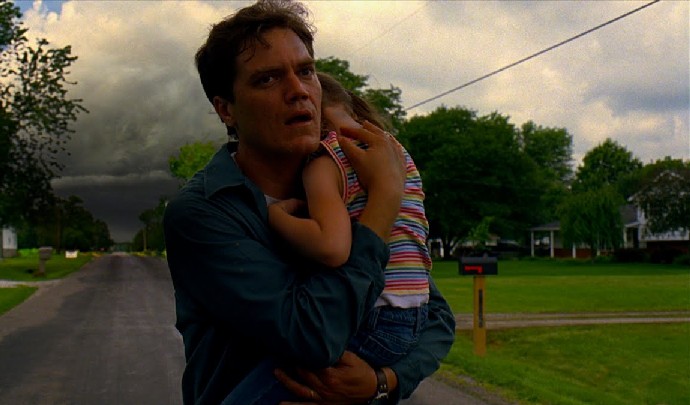
The creepiest film at this year’s Sundance follows Curtis, a hard working father and husband who is either truly having premonitions that a terrifying storm is a-comin’, or is slowly slipping into a mental breakdown. Michael Shannon’s performance is not only played to an absolute perfection, but the director’s script truly takes the time to let these characters earn their merit badges. And similar to previous festival experiences like Donnie Darko (2001) and Downloading Nancy (2008), the eerie tone and consistent pacing will either send you for the exit door (quite a few impatient audience members stormed out) or it will clamp around you, not letting go until the jaw-droppingly unexpected finale. The metaphor-filled Take Shelter is a genuine treasure that lingers for days after — here’s hoping it gets a higher-profile post-festival life than the previous Nichols-Shannon collaboration, the impressive Shotgun Stories (2007).

2. The Off Hours (Megan Griffiths, US)
Originally chosen to compete in the Dramatic Competition, this haunting ensemble piece was unexpectedly bumped into the NEXT category, which showcases innovative low-budget features.

http://www.youtube.com/watch?v=0TzI-gfP1Ko

Whatever the reasons the film was shifted around, Megan Griffiths (who also produced Todd Rohal’s wacked-out Catechism Cataclysm) has created the type of movie that used to rake in Sundance awards. Spiraling around a group of stagnated small-towners, these late-night diner waitresses and regional truck drivers are portrayed with complexity, depth, and the kind of melancholy that makes you want to jump into the screen and help them get out of there. Griffiths (who wrote, directed, and edited the film) makes you care about every single character — special nod to both Amy Seimetz, the shining star of Adam Wingard’s brilliant little horror flick A Horrible Way to Die (2010), and Ross Partridge, who crackled in the Duplass Brothers’ Baghead (2008). Did I mention Griffiths shot this on a digital Canon camera (5D)? Suggestion: turn this film into a quiet, off-beat TV show for IFC. It’s on par with Martin Scorsese’s Alice Doesn’t Live Here Anymore (1974) and should not be missed.
 
3. Meek’s Cutoff (Kelly Reichardt, US)
It was my favorite film at the Toronto Film Festival and it only got better this second time around. Not only is Jon Raymond’s subtle and layered script one of the most important of this era, the film’s artistic reveal is as profound as the genuine cinematic classics that it was inspired by. With this “minimalist Western,” Kelly Reichardt has delivered yet another astonishing, contemplative road trip (see: 2006’s Old Joy and 2008’s Wendy and Lucy). Do whatever it takes to see this on the big screen. Due to it being shot in the now rare 1932-1952 Academy ratio (1.37:1) format, only a limited number of screens in the world even have the capability to properly project this gorgeous square frame. Not only does cinematographer Chris Blauvelt’s camera masterfully pack in countless vertical horizons throughout this Oregon Trail trek, Reichardt edits this nuanced journey pitch-perfectly. Take a deep breath, pay attention to the small details of these pioneers’ struggles, and let the film happen all around you. It’s one of those small films that doesn’t patronize you for one second, yet it is able to confront our country’s very serious political confusion. Reichardt and Raymond have made a movie for the ages.

4. Pioneer (David Lowery, US)
This 15-minute short Pioneer stars Will Oldham (aka singer Bonnie “Prince” Billy, star of Reichardt’s Old Joy) as a father telling a bedtime story to his son; it’s easily as powerful as any of the 37 features (out of the 120 programmed) that I saw at this year’s festival. As dad continues to read the book and as the story continues to go deeper and darker, the simple and priceless interaction between father and son may remind you of some moments long forgotten. If you are looking for an hypnotic child actor for your next film, track down Myles Brooks immediately!

5. Old Cats (Pedro Peirano and Sebastián Silva, Chile)
This follow-up to Peirano and Silva’s stunning second film, 2009’s The Maid, is yet another mini-masterpiece, this time following an elderly woman who is disrupted one afternoon by her angry, bulldozing daughter who won’t stop complaining for one single minute. The film plays out in real time and you truly feel as if you are stuck in this apartment with the characters. With Peirano and Silva writing, directing, and even shooting this hypnotic cinema-verite, they yet again capture family dynamics in a way that is sometimes too much to bear. Small stories about small people seem to hit the hardest and I was truly a wreck when the lights came up.

6. Uncle Kent (Joe Swanberg, US)
Amy Taubin (Film Comment’s enfant terrible) unabashedly stated three years ago that Joe Swanberg’s films LOL (2006) and Hannah Takes the Stairs (2007) were so useless, they were “reason enough to bring back the draft.” But this has not stopped one of the originators of the mumblecore genre. (Unfamiliar? Mumblcore = modern-day hipsters sitting around rambling about stuff like Seinfeld episodes, Ebay auctions, and who sexted them last night.) While Swanberg has been smoothing out his cocky kinks the past few years, he has delivered some extremely rewarding films, including the spot-on take on the frustrations of long distance relationships in Nights and Weekends (2008), and Alexander the Last (2009) which sensitively uncovers the difficulty of being an artistic young married couple.

Uncle Kent is hands-down his greatest achievement to date. An exploration of social networking, this little ditty follows Kent, a down-on-his-luck 40-year-old, over the course of one weekend as he meets up with a girl from Chatroulette, and follows them as they go on Craigslist to find a partner for a threesome. (This layered, poignant, Greenberg-esque look at the boundaries of modern day relationships even won over Taubin, who admitted to me that she “really liked the film”!) If you’ve never heard of Swanberg or think he’s a waste of time, start with this short (72 minute), smart, and sexy flick.

7. In a Better World (Susanne Bier, Denmark/Sweden)
Susanne Bier’s latest accomplishment not only won the Golden Globe this year for Best Foreign Film, but is a good bet to take home the Oscar later this month. It’s a hypnotic look at how similarly confusing childhood and adulthood can be. Showcasing many Dogme 95 actors, this Danish gem swims nicely alongside Claire Denis’ most recent masterpiece White Material (2009).

8. Without (Mark Jackson, US)
That’s right, yet another low-budget indie film made in the Northwest. But boy, is it memorable. Winning a Special Jury Mention at this year’s Slamdance Film Festival for Joslyn Jensen’s “creative, nuanced and moving performance”, you can’t help but feel isolated and even trapped in this character study’s life. The almost-silent film follows a young girl as she tends to every detail for an invalid over a three-day period; it captures that alone time that for many is the ultimate fear. Warning: this film is not what it seems. A truly chilling and meditative experience all at the same time!

9. Pariah (Dee Rees, US) and Circumstance (Maryam Keshavarz, USA/Iran/Lebanon)
Both of these films bravely and triumphantly confront familial conflicts in the context of modern day same-sex relationships. Fleshing out Rees’ brillant 27 minute short film by the same name in 2007, Pariah not only embodies that gritty New York realism that independent filmmakers dream of, it succeeds just as powerfully due to its bar-none vision and sincerity to each one of its diverse characters. (Not only that, newcomer Adepero Oduye needs to be nominated for an Oscar.)

http://www.youtube.com/watch?v=wJq_rsfagO4

After Iranian filmmaker Jafar Panahi (1995’s The White Balloon; 2006’s Offside) was recently sentenced to prison (six years!) for making films that explore controversial subject matter, the director of the Audience Award-winning Circumstance filmed her movie in Lebanon to protect her cast and crew. Many of them are now banned from ever returning to Iran. The feelings of impossibility and utter frustration towards life, love, and everything in between reach amazing heights in Keshavarz’s debut feature. The film blends Deepa Mehta’s Fire (1996) and Steve McQueen’s art-house exploitation film Hunger (2007), all the while premiering during the first days of Egypt’s uprising. Looking for this year’s Winter’s Bone (2010)? It’s gonna be Pariah or Circumstance — hopefully both.

10. Martha Marcy May Marlene (Sean Durkin, US)
Mary Kate and Ashley’s younger sister Elizabeth Olsen delivers one of the best performances of the year (I know it’s early but trust me on this) as a young girl who falls prey to a modern day cult. John Hawkes gives another captivating performance though slightly less complex than his Oscar nominated role in Winter’s Bone. This is a gen-u-ine horror film and if you let it work, you will have goosebumps running down your arms all the way down to the last freakin’ shot.

11. Submarine (Richard Ayoade, UK)
I’m calling it now. This is the best grumpy teen romance of the year!

http://www.youtube.com/watch?v=6CAntLzsQ74

12. The Mill and Cross (Lech Majewski, Poland/Sweden)
Experimental art cinema for the digital age! It’s truly like taking a class on Bruegel’s The Procession to Calvary. But seriously, the film has at one point 143 digital layers! Even if that doesn’t make any sense to you, know that this director is insane and profound all at the same time.

13. Like Crazy (Drake Dremus, US)
This Grand Jury Prize winner will be a hard sell to people wanting relief from their own difficult relationships. For those that stick through it, it will expose your darkest and weakest secrets about your fears of being alone versus being with someone to fill the void.

14. Hobo With a Shotgun (Jason Eisener, Canada)
Just like Machete (2010), Hobo With a Shotgun was a fake trailer before it became a real movie. (Eisener won a South by Southwest competition held by Tarantino and Rodriguez, circa 2007’s Grindhouse, and the trailer was included with certain screenings of that film.) Brace yourself for Rutger Hauer playing… a hobo with a shotgun. This first-time filmmaker captures the perfect balance of irony and sincerity.

Original trailer:

New trailer (for the movie made after the original trailer):

http://www.youtube.com/watch?v=ssHEAOrAdCU

15. The Troll Hunter (André Øvredal, Norway)
This Norwegian horror film sits perfectly right along side Sweden’s Let the Right One In (2008) and Finland’s Rare Exports: A Christmas Tale (2010). It starts with the age-old folklore of trolls, revises the details into very tangible mythology, and presents it in the “found footage” style of Blair Witch Project (1999) and you’ve got yourself yet another contemporary Scandinavian horror hit.

Check back soon for Ficks’ picks, 2.0: 2011 Sundance documentaries!

Jesse Hawthorne Ficks has been teaching Film History at the Academy Art University for six years and has curated MiDNiTES FOR MANiACS for 10 years, a film series devoted to screening 35mm prints of dismissed, underrated, and overlooked films in a neo-sincere way.

The Performant: Of eggs and robots

0

Thomas John’s “The Lady on the Wall,” and the Slave Robots of Carl Pisaturo

A few years ago, at the Edinburgh Fringe Festival, I saw Dov Weinstein’s imitable Tiny Ninja Theatre enact “Macbeth” on a dollhouse-sized stage, which one viewed through cheap plastic binoculars from a distance of about ten feet. It will always remain one of my favorite versions of that particular play. Weinstein’s ability to perform as a literal cast of hundreds and run his own tech without fumbling his lines nor cues put many much larger (and taller!) companies to shame, and though the intention was quite obviously to amuse, Weinstein and his tiny plastic ninja cast still managed to convey the nuances of a more  serious artistry. Thomas John’s puppet noir “The Lady on the Wall,” which played at the Garage last weekend, displayed the same perfect balance of dorky and deliberate, featuring an unlikely cast of, not ninjas, but eggs.

Dressed in a nice suit just a little too big (like an adolescent boy clad in his father’s clothes for the talent show), Thomas narrated the piece with the deadpan delivery of a professional street performer (which he is), making every bad egg-related pun in the book, as bacon, and eventually eggs, sizzled on a hotplate grill beside him. Maneuvering his fragile characters from the countryside to “Carton City” and back again, Thomas also incorporated small moments of juggling, shadow-puppetry, and DIY lighting effects into his 45-minute thriller. The somewhat scrambled plot (ha!) involved the mysterious death of a lovely lady egg named Maud, aka “Humpty Dumpty,” done wrong by a cad named Frank, and perhaps the victim of a mysterious marauder: “The Poacher”.

Other members of the cast spanned the gamut of noir archetypes, including a gruff, “hard-boiled” private eye (Bob), an ingénue (Molly Meringue), a suspect aristocrat (Sir Benedict), and a whole carton-full of doomed ovum -— the final body count of the show ultimately rivaling “Hamlet”. As for-adults puppetry in the Bay Area has been experiencing a bit of a slump of late, with the majority of produced shows coming in from out-of-town (here’s looking’ at you, Avenue Q), it was great to see such a unique spin on the medium by such a dexterous, likable, and local performer.

Speaking of unique spins, it would be hard to think of a more unique spin on classical dance than the Slave Robots of Carl Pisaturo, on display during MAPP in his studio workshop-cum-gallery, Area 2881. With a meticulously-arranged workspace in the back, and a front room full of spinning, whirling, brightly-lit, kinetic sculptures made of  mostly mechanical components, Area 2881 is a low-key, yet entirely reverent, church of geek. Pisaturo’s centerpiece creations, a pair of skeletal humanoid figures with an astounding degree of hand and arm motion, and nightmarish Frank Garvey-designed body “panels,” are known merely as “Slave Zero” and “Slave One”.

As stirring instrumental music and projections of building demolition looped behind the backlit slaves, they “danced” along, using an expressive range of gesture to surprisingly emotional effect. More proof, if proof were needed, that robots — in addition to eggs and tiny plastic ninjas — can be artists too.

“He will probably drown in his beer hat”: the post-punk vegan hits SF

0

Isa Chandra Moskowitz is a believer in the power of baketivism. Emerging from the wilds of Food Not Bombs mass meals and the New York City punk scene, Moskowitz started a community access TV show, The Post Punk Kitchen in 2003. Since then she’s gotten five animal product-free cookbooks published, starting with the seminal Vegan Cupcakes Take Over the World (Da Capo, 168 pages, $15.95) and progressing to her latest, Appetite for Reduction (Da Capo, 336 pages, $19.95) — a collection of low-fat recipes (a couple of which we featured over the holidays), the result of Moskowitz’s doctor’s suggestion she cut back on fat after being diagnosed with a hormone imbalance.

 She’s vegging out in SF this weekend — you can catch her doing a cooking demonstration and book signing at the Ferry Plaza Farmer’s Market on Sat/12 — and hell, read that bio again, awesome. So we interviewed her and now we know where to get vegan cheese that actually tastes good, among other highly salient points.


San Francisco Bay Guardian: When and why did you become a vegan?

Isa Chandra Moskowitz: My vegan journey began over 20 years ago, when I was 16. Yes, it’s a journey, just like on the “Bachelorette.” It was pretty simple for me, I just couldn’t see any reason to eat animals. I’ve always been an animal lover and the thought of any animal suffering or being killed just drives me nuts. I didn’t want any part of it. 


SFBG: Have you seen a change in the animal product substitutes offered in stores since your early vegan days?

ISM: Yes, and what’s even more drastic is how widely available vegan meat substitues are. I’ll be honest, I don’t really care for many of the products — I prefer to cook whole foods. But I appreciate that the subs exist and there are some yummy ones out there, like the Field Roast sausages [editor’s note: soy-free, yay!] and Tofurkey slices, which make great sandwiches in a pinch. In terms of pastries and sweets it’s like we’re living in a completely different world. Sweet & Sarah Marshmallows are to die for, and there are so many awesome cookie companies that they’re too numerous to count. And ice cream is much better, especially the coconut milk varieties. 


SFBG: Do you think the US qualifies as a vegan-friendly country now? Where, in your eyes, are the best places for vegan dining?

ISM: Yeah, for sure. I mean, it’s such a big country. Of course there are more vegan-friendly places than others. The best places are probably pretty similar to the best places for food in general – NYC, Portland, and here in San Francisco. Those are also the places where I most often find myself, so go figure!


SFBG: What (if any) has been the most compelling argument you’ve heard NOT to be a vegan?

ISM: I honestly haven’t heard anything that sounded like a good argument. The only thing that makes sense to me is when people are like ‘well, I don’t really care.’ I mean, at least it’s honest! 


SFBG: When I became a vegan, I had to deal with a lot of flack from family and friends, even those that were totally cool with my ten years of vegetarianism. Did you run into that when you decided to go animal product-free? Why do you think people get so crazy about the dietary choices of others?

ISM: I hear this type of thing a lot and I have to say I did not experience it at all. I mean, there’s always that annoying guy who’s like ‘PETA means People Eating Tasty Animals!!! Guffaw! Snort!’ but he’s not my friend and he will probably drown in his beer hat so I’m not too worried about it. But in terms of friends and family, people either didn’t think anything of it or didn’t get into it with me. 


SFBG: What’s the best vegan cheese you’ve run into out there? I’m having issues with that one.

ISM: I am not crazy about any of the US cheeses on the market at the moment, but I had the most amazing vegan cheese from Switzerland called Vegusto. It’s not available here, unfortunately, but if anyone is listening and wants to make a million dollars, strike some sort of deal with that company and bring it to the US. It will change your life. In any case it’s good to know that a delicious creamy vegan cheese is possible, hopefully it will exist here someday. 


SFBG: It seems like a lot of vegan cooking revolves around processed animal product substitutes. How do you feel about that?

ISM: Ha, this whole interview was about products and processed food and yeah, in all my books I pretty much make it clear that I’m not into that. I cook with whole foods. 


SFBG: Finally, where/what are you planning on eating in SF?

ISM: I’m definitely going to eat a couple million burrito spots, but also Millenium, Cha-Ya, Gracias Madre and hopefully a kind soul will bring me something from Cinnaholic because I don’t think I’m going to make it over to the East Bay. I already went to Papalote tonight and then had the tiramisu at Cafe Gratitude so I’m happy.


Isa Chandra Moskowitz

Sat/12 11:45-12:30 p.m., free

Ferry Plaza Farmer’s Market

One Ferry Building, SF

(415) 391-3276

www.cuesa.org


Speed Reading: Edie Fake’s Gaylord Phoenix

0

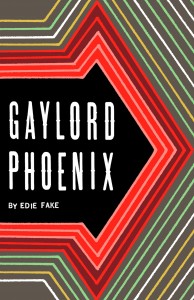
The moment I saw Edie Fake‘s book Gaylord Phoenix (Secret Acres, 256 pages, $17.95) on a table at a local shop was a lifesaver. Not much contemporary art or stuff actually reaches me — and jolts me — at the mysterious and elusive spot(s) where my imagination and spirit reside, and the drawings and stories of Fake do exactly that. I have some issues of Gaylord Phoenix from when it was in serial form, and Fake’s comic Rico McTaco, but I had no idea a lavish color book of Gaylord Phoenix existed, and the discovery was about as close to finding a treasure as I’ve had in recent daily life.

Over the last few weeks I’ve looked at Gaylord Phoenix a lot in bed, on the verge of sleep and dreams, and occasionally while in transit from one place to another. Both experiences, if not ideal, seem right for entering the book’s universe. It is the kind of epic journey in which a reader — not to mention the characters — can get lost. Gaylord Phoenix is a love and lust story. It’s a quest through terrain that is strange yet also familiar, especially if you have access to your queerness or inner experience. It is funny, it is disturbing, it is gorgeous, it is mesmerizing.

Gaylord Phoenix the character has a projector for a nose; webbed hands which can morph into other shapes; a hairy chest, arms, and legs; and (most of the time) tubular genitals that can penetrate and be penetrated, fill or envelop. There is a slightly woeful or stricken quality to Gaylord’s personality, as rendered via facial features and half-capsule head. Yet hexes, spells, “crystal bloodlust,” orgiastic oceans of tears, experimental examination rites, and periods of bereft solitude are not enough to stop Gaylord Phoenix from searching for pleasure and communion with the surrounding world.

That world — a world of many worlds — is one of the things that makes Gaylord Phoenix special. Fake’s hand-rendered cubes, pyramids, hexagons, Bridget Riley-like black-and-white vortexes (referred to in the ultra-spare, brilliant dialogue), wizard cone hats, mazes, temples, wood grains and vines, crocodile skins, fish scales, clouds and cave formations, and plumage accumulate detail and color over the course of the book. What might have been interpreted as technical improvement within Gaylord Phoenix‘s serial manifestations as a comic is revealed in the book to be material for a dramatic and visionary climax and denoument.

In the realm of comics and graphic novels, Gaylord Phoenix could be seen as a fantastic inverse of the sexual horror in Dash Shaw‘s BodyWorld. It arrives at a time when various musicians and visual artists are also tapping into mystic and occult energy, though its singularity of vision reminds me of Jack Smith and Kenneth Anger channeled from archival celluloid strip to contemporary line drawings on the printed page. Ultimately, there is nothing like it.

A few years ago, Fake lived in SF, and attended one of the Guardian’s Goldies celebrations with Amanda Kirkhuff, whose pencil drawings and oil paintings of female pop icons and news figures transmit an equally pure power. They aren’t here now, they’re each moving onward in their own ways, but this city was lucky to play host to them for a while, and it would be great to see them again. 

Artistic boot camp looking for recruits

0

With an average body mass index of 24.8 (measured in 2008), SF rates as the second skinniest city in the United States. Work it out people – all those bikes, parks, and beaches paying off, or at least putting us out ahead in America’s race against obesity. But next to nearly every one of our yoga studios and muscle gyms is an art gallery. It’s fair to say that art appreciation is as ingrained in San Francisco culture as athletic mastery – but where does one go to buff up one’s rock hard appreciation of digital art film and radical myth iconography? Enter Yerba Buena Center for the Arts’ new program, “YBCA: YOU”, currently accepting applications (this means you) for a free program that’ll have you doing heavy lifting of the city’s creative offerings in no time.

Your coach: Laurel Butler, an education and engagement specialist. From March 3 through November 30, Butler will act as an arts-focused personal trainer for up to 100 participants in the YOU program, crunching through a highly personalized, dynamic arts education curriculum. Her trainees will enjoy free admission to all YBCA performances, films, exhibitions and community engagement events, and are encouraged to use the all-access pass as they would a gym membership – minus the on-site showers and grunting, one imagines.

“Ultimately, we want more people having better and deeper experiences with art,” says Joël Tan, YBCA’s director of community engagement. “This pilot is about an actual live human guide connecting with individuals and small groups to experience arts and cultural events that are custom-tailored to their aspirations, desires, and educational goals. Tan invites “anyone looking to build their aesthetic muscles to register, whether they want to learn a few pointers for their next cocktail party or attend all the openings in town and just need the motivation to do it.”

You can register for YOU’s March 3rd orientation by e-mailing lbutler@ybca.org by February 28. See more details about the hows, whys, and wherefores of who is eligible at the website below. And don’t forget about us when you’re the next Taschen, mmkay? 


“YBCA: YOU”

Registration open through Mon/28, 5 p.m.

First orientation: March 3, 6-8 p.m.

Yerba Buena Center for the Arts

701 Mission St, SF

(415) 978-2787

www.ybca.org 


The Performant: Homing instinct

0

Performance thrives on the Living Room Circuit

What are the barest fundamentals of theatre once you remove it from “the” theatre? This is one of the questions site-specific performances are always confronted with, and the answer is not immediately clear. Does “theatre” require a script? (Then what is improv?) Does it require actors? (Then what is Spalding Gray?) Does it require a moral? (Then what is Ubu Roi?) Perhaps, like obscenity, it is immediately known when seen, but otherwise elusively indefinable. What does seem to be certain, particularly in light of the latest wave of productions set in non-traditional venues, is that performing in an actual theatre space is definitely not a requirement for creating an actual theatre piece.

Probably the best example of space self-sufficiency is the current upswing in salon-style performances. From participatory readings to full-blown plays performed for invited attendees, the trend has become so pervasive that Berkeley-based performance artist Philip Huang even coined a name for it: Home Theater, naturally. In May 2010, Huang launched the “Home Theater Festival”, with events on both sides of the bridge. This year, beginning March 3, the festival will include performances from all around the world, staged in the homes of the artists performing in it.

One participant in last year’s festival, performance-poet Baruch Porras-Hernandez, had such a positive experience he’s signed up for another slot this year on March 18, even though he doesn’t think he’ll be able to use the space he currently lives in on the grounds that it is too small. “It is one of the things I am most proud of, out of all my 2010 projects,” he tells me via email, “[I] have not seen so much joy in an audience.”

 Other pioneers of the living-room performance circuit include No Nude Men, who have been hosting theatre salons since 2009, though their interpretation of salon is more traditionally-slanted towards play-reading and subsequent discourse. In 2008, Boxcar Theatre staged Edward Albee’s “The American Dream” in four different living rooms across the Bay Area, and EmSpace Dance premiered their “Keyhole Dances” in a Victorian flat. And every couple of months in the upper Haight, The Living Room Reading Series brings together a diverse crowd of writers and readers together for an evening of wordsmithery on display.

Seduced by the potential of living rooms used for living art, two weekends ago I also hosted a performance salon in my home. And though I feel I must refrain from gushing about the specifics in this column (fabulous as they were!) I can say I highly recommend the experience on either side of the “stage.” Not only was a palpable intimacy created by just being packed in a smaller space, but more importantly by being in a *living* space, which quite literally made the event seem more alive. Though the atmosphere was casual, it was charged with an excitement I rarely, if ever, feel seated in the tidy rows of a conventional “theatre.”

Best of all, from my perspective, at least four attendees left vowing to host salons of their own, and one had attended a similar event in the Berkeley Hills the night before. This makes me hopeful to think that we’re standing at the brink of a bona-fide movement, not just a momentary fad.

The Free University of San Francisco kicks off teaching — to a lot of white people

71

“A piece of blank paper means anything you want can happen,” SF beat poet laureate Diane Di Prima was imparting a rare free lecture on shamanic poetry, the marquee event of this weekend’s popular first Free University of San Francisco teach-in at Viracocha. She had a packed the antique store-community center’s first floor showroom, encouraging in regards to the FUSF collective’s run at making free education available to all. But if the Free University wants to teach the world, why are the vast majority of its students – let’s not parse words here – white?

“Diversity outreach, that is absolutely one of our top priorities,” says FUSF organizer Alan Kaufman when the point was brought up in a phone interview with the Guardian yesterday. “We’re one of the most racially polarized cities, even in the progressive community. It’s something that needs to be explored and discussed.” Kaufman said that as the collective that runs the university moves forward, FUSF is actively working to involve minority community members – especially undocumented immigrants, one of SF’s populations who surely are among the least-served by the town’s would-be progressive creative institutions. 

It does seem like FUSF has the capacity to be a source of radical academia and community in the city. This weekend’s teach-in (which continues through tonight, Tues/8) attracted capacity crowds to many of its popular hour-and-a-half long courses: Di Prima’s “19th Century Visionary Poetry,” Kaufman’s “Jack Kerouac, Thelonius Monk and Jackson Pollack,” and David Cobb’s “Abolishing Corporate Personhood to Create Authentic Democracy” among them. Though FUSF’s plan for six to eight week classes in the future and another teach-in may be a stretch to replace the value of an actual university degree for students, the success of its initial weekend course schedule does say that some people in the city are ready to rethink the way we view teaching. After all, as Kaufman reminded us, the cost of a four year degree at Stanford is now pegged at a quarter of a million dollars. “That can’t last.” 

But if it’s going to be SF’s new center of alternative, cost-free education, FUSF has to appeal to more than just the aging hippies and earnest intellectual young people who attended this weekend’s teach-in. 

How? Well, that’s the question, really – one that many creative institutions in San Francisco have yet to resolve, if they’ve tackled it at all. “We’re going to need to come up with new answers because the new answers are not working.” Kaufman mentioned that he is particularly impressed by the way SF’s queer community has celebrated its diversity.

“I feel like there are reasons why different groups don’t get involved in the beginning of these things.” Writer Maisha Johnson is one of the only African Americans who has been involved with the Free University planning meetings since she heard about its first get-togethers through her involvement in literary events like Quiet Lightening. “For me, living in San Francisco, it’s hard to find out where the black community gathers. A lot of the time, the assumption is you go to Oakland for acitivities with people of color.” 

“If you’re looking at organizational power in San Francisco, it usually runs along lines of whiteness, maleness, and straightness. The only way to break down those social divisions is for people that don’t feel like they’re that similar to collaborate,” says Mumbles, a spoken word poet who is helping to organize an artist resource center called Merchants of Reality. 

Mumbles says that the goal of Merchants of Reality – which plans to operate out of SoMa’s Anon Gallery and Climate Theater — will be “to help artists commercialize themselves so that others don’t do it for them.” Its a pragmatic mission, one that will even involve what Mumbles refers to as the “realty community” in order to help artists find studio space in the abandoned buildings that dot the SF landscape. The center will also include darkroom facilities, digital video setup, screen-printing equipment, help finding studio space, and a possible performance venue, all for use by artists who normally don’t have the opportunity to use professional-grade equipment and materials, presumably many non-white artists and performers. 

Kaufman and Mumbles think that Merchants of Reality and the Free University can benefit from each other. “Space sharing is one way community can be developed,” says Kaufman, who told us the two groups are looking at ways to overlap each others’ missions in the hope of broadening the community of both organizations. 

Of course, its about more than organizational partners. “It requires more of an explicit effort to reach out to other communities,” says Johnson who will be a part of FUSF’s outreach committee and, adding that she’s heartened by the university’s chances to diversify itself. “Right now it’s really open to people to come in and work on their own vision.” Kaufman agreed that expanding FUSF’s audience means working towards a curriculum that everyone finds useful and illuminating, incorporating classes and promotional materials in different languages, and connecting those typically excluded from professorships in the United States teaching positions. “There’s whole areas of education that others might know about that we might not consider,” he said.

“I believe our university will become famous among universities – come to be known as the ‘Zorro’ of universities,” said Kaufman in an address to the university community. (Printed copies of his four addresses were available by the class sign-in sheets at this weekend’s teach-in.) High hopes — but if the school is meant to make a real difference in progressive education, it’ll have to find a way to bring its message to everyone.  


Free University of San Francisco’s first teach-in

(Started Feb. 5)

Tues/8 classes:

6-7:50 p.m.: “Critical Thinking (Introduction to Logic)”

w/ Jordan Bohall and Elena Granik

8-10 p.m.: “Introduction to Nietzsche”

w/ Evan Karp and Andrew Paul Nelson

Viracocha

998 Valencia, SF

fusf.wordpress.com


Deconstructing Cinderella, deconstructing La Llorona

1

They say you shouldn’t judge a person until you’ve walked a mile in their shoes. Ana Teresa Fernandez, the featured artist in Galería de la Raza’s upcoming video exhibition “La Llarona Unfabled,” (opening Sat/12) has obliged in regards to that feminist foil, Cinderella. For her video installation, Fernandez spent hours standing wearing a melting pair of “glass slippers” made of ice on a dirty West Oakland street. The experience, she feels, left her more than qualified to criticize the social constructs embodied by fairy tale’s scullery maid-cum-princess.

Originally conceived by Galería’s executive director Carolina Ponce de León, “La Llorona Unfabled” will include work from four other artists: Monica Enriquez-Enriquez, Geraldine Lozano, Rosario Sotelo, and Tanya Vlach. The five will respond to issues of gender, class, identity, and migration in an effort to re-craft cultural narratives into feminist and Latina perspectives.

Which is not to say the exhibition won’t speak to all women. “It isn’t about brown, white, rich, poor,” Fernandez affirms. “It is about the self, learning to find your true voice and talents and making that voice the thing which sustains you in life.”

In her art, Fernandez uses lessons from her own life to challenge feminine mythologies — from the Mexican folktale of La Llorona, the weeping woman, to the story of Cinderella –  to “show little girls that they can be the protagonists of their own stories,” she says. Born in Tampico, Mexico, Fernandez was recruited by San Francisco Art Institute with a full scholarship – an opportunity that she met with amazement, and which enabled her to do the art she loves for a living. But Fernandez didn’t have a Prince Charming to make her dreams come true, or a fairy godmother for that matter. For that, she had to rely on talent, hard work and a passion for subverting the macho norms of classic art.

Growing up, the artist experienced very clear ideas about where women belonged. Her mother, a runner, was chastised for wearing short-shorts and sneaking out of the house to race with men. Ana, also an athlete, broke four national swimming records by the time she was eight. “They had to train me with the boys,” she recalls. Now 29, the artist has traveled the world but still feels that by supporting herself through painting, she is swimming against the current.  

Like many children in Mexico, Fernandez grew up hearing the story of La Llorona, the colonial-era fable of a beautiful peasant girl who is abandoned by her noble (read: white) husband.  She drowns her two children, and then herself in the river and is condemned to forever wander its banks, wailing for her lost sons. To Fernandez, the story was a clear message that a woman need to rescued by a man or else face a life of desperation. “What’s that game?” she asks, snapping her fingers. “Old Maid. If you’re not chosen, you’re nobody.” 

Even as the child of educated parents from a big city, Fernandez feels she has to fight the story’s notions of class and race, isolation and empowerment. “There is something to be said about changing the incredible enlaid guilt of how you must act or what you must do as a woman where I grew up – which sounds so incredibly old-fashioned.” 

Inspired by the “strong, elegant women” of her childhood, Fernandez’s paintings – the body of her artistic work up til now – balance the sensuality of the female body with the constrictions that work and fashion place upon it. In “Siren’s Shadow,” a woman swims in a cocktail dress and heels, literally dragged down by those conventional symbols of femininity. In the “La Llorona”  show, these same themes are explored through video and performance art, with water taking on additional meaning as a symbol of La Llorona, weeping endlessly into the river.

“Siren’s Shadow” by Ana Teresa Fernandez 

With the added dimension of time that video brings to Fernandez’s work, its dismantling of the ideals of femininity encoded in myth and art is shown more dynamically. As she stands over sewage in her ice shoes cast from the exaggerated stilettos worn by exotic dancers, waiting for her prince to come, Fernandez’s “glass slippers” and the mythology they imply literally melt away. 

Fernandez is reluctant to align herself with the tradition of Chicana painters working in San Francisco. Her paintings are a far cry from the bold, primary colors of Mujeres Muralistas, the Mission’s famous group of female street artists who lit up Balmy Alley. While she says the Mission feels like her “home away from home,” with its pockets of Mexican culture, Fernandez admits that her work relates more to the European masters and is “much more influenced by male painters.”

Which seems a little incongruous, given her subject material, but Fernandez argues that the virtuosic style of her painting is in itself a subversion, given that the role of the virtuoso painter wasn’t always available to women. Many female artists, especially Latina artists, committed “rebellious acts” against virtuosic tradition in order to get noticed, creating Kahlo-like fantasy worlds rather than create art in the patriarchal classical vein. 

By contrast, Fernandez’s figures, richly constructed out of layers of oil on canvas, glow with heat and realism. “Michelangelo and Botticelli and Brunelleschi were all men that fascinated me,” she says. 

In fact, to someone not paying attention, the muscled, sculptural bodies in Fernandez’s work may not seem so different from the sexualized objects they are meant to replace. But “hyper-sensuality is not the same as sexuality – it oozes, rather than blurts out,” she explains. “It’s quieter, it lingers longer. That’s what I try to play with.” 

She hopes to balance the tradition by adding a female voice without compromising the work’s aesthetic qualities. “In painting women have always been interpreted by men.” As in her life, in her art Fernandez chooses not to retreat into the realm assigned to her by men. She would rather beat them at their own game.


“La Llorona Unfabled: Stories to (Re)Tell to Little Girls”

Artist Talk Sat/12, 2-4 p.m., free

Opening Reception Sat/12, 7:30 p.m., free

Through April 16

La Galería de la Raza

2857 24th St., SF

(415) 826-8009

www.galeriadelaraza.org


Travels in a strange sushi

0

Tanuki Restaurant on California and Sixth Avenue was my first taste of the Richmond and my millionth of raw fish. On a quiet block in unfamiliar territory far from Mother Mission, I saw her “Open Sushi” neon sign and walked towards the light. But before I go on, I should admit that my heart belongs to another: We Be Sushi on 16th and Valencia. Theirs is simple, clean, casual, and delicious fish. But as every baby bird must one day leave its nest, so must I leave my small, insular universe to discover nourishment in new land.

The Richmond – what are you? I took the #33 past Golden Gate Park and – I know I am a ridiculous Mission idiot – entered the Twilight Zone. Where were all the people? Why are the streets so wide? Why is the sky so big? I guess there were some inhabitants, but they all seemed eerily calm, mustache-less. And there was so much space between them. There I was: a stranger in a strange land trying to get a spicy tuna roll.

The disconnect was heightened upon entering Tanuki, where my friend and I were faced with that awkward bad thing where you try to give the other tables space, but your server forces you to sit next to them anyway. I comforted myself with the thought that cultural immersion really is the best way of getting to know a place.


Counter attack. Photo by Alex Fine

And what a place! We were in a 1970s ski lodge. Well not literally, you’d have to ignore the long white counter and glassed-in fish with industrious chef behind — but with the low ceilings, suspicious wood paneling, and ESPN playing on the TV that hung over the small center dining room I caught a fresh-faced, schussing vibe. There were a few other tables near us: two hetero single lady couples complaining about men, one deliriously happy Midwestern-looking middle-aged duo, and a table of dudes desperately trying to make it known that they were a band. Everyone was white. But enough about the vibes, you crunchy Mission-ite. How was the food?

I am but a casual fisherperson. Virtually all I know about sushi is based on subtle inclination, hunch, and rumor that I can’t remember the origin of. I don’t think I’m alone there. But whether or not sushi is an ancient Japanese art or a conspiracy created by the US government, most of us can agree that it’s lovable fare (even when it’s not from We Be). 

But as far as I’m concerned, there are two kinds of sushi. One, a simple, minimal kind that allows you to fully taste its one or two ingredients. Two, the kind where the rolls are named things like Kamikaze and Oompa Loompa Sex Party and contain a million varieties of mayonnaise, teriyaki sauce, and what basically amounts to ketchup. 

I enjoy both — and I’m not making any sort of heady, stuck-up judgment about which is better (see my knowledge-of-sushi caveat above). But what I am saying is that Tanuki was inching towards the latter kind. And it was a little expensive — most menu items were between $10 and $20. 

On that menu: hot hamachi, oyster shooters, carpaccio, and clams in miso soup, to name but a few offerings. Everyone around us was ordering one oyster shooter after another – delicacies I still can’t categorically define, but “shooter” anything and I start to have my doubts. 

We started with a large green salad and a seaweed salad. The seaweed salad was good, but seaweed salad is hard to screw up. The green salad was huge and semi-warm with mushy tomatoes and watered-down miso dressing. It grossed me out, but you couldn’t tell from the way I wolfed it down. My friend got a huge bowl of shrimp tempura in udon noodle soup. Halfway through she exclaimed, “I want a beer and a peanut butter Snickers.” I tried it and thought the udon noodles were fun and chewy, the broth satisfying. But I agreed that Snickers might be in order. 

I had a house roll: crab, salmon, tuna, and avocado in a moat of spicy mayo and teriyaki sauce. It was great because it was huge, and spicy, and I was starving. I didn’t pay much attention to the fish — how could I? It was covered in creamy sauce. There’s nothing wrong with that, but it does seem rather base to smother something expensive in sriracha mayo. 

I’m not whining. Much. I’m just saying that, as I finished the last droopy bites of my pal’s udon, the servers throwing me shade nearby, and the sound of show tune instrumentals playing softly overhead, it dawned on me that sometimes; it’s ok to stick with We Be Sushi.


Tanuki Restaurant

Mon- Sun 11 a.m.–10 p.m.

4419 California, SF

(415) 752-5740

Beer and Wine

MC/V

Moderately Noisy

Wheelchair Accessible


Speed Reading: Matt Furie’s Hot Topik and boy’s club 4

0

I got an orange Pepe T-shirt at Needles and Pens’ release party for Matt Furie‘s new comic Hot Topik. What better way to also celebrate the fourth and latest issue of Furie’s boy’s club, in which Pepe and pals Andy, Brett, and Landwolf are joined by two new characters, Whitey (a zit), and Bird-Dog? Somewhat reminisicent of a stoned Big Bird, Bird-Dog lectures Pepe on the history of weed in one of the comic’s highlights, though I’m also fond of the episode in which a Vaporizer turns Landwolf into a viper with a craving for pepperoni pizza. Here are some of the characters in Hot Topik, as well as a few pieces by Furie on the walls of Needles and Pens.

Live Shots: Stag Dining “Speakeasy” Clandestine Dinner, 01/29/2011

0

These days, it’s hip to be in the know of well-kept secrets. OK, maybe that’s confusing, but what I’m trying to say is there’s an ever-growing list of underground events going on in San Francisco, but if you don’t know about them, well, than you better start getting on it. Now. I’ll give you a hint. Secret restaurants are popping up everywhere and it’s the kind of eating experience you don’t want to miss out on.

Case in point: this past weekend, Stag Dining Group hosted a clandestine dinner at a mysterious locale, which included a myriad interesting dishes, from Japanese lobster custard to skewered duck hearts in mole sauce.

The chefs, Ted Fleury and Jordan Grosser, were bustling in the kitchen to get six courses out to almost eighty people at the same time, while Cocktail Lab was busy concocting a new libation for every course, filled with everything from chili peppers to flaming cinnamon sticks. And boy, my drinking habits are not up to snuff these days … I could not keep up!

The food was tasty and carefully crafted, and I especially loved dessert, a thick creamy chocolate mousse, topped with a see-through thin olive-oily piece of cinnamon toast. My only crit note was the lack of carbs in the meal. I definitely felt the need for one dish that might be considered “hearty.”

Stag Dining is comprised of a bunch of affable dude-bros who have been friends for years and decided to collaborate to create a supper club. Beyond the delectable delights, I also loved that they did a spiel about their values, right down to their handmade recycled menus and to the fact that eating sustainably is really becoming a must. Sometimes people overlook the “spiel” — but I’m one of those people who is constantly giving them and feel that it’s so important to educate whenever possible. (My broken record spiels include: “Check your bathroom products … they might contain parabens!” “Non-organic strawberries taste like crap … and can kill you!” “Did you know that health care in other countries is way better than in America? Write a letter!” It’s something people still do!)

So folks, now you’re a little in the know for something well worth being in the know about, start exploring some of these hidden edible treasures, which are sure to tantalize and tickle your taste buds.

Possibility: “Gush” presents Joe Goode the curator

0

Audiences can thank Raelle Myrick-Hodges, Artistic Director of Brava Theater, for cutting Joe Goode loose in curating “Gush,” Brava’s first dance theater specific series. Rather than defining dance theater, Goode, during his three-weekend series, showed us its possibilities. He served as a tastemaker and also opened minds in choosing a theme to frame and present Ledoh and Salt Farm Productions (a performance collective with roots in Butoh), Axis Dance Company (a contemporary mixed-ability dance company), as well as his own company, Joe Goode Performance Group

While an artist-driven curatorial practice is not necessarily new, Goode addressed the topic in the program, writing “One of the stellar differences between the dance scene here and in other countries (notably South America and Europe) is that, here in the U.S., artists are rarely given the opportunity to champion other artists and to offer the kind of insight and context that we are so perfectly equipped to provide.” Goode utilized his opportunity at Brava to direct attention to two other groups which inspire him. The thematic aspect of the title “Gush” drew attention to their lavish, bold, theatrical impulses.

The East Coast recently experienced a surge in artist-driven curation, with the 2010 inauguration of Danspace’s Platform series, envisioned by Judy Hussie-Taylor, Executive Director of the major downtown dance venue in New York City. For each Platform, a selected artist organizes a series of performances based on a theme, as well as discussions, open rehearsals, screenings, and a catalog. If the components sound like those of a visual arts exhibition, it’s for a reason -– Hussie-Taylor’s career includes years at museums and she is now a faculty member at the Institute for Curatorial Practice in Performance at Wesleyan University, the first program of its kind addressing performing arts curation. Among other topics, the program’s curriculum considers how the curatorial practices of the visual arts can be applied to the performing arts, enhancing context and experience of the work.

On Thursday, Jan. 27, during the last of the “Gush” programs, Goode arrived downstage at the microphone as a charming storyteller, party host, and tour guide. Describing his dance theater as a form of folk art which combines movement, spoken word, song, and visual imagery, he resurfaced onstage throughout the performance to contextualize a mashup of old and new works, including 29 Effeminate Gestures, Wonderboy, small experiments in song and dance, What the Body Knows, and a new collaboration with puppeteer Basil Twist set to premiere at YBCA’s Novellus Theater this June, The Rambler.

Sitting in the center of the stage, Goode elaborated on his process of generating, colliding, and editing material to developing work through “felt experience.” His dancers embodied the phases he described, resulting in a carefully crafted sort of lecture-demonstration. The opportunity to meet Goode in the role of curator and share the lens through which he sees the world was a delight. It revealed gems of dance theater work, and another layer of his artistry.

“I guess I just want other people to solve the Rubik’s cube”

0

This much was clear. A conference room full of middle and high schoolers had been assembled and were now working out math problems. On a Sunday. To someone who wept through stats homework, it seemed like a game of Clue, who done this? At the lectern, a man shared formulas one might find useful in attempting a rapid solution of the Rubik’s cube. A series of x’s and y’s to the nth power flashed before the hushed underage audience.

Were these kids really into what was going on, or was this some well-orchestrated parent plot to shut down a perfectly good weekend? It was Mom in the living room with the bribes and threats about not getting into college! But board game detective I was not. This became apparent when the young man in a hoody sitting on my left picked up a cube offhandedly. Without fanfare, his hands began to blur. He lined up the colors in well under a minute and set the cube back down. Welcome to last weekend’s Julia Robinson Mathematics Festival, where math, it appeared, was not just a problem to be solved.

“If you want to put it in basketball terms.” Festival co-organizer Joshua Zucker is explaining to me the difference between kids doing math “exercises,” which he says comprise the majority of schoolwork these days, and “problem solving.” Please, I encourage him, put it in basketball terms. “Exercises are like dribbling down an empty court. Problem solving, that’s like dribbling down a court with a defender on you. Computers do exercises – we want kids to learn how to think.” To further illustrate his point, he proposes I perform a simple mental game involving twisting my wrists together. Blinded by my fear of math, I fail miserably, and he patiently reiterates what I must do to free myself.

Round tables fill the Pauley Ballroom in UC Berkeley’s Martin Luther King, Jr. student union, at which are seated young students, math professionals, and various UC Berkeley faculty. They do not appear to be worried a whit by the prospect of the boxes and equations before them. Each table houses a few kinds of math challenges: here, kids are constructing a massive fractal cube made from folded bits of paper. There, scholars puzzle over math “magic” tricks and geometry formulas, aided by a female NASA scientist. There’s no clear stop and start time – participants circulate around the room at their own pace, parents in tow or mercifully mingling in the seating area at the room’s fringes.

The festival’s format is constructed to encourage kids to think about why we do math — and we’re not talking about that scholarship to Cal here but instead that little thing about how math helps us figure out the world around us (which I concede, if grudgingly). Accordingly, an instruction sheet written by Zucker greets table leaders at the event’s entrance cautioning them that “you’re welcome to encourage group work when you see good opportunities, or encourage individual work, but don’t encourage too strongly: mostly let the kids decide whether they want to work on their own or with their neighbors.” This looseness is a deliberate departure from the other form of extra-curricular activity for the numbers set (ha!): the math competition, and has much to do with the festival’s namesake, female math pioneer and UC Berkeley professor Julia Robinson, who tackled complex theories in the days before people were fully keen on the concept of female mathematicians.

“We think the non-contest atmosphere is more conducive to girls,” says Zucker, who used to teach math at the girls-only Castilleja School in Palo Alto, comparing the festival’s roughly 60-40 boy-girl ratio with the typical 70-30 that one sees at the higher-pressure math contests. Girls, the assumption goes, aren’t into parading their smarts all over the place.

It’s a theory that’s borne out by what I witness at the festival. For the most part, the boys are quick to acknowledge when they perform a particularly astute calculation. The girls seem more content to listen and work through equations on their own steam, though it must be said that a few are far from retiring. 

California College Preparatory Academy ninth grader Breanna Alleyne drags family friend Aaron Johnson over to the table where I sit, puzzling with the mathemagic tricks. The two plow their way through problems along with the help of Eleanor Long, a San Francisco charter school math teacher who came to observe at the festival but wound up working though problems with the students at her table – a kneejerk reaction, it would seem, of a committed educator encountering the academically earnest. 

“We’ve developed a tradition around the event,” says Breanna’s mom Fatima Alleyne, who I catch up with at her welcome table post, where she is checking in festival attendees. Breanna, I note, approaches the subject lightheartedly at the problem-solving tables, and Fatima, a materials scientist at UC Berkeley who works with resonated devices, says their three years of attendance at the festival has to do with framing math in a light that she feels is missing from traditional classrooms these days. “I don’t think you have to have a developed appreciation of math to really enjoy it in this setting. I just want her to see math in a different way than how she gets it in school.”

I ask Alleyne about how times have changed between her years coming up in school and those of Breanna’s. She remembers her scientific curiosity being sparked by her participation in science fairs and other “enrichment activities” outside of school hours. Alleyne just doesn’t see those same diverse opportunities for learning these days. “The activities that encouraged you to participate in math and science – they’re just no longer in existence.”

This relative dearth in chances outside the classroom to connect with like-minded scholars may be one reason why some kids at Julia Robinson clearly benefit from being around the old pros that help out at the festival. Take sixth grader Kyle Asano, who watched the Rubik’s cube lecture sitting on the other side of Scott Okamura, the Rubik’s whiz who had shocked me in the first place and who turned out to be a freshman at Cal who helps facilitate a free speedcubing course. I ask Okamura why he spends his precious free hours away from his math major instructing others in the art of square. “I guess I just want other people to know how to solve the Rubik’s cube,” he smiles. 

Asano, who estimates his best cube-solving time at a minute and 18 seconds, tells us that he, along with a few school friends at Cupertino Middle School, is really into the cubes. “The center cube decides which color the side’s going to be,” he gracefully informs us before pumping Okamura for more info on his particular cube-solving techniques. Later I spot the two at another table, whizzing through 3-D puzzles that would stump an unseasoned hand (mine). Proof in the Pythagorean, it would seem, that the Julia Robinson Festival does indeed provide a thought provoking math experience – in or out of the box.

Photo, above right: Scott Okamura and Kyle Asano, math aficionados squared. Photo by Caitlin Donohue


5 things you didn’t know about cable cars

6

Get it out of the way now: roll those eyes. The cable cars are something no native San Franciscan would ever bring up in polite (that is, local) company, let alone write about in a blog post. But fact is, there’s a reason why these things are iconic. Those cars have as speckled and quirky a history as the City by the Bay. 

San Franciscans steeped in facts and figures about the tourist-movers probably know that ours is the last operating cable car system in the world and that its design hasn’t changed much since Andrew Hallidie devised it upon seeing an overloaded horse-car slip down a hill in the rain. Perhaps you’ve heard that the four remaining lines each rely on a continuous loop of cable running under your feet at a constant 9.5 miles per hour, powered by electrical motors and a system of pulleys and huge wheels. If you’ve ever visited the Cable Car Museum (c’mon folks, it’s free) you’ve seen the sheaves pulling the cable along, and you’ve learned that the cars operate by grabbing the cable with giant pliers that reach through the floor and into a slot in the street where the cable runs. 

Bored yet? Stifle that yawn, we’re just getting started. Read on for five things you haven’t heard about those postcard pretties.


I know why the caged bird . . . rings?

The famous author, poet, and social activist Maya Angelou dropped out of Mission High School at 15 to work the cable cars. “The thought of sailing up and down the hills of San Francisco in a dark-blue uniform, with a money changer at my belt, caught my fancy,” she later recalled in 1969’s I Know Why the Caged Bird Sings. Angelou won the job as San Francisco’s first African American (and female) cable car conductor by heckling reluctant company managers until they caved and she was hired to ring the cars’ bells and swing “on the back of the rackety trolley, smiling sweetly and persuading [her] charges to ‘step forward in the car, please.’”

Smokin’ tracks

Ever noticed a certain funk riding in a cable car? It wasn’t the guy next to you. It’s caused by two materials that play a critical role in starting and stopping the car: the pine resin that greases the cable and the wooden brake shoes, made from Douglas fir, that press against the tracks to stop the car. Friction causes the wooden brakes to smoke, meaning they must be replaced every three days with new ones milled locally at a shop on 22nd Street and Indiana. Friction from the pliers-like grip grabbing the cable likewise melts and then vaporizes the pine tar. This results in a smooth, lubricated start-up, but is also responsible for the burning and odor. (And if that sounds a bit too familiar, perhaps you should call your doctor…) Like the wooden brakes, the grip that grabs the cable must be replaced every three days for wear.

The cable car: the Imelda Marcos of public transportation. (Stack of brake shoes at the Cable Car Museum). Photo by Emily Appelbaum

Move over, men

Working as a grip operator requires incredible dexterity and also the nuanced ability to feel the cable, picking it up slowly to ease the car to full speed. Though well over half of trainees drop from the teaching program each year, the required combination of subtlety and strength make gripping the perfect job for powerful women like Fannie Mae Barnes, who became the city’s first female grip in 1997. 

“A lot of guys will try to muscle the grip, but it’s really more a finesse thing – you have to leverage it with your body weight,” Barnes told the Guardian in an interview last fall. Barnes retired in 2007, but when San Francisco’s second female grip, Willa Johnson, took the post last April, Barnes presented her with a pair of custom-made pink leather grip gloves, emblazoned with her name.

Beyond the bells

The Slot Blades, named for the cars’ emergency braking system, is a band composed entirely of SF Muni workers who conduct and grip the city’s cable cars. Their moniker is a tongue of metal that, when deployed, wedges itself so tightly against the tracks it must be removed with a torch. The cable-proud band gets together for practices and jam sessions in addition to playing at Muni and cable car-related events like the annual Cable Car Bell Ringing Contest – now in its 49th year.

Falling cars and free love

Forget stranded cables and smashed cars: San Francisco’s most infamous cable car victim may be Gloria Sykes, who claimed that a 1964 accident left her with a black eye, bruises, and an unquenchable sex drive.

When a mechanical failure caused the car she was riding to slide backwards down a hill, Sykes – later dubbed the “cable car nymphomaniac” by the daily newspapers — sued the City of San Francisco for a half million dollars. Her lawyers argued that the sexual abuse she suffered as a child combined with the stress of the accident caused her to seek the company of up to 50 sexual partners a week. After listening to 44 taped transcripts of an electrically hypnotized Sykes, the jury awarded the insatiable (ha) plaintiff $50,000 in damages. Sykes’ case is cited as one of the earliest court-recognized examples of post-traumatic stress disorder.


San Francisco Cable Car Wheelhouse from Emily Appelbaum on Vimeo.

Check out the inner wheelings and dealings of the SF Cable Car Museum. Here, the whirling electric motors that power the cars. Video by Emily Appelbaum


Aerial revolution

0

Consider the rise of the extreme athlete: generations of youngsters (and increasingly, brave older folks) competing to see who could pull the sweetest stunts and survive. Ever wonder how is it that a person can make the transition from earthbound and bipedal to gravity-be-damned dare-devilry? When exactly is the moment that a skater, skier, or snowboarder just lets go and trusts their body to take them up, over, around, and (hopefully) gracefully down to the ground?

Last Tuesday, I attended a press event at House of Air – the newest member of Crissy Field’s collection of renovated airplane hangars in San Francisco’s historic Presidio – where I was treated to a glimpse of how such a transformation might become reality. Not to mention a new way that a public sports facility can play with its community.

Given the Presidio’s military history, you may have been tempted to think the newly opened space at 926 Mason is home to helicopters and jets. But the pilots in House of Air aren’t crew-cutted cadets, and the only high-tech equipment in the corrugated steel hangar is an impressive array of custom-made trampolines. Every day in this house-of-bounce, tomorrow’s extreme sportsters are earning their wings – and there isn’t a major commander in sight.

House of Air is the brainchild of Dave Schaeffer and Paul McGeehan, two extreme sports aficionados who trained together on the Lake Tahoe snowboarding circuit. Their concept was helped off the ground (so to speak) by former Olympic skier Jonny Moseley. All three use trampolines to perfect their aerial artistry, and could commiserate over the difficulty of finding a facility where they could train with their respective equipment. According to Moseley, who raised eyebrows as a youth by flipping over his skis in a gymnastics studio, trampolines were few and far-between and most were used for coaching gymnasts and tumblers.

Large-scale trampolines provide the air time necessary for an athlete to teach his body to do tricks like corkscrews and 360s, serving as crucial incubators before a pro takes to the water, pavement, or snow with a new trick. But until House of Air, the idea of a dedicated facility for extreme athletes was unheard of. Now, the studio fills the void with over 2,000 square feet of trampoline space where serious athletes can perfect their skills in a safe (and soft) environment – and where, I was thrilled to find, even the not-so-extreme can have a blast.

House of Air provides lessons to beginners and more serious students of all ages. Instructors with backgrounds in everything from professional snowboarding to circus acrobatics use a specially designed high-performance trampoline deck to teach techniques to budding athletes. The center’s growing team also supervises two segmented jumping arenas, each about the size of a regulation basketball court, complete with angled trampoline enclosures that extend the bounce factor right up the walls. The facility also includes a kiddy bounce house for the younger set, special event rooms, lockers, and showers.

An average person arriving on the scene would begin their foray into the art of flight by checking out a pair of special House of Air shoes – modified wrestling shoes that provide ankle support. They would then have the option of renting some basic bounce time, participating in an organized game (think P.E. classics gone crazy: dodgeball or volleyball are both served up with a side of spring), or taking a class on the foundations of flying, which is where I wound up bouncing on my visit.

I was a bit apprehensive (read: terrified) as Moseley ushered me up to the trampoline deck and demonstrated a few tricks. He flopped through some sick twists, turns, and flips without missing a beat in our conversation. Then it was my turn.


Our intrepid reporter takes to the air at SF’s bounce palace. Photo courtesy of Jonny Moseley

I started with the aptly named “butt-drop”: a move in which the trampolinist replaces a single bounce with a fall on their bum and then – this is the crucial part – returns to her feet without missing a beat. After that, I moved onto “swivel-hips,” wherein the butt-drop is supplemented by a 180 degree revolution on the up-swing. For my final trick, I tried my hand at the sequence that leads up to a front flip: a jump, a fall to all fours, and then a forward rotation that landed me flat on my back. All in all, I wasn’t quite ready for the X Games, but it was killer on the knees and had my quads burning. I had new respect for the little groms busting board-grabs and aerials — and for the brave adults who come to House of Air for the “air conditioning” classes and company team-building sessions. Trampoline dodgeball: a fantastic way to build office camaraderie, or at the very least a good excuse to pummel that passive-aggressive co-worker with a deluge of flying foam rubber.  

Final impressions from the House of Air? Besides the sore thighs, of course? The center seems to be re-thinking the role of the public sports facility, from its boardrooms for the business set to its specially-manufactured props that emulate sports equipment for practicing athletes, like lightweight foam snowboards and a tow rope akin to what a wakeboarder would utilize on the waves. Even the layout of the building itself, which makes use of those large hangar doors to provide jumpers with such an excellent view of the bay one gets the feeling that with one wild leap one might land in the waves, helps to make House of Air a unique resource for the SF community.  

Given the chance to train in a facility like this one as a child, Moseley says he would have been thrilled – and possibly less banged-up in the bargain. “This is the way kids learn to be professionals — without getting hurt.”


House of Air, 926 Mason, SF. (415) 345-9675, www.houseofairsf.com


Street Threads: Look of the Day

0

Today’s Look: Nicole, Hill and Valencia

Tell us about your look: “I never throw anything out and I love to recycle.”

The Performant: Stalking the voice of young America

0

Listening in at SF Sketchfest and Live Evil

Is it just me, or do you also catch yourself wondering on occasion, “I wonder what the sound of young America is today?” Where is it lurking, and how will I recognize it when I find it? Well one pretty obvious solution is to just Google “the sound of young America” — the first hit will be Bay Area native Jesse Thorn’s podcast/radio show webpage on Maximum Fun. Delightful, irreverent, not unintelligible, and better yet, not unintelligent, “The Sound of Young America” is both talk show and time capsule. I mean, podcasts? How 2007!

But with comedy, it still works. A good joke is timeless, and a good comedian, whose primary tool is language, can generally carry off being funny, with or without additional visuals. And at the special SF Sketchfest edition of TSOYA, recorded at the Eureka Theatre  to a small but spirited afternoon crowd, funny people were in plentiful supply. LA stand-up comic Baron Vaughn, SF’s finest absurdist sketch troupe Kasper Hauser, creator of animated series “The Life and Times of Tim” Steve Dildarian. But as for the sound of “young” America, it was actually the comfortingly middle-aged “Bobcat” Goldthwait, no longer the mercurial situationist he was in his twenties, who stole the show with his affable demeanor and his relatively grounded philosophy of artistic fulfillment over monetary reward or “the usual trappings”.

Walking into Noh Space Saturday night was a little like walking into a high school Drama Club party, or Heavy Metal Karaoke in the Lower East Side, with everyone dressed up in their very best rock concert t-shirts, mullet wigs, and fingerless gloves: and that was just the oddience!

Onstage was Laurent Martini in a nerdy cardigan and his “younger self—‘Little Evil’” (Max Hartman), eagerly reenacting every past embarrassment of Laurent’s coming-of-age as an upper middle class fat kid from the Marina, with a desperate yearning to get laid, write rock songs, and be Nikki Sixx. These scenes were interspersed with “Don’t make me look too psychotic” vignettes from Martini’s now-defunct married life with desperate housewife Missy (Sara Faith Alterman) who spent a good portion of the show either bitching about Laurent’s uncool passion for hair metal, or getting frisky with “extra-curricular” construction workers, surfer dudes, and drug dealers.

Humiliation is central to the plot of “Live Evil”: it debuted appropriately enough as a share-and-tell at the Mortified story-telling series before it was written down in play form, and five years later still feels, in many ways, like a perpetually adolescent work. But actually, that’s the over-arching secret to its success. Because back when the sound of young America was “Pour Some Sugar on Me” every day was awkward embarrassment, and every desire over-wrought. And we’ve all been there—maybe not penning lyrics like “I’m gonna fuck my way across this great big land” — but certainly harboring impossible dreams of our own. And watching even a small slice of an impossible dream come true for a fellow romanticist, whether still the voice of “young” America or not-so-much, totally rocks.

Street Threads: Look of the Day

0

Today’s Look: Maja, 18th Street and Dolores

Tell us about your look:  “I’m from Denmark. This outfit is a mix of Topshop and H&M.”