Noise

Rediscovery: Peanut Butter Wolf puts Tony Cook’s and Dâm Funk’s ’80s jams in the spotlight

0

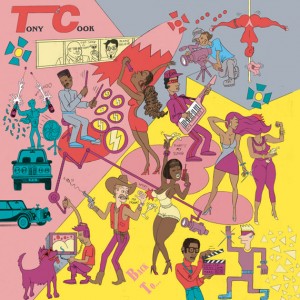
In conjunction with this week’s Noise Pop cover story on Peanut Butter Wolf (a.k.a. Chris Manak) and Dâm-Funk (a.k.a. Damon Riddick), over the next two days I’ll be sharing some quotes from the two, as well as music and video from a couple of recently-issued mid-1980s recordings that the pair love. First up is Tony Cook’s Back to Reality, which has just been released, with equally terrific orginal cover art, by Manak’s label, Stones Throw.

Back to Reality is a result of Manak’s passion for assorted independent singles by Cook, who drummed for James Brown and Etta James and performed odd jobs while recording his own music. Manak has remixed ten Cook tracks, some of them previously unheard, putting together a song collection that should draw some long-overdue attention to an artist who too often has had to put his creativity aside in order to pay the bills.

Tony Cook, “Heartbreaker” (feat. Vanesia Jean), original version:

Manak on Cook: “You’d think [the songs on Back to Reality] were 24-track, but he only worked on an 8-track. He was a good musician and producer. When you’re bouncing tracks, you have to have a good idea of what you’re doing. In those days it was hard to achieve such a full-sound [with an 8-track]. With Tony, I just started collecting his songs, and luckily enough, he had a MySpace page.

[In putting together Back to Reality] Tony was really cool about everything, really open to all of my ideas. He’s enjoying the accolades. We really want to get a band together.”

At Noise Pop, Manak shares a bill with Dâm-Funk, whose ’80s recordings Manak gathered and selected for last year’s Stones Throw release, Adolescent Funk. “When I first met Dâm,” Manak recalls, “I was DJing rare ’80s soul and funk, and he said, ‘Oh man, I’m so glad someone else is doing this.'”

m-Funk, “I Appreciate My Life,” from Adolescent Funk:

The duo’s shared sensibility was a factor in the genesis of Adolescent Funk. “Dâm said, ‘Wolf, this Adolescent Funk is yours, you pick the songs,'” Manak recalls. On the subject of Adolescent Funk‘s cover image of “kids getting excited to go out at night,” also drawn from Dâm-Funk’s archives, Manak comes correct: “I’ve never seen a cover that looks like that.”

Snap Sounds: Prefab Sprout

1

PREFAB SPROUT
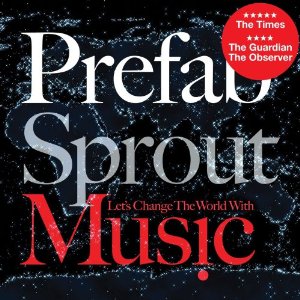
Let’s Change the World With Music
(Tompkins Square)

Strange world we live in, where the likes of Björk and Stephin Merritt have written musicals, but we don’t have one by Paddy McAloon, whose songs far outdo contemporary Broadway’s best in terms of melody, emotional poignance, and poetic wordplay. It’s a tragedy that a composer and vocalist of such unashamed purity has been stricken with Ménière’s disease, which effects hearing. But it’s a blissful pleasure to hear previously-unreleased music by one of the late-20th century’s greatest pop songwriters.

McAloon honored and even eclipsed the spirits of Elvis, Moondog, and ABBA on his masterwork, 1989’s Jordan: The Comeback, throwing in a pair of sublime songs about Jesse James, to boot. In the tradition of 1989’s Protest Songs, Let’s Change the World with Music is a remastered version of a previously-unreleased collection of demos, dating from 1992. It presents romantic music as religion, and for an atheist or agnostic or unsparing anti-sentimentalist, its fervor can be off-putting. But the loveliest moments — “God Watch Over You,” “Music is a Princess,” “Angel of Love” — are the stuff of conversion, as tuneful as Paul McCartney, and with a lot more integrity.

Prefab Sprout, “Music is a Princess,” from Let’s Change the World With Music:

Prefab Sprout, “God Watch Over You,” from Let’s Change the World With Music:


Live Shots: Claudette King, Biscuit and Blues, 02/04/2011

0

Do you ever watch a performer and find that they exude so much positivity and joy that you find your mouth stuck in a perpetual grin? And then you realize they’re singing the blues, rambling away about whiskey woes and dead beat good-for-nothing dudes, and you’re like “Why am I smiling?” This is what happened to me on Friday night for the Claudette King concert at Biscuit and Blues.

King not only has a set of powerful, bluesy pipes at her disposal, she also has a disposition of someone who just found herself in a candy shop and can’t stop giggling. The audience took it all in, clapping and hooting while simultaneously consuming huge plates of bbq ribs and mashed potatoes. King is the daughter of the much loved B.B. King, but I really think she stands on her own as a true blues singer, although I’m sure her father was an inspiration and an influence on her as an artist.

Oh and I have to mention this: Sam Love and I had the chance to meet King before the show and somehow the convo turned to love and marriage. During her set she sang a piece that’s all about “gettin’ some good lovin’.” Halfway through the song, King points to me and goes “See that photographer over there? She’s getting married to that dude next her. Now, they better get some good lovin’ on that wedding night! Well, they probably already are!” So in front of a sold out audience, King just told Sam Love and me a thing or two about getting down. Um, yeah – that just made my night! King has spirit, groove and a whole lot of blues and I can’t wait to see what she comes up with next.

Free jeans! — A Q&A with Caleb Nichols of Grand Lake

0

Hailing from San Luis Obispo, Calif. by way of Oakland, Grand Lake has become an art rock darling among the hip, not only because of its applauded 2010 LP Blood Sea Dream (Hippies Are Dead), but also for its cover of the theme song from The Adventures of Pete and Pete, originally done by Polaris. In March, the group is releasing an EP on Hippies Are Dead. In the interim, you can listen to the its take on Radiohead’s “The Tourist,” below. It was recorded in an art gallery in San Luis Obispo, and all of the reverb on the track comes from the room itself — nothing is digital. Grand Lake is set to rock out with Yuck and with Smith Westerns on Sun./13 at Bottom of The Hill. In advance of the show, I caught up with Grand Lake bandleader (and Port O’Brien alum) Caleb Nichols by email.

SFBG At your last show in San Francisco, Grand Lake performed as a duo. It was just you and John [Pomeroy]. But Grand Lake is usually a trio: you, John Pomeroy, and Jameson Swanagon, right? How did you three meet to form the band?
Caleb Nichols These days, Grand Lake is me plus various people – usually my boyfriend John, sometimes Jameson, and now my friend Josh Barnharn — also formerly of Port O’Brien — is working with us a bit. In the future I’m sure there will be other people involved too. I want some celebs. I have Bieber Fever.

SFBG What was your transition from Port O’Brien to Grand Lake like?
CN It was interesting. I went from playing big shows and touring all over the place to playing small rooms and warehouses in Oakland — not a bad change actually, except that I miss getting free jeans and stuff. I keep hoping to play Noise Pop, and then get invited to play a Diesel or Levi’s event, just so I can get some new pants. I don’t think I’ll feel like I’ve ‘made it’ again until somebody gives me stupidly expensive free jeans. Help.

Grand Lake “The Tourist” by elpuma70

SFBG Why the moniker “Grand Lake”?
CN Nothing to it. I was thinking up band names while driving to Oakland from L.A. This one sounded nice and easy.

SFBG Without referencing the names of genres, how would you describe the music Grand Lake puts out?
CN Our newer stuff is steeped in the coastal woods by our house. Birds. I’m listening to a lot of M. Ward, Microphones, Little Wings, even early Port O’Brien — getting back to the roots, you know?

SFBG Do you have a favorite Grand Lake song, and if so, what’s the background story behind it?
CN I really like “It Takes A Horse To Light A House.” The phrase was lifted from a flash card in the household of Mr. Van Pierszalowski. I think it has something to do with physics.

SFBG What’s your songwriting process like? What things/people/places do you draw inspiration from?
CN I write them in my head, and then I begrudgingly sit down and record demos. I’m an intuitive type of writer, and I dig minimalist poetry, especially Joseph Massey.

SFBG Describe Grand Lake (i.e., the music, its members, its overall vibe, etc.) in 10 words or fewer.
CN   Leaves are
        fall
        ing
        perfect
        ly.

SFBG You have a show coming up on Sunday, the 13th, yeah? So, what are you working on now? Anything in the pipeline?
CN Yes, indeed — we are grateful to be opening for Yuck and the Smith Westerns at Bottom of the Hill, one of my favorite places to play in SF. We’re releasing two EPs this year on Hippies Are Dead. The first one comes out this spring, and the second probably in the fall.

SFBG Any last words?
CN Please, somebody, give me some pants.

GRAND LAKE
With Smith Westerns, Yuck
Sun./13, 9 p.m.; $12
Bottom of the Hill
1233 17th St., SF
(415) 621-4455
www.bottomofthehill.com

Date with Satan? “Mosh Potatoes” to the rescue!

0

Sure, Julia Child was a badass in her own way — but do you think she ever blasted Seventh Son of a Seventh Son while cooking up beef bourguignon? (Gonna guess … not. I saw the movie so I’m kind of an expert.) For all the would-be chefs who prefer their kitchen adventures with a side of Satan comes Steve “Buckshot” Seabury’s Mosh Potatoes: Recipes, Anecdotes and Mayhem from the Heavyweights of Heavy Metal (Atria Books, $15).

Mosh Potatoes isn’t the first-ever metal-themed cookbook (see also: Hellbent for Cooking: The Heavy Metal Cookbook by Annick Giroux, which similarly features recipe contributions from famous headbangers). But Mosh Potatoes has the better name. Also, download site Loudtrax.com is running a contest (it ends Monday, a.k.a. February 14, a.k.a. Valentine’s Day) in conjunction with the book. For brave culinary warriors only, “We Dare You to Cook Up Lemmy!” offers Kilmister-approved prizes for folks willing to attempt the Motorhead legend’s contribution to the book. (Details here; the recipe involves chocolate syrup, curry powder, brandy, and fire, among other things. It is called “Krakatoa Surprise,” and I wouldn’t get near it even if you offered me a suit made out of Ove Gloves.)

For those with less suicidal palates, Mosh Potatoes offers a variety of appetizers (“Opening Acts”), main dishes (“Headliners”), and desserts (“Encores”), explained in first-person style by whoever contributed the dish. Some of the recipes are more Food Network-ready than others (Dave Witte of Municipal Waste‘s surprisingly sophisticated Turkey Gyoza with Soy-Vinegar Sauce; Aaron from Red Fang‘s Red Fang Pad Thai); some are worth reading just because of the anecdote (see: Life of Agony’s Joey Zampella’s lobster-hypnosis tips) or suspicious items in the ingredient list (I lost track of how many people included beer or booze, not for the food but for the chef to drink while cooking.)

I’m generally crap in the kitchen, but I can definitely mix a bunch of ingredients together and shove them in an oven. So in lieu of Krakatoa Surprise, I decided to make “The Best Blueberry Muffins,” created by Darkest Hour‘s Paul Burnette. I made sure to pick a recipe from a band I actually know and like; the book’s artists are overall pretty cool, but there are a few odd numbers (Mudvayne? Come on now.)

The muffins call for all the usual ingredients (butter, sugar, eggs, vanilla, flour, etc.) plus a boatload of blueberries. They were delicious, though the note about waiting for the muffins to cool before taking them out of the pan was key. Lots of blueberries = lots of molten blueberry juice waiting to sear anyone who dared try and nudge a muffin out of the pan before due time.

They were best within the first 24 hours — I’d recommend making them fresh before, like, a brunch and (after they cool off, f’reals) sharing them with a group. Not too sweet but full of blueberry goodness — perfect for hangovers. My batch of batter made around 18 smallish muffins and they were dee-lish.

Here’s my quarrel with Mosh Potatoes, and I suspect it’s simply due to the number, er, nature of the beast: though author Seabury says he tested out all the recipes while compiling the book, the instructions here aren’t as thorough as you’d find in a typical cookbook. If you’re a kitchen-phobe like me, expect to be intimidated by vague or imprecise instructions for some of the entries. Even something simple as muffins, I would’ve liked to have known how many muffins the batch was going to make before I started out, which is something a reg’lar cookbook would’ve divulged.

But while Julia Child always offered thorough instructions, she certainly didn’t pepper her recipes with drinking games (to my knowledge), and she never used Jägermeister as an ingredient (did she? If so, contact me ASAP with deets). Mosh Potatoes may be light on haute cuisine, but it’s heavy on nacho-salsa-guac varieties, groupie gossip, bad puns (“Kale ‘Em All,” har har), and does contain at least one recipe that should not be read while eating (talking to you and your barfy “ball cheese,” Michael Starr of Steel Panther). For those about to cook…

Snap Sounds: Darwin Deez

0

DARWIN DEEZ
Darwin Deez

(Lucky Number)

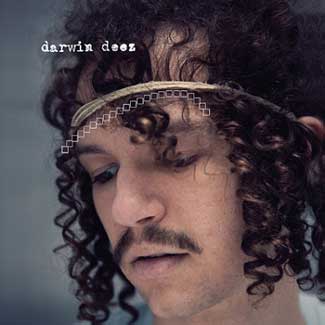
Phoenix is the most obvious reference for Darwin Deez‘s crisp, clean, and commercial tunefulness, with occasional traces of El Guincho — and Beck’s hipster clowning, which makes sense, as Deez made an unofficial 2009 video for Cornelius’s 2001 song “Fly.” (I’d hazard a guess that both Phoenix and Deez are influenced by the light beauty of Lô Borges.) My favorite aspect of lead member Darwin Smith’s songwriting and recording is the melodicism of his guitar sound — counter-melodic grace notes whirligig through the air on songs like “Deep Sea Divers,” “The City,” “Up in the Clouds,” and “Bed Space.” His lyrics and look are way too precious for my taste, but I might succumb with the repeated listens the better songs here attract. Guitar pop alert: In addition to some Deez clips, after the jump you’ll also find Damon Packard‘s HILARIOUS video for Buva’s “Hide Away,” with absolutely unparalleled animal control puppetry!

Darwin Deez, “Up in the Clouds,” from Darwin Deez:

Buva, “Hide Away,” directed by Damon Packard:

Darwin Deez, “Bed Space (Paramore-Style Music Video),” from Darwin Deez:

Snap Sounds: Demdike Stare

0

DEMDIKE STARE
Tryptych
(Modern Love)

There is the fraud that is witch house, and then there is the musical spell cast by Demdike Stare, a duo that takes its name from 17th-century accused witch Elizabeth Southerns. Tryptych gathers three near-LP-length EPs, and its highlights are numerous. While Liberation Through Hearing delivers on the title’s promise, my pick of the trio might be Voices of Dust, thanks to the swelling charge “Black Sun,” the frenetic “Hashshashin Chant,” and the seductive dirge “A Tale of Sand.” These songs conjure dark visions on their very own, but after the jump, check out some montage videos that Jonny Redman of the European cult movie site www.lovelockandload.net has created for Demdike Stare tracks. If you can I.D. any of the amazing source material he’s using, I’d love to know.

Demdike Stare, “Forest of Evil (Dawn),” from Tryptych and Forest of Evil:

Demdike Stare, “Hashshashin Chant,” from Tryptych and Voices of Dust:

http://www.youtube.com/watch?v=m0QCy-Nd40w

A public apology for recommending the recent Madlib live DJ set

5

When you recommend an event, you’re basically telegraphing expectations on an artist’s body of work. However, there is risk involved with live appearances.

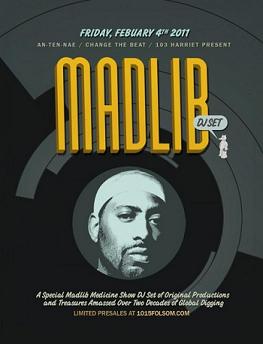
For instance, there was no way of knowing that Madlib would spend the majority of the first half of his Fri/4 show at 103 Harriet pausing to ask, “Who knows Quasimoto?,” “Y’all know J Dilla?,” and “Who’s from the West Coast?” in order to drum up applause, and presumably, interest. This is a classic stage trick, and a musician will usually try to drum up support two or three times, in order to work the crowd into a frenzy. Last night, however, no matter how many different questions he asked or how loud the response went, there seemed to be no pleasing Madlib, he just went on and on, frustrating those that had mistakenly come to listen to him play music.

It only got worse once the booing started. While people steadily trickled out of the room for the next half hour or so, the DJ became locked in a battle with one persistent heckler; every beat he attempted to play had a new chorus, as Madlib shouted “You’s a fool!” “Foooooooooool!” and numerous other taunts. Madlib angrily insisted that he was just playing with the heckler (and everyone else, apparently), but there was no high road in sight, the music never took the main stage again as the DJ held the mic hostage.

No, even as the next few jockeys crouched in the wings, waiting to try to resuscitate the room, Madlib would not relent. It was an extremely slow death, going on to the point that the shrunken audience remained through a morbid fascination, as if stopping to watch a suicide jumper. Management tried to talk him down, with whispers in his ear, only to have him respond on the mic that five minutes (“Five minutes?”) was not enough. If there was ever an argument for reinstating another classic stage trick, the shepherd’s crook, it was last night.

And for this, I apologize.

Snap Sounds: Charanjit Singh

0

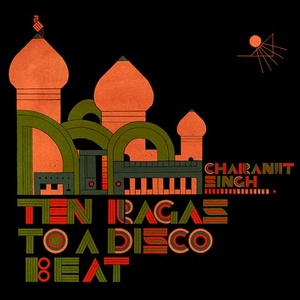
CHARANJIT SINGH
10 Ragas to a Disco Beat
(Bombay Connection)

Pure zaniness: acid house from 1982 — up to four years before the genre was invented — that demonstrates Bollywood composer Singh’s intuitive and innovative proficiency with the genre’s prototypical Roland keyboards and drum machines. This reissue removes the word synthesizing from the beginning of the album’s initial title, to downplay the kitsch factor, I guess. The mix of repetition and raga variation runs from meditative to maddening and is sometimes outright revelatory. One of a kind. After the jump, check out a comic and informative short movie from last year in which an enthusiast seeks out and meets Singh, and a few tracks from the album. As one online commentator suggests, it’s time to put a bindi on the acid smiley.


Charanjit Singh: 2010 (short film):

Charanjit Singh, “Raga Bhairav” (from 10 Ragas to a Disco Beat):

Charanjit Singh,  “Raga Megh Malkar” (from 10 Ragas to a Disco Beat):


Snap Sounds: James Blake

0

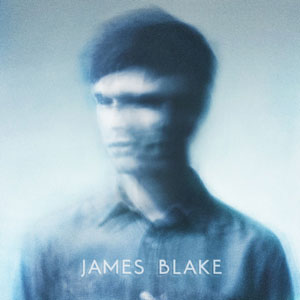
JAMES BLAKE
James Blake
(Atlas)

This is probably the most-anticipated album of 2011, thanks to the promise of Blake’s lavishly praised EPs, which have conjured the ghost of Aaliyah (“CMYK” draws brilliantly from “Are You That Somebody?”) while deploying a innovative sense of dubstep’s space and silence. (See the starts and stops and teasing not-there quality of “I Only Know (What I Know Now)” for an example.) Here, Blake adopts a more traditional pop vocal songwriting approach akin to his cover of Feist’s “Limit to Your Love,” which is included. The result teeters between Kid A-era Radiohead angst and something a lot more interesting and unique — a singular interplay between the possibilities of composition and production.
Whereas most recording artists are at best producers or composers, Blake fuses the two, wielding textural shifts like chord changes. The studio version of “Wilhelm Scream” isn’t as revelatory as the one from his recent BBC session, but other tracks on James Blake share that songs’ effective foregrounding of a simple, endlessly reworked, three-or-four-line lyrical mantra. The offhand conversational honesty of “I Never Learnt to Share” — entire lyric: “My brother and my sister don’t speak to me / And I don’t blame them” — goes from confessional solitude to Stevie Wonder-like funky freedom, remaining compellingly unhinged from start to finish. Where he goes from here will be interesting to see — and hear.

James Blake, “The Wilhelm Scream” (Live BBC Session):

http://www.youtube.com/watch?v=yCeKI4ck0sg

James Blake, James Blake album sampler:

Sound and environment: Moving beyond tropical bass with Chief Boima

0

A couple weeks ago I shot a long-winded email to former Bay Area DJ and producer Chief Boima. I had just finished speaking to Dun Dun of the Los Rakas crew for what eventually became this article, and he mentioned an upcoming EP with former Bay Area DJ and producer Boima. Now, if you don’t know about Boima, you need to get acquainted with the Banana Clipz digital funk on Ghetto Bassquake (for free download, too). It’s a joint instrumental album between Boima and Oro 11 of Bersa Discos that merges electronic architectonics with rhythms, melodies, and sound bits from the African diaspora.
Enough of that, though — Boima withstood my long-windedness, and after a couple exchanges, he did all the explaining.

SFBG Dun said that you do with instrumentals what Los Rakas does with lyrics. Do you see similarities in your respective styles? Your backgrounds and influences?
Chief Boima Well, when I first came across Los Rakas I had just come back from Panama, and I was on this high from hearing all the big carnaval tunes and the mix of sounds that reflected my musical and cultural background, but in a Spanish-speaking world. I grew up on the stuff that a lot of Panamanians grew up on, zouk, dancehall, soca, etc. So I was at the SF Carnaval and I heard Panamanian reggae but with this Bay Area flavor to it. (Check my initial reaction here, and I had been posting stuff like this.) I identified with what they were doing immediately.
Also, my father is from Sierra Leone, and I grew up with West African cultural influences, so I try to incorporate that musically into my electronic and hip-hop beats. I feel like Los Rakas do the same thing with Panama, and what Dun said is a great compliment.

SFBG Dun also mentioned a future EP coming up. What’s your process working with Los Rakas? What are some of your thoughts on this upcoming EP?
CB Well I linked up with Rico and Dun after not seeing them for maybe a year. I had given Rico some instrumentals and I never had gotten the chance to record on them. At that point I had a little studio set up in my spot in Oakland, so I invited them down to work on stuff. I think it was a real natural collaboration because we knocked out a lot of different stuff in like 6 months. They would come over and just freestyle or write. A lot of songs came out through different processes. Like one song they gave me an acapella and I constructed a beat around it. Other songs, I played them the beat and they’d just start writing to it, and we’d record. This would all happen after work and on weekends, so it was cool because the sessions were real compact but productive. I’m real excited about the EP. I think the material is strong and unique, so I can’t wait to see the reception.

SFBG “Tropical” or “tropical bass” seems to be the new term which has emerged to cover the range of new electronic music informed by both American and Afro-Latin styles of music, and their many convergences and hybrids. Do you see yourself as part of this tropical movement? Would you trace its form or define it differently?
CB I get the name tropical bass, but I see it akin to a label like world music that’s just kind of vague. I think the styles that are included under the genre are diverse musically, but they share similarities in the production process that is informed by increased access to technology and information across the world. It’s also really related to urban environments, like hip-hop and house were in their beginning stages. So I see all this music as a kind of continuum of hip-hop and electronic music from Detroit and Chicago. I see myself as part of that production process, more than a musical genre.
The genres I enjoy and work with are informed by their local environments and have names like hip-hop, dancehall, coupe decale, house, soca, and kuduro. They come out of specific regions, and their environments inform the music. A lot of the most popular rhythms are related to Africa and its diaspora, people who are generally scattered around the tropics. So that’s why people use tropical, but I wouldn’t necessarily describe myself or anyone else that way. It doesn’t really work anymore when you get [sounds like] Balani in Mali, or UK Funky, which are not tropical [in setting], but are still informed by the same aesthetics and production processes.

SFBG Do you try to digitize or transfer Afro-Latin/Caribbean folk sounds, genres, or ideas into electronic form?
CB Yes, but I don’t explicitly set that as a goal. I add in all my influences, which are informed by growing up in the Midwest and spending time on the West Coast as much as “folk” music. I was into hip-hop and electronic music growing up, and my older relatives would get down to music that was recorded by live instruments. I love those older tunes, they make me nostalgic, and make me feel connected to my culture, so I wanted to bring the feelings that I have when I hear them to a contemporary club space.

SFBG Our sense of place is now more amorphous than it was maybe thirty years ago. The Internet has in many ways uprooted us, and with regards to music, given us access to all sorts of folk genres, sonic forms of indigenous culture, traditional sounds and instruments, beforehand only accessible perhaps by being there or coming into contact with someone who was indeed there. To what extent do you think the open source availability of the Internet influences the way you channel folk forms of music and older sonic traditions in your production? In what way does place or region (whether the Bay, Cuba, NY, or online places, even the temperate range of tropical) inform your music?
CB I think the Internet has facilitated interactions and dialogue, but you can’t overlook things like increased immigration and traveling. A New York Times article recently said that New York is as diverse as it’s ever been. It claims that NY has more people born in other countries living there than ever before. The whole United States is changing. Europe is changing. The feedback loop to global centers of production in the “South” is super influential. International travel is becoming cheaper, so it’s easier to see the whole world. I think we’re going to reach an energy crisis in the near future where all that will be curbed a little, and the Internet will keep those interactions going, but we’re really living at the apex of an empire, just like the Romans, and the Ottomans, and the Greeks were super diverse civilizations informed by cultures from all over the world. So the Internet is just our current means of achieving those interactions. It takes the place of the role that sailors and desert caravans and conquerors had before. It’s just faster, and totalizing across the globe.
I travel a lot, and I have a diverse cultural background with multiple influences. That puts me in a certain position of influence because of my experience, but someone who has never traveled can have the same influences because I post about it on the Internet. But that doesn’t mean that it’s a new thing. Cotton and sugar comes from India. Potatoes come from Peru. Coffee comes from Ethiopia. These are things that are fundamental to our cultural identity today, but we don’t necessarily think about them as coming from other places. I feel like these things seep into everyday life, and they become a part of wherever they end up whether NY, London, Rio, Kampala, etc. But when they get to those places I think they change. In other words, environment’s influence is fundamental and if you listen hard you can tell the difference.


I’m not Das Racist, but…

0

Social construct-questioning rap duo (trio if you count the group’s hypeman, we should) Das Racist is coming to the Independent tonight – but don’t worry white people, the show’s already sold out, which means that rather than sit through a scene like this, you can read the following blog post and still be able to participate in discussions of the group’s artistic merit and stainless steel balls with your friends at brunch this weekend. 

Here we have assembled an Interwebs dossier on the three Wesleyan boys that would call racism on oh-so-many things in our modern day society. Who would have ever thought, back in those halcyon “Combination Pizza Hut and Taco Bell” days that we’d be calling them astute lyricists. Which we are. And to say they’re self-important, well that would be like saying it about Kanye West: a waste of time. Anyways, here’s your Das Racist 101.

This is the song the group got famous on. Everyone was really surprised when it’s subsequent offerings weren’t as surface-stupid. But those guys rap real good. Here’s one of my favorites, you can read it and then when you click on a phrase you don’t understand the website explains it for you! 

At times, writers are inspired by the group’s insistent riffs on social mores that serve to unfairly regulate our society. So much so, in fact, that they will write an article in which all capital letters are eschewed. That’s called “subverting hierarchy.”   

Writers loove to write about Das Racist (sup!) A New York Times Magazine writer made fun of Das Racist, but the group also made fun of a New York Times Magazine writer. At the same time. It was like a mobius strip of ill-concealed unease and disregard.  

Das Racist actually makes fun of many attempts to write about it, that is when they’re not systematically eviscerating socio-cultural commentary on their contribution to hip-hop. But Das Racist will offer unsolicited feedback about one music site’s reviews on another music site “in order” to educate future journalists. Don’t say they never gave you nothin’, stinky writers. 

Das Racist gets banned from bars, is given a second chance, and then gets banned from the bar again. They also took drugs in college to get over feeling weird about being there. That’s Wesleyan for ya.

Das Racist has the ability to make Katy Perry sound hallucinogenically more interesting than she normally does. Das Racist also makes a super hot mixtape, granted you like the word “fuck.” Who doesn’t, really? And the group makes a great music video.  

Here’s the concert deets, but like I said – no mas tickets available. Just read about them on the Internet, that’s what everyone else is doing. I’ll leave you with a haiku that Himanshu Suri wrote for that Flavorwire article I linked to in paragraph six.


Hip-hop dies each year.

How many lives hip-hop got?

Is hip-hop a cat?  


Das Racist 

Feat. HOTTUB and DJ Vin Sol

Weds/2 8 p.m., $15

The Independent

628 Divisadero, SF

(415) 771-1421

www.theindependentsf.com


Snap Sounds: Bill Orcutt

0

BILL ORCUTT
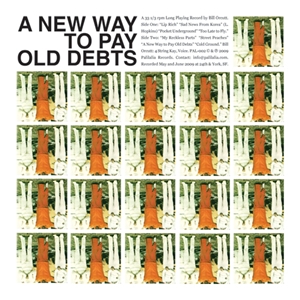
A New Way to Pay Old Debts
(Editions Mego)

Recorded at 24th and York in SF in the early summer months of 2009, these 14 songs are characteristically live enough to give the impression of hanging out in the same room as Orcutt, or an adjacent one, rather than hearing him filtered through a studio. The approach suits the furious storms of broken-neck blues — literally: Orcutt plays a repaired acoustic Kay guitar with two strings removed — that are unleashed from start to finish. Along with the Berkeley Guitar compilations and recent solo albums by Ava Mendoza and Sean Smith, A New Way to Pay Old Debts is a sure way to prove the Bay Area is a guitar nexus. Check out a track from the album after the jump.

Bill Orcutt, “My Reckless Parts” (from A New Way to Pay Old Debts):

http://www.youtube.com/watch?v=C0cHfjiyCtE

Snap Sounds: Deerhoof

0

DEERHOOF
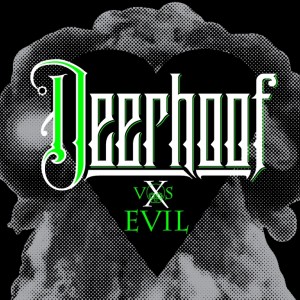
Deerhoof vs. Evil

(Polyvinyl)

Why “vs.” evil, Deerhoof? Wouldn’t Deerhoof is Evil be more challenging? No matter, while navigating familiar territory, the 12 songs here show the band is still inspired, and more graceful. The melodicism and gleaming decorative touches of “Behold a Marvel in the Darkness” and “No One Asked to Dance” match a romanticism that is winning. “Secret Mobilization” is a straight-up rocker, and the time-lapse bloom of “I Did Crimes for You” is just about gorgeous. In moving further beyond a Jane Birkin-meets-1990s-noise realm, East Coast counterparts Blonde Redhead seem to have gotten lost as of late. Not Deerhoof. A song from the album and album release show info after the jump.


Deerhoof, “Behold a Marvel in the Darkness” (from Deerhoof vs. Evil):

http://www.youtube.com/watch?v=rYK9rdkqL8c


DEERHOOF (ALBUM RELEASE SHOW)
with Ben Butler and Mousepad, Fred Frith and Prhilip Greenlief Trio
Fri/28, 9 p.m.; $16
Great American Music Hall
859 O’Farrell, SF
(415) 885-0750

Snap Sounds: Reuber

0

REUBER
Ring
(Staubgold)

This is the most characterful techno album in a long, long while. Instead of obeying minimalist trends, Reuber goes for something epic — Ring is Kosmische, but much more enthusiastic and lively and cheerfully vulgar (the finale verges on trance) than anything that sound’s huge cluster of revivalists have put forth in the past few years. The surging syncopation is Moroder-esque or Tangerine Dream-y rather than studious, and the album’s energy verges on gonzo, from the coiling, roiling metro-ride momentum of “Ringer” — the centerpiece and highlight — to the tribal fervor that lingers at the far edges of the two tracks before and after it. Performance clips of his Tuvan throat techno after the jump!
 

Reuber live — Nov. 16, 2008 (clip 1)

Reuber live — Nov. 16, 2009 (clip 2)


Snap Sounds: Munly and the Lupercalians

0

MUNLY AND THE LUPERCALIANS
Petr and the Wulf
(Alternative Tentacles)

Munly J. Munly has long been one of the most enigmatic yet prolific figures of the Denver Music scene. And with his latest lineup, concept band The Lupercalians, he’s tapped into a treasure trove of possibility. Ostensibly the first of a series of albums focusing on the imaginary world of the “Kinnery of Lupercalia,” Petr and the Wulf is a dark retelling of the Prokofiev children’s symphony, whose characters are trapped by circumstance and each other in a deadlocked circle of vengeance and fear.

Reminiscent of, yet literal worlds apart from, the down-home fire and brimstone twang of Munly’s other projects (particularly Slim Cessna’s Auto Club), the musical arrangements of Petr and the Wulf are far closer in nature to the original symphony than to a hootenanny: strings, flute, organ, and even a tuba are represented in the mix along with multiple percussionists, a solitary banjo, and intense vocal layers. The last track, an eight-minute spoken-word soliloquy against a wailing wall of percussion-driven sound, exalts in the Wulf’s unrepentant ways: “If I am to be your reprobate,” he intones, “I shall at least enjoy the malefaction,” a phrase that seems just as easily applied to Munly himself.

Munly and the Lupercalians, “Grandfater”

Snap Sounds: Wovenhand

0

WOVENHAND
The Threshingfloor
(Sounds Familyre)

Whether it be the western plains or the Appalachian highlands, David Eugene Edwards of Wovenhand has long looked to the American landscape for inspiration, crafting songs which weave these diverse geographies together into a bold tapestry of richly textured sound. And yet, dating all the way back to the early days of 16 Horsepower, Edwards has never shied away from sifting a few foreign elements into his bold Americana. With The Threshingfloor (Sounds Familyre, 2010), he sets his gaze eastward, blending elements of Eastern European, Middle Eastern, and Romani gypsy music into his stark melodies and faith-layered lyrics.

From the driving oud of the title track, to the celestial Hungarian flute of “Terre Haute,” from the singing grass to the orchard gate, The Threshingfloor is the musical incarnation of the toil and bonebreak of a late-summer harvest: a passionate reverberation of hard physical labor and a harder metaphysical reward.

Wovenhand, “The Threshingfloor”:

Conjuring sheaves of wheat from desert drone, and scorched earth from fertile finger-picking, Wovenhand continues to establish itself as the thinking fan’s indie band, constantly morphing musically yet never losing touch of its essential intention or intonation. As always there are a couple of songs that poke into the nether edges of its versatility: in this case “The Truth” plays like one of Edward’s early new wave-styled tracks from his Bloodflower days, and the straight-up cow-town rockabilly of “Denver City” serves up war whoops and vocal distortions. But the tracks that linger long after the CD ends definitely rank among the most rooted in devotion, particularly “A Holy Measure,” “Behind Your Breath,” and “Terre Haute.”
 
WOVENHAND
With Git Some and Common Eider, King Eider
Tues/25, 9 p.m.; $13
Bottom of the Hill
1233 17th St., SF
(415) 621-4455
www.bottomofthehill.com
www.soundsfamilyre.com

DJ Jazzy Jeff brings the “Summertime” to SF

0

Jeffery Allan Townes has never been a man of many words. Big Will was the one given to the neon pyrotechnic dancing on the show and in videos, after all. So it’s not surprising that now, over 20 years deep into his DJing career (which brings him to Mighty on Fri/21), Townes – a.k.a. DJ Jazzy Jeff – is not given to overexplaining his steez.

Hey Jazz, what’s up with your set these days? You’ve been reaching past the early ’90s hip-hop classics to diversify your time in the booth as of late, what are some of your favorite tracks to spin these days? You dig jazz (obviously), what’s up with that?

“I have a love of all music. Classics may be my fave though, just because there are so many to choose from,” was Jazz’s taciturn reply. DJs love music! Fantastic. But what’s snark ever done for us — Jazz has a decades-long reputation of being a high quality beat-bringer that started in Philly house parties, trucked through the Fresh Prince of Bel-Air days, and continued to thrive even when Will Smith moved on to summer blockbuster ass kicking. In 1990 (right as the TV show was taking off), Jazz started his own production company, A Touch of Jazz, that was responsible for a slew of platinum careers, including that of R&B poet Jill Scott and funkster Musiq Soulchild.  

And he’s still scratching. Jazz was famous for pioneering DJ moves like the transform scratch, a tricksy manuever involving repeated movement of the crossfader. In 2009, he joined the ranks of scratch legends Grandmaster Flash and DJ Shadow on the X-Box hit DJ Hero. Jazz tries to use his powers on the ones and twos for good: “I want to make people forget all of there problems and have a great  time. I want to take them on some sort of musical journey,” he wrote.

Multi-dimensional career aside, we were still gonna ask him about the Will Smith brood. Rumors are that Jazz will be producing a “Parents Just Don’t Understand” remix with none other than “Whip Your Hair” 10-year old “good as her dad” Willow Smith. He was coy about their collaboration, only saying that he hasn’t started working with her – yet – but he did sound impressed about Willow and brother “Karate Kid” Jaden’s genetic mastery of show biz. “I tease Will that they’re “The Incredibles” with all the talent they have,” Jazz lol’s.

There’s always gonna be that “Parents Don’t Understand”- “Summertime” laurel hanging over Jazz’s headphones – which, unlike a lot of celebrities who continue to be known for the glory days way back when doesn’t seem to bother him. “I’m not mad at the association. I don’t care why people know me or like me — as long as I can grab them through music it’s all good.”

Which makes sense – when you’re a DJ famous for making music that makes people get loose, wear their baseball hats rakishly askew, and dance around to, you’re not exactly trying to escape your reputation. Or get overmuch concerned with talking about it, it would seem. 


DJ Jazzy Jeff 

Fri/21 10 p.m.- late, $20

The Mighty

119 Utah, SF

www.119utah.com


Live Shots: Chaka Khan, The Warfield, 01/14/2011

0

Sometimes going to a show is not just about the artist, but also about the audience. Fans have the ability to bring so much energy and excitement to a performance, and that’s exactly what went down this past Friday night at the Warfield, when super diva extraordinaire Chaka Khan took the stage.

Of course, Chaka’s peeps were there to see her. (Dare I say worship her?) But they were also there to get loud, funky, and show off some mighty fine threads. Before the performance even started, people were up from their seats, dancing in the aisles, woot-wooting in unison, to whatever the heck the DJ decided to play next, as they waited for Chaka to come out.

But before Chaka, there was Chrisette Michele, an up-and-coming R&B artist, whose chill tunes and limitless eyelashes really could take your breath away. And then Chaka arrived and the theater packed with groupies totally lost it. For some reason the Warfield decided to put seats out for this show, but there was no way anyone was going to sit on them, at all. Chaka found her groove long, long ago, and she still has it — and somehow I know she always will.

Static at KUSF – station sold, public meeting planned

12


Today the University of San Francisco (USF) announced that its radio station, KUSF, is moving to an online-only classical music format.

Before its transmission unceremoniously went to dead air and static, KUSF had been on air for 34 years. An important independent media source, it’s been one of the Bay Area’s chief sites for new and innovative music, with DJ-informed playlists devoted to local, experimental, international, “loud,” and “other” music, in addition to genres such as rock/pop and hip-hop.

Some volunteers and staff members discovered the change in-person. “When I came in [this morning] they’d just shut things off,” said Miranda Morris, the station’s Marketing and Advertising Coordinator. “They proceeded to have facility management change the locks, and I was asked to go home for the day.”

According to a statement from the university, the FCC license for 90.3 FM has been assigned to the USC-owned Classical Public Radio Network, which plans to launch a Bay Area non-commercial classical musical station. “The move to online-only distribution gives KUSF a powerful opportunity to grow its worldwide audience,” the statement declares.

USF’s President, Rev. Stephen A. Privett, would not comment on the sale. His office directed calls to Gary McDonald, USF’s Assistant Vice President for Public Affairs, who did not respond by press time.

Before the sale, “there’d been rumblings in terms of a possible move [of the office],” said Irwin Swirnoff, the KUSF DJ behind “Sleeves on Hearts,” a weekly music show that frequently includes guest spots and interviews with local and touring musicians. “Our monthly staff meeting [in January] was eagerly anticipated because the move would be discussed. But on Monday we got an email that the meeting was canceled.

“We as volunteers decided we would meet anyway, even if it was outside. Right before the meeting, we got an email from the station manager that said staff were forbidden to meet because [the University] wasn’t ready to present details about the move, that we were moving within campus, and it would be business as usual. We took that statement at face value.”

At the moment, the amount that KUSF was sold for is unverified, as is the impetus behind the sale. “Steve Runyon, the station’s general manager, thinks the station and its transmitter were sold for about 5 million dollars,” said Andre Torrez, a KUSF volunteer. “The call letters were not sold.”

A meeting at which questions regarding the sale will be addressed is planned for 7 p.m. on Wed., Jan. 19, at Fromm Hall in the USF Campus at 2130 Fulton St., SF.

“We want to show the university the cultural and community importance of KUSF, and we want listeners to show their support of KUSF and independent media,” said Swirnoff.

“First of all this a school that prides itself on its Jesuit beliefs and values. Right now the values they are acting on are greed and dishonesty.”

Jukebox Jury: Anika

0

Anika‘s self-titled album on Stones Throw is getting play these days, but not as much talk about its cover versions as one might expect. The time seems right to serve up a few of the originals next to Anika’s versions and ask which you prefer. We’re able to do this with two songs: “Yang Yang,” written by Yoko Ono, and “I Go to Sleep,” written by Ray Davies and made popular by the Pretenders. (Produced by “beak,” a.k.a. Geoff Barrow of Portishead, Anika’s interpretation of the latter is very Joe Meek-meets-Cluster-meets Flying Lizards.) Before the jump, I’m also including links to some of the sources of other lovelorn tracks on Anika, including truly amazing live film/video recordings of the teen-death anthem “Terry” by Morrissey-favorite Twinkle, and Skeeter Davis’s plainly bereft “End of the World.”

Anika, “Yang Yang”:

Yoko Ono, “Yang Yang”:

http://www.youtube.com/watch?v=WWU67u3yW7s

Anika,”I Go to Sleep”:

The Pretenders, “I Go to Sleep”:

http://www.youtube.com/watch?v=u7cQyb4ejY0


Live Shots: Willie Nelson, The Fillmore, 01/11/2011

1

Sam Love and I rented a camper van and decided it would be our home for the next three weeks, as we made our way loop-dee-loop around the south island of New Zealand. A few hours in, we realized that there aren’t that many people in New Zealand (but tons of sheep!) and townships are quite spread out, resulting in very few radio stations.

This was a problem. We planned on driving, like hundreds of miles. But with no music? No way. No how! As we pulled into Queenstown, we had a mission. A thrift store needed to be found – CDs needed to be purchased. And there it was, the Salvation Army (or Sallie’s as they like to call it there). They did have CDs … and guess what? They were ALL Willie Nelson. Every-single-one. So we got one titled “Willie Stripped” which includes a CD booklet with photos of Willie sitting naked in the bath. Bonus! So now, when I think of New Zealand, I think of Willie Nelson, Sam Love and me belting out “Bring Me Sunshine” as we chugged in our little van through the mind blowing landscape of the Fiordland National Park.

So seeing Willie last night, live at the Fillmore, was like a triple/quadruple bonus. This man is an icon, who stands for peace, love and tons of free flowing whiskey. And even though he is such an American symbol, Willie Nelson will forever remind me of that New Zealand roadtrip.