• No categories

Bruce Blog

Cheating U.S. workers

0

The drive to strengthen workers’ rights is one of the most important ever undertaken by an American administration

Hundreds of thousands of workers are being cheated by U.S. employers who blatantly violate the laws that are supposed to guarantee workers decent wages, hours and working conditions.

That’s been going on for a long time, but rarely as extensively as it was during the administration of George W. Bush. Thankfully, Bush is gone. And thankfully, President Obama and his outstanding Secretary of Labor, Hilda Solis, have this month launched a major campaign to try to overcome the very serious damage of the past.

Even the name of the campaign itself is very un-Bush-like. “We Can Help,” it’s called. Bush, of course, never so much as offered help to badly exploited workers. But he did, of course, offer plenty of help to their law-breaking employers.

So, just what are Obama, Solis and their allies in the labor movement and elsewhere up to? They’re taking some very big steps to encourage workers to report employer violations of the wage and hour laws – especially low-wage workers, who are the most exploited. And they’re trying to respond as quickly as possible to the workers’ complaints.

Undocumented immigrants, who are perhaps the most exploited of all workers, are being encouraged to make complaints and are promised they won’t be punished for their illegal status. As the Labor Department explains, all workers deserve decent treatment, whatever their legal status.

Solis’ Labor Department has made the campaign a top priority. The department has already hired more than 250 new investigators, increasing the number by more than one-third. Even with a lesser number, the department recovered more than $170 million in back pay for more than 200,000 workers since Obama took office.

The key element of the campaign is to make sure that workers understand their rights under the laws and report any violations of those rights.

Certainly there’s no doubt that there are plenty of violations to report. For instance, a recent survey of workers in Los Angeles, New York and Chicago found thousands of rampant abuses of low-wage workers, many of them undocumented immigrants. They worked in stores, in factories and offices, at construction sites, in janitorial and food service jobs, in  warehouses, in  private homes  and elsewhere.

More than one-fourth of the workers had been paid less than the legal minimum wage, often by more than $1 an hour less. That amounted to an average of more than $50 week in underpayments on wages that averaged not much more than $300 a week to begin with.

Many of the workers had been denied overtime pay or had their pay illegally docked for the cost of tools or transportation. Some were forced work without pay before and after their regular work shifts. Slavery is the word for that – being forced to work without pay.

Although the Labor Department is relying primarily on workers themselves to report on employers’ labor law violations, the department is also getting help from the AFL-CIO, its affiliated unions and other worker advocacy groups.

They are distributing posters, fact sheets and booklets spelling out the wage and hour laws and how to report violations, arranging meetings between workers and Labor Department staffers, holding forums at union halls, and other steps.

The department also has begun a publicity campaign in English and Spanish that includes TV ads featuring prominent Latinos, such as Dolores Huerta, co-founder of the United Farm Workers union, and prominent Puerto Rican actor Jimmy Smits.

Win or lose, the drive to greatly strengthen workers’ rights is one of the most important ever undertaken by an American administration. And I strongly suspect it will come in a winner.

Dick Meister, formerly labor editor of the SF Chronicle and KQED-TV Newsroom, has covered labor and politics for a half-century. Contact him through his website, www.dickmeister.com, which includes more than 250 of his recent columns.


Memorial services set for Tricia Taborn–wear a dramatic hat!!

1

Memorial services for Tricia Taborn, the great San Francisco spirit who died April 7, have been set for Saturday, May 1, from 1 to 5 p.m.at Northbrae Community Church, 941 The Alameda, just south of Solano Avenue in North Berkeley.

Her husband Gerald Baron recommends that, in honor of Tricia’s love for flamboyant hats in dramatic colors, her friends come wearing  a dramatic hat in the Tricia Taborn tradition. More details will follow on this blog.

Click here to read Tricia Taborn’s obituary.


Editorial: No free ride for developers

0

Under Newsom’s approach, the current residents and businesses of San Francisco will have to put up millions of dollars to cover the costs created by market-rate housing developers

The dumbest plan the Newsom administration has cooked up in a long time continues to make its way through City Hall. The mayor wants to defer fees for housing developers as a way to “stimulate” the economy — despite the fact that the city’s own economist concluded the plan would lead to the creation of a relatively tiny number of jobs and perhaps 40 or 50 new market-rate condos over the next two years.

And the cost would be staggering. Over the next 15 to 20 years, depending on how much the housing market picks up, $43 million worth of fees developers typically pay before they break ground could be deferred, an analysis by Fernando Marti, a member of the Eastern Neighborhoods Citizens Advisory Committee, shows. The city would get the money eventually — but buildings would go up before the cash to provide water and sewer service, public transportation, schools, parks, and other amenities is in the city’s accounts.

At the same time, information released by the city last week shows that the gap between the cost of the infrastructure needed for the Eastern Neighborhoods plan and the fees developers will pay is at least $100 million, and perhaps as much as $234 million.

The message is clear. Under Newsom’s approach, the current residents and businesses of San Francisco will have to put up millions of dollars to cover the costs created by market-rate housing developers. In fact, Newsom’s administration is already suggesting special levies on property in the impacted areas to make up the difference.

In underserved areas like the Eastern Neighborhoods, where transit and open space are already inadequate to meet current needs, the situation is particularly harsh. “They want to have the Eastern Neighborhoods pay higher taxes than anyone else to mitigate the impacts of new stuff that was supposed to pay for itself,” planning activist Tony Kelly, who is running for District 10 supervisor, told us. “This is a non-starter.”

The problem is nothing new — although a lot of pro-development activists have been denying it for years: new high-end housing development doesn’t pay its own way. If more than 40,000 new residents are going to live in the southeast part of town, San Francisco will have to build schools, police stations, firehouses, bus and rail lines, parks, and in some cases new roads. Then the city will have to hire (and train) cops, bus drivers, firefighters, gardeners, and teachers. None of that is cheap — in fact, the Eastern Neighborhoods Infrastructure Finance Working Group estimates that the actual cost of providing basic infrastructure would be about $22 for every square foot of new development.

The developers howl at that sort of number and insist they can’t afford it, so the city is prepared to charge closer to $10 a square foot. To make up the difference in the Eastern Neighborhoods, the working group suggested some form of tax-increment financing — that is, the city would borrow against the expected new property tax revenues from the new development and use that to build infrastructure. The mayor took that off the table, wanting any new revenue to go right to the General Fund.

And, of course, under the mayor’s current plan, the modest fees developers actually have to pay will be deferred for several years, making the problem even worse. So the only way to pay for the costs of new housing development is some sort of special property-tax district in the affected neighborhoods.

Add to this the fact that the mayor’s proposal would mean the immediate loss of at least 400 affordable housing units, and the whole thing becomes untenable.

The supervisors have amended the fee-deferral plan to make it a bit less awful, but the whole approach is still completely backward. City fees aren’t holding up housing construction; the weak market and tight credit are to blame for that. And when those conditions change, developers will be poised — as always — to make a vast amount of money selling overpriced condos for millionaires in San Francisco. And if they can’t pay their own way, the city shouldn’t allow them to break ground.


Stop mistreating working women!

0

Dick Meister, formerly labor editor of the SF Chronicle and KQED-TV Newsroom, has covered labor and politics for a half century. Contact him through his website www.dickmeister.com

Although the global recession has had a serious impact on working men and women alike, two new reports make clear that women in the United States and throughout the world have suffered most because of long-standing discrimination.

The findings come from two highly regarded sources – the United Nations’ International Labor Office (ILO), and the New Center for American Progress (CAP), a think tank headed by John Podesta, former chief of staff for President Clinton.

Above all, the reports show the critical need to combat the worldwide mistreatment of working women, especially in these times of economic distress. The initial blow of the recession was felt in work dominated by men, such as finance, manufacturing and construction. But the main impact has shifted to other areas of work, including service work, where women generally are dominant.

Nevertheless, as the CAP report notes, “Most of the jobs that have been lost have been lost by men, leaving millions of women and mothers to support their families.”

That’s a rough task for many women. For though they’re usually doing essentially the same work as men, or the equivalent of it, women earn substantially less than the men – internationally, 30 to 40 percent less, despite a narrowing of the gap in recent years. The gap is narrower within the United States, but even so, U.S. women average only 77 cents for every dollar earned by men.

The pay gaps exist in part because, as the ILO’s Sara Elder says,  “We still find many more women than men taking up low pay and precarious work, either because this is the only type of job made available or because they need to find something that allows them to balance work and family responsibilities. Men do not face these same constraints.”

And it may get worse for women, even after the recession ends, since “we know from previous crises that female job-losers find it more difficult to return to work as economic recovery settles in.”

What’s needed everywhere, of course, is equal treatment for working women – paying them the same as men doing comparable work and otherwise treating them the same.

In the United States that would mean cracking down on the widespread violations of the 47-year-old Equal Pay Act that has never delivered its promise to guarantee women equal treatment on the job.

Better yet would be the passage – and strict enforcement  – of the long stalled Paycheck Fairness Act. It would close loopholes in the Equal Pay Act that have made it relatively easy for employers to discriminate against women in pay and other matters.

It’s estimated that if U.S. women were granted equal pay , they could each earn as much as $2  million more over the whole of their working lives. It’s estimated as well that equal pay would reduce the number of families living in poverty by as much as half.

Probably the most essential reform aside from paycheck fairness would be, as the CAP report recommends, worldwide updating of basic labor standards “to recognize that most workers have family responsibilities and need predictable and flexible work schedules, family and medical leaves and paid sick days.” That would assure that women “who stay employed to support their families” won’t end up unemployed because of  “family-work.

At least in the United States, those and other reforms would likely win broad public support. A recent poll cited in the CAP report showed that “a large majority of Americans support new, more family-friendly workplace policies.” Eighty-five percent “said businesses that fail to adapt to needs of modern families risk losing good workers.”

And businesses that fail to adapt will be furthering the mistreatment of working women that’s gone virtually unchecked for far too many years. No matter what the recession – or its end – brings, we will not have a truly healthy economy until working women are guaranteed their full rights.

Dick Meister, formerly labor editor of the SF Chronicle and KQED-TV Newsroom, has covered labor and politics for a half century. Contact him through his website www.dickmeister.com

Calvin Trillin: A guide to discussing the news for responsible citizens

0


Calvin Trillin: Deadline Poet

A guide to discussing the news for responsible and serious-minded citizens

Our healthcare’s finally getting well

But houses still are hard to sell.

Employment programs still won’t gel.

And ice caps melt away pell-mell.

One shouldn’t dwell upon Rielle.

But, still…

The Nation 4/12/2010

No time for a trade war

1

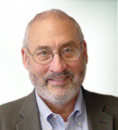
By Joseph E. Stiglitz

Here is our monthly installment of Joseph E. Stiglitz’s Unconventional Economic Wisdom column from the Project Syndicate news series. Stiglitz is University Professor at Columbia University, the winner of the 2001 Nobel Prize in economics and has a recently published book, Freefall .

NEW YORK – The battle with the United States over China’s exchange rate continues. When the Great Recession began, many worried that protectionism would rear its ugly head. True, G-20 leaders promised that they had learned the lessons of the Great Depression. But 17 of the G-20’s members introduced protectionist measures just months after the first summit in November 2008. The “Buy America” provision in the United States’ stimulus bill got the most attention. Still, protectionism was contained, partly due to the World Trade Organization.

Continuing economic weakness in the advanced economies risks a new round of protectionism. In America, for example, more than one in six workers who would like a full-time job can’t find one.

These were among the risks associated with America’s insufficient stimulus, which was designed to placate members of Congress as much as it was to revive the economy. With soaring deficits, a second stimulus appears unlikely, and, with monetary policy at its limits and inflation hawks being barely kept at bay, there is little hope of help from that department, either. So protectionism is taking pride of place.

The US Treasury has been charged by Congress to assess whether China is a “currency manipulator.” Although President Obama has now delayed for some months when Treasury Secretary Timothy Geithner must issue his report, the very concept of “currency manipulation” itself is flawed: all governments take actions that directly or indirectly affect the exchange rate. Reckless budget deficits can lead to a weak currency; so can low interest rates. Until the recent crisis in Greece, the US benefited from a weak dollar/euro exchange rate. Should Europeans have accused the US of “manipulating” the exchange rate to expand exports at its expense?

Although US politicians focus on the bilateral trade deficit with China – which is persistently large – what matters is the multilateral balance. When demands for China to adjust its exchange rate began during George W. Bush’s administration, its multilateral trade surplus was small. More recently, however, China has been running a large multilateral surplus as well.

Saudi Arabia also has a bilateral and multilateral surplus: Americans want its oil, and Saudis want fewer US products. Even in absolute value, Saudi Arabia’s multilateral merchandise surplus of $212 billion in 2008 dwarfs China’s $175 billion surplus; as a percentage of GDP, Saudi Arabia’s current-account surplus, at 11.5% of GDP, is more than twice that of China. Saudi Arabia’s surplus would be far higher were it not for US armaments exports.

In a global economy with deficient aggregate demand, current-account surpluses are a problem. But China’s current-account surplus is actually less than the combined figure for Japan and Germany; as a percentage of GDP, it is 5%, compared to Germany’s 5.2%.

Many factors other than exchange rates affect a country’s trade balance.  A key determinant is national savings. America’s multilateral trade deficit will not be significantly narrowed until America saves significantly more; while the Great Recession induced higher household savings (which were near zero), this has been more than offset by the increased government deficits.

Adjustment in the exchange rate is likely simply to shift to where America buys its textiles and apparel – from Bangladesh or Sri Lanka, rather than China. Meanwhile, an increase in the exchange rate is likely to contribute to inequality in China, as its poor farmers face increasing competition from America’s highly subsidized farms. This is the real trade distortion in the global economy – one in which millions of poor people in developing countries are hurt as America helps some of the world’s richest farmers.

During the 1997-1998 Asian financial crisis, the renminbi’s stability played an important role in stabilizing the region. So, too, the renminbi’s stability has helped the region maintain strong growth, from which the world as a whole benefits.

Some argue that China needs to adjust its exchange rate to prevent inflation or bubbles. Inflation remains contained, but, more to the point, China’s government has an arsenal of other weapons (from taxes on capital inflows and capital-gains taxes to a variety of monetary instruments) at its disposal.

But exchange rates do affect the pattern of growth, and it is in China’s own interest to restructure and move away from high dependence on export-led growth. China recognizes that its currency needs to appreciate over the long run, and politicizing the speed at which it does so has been counterproductive. (Since it began revaluing its exchange rate in July 2005, the adjustment has been half or more of what most experts think is required.) Moreover, starting a bilateral confrontation is unwise.

Since China’s multilateral surplus is the economic issue and many countries are concerned about it, the US should seek a multilateral, rules-based solution. Imposing unilateral duties after unilaterally labeling China a “currency manipulator” would undermine the multilateral system, with little payoff. China might respond by imposing duties on those American products effectively directly or indirectly subsidized by America’s massive bailouts of its banks and car companies.

No one wins from a trade war. So America should be wary of igniting one in the midst of an uncertain global recovery – as popular as it might be with politicians whose constituents are justly concerned about high unemployment, and as easy as it is to look for blame elsewhere. Unfortunately, this global crisis was made in America, and America must look inward, not only to revive its economy, but also to prevent a recurrence.

Joseph E. Stiglitz is a professor of economics at Columbia University and winner of the 2001 Nobel Memorial Prize in Economics. His most recent book, Freefall: Free Markets and the Sinking of the World Economy, is now available in French, German, and Japanese, and will be shortly available in Spanish, Italian, and Chinese.

Copyright: Project Syndicate, 2010.
www.project-syndicate.org

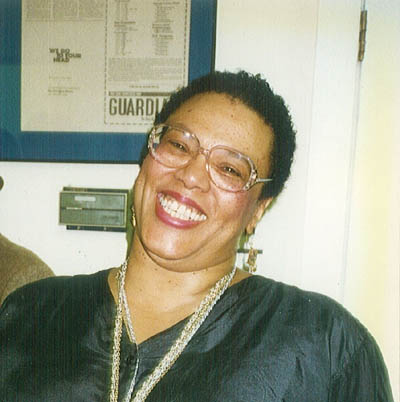
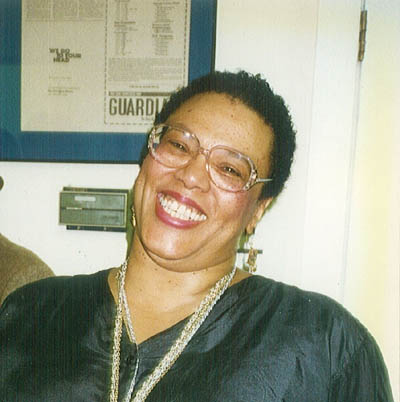
Tricia Taborn, a great San Francisco spirit, died today

21

I was saddened to hear that my former associate of many years, Tricia Taborn, died today (April 7) of cancer at Kaiser Hospital in Oakland.

She was four days shy of her 62nd birthday.

She entered the hospital on Saturday (April 3).  Her mother Neomi flew out from Dallas,  Texas,  to be with her the last few days. Her sister Ginny, her  two brothers Kenneth and Michael  and her husband Gerald Baron  were with her when she died. 

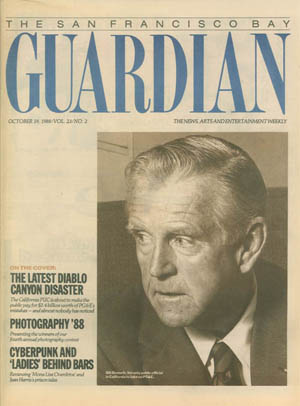
Tricia worked for me as assistant to the publisher from July of 1993 to April of 2000.

I always marveled  at how she  could jump into things and make them work.  Her friends and family say that she has been doing that throughout her life.  When she came to the Guardian, she had no newspaper or journalism experience, yet she quickly  fit in and

became a valuable employee able to handle most any administrative job that came along.  She kept me organized and she organized an endless series of events at the Guardian that included five annual awards contests and ceremonies (poetry, photography, cartoons, short stories, film treatments) that she structured to reflect the rich cultural diversity and artistic talent in San Francisco.

She also put on major events and dinners for the Northern California chapter of the Society of Professional Journalists and the California Freedom of Information Coalition during its early days.  She loved being a hostess and she did so with flair, a rollicking laugh, flamboyant hats and an ability to make the event important and distinctive and  to see that everyone was welcome and having fun. She served for several years as a director and treasurer of SPJ.

Victoria McDonnell, a friend that Tricia talked with almost every day on the phone, agreed that Tricia liked to jump into things.

“I know she joined her high school year book committee in Florida soon after arriving at the school.  In San Francisco, she did this at Major Ponds (a jazz club where she worked as a bartender in the late 1970s and early 1980s), the Bay Guardian, the Industry Standard (the late dot.com magazine),  OneWorld Health, and lastly selling real estate.

“Tricia was the first employee for One World Health,  It started out at (founder) Victoria Hale’s house and grew to be a world-wide multimillion dollar non profit pharmaceutical company.  The first ever non-profit pharmaceutical company in fact. Tricia thrived on ‘start ups.'”

Victoria Hale said that Tricia was “an amazing woman  who accomplished much, despite the obstacles, with humor and passion, while caring for others.  She had an especially good relationship with the Indian physicians who worked on leishmaniasis.  She demonstrated much courage and trust by becoming the first employee of OneWorld Health, while still on the first floor of our house.”

Tricia lived in Florida, Utah, Atlanta, Dallas, and other places because her father Raymond Taborn was an aeronautical engineer and moved about because of his work. She bought a house in Berkeley in 2004 with her husband Gerald Baron. 

For the last two years of her life, Tricia lived her dream: getting her independence by selling real estate and having fun doing it. She worked in the Berkeley office of Coldwell Banker, specializing in low price housing that many real estate people avoided. She was recently recognized as the top sales person in her office.  Her main hobby, according to her friends, was shopping and she was well known at Nordstroms, Macys and Ross department stores, as well as thrift shops and farmer’s markets.

Tricia was diagnosed in November with metastatic colon cancer. Over the last two months she rallied and was able to spend time and phone calls talking to her friends and “wrapping up her relationships in a positive and meaningful way,” as Victoria Hale put it.

Invariably, her friends reported that Tricia remained upbeat until she went into the hospital for the last time.

She leaves her mother Neomi Taborn of Dallas, a sister Ginny of Dallas, two brothers, Kenneth of Arlington, Texas, and Michael of Phoenix, Arizona, her husband Gerald Baron,  and Tommy, her beloved cat.  Services are pending and will be reported on this blog when they are set.


Editorial: Avoiding a taxicab meltdown

0

300 medallion holders who are now more than 70 years old will be allowed to sell their permits and pocket the money

The pilot program to privatize taxicab permits is a done deal. It’s a mistake, and its going to cause serious problems, but at this point, short of a new charter amendment, there’s not a lot anyone can do about it. Under the 2007 measure Proposition A, the Municipal Transportation Agency has the authority to revamp the rules for how cabs are regulated, and the MTA board, appointed by Mayor Gavin Newsom, has approved the privatization plan.

But the implementation rules can still be written to prevent some of the worst possible results.

Under the proposal, as many as 300 medallion holders who are now more than 70 years old will be allowed to sell their permits and pocket the money. The city will get 15 percent of the sale price. The idea is to encourage older drivers to retire. Since medallion holders must by law be active drivers – and the medallions are issued to drivers until they retire or die and the medallions are highly lucrative – the city’s taxi fleet includes a significant number of people who should no longer be behind the wheel.

But since 1978, the medallions have been issued to drivers for only a token fee – so in essence, the city just handed the older drivers a massive windfall. The permits – public property – are expected to sell for around $200,000, with holders pocketing 85 percent of that cash.

Newsom had much more ambitious plans – he initially wanted to put all the permits on the market and raise as much money for the city as possible. To her credit, Christine Hayashi, MTA’s taxi director, has held her ground and stuck to a plan she thinks will slowly address the problems in the current system (too many older drivers, too long a waiting list for permits).

But if this is going to be anything other than an utter disaster for cab drivers and the city, Hayashi needs to make sure that the permits don’t become speculative commodities – and that cab companies don’t use the new rules as a way to turn medallion buyers into indentured servants.

The rules still require that medallions be held by (and thus sold to) working drivers. But let’s face it: not many drivers have $200,000 cash on hand, so the system’s only going to work if the city can line up financing. Hayashi says she has several banks interested in making medallion loans (in fact, the banks will be the big winners here – medallions don’t depreciate and almost certainly won’t lose value over time). But the drivers will have to come up with a downpayment, probably 10 percent – and a lot of prospective buyers won’t have that much cash, either. One likely outcome: Cab companies will offer to front the downpayment for drivers who agree to associate their medallions with that company. Hayashi needs to press and enforce a rule that bans any cab company from lending money for permits. If this is going to benefit the average driver, the city ought to mandate low downpayments from participating banks or work with nonprofit microlenders to make those loans. (In fact, the city ought to be reaching out to the nonprofit finance community for advice on how to implement the entire program.)

MTA also needs to set a firm, reasonable cap on prices – at a level that a working driver earning the income possible at today’s fares can afford. Medallions can’t be allowed to sell at whatever the market will bear – or speculators and unscrupulous companies will be working all sorts of scams to cash in, the drivers will never have a chance, and the whole system will collapse.

True believers

0

The best season of the year is finally here. Baseball season. Sure, it’s only a game – but it’s a game that can be very serious business to the young people who play it.

I once was one of them, playing in the 1940s and 1950s on some of the many semi-professional teams that once were common in San Francisco, as in many other cities, as well as on teams in the Mendocino County, Southwestern Oregon and Western Canadian Leagues.

We were true believers, all of us. For there are no heretics on a baseball diamond. We accepted, without question, that the game must be governed by the mystical number of three and its multiples. Three strikes and you’re out. Three outs per inning. Nine players per side. Nine innings per game. Sixty feet, six inches from pitcher’s mound to home plate. Ninety feet between bases.

We knew, too, that there were foul lines within which we had to play, and that if we were hurt or weary, we had better stay in the game anyway. If we left, there was no returning. And we knew we had to do everything, to hit, to run and to field.

It was that way because there was no other possible way for it to be, the way it had been since the 1800s, when mustachioed men wearing dark suits and derby hats had laid down the rules.

The ball, for instance: It is ideally sized. At 5 to 5.25 ounces and 2.86 to 2.94 inches round, noted Roger Angell, baseball’s poet laureate, the ball “is a perfect object for a man’s hand,” one that “instantly suggests its purpose. . . to be thrown a considerable distance – thrown hard and with precision . . . If it were a fraction of an inch larger or smaller, a few centigrams heavier or lighter, the game would be utterly different. . . Feel the ball, turn it over in your hand . . .You want to get outdoors and throw this spare and sensual object to somebody.”

And that 90 feet between bases, as sportswriter Red Smith observed, “represents man’s closest approach to perfection. The fastest man in the world hits a grounder to an infielder, who fields it cleanly.  The hitter must lose the race.  But if the ball is bobbled or slowed by the grass, he can win. That’s perfect balance.”

There were unquestioned patterns of behavior as well as rules to guide us. We invariably swung three bats round and round over our heads – Louisville Sluggers, naturally – as we waited our turn to hit, and glared threateningly at the pitcher as we stood in the batter’s box pawing at the ground.

We glanced coolly down to the third base coaching box where coaches and managers ran their fingers over the bills of their caps, across the front of their uniform shirts, along the outside of their thighs, pinched their noses, scratched their ears, passing us secret orders we never dared challenge, telling us to hit, take a pitch, bunt.

In the field, we spat on the ground and into our gloves between pitches, rubbing the saliva deep into the leather of the pocket as we earnestly chattered, and chattered.
“Get him out, Mick . . . humbabe . . . you can do it . . . YOU CAN DO IT! Easyout! Easyout!

That’s how the professionals did it, and we were certain, many of us, that our play was preparing us for professional careers.

Like apprentices in any other trade, we had to master a special vocabulary. If a pitcher was left handed, he was a “southpaw,” of course. Men on base were “ducks on the pond.” As a second baseman or shortstop, I was part of the “keystone combination.”
Unfortunately, I was a “banjo hitter” as well, one of those batters who hit too many “Texas Leaguers” and easily caught “cans of corn,” and had too many “K’s” – strikeouts – charged against him.

We never asked how those terms came to be used, for the “why” of things didn’t concern young ballplayers, only the “what.”

We were careful never to step on the white foul line as we trotted on and off the field, although we did kick first or third base on the way by.  It was things like that which caused – or didn’t cause – all the otherwise inexplicable happenings in baseball, a game in which the element of chance was as important as the precise rules we followed.

There was no other way to explain such things as why a ball hit to a particular spot in one inning would take a nice easy bounce into your waiting glove, but in the very next inning, a ball hit to the same spot would bounce up and over your glove.

That’s why I ate a liverwurst sandwich on a roll – always liverwurst, always on a roll — and washed it down with tomato juice – always tomato juice – before every game.  Boy, how I learned to hate liverwurst; but once I had followed such a lunch by getting four hits.  It had to be the liverwurst.

Standing out on the field we learned our importance. We were part of a team, sure, but each of us stood apart, alone.  Each of us had a unique role to fill if we were to be a team, for there were nine of us, and nine different positions.

When the ball was hit, only one of us would reach it, and that player would be the center of attention; everybody would be watching, the other players, the spectators.  What happened next in the game would be solely his doing. He was in control of his destiny and the destiny of those around him.

It was the same when your team was at bat, in that tense, electric moment before the ball was hit and attention shifted from batter to fielder. You stood alone at home plate waiting for the pitch, the entire team relying on what you would do.

There was no faking and no hiding. You did what you did in public. Your performance, your past, was never forgotten. It was etched forever in cold, hard statistics, facts that could never be challenged. Whatever you did would be compared to what others were doing, or had done, no matter when they had done it.

You were competing against players alive and dead, whose recorded performances would never die. Many of them were hitting or had hit .300 – and so should you. Many were playing or had played errorless games – and so should you.

And those umpires we argued with – the argument was just another part of the ritual of baseball.  We knew a pitch was not a strike or a ball because it crossed or didn’t cross home plate at a point delineated in the rulebook. It was a strike or a ball because the umpire said it was a strike or a ball.  A base runner was not out because we tagged him before he reached the base.  He was out because the umpire said he was out.

We learned those things, and more.  But we, of course, thought we were only learning baseball.

Dick Meister, formerly labor editor of the SF Chronicle and KQED-TV Newsroom, has covered labor, politics and other matters for a half-century. You can contact him through his website, www.dickmeister.com, which includes more than 250 of his recent columns.

Si Se Puede: The legacy of Cesar Chavez

0

(Scroll down for a personal note from Dick Meister)

March 31st is a special day in eleven states, including California, and in dozens of cities and counties nationwide– and should be. It’s Cesar Chavez Day, honoring the late founder of the United Farm Workers union on the 83rd anniversary of his birth.

Certainly there are few people in any field more deserving of such an honor, certainly no one I’ve met in more than 50 years of labor reporting.

I first met Cesar Chavez when I was reporting on labor for the SF Chronicle.  It was a hot summer night in 1965 in the little San Joaquin Valley town of Delano, California. Chavez, shining black hair trailing across his smooth brown forehead, wearing a red plaid shirt that had become almost a uniform, sat behind a makeshift desk topped with bright red Formica, deadly serious but quick to smile.

 “Si se puede,” he said repeatedly to me, a highly skeptical reporter, as we talked deep into the early morning hours there in the cluttered shack that served as headquarters for him and the others who were trying to create an effective farm workers union.  “Si se puede — it can be done!”

But I would not be swayed.  Too many others, over too many years, had tried and had failed to win for farm workers the union rights they had to have if they were to escape the severe economic and social deprivation inflicted on them by their grower employers.

Although they did the indispensable work of harvesting the food that sustains us all, farm workers typically were paid at or below the poverty level, had few fringe benefits and very little legal protection from employer mistreatment. Most lacked even such on-the-job amenities as toilets and fresh drinking water, and were regularly exposed to pesticide poisoning and other hazards. Their living conditions were generally as abominable.

The futile attempts to arm the workers with the essential weapon of unionization began with  the Industrial Workers of the World,  who stormed across western fields early in the last century. Next came Communists, socialists, AFL and CIO organizers. All their efforts had collapsed under the relentless pressure of growers and their powerful political and corporate allies.

I was certain Chavez’ effort would be no different.  I was wrong.  I had not accounted for the tactical brilliance, creativity, courage and just plain stubbornness of Cesar Chavez, a sad-eyed, disarmingly soft-spoken man who talked of militancy in calm, measured tones, a gentle and incredibly patient man who hid great strategic talent behind shy smiles and an attitude of utter candor.

Chavez grasped the essential fact that farm workers had to organize themselves.  Outside organizers, however well-intentioned, could not do it. Chavez, a farm worker himself, carefully put together a grass-roots organization that enabled the workers to form their own union, which then sought out — and won — widespread support from influential outsiders.

The key weapon of this United Farm Workers union was the boycott. The UFW’s boycotts against grape and lettuce growers and wineries in the late 1960s won the first farm union contracts in history.  That in turn led to enactment in 1975 of the California law — also a first — that requires growers to bargain collectively with workers who vote for unionization. That has brought  substantial improvements in the pay, benefits, working conditions and general status of the state’s farmworkers.

The struggle was extremely difficult for the impoverished workers, and Chavez risked his health — if not his life — to provide them extreme examples of the sacrifices necessary for victory.  Most notably, he engaged in lengthy, highly publicized fasts that helped rally the public to the farm workers’ cause and that may very well have contributed to his untimely death in 1993 at age 66.

Fasts, boycotts.  It’s no coincidence that those were among the principal tools of Mohandas Gandhi, for Chavez drew much of his inspiration from the Indian leader.  Like Gandhi and another of his models, Martin Luther King Jr., Chavez believed fervently in the tactics of non-violence. Like them, he showed the world how profoundly effective they can be in seeking justice from even the most powerful of opponents.

As Chavez explained,  “We have our bodies and spirits and the justice of our cause as our weapons.”

What the UFW accomplished, and how the union accomplished it, will never be forgotten — not by the millions of social activists who have been inspired and energized by the farm workers’ struggle, nor by the workers themselves.

The struggle continues, for despite the UFW’s successes, most farm workers are still mired in poverty. But because of the union, they have a genuine hope of bettering their condition.

The UFW won important legal rights for them.  But more than union contracts, and more than laws, farm workers now have what Cesar Chavez insisted was needed above all else.  That, as he told me so many years ago, “is to have the workers truly believe and understand and know that they are free, that they are free men and women, that they can stand up and say how they feel.”

Freedom.  No leader has ever left a greater legacy.

Dick Meister, former labor editor of the SF Chronicle and KQED-TV Newsroom, is co-author of “A Long Time Coming: The Struggle to Unionize America’s Farm Workers (Macmillan). Contact him through his website, www.dickmeister.com.

Sidebar: Let’s truly honor Cesar Chavez

It’s way past time that Congress declared the birthdate of Cesar Chavez a national holiday. President Obama agrees. So do the millions of people who are expected to sign petitions being circulated by the United Farm Workers, the union founded by Chavez. And so do Democratic Rep. Joe Barca of California and 43 co-sponsors who have introduced a bill designating March 31st as Cesar Chavez Day nationwide.

President Obama says Chavez should be honored  “for what he’s taught us about making America a stronger, more just, and more prosperous nation” and for providing inspirational strength “as farm workers and laborers across America continue to struggle for fair treatment and fair wages.”

Like Martin Luther Jr., who’s rightly honored with a national holiday, Chavez inspired and energized millions of people worldwide to seek – and to win – basic human rights that had long been denied them, and inspired millions of others to join the struggle.  He, too, showed that the poor and oppressed can prevail against even the most powerful opponents – if they can organize themselves and adopt non-violence as their principal tactic.

A national holiday would be a well-deserved tribute, not only to Chavez, but also to Latinos generally, to organized labor and to all those who do the hard, dirty and dangerous work that puts food on our tables.

–Dick Meister

Editorial: CCA: Get it done by the deadline

1

If the mayor and his handpicked PUC director, Ed Harrington, and his handpicked commissioners dawdle and delay, they’ll be giving a corrupt private utility exactly what it wants

EDITORIAL San Francisco has been talking about creating a community-choice aggregation system to sell cleaner electricity for five years now. There have been hearings, studies, debates, discussions, and negotiations. And now it’s coming down to the wire: to avoid the prospect of a Pacific Gas and Electric Company initiative on the June ballot that cuts the city’s effort off at the knees, San Francisco officials need to get CCA up and running before June 8.

But the mayor and the Public Utilities Commission don’t seem to have any sense of urgency. And the slow pace of negotiations with the contractor that would handle the electricity purchases is playing right into PG&E’s hands. If the mayor and his handpicked PUC director, Ed Harrington, and his handpicked commissioners dawdle and delay, they’ll be giving the corrupt private utility exactly what it wants.

It’s particularly frustrating since Marin County – which, unlike San Francisco, has no federal mandate for public power – is far ahead of this city, has a CCA program ready to go, and most likely won’t be affected by the PG&E initiative. What on earth is wrong with San Francisco?
CCA would allow the city to create the equivalent of an electricity buyer’s co-op, so that San Francisco could purchase electricity in bulk from providers that offer a more renewable mix. PG&E gets only a tiny portion of its power from renewables. With the advantage of wholesale purchases and no corporate profit, the city ought to be able to offer lower rates.

The contractor that won the bid to put the co-op together, Power Choice LLC, is run by people with substantial experience in the electricity business. The city’s been in talks with Power Choice about a contract since Feb. 9 – but progress is slow.

Harrington told us that he expects to have “a contract as soon as we can get a contract” but there’s no deadline. That’s crazy – there’s a very real deadline looming, a time bomb planted by PG&E, and the city needs to take it seriously. PG&E has used vast sums of corporate money to place a measure on the June ballot that would make it almost impossible to create new public-power entities; Proposition 16 would mandate a two-thirds local vote for any public agency that wants to sell retail electricity. And the company is spending $35 million on a campaign to get it passed.

That election is barely two months away – and if Prop. 16 passes before San Francisco has a signed contract and a CCA program under way, five years of work, led by Sup. Ross Mirkarimi and the Local Agency Formation Commission, could be for nothing. The best chance the city has to fight global warming, promote renewable energy, take control of its own energy future, and offer more stable, cheaper rates to customers could be gone, forever.

What’s the hang-up? Nobody’s talking, since the negotiations are still ongoing, but from what we hear, Harrington, Newsom, and the PUC members are worried about “risk” – that is, the risk that the San Francisco CCA might have to raise rates above what PG&E is currently charging to make the numbers pencil out. (Part of the risk: PG&E will have 60 days to try to convince customers to "opt out" of the CCA and stay with the private utility. If a critical mass of residents and businesses doesn’t stick with the CCA program, the economics could be dicey.)

But the risk discussions are missing a critical point: PG&E’s rates are going to go up, dramatically, over the next few years. The company already has an application for a stiff rate hike this year, and it’s inconceivable that the utility’s prices will do anything but continue to climb. So meeting the current rates is a moot point. And as Harrington acknowledged, renewable power rates are "much, much more stable than natural gas, oil, those kinds of things."

Besides, the real risk is that San Francisco will continue to violate the Raker Act and allow PG&E’s illegal monopoly to continue unabated. The PUC needs to get moving, now. Harrington should set a deadline, well in advance of the June election, and direct his staff to make every possible effort to get the program going by then. Newsom should publicly announce his support for the project and demand that the PUC finish its work in time to beat PG&E’s anti-public-power measure (unless he wants to run for lieutenant governor as the mayor who went back on his own positions and allowed PG&E to control the city).

Because right now, the only thing that has to happen for PG&E to win is nothing. *

A good, stubborn Irishman

0

He was one of the last of the old-line labor leaders who once had great influence in many cities. He was Irish-Catholic, of course, a resident of the city’s principal working class district, and from one of the blue-collar trades.

 His name was Joseph Michael O’Sullivan. He had been president of the San Francisco Building and Construction Trades Council and for four decades head of its main carpenters union local.
 
Those who would truly understand the history of San Francisco and in  particular the key role organized labor has played in the city’s development, as in that of so many other cities, must pay attention to the memory of Joe O’Sullivan.

 He was a very good man. He also was a very stubborn man. I remember, for instance, that time in 1976 when he insisted on going to jail.

 O’Sullivan and three other construction union officials had been sentenced to jail for having led a strike by municipal craftsmen — who, as public employees, supposedly did not have the legal right to strike. O’Sullivan — then aged 74 and ailing — didn’t have to go to jail, since union lawyers were certain they could overturn the sentences, as they ultimately did.

The other union officials were content to have the lawyers handle the matter through court appeals, but O’Sullivan refused to be “a damned labor bureaucrat.” He preferred to be a labor activist, and so turned himself over to the San Francisco County sheriff for a five-day stay behind bars.

 O’Sullivan thought that was a small price to pay for the badly needed opportunity it would give the city’s unions to bounce back from the severe beating they had suffered in the craftsmen’s strike. Surely, he thought, the unions would mount a major campaign to protest the jailing of one of their best known and most respected leaders over one of the most fundamental of labor rights.

 That would draw maximum attention to the injustice of a court ruling which had denied that fundamental right to thousands of working people. It would show that the unions still were capable of the militancy that had earned San Francisco a reputation as one of the country’s premier “union towns.”

And it would be an ideal way for the unions to seek the support essential to restoring their former influence — the support of public employees and others in the heavily non-union white collar occupations that had come to dominate the city’s economy and that of so many other cities as unionized blue collar occupations once did.

 But the unions allowed Joe O’Sullivan to enter jail, and to leave jail, quietly and alone.  There were no protest rallies. no demonstrations, no marches, no angry speeches, no picketing, no sympathy strikes, none of the militant actions that had marked labor’s rise to economic, political and social prominence.
 There was only grumbling, among most of the city’s other labor leaders, that O’Sullivan was “grandstanding” in trying to get them top rely on more than just largely unpublicized courtroom arguments.

 But the arguments won the unions very little. About all they got was a narrow court ruling that, although indeed overturning the decision which had ordered the strike leaders to jail, did so on purely technical grounds. The ruling did not upset the previous finding that city employees could not legally strike.

Union strategists argue to this day whether activist tactics would have countered that anti-unionism of the 1970s, as they argue whether such tactics would be the best way to counter the anti-unionism that has plagued the labor movement of San Francisco and other cities ever since.
 
Such questions rarely even occurred to O’Sullivan. Activism was virtually the only tactic he knew. He learned it very early in life, as an 11-year-old telegraph messenger working with the Irish Republican Army in 1913, against the British forces occupying his native village of Tralle, County Kerry.

 Young O’Sullivan, entrusted by the British authorities to deliver messages to the occupying British troops, showed the messages first to local IRA leaders — despite the leaders’ warnings “that if I was caught, it would be the finish for me.”
 
 So why did he do it? “The messages were very important, they wanted them, and I felt that whatever I could do for Ireland … well, I would do it.”
 
 O’Sullivan left the messenger’s job to work with his father, a master carpenter and secretary of the carpenters union in Tralle, but continued his IRA activities.
 
“Whenever they were going to ambush a British lorry,” he recalled, “the IRA had to know when it was leaving to come out in the country. So I would put out a gas lamp, then another boy a mile away would see that and he would put out another one.  That would be the signal. The IRA would did a trench in the road and the lorry would fall into it. Our guys would call on them to surrender. We’d take the rifles and ammunition, and their shoes, and then make them walk back into town. . .
 “We never went to kill them — though people were killed, that was for sure . . . But there was more caskets going back to England than were being lowered in the ground in Ireland.”

 O’Sullivan’s IRA activities ended abruptly one night when two British soldiers burst into the cottage where he lived and dragged him away at gun point after O’Sullivan’s mother, certain he was to be killed, “started throwing holy water on me.”  Once outside the cottage, O’Sullivan knocked away the rifle of one of the soldiers and ran. Although wounded by the other soldier, he escaped, eventually making his way to the United States.

 O’Sullivan arrived in San Francisco in 1925, seeking work through the carpenters union local he eventually would head. At the time, the local was leading a major strike aimed at forcing contractors to bargain with construction unions on pay and working conditions.  Contractors had brought in more than 1,000 non-union strikebreakers from Southern California to replace the strikers, and they became the striking union’s main targets.

 “We formed ‘wrecking crews’ — ‘thugs,’ they used to call us in the newspapers — and got $1.50 a day from the union to get into a job, roust the scabs, break their tools,” O’Sullivan remembered. “When we shut a job down, nobody worked — they got out fast. We just used our hands, but we worked the scabs over good …. Maybe it was the right thing to do, maybe it was wrong — but that’s the way it got done.”

 At one point, O’Sullivan and the six other members of his “wrecking crew” were arrested for the murder of a strikebreaker. They were held three weeks, until two other men confessed to the killing.

 The construction unions lost the strike after a year of fierce struggle and O’Sullivan, blacklisted by employers, had to move to the  city of Vallejo across San Francisco Bay to find work. But he later returned to San Francisco and, in 1935, was elected to head Carpenters Local No. 22.  O’Sullivan held that job until 1977, helping lead carpenters and other building tradesmen in the struggles that finally won them the right to effective union representation.

 The relatively high pay and benefits and decent working conditions of the tradesmen today are taken for granted. But the workers wouldn’t have them if it wasn’t for their unions, which had to fight hard to get employers to grant even the simplest amenities.  O’Sullivan’s nephew James vividly recalled his uncle’s great pride in getting “fresh water and toilets on the job for the carpenters and a pension plan to take care of them when they grew old.”

O’Sullivan was stubborn to the end. He left union office only because of the adoption, over the strong objections of O’Sullivan and many of his local’s members, of an amendment to the carpenters’ national constitution that prohibited anyone over 70 — O’Sullivan included — from seeking union office.

But he was no grim advocate, despite his stubbornness, dedication and determination. I recall watching him turn on his considerable Gaelic charm in Israel, where he had gone with a delegation of touring labor leaders in 1973. The most important day of the tour was March 17, when the leaders were to confer with David Ben-Gurion.

As the senior member of the delegation, O’Sullivan greeted the legendary former prime minister, who stood before the visitors with an air of immense and almost forbidding dignity.  Joseph Michael O’Sullivan, looking and sounding only as someone who had been baptized in Ireland with such a name could look and sound, quickly broke the ice.

 “Mr. Ben-Gurion,” he said, “let me be the first to wish you a happy St. Patrick’s Day.”

Dick Meister, formerly labor editor of the SF Chronicle and KQED-TV Newsroom, has covered labor and politics fror a half-century. Contact him through his website, www.dickmeister.com, which includes more than 250 of his recent columns.

Harry Bridges: Working class hero

0

He died 20 years ago this month, but I can still see him, a tall, wiry, gray-haired, hawk-nosed man. I can hear him.

I see him pacing restlessly back and forth behind the podium at union meetings, nervously twirling a gavel, puffing incessantly on a cigarette. I hear him calling on members, white, black, Asian, Latino, in the broad accent of his native Australia, actually encouraging debate and dissent.

He died in San Francisco at the age of 88 — Harry Bridges, co-founder and for 40 years president of one of the most influential organizations in this or any other country, the International Longshore and Warehouse Union.

Bridges often was irritating to the ILWU’s friends and foes alike. He was irascible and obstinate. But he was unquestionably one of the past century’s greatest leaders.

Bridges was not in it for money. His salary as union president was far less than he would have made had he remained a working longshoreman. Bridges was in it because of his unswerving belief in “the rank-and-file,” as he once told me, a naive and inquisitive young Chronicle reporter — “the working stiff, that’s who! Can you understand that?”

I understood, eventually. And though I and others sometimes harshly questioned Bridges’ specific notions of what was needed by working people, none could legitimately question his incredible commitment, skill and integrity.

“The basic thing about this lousy capitalist system,” Bridges declared, “is that the workers create the wealth, but those who own it, the rich, keep getting richer and the poor get poorer.”

Harry Bridges’ lifelong task, then, was to shift wealth from those who owned it to those who created it – a task he began in 1934, when he led his fellow longshoremen in a strike aimed at winning true collective bargaining rights from West Coast shipowners.

As Bridges’ biographer Charles Larrowe recalled, “The shipowners said ‘no,’ said it with tear gas vigilantes and billy clubs wielded by cops who thought they were in the front lines against a communist takeover. Up and down the coast, the waterfront was turned into a battlefield.”

Police bullets killed 10 men during the three-month-long strike that also prompted a four-day general strike in San Francisco. But the longshoremen ultimately got what they had demanded, most importantly, an end to the notorious system of job allocation known as the “shape-up. “

Previously, jobs were parceled out by hiring bosses in exchange for kickbacks from the longshoremen who lined up on the docks every morning clamoring for work. But after the strike, job assignments were made by an elected union dispatcher at a union-controlled hiring hall, using a rotation system that spread the work evenly among longshoremen. The victory was downright revolutionary, and had a profound impact on workers and employers nationwide.

Within two years, Bridges joined with Lou Goldblatt, the brilliant young leader of the warehousemen who worked closely with longshoremen on the docks. They brought the two groups together into a single powerful union. the ILWU, under the banner of the newly established Congress of Industrial Organizations — the CIO.

The union ultimately extended its jurisdiction to virtually all waterfront workers on the Pacific coasts of the United States and Canada and to workers in a wide variety of occupations in Hawaii.

Bridges and Goldblatt used their potent base to help lead drives by other CIO unions that spread unionization from the waterfront to many other industries throughout the West at a time when employers treated workers as chattel, giving them little choice but to accept near-starvation wages and whatever else the employers demanded.

For the ILWU, Bridges and Goldblatt drafted a union constitution that still is unique in the control it grants members. Many union constitutions give members very little beyond the right of paying dues in exchange for the services provided them by the union’s securely entrenched bureaucrats. But the ILWU constitution guarantees that nothing of importance can be done without direct vote of the rank-and-file.

No one can take ILWU office except through a vote of the entire membership; no agreement with employers can be approved except by a vote of all members; the union cannot take a position on anything without membership approval.

The ILWU helped set important precedents that enhanced the civil liberties of everyone through its strong opposition to those who tried to deny constitutional rights to Bridges and others by labeling them Communists. The union’s efforts included an eight-year-battle against attempts to deport Bridges to Australia that ended with a Supreme Court ruling that enabled him to become a U.S. citizen in 1945.

The ILWU under Bridges was an outspoken foe of U.S. involvement in Vietnam, even at a time when most other unions enthusiastically supported involvement. And members backed their opposition to oppressive regimes abroad by refusing to handle cargo bound for or coming from their countries.

Thanks in large part to Bridges, the ILWU also was one of the first unions to be thoroughly integrated racially, and otherwise has always been probably the country’s most socially conscious union. And its members, now including women, have long been among the most highly compensated workers in any field, while at the same time benefitting from labor-saving equipment that makes their work easier. The new equipment and methods on the docks have brought employers higher profits, which union negotiators have made certain they share with dock workers.
The ILWU used its employer-provided pension funds to finance construction of low-rent apartments in San Francisco’s St. Francis Square, an extremely rare example of what the union calls “cooperative, affordable, integrated working-class housing.”

Harry Bridges led the way to that and much more which benefited the working stiffs to whom he devoted his life — and many, many others. As a newspaper that once reviled him as a dangerous radical said on his death, “He sought the best of all possible worlds. This one is much better due to his efforts.” Boy, is it.

Dick Meister, formerly labor editor of the SF Chronicle and KQED-TV Newsroom, has covered labor and politics for a half-century. Contact him through his website, www.dickmeister.com, which includes more than 250 of his recent columns.

End the nightlife crackdown

0

Harassing parties and clubs shouldn’t be a priority for a cash-strapped city’s police department

EDITORIAL Police Chief George Gascón has asked for more authority to crack down on rogue cops, and has vowed to clean up the small handful of bad actors who are giving the department an ugly reputation for violence and abuse. But before San Franciscans are going to trust the chief, he’s got to show some evidence that he’s serious — and cleaning up the mess that is Southern Station’s crackdown on nightlife would be a great place to start.

As Rebecca Bowe and Steven T. Jones report in this issue, the SFPD seems to be waging war on parties, clubs, and events, particularly in the SoMa area. And it’s not pretty. Undercover cops sneak into events then call in the troops, who make multiple dubious arrests and, according to widespread accounts, seize or destroy laptops and other DJ equipment and beat up and abuse participants.

It’s a pointless waste of law enforcement resources. In a city where a significant number of murders remain unsolved, where merchants complain about street-level crimes that could easily be addressed by foot patrols, and where the chief complains that he lacks the funds to address all the problems he’s facing, we can’t fathom why stopping nightlife is a top police priority. At the very worst, some participants and promoters might be guilty of holding an event without the proper permits — but nobody’s getting robbed, assaulted, or killed.

And the tactics used by the officers are needlessly violent, sometimes brutal. According to lawsuits and eyewitness accounts, SFPD officers have smashed laptops, kicked and beaten partygoers, and arrested people with little cause. A San Francisco lawyer is preparing to file a RICO Act lawsuit against the city, charging that the police are conspiring with state liquor-control officials to harass people engaged in lawful activity.

The policy directives behind this appear to come from Cdr. James Dudley, the former captain of Southern Station, and the officer most directly responsible for the crackdown is Larry Bertrand. Paired with an officer from the state Department of Alcoholic Beverage Control, Bertrand attends parties in plain clothes, sometimes dressed as a raver.

Complaints about Bertrand and the crackdowns are piling up. We’ve been writing about it for months. SF Weekly picked up the story last week. There are complaints filed with the city’s Office of Citizen Complaints and lawsuits pending. The chief may not have known about the problems at the crime lab, but he has to be aware of what Bertrand is up to.

Gascón should direct Dudley and Bertrand to back off — to halt the undercover work, end the seizure of personal property such as laptops and DJ gear (it’s not a crime to own a computer or speaker system), and work with the clubs and the nightlife community to devise reasonable systems for dealing with permit issues. And he needs to do it publicly, to let San Franciscans know that he’s addressing the issue.

Mayor Gavin Newsom needs to get involved too, and make a clear public statement that harassing parties and clubs isn’t the top priority for a cash-strapped city’s police department.

Let the Eagle Fly!

1

The long and dramatic struggle for basic labor and civil rights by the California farmworkers led by Cesar Chavez is wonderfully told in an exceptional new musical, “Let the Eagle Fly,” that’s now playing a limited engagement in San Jose, the city where Chavez began the organizing career that brought him worldwide acclaim.

The musical score is excellent, as are the musicians and the actors – some in their teens or younger, others with broad experience. They tell the story of Chavez and the early struggles of the farm workers union he founded in 1964 and led for three decades – in lively song and dance, often with humor. And for all its artistry, the story they tell is accurate, down to small details. I know first-hand of the events dramatized, since I covered them in detail as the SF Chronicle’s labor editor.

Chavez’ start as an organizer for the Community Services Organization, his unwavering belief in the non-violent tactics of Mohandas Gandhi, his fasts and other personal sacrifices and those of his sometimes reluctant family . . .

The rushed and exhausting motions of vegetable pickers, wielding 18-inch hoes as they scurry over the fields like spiders, bent double, rhythmically bending, stooping and straightening, as they scoop up lettuce, carrots and other produce. Bend and pick. Bend and pick. Endlessly . . .

The fruit pickers, making their way swiftly through vineyards, reaching high to pluck the grapes. Reaching, stretching and picking. Reach, stretch, pick. Endlessly. Fast and endlessly.

The racist growers who fought fiercely to avoid giving their Chicano grape pickers decent pay and working conditions . . . the Kern County sheriff who sided with the growers . . . the dogged determination of Chavez and his followers . . . the nationwide grape boycott that finally won the workers the right to bargain with the growers and, in doing so, finally win union contracts guaranteeing them decent pay and working conditions . . . Chavez’ untimely death in 1993 . . .

The words and music show and tell all that and much more, and the audience can’t help but be drawn into the dramatic finale. We were quickly on our feet, cheering, applauding, clapping rhythmically, singing along with the actors, followed by a standing, cheering, much deserved ovation.

Only four more performances are left in the run of “Let the Eagle Fly” in the San Jose City College Theater – Thursday March 25, at 8 p.m.; Friday March 26, at 8 p.m.; Sunday, March 28, at 2 p.m.; and a final performance Wednesday, March 31, at 7:30 p.m. Details on ticket availability, prices and directions are available at www.lettheeaglefly.com.

Viva la huelga!

San Francisco writer Dick Meister is the co-author of “A Long Time Coming: The Struggle to Unionize America’s Farm Workers (Macmillan).

Editorial: Who wins with the Transamerica condos?

4

The developers aren’t offering to build something that will create permanent jobs for local residents. They want a huge favor from San Francisco: they want the city to ignore its own planning rules, ignore its park-shadow ordinance, and hand over a piece of city street, just to make their project more profitable.

EDITORIAL  As the Planning Commission prepares to vote March 18 on a pointless and overly large condominium complex next to the Transamerica Pyramid, let us take a moment to look at who would benefit from the project’s approval.

The project sponsors, Aegon USA and Lowe Enterprises, would get the right to shadow public parkland, turn a city street into a private parking garage, and construct a project far beyond the allowable height for the location. They’d construct 248 luxury condos, which the city doesn’t need and will do nothing for the housing crisis. The developers would also make a lot of money on the deal; that’s why they want spot zoning to double the allowable height. When it comes to these sorts of projects, taller is more profitable.

And the two companies asking for these civic favors aren’t exactly San Francisco outfits that share the city’s values.

Aegon is a giant insurance and finance company based in the Netherlands that bought out the local Transamerica Company in 1999. The money Aegon makes on the deal won’t stay in San Francisco; even Aegon’s American subsidiary doesn’t have a home office here.

The company’s PAC is a major contributor to Republican causes and candidates (although some Democrats get money, too, particularly the likes of Sen. Blanche Lincoln of Arkansas, one of Aegon’s top-dollar friends, who is among the main reasons the Senate won’t pass a public option for health insurance). And over the past 10 years, Aegon PAC has contributed $39,500 to Lifepac, a Columbus, Ohio-based anti-abortion group.

Then there’s Lowe Enterprises, based in Los Angeles. The company’s chairman, Robert Lowe, and his employees were among Arnold Schwarzenegger’s top donors, with a whopping $159,500 in contributions to the Republican governor. Lowe is also a big supporter of Meg Whitman’s campaign for governor, and is on her finance committee.

So here we are in Democratic San Francisco, with a mayor who will be running on a Democratic ticket for statewide office (and a mayor, by the way, who loves to talk about supporting small local business and keeping money in the local economy) preparing to give a huge financial gift to a pair out out-of-town companies that share their wealth with right-wing Republicans.

Of course, it’s no surprise that a real estate developer would support Republican candidates — and it’s no surprise an insurance company would be working against health care reform. And if the city granted or denied building permits based on the politics of the applicant, there’d be serious legal consequences (and there should be). These things ought to be decided on the merits; developers who contribute to Democrats (like the Shorenstein Company) deserve the same scrutiny as the ones who give to Republicans.

But this isn’t a typical development deal. Aegon and Lowe aren’t asking for a permit for a project that meets the current zoning laws. They aren’t offering to build something that will create permanent jobs for local residents. They want a huge favor from San Francisco: they want the city to ignore its own planning rules, ignore its park-shadow ordinance, and hand over a piece of city street, just to make their project more profitable — and to give them more money that can go to opposing health-care reform and opposing abortion rights and electing right-wing Republicans. And they’re offering the city nothing in return.

On the merits, the project richly deserves to be rejected. The only reason to approve it is to grant a civic boon to a bunch of out-of-town corporations that ought to be embarrassed to be asking a favor from San Francisco. And the Planning Commission should be embarrassed to consider granting it.

Editorial: Needed — some teeth for the San Francisco sunshine law

2

EDITORIAL The San Francisco Sunshine Ordinance is a national model for open government, the first and strongest local sunshine law in the country. It was written to improve public access to government records and meetings, and to clear up some of the problems and loopholes in state law. On paper, it makes San Francisco a shining example of how concerned residents can come together and eliminate secrecy at City Hall.

But 17 years after its passage, it’s still not working. That’s because city officials routinely ignore the law — and the city attorney, the district attorney, and the Ethics Commission have utterly failed to enforce it.

Here’s how it works, in theory: A San Franciscan makes a request for records in the office of a public official. The official is supposed to make the documents available promptly — within 48 hours for immediate disclosure requests and within 10 working days for routine requests. If the records aren’t forthcoming, the resident can complain to the Sunshine Ordinance Task Force, which brings both sides in, holds a hearing, gets legal advice, and determines whether the complain is valid. If the task force finds that the official should have made the records available, the matter gets referred to the Ethics Commission, which can file charges of official misconduct.

Here’s how it happens in practice: Some officials, like Mayor Gavin Newsom, simply ignore sunshine requests, or delay responding well beyond the statutory limit, or refuse to release records on grounds that clearly violate the law. The task force holds a hearing, and nobody from the Mayor’s Office shows up. Then the task force finds in favor of the person seeking the records, sends the file to the Ethics Commission — and the whole thing dies.

Not once in the history of the ordinance has the Ethics Commission actually filed misconduct charges. Not once. Violating the Sunshine Ordinance is a crime, but D.A. Kamala Harris has never once prosecuted a miscreant. And public officials who disobey the law hide under the protection of advice from the city attorney — although that advice itself is secret.

The message to City Hall is clear: you can defy the sunshine law with impunity; nothing will ever happen.

The task force is offering a series of amendments to the law that would improve enforcement and give the measure some teeth. The supervisors ought to support those proposals — but the board ought to go even further.

The proposals would turn the task force into a commission, which is a fine idea. But more important, the new commission would have something extraordinary: a $50,000 litigation fund to pay for an outside lawyer — not the city attorney — to sue officials who flout the law. If those lawsuits succeed, the city would have to pay attorneys’ fees, which would replenish the fund. And the very threat of that could have a huge impact on the way City Hall responds to sunshine requests.

We support the plan — and since nobody else will enforce the law, we think the task force (or commission) needs the authority to do it. The body overseeing sunshine complaints should be able to force public officials to release records or open meetings; rulings from that body should have the force of law. That works well in Connecticut, where a state Freedom of Information Commission has the authority to order anyone, from the governor to a city council, to open up files. Government in that state hasn’t become unwieldy; officials secrets haven’t fallen into the hands of terrorists. But ordinary citizens who can’t afford a lawsuit have a forum to force reluctant public officials to do their business in public.

San Francisco should adopt that model, and the sooner the better.

Safe at last?

0

Dick Meister, former labor editor of the SF Chronicle and KQED-TV Newsroom, has covered labor and politics for a half-century. Contact him through his website, www.dickmeister.com, which includes more than 250 of his recent columns.

It’s called musculoskeletal disorder or MSD, the most common of the serious injuries suffered by U.S. workers. But because corporate employers fear that greater public awareness would force them to spend more on job safety, MSD has remained one of the least understood of injuries.

The latest government figures show that more than 60 percent of the million or more on-the-job injuries reported annually are MSD-related. Some of the victims are permanently disabled, and many more have to take time off from work while their injuries heal.

The victims include computer operators, factory and construction workers, meat and poultry processors, hospital and restaurant employees, supermarket clerks and many others.  They suffer serious neck, shoulder and back problems, chronically sore arms and wrists and other repetitive motion injuries resulting from work that requires them to be in almost constant motion, bending, reaching, typing, or frequently lifting heavy objects.

The first serious government efforts to combat the rapidly growing problem of MSD came ten years ago, in the final days of the Clinton administration. The Occupational Safety and Health Administration (OSHA) issued a lengthy set of so-called ergonomic regulations that were designed to lessen the dangers of MSD.

The regulations, which had taken three years to draft, covered such things as how long and how many breaks workers in particular occupations should get, what protective equipment should be issued to them, how their work stations should be designed and hundreds of related matters.

That was way too much for the U.S. Chamber of Commerce and other corporate employer representatives. They got their Republican allies, who controlled Congress, to repeal OSHA’s regulations just before the decidedly anti-labor George W. Bush succeeded Clinton.

Certainly neither Bush nor his OSHA appointees would even consider such impingements on their corporate friends. Signing the legislation that repealed the ergonomic regulations was one of Bush’s first acts as president. He followed that quickly by revoking 19 previously approved grants that were to go to unions, universities and labor-management groups to finance safety and health training programs for small business employers and particularly vulnerable groups such as construction workers and immigrants.

Bush’s OSHA appointees, many of them former executives of the industries they were supposed to regulate, blocked, withdrew or weakened dozens of other safety regulations in addition to those covering MSD. They discontinued safety education and training programs, worked with Congress to cut their own barely adequate budgets and instead of enforcing the safety laws, stressed  “voluntary compliance” by employers.

But now comes Barack Obama and his labor and Democratic Party allies to resume the fight for the ergonomic regulations President Clinton had been forced to abandon.

The initial proposals of President Obama’s OSHA appointees are modest. They’re asking merely that employers note, on the accident reports they are required to file, whether the injury was MSD-related. No such designation is currently required, which makes it difficult – if not impossible – for OSHA to collect the accurate data required to develop a program for effectively dealing with MSD, the most serious safety problem faced by American workers.

Corporate employers headed by the Chamber of Commerce oppose even that simple reform. They fear it would be a first step toward development of an ergonomic safety program that could cost employers millions of dollars to implement.

It also could bring badly needed protections to U.S. workers. But workers’ concerns are, of course, of secondary interest to the Chamber of Commerce and its Republican friends. They’re not much interested in helping working people. Their role is to further the profit-seeking of employers, even if that should come at the expense of the men and women who do the nation’s work.

Dick Meister, former labor editor of the SF Chronicle and KQED-TV Newsroom, has covered labor and politics for a half-century. Contact him through his website, www.dickmeister.com, which includes more than 250 of his recent columns.

Stiglitz: The Dangers of Deficit Reduction

0

By Joseph E. Stiglitz

Here is our monthly installment of Joseph E. Stiglitz’s Unconventional Economic Wisdom column from the Project Syndicate news series. Stiglitz is University Professor at Columbia University and the winner of the 2001 Nobel Prize in economics. His forthcoming book Freefall will be published this winter.

NEW YORK – A wave of fiscal austerity is rushing over Europe and America. The magnitude of budget deficits – like the magnitude of the downturn – has taken many by surprise. But despite protests by the yesterday’s proponents of deregulation, who would like the government to remain passive, most economists believe that government spending has made a difference, helping to avert another Great Depression.

Most economists also agree that it is a mistake to look at only one side of a balance sheet (whether for the public or private sector). One has to look not only at what a country or firm owes, but also at its assets. This should help answer those financial sector hawks who are raising alarms about government spending. After all, even deficit hawks acknowledge that we should be focusing not on today’s deficit, but on the long-term national debt. Spending, especially on investments in education, technology, and infrastructure, can actually lead to lower long-term deficits. Banks’ short-sightedness helped create the crisis; we cannot let government short-sightedness – prodded by the financial sector – prolong it.

Faster growth and returns on public investment yield higher tax revenues, and a 5 to 6% return is more than enough to offset temporary increases in the national debt. A social cost-benefit analysis (taking into account impacts other than on the budget) makes such expenditures, even when debt-financed, even more attractive.

Finally, most economists agree that, apart from these considerations, the appropriate size of a deficit depends in part on the state of the economy. A weaker economy calls for a larger deficit, and the appropriate size of the deficit in the face of a recession depends on the precise circumstances.

It is here that economists disagree. Forecasting is always difficult, but especially so in troubled times. What has happened is (fortunately) not an everyday occurrence; it would be foolish to look at past recoveries to predict this one.

In America, for instance, bad debt and foreclosures are at levels not seen for three-quarters of a century; the decline in credit in 2009 was the largest since 1942. Comparisons to the Great Depression are also deceptive, because the economy today is so different in so many ways. And nearly all so-called experts have proven highly fallible – witness the United States Federal Reserve’s dismal forecasting record before the crisis.

Yet, even with large deficits, economic growth in the US and Europe is anemic, and forecasts of private-sector growth suggest that in the absence of continued government support, there is risk of continued stagnation – of growth too weak to return unemployment to normal levels anytime soon.

The risks are asymmetric: if these forecasts are wrong, and there is a more robust recovery, then, of course, expenditures can be cut back and/or taxes increased. But if these forecasts are right, then a premature “exit” from deficit spending risks pushing the economy back into recession. This is one of the lessons we should have learned from America’s experience in the Great Depression; it is also one of the lessons to emerge from Japan’s experience in the late 1990’s.

These points are particularly germane for the hardest-hit economies. The United Kingdom, for example, has had a harder time than other countries for an obvious reason: it had a real-estate bubble (though of less consequence than in Spain), and finance, which was at the epicenter of the crisis, played a more important role in its economy than it does in other countries.

The UK’s weaker performance is not the result of worse policies; indeed, compared to the US, its bank bailouts and labor-market policies were, in many ways, far better. It avoided the massive waste of human resources associated with high unemployment in America, where almost one out of five people who would like a full-time job cannot find one.

As the global economy returns to growth, governments should, of course, have plans on the drawing board to raise taxes and cut expenditures. The right balance will inevitably be a subject of dispute. Principles like “it is better to tax bad things than good things” might suggest imposing environmental taxes.

The financial sector has imposed huge externalities on the rest of society. America’s financial industry polluted the world with toxic mortgages, and, in line with the well established “polluter pays” principle, taxes should be imposed on it. Besides, well-designed taxes on the financial sector might help alleviate problems caused by excessive leverage and banks that are too big to fail. Taxes on speculative activity might encourage banks to focus greater attention on performing their key societal role of providing credit.

Over the longer term, most economists agree that governments, especially in advanced industrial countries with aging populations, should be concerned about the sustainability of their policies. But we must be wary of deficit fetishism. Deficits to finance wars or give-aways to the financial sector (as happened on a massive scale in the US) lead to liabilities without corresponding assets, imposing a burden on future generations. But high-return public investments that more than pay for themselves can actually improve the well-being of future generations, and it would be doubly foolish to burden them with debts from unproductive spending and then cut back on productive investments.

These are questions for a later day – at least in many countries, prospects of a robust recovery are, at best, a year or two away. For now, the economics is clear: reducing government spending is a risk not worth taking. 

Joseph E. Stiglitz is University Professor at Columbia University and recipient of the 2001 Nobel Prize in Economics. His most recent book Freefall: Free Markets and the Sinking of the Global Economy is available in French (Le Triomphe De La Cupidité, Liens Qui Liberent) and will be available shortly in Japanese, Spanish, German, and Italian.

Copyright: Project Syndicate, 2010.
www.project-syndicate.org

Editorial: Where landlords, developers, and cars are king

1

EDITORIAL Are cars more important than people? Is it OK to evict a tenant just to make space for a garage? Should new garages be designed to preserve on-street parking too? Seems like a no-brainer to us. But legislation by Sup. David Chiu that would put some limits on the expansion of garages — an increasing problem in Chinatown and North Beach — has infuriated some real estate interests, and it’s possible that this eminently reasonable bill might fail.

It’s a sad statement on San Francisco politics, and the implications go way beyond this one planning measure.

The problem has its roots in the Ellis Act, the state law that allows landlords to clear all the tenants out of a building, then sell it to wealthier people who want to buy their units as tenants in common (TICs). The Ellis Act has been responsible for thousands of San Franciscans losing their homes — and a new twist has been developing in Chiu’s district.

In the crowded Chinatown-North Beach area, parking is at a premium and people who are buying TICs want a place to put their cars. So landlords and speculators are throwing out tenants not just for new owners, but to make room for garages.

Chiu’s law — which would apply only in parts of District 3 — would deny building owners a permit to construct a new garage if a tenant was evicted under the Ellis Act in the past 10 years. And it would require a conditional use authorization from the City Planning Department for any new garage construction.

Chiu also wants new rules for curb cuts — the openings in sidewalks that allow cars to drive into garages. The cuts would have to be as small as possible and designed to preserve on-street parking.

On a larger level, the bill would make it easier to construct new housing without parking — a significant change in how San Francisco has handled off-street parking for many years. Instead of mandating garages in new apartment buildings, Chiu wants to discourage them. He’s saying, in essence, that space for people is more important than space for cars.

That’s a logical step in a city that is trying to enforce a transit-first policy. It’s a small piece of a larger political battle to transform a city planning system that for too long has been driven by the needs of the private automobile. It should have passed unanimously and Mayor Newsom should sign it into law.

In fact, the bill passed on first reading Feb. 9, with only Sups. Sean Elsbernd and Carmen Chu voting against it. But Sup. Bevan Dufty now says he has concerns about the measure, and Chiu has agreed to postpone the final vote until March 9.

Dufty’s a key vote, because it’s likely at this point that the mayor will veto the measure. And with Elsbernd and Chu opposed and Michela Alioto-Pier still out with health problems, supporters can’t override a veto without Dufty.

We couldn’t reach Dufty, but supporters of the bill say he wants the measure watered down to eliminate the conditional use requirement — which would force city planners to check and make sure the builder or landlord was following the rules — and replace it with a discretionary review requirement, which would allow the garage construction unless someone objected. That puts the burden on the tenants (who in many cases are low income people whose primary language isn’t English) to protect themselves. And it would undermine much of the power of the bill.

It’s insane for Dufty to oppose a reasonable measure that only applies to a small part of one district, protects vulnerable tenants, and pushes the city away from further automobile dependence. It’s insane that the mayor is expected to veto the bill. It’s insane that it’s even an issue. And if the ordinance fails, it will be a sign that even in San Francisco, in 2010, landlords, developers, and cars are still king.


Obits for sale

0

Dick Meister, former labor editor of the SF Chronicle and KQED-TV Newsroom, has covered labor and politics for a half-century. Contact him through his website, www.dickmeister.com, which includes more than 250 of his recent columns.

Like most daily newspapers these days, the San Francisco Chronicle is hustling to increase declining profit margins.  But let me offer some advice to my former employer: Quit gouging grieving readers as part of your profit chasing. I mean those who pay the Chronicle for running their loved ones’ death notices on the paper’s obituary pages.

Sure, the paper’s not making anywhere near as much as it once did from other classified ads, but don’t try to make up for it by outrageously exploiting the saddened friends and families of the recently deceased.

The basic price for death notices is $16 per printed line per day – $112 per column inch (about seven lines of type).  Those 1×1½ inch photos that sit atop many obits cost about $135 more. If you also want the obit on the Chronicle’s website, that will be another $25, please. And if you want the obit to run for a longer period, for say a week, that can get quite pricey – as much as  $784 per inch.

On a typical day this week, 40 notices ran on the Chronicle’s three pages of paid obits, 21 with photos. They ranged from two to 14 inches each and cost from about $225 to about $1570 to run for that one day. That’s right – $1570, plus the $135 charge for those with photos.

Like all papers, the Chronicle also runs unpaid news obituaries of particularly prominent people that are researched and written by the newspaper’s staffers or by an outside news agency that serves the paper. The paid obits are usually written by members of the deceased’s family or by employees of the mortuary that’s involved.

So, it’s like this: If you’re well known, it probably won’t cost your family or friends a dime to notify the public and remind people of your life story. But if you’re just plain folks, it’ll cost family or friends – and probably cost them dearly.  But at least your story will be told by friendly observers, eager to stress the good over the bad, eager to give you a proper send-off – if they can afford the Chronicle’s price for doing so.

Dick Meister, former labor editor of the SF Chronicle and KQED-TV Newsroom, has covered labor and politics for a half-century. Contact him through his website, www.dickmeister.com, which includes more than 250 of his recent columns.

Bill Bennett, the only public official in California to take on PG&E

0

William Morgan Bennett, 1918-2010

On the front page of the Guardian of Oct. 19, 1988, we ran a big picture of Bill Bennett with a caption that read: “Bill Bennett, the only public official in California to take on PG&E.”

The reason we featured Bennett was because the California Public Utilities Commission was poised to make yet another multi-billion giveaway to the Pacific Gas & Electric Company.

This time the CPUC would force the public to pay $3.4 billion worth of PG&E’s mistakes  at its Diable Canyon nuclear power plant and not one public official in San Francisco, home of the PG&E/Raker Act scandal, and not one from any other public agency or public institution was on hand to monitor the CPUC hearings and testify about the horrible impacts the Diablo rate hike will have on the public.

The lone, honorable exception was Bill Bennett. Our editorial noted, “The only public official in California who has taken on the case is Bill Bennett, a member of the State Board of Equalization and a former member of the CPUC, a determined old warrior who fought Diablo from the start and continues to do so today, on his own, against the odds and at considerable personal cost.”

To drive the point home about Bennett’s couirageous stand, we continued, “Those who ignored the case–for example, the supervisors, mayor and city attorney of San Francisco, the board of directors of BART, the regents of the University of California and their counterparts in every other public agency and institution that pays or represents people who pay PG&E bills–ought to be ashamed. The citizens of every city, county and district ought to look at their representatives and ask: Where were you when PG&E walked away with all the marbles.”

 The press in Northern California was ignoring the story, despite the colorful,  forceful and newsworthy campaign that Bennett was waging. He said he had called the  Chronicle and Examiner reporters to try to interest them in the story, but “it was useless so I gave up.”  Guardian Reporter Jim Balderston did the story and quoted Bennett  as saying, among other things, “This commission (the CPUC) must think long and hard of the welfare of the ratepayers and the shareholders of PG&E.” With no Bill Bennett on the CPUC, PG&E once again quietly walked away with billions in ratepayer money.

William Morgan Bennett, the public attorney  who for more than five decades fought the corporate goliaths from taking all the marbles, died Feb.9th at his home in Kentfield after a short illness. He was 91. An overflow crowd paid tribute  to his extraordinary life and career at services held on Feb. 12th at St. Patrick’s Church in Larkspur

When his daughter Joan phoned me about Bennett’s death, I realized once again how much the Guardian and the consumer and the rate-payer would miss Bennett. We are in the middle of PG&E’s biggest monopoly scam ever –Prop l6 and PG&E’s initiative to kill public power and community choice aggregation (CCA)– and Bennett is alas missing in action, for one of the first times in his life. Today, there are other public officials out there fighting PG&E, but there is nobody who can  take on PG&E and its allies as effectively as Bennett.

Our 1988 story had a sidebar with the head, “Bennett vs. PG&E: The 30 years war.” The sidebar recounted an incident characteristic of Bennett and the way he gave new meaning to the term public service.  In 1959 the El Paso/Pacific Northwest natural gas pipeline merger was all but approved by the CPUC, except for an appeal from Bennett as CPUC general counsel.  Before Bennett could file the appeal, he got a phone call from Gregory Harrison, a partner in the politically powerful law firm of Brobeck, Phleger and Harrison. Harrison asked Bennett if he was going to file. Bennett said yes and Harrison responded, “I told them you would say that.”

Harrison told Bennett he would be removed from the case if he filed the appeal. Bennett told Harrison he was going to call a press conference. Harrison responded. “I told them you would say that,” and hung up. Shortly thereafter, Bennett got a call from Gov. Brown, who asked him if he was going to file the appeal. Bennett said yes and Brown refused to discuss the matter further.

Twenty minutes later, Bennett got a telegram from Brown that stated, “You no longer represent me or the State of California in USA v El Paso.” This infuriated Bennett and fueled his relentless 14-year crusade to compel El Paso to divest itself of Pacific Northwest. because of its price-fixing and monopolistic implications for California. In 1969, appearing as a private citizen, he successfully argued the final U.S. Supreme Court appeal in the case, the last oral argument heard by the Earl Warren court.

The Washington Monthly caught the drama and precedent of Bennett’s appearance in its November 1971 issue. “His last appearance before the court in 1969
needs to have been witnessed. Standing alone against an array of the best legal talent that could be provided by El Paso, the states of California and Utah, lawyers for other gas companies and the U.S. government, represented personally by Solicitor General Erwin Griswold, Bennett attacked as the lone surviving avenging angel of the original antitrust action. Finger in the air, voice crying out in toners of retribution, he spoke brilliantly and forcefully without notes for an hour…In the process, Bennett impressed at least one justice privately, and many more observers, as one of the most brilliant and effective lawyers to have gotten to his feet to present oral arguments to the court during the last 14 years.”

 As the final footnote in this legal saga, Bennett  stopped El Paso’s efforts in Congress to pass legislation to void the breakup of El Paso. The result: the largest refund for California ratepayers in the history of regulation to date.  The decision set a  national precedent in antitrust law.

Bennett was born Feb. 20, 1918 in San Francisco to Lt. William M. Bennett of the San Francisco Police Department and Eva Curran of Amador. He attended Most Holy Redeemer Elementary School, St. Ignatius High School, the University of San Francisco and the Hastings College of Law. At the outbreak of World War II, he suspended his law studies and joined the U.S. Army Air Corps.

He was a B-17 pilot in the North African, Mediterranean and European theater of operations, l5th Air Force, 483rd Bombardment Group, 815th Squadron, stationed in North Africa and then in Foggia, Italy. The 483rd flew a total of 215 combat missions during 14 months of combat duty and Bennett was in the middle of it all. “Wherever there were major oil refineries, aircraft and parts factories, tank works, railroad terminals and marshaling yards, supply dumps, bridges and communication networks, he saw action,” Jane Bennett said.  He flew 35 missions and encountered severe flak and fighter attacks at some of the most heavily defended targets in Europe:  Linz’ Herman Goering Tank Works; Berlin’s Daimler-Benz Tank Works; Innsbruck; Vienna; Regensburg; Blechhhammer; Schweinfurt; Salzburg; Landshut; Moosbierbaum, and Ruhland where ME 262 German jets attacked his squadron.

The Tuskegee Airmen, the famous black squadron, escorted Bennett’s missions. “Their base was right next to my father’s,” Joan Bennett said. “They were separated on the ground but equal in the air. That is, they were  equal targets for the Germans.” Bennett often visited some of the fighters across the runway that segregated the blacks.   George McGovern,  the bomber pilot who later became a presidential candidate in l972, was stationed at a nearby base.  He flew B-24s.

Bennett flew some of the first shuttle missions into Russia.  As the bomber squadrons flew deeper into Germany, the planes did not have fuel or were too shot up  to return to their base in Italy. So the squadrons continued on to Poltova,  Russia, to get refueled  and repaired, and  then either flew back  immediately back to their base or stayed over night and flew back the next day.  The missions were kept secret during the war  but later became known as the “Poltova missions.”

 Of the original 646 crew members sent to Italy in March 1944, 38 per cent were killed or missing in action. His bomb group received numerous battle awards, including two outstanding unit presidential citations. Bennett was highly decorated and won three Oak Leaf Clusters, four Bronze Stars and the Distinguished Flying Cross. He was awarded the DFC  for his courage and skill in miraculously bringing his plane back from a mission over Worgi, Austria, in February, 1945.  Bennett’s plane was hit by heavy enemy fire and the two right engines were shot out. He told his crew to bail out but they refused because they counted on Bennett to pull  them through.  Bennett did, safely piloting his crippled plane over the Alps. When the plane limped back to its base in Italy, there was nothing left inside, because the crew had ditched everything to lighten the load.


Col. Paul L. Barton, Bennett’s commanding officer, pins the Distinguished Flying Cross on Bennett in a ceremony on May 12, l945, at the air base on the Sterparone farm in Foggia, Italy.  Gen. Twining, head of the l5th Air Force who ended up as Chief of Staff of the USAF after the war,  attended the ceremony.  “There was no Tom Hanks, Brad Pitt, Tom Cruise WWII move glamor,”  Bennett’s daughter Jane told me.  “The base itself was primitive: steel mats for runways.  Ankle deep mud in the winter along with snow, ice and rain. Open latrines, no toilet paper, tent-living with one crew per tent. No mess halls. One canteen of water per day, etc.”  She said the Bennetts visited the farm in l982.  “The runways were vineyards,” she recalled. “The briefing hall for the men still stands. The interior of white plaster is still lined with drawings of pinup girls. The young girl who lived on the farm during the war is now the owner of the family land. She was very gracious.  She invited us in for coffee.”

 After the war, Bennett finished  law school at the University of San Francisco and then embarked upon a remarkable career of public service. Until I started working on his obituary,  I knew nothing about Bennett’s distinguished war record as a bomber pilot.   But it is clear to me that, having followed Bennett through the years, that  his combat experience under artillery fire and with flak coming at him from all directions served him well in public life.  He spent most of his public career  as a tough, smart and  aggressive attorney who relished  taking on the big cases and the big corporate behemoths who were screwing the public on illegal mergers or monopoly rate increases. To him, this was just combat in a different theater of operations. Sometimes as a public attorney, sometimes acting as an individual citizen, he handled precedent-setting cases  in antitrust, regulatory and criminal law and argued six times before the U.S. Supreme Court. He earned the nickname “the legal Houdini” but I always thought of him as “Fighting Bill” Bennett.

 As a deputy attorney general, he successfully prosecuted public corruption trials in 1954-55 against the State Board of Equalization in San Diego and put l3 public officials in jail. From 1957-59, he handled the celebrated case of Caryl Chessman, known as “the redlight bandit.” After his argument before the U.S. Supreme Court, the court clerk quietly handed him a note from Associate Justice Felix Frankfurter. He wrote, “There is no reason why I should not tell you how admirably you represented the state in this important case.” The clerk told Bennett he should save the note because it was only the second such note that Frankfurter had ever written.

From 1957-58, Bennett represented the state before the CPUC and won many cases against utilities that resulted in hundreds of millions of dollars in ratepayer rebates. Gov. Brown appointed him chief counsel of the PUC in 1958.

In 1960 Bennett was invited to join Sen. John F. Kennedy’s campaign as an advance man canvassing a territory from Chicago to New York.  He became friends with JFK and was considered part of Kennedy’s “Irish mafia.” Kennedy asked him to head the Federal Power Commission but he rejected it to remain with his family.

Bill Bennett and then presidential candidate John F. Kennedy  are pictured in 1960 as they got off the campaign plane at O’Hare field in Chicago.  Bennett was an advance man for JFK and helped stage several rallies in Chicago. Then JFK and Bennett headed east to Hamtramck, Michigan, and finished up at the garment center in New York.  JFK asked Bennett to be head of the Federal Power Commission but Bennett turned the appointment down to remain in California with his family.

In 1962, after Brown appointed Bennett to the CPUC, he promptly took on PG&E with gusto.  With the support of the Sierra Club, Bennett filed the lone dissenting opinion against the CPUC’s approval of a nuclear power plant upwind of San Francisco at Bodega Bay. The  Bodega fight was started in the living room of Prof. Joe Neilands, a UC-Berkeley biochemistry professor and stoked along by the Neilands/CharlieSmith/David Pesonen gang, with help from the Chronicle and its executive editor Scott Newhall and environmental writer Harold Gilliam.  The battle caught on and became a national story and focal point for the emerging anti-nuclear movement. PG&E was forced by public opinion to withdrew its application and skedall down  to Diablo Canyon. And so did Bennett.
Bennett was later visited by the chairman of PG&E, Robert Gerdes. told Bennett, “We don’t mind you dissenting, but do you realize the Russians are trying to stop us from building atomic plants.”

During his CPUC tenure, Bennett led the commission to regularly reduce electricity and gas rates in response to rate cases before the commission. In 1968, then Gov. Ronald Reagan refused to reappoint Bennett to the commission and sent Bennett a letter apologizing for not being able to reappoint him. Reagan did not explain the reason. Before Reagan could kick him off the CPUC,  Bennett  had saved the consumers hundreds of millions of dollars. Ever after Bennett, the CPUC has operated on a supine  basis with PG&E and other utilities and has handed down rate increases and goodies to them on a virtual assembly line basis.  

I first met Bennett in 1967 in his CPUC office overlooking the Civic Center  in the  state building. Lee Fremstad, then the San Francisco correndent for the Sacramento Bee, took me in and introduced me. I had rarely seen a public official like Bennett. He knew about the Guardian and me, had some juicy story ideas for me, and a batch more for Fremstad. Fremstad bantered back and forth with Bennett, noting a couple of ideas but rejecting others as too much even for the Bee and its longtime public power posture.  Bennett was open, expansive,  full of Irish humor,  a populist Democrat full of opinions I liked, jutting the Bennett jaw to make a point, and the kind of guy  who might be good for a lively  three martini lunch.

I thought he would have made a wonderful newspaper columnist or editorial writer, if he could find a newspaper that would publish his  tough consumer-oriented opinions that so  agitated the PG&Es and Hearsts  of the region.  We always enjoyed  Bennett at the Guardian, endorsed and supported him and used him as a friendly source and inspiration.all through the years. 

When Bennett left the CPUC, Neilands and Smith held an appeciation dinner for him in Berkeley that brought together the Bodega Bay/public power warriors of the era.   This was a watershed moment for the Guardian and me.  My wife Jean and I went, met Bennett and Neilands et al and got initiated. We also met Peter Petrakis, a fan of Bennett’s, and a graduate student of Neilands. Neilands did our pioneering expose of the PG&E/Raker Act  scandal in l969.   Petrakis joined the Guardian and  followed up Neilands’ work with a series of investigative storiies that revived the scandal and  the public power movement in San Francisco.  Bennett, as I realized, was a catalyst.  

Bennett’s next move to stay in public service was to run for the State Board of Equalization and Franchise Tax Board. He won his first campaign in l970 even though his opponent outspent him $450,000 to $4,000, all his own money. He was relected to five more terms, despite refusing to accept campaign contributions, and continued to fight the good fight against the special interests in Sacramento and beyond. He was also a professor of law at Hastings while on the board.

Bill Bennett with his wife Jane in 1943 at the primary cadet school in King City, Calif. They were married 67 years.

Bennett is survived by his wife of 67 years, Jane, and sons William (wife Gwendolyn) of Lafayette, James (Paula) of Kentfield, Michael (Roxanne) of Manhattan, Kansas, and daughter Joan of Kentfield and grandsons Jimmy, Will, Jack, and Brendan of Kentfield.

The Bennett family obituary  sums up their patriarch: “Despite his friendships with president and esteemed jurists, his out-going nature was such that he was a friend to all. He was a populist democrat, consumer rights advocate, and a veritable David against the corporate world’s Goliaths, in the vein of his mentor and ultimately friend, Earl Warren. Even with such achievements, his most important and cherished career was as a father and family man. Upon retirement, he embarked upon his most rewarding and enjoyable career: a devoted, loving, entertaining husband, father, and grandfather. For them and through them, he will live forever ‘in his way.'” 

For me, I will stick with our cutline under Bennett’s picture on our l988 front page: “Bill Bennett, the only public official in California to take on PG&E.”


The Bennett family photo was taken in May,  2009, at the Napa airport. A B-l7 was touring the country and Bennett wanted to see it. Jane Bennett said he actually went through the plane. “It was not easy. The access was a skinny, steep, metal ladder to the cockpit. I don’t know how he got up it. He refused a ride in the plane. As he said, ‘If I cannot fly it, what’s the point.'”


Editorial: No more silence on PG&E’s statewide power grab

1

Every single elected official, candidate for office, and political group in the state that isn’t entirely bought off by PG&E needs to loudly oppose Prop. 16 – now

EDITORIAL Pacific Gas and Electric Co. has found few allies in its effort to halt the spread of public power in California. The Sacramento Bee has come out strongly against PG&E’s initiative, Proposition 16 on the June ballot. Los Angeles Times columnists have denounced it. Six Democratic leaders in the California Senate have called for the company to withdraw the measure. Even the California Association of Realtors, hardly a radical environmental group, has come out strongly against the measure, in part because it’s so badly worded that it could halt residential and commercial development in large parts of the state.

But PG&E has already set aside $30 million to try to pass this thing – and since the cities and counties that would be hit hardest can’t use public money to defeat it, elected officials across the state need to be using every opportunity they have to speak out against it.

Prop. 16 is about the most anti-democratic measure you can imagine. It mandates that any local agency that wants to sell retail electricity to customers first get the approval of two-thirds of the local electorate. The two-thirds majority has been the cause of the debilitating budget gridlock in Sacramento, and it will almost certainly end efforts to expand public power or create community choice aggregation (CCA) co-ops in the state.

It actually states that no existing public power agency can add new customers or expand its delivery service without a two-thirds vote — which means, according to former California Energy Commissioner John Geesman, that no new residential or commercial development in the 48 California communities that have public power could be given electricity hook-ups.

It also, of course, eliminates the possibility of competition in the electricity business, making PG&E the only entity legally allowed to sell power in much of Northern California. That’s a radically anti-consumer position that most residents of the state would reject – if they understood it.

And there’s the problem. With PG&E spending $30 million (of our ratepayer money) promoting this, using misleading language and a campaign based on lies, and with very little money available for a counter-campaign, it’s going to be hard to get the message out.

That’s why every single elected official, candidate for office, and political group in the state that isn’t entirely bought off by PG&E needs to loudly oppose it, now.

And there’s still a lot of silence out there.

State Sen. Mark Leno and Assembly Member Tom Ammiano, to their credit, are not only opposing Prop. 16, they are helping lead the campaign against it. Sup. Ross Mirkarimi has helped build the coalition that’s running the No on 16 effort. The San Francisco Board of Supervisors has passed a resolution opposing the initiative. Sup. Bevan Dufty, who is running for mayor, is a public opponent. State Sen. Leland Yee’s office told us he opposes it (although he hasn’t made much of a big public issue of the measure). Same for City Attorney Dennis Herrera.

But where is Mayor Gavin Newsom? Where is District Attorney Kamala Harris, who is running for attorney general? Where’s Rep. Nancy Pelosi and Sens. Dianne Feinstein and Barbara Boxer? Where’s the City Hall press conference with the mayor and every other elected official in town denouncing Prop. 16 and urging San Franciscans to vote against it?

The silence is a disgrace, and amounts to a tacit endorsements of PG&E’s efforts.

And it’s happening at the same time that the supervisors are pushing against a tight deadline to get the city’s Community Choice Aggregation program up and running.

San Francisco is the only city in the United States with a federal mandate to sell public power, and the city is moving rapidly to set up a CCA system. This is a monumental threat to the city – and everyone either in office or seeking office needs to recognize that and speak out. Prop. 16 and CCA ought to be a factor in every local organization’s endorsements for Democratic County Central Committee and supervisor this year, and any candidate who can’t stand up to PG&E has no business seeking office in San Francisco.