Bay Guardian Archives

Alerts: April 9 – 15, 2014

0

WEDNESDAY 9


Town Hall Meeting for Pedestrian Safety

Muslim Community Center, 4760 Mission, SF. gmackellen@eagsf.org. 6-8pm, free. Responding to the recent trend of pedestrian collisions in San Francisco, a coalition of neighborhood leaders has called for a Pedestrian Safety Town Hall. Supervisors Campos, Avalos, and Chiu will be in attendance, along with leaders from SFMTA and the SFPD, to discuss and propose ways to protect pedestrians against automobile accidents in San Francisco.


THURSDAY 10


Community Forum: Activism Against Displacement

LGBT Community Center, 1800 Market, SF. www.urbanidea.org. 5:30-7:30pm, free registration online. Responding to the ’80s office high-rise boom, Proposition M has defined development and infrastructure in the City’s downtown to this day. Now, in the midst of another boom of development and evictions, Central City activists are proposing a Housing Balance Act, to link the rate of market development to a balanced affordable and middle-income housing. Join in the discussion to be part of the effort and find out more.


Panel Discussion: What the frack?!

1011 Market, 2nd Floor, SF. www.sfcamerawork.org. 6-8pm, free. Featured photographer Sarah Christianson will be present along with participants from Earthjustice and The Sierra Club to discuss fracking, a harmful oil and and natural gas extraction technique. The talk will examine how the scars from previous oil booms are healing, what new wounds are being inflicted, and who is on the forefront of the movement to safeguard California against environmentally harmful oil development.


SATURDAY 12


Cesar Chavez Holiday Parade and Festival

Dolores Park, Guerrero and 19th, SF. www.cesarchavezday.org. 10am-5pm, free. Celebrate the life of labor activist and civil rights leader, Cesar Chavez. The parade will begin assembling at 10am at Dolores Park, and there will be a street fair featuring food, music, entertainment, and arts and crafts booths from noon until 5pm on 24th St. between Treat and Bryant.


An evening with Matt Taibbi

First Congregational Church, 2345 Channing, Berk. www.kpfa.org. 7:30pm, $12 in advance, $15 at door. From the award-winning investigative journalist and bestselling author of The Great Derangement and Griftopia comes THE DIVIDE: American Injustice in the Age of the Wealth Gap. Matt Taibbi, one of the most widely read journalists in America who is best known for his work at Rolling Stone, will speak about his new book, which offers a galvanizing exploration of how our growing wealth gap isn’t just warping our economy, but transforming the meaning of rights, justice, and basic citizenship. Taibbi will be joined by Donald Goldmacher, Producer and Director of Heist: Who Stole the American Dream?

Privatization of public housing

14

news@sfbg.com

Like so many San Franciscans, Sabrina Carter is getting evicted.

The mother of three says that if she loses her home in the Western Addition, she’ll have nowhere to go. It’s been a tough, four-year battle against her landlord — a St. Louis-based development company called McCormack Baron — and its law firm, Bornstein & Bornstein. That’s the same law firm that gained notoriety for holding an “eviction boot camp” last November to teach landlords how to do Ellis Act evictions and sweep tenants out of rent-controlled housing.

But Carter’s story isn’t your typical Ellis eviction. Plaza East, where she lives, is a public housing project. Public housing residents throughout the country are subject to the “one-strike and you’re out” rule. If residents get one strike — any misdemeanor or felony arrest — they get an eviction notice. In Carter’s case, her 16-year-old was arrested. He was cleared of all charges — but Carter says McCormack Baron still wouldn’t accept her rent payment and wouldn’t respond to her questions.

“I was never informed of my status,” she said.

That is, until her son was arrested again, and Carter found herself going up against Bornstein & Bornstein. She agreed to sign a document stipulating that her eviction would be called off unless her son entered Plaza East property (he did). It was that or homelessness, said Carter, who also has two younger sons.

“They criminalized my son so they could evict my family,” Carter said.

McCormack Baron and Bornstein & Bornstein both declined to comment.

On March 12, Carter and a band of supporters were singing as they ascended City Hall’s grand staircase to Mayor Ed Lee’s office.

“We’re asking the mayor to call this eviction off. Another black family cannot be forced out of this city,” Lisa “Tiny” Gray-Garcia, co-founder of Poor Magazine, said at the protest.

Nearly half of San Francisco’s public housing residents are African American, according to a 2009 census from the city’s African American Out-Migration Task Force. These public housing residents represent a significant portion of San Francisco’s remaining African American population, roughly 65 percent.

Carter’s eviction was postponed, but it raises an important question: Why is a public housing resident facing off with private real estate developers and lawyers in the first place?


PUBLIC HOUSING, PRIVATE INTERESTS

Plaza East is one of five San Francisco public housing properties that was privatized under HOPE VI, a federal program that administers grants to demolish and rebuild physically distressed public housing.

The modernized buildings often have fewer public housing units than the ones they replaced, with private developers becoming their managers. San Francisco’s take on HOPE VI, called HOPE SF, is demolishing, rebuilding, and privatizing eight public housing sites with a similar process.

US Department Housing and Urban Development is rolling out a new program to privatize public housing. The San Francisco Housing Authority is one of 340 housing projects in the nation to be chosen for the competitive program. The city is now starting to implement the Rental Assistance Demonstration program. When it’s done, 75 percent of the city’s public housing properties will be privatized.

Under RAD, developers will team up with nonprofits and architectural firms to take over managing public housing from the Housing Authority. RAD is a federal program meant to address a nationwide crisis in public housing funding. Locally, the effort to implement the program has been spurred by the Mayor’s Office of Housing and Community Development.

MOHCD Director Olson Lee has described RAD in a report as “a game-changer for San Francisco’s public-housing residents and for [Mayor] Lee’s re-envisioning plan for public housing.” Later, Lee told us, “We have 10,000 residents in these buildings and they deserve better housing. It’s putting nearly $200 million in repairs into these buildings, which the housing authority doesn’t have. They have $5 million a year to make repairs.”

Funding is sorely needed, and this won’t be enough to address problems like the perpetually broken elevators at the 13-story Clementina Towers senior housing high-rises or SFHA’s $270 million backlog in deferred maintenance costs.

But RAD is more than a new source of cash. It will “transform public housing properties into financially sustainable real estate assets,” as SFHA literature puts it.

RAD changes the type of funding that supports public housing. Nationally, federal dollars for public housing have been drying up since the late ’70s. But a different federal subsidy, the housing choice voucher program that includes Section 8 rent subsidies, has been better funded by Congress.

Under RAD, the majority of the city’s public housing will be sustained through these voucher funds. In the process, the Housing Authority will also hand over responsibility for managing, maintaining, and effectively owning public housing to teams of developers and nonprofits. Technically, the Housing Authority will still own the public housing. But it will transfer the property through 99-year ground leases to limited partnerships established by the developers.

The RAD plan comes on the heels of an era marked by turmoil and mismanagement at the Housing Authority. The agency’s last director, Henry Alvarez, was at the center of a scandal involving alleged racial discrimination. He was fired in April 2013.

In December 2012, HUD declared SFHA “troubled,” the lowest possible classification before being placed under federal receivership. A performance audit of the agency, first submitted in April 2013 by the city’s Budget and Legislative Analyst, determined that “SFHA is expecting to have no remaining cash to pay its bills sometime between May and July of 2013.”

Six of the seven members of the Housing Authority Commission were asked to resign in February 2013, and were replaced with mayoral appointees.

Joyce Armstrong is not a member of this commission, but she sits on the dais with them at meetings, and gives official statements and comments alongside the commissioners. Armstrong is the president of the citywide Public Housing Tenants Association, and she talked about RAD at a March 27 meeting, conveying tenants’ apprehension toward the expansion of private managers in public housing.

“Staff in HOPE VI developments are very condescending,” Armstrong said. “We’re not pleased. We’re being demeaned, beat up on, and talked to in a way I don’t feel is appropriate.”


NONPROFITIZATION

When RAD is implemented, it won’t just be development companies interacting with public housing residents. San Francisco’s approach to RAD is unique in that it will rely heavily on nonprofit involvement. Each “development team” that is taking over at public housing projects includes a nonprofit organization. Contracts haven’t been signed yet, but the Housing Authority has announced the teams they’re negotiating with.

“We call it the nonprofitization of public housing,” said Sara Shortt, executive director of the Housing Rights Committee.

The developers are a list of the usual players in San Francisco’s affordable housing market, including the John Stewart Company, Bridge Housing Corporation, and Tenderloin Neighborhood Development Corporation.

Community-based organizations that are involved include the Mission Economic Development Agency, the Japanese American Religious Federation, Ridgepoint Nonprofit Corporation, Glide Community Housing, Bernal Heights Housing Corporation, and the Chinatown Community Development Center.

On March 13, when the Housing Authority Commission announced who would be on these teams, the meeting was packed with concerned members of the public. Two overflow rooms were set up. One group with a strong turnout was SEIU Local 1021, which represents public housing staff.

Alysabeth Alexander, vice president of politics for SEIU 1021, said that 120 workers represented by the union could be laid off as management transfers to development teams, and 80 other unionized jobs are also on the line.

“They’re talking about eliminating 200 middle-class jobs,” Alexander said.

She also noted that SEIU 1021 wasn’t made aware of the possible layoffs — it only found out because of public records requests. (Another downside of privatization is that certain information may no longer be publicly accessible.)

“We’re concerned about these jobs,” Alexander said. “But we’re also concerned about the residents.”


RESIDENTS’ RIGHTS

HUD protects some residents’ rights in its 200-page RAD notice. These include the right to return for residents displaced by renovations and other key protections, but rights not covered in the document — some of which were secured under the current system only after lengthy campaigns — are less clear. In particular, rights relating to house rules or screening criteria for new tenants aren’t included.

Negotiations with development teams are just beginning. Lee said tenants’ rights not included in the RAD language would be discussed as part of that process.

“It will be a function of what is best practice,” Lee said.

But developers have already expressed some ideas about public housing policies they want to tweak when they take over. At one point, the city was considering developers’ requests to divide the citywide public housing wait-list into a series of site-specific lists. Lee says that this option is no longer on the table.

But as developers’ interests interact with local, state, and federal tenant regulations, things could get messy. James Grow, deputy director of the National Housing Law Project, says that whatever standard is the most protective of residents’ rights should apply.

Still, Grow said, “There’s going to be inconsistencies and gray areas.”

Grow said that inevitably some residents’ rights will be decided “on a case-by-case basis, in litigations between the tenant and the landlord…They’ll be duking it out in court.”

This will be true nationwide, as each RAD rollout will be different. But at least in San Francisco, “Most of the tenant protections in public housing will remain,” said Shortt. “We are trying to tie up any holes locally to make sure that there is no weakening of rights.”

Grow’s and Shortt’s organizations are also involved in San Francisco’s RAD plan. The National Housing Law Project, along with the Housing Rights Committee and Enterprise Community Partners, have contracts to perform education and outreach to public housing residents and development teams.


UNCERTAIN FUTURE

Just how much money will go to RAD is still under negotiation. The RAD funding itself, derived from the voucher program, will surpass the $32 million the city collected last year in HUD operating subsidies. But its big bucks promise is the $180 million in tax credit equity that the privatization model is expected to bring in.

The city will also be contributing money to the program, but how much is unclear.

“The only budget I have right now is the $8 million,” Lee said, money that is going to the development teams for “pre-development.”

Lee added that funding requests would also be considered; those requests could total $30-50 million per year from the city’s housing trust fund, according to Shortt.

To access that $180 million in low-income housing tax credits, development teams will need to create limited partnerships and work with private investors. The city wants to set up an “investor pool,” a central source which would loan to every development team.

It’s a complicated patchwork of money involving many private interests, some of whom don’t have the best reputations.

Jackson Consultancy was named as a potential partner in the application for the development team that will take over management at Westbrook Apartments and Hunters Point East-West. That firm is headed by Keith Jackson, the consultant arrested in a FBI string in late March on charges of murder-for-hire in connection with the scandal that ensnared Sen. Leland Yee and Chinatown crime figure Raymond “Shrimp Boy” Chow.

Presumably, Jackson is no longer in the running, although the entire transformation is rife with uncertainties.

Residents often feel blindsided when management or rules change at public housing properties. And RAD will be one of the biggest changes in San Francisco’s public housing in at least a decade.

“People are concerned about their homes. When they take over the Housing Authority property, what’s going to happen? They keep telling us that it’s going to stay the same, nothing is going to change,” said Martha Hollins, president of the Plaza East Tenants Association.

Hollins has been part of Carter’s support network in her eviction case.

“They’re always talking about self-sufficient, be self-sufficient,” Hollins said. “How can we be self-sufficient when our children are growing up and being criminalized?”

Public housing has many complex problems that need radical solutions. But some say RAD isn’t the right one. After seeing developers gain from public housing while generational poverty persists within them, Gray-Garcia says that her organization is working with public housing residents to look into ways to give people power over their homes. They are considering suing for equity for public housing residents.

“‘These people can’t manage their own stuff and we need to do it for them.’ It’s that lie, that narrative, that is the excuse to eradicate communities of color,” Gray-Garcia said. “We want to change the conversation.”

Rising tide of plutocracy

21

EDITORIAL The pace of life under late capitalism seems to be speeding up these days, and so too have the bad news developments and warnings of impending doom come at a more rapid clip, at least according to the headlines over the last couple weeks.

First it was a report from the US Commerce Department showing that corporate profits are at the highest level in 85 years while employee compensation is at its lower level in 65 years. After-tax corporate profits are now 10 percent of gross domestic product (a record high) as a result of the effective corporate tax rate (figuring in loopholes) of 20.5 percent, the lowest tax rates since 1929, not coincidentally when the Great Depression began.

Then came the latest report from the Intergovernmental Panel on Climate Change, striking a more urgent tone than the four preceding reports as it documents the threats already unfolding and the major social upheaval to come. And then we were hit with the US Supreme Court’s 5-4 McCutcheon vs FEC decision, which “eviscerates our nation’s campaign finance laws,” as Justice Stephen Breyer wrote in his dissent, striking down aggregate contribution caps and giving even more political power to those with the most economic power.

So wealthy individuals and corporations are hoarding more of the nation’s resources than ever before, and now they’ll be able to spend even more of it to influence and corrupt our already broken political system, weakening its ability to take on big challenges such as addressing global warming because the solutions — including slowing down economic activity (we’ll have more on that in next week’s issue) and helping poor countries deal with rising seas and social instability — require resources from the greedy rich. Call it self-perpetuating plutocracy, with life as we know it on planet Earth at stake.

Meanwhile, on the local front, a Tenants Together study of the economic displacement now underway in San Francisco found it is mostly real estate speculators who are evicting renters using the Ellis Act, a state law ostensibly designed for letting property owners eventually get out of the rental business. Instead, the report’s analysis of eviction data since the Ellis Act was adopted in 1985 showed that 51 percent of Ellis evictions occurred within a year of the property changing hands, 68 percent within five years of new ownership, and 30 percent of Ellis evictions came from serial evictors — all told, displacing 10,000 San Francisco tenants, mostly from rent-controlled housing.

Prohibiting Ellis evictions for the first five years — which is part of Sen. Mark Leno’s SB 1439, which had its first hearing this week — is a good idea that will help. But it also feels a bit like sticking a finger in the hole of a crumbling dike, when what we really need is a strong, new, progressive seawall to protect us against the rising tide of plutocracy, or rule by the rich, and its myriad ravages.

Kanye and the Heartbreakers? The Outside Lands lineup is here

1

Well that’s…an interesting bunch. Another Planet Entertainment just announced the lineup for Outside Lands, set for Aug. 8 through 10 this year in Golden Gate Park (as per usual). The heavy-hitters include Kanye West, Tom Petty & the Heartbreakers, the Killers, Macklemore and Ryan Lewis, Arctic Monkeys, Death Cab for Cutie, Flaming Lips, Ray Lamontagne, and Atmosphere, with local faves Nicki Bluhm and the Gramblers, Tumbleweed Wanderers and Trails and Ways as supporting acts. The full lineup’s here — but why just read it when you can have Huey Lewis tell you all about it?

Tickets go on sale this Thursday, April 10 at 10am. See ya there?

tUnE-yArDs Tuesday

0

Oh, Merrill Garbus. Remember the days when the endearingly weird, weirdly endearing, predictably unpredictable tUnE-yArDs felt like an open Oakland secret, an East Bay girl (by way of the East Coast) who slowly but surely started to outgrow us?

Well, it’s official, she has — but in a good way. If the first couple singles off Nikki Nack are any indication, the album (out May 6 on 4AD) will be more slick, more produced, and just a little less all-over-the-place than her previous two records, 2009’s lo-fi debut Bird Brains and the album that launched her onto the national stage, 2011’s excellent Whokill.

But that’s not to say the new direction sounds boring — far from it. With dancefloor-ready synths front and center and a Janet Jackson-like callback, “Wait For A Minute,” which 4AD released today, sounds like Garbus has been listening to some ’90s R&B, which is (duh) always a choice we endorse. Give it a listen below .

She also just announced tour dates — catch her at the Fillmore June 6 with the Durham, NC-based Sylvan Esso.

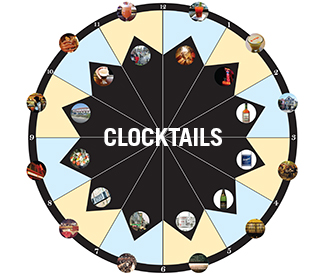
Clocktails!

1

Look, we know how it is. Sometimes you just need to get out there — at whatever time it is — and grab a dang drink. Fret no more: Here’s our handy guide to getting a little tipsy on, round-the-clock.

View the Clocktails chart it in full and print it out (PDF) here.

NOON: The Ramp Huge, killer Bloody Marys and a heaping plate of fried calamari on the waterfront — that’s how to welcome in the afternoon, especially if you’re on your way to a ballgame. 855 Terry Francois Blvd, SF. www.theramprestaurant.com

1PM: La Mar perfectly made Peruvian Pisco sours, sipped by the seaside — well, bayside — please. If you’re feeling especially adult, dive into a tangy, whiskey-like capitan cocktail. Pier 1.5, Embarcadero, SF. www.lamarsf.com

2PM: Wild Side West The sun goddesses are usually on your side, whisking away the Bernal Heights clouds and allowing you an afternoon basking on the patio here with a tall glass of cider. 424 Cortland, SF. www.wildsidewest.com

3PM: Biergarten: Wednesday-Sunday, grab a glass of Hacker-Pschorr, Schneider Weisse, or Almdudler and enjoy a (hopefully) sunny Hayes Valley late afternoon. Sometimes, there’s even oompa-pah. 424 Octavia, www.biergartensf.com

4PM: Yield Nothing better in the late afternoon than a great glass of sustainable vino — say, an Urban Legend pinot — and a little downtime with charm at this Dogpatch wine bar. 2490 Third St, SF. www.yieldandpause.com

5PM: Hopwater Dash to this too-cool spot right after work to beat the crush: 31 taps of delicious California brews — try Altamont’s Scarcity IIIPA for a quick buzz — and a singles scene that will keep you busy into the night. 850 Bush, SF. www.hopwatersf.com

6PM: Hi Tops This surprisingly diverse gay sports bar in the Castro boasts the city’s yummiest Michelada, the “Big Unit” tequila cocktail, awesome vintage décor, and 25-cent buffalo wings on Mondays. 2247 Market, SF. www.hitopssf.com

7PM: Top of the Mark Perch atop the Mark Hopkins hotel for a perfectly made Cosmopolitan — sip it slow (it’s $14) and enjoy a near-panoramic view of San Francisco as the sun sets. 999 California, SF. www.topofthemark.com

8PM: Tosca Cocktail time with classic, date-friendly flair: The recently rejuvenated North Beach fave can still make a fat lady sing with a sharp Casino Bar Negroni 1919 or fruity Zamboanga. 242 Columbus Ave, SF. www.toscacafesf.com

9PM: Virgil’s Sea Room Get naughtical at the hippest recent addition to the bar scene, with a cute patio, Mission-scruffy crowd, and drinks named after beloved locals like the slinky, vodka-licious Vicki Marlene. 3152 Mission, SF. www.virgilssf.com

10PM: Martuni’s Show tunes + martinis = Martuni’s, and you’ll be singing your heart out at the piano with a jovial crowd of musical-lovers after a couple dirty ones, guaranteed. 4 Valencia, SF. martunis.ypguides.net

11PM: Li Po If you would like your mind erased with a raucous, fun-loving Chinatown crowd, order the magical Chinese Mai Tai here and hold on for dear life. 916 Grant, SF. www.lipolounge.com

MIDNIGHT Nihon Whiskey Bar Slip out of the club and into something silky and sophisticated at this beautiful Japanese hot spot. Great for conversation, especially when sipping a smoky Bunnahabbain Toiteach. 1779 Folsom, SF. www.dajanigroup.net

1AM: 500 Club Drink in some true old school Mission atmosphere — we’re gonna recommend sticking with Fernet shots and Trumer back here, since by this point your taste buds are shot. 500 Guerrero, SF. www.500clubsf.com

2AM: Sidewalk sale: Our fascistic 2am closing time? It’s 3am, really, if you count the socializing crowds cast out on the sidewalk, flasks flashing. Locally bottled Cyrus Noble bourbon is really good from a flask.

3AM: The after party: “Back to mine” shouts the lucky lady with accommodating neighbors, and off you go. Don’t settle for Smirnoff-chugging: our own Hangar One vodka, made from grapes, will win the night.

4AM: The after-after party: Nothing is better (or more romantic) than a bottle of Roederer Estate brut downed between swingset rides at Alamo Square Park — watch you don’t get a ticket, though.

5AM: The morning cap: Slip on those shades as the sun slips up — it’s time for a fizzy pick-me-up. Some Alameda-made St. George gin with a splash of sparkling grapefruit will get you up and at ’em.

6AM: Gino and Carlo: Morning shots! This North Beach classic — since 1942 — sports good old-fashioned Italian moxie, a ton of tipsy Beat history, and strong enough pours to wake you right up. 548 Green, SF. www.ginoandcarlo.com

7AM: Ace’s Budweiser for breakfast? Hey, you’ve come this far. Sink deep into the couches of this proud, dimly lit Nob Hill dive, and clink cans with your fellow “morning people.” 998 Sutter, SF. www.acesbarsf.com

8AM: Bechelli’s Flower Market Café A well-kept secret: the Flower Market Fizz, with orange juice, gin, and egg whites, is one of the best wake up calls around. Nice breakfast too, if you’re into that. 698 Brannan, SF. www.flowermarketcafe.com

9AM: Beach Chalet Nothing beats a refreshing peach Bellini after your morning run along Ocean Beach (or to steel you for a day of sightseeing with guests). You can get these by the pitcher here! 1000 Great Highway, SF. www.beachchalet.com

10AM: Buena Vista Café Was the contemporary Irish Coffee really invented here in 1952? Who cares, this is the perfect time to down a couple delicious ones — before the Fisherman’s Wharf tourists rush in. 2765 Hyde, SF. www.thebuenavista.com

11AM: Cafe Flore Mornings on Flore’s spacious patio are a quiet, sunny Castro treatany kind of margarita you want in a European atmosphere, brimming with gorgeous people, of course. 2298 Market, SF. www.cafeflor.com


Immigration reform protest snarls downtown SF, 23 arrested

28

Today [Fri/4] at 11am, the SF Bay Coalition for Immigrant Justice held a protest and rally to urge President Obama to halt all deportations and keep his promise of comprehensive immigration reform.The protest included a group of 23 people, some of which are undocumented immigrants, which took part in a peaceful act of civil disobedience.

All 23 protesters — 15 women and eight men — were arrested; cited for failure to diperse, failure to obey a traffic officer, and blocking an intersection; and booked at the police substation in the Tenderloin before being release, according to the San Francisco Police Department.

More than 30 SFPD officers flanked the march after activists, clergy, and community organizers gathered at One Post St. and made the short but spirited walk to 120 Montgomery St., a building that houses the San Francisco Immigration Court.

Video of two of the arrests. 

Rev. Debra Lee, a United Church of Christ pastor working with Interfaith Coalition for Immigrant Rights, said, “We are here… because everyday we see people in our congregations who come to us because their family has been thrown into crisis by the federal government.”

Other clergy members who were arrested include Rev. Richard Smith of St. John Evangelist Episcopal Church, and Rabbi Mike Rothbaum, of Bend the Arc: A Jewish Partnership for Justice. “We work with with people of other faiths because part of the power of the coalition [is that] although we have different faiths, we come together around a common belief  that the migrant should be treated with dignity.” Lee told the Guardian.

march

The protesters march downtown. Photo by Joe Fitzgerald Rodriguez.

Rothbaum delivered a powerful address standing atop a parked pickup truck. Rothbaum held up a black-and-white photo of members of his family being sworn in as US citizens. In the image was his aunt, a Polish Jew.  “I would like to remind President Obama that his father was a wandering man from Kenya,” he said. “That my aunt and his father are no different from the people being held in this building.”

All three clergy members were arrested for taking part in the act of civil disobedience. Others arrested include Akiko Aspillaga, a native born Filipina who came to the US at the age of 10 with a visa. But because of a mix of complications with the employment of her mother and misinformation, Aspillaga and her parents lost their visas. Nevertheless, Aspillaga is now a graduate student at San Francisco State University’s school of nursing. However, because she is undocumented, she cannot receive federal grants or loans and depends on scholarships, and her mother to pay for tuition.

Another was Reyna Maldonado, a City College of San Francisco student born in Mexico. “We are here to demand President Obama to stop deportations. There has already been 2 million deportations.” Maldonado had a picture of Alex Aldana, who is currently being held in a San Diego ICE detention center: “He is one of the people we are fighting for [in addition] to stopping separations of families.”

Even if both women are undocumented, face arrest, and a risk of being turned over to US immigration authorities, they felt the risks were worth it. “I feel like the moral imperative right now, with families being torn apart and all the pain our community… Everything is worth it,” Akiko told the Guardian, “There is a possibility of me being deported but we’re standing up for something we believe in.”

After all the speakers addressed the crowd of about 300 people, the group of 23 sat in a tight circle on a banner that read, “Deporter in Chief.” And parodied President Obama’s “Hope” campaign poster with a pair of handcuffed hands replacing the president’s picture.

Once the group of 23 blocked traffic on the intersection of Sutter and Montgomery, SFPD officers began moving people off the street and onto the sidewalks. Then, one by one, each member of the group had their hands zip-tied behind their back and loaded into one of three SFPD vans.

This protest was part of a national day of action in favor of immigration, and it precedes an even bigger mobilization tomorrow in San Jose. 


Photo Gallery

deporter

hands

signs1

wagon

lab

kid


A Canola oil fire, maybe?

1

jeff tweedy

Dear every single white, middle-class, 20-something alt-folk musician in SF:
Did you happen to catch Wilco’s Jeff Tweedy on Portlandia last night? No?

Love you!


Yee and others indicted by federal grand jury, reinforcing criminal complaint

5

A federal grand jury has indicted Sen. Leland Yee and 28 others on charges similar to those issued in the bombshell criminal complaint by the FBI last week, the Sacramento Bee is reporting. The indictment named three additional defendants who weren’t in the original complaint: Barry Blackwell House (aka Barry Black), Zhanghao Wu, and Ton Zao Zhang.

Yee, political consultant Keith Jackson, Raymond “Shrimp Boy” Chow, and the rest of the gang face most of the same charges that they do in the complaint, with the Bee reporting that Yee faces a sentence of 125 years in prison and $1.75 million in fines.

US Attorney Melinda Haag issued a statement casting the indictment as strengthening the case against the defendants, but when the Guardian called with questions about why authorities chose to go with a criminal complaint followed by an indictment, an unusual move, a spokesperson told us, “Our office will not be making any comments on this case.”

For details on the case and a timeline of how it unfolded, read our story in this week’s Guardian.  

Q&A: Punk veteran Jonny “Two Bags” Wickersham

0

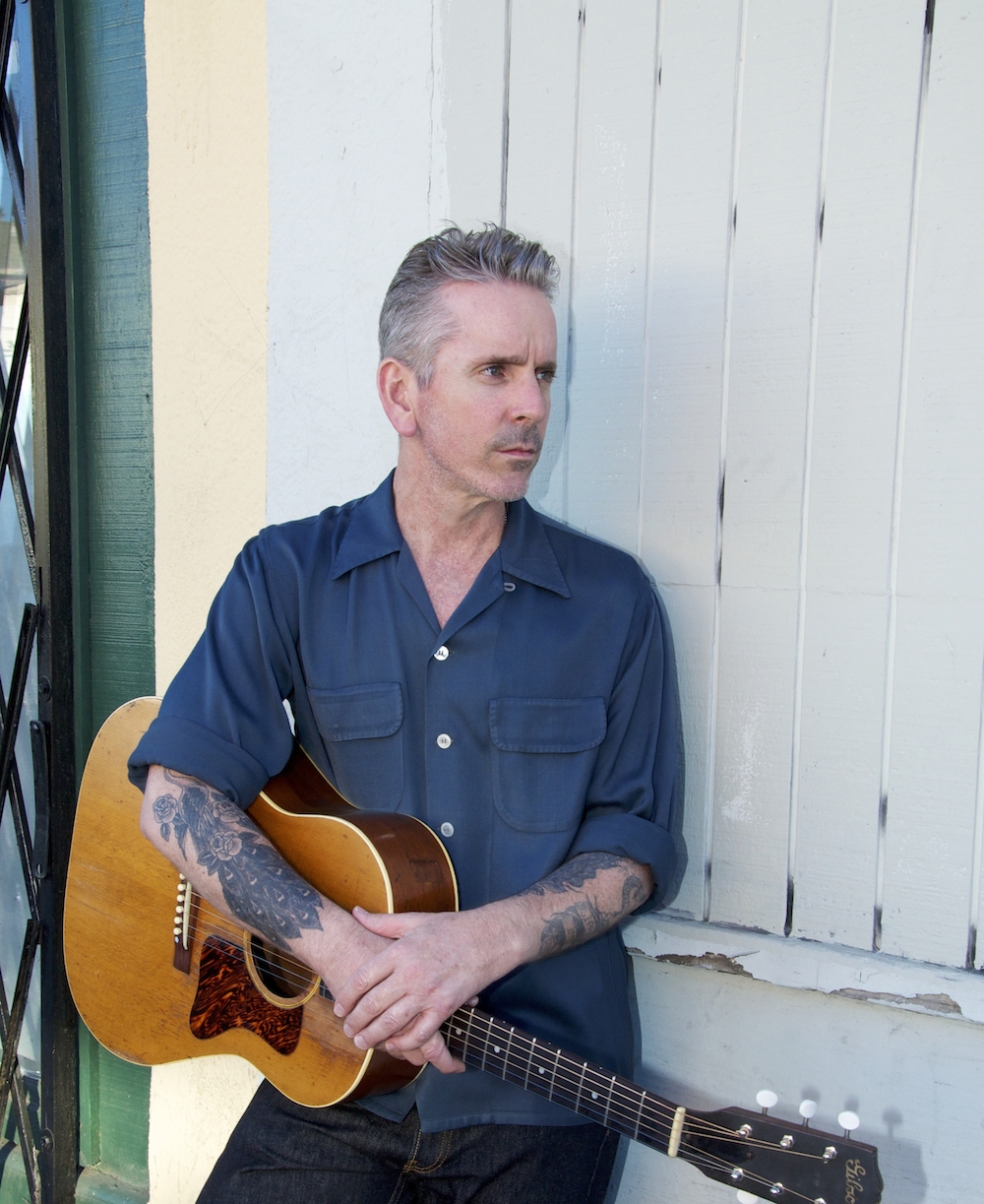
After more than 20 years of playing an important role in the formation and evolution of a variety of bands including the Cadillac Tramps, Youth Brigade, U.S. Bombs and Social Distortion, Jonny “Two Bags” Wickersham is finally stepping into the spotlight on his own with his first solo record, the excellent Salvation Town, (Isotone Records/Thirty Tigers) which hit stores earlier this week.

Steeped in a tasty mix of roots rock and Americana, the collection of 10 original songs has been a long time coming, due to a variety of reasons, according to Wickersham, who plays San Francisco tonight and tomorrow [Thu/3 and Fri/4], opening for Chuck Ragan at Slim’s and the Great American Music Hall.

“I worked on it really sporadically over the past couple of years — Social D was very busy after we put out Hard Times and Nursery Rhymes, and we were constantly on the road for two and a half years. On breaks in between tour runs I’d go in the studio and work on it a little bit. It’s actually been finished for over a year, aside from the artwork, and this is a pretty good time to put it out because Social D has been on a break for while,” says Wickersham over the phone from his home in Los Angeles.

Although he grew up in the outhern California punk scene, and has played with some of the luminaries of the genre, Wickersham says there has always been a thread of other, older influences running through his music.

“As far as the influences I had growing up over the years, most of it comes from two places, the first being the music I heard growing up at home; my father was a musician, and he basically raised me by playing in bar bands, so the music that I heard spanned rock n’ roll, funk and country.”

“When I got into punk rock, which was around 1980, at the same time I was discovering Stiff Little Fingers, The Clash, and then California bands like Black Flag and The Adolescents, I was discovering The Blasters and X — that part of the L.A. punk scene was sort of rockabilly, and the Americana part of that scene. To me, that was part of punk rock, it wasn’t separate,” says Wickersham.

“I’m not a purist — there are a lot of people who are rockabilly purists or they’re country music purists, I’ve never been a purist about any type of music that I like, I stumble across what I stumble across, and I have sounds I like.”

https://www.youtube.com/watch?v=jLXahFkB0lY

Much of the record is built around Wickersham’s acoustic guitar, with a wide variety of friends and guests adding their talents to different songs, including Jackson Browne, Pete Thomas (longtime drummer for Elvis Costello), singer Gaby Moreno, and his Social Distortion band mates Brent Harding, Danny McGough and David Hidalgo, Jr.
 
“I didn’t initially want to go ‘solo,’ and be the ‘solo artist’ guy, coming from my background, for some reason that was so uncomfortable. The intention was to start a band that I can be the songwriter of as a vehicle to do my stuff, the way I want,” says Wickersham.

“There were just so many players that ended being involved, though, so I thought, well this isn’t a band, this really is a solo record, with a bunch of guest artists.”

The extra touches brought by his friends, such as shared vocals, accordion, and guitar solos all add to the great overall sound of the album, but the real strength of the record is the solid foundation of the songs themselves, all written solely by Wickersham with the exception of just a couple.

With catchy hooks and strongly emotive melodies paired with frank lyrics about his hard-lived past such as “I’ve got one foot in the gutter, and one foot kickin’ in the door to heaven,” the collection of songs was written over the course of many years.

Wickersham says getting to this point as a songsmith has taken a lot of hard work — but he’s had a lot of inspiration along the way as well.

“I was just learning how to write songs in the early days of the Cadillac Tramps, and Brian Coakely, who played guitar along with me in that band, is a great songwriter, he’s always been really prolific, and he works really hard at it. He really was the first person that I had ever met in my life that took the craft of songwriting as seriously as he did. When you’re coming up in punk bands—everybody wrote their own songs and stuff—but it wasn’t viewed as ‘I’m a songwriter,’ you know what I mean?” Wickersham laughs.

“Then I played with Youth Brigade, and did a record with them, one that I’m very proud to be part of, but again, Shawn [Stern] wrote the bulk of that stuff, as he should, it’s Youth Brigade—it’s Shawn, Mark and Adam’s band.”

Wickersham also played with Duane Peters and U.S. Bombs for a while before joining Social Distortion in 2000 after the death of his friend Dennis Danell, and has since co-written several songs with front man Mike Ness.

“When I started playing with Social D, and for Mike [Ness] to ask me to be part of the songwriting was just an amazing honor; he hadn’t written with anybody in the band aside from some stuff he did with John Mauer in the early 90s and the very, very early stuff that he and Dennis wrote together,” says Wickersham.

“With each one of those I learned a little bit more about songwriting and what it was I wanted to do as a songwriter. So it’s been a long time coming — I guess I’m just kind of a slow learner!”

Although he took everything that he learned from writing in all the bands he’s played with over the years, Wickersham wanted to make sure that he set himself apart from them at the same time.

“I didn’t want it to sound like any other band I have been in, but with me singing, that was a really intentional thing. One of the things about this record that was kind of freaking me out a little bit while we were making it was that it just didn’t seem natural to make it have a lot of big guitar on it, it just wasn’t working. I kept trying to get that guitar foundation, that bedrock that I’m so used to doing. So most of the songs ended up having an acoustic rhythm, and a different style of electric rhythm.”

Wickersham says that when he was still planning on having the project turn into an actual band, he spent a lot of time trying to come up with a name for the group—a task that he says was much more daunting that he thought it would be.

“Everything cool that I could come up with had been taken. No one will ever get to find a cool band name like The Pretenders or The Jam again, some simple, one-word bitchin’ thing. Now I understand why so many of these young kids are forming bands with names that are like a paragraph long,” Wickersham laughs.

Eventually the name that came to him was Salvation Town, which was the name of a song by his friend’s band Joyride, a title that Wickersham says spoke to him about growing up in Southern California, the punk scene, skateboarding and more.

The “Two Bags” moniker has stuck with him for many years, and Wickersham says there were several reasons that the nickname was given to him back in the old days.

“I was very young when they gave me that nickname, it’s almost like a lifetime ago. It’s kind of a threefold thing; it’s a take on the old Slickers tune ‘Johnny Too Bad,’ and then had to do with drugs, and back then, so many of us kids in that world ended up living out on the street.”

Wickersham has come a long way since his turbulent youth, and Salvation Town appears to be the start of a fruitful path for the 45 year-old guitar slinger, who is most pleased with the results.

“I’m super proud, I couldn’t be happier with the way it turned out.”
 
https://www.youtube.com/watch?v=WBGDkD0uQi8

Jonny “Two Bags” Wickersham
Opening for Chuck Ragan & The Camaraderie and The White Buffalo
 
Thursday, April 3
8pm, $21-$23
Slim’s
333 11th St, SF
(415) 522-0333
 
Friday, April 4
8pm, $21-$23
Great American Music Hall
859 O’Farrell, SF
(415) 885-0750

 
www.slimspresents.com


Covered San Francisco plan would bridge gaps between Healthy San Francisco and Obamacare

The whole point of Healthy San Francisco, the city’s universal healthcare program, is to help people who can’t afford health insurance get medical care when they need it. Despite the intentions of expanding access to healthcare under the Affordable Care Act, that goal won’t necessarily be realized now that federal reform is underway.

Lately, we’ve gotten reports of San Franciscans hoping to enroll in Covered California, the state-run health insurance marketplace created under the ACA, leaving meetings with enrollment counselors in tears of frustration. Even though these would-be enrollees are technically eligible for Covered California – which makes them ineligible to stay in Healthy San Francisco – the insurance cost is nevertheless too high to be a realistic option.

“The most authoritative study says 40 percent of San Franciscans who are eligible for Covered California still will not be able to afford it,” Sup. David Campos noted in a recent phone interview. At the tail end of a long Board of Supervisors meeting on Tuesday, Campos introduced legislation that would create “Covered San Francisco,” a health care option designed to remedy this coverage gap. “In high cost-of-living cities like SF, many will simply not be able to afford it,” Campos said when he introduced the legislation.

The legislation is co-sponsored by Sups. John Avalos, Eric Mar, and Jane Kim. Drafted along with a team that included experts in healthcare and representatives from the city’s Department of Public Health and City Attorney’s Office, the proposal essentially does three things.

First, it seeks to close a loophole that incentivizes employers to comply with the city’s health care law in a way that makes it harder for employees to access medical care.

Under the Health Care Security Ordinance, the law that created Healthy San Francisco, employers must contribute toward their workers’ healthcare costs based on hours worked. In the past, they could comply by setting up standalone accounts, called healthcare reimbursement accounts (HRAs). If employees never tapped those accounts for healthcare needs, the businesses could take back the money they put in.

Under Obamacare, those standalone HRAs are now illegal. But some employers have discovered that they can still set up a different kind of HRA, called an “excepted benefits HRA,” which can only be used toward ancillary care like vision or dental needs.

For employees who are sick and need some kind of medical coverage, these “excepted benefit HRAs” can result in a bind, because under the new federal law, workers are expressly prohibited from using them to obtain insurance through Covered California. And, if employees don’t spend what’s in these accounts, employers can still take the money back – making this option very attractive to employers looking to reduce spending.

Therefore, Campos’ legislation seeks to make all spending to satisfy the local health care law irrevocable, meaning the employers cannot take it back.

“While individuals will face a federal mandate for the first time to purchase health insurance, they will not be able to use these accounts in these excepted benefit HRAs to actually meet that mandate,” Campos pointed out, saying the legislation seeks to do away with “this perverse incentive” for employers to set up HRAs instead of going with an option that would aid employees in seeing a doctor when needed.

This change would leave employers with the choice of keeping ever-expanding HRAs on their books – which is a liability – or looking for a different way to comply with the city’s healthcare law. Other options include providing insurance for their employees, or paying into a locally administered health-care program known as the “city option.”

Many employers already use this city option, and Campos’ proposal would change how it works. First, workers would sit down with city health officials for a consultation. From there, if workers were eligible for Covered California, they’d be enrolled, and they would get additional subsidies to make it more affordable. This system would be known as Covered San Francisco.

Workers not eligible for Covered California, such as undocumented residents, would be enrolled into Healthy San Francisco. And healthcare accounts would be set up for those who didn’t fall into one of the other two categories.

The third thing the law would do is require the city’s health department to extend Healthy San Francisco coverage to include anyone not already covered by the ACA, either due to economic hardship or because they lack an affordable health insurance option.

Already, the newly introduced legislation has some detractors in the Golden Gate Restaurant Association, a business entity that sued the city several years ago to challenge employer requirements under Health Care Security Ordinance.

Gwyneth Borden, executive director of the Golden Gate Restaurant Association — which brought and unsuccessful legal challenge to HCSO when the city adopted it — said her group takes issue with the idea of making HRA spending irrevocable. “The irrevocability does limit the choices – the city is trying to force the hand of the employer, to choose the city option,” she said. “The city’s making it more restrictive.”

She also said the GGRA was concerned about transparency. “What they’re saying is that … that entire cost wouldn’t have to sit in an account for an employee; it would fund the system,” in the event that an employer selected the city option, Borden said. “If they’re arguing that the employer has to spend every cent of the dollar on health care for the employee, then the city should have to do that as well.”

But Borden said GGRA had litigated on this issue before, and therefore would not be able to bring their opposition to the courts again. Borden also added that GGRA wanted to make one thing clear: “We applaud Sup. Campos’ efforts to broaden the city option,” she said, “and get more people health care.”

True House: Where to celebrate Frankie Knuckles’ legacy this weekend

0

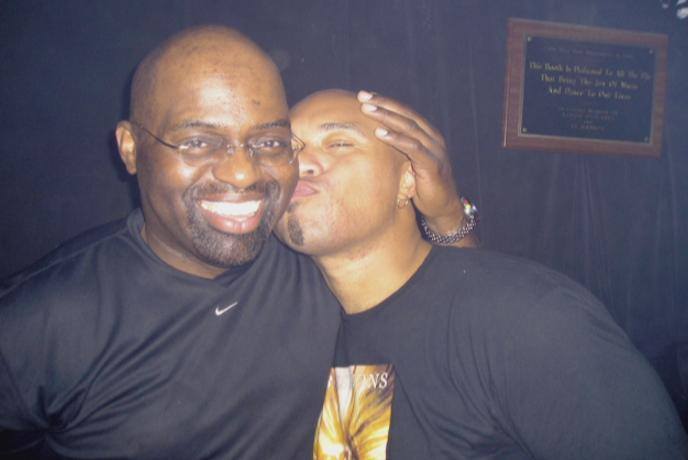
I have so much to say about how much influence house originator Frankie Knuckles had on the SF scene (and basically the entirety of my life) — but I’m still so much affected and in shock at his passing, that I think the best way to work it all out is, as usual, hitting the dancefloor. Let’s come together this weekend and celebrate the Godfather’s warm and joyous gift of music.

I’m figuring the spirits will be coming down at every party happening this week, but these are my personal recommendations:

THURSDAY

Tubesteak Connection: Disco purist DJ Bus Station John is expert at revealing house’s underground gay roots at his weekly party in the glorious depths of the Tenderloin.


FRIDAY

Taboo: Frankie’s #1 SF connection is our own incredible David Harness, the one person here who most embodies Frankie’s sound and spirit. He and Frankie played together innumerable times. This Oakland party, which Harness has put on for more than a 15 years now, will be a reunion and a true tribute.

House Dance Conference: Three days of insanely talented house dancers hosting open sessions, lessons, and positive interaction — all culminating in a huge party, of course. Bring your sneakers.

Throwback: This huge and perfect monthly tribute to ’90s house music at Mighty is coming at the right time to indulge in Frankie’s signature sounds. With DJs Galen, Jacob Sperber, Renoir, Jayvi Velasco, and Miguel Solari.

SATURDAY

Blessed 5-Year Anniversary: One of the best soulful house parties on the planet, this incredibly diverse and moving Oakland jam rings in a fiver with David Harness, Discaya, and Rafi Acevedo.

GO BANG!: Our own legendary Steve Fabus was spinning at the Trocadero Transfer as Frankie was coming up in Chicago and New York. This is the monthly, fabulous disco explosion he puts on with DJ Sergio, this time featuring the really, really good Apt One and Emily Coalson.    


SUNDAY

Sunset season opener: This enormous old school house family reunion picnic in Stafford Lake Park from the Sunset crew will overflow with hugs, tears, smiles.


Locals Only: Teenager

0

If the music industry gave out awards for patience or persistence, Bevan Herbekian would have a healthy handful of trophies to his name. The multi-instrumentalist has lent his songwriting and frontman skills to everything from loose punk bands to a highly orchestrated indie pop quartet over the course of the past decade and a half, in addition to playing bass on other people’s songs — at the moment, he’s part of fellow Berkeleyite M. Lockwood Porter‘s band — so he’s no stranger to the realities of trying to “make it” as a musician. But Teenager, the moniker under which Herbekian has decided to release his first truly solo album, represents something new for the songwriter: A chance to blend every genre he’s ever loved, to talk about his travels to New York and subsequent, requisite disllusionment with it, a musical space where he doesn’t have to bend to anyone else’s desires.

The resulting joy is contagious — The Magic of True Love, which comes out April 29, is full of unabashedly earnest, tightly crafted pop songs with seriously big instrumentation. There are head-bobbers, there’s high-flying falsetto, there are shout-along soul choruses. His voice carries the energy of someone very young, but these aren’t songs written by a newbie. Herbekian decided to realease one new song off the album each week leading up to the release, which means you can listen to quite a bit of it online. To be real, though, you should probably buy it. It’s catchy as shit, and the guy’s been at it long enough.

We caught up with him this week to hear about songwriting influences, going solo, and exactly how much time he spent listening to Nevermind.

San Francisco Bay Guardian Your bio says you’re from a small Northern California town. Where, exactly?

Bevan Herbekian I was born in Bennett Valley and raised there until I was 13. It’s that small stretch of countryside/small town between Petaluma & Santa Rosa proper that hides behind the hills off the 101. When I was in junior high, my family moved to Avila Beach, which is a tiny beach town on the central coast. It’s got two streets and a population of a few hundred. It made Bennett Valley look like a real urban center.

SFBG When and how did you first start playing music? What instrument was the first? How many do you play now?

BH I started playing music when I was about 12. My dad taught me the riff to Nirvana’s “Come As You Are” and I urgently learned the rest of the album on an acoustic guitar. It was one of those aha! moments for me. I was totally hooked and immediately wanted to start a punk band, but everyone I knew played guitar, so I hopped over to bass. Since then I’ve taken to the other rock ‘n’ roll instruments — piano, organ/keyboards, simple synth stuff, various percussion — I humor myself on drums and basically anything else I can get my hands on.

SFBG What’s the first record you really remember loving?

BH Unquestionably, Nirvana’s Nevermind. Around the same time I picked up the guitar, I borrowed a cassette of Guns & Roses’ Use Your Illusion from a friend’s ‘cool’ older brother — he was in high school so he was automatically cool. My dad caught me walking through the front door with it and said something along the lines of ‘you don’t want to listen to that garbage’ and took the tape, but not in the normal parents-are-a-drag sort of way. An hour later he gave it back to me having recorded Nevermind over it. I remember sitting on the floor of my room hearing those drums kick in and thinking what is this?! It was so loud and aggressive and passionate and vulnerable and somehow just as catchy as the early Beatles stuff that I loved as a little kid. Overnight, I became obsessed. I couldn’t stop listening to it. I literally listened to it every day before school for a year.

SFBG Can you name some of the bands you’ve been in before? The last time the Bay Guardian checked in with you, you were in The 21st Century.

BH Yeah, I’ve spent much of the last 15 years playing in bands. Prior to Teenager I was leading The 21st Century which was this highly orchestrated Indie-Pop/Rock octet with horns and harmonies and big songs in general. Before that I was working on solo stuff similar to what I’m doing now and playing in a fun experimental art-rock(?) band called The Tea Set and of a band/friendship club called World’s Best Dad. Right now, I’m also playing bass in M. Lockwood Porter which is a really sweet Americana/rock ‘n’ roll band led by fellow 21st Centurier Max Porter.

SFBG How was making an album on your own different from with a group? What made it feel like time to do that? It’s interesting, because so many people, when they decide to “go solo,” put out a really stark and stripped-down album, but this record sounds really BIG on all levels, in the best possible dramatic power-pop sense….got some ’70s arena-rock guitar riffs, soul jams with big backup vocals, some choruses that sound like younger (less cheesy) Billy Joel stuff.

BH Ha, that’s funny and pretty true! Yeah, this album came on the heels of being in a band with a lot of people. As is the case whenever working with a large group, there are many competing ideas and opinions. This can be a tremendous strength, but the songs that became this record were incredibly personal and I just found myself wanting to work on them in a solitary way. I had a strong sense of where I wanted to take them — kind of a ‘more is more’ philosophy — and when you have that sort of clarity, it’s best to do it yourself. It’s true, many of these songs are BIG and that’s been something I’ve been chasing for a few years. These songs grew out of some very big feelings so it seemed like the right way to bring them to life. There’s love and loss and desire and deep disappointment running through them so I wanted them to sound as large as it all felt.

SFBG On that note — how would you describe your genre on this album? Who would you point to as your biggest influences?

BH I love so much music and I like trying my hand at a lot of different types, so there’s a handful of genres represented here. I see this album almost like a mixtape of my life. There’s nods to many of my musical loves. There’s some rock ‘n’ roll, ’60s soul, indie pop, folk, and ’90s alternative (do people still say that?). In terms of musical influences, I gravitate towards songwriting. I love the melodies and arrangements of Brian Wilson and Motown. The literary and lyrical precision of Leonard Cohen and Belle & Sebastian blow my mind. Bands like The Pixies, Big Star, Harry Nilsson, and Beck — they’re all staples too…and like many of us, I was indoctrinated at an early age into the ultimate Beatles fan club by my dad so that’s a part of my musical DNA too.

SFBG Where does the moniker Teenager come from?

BH With The 21st Century, I was unapologetically ambitious. Even the band name was a kind of over-the-top statement of bravado and staking claim on something bold and large. Coming out of that, I veered the opposite direction. I thought, what’s one of the more misunderstood, under-appreciated, and generally dismissed groups around? And I arrived at Teenager. I think it was also a chance to acknowledge how long I’ve been writing and recording music at home. In a lot of ways, I’ve been doing the same thing for about 16 years so I thought in a way, my time as a musician and songwriter is dead center in those teenager years. Given the pair of meanings, it somehow felt strangely appropriate.

SFBG Plans for the next year? 

BH Well, I’ve been putting together a new lineup to play these songs out. I’m quite excited about that. I’m eager to tour come early Fall. Also, because this album was such a labor of love and took such a long time, I’m sitting on a lot of backlogged material. My hope is to get into the studio and cut it all by the end of the year and then whittle it down — maybe to a double album. I’ve never made one and have always been a bit against them in principle — I like editing – -but I think it might be time to give it a try.

SFBG Where do you live in the Bay Area? How does being from Northern California/living here influence your music?

BH I lived in San Francisco for a few years and had a stint in Oakland, and now I’m living in Berkeley. Honestly, I’m not sure how Northern California plays a part in my music. To me, it’s home and sometimes it’s hard to see your home for what it really is. But I love the city and the redwoods and the ocean and the mountains. Being surrounded by all that beauty can really instigate some large dreams and make you feel like the world is an astounding place.

SFBG Bay Area meal/restaurant/food item you couldn’t, hypothetically, live without?

BH Without hesitation, La Taqueria followed by banana cream pie and a cup of coffee from Mission Pie. I’ve dubbed it the ‘double threat’ and there are times when I do it twice a week. No joke, I did it today.

;

Is Kink breaking up with SF?

85

Tales of local porn-purveyor Kink.com’s demise were reported early yesterday by Uptown Almanac, whose story, “Freak Flag May Not Fly Forever Over Kink’s Castle,” sounded the alarm. 

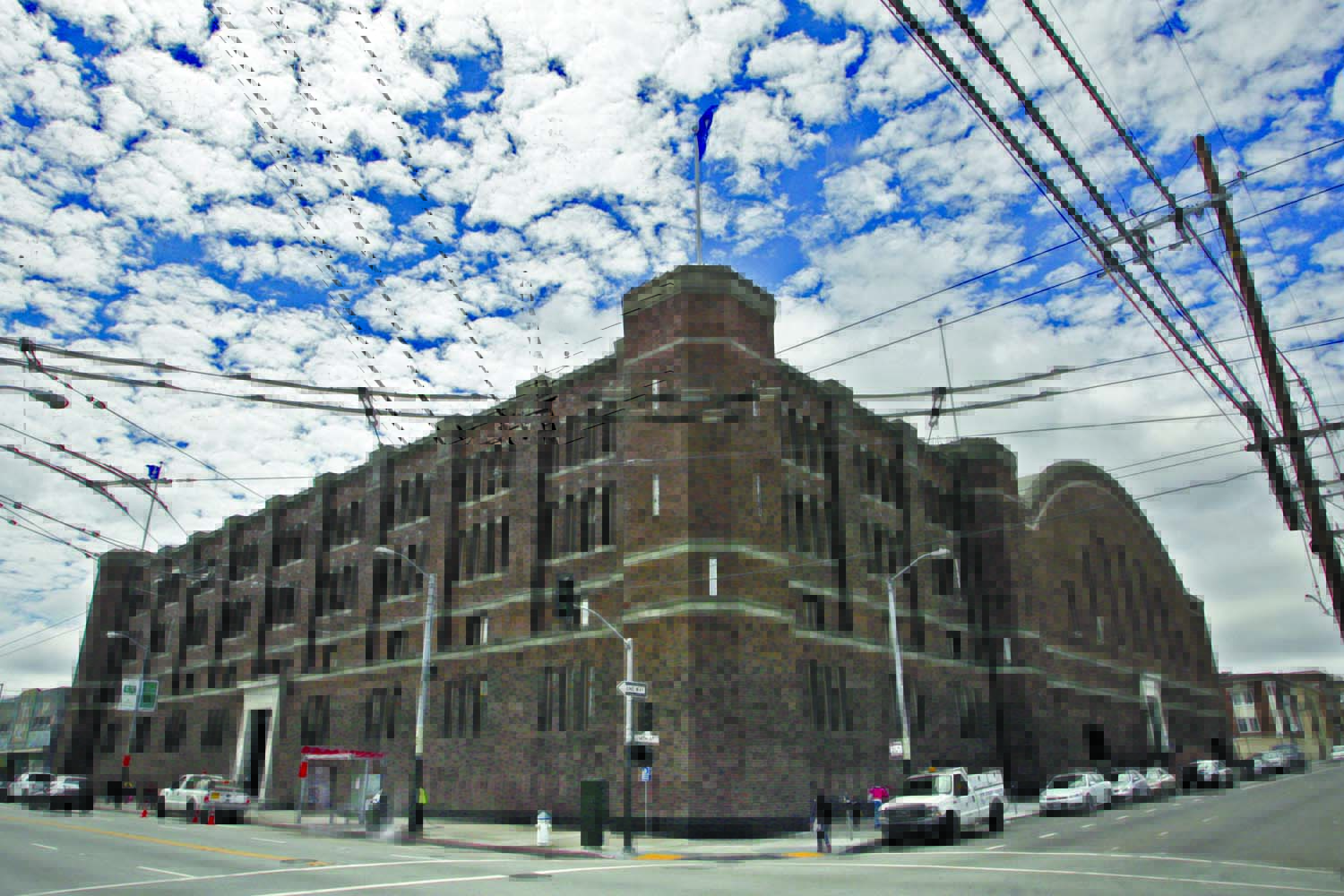
“It seems to have become not a question of if, but when there will be no more porn in our beloved Porn Castle,” reporter Jackson West wrote. To the uninitiated, the Porn Castle to which West is referring is known as The Armory, a brick fortress with histroic designation on 14th Street and Mission where the ever-adventurous pornographers at Kink.com film their wonderful smut (a term we use as endearingly as possible).

The planning department document West posted posted to his article show Peter Acworth, founder and CEO of Kink.com, requested the city to convert the basement, “drill court,” second, and third floors of The Armory into office space. The document also shows a need for an environmental review before conversion. (Side note: Gee, wouldn’t you love to be the city worker who had to inspect The Armory? “Hell of a day at work today honey, I was so tied up. Well technically, this guy wearing clothespins was tied up.”) The planning department told the Bay Guardian we could inspect the documents for ourselves tomorrow, but were unable to supply them for viewing today.

So, is it true? Is Kink.com fleeing our quickly gentrifying city?

Not to ball-and-gag West’s reporting, but we went straight to Kink.com owner Peter Acworth, who told us Uptown Almanac’s article is “half-correct.”

Firstly, the conversion of the first floor drill court into office space was a long time in planning, multiple sources (including Acworth) confirmed for us. Kink.com intends to use the space for its community center, as well as to rent to outside vendors.

But Acworth did admit that conversion of the rest of The Armory into office space was a preliminary move to vacate The Armory — but that it’s a last-ditch move he hopes he won’t need to make.

kinkac

Peter Acworth and Princess Donna. Photo by Pat Mazzera.

“I would still think of Kink.com production moving out as a question of ‘if’ as opposed to ‘when,’” he wrote to us in an email. “This move represents an insurance policy.  If the various regulations that are being considered currently in Sacramento and by Cal-OSHA become law, we will likely have to move production out of California to Nevada.”

The regulations he’s referring to are a statewide version of the recent Los Angeles condom law, AB 1576, Introduced by Assemblymember Isadore Hall, III, (D- Los Angeles), as well as new Occupational Safety and Health Administration standards legally requiring porn actors wear protective goggles to protect their eyes from STDs that may be present in ejaculate.

Kink.com was fined $78,000 by CAL/OSHA earlier this year for workplace hazard violations, according to a report by SF Weekly. Kate Conger writes, “The majority of the fines were for allowing performers to work without using condoms, while a $3,710 portion of the total fine was for additional violations, including improperly placed power cords, an absence of first aid supplies, and missing health safety training materials.”

The AIDS Healthcare Foundation also told SF Weekly they filed violations because, they alleged, two actors contracted HIV in connection with their performances in Kink.com shoots. At the time, Kink.com spokespeople denied the claims had merit.

[Update 8:20pm: Shortly after this story was published, the AIDS Healthcare Foundation published a press release announcing the state bill to mandate condoms in pornography made progress today. From the release: “Assembly Bill 1576, Rep. Isadore Hall’s bill to require condoms in all adult films made in California cleared the Committee on Labor and Employment in the California Assembly in a 5 to 0 vote (with 1 absence & 1 abstention) today and now moves on to the Assembly Arts & Entertainment Committee.

“In the last year, at least two additional adult performers—Cameron Bay and Rod Daily—sadly became infected with HIV while working in the industry,” said Michael Weinstein, President of AIDS Healthcare Foundation. “AB 1576 expands and broadens worker protections for all California’s adult film workers on a statewide basis.”]

For Acworth, the passage of either of the statewide reforms in porn would be too prohibitive to do business in California. He’d then move the whole kinky company to Nevada, as many of his fellow pornographers have already done.

“We hope this never happens and that the new regulations are reasonable, but if it does happen over the coming years, we would like the option to rent out The Armory – or portions thereof – to other users.”

The planning review process takes 18-24 months, so in the short term, everyone can calm down. But for the long term, you’ll know Kink.com is ready to move by watching the progress of statewide porn reforms. If porn actors need to wear goggles in productions, it looks like we’ll say goodbye to Kink.com.

Below we’ve embedded the planning department filing from Acworth, obtained by Uptown Almanac.

Planning Department File on Kink.com by FitztheReporter

Federal criminal indictment of PG&E doesn’t go far enough

83

  A federal grand jury in San Francisco yesterday issued a criminal indictment against Pacific Gas & Electric for negligence in the 2010 gas pipeline explosion in San Bruno that killed eight people and destroyed an entire neighborhood. That’s significant and serious, but it also falls far short of what this rapacious company and its conniving executives — none of whom face personal criminal charges — should be facing.

The indictment and media reports on it omit key details of what happened leading up this tragic and entirely preventable explosion, buying into the fiction that there is a meaningful difference between PG&E Co., the regulated utility, and PG&E Corp., the wealthy and powerful Wall Street corporation. This is a stark example of how corporations are given all the rights of individuals, but accept few of the responsibilities, with the complicity of the political and economic systems.

The 12-count indictment focused on violation of the Pipeline Safety Act, which requires companies to maintain their potentially dangerous pipelines, including keeping detailed records and doing safety inspections that would detect flaws like the faulty weld that caused the San Bruno explosion on Sept. 9, 2010 – work the company negligently failed to perform.

But PG&E’s wanton disregard for public safety, combined with the greed and shameless self-interest of then-CEO Peter Darbee and other executives, goes far deeper than that. A report by the California Public Utilities Commission released in January 2012 found that $100 million in ratepayer funds that had been earmarked for pipeline maintenance and replacement, including this section in San Bruno, was instead diverted to executive bonuses and shareholder profits.

“PG&E chose to use the surplus revenues for general corporate purposes,” the audit said, noting that the company was flush with cash at the time and there was no good reason to neglect this required maintenance.

And in 2010, those questionable corporate purposes included spending more than $45 million to write and promote Prop. 16, a June 2010 ballot measure that would have required approval by two-thirds of voters whenever cities wanted to start community choice aggregation programs such as San Francisco’s proposed CleanPowerSF. California voters rejected that outrageous ruse by more than a 2-1 margin – so Mayor Ed Lee and his appointees were forced to kill CleanPowerSF on their own last year.

PG&E maintains the explosion was just an accident.

“San Bruno was a tragic accident. We’ve taken accountability and are deeply sorry. We have worked hard to do the right thing for victims, their families and the community, and we will continue to do so,” PG&E CEO Tony Early, who was hired after the explosion, said in a prepared statement. “We want all of our customers and their families to know that nothing will distract us from our mission of transforming this 100-plus-year-old system into the safest and most reliable natural gas system in the country.”

But this “tragic accident” was foreseeable and preventable, particularly if PG&E was spending our ratepayer money on the system maintenance it was allocated for, instead of trying to fool us with a deceptive and myopic political campaign. Those were decisions made by real people, including Darbee and others, decisions that killed innocent people – and they should be held accountable. Neither this indictment nor a previous civil settlement go far enough.

PG&E’s employee union, IBEW Local 1245, continues to act as an apologist for the company executives, issuing a statement that in part says, “The federal indictment filed April 1st against the company says that PG&E willfully failed to identify and evaluate threats to its transmission pipelines. We know of nothing that would rise to the level of willful. It is possible there are things we don’t know. But based on what we do know, the company failures that led to the San Bruno explosion were not willful.”

Meanwhile, even some PG&E shareholders are siding with the company’s federal prosecution while bringing a shareholder lawsuit seeking to recover some of the diverted funds. Their high-powered attorney, Joe Cotchett, issued a statement today that said, “We welcome yesterday’s indictment by the federal grand jury of PG&E on criminal charges that it violated federal pipeline regulations. It is clear the federal government agrees with us that PG&E chose profits over safety. The indictment comes as no surprise, as it closely mirrors the detailed complaint we filed months ago against PG&E’s officers and directors, after our own extensive investigation.  The indictment states that PG&E ignored and failed to properly identify potential threats to gas pipelines, failed to gather relevant data, maintained flawed records, and as a result, was unable to accurately assess the dangers related to its lines that could have prevented the explosion. On behalf of the shareholders of PG&E, we intend to amend our complaint to add some additional facts stated in the indictment.”

“Our complaint alleges that PG&E’s executives dropped the ball and failed to implement safety measures despite numerous red flags raised by Company insiders with risk management responsibilities. We allege PG&E has already incurred charges of about $1.83 billion related to the San Bruno accident and natural gas matters. In its annual report, PG&E admitted that this criminal investigation could expose the Company to even greater losses. Our complaint also alleges that PG&E’s Board sponsored reviews of its risk management practices revealing that PG&E was in ‘crisis’ mode prior to the accident, and that, in 2007, PG&E’s newly-hired Senior Vice President of Engineering and Operations determined that the Company’s Enterprise Risk Management program ‘seems unactionable because almost everything is broken.’”

This is the company that Mayor Lee praises as a “great company that gets it,” supporting its continued monopoly control of San Francisco’s energy system and subverting a city proposal to provide renewable energy to city residents, even as the threats posed by global warming increase, as this week’s report by the United Nations Intergovernmental Panel on Climate Change warns.

This is a sick system, and something needs to change.

Go do this thing tomorrow: The Flaming Lips’ Wayne Coyne at Aquarius Records

0

Remember when we told you about Flaming Lips frontman Wayne Coyne’s East Coast-only “Record Store tour,” during which he was selling a signed, limited-edition, 12-inch, 20th anniversary reissue of the band’s deliciously scruffy debut EP, packaged with a life-sized, anatomically correct, “hand-crafted, custom-made chocolate skull”? And the skull also contains a special gold coin that gains the bearer entry to any Flaming Lips show in the world? Of course you do. 

Well, he was lying — it’s not East Coast-only. He added a few West Coast dates this week, including an appearance tomorrow [Thu/3] at 5pm, at the Mission’s own Aquarius Records. Which is a pretty tiny space for a Flaming Lips(-esque) show. And pretty early in the evening to be taking hallucinogens. Oh, the sacrifices we make for rock ‘n’ roll.

Here’s a good one off that 1984 EP to get you warmed up.

SF’s culture of corruption

12

EDITORIAL The extent of the charges in the criminal complaint against Sen. Leland Yee, political consultant Keith Jackson, and others are shocking and sensational: international arms trafficking, drug dealing, money laundering, cavorting with organized crime figures, murder for hire. But the basic allegation that Yee and Jackson practiced a corrupt, transactional kind of politics wasn’t surprising to anyone who knew how they operated.

What’s worse, they were simply a more extreme — and now, thanks to FBI wiretaps and undercover agents, a better documented — example of the political corruption that is endemic to San Francisco and some other high-stakes American cities. The city of St. Francis gets sold out to the highest bidders everyday, by politicians who value wealthy constituents over the vast majority of us who are just trying to get by — and over the interests of city finances and governance.

Part of the problem is inherent in our money-driven political system, in which politicians are constantly hustling for cash from people who want things from them. Politicians deny they take actions with political contributions in mind, but well-heeled capital and labor interests don’t spend millions of dollars on contributions out of the goodness of their hearts. These are business transactions.

We wholeheartedly support the call Senate President Darrell Steinberg made for fundamental political reform during the March 28 vote to suspend Yee and two of his allegedly corrupt colleagues. These cases aren’t aberrations, they are indicative of how power get wielded when it’s based on wealth. That’s the reality that has gotten even uglier since the Citizens United decision equated money with political speech and upped the ante for would-be public servants.

But much of the problem is particular to San Francisco, where cozy relationships between politicians and corporate interests are often feted in plain view. Former Mayor Willie Brown — a lawyer and unregistered lobbyist who won’t reveal his huge corporate client list despite having an influential weekly column in the San Francisco Chronicle — helped install his longtime City Hall functionary Ed Lee into Room 200 to guard against anyone asking too much of the rich and powerful. Yee and Lee represented rival Chinatown economic factions, both wanting to use the power of the Mayor’s Office for their interests.

In his March 22 column, Brown once again repeated a joke he’s used before, that the “e” in email stands for “evidence,” which is really only funny in a sick political culture that celebrates slick rule-breakers. And it was from Brown that Lee learned it was acceptable to brazenly give tax breaks and regulatory passes to the tech companies that his top fundraiser, venture capitalist Ron Conway, are invested in.

Megadeveloper Lennar Urban used its wealth and political connections to take control of San Francisco’s biggest tracts of undeveloped and underdeveloped land, including Hunters and Candlestick points and Treasure Island, paying off community groups and hiring Jackson and other political henchmen to get the job done.

In fact, the FBI complaint says Jackson was working on behalf of that project when he approached accused Chinatown gangster Raymond “Shrimp Boy” Chow for support, leading to their alleged involvement in a string of wild criminal conspiracies. Meanwhile, Chow was getting public commendations from San Francisco-based politicians including Lee, Yee, Gavin Newsom, Dianne Feinstein, Fiona Ma, and even Tom Ammiano. Chow courted political legitimacy the same way politicians seek cash, and mainstream media outlets were happy to play along.

Throughout his political career, Yee has carried water for Pacific Gas & Electric, perhaps the most corrupting contributor to political campaigns in the city’s history. PG&E’s influence at City Hall had thankfully waned in recent years as a result of overreach and deadly criminal negligence, until Lee and his appointees last year killed CleanPowerSF (see “Challenge Mayor Lee and his lies,” 9/17/13) on a pretext so thin it could only be gift to PG&E.

In many ways, San Francisco hasn’t changed. It’s still the old Barbary Coast, ruled by capitalist thugs and corrupt politicians, only with glossy modern spin created by armies of well-paid political consultants. But we all deserve better.

Yee and Jackson should go to prison if there’s even a slice of truth to the allegations against them. And maybe they’ll cut deals and take other political figures down with them, giving us more of a peek behind the curtain of political power. But it’s up to all of us to break the close ties between economic and political power and begin to restore the democratic power of everyday people.

Will Airbnb pay its accumulated tax debt to SF?

42

So now that Airbnb has agreed to start collecting and paying the transient occupany tax in San Francisco sometime this summer — finally acknowledging that’s the only workable way to meet the tax obligation it shares with its hosts — that leaves open the question of whether this $10 billion corporation intends to pay the tax debt it has accumulated for years while trying to duck its responsibility to the city.

That’s at least several million dollars that the city could really use right now. As we’ve previously reported, Airbnb commissioned and publicized a study in late 2012 claiming its San Francisco hosts collected $12.7 million from Airbnb guest in fiscal year 2011-12, meaning they should have collected and remitted to the city $1.9 million.

In early 2012, the San Francisco Tax Collector’s Office held public hearings to clarify whether the TOT applies to the short-term rentals facilitated by Airbnb and similar companies, ruling in April 2012 that the TOT does apply to those stays and that it is a “joint and several liability” shared by the hosts and Airbnb, which conducts the transaction and takes a cut.

As we also later reported, despite heavily lobbying during the hearing and being acutely aware of the outcome and its resulting tax obligation, Airbnb simply refused to comply and tack the 15 percent surcharge onto its transactions, as similar companies such as Roomorama were doing.

So if Airbnb was really being the good corporate citizen that it’s now claiming to be, it would not only start charging the 15 percent fee and sharing that money with the city, it would also cut San Francisco a check for around $4 million, or whatever the tax would be on what this growing business has collected from its guests since April 2012.

That’s at the very minimum, giving the company the benefit of the doubt that there really might have been an honest difference in opinions on whether the clear language of the tax code really applied to its transactions. But if we really wanted to be sticklers about this, Airbnb would actually owe the city millions of dollars more than that, going all the way back to its founding in 2008.

“The April 2012 regulation did not change the tax.  It provided more information about the definition of room and the merchant of record in a transaction.  We have always expected for operators to collect and remit the applicable transient occupancy tax,” Greg Kato, the policy director for the San Francisco Tax Collector’s Office, tells the Guardian, later adding that short-term stays “have always been taxable,” even in apartments.

Airbnb continues to duck questions from the Guardian, including our latest on whether it intends to pay its back tax obligation, and the Chronicle didn’t raise the issue with Airbnb. But a statement that Airbnb’s David Hantman put out on the company’s website yesterday does offer some clues about its change of heart.

After announcing plans to collect and remit the TOT in Portland last week, Hantman said he held a question-and-answer session with its hosts in San Francisco “and announced that we’ll soon be collecting and remitting taxes on behalf of our hosts in San Francisco as well.”

Note the legalistic language that continues to avoid accepting that the company is also responsible for that tax debt, not just its hosts. But it appears the company finally realized it can’t just pass the buck to its hosts.

“We have repeatedly said that we believe our community in San Francisco should pay its fair share of taxes. We know from countless discussions with our hosts that they want to pay taxes, but some of these rules are arcane and difficult to follow. Some hosts have even tried to pay taxes in San Francisco and been turned away,” he wrote.

But that statement is a deceptive one, avoiding the fact that short-term stays are actually illegal in San Francisco, violating Administrative Code Section 41A, as well as a variety of planning and zone codes that prevent tourist hotels from being located in residential areas.

That’s why Airbnb hosts have had a hard time paying their taxes, as the Guardian has repeatedly reported, not because “these rules are arcane and difficult to follow.” It’s because Airbnb’s business model isn’t legal, something that Board of Supervisors President David Chiu has been trying to create legislation to address, although negotiations have now dragged on for more than a year.

“We want to help solve this problem. We’re still working on some operational details, but our goal is to launch this program for San Francisco hosts this summer,” Hantman wrote, making the company sound helpful and oh-so-public spirited.

Given that any decent coder could probably figure out how to add a 15 percent surcharge onto Airbnb’s San Francisco transactions in less than an hour, I’m a little skeptical about the “operational details” that will drag its tax compliance out for several more months. My guess is it is trying to retain some political leverage in negotiations over the Chiu legislation.   

“We are a growing company in a new economy. We are taking this action—and initiating our entire Shared City program—as we strive to help make cities stronger, safer, more financially stable. And we’re excited to continue this pilot program in San Francisco. This city is our home and we look forward to continuing to work with everyone here to make it an even better place to live, work and visit,” was how Hantman closed his post.

Hopefully that means San Francisco can expect a $4 million check from Airbnb any day now.