Bay Guardian Archives

Pelosi defies history and her district

57

OPINION How is it that, despite deep congressional opposition to an American-led war on Syria, the representative for one of the nation’s most progressive districts, House Minority Leader Nancy Pelosi, has been among President Obama’s most ardent backers of war?

While Russia’s deal for Syria to turn over its chemical weapons offers a temporary pause in the march to war, the arrangement is fragile and Obama — with support from Pelosi — continues to threaten military action that could lead to a disastrous widening of bloodshed and chaos in Syria and beyond.

What’s particularly outrageous about the pro-war push from Pelosi and US Sens. Barbara Boxer and Dianne Feinstein, also from the Bay Area, is their willful dismissal of history. Did they somehow miss the well-documented memos on US wars and interventions? You know, the ones that list American lies on Iraq’s WMDs, provocations in Vietnam’s Gulf of Tonkin, and the long, long list of CIA-backed coups of democratically elected leaders in Iran, Guatemala, Chile, and beyond?

The nightmare in Syria needs an international solution—but given our ugly track record, how can anyone place faith in American-led military intervention?

This history offers a distressingly reliable prologue to the present. In Afghanistan and Iraq, the US expended vast amounts of blood and treasure attacking brutal thugs it supported for years. How can we expect different results from the same military-security state apparatus that has, for decades, undermined democracies, aided thugs and dictators, and trumped up wars based on lies? How can anyone believe that the US military and security state complex has suddenly found a veracity and moral center it has always profoundly lacked?

There is no question that international pressure and diplomacy must be brought to bear on Bassar al-Assad’s sickening Syrian regime, and that chemical weapons, and nukes for that matter, must be wiped off the planet. But the US has an unrivaled record of using these tools of mass killing, and has zero credibility as a force for peacemaking.

The hypocrisies Pelosi chooses to ignore run deeper. The US refuses to enforce the chemical weapons ban on Israel, for instance. And remember the saber-rattling last year over Iran’s nuclear program? Not a word about Israel’s nukes, not to mention America’s. Yet both Israel and the US have a well-documented history of outright aggression, where Iran has none.

The San Francisco Chronicle explained Pelosi’s war support as part of her Democratic Party leadership duties, quoting UC Berkeley professor Eric Schickler: “One of the jobs of the party’s leader is to support the president of your party, except under the most extenuating circumstances. If she didn’t have such liberal credentials already, she would be in much more vulnerable position.”

While party leadership and allegiance may be a factor, consider also that Pelosi, Boxer, and Feinstein take in far more dollars from pro-Israel lobbies than do their counterparts (Boxer got more than twice the Senate average, and Pelosi roughly six times the congressional average, according to research by MapLight and Open Secrets).

Despite some loud and colorful protests by Code Pink and other groups, it’s sadly true that Pelosi hasn’t been very vulnerable: San Francisco’s political leadership has done little to let her know how deeply out of step she is with her district.

In years past, the Board of Supervisors has passed resolutions opposing US military interventions; now, they and the Democratic County Central Committee are silent. Where is the outrage and pushback within Pelosi’s district? Pelosi’s hawkish stance on Syria follows her lamentable defense in July of the NSA spying program. In both cases, these are policies that Pelosi opposed and so many progressives protested vigorously when they were enacted by President George W. Bush. Where is the mass outrage now?

Van Ness BRT moves forward, slowly, despite the need for rapid reforms

50

San Francisco today inched closer to finally creating a modern bus rapid transit system on Van Ness Avenue, nine years after it was officially proposed, although as we reported in last week’s paper, the city is still about five years away from actually completing it.

The San Francisco Municipal Transportation Agency Board of Directors today approved the project’s Environmental Impact Report, following up its approval last week by the San Francisco Transportation Authority, which has the same makeup as the Board of Supervisors.

Next, the $126 million project heads to the Federal Transportation Authority for approval of its environmental documents, after which it heads into a design phase and comes back for its project-level approvals, giving its motorist critics plenty of time to make mischief and undermine it.

In last week’s debut Street Fight column, Jason Henderson made equity arguments about how a project that will speed up Muni for tens of thousands of riders, and that it’s moving forward over the objections to losing 105 parking spaces, sparking an explosion of caustic comments.

In prepared comments about today’s vote, SFMTA head Ed Reiskin said, “The Van Ness BRT project will transform Van Ness for Muni drivers and for pedestrians, making travel a much more pleasant, safe, and efficient experience.” In his column, Henderson also added the descriptor “dignified,” which should be another goal on an underfunded system that is now busting at its seams.  

As much as motorists love to complain about government, or the “bike lobby,” or other perceived enemies of their convenience, San Francisco should be doing more to create pleasant, safe, efficient, and dignified service to the growing population that relies on Muni.

That will mean some more sacrifices by motorists, it will mean finally asking businesses to help pay for Muni improvements with a downtown transit assessment district (instead of moving in the opposite direction by expanding corporate welfare giveaways), and it will mean finally getting serious about improving the system, rapidly, rather than the nearly 15 years it is taking for this common sense improvement.


Legal foes invited to weigh in on healthcare policy

4

A few years ago, the Golden Gate Restaurant Association lost a legal battle it waged over the employer mandates in the city’s landmark Health Care Security Ordinance, a universal healthcare program that has provided safety-net services for the city’s uninsured since its passage in 2006, partially through the Healthy San Francisco program.

Composed of San Francisco restaurant owners, GGRA took issue with a mandatory employer spending contribution designed to help employees cover healthcare costs. While the city’s flagship healthcare program ultimately emerged unscathed, the lawsuit went all the way to the U.S. Supreme Court and consumed city staff time and legal expenses.

Now that the federal Affordable Care Act is poised to begin, with enrollment in low-income programs starting in October, a new debate has surfaced over whether current employer requirements should stay the same under Obamacare. While ardent supporters of HCSO have urged the city not to make any drastic policy changes because the existing system can help low-wage workers take advantage of federally subsidized healthcare options, local business interests have signaled that they think it’s time to scale back employer contributions.

In late August, representatives from the city’s Department of Public Health sent out invitations to various stakeholders to join an advisory body called the Universal Healthcare Council, which will be charged with “reviewing local policies against the backdrop of the federal law.” Despite the failed, messy legal battle that nearly undermined Healthy SF just a few years ago, and the more recent scandals involving restaurants fraudulently using customer surcharges and still stiffing employees (see “Check please,” April 23), an invitation was sent to Rob Black, executive director of GGRA. For the sake of uninsured employees throughout San Francisco, let’s hope the restaurant association doesn’t have another lawsuit up its sleeve.

Challenge Mayor Lee and his lies

67

EDITORIAL In the long history of San Francisco political corruption caused by Pacific Gas & Electric’s willingness to do and spend whatever it takes to hold onto the energy monopoly that it illegally obtained generations ago, in violation of the federal Raker Act, there have been countless ugly and shameful episodes, many of them chronicled in the pages of the Bay Guardian.

Mayor Ed Lee’s misleading Sept. 10 testimony to the Board of Supervisors, where he deliberately distorted CleanPowerSF and defended the dubious actions of his appointees to kill the program, ranks right up there with some of the worst episodes (see “Power struggle,” page 12). If there were any doubts about Lee’s lack of political integrity and independence, about his unwillingness stand up to his corporate benefactors on the behalf of the people he was elected to serve, this appalling performance should settle them.

It was bad enough when PG&E used money from San Francisco ratepayers to bury public power advocates under an avalanche of lies, fear-mongering, and the testimony of paid political allies every election when its monopoly was being challenged, making it virtually impossible to have an honest conversation about the city’s energy and environmental needs.

But now that advocates for consumer choice and renewable energy have spent more than a decade developing a program that doesn’t require a popular vote, is competitive with PG&E’s rates, would create city-owned green energy projects serving residents for generations to come, and which was approved by a veto-proof majority on the Board of Supervisors, Mayor Lee has stooped to new lows in a desperate and transparent ploy to stop it.

Once again, as he did during his rash decision to remove Sheriff Ross Mirkarimi from office before even investigating his most serious official misconduct allegations, Mayor Lee has blithely created what Sen. Mark Leno calls a “Charter crisis.” Then, it was over the question of when one elected official should remove another; now, it is whether a trio of mayoral appointees can usurp the authority of the elected Board of Supervisors, the top policymaking body under the City Charter.

Relying on tortured logic and Clinton-esque legalese backflips doesn’t justify the SFPUC commissioners refusal to do their jobs — and it would be deemed official misconduct by a less corrupt mayor. But this mayor sees his job as simply carrying water for the people who put him there, whether that be Willie Brown and his longtime client PG&E, or venture capital Ron Conway and the companies that Lee is heaping with unprecedented tax breaks (see “Corporate welfare boom,” page 14). Please, isn’t there someone out there willing to challenge this corruption and run for mayor? This city, and the future generations living in the warming world we’re creating, deserve better.

Power struggle

51

steve@sfbg.com

Jason Fried could barely believe what was coming out of the squawk box in his office at the San Francisco Local Agency Formation Commission on Sept. 10, as he listened to Mayor Ed Lee describe the CleanPowerSF program Fried had spent years helping to develop.

The program would give San Franciscans the choice of buying their electricity from clean, renewable energy sources rather than Pacific Gas & Electric’s oil, coal, hydro, and nuclear dominated power portfolio, a program that was finally able to become competitive with PG&E on price and still fund the creation of local clean energy projects.

But the program that Lee described — which three of his appointees on the San Francisco Public Utilities Commission have recently decided to block, against the wishes of the Board of Supervisors supermajority that approved it (see “Fizzling energy,” Aug. 21) — sounded nothing like the program that Fried, LAFCo’s senior program officer, knows so well.

As Lee described it, CleanPowerSF is “based on vague promises” and has “questionable environmental benefits,” claiming it has “gotten progressively more expensive” and “creates no local jobs.”

“What the San Francisco Public Utilities Commission did was in the best interests of the city,” Lee said. The city has spent untold hours and dollars over the last decade developing and approving CleanPowerSF.

“It was very frustrating to watch, particularly when you see him just making stuff up,” said Fried. “If he wants to be against CCAs [Community Choice Aggregation, that state-created program the CleanPowerSF is a part of], fine, just say that…But he wasn’t even getting his numbers right.”


LIES, DAMN LIES, AND STATISTICS

Questioned by the Guardian following his monthly mayoral policy discussion at the board, where all five questions from frustrated supervisors were about CleanPowerSF, Lee cast himself as sticking to the facts.

“I know that elements of this are somewhat complicated because you have to actually read a lot of volumes of materials to understand the choice aggregation program,” Lee said, claiming, “I’m taking it exactly from facts that were presented.”

But in reality, Lee was cherry-picking facts that were either out-of-date or presented in a misleading way, while ignoring inconvenient questions like how the city can still achieve its clean energy goals without it, or why his appointees are subverting broadly supported public policy on technical grounds that appear to exceed their authority.

Take Lee’s claim that the CleanPowerSF program approved by the board “was 95 percent renewable on day one,” which he used to support his argument that “when the final project is so vastly different than the original intent, the SFPUC has to intervene.”

Lee is referring to the “three buckets” from which the program will draw its energy, as defined by the California Public Utilities Commission. Bucket 1 is the gold standard: juice coming directly from certified renewable energy sources in California. Bucket 2 is renewable energy that isn’t reliable and must be “firmed and shaped” by other energy sources, such as wind or solar farms supplemented by fossil fuels when there’s little wind or sunshine. And Bucket 3 is Renewable Energy Credits, which support creation of renewable energy facilities or green power purchased from other states.

When the board approved the program in September 2012, the SFPUC called for it to secure 10 percent of the power from Bucket 1, 85 percent from Bucket 2, and 5 percent from Bucket 3, although these were just guidelines and the SFPUC was specifically authorized to change that mix.

Lee and other critics of the program decried the program’s cost of more than 14 cents per kilowatt-hour, while supporters worried the price would cause more customers to opt-out, so the SFPUC decided to allow more RECs, while also substantially increasing the amount of guaranteed green power.

“The difference between buckets two and three is not that big a difference,” Fried said, noting the Bucket 2 can actually include a substantial amount of dirty energy. “It really depends on how you’re firming and shaping.”

So the SFPUC increased the size of Bucket 1 to 25 percent and Bucket 3 to 75 percent, with idea being that RECs are only an interim step toward issuance of revenue-bonds to build renewable energy projects that would eventually fill Bucket 1 to overflowing. All for the not-to-exceed rate of 11.5 cents per kilowatt-hour that the SFPUC is refusing to approve.

“Our entire mix would be 100 percent greenhouse-gas-free, but the mayor is ignoring that because it doesn’t fit his ‘green’ argument,” Fried said, also noting that it would be generated in-state by union workers. “PG&E can’t make that same claim.”

CPUC statistics show PG&E derives less than the state-mandated 20 percent of its energy from clean, renewable sources, and that the percentage of its portfolio that is greenhouse gas-free actually dropped in 2012, to 51 percent from 59 percent in 2011. And despite Lee’s emphasis on local jobs, PG&E’s three largest solar projects built in 2012 are outside California.

By contrast, CPSF contractor Shell Energy North America wrote in an Aug. 12 letter that in addition to setting aside $1.5 million for local buildout after its first year, which “should create local jobs,” it is now negotiating in-state wind and hydroelectric (“operated by union labor”) contracts to meet the program’s demands.

But at this point, supporters of the program are running out of options to get that contract approved.


“CHARTER CRISIS”

CleanPowerSF has broad political support in San Francisco, from Sups. David Campos, John Avalos, and other progressives, to moderates including Sup. Scott Wiener and state Sen. Mark Leno, who authored legislation to protect nascent CCAs from PG&E meddling and has been a steadfast supporter of CleanPowerSF.

“There’s a constitutional crisis, or a [City] Charter crisis, of sorts,” Leno said, referring to the standoff. “The legislative body has been unequivocal in its desire to proceed and it’s not for this commission to interfere with that decision.”

Leno said PG&E and its allies have played strong behind-the-scenes roles in sabotaging this program. “They are definitely exerting their influence,” Leno said, “they have never stopped trying to derail this.” SFPUC Chair Art Torres, who is leading the obstruction, didn’t return a Guardian call for comment.

If there is a silver lining, Leno said it’s that “PG&E has had to present its own version of green energy. But the two can coexist. We want competition.”

So does Fried, LAFCo, and all of the supervisors who sit on that commission, which has long tried to break PG&E’s monopoly.

“It’s close to checkmate, but we’re trying to breathe new life into this,” Sup. John Avalos, who sits on LAFCo, told us. “Part of the politics can be seen in the mayor’s statements, which are full of misinformation.”

Sup. David Campos, also on LAFCo, told us CleanPowerSF is “a good program, and it’s consistent with what the Board of Supervisors approved. I think it’s a mistake for the city not to move on this and it’s a bad thing for consumers.”

The newest member of LAFCo, Sup. London Breed, authored a resolution supporting CPSF that the Board of Supervisors was set to consider on Sept. 17, after Guardian press time. It recites a history of strong support for the program by the Board of Supervisors, starting with a unanimous votes in 2004 and 2007 to launch the CCA and continuing through the supermajority approval of CleanPowerSF and a $20 million appropriation to launch it in September 2012.

It noted that the SFPUC held 18 meetings on the program between September 2012 and August 2013, and that its Rate Fairness Board determined that rates for the Phase 1 are “technically fair.”

The resolution emphasizes an important governance issue at stake: “Irrespective of the particular policy decision, the Board of Supervisors must protect and defend its authority to make policy decisions.”

Yet there’s been a concerted effort to undermine CleanPowerSF this summer, led by appointees and allies of Lee and PG&E.

At the Aug. 6 Commission on the Environment meeting, Commissioner Joshua Arce pushed Department of the Environment head Melanie Nutter to renounce CPSF as no longer a green power program, something she refused to do. Arce fell a vote short of approving a resolution characterizing the program as not meeting “all of the commission’s original goals” and urging the SFPUC “to work with the Department of the Environment to craft a program that is acceptable to the San Francisco Environment Commission.”

Breed said she was disappointed in Lee’s approach, although she takes him at his word when he says he’s open to alternatives.

“The questions were answered, but there wasn’t any closure in terms of what this means for the future,” Breed said. “If not this program, what’s the alternative?”

If the city is going to meet its greenhouse gas reduction goals, which call for reducing 1990’s carbon emissions by 25 percent by 2017 and 40 percent by 2025, it’s going to have to offer some alternative.

“We need to be aggressive about moving in this direction,” Breed said, “and we need to make sure the public has an alternative to PG&E.”


 

Alerts: September 18 – 24

0

WEDNESDAY 18

Discussing Art and Social Change Mission Cultural Center for Latino Arts (MCCLA), 2868 Mission, SF. missionculturalcenter.org. 7-9 p.m., free. The MCCLA is hosting a discussion on the use of art to take a stand against oppression, and to bring about change in public policy. A panel of six local, Latino artists will discuss their work and influences, including Paz De La Calzada and Eliza Barrios — who re-purposed newspaper stands in Downtown SF to display messages about economic problems.

THURSDAY 19

Spiritual support for the Trust Act Alameda County Sheriff’s Office, 1401 Lakeside Dr., Oakland. www.icir-clue.blogspot.com. 8:30-10am, free. Join The Interfaith Coalition for Immigrant Rights (CLUE-CA), Faith for a Moral Economy and the East Bay Interfaith Immigration Coalition (EBIIC) as they stand together in support of the Trust Act (AB 4), a bill that directly opposes the repressive Secure Communities program. Since 2008, S-Comm has deported more than 160,000 Californians and detained countless others. The Trust Act’s main opposition is the CA State Sheriff’s Association, and the president of the association, Sheriff Gregory Ahern, is based in Alameda County. The group will be sharing testimonials, prayer and meditation in favor of the Trust Act. RSVP by sending an email to either dlee@clueca.org or kristi@workingeastbay.org.

FRIDAY 20

Affordable Care Act information workshop SF Public Library Chinatown Branch, Chinatown Meeting Room, 1135 Powell, SF. tinyurl.com/ACA920. 3-4pm, free. Spokespeople from the Chinese Community Health Plan (CCHP) will explain the Affordable Care Act and Covered California, new options for health care coverage under federal healthcare reform. Learn what options are available to you, whether financial assistance is available and how to enroll. Information will be available for individuals, families and small businesses. The presentation will also be given in Cantonese 2-3 p.m. For more information and resources, visit http://tinyurl.com/m8zl2hx.

SATURDAY 21

Baile Annual de MUA El Rio, 3158 Mission, SF. mujeresunidas.net 3-8 p.m., $15. Join Mujeres Unidas y Activas for its annual benefit and dance party, featuring Latin American food and DJs spinning the best of Latin contemporary, banda, punta, Durangense, salsa, and cumbia. MUA is a nonprofit organization based in SF and Oakland that works with Latina immigrants, and is dedicated to both the personal transformation and working toward social and economic justice.

SUNDAY 22

4 Little Girls 1187 Franklin, SF. tinyurl.com/4Lgirls. 12:30-2pm, free. Spike Lee’s 1997 documentary, 4 Little Girls, is showing at the Unitarian Universalist Center on Sun/22, the 50th anniversary of the 16th Street Baptist Church bombing in Birmingham. The documentary chronicles the tragic 1963 attack, which took the lives of four young girls of color. Sponsored by the Unitarian Universalists for Peace (San Francisco) and Sensible Cinema. Lunches are available for a suggested donation of $5.


Onstage proposal prompts group hug from Grouplove at the Indy

0

The last thing I expected to hear at a Grouplove concert was Skrillex and ASAP Rocky’s “Wild for the Night” but for some reason it seemed to be the perfect soundtrack to the band’s entrance. Dancing wildly and hyping the crowd to the beats and bleats of the track, the five musicians had whipped the sold-out Independent crowd into a high-energy frenzy before they played a single note.
 
After touring more or less constantly since its inception in 2009, Grouplove is a well-oiled machine on stage. Every member bounces around with frenetic energy, never standing still for a moment. Vocalist and keyboardist Hannah Hooper was all hair, headbanging, whipping around, and running in place in a leopard print unitard as frontperson Christian Zucconi (clad in a bathrobe and Grateful Dead tee) furiously strummed, jumped, and bumped into everyone around him. By comparison, bassist Sean Gadd, guitarist Andrew Wessen, and drummer Ryan Rabin almost seemed demure, despite their own dancing and roaming around the stage.

Even at its most energetic, however, I couldn’t shake the feeling that Grouplove was phoning it in. Being this well-oiled touring machine has detracted from the raw electricity of its early performances. Even the new material, which the band played much of, fell flat. No amount of jumping screaming, and running could hide the fact that the group, frankly, seemed tired.

Though Grouplove has a handful of really great, catchy tunes (especially 2011 single “Tongue Tied”) its strength has always been in its live presence. It’s not that its Saturday show at the Independent was bad — Grouplove has just set the bar incredibly high with its previous tours. Even in this slightly watered down form, however, one thing reads clear — the amorous bond that Grouplove is named for. The group is constantly interacting with each other, lighting up with smiles, leaning into each other, and feeding off of each other’s presence.

Grouplove has a miraculous and fateful backstory, starting with the chance meeting of Hooper and Zucconi in New York. Hooper, feeling an immediate bond, invited Zucconi to drop everything and join her on an artists’ residency later that week in Crete, where the pair met the three musicians who would ultimately make up the rest of Grouplove. Since that serendipitous meeting, the five relocated to LA and have rarely left each other’s sides. It is this genuine group love that makes the band’s joyful noise so infectious and endearing. Despite the flat, forced feeling of their set, it was clear that the band was happy to be there, and happy to be with each other.

During the encore, a few little miracles happened to turn the night’s energy around. First, a man proposed to his girlfriend onstage, prompting screams from the audience and a few tears, high fives, and a group hug from Grouplove. Second, members of Morning Benders (now POP ETC) and Waters joined Grouplove to play the POP ETC’s “I Woke Up Today.”

By the time the band got to its last song, the slow-building, hyper-catchy “Colours” the entire room had exploded with dancing, signing, and the kind of energy that got Grouplove its reputation for being an unmissable live band.

As the show closed, the previously silent Wessen leaned into the microphone and said, with heartwarming earnestness, “San Francisco, we love you so, so much. You have no idea.”

The Moondoggies croon sweetly at Brick and Mortar Music Hall

0

I’ve yet to be disappointed with a Brick and Mortar show, and the Moondoggies concert was no exception. When the Seattle rockers came on stage last Thursday night, they dove straightaway into bluesy rock songs.

Frontperson Kevin Murphy’s vocals were pleasant and warm, but they stood in contrast to his expression, which most of the time was apathetic.

The group’s seductive hooks, pulsing bass lines, and somewhat-ominous piano chords went over well with the crowd, people were swinging their hips, drinks in hand.

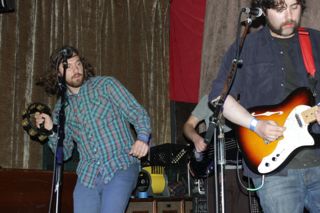
Bassist Bobby Terreberry, head bobbing, calmly plucked away, facing the side of the stage most of the set. And Jon Pontrello’s spastic, weaving dance moves with his guitar and tambourine proved a comic contrast next to Murphy’s uninvolved position behind the mic.

Drummer Carl Dahlen also brought some needed energy to the stage. Lost in the beats, Dahlen struck the set with an affable urgency, his fire-red hair swinging in his wake. And keyboardist Caleb Quick was anything but, taking his time to strike each chord with what looked to be a deep and somber intent.

No matter any critique you may have of the group, it’s impossible to say its lacking in fullness, in totality. When the vocals become hushed, the heedlessly playful guitar riffs meandered to new heights. When the percussion and bass toed the line of “background” music, the group’s harmonies became impressively bold.

The result was a striking sense of balance. The beauty was in their distinctions as performers: Murphy swaying and singing; impassively cool behind his caterpillar-like mustache, Terreberry zoning out to resilient bass lines, Pontrello a feisty hot mess.

Dahlen was buoyant behind the drum set and Quick gave the performance a tasteful poignance.

One highlight was “Midnight Owl,” off their latest album Adios, I’m a Ghost (Hardly Art, 2013), which came out of this August with plenty of critical praise. It was also where Murphy shone the brightest — or darkest.

Murphy crooned the soft chorus wearing a yearning expression while shuffling uncomfortably, “She’s a midnight owl, ain’t seen her yet/ She’s an early riser, ain’t gone to bed.”

Their set seemed to go buy too quick, always a sign of a good show.

Heads Up: 7 must-see concerts this week

0

This week’s must-sees include a riot grrl legend with a shiny new project, a crew of gritty Brooklyn punks, an Oakland music fest (the Oakland Music Festival), a former Closer Musik member, and an experimental vocalist, formerly of Swans. Plus, Blouse, Dirty Beaches, and oh, so-much-more!

Here are your must-see shows: 

The So So Glos

“Did you want to spend a night pogo-ing around like the animal you are? The So So Glos, gritty DIY punks from Brooklyn, have just what the doctor ordered. Literally a band of brothers (the majority of the group is blood-related), the So So Glos lay testament to what hard work and determination can accomplish. Helping establish East Coast all-ages DIY venues such as Market Hotel and “Shea Stadium” (where the band also lives), the group is dedicated to keeping the proverbial DIY scene alive. Often compared to fellow Brooklynites Japanther, the So So Glos are hot off their newest release Blowout. Also on the bill is unfortunately-named Diarrhea Planet, and Unstrung. Straight off Burger Records, the Tennessee-based Diarrhea Planet is Southern-fried Ramones worship while SF-based trio Unstrung goes for a more aggressive, punk route.” — Erin Dage
Tue/17, 9pm, $10
Brick and Mortar Music Hall
1710 Mission, SF
(415) 371-1631
www.brickandmortarmusic.com
http://www.youtube.com/watch?v=Fr-swKOsEYw

The Julie Ruin
Before Le Tigre but after the demise of Bikini Kill, Kathleen Hanna created a mystical lo-fi electropop solo project called Julie Ruin. More than 15 years after that record and a whirlwind of life changes later (Le Tigre hiatus, Beastie Boy husband), Hanna and a newly assembled band of cohorts — Kathi Wilcox, Kenny Mellman, Carmine Covelli, Sara Landeau — reformed that project as the Julie Ruin. The Julie Ruin released its first group full-length, Run Fast, last week on Dischord. A dancey new wave record bursting with head-bopping beats, lightning bolt electric guitars, and empowering lyrics, it’s set to be another chant-along feminist anthem album.
With La Sera
Tue/17, 8pm, $18
Slim’s
333 11th St, SF
www.slimspresents.com
http://www.youtube.com/watch?v=hEltsPb8M6Q

Oakland Music Festival
The Oakland Music Festival is coming this weekend, which means live music, gourmet eats, and lots of beers, all in the name of celebrating the beloved East Bay city. Oakland hip-hop stalwarts the Coup headline along with Dam-Funk, Religious Girls, James & Evander, Bang Data, and more. Plus, expect craziness from the Trill Team 6 and Lights Down Low crews.
Sat/21, 11am-7:30pm, $25-$30
At the corner of 19th and Jefferson Streets, Oakl.
www.oaklandmusicfestival.com
http://www.youtube.com/watch?v=acT_PSAZ7BQ

Matias Aguayo
“If you know this one time minimalist-Closer Musik member from the all a capella cut-up jam “Rollerskate” or his wild Spanglish guest appearance on math-rockers Battles’s “Ice Cream,” you know that Aguayo’s voice is impossible to pin down. On The Visitor, his latest release on South American Kompakt offshoot Cómeme, Aguayo is as hard as ever to locate geographically, blurring Latin dialects and reverse engineering English lyrics over a mix of increasingly psychedelic rhythms that cut across (and veer from) generic dance and world music boundaries. With a new live show — expect lots of percussion and off-the-wall vocals on top of tracks — Aguayo could seem to be less on tour from another country, and more like a visitor from outer space.” — Ryan Prendiville
With Ghosts on Tape, Shawn Reynaldo, Rollie Fingers
Sat/21, 10pm-3am, $10-15
Public Works
161 Erie, SF
(415) 932-0955
www.publicsf.com
http://www.youtube.com/watch?v=JE12dG6i6i4

Blouse
Portland, Oreg. trio, Blouse, may have ditched the synths and drum machines of its 2011 debut self-titled album with new Captured Tracks full-length, Imperium, but the sound remains as hazy and dreamy as ever. Now it’s just backed by rippling reverb and distortion. The misty dreampop band makes siren calls that would entice a shipwrecked sailor, floating endlessly in a gurgling oceanic abyss. See? Wistful. Check first single, “A Feeling Like This” or next track “No Shelter” for that particular mental imagery. It’s all there, the swashing of fuzz, the wide open minimalism à la xx, the delicate, teetering vocal tracks, and an uneasy feeling of isolation.
With Social Studies, Feathers
Sat/21, 9:30pm, $12
Bottom of the Hill
1233 17 St, SF
(415) 626-4455
www.bottomofthehill.com
http://www.youtube.com/watch?v=KlxjGFaQKu4

Dirty Beaches
“Alex Zhang Hungtai, the musician behind the Dirty Beaches moniker, is an old soul. An eternal stranger in a strange land with a flair for eccentricity, Hungtai seems straight out of the beat generation. Taiwan-born and Montreal-based, he has lived in a veritable laundry list of cities around the world (including a stint in San Francisco) and through his music and touring schedule, Hungtai’s wanderlust shows no signs of slowing down. This restlessness is evident in Dirty Beaches’ music, a muddy, murky mix of doo-wopesque vocals and surf-tinged guitars that never quite rises to the surface. His simple guitar- and sample-based rock is beefed up on the road with a full band and a saxophone player. This tour promises to be especially interesting, with Hungtai possibly performing sitting down or with a cane after he jumped out of a second story window to make his flight back to North America, like Neal Cassady reincarnate.” — Haley Zaremba
With SISU, Chasms
Sun/22, 9pm, $12
Bottom of the Hill
1233 17th St, SF
(415) 626-4455
www.bottomofthehill.com
http://www.youtube.com/watch?v=WOZFVFF-ATw

The Living Jarboe
“Jarboe’s music is defined by the way she uses her powerful voice, a mutable, inventive instrument that haunts, terrifies, soothes and mourns. The former member of beloved post-punk outfit Swans has been prolific since the band’s break-up in 1997, perfecting her experimental art and collaborating widely across the musical spectrum, notably with Bay Area legends Neurosis. This appearance as the Living Jarboe enlists the help of a violinist and a guitarist to bring her seething, squalling, challenging songs to life.” — Ben Richardson
With Faun Fable, Amber Asylum
Mon/23, 8pm, $15
Cafe Du Nord
2170 Market, SF
(415) 861-5016
www.cafedunord.com
http://www.youtube.com/watch?v=sKEcbzKubME

For whom the bell rocked: Too much turned up

0

Three to five years ago, the most popular phrase at Rock the Bells was “Rest in peace J Dilla.” This year, it was “Let’s get turned up!” The difference between the two shout-outs exhibits the festival’s progression from underground/old-school hip-hop gathering to a way more genre-expansive festival.

This year included stalwart acts that you would have seen at Rock the Bells 2004, 2005, and 2007 such as the Wu Tang Clan, TechNine, and Deltron 3030. But rappers like Juicy J, Riff Raff, and Trinidad James would have been ridiculed for not being “real hip-hop” enough in past years. This year’s eclectic and diverse cast was a reassuring reminder that hip-hop is not dead and that the music coming out in 2013 is just as worthy as that of any other era.

More than 50 acts split between two days and divided onto three stages meant that I had lots of ground and music to cover despite only being one person. And due to the immense offering of music, there were bound to some distressing scheduling conflicts. The worst of all was Juicy J vs. Black Hippy vs. Deltron 3030 at 7:45pm.

Even more upsetting was the fact that there was no music playing between 7:15 and 7:45. I cannot fathom why the organizers would have absolutely no act performing for 30 minutes less than three hours before the end of the festival. Fortunately I was able to dash between the three stages where the three acts were performing.

Nearly every act, all weekend, encouraged the audience to get “turned up,” but Juicy J was the only rapper to get his crowd “turned up” without asking. Due to the scheduling conflict, Deltron accompanied by an orchestra played to a rather small but very impassioned group of fans. When I caught Black Hippy, Kendrick Lamar was in the midst of performing the hits from his acclaimed good kid m.A.A.d city and I only needed five minutes to understand why he proclaimed himself to be “King of New York.”

The E-40/Too $hort duet was lackluster due to their early time slot — a mind boggling 4:25pm slot — and because 40 didn’t show up on the stage till more than halfway through the set. Other bland performances included Joey Bada$$ who was very undeserving of his main stage slot, Immortal Technique who belongs in a museum of homophobia and sexism and not on a concert stage, and Action Bronson. Bronson, who normally is overflowing with personality, spent his entire set floating around on stage and basically talked his verses, the most exciting part of his set was the guest appearance of Riff Raff on “Bird on a Wire.”

For the most part, the rappers at the festival were generally excited to be presenting for an exclusively hip-hop head audience. Brooklyn outfit Flatbush Zombies exploded on stage with psychotic energy from start to finish. Odd Future mates Tyler the Creator and Earl Sweatshirt in each of their sets trolled the hell out of their fans, which made for an even more amped set. Pusha T gets immense credit for kicking off his set with his lively guest verse from “Don’t Like” and Clipse-favorite “Grindin,’” a successful attempt at keeping fans from drifting off to the other stages.

Trinidad James’s “I’m so happy to be here” schtick surprisingly made for a bouncy show. A$AP Mob and Black Hippy each tied for best overall group performance and both crews played like they owned the Shoreline Amphitheatre. Kid Cudi, who some hip-hop heads might have doubted as a viable headliner, possessed a contagious enthusiasm that the crowd inhaled like it was pot smoke.

As for the holograms, they get credit for their novelty and not much else. Both Eazy E and ODB were flickering in the beginning. The hologram as a medium could barely play surrogate for these two strong and influential personalities. I pray to god Mac Dre never gets subject to this. The hologram was a worthy endeavor in that it gave a sense to millenials what it was like to witness Eazy E and ODB, but fun time is over and it’s time to retire this gag before we jump the shark.
 
Awards
Least Surprising Cancellation: Chief Keef.
Best Surprise Guest: Tiny “Zeus” Lister aka Deebo from “Friday” showing up during Earl Sweatshirt, E-40/Too $hort, and TechN9ne’s sets.
Most “I’m old” Comment: RZA for “I know a lot of y’all grew up with iPads and iPhones, but I’mma show y’all how we used to do it back in the day”
Most Generous: Juicy J for throwing his sweat-soaked Gucci sports jacket into the crowd.
Most Unnecessary Stage Set-Up: Kid Cudi and his giant “Legends of the Hidden Temple” boulders.
Biggest Bay Area Panderer: Host Peter Rosenberg for constantly reminding people who live in the Bay Area that they are currently in the Bay Area.
Best Freestyler: Supernatural for the umpteenth time.

Stats
Number of times I heard the word “Twerk:” A shockingly low 2.
Number of times I heard the phrase “Turn Up” or any variation there of: ∞ [infinity]
iPad sightings: 6 (ugh)
Number of “Fuck the Police” chants: 7
Number of acts I heard lip-syncing: 4

Wells Fargo lawsuit against city of Richmond dismissed

5

Richmond, 1, Wells Fargo, zip. 

In the first round of what may become a long and protracted legal battle, US Distict Judge Charles Breyer dismissed Wells Fargo’s lawsuit against the city of Richmond today, and the reason for dismissal was clear: nothing has happened yet. 

Wells Fargo’s suit attacked the constintutionality of Richmond’s plan to use eminent domain to seize about 600 mortgage loans, a controversial program meant to save residents from losing their homes. The judge pointed out that not only had Richmond not yet enacted the plan, but it hadn’t even been voted on by the Richmond City Council. 

In legalese, the case is not “yet ripe for adjudication.” Translation? You can’t sue someone for something that hasn’t happened, or may not ever happen, Breyer wrote in his decision. He also explained why he dismissed the case, rather than putting it in abeyance (a kind of “pause button” for cases).

“The Court further concludes that it must dismiss the case rather than hold it in abeyance,” he wrote. “Ripeness of these claims does not rest on contingent future events certain to occur, but rather on future events that may never occur. Because there is no point at which it will be determined that Plaintiffs’ claims are not ripe and will never become ripe, the matter could linger in abeyance for an indefinite period of time. Under these circumstances, a stay is not appropriate.”

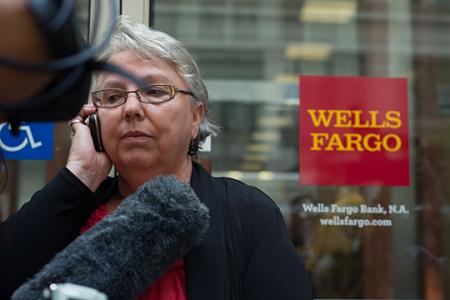
Wells Fargo declined to comment on the decision, and a spokesperson referred us to legal counsel representing investors in the mortgage market (of which Wells Fargo is a trustee). Mayor Gayle McLaughlin also was unavailable for comment as she is out of the country on a business trip.

protesters march outside of Wells Fargo

Speaking to the Guardian a few weeks ago about her eminent domain plan, McLaughlin said she would be willing to battle Wells Fargo “all the way to the Supreme Court,” to defend the community of Richmond. And she may have to, as Wells Fargo does have the opportunity to appeal to a higher court. 

For clarification, Breyer did indicate in the hearing last week that he would seek abeyance or dismissal in the case, but did not issue his final decision until today.  

For our coverage of Richmond’s city council meeting where the plan was almost voted down by city councilmember Nathaniel Bates, click here. Look out for our full coverage of the newest in Richmond’s battle for homeowners in our September 18 issue, this Wednesday.  


Below is the full text of Breyer’s decision.

From America’s Flop to America’s Blowout — and we couldn’t be happier

131

New Zealand’s sailing team could win the America’s Cup this weekend after taking a 6-0 lead over the American team sponsored by Oracle and its billionaire CEO Larry Ellison, who made this elite sailing race even more prohibitively expensive than usual. And we at the Guardian couldn’t be happier for the Kiwis. Go New Zealand!

For years, we’ve been covering this sad spectacle, from the overhyped initial attendance and economic projections to the waterfront land grab and real estate swindle that Ellison and company tried to perpetrate on San Francisco to sticking city taxpayers with a big bill that Ellison should have footed himself to the episodes of cheating that caused international judges to dock Ellison’s team two points in the final (one of which is still yet to be assessed).

So we feel vindicated by this great act of karmic justice, to watch Ellison’s team not just losing badly, but being utterly blown out of the water by the straight-shooting team from Down Under, whose skipper has pledged to scale back future America’s Cups to make them cheaper and more accessible.

Frankly, watching the America’s Cup has been far less exciting than the speedy “NASCAR on water” that it was hyped as by organizers. This “sport” makes baseball seem riveting and fast-paced. But we’re thrilled to watch the grand finale, if only for the snicker.  


Advocates say solidarity is key to achieve real immigration reform

13

by Reed Nelson

When Lourdes Perez got off work in the recent past, she didn’t put her feet up. She said she couldn’t worry about dinner or her son’s extracurricular activities. All she could think about was her safety and the safety of her son.

Perez was trapped in an abusive relationship, and — like many other undocumented women in the Bay Area — felt that calling the police wasn’t an option. Perez doesn’t speak much English, making her an easy target for her abusive spouse and fearful of local authorities charged with protecting the abused. And that makes no sense.

But for an estimated 2.6 million undocumented Californians, things haven’t made sense in quite some time. Fear of deportation has forced many, like Perez, to try and go unnoticed day in and day out. Now, with federal immigration reform moving forward and policy initiatives at the local level aimed toward improving safety for undocumented survivors of domestic violence, advocates have finally seen some progress – yet immigrant rights advocates seem to agree that the work as being far from finished.

Dozens of community members turned out for a Sept. 12 event, “What’s Beyond DOMA in Immigration Reform? The Next Steps for Women & LGBTQ Communities,” hosted in San Francisco by Asian Students Promoting Immigrant Rights Through Education (ASPIRE) and API Equality Northern California.

The event marked the first time “we’ve had a round table or panel discussion that brings in so many different perspectives and community organizations,” co-host Sammie Wills noted.

In 1996, then-President Clinton signed a sweeping legislation banning safety-net access for millions of immigrants and refugees, according to panelist Gabriela Villareal, policy manager for the California Immigrant Policy Center. “[The law] basically barred [immigrants and refugees] from safety-net support for the first five years of them being here,” Villareal said.

But things have worsened since then. Much of the panel discussion focused on the draconian Secure Communities (S-Comm) — a shadowy partnership between the FBI and the U.S. Immigration and Customs Enforcement (ICE) that began in 2008, and has resulted in the deportations of 784 San Franciscans since 2010, according to data provided by the office of Sup. John Avalos.

A week before the forum, Avalos’ proposed Due Process for All ordinance received veto-proof supermajority support (8-3) from the San Francisco Board of Supervisors. An attempt to neutralize S-Comm at the local level, the legislation makes it illegal for law enforcement to detain undocumented citizens solely in response to immigration detainer requests issued by ICE under S-Comm.

Stacy Umezu, programs co-director at Community United Against Violence (CUAV), urged forum participants to contact state elected officials urging support for the TRUST Act, statewide legislation similar to Due Process for All which would bar police from detaining individuals solely in response to requests from federal immigration authorities.

In the meantime, activists are continuing to advocate for meaningful reform. Alex Aldana, part of the East Bay Immigrant Youth Coalition, for instance, found civil disobedience to be the most effective mode for change. “I’m undocumented and unafraid, queer and not ashamed,” Aldana said during the discussion.

Amy Lin, from Aspire, perhaps summed up the mission of this eclectic group best when she discussed her personal experience as a doubly marginalized individual. As part of the LGBTQ community and the undocumented community, she said, she is stigmatized by even those already marginalized.

Solidarity was key, she said. And by sticking together, she and the rest of the panelists hope to steer immigration reform toward the inclusive and fair plateau they’ve been seeking all along.

Ki-ki-ki-ah-ah-ah: new movies for Friday the 13th

0

Naturally, there’s at least one horror movie, Insidious: Chapter 2,  opening in honor of Friday the 13th — two if you count Our Nixon — as well as a new series paying tribute to the singular Pier Paolo Pasolini (check out Dennis Harvey’s round-up here). Read on for more new reviews and one special holiday recommendation.

http://www.youtube.com/watch?v=rNk1YL9G2QA

And While We Were Here This second collaboration between writer-director Kat Coiro and actor Kate Bosworth is a far cry from 2011’s oops-a-baby comedy Life Happens — owing, perhaps, to that film’s co-scripter and co-star, Krysten Ritter. There’s no snarky, raunchy Ritter-ness in And While We Were Here, a drama about a brittle woman named Jane (Bosworth) whose marriage to a workaholic viola player (Iddo Goldberg) is more polite than passionate; their relationship has baggage that he’d prefer not to work through, despite the expanding tension between them. On a trip to Naples, Jane meets a free-spirited 19-year-old (Jamie Blackley) who sparks her interest; before long, it’s groove-reclaiming time. Alas, sun-dappled scenery can’t offset a familiar story — with themes heavily underlined by a subplot that has Jane listening to tapes of her grandmother (richly voiced by Claire Bloom) reminiscing about love and loss during wartime. Jane’s too self-centered to be particularly likable (to her husband, mid-argument: “You’re not curious about me!”), but Here deserves some backhanded props for gender-bending a tired plot device. Ready or not, the manic pixie dream boy has arrived. (1:23) (Cheryl Eddy)

http://www.youtube.com/watch?v=WMFan9K243w

The Family It’s hard to begrudge an acting monolith like Robert De Niro from cashing out in his golden years and essentially going gently into that good night amid a volley of mildish yuks. And when his mobster-in-witness-protection Giovanni Manzoni takes a film-club stage in his Normandy hideout to hold forth on the veracity of Goodfellas (1990), you yearn to be right there in the fictional audience, watching De Niro’s Brooklyn gangster take on his cinematic past. That’s the most memorable moment of this comedy about an organized criminal on the lam with his violent, conniving family unit. Director-cowriter Luc Besson aims to lightly demonstrate that you can extract a family from the mob but you can’t expunge the mob from the family. There’s a $20 million bounty on Giovanni’s head, and it’s up to his keeper Stansfield (Tommy Lee Jones) to keep him and his kin quiet and undercover. But the latter has his hands full with Gio penning his memoirs, wife Maggie (Michelle Pfeiffer) blowing up the local supermarket, daughter Belle (Dianna Agron, wrapped in bows like a soft-focus fantasy nymphet) given to punishing schoolyard transgressors with severe beatings, and son Warren (John D’Leo) working all the angles in class. Besson plays the Manzoni family’s violence for chuckles, while painting the mob family’s mayhem with more ominous colors, making for a tonal clash that’s as jarring as some of his edits. The pleasure here comes with watching the actors at play: much like his character, De Niro is on the run from his career-making albeit punishing past, though if he keeps finding refuge in subpar fare, one wonders if his “meh” fellas will eventually outweigh the Goodfellas. (1:51) (Kimberly Chun)

http://www.youtube.com/watch?v=YDSrN_yKYUc

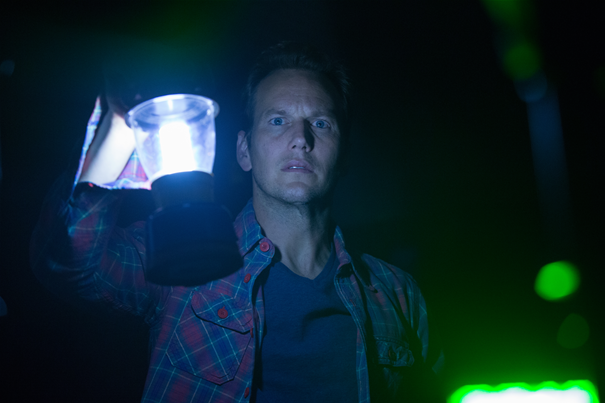
Insidious: Chapter 2 Hot off this summer’s The Conjuring, horror director James Wan turns in a sequel to his 2011 hit, also about a family with big-time paranormal problems. (1:30)

http://www.youtube.com/watch?v=odTZDplswDg

Our Nixon Cobbled together from previously unseen footage shot by some of Richard Nixon’s closest aides — the destined-for-infamy trio of H.R. Haldeman, John Ehrlichman, and Dwight Chapin — Penny Lane’s doc, which also uses Oval Office recordings and additional archival material (not to mention the best-ever use of Tracey Ullman’s 1983 pop confection “They Don’t Know”), offers a new perspective on Tricky Dick and White House life during his tumultuous reign. But while Our Nixon brings fresh perspective to notable moments like Nixon’s visit to China and Tricia Nixon’s lavish wedding, and peeks behind the public façade to reveal the “real” Nixon (hardly a spoiler: he’s shown to be biogoted and behind the times), the POTUS is just one of many figures in this inventive collage. The home movies themselves are the real stars here, filled with unguarded moments and shot for no reason other than personal documentation; as a result, and even taking Lane’s editing choices into account, Our Nixon feels thrillingly authentic. (1:25) Roxie. (Cheryl Eddy)

Populaire Perhaps if it weren’t set in the 1950s, this would be the fluorescent-lit story of a soul-sucking data entry job and the office drone who supplements it with a moonlighting gig. But it is the ’50s — a cheery, upbeat version of the era — and director Régis Roinsard’s Populaire reflects its shiny glamour onto the transformation of small-town girl Rose Pamphyle (Déborah François) from an incompetent but feisty secretary with mad hunting-and-pecking skills into a celebrated and adored speed-typing champion. Her daffy boss, Louis Échard (Romain Duris), is a handsome young insurance salesman who bullies her (very charmingly) into competing against a vast secretarial pool in a series of hectic, nail-biting tourneys, which treat typing as a sporting event for perhaps the first time in cinematic history. (See also: scenes of Rose cranking up her physical endurance with daily jogs and cross-training at the piano.) The glamour slips a touch when Populaire starts to delve into psychological motivations to rationalize some of Louis’s more caddish maneuvers. But meanwhile, back in the arena, bets are made, words-per-minute stats are quoted by screaming, tearful fans in the bleachers, hearts are won and bruised, a jazz band performs that classic tune “Les Secrétaires Cha Cha Cha,” and we find ourselves rooting passionately for Rose to best the reigning champ’s 512(!)-wpm record. (1:51) (Lynn Rapoport)

And in honor of Friday the 13th, here’s Crispin Glover rocking out in 1984’s Friday the 13th: The Final Chapter, aka “the one with Corey Feldman,” the fourth (and despite the title, by no means final) entry in the series. RELAX, JIMBO!

How far will $10 an hour stretch in 2016?

112

Earlier this week, just as media reports pointed out that America’s wealthiest 1 percent did better in 2012 than almost any other year in history, Gov. Jerry Brown came out in favor of a bill that would raise the state minimum wage to $10 an hour by 2016.

Last night, the Assembly approved the bill on a 51-25 vote, sending it onto the governor’s office. The development is almost certain to provoke howls from pro-business interests claiming it will wreak havoc on the economy. But what will it mean for minimum wage earners, whose take-home pay currently totals less than $300 a week for a full-time job?

Here are some statistics to put into perspective what it means to be a minimum wage earner in a world of rising costs and a widening gulf between top income earners and the rest.

  • The National Low Income Housing Coalition notes that a household must earn $25.78 per hour to afford fair market rent for a two-bedroom apartment without spending 30 percent of their income. Couples earning California’s current $8 minimum wage can muster only a combined $16 an hour before taxes.
  • Based on this map illustrating San Francisco’s gaping rent affordability gap, a minimum-wage earner (making the 2012 minimum wage of $10.24 an hour) would have to hold down at least 3.4 full-time jobs to rent a two-bedroom apartment at fair market rate – even in the city’s less expensive areas like the Bayview or the Excelsior.
  • Fast food workers around the country are aiming higher than the $10 per hour Californians may have to look forward to by 2016 – organized food service employees have been rallying to be paid $15 an hour, a rate they see as an actual livable wage. According to this nifty calculator created by the Daily Beast, using data from University of Massachusetts economists Jeanette Wicks-Lim and Robert Pollin, the cost of paying McDonald’s workers this much could be recovered by charging 22 cents more for a Big Mac.
  • Finally, it’s worth considering the growing wealth gap between the wealthiest one percent and the rest. From 2007 to 2009, average real income for the bottom 99 percent fell by 11.6 percent, the largest two-year decline since the Great Depression, according to to an analysis by UC Berkeley economist Emmanuel Saez. Meanwhile, the top 1 percent lost an even higher percentage in that time. But then, during the economic recovery from 2009 to 2011, the one percent saw their incomes increase by 11.2 percent, while incomes of the bottom 99 percent shrunk slightly. Then, in 2012, the top one percent scored a 19 percent increase, their collective earnings accounting for 22.5 percent of total U.S. income. As Matthew O’Brien writes in The Atlantic, “it’s the one percent’s economy, and we’re just living in it.”

Twelve years after BART train kills mechanic, lighting and electrical safety not improved

11

When BART maintenance workers train under safety instructor Saul Almanza, the most important thing they learn is this: your objective when you go to work is to come home. 

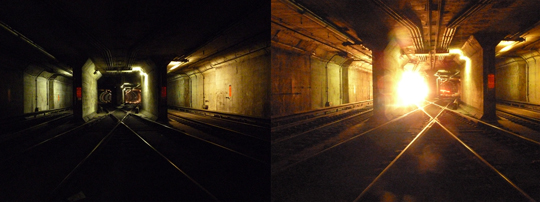
When he recites that mantra he remembers two BART engineers who were hit and killed by the trains whose tracks they were charged with repairing: Robert Rhodes in 2001, and James Strickland in 2008. Almanza imagines the dark tunnels, where the safe places to stand are small and the lighting is scarce. He thinks of Rhodes and Strickland every day.

As talks between BART labor unions and management resumed Sept. 9, negotiations over safety overhauls have stalled, representatives from SEIU Local 1021 said. On Sept. 11, union members on the negotiating team — which includes Almanza — released a chart of fines the transit agency had received from the California Occupational Safety and Health Administration, stemming from those accidents. 

The chart shows 20 citations from OSHA since 2001 that the unions said have been unaddressed. BART management, unsurprisingly, disputes this. The list shows incidents as minor as rain getting into a fare gate and as major as the two aforementioned deaths. All told, the safety fines add up to $192,375. 

spreadsheet documenting BART's safety violations

The complaints were also listed on the federal OSHA website, with additional details revealing that some of the investigations into the complaints were closed, contrary to the union’s claim. That doesn’t mean the underlying causes of the problems have been solved, though. Many of the problems persist, Almanza told us, endangering workers’ lives.

Those safety issues remain a sticking point in the negotiations between BART management and SEIU. 

BART spokesperson Rick Rice said the lighting issues that led to Rhodes’ death will soon be resolved. Strickland’s death was a separate issue, though, as dense vegetation blocked a driver’s line of sight led to the mechanic’s death. That was also addressed, Rice said. 

“Starting next year there’s $4.5 million allocated by the board to improve all the lighting,” Rice told the Guardian, he said other changes have also made the tunnels safer since the 2001 accident.

But Almanza said that while he’s heard that all before, he won’t believe it until he sees it in writing. So far, that hasn’t happened. 

“The only change that took place was they added signage to the location saying you can’t enter the area without ‘simple’ approval,” Almanza said. Simple approval is a process where the worker recites a waiver that absolves BART of fault should they be injured or die.  “They make you proclaim that you won’t interfere with operations, and it means if you delay something or die it’s your fault.”

Rhodes’ death in 2001 was a result of inadequate markings and lighting, he said, but Strickland’s death in 2008 was due to his being hidden behind tree ovegrowth. The union is asking for a dedicated grounds crew to cut back vegetation to improve visibility, hopefully saving lives in the process. BART management said progress was made on that point.

“Since the accident they’re referencing, there’s been extensive changes to the safety procedures and vegetation management,” Rice said. But Almanza told us those changes embedded groundskeepers with mechanics, and they started doing jobs that had nothing to do with groundskeeping. They weren’t even handed chainsaws for a year, he said. 

A train mechanic at the Hayward BART shop, Robert Bright, also told us he was worried about safety conditions for BART workers. In our previous coverage, “Tales from the Tracks,” he said he’s seen workers crushed under machinery and electrocuted due to lax safety conditions.

Almanza said BART’s resistance to making electric work safer is a prime example of their attitude toward safety. OSHA issued multiple citations requiring BART to change safety procedures for when mechanics work on or near the rails. 

“The third rail is electrified with a rubber blanket over it for protection,” Almanza explained. BART also uses a method of cutting power to the rail while a worker places a plastic board down to protect them from it. But the power could easily be turned back on, meaning electrocution or death for the workers. 

Electric third rail cover

This is the cover BART workers use when working on the third rail.

OSHA’s changes are simple enough, requiring trained electricians to shut off power to the third rails and remove power breakers before maintenance crews work on the tracks to prevent the power from accidentally being switched back on. Almanza said the procedure saves lives. 

But BART management has even paid its lawyers to resist the changes recommended by OSHA, documentation shows. 

>

Recent minutes from BART’s board of directors shows the board voted unanimously to retain legal services from law firm Glynn and Finley to “mount a vigorous defense” against the safety citations issued by OSHA, saying the recommended changes were unnecessary and would have little effect on safety. Meeting minutes show the directors don’t think it’s a necessary procedure, but Almanza contends that it’s a cost-saving measure, since electricians must be paid to remove the breakers.

“If this prohibition is implemented, it would drastically change the way BART performs maintenance operations with no anticipated improvement in safety,” according to meeting minutes. It went on to state that the procedure introduces additional safety risks, which Almanza denies. 

The board then moved to approve a $188,000 increase for legal services to challenge the OSHA changes — almost as much as the agency paid in fines for safety violations in the first place.

BART spokesperson Jim Allison said that by next week BART will look at the union’s proposals around safety and will respond to their concerns.

Adam Ant glams up the Regency Ballroom, guitar in hand

0

Adam Ant isn’t just a stage name, it’s a mission statement. When Malcolm Mclaren of Sex Pistols fame swiped Adam’s band in the early 1980s to form Bow Wow Wow, it could have been a quick death for the ambitions of Stuart Leslie Goddard. But, as legend goes, a steadfast decision was made by Goddard in a North London mental hospital in the late 1970s. Dubbing himself Adam Ant, Goddard would do nothing less than become the biggest new wave sensation possible. He showed that determination, yet again, at his Regency Ballroom appearance this Thursday.

So when his Ant’s first band was stolen, way back when, he teamed up with guitarist Marco Pirroni and for the next decade produced worldwide hits like “Ant Music” and “Goody Two Shoes.” Then the 1990s hit and left the new romantic pioneer unemployed and only surfacing for tabloid pieces on mental health.

But even two decades off hasn’t slowed down Adam Ant. In 2010 he released Adam Ant Is The Blueblack Hussar in Marrying The Gunner’s Daughter without any of his previous writing partners and on his own label. He has been touring to promote the record ever since.

Though his new band, the Good, the Mad and the Lovely Posse, doesn’t have any of the horns or synthesizers of Ant’s ‘80s singles (a dramatic pause in “Desperate but not Serious” was added where previously a horn solo had been), the syncopated trading of beats between two drumsets was very much the center of attention at his SF show.

Unfortunately, the auxiliary drummer with the skin-tight dress and almost detrimental Peggy Bundy wig had her drumset mics practically muted. Her showmanship and knack for standing up to play big hits on songs like “Physical (You’re So)” was all that gave the crowd notice she was playing. Closer inspection showed the flurry of tribal counter-rhythms her sticks were weaving between the lead drummer’s rhythms, but one could only glean this visually, the sound never left the stage.

Without the synthesized new wave frills of his recorded singles, the Good, the Mad and the Lovely Posse turned decades-old glam hits into raw, almost New York Dolls-y rockers. Adam, traditionally a bassist and certainly more of a performer than a stage musician, had a guitar at hand for just about every song. He had the guitar on him for more of the set than his makeup or costume. In fact, more of his crowd was wearing the traditional new romantic makeup than his band members, who looked like Ant’s manager scraped them off the wall of a Motorhead show and gave them instruments.

While this comeback might never produce any singles, truly, seeing Adam Ant in 2013 was a perfect glimpse at a zenith of the former, pre-Internet, recording industry surviving on his own in a world where such concepts no longer exist.

On its fifth anniversary, Sunday Streets offers a lesson in urban experimentation

48

It’s hard to believe that Sunday Streets — San Francisco’s version of the ciclovia, or temporary closure of streets to cars as a way of opening up more urban space for pedestrians, cyclists, skaters, performers, and loungers — is five years old. It’s even harder to believe that this family-friendly event was once controversial, especially feared by the businesses that now clamor to hold them in their neighborhoods.

But it was, and that’s a great reminder that ideas that disrupt the status quo and seem quite radical and unsettling can embody just what The City needs to feel like, well, a city, a place with people mix and mingle and get to know one another in the streets, strips that can become important social spaces and not simply conduits for cars.

“Sunday Streets provides the opportunity for recreation and activity in neighborhoods all across San Francisco,” Sunday Streets Director Susan King of Livable City told us. “Each community it’s in is helped with health and economic benefits and the easing of community cohesion.”

This Tuesday, Sept. 17, the folks from Sunday Streets will be hosting a fundraiser and celebration at Cityview, atop the Metreon, in honor of the hard work that has been put into various Sunday Streets events around the city throughout the years. The event will feature speeches, snacks, an open bar, a raffle, live entertainment, and other hoopla.

Among those being honored at the event will Lt. Gov. Gavin Newsom, who as mayor worked with alternative transportation activists from Livable City (the event’s main sponsor), the San Francisco Bicycle Coalition, and other groups — including a large contingent that attended the first ciclovia in the US, in Portland, during the Toward Carfree Cites conference in 2008 (which we at the Guardian covered) — to create Sunday Streets.

At the time, the business-friendly Newsom stood up to opposition from merchants in Fishermans Wharf and Pier 39, and both progressive and conservative supervisors looking for a way to tweak the mayor, to help become one of the first cities in the US adopt the ciclovia model that had been pioneered in Bogota, Columbia, and which has now spread to cities around the world.
“We really have to thank former Mayor Gavin Newsom for instigating Sunday Streets,” King said. “Without him, Sunday Streets in San Francisco wouldn’t exist.”

First hosted in the late summer of 2008, King has overseen Sunday Streets since its inception, hustling up fiscal sponsors and volunteer support like a whirling dervish the whole time. 

“There’s so much that goes into Sunday Streets,” King said. “I had no idea that it would get to where it is now.”

The anniversary event costs $50 and lasts from to 6 to 10 p.m. Proceeds will go to future Sunday Streets events.

This year there have been Sunday Streets in a handful of neighborhoods, making appearances in the Embarcadero, Mission, Bayview, Great Highway, Tenderloin, and Western Addition. There are two more Sunday Streets scheduled this year in the Excelsior (Sept. 29) and the Richmond (Oct. 27) districts.


Senate OKs Bay Bridge name change, lawsuit seeks to overturn it

28

The California Senate gave its blessing to the rename the western span of the Bay Bridge after former San Francisco Mayor Willie Brown on Sept. 12, blatantly disregarding mounting local opposition to the proposal. Since ACR 65 is a nonbinding resolution, Gov. Jerry Brown cannot veto it even though he went on record earlier this week saying the 77-year-old bridge should keep the same name it’s always had.

San Francisco Sens. Mark Leno and Leland Yee both voted in favor of the resolution.

The same day, Attorneys G. Whitney Leigh and Lee Hepner filed a complaint seeking injunctive relief to overturn the resolution on behalf of their client, good government advocate Bob Planthold.

At a press conference, Planthold said the lawsuit “has nothing to do with Willie,” but rather sought to remedy what he perceived as state lawmakers ignoring their own rules, a state of affairs he characterized as “Orwellian.” Here’s an excerpt of his comments to reporters:

For his part, Leigh questioned why Sacramento legislators were in such a rush to rename part of the Bay Bridge when construction of the eastern span had only just been completed, following long delays and overruns. “There is a shadiness and irregularity to this procedure,” he said.

The suit, directed at the California Senate and the Assembly and all the lawmakers responsible for pushing it through, alleges “arbitrary suspension and/or violation of legislative rules and policies” to fast track the legislation.

Specifically, Hepner said, lawmakers ignored an established timeline for introducing new proposals, instead allowing ACR 65 to be submitted four months after the formal deadline. Additionally, he said, the Senate Committee on Transportation and Housing was technically barred from meeting between Sept. 3 and 13 – a rule likely meant to keep lawmakers focused on more pressing issues, like approving 400+ bills before a Sept. 13 deadline – but nevertheless, ACR 65 passed out of that committee on Sept. 9 on an 8-1 vote.

Planthold previously served on the city’s Sunshine Ordinance Task Force and was previously an officer on the San Francisco Ethics Commission. Leigh is the former law partner of Matt Gonzalez, a former president of the San Francisco Board of Supervisors who joined two other former board presidents to formally call on Senate pro Tem Darrell Steinberg to stop the resolution from going forward.

Despite Gov. Brown’s opposition to renaming the Bay Bridge, it remains unclear exactly what he’ll do about it now that it has formally passed. In response to a query about whether he would take steps to halt implementation, spokesperson Evan Westrup responded in an email: “Got your message. Don’t expect we’ll be providing further comment today.”

Legislature approves Domestic Workers Bill of Rights, but will Brown sign it this time?

5

The California Legislature today gave final approval to the Domestic Workers Bill of Rights, legislation sponsored by Assemblymember Tom Ammiano (D-SF) to finally extend some labor rights to this largely female and immigrant workforce. Advocates are hopeful that Gov. Jerry Brown will sign it this time.

As we reported in a Guardian cover story in March, “Do we care?,” domestic and farm workers are the only two categories of employees exempted from federal labor law, and the caregiving professions are consistently undervalued in our economic and political systems. Last year, Brown vetoed the Domestic Workers Bill of Rights, expressing the concern that it might hurt the economy and cost jobs.

But advocates for the measure came back even stronger this year than last, and they recently accepted a set of amendments in the Senate that weaken the bill but may make it more palatable to Gov. Brown, including eliminating the requirement for rest and meal breaks and giving the measure a three-year sunset and commission to review its impacts.

“We’ve had discussions with the administration and we think we’re on the right track to get it signed,” Ammiano’s Press Secretary Carlos Alcala told the Guardian.

He emphasized that the bill still retains the requirement that domestic workers, who routinely work more than 40 hours per week, are entitled to overtime pay, something that Ammiano also emphasized in a prepared statement.

“This is a historic moment,” Ammiano said. “This now goes to the governor for his signature. That will give these workers, mostly women, the right to be paid fairly for overtime worked.”

Katie Joaquin, campaign coordinator the California Domestic Workers Coalition, said she’s excited to see the bill pass and hopeful that Brown will sign it this time.

“If he signs this bill, California would be the first state to give daily overtime rights to all domestic workers,” she said, referring to its requirement that domestic workers get overtime pay after working nine hours in a day, the same standard as now applies to live-in caregivers. 

While she said it was hard to accept some of the amendments, such as removing the requirement that domestic workers get uninterrupted time for a full night’s sleep, she said they were acceptable conditions for this initial reform measure. And she said the sunset provision could actual work in their favor: “We plan to take that as an opportunity to fight for even more.”

The bill, AB241, was approved by the Assembly today on a 48-25 vote to concur with the amendment made in the Senate. Gov. Brown has until Oct. 13 to sign it. 

For whom the bell rocks: hologram rap edition

3

This year’s Rock The Bells really is the Costco of hip-hop festivals. Pretty much anyone who’s anyone in the hip-hop world (plus some dead rappers) will be at Mountain View’s Shoreline Amphitheater this weekend. There is literally something for every kind of hip-hop fan out there, with more artists packed into those two days than weed in a Juicy J blunt.

Perennial RTB performers Wu-Tang Clan, Doug E Fresh & Slick Rick, Rakim, Bone Thugs N Harmony, and KRS-ONE will holding it down for the old school. Meme-rap stars Riff Raff, Danny Brown, and Trinidad James will bring their WTF-brands of rap. On the rise Brooklyn youngsters Flatbush Zombies and Joey Bada$$ will be present.

And even though the backpack era is over, mid-aughts underground luminaries such as Talib Kweli, Immortal Technique, Brother Ali, and Tech Nine will transport you back to a not so distant 2005. Headliners Kid Cudi, the entire A$AP and Black Hippy crews, hyphy super duo E-40/Too $hort, and Girl Talk (who might throw down a more hip-hop influenced set) will cap off the long weekend.

But the talk of the festival is not anyone listed above or anyone who has a heart beat. Hologram versions of Easy-E and Ol’ Dirty Bastard will appear in intangible 3D form. To catch a preview of their set you can watch performances of E and Dirty from last weekend’s Rock The Bells LA.

It’s easy to snark or scoff at a somewhat preposterous idea, but as someone who was witnessed hologram Tupac the first weekend at Coachella, I can fully attest that hologram rappers is as awesome as it sounds. I distinctly remember one guy in the crowd who literally thought Tupac had come back from the dead — granted he may have been tripping hard. So make sure to circle the two hologram shows on your setlist.

If you’re planning to travel via Caltrain, know that trains only leave from SF at the 15 of the hour. More importantly, the last train to leave Mountain View on Saturday is 10:49 and the last train on Sunday is at 9:19. Plan accordingly as you sure as hell don’t want to pay for a $120 cab back to the city.

Saturday recommendations:
Tyler The Creator, Chief Keef, Supernatural, Action Bronson, Pusha T, Flatbush Zombies, A$AP Mob, E-40 & Too $hort

Sunday recommendations: Juicy J, Deltron 3030, Rakim, Riff Raff, Earl Sweatshirt, Trinidad James, Danny Brown, Joey Bada$$, Black Hippy, Wu-Tang Clan.

2013 Rock The Bells Festival
Sat/14, Sun/15, $65.50-$239
Shoreline Amphitheater
1 Amphitheatre Pkwy, Mountain View
www.rockthebells.net