Tim Redmond

Editor’s notes

4

Tredmond@sfbg.com

I’m not good at holidays. When your world is made of deadlines, the holidays are just one more — gotta get the kids presents, gotta get the tree, gotta make plans, gotta do dinner … one more set of hassles. Bah humbug.

And I’ve never been a big fan of New Year’s Eve. Too many people acting like they’ve never been drunk before and will never be drunk again, and everything costs too much. I drink every day; I can miss New Year’s Eve. Party pooper.

So I don’t do my own new year’s resolutions; I do them for other people. This is what I would like everyone else to do in 2012:

I would like the Occupy organizers to put together a massive day of teach-ins and a march on Washington in the spring, to keep the movement alive and bring in a lot more people.

I would like my fellow dog owners to pick up the shit off the sidewalks.

I would like the Department of Parking and Traffic to put up No Left Turn signs on 16th Street at Potrero and Bryant.

I would like Visconti to lower the price on that really cool lava fountain pen.

I would like the transportation whizzes at City Hall to figure out how to put bike lanes on Oak Street so I can ride back from Golden Gate Park as safely as I can ride to the park.

I would like the supervisors to change the rules for Question Time so the mayor doesn’t get all the questions in advance and there’s a chance for real discussion that isn’t stupid and boring.

I would like middle school English teachers in San Francisco to explain to their students that homeless people are not “hobos.”

I would like the Obama Administration to quit hassling pot dispensaries.

I would like the airlines to start serving cocktails before takeoff.

I would like the thriller writers of America to learn how to write decent sex scenes.

I would like Jerry Brown to endorse the initiative to outlaw the death penalty.

I would like everyone in politics to stop saying the words “together” and “shared” since we aren’t together and I don’t want to share with the rich.

Anything else? Happy New Year.

Chron picks up gay clergy story, without credit

1

The Chron just picked up the week-old story of how the Catholic archbishop kicked three gay clergy members out of an Advent celebration at Most Holy Redeemer Church in the Castro. John Wildermuth did a fine job getting the details, and while I don’t expect him to have the same approach to the story as I did, it would have been nice — and, I think, journalistically appropriate — to give credit to the publication that broke the story, the Bay Area Reporter.

This isn’t a huge deal, but it’s something of an issue in the media these days, and even the old, traditional New York Times, which never used to mention the names of competitors in news stories (unless they were the subject of the story) now makes it a point to note if a story that appears in the Times first appeared somewhere else.

It’s not hard, and it’s standard fare in the blogosphere. Just add a line that says “as the Bay Area Reporter noted Dec. 15….” A quick phrase, eight words, even if it’s buried in the story, and you’ve done your ethical duty.

I’m glad the story’s getting out, and the archdiocese is going to suffer further embarrassment for a stupid move, but Cynthia Laird, the news editor at the B.A.R., got the scoop on this, and now that it’s all over radio and TV, she’s been ignored.

I asked Wildermuth about it, and he had a thoughtful answer:

I don’t feel a need to credit news stories, i.e., pieces reporting on something that happened and that’s public in nature. Different, of course, with features and investigative pieces, which require credit for fairness sake. And if I had used anything from the BAR piece, I certainly would have credited them. For example, I did credit the California Catholic, since I used quotes from their original story, which predated both the local pieces.And actually, we heard about the incident on KQED, not from the BAR.
 
Anyway, as I’m sure you know, the question of attribution/credit and how/when/where it’s applied is a constantly moving target, particularly at the edges. As someone who has seen my stories grabbed and used without a mention over the years (and experienced the joy of hearing them read, word for word, on local radio stations in days gone by), I’ve got no problem about giving credit and have never had anyone from the Chron complain about giving credit. But my feeling is that news events are public and as long as the new reporting is original, credit isn’t necessary.

But this wasn’t a five-alarm fire or a sports event or a press conference; if Laird hadn’t picked up on the story and pushed it out there, nobody would have known about this. (KQED got it from her.) I realize those of us who are in the alternative press are a little sensitive, since this happens to us all the time, but still: Fair is fair.


The redistricting furor

55

I opposed the measure that created California’s new Redistricting Commission. As we noted in our endorsements at the time:

The commission is hardly a fair body — it has the same number of Republicans as Democrats in a state where there are far more Democrats than Republicans. And most states still draw lines the old-fashioned way, so Prop. 20 could give the GOP an advantage in a Democratic state. States like Texas and Florida, notorious for pro-Republican gerrymandering, aren’t planning to change how they do their districts.

But Prop. 20 passed anyway, and control of the critically important task of drawing lines for state Legislature and Congressional districts fell to an unbalanced group of people with no political experience. They commission held hearings up and down the state, took reams of testimony — and wound up with a map that will probably add six or seven Democratic seats to the Congressional delegation.

That’s not a big surprise: Democratic Party registration is stable in a very blue state, and Republican registration is declining. Any fair redistricting would likely lead to more Democratic seats. And it’s clear that the likes of Phil Burton were not involved: In Los Angeles, two powerful veteran members of the House, Brad Sherman and Howard Berman, wound up in the same district. No matter what happens, the Democratic Party will lose one of its heaviest hitters.

But ProPublica, the national (and generally very solid) investigative reporting group, took on the process and concluded that the Democratic Party managed to wire the deal:

As part of a national look at redistricting, ProPublica reconstructed the Democrats’ stealth success in California, drawing on internal memos, emails, interviews with participants and map analysis. What emerges is a portrait of skilled political professionals armed with modern mapping software and detailed voter information who managed to replicate the results of the smoked-filled rooms of old.

(Memo to the folks at PP: There haven’t been “smoked filled rooms” in this state in quite a while. By the time the 1990 census was done, most of the state (including most public facilities) had strict limits on indoor smoking, and in 2000, nobody smoked in any rooms controlled by any governmental agency. But we get the point.)

The story has set off a furor. Robert Cruikshank, one of my favorite political bloggers, did a fairly brutal takedown on the report:

Of course, the core assumption that California Republicans deserved any new seats is challenged by their collapse in the November 2010 elections. While Republicans across the country were having a banner night, California Republicans lost every single statewide election (including losing the governor’s race by 13 points despite outspending the Democrats nearly 10 to 1). They also failed to pick up a single seat in either the legislature or Congress, losing one Assembly seat. California voters made explicitly clear in November 2010 that they do not like Republicans. That doesn’t appear to have actually influenced the commission’s deliberations, but it does mean the claim that Republicans had any reasonable expectation of gains is ridiculous.

Then Jerry Roberts and Phil Trounstine, two poltical reporters with at least 50 years of experience between them, did their own examination at CalBuzz, and asked PP’s Jeff Larson to explain himself. The result is scathing:

  Plainly put, their piece is the worst kind of ersatz “investigative” reporting: lots of heavy breathing and over-reaching conclusions drawn from selectively using, twisting or ignoring facts, relying on innuendo and suggestion, and mischaracterizing crucial elements of the story to inferentially allege an impropriety where none exists. Wink, wink, nudge, nudge, say no more. Moreover, ProPublica never even called the commission for a comment on its much-ballyhooed “findings.”

In failing the smell test, this clunker promises plenty, but simply doesn’t deliver the goods.

Wow. Harsh.

But the Roberts/Trounstine takedown holds up pretty well. The point they make is that everyone — the GOP, the Dems, city and state officials, groups like the Mexican American Legal Defense and Education Fund and more — tried to influence the process. In Northern California, the Dems were apparently a little better at it (and managed to create at least one fake front group to promote the interests of Rep. Jerry McNerney); in the southland, the big Democratic operation of Howard Berman and his brother, Michael, which, as CalBuzz points out, have played a key role in past redistricing efforts (those “smoke-filled rooms”), got totally fucked and Howard may lose his seat after 28 years.

I will say that PP dug up some new info and exposed how the Dems managed to create “communities of interest,” some of them bogus, to try to influence the final lines. But I’ve been watching this stuff for a long time, and I can tell you: Reapportionment is political. Always has been, always will be. There are better lines and worse lines, there are scandalous cases of gerrymandering and political payback and there are (relatively) honest attempts to create districts that are fairly compact and also comply with federal law and don’t dilute minority representation. But there’s no such thing as “clean” reapportionment — and if the Dems and Republicans weren’t trying their best to influence the outcome, they’d be guilty of partisan misconduct.

The CalBuz conclu:

The plain fact is that while Democratic registration has been essentially flat in recent years, Republican registration has fallen into the toilet, and the GOP now represents less than one-third of state voters.

This means that Democrats represent an increasing proportion of the electorate; add to that the fact that decline-to-state independents, the fastest growing bloc of registered voters, also tend to vote Democratic, as we’ve shown previously.

This makes Johnson’s claim that Republicans are entitled to at least their current number of seats, which is the money quote of the Pierce-Larson opus, not only laughable but also intellectually dishonest. Sort of like the whole piece.


 

A bad incentive for pot busts

3

The Bay Citizen ran, without comment or perspective, a Bay City News item Dec. 23 noting that the Hayward Police Department and other local law-enforcement agencies picked up some $1.2 million when the feds disbursed the money that was seized from a marijuana dispensary that was busted in 2006.

This is a dirty side of the drug war that doesn’t get enough discussion or attention: When the cops bust dealers who have cash (or even fancy cars) on hand, the money doesn’t go to the general fund of a city or to the federal treasury (to fund, perhaps, alternatives to incarceration, drug treatment or education). It goes directly to the police agencies that made the arrests.

That’s a huge incentive — a direct cash incentive — for police to focus on arresting drug dealers (in this case, an operation that was selling marijuana, which everyone with any sense knows ought to be legal anyway).

In an era of diminshed resources, if you’re a police chief and you have a choice — send your officers to raid a pot club, or send them onto the streets to try to prevent violent crimes — there’s a financial incentive to go after the pot club. That skews law-enforcement priorities in a bad way.

I’m hardly the first one to make this point, but it’s worth thinking about when we see this kind of story celebrating the “true holiday gift” of drug money.


More reasons why PG&E hurts the city

136

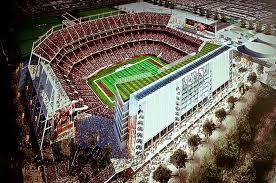
I know that the folks in Santa Clara are just taking full political advantage of the Candlestick blackout, buy you have to admit: They have a persuasive case. Here’s today’s Bay Citizen:

On Tuesday, Santa Clara’s mayor said his city’s superior public infrastructure helped lure the Niners away from San Francisco.

“To say this would be unlikely here is too kind: it simply could not happen in Santa Clara,” Mayor Jamie Matthews said in a Tuesday interview.

Santa Clara’s publicly owned Silicon Valley Power agency runs its own power generation and distribution system, drawing on sources such as wind turbines on Altamont Pass.

“The reason they moved to Santa Clara is the reliability of our services,” Matthews said. “We have reliability in our electricity system that is unparalleled.”

Yep: PG&E’s aging infrastructure and its inability to keep the lights on costs San Francisco jobs. And a reliable public system like the one in Santa Clara would help attract business. Maybe even more than tax breaks.

You paying attention, Mr. Mayor?


Tax Kim Kardashian!

20

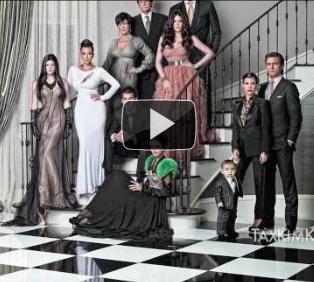
This is perfect: The Courage Campaign is running an ad encouraging Kim Kardashian — who made $12 million last year for pretty much nothing except being Kim Kardashian — to endorse the millionaire-tax ballot initiative. The point is that Kim’s income is about 240 times as much as the income for the median California family — and she pays only 1 percent more in taxes.

We need to make Kim understand how much regular folks are suffering these days. If we do, maybe she’ll support paying a little more to help fund criticial services.

Sign me up. Tax Kim. If I had her phone number, I’d call her right now and tell her that her public is waiting — for her to join the Courage Campaign. Somehow, I don’t.

The lights are on in Santa Clara

1

It’s ironic that PG&E is trying to blame the (brief) power outages at Candlestick — seen live, nationwide, on what was otherwise a great Monday Night Football game — on San Francisco. Even by the utility’s biased admission (and let’s remember — these are the same folks who tried to duck blame for the San Bruno blast that killed eight people), the whole problem started when a line owned and operated by the private utility lost power.

But here’s the best part: One of the main reasons that Santa Clara has been able to finance a brand new stadium for the team, which will soon abandon poor, beat-up old Candlestick, is that the Peninsula city has its own public-power agency.

I’m not for using public money to build sports stadiums. The people who own NFL teams (with the exception of the Green Bay Packers) are not only part of the 1 percent; they’re part of the top one-tenth of the one percent. They’re very, very rich folks, who can pay for their own damn stadiums.

And I don’t think San Francisco will suffer greatly when the Niners move south — we never got much of an economic benefit from football games here, anyway.

But I’ll always remember the story Sheriff Mike Hennessey told me a few years back, when he was attending one of Mayor Gavin Newsom’s department-head meetings, and the mayor started complaining about Santa Clara’s efforts to woo the Niners, and how money from that city’s power agency was making it hard for S.F. to compete.

“Are you saying,” Hennessey asked the mayor, “that if San Francisco had public power, we might be able to keep the 49ers?”

Newsom didn’t respond.

Mayor Lee, Sharp Park, and Gavin Newsom

43

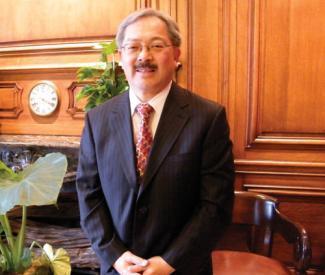
So Ed Lee’s going to veto the Board of Supervisors resolution on Sharp Park. Of course he is. And there’s more than snakes and frogs at issue here.

The veto, I think, sets the tone for what we’re going to see over the next four years, which is: Gavin Newsom.

For four years, the progressive bloc on the board — that is, the shaky sometimes-majority that can pull together six votes on an issue — is going to run slam into a mayoral veto a good deal of the time.

In this case, John Avalos, David Campos, David Chiu, Jane Kim, Eric Mar and Ross Mirkarimi — that’s the list of the six — all supported a plan to negotiate with the National Park Service to take over the property, which would probably mean the end of the golf course. It’s an environmental issue, mostly, and also a public-resource issue — but the main thing is that it’s an issue that split the board along the left-center/right lines that we’ll see again and again over Lee’s term. And Lee is siding with the right.

That’s what we came to expect from Newsom — every progressive initiative was a struggle; often, bill sponsors had to line up eight votes, not six, because there was always the threat that Newsom would shoot it down. And I’m getting the feeling that we’ll be facing the same thing with Mayor Lee.


Have we seen the last California execution?

19

A judge in Marin has tossed out the current execution protocol, putting all executions in the state on hold — and potentially delaying any more state-sponsored killing until after November, when the voters will have a chance to end the death penalty for good.

So it may be that this gruesome and pointless farce has come to an end. It may be that California is ready to join the civilized world. It may be that the state is ready to save billions (yes, I said billions) of dollars by replacing death with life without parole. Which is effectively what we have now — the number one cause of death on Death Row is old age.

State Sen. Mark Leno noted at the San Francisco Tomorrow holiday party Dec. 14 that life without parole “means exactly that” — since that sentence has been adopted, not one person facing LWOP in California has ever been released. The one exception: People who turned out to be innocent. Fortunately, innocent people serving life sentences can still have a chance.

Christopher Hitchens, the war and religion

3

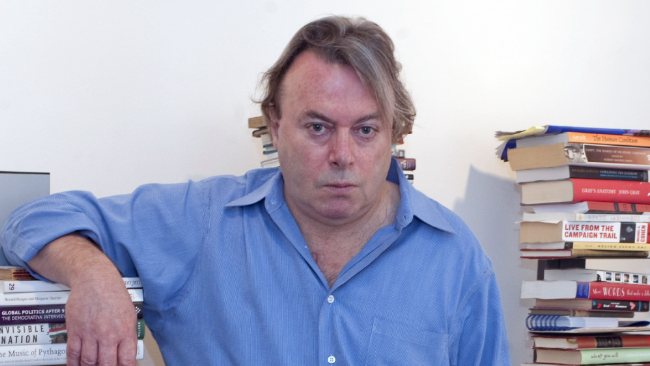
Everything that can be said about Christopher Hitchens has already been said. Thanks to the wonders of the Internet (and the fact that we all knew he was going to die soon), every friend, foe, analyst and critic in the world weighed in on the guy who was both an Oxford-educated British snob, a hard-partying literary figure, a one-time Trotskyite and, over the past decade, a disgraceful fan of the Iraq War.

He’d barely been dead an hour when the plaudits and attacks started to roll in — and I’m nowhere near qualified to join that party. (Although I will say: I have to give a certain amount of credit to anyone who can get away with calling Mother Teresa a “thieving, fanatical Albanian dwarf.”)

But I will say this: “God is not Great: How Religion Poisons Everything” is a wonderful read, and there was nothing more entertaining in the world than listening to Hitchens debate learned and respected religious figures on the Bible, hell and Jesus. While he’s (righly) lambasted for popularizing the term “Islamofascist,” he wasn’t much kinder to the Pope; he despised all religious leaders, rejected calls for a deathbed conversion and died a confirmed atheist.

I heard him once ask a noted Baptist minister whether he was really going to suffer unspeakable torture for eternity just because he didn’t believe in the Baptist God; the guy couldn’t answer him. He could discuss the great religious texts like the scholar he was and make jokes along the way.

I’m not much for the upper classes in general, and the British upper classes seem to have a particular sense of entitlement that grates on me, particularly when they weave back and forth between socialism and fine champagne. But you have to admit: The guy had style.


The Bonds trial: What a phenomenal waste

6

What a phenomenal waste of everyone’s time and money.

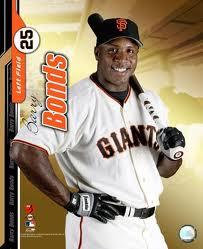
After eight years, millions of dollars in taxpayer money, and endless trees killed for newspaper stories, Barry Bonds was just sentenced to spend a month on his Beverly Hills estate.

If I take steroids and lie about it, can I spend a month there, too?

Seriously — other than the publicity the U.S. Attorney’s Office got for prosecuting the Home Run King, what has all of this accomplished? Are any of us safer now that Bonds has been forced to live under house arrest for 30 days and do 250 hours of community service (that he was going to do anyway)?

I’ve always agreed with Dave Zirin on this one:

After all the public money, drama, and hysterics, this is what we’re left with. He was “evasive.” Keep in mind that we live in a country where the US Department of Justice has not pursued one person for the investment banking fraud that cratered the US economy in 2008. Not one indictment has been issued to a single Bush official on charges of ordering torture or lying to provoke an invasion of Iraq. Instead, we get farcical reality television like the US vs. Barry Bonds.

Did Bonds take a “performance enhancing drug?” Again, Zirin:

The cortisone shot into Curt Schilling ankle in the 2005 playoffs was a performance enhancer. The Viagra coursing through Bob Dole’s veins is a performance enhancer. Whatever keeps that smile glued to Laura Bush’s face is a performance enhancer.

Please: There are real crimes happening all the time, from war crimes to political corruption and fraud, things that actually change the lives of human beings for the worse. And the U.S. Department of Justice has proudly used our taxpayer money to send Barry Bonds home for a month.

I’m so proud of our justice system.

A really dumb article about bookstores

35

You never know what you’re going to get on Slate, which tends toward the neo-liberal and sometimes libertarian, but I just read a particularly awful piece by technology writer Farhad Manjoo, who thinks that local bookstores are economically inefficient and should just go away:

Compared with online retailers, bookstores present a frustrating consumer experience. A physical store—whether it’s your favorite indie or the humongous Barnes & Noble at the mall—offers a relatively paltry selection, no customer reviews, no reliable way to find what you’re looking for, and a dubious recommendations engine.

For a tech writer, Manjoo has a remarkably shoddy understanding of economics:

After all, if you’re spending extra on books at your local indie, you’ve got less money to spend on everything else—including on authentically local cultural experiences. With the money you saved by buying books at Amazon, you could have gone to see a few productions at your local theater company, visited your city’s museum, purchased some locally crafted furniture, or spent more money at your farmers’ market. Each of these is a cultural experience that’s created in your community. Buying Steve Jobs at a store down the street isn’t.

He conveniently ignores that fact that money spent a locally owned, independent business stays in the community — and thus creates more local economic activity and more jobs (not to mention tax revenue for local government). Money spent at Amazon goes to an out-of-town operation that doesn’t even pay state sales tax. You want to read about the well-documehted economic value of shopping at a local story, you can find plenty here and here and here.

And let’s talk about the One Percent — would you rather that your money helps the owner of a small local store buy food for his or her kids, or see the money go to one of the richest people in the world?

But there’s another point here. Like local coffee shops, local bookstores are places where people gather and have actual human interactions. I see my neigbors there; we talk about what we’re reading. When I’m done with books, I can sell them back — and someone else can buy them, used, and I can use the money to buy another new book. Which is a pretty efficient economic system.

And there are things you can’t put a price on: At Red Hill Books, the allegedly inefficent, overpriced local bookstore in Bernal Heights, the employees know me and my kids — and when my daughter, who is a voracious reader, finishes one series of books, they know what to recommend next.

That’s not a “recommendations engine” — that’s a live person.

If Farhad Manjoo wants to live in robo-world where a machine tells you what to eat, drink and read, fine — but I still think human beings, inefficient as we are, do a better job at selling books.


Ammiano meets with U.S. attorney

59

Assemblymember Tom Ammiano finally got a meeting with the U.S. attorney for Northern California, Melinda Haag, Dec.13 to talk about the feds crackdown on medical marijuana — and he left disappointed that Haag didn’t seem to understand what a mess she’s making.

“The meeting didn’t result in any changes,” Ammiano told me. “But it was good that it happened. We cleared the air about the harm that’s being done.”

According to Ammiano’s aide Quintin Mecke, who was also in the meeting, Haag wasn’t at all clear about what she wanted — what, in other words, would end the crackdown. She talked a lot about “proximity to kids,” suggesting that dispensaries that are close to schools were a problem — although that’s a really bogus argument. I’ve been to a number of local dispensaries and my colleague Steve Jones has been to most of them, and every one requires a drivers license and a medical marijuana ID and they’re really serious about security. No high school kids are getting pot from the clubs.

Now: Pot use is up among high school kids nationally (which is another whole issue) but San Francisco Unified School District surveys show that drug use in general, and pot use in particular, is actually declining in this city. So a city that has a lot of pot clubs — highly regulated — is bucking the national trend on pot use among teens.

Ammiano wants to set strong state regulations for clubs, which most of the dispensary owners would welcome. But Haag wasn’t helpful with that, either — she said she wouldn’t make policy recommendations.

So there you have it — the U.S. Attorney is using demonstrably false allegations to pursue a program that she can’t defend — and she won’t help the Legislature find a solution. Thanks, President Obama.


Kids smoke pot, don’t drink

19

More American teens are smoking pot, and fewer are drinking alcohol, according to a new survey that’s at the very least interesting and could be a push for policymakers to start thinking about how we regulate marijuana.

As the father of two kids, I’d like to start off by stipulating: High schoolers are going to try to alter their consciousness. They’re also going to try to have sex. I did it, you did it, we all did it (well, we all drank and smoked pot. Some of us got laid and some of us didn’t, but speaking personally, I can say that for those who didn’t, it wasn’t for lack of trying).

My sainted mother used to tell my brother and me that she’d rather have us hang out in the basement with our friends than go out and drive somewhere at night, and she never adhered to the Catholic doctrine of pretending kids shouldn’t know about birth control. Her mantra: “As long as nobody gets pregnant or killed in a car accident, whatever you’re doing can’t be that bad.” Which isn’t such an awful parenting lesson.

And when it comes to getting pregnant or killed in a car accident, I’d say it’s probably better that kids smoke pot than drink. Not saying either one is a great choice for a 16-year-old, just saying that drunk driving, blackouts etc. are a product of alcohol and that the risks of really bad outcomes from smoking pot are a bit lower.

But there’s a larger point here, coming from the Marijuana Policy Project:

 “This report, once again, clearly demonstrates that our nation’s policymakers have their heads buried in the sand when it comes to addressing teen marijuana use,” said Rob Kampia, executive director of the Marijuana Policy Project.  “Political leaders have for decades refused to regulate marijuana in order to keep it out of the hands of drug dealers who aren’t required to check customer ID and have no qualms about selling marijuana to young people. The continued decline in teen tobacco and alcohol use is proof that sensible regulations, coupled with honest, and science-based public education can be effective in keeping substances away from young people. It’s time we acknowledge that our current marijuana laws have utterly failed to accomplish one of their primary objectives – to keep marijuana away from young people – and do the right thing by regulating marijuana, bringing its sale under the rule of law, and working to reduce the easy access to marijuana that our irrational system gives teenagers.”

Yep: Education and intelligent regulation works. When I was in High School, I was one of the very few kids that didn’t smoke cigarettes. Today, the number of teen smokers is much, much lower. And the new study says kids aren’t drinking as much — again, no doubt a result of health education and strict regulation.

So if harm reduction is the goal (and it ought to be), why aren’t we legalizing and regulating pot?


Ed Lee and “job killers”

15

Every time I hear the word “job killer” I think of the California Chamber of Commerce, which loves to affix the label to anything that might hurt corporate profits. Most environmental legislation, most pro-labor legislation, most financial regulations, anything that improves employer requriements for health insurance — the Chamber dubs it “job killers.”

And now Ed Lee is using that word to slow down progressive taxes, regulations or business mandates. He’s proposing a Charter Amendment to send any bills that might cause job losses to the Small Business Commission for a “jobs impact” public hearing.

That would give another weapon to downtown interests who want to kill, say, improvements to the Healthy San Francisco law, or any changes in the business tax.

Here’s what kills me: How many jobs were destroyed by the LACK of regulations over the U.S. financial industry? How many jobs were destroyed by a tax system that keeps most of the wealth concentrated in the top one percent? How many jobs were destroyed by cutbacks and layoffs in the public sector (which were a direct result of a failure to seek new revenues that business leaders would have called “job killers”?)

But we don’t have a special commission weighing in on tax cuts and tax breaks that cost the city money and kill city jobs.

Assemblymember Tom Ammiano, who has to deal with the California Chamber and its lackeys, told me that Lee “is talking like a Republican, or like the moderate Democrats in Sacramento.” That’s not where the mayor of San Francisco ought to be.


My (latest) favorite website ever

10

Rick Perry will fight a chicken with hand. He says so himself, right here. And Newt Gingrich reminds us that you can’t think when you’re fucking high.

Oh, and there’s a group of spin-meisters in the back room trying to figure out how to make Perry sound less like a blithering idiot.

Livefunnyordie. I don’t know how these folks manage the lip-reading stuff, but it’s spectacular.

Lowe’s: The anti-Muslim neighbor on Bayshore

9

I don’t shop at Lowe’s. Don’t go to Home Depot or Wal-Mart (those folks have enough money as it is), either. I don’t like big-box retail in general, and I was opposed to bringing a big-box, out-of-state chain to build a store on Bayshore Boulevard. I think shopping local and spending your money with small merchants who are part of the community is good for the economy. 

But thanks to lobbyist Jack Davis, who was hired at some vast sum of money to bring Home Depot to San Francisco, and then-Mayor Willie Brown, who bought Davis’s line, Home Depot won permission to build on Bayshore — and when the Georgia-based company decided not to bother and left the site vacant, Lowe’s (based in North Carolinia) stepped in.

And now we know what an excellent neighbor the giant retail outlet has turned out to be. Lowe’s has decided to pull its ads from the Discovery Channel’s All-American Muslim show because some right-wing Christian nut-group objects to anything that doesn’t demonize the Islamic religion and all who follow it.

What a fine, upstanding company to welcome to San Francisco.

Editor’s notes

68

tredmond@sfbg.com

Twenty years ago, if you mapped income distribution in San Francisco on a standard graph, you’d see what the economist call a bell curve: At one end were a small number of very poor families, at the other a small number of very rich, and in between the bulk of the city was somewhere roughly close to what you could call middle class.

Take the 2012 census data and make that graph today and you get the opposite — it’s becoming a U-shape, with more people in poverty and more gross wealth and not as much in the center.

You could see that on stark display at City Hall Dec 12.

At 10 a.m., the City Operations and Neighborhood Services Committee heard several hours of testimony on the alarming rise in the number of homeless families. In the end, the Mayor’s Office agreed to find $3 million to help out.

At 1 p.m., the Land Use and Economic Development Committee heard testimony on a plan to build more housing — on the waterfront, for the top one quarter of the top one percent of the richest people in America, people who will need more than $3 million just for the downpayment on their new digs.

The plan calls for 145 of what Port of San Francisco officials call “high end” or “luxury” condominiums, along with 400 underground parking spaces. “It’s going to be tight on three levels,” a Port official testified. “Most of it will be valet parking.” The developer wants to raise the height limit along the waterfront for the first time in half a century.

The Port, which controls some of the land, will get a cut of all the condo sales, maybe as much as $500,000 a year; that money will go to rebuild old piers and fund a long list of Port projects — including the America’s Cup. (Ted Gullicksen of the San Francisco Tenants Union was sitting next to me at the hearing, and he shook his head at that bit of news. “Condos for rich people to pay for boats for rich people,” he said.)

A long list of people, including former City Planning Director Alan Jacobs and former City Attorney Louise Renne — spoke against the project. Jacobs and Renne both explained that this was single-site spot zoning that would change the half-century consensus that the city should “decrease height toward the waterfront so the people can see and enjoy the meeting of land and water,” as Jacobs put it.

Jacobs gave the committee members his one “absolute truth” about city planning: “If a developer accepts and knows that a rule can’t be broken, then it will be economical to build within it. If he or she think it can be changed, then suddenly it will not be economical. It’s called greed.”

In other words, Simon Snellgrove, the developer of 8 Washington, could make money with a lower-scale project that conforms to existing height limits. But he can make more money if the city gives him a big honkin favor.

But it’s not all about height limits for me. It’s not even about the fact that the project will chop up a tennis and swimming club that serves about 2,000 more-or-less middle-class people in an effort to make life nicer for about 145 very rich people.

It’s about what kind of housing we’re building in San Francisco. “Every study that we’ve seen shows that we’ve vastly overbuilt housing for the wealthy,” Gullicksen testified.

And we’re not just talking the ordinary wealthy here. The most compelling testimony came from Frederick Allardyce, a real-estate broker from Sotheby’s who said he had been involved in the sale of about 70 percent of all luxury condos sold from Washington St. to the waterfront. He gave us a glimpse of who would be living — sort of — at 8 Washington.

The cheapest condos would require an income of $469,000, a downpayment of $625,000, and another $493,000 of liquid reserves. Monthly payment: $13,699. The higher-end units would require an annual income of $1.029 million and a downpayment of $6.5 million.

“That’s not the one percent,” he said. “It’s the top one quarter of the top one percent.”

And, Allardyce explained, most of the people who buy that level of property are so rich that they don’t actually live there. It’s a second or third or fourth home, a place to stay a few weeks out of the year. And since the project involves chopping up a tennis and swim club used by some 2,000 people (who are nowhere near that rich), “you’re eliminating the use of that land by the general public” in favor of a tiny elite.

The developer says that the city will get money to build 33 below-market-rate units. That’s nice; by that standard, 80 percent of the new housing goes to the richest people in the world, and 20 percent for everyone else. That percentage ought to be reversed — and until it is (or at least, until we have a plan to build enough affordable housing for the people who really need a place to live in San Francisco) I can’t imagine why we’d want to be doing favors to feed the greed of developers.

What we’re doing in this city is making life harder for low-income people who are increasingly living on the streets and doing big favors for the spectacularly wealthy. There’s no sanity in our housing policy — except to turn San Francisco even more into a city of the rich.

The good news about the mid-year state cuts

6

Well, there isn’t much good news, really — Gov. Jerry just announced another $1 billion in cuts, mostly to education and services for the disabled and poor. Check out the state’s priorities: $429.6 million in cuts to education, $225 million in cuts to MediCal, In-Home Supportive Services and developmental services — and a whopping $20 million in cuts to the prison system.

Supporters of K-12 education will walk away a little happier than they expected; the direct cuts (which could have meant losing an entire week of the school year) will amount to far less, only about $11 a student. But that doesn’t include $248 million in cuts to state funding for school transportation, which a lot of district will have to absorb in other ways. In San Francisco, it’s easier for kids in middle school and high school to take Muni; in more rural areas, school buses are a bigger deal.

Missing in a lot of the MSM coverage of the midyear cuts is the fact that the state is actually spending more money than expected. As Calitics points out, that’s no surprise:

It turns out that during a bad economic period, people need more services, but in the current climate in Sacramento, getting the legislature to approve the revenues for those services is an impossible feat even for somebody with the experience of Jerry Brown.

But here’s what’s interesting. In his press conference, Brown noted that the bright spot on the state’s fiscal front was increased money coming in from Prop. 63 — a surtax on incomes of more than $1 million to pay for services for the mentally ill. Which means that there’s additional money to be made by taxing the very rich.

And the voters seem more than willing to do just that.


Why we need Occupy

7

Not than anyone needs this kind of reminder any more, but more reports seem to come out every day highlighting the level of economic injustice in the United States. The Organization of Economic Cooperation and Development reported Dec. 5 that the United States now has the fourth-highest inequality level in the OECD, behind only Mexico, Chile and Turkey. Not distinguished company. Perhaps more important:

Income taxes and cash benefits play only a small role in redistributing income in the United States … only in Korea, Chile and Switzerland is the effect still smaller.

In other words, not only are we among the worst countries on Earth for economic inequality, we aren’t doing shit to change the situation.

Oh, and by the way — San Francisco has the worst income inequality in California.

That’s why we need Occupy. Because nobody else is making us pay attention.

Poverty among plenty

108

The Bay Citizen has a fascinating map by census tract of poverty in the Bay Area. Among the things that jump out: There’s plenty of serious poverty in the area — and it’s worst than the map shows. The definition of “poverty” is a family of four living on $22,113 — in the Bay Area. Hard to imagine how a family of four can even pay rent, much less eat, in this part of the world on $22,000.

Aaron Glantz makes an interesting point: “In many parts of the Bay Area, the wealthy and poor live in close proximity to each other.” Check out the census tract in the Richmond, right next to Seacliff, where some of the richest San Franciscans live. A full 20 percent of the residents of that area are under the federal poverty line — and they can walk a couple of blocks to the mansions where millionaires live. There are 60 people living in extreme poverty in the 35-square-block area around Presidio Heights, where the likes of Sen. Dianne Feinstein and Rep. Nancy Pelosi live.

Poverty among plenty. Just a tiny fraction of the wealth of Feinstein, Pelosi and their neighbors would pull all of those 60 people way above the poverty line. And the Presidio Heights denizens would never miss it.


The data also show that in many parts of the Bay Area, the wealthy and the poor live in close proximity to each othe

Source: The Bay Citizen (http://s.tt/14J0t)

The data also show that in many parts of the Bay Area, the wealthy and the poor live in close proximity to each other. 

Source: The Bay Citizen (http://s.tt/14J0t)

That high-priced high-speed rail

20

Even Democrats in the state Legislature are starting to get nervous about continuing the high-speed rail program. After all, the price has gone up to close to $100 billion. That’s such a vast sum of money; the state can’t possibly afford that, right?

Well, let’s think about that and put it in a little historical perspective.

The Golden Gate Bridge was constructed during the worst years of the Great Depression. Cost in today’s dollars: $1.2 billion. That’s for one bridge.

BART was built in the 1960s. Cost in today’s dollars: $6.4 billion. For a transit system serving (at the time) three counties.

The California Aqueduct was also built in the 1960s. Cost in today’s dollars: $31 billion.

I can’t find good figures on the historical cost of building the California freeway system, but in 2006 dollars, highway construction runs between $3 million and $19.5 million per lane-mile. That is, a four-line highway costs between $12 million and almost $80 million a mile. If you take just the ten biggest highways in the state (a total of 3,547 miles) and figure a middle-of-the-road average of $40 million a mile, building the backbone of the state’s freeway system would cost $141 billion today.

High-speed rail, of course, gets cars off the road, reduces pollution and fossil-fuel dependence, and offers a much better transportation experience for people moving around California.

Sounds like a bargain to me.

Progressives split on bag ban, ex-cons

12

A couple of interesting votes at the Board of Supes Dec. 6. Sup. Ross Mirkarimi lost two pieces of legislation — a mandate that stores charge for bags at checkout counters and a tax credit for companies that hire ex-offenders.

The bag ban went down 7-4. Well, actually, it was continued to February, by which time Mirkarimi will be gone. Sup. Jane Kim said she wanted to see more outreach to minority businesses, and was quoted in the press saying she would support it at a future date, but I suspect the delay marks the end of the bill. Without Mirkarimi around to push it, the measure will probably just die. It’s odd because San Francisco used to be on the cutting edge of environmental issues; the bag ban is getting picked up by other cities and will probably be law all over the country in a decade.

Voting for the continuation were three supes who said they supported the “concept” — Scott Wiener, David Chiu and Kim.

The ex-offender tax credit went down 6-5 — and on this one, Sup. Malia Cohen, who is not always with the progressives but whose district has the largest number of parolees in the city, supported Mirkarimi. So did Kim, Eric Mar, and David Campos. The swing vote: Sup. John Avalos, the progressive leader in the mayor’s race and one of the most solid left votes on the board.

Avalos told me that he doesn’t support tax breaks; he’s been consistent on that, and I understand. I don’t support tax breaks, either. I don’t think they’re very effective and they cost the city money. But there are two elements that make this unusual — for one, if anyone actually used the tax credit and hired an ex-offender, the money the city would likely save by keeping that person from going back to jail would greatly exceed the amount of the tax reduction.

Besides, I was waiting to see Lee come up with an excuse to veto the bill — particularly at a time when more and more ex-offenders are going to be released in San Francisco. I know this is just petty politics and all that, but this was a tough decision involving a very unpopular group (nobody wants to be nice to former criminals) — and Lee got off easy.