Guardian Staff Writers

Gangsters, death, and spaghetti westerns: must be another week of movies!

0

Well, they announced the Oscar nominations yesterday, and much-lauded import Amour is opening today (review below the jump), so if you’re curious about the hype and don’t mind having a downer of a Friday night … you’re set. Other films opening this week include the Robert Carlyle drama California Solo (Dennis Harvey’s review here), Marlon Wayans horror spoof A Haunted House, Ryan Gosling-in-a-fedora cop flick Gangster Squad, and (at the Roxie), teen-skater doc Only the Young.

Also! The Pacific Film Archive’s “The Hills Run Red: Italian Westerns, Leone, and Beyond” series starts this week. Plenty of good spaghetti western action to be had; check out my round-up here. Read on for more short takes on this week’s releases.

Amour Arriving in local theaters atop a tidal wave of critical hosannas, Amour now seeks to tempt popular acclaim — though actually liking this perfectly crafted, intensely depressing film (from Austrian director Michael Haneke) may be nigh impossible for most audience members. Eightysomething former music teachers Georges and Anne (the flawless Jean-Louis Trintignant and Emmanuelle Riva) are living out their days in their spacious Paris apartment, going to classical concerts and enjoying the comfort of their relationship. Early in the film, someone tries to break into their flat — and the rest of Amour unfolds with a series of invasions, with Anne’s declining health the most distressing, though there are also unwanted visits from the couple’s only daughter (an appropriately self-involved Isabelle Huppert), an inept nurse who disrespects Anne and curses out Georges, and even a rogue pigeon that wanders in more than once. As Anne fades into a hollow, twisted, babbling version of her former self, Georges also becomes hollow and twisted, taking care of her while grimly awaiting the inevitable. Of course, the movie’s called Amour, so there’s some tenderness involved. But if you seek heartwarming hope and last-act uplift, look anywhere but here. (2:07) (Cheryl Eddy)

Gangster Squad It’s 1949, and somewhere in the Hollywood hills, a man has been tied hand and foot to a pair of automobiles with the engines running. Coyotes pace in the background like patrons queuing up for a table at Flour + Water, and when dinner is served, the presentation isn’t very pretty. We’re barely five minutes into Ruben Fleischer’s Gangster Squad, and fair warning has been given of the bloodletting to come. None of it’s quite as visceral as the opening scene, but Fleischer (2009’s Zombieland) packs his tale of urban warfare with plenty of stylized slaughter to go along with the glamour shots of mob-run nightclubs, leggy pin-curled dames, and Ryan Gosling lounging at the bar cracking wise. At the center of all the gunplay and firebombing is what’s framed as a battle for the soul of Los Angeles, waged between transplanted Chicago mobster Mickey Cohen (Sean Penn) — who wields terms like “progress” and “manifest destiny” as a rationale for a continental turf war — and a police sergeant named John O’Mara (Josh Brolin), tasked with bringing down Cohen’s empire. The assignment requires working under cover so deep that only the police chief (Nick Nolte) and the handpicked members of O’Mara’s “gangster squad” — ncluding Gosling, a half-jaded charmer who poaches Cohen’s arm candy (Emma Stone) — know of its existence. This leaves plenty of room for improvisation, and the film pauses now and again to wonder about what happens when you pit brutal amorality against brutal morality, but it’s a rhetorical question, and no one shows much interest in it. Dragged down by talking points that someone clearly wanted wedged in (as well as by O’Mara’s ponderous voice-overs), the film does better when it abandons gravitas and refocuses on spinning its mythic tale of wilder times in the Golden State. (1:53) (Lynn Rapoport)

http://www.youtube.com/watch?v=AKooIgzaQMg

Only the Young First seen locally at the 2012 San Francisco International Film Festival, this documentary from Elizabeth Mims and Jason Tippet is styled like a narrative and often shot like a fine art photograph (or at least a particularly bitchin’ Instagram), with an unexpectedly groovy soundtrack. It follows a pair of high schoolers with ever-changing hairstyles in dried-up Santa Clarita, Calif. — a burg of abandoned mini-golf courses and squatter’s houses, and a place where the owner of the local skate shop seems equally obsessed with tacos and Jesus. It’s never clear where Garrison and Kevin fall on the religious spectrum — though “the church” has a looming importance, influencing relationships if not wardrobe choices — but one gets the feeling all they really care about is skateboarding, with their own friendship a close second. Less certain are Garrison’s feelings about punky, tough-yet-sweet gal pal Skye — especially when they begin spending time with new flames. Only the Young‘s seemingly random choice of subjects works to its advantage, capturing the kids’ unaffected, surprisingly honest point of view on subjects as varied as cars, dating, college, the economy, and Gandalf Halloween costumes. (1:10) Roxie. (Cheryl Eddy)

Our Weekly Picks: January 9-15

0

WEDNESDAY 9

RADAR Reading Series

Like a literary-focused Parisian salon, but with vibrant SF genderfucking and homemade desserts, this monthly showcase of emerging, underground writers and artists is routinely the most enticing potpourri of need-to-know talent. The RADAR Reading Series is part of local treasure/Sister Spit(ter) Michelle Tea’s nonprofit, RADAR Productions. This time, there’s visual artist D-L Alvarez, Gaga Feminism author Jack Halberstam (who writes often of gender queerness, pop culture, and bad TV), transnational interdisciplinary artist and cultural organizer Favianna Rodriguez, and author Grace Krilanovich — whose 2010 debut novel, The Orange Eats Creep,was named one of Amazon’s top science fiction/fantasy books that year. With Tea hosting the follow-up Q&A, you know there will be cookies on hand. (Emily Savage)

6pm, free

San Francisco Public Library, Main Branch

Latino Reading Room

100 Larkin, SF

www.radarproductions.org


THURSDAY 10

“Unknown but Knowable States”

Dorothea Tanning’s surreal paintings provide a window into the female subconscious with as much style and punch as her male contemporaries. There will be a few of these crisp, symbolic painting in the upcoming exhibit, Known but Unknowable States, but it will also show a different side of her work — one that could easily fit in with ethereal figure painting seen in contemporary art. The most striking works are what she called “prism” paintings, which twist the female form into abstract visions with soft brushwork and unique color combinations. To go along with these will be some of her soft sculptures of strange creatures made of fabric, fur, and a sewing machine. (Molly Champlin)

Through March 2

Opening reception, 5pm, free

Gallery Wendi Norris

161 Jessie, SF

(415) 346-7812

www.gallerywendinorris.com


The Art and Legacy of Crime Photographer Weegee

It should come as no surprise that Eddie Muller took a shining to the work of 1930s and ’40s press photographer Arthur Fellig, a.k.a. Weegee. Muller’s the founder of the SF Noir Film Festival, whose hardboiled flicks go perfectly with Weegee’s steely-gazed shots of crime scenes. The photographer is widely credited with bringing aesthetic concern to crime scene photography. Today, Muller explains why the man’s work still matters now, in the era of Instagram and meme mania, with this talk, punctuated by video interludes. (Caitlin Donohue)

6:30-8pm, $5

Contemporary Jewish Museum

736 Mission, SF

(415) 655-7800

www.thecjm.org


FRIDAY 11

“Risk is This…”

If you want to see what Cutting Ball Theatre’s next season might look like, you’d do well to check out this season’s new experimental plays festival, “Risk is This….” Past festivals have foreshadowed full productions of some of Cutting Ball’s most memorable pieces including Marcus Gardley’s “…and Jesus Moonwalks the Mississippi” and Eugenie Chan’s “Tontlawald”, and this year’s lineup looks to be just as full of future potential, with new plays written by Sean San José, Dipika Guha, and Basil Kreimendahl, plus exciting new translations of Alfred Jarry’s “Ubu Roi” and the Capek brothers’ “Insect Play.” Presented over five weekends of staged readings, the five plays range topically from transgenderism to crack-cocaine to the corrupting influence of power — which certainly sounds like the very definition of risk to us. (Nicole Gluckstern)

Fridays and Saturdays through Feb. 9

8pm, free–$20 donation

EXIT on Taylor

177 Taylor, SF

(415) 525-1205

www.cuttingball.com


“Alfred Hitchcock: The Shape of Suspense”

Alfred Hitchcock is just coming off his best year in decades, with a biopic starring Anthony Hopkins and the news that his 1958 psychological drama Vertigo leapfrogged past the almighty Citizen Kane (1941) in at least one “best films of all time…ever…full stop” poll of influential film critics. Not bad for a guy who died in 1980. The Pacific Film Archive shines a well-timed spotlight on the prolific Master of Suspense with an extensive retrospective of works well-known (1954’s Rear Window, 1959’s North by Northwest, 1960’s Psycho, and — of course — Vertigo) and more obscure (1931’s Rich and Strange, 1937’s Young and Innocent, 1947’s The Paradine Case) — not to mention often-overshadowed underdogs like the series kick-off film, made by Hitch in his pre-Hollywood days: 1935’s The 39 Steps. (Cheryl Eddy)

Through April 24, 7pm, $5.50–$9.50

Pacific Film Archive

2575 Bancroft, Berk.

bampfa.berkeley.edu


Mister Lies

Nick Zanca played in several punk bands in high school until he was introduced to electronic music and production in college. This happened about a year ago. Since then he’s caused quite the stir, catching a record deal and tour as Mister Lies. The deep, almost spiritual electronica, or “experimental avant-garde pop” as he prefers, draws inspiration from diverse artists — spanning Steve Reich to Missy Elliot. His generally downtempo vibe might be better scheduled at four in the morning. But hey, there’s no right time to unwind your mind a bit, particularly when it’s Mister Lies’ gospel-infused sound paired with the smooth dream pop of San Francisco local, Giraffage. (Champlin)

With Some Ember

9:30pm, $12

Bottom of the Hill

1233 17th St., SF

(415) 621-4455

www.bottomofthehill.com


SATURDAY 12

“Rituals of Water”

The most recent work of local artist, Rodney Ewing, manages to distil a lot of history and ideas into a coherent show about water. This theme is embedded even in the creation of the art: the large scale paintings are made of ink, salt, and mostly, water. Through figures and words that seem to be dissolving on paper, he looks at four moments in the history of African American people, the transatlantic slave trade, baptism, civil rights, and Hurricane Katrina. Though his works are heavily political, they don’t seek to make a statement. Instead they perform a sort of ritual in which the viewer and artist strengthen African history by reclaiming memories and stories once lost through diaspora. (Champlin)

Through March 1

Opening reception, 6pm, free

IcTus Gallery

1769 15th St., SF

(510) 912-0792

www.ictusgallery.com


Mary Armentrout

Old Will wasn’t exactly thinking about installation pieces when he proclaimed, “all the world’s a stage.” Still there is something about the connection between “living” and “performing” that today many dance artists explore by stretching that fragile tie between the two. One way is by abandoning the proscenium theater for more flexible environments. Few, however, go as far as the ever adventuresome Mary Armentrout who is traveling her “reveries and elegies,” essentially a solo piece for herself, from two Oakland locations first to CounterPULSE this weekend, then (Feb. 23-24) to Bakers’ Beach. Each time she shows these “reveries,” she will do the same, of course, not at all. Ideally one would see the whole cycle but since Armentrout has assembled the piece from fragments, fragments is what we’ll get. And that’s OK. (Rita Felciano)

Also Sun/13, 4:15pm, $20

CounterPULSE

1310 Mission, SF

(510) 845-8604

www.eventbrite.com


Kicker

Newish Bay Area band Kicker features members of Neurosis, Filth, and Dystopia, and sounds like late ’70s anarcho-punk à la Subhumans. Which makes perfect sense, really, as lead vocalist Pete the Roadie grew up in England, went to the same school as Subhumans and Organized Chaos, and has been a part of the worldwide punk scene since that formative year of ’77. Really need another reason to go to this $5 Bender’s show? OK: Bad Cop/Bad Cop — the LA rock’n’roll band with members of Cocksparrer tribute act Cunt Sparrer — opens the whole thing up. (Savage)

With Pang!

10pm, $5

Bender’s

800 S. Van Ness, SF

(415) 824-1800

www.bendersbar.com


MONDAY 14

The Great American Pop-Up

The Great American Pop-Up is back. Because who wants to make dinner on a Monday night? At the first installment, patrons scarfed chocolate raspberry cookies, sustainable sushi, and salty spiced sausages. At this second round — again inside the iconic Tenderloin site, recently named one California’s most beautiful music venues — a few of those patron-pleasing vendors will return: sustainable sushi via Rice Cracker Sushi, Asian fusion dishes via Harro-Arigato and Ronin, along with Dora’s Donuts and Donna’s Tamales. The house Chef James Whitmore will be whipping up dishes, and there will be some crafty vendors including a Yes & Yes Designs booth, should you be in the market for one-of-a-kind jewelry made from recycled books as a delicious side dish to your sushi. DJs Children of the Funk will provide the background beats to your fine (club) dining experience. (Savage)

Great American Music Hall

859 O’Farrell, SF (415) 885-0750

www.slimspresents.com


TUESDAY 15

Shabazz Palaces

The retro-future of space hip-hop is here, in disparate senses among headliner Shabazz Palaces and opener Ensemble Mik Nawooj. Led by Palaceer Lazaro — formerly of jazz-rap group Digable Planets — and multi-instrumentalist Tendai “Baba” Maraire, Seattle’s Shabazz Palaces are part of a cosmic collective of forward-thinking artists, including Sub Pop labelmates, THEESatisfaction. Their latest release, 2011’s Black Up, was a vortex of jazz, soul, and rap with African percussion keeping the beat. And then there’s Ensemble Mik Nawooj, the East Bay crew behind that alternate universe chamber hip-hop opera, Great Integration, a similarly genre-busting production that follows five malevolent lords who control the physical world, and the assassin who slays them. Prepare to elevate your mind. Countdown to launch. (Savage)

With Ensemble Mik Nawooj, Duckwrth, DJ Orfeu

9pm, $15

New Parish

579 18th St., Oakl.

(415) 371-1631

www.thenewparish.com


The Guardian listings deadline is two weeks prior to our Wednesday publication date. To submit an item for consideration, please include the title of the event, a brief description of the event, date and time, venue name, street address (listing cross streets only isn’t sufficient), city, telephone number readers can call for more information, telephone number for media, and admission costs. Send information to Listings, the Guardian, 225 Bush, 17th Flr., SF, CA 94105; or e-mail (paste press release into e-mail body — no attachments, please) to listings@sfbg.com. Digital photos may be submitted in jpeg format; the image must be at least 240 dpi and four inches by six inches in size. We regret we cannot accept listings over the phone.

Film Listings

0

Film listings are edited by Cheryl Eddy. Reviewers are Kimberly Chun, Dennis Harvey, Lynn Rapoport, and Sara Maria Vizcarrondo. For rep house showtimes, see Rep Clock.

OPENING

Amour Arriving in local theaters atop a tidal wave of critical hosannas, Amour now seeks to tempt popular acclaim — though actually liking this perfectly crafted, intensely depressing film (from Austrian director Michael Haneke) may be nigh impossible for most audience members. Eightysomething former music teachers Georges and Anne (the flawless Jean-Louis Trintignant and Emmanuelle Riva) are living out their days in their spacious Paris apartment, going to classical concerts and enjoying the comfort of their relationship. Early in the film, someone tries to break into their flat — and the rest of Amour unfolds with a series of invasions, with Anne’s declining health the most distressing, though there are also unwanted visits from the couple’s only daughter (an appropriately self-involved Isabelle Huppert), an inept nurse who disrespects Anne and curses out Georges, and even a rogue pigeon that wanders in more than once. As Anne fades into a hollow, twisted, babbling version of her former self, Georges also becomes hollow and twisted, taking care of her while grimly awaiting the inevitable. Of course, the movie’s called Amour, so there’s some tenderness involved. But if you seek heartwarming hope and last-act uplift, look anywhere but here. (2:07) Clay. (Eddy)

California Solo Whatever happened to &ldots;? In a sense, Robert Carlyle — lost too long to US movie audiences while marooned on SGU Stargate Universe — might have found the ideal role in this soulful indie turn as a Scottish rock star on the decline. Lachlan (Carlyle) was once the guitarist in a Britpop-band-on-the-verge called the Cranks —now he’s grounding himself by working at a farm outside LA and doing his humble part in the music world with a podcast on spectacular rock ‘n’ roll deaths. But Lachlan’s attempts to hold steady are dashed when he’s slapped with a DUI and his immigration status is threatened. With few bucks saved and a life that has gone strictly solo for far too long, the free spirit is forced to reckon with his past — an old manager (Michael Des Barres), the ex-wife (Kathleen Wilhoite) and daughter (Savannah Lathem) he never sees — in an attempt to avoid getting deported. Echoes of both Dennis Wilson’s and Noel Gallagher’s rock histories reverberate through California Solo, as do 1983’s Tender Mercies, 2009’s Crazy Heart, and other music films about charismatic old reprobates coming to terms with their misdeeds. The intense, sexy Carlyle, however, makes it clear through the specifics of his performance that this story, and these sins, is his extremely flawed, charmingly self-absorbed character’s own. Will he or won’t he fabulously flame out rather than fade away, asks writer-director Marshall Lewy (2007s Blue State)? The more heroic path, according to California Solo, might be waking up to face yet another day. For a longer review of this film, see "The Damage Done." (1:34) Opera Plaza. (Chun)

Gangster Squad Ryan Gosling leads a fedora-wearing cast in this cops ‘n’ mobsters tale set in 1949 Los Angeles. (1:53)

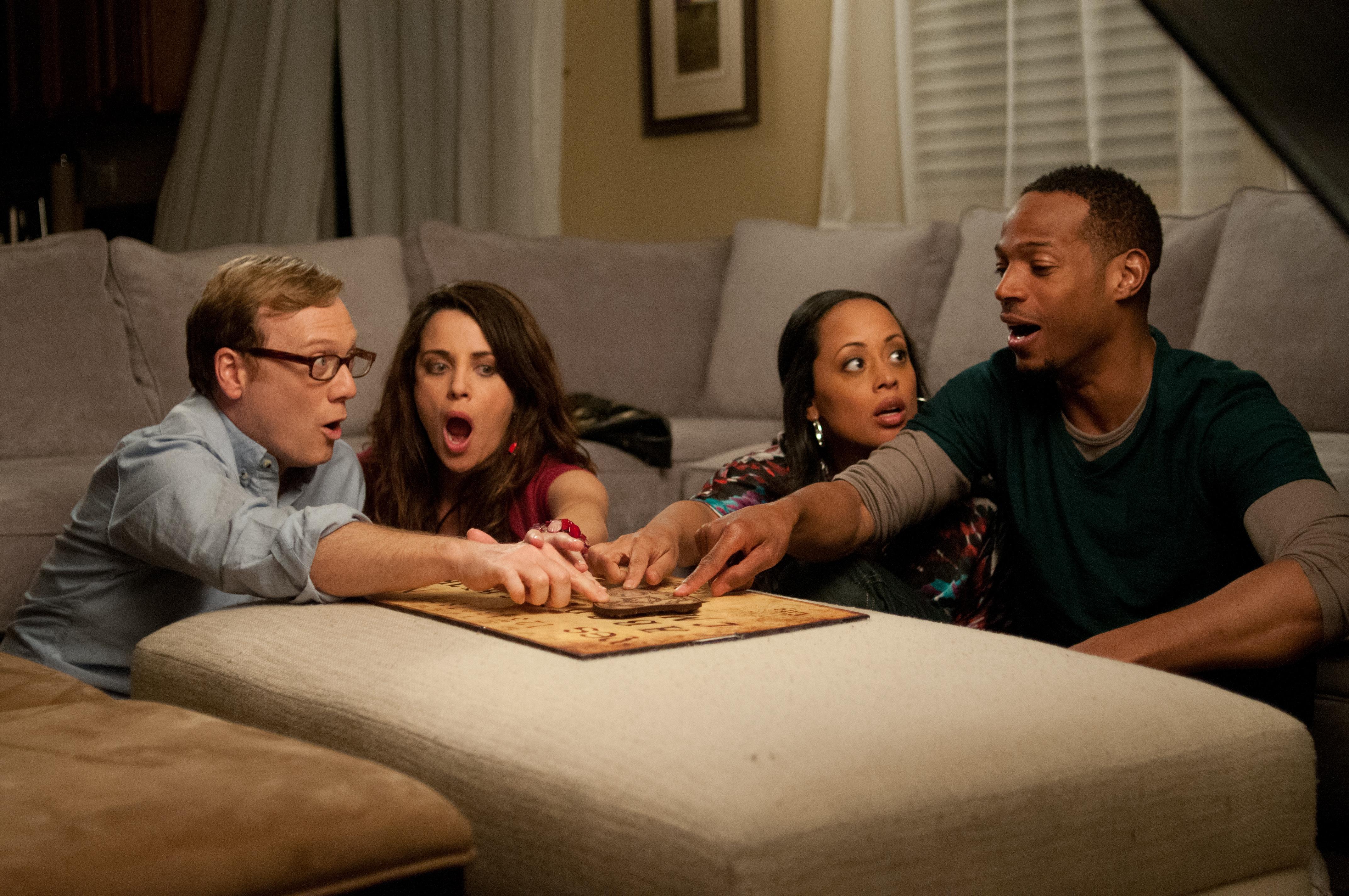
A Haunted House Marlon Wayans stars in this spoof of the Paranormal Activity series and other "found footage" films. Mocking the trend means it’s on its way out, right? (1:25)

Only the Young First seen locally at the 2012 San Francisco International Film Festival, this documentary from Elizabeth Mims and Jason Tippet is styled like a narrative and often shot like a fine art photograph (or at least a particularly bitchin’ Instagram), with an unexpectedly groovy soundtrack. It follows a pair of high schoolers with ever-changing hairstyles in dried-up Santa Clarita, Calif. — a burg of abandoned mini-golf courses and squatter’s houses, and a place where the owner of the local skate shop seems equally obsessed with tacos and Jesus. It’s never clear where Garrison and Kevin fall on the religious spectrum — though "the church" has a looming importance, influencing relationships if not wardrobe choices — but one gets the feeling all they really care about is skateboarding, with their own friendship a close second. Less certain are Garrison’s feelings about punky, tough-yet-sweet gal pal Skye — especially when they begin spending time with new flames. Only the Young‘s seemingly random choice of subjects works to its advantage, capturing the kids’ unaffected, surprisingly honest point of view on subjects as varied as cars, dating, college, the economy, and Gandalf Halloween costumes. (1:10) Roxie. (Eddy)

ONGOING

Anna Karenina Joe Wright broke out of British TV with the 9,000th filmed Pride and Prejudice (2005), unnecessary but quite good. Too bad it immediately went to his head. His increasing showiness as director enlivened the silly teenage-superspy avenger fantasy Hanna (2011), but it started to get in the way of Atonement (2007), a fine book didn’t need camera gymnastics to make a great movie. Now it’s completely sunk a certified literary masterpiece still waiting for a worthy film adaptation. Keira Knightley plays the titular 19th century St. Petersburg aristocrat whose staid, happy-enough existence as a doting mother and dutiful wife (to deglammed Jude Law’s honorable but neglectful Karenin) is upended when she enters a mutually passionate affair with dashing military officer Count Vronsky (Aaron Taylor-Johnson, miscast). Scandal and tragedy ensue. There’s nothing wrong with the screenplay, by Tom Stoppard no less. What’s wrong is Wright’s bright idea of staging the whole shebang as if it were indeed staged — a theatrical production in which nearly everything (even a crucial horse race) takes place on a proscenium stage, in the auditorium, or "backstage" among riggings. Whenever we move into a "real" location, the director makes sure that transition draws attention to its own cleverness as possible. What, you might ask, is the point? That the public social mores and society Anna lives in are a sort of "acting"? Like wow. Add to that another brittle, mannered performance by Wright’s muse Knightley, and there’s no hope of involvement here, let alone empathy — in love with its empty (but very prettily designed) layers of artifice, this movie ends up suffocating all emotion in gilded horseshit. The reversed-fortune romance between Levin (Domhall Gleeson) and Kitty (Alicia Vikander) does work quite well — though since Tolstoy called his novel Anna Karenina, it’s a pretty bad sign when the subsidiary storyline ends up vastly more engaging than hers. (2:10) Albany, Embarcadero. (Harvey)

Argo If you didn’t know the particulars of the 1979 Iranian Revolution, you won’t be an expert after Argo, but the film does a good job of capturing America’s fearful reaction to the events that followed it — particularly the hostage crisis at the US embassy in Tehran. Argo zeroes in on the fate of six embassy staffers who managed to escape the building and flee to the home of the sympathetic Canadian ambassador (Victor Garber). Back in Washington, short-tempered CIA agents (including a top-notch Bryan Cranston) cast about for ways to rescue them. Enter Tony Mendez (Ben Affleck, who also directs), exfil specialist and father to a youngster wrapped up in the era’s sci-fi craze. While watching 1973’s Battle for the Planet of the Apes, Tony comes up with what Cranston’s character calls "the best bad idea we have:" the CIA will fund a phony Canadian movie production (corny, intergalactic, and titled Argo) and pretend the six are part of the crew, visiting Iran for a few days on a location shoot. Tony will sneak in, deliver the necessary fake-ID documents, and escort them out. Neither his superiors, nor the six in hiding, have much faith in the idea. ("Is this the part where we say, ‘It’s so crazy it just might work?’" someone asks, beating the cliché to the punch.) Argo never lets you forget that lives are at stake; every painstakingly forged form, every bluff past a checkpoint official increases the anxiety (to the point of being laid on a bit thick by the end). But though Affleck builds the needed suspense with gusto, Argo comes alive in its Hollywood scenes. As the show-biz veterans who mull over Tony’s plan with a mix of Tinseltown cynicism and patiotic duty, John Goodman and Alan Arkin practically burst with in-joke brio. I could have watched an entire movie just about those two. (2:00) Embarcadero, Castro, Piedmont, Sundance Kabuki. (Eddy)

The Central Park Five Acclaimed documentarian Ken Burns takes on the 1989 rape case that shocked and divided a New York City already overwhelmed by racially-charged violence. The initial crime was horrible enough — a female jogger was brutally assaulted in Central Park — but what happened after was also awful: cops and prosecutors, none of whom agreed to appear in the film, swooped in on a group of African American and Latino teenagers who had been making mischief in the vicinity (NYC’s hysterical media dubbed the acts "wilding," a term that became forever associated with the event). Just 14 to 16 years old, the boys were questioned for hours and intimidated into giving false, damning confessions. Already guilty in the court of public opinion, the accused were convicted in trials — only to see their convictions vacated years after they’d served their time, when the real assailant was finally identified. Using archival news footage (in one clip, Gov. Mario Cuomo calls the crime "the ultimate shriek of alarm that says none of us are safe") and contemporary, emotional interviews with the Five, Burns crafts a fascinating study of a crime that ran away with itself, in an environment that encouraged it, leaving lives beyond just the jogger’s devastated in the process. (1:59) Roxie. (Eddy)

Cirque du Soleil: Worlds Away (1:31) Metreon, 1000 Van Ness, Shattuck.

Cloud Atlas Cramming the six busy storylines of David Mitchell’s wildly ambitious novel into just three hours — the average reader might have thought at least 12 would be required — this impressive adaptation directed (in separate parts) by Tom Twyker (1998’s Run Lola Run) and Matrix siblings Lana and Andy Wachowski has a whole lot of narrative to get through, stretching around the globe and over centuries. In the mid 19th century, Jim Sturgess’ sickly American notory endures a long sea voyage as reluctant protector of a runaway-slave stowaway from the Chatham Islands (David Gyasi). In 1931 Belgium, a talented but criminally minded British musician (Ben Whishaw) wheedles his way into the household of a famous but long-inactive composer (Jim Broadbent). A chance encounter sets 1970s San Francisco journalist Luisa (Halle Berry) on the path of a massive cover-up conspiracy, swiftly putting her life in danger. Circa now, a reprobate London publisher’s (Broadbent) huge windfall turns into bad luck that gets even worse when he seeks help from his brother (Hugh Grant). In the not-so-distant future, a disposable "fabricant" server to the "consumer" classes (Doona Bae) finds herself plucked from her cog-like life for a rebellious higher purpose. Finally, in an indeterminately distant future after "the Fall," an island tribesman (Tom Hanks) forms a highly ambivalent relationship toward a visitor (Berry) from a more advanced but dying civilization. Mitchell’s book was divided into huge novella-sized blocks, with each thread split in two; the film wastes very little time establishing its individual stories before beginning to rapidly intercut between them. That may result in a sense of information (and eventually action) overload, particularly for non-readers, even as it clarifies the connective tissues running throughout. Compression robs some episodes of the cumulative impact they had on the page; the starry multicasting (which in addition to the above mentioned finds many uses for Hugo Weaving, Keith David, James D’Arcy, and Susan Sarandon) can be a distraction; and there’s too much uplift forced on the six tales’ summation. Simply put, not everything here works; like the very different Watchmen, this is a rather brilliant "impossible adaptation" screenplay (by the directors) than nonetheless can’t help but be a bit too much. But so much does work — in alternating currents of satire, melodrama, pulp thriller, dystopian sci-fi, adventure, and so on — that Cloud Atlas must be forgiven for being imperfect. If it were perfect, it couldn’t possibly sprawl as imaginatively and challengingly as it does, and as mainstream movies very seldom do. (2:52) Castro. (Harvey)

Django Unchained Quentin Tarantino’s spaghetti western homage features a cameo by the original Django (Franco Nero, star of the 1966 film), and solid performances by a meticulously assembled cast, including Jamie Foxx as the titular former slave who becomes a badass bounty hunter under the tutelage of Dr. Schultz (Christoph Waltz). Waltz, who won an Oscar for playing the evil yet befuddlingly delightful Nazi Hans Landa in Tarantino’s 2009 Inglourious Basterds, is just as memorable (and here, you can feel good about liking him) as a quick-witted, quick-drawing wayward German dentist. There are no Nazis in Django, of course, but Tarantino’s taboo du jour (slavery) more than supplies motivation for the filmmaker’s favorite theme (revenge). Once Django joins forces with Schultz, the natural-born partners hatch a scheme to rescue Django’s still-enslaved wife, Broomhilda (Kerry Washington), whose German-language skills are as unlikely as they are convenient. Along the way (and it’s a long way; the movie runs 165 minutes), they encounter a cruel plantation owner (Leonardo DiCaprio), whose main passion is the offensive, shocking "sport" of "Mandingo fighting," and his right-hand man, played by Tarantino muse Samuel L. Jackson in a transcendently scandalous performance. And amid all the violence and racist language and Foxx vengeance-making, there are many moments of screaming hilarity, as when a character with the Old South 101 name of Big Daddy (Don Johnson) argues with the posse he’s rounded up over the proper construction of vigilante hoods. It’s a classic Tarantino moment: pausing the action so characters can blather on about something trivial before an epic scene of violence. Mr. Pink would approve. (2:45) Four Star, Metreon, 1000 Van Ness, Presidio, Sundance Kabuki. (Eddy)

The Guilt Trip (1:35) Metreon, 1000 Van Ness, Shattuck.

Hitchcock On the heels of last year’s My Week With Marilyn comes another biopic about an instantly recognizable celebrity viewed through the lens of a specific film shoot. Here, we have Anthony Hopkins (padded and prosthetic’d) playing the Master of Suspense, mulling over which project to pursue after the success of 1959’s North by Northwest. Even if you’re not a Hitch buff, it’s clear from the first scene that Psycho, based on Robert Bloch’s true crime-inspired pulpy thriller, is looming. We open on "Ed Gein’s Farmhouse, 1944;" Gein (Michael Wincott) is seen in his yard, his various heinous crimes — murder, grave-robbing, body-part hoarding, human-skin-mask crafting, etc. — as yet undiscovered. Hitchcock, portrayed by the guy who also played the Gein-inspired Hannibal Lecter, steps into the frame with that familiar droll greeting: "Guhhd eevvveeeening." And we’re off, following the veteran director as he muses "What if somebody really good made a horror picture?" Though his wife and collaborator, Alma (Helen Mirren), cautions him against doing something simply because everyone tells him not to, he plows ahead; the filmmaking scenes are peppered with behind-the-scenes moments detailed in Stephen Rebello’s Alfred Hitchcock and the Making of Psycho, the source material for John J. McLaughlin’s script. But as the film’s tagline — "Behind every Psycho is a great woman" — suggests, the relationship between Alma and Hitch is, stubbornly, Hitchcock‘s main focus. While Mirren is effective (and I’m all for seeing a lady who works hard behind the scenes get recognition), the Hitch-at-home subplot exists only to shoehorn more conflict into a tale that’s got plenty already. Elsewhere, however, Hitchcock director Sacha Gervasi — making his narrative debut after hit 2008 doc Anvil: The Story of Anvil — shows stylistic flair, working Hitchcock references into the mise-en-scène. (1:32) Embarcadero, Four Star. (Eddy)

The Hobbit: An Unexpected Journey Make no mistake: the Lord of the Rings trilogy represented an incredible filmmaking achievement, with well-deserved Oscars handed down after the third installment in 2003. If director Peter Jackson wanted to go one more round with J.R.R. Tolkien’s beloved characters for a Hobbit movie, who was gonna stop him? Not so fast. This return to Middle-earth (in 3D this time) represents not one but three films — which would be self-indulgent enough even if part one didn’t unspool at just under three hours, and even if Jackson hadn’t decided to shoot at 48 frames per second. (I can’t even begin to explain what that means from a technical standpoint, but suffice to say there’s a certain amount of cinematic lushness lost when everything is rendered in insanely crystal-clear hi-def.) Journey begins as Bilbo Baggins (a game, funny Martin Freeman) reluctantly joins Gandalf (a weary-seeming Ian McKellan) and a gang of dwarves on their quest to reclaim their stolen homeland and treasure, batting Orcs, goblins, Gollum (Andy Serkis), and other beasties along the way. Fan-pandering happens (with characters like Cate Blanchett’s icy Galadriel popping in to remind you how much you loved LOTR), and the story moves at a brisk enough pace, but Journey never transcends what came before — or in the chronology of the story, what comes after. I’m not quite ready to declare this Jackson’s Phantom Menace (1999), but it’s not an unfair comparison to make, either. (2:50) California, Metreon, 1000 Van Ness, Sundance Kabuki. (Eddy)

Holy Motors Holy moly. Offbeat auteur Leos Carax (1999’s Pola X) and frequent star Denis Lavant (1991’s Lovers on the Bridge) collaborate on one of the most bizarrely wonderful films of the year, or any year. Oscar (Lavant) spends every day riding around Paris in a white limo driven by Céline (Edith Scob, whose eerie role in 1960’s Eyes Without a Face is freely referenced here). After making use of the car’s full complement of wigs, theatrical make-up, and costumes, he emerges for "appointments" with unseen "clients," who apparently observe each vignette as it happens. And don’t even try to predict what’s coming next, or decipher what it all means, beyond an investigation of identity so original you won’t believe your eyes. This wickedly humorous trip through motion-capture suits, graveyard photo shoots, teen angst, back-alley gangsters, old age, and more (yep, that’s the theme from 1954’s Godzilla you hear; oh, and yep, that’s pop star Kylie Minogue) is equal parts disturbing and delightful. Movies don’t get more original or memorable than this. (1:56) Roxie. (Eddy)

Hyde Park on Hudson Weeks after the release of Lincoln, Hyde Park on Hudson arrives with a lighthearted (-ish) take on Franklin D. Roosevelt’s 1939 meeting with King George VI (of stuttering fame) and Queen Elizabeth at FDR’s rural New York estate. Casting Bill Murray as FDR is Hyde Park‘s main attraction, though Olivia Williams makes for a surprisingly effective Eleanor. But the thrust of the film concerns FDR’s relationship with his cousin, Daisy — played by Laura Linney, who’s relegated to a series of dowdy outfits, pouting reaction shots, and far too many voice-overs. The affair has zero heat, and the film is disappointingly shallow — how many times can one be urged to giggle at someone saying "Hot dogs!" in an English accent? — not to mention a waste of a perfectly fine Bill Murray performance. As that sideburned Democrat bellows in Lincoln, "Howwww dare you!" (1:35) Albany, Embarcadero. (Eddy)

The Impossible Spanish director Juan Antonio Bayona (2007’s The Orphanage) directs The Impossible, a relatively modestly-budgeted take on the 2004 Indian Ocean tsunami, based on the real story of a Spanish family who experienced the disaster. Here, the family (Naomi Watts, Ewan McGregor, three young sons) is British, on a Christmas vacation from dad’s high-stress job in Japan. Beachy bliss is soon ruined by that terrible series of waves; they hit early in the film, and Bayona offers a devastatingly realistic depiction of what being caught in a tsunami must feel like: roaring, debris-filled water threatening death by drowning, impalement, or skull-crushing. And then, the anguish of surfacing, alive but injured, stranded, and miles from the nearest doctor, not knowing if your family members have perished. Without giving anything away (no more than the film’s suggestive title, anyway), once the survivors are established (and the film’s strongest performer, Watts, is relegated to hospital-bed scenes) The Impossible finds its way inevitably to melodrama, and triumph-of-the-human-spirit theatrics. As the family’s oldest son, 16-year-old Tom Holland is effective as a kid who reacts exactly right to crisis, morphing from sulky teen to thoughtful hero — but the film is too narrowly focused on its tourist characters, with native Thais mostly relegated to background action. It’s a disconnect that’s not quite offensive, but is still off-putting. (1:54) California, Piedmont, SF Center, Sundance Kabuki. (Eddy)

Jack Reacher (2:10) Metreon, 1000 Van Ness.

Killing Them Softly Lowest-level criminal fuckwits Frankie (Scoot McNairy) and Russell (Ben Mendelsohn) are hired to rob a mob gambling den, a task which miraculously they fail to blow. Nevertheless, the repercussions are swift and harsh, as a middleman suit (Richard Jenkins) to the unseen bosses brings in one hitman (Brad Pitt), who brings in another (James Gandolfini) to figure out who the thieves are and administer extreme justice. Based on a 1970s novel by George V. Higgins, this latest collaboration by Pitt and director-scenarist Andrew Dominik would appear superficially to be a surer commercial bet after the box-office failure of their last, 2007’s The Assassination of Jesse James By the Coward Robert Ford — one of the great films of the last decade. But if you’re looking for action thrills or even Guy Ritchie-style swaggering mantalk (though there is some of that), you’ll be disappointed to find Killing more in the abstracted crime drama arena of Drive (2011) or The American (2010), landing somewhere between the riveting former and the arid latter. This meticulously crafted tale is never less than compelling in imaginative direction and expert performance, but it still carries a certain unshakable air of so-what. Some may be turned off by just how vividly unpleasant Mendelsohn’s junkie and Gandolfini’s alchie are. Others will shrug at the wisdom of re-setting this story in the fall of 2008, with financial-infrastructure collapse and the hollow promise of President-elect Obama’s "Change" providing ironical background noise. It’s all a little too little, too soon. (1:37) New Parkway. (Harvey)

Life of Pi Several filmmakers including Alfonso Cuarón, Jean-Pierre Jeunet, and M. Night Shyamalan had a crack at Yann Martel’s "unfilmable" novel over the last decade, without success. That turns out to have been a very good thing, since Ang Lee and scenarist David Magee have made probably the best movie possible from the material — arguably even an improvement on it. Framed as the adult protagonist’s (Irrfan Khan) lengthy reminiscence to an interested writer (Rafe Spall) it chronicles his youthful experience accompanying his family and animals from their just shuttered zoo on a cargo ship voyage from India to Canada. But a storm capsizes the vessel, stranding teenaged Pi (Suraj Sharma) on a lifeboat with a mini menagerie — albeit one swiftly reduced by the food chain in action to one Richard Parker, a whimsically named Bengal tiger. This uneasy forced cohabitation between Hindu vegetarian and instinctual carnivore is an object lesson in survival as well as a fable about the existence of God, among other things. Shot in 3D, the movie has plenty of enchanted, original imagery, though its outstanding technical accomplishment may lie more in the application of CGI (rather than stereoscopic photography) to something reasonably intelligent for a change. First-time actor Sharma is a natural, while his costar gives the most remarkable performance by a wild animal this side of Joaquin Phoenix in The Master. It’s not a perfect film, but it’s a charmed, lovely experience. (2:00) 1000 Van Ness, SF Center. (Harvey)

Lincoln Distinguished subject matter and an A+ production team (Steven Spielberg directing, Daniel Day-Lewis starring, Tony Kushner adapting Doris Kearns Goodwin, John Williams scoring every emotion juuust so) mean Lincoln delivers about what you’d expect: a compelling (if verbose), emotionally resonant (and somehow suspenseful) dramatization of President Lincoln’s push to get the 13th amendment passed before the start of his second term. America’s neck-deep in the Civil War, and Congress, though now without Southern representation, is profoundly divided on the issue of abolition. Spielberg recreates 1865 Washington as a vibrant, exciting place, albeit one filled with so many recognizable stars it’s almost distracting wondering who’ll pop up in the next scene: Jared Harris as Ulysses S. Grant! Joseph Gordon-Levitt as Robert Lincoln! Lena Dunham’s shirtless boyfriend on Girls (Adam Driver) as a soldier! Most notable among the huge cast are John Hawkes, Tim Blake Nelson, and a daffy James Spader as a trio of lobbyists; Sally Field as the troubled First Lady; and likely Oscar contenders Tommy Lee Jones (as winningly cranky Rep. Thaddeus Stevens) and Day-Lewis, who does a reliably great job of disappearing into his iconic role. (2:30) 1000 Van Ness, Presidio, SF Center, Shattuck, Sundance Kabuki. (Eddy)

Les Misérables There is a not-insignificant portion of the population who already knows all the words to all the songs of this musical-theater warhorse, around since the 1980s and honored here with a lavish production by Tom Hooper (2010’s The King’s Speech). As other reviews have pointed out, this version only tangentially concerns Victor Hugo’s French Revolution tale; its true raison d’être is swooning over the sight of its big-name cast crooning those famous tunes. Vocals were recorded live on-set, with microphones digitally removed in post-production — but despite this technical achievement, there’s a certain inorganic quality to the proceedings. Like The King’s Speech, the whole affair feels spliced together in the Oscar-creation lab. The hardworking Hugh Jackman deserves the nomination he’ll inevitably get; jury’s still out on Anne Hathaway’s blubbery, "I cut my hair for real, I am so brave!" performance. (2:37) Balboa, Marina, 1000 Van Ness, SF Center, Shattuck, Sundance Kabuki. (Eddy)

Monsters, Inc. 3D (1:35) Metreon.

My Worst Nightmare First seen locally in the San Francisco Film Society’s 2012 "French Cinema Now" series, My Worst Nightmare follows icy art curator Agathe (Isabelle Huppert) as her airless, tightly-controlled world begins to crumble — thanks in no small part to an exuberantly uncouth, down-on-his-luck Belgian contractor named Patrick (Benoît Poelvoorde). (His obnoxious, freewheeling presence in Agathe’s precision-mapped orbit gives rise to the film’s title.) Director and co-writer Anne Fontaine (2009’s Coco Before Chanel) injects plenty of offbeat, occasionally raunchy humor into what could’ve been a predictable personal-liberation tale — the sight of classy dame Huppert driving through a bikini car wash, for instance. (1:43) Smith Rafael. (Eddy)

Not Fade Away How to explain why the Beatles have been tossed so many cinematic bon mots and not the Stones? The group’s relatively short lifespan — and even the tragic, unexpectedly dramatic passing of John Lennon — seem to have all played into the band’s nostalgia-marinated legend, while the Stones’ profitable tour rotation and shocking physical resilience have lessened their romantic charge. So it reads as a counterintuitive, and a bit random, that Sopranos creator David Chase would open his first feature film with a black and white re-creation of the Mick Jagger and Keith Richards meet-up, before switching to the ’60s coming-of-age of New Jersey teen geek Douglas (John Magaro), trapped in an oppressively whiny nuclear family headed up by his Pep Boy grouch of a dad (James Gandolfini) — at least until rock ‘n’ roll saves his soul and he starts beating the skins. Graduating to better-than-average singer after his band’s frontman Eugene (Boardwalk Empire‘s Jack Huston) inhales a joint, Douglas not only finds his voice, but also wins over dream girl Grace (Bella Heathcote). Sure, Not Fade Away is about sex, drugs, and rock ‘n’ roll — and much attention is dutifully squandered on basement shows, band practice, and politics, and posturing with wacky new haircuts and funny cigarettes, thanks to Chase’s own background in garage bands and executive producer, music supervisor, and true believer Steve Van Zandt’s considerable passion. Yet despite the amount screen time devoted to rock’s rites, those familiar gestures never rise above the clichéd, and Not Fade Away only finds its authentic emotional footing when Gandolfini’s imposing yet trapped patriarch and the rest of Douglas’s beaten-down yet still kicking family enters the picture — they’re the force that refuses to fade away, even after they disappear in the rear view. (1:52) Metreon, 1000 Van Ness, Shattuck. (Chun)

Parental Guidance (1:36) Metreon, 1000 Van Ness.

The Perks of Being a Wallflower Move over, Diary of a Wimpy Kid series — there’s a new shrinking-violet social outcast in town. These days, life might not suck quite so hard for 90-pound weaklings in every age category, what with so many films and TV shows exposing, and sometimes even celebrating, the many miseries of childhood and adolescence for all to see. In this case, Perks author Stephen Chbosky takes on the directorial duties — both a good and bad thing, much like the teen years. Smart, shy Charlie is starting high school with a host of issues: he’s painfully awkward and very alone in the brutal throng, his only friend just committed suicide, and his only simpatico family member was killed in a car accident. Charlie’s English teacher Mr. Andersen (Paul Rudd) appears to be his only connection, until the freshman strikes up a conversation with feline, charismatic, shop-class jester Patrick (Ezra Miller) and his magnetic, music- and fun-loving stepsister Sam (Emma Watson). Who needs the popular kids? The witty duo head up their gang of coolly uncool outcasts their own, the Wallflowers (not to be confused with the deeply uncool Jakob Dylan combo), and with them, Charlie appears to have found his tribe. Only a few small secrets put a damper on matters: Patrick happens to be gay and involved with football player Brad (Johnny Simmons), who’s saddled with a violently conservative father, and Charlie is in love with the already-hooked-up Sam and is frightened that his fragile equilibrium will be destroyed when his new besties graduate and slip out of his life. Displaying empathy and a devotion to emotional truth, Chbosky takes good care of his characters, preserving the complexity and ungainly quirks of their not-so-cartoonish suburbia, though his limitations as a director come to the fore in the murkiness and choppily handled climax that reveals how damaged Charlie truly is. (1:43) New Parkway, Opera Plaza.. (Chun)

Promised Land Gus Van Sant’s fracking fable — co-written by stars Matt Damon and John Krasinski, from a story by Dave Eggers — offers a didactic lesson in environmental politics, capped off by the earth-shattering revelation that billion-dollar corporations are sleazy and evil. You don’t say! Formulated like a Capra movie, Promised Land follows company man Steve Butler (Matt Damon) as he and sales partner Sue (Frances McDormand) travel to a small Pennsylvania town to convince its (they hope) gullible residents to allow drilling on their land. But things don’t go as smoothly as hoped, when the pair faces opposition from a science teacher with a brainiac past (Hal Holbrook), and an irritatingly upbeat green activist (Krasinski) breezes into town to further monkey-wrench their scheme. That Damon is such a likeable actor actually works against him here; his character arc from soulless salesman to emotional-creature-with-a-conscience couldn’t be more predictable or obvious. McDormand’s wonderfully biting supporting performance is the best (and only) reason to see this ponderous, faux-folksy tale, which targets an audience that likely already shares its point of view. (1:46) 1000 Van Ness, Presidio, SF Center. (Eddy)

Rise of the Guardians There’s nothing so camp as "Heat Miser" from The Year Without a Santa Claus (1974) in Rise of the Guardians,, but there’s plenty here to charm all ages. The mystery at its center: we open on Jack Frost (voiced by Chris Pine) being born, pulled from the depths of a frozen pond by the Man on the Moon and destined to spread ice and cold everywhere he goes, invisible to all living creatures. It’s an individualistic yet lonely lot for Jack, who’s styled as an impish snowboarder in a hoodie and armed with an icy scepter, until the Guardians — spirits like North/Santa Claus (Alec Baldwin), the Tooth Fairy (Isla Fisher), and the Easter Bunny (Hugh Jackman) — call on him to join them. Pitch the Boogeyman (Jude Law) is threatening to snuff out all children’s hopes and dreams with fears and nightmares, and it’s up to the Guardians must keep belief in magic alive. But what’s in it for Jack, except the most important thing: namely who is he and what is his origin story? Director Peter Ramsey keeps those fragile dreams aloft with scenes awash with motion and animation that evokes the chubby figures and cozy warm tones of ’70s European storybooks. And though Pine verges on blandness with his vocal performance, Baldwin, Jackman, and Fisher winningly deliver the jokes. (1:38) Metreon. (Chun)

Rust and Bone Unlike her Dark Knight Rises co-star Anne Hathaway, Rust and Bone star Marion Cotillard never seems like she’s trying too hard to be sexy, or edgy, or whatever (plus, she already has an Oscar, so the pressure’s off). Here, she’s a whale trainer at a SeaWorld-type park who loses her legs in an accident, which complicates (but ultimately strengthens) her relationship with Ali (Belgian actor Matthias Schoenaerts, so tremendous in 2011’s Bullhead), a single dad trying to make a name for himself as a boxer. Jacques Audiard’s follow-up to 2009’s A Prophet gets a bit overwrought by its last act, but there’s an emotional authenticity in the performances that makes even a ridiculous twist (like, the kind that’ll make you exclaim "Are you fucking kidding me?") feel almost well-earned. (2:00) Embarcadero, Shattuck. (Eddy)

The Sessions Polio has long since paralyzed the body of Berkeley poet Mark O’Brien (John Hawkes) from the neck down. Of course his mind is free to roam — but it often roams south of the personal equator, where he hasn’t had the same opportunities as able-bodied people. Thus he enlists the services of Cheryl (Helen Hunt), a professional sex surrogate, to lose his virginity at last. Based on the real-life figures’ experiences, this drama by Australian polio survivor Ben Lewin was a big hit at Sundance this year (then titled The Surrogate), and it’s not hard to see why: this is one of those rare inspirational feel-good stories that doesn’t pander and earns its tears with honest emotional toil. Hawkes is always arresting, but Hunt hasn’t been this good in a long time, and William H. Macy is pure pleasure as a sympathetic priest put in numerous awkward positions with the Lord by Mark’s very down-to-earth questions and confessions. (1:35) Opera Plaza. (Harvey)

Silver Linings Playbook After guiding two actors to Best Supporting Oscars in 2010’s The Fighter, director David O. Russell returns (adapting his script from Matthew Quick’s novel) with another darkly comedic film about a complicated family that will probably earn some gold of its own. Though he’s obviously not ready to face the outside world, Pat (Bradley Cooper) checks out of the state institution he’s been court-ordered to spend eight months in after displaying some serious anger-management issues. He moves home with his football-obsessed father (Robert De Niro) and worrywart mother (Jacki Weaver of 2010’s Animal Kingdom), where he plunges into a plan to win back his estranged wife. Cooper plays Pat as a man vibrating with troubled energy — always in danger of flying into a rage, even as he pursues his forced-upbeat "silver linings" philosophy. But the movie belongs to Jennifer Lawrence, who proves the chops she showcased (pre-Hunger Games megafame) in 2010’s Winter’s Bone were no fluke. As the damaged-but-determined Tiffany, she’s the left-field element that jolts Pat out of his crazytown funk; she’s also the only reason Playbook‘s dance-competition subplot doesn’t feel eye-rollingly clichéd. The film’s not perfect, but Lawrence’s layered performance — emotional, demanding, bitchy, tough-yet-secretly-tender — damn near is. (2:01) Piedmont, Presidio, SF Center, Shattuck. (Eddy)

Skyfall Top marks to Adele, who delivers a magnificent title song to cap off Skyfall‘s thrilling pre-credits chase scene. Unfortunate, then, that the film that follows squanders its initial promise. After a bomb attack on MI6, the clock is running out for Bond (Daniel Craig) and M (Judi Dench), accused of Cold War irrelevancy in a 21st century full of malevolent, stateless computer hackers. The audience, too, will yearn for a return to simpler times; dialogue about "firewalls" and "obfuscated code" never fails to sound faintly ridiculous, despite the efforts Ben Whishaw as the youthful new head of Q branch. Javier Bardem is creative and creepy as keyboard-tapping villain Raoul Silva, but would have done better with a megalomaniac scheme to take over the world. Instead, a small-potatoes revenge plot limps to a dull conclusion in the middle of nowhere. Skyfall never decides whether it prefers action, bon mots, and in-jokes to ponderous mythologizing and ripped-from-the-headlines speechifying — the result is a unsatisfying, uneven mixture. (2:23) Metreon, 1000 Van Ness, Shattuck, Sundance Kabuki. (Ben Richardson)

Texas Chainsaw 3D (1:32) Metreon, 1000 Van Ness.

Tchopitoulas Three adolescent brothers enjoy a dusk-to-dawn night in the Big Easy — New Orleans, baby — in this impressionistic documentary that blurs the line between staged and sampled lyricism. Bill and Turner Ross’ film sets the trio loose in the French Quarter and beyond, where they sample the company of various drunks, buskers, oyster shuckers, painted ladies, and so forth. No laws are conspicuously broken, though a few get bent — it’s safe to say these kids probably won’t be visiting several environs again until they’re of legal drinking age. The long night is an inebriate dream of color and sound, strange but seldom menacing. Like the "city symphony" movies of the 1920s and 30s, this is less nonfiction cinema in a strict vérité vein than a poetically contrived ode to life — a life that’s sturdier than it looks, since Tchoupitoulas finds NO back to the business of partying like Katrina never happened. If you’re looking for a harder-edged portrait of the burg’s status quo, there are plenty of other documentaries to choose from; the Ross’ provide a woozy mash note rather than a sober pulse-taking. You’ll definitely want to go bar-hopping afterward. (1:20) Roxie. (Harvey)

This is 40 A spin-off of sorts from 2007’s Knocked Up, Judd Apatow’s This is 40 continues the story of two characters nobody cared about from that earlier film: Debbie (Leslie Mann, Apatow’s wife) and Pete (Paul Rudd), plus their two kids (played by Mann and Apatow’s kids). Pete and Debbie have accumulated all the trappings of comfortable Los Angeles livin’: luxury cars, a huge house, a private personal trainer, the means to throw catered parties and take weekend trips to fancy hotels (and to whimsically decide to go gluten-free), and more Apple products than have ever before been shoehorned into a single film. But! This was crap they got used to having before Pete’s record label went into the shitter, and Debbie’s dress-shop employee (Charlene Yi, another Knocked Up returnee who is one of two people of color in the film; the other is an Indian doctor who exists so Pete can mock his accent) started stealing thousands from the register. How will this couple and their whiny offspring deal with their financial reality? By arguing! About bullshit! In every scene! For nearly two and a half hours! By the time Melissa McCarthy, as a fellow parent, shows up to command the film’s only satisfying scene — ripping Pete and Debbie a new one, which they sorely deserve — you’re torn between cheering for her and wishing she’d never appeared. Seeing McCarthy go at it is a reminder that most comedies don’t make you feel like stabbing yourself in the face. I’m honestly perplexed as to who this movie’s audience is supposed to be. Self-loathing yuppies? Masochists? Apatow’s immediate family, most of whom are already in the film? (2:14) Metreon, 1000 Van Ness, Shattuck, Vogue. (Eddy)

Tristana The morality tale rarely gets as twisted as it does in Luis Buñuel’s 1970 late-in-the-day beauty Tristana. Working with Benito Perez Galdos’s novel, the filmmaker gleefully picked up a thread entwining erotic politics and S&M — explored to exquisite effect in 1967’s Belle de Jour and again offset by the immaculate bone structure of anti-heroine Catherine Deneuve — while bringing a corrosive intimacy to his black-humored disembowelment of a self-serving aristocracy, hypocritical church, and Franco-era fascism. Today it feels like one of Buñuel’s most personal and Spanish films, with the director-cowriter basing the impressionable Tristana on his sister Conchita. The starting point is an archetypal innocent "strange flower" clad in black, Tristana (Deneuve). She has been placed in the care of the aristocratic Don Lope (Buñuel regular Fernando Rey), a dissolute "senorito" (akin to Buñuel’s own father) who lives off his inheritance and espouses a kind of anti-clerical, antiauthoritarian, albeit elitist, libertine lifestyle. The patriarch can hardly deny himself anything, let alone his gorgeous ward, who is confined to the house like a prisoner and learns at Don Lope’s feet to despise the man who admits he’s her father or her husband, depending on when it suits him. Enter a dashing young artist Horacio (Franco Nero, the original Django) to spirit the increasingly embittered Tristana away from the battered, mazelike streets of Toledo, Spain. But that feat is far from easy when the "fallen" woman’s daydreams of teaching piano pale in comparison to a recurring nightmare of Don Lope’s head at the end of a rather phallic church bell clapper. What follows — photographed with disciplined, earthy beauty by cinematographer Jose Aguayo and now restored to its dusky, lustrous good looks—is a de-evolution of sorts, as both an innocent and corruptor are defiled, though Tristana‘s psychosexual reverberations, which would have given both Freud and the Marquis de Sade palpitations, echo out beyond the closing montage, its tolling bell, and the repeated heavy thud of a prosthetic slamming into the floor. (1:38) Opera Plaza. (Chun)

Wreck-It Ralph Wreck-It Ralph cribs directly from the Toy Story series: when the lights go off in the arcade, video game characters gather to eat, drink, and endure existential crises. John C. Reilly is likable and idiosyncratic as Ralph, the hulking, ham-fisted villain of a game called Fix-It-Felix. Fed up with being the bad guy, Ralph sneaks into gritty combat sim Hero’s Duty under the nose of Sergeant Calhoun (Jane Lynch), a blond space marine who mixes Mass Effect‘s Commander Shepard with a PG-rated R. Lee Ermey. Things go quickly awry, and soon Ralph is marooned in cart-racing candyland Sugar Rush, helping Vanellope Von Schweetz (a manic Sarah Silverman), with Calhoun and opposite number Felix (Jack McBrayer) hot on his heels. Though often aggressively childish, the humor will amuse kids, parents, and occasionally gamers, and the Disney-approved message about acceptance is moving without being maudlin. The animation, limber enough to portray 30 years of changing video game graphics, deserves special praise. (1:34) Metreon. (Ben Richardson)

Zero Dark Thirty The extent to which torture was actually used in the hunt for Osama Bin Ladin may never be known, though popular opinion will surely be shaped by this film, as it’s produced with the same kind of "realness" that made Kathryn Bigelow’s previous film, the Oscar-winning The Hurt Locker (2008), so potent. Zero Dark Thirty incorporates torture early in its chronology — which begins in 2003, after a brief opening that captures the terror of September 11, 2001 using only 911 phone calls — but the practice is discarded after 2008, a sea-change year marked by the sight of Obama on TV insisting that "America does not torture." (The "any more" goes unspoken.) Most of Zero Dark Thirty is set in Pakistan and/or "CIA black sites" in undisclosed locations; it’s a suspenseful procedural that manages to make well-documented events (the July 2005 London bombings; the September 2008 Islamabad Marriott Hotel bombing) seem shocking and unexpected. Even the raid on Bin Ladin’s HQ is nail-bitingly intense. The film immerses the viewer in the clandestine world, tossing out abbreviations ("KSM" for al-Qaeda bigwig Khalid Sheikh Mohammed) and jargon ("tradecraft") without pausing for a breath. It is thrilling, emotional, engrossing — the smartest, most tightly-constructed action film of the year. At the center of it all: a character allegedly based on a real person whose actual identity is kept top-secret by necessity. She’s interpreted here in the form of a steely CIA operative named Maya, played to likely Oscar-winning perfection by Jessica Chastain. No matter the film’s divisive subject matter, there’s no denying that this is a powerful performance. "Washington says she’s a killer," a character remarks after meeting this seemingly delicate creature, and he’s proven right long before Bin Ladin goes down. Some critics have argued that character is underdeveloped, but anyone who says that isn’t watching closely enough. Maya may not be given a traditional backstory, but there’s plenty of interior life there, and it comes through in quick, vulnerable flashes — leading up to the payoff of the film’s devastating final shot. (2:39) Balboa, Marina, SF Center, Sundance Kabuki. (Eddy)


Oscar contender ‘Zero Dark Thirty’ opens today! Plus (a few) more new movies

7

At last, the movie most likely to challenge Lincoln for Best Picture opens in San Francisco, with an even wider release coming next week. Check out my review of Zero Dark Thirty here. Highly recommended, and even if it doesn’t snag the top trophy, look for Jessica Chastain to win Best Actress. (More Oscar predictions here, in case you’re getting your pool in order extra-early.)

Also this week: Texas Chainsaw 3D (the first two films in this series, I’ll defend to the death … no interest in seeing this one, frankly), a re-release of Luis Buñuel’s 1970 drama Tristana, and freewheeling New Orleans doc Tchoupitoulas (reviews of the latter two after the jump).

http://www.youtube.com/watch?v=bcW2EKnzXxE

Tristana The morality tale rarely gets as twisted as it does in Luis Buñuel’s 1970 late-in-the-day beauty Tristana. Working with Benito Perez Galdos’s novel, the filmmaker gleefully picked up a thread entwining erotic politics and S&M — explored to exquisite effect in 1967’s Belle de Jour and again offset by the immaculate bone structure of anti-heroine Catherine Deneuve — while bringing a corrosive intimacy to his black-humored disembowelment of a self-serving aristocracy, hypocritical church, and Franco-era fascism. Today it feels like one of Buñuel’s most personal and Spanish films, with the director-cowriter basing the impressionable Tristana on his sister Conchita. The starting point is an archetypal innocent “strange flower” clad in black, Tristana (Deneuve). She has been placed in the care of the aristocratic Don Lope (Buñuel regular Fernando Rey), a dissolute “senorito” (akin to Buñuel’s own father) who lives off his inheritance and espouses a kind of anti-clerical, antiauthoritarian, albeit elitist, libertine lifestyle. The patriarch can hardly deny himself anything, let alone his gorgeous ward, who is confined to the house like a prisoner and learns at Don Lope’s feet to despise the man who admits he’s her father or her husband, depending on when it suits him. Enter a dashing young artist Horacio (Franco Nero, the original Django) to spirit the increasingly embittered Tristana away from the battered, mazelike streets of Toledo, Spain. But that feat is far from easy when the “fallen” woman’s daydreams of teaching piano pale in comparison to a recurring nightmare of Don Lope’s head at the end of a rather phallic church bell clapper. What follows — photographed with disciplined, earthy beauty by cinematographer Jose Aguayo and now restored to its dusky, lustrous good looks—is a de-evolution of sorts, as both an innocent and corruptor are defiled, though Tristana’s psychosexual reverberations, which would have given both Freud and the Marquis de Sade palpitations, echo out beyond the closing montage, its tolling bell, and the repeated heavy thud of a prosthetic slamming into the floor. (1:38) (Kimberly Chun)

Tchopitoulas Three adolescent brothers enjoy a dusk-to-dawn night in the Big Easy — New Orleans, baby — in this impressionistic documentary that blurs the line between staged and sampled lyricism. Bill and Turner Ross’ film sets the trio loose in the French Quarter and beyond, where they sample the company of various drunks, buskers, oyster shuckers, painted ladies, and so forth. No laws are conspicuously broken, though a few get bent — it’s safe to say these kids probably won’t be visiting several environs again until they’re of legal drinking age. The long night is an inebriate dream of color and sound, strange but seldom menacing. Like the “city symphony” movies of the 1920s and 30s, this is less nonfiction cinema in a strict vérité vein than a poetically contrived ode to life — a life that’s sturdier than it looks, since Tchoupitoulas finds NO back to the business of partying like Katrina never happened. If you’re looking for a harder-edged portrait of the burg’s status quo, there are plenty of other documentaries to choose from; the Ross’ provide a woozy mash note rather than a sober pulse-taking. You’ll definitely want to go bar-hopping afterward. (1:20) (Dennis Harvey)

Stage Listings

0

Stage listings are compiled by Guardian staff. Performance times may change; call venues to confirm. Reviewers are Robert Avila, Rita Felciano, and Nicole Gluckstern. Submit items for the listings at listings@sfbg.com. For further information on how to submit items for the listings, see Picks.

THEATER

OPENING

The Listener: Short Stories on Stage, A Cycle of Original Comic Stories Marsh San Francisco, 1062 Valencia, SF; www.themarsh.org. $15-50. Opens Sat/5, 8pm. Runs Sat, 8pm; Sun, 5pm (Jan 27, shows at 3 and 7pm). Through Jan 27. Charlie Varon reads five comic short stories, presented in two parts. Part one: Jan 5, 6, 12, and 13; Part two: Jan 19-20 and 26; parts one and two in succession: Jan 27.

Something Cloudy, Something Clear Eureka Theatre, 215 Jackson, SF; www.therhino.org. $15-30. Previews Wed/2-Fri/4, 8pm. Opens Sat/5, 8pm. Runs Wed-Sat, 8pm; Sun, 3pm. Through Jan 13. Theatre Rhinoceros performs one of Tennessee Williams’ lesser-known works, based on the playwright’s own early years.

BAY AREA

Troublemaker, or the Freakin Kick-A Adventures of Bradley Boatwright Berkeley Repertory Theatre, Thrust Stage, 2025 Addison, Berk; www.berkeleyrep.org. $29-77. Previews Fri/4-Tue/8, 8pm; Sun/6, 7pm. Opens Jan 9, 8pm. Runs Tue and Thu-Sat, 8pm (also Sat, 2pm); Wed and Sun, 7pm (also Sun, 2pm). Through Feb 3. Berkeley Rep presents the world premiere of a play — about a 12-year-old wannabe superhero — it commissioned from writer Dan LeFranc.

ONGOING

Bell, Book and Candle SF Playhouse, 450 Post, SF; www.sfplayhouse.org. $30-60. Tue-Thu, 7pm; Fri-Sat, 8pm (also Sat, 3pm). Through Jan 19. John van Druten’s 1950 Broadway comedy (later a film with Jimmy Stewart and Kim Novak) is the fluff that woozy holiday evenings are made on, striking an appealing balance between wacky storyline, witty banter, and lightly lathered romance. Gillian Holroyd (Lauren English), the powerful young witch and landlady of a swank Manhattan apartment building, has the hots for a disgruntled neighbor, the recently engaged publisher Shepherd Henderson (William Connell), who’s lately come home to find Gillian’s mischievous sister (Zehra Berkman) in his locked apartment. Gillian may be a witch, but she’s far too ethical to actually work a little magic on the object of her desire, seeing as he’s already spoken for — at least until she learns the woman in question is an old nemesis from college. All’s fair in love and war, counsels loving warlock and brother Nicky (Scott Cox), who soon brings into the mix a hapless author (Louis Parnell) researching witches in New York City. Gillian, meanwhile, flirts with kryptonite, since witches who fall in love lose their powers. Director Bill English’s sure treatment for SF Playhouse features enjoyable performances across the cast, but Connell’s classically tailored comic leading man and Lauren English’s alternately proud, kittenish, and vulnerable heroine are the indispensable spellbinders. (Avila)

Foodies! The Musical Shelton Theater, 533 Sutter, SF; www.foodiesthemusical.com. $30-34. Fri-Sat, 8pm. Open-ended. AWAT Productions presents Morris Bobrow’s musical comedy revue all about food.

Hedwig and the Angry Inch Boxcar Playhouse, 505 Natoma, SF; www.boxcartheatre.org. $25-35. Wed-Sat, 8pm (also Sat, 5pm). Through Jan 26. Boxcar’s popular production of John Cameron Mitchell’s glam-rock musical returns, starring a rotating cast of Hedwigs.

The Marvelous Wonderettes New Conservatory Theatre Center, 25 Van Ness, SF; www.nctcsf.org. $27-46. Wed-Sat, 8pm; Sun, 2pm. Through Jan 13. New Conservatory Theatre Center performs Roger Bean’s 1950s pop-hit musical.

BAY AREA

Acid Test: The Many Incarnations of Ram Dass Marsh Berkeley, 2120 Allston, Berk; www.themarsh.org. $15-50. Thu/3-Fri/4, 8pm; Sat/5, 5pm; starting Jan 12, runs Sat, 8pm; Sun, 3pm. Extended through Feb 17. Lynne Kaufman’s new play stars Warren David Keith as the noted spiritual figure.

Big Bubbly Holiday Spectacle with Louis Pearl, the Amazing Bubble Man Marsh Berkeley, 2120 Allston, Berk; www.themarsh.org. $8-50. Sun/6, 11am. Through Jan 6. Holiday-themed, kid-friendly show with bubble whisperer Louis Pearl.

Woyzeck Ashby Stage, 1901 Ashby, Berk; www.shotgunplayers.org. $23-35. Wed-Thu, 7pm; Fri-Sat, 8pm; Sun, 5pm. Through Jan 27. Shotgun Players presents Tom Waits, Kathleen Brennan, and Robert Wilson’s tragic musical, based on an unfinished 1837 play by Georg Büchner.

PERFORMANCE/DANCE

"Comedy Bottle" Purple Onion at Kells, 530 Jackson, SF; comedybottle.bpt.me. Fri/4-Sat/5, 8:30pm. $15. Stand-up with headliner Kevin Camia.

"San Francisco Magic Parlor" Chancellor Hotel Union Square, 433 Powell, SF; www.sfmagicparlor.com. Thu-Sat, 8pm. Ongoing. $40. Magic vignettes with conjurer and storyteller Walt Anthony.

BAY AREA

"Risk for Deep Love" Temescal Art Center, 511 48th St, Oakl; www.eroplay.com. Sat/5, 8pm. Free. "Ritual audience participation experience experiment" with performance artist Frank Moore.

Film Listings

0

Film listings are edited by Cheryl Eddy. Reviewers are Kimberly Chun, Dennis Harvey, Lynn Rapoport, and Sara Maria Vizcarrondo. For rep house showtimes, see Rep Clock.

OPENING

Cirque du Soleil: Worlds Away The fanciful, high-flying circus troupe hits the big screen in 3D. (1:31)

Citadel See “Holiday Movie Massacre.” (1:24) Roxie.

Deadfall See “Holiday Movie Massacre.” (1:35) Opera Plaza.

Django Unchained See “Holiday Movie Massacre.” (2:45) Four Star, Presidio.

Five and Six Hundred and Sixty-Six The Vortex’s apocalyptic December continues with two offbeat end-of-the-world dramas, one obscure and the other really, really, really obscure. Five (1951) was one of the few features written and directed by Arch Oboler, whose next (1952’s Bwana Devil) would have the (sole) distinction of kicking off that decade’s short-lived 3D craze. This black and white tale is less historically important but a lot more interesting thematically and otherwise. The title refers to the number of survivors whose paths cross after nuclear war presumably wipes out the rest of humanity (they’d each happened to be in lead encased surroundings when it the bomb hit). Beardo Michael (William Phipps) says good riddance: “I’m glad it’s dead, cheap honkytonk of a world.” However, his attitude turns around once pregnant Rosanne (Susan Douglas Rubes) shows up, then others. Unfortunately, their modest attempts to restart civilization are threatened by the fact that arrival number five (James Anderson) has a German accent and a Nazi attitude to go with it. Sans FX, this psychodrama uses sci-fi to ask some basic questions about existence and humanity; it may not be wildly sophisticated, but it’s surprisingly void of cliché and progressive in ideas (notably racial ones, as the villain’s most loathsome quality is his attitude toward Charles Lampkin’s genial African American ex-soldier). Five is one of the first and also best of its era’s many films about man’s potential self-destruction. Co-feature Six Hundred and Sixty-Six, by contrast, is pretty torturous — an endless talkfest among male staffers (and one female-voiced master computer) in a government installation deep underground that they can’t leave when total war extinguishes all life on the surface above. As they slowly suffocate to death, there is much debate about Biblical prophecies and Satan (who regrettably does not put in an appearance). While the combination of sci-fi suspense and religious proselytizing might sound irresistible, this extremely rare production from the “Evangelical Christian Research Foundation” is perhaps the dullest of all early ’70s dystopian indies. Vortex Room. (Harvey)

The Guilt Trip Seth Rogen and Barbra Streisand play a mother and son driving across the country. (1:35) Marina, Presidio.

The Impossible See “Holiday Movie Massacre.” (1:54)

Jack Reacher Tom Cruise: kickin’ ass, taking names, doing Tom Cruise things. (2:10)

Les Misérables See “Holiday Movie Massacre.” (2:37) Balboa, Marina.

Monsters, Inc. 3D Pixar’s 2001 hit about good-natured monsters returns in 3D form. (1:35)

The New Jerusalem Will Oldham stars as an Evangelical Christian in Rick Alverson’s drama. (1:34) Roxie.

Parental Guidance Billy Crystal and Bette Midler star as babysitting grandparents in this family comedy. (1:36)

Rust and Bone See “Holiday Movie Massacre.” (2:00) Embarcadero.

This is 40 See “Holiday Movie Massacre.” (2:14) Four Star, Marina.

ONGOING

Anna Karenina Joe Wright broke out of British TV with the 9,000th filmed Pride and Prejudice (2005), unnecessary but quite good. Too bad it immediately went to his head. His increasing showiness as director enlivened the silly teenage-superspy avenger fantasy Hanna (2011), but it started to get in the way of Atonement (2007), a fine book didn’t need camera gymnastics to make a great movie. Now it’s completely sunk a certified literary masterpiece still waiting for a worthy film adaptation. Keira Knightley plays the titular 19th century St. Petersburg aristocrat whose staid, happy-enough existence as a doting mother and dutiful wife (to deglammed Jude Law’s honorable but neglectful Karenin) is upended when she enters a mutually passionate affair with dashing military officer Count Vronsky (Aaron Taylor-Johnson, miscast). Scandal and tragedy ensue. There’s nothing wrong with the screenplay, by Tom Stoppard no less. What’s wrong is Wright’s bright idea of staging the whole shebang as if it were indeed staged — a theatrical production in which nearly everything (even a crucial horse race) takes place on a proscenium stage, in the auditorium, or “backstage” among riggings. Whenever we move into a “real” location, the director makes sure that transition draws attention to its own cleverness as possible. What, you might ask, is the point? That the public social mores and society Anna lives in are a sort of “acting”? Like wow. Add to that another brittle, mannered performance by Wright’s muse Knightley, and there’s no hope of involvement here, let alone empathy — in love with its empty (but very prettily designed) layers of artifice, this movie ends up suffocating all emotion in gilded horseshit. The reversed-fortune romance between Levin (Domhall Gleeson) and Kitty (Alicia Vikander) does work quite well — though since Tolstoy called his novel Anna Karenina, it’s a pretty bad sign when the subsidiary storyline ends up vastly more engaging than hers. (2:10) Albany, Metreon, Piedmont, Sundance Kabuki. (Harvey)

Any Day Now In 1970s West Hollywood, flamboyant drag queen Rudy (Alan Cumming) and closeted, newly divorced lawyer Paul (Garret Dillahunt) meet and become an unlikely but loving couple. Their opposites-attract bond strengthens when they become de facto parents to Marco (Isaac Leyva), a teen with Down syndrome left adrift when his party-girl mother (Jamie Anne Allman) is arrested. Domestic bliss — school for Marco with a caring special-education teacher (Kelli Williams); a fledgling singing career for Rudy (so: lots of crooning, for Cumming superfans) — is threatened by rampant homophobia, so Rudy and Paul must conceal their true relationship from Paul’s overbearing boss and the other parents at Marco’s school. When the secret gets out, the fact that Marco is being well cared-for matters not to the law; he’s immediately shunted into a foster home while Paul and Rudy battle the court for custody. Actor-turned-director and co-writer Travis Fine (2010’s The Space Between) guides a veteran cast through this based-on-true-events tale, with sensitive performances and realistic characterizations balancing out the story’s broader strokes. (1:43) Embarcadero, Shattuck, Smith Rafael. (Eddy)

Argo If you didn’t know the particulars of the 1979 Iranian Revolution, you won’t be an expert after Argo, but the film does a good job of capturing America’s fearful reaction to the events that followed it — particularly the hostage crisis at the US embassy in Tehran. Argo zeroes in on the fate of six embassy staffers who managed to escape the building and flee to the home of the sympathetic Canadian ambassador (Victor Garber). Back in Washington, short-tempered CIA agents (including a top-notch Bryan Cranston) cast about for ways to rescue them. Enter Tony Mendez (Ben Affleck, who also directs), exfil specialist and father to a youngster wrapped up in the era’s sci-fi craze. While watching 1973’s Battle for the Planet of the Apes, Tony comes up with what Cranston’s character calls “the best bad idea we have:” the CIA will fund a phony Canadian movie production (corny, intergalactic, and titled Argo) and pretend the six are part of the crew, visiting Iran for a few days on a location shoot. Tony will sneak in, deliver the necessary fake-ID documents, and escort them out. Neither his superiors, nor the six in hiding, have much faith in the idea. (“Is this the part where we say, ‘It’s so crazy it just might work?'” someone asks, beating the cliché to the punch.) Argo never lets you forget that lives are at stake; every painstakingly forged form, every bluff past a checkpoint official increases the anxiety (to the point of being laid on a bit thick by the end). But though Affleck builds the needed suspense with gusto, Argo comes alive in its Hollywood scenes. As the show-biz veterans who mull over Tony’s plan with a mix of Tinseltown cynicism and patiotic duty, John Goodman and Alan Arkin practically burst with in-joke brio. I could have watched an entire movie just about those two. (2:00) Embarcadero, Four Star, 1000 Van Ness, Presidio, SF Center, Sundance Kabuki. (Eddy)

The Central Park Five Acclaimed documentarian Ken Burns takes on the 1989 rape case that shocked and divided a New York City already overwhelmed by racially-charged violence. The initial crime was horrible enough — a female jogger was brutally assaulted in Central Park — but what happened after was also awful: cops and prosecutors, none of whom agreed to appear in the film, swooped in on a group of African American and Latino teenagers who had been making mischief in the vicinity (NYC’s hysterical media dubbed the acts “wilding,” a term that became forever associated with the event). Just 14 to 16 years old, the boys were questioned for hours and intimidated into giving false, damning confessions. Already guilty in the court of public opinion, the accused were convicted in trials — only to see their convictions vacated years after they’d served their time, when the real assailant was finally identified. Using archival news footage (in one clip, Gov. Mario Cuomo calls the crime “the ultimate shriek of alarm that says none of us are safe”) and contemporary, emotional interviews with the Five, Burns crafts a fascinating study of a crime that ran away with itself, in an environment that encouraged it, leaving lives beyond just the jogger’s devastated in the process. (1:59) Shattuck. (Eddy)

Chasing Ice Even wild-eyed neocons might reconsider their declarations that global warming is a hoax after seeing the work of photographer James Balog, whose images of shrinking glaciers offer startling proof that our planet is indeed being ravaged by climate change (and it’s getting exponentially worse). Jeff Orlowski’s doc follows Balog and his Extreme Ice Survey team as they brave cruel elements in Iceland, Greenland, and Alaska, using time-lapse cameras to record glacier activity, some of it quite dramatic, over months and years. Balog is an affable subject, doggedly pursuing his work even after multiple knee surgeries make him a less-than-agile hiker, but it’s the photographs — as hauntingly beautiful as they are alarming — that make Chasing Ice so powerful. Could’ve done without Scarlett Johansson crooning over the end credits, though. (1:15) Embarcadero, Shattuck. (Eddy)

Cloud Atlas Cramming the six busy storylines of David Mitchell’s wildly ambitious novel into just three hours — the average reader might have thought at least 12 would be required — this impressive adaptation directed (in separate parts) by Tom Twyker (1998’s Run Lola Run) and Matrix siblings Lana and Andy Wachowski has a whole lot of narrative to get through, stretching around the globe and over centuries. In the mid 19th century, Jim Sturgess’ sickly American notory endures a long sea voyage as reluctant protector of a runaway-slave stowaway from the Chatham Islands (David Gyasi). In 1931 Belgium, a talented but criminally minded British musician (Ben Whishaw) wheedles his way into the household of a famous but long-inactive composer (Jim Broadbent). A chance encounter sets 1970s San Francisco journalist Luisa (Halle Berry) on the path of a massive cover-up conspiracy, swiftly putting her life in danger. Circa now, a reprobate London publisher’s (Broadbent) huge windfall turns into bad luck that gets even worse when he seeks help from his brother (Hugh Grant). In the not-so-distant future, a disposable “fabricant” server to the “consumer” classes (Doona Bae) finds herself plucked from her cog-like life for a rebellious higher purpose. Finally, in an indeterminately distant future after “the Fall,” an island tribesman (Tom Hanks) forms a highly ambivalent relationship toward a visitor (Berry) from a more advanced but dying civilization. Mitchell’s book was divided into huge novella-sized blocks, with each thread split in two; the film wastes very little time establishing its individual stories before beginning to rapidly intercut between them. That may result in a sense of information (and eventually action) overload, particularly for non-readers, even as it clarifies the connective tissues running throughout. Compression robs some episodes of the cumulative impact they had on the page; the starry multicasting (which in addition to the above mentioned finds many uses for Hugo Weaving, Keith David, James D’Arcy, and Susan Sarandon) can be a distraction; and there’s too much uplift forced on the six tales’ summation. Simply put, not everything here works; like the very different Watchmen, this is a rather brilliant “impossible adaptation” screenplay (by the directors) than nonetheless can’t help but be a bit too much. But so much does work — in alternating currents of satire, melodrama, pulp thriller, dystopian sci-fi, adventure, and so on — that Cloud Atlas must be forgiven for being imperfect. If it were perfect, it couldn’t possibly sprawl as imaginatively and challengingly as it does, and as mainstream movies very seldom do. (2:52) Elmwood, SF Center. (Harvey)

The Collection As soon as you behold the neon sign “Hotel Argento” shining over the grim warehouse-cum-evil dead trap, you know exactly what you’re in for — a wink, and even a little bit of a horror superfan’s giggle. In other words, to tweak that killer Roach Motel tagline: kids check in, but they don’t check out. No need to see 2009’s The Collector — the previous movie by director-cowriter Marcus Dunstan and writer Patrick Melton (winners of the third season of Project Greenlight, now with the screenplays for multiple Saw films beneath their collective belt) — the giallo fanboy and gorehound hallmarks are there for all to enjoy: tarantulas (straight from 1981’s The Beyond), a factory kitted out as an elaborate murder machine, and end credits that capture characters’ last moments. Plus, plenty of fast-paced shocks and seemingly endless splatter, with a heavy sprinkle of wince-inducing compound fractures. The Collection ups the first film’s ante, as gamine Elena (Emma Fitzpatrick) is lured to go dancing with her pals. Their underground party turns out to be way beyond the fringe, as the killer mows down the dance floor, literally, and gives the phrase “teen crush” a bloody new spin. Stumbling on The Collector‘s antihero thief Arkin (Josh Stewart) locked in a box, Elena releases him but can’t prevent her own capture, so killer-bodyguard Lucello (Oz‘s Lee Tergesen) snatches Arkin from the hospital and forces him to lead his team of toughs through a not-so-funhouse teeming with booby traps as well as victims-turned-insidious-weapons. All of which almost convinces you of nutty-nutball genius of the masked, dilated-pupiled Collector (here stuntman Randall Archer), who takes trendy taxidermy to icky extremes — even when his mechanism is threatened by a way smart last girl and a lock picker who’s adept at cracking building codes. Despite Dunstan’s obvious devotion to horror-movie landmarks, The Collection doesn’t turn out to be particularly original: rather, it attempts to stand on the shoulders — and arms and dismembered body parts — of others, in hopes of finding its place on a nonexistent drive-in bill. (1:23) Metreon. (Chun)

Flight To twist the words of one troubled balladeer, he believes he can fly, he believes he can touch the sky. Unfortunately for Denzel Washington’s Whip Whitaker, another less savory connotation applies: his semi-sketchy airline captain is sailing on the overconfidence that comes with billowing clouds of blow. Beware the quickie TV spot — and Washington’s heroic stance in the poster — that plays this as a quasi-action flick: Flight is really about a man’s efforts to escape responsibility and his flight from facing his own addiction. It also sees Washington once again doing what he does so well: wrestling with the demons of a charismatic yet deeply flawed protagonist. We come upon Whip as he’s rousing himself from yet another bender, balancing himself out with a couple lines with a gorgeous, enabling flight attendant by his side. It’s a checks-and-balances routine we’re led to believe is business as usual, as he slides confidently into the cockpit, gives the passengers a good scare by charging through turbulence, and proceeds to doze off. The plane, however, goes into fail mode and forces the pilot to improvise brilliantly and kick into hero mode, though he can’t fly from his cover, which is slowly blown despite the ministrations of kindred addict Nicole (Kelly Reilly) and dealer Harling (John Goodman at his most ebullient) and the defensive moves of his pilots union cohort (Bruce Greenwood) and the airline’s lawyer (Don Cheadle). How can Whip fly out of the particular jam called his life? Working with what he’s given, Washington summons reserves of humanity, though he’s ultimately failed by John Gatins’ sanctimonious, recovery-by-the-numbers script and the tendency of seasoned director Robert Zemeckis to blithely skip over the personal history and background details that would have more completely filled out our picture of Whip. We’re left grasping for the highs, waiting for the instances that Harling sails into view and Whip tumbles off the wagon. (2:18) 1000 Van Ness, SF Center. (Chun)

Hitchcock On the heels of last year’s My Week With Marilyn comes another biopic about an instantly recognizable celebrity viewed through the lens of a specific film shoot. Here, we have Anthony Hopkins (padded and prosthetic’d) playing the Master of Suspense, mulling over which project to pursue after the success of 1959’s North by Northwest. Even if you’re not a Hitch buff, it’s clear from the first scene that Psycho, based on Robert Bloch’s true crime-inspired pulpy thriller, is looming. We open on “Ed Gein’s Farmhouse, 1944;” Gein (Michael Wincott) is seen in his yard, his various heinous crimes — murder, grave-robbing, body-part hoarding, human-skin-mask crafting, etc. — as yet undiscovered. Hitchcock, portrayed by the guy who also played the Gein-inspired Hannibal Lecter, steps into the frame with that familiar droll greeting: “Guhhd eevvveeeening.” And we’re off, following the veteran director as he muses “What if somebody really good made a horror picture?” Though his wife and collaborator, Alma (Helen Mirren), cautions him against doing something simply because everyone tells him not to, he plows ahead; the filmmaking scenes are peppered with behind-the-scenes moments detailed in Stephen Rebello’s Alfred Hitchcock and the Making of Psycho, the source material for John J. McLaughlin’s script. But as the film’s tagline — “Behind every Psycho is a great woman” — suggests, the relationship between Alma and Hitch is, stubbornly, Hitchcock‘s main focus. While Mirren is effective (and I’m all for seeing a lady who works hard behind the scenes get recognition), the Hitch-at-home subplot exists only to shoehorn more conflict into a tale that’s got plenty already. Elsewhere, however, Hitchcock director Sacha Gervasi — making his narrative debut after hit 2008 doc Anvil: The Story of Anvil — shows stylistic flair, working Hitchcock references into the mise-en-scène. (1:32) California, Embarcadero, Metreon, Piedmont, Sundance Kabuki. (Eddy)

The Hobbit: An Unexpected Journey Make no mistake: the Lord of the Rings trilogy represented an incredible filmmaking achievement, with well-deserved Oscars handed down after the third installment in 2003. If director Peter Jackson wanted to go one more round with J.R.R. Tolkien’s beloved characters for a Hobbit movie, who was gonna stop him? Not so fast. This return to Middle-earth (in 3D this time) represents not one but three films — which would be self-indulgent enough even if part one didn’t unspool at just under three hours, and even if Jackson hadn’t decided to shoot at 48 frames per second. (I can’t even begin to explain what that means from a technical standpoint, but suffice to say there’s a certain amount of cinematic lushness lost when everything is rendered in insanely crystal-clear hi-def.) Journey begins as Bilbo Baggins (a game, funny Martin Freeman) reluctantly joins Gandalf (a weary-seeming Ian McKellan) and a gang of dwarves on their quest to reclaim their stolen homeland and treasure, batting Orcs, goblins, Gollum (Andy Serkis), and other beasties along the way. Fan-pandering happens (with characters like Cate Blanchett’s icy Galadriel popping in to remind you how much you loved LOTR), and the story moves at a brisk enough pace, but Journey never transcends what came before — or in the chronology of the story, what comes after. I’m not quite ready to declare this Jackson’s Phantom Menace (1999), but it’s not an unfair comparison to make, either. (2:50) Balboa, California, Cerrito, Marina, Metreon, 1000 Van Ness, Presidio, Sundance Kabuki. (Eddy)

Hyde Park on Hudson Weeks after the release of Lincoln, Hyde Park on Hudson arrives with a lighthearted (-ish) take on Franklin D. Roosevelt’s 1939 meeting with King George VI (of stuttering fame) and Queen Elizabeth at FDR’s rural New York estate. Casting Bill Murray as FDR is Hyde Park‘s main attraction, though Olivia Williams makes for a surprisingly effective Eleanor. But the thrust of the film concerns FDR’s relationship with his cousin, Daisy — played by Laura Linney, who’s relegated to a series of dowdy outfits, pouting reaction shots, and far too many voice-overs. The affair has zero heat, and the film is disappointingly shallow — how many times can one be urged to giggle at someone saying “Hot dogs!” in an English accent? — not to mention a waste of a perfectly fine Bill Murray performance. As that sideburned Democrat bellows in Lincoln, “Howwww dare you!” (1:35) Clay, Embarcadero. (Eddy)

Killing Them Softly Lowest-level criminal fuckwits Frankie (Scoot McNairy) and Russell (Ben Mendelsohn) are hired to rob a mob gambling den, a task which miraculously they fail to blow. Nevertheless, the repercussions are swift and harsh, as a middleman suit (Richard Jenkins) to the unseen bosses brings in one hitman (Brad Pitt), who brings in another (James Gandolfini) to figure out who the thieves are and administer extreme justice. Based on a 1970s novel by George V. Higgins, this latest collaboration by Pitt and director-scenarist Andrew Dominik would appear superficially to be a surer commercial bet after the box-office failure of their last, 2007’s The Assassination of Jesse James By the Coward Robert Ford — one of the great films of the last decade. But if you’re looking for action thrills or even Guy Ritchie-style swaggering mantalk (though there is some of that), you’ll be disappointed to find Killing more in the abstracted crime drama arena of Drive (2011) or The American (2010), landing somewhere between the riveting former and the arid latter. This meticulously crafted tale is never less than compelling in imaginative direction and expert performance, but it still carries a certain unshakable air of so-what. Some may be turned off by just how vividly unpleasant Mendelsohn’s junkie and Gandolfini’s alchie are. Others will shrug at the wisdom of re-setting this story in the fall of 2008, with financial-infrastructure collapse and the hollow promise of President-elect Obama’s “Change” providing ironical background noise. It’s all a little too little, too soon. (1:37) Elmwood, Metreon, 1000 Van Ness. (Harvey)

A Late Quartet Philip Seymour Hoffman is fed up playing second fiddle — literally. He stars in this grown-up soap opera about the internal dramas of a world-class string quartet. While the group is preparing for its 25th season, the eldest member (Christopher Walken) is diagnosed with early stage Parkinson’s. As he’s the base note in the quartet, his retirement challenges the group’s future, not just his own. Hoffman’s second violinist sees the transition as an opportunity to challenge the first violin (Mark Ivanir) for an occasional Alpha role. When his wife, the quartet’s viola player (Catherine Keener), disagrees, it’s a slight (“You think I’m not good enough?”) and a betrayal because prior to their marriage, viola and first violin would “duet” if you get my meaning. This becomes a grody aside when Hoffman and Keener’s violin prodigy daughter (Imogen Poots) falls for her mother’s old beau and Hoffman challenges their marriage with a flamenco dancer. These quiet people finds ways to use some loud instruments (a flamenco dancer, really?) and the music as well as the views of Manhattan create a deeply settled feeling of comfort in the cold —insulation can be a dangerous thing. When we see (real world) cellist Nina Lee play, and her full body interacts with a drama as big as vaudeville, we see what tension was left out of the playing and forced into the incestuous “family” conflicts. In A Late Quartet, pleasures are great and atmosphere, heavy. You couldn’t find a better advertisement for this symphonic season; I wanted to buy tickets immediately. And also vowed to stay away from musicians. (1:45) Albany, Smith Rafael. (Vizcarrondo)

Life of Pi Several filmmakers including Alfonso Cuarón, Jean-Pierre Jeunet, and M. Night Shyamalan had a crack at Yann Martel’s “unfilmable” novel over the last decade, without success. That turns out to have been a very good thing, since Ang Lee and scenarist David Magee have made probably the best movie possible from the material — arguably even an improvement on it. Framed as the adult protagonist’s (Irrfan Khan) lengthy reminiscence to an interested writer (Rafe Spall) it chronicles his youthful experience accompanying his family and animals from their just shuttered zoo on a cargo ship voyage from India to Canada. But a storm capsizes the vessel, stranding teenaged Pi (Suraj Sharma) on a lifeboat with a mini menagerie — albeit one swiftly reduced by the food chain in action to one Richard Parker, a whimsically named Bengal tiger. This uneasy forced cohabitation between Hindu vegetarian and instinctual carnivore is an object lesson in survival as well as a fable about the existence of God, among other things. Shot in 3D, the movie has plenty of enchanted, original imagery, though its outstanding technical accomplishment may lie more in the application of CGI (rather than stereoscopic photography) to something reasonably intelligent for a change. First-time actor Sharma is a natural, while his costar gives the most remarkable performance by a wild animal this side of Joaquin Phoenix in The Master. It’s not a perfect film, but it’s a charmed, lovely experience. (2:00) Balboa, 1000 Van Ness, SF Center, Sundance Kabuki. (Harvey)

Lincoln Distinguished subject matter and an A+ production team (Steven Spielberg directing, Daniel Day-Lewis starring, Tony Kushner adapting Doris Kearns Goodwin, John Williams scoring every emotion juuust so) mean Lincoln delivers about what you’d expect: a compelling (if verbose), emotionally resonant (and somehow suspenseful) dramatization of President Lincoln’s push to get the 13th amendment passed before the start of his second term. America’s neck-deep in the Civil War, and Congress, though now without Southern representation, is profoundly divided on the issue of abolition. Spielberg recreates 1865 Washington as a vibrant, exciting place, albeit one filled with so many recognizable stars it’s almost distracting wondering who’ll pop up in the next scene: Jared Harris as Ulysses S. Grant! Joseph Gordon-Levitt as Robert Lincoln! Lena Dunham’s shirtless boyfriend on Girls (Adam Driver) as a soldier! Most notable among the huge cast are John Hawkes, Tim Blake Nelson, and a daffy James Spader as a trio of lobbyists; Sally Field as the troubled First Lady; and likely Oscar contenders Tommy Lee Jones (as winningly cranky Rep. Thaddeus Stevens) and Day-Lewis, who does a reliably great job of disappearing into his iconic role. (2:30) Cerrito, 1000 Van Ness, Presidio, SF Center, Shattuck, Sundance Kabuki. (Eddy)

The Master Paul Thomas Anderson’s much-hyped likely Best Picture contender lives up: it’s easily the best film of 2012 so far. Philip Seymour Hoffman stars as Lancaster Dodd, the L. Ron Hubbard-ish head of a Scientology-esque movement. “The Cause” attracts Freddie Quell (Joaquin Phoenix, in a welcome return from the faux-deep end), less for its pseudo-religious psychobabble and bizarre personal-growth exercises, and more because it supplies the aimless, alcoholic veteran — a drifter in every sense of the word — with a sense of community he yearns for, yet resists submitting to. As with There Will Be Blood (2007), Anderson focuses on the tension between the two main characters: an older, established figure and his upstart challenger. But there’s less cut-and-dried antagonism here; while their relationship is complex, and it does lead to dark, troubled places, there are also moments of levity and weird hilarity — which might have something to do with Freddie’s paint-thinner moonshine. (2:17) Elmwood. (Eddy)

The Matchmaker In 2006, amid ongoing conflict with Lebanon, an Israeli novelist learns he’s received an unexpected inheritance from a man he knew in 1968, the summer before he turned 16. Most of Avi Nesher’s The Matchmaker takes place during those golden months in Haifa, when young Arik (Tuval Shafir) — lover of Dashiell Hammett, son of Holocaust survivors — takes a job working for a charismatic but vaguely shady matchmaker (comedian Adir Miller, who won the Israeli equivalent of a Best Actor Oscar), following potential clients to assure their quest for love is on the level. His exciting new gig whisks the budding writer out of middle-class monotony and introduces him to a wealth of colorful “Low Rent district” types; he also nurses a raging crush on his best friend’s free-spirited American cousin. Mostly a gently nostalgic tale, The Matchmaker also offers an unusual take on the Holocaust, viewing it from two decades later and using its looming memory to shape the characters who experienced it firsthand — as well as members of the younger generation, like Arik, who pages through The House of Dolls to learn more, even as he refers to the concentration camp where his father was held as simply “there.” (1:52) Opera Plaza, Shattuck. (Eddy)

The Perks of Being a Wallflower Move over, Diary of a Wimpy Kid series — there’s a new shrinking-violet social outcast in town. These days, life might not suck quite so hard for 90-pound weaklings in every age category, what with so many films and TV shows exposing, and sometimes even celebrating, the many miseries of childhood and adolescence for all to see. In this case, Perks author Stephen Chbosky takes on the directorial duties — both a good and bad thing, much like the teen years. Smart, shy Charlie is starting high school with a host of issues: he’s painfully awkward and very alone in the brutal throng, his only friend just committed suicide, and his only simpatico family member was killed in a car accident. Charlie’s English teacher Mr. Andersen (Paul Rudd) appears to be his only connection, until the freshman strikes up a conversation with feline, charismatic, shop-class jester Patrick (Ezra Miller) and his magnetic, music- and fun-loving stepsister Sam (Emma Watson). Who needs the popular kids? The witty duo head up their gang of coolly uncool outcasts their own, the Wallflowers (not to be confused with the deeply uncool Jakob Dylan combo), and with them, Charlie appears to have found his tribe. Only a few small secrets put a damper on matters: Patrick happens to be gay and involved with football player Brad (Johnny Simmons), who’s saddled with a violently conservative father, and Charlie is in love with the already-hooked-up Sam and is frightened that his fragile equilibrium will be destroyed when his new besties graduate and slip out of his life. Displaying empathy and a devotion to emotional truth, Chbosky takes good care of his characters, preserving the complexity and ungainly quirks of their not-so-cartoonish suburbia, though his limitations as a director come to the fore in the murkiness and choppily handled climax that reveals how damaged Charlie truly is. (1:43) Bridge, Shattuck. (Chun)

Playing For Keeps Not a keeper: the marketing imagery that makes Gerard Butler look like an insufferable creep with bad hair. Dennis Quaid, seen in a small pic toward the base of the Playing For Keeps poster, gets that thankless role instead in this family-oriented rom-com, which is better than some while still being capable of eliciting very audible yawns from an audience supposedly primed for cutesy hijinks. Butler is George Dryer, a onetime pro soccer star now on the decline yet desperately seeking his next opening — a career as a sportscaster. To get there he has to run a networking gauntlet called coaching children’s soccer, which he gets roped into by ex Stacie (Jessica Biel) and spawn Lewis (Noah Lomax). The ankle biters are the least of his problems: more challenging are hot ‘n’ horny soccer moms like TV sports vet Denise (Catherine Zeta-Jones), cry-face Barn (Judy Greer), and desperate trophy housewife Patti (Uma Thurman), who’s saddled with all-American a-hole Carl (Dennis Quaid). The charisma-oozing George has to practically fight them off, while somehow shooting for that family-first goal. With its sex farce tendencies, rom-com DNA, and vaguely sour attitude toward hard-up moms, hot or not, I’m not sure who Playing For Keeps is really making a play for — perhaps married ladies looking for date-night possibilities and some shirtless Butler action? Projecting believability even under the most plausibility-taxing circumstances, Butler manages, as always, to be the best thing in the movie, though it seems like less of an achievement when his projects tend toward mediocrity. (1:46) Metreon, 1000 Van Ness, Shattuck. (Chun)

Red Dawn A remake of a 1984 movie that seemed a pretty nutty ideological throwback even during the Reagan Era’s revived Cold War air conditioning, Red Dawn should have come out a couple years ago, having been shot late 2009. But in the meantime MGM was undergoing yet another seismic financial rupture, and as the film sat around for lack of the means needed for distribution and marketing, it occurred that perhaps it already had a fatal, internal flaw. You see, this update re-cast our invaders from Russkies to People’s Republicans, tapping into the modern fear of China as debtor and international bully. But: China is also a huge fledgling market for Hollywood product. So a tortured makeover of the remake ensued; scenes were added, re-shot, and digitally altered to impose a drastic narrative change. The new villain is absurd it gets acknowledged as such by dialogue: “North Korea? It doesn’t make any sense!” Yup, in the new Red Dawn a coastal Washington state burg is the first attack point in a wholesale invasion of the U.S. (pop. 315 million) by the Democratic People’s Republic (pop. 25 million). It’s football season, so a Spokane suburb’s team — Wolverines!! — lends its name as battle cry and its revved up healthy young flesh as guerilla martyrs to the fight for, ohm yeah, freedom. Do they drink beer? Do they rescue cheerleader girlfriends from concentration camps? Do they kick North Korean ass? Do you really need to ask? (1:34) Metreon. (Harvey)

Rise of the Guardians There’s nothing so camp as “Heat Miser” from The Year Without a Santa Claus (1974) in Rise of the Guardians,, but there’s plenty here to charm all ages. The mystery at its center: we open on Jack Frost (voiced by Chris Pine) being born, pulled from the depths of a frozen pond by the Man on the Moon and destined to spread ice and cold everywhere he goes, invisible to all living creatures. It’s an individualistic yet lonely lot for Jack, who’s styled as an impish snowboarder in a hoodie and armed with an icy scepter, until the Guardians — spirits like North/Santa Claus (Alec Baldwin), the Tooth Fairy (Isla Fisher), and the Easter Bunny (Hugh Jackman) — call on him to join them. Pitch the Boogeyman (Jude Law) is threatening to snuff out all children’s hopes and dreams with fears and nightmares, and it’s up to the Guardians must keep belief in magic alive. But what’s in it for Jack, except the most important thing: namely who is he and what is his origin story? Director Peter Ramsey keeps those fragile dreams aloft with scenes awash with motion and animation that evokes the chubby figures and cozy warm tones of ’70s European storybooks. And though Pine verges on blandness with his vocal performance, Baldwin, Jackman, and Fisher winningly deliver the jokes. (1:38) Metreon, 1000 Van Ness. (Chun)

A Royal Affair At age 15 in 1766, British princess Caroline (Alicia Vikander) travels abroad to a new life — as queen to the new ruler of Denmark, her cousin. Attractive and accomplished, she is judged a great success by everyone but her husband. King Christian (Mikkel Boe Følsgaard) is just a teenager himself, albeit one whose mental illness makes him behave alternately like a debauched libertine, a rude two year-old, a sulky-rebellious adolescent, and a plain old abusive spouse. Once her principal official duty is fulfilled — bearing a male heir — the two do their best to avoid each other. But on a tour of Europe Christian meets German doctor Johann Friedrich Struenesse (Mads Mikkelsen), a true man of the Enlightenment who not only has advanced notions about calming the monarch’s “eccentricities,” but proves a tolerant and agreeable royal companion. Lured back to Denmark as the King’s personal physician, he soon infects the cultured Queen with the fervor of his progressive ideas, while the two find themselves mutually attracted on less intellectual levels as well. When they start manipulating their unstable but malleable ruler to push much-needed public reforms through in the still basically feudal nation, they begin acquiring powerful enemies. This very handsome-looking history lesson highlights a chapter relatively little-known here, and finds in it an interesting juncture in the eternal battle between masters and servants, the piously self-interested and the secular humanists. At the same time, Nikolaj Arcel’s impressively mounted and acted film is also somewhat pedestrian and overlong. It’s a quality costume drama, but not a great one. (2:17) Opera Plaza, Smith Rafael. (Harvey)

Searching for Sugar Man The tale of the lost, and increasingly found, artist known as Rodriguez seems to have it all: the mystery and drama of myth, beginning with the singer-songwriter’s stunning 1970 debut, Cold Fact, a neglected folk rock-psychedelic masterwork. (The record never sold in the states, but somehow became a beloved, canonical LP in South Africa.) The story goes on to parse the cold, hard facts of vanished hopes and unpaid royalties, all too familiar in pop tragedies. In Searching for Sugar Man, Swedish documentarian Malik Bendjelloul lays out the ballad of Rodriguez as a rock’n’roll detective story, with two South African music lovers in hot pursuit of the elusive musician — long-rumored to have died onstage by either self-immolation or gunshot, and whose music spoke to a generation of white activists struggling to overturn apartheid. By the time Rodriguez himself enters the narrative, the film has taken on a fairy-tale trajectory; the end result speaks volumes about the power and longevity of great songwriting. (1:25) Elmwood. (Chun)

The Sessions Polio has long since paralyzed the body of Berkeley poet Mark O’Brien (John Hawkes) from the neck down. Of course his mind is free to roam — but it often roams south of the personal equator, where he hasn’t had the same opportunities as able-bodied people. Thus he enlists the services of Cheryl (Helen Hunt), a professional sex surrogate, to lose his virginity at last. Based on the real-life figures’ experiences, this drama by Australian polio survivor Ben Lewin was a big hit at Sundance this year (then titled The Surrogate), and it’s not hard to see why: this is one of those rare inspirational feel-good stories that doesn’t pander and earns its tears with honest emotional toil. Hawkes is always arresting, but Hunt hasn’t been this good in a long time, and William H. Macy is pure pleasure as a sympathetic priest put in numerous awkward positions with the Lord by Mark’s very down-to-earth questions and confessions. (1:35) Elmwood, Four Star, Opera Plaza. (Harvey)

Silver Linings Playbook After guiding two actors to Best Supporting Oscars in 2010’s The Fighter, director David O. Russell returns (adapting his script from Matthew Quick’s novel) with another darkly comedic film about a complicated family that will probably earn some gold of its own. Though he’s obviously not ready to face the outside world, Pat (Bradley Cooper) checks out of the state institution he’s been court-ordered to spend eight months in after displaying some serious anger-management issues. He moves home with his football-obsessed father (Robert De Niro) and worrywart mother (Jacki Weaver of 2010’s Animal Kingdom), where he plunges into a plan to win back his estranged wife. Cooper plays Pat as a man vibrating with troubled energy — always in danger of flying into a rage, even as he pursues his forced-upbeat “silver linings” philosophy. But the movie belongs to Jennifer Lawrence, who proves the chops she showcased (pre-Hunger Games megafame) in 2010’s Winter’s Bone were no fluke. As the damaged-but-determined Tiffany, she’s the left-field element that jolts Pat out of his crazytown funk; she’s also the only reason Playbook‘s dance-competition subplot doesn’t feel eye-rollingly clichéd. The film’s not perfect, but Lawrence’s layered performance — emotional, demanding, bitchy, tough-yet-secretly-tender — damn near is. (2:01) Piedmont, Presidio, SF Center, Shattuck. (Eddy)

Sister Twelve-year-old Simon (Kacey Mottet Klein) looks like any other kid vacationing with a family on the slopes of a Swiss ski resort. That’s a big plus, because he’s not one of them — he’s a local living “downhill” in an anonymous high-rise apartment block, sustaining himself and his pretty but irresponsible older sister Louise (Léa Seydoux) by stealing expensive sports equipment and clothes from the oblivious guests. He has no guilt about what he does, but then why should he? Those people are rich, he’s not, and sis’ short attention span toward jobs and boyfriends isn’t going to pay the rent. Ursula Meier’s French-language second feature isn’t heavily plot-driven, though it doesn’t feel like a second is wasted. The casual, somewhat furtive relationships that develop between Simon and stray adults who glean enough to worry about him — a seasonal restaurant worker (Martin Compston), a maternal resort guest (Gillian Anderson), Louise’s better-than-usual new beau (Yann Tregouet) — come and go but are toeholds on stability for him. It’s the contrast between Simon’s aggressively take-charge premature adulthood and his unaddressed needs as a child that ultimately make Sister rather devastating. It’s been aptly compared to the Dardenne Brothers’ similar dramas, but Meier lets her film’s heart beat a little more in open empathy with its protagonist while aping those Belgians’ brisk surface objectivity. (1:37) Elmwood. (Harvey)

Skyfall Top marks to Adele, who delivers a magnificent title song to cap off Skyfall‘s thrilling pre-credits chase scene. Unfortunate, then, that the film that follows squanders its initial promise. After a bomb attack on MI6, the clock is running out for Bond (Daniel Craig) and M (Judi Dench), accused of Cold War irrelevancy in a 21st century full of malevolent, stateless computer hackers. The audience, too, will yearn for a return to simpler times; dialogue about “firewalls” and “obfuscated code” never fails to sound faintly ridiculous, despite the efforts Ben Whishaw as the youthful new head of Q branch. Javier Bardem is creative and creepy as keyboard-tapping villain Raoul Silva, but would have done better with a megalomaniac scheme to take over the world. Instead, a small-potatoes revenge plot limps to a dull conclusion in the middle of nowhere. Skyfall never decides whether it prefers action, bons mots, and in-jokes to ponderous mythologizing and ripped-from-the-headlines speechifying — the result is a unsatisfying, uneven mixture. (2:23) Metreon, 1000 Van Ness, Shattuck, Sundance Kabuki. (Ben Richardson)

The Twilight Saga: Breaking Dawn – Part 2 The final installment of the Twilight franchise picks up shortly after the medical-emergency vampirization of last year’s Breaking Dawn – Part 1, giving newly undead Bella Swan (Kristen Stewart) just enough time to freshen up after nearly being torn asunder during labor by her hybrid spawn, Renesmee. In a just world, Bella and soul mate Edward Cullen (Robert Pattinson) would get more of a honeymoon period, given how badly Part 1‘s actual honeymoon turned out. Alas, there’s just enough time for some soft-focus vampire-on-vampire action (a letdown after all the talk of rowdy undead sex), some catamount hunting, some werewolf posturing, a reunion with Jacob (Taylor Lautner), and a few seconds of Cullen family bonding, and then those creepy Volturi are back, convinced that the Cullens have committed a vampire capital crime and ready to exact penance. Director Bill Condon (1998’s Gods and Monsters, 2004’s Kinsey) knows what the Twi-hards want and methodically doles it out, but the overall effect is less sweeping action and shivery romance and more “I have bugs crawling on me — and yet I’m bored.” Some of that isn’t his fault — he bears no responsibility for naming Renesmee, for instance, to say nothing of a January-May subplot that we’re asked to wrap our brains around. But the film maintains such a loose emotional grip, shifting clumsily and robotically from comic interludes to unintentionally comic interludes to soaring-music love scenes to attempted pathos to a snowy battlefield where the only moment of any dramatic value occurs. Weighed down by the responsibility of bringing The Twilight Saga to a close, it limps weakly to its anticlimax, leaving one almost — but not quite — wishing for one more installment, a chance for a more stirring farewell. (1:55) Metreon, 1000 Van Ness. (Rapoport)

Wreck-It Ralph Wreck-It Ralph cribs directly from the Toy Story series: when the lights go off in the arcade, video game characters gather to eat, drink, and endure existential crises. John C. Reilly is likable and idiosyncratic as Ralph, the hulking, ham-fisted villain of a game called Fix-It-Felix. Fed up with being the bad guy, Ralph sneaks into gritty combat sim Hero’s Duty under the nose of Sergeant Calhoun (Jane Lynch), a blond space marine who mixes Mass Effect‘s Commander Shepard with a PG-rated R. Lee Ermey. Things go quickly awry, and soon Ralph is marooned in cart-racing candyland Sugar Rush, helping Vanellope Von Schweetz (a manic Sarah Silverman), with Calhoun and opposite number Felix (Jack McBrayer) hot on his heels. Though often aggressively childish, the humor will amuse kids, parents, and occasionally gamers, and the Disney-approved message about acceptance is moving without being maudlin. The animation, limber enough to portray 30 years of changing video game graphics, deserves special praise. (1:34) Metreon, 1000 Van Ness, Shattuck. (Ben Richardson)


Our Weekly Picks: December 12-18

0

WEDNESDAY 12/12

"The Lion and the Lamb"

Sam Flores, a graffiti-inspired artist whose work often deals with religious themes, now turns his attention to the conflicting symbols of violence and innocence. His recent paintings, which show a more classical style than previous works, depict the lion and the lamb amongst other figures in chaotic, urban settings. These bold and deeply hued paintings convey the convoluted relationship between good and evil. As a prominent artist in the crossover between urban and fine arts, you may have found his work alongside painter-designer, Jeremy Fish or tagger-tattoo artist, Mike Giant. Like many others, Flores got his start designing for skateboard and clothing companies, but with more and more solo exhibits, his painting has begun to flourish. This show should be a great example of the strong voice he has found. (Molly Champlin)

Through Feb. 12

Opening reception tonight, 6:30pm, free

Fifty24SF

218 Fillmore, SF

(415) 861-1960

www.fifty24sf.com

WEDNESDAY 12/12

Charles Phoenix Holiday Show


Oddball Americana guru Charles Phoenix has explored and celebrated the best in kitschy, cool, and kooky artifacts and history for many years now, having written several books on mid-20th century, deep-fried pop culture, fashion, lifestyle and more. The author of tomes such as Southern California In The 50s, and Americana The Beautiful brings his hilarious holiday show and talk to the city, set to roast not just Christmas, but all of the holidays with his ever-growing collection of slides and tales of his off-beat and always colorful road trip adventures. (Sean McCourt)

8pm, $25

Empress of China Ballroom

838 Grant, SF

www.charlesphoenix.com

WEDNESDAY 12/12

"How The Grouch Stole Christmas"


The Grouch is continuing his annual holiday hip-hop tour through 18 cities across the West Coast. This year the merry night in San Francisco will include performances by Bay Area native Mistah F.A.B., Minneapolis-based artist Prof, DJ Fresh, and of course, the Grouch and Eligh. Apart from the live show, Mistah F.A.B. will host a Battle of the Bands/MCs Showcase where participants will have the platform to show their own talent. The freestyle champion will win a Grouch Merchandise pack and a pair of Able Planet studio headphones. (Soojin Chang)

8pm, $20

Regency Ballroom

1300 Van Ness, SF

www.theregencyballroom.com

THURSDAY 12/13

Subterranean Arthouse’s Third Annual Chanukah Party


Yiddish supergroups, klezmer dance parties, and tzedakah, all wrapped into one shiny gold coin of an evening. The Subterranean Arthouse’s Chanukah Party is part of Heather Klein’s "Hungry for Yiddish: A Mitzvah Project" concert series, which donates proceeds from events to the Berkeley Food Pantry and similar organizations; and the event is co-presented by KlezCalifornia and the Jewish Music Festival. Acts include Klein’s Inextinguishable Trio, Anthony Mordechai-Tzvi Russell, noted Yiddish dance instructor Bruce Bierman, and Saul Goodman’s Klezmer Band. With instructions from Bierman, the lovely Yiddish songs of both Klein and Russell, and Goodman’s brassy klezmer, this should make for a fun, frenzied mid-point party during the festival of lights — and yes, they’ll light the menorah. Chag Sameach, Berkeley. (Emily Savage)

9pm, $10–$20 donation

Subterranean Arthouse

2169 Bancroft, Berk.

Klezmer.brownpapertickets.com

FRIDAY 12/14

Dylan Moran


Perhaps best known to American audiences for his appearances in Shaun of the Dead and Run, Fatboy, Run, Irish comedian Dylan Moran is a huge hit in his native UK, notably for his brilliant role as a cantankerous and drunk, yet lovable book shop owner in the tragically short-lived BBC series "Black Books." His live stand-up is where he’s really making his name now though; his current "Yeah, Yeah" tour is only stopping in New York, Los Angele, and here in San Francisco — consider yourself lucky and don’t miss your chance to see one of funniest comics on either side of the pond. (McCourt)

Also Sat/15, 8pm, $35

Marines Memorial Theatre

609 Sutter, SF

(415) 771-6900

www.marinesmemorialtheatre.com

FRIDAY 12/14

The Mountain Goats


I’d like to sit on some front porch (any porch, really) with John Darnielle and just listen to him tell stories — maybe over a glass of whiskey and several puffs of something. Sometimes telling the truth, but mostly relying on a wild imagination, the Mountain Goat’s dynamic leader has been writing songs about addiction, infidelity, and more sensitive subjects for the last 20 years. The group’s new album, Transcendental Youth, has been an excuse for Darnielle to branch out, inviting avant-symphonic rocker, Matthew E. White, to write horns for the album and working with Owen Pallett to arrange the songs for a collaboration with the a cappella quartet, Anonymous 4. This should be a well-worn show — mixing old and new in a chaotic journey through the picaresque scenes of Darnielle’s mind. (Champlin)

With Matthew E. White

9pm, $28

Fillmore

1805 Geary, SF

(415) 346-6000

www.thefillmore.com

FRIDAY 12/14

"Diez Por Arriba"


The glorious annual flamenco season is in full swing — so much emotion, so much drama, so much invigorating live sound and movement, olé! It’s all a perfect rehearsal for your upcoming family holiday gatherings. Next up, fantastic choreographer Yaelisa and her Caminos Flamencos company, an enthralling troupe that stomps, whirls, hypnotizes, and enraptures like a force of nature, all under the expert musical direction of Jason McGuire "El Rubio." I would say the distinguishing feature of Yaelisa’s work is its generous spirit and breadth of technique. As evidenced by Caminos’ show last year, she favors longer solos and duos, giving each featured performer enough time to weave a spell of exquisite technique and subtle variations. Gorgeous costumes (hello, tight-pantsed toreadors!) and music from an international ensemble helps turn up the magic past 10. (Marke B.)

Also Sat/15, 8pm; Sun/16, 3pm, $20–$40

ODC Theater

3153 17th St., SF

www.caminosflamenco.com

SATURDAY 12/15

"In One Hand A Ghost, The Other An Atom"


As urban art has become more popular, many taggers are making a profit from their work in the gallery world. New2, who has been writing in Australia since the movement began in the early ’80s, is one of these. He’s worked in a variety of spray paint alternatives when bringing his work indoors, including paint, sculpture, and paper. His most recent project, "In One Hand A Ghost, The Other an Atom," uses intricate, paper cut-outs to merge his long tradition of writing (the ghost) with his futuristic take on letters (the atom). In the show, care and thoughtfulness form the same bright colors, geometric currents, and space themes that he has developed in years of experimentation on trains and empty walls. (Champlin)

Through Jan. 5

7pm, free

White Walls Gallery

835 Larkin, SF

(415) 931-1500

www.whitewallssf.com

SATURDAY 12/15

Pilot 61


Making dances — we all know — is a lonely and precarious enterprise. You can’t just sit down on your keyboard and write your poems. You need bodies and a bigger area than your kitchen. That’s why ODC’s Pilot program is such a gift to young choreographers. They get 11 weeks, a studio, a tiny budget, and a lot of feedback. In return, they have to commit to two public performances — of which we are the beneficiary. Seeing what gifted but not-yet-established choreographers come up with is a thrill like few others. In its 61st incarnation, Pilot will introduce Jenni Bregman, David Schleiffers, Katharine Hawthorne, Erin Malley, and Phoebe Osborne. They are calling the program Nightcap. (Rita Felciano)

Also Sun/16, 8pm, $12

ODC Dance Commons

351 Shotwell, SF

(415) 863-9833

www.odctheater.org

SATURDAY 12/15

Found Footage Festival


You’ve seen ’em: those piles of mysterious VHS tapes, often unmarked, gathering dust at Community Thrift. Found Footage Festival curator-hosts Nick Prueher and Joe Pickett live for the thrill that comes from finding bizarre, hilarious cast-off videos — and they’re on the road, sharing their fascination with audiences across the country. The 2012 program of repurposed entertainment looks to be stuffed with gems, gut-busters, and things that make you go "WTF?": ferret-care tips, freaky craft-sponging, and something called "The Sexy Treadmill Workout." Head to the FFF website to whet your appetite with the "VHS Find of the Day" feature. Two words: cat massage. (Cheryl Eddy)

Also Sun/16, 8pm, $13

Roxie Theater

3117 16th St., SF

www.foundfootagefest.com

MONDAY 12/17

Dee Dee and Brandon


Dee Dee from the Dum Dum Girls and Brandon from the Crocodiles are in love — married, in fact, and make a rather swoon-worthy couple. She with her thick-lined lids and vertical striped tights, he with his dark sunglasses. Listen to Dee Dee’s crooning on "Bedroom Eyes" off 2011’s Only In Dreams, in which she repeats "fear I’ll never sleep again" and you start to get a sense of their connection, and the pain they feel apart on separate tours. To view said connection live, in all its gushy splendor, be the voyeur at their joint Rickshaw Stop show tonight; a very special showcase, indeed, where both will perform songs from their respective catalogs and — as I can only imagine — harmonize like old lovers do. Like Johnny and June, Exene and John Doe, all those passionate, oft-heartsick music mates that have come before them, the duo is sugar and spice with a splash of whiskey. (Savage)

With Gio and Stef (Young Prisms)

8pm, $15

Rickshaw Stop

155 Fell, SF (415) 861-2011

www.rickshawstop.com

TUESDAY 12/18

Kinky Friedman


Although he has garnered a considerable amount of national mainstream success in the last 25 years as the author of a series of popular mystery novels and non-fiction books touching on politics, writer and all-around raconteur Kinky Friedman first made a name for himself as a singer and songwriter. In the early 1970s, along with his band the Texas Jewboys (he was raised by Jewish parents in the Lone Star State), he penned a slew of country and twang-tinged tunes such as the rollicking and humorous "They Ain’t Making Jews Like Jesus Anymore." He hits the city tonight as part of his "Bipolar" tour. This is your chance to meet the man, as he promises to "sign anything but bad legislation!" (McCourt)

With Brian Molnar

8pm, $25

Cafe Du Nord

2170 Market, SF

www.cafedunord.com


The Guardian listings deadline is two weeks prior to our Wednesday publication date. To submit an item for consideration, please include the title of the event, a brief description of the event, date and time, venue name, street address (listing cross streets only isn’t sufficient), city, telephone number readers can call for more information, telephone number for media, and admission costs. Send information to Listings, the Guardian, 225 Bush, 17th Flr., SF, CA 94105; or e-mail (paste press release into e-mail body — no attachments, please) to listings@sfbg.com. Digital photos may be submitted in jpeg format; the image must be at least 240 dpi and four inches by six inches in size. We regret we cannot accept listings over the phone.

Film Listings

0

Film listings are edited by Cheryl Eddy. Reviewers are Kimberly Chun, Dennis Harvey, Lynn Rapoport, and Sara Vizcarrondo. For rep house showtimes, see Rep Clock.

OPENING

Any Day Now In 1970s West Hollywood, flamboyant drag queen Rudy (Alan Cumming) and closeted, newly divorced lawyer Paul (Garret Dillahunt) meet and become an unlikely but loving couple. Their opposites-attract bond strengthens when they become de facto parents to Marco (Isaac Leyva), a teen with Down syndrome left adrift when his party-girl mother (Jamie Anne Allman) is arrested. Domestic bliss — school for Marco with a caring special-education teacher (Kelli Williams); a fledgling singing career for Rudy (so: lots of crooning, for Cumming superfans) — is threatened by rampant homophobia, so Rudy and Paul must conceal their true relationship from Paul’s overbearing boss and the other parents at Marco’s school. When the secret gets out, the fact that Marco is being well cared-for matters not to the law; he’s immediately shunted into a foster home while Paul and Rudy battle the court for custody. Actor-turned-director and co-writer Travis Fine (2010’s The Space Between) guides a veteran cast through this based-on-true-events tale, with sensitive performances and realistic characterizations balancing out the story’s broader strokes. (1:43) Embarcadero, Smith Rafael. (Eddy)

The Central Park Five See "The Awful Truth." (1:59) Embarcadero, Shattuck.

The Hobbit: An Unexpected Journey Peter Jackson returns to Tolkien with the first of three movies about the epic adventures of Bilbo Baggins (Martin Freeman). (2:50) California, Cerrito, Marina, Presidio..

Hyde Park on Hudson See "The Awful Truth." (1:35) Clay, Embarcadero.

The Matchmaker In 2006, amid ongoing conflict with Lebanon, an Israeli novelist learns he’s received an unexpected inheritance from a man he knew in 1968, the summer before he turned 16. Most of Avi Nesher’s The Matchmaker takes place during those golden months in Haifa, when young Arik (Tuval Shafir) — lover of Dashiell Hammett, son of Holocaust survivors — takes a job working for a charismatic but vaguely shady matchmaker (comedian Adir Miller, who won the Israeli equivalent of a Best Actor Oscar), following potential clients to assure their quest for love is on the level. His exciting new gig whisks the budding writer out of middle-class monotony and introduces him to a wealth of colorful "Low Rent district" types; he also nurses a raging crush on his best friend’s free-spirited American cousin. Mostly a gently nostalgic tale, The Matchmaker also offers an unusual take on the Holocaust, viewing it from two decades later and using its looming memory to shape the characters who experienced it firsthand — as well as members of the younger generation, like Arik, who pages through The House of Dolls to learn more, even as he refers to the concentration camp where his father was held as simply "there." (1:52) Opera Plaza. (Eddy)

ONGOING

Anna Karenina Joe Wright broke out of British TV with the 9,000th filmed Pride and Prejudice (2005), unnecessary but quite good. Too bad it immediately went to his head. His increasing showiness as director enlivened the silly teenage-superspy avenger fantasy Hanna (2011), but it started to get in the way of Atonement (2007), a fine book didn’t need camera gymnastics to make a great movie. Now it’s completely sunk a certified literary masterpiece still waiting for a worthy film adaptation. Keira Knightley plays the titular 19th century St. Petersburg aristocrat whose staid, happy-enough existence as a doting mother and dutiful wife (to deglammed Jude Law’s honorable but neglectful Karenin) is upended when she enters a mutually passionate affair with dashing military officer Count Vronsky (Aaron Taylor-Johnson, miscast). Scandal and tragedy ensue. There’s nothing wrong with the screenplay, by Tom Stoppard no less. What’s wrong is Wright’s bright idea of staging the whole shebang as if it were indeed staged — a theatrical production in which nearly everything (even a crucial horse race) takes place on a proscenium stage, in the auditorium, or "backstage" among riggings. Whenever we move into a "real" location, the director makes sure that transition draws attention to its own cleverness as possible. What, you might ask, is the point? That the public social mores and society Anna lives in are a sort of "acting"? Like wow. Add to that another brittle, mannered performance by Wright’s muse Knightley, and there’s no hope of involvement here, let alone empathy — in love with its empty (but very prettily designed) layers of artifice, this movie ends up suffocating all emotion in gilded horseshit. The reversed-fortune romance between Levin (Domhall Gleeson) and Kitty (Alicia Vikander) does work quite well — though since Tolstoy called his novel Anna Karenina, it’s a pretty bad sign when the subsidiary storyline ends up vastly more engaging than hers. (2:10) Albany, Metreon, Piedmont, Sundance Kabuki. (Harvey)

Argo If you didn’t know the particulars of the 1979 Iranian Revolution, you won’t be an expert after Argo, but the film does a good job of capturing America’s fearful reaction to the events that followed it — particularly the hostage crisis at the US embassy in Tehran. Argo zeroes in on the fate of six embassy staffers who managed to escape the building and flee to the home of the sympathetic Canadian ambassador (Victor Garber). Back in Washington, short-tempered CIA agents (including a top-notch Bryan Cranston) cast about for ways to rescue them. Enter Tony Mendez (Ben Affleck, who also directs), exfil specialist and father to a youngster wrapped up in the era’s sci-fi craze. While watching 1973’s Battle for the Planet of the Apes, Tony comes up with what Cranston’s character calls "the best bad idea we have:" the CIA will fund a phony Canadian movie production (corny, intergalactic, and titled Argo) and pretend the six are part of the crew, visiting Iran for a few days on a location shoot. Tony will sneak in, deliver the necessary fake-ID documents, and escort them out. Neither his superiors, nor the six in hiding, have much faith in the idea. ("Is this the part where we say, ‘It’s so crazy it just might work?’" someone asks, beating the cliché to the punch.) Argo never lets you forget that lives are at stake; every painstakingly forged form, every bluff past a checkpoint official increases the anxiety (to the point of being laid on a bit thick by the end). But though Affleck builds the needed suspense with gusto, Argo comes alive in its Hollywood scenes. As the show-biz veterans who mull over Tony’s plan with a mix of Tinseltown cynicism and patiotic duty, John Goodman and Alan Arkin practically burst with in-joke brio. I could have watched an entire movie just about those two. (2:00) 1000 Van Ness, Presidio, SF Center, Sundance Kabuki. (Eddy)
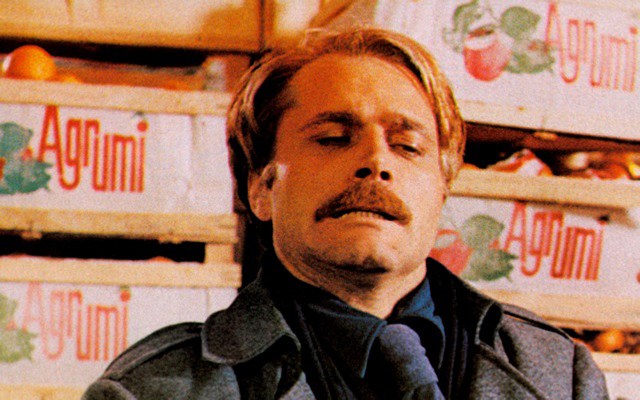
Chasing Ice Even wild-eyed neocons might reconsider their declarations that global warming is a hoax after seeing the work of photographer James Balog, whose images of shrinking glaciers offer startling proof that our planet is indeed being ravaged by climate change (and it’s getting exponentially worse). Jeff Orlowski’s doc follows Balog and his Extreme Ice Survey team as they brave cruel elements in Iceland, Greenland, and Alaska, using time-lapse cameras to record glacier activity, some of it quite dramatic, over months and years. Balog is an affable subject, doggedly pursuing his work even after multiple knee surgeries make him a less-than-agile hiker, but it’s the photographs — as hauntingly beautiful as they are alarming — that make Chasing Ice so powerful. Could’ve done without Scarlett Johansson crooning over the end credits, though. (1:15) Embarcadero, Shattuck. (Eddy)

Cloud Atlas Cramming the six busy storylines of David Mitchell’s wildly ambitious novel into just three hours — the average reader might have thought at least 12 would be required — this impressive adaptation directed (in separate parts) by Tom Twyker (1998’s Run Lola Run) and Matrix siblings Lana and Andy Wachowski has a whole lot of narrative to get through, stretching around the globe and over centuries. In the mid 19th century, Jim Sturgess’ sickly American notory endures a long sea voyage as reluctant protector of a runaway-slave stowaway from the Chatham Islands (David Gyasi). In 1931 Belgium, a talented but criminally minded British musician (Ben Whishaw) wheedles his way into the household of a famous but long-inactive composer (Jim Broadbent). A chance encounter sets 1970s San Francisco journalist Luisa (Halle Berry) on the path of a massive cover-up conspiracy, swiftly putting her life in danger. Circa now, a reprobate London publisher’s (Broadbent) huge windfall turns into bad luck that gets even worse when he seeks help from his brother (Hugh Grant). In the not-so-distant future, a disposable "fabricant" server to the "consumer" classes (Doona Bae) finds herself plucked from her cog-like life for a rebellious higher purpose. Finally, in an indeterminately distant future after "the Fall," an island tribesman (Tom Hanks) forms a highly ambivalent relationship toward a visitor (Berry) from a more advanced but dying civilization. Mitchell’s book was divided into huge novella-sized blocks, with each thread split in two; the film wastes very little time establishing its individual stories before beginning to rapidly intercut between them. That may result in a sense of information (and eventually action) overload, particularly for non-readers, even as it clarifies the connective tissues running throughout. Compression robs some episodes of the cumulative impact they had on the page; the starry multicasting (which in addition to the above mentioned finds many uses for Hugo Weaving, Keith David, James D’Arcy, and Susan Sarandon) can be a distraction; and there’s too much uplift forced on the six tales’ summation. Simply put, not everything here works; like the very different Watchmen, this is a rather brilliant "impossible adaptation" screenplay (by the directors) than nonetheless can’t help but be a bit too much. But so much does work — in alternating currents of satire, melodrama, pulp thriller, dystopian sci-fi, adventure, and so on — that Cloud Atlas must be forgiven for being imperfect. If it were perfect, it couldn’t possibly sprawl as imaginatively and challengingly as it does, and as mainstream movies very seldom do. (2:52) 1000 Van Ness, SF Center. (Harvey)

The Collection As soon as you behold the neon sign "Hotel Argento" shining over the grim warehouse-cum-evil dead trap, you know exactly what you’re in for — a wink, and even a little bit of a horror superfan’s giggle. In other words, to tweak that killer Roach Motel tagline: kids check in, but they don’t check out. No need to see 2009’s The Collector — the previous movie by director-cowriter Marcus Dunstan and writer Patrick Melton (winners of the third season of Project Greenlight, now with the screenplays for multiple Saw films beneath their collective belt) — the giallo fanboy and gorehound hallmarks are there for all to enjoy: tarantulas (straight from 1981’s The Beyond), a factory kitted out as an elaborate murder machine, and end credits that capture characters’ last moments. Plus, plenty of fast-paced shocks and seemingly endless splatter, with a heavy sprinkle of wince-inducing compound fractures. The Collection ups the first film’s ante, as gamine Elena (Emma Fitzpatrick) is lured to go dancing with her pals. Their underground party turns out to be way beyond the fringe, as the killer mows down the dance floor, literally, and gives the phrase "teen crush" a bloody new spin. Stumbling on The Collector‘s antihero thief Arkin (Josh Stewart) locked in a box, Elena releases him but can’t prevent her own capture, so killer-bodyguard Lucello (Oz‘s Lee Tergesen) snatches Arkin from the hospital and forces him to lead his team of toughs through a not-so-funhouse teeming with booby traps as well as victims-turned-insidious-weapons. All of which almost convinces you of nutty-nutball genius of the masked, dilated-pupiled Collector (here stuntman Randall Archer), who takes trendy taxidermy to icky extremes — even when his mechanism is threatened by a way smart last girl and a lock picker who’s adept at cracking building codes. Despite Dunstan’s obvious devotion to horror-movie landmarks, The Collection doesn’t turn out to be particularly original: rather, it attempts to stand on the shoulders — and arms and dismembered body parts — of others, in hopes of finding its place on a nonexistent drive-in bill. (1:23) Metreon, 1000 Van Ness. (Chun)

End of Watch Buddy cop movies tend to go one of two ways: the action-comedy route (see: the Rush Hour series) or the action-drama route. End of Watch is firmly in the latter camp, despite some witty shit-talking between partners Taylor (a chrome-domed Jake Gyllenhaal) and Zavala (Michael Peña from 2004’s Crash) as they patrol the mean streets of Los Angeles. Writer-director David Ayer, who wrote 2001’s Training Day, aims for authenticity by piecing together much of (but, incongruously, not all of) the story through dashboard cameras, surveillance footage, and Officer Taylor’s own ever-present camera, which he claims to be carrying for a school project, though we never once see him attending classes or mentioning school otherwise. Gyllenhaal and Peña have an appealing rapport, but End of Watch‘s adrenaline-seeking plot stretches credulity at times, with the duo stumbling across the same group of gangsters multiple times in a city of three million people. Natalie Martinez and Anna Kendrick do what they can in underwritten cop-wife roles, but End of Watch is ultimately too familiar (but not lawsuit-material familiar) to leave any lasting impression. Case in point: in the year 2012, do we really need yet another love scene set to Mazzy Star’s "Fade Into You"? (1:49) Metreon, 1000 Van Ness. (Eddy)

Flight To twist the words of one troubled balladeer, he believes he can fly, he believes he can touch the sky. Unfortunately for Denzel Washington’s Whip Whitaker, another less savory connotation applies: his semi-sketchy airline captain is sailing on the overconfidence that comes with billowing clouds of blow. Beware the quickie TV spot — and Washington’s heroic stance in the poster — that plays this as a quasi-action flick: Flight is really about a man’s efforts to escape responsibility and his flight from facing his own addiction. It also sees Washington once again doing what he does so well: wrestling with the demons of a charismatic yet deeply flawed protagonist. We come upon Whip as he’s rousing himself from yet another bender, balancing himself out with a couple lines with a gorgeous, enabling flight attendant by his side. It’s a checks-and-balances routine we’re led to believe is business as usual, as he slides confidently into the cockpit, gives the passengers a good scare by charging through turbulence, and proceeds to doze off. The plane, however, goes into fail mode and forces the pilot to improvise brilliantly and kick into hero mode, though he can’t fly from his cover, which is slowly blown despite the ministrations of kindred addict Nicole (Kelly Reilly) and dealer Harling (John Goodman at his most ebullient) and the defensive moves of his pilots union cohort (Bruce Greenwood) and the airline’s lawyer (Don Cheadle). How can Whip fly out of the particular jam called his life? Working with what he’s given, Washington summons reserves of humanity, though he’s ultimately failed by John Gatins’ sanctimonious, recovery-by-the-numbers script and the tendency of seasoned director Robert Zemeckis to blithely skip over the personal history and background details that would have more completely filled out our picture of Whip. We’re left grasping for the highs, waiting for the instances that Harling sails into view and Whip tumbles off the wagon. (2:18) 1000 Van Ness, SF Center, Sundance Kabuki. (Chun)

Hitchcock On the heels of last year’s My Week With Marilyn comes another biopic about an instantly recognizable celebrity viewed through the lens of a specific film shoot. Here, we have Anthony Hopkins (padded and prosthetic’d) playing the Master of Suspense, mulling over which project to pursue after the success of 1959’s North by Northwest. Even if you’re not a Hitch buff, it’s clear from the first scene that Psycho, based on Robert Bloch’s true crime-inspired pulpy thriller, is looming. We open on "Ed Gein’s Farmhouse, 1944;" Gein (Michael Wincott) is seen in his yard, his various heinous crimes — murder, grave-robbing, body-part hoarding, human-skin-mask crafting, etc. — as yet undiscovered. Hitchcock, portrayed by the guy who also played the Gein-inspired Hannibal Lecter, steps into the frame with that familiar droll greeting: "Guhhd eevvveeeening." And we’re off, following the veteran director as he muses "What if somebody really good made a horror picture?" Though his wife and collaborator, Alma (Helen Mirren), cautions him against doing something simply because everyone tells him not to, he plows ahead; the filmmaking scenes are peppered with behind-the-scenes moments detailed in Stephen Rebello’s Alfred Hitchcock and the Making of Psycho, the source material for John J. McLaughlin’s script. But as the film’s tagline — "Behind every Psycho is a great woman" — suggests, the relationship between Alma and Hitch is, stubbornly, Hitchcock‘s main focus. While Mirren is effective (and I’m all for seeing a lady who works hard behind the scenes get recognition), the Hitch-at-home subplot exists only to shoehorn more conflict into a tale that’s got plenty already. Elsewhere, however, Hitchcock director Sacha Gervasi — making his narrative debut after hit 2008 doc Anvil: The Story of Anvil — shows stylistic flair, working Hitchcock references into the mise-en-scène. (1:32) California, Metreon, Piedmont, Sundance Kabuki. (Eddy)

In the Family With a running time of just under three hours, writer-director-star Patrick Wang’s In the Family rewards patient viewers with its quietly observed tale of a man battling for custody of his son. Wang’s debut feature has already earned local acclaim, picking up both the Best Narrative Feature Award and the Emerging Filmmaker Award at the 2012 San Francisco International Asian American Film Festival. It returns in an expanded engagement right when Hollywood is rolling out its flashiest year-end fare, which In the Family neither resembles nor aspires to resemble; its story unfolds via remarkably low-key scenes, most of which are shot using extremely long single takes. Not many films, even self-produced indie dramas, dare allow so much breathing room into each sequence. This technique works, for the most part, because the story is so compelling. Joey (Wang) and Cody (Trevor St. John) are a well-matched couple in small-town Tennessee, busy with jobs — Joey’s a contractor; Cody’s a teacher — and raising six-year-old Chip (Sebastian Brodziak). When tragedy strikes, and Cody is killed, Chip, who is Cody’s biological son, is placed in the care of the late man’s sister, Eileen (Kelly McAndrew). It’s weighty stuff, but Wang avoids typical melodrama clichés to convey the depths of his character’s despair; the film’s sole contrivance is containing most of its last act in a deposition scene, complete with a cartoonishly slick lawyer whose cruel questions make sure the viewer knows that homophobia (and racism) are both themes here. It’s a bottom-heavy ending to a film that otherwise prefers observing at a distance, using its long, wordless scenes to convey delicate, organically-shifting emotions. (2:49) Roxie. (Eddy)

Just 45 Minutes From Broadway (1:59) Roxie.

Killing Them Softly Lowest-level criminal fuckwits Frankie (Scoot McNairy) and Russell (Ben Mendelsohn) are hired to rob a mob gambling den, a task which miraculously they fail to blow. Nevertheless, the repercussions are swift and harsh, as a middleman suit (Richard Jenkins) to the unseen bosses brings in one hitman (Brad Pitt), who brings in another (James Gandolfini) to figure out who the thieves are and administer extreme justice. Based on a 1970s novel by George V. Higgins, this latest collaboration by Pitt and director-scenarist Andrew Dominik would appear superficially to be a surer commercial bet after the box-office failure of their last, 2007’s The Assassination of Jesse James By the Coward Robert Ford — one of the great films of the last decade. But if you’re looking for action thrills or even Guy Ritchie-style swaggering mantalk (though there is some of that), you’ll be disappointed to find Killing more in the abstracted crime drama arena of Drive (2011) or The American (2010), landing somewhere between the riveting former and the arid latter. This meticulously crafted tale is never less than compelling in imaginative direction and expert performance, but it still carries a certain unshakable air of so-what. Some may be turned off by just how vividly unpleasant Mendelsohn’s junkie and Gandolfini’s alchie are. Others will shrug at the wisdom of re-setting this story in the fall of 2008, with financial-infrastructure collapse and the hollow promise of President-elect Obama’s "Change" providing ironical background noise. It’s all a little too little, too soon. (1:37) Four Star, Metreon, 1000 Van Ness. (Harvey)

A Late Quartet Philip Seymour Hoffman is fed up playing second fiddle — literally. He stars in this grown-up soap opera about the internal dramas of a world-class string quartet. While the group is preparing for its 25th season, the eldest member (Christopher Walken) is diagnosed with early stage Parkinson’s. As he’s the base note in the quartet, his retirement challenges the group’s future, not just his own. Hoffman’s second violinist sees the transition as an opportunity to challenge the first violin (Mark Ivanir) for an occasional Alpha role. When his wife, the quartet’s viola player (Catherine Keener), disagrees, it’s a slight ("You think I’m not good enough?") and a betrayal because prior to their marriage, viola and first violin would "duet" if you get my meaning. This becomes a grody aside when Hoffman and Keener’s violin prodigy daughter (Imogen Poots) falls for her mother’s old beau and Hoffman challenges their marriage with a flamenco dancer. These quiet people finds ways to use some loud instruments (a flamenco dancer, really?) and the music as well as the views of Manhattan create a deeply settled feeling of comfort in the cold —insulation can be a dangerous thing. When we see (real world) cellist Nina Lee play, and her full body interacts with a drama as big as vaudeville, we see what tension was left out of the playing and forced into the incestuous "family" conflicts. In A Late Quartet, pleasures are great and atmosphere, heavy. You couldn’t find a better advertisement for this symphonic season; I wanted to buy tickets immediately. And also vowed to stay away from musicians. (1:45) Albany, Smith Rafael. (Vizcarrondo)

Life of Pi Several filmmakers including Alfonso Cuarón, Jean-Pierre Jeunet, and M. Night Shyamalan had a crack at Yann Martel’s "unfilmable" novel over the last decade, without success. That turns out to have been a very good thing, since Ang Lee and scenarist David Magee have made probably the best movie possible from the material — arguably even an improvement on it. Framed as the adult protagonist’s (Irrfan Khan) lengthy reminiscence to an interested writer (Rafe Spall) it chronicles his youthful experience accompanying his family and animals from their just shuttered zoo on a cargo ship voyage from India to Canada. But a storm capsizes the vessel, stranding teenaged Pi (Suraj Sharma) on a lifeboat with a mini menagerie — albeit one swiftly reduced by the food chain in action to one Richard Parker, a whimsically named Bengal tiger. This uneasy forced cohabitation between Hindu vegetarian and instinctual carnivore is an object lesson in survival as well as a fable about the existence of God, among other things. Shot in 3D, the movie has plenty of enchanted, original imagery, though its outstanding technical accomplishment may lie more in the application of CGI (rather than stereoscopic photography) to something reasonably intelligent for a change. First-time actor Sharma is a natural, while his costar gives the most remarkable performance by a wild animal this side of Joaquin Phoenix in The Master. It’s not a perfect film, but it’s a charmed, lovely experience. (2:00) 1000 Van Ness, Presidio, SF Center, Sundance Kabuki. (Harvey)

Lincoln Distinguished subject matter and an A+ production team (Steven Spielberg directing, Daniel Day-Lewis starring, Tony Kushner adapting Doris Kearns Goodwin, John Williams scoring every emotion juuust so) mean Lincoln delivers about what you’d expect: a compelling (if verbose), emotionally resonant (and somehow suspenseful) dramatization of President Lincoln’s push to get the 13th amendment passed before the start of his second term. America’s neck-deep in the Civil War, and Congress, though now without Southern representation, is profoundly divided on the issue of abolition. Spielberg recreates 1865 Washington as a vibrant, exciting place, albeit one filled with so many recognizable stars it’s almost distracting wondering who’ll pop up in the next scene: Jared Harris as Ulysses S. Grant! Joseph Gordon-Levitt as Robert Lincoln! Lena Dunham’s shirtless boyfriend on Girls (Adam Driver) as a soldier! Most notable among the huge cast are John Hawkes, Tim Blake Nelson, and a daffy James Spader as a trio of lobbyists; Sally Field as the troubled First Lady; and likely Oscar contenders Tommy Lee Jones (as winningly cranky Rep. Thaddeus Stevens) and Day-Lewis, who does a reliably great job of disappearing into his iconic role. (2:30) Cerrito, 1000 Van Ness, Presidio, SF Center, Shattuck, Sundance Kabuki. (Eddy)

North Sea Texas Growing up is never easy — especially when you know who you are and who you love from a tender young age, and live in a sleepy Belgium coastal hamlet in the early ’70s. Sexual freedom begins at home, as filmmaker Bavo Defurne’s debut feature opens on our beautiful little protagonist, Pim — a melancholy, shy, diligent soul who has a talent for drawing, a responsible nature, and a yen for ritual dress-up in lipstick and lace. He has an over-the-top role model: an accordion-playing, zaftig mother who has a rep as the village floozy. Left alone far too often as his mom parties at a bar named Texas, Pim takes refuge with kindly single-mom neighbor Marcella, her earnest daughter, and her sexy, motorcycle-loving son, Gino, who turns out to be just Pim’s speed. But this childhood idyll is under threat: Gino’s new girlfriend and a handsome new boarder at Pim’s house promise to change everything. Displaying a gentle, empathetic touch for his cast of mildly quirky characters and a genuine knack for conjuring those long, sensual days of youth, Defurne manages to shine a fresh, romantic light on a somewhat familiar bildungsroman, leaving a lingering taste of sea salt and sweat along with the feeling of walking in one young boy’s very specific shoes. (1:36) Opera Plaza. (Chun)

The Perks of Being a Wallflower Move over, Diary of a Wimpy Kid series — there’s a new shrinking-violet social outcast in town. These days, life might not suck quite so hard for 90-pound weaklings in every age category, what with so many films and TV shows exposing, and sometimes even celebrating, the many miseries of childhood and adolescence for all to see. In this case, Perks author Stephen Chbosky takes on the directorial duties — both a good and bad thing, much like the teen years. Smart, shy Charlie is starting high school with a host of issues: he’s painfully awkward and very alone in the brutal throng, his only friend just committed suicide, and his only simpatico family member was killed in a car accident. Charlie’s English teacher Mr. Andersen (Paul Rudd) appears to be his only connection, until the freshman strikes up a conversation with feline, charismatic, shop-class jester Patrick (Ezra Miller) and his magnetic, music- and fun-loving stepsister Sam (Emma Watson). Who needs the popular kids? The witty duo head up their gang of coolly uncool outcasts their own, the Wallflowers (not to be confused with the deeply uncool Jakob Dylan combo), and with them, Charlie appears to have found his tribe. Only a few small secrets put a damper on matters: Patrick happens to be gay and involved with football player Brad (Johnny Simmons), who’s saddled with a violently conservative father, and Charlie is in love with the already-hooked-up Sam and is frightened that his fragile equilibrium will be destroyed when his new besties graduate and slip out of his life. Displaying empathy and a devotion to emotional truth, Chbosky takes good care of his characters, preserving the complexity and ungainly quirks of their not-so-cartoonish suburbia, though his limitations as a director come to the fore in the murkiness and choppily handled climax that reveals how damaged Charlie truly is. (1:43) Bridge, Shattuck. (Chun)

Playing For Keeps Not a keeper: the marketing imagery that makes Gerard Butler look like an insufferable creep with bad hair. Dennis Quaid, seen in a small pic toward the base of the Playing For Keeps poster, gets that thankless role instead in this family-oriented rom-com, which is better than some while still being capable of eliciting very audible yawns from an audience supposedly primed for cutesy hijinks. Butler is George Dryer, a onetime pro soccer star now on the decline yet desperately seeking his next opening — a career as a sportscaster. To get there he has to run a networking gauntlet called coaching children’s soccer, which he gets roped into by ex Stacie (Jessica Biel) and spawn Lewis (Noah Lomax). The ankle biters are the least of his problems: more challenging are hot ‘n’ horny soccer moms like TV sports vet Denise (Catherine Zeta-Jones), cry-face Barn (Judy Greer), and desperate trophy housewife Patti (Uma Thurman), who’s saddled with all-American a-hole Carl (Dennis Quaid). The charisma-oozing George has to practically fight them off, while somehow shooting for that family-first goal. With its sex farce tendencies, rom-com DNA, and vaguely sour attitude toward hard-up moms, hot or not, I’m not sure who Playing For Keeps is really making a play for — perhaps married ladies looking for date-night possibilities and some shirtless Butler action? Projecting believability even under the most plausibility-taxing circumstances, Butler manages, as always, to be the best thing in the movie, though it seems like less of an achievement when his projects tend toward mediocrity. (1:46) Metreon, 1000 Van Ness, Shattuck. (Chun)

Red Dawn A remake of a 1984 movie that seemed a pretty nutty ideological throwback even during the Reagan Era’s revived Cold War air conditioning, Red Dawn should have come out a couple years ago, having been shot late 2009. But in the meantime MGM was undergoing yet another seismic financial rupture, and as the film sat around for lack of the means needed for distribution and marketing, it occurred that perhaps it already had a fatal, internal flaw. You see, this update re-cast our invaders from Russkies to People’s Republicans, tapping into the modern fear of China as debtor and international bully. But: China is also a huge fledgling market for Hollywood product. So a tortured makeover of the remake ensued; scenes were added, re-shot, and digitally altered to impose a drastic narrative change. The new villain is absurd it gets acknowledged as such by dialogue: "North Korea? It doesn’t make any sense!" Yup, in the new Red Dawn a coastal Washington state burg is the first attack point in a wholesale invasion of the U.S. (pop. 315 million) by the Democratic People’s Republic (pop. 25 million). It’s football season, so a Spokane suburb’s team — Wolverines!! — lends its name as battle cry and its revved up healthy young flesh as guerilla martyrs to the fight for, ohm yeah, freedom. Do they drink beer? Do they rescue cheerleader girlfriends from concentration camps? Do they kick North Korean ass? Do you really need to ask? (1:34) Metreon. (Harvey)

Rise of the Guardians There’s nothing so camp as "Heat Miser" from The Year Without a Santa Claus (1974) in Rise of the Guardians,, but there’s plenty here to charm all ages. The mystery at its center: we open on Jack Frost (voiced by Chris Pine) being born, pulled from the depths of a frozen pond by the Man on the Moon and destined to spread ice and cold everywhere he goes, invisible to all living creatures. It’s an individualistic yet lonely lot for Jack, who’s styled as an impish snowboarder in a hoodie and armed with an icy scepter, until the Guardians — spirits like North/Santa Claus (Alec Baldwin), the Tooth Fairy (Isla Fisher), and the Easter Bunny (Hugh Jackman) — call on him to join them. Pitch the Boogeyman (Jude Law) is threatening to snuff out all children’s hopes and dreams with fears and nightmares, and it’s up to the Guardians must keep belief in magic alive. But what’s in it for Jack, except the most important thing: namely who is he and what is his origin story? Director Peter Ramsey keeps those fragile dreams aloft with scenes awash with motion and animation that evokes the chubby figures and cozy warm tones of ’70s European storybooks. And though Pine verges on blandness with his vocal performance, Baldwin, Jackman, and Fisher winningly deliver the jokes. (1:38) Metreon, 1000 Van Ness. (Chun)

A Royal Affair At age 15 in 1766, British princess Caroline (Alicia Vikander) travels abroad to a new life — as queen to the new ruler of Denmark, her cousin. Attractive and accomplished, she is judged a great success by everyone but her husband. King Christian (Mikkel Boe Følsgaard) is just a teenager himself, albeit one whose mental illness makes him behave alternately like a debauched libertine, a rude two year-old, a sulky-rebellious adolescent, and a plain old abusive spouse. Once her principal official duty is fulfilled — bearing a male heir — the two do their best to avoid each other. But on a tour of Europe Christian meets German doctor Johann Friedrich Struenesse (Mads Mikkelsen), a true man of the Enlightenment who not only has advanced notions about calming the monarch’s "eccentricities," but proves a tolerant and agreeable royal companion. Lured back to Denmark as the King’s personal physician, he soon infects the cultured Queen with the fervor of his progressive ideas, while the two find themselves mutually attracted on less intellectual levels as well. When they start manipulating their unstable but malleable ruler to push much-needed public reforms through in the still basically feudal nation, they begin acquiring powerful enemies. This very handsome-looking history lesson highlights a chapter relatively little-known here, and finds in it an interesting juncture in the eternal battle between masters and servants, the piously self-interested and the secular humanists. At the same time, Nikolaj Arcel’s impressively mounted and acted film is also somewhat pedestrian and overlong. It’s a quality costume drama, but not a great one. (2:17) Opera Plaza, Smith Rafael. (Harvey)

The Sessions Polio has long since paralyzed the body of Berkeley poet Mark O’Brien (John Hawkes) from the neck down. Of course his mind is free to roam — but it often roams south of the personal equator, where he hasn’t had the same opportunities as able-bodied people. Thus he enlists the services of Cheryl (Helen Hunt), a professional sex surrogate, to lose his virginity at last. Based on the real-life figures’ experiences, this drama by Australian polio survivor Ben Lewin was a big hit at Sundance this year (then titled The Surrogate), and it’s not hard to see why: this is one of those rare inspirational feel-good stories that doesn’t pander and earns its tears with honest emotional toil. Hawkes is always arresting, but Hunt hasn’t been this good in a long time, and William H. Macy is pure pleasure as a sympathetic priest put in numerous awkward positions with the Lord by Mark’s very down-to-earth questions and confessions. (1:35) Four Star, Opera Plaza. (Harvey)

Seven Psychopaths Those nostalgic for 1990s-style chatty assassins will find much to love in the broadly sketched Seven Psychopaths. Director-writer Martin McDonough already dipped a pen into Tarantino’s blood-splattered ink well with his 2008 debut feature, In Bruges, and Seven Psychopaths reads as larkier and more off-the-cuff, as the award-winning Irish playwright continues to try to find his own discomfiting, teasing balance between goofy Grand Guignol yuks and meta-minded storytelling. Structured, sort of, with the certified lucidity of a thrill killer, Seven Psychopaths opens on Boardwalk Empire heavies Michael Pitt and Michael Stuhlbarg bantering about the terrors of getting shot in the eyeball, while waiting to "kill a chick." The talky twosome don’t seem capable of harming a fat hen, in the face of the Jack of Spades serial killer, who happens to be Psychopath No. One and a serial destroyer of hired guns. The key to the rest of the psychopathic gang is locked in the noggin of screenwriter Marty (Colin Farrell), who’s grappling with a major block and attempting the seeming impossible task of creating a peace-loving, Buddhist killer. Looking on are his girlfriend Kaya (Abbie Cornish) and actor best friend Billy (Sam Rockwell), who has a lucrative side gig as a dog kidnapper — and reward snatcher — with the dapper Hans (Christopher Walken). A teensy bit too enthusiastic about Marty’s screenplay, Billy displays a talent for stumbling over psychos, reeling in Zachariah (Tom Waits) and, on his doggie-grabbing adventures, Shih Tzu-loving gangster Charlie (Woody Harrelson). Unrest assured, leitmotifs from McDonough plays — like a preoccupation with fiction-making (The Pillowman) and the coupling of pet-loving sentimentality and primal violence (The Lieutenant of Inishmore) — crop up in Seven Psychopaths, though in rougher, less refined form, and sprinkled with a nervous, bromantic anxiety that barely skirts homophobia. Best to bask in the cute, dumb pleasures of a saucer-eyed lap dog and the considerably more mental joys of this cast, headed up by dear dog hunter Walken, who can still stir terror with just a withering gaze and a voice that can peel the finish off a watch. (1:45) Metreon. (Chun)

Silver Linings Playbook After guiding two actors to Best Supporting Oscars in 2010’s The Fighter, director David O. Russell returns (adapting his script from Matthew Quick’s novel) with another darkly comedic film about a complicated family that will probably earn some gold of its own. Though he’s obviously not ready to face the outside world, Pat (Bradley Cooper) checks out of the state institution he’s been court-ordered to spend eight months in after displaying some serious anger-management issues. He moves home with his football-obsessed father (Robert De Niro) and worrywart mother (Jacki Weaver of 2010’s Animal Kingdom), where he plunges into a plan to win back his estranged wife. Cooper plays Pat as a man vibrating with troubled energy — always in danger of flying into a rage, even as he pursues his forced-upbeat "silver linings" philosophy. But the movie belongs to Jennifer Lawrence, who proves the chops she showcased (pre-Hunger Games megafame) in 2010’s Winter’s Bone were no fluke. As the damaged-but-determined Tiffany, she’s the left-field element that jolts Pat out of his crazytown funk; she’s also the only reason Playbook‘s dance-competition subplot doesn’t feel eye-rollingly clichéd. The film’s not perfect, but Lawrence’s layered performance — emotional, demanding, bitchy, tough-yet-secretly-tender — damn near is. (2:01) Piedmont, SF Center, Shattuck. (Eddy)

Skyfall Top marks to Adele, who delivers a magnificent title song to cap off Skyfall‘s thrilling pre-credits chase scene. Unfortunate, then, that the film that follows squanders its initial promise. After a bomb attack on MI6, the clock is running out for Bond (Daniel Craig) and M (Judi Dench), accused of Cold War irrelevancy in a 21st century full of malevolent, stateless computer hackers. The audience, too, will yearn for a return to simpler times; dialogue about "firewalls" and "obfuscated code" never fails to sound faintly ridiculous, despite the efforts Ben Whishaw as the youthful new head of Q branch. Javier Bardem is creative and creepy as keyboard-tapping villain Raoul Silva, but would have done better with a megalomaniac scheme to take over the world. Instead, a small-potatoes revenge plot limps to a dull conclusion in the middle of nowhere. Skyfall never decides whether it prefers action, bons mots, and in-jokes to ponderous mythologizing and ripped-from-the-headlines speechifying — the result is a unsatisfying, uneven mixture. (2:23) Marina, Metreon, 1000 Van Ness, Shattuck, Sundance Kabuki. (Ben Richardson)

The Twilight Saga: Breaking Dawn – Part 2 The final installment of the Twilight franchise picks up shortly after the medical-emergency vampirization of last year’s Breaking Dawn – Part 1, giving newly undead Bella Swan (Kristen Stewart) just enough time to freshen up after nearly being torn asunder during labor by her hybrid spawn, Renesmee. In a just world, Bella and soul mate Edward Cullen (Robert Pattinson) would get more of a honeymoon period, given how badly Part 1‘s actual honeymoon turned out. Alas, there’s just enough time for some soft-focus vampire-on-vampire action (a letdown after all the talk of rowdy undead sex), some catamount hunting, some werewolf posturing, a reunion with Jacob (Taylor Lautner), and a few seconds of Cullen family bonding, and then those creepy Volturi are back, convinced that the Cullens have committed a vampire capital crime and ready to exact penance. Director Bill Condon (1998’s Gods and Monsters, 2004’s Kinsey) knows what the Twi-hards want and methodically doles it out, but the overall effect is less sweeping action and shivery romance and more "I have bugs crawling on me — and yet I’m bored." Some of that isn’t his fault — he bears no responsibility for naming Renesmee, for instance, to say nothing of a January-May subplot that we’re asked to wrap our brains around. But the film maintains such a loose emotional grip, shifting clumsily and robotically from comic interludes to unintentionally comic interludes to soaring-music love scenes to attempted pathos to a snowy battlefield where the only moment of any dramatic value occurs. Weighed down by the responsibility of bringing The Twilight Saga to a close, it limps weakly to its anticlimax, leaving one almost — but not quite — wishing for one more installment, a chance for a more stirring farewell. (1:55) Metreon, 1000 Van Ness, Sundance Kabuki. (Rapoport)

Waiting for Lightning The first voice you hear in Waiting for Lightning is pro skateboarder Danny Way’s mother: "I said, ‘Are you crazy? What do you think you’re doing?’" Can’t really blame her for worrying: Waiting for Lightning is a bio-doc following the fearless Way’s rise from littlest squirt at the Del Mar skate park to his determined quest to jump over the Great Wall of China in 2005. Growing up, he faced problems (his dad was killed in jail; his mom partied … a lot; his mentor died in a car crash; he suffered a broken neck after a surfing accident), but persevered to find his calling, pursuing what a peer calls "life-and-death stuntman shit." Like all docs about skateboarding — a sport that depends so much on cameras standing by — there’s no shortage of action footage, and big names like Tony Hawk and Christian Hosoi drop by to heap praise on Way’s talents and work ethic. Lightning is aimed mostly at an audience already fond of watching skate footage; it lacks the artistic heft of 2001’s Dogtown and Z-Boys, or the unusually compelling narrative of 2003’s Stoked: The Rise and Fall of Gator, and the whole "Way is a golden god" theme gets a little tiresome. But it must be said: the Great Wall jump — a self-mythologizing publicity stunt that would do Evel Knievel proud — is rather spectacular. (1:32) Metreon. (Eddy)

Wreck-It Ralph Wreck-It Ralph cribs directly from the Toy Story series: when the lights go off in the arcade, video game characters gather to eat, drink, and endure existential crises. John C. Reilly is likable and idiosyncratic as Ralph, the hulking, ham-fisted villain of a game called Fix-It-Felix. Fed up with being the bad guy, Ralph sneaks into gritty combat sim Hero’s Duty under the nose of Sergeant Calhoun (Jane Lynch), a blond space marine who mixes Mass Effect‘s Commander Shepard with a PG-rated R. Lee Ermey. Things go quickly awry, and soon Ralph is marooned in cart-racing candyland Sugar Rush, helping Vanellope Von Schweetz (a manic Sarah Silverman), with Calhoun and opposite number Felix (Jack McBrayer) hot on his heels. Though often aggressively childish, the humor will amuse kids, parents, and occasionally gamers, and the Disney-approved message about acceptance is moving without being maudlin. The animation, limber enough to portray 30 years of changing video game graphics, deserves special praise. (1:34) Metreon, 1000 Van Ness. (Ben Richardson)

Honk if you love movies! New releases and rep programs

1

If this week’s openings seem a little thin, it’s because all of the studios are hoping to cash in on the holiday moviegoing spirit, releasing their films next week (The Hobbit: An Unexpected Journey) or, more likely, the week after (Django Unchained, Les Misérables, This is 40, The Impossible, Jack Reacher, etc.) ‘Tis the season, and all that.

But that doesn’t mean you should ignore Friday’s releases (check out my feature on custody drama In the Family), or miss out on two rep programs Dennis Harvey covers in this week’s issue: retro porn-musical showcase “Honk If You’re Horny” at the Yerba Buena Center for the Arts, and a tribute to French comedian Pierre Étaix at the Smith Rafael Film Center.

Plus, more short takes below, including Harvey’s preview of on the Vortex Room‘s weekly (and timely!) apocalypse series. Because if the world ends December 21, you won’t get to see any of those Christmas releases anyway. Tres désolé, Hugh!

http://www.youtube.com/watch?v=Oqe-nNhp0kw

Generation P When Babylen Tatarsky (Vladimir Epifantsev) meets an old friend by chance, he’s plucked from penny-ante street level entrepeneurship into the much higher stakes of advertising in early 1990s Russia — a brave new world of post-Communist consumerist capitalism bent on outperforming the West’s, in which new corrupt orders replace the old ones with dizzying speed. His rise from humble copy writer to a “living god” controlling mass reality one commercial at a time is accompanied by a whole lot of recreational drug use, mafia-style violence, and references to Mesopotamian mythology. Adapted from Victor Pelevin’s 1999 novel (published in the US as Homo Zapiens), Victor Ginzburg’s film preserves its heady, gonzo mix of Pynchon, cyberpunk, and Putney Swope (1969) as a satirical conspiracy fantasia in which excess is both the style and the subject. No doubt at least half the in-jokes are lost on non-Russian audiences, but Generation P is so dense and hyperactive you’ll be entertained by its fabulist sociopolitical onslaught regardless. (1:52) (Dennis Harvey)

http://www.youtube.com/watch?v=f9gINU_VT0Q

North Sea Texas Growing up is never easy — especially when you know who you are and who you love from a tender young age, and live in a sleepy Belgian coastal hamlet in the early ’70s. Sexual freedom begins at home, as filmmaker Bavo Defurne’s debut feature opens on our beautiful little protagonist, Pim — a melancholy, shy, diligent soul who has a talent for drawing, a responsible nature, and a yen for ritual dress-up in lipstick and lace. He has an over-the-top role model: an accordion-playing, zaftig mother who has a rep as the village floozy. Left alone far too often as his mom parties at a bar named Texas, Pim takes refuge with kindly single-mom neighbor Marcella, her earnest daughter, and her sexy, motorcycle-loving son, Gino, who turns out to be just Pim’s speed. But this childhood idyll is under threat: Gino’s new girlfriend and a handsome new boarder at Pim’s house promise to change everything. Displaying a gentle, empathetic touch for his cast of mildly quirky characters and a genuine knack for conjuring those long, sensual days of youth, Defurne manages to shine a fresh, romantic light on a somewhat familiar bildungsroman, leaving a lingering taste of sea salt and sweat along with the feeling of walking in one young boy’s very specific shoes. (1:36) (Kimberly Chun)

“The Vortex Apocalypse, or How I Learned to Stop Worrying and Love Thursday Film Cult” With a respectful nod to the Mayans, the Vortex sees off 2012 with four weeks of movies depicting end-of-the-world-as-we-know-it scenarios. First up is an interesting duo from 1974. In Chosen Survivors, 11 strangers selected for their particular knowledge and skills are taken to an elaborate government bunker deep beneath the desert. They’re told they’re among several such groups in different secret locations chosen to preserve the human race in the immediate aftermath of total thermonuclear war. This is pretty hard to take, along with the notion that they’ll be spending at least the next five years in this very 1970s silver discotheque-spaceship environ. But soon the chosen few have an even more jarring crisis to deal with: the scientists who devised this sunken fortress neglected to note it is surrounded by caves filled with hungry vampire bats. There’s a very big twist at the one-hour point, but just when this rare theatrical feature by TV director Sutton Roley (The Man From U.N.C.L.E., Airwolf, etc.) should kick into high gear, it actually seems to slow down. Still, there are a couple very tense sequences, and some interesting character fillips. The co-feature is The Last Days of Planet Earth a.k.a. Prophecies of Nostradamus, a Japanese superproduction that aimed to top both the then-prominent disaster movie genre and the strain of eco-horror dominating much of 1970s fantasy cinema. In addition to the expected earthquakes, tsunamis, and such, Earth’s meltdown triggers such phenomena as pterodactyl-sized vampire bats (again!) and bird-eating flowers. Toshio Masuda’s special effects spectacular also features a really weird modern dance performance, and — in the editorially butchered, atrociously dubbed US release version — dialogue like “But by not allowing them to live, you’re … killing them!” Vortex Room. (Dennis Harvey)

http://www.youtube.com/watch?v=BHpsXGU0gTc

Waiting for Lightning The first voice you hear in Waiting for Lightning is pro skateboarder Danny Way’s mother: “I said, ‘Are you crazy? What do you think you’re doing?'” Can’t really blame her for worrying: Waiting for Lightning is a bio-doc following the fearless Way’s rise from littlest squirt at the Del Mar skate park to his determined quest to jump over the Great Wall of China in 2005. Growing up, he faced problems (his dad was killed in jail; his mom partied … a lot; his mentor died in a car crash; he suffered a broken neck after a surfing accident), but persevered to find his calling, pursuing what a peer calls “life-and-death stuntman shit.” Like all docs about skateboarding — a sport that depends so much on cameras standing by — there’s no shortage of action footage, and big names like Tony Hawk and Christian Hosoi drop by to heap praise on Way’s talents and work ethic. Lightning is aimed mostly at an audience already fond of watching skate footage; it lacks the artistic heft of 2001’s Dogtown and Z-Boys, or the unusually compelling narrative of 2003’s Stoked: The Rise and Fall of Gator, and the whole “Way is a golden god” theme gets a little tiresome. But it must be said: the Great Wall jump — a self-mythologizing publicity stunt that would do Evel Knievel proud — is rather spectacular. (1:32) (Cheryl Eddy)

Our Weekly Picks: December 5-11

0

WEDNESDAY 5

Jill Tracy

Spooky chanteuse Jill Tracy describes her new holiday release, Silver Smoke, Star of Night, as “the Christmas album for those who prefer the October chill.” She celebrates its release with three festive events, starting with tonight’s “Fragrance: The Allure and Magical History of Perfumes,” an after-hours party at the San Francisco Conservatory of Flowers. The evening is both concert and launch of her limited-edition fragrances (appropriately, devoted to “dark elegance”), created with local perfumers Nocturne Alchemy. Sat/8, the Hypnodrome (where Tracy has been known to perform with the Thrillpeddlers) hosts “Creepshow Christmas” — a family-friendly show mixing ghost stories with live accompaniment. Finally, Silver Smoke‘s official CD release shindig is Dec. 19 at the DNA Lounge. Spirits will be bright! (Cheryl Eddy)

Tonight, 6-10pm, $13

San Francisco Conservatory of Flowers

Golden Gate Park, 100 John F. Kennedy Dr., SF

Sat/8, 8pm, $13–$25

Hypnodrome

575 10th St., SF

www.jilltracy.com


Blue Scholars

The young MCs in Seattle rap duo Blue Scholars met, quite appropriately, in a hip-hop club at the University of Washington. You can hear these academic roots clearly in DJs Sabzi and Geologic’s smart, searing rhymes. The heady lyrical content of their work tackles serious, political issues such as socioeconomic mobility, empowerment, and questioning authority. Even more impressively, these boys don’t just talk the talk. Geologic’s history of activism in the Filipino-American community and the duo’s headquarters in 98118, the country’s most ethnically diverse zip code, is the perfect recipe for the smart, relevant hip-hop that the scene most desperately needs (we’re looking at you, Chris Brown). (Haley Zaremba)

With The Physics, Brothers From Another

8pm, $19.50

Fillmore

1805 Geary, SF

(415) 346-6000

www.thefillmore.com


Get Carter and The Trip

Verrrry clever, Castro Theatre — programming back-to-back screenings of Get Carter (1971) and The Trip (2010). Gritty Get Carter follows a snarling Michael Caine as he prowls around Newcastle, punching his way through the local gangster contingent he holds responsible for his brother’s death. The Trip, a travelogue featuring Steve Coogan and Rob Brydon (playing exaggerated versions of themselves), contains some genius and quotable comedy — ABBA sing-offs, mock-epic speeches — but none more memorable than the two actors going head to head with their Caine impressions: “You were only supposed to blow the bloody doors off!” Truly, an inspired double feature. (Cheryl Eddy)

Get Carter 2:40 and 7pm; The Trip 4:50 and 9:10pm, $8.50–$11

Castro Theatre

429 Castro, SF

www.castrotheatre.com


THURSDAY 6

“Drag Queens on Ice”

It’s a bird! It’s a plane! It’s … er, definitely something, flying at you with the unstoppable momentum of a two-story wig and a pair of birdseed-filled balloons. You already know what’s green and ice skates (Peggy Phlegm) now come find out what’s queen and ice wobbles — all those years in man-stilletos can’t help you out on the rink, honey. This cherished annual hoot features a wealth of San Francisco’s beloved gender clown personalities threading their way through bewildered tourist families in Union Square (who actually get really into it, and by the end it’s a heartwarming family affair, full of squeals of delight). You can even skate with these swanning lovelies! No money back if you end up with a weave in your face. The great Donna Sachet — she of the stunning, form-fitting, fake-fur-trimmed ravishing red holiday dress — mistresses the ceremonies. Grab a warming adult beverage from nearby Emporio Rulli Il Caffe and join in the fun. But don’t you dare judge, or you might get Nancy Kerrigan’d. Skates are blades, remember. (Marke B.)

8-9:30pm, $10 entrance, $5 rentals

Union Square Skating Rink

Post and Geary, SF

www.unionsquareicerink.com


The Family Stone

I’ve had some good times listening to San Francisco’s Sly and the Family Stone — both letting my mind wander the groove of their funky sound and feeling the sense of pride in one’s self that Sly Stone sings so well — and I’d venture a guess that you have too. Though that innovate teacher and leader has opted for life out of the spotlight, three of the original members, Jerry Martini (saxophone), Cynthia Robinson(trumpet), and Greg Errico (drums), are keeping the music alive with the help of a few younger talents. Mostly hailing from the Las Vegas area, these new members are all performers with rich experiences listening to Sly’s music. This new Family Stone recreates the old hits in a fresh show, hoping to bring the music to all generations. (Molly Champlin)

7-8pm, $40–$45

Rrazz Room

222 Mason, SF

(800) 380-3095

www.therrazzroom.com


Streetlight Manifesto

Streetlight Manifesto was pretty late to the ska game, releasing its first album in 2003, well over a decade after the genre’s revival heyday. Though in a way, the band’s timing was actually perfect. Born out of the ashes of previous Jersey ska-punk heroes Catch-22 and One Cool Guy, Streetlight’s catchy tunes and punk rock virility have been nearly single-handedly keeping third-wave ska alive in a world dominated by hip-hop, mainstream pop, and EDM. The band is ringing in the new year with the release of its fifth album, The Hands That Thieve. During this tour, Streetlight Manifesto promises to play new songs, old favorites, and everything in between; so put on your skanking shoes and lace ’em up tight. It’s gonna be a good night. (Zaremba)

With Hostage Calm, Lionize

8pm, $21

Slim’s

333 11th St., SF

(415) 255-0333

www.slimspresents.com


FRIDAY 7

Hope Beyond

Kim Gordon, artist and gallery director at Modern Eden, has curated the one-night-only art show, Hope Beyond, a benefit for the victims of Hurricane Sandy. The assembled line-up includes an impressive selection of artists representing a variety of pop-surreal and contemporary styles. The work ranges from the graffiti style sharpie drawings of Kidlew to intricate fusion of nature images and Hindi symbolism by Inge Vandormael. Personally, I’m excited to see what all of these artists will contribute to the show. Especially Serge Gay Jr. — an artist whose paintings collage and reproduce pop culture images to create dichotomies between what’s real and what’s fake and make you to take a second look at his subjects: beauty, violence, drugs, and race. With all art priced below $100 and the proceeds going to Hurricane Sandy victims, what’s not to love? (Champlin)

6pm, free

Modern Eden Gallery

403 Francisco, SF

(415) 956-3303

www.hope-beyond.com


SFBallet’s Nutcracker

The folks in Imperial Russia loved The Nutcracker and kept it alive during Soviet times. But the West never saw it until some White Russians, who had escaped to San Francisco, nagged then San Francisco Ballet Artistic Director Willam Christensen to choreograph it in 1944. By now there are hundreds of versions all over the world; the oddest one I ever saw had Drosselmeyer arrive on a spaceship. SFB’s, choreographed by Helgi Tomasson in 2004, is set during the 1915 Panama International Exhibition. It lacks the cloying sweetness and sentimentality that infects so many others. Tomasson’s is a love letter to the City — cool, transparent, a little reserved and superbly elegant. (Rita Felciano)

Through Dec. 28, 7pm, 2pm matinees; $20–$270

War Memorial Opera House

301 Van Ness, SF

(415) 865-2000

www.boxofficesanfrancisco.com


SATURDAY 8

Misfit Toy Factory II

Did you ever feel cheated as a kid when you would see cartoons and hear stories about elves making toys from scratch, then you got a Barbie doll or video game that obviously wasn’t cobbled at the North Pole? Well, now is your chance to watch the toys actually being made. Not by elves though, but by local artists. There will be over 35 of them at Root Division Art Space bringing creativity from their various fields (painting, sculpture, and illustration mostly) to the art of toy making. All the work will be sold for a flat rate of $40. Bring cash for some shopping, or just come to enjoy the atmosphere of creativity complete with music by DJ Yukon Cornelius. (Champlin)

6pm, free

Root Division Art Space

3175 17th, SF

(415) 863-7668

www.rootdivision.org


John Prine

I think I need to start with a disclaimer: I love John Prine. Yes, I’m completely biased when I say that he is one of the greatest living lyricists and you’d be lucky to go see him. But why take my word for it? His more than 40 years of successful songwriting can speak for themselves. Starting off as a Chicago-area postman doing open mics in his spare time, Prine eventually got noticed — by a young Roger Ebert. Now, almost 70 years after that glowing review, Prine is still an incredible songwriter and performer, and each song is a charming, witty, and poignant labor of love. In his time as a performer, many trends and genres have come and gone, but a great folk song never goes out of style. (Zaremba)

With Justin Townes Earle

8pm, $39–$59

Warfield

982 Market, SF

(415) 345-0900

www.thewarfieldtheatre.com


SUNDAY 9

San Francisco Crab Fest 2012

Continuing a long-running San Francisco tradition that takes advantage of the fact that the crab fishing season along the California coast coincides with the holiday season, the Fisherman’s Wharf Community Benefit District 2012 Crab Fest will offer up a tasty fete featuring the crustacean prepared in a variety of ways by local restaurants, along with exhibits, cooking demonstrations and more. A host of sustainably-produced regional wines will provide the perfect way to raise a toast to the annual event, which donates all proceeds to the San Francisco Firefighters Toy Program and the San Francisco Police Department’s Youth Fishing Program. (Sean McCourt)

Noon-3pm, $25–$30

Waterfront Terraces, Fisherman’s Wharf

145 Jefferson St., Third Floor, SF

www.visitfishermanswharf.com


Queer Rebels Winter Shindig

Though the weather outside is frightful, the smolderingly creative queers performing tonight at El Rio are more than capable of keeping your toasty warm. The lineup alone is worth the sleigh ride to El Rio — burlesque from the bountiful Ms. Vagina Jenkins, jazzy moves courtesy East Bay punker Brontez Purnell, the release performance of drag king blueser K.B. TuffNStuff’s Trans of Venus album, and so much more hotness. But as if that wasn’t enough to draw you like a moth to flame, this: the evening is a benefit for Queer Rebels’ year-round lineup of genderbending, empowering art events like the Exploding Lineage! experimental film fest, two-day summit of Asian American activists, and the group’s annual eponymous production of queer takes on the Harlem Renaissance and beyond. (Caitlin Donohue)

8-11pm, $7-20 sliding scale

El Rio

3158 Mission, SF

www.elriosf.com


SUNDAY 9

John Cale

Whereas Lou Reed was the primary source of the Velvet Underground’s swagger, and hard-bitten lyricism, John Cale took charge of the group’s more avant-garde leanings. Even 45 years after leaving the band, Cale continues to challenge and surprise his listeners, as evidenced by the title of his latest LP: Shifty Adventures in Nookie Wood. Largely devoid of the splintering bursts of noise that defined his formative years, and the rootsy pastoralism of Paris 1919 and Vintage Violence, Cale’s latest is an art-rock record in the tradition of Peter Gabriel and Kate Bush: affecting in its ability to experiment and take risks while working squarely within the pop template. Another gutsy effort from an aging icon whose renegade streak hasn’t gone anywhere. See him while you can. (Taylor Kaplan)

With Cass McCombs

8pm, $32–$48

Regency

1290 Sutter, SF

(888) 929-7849

www.theregencyballroom.com

The Guardian listings deadline is two weeks prior to our Wednesday publication date. To submit an item for consideration, please include the title of the event, a brief description of the event, date and time, venue name, street address (listing cross streets only isn’t sufficient), city, telephone number readers can call for more information, telephone number for media, and admission costs. Send information to Listings, the Guardian, 225 Bush, 17th Flr., SF, CA 94105; or e-mail (paste press release into e-mail body — no attachments, please) to listings@sfbg.com. Digital photos may be submitted in jpeg format; the image must be at least 240 dpi and four inches by six inches in size. We regret we cannot accept listings over the phone.

Film Listings

0

Film listings are edited by Cheryl Eddy. Reviewers are Kimberly Chun, Dennis Harvey, Lynn Rapoport, and Sara Vizcarrondo. For rep house showtimes, see Rep Clock.

OPENING

Generation P When Babylen Tatarsky (Vladimir Epifantsev) meets an old friend by chance, he’s plucked from penny-ante street level entrepeneurship into the much higher stakes of advertising in early 1990s Russia — a brave new world of post-Communist consumerist capitalism bent on outperforming the West’s, in which new corrupt orders replace the old ones with dizzying speed. His rise from humble copy writer to a "living god" controlling mass reality one commercial at a time is accompanied by a whole lot of recreational drug use, mafia-style violence, and references to Mesopotamian mythology. Adapted from Victor Pelevin’s 1999 novel (published in the US as Homo Zapiens), Victor Ginzburg’s film preserves its heady, gonzo mix of Pynchon, cyberpunk, and Putney Swope (1969) as a satirical conspiracy fantasia in which excess is both the style and the subject. No doubt at least half the in-jokes are lost on non-Russian audiences, but Generation P is so dense and hyperactive you’ll be entertained by its fabulist sociopolitical onslaught regardless. (1:52) Embarcadero. (Harvey)

In the Family See "Father and Law." (2:49) Opera Plaza.

North Sea Texas Growing up is never easy — especially when you know who you are and who you love from a tender young age, and live in a sleepy Belgium coastal hamlet in the early ’70s. Sexual freedom begins at home, as filmmaker Bavo Defurne’s debut feature opens on our beautiful little protagonist, Pim — a melancholy, shy, diligent soul who has a talent for drawing, a responsible nature, and a yen for ritual dress-up in lipstick and lace. He has an over-the-top role model: an accordion-playing, zaftig mother who has a rep as the village floozy. Left alone far too often as his mom parties at a bar named Texas, Pim takes refuge with kindly single-mom neighbor Marcella, her earnest daughter, and her sexy, motorcycle-loving son, Gino, who turns out to be just Pim’s speed. But this childhood idyll is under threat: Gino’s new girlfriend and a handsome new boarder at Pim’s house promise to change everything. Displaying a gentle, empathetic touch for his cast of mildly quirky characters and a genuine knack for conjuring those long, sensual days of youth, Defurne manages to shine a fresh, romantic light on a somewhat familiar bildungsroman, leaving a lingering taste of sea salt and sweat along with the feeling of walking in one young boy’s very specific shoes. (1:36) Opera Plaza, Shattuck. (Chun)

Playing For Keeps Gerard Butler plays a former sports star who aims to redeem himself by coaching his kid’s soccer team. (1:46)

"The Vortex Apocalypse, or How I Learned to Stop Worrying and Love Thursday Film Cult" With a respectful nod to the Mayans, the Vortex sees off 2012 with four weeks of movies depicting end-of-the-world-as-we-know-it scenarios. First up is an interesting duo from 1974. In Chosen Survivors, 11 strangers selected for their particular knowledge and skills are taken to an elaborate government bunker deep beneath the desert. They’re told they’re among several such groups in different secret locations chosen to preserve the human race in the immediate aftermath of total thermonuclear war. This is pretty hard to take, along with the notion that they’ll be spending at least the next five years in this very 1970s silver discotheque-spaceship environ. But soon the chosen few have an even more jarring crisis to deal with: the scientists who devised this sunken fortress neglected to note it is surrounded by caves filled with hungry vampire bats. There’s a very big twist at the one-hour point, but just when this rare theatrical feature by TV director Sutton Roley (The Man From U.N.C.L.E., Airwolf, etc.) should kick into high gear, it actually seems to slow down. Still, there are a couple very tense sequences, and some interesting character fillips. The co-feature is The Last Days of Planet Earth a.k.a. Prophecies of Nostradamus, a Japanese superproduction that aimed to top both the then-prominent disaster movie genre and the strain of eco-horror dominating much of 1970s fantasy cinema. In addition to the expected earthquakes, tsunamis, and such, Earth’s meltdown triggers such phenomena as pterodactyl-sized vampire bats (again!) and bird-eating flowers. Toshio Masuda’s special effects spectacular also features a really weird modern dance performance, and — in the editorially butchered, atrociously dubbed US release version — dialogue like "But by not allowing them to live, you’re … killing them!" Vortex Room. (Harvey)

Waiting for Lightning The first voice you hear in Waiting for Lightning is pro skateboarder Danny Way’s mother: "I said, ‘Are you crazy? What do you think you’re doing?’" Can’t really blame her for worrying: Waiting for Lightning is a bio-doc following the fearless Way’s rise from littlest squirt at the Del Mar skate park to his determined quest to jump over the Great Wall of China in 2005. Growing up, he faced problems (his dad was killed in jail; his mom partied … a lot; his mentor died in a car crash; he suffered a broken neck after a surfing accident), but persevered to find his calling, pursuing what a peer calls "life-and-death stuntman shit." Like all docs about skateboarding — a sport that depends so much on cameras standing by — there’s no shortage of action footage, and big names like Tony Hawk and Christian Hosoi drop by to heap praise on Way’s talents and work ethic. Lightning is aimed mostly at an audience already fond of watching skate footage; it lacks the artistic heft of 2001’s Dogtown and Z-Boys, or the unusually compelling narrative of 2003’s Stoked: The Rise and Fall of Gator, and the whole "Way is a golden god" theme gets a little tiresome. But it must be said: the Great Wall jump — a self-mythologizing publicity stunt that would do Evel Knievel proud — is rather spectacular. (1:32) Metreon. (Eddy)

ONGOING

Anna Karenina Joe Wright broke out of British TV with the 9,000th filmed Pride and Prejudice (2005), unnecessary but quite good. Too bad it immediately went to his head. His increasing showiness as director enlivened the silly teenage-superspy avenger fantasy Hanna (2011), but it started to get in the way of Atonement (2007), a fine book didn’t need camera gymnastics to make a great movie. Now it’s completely sunk a certified literary masterpiece still waiting for a worthy film adaptation. Keira Knightley plays the titular 19th century St. Petersburg aristocrat whose staid, happy-enough existence as a doting mother and dutiful wife (to deglammed Jude Law’s honorable but neglectful Karenin) is upended when she enters a mutually passionate affair with dashing military officer Count Vronsky (Aaron Taylor-Johnson, miscast). Scandal and tragedy ensue. There’s nothing wrong with the screenplay, by Tom Stoppard no less. What’s wrong is Wright’s bright idea of staging the whole shebang as if it were indeed staged — a theatrical production in which nearly everything (even a crucial horse race) takes place on a proscenium stage, in the auditorium, or "backstage" among riggings. Whenever we move into a "real" location, the director makes sure that transition draws attention to its own cleverness as possible. What, you might ask, is the point? That the public social mores and society Anna lives in are a sort of "acting"? Like wow. Add to that another brittle, mannered performance by Wright’s muse Knightley, and there’s no hope of involvement here, let alone empathy — in love with its empty (but very prettily designed) layers of artifice, this movie ends up suffocating all emotion in gilded horseshit. The reversed-fortune romance between Levin (Domhall Gleeson) and Kitty (Alicia Vikander) does work quite well — though since Tolstoy called his novel Anna Karenina, it’s a pretty bad sign when the subsidiary storyline ends up vastly more engaging than hers. (2:10) Metreon, Sundance Kabuki. (Harvey)

Argo If you didn’t know the particulars of the 1979 Iranian Revolution, you won’t be an expert after Argo, but the film does a good job of capturing America’s fearful reaction to the events that followed it — particularly the hostage crisis at the US embassy in Tehran. Argo zeroes in on the fate of six embassy staffers who managed to escape the building and flee to the home of the sympathetic Canadian ambassador (Victor Garber). Back in Washington, short-tempered CIA agents (including a top-notch Bryan Cranston) cast about for ways to rescue them. Enter Tony Mendez (Ben Affleck, who also directs), exfil specialist and father to a youngster wrapped up in the era’s sci-fi craze. While watching 1973’s Battle for the Planet of the Apes, Tony comes up with what Cranston’s character calls "the best bad idea we have:" the CIA will fund a phony Canadian movie production (corny, intergalactic, and titled Argo) and pretend the six are part of the crew, visiting Iran for a few days on a location shoot. Tony will sneak in, deliver the necessary fake-ID documents, and escort them out. Neither his superiors, nor the six in hiding, have much faith in the idea. ("Is this the part where we say, ‘It’s so crazy it just might work?’" someone asks, beating the cliché to the punch.) Argo never lets you forget that lives are at stake; every painstakingly forged form, every bluff past a checkpoint official increases the anxiety (to the point of being laid on a bit thick by the end). But though Affleck builds the needed suspense with gusto, Argo comes alive in its Hollywood scenes. As the show-biz veterans who mull over Tony’s plan with a mix of Tinseltown cynicism and patiotic duty, John Goodman and Alan Arkin practically burst with in-joke brio. I could have watched an entire movie just about those two. (2:00) 1000 Van Ness, Presidio, SF Center, Sundance Kabuki. (Eddy)

Back to 1942 Multiple storylines wend through Feng Xiaogang’s historical epic about a devastating drought that brought famine to China’s Henan province. Abandoned by their government, millions of refugees would eventually die in a situation compounded by corrupt officials, the Chinese army’s demands on the region’s nonexistent grain stores, and looming Japanese troops. The scenes from the road are grim, on both small (a desperate family tries to trade their child for grain) and larger (Japanese bombing raids, cannibalism) scales — though there are moments of hope, as when rival families put aside their differences to help a pregnant daughter. (Hope doesn’t last, though: when the baby is born, the half-dead mother mutters, "Kill it.") Meanwhile, an American journalist (Adrien Brody) chases the story with the help of a priest (Tim Robbins, working a distracting accent); after witnessing horrors in Henan, his reporting helps nudge the government into action, however slightly. It would take an exceptionally even hand to prevent this heavily tragic material from sliding face first into melodrama, something Back to 1942 doesn’t even attempt to do. Whether you feel moved or manipulated is up to you. (2:26) Presidio. (Eddy)

The Big Picture Trading places, especially under sinister circumstances, seems unnervingly easy to do — if you’re the talented Mr. Ripley or The Big Picture‘s adorably scruffy bourgeois-on-the-run Paul (Romain Duris of 2005’s The Beat That My Heart Skipped). Coming from wealth and amiably going through the motions of upper-middle-class lawyerly life with his wife (Marina Fois) and kids, Paul is accustomed to relegating his love of photography to the sidelines as a hobby. So when photojournalist neighbor Gregoire (Eric Ruf) has a freakish accident, Paul throws himself down the rabbit hole of another man’s identity. Is it possible to completely start over — and is there a kind of freedom in death? Working from Douglas Kennedy’s novel, director and co-writer Eric Lartigau keeps his camera firmly fixed on his camera-wielding, metamorphosing lead, sidestepping the meta and going for the clearly Hitchcockian (though Hitch would probably reject the occasional cheesy slow-motion effect and reach for something more visually or technically audacious). To his credit, Lartigau keeps the audience guessing even beyond the credits, making this noir something of an artist’s parable, while Duris makes you root for his haunted, puppy-dog-ish Paul as he falls, finds his métier, and tumbles once more. (1:50) Embarcadero. (Chun)

Chasing Ice Even wild-eyed neocons might reconsider their declarations that global warming is a hoax after seeing the work of photographer James Balog, whose images of shrinking glaciers offer startling proof that our planet is indeed being ravaged by climate change (and it’s getting exponentially worse). Jeff Orlowski’s doc follows Balog and his Extreme Ice Survey team as they brave cruel elements in Iceland, Greenland, and Alaska, using time-lapse cameras to record glacier activity, some of it quite dramatic, over months and years. Balog is an affable subject, doggedly pursuing his work even after multiple knee surgeries make him a less-than-agile hiker, but it’s the photographs — as hauntingly beautiful as they are alarming — that make Chasing Ice so powerful. Could’ve done without Scarlett Johansson crooning over the end credits, though. (1:15) Embarcadero. (Eddy)

Cloud Atlas Cramming the six busy storylines of David Mitchell’s wildly ambitious novel into just three hours — the average reader might have thought at least 12 would be required — this impressive adaptation directed (in separate parts) by Tom Twyker (1998’s Run Lola Run) and Matrix siblings Lana and Andy Wachowski has a whole lot of narrative to get through, stretching around the globe and over centuries. In the mid 19th century, Jim Sturgess’ sickly American notory endures a long sea voyage as reluctant protector of a runaway-slave stowaway from the Chatham Islands (David Gyasi). In 1931 Belgium, a talented but criminally minded British musician (Ben Whishaw) wheedles his way into the household of a famous but long-inactive composer (Jim Broadbent). A chance encounter sets 1970s San Francisco journalist Luisa (Halle Berry) on the path of a massive cover-up conspiracy, swiftly putting her life in danger. Circa now, a reprobate London publisher’s (Broadbent) huge windfall turns into bad luck that gets even worse when he seeks help from his brother (Hugh Grant). In the not-so-distant future, a disposable "fabricant" server to the "consumer" classes (Doona Bae) finds herself plucked from her cog-like life for a rebellious higher purpose. Finally, in an indeterminately distant future after "the Fall," an island tribesman (Tom Hanks) forms a highly ambivalent relationship toward a visitor (Berry) from a more advanced but dying civilization. Mitchell’s book was divided into huge novella-sized blocks, with each thread split in two; the film wastes very little time establishing its individual stories before beginning to rapidly intercut between them. That may result in a sense of information (and eventually action) overload, particularly for non-readers, even as it clarifies the connective tissues running throughout. Compression robs some episodes of the cumulative impact they had on the page; the starry multicasting (which in addition to the above mentioned finds many uses for Hugo Weaving, Keith David, James D’Arcy, and Susan Sarandon) can be a distraction; and there’s too much uplift forced on the six tales’ summation. Simply put, not everything here works; like the very different Watchmen, this is a rather brilliant "impossible adaptation" screenplay (by the directors) than nonetheless can’t help but be a bit too much. But so much does work — in alternating currents of satire, melodrama, pulp thriller, dystopian sci-fi, adventure, and so on — that Cloud Atlas must be forgiven for being imperfect. If it were perfect, it couldn’t possibly sprawl as imaginatively and challengingly as it does, and as mainstream movies very seldom do. (2:52) 1000 Van Ness, SF Center. (Harvey)

The Collection As soon as you behold the neon sign "Hotel Argento" shining over the grim warehouse-cum-evil dead trap, you know exactly what you’re in for — a wink, and even a little bit of a horror superfan’s giggle. In other words, to tweak that killer Roach Motel tagline: kids check in, but they don’t check out. No need to see 2009’s The Collector — the previous movie by director-cowriter Marcus Dunstan and writer Patrick Melton (winners of the third season of Project Greenlight, now with the screenplays for multiple Saw films beneath their collective belt) — the giallo fanboy and gorehound hallmarks are there for all to enjoy: tarantulas (straight from 1981’s The Beyond), a factory kitted out as an elaborate murder machine, and end credits that capture characters’ last moments. Plus, plenty of fast-paced shocks and seemingly endless splatter, with a heavy sprinkle of wince-inducing compound fractures. The Collection ups the first film’s ante, as gamine Elena (Emma Fitzpatrick) is lured to go dancing with her pals. Their underground party turns out to be way beyond the fringe, as the killer mows down the dance floor, literally, and gives the phrase "teen crush" a bloody new spin. Stumbling on The Collector‘s antihero thief Arkin (Josh Stewart) locked in a box, Elena releases him but can’t prevent her own capture, so killer-bodyguard Lucello (Oz‘s Lee Tergesen) snatches Arkin from the hospital and forces him to lead his team of toughs through a not-so-funhouse teeming with booby traps as well as victims-turned-insidious-weapons. All of which almost convinces you of nutty-nutball genius of the masked, dilated-pupiled Collector (here stuntman Randall Archer), who takes trendy taxidermy to icky extremes — even when his mechanism is threatened by a way smart last girl and a lock picker who’s adept at cracking building codes. Despite Dunstan’s obvious devotion to horror-movie landmarks, The Collection doesn’t turn out to be particularly original: rather, it attempts to stand on the shoulders — and arms and dismembered body parts — of others, in hopes of finding its place on a nonexistent drive-in bill. (1:23) Metreon, 1000 Van Ness. (Chun)

The Flat Arnon Goldfinger’s The Flat begins as the filmmaker’s family descends upon the Tel Aviv apartment of his recently-deceased grandmother, "a bit of a hoarder" who lived to 95 and seemingly never got rid of anything. This includes, as Goldfinger discovers, copies of the Joseph Goebbels-founded newspaper Der Angriff, containing articles about "the Nazi who visited Palestine." The Nazi was Leopold von Mildenstein, an SS officer with an interest in Zionism. Turns out he made the journey in 1933 with his wife and a Jewish couple named Kurt and Gerda Tuchler — Goldfinger’s grandparents. Understandably intrigued and more than a little baffled, Goldfinger investigates, finding letters and diary entries that reveal the unlikely traveling companions were close friends, even after World War II. His mother, the Tuchler’s daughter, prefers to "keep the past out," but curiosity (and the pursuit of a good documentary) presses Goldfinger forward; he visits von Mildenstein’s elderly daughter in Germany, digs through German archives, and unearths even more suprises about his family tree. Broader themes about guilt and denial emerge — post-traumatic coping mechanisms that echo through generations.

(1:37) Opera Plaza. (Eddy)

Flight To twist the words of one troubled balladeer, he believes he can fly, he believes he can touch the sky. Unfortunately for Denzel Washington’s Whip Whitaker, another less savory connotation applies: his semi-sketchy airline captain is sailing on the overconfidence that comes with billowing clouds of blow. Beware the quickie TV spot — and Washington’s heroic stance in the poster — that plays this as a quasi-action flick: Flight is really about a man’s efforts to escape responsibility and his flight from facing his own addiction. It also sees Washington once again doing what he does so well: wrestling with the demons of a charismatic yet deeply flawed protagonist. We come upon Whip as he’s rousing himself from yet another bender, balancing himself out with a couple lines with a gorgeous, enabling flight attendant by his side. It’s a checks-and-balances routine we’re led to believe is business as usual, as he slides confidently into the cockpit, gives the passengers a good scare by charging through turbulence, and proceeds to doze off. The plane, however, goes into fail mode and forces the pilot to improvise brilliantly and kick into hero mode, though he can’t fly from his cover, which is slowly blown despite the ministrations of kindred addict Nicole (Kelly Reilly) and dealer Harling (John Goodman at his most ebullient) and the defensive moves of his pilots union cohort (Bruce Greenwood) and the airline’s lawyer (Don Cheadle). How can Whip fly out of the particular jam called his life? Working with what he’s given, Washington summons reserves of humanity, though he’s ultimately failed by John Gatins’ sanctimonious, recovery-by-the-numbers script and the tendency of seasoned director Robert Zemeckis to blithely skip over the personal history and background details that would have more completely filled out our picture of Whip. We’re left grasping for the highs, waiting for the instances that Harling sails into view and Whip tumbles off the wagon. (2:18) 1000 Van Ness, SF Center, Sundance Kabuki. (Chun)

Hitchcock On the heels of last year’s My Week With Marilyn comes another biopic about an instantly recognizable celebrity viewed through the lens of a specific film shoot. Here, we have Anthony Hopkins (padded and prosthetic’d) playing the Master of Suspense, mulling over which project to pursue after the success of 1959’s North by Northwest. Even if you’re not a Hitch buff, it’s clear from the first scene that Psycho, based on Robert Bloch’s true crime-inspired pulpy thriller, is looming. We open on "Ed Gein’s Farmhouse, 1944;" Gein (Michael Wincott) is seen in his yard, his various heinous crimes — murder, grave-robbing, body-part hoarding, human-skin-mask crafting, etc. — as yet undiscovered. Hitchcock, portrayed by the guy who also played the Gein-inspired Hannibal Lecter, steps into the frame with that familiar droll greeting: "Guhhd eevvveeeening." And we’re off, following the veteran director as he muses "What if somebody really good made a horror picture?" Though his wife and collaborator, Alma (Helen Mirren), cautions him against doing something simply because everyone tells him not to, he plows ahead; the filmmaking scenes are peppered with behind-the-scenes moments detailed in Stephen Rebello’s Alfred Hitchcock and the Making of Psycho, the source material for John J. McLaughlin’s script. But as the film’s tagline — "Behind every Psycho is a great woman" — suggests, the relationship between Alma and Hitch is, stubbornly, Hitchcock‘s main focus. While Mirren is effective (and I’m all for seeing a lady who works hard behind the scenes get recognition), the Hitch-at-home subplot exists only to shoehorn more conflict into a tale that’s got plenty already. Elsewhere, however, Hitchcock director Sacha Gervasi — making his narrative debut after hit 2008 doc Anvil: The Story of Anvil — shows stylistic flair, working Hitchcock references into the mise-en-scène. (1:32) Metreon, Sundance Kabuki. (Eddy)

Holy Motors Holy moly. Offbeat auteur Leos Carax (1999’s Pola X) and frequent star Denis Lavant (1991’s Lovers on the Bridge) collaborate on one of the most bizarrely wonderful films of the year, or any year. Oscar (Lavant) spends every day riding around Paris in a white limo driven by Céline (Edith Scob, whose eerie role in 1960’s Eyes Without a Face is freely referenced here). After making use of the car’s full complement of wigs, theatrical make-up, and costumes, he emerges for "appointments" with unseen "clients," who apparently observe each vignette as it happens. And don’t even try to predict what’s coming next, or decipher what it all means, beyond an investigation of identity so original you won’t believe your eyes. This wickedly humorous trip through motion-capture suits, graveyard photo shoots, teen angst, back-alley gangsters, old age, and more (yep, that’s the theme from 1954’s Godzilla you hear; oh, and yep, that’s pop star Kylie Minogue) is equal parts disturbing and delightful. Movies don’t get more original or memorable than this. (1:56) Embarcadero. (Eddy)

Just 45 Minutes From Broadway (1:59) Roxie.

Killing Them Softly Lowest-level criminal fuckwits Frankie (Scoot McNairy) and Russell (Ben Mendelsohn) are hired to rob a mob gambling den, a task which miraculously they fail to blow. Nevertheless, the repercussions are swift and harsh, as a middleman suit (Richard Jenkins) to the unseen bosses brings in one hitman (Brad Pitt), who brings in another (James Gandolfini) to figure out who the thieves are and administer extreme justice. Based on a 1970s novel by George V. Higgins, this latest collaboration by Pitt and director-scenarist Andrew Dominik would appear superficially to be a surer commercial bet after the box-office failure of their last, 2007’s The Assassination of Jesse James By the Coward Robert Ford — one of the great films of the last decade. But if you’re looking for action thrills or even Guy Ritchie-style swaggering mantalk (though there is some of that), you’ll be disappointed to find Killing more in the abstracted crime drama arena of Drive (2011) or The American (2010), landing somewhere between the riveting former and the arid latter. This meticulously crafted tale is never less than compelling in imaginative direction and expert performance, but it still carries a certain unshakable air of so-what. Some may be turned off by just how vividly unpleasant Mendelsohn’s junkie and Gandolfini’s alchie are. Others will shrug at the wisdom of re-setting this story in the fall of 2008, with financial-infrastructure collapse and the hollow promise of President-elect Obama’s "Change" providing ironical background noise. It’s all a little too little, too soon. (1:37) Four Star, Marina, Metreon, 1000 Van Ness. (Harvey)

A Late Quartet Philip Seymour Hoffman is fed up playing second fiddle — literally. He stars in this grown-up soap opera about the internal dramas of a world-class string quartet. While the group is preparing for its 25th season, the eldest member (Christopher Walken) is diagnosed with early stage Parkinson’s. As he’s the base note in the quartet, his retirement challenges the group’s future, not just his own. Hoffman’s second violinist sees the transition as an opportunity to challenge the first violin (Mark Ivanir) for an occasional Alpha role. When his wife, the quartet’s viola player (Catherine Keener), disagrees, it’s a slight ("You think I’m not good enough?") and a betrayal because prior to their marriage, viola and first violin would "duet" if you get my meaning. This becomes a grody aside when Hoffman and Keener’s violin prodigy daughter (Imogen Poots) falls for her mother’s old beau and Hoffman challenges their marriage with a flamenco dancer. These quiet people finds ways to use some loud instruments (a flamenco dancer, really?) and the music as well as the views of Manhattan create a deeply settled feeling of comfort in the cold —insulation can be a dangerous thing. When we see (real world) cellist Nina Lee play, and her full body interacts with a drama as big as vaudeville, we see what tension was left out of the playing and forced into the incestuous "family" conflicts. In A Late Quartet, pleasures are great and atmosphere, heavy. You couldn’t find a better advertisement for this symphonic season; I wanted to buy tickets immediately. And also vowed to stay away from musicians. (1:45) Smith Rafael. (Vizcarrondo)

Life of Pi Several filmmakers including Alfonso Cuarón, Jean-Pierre Jeunet, and M. Night Shyamalan had a crack at Yann Martel’s "unfilmable" novel over the last decade, without success. That turns out to have been a very good thing, since Ang Lee and scenarist David Magee have made probably the best movie possible from the material — arguably even an improvement on it. Framed as the adult protagonist’s (Irrfan Khan) lengthy reminiscence to an interested writer (Rafe Spall) it chronicles his youthful experience accompanying his family and animals from their just shuttered zoo on a cargo ship voyage from India to Canada. But a storm capsizes the vessel, stranding teenaged Pi (Suraj Sharma) on a lifeboat with a mini menagerie — albeit one swiftly reduced by the food chain in action to one Richard Parker, a whimsically named Bengal tiger. This uneasy forced cohabitation between Hindu vegetarian and instinctual carnivore is an object lesson in survival as well as a fable about the existence of God, among other things. Shot in 3D, the movie has plenty of enchanted, original imagery, though its outstanding technical accomplishment may lie more in the application of CGI (rather than stereoscopic photography) to something reasonably intelligent for a change. First-time actor Sharma is a natural, while his costar gives the most remarkable performance by a wild animal this side of Joaquin Phoenix in The Master. It’s not a perfect film, but it’s a charmed, lovely experience. (2:00) Balboa, 1000 Van Ness, Presidio, SF Center, Sundance Kabuki. (Harvey)

Lincoln Distinguished subject matter and an A+ production team (Steven Spielberg directing, Daniel Day-Lewis starring, Tony Kushner adapting Doris Kearns Goodwin, John Williams scoring every emotion juuust so) mean Lincoln delivers about what you’d expect: a compelling (if verbose), emotionally resonant (and somehow suspenseful) dramatization of President Lincoln’s push to get the 13th amendment passed before the start of his second term. America’s neck-deep in the Civil War, and Congress, though now without Southern representation, is profoundly divided on the issue of abolition. Spielberg recreates 1865 Washington as a vibrant, exciting place, albeit one filled with so many recognizable stars it’s almost distracting wondering who’ll pop up in the next scene: Jared Harris as Ulysses S. Grant! Joseph Gordon-Levitt as Robert Lincoln! Lena Dunham’s shirtless boyfriend on Girls (Adam Driver) as a soldier! Most notable among the huge cast are John Hawkes, Tim Blake Nelson, and a daffy James Spader as a trio of lobbyists; Sally Field as the troubled First Lady; and likely Oscar contenders Tommy Lee Jones (as winningly cranky Rep. Thaddeus Stevens) and Day-Lewis, who does a reliably great job of disappearing into his iconic role. (2:30) 1000 Van Ness, Presidio, SF Center, Sundance Kabuki. (Eddy)

The Perks of Being a Wallflower Move over, Diary of a Wimpy Kid series — there’s a new shrinking-violet social outcast in town. These days, life might not suck quite so hard for 90-pound weaklings in every age category, what with so many films and TV shows exposing, and sometimes even celebrating, the many miseries of childhood and adolescence for all to see. In this case, Perks author Stephen Chbosky takes on the directorial duties — both a good and bad thing, much like the teen years. Smart, shy Charlie is starting high school with a host of issues: he’s painfully awkward and very alone in the brutal throng, his only friend just committed suicide, and his only simpatico family member was killed in a car accident. Charlie’s English teacher Mr. Andersen (Paul Rudd) appears to be his only connection, until the freshman strikes up a conversation with feline, charismatic, shop-class jester Patrick (Ezra Miller) and his magnetic, music- and fun-loving stepsister Sam (Emma Watson). Who needs the popular kids? The witty duo head up their gang of coolly uncool outcasts their own, the Wallflowers (not to be confused with the deeply uncool Jakob Dylan combo), and with them, Charlie appears to have found his tribe. Only a few small secrets put a damper on matters: Patrick happens to be gay and involved with football player Brad (Johnny Simmons), who’s saddled with a violently conservative father, and Charlie is in love with the already-hooked-up Sam and is frightened that his fragile equilibrium will be destroyed when his new besties graduate and slip out of his life. Displaying empathy and a devotion to emotional truth, Chbosky takes good care of his characters, preserving the complexity and ungainly quirks of their not-so-cartoonish suburbia, though his limitations as a director come to the fore in the murkiness and choppily handled climax that reveals how damaged Charlie truly is. (1:43) Bridge, Embarcadero. (Chun)

Red Dawn A remake of a 1984 movie that seemed a pretty nutty ideological throwback even during the Reagan Era’s revived Cold War air conditioning, Red Dawn should have come out a couple years ago, having been shot late 2009. But in the meantime MGM was undergoing yet another seismic financial rupture, and as the film sat around for lack of the means needed for distribution and marketing, it occurred that perhaps it already had a fatal, internal flaw. You see, this update re-cast our invaders from Russkies to People’s Republicans, tapping into the modern fear of China as debtor and international bully. But: China is also a huge fledgling market for Hollywood product. So a tortured makeover of the remake ensued; scenes were added, re-shot, and digitally altered to impose a drastic narrative change. The new villain is absurd it gets acknowledged as such by dialogue: "North Korea? It doesn’t make any sense!" Yup, in the new Red Dawn a coastal Washington state burg is the first attack point in a wholesale invasion of the U.S. (pop. 315 million) by the Democratic People’s Republic (pop. 25 million). It’s football season, so a Spokane suburb’s team — Wolverines!! — lends its name as battle cry and its revved up healthy young flesh as guerilla martyrs to the fight for, ohm yeah, freedom. Do they drink beer? Do they rescue cheerleader girlfriends from concentration camps? Do they kick North Korean ass? Do you really need to ask? (1:34) Metreon, 1000 Van Ness. (Harvey)

Rise of the Guardians There’s nothing so camp as "Heat Miser" from The Year Without a Santa Claus (1974) in Rise of the Guardians,, but there’s plenty here to charm all ages. The mystery at its center: we open on Jack Frost (voiced by Chris Pine) being born, pulled from the depths of a frozen pond by the Man on the Moon and destined to spread ice and cold everywhere he goes, invisible to all living creatures. It’s an individualistic yet lonely lot for Jack, who’s styled as an impish snowboarder in a hoodie and armed with an icy scepter, until the Guardians — spirits like North/Santa Claus (Alec Baldwin), the Tooth Fairy (Isla Fisher), and the Easter Bunny (Hugh Jackman) — call on him to join them. Pitch the Boogeyman (Jude Law) is threatening to snuff out all children’s hopes and dreams with fears and nightmares, and it’s up to the Guardians must keep belief in magic alive. But what’s in it for Jack, except the most important thing: namely who is he and what is his origin story? Director Peter Ramsey keeps those fragile dreams aloft with scenes awash with motion and animation that evokes the chubby figures and cozy warm tones of ’70s European storybooks. And though Pine verges on blandness with his vocal performance, Baldwin, Jackman, and Fisher winningly deliver the jokes. (1:38) Balboa, Metreon, 1000 Van Ness. (Chun)

A Royal Affair At age 15 in 1766, British princess Caroline (Alicia Vikander) travels abroad to a new life — as queen to the new ruler of Denmark, her cousin. Attractive and accomplished, she is judged a great success by everyone but her husband. King Christian (Mikkel Boe Følsgaard) is just a teenager himself, albeit one whose mental illness makes him behave alternately like a debauched libertine, a rude two year-old, a sulky-rebellious adolescent, and a plain old abusive spouse. Once her principal official duty is fulfilled — bearing a male heir — the two do their best to avoid each other. But on a tour of Europe Christian meets German doctor Johann Friedrich Struenesse (Mads Mikkelsen), a true man of the Enlightenment who not only has advanced notions about calming the monarch’s "eccentricities," but proves a tolerant and agreeable royal companion. Lured back to Denmark as the King’s personal physician, he soon infects the cultured Queen with the fervor of his progressive ideas, while the two find themselves mutually attracted on less intellectual levels as well. When they start manipulating their unstable but malleable ruler to push much-needed public reforms through in the still basically feudal nation, they begin acquiring powerful enemies. This very handsome-looking history lesson highlights a chapter relatively little-known here, and finds in it an interesting juncture in the eternal battle between masters and servants, the piously self-interested and the secular humanists. At the same time, Nikolaj Arcel’s impressively mounted and acted film is also somewhat pedestrian and overlong. It’s a quality costume drama, but not a great one. (2:17) Clay, Smith Rafael. (Harvey)

Searching for Sugar Man The tale of the lost, and increasingly found, artist known as Rodriguez seems to have it all: the mystery and drama of myth, beginning with the singer-songwriter’s stunning 1970 debut, Cold Fact, a neglected folk rock-psychedelic masterwork. (The record never sold in the states, but somehow became a beloved, canonical LP in South Africa.) The story goes on to parse the cold, hard facts of vanished hopes and unpaid royalties, all too familiar in pop tragedies. In Searching for Sugar Man, Swedish documentarian Malik Bendjelloul lays out the ballad of Rodriguez as a rock’n’roll detective story, with two South African music lovers in hot pursuit of the elusive musician — long-rumored to have died onstage by either self-immolation or gunshot, and whose music spoke to a generation of white activists struggling to overturn apartheid. By the time Rodriguez himself enters the narrative, the film has taken on a fairy-tale trajectory; the end result speaks volumes about the power and longevity of great songwriting. (1:25) Opera Plaza. (Chun)

The Sessions Polio has long since paralyzed the body of Berkeley poet Mark O’Brien (John Hawkes) from the neck down. Of course his mind is free to roam — but it often roams south of the personal equator, where he hasn’t had the same opportunities as able-bodied people. Thus he enlists the services of Cheryl (Helen Hunt), a professional sex surrogate, to lose his virginity at last. Based on the real-life figures’ experiences, this drama by Australian polio survivor Ben Lewin was a big hit at Sundance this year (then titled The Surrogate), and it’s not hard to see why: this is one of those rare inspirational feel-good stories that doesn’t pander and earns its tears with honest emotional toil. Hawkes is always arresting, but Hunt hasn’t been this good in a long time, and William H. Macy is pure pleasure as a sympathetic priest put in numerous awkward positions with the Lord by Mark’s very down-to-earth questions and confessions. (1:35) Embarcadero. (Harvey)

Seven Psychopaths Those nostalgic for 1990s-style chatty assassins will find much to love in the broadly sketched Seven Psychopaths. Director-writer Martin McDonough already dipped a pen into Tarantino’s blood-splattered ink well with his 2008 debut feature, In Bruges, and Seven Psychopaths reads as larkier and more off-the-cuff, as the award-winning Irish playwright continues to try to find his own discomfiting, teasing balance between goofy Grand Guignol yuks and meta-minded storytelling. Structured, sort of, with the certified lucidity of a thrill killer, Seven Psychopaths opens on Boardwalk Empire heavies Michael Pitt and Michael Stuhlbarg bantering about the terrors of getting shot in the eyeball, while waiting to "kill a chick." The talky twosome don’t seem capable of harming a fat hen, in the face of the Jack of Spades serial killer, who happens to be Psychopath No. One and a serial destroyer of hired guns. The key to the rest of the psychopathic gang is locked in the noggin of screenwriter Marty (Colin Farrell), who’s grappling with a major block and attempting the seeming impossible task of creating a peace-loving, Buddhist killer. Looking on are his girlfriend Kaya (Abbie Cornish) and actor best friend Billy (Sam Rockwell), who has a lucrative side gig as a dog kidnapper — and reward snatcher — with the dapper Hans (Christopher Walken). A teensy bit too enthusiastic about Marty’s screenplay, Billy displays a talent for stumbling over psychos, reeling in Zachariah (Tom Waits) and, on his doggie-grabbing adventures, Shih Tzu-loving gangster Charlie (Woody Harrelson). Unrest assured, leitmotifs from McDonough plays — like a preoccupation with fiction-making (The Pillowman) and the coupling of pet-loving sentimentality and primal violence (The Lieutenant of Inishmore) — crop up in Seven Psychopaths, though in rougher, less refined form, and sprinkled with a nervous, bromantic anxiety that barely skirts homophobia. Best to bask in the cute, dumb pleasures of a saucer-eyed lap dog and the considerably more mental joys of this cast, headed up by dear dog hunter Walken, who can still stir terror with just a withering gaze and a voice that can peel the finish off a watch. (1:45) Metreon. (Chun)

Silver Linings Playbook After guiding two actors to Best Supporting Oscars in 2010’s The Fighter, director David O. Russell returns (adapting his script from Matthew Quick’s novel) with another darkly comedic film about a complicated family that will probably earn some gold of its own. Though he’s obviously not ready to face the outside world, Pat (Bradley Cooper) checks out of the state institution he’s been court-ordered to spend eight months in after displaying some serious anger-management issues. He moves home with his football-obsessed father (Robert De Niro) and worrywart mother (Jacki Weaver of 2010’s Animal Kingdom), where he plunges into a plan to win back his estranged wife. Cooper plays Pat as a man vibrating with troubled energy — always in danger of flying into a rage, even as he pursues his forced-upbeat "silver linings" philosophy. But the movie belongs to Jennifer Lawrence, who proves the chops she showcased (pre-Hunger Games megafame) in 2010’s Winter’s Bone were no fluke. As the damaged-but-determined Tiffany, she’s the left-field element that jolts Pat out of his crazytown funk; she’s also the only reason Playbook‘s dance-competition subplot doesn’t feel eye-rollingly clichéd. The film’s not perfect, but Lawrence’s layered performance — emotional, demanding, bitchy, tough-yet-secretly-tender — damn near is. (2:01) SF Center. (Eddy)

Skyfall Top marks to Adele, who delivers a magnificent title song to cap off Skyfall‘s thrilling pre-credits chase scene. Unfortunate, then, that the film that follows squanders its initial promise. After a bomb attack on MI6, the clock is running out for Bond (Daniel Craig) and M (Judi Dench), accused of Cold War irrelevancy in a 21st century full of malevolent, stateless computer hackers. The audience, too, will yearn for a return to simpler times; dialogue about "firewalls" and "obfuscated code" never fails to sound faintly ridiculous, despite the efforts Ben Whishaw as the youthful new head of Q branch. Javier Bardem is creative and creepy as keyboard-tapping villain Raoul Silva, but would have done better with a megalomaniac scheme to take over the world. Instead, a small-potatoes revenge plot limps to a dull conclusion in the middle of nowhere. Skyfall never decides whether it prefers action, bons mots, and in-jokes to ponderous mythologizing and ripped-from-the-headlines speechifying — the result is a unsatisfying, uneven mixture. (2:23) Marina, Metreon, 1000 Van Ness, Sundance Kabuki, Vogue. (Ben Richardson)

Starlet Fresh off the bus from Florida, Jane (Dree Hemingway, daughter of the perennially undervalued Mariel) is living an indolent existence in the San Fernando Valley — it takes a while for us to realize she even has a job, albeit a pretty irregular and undemanding one. (Hint: What movie industry is largely based in the Valley? Second hint: It’s not the non-porn one.) Most of the time she just hangs about with her equally immature, similarly employed housemates, tanning and playing with her little dog. When a chance find at a yard sale yields a stash of hidden cash, Jane goes on a brief spending spree, then guiltily tries to return the remaining cash to Sadie (Besedka Johnson). The latter is an extra-cranky elderly woman who has no idea she’s missing any money and slams the door in Jane’s face before she can explain. Undaunted, perhaps needing some semblance of family in her vapid new life, Jane basically forces her friendship on the old lady, with eventual success albeit a few speed bumps. Sean Baker’s film is often an uncomfortable watch, because the dynamic between lead characters is so frequently awkward and discordant. (And also because the other major figures, Jane’s housemates played by Stella Maeve and James Ransome, are so completely obnoxious.) But its resistance to easy odd-couple sentimentality ultimately works to Starlet‘s favor, making the low key (like everything else here) close unexpectedly poignant. Real-life adult entertainment stars Manuel Ferrara and Asa Akira appear as themselves. (1:59) Opera Plaza. (Harvey)

The Twilight Saga: Breaking Dawn – Part 2 The final installment of the Twilight franchise picks up shortly after the medical-emergency vampirization of last year’s Breaking Dawn – Part 1, giving newly undead Bella Swan (Kristen Stewart) just enough time to freshen up after nearly being torn asunder during labor by her hybrid spawn, Renesmee. In a just world, Bella and soul mate Edward Cullen (Robert Pattinson) would get more of a honeymoon period, given how badly Part 1‘s actual honeymoon turned out. Alas, there’s just enough time for some soft-focus vampire-on-vampire action (a letdown after all the talk of rowdy undead sex), some catamount hunting, some werewolf posturing, a reunion with Jacob (Taylor Lautner), and a few seconds of Cullen family bonding, and then those creepy Volturi are back, convinced that the Cullens have committed a vampire capital crime and ready to exact penance. Director Bill Condon (1998’s Gods and Monsters, 2004’s Kinsey) knows what the Twi-hards want and methodically doles it out, but the overall effect is less sweeping action and shivery romance and more "I have bugs crawling on me — and yet I’m bored." Some of that isn’t his fault — he bears no responsibility for naming Renesmee, for instance, to say nothing of a January-May subplot that we’re asked to wrap our brains around. But the film maintains such a loose emotional grip, shifting clumsily and robotically from comic interludes to unintentionally comic interludes to soaring-music love scenes to attempted pathos to a snowy battlefield where the only moment of any dramatic value occurs. Weighed down by the responsibility of bringing The Twilight Saga to a close, it limps weakly to its anticlimax, leaving one almost — but not quite — wishing for one more installment, a chance for a more stirring farewell. (1:55) Metreon, 1000 Van Ness, Sundance Kabuki. (Rapoport)

Wreck-It Ralph Wreck-It Ralph cribs directly from the Toy Story series: when the lights go off in the arcade, video game characters gather to eat, drink, and endure existential crises. John C. Reilly is likable and idiosyncratic as Ralph, the hulking, ham-fisted villain of a game called Fix-It-Felix. Fed up with being the bad guy, Ralph sneaks into gritty combat sim Hero’s Duty under the nose of Sergeant Calhoun (Jane Lynch), a blond space marine who mixes Mass Effect‘s Commander Shepard with a PG-rated R. Lee Ermey. Things go quickly awry, and soon Ralph is marooned in cart-racing candyland Sugar Rush, helping Vanellope Von Schweetz (a manic Sarah Silverman), with Calhoun and opposite number Felix (Jack McBrayer) hot on his heels. Though often aggressively childish, the humor will amuse kids, parents, and occasionally gamers, and the Disney-approved message about acceptance is moving without being maudlin. The animation, limber enough to portray 30 years of changing video game graphics, deserves special praise. (1:34) Metreon, 1000 Van Ness. (Ben Richardson)

HoleHead, Brad Pitt, and more: new films!

0

This week: Brad Pitt earns forgiveness for that cringe-inducing Chanel commercial with Andrew Dominik’s gangster thriller Killing Them Softly, plus uncomfortable-yet-poignant drama Starlet, which just picked up the Film Independent Spirit Awards’ Robert Altman Award. Both films are reviewed below the jump.

Also! Check out my rundown on the Another Hole in the Head film festival, an annual event stuffed with catnip candy for fans of horror, sci-fi, and cinema du sick ‘n’ wrong. (If you love Franco Nero, John Saxon, Henry Silva, and guys with 1970s mustaches fighting in junkyards like I do, don’t miss my top pick: Eurocrime!)

Other movies opening this week include period detective flick Dragon (it stars Donnie Yen, so you know what that means: sweet fight scenes); and Henry Jaglom’s latest, family drama Just 45 Minutes to Broadway (at the Roxie).
http://www.youtube.com/watch?v=8P0PPqUewr8

Back to 1942 Multiple storylines wend through Feng Xiaogang’s historical epic about a devastating drought that brought famine to China’s Henan province. Abandoned by their government, millions of refugees would eventually die in a situation compounded by corrupt officials, the Chinese army’s demands on the region’s nonexistent grain stores, and looming Japanese troops. The scenes from the road are grim, on both small (a desperate family tries to trade their child for grain) and larger (Japanese bombing raids, cannibalism) scales — though there are moments of hope, as when rival families put aside their differences to help a pregnant daughter. (Hope doesn’t last, though: when the baby is born, the half-dead mother mutters, “Kill it.”) Meanwhile, an American journalist (Adrien Brody) chases the story with the help of a priest (Tim Robbins, working a distracting accent); after witnessing horrors in Henan, his reporting helps nudge the government into action, however slightly. It would take an exceptionally even hand to prevent this heavily tragic material from sliding face first into melodrama, something Back to 1942 doesn’t even attempt to do. Whether you feel moved or manipulated is up to you. (2:26) (Cheryl Eddy)

http://www.youtube.com/watch?v=msSH5v6tK9k

The Collection As soon as you behold the neon sign “Hotel Argento” shining over the grim warehouse-cum-evil dead trap, you know exactly what you’re in for — a wink, and even a little bit of a horror superfan’s giggle. In other words, to tweak that killer Roach Motel tagline: kids check in, but they don’t check out. No need to see 2009’s The Collector — the previous movie by director-cowriter Marcus Dunstan and writer Patrick Melton (winners of the third season of Project Greenlight, now with the screenplays for multiple Saw films beneath their collective belt) — the giallo fanboy and gorehound hallmarks are there for all to enjoy: tarantulas (straight from 1981’s The Beyond), a factory kitted out as an elaborate murder machine, and end credits that capture characters’ last moments. Plus, there’s plenty of fast-paced shocks and seemingly endless splatter, with a heavy sprinkle of wince-inducing compound fractures. The Collection ups the first film’s ante, as gamine Elena (Emma Fitzpatrick) is lured to go dancing with her pals. Their underground party turns out to be way beyond the fringe, as the killer mows down the dance floor, literally, and gives the phrase “teen crush” a bloody new spin. Stumbling on The Collector’s antihero thief Arkin (Josh Stewart) locked in a box, Elena releases him but can’t prevent her own capture, so killer-bodyguard Lucello (Oz’s Lee Tergesen) snatches Arkin from the hospital and forces him to lead his team of toughs through a not-so-funhouse teeming with booby traps as well as victims-turned-insidious-weapons. All of which almost convinces you of nutty-nutball genius of the masked, dilated-pupiled Collector (here stuntman Randall Archer), who takes trendy taxidermy to icky extremes — even when his mechanism is threatened by a way smart last girl and a lock picker who’s adept at cracking building codes. Despite Dunstan’s obvious devotion to horror-movie landmarks, The Collection doesn’t turn out to be particularly original: rather, it attempts to stand on the shoulders — and arms and dismembered body parts — of others, in hopes of finding its place on a nonexistent drive-in bill. (1:23) (Kimberly Chun)

Killing Them Softly Lowest-level criminal fuckwits Frankie (Scoot McNairy) and Russell (Ben Mendelsohn) are hired to rob a mob gambling den, a task which miraculously they fail to blow. Nevertheless, the repercussions are swift and harsh, as a middleman suit (Richard Jenkins) to the unseen bosses brings in one hitman (Brad Pitt), who brings in another (James Gandolfini) to figure out who the thieves are and administer extreme justice. Based on a 1970s novel by George V. Higgins, this latest collaboration by Pitt and director-scenarist Andrew Dominik would appear superficially to be a surer commercial bet after the box-office failure of their last, 2007’s The Assassination of Jesse James By the Coward Robert Ford — one of the great films of the last decade. But if you’re looking for action thrills or even Guy Ritchie-style swaggering mantalk (though there is some of that), you’ll be disappointed to find Killing more in the abstracted crime drama arena of Drive (2011) or The American (2010), landing somewhere between the riveting former and the arid latter. This meticulously crafted tale is never less than compelling in imaginative direction and expert performance, but it still carries a certain unshakable air of so-what. Some may be turned off by just how vividly unpleasant Mendelsohn’s junkie and Gandolfini’s alchie are. Others will shrug at the wisdom of re-setting this story in the fall of 2008, with financial-infrastructure collapse and the hollow promise of President-elect Obama’s “Change” providing ironical background noise. It’s all a little too little, too soon. (1:37) (Dennis Harvey)

http://www.youtube.com/watch?v=MUSNZGYIfD4

Starlet Fresh off the bus from Florida, Jane (Dree Hemingway, daughter of the perennially undervalued Mariel) is living an indolent existence in the San Fernando Valley — it takes a while for us to realize she even has a job, albeit a pretty irregular and undemanding one. (Hint: What movie industry is largely based in the Valley? Second hint: It’s not the non-porn one.) Most of the time she just hangs about with her equally immature, similarly employed housemates, tanning and playing with her little dog. When a chance find at a yard sale yields a stash of hidden cash, Jane goes on a brief spending spree, then guiltily tries to return the remaining cash to Sadie (Besedka Johnson). The latter is an extra-cranky elderly woman who has no idea she’s missing any money and slams the door in Jane’s face before she can explain. Undaunted, perhaps needing some semblance of family in her vapid new life, Jane basically forces her friendship on the old lady, with eventual success albeit a few speed bumps. Sean Baker’s film is often an uncomfortable watch, because the dynamic between lead characters is so frequently awkward and discordant. (And also because the other major figures, Jane’s housemates played by Stella Maeve and James Ransome, are so completely obnoxious.) But its resistance to easy odd-couple sentimentality ultimately works to Starlet’s favor, making the low key (like everything else here) close unexpectedly poignant. Real-life adult entertainment stars Manuel Ferrara and Asa Akira appear as themselves. (1:59)  (Dennis Harvey)

Our Weekly Picks: November 21-27

0

WEDNESDAY 21

Major Powers and the Lo-Fi Symphony

With manic energy and exploratory style, Major Powers and the Lo-Fi Symphony, has garnered a set of reviews likening the band to rock legends, including one extolling on its resurrection of the rock opera genre. With musician blood (Kevin and Dylan Gautschi, sons of Pamela Wood, bass player for Bay Area rock legends Leila and the Snakes) and years of practice (band leader Nicholas Jarvis Powers is a self-taught pianist and songwriter since the age of eight) this trio is well qualified for the praise. And true to the reviews, its intricate arrangements, harmonies, and general flair for the dramatic often channel the spirit of Queen’s Freddie Mercury. As MPATLFS is opening for the upbeat, danceable rock of Solwave, this show should be a great way to kick off your Thanksgiving weekend. (Molly Champlin)

With Solwave, Ressurection Men

$10, 8:30pm

Café Du Nord

2170 Market, SF

(415) 861-5016

www.cafedunord.com


Eats Everything

While Eats Everything may seem to have come out of nowhere in 2011 with the release of attention-seeking track “Entrance Song,” that’s a narrative that ignores the fact that Daniel Pearce had been plugging away as a DJ for quite some time. You can hear it in his omnivorous house sound, in which each bubbly two-step and jungle bounce seems to have carefully digested two decades of electronic music. Since his “debut” Eats Everything has released tracks for SF’s Dirtybird as well as high profile mixes for Resident Advisor and the BBC (which identified Eats Everything as a premiere artist in the rising, resurrected, heavy-heavy bass sound of Bristol, UK).(Ryan Prendiville)

With Ryan Crosson, Bill Patrick, KMLN, Little John, Rich Korach, Dax

9:30pm, $10–$15

Public Works

161 Erie, SF

(415) 932-0955

www.publicsf.com


Indigenous People’s Thanksgiving Sunrise Gathering.

In 1969, the Indians of All Tribes group staged an occupation of Alcatraz Island. After the prison closed, 79 America Indians successfully occupied the island for 19 days, demanding that the government return the land to American Indians with sufficient funding to build a university and cultural center. On the holiday that glosses over the bloodshed of Native American and colonial relations, this celebration should be a positive event that gives thanks to Mother Earth, but also recognizes the inequalities that are present in our society. All are welcome to hear the Native speakers talk about remembrance, gratitude, and the fight for equality. There will be performances by All Nations Singers and traditional Aztec, Pomo, and Pacific Island dance groups. Like the end of a vigil or celebration of new beginnings, the event will take place at sunrise, which should be a beautiful sight from the middle of the bay. (Champlin)

4:45am, $14

Alcatraz Island (Pier 33)

1398 Embarcadero, SF

(415) 641-4482

www.treatycouncil.org


“The JFK Assassination 49 Years Later”

Another murdered president is getting all the headlines lately, thanks to a splashy new Spielberg film — but the puzzle of John F. Kennedy’s untimely death, dramatized by Oliver Stone’s 1991 JFK, remains fascinating both onscreen and off for historians and (conspiracy) theorists. After you’re stuffed with Thanksgiving treats, waddle over to the Roxie for an epic discussion of all things Dealey Plaza and beyond. The evening is anchored by a JFK screening and features enough special guests to fill a presidential limousine, including CIA agent (and Watergate figure) E. Howard Hunt’s eldest son, Saint John Hunt, and Judyth Vary Baker, author of Me and Lee: How I Came to Know, Love, and Lose Lee Harvey Oswald. (Cheryl Eddy)

4:45pm, $10

Roxie Theater

3117 16th St., SF

jasondove.com/jfk/JFKEVENT.html


Henry Rollins

Ah, Thanksgiving. The one time a year you get to set aside all your stress, take the day off, and spend some good quality time with Henry Rollins. Tell your aunties you won’t be bringing the stuffing — you have bigger, less smothering fish to fry. Rollins won’t make you chop anything, take family photos, or leave greasy lipstick marks on your cheek, no — the former Black Flag frontperson is beginning a three-day residency at Yoshi’s to dish up his own smart, searing brand of political commentary and stories from his recent developing world travels. On the road since January of this year, Rollins has taken his Long March tour through nearly every state and dozens of countries before bringing it home to his final destination — California. You’ll laugh, you’ll cry, and you won’t have to help clean up. (Haley Zaremba)

Also Fri/23, Sun/25

7:30pm, $30

Yoshi’s

1330 Fillmore, SF

(415) 655-5600

www.yoshis.com


FRIDAY 23

Delicate Steve

If Vampire Weekend met at Humboldt State instead of Columbia, it might have ended up with a band more like Delicate Steve. Co-opting Afrobeat rhythms, and West African guitar licks a la Tinariwen, and pushing them into jammy, loosely psychedelic territory, the NYC ensemble’s sophomore full-length, Positive Force, hovers continuously between indie rock and white-dude world music, while shrewdly avoiding the pitfalls of both musical traditions. Makes sense, then, that David Byrne signed the band to his Luaka Bop label last year. (Taylor Kaplan)

With Dana Buoy, Raleigh Moncrief

8pm, $12

Rickshaw Stop

155 Fell, SF

(415) 861-2011

www.rickshawstop.com


Kill Paris

This again; it always seem to end up in a club the day after Thanksgiving. The combination of dealing with bigot relatives and overeating (in that order) inevitably leading to the need to burn some calories. (I guess a gym would work as well, but those don’t have booze.) The consistently solid Opulent Temple DJs at the bottom of this eclectic lineup will definitely put down some solid house sets, but also worth checking out is Kill Paris, an EDM up-and-comer with a near fetish for funky ’80s soul and ’90s R&B. Expect to hear Prince, Montell Jordan, and Blackstreet reworked with the sounds of French electro, dubstep, and the fringes of LA’s beat scene. (Prendiville)

With Big Chocolate, Jelo, Opulent Temple DJs (Tekfreaks, Dutch, Dex Stakker, and more)

10pm, $15–$30

1015 Folsom, SF

(415) 431-1200

www.1015.com


SATURDAY 24

Wienerschnitzel wiener dog regional races

Could it be that we have found the true sport of kings? What, pray tell, could be more noble than stockily limbed canines, running as fast as their angular, low-rise bodies can take them across the lacquered floor of a professional basketball arena? Save your horses and greyhounds, for true athletic prowess we will take the Wienerschnitzel weiner dog races. Today’s winner will receive $250 and more importantly (because what the hell is a dog going to do with $250?), a trip to San Diego to compete against the country’s fastest daschunds. (Caitlin Donohue)

Check-in 11:30am, preliminaries noon, free registration

Finals during Warriors game half-time, admission to game $22–$475

Oracle Arena

7000 Coliseum Way, Oakl.

www.wienerschnitzel.com


Richard Cheese and Lounge Against the Machine

There is nothing that Richard Cheese can’t turn into a vocal pop standard, loungifying rock’n’roll, hip-hop, top 40s hits, and everything in between. Previous covers include Nine Inch Nails’ “Closer” and Def Leppard’s “Pour Some Sugar on Me” like you’ve never heard them before (or will again.) The Los Angeles-based cover band and comedic ensemble make a welcome caricature of Las Vegas lounge entertainment, often decked out in tiger striped tuxedos with oversized microphones, and pairing elegant, smooth jazz stylings with blue language and lewd humor. The group has recorded an impressive 10 albums in its 12 years of swank existence. Grab a martini, sit back, and enjoy the ridiculous show. (Zaremba)

With Project: Pimento

9pm, $45

Bimbo’s 365

1025 Columbus, SF

(415) 474-0365

www.bimbos365club.com


MONDAY 26

Zak Kyes

The documentary Helvetica proved that graphic design can be as relevant to your life as the question of whether you should buy Mac or PC. Designer, Zak Kyes will have plenty to say about the unsung importance of things such as font choice and negative space in his lecture at California College of the Arts. In addition, he will discuss how his work has been opening creative avenues between publishing, presentation, architecture, and installation. His collaborations and work across multiple fields won him the prestigious Inform award in 2012, and his resulting exhibition, Zak Kyes Working With… , has been featured in the Museum for Contemporary Art Leipzig, the Graham Foundation in Chicago, and the Architectural Association in London. In our information age, graphic design is useful to anyone who works on a computer, and what better way to learn more about it than from someone who clearly knows his stuff? (Champlin)

Free, 7pm

Graduate Center, CCA San Francisco Campus

1111 Eighth St., SF

(415) 551-9216

www.cca.edu


Dethklok

You may be scratching your head, wondering how a cartoon band could headline a real venue. But hey, the Gorillaz did it, and anything pop can do metal can do harder. Dethklok, the band at the center of Adult Swim’s Metalocalypse, has made a habit of touring alongside genuine, esteemed metal bands, providing some humor to an otherwise dark genre. On tour, the men behind the music get to show their faces, performing fan favorites from the show interspersed by comedy sketches poking fun at moshing, headbanging, and the metal community at large. Turns out, metalheads can take a joke. Though the actual fans don’t have to sign “pain waivers” to see Dethklok like they do on Metalocalypse, they probably would if it was requested of them. Brutal. (Zaremba)

With Machine Head, All That Remain, The Black Dahlia Murder

6:30pm, $25

Fox Theater

1807 Telegraph, Oakland

(510) 302-2250

www.thefoxoakland.com


TUESDAY 27

Alice Cooper

Unlike a certain other Republican rocker that has been making headlines as of late, you can ignore Alice Cooper’s quiet politics and still thoroughly enjoy the output of his very loud 40-plus music career — a career that has influenced untold numbers of other shock rock bands and secured him a spot in the Rock and Roll Hall of Fame last year. From writing anthems such as “I’m Eighteen” and “School’s Out” to bringing wild, vaudeville-style theatrics and horror movie imagery to his stage show, Cooper—who hits the city tonight on his “Raise The Dead Tour” — remains one of the greatest icons in the pantheon of rock. (Sean McCourt)

8pm, $37.50–$57.50

Warfield

982 Market, SF

www.thewarfieldtheatre.com

The Guardian listings deadline is two weeks prior to our Wednesday publication date. To submit an item for consideration, please include the title of the event, a brief description of the event, date and time, venue name, street address (listing cross streets only isn’t sufficient), city, telephone number readers can call for more information, telephone number for media, and admission costs. Send information to Listings, the Guardian, 225 Bush, 17th Flr., SF, CA 94105; or e-mail (paste press release into e-mail body — no attachments, please) to listings@sfbg.com. Digital photos may be submitted in jpeg format; the image must be at least 240 dpi and four inches by six inches in size. We regret we cannot accept listings over the phone.

Stage Listings

0

Stage listings are compiled by Guardian staff. Performance times may change; call venues to confirm. Reviewers are Robert Avila, Rita Felciano, and Nicole Gluckstern. Submit items for the listings at listings@sfbg.com. For further information on how to submit items for the listings, see Picks.

THEATER

OPENING

Hysterical, Historical San Francisco: Holiday Edition Alcove Theater, 414 Mason, Ste 502, SF; www.thealcovetheater.com. $25-40. Opens Fri/23, 9pm. Runs Fri-Sat and Dec 26-31, 9pm. Through Dec 31. Comedian Kurt Weitzmann takes on San Francisco history, adding some holiday flair along the way.

Slugs and Kicks Thick House, 1695 18th St, SF; www.therhino.org. $15-30. Previews Sat/24 and Nov 28, 8pm; Sun/25, 3pm. Opens Nov 29, 8pm. Runs Wed-Sat, 8pm; Sun, 3pm. Through Dec 9. Theatre Rhinoceros performs John Fisher’s play about the offstage drama at a college theater company.

BAY AREA

It’s a Wonderful Life: A Live Radio Play Marin Theatre Company, 397 Miller, Mill Valley; www.marintheatre.org. $36-57. Previews Thu/23-Sat/24, 8pm; Sun/25, 7pm. Opens Tue/27, 8pm. Runs Tue and Thu-Sat, 8pm (also Sat/24, Dec 1, and Dec 15, 2pm; Dec 6, 1pm); Wed, 7:30pm; Sun, 2 and 7pm. Through Dec 16. Marin Theatre Company performs Joe Landry’s live radio play adaptation of the classic Capra film.

ONGOING

Foodies! The Musical Shelton Theater, 533 Sutter, SF; www.foodiesthemusical.com. $30-34. Fri-Sat, 8pm. Open-ended. AWAT Productions presents Morris Bobrow’s musical comedy revue all about food.

History: The Musical Un-Scripted Theater, 533 Sutter, SF; www.un-scripted.com. $10-20. Thu-Sat, 8pm (no show Thu/22). Through Dec 22. The Un-Scripted Theater Company performs "an unscripted romp through Western history."

The Rainmaker Shelton Theater, 533 Sutter, SF; www.sheltontheater.org. $38. Fri-Sat, 8pm. Through Dec 22. Shelton Theatre preforms N. Richard Nash’s classic drama.

Speed-the-Plow Actors Theatre of San Francisco, 855 Bush, SF; www.actorstheatresf.org. $26-38. Wed-Sat, 8pm. Extended through Dec 21. Actors Theatre of San Francisco performs the David Mamet drama.

The Submission New Conservatory Theatre Center, 25 Van Ness, SF; www.nctcsf.org. $25-45. Wed-Sat, 8pm (no shows Wed/21-Thu/22); Sun, 2pm. Through Dec 16. New Conservatory Theatre Center performs Jeff Talbott’s drama about a playwright who falsifies his identity when he enters his latest work into a prestigious theater festival.

Superior Donuts Gough Street Playhouse, 1622 Gough, SF; www.custommade.org. $25-30. Thu-Sat, 8pm; Sun, 7pm. Through Dec 2. Consider the doughnut: an infinite ring of fried dough and glaze, simple, unassuming, ubiquitous. Once a staple of on-the-go breakfasts and on-the-road snacking, the doughnut has gone into decline, assaulted on all sides by nutritionists, tastier pastries, and luxury branding. Arthur (Don Wood), the aging protagonist of Tracy Letts’ Superior Donuts, has failed to see the writing on the wall, perhaps for decades, as his family doughnut shop, whose regulars include a feisty bag lady (Vicki Siegel) and a pair of beat cops (Ariane Owens, Emmanuel Lee), struggles to compete with the Starbucks across the street and the changing mores and values of the neighborhood demographic. Enter Franco (Chris Marsol), a likable youthful hustler in desperate need of a job, who sees potential in Arthur’s decrepit shop: poetry readings! Bran muffins! A liquor license! Drawn to each other by mutual loneliness the two warily navigate the waters of friendship, despite their obvious gaps in age, ambition, and fashion sense (Franco to Arthur: "the Grateful Dead aren’t hiring anymore"). Custom Made’s production, directed by Marilyn Langbehn, breathes vibrancy into a gentrifying corner of Chicago, thanks especially to Chris Marsol, whose Franco is bold, intelligent and thwarted, and Don Wood, who plays Arthur like a man frozen in ice, whose eventual thaw speaks to the restorative powers of possibility. (Gluckstern)

The Waiting Period Marsh San Francisco, 1062 Valencia, SF; www.themarsh.org. $15-50. Thu-Fri, 8pm; Sat, 5pm. Extended through Dec 8. Brian Copeland (comedian, TV and radio personality, and creator-performer of the long-running solo play Not a Genuine Black Man) returns to the Marsh with a new solo, this one based on more recent and messier events` in Copeland’s life. The play concerns an episode of severe depression in which he considered suicide, going so far as to purchase a handgun — the title coming from the legally mandatory 10-day period between purchasing and picking up the weapon, which leaves time for reflections and circumstances that ultimately prevent Copeland from pulling the trigger. A grim subject, but Copeland (with co-developer and director David Ford) ensures there’s plenty of humor as well as frank sentiment along the way. The actor peoples the opening scene in the gun store with a comically if somewhat stereotypically rugged representative of the Second Amendment, for instance, as well as an equally familiar "doood" dude at the service counter. Afterward, we follow Copeland, a just barely coping dad, home to the house recently abandoned by his wife, and through the ordinary routines that become unbearable to the clinically depressed. Copeland also recreates interviews he’s made with other survivors of suicidal depression. Telling someone about such things is vital to preventing their worst outcomes, says Copeland, and telling his own story is meant to encourage others. It’s a worthy aim but only a fitfully engaging piece, since as drama it remains thin, standing at perhaps too respectful a distance from the convoluted torment and alienation at its center. (Avila)

BAY AREA

Acid Test: The Many Incarnations of Ram Dass Marsh Berkeley, 2120 Allston, Berk; www.themarsh.org. $15-50. Thu-Fri, 8pm; Sat, 5pm. Extended through Jan 5. Lynne Kaufman’s new play stars Warren David Keith as the noted spiritual figure.

The Kipling Hotel: True Misadventures of the Electric Pink ’80s Marsh Berkeley, 2120 Allston, Berk; www.themarsh.org. $20-50. Sat, 8:30pm; Sun, 7pm. Extended through Dec 16. This new autobiographical solo show by Don Reed, writer-performer of the fine and long-running East 14th, is another slice of the artist’s journey from 1970s Oakland ghetto to comedy-circuit respectability — here via a partial debate-scholarship to UCLA. The titular Los Angeles residency hotel was where Reed lived and worked for a time in the 1980s while attending university. It’s also a rich mine of memory and material for this physically protean and charismatic comic actor, who sails through two acts of often hilarious, sometimes touching vignettes loosely structured around his time on the hotel’s young wait staff, which catered to the needs of elderly patrons who might need conversation as much as breakfast. On opening night, the episodic narrative seemed to pass through several endings before settling on one whose tidy moral was delivered with too heavy a hand, but if the piece runs a little long, it’s only the last 20 minutes that noticeably meanders. And even with some awkward bumps along the way, it’s never a dull thing watching Reed work. (Avila)

The Sound of Music Julia Morgan Theatre, 2640 College, Berk; www.berkeleyplayhouse.org. $15-35. Thu-Sat, 7pm (also Sat, 2pm); Sun, noon and 5pm. Through Dec 2. Berkeley Playhouse opens its fifth season with the Rodgers and Hammerstein musical.

Toil and Trouble La Val’s Subterranean, 1834 Euclid, Berk; www.impacttheatre.com. $10-20. Thu-Sat, 8pm (no show Thu/22). Through Dec 8. For a theater company known for its radical interpretations of the Shakespearean canon, a play such as Lauren Gunderson’s Toil and Trouble, a goofy Generation Why retelling of Macbeth, is a particularly good fit for Impact Theatre. Whittled down to a dynamic three-character chamber play featuring delusionary slackers plotting to turn their MBAs and nebulous SF Giants connections into a bloodless takeover of a remote island nation rather than get crappy café jobs to pay the rent, Toil throws baseball, investors, Wikipedia, fortune cookies, hypothetical sex, and real violence into one cauldron, letting them bubble and froth throughout the piece. The so-crazy-it-might-just-work plan hatched by Adam (Michael Delaney), a relentlessly cheerful narcissist, quickly leads to tension between the three, especially once the potential payout is estimated at 30 million dollars, and before their plot is even finalized, a tenuous, murderous alliance forms between the insufferably wimpy Matt (Will Hand) and the rage-aholic Beth (Jeanette Penley). All three actors play their all-too-familiar characters to the hilt, and Josh Costello’s direction is deft and assured. A surprise twist subverts the expected lull of tragedy, and all is resolved, more or less, in a manner more appropriate to this time and place than Shakespeare’s, though not without some grand sound and fury beforehand, signifying both. (Gluckstern)

The White Snake Berkeley Repertory Theatre, Roda Theatre, 2025 Addison, Berk; www.berkeleyrep.org. $29-99. Tue and Thu-Sat, 8pm (also Nov 29, Dec 13, and Sat, 2pm; no matinee Dec 1; no show Thu/22); Sun, 2 and 7pm. Through Dec 23. Mary Zimmerman (Metamorphoses) returns to Berkeley Rep with this classic romance adapted from a Chinese legend.

Wilder Times Aurora Theatre, 2081 Addison, Berk; www.auroratheatre.org. $32-60. Tue, 7pm; Wed-Sat, 8pm; Sun, 2 and 7pm. Through Dec 9. Aurora Theatre performs a collection of one-acts by Thornton Wilder.

The World’s Funniest Bubble Show Marsh Berkeley, 2120 Allston, Berk; www.themarsh.org. $8-50. Fri/23-Sun/25, 11am. Louis "The Amazing Bubble Man" Pearl brings his lighter-than-air show back to the Marsh.

PERFORMANCE/DANCE

BATS Improv Bayfront Theater, B350 Fort Mason Center, SF; www.improv.org. $20. "Theatresports," Fri, 8pm, through Dec 21. "Family Drama," Sat/24, 8pm.

"San Francisco Magic Parlor" Chancellor Hotel Union Square, 433 Powell, SF; www.sfmagicparlor.com. Thu-Sat, 8pm. Ongoing. $40. Magic vignettes with conjurer and storyteller Walt Anthony.

Under $10 gift guide: Under the mistletoe

0

Swagger Cosmetic’s founder Blake Karamazov is your holiday girlfriend. See her vegan makeup line at www.swaggercosmetics.com

>>CHECK OUT THE REST OF OUR HOLIDAY GUIDE FOR MORE CHEAP GIFTS, THINGS TO DO, ALTERNATIVE CHEER

BRACELETS, PRICES VARY

You can find vendor Elden Diaz on most weekdays in Civic Center Plaza, with his racks full of friendship bracelets. Get a personalized one for your babe with that nickname you call them that they love to hate.

Civic Center Plaza, SF

LAVENDAR HONEY, $9.99 FOR NINE OUNCES

They just couldn’t get sweeter? Yeah they can – with this little pot of herb-inflected bee juice.

Village Market, One Ferry Building, No. 29, SF. www.villagemarketsf.com

BOOB BOMBS/INFLATING SWAN HEAD PENIS, $1.50

Among the superlative selection of compartmentalized lunch boxes and impressive wall of fake eyelashes, this Japanese dollar store also stocks gag private part prosthetics. Wear them yourself? Strap them on your sweetheart? Insert some levity into December with these goofy gifts.

Daiso, 570 Market and 22 Japantown Peace Plaza No. 400, SF. www.daisojapan.com

DANDELION CHOCOLATE BAR, $8-9

No, it’s not just chocolate. Tell your boo that not only is this the trendiest cocoa in SF right now (its makers just opened a brick and mortar location in the Mission), but also the most holistic. Dandelion makes its bars from the beans themselves, where many other producer create their confections from pre-made chocolate.

Dandelion Chocolate, 826 Valencia, SF. www.dandelionchocolate.com (Also available at Chocolate Covered, 4069 24th St., SF. www.chocolatecoveredsf.com)

BOUND TO PLEASE DUCT TAPE, $8

Truly, there is nothing for which you cannot use duct tape — even jumpstarting your kinkery, which you can do easily with a roll of this skin-safe erotic adhesive.

Good Vibrations, various Bay Area locations. www.goodvibes.com

ROCK CLIMBING ROPE KEYCHAIN, $10

Love watching that ass high in the air? This keychain is perfect for the one who belays your world, and it’s made here in the city by a civil engineer-climber who sells rock-ready accessories to pay off her grad school debt.

AllBeta, www.etsy.com/shop/allbeta


Under $10 gift guide: Parent wrap

0

The Guardian’s parents for the holidays are Mary Camilang and artist Sarah Sass Biscarra-Dilley

>>CHECK OUT THE REST OF OUR HOLIDAY GUIDE FOR MORE CHEAP GIFTS, THINGS TO DO, ALTERNATIVE CHEER

VICTORINOX SERRATED KNIVES, ALL UNDER $8

What better place to replenish your favorite cooks’ supply than this mom and pop shop in North Beach?

Columbus Cutlery, 358 Columbus, SF. (415) 362-1342

RECYCLED TELEPHONE CABLE BANGLES, $1; RINGS, $3

Imported from South Africa, these recycled gems are great for parents who like a little funk and flair.

Lava9, 542 Hayes, SF.

SOU SOU SOCKS, $10

Hyacinth print? Color block motif? Rock your parent-peoples’ worlds with these sure-to-be-found-wacko footsies.

New People, 1746 Post, SF. www.newpeopleworld.com

JARS IN VARIOUS TYPES AND SIZES, $5-10

We all dream of a perfectly organized kitchen, but your ‘rents may just be settled enough for that to become a reality. Snag them some Masons from a superlative vintage cookware store.

Cookin’, 339 Divisadero, SF.

FENNEL AND SALT BLEND, $8

Encourage your pop’s inner gourmand by introducing him to the glories of Ferry Building shopping. Far West Fungi also sells a mean mushroom log, if you think papa is down to grow his own caps.

Far West Fungi, 1 Ferry Building No. 34, SF. www.farwestfungi.com

ZUCCHINI DOG TOY, $9.50

Your parents’ new kid (y’know, that Boston terrier that now lives in your childhood room) will be thrilled to bits by this durable, Bay made veggie plushie.

www.petplay.com

Under $10 gift guide: Neighborly love

0

Our Holiday Guide “neighborhood” is Cookie Dough, who plays Sofia Petrillo in the now-classic annual drag queen production of The Golden Girls: The Christmas Episodes. The show runs Dec. 6-30, get your tickets at goldengirlssf.eventbrite.com

>>CHECK OUT THE REST OF OUR HOLIDAY GUIDE FOR MORE CHEAP GIFTS, THINGS TO DO, ALTERNATIVE CHEER

SAN FRANCISCO MAPKINS, $5.50

Presents for acquaintances should draw on the things you have in common — like a love of your shared territory.

Lola, 1415 Grant, SF. www.lolaofnorthbeach.com

HAND-WOVEN RAAHUNA COLECTIVO CHANGE PURSE, $10

Oaxaca, Mexico’s women-run Raahuna artisan collective makes this beautiful, fair trade purse. It’d make a socially-conscious (and hip) token of your esteem.

Artillery Gallery, 2751 Mission, SF. www.artillery-ag.com

STICKY NOTES BY JUNZO TERADA, $9.95

If your neighbor’s going to be leaving you passive-aggressive memos about placement of recycling bins, they may as well be on these friendly animal and guitar-shaped sticky notes.

Kinokuniya Bookstore, 1581 Webster, SF

NEIGHBORHOOD SOAPS, $10

Associate yourself in their minds with good, clean living with these soaps from San Franpsycho’s Divisadero store. Choose from Golden Gate Park, Mission, Hayes Valley, Potrero Hill, Pacific Heights, SoMa, Nopa, Ocean Beach, and more.

San Franpsycho, 505 Divisadero, SF. www.sanfranpsycho.com

WEE BOWL, $8

In addition to poetry-engraved ceramic necklaces and porcelain buttons, San Franciscan Lynae Zebest sells these sweet little bowls on her Etsy site.

Zebest Pottery, www.etsy.com/shop/zebestpottery

FARMER’S MARKET FLOWER BOUQUET, $3-10

Every Tuesday and Saturday from 9am-1pm Santa Rosa Flowers sells bright bundles of blooms perfecting for brightening your giftee’s foyer, or even cubicle

Alameda Farmers Market, Webster and Haight, Alameda

Under $10 gift guide: Thank you for being a friend

0

Serving time as “friend” for the Holiday Guide photoshoot, Guardian intern George McIntire exudes bike-buddy realness

>>CHECK OUT THE REST OF OUR HOLIDAY GUIDE FOR MORE CHEAP GIFTS, THINGS TO DO, ALTERNATIVE CHEER

LED REAR LIGHT, $9.99

Show your bike gang member you care with the gift of safety. What are you, their mom?

Nomad Cyclery, 2555 Irving, SF. www.nomadcyclery.com

PRINT OF MEXICAN OR COLOMBIAN STREET ART, $6

SF artist Lex Mex traveled Latin America with an eye to the walls. Lucky you, the photo prints that came out of that journey are perfect for the street art fanatic on your list.

Artillery Gallery, 2751 Mission, SF. www.artillery-ag.com

MID-CENTURY FILM SOUNDTRACKS, $3-6

That flick you and your bestie watched as artsy college stoners? They’ve got the score at local music mecca Grooves for insta-trips down memory lane.

Grooves, 1797 Market, SF

BEER MAKING SUPPLIES, UNDER $10/POUND

Do not fear the practical present. If homeboy or girl has a beloved hobby, they’ll never be mad about you re-upping supplies for it. Bags of yeast, hops, or grains will sit perfectly with the homebrew enthusiast.

San Francisco Brewcraft, 1555 Clement, SF. www.sfbrewcraft.com

LAUGH LAUGH BEAR SOCKS, $4

What better gift for your emotional rock and partner in crime than off-brand Sanrio socks?

New People, 1746 Post, SF. www.newpeopleworld.com

SFQ BARBEQUE SAUCE, $6.95 FOR NINE OUNCE

Made locally from the same ingredients as true friendship (chocolate and coffee), SFQ was made as an attempt to foster an SF barbeque style. Made with Californian ingredients like Wine Country red wine vinegar, your bud will want to slather on this vegan treat.

Park and Pond, 1422 Grant, SF. www.parkandpond.com