Serra Bowl general manager Mike Leong sounded distraught on the phone today. “It’s like somebody’s great-grandfather died,” he said. After 51 years of operation, his Daly City bowling alley is losing its lease and will have to close its doors by April 15.
Leong said that the bowling alley has been trying to contact its landlord for months to ascertain whether it would be able to renew its lease. “He kept telling us he wasn’t at liberty to tell us whether he was going to lease us the property or not. It got within seven weeks of when the lease was up and we flat out asked him if we should start telling our customers if we’re closing. And he said, ‘that’s up to you.'”
The landlord eventually went on to tell Serra Bowl staff that the business had to move out entirely by April 15, which means that the over 1,500 bowlers who compete in its over 20 leagues won’t even have the chance to close out their season. The landlord refused the alley’s request for two more weeks so that the leagues could finish out. Sorry gang, but money apparently talks when it comes to this piece of real estate located adjacent to the Colma BART station — the extension was refused.
The news broke officially on Friday, Leong says, but the announcement was made on Serra Bowl’s Facebook page last night. Reactions were swift, and sad sad sad. “Sad sad sad… Back in the day, this was one of the stops in my junior bowling traveling league… All gone… Westlake, Castle, Broadway, Downtown, Marina, and Serra… Only one left is Sea Bowl 🙁 ” said one veteran bowler. “If there is anything that can be done I am sure the people that bowl at Serra would do anything we can,” said another.
This, my friends, is a big blow. Sure, there’s always Presidio Bowl and the Yerba Buena Center’s alley — and Mission Bowling Club will open its boutique lanes on 17th Street and Shotwell this spring (sign up now if you’re hoping to get on the waiting list for those pins) — but Serra Bowl was one of the last remaining classic alleys, where you washed your hands after games and you could score a White Russian at the bar to go with your basket of fries from the snack shack. Or, you know, bring the kids and find parking real easy, depending on your bag.
So will Serra be fighting to keep itself out of the gutter? ““there are no plans because it’s private property and there’s nothing that we could do,” says Leong, resignedly. “We feel like we’ve done everything we could do. Obviously it’s not good enough for him.” Him being the landlord. LANDLORDS, argh.
Leong did say that the alley will be actively searching for a new location once this initial period of shock has subsided, that the community is rallying hard behind the alley, and that in all likelihood there will be a goodbye blow-out.
Who’s down for one last jaunt to Daly City and a pitcher of Miller High Life or five? Call me.
We’re not usually ones for product placement, but Red Bull has been making some serious roads into quality nightlife. Tonight (Thu/1) the always impressive annual Red Bull Thre3style DJ competition comes to Ruby Skye, pitting several local DJs — and two from farther up the Coast — of various styles against each other for regional championships that could lead them to glory in Vegas later this year. (The “thre3style” refers to the requirement that DJs mix at least three different genres of music into their 15 minute sets.)
Red Bull Music Academy Radio is a go-to for dance music lovers who want to get clued in to what some of the best techno, house, hip-hop, and global bass DJs and producers are doing. And last month, the Red Bull Music Academy itself came to San Francisco to kick off the open-to-all Academy application period, participating in an excellent series of talks and performances by some music greats. What is the Red Bull Music Academy, you ask? (Don’t worry, there’s no quidditch involved.) You can actually be a part of it!
The Academy is a “world-traveling symposium” consisting of DJs, vocalists, producers, musicmakers, and super-fans who’ve been selected based on their applications to attend workshops, training sessions, and parties that are, well, rad. The Academy season culminates in a huge weeklong nightlife and music extravaganza in New York City. From what we saw, Academy members are a really diverse international crowd that benefits from all this networking and exposure (and energy drink?). In any case — apply already, applications are due April 2. Find out more details here.
Meanwhile, here are recordings of the interviews with the musicians who blitzkrieged SF for the application kick-off.
>>Saxophone deity (and Black Panthers soundtracker) Gary Bartz, who later appeared for a stylish, jazzy, super-diverse and nattily dressed evening at Yoshi’s with Bilal and Aloe Blacc as “The Gary Bartz Project featuring Bilal and Special Guest Aloe Blacc produced by Jill Newman Productions” (branding!)
>>Stretch and Bobbito, groundbreaking hip-hop hosts on Columbia University’s WKCR radio in the early ’90s — our friend texted us from their talk: “Their spilling all their secrets about cutting up vinyl and shit!” — who later rocked Mighty.
>>Absolutely spot-on house legends Masters at Work, aka Kenny Dope and Lil Louie Vega, spilled a few secrets of their own in their lively discussion, and then went on to play a bonkers-packed 1015 Folsom for an adoring crowd that stuck with them til 4 a.m., through Latin jazz, some R&B twists, and plenty of classics.
We’re excited to see what happens at the big Academy summit in NYC — sign up and tell us how it goes.
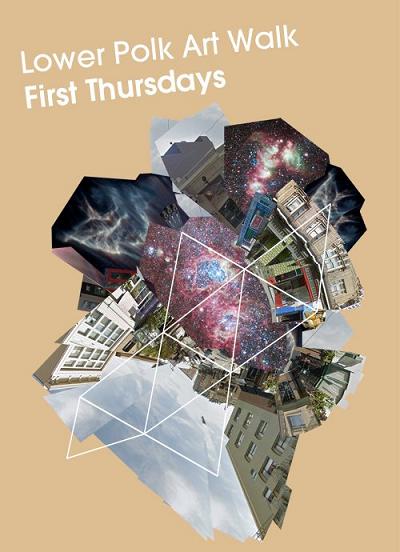
Lower Polk has surged forth as one of the city’s more exciting hubs of gallery art. So it’s no surprise that the neighborhood is expanding its quarterly art walk into a monthly event — the Lower Polk Art Walk, which will take over the sidewalks every first Thursday, starting today.
The beauty of an art walk is that there is no start point or end point — and there’s plenty of chin-scratching and ah-oohing to be done at galleries up and down Larkin and Polk Streets. So throw away your itinerary and let your feet do the planning for you as you peruse the participating eight galleries. Just make sure to meander into the showing by Larkin Street Youth Services, a collection of works by the young people who are participants in its programs geared towards homeless youth. Here’s three other gallery spaces that’ll be worth a look:
Art installation in former “Leftovers” furniture store
Pretty much, there it is. Chad Hasegawa and other artists are rumored to be involved in this pop-up art exhibit in an old furniture store, repurposing the Polk Street milieu for the debut of this new monthly art event.
1300 Polk, SF
“Calamity” a solo show by Mary Iverson at Shooting Gallery
Iverson’s exhibit includes five large-scale oil paintings and six to ten smaller acrylic on panel works, and feature shipping containers superimposed on sublime landscapes. She critiques the tolls that have been taken on the environment for the sake of private profit by integrating cutouts from environmental magazines and basing much of her paintings off views of national parks. Her signature marks are the measurement lines that she leaves sprawling to the edges of the canvas.
Sun, surf, boxing kangaroos — sorry, that’s reductive, but you do get the general sense of youth and devil-may-care-ity when you think of Australia. Time to move beyond the stereotypes? Check out what is being created Down Under at this group show, which highlights the work of 13 of Oz’s most talented “urban” (the new term for art traditionally on the street that’s being shown into gallery) creatives.
Normally, when the white-hot energy that first surrounds a music project fades, there is drama to be had. Obviously. You’re sneaking around on the group with that guitarist? Do you really think your lyrics will hit the same notes with that other emcee? Maybe it’s because Bayonics have been around the block, but apparently this local funk-hip-hop-soul-R&B mega-group has few jealousy issues: the collective will be showcasing its members’ next steps tonight (Wed/29) at “Leapstock 2012” a showcase taking over the top floor of Elbo Room.
Here’s some of the crew that’ll be fanning out tonight:
Starship Connection: Intergalactic badmen? Now that’s good press release language. Starship Connection is a future-forward electronic-leaning project headed by DJ B. Bravo, who has enjoyed commercial success with the Red Bull Music Academy in the past. Starship carries on the grand tradition of space funk. Blast off, hey.
Shamilah Ivory: This lady has PIPES. Normally supplying vocals for Bayonics, she’s taking centerstage tonight for a solo set.
Hot Pocket: By my count, there are few things more crowd-pleasing than a Hot Pocket set. HP is Bayonics minaturized: four of the original group’s members play covers of classics, usually from the ’90s, usually R&B. I think the term is panty-dropping for the effect this group has on the 20-something to 60-something female contingent.
Roja and Elive: Bayonics drummer and founding member Pedro Gomez describes the collaboration between Bayonics’ frontman and El Hurwitz as “electro boogie dance funk.” We’ll see what they have to bring — this is one of the duo’s first public performances.
Plus there will be rumored sets by DJ Teeko, Batucci Brothers, and Fog City Mavericks. The only thing: how the hell are they going to get this many groups onstage in four hours? Bless, Bayonics.
Leapstock 2012: Bayonics showcase
Feat. Hot Pocket, Shamilah Ivory, Roja and Elive, Fog City Mavericks, Analog Starship, Starship Connection, and Batuci Brothers
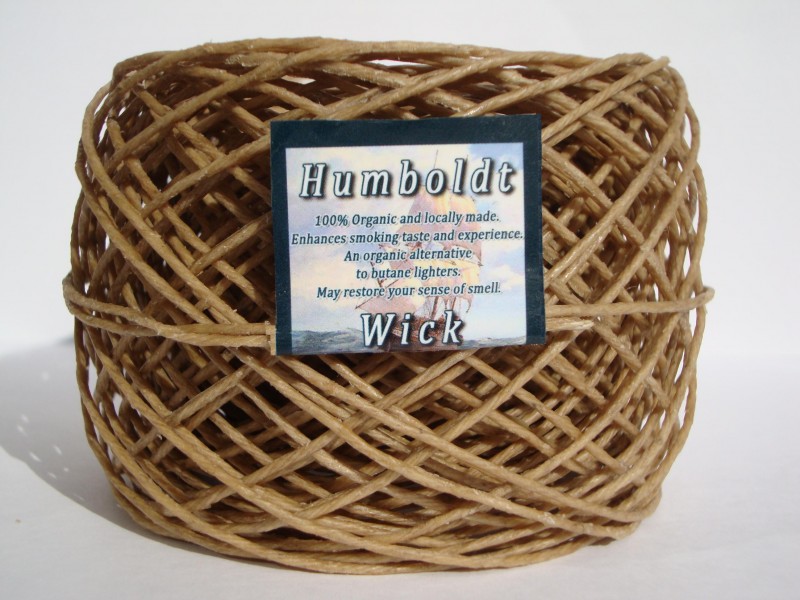
HERBWISE I absolutely hated the hemp wick the first time I saw one on of my stoner friends’ lighters – and oh yes, at the moment this particular product will only show up in connection with your most stoner of friends.
“What the hell is that?” They were sparking a joint with this awkwardly long waxed hemp string that they’d wrapped around the torso of their lighter.
I was an idiot. I apologize, hemp wicks. Now I know you only have my best interests at heart.
You’ll have to excuse my insta-hate. There are a lot of superfluous weed products out there (I’ve bitched about it before). Generally, I think the system we have going – plant, smoking device, flame, occasionally ingesting bud-inflected edibles – has served fairly well up until this point and anyone who messes with it runs the risk of a gimmicky high. See: the cannabis aphrodisiac shot. Case in point.
But – as my red-eyed friend mellowly explained – the hemp wick is a different sort of animal. It’s not adding superfluity to one’s toke, it’s taking it away. Namely, it’s taking artificial gases out of your smoking experience. If you’re lighting your spliff, blunt, pipe, bowl, bong with a lighter, you’re channeling butane right at your point of inhalation. That’s a bummer not just because you’re adding chemicals to your high, but also because butane messes with your ability to taste whatever strain you’re smoking. Believe me, your Banana Kush sloughs its peel when it doesn’t have to combat that stream of gas you’re bathing it in with the lighter. Not to mention, with a steady flame you can spot control where your heat winds up, all the better for working that bowl.
And so: the wick. Though HempWick claims to be the originators of the commercially-produced organic spool, Humboldt Hemp Wicks is experiencing a certain vogue as the choice strand in the Bay Area. The company has been selling wick for four years through the Internet, and its website proudly proclaims that it has every shop in Arcata and Eureka hawking its wares. You can get 10 feet for under two bucks, 200 feet for about $17.
Not that hemp wick doesn’t come without certain professional hazards. Managing an – albeit waxed – thread with flame on the end does require a certain amount of grace. Does your focus intensify or wane when stoned? Beware the flailing wick. (And distinct possibility that, with the purchase of this product, you will graduate to the next echelon of stoner identity. This can either impress or upset those around you.)
But if my stoniest of baloney friends can wield the wick, I’m confident that my fearless readers will be able to. Just what you needed, right? Another reason to smoke.
Swoon’s work has been haunting me. On a recent trip to DJ Rusty Lazer’s house in New Orleans it was there, bedecking a rundown Bywater neighborhood fence that concealed a village of homes that can be played as a symphony (she also designed a structure for the mini-city, a dream tree house atop stilts). As one strolls though the world one sees it here, there – fairy webs of delicate wheatpaste strands on city walls.
So it’s no surprise that the Mission’s been eager to replace the wheatpaste Swoon (also known as Caledonia Curry) installed on Tony’s Market at 24th Street and Hampshire. Rejoice: after the original was defaced in August 2011, the female street artist’s new piece will finally adhere to Tony’s on Tue/28.
Goddess knows there are superlative female street artists based in San Francisco. Mona Caron, Juana Alicia — but here as in other places in the world women still (still!) haven’t gained the firmest of footholds in the street art world. Swoon is probably the best-known XX-chromosoned public artist out there, along with NYC’s Lady Pink.
So it was nice to have her around the city. Mission Local’s Molly Oleson penned a rather lovely little account of how Swoon’s piece — originally an image of a woman who had been kidnapped in Mexico’s spates of femicide — came to be on 24th Street and Hampshire. It has to do with Chicken John’s house, says Chicken John.
The neighborhood liked it very much. But in one of the more bizarre cases of vandalism I’ve heard of, someone wrote the word ‘VOTE’ over it in big, artless red letters last August. Subsequent efforts to scrub off the letters half-obliterated Swoon’s work, so a team of concerned creative types including street art book editor Annice Jacoby, Lesley Freeman, and Chicken John contacted Swoon for a replacement, which she was reportedly happy to make. Oleson’s story includes a slightly humorous retelling of the moment when the team realized the replacement piece Swoon had sent wasn’t going to work out — happily for San Francisco, she was happy to create a second version of the replacement.
This version, Swoon says in an artist’s statement, is a commentary on water issues surrounding the Gulf disaster in New Orleans. And the rendering that’s been done of the piece shows that its in color, not always the case in Swoon’s body of work. You’re welcome to go check out the piece getting put up tomorrow, and hear more about the inspiration behind the design in the video Swoon shot for Time Out New York below:
May I first say thanks to Noise Pop for bringing a sense of urgency to my concert-going behavior. I am nothing if not a festival junkie, and the sheer mass of shows that this particular festival coordinated was awe-inspiring and more than a little anxiety-provoking for those of us who feel the need to go to everything, always. Plus: badges. There is nothing like walking around feeling like you have special access to an entire city, at 24 venues in total from Bimbo’s up in North Beach to the Golden Gate Park-clad California Academy of Science.
Fresh off of a week in New Orleans for Mardi Gras, I couldn’t do it all. But here’s how I tried:
WEDNESDAY: Die Antwoord at Regency Ballroom
This was the show I was most excited about seeing, and the South African hip-hop trio (emcees Ninja and Yolandi Vi$$er, and DJ Hi-Tek) were definitely worth their sold-out hype-age. Even if you can’t get down with their ultra-aggressive lyrics, you can’t quibble with Die Antwoord’s showmanship – even while spinning around like a demented, shaved head-top and bounding across the stage Vi$$er and Ninja managed to hit every lyric like wow. Sadly, the show opened with DJ Hi-Tek’s Mike Tyson-inspired homophobic rantings, and that was tough-impossible to get past. Is Hi-Tek gay? Who cares. Full review here.
THURSDAY: Shannon and the Clams at Cafe Du Nord
One of the greatest things about Noise Pop is that the fest brings new audience to local favorites – and I found, conjures up concert experiences that are a lot different than if you saw your Bay-Bays in the same old venue with the same old crowd as always. Such was Thursday night’s lineup of the Soft Pack, Shannon and the Clams, Fidlar, and Surf Club. (Check Ryan Prendiville’s review of these last two acts here) It was actually my first time catching the Clams, but seeing the group slay it at Du Nord cast them in a different light than if my first time had been moshing in a room-capacity sweaty knot at, say, the Knockout. The Clams came across as a band that is expanding its reach beyond the dark rooms of the Bay Area. After the show lead singer Shannon Shaw told us that the group was in the process of recording its next album, so yay.
FRIDAY: Glass Candy at Mezzanine
I wasn’t wearing neon, but Portland’s Glass Candy still moved my ass out of the upstairs VIP booth we’d somehow scammed and into the throngs for the middle and end of Ida No and Johnny Jewel’s set. The Chromatics are fine, but that group’s live set (which we tasted pre-Candy) was the teensiest bit slow, not compelling enough to leave the cold leather fishbowl that was the booth. Not so No and Jewel, who satisfied all the jumping grindsters with ecstatic chords and No’s prancing.
SATURDAY: Big Queer Dance Party at Public Works
Headliner Big Freedia canceled in a medical emergency, but the crew behind this event decided to keep the ‘big’ and go along with it. Was it a Noise Pop event? Besides Freedia, the schedule, venue, and lineup had remained the same, but staff at the door told me that it was no longer part of the festival, so Noise Pop badge holders had to pay again to enter. Seemed like a boner move, but I was glad to be there once I was inside, if only to check out Double Dutchess’ beautiful boys getting hyped onstage. Their raybeams were reflected in the crowd for the rest of the night – DJ Bus Station John, Stay Gold’s DJ PinkLightning, and DJ Laydown (Hard French crewmember Timothy Strong in his debut on the decks) kept everything really sweaty – which was great because after that much Noise Pop I had some toxins to sweat out.
Due to health problems, Big Freedia had to cancel her and Rusty Lazer’s Noise Pop gig at Public Works Sat/25. The event been transmutated into a big gay dance party with Double Duchess, DJ Bus Station John, and more. You should still read this interview, though.
With all its technicolor thrift flair, Mardi Gras costumes in state of midway-preparedness, and sleepy passels of breakfast-cooking houseguests, Jay Pennington’s New Orleans clapboard house is pretty hallucinatory on the Saturday afternoon of Carnaval weekend. Staring out the window waiting for the bounce DJ to call me up for our interview, I was to be excused for imagining that the shed in the side lot was producing actual chords while the New Orleans monsoon that raged outside hit it.
When I come across him in his bedroom, Pennington – who is also known as Rusty Lazer, and is the now-famous transgender NOLA bounce artist Big Freedia’s DJ and informal manager – is threading colored paper onto a string. He was going to be Hanuman the monkey god at the Mardi Gras parades on Sunday, his day off from work over Mardi Gras weekend. Around him, the city has ballooned with tourists and locals chucking beads at targets, high-stepping through brass numbers, eating frosted king cake, and peeing in inappropriate places.
I braved the rain that afternoon to talk about bounce music and Mardi Gras with Pennington, so it was kind of a surprise when our conversation swerved into the intricacies of 501(c)3 registration. It shouldn’t have been. He is a lot like New Orleans itself, a town that counts as a centuries-old melting pot, where the frat boys hang at the same bars as the career jazz musicians hang at the same bars as the pretty queer kids who sometimes party at dark gay leather bars (I was privy to this last comingling within six hours of landing in the Big Easy, at Daddy Aki’s Peacock party at the Phoenix Eagle Leather Bar where Pennington and his new managee Nicky Da B spun). [Correction: An earlier version of this article identified Peacock as Jay Pennington’s party. It is actually organized by Daddy Aki. Our bad.]
If you are a NOLA entertainer, Mardi Gras weekend counts among the most hectic of the year. Pennington had evenly informed me that my suggested meet-up time of noon was at least two hours too early considering the aftermath of the night shift on the decks he’d pulled before and that he would surely pull again that evening. But it’s two thirty now and for the moment, he’s able to focus on Hanuman, and attempt to tell me what’s so special about his city.
Hands-on Hanuman: Rusty Lazer in mid-Mardi Gras repose. Guardian photo by Caitlin Donohue
Though the DJ is playing less and less a role in Big Freedia’s career as she blows up and sells out shows around the country, Pennington continues to be a driving force in bounce’s dispersal outside NOLA. He signed his first official managerial contract with Nicky Da B, an adorable local whose track with Diplo hit Soundcloud last week. Bounce is indigenous to New Orleans — like Chicago’s juke and Detroit’s jit — a Caribbean-inflected dance music that is well known for the way its dancers pop their hips at machine gun rates.
Pennington is also is the co-founder along with Delaney Martin of New Orleans Air Lift, an international program he made to support local artists post-Katrina. This loosely-incorporated organization (it’s not 501(c)3 and relies instead on private donations, like the sales of the work of Swoon, one of the few females in the upper echelons of the street art world – her intricate, delicate wheatpastes blanket the fence next to Pennington’s house.) The Airlift Project has sponsored trips by New Orleanian artists to Berlin, even the import of Siberian breakdancer Ivan Stepanov to New Orleans.
This last story illustrates one of Pennington’s biggest turn-ons — fostering the artistic combustion that happens when a bunch of different energies get together. As illustration, he shows me a high fashion video shoot made by Lady Gaga’s stylist Nick Knight featuring the 19-year-old local bounce dancer Quack.
After seeing a video of the improbably Barbie-bodied dancer, Knight contacted Pennington to ask if she’d care to do the same dance wearing Alexander McQueen for a fashion film series. Quack didn’t have a passport, but she went and got one with Pennington. The next day they went to London, found themselves “sitting in a room with nothing but Amazonian models.” Quack danced for eight hours to make the video, which turned out to be a testament to not just the extreme sexuality of bounce music, but also its athleticism, and emotional panacea.
“This is the music that makes people forget that they’re hungry,” Pennington tells me, excitedly clicking through videos of schoolkids bouncing in rec centers, and endless YouTube clips of home bounce practice, done against a wall, ass to the camera. “It’s finally tuned to helping you forget your problems.” He wants to “take a New Orleans plane full of people all over the world,” to teach bounce to the masses. “In case anybody around here has forgotten how to have fun.”
The music lends itself to teaching — singers often give specific commands in songs, a popular request being for everbody to bend over and keep their ass popping. “Bounce is all instructions,” Pennington says.
The ability to move among social groups is one of the reasons why Pennington fell in love with New Orleans.
“Here, you’re part of a community, not just part of a scene,” he reflects. “The difference is that the communities include all the people in your community. I don’t feel that in Portland or Austin.” He says the young arrivals in other artsy, liberal towns “hang out in mirrored social groups. I don’t know if that means anything, but it makes sense to me.” Pennington considers the neighborhood connections he’s made through participating in NOLA’s famous informal second line parades as, if not more, crucial than the ones he’s made with fellow travelers who have alit upon New Orleans as a haven for weirdos and music freaks. “New Orleans black community is nothing if not family-oriented,” he says.
Those mirrored social groups are a concept that should make sense to those beyond DJ Rusty Lazer. Part of what makes gentrification such a bummer is that when young bohos move into low-rent, family-oriented neighborhoods, they don’t form connections with the existing culture, imposing their own wacky adventures on top of the landscape as though they’re the first to really enjoy it.
This missed connection leads newcomers away from frequenting established neighborhood businesses, and doesn’t provide for enough interconnectedness to get any kind of organizing come when rents start to rise and the condos come in. So good for New Orleans, and especially the rapidly changing Bywater neighborhood if they can avoid the typical storyline of minority community attracting broke artists attracting yuppies who can pay first, last, second, and third months’ rent in cash.
Not the town doesn’t have other defense mechanisms. “The heat, the bugs, that lack of industry, the violence — that keeps it from growing out of control,” says Pennington. “It keeps the excessively ambitious away. When this place piles it on, it really piles it on. You can’t just casually live in New Orleans.” Wise words to the San Franciscan exodus that will surely come in the next months after tech boom 2.0.
And for the record, I wasn’t hallucinating the house making music. The Ninth Ward’s musician mad scientist Quintron installed a rain organ into the Music Box, a small village of structures built in Pennington’s sideyard by 70 people to be played like a symphony, complete with Quintron playing conductor and a capacity crowd crammed into bleacher seating and crouching amid the structures themselves. At recent performances during last fall, 750 people showed up to watch the show. There was space for 250 in the sidelot.
Looking for a reason to spend this unseasonably warm weekend hovering over your computer? The sluttiest ticket of them all: the Adult Virtual Convention, an online version of the time-tested, fan-approved pornography fan expo that will go live from Fri/24-Sun/26 on your computer. Yes sir, just as the DVD porn industry has mourned the loss of revenue to low-budget Internet blue film, soon porn conventioneers might be feeling the pinch as well. Here’s a list of reasons why cyber conventioneering just might be better than the real thing:
1. No need to agonize over which that baseball cap makes you look like a slobby creep, or whether you should wear the tee with your favorite starlet’s face on it: AVC is being conducted through Utherverse, an “online adult social center” that to the untrained observer seems a lot like Second Life. Like that site, you’re welcome to concoct your own avatar that may have very little to do with your meat physique. Goodbye wardrobe issues, hello black chaps and a bikini (one of the default ‘fits for women — you can also opt for flame pants or “Hit Me Baby One More Time.”)
2. Could-be interesting lectures. On Sun/26 at 3 p.m. “A Look Inside the Profession of a Virtual Sex Worker” seems like it could be pretty illustrative. How do you get people to pay you for cyber sex? Utherverse minx Ronnie Turner has done it, and has signed onto share the secrets of how she got there. The convention’s Sat/25 noon keynote conversation is entitled “Surviving Porn’s Evolution: A Darwinian Perspective,” and will feature Evil Angel Video’s Christian Mann being interviewed by Colin Rowntree, the founder of one of the Internet’s first BDSM-alternative sexuality sites.
3. Real-life porn movers-and-shakers. Xbiz’s Man of the Year and founder of Girlfriends Films (who I interviewed in a recent cover story on the AVN Awards in Vegas) Dan O’Connell — or at least, O’Connell’s avatar — will be around at 2 p.m. on Sat/25 to talk about how to produce porn. He should know, he’s written and shot over 1500 scenes, by his own count. Sabrina Deep will explore the issues of condom usage in the porn industry on Sat/25 at 3 p.m. Perhaps you’re familiar with Deep’s work from her record-breaking 2007 gang bang with no less than 77 fans from her website over the course of eight hours. She was subsequently named Queen of Bukkake and Gangbangs by Howard Stern, who you may not be surprised to learn is considered a type of royalty himself among porn types.
4. You can be as scandalous as you like. Feel free to explore any fantasy you like while being respectful — no one knows that’s you in the bulging muscles and acid-washed jeans. I mean, you can already do that on the Internet, but whatever. Ultraverse is expecting 20,000 attendees, so get buck.
5. It’s free. Let me tell you, porn conventions are never free. At all. And this one is — well. You do have to pay for outfits beyond the standard defaults. Because no one’s avatar should be poorly dressed for the porn convention.
For more information on the first-ever AVC go here
When South African hip-hop duo Die Antwoord played “Fok Juule Naaiers,” the first single off latest album Ten$ion — the track that opened the group’s Noise Pop gig last night at the Regency Ballroom — for its LA manager, they were told it had some problems. The problem’s name was homophobia, their manager ventured. US audiences, he said, don’t take kindly to the F-word (I wish that were consistently true).
In response, Die Antwoord released this video. It is entitled “F-word,” the version of that term that lacks my lavish commitment to political correctness
Ninja, a.k.a. Watkin Tudor Jones, says the usage is all good because he has good homo friends, and that one of them is Hi-Tek, the group’s DJ, who opened up last night’s show with his charming “Fok Juule Naaiers” verse. Assorted lyrics below:
DJ Hi-Tek will fuck you in the ass, punk ass white boy
Look at you scared/Scared of a real man
Fuck it ’til you love me, [F-word]
So, was this song Hi-Tek’s coming out party? What a bummer party.
Of course, the crowd (sold out to the gills — I had press credentials and still had to beg, borrow, and perform mild thievery to get in) ate it all up. Die Antwood’s stage show is less weird than its videos, because matching them would entail wearing coats made of live rats, which would be hard to get through customs.
Emcee Yolandi Vi$$er without her album cover blood-soaked visage is massively sexy on stage (the whole group looks like they hit the gym hard together). By the end of the show, she had stripped down to running shoes, spandex shorts, and a midriff-bearing pink tee with “zef” printed inside a heart. She always looks like her clothes are about to fall off. Next to Ninja in his orange running shoes and signature Dark Side of the Moon underwear (infamous jiggling penis beneath), they looked like they were hosting a really agressive workout video. Ninja crowdsurfed, constantly. Let no one say that Die Antwoord doesn’t work it out on stage.
Yolandi Vi$$er at the Regency last night.
And, Ninja. Guardian photos by Caitlin Donohue
And it is a good show. Yolandi hype-chirps after Ninja’s every line. She spins around five times and picks up her verse right on cue, and the two reverse roles with Ninja cooing after her lines end. New single “I Think You’re Freaky” was a huge hit, particularly, one imagines, with the guy in a rubber pig mask sweating balls in the front row, a couple in the middle of the crowd wearing the hooded plushie onesies that Die Antwoord rocked — weirdly, always weirdly — in its “Umshini Wam” video. The front lighting blacks out after songs, silhouetting Ninja and Yolandi’s distinctive haircuts. They are unapologetic in their stage presence, crowd love.
Earlier that day, afraid of not getting on the list for the show, I lurked outside Upper Playground’s Fifty24SF gallery, where Ninja had spent the day painting the walls with the black chicken scratches and Evil Boy engorged penis characters that now adorn Die Antwoord merch, stage sets, and his own body. At 4 p.m., there was a line of Die Antwoord fans lined up to greet Yolandi and Ninja. You could cut the line if you bought a $200 Evil Boy latex toy.
Few people did. First-in-liner Stephanie Farrell, who came straight from school for the signing didn’t. But she got what she wanted out of her wait: a really awkward experience with her idols.
“What was your interaction with them like?” I asked her while looking at the Die Antwoord’s signatures, written in her wire-bound, lined notebook.
“They didn’t say anything, it was really awkward. I was like ‘hey,’ and they were like ‘hey.'”
“But are you still a fan?”
“Absolutely. I didn’t expect it to be a normal experience whatsoever.”
In the “[F-word]” video, Ninja says that people from the United States who are upset by the way they use that and other (N-word) offensive bullshit should quit being a little less PC and learn from “your brothers and sisters here in the dark depths of Africa,” where a local saying is translated into “we are one.” He then grabs his Evil Boy dolls, a black one and a white one, and knocks their monster toy dicks together while repeating the “we are one” phrase in a high-pitched voice. “That’s why they say South Africa is a rainbow nation.”
Weird.
Photos of Die Antwoord’s Ninja painting the inside of the Fifty24SF gallery are by John Orvis
HERBWISE It’s happening again. Last autumn when your favorite dispensary got shut down in the wake of receiving a threatening cease-and-desist letter from the Department of Justice — well there’s warning signs that the remaining 21 cannabis collectives in San Francisco won’t be 21 for much longer. The DOJ requested the Department of Public Health records for 12 dispensaries in January, a move that preceded its last round of forced dispensary shut-downs.
It’s a time of a lot of uncertainty for the medical marijuana (although you could make a compelling argument that it’s never been on completely solid footing). Various tactics are being taken to shore up its legality, including a passel of proposed ballot initiatives that have varying chances of presenting themselves to California voters in November, from bids to legalize weed entirely to proposals for a statewide regulatory body for the existing medical system. Hey, there’s even reality TV shows (the Discovery Channels Weed Wars, which focused on Oakland’s Harborside Health Center) out there on which earnest dispensary staffers let the United States public in on just how above-board working in a cannabis center can be.
Henry Wykowski is not a signature collector. Nor is he a television producer. Wykowski is actually a San Francisco-based trial attorney, one that specializes in the field of cannabis tax law. This fact makes him the perfect candidate for the endeavor he is currently embarking on: to kickstart a nationwide campaign to convince the federal government to change a part of the national tax code that disallows cannabis dispensaries from deducting business expenses on their taxes — a tactic recently harnessed by the IRS to demand $2.4 million from Harborside in “owed” taxes (Wykowski represented Californians Helping to Alleviate Medical Problems in a similar case in 2007, in which a court decided that business expenses were deductible for cannabis dispensaries except where they pertained to the actual dispensing of marijuana).
How does Wykowski hope to enthuse a nation over tax code quibbles? The Guardian contacted him via email to find out. His answers were somewhat tax lawyerly — which definitely doesn’t mean we don’t applaud his efforts.
San Francisco Bay Guardian:What’s the goal of the 280E reform campaign?
Henry Wykowski: To have IRS Section 280E modified to exclude state authorized medical cannabis dispensaries. 280E was instituted to deprive drug dealers from being able to deduct their business expenses before any states passed laws authorizing the sale of medical marijuana. There are now 16 states and the District of Columbia that have authorized the use of medical marijuana. It was not intended to deprive dispensaries of the right to deduct ordinary and necessary expenses and should not be used to do so.
SFBG:How do you plan to make this campaign go forward?
HW: By letting people know that there is an organized effort to change this punitive provision and enlisting their support in doing so.
SFBG: Do you imagine it’ll be difficult to get people behind an imitative to change the tax code?
HW: No. The majority of people support the legalization of medical cannabis. Once the patients and other supporters learn that the unfair application of 280E could tax dispensaries out of business, the support will come. Right now most people aren’t aware of Section 280E or its potential consequences.
SFBG:How will you activate people that aren’t cannabis’ traditional base? Will you need to?
HW: By getting the message out. We welcome everyone’s support.
Something to make you feel better about all your compulsive newsfeed scanning: Facebook is watching you, too. And just like you as you click through so-and-so’s party photos from last weekend, it’s getting judge-y.
“One of the things we’re concerned about, as we have an increasingly tailored Internet experience, is whether people with certain backgrounds experience a different Internet than other folks,” says Rainey Reitman, activism director at the Electronic Frontier Foundation in a phone interview with the Guardian. Her organization is a Bay Area-based Internet rights group that defends online privacy, free speech, and consumer rights through law, activism, and policy work. “Online marketers use invisible tracking mechanisms to create a virtual portrait of someone and show them advertisements based on that,” Reitman says.
Social networking sites and search engines like Google have in their electronic possession inordinate amounts of our personal information, obviously. The location of our IP addresses, our educational backgrounds, the most intimate details of what TV shows we enjoy, how often we contact our family — the list goes on. And many sites use that data to sell you things.
But it’s not just consumer issues. Health insurance companies can obtain access to the records on some sites — a Feb. 4 New York Times op-ed by law professor Lori Andrews suggested that searches we conduct on medical conditions can lead to raised premiums. Our credit limits can be affected by spending patterns tracked by websites, and there’s the well-known employer practice of performing web searches to screen job applicants. As we add to our online identities, we become the subject of what is known as “weblining” — specific targeting based on our patterns of Internet usage.
Over the past week, I tracked the ads that Facebook fed me. Many were site-specific — San Francisco arts and culture listings (a good bet for advertisers, given the amount of events I view on a daily basis). There was a wine delivery service, an invitation to a 1920s-style speakeasy, announcements of free gym memberships, my collegiate alma mater’s ceaseless plugs for cash, and the tantalizing whiffs of various graduate school programs.
This last category is a part of what should give us pause about the intense specialization of our Internet experience. The average American, according to a December 2011 survey by Forrester Research, spends 13 hours a week on the Internet — roughly the same amount we spend watching TV. And even if you don’t think that the ads that lurk on the edges of our vision for 13 hours a week will affect our behavior, there are other ways our Internet morphs to fit companies’ expectations of us. Search results, for example, vary between web surfers — Google’s been tailoring them since 2009.
A college graduate with a professional job in a creative field, I am being fed graduate school ads by my social network of choice. But not everyone’s seeing their opportunities for an advanced degree in sustainability. The Army advertises on Facebook. I don’t see those ads, but who does? Who gets the farmer’s market directory ads and who sees McDonald’s latest deal? You can see where I’m going with this. In the 2011 book The Filter Bubble (Penguin Books, 294 pp, )author Eli Pariser talks about how weblining can lead to a more isolating Internet that doesn’t live up to its promise as a place where we can go to learn about anything.
But, says Reitman, there are ways to fight the system. By supporting her organization, for one: EFF pushes websites from Facebook to Google to OkCupid to clarify who gets to see your data, tighten up chinks in your privacy armor, and delete people’s information promptly when it all gets to be too much and they opt out of a network entirely. Currently, the group is working on a campaign to encourage the government to update the Electronic Communications Privacy Act, a dinosaur piece of legislation that was created in 1986 — a time when we hardly could have imagined the multifarious ways we live online today.
You can also opt out of certain attempts to track you easily by going to the Do Not Track site, an online relative of the Do Not Call directory. My Google Chrome doesn’t support the service — but that didn’t come as any surprise. Firefox, Internet Explorer, and Safari do, however. And for a more free and open search function, check out DuckDuckGo, a search engine that eschews cookies and does not save your search history or personal information.
It was a controversial move. Industry types, wary of an already flagging adult DVD market, have made weak noises about condoms not being sexy — but also that LA clamping down on the issue will only cause studios to move away. Internet porn is a largely amateur, largely diffused phenomenon that doesn’t rely on SoCal so much anyway. AIDS organizations applaud the measure’s potential to cut down on sexually-transmitted diseases.
But what do the stars themselves think? We were able to speak with a few of them on the red carpet: AVN’s official red carpet host Kayden Kross, Kink.com directors Princess Donna and Bobbi Starr — the evening’s winner of Best Female Performer — and Jon Jon, who was nominated for a passel of AVNs that night including Best Group Sex Scene for his work in Asa Akira is Insatiable 2 (hands down, the night’s big winner with seven awards in total).
Here’s what they had to say. You can watch the rest of our clips from the red carpet — including an interview with Jincey “lesbian Hugh Hefner” Lumpkin, who figured prominently in my “Queer and boning in Las Vegas” cover story here.
Princess Donna and Bobbi Starr (pardon the screeching that begins the clip) “It’s only going to affect the people that purchase permits for their shoots, and I gotta say that it’s actually a very small percentage of the industry that uses shooting permits.”
Jon Jon was unruffled by the controversy:
Kayden Kross was adamant that the regulation was babysitting an industry that doesn’t need it: “I think it’s the most retarded answer to something that wasn’t even a question.”
Of course, what none of these interviews mentioned was a point that this article brings up: that condom regulations are not just for the wellbeing of the professionals who act in pornography. Many of us grow up watching porn — for some of us, it’s our first image of what sex is. If porn stars using condoms can convince teenagers to do the same, more power to the condom regulators.
Dixie De La Tour wants you to talk about sex, for the sake of San Francisco’s reputation. “I am still baffled at how a city as cosmopolitan as SF could not realize that perverts tell the very best stories,” says the host of Bawdy Storytelling. That’s why she started the pervy monthly event that gathers up our city’s sex-positive to share their most tawdry tales of love and lust. Recent Bawdy themes have included cheap sex, public sex, cockblocking, and December’s “Dick in a Box” night (holiday sex!) Usually held at the Mission’s Blue Macaw, the five-year anniversary edition of Bawdy will occupy the stage of the Verdi Club on Sat/18.
We asked De La Tour to recount five of her favorites Bawdy stories in honor of the event’s milestone, which she did happily, including this scene-setting by way of introduction:
My career as a sexuality-based raconteur started innocently enough: about six years ago, a friend invited me to hear him tell a story in a café in the avenues…a story from his life, told to friends and strangers. While other cities have events like the Moth, we don’t, and I didn’t understand what I was going to see, but I ended up loving it. I was immediately hooked: all the stories were true, the person who stood in front of me was telling me a story from their life and how they’d made it happen…it seemed like the Ultimate Insider Guide, a roadmap to finding like minds and the way to create that unlisted San Francisco adventure. I saw immediately that storytelling was a way to find your people.
Except for one thing: My stories were about the underground sex scene… dungeons and sex parties, Craigslist hook-ups. With so many years as a sex event ‘party starter’ (my real superpower), there was not a single story I could share with these storytelling people without using the f-word. The event’s leader suggested I just shy away from profanity and allude to the sex in the story, but I balked: Sex is not an aside, sir; sex is the point of the story.
So five years ago this month, my life took an interesting turn and I became a Sex and Storytelling show producer. Had anybody else ever seen fit to fill this niche, I would not be doing this today (and how glad I am that they didn’t: I truly love creating Bawdy Storytelling). I am still baffled at how a city as cosmopolitan as San Francisco could not realize that perverts tell the very best stories, but it just takes experiencing it once for many people to realize just how essential these stories are. Sex-related storytelling guarantees interesting true tales, and while Donna Reed is standing onstage recounting an awkward attempt to get laid or figuring out she likes girls after all, you’re ticking off factoids in the back of your head: How to find a sex party? Check. How to write a personal ad that can land you in a threesome? Check. Why a dildo needs to be flanged? Ahhh… got it.
I truly believe storytelling is the antidote to loneliness and social anxiety – it may sound counterintuitive, but talking about sex is easier than talking about climbing Kilimanjaro; you know the listener is hanging on your every word when you’re talking about sex. So how’s about we all figure out this shit together?
CURTIS
For his 50th birthday, Curtis’ wife surprised him with a trip to Vegas and asked him to tell her his secret fantasy, the one he’d never dared to share. He told her he’d always wanted to have sex with a transgendered sex worker, and they invited Maria to our hotel and shared a night with her. She liked them and stayed after to talk and at one point she told them that at 14, she’d confessed to her mother she wanted to live her life as a woman. She then showed them the scars: six deep stab marks where her mother had tried to kill her. Curtis raised a toast and said they should all live our own lives as who and what we want to be, and asked them to drink to Maria’s bravery and self-knowledge. (There was not a dry eye in the house.)
SAHRA
Sahra was raised Mormon and expected to wait till marriage for sex, but at 18 she decided to lose her virginity to a guy she was dating. The same week they broke up, her parents found out and put her out on the street, so she called an older gentleman she knew who had a room for rent. Over dinner, he hit on her and when she got back to his house, he brought out a strap-on, a dominatrix outfit and other accoutrements and talked her through using them. She’d never even seen porn and had no idea what she was doing, but in one night she went from sexually inexperienced (she’d had sex three times, missionary position, period) to performing sexual acts that most people have never heard of. In the three years she lived there, she never slept in that room for rent; they repeated those acts for years and she later married him. [Dixie’s note: The reason I love this story is that Sahra had been coming to the show for 6 months, all the while thinking she had no stories of her own worth telling onstage. How wrong she was!]
CATIE
Catie wanted to go to an all-girl sex party, but didn’t want to go alone so she asked someone she barely knew to attend with her. While talking about not knowing what they were looking for, they were approached by a woman and presented to three pro-dommes, out for a good time on a Saturday night. They bound them, spanked them, used them sexually, and when she wasn’t experiencing pleasure she was watching my partner-in-crime’s pleasure – until they fisted her, and Catie thought “I could never do that!’ When debriefing later at home, Catie told her this and her friend side-eyed her… Catie had been fisted, her friend insisted. She later tried to find those professional dominants to see if it were true. You’d think you’d know if you were fisted, right? Sometimes, you just don’t know.
MOLLENA
A handsome young blond man couldn’t stop staring at Mollena, and they ended up going out on a date. Later in bed during sex, he reached around her and grabbed her belly fat. She was appalled; grabbing her ass, she reasoned, was fine, but not her stomach! After he did it repeatedly, she yelled at him to stop and he replied, “I like it. Shut up.” She quickly learned that she was tiny compared to the type of big black women he lusted after…In fact, he liked her extra pounds so much that eventually, she came to like them, too. If you aren’t born loving your body, find somebody who does and let them pass along a little secondhand appreciation for what you’re packing. It’s not the ideal way to find acceptance, but is anything ideal, really?
The final story is one that occurred offstage:
JENNIFER
My husband and I go to Bawdy Storytelling every month, and one night we came home after the show, I sat him on the edge of the bed and announced a final storyteller that night: me. A year before, they’d gone to Burning Man and had given each other a hall pass to do anything without penalty, and then had come home with an unspoken “don’t ask don’t tell” policy in place. After hearing the true stories onstage that night, she felt compelled to tell him about the young cowboy she’d spent the week with and the adventurous “hell, we don’t know each other, so let’s live out our every fantasy together” non-stop sex they’d enjoyed. Her husband sat quietly and then announced “now THAT was the best story all night,” and he told her about his own hall pass adventures. After a year of being with each other every day, it took an evening out gave them the right place to tell each other everything.
Now, Rose “Slam” Johnson’s Hot Bike would not be the first taco bike in the Bay Area. That honor, of course, is due to Alfonso Dominguez’s El Taco Bike. But Hot Bike does have something going for it, besides the adorableness of its creator (one of our Hot Pink List designees from last year’s Queer Issue). Where Dominguez’s ride was merely the storage receptacle for delicious steamed tacos de canasta, Johnson’s will serve as an actual portable kitchen on a Yuba Mundo utility bike. That’s right — vegan tacos made to order.
She’s looking to raise $5,000 to make her dream a reality. Yes, that means a Kickstarter. But the video’s cute too! Look at it:
Potential offerings for the Hot Bike include roasted veggies and sweet beans (!), each topped with Johnson’s signature beet coleslaw. The project is the culmination of many years of dreaming by the queer community activist, who has done work with the SF Bike Coalition’s Bike to School program, AIDS Life Cycle, the YMCA’s bike program, and the LGBT Center’s youth meal nights. She’s into the way that food has the power to bring people together. And she lives for biking — Johnson often spends the summer on the back of two wheels, having trekked up and down both coasts.
Johnson plans to focus on catering events, or posting up alongside other food carts. I asked her during our recent interview on the bench outside of the 24th Street Philz Coffee why she wouldn’t be into doing the jingle-jangle ice cream truck thing (visions of door-to-door taco service pinging about my head) and she said it had to do with a concept she calls the “street food bubble.” See, people it seems are hesitant to buy tacos off the street from somebody whose kitchen hygiene skills are unproven. That’s why she likes to vend her wares in more established areas.
“Once it’s popped, it’s popped,” Johnson continued. “But yeah, otherwise people are skeptical of selling food on the street.”
Overcome what skepticism remaining in your heart on Sun/26, when she takes her outfit (minus bike, that’s not built yet) over to Public Works for the club’s Stardust Sunday party featuring the First Church of the Sacred Silversexual, Mancub, and 8ball of the Space Cowboys.
The first drinkers to make it into the SF Beer Week opening celebration on Friday, January 10 had the run of the taps, and with over 50 breweries pouring two to six beers apiece in this year’s more spacious Concourse Exhibition Center venue, that counted for a lot. Yet, for some reason, the two guys at the head of the line were still speed walking. Maybe it was a preemptive strike against beer gut.
Sorry gents, but it’s a losing battle. Calorie counting was a loser’s game on Friday, but for anyone interested in the best and brightest of San Francisco suds, it was a can’t-miss situation. Here were some of the standouts — all local SF brews:
Almanac: SF’s fledgling Almanac brewery poured my first beers of the Week, and subsequently walked with my heart. The gypsy brewer (so named because it still doesn’t have its own facilities) makes small batch beers with fruit from featured Northern California farms — after the batch is made, it may never come back. It was pouring three of its fruit-based beers on Friday: the Belgian golden strong blackberry, farmhouse pale ale plum, and the winter wit orange and ginger. This week, the upstart is pairing with some of the city’s foodie flocking points to create some incredible limited edition products made with its beers: Dynamo Doughnuts,Humphrey Slocombe, and Wing Wings. Plus tonight (Mon/13), the brewery will be pairing up with Speakeasy and Pacific Brewing Laboratories to provide drinks during the hog butchering lesson and feast at the Beast and the Hare for all you carnivores.
SF Beer Week at the Concourse Exhibition Center. It really was a sausage fest.
Pacific Brewing Laboratories: “It’s been so amazing,” said Pacific Brewing Laboratories‘ Patrick Horn. Horn — who Guardian readers will remember from his local snack-beer pairings in last fall’s Beer Issue — was talking about his nanobrewery’s recent transition into non-nano — a.k.a, the SoMa outfit’s appearance in stores and bars around the city. Horn says the only trouble his outfit has been having is keeping up with the demand for its Squid Ink and Nautilus saison, which as it happens were the two brews he was pouring on Friday.
Shmaltz: I was partial, as always, to the SF-born Shmaltz‘s Albino Python, with its notes of ginger, sweet orange peel, and crushed fennell. Another recent happening: the brewery’s developed a new recipe for its Genesis dry hopped session ale, which it hardly ever does. Once a cross between an amber and a pale ale, Shmaltz employee Leah Harmatz says the new recipe was created so that it would be “more crisp.” I had to agree. Shmaltz’s mega carny food beer dinner on Wed/15 is probably going to be the most decadently weird night of Beer Week — set at Elk Lodge No. 3, attendees will enjoy their comestibles with performances by sideshow wackos as a garnish.
Southern Pacific Brewing: This brand-new brewery‘s recently opened brewery-pub-restaurant in the Mission has to be one of the neighborhood’s most exciting new spaces — vast and airy, the multilevel seating is going to be a place to beat in the Indian summer months when everyone wants to kick back with their favorite uber-local microbrew. On Friday, it was pouring its extra India pale ale and black ale, only two of a wide array of beers it makes on-site in their warehouse building.
“It keeps me occupied, not doing trouble in the summer, and after I’m gone it’s going to leave me with some experience,” says Lamar, a 16-year-old who works at Bikes 4 Life in the West Oakland community bike shop’s promotional video. After the completion of its remodels, the shop is re-opening tomorrow, Sat/11, and will be handing out free rides to the neighborhood kids.
The shop opened in 2009. It was a direct response to the spate of crime that was taking West Oakland’s youth away from creative, productive pursuits and into Juvenile Hall. Bikes 4 Life welcomes the neighborhood’s kids in for lessons in bike repair and maitenance — skills that have the added bonus of providing kids with the tools for gainful employment down the road.
Making a difference, one spoke at a time. Tomorrow, Bikes 4 Life celebrates the changes to its workshop with an event during which it will give away 20 bikes to neighborhood kids, and get some of its program participants up on their soap box to talk about how the program has made a difference in their lives.
Bad news for medical marijuana patients in the Bay Area: as reported by the SF Examiner, the DEA has requested records from the city’s Department of Public Health for 12 of San Francisco’s existing 21 cannabis dispensaries. This is the same move the DEA made before sending the threatening letters to five other cannabis collectives last fall. Those five dispensaries are now closed.
In fall of 2010, US Attorney Melinda Haag targeted five SF dispensaries in school zones with letters declaring them in violation of federal law. In the face of potential jail time for dispensary staff and even the landlords of the buildings that housed the dispensaries, they shut their doors. Now, more than 50 percent of the city’s dispensaries could have to follow suit.
The really upsetting part about all of this? The sheer randomness of it all. In our recent Cannabis Issue, the Guardian interviewed Assemblymember Tom Ammiano, who said that in his meeting with Haag over the matter, the US Attorney said the orders to persue the dispensaries came from above. “She said she was only doing what the boss was telling her to do,” Ammiano told the Guardian. “We had a hard time with that.” The Obama Administration has been frustratingly opaque about the motives behind, and future plans for, persecuting an industry that Attorney General Eric Holder once called a “low priority” for federal law enforcement.
The Guardian has sent an email to Mayor Ed Lee for his comments on the request for records, and will update this post when we hear back. Even then-Mayor Gavin Newsom, as the Examiner pointed out, sent a letter in 2008 to Congress to encourage it to act against the DEA’s attempts to intervene in California’s medical marijuana industry.
Assemblymember Ammiano and Senator Mark Leno are leading the efforts to establish a statewide regulatory board cannabis that would, among other things, demonstrate to the feds that the industry is being well-regulated in California. Americans for Safe Access and UFCW (the union representing cannabis workers in California) have also introduced a ballot initiative called the Medical Marijuana Regulation, Control, and Taxation Act that would establish a regulating board made of patients, government representatives, medical professionals, and cannabis industry folks. A poll conducted by Probolsky Research recently put voter support for that measure at 59.2 percent.
But who knows if California voters will get a chance to regulate marijuana as they see fit. If these requests for records proceed as the last round of them did, SF could be down to nine dispensaries in a city with not only a large base of cannabis patients, but also a thriving cannabis culture.
The dispensaries whose records were requested by the DEA were:
Brouhaha! That would be the word I’d use to describe the reaction to today’s cover story, “Queer and Boning in Las Vegas,” about Courtney Trouble and her posse’s adventures at the AVN Awards in Vegas. The crux of the matter revolves around my interview with lesbian pornographer Jincey Lumpkin, whose oeuvre falls into a more conventional mode of pornmaking than Trouble and the other queer pornsters profiled. Jincey commented extensively in the article’s comment section and on her own website:
(This is in regards to a quote we printed that, compared to Bay Area queer porn, Jincey’s work “has more of an emphasis on aesthetics.”)
Throughout our interview what I discussed was my point of view in making porn. That I wanted to create something that was in the middle ground. Real lesbian porn, but created with an emphasis on glamour and aesthetics. Since the quote is taken out of context, it appears as though I am dismissive of the work of my peers, which I am not. I admire my queer porn peers, and I could not be where I am today without the trail-blazing efforts of Shine and Crash Pad Series. I have worked with a lot of the same stars, and have taken influence from their work. However, I don’t see anything wrong with creating work that comes from a different point of view.
When I say that I emphasize aesthetics, what I mean is that we spend a tremendous amount of time researching the look and feel of each series, and we collaborate with people in the fashion industry to achieve a certain look. I’m certainly not saying that the work of my peers is inferior or has no aesthetic appeal. In fact, I find Courtney’s work quite inspiring, even though we have a different point of view in the way we create things.
I’m not printing a correction on that. My reportage on the quote was accurate, however it was intended by the person who said it. But it’s nice to have it clarified here because it did seem like a weird thing to say.
She also clarified that she has shot fisting scenes, but that Girlfriends Films won’t allow them in her releases through them (I updated “Queer and Boning” to reflect that fact). She pointed me to this column she wrote in support of the Trouble-founded International Fisting Day. Also, that she doesn’t do scissoring scenes, but she does do tribbing. At the time that I’m writing this, the porn professionals, and non-professional lesbians I’ve spoken with are unable to tell me the difference between the two. Here’s the Urban Dictionary entries on thetwo, which are completley unhelpful.
So there’s that. I have to quibble with one of Lumpkin’s points though. Saying “I control all of the business of Juicy Pink Box, including the content of what we shoot” and then going on to write in a different part of the same letter “However, because Girlfriends is concerned about obscenity prosecution, my contract with them requires that I cut those [fisting] portions out for DVD release,” (I assume she’s referring to the Cambria List, a rundown of no-nos that also include transsexuals, squirting, bisexual sex, and incest, the last of which Girlfriends seems to have no problems with) is a direct contradiction. She’s filtering the sex she shows, or being filtered. Either way, there’s a big difference between her work and the work of people that include sex acts deemed subversive not only because they’re hot, but because it’s part of their activism.
Lumpkin’s work is significant, which is why she’s in the article. A ton of people get off on the style of porn she makes. If you want my opinion, there’s more than enough room for QueerPorn.TV, Girlfriends Films, and all the rest of the porno continuum in this big, pervy world of ours.
But there’s no denying that differences between them. And that we heart Bay Area-style queer porn. And that’s why we published the piece. So let’s get back on the awesome train, shall we?
“Joanne [Griffith]’s work is centered on one theme: not to offer information as a point of journalistic fact, but to act as a conduit for debate and conversation, especially around issues relating to the African diaspora experience.” So writes Brian Shazor, director of the Pacifica Radio Archives, in the foreward to Griffith’s new book Redefining Black Power: Reflections on the State of Black America (City Lights Books, 206pp, $16.95). Griffith will be presenting her work, part of an interactive project to archive the state of African Americans in the United States in the Bay Area this week — starting tonight (Wed/8) at the Museum of the African Diaspora.
This shouldn’t have to be said, but in these times of reductive news media it does: Obama isn’t the only black voice that needs to be heard, during this Black History Month or any other month. Inspired by the archives of progressive African American voice kept by LA’s Pacifica Radio Archives, Griffith — a leading progressive voice herself, having reported on issues from around the African diaspora for the BBC and NPR — transcribes her interviews with leading thoughtmakers for the book, set up as a series of dialogues. Hear from political prisoner Ramona Africa why Obama is “the new crack,” journalist Linn Washington, Jr. on media matters, green jobs leader Van Jones on hybrid activism. The president is used as a theme of the book, but the interviews use him as a lens to look at issues that range far beyond the White House.
Griffith and the other minds behind Redefining Black Power want these interviews to serve as a jumping off point for other unheard voices. Head over to the book’s website and you’ll find directions on how to add your point of view to those of the better-known activists and professionals already immortalized in the Pacifica archives. You can go to one of Griffith’s upcoming readings (details below) for inspiration. Or better yet, read our recent email interview with her and then do that.
SFBG: Explain where the interviews in the book came from. How did you become acquainted with the Pacifica Radio Archives. Why are they important for people to hear?
JG: The idea for the Redefining Black Power Project, of which the book is part, was born out of the historic audio held in the Pacifica Radio Archives; a national treasure trove of material charting America’s history from a progressive perspective dating back to 1949. Within the collection are key recordings from the civil rights, black power and black freedom movement, including Rosa Parks, Shirley Chisholm, Jesse Jackson, Malcolm X, James Baldwin, Lorraine Hansberry, Dr. Martin Luther King Jr., Bobby Seale, Elaine Brown, and so many others. But it was one recording of Fannie Lou Hamer addressing the 1964 Democratic National Convention that sparked the idea for Redefining Black Power. The director of the Pacifica Radio Archives, Brian DeShazor, heard the tape and wanted to find a permanent way to preserve and share the voices held in the archives with a wider audience, and what better way than through the written word. Brian approached City Lights Books with the idea, and this book is the result, drawing on the voices of history to link us to the election of Barack Obama, one of the most significant moments in the social and political history of the United States. Through this project, we hope to preserve the voices, opinions and perspectives of African-Americans in this so called ‘Age of Obama’ for historians to digest and explore in years to come.
How did I get involved? As a complete audio nut, I always make a point of visiting local radio stations wherever I travel in the world. Back in 2007, I was in Los Angeles, called KPFK to arrange a visit and was introduced to the Pacifica Radio Archives. Speaking with Brian DeShazor, we came up with an idea to share the historic collection with a UK audience and I’ve been doing this every Sunday evening on BBC Radio 5 Live in the UK for over four years. Because of this work and the extensive list of people I have interviewed over the years, Brian invited me to do the interviews for the Redefining Black Power project. Through this book, we delve into the role of the activist from different perspectives; the legal system, the media, religion, the economy, green politics and emotional justice. All were recorded between September 2009 and August 2011. To be clear though, this book is not an anthology of black leaders speaking on the Obama presidency. This is simply a taster of opinions on the subject, but everyone is encouraged to participate with their thoughts and opinions at www.redefiningblackpower.com and come out to the many events we’re hosting throughout February, including here in the Bay Area at the Museum of African Diaspora from 7 p.m. on Wednesday Feb 8 and at Marcus Books in Oakland with guest panelists Hodari Davis from Youth Speaks and social justice activist Dereca Blackmon on Thursday Feb 9 from 6.30 p.m.
SFBG: Has there been an interview you’ve conducted in which your subject’s answers have deeply surprised you?
JG: Every interview had its own surprise; from Ramona Africa describing President Obama as ‘the new crack’ and why she refused to vote, to economist Dr. Julianne Malveaux revealing the financially precarious situations many African Americans find themselves in; from high foreclosure rates and high unemployment to the low levels of accumulated wealth for black women. Very sobering statistics. Michelle Alexander, too, the author of The New Jim Crow: Mass Incarceration in the Age of Colorblindness really shocked me when she said that more African American men are currently incarcerated than were enslaved in 1850.
However, it was Dr Vincent Harding, the man behind Dr. Martin Luther King Jr’s “Beyond Vietnam” speech that surprised me the most. A true veteran of the civil rights movement, he made the point that the election of President Obama was never the goal of the movement; instead he prefers to call the work “the movement for the expansion and deepening of democracy in America.” Put this way, it made me realize more than ever, that the work we do today is not in isolation, but part of a wider movement, stretching back all the way to slavery. And the work isn’t over.
SFBG: Your introduction ends with a quote from Kanye and Jay-Z’s Watch the Throne album. What role, if any, does hip-hop play in the book?
JG: Hip-hop doesn’t play a role in this book, other than this quote, but it will feature heavily in the next volume of Redefining Black Power which will focus on the reflections of black entertainers, writers, poets and performers on this moment in US history.
SFBG: What would be the best way the United States could spend Black History Month?
JG: Black history — regardless of whether it is the United States or the UK where I moved from or anywhere else — should be acknowledged daily; this is the only way for us to keep memories alive and never forget where transformative change, like the election of President Obama, comes from.
Listening to recordings like those held in the Pacifica Radio Archives with our youth would be a great place to start. I spent a couple of days with a group of students in Detroit, sharing the archive material and getting them to discuss their thoughts on the recordings; Audre Laude, James Baldwin, Muhammad Ali, Nelson Mandela, and others. Every one of them said they wished they had heard these voices before. It gave them a context to their own lives that didn’t exist previously, while encouraging them to never give up; too many people have suffered for them to let less than favorable circumstances stop them now.
SFBG: Who should read this book? How should it be used?
JG: Use it as a conversation starter to discuss issues in your own community. Parents, use it as a way to engage your children in history. Students, use it as a resource for papers on race and the Obama presidency. Most importantly, everyone, share your thoughts at www.redefiningblackpower.com. This book is not the end of the project; we’re only getting started.
Joanne Griffith’s Redefining Black Power author readings:
HERBWISE I am not given overmuch to squealing over technology, particularly weed technology. Over the past few months I have sampled candy cane-flavored rolling papers, a cannabis aphrodisiac shot, the Ziggy Marley-endorsed Marijuana Man comic book.
Mind you, I’m not complaining. But –- minus perhaps Humboldt Hemp Wicks –- none of those products have found their way into my everyday retinue. Until, that is, the subject of last week’s Herbwise, Randy Thompson of the vaporizer website Puff it Up, introduced me to a singular machine.
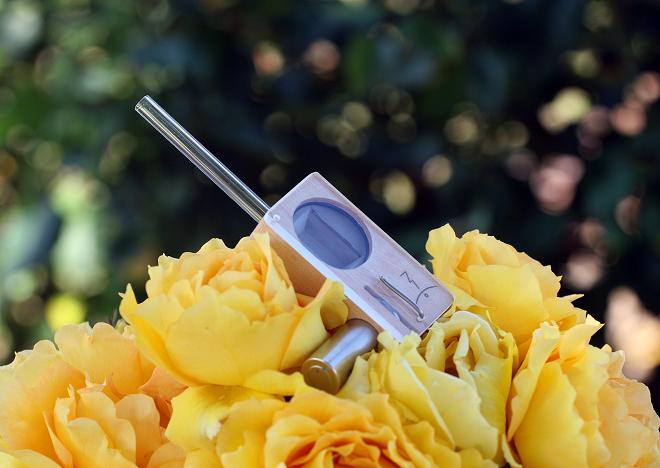
The Magic-Flight Launch Box is a thing of beauty. A clean maple wood box barely larger than a matchbox, it makes the black plastic tabletop models I once associated with vaporizing look clunky, wasteful. Vaporizing, university studies show, cuts down on the lung-coating tar that results from pipes and joints. Plus, it imparts a much cleaner marijuana taste –- perfect for the scores of cannabis connoisseurs who are popping up across the Bay Area.
Operating the Launch Box is simple. Insert the glass mouthpiece into the small round hole, a battery (two lithium batt’s and a recharger come with the starter kit) into the large round hole, press down for about five seconds, and inhale. No wall jack, no noise, no black plastic. The back of the box is engraved with a manifesto on what love is.
Obviously, hippies made it. Namely, a one Forrest Landry, who in a recent phone interview with the Guardian explained that the Launch Box’s ingenious design is a reflection of a New Age philosophy he’s cultivated over decades.
“Understanding the nature of communication allows us to understand the nature of community,” Landry says. “The vaporizer as a device is a communication event. We’re helping people breathe easier because of what we do.” The Launch Box’s backside is engraved with Landry’s personal philosophy on love (precious!)
He says the internationality of the product extends to the mindset of the company’s staff, who convene in a workshop located just outside San Diego. “Working with these tools is a kind of meditation. Doing this kind of work allows for an expanded awareness. You’re not aware just of how the tool is cutting the wood.”
Once an East Coast software developer, Landry changed careers upon his migration to California (to follow a lady love, he tells me). “I was thinking about what community of folks I want in my life.”
The answer was cannabis folks –- or more accurately, herbal folks, since the Launch Box can be used to ingest other plants like St. John’s wort (a useful tool for fighting seasonal affective disorder) and tobacco. Magic-Flight plans to start selling its own herbal blends in the next few months that can be vaporized solo or with cannabis.
The last thing that Landry wants is for Magic-Flight to be considered an activist company –- but that’s not to say that there’s nothing the federal government can learn from his philosophy.
“We’re not trying to shift the laws or policies per se, but we’re promoting the idea that love is enabling choice. We’re hoping the government realizes that enabling choice is a good thing.”
BEER Even if your hankering for a beer paunch pales in comparison, say, to your desire to fit into your Valentine’s Day party dress, you have a responsibility to indulge during SF Beer Week. It’s not just a gustatory pleasure — consider yourself stumping for a burgeoning local industry. From Feb. 10-19, the fest will stage everything from urban beer hikes to beer-and-chocolate pairing events, beer-and-cheese couplings to a showcase of the finest in local bitter ales. Recently, the Guardian had the pleasure of a one-on-one (via email) with David McLean, the mastermind behind the superlative suds at Magnolia Brewery. He is also a member of the SF Brewer’s Guild, the organizing entity behind Beer Week. McLean shared with us his can’t-miss picks for hobnobbing and hops during this year’s festival. And yes, they include an stout made with Hog Island oysters.
SFBG: How has the beer scene changed over the past year in the Bay Area? Has there been a profound expansion?
DM: Here and everywhere. We started in 2011 with about 1,700 breweries in the country. We are creeping up on 2,000 a year later and there are something like 800 or so known to be in planning. It’s safe to say craft beer is exploding right now. In the Bay Area, some notable highlights are Southern Pacific, Elevation 66, Dying Vines, Pacific Brewing Laboratories, and Heretic Brewing. There are plenty more on the way in 2012.
SFBG: Anyone new on the scene whose brews you’re excited to sample?
DM: After many delays (all par for the course) it is super-exciting to have Southern Pacific Brewing Company open just in time for Beer Week. As the first new brewery built in San Francisco in many years — close to 10 — that one leads the pack in terms of excitement level. Another SF company just getting off the ground is Pacific Brewing Laboratories, which is starting to get its Squid Ink IPA and a couple of other beers into bars and restaurants. Almanac’s latest seasonal release, Winter Wit, should be hitting the streets just in time for Beer Week too, and it’s worth hunting down.
SFBG: A food-beer pairing event you think is a can’t-miss?
DM: Some pairings are just so perfect as to be timeless. They’re less about being creative and more about flavors that need no help fitting together. A personal favorite is oysters and beer, particularly oysters and certain kinds of stout, especially dry stouts. We go a step further at Magnolia with an oyster stout we make using Hog Island Sweetwater oysters in the beer. The effect is subtle, and maybe it is gilding the lily, but a few freshly-shucked Sweetwaters and a glass of that beer, Oysterhead Stout, is about as good as it gets. We’ll be spending all day on Valentine’s Day shucking a variety of oysters and serving them with that stout and some other good oyster-pairing beers until the oysters run out. If I were free on Mon/13, you might find me at the “Butcher and the Beer at the Beast and the Hare” — it’s a dinner with [4505 Meats butcher] Ryan Farr and Almanac Beer.
SFBG: Your tip for making it through Beer Week — how do you survive such a strenuous schedule?
DM: The well-timed vacation waiting on the other side of Beer Week helps maintain my sanity during Beer Week. With multiple events to work everyday, it’s a definitely a marathon and not a sprint. But it is also one of the premier celebrations of craft beer in the country and the sense of enthusiasm, camaraderie, and support from the beer community is more than enough to help us all get through the week. It’s energizing, actually. But don’t forget to hydrate.
PORN AWARDS In a conference room at the Hard Rock Hotel in Las Vegas, diminutive porno starlets with improbable racks highlighted by latex or spandex-heavy outfits shifted, stilletto-to-stilletto, as lines of eager fans filed past to express their admiration for favorite scenes — and possibly cop a feel for their buddy’s camera. Flatscreen TVs showed avatars having at each other in various positions, advertisements for recently-released X-rated roleplay video games. One booth advertised both granny and midget couplings, another adult parodies of True Grit, Training Day, and Mallrats.
This was the weekend of the AVN Awards, the Oscars of the porn industry that take over Vegas once a year to honor the most compelling orgasms, wittiest titles, and best double penetration scene of the last 12 months.
In the midst of the melee, queer porn star Sophia St. James from Portland, Ore. waited in line to meet one of her idols. “I’m so excited!,” St. James told me when I chance across her on my AVN fan expo wanderings.
Most of the adult film aficionados present that Saturday afternoon in January had probably heard of the object of St. James’ affections, Belladonna, well-known in the industry for her gonzo-style sex and smoldering-pixie looks. Perhaps fewer of them would have been familiar with St. James, though the Amazon-esque beauty has an eponymous strap-on model and has done scenes for one of the nominees for the Best Alternative Website award, to be presented that night at the awards ceremony.
Later that day, we sit outside a Hard Rock coffeeshop with a handful of St. James’ co-stars from the AVN-nominated, San Francisco-produced QueerPorn.TV. I ask her how her fangirl experience went.
“I couldn’t believe it!” St. James exclaimed. “I got to the front of the line and was bending over to put down my bags when I hear this voice go ‘Sophia St. James.’ And I look around and Belladonna is saying my name!” The two exchanged gropes, business cards, and the promise to keep in touch. St. James was beaming.
This is why queer porn went to the AVN Awards. Sure, QueerPorn.TV was nominated for an award, and it was a good excuse for its actors to have a ball and a biscuit in Vegas. But also, queer porn wanted its props. And it turns out, it might be having a bigger impact on the industry than you’d expect for a bunch of Bay Area alterna-kids.
“QueerPorn.TV got nominated for Best Alternative Website. Regardless of whether we won or not, we needed to celebrate,” Courtney Trouble said. She was explaining why she booked a luxury Vegas suite for the weekend of the AVNs where 12 queer porn stars definitely slept, and possibly had an orgy. (“I’ve heard some rumors of that,” she wrote me in an email that confirmed the hot tub was flop distance from a king-sized bed with a view of the Strip.)
Trouble is responsible for more than her fair share of the queer porn that is available today. Her San Francisco production company Trouble Films includes QueerPorn.TV and NoFauxx.com (which she started decades ago in Olympia, Washington). In addition, she and co-director Tina Horn make DVDs — most recently, Fuckstyles, a compilation of vignettes featuring trans men, lesbian sex, and pegging scenes that will be released this year on Valentine’s Day.
Bereft of even the ever-diminishing profit margins of mainstream DVD porn (which are difficult to quantify — for a bare-all industry, the porn biz is remarkably adamant about hiding its sales figures) queer porn is largely a labor of love for its creators. During the weekend of the AVNs, its stars tell me the genre serves two purposes.
For one, it fills a masturbatory niche for those non-plussed by the heteronormative and Barbie-on-Barbie couplings of mainstream adult entertainment. But no less sexily, queer porn is an activism unto itself. “There are people out there that don’t see representation for themselves in porn,” St. James said. “Queer porn offers representation for everyone in the community.” By having sex on camera, queer adult film stars are taking their brand of sexuality from out of the shadows.
“Politically, trans visibility, queer femme visibility, and feminism are all very important things to me,” says Trouble, for whom 2012 marked her fourth year in Vegas for the AVNs. “If I didn’t do this every year and try to get as many folks as I could out there on the floor, a lot of us would just dissolve into the background of the industry. Every year I’m like, I’m going to rip this year a new one.”
So despite being there to party and bang each other, the queer porn stars were out to make a point. Sometimes explicitly. On Friday night, I sat on the floor of a mid-range hotel suite for an expert panel on the queer porn biz that featured Trouble, St. James, Horn, actors Tobi Hill-Meyer, Dylan Ryan, and to the glee of all involved, the legendary Nina Hartley, a bisexual feminist porn star who rose to fame in the 1980s. An intimate crowd wearing equal parts street and fetish wear listened to frank, cerebral discussions of what it’s like to be in the queer porn biz, about the disappointments and the rapturous moments when a particularly good physical or mental climax is reached. I left feeling uplifted, like I’d witnessed something important.
THE LESBIAN HUGH HEFNER
Chris Thorne is the founding editor of Xcritic.com, an adult DVD review site. He’s a member of the AVN Awards academy, and I called him pre-AVNs to get the inside scoop on the arduous process of voting in the 41 porn categories — but we would up talking about the rise of non-traditional porn titles.
“The biggest growth category for adult film right now is lesbian sex on film,” he said. “Hands down. Girl-girl porn has three dimensions right now. On one side, it’s a male fantasy, on one side you have girl-girl porn that appeals to females and straight males, then you have queer porn that is lesbian porn. The lines on all three of those are not clear. That middle part is where there’s a huge growth.”
The queer porn crew isn’t the only one that considers its offerings an alternative to mainstream skin flicks. All too early the next morning, I was at the fan expo interviewing Jincey Lumpkin, director of the Juicy Pink Box films, distributed through Girlfriends Films. The media is fond of calling Lumpkin “the lesbian Hugh Hefner.”
Lumpkin falls into that middle part Thorne was talking about. Queer she is not — she shies from the term and is also uncomfortable with “dyke,” attributing her preference to her religious upbringing in Carrollton, Georgia (she says her move to New York five years ago the first time she was exposed to any kind of queer community.) Lumpkin used to be an attorney who specialized in banking litigation, working 80 hours a week. Her coworkers — mostly straight, mostly male — were intrigued by her love life, and to satisfy their curiosity she started a confessional blog called Single White Femme.
Through means that are not quite explained during my interviews with Lumpkin and Girlfriend Films’ founder Dan O’Connell, the blog led to O’Connell granting Lumpkin directorial control over a subdivision of his company [CORRECTION: O’CONNELL AGREED TO DISTRIBUTE JUICY PINK BOX THROUGH GIRLFRIENDS]. “I like that she’s a lesbian,” O’Connol told me. “You can’t say it’s not lesbian porn.” Still, he says straight men like himself account for 40 percent of the films’ audience. He guesstimates single women make up 30 percent, and couples the remainder.
Is Lumpkin’s porn alternative? It’s up for debate. She tries to “break away from the traditional script” of girl-on-girl porn, a style that has long been a part of the traditional porn canon. Lumpkin dismisses this kind of “fake” lesbian scene as “let’s flutter our tongues together”-style porn.
She says her vignettes exclusively feature actual lesbian or bisexual women. Lumpkin won’t work with women with obvious plastic surgery or fake nails. But when I asked her to compare her work to that of the queer genre associated with San Francisco companies like QueerPorn.TV and Crash Pad Series she says “my work has more of an emphasis on aesthetics. I’m sure they hate it when I say that.”
Her scenes’ artful lighting might only account for part of this statement. “I would imagine if you asked someone in the Valley what San Francisco makes they’d say they make really nasty queer shit and really nasty kinky shit,” comments Horn on the perception of the Bay Area in other realms of the porn world. Still, the boundaries between the Valley and the Bay aren’t so defined — many actors like Arabelle Raphael and Ryan work in both places.
Everyone, it would appear, has a different notion of what makes queer and lesbian porn authentic. The Juicy Pink Box series, for example, does feature scenes with women scissoring. Lily Cade, a butch actor who is called “Porn Valley’s gold star lesbian porn star” because she’s never shot a scene with a man, eschews scissoring scenes on her own label Filly Films. “That’s stupid,” she told me at the AVN expo, clad in a suit (“I’m a professional, so I’m going to dress like one,” she said of her outfit choice). “I’m not aroused by that, so I’m not going to ask my actresses to do it.”
You’d be hard pressed, by way of another example, to find fisting scenes in a Filly or Girlfriends movie [UPDATE: Lumpkin writes to say that she is in full support of, and has shot fisting scenes, but that Girlfriends Films will not accept them on their label due to obscenity laws. More on that distinction here]. But Trouble’s scenes have them — in fact, on October 21 the SF auteur inaugurated an international day of celebration for that particular rough sex act. Filly and Girlfriends stick to cis-gendered actors [ANOTHER UPDATE: That should read “tend to stick to cis-gendered actors.” Drew Deveaux was the first transgendered actor for Girlfriends Films, in the Juicy Pink Box feature Boutique], and rarely use body types besides the taut standard of the porn industry. Trouble, a woman of size herself, is committed to portraying sexy fat people.
Perhaps another difference lies in the intended audience of each scene. Cade allowed that much of porn’s audience — even the “lesbian” films of Filly and Girlfriends — is men. “Wet dreams!” wishes a note inside Girlfriends Films’ Poor Little Shyla, whose plot line centers around Catholic school girls given hands-on lessons in lesbian sex by their wiser, big-boobed mothers. Though the blessing could hypothetically be geared towards women watching the flick, one suspects it’s not.
But all these types of porn share things in common. “I think we are all outcasts,” Trouble told me when I ask if there’s a big difference between queer and mainstream actors. “You have to be pretty courageous and strong to be in the porn industry. I think even Jenna Jameson would admit to being a total weirdo.”
“I’D LIKE TO THANK MY ASSHOLE”
The weekend’s climax for queer porn did not take place at a podium. Best Alternative Website didn’t win its category, which turns out is among the B-list honors that are announced in a quick scrolling of names on a Jumbotron at the AVN ceremony’s terminus anyways.
The high point instead, was the red carpet. “That’s where I shine the most,” Trouble told me. Arms draped around each other’s tuxes and sequined mini-dresses, queer porn stalked the lane in front of the flashbulbs and broadcast press with aplomb. It looked like they’d been doing it for years, which speaks to their professional talent — actors James Darling and Charlie Spats were walking as the second and third trans men ever on the AVNs’ carpet (Buck Angel, winner of 2007’s AVN for Best Transsexual Performer, was the first).
Queer dominatrix Princess Donna of San Francisco’s Kink.com walked the gauntlet arm-in-arm with Bobbi Starr, who would later accept the AVN for Best Female Performer. Hartley was there with her husband, and chatted with me about her role in queer porn education. “It helps that I can pass for a normie,” she laughed. “The presence of my physical self allows the message to sink in. I believe in this [queer porn] to my core.”
In the moment, it seemed that queer porn was truly a force in the industry. The week after the awards, I forwarded Trouble a photo of herself with an arm around a beaming Ron Jeremy on the red carpet. She cropped and lightened it before reposting on her Facebook page with the note “Ron Jeremy, you have made some seriously hot porn. I am a fan!”
But when it came time to watch the awards themselves — a drawn-out, logistically disastrous affair whose 2012 highlight was Best Anal Scene champ (and winner of seven awards in total) Asa Akira’s acceptance speech: “I’d like to thank my asshole for putting up with all my shenanigans!” — the core queer porn team was nowhere to be found. Beat from hours on their high heels in front of the cameras, Horn, Trouble, and co-stars went out for a “steak and a Manhattan,” rather than settling in with overpriced drinks to watch teleprompter flubs and malfunctioning clip reels.
Once again, the queer porn stars were taking what they wanted from the adult industry and leaving the rest. Explains Horn: “everyone was on their magic phones and on Twitter people were saying how terrible everything was. I was putting marrow on toast and I was like, eh, I don’t think I’m going to make it.”
But they met up with those who did attend the awards for the after-party. And yes, there was a hot tub involved.
Special thanks to Broke Ass Stuart for supplying the headline of this article. Porn + words = Stuart.
HERBWISE “Never in a million years would I have chosen to do this,” wrote Randy Thompson’s mother in the September 1997 issue of Good Housekeeping. The title of Karen Thompson’s article was “I Broke the Law to Save My Son.” Her choice? To allow Randy to use marijuana to mitigate the gastrointestinal irritation, nausea, vomiting, and lack of appetite he suffered chronically from his Crohn’s Disease.
Two months after Karen’s article appeared, the magazine published letters it had received in response under the header “A Controversial Choice.” One respondent, a Crohn’s sufferer who opted to have her small bowels re-sectioned to mitigate her symptoms, claimed to be “disgusted” with the Thompsons: “It was the best decision I ever made. How foolish of Simon’s parents to not exhaust all medical possibilities before allowing him to smoke pot.”
Today Randy, undeterred by such suggestions, helps other cannabis users to find healthy ways to smoke. He is the sole proprietor of a San Jose vaporizer distribution company, Puff It Up (www.puffitup.com). Medical studies have suggested that using vaporizers dramatically cuts down the amount of tar ingested compared to smoking joints.
Johnson’s company is entirely staffed by patients — he has had his card since before Proposition 215 passed — and tries to stock the “little guys” of the vaporizer world, like San Diego’s Magic-Flight company. Surprisingly, Puff It Up doesn’t sell Volcano vaporizers, the most popular “vape” brand whose products you’ve probably seen filling massive plastic bags with smoke on a dorm room coffee table somewhere.
Randy says Volcanoes, which begin at $539 for a starter package, just aren’t practical. “Simplicity, that’s what we’re going for,” he says. Thompson’s favorite vaporizers — which he proceeded to pull out of his backpack by the handful at his Guardian interview on a sunny day on the Zeitgeist patio — are the kind of affordable, easy-to-use, portable tools you would expect people to use for self-administering medicine. Many of the models he brought go for under $200.
“We’re non-evil,” he says of Puff It Up’s small box approach. “We don’t like to think of ourselves as profit-driven, we’re just trying to get the word out that there’s a better way to smoke.”
Randy is still dealing with blowback from his decision to be involved with marijuana. Like many greater Bay Area dispensaries, Puff It Up received a letter from the Department of Justice a few months ago threatening punitive action if it did not stop selling vaporizers, which exist in a legal netherworld.
In the 1997 article, the Thompsons went by aliases. But in 2012, Randy is done with hiding. He thinks it’s important to stick his neck out for the medicine that he says has made his life better so that other people might have the same option.
In the struggle to make cannabis accessible to everyone who needs it, he thinks patients have a big role to play. Says Randy: “People need to stand up and say ‘I’m human too.'”
Next week in Herbwise: We test out Randy Thompson’s favorite vaporizer — does the Magic Flight live up to its name?