youth

Truce talks

5

news@sfbg.com

All parties are hopeful for peace in the Guardian-labeled War on Fun after oppressive raids on SoMa clubs have stopped and the feuding sides — mainly the San Francisco Police Department and nightclub owners — are sitting down to truce talks brokered in part by the fledgling California Music and Culture Association (CMAC).

“I’m here to work with you,” Kitt Crenshaw, commander of SFPD’s new Entertainment Task Force, told the crowd at a Nightlife Safety Summit on June 30. “I’m not the enemy. I’m not the ‘War on Fun,’ as they call it. I’m not the Antichrist.” The summit was sponsored by the Mayor’s Office, Entertainment Commission, SFPD, Small Business Commission, and CMAC.

Club owners and the SFPD are attempting to find balance between stifling the entertainment industry with heavy-handed enforcement and doing something about the deadly gun violence plaguing neighborhoods around some San Francisco nightclubs. Owners and party promoters don’t want entertainment permitting power to go back to the SFPD, as Mayor Gavin Newsom has suggested. But recent shootings and the Entertainment Commission’s inability to immediately close problem clubs have city officials demanding change.

Board of Supervisors President David Chiu introduced legislation in early June that would give the Entertainment Commission the authority to revoke the entertainment permits of noncompliant clubs that are consistently scenes of violence. Chiu’s legislation would further extend temporary suspension powers the board granted to the commission in 2009.

“There is strong consensus that the Entertainment Commission needs to do its job. And if this is what it takes to give it more tools, then so be it,” Chiu told the Guardian after the June 25 CMAC Insider Luncheon, where he participated in a forum with entertainment industry representatives. Chiu said he was feeling pressure from his constituents in North Beach to “come down like a hammer on the industry” following several shootings around the neighborhood’s nightclubs this year.

Terrance Alan, a longtime industry advocate and entertainment commissioner, told the Guardian he recently requested that the City Attorney’s Office help define when nightclub owners should be blamed for violence occurring near their business. “If we’re going to hold venues and security teams responsible, we have to tell them and make sure it’s legal,” he said. “The line of reasoning that blames the nearest business will force San Francisco to shut down. The first thing we have to do is stop blaming each other.”

Chiu, speaking to a crowd at the Nightlife Safety Summit, recounted a handful of incidents that pushed him to craft the new legislation. Since the last legislation was passed to strengthen the Entertainment Commission’s power to regulate nightclubs, eight people were shot outside the Regency night club Nov. 15, 2009; 44 rounds were fired outside club Suede, resulting in one death and four injuries Feb. 7; a shooting occurred on Broadway outside a strip club in mid-February; and a police officer was shot outside the Mission District’s El Rincon club on June 19. “And so on, and so on,” Chiu said.

Following the shooting at Club Suede, which had long been a site of violence prior to the gang-related carnage in February, officials were stunned to learn the commission did not have the power to revoke entertainment permits. The most it could do was suspend Suede’s permit to play music for 30 days.

“To hold the commission responsible for something it was never envisioned to do and never given the power to do is where the narrative has gone wrong recently,” Alan said of widespread criticism that the commission just didn’t simply “shut down” Club Suede.

Suede remains voluntarily closed as it bargains with the City Attorney’s Office, which filed a complaint against the club after the shootings. Alex Tse, the lead attorney for the city in the case, told the Guardian there was nothing he could legally do to prevent Suede from reopening before Aug. 10, when the court is scheduled to rule on a preliminary injunction (court mandated closing) the City Attorney’s Office filed. But he doesn’t expect them to reopen because Suede and the city are currently working toward settling the case.

If the incidents Chiu described represent a black eye for San Francisco’s entertainment industry, the California Department of Alcoholic Beverage Control and SFPD aren’t necessarily squeaky clean either. “I sat down with [ABC director] Steve Hardy and told him that where the state was focusing efforts in San Francisco was completely misguided,” Chiu said at the CMAC luncheon. “And I’ve spoken to [California Senator] Mark Leno to try to move them in the right direction.”

The break in the crackdowns of 2009, mostly attributed to severe tactics employed by SFPD Officer Larry Bertrand and ABC agent Michelle Ott, followed a widespread backlash to the sometimes brutal treatment legitimate business owners were receiving in the name of public safety. Back-to-back over stories in the Guardian (see “The new War on Fun,” March 23, 2010) and the SF Weekly, calls to the ABC from city officials, the formation of CMAC, and a Racketeer Influenced and Corrupt Organizations (RICO) suit filed against San Francisco and the rogue officers spurred officials to rein in Ott and Bertrand.

Hardy told the Guardian that Ott is no longer assigned to alcohol enforcement in San Francisco. Bertrand has traded in his plain-clothes for a uniform and hasn’t been seen busting into clubs, beating up the help, or confiscating DJ equipment for several months.

Mark Webb, plaintiff’s attorney in the RICO case, which was moved to the federal court by the City Attorney’s Office, said Bertrand is scheduled to give a deposition for the case July 26. Webb told the Guardian he plans to ask Bertrand questions relating to “a pattern of ongoing and repeated abuses” claimed in the complaint, which includes Newsom and ABC as defendants.

“We’re at a crossroads,” Chiu told the crowd at the Nightlife Safety Summit, adding that if the new power for the Entertainment Commission does not reduce club violence, stronger measures would be taken, whether it’s Newsom’s suggestion to scrap the commission entirely and give permitting power back to the police department or Chiu’s idea to create another “less politicized” body to issue entertainment permits made up of representatives from city department that are affected when nightlife entertainment goes wrong.

“There has been significant dissatisfaction with the Entertainment Commission due to many actual and apparent conflicts of interests,” Chiu said. “Frankly, this is why we may need to move to a different model of who actually makes decisions on permits, because often the people who want to make those decisions are the ones who stand to get the most benefit out of them.”

But club owners and party promoters argue that the police issuing entertainment permits, as they did prior to the Entertainment Commission’s creation in 2002, has a chilling effect on an important part of San Francisco’s economy.

Alan said a civil grand jury found the police department had a conflict of interest in being both the granter and enforcer of nightclub permits, a finding that spurred the creation of the Entertainment Commission.

“I’ve been in the industry long enough to remember when it was in the Police Department’s hands,” said Guy Carson, owner of Café Du Nord and director of CMAC. “Since the advent of the Entertainment Commission, more permits have been issued, which has vitalized the industry.”

Club owners and party promoters don’t want to be blamed for street violence over which they have no control, and they have some political support for that stance. “Clubs don’t create youth gun violence, society creates youth gun violence,” Sup. Bevan Dufty proclaimed to the crowd at the Nightlife Safety Summit, drawing thunderous applause from the room.

“There is a street scene and a club scene, and they do intersect. But a lot of the violence occurs in the street scene,” Carson said. “A lot of shootings that happen relate to people never inside the clubs. That’s a conversation CMAC looks forward to having — to have a little more accurate discussion.”

While he asserts that some nightclubs attract violence to the city from out of town, Crenshaw said he was pleased and surprised at the level of collaboration emerging between entertainment representatives and SFPD. “I got so much positive feedback from it [the Nightlife Safety Summit]. It was a bit overwhelming,” he told us. “I think the industry itself is tired of being labeled as a pariah. They want to change their image.”

Brit Hahn, owner of City Nights and SFClubs, agreed that working with district captains was in the best interest of any club looking to remain profitable. “When something bad happens at a nightclub anywhere in San Francisco, he said at the Nightlife Safety Summit, “it’s bad for all of our businesses.”

On the cheap listings

0

On the Cheap listings are compiled by Paula Connelly. Submit items for the listings at listings@sfbg.com.

WEDNESDAY 7

“Misspelled” Robert Berman/E6 Gallery, 1632 Market, SF; (415) 558-9975. 7pm, free. Attend the opening reception for Victor Reyes’ public art installation turned gallery exhibition that explores Reyes’ unique approach to graffiti, by dissecting individual letters and exposing the anatomy and architecture found in the symbols we use to communicate. Inspired by San Francisco’s streets, these alphabets recontextualize abandoned city surfaces to raise questions about how we interpret these spaces and the content within them.

FRIDAY 9

Japanese Superheroes Viz Cinema, New People, 1746 Post, SF; (415) 525-8600. 7pm, $10. Join hosts Patrick Macias, August Ragone, and Tomohiro Machiyama for a new talk in the TokyoScope Talk Series about the fascinating history and origins of Japanese superheroes featuring rare film clips and images from numerous tokusatsu, sentai, and henshin hero productions including Ultra Seven, Kikaida, Space Sheriff Gavan, and more.

BAY AREA

Juggling and Unicycling Festival Berkeley High School, Jacket Gym, 1980 Allston, Berk.; www.berkeleyjuggling.org/festival. Fri. 3pm-Midnight, Sat. 9am-Midnight, Sun. 9am-5pm; free. Vaudeville style variety show Sat. 7:30pm, $15. Meet and watch some of the best jugglers and unicyclists on the West Coast and learn some tricks of the trade for all skill levels at juggling, unicycle, and circus arts workshops.

SATURDAY 10

Art Riot Space Gallery, 1141 Polk, SF; www.hyphenmagazine.com. 7pm; $5, or $15 including a one year subscription to Hyphen Magazine. Featuring an exhibit by illustrators and painters from across the country, live painting, music by DJs B-Haul and Gordon Gartrell, and vegan cupcakes by Black Orchid Bakery. Featured artists include Danny Neece, Eve Skyler, Jon Stich, Jorge Mascarenhas, and more.

“Borders” Root Division, 3175 17th St., SF; (415) 863-7668?. 7pm, free. This exhibit about lines and how we cross them will feature work by artists from 9 different states, representing 9 different ethnicities, that explores how we define and interact with the borders that surround us. Mediums to include interactive sculpture, video, photography, installation, performance, and new media.

Hayes Valley Community Picnic Patricia’s Green Park, Hayes at Octavia, SF; RSVP at (415) 240-2433. 1pm, free. Join members of your community for a picnic brought to you by the Dean Clark Store, where revelers will share food, soft drinks, play games, and exchange gifts.

Strike Reenactment Hyde Street Pier, Jefferson at Hyde, SF; www.laborfest.net. Noon and 3pm, free. See a live reenactment of the 1901 San Francisco Waterfront strike, when sailors, teamsters, and longshoremen went on strike for better pay and working conditions. Hear speeches and join the march to implore ships’ crews to join the ranks. Part of the 2010 LaborFest.

Summer Freedom School St. Francis Lutheran Church, 152 Church, SF; (415) 703-0465. Saturdays through Aug. 14; 10am, free. This six week seminar on the Civil Rights Movement (aka the Southern Freedom Movement) serves as a case study for how social movements happen and a tool for getting ready for the next one. Mornings will feature guest speakers, short films and discussions, followed by a pot luck lunch, and an afternoon portion of discussions and activities. For more information visit www.educationanddemocracy.org.

A Voice for Justice in Honduras Mission Cultural Center for Latino Arts Theater, 2868 Mission, SF; 415-643-5001. 7pm, donations encouraged. Hear Karla Lara sing from the classic “Nueva Trova” repertoire with added themes of love, motherhood, and human rights. Lara and other musicians formed Artists in Resistance, a group that performs to maintain an open public opposition to the de facto governments of Roberto Micheletti and Porfirio Lobo, which repress media and democracy. Proceeds benefit Artists in Resistencia in Honduras.

BAY AREA

Treasure Island Triathlon 533 California, Treasure Island, San Francisco Bay; www.tricalifornia.com. 5k-10k Run Race, Sat. 7am-Noon; Olympic Distance Triathlon, Sat. 7:30am-5pm; Sprint Distance Triathlon, Sun. 7am-Noon; Sports Expo, Sat. 7am-3pm, Sun. 7am-Noon. All events free for spectators. Enjoy views from the scenic looped course as you watch athletes compete, including 50 contestants from past seasons of the TV series The Biggest Losers. A Sports Expo will be going on all weekend featuring the latest triathlon gear, athlete services and food vendors.

SUNDAY 11

Big Umbrella Open Studios Big Umbrella Studios, 906.5 Divisadero, SF; (415) 359-9211. 3:30pm; free, suggested donation for use of supplies. Join Big Umbrella artists in art making, art being, or art gazing at this participatory workshop for adults and children. Bring supplies, found objects, and works in progress. Art making supplies will also be available. Collaboration encouraged.

Jewish Music Festival Party Yerba Buena Gardens, Mission at 3rd. St., SF; (510) 848-0237 ext. 119. Noon, free. Celebrate the 25th Anniversary of the Jewish Music Festival at this picnic and party featuring performances, instrumental jams, a parade, and an instrument petting zoo for all ages. Instruments encouraged. Artists to include Eprhyme, Glenn Hartman and the Klezmer Playboys, Peter Jacques, Elana Jagoda, and more.

World Cup Finals Civic Center Plaza, Polk between McAllister and Grove, SF; (415) 831-2782. 11:30 a.m., free. Join fellow San Francisco soccer fans for a big screen broadcast of the World Cup finals featuring soccer-related activities for youth, food vendors, and valet bike parking. No glass bottles or alcohol permitted.

MONDAY 12

“What’s Cookin’ with Josh Kornbluth” Contemporary Jewish Museum Café, 736 Mission, SF; (415) 655-7800. Noon, free. Liven up your Mondays with an interactive improvised lunch performance by monologist Josh Kornbluth, who will entertain and engage you with lively lunchtime banter all summer long. Every Monday through August 30.


Alerts

0

alert@sfbg.com

WEDNESDAY, JULY 7

Think Outside the Bomb


Learn about Think Outside the Bomb, a volunteer, youth-organized, grassroots network working for nuclear abolition. Also learn about its 2010 Disarmament Summer campaign at this presentation on nuclear weapons, the energy industry, and the human and environmental costs of nuclear weapons. Entertainment, special guests, and more.

7 p.m., free

The Long Haul

3124 Shattuck, Berk.

www.totbtour.wordpress.com

THURSDAY, JULY 8

"Sustainable Home Landscape"


Attend this panel discussion on how to harvest rainwater and reuse greywater in the urban landscape moderated by Cleo Woelfle-Erskine, one of the founders of Greywater Action. Learning how to conserve water at home is becoming increasingly important for Californians as we face drought and collapsing ecosystems.

6 p.m., free

San Francisco Public Library

Latino Hispanic Community Meeting Room

100 Larkin, SF

(415) 557-4484

SUNDAY, JULY 11

Pastors for Peace


Support the 21st Friendshipment Caravan to Cuba as it passes through San Francisco on its way to deliver humanitarian aid to Cuba and challenge the U.S. blockade. The caravan is visiting 130 U.S. and Canadian cities to educate people about the blockade while collecting construction, medical, and education supplies before traveling to Cuba without asking for a U.S. government license. Featuring a presentations and video.

2 p.m., free

Temple United Methodist Church

65 Beverly, SF

www.cuba726.org

More Drought Solutions


Learn how to save water in your house and yard with greywater systems, rainwater catchments, earthworks, and landscaping choices at this presentation and workshop with instructor Babak Tondre. The greywater system at EcoHouse was the first permitted residential greywater system in California. Return home with ideas and plans of your own.

10 a.m., $15

Ecology Center, Suite H

2530 San Pablo, Berk.

(510) 548-2220

MONDAY, JULY 12

The good tariffs

Attend this one-day conference titled "Feed-in Tariffs: A Time for Real Action on Renewable Energy in California" to discuss feed-in tariffs as way to stimulate investment in renewable energy, increase energy security, and promote economic development in California.

9 a.m.– 5 p.m., $30

City Club

11th Floor

155 Sansome, SF

www.pacificenvironment.org/FITconference

TUESDAY, JULY 13

Adoption options


Attend this informational workshop to find out about the possibilities of providing a permanent home to one of the 80,000 foster children in California. Adopt A Special Kid (AASK) is located in Oakland and provides social work services necessary for adoption as well as a monthly stipend until children reach the age of 18. All families welcome, including LGBT families, singles, partnered people, older people, disabled people, homeowners, and renters.

7 p.m., free

AASK Office, Suite 103

8201 Edgewater, Oakl.

(510) 553-1748 ext. 12

Mail items for Alerts to the Guardian Building, 135 Mississippi St., SF, CA 94107; fax to (415) 437-3658; or e-mail alert@sfbg.com. Please include a contact telephone number. Items must be received at least one week prior to the publication date.

COH sends in “hostage negotiators” during budget talks (VIDEO)

Members of the Board of Supervisors, their legislative aides, and other City Hall regulars were all looking a bit sleep-deprived as they darted from office to office at City Hall July 1 after ongoing budget negotiations kept everyone up late the night before. Just as an agreement on the city budget seemed within reach on June 30, Mayor Gavin Newsom and his chief of staff, Steve Kawa, had expressed strong opposition to several initiatives that progressive members of the Board of Supervisors sought to place on the November ballot.

The mayor’s last-minute move was described by some as a quid pro quo that withheld support for an amended budget — which included about $40 million in restorations to community programs that are high priorities for members of the board — unless four different proposals were struck from the ballot. Three were proposed charter amendments dealing with commission appointments that would distribute power more evenly between the board and the mayor, and the fourth was a proposal put forth by Sup. Ross Mirkarimi that would have required the San Francisco Police Department to adopt a community-policing model and engage in neighborhood foot patrols, initially cast as an enlightened alternative to Newsom’s proposed law banning sitting or lying down on the sidewalk. 

“In so many words, he had expressed clear dissent, and that was made relative to our budget proceedings,” Mirkarimi said, noting that the mayor didn’t phrase it in a way that would have run afoul of a law prohibiting that kind of bargaining over legislation. Newsom Press Secretary Tony Winnicker dodged repeated Guardian questions about whether Newsom was demanding conditions unrelated to the budget, coming closest to a direct answer when he said, “Before discussions of vetoing would even come up there would have to be something at the full Board to consider or veto, and there’s not, so NO.”

Technically legal or not, Newsom’s move was enough to prompt members of the Coalition on Homelessness, an advocacy group, to decry it as “a hostage situation.” As if negotiators ping-ponging back and forth across City Hall weren’t jarred enough already, the Coalition on Homelessness and Budget Justice Coalition members opted to underscore their point by blasting heavy metal music outside the mayor’s office windows in order to push the standoff to a close, and release the needed funds to safety.”

“The package of add-backs and cuts would have preserved the essential services San Francisco families rely on to survive the recession,” the Coalition wrote in a press statement that was released as budget negotiations wore on. “In order to leverage political gain on unrelated issues, the Mayor chose to hold hostage the package of restorations to vital senior health services, youth violence prevention programs, mental health treatment and cuts to waste.”

The heavy metal stunt only lasted about two minutes before deputy sherriffs put the kibosh on it, but “hostage negotiators” Patrick Flanagan (shown in the video wearing sunglasses), James Chionsini, Que Newbill, Lorraine Deguzman, Bob Offer-Westort, and Jennifer Friedenbach managed to make their way into the reception area of the mayor’s office. Mike Farrah, director of the Mayor’s Office of Neighborhood Services, was sent out for a bargaining session with the pizza-bearing crew. We caught the whole tense situation on film, and here’s how it went:

The “hostage negotiations” session took place around 4 p.m. Around the same time, various members of the board were going in to meet with the mayor on what several described as “parallel conversations” regarding the charter amendments, and the roster of programs that supervisors wanted to see restored after Newsom proposed slashing them in his June 1 budget proposal.

As the Budget & Finance Committee prepared to meet around 6:30 p.m., the worst fears of the Budget Justice Coalition did not seem to be realized. City Controller Ben Rosenfield arrived to the board chambers with freshly printed copies of an add-back list that included most of the programs that were high priorities for progressive supervisors and community advocates. However, Newsom had not given that list his stamp of approval, so a final budget agreement between both parties remained elusive. Winnicker cast those add-backs as contrary to Newsom’s wishes: “Don’t for a second even try to suggest that it’s improper to raise concerns about the fiscal impact of a new $40 million setaside in the context of a discussion of the budget.”

As for the discussion about the charter amenments, Mirkarimi characterized it as “ongoing.” Avalos called the preliminary amended budget “a work in progress,” but members of the Budget & Finance Committee still voiced a round of thank-yous to one another and all of the community groups who were there to assist with the process.

The Budget & Finance Committee forwarded the budget, including the restoration package, to the full board. Using a variety of sources, supervisors were able to restore $32,941,541 in funding for programs ranging from homeless services, to mental health care programs, to programs that aid and assist impoverished single-room-occupancy hotel residents, and others. An additional $7.4 million meant to cover a variety of youth and senior programs will depend on a supplemental appropriation that won the committee’s preliminary approval. Sup. Sean Elsbernd dissented on both counts, but still made a point of thanking the other committee members for their work.


On the Cheap listings

0

On the Cheap listings are compiled by Paula Connelly. Submit items for the listings at listings@sfbg.com.

THURSDAY 1

Laborfest At venues throughout the Bay Area. Through July 31, visit www.laborfest.net for more information. Attend one of the many exciting events at this annual labor cultural, film and arts festival featuring talk, movies, walking tours, bike tours, book readings, discussions, and more. Most events are free or donation based.

FRIDAY 2

BAY AREA

Fuck the Fourth Sale AK Press Warehouse, 674-A 23rd St., Oakl.; (510) 208-1700. 4-10pm, free. Head down to the Anarchist Press warehouse and browse discounted shirts, DVDs, CDs, books, and more in dishonor of the 4th of July. AK Press collective members will be there offering companionship and complimentary refreshments.

SATURDAY 3

Fillmore Jazz Festival Fillmore between Jackson and Eddy, SF; www.sresproductions.com. Sat.-Sun. 10am-6pm, free. Groove to the sounds of live music, browse arts and crafts, enjoy food from the street vendors, and witness all sorts of new and classic talent from Bay Area performers at this weekend long street festival.

POSIBILIDAD, or Death of the Worker Dolores Park, 18th St. at Dolores, SF; (415) 285-1717. Sat.- Mon. 2pm, free. The San Francisco Mime Troupe is back with a new production about a small U.S. factory about to shut down and how the workers accidentally occupy the factory.

SUNDAY 4

FOURTH OF JULY CELEBRATIONS:

All American Concert Music Concourse, Golden Gate Park, 55 Hagiwara Tea Garden Drive, SF; (415) 831-5500. 1pm, free. The Golden Gate Park Band will perform music of all styles and eras from by American composers.

San Francisco Waterfront Celebration and Fireworks Aquatic Park, Jefferson at Hyde, SF; www.pier39.com. 3pm-9:30pm, free. Featuring live music on Pier 39 and fireworks launching from the foot of the Municipal Pier and barges in the bay starting at 9:30pm. To get there by public transit take the Cable Car, F, 9x, 10, 30, 45, 47, or 49.

BAY AREA

Anti- 4th of July Picnic Carmen Flores Park, 1637 Fruitvale, Oakl.; (510) 848-1196. 1-6pm, $5-$25 suggested donation. Attend this anti-4th of July BBQ and picnic where you can meet other revolutionaries and discuss strategies for putting a national campaign for revolution on the map. Bring a dish to share.

Berkeley Marina Celebration and Fireworks Berkeley Marina, 201 University, Berk; (510) 548-5335. Noon-10pm, free. Enjoy live music, performances, arts and crafts, massages, sail boat rides, and more culminating in a fireworks display off the end of the Berkeley Pier at 9:30pm.

East Bay Symphony and Fireworks Craneway Pavilion, Ford Point Building, Richmond; www.craneway.com. 5pm, free. Enjoy food vendors on the dock, and local jazz and gospel music, followed by a patriotic performance by the Oakland East Bay Symphony at 8pm, culminating in a grand finale fireworks display over the water at 9:15pm.

Frederick Douglass Day Humanist Hall, 390 27th St., Oakl.; (510) 835-5348. 7pm, $15. Attend this alternative 4th of July celebration featuring excerpts from Frederick Douglass’ speech, selections from John Brown’s Truth, a musically improvised opera, the Frederick Douglass Youth Ensemble, Vukani Mawethu, and more.

Oakland Family 4th Jack London Square, Franklin at Water, Oakl.; www.jacklondonsquare.com. Noon-4pm, free. Featuring food, live music, wine bar, DJs, magician and jugglers, Kinetic Art’s Youth Circus Troupe, petting zoom, farmers’ market, bicycle rentals, and more.

Orinda Parade and Celebration Orinda Community Park, Orinda; www.orindaassociation.org. 7:30am-2:30pm, free. Featuring pancake breakfast, family activities, book sale, parade at 11am, and more.

Patriotic Picnic and Stereopticon Ice Cream Social Pardee Home Museum, 672 11 St., Oakl.; (510) 444-2187. Noon-4pm, $10. Pay homage to your grandmother at this costumed patriotic picnic and ice cream social featuring live rag time, croquet, lawn tennis, and more. Period dress (1890-1919) strongly encouraged.

San Jose Fireworks Celebration San Jose Municipal Stadium, 10 St. at Alma, San Jose; www.sjgiants.com. 7pm, $9.75. Enjoy 95.3 KRTY’s All American Country Music Jam followed by a fireworks display starting at 9:30 p.m. Watch for free from the San Jose State campus and neighboring parks.

San Ramon’s Picnic and Fireworks Central Park, 12501 Alcosta, San Ramon; www.sanramon.org. 1pm-10pm, free. Bring family and friends for an early evening picnic and stake out a spot for the fireworks display, which will be synchronized to music, at 9:30 p.m. Accompanying music can also be heard on 101.7 KKIQ radio.

Sausalito Parade and Fireworks Parade begins at 2nd and Main and ends at Dunphy Park, 10am, free; Dunphy Park picnic, Caledonia Street, 10am-5pm, free; Fireworks at Gabrielson Park, Sausalito, 6:30pm, free. Enjoy live music, food, dancing and family activities all day at Dunphy Park followed by fireworks off Spinnaker Point that will be visible from Gabrielson Park.

Summer Festival and Chili Cook-off Mitchell Park, 600 East Meadow Dr., Palo Alto; www.cityofpaloalto.org/recreation. Noon-5pm, free. With live Music, chili tastings, kids area, food and drink vendors, and more.

USS Hornet USS Hornet, 707 W. Hornet, Pier 3, Alameda; (510) 521-8448 ext. 282. 11am-10pm, $25. Celebrate Independence Day on board the USS Hornet and enjoy great views of all the Bay Area fireworks, live music from the ship deck, food, beer, and wine. Tours of the historic ship will be available throughout the day.

Scraper bikes rock the block

0

There’s a truly inspiring movement going on in Oakland. Scraper bikes — brightly colored, their spokes woven with foil and often decorated with subverted corporate logos — are weaving through the streets.

Started by the young and motivated Tyrone Stevenson Jr., a.k.a. Baybe Champ, the Scraper Bike King, the Original Scraper Bike Team aims to, in Tyrone’s words, “make a change in young people’s lives, ’cause it’s getting them away from the negative things that Oakland has to offer: gangs, drugs, and violence. Youth that’s involved with the Scraper Bike Movement are dedicated and passionate about rebuilding our community by fixing and riding our bikes.”

Tyrone requires that Scraper Bike Team members maintain a 3.0 grade point average, reside in Oakland, and always ride single file. After videos of Tyrone’s work started popping up a couple years ago on YouTube, “more and more kids in my community wanted a Scraper Bike. I had all the kids come to my house and work on bikes,” he told us. He’s currently working toward starting up a shop. “We need a location in our neighborhood so we can come and fix on our bikes and build the Scraper Bike Team.”

Check out the Original Scraper Bike Movement at originalscraperbikes.blogspot.com.

All photos by Matthew Reamer.

Alerts

0

alert@sfbg.com

WEDNESDAY, JUNE 30

Green Corps benefit


Support Green Corps’ mission to train organizers and provide field support for critical environmental campaigns and celebrate the new crop of graduating environmental activists at this reception featuring a speech from environmental journalist Mark Hertsgaard and performance by the California Honeydrops.

6 p.m., $50

Temple Nightclub

540 Howard, SF

(415) 622-0033 ext. 313

Our Land, Our Rights


Hear presentations and updates from Hinewirangi Kohu, Faith Gemmill, and other indigenous women working for the health of the environment and future generations across the world as they report back from the International Women’s Symposium on Reproductive Health and Environmental Toxins.

7 p.m.; free, donations accepted

Eastside Arts Alliance

2277 International, Oakl.

(415) 641-4482

www.treatycouncil.org

Peace Corps information


Learn about how to become a Peace Corps volunteer in one of 76 countries as volunteer and recruiter. Jennifer Clowers shares her experiences volunteering in Guinea and Niger and outlines volunteer opportunities beginning this year and in 2011.

6 p.m., free

San Francisco Library Main Branch

Mary Louise Strong Conference Room

100 Larkin, SF

(510) 452-8442

THURSDAY, JULY 1

Socialism 2010


Attend this four-day conference with new and veteran activists looking for an alternative to capitalism that can bring us out of our current economic crisis and our wars of occupation abroad. Speakers will discuss issues such as "What is the Real Marxist Tradition?," "Race in the Obama Era," capitalism, climate change, abortion, women’s liberation, and more.

Thurs. 7 p.m., Fri.–Sat. 9:30 a.m.–7p.m.,

Sun. 9:30 a.m.–2 p.m.; $15-$90

Oakland Marriott

1001 Broadway, Oakl.

(773) 583-7884

www.socialismconference.org

SATURDAY, JULY 3

Food Justice Farmers Market


Attend this farmers market highlighting small farmers of color and social entrepreneurship with organic, pesticide-free local fruits and vegetables, local bakers, crafts, live music, art, and free cooking demos. Each week offers a community workshop on topics ranging from tenants’ rights to urban agriculture.

9 a.m.–2 p.m., free

Arlington Farmers Market

Arlington Medical Center parking lot

5715 Market, Oakl.
www.phatbeetsproduce.org

SUNDAY, JULY 4

Revolutionary talk


Meet fellow revolutionaries and discuss strategies for putting a national campaign for revolution on the map at this anti Fourth of July BBQ and picnic. Bring a dish to share.

1 p.m.–6 p.m., $5-$25 suggested donation

Carmen Flores Park

1637 Fruitvale, Oakl.

(510) 848-1196

Frederick Douglass Day


Attend this alternative Fourth of July celebration honoring the great American abolitionist, women’s suffragist, editor, orator, author, statesman, minister, and reformer. Performances includes readings from Douglass’ speeches and John Brown’s Truth, a musically improvised opera, the Frederick Douglass Youth Ensemble, Vukani Mawethu, and more.

7pm, $15.

Humanist Hall

390 27th St., Oakl.

(510) 835-5348
Mail items for Alerts to the Guardian Building, 135 Mississippi St., SF, CA 94107; fax to (415) 437-3658; or e-mail alert@sfbg.com. Please include a contact telephone number. Items must be received at least one week prior to the publication date.

Fiscal solidarity

0

OPINION As Mayor Gavin Newsom prepares to skip town for the bleak limelight of Sacramento, he has left a resounding parting shot with massive budget cuts to those San Franciscans most in need of public aid: seniors, youth, homeless people, folks with mental illnesses, health clinic patients … the list goes on.

Newsom has balanced his final budget (and his campaign for lieutenant governor) largely on the backs of the poor, working-class, multiracial, and immigrant San Franciscans, as well as the nonprofits and city workers who deliver vital services.

The Newsom budget actually adds costs: by cutting services for the treatment and prevention of substance abuse and for youth crime prevention and supportive housing, for instance, it destabilizes lives and forces people right back into the treatment systems that are being cut — adding new human and fiscal costs.

"Every cut has a constituency," Newsom’s PR people say repeatedly. And that’s precisely what the mayor is counting on — that each "constituency" will fight on its own, for its own fiscal scraps. He’s wrong.

As members of a broad coalition of community and neighborhood-based organizations, labor unions, and civic leaders and residents across the city, we stand together in opposition to Newsom’s cuts-only budget and his attempts to divide "constituencies."

Fiscal solidarity means we recognize that an injury to one is an injury to all. "Constituencies" are in fact people whose lives cut across multiple budget line items. Cutting city parks is also a senior issue, as well as a youth issue. Closing mental health programs for the poor is not only an unnecessary moral outrage — it’s a public health and safety issue.

As members and supporters of unions and nonprofits, which are sometimes pit against each other in budget cut wars, we declare mutual support. The mayor’s cuts will mean drastically reduced services for those who need them most and deep staff cuts for city employees and nonprofit workers. We may work for different institutions under different budget line-items, but we’re fighting together as one community — one big "constituency."

Budget wars artificially divide communities that overlap and intermingle. Expressions of unity are put to the test by the budget "add-back" process that forces community groups to scuffle for scraps of cash — groups serving populations in critical need are set against each other, and whole communities are reduced to line-items.

We’re standing against fiscal wedge politics and demanding a real alternative. The budget must protect those most in need and be balanced by cutting first from the top instead of the bottom.

We are united for solutions — progressive tax measures on key wealth sectors that can and must pay their fair share to keep San Francisco the beautiful, thriving, diverse, and culturally rich city it is. We’re standing up for the city Newsom’s leaving, for the communities he’s cutting, and for progressive revenue — a tax to make downtown hotels pay their fair share, and a gross receipts tax on large businesses for starters.

Mayor Newsom: if you cut one of us, you cut us all.

This statement was signed by Christopher Cook, Budget Justice Coalition; Gabriel Haaland, SEIU 1021*; Gordon Mar, Jobs with Justice*; Eric Quezada, Dolores Street Community Services*; N’Tanya Lee, Coleman Advocates for Children and Youth*; Jennifer Friedenbach, Coalition on Homelessness; Guiliana Milanese, Jobs with Justice*; Christina Olague, Senior Action Network*; Sheila Tully, California Faculty Association, SF State*; Chelsea Boilard, Coleman Advocates for Children and Youth*; Joseph Smooke, Bernal Heights Neighborhood Center*; Carl Finamore, delegate, SF Labor Council*

* names for ID purposes only

Raising revenues on the backs of the East Bay/working class

32

If you are one of the many thousands of people who commute the Bay Bridge each day, then you already know that the  toll is going to increase on Thursday, July 1 to $6 during commute hours, and that the car pool is going to stop being free and start costing $2:50 (and you’ll need a Fastrak pass to use it). Tolls will also rise to $5 on Antioch, Benicia-Martinez, Carquinez, Dumbarton, Richmond-San Rafael and San Mateo-Hayward bridges. What you may not know is that San Francisco is also planning to start charging fees this summer to  “out-of-towners” to access certain facilities.

http://www.youtube.com/watch?v=pCivf4OMuqY

As an East Bay resident and a member of San Francisco’s workforce, I understand the logic behind all these toll and fee increases: raise tolls to get cars off roads, people onto public transit, and spare the air in the process. And raise entrance fees for tourists, so as to generate revenue for cash-strapped city departments.

And yet, it feels like working-class folks who can’t afford to raise their families in San Francisco keep getting stuck with the bill for the excesses of the city’s real estate market, while the folks who made money gaming the real estate market in the ’90s and the Noughties keep leading the “no new taxes, lots of new fees” mantra.

That extra $2 a day to get to work is going to cost working folks about $500 more a year, at a time when wages are either stagnant or being cut. So, don’t be surprised if we stop spending any money on buying food in the city, to make ends meet. But should we also plan to stop visiting fee-charging city facilities?

I ask because a recent article in the Chronicle pointed out that “Out-of-town visitors will have to start paying an admission fee to San Francisco’s tranquil and well-tended Botanical Garden in Golden Gate Park, now that the Board of Supervisors signed off on the proposal after months of heated public debate.”

San Francisco residents will continue to get free entry, the article reported, but other adults will have to pay $7 to get into the Botanical Garden, starting in late July or early August. (Discounts will be offered to seniors and youth.)

“The total price for a family will be capped at $15,” the Chron reported, ” and the money-making initiative is expected to generate $250,000 a year for the city’s strapped Recreation and Park Department, officials say.”

It’s not clear from that report whether the city’s commuters who now account for more than 50 percent of the city’s workforce) are classified as “out-of-towners?” And if it turns out that we are not, I’ll post an update here in short order. But I suspect we are, since we don’t actually live here, (even if we do spend half our lives working in a building within city limits).

Update: Lisa Van Cleef, public spokesperson for the Botanical Gardens (a former SFBG worker, when the Guardian was still on York Street) confirmed that Mayor Gavin Newsom is expected to sign the Botanical Gardens fee hike legislation by the end of this week.

“All San Francisco residents have free admission,” Van Cleef emailed. “Non-residents including those who work in SF, will pay the $7.00.”

In her email, Van Cleef made a great case for visiting the Botanical Gardens.

“It is very different than a park,” she wrote. “With 26 distinct gardens and collections, our visitors can experience incredible rarities from  Asia, Australia, New Zealand, Central and South America, and South Africa, plus our award-winning California Native Plant Garden 
complete with a century-old redwood forest. Hundreds of our plants are rare and/or endangered in the wild.Right now, the Passionflowers, Chilean, Australian and Perennial gardens are looking exceptionally great with lots in bloom.”

So, I guess I’ll be tempted to visit, fee or no, even as I wish for a more equitable way to generate new city revenues, in future.

Now, it’s easy to demonize folks who drive to work from the East Bay, as being irresponsible climate change inducing air polluters. But I can’t help noticing that many folks on the road alongside me each morning are driving beat-up pick-ups full of work tools and cars full of infant seats and toys. These are working class family-oriented folks who definitely pay their “entrance fee” into the city each day. (And then there’s the fact that we are paying to cross a bridge that no longer feels entirely safe to drive across, but that’s a whole other story.)

But when out-of-town commuters use public transit, it can take several hours each way–between bad connections and cut services–unless we live and work close to BART. And those hours spent waiting for the T-Third or changing buses adds up to precious time we don’t spend with our families, and costs a lot in child care.

That’s why I’m getting sick of the  “cyclists v drivers” debate in San Francisco. Because it’s a divisive, misleading debate. There are saints and sinners on both sides of that debate’s equation, but when it comes to actually getting folks off the road and onto public transit, the real issue continues to be the cost of housing and the lack of a truly comprehensive public transit system in San Francisco. And I’m not seeing the kind of planning in the pipeline that would allow working-class families to move back into town and/or make traveling to and from the East Bay less of a nightmare.

Instead, there are plans to build thousands and thousands of condos where a couple could possibly raise one child–until the crying and the constant bits of Lego underfoot in the condo’s swag carpetting get them fleeing to the Oakland hills, and beyond.

So, go ahead and bite me and the rest of the working class commuters with more fees, both at the toll booths and at the entrance gate to  the Botanical Gardens. We don’t have much choice but to pay them, if we want to keep our jobs in the city, and enjoy ourselves in our downtime before making the return commute. But milking us is not going to solve the underlying problem in a city that sold out to the highest bidder a long time ago. Yes, this is a bit of a “whine” piece, and it’s coming from someone who enjoys navigating her “London Taxi” as I like to call my anonomobile, through the roughest of city streets. But seriously folks, when is someone going to have the balls to raise taxes on the rich in this richest of cities and stop sticking it to the poor?

Kim launches D6 campaign, stressing independence from “machine” politics

45

Jane Kim launched her campaign for the District 6 seat on the Board of Supervisors last night during a spirited event at 111 Minna, showcasing some high-profile supporters and giving a speech that began with touting her early work on immigrant rights and homeless issues and ended with the declaration, “I’m not part of anyone’s machine and I’m certainly not a part of anyone’s master plan.”

That emphasis on her independence could be seen as a subtle dig at Debra Walker, another progressive who has been running for the seat for the last two years, who locked down early support from many progressive groups and officials, and whose supporters were unhappy with Kim’s late decision to enter the race, concerned it might split the vote and allow downtown-backed Theresa Sparks — who could be viewed as a “machine” candidate on the other end of the political spectrum — to steal the seat for the moderates.

When I asked what “machine” she meant and whether the comment was a reference to Walker’s supporters, Kim wouldn’t clarify the comment, refusing to criticize the Walker campaign and saying only, “I want to be a part of a new political process.”

And that new process seems to rely heavily on the energy of young people, including many of color, who dominated the crowd last night. Kim also signaled that she will be pushing a fairly bold progressive agenda that includes more city support for schools, Muni, immigrants, and low-income families, and making the streets more vibrant and democratic.

“The mantra of our campaign is to make our neighborhoods complete,” Kim said.

She proposed making substantial pedestian and bicycle improvements on several streets in her district, including 2nd, Folsom, Taylor, and Turk streets, creating more bikes lanes that are separated from car traffic, and turning many of the alleys in her district into more active public spaces. She called for the city to help fund youth programs and a longer school year and to offer more support to small businesses, which she called the city’s most important job generator.

Kim, a civil rights attorney and president of the school board, also emphasized the need to improve the tone of political debate in the city, which she helped accomplish on the school board (whose vice president, Hydra Mendoza, an employee of Mayor Gavin Newsom, was there in support). “People are disillusioned and disappointed with the process and the bickering,” Kim said.

Among Kim’s supporters at the event were Board of Supervisors President David Chiu, former Mayor Art Agnos, filmmaker Kevin Epps, Police Commissioner and immigrant rights activist Angela Chan, transportation activist Dave Synder, and representatives from a wide variety of community groups.

“She has epitomized the progressive values that I think all of San Francisco shares,” Chiu told the crowd, later adding, “She will be a part of the next generation of political leaders of San Francisco.”

“I’m really proud that Jane has put herself out there as a future leader and our supervisor,” said Epps, later adding, “I think Jane really has her ear to the streets.”

Kim pledged to run a clean campaign focused on her issues, and her only supporter to voice overt criticism of Walker was Agnos, who said he was impressed with Kim’s work with him last year in fighting Prop. D, which would have removed mid-Market from the city ban on new billboards, a measure that Walker supported.

“Prop. D for me was a tipping point, and Debra went with the commercial interests,” Agnos told the Guardian.

But Kim, 32, says her reason for running is to help push a progressive vision for the city and bring new blood into the political process.

“I have to tell you, I never wanted to go into politics,” she told the crowd. “But I had the desire to see some real change.”

The San Francisco Bay Guardian Presents: The Best of the Bay Rock Party!

0

Celebrating San Francisco values and the local heroes that represent them!

August 5th, 2010
Doors at 9PM – No Cover

Mezzanine
444 Jessie Street, San Francisco

Chuck Prophet – Headliner

Chuck Prophet shapes his restless career with inimitable subtle flair: a vivid parade of razor-edged one-liners camouflaged in a slack-jawed drawl, songs about heartbreak and everyman heroism, drenched in twisted lines of rude Telecaster.

Stephanie Finch and The Company Men
Stephanie Finch has recently released her new cd ‘Cry Tomorrow,’ a casually stunning love letter to classic song. An album whose sound recalls ‘Loaded’ era Velvet Underground tunes alongside The Modern Lovers and Brill Building pop. But ultimately all revolves around Stephanie Finch’s relaxed, cool, confident presence.  Produced by Chuck Prophet and backed by The Company Men: Prophet, Kelley Stoltz, and Rusty Miller. ‘Cry Tomorrow’ is an instant classic.

Stephanie’s already sung her roots out with Chuck Prophet.  And she has whispered softly with Red House Painters, on ‘Songs for a Blue Guitar’ with Mark Kozelek.  She also popped up as a cameo on the odd tribute for Joe South, and on the soundtrack to Sign Of God with Jonathon Richman. (If your cable’s paid up, you may have seen her playing Judy Collins in HBO’s Chicago 7 biopic).


The Bitter Honeys – Opening

The Bitter Honeys will be opening the show; performing their own original songs, inspired by the vocal harmony groups of the early and mid sixties.

MCing – The Freeze

The Freeze is a stage show like no other.  Six performers will take the crowd on a non-stop, hip-hop improv ride, spinning cues from the audience into instantaneous lyrics and fully realized musical numbers. An MC, a vocalist, and a live band make for an evening of live, kick-ass theater.  Founded by Freestyle Love Supreme’s Anthony Veneziale and the talents of Daveed Diggs (The Getback), Andrew Bancroft (aka Jelly Donut of Killing My Lobster), and Olive Mitra on bass, Mike “Agent” Smith on guitar, and Brian Rodvien on drums.  In simple terms, it’s the Wu Tang Clan meets Who’s Line is it Anyway in a live improvised rap concert. 

DJ set by DJ Ome

August marks the release of KFOG‘s Local Scene 7 CD, a collection of songs from talented musicians living and working in the San Francisco Bay Area that need to be heard.  (Best of the Bay Party headliner, Chuck Prophet, has been prominently featured on past discs, contributing tracks to volumes 1 and 2.)  Proceeds from CD sales benefit Music in Schools Today, a local non-profit that supports, develops and promotes music education for youth in schools and in the community.  Buy your CD for just $5 at the Best of the Bay Rock Party!

Photography by Liza Gershman.  Photobooth by Polite in Public.

In 1974 the Guardian blazed a trail by being the first paper to present “best of” awards. Every year since then we’ve given Best of the Bay recognition to the people, places, and things that make the Bay Area great.

Our 2010 Best of the Bay winners will be revealed in the Guardian’s July 28th issue and will include our annual Readers Poll which categories include: Food and Drink, Arts and Nightlife, Shopping, City Living, and a special reader’s own “Best of the Best.”

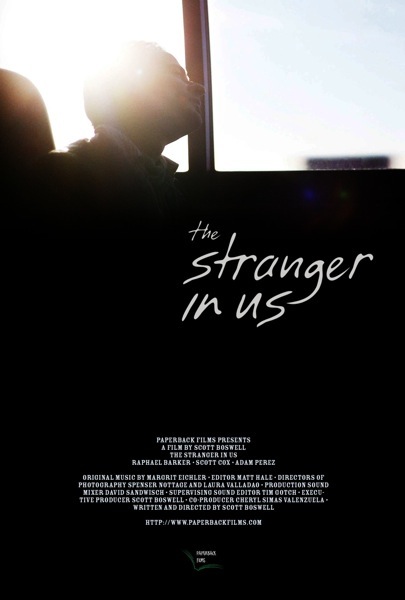
Frameline34: Local drama “The Stranger in Us”

0

Local filmmaker Scott Boswell may not have set out to make the film he ended up with, but he stands behind the finished product. The Stranger In Us stars ShortbusRaphael Barker as Anthony, a young man who moves from Virginia to San Francisco in order to live with his boyfriend Stephen (Scott Cox). When the relationship turns violent, Anthony finds solace in his friendship with Gavin (Adam Perez), an underage street huster. I spoke to Boswell and Barker about the film’s origins, its unique content, and what this year’s San Francisco International LGBT Film Festival says about the future of queer cinema.

San Francisco Bay Guardian: What was your inspiration for The Stranger In Us? Where did the story come from?

Scott Boswell: Ultimately the story ended up being fairly autobiographical. But it started in a different place. Originally — and Raphael knows this because we talked about it — originally, I had intended to do a much more experimental film, kind of a hybrid documentary-narrative, because of my fascination with the Polk Street, Tenderloin area, which I’ve always had since I moved here in the mid ‘90s. I had considered doing a bit of a portrait of the neighborhood, and kind of infusing actors into it, just shooting a lot of footage and seeing what we came up with. There’s a part of me that wishes I had still done that, but in all honesty, I can say that after Raphael expressed some interest in the project, I suddenly felt like it needed to be more narrative in its scope. He didn’t suggest that. It was just my intuition around the project. So I had been talking to him about doing it for months, without even having a complete script, and continued writing it and auditioning actors. Eventually it became much more traditional in terms of its narrative. It became what it is now.

SFBG: And Raphael, what brought you onto the project?

Raphael Barker: Scott. There wasn’t really a finished script and a lot of it was sort of up in the air, but I was just really comfortable with the process and how it evolved, because it was Scott. He and I just hit it off really well.

SFBG: Did you collaborate at all in terms of creating the character of Anthony or writing the script?

SB: Not so much on the script. I run a screenwriting group, here in the city. It’s a small group and we meet a couple times a month, and they had the most impact on the final script. However, there are quite a few places in the script where it suddenly says, “We’re gonna improv here.” And there are definitely scenes where the actors brought the dialog to the scene. Quite a few, actually, especially between his character and Gavin, the street kid. Largely because they had such wonderful chemistry, and I felt like I could trust them to pull it off.

SFBG: Raphael, can you talk about how the improv process was, as an actor?

RB: Scott would set up the scene and then let us go, and just see what happens. And then would make comments as necessary and readjustments. But I felt very free to just let the scene kind of take over and do its thing. I think Scott and I are just both very instinctual. Like, “That’s not how I planned it, but I kind of like it that way. Let’s play with that.” I think especially when you’re talking about Gavin, there was something almost unwritten about our relationship that was allowed to evolve through improv.

SB: Right, because there’s a piece that’s semi-autobiographical that has a place in history, and then there’s the piece that — I feel like Gavin’s character brings a newness, a sort of unfinished, still to be defined ending. There was something about the energy that really brought novelty to the script.

SFBG: You said originally you wanted to showcase this particular neighborhood in your film, and then it became more of a narrative. But it’s still a very San Francisco film. How did you go about capturing that?

SB: The main thing was choosing that location as his studio that he moves into after leaving Stephen, which actually wasn’t true to my experience. However, the person on which Stephen is most based actually lives there, so I kind of flipped it. And the character on whom Gavin is based actually hung out in the Castro, not the Tenderloin. So I flipped those around, and then because the character is so stuck and lost and wandering, he was able to go out into the street and that became the portrait of the neighborhood right there. We had spent a lot of time trying to work out just how we were going to portray that, and ultimately he’s always in the space. I actually did go out and shoot footage of the neighborhood without Raphael, and none of that is in the film.

SFBG: Anthony moves to San Francisco from Virginia, so he’s experiencing the city from an outsider’s perspective. Why did you decide to write him that way? And Raphael, how did that affect your performance?

SB: I think it’s a very common experience in San Francisco. It seems like the majority of people I meet here have migrated from somewhere else. And I think especially for gay men, when we arrive here, we don’t always quite find what we’re expecting, and especially for queer youth, which is an idea that Gavin embodies. I’m very interested in that sort of push-pull between the desire to be in the city of San Francisco and the challenges that you can face when you arrive. So I was interested in exploring that experience, and I’ve found subsequently that quite a few people — they’re almost always gay men — have come to me and said that they relate to that experience. Different generations of men, and different decades of coming here. It seems to be a continuing phenomenon in a way. In that sense, I think it’s very much a San Francisco story, even though it could probably happen in just about any urban area, especially when someone who doesn’t have experience in an urban environment suddenly arrives and is just thrown into it.

RB: I experienced something very similar coming out here to chase after someone I was pretty in love with, and then being dumped like a week and a half after moving here. And just feeling like I didn’t have that orientation anymore, and everything in the city was associated with this person. I’m sure I’ve one of millions of stories of people — with San Francisco being a kind of pilgrimage, then as soon as we get here we complain about it. But we wouldn’t want to be anywhere else, so there’s kind of that love-hate relationship with it. So I could definitely relate to coming out here to be with someone and having all that kind of expectation and hope, and then me kind of losing that central focus and orientation and realizing, “Now what?” I think that’s a theme that’s not just gay or even queer, but it seems like anyone I talk to who comes from a different place has that similar experience. They knew they needed to be out of wherever they were at, but they weren’t sure what they were exactly coming into.

SFBG: The film also deals with an abusive relationship, which is something we don’t see a lot of in queer cinema. I was wondering why you think that is, and also why you wanted to include it in your movie?

SB: I don’t know why it is, but because it is [not often seen] is one of the main reasons I wanted to include it. Hustlers and street kids appear in a lot of gay cinema  — and just to go down that tangent for a second — which is why I chose to not make that character the protagonist but a supporting role. In terms of same sex domestic violence, it is an issue that permeates probably just about any community, but I have seen and heard very little about it among same sex couples. There are some things, some things written and there’s an organization in San Francisco called Community United Against Violence that works to combat and end violence. So there are resources out there, but I wanted to explore it because it’s an issue that’s personal for me, on several levels. It’s something that I’ve experienced and it’s also something that I just personally have always cared about. I volunteered to do work at battered women’s shelters in the past—this was actually in Madison, Wisconsin, long before I’d ever had any kind of experience with it. What I find really interesting is the degree to which people don’t really understand it. No one thinks they’re going to enter a relationship like that. I certainly didn’t think so. I thought I understood it.

RB: Much less something that’s so countercultural in some sense.

SB: Yes, exactly.

RB: Like, “Oh, if I can requite this kind of relationship, that’s kind of the end game.”

SB: The thing is you don’t necessarily recognize it when you’re there. People always say, many people say and have said about this film, “Why does he stay? Why doesn’t he leave?” It’s interesting that people continue to not understand that issue, because it’s clearly a very common human experience. So I guess in a sense, that question to me opens up a dialog on the issue that I find very important. I’ve been asked that a lot from people, and so far, that’s only come from the very limited number of people who have seen [the film].

SFBG: Well, without sounding like I’m trying to justify the abuse at all, these characters are complex enough that you get a sense of why they’re together. You can see how they got to that point. How did you go about creating that, and making sure they weren’t too clear cut or one-dimensional?

RB: I think to show just how much we loved each other is one way to do it.

SB: Yeah, that was important. I approached this very much as a character piece. I mean, that’s what interests me as a filmmaker and as a writer. In terms of the kind of genres I might be able to work in, I think it’s an area I probably have more of a knack for. But I think it’s true for any genre you’re working in, you have to rewrite. You have to be able to get down the ideas and the scenes on paper, and then take a look at them and be open to feedback. And assessing where it is that they’re black-and-white or flat and one-dimensional, and trying to create scenes that are more organic and layered. So that’s what we did. Once I knew what the story was, it still took me a good nine months to write the thing before we started shooting.

SFBG: One last, much broader question. How have you seen queer cinema change over the years, and what is the direction that you see it taking?

SB: In just the past few days, in the films that I’ve seen at Frameline this year, I’m very excited. I think queer cinema has gotten better and better. I have reaffirmed my understanding of the necessity of LGBT festivals, because it has definitely gone through phases. There was kind of an indie new queer cinema in the early ‘90s, when Gus Van Sant was coming on the scene, and Gregg Arraki and Todd Haynes. Then in the later ‘90s and maybe early 2000s, it kind of evolved into a lighter, more mainstream cinema, which I actually don’t relate to as much. But the best of them are actually quite good. What I’ve seen more recently, and I hope our film falls into that, is really kind of the ability to look more closely at ourselves and tell our own stories without any kind of concern about the broader mainstream appeal. I know that those kinds of films still exist. I think that independent cinema has gotten to a place where it’s not just simply seeing ourselves portrayed on screen anymore, but it has to be good cinema now.

RB: I saw a lot of films at the Frameline festival two or three years ago when the documentary about the making of Shortbus came out, and it just made me realize that the quality — instead of it being a kind of niche genre, I don’t want to say the opposite of what you’re saying, but I almost see Frameline as becoming redundant, because the films are good enough to stand on their own. They don’t have to be a genre film or a niche or a sexuality genre film. We have to keep working and working toward the specific, and then eventually the specific becomes universal. And I think that’s the beauty of the films that are starting to come out. In the Frameline context, it’s going to actually make it almost redundant because they’re just going to be good films, period. That’s what excites me, because everyone’s experience is so unique. And sure, we’re working within paradigms and categories, but I think it’s just getting better.

SB: It’s interesting looking at where these films fit in in terms of festivals and markets and things like that. I guess what I was trying to say is that I feel like Frameline still needs to be around in order for these films to get shown, because they’re not all going to fit into SF International, they’re not all going to fit into all of the big festivals. The sort of bigger queer films coming out may not need Frameline. There have been a quite a few in recent years: Bad Education, Mysterious Skin, Capote. They’re playing at the bigger festivals or getting distribution without festivals. There is sort of a distinction there. But when I see something like I Killed My Mother, which just kind of knocked me on my ass because I thought it was so brilliant, I don’t know where else I would have seen it.

THE STRANGER IN US

Wed/23, 6:45 p.m., Roxie

Fri/25, 11 a.m., Castro

www.frameline.org


Boom boom boom! SF’s got a horse in the World Cup song race

0

What’s your favorite World Cup song? We’ve covered some smoothies in Gavin Hardkiss’ “Mundo Via Afrika,” and chatted with Eux Autres about their contribution to the games. Salon.com just poured a cooler of haterade all over Shakira’s head for her “Waka Waka,” (probably because they don’t like Fozzie Bear). But there’s tons of delightfully earnest attempts to encapsulate-cash in on the futbol crazy sweeping the globe for the next month. Angelique Kidjo has hit us up with a Curtis Mayfield cover for Africa, and K’Naan… well I love K’naan. His video has a lot of backflips on beaches, which I support. But did you know that SF has a hat-tricking local troubador of our own?

Yes sir, meet Nader DeAik, who had me believing he was a pop star from Bethlehem who was throwing the Bay a bone with a few shows here and there to entertain us with his greatness. But no! He lives here! He is a curly haired, jovial looking man who wants to entertain us with his smiles and Americanized wardrobe (don’t believe me? check out his earlier video shot at the de Young – now that’s an “international” pop star!). He has recorded a song called “Strike!” that you must set aside your criticism, and just revel in. 

Glory in his greatness. San Francisco, you are now represented at the World Cup. I hear Henry Thierry bumps this in the locker room:

Why’d Nader feel compelled to unleash this into our world? “I’m a huge soccer fan, and a player as well,” the soft spoken pop star told me in a recent phone interview. “I wanted to share my excitement and celebration with soccer fans worldwide. I decided to make a song full of energy and spirit.”

So… did tapping into the billions of soccer fans out there (three billion alone took in the opening game this year) up Nader’s bottom line? “It’s a world sport, it’s one of the biggest events in the world. Its great exposure for me. I’ve been getting a lot of great feedback regarding the song.”

“It’s been playing on radio stations in the Middle East, and it’s been playing in clubs here,” says Nader, who added he wasn’t aware of any other Bay composed World Cup songs this year, and that DJs get hyped to play a local joint to whip up soccer spectators into a frenzy.

Fab, Nader. DeAik’s clearly a big believer in the power of the soccer ball to bring people together, so tell us – is it important for the Bay to be represented by a World Cup song (one at least, right?) “Yes absolutly,” he decided. “Soccer is very popular in the Bay area, and I think it’s great not only for the Bay area, but the US as well. The other day I was at a soccer field and I was shooting parts of the music video with the youth. Watching the youth play soccer, sing along to the song. It was just great.”

Nader DeAik

Aug 8, check website for times and prices

The Bethlehem Association 25th Anniversary Convention

Hyatt Regency Santa Clara

5101 Great American Parkway, Santa Clara

(408) 200-1234‎

www.naderdeaik.com

www.bethlehemassoc.org

25 ideas for our queer future

1

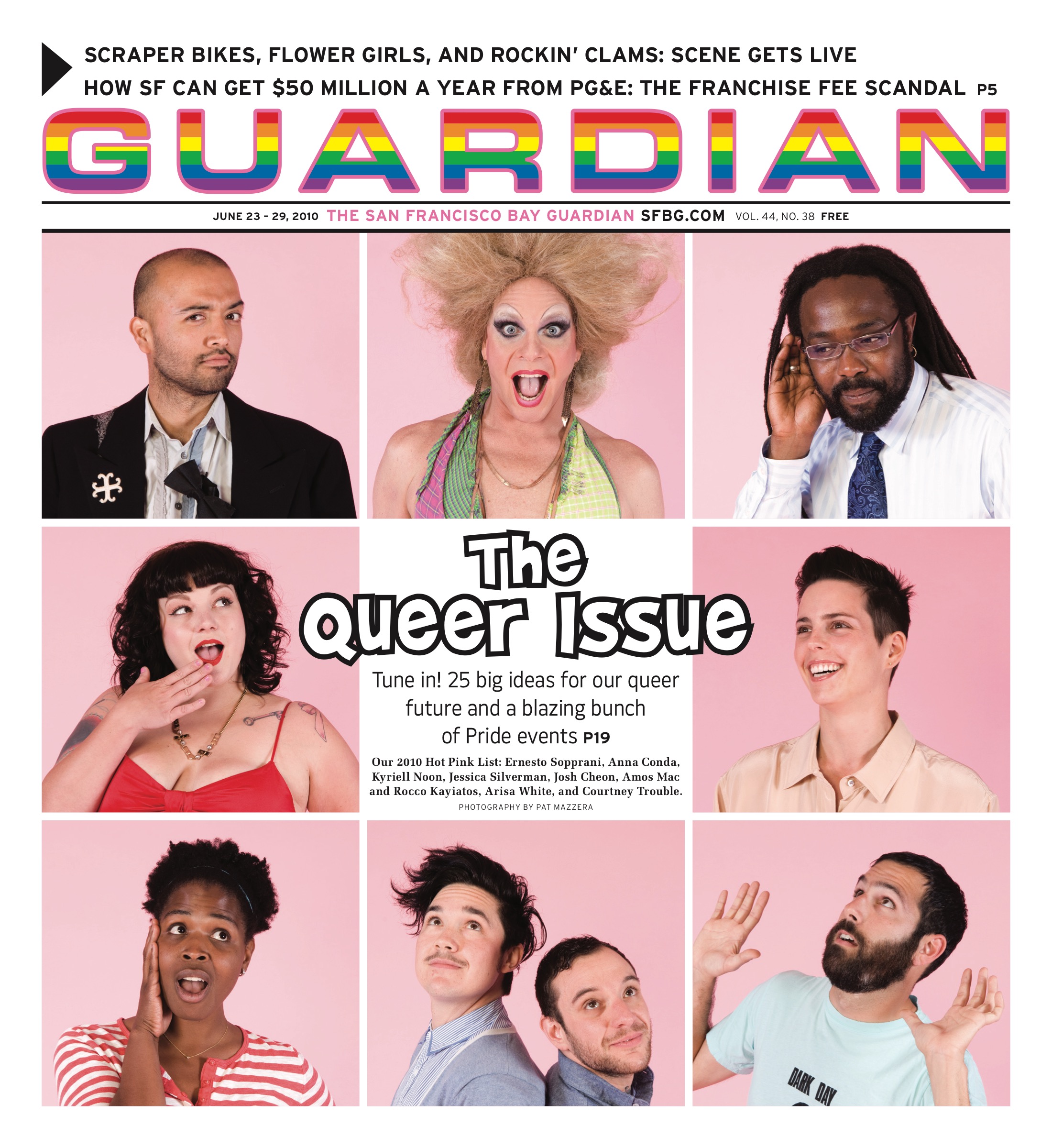
What does the future hold in store for us? In an age of mainstream assimilation and aspiration, is there even such a thing as the queer future? We asked 25 queer leaders, artists, and activists to offer visions in their areas of expertise. The results — philosophical, poetic, practical, and priceless — are inspiring. One thing’s for sure, we’ll never lose our creative spark. Nor will we lose our motivational zeal. Fate is for the lazy: take action now. (Marke B.)

>>Click here for ideas from our amazing 2010 Hot Pink List

>>Click here for our Pride listings, and get out there!

THE FUTURE OF QUEER ACTIVISM We need to take back the power and stop being led by what the other side is doing. We need to empower ourselves enough so that we are no longer reacting but acting. We must use online social networks the way we used the streets and bullhorns to show our strength, speak out against wrongdoing, change minds, and win back our rights. We also must unite with our allies in other communities that are underrepresented and maligned in much of the same ways we are. When we stand with one another, we have that much stronger a voice.

Kelly Rivera Hart is the founder of Poz Activists Network (pansf.blogspot.com).

THE FUTURE OF QUEER COMMUNITY The difference between straight and gay cultures seems to be breaking down more and more, which is one of our goals, but we still need to support our own businesses, nonprofits, and leaders. We need to continue interacting with each other in the real world and not lose sight of who we are and what we share. Despite how the rest of the world sees us, there is still a lot of loneliness and isolation in the queer community. I think many of us have forgotten even simple things, like how to make actual friends, not just online. And it’s so easy! Renewing that spirit of interaction, freeing ourselves from fear of judgment, and moving outside our “safe zone” can lead to the greatest rewards.

Mark Rhoades is a charitable event planner and fundraiser who throws the annual Cupid’s Back and City Hall Pride parties.

THE FUTURE OF QUEER FASHION The past decade has witnessed an obsession with bulky, voluminous silhouettes disguised as “futuristic avant-garde” and inspired by GaGa and the ’80s. Let’s move on. Through clean lines, elegance, and wearable pieces, the future of queer fashion will shine light on socially relevant issues like bottom shame, positive-negative status reinforcement, and elite subcultures by using gay textiles and forgotten, non-era-specific imagery.

Allán Herrera is the design head of fashion house Homo Atelier (www.homoatelier.com) and a founder of HomoChic (www.homochic.com).

THE FUTURE OF QUEER FILM Future queer film will depend on the gays being at the forefront of distribution technology in the same way we pioneered social networking 15 years ago, spreading provocative and sexually honest/explicit films beyond the film festival circuit and toward a global audience. Special attention must be paid to the creeping homophobia of cultural and technological juggernauts like Apple. Our stories will need to bust through the pigeonhole, weaving our traditional themes (AIDS, coming-of-age) into larger storylines that are relevant to multicultural and transcontinental viewers.

Leo Herrera is a video artist, filmmaker, and a founder of HomoChic (www.homochic.com).

THE FUTURE OF QUEER YOUTH To be a true leader, one must envision the future. The future is a diverse society where LGBTQQ youth are embraced for who they are and encouraged to be who they want to be. In my pursuit for LGBTQQ youth rights, leadership has been about fostering the awareness in LGBTQQ young people about their own power as individuals and as a group, supporting them to access, develop, and master the skills and knowledge they need to transform their power into action, and building bridges to opportunities where their action can create just communities.

Jodi Schwartz is the executive director of LYRIC Lavender Youth Recreation and Information Center (www.lyric.org).

THE FUTURE OF QUEER LABOR Storm of protest drives Congress to pass trans-inclusive ENDA! Support by labor unions critical to passage of this landmark legislation. Screaming, “We’re too queer for this bullshit!” workers hold drag-runway picket lines at transphobic companies across the country. Activists redefine the crisis of trans poverty and unemployment as the most critical queer civil rights issue of our time.

Bad hotel boycott forces Hyatt to sign a fair contract and treat their employees with respect. LGBTQ organizations rally with labor unions for immigration reform, hold signs reading “No borders on my cunt, no border on our countries!

Jane Martin is a queer labor activist and community organizer with SF Pride at Work (www.sfprideatwork.org).

THE FUTURE OF QUEER DRAG (PART ONE) My vision for the future of queer drag requires you to take a moment, stop, look, and listen to our past. We have such a rich history of fierce and amazing queens to learn from. The key is to get involved with a queer family that supports and loves you and what you do. Next, figure out your niche — whether it’s high drag or low camp, just be sure to always do it like you don’t need the money! Then pull it together and serve it up with lots of love and generosity. And, of course, top it all off with a fabulous wig!

Juanita More! (www.juanitamore.com) is the queen. Attend her boisterous Pride party on Sun/27 (see Pride listings), benefiting Bay Area Young Positives (www.baypositives.org).

THE FUTURE OF QUEER DRAG (PART TWO) Meg Whitman will become president of the United States and hire Lady Bunny as one of her speech writers. Oprah and Gayle will finally come out, and gender illusionist shows will dominate the OWN Network — every other channel will follow. In 2050, Heklina will clone herself, twice, and perform the hospital-convalescent home circuit as the Del Rubio Triplets. Apple will come out with a product called the iDrag, that transforms anyone into anything.

Fudgie Frottage is the king. He puts on the annual, wonderful SF Drag King Contest (www.sfdragkingcontest.com).

THE FUTURE OF QUEER DANCE FLOORS Lets start with a nice, clean piece of paper. Black paper. A clean slate. Say, for example, a deliriously rich and tasteful daddy were to buy the Stud. Step one: a deep, five-stage gay cleaning. Step two: gut the interior, maybe keep the bar and choo-choo train intact, they are cute. Otherwise keep it simple. Step three: install an exact copy of the sound system used by Dave Mancuso at the Loft parties in New York City. The tasteful daddy would have a matte gray private jet at our disposal to bring guests of our choosing. For the launch party we would have an all Kenny line-up: Kenny Dixon Jr., Kenny Hawkes, Kenny Carpenter, and Ken Collier (back from the dead) would DJ. Live PA by Kenny Bobien. Oh, and Kenny Kenny on the door. At the end, everyone would get together and cry like they do on those exploitative renovation reality shows. Daddy would miss the ribbon-cutting, but that’s OK — he sent flowers and bought an $80 Diptyque candle for the new bathroom. That would be a good start.

Honey Soundsystem is a future-past DJ collective. Catch the old-school house Honey Pride party on Sun/27 (see Pride listings).

THE FUTURE OF QUEER COMEDY The future is here. And now that gay marriage is mandatory for everyone, queer and straight, the same goes for comedy. All comedians, regardless of sexual orientation, are now required to do at least 75 percent queer comedy in their acts unless they obtain Permit No. 758219B through the Comedy Board, allowing for the special provision to do only 50 percent queer material. That’s right: comedy is now regulated by law. No jokes are allowed to have homophobic content, especially if you’re performing for tourists. Remember, you are ambassadors now. If you’re straight and have no queer material, just ask your aunt or your second cousin or your bachelor uncle whose best friend of 40 years, Bruce, comes to all the family functions.

Lisa Geduldig (www.koshercomedy.com) is a comic and MC who puts on such shows as Kung Pao Kosher Comedy, Funny Girlz, and Comedy Returns to El Rio!

THE FUTURE OF QUEER HOUSING It is beyond time for us queers to focus our fabulous and substantial God-given talents toward a vision of the future of queer housing. We are the trailblazers, the social entrepreneurs, the avant-garde. Imagining and creating the future is what we do best. Let’s put those substantial talents to work to realize our very own “No Place Like Home” dream of a home for our LGBT elders, our homeless LGBT youth, our people with HIV/AIDS, our artists, our activists, and everything in between. I’ll show you mine: the largest affordable housing for people with HIV/AIDS in the nation next to the Castro Theater and an LGBT homeless shelter at Geary and Polk. Now you show me yours.

Brian Basinger is the director of AIDS Housing Alliance/SF (www.ahasf.org).

THE FUTURE OF QUEER COMICS The future of LGBT comics will be about creators moving out of the traditional queer media ghetto and into new digital undergrounds, indie markets, and even the publishing mainstream. Web comics, graphic novels, minicomics, and zines … Queer comics will have to continue to diversify their formats to survive. At the core, though, remains the need to tell good stories! Look for more poignant narratives about the intersection of queer identities and the human condition. Also, robo-dykes, super-powered trannies, bisexual Lotharios, and zombie fags!

Justin Hall, a queer and erotic comics artist, runs All Thumbs Press (www.allthumbspress.com).

THE FUTURE OF QUEER LAW We would like to see the law catch up with the reality of transgender lives. Your gender identity is an innate and deeply felt sense of who you are. Whether you feel male, female, both, or neither, we envision a future where your legal gender will be exclusively determined by you and not by doctors or lawyers. By respecting your autonomy and your ability to know yourselves better than anyone else, the law will finally reflect society at large. The law is not far from fully recognizing that fact of life, but there is still work to be done. So break out your queer legal briefs and join in the fight for transgender civil rights!

Executive Director Masen Davis and the staff of the Transgender Law Center (www.transgenderlawcenter.org)

THE FUTURE OF QUEER SPIRIT As I look toward the future, I want to see the consciousness shift that Harry Hay and other gay pioneers were pushing for manifest itself more fully in both the gay culture and the larger hetero culture. As queer liberationists, we’ve already taught the world that we are a people. I want to see us recognized as always having been a people. I want to see us given the opportunity to cocreate a new, more beautiful world. To paraphrase: what if there were no “faggots,” only master healers, teachers, shamans? I hope to see the end of shame.

Zac Benfield is the president of the radical faerie Church of Nomenus. Attend his “Woo 101 for Hipster Faggots” workshop, part of the Faetopia Festival (See “Ongoing” in our Pride listings)

THE FUTURE OF QUEER SCIENCE

The alien scientist pipettes liquid
Into a flask to be shaken vigorously.
The origins of gay life.

On Earth, planets align, exposing
Realities once thought to be utterly impossible:
Gays are outta this world!

Queer scientists make the future
Always brighter, cleaner, sexier, and more fabulous
Stopping only for a cocktail.

Quietly, the gay scientist works,
Inching closer to the final answer that
Will change the world forever.

In the future of science
We see the world with different eyes,
All judged by ability alone.

Chris Waddling is a PhD scientist at UCSF.

THE FUTURE OF THE QUEER PAST The future of the queer past has always been fragile — and despite some positive developments in the past 25 years, it remains fragile today. The legacy of LGBT people is still largely invisible in the settings where our society formalizes its history. Our stories are rarely told in high school classrooms, in the galleries of museums, on the plaques of public monuments. Supporting the efforts and the growth of such organizations as the GLBT Historical Society and other pioneering queer history institutions will be key to ensuring that the memory of LGBT lives, struggles, setbacks, and triumphs can inform and inspire future generations.

Writer, editor, and antiquarian book dealer Gerard Koskovich is a founding member of the GLBT Historical Society and a member of the board of directors of the Mémorial de la Déportation Homosexuelle, a French national group that commemorates the homosexual victims of the Nazis.

THE FUTURE OF THE QUEER FUTURE My future selves are always popping back from the year 2023 or 2034 for the weekend, mostly because they know I’ll be their sex slave. They remember what 2010-me was like. (And apparently in the mid-2020s, time-traveling self-flagellation becomes a big fetish.) They’re not supposed to tell me anything about The Future, but they let slip wee details here and there — the 20-teens are a troubling time, but then we discover queer telepathy, and everybody starts secreting empathy endorphins and building communal gardens in the upper atmosphere. Hang in there until we get the first queer president, they always say. Once she comes out during her second term, that’s when the government really starts building something.

Charlie Anders is the managing editor of science fiction-forward site io9.com

Editor’s Notes

1

marke@sfbg.com

The official theme for Pride this year is “40 and Fabulous.” So let’s all grab an organic cocktail and strap ourselves in for a good ol’-fashioned midlife crisis!

Some of us have already had some practice. Many gays long ago traded in cracked and hectoring first wife Madonna for trophy floozy Lady Gaga, raced around town in those sleek Miata MX-5 convertibles, and reached for the HyperGain. (Don’t get me started on lesbians and Justin Bieber here.)

But for queers of a more radical bent, it’s an opportunity to take stock of the past and wonder about the future — despite the fact that 40 is the new 20, at least in online marketing campaigns. Branding, darling, branding.

Or maybe that’s boring. Yes, we could lament the commercialization of Pride and kvetch that all our resources have been poured into trying to secure property rights through state-sanctioned social contracts and the chance to invade the wrong country, causing the unnecessary deaths of thousands. We could be awestruck by the amazing power and inspiration of our queer youth, despite the fact that hundreds of them become homeless every year. We could honor and celebrate the heroism of our elders, even while they’re pushed to the margins and out of their apartments.

But doing all that means sitting on our collective asses. Isn’t the whole point of a midlife crisis to change everything before it’s too late? Maybe, due to political expediency and because it makes us more acceptable to society, we’ve allowed queerness to become defined as something we are, rather than something we do. I’m not saying many of us aren’t born “that way” (or denying the social legitimacy that fact, apparently, confers). But what the hell are we doing? Fine. We’re fabulous. Now let’s fix things.


Snap Sounds: Beach Fossils

0

BEACH FOSSILS
Beach Fossils
(Captured Tracks)
Your pretty guitar — or in Beach Fossils’ case, your gorgeous guitars. Lyrics and vocals are virtually beside the point, considering how poetic the guitar sounds are on these songs. Beach Fossils is well-listened enough to admire McCarthy and the Go Team. On “Youth” and “Wide Awake,” the group comes up with something deeply emotive. You have to make the jump and join me on the other side to find out.

Star on the rise

0

FRAMELINE I’ve had a bit of a crush on the young Argentine actress Inés Efron since Frameline31, when she played one corner of the teen love triangle in Alexis Dos Santos’ Glue (2006). There was something in the way Efron used her gangly build and heavy-lidded eyes to telegraph her character’s mix of trembling desire and adolescent ungainliness that brought to mind Kids-era Chloë Sevigny.

Efron’s ability to allow her physicality to articulate what her characters can’t would be even more fiercely on display when she returned to Frameline the following year, front and center, as the conflicted, intersexed youth Alex in another equally strong Argentine debut, Lucía Puenzo’s XXY (2007). Efron is back at Frameline this year, as is Puenzo, in the director’s sophomore effort, The Fish Child. The film actually made its festival debut last year, in one of the last-minute TBA slots, but fans of the duo’s previous collaboration would do well to catch its proper run this time around.

Part cross-class lesbian love story, part crime telenovella (with a touch of magical realism), The Fish Child is a flashy departure from XXY‘s brooding coming-of-age character study. Puenzo displays a tight grasp of the film’s various narrative strands as it jumps back and forth across time and geographic borders (she did adapt the script from her own novel, after all), but much of the film’s emotional impact comes from the performances of its leads.

Looking ever more the gamine, Efron plays Lala, the teen daughter of a wealthy Buenos Aires judge (Pep Munné), who is as in love with the household’s 20-year-old Paraguayan maid Ailin (Mariela Vitale) as her father is. Lala and Ailin’s dream of escaping to Lake Ypoa in Paraguay, Ailin’s childhood home, becomes complicated when Ailin winds up in jail and Lala flees to Ypoa alone, where she discovers more about her lover’s damaged past. Efron’s Lala lets us be sympathetic to her love for Ailin even as we see the ways in which her star-eyed optimism about their future life is as enabled by the privilege she refuses to acknowledge as it is by raw passion. She’s a rebel with a cause, but she just can’t ‘fess up to it yet.

As Efron grows older, it’s going to become harder for her to keep convincingly playing the hormonally-charged and dissolute (see also her supporting role in another recent Argie art house hit, Lucrecia Martel’s 2008 The Headless Woman). Clearly, though, she has a good agent and even better instincts. I’m excited to see what she does next.

THE FISH CHILD

Thurs/22, 9:30 p.m., Elmwood

Fri/25, 9:30 p.m., Roxie

On the Cheap listings

0

On the Cheap listings are compiled by Paula Connelly. Submit items for the listings at listings@sfbg.com.

THURSDAY 17

Another Science Fiction Get Lost Travel Books, 1885 Market, SF; (415) 437-0529. 7pm, free. San Francisco author and archivist Megan Prelinger will discuss and show images from her new book, Another Science Fiction: Advertising the space race 1957-1962, where she presents 100s of advertisement images from a time that marked the beginning of space research as well as the golden age of science fiction writing.

FRIDAY 18

FINKTOONS Element Lounge, 1028 Geary, SF; (415) 440-0111. 10pm, free if you say "FINKTOONS" at the door. What do you get when you cross sketch comedy, horror movies, cartoons, and bizarre short films? FINKTOONS, of course. Enjoy a night of never before seen sketches and cartoons, including a live performance by the project’s co-creators Brandon Fink and Tyler Moazed.

Giants County Fair McCovey Cove, Giants Lot A, behind AT&T Park, SF; www.sfgiants.com/fair. Fri./11-Sun/20, free. This old-fashioned county fair with a San Francisco spin features games, fair food, music, a CUESA urban farming tent dedicated to cooking and gardening, and over 20 carnival rides, including a Ferris wheel, bumper cars, super-swings, and more. $5 per ride or $20 for unlimited rides. The fair will overlap with six Giants games, including the Bay Bridge Series against the A’s.

SATURDAY 19

Breaking Ground San Francisco County Fair Building, 9th Ave. at Lincoln, Golden Gate Park, SF; (415) 750-5110. 9am-1pm, free. This urban gardening youth conference is open to all Bay Area high school students featuring youth led, hands on workshops, information about jobs and paid internship opportunities, food and entertainment, tours of some of San Francisco’s coolest gardens, and more.

Mission Community Market 22nd St. between Mission and Bartlett, SF; http://missioncommunitymarket.blogspot.com. 4pm-8pm, free. Attend the kick off to this weekly summer outdoor market that celebrates the Mission by promoting healthy eating, locally owned businesses, community programs, public space, and live music in the street. Proceeds from all food bought at Lolo’s, Café Revolution, and Escape from New York Pizza will be donated to the MCM Fund. All market profits will be reinvested into public space improvements. Featuring live music by Seth Augustus, Diana Gameros, Santos Perdidos, and King City and live performances from Abada Capoeira, Danza Azteca, and Sirron Norris.

"Obviously You’re Not a Golfer" Kokoro Studio, 682 Geary, SF; (415) 400-4110. 7pm, free.

The Flat Earth Collective presents this literary event featuring readings by Tom Andes, David Holler, Erica Lewis, and Sara Mumolo and dramatic performances of new work by Sarah Ciston and Tavia Stewart-Streit.

StreetSmARTS African American Art and Culture Complex, 762 Fulton, SF; www.sfartscommission.org/streetsmarts. 6pm, free. Celebrate StreetSmARTS pilot-program murals, a program that connects established muralists with San Francisco private property owners to create vibrant art based on visual concepts reflecting the fabric of the neighborhood and make property less likely to be vandalized. Festivities to feature live muraling, film screenings, speakers, DJs, and a break-dance contest. A StreetSmARTS art exhibition will be unveiled at midnight.

Tetris Tournament II The Lab, 2948 16th St., SF; (415) 864-8855. 8pm, $5-$15 sliding scale. Test your skills with the world’s most popular puzzle game at this karaoke-style arcade competition. Musician, media artist, and performer Bryan Von Reuter rigged it so the highest scoring players will reap all the glory on a jumbo-tron projected screen and score board with DJ Middle D spinning records all night.

SUNDAY 20

Cardboard Tube Fighting League Hayes Valley Farm, 450 Laguna, SF; www.tubeduel.com. 3pm, free. Come in your best cardboard armor attire, bring food to participate in the picnic potluck, and vie for a chance to win a legendary cardboard sword. Prizes also awarded for best cardboard costume. If you need a costume go to the free Cardboard Amor Building Workshop Sat/19 3pm at Hayes Valley Farm. Bring scissors, glue, twine, and anything you think you might need to build righteous armor.

Rock the Bike Valencia and 24th St., SF; www.projectsoundwave.com. The ongoing green sound festival, Project Soundwave, teamed up with Rock the Bike to bring you this unique free environmental music event at the Mission District Sunday Streets program featuring the acoustic punk sounds of Kemo Sabe brought to you by pedal powered mics, amps, and instruments.

MONDAY 21

BAY AREA

Summer Solstice Celebration Muir Beach, Golden Gate National Recreation Area, Route 1, Marin; (415) 388-2596. 6pm, free. Celebrate the longest day of the year at this bonfire solstice party featuring storytelling and songs. Dress warmly and bring a mug for hot drinks. No reservations required.

Ubiquity Anniversary Exhibit Guerilla Art Café, 1620 Shattuck, Berk.; (510) 845-CAFÉ. 6pm, free. Attend the opening of this art exhibit celebrating the 20th anniversary of Bay Area funk and soul from Ubiquity Records with paints of, and inspired by, Darondo, Eugene Blacknell, Sugarpie Desanto, and Twilight. The opening will feature Guerilla Café art collective and Ubiquity artists live painting and creating a video montage. Throughout the show, Guerilla will host guest appearances by the musicians and DJ sets playing their music.

For Lit, Talks, and Benefits listings, visit the Pixel Vision blog at

Film listings

0

Film listings are edited by Cheryl Eddy. Reviewers are Kimberly Chun, Michelle Devereaux, Max Goldberg, Dennis Harvey, Johnny Ray Huston, Erik Morse, Louis Peitzman, Lynn Rapoport, Ben Richardson, and Matt Sussman. For rep house showtimes, see Rep Clock. For first-run showtimes, see Movie Guide.

FRAMELINE34

The 34th San Francisco International LGBT Film Festival runs June 17-27 at the Castro, 429 Castro, SF; Roxie, 3117 16th St, SF; Victoria, 2961 16th St, SF; and Rialto Cinemas Elmwood, 2966 College, Berk. Tickets (most shows $8-15) can be purchased at www.frameline.org. All times pm unless otherwise noted.

THURS/17

Castro The Secret Diaries of Miss Anne Lister 7. Off World 10.

FRI/18

Castro The Real Anne Lister noon. "Curious Thing" (shorts program) 1:45. Sasha 4:30. The Owls 7. Grown Up Movie Star 9:30.

Roxie "Hustlers and Exhibitionists: Andy Warhol Retrospective" 7. "Bi Request" (shorts program) 9:30.

Victoria 8: The Mormon Proposition 7. Open 9:30.

SAT/19

Castro "Fun in Boys’ Shorts" (shorts program) 11am. "Fun in Girls’ Shorts" (shorts program) 1:30. Elvis and Madona 4. I Killed My Mother 6:45. A Marine Story 9:30.

Roxie Mississippi Queen 11am. On These Shoulders We Stand 1:30. Postcard to Daddy 4. Hooters 6:30. "Sex, Leather Jackets, and Hustlers: Andy Warhol Retrospective" 9:30.

Victoria "Trans Francisco" (shorts program) 11am. The Adonis Factor 2. "Gay Aesthetics and Iconography in the Films of Andy Warhol" (illustrated talk) 4:15. Arias With a Twist 6:30. The Man Who Loved Yngve 9:30.

SUN/20

Castro "Dottie’s Magic Pockets Live!" 11am. We Were Here: Voices From the AIDS Years in San Francisco 1. The Topp Twins: Untouchable Girls 3:45. The Four Faced Liar 6:30. The Consul of Sodom 9:30.

Roxie Mountains That Take Wing 11am. "Skinnyfat" (shorts program) 1:45. "Generations: Youth and Elders Making Movies" (shorts program) 4:15. Bear Nation 6:45. Out of the Blue 9:30.

Victoria Beyond Gay: The Politics of Pride 11am. Paulista 1:30. "F**king Traditional Values: Queer Women of Color Shorts" (shorts program) 4:15. William S. Burroughs: The Man Within 7. The Queer X Show 9:30.

MON/21

Castro Dzi Croquettes 11am. Swimming with Lesbians 2. Off World 4. The Last Summer of La Boyita 7. Brotherhood 9:30.

Roxie New York Memories 7. "Are You Krazy?" (shorts program) 9:30.

Victoria Riot Acts: Flaunting Gender Deviance in Music Performance 7. My Normal 9:30.

Elmwood The Sea Purple 7. Plan B 9:30.

TUES/22

Castro The Motionless 11am. Sex in an Epidemic 1:15. Is It Just Me? 3:45. Undertow 7. Baby Jane? 9:45.

Roxie Gayby 7. One Night 9:30.

Victoria The Sisters 7. Eyes Wide Open 9:30.

Elmwood William S. Burroughs: The Man Within 7. The Fish Child 9:30.

OPENING

Bluebeard Writer-director Catherine Breillat returns to her 2001 Fat Girl‘s motifs of troubled sisterhood and the adolescent female imagination in this stealthy adaptation of Charles Perrault’s pathological fairy tale. Bluebeard‘s parable of murder coiled around marriage resonates rather obviously with Breillat’s own signature themes, but she avoids obviousness by serving the punishing logic of Perrault’s story chilled. That Breillat is concerned with how the fairy tale is experienced, and specifically the adolescent desires it awakens, is clear from the frame narrative in which two sisters (named autobiographically) ritualistically read "Bluebeard," both of them knowing it (and each other’s reactions) by heart. Their dualities mirror those of the sisters trapped inside the story, the younger of whom, prone to romantic fantasies of castles and marooned by her father’s death, joins Bluebeard in unholy matrimony. Marie-Catherine (Lola Créton) may be a sprite next to the titular ogre (Dominique Thomas), but never underestimate the appetite of a younger sibling. Breillat’s visual style is unassuming in its tableaus, but her mastery of point-of-view and restricted narration brings great insight to the mechanisms of the fairy tale. Créton conjures the younger girl’s familiar mix of confidence and innocence with something like joy, while Thomas plays Bluebeard as a tender foil. He appears nearly forlorn when he uncovers his young wife’s fateful act of disobedience and realizes he will now and forever carry out the terrible deed we expect of him. A sharp turn provides a different moral than we might expect, and while it’s not so self-consciously shocking an ending as Fat Girl‘s, it inscribes the birth of a storyteller named Catherine with far greater piquancy.(1:20) Yerba Buena Center for the Arts. (Goldberg)

*Coco Chanel and Igor Stravinsky Revered for the innovative fashion house that set the bar for style and was always knocked off but never cut prices for the real deal (and still sniffs at online clothing sales), Gabrielle "Coco" Chanel gets her second biopic, as an artist on par with composer Igor Stravinsky in this rhapsodically sensuous love letter to an unlikely romance. It opens with the designer and future branding legend (depicted with burning eyes and pantherine mystery by Anna Mouglalis) attending the controversial, riot-starting 1913 premiere of Stravinsky’s The Rite of Spring in Paris. Recognizing Stravinsky (a viral avant-garde stud-muffin in the hands of Mads Mikkelsen, last in deadlocks and warrior face in Clash of the Titans) as a simpatico radical spirit, Chanel lends her house to the composer. He comes with considerable baggage: a slew of children and a consumptive wife, Katarina (Elena Morozova). Morozova’s performance as the angel-faced earth mother scorned, so blatantly disrespected by the rad lovers madly getting down on the music-room carpet, almost steals the show, but then the house-porn fabulosity of the recreated Chanel villa in Garches — a symbol of their hermetic attraction and shot like a seductive, claustrophobic, black-and-white deco womb — takes over, and we’re back in the thick of CoGor’s somewhat inexplicable affair once again. (1:55) Shattuck. (Chun)

Gravity Was Everywhere Back Then Before it was torn down by a new landowner, multimedia artist Brent Green went to visit the house built by late Kentucky hardware store clerk Leonard Wood — a poor man’s Winchester Mystery House, endlessly elaborated with newly knocked-down walls and weird handmade detailing. This obsessive one-man construction effort was commenced as a hopeful "healing machine" for its other resident, his beloved wife Mary, and continued after her death from cancer. Green built his own backyard replica of the house for this experimental first feature, a sort of live-action stop motion movie whose characters like move like puppets in stuttering frame jumps, with animation, dubbed occasional dialogue, crude intertitles, and some gently fantastical imagery adding to its dreamlike aura. Mary (played by Donna K.) makes a curious living breeding and selling wild bird eggs; Leonard (Michael McGinley), among his other callings, composes and records droning minimalist "church music." They met, purportedly, in a car crash. Green’s strangle-voiced blank verse narration and filmic folk-art affectations can sometimes make Gravity just sit there — certainly it feels longer than its 75 minutes. But it also has an off-center lyricism that in the end serves honorably this story of profound love between two very odd people. The director (who currently has an installation across the street at the Berkeley Art Museum) will appear at this one-night Pacific Film Archive screening. (1:20) Pacific Film Archive. (Harvey)

Jonah Hex Josh Brolin and Megan Fox star in this Wild West-set graphic novel adaptation. (1:81) Elmwood.

Lovers of Hate Living out of his car after being dumped by Diana (Heather Kafka), perpetually dour Rudy (Chris Doubek) can hardly find a place to take a shower. In stark contrast to his desperate situation, Rudy’s brother Paul (Alex Karpovsky) is a successful children’s fantasy writer, holed up in a borrowed mansion in Utah to work on his next book. Rudy decides to pay his bro an unwelcome surprise visit, but he arrives just behind Diana, who has come to have a serious chat (and also some sex) with Paul. Still in love with Diana, Rudy skulks unnoticed through the tremendous house, playing vengeful voyeur to the new couple’s already rather weird relationship. Lovers of Hate‘s central trinity are not especially nice people, but neither are any of them evil; writer-director Bryan Poyser balances pity and disgust at their painfully human actions, without necessarily making a case for why we care. (1:33) Roxie. (Sam Stander)

*The Oath Laura Poitras’ disturbing documentary is a portrait of two men closely bound to al Qaeda, though only one is interviewed. That would be Abu Jandal, a husband, father, current Yemen taxi driver, erstwhile jihadist operating from Bosnia to Afghanistan, and former chief bodyguard to Osama bin Laden. The off-camera one is his brother-in-law Salim Hamdan, a Guantanamo Bay prisoner from late 2001 whom he’d recruited as bin Laden’s driver-mechanic. Was Salim merely a for-hire worker with no knowledge of the 9/11 conspiracy or other terrorist actions? Was his lengthy imprisonment an example of the War on Terror’s flaunting of legal conventions? (After Hamdan won a Supreme Court victory, Congress invented a whole new kind of charge — "material support to terrorism" — to keep him in custody.) These are questions more pondered than answered here. We do, however, get a big close-up dose of Jandal, who laments the harm he might have done his bro-in-law while still counseling young Muslim Yemenites and his own barely-past-toddler son in jihadist righteousness, not excluding justification of killing Western civilians. He comes off as dangerous and charming, a hustler and braggart. Offering further insight into what makes up (or sculpts) a terrorist mindset is a pre-9/11 clip of an elegant, prissy bin Laden — a salt pillar of airless judgment
sure he’s channeling the intentions of Allah. (1:36) Lumiere, Shattuck. (Harvey)

The Sun Behind the Clouds In this doc, the Dalai Lama comments on the 2008 Tibetan demonstrations against Chinese rule. (1:19) Opera Plaza, Shattuck.

Toy Story 3 Somehow, it’s terrifying that in this installment, the toy-owning kid is heading off to college. (1:49) Cerrito, Marina.

*Winter’s Bone See "True Grit." (1:40) California, Embarcadero.

ONGOING

The A-Team Why was the original A-Team the most popular band of mercenaries on TV? The estimable chemistry and comedic skills of Mr. T; legit Breakfast at Tiffany‘s star George Peppard; conservative commentator Dwight Schultz; and Dirk Benedict, fresh from his role as the original Starbuck on Battlestar Galactica, played a major part, as did the quasi-anti-authoritarian, boyish, blow-’em-up-real-good tone, making it more of a cartoonishly violent kin to MASH than First Blood (1982). The cheeky humor and snappy writing were the real key to The A-Team‘s popularity — the reason impressionable protein units like yours truly tuned in. Director Joe Carnahan (2006’s Smokin’ Aces) and cast seem to have sussed out a bit of that magic, especially when the sun-roasted Bradley Cooper as Faceman and Sharlto Copley as Murdock roll with the what-the-hell non-sequiturs (less sure is the star of last year’s District 9‘s grip on exactly what accent he’s been charged with). But the cinematic version won’t be rehabbing the public’s view of guns-for-hire like Blackwater anytime soon. Liam Neeson lacks the cigar-chomping paternal bravado of Peppard, Quinton "Rampage" Jackson is tasked with the unenviable job of following T time, and the script, complete with the ludicrously elaborate plans and a spark-challenged romance between Cooper and Jessica Biel, is just a rough excuse to watch boys and their toys. (1:57) Cerrito, 1000 Van Ness, Presidio, SF Center. (Chun)

*Babies Thomas Balmes’ camera records the first year in the lives of four infants in vastly different circumstances. They’re respectively born to hip young couple in Tokyo’s high-tech clutter; familiar moderately alterna-types (the father is director Frazer Bradshaw of last year’s excellent indie drama Everything Strange and New) in SF’s Mission District; a yurt-dwelling family isolated in the vast Mongolian tundra; and a Namibian village so maternally focused that adult menfolk seem to have been banished. Yes, on one level this is the cutest li’l documentary you ever saw. But if you were planning to avoid thinking that is all (or most) of what Babies would be like, you will miss out big time. Void of explanatory titles, voice-over narration, or subtitle translations, this is a purely observatory piece that reveals just how fascinating the business of being a baby is. There’s very little predictable pooping, wailing, or coddling. Instead, Balmes’ wonderful eye captures absorbing moments of sussing things out, decision-making, and skill learning. While the First World tykes firstborns both — are hauled off to (way) pre-school classes, the much less day planned Third Worlders have more complex, unmediated dealings with community. Those range from fending off devilish older siblings to Mongol Bayarjargal’s startlingly casual consorting with large furry livestock. (Imagine the horror of parents you know were their baby found surrounded by massive cows — a situation that here causes no concern whatsoever for adults, children, or bovines.) So accustomed to the camera that it doesn’t influence their behavior, the subjects here are viewed with an intimacy that continually surprises. Babies is getting a wider-than-usual release for a documentary, one cannily timed to coincide with Mother’s Day. But don’t be fooled: this movie is actually very cool. (1:19) Presidio, Shattuck, Smith Rafael, Sundance Kabuki. (Harvey)

*City Island The Rizzo family of City Island, N.Y. — a tiny atoll associated historically with fishing and jurisdictionally with the Bronx — have reached a state where their primary interactions consist of sniping, yelling, and storming out of rooms. These storm clouds operate as cover for the secrets they’re all busy keeping from one another. Correctional officer Vince (Andy Garcia) pretends he’s got frequent poker nights so he can skulk off to his true shameful indulgence: a Manhattan acting class. Perpetually fuming spouse Joyce (Julianna Margulies) assumes he’s having an affair. Daughter Vivian (Dominik García-Lorido) has dropped out of school to work at a strip joint, while the world class-sarcasms of teenager Vinnie (Ezra Miller) deflect attention from his own hidden life as an aspiring chubby chaser. All this (plus everyone’s sneaky cigarette habit) is nothing, however, compared to Vince’s really big secret: he conceived and abandoned a "love child" before marrying, and said guilty issue has just turned up as a 24-year-old car thief on his cell block. Writer-director Raymond De Felitta made a couple other features in the last 15 years, none widely seen; if this latest is typical, we need more of him, more often. Perfectly cast, City Island is farcical without being cartoonish, howl-inducing without lowering your brain-cell count. It’s arguably a better, less self-conscious slice of dysfunctional family absurdism than Little Miss Sunshine (2006) — complete with an Alan Arkin more inspired in his one big scene here than in all of that film’s Oscar-winning performance. (1:40) Shattuck. (Harvey)

*Exit Through the Gift Shop Exit Through the Gift Shop is not a film about the elusive graffiti-cum-conceptual artist and merry prankster known as Banksy, even though he takes up a good chunk of this sly and by-no-means impartial documentary and is listed as its director. Rather, as he informs us — voice electronically altered, face hidden in shadow — in the film’s opening minutes, the film’s real subject is one Thierry Guetta, a French expat living in LA whose hangdog eyes, squat stature, and propensity for mutton chops and polyester could pass him off as Ron Jeremy’s long lost twin. Unlike Jeremy, Guetta is not blessed with any prodigious natural talent to propel him to stardom, save for a compulsion to videotape every waking minute of his life (roughly 80 percent of the footage in Exit is Guetta’s) and a knack for being in the right place at the right time. When Guetta is introduced by his tagger cousin to a pre-Obamatized Shepard Fairey in 2007, he realizes his true calling: to make a documentary about the street art scene that was then only starting to get mainstream attention. Enter Banksy, who, at first, is Guetta’s ultimate quarry. Eventually, the two become chummy, with Guetta acting as lookout and documenter for the artist just as the art market starts clambering for its piece of, "the Scarlet Pimpernel of street art," as one headline dubs him. When, at about three quarters of the way in, Guetta, following Banksy’s casual suggestion, drops his camcorder and tries his hand at making street art, Exit becomes a very different beast. Guetta’s flashy debut as Mr. Brainwash is as obscenely successful as his "art" is terribly unimaginative — much to the chagrin of his former documentary subjects. But Guetta is no Eve Harrington and Banksy, who has the last laugh here, gives him plenty of rope with which to truss himself. Is Mr. Brainwash really the ridiculous and inevitable terminus of street art’s runaway mainstream success (which, it must be said, Banksy has handsomely profited from)? That question begs another: with friends like Banksy, who needs enemies? (1:27) Lumiere, Shattuck, Sundance Kabuki. (Sussman)

*The Father of My Children Grégoire Canvel (Louis-Do de Lencquesaing) is a perpetual motion machine: a Paris-based veteran film producer of complicated multinational whose every waking moment is spent pleading, finessing, reassuring, and generally putting out fires of the artistic, logistic, or financial kind. But lately the strain has begun to surpass even his Herculean coping abilities. Debtors are closing in; funding might collapse for a brilliant but uncommercial director’s already half-finished latest. After surviving any number of prior crises, Gregoire’s whole production company might finally dissolve into a puddle of red ink and lawsuits. He barely has time to enjoy his perfect family, with Italian wife Sylvia (Chiara Caselli) and three young daughters happily ensconced in a charming country house. Something’s got to give — and when it does, writer-director Mia Hansen-Love’s drama (very loosely based on the life of a late European film producer) drastically shifts its focus midway. Her film’s first half is so arresting — with its whirlwind glimpse at a job so few of us know much about, yet which couldn’t be more important in keeping cinema afloat — that the second half inevitably seems less interesting by comparison. Still, for about 55 minutes The Father of My Children offers something you haven’t quite seen before, an experience well worthwhile even if the subsequent 55 are less memorable. (1:50) Opera Plaza. (Harvey)

*The Full Picture The unusually high proportion of non-native San Franciscans not only underlines our living in a "destination" city, but also suggests that many of us were eager to leave something behind. Certainly it’s no accident The Full Picture’s fraternal protagonists both chose to live here. Yes, it’s a lovely place. It also happens to be 3,000 insulating miles from where they were raised, and where the dragon still dwells. Unfortunately, she can fly: sensible heels clacking militaristically across airport tarmac first clue us to the personality of monster-mother Gretchen Foster (Bettina Devin), who sweetly announces she’s off to visit "my boys" in SF, then breathes fire when that charm fails to secure a first class upgrade. Clearly it’s going to be a bumpy ride. Jon Bowden’s first feature is based on his original play, and this screen incarnation doesn’t entirely leave the whiff of stagecraft behind. It’s smart, fluid, funny, and biting, as well as a nice addition to the roster of movies that really do convey something about living here. (1:20) Roxie. (Harvey)

Get Him to the Greek At this point movie execs can throw producer Judd Apatow’s name on the marquee of a film and it’s a guaranteed blockbuster. It’s hard to say whether this Forgetting Sarah Marshall (2008) spin-off benefits from the Apatow sign of approval or if it would be better off standing on its own, but it definitely doesn’t benefit from comparisons to its predecessor. Russell Brand returns as the British rock star Aldous Snow, and Jonah Hill, playing a different character this time, is given the task of chaperoning the uncooperative Snow from London to LA in 48 hours. Despite a great cast, including a surprisingly animated P. Diddy, the story is pretty bland and can’t match the blend of drama and comedy that Marshall achieved. Of course, none of that matters because the movie execs are right: if you like Apatow’s brand of humor, you’re going to have a good time anyway. (1:49) Empire, Four Star, 1000 Van Ness, Presidio, SF Center, Shattuck, Sundance Kabuki. (Peter Galvin)

*The Girl With the Dragon Tattoo By the time the first of Stieg Larsson’s so-called "Millennium" books had been published anywhere, the series already had an unhappy ending: he died (in 2004). The following year, The Girl With the Dragon Tattoo became a Swedish, then eventually international sensation, its sequels following suit. The books are addicting, to say the least; despite their essential crime-mystery-thriller nature, they don’t require putting your ear for writing of some literary value on sleep mode. Now the first of three adaptive features shot back-to-back has reached U.S. screens. (Sorry to say, yes, a Hollywood remake is already in the works — but let’s hope that’s years away.) Even at two-and-a-half hours, this Girl With the Dragon Tattoo by necessity must do some major truncating to pack in the essentials of a very long, very plotty novel. Still, all but the nitpickingest fans will be fairly satisfied, while virgins will have the benefit of not knowing what’s going to happen and getting scared accordingly. Soon facing jail after losing a libel suit brought against him by a shady corporate tycoon, leftie journalist Mikael Blomkvist (Michael Nyqvist) gets a curious private offer to probe the disappearance 40 years earlier of a teenage girl. This entangles him with an eccentric wealthy family and their many closet skeletons (including Nazi sympathies) — as well as dragon-tattooed Lisbeth Salander (Noomi Rapace), androgynous loner, 24-year-old court ward, investigative researcher, and skillful hacker. Director Niels Arden Oplev and his scenarists do a workmanlike job — one more organizational than interpretive, a faithful transcription without much style or personality all its own. Nonetheless, Larsson’s narrative engine kicks in early and hauls you right along to the depot. (2:32) Clay, Piedmont, Shattuck, Smith Rafael. (Harvey)

Harry Brown Shades of Dirty Harry (1971) for the tea cozy and tweed set: elegantly rendered and very nicely played, Harry Brown might be the dark, late-in-the-day elder brother to 1971’s Get Carter, in the hands of eponymous lead Michael Caine. He’s a pensioner mourning the passing of his beloved wife, his mysterious life as a Marine stationed in Northern Ireland firmly behind him. Then his chess-playing pal Leonard (David Bradley) is terrorized and killed by the unsavory gang of heroin dealing hoodlums who lurk near their projects in a tunnel walkway like gun-toting, foul-mouthed, sociopathic trolls. Harry Brown is, er, forced to forsake a vow of peace and go commando on the culprits’ asses, triggering some moments of ultraviolence that are unsettling in their whole-hearted embrace of vigilante justice. Like predecessors similarly fixated on vengeance in their respective urban hells, a la Hardcore (1979) and Taxi Driver (1976) (Harry Brown echoes key moments in the latter, in particular — see, for instance, its keenly tense, eerily humorous gun shopping scene), Harry Brown is essentially an arch-conservative film, if good looking and even likable with Caine meting out the punishment. The overall denouement just might make some seniors feel very, very good about the coiled potential for hurt embedded in their aging frames. (1:42) Four Star. (Chun)

Holy Rollers Holy Rollers isn’t a movie — it’s a headline stretched out to 90 minutes. Yes, the set-up is worthy of adaptation: Hassidic Jewish kid begins importing ecstasy from Amsterdam. And it’s based on a true story! But the film is far too matter-of-fact, never delving into the important questions that might elevate it past a glorified reenactment. That’s not to say the performances aren’t good. Jesse Eisenberg continues to prove he can do well in leading roles, while supporting actors Justin Bartha and Ari Graynor are both charming, in their own ways. The problem is the material. What is Holy Rollers saying about the war on drugs, or organized religion, or the desire to live above one’s means? Nothing, really. The tone is equally problematic, as it repeatedly fails to find the right blend of comedy and drama. The movie’s major selling point is that it will make you want to visit Amsterdam — you know, if you didn’t already. (1:29) Lumiere, Shattuck. (Peitzman)

*Iron Man 2 Tony Stark (Robert Downey Jr.) returns, just as rich and self-involved as before, though his ego his inflated to unimaginable heights due to his superheroic fame. Pretty much, he’s put the whole "with great power comes great responsibility" thing on the back burner, exasperating everyone from Girl Friday Pepper Potts (Gwyneth Paltrow); to BFF military man Rhodey (Don Cheadle, replacing the first installment’s Terrence Howard); to certain mysterious Marvels played by Samuel L. Jackson and Scarlett Johansson; to a doofus-y rival defense contractor (Sam Rockwell); to a sanctimonius Senator (Garry Shandling). Frankly, the fact that a vengeful Russian scientist (Mickey Rourke) is plotting Tony’s imminent death is a secondary threat here — for much of the film, Tony’s biggest enemy is himself. Fortunately, this is conveyed with enjoyable action (props to director Jon Favreau, who also has a small role), a witty script (actor Justin Theroux — who knew? He also co-wrote 2008’s Tropic Thunder, by the way), and gusto-going performances by everyone, from Downey on down. Stay for the whole credits or miss out on the geek-gasm. (2:05) California, 1000 Van Ness, Sundance Kabuki. (Eddy)

*Joan Rivers: A Piece of Work Whether you’re a fan of its subject or not, Ricki Stern and Annie Sundberg’s documentary is an absorbing look at the business of entertainment, a demanding treadmill that fame doesn’t really make any easier. At 75, comedian Rivers has four decades in the spotlight behind her. Yet despite a high Q rating she finds it difficult to get the top-ranked gigs, no matter that as a workaholic who’ll take anything she could scarcely be more available. Funny onstage (and a lot ruder than on TV), she’s very, very focused off-, dismissive of being called a "trailblazer" when she’s still actively competing with those whose women comics trail she blazed for today’s hot TV guest spot or whatever. Anyone seeking a thorough career overview will have to look elsewhere; this vérité year-in-the-life portrait is, like the lady herself, entertainingly and quite fiercely focused on the here-and-now. (1:24) Bridge, Embarcadero. (Harvey)

The Karate Kid The most baffling thing about The Karate Kid is its title: little Dre Parker (Jaden Smith) never actually learns karate. He practices kung-fu, an entirely different form of martial arts — you know, from a different country. There’s something obnoxious and absurd about the misnomer: the film seems to suggest that if you’ve seen one Asian culture, you’ve seen them all. That aside, it’s not a bad movie. Smith is mostly pretty likeable, and there’s a definite satisfaction to seeing him grow from bullied weakling to kung-fu star. And Jackie Chan gets to exercise his dramatic chops — he even gets a crying scene! But Karate Kid is a "reboot," the preferred term for the endless stream of unnecessary remakes Hollywood keeps churning out. You can’t help but think about the superior 1984 version. Jaden Smith is no Ralph Macchio, Jackie Chan is no Pat Morita, and kung-fu is no karate. Don’t even get me started on the "jacket on, jacket off" crap. Which, if you say it quickly, sounds a little adult for a PG movie. (2:20) SF Center, Sundance Kabuki. (Peitzman)

Killers (1:40) 1000 Van Ness.

Letters to Juliet If you can stomach the inevitable Barbara Cartland/Harlequin-romance-style clichés — and believe that Amanda Seyfried as a New Yorker fact-checker — then Letters to Juliet might be the ideal Tuscan-sunlit valentine for you. Seyfried’s Sophie is on a pre-honeymoon trip to Verona with her preoccupied chef-restaurateur intended, Victor (Gael Garcia Bernal), who’s more interested in sampling cheese and purchasing vino than taking in the romantic attractions of Verona with his fiancée. Luckily she finds the perfect diversion for a wannabe scribe: a small clutch of diehard romantics enlisted by the city of Verona to answer the letters to Juliet posted by lovelorn ladies. They’re Juliet’s secretaries — never mind that Juliet never managed to maintain a successful or long-term relationship herself. When Sophie finds a lost, unanswered letter from the ’50s, she sets off sequence of unlikely events, as the letter’s English writer, Claire (Vanessa Redgrave), returns to Verona with her grandson Charlie (Christopher Egan), in search of her missed-connection, Lorenzo. Alas, Lorenzo’s long gone, and the fact-checker decides to help the warm-hearted, hopeful Claire find her lost lover. Unfortunately Sophie’s chemistry with both her matches isn’t as powerful as Redgrave’s with real-life husband Franco Nero — after all he was Lancelot to her Guenevere in 1967’s Camelot and the father of her son. Still, Redgrave’s power as an actress — and her relationship with Nero — adds a resonance that takes this otherwise by-the-numbers romance to another level. (1:46) SF Center. (Chun)

*Looking for Eric Eric Bishop (Steve Everts) is a single dad, frustrated at his inability to bond with his teenage sons and heartbroken over his failed marriage to Lily (Stephanie Bishop), the woman he walked out on 20 years ago but never managed to get over. Just when things are looking dire, Eric is delivered in surprising, magical fashion by hallucinatory visitations from Eric Cantona, his favorite soccer player, a philosophical Frenchman who was as renowned for his inscrutable press conferences as he was for his scintillating goals. Cantona plays himself, and passes pensive joints with Bishop as they slowly piece his shattered life back together. American viewers might be have trouble deciphering the intricacies of soccer culture or the molasses-thick Mancunian accents, but at its heart the movie (by Brit director Ken Loach) is an amusing, tautly crafted fable of middle-aged alienation giving way to hope and gumption. (1:57) Smith Rafael. (Richardson)

Marmaduke (1:27) 1000 Van Ness.

Micmacs An urge to baby-talk at the screen underlines what is wrong with Jean-Pierre Jeunet’s new film: it is like a precocious child all too aware how to work a room, reprising adorable past behaviors with pushy determination and no remaining spontaneity whatsoever. There will be cooing. There will be clucking. But there will also a few viewers rolling their eyes, thinking "This kid rides my last nerve." It’s easy to understand why Jeunet’s movies (including 2001’s Amélie) are so beloved, doubtless by many previously allergic to subtitles. (Of course, few filmmakers need dialogue less.) They are eye-candy, and brain-candy too: fantastical, hyper, exotic, appealing to the child within but with dark streaks, byzantine of plot yet requiring no close narrative attention at all. The artistry and craftsmanship are unmissable, no ingenious design or whimsical detail left unemphasized. In Micmacs, hero Bazil (Dany Boon) is a lovable misfit who lost his father to an Algerian landmine, then loses his own job and home when he’s brain-injured by a stray bullet. He falls in with a crazy coterie of lovable misfits who live underground, make wacky contraptions from junk, and each have their own special, not-quite-super "power." They help him wreak elaborate, fanciful revenge on the greedy arms manufacturers (André Dussollier, Nicolas Marié) behind his misfortunes, as well as various human rights-y global ones. So there’s a message here, couched in fun. But the effect is rather like a birthday clown begging funds for Darfur — or Robert Benigni’s dreaded Life is Beautiful (1997), good intentions coming off a bit hubristic, even distasteful. (1:44) Embarcadero, Shattuck, Smith Rafael. (Harvey)

La Mission A veteran S.F. vato turned responsible — if still muy macho — widower, father, and Muni driver, fortysomething Che (Benjamin Bratt) isn’t the type for mushy displays of sentiment. But it’s clear his pride and joy is son Jess (Jeremy Ray Valdez), a straight-A high school grad bound for UCLA. That filial bond, however, sustains some serious damage when Che discovers Jes has a secret life — with a boyfriend, in the Castro, just a few blocks away from their Mission walkup but might as well be light-years away as far as old-school dad is concerned. This Bratt family project (Benjamin’s brother Peter writes-directs, his wife Talisa Soto Bratt has a supporting role) has a bit of a predictable TV-movie feel, but its warm heart is very much in the right place. (1:57) Four Star, Opera Plaza. (Harvey)

*Ondine You want to believe in mermaids, leprechauns, tooth fairies, and Father Christmas — and director Neil Jordan plays with those hopes, and fears, in this unabashedly romantic fable set in a Irish fishing village. Mullet-ed fisherman Syracuse (Colin Farrell), dubbed "Circus," thanks to his days as a drinking fool, is the butt of everyone’s jokes till he happens to catch a mysterious girl (Alicja Bachleda) in his net. She calls herself Ondine, shies away from people, and sings in an unknown tongue to the sea, drawing salmon, lobster, and fortune to the fisherman otherwise down on his luck. His precocious daughter, Annie (Alison Barry), is in need of a kidney transplant — and a measure of hope — and she grows convinced that her father’s hidden-away water baby is a selkie, a mythical Celtic sea creature that can shed its seal skin, bond with humans, and make wishes come true. Unfortunately believing in magic doesn’t always make it so, though Ondine gracefully limns that space between belief and reality, squeezing small moments of pleasure and humor from its rough, albeit attractive, characters and absolutely stunning landscapes in scenes beautifully lensed by onetime Wong Kar Wai cinematographer Christopher Doyle. (1:43) Albany, Piedmont, Opera Plaza. (Chun)

*Please Give Manhattan couple Kate (Catherine Keener) and Alex (Oliver Platt) are the proprietors of an up-market vintage furniture store — they troll the apartments of the recently deceased, redistributing the contents at an astonishing markup — and they’ve purchased the entire apartment of their elderly next-door neighbor (Ann Guilbert). As they wait for her to expire so they can knock down a wall, they try not to loom in anticipation in front of her granddaughters, the softly melancholic Rebecca (Rebecca Hall) and the brittle pragmatist Mary (Amanda Peet). Filmmaker Nicole Holofcener has entered this territory before, examining the interpersonal pressures that a sizable income gap can exert in 2006’s Friends with Money. Here she turns to the pangs and blunderings of the liberal existence burdened with the discomforts of being comfortable and the desire to do some good in the world. The film capably explores the unexamined impulses of liberal guilt, though the conclusion it reaches is unsatisfying. Like Holofcener’s other work, Please Give is constructed from the episodic material of mundane, intimate encounters between characters whose complexity forces us to take them seriously, whether or not we like them. Here, though, it offers these private connections as the best one can hope for, a sort of domestic grace accrued by doing right, authentically, instinctively, by the people in your immediate orbit, leaving the larger world to muddle along on its axis as best it can. (1:30) Elmwood, Lumiere, Piedmont. (Rapoport)

Prince of Persia: The Sands of Time It takes serious effort to make a movie with a story dumber than the video game it’s based on. Director Mike Newell somehow accomplishes this feat with Prince of Persia: The Sands of Time, a Disneyfied flop that flails clumsily in the PG-13 demilitarized zone, delivering sanitized violence, chaste romance, and dreary drama. Jake Gyllenhaal plays Dastan, an urchin boy — one jump, ahead of the bread line — adopted by the king and raised to be the wise-cracking black sheep in a family of feuding princes. He’s got Middle East ninja skills — one swing, ahead of the sword — and his infiltration of a sacred city nets him the magical Dagger of Time, a gilded rewind button coveted by his evil uncle Nizam (Ben Kingsley), who wants to use it for, well, evil, and Princess Tamina (Gemma Arterton), who’s sworn to protect it. Pressing a button on the dagger’s hilt allows its wielder to undo past events. If you have the misfortune of seeing this movie, you’ll want one for yourself. (2:10) California, 1000 Van Ness, Sundance Kabuki. (Richardson)

Robin Hood Like it or not, we live in the age of the origin story. Ridley Scott’s Robin Hood introduces us to the outlaw while he’s still in France, wending his way back to Albion in the service of King Richard III. The Lionheart soon takes an arrow in the neck in order to demonstrate the film’s historical bona fides, and yeoman archer Robin Longstride (Russell Crowe) — surrounded by a nascent band of merry men — accidentally embroils himself in a conspiracy to wrest control of England. The complications of this intrigue hie Robin to Nottingham, where he is thrown together with Maid Marion (Cate Blanchett), a plucky rural aristocrat who likes getting her hands dirty almost as much as she likes a bit of smoldering Crowe seduction. A lot of hollow medieval verisimilitude ensues, along with a good bit of slow-mo swordplay, but the cumulative effect is tepid and rote. (2:20) 1000 Van Ness. (Richardson)

The Secret in Their Eyes (2:07) Albany, Embarcadero.

Sex and the City 2 Sex and the City 2 couldn’t be anymore brazenly shameless, dizzyingly shallow, or patently offensive if it tried. This is aspiration porn, pure and simple, kitted out in the Orientalist trappings of a Vogue spread and with all the emotional intelligence of a 12 year-old brat. As the first SATC film nearly made short work of any shred of nuance or humanity that Carrie, Samantha, Charlotte, and Miranda carried over from their televised selves, SATC 2 fully embraces the bad pun-spewing, couture-clad clichés the girls have hardened into. Sure they have kids, husbands, career changes, and menopause to deal with, but who cares about those tired signposts of middle age when there is more shit to buy, more champagne to swill, private airlines to fly on, $22,000-a-night luxury suites to inhabit, Helen Reddy songs to butcher, and whole other peoples — specifically, the people of Abu Dhabi, who speak funny, dress funnier, and have craaazy notions about what it means to be "one of the girls" — to alternately boss around, offend, and pity? (Fun SATC2 fact: did you know that in the "new Middle East" women secretly wear designer duds underneath their abayas?) Oh, that one tiny pang of sympathy you feel during the tipsy confessional between Charlotte and Miranda in which they bond over how being a mother and giving up one’s life ambition is difficult? A mirage. Because really, the greater concern is flying back to JFK first class or bust. And let’s not even get into the few bones the film tosses to the homos, such as the opening set piece: a gay wedding only a straight man could’ve thought up, replete with a shopworn Liza Minnelli having her Gene Kelly-in-Xanadu moment. But seriously, Michael Patrick King, don’t get it twisted: Stanford may call it such, but it’s not "cheating" if you’re already in an open relationship. Then again, if being a foil for your straight BFF’s insecurities about the luxe confines of monogamy gets you a gift registry at Bergdorf’s, why not? The laughs are cheaper this time around, but SATC 2‘s fuckery is strictly price-upon-request. (2:24) Castro, Empire, Marina, 1000 Van Ness, Presidio, SF Center, Shattuck, Sundance Kabuki. (Sussman)

Shrek Forever After 3D It’s easy to give Dreamworks a hard time for pumping out a fourth sequel to a film that never really needed a sequel in the first place. But Shrek Forever After isn’t all that bad — it’s mostly just irrelevant. The film does begin on an interesting note, with Shrek discovering the consequences of settling down with a wife and kids: serious ennui. It’s refreshing to see a fairy tale in which "happily ever after" is revealed to be rather mundane. But soon there are wacky magical hijinks that spawn an alternate universe, a cheap way to inject new life into tired old characters. (You like Puss in Boots? Well, he’s fat now.) Luckily, the voice actors are still game and the animation remains top-notch. The 3D effects are well used for once, fleshing out Shrek’s world rather than providing an unnecessary distraction. The end result is a mildly entertaining addition to the franchise, but like the alternate universe in which Shrek finds himself stranded, there’s no real reason it should exist. (1:33) 1000 Van Ness. (Peitzman)

Solitary Man Consider this another chapter in a larger recession-era cinematic narrative: a kind of corollary to Up in the Air and another dispatch from the flip side of the American dream — namely, American failure. Wheeling, dealing, disgusting, and charming in turns, Michael Douglas manages the dubious achievement of making a hungry and lecherous BMW dealership honcho compelling, even as we roll our eyeballs in disgust. His Ben Kalmen was once at the top of the world, a fairy-tale self-made star whose luxury auto commercials were all over TV, a sharp-tongued wife (Susan Sarandon) and tenderly tolerant daughter (Jenna Fischer) by his side. After his career lands in the crapper, Ben begins a long climb up, trading favors with his girlfriend Jordan (Mary-Louise Parker) and taking her daughter Allyson (Imogen Poots) to his alma mater for her college interview. During this trip down memory lane he renews his ties with old pal Jimmy (Danny DeVito) and befriends budding schlub Daniel (Jesse Eisenberg), all while making some very bad, reflexively womanizing choices. If you can stomach its morally bereft, perpetually backsliding yet endearingly honest protagonist, you’ll be rewarded with on-point dialogue and a clear-eyed yet empathetic character study concerning the free fall of a self-sabotaging, old-enough-to-know-better prick, individualistic to the core and even more. Is Ben as worthy of a bailout, or a second chance, as the American auto industry? The answer remains up in the air. (1:30) Empire, Piedmont, Shattuck, Sundance Kabuki. (Chun)

*Splice "If we don’t use human DNA now, someone else will," declares Elsa (Sarah Polley), the brash young genetic scientist bent on defying the orders of her benign corporate benefactors in Vincenzo Natali’s pseudo-cautionary hybrid love child, Splice. From that moment on, it’s pretty clear that any ethical conundrums the movie raises aren’t really worthy of debate: what Elsa wants to do in the name of scientific progress — splice human DNA into gooey muscle masses to provide said corporation with proteins for gene therapy — is, you know, deranged. Elsa bucks both corporate policy and sound moral judgment and does it anyway, much to the horror of her husband and fellow hotshot research scientist, Clive (Adrien Brody). Her genetic tinkering soon results in the dramatic birth of something akin to a homicidal fetal chick crossed with a skinned bunny. It grows at an alarming rate, and when human characteristics become apparent, Elsa clings to it with the instinctual vigor of a tigress protecting her cub. When Elsa and Clive are forced to hide their creation at Elsa’s abandoned family farmhouse to escape detection from prying corporate eyes, Splice evolves into another kind of hybrid: a genetically engineered Scenes from a Marriage (1973) crossed with the DNA of The Omen (1976) and grafted onto the most very special My So-Called Life episode ever. Not that there’s anything wrong with that. Splice may be a ludicrous, cut-rate exercise in Brood-era David Cronenberg — but it’s a damned entertaining one. (1:45) 1000 Van Ness, Sundance Kabuki. (Devereaux)

Touching Home Hometown boys (Logan and Noah Miller) make good in this based-on-a-true-story tale of identical twins who must divide their time at home between training for major league baseball and looking after their alcoholic father. The brothers, who also wrote and directed the film, aim for David Gordon Green by way of Marin, but fall short of mastering that director’s knack for natural dialogue. Ed Harris is, unsurprisingly, compelling as the alcoholic father, but the actors in the film who are not named Ed Harris tend to contribute to the script’s distracting histrionics. Touching Home has some amazing NorCal cinematography, and I could see how family audiences might enjoy its "feel bad, then feel good" style of melodrama. But while it’s awkward to say that someone’s real-life experiences come off as trite, there are moments here that feel as clichéd as a Lifetime movie. (1:48) Smith Rafael. (Galvin)

Women Without Men Potent imagery has always been at the forefront of photographer and installation artist Shirin Neshat’s explorations of gender in Islamic society, and her debut feature Women Without Men certainly has its share. Loosely based on Shahrnush Parsipur’s novel of the same name, the film follows four Iranian women (down from the novel’s original five) — Fakhri, an upper-class military wife who longs to reconnect with an old lover; Zarin, a traumatized prostitute who escapes captivity; Munis, a housebound young woman reborn as a political dissident; and her friend, Faezeh, who longs to marry Munis’ domineering brother — in the days leading up to the 1953 coup d’etat that overturned democracy and restored the Shah to power. From the suicidal leap — filmed so as to suggest flight as much as falling — which opens the film, to the mist-shrouded groves of a rural orchard that becomes a refuge for the women, each shot is as striking for its beauty as it is uneven in conveying the allegorical significance behind all the lushness. The casts’ largely stilted performances don’t help much in this regard either. "All that we wanted to was to find a new form, a new way," says Munis in voiceover. As a creative act of mourning for Iran’s short-lived experiment in democracy — a moment, Neshat acknowledges in the film’s postscript, that clearly resonated with last year’s Green revolution — Women Without Men ambitiously attempts, albeit with mixed success, to envision just that. (1:35) Elmwood. (Sussman)


Bread and Circuses: Mexico and the World Cup

0

MEXICO CITY (June 11th) — The Caliente Sports Book down the street is buzzing with betters studying dog and horse races, Major League Baseball, even golf, on the multiple screens. Of particular interest are those channels running wrap-ups of the afternoon match between Mexico and 2006 World Cup champion Italy, from which the national team emerged victorious in a final prelim before this year’s edition of the Copa del Mundo gets underway later this week.


Italy, it may be remembered, won the much-coveted cup four years ago on penalty kicks after France was reduced to playing with ten men on the field when super-star Zenedine Zidane was disqualified for ferociously head-butting a rival who purportedly called his mother and sister “whores.” Beating Italy was a decided plus for Mexico’s downtrodden spirits as the Mundiales approach.


One group of aficionados was not much interested in Mexico’s fortunes in the upcoming fandango in South Africa. Instead, they gathered around a big screen in one corner of the betting parlor cheering on the Los Angeles Lakers in a National Basketball Association Finals match-up with the Boston Celtics. “Forget about football,” sneered “El Guerro” Gonzalez, a regular, “this is where the real money gets made.” Because pro basketball games routinely rack up hundred-point scores, betters have multiple opportunities to wager on winners and losers, over and under point spreads, total points in a quarter, and whether Kobe Bryant will hit the next three-pointer.


But the basketball euphoria will dissipate post haste as the World Cup takes center stage. Although the NBA’s despotic commissioner David Stern promotes his product as the world game, basketball hardly holds a candle to what the U.S. provincially terms “soccer” and the rest of the Planet Earth calls football.


Indeed, the “Copa del Mundo” (“Cup of the World”) will soon sweep every other sporting event from the screens — let alone political scandal, of which there is plenty in this distant neighbor nation, including the upcoming Super Sunday gubernatorial elections July 4th, and even droughts, floods, and other natural disasters. The interminable drug war that has taken 23,000 lives in the past three years will move to the backburner. Ditto an economy that is tailspinning out of control — a million workers lost their jobs in the first three months of this year alone despite President Felipe Calderon’s rosy claims of “recovery.”


Speculation about the disappearance of one of the nation’s most powerful politicians will fade from the primetime news, and the first year anniversary of the incineration of 49 babies in a government-run day care center owned in part by the first lady’s cousin will not even be noticed. The military takeover of the great Cananea copper mine and the dissolution of the miners union, is not news. New revolutions — this is, after all, the hundredth year anniversary of our landmark revolution — could rock the land, but for the next month, Mexico will live and die on what happens to the national team in South Africa.
“In football, we find our revenge against the adversaries of our lives,” philosophizes sociologist Jose Maria Candia in a recent Contralinea magazine interview, “if it goes badly at work, in the economy, politics, the project of the nation, when 11 boys put on the green jersey and do well in an international tournament, we feel vindicated by life.”
With 32 national teams from all five continents in the competition for the World Cup, the fate of the “seleccion” will have palpable impact on domestic tranquility. The political outfall of the Mundiales is unpredictable. Pumped up on toxic nationalism and xenophobia, football is a blood sport in southern climes. Honduras and El Salvador once fought a full-fledged war over soccer.


If the national team wins or acquits itself well, success will strengthen the government in charge no matter how poorly it has served the country. Likewise, a shoddy performance can topple rulers. In Mexico, increasingly unpopular president Felipe Calderon, who won high office in fraud-marred elections three years ago, is banking on the national selection’s triumphs in the opening round to invigorate his deteriorating image. Calderon’s bet is hardly a sure thing.


Mexico, Number 17 on the Federation of World Football Federation’s rankings (now the Coca Cola FIFA rankings), plays host South Africa in the inaugural match of the tournament, and “His Excellency” Felipe Calderon (dixit South African president Jacob Zuma) will be a guest of honor. The “Bafana Bafana” (“Boys Boys”) as the locals are worshipped, have won their last four prelim matches and in the 2009 Confederation Cup took Spain, which some football gurus fix as the best team in the world, into overtime. Their fanatics’ incessantly droning “vuvazelas” or plastic trumpets are said to drive opponents mad.


On the other hand, should Mexico beat sentimental favorite South Africa, it will make Calderon few friends on the African continent — five other African teams are in the draw, with war-torn Cote d’Ivoire the cream of the crop.


Aside from the Bafana Bafana, France and Uruguay are the real class of Mexico’s four-team group — while the French have appeared lackadaisical of late, whipping the South Americans is improbable. Anything less than reaching the quarterfinals will not rehabilitate Calderon’s popularity.


Mexico has a young team that fluctuates between indifference and playing out of control. It is anchored by seven Mexican players from the European and Turkish leagues, and the wily but slow-footed veteran Cuauhtemoc Blanco. Burned repeatedly by the national team’s poor performances in the Mundiales, many fans such as Manuel Garcia, a waiter at the old quarter Mexico City eatery Café La Blanca, consider that only divine intervention can save Mexico — and Calderon — from ignominious elimination.


When and if Mexico wins its matches though, wild celebrations are guaranteed to erupt around the gilded Angel of Independence on the bustling Paseo de Reforma — drunkenness, fisticuffs, and hooliganism are de rigor. Flag-draped caravans of honking cars will jam the boulevards of this conflictive megalopolis. On game days, half the population of Mexico, led by its president, will don green jerseys and play hooky from work and school. Saloons will fill to the brim with fans spilling out into the streets, jostling for a peek at the plasma screens. Masses to insure that God is on Mexico’s side will be pronounced from the altars and saints dressed up in the national colors.


Although football is tantamount to religion in this country where 70% of the population lives in and around the poverty line, only the super rich will have the wherewithal to jet off to Africa. Instead, the underclass will monitor the Mundiales at the “FIFA Fan Fest” on giant screens erected in the great Zocalo plaza from which nearly a hundred hunger-striking members of the Mexican Electricity Workers Union (SME), near death after a month of voluntary starvation, will no doubt be evicted so as not to dampen the fiesta.


Televisa and TV Azteca, Mexico’s two-headed television monopoly, which will transmit the games (the premium package includes 3-D) will have the nation eating out of its hands (and guzzling Corona beer.)  The TV monoliths have leased rights to broadcast the Mundiales from the Swiss-based FIFA, the absolute dictator of the sport for the past 106 years that counts 204 out of 208 football federations worldwide on its roster. FIFA TV revenues are expected to top $167,000,000 for the 2010 World Cup.


This year’s Copa del Mundo is awash with drama. Will the Argentine selection, a perennial favorite, graced by the world’s best player, Leonel “the Flea” Messi, blow up under their sometimes psychotic coach Diego Maradona, himself a Mundiales’ immortal? Will the first round match between England and the U.S. (14th on the FIFA listings with a world-class star, Landon Donovan, to prove it) invoke the star-crossed Yanqui upset of the Brits 60 years ago in 1950 in Brazil, the only time these two teams have ever met in the World Cup?


If the U.S. gets by England, a match between Mexico and its hated gringo rival would up the drama quotient here considerably. A face-off between South Korea and North Korea, both of which are in the draw albeit in separate groups, could lead to nuclear confrontation.


How will tiny, bruised Honduras, which played through a coup d’etat to qualify, fare against the big guns? What kind of karmic reward is in store for France, which slimed its way into the World Cup with mega-star Thierry Henry’s illegal hand-slap goal against the Irish? Will Germany be dispirited by the suicide of its troubled veteran goalie (is this a Wim Wenders’ film)? Will five-time champ Brazil, which is hosting both the 2014 World Cup and the 2016 Olympics, be so overloaded with hubris that the selection will forget to play football?


But unquestionably the drama of dramas is focused on host South Africa, the land of blood and gold, Nelson Mandela, Steve Biko, Joe Slovo, and the last great struggle for liberation from colonialism.


South Africa, an unlikely site for the World Cup, was promised the games by Swiss football impresario Joseph Batter during his 1998 campaign to become the czar of the FIFA. Blatter, who was said to have been backed by Middle East oil money, needed African votes to put him over the top. Although Nigeria and Morocco were also proposed to host the 2010 Cup, South Africa, the continent’s fastest-growing economy, was chosen both as a tribute to African football and to Nelson Mandela. Blatter even flew the frail, aging apostle of African liberation, to London to ballyhoo the designation.
Whether the beloved Mandiba will be well enough to attend the inauguration is the drama within the drama.


In his youth, Nelson Mandela was a keen amateur boxer and enthusiasm for sports has colored his life. Football is indeed the national sport of black South Africans, 75% of the population. During Mandela’s 28 years of imprisonment on Robbin Island for the crime of defying apartheid, his fellow prisoners and comrades in the African National Congress (ANC), played football incessantly, taping up rags into balls, and booting them up and down the narrow prison corridors. But Madiba was held in isolation and could never participate.


Nelson Mandela’s vision for the new South Africa encompassed sports as a path to racial reconciliation. If football was a black sport in South Africa, rugby is an Afrikaner obsession — the Springboks were the maximum icon of the apartheid regime. As president, Mandela brought the 1995 World Rugby Cup to Johannesburg, a story fictionalized in the film “Invictus,” and won the hearts and minds of his former persecutors. Now the World Cup 2010 is slated to project South Africa before the world as a dynamic, multi-racial powerhouse.


The truth is always more diffuse. Jacob Zuma, the country’s very corruptible third president, and his predecessors have sunk between $3.7 and $6 billion USD in infrastructure to burnish their images in a nation where 43% of South Africa’s 45.000.000 peoples live on $2 or less a day. The gleaming $300,000,000 Soccer City Stadium where the July 11th finals will be staged, abuts Soweto, the festering high-crime enclave of 3,000,000 mostly threadbare citizens, 30% of whom suffer from AIDS, according to the World Health Organization. Gangs of orphaned children rule the street.


Similarly, the stadium at Port Elizabeth on Nelson Mandela Bay, which came in at $287,000,000, was built over a slum from which hundreds were evicted. A school complex was demolished to make way for the Neusprot venue (only $140,000,000) — 13 such stadiums have risen from the dust amidst a storm of charges of kickbacks, bribery, and favoritism.
If recent history is any hint, the new stadiums will quickly become certifiable white elephants. Even Beijing’s much-praised “Birds’ Nest” coliseum designed for the 2008 Olympics is reportedly tenantless, and the Greek economy just collapsed in part thanks to  the burden of debt incurred for infrastructure for its Olympic Games. 


With a population scuffling just to feed itself, filling all this dazzling stadia with paying customers is problematic. Even the $18 cheap seats — a week’s wages in the cities and a month’s income in some rural areas — are mostly out of reach in a country where 50% of the work force is out of work. To deflect a grave social crisis in the making, the FIFA is offering 120,000 free admissions, about 2,200 seats for each of the World Cup’s 62 contests. Riots have already occurred at “friendly” preliminary games.


Ever since the bad old days of ancient Rome, bread and circuses have been a powerful formula for social control. In South Africa, as in Mexico, the World Cup is designed to make the discontented forget their discontent. For the next month, the violence, corruption, and class and race hatreds that dominate daily life in Mexico, South Africa, and the rest of what used to be called the third world will disappear beneath the social surface.


Although conflict is my bread and butter, I’m not going to miss the 2010 Mundiales for the world. 


John Ross is at home in the maw of the Monstruo watching the World Cup. You can complain to him at johnross@igc.org


Arizona getting you down? Here’s some activist inspiration.

0

Two things I learned about Rosario Dawson last night:

  1. When she was little, she spent time living in a San Francisco squat with her “free spirited” mother.

  2. She’s heading up one of the most important non partisan political organizations in the country.

Dawson was honored with a Redford Center “Art of Activism” award at the Sundance Kabuki Theaters last night — and definitely not (should I feel bad saying this?) because she is the kind of natural beauty that made the host of the program and other honorees stutter through their on stage exchanges with her.

Voto Latino is an organization that was co founded by Dawson, Maria Teresa Kumar, and Brandon Hernandez as a way to encourage Latino participation in democracy. Which, given all this insanity in the aftermath of Arizona’s Senate Bill 1070, strikes me as what’s been missing in the back and forth vitrol; what it means to the people that it explicitly denegrates.

Dawson told the Art in Activism audience last night that her group’s mission is to take back the immigration issue from the divide and separate tactics of conservatives. Voto Latino’s anti 1070 ad campaign, which is slated to debut on national televisions shortly, is “about us together,” says the actress-activist. Privileged or not, she emphasived, we’ve all gotten to where we are today based on the labor of our community, even gorgeous movie stars.

The organization has been a pioneer in young Latino involvement in politics. They put together one of the first text message based political campaign in 2006, sent Latino youth to report on the 2008 party conventions that the young people identified as important to them, and have produced a tongue in cheek telenovela series, La Pasión de la Desición, that interjects talk of voter registration into the florid embraces of the popular genre. To combat the negative messaging of Arizona’s legislation, Dawson says they’ll be assembling an online map of the country where Latinos can publish their stories, becoming visible in a debate that often leaves out their voice.

Rosario Dawson and Wilmer Valdarama star in an episode of Voto Latino’s La Pasión de la Desición

So yay, Rosario’s awesome. We’re all awesome.

Although I must say, some of us may be extra-super awesome. Dawson was definitely upstaged last night by another one of the evening’s honorees; East Oakland’s Mandela Food Co-op worker-owner (and last week’s SFBG interviewee), the inspirational James Berk.

Berk, wearing a crisp suit and glasses, took a no-nonsense approach to a ceremony that at times ran dangerously close to hyperbole. It was immensely refreshing, especially when the 19 year old cautioned the audience not to regard him as an anomaly in the social activism field on account of his youth (Dawson took the moment to compare his struggle to hers with the media’s insistence that celebrities are different from us in some way, evoking about zero sympathy on my part. Still love you, Rosario!).

In all the labored modesty of the evening, Berk came across as a man who knows the worth of what he and his team have been able to accomplish. This is a guy who has gone from a malnourished teen whose neighborhood’s sole food sources were the corner store’s nutritional garbage, to the co owner of a place that sells low cost, fresh local food to his neighbors.

When asked what he wanted the people sitting out in the audience to take away from the night of awe inspiring activist stories, he took a moment to fully gauge what he was about to say. When he spoke, his message was clear. “Don’t forget. And don’t forget my name,” he said. Unsure about what to do to make change in this country? Look to our true leaders, people; Berk’s not.

P.S. Definitely not trying to forget the night’s other honoree, Martha Ryan. Ryan, a nurse who had never headed up her own program, started the Homeless Prenatal Program for at risk women and their families. Half of her staff is comprised of women that were once in the program.

Get your kicks

1

culture@sfbg.com

SPORTS The Olympics may get the most props for bringing sports fans of all nationalities together in (mostly) friendly competition. But as futbol fans know, a simple “gooooaaaallll!” translates thrillingly into any language. Like millions of World Cup soccer enthusiasts around the globe, I’ll be parking my particulars in front of the biggest screens in town for this year’s spectacle (June 11-July 11). And fortunately, no matter where you are in the city, you should be able to do the same. Here’s a short list of some of the best places to go and check out a match or 10. Too numerous to list are the many sports bars and Irish/English pubs that will undoubtedly be open (Bus Stop, Kezar Pub, the Phoenix, Mad Dog in the Fog, Balompie Café — here’s looking at you!), but you’ll find them easily enough on your own. Just follow the sounds of “ole, ole, ole, ole” wafting in the breeze, grab a stripy scarf, and plunge into the fray.

Civic Center: If you can’t force your soccer-loving employees to come to work during the big matches, at least you can cut down on their commute by installing a giant 13-by-18-foot screen in front of City Hall and inviting the neighbors ’round. Jens-Peter Jungclaussen, the “teacher-with-the-bus” who almost single-handedly wrangled 10,000 people to a screening of the 2006 final at Dolores Park, is helping spearhead the city’s ambitious 2010 operation, with 10 days of screenings including all quarterfinal, semifinal, and final matches, and a corresponding youth soccer tournament organized by America SCORES.

1 Dr. Carlton B. Goodlett Place, SF. www.worldcupsf.com, www.teacherbus.com

AT&T Park: “Take me out to the ballgame” gets a brand new meaning at AT&T Park where they’ll be screening the big USA-England match on June 12 for free. Open from 10 a.m. to 3 p.m., the ballpark expects 5,000 fans to show up. If you ever wanted to give soccer hooliganism a try, this might well be the place. Just try not to get all Bill Buford about it.

24 Willie Mays Plaza, SF. (415) 972-2000

Goethe Institute: Even though the games aren’t being played in the vaterland this year, native German-speakers and we amis who love them will be gathering at the institute to watch the Germany-Australia game on June 13, and the Germany-Ghana match on June 23. Kickoff time for both games is 11:30 a.m., more screenings will be announced presuming Germany progresses to the next levels.

530 Bush, SF. (415) 263-8760, www.goethe.de/sanfrancisco

Mercury Lounge: Who would have thought that a relatively innocuous den of SoMa-style iniquity would decide to open its doors to the rough-and-tumble world of footie fandom? If you can get through the somewhat self-indulgent event webpage, you’ll come away pretty excited about the prospect of seeing matches every day from 6 a.m., with drink specials, breakfast menu, and (ick) bar-staff “eye candy”. Don’t get me started on that, but do expect to see me put in an appearance or two for half-volleys and hash browns.

1582 Folsom, SF. (415) 551-1582, www.sfworldcup2010.com

Horatius: The proprietor of this Potrero Hill café, Horacio Gomes, has thrown down the “best place to watch the World Cup” gauntlet by promising to be open for every single match — including those that start at 4:30 a.m. — and screening simultaneous games when they occur. Plus, the venue boasts a 15-by-15-foot projection screen that you won’t find at your run-of-the-mill sports bar and a capacity for up to 300 people. Free coffee will be served during the early morning matches, and light breakfast at 6 a.m.

350 Kansas, SF. (415) 252-3500, www.horatius.com

Steps of Rome Caffe: This North Beach stronghold is also planning to be open for every game — including those 4:30 matches that only the most diehard fans would consider attending (New Zealand vs. Slovakia anyone?). If you’re not yet a diehard fan, this might be the place that turns you into one, what with all that Italian coffee, pizza, and overseas-bred enthusiasm for the world’s greatest game flowing like a robust house red.

348 Columbus, SF. (415) 397-0435, www.stepsofromecaffe.com

Freedom for

0

arts@sfbg.com

MUSIC It can be tough to see the woods for the trees, to eyeball the big picture ideas amid the seductive specifics of a lush, ancient green aroma of a redwood forest after a rain, or the honeyed, sun-washed lethargy that comes with a warm summer day. But pin down one crucial branch of Brooklyn band Woods with an archetypal Barbara Walters query — “If Woods could be any tree, what tree would it be?” — and you just might get, “Omigod, I’m drawing a blank.”

Jarvis Taveniere, once of Wooden Wand and the Vanishing Voice and now heading up Woods along with founder Jeremy Earl, pauses and ponders the arboreal possibilities on a beautiful day in upstate New York. He has a gin and tonic in one hand and a Pink Floyd rock bio in the other. He could be swimming, learning to dive, and hurting his shoulder instead on this mellow day, just before Woods uproots and sets out on tour.

“I was going to say redwood. I thought that sounded cheesy, but I’m going to say it anyway,” he decides. “There’s history there — it’s extremely old and huge. And I’d like to hear what they have to say: ‘Tree, tell me about Henry Miller — what was he like?'”

Taveniere will have his chance to speak to the trees when Woods gets to SF and Big Sur. The latter’s Henry Miller Memorial Library is the site of the Woodsist Festival, nominally a showcase for Earl’s label, Woodsist, but really, as Taveniere puts it, “just any excuse to get up there” and play with friends like SF’s the Fresh and Onlys. “You don’t have to sit in the sun and buy $5 bottles of water,” he quips.

Woods take to California’s leafy retreats like seedlings to the herbaceous floor of old-growth forest, making a ritual of roaming beneath the bowers of Muir Woods. “We have to go to Muir Woods every tour,” says Taveniere, who grew up in upstate New York along with Earl and spent his youth “hiding out” in the woods building forts and fashioning his own little world. “It’s just the tranquil feeling you get over there, especially living in New York and being on tour and some of us living in city. We always leave in a such nice peaceful state, resetting the mind a little.”

That kick-back feeling, mixed with the unexpected sensation of having your mind suddenly kick-started, suffuses Woods music, from the unpredictable musical twists and unlikely power of the band’s live performances to the most recent Woods album, At Echo Lake (Woodsist), a sunnily insinuating document of summer 2009, named for the humble New Jersey vacation spot near Earl’s hometown. It shimmers with surf ‘n’ turf rumble (“From the Horn”), Badfinger-esque melancholy (“Mornin’ Time”), and nether-worldly noise and triangle plinks (“Pick Up”) — sometimes in the very same song. Who would think lines like “Numbers make no difference unless you shine like you should/And the night hangs it back in place” could touch the heart strings like they do? Woods’ deep sweetness and natural mystery runs throughout like a fresh, cool stream.

At Echo Lake is the fruit of songwriting stints in Brooklyn — and the lure of barbecue, which enticed friends like the Magik Markers’ Pete Nolan to contribute drums to “Get Back” and Matt Valentine to “lay down some sweet santar” (a modified banjo-sitar) on “Time Fading.” “You trick them to come up for barbecue,” Taveniere jests. “Everyone’s loose, having a good time — it’s the perfect opportunity to create.”

WOODS

With Kurt Vile and the Art Museums

Fri/11, 8 p.m., $16

Slim’s

333 11th St., SF

(415) 522-0333

www.slims-sf.com

WOODSIST FEST BIG SUR

With Real Estate, Kurt Vile, Moon Duo, the Fresh and Onlys

Sat/12, 3-11 p.m., $22.50 (sold out/waiting list)

Highway 1, Big Sur

www.myspace.com/folkyeahpresents

www.henrymiller.org

Another bloody budget

6

rebeccab@sfbg.com

In the days since June 1, when Mayor Gavin Newsom unveiled his proposal for San Francisco’s $6.48 billion budget for the next fiscal year, public sector employees and community organizations have been poring over the hefty document to determine how their jobs, services, and programs survived cuts made to close a $483 million shortfall.

For police and firefighters, a key Newsom constituency, the news is good. There were no layoffs to San Francisco firefighters, and while members of the Police Officer’s Association gave up $9.3 million in wage concessions under the lucrative contract Newsom gave them a few years ago, police officers will still receive a 4 percent wage increase on July 1.

For others, the release of the mayor’s budget signified a tough fight looming before the Board of Supervisors, one with high stakes. Cuts to homeless services, mental health care, youth programs, and housing assistance, along with privatization proposals, have raised widespread concern among labor and liberal advocacy organizations. Public input on the budget will continue at the Board of Supervisors Budget and Finance Committee until July 15, when the amended document is considered by the full board.

At a June 1 announcement ceremony, Newsom asserted that the budget was balanced “without draconian cuts,” saying, “We were able to avoid the kind of cataclysmic devastation that some had argued was inevitable in this budget.”

Nearly a week later, Board President David Chiu told the Guardian that sort of cataclysm wouldn’t be staved off for long if the city continues on the course of repeatedly making deep budget cuts without proposing any significant new sources of revenue.

“Now that the smoke has cleared, it is clear that the mayor’s proposed budget is perfect for a mayor who is only going to be around for the short term, but it does not address the long-term fiscal crisis that our city is in,” Chiu said. “Next year, we’re looking at over a $700 million budget deficit. The year after that, we’re looking at almost an $800 million budget deficit. The budget proposal that Newsom put out balances the … deficit on many one-time tricks and assumptions of uncertain revenue.”

Meanwhile, advocates said even the cuts proposed this time would bring serious consequences, especially with unemployment on the rise, state programs being cut in Sacramento, and families feeling the pinch more than ever.

“Poor and working class families, and families of color in San Francisco, are facing kind of an assault on funding and on safety net services on multiple levels,” said Chelsea Boilard, family policy and communications associate for Coleman Advocates for Children and Youth. “I think a lot of it is that families are concerned about their ability to stay in the city and raise their kids here.”


“NO NEW TAXES”

During the budget announcement, Newsom emphasized the positive. He found $12 million in new revenue simply by closing a loophole that had allowed Internet-based companies to avoid paying that amount in hotel taxes. He said 350 currently occupied positions would be cut, but noted that it was less than a cap of 425 that public sector unions had agreed to. Cuts were inevitable since the ailing economy inflicted the city’s General Fund with significant losses, particularly from business and property tax revenues.

Nonetheless, Newsom’s budget is already coming under fire from progressive leaders. For one, there are no new revenue-generating measures in the form of general taxes, which could have averted the worst blows to critical safety-net services and might help remedy the city’s economic woes in the long-term.

“There are no new taxes in this budget,” Newsom declared. “I know some folks just prefer tax increases. I don’t.”

Yet Chiu said many of Newsom’s assumptions for revenue were on shaky ground, prompting City Controller Ben Rosenfield — Newsom’s former budget director — to place $142 million on reserve in case the projected revenues don’t pan out.

“These budget deficits continue as far as the eye can see,” Chiu noted. “Even if those amounts come in, something like 90 percent of them are one-time fixes. So even if the mayor is right, it doesn’t solve next year’s problem, or the year after. Which is why many of us at the board believe that we have to consider additional revenue proposals to think about the long-term fiscal health of the city.”

Sup. John Avalos, chair of the Budget and Finance Committee, described Newsom’s budget as “pretty much an all-cuts budget,” noting that he and Chiu planned to introduce revenue-generating measures. They were expected to introduce proposals — including an increase in the hotel tax and a change in the business tax — at the June 8 board meeting.

Because despite Newsom’s rosy assessment, many of his proposed cuts are deep and painful: the Recreation and Park Department would be cut by 42 percent (with its capital projects budget slashed by 90 percent), Economic and Workforce Development by 34 percent, Ethics Commission by 23 percent (basically eliminating public financing for candidates), Department of the Environment by 14 percent, Emergency Management by 10 percent, and the list goes on.


CUTS TO SOCIAL SERVICES

Progressives say Newsom’s budget reflects skewed priorities. While relatively little is asked of public safety departments, health and human services programs face major staffing and funding losses. “Poor people are being asked to shoulder the burden,” noted Jennifer Friedenbach, director of the Coalition on Homelessness.

Nearly $31 million would be slashed from the Department of Public Health, and more than $22 million would be cut from the Human Services Agency under Newsom’s proposed budget. While this reflects only 2–3 percent of the departmental budgets, there’s widespread concern that the cuts target programs designed to shield the most vulnerable residents.

Proposals that deal with housing are of special concern. “We have more and more families moving into SRO hotel rooms. We have families in garages. We have a really scary situation for many families,” Friedenbach said.

Affordable housing programs within the Mayor’s Office of Housing would get slashed from $16.8 million currently down to just $1.2 million, a 92 percent cut. Other cuts seem small, but will have big impacts of those affected. Newsom’s budget eliminates 42 housing subsidies, which boost rent payments for families on the brink of homelessness, for a savings of $264,000. Meanwhile, a locally funded program that subsidizes housing costs for people with AIDS would be cut, for a savings of $559,000.

Transitional housing would be affected, too, such as 59 beds at a homeless shelter on Otis Street, which Friedenbach says would be lost under Newsom’s budget proposal. “We’ve already lost more than 400 shelter beds since Newsom came to office, so that’d be a huge hit,” she said. Since the recession began, she added, the wait-list at shelters has tripled. The Ark House, a temporary housing facility that serves LGBT youth, would also be closed.

Overall, homeless services delivered by HSA would take a $12 million hit in Newsom’s budget, or about 13 percent, offset slightly by homeless services being increased by $2 million within the Mayor’s Office budget, a 71 percent increase.

Outpatient mental health services, such as Community Behavioral Health Services, would also be affected (See “Cutting from the bottom”), in violation of current city law. Several years ago, then-Sup. Tom Ammiano introduced legislation establishing a “single standard of care” to guarantee access to mental health services for indigent and uninsured residents.

“If timely, effective, and coordinated mental health treatment is not provided to indigent and uninsured residents who are not seriously mentally ill, those residents are at risk of becoming seriously mentally ill and hence requiring more expensive and comprehensive mental health care from San Francisco,” according to the ordinance, which was passed in June of 2005. Newsom’s budget proposes changing this legislation to enable cuts to those services, which would result in 1,600 people losing treatment, according to Friedenbach.

Unfortunately, advocates for the poor has gotten used to this ritual of trying to restore cuts made by Newsom. “There are some sacred cows that seem to survive year after year, and then we’re left fighting over what we can get,” said Randy Shaw, executive director of the Tenderloin Housing Clinic (THC).

The Central City SRO Collaborative, which supports tenants living in single-room occupancy hotels in the mid-Market Street area and is operated through THC, is slated to be cut by 40 percent along with three other similar programs — a replay from last year when the mayor proposed eliminating funding and the Board of Supervisors restored the cut.

“I think you’d see more fires, more people dying from overdoses. You’d see really bad conditions,” Jeff Buckley, director of the program, told us of the potential consequences of eliminating the inspections and resident training that is part of the program.

Funding was also eliminated for THC’s Ellis Eviction Defense Program, the city’s only free legal defense program with capacity to serve 55 low-income tenants facing eviction under the Ellis Act.


THREAT TO RENTERS

One of the most controversial proposals to emerge from Newsom’s budget is a way for property owners and real estate speculators to buy their way out of the city lottery that limits conversion of rental properties and tenants-in-common (TICs) to privately-owned condos if they pay between $4,000 and $20,000 (depending on how long they have waited for conversion), a proposal to raise about $8 million for the city.

“I went back and forth because I know the Board of Supervisors can’t stand this,” Newsom said as he broached the subject at the June 1 announcement. “I still don’t get this argument completely. Except it’s a big-time ideological discussion. It’s so darn ideological that I think it gets in the way of having a real discussion.”

Yet Ted Gullicksen, director of the San Francisco Tenants Union, said the argument is quite clear: making it easier to convert rental units into condos will accelerate the loss of rental housing in a city where two-thirds of residents are tenants, in the process encouraging real estate speculation and evictions.

“It will encourage TIC conversions and evictions because it makes the road to converting TICs to condos that much easier,” Gullicksen said. “It’s going to be a huge gift to real estate speculators.”

Newsom press secretary Tony Winnicker disputes that impact, saying that “these units were going to convert anyway, whether next year or six years. This merely accelerates that conversion without altering the lottery to protect jobs and services.”

But Gullicksen said the proposal obviously undermines the lottery system, which is the only tool tenant advocates have to preserve the finite supply of rent-controlled apartments, noting that even if the condos are later rented out, they will no longer to subject to rent control. That’s one reason why the Board of Supervisors has repeatedly rejected this idea, and why Newsom probably knows they will do so again.

Avalos said he and other progressive supervisors will oppose the proposal, despite the difficulties that will create in balancing the budget. “It’s kind of like putting a gun to our heads,” Avalos said of Newsom’s inclusion of that revenue in his budget.

To offset that revenue loss, Avalos has proposed a tax on alcohol sold in bars and Gullicksen is proposing the city legalize illegal housing units that are in habitable condition for property owners willing to pay an amnesty fee.

Some housing advocates were also struck by the timing of proposing condo conversion fees while also eliminating the Ellis Eviction Defense Program. “We’re really the only ones doing this,” Shaw noted. He said the program is crucial because it serves low-income tenants, many of whom are monolingual Chinese or Spanish speakers who lack the ability to pay for private attorneys to resist aggressive landlords.


PRIVATIZATION PROPOSALS RETURN

The Department of Children, Youth. and Families budget would be reduced by 20 percent under Newsom’s budget, with the greatest cuts affecting after school and youth leadership programs. Roughly a $3 million cut will result in the loss of around 300 subsidized slots for after school programs, said Boilard of Coleman Youth Advocates. Another $3 million is expected to come out of violence-prevention programs for troubled youth; an additional $1 million would affect youth jobs programs.

Patricia Davis, a Child Protective Services employee who lives in the Mission District with her two teenage sons, said she was concerned about the implications for losses to youth programs, particularly during the summer. “You can imagine what’s going to happen this summer,” she said. “I feel that a lot of kids are going to do a lot of things that they have no business doing.”

Davis, who says she’ll have to look for a new job come Sept. 30 because the federal stimulus package funding that supports her position will run out, said she was not happy to hear that police officers would be getting raises just as that summer school programs are being threatened with closure. “Couldn’t the 4 percent [raise] go somewhere else — like to the children?” she wondered.

Meanwhile, privatization proposals are causing anxiety for SEIU Local 1021 members, who recently gave millions in wage concessions and furloughs along with other public employees to help balance the budget. A proposal to contract out for jail health services cropped up last year and was shot down by the board, but it’s back again.

“When you make it a for-profit enterprise, the bottom line is the profit. It’s not about the health care,” SEIU Local 1021 organizer Gabriel Haaland told us. “It isn’t the same quality of care.”

Haaland said he believes the mayor’s assumption that the proposal could save $13 million should be closely examined. Other privatization schemes would contract out for security at city museums and hospitals.

Institutional police in the mental health ward at SF General Hospital and other sensitive facilities are well trained and experienced with difficult situations so, Haaland said, “the workers feel a lot safer” than they would with private contractors.

Regarding Newsom’s privatization proposal, Avalos said the board was “opposed last year and the year before, and we’ll oppose [them] this year.”

In the coming weeks, Avalos and other members of the Budget and Finance Committee will carefully go over Newsom’s proposed budget — which is now being sized up by Budget Analyst Harvey Rose’s office — and solicit input from the public. Chances are, they’ll get an earful.

“People are scared. They are scared to death right now,” Boilard said. “As it is, people’s hours are being reduced. And it’s getting harder and harder to find a job because so many people are out of work that the level of competition has gotten really fierce. This is the time that we need to invest in safety net services for young people and families more than ever — and all those services and programs and relationships that people depend on are disappearing.”

Steven T. Jones and Kaitlyn Paris contributed to this report.