youth

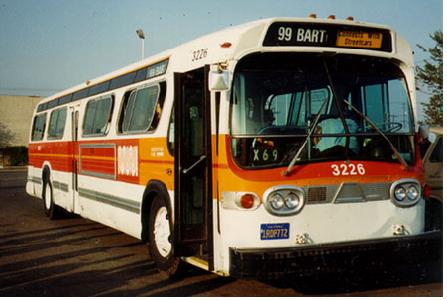
How to save Muni

22


Editors note: In this week’s paper, we offered a series of proposals for discussion at the community congress Aug. 14th and 15th. Here’s one that we couldn’t fit:

By Jerry Cauthen

San Francisco is a transit-first city, yet its bus system is perennially in crisis. Everyone knows Muni needs fixing—but how do we do it in a way that honors the needs of both drivers and riders, while deepening San Francisco’s commitment to sustainability and transit innovation? How do we maintain and improve service when Muni and the San Francisco Municipal Transportation Agency face deep budget deficits and service cuts on a regular basis?

Here are a few priorities that Muni advocates have identified:

1. The discussion around MUNI must include everyone–motorists, Muni drivers and riders, neighborhood groups, business people, labor groups, low-income people, communities of color, seniors, youth and the disabled. 

2. Muni drivers should be encouraged and empowered to take an active part in the discussion.  In order to creatively address Muni’s operating problems, we must tap into the knowledge and experience of those on the front lines driving our buses.

Accountability, reasonable work rules and good performance are essential. While changes to the current work rules and practices deserve consideration, it must be recognized that Muni drivers have difficult jobs and important responsibilities that warrant good pay and proper respect—from both Muni riders and SFMTA Management.

3. An outside financial audit of the SFMTA should commence immediately.  The audit should include an analysis of how overtime is assigned, how other departments assess Muni for services, and how developer transit assessment fees and other revenues for Muni are assessed and collected. 

4. There’s been no management audit of the SFMTA since 1996.  Such an audit is long overdue, and should be performed as soon as possible.
Some other recommendations discussed at a Muni summit this spring:

A) Improving the flow of Muni Vehicles.  In September 2009, SFMTA Executive Director Nathaniel Ford supported the idea of conducting test programs to improve the flow of transit vehicles on congested streets such as Stockton Street and Columbus Avenue.  To date, there has been no follow through on this promise.  Action on this should proceed at once.

B) Priority for Light Rail Vehicles.  We must take steps to prevent trucks, automobiles, bicycles and pedestrians from slowing down light rail vehicles.  This would include pre-empted signals, signals in place of stop lights and traffic barriers, and eliminating the queues of automobiles that block the flow of light rail vehicles.  Similar steps would help facilitate the flow of buses: eliminating parking lanes on certain streets, limiting deliveries to off-peak hours and creating special parking zones for trucks.

C) Improved Customer Service. Buses will run faster and more smoothly with greater emphasis on getting riders to the back of the bus.  This would involve stationing rear door loaders to sell and collect tickets during peak commute periods. Conveniently located ticket vending machines would help speed up the loading process and allow passengers to pay fares with either credit cards or cash.
Funding and Costs

We all know that Muni must be adequately funded and efficiently run – but how?

To boost Muni use and revenues, the city can:

Work with large and small employers, apartment owners, residential developers and Municipal permitting authorities to provide incentives for people to use Muni Fast Passes and/or TransLink. 
Create a moderately priced all-day pass, and a higher cost day pass also valid on ferries and commuter bus services. Along major commercial corridors, businesses and employers who benefit from Muni should help subsidize the system — for instance, through progressive impact taxes.

Increase parking meter fees/hours/days and garage taxing rates as appropriate.  Eliminate parking exemptions, discounted all-day parking (except for neighborhood protected parking) and all other special parking privileges.

These are just some of our ideas.  We invite you to attend the Community Congress to continue this important dialogue and draft your own recommendations on transit issues. 

‘Love Over 60’ adds wisdom to poetic desire

0

   
    It’s fair to say that a lot of Western love poetry is biased towards youth and the male perspective. You could blame the influence of the British Romantics, who for all their unquestionable genius were essentially a bunch of horny twentysomethings who discovered that eloquence could get them laid. You could trace the prejudice back to Renaissance sonneteers, to the Greco-Roman Classics, or even to the general patriarchal bent of our culture. Politics—identity politics included—are pretty inimical to art, and you’d be missing the point if you looked at the whole corpus of poems dealing with sex and desire and saw only a conspiracy to propagate male supremacy and ageism. Still, it doesn’t make you a philistine if you point out that female voices—especially the older ones—are sometimes excluded from this particular canon.
    Last Thursday’s reading at Moe’s books didn’t explicitly acknowledge these realities, but it didn’t exactly have to. The title of the new compilation from which the evening’s content was culled—Love Over 60: An Anthology of Women’s Poems (Mayapple Press, 126 pages, $16.95)—is tough to read as anything but a rebuttal to those who see erotic verse as a young man’s game. The poems themselves dealt with love in a variety of forms—we heard lots about sexual love, sure, but there were also plenty of lines dedicated to its maternal, aesthetic, and metaphysical cousins.
    The first poet who read was Ellery Akers, an occasional writer of fiction and self-described naturalist. Akers presented two pieces, each of which combined a biologist’s fascination with minute organic phenomena with a poet’s worshipful awe of nature. In “The Naturalist in Love,” her eroticism was frank and explicit, though it always arrived filtered through a scrim of natural metaphor. Her overall ethos is pantheistic, drawing no division between her desire for her partner and her all-encompassing love of the natural world. It was vibrant, zesty, smart stuff, but Akers did employ the occasional hackneyed image, especially when she explored the erotic potential—“slide its wet petals apart”– of flowers. 
    Akers was followed by Gail Entrekin, who dished out a rapid series of witty, slice-of-life vignettes. These pieces were charming, funny, and insightful, but they were hampered somewhat by their resolute literalism. There’s nothing that says a poem has to be obscure or packed with dense figurative language, but snappy lines are generally a poor substitute for truly arresting imagery. The exception was her closing poem “Recovery Room,” a shattering but ultimately hopeful portrayal of long-term illness.
    After Entrekin, Kathie Isaac-Luke, a Registered Nurse and the editor of Caesura literary journal, took the mike. Her poems were rife with choice language—the line “I cannot walk her to the stars that guide her” from the parental ode “Blame Aphrodite” really stuck in my head. Furthermore, “Alchemy,” her wistful, joyous paean to classic cinema, seemed the most deeply-felt and potentially the strongest piece read that evening. 
    Following that, things got a little darker.  The final three poets—Rosalie Nelson, Carol Wade Lundberg, and Ellaraine Lockie—expressed degrees of sorrow and anger that hadn’t been present in the preceding poems. This sometimes got a little heavy-handed, particularly in Lockie’s “Translation of a facelift.” She made up for it, though, with her wonderfully ambivalent dialogue “Wings Clipped,” which managed to combine an amusing intergenerational exchange with an overwhelming sense of existential dread. Wade Lundberg’s “Under a Thin Film of Ice” was similarly ambivalent, and ended up being one of the evening’s highlights.
    If the reading—and by extension the collection—had a unifying theme, it was experience. Taken together, the poems implied that a lifetime of love and loss doesn’t make the palate jaded, but instead makes it richer, allowing for an appreciation of subtle hues and undertones. There’ll always be a place in poetry for callow young men, but if Love Over 60 is any indication, perhaps they could benefit from occasionally listening to their elders. 
   

What DCCC questionnaires reveal about Adachi reform, sit-lie and marijuana

20

The DCCC makes its endorsements for the November election on August 11. And in preparation for that crucial endorsement, candidates filled out questionnaires that are posted online, providing fodder for those interested in Jeff Adachi’s pension reform, Mayor Gavin Newsom’s sit-lie ordinance, and the legalization of marijuana, amongst other measures.

But before we get to those issues, I have to admit I was a bit surprised to see that D. 10 candidate Malia Cohen, who has already secured the endorsements of Sally Lieber, Fiona Ma and Aaron Peskin, says on her DCCC questionnaire that she supports the death penalty.

Now, to be fair, advocating for or against the death penalty isn’t the duty of the Board of Supervisors. And I haven’t yet caught up with Cohen yet to clarify why she holds this stance, (or whether it was one big typo, though I somehow doubt it). So, I’ll be sure to update this post, once I have a chance to talk to Cohen, who was busy at yet another candidate forum, when I was writing this entry. UPDATE: Cohen says she does not support the death penalty, and that she inadvertently misanswered the question. (Thanks for clearing up the mystery, Malia, and being gracious about it in the process.)

I should mention that Peskin also endorsed D. 10 candidate Tony Kelly.

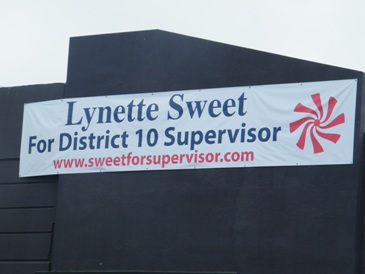
And I should also note that while D. 10 candidate Lynette Sweet’s questionnaire says she supports Jeff Adachi’s pension and healthcare reform, Sweet’s campaign says that’s not the case, pointing to how Sweet said at the Potrero Hill Democratic Club’s August 2 D. 10 forum that what Adachi did wasn’t a bad thing, but the way he went about it was.

I quoted Sweet saying those very words in a previous post, and Sweet’s campaign manager Shane Mayer told me that he forwarded what I wrote about that meeting to the DCCC to clarify Sweet’s position. But Mayer got testy when I asked him about the rent, or rather the lack of rent, that Sweet, who Mayor Gavin Newsom has already endorsed, appears to be paying for her campaign headquarters at 25 Division Street (at Rhode Island).

As Beyond Chron tells it, the deal looks more than a bit fishy, and appears to be bankrolled by the Visovichs, a family with Republican leanings that supported Mayors Willie Brown and Newsom in past election campaigns.

 Mayer tried to dismiss the Beyond Chron article as a “hit piece”.

“The article focuses on only one candidate,” Mayer said. “We’re paying fair market rate, and using only a small portion of a warehouse. When we moved in, we didn’t have lights.”

But Sweet isn’t the only D. 10 candidate to come under Beyond Chron’s fire in recent days: fellow D. 10 candidate Steve Moss also took flak for receiving $500 from Andrew Zacks, the landlord attorney famous for doing Ellis Act evictions.

While on the phone with Moss recently, I asked what he thought about Newsom’s sit-lie ordinance, Moss said he hadn’t made up his mind yet.

And in his DCCC questionnaire, Moss also waxes ambiguous on sit-lie. “There’s clearly a lack of civility in certain areas of the city,” Moss wrote. “And in Bayview-Hunters Point, youth loitering can create conditions that create violence. However, it’s not clear to me that sit-lie is an appropriate response to this issue, and that it won’t result in unintended consequences. For example, sidewalks in Bayview-Hunters Point are also often used for peaceful gathering of neighbors, which is community-building and non-threatening.”

Makes me wonder what Moss and the rest of the candidates think about City Attorney Dennis Herrera’s recent gang injunction in Viz Valley…

UPDATE: I should add here that termed-out D.6 Sup. Chris Daly has just endorsed legislative aide and D.6 candidate James Keys, whose DCCC answers I’ve included in my round up of some of the candidate responses to this year’s DCCC questionnaire. UPDATE: And for all the Glen “Anna Conda” Hyde supporters, my humble apologies for omitting your candidate’s positions in my first post on this issue:

Chiu’s non-citizen voting in School Board elections
Supportive of non-citizen voting:  Adachi, Sup. Michela Alioto-Pier and D. 2 challenger Janet Reilly, D. 6 candidates Glen “Anna Conda” Hyde, James Keys, Jane Kim, Jim Meko, Debra Walker and Theresa Sparks. D. 8 candidates Rafael Mandelman, Rebecca Prozan and Scott Wiener. D. 10 candidates Isaac Bowers, Cohen, Chris Jackson, Tony Kelly, Dewitt Lacy and Eric Smith.
Opposed: D.2 candidates Farrell and Berwick, D. 4 incumbent Carmen Chu, and D. 10 candidates Kristine Enea and Lynette Sweet.

Newsom’s ban on dual office holding

Supportive: Berwick, Farrell, Glen “Anna Conda” Hyde, Meko, Enea.

“Yes. Better distribution of power,” Anna Conda said.

Opposed: Adachi, Alioto-Pier, Reilly, Keys, Kim, Walker, Sparks, Mandelman, Sweet, Lacy, Kelly, Cohen, Wiener, Jackson, Smith and Prozan.
“This measure is the result of petty politics between the mayor and the Board,” Prozan, who contributed S100 to Newsom’s Lt. Governor campaign, famously wrote on her DCCC questionnaire.

Newsom’s Sit-Lie Ordinance
Supportive: Farrell, Alioto-Pier, Reilly, Chu, Sparks, Wiener and Sweet.
Opposed: Adachi, Berwick, Glen “Anna Conda” Hyde, Keys, Kim, and Walker. Mandelman and Prozan. Cohen, Jackson, Kelly, Lacy and Smith.

Adachi’s Pension Reform
Supportive: Adachi, Berwick, Meko, and Sweet
Opposed: Chu, Farrell and Reilly. Glen “Anna Conda” Hyde, Keys, Kim, Walker and Sparks. Mandelman, Prozan and Wiener. Cohen, Jackson, Kelly, Lacy and Smith.
No position, yet: Alioto-Pier.

Legalization of pot (Prop. 19)
Supportive: Adachi, Berwick. Glen “Anna Conda” Hyde, Keys, Kim, Meko, Sparks, and Walker. Mandelman, Prozan and Wiener. Cohen, Jackson, Kelly, Lacy, Smith and Sweet.
Opposed: Chu and Farrell

No position, yet: Alioto-Pier, Janet Reilly.

Hard to tell: Moss.

“I philosophically support this measure but am concerned that its economic and social implications haven’t been carefully considered, nor its interaction with federal law,” Moss wrote on his DCCC questionnaire.

Sparks for her part just clarified that she mistakenly answered “No” on two DCCC questionnaire items: “Do you opposeprivatization of essential government services,” and “Will you oppose anti-worker initiatives that seek to undermine the ability of union leaders to carry out will of members and engage in political activities.”

“I meant to answer yes, as I explained at my DCCC interview,” Sparks said. “I was confused by the double negatives.”

While she was on the phone, Sparks also admitted that the pace on the campaign trail is getting intense with forums and meetings every night.

“David Campos, who has been a good friend since we were both on the Police Commission, recently told me, ‘win or lose, you need to schedule a few weeks off in November when the election is over,’” Sparks said.

Campos is right. To all the candidates on the campaign trial, here’s wishing you lots of energy and calm in the weeks to come. And see you at the DCCC forum.

<!–[endif]–>

Selective electives

0

caitlin@sfbg.com

CAREERS AND ED Heed we now Mark Twain: “I never let my schooling interfere with my education.” Holler, MT — that degree on your wall don’t mean a thing if it ain’t got that swing. Why not finish out your coldest winter with an unexpected course in a new — and maybe even marketable — skill?


INTRODUCTION TO FIELD ORNITHOLOGY

“Isn’t that a magnificent sulfur-bellied flycatcher!” Joe Morlan has been teaching this City College course for more than 30 years, and his weekend field trips are sure to increase your feathered friend-spotting wingspan.

Sept 14–Oct 26, 7–9:30 p.m., $130–$140. Marina Middle School, 3500 Fillmore, SF. (415) 561-1860, www.ccsf.edu


INTRODUCTION TO ANIMATION

What kid doesn’t live in her own cartoon strip? Sirron Norris (painter of sardonic blue bears and “Victorion,” the gentrification bot) empowers young people to give birth to their illustrated worlds at his Mission District studio and gallery.

Aug 26–Sept. 16, 4–5 p.m. $100. Sirron Norris Studio and Gallery, 1406 Valencia, SF. (415) 648-4191, www.sirronnorris.com


VIDEO ACTION SKILLSHARE

Calling all activists: up the evocation of your iPhone captures, share production tips with camerapeople-in-arms, even make your footage into an episode of Berkeley’s BeTV at this East Bay Free Skool offering.

Third Thursdays, 7–8:30 p.m., free. Berkeley Community Media, 2238 Martin Luther King, Berk. eastbayfreeskool.wikia.com


BELLY DANCE FUNDAMENTALS

Grab your zils (scientific name: handheld clicky-clackers) and turn your paunch to power in this six-week course, which starts at hand floreos and undulates up to the shimmy step.

Tues and Fri 6:30–-7:30 p.m., Sat 11 a.m.–12 p.m., $10 drop-in, $48 for six classes. Fat Chance Belly Dance, 670 South Van Ness, SF. (415) 431-4322, www.fcbd.com


YOUTH SUPER SCULPTURE

The perfect class for young’uns to get started on their fire arts career — eight to eleven-year-olds can enjoy this Crucible primer on the joy of creative building.

Sept 20- Oct 26, 4–6 p.m. $240. The Crucible, 1260 Seventh St., Oakl. (510) 444-0919, www.thecrucible.org


HONEYBEE BASICS

Their hives were recently the victims of a distressing insecticide attack — but the urban agriculturists at Hayes Valley Farm soldier on in their mission to educate peeps on the beauty of urban beekeeping.

Sept 20, 10 a.m.- 12 p.m. $20–$40 sliding scale. Hayes Valley Farm, 450 Laguna, SF. www.hayesvalleyfarm.com


EXTREME STRETCHING

It’s the fast track to that contortionist career you’ve always dreamed about! A crash course in control, stability, and limber limbs at SF’s premier spot for circus learnin’.

Sept.8–Dec 8, 5:30–7:30 p.m., $480. Circus Center, 755 Frederick, SF. (415) 759-8123, www.circuscenter.org

Stage listings

0

Stage listings are compiled by Guardian staff. Performance times may change; call venues to confirm. Reviewers are Robert Avila, Rita Felciano, and Nicole Gluckstern. Submit items for the listings at listings@sfbg.com.

THEATER

OPENING

Don’t Ask New Conservatory Theatre Center, 25 Van Ness; 861-8972; www.nctcsf.org. $24-36. Opens Fri/13, 8pm. Runs Wed-Sat, 8pm; Sun, 2pm. Through Sept. 19. New Conservatory Theatre Center presents the West Coast premiere of Bill Quigley’s play about the affair between a Private and his superior.

Skin Tight CounterPULSE, 1310 Mission; www.counterpulse.org. $20 ($35 for gala opening). Opens Thurs/12, 8pm. Runs Thurs-Sat, 8pm. Through August 28. Rapid Descent Physical Performance Company presents the SF premiere of Gary Henderson’s play.

BAY AREA


ONGOING

Abigail: The Salem Witch Trials Temple SF, 540 Howard; www.templesf.com. $10. Thurs/12, August 19, 26, 9pm. Through August 26. Buzz Productions, with Skycastle Music and Lunar Eclipse Records, presents an original rock opera based on the Salem witch trials.

Agnes the Barbarian EXIT Theatre, 156 Eddy; 289-6766, www.thunderbirdtheatre.com. $20-25. Thurs-Sat, 8pm. Through Sat/14. Most parents get annoyed when their offspring show signs of coarsening, particularly during those awkward teenage years, but not Conan the Barbarian (Jason Harding), oh no. Quite to the contrary, Conan despairs over his teenage daughter’s bookish ways and socialist inclinations, and determined to set her on the path to barbarism—partly out of fatherly pique and partly because his mind is being controlled by his evilly bureaucratic Grand Vizier (Dana Goldberg)—he sends her on a hero’s quest to kill the monstrous Gargranox (Cary Klataske). Clad in the requisite fur-and-chainmail bikini ensemble, young Agnes (Jaime Lee Currier) is aided on her journey by a pair of "Holy Grail"-styled peasants The Bastards (Jason Pienkowski and Mary Bishop), and the banished court magician Shitake (Tavis Kammet) plagued by the dread "curse of exposition". During her unwilling pursuit of her barbarian birthright—Agnes faces off with a 5,000 year-old sorceress, acquires an "enchanted sword", confronts a monster, avoids assassination, and rescues her father’s kingdom from the dread influence of Gygax’ 15-point takeover plan. Penned by Jason Harding, a core-member of the Thunderbirds for 10 years, and author of the ribald pirate farce "Lusty Booty," and directed by 6-year T-bird veteran Shay Casey. (Gluckstern)

*Streetcar Named Desire Boxcar Playhouse, 505 Natoma; 776-1747, www.boxcartheatre.org. $15-25. Wed-Sat, 8pm. Through Sept. 4. It’s no small feat, creating a sultry southern summer circa 1940’s smack-dab in the middle of a typically frosty San Francisco summer circa right here right now, but Boxcar Theatre rises admirably to the challenge. Rebecca Longworth’s creative staging of Tennessee Williams’ "A Streetcar Named Desire" includes musical interludes, ghostly apparitions, and the clattering of a cleverly impersonated streetcar that shakes the walls of Matt McAdon’s simply-detailed tenement flat and the spirits of one Blanche DuBois (Juliet Tanner), while the deliberately-muted lighting (Stephanie Buchner) and period-appropriate sound (Ted Crimy), add the appropriate layers of southern discomfort to the unfolding action. Especially captivating to watch are the performances of supporting characters Stella (Casi Maggio) and Mitch (Brian Jansen), who seem to almost helplessly orbit the hot flame of Stanley Kowalski’s sun (Nick A. Olivero) and the grimly flickering satellite of Blanche’s waning moon. As he does in "Cat on a Hot Tin Roof," Seth Thygesen stands in for one dearly-departed, in this case Blanche’s old beau, Allan Gray, whose abrupt suicide de-magnetized her moral compass. And in addition to a saucy turn as next-door neighbor Eunice, Linnea George tracks the fractured emotions of the main characters on her mournful violin. (Nicole Gluckstern)

Dead Certain Royce Gallery, 2901 Mariposa; (866) 811-4111. $12-28. Thurs-Sat, 8pm. Through Sat/14. Expression Productions presents a psychological thriller by Marcus Lloyd..

Divalicious New Conservatory Theatre Center, 25 Van Ness; 861-8972, www.nctcsf.org. $22-28. Wed-Sat, 8 p.m.; Sun, 2pm. Through August 22. Leanne Borghesi takes on the music of legends ranging from Garland to Midler.

Gilligan’s Island: Live on Stage! The Garage, 975 Howard; (800) 838-3006, www.brownpapertickets.com. $15-20. Sun, 8pm. Through August 29. Moore Theatre and SAFEhouse for the Performing Arts brings the TV show to the stage, lovey.

Peter Pan Threesixty Theater, Ferry Park (on Embarcadero across from the Ferry Bldg); www.peterpantheshow.com. $30-125. Tues and Thurs, 7pm; Fri-Sat, 7:30pm (also Sat, 2pm); Wed, 2pm; Sun, 1 and 5pm. Through August 29. JM Barrie’s tale is performed in a specially-built 360-degree CGI theater.

*Posibilidad, or Death of the Worker Dolores Park and other sites; 285-1717, www.sfmt.org. Free. Sat-Sun, 2pm; also Sept 6, 2pm; Sept 17, 8pm. Through Sept 17. It may have been just a coincidence, but it certainly seems auspicious that the San Francisco Mime Troupe, itself collectively run since the 1970’s, would preview their latest show Posibilidad on the United Nations International Day of Cooperatives. The show, which centers around the struggles of the last remaining workers in a hemp clothing factory ("Peaceweavers"), hones in on the ideological divide between business conducted as usual, and the impulse to create a different system. Taking a clip from the Ari Lewis/Naomi Klein documentary The Take, half of the play is set in Argentina, where textile-worker Sophia (Lisa Hori-Garcia) becomes involved in a factory takeover for the first time. Her past experiences help inform her new co-workers’ sitdown strike and takeover of their own factory after they are told it will close by their impossibly fey, new age boss Ernesto (Rotimi Agbabiaka). You don’t need professional co-op experience to find humor in the nascent collective’s endless rounds of meetings, wince at their struggles against capitalistic indoctrination, or cheer the rousing message of "Esta es Nuestra Lucha" passionately sung by Velina Brown, though in another welcome coincidence, the run of Posibilidad also coincides with the National Worker Cooperative conference being held in August, so if you get extra inspired, you can always try to join forces there. (Gluckstern)

Sex Tapes for Seniors Victoria Theatre, 2961 16th; (800) 838-3006. $20-40. Fri-Sat, 8pm; Sun, 2pm. Through August 22. An original musical by Mario Cossa, with a cast of characters between the ages of 52 and 75.

Show and Tell Thick House, 1695 18th St; (800) 838-3006, www.symmetrytheatre.com. Thurs-Sat, 8pm; Sun, 5:30 pm. Through August 22. $25. Symmetry Theatre Company presents a play by Anthony Clarvoe.

This Is All I Need NOHspace, 2840 Mariposa; www.mugwumpin.org. Thurs-Sun, 8pm. Through Sept. 4. $15-20. The kinetic company Mugwumpin presents a new show.

This World Is Good Phoenix Theater, 414 Mason; 913-7272, www.sleepwalkerstheatre.com. Thurs-Sat, 8pm. Through August 28. $18-24. The 1990s are giving way to a millennial moment of anti-climax known as Y2K, but the anxiety and dread are real, and the bloodiest century in human history looks poised to be outdone by the doom-drones of the next. Making at least academic sense of all that angst is Ally (Dina Percia), a brilliant young Latina writing her doctoral dissertation on Grunge and its landscape of youth alienation. Her best friend and occasional lover is a smitten young English prof (Damian Lanahan-Kalish), a dork with a degree and the pet name Scrotum Face. But as she delves into the world of ideas, Ally loses track of her family: single mother Emmy (Tessa Koning-Martinez) and, more tragically, talented but emotionally tortured younger brother Sam (Shoresh Alaudini), whose battered mind and compassionate heart craft a graphic story around a new "super hero" with no costume, no parallel identity, and indeed no special powers. When her family collapses, Ally reassembles the pieces from a new vantage, outside the ivory tower, where she makes art from a sort of crystalline "ordinariness" that complements her brother’s all-too-ordinary super hero. This World Is Good is the opening gambit in a new trilogy by local playwright J.C. Lee called This World and After, all being presented by Sleepwalkers Theatre this season. Artistic director Tore Ingersoll-Thorp helms a competently acted production, which helps lend Lee’s ambitious scope its tangible human proportions, though in truth the characters do not always feel fully drawn. There’s a fine monologue from Sam, both chilling and exhilarating, but also a proclivity throughout for awkwardly poetical speeches over dialogue. Still, there’s subtlety and real humor in the best parts, and enough here to want to see more. (Avila)

What Mama Said About Down There Our Little Theater, 287 Ellis; 820-3250, www.theatrebayarea.org. $15-25. Thurs-Sun, 8pm. Through August 28. Writer-performer-activist Sia Amma presents this largely political, a bit clinical, inherently sexual, and utterly unforgettable performance piece.

BAY AREA

Blithe Spirit Live Oak Theatre, 1301 Shattuck, Berk; (510) 649-5999, www.aeofberkely.org. $12-15. Fri-Sat, 8pm; also August 19, 8pm. Through August 21. Actors Ensemble of Berkeley essays the eternal Noel Coward comedy, about a (naturally) Coward-esque writer (Stanley Spenger) who for the purposes of research and any passing amusement it may provide invites over a celebrated medium (an amusingly puffed-up Chris Macomber), only to have her inadvertently summon the ghost of his ex-wife (Erin J. Hoffman), who mischievously begins to drive a wedge between him and his new wife (Shannon Veon Kase). Director Hector Correa’s not-always-fitting casting choices contribute to a drearily perfunctory tone at the outset, which makes the first scenes somewhat painful going. However, Spenger proves admirably dry and restrained in the lead, and things pick up measurably with the arrival of the titular ghost, played with playful, bounding energy and notable grace by Hoffman. (Avila)

*East 14th: True Tales of a Reluctant Player Marsh Berkeley, 2120 Allston, Berk; www.themarsh.org. $20-50. Dates and times vary. Through Sept 12. Don Reed’s solo play, making its Oakland debut after an acclaimed New York run, is truly a welcome homecoming twice over. (Avila)

*Machiavelli’s The Prince Berkeley City Club, 2315 Durant, Berk; (510) 558-1381, www.centralworks.org. $14-25. Thurs-Sat, 8 p.m.; Sun, 5pm. Through August 22. Set in an intimate salon-space in the Berkeley City Club, this stage adaptation of one of the most famous documents on political power ever written gains a certain conversational quality. In fact, the script, penned by Gary Graves, is really just one long conversation—an imagined encounter between Nicolo Machiavelli and the man he dedicated his treatise to, Lorenzo de Medici II. Machiavelli (Mark Farrell) has been called by de Medici (Cole Alexander Smith) to possibly regain favor in his court after a long banishment. With him he brings a notebook of his musings on gaining and retaining political power, which he bestows on Lorenzo for him to read. As the Duke of Florence, Smith plays his character with the measured dignity and watchful countenance of a career mobster. He protests the extremism of his former teacher’s philosophy of rule even as he is casually seduced by its implications. Farrell’s Machiavelli tries to play his position with calculated Mephistopheles cool. However, he cannot escape the obvious taint of his own failures, and eventually, for all his talk of power, he is revealed to be ultimately powerless, though his ideas remain with de Medici, long after he himself is let go. (Gluckstern)

The Norman Conquests The Ashby Stage, 901 Ashby, Berk; (510) 841-6500, www.shotgunplayers.com. $20-25. Dates and times vary. Through Sept. 5. Shotgun Players presents Alan Ayckbourn’s comic trilogy.

The Pirates of Penzance Mountain View Center for the Performing Arts, 500 Castro, Mountain View; 227-4797, www.lamplighters.org. $17-50. Sat/14, 8pm, Sun/15, 2pm. Lamplighters presents Gilbert and Sullivan’s swashbuckling classic.

The Taming of the Shrew Forest Meadows Amphitheatre, 1475 Grand, San Rafael; (415) 499-4488, www.marinshakespeare.org. $20-25. Fri-Sun, 8pm; also Sun, 4pm and 5pm. Through Sept. 26. Marin Theatre Company presents a swashbuckling version of the classic.

PERFORMANCE/DANCE

Charlie Ballard Purple Onion, 140 Columbus; www.brownpapertickets.com. Wed/11, 8:30pm. $10. The gay comedian records a show for DVD at Phyllis Diller’s old stomping grounds.

"Bare Bones Butoh Presents: Showcase 18" Studio 210, 3435 Cesar Chavez; 821-7124. Fri/13-Sat/14, 8pm. A pair of benefit performances for members of the butoh and performance art communities.

"City Solo" Off-Market Theater, 965 Mission; www.cafearts.com. Sun/15, 7pm. $15-20. Solo performances by Coke Nakamoto, Jawad Ali, Enzo Lombard, and Martha Rynberg.

Bobcat Goldthwait Cobb’s Comedy Club, 915 Columbus; 928-4320; www.cobbscomedyclub.com. Fri/13-Sat/14, 8 and 10pm. $20.50. The comedian and director hits town.

BAY AREA
"New Works Festival" Lucie Stern Theatre, 1355 Middlefield, Palo Alto; (650) 463-1960, www.theatreworks.org. Dates and times vary. Through August 22. $15-25 ($75 for festival pass). TheatreWorks presents its ninth annual festival, with Kevin Merritt and Kevin So’s Great Wall, Jeff Hughes’ Red Clay, and readings.

On the Cheap listings

0

On the Cheap listings are compiled by Paula Connelly. Submit items for the listings at listings@sfbg.com.

WEDNESDAY 11

Ethical Borders  Modern Times Bookstore, 888 Valencia, SF; www.mtbs.com. 6pm, free. In his new book, Bill Ong Hing examines the relationship between NAFTA, globalization, and undocumented migration and discusses policy options for immigration control, including opening the U.S./Mexican border while improving the conditions that give people incentive to migrate.

THURSDAY 12

“What Cannot Be Taken Away” SOMArts Cultural Center, 934 Brannan, SF; (415) 863-1414. This new exhibition titled, “What Cannot Be Taken Away: Families and Prisons Project,” consists of eight collaboratively designed and created portraits that resulted from creative dialogue between Bay Area youth who have incarcerated parents and fathers who are currently incarcerated in San Francisco jail.

FRIDAY 13

American Craft Council Show Herbst and Festival Pavilions, Fort Mason Center, Laguna at Beach, SF; 1-800-836-3470. Fri. 10am-8pm, Sat. 10am-6pm, Sun. 10am-5pm; $5-$12. Check out crafts made by over 250 artists from around the country, an AltCraft exhibit featuring upcycled jewelry, “trashion”, and eclectic handmade pieces, an Etsy craft bar, wine tastings, and more for DIY enthusiasts and craft lovers alike.

“New Frequencies Unplugged” Grand Lobby, Yerba Buena Center for the Arts, 701 Mission, SF; (415) 978-2700. 6pm, free. Part of YBCA’s Thursday and Friday Art Tap happy hours, this week’s party invites attendees to stroll through the galleries while enjoying live jazz from the Nice Guy Trio, playing original compositions representing folk traditions from around the globe.

SATURDAY 14

“Color en el Barrio” Mission Cultural Center for Latino Arts, 2868 Mission, SF; (415) 643-5001. 5pm, free. Learn about the challenges that graffiti artists face when trying to transition from tagging to creating murals that serve a public function at this panel discussion with celebrated urban artists Francisco “Twick” Aquino, Jonathan Brumfield, Jet Martinez, and Marina “Mincho” Perez-Wong. All panelists have participated in the StreetSmARTS program, which connects urban artists with private property owners to create vibrant murals and reduce vandalism.

DIYbca Yerba Buena Center for the Arts, 701 Mission, SF; (415) 978-2787. 9pm, free. This TechnoCRAFT inspired, do-it-yourself night highlights the Bay Area’s pioneering brand of homemade, homespun crafting weirdness by inviting participants to create their own instruments, customize their own shoes with Mrs. Vera’s Sole Makeover, create stencils with public artist Jeremy Novy, and more.

Make Piñatas! Flax Art and Design, 1699 Market, SF; (415) 552-2355. 1pm, free. Get ready for your next fiesta at this workshop where you can learn to make your own piñata out of tissue and balloons. Supplies provided.

Sea Turtle Benefit Art Show 10 Arkansas, SF; www.seaturtles.org/artshow. Noon-6pm, free. Fifteen fine artists and craftspeople will exhibit work available for purchase at a silent auction to benefit the Sea Turtle Restoration Project. Show to feature on-site artisan food vendors, music performances, and presentations throughout the afternoon.

Sideshow Happening Root Division Gallery, 3175 17th St., SF; (415) 863-7668. 7pm, $5-$20 sliding scale. Celebrate the link between conceptual art and carnival at this exhibit featuring stand-up comedy, glass eating, lectures, living sculpture, noise music, snake charming fantasy travel, film, slideshow, dance, and more from Root Division Artists, artists from their Adult Ed program, and other performers.

Tomato Cooking Contest Omnivore Books, 3885a Ceasar Chavez, SF; (415)282-4712. 4pm, $5. Cook up an inventive dish that utilizes tomatoes from August’s fabulous tomato bounty and enter for a chance to win cash. Cut your dish into as many pieces as possible for judges and tasters. Free admission for all who enter a dish.

SUNDAY 15

Candlestick Park Antique Faire Candlestick Park, Hunter’s Point Expressway at Jamestown, SF; (510) 217-8696. 6am-3pm, $5-$15. Over 500 vendor booths filled with antiques and collectibles will be selling treasures all day at Candlestick Park. Food vendors will be available.

North Beach by Night Meet at Spec’s, 12 Saroyan Place, SF; www.sfcityguides.org. 7pm, free. There is plenty to do and see in North Beach during the day, but the most interesting things happen here by the light of the neon signs. Learn about this colorful neighborhood where food, culture, and history have intersected in many unexpected ways. Bring warm layers.

BAY AREA

Bike Church Manifesto Bicycles, 412 40th St., Oakl.; (510) 595-1155. 10:30am, free. Come one, come all to a non-religious community gathering for bike lovers featuring live music, brunch by Jon’s Street Eats, and lots of friendly people.

TUESDAY 17

Idiolexicon Rancho Parnassus, 132 6th St., SF; (415) 503-0700. 7pm, free. The new creative space, art gallery, café, and community gathering venue, Rancho Parnassus, is hosting the Idiolexicon poetry reading series featuring experimental poets Carrie Hunter, Della Watson, and Jessica Wickens.

One For None Space Gallery, 1141 Polk, SF; (415) 377-3325. 7pm; $10, includes copy of book. Attend the launch for m.g. martin’s first book of poems featuring performances by spoken word poet Charlie Getter, fiction writer Alia Volz, comedian Janine Brito, music performances by Jess Silva and Andrew Paul Nelson as HoneyBaby, and DJ Benito spinning funk, dub-step, and more.


Ideas that work: a plan for a new San Francisco

6

OPINION San Francisco is a city of tremendous riches and problems — a locus of wealth, inequality, innovation, creativity, and sometimes stifling resistance by political and economic power brokers. It’s time to break through. We have the ability, and opportunity, to create a whole new set of economic, social, and political relationships between people and government. On everything from municipal banking, to Muni reform, to public-controlled sustainable energy production and community-driven budgeting, we have a flood of ideas from thinkers and activists across the city.

The Aug. 14-15 Community Congress at the University of San Francisco will focus on turning those ideas into a political platform the city can implement. Last week, we described the vision; this week, we offer some proposals that will be discussed at the event; following the event, others will be posted at sfbg.com.

The event runs Aug. 14 from 9 a.m.–5 p.m. and Aug. 15 from 9 a.m.–1 p.m. at USF’s McLaren Conference Center. For information, go to www.sfsummitcongress.wordpress.com. (Karl Beitel and Christopher Cook)

1. A MUNICIPAL BANK


San Francisco is rich — it has $16.1 billion in assets, with a net worth of $6.5 billion, according to the city treasurer. With a little maneuvering and political will, roughly a half-billion of that money could be devoted to creating a municipal bank: a fiscally solvent, federally insured economic engine that would invest in community development projects serving underfunded activities and endeavors, providing significant economic and social benefits to the residents of San Francisco.

With its own public bank, San Francisco could begin to fund and promote more community-centered forms of economic development. Worker co-ops, for instance, could get loans for projects that are socially beneficial and economically viable. The bank could also help generate new homegrown industries that produce both revenue and social value to the city. This would help democratize the city economy, giving financial muscle to community-based projects and neighborhood-serving businesses.

Over a period of three to five years, a modest portion of the city’s liquid investments can be transferred to create to the new bank. The bank could use this pool of capital to extend low-interest, long-term loans for projects located in San Francisco. The bank would offer a full spectrum of retail banking services, such as money market accounts, to attract additional deposits to supplement funds from the city.

A municipal bank has potential to grow into a major economic force in the city for financing community-centered development. With the right up-front commitment from the city, the total asset portfolio of loans and other investments would grow far beyond this initial public investment — representing a significant infusion of loan capital into currently underserved segments of the credit market in San Francisco.

The municipal bank would be a member-owned, federally chartered, and federally insured credit union. It would engage in rigorous vetting of loan applicants. But because the bank would not run as a profit-maximizing enterprise, loan officers would explicitly consider projects in light of their economic viability and potential contribution to the economic, social, and cultural well being of San Francisco.

Priority could, for instance, be given to loans for affordable housing development and community economic development. In particular, the bank could prioritize businesses and enterprises that represent alternative models of ownership such as worker co-ops and worker collectives, and smaller, community-serving, locally-based, social enterprise-type businesses.

To ensure that the bank’s lending activities reflect the need for more democratic modes of credit and finance, governance and oversight could include representation from social groups and constituents normally excluded from corporate governance. The bank’s member-owners would elect the board of directors.

Municipal bank funds would be completely separate from the city’s general fund, with strict firewalls imposed to assure that lending activities do not become intermingled in any way with the annual appropriations process.

By creating its own bank, San Francisco would be a national model for community-based development and economic democracy. It would be a national first, and has the potential to transform how cities think about local economic development. (Beitel)

2. HOUSING SAN FRANCISCO


Since the beginning of the dot-com boom, San Francisco has seen displacement of low-income families from rent-controlled housing in alarming numbers. Much of this displacement has been happening through conversion of small residential apartment buildings (between four and 12 units) into tenancy in common units. Small-site displacement tends to target seniors, disabled people, and working class families — and many of the units that were converted were, under rent control, de facto affordable housing.

In addition, over the past 15 years the city has lost 4,370 units due to Ellis Act evictions. At the same time, the city’s housing production model favors larger projects because of the economies of scale possible for new construction of big projects, with 70 or more units. While these projects are important in adding to the city’s affordable housing stock, sites to accommodate giant developments are in short supply.

So how do we address San Francisco’s chronic affordable housing crisis. First, stabilize low-income communities and preserve diverse neighborhoods by encouraging the city to invest in developing a small sites acquisition and rehabilitation program that could help nonprofits take over and operate affordable rental housing for low-income tenants. That property could also be converted to limited equity housing cooperatives and community land trust properties.

Next, the city should ban all TICs from becoming condos. The city can give landlords and speculators a choice: If you want your property to be eligible for condo conversion, with all the economic benefits that come with that designation, then you need to follow the process and abide by tenant protections in the condo law. If you want to ignore the condo law, then you’re stuck with a TIC.

To further protect renters, prior to sale of a renter-occupied unit, the city could require the owner to offer tenants the right to buy the unit, at a price based on the last best offer from a bona fide purchaser.

The Rent Board also needs reform. The panel, which oversees rent increases, consists of five members: two landlords, two tenants, and one homeowner. All are appointed by the mayor. We suggest three tenants, two landlords, and two homeowners — with the appointments split between the mayor and the supervisors.

There also must be a permanent, local source of funding for affordable housing development. A progressive increase in the real estate transfer tax could generate $45 million annually.

We further support Sup. Ross Mirkarimi’s proposed legislation that would protect resident’s rights during relocation and ensure their right to return to buildings that have been redeveloped. (Amy Beinart and the Council of Community Housing Organizations)

3. THE CRISIS IN CARE


More than any other American city, San Francisco relies on a network of faith- and community-based nonprofits to deliver critical health and human services to its poorest and sickest residents. More than 15,000 people are employed in this sector, which had a total budget of almost $800 million in 2000.

Health and human service nonprofits play a significant role in providing a substantial portion of the city’s services for seniors, people with AIDS, the homeless, children and youth, people with special physical and mental needs, and those who suffer from substance abuse.

Yet this critical sector finds itself bearing the brunt of cuts and reduction in services caused by the fiscal crisis facing San Francisco.

So what can we do? Here are seven suggestions.

First, conduct a coordinated citywide health and human services needs assessment driven by neighborhoods and communities.

Second, working with service users, service providers, and city employees, create a 10-year plan for health and human services that can guide yearly budget considerations.

Third, as the city implements the 2009 ballot measure that calls for a two-year budget cycle informed by five-year financial plans, require department heads and commissions to include the perspective of professional service providers and service users, including a standards analysis plan and a narrative about the impact on services.

Fourth, open a dialogue with the foundation community on addressing the changing needs of the nonprofit human services community, including community needs, accountability, and funding cycles.

Fifth, depoliticize the request-for-proposals (RFP) process by moving it out of city departments and into the Controller’s Office.

Sixth, require city departments that contract with nonprofit health and human service providers to complete their implementation of the recommendations to streamline the city’s contracting and monitoring processes approved by the 2003 City Nonprofit Contracting Task Force, and ensure that current procedures and processes are consistent with those recommendations.

And seventh, preserve services for the most vulnerable San Franciscans by focusing on revenue solutions to the city’s ongoing structural budget deficit, including November 2010 campaigns to increase the hotel tax and the real property transfer tax. (Debbi Lerman, Human Services Network)

4. BUILDING WORKER COOPERATIVES


Although these are hard times, there’s an opportunity for San Francisco to realize a new model of economic sustainability — by supporting worker cooperatives.

The worker cooperative model is a business form well-suited to the diverse needs of urban areas and is already viable in a broad variety of sectors including manufacturing, service, and retail. A key aspect of worker cooperative development is that its goal is not just the creation of jobs; it’s also about making business ownership accessible.

An inspiring new model of economic development is currently taking place with the Evergreen Cooperatives in Cleveland. In an ambitious effort, anchor institutions such as the local universities, hospitals, and the City of Cleveland have established procurement agreements with developing worker cooperatives rooted in the struggling urban communities of Cleveland (where unemployment rates are as high as 25 percent). The goal is to redirect the estimated $3 billion that these anchor institutions spend on goods and services toward worker cooperatives in the communities where these institutions are located. The first two business models underway are a commercial laundry service and a solar installation company.

There’s also a lot of inspiring work already being done by the worker cooperative community in the Bay Area. The Arizmendi Association continues to develop new worker-owned bakeries despite the economic recession. This fall, Arizmendi will launch its second SF location in the Mission District, creating new jobs and opportunities for local residents to have ownership over their work. Rainbow Grocery and Other Avenues are two extremely successful, long-lasting worker-owned grocery stores in San Francisco.

The city ought to officially recognize the worker cooperative model as both viable and preferable, and include it in the city’s various efforts of economic development. And city officials should take a leadership role in reimagining what a vibrant economy could look like and begin to promote worker cooperatives as central to that vision. (Poonam Whabi, Rick Simon, Steve Rice, Inno Nagara, and Nadia Khastagir)

Chiu left out of Gascon’s Community Ambassadors loop

2

SFPD Chief George Gascon kicked off today’s press conference about a Community Ambassadors program on the Third Street corridor by saying that it’s a grassroots pilot.

“This is not a police program, it’s a community program,” Gascon said, as he introduced Adrienne Pon from the Mayor’s Office to speak about what is being framed as a trailblazing effort to address violence on public transit at a time when money is tight all around.

Board President David Chiu, Sups. Carmen Chu, Sophie Maxwell and Eric Mar, and Chinese Chamber of Commerce consultant Rose Pak were also in attendance and everyone was all smiles and put on an apparent show of solidarity for what appears to be a desperately needed program

But Chiu did not know that the press conference was happening, when I called him last night for details. I’d assumed that he would be in the loop as the Board President and the most visible of the city’s top Asian American political leaders. But as Chiu confirmed today, he only was briefed a few hours before it took place.

Asked what was going on, Chiu waxed diplomatic.
“As you know, I didn’t know about it yesterday when you called,” Chiu said. “So, when I heard about it, I called the Chief and he sent the information. I’m happy this is happening.”

Oddly, when I called the SFPD this morning to confirm that today’s press conference was happening, I was asked who had told me about it. By then, I also knew that D. 10 candidate Marlene Tran was going to be speaking at the press conference. And while it’s great that Tran is an advocate for public safety programs, it’s weird that a candidate on the November ballot was in Gascon’s press conference loop, when Board President Chiu was not.

“We are in a neighborhood with serious public safety concerns,” Chiu told reporters today. “The issues that come from one of our ethnic communities are of concern for us all.

“We are working with the Mayor’s Office and the Chief,” Chiu continued, noting that the Board has been working hard to restore funding for violence prevention programs and to ensure there is funding for a new program for translation services.

“A multi-ethnic program is the type of program we need to move the healing process forward,” Chiu said, thanking the SFPD and the District Attorney’s Office for working to help victims of violence get help and translation services.

Sup. Maxwell talked about how the Ambassadors Program will be good for seniors, young people and very very young people.
“We need to make sure we continue these kinds of programs,” Maxwell said.

Sup. Eric Mar thanked AT& T for providing cell phones to the 12 outreach workers who have been trained as Community Ambassadors.
And Pon of the Mayor’s Office promised that this would be the first of many efforts to address public safety concerns.
‘There is no place for violence in the community,” Pon said. “Any time anyone gets hurt, it rips a hole in the fabric of society. It’s not just the recent acts of physical violence and threats against some of our residents. No one should have to contend with being spit upon and name-calling and threats.”

Thanking Sharen Hewitt, Rose Pak and “the courageous community members who came forward,” Pon said the pilot program will last until mid-September and will focus on the Number 9-San Bruno bus and the T-Third line. Funding is coming from the city’s general fund and federal job stimulus funds.

“Unfortunately, those funds are going to end in September, so we’re looking for funding from the corporate community,” Pon said, referring to AT&T.

She described the Community Ambassadors program as a “non-law enforcement presence.”
“People can get along regardless of their cultural and linguistic differences,” Pon said.

AT& T California President Ken McNeely talked about his company’s “long and storied history”, noting that the first transcontinental call happened over 100 years ago and involved a call from San Francisco’s Chinatown to New York City.

“We’re in the business of really connecting people,” McNeely said.

Sup. Carmen Chu said the pilot program is the beginning of efforts to build community across ethnic lines.
“It starts to sends a message about what we want to accomplish,” Chu said.
“Crime is not something we want to see tolerated,” Chu continued.

On August 3, the Board considered legislation that Chu authored to implement higher penalties for crimes on and around Muni. Like the Community Ambassadors program, Chu’s legislation came in response to recent attacks on Asian Americans by African-American teens. In one case, a group beat a 57-year-old woman then pushed her onto the tracks. In another, an 83-year-old man died in the hospital after he was assaulted.

If passed, Chu’s legislation would increase the penalties for aggressive pursuit and loitering while carrying a concealed weapon to $1,000 if the crime occurred on or around MUNI (as opposed to $500 for the same crime committed elsewhere.) The Board also recommended that juveniles convicted of these crimes be given community service or in-home sentences instead of probation or juvenile hall.

Police Commission President Dr. Joe Marshall was also on hand today to voice his enthusiasm for the Community Ambassadors pilot.
“This is pretty cool,” Marshall said. “We got a model. I don’t know if any other cities are doing this, but they should be. I commend the ambassadors for being involved.”

And D. 10 candidate Marlene Tran said the program represented an opportunity to work “for peace and harmony.”
“This is an auspicious occasion,” Tran said, noting that there would be “double happiness” in the Asian American community over two community hubs, one in Viz Valley, the other in the Bayview.
“We encourage more collaboration amongst our community,” she said.

Rose Pak, consultant to the Chinese Chamber of Commerce, hinted that she would be squeezing more money out of AT&T.
“I knew we had a problem, and I knew who to go to,” Pak said, noting that she wasn’t not going to let AT&T “get away with pilot support.”
“I expect them to write a big check,” she said.

Pon told reporters that the Community Ambassadors speak a total of seven languages: English, Cantonese, Mandarin, Vietnamese, Spanish, Samoan and Hawaiian.

But when reporters asked how City Attorney Dennis Herrera’s newly announced gang injunction against two warring street gangs, the Down Below Gangsters and Towerside Gang, in Viz Valley, might be compromised by the Community Ambassadors program, Gascon stepped forward.
“If thoughtfully implemented, gang injunctions can be a powerful tool,” Gascon said, noting he believes the Community Ambassadors will be a model that “we’d like to take to other neighborhoods.”

But how can 12 people armed solely with AT&T cell phones and fluorescent yellow jackets tackle what seems primarily to be youth violence against Asians? And what will happen in six weeks when the pilot program’s funding dries up?
“For the past two weeks, and continuously until mid-September, they are going through training at the SFPD and the MTA,” Pon said, noting that some of this training involved cultural and linguistic competency training.

“We’re building a pilot,” Pon continued. “The phones are preprogrammed to speed dial the SFPD, and we recruited these 12 ambassadors from over a hundred candidates in the Jobs Now program’s census outreach team. So, they are used to working in public and are comfortable with working with individuals of diverse backgrounds and ethnicities.

Pon acknowledged that the pilot has a shoestring budget.
“We are seeking private and foundation funding, so I’ll be doing lots of grant writing,” Pon continued, noting that a permanent program would need “at least half a million dollar budget.”

Asked if the Mayor’s Office was kept in the loop about today’s event more than Chiu, Pon smiled.

“SFPD called the conference and we are all making sure that we are working together,” Pon said.

But AT&T’s Ken McNeely was happy to talk about his company’s efforts to provide cell phones for connecting with first responders.
“Public-private partnerships are critically important,” McNeely told the Guardian.
“We’ve made education one of our key pillars for giving back,” he said. “ For us all to do well, it’s going to take public private partnerships.”

Gods of Distortion: The Interviews (Part One)

1

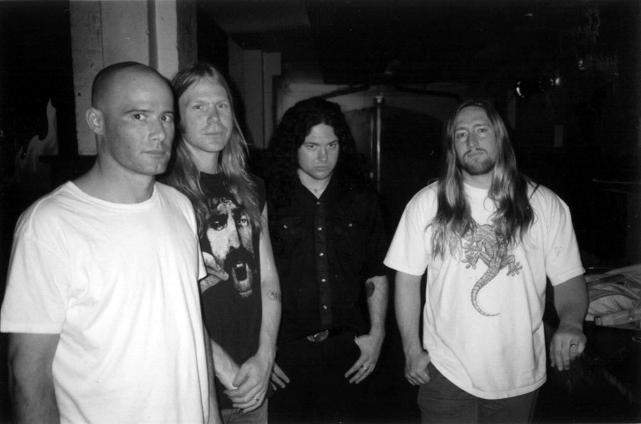
Check out Ben Richardson’s story on the Southern Lord Mini-Tour in this week’s Guardian. Here, he talks with Southern Lord founder and Goatsnake and SunnO))) guitarist Greg Anderson.

San Francisco Bay Guardian: So, first off, could you describe the planning of the Power of the Riff festival, and the Southern Lord Mini Tour that’s sort of spun off of that?

Greg Anderson: Well, last summer we did a Southern Lord event in Seattle with SunnO))), the other group that I play in. Basically it was two nights up there at this venue Neumo’s, and SunnO))) headlined each night, playing different sets each night. The support for both shows was Lord bands: we had Black Breath, Accused, Pelican, Earth, Trap Them. It was great! So the promoter of that venue – who put that on for us last year – called and asked if we wanted to do something similar this year – another Southern Lord event. So we were trying to put something together for that, and right around the same time, another good friend of mine told me that he’d been asked to put together something down here in Los Angeles, at the Echo and the Echoplex, and was I interested in getting involved in that. So with these things impending on the horizon, I thought I’d put together a decent line-up of Lord bands and make it happen.

Also, at the same time, I’d been talking with Mike Dean from C.O.C., who told me that they wanted to get out and play some shows with the three-piece line-up, the 80s Animosity line-up, and asked me if I was interested in working with them on that. So I thought I’d base it around them being the headliner and some of our bands on the bill as well. So that’s how it came together, and over the last couple months, I’ve been slowly putting together the pieces, getting other bands on board.

San Francisco just seemed like a natural choice, also, to do a show. San Francisco’s always been very supportive of Southern Lord and heavy music in general, so I thought “we’ve gotta do a show in San Francisco with this package – it’s gotta happen!”

SFBG: How long have you known Mike?

GA: He stayed at my house in 1986, when C.O.C. played in Seattle, actually, on the Animosity tour. It was an amazing show, and back then there were a lot of bands crashing on people’s floors. They still do, of course. I had a lot of bands stay at my house, and they were one of them. I met him then, but I didn’t reconnect with him as far as a working relationship goes until about 2003 – he was on the Probot record, as one of the vocalists on that, and I reconnected with him that way. A couple years later, he produced and recorded a record by this band on Southern Lord called Earthride.

It was kind of off and on. C.O.C.’s come to town, and I’ve talked to him and what-not. I have a lot of respect for his playing, over the years.

SFBG: Did the idea of playing the shows this summer precede the idea of releasing the seven-inch you guys are putting out, with the new track by that Animosity trio line-up?

GA: No, it all kinda came at the same time. I suggested it might be cool to have some new material, and he was really gung ho for doing that too, so we’re putting it together really for the shows that they’re playing – in time for the shows.

We thought it’d be cool. There are a lot of bands getting back together these days that rarely if ever have any new material, or really anything new. We had talked about that, and told me “hey, we’re actually playing a handful of new songs at these shows, so we’re really into writing new material.” So I said, “well, lets try to get something out there,” and that’s how the seven-inch happened.

SFBG: What’s your feeling on older, defunct, previously broken-up bands coming out of the woodwork? I saw an interesting comment of yours in another interview about the “Kyuss Syndrome,” in which a band isn’t a draw while they’re together, but if you give them some time, they build up this huge fanbase, whether or not they’re actually active and playing shows. What kind of ramifications do you see this trend having?

GA: First of all, I think it’s really great, actually. Some people kind of have a bitter attitude about it. They say “where were these people back in the day!” But the truth of the matter is that its really based around the internet, and the fact that information is so easily available, and cataloged and documented meticulously on the internet. You can find out a lot of stuff!

The other thing about the internet is that it’s like a trail, a path you can get on, on which you find one thing, and it leads to another thing, and it’s just a snowball effect. I think it’s just an amazing tool for discovery. It’s great, because there’s important music that’s been made, that before the internet, or without the internet, would have been much more difficult to learn about. Now, it’s easy, and I think people are getting turned on to all this stuff. The interest grows, and it makes it possible for these bands to come out and play to three to four times as many people as they did in their heyday.

It’s amazing! I’ve seen it in different genres. I saw At the Gates play in Los Angeles, and they sold out this huge place. I saw them in their first tour in the U.S., in the mid-nineties, and there were 50 people. It was the same thing with Saint Vitus. I saw them in the 80’s and it was a very select audience; very few people were there. Then, they come back, and they’re playing for three or four hundred people. I think it’s cool, I think it’s a real testament to the fact that this music is valid and incredible. It needs to be heard, and it needs to be given the respect that it’s due.

SFBG: Particularly in the case of At The Gates, there’s almost a sense of justice, in that a lot of people made a lot of money aping ATG when they weren’t around. Now they’re able to take advantage of a bunch of people who were introduced to the music through other bands that were playing an At the Gates style.

Do you think the proliferation of big summer metal festivals has had an effect on bands reforming? From what I can glean, that seemed to be an influence on Goatsnake getting back together, having this opportunity to play Roadburn, and you guys thinking “hey, why not?”

GA: I think there are two big factors: one – I won’t lie – the money is really attractive, especially when you get older, and you’ve got families, mortgages, etc. You can’t just crash on people’s couches – you’ve got responsibilities. When these festivals come along, or sponsorship from Scion or Converse comes along, it makes it so it can actually happen – the resources are there. And that’s something that wasn’t available – to my knowledge – in the 80s. These opportunities involving people with deep pockets who are willing to put it into underground music. It just didn’t exist. It definitely didn’t exist in the 80s and in the 90s, with the alternative music boom, stuff was available, but for underground metal and hardcore it wasn’t available.

Now, you’ve got these corporate sponsors who are putting together these insane events, and a lot of times – they’re free! Like the Power of the Riff fest that we’re putting on. We were able to get the funding to make it a free event. And at the request of the sponsor – they demanded that it be a free event – and we were like, “Wow! This is cool!” I think it’s an interesting time right now. There’s nothing like it. That wasn’t possible before. Like you’re saying with your question, it makes it so that these bands can get out there and do stuff. They have the resources to do that.

A lot of the bands I’ve seen are really kicking ass! I saw Saint Vitus a couple weeks ago, and it was mind-blowing – it was absolutely mind-blowing. They had it, man, they were killing. Eyehategod, same thing! These bands are charged! I saw Death Row play, which is like the original Pentagram – they were killer. It’s an interesting and cool time in music right now.

SFBG: Your bringing up Eyehategod and Death Row provides a good segue to my next question: does the doom metal genre have a particular affinity for a lot of interpollination between bands and musicians? For this kind of freewheeling collaboration, in which Goatsnake is tied into the Obsessed, and tied into SunnO))). I think of Eyehategod in the same way, with their connections to Down, and therefore C.O.C., and so forth. Do you think there’s something particular about doom-stoner metal that enables or inspires this kind of collaboration?

GA: I’ve never really thought about it before, to be honest with you. It’s just kind of a friendship or a brotherhood between the musicians, and kind of a desire to take things in different directions and do different things with it. You mentioned the Eyehategod thing, and that whole New Orleans scene is super, super-intertwined. Outlaw Order, Crowbar, Arson Anthem, and all these other bands that all share members. I think it’s really cool. Soilent Green. There’s tons of those bands, and I think it’s cool when bands can branch and do different side-projects. For me, as a fan, it’s interesting, and if you’re into the player or the players, and what they’re doing, it’s a real treat to have all these different outlets, rather than just doing one band, and one album a year.

I think it has to do with the punk rock roots that these people have and come from, and the DIY aesthetic of doing things on your own, and not really having to answer to a major label or someone telling you, “Well, you can’t do that, and you can only focus on this one band.” It’s kind of a shame, when you think about it. What if that spirit, and that mentality was happening with bands like Led Zeppelin and Sabbath? We’d have all these spin-offs and different projects that they were involved in, that were kind of pushing boundaries and doing different things. I think these [younger] people do what the hell they wanna do.

SFBG: Well you’re making my job easy, mentioning the punk rock ethos and the DIY ethos of these musicians, because my next question was about all the connections that exist between the 80s hardcore scene and the doom metal bands, and the doom bands that grow out of that scene and the musicians that play in hardcore bands and then do metal bands. I think I remember reading that you were a hardcore fan in your youth, and played in a more hardcore-oriented band. Do you have any insight into how those connections came to be? Stylistically, the types of music have some serious differences, and I know that at particular points in history, there was a lot of animosity between people who like their music fast and those who like it super-slow. Is there anything you can point to that speaks to the connection between those two worlds?

GA: I’m not sure I can explain or pinpoint why that’s a phenomenon, but you’re definitely right. What I was thinking when you were asking the question – I was thinking about Black Sabbath, because I think they’re one of those bands that everyone likes, and there are a couple hardcore bands like that too, like the Cro-Mags, and Bad Brains. Everyone can agree on those bands – at least a lot of people can.

I grew up in Seattle, and we didn’t get a chance to see a lot of outside, touring bands, because we were way up in the corner – we were sort of geographically isolated. There’s a lot of stuff that can happen because of that, and one result was the grunge explosion, where a strong local scene grew and was cultivated because there wasn’t a lot of outside influence. That also adds to how people got some of their open-mindedness. Grunge is a fusion of a bunch of different musical styles – punk included, metal included. What I thought was cool about Soundgarden, from the beginning, was that they sounded like a fusion of Zeppelin, Sabbath, and [Black] Flag. And the most important band in that scene growing up, at least for me, was the Melvins, who were the perfect combination of Black Sabbath and Black Flag. To have these prejudices against certain styles of music didn’t seem right to me, because there were all kinds of cool music happening around me. I know what you’re talking about – some of the punk rock attitude, and some of the metal attitude can be pretty narrow-minded at times. But at the time that I grew up in, the bands that I was heavily influenced by were available for me to see on a regular basis. That wasn’t the attitude, and it was obvious why it wasn’t the attitude.

I was turned onto metal first – Metallica, Motorhead, Raven, Slayer, Venom. Through those bands, and their attitude, and who they thanked on their records, and which T-shirts they wore, I got turned onto punk rock. And hardcore was a revelation because metal was played so fast and heavy, but then there were these hardcore bands that were playing even faster, like C.O.C. or D.R.I. The excitement involved in discovering new music has carried on throughout my entire life. And that was the start of it: being into metal, and then getting into hardcore.

SFBG: So the liner notes and sweaty T-shirts were like the internet of the 80s? Sticking with that theme of Seattle, and hardcore, and being psyched about discovering new music, can you talk to me about how you first came in contact with Black Breath, and the process of getting them on Southern Lord, and getting them on the tour this summer?

GA: It’s actually an interesting story! Over the last couple of years, especially playing with SunnO))), and working on this last record we were working on, I really turned away from, or wasn’t listening to much aggressive music. It was either experimental, or I was actually really into jazz music. It’s not like I was turning my back on heavy music, but my taste had just drifted a bit.

And then something snapped. I started listening to old hardcore records, like Jerry’s Kids, and Crucifix, which was sort of a reaction to where my mind was with the SunnO))) stuff. I wanted something that was the complete opposite of it. And so I was rediscovering stuff that I was listening to when I was younger, and I really got heavily into that. And I started searching about bands now that were happening, and I got turned onto His Hero is Gone, and a band called Cursed, and I was like “gosh, there’s actually some great music happening in the hardcore scene that I didn’t have any clue about!”

I got more into checking out the hardcore stuff that was happening over the last couple of years, and I got a record in the mail – a 12-inch, in the mail – by Black Breath. The font of their band logo was stolen from Celtic Frost, and they listed Poison Idea and Dismember as influences, and they were from Seattle, and I was like “Wow!” Because I actually get a lot of demo submissions, and most of it’s just CD-Rs, and honestly I just don’t have time to listen to ’em, but when we get a 12-inch we stop and think “that’s cool!”

SFBG: If I publish that information, you’re gonna get a lot more twelve-inches…

GA: [Laughs] If people are going to take the time to do that, it almost warrants me taking the time to listen to it. I think it’s a cool thing.

So I threw this record on, and I was totally blown away by the energy and intensity of it, and it so happened that this was close to a time that I was going back up to Seattle for Christmas. I ended up looking at the local paper to see what was going on around town, and they were playing one of the venues in Seattle. I went down to check it out, and their live show totally, totally blew me away. I hit ’em up after the show to see if they wanted to get a drink and talk about stuff, and it just kinda went from there.

SFBG: What was their reaction to that? It sounds sort of like the Miracle on 34th St. of metal…

GA: The funny thing is – and one of the things that really sold me on these guys – was that they were more impressed by the old hardcore band that I was in in Seattle – this band called Brotherhood, a hardcore band in the late 80’s. Being able to talk about that sold them on me. We bonded on a lot of different music. They’re really into the Swedish death metal of the 90s, which I’m really obsessed with as well.

Those guys actually turned me onto to a lot of other music as well. There’s this band that we just signed called Nails – they played a couple shows with Black Breath and I thought, “God, that’s great!”

SFBG: One last band-signing question. I noticed in another interview you did, you used a phrase “vigilantly heavy” to describe bands that you you appreciate. I can sort of figure out from context what you mean, but you applied it to Black Breath and I was hoping to get a more detailed description of how you’re using the word “vigilantly” in that way.

GA: I think it’s about being focused on what you’re doing. I notice a lot of intense focus from those guys on creating really amazing songs and riffs, especially. I’ve talked to them, and had in-depth conversations about that, and about how they write songs, and what they want. And they’re not just throwing the stuff together, and that’s pretty obvious. That’s one thing I’ve seen, with a lot of music these days. I won’t name any names, but there are more bands than ever, and more labels than ever – that’s kind of the curse of the internet, that there’s just too much music, too much information! It makes it more difficult to really find the good stuff. But I’m a seeker, man, and I enjoy that part of it, whether that’s going to a used record store and spending two hours flipping through all the used records, or really searching out music. When I find out about a band, I want to know everything about them – what other bands the members have been in, who’s influenced by them, who their influences were. That’s the same type of thing with Black Breath. They’re not just blowing stuff out there, and they’re really careful about what they do.

http://www.youtube.com/watch?v=HpOqsSV_S7c&feature=related

SFBG: To switch gears to a couple of Goatsnake questions to wrap up: do you remember the moment you first heard a Sunn amplifier?

GA: I do. I have two different recollections. One is Buzz Osbourne [of the Melvins], using the solid-state versions of the Sunn amps. I actually had no idea that Sunn had made a tube amp. I thought they were all about solid-state. In a lot of ways, to use a geek analogy, they were kind of the Peavey of the Northwest. They were based in central Oregon, in a town called Tualatin, and their whole thing, at least how I saw it, was that they were creating solid state amps and putting them out there at a reasonable price, for people who were getting into music. It was a good and cost-effective alternative to a Marshall, like a high-end model. Peavey was the same way – an inexpensive amplifier, usually solid-state, for people who were just learning to play guitar. Now, playing guitar is just so accepted and so huge that every company has a line of amps now that is targeted to this audience.

So this to me was what Sunn was about, and back in those days, you could go to any fucking pawn shop or any used store and get a Sunn head for really cheap! Especially pawn shops. That’s why bands like the Melvins picked up on them – because they were readily available.

The first time I heard the Model T, which is the amp I use in SunnO))), was actually in the mid-90’s. I was seeing this band in Olympia called Life, and the guitar player was this dude – actually a San Francisco dude, now – Tim Green, who went on to be in the [Fucking] Champs, and records bands now in San Francisco. And he played in this band that was amazing. Pretty Eyehategod-influenced. I went and saw him play in this basement, and he had this Sunn head, a tube amp, and I was like “what the hell is that!” It was super-loud, ripping, super-heavy, and immediately after I saw that, I searched one out – I had to have that amp. That was the beginning. I had never seen anyone play Sunn tube heads. I didn’t know they existed! And of course, after my search, I realized that they made a lot of them. But they stopped making them around the mid-70s, and that’s when they started making the solid-states, as a more reasonably-priced option.

SFBG: Do you remember the specific influences that were working on you around the time that Goatsnake was created?

GA: I moved to Los Angeles from Seattle in the mid-90s, and I had played in this band in Seattle called Engine Kid that was more – it was more about melody and dynamics, and we were really influenced by a lot of the stuff that was happening in Chicago, the Touch and Go style of bands like Shellac and Slint and Bastro and those kinda bands. But we were always into the heavy stuff too, and the Melvins, so there was that kinda influence.

When I moved to L.A., I had a chance to jam with the rhythm section from the Obsessed, because [Scott] Wino [Weinrich, singer-guitarist in the Obsessed] had just basically left town, and he was the leader of the band, and the band ended. They were just looking to do something new, and a friend of mine knew them and knew that I was looking to do something new too, so we put it together, under the guise of creating a heavy band, but with no guidelines.

At that point, I was listening to a ton of Eyehategod and a lot of Kyuss, and Slayer. Our common interests in that band – the bass player, drummer and I – were Pentagram, St. Vitus, and Trouble. That type of stuff. Basically, I started bringing them some music that I had written, and it was really heavy.

But we didn’t have a vocalist. And we thought, “how are we gonna do this?” We thought it would be too obvious to get a screamer, in the Eyehategod style. I really like that kind of music, but we wanted to go somewhere different, and to have some bit of melody in there. Pete Stahl was an old friend of all of ours, and we played him some of the demos, and he said “this is great, I think I could really do something with this.” It was a perfect combination, because the music’s really heavy, and I think you really expect someone to come screaming over it, but the vocals are really soulful, and really melodic. It was a really interesting contrast, and it set it apart from a lot of the other stuff coming out at that time.

SFBG: Was the harmonica Pete’s idea? That’s one of the things that put the music’s uniqueness over the top for me, is that it has this element that no other band takes advantage of.

GA: He’s a great harp player, too! When he first started doing it, I thought, “this reminds me of the first Sabbath record,” of “Wizard.” One thing I didn’t mention when you asked about the influences – at that point, I was overly super-obsessed with Sabbath. They’re my favorite band of all time, but at that time especially, I wanted to tap into something that had that sort of vibe. A lot of the music that was written for Goatsnake — all the time, but especially back then – was just sort of re-working Sabbath riffs. Turning them around, and playing them with much more distortion and tuned down a little bit more. Sabbath has always been, and always will be the most important inspiration for me. Also Sabbath, in my eyes, were basically just a heavy blues band. People ask me “Is Goatsnake stoner rock?” and I say, “No, it’s blues played slower, down-tuned and played a little heavier than you might have been used to hearing.”

SFBG: Can Goatsnake fans expect sort of a retrospective set? Is it gonna match up pretty closely with what you guys played at Roadburn?

GA: Yeah, it’s pretty much the same material that we’ve been working on. The big difference is that on Roadburn, we were playing with the original bass player for Goatsnake, Guy [Pinhas], who was in The Obsessed, and Acid King after that. But he lives in Europe, and he’s not able to come out for these other shows, so we’re going to be playing with Scott Reeder, who was in Kyuss, and who was actually in the Obsessed also – Guy took Scott’s place in the Obsessed. It’s amazing, because he’s actually played with Goatsnake before. He played on the last EP that we released, as well.

His playing is very different than Guy’s, and we’re going to attempt one song off the EP that we did with Scott. So we’re working on that, and he’s fitting in well with the other material. Actually, the last time Goatsnake played San Francisco was with Scott, in 2004. We played another Southern Lord showcase [at the Elbo Room].

SFBG: Is there a future plan for other Goatsnake shows down the road? I know you’re super-busy with your other band and, of course, your label, but I’m assuming that the people who read this interview will be dying to hear whether there’s a chance of a more extensive tour, or some new recordings.

GA: There definitely won’t be any extensive touring. Given all of our schedules, that’s just not possible. To be honest with you, I don’t think it’s an appropriate thing for this band to do. We’ve sort of made the decision, “We’re all having a good time, but let’s keep this special. Let’s do special events, and not beat it into the ground.” I think it’ll be every once in a while. We have actually already committed to doing one other show at the end of October, here in Los Angeles. Friends of ours and labelmates Pelican are doing their tenth anniversary show, and they asked us to play that show with them. That band Nails that I mentioned are going to open.

Other than that, we’ve gotten a lot of offers, and a lot of interesting ones, which have been really flattering. But we’re taking the mellow approach to it. Definitely not a “get in the van” kind of approach.

But I would love to make some more music with these guys. It’s just a matter of scheduling, and seeing what that’s about. That’s definitely something that I’m hoping for, but we’ll see. I don’t want to push anything. If it happens, it happens, and I’ll be stoked, but if it doesn’t, so be it.

THE SOUTHERN LORD WEST COAST MINI TOUR

Corrosion of Conformity, Goatsnake, Black Breath, Eagle Twin, Righteous Fool

7 p.m., $25

DNA Lounge

375 11th St., SF

www.dnalounge.com

Legal Brahmins organize against Nava

19

Some of the most prominent lawyers in San Francisco, including two high-ranking judges, have launched a full-scale political campaign to protect Judge Richard Ulmer, a straight white former Republican and Schwarzenegger appointee, against a challenge by a gay Latino Democrat.


Among the Ulmer supporters, who have vowed to raise a substantial amount of money for the fall judicial election, are J. Anthony Kline, presiding justice of the state Court of Appeal in San Francisco and James McBride, presiding judge of the San Francisco Superior Court. They’re joined by a surprising number of leading liberal lawyers, including James Brosnahan, senior partner at Morrison and Foerster, Joe Cotchett, the widely known trial lawyer, and Sid Wolinsky, a founder of Disability Rights Advocates and a lifelong public interest attorney.


And John Burton, the chair of the California Democratic Party, is contacting members of the San Francisco County Central Committee to try to get that panel to rescind its endorsement of Ulmer’s opponent, Michael Nava.


It is, by any standard, an astonishing amount of political firepower for a local judicial race – and it’s all being done in the name of avoiding politicizing the judiciary.


Nava, a former prosecutor who now works as a staff attorney for state Supreme Court Justice Carlos Moreno, finished first among three candidates in the June primary election, and will face Ulmer in a November runoff. Nava finished with 45 percent of the vote, Ulmer with 42. Dan Deal, also a gay man, won 11 percent of the vote, and most observers agree that if he hadn’t been in the race, Nava would have exceeded 50 percent of the vote and won the seat outright.


So Ulmer heads into the fall with a significant disadvantage — Nava needs only another five percent to put him over the top, and has the endorsement of the local Democratic Party, a major factor in a race that typically doesn’t attract much public attention.


That, by all accounts, has given the local judiciary a bit of a scare. Judges by law serve six-year terms, and can face a challenge when they come up for election, but it doesn’t happen often. And there aren’t many elections for open seats. That’s because the vast majority of Superior Court judges retire or step down in mid-term, giving the governor the opportunity to appoint somenone to the post.


And judges typically don’t like running for re-election; it forces them to raise money from people who might appear in their courtroom and makes them get out and about and glad hand in the community — something that isn’t a normal part of a judge’s life.


Ulmer’s only been on the bench a little more than a year, and hasn’t done anything unprofessional or inappropriate; most attorneys who’ve appeared before him consider him an honest, competent judge. But he was appointed by a Republican governor to a bench that critics say is not reflective of the diversity of San Francisco, and if a local Democrat can unseat him, a lot of other judges could be vulnerable.


That’s what drove McBride, who told me he normally avoids politics, into the fray. Early in July, McBride sent an email to every past president of the Bar Association of San Francisco, inviting (some would say summoning) them to a July 7th meeting at the law office of Pillsbury, Madison and Sutro. The tagline talked about the “independence of the judiciary,” but the event turned out to be something of a pep talk and rally for Ulmer.


According to several accounts, Kline made the main pitch: He called this a “game-changing judicial election,” and made the arguments he would publish two days later in an opinion piece in the Recorder, a legal newspaper.


“The unseating of Judge Ulmer, widely considered an outstanding judge, would have a far greater politicizing effect than many realize,” his piece stated.


He added:


“If challenges to sitting judges without regard to their competence and character become acceptable in California, the consequences for our judiciary will be transformative. Exceptionally able but politically inexperienced lawyers will be less likely to seek judicial appointment. Lawyers who do seek appointment might feel it necessary to seek and obtain the political support of well-financed or influential groups, which may want to know where they stand on issues courts decide. Governors will favor judicial candidates possessing the political skills and financial resources necessary to defend themselves. Some judges may think twice about ruling against politically influential parties, lawyers, or interest groups. Judges may establish campaign funds to discourage potential challengers, and lawyers who appear before such judges may feel compelled to contribute.”


And in a move that disturbed some of those present, Kline argued, in essence, that the local court already has considerable diversity, and that the fact that Ulmer is a straight white male shouldn’t be an overriding factor in the race.


“With the election of Linda Colfax,” his Recorder article states, “25 of the court’s 51 members will be women, 10 gay men or lesbians, 9 Asian-Americans; 3 Latinos; and 3 African-Americans. The court must already be the most diverse in the United States.”


McBride told the group that Ulmer would need money — substantial sums of money — to compete against Nava, and made it clear that he needed help raising it. According to some accounts, there was discussion of seeking a war chest of $350,000. The presiding judge also asked the former bar presidents to sign a letter asserting that the election of Nava would be an attack on the judiciary.


Peter Keane, dean emeritus of the Golden Gate University Law School, was among those invited, and the meeting left him deeply disturbed. “It was something disgraceful, the tone of opposition from people like Kline,” he told me. “It felt like a Dick Cheney weapons of mass destruction speech, this fear about the independence of the judiciary. I raised my hand and said I disagree.”


Keane said that “to frame this as an independence of the judicary question cheapens that argument.” Nava, he said, has every legal right to run and make the case that he’d be a better judge than Ulmer. “Ulmer’s been endorsed by the Republicans,” Keane said. “So what’s wrong if Nava is endorsed by the Democrats?”


Keane said he’d voted for Ulmer in June, but was switching to supporting Nava this fall, in part because he sees a powerful attack coming down against the challenger. “A lot of Brahmins in the legal society have gotten stampeded into the lynch mob against Michael,” he said.


In the end, the bar presidents agreed to what Keane called a mild statement saying that party affiliation shouldn’t be the sole basis for making judicial election decisions.


Kline, a former judicial appointments secretary for Gov. Jerry Brown who is widely considered one of the most liberal judges in the state, told me that he barely knows Ulmer, but knows of his pro bono work cleaning up the California Youth Authority. But he said he will continue to speak out for the incumbent because he fears the election of Nava would open the floodgates to challenges against judges on purely political grounds.


McBride confirmed that he called the July 7th meeting and was happy to discuss what happened and his perspective. He told me that it’s difficult and often inappropriate for judges to raise money for campaigns, since the people most likely to be interested in those races — lawyers — often have business before the courts. And he argued that the fear of a challenge could make judges hesitant to rule against powerful interest groups.


“One of the things that came up at the meeting,” he said, “is that judges are the only public officials who are required by the Constitution and their oath of office to act against their constituents.”


But Nava points out that state law provides for judges to face the voters — and potential opponents — once every six years. “This is simply the judges trying to establish standards for the voters to decide when and under what circumstances a judge can be challenged,” he told me. “They want to decide what qualifies someone to be a judge and what doesn’t.”


He said that the argument that the court is already diverse is “offensive.” The court’s own statistics, he noted, show that 70 percent of the judges are white and “most have been appointed by governors of a particular partisan and ideological bent.”


That, of course, is one reason Nava is running against an incumbent: He thinks (probably correctly) that Gov. Schwarzenegger would never appoint him to the bench, and unless Jerry Brown wins this fall, he’ll be essentially unable to become a local judge for years. Of course, if more judges retired at the end of their terms, and create more openings, there’d be less of a problem; lawyers who want to ascend to the bench would have a fair shot at running without taking on any incumbents.


Nava agreed that it was unpleasant and unseemly for judges, or judicial candidates, to go around raising money — but he thinks there’s another solution. “Why don’t they work to make all judicial campaigns fully publicly financed?” he asked. “If Justice Kline wants to do that, I’ll be happy to join him.”


Although McBride said he hopes the Ulmer campaign will be able to raise enough money to reach the voters directly this fall, the focus right now is on the DCCC. “Since the Democratic Party is so dominant in this town, having the endorsement of the party shifts the balance way towards Nava,” McBride told me. Everybody knows the party won’t endorse Ulmer, who was a Republican until he was appointed to the bench, at which point he switched his registration to decline to state. But McBride hopes enough DCCC members will agree to reverse the Nava endorsement to leave the local party neutral in the race.


That’s going to be difficult – it takes a two-thirds vote to change an endorsement. But Ulmer supporters are pulling out all the stops – Burton has written a letter, prominent local lawyers who support Ulmer are calling DCCC members,  and in some cases, cornering them in person.


“I was at an event the other day, and Joe Cotchett comes up and tells me he needs to talk to me,” DCCC member Alix Rosenthal told me. “He corners me and starts talking about how I need to reverse the endorsement of Nava.”


And the power of the Brahmins seems to be having at least some impact – a few of the members who supported Nava in the spring appear to be wavering, and some newly elected progressives are still undecided.


Reversing an endorsement would be highly unusual. “I’ve never seen anything like this done in my eight years on the committee,” member Gabriel Haaland told me.


But no matter what happens at the DCCC in August, when the issue will come up, the relatively low-profile race for Superior Court judge is going to get heated this fall – and Nava will be in the crosshairs.

Bug love: Paxton Gate’s insect mounting class

0

Say that this morning, as you swept aside your window-sash, eager to let in the “warm” summer breezes that are so characteristic of late July in San Francisco, you saw there on your sill a fuzzy little bumblebee – dead, but for all the world looking like the embodiment of the grassy field and sunflower days of your youth. Now. Have you the instinct to preserve the furry fella in, say a diorama also featuring a map of your childhood favorite municipal park and a cut out image of you at eight, perhaps attired in a swatch of that kitty cat dress you couldn’t bear to be apart from at the time? (Just sayin’.) If that sounds apt, have the local horticulture-taxidermy enthusiasts down at Paxton Gate got a class for you!

In fact, they’ve had a class for you for awhile now – at least as long as teacher Zenaida Sengo has been teaching the store’s weekly insect spreading courses. “People love the class,” she told me over the phone. “Not only do they take away a skill they want to use for their art, but they really seem to bond with each other. You’re sharing a very obscure fascination — you don’t meet people that often that have that fascination for spreading insects.”

Indeed. But Sengo says she’s approached on a regular basis by customers in the store – which, among rare plants and stones, sells taxidermied mice in papal costumes and an impressive rainbow of bugs winged and not winged — who want to immortalize a pretty bee they found on their windowsill, or a creepy crawly that caught their eye hiking.

She’s found that these encounters have happened more and more over the past few years, corresponding with a rise in Paxton Gate’s popularity that she attributes to increased awareness about the environment and natural world. When a particularly inquistive patron comes her way, she points them to the classes, which have the dual benefit of saving insect enthusiasts some cash on professional mounting (ha!), and involving participants more deeply in the nature around them.

It’s a rarefied setting, these courses. Take one, and you will be supplied with all the supplies needed to mount two new friends: a butterfly and a beetle, both of which are introduced to your care for the price of the class. Paxton Gate hopes to debut more subjects in their catalog shortly in response to customer questions about horticulture – orchid mounting and terrarium building are two that come to Sengo’s mind as possible future educational adventures. 

Sengo herself came to Paxton Gate with horticulture experience alone but grew into the store’s unique creature comforts over time, appreciative of the intensively technical, detailed work that is incurred in the spreading, mounting, and pinning of insects. She’s even integrated the buggies into her art outside the store. Peruse her artist website and what surfaces are lucid dreamy, half-finished portraiture and half-animal, half-human forms – but she’s also soaked insects in water to make them pliable enough to pose in domestic settings. 

Throughout the Valencia Street store Sengo’s sets are in evidence – beetles clinging to sticks encased in sheltering belljars, seemingly about to take off in flight. She hopes that this sort of visual stimulation brings more bug fans to the store’s classes. “Insects are beautiful animals. There’s not a large percentage of people that see that, but for the ones that do they’re very special.”


Insect Mounting Class

Every last Thursday through Aug 26 4-7 p.m., $60

Advance registration required

Paxton Gate

824 Valencia, SF

(415) 824-1872

www.paxtongate.com


Best of the Bay 2010: Local Heroes

0

2010 LOCAL HERO

SHAREN HEWITT


“The thing I love most in life is being a grandmother for social change.”

“If you mess up, you fess up — and then you fix it up.” That’s one of the motivational philosophies Sharen Hewitt, founder and executive director of the Community Leadership Academy and Emergency Response Project (CLAER) passes on to the people she works with. Her organization provides peer-to-peer empowerment and civic engagement programs as well as immediate crisis stabilization for victims of violence, helping them get the support they need. CLAER is based in Bayview, “but we serve the whole city, which unfortunately needs us more than ever,” she says.

A community leader and organizer for decades, Hewitt has been a critical and unyielding voice on housing, voter registration, education, employment, and political access issues. Her current focus has been on easing recent tensions between the African American and Asian American communities, weeding through the crowded field of candidates running for District 10 supervisor, and “insuring continuing dialogue about the development of sound public policy in the face of diminishing resources.”

“We celebrate diversity, and we try to raise the bar every day,” she says of CLAER. “San Francisco is the richest city in the richest state in the richest country in the world. It should be unlimited in its capacity to serve.” 


2010 LOCAL HERO

ISO RABINS

“My favorite thing about the Bay Area is the coast along Route 1. It consistently amazes me.”

Food revolutionary Iso Rabins has organized the most intriguing — and fun — food events of the last year, expanding his health code-defying Underground Market far beyond its original berth in a Mission District home. But his keystone contribution to the Bay Area is his ability to communicate his vision of feeding communities without the agro-industrial machine — by recognizing the soil-generated bounty available to all of us if we know where to look.

“The way our society is structured right now didn’t seem like it paid attention to our local community. I think food is a great way to break through that,” Rabins says. His brainchild is forageSF, an organization that promotes hunting and gathering through wild food walks, eight-course foraged meals, and retail opportunities for foragers who spend days picking through the woods, fields, and coastlines. In the locavore-freegan vein, Rabins calls attention to a world beyond shrink-wrap and leaden government regulations. And his message is being eaten up by change-hungry SF. “I really think you can do business and help people at the same time,” he says.


2010 LOCAL HERO

KATHERINE PRIORE

“Something I love about San Francisco is being able to take yoga classes with the best teachers from here to Timbuktu.”

Eleven years ago Katherine Priore was an English teacher in Cincinnati’s public school system. After a particularly stressful day in the classroom, she finally took a close friend’s advice by attending said friend’s yoga class. Priore was instantly hooked. “I had never experienced such profound internal stillness. My stress was alleviated and the stream of anxious, teaching-related thoughts vanished in those 90 minutes.” It was this eureka moment that set Priore on the path to creating Headstand, an organization providing youth in economically disadvantaged areas with access to yoga.

The organization’s ultimate goal is to create a shift in the education system whereby the physical, emotional, and psychological health of students has the same importance as the academic skills they’re building. Headstand aims to do its part by integrating yoga into the curriculum, not just as an elective but as a requirement. Over the past two years, the organization has offered 1,400 yoga classes to 660 youths in the East Bay and San Francisco, and this fall it plans to bring Headstand to San Jose and Houston. With a slew of evidence that Headstand is positively affecting the lives of its students, all signs point to the early success of the program and to the potential it may just be starting to fulfill.


2010 LOCAL HERO

ERICA MCMATH SHEPPARD

“I love the Youth Speaks office. It doesn’t matter what I’m wearing or what I look like there.”

Odds were against Erica McMath Sheppard to be onstage at the Warfield this past March receiving thunderous applause from a sold-out crowd. But as McMath Sheppard’s powerful championship Youth Speaks Teen Poetry Slam spoken word performance put it, “I been helping myself my whole damn life .” Two things were clear under those bright lights: this woman has a story to tell, and the world’s going to hear it — no matter a difficult childhood, a disastrous trek through the foster care system, and eventual emancipation from her guardians at age 16.

In addition to her poetry laurels and longtime involvement with the Youth Speaks arts program, the Class of ’10 Leadership High graduate was senior class president, involved in the Black Student Union, and active in a slew of other extracurriculars — a record that earned her admission to Dillard University in New Orleans this fall. Does she consider herself a role model? “I’m not trying to be the voice for foster girls around the world,” she says. “But this is my dream.”


2010 LOCAL HERO

DONNA SACHET


“It’s not always easy to live in San Francisco — but it sure is a hell of a lot of fun.”

A constant presence on the queer and charitable scenes for years, Donna Sachet will go to any lengths to call attention to worthy causes — including rappelling down 38 stories of the Grand Hyatt San Francisco to raise money for the Special Olympics.

As a performer and sparkling personality, Sachet MCs the popular Sunday’s a Drag weekly brunch spectacular at Harry Denton’s Starlight Room, hosts the live coverage of the Pride parade on television, writes a society column for The Bay Area Reporter, and attends pretty much every charitable event worth attending. (You can always spot her by her impeccably tailored red outfits — she is, after all, Scarlet Empress XXX of San Francisco’s Imperial Court.) Her annual holiday Songs of the Season event and Pride Brunch fundraiser, along with her involvement with the Bare Chest Calendar benefiting the AIDS Emergency Fund, have raised thousands of needed dollars.

“You just have to do it,” she tells us of her unflagging energy. “I love my community. But even if it’s not particularly about your own community, we’re all in this together.”


2010 LOCAL HERO

VERNON DAVIS

“When I paint, I focus completely on what I’m doing and everything else fades.”

Freshly minted Pro Bowl superstar Vernon Davis has shown immense prowess on the football field since being drafted by the San Francisco 49ers in 2006. His career is on the upswing, and last season he tied the NFL all-time record for most touchdowns as a tight end. Davis’ success is the product of natural talent combined with drive and vision. He grew up in inner-city Washington, D.C., where a wise grandmother helped him dodge the environment’s potential pitfalls.

That same talent, drive, and vision extend beyond the goal posts into more esoteric realms. He’s an avid painter and seeks to be a role model for kids who might be afraid to explore their creativity. Earlier this year he launched the Vernon Davis Scholarship Fund, which will benefit a deserving Bay Area art student who would otherwise not be able to afford college. “I want to keep encouraging kids, especially in the inner city, to stay on track and pursue their dreams.”


2010 LOCAL HERO

JANE MARTIN


“I love being around a really vibrant queer and progressive community.”

On March 8, labor activist Jane Martin helped organize a flash mob in the crowded lobby of San Francisco’s Westin St. Francis Hotel. The purpose was to spread the word about a worker-called boycott of the hotel and urge tourists coming in for Pride to stay elsewhere. For five raucous and entertaining minutes, members of Pride at Work/HAVOQ, One Struggle One Fight, and the Brass Liberation Orchestra burst through the doors to sing, play, and dance to Lady Gaga’s hit “Bad Romance,” warning bewildered patrons not to “get caught in a bad hotel.”

The result: A collaborative effort of young and innovative labor leaders like Martin became a viral YouTube sensation, reaching hundreds of thousands of viewers. Martin has been joining with hotel workers in picket lines and organizing around queer economic justice issues in the Bay Area since 2001. She led picket lines at the Omni Hotel to decry the company’s move of locking out thousands of workers. “To ultimately win was really exciting,” she said. “When the hotels backed off, that was really inspiring.”

She recently joined 1,000 in staging a protest at the home of GOP gubernatorial candidate Meg Whitman as part of her organizing work with the California Nurses Association. And, as always with Martin, there’s more in the works.


2010 LOCAL HERO

DAVID CAMPOS


“The Bay Area embodies the American spirit more than anyplace else in the country. You can be who you are without any fear.”

San Francisco is a city of immigrants, a place where generations of people have come — from all over the country and all over the world — for a fresh start in a welcoming environment. But Mayor Gavin Newsom put that tradition at risk this year when he directed law enforcement agents to start referring juveniles charged with crimes to federal immigration authorities. It’s been a disaster — in one case, a 13-year-old charged with stealing 46 cents was turned over to the feds, and he and his mom, who is married to a U.S. citizen, both faced deportation, breaking up a family.

San Francisco Sup. David Campos has led the battle to protect the city’s sanctuary policy — and has taken on the larger issue of immigration reform. An immigrant who arrived in the United States from Guatemala at 14 (and who couldn’t get federal financial aid to go to college because of his status), Campos isn’t afraid to challenge the growing nativist movement: “What’s made this country great,” he told us, “is taking talent from all over the world and integrating it into society. Now the current climate precludes that.” 


PHOTO OF VERNON DAVIS BY PETER BOHLER. ALL OTHER PHOTOS BY KEENEY + LAW.

Music listings

0

Music listings are compiled by Paula Connelly and Cheryl Eddy. Since club life is unpredictable, it’s a good idea to call ahead to confirm bookings and hours. Prices are listed when provided to us. Submit items at listings@sfbg.com.

WEDNESDAY 28

ROCK/BLUES/HIP-HOP

Black Seeds, Holdup, Pacific Dub Slim’s. 9pm, $15.

Brian Blade and Jim Wilson Hotel Utah. 9pm, $10.

Goodnight Loving, Wrong Words Knockout. 9pm, $6.

Jack Curtis Dubowsky Ensemble, Hurd Ensemble, Electrosonic Chamber Café du Nord. 8pm, $10.

Morcheeba Fillmore. 8pm, $35.

Pepper Rabbit, Candy Claws, That Ghost Hemlock Tavern. 9pm, $7.

Phosphorescent, Little Wings, J. Tillman Bottom of the Hill. 9pm, $12.

Pocahaunted, Mi Ami, Late Young, Peking Lights Rickshaw Stop. 8pm, $10.

DANCE CLUBS

Booty Call Q-Bar, 456 Castro, SF; www.bootycallwednesdays.com. 9pm. Juanita Moore hosts this dance party, featuring DJ Robot Hustle.

Club Shutter Elbo Room. 10p, $5. Goth with DJs Nako, Omar, and Justin.

Hands Down! Bar on Church. 9pm, free. With DJs Claksaarb, Mykill, and guests spinning indie, electro, house, and bangers.

Jam Fresh Wednesdays Vessel, 85 Campton, SF; (415) 433-8585. 9:30pm, free. With DJs Slick D, Chris Clouse, Rich Era, Don Lynch, and more spinning top40, mashups, hip hop, and remixes.

Mary-Go-Round Lookout, 3600 16th St, SF; (415) 431-0306. 10pm, $5. A weekly drag show with hosts Cookie Dough, Pollo Del Mar, and Suppositori Spelling.

RedWine Social Dalva. 9pm-2am, free. DJ TophOne and guests spin outernational funk and get drunk.

Respect Wednesdays End Up. 10pm, $5. Rotating DJs Daddy Rolo, Young Fyah, Irie Dole, I-Vier, Sake One, Serg, and more spinning reggae, dancehall, roots, lovers rock, and mash ups.

Synchronize Il Pirata, 2007 16th St, SF; (415) 626-2626. 10pm, free. Psychedelic dance music with DJs Helios, Gatto Matto, Psy Lotus, Intergalactoid, and guests.

THURSDAY 29

ROCK/BLUES/HIP-HOP

Big Head Todd and the Monsters Fillmore. 8pm, $31.50.

Chatham County Line, Emily Bonn and the Vivants, Walking in Sunlight Hotel Utah. 9pm, $7.

*Cormorant, Stonehaven, Mary Shelley, Deafhaven, DJ Rob Metal Thee Parkside. 9pm, $8.

A Decent Animal, Twilight Sleep Café du Nord. 9pm, $10.

Generalissimo, Ovipositor, Cartographer Hemlock Tavern. 9pm, $6.

Eric Lindell Coda. 9pm, $15.

*”Kelley Stoltz’ Jukebox” Amnesia. 10pm, $5. With Drunk Horse and Hot Lunch.

Mantles, Fungi Girls, Baths Knockout. 9:30pm, $6.

Negative Trend, Hashashins, Monarchs Bottom of the Hill. 9pm, $8.

Lucky Peterson Biscuits and Blues. 8 and 10pm, $20.

Tortilla Curtains Revolution Café, 3248 22nd St., SF; (415) 642-0474. 8:30pm, free.

Villagers, Bart Davenport, Greg Ashley Rickshaw Stop. 8pm, $12.

FOLK/WORLD/COUNTRY

Baraka Moon UCSF Milberry Conference Center, 500 Parnassus, SF; www.barakamoon.com. 7:30pm, $20.

Bluegrass Old Time Jam Atlas Café. 8pm, free.

Kunkel and Harris Café Royale, 800 Post, SF; (415) 641-6033. 8pm, free.

DANCE CLUBS

Afrolicious Elbo Room. 9:30pm, $5-7. DJs Pleasuremaker and Señor Oz spin Afro-tropical, samba, and funk.

Caribbean Connection Little Baobab, 3388 19th St, SF; (415) 643-3558. 10pm, $3. DJ Stevie B and guests spin reggae, soca, zouk, reggaetón, and more.

Drop the Pressure Underground SF. 6-10pm, free. Electro, house, and datafunk highlight this weekly happy hour.

Good Foot Som., 2925 16th St, SF; (415) 558-8521. 10pm, free. With DJs spinning R&B, Hip hop, classics, and soul.

Jivin’ Dirty Disco Butter, 354 11th St., SF; (415) 863-5964. 8pm, free. With DJs spinning disco, funk, and classics.

Koko Puffs Koko Cocktails, 1060 Geary, SF; (415) 885-4788. 10pm, free. Dubby roots reggae and Jamaican funk from rotating DJs.

Mestiza Bollywood Café, 3376 19th St, SF; (415) 970-0362. 10pm, free. Showcasing progressive Latin and global beats with DJ Juan Data.

Peaches Skylark, 10pm, free. With an all female DJ line up featuring Deeandroid, Lady Fingaz, That Girl, and Umami spinning hip hop.

Popscene 330 Rich. 10pm, $10. Rotating DJs spinning indie, Britpop, electro, new wave, and post-punk.

Solid Thursdays Club Six. 9pm, free. With DJs Daddy Rolo and Tesfa spinning roots, reggae, dancehall, soca, and mashups.

FRIDAY 30

ROCK/BLUES/HIP-HOP

Addison, Junior Panthers, Soft Bombs Thee Parkside. 9:30pm, $7.

Bare Wires, Ty Segall, Sandwitches, DJ Fur Amnesia. 9pm, $5.

Dragons, Throwback Suburbia, Impediments, Adam Bones Thee Parkside. 9pm, $8.

Il Duetto San Francisco Italian Athletic Club, 1630 Stockton, SF; (415) 781-0165. 7pm, free.

Kinky Friedman, Carletta Sue Kay Great American Music Hall. 9pm, $30.

Griddle, Boy in the Bubble, Grand Lodge Red Devil Lounge. 9pm, $8.

Interstellar Grains, Sean Tabor Band Café du Nord. 9:30pm, $10.

Kacey Johansing Art Tap, Yerba Buena Center for the Arts, 701 Mission, SF; (415) 978-2787, www.ybca.org. 6pm, free.

Level 42, World Famous Rick and Russ Show Regency Ballroom. 9pm, $27-44.

Connie Lim, Blackstone Heist, Narwhal Brigade Hotel Utah. 9pm, $8.

Mad Caddies, B Foundation, Kung Pow Bottom of the Hill. 9:30pm, $15.

Mission Players Grant and Green. 9pm, free.

Lucky Peterson Biscuits and Blues. 8 and 10pm, $20.

*Soilwork, Death Angel, Augury, Mutiny Within Slim’s. 8pm, $23.

Yung Mars Project with 40 Love Coda. 10pm, $10.

JAZZ/NEW MUSIC

Audium 9 1616 Bush, SF; (415) 771-1616. 8:30pm, $15.

Black Market Jazz Orchestra Top of the Mark. 9pm, $10.

Larry Carlton Trio Yoshi’s San Francisco. 8 and 10pm, $22-32.

FOLK/WORLD/COUNTRY

Jessica Fichot Red Poppy Art House. 9pm, $15.

Other Room Revolution Café, 3248 22nd St., SF; (415) 642-0474. 8:45pm, free.

Ultra World X-tet Old First Church, 1751 Sacramento, SF; (415) 474-1608. 8pm, $14-$17.

DANCE CLUBS

Down to Earth Rickshaw Stop. 10pm, $15. With J Boogie, Polish Ambassador, and Alxndr.

Exhale, Fridays Project One Gallery, 251 Rhode Island, SF; (415) 465-2129. 5pm, $5. Happy hour with art, fine food, and music with Vin Sol, King Most, DJ Centipede, and Shane King.

Fat Stack Fridays Koko Cocktails, 1060 Geary, SF; (415) 885-4788. 10pm, free. With rotating DJs Romanowski, B-Love, Tomas, Toph One, and Vinnie Esparza.

Fubar Fridays Butter, 354 11th St., SF; (415) 863-5964. 6pm, $5. With DJs spinning retro mashup remixes.

Club Dragon Club Eight, 1151 Folsom, SF; www.eightsf.com. 9pm, $8. A gay Asian paradise. Featuring two dance floors playing dance and hip hop, smoking patio, and 2 for 1 drinks before 10pm.

Good Life Fridays Apartment 24, 440 Broadway, SF; (415) 989-3434. 10pm, $10. With DJ Brian spinning hip hop, mashups, and top 40.

Hot Chocolate Milk. 9pm, $5. With DJs Big Fat Frog, Chardmo, DuseRock, and more spinning old and new school funk.

Jam On It Elbo Room. 10pm, $5. Hip-hop with DJ Soul Sister, DJ Quest, DJ Centipede, La Femme Deadly Venoms, and more.

Meat vs. Death Guild DNA Lounge. 9:30pm, $4-8. Industrial, gothic, electro, and more with Decay, BaconMonkey, Joe Radio, Melting Girl, and Netik.

Rockabilly Fridays Jay N Bee Club, 2736 20th St, SF; (415) 824-4190. 9pm, free. With DJs Rockin’ Raul, Oakie Oran, Sergio Iglesias, and Tanoa “Samoa Boy” spinning 50s and 60s Doo Wop, Rockabilly, Bop, Jive, and more.

Some Thing The Stud. 10pm, $7. VivvyAnne Forevermore, Glamamore, and DJ Down-E give you fierce drag shows and afterhours dancing.

Teenage Craze Dance Party Knockout. 10pm, $3. Twist, surf, and garage with DJs Sergio Iglesias, Russell Quann, and dX the Funky Gran Paw.

Twelves, Marc Romboy, John Tejada Mezzanine. 9pm, $20.

SATURDAY 31

ROCK/BLUES/HIP-HOP

As I Lay Dying, Between the Buried and Me, Underoath Warfield. 4:30pm, $32. Also with Bless the Fall, Acacia Strain, Architects, Cancer Bats, and War of Ages.

Dave Rude Band, FlexXBronco, Monte Casino Bottom of the Hill. 9:30pm, $12.

Delgado Brothers Biscuits and Blues. 8 and 10pm, $20.

Destruments Coda. 10pm, $10.

Quinn Deveaux Revolution Café, 3248 22nd St., SF; (415) 642-0474. 8:45pm, free.

Diego’s Umbrella, Real Nasty, Loyd Family Players Elbo Room. 10pm, $10.

*400 Blows, Turks, Swann Danger Knockout. 10pm, $8.

Go Van Gogh, Lee Vilensky Trio Blue Macaw, 2565 Mission, SF; (415) 920-0577. 9pm.

Hooks, Mongoloid, Minks El Rio. 9pm, $8.

Hudson Criminal, Death Valley High, King Loses Crown, Weapons of the Future Submission, 2183 Mission, SF; www.sf-submission.com. 8pm, $7.

Mad Maggies Blackthorn Tavern, 834 Irving, SF; (415) 564-6627. 10pm.

*Nathaniel Rateliff, Pearly Gate Music, Kira Lynn Cain Café du Nord. 9:30pm, $12.

Rantouls, Saucy Jacks, Dirty Cupcakes Hemlock Tavern. 9:30pm, $6.

Swingin’ Utters, Cute Lepers, Stagger and Fall Slim’s. 9pm, $16.

Tempermentals, Rock Fight, Psychology of Genocide, Hukaholix Thee Parkside. 3pm, free.

Kenseth Thibideau, Danny Paul Grody, Radius Hemlock Tavern. 5pm, $5.

JAZZ/NEW MUSIC

Audium 9 1616 Bush, SF; (415) 771-1616. 8:30pm, $15.

Eric Kurtzrock Trio Ana Mandara, Ghirardelli Square, 891 Beach, SF; (415) 771-6800. 8pm, free.

Giovenco Project Coda. 7pm, $7.

Larry Carlton Trio Yoshi’s San Francisco. 8 and 10pm, $25-32.

FOLK/WORLD/COUNTRY

Malo, Lava, Blanca Great American Music Hall. 8pm, $25.

Angus Martin and Gabriel Ekedal, Lua Cheia Amnesia. 6pm, $8-10.

Doug Martin Café Royale, 800 Post, SF; (415) 641-6033. 8pm, free.

Orquesta en Bumba The Ramp, 855 Terry Francois, SF; (415) 6221-2378. 5pm, $10.

Pete Devine Jug Band, Quinn Deveaux Amnesia. 9:30pm, $8-10.

DANCE CLUBS

Bar on Church 9pm. Rotating DJs Foxxee, Joseph Lee, Zhaldee, Mark Andrus, and Nuxx.

Ceremony DNA Lounge. 10pm. House music.

DeeCee’s Soul Shakedown Club Six. 9pm, $15. With DJs J Davey, Honor Roll, Irie Dole, I-Vier, Dans One, Sake One, Pam the Funktress, Ant One, Zita, and many more spinning hip hop, funk, electro, dancehall, reggae, and more.

Go Bang! Paradise Lounge. Recreating the diversity and freedom of the 70’s/ 80’s disco nightlife with DJs Said, Carnitas, Brown Amy, Steve Fabus, Sergio, and more.

HYP Club Eight, 1151 Folsom, SF; www.eightsf.com. 10pm, free. Gay and lesbian hip hop party, featuring DJs spinning the newest in the top 40s hip hop and hyphy.

Rock City Butter, 354 11th St., SF; (415) 863-5964. 6pm, $5 after 10pm. With DJs spinning party rock.

Spirit Fingers Sessions 330 Ritch. 9pm, free. With DJ Morse Code and live guest performances.

Three Kinds of Stupid Dance Party Rickshaw Stop. 9pm, $12. With live sets by Memoryhouse and Baths, plus resident DJs Brother Grimm, Chris Baty, and BAS.

SUNDAY 1

ROCK/BLUES/HIP-HOP

“Cabaret Showcase Showdown” Café du Nord. 8pm, $15. With Tom Shaw Trio and the Whoa Nellies.

Dark Dark Dark, Indianna Hale, Fight or Flight Amnesia. 9pm, $7-10.

Il Gato, Bill Baird, Jesse Woods Hemlock Tavern. 9pm, $6.

Rickie Lee Jones, Meklit Hadero Sigmund Stern Grove, 19th Ave at Sloat, SF; www.sterngrove.org. 2pm, free.

Squeeze, English Beat Fillmore. 8pm, $42.50.

T-Model Ford and Gravel Road, Horror-X Thee Parkside. 8pm, $12.

Tarfufi, Silian Rail, Honeycomb Rickshaw Stop. 8pm, $10.

FOLK/WORLD/COUNTY

Los Compas The Ramp, 855 Terry Francois, SF; (415) 6221-2378. 5pm, $6.

VW Brothers Coda. 8pm, $10.

DANCE CLUBS

DiscoFunk Mashups Cat Club. 10pm, free. House and 70’s music.

Dub Mission Elbo Room. 9pm, $6. Dub, roots, and classic dancehall with DJs Sep, Maneesh the Twister, and guest Roommate.

For the Future Café Cocomo, 650 Indiana, SF; (415) 824-6910. 1pm, $15. With DJs Halo, David Harness, Moniker, Adnan, Cali, and more. A benefit for NextAid.

Fresh Ruby Skye. 6pm, $25. With DJs Jamie J. Sanchez and Lee Decker. Benefitting Healing Waters.

Gloss Sundays Trigger, 2344 Market, SF; (415) 551-CLUB. 7pm. With DJ Hawthorne spinning house, funk, soul, retro, and disco.

Honey Soundsystem Paradise Lounge. 8pm-2am. “Dance floor for dancers – sound system for lovers.” Got that?

Jock! Lookout, 3600 16th St, SF; (415) 431-0306. 3pm, $2. This high-energy party raises money for LGBT sports teams.

Kick It Bar on Church. 9pm. Hip-hop with DJ Zax.

Lowbrow Sunday Delirium. 1pm, free. DJ Roost Uno and guests spinning club hip hop, indie, and top 40s.

Religion Bar on Church. 3pm. With DJ Nikita.

Stag AsiaSF. 6pm, $5. Gay bachelor parties are the target demo of this weekly erotic tea dance.

MONDAY 2

ROCK/BLUES/HIP-HOP

Bomb the Music Industry!, Shinobu, Dan Potthast Bottom of the Hill. 9pm, $8.

We Landed On the Moon Elbo Room. 9pm.

DANCE CLUBS

Black Gold Koko Cocktails, 1060 Geary, SF; (415) 885-4788. 10pm-2am, free. Senator Soul spins Detroit soul, Motown, New Orleans R&B, and more — all on 45!

Death Guild DNA Lounge. 9:30pm, $3-5. Gothic, industrial, and synthpop with Decay, Joe Radio, and Melting Girl.

Krazy Mondays Beauty Bar. 10pm, free. With DJs Ant-1, $ir-Tipp, Ruby Red I, Lo, and Gelo spinning hip hop.

M.O.M. Madrone Art Bar. 6pm, free. With DJ Gordo Cabeza and guests playing all Motown every Monday.

Manic Mondays Bar on Church. 9pm. Drink 80-cent cosmos with Djs Mark Andrus and Dangerous Dan.

Musik for Your Teeth Revolution Café, 3248 22nd St., SF; (415) 642-0474. 5pm, free. Soul cookin’ happy hour tunes with DJ Antonino Musco.

Network Mondays Azul Lounge, One Tillman Pl, SF; www.inhousetalent.com. 9pm, $5. Hip-hop, R&B, and spoken word open mic, plus featured performers.

Skylarking Skylark. 10pm, free. With resident DJs I & I Vibration, Beatnok, and Mr. Lucky and weekly guest DJs.

TUESDAY 3

ROCK/BLUES/HIP-HOP

Aunt Dracula Hemlock Tavern. 9pm, $6.

Melissa Culross Café Royale, 800 Post, SF; (415) 641-6033. 8pm, free.

Dopecharge, Bog People, Autistic Youth, Verraterisch Knockout. 9pm, $5.

Lindy LaFontaine Grant and Green. 9pm, free.

Matisyahu, Dub Trio Regency Ballroom. 8pm, $32.

Quitzow, Battlehooch, Setting Sun Rickshaw Stop. 8pm, $10.

Watson Twins, Ferraby Lionheart Café du Nord. 8pm, $12.

FOLK/WORLD/COUNTRY

Mucho Axe, Fogo Na Roupa Elbo Room. 9pm, $7.

DANCE CLUBS

Alcoholocaust Presents Argus Lounge. 9pm, free. With DJs Johnny Repo and Taypoleon.

Eclectic Company Skylark, 9pm, free. DJs Tones and Jaybee spin old school hip hop, bass, dub, glitch, and electro.

Rock Out Karaoke! Amnesia. 7:30pm. With Glenny Kravitz.

Share the Love Trigger, 2344 Market, SF; (415) 551-CLUB. 5pm, free. With DJ Pam Hubbuck spinning house.

Womanizer Bar on Church. 9pm. With DJ Nuxx.

Alerts

0

alert@sfbg.com

WEDNESDAY, JULY 28

Congestion pricing revealed


The San Francisco Municipal Transportation Authority will present findings from its federally-funded "Mobility, Access, and Pricing Study" of how best to deal with traffic congestion and create a sustainable transportation infrastructure. The study includes details on using congestion pricing fees to deter driving downtown at peak times and fund alternative ways of getting around.

5:30 p.m., free

SFCTA Hearing Room, 26th Floor

100 Van Ness, SF

www.sfmobility.org

Vision California


Vision California representatives will discuss a new effort to explore the critical role of land use and transportation investments in meeting the environmental and fiscal challenges facing California in coming decades.

5:30 p.m., $21

AIA East Bay Chapter

1405 Clay, Oakl.

(510) 464-3600

FRIDAY, JULY 30

Hotel Voices


This theater project is written and performed by single room occupancy (SRO) hotel residents. POOR Magazine writers Tony Robles and Tiny collaborated with hotel residents on a 20-week writing, performance, and script-development workshop that led to Hotel Voices.

7 p.m., $10

The Redstone Building

2940 16th St., SF

(415) 863-6306

www.poormagazine.org

SATURDAY, JULY 31

Relay for Life


Celebrate the lives and struggles of former and current cancer patients, as well as their caretakers, those who have lost loved ones, and the families, businesses, and civic organizations affected by their illnesses.. Fight back by volunteering, joining a relay team, or donating to this 24-hour fundraiser and awareness building event. Featuring live music and food.

10 a.m.–10 a.m., July 31–Aug. 1, donations encouraged

Little Marina Green

Marina at Baker, SF

www.relayforlife.org/sanfranciscoembarcaderoca

Release the activists


Help raise awareness for Bay Area activists Sarah Shourd, Shane Bauer, and Josh Fatta, who are being unjustly detained in Iran after accidentally crossing the border from Iraq while hiking. Bring your instruments, bands, dancing shoes, and poetry for a rally and open mic in Dolores Park following a march from 16th and Mission streets.

Noon, free

Meet at 16th St. and Mission, SF

www.freethehikers.org

Sidewalks Are For People


Celebrate San Francisco’s public spaces by taking part in an all-day sidewalk dedicated to reclaiming SF’s unique culture and history of tolerance and compassion. Throw your own event or participate in one of the many sidewalk parties happening all over the city. All events culminate in an end-of-the-day party, location TBA.

All day, free

Everywhere in San Francisco

www.sidewalksareforpeople.org

TUESDAY, AUG. 3

Green Generations

Network at this fundraiser for SF Nature Education, Pie Ranch Youth Advocacy, and Exploring New Horizons Outdoor School, three nonprofits that provide environmental education to underserved children. The event features DJs, appetizers, drink tastings, and other surprises.

5:30 p.m., $15

111 Minna Gallery

111 Minna, SF

www.greendrinks.org 2

Mail items for Alerts to the Guardian Building, 135 Mississippi St., SF, CA 94107; fax to (415) 437-3658; or e-mail alert@sfbg.com. Please include a contact telephone number. Items must be received at least one week prior to the publication date.

“Mission’s first farmers market” checks off its grocery list

0

I watch as Theresa Alvarez painstakingly turns four year old Rolando Steinway-Raybon into a tiger with the palette of face-paints sitting in front of the Mission Beacon neighborhood organizer. Next to them, speakers bumped a hip hop song. Down the block of Bartlett Street where they sat, community members were buying and selling bags of salad greens and edible flowers, white peaches, homemade soaps, and pupusas that came with salad and salsa for the princely sum of $2. A lot going on at the first Mission Community Market, which Alvarez takes as a good sign.

“We’re not only giving out produce, but services people might need,” she told me between happily decorated children. Alvarez’s face-painting operation had set up shop behind a table full of literature about Mission Beacon, the local organization she works for whose mission is to empower youth by exposing them to new places and skills – a bike club and a gardening class are two of the programs that the group offers out of Everett Middle School.  

The presence of neighborhood nonprofits – Dolores Community Youth Alliance and volunteers from the Mission YMCA had joined Alvarez in organizing the kids play space and were also distributing information about their programs in the hopes of attracting new volunteers – was one sign that this is a market that’s trying hard to address the needs of local residents. 

Rolando Steinway-Raybon and sister Naijella show off their new facial flair, courtesy of the kid’s space at the first Mission Community Market

The concept was first dreamed up in November of 2009 at public planning meetings for the Mission Streetscape Plan, which is re-envisioning street usage in the neighborhood. One of the market’s head organizers, Jeremy Shaw, told me its implementation followed a three point plan; “one, the farmers market, which promotes healthy eating. Number two, supporting emerging businesses, people that don’t have the capital for a storefront. Number three, community programs. We’re saying, we’re going to provide this public space and you can do what you want with it. We can use this street for more than just cars.”

True that said the crowd yesterday evening; we can use it for veggies! And for playing four square! And the strumming tunes of a mini-orchestral group! As I strolled through in the early evening hours, the block was slowly filling up with shoppers and those who had paused on their way home to see what all the commotion was about. At 5:30 p.m., volunteers at both entrances told me that they’d already counted around 330 attendees, and expected the numbers to rise as more people got off work. The market raised money for this week’s opening at a fundraiser on Bartlett Street in June, and aims to close the block between 21st and 22nd Street every week at the same time, Thursdays from 4-8 p.m.

Entrepreneurs from the Women’s Initiative hawked wares alongside the produce farmers, including Rubber Ducky Soap Co. owner Kelly Smith. Smith, who stood cheerfully behind her table stacked with naturally made bath products in a green skirt and retro cateye glasses, joined the Women’s Initiative in 2000 to gather the “networking, support groups, and knowledge” she needed to make her enterprise profitable. She recently used her business acumen to help create a new farmers market herself, in a largely abandoned strip mall parking lot in her town of Marinwood. So how were Sharp, the Streetscape Plan, and the Mission District doing on their first market day? “I have to congratulate them,” Smith told me, smiling. “They’re already so tapped into the community, that’s the basic. Its a nice honor to be a part of opening day.”

That connection gives Alvarez hope that the Mission Community Market will meet the needs of its neighborhood beyond just its shopping lists. “It’s hard when people do this without community organizations and families. In the last several years, the neighborhood’s been transforming. I think us being a partner [in the market] will help preserve what’s special about this area.”

Update: 1500 attendees came to the market’s first week!

Mission Community Market

every Thursday, 4-8 p.m., free

22nd St. and Bartlett, SF

www.missioncommunitymarket.org


San Francisco Jewish Film Festival: “Protektor” and “A Small Act”

0

(For more on the San Francisco Jewish Film Festival, check out the two articles in this week’s Guardian.)

Protektor (Marek Najbrt, Czech Republic, 2009) Marek Najbrt’s pomo period piece — spiced by switches from color to monochrome, soundtracked DJ mashups, and other bendy tropes — provides an elegant yet energetic reprise of some familiar themes. Rising Czech film actress Hana (Jana Plodkova) refuses to leave Prague despite the considerable danger posed by her (secret) Jewish identity. Husband Emil (Marek Daniel) is a popular radio host who struggles to protect her as he nonetheless rises in favor under the wartime Nazi “protectorate.” But Hana proves uncontrollable as wife and (eventually boycotted) thespian, unable to keep her libido or boredom safely wrapped. And Emil’s bosses soon enforce a cruel choice. Protektor is self-conscious, but also surprising — the highly stylized presentation lends what could have played as an ordinary, earnest victim scenario an edge more seductive than distracting. Mon/26, Castro, 4:30 p.m.; Sat/31, 9:45 p.m., Roda. (Dennis Harvey)

http://www.youtube.com/watch?v=mk_5Oi5PFzs

A Small Act (Jennifer Arnold, United States, 2009) Ain’t gonna lie — I settled in to watch A Small Act thinking I’d be bored by a well-intentioned but manipulatively “uplifting” story. Boy, was I wrong. This is a complex, layered tale that features all the elements a compelling documentary requires, starting with its fascinating subjects. Born into poverty, Kenyan youth Chris Mburu was able to pursue his education thanks to Hilde Back, a Swedish woman who donated a few dollars a month to sponsor his education. Though they’d never met, he could not forgot the stranger who’d enabled him to finish high school (he ended up going to college, then Harvard Law School, and now has a prestigious job at the United Nations). Years later, Mburu named a foundation after Beck to give scholarships — and hope for a future beyond teenage pregnancy and a life of back-breaking labor — to Kenyan kids from his home village. Now, the joyful moment where Mburu and Beck meet for the first time comes pretty early in the film, which is when I realized that filmmaker Jennifer Arnold was going to dig way deeper with her doc than I originally suspected. First, there’s a whole plot thread about three bright kids who are frantically studying to take Kenya’s national exam (high marks would qualify them for one of Mburu’s scholarships), plus one about Beck’s life in Sweden (and her past as a Holocaust survivor), plus yet another about post-election unrest in Kenya that threatens not just the children we’ve met in the movie, but Mburu’s own family. It all unfolds with the urgency of real life, and the message that emerges is summed up best by Mburu: “Education is a life and death issue.” Sat/24, Castro, 11 a.m.; Sat/31, CineArts, noon; Aug 5, Roda, 4:30 p.m.; Aug 8, Rafael, noon. (Cheryl Eddy)

The 30th San Francisco Jewish Film Festival runs July 24-Aug 9 at the Castro, 429 Castro, SF; Roda Theatre, 2025 Addison, Berk; CineArts@Palo Alto Square, 3000 El Camino Real Bldg Six, Palo Alto; and Christopher B. Smith Rafael Film Center, 118 Fourth St, San Rafael. Tickets (most shows $11) are available by calling (415) 256-TIXX or visiting www.sfjff.org.

Cloudbustin’

0

What the HTML will happen when “cloud computing” renders our desktop monoliths obsolete? I drool at the thought, while thoughts are still my own, of the coming retro fashion movement, enshrining the clumsy keyboards and monstrous monitors of yesteryear: boxy eggshell skirts, CPU tower heels, flat-screen kneepads, air can earrings, novelty glasses of scratched and sneezed-on anti-glare shields, flash drive panties, Ethernet cologne, USBriefs, “laptop ass,” “modem face,” brominated flame retardant blush, tantium base, phthalate plasticizer mascara … Alt+F fashions are freakin’ toxic in 2k17.

For now we’ve only gaseous intimations of the handheld, continuously updating future. And I’ve become addicted to the free Soundcloud.com (product placement!), on/at/in which I can listen to tens of thousands of DJ sets via my Stone Age Mac.

In fact, the unrefudiatedly dirty little secret of my dance music knowledge lately has been superstar Soundcloud user R_co (www.soundcloud.com/r_co), current online master of the techno-and-house nexus, who posts up to a dozen sets a day nabbed from famous and not-yet-famous DJs, from clubs like Berlin’s Berghain and Detroit’s Oslo (and our own Temple), from as far back as the 1980s to just last night. Soundcloud’s crouching trainspotters are quick to identify tracklists, relieving me of that whole, embarrassing “whistle it into Shazam and hope” thingy.

“I’m just a regular guy with a passion for electronic music,” R_co, a.k.a. Rico Passerini told me over e-mail. “I frequented the clubs in Manchester, Leeds, and London for most of my adult life. But I needed more, so I moved to Berlin a year and a half ago for the music scene. If I told you how I got the sets I post, I’d have to kill you. Nah, to be honest I had a big collection of music that I picked up over the years, and more recently I’ve been lucky enough to get sent music from DJs, record labels, and various club nights across the globe.”

Mike Huckaby – Long Track Radiocafé, Budapest – 16-05-2009 by R_co

So, Guru Rico, what do you love? “Mike Huckaby plays the best deep house. Sven Weisemann too. I love Peter Van Hoesen’s techno right now, and of course you’ve gotta love Ricardo Villalobos. Clubs? Berlin’s Suicide Circus is my latest favorite.”

With everyone’s sets immediately available on the Internet, and musicmakers being able to respond instantly to each others’ work, is there a danger that dance music is melting into one giant stew of similar-sounding mush?

“The Internet is definitely changing how DJs and producers hear and make music,” Rico replied. “It’s a lot easier to get samples, for one thing. I do understand how all the old school DJs are saying that music is getting worse because it’s too easy to produce it now. However, if you’re a 16-year-old kid, it’s not likely you’ve got the cash to spend on hardware, more likely you have access to a laptop and some software. So in a sense it’s a good thing, it gives new artists of all capabilities the chance to experiment from home.

“But in terms of all the music out there at the moment, everyone hearing and being influenced by each other more and more, it’s probably harder to make a unique sound. I guess we’ll never see another acid house. At the end of the day, though, we don’t write the future, so there’s no point in fighting it. There will always be good music and there’ll always be shit music. I like the good shit!”


TRANNYSHACK SIOUXSIE TRIBUTE

Jeepers creepers, twisted drag queens will seize the red light and leave your city in dust as they genuflect before the goth goddess.

Fri/23, 10 p.m.–3 a.m., $12. DNA Lounge, 375 11th St., SF. www.trannyshack.com


TODD EDWARDS

Todd Edwards is the right hand of the house god. The New Jerseyite pioneered the prophetic cutup vocal sound that’s influenced everyone from Burial to Justice, and takes the spiritual aspect of dance music very seriously. Get lifted when he joins the Icee Hot crew.

Sat/24, 10 p.m., $10. 222 Hyde, SF. www.222hyde.com


SMACK!

Detroit takes over SF for a kicky house and techno reunion. DJs Gay Marvine and Jason Kendig handle the decks, clubkid Nathan Rapport accepts birthday wishes, and Juanita More oversees it all.

Sat/24, 10 p.m., $5. UndergroundSF, 424 Haight, SF.


OUT SIDE ART: A BLOCK PARTY BENEFIT

I have to keep mum for now, but this awesome-sounding block party is the start of something big on the SF nightlife scene. A huge posse of street artists pumping up a Banksy mural and a host of bigtime DJs including Richie Panic, J-Boogie, and Chris Orr join to benefit Root Division’s youth program.

Aug. 1, 11 a.m.–6 p.m., $5. 161 Erie, SF. www.rootdivision.org

Rep Clock

0

Schedules are for Wed/21–Tues/27 except where noted. Director and year are given when available. Double and triple features are marked with a •. All times are p.m. unless otherwise specified.

ARTISTS’ TELEVISION ACCESS 992 Valencia, SF; www.atasite.org. $8-10. "3rd I Presents: The Bard in Bollywood: Shakespeare Re-Invented," presentation with film clips by Gitanjali Shahani, Sat, 7.

BRIDGE 3010 Geary, SF; (415) 668-6384. $10. "Rocksploitation with Citizen Midnight:" Phantom of the Paradise (De Palma, 1974), Sat, midnight.

CASTRO 429 Castro, SF; (415) 621-6120, www.castrotheatre.com. $7.50-10. •Night of the Iguana (Huston, 1964), Wed, 2:30, 7, and Boom! (Losey, 1968), Wed, 4:50, 9:20. •A Streetcar Named Desire (Kazan, 1951), Thurs, 2:10, 7, The Fugitive Kind (Lumet, 1959), Thurs, 4:25, 9:25. •Ghostbusters (Reitman, 1984), and 1941 (Spielberg, 1979), Fri, 9:05. San Francisco Jewish Film Festival, Sat-Tues. See film listings.

CHRISTOPHER B. SMITH RAFAEL FILM CENTER 1118 Fourth St, San Rafael; (415) 454-1222, www.cafilm.org. $6.50-10.25. The Girl Who Played With Fire (Alfredson, 2009), call for dates and times. The Girl With the Dragon Tattoo (Oplev, 2009), call for dates and times. Joan Rivers: A Piece of Work (Stern and Sundberg, 2010), Wed-Thurs, call for times. The Sun Behind the Clouds (Sonam and Sarin, 2010), call for dates and times. Let It Rain (Jaoui, 2010), Wed-Thurs, call for times. Anton Chekhov’s The Duel (Koshashvili, 2010), July 23-29, call for times.

"FILM NIGHT IN THE PARK" This week: Creek Park, 451 Sir Francis Drake, San Anselmo; (415) 272-2756, www.filmnight.org. Donations accepted. The Blob (Yeaworth, 1958), Fri, 8; Harry Potter and the Half-Blood Prince (Yates, 2009), Sat, 8.

JACK LONDON SQUARE East lawn, Oakl; www.jacklondonsquare.com. Free. "Waterfront Flicks:" Star Trek (Abrams, 2009), Thurs, 7:30.

MECHANICS’ INSTITUTE 57 Post, SF; (415) 393-0100 (reservations required). $10. "CinemaLit: Musicals With a Message:" The Harmonists (Vilsmaier, 1997), Fri, 6.

PACIFIC FILM ARCHIVE 2575 Bancroft, Berk; (510) 642-5249, www.bampfa.berkeley.edu. $5.50-9.50. "Akira Kurosawa Centennial:" No Regrets for Our Youth (1946), Wed, 7; Yojimbo (1961), Sat, 6:30. "A Theater Near You:" Five Easy Pieces (Rafelson, 1970), Thurs, 7. "Criminal Minds: True Crime Cinema:" Cell 2455, Death Row (Sears, 1955), Fri, 7; I Want to Live! (Wise, 1958), Fri, 8:45. "Modernist Master: The Cinema of Francesco Rosi:" Illustrious Corpses (1976), Sat, 8:40; Christ Stopped at Eboli (1979), Sun, 7.

RED VIC 1727 Haight, SF; (415) 668-3994. $6-9. Freaks (Browning, 1932), Wed, 2, 7:15, 9:15. "TV Carnage," Thurs, 7:15, 9:30. The Good, The Bad, The Weird (Kim, 2008), Fri-Sat, 7, 9:40 (also Sat, 2, 4:30). Harold and Maude (Ashby, 1971), July 25-28, 7:15, 9:15 (also Sun, 2, 4; July 28, 2).

ROXIE 3117 and 3125 16th St, SF; (415) 863-1087, www.roxie.com. $5-11.50. "SF Indie Presents: Another Hole in the Head Film Festival," Wed-Thurs. See www.sfindie.com for schedule. Daddy Longlegs (Safdie and Safdie, 2009), Wed-Thurs, call for times. The Killer Inside Me (Winterbottom, 2010), Wed-Thurs, call for times.

SAN FRANCISCO PUBLIC LIBRARY Koret Auditorium, 100 Larkin, SF; www.sfpl.org. Free. "Wallace Stagner Environmental Films:" Fresh (Joanes, 2009), Thurs, 6.

"TEMESCAL STREET CINEMA" 49th St at Telegraph, Oakl; www.temescalstreetcinema.com. Free. Ready Set Bag! (da Silva and Jacobs, 2008), Thurs, 8. With free popcorn and live music.

VIZ CINEMA New People, 1746 Post, SF; www.sfindie.com $11.50. "Another Hole in the Head Film Festival," horror and grindhouse films, July 23-29.
YERBA BUENA CENTER FOR THE ARTS 701 Mission, SF; (415) 978-2787, www.ybca.org. $6-8. Behind the Burly Q (Zemeckis, 2010), Thurs-Sat, 7:30; Sun, 4 and 6. "Something From Nothing: Films on Design and Architecture:" "wow + flutter" (2009), Sun, 2.

On the Cheap listings

0

P>On the Cheap listings are compiled by Paula Connelly. Submit items for the listings at listings@sfbg.com.

THURSDAY 22

RitLab Contemporary Jewish Museum, 736 Mission, SF; (415) 655-7800. 6pm, $5. Roll up your sleeves and create art with your friends at this weekly installment of the Contemporary Jewish Museum’s D.I.Y. craft workshop focusing on personalized amulets that celebrate womanhood. Featuring snacks, drinks, creative guidance, and free materials.

BAY AREA

“A Roof Full of Wild Flowers” Bone Room, 1573 Solano, Berk.; (510)526-5252. 7pm, free. As part of the Bone Room Presents natural history lecture series, California Academy of Sciences Senior Curator and Botanist Frank Alameda will talk about the living, growing, 2.5 acre roof on the new California Academy of Sciences building. Alameda will discuss the construction of the roof and the part that it plays in the sustainability of the museum as a whole.

FRIDAY 23

Black Rock Roller Disco SOMArts, 934 Brannan, SF; (415) 863-1414. 8pm; $7 in disco or playa garb, $10 no costume, $5 skate rental. Skate to some old school funk and roller disco with the Black Rock Rollers and help raise funds to bring a roller disco rink to Burning Man 2010. Participants must be 21 and over and Black Rock Roller Disco is not responsible for alcohol related crashes.

BAY AREA

E.T.: The Extra-Terrestrial Paramount Theater, 2025 Broadway, Oakl.; (510) 465-6400. 8pm, $5. Enjoy a true vintage movie experience complete with period newsreels, cartoons, previews, live music from the Mighty Wurlitzer organ, and audience participation games at this screening of E.T. in the classic, art deco Paramount Theater.

Ransanble! Humanist Hall, 390 27th St., Oakl.; www.raratoulimen.com. Fri. 6pm-9:30pm, Sat. 11am-9pm, Sun. Noon-6pm; free-$20. Gather with dancers, musicians, community leaders, scholars, activists, dance and music educators, linguists, cultural and food enthusiasts and supporters of Haiti for this Haitian arts and culture festival featuring film screenings, dance workshops, Haitian cuisine, art, lectures, performances, Kreyol language classes and more.

SATURDAY 24

“The Bard in Bollywood” Artists’ Television Access, 992 Valencia, SF; www.thirdi.org. 7pm, $8-$10 sliding scale. Shakespearean scholar, Gitanjali Shahani, will explore the many adaptations, manifestations, and appropriations of Shakespeare in popular Hindi cinema using clips from Shakespeare Wallah, Maqbool, and Omkara to illustrate how Bollywood has re-imagined Shakespeare through the ages.

“Fly Trap Theater” Paxton Gate’s Curiosities For Kids, 766 Valencia, SF; (415)252-9990. 2pm, free. This kid-friendly presentation by staffers from the Conservatory of Flowers offers an up close look at carnivorous plants and how they attack and eat bugs. There will even be a fly trap dissection, so onlookers can see the plants’ trapping mechanisms, followed by bug and plant puppet crafts.

Redstone Labor and Culture Walk Meet at Redstone Building, 16th St. and Capp, SF; RSVP at (415) 841-1254. 1pm, free. Learn about the history behind the murals in the lobby of the Redstone Building, a building that was the headquarters of the 1934 General Strike, followed by a guided walk through the vibrant surrounding neighborhood highlighting the Mission’s art, ethnic history, and class struggle.

Urban Youth Arts Festival Precita Park, Folsom at Precita, SF; (415) 285-2287. 1pm-6pm, free. Over 2,000 square feet of portable wall space will be open for artists of all ages to express themselves with free paint, brushes, and aerosol paint cans to get things started. There will also be mural performances, live music, breakdancing, spoken word performances, and free refreshments.

SUNDAY 25

Prepare for the Playa Café Cocomo, 650 Indiana, SF; www.preparefortheplaya.com. Noon-7pm, free. Over 60 burner businesses and designers will be showcasing their playa specific products and services, including lights, faux fur, goggles, dust masks, costumes, sexy playa outfits, and more. There will also be a fashion show, how-to demonstrations for playa survival, virgin burner makeovers, and more.

Laborfest Book Fair and Poetry Reading Mission Cultural Center for Latino Arts, 2868 Mission, SF; www.laborfest.net. 9:30am-5pm, free. All day long, the Mission Cultural Center will feature multiple rooms where authors, activists, educators, and organizers will present labor themed panel discussions, book discussions, poetry readings, historical lectures, tabling, socializing, and more.

Symphony in the Park Dolores Park, Dolores at 18th St., SF; www.sfsymphony.org. 2pm, free.Pack a picnic basket and bring your friends and family for the San Francisco Symphony’s free concert in Dolores Park, including a special tribute to Mexico with conductor Alondra de la Parra to celebrate the bicentennial of the independence of Mexico.

Up Your Alley Dore Alley at Folsom, SF; www.folsomstreetfair.org/alley. 11am-6pm, $5 suggested donation. If you like bondage, animal role play, kink, leather straps, whips, paddles, latex outfits, suspension, and hardcore BDSM pastimes, than the Dore Alley street fair is for you! This smaller, more gay male-focused event features demonstrations, kinky vendors, and local DJs setting the mood.

BAY AREA

Last Sundays Fest Telegraph between Bancroft and Dwight, Berk.; www.lastsundaysfest.com. Noon-7pm, free. Enjoy a whole day jam packed with East Bay culture at this street festival featuring live indie pop and rock music, craft, food, and contemporary merchandise vendors, children’s exhibits, and more.

For Lit, Talks, and Benefits listings, visit the Pixel Vision blog at www.sfbg.com/pixel_vision.

Beyond the rage

46

rebeccab@sfbg.com

Downtown Oakland became supercharged with emotion in the hours following the July 8 announcement of the verdict in the trial of former BART police officer Johannes Mehserle. And in the days that followed, the city remained electrified as residents struggled to make sense of the verdict, the rioting that occurred in its wake, and the historic significance of these developments.

But as the emotions dissipate, the issues behind the verdict and its aftermath remain — along with a series of questions that could determine whether this intensely scrutinized shooting of an unarmed man will lead to any changes in police practices or the justice system, as well as how the community will react if the judge imposes a light sentence.

After being moved out of the Bay Area because the publicity surrounding the case, a Los Angeles jury found Mehserle, a white officer, guilty of involuntary manslaughter for fatally shooting Oscar Grant, a 22-year-old unarmed black man who was detained on a BART train platform in Oakland on Jan. 1, 2009 following reports of a fight.

The verdict stood out as an almost unprecedented conviction of an officer in a case involving deadly use of force, and a departure from an all-too-familiar narrative in which tragedies resulting from police shootings bring no consequences for those responsible for pulling the trigger. However, in the wake of the verdict, Grant’s family members made it clear that they did not believe that justice had been served.

“This involuntary manslaughter verdict is not what we wanted, nor do we accept it,” Oscar Grant’s uncle, Cephus “Bobby” Johnson, said at a July 10 press conference at True Vine Ministries, a West Oakland church. “It’s been a long, hard road, but there are chapters in this war. The battle’s just getting started.”

To Grant’s relatives and a coalition of supporters who came together in response to the shooting, the trial is intrinsically linked to a long history of police brutality that occurs with impunity in cases involving youth of color. Meetings organized by clergy and community members have been held weekly in West Oakland over the past 19 months with the ultimate goal of bringing about greater oversight of the BART police and effective police reform on a broader scale.

On July 9, the U.S. Department of Justice announced that its Civil Rights Division, the U.S. Attorney’s Office, and the FBI have opened an investigation into the shooting and would determine whether prosecution at the federal level is warranted. Defense Attorney Michael Rains also made a motion to move Mehserle’s sentencing to a date later than Aug. 6, the date it was originally expected.

As the events of July 8 solidify into the Bay Area’s collective memory, attention is now shifting toward the next steps, and to lingering questions. Mehserle’s sentencing is key: will his sentence be light, reflecting the jury’s conclusion that he simply made a mistake — or will it include substantial prison time, reflecting the fact that he shot and killed an unarmed man without justification? Will he receive a lighter sentence than someone else without a criminal record found guilty of involuntary manslaughter simply because of his identity as a former officer with law enforcement organizations still in his corner? If Mehserle receives a long sentence, will it signify a shift in a justice system that many perceive as biased — or a stand-alone result of intense public scrutiny?

And as a result of all this, will the BART police finally get the type of training and serious civilian oversight they so badly need?


RAW REACTION

On the day the verdict was announced, thousands turned out for a peaceful rally near Oakland’s 12th Street BART Station and City Hall to hear speakers sound off about how their lives had been affected by police brutality.

As night fell, looting and rioting began to break out as the media covered scenes of rage set against small trash fires, causing anger and frustration for many Oakland residents who were dismayed and frightened by the chaos and disorder. More than 80 arrests were made, and dozens of stores including Sears, Whole Foods, Subway, Foot Locker, and numerous banks were damaged or looted. Police efforts to respond to the situation gave downtown city blocks the feeling of a war zone for several hours.

Reactions to the verdict, and the chaotic aftermath that followed, varied in the following days.

“The truth is that in American history, this is both a high point and a low point,” Olis Simmons, executive director of Youth UpRising — an Oakland nonprofit that works with youth of color — told the Guardian the following day. Speaking to the fact that an officer had been convicted in a case involving a wrongful death, she said: “I think it really is a signal that America is changing. This is the farthest we’ve ever gone.”

She said she hoped that people who were infuriated enough to react violently on the evening of July 8 would channel that energy toward constructive goals of pushing for a more satisfactory outcome. Before rallies and later rioting began that night, Youth UpRising sent people into the crowd to hand out glossy flyers proclaiming “violence isn’t justice.”

Davey D Cook, an independent radio journalist who extensively covered activity surrounding Grant’s death on a news site called Davey D’s Hip Hop Corner, said he thought the mainstream media was ready to have “a field day” with the riots, pointing out that they ran special coverage in the days leading up to verdict, building up anticipation of violent outbreaks. He also said that the scope of the rioting should be kept in perspective.

On his July 9 KPFA radio show, Hard Knock Radio, Cook added a salient point: “Broken windows can be replaced, and in two weeks, they will be. Stolen merchandise can be replaced, and it will be. But who’s going to replace this justice system that got looted? What insurance policy takes care of that?”

Just before the July 10 press conference, a town hall meeting was held inside True Vine Ministries. It was crammed full of supporters from Oakland, San Francisco, and beyond who listened as Minister Keith Muhammad — a representative of the Nation of Islam who has worked closely with the Grant family and traveled to Los Angeles to watch the trial — spoke at length. Muhammad was dressed immaculately in a suit and tie, and spoke with an air of fiery conviction.

“In the outcome of this case, there is surely more to be resolved that has yet to be addressed,” Muhammad said. He emphasized that “we’re not satisfied,” but added: “You should know that dissatisfaction is the foundation of all change.”

He raised a number of questions about the proceedings, asking why there was an absence of African Americans on the jury, and why the judge called an early recess when Grant’s teenage friend, Jamil Dewar, sobbed uncontrollably on the witness stand — but not when Mehserle sobbed on the stand. He noted that Grant’s friends were kept in handcuffs for six hours after witnessing Grant’s death.

In the days following July 8, much was also said about mainstream media coverage of the events, in particular the notion that “outside agitators” would come in and start trouble. “I do not like this divisive campaign to divide our community and protestors by calling people outsiders,” Oakland defense attorney Walter Riley wrote in a statement posted on Indybay.org. “This is a great metropolitan area … we expect people from all over the map to participate in Oakland. Calling people outsiders in this instance is a political attack on the movement. The subtext is that the outsiders are white and not connected to Oakland. From the days of the civil rights movement to now, the outsider labeling failed to address the underlying problems for which people came together. We must engage in respectful political struggle. I understand the frustration. I do not support destruction and looting as political protest.”


LOOKING FORWARD

Mehserle’s conviction suggests the jurors believed his defense that he meant to draw and fire his Taser instead of his gun. In legal terms, settling on involuntary manslaughter, rather than second-degree murder or voluntary manslaughter, means the jury was not convinced beyond a reasonable doubt that Mehserle had malice toward Grant. But the jury found that he was criminally negligent when he failed to notice that he had his gun instead of his Taser in the moments before he pulled the trigger.

“In California, and really in any state, it is extremely difficult for jurors to convict a police officer. There’s an extreme reluctance to do that,” Whitney Leigh, an attorney who formerly worked in the San Francisco Public Defender’s Office, told us.

“There are undoubtedly instances where things like this have happened at some time in the past in California, that weren’t videotaped,” Leigh continued. “But for the videotape, if you walked 10 witnesses in who said that what happened, happened, no one would believe them if the officer took the stand and said that’s not what happened. The only reason there’s a case at all is that there’s a videotape.”

Leigh said he thought that unless the public develops a better awareness that police misconduct regularly occurs, “individuals are going to continue to be victimized by a system that effectively encourages officers to believe that they can act with significant impunity.”

Asked whether he thought it was likely that the federal government would decide to step in after concluding its investigation, he said it was a tough call. “The Justice Department is highly selective in the cases it chooses to prosecute for these crimes,” he cautioned. “That said, the kinds of cases they choose are ones that tend to have a lot of public attention and concern, so this fits within that category. Since it’s such a public case, it can have more of a widespread impact.”

If Mehserle was prosecuted at the federal level, the case would invoke Criminal Code 18 U.S.C. Sec. 242, used when a government agent or an individual acting under the color of authority denies someone their civil rights through force, threats, or intimidation, based on their race, gender, or another protected category.

Then again, the federal government’s decision over whether or not to step in may be linked to the degree of severity of Mehserle’s sentence.

California Penal Code Section 193 specifies the mitigated, midterm, and aggravated sentences for involuntary manslaughter: two, three, or four years in state prison, respectively. Because Mehserle’s case involves his personal use of a firearm, a sentence enhancement of three, four, or 10 years can be added to his prison time under California Penal Code Section 12022.5.

The judge will weigh circumstances to determine Mehserle’s sentence, possibly including his record as a police officer, his criminal record, age, remorse, and other factors, explained Jim Hammer, a former prosecutor and current San Francisco Police Commission member. The judge could toss out the sentence enhancement for personal use of a gun — and there’s a possibility he would deem extreme circumstances, such as his police record, to warrant probation rather than prison time. But Hammer said he thought both of those outcomes are unlikely.

“The judge will want to appear more than fair, not giving special treatment,” Hammer said. “Judges have to stand [for] election too, and in the light of the fact that somebody’s dead, I think the chance of probation is incredibly slim.”

Even if Mehserle receives a light sentence and then faces prosecution at the federal level, there is a chance that information about his past record as an officer — which was not admitted as evidence, thanks to laws that afford protections for police officers in these kinds of cases — would continue to be shielded. The protection applies even though Mehserle resigned.

“The average person just wants courts to be fair,” Leigh said. “And there’s an inherent unfairness in a system that allows a government or a police department that has all the resources and records to … use against you while shielding what might be much more serious and relevant acts by police officers. That’s one change that would be great if that did happen.”

A key legal issue in the case and any possible federal case is reasonable doubt, Hammer said. “Reasonable doubt is everything, and no one talks about it. They just say, ‘Oh, he didn’t have intent.’ That’s not the issue. Can anybody really, honestly say that they don’t have some doubts about his intent?”

At the same time, Hammer tempered his legal analysis with some understanding of Grant’s mother’s pain in light of what happened to her son and as the verdict was reached.

“If the dictionary had three pictures of murder for a picture image, one would be shooting somebody in the back who is unarmed,” he told the Guardian. “What she’s saying is not outrageous. If it were my relative I would probably call it murder too. She’s not crazy.”

As things continue to unfold with Mehserle’s sentencing and the federal civil rights investigation, civil litigation is in the works too. Wrongful death civil lawsuits will likely be filed against BART by Oakland civil rights attorney John Burris on behalf of Grant’s mother, as well as another suit by five friends who were with Grant the night he was killed. BART settled a suit filed on behalf of Tatiana Grant, the slain man’s five-year-old daughter, in January. That total settlement should amount to more than $5.1 million, according to a media release on Burris’ website.

During an interview after the July 10 press conference, Johnson was asked how Grant’s young daughter was doing. He responded: “Tatiana is still struggling with the issue of when her daddy’s coming home. So it’s going to take time for her, when she does understand that he is not coming back home.”

Outside Grant’s family, many observers hope to see systemic change come out of this tragedy. Assembly Member Tom Ammiano introduced legislation to create civilian oversight of BART police after the shooting, but was unhappy to see how it was watered down during the legislative process. Now he wants to see stronger reforms.

“I think Oscar Grant’s death was inevitable based on the lack of caring about how those police were trained,” he told us. “If you’re going to have the kind of independent civilian oversight that’s going to prevent a repeat of what happened to Oscar Grant, you can’t have this namby-pamby law. The mantra has been, well, this is better than nothing. Unless they’re made to do it … it’s not going to happen the way we want.”

Protests turn to riots in wake of Mehserle verdict (VIDEO)

In the hours following the announcement of that Johannes Mehserle had been found guilty of involuntary manslaughter for fatally shooting Oscar Grant in the back on a BART platform on New Year’s Eve 2009, downtown Oakland became a drama-filled scene that changed minute by minute.

In the early hours, rallies were held, with community leaders speaking out against the killing of Oscar Grant and police brutality in general. At least 1,000 protesters gathered peacefully at the intersection of 14th and Broadway streets to hear a series of speakers venting anger. Representatives from the nonprofit Youth UpRising and other groups tried to discourage violence, but anger and frustration erupted into acts of vandalism once the rally came to a close and the night set in. Around the same time, police strapped on gas masks, readied clubs, and issued a dispersal order.

Around 8:30 bottles started flying among shouts of “fuck the police,” and “no justice, no peace.” A window was smashed at a Foot Locker near 14th and Broadway, and another window came down at the Far East National Bank, across the street. Looting followed, as did graffiti tagging, and trash cans lit ablaze.

By 10 p.m., things descended into further disarray as smaller crowds advanced north on Broadway and Telegraph, with just a few hundred continuing to smash windows at Whole Foods, Sears, Starbucks, and several other locations. The Guardian was on the scene and caught much of the early activity and some of the later rioting on film. The videos are presented below in chronological order. The Guardian left a crowd of less than 50 rioters near Whole Foods at Bay Place and Vernon Street, around 10:30.

http://www.youtube.com/watch?v=O_t8w7-_bVc
Shortly after the verdict was announced, Oscar Grant’s sister-in-law, Yolanda Mesa, tearfully addressed a small crowd outside Oakland City Hall. Video by Wendi Jonassen

http://www.youtube.com/watch?v=V1qclrgIOtE
A rally being held in the middle of the intersection at 14th and Broadway in downtown Oakland dissolved into chaos when police in riot gear approached and announced through a megaphone, “We are here to assist you in your peaceful protest.” Video by Rebecca Bowe

http://www.youtube.com/watch?v=Si0sH_v0oq8
As a marching band played in the background, activists hoisted a sign onto a lamppost over the intersection of 14th and Broadway in downtown Oakland. Video by Rebecca Bowe

http://www.youtube.com/watch?v=Y9S144Tptbg
A protester challenging police in the midst of demonstrations in downtown Oakland was tackled by officers in riot gear. Video by Alex Emslie

http://www.youtube.com/watch?v=V4veyVC204E
Oakland City Council member Rebecca Kaplan gave an interview at the line between demonstrators and police as she linked arms with others at 12th Street and Broadway. Council member Jean Quan stood nearby. Video by Alex Emslie

http://www.youtube.com/watch?v=EiV2-kp5Gc8
Police declared the protest to be an unlawful assembly and issued an order to disperse just before 9 p.m. The police charged, and this reporter got caught in the fray. Video by Alex Emslie

http://www.youtube.com/watch?v=NBwMMiFEe-o
Rioters ignited a trash can and dragged it down 15th Street toward the police line at around 9:30 p.m. Video by Alex Emslie

http://www.youtube.com/watch?v=z2eIW9YTwzQ
The riots took a noticeable turn just before 10 p.m. Even as the crowds diminished, more fires were ignited and store front windows were broken between 15th and 17th streets on Broadway as and rioters began to move further North. Video by Alex Emslie