youth

Sure cure for election burnout? Watch this video of activist kids summer camp

12

So what if the most popular adjective to describe this week’s election was “adorable”? By all accounts, we have a generation on the up with the vigor and verve to right all the atrocities ours has committed in regards to social justice, sustainable food systems, fossil fuel dependence, etc. At least, such is the impression given by the promo video sent to us by Youth Empowered Action Camps, a project started by activist Nora Kramer in the hopes of providing a safe, fun place for kids to find their cause. Wanna see hope, encapsulated? Keep going for the video and more info on raddest summer camp ever.

Last year, we interviewed Kramer about her motivation for starting the YEA camps, which will take place this summer in Portland, Northern California and — new for 2012! — New Jersey. Said Kramer:

Sometimes kids who care or speak up about environmental or other issues are made fun of or criticized and get discouraged. I feel like our world is facing so many challenges, and we need to bring youth together with like-minded peers and adults to support them in taking action so they can bring about the world they want to see. If there can be successful summer camps for kids who like volleyball or theater or play the violin, why not for youth who want to make the world a better place?

YEA kids get to hang out with other conscientious young ones (ages 12 to 17), snack on delicious vegan foods, and develop action plans to take into the school year. What kind of action plans, you ask? Past campers have created anti-bullying and recycling programs in their schools, held birthday fundraisers for Planned Parenthood — even started a bakery that sells animal product-free wedding cakes

Scholarships are available for low-income youth. Spaces are still open for summer 2012, so grab the nearest rad teenager and sign them up.

Youth Empowered Action Camp (Northern California)

July 21-28, $950

Venture Retreat Center

Pescadero, Calif.

www.yeacamp.org

The Performant: Border crossings

0

Los Jaichackers take SFMOMA on a magical mystery tour of Pan-American culture

What first strikes the eye about the ongoing “Photography in Mexico” exhibit at the SFMOMA (through July 8th) is the variety. With photos dating as far back as the 1800s, and as recently as last year, the exhibit doesn’t focus on any one aspect of Mexico or any one era, but rather its timeless complexities. Elegantly barren landscapes collide with jostling humanscapes, desert isolation contrasts with urban density, photojournalism and surrealism join forces, capturing the espíritu of time and place over a period of about 150 years.

Underscoring the depth and diversity one might expect from a thoroughly modern land with a population well over 100 million people, Thursday’s “Double Grooves and Dirty Menudo” Now Playing event, whimsically curated by art duo Los Jaichackers, focused on artistic mashups inspired stylistically by both sides of the border, for an evening that defied easy stereotyping of either.

Los Jaichackers are Eamon Ore-Giron and Julio Cesar Morales, both with deep roots in the SF arts community. Their own piece of the evening was a 24-minute remix of Juan Ibez’ 1980s crime drama A Fuego Lento and an electronic exploration of music by Cuban bandleader Dámaso Pérez Prado, “King of the Mambo.” The result was something weirder than even a Alejandro Jodorowsky flick — a psychedelic swirl of images culminating in violence, the deconstructed mambo melodies punctuated by Prado’s distinctive, James Brown-esque, “huh”’s and an array of heavy electro beats.

In the Haas Atrium beneath an installation of lights and moving images by Jim Campbell (“Exploded Views”), Oakland-based “conscious disco” duo ChuCha Santamaria, live-recorded a series of cover tunes, refurbished and reworked into Spanish. Kicking off with a Pet Shop Boys tune (“El Baile del Domino”), bandmates Sofía Córdova and Matt Kirkland powered through several retakes, just as if they were in any recording studio, albeit a recording studio that could hold a hundred or so spectators, (and if they recorded all of their songs wearing dramatic facepaint and surrounded by lit candles). The tracks are slated to appear on their album in progress, so keep an ear out.

But when it comes to reimagining English-language pop songs into anthems for Spanish-speaking youth, it would seem that Los Master Plus, a “cumbiatrónica “ duo from Guadalajara have got a real lock on the technique. Their tongue-in-cheek, nu-cumbia-flavored reinterpretations of Daft Punk, No Doubt, Radiohead, Kings of Leon, and The Bee Gees were “mami”-centric and eminently danceable, and they exuded a certain goofy charm that transcended all language barriers. 

www.youtube.com/watch?v=rWdNjfJtKbw

Hipster haters take note, “hipster” fashion is now officially a cross-cultural phenomenon, as the skinny jean-wearing, handlebar-mustached El Comanche and Larry Mon as well as enthusiastically costumed fanboys Adrian Manzo and Mario Mejia easily proved, and The Bee Gees “Stayin’ Alive” will forever be the kickoff melody for a good dance party, igual the context.

8 Washington isn’t getting much better

30

When the Board of Supervisors approved the environmental impact report for the most expensive condos in San Francisco history, several members of the board said they weren’t entirely happy with the project. Supervisors Christina Olague and Eric Mar both complained about the height and bulk and Olague said she wanted a parking fee.

So now the project is back, and just won approval at the Budget and Finance Commitee — with only a few minor changes. There’s no adjustment to the height and bulk, although the parking has been cut from 255 spaces to 200 and a 50-cent parking surcharge has been added. Sup. Jane Kim wants to be sure that the pool built in the new facility will be open to low-income youth.

But the city’s not getting a dime more than the $11 million in affordable housing money that developer Simon Snellgrove has already offered — despite the fact that the available financial evidence suggests Snellgrove and his partners will make more than $250 million on the deal. Sup John Avalos made clear that the city’s not getting enough out of this project.

So now it goes to the full board June 12 — and if things go according to the normal San Francisco pattern, the developer will get what he wants and the city will get screwed.

See, when you give developers the opening, they take advantage of it. When you let them over the first hurdle with and 8-3 vote, they get pretty confident that they’re going to win. So why would they compromise on more than few details? Why cut the height and bulk when you know you have the votes?

I respect what Eric Mar, Jane Kim and Christina Olague said about their votes on the EIR — but imagine if it had been a 6-5 vote? Snellgrove might have gotten the message that this wouldn’t be easy. He might be calling Olague and Mar and saying: How much less height? How much less bulk? How much more affordable housing? We might have wound up with a much better deal.

Every time — every single time — a developer presents what is supposed to be the last, best deal it’s a scam. Every time the city has said No, the developer has come back and sweetened the pot. That would have happened here, too.

But no. I predict no height and bulk adjustments, no additional affordable housing money — nothing more than what Budget and Finance already got. Which isn’t enough.

Oh, and by the way: Everyone here already knows that I oppose this project because it’s too much housing for rich people, which we don’t need in this city, and puts the city’s housing balance further out of whack. But if we’re going to sell off the waterfront for all the wrong reasons, we should at least get the best deal we can.

The Freight Goes British Revue #3

0

BIN (British Invasion Night) Presents: The RaveUps, with Local Hero, Girl named T, The Blondies, and special guests The Whitecliff Rangers.

Blend the energetic British rock of the 60’s with current local indie pop, and you have a fab rockin’ evening featuring three local fast rising acts and the veteran rockers The RaveUps, you will get the nostalgic memories of the past, and the exciting sounds of the future all in one show. The music is performed at a very high level of experience featuring former members of Santana, Eddie Money, and Chris Isaak.

All ages are welcome, so make it a family affair that may help inspire our next generation of rockers! Tickets are on sale now at both Ticketweb and  Freight and Salvage.   

Saturday, June 9th at 8pm @ Freight and Salvage, 2020 Addison, Berk. | $20.50 adv./ $22.50 door | Half priced tickets for youth under 25!

Time’s on his side

1

arts@sfbg.com

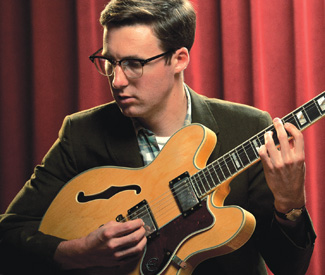
MUSIC Nick Waterhouse no longer calls San Francisco home, but the city’s fingerprints are all over Time’s All Gone, his effortlessly fun, debut LP. The retro-minded songwriter-producer crafts perfect little tributes to the punchy 1950s R&B sounds he’s been drawn to since he was a kid, all steeped with an endearing reverence for old-school record culture and recording techniques.

“We cut as live as possible, so a lot of the record is eight people in one room playing at the same time,” he explains. “Everybody’s gotta feel it together, and if they don’t, you really don’t have a song, in my opinion.”

As a Southern California kid growing up in the Costa Mesa area, Waterhouse approached his music listening from a studious angle, soaking up the Van Morrison and John Lee Hooker records of his parents, along with the Descendents and Sonic Youth albums he found. The well-rounded sonic diet can be heard within the frayed edges and garage rock appeal that Time’s All Gone has in spades.

“I listened to everything I could because I wanted to gain as much experience as possible,” he says. “I was the kid staying up for hours with the radio under the covers.”

By 18, Waterhouse had moved to San Francisco and quickly jumped headfirst into the DJ scene, spinning and building a network of like-minded cohorts at the Knockout’s Oldies Night and Saturday Night Soul Party at the Elbo Room, which brought him in touch with folks like Ty Segall and Mikal Cronin. No connection, however, would become as important to him as his relationship with Rooky Ricardo’s, the Dick Vivian-owned oldies-R&B-soul-centric gem of a record store in the Lower Haight.

“Rooky Ricardo’s informed a lot of how I developed as a person, and it’s all in the spirit of the place,” he says. “It’s got that clubhouse feel.”

http://www.youtube.com/watch?v=mJruQmdlU10

Waterhouse recorded the saxophone-propelled blast of “Some Place” in the summer of 2010, an undertaking that he says was fueled more by a desire to sell vinyl copies to friends and fellow Rooky’s shoppers than to start a full-fledged music project.

“I really had no interest in it at the time,” he explains. “I figured I’d just keep making these 45s for fun and no one would even know who I was.”

After some nagging by friends to put something together for live shows, however, he caved and began recruiting players for the beginnings of what is now the Tarots, his perfectly complementary backing band. Together with Waterhouse’s guitar playing and expressive croon, the group uses horns, piano, drums, and female backing vocals to pay tribute to soulful R&B without ever falling victim to hollow mimicry or self-conscious irony. This is warm music made by passionate people with only the purest of intentions.

When it came time to record an LP, Waterhouse did what anyone who’s heard his music might expect and found an all analog studio in Costa Mesa called the Distillery to work out of. With the use of vintage gear, old ribbon mics, and classic recording techniques, he says that Time’s All Gone was constructed entirely with vinyl in mind.

“I can’t lie and pretend that as somebody born in the late-1980s I haven’t had moments of discovery because of digital music,” he says. And while yes, he has found music digitally over the years, he doesn’t have any vivid, concrete memories of those discoveries, the way he does with physical records. “I can still remember what listening station at Rooky’s I was at when I first heard a record, or what weird flea market I found something at. Having something tangible in front of you helps you associate.”

Waterhouse recently moved back to Southern California due to his quickly escalating, hectic tour schedule, but the plan has always been to officially release his album in San Francisco. In a beautiful bout of planning, Wednesday night’s show will not only mark the release of Time’s All Gone, but will also serve as a celebration for the 25th anniversary of the day Rooky Ricardo’s first opened its doors. Expect the dance party to start early and run late, as Waterhouse has enlisted the help of some of his favorite local DJs to spin before and after his set.

“In my mind, my album was born out of Rooky’s and out of a specific period of time in San Francisco more than anything else,” he says. “So this is my party for all the people and things that really mattered to me there.”

NICK WATERHOUSE

With DJs Carnita, Primo, Matt B, Lucky

Wed/6, 8pm, $12 sold out

Verdi Club

2424 Mariposa, SF (415) 861-9199

www.verdiclub.net


Mayor Lee’s priorities are wrong

0

By Margaret Brodkin

OPINION There was much back slapping at City Hall last week as officials congratulated themselves on what was described as a welcome “philosophical shift” in San Francisco politics.

The beneficiary of the acclaim and virtual political consensus was Mayor Ed Lee’s proposed budget, the largest in history — including an unexpected windfall of new revenue. The budget’s signature element, described in glowing terms by the San Francisco Chronicle’s C.W. Nevius and warranting its own special mayoral press conference, is the expansion of the police and fire budgets — an $82 million increase over two years.

Amid last week’s ovations was an unsettling silence from voices normally willing to cut through obscure numbers and rhetoric. Not one official commented that the best way to ensure public safety is to build strong children, families, and communities.

The cumulative impact of the devastating state budget and years of inadequate funding on families and children should not permit celebration. In light of millions in unanticipated revenue, politicians should not be satisfied with addressing urgent needs simply by sparing a few city departments from cuts, as appeared to be the case. Here’s what they should be thinking about:

• Our schools face the worst budget cuts ever, with SFUSD preparing to lay off 400 employees, reduce the already-too-short school year, increase class size, eliminate most school bus lines and all high school after-school programs, and under-fund everything from food to special education.

• Our childcare system is being gutted by the state, with $20 million in losses this year on top of $9 million from last year. This will impact thousands of families and result in the closure of centers and family childcare homes. Many fewer parents will be eligible for childcare subsidies (no one with two kids earning more than $37,500 a year will qualify) — pushing parents out of work and onto “welfare,” and children out of quality care and into unsafe settings.

• Support systems for children with disabilities are being eliminated and reduced through simultaneous cuts in multiple agencies.

• Young people entering community colleges or state universities face years of uncertainty — including whether their campuses will even exist. Already, the majority of SF students who enter City College are unable to graduate — stymied by costs, lack of educational support, or the inability to get classes they need.

It appears that little of the new millions will address these problems. The mayor’s budget does not even fully fund the voter-approved Public Education Enrichment Fund, passed in 2004 to provide essential services to public schools and preschools. Funding falls short by more than $10 million. Providing schools the funds to which they are legally entitled is the least we can do when the city lands millions in new resources.

Let’s be clear: crime is at historic lows — and has gotten that way with 200 fewer officers than the mayor is now advancing. There is little rationale to suddenly swell the ranks, at a cost of $140,000 per officer. The Fire Department’s inefficiencies have been well documented by city budget experts, and many cost-saving recommendations have yet to be implemented.

Before signing off on a budget they have not yet discussed in public (as it appeared to last week), the Board of Supervisors must evaluate fiscal options in full view. Private meetings with the mayor are no substitute for a robust debate now that the revenue facts are known. This is the city’s first two-year budget, and its policy direction will impact us all for years to come.

What looks to Nevius like a positive “drama-free, signature moment” for San Francisco, looks to many advocates for children and families like an abdication of responsibility.

Margaret Brodkin is a former executive director of Coleman Advocates for Children, director of the Department of Children, Youth and their Families and New Day for Learning, and a veteran of numerous budget processes

Film Listings

0

Film listings are edited by Cheryl Eddy. Reviewers are Kimberly Chun, Max Goldberg, Dennis Harvey, and Lynn Rapoport. For rep house showtimes, see Rep Clock. For complete film listings, see www.sfbg.com.

OPENING

Bel Ami Judging from recent attempts to shake off the gloomy atmosphere and undead company of the Twilight franchise, Robert Pattinson enjoys a good period piece, but hasn’t quite worked out how to help make one. Last year’s Depression-era Water for Elephants was a tepid romance, and Declan Donnellan and Nick Ormerod’s belle epoque–set Bel Ami is an ungainly, oddly paced adaptation of the Guy de Maupassant novel of the same name. A down-and-out former soldier of peasant stock, Georges Duroy (Pattinson) — or “Bel Ami,” as his female admirers call him — gains a brief entrée into the upper echelons of France’s fourth estate and parlays it into a more permanent set of social footholds, campaigning for the affections of a triumvirate of Parisian power wives (Christina Ricci, Uma Thurman, and Kristin Scott Thomas) as he makes his ascent. His route is confusing, though; the film pitches forward at an alarming pace, its scenes clumsily stacked together with little character development or context to smooth the way, and Pattinson’s performance doesn’t clarify much. Duroy shifts perplexingly between rapacious and soulful modes, eyeing the ladies with a vaguely carnivorous expression as he enters drawing rooms, dining rooms, and bedrooms, but leaving us with little sense of his true appetites or other motivations. (1:42) Clay, Smith Rafael. (Rapoport)

Double Trouble When crooks nab a priceless painting from a Taipei museum, two security guards — wannabe hero Jay (Jaycee “Son of Jackie” Chan) and Chinese-tourist-on-vacation Ocean (Xia Yu) — reluctantly team up to recover the piece. A road trip of sorts ensues, laden with petty bickering, wacky melees, bonding moments, mistaken identity, gangsters both comical and sinister, and other buddy-comedy trappings. As expected, there are a few high-flying fight scenes; in the film’s production notes, director David Hsun-Wei Chang reveals he was inspired by the Rush Hour movies. Alas, Chan is neither as charismatic nor as breathtakingly nimble as his father (and, obvi, Xia is no Chris Tucker). It should be noted, however, that one of the slithery art thieves is played by underwear model Jessica C., famed in Hong Kong for her “police siren boobs.” So there’s that. (1:29) Metreon. (Eddy)

Elena The opening, almost still image of breaking dawn amid bare trees — the twigs in the foreground almost imperceptibly developing definition and the sky gradually growing ever lighter and pinker in the corners of the frame — beautifully exemplifies the crux of this well-wrought, refined noir, which spins slowly on the streams of dog-eat-dog survival that rush beneath even the most moneyed echelons of Moscow. Sixtyish former nurse Elena (Nadezhda Markina) is still little more than a live-in caretaker for Vladimir (Andrey Smirnov), her affluent husband of almost 10 years. She sleeps in a separate bed in their modernist-chic condo and dutifully funnels money to her beloved layabout son and his family. Vladimir has less of a relationship with his rebellious bad-seed daughter (Yelena Lyadova), who may be too smart and hedonistic for her own good. When a certain unlikely reunion threatens Elena’s survival — and what she perceives as the survival of her own spawn — a kind of deadly dawn breaks over the seemingly obedient hausfrau, and she’s driven to desperate ends. Bathing his scenes in chilled blue light and velvety dark shadows, filmmaker Andrey Zvyagintsev (2003’s The Return) keeps a detached but close eye on the proceedings while displaying an uncanny talent for plucking the telling detail out of the wash of daily routine and coaxing magnetic performances from his performers. (1:49) Lumiere. (Chun)

Madagascar 3: Europe’s Most Wanted The animated zoo animals (voiced by Ben Stiller, Chris Rock, David Schwimmer, and Jada Pinkett Smith) join a circus. Hence the clown wigs. (1:33)

Peace, Love and Misunderstanding How is that even as a bona fide senior, Jane Fonda continues to embody this country’s ambivalence toward women? I suspect it’s a testament to her actorly prowess and sheer charisma that she’s played such a part in defining several eras’ archetypes — from sex kitten to counterculture-heavy Hanoi Jane to dressed-for-success feminist icon to aerobics queen to trophy wife. Here, among the talents in Bruce Beresford’s intergenerational chick-flick-gone-indie as a loud, proud, and larger-than-life hippie earth mama, she threatens to eclipse her paler, less colorful offspring, women like Catherine Keener and Elizabeth Olsen, who ordinarily shine brighter than those that surround them. It’s ostensibly the tale of high-powered lawyer Diane (Keener): her husband (Kyle MacLachlan) has asked for a divorce, so in a not-quite-explicable tailspin, she packs her kids, Zoe (Olsen) and Jake (Nat Wolff), into the car and heads to Woodstock to see her artist mom Grace (Fonda) for the first time in two decades. Grace is beyond overjoyed — dying to introduce the grandchildren to her protests, outdoor concerts, and own personal growhouse — while urbanite Diane and her kids find attractive, natch, diversions in the country, in the form of Jude (Jeffrey Dean Morgan), Cole (Chace Crawford), and Tara (Marissa O’Donnell). Yet there’s a lot of troubled water for the mother and daughter to cross, in order to truly come together. Despite some strong characterization and dialogue, Peace doesn’t quite fly — or make much sense at its close — due to the some patchy storytelling: the schematic rom-com arch fails to provide adequate scaffolding to support the required leaps of faith. But that’s not to deny the charm of the highly identifiable, generous-spirited Grace, a familiar Bay Area archetype if there ever was one, who Fonda charges with the joy and sadness of fallible parent who was making up the rules as she went along. (1:36) Embarcadero, Smith Rafael. (Chun)

Prometheus Ridley Scott returns to Alien (1979) turf with this sci-fi thriller starring Charlize Theron, Michael Fassbender, Idris Elba, Noomi Rapace, and Guy Pearce. (2:03)

ONGOING

Bernie Jack Black plays the titular new assistant funeral director liked by everybody in small-town Carthage, Tex. He works especially hard to ingratiate himself with shrewish local widow Marjorie (Shirley MacLaine), but there are benefits — estranged from her own family, she not only accepts him as a friend (then companion, then servant, then as virtual “property”), but makes him her sole heir. Richard Linklater’s latest is based on a true-crime story, although in execution it’s as much a cheerful social satire as I Love You Philip Morris and The Informant! (both 2009), two other recent fact-based movies about likable felons. Black gets to sing (his character being a musical theater queen, among other things), while Linklater gets to affectionately mock a very different stratum of Lone Star State culture from the one he started out with in 1991’s Slacker. There’s a rich gallery of supporting characters, most played by little-known local actors or actual townspeople, with Matthew McConaughey’s vainglorious county prosecutor one delectable exception. Bernie is its director’s best in some time, not to mention a whole lot of fun. (1:39) Embarcadero, Smith Rafael. (Harvey)

A Cat in Paris This year’s Best Animated Film nominees: big-budget entries Kung Fu Panda 2, Puss in Boots, and eventual winner Rango, plus Chico and Rita, which opened just before Oscar night, and French mega-dark-horse A Cat in Paris. Sure, Jean-Loup Felicioli and Alain Gagnol’s film failed to cash in on 2011’s Paris craze, but it’s still a charming if featherweight noir caper, being released stateside in an English version that features the voices of Marcia Gay Harden and Anjelica Huston. A streetwise kitty named Dino spends his days hanging with Zoey, a little girl who’s gone mute since the death of her father — a cop killed in the line of duty. Zoey’s mother (Harden), also a cop, is hellbent on catching the murderer, a notorious crook named Costa who runs his criminal empire with Reservoir Dogs-style imprecision. At night, Dino sneaks out and accompanies an affable burglar on his prowlings. When Zoey falls into Costa’s clutches, her mom, the thief, and (natch) the feisty feline join forces to rescue her, in a series of rooftop chase scenes that climax atop Notre Dame. At just over an hour, A Cat in Paris is sweetly old-fashioned and suitable for audiences of all ages, though staunch dog lovers may raise an objection or two. (1:07) Opera Plaza. (Eddy)

The Color Wheel Carlen Altman, a nervous comedian who moonlights as a Jewish rosary maker, was doing stand-up in Brooklyn when filmmaker Alex Ross Perry approached her about collaborating on a project. The idea for a brother-sister movie came to be: The Color Wheel, a droll and perverse take on vexed lives in transition, tinged with 16mm. Perry directed, produced, and edited the film while co-writing with Altman. When the film begins, a dopey JR (Altman) shows up at the apartment of her misanthropic brother Colin (Perry). JR convinces him to help move her stuff out of her professor ex-boyfriend’s place. Inevitably, their Northeastern road trip follows other tangents, taking the pair on a hilarious and sad journey that raises more questions than answers about their fraught relationship. They meet a lot of jerks, but no one more so than themselves; their characters, filterless with no desire to grow up or shut up, are far behind everyone they encounter. With all its zeitgeisty humor and lovably awful people, The Color Wheel takes some dark turns — it begins as a charming, dour comedy, but ends up viscerally queasy and pitiful, with its two leads as mixed-up as ever. (1:23) Roxie. (Ryan Lattanzio)

I Wish It’s tempting to hold Hirokazu Kore-eda’s I Wish up to that other kids adventure story in the theaters, Wes Anderson’s Moonrise Kingdom, but that’s a disservice to Anderson: his arch look back at an age of innocence comes off as loftily contrived in contrast to this gently empathetic, ground-level view of children’s dreams and desires, one that falls well short of preciousness, thanks to Kore-eda’s acute eye for a changing Japan. Brothers Koichi and Ryunosuke (real-life sibs Koki and Ohshiro Maeda) are living apart like their two parents: the former bunks with his mother (Nene Otsuka) and grandparents in Kagoshima, where he plots to get his parents together again and frets over the ash-spewing still-active volcano; the latter is busy enabling his laid-back guitar-playing father (Jo Odagiri of 2003’s Bright Future) on the other side of the island, where he grows fava beans, eats takeout, and hangs out with pals like budding actress Megumi (Kara Uchida). These offspring of Peter Pan-like parents, who have had a tough time growing up and fulfilling their own dreams, have been forced to grow up fast — but Koichi is pinning his hopes on something faster: the new bullet train line that will link his town with his brother’s. He gets it in his mind that if a wish is made when the first trains pass each other, a miracle, like his bickering parents’ reunion, will occur. The kids conspire to grab to that magical moment, by hook or crook, and a little help from an elderly couple that might have stepped out of an older, more gracious Japan, as rhapsodized by Yasujiro Ozu. And as with his devastating portrait of abandoned kids eking out a living on their own, Nobody Knows (2004), Kore-eda effortlessly coaxes great performances out of his child actors. Like Nobody Knows‘s Akira, Koichi and Ryunosuke are determined to persevere, post-familial meltdown, through all personal Armageddons, be they triggered by volcano, tsunami, or heartbreak. (2:08) Opera Plaza, Smith Rafael. (Chun)

Moonrise Kingdom Does Wes Anderson’s new film mark a live-action return to form after 2007’s disappointingly wan Darjeeling Limited? More or less. Does it tick all the Andersonian style and content boxes? Indubitably. In the most obvious deviation Anderson has taken with Moonrise, he gives us his first period piece, a romance set in 1965 on a fictional island off the New England coast. After a chance encounter at a church play, pre-teen Khaki Scout Sam (newcomer Jared Gilman) instantly falls for the raven-suited, sable-haired Suzy Bishop (Kara Hayward, ditto). The two become pen pals, and quickly bond over the shared misery of being misunderstood by both authority figures and fellow kids. The bespectacled Sam is an orphan, ostracized by his foster parents and scout troop (much to the dismay of its straight-arrow leader Edward Norton). Suzy despises her clueless attorney parents, played with gusto by Bill Murray and Frances McDormand in some of the film’s funniest and best scenes. When the two kids run off together, the whole thing begins to resemble a kind of tween version of Godard’s 1965 lovers-on the-lam fantasia Pierrot le Fou. But like most of Anderson’s stuff, it has a gauzy sentimentality more akin to Truffaut than Godard. Imagine if the sequence in 2001’s The Royal Tenenbaums where Margot and Richie run away to the Museum of Natural History had been given the feature treatment: it’s a simple yet inspired idea, and it becomes a charming little tale of the perils of growing up and selling out the fantasy. But it doesn’t feel remotely risky. It’s simply too damn tame. (1:37) Metreon, Sundance Kabuki. (Michelle Devereaux)

Snow White and the Huntsman It’s unclear why the zeitgeist has blessed us this year with two warring iterations of the Snow White fairy tale, one broadly comedic (April’s Mirror Mirror), one starkly emo. But it was only natural that Kristen Stewart would land in the latter rendering, breaking open the hearts of swamp beasts and swordsmen alike with the chaste glory of her mien. As Snow White flees the henchmen and hired killers dispatched by her seriously evil stepmother, Queen Ravenna (Charlize Theron), and traverses a blasted, virulent forest populated with hallucinogenic vapors and other life-threatening obstacles, Stewart need not act so much as radiate a dazzling benignity, weeping the tears of a martyr rather than a frightened young girl. (Unfortunately, when required to deliver a rallying declaration of war, she sounds as if she’s speaking in tongues after a heavy hit on the crack pipe.) It’s slightly uncomfortable to be asked, alongside a grieving, drunken huntsman (The Avengers’ Chris Hemsworth), a handful of dwarfs (including Ian McShane and Toby Jones), and the kingdom’s other suffering citizenry, to fall worshipfully in line behind such a creature. But first-time director Rupert Sanders’s film keeps pace with its lovely heroine visually, constructing a gorgeous world in which armies of black glass shatter on battlefields, white stags dissolve into hosts of butterflies, and a fairy sanctuary within the blighted kingdom is an eye-popping fantasia verging on the hysterical. Theron’s Ravenna, equipped in modernist fashion with a backstory for her sociopathic tendencies, is credible and captivating as an unhinged slayer of men, thief of youth, destroyer of kingdoms, and consumer of the hearts of tiny birds. (2:07) Metreon, 1000 Van Ness. (Rapoport) *

Just when you thought it was safe to go back in the theater: new movies!

0

Admit it: you’ve already searched showtimes for Piranha 3DD (I totally did). It wasn’t screened for critics (duh). There’s plenty more to report on in the world o’cinema, however, including buzzed-about indie The Color Wheel at the Roxie and Smith Rafael (check out Ryan Lattanzio’s review/interview here) and the latest from Wes Anderson, Moonrise Kingdom (Michelle Devereaux has mixed feelings here).

By dint of its cast (which includes an Oscar winner, a vampire baby mama, a superhero, and a cocksucker), Snow White and the Huntsman will probably rake in the most of any new movie. But is it worth seeing?

Snow White and the Huntsman It’s unclear why the zeitgeist has blessed us this year with two warring iterations of the Snow White fairy tale, one broadly comedic (April’s Mirror Mirror), one starkly emo. But it was only natural that Kristen Stewart would land in the latter rendering, breaking open the hearts of swamp beasts and swordsmen alike with the chaste glory of her mien. As Snow White flees the henchmen and hired killers dispatched by her seriously evil stepmother, Queen Ravenna (Charlize Theron), and traverses a blasted, virulent forest populated with hallucinogenic vapors and other life-threatening obstacles, Stewart need not act so much as radiate a dazzling benignity, weeping the tears of a martyr rather than a frightened young girl. (Unfortunately, when required to deliver a rallying declaration of war, she sounds as if she’s speaking in tongues after a heavy hit on the crack pipe.) It’s slightly uncomfortable to be asked, alongside a grieving, drunken huntsman (The Avengers‘ Chris Hemsworth), a handful of dwarfs (including Ian McShane and Toby Jones), and the kingdom’s other suffering citizenry, to fall worshipfully in line behind such a creature. But first-time director Rupert Sanders’s film keeps pace with its lovely heroine visually, constructing a gorgeous world in which armies of black glass shatter on battlefields, white stags dissolve into hosts of butterflies, and a fairy sanctuary within the blighted kingdom is an eye-popping fantasia verging on the hysterical. Theron’s Ravenna, equipped in modernist fashion with a backstory for her sociopathic tendencies, is credible and captivating as an unhinged slayer of men, thief of youth, destroyer of kingdoms, and consumer of the hearts of tiny birds. (2:07) (Lynn Rapoport)

Also among this week’s top offerings: an Oscar-nominated animated film, a touching coming-out story, and the latest fractured-childhood tale from Japanese director Hirokazu Kore-eda.

A Cat in Paris This year’s Best Animated Film nominees: big-budget entries Kung Fu Panda 2, Puss in Boots, and eventual winner Rango, plus Chico and Rita, which opened just before Oscar night, and French mega-dark-horse A Cat in Paris. Sure, Jean-Loup Felicioli and Alain Gagnol’s film failed to cash in on 2011’s Paris craze, but it’s still a charming if featherweight noir caper, being released stateside in an English version that features the voices of Marcia Gay Harden and Anjelica Huston. A streetwise kitty named Dino spends his days hanging with Zoey, a little girl who’s gone mute since the death of her father — a cop killed in the line of duty. Zoey’s mother (Harden), also a cop, is hellbent on catching the murderer, a notorious crook named Costa who runs his criminal empire with Reservoir Dogs-style imprecision. At night, Dino sneaks out and accompanies an affable burglar on his prowlings. When Zoey falls into Costa’s clutches, her mom, the thief, and (natch) the feisty feline join forces to rescue her, in a series of rooftop chase scenes that climax atop Notre Dame. At just over an hour, A Cat in Paris is sweetly old-fashioned and suitable for audiences of all ages, though staunch dog lovers may raise an objection or two. (1:07) (Cheryl Eddy)

http://www.youtube.com/watch?v=j-v4K8pRQ74

Chely Wright: Wish Me Away Grab a jumbo-sized box of tissues for this doc, which follows country singer Chely Wright as she counts down the days until her very public coming-out — via full-court-press media blitz. In candid interviews (which feel more like therapy sessions) and some extremely emotional, self-shot home video footage, a fragile Wright recounts the reasons why she stayed closeted for so long: her troubled upbringing in small-town Kansas, a steely determination to make it in a biz not known for open-mindedness, and her own deeply-held religious beliefs. Hiding who she was led to years of personal agony, even as her career took off (her biggest hit: 1999 number-one “Single White Female”). With this level of honest, raw build-up, Wright’s decision to come out feels like a full-scale personal revolution. It’s an inspiring tale. (1:36) Elmwood. (Eddy)

I Wish It’s tempting to hold Hirokazu Kore-eda’s I Wish up to that other kids adventure story in the theaters, Wes Anderson’s Moonrise Kingdom, but that’s a disservice to Anderson: his arch look back at an age of innocence comes off as loftily contrived in contrast to this gently empathetic, ground-level view of children’s dreams and desires, one that falls well short of preciousness, thanks to Kore-eda’s acute eye for a changing Japan. Brothers Koichi and Ryunosuke (real-life sibs Koki and Ohshiro Maeda) are living apart like their two parents: the former bunks with his mother (Nene Otsuka) and grandparents in Kagoshima, where he plots to get his parents together again and frets over the ash-spewing still-active volcano; the latter is busy enabling his laid-back guitar-playing father (Jo Odagiri of 2003’s Bright Future) on the other side of the island, where he grows fava beans, eats takeout, and hangs out with pals like budding actress Megumi (Kara Uchida). These offspring of Peter Pan-like parents, who have had a tough time growing up and fulfilling their own dreams, have been forced to grow up fast — but Koichi is pinning his hopes on something faster: the new bullet train line that will link his town with his brother’s. He gets it in his mind that if a wish is made when the first trains pass each other, a miracle, like his bickering parents’ reunion, will occur. The kids conspire to grab to that magical moment, by hook or crook, and a little help from an elderly couple that might have stepped out of an older, more gracious Japan, as rhapsodized by Yasujiro Ozu. And as with his devastating portrait of abandoned kids eking out a living on their own, Nobody Knows (2004), Kore-eda effortlessly coaxes great performances out of his child actors. Like Nobody Knows’s Akira, Koichi and Ryunosuke are determined to persevere, post-familial meltdown, through all personal Armageddons, be they triggered by volcano, tsunami, or heartbreak. (2:08)(Kimberly Chun)

Movement Detroit day one: Sweetest Kiss-Over (or, I Feel French)

0

Not much gets better than dancing with 33,000 people in downtown Detroit at the fantastic 12th annual Detroit Electronic Music Festival, aka Movement, to the techno music that was invented here.

The first day of three, a bit stormy weatherwise but warm and squiggly on the musical front, saw the five stages brimming with choice DJ segues like Greg Wilson into Todd Terje, David Squillace into Seth Troxler with Guy Gerber, SBTRKT into Roni Size, Derrick Carter into Lil Louis — and the triumph (for me, and native Detroiters) of last night, young techno keepers of the flame Kyle Hall and Jay Daniel, playing a smooth classics timewarp set, into quintessential DJ’s DJ Mike Huckaby, who took us all the way into wiggy jazziness.

The lovely vibes, zillion afterparties, surprising diversty, and distinctly non-pop energy are already helping compensate for some of the fest’s dogged disappointments — only five women out of about 100 DJs this year, all bunched up into opening sets, and only two San Franciscans by my count. (In a wee slap on both ends, one of this year’s most exciting techno up-and-comers, SF’s Christina Chatfield, is relegated to afterparty status. Next year please!)

But how can I complain when shirtless, buffed up, pecil-mustachioed house sage Lil Louis closes the main stage with his iconic “French Kiss” that breaks expertly into Diana Ross’s “Love Hangover” during the slow part, and then Donna Summer’s “I Feel Love” (sounding absolutely aces on a huge system) when everything gets fast?

Louis didn’t let some horrifying technical glitches get in his way — when his complex set-up melted down, he mixed headphoneless and rode a thick bass beat like a trooper while festival technicians actually built a whole new one practically from scratch next to him. No one can say Detroit industriousness is dead.

The big overarching narrative of techno right now — and one that has huge reverberations at the festival — is how the many established strains of techno, and its more adventurous community of listeners and connoisseurs, are reacting to the current spectacular pop success of EDM (electronic dance music represented by commercial juggernauts like Dead Maus and Tiesto, and heard at Movement’s evil twin fest, Electric Daisy Carnival) and the droves of American youth pumping watered-down dubstep of the Skrillex variety into their earholes.

No, the all-ages Movement was not a snob-fest, and already it seems to be channeling its old underground, alternative energy again, now that all of its subgenre variations have something to unite about and rebel against. Teens flocked to the Red Bull stage for its more global bass lineup — but I only heard two wub-wub dubstep drops while I was there, and the neon-drenched kids did just fine with an onslaught of good ol’ polyrythmic UK two-step (the progenitor of dubstep) and old school live Brit-accented MCing, with hectically beautiful snippets of vocal garage house (dubstep’s other progenitor) floated over top. It was a fine education from the likes of Brenmar, Photek, and Bok Bok, indeed.

And then Derrick Carter started slaying the main stage with passing train-horn sounds that rattled 10,000 bones — his joke on the dubstep drop? — and everybody laughed and screamed.          

Landlocked

1

arts@sfbg.com

MUSIC Pavement. That’s all I really associate with Stockton. Personally, I’ve only been there once, few weeks back on my way to Yosemite, and I just drove through — 205 to 120 — stopping once for gas. So pavement all the way. Yet, despite the lack of waves, it’s home to Surf Club, a sunny four-piece that’s recently released its debut EP, Young Love, on Death Party Records.

“It’s not that bad living in Stockton,” says guitarist Eddie Zepeda. “You make the best of it.” Zepeda barely finished this optimistic assessment before bassist Fonso Robles offers a conflicting view: “Uh, it’s pretty bad.” Earlier in the week, Robles had been pulled out of his car, in the middle of the day, and held up at gunpoint. Before taking off, the robber cautioned, “Don’t let me catch you slippin’,” a combined threat and unsolicited piece of street advice.

Early last year, Justin Vallesteros of Craft Spells moved his project from Stockton to Seattle (where he was born), citing the former city’s number one placement on Forbes Magazine’s 2011 list of “America’s Most Miserable Cities” among the reasons. Surf Club’s Frankie Soto, then guitarist for Craft Spells, stayed behind in his own hometown. “It wasn’t really a hard decision. It was Justin’s band, so I was just like go ahead, dude,” Soto says.

There doesn’t appear to be bad blood between the groups: “Justin still comes over and we all jam,” Zepeda says, and a few days after the interview I run into Soto and Robles at the Great American Music Hall, where Craft Spells is opening for the Drums.

Still, after the split, Soto tells me he spent a few months depressed in his room, trying to find his own sound. When he re-emerged it was with Zepeda and Robles, as well as drummer Jose Medina, who the rest of the group insists is its most talented member. “He’s probably the best drummer and guitarist in the band, and he doesn’t even play guitar for us,” Soto says.

With individual experience in a variety of other bands, the four switched around on instruments, trying to find the right configuration. Medina went from bass to drums, Soto took on vocals in addition to guitar, and Robles — in a Tina Weymouth move — started learning bass from the beginning.

When the band first started coming together, Zepeda had been listening to a lot of surf rock and Beach Boys. It’s certainly an influence on the sound of material released so far, but they didn’t set out or plan to be a Dick Dale revival band.

“I can’t even swim,” Soto says, in a moment of irony recalling Brian Wilson’s fear of the water. “Of all the band names, Surf Club just seemed the easiest to hear.” (Robles angled for Faucet Water, presumably in reference to Stockton’s E. coli contamination warning a couple years back, and Youth Wave was another aquatic option.) “I don’t consider us a surf band. It’s just pop, and that’s what we focus on for all of our songs,” Soto asserts.

True to its name, Young Love is full of open-hearted lyrics with youthful longing. In addition to vocal harmonies, the biggest surf aspect is the tidal wave tempo, where bouncy guitar rhythms get carried by the super tight drumming, speedy fill, and shifts in patterns that reveal Medina’s background in metal and jazz. Soto sings with a light voice, and comes off as a bit of a tender softy. “I guess I’m still kind of shy,” he explains, “I took choir in high school, but it’s still kind of weird being in front of everyone with them paying attention to what you’re saying.”

Barely in their twenties, friends since fifth grade, a band for less than a year, with less than a dozen shows performed so far, Surf Club is clearly still figuring out how to make it work.

As Zepeda puts it, “we’re pretty young, we really don’t have any money, and we all have bills to pay.” That’s the point where people might give you advice, besides slippin’ or not slippin’. When they played with the Soft Pack a couple months back, singer Matt Lamkin gave them some. “He was telling us to move out of Stockton,” Soto says. But ignoring that kind of advice has worked so far.

SF Popfest Day 2

With Surf Club, Kids On A Crime Spree, Manatee, Dead Angle, Cruel Summer

Sat/26, 4pm, $10

Knockout

3223 Mission, SF

(415) 550-6994

www.theknockoutsf.com

Film Listings May 23-29, 2012

0

Film listings are edited by Cheryl Eddy. Reviewers are Kimberly Chun, Max Goldberg, Dennis Harvey, and Lynn Rapoport. For rep house showtimes, see Rep Clock at www.sfbg.com. Complete film listings also posted at www.sfbg.com.

OPENING

Chernobyl Diaries A group of young tourists visit the nuked-out husk of Chernobyl in this spook flick written and produced by Paranormal Activity series creator Oren Peli. (1:26)

Hysteria Tanya Wexler’s period romantic comedy gleefully depicts the genesis of the world’s most popular sex toy out of the inchoate murk of Victorian quackishness. In this dulcet version of events, real-life vibrator inventor Mortimer Granville (Hugh Dancy) is a handsome young London doctor with such progressive convictions as a belief in the existence of germs. He is, however, a man of his times and thus swallows unblinking the umbrella diagnosis of women with symptoms like anxiety, frustration, and restlessness as victims of a plague-like uterine disorder known as hysteria. Landing a job in the high-end practice of Dr. Robert Dalrymple (Jonathan Pryce), whose clientele consists entirely of dissatisfied housewives seeking treatments of “medicinal massage” and subsequent “parosysm,” Granville becomes acquainted with Dalrymple’s two daughters, the decorous Emily (Felicity Jones) and the first-wave feminist Charlotte (Maggie Gyllenhaal). A subsequent bout of RSI offers empirical evidence for the adage about necessity being the mother of invention, with the ever-underused Rupert Everett playing Edmund St. John-Smythe, Granville’s aristocratic friend and partner in electrical engineering. (1:35) Embarcadero, Shattuck, Sundance Kabuki. (Rapoport)

Keyhole Guy Maddin’s latest is a loose — very loose — take on Homer’s Odyssey, among other elements tossed into a fragmentary whole. Loose enough to keep 30s gangster Ulysses Pick (Jason Patric) traveling no further than between rooms in his decrepit former home. He arrives there with an inept gang, a “drowned” girl (Brooke Palsson) who sure doesn’t act like she’s already dead, a gagged kidnapping victim (David Wontner) who turns out to be his own son — our protagonist is slipshod in the realm of family responsibilities, to say the least — and a powerful desire to see his estranged wife (Isabella Rosellini), who is less than enthused. Already on the premises is the latter’s elderly father, kept naked and chained to her bed for reasons unknown. Impulsive random screwings, killings that immediately give rise to ghosts, an electric chair powered by exercycles, Udo Kier, and other miscellaneous weirdness dots the progress of this phantasmagorical, free associative work — though it’s a lot less fun than that may sound. Maddin is in an experimental mood here (working for the first time in digital, for one thing), and it’s difficult to say just what he’s aiming for, or whether he succeeds. The handsome, cluttered, black-and-white results do ultimately cast a certain spell, but this may be a reliably idiosyncratic director’s least fully realized stab at dream logic and semi-new personal terrain since Twilight of the Ice Nymphs 15 years ago. (1:34) Roxie. (Harvey)

Men in Black 3 Usually movies screw up when casting the younger version of a character, but Josh Brolin as a young Tommy Lee Jones does kinda make sense. (1:42) Four Star, Presidio, Shattuck.

Polisse Comparisons to The Wire are not to be tossed around lightly, but when the Hollywood Reporter likened Polisse to an entire season of the masterpiece cop show packed into a single film, it was onto something. Director, co-writer, and star Maïwenn (the object of desire in 2003’s High Tension) hung out with real officers serving in Paris’ Child Protection Unit, drawing inspiration from their dealings with pedophiles, young rape victims, negligent mothers, pint-sized pickpockets, and the like (another TV show worth mentioning in comparison: Law & Order: SVU). But Polisse (the title is deliberately misspelled, as if by a child) is no simple procedural; it plunges the viewer directly into the day-to-day lives of its boisterous characters, who are juggling not just stressful careers but also plenty of after-hours troubles, particularly relationship issues. Between heart wrenching moments on the job (and off), the unit indulges in massive cut-loose episodes of what amounts to group therapy: charades, dance parties, and room-clearing arguments, most of which involve huge quantities of booze. Watching Polisse is a messy, emotional, rewarding experience; no wonder it picked up the Jury Prize at the 2011 Cannes Film Festival. (2:07) Embarcadero, Shattuck. (Eddy)

Whores’ Glory See “Far From Heaven.” (1:59) Lumiere, Shattuck.

ONGOING

Battleship During idle moments before the action revs up, the aliens start menacing, and the deadly razor balls-cum-air mines start rampaging, wrap your noggin around these random brainwaves: can Taylor Kitsch be any better named? Is it possible for Alexander Skarsgård’s glassy eyes to get any deader? Where are all the Hawaiians, Asians, and people of color in this white-bread vision of Hawaii? All matters to puzzle over in this toy franchise hopeful directed by ex-Chicago Hope regular Peter Berg. The 2007 Transformers is the best this gung-ho hybrid of up-with-the-military “Army of One” commercial and alien invasion flick — with plenty of blow-’em-up-real-good explosions and a dab of J-monster movies, but the writing never quite rises to the occasion. Here, an international group of navy folk and their ships are convening in Hawaii for playful war games, though the exercises turn somewhat more serious when alien vessels splash down in the middle of the fun —and some mild, no-investment family drama: Alex (Kitsch) is the screw-up younger brother of stony-faced naval man Stone (Skarsgård) and courting the daughter (Brooklyn Decker) of the fleet commander (Liam Neesom), who seems to hate his guts. The ultimate battle with space invaders, however, promises to turn that all around, as Alex is forced to sailor up and lead crew mates like Rihanna and work with former opponents like Captain Nagata (Tadanobu Asano). Here, at least, in the shadow of Pearl Harbor, U.S. and Japanese naval dudes can heal the wounds of World War II and bond in battle against the last unimpeachable interstellar villains who couldn’t give a rat’s ass if you say “I sunk your battleship.” But Berg’s muddled direction doesn’t help when it comes to piecing out the chronology and balancing assorted perspectives in this latest effort to equate militarism with the games big and little kids play. (2:11) 1000 Van Ness, SF Center. (Chun)

Bernie Jack Black plays the titular new assistant funeral director liked by everybody in small-town Carthage, Tex. He works especially hard to ingratiate himself with shrewish local widow Marjorie (Shirley MacLaine), but there are benefits — estranged from her own family, she not only accepts him as a friend (then companion, then servant, then as virtual “property”), but makes him her sole heir. Richard Linklater’s latest is based on a true-crime story, although in execution it’s as much a cheerful social satire as I Love You Philip Morris and The Informant! (both 2009), two other recent fact-based movies about likable felons. Black gets to sing (his character being a musical theater queen, among other things), while Linklater gets to affectionately mock a very different stratum of Lone Star State culture from the one he started out with in 1991’s Slacker. There’s a rich gallery of supporting characters, most played by little-known local actors or actual townspeople, with Matthew McConaughey’s vainglorious county prosecutor one delectable exception. Bernie is its director’s best in some time, not to mention a whole lot of fun. (1:39) Embarcadero, Piedmont, Shattuck, Smith Rafael. (Harvey)

The Best Exotic Marigold Hotel (1:42) Albany, Marina, Piedmont, SF Center, Sundance Kabuki.

Bully Anyone who’s ever been a kid on the wrong side of a bully — or was sensitive and observant enough not to avert his or her eyes — will be puzzling over the MPAA’s R rating of this doc, for profanity. It’s absurd when the gory violence on network and basic cable TV stops just short of cutting characters’ faces off, as one blurred-out bus bully threatens to do to the sweet, hapless Alex, dubbed “Fish Face” by the kids who ostracize him and make his life hell on the bus. It’s a jungle out there, as we all know — but it’s that real, visceral footage of the verbal (and physical) abuse bullied children deal with daily that brings it all home. Filmmaker Lee Hirsch goes above and beyond in trying to capture all dimensions of his subject: the terrorized bullied, the ineffectual school administrators, the desperate parents. There’s Kelby, the gay girl who was forced off her beloved basketball team after she came out, and Ja’Maya, who took drastic measures to fend off her tormenters — as well as the specters of those who turned to suicide as a way out. Hirsch is clearly more of an activist than a fly on the wall: he steps in at one point to help and obviously makes an uplifting effort to focus on what we can do to battle bullying. Nevertheless, at the risk of coming off like the Iowa assistant principal who’s catching criticism for telling one victim that he was just as bad as the bully that he refused to shake hands with, one feels compelled to note one prominent component that’s missing here: the bullies themselves, their stories, and the reasons why they’re so cruel — admittedly a daunting, possibly libelous task. (1:35) Smith Rafael. (Chun)

The Cabin in the Woods If the name “Joss Whedon” doesn’t provide all the reason you need to bum-rush The Cabin in the Woods (Whedon produced and co-wrote, with director and frequent collaborator Drew Goddard), well, there’s not much more that can be revealed without ruining the entire movie. In a very, very small nutshell, it’s about a group of college kids (including Chris “Thor” Hemsworth) whose weekend jaunt to a rural cabin goes horribly awry, as such weekend jaunts tend to do in horror movies (the Texas Chainsaw and Evil Dead movies are heavily referenced). But this is no ordinary nightmare — its peculiarities are cleverly, carefully revealed, and the movie’s inside-out takedown of scary movies produces some very unexpected (and delightfully blood-gushing) twists and turns. Plus: the always-awesome Richard Jenkins, and in-jokes galore for genre fans. (1:35) Metreon, Shattuck. (Eddy)

Dark Shadows Conceptually, there’s nothing wrong with attempting to turn a now semi-obscure supernaturally themed soap opera with a five-year run in the late 1960s and early ’70s into a feature film. Particularly if the film brings together the sweetly creepy triumvirate of Tim Burton, Johnny Depp, and Helena Bonham Carter and emerges during an ongoing moment for vampires, werewolves, and other things that go hump in the night. Depp plays long-enduring vampire Barnabas Collins, the undead scion of a once-powerful 18th-century New England family that by the 1970s — the groovy decade in which the bulk of the story is set — has suffered a shabby deterioration. Barnabas forms a pact with present-day Collins matriarch Elizabeth (Michelle Pfeiffer) to raise the household — currently comprising her disaffected daughter, Carolyn (Chloë Grace Moretz), her derelict brother, Roger (Jonny Lee Miller), his mournful young son, David (Gulliver McGrath), David’s live-in lush of a psychiatrist, Dr. Hoffman (Carter), and the family’s overtaxed manservant, Willie (Jackie Earle Haley) — to its former stature, while taking down a lunatic, love-struck, and rather vindictive witch named Angelique (Eva Green). The latter, a victim of unrequited love, is the cause of all Barnabas’s woes and, by extension, the entire clan’s, but Angelique can only be blamed for so much. Beyond her hocus-pocus jurisdiction is the film’s manic pileup of plot twists, tonal shifts, and campy scenery-chewing by Depp, a startling onslaught that no lava lamp joke, no pallid reaction shot, no room-demolishing act of paranormal carnality set to Barry White, and no cameo by Alice Cooper can temper. (2:00) California, Metreon, 1000 Van Ness, Sundance Kabuki. (Rapoport)

The Dictator As expected, The Dictator is, yet again, Sacha Baron Cohen doing his bumbling-foreigner shtick. Said character (here, a ruthless, spoiled North African dictator) travels to America and learns a heaping teaspoon of valuable lessons, which are then flung upon the audience — an audience which, by film’s end, has spent 80 minutes squealing at a no-holds-barred mix of disgusting gags, tasteless jokes, and schadenfreude. If you can’t forgive Cohen for carbon-copying his Borat (2006) formula, at least you can muster admiration for his ability to be an equal-opportunity offender (dinged: Arabs, Jews, African Americans, white Americans, women of all ethnicities, and green activists) — and for that last-act zinger of a speech. If The Dictator doesn’t quite reach Borat‘s hilarious heights, it’s still proudly repulsive, smart in spite of itself, and guaranteed to get a rise out of anyone who watches it. (1:23) California, 1000 Van Ness, Presidio, SF Center, Sundance Kabuki. (Eddy)

Elles Graphic sex scenes distinguish this otherwise fairly unremarkable tale of Anne (Juliette Binoche), a magazine writer whose blah life (sure, she has a luxurious apartment, but it’s populated by a distant husband, a sullen teenager, and a younger son who’d rather interface with technology than humans) becomes even more unbearable when she begins a new assignment: an article on college students who moonlight as call girls. The always-reliable Binoche brings depth to her role as a bored woman who finds herself unexpectedly titillated by her close brush with dirty thrills, but her eventual rebellion is anti-climactic after all that naughty build-up. Elles does plenty to earn its NC-17 rating, but filmmaker Malgoska Szumowska could’ve titled it Ennui instead. (1:36) Lumiere, Shattuck. (Eddy)

First Position Bess Kargman’s documentary follows a handful of exceptional young ballet dancers, ranging in age from 10 to 17, over the course of a year as they prepare for the Youth America Grand Prix, the world’s largest ballet scholarship competition. Those who make it from the semifinals (in which some 5,000 dancers aged 9 to 19 perform in 15 cities around the world) to the finals (which bring some 300 contestants to New York City) compete for scholarships to prestigious ballet schools, dance-company contracts, and general notice by both the judges and the company directors in the audience. The film’s subjects come from varied backgrounds — 16-year-old Joan Sebastian lives and studies in NYC, far from his family in Colombia; 14-year-old Michaela was born in civil war-torn Sierra Leone and adopted from an orphanage by an American couple in Philadelphia; 11-year-old Aran, an American, lives in Italy with his mother while his father serves in Kuwait. The common threads in their stories are the daily sacrifices made by them as well as their families, whose energies and other resources are largely poured into these children’s single-minded pursuit. We get a vague sense of the difficult world they are driving themselves, in nearly every waking hour, to enter. But the film largely keeps its focus on the challenges of preparing for the competition, offering us many magnificent shots of the dancers pushing their bodies to mesmerizing physical extremes both on- and offstage. (1:34) Embarcadero, Shattuck, Smith Rafael. (Rapoport)

The Five-Year Engagement In 2008’s Forgetting Sarah Marshall, viewers were treated to the startling, tragicomic sight of Jason Segel’s naked front side as his character got brutally dumped by the titular perky, put-together heartbreaker. In The Five-Year Engagement, which he reunited with director Nicholas Stoller to co-write, Segel once again sacrifices dignity and the right to privacy, this time in exchange for fake orgasms (his own), ghastly hand-knit sweaters, egregious facial-hair arrangements, and various other exhaustively humiliating psychological lows — all part of an earnest, undying quest to make people giggle uncomfortably. Segel plays Tom, a talented chef with a promising career ahead of him in San Francisco’s culinary scene (naturally, food carts get a cameo in the film). On the one-year anniversary of meeting his girlfriend, Violet (Emily Blunt), a psychology postgrad, he asks her to marry him in a meticulously planned, gloriously botched proposal scene coengineered by Tom’s oafish friend Alex (Chris Pratt), little realizing that this romantic gesture will soon lead to successive frozen winters in the Midwest (Violet gets offered a job at the University of Michigan), loss of professional stature, cabin fever, mead making, bow-hunting accidents, the titular nuptial postponement, and other, more gruesome events. The humor at times descends to some banally low depths as Segel and Stoller explore the terrain of the awkward, the poorly socialized, and the playfully grotesque. But Segel and Blunt present a believable, likable relationship between two warm, funny, flawed people, and, however disgusted, no one should walk out before a scene in which Violet and her sister (Alison Brie) channel Elmo and Cookie Monster to elaborate on the themes of romantic idealism and marital discontent. (2:04) 1000 Van Ness, SF Center. (Rapoport)

Footnote (1:45) Opera Plaza.

Girl in Progress (1:30) SF Center.

God Bless America Middle-aged office drone Frank (Joel Murray) is not having a good day-week-month-year-life. His ex-wife is about to happily remarry; his only child is a world-class brat who finds father-daughter time “boring;” his neighbors are a young couple who only get more loudly obnoxious when politely asked to keep the noise down. When that and insistent migraines keep Frank awake night after night, the parade of pundit and reality stupidities on TV only turn his insomnia into wide awake fury. Then he’s fired from his job for unjust reasons — on the same day he gets a diagnosis of brain cancer. Mad as hell, not-gonna-take-it-anymore, he impulsively decides to make a “statement” by assassinating a viral-video poster child for “entitlement.” This attracts admiring attention from extremely pushy, snarky teen Roxy (Tara Lynne Barr), who appoints herself Bonnie to his reluctant Clyde. They drive around the country bestowing “big dirt naps” on other exemplars of what’s wrong with America today, including religious hate mongers, rude moviegoers, and the purveyors of American Idol-type idiotainment. Comedian Bobcat Goldthwait’s latest feature as writer-director has its head in the right place, and so many good ideas, that it’s a pity this gonzo satire-rant runs out of steam so quickly. Aiming splattering paintball gun at the broadest possible targets, it covers them with disdainful goo but not as much wit as one would like. Plus, Barr’s hyper precocious smart mouth is yet another annoying Juno (2007) knockoff — never mind that she counts Diablo Cody among her (many) pet peeves. If God Bless winds up closer to Uwe Boll’s Postal (2007) than, say, Network (1976) in scattershot impact, it nonetheless almost makes it on sheer outré audacity and will alone. A movie that hates everything you hate should not be sneezed at; if only it hated them with more parodic snap, thematic depth and narrative structure. (1:44) Lumiere. (Harvey)

Headhunters Despite being the most sought-after corporate headhunter in Oslo, Roger (Aksel Hennie) still doesn’t make enough money to placate his gorgeous wife; his raging Napoleon complex certainly doesn’t help matters. Crime is, as always, the only solution, so Roger’s been supplementing his income by stealthily relieving his rich, status-conscious clients of their most expensive artworks (with help from his slightly unhinged partner, who works for a home-security company). When Roger meets the dashing Clas Greve (Nikolaj Coster-Waldau of Game of Thrones) — a Danish exec with a sinister, mysterious military past, now looking to take over a top job in Norway — he’s more interested in a near-priceless painting rumored to be stashed in Greve’s apartment. The heist is on, but faster than you can say “MacGuffin,” all hell breaks loose (in startlingly gory fashion), and the very charming Roger is using his considerable wits to stay alive. Based on a best-selling “Scandi-noir” novel, Headhunters is just as clever as it is suspenseful. See this version before Hollywood swoops in for the inevitable (rumored) remake. (1:40) California, Clay. (Eddy)

The Hunger Games Katniss Everdeen (Jennifer Lawrence) is a teenager living in a totalitarian state whose 12 impoverished districts, as retribution for an earlier uprising, must pay tribute to the so-called Capitol every year, sacrificing one boy and one girl each to the Hunger Games. A battle royal set in a perilous arena and broadcast live to the Capitol as gripping diversion and to the districts as sadistic propaganda, the Hunger Games are, depending on your viewpoint, a “pageant of honor, courage, and sacrifice” or a brutal, pointless bloodbath involving children as young as 12. When her little sister’s name comes up in the annual lottery, Katniss volunteers to take her place and is joined by a boy named Peeta Mellark (Josh Hutcherson), with whom she shares an old, unspoken bond. Tasked with translating to the screen the first installment of Suzanne Collins’s rabidly admired trilogy, writer-director Gary Ross (2003’s Seabiscuit, 1998’s Pleasantville) telescopes the book’s drawn-out, dread-filled tale into a manageable two-plus-hour entertainment, making great (and horrifying) use of the original work’s action, but losing a good deal of the narrative detail and emotional force. Elizabeth Banks is comic and unrecognizable as Effie Trinket, the two tributes’ chaperone; Lenny Kravitz gives a blank, flattened reading as their stylist, Cinna; and Donald Sutherland is sufficiently creepy and bloodless as the country’s leader, President Snow. More exceptionally cast are Woody Harrelson as Katniss and Peeta’s surly, alcoholic mentor, Haymitch Abernathy, and Stanley Tucci as games emcee Caesar Flickerman, flashing a bank of gleaming teeth at each contestant as he probes their dire circumstances with the oily superficiality of a talk show host. (2:22) 1000 Van Ness, SF Center. (Rapoport)

Indie Game: The Movie Much like the film business, the video-game biz is mostly controlled by a few huge companies with thousands of employees, hell-bent on ensnaring as many of the billions of dollars spent on games annually as possible. And then, as James Swirsky and Lisanne Pajot’s documentary explores, there are the little guys, who are “not trying to be professional” or produce glossy content for the masses. Instead, these individuals (or pairs) take advantage of the miracle of digital distribution to follow their own visions and create their own games. The best-case scenarios — illustrated by San Francisco indie developer Jonathan Blow and his hugely successful Braid — can reap enormous creative and financial rewards, but getting there — as the struggles facing the creators of Super Meat Boy and Fez plainly attest can be a mentally and physically draining process, filled with frustration and self-doubt, exacerbated by the taunts of haters online. A thoughtful, artfully-shot peek at one tiny corner of a behemoth industry, Indie Game also offers a surprisingly tense, raw look at some very bright minds struggling to triumph on their own terms. (1:36) Roxie. (Eddy)

Jiro Dreams of Sushi Celebrity-chef culture has surely reached some kind of zeitgeist, what with the omnipresence of Top Chef and other cooking-themed shows, and the headlines-making power of people like Paula Deen (diabetes) and Mario Batali (sued for ripping off his wait staff). Unconcerned with the trappings of fame — you’ll never see him driving a Guy Fieri-style garish sports car — is Jiro Ono, 85-year-old proprietor of Sukiyabashi Jiro, a tiny, world-renowned sushi restaurant tucked into Tokyo’s Ginza station. Jiro, a highly-disciplined perfectionist who believes in simple, yet flavorful food, has devoted his entire life to the pursuit of “deliciousness” — to the point of sushi invading his dreams, as the title of David Gelb’s reverential documentary suggests. But Jiro Dreams of Sushi goes deeper than food-prep porn (though, indeed, there’s plenty of that); it also examines the existential conflicts faced by Jiro’s two middle-aged sons. Both were strongly encouraged to enter the family business — and in the intervening years, have had to accept the soul-crushing fact that no matter how good their sushi is, it’ll never be seen as exceeding the creations of their legendary father. (1:21) Bridge, Shattuck. (Eddy)

Marley Oscar-winning documentarian Kevin Macdonald (1999’s One Day in September; he also directed Best Actor Forest Whitaker in 2006’s The Last King of Scotland) takes on the iconic Bob Marley, using extensive interviews — both contemporary (with Marley friends and family) and archival (with the musician himself) — and performance and off-the-cuff footage. The end result is a compelling (even if you’re not a fan) portrait of a man who became a global sensation despite being born into extreme poverty, and making music in a style that most people had never heard outside of Jamaica. The film dips into Marley’s Rastafari beliefs (no shocker this movie is being released on 4/20), his personal life (11 children from seven different mothers), his impact on Jamaica’s volatile politics, his struggles with racism, and, most importantly, his remarkable career — achieved via a combination of talent and boldness, and cut short by his untimely death at age 36. (2:25) Opera Plaza, Smith Rafael. (Eddy)

Marvel’s The Avengers The conflict — a mystical blue cube containing earth-shattering (literally) powers is stolen, with evil intent — isn’t the reason to see this long-hyped culmination of numerous prequels spotlighting its heroic characters. Nay, the joy here is the whole “getting’ the band back together!” vibe; director and co-writer Joss Whedon knows you’re just dying to see Captain America (Chris Evans) bicker with Iron Man (a scene-stealing Robert Downey Jr.); Thor (Chris Hemsworth) clash with bad-boy brother Loki (Tom Hiddleston); and the Hulk (Mark Ruffalo) get angry as often as possible. (Also part of the crew, but kinda mostly just there to look good in their tight outfits: Jeremy Renner’s Hawkeye and Scarlett Johansson’s Black Widow.) Then, of course, there’s Nick Fury (Samuel L. Jackson) running the whole Marvel-ous show, with one good eye and almost as many wry quips as Downey’s Tony Stark. Basically, The Avengers gives you everything you want (characters delivering trademark lines and traits), everything you expect (shit blowing up, humanity being saved, etc.), and even makes room for a few surprises. It doesn’t transcend the comic-book genre (like 2008’s The Dark Knight did), but honestly, it ain’t trying to. The Avengers wants only to entertain, and entertain it does. (2:23) Marina, Metreon, 1000 Van Ness, Presidio, Sundance Kabuki. (Eddy)

Monsieur Lazhar When their beloved but troubled teacher hangs herself in the classroom — not a thoughtful choice of location, but then we never really discover her motives — traumatized Montreal sixth-graders get Bachir Lazhar (Fellag), a middle-aged Algerian émigré whose contrastingly rather strict, old-fashioned methods prove surprisingly useful at helping them past their trauma. He quickly becomes the crush object of studious Alice (Sophie Nelisse), whose single mother is a pilot too often away, while troublemaker Simon (Emilien Neron) acts out his own domestic and other issues at school. Lazhar has his own secrets as well — for one thing, we see that he’s still petitioning for permanent asylum in Canada, contradicting what he told the principal upon being hired — and while his emotions are more tightly wrapped, circumstances will eventually force all truths out. This very likable drama about adults and children from Quebec writer-director Philippe Falardeau doesn’t quite have the heft and resonance to rate among the truly great narrative films about education (like Laurent Cantet’s recent French The Class). But it comes close enough, gracefully touching on numerous other issues while effectively keeping focus on how a good teacher can shape young lives in ways as incalculable as they are important. (1:34) Opera Plaza, Smith Rafael. (Harvey)

The Pirates! Band of Misfits Aardman Animations, home studio of the Wallace and Gromit series as well as 2000’s Chicken Run, are masters of tiny details and background jokes. In nearly every scene of this swashbuckling comedy, there’s a sight gag, double entendre, or tossed-off reference (the Elephant Man!?) that suggests The Pirates! creators are far more clever than the movie as a whole would suggest. Oh, it’s a cute, enjoyable story about a kind-hearted Pirate Captain (Hugh Grant) who dreams of winning the coveted Pirate of the Year award (despite the fact that he gets more excited about ham than gold) — and the misadventures he gets into with his amiable crew, a young Charles Darwin, and a comically evil Queen Victoria. But despite its toy-like, 3D-and-CG-enhanced claymation, The Pirates! never matches the depth (or laugh-out-loud hilarity) of other Aardman productions. Yo ho-hum. (1:27) Metreon, 1000 Van Ness. (Eddy)

Safe The poster would be slightly more on-point if its suave thug of a star, Jason Statham, were hiding behind the scrunched-faced Catherine Chan rather than the other way around — because at times it’s tough to see this alternately enjoyable and credibility-taxing action flick as more than some kind of naked play for the Chinese filmgoer. Jamming the screen with a frantic kineticism, director-writer Boaz Yakin seems to be smoothing over the problems in his vaguely stereotype-flaunting, patchy puzzle of a narrative with a high body count: the cadavers pile like those in an old martial arts flick — made in Asia, it’s implied, where life is cheap and spectacle is paramount. Picking up in the middle, with flashbacks stacked like firewood, Safe opens on young math prodigy Mei (Chan) on the run from the Russian mafia. A pawn and virtual slave of the Chinese mob, she holds a number in her head that all sorts of ruthless crime factions want. To her rescue is mystery man Luke Wright (Statham), who has had his own deadly tussle with the same Russian baddies and is now on the street and on the verge of suicide, believe it or not. It’s tough to wrap your head around the fact that any of Statham’s rock-hard tough guys could possibly crumble — or even have a sense of humor. You’ll need one to accept the ludicrous storyline as well as the notion that a jillion bullets could be fired and never hit his superhuman street-fighting man. (1:35) Metreon. (Chun)

Think Like a Man (2:02) Metreon.

Titanic 3D (3:14) Metreon.

21 Jump Street One of the more pleasant surprises on the mainstream comedy landscape has to be this, ugh, “reboot” of the late-’80s TV franchise. I wasn’t a fan of the show — or its dark-eyed, bad-boy star, Johnny Depp — back in the day, but I am of this unexpectedly funny rework overseen by apparent enthusiast, star, co-writer, and co-executive producer Jonah Hill, with a screenplay by Scott Pilgrim vs. the World (2010) co-writer Michael Bacall. There’s more than a smidge of Bacall’s other high school fantasy, Project X, in the buddy comedy premise of nerd (Hill’s Schmidt) meets blowhard (Channing Tatum’s Jenko), but 21 Jump Street thankfully leapfrogs the former with its meta-savvy, irreverent script and har-dee-har cameo turns by actors like Ice Cube as Captain Dickson (as well as a few key uncredited players who shall remain under deep cover). High school continues to haunt former classmates Schmidt and Jenko, who have just graduated from the lowly police bike corps to a high school undercover operation — don’t get it twisted, though, Dickson hollers at them; they got this gig solely because they look young. Still, the whole drug-bust enchilada is put in jeopardy when the once-socially toxic Schmidt finds his brand of geekiness in favor with the cool kids and so-called dumb-jock Jenko discovers the pleasures of the mind with the chem lab set. Fortunately for everyone, this crew doesn’t take themselves, or the source material, too seriously. (1:49) Metreon. (Chun)

What to Expect When You’re Expecting You needn’t direct what you know, but the first major misstep in this ensemble comedy was tapping a man, Kirk Jones (2005’s Nanny McPhee), to helm. Apparently Nicole Holofcener, Nancy Meyers, and Nora Ephron were too busy — busy making films not based on self-help bestsellers. Instead, What to Expect shows how marginal women can be to certain Hollywood blockbuster decision makers. On the surface, it’s all about the gals and their experiences, as an array of women from somewhat different, if pretty uniformly bourgie, walks of life — fitness star Cameron Diaz, baby store owner Elizabeth Banks, food truck chef Anna Kendrick, and trophy wife Brooklyn Decker — all find themselves knocked up. The odd woman out, surprisingly, is the boho photog played by Jennifer Lopez, who aspires to nest with a baby adopted from Ethiopia. But despite the frantic efforts of Banks, who shoulders the comedy burden here with hormones gone wild and gassy, and the climax, which should choke up all present and wannabe moms, the women are consistently upstaged by the bros, primarily the “Dudes Group” of dads headed up by Chris Rock and Thomas Lennon. Unlike the far-too-prominent, shruggable storyline involving an expectant father and son (Dennis Quaid and Ben Falcone), that crew gets the funniest, and perhaps most perceptive lines, in a baldly patriarchal play to the fellows forced into the cineplexes. Can’t the ladies catch a break, even as their waters are breaking? (1:50) Metreon, 1000 Van Ness, Presidio, Shattuck, Sundance Kabuki. (Chun)

Where Do We Go Now? With very real, deadly sectarian conflict on their doorstep, a group of Lebanese village women are making it up as they go along in this absurdist, ultimately inspiring dramedy with a dash of musical. Once sheltered by its isolation and the cheek-to-jowl intimacy of its denizens, the uneasy peace between Muslims and Christians in this small town threatens to shatter when the outside world begins to filter in, first through town-square TV broadcasts then tit-for-tat jabs that appear ready to escalate into violence. So the village’s women conspire to preserve harmony any way they can, even if that means importing a motley cadre of Ukrainian “exotic” dancers. What results is a post debauchery climax that almost one-ups 2009’s The Hangover — and a film that injects ground-level merriment and humanity into the headlines, thanks to director, co-writer, and star Nadine Labaki (2007’s Caramel), who has a gimlet eye and a generous spirit. (1:40) Opera Plaza. (Chun) *


Our Weekly Picks: May 23-29, 2012

0

WEDNESDAY 23

Ash Reiter

Looking for a sound to kick off that summer breeze? Ash Reiter’s band is ideal listening on a sunny day at the beach, or even while braving the San Francisco fog. Lead singer and songwriter Ash Reiter is a crooner with a voice that critics compare to Cat Power, and a sound that is influenced by Grizzly Bear, the Kinks, and the Strokes. She lives in the Berkeley hills with her band’s drummer (boyfriend Will Halsey). Their latest EP Heatwave is a perfect warm up for this springtime performance, to keep us tied over until their upcoming summer full-length release, Hola. Idea the Artist and Jeremy Rourke support, with their inventive opera and stop-motion art takes on performance, respectively. (Shauna C. Keddy)

With Idea the Artist and Jeremy Rourke

9pm, $10

Cafe Du Nord

2170 Market, SF

(415) 861-5016

www.cafedunord.com


Mark Lanegan

With his gravelly and growling, yet still tenderly emotive voice, Mark Lanegan has lent his hauntingly striking talents to a variety of projects over the past 25-plus years. First as the lead singer of grunge favorites Screaming Trees, then as a solo artist, and now continuing with a string of superb collaborations with artists such as Mad Season, Queens of The Stone Age, the Twilight Singers, the Gutter Twins, and Isobell Campbell. Lanegan remains one of the best rock vocalists out there today. His latest effort, this year’s Blues Funeral is another superb release, featuring standout tracks “The Gravedigger’s Song” and “Harborview Hospital.” (Sean McCourt)

9pm, $25

Great American Music Hall

859 O’Farrell, SF

(415) 885-0750

www.slimspresents.com


THURSDAY 24

I Break Horses

Listen to “Winter Beats” and the title song from 2011’s Hearts, and you’ll probably have Stockholm, Sweden’s I Break Horses figured as a purely dreamy, slightly cold shoegazing act. Just listen to those mesmerizing synth arpeggios and slow, distantly winsome vocals. But as soon as the snares start cracking on “Wired” and build into a beat that a person could actually bounce around a bit too, some of the ice starts melting away, as the sun comes out a little bit. Or maybe your body is heating up, revealing an exciting range to the duo of Maria Lindén and Fredrik Balck, who opened for M83 on the most recent tour. (Ryan Prendiville)

With Silver Swans, DJs Omar and Aaron

9:30 p.m., $14 Advance

Rickshaw Stop

155 Fell, SF

(415) 861-2011

www.rickshawstop.com


Midnight

As anyone who has ever used the internet can tell you, anonymity breeds misanthropy. Midnight is a Cleveland quartet whose members don executioner’s hoods onstage, and their blank faces combine perfectly with band’s brand of filthy, antagonistic thrash. The primary musical influences are obviously Venom and Motorhead, in all their sleazy glory, and Midnight churns out fuzzy carnage on songs like “You Can’t Stop Steel,” “Lust, Filth, and Sleaze,” and “Endless Sluts.” For a return to the satanic chaos that launched black metal in the ’80s, just wait until Midnight. (Ben Richardson)

With Toxic Holocaust, Zombie Holocaust, Crypt Keeper 9pm, $12 Thee Parkside 1600 17th St., SF (415)-252-1530 www.theeparkside.com


FRIDAY 25

The Twelves

Perhaps it was destiny that Rio de Janiero duo João Miguel and Luciano Oliveira would produce music together, since they happen to share the same birth date of July 12. The Twelves have been dubbed the Brazilian Daft Punk because of an affinity for dance-electro-house music. While Daft Punk may lean toward producing original work, the Twelves are best known for their string of party remixes on tracks rooted in different genres, including MIA, Asobi Seksu, and Two Door Cinema Club. And they have a welcome unabashedness when it comes to remixing and mashing up on the fly during live sets. (Kevin Lee)

With Volta Bureau, Girls N Boomboxes

9pm, $18.50

Mezzanine

444 Jessie, SF

(415) 625-8880

www.mezzaninesf.com


SATURDAY 26

“Harlem’s Poetic Rebellion: A Salon for the People”

“The world is before you and you need not leave it as it was when you entered.” Kali Boyce and Celeste Chan, founders of the lively Queer Rebels performance organization take James Baldwin’s immortal words to heart, using the legacies of the past to reinvigorate the present. Taking inspiration from the genius flurry of artistic and social developments that was the Harlem Renaissance in the 1920s and ’30s, they present a night of music, poetry, and stage entertainment by nine queer African American performers. Dancer and punk stalwart Brontez Purnell, filmmaker and LunaSea founder Crystal Mason, Youth Speaks champion Joshua Merchant, “Drag King of the Blues” TuffnStuff, and “big, bold and beautiful treasure” The Lady Ms. Vagina Jenkins, among others, will contribute to keeping the light of black culture flaming. (Marke B.)

7pm, $12–<\d>$15

La Peña Cultural Center

3105 Shattuck Av, Berk.

www.lapena.org


It Came From Beneath The Sea

While there are a host of special events taking place across the Bay Area this weekend marking the 75th anniversary of the Golden Gate Bridge being built, only one celebrates its destruction! As part of a series of film screenings of movies that feature the iconic landmark, The Presidio Trust and Walt Disney Family Museum are presenting a free outdoor showing of the 1955 sci-fi classic It Came From Beneath The Sea, which features a giant mutant octopus — brought to life by the legendary Ray Harryhausen — that terrorizes San Francisco and pulls the bridge apart in glorious fashion. (McCourt)

6-10pm, free

Presidio, Main Post Green, SF

www.presidio.gov


SUNDAY 27

San Francisco Carnaval Parade

Carnavalescos, let’s go! Limber up that bodystocking and get ready to shake your all-over tailfeathers, that glorious festival of SF-style Latin-Carribean-Brazilian exuberance is at (maraca-shaking) hand. Join thousands of brightly clad revelers as they fill the Mission streets with joyful noise and colorful sites — provided by some of the Bay’s favorite performance groups, like the Loco Bloco drum troupe, Ballet Folklorico Nicaragua Viva, Xiuhcoatl Danza Azteca, Grupo Samba Rio, Our Boys Steel Orchestra, and dozens more. And chow down on the cultural treats of the super-festive, possibly Cachaça-soaked Carnaval street festival, going on all weekend. SF Carnaval dates back to 1979 and featured some of the first samba schools in California, so your shimmy-and-shake and bang-on-the-drum is historical, too. (Marke B.)

9:30am-noon, free. Street festival, 10am-6pm (festival also Sat/26)

Parade begins at 24th Street and Bryant. Street festival located at 23rd Street and Harrison, SF

www.sfcarnaval.org


Danzig with Doyle

Over the course of the past 35 years, Glenn Danzig has spawned a cult following with his dark and brooding voice, and the sinisterly seductive imagery of his lyrics. From the early days as front man for horror punk icons the Misfits, to metal-infused Samhain, and finally to the eponymous Danzig, where he achieved a degree of mainstream success, he has taken haunting and macabre themes, blasted them with an obsessive sheen, and come up with some of the most evil sounding, yet memorable songs this side of hell. Tonight’s show promises to feature special guest Misfits guitarist Doyle, to run through a set of classic tunes with his old bandmate. (McCourt)

8pm, $38

Warfield

982 Market, SF

www.thewarfieldtheatre.com


MONDAY 28

“Wanted Man: Johnny Cash at San Quentin”

We all know there was only one Johnny Cash, but leave it to Anton Patzner (of the Bay Area string metal duo Judgement Day), Laura Weinbach (Foxtails Brigade), Joe Lewis, and Josh Pollock to tackle a reinterpretation of Johnny Cash’s legendary prison performance for one night only, on Memorial Day. Patzner, Lewis, and Weinbach are going by the name the East Bay Three for this show, and one can only guess how Patzner will bring in his infamous violin skills to this inventive concept. The band challenges the audience to act like a “house full of roaring inmates” as Cash was graciously greeted with during his performance, and they ask us, “Been out of your cell lately?” (Keddy)

8pm, $15

Ashby Stage

1901 Ashby, Berk.

(510) 841-6500

www.shotgunplayers.org


TUESDAY 29

Active Child

Pat Grossi lobbied his mom to tryout for the Philadelphia’s Boys Choir when he was a kid, which likely influenced the soaring sound he now projects as Los Angeles-based Active Child. AC combines his ethereal vocals and harmonious harp chords with reverbs and electronic drum samples to produce music with an almost hymnal quality to it. Think if the pastoral sensibilities of Bon Iver merged with the synth-pop of M83 or Washed Out and you’ll have the general idea. 2011’s You Are All I See engrosses and haunts listeners with its intimate visceral sermons on identity. (Lee)

With Lord Huron

8:30pm, $15

Independent

628 Divisadero, SF

(415) 771-1421

www.theindependentsf.com 


The Guardian listings deadline is two weeks prior to our Wednesday publication date. To submit an item for consideration, please include the title of the event, a brief description of the event, date and time, venue name, street address (listing cross streets only isn’t sufficient), city, telephone number readers can call for more information, telephone number for media, and admission costs. Send information to Listings, the Guardian Building, 135 Mississippi St., SF, CA 94107; fax to (415) 487-2506; or e-mail (paste press release into e-mail body — no text attachments, please) to listings@sfbg.com. Digital photos may be submitted in jpeg format; the image must be at least 240 dpi and four inches by six inches in size. We regret we cannot accept listings over the phone.

Live Shots: Livening up Mendell Plaza

7

Every Saturday, as part of a 12-week free concert series, the Bayview Opera House transforms Mendell Plaza into a music-filled oasis. (I visited on May 12 and fell in love with the sounds and sights of this Bayview spot.)


While listening to soulful live tunes, you can join in on a game of dominoes, stroll through the organic community garden to check out some vivacious kale fronds, or head over to the 100% College Prep Club  table.

The Club is an inspiring organization that offers youth in the Bayview-Hunters Point after-school tutoring, with the ultimate goal of getting them into college. The Club also takes its students on college tours to help motivate them and explore learning opportunities outside of San Francisco. These kids are an amazing and multi-talented bunch! All the musicians who performed were either former graduates of the program or soon off to college. Pretty impressive.

Thanks to the beautiful weather, there was a large turnout from the Bayview-Hunters Point community. Even the pup guarding the bbq stand gave a howl of appreciation for such a fun and vibrant event.

Challenging the duopoly

4

By Adam Morris

news@sfbg.com

On May 12, the Green Party held a presidential debate between Massachusetts physician and longtime progressive activist Jill Stein and comedian turned TV star turned macadamia nut farmer Roseanne Barr. The debate was moderated by Rose Aguilar, host of KALW’s Your Call, and took place at San Francisco’s historic Victoria Theater.

Outside the theater before the event, a battalion of senior-citizen canvassers collected signatures to petition Gov. Jerry Brown to take up single-payer health care. Inside, the audience steadily grew to about 100 people, nearly filling the Victoria, but still was a grim turnout for what was once the Valhalla of progressive politics in America.

The audience was primarily gray; notably absent were the 20- and 30-something Occupiers, indebted students, and underemployed ranks of America’s youth, a political class actively courted by the Green Party and its candidates.

Barr read her opening remarks straight from her laptop computer, in a hurried monotone that nevertheless reached a crescendo as she called for “an end to the system of slavery, war, and usury” in America, and pledged to “make getting food to the hungry our final cause.” Ending hunger resurfaced later in the debate, when Barr observed that the military could be used to distribute food. She also claimed that “there would be no global warming” if humans chose to get their protein from nuts rather than eating animals. This would only happen, she charged, by getting Monsanto “off the necks of small farmers.”

Cribbing lines by turn from JFK and Jesus (via Lincoln), Barr continued, “I beseech the debt creators to ask not what this country can do for them, but what they can do for this country,” and asked America to give the 1 percent a chance to be our partners and not our adversaries, “for a house divided against itself cannot stand.”

Stein’s opening statement indicted the Obama administration for adopting the policies of the Bush administration and called for a Green New Deal to reform transportation, health care, and environmental standards. Throughout the night, Stein repeatedly invoked the power of grassroots social movements witnessed across the globe, asking the audience to help her and the Greens “go viral” with their message of environmental and social reform.

Both candidates demanded vengeance on Wall Street, with Stein calling for a breakup of the banks and the establishment of public banks. Barr said that current laws allowed for the prosecuting of what she called “the biggest heist in history,” which is how she referred to the “transfer of wealth upward” of the last decade. “Everything filthy and disgusting originates right there on Wall Street,” she said, “and we want our money back.”

On the military, Stein vowed to “bring our dollars home to stop being the exploiter of the world,” and to turn the bomber factories into windmill factories for green jobs. Barr warned against the militarization of the police and the dangers of what she called the “prison-military-industrial complex,” which she said will be “holding a gun on your neighbor while your neighbor does free labor for a corporation.” Barr’s condemnation of the prison complex continued into the debate on legalization of marijuana, which Barr said would thrust the “tip of the spear into the beast” of the incarceration industry.

Stein echoed Barr’s support of legalization, leaning on her authority as a physician to proclaim that “marijuana is dangerous because it is illegal, not illegal because it is dangerous.” As a doctor, Stein also called for a real health care system involving bikeable cities and reform of the FDA to replace the current “sick-care” system favored by the major parties. Barr said that she too would “lift the curse on single payer universal health care.”

The candidates also came out strong in their support of labor reform, slamming NAFTA and suppression of workers’ rights. Stein called for “fair trade” over “free trade,” faulting the Obama administration for its recent free trade deal with a “union-destroying country” like Colombia. Barr choked up when she told the audience that she is able to “represent the people from whom I came,” quickly adding “and I’ll fight hard too—I’ve got balls bigger than anybody.” Women’s rights also drew fiery proclamations from the candidates, with Stein vowing to “resurrect the Equal Rights Amendment,” and Barr stating flatly that “patriarchy needs to go.”

The signature issue of the Green Party—the environment—was a minor if constantly underlying thread to the discussion, emerging as a topic only later in the debate. While Stein repeated Barr’s jabs at Monsanto and pledged to “deny the Keystone Pipeline on Day 1,” Barr grew solemn, acknowledging the possibility that it might be too late to save the environment from impending catastrophes. We would need to learn, she said, to create “a new system that is not money dependent.”

Both candidates broke debate protocol on time limits and turns of speech, but the atmosphere was collegial and supportive, with Barr chiming in “yeahs” to many of Stein’s remarks. Each woman repeatedly said she “agreed completely” with what the other said. “Our greatest weapon,” Barr said, is to “resist the fear they force-feed us,” linking her remarks to Stein’s claim that “the politics of fear has brought us everything we were afraid of.”

Stein railed against a mainstream press that has effectively sequestered discussion of political alternatives. “We do not have a functioning press,” she told the audience, “We have an o-press. We have a re-press.” She repeated her call for Greens to mobilize online to get the word out about alternative party movements. Barr said that she was being very careful not to bring any discredit to the Green Party. Though biting and at times sarcastic, Barr said she her campaign was “dead serious. And the message is dead serious too.”

Film Listings May 16-22, 2012

0

Film listings are edited by Cheryl Eddy. Reviewers are Kimberly Chun, Max Goldberg, Dennis Harvey, and Lynn Rapoport. For rep house showtimes, see Rep Clock at www.sfbg.com. Complete film listings also posted at www.sfbg.com.

OPENING

Battleship During idle moments before the action revs up, the aliens start menacing, and the deadly razor balls-cum-air mines start rampaging, wrap your noggin around these random brainwaves: can Taylor Kitsch be any better named? Is it possible for Alexander Skarsgård’s glassy eyes to get any deader? Where are all the Hawaiians, Asians, and people of color in this white-bread vision of Hawaii? All matters to puzzle over in this toy franchise hopeful directed by ex-Chicago Hope regular Peter Berg. The 2007 Transformers is the best this gung-ho hybrid of up-with-the-military “Army of One” commercial and alien invasion flick — with plenty of blow-’em-up-real-good explosions and a dab of J-monster movies, but the writing never quite rises to the occasion. Here, an international group of navy folk and their ships are convening in Hawaii for playful wargames, though the exercises turn somewhat more serious when alien vessels splash down in the middle of the fun —and some mild, no-investment family drama: Alex (Kitsch) is the screw-up younger brother of stony-faced naval man Stone (Skarsgård) and courting the daughter (Brooklyn Decker) of the fleet commander (Liam Neesom), who seems to hate his guts. The ultimate battle with space invaders, however, promises to turn that all around, as Alex is forced to sailor up and lead crew mates like Rihanna and work with former opponents like Captain Nagata (Tadanobu Asano). Here, at least, in the shadow of Pearl Harbor, U.S. and Japanese naval dudes can heal the wounds of World War II and bond in battle against the last unimpeachable interstellar villains who couldn’t give a rat’s ass if you say “I sunk your battleship.” But Berg’s muddled direction doesn’t help when it comes to piecing out the chronology and balancing assorted perspectives in this latest effort to equate militarism with the games big and little kids play. (2:11) (Chun)

Bernie See “Small-Town Confidential.” (1:39) Embarcadero, Shattuck, Smith Rafael.

The Dictator As expected, The Dictator is, yet again, Sacha Baron Cohen doing his bumbling-foreigner shtick. Said character (here, a ruthless, spoiled North African dictator) travels to America and learns a heaping teaspoon of valuable lessons, which are then flung upon the audience — an audience which, by film’s end, has spent 80 minutes squealing at a no-holds-barred mix of disgusting gags, tasteless jokes, and schadenfreude. If you can’t forgive Cohen for carbon-copying his Borat (2006) formula, at least you can muster admiration for his ability to be an equal-opportunity offender (dinged: Arabs, Jews, African Americans, white Americans, women of all ethnicities, and green activists) — and for that last-act zinger of a speech. If The Dictator doesn’t quite reach Borat‘s hilarious heights, it’s still proudly repulsive, smart in spite of itself, and guaranteed to get a rise out of anyone who watches it. (1:23) Balboa, Presidio. (Eddy)

Elles Graphic sex scenes distinguish this otherwise fairly unremarkable tale of Anne (Juliette Binoche), a magazine writer whose blah life (sure, she has a luxurious apartment, but it’s populated by a distant husband, a sullen teenager, and a younger son who’d rather interface with technology than humans) becomes even more unbearable when she begins a new assignment: an article on college students who moonlight as call girls. The always-reliable Binoche brings depth to her role as a bored woman who finds herself unexpectedly titillated by her close brush with dirty thrills, but her eventual rebellion is anti-climactic after all that naughty build-up. Elles does plenty to earn its NC-17 rating, but filmmaker Malgoska Szumowska could’ve titled it Ennui instead. (1:36) Bridge, Shattuck. (Eddy)

Indie Game: The Movie Much like the film business, the video-game biz is mostly controlled by a few huge companies with thousands of employees, hell-bent on ensnaring as many of the billions of dollars spent on games annually as possible. And then, as James Swirsky and Lisanne Pajot’s documentary explores,

there are the little guys, who are “not trying to be professional” or produce glossy content for the masses. Instead, these individuals (or pairs) take advantage of the miracle of digital distribution to follow their own visions and create their own games. The best-case scenarios — illustrated by San Francisco indie developer Jonathan Blow and his hugely successful Braid — can reap enormous creative and financial rewards, but getting there — as the struggles facing the creators of Super Meat Boy and Fez plainly attest can be a mentally and physically draining process, filled with frustration and self-doubt, exacerbated by the taunts of haters online. A thoughtful, artfully-shot peek at one tiny corner of a behemoth industry, Indie Game also offers a surprisingly tense, raw look at some very bright minds struggling to triumph on their own terms. (1:36) Roxie. (Eddy)

Mansome This study of contemporary male grooming — from ironic mustaches to competitive “beardbuilding” to the fine art of the hairpiece — is yet another lighthearted entry from prolific doc-factory Morgan Spurlock (the subject matter being particularly appropriate, given his own trademark ‘stache). With interstitials by co-producers Will Arnett and Jason Bateman — getting pedicures and facials while exchanging barbs, like the TV brothers they are — and input from an array of famous faces (Zach Galifianakis, Paul Rudd, the Old Spice Guy, Judd Apatow, ZZ Top), Mansome is actually most interesting when it focuses on less boldfaced names — like the deadly-serious “beardsman” whose flowing red locks have won him international titles, and the old-school toupee expert who matter-of-factly erases baldness for grateful clients. One quibble: though John Waters appears to discuss his own trademark facial hair, and there’s a Freddy Mercury clip, Mansome remains stubbornly focused on straight dudes — though it does dig up the only man in the galaxy still using the term “metrosexual.” (1:24) Lumiere, Shattuck. (Eddy)

Payback Jumping off Margaret Atwood’s Payback: Debt and the Shadow Side of Wealth, her 2008 meditation on borrowing and lending and the way those acts reverberate through culture, documentarian Jennifer Baichwal finds a thought-provoking, graceful, seemingly free-form way into the writer’s ideas. The film dips into the dynamics between a handful of unlikely debtors and creditors scattered around the globe: two families in Northern Albania tied by a blood feud over disputed land and dishonor; organizing migrant workers and their employers in Florida; and the BP oil spill and an unsuspecting environment. Baichwal, like Atwood, uncovers few easy answers — especially when it comes to handling disasters on the scale of the BP spill — all the while treating her material with elegantly considered imagery and handling her subjects with a cool intelligence. That approach might leave some yearning for an uptick in emotional connection, or simply some connect-the-dots storytelling and, dare we say, drama. Meanwhile fans of the director’s Manufactured Landscapes (2006) will see Payback as its writerly relation, a tone poem about the crimes we’ve manufactured and muddled. (1:26) Lumiere, Shattuck. (Chun)

What to Expect When You’re Expecting The mommy guidebook hits the big screen, with an all-star cast including Jennifer Lopez and Cameron Diaz. (1:50) Presidio, Shattuck.

Where Do We Go Now? With very real, deadly sectarian conflict on their doorstep, a group of Lebanese village women are making it up as they go along in this absurdist, ultimately inspiring dramedy with a dash of musical. Once sheltered by its isolation and the cheek-to-jowl intimacy of its denizens, the uneasy peace between Muslims and Christians in this small town threatens to shatter when the outside world begins to filter in, first through town-square TV broadcasts then tit-for-tat jabs that appear ready to escalate into violence. So the village’s women conspire to preserve harmony any way they can, even if that means importing a motley cadre of Ukrainian “exotic” dancers. What results is a post debauchery climax that almost one-ups 2009’s The Hangover — and a film that injects ground-level merriment and humanity into the headlines, thanks to director, co-writer, and star Nadine Labaki (2007’s Caramel), who has a gimlet eye and a generous spirit. (1:40) Embarcadero. (Chun)

ONGOING

The Artist With the charisma-oozing agility of Douglas Fairbanks swashbuckling his way past opponents and the supreme confidence of Rudolph Valentino leaning, mid-swoon, into a maiden, French director-writer Michel Hazanavicius hits a sweet spot, or beauty mark of sorts, with his radiant new film The Artist. In a feat worthy of Fairbanks or Errol Flynn, Hazanavicius juggles a marvelously layered love story between a man and a woman, tensions between the silents and the talkies, and a movie buff’s appreciation of the power of film — embodied in particular by early Hollywood’s union of European artistry and American commerce. Dashing silent film star George Valentin (Jean Dujardin, who channels Fairbanks, Flynn, and William Powell — and won this year’s Cannes best actor prize) is at the height of his career, adorable Jack Russell by his side, until the talkies threaten to relegate him to yesterday’s news. The talent nurtured in the thick of the studio system yearns for real power, telling the newspapers, “I’m not a puppet anymore — I’m an artist,” and finances and directs his own melodrama, while his youthful protégé Peppy Miller (Bérénice Béjo) becomes a yakky flapper age’s new It Girl. Both a crowd-pleasing entertainment and a loving précis on early film history, The Artist never checks its brains at the door, remaining self-aware of its own conceit and its forebears, yet unashamed to touch the audience, without an ounce of cynicism. (1:40) Metreon. (Chun)

The Best Exotic Marigold Hotel (1:42) Albany, SF Center, Sundance Kabuki.

Bully Anyone who’s ever been a kid on the wrong side of a bully — or was sensitive and observant enough not to avert his or her eyes — will be puzzling over the MPAA’s R rating of this doc, for profanity. It’s absurd when the gory violence on network and basic cable TV stops just short of cutting characters’ faces off, as one blurred-out bus bully threatens to do to the sweet, hapless Alex, dubbed “Fish Face” by the kids who ostracize him and make his life hell on the bus. It’s a jungle out there, as we all know — but it’s that real, visceral footage of the verbal (and physical) abuse bullied children deal with daily that brings it all home. Filmmaker Lee Hirsch goes above and beyond in trying to capture all dimensions of his subject: the terrorized bullied, the ineffectual school administrators, the desperate parents. There’s Kelby, the gay girl who was forced off her beloved basketball team after she came out, and Ja’Maya, who took drastic measures to fend off her tormenters — as well as the specters of those who turned to suicide as a way out. Hirsch is clearly more of an activist than a fly on the wall: he steps in at one point to help and obviously makes an uplifting effort to focus on what we can do to battle bullying. Nevertheless, at the risk of coming off like the Iowa assistant principal who’s catching criticism for telling one victim that he was just as bad as the bully that he refused to shake hands with, one feels compelled to note one prominent component that’s missing here: the bullies themselves, their stories, and the reasons why they’re so cruel — admittedly a daunting, possibly libelous task. (1:35) Smith Rafael. (Chun)

The Cabin in the Woods If the name “Joss Whedon” doesn’t provide all the reason you need to bum-rush The Cabin in the Woods (Whedon produced and co-wrote, with director and frequent collaborator Drew Goddard), well, there’s not much more that can be revealed without ruining the entire movie. In a very, very small nutshell, it’s about a group of college kids (including Chris “Thor” Hemsworth) whose weekend jaunt to a rural cabin goes horribly awry, as such weekend jaunts tend to do in horror movies (the Texas Chainsaw and Evil Dead movies are heavily referenced). But this is no ordinary nightmare — its peculiarities are cleverly, carefully revealed, and the movie’s inside-out takedown of scary movies produces some very unexpected (and delightfully blood-gushing) twists and turns. Plus: the always-awesome Richard Jenkins, and in-jokes galore for genre fans. (1:35) Metreon, 1000 Van Ness, Shattuck. (Eddy)

Chimpanzee (2:00) Metreon, 1000 Van Ness.

Dark Shadows Conceptually, there’s nothing wrong with attempting to turn a now semi-obscure supernaturally themed soap opera with a five-year run in the late 1960s and early ’70s into a feature film. Particularly if the film brings together the sweetly creepy triumvirate of Tim Burton, Johnny Depp, and Helena Bonham Carter and emerges during an ongoing moment for vampires, werewolves, and other things that go hump in the night. Depp plays long-enduring vampire Barnabas Collins, the undead scion of a once-powerful 18th-century New England family that by the 1970s — the groovy decade in which the bulk of the story is set — has suffered a shabby deterioration. Barnabas forms a pact with present-day Collins matriarch Elizabeth (Michelle Pfeiffer) to raise the household — currently comprising her disaffected daughter, Carolyn (Chloë Grace Moretz), her derelict brother, Roger (Jonny Lee Miller), his mournful young son, David (Gulliver McGrath), David’s live-in lush of a psychiatrist, Dr. Hoffman (Carter), and the family’s overtaxed manservant, Willie (Jackie Earle Haley) — to its former stature, while taking down a lunatic, love-struck, and rather vindictive witch named Angelique (Eva Green). The latter, a victim of unrequited love, is the cause of all Barnabas’s woes and, by extension, the entire clan’s, but Angelique can only be blamed for so much. Beyond her hocus-pocus jurisdiction is the film’s manic pileup of plot twists, tonal shifts, and campy scenery-chewing by Depp, a startling onslaught that no lava lamp joke, no pallid reaction shot, no room-demolishing act of paranormal carnality set to Barry White, and no cameo by Alice Cooper can temper. (2:00) California, Marina, Metreon, 1000 Van Ness, Sundance Kabuki. (Rapoport)

Darling Companion When the carelessness of self-absorbed surgeon Joseph (Kevin Kline) results in the stray dog adopted by Beth (Diane Keaton) going missing during a forest walk, that event somehow brings all the fissures in their long marriage to a crisis point. Big Chill (1983) director Lawrence Kasdan’s first feature in a decade hews back to the more intimate, character-based focus of his best films. But this dramedy is too often shrilly pitched and overly glossy (it seems to take place in a Utah vacation-themed L.L. Bean catalog), with numerous talented actors — including Richard Jenkins, Dianne Wiest, Mark Duplass, Elisabeth Moss, and Sam Shepard — playing superficially etched characters that merely add to the clutter. Most cringe-inducing among them is Ayelet Zurer’s Carmen, a woman of Roma extraction who apparently has a crystal ball in her psychic head and actually speaks lines like “My people have a saying….” (1:43) Opera Plaza, Shattuck. (Harvey)

First Position Bess Kargman’s documentary follows a handful of exceptional young ballet dancers, ranging in age from 10 to 17, over the course of a year as they prepare for the Youth America Grand Prix, the world’s largest ballet scholarship competition. Those who make it from the semifinals (in which some 5,000 dancers aged 9 to 19 perform in 15 cities around the world) to the finals (which bring some 300 contestants to New York City) compete for scholarships to prestigious ballet schools, dance-company contracts, and general notice by both the judges and the company directors in the audience. The film’s subjects come from varied backgrounds — 16-year-old Joan Sebastian lives and studies in NYC, far from his family in Colombia; 14-year-old Michaela was born in civil war-torn Sierra Leone and adopted from an orphanage by an American couple in Philadelphia; 11-year-old Aran, an American, lives in Italy with his mother while his father serves in Kuwait. The common threads in their stories are the daily sacrifices made by them as well as their families, whose energies and other resources are largely poured into these children’s single-minded pursuit. We get a vague sense of the difficult world they are driving themselves, in nearly every waking hour, to enter. But the film largely keeps its focus on the challenges of preparing for the competition, offering us many magnificent shots of the dancers pushing their bodies to mesmerizing physical extremes both on- and offstage. (1:34) Embarcadero, Piedmont, Shattuck, Smith Rafael. (Rapoport)

The Five-Year Engagement In 2008’s Forgetting Sarah Marshall, viewers were treated to the startling, tragicomic sight of Jason Segel’s naked front side as his character got brutally dumped by the titular perky, put-together heartbreaker. In The Five-Year Engagement, which he reunited with director Nicholas Stoller to co-write, Segel once again sacrifices dignity and the right to privacy, this time in exchange for fake orgasms (his own), ghastly hand-knit sweaters, egregious facial-hair arrangements, and various other exhaustively humiliating psychological lows — all part of an earnest, undying quest to make people giggle uncomfortably. Segel plays Tom, a talented chef with a promising career ahead of him in San Francisco’s culinary scene (naturally, food carts get a cameo in the film). On the one-year anniversary of meeting his girlfriend, Violet (Emily Blunt), a psychology postgrad, he asks her to marry him in a meticulously planned, gloriously botched proposal scene coengineered by Tom’s oafish friend Alex (Chris Pratt), little realizing that this romantic gesture will soon lead to successive frozen winters in the Midwest (Violet gets offered a job at the University of Michigan), loss of professional stature, cabin fever, mead making, bow-hunting accidents, the titular nuptial postponement, and other, more gruesome events. The humor at times descends to some banally low depths as Segel and Stoller explore the terrain of the awkward, the poorly socialized, and the playfully grotesque. But Segel and Blunt present a believable, likable relationship between two warm, funny, flawed people, and, however disgusted, no one should walk out before a scene in which Violet and her sister (Alison Brie) channel Elmo and Cookie Monster to elaborate on the themes of romantic idealism and marital discontent. (2:04) 1000 Van Ness, Presidio, SF Center, Vogue. (Rapoport)

Footnote (1:45) Opera Plaza, Shattuck.

Girl in Progress (1:30) SF Center.

God Bless America Middle-aged office drone Frank (Joel Murray) is not having a good day-week-month-year-life. His ex-wife is about to happily remarry; his only child is a world-class brat who finds father-daughter time “boring;” his neighbors are a young couple who only get more loudly obnoxious when politely asked to keep the noise down. When that and insistent migraines keep Frank awake night after night, the parade of pundit and reality stupidities on TV only turn his insomnia into wide awake fury. Then he’s fired from his job for unjust reasons — on the same day he gets a diagnosis of brain cancer. Mad as hell, not-gonna-take-it-anymore, he impulsively decides to make a “statement” by assassinating a viral-video poster child for “entitlement.” This attracts admiring attention from extremely pushy, snarky teen Roxy (Tara Lynne Barr), who appoints herself Bonnie to his reluctant Clyde. They drive around the country bestowing “big dirt naps” on other exemplars of what’s wrong with America today, including religious hate mongers, rude moviegoers, and the purveyors of American Idol-type idiotainment. Comedian Bobcat Goldthwait’s latest feature as writer-director has its head in the right place, and so many good ideas, that it’s a pity this gonzo satire-rant runs out of steam so quickly. Aiming splattering paintball gun at the broadest possible targets, it covers them with disdainful goo but not as much wit as one would like. Plus, Barr’s hyper precocious smart mouth is yet another annoying Juno (2007) knockoff — never mind that she counts Diablo Cody among her (many) pet peeves. If God Bless winds up closer to Uwe Boll’s Postal (2007) than, say, Network (1976) in scattershot impact, it nonetheless almost makes it on sheer outré audacity and will alone. A movie that hates everything you hate should not be sneezed at; if only it hated them with more parodic snap, thematic depth and narrative structure. (1:44) Lumiere, Shattuck. (Harvey)

Headhunters Despite being the most sought-after corporate headhunter in Oslo, Roger (Aksel Hennie) still doesn’t make enough money to placate his gorgeous wife; his raging Napoleon complex certainly doesn’t help matters. Crime is, as always, the only solution, so Roger’s been supplementing his income by stealthily relieving his rich, status-conscious clients of their most expensive artworks (with help from his slightly unhinged partner, who works for a home-security company). When Roger meets the dashing Clas Greve (Nikolaj Coster-Waldau of Game of Thrones) — a Danish exec with a sinister, mysterious military past, now looking to take over a top job in Norway — he’s more interested in a near-priceless painting rumored to be stashed in Greve’s apartment. The heist is on, but faster than you can say “MacGuffin,” all hell breaks loose (in startlingly gory fashion), and the very charming Roger is using his considerable wits to stay alive. Based on a best-selling “Scandi-noir” novel, Headhunters is just as clever as it is suspenseful. See this version before Hollywood swoops in for the inevitable (rumored) remake. (1:40) Clay, Piedmont, Shattuck. (Eddy)

Here (2:00) SF Film Society Cinema.

The Hunger Games Katniss Everdeen (Jennifer Lawrence) is a teenager living in a totalitarian state whose 12 impoverished districts, as retribution for an earlier uprising, must pay tribute to the so-called Capitol every year, sacrificing one boy and one girl each to the Hunger Games. A battle royal set in a perilous arena and broadcast live to the Capitol as gripping diversion and to the districts as sadistic propaganda, the Hunger Games are, depending on your viewpoint, a “pageant of honor, courage, and sacrifice” or a brutal, pointless bloodbath involving children as young as 12. When her little sister’s name comes up in the annual lottery, Katniss volunteers to take her place and is joined by a boy named Peeta Mellark (Josh Hutcherson), with whom she shares an old, unspoken bond. Tasked with translating to the screen the first installment of Suzanne Collins’s rabidly admired trilogy, writer-director Gary Ross (2003’s Seabiscuit, 1998’s Pleasantville) telescopes the book’s drawn-out, dread-filled tale into a manageable two-plus-hour entertainment, making great (and horrifying) use of the original work’s action, but losing a good deal of the narrative detail and emotional force. Elizabeth Banks is comic and unrecognizable as Effie Trinket, the two tributes’ chaperone; Lenny Kravitz gives a blank, flattened reading as their stylist, Cinna; and Donald Sutherland is sufficiently creepy and bloodless as the country’s leader, President Snow. More exceptionally cast are Woody Harrelson as Katniss and Peeta’s surly, alcoholic mentor, Haymitch Abernathy, and Stanley Tucci as games emcee Caesar Flickerman, flashing a bank of gleaming teeth at each contestant as he probes their dire circumstances with the oily superficiality of a talk show host. (2:22) 1000 Van Ness, SF Center, Sundance Kabuki. (Rapoport)

Jiro Dreams of Sushi Celebrity-chef culture has surely reached some kind of zeitgeist, what with the omnipresence of Top Chef and other cooking-themed shows, and the headlines-making power of people like Paula Deen (diabetes) and Mario Batali (sued for ripping off his wait staff). Unconcerned with the trappings of fame — you’ll never see him driving a Guy Fieri-style garish sports car — is Jiro Ono, 85-year-old proprietor of Sukiyabashi Jiro, a tiny, world-renowned sushi restaurant tucked into Tokyo’s Ginza station. Jiro, a highly-disciplined perfectionist who believes in simple, yet flavorful food, has devoted his entire life to the pursuit of “deliciousness” — to the point of sushi invading his dreams, as the title of David Gelb’s reverential documentary suggests. But Jiro Dreams of Sushi goes deeper than food-prep porn (though, indeed, there’s plenty of that); it also examines the existential conflicts faced by Jiro’s two middle-aged sons. Both were strongly encouraged to enter the family business — and in the intervening years, have had to accept the soul-crushing fact that no matter how good their sushi is, it’ll never be seen as exceeding the creations of their legendary father. (1:21) Embarcadero, Shattuck. (Eddy)

Last Call at the Oasis If you like drinking water, or eating food, or using mass-produced physical objects, and you also enjoy not being poisoned by virulent chemicals such as hexavalent chromium and atrazine, you probably want to see — but most likely won’t much enjoy — Jessica Yu’s latest documentary, about the impending global water crisis. Or rather, the crisis, the film makes clear, that has already arrived in many parts of the world and — in the sense that it’s about a shortage of safe drinking water — in many parts of the United States. The Academy Award–winning Yu, whose previous films include the 2004 Henry Darger documentary In the Realms of the Unreal, invites various experts to lay out the alarming facts for us, as we sit in the theater clutching our bottles of Dasani. Last Call‘s talking heads include UC Irvine professor Jay Famiglietti, the Pacific Institute’s Peter Gleick (who, regardless of February’s firestorm over an ethical lapse, speaks eloquently here), journalist Alex Prud’homme, whose book The Ripple Effect the documentary is based on, and Erin Brockovich. An unexpected appearance by Jack Black in the role of potential future spokesperson for potable recycled water (one name under consideration: Porcelain Springs) adds levity to a film that is short on silver linings, as well as solutions. The title conveys the sort of gallows humor occasionally displayed by Yu’s subjects — one of whom ponders for a moment the situation he’s just described and then offers this succinct summary: “We’re screwed.” (1:45) Opera Plaza. (Rapoport)

The Lucky One Iraq War veteran Logan (Zac Efron) beats PTSD by walking with his German shepherd from Colorado to the Louisiana bayou, in search of a golden-haired angel in cutoff blue jean short shorts (Taylor Schilling). His stated (in soporific voice-over) aim is to meet and thank the angel, who he believes repeatedly saved his life in the combat zone after he plucked her photograph from the rubble of a bombed-out building. The snapshot offers little in the way of biographical information, but luckily, there are only 300 million people in the United States, and he manages to find her after walking around for a bit. The angel, or Beth, as her friends call her, runs a dog kennel with her grandmother (Blythe Danner) while raising her noxiously Hollywood-precocious eight-year-old son (Riley Thomas Stewart) and fending off the regressive advances of her semi-villainous ex-husband (Jay R. Ferguson). Logan’s task seems simple enough, and he’s certainly walked a fair distance to complete it, but rather than expressing his gratitude, he becomes tongue-tied in the face of Beth’s backlit blondness and instead fills out a job application and proceeds to soulfully but manfully burrow his way into her affections and short shorts. Being an adaptation of a Nicholas Sparks novel, The Lucky One requires some forceful yanking on the heartstrings, but director Scott Hicks (1999’s Snow Falling on Cedars, 1996’s Shine) is hobbled in this task by, among other things, Efron’s wooden, uninvolved delivery of queasy speeches about traveling through darkness to find the light and how many times a day a given woman should be kissed. (1:41) SF Center. (Rapoport)

Marley Oscar-winning documentarian Kevin Macdonald (1999’s One Day in September; he also directed Best Actor Forest Whitaker in 2006’s The Last King of Scotland) takes on the iconic Bob Marley, using extensive interviews — both contemporary (with Marley friends and family) and archival (with the musician himself) — and performance and off-the-cuff footage. The end result is a compelling (even if you’re not a fan) portrait of a man who became a global sensation despite being born into extreme poverty, and making music in a style that most people had never heard outside of Jamaica. The film dips into Marley’s Rastafari beliefs (no shocker this movie is being released on 4/20), his personal life (11 children from seven different mothers), his impact on Jamaica’s volatile politics, his struggles with racism, and, most importantly, his remarkable career — achieved via a combination of talent and boldness, and cut short by his untimely death at age 36. (2:25) California, Opera Plaza, Smith Rafael. (Eddy)

Marvel’s The Avengers The conflict — a mystical blue cube containing earth-shattering (literally) powers is stolen, with evil intent — isn’t the reason to see this long-hyped culmination of numerous prequels spotlighting its heroic characters. Nay, the joy here is the whole “getting’ the band back together!” vibe; director and co-writer Joss Whedon knows you’re just dying to see Captain America (Chris Evans) bicker with Iron Man (a scene-stealing Robert Downey Jr.); Thor (Chris Hemsworth) clash with bad-boy brother Loki (Tom Hiddleston); and the Hulk (Mark Ruffalo) get angry as often as possible. (Also part of the crew, but kinda mostly just there to look good in their tight outfits: Jeremy Renner’s Hawkeye and Scarlett Johansson’s Black Widow.) Then, of course, there’s Nick Fury (Samuel L. Jackson) running the whole Marvel-ous show, with one good eye and almost as many wry quips as Downey’s Tony Stark. Basically, The Avengers gives you everything you want (characters delivering trademark lines and traits), everything you expect (shit blowing up, humanity being saved, etc.), and even makes room for a few surprises. It doesn’t transcend the comic-book genre (like 2008’s The Dark Knight did), but honestly, it ain’t trying to. The Avengers wants only to entertain, and entertain it does. (2:23) Balboa, Marina, Metreon, 1000 Van Ness, Presidio, Sundance Kabuki. (Eddy)

Michael Michael follows a few months in the lives of a pedophile (Michael Fulth) and his captive (David Rauchenberger). It is no surprise that Austrian director Markus Schleinzer previously worked for Michael Haneke: the film’s cold, inanimate aesthetic is the means for psychological torture, on the part of both Michael’s prisoner, and the audience. Michael, a sociopath who works in an office by day, keeps the boy, a pensive 10-year-old named Wolfgang, in a basement behind a bolted door. He visits him nightly, and allows the boy to dine with him. As master and slave go about their mundane routine their level of comfort with one another is just as unsettling as the off-screen sex. Equally disturbing is how Michael manages to maintain such a normal life on the surface. After he tries to bring a new victim home and fails, Wolfgang starts to find ways to push his captor’s buttons. In spite of the loud subject, rarely has such formal reticence registered as this horrifying. (1:36) SF Film Society Cinema. (Ryan Lattanzio)

Monsieur Lazhar When their beloved but troubled teacher hangs herself in the classroom — not a thoughtful choice of location, but then we never really discover her motives — traumatized Montreal sixth-graders get Bachir Lazhar (Fellag), a middle-aged Algerian émigré whose contrastingly rather strict, old-fashioned methods prove surprisingly useful at helping them past their trauma. He quickly becomes the crush object of studious Alice (Sophie Nelisse), whose single mother is a pilot too often away, while troublemaker Simon (Emilien Neron) acts out his own domestic and other issues at school. Lazhar has his own secrets as well — for one thing, we see that he’s still petitioning for permanent asylum in Canada, contradicting what he told the principal upon being hired — and while his emotions are more tightly wrapped, circumstances will eventually force all truths out. This very likable drama about adults and children from Quebec writer-director Philippe Falardeau doesn’t quite have the heft and resonance to rate among the truly great narrative films about education (like Laurent Cantet’s recent French The Class). But it comes close enough, gracefully touching on numerous other issues while effectively keeping focus on how a good teacher can shape young lives in ways as incalculable as they are important. (1:34) Opera Plaza, Piedmont, Shattuck, Smith Rafael. (Harvey)

The Perfect Family Having survived years of hardship by dint of her faith, devout Catholic Eileen Cleary (Kathleen Turner) now lets nothing stand between her and the heavy-handed pursuit of grace — including her own family’s perceived imperfections. The past, in which long-sober husband Frank (Michael McGrady) was an abusive alcoholic, is not discussed. The present — in which ne’er-do-well son Frank Jr. (Jason Ritter) is not yet divorced yet already involved with a Protestant manicurist (Kristen Dalton), while otherwise exemplary daughter Shannon (Emily Deschanel) insists on marrying and child-raising with another woman (Angelique Cabral) — is ignored when it can’t be nagged into submission. These modern aberrations from the Pope-embraced allowable lifestyles must be addressed, however, when Eileen’s endless charitable toil gets her nominated as Catholic Woman of the Year. This would be her crowning achievement, but naturally something’s gotta give: either her family’s going to at least pretend it’s “normal,” or she’s got to grow more accepting at the potential loss of her big moment in the spotlight. Directed by Anne Renton, written by Paula Goldberg and Claire V. Riley, The Perfect Family is an ensemble dramedy (also encompassing Richard Chamberlain and Elizabeth Peña) that trundles as effortfully as its stressed-out protagonist from sitcomish humor to tearjerking, leaving no melodramatic contrivance unmilked along the way. Its intentions (primarily gay-positive ones, in line with the scenarists’ prior features) are good. But the execution is like a sermon whose every calculated chuckle and insight you anticipate five minutes before you hear it. To see Turner really excel as a controlling mother, rent 1994’s Serial Mom again. (1:24) Sundance Kabuki. (Harvey)

The Pirates! Band of Misfits Aardman Animations, home studio of the Wallace and Gromit series as well as 2000’s Chicken Run, are masters of tiny details and background jokes. In nearly every scene of this swashbuckling comedy, there’s a sight gag, double entendre, or tossed-off reference (the Elephant Man!?) that suggests The Pirates! creators are far more clever than the movie as a whole would suggest. Oh, it’s a cute, enjoyable story about a kind-hearted Pirate Captain (Hugh Grant) who dreams of winning the coveted Pirate of the Year award (despite the fact that he gets more excited about ham than gold) — and the misadventures he gets into with his amiable crew, a young Charles Darwin, and a comically evil Queen Victoria. But despite its toy-like, 3D-and-CG-enhanced claymation, The Pirates! never matches the depth (or laugh-out-loud hilarity) of other Aardman productions. Yo ho-hum. (1:27) 1000 Van Ness, SF Center. (Eddy)

The Raven How did Edgar Allan Poe, dipsomaniac, lover of 13-year-old child brides, and teller of tales designed to make the flesh creep and crawl, wind up, at age 40, nearly dying in the gutter and spending his last days in a Baltimore hospital, muttering incoherent imprecations about a mysterious fellow named Reynolds? In The Raven, director James McTeigue (2006’s V for Vendetta) makes the case for a crafty, sociopathic serial killer having played a role in the famous yet impoverished writer’s sad, derelict demise. Recently returned to the dark, thickly fog-machined streets of Baltimore, Poe, vehemently embodied by John Cusack, is chagrined to learn from one Detective Fields (Luke Evans) that someone has begun using his macabre stories (“The Pit and the Pendulum” to particularly gory effect) to enact a series of murders. When the killer successfully gains Poe’s full attention by seizing his ladylove, Emily Hamilton (Alice Eve), the pileup of bodies inspires a few last outbursts of genius. The trail of literary clues feels a bit forced, and Cusack’s Poe possesses an admirable quantity of energy, passion, and general zest for life for one so roundly indicted — by everyone from his editor to his barkeep to his sweetheart’s roundly repellent father (Brendan Gleeson) — as a useless, used-up slave to opiates and alcohol. But the script is smart enough and the action absorbing enough to keep us engaged as Poe attempts to rescue Emily and the film attempts to rescue Poe’s reputation through imagined heroics of both the pen and the sword. (1:50) 1000 Van Ness, SF Center. (Rapoport)

Safe The poster would be slightly more on-point if its suave thug of a star, Jason Statham, were hiding behind the scrunched-faced Catherine Chan rather than the other way around — because at times it’s tough to see this alternately enjoyable and credibility-taxing action flick as more than some kind of naked play for the Chinese filmgoer. Jamming the screen with a frantic kineticism, director-writer Boaz Yakin seems to be smoothing over the problems in his vaguely stereotype-flaunting, patchy puzzle of a narrative with a high body count: the cadavers pile like those in an old martial arts flick — made in Asia, it’s implied, where life is cheap and spectacle is paramount. Picking up in the middle, with flashbacks stacked like firewood, Safe opens on young math prodigy Mei (Chan) on the run from the Russian mafia. A pawn and virtual slave of the Chinese mob, she holds a number in her head that all sorts of ruthless crime factions want. To her rescue is mystery man Luke Wright (Statham), who has had his own deadly tussle with the same Russian baddies and is now on the street and on the verge of suicide, believe it or not. It’s tough to wrap your head around the fact that any of Statham’s rock-hard tough guys could possibly crumble — or even have a sense of humor. You’ll need one to accept the ludicrous storyline as well as the notion that a jillion bullets could be fired and never hit his superhuman street-fighting man. (1:35) Metreon, 1000 Van Ness. (Chun)

Salmon Fishing in the Yemen In Lasse Hallström’s latest film, a sheikh named Muhammed (Amr Waked) with a large castle in Scotland, an ardent love of fly-fishing, and unlimited funds envisions turning a dry riverbed in the Yemeni desert into an aquifer-fed salmon-run site and the surrounding lands into an agricultural cornucopia. Tasked with realizing this dream are London marketing consultant Harriet Chetwode-Talbot (Emily Blunt) and government fisheries scientist Alfred Jones (Ewan McGregor), a reluctant participant who refers to the project as “doolally” and signs on under professional duress. Despite numerous feasibility issues (habitat discrepancies, the necessity for a mass exodus of British salmon, two million irate British anglers), Muhammed’s vision is borne forward on a rising swell of cynicism generated within the office of the British prime minister’s press secretary (Kristin Scott Thomas), whose lackeys have been scouring the wires for a shred of U.K.-related good news out of the Middle East. Ecology-minded killjoys may question whether this qualifies. But putting aside, if one can, the possible inadvisability of relocating 10,000 nonnative salmon to a wadi in Yemen — which is to say, putting aside the basic premise — it’s easy and pleasant enough to go with the flow of the film, infected by Jones’s growing enthusiasm for both the project and Ms. Chetwode-Talbot. Adapted from Paul Torday’s novel by Simon Beaufoy (2009’s Slumdog Millionaire), Salmon Fishing is a sweet and funny movie, and while it suffers from the familiar flurried third-act knotting together of loose ends, its storytelling stratagems are entertaining and its characters compellingly textured, and the cast makes the most of the well-polished material. (1:52) Piedmont. (Rapoport)

Think Like a Man (2:02) Metreon, 1000 Van Ness.

Titanic 3D (3:14) Metreon.

21 Jump Street One of the more pleasant surprises on the mainstream comedy landscape has to be this, ugh, “reboot” of the late-’80s TV franchise. I wasn’t a fan of the show — or its dark-eyed, bad-boy star, Johnny Depp — back in the day, but I am of this unexpectedly funny rework overseen by apparent enthusiast, star, co-writer, and co-executive producer Jonah Hill, with a screenplay by Scott Pilgrim vs. the World (2010) co-writer Michael Bacall. There’s more than a smidge of Bacall’s other high school fantasy, Project X, in the buddy comedy premise of nerd (Hill’s Schmidt) meets blowhard (Channing Tatum’s Jenko), but 21 Jump Street thankfully leapfrogs the former with its meta-savvy, irreverent script and har-dee-har cameo turns by actors like Ice Cube as Captain Dickson (as well as a few key uncredited players who shall remain under deep cover). High school continues to haunt former classmates Schmidt and Jenko, who have just graduated from the lowly police bike corps to a high school undercover operation — don’t get it twisted, though, Dickson hollers at them; they got this gig solely because they look young. Still, the whole drug-bust enchilada is put in jeopardy when the once-socially toxic Schmidt finds his brand of geekiness in favor with the cool kids and so-called dumb-jock Jenko discovers the pleasures of the mind with the chem lab set. Fortunately for everyone, this crew doesn’t take themselves, or the source material, too seriously. (1:49) Metreon. (Chun)

Wrath of the Titans Playing fast and loose with Greek myths but not agile enough to kick out a black metal jam during a flaming underworld power-grab, Wrath of Titans is, as expected, a bit of a CGI-crammed mess. Still, the sword-and-sandals franchise has attracted scads of international actorly talent — the cast is enriched this time by Édgar Ramírez (2010’s Carlos), Bill Nighy, and Rosamund Pike — and you do get at least one cool monster and paltry explication (Cerberus, which bolts from earth for no discernible reason except that maybe all hell is breaking loose). Just because action flicks like Cloverfield (2008) have long dispensed with narrative handlebars doesn’t mean that age-old stories like the Greek myths should get completely random with their titanic tale-spinning. Wrath opens on the twilight of the gods: Zeus (Liam Neeson) is practically groveling before Perseus (Sam Worthington) — now determined to go small, raise his son, and work on his fishing skills — and trying to persuade him to step up and help the Olympians hold onto power. Fellow Zeus spawn Ares (Ramírez) is along for the ride, so demigod up, Perseus. In some weird, last-ditch attempt to ream his bro Zeus, the oily, mulleted Hades (Ralph Fiennes) has struck a deal with their entrapped, chaotic, castrating fireball of a dad Cronus to let them keep their immortality, on the condition that Zeus is sapped of his power. Picking up Queen Andromeda (Pike) along the way, Perseus gets the scoop on how to get to Hell from Hephaestus (Nighy playing the demented Vulcan like a ’60s acid casualty, given to chatting with mechanical owl Bubo, a wink to 1981 precursor Clash of the Titans, which set the bar low for the remake). Though there are some distracting action scenes (full of speedy, choppy edits that confuse disorientation for excitement) and a few intriguing monsters (just how did the Minotaur make it to this labyrinth?), there’s no money line like “Release the Kraken!” this time around, and there’s way too much nattering on about fatherly responsibility and forgiveness —making these feel-good divinities sound oddly, mawkishly Christian and softheaded rather than mythically pagan and brattily otherworldly. Wasn’t the appeal of the gods linked to the fact that they always acted more like outta-hand adolescents than holier-than-thou deities? I guess that’s why no one’s praying to them anymore. (1:39) Metreon. (Chun)


Live Shots: ‘Uncertain Weather’ at ODC

0

The ODC Youth and Teen Program staged its first full performance in a fantastic collection of dances inspired by the seasons on Fri/11.  Dancers twirled through the “rain” with colorful umbrellas, an ice cream hawker tapped on a sunny beach, and sweaty passengers swayed in a sardine-packed Mission bus ride.

Each piece was unique and imaginative. A shoe-free tap dance number was done in miniature sand boxes, creating a pleasing and rhythmic sound under quick moving feet. Four adorable munchkins called “The Quartet” (they were the youngest dancers in the performance) added their own spunky moves and sunglass-clad cool looks to many of the routines.

But best of all was the eerie fan dance, in which three dancers, with long, luscious locks leaned over industrial fans and danced with the wind. It was beautiful and creepy, and one of the most sophisticated and mature dance pieces I’ve seen performed by such a young group of dancers. Kudos for pushing the envelope on that piece and for all the great young talents that danced their hearts out this weekend.
 
http://www.youtube.com/watch?v=cnw2id6_Zuo

Claymation! Fashion! Digital Sound! An afterschool arts revival

0

If you believe the children are our future, then you may soon agree — contrary to rumors of its ongoing extiction — that the future arts scene of San Francisco is actually looking bright.

While arts classes fall off the curriculum in public schools nationwide, a collaboration between the San Francisco Recreation and Parks Department’s (SFRPD) Cultural Arts Division and its Community Services Division (which runs afterschool programs citywide) keeps the creative spark alive via the ongoing Arts Afterschool program.

Just a year and a half old, the Arts Afterschool program will host its first-ever live showcase, the Arts Afterschool Spring Gala at the Harvey Milk Center for the Arts on Sat/12. The gala will feature the artwork of 400 kids from virtually every neighborhood in San Francisco. The event showcases work from the program’s fall, winter and spring sessions.


Arts Afterschool is the brainchild of Jenny Rodgers, supervisor for the Cultural Arts Department of SFRPD.

“Jenny did it because it’s an opportunity for us to bring really, really quality instructors to the entire city, and reach kids that wont actually come into contact with that kind of work in their own schools right now, because there are so many cuts going on with arts programs in schools,” says Clove Galilee, program coordinator for the Cultural Arts Division of Recreation and Parks.

Lively paintings dapple the walls of the Harvey Milk Center and stretch up the stairwell. Sculptures of many shapes and colors dot the building. Downstairs in the gallery sit two computers, one with a looping slideshow of kids’s works.

“The other part of this, which is really exciting, is a whole series of interviews,” says Galilee. “We actually went to each site and interviewed instructors teaching arts classes there, talked to the kids, and did these little three-minute videos of what kids were doing. And those are amazing. Amazing.”

If kids attending the event are inspired by the exhibitions, they can make artwork of their own at arts and crafts tables, as you (the adult you) peruse the room and munch on provided refreshments.
The late afternoon treats gala visitors to live performances in the ballroom, as dancers, musicians, thespians, filmmakers, fashionistas, hip-hoppers, and digital sound virtuosos take the stage.
   
As part of the live performance section, one-of-a-kind kid-designed fashions will strut across the runway and hip-hop dance groups from Ocean View and Ingleside will perform a choreographed routine. And youngsters from Bay View’s Joseph Lee Playground will perform African drumming and dance, which Galilee says is “pretty amazing.” “They created a whole little performance and it’s awfully cute,” she says. “We really try to be up with what kids really want to learn.”

While the main age group in the program is 7 to 12 years, teenaged participants designed digital sound performances.  “We’re excited to listen to their digital sound stuff,” says Galilee. “And kids from all over the city compiled claymation videos. They actually make the clay figures, and then they create the story. They narrate the story, they film it all, and they learn to edit it.”

How do these talented tykes come to master so many mediums? Professional instructors from across the arts were recruited and paid for by a three-year grant through the Department of Children, Youth and Families. “What’s unique about our program is [SFRPD] already has a thriving afterschool program that really helps parents and is very affordable,” says Galilee. “These kids go to these programs everyday after school and they get homework help, they learn how to cook, get to play games and spend time with highly qualified recreation leaders.”
Then, on Tuesdays and Thursdays the art specialists arrive.

“They expose the kids to all sorts of those things they may not come in contact with otherwise,” says Galilee. “And [Arts Afterschool] is actually free because the kids have already paid to be part of the regular afterschool program.”

Arts Afterschool Spring Gala
Sat/12, 1pm-4:30pm, free
Performances begin at 3pm
Harvey Milk Center for the Arts
50 Scott, SF
(415) 554-8742

11th Annual Pagan Festival and Parade

0

Join us at the 11th Annual Pagan Festival & Parade honoring 2012 Keeper of the Light-T. Thorn Coyle with a day of music, dance, speakers, altars, vendors, Druid Story Telling Pavilion, Authors’ Circle, Children’s Crafts, and Community Info Booths. Performers: Evelie Posch with KSME, Shay Black, Ariellah & Deshret Dance Company-Dark Fusion Belly Dance, Anaar-Dark Imaginations Dance, Land of the Blind, Amelia Hogan, the DulciMates and The Empress. Speakers and Authors: Diana L. Paxson, Anne Hill,  Rabbit Matthews, Joi Wolfwomyn, Glenn Turner, Crystal Blanton and Stan Morey II. Best Costume Awards for Youth and Adults. Parade at noon in the streets of downtown Berkeley. More info here.
 
Saturday, May 12 from 10am-5:30pm @ Civic Center Park, Berk. | Free

Upcoming movies: noir and more (moir?)

0

What to watch? Johnny Depp going goth (agaaaain) for director Tim Burton? Indeed, the camp-stalgia Dark Shadows is the big-ticket opening this week (i.e., has the most billboards around town). But, as always, rich rewards await those moviegoers willing to dig just a li’l below the surface.

Hit the Roxie for another edition of noir series “I Wake Up Dreaming” (and read Max Goldberg’s take on the programming here); and the Yerba Buena Center for the Arts for week two of Andrzej Zulawski insanity (read Dennis Harvey’s take here).

But wait. There’s more! To start, docs about tiny dancers and the world’s impending water crisis:

http://www.youtube.com/watch?v=g74maS8Wfjs&feature=player_embedded

First Position Bess Kargman’s documentary follows a handful of exceptional young ballet dancers, ranging in age from 10 to 17, over the course of a year as they prepare for the Youth America Grand Prix, the world’s largest ballet scholarship competition. Those who make it from the semifinals (in which some 5,000 dancers aged 9 to 19 perform in 15 cities around the world) to the finals (which bring some 300 contestants to New York City) compete for scholarships to prestigious ballet schools, dance-company contracts, and general notice by both the judges and the company directors in the audience. The film’s subjects come from varied backgrounds — 16-year-old Joan Sebastian lives and studies in NYC, far from his family in Colombia; 14-year-old Michaela was born in civil war-torn Sierra Leone and adopted from an orphanage by an American couple in Philadelphia; 11-year-old Aran, an American, lives in Italy with his mother while his father serves in Kuwait. The common threads in their stories are the daily sacrifices made by them as well as their families, whose energies and other resources are largely poured into these children’s single-minded pursuit. We get a vague sense of the difficult world they are driving themselves, in nearly every waking hour, to enter. But the film largely keeps its focus on the challenges of preparing for the competition, offering us many magnificent shots of the dancers pushing their bodies to mesmerizing physical extremes both on- and offstage. (1:34) Embarcadero, Piedmont, Shattuck, Smith Rafael. (Lynn Rapoport)

http://www.youtube.com/watch?v=4EtVA8b-lzw&feature=player_embedded

Last Call at the Oasis  If you like drinking water, or eating food, or using mass-produced physical objects, and you also enjoy not being poisoned by virulent chemicals such as hexavalent chromium and atrazine, you probably want to see — but most likely won’t much enjoy — Jessica Yu’s latest documentary, about the impending global water crisis. Or rather, the crisis, the film makes clear, that has already arrived in many parts of the world and — in the sense that it’s about a shortage of safe drinking water — in many parts of the United States. The Academy Award-winning Yu, whose previous films include the 2004 Henry Darger documentary In the Realms of the Unreal, invites various experts to lay out the alarming facts for us, as we sit in the theater clutching our bottles of Dasani. Last Call’s talking heads include UC Irvine professor Jay Famiglietti, the Pacific Institute’s Peter Gleick (who, regardless of February’s firestorm over an ethical lapse, speaks eloquently here), journalist Alex Prud’homme, whose book The Ripple Effect the documentary is based on, and Erin Brockovich. An unexpected appearance by Jack Black in the role of potential future spokesperson for potable recycled water (one name under consideration: Porcelain Springs) adds levity to a film that is short on silver linings, as well as solutions. The title conveys the sort of gallows humor occasionally displayed by Yu’s subjects — one of whom ponders for a moment the situation he’s just described and then offers this succinct summary: “We’re screwed.” (1:45) Embarcadero, Shattuck. (Rapoport)

And for weirder, stranger tastes, the latest from Police Academy alumni-turned-filmmaker Bobcat Goldthwait, and a mega-creepy import from Austria, land of schnitzel and Fritzl.

http://www.youtube.com/watch?v=yruArw21EGA

God Bless America Middle-aged office drone Frank (Joel Murray) is not having a good day-week-month-year-life. His ex-wife is about to happily remarry; his only child is a world-class brat who finds father-daughter time “boring;” his neighbors are a young couple who only get more loudly obnoxious when politely asked to keep the noise down. When that and insistent migraines keep Frank awake night after night, the parade of pundit and reality stupidities on TV only turn his insomnia into wide awake fury. Then he’s fired from his job for unjust reasons — on the same day he gets a diagnosis of brain cancer. Mad as hell, not-gonna-take-it-anymore, he impulsively decides to make a “statement” by assassinating a viral-video poster child for “entitlement.” This attracts admiring attention from extremely pushy, snarky teen Roxy (Tara Lynne Barr), who appoints herself Bonnie to his reluctant Clyde. They drive around the country bestowing “big dirt naps” on other exemplars of what’s wrong with America today, including religious hate mongers, rude moviegoers, and the purveyors of American Idol-type idiotainment. Comedian Bobcat Goldthwait’s latest feature as writer-director has its head in the right place, and so many good ideas, that it’s a pity this gonzo satire-rant runs out of steam so quickly. Aiming splattering paintball gun at the broadest possible targets, it covers them with disdainful goo but not as much wit as one would like. Plus, Barr’s hyper precocious smart mouth is yet another annoying Juno (2007) knockoff — never mind that she counts Diablo Cody among her (many) pet peeves. If God Bless winds up closer to Uwe Boll’s Postal (2007) than, say, Network (1976) in scattershot impact, it nonetheless almost makes it on sheer outré audacity and will alone. A movie that hates everything you hate should not be sneezed at; if only it hated them with more parodic snap, thematic depth and narrative structure. (1:44) Bridge, Shattuck. (Dennis Harvey)

http://www.youtube.com/watch?v=sXe35bV8Owg

Michael Michael follows a few months in the lives of a pedophile (Michael Fulth) and his captive (David Rauchenberger). It is no surprise that Austrian director Markus Schleinzer previously worked for Michael Haneke: the film’s cold, inanimate aesthetic is the means for psychological torture, on the part of both Michael’s prisoner, and the audience. Michael, a sociopath who works in an office by day, keeps the boy, a pensive 10-year-old named Wolfgang, in a basement behind a bolted door. He visits him nightly, and allows the boy to dine with him. As master and slave go about their mundane routine their level of comfort with one another is just as unsettling as the off-screen sex. Equally disturbing is how Michael manages to maintain such a normal life on the surface. After the older man tries to bring a new victim home and fails, Wolfgang starts to find ways to push his captor’s buttons. In spite of the loud subject, rarely has such formal reticence registered as this horrifying. (1:36) SF Film Society Cinema. (Ryan Lattanzio)

On the Cheap May 9-15, 2012

0


WEDNESDAY 9

They Make Us Dangerous author reading and chitchat Modern Times Bookstore Collective, 2919 24 St., SF. (415) 282-9246, www.mtbs.com, 7-10pm, free. Step onto the Cold War battlefield that was Bolivia from 1964 to 1980, as you listen to the first hand account of a Catholic nun from the US’s Midwest whose doctoral research takes her to this mesmerizing but poverty-stricken region. As revolution clashes with oppression and boils over in dictatorship, author Frances Payne closes the book to answer and discuss your thoughts and inquiries.

Local Authors Night Hayward Area Historical Society, 22380 Foothill Blvd., Hayward. (510) 581-8172, www.haywardhistory.org, 7pm, free. Prepare your have your hairs stand on end as East Bay author Alec Nevala-Lee reads part of his thriller, The Icon Thief, and buckle up for an emotional ride as David Teves, also of the East Bay, reads his novel, A Matter of Time, and takes you one man’s journey through his own personal hell.


THURSDAY 10

Plantosaurus Rex prehistoric plant exhibition and time warp Conservatory of Flowers, 100 JFKennedy Dr., SF. (415) 831-2090, www.conservatoryofflowers.org, 10am-4pm Tuesdays-Sundays, $5 general for youth, seniors, students and those with proof of SF residency. $7 general. Today, the Conservatory kicks off a five-month exhibit (ending Oct. 21) that transports you 250-65 million years back in time on a journey through the living plant life and model animals of the Mesozoic Era.


FRIDAY 11

MFA Graduate Student Art Exhibition opening reception Phoenix Hotel, 601 Eddy St., SF. www.sfai.edu. noon-10pm, free. The San Francisco Art Institute introduces you to the love-labors of 100 MFA grad students to tantalize your senses with work from across the artistic disciplines, as you meander through the open guestrooms and poolside courtyard of this funky hotel.

SFAI MFA Student Film Screening SFMOMA, Phyllis Wattis Theater, 151 3 St., SF. www.sfai.edu. 1pm-3pm, free. From an experimental documentary about the Occupy movement to an animated short starring an otter and lemur living in a submarine, these works by graduating MFA film students will introduce you to the filmmakers of the future.


SATURDAY 12

Making Mothers Visible Pop-Up Photography Arts Event San Francisco Main Public Library, Civic Center, 100 Larkin St., SF. www.imow.org. 10am-3pm, free. Just in time for Mother’s Day, the International Museum of Women invites you to celebrate moms the world around. Watch as volunteers install more than 50 large-scale photographs of mothers and midwives on the exterior of the library. This family-friendly day also features free art activities including face painting for kids and a hands-on art workshop for adults.

Paradigm Shift Pagan Festival and Parade Martin Luther King Jr., Civic Center Park, 2151 Martin Luther King Jr. Way, Berkeley. www.thorncoyle.com. 10am-5:30pm, free. March amid belly dancers, storytellers, music, and merriment in the eleventh annual procession of the Pagan Festival. You and your brood could win a best costume award if you arrive decked out in your finest tribal attire.

Rocket Dog Rescue Happy Hour Benefit Bliss Bar, 4026 24 St., SF. (877) 737-3647, adopt@rocketdogrescue.org. 5pm-7:30pm, free with $10 recommended donation. Bliss out at the bar with fellow K-9 lovers as you enjoy the music of Bright Side Band. All proceeds will benefit dogs in need via Rocket


SUNDAY 13

How Weird Street Faire, Electronic Music Festival Howard and 2nd St., SoMa SF. www.HowWeird.org. 12pm-8pm, $10 donation requested. When the Dalai Lama was asked what the average person could do to promote world peace, he replied, “They can make festivals, bring people together.” So: 13 stages of music will dot 13 city blocks for this 13th annual party to celebrate peace and creativity via technical sounds, visual innovations and thousands of people.


MONDAY 14

Coit Tower celebrate historic murals at Booksmith The Booksmith, 1644 Haight St., SF. (415) 863-8688, www.booksmith.com. 7:30pm, free. On the June 5 ballot, local voters will consider Prop. B, an initiative asking the city to prioritize restoration and preservation of 27 New Deal-era murals at Coit Tower atop Telegraph Hill. This literary evening is dedicated to reading about and reliving the history of Coit Tower and its art-laden walls.

SHOUT Storytelling Grand Lake Coffee House, 440 Grand Ave., Oakl. www.theshoutstorytelling.com. 7:30pm, $5–<\d>$20, pay what you will. Listen to true but incredible 10-minute stories from the lives of local raconteurs in an informal coffee house setting that will feel like a party in your own living room (that you don’t have to clean up). Feeling the gift of gab? Throw your name into the hat in hopes of getting picked for one of the six-minute wild card slots.


TUESDAY 15

Feast of Words; A literary potluck to laugh with a funny lady SOMArts Cultural Center, 934 Brannan St, SF. Feastofwords.somarts.org, feastofwords@somarts.org. 7pm-9pm, $10 advance, $5 with potluck dish, $12 at door. Following a nationwide tour, Oakland-based funny girl writer, Cassie J. Sneider, reads from her new book Fine, Fine Music at this monthly potluck. This intimate party brings writers, foodies, and any combination of the two, together to — well — eat, write, and laugh.

Film Listings May 9-15, 2012

0

Film listings are edited by Cheryl Eddy. Reviewers are Kimberly Chun, Max Goldberg, Dennis Harvey, and Lynn Rapoport. For rep house showtimes, see Rep Clock at www.sfbg.com. Complete film listings also posted at www.sfbg.com.

OPENING

Dark Shadows Conceptually, there’s nothing wrong with attempting to turn a now semi-obscure supernaturally themed soap opera with a five-year run in the late 1960s and early ’70s into a feature film. Particularly if the film brings together the sweetly creepy triumvirate of Tim Burton, Johnny Depp, and Helena Bonham Carter and emerges during an ongoing moment for vampires, werewolves, and other things that go hump in the night. Depp plays long-enduring vampire Barnabas Collins, the undead scion of a once-powerful 18th-century New England family that by the 1970s — the groovy decade in which the bulk of the story is set — has suffered a shabby deterioration. Barnabas forms a pact with present-day Collins matriarch Elizabeth (Michelle Pfeiffer) to raise the household — currently comprising her disaffected daughter, Carolyn (Chloë Grace Moretz), her derelict brother, Roger (Jonny Lee Miller), his mournful young son, David (Gulliver McGrath), David’s live-in lush of a psychiatrist, Dr. Hoffman (Carter), and the family’s overtaxed manservant, Willie (Jackie Earle Haley) — to its former stature, while taking down a lunatic, love-struck, and rather vindictive witch named Angelique (Eva Green). The latter, a victim of unrequited love, is the cause of all Barnabas’s woes and, by extension, the entire clan’s, but Angelique can only be blamed for so much. Beyond her hocus-pocus jurisdiction is the film’s manic pileup of plot twists, tonal shifts, and campy scenery-chewing by Depp, a startling onslaught that no lava lamp joke, no pallid reaction shot, no room-demolishing act of paranormal carnality set to Barry White, and no cameo by Alice Cooper can temper. (2:00) California, Four Star, Presidio.

Darling Companion When the carelessness of self-absorbed surgeon Joseph (Kevin Kline) results in the stray dog adopted by Beth (Diane Keaton) going missing during a forest walk, that event somehow brings all the fissures in their long marriage to a crisis point. Big Chill (1983) director Lawrence Kasdan’s first feature in a decade hews back to the more intimate, character-based focus of his best films. But this dramedy is too often shrilly pitched and overly glossy (it seems to take place in a Utah vacation-themed L.L. Bean catalog), with numerous talented actors — including Richard Jenkins, Dianne Wiest, Mark Duplass, Elisabeth Moss, and Sam Shepard — playing superficially etched characters that merely add to the clutter. Most cringe-inducing among them is Ayelet Zurer’s Carmen, a woman of Roma extraction who apparently has a crystal ball in her psychic head and actually speaks lines like “My people have a saying….” (1:43) Embarcadero. (Harvey)

First Position Bess Kargman’s documentary follows a handful of exceptional young ballet dancers, ranging in age from 10 to 17, over the course of a year as they prepare for the Youth America Grand Prix, the world’s largest ballet scholarship competition. Those who make it from the semifinals (in which some 5,000 dancers aged 9 to 19 perform in 15 cities around the world) to the finals (which bring some 300 contestants to New York City) compete for scholarships to prestigious ballet schools, dance-company contracts, and general notice by both the judges and the company directors in the audience. The film’s subjects come from varied backgrounds — 16-year-old Joan Sebastian lives and studies in NYC, far from his family in Colombia; 14-year-old Michaela was born in civil war-torn Sierra Leone and adopted from an orphanage by an American couple in Philadelphia; 11-year-old Aran, an American, lives in Italy with his mother while his father serves in Kuwait. The common threads in their stories are the daily sacrifices made by them as well as their families, whose energies and other resources are largely poured into these children’s single-minded pursuit. We get a vague sense of the difficult world they are driving themselves, in nearly every waking hour, to enter. But the film largely keeps its focus on the challenges of preparing for the competition, offering us many magnificent shots of the dancers pushing their bodies to mesmerizing physical extremes both on- and offstage. (1:34) Embarcadero, Piedmont, Shattuck, Smith Rafael. (Rapoport)

God Bless America Middle-aged office drone Frank (Joel Murray) is not having a good day-week-month-year-life. His ex-wife is about to happily remarry; his only child is a world-class brat who finds father-daughter time “boring;” his neighbors are a young couple who only get more loudly obnoxious when politely asked to keep the noise down. When that and insistent migraines keep Frank awake night after night, the parade of pundit and reality stupidities on TV only turn his insomnia into wide awake fury. Then he’s fired from his job for unjust reasons — on the same day he gets a diagnosis of brain cancer. Mad as hell, not-gonna-take-it-anymore, he impulsively decides to make a “statement” by assassinating a viral-video poster child for “entitlement.” This attracts admiring attention from extremely pushy, snarky teen Roxy (Tara Lynne Barr), who appoints herself Bonnie to his reluctant Clyde. They drive around the country bestowing “big dirt naps” on other exemplars of what’s wrong with America today, including religious hate mongers, rude moviegoers, and the purveyors of American Idol-type idiotainment. Comedian Bobcat Goldthwait’s latest feature as writer-director has its head in the right place, and so many good ideas, that it’s a pity this gonzo satire-rant runs out of steam so quickly. Aiming splattering paintball gun at the broadest possible targets, it covers them with disdainful goo but not as much wit as one would like. Plus, Barr’s hyper precocious smart mouth is yet another annoying Juno (2007) knockoff — never mind that she counts Diablo Cody among her (many) pet peeves. If God Bless winds up closer to Uwe Boll’s Postal (2007) than, say, Network (1976) in scattershot impact, it nonetheless almost makes it on sheer outré audacity and will alone. A movie that hates everything you hate should not be sneezed at; if only it hated them with more parodic snap, thematic depth and narrative structure. (1:44) Bridge, Shattuck. Harvey)

Here Sparks fly when a satellite-mapping expert (Ben Foster) meets a photographer (Lubna Azabal) while traveling in Armenia. (2:00) SF Film Society Cinema.

Last Call at the Oasis If you like drinking water, or eating food, or using mass-produced physical objects, and you also enjoy not being poisoned by virulent chemicals such as hexavalent chromium and atrazine, you probably want to see — but most likely won’t much enjoy — Jessica Yu’s latest documentary, about the impending global water crisis. Or rather, the crisis, the film makes clear, that has already arrived in many parts of the world and — in the sense that it’s about a shortage of safe drinking water — in many parts of the United States. The Academy Award–winning Yu, whose previous films include the 2004 Henry Darger documentary In the Realms of the Unreal, invites various experts to lay out the alarming facts for us, as we sit in the theater clutching our bottles of Dasani. Last Call’s talking heads include UC Irvine professor Jay Famiglietti, the Pacific Institute’s Peter Gleick (who, regardless of February’s firestorm over an ethical lapse, speaks eloquently here), journalist Alex Prud’homme, whose book The Ripple Effect the documentary is based on, and Erin Brockovich. An unexpected appearance by Jack Black in the role of potential future spokesperson for potable recycled water (one name under consideration: Porcelain Springs) adds levity to a film that is short on silver linings, as well as solutions. The title conveys the sort of gallows humor occasionally displayed by Yu’s subjects — one of whom ponders for a moment the situation he’s just described and then offers this succinct summary: “We’re screwed.” (1:45) Embarcadero, Shattuck. (Rapoport)

Michael Michael follows a few months in the lives of a pedophile (Michael Fulth) and his captive (David Rauchenberger). It is no surprise that Austrian director Markus Schleinzer previously worked for Michael Haneke: the film’s cold, inanimate aesthetic is the means for psychological torture, on the part of both Michael’s prisoner, and the audience. Michael, a sociopath who works in an office by day, keeps the boy, a pensive 10-year-old named Wolfgang, in a basement behind a bolted door. He visits him nightly, and allows the boy to dine with him. As master and slave go about their mundane routine their level of comfort with one another is just as unsettling as the off-screen sex. Equally disturbing is how Michael manages to maintain such a normal life on the surface. After he tries to bring a new victim home and fails, Wolfgang starts to find ways to push his captor’s buttons. In spite of the loud subject, rarely has such formal reticence registered as this horrifying. (1:36) SF Film Society Cinema. (Ryan Lattanzio)

Otter 501 A young woman comes to the aid of an orphaned otter pup in this narrative-doc hybrid shot in the Bay Area. (1:24) Presidio.

The Perfect Family Having survived years of hardship by dint of her faith, devout Catholic Eileen Cleary (Kathleen Turner) now lets nothing stand between her and the heavy-handed pursuit of grace — including her own family’s perceived imperfections. The past, in which long-sober husband Frank (Michael McGrady) was an abusive alcoholic, is not discussed. The present — in which ne’er-do-well son Frank Jr. (Jason Ritter) is not yet divorced yet already involved with a Protestant manicurist (Kristen Dalton), while otherwise exemplary daughter Shannon (Emily Deschanel) insists on marrying and child-raising with another woman (Angelique Cabral) — is ignored when it can’t be nagged into submission. These modern aberrations from the Pope-embraced allowable lifestyles must be addressed, however, when Eileen’s endless charitable toil gets her nominated as Catholic Woman of the Year. This would be her crowning achievement, but naturally something’s gotta give: either her family’s going to at least pretend it’s “normal,” or she’s got to grow more accepting at the potential loss of her big moment in the spotlight. Directed by Anne Renton, written by Paula Goldberg and Claire V. Riley, The Perfect Family is an ensemble dramedy (also encompassing Richard Chamberlain and Elizabeth Peña) that trundles as effortfully as its stressed-out protagonist from sitcomish humor to tearjerking, leaving no melodramatic contrivance unmilked along the way. Its intentions (primarily gay-positive ones, in line with the scenarists’ prior features) are good. But the execution is like a sermon whose every calculated chuckle and insight you anticipate five minutes before you hear it. To see Turner really excel as a controlling mother, rent 1994’s Serial Mom again. (1:24) Sundance Kabuki. (Harvey)

The Road It’s rare that a film from the Philippines gets a commercial release in the US, and The Road is the first horror movie to be widely distributed here. The story is inspired by the tragic tale of the Chiong sisters, allegedly raped and murdered in 1997. The case inspired a sensational, controversial trial, explored in detail in the excellent recent doc Give Up Tomorrow (which screened at the 2012 San Francisco International Asian American Film Festival). Unfortunately, the true story is better than the fictional one; though Yam Laranas’ backwoods creep show has plenty of atmosphere, its flashback-within-a-flashback structure can feel a bit incoherent. Also bummers: the identity of the villain — who comes packaged with a tidy, here’s-my-motivation back story — is patently obvious well before the final reel, and once you get used to The Road‘s silent corpse-ghosts popping up amid the foliage, they cease to wield much shock value. (1:50) Presidio. (Eddy)

ONGOING

The Artist With the charisma-oozing agility of Douglas Fairbanks swashbuckling his way past opponents and the supreme confidence of Rudolph Valentino leaning, mid-swoon, into a maiden, French director-writer Michel Hazanavicius hits a sweet spot, or beauty mark of sorts, with his radiant new film The Artist. In a feat worthy of Fairbanks or Errol Flynn, Hazanavicius juggles a marvelously layered love story between a man and a woman, tensions between the silents and the talkies, and a movie buff’s appreciation of the power of film — embodied in particular by early Hollywood’s union of European artistry and American commerce. Dashing silent film star George Valentin (Jean Dujardin, who channels Fairbanks, Flynn, and William Powell — and won this year’s Cannes best actor prize) is at the height of his career, adorable Jack Russell by his side, until the talkies threaten to relegate him to yesterday’s news. The talent nurtured in the thick of the studio system yearns for real power, telling the newspapers, “I’m not a puppet anymore — I’m an artist,” and finances and directs his own melodrama, while his youthful protégé Peppy Miller (Bérénice Béjo) becomes a yakky flapper age’s new It Girl. Both a crowd-pleasing entertainment and a loving précis on early film history, The Artist never checks its brains at the door, remaining self-aware of its own conceit and its forebears, yet unashamed to touch the audience, without an ounce of cynicism. (1:40) Opera Plaza, Shattuck. (Chun)

The Best Exotic Marigold Hotel (1:42) Albany, SF Center, Sundance Kabuki.

Bully Anyone who’s ever been a kid on the wrong side of a bully — or was sensitive and observant enough not to avert his or her eyes — will be puzzling over the MPAA’s R rating of this doc, for profanity. It’s absurd when the gory violence on network and basic cable TV stops just short of cutting characters’ faces off, as one blurred-out bus bully threatens to do to the sweet, hapless Alex, dubbed “Fish Face” by the kids who ostracize him and make his life hell on the bus. It’s a jungle out there, as we all know — but it’s that real, visceral footage of the verbal (and physical) abuse bullied children deal with daily that brings it all home. Filmmaker Lee Hirsch goes above and beyond in trying to capture all dimensions of his subject: the terrorized bullied, the ineffectual school administrators, the desperate parents. There’s Kelby, the gay girl who was forced off her beloved basketball team after she came out, and Ja’Maya, who took drastic measures to fend off her tormenters — as well as the specters of those who turned to suicide as a way out. Hirsch is clearly more of an activist than a fly on the wall: he steps in at one point to help and obviously makes an uplifting effort to focus on what we can do to battle bullying. Nevertheless, at the risk of coming off like the Iowa assistant principal who’s catching criticism for telling one victim that he was just as bad as the bully that he refused to shake hands with, one feels compelled to note one prominent component that’s missing here: the bullies themselves, their stories, and the reasons why they’re so cruel — admittedly a daunting, possibly libelous task. (1:35) Metreon, Smith Rafael. (Chun)

The Cabin in the Woods If the name “Joss Whedon” doesn’t provide all the reason you need to bum-rush The Cabin in the Woods (Whedon produced and co-wrote, with director and frequent collaborator Drew Goddard), well, there’s not much more that can be revealed without ruining the entire movie. In a very, very small nutshell, it’s about a group of college kids (including Chris “Thor” Hemsworth) whose weekend jaunt to a rural cabin goes horribly awry, as such weekend jaunts tend to do in horror movies (the Texas Chainsaw and Evil Dead movies are heavily referenced). But this is no ordinary nightmare — its peculiarities are cleverly, carefully revealed, and the movie’s inside-out takedown of scary movies produces some very unexpected (and delightfully blood-gushing) twists and turns. Plus: the always-awesome Richard Jenkins, and in-jokes galore for genre fans. (1:35) Four Star, Metreon, 1000 Van Ness, Shattuck. (Eddy)

Chimpanzee (2:00) Metreon, 1000 Van Ness, Shattuck.

The Day He Arrives Korean auteur (Woman Is the Future of Man, 2004) Hong Sang-soo’s latest exercise in self-consciousness, this black-and-white, fable-like study of a frustrated filmmaker (Yu Jun-sang), returning home to Seoul to visit an old friend after spending time in the countryside teaching, adds up to a kind of formal palimpsest. Surrounded by sycophants, vindictive former leading men, and women who seem to serve a purely semiotic purpose, he participates in an endless loop of drink, smoke, and conversation in a series of dreamlike scenes that play on the theme of coincidence and endless variation. Hong’s layering of alternate scenarios at times feels like a bit of a gimmick, but the way he infuses specific urban spaces with forlorn significance in mostly static shots is affecting — even if the film’s ultimate narrative slightness has the cut-and-paste haphazardness of fridge poetry magnets. (1:19) SF Film Society Cinema. (Michelle Devereaux)

The Deep Blue Sea Caught between the devil and the deep blue sea, filmmaker Terence Davies, much like his heroine, chooses a mutable, fluid sensuality, turning his source material, Terence Rattigan’s acclaimed mid-century play, into a melodrama that catches you in its tide and refuses to let go. At the opening of this sumptuous portrait of a privileged English woman who gives up everything for love, Hester (Rachel Weisz) goes through the methodical motions of ending it all: she writes a suicide note, carefully stuffs towels beneath the door, takes a dozen pills, turns on the gas, and lies down to wait for death to overtake her. Via memories drifting through her fading consciousness, Davies lets us in on scattered, salient details in her back story: her severely damped-down, staid marriage to a high court judge, Sir William (Simon Russel Beale), her attraction and erotic awakening in the hands of charming former RF pilot Freddie Page (Tom Hiddleston), her separation, and her ultimate discovery that her love can never be matched, as she hazards class inequities and ironclad gender roles. “This is a tragedy,” Sir William says, at one point. But, as Hester, a model of integrity, corrects him, “Tragedy is too big a word. Sad, perhaps.” Similarly, Sea is a beautiful downer, but Davies never loses sight of a larger post-war picture, even while he pauses for his archetypal interludes of song, near-still images, and luxuriously slow tracking shots. With cinematographer Florian Hoffmeister, he does a remarkable job of washing post-war London with spots of golden light and creating claustrophobic interiors — creating an emotionally resonant space reminiscent of the work of Wong Kar-wai and Christopher Doyle. At the center, providing the necessary gravitas (much like Julianne Moore in 2002’s Far From Heaven), is Weisz, giving the viewer a reason to believe in this small but reverberant story, and offering yet another reason for attention during the next awards season. (1:38) Opera Plaza, Smith Rafael. (Chun)

The Five-Year Engagement In 2008’s Forgetting Sarah Marshall, viewers were treated to the startling, tragicomic sight of Jason Segel’s naked front side as his character got brutally dumped by the titular perky, put-together heartbreaker. In The Five-Year Engagement, which he reunited with director Nicholas Stoller to co-write, Segel once again sacrifices dignity and the right to privacy, this time in exchange for fake orgasms (his own), ghastly hand-knit sweaters, egregious facial-hair arrangements, and various other exhaustively humiliating psychological lows — all part of an earnest, undying quest to make people giggle uncomfortably. Segel plays Tom, a talented chef with a promising career ahead of him in San Francisco’s culinary scene (naturally, food carts get a cameo in the film). On the one-year anniversary of meeting his girlfriend, Violet (Emily Blunt), a psychology postgrad, he asks her to marry him in a meticulously planned, gloriously botched proposal scene coengineered by Tom’s oafish friend Alex (Chris Pratt), little realizing that this romantic gesture will soon lead to successive frozen winters in the Midwest (Violet gets offered a job at the University of Michigan), loss of professional stature, cabin fever, mead making, bow-hunting accidents, the titular nuptial postponement, and other, more gruesome events. The humor at times descends to some banally low depths as Segel and Stoller explore the terrain of the awkward, the poorly socialized, and the playfully grotesque. But Segel and Blunt present a believable, likable relationship between two warm, funny, flawed people, and, however disgusted, no one should walk out before a scene in which Violet and her sister (Alison Brie) channel Elmo and Cookie Monster to elaborate on the themes of romantic idealism and marital discontent. (2:04) Marina, 1000 Van Ness, SF Center, Vogue. (Rapoport)

Footnote (1:45) Opera Plaza, Shattuck.

Friends With Kids Jennifer Westfeldt scans Hollywood’s romantic comedy landscape for signs of intelligent life and, finding it to be a barren place possibly recovering from a nuclear holocaust, writes, directs, and stars in this follow-up to 2001’s Kissing Jessica Stein, which she co-wrote and starred in. Julie (Westfeldt) and Jason (Adam Scott) are upper-thirtysomething New Yorkers with two decades of friendship behind them. He calls her “doll.” They have whispered phone conversations at four in the morning while their insignificant others lie slumbering beside them on the verge of getting dumped. And after a night spent witnessing the tragic toll that procreation has taken on the marriages of their four closest friends — Bridesmaids (2011) reunion party Leslie (Maya Rudolph), Alex (Chris O’Dowd), Missy (Kristen Wiig), and Ben (Jon Hamm), the latter two, surprisingly and less surprisingly, providing some of the film’s darkest moments — Jason proposes that they raise a child together platonically, thereby giving any external romantic relationships a fighting chance of survival. In no time, they’ve worked out the kinks to their satisfaction, insulted and horrified their friends, and awkwardly made a bouncing baby boy. The arrival of significant others (Edward Burns and Megan Fox) signals the second phase of the experiment. Some viewers will be invested in latent sparks of romance between the central pair, others in the success of an alternative family arrangement; one of these demographics is destined for disappointment. Until then, however, both groups and any viewers unwilling to submit to this reductive binary will be treated to a funny, witty, well crafted depiction of two people’s attempts to preserve life as they know it while redrawing the parameters of parenthood. (1:40) Sundance Kabuki. (Rapoport)

Gerhard Richter Painting O to be a eye in the studio, simply taking in a master’s process. Anyone who’s wondered how artist Gerhard Richter makes his monumental paintings — or even just idly pondered art making in general — gets that rare chance with this fascinating, elegant portrait of a man and his method. After capturing Richter for the first time in 15 years in her 2007 short on his stained glass window at the Cologne Cathedral, filmmaker Corinna Belz was entrusted with pointing a camera at the artist as he worked a new series of abstractions and prepared for a major retrospective. Through unusual archival footage, brief discussions of his past, and glimpses of everyone from Richter’s wife to his US dealer Marian Goodman, we end up with a privileged window in the German maker’s world and utterly riveting footage of Richter in the studio — applying color to canvas; taking a squeegee to the blobs and splotches; scraping, manipulating, and morphing the hues with a mesmerizing combination of improvisation and consideration; and then stepping back to study the results, occasionally out loud. Even more than a glance into a workspace, it’s a light into the mind of the man who has recharged painting and its myriad approaches, techniques, and ideas with new relevance. (1:37) Roxie. (Chun)

Headhunters Despite being the most sought-after corporate headhunter in Oslo, Roger (Aksel Hennie) still doesn’t make enough money to placate his gorgeous wife; his raging Napoleon complex certainly doesn’t help matters. Crime is, as always, the only solution, so Roger’s been supplementing his income by stealthily relieving his rich, status-conscious clients of their most expensive artworks (with help from his slightly unhinged partner, who works for a home-security company). When Roger meets the dashing Clas Greve (Nikolaj Coster-Waldau of Game of Thrones) — a Danish exec with a sinister, mysterious military past, now looking to take over a top job in Norway — he’s more interested in a near-priceless painting rumored to be stashed in Greve’s apartment. The heist is on, but faster than you can say “MacGuffin,” all hell breaks loose (in startlingly gory fashion), and the very charming Roger is using his considerable wits to stay alive. Based on a best-selling “Scandi-noir” novel, Headhunters is just as clever as it is suspenseful. See this version before Hollywood swoops in for the inevitable (rumored) remake. (1:40) Clay, Piedmont, Shattuck. (Eddy)

Hit So Hard Along with Last Days Here, which screened earlier this year as part of the San Francisco Independent Film Festival, Hit So Hard is one of the most inspiring rock docs in recent memory. Patty Schemel was the drummer for Hole circa Live Through This, coolly keeping the beat amid Courtney Love’s frequent Lollapalooza-stage meltdowns after Kurt Cobain’s 1994 death. Offstage, however, she was neck-deep in substance abuse, weathering several rounds of rehab even after the fatal overdose of Hole bandmate Kristen Pfaff just months after Cobain (who appears here in Schemel’s own remarkable home video footage). P. David Ebersole’s film gathers insight from many key figures in Schemel’s life — including her mother, who has the exact voice of George Costanza’s mother on Seinfeld, and a garishly made-up, straight-talking Love — but most importantly, from Schemel herself, who is open and funny even when talking about the perils of drug addiction, of the heartbreak of being a gay teen in a small town, and the ultimate triumph of being a rock ‘n’ roll survivor. (1:43) Roxie. (Eddy)

The Hunger Games Katniss Everdeen (Jennifer Lawrence) is a teenager living in a totalitarian state whose 12 impoverished districts, as retribution for an earlier uprising, must pay tribute to the so-called Capitol every year, sacrificing one boy and one girl each to the Hunger Games. A battle royal set in a perilous arena and broadcast live to the Capitol as gripping diversion and to the districts as sadistic propaganda, the Hunger Games are, depending on your viewpoint, a “pageant of honor, courage, and sacrifice” or a brutal, pointless bloodbath involving children as young as 12. When her little sister’s name comes up in the annual lottery, Katniss volunteers to take her place and is joined by a boy named Peeta Mellark (Josh Hutcherson), with whom she shares an old, unspoken bond. Tasked with translating to the screen the first installment of Suzanne Collins’s rabidly admired trilogy, writer-director Gary Ross (2003’s Seabiscuit, 1998’s Pleasantville) telescopes the book’s drawn-out, dread-filled tale into a manageable two-plus-hour entertainment, making great (and horrifying) use of the original work’s action, but losing a good deal of the narrative detail and emotional force. Elizabeth Banks is comic and unrecognizable as Effie Trinket, the two tributes’ chaperone; Lenny Kravitz gives a blank, flattened reading as their stylist, Cinna; and Donald Sutherland is sufficiently creepy and bloodless as the country’s leader, President Snow. More exceptionally cast are Woody Harrelson as Katniss and Peeta’s surly, alcoholic mentor, Haymitch Abernathy, and Stanley Tucci as games emcee Caesar Flickerman, flashing a bank of gleaming teeth at each contestant as he probes their dire circumstances with the oily superficiality of a talk show host. (2:22) 1000 Van Ness, SF Center, Sundance Kabuki. (Rapoport)

Jeff, Who Lives at Home The failure-to-launch concept will always thrive whenever and wherever economies flail, kids crumble beneath family trauma, and the seduction of moving back home to live for free with the parental units overcomes the draw of adulthood and individuation. Nevertheless brotherly writing and directing team Jay and Mark Duplass infuse a fresh, generous-minded sweetness in this familiar narrative arc, mainly by empathetically following those surrounding, and maybe enabling, the stay-at-home. Spurred by a deep appreciation of Signs (2002) and plentiful bong hits, Jeff (Jason Segel) decides to go with the signals that the universe throws at him: a mysterious phone call for a Kevin leads him to stalk a kid wearing a jersey with that name and jump a candy delivery truck. This despite the frantic urging of his mother (Susan Sarandon), who has set the bar low and simply wants Jeff to repair a shutter for her birthday, and the bad influence of brother Pat (Ed Helms), a striving jerk who compensates for his insecurities by buying a Porsche and taking business meetings at Hooters. We never quite find out what triggered Jeff’s dormancy and Pat’s prickishness — two opposing responses to some unspecified psychic wound — yet by Jeff, Who Lives at Home‘s close, it doesn’t really matter. The Duplass brothers convince you to go along for the ride, much like Jeff’s blessed fool, and accept the ultimately feel-good, humanist message of this kind-hearted take on human failings. (1:22) Sundance Kabuki. (Chun)

Jiro Dreams of Sushi Celebrity-chef culture has surely reached some kind of zeitgeist, what with the omnipresence of Top Chef and other cooking-themed shows, and the headlines-making power of people like Paula Deen (diabetes) and Mario Batali (sued for ripping off his wait staff). Unconcerned with the trappings of fame — you’ll never see him driving a Guy Fieri-style garish sports car — is Jiro Ono, 85-year-old proprietor of Sukiyabashi Jiro, a tiny, world-renowned sushi restaurant tucked into Tokyo’s Ginza station. Jiro, a highly-disciplined perfectionist who believes in simple, yet flavorful food, has devoted his entire life to the pursuit of “deliciousness” — to the point of sushi invading his dreams, as the title of David Gelb’s reverential documentary suggests. But Jiro Dreams of Sushi goes deeper than food-prep porn (though, indeed, there’s plenty of that); it also examines the existential conflicts faced by Jiro’s two middle-aged sons. Both were strongly encouraged to enter the family business — and in the intervening years, have had to accept the soul-crushing fact that no matter how good their sushi is, it’ll never be seen as exceeding the creations of their legendary father. (1:21) Embarcadero, Shattuck. (Eddy)

The Lady Luc Besson directs Michelle Yeoh — but The Lady is about as far from flashy action heroics as humanly possible. Instead, it’s a reverent, emotion-packed biopic of Nobel Peace Prize winner Aung San Suu Kyi, a national hero in Burma (Myanmar) for her work against the country’s oppressive military regime. But don’t expect a year-by-year exploration of Suu’s every accomplishment; instead, the film focuses on the relationship between Suu and her British husband, Michael Aris (David Thewlis). When Michael discovers he’s dying of cancer, he’s repeatedly denied visas to visit his wife — a cruel knife-twist by a government that assures Suu that if she leaves Burma to visit him, they’ll never allow her to return. Heartbreaking stuff, elegantly channeled by Thewlis and especially Yeoh, who conveys Suu’s incredible strength despite her alarmingly frail appearance. The real Iron Lady, right here. (2:07) Lumiere. (Eddy)

Letters From the Big Man Don’t fear the yeti. Filmmaker Christopher Munch (1991’s The Hours and Times) gets back to nature — and a more benevolent look at the sasquatch — with the engrossing Letters From the Big Man. Sarah (Lily Rabe, Jill Clayburgh’s daughter, perhaps best known for her ghostly American Horror Story flapper) is a naturalist and artist determined to get off trail, immerse herself in her postfire wilderness studies in southwestern Oregon, and leave the hassles and heartbreak of the human world behind. She’s far from alone, however, as she senses she’s being tailed — even after she confronts another solo hiker, Sean (Jason Butler Harner), who seems to share her deep love and knowledge of the wild. What emerges — as Sarah lives off the grid, sketches soulful-eyed Bigfoots, and powers her laptop with her bike — is a love story that might bear a remote resemblance to Beauty and the Beast if Munch weren’t so completely straight-faced in his belief in the big guys. The question, the mystery, isn’t whether or not sasquatch exist, according to the filmmaker, who paces his tale as if it were as big and encompassing as an ancient forest — rather, whether we can hold onto a belief in nature and its unknowables and coexist. (1:44) Smith Rafael. (Chun)

A Little Bit of Heaven Kate Hudson goes without make-up (but keeps her flowing curls) to play Marley, a New Orleans advertising exec whose social life of drunken good times and booty calls is rudely interrupted by a colon cancer diagnosis. Her movie-perfect friends (Lucy Punch as the artsy one; Rosemarie DeWitt as the pregnant one; Romany Malco as the gay one) and worried parents (Kathy Bates, Treat Williams) gather ’round as Marley undergoes various treatments and works on her personality flaws. Once Gael García Bernal shows up to play her doctor (and yes, that’s some icky boundary-crossing, but come on — it’s GGB!), a romance conveniently enters the mix as well. This is the kind of Hollywood-disease flick where God appears in the wisecracking, champagne-sipping guise of Whoopi Goldberg — and the talented Peter Dinklage (also of Game of Thrones) appears in one scene as an escort whose sole purpose is reveal his nickname, thereby giving the movie its title. (1:46) Metreon. (Eddy)

The Lucky One Iraq War veteran Logan (Zac Efron) beats PTSD by walking with his German shepherd from Colorado to the Louisiana bayou, in search of a golden-haired angel in cutoff blue jean short shorts (Taylor Schilling). His stated (in soporific voice-over) aim is to meet and thank the angel, who he believes repeatedly saved his life in the combat zone after he plucked her photograph from the rubble of a bombed-out building. The snapshot offers little in the way of biographical information, but luckily, there are only 300 million people in the United States, and he manages to find her after walking around for a bit. The angel, or Beth, as her friends call her, runs a dog kennel with her grandmother (Blythe Danner) while raising her noxiously Hollywood-precocious eight-year-old son (Riley Thomas Stewart) and fending off the regressive advances of her semi-villainous ex-husband (Jay R. Ferguson). Logan’s task seems simple enough, and he’s certainly walked a fair distance to complete it, but rather than expressing his gratitude, he becomes tongue-tied in the face of Beth’s backlit blondness and instead fills out a job application and proceeds to soulfully but manfully burrow his way into her affections and short shorts. Being an adaptation of a Nicholas Sparks novel, The Lucky One requires some forceful yanking on the heartstrings, but director Scott Hicks (1999’s Snow Falling on Cedars, 1996’s Shine) is hobbled in this task by, among other things, Efron’s wooden, uninvolved delivery of queasy speeches about traveling through darkness to find the light and how many times a day a given woman should be kissed. (1:41) SF Center. (Rapoport)

Marley Oscar-winning documentarian Kevin Macdonald (1999’s One Day in September; he also directed Best Actor Forest Whitaker in 2006’s The Last King of Scotland) takes on the iconic Bob Marley, using extensive interviews — both contemporary (with Marley friends and family) and archival (with the musician himself) — and performance and off-the-cuff footage. The end result is a compelling (even if you’re not a fan) portrait of a man who became a global sensation despite being born into extreme poverty, and making music in a style that most people had never heard outside of Jamaica. The film dips into Marley’s Rastafari beliefs (no shocker this movie is being released on 4/20), his personal life (11 children from seven different mothers), his impact on Jamaica’s volatile politics, his struggles with racism, and, most importantly, his remarkable career — achieved via a combination of talent and boldness, and cut short by his untimely death at age 36. (2:25) California, Embarcadero, Smith Rafael. (Eddy)

Marvel’s The Avengers The conflict — a mystical blue cube containing earth-shattering (literally) powers is stolen, with evil intent — isn’t the reason to see this long-hyped culmination of numerous prequels spotlighting its heroic characters. Nay, the joy here is the whole “getting’ the band back together!” vibe; director and co-writer Joss Whedon knows you’re just dying to see Captain America (Chris Evans) bicker with Iron Man (a scene-stealing Robert Downey Jr.); Thor (Chris Hemsworth) clash with bad-boy brother Loki (Tom Hiddleston); and the Hulk (Mark Ruffalo) get angry as often as possible. (Also part of the crew, but kinda mostly just there to look good in their tight outfits: Jeremy Renner’s Hawkeye and Scarlett Johansson’s Black Widow.) Then, of course, there’s Nick Fury (Samuel L. Jackson) running the whole Marvel-ous show, with one good eye and almost as many wry quips as Downey’s Tony Stark. Basically, The Avengers gives you everything you want (characters delivering trademark lines and traits), everything you expect (shit blowing up, humanity being saved, etc.), and even makes room for a few surprises. It doesn’t transcend the comic-book genre (like 2008’s The Dark Knight did), but honestly, it ain’t trying to. The Avengers wants only to entertain, and entertain it does. (2:23) Balboa, Marina, Metreon, 1000 Van Ness, Presidio, Sundance Kabuki. (Eddy)

Mirror Mirror In this glittery, moderately girl-powery adaptation of the Snow White tale (a comic foil of sorts to this summer’s gloomier-looking Snow White and the Huntsman), Julia Roberts takes her turn as stepmom, to an earnest little ingenue (Lily Collins) whose kingly father (Sean Bean) is presumed dead and whose rather-teeny-looking kingdom is collapsing under the weight of fiscal ruin and a thick stratum of snow. Into this sorry realm rides a chiseled beefcake named Prince Alcott (Arnie Hammer), who hails from prosperous Valencia, falls for Snow White, and draws the attentions of the Queen (Roberts) from both a strategic and a libidinal standpoint. Soon enough, Snow White (Snow to her friends) is narrowly avoiding execution at the hands of the Queen’s sycophantic courtier-henchman (Nathan Lane), rustling up breakfast for a thieving band of stilt-walking dwarves, and engaging in sylvan hijinks preparatory to deposing her stepmother and bringing light and warmth and birdsong and perennials back into fashion. Director Tarsem Singh (2000’s The Cell, 2011’s Immortals) stages the film’s royal pageantry with a bright artistry, and Roberts holds court with vicious, amoral relish as she senses her powers of persuasion slipping relentlessly from her grasp. Carefully catering to tween-and-under tastes as well as those of their chaperones, the comedy comes in various breadths, and there’s meta-humor in the sight of Roberts passing the pretty woman torch, though Collins seems blandly unprepared to wield her power wisely or interestingly. Consider vacating your seats before the extraneous Bollywood-style song-and-dance number that accompanies the closing credits. (1:46) Metreon. (Rapoport)

Monsieur Lazhar When their beloved but troubled teacher hangs herself in the classroom — not a thoughtful choice of location, but then we never really discover her motives — traumatized Montreal sixth-graders get Bachir Lazhar (Fellag), a middle-aged Algerian émigré whose contrastingly rather strict, old-fashioned methods prove surprisingly useful at helping them past their trauma. He quickly becomes the crush object of studious Alice (Sophie Nelisse), whose single mother is a pilot too often away, while troublemaker Simon (Emilien Neron) acts out his own domestic and other issues at school. Lazhar has his own secrets as well — for one thing, we see that he’s still petitioning for permanent asylum in Canada, contradicting what he told the principal upon being hired — and while his emotions are more tightly wrapped, circumstances will eventually force all truths out. This very likable drama about adults and children from Quebec writer-director Philippe Falardeau doesn’t quite have the heft and resonance to rate among the truly great narrative films about education (like Laurent Cantet’s recent French The Class). But it comes close enough, gracefully touching on numerous other issues while effectively keeping focus on how a good teacher can shape young lives in ways as incalculable as they are important. (1:34) Lumiere, Piedmont, Shattuck, Smith Rafael. (Harvey)

The Pirates! Band of Misfits Aardman Animations, home studio of the Wallace and Gromit series as well as 2000’s Chicken Run, are masters of tiny details and background jokes. In nearly every scene of this swashbuckling comedy, there’s a sight gag, double entendre, or tossed-off reference (the Elephant Man!?) that suggests The Pirates! creators are far more clever than the movie as a whole would suggest. Oh, it’s a cute, enjoyable story about a kind-hearted Pirate Captain (Hugh Grant) who dreams of winning the coveted Pirate of the Year award (despite the fact that he gets more excited about ham than gold) — and the misadventures he gets into with his amiable crew, a young Charles Darwin, and a comically evil Queen Victoria. But despite its toy-like, 3D-and-CG-enhanced claymation, The Pirates! never matches the depth (or laugh-out-loud hilarity) of other Aardman productions. Yo ho-hum. (1:27) 1000 Van Ness, SF Center. (Eddy)

The Raven How did Edgar Allan Poe, dipsomaniac, lover of 13-year-old child brides, and teller of tales designed to make the flesh creep and crawl, wind up, at age 40, nearly dying in the gutter and spending his last days in a Baltimore hospital, muttering incoherent imprecations about a mysterious fellow named Reynolds? In The Raven, director James McTeigue (2006’s V for Vendetta) makes the case for a crafty, sociopathic serial killer having played a role in the famous yet impoverished writer’s sad, derelict demise. Recently returned to the dark, thickly fog-machined streets of Baltimore, Poe, vehemently embodied by John Cusack, is chagrined to learn from one Detective Fields (Luke Evans) that someone has begun using his macabre stories (“The Pit and the Pendulum” to particularly gory effect) to enact a series of murders. When the killer successfully gains Poe’s full attention by seizing his ladylove, Emily Hamilton (Alice Eve), the pileup of bodies inspires a few last outbursts of genius. The trail of literary clues feels a bit forced, and Cusack’s Poe possesses an admirable quantity of energy, passion, and general zest for life for one so roundly indicted — by everyone from his editor to his barkeep to his sweetheart’s roundly repellent father (Brendan Gleeson) — as a useless, used-up slave to opiates and alcohol. But the script is smart enough and the action absorbing enough to keep us engaged as Poe attempts to rescue Emily and the film attempts to rescue Poe’s reputation through imagined heroics of both the pen and the sword. (1:50) 1000 Van Ness, SF Center. (Rapoport)

Safe The poster would be slightly more on-point if its suave thug of a star, Jason Statham, were hiding behind the scrunched-faced Catherine Chan rather than the other way around — because at times it’s tough to see this alternately enjoyable and credibility-taxing action flick as more than some kind of naked play for the Chinese filmgoer. Jamming the screen with a frantic kineticism, director-writer Boaz Yakin seems to be smoothing over the problems in his vaguely stereotype-flaunting, patchy puzzle of a narrative with a high body count: the cadavers pile like those in an old martial arts flick — made in Asia, it’s implied, where life is cheap and spectacle is paramount. Picking up in the middle, with flashbacks stacked like firewood, Safe opens on young math prodigy Mei (Chan) on the run from the Russian mafia. A pawn and virtual slave of the Chinese mob, she holds a number in her head that all sorts of ruthless crime factions want. To her rescue is mystery man Luke Wright (Statham), who has had his own deadly tussle with the same Russian baddies and is now on the street and on the verge of suicide, believe it or not. It’s tough to wrap your head around the fact that any of Statham’s rock-hard tough guys could possibly crumble — or even have a sense of humor. You’ll need one to accept the ludicrous storyline as well as the notion that a jillion bullets could be fired and never hit his superhuman street-fighting man. (1:35) Metreon, 1000 Van Ness. (Chun)

Salmon Fishing in the Yemen In Lasse Hallström’s latest film, a sheikh named Muhammed (Amr Waked) with a large castle in Scotland, an ardent love of fly-fishing, and unlimited funds envisions turning a dry riverbed in the Yemeni desert into an aquifer-fed salmon-run site and the surrounding lands into an agricultural cornucopia. Tasked with realizing this dream are London marketing consultant Harriet Chetwode-Talbot (Emily Blunt) and government fisheries scientist Alfred Jones (Ewan McGregor), a reluctant participant who refers to the project as “doolally” and signs on under professional duress. Despite numerous feasibility issues (habitat discrepancies, the necessity for a mass exodus of British salmon, two million irate British anglers), Muhammed’s vision is borne forward on a rising swell of cynicism generated within the office of the British prime minister’s press secretary (Kristin Scott Thomas), whose lackeys have been scouring the wires for a shred of U.K.-related good news out of the Middle East. Ecology-minded killjoys may question whether this qualifies. But putting aside, if one can, the possible inadvisability of relocating 10,000 nonnative salmon to a wadi in Yemen — which is to say, putting aside the basic premise — it’s easy and pleasant enough to go with the flow of the film, infected by Jones’s growing enthusiasm for both the project and Ms. Chetwode-Talbot. Adapted from Paul Torday’s novel by Simon Beaufoy (2009’s Slumdog Millionaire), Salmon Fishing is a sweet and funny movie, and while it suffers from the familiar flurried third-act knotting together of loose ends, its storytelling stratagems are entertaining and its characters compellingly textured, and the cast makes the most of the well-polished material. (1:52) Opera Plaza, Piedmont, Shattuck. (Rapoport)

A Separation Iran’s first movie to win Berlin’s Golden Bear (as well as all its acting awards), this domestic drama reflecting a larger socio-political backdrop is subtly well-crafted on all levels, but most of all demonstrates the unbeatable virtue of having an intricately balanced, reality-grounded screenplay — director Asghar Farhadi’s own — as bedrock. A sort of confrontational impartiality is introduced immediately, as our protagonists Nader (Peyman Moadi) and Simin (Leila Hatami) face the camera — or rather the court magistrate — to plead their separate cases in her filing for divorce, which he opposes. We gradually learn that their 14-year wedlock isn’t really irreparable, the feelings between them not entirely hostile. The roadblock is that Simin has finally gotten permission to move abroad, a chance she thinks she must seize for the sake of their daughter, Termeh (Sarina Farhadi). But Nader doesn’t want to leave the country, and is not about to let his only child go without him. Farhadi worked in theater before moving into films a decade ago. His close attention to character and performance (developed over several weeks’ pre-production rehearsal) has the acuity sported by contemporary playwrights like Kenneth Lonergan and Theresa Rebeck, fitted to a distinctly cinematic urgency of pace and image. There are moments that risk pushing plot mechanizations too far, by A Separation pulls off something very intricate with deceptive simplicity, offering a sort of integrated Rashomon (1950) in which every participant’s viewpoint as the wronged party is right — yet in conflict with every other. (2:03) Four Star, Opera Plaza. (Harvey)

Sound of My Voice Gripped with the need to do something important before they shrivel up and turn 30, Peter (Christopher Denham) and Lorna (Nicole Vicius) pretend to join a mysterious cult with the aim of making a documentary exposé. Their target: an alluring woman named Maggie (co-writer Brit Marling) — all golden hair and new-age wisdom — who lives in a basement and claims to be from the future. What Maggie is preparing her followers for is never quite explained, with their secret handshakes and all-white attire, but director and co-writer Zal Batmanglij builds up plenty of subtle dread: there’s a visit to a shooting range (shades of last year’s Martha Marcy May Marlene), Maggie’s whispery references to an impending civil war, and Peter’s diminishing ability to resist his faux-guru’s prove-your-faith demands. Just when you think you have Maggie figured out (as when she’s put on the spot to sing a song “from the future”), Batmanglij and Marling add another layer of ambiguity. An intriguing presence, Marling also wrote herself a juicy role in 2011’s Another Earth; it’ll be interesting to see if she can hold her own in a movie that doesn’t paint her character as the center of the universe. (1:25) Lumiere. (Eddy)

Think Like a Man (2:02) Metreon, 1000 Van Ness, Shattuck, Sundance Kabuki.

The Three Stooges: The Movie (1:32) Metreon.

Titanic 3D (3:14) Metreon, 1000 Van Ness.

21 Jump Street One of the more pleasant surprises on the mainstream comedy landscape has to be this, ugh, “reboot” of the late-’80s TV franchise. I wasn’t a fan of the show — or its dark-eyed, bad-boy star, Johnny Depp — back in the day, but I am of this unexpectedly funny rework overseen by apparent enthusiast, star, co-writer, and co-executive producer Jonah Hill, with a screenplay by Scott Pilgrim vs. the World (2010) co-writer Michael Bacall. There’s more than a smidge of Bacall’s other high school fantasy, Project X, in the buddy comedy premise of nerd (Hill’s Schmidt) meets blowhard (Channing Tatum’s Jenko), but 21 Jump Street thankfully leapfrogs the former with its meta-savvy, irreverent script and har-dee-har cameo turns by actors like Ice Cube as Captain Dickson (as well as a few key uncredited players who shall remain under deep cover). High school continues to haunt former classmates Schmidt and Jenko, who have just graduated from the lowly police bike corps to a high school undercover operation — don’t get it twisted, though, Dickson hollers at them; they got this gig solely because they look young. Still, the whole drug-bust enchilada is put in jeopardy when the once-socially toxic Schmidt finds his brand of geekiness in favor with the cool kids and so-called dumb-jock Jenko discovers the pleasures of the mind with the chem lab set. Fortunately for everyone, this crew doesn’t take themselves, or the source material, too seriously. (1:49) Metreon, 1000 Van Ness, Sundance Kabuki. (Chun)

Warriors of the Rainbow: Seediq Bale The head count — as in decapitated noggins — of this epic thrashathon almost rivals that of 2010’s 13 Assassins (hell, maybe even 1976’s Master of the Flying Guillotine), so, er, does that make this high-minded endeavor by Wei Te-Sheng (2008’s Cape No. 7) any more or less worth squirming through? The feeling is mixed — part disgust, part fascination — when it comes to this little-known part of Taiwan’s indigenous history. Moura Rudo (first-time aborigine actor Lin Ching-tai, he of the superheroically muscular calves) is the leader of the once-fierce, now-barely contained Seediq tribe — here depicted as the almost supernaturally gifted hunters of Taiwan’s mountainous jungles. As a young man he waged a valiant guerrilla war of resistance, armed with only shotguns and machetes and the like, against the Japanese colonizers, who took over the island from 1895 to 1945. But the indignities and humiliations his tribesmen suffer at the hands of the police finally spur them to action. Embarking on what would become known as the Wushe Incident Rebellion, the men form a coalition with other aboriginal tribes to undertake a clearly suicidal mission, standing up for their identity and becoming “Seediq Bale,” or true men, capable of crossing a rainbow bridge to meet their ancestors in the next world. All of which sounds noble — and the filmmaker interjects moments of grace, as when Mouna intones a folk ballad alongside his dead father, and foregrounds the intriguing cultural similarities between the Seediq and Japanese warrior codes of honor. Yet as compelling Warrior‘s concept is — and as heartfelt as it seems — it fails to rise above its treatment of violence, at the unnerving center of everything: the cheesily bug-eyed gore, overwrought sentimentality, and sheer bloody body count come off as closer to classic drive-in exploitation than that of a lost, vital history that needs to be remembered. (2:30) Metreon. (Chun)

Wrath of the Titans Playing fast and loose with Greek myths but not agile enough to kick out a black metal jam during a flaming underworld power-grab, Wrath of Titans is, as expected, a bit of a CGI-crammed mess. Still, the sword-and-sandals franchise has attracted scads of international actorly talent — the cast is enriched this time by Édgar Ramírez (2010’s Carlos), Bill Nighy, and Rosamund Pike — and you do get at least one cool monster and paltry explication (Cerberus, which bolts from earth for no discernible reason except that maybe all hell is breaking loose). Just because action flicks like Cloverfield (2008) have long dispensed with narrative handlebars doesn’t mean that age-old stories like the Greek myths should get completely random with their titanic tale-spinning. Wrath opens on the twilight of the gods: Zeus (Liam Neeson) is practically groveling before Perseus (Sam Worthington) — now determined to go small, raise his son, and work on his fishing skills — and trying to persuade him to step up and help the Olympians hold onto power. Fellow Zeus spawn Ares (Ramírez) is along for the ride, so demigod up, Perseus. In some weird, last-ditch attempt to ream his bro Zeus, the oily, mulleted Hades (Ralph Fiennes) has struck a deal with their entrapped, chaotic, castrating fireball of a dad Cronus to let them keep their immortality, on the condition that Zeus is sapped of his power. Picking up Queen Andromeda (Pike) along the way, Perseus gets the scoop on how to get to Hell from Hephaestus (Nighy playing the demented Vulcan like a ’60s acid casualty, given to chatting with mechanical owl Bubo, a wink to 1981 precursor Clash of the Titans, which set the bar low for the remake). Though there are some distracting action scenes (full of speedy, choppy edits that confuse disorientation for excitement) and a few intriguing monsters (just how did the Minotaur make it to this labyrinth?), there’s no money line like “Release the Kraken!” this time around, and there’s way too much nattering on about fatherly responsibility and forgiveness —making these feel-good divinities sound oddly, mawkishly Christian and softheaded rather than mythically pagan and brattily otherworldly. Wasn’t the appeal of the gods linked to the fact that they always acted more like outta-hand adolescents than holier-than-thou deities? I guess that’s why no one’s praying to them anymore. (1:39) Metreon. (Chun) *


 

Rep Clock

0

Schedules are for Wed/2-Tue/8 except where noted. Director and year are given when available. Double and triple features are marked with a •. All times pm unless otherwise specified.

ALAMEDA THEATRE AND CINEPLEX 2317 Central, Alameda; www.projectyouthview.org. $5-100. “Project YouthView 2012: The Power of Youth in Film,” local youth films, Wed, 6:30.

ARTISTS’ TELEVISION ACCESS 992 Valencia, SF; www.atasite.org. $6. “Other Cinema:” Chinese Gardens (Soe, 2012), and other works of “psycho-geography,” Sat, 8:30. “Brazilian Voices of Cinema:” O Cangaceiro (Barreto, 1953), Sun, 8.

CASTRO 429 Castro, SF; (415) 621-6120, www.castrotheatre.com. $7.50-11. Pina (Wenders, 2011), Wed, 2:30, 4:45, 7, 9:15. San Francisco International Film Festival: Don’t Stop Believin’: Everyman’s Journey (Diaz, 2012), Thurs, 7. See www.sffs.org for tickets. “Midnites for Maniacs: Stranded With a Buddy Triple Feature:” •Predator (McTiernan, 1987), Fri, 7:30; The Thing (Carpenter, 1982), Fri, 9:45; and A Boy and His Dog (Jones, 1975), Fri, 11:45. Tickets $13 for one or all three films. The Graduate (Nichols, 1967), Sat-Sun, 2, 4:30, 7, 9:20.

CHRISTOPHER B. SMITH RAFAEL FILM CENTER 1118 Fourth St, San Rafael; (415) 454-1222, www.cafilm.org. $6.75-10.25. Bully (Hirsch, 2012), call for dates and times. The Deep Blue Sea (Davies, 2011), call for dates and times. Letters From the Big Man (Munch, 2011), call for dates and times. Marley (Macdonald, 2012), call for dates and times. Monsieur Lazhar (Falardeau, 2011), call for dates and times. “World Ballet on the Big Screen:” The Bright Stream from the Bolshoi Ballet, Moscow, Sun, 10am. This event, $15. Romanza: The California Structures Designed By Frank Lloyd Wright (Miner, 2011), Sun, 4:15. A Fierce Green Fire: The Battle For a Living Planet (Kitchell, 2012), Sun, 7. This event, $15.

MISSION CULTURAL CENTER THEATER 2868 Mission, SF; www.missionculturalcenter.org. $5-10. El Clásico: More Than a Game (Candaele and CSU-Chico students, 2012), Wed, 7.

ODDBALL FILM + VIDEO 275 Capp, SF; (415) 558-8117. “Past Future Now!,” films selected from the Oddball Film Archive by curator-artist Ashley Lauren Saks, Thu-Fri, 8.

PACIFIC FILM ARCHIVE 2575 Bancroft, Berk; (510) 642-5249, bampfa.berkeley.edu. $5.50-9.50. San Francisco International Film Festival, Wed-Thu. See www.sffs.org for tickets and schedule. “Afterimage: The Films of Michael Glawogger:” Whores’ Glory (2011), Fri, 7; Workingman’s Death (2005), Sat, 6; Kill Daddy Good Night (2009), Sat, 9; Megacities (1998), Sun, 7:30. “Film and Video Makers at Cal: Works from the Eisner Prize Competition,” Sun, 5.

ROXIE 3117 and 3125 16th St, SF; (415) 863-1087, www.roxie.com. $6.50-10. Hit So Hard (Ebersole, 2011), Wed-Thurs, 7:15, 9:30. Gerhard Richter Painting (Belz, 2011), May 4-10, 7, 9 (also Sat-Sun, 3:15, 5).

SF FILM SOCIETY CINEMA 1746 Post, SF. $10-11. The Day He Arrives (Hong, 2011), May 4-10, 3, 5, 7, 9.

VORTEX ROOM 1082 Howard, SF; www.myspace.com/thevortexroom. $7 donation. “Starship Vortex:” •Planet of the Vampires (Bava, 1965), Thu, 9, and The Phantom Planet (Marshall, 1961), Thu, 11.

YERBA BUENA CENTER FOR THE ARTS 701 Mission, SF; (415) 978-2787, www.ybca.org. $6-8. “Discovering Andrzej Zulawski:” Szamanka (The Shaman) (1996), Thu, 7:30; Possession (1981), Sun, 2.