youth

Live Shots: Aerosmith and Cheap Trick at the Oracle Arena

7

Photographer Allen David was front and center for Aerosmith and Cheap Trick’s joint concert at the Oracle Arena. Check out his photos and read his thoughts on all the good time rock’n’roll — and action in the pit — in the story below.

Last week I was asked to shoot some photos of Aerosmith and Cheap Trick at the Oracle Arena. I was quite excited at the prospect of hanging out back stage with some of the great rock stars of my youth. When I was 13, I had the privilege of experiencing Cheap Trick in their prime at Six Flags Magic Mountain. And I remember as a kid watching Aerosmith’s cameo in one of my favorite films; Sgt. Peppers Lonely Hearts Club Band (1978). They played rock’n’roll villains, who nearly destroyed the the Bee Gees and Peter Frampton, with their rendition of Come Together.

After shooting some photos elsewhere, I jumped in my VW Bus and hit the pedal to the metal. I was running a little late, and worried that I wouldn’t get into the show. Thankfully, I arrived just in time, and was escorted backstage, where I exchanged glances with Robin Zander.

Next, I was put directly in front of the stage, in The Pit. Which was a great place to view the action, as the rock stars were perfuming their jests within arms reach. Without earplugs, I snapped away, as Rick Nielsen, Tom Petersson, and Robin Zander rocked out right in front of me. Sadly Bun E. Carlos escaped my camera, by hiding behind his drum kit. It was amazing to watch these guys live, 30 years after my last experience with them. They still played the same music, and rocked equally as hard. I would have loved to talk with them about what it’s like to spend so many years reliving their classic tunes.

After the first three songs I had to leave the pit, to give the front row peeps a better view. So for the rest of the Cheap Trick show, I ventured around the tunnels of the Oracle ’till I found the snack booth, and made it into the audience.

Just before Aerosmith came on stage, I was allowed back into The Pit to click photos for their first three songs.  Steve Tyler and Joe Perry are super great for shooting photos. They dress, and move like true rock stars, making my job as a photographer super easy. Steven Tyler’s presence on the edge of the stage seemed to mesmerize every person that he came close to.

He had complete control of the audience. I got to click away as they played three of their classics: “Draw the Line,” “Love in an Elevator,” and “Same Old Song and Dance.” I couldn’t help but nod my head like a parrot, as the rock’n’roll rhythms moved though my body. Sadly after three songs, I was ushered out of The Pit, to give the audience a better view of what they paid to witness. I walked out of the back door, and found my VW Bus still there at the edge of the parking lot, and drove home, while reminiscing about the good old days of rock’n’roll.

Music Listings

0

Since club life is unpredictable, it’s a good idea to call ahead or check the venue’s website to confirm bookings and hours. Prices are listed when provided to us. Visit www.sfbg.com/venue-guide for venue information. Submit items for the listings at listings@sfbg.com. For further information on how to submit items for the listings, see Picks.

WEDNESDAY 1

ROCK/BLUES/HIP-HOP

Bleached, DIIV, Lenz Rickshaw Stop. 8pm, $12.

Keith Crossan Blues Showcase with Mark Hummel Biscuits and Blues. 8 and 10pm, $15.

Hood Internet, Tanya Morgan, Psalm One Independent. 9pm, $14.

Lucy Michelle and the Velvet Lapelles, Audiofauna, Morgan Manifacier Bottom of the Hill. 9pm, $10.

Matt Murphy Johnny Foley’s. 9pm, free.

Mynabirds, Deep Time Cafe Du Nord. 9:30pm, $12.

Pierced Arrows, Husbands, Trainwreck Riders Elbo Room. 9pm, $12.

Sights, Southeast Engine, Slow Moving Lions of the Vegetable World Hemlock Tavern. 9pm, $8.

Skins & Needles, Ren the Vinyl Archeologist Brick and Mortar Music Hall. 9pm, $5-$7.

Smoker’s Club feat. Juicy J, Smoke Dza, Joey Bada$$, Fat Trel, Richie Cunning Regency Ballroom. 8pm, $25.

Starskate, Great Apes, All Eyes West, Broadcaster, Bad Liar Thee Parkside. 8pm, $8.

JAZZ/NEW MUSIC

Cat’s Corner with Nathan Dias Savanna Jazz. 9pm, $10.

Cosmo AlleyCats Le Colonial, 20 Cosmo Place, SF; www.lecolonialsf.com. 7-10pm.

Dink Dink Dink, Gaucho, Eric Garland’s Jazz Session Amnesia. 7pm, free.

Eldar Yoshi’s SF. 8pm, $20.

Ricardo Scales Top of the Mark, 999 California, SF; www.topofthemark.com. 6:30pm, $5.

"SF Underground Music Fest" 50 Mason Social House, SF; (415) 433-5050. 8pm, $5. With Tom Luce, Annie Bacon and Her Oshen, Jay Trainer, Felson.

FOLK/WORLD/COUNTRY

"Cha-Ching" Boom Boom Room. 8pm, $5. Salsa, cumbia, Cuban funk.

DANCE CLUBS

Booty Call Q-Bar, 456 Castro, SF; www.bootycallwednesdays.com. 9pm. Juanita MORE! and Joshua J host this dance party.

Coo-Yah! Som., 2925 16th St, SF; (415) 558-8521. 10pm, free. DJs Daneekah and Green B spin reggae and dancehall with weekly guests.

Hardcore Humpday Happy Hour RKRL, 52 Sixth St, SF; (415) 658-5506. 6pm, $3.

Mary Go Round Lookout, 3600 16th St, SF; www.lookoutsf.com. 10pm, $5. Drag with Suppositori Spelling, Mercedez Munro, and Ginger Snap.

Megatallica Fiddler’s Green, 1333 Columbus, SF; www.megatallica.com. 7pm, free. Heavy metal hangout.

MOM vs Stax: Battle Roya Public Works. 10pm, $3. With E da Boss, Hubcap Jones, Gordo Cabeza, Timoteo Gigante, and more.

THURSDAY 2

ROCK/BLUES/HIP-HOP

Alo, Midi Matilda, Jeff Campbell Brick and Mortar Music Hall. 4pm, free.

Alt-J, Wildcat! Wildcat!, Erika Springs Rickshaw Stop. 9pm, $12-$14.

Buraka Som Sistema Independent. 9pm, $20.

CandleSpot Collective, Dregs One, Projekt SEER, Understudies Crew Slim’s. 8:30pm, $8.

Commissure, Adventure Playground Casa Sanchez, 2778 24th St., SF; commissure.bandcamp.com. 7pm, $5.

Albert Cummings Biscuits and Blues. 8 and 10pm, $16.

John Lawton Trio Johnny Foley’s. 9pm, free.

Kegels, Worth Taking, Y Axes, Talky Tina Thee Parkside. 9pm, $6.

Lenz, Uzi Rash, City Deluxe Hemlock Tavern. 9pm, $6.

Misisipi Mike and the Midnight Gamblers, Patsychords, Vandellas Amnesia. 9pm, $10.

Sleeping People, Minot, Devfits Bottom of the Hill. 9pm, $10.

Squarepusher, DJ Eric Sharp Regency Ballroom. 8pm, $30.

Tears for Fears, Carina Round Masonic Center, 111 California, SF; www.masonicauditorium.com. 7:30pm, $39.50-$65.

JAZZ/NEW MUSIC

Ottmar Liebert & Luna Negra Yoshi’s SF. 8pm, $28; 10pm, $22.

Ned Boyton Trio Bottle Cap, 1707 Powell, SF; www.bottlecapsf.com. 7-10pm.

FOLK/WORLD/COUNTRY

Twang! Honky Tonk Fiddler’s Green, 1330 Columbus, SF; www.twanghonkytonk.com. 5pm. Live country music, dancing, and giveaways.

DANCE CLUBS

Afrolicious Elbo Room. 9:30pm, $5-$7. DJ-host Pleasuremaker spin sAfrobeat, Tropicália, electro, samba, and funk.

Get Low Som., 2925 16th St, SF; (415) 558-8521. 10pm, free. Jerry Nice and Ant-1 spin Hip-Hop, ’80s and Soul with weekly guests.

Icee Hot with John Talabot, Bobby Browser Public Works. 9pm, $5-$10.

Supersonic Lookout, 3600 16th St., SF; www.lookoutsf.com. 9pm. Global beats paired with food from around the world by Tasty. Resident DJs Jaybee, B-Haul, amd Diagnosis.

Thursdays at the Cat Club Cat Club. 9pm, $6 (free before 9:30pm). Two dance floors bumpin’ with the best of 80s mainstream and underground with DJ’s Damon, Steve Washington, Dangerous Dan, and guests.

Tropicana Madrone Art Bar. 9pm, free. Salsa, cumbia, reggaeton, and more with DJs Don Bustamante, Apocolypto, Sr. Saen, Santero, and Mr. E.

FRIDAY 3

ROCK/BLUES/HIP-HOP

Birds & Batteries, Radiation City, Trails and Ways Rickshaw Stop. 9pm, $10-$12.

"Bizarre Ride II: Pharcyde (live)" 1015 Folsom, SF; www.1015.com. 10pm, $20. Low End Theory.

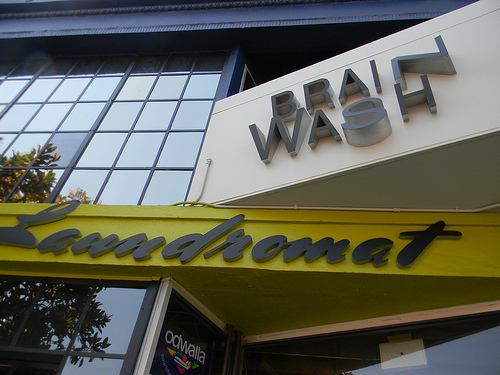
Bottle Kids, Dead Blue, Poeina Suddarth Brainwash Cafe, 1122 Folsom, SF; www.brainwash.com. 9pm, free.

Congress Grant and Green Saloon. 9pm.

Delta Wires Biscuits and Blues. 8 and 10pm, $20.

Dirtybird, Kill Frenzy, Claude Van Stroke Mezzanine. 9pm, $5-$20.

"Flashbangboom" Slim’s. 8pm, $20. With Chris James & the Showdowns, BC3, Pubic Heroinne, Parmisans.

Judgement Day, Giant Squad, Sun That Never Sets Bottom of the Hill. 10pm, $10.

Glen Meadmore and the Kuntry Band, Whoa Nellies, Andrew Roberts Thee Parkside. 9pm, $10.

Night Birds, Sharp Objects, Ruleta Rusa, Bad Coyotes Hemlock Tavern. 9pm, $7.

Persephone’s Bees, Bart Davenport, Dreamdate Cafe Du Nord. 9:30pm, $12.

Soul Asylum Independent. 9pm, $20.

X-Static Johnny Foley’s. 9pm, free.

Woods, Peaking Lights, Wet Illustrated Great American Music Hall. 9pm, $16.

Zej & Calen Amnesia. 6:30pm, $7-$10.

JAZZ/NEW MUSIC

Audium 1616 Bush, SF; www.audium.org. 8:30pm, $20. Theater of sound-sculptured space.

Terry Disely Bottle Cap, 1707 Powell, SF; www.bottlecapsf.com. 7-10pm.

Ottmar Liebert & Luna Negra Yoshi’s SF. 8pm, $30; 10pm, $25.

Namaskar Red Poppy Art House. 9pm, $15-$20.

Unconscious World Intersection for the Arts, 925 Mission, SF; www.projectsoundwave.com. Soundwave (5). 8pm, $12-$25.

FOLK/WORLD/COUNTRY

Baxtolo Drom Amnesia. 9pm, $7-$10.

Brazilian Music Festival Brick and Mortar Music Hall. 9pm, $15-$20. With Brener Monducci, Tambores do Brazil, Sotaque, Baiano, Tony Santos.

Giacomo Fiore, Agnew/McAllister Duo Unitarian Universalist Society of San Francisco Chapel, 1187 Franklin, SF; www.giacomofiore.com. 7:30pm, $15.

Taste Fridays 650 Indiana, SF; www.tastefridays.com. 8pm, $18. Salsa and bachata dance lessons, live music.

Taylor-Ramirez, Los Terciados Plough and Stars. 9pm, $6.

DANCE CLUBS

As You Like It with Scuba, Oliver Deustchmann, Epcot, Mossmoss Public Works. 9pm, $10-$20.

Braza! Som., 2925 16th St, SF; (415) 558-8521. 10pm, $5-$10. DJs Sabo, Kento, Elan spin Brazilian, Batucada, Samba.

Duniya Dancehall Bissap, 3372 19th St, SF; (415) 826 9287. 10pm, $10. With live performances by Duniya Drum and Dance Co. and music by Wontanara Revolution. DJ Juan Data spins bhangra, bollywood, dancehall, African, and more.

Joe Lookout, 3600 16th St.,SF; www.lookoutsf.com. 9pm. Eight rotating DJs, shirt-off drink specials.

Neon Vinyl Summer Edition Public Works Loft. 10pm, $5-$10.

Old School JAMZ El Rio. 9pm. Fruit Stand DJs spinning old school funk, hip-hop, and R&B.

120 Minutes Elbo Room. 10pm, $7-$10. With Mykki Blanco, Physical Therapy, and residents DJs S4NtA MU3rTE, Planet Death, and Nako.

Paris to Dakar Little Baobab, 3388 19th St, SF; (415) 643-3558. 10pm, $5. Afro and world music with rotating DJs including Stepwise, Steve, Claude, Santero, and Elembe.

SATURDAY 4

ROCK/BLUES/HIP-HOP

Back Pages Johnny Foley’s. 9pm, free.

Jay Brannan, Chris Pureka Great American Music Hall. 9pm, $16.

"Drive Tour" with College, Anaroaak, Electric Youth Rickshaw Stop. 9pm, $15-$17.

Drizzoletto, Lily Taylor, Karina Denike, Wild Reeds Amnesia. 8pm, $7-$10.

English Beat, Champions INC. Bimbo’s. 8pm, $25.

Extra Action Marching Band, Itchy-O Marching Band Brick and Mortar Music Hall. 9pm, $15-$20.

Fake Blood, Light Year, Nisus Mezzanine. 9pm, $12.50-$20.

Fracas, Blown to Bits, Guantanamo Dogpile El Rio. 10pm, $7-$100 donation. Benefit for Nikki Davis.

Hukaholix, Hate Crime Thee Parkside. 3pm, free.

Jinx Jones Riptide. 9:30pm, free.

MOFO Party Band Biscuits and Blues. 8 and 10pm, $20.

Murder By Death, Lia Rose, Ha Ha Tonka Bottom of the Hill. 9pm, $17.

New Diplomat, Hundred Days, Koll Moi, Ownership Slim’s. 8:30pm, $13.

Pleasure Kills, Sweet Pups, Ballantynes Hemlock Tavern. 9:30pm, $7.

Polish Ambassador Yoshi’s SF Lounge. 10:30pm, $20.

Yassou Benedict, Halfbreed Lovers, Cigarettes After Sex, Ghost Town Jenny Thee Parkside. 9pm, $7.

JAZZ/NEW MUSIC

Audium 1616 Bush, SF; www.audium.org. 8:30pm, $20. Theater of sound-sculptured space.

Ottmar Liebert & Luna Negra Yoshi’s SF. 8pm, $30; 10pm, $25.

FOLK/WORLD/COUNTRY

Go Van Gough Red Poppy Art House. 6:45. Part of Mission Arts & Performance Project.

"Rockabilly Jukebox" Plough and Stars. 9:30pm, $8-$10. With Blue Diamond Fillups, Whiskey Pills Fiasco.

DANCE CLUBS

Bootie SF: Faroff DNA Lounge. 9pm, $10-$15.

Cockfight Underground SF, 424 Haight, SF; (415) 864-7386. 9pm, $7. Rowdy dance night for gay boys .

Foundation Som., 2925 16th St, SF; (415) 558-8521. 10pm, $5-$10. DJs Shortkut, Apollo, Mr. E, Fran Boogie spin Hip-Hop, Dancehall, Funk, Salsa.

Haceteria Deco Lounge, 510 Larkin, SF; www.decosf.com. 9pm; free before 11pm, $5 after. With Magic Touch, Nihar, Tristes Tropiques, Smac, and Jason P.

Paris to Dakar Little Baobab, 3388 19th St, SF; (415) 643-3558. 10pm, $5. Afro and world music with rotating DJs including Stepwise, Steve, Claude, Santero, and Elembe.

Saturday Night Soul Party Elbo Room. 10pm, $5-$10.

Two Crews, One Cup: Number Two Public Works. 9pm, $10-$20. Benefit for Haiti with DingDong, Ernie Trevino, JoeJoe, Jess Stockton, and more.

Vinyl Boom Boom Room. 8pm, $15. DJ K-Os spins old school soul, Latin, and funk.

SUNDAY 5

ROCK/BLUES/HIP-HOP

Lynn Drury, Gal Holiday and the Honky Tonk Revue Brick and Mortar Music Hall. 9pm, $5-$8.

Nathan James and the Rhythm Scratchers Biscuits and Blues. 7 and 9pm, $15.

John Lawton Trio Johnny Foley’s. 9pm, free.

Kally Price Old Blues and Jazz Band Amnesia. 8pm, $5.

Murder By Death, Lia Rose, Ha Ha Tonka Bottom of the Hill. 9pm, $17.

Ozomatli, SMOD Sigmund Stern Grove, 19th Avenue and Sloat Boulevard, SF; www.sterngrove.org. 2pm, free.

Radio Moscow, Dirty Streets, Coo Coo Birds Cafe Du Nord. 8:30pm, $12.

7Horse Red Devil Lounge.

Sierra Leon’s Refugee All Stars, Black Nature Band, Naia Kate Independent. 8pm, $20.

Slow Motion Cowboys, Tater Famine Knockout. 5pm, $6.

That Ghost, Ed Schrader’s Music Beat, Bloom Thee Parkside. 8pm, $7.

Wild Kindness, Former Friends of Young Americans, Casual Dolphins Hemlock Tavern. 9pm, $6.

JAZZ/NEW MUSIC

Niyaz Yoshi’s SF. 7pm, $28.

FOLK/WORLD/COUNTRY

Miwi Gemini, Jean-Marie, Dusty DiMercurio, Poor Sweet Creatures Hotel Utah. 8pm.

Dana Lyn, Kyle Sanna Red Poppy Art House. 8:30pm, $10.

Peter Rowan Jerry Garcia Amphitheater, 45 John F. Shelly, SF; (415) 272-1397. 11am, free.

Twang Sunday Thee Parkside. 4pm, free. With Country Casanovas.

DANCE CLUBS

Dub Mission Elbo Room. 9pm, $6. Dub, dubstep, and dancehall with DJ Sep, Vinnie Esparza, and J. Boogie.

Jock Lookout, 3600 16th St, SF; www.lookoutsf.com. 3pm, $2. Raise money for LGBT sports teams while enjoying DJs and drink specials.

La Pachanga Blue Macaw, 2565 Mission, SF; www.thebluemacawsf.com. 6pm, $10. Salsa dance party with live Afro-Cuban salsa bands.

MONDAY 6

ROCK/BLUES/HIP-HOP

Cool Ghouls, Brother Pacific, Black Cobra Vipers Brick and Mortar Music Hall. 8pm, $4-$7.

Damir Johnny Foley’s. 9pm, free.

Belle Monroe and Her Brewglass Boys Amnesia. 9pm, free.

Sutekh Hexen, Hallow, Rain and Endless Fall, Rigis Elbo Room. 9pm, $7.

JAZZ/NEW MUSIC

Bossa Nova Tunnel Top, 601 Bush, SF; (415) 722-6620. 8-11:30pm, free. Live acoustic Bossa Nova.

DANCE CLUBS

Death Guild DNA Lounge. 9:30pm, $3-5. Gothic, industrial, and synthpop with Joe Radio, Decay, and Melting Girl.

Krazy Mondays Beauty Bar, 2299 Mission, SF; www.thebeautybar.com. 10pm, free. Hip-hop and other stuff.

M.O.M. Madrone Art Bar. 6pm, free. DJs Timoteo Gigante, Gordo Cabeza, and Chris Phlek playing all Motown every Monday.

Vibes’N’Stuff El Amigo Bar, 3355 Mission, SF; (415) 852-0092. 10pm, free. Conscious jazz and hip-hop from 1960s-early ’90s with DJs Luce Lucy, Vinnie Esparza, and more.

TUESDAY 7

ROCK/BLUES/HIP-HOP

Ash Reiter, Great Elk Amnesia. 9:15pm, $7.

Cosmonauts, Gap Dream Hemlock Tavern. 9pm, $7.

Fang Island, Zechs Marquise Great American Music Hall. 8pm, $15.

Foxygen, NO, Dylan Shearer Brick and Mortar Music Hall. 9pm, free.

Gaza, Eagle Twin, Monuments, Collapse Thee Parkside. 8pm, $10.

Jesus and the Rabbis Boom Boom Room. 8pm, $5.

Guitar Shorty Biscuits and Blues. 8 and 10pm, $20.

Slick Idiot, Mona Mur & En Esch, Promonium Jesters, Loveless Love Elbo Room. 8pm, $10.

Stan Erhart Band Johnny Foley’s. 9pm, free.

War Trash, Meth Sores, Midnite Brain, Gaskill Knockout. 9:30pm, $6.

JAZZ/NEW MUSIC

Etienne Charles Yoshi’s SF. 8pm, $14.

Frederick Hodges Pier 23, Embarcadero at Filbert, SF; (415) 362-5125. 5-8pm.

"Unplugged" 50 Mason Social House, SF; (415) 433-5050. 7pm, free. With Kyle Castellani, FastLayne, Growing Room, Midnight Radio, and more.

DANCE CLUBS

Eclectic Company Skylark, 9pm, free. DJs Tones and Jaybee spin old school hip hop, bass, dub, glitch, and electro.

Post-Dubstep Tuesdays Som., 2925 16th St, SF; (415) 558-8521.10pm, free. DJs Dnae Beats, Epcot, Footwerks spin UK Funky, Bass Music.


Heads Up: 8 must-see concerts this week

0

This is a week of ebullient greetings and sorrowful goodbyes. So long Snoop Dogg, welcome Snoop Lion‘s Reincarnated. Back down on earth – and more pertinent to concert-goers in the Bay Area this week – we’ll open our arms to the Yolks, finally on a proper tour. And say nice to see you again to Buraka Som Sistema, and welcome return to Peaking Lights (the duo met here).

And with a single tear rolling down the cheek, we’ll shout bon voyage to the current repertoire of Extra Action Marching Band, in this form at least – they’ll surely regroup with some magical new production soon enough.

Here are your must-see Bay Area concerts this week/end:

Bleached
With the demise of their former band, Mika Miko, LA sisters Jessica and Jennifer Clavin dusted themselves off, imbibed in a steady liquid diet of early melodic punk, girl group pop, and woozy psychedelia, and formed infectious, so-very-California quartet Bleached.
With DIIV, Lenz
Wed/1, 8pm, $12
Rickshaw Stop
155 Fell, SF
(415) 861-2011
www.rickshawstop.com
http://www.youtube.com/watch?v=–PGy31IeI4

Hood Internet
The Chicago-based mashups artists (duo ABX and STV SLV) of Hood Internet have long been hailed as the Next Big Thing in the bridge between hip-hop and alternative rock/indie pop – if you think that sounds like something straight out of ’96 Lollapalooza (or perhaps, Homerpalooza), you wouldn’t be too far off. Recent mashups include Danny Brown vs. Dirty Projectors, and then there’s new single “Won’t Fuck Us Over,” which started as a cover of the National’s “Mr. November,” and features BBU, Annie Hart, and Hart’s screaming baby.
Wed/1, 9pm, $14
Independent
628 Divisadero, SF
(415) 771-1421
www.theindependentsf.com
https://www.youtube.com/watch?v=YQWyqquA_xk

The Yolks
Here’s yet another act from the Windy City. Chicago’s three-chord rock’n’rollers the Yolks are hauling a Hammond Organ out during this, their first actual tour after five years as a band. Though they’ve yet to travel, you may already know their sound thanks to our own Nobunny – he covered “Somewhere New” on his first LP, Love Visions. This week, Nobunny gave the Yolks another boost by enthusiastically noodging social networking fans, “GO SHOW ‘EM SOME LOVE.” You heard the bunny.
With the Okmoniks, the Shrouds
Thu/2, 9:30pm, $7
Knockout
3223 Mission, SF
(415) 550-6994
www.theknockoutsf.com
http://www.youtube.com/watch?v=a_mWgrGCyWQ

Buraka Som Sistema
“Buraka’s a reportedly rough and tumble neighborhood in Lisbon; Som Sistema quickly translates to “sound system”; put it together and you have a partying collective of DJs, producers, MCs, and dancers spreading the Angolan-originated, techno and hip-hop influenced genre of kuduro. Understanding Portuguese is not a prerequisite, as the group’s seemingly competitive desire to hype up a crowd, proves immediate and universal.” – Ryan Prendiville
Thu/2, 9pm, $20
Independent
628 Divisadero, SF
(415) 771-1421
www.theindependentsf.com
http://www.youtube.com/watch?v=wOMe-8Tf1Y0

Judgement Day
Progressive string-metal band Judgement Day should be in high spirits this weekend – the San Francisco trio will be celebrating the release of its third full-length, Polar Shift at Bottom of the Hill. It’s the violin and cello-packed follow-up to 2010’s epic Peacocks/Pink Monsters. Check action-packed single “Forest Battle” below.
With Giant Squid, A Sun That Never Sets
Fri/3, 10pm, $10
Bottom of the Hill
1233 17th St., SF
(415) 621-4455
www.bottomofthehill.com
http://www.youtube.com/watch?v=F_kdTWRDvY0

Peaking Lights
“Originally from the Bay Area, Madison, Wisconsin-based duo Peaking Lights weaves an infectiously stoney web of dub, Krautrock, and loopy, gloopy pop a la Panda Bear, seemingly tailor-made for record collectors and serial name-droppers. “ – Taylor Kaplan
With Woods (co-headlining), Wet Illustrated
Fri/3, 9pm, $16
Great American Music Hall
859 O’Farrell, SF
(415) 885-0750
www.slimspresents.com
http://www.youtube.com/watch?v=HINIs3Sp5Lk

Extra Action Marching Band
Seismic shifts are upon us. As the theatrical, whimsical, horny, and brassy Oakland collective recently stated, “These two shows will be the final performances [of] Extra Action’s current repertoire. We have begun work on an all new show and won’t be performing publicly for quite some time.” Get on that loyal fans, don’t miss the chance to see your favorite “high school marching band on acid.” 
With Itchy-o Marching Band, KROB, Donkey, Staiano
Fri/3, 9pm, $12
Vitus
1410 Ballroom (14th and Broadway), Oakl.
www.vitusoakland.com

With Itchy-O Marching Band
Sat/4, 9pm, $20
Brick and Mortar Music Hall
1710 Mission, SF
(415) 371-1631
www.brickandmortarmusic.com
https://www.youtube.com/watch?v=ffQPG-OjIQc

Drive tour: College, Anoraak, Electric Youth
Are we yet over the chilling, punctuating soundtrack to last year’s Gosselin vehicle, Drive? Nope, not yet ready to shift gears. We’re still very much engulfed in the Krauty, synth-filled drama. Hey Gosling, just keep driving – and check out these performances by bands off the noteworthy soundtrack while you’re at it.
Sat/4, 9pm, $15-$17
Rickshaw Stop
155 Fell, SF
(415) 861-2011
www.rickshawstop.com
http://www.youtube.com/watch?v=BOWPA0oRSd0

Meet the finalists in Oakland’s youth poet laureate competition

4

Bay Area, our young people are wrapping words of wisdom around subjects like survival, poverty, oppression, community, life, and death. It’s time to listen up.

“Just like a picture is worth a thousand words, a word can provoke a thousand memories,” says Tele’Jon Quinn, one of seven 16 to 18-year-old Oakland youth poet laureate finalists. “Memorizing goes hand in hand with reflection. If my words can cause someone to reflect on an important issue or event in their life, then my words were worth sharing.” The East Bay bards are now preparing for the first group performance at the Art and Soul Festival in Oakland on Sat/4.

The Oakland Public Library teams up with Youth Speaks, the local youth spoken word nonprofit, to stage the competition. Like any poet laureate, the chosen versifier will officially represent his or her community via the media and public appearances.

A panel of celebrity judges including California poet laureate Juan Felipe Herrera, and Oakland-based poets Kenju Liu, Arisa White, Juliana Spahr, and Joshua Merchant, will select Oakland’s inaugural poet laureate in September. Every finalist will have their work published in an anthology that comes out in 2013, and the ultimate victor will receive a $5000 scholarship as well as the title of youth poet laureate for Oakland.

Take a moment to read up on seven of the most creative young wordsmiths around, and check out snippets from their creative works.

Oakland youth poet laureates at the Art and Soul Festival, festival entrances at 14th St. and Broadway; 16th St. and San Pablo; Promenade beside City Center West Garage, Oakl. www.oaklandpubliclibrary.orgwww.artandsouloakland.com. Performance at Rotunda Building, 300 Frank Ogawa Plaza. Sat/4 5pm – 7pm, $5-$8 seniors and kids, $10-$15 adults

Stephanie Yun, age 18, Skyline High School

Stephanie Yun has always been a writer. “To me, poetry is pure expression. It’s beautiful, and painful, and liberating, and frightening, all at once,” she tells the Guardian. “It’s being vulnerable, and teaches us to better understand things we never could.” Her poem “‘Til Death”, is infinitely more than your stereotypical love poem. Her lines tackle severe insecurities, body image issues, depression, cutting:

… Before my first and current relationship,

I wondered how potential suitors would react

when their fingertips wandered and read my wrists like Braille

Here lies emotionally unstable girl …

Describing her foray into love, her first boyfriend, her first romance, Yun slips in images of her internal battles, questions of existence, identity. 

… Everything may be fine as I speak this

but I’ve envisioned dream wedding

in the spring 

wearing tulle or lace ball gown

with three-tiered chocolate cake     

fewer times and in less detail

than my suicide … 

Yun says she started writing poetry in second grade, but became actively involved two years ago as a high school sophomore with Youth Speaks. She says writing is a release — she writes out of necessity and tells us doesn’t know if she would be alive today without the ability to lay her words down. “There is just something about letting things out, things we have kept so deep inside of us, or things that threaten to burst from our being,” Yun says. “It’s that transition from containing them within ourselves, to their manifestation into the outside world. We make ourselves vulnerable and are forced to face things head-on, and from there our ideas and feelings exist beyond us, and we can share them with others.”

Tele’jon Quinn, age 17, MetWest High School

Tele’jon Quinn is an activist and spoken word artist. He enjoys performing to large crowds, and uses his creative talents to raise consciousness in his community. His wordplay draws attention to social issues like police brutality, classism, poverty, and community. From his poem “Dialouge”: 

… Because Elites are never open minded unless there is lots for sell 

They have packaged us like we’re bots on shelves 

Robotically boxing each other and concocting diabolical plots 

To exile one another to hell …

Quinn says his poetry is not limited to his own emotions or feelings. He draws some of his material from the social programs he participates with, like Heal the Streets, Bay-Peace, and Youth Speaks. He says that for the past two years, poetry has been his outlet for everything he endures. He seeks to educate, liberate, and inspire members of the Oakland community with his words. In the final lines of “Dialogue” he writes:

So if my poetry could walk she’d walk right here

And tell you a story that gives you hope for the future of her home Oakland

The Navajo people once said you can’t wake a person that pretends to be asleep

So lets stop pretending that we do not see our reality

Open our eyes

And transform the reality we live in …

Robin Levy, age 16, Saint Joseph Notre Dame

Poetry, she says, allows Robin Levy to organize the helter-skelter thoughts that run rampant in her brain. Levy has written poetry in earnest for three years now, and says every time she writes a poem, she records another part of herself. 

“Poetry, for me, is collecting all the scraps of beauty or strangeness or whatever I can find and piecing them together so other people can see just how vivid everything is,” she tells the Guardian. Levy is a big fan of Robert Frost, but her favorite poet is a slam poet who calls herself Jasmine Luve. “The way she writes just seems so unthinkingly perfect, like she just wrote down everything she thought that day and it was already poetry,” Levy says. Her own subject matter evolves from little snippets she hears, reads, or thinks. “Just anything that is accidentally amazing, something that probably didn’t mean to be poetic but is,” she says. “The reason I write what I do is that whenever I read or hear something poetic, I just want to elaborate on it and make it into something more, weave that one thread into a full tapestry.”

In her poem “Before You Were You” Levy’s ability to turn a casual phrase into poetry is apparent. The first lines read:

you told me once

that before you were you

you were a stone.

heavy, immobile,

stranded at the ocean floor

by the cruel grip of gravity.

The poem runs full circle to explore questions of identity and shared existence. It ends with:

you told me once

that before you were you,

you poured from my mind

into the sand

you told me once

that before  you were you,

you were me

Levy asks anyone who reads this to write a poem today.

Kerby Lynch, age 17, Oakland School for the Arts

When asked if she reads poetry, Kerby Lynch responds, “Reading poetry is such an understatement. I live, breathe and eat poetry. Life is poetry. The sun, the moon and the truth is poetry. When one realizes that, life is on a path of divinity.” 

In the middle of this creative flight, she interrupts herself. “Enough of that, I’ll answer the question.” 

It turns out Lynch reads, watches, and listens to a whole gamut of poetry from traditional, to contemporary (particularly Ise Lyfe from Oakland), to spoken word (Def Jam Poetry, season 3), to rappers (Jay-Z, Andre 3000, Kendrick Lamar, Nas, and Lauryn Hill), and her teachers and peers at Oakland School for the Arts. Her favorite song, ever, he adds, is “Mathematics” by Mos Def—largely for the lyrics. 

http://www.youtube.com/watch?v=m5vw4ajnWGA

“These are all my favorite poets and people, because they are who I am,” she says. Lynch has written poetry since she was 14, and says she got heavily into the beauty and complexity of poetry and spoken word in the summer of 2011. “Poetry is me, but not in a pretentious way. Poetry is me in a way that it completes me and aides my purpose in life.” Lynch writes about issues of race and separation, class, social and political issues. Her words are progressive, like a call to action:

Watch your brother. Tell him 

no matter what he wears he will fit the description

tell him about Oscar

tell him about Aiyana

Sean

Carlos

Sergio

Danny 

Shaima

tell him about Trayvon and these statistics that define us…

She says she uses poetry to reflect the “messed up workings of the world,” insecurities and vulnerabilities of people, and as a tool to sway the masses. “I strive to write as if I am using political propaganda,” he says, noting the influences of Martin Luther King Jr., and Stokeley Carmichael. “I use words  for me, the same way words have been used against me. Whether it be in the constitution or in a hate speech. Words are the tools for the bigger machine. Who has access to that machine? We all do. Why don’t we all use it? We didn’t know we could.”

Euna Bonovich, age 16, International High School of San Francisco

Euna Bonovich is half-Korean, half-white. She says the confusion and frustration that goes along with finding herself split between two very different cultures and in the middle of adolescence can only be soothed by writing poetry. She wants to provide a voice for those who are prevented from speaking because of the depression and exhaustion of living, and spread the message that no one is emotionally alone. Her writing is hopeful, soulful, and gets to the roots of human connection. The lines of Bonovich’s “The Gossamer of Our Hope” tell of a connection that is able to reawaken feeling and soul. 

The poem begins:

My soul has slipped away like the fleeting moments of a nightingale

Distant memories that can only be recovered by the breath of the wind

Losing my existence within the grains of sand,

But when I sense the warmth of your fingertips 

I know I’ve found it once more

The song of my sleepless night 

The feeling of laying in cold grass as the sun spreads across my skin

The laughter of a falling snowflake

The fragility of a wet moth’s wing …

Bonovich says the importance of poetry is its ability to show someone beauty in the ugliest thing in existence: life.

Jose Saldona, age 18, Envision Academy of Arts and Technology

Jose Saldona says poetry is a piece of clay; it is up to the artisan to decid its shape, color, texture and size. “It’s up to the customer to figure out its use,” he says. “Words are another set of tools: another way to communicate. Another path to enter the untapped emotions of people. Another method to reach the doubts people have.” Saldona says poetry has always been a way for him to express himself, free from speech and grammatical rules. “Sometimes you can even sneak in a few spelling ‘mistakes’ for effect,” he says. Saldona has written poetry since sixth grade, and spoken poetry since he was three. His poetry speaks to life, truth—he describes his inspirations as, “anything from nature to human nature.” 

“I am a reflection of my community, and my community lives within no boundary,” says Saldona, who describes himself as half-Spaniard, half-Tarahumara, but recognizes himself as a whole-hearted, proud Mexican. “I was raised with the idea of corima, sharing and charity. As I approach this unliberated world, I see poetry as a way to remake that world.” Saldona says stories are shared among people to teach lessons in tribes to the younger folk. He views himself as a chief, the storyteller, the ‘back in Mexico’ kid, who in ninth grade refused to write essays because he felt it took the ideas of others. The 18-year-old messenger wrote he poem “Baby’s First Words” as a dedication to his unborn baby boy:

I’m enslaved to this holy string I pull

perhaps a chord that keeps me fed

I have not an idea what it is, but it keeps me alive.


I stretch and barrage my mommy with kicks.

It gets her to speak and I love hearing her distant, soothing voice.

Yes, that marvelous singing in the raindrops, drizzling

with echoes of angelic harmony,

lulling me to sleep … 


My mouth opens wide in a gaping yawn

that quickly closes around my thumb.

Siesta in my warm incubated cove..

Goodnight.

Victoria Kupu, age 18, Mills College

Victoria Kupu has written poetry since fifth grade, but did not tell anyone about it until her sophomore year in high school. The first-generation Polynesian-American says it is her means of self expression during stressful times, as well as a reflection of her experiences and culture. “I see poetry as seeing the beauty in struggles,” she says. “[It is] an art, a way of self expression.  It can be left up to the artist how they want to convey that to the audience.” Kupu writes to tackle issues that affect people of color, and her poem, “Roots”, is an example of the way her words explore generational and cultural gaps.  

… He whispered, Ou’a foki mai, Osi tala atu ka koi 

My love does not speak your language 

A Polynesian growing up in America left my identity an orphan 

Father America was a con-artist, selling the “American Dream”

Mother liberty stood on her pedestal made of sand and dressed herself up in Monopoly money

She sold herself to the white man, capitalism 

That left no nurturing time for this brown child

I turned my back on my roots, so he turned his back too

He spewed words of my biggest fear

Ou’a  foki Mai, Osi tala atu ka koi

Your heart no longer lives here …

Kupu says she is usually sitting on a bus or in class when a line pops into her head. She writes it down and it expands into a poem. “I also usually try to touch upon issues that are not talked about as much,” Kupu says. “One of my poems talks about colorism. I also like to write about issues or marginalized communities, such as the disabled community. … I am Polynesian-American. I am not only writing to represent other Polynesians but also many other people.”

Best of the Bay 2012: BEST ALL-AROUND GRRRL POWER

0

Basic bar moves and halting hip-hop steps may be what stuck with you from the dance classes of your youth, but (thankfully) today there’s a new kind of movement program that’s all about teaching confidence and power, in addition to how to rule a dancefloor. We’re talking about Grrrl Brigade. Dance Mission Theatre hosts this series of classes in hip-hop, jazz, modern, and taiko (that’s Japanese drum dancing) for nine to 18-year-old females. As they rock the courses, their leadership develops along with their dance skills. Grrrl Brigade students roar with self-esteem, thrive on collaboration, and have been known to pound away on gigantic drums, taking the stage each year in a young person’s version of The Nutcracker, and in a springtime show focusing on real-life issues the performers deal with when they’re not in the spotlight.

Dance Mission Theater, 3316 Mission, SF. www.dancemission.com

Best of the Bay 2012: Local Heroes

9

2012 Local Heroes

Alex Tom and Shaw San Liu

Alex Tom and Shaw San Liu — the executive director and lead organizer for the Chinese Progressive Association, which celebrates its 40th anniversary on Aug. 4 — have laid the groundwork for a progressive resurgence in San Francisco by organizing Chinese immigrants and actively building close and mutually supportive relationships with working-class allies throughout the city.

The two have been involved in just about every recent effort to counter the pro-corporate neoliberalism that has come to dominate City Hall these days. They have seized space with Occupy San Francisco and they have supported labor unions and helped to create the Progressive Workers Alliance. They have fought foreclosures and pushed for affordable housing reforms, and they have protected vulnerable immigrant workers from wage theft by unscrupulous employers.

“Shaw San and Alex are incredibly talented organizers and movement builders who are managing to do the nearly impossible,” said N’Tanya Lee, who worked closely with the pair as the director of Coleman Advocates for Children and Youth. “They have built an authentic base of working-class Chinese immigrants who are interested in fighting for change in their community, and are creating a grassroots organization at the forefront of building multi-racial alliances to combat the divide-and-conquer strategies that are confronting us.”

Liu, who joined CPA six years ago, said she’s always inspired to see the old photographs on the walls of CPA’s office, and to read the history of CPA’s organizing and advocacy on behalf of working people. She said the organization has always understood the need to forge alliances with labor unions and other progressive interests.

“The organization itself has been, since its inception, playing a critical role in bridging the needs of Chinese interests with other communities,” Liu said. “I’ve always seen my role as bridge building.”

Today — with stagnant real wages, a deteriorating social safety net, and growing power by corporations that enjoy unprecedented political clout thanks to Citizens United and other court rulings — the need to organize people across cultural lines is more important than ever, even if that begins by addressing the individual needs of each community.

“Always at our core, it’s about empowering our folks to be able to voice their own struggles and visions,” Liu said.

Working to build that capacity within the Chinese immigrant community is hard and important work, Liu said, but it’s equally important to connect with the struggles of working class people from other communities, uniting to effectively counter the political dominance of employers and property owners.

Lui framed the struggle as: “How do we build unity and not have that be lip service?”

Tom and Liu have demonstrated that they know how to do just that, despite the diversity of sometimes-conflicting interests on the left and in a working class squeezed by recession and feelings of economic uncertainty.

“The issue that will unify people is good jobs that are accessible to everyone,” Liu said.

Yet she also said that working class organizing is needed to counter the simplistic “jobs” rhetoric coming from City Hall, which politicians are using to advocate for tax cuts to big corporations.

“More and more, it exposes itself as a total lie,” Liu said of the argument that the city should be facilitating private sector job creation with business tax cuts. “So much points to the fact that the US economic system doesn’t benefit everyone … When we talk about jobs, we talk about what kinds of jobs we want and for whom.”


2012 Local Heroes

Stardust and Ross Rhodes

Ross Rhodes and Stardust, like all of the people involved in Occupy Bernal, are neighbors. But until Stardust helped found the group — a local take on Occupy focused on stopping unjust foreclosures and evictions — they didn’t know each other.

Now they do, and if it wasn’t for Occupy Bernal, Rhodes is sure he would no longer have the house that his parents bought in 1964.

A former college football star, Rhodes injured his knees and back playing. He lives on disability payments, volunteering at the 100 Percent College Prep Club, and bringing home-cooked meals to seniors in his area. He also coached kids in the Junior 49ers program until it became too hard on his injuries.

Stardust, an ESL teacher and oboe player in the Bay Area Rainbow Symphony and the SF Lesbian/Gay Freedom Band, has been working for LGBT rights, women’s rights, and online civil rights for years. When Occupy took off, he gravitated toward the neighborhood fights against foreclosures.

Like people all over the US, Rhodes and his wife were fooled several years ago by a pick-a-payment loan plan. At the time, World Savings was peddling the deals through neighborhoods, promising potential borrowers that they could send their kids to college, buy a car, take vacations — and modify their loans after a year.

But when Rhodes started to apply for loan modifications, he was denied. He kept receiving letters asking for more information, often the same information he had already given — a common story that led to part of the Homeowners Bill of Rights that will guarantee a single point of contact from the bank. He was stumped when he was told he needed more income — the bank said it wouldn’t accept payments that were more than 30 percent of a borrower’s income, and Rhodes was getting a fixed disability check.

He found another income source as a homecare provider, but after all the time that the bank wouldn’t accept his payments, Rhodes was marked as someone who wasn’t making payments, and was tracked for foreclosure.

Meanwhile, Occupy Bernal was working on more than 100 similar cases in its neighborhood. The organizers hadn’t quite convinced Mayor Ed Lee to help at that point, but Rep. Pelosi’s staffers were on their side, getting banks to prioritize the cases of those working with Occupy Bernal. They worked with other community groups like Alliance of Californians for Community Empowerment (ACCE) to do physical occupations of homes. But for those who had received a notice of default and a notice of sale — two steps in the foreclosure process that precede the auction of a property — Stardust was there with another tactic.

He spearheaded Occupy the Auctions. He shows up at City Hall at 1:30 every day and tries to disrupt foreclosure auctions. He’s been there continuously since April 27, 2012, and has stopped dozens of home sales. When fighting the eviction of a neighbor, he is sometimes backed by more than 100 people. But many days it’s just Stardust.

Now, Rhodes is in a loan modification process. Rather than conflicting and confusing machine-generated paper work, he gets regular calls about the status of his modification from a point person in Wells Fargo’s executive complaint office. He testified in Sacramento in favor of the Homeowners Bill of Rights, which passed July 2. He’s also become an Occupy Bernal organizer on top of his other volunteer pursuits.

Stardust battles mega-banks and the city’s wealthiest in his work. But he says the biggest challenge is helping people to get over the shame they feel when they realize they are facing foreclosure. “It’s not their fault,” he says. “It’s the system.”

Friends of Ethics

In the summer of 2011, at the behest of the Ethics Commission, the Board of Supervisors put on the ballot a measure that would have loosened some of the rules for campaign consultant reporting, and would have allowed further changes in the city’s landmark ethics laws without a vote of the people. It had unanimous support on the board — and frankly, technical changes in campaign laws are not the kind of sexy stuff that gets the public angry.

But a small group, led in part by five former ethics commissioners, took on the task of defeating the measure. The activists also took on the challenge of defeating Prop. E, which would have allowed the supervisors to amend future measures passed by the voters.

Despite being outspent by tens of thousands of dollars, Friends of Ethics — a small grassroots operation — prevailed. Both measures were defeated (32 percent to 67 percent in the case of Prop. E, the worst loss of all the local measures on the ballot).

The group is great at forming coalitions: in the case of the No on E and F campaign, Friends of Ethics reached out to some 30 organizations that formally joined in opposing the measures after hearing presentations.

The members of FOE are a fractious group of organizers and shit-disturbers who don’t always get along or agree on other issues. But they’ve come together to do something nobody else does: make protecting and expanding political reform laws a front-line priority.

And the battle goes on. Not long after the November 2011 election, Supervisor Scott Wiener introduced legislation that would have led to less disclosure of political contributions before an election, and would have made it easier to conceal who was making contributions and paying for campaign mailers. The Wiener bill would weaken campaign contribution limit, giving the wealthiest donors greater power in elections.

When the amendments were heard at a well-attended Rules Committee in June (with plenty of public comment from Friends of Ethics), the supervisors sent the amendments back to the Ethics Commission to be rewritten.

The next step for the Friends of Ethics is to work with interested supervisors to push for changes to the city’s campaign laws that will actually benefit the public, such as increased transparency in election contributions and expanded campaign restrictions for those receiving contracts and other benefits from the city.

In an era defined by the US Supreme Court’s Citizens United case and a nationwide assault on fair elections, it’s critical work.

Friends of Ethics can be reached at sfethicsfriend@gmail.com

2012 Local Heroes

The Occupy movement

When Adbusters magazine called for people to show up on September 17, 2011, in New York City to protest the way Wall Street was holding the country hostage, no one could have predicted what would emerge.

It was the start of a movement, and San Francisco heeded the call. About 100 people gathered in the city’s Financial District. They started camping. And the effort exploded.

In the first few weeks, camps sprung up across the country. In Chicago and Los Angeles, in Bethel, Alaska and Tuscaloosa, Alabama, people were drawn together. But, unlike most protests, they stayed together. Night after night.

Along the way, a certain prevailing narrative from outside observers never quite got it right. First the camps were dismissed as nothing but bratty college students and hippies. Then they were called dirty and filled with homeless people. (Occupy challenged the whole idea of a monolithic homeless population. Once they had a home in the Occupy tent cities, homeless people were just — shocker — people.)

By December, when most of the campers had been kicked out, the narrative shifted. Occupy was resting, hibernating, many declared. Some snickered at the fair-weather activists who would only come out in the sunshine.

But in the Bay Area, at least, that hibernation story was simply false. On December 12, Occupy Oakland brought out thousands for its second port shutdown, in solidarity with port workers. On January 20, downtown banks were forced to close for the day and people in the streets celebrated Occupy San Francisco’s shutdown of the financial district. A week later, 400 were arrested when thousands tried to turn a vacant Oakland building into a community center. This was no hibernation.

Actions in some way inspired or fueled by Occupy have continued into the spring and summer. On March 1, Occupy, with a focus on student debt and accessible education, formed the 99 Mile March. Dozens marched from the Bay Area to Sacramento to join thousands of students and supporters in calling for an end to cuts to education; hundreds then occupied the Capitol building. On April 22, Occupy, with a focus on food justice, formed the Gill Tract Occupy the Farm action. Hundreds took a UC Berkeley-stewarded tract of land slated for a baseball diamond and a Whole Foods and planted it, turning it into a farm with rows of crops, a kids space, and a permaculture garden. On June 15, Occupy formed the Lakeview sit-in and Peoples School for Public Education, which taught day camp to children and refused to leave a beloved Oakland elementary school, one of five slated for closure.

Police eventually won the many-months battle with most Occupy groups in the Bay Area. The camps are mostly gone, though a tenacious group keeps its 24-hour protest in front of the Federal Reserve.

But because of Occupy — and its accompanying burst in resistance, creativity, and the belief that we really can, and must, come together to do something — dozens of Bay Area residents remain in homes that were facing foreclosure. Hundreds of people who felt forgotten and abandoned have found community. Thousands have been inspired to start their own projects and work with others.

When Adbusters called Occupy Wall Street to action, it was under the banner of “democracy not corporatocracy.” That ain’t an easy project. But it has already made the world a better and more hopeful place. 

Best of the Bay 2012: BEST SUPERFRIENDS

0

BEST SUPERFRIENDS

The “It Gets Better” campaign may get all a lot of press when it comes to encouraging queer teens to hang in there in the face of bullying and fear, and not succumb to depression. But there’s an amazing organization that, for the past 14 years, has been working to empower teens to make it better right now. (It even recently launched the Make It Better Project to directly involve teens in making schools safer for LGBTQ peers.) The Gay Straight Alliance Network started in San Francisco and has grown into a hugely popular global entity, uniting queer and questioning teens and straight allies in the fight against homophobia through classroom interaction and school activities. Last year’s Northern California GSA youth conference trained hundreds of young activists to help teachers comply with California’s new FAIR Education act, which requires schools to include factual information about gay people in existing social studies lessons. These brave kids don’t want to wait to move toward acceptance.

www.gsanetwork.org

Our Weekly Picks: July 25-31

0

WEDNESDAY 25

Spoek Mathambo

Former electro-rapper and afrobeat practitioner Nthato Mokgata merges his disparate talents as Spoek Mathambo, churning out a deliciously MIDIfied brand of hip-hop that switches stylistic identities as boldly as it does casually; his sophomore full-length, Father Creeper, veers impulsively into dancehall, indie-pop, and FlyLo beat-music territory, throwing genre tags cheekily to the wind. The brittle electronic textures of Mokgata’s studio output don’t intuitively lend themselves to a live translation, so it should be interesting to see his live approach. (Taylor Kaplan)

With Duckwrth, Armani Cooper

9pm, $13

Brick and Mortar Music Hall

1710 Mission, SF

(415) 800-8782

www.brickandmortarmusic.com


Karl Evangelista Plays the Music of Ornette Coleman

Four bands, one bandleader, all paying tribute to Ornette Coleman: one of jazz’s most uncompromising and transcendent figures. From jazz quartet Moon Inhabitants, to vocal ensemble Broken Shadows, to Mills-originated genre-bending duo Grex, stalwart Oakland improv-jazz specialist Karl Evangelista has a handful of lineups in tow, for what should be a vibrant tribute to Coleman’s diverse and enterprising body of work. Seeking an introduction to the Bay Area’s thriving, ever-revolving experimental jazz scene? Let Evangelista and his rotating cast of conspirators lure you down the rabbit hole. (Kaplan)

8pm, $10

Swarm Gallery

560 Second St., Oakl.

(510) 839-2787

www.swarmgallery.com


Harry and the Potters

Spoil alert: Dumbledore may be dead but Harry and the Potters could raise a racket loud enough to rouse him. With their signature grade of punk rock and high-energy stage act, the wizard rock … well, wizards, have their brooms pointed at San Francisco as they head to Slim’s for a show with the Potter Puppet Pals. The band celebrated its 10th anniversary in June, proving that the power of Potter is not only lasting but can be used for good — the duo helped found the Harry Potter Alliance, a nonprofit organization that encourages civic engagement among youths using the J.K. Rowling series. So although Muni isn’t quite the Hogwarts Express, the not-one-bit-magical ride could be worth it to check out these bespectacled and bewitching brothers. (Julia B. Chan)

With Potter Puppet Pals

7:30pm, $15

Slim’s

333 11th St., SF

(415) 255-0333

www.slimspresents.com


Project: Lohan

Now that Paris Hilton is AWOL and Kim Kardashian is boring, there’s a clear winner in the battle for paparazzi supremacy: Lindsay Lohan, once the nation’s great hope for Jodie Foster-style child-star-made-good status. That was before rehab, jail, “exhaustion” hospitalizations, “Firecrotch-gate,” all those smashed-up luxury cars, I Know Who Killed Me (2007), and so much more. And since LiLo is so … unpredictable, D’Arcy Drollinger, creator-performer of hot-mess exposé Project: Lohan, updates his show’s script according to the starlet’s latest shenanigans; every word is taken from pre-existing material, including interviews, court documents, tabloids, and other sources of Lohan news and gossip. The girl can’t help it! (Cheryl Eddy)

Through Aug. 19

Previews tonight, 8pm; opens Fri/27, 8pm; runs Thu-Sat, 8pm; Sun, 7pm, $25

Costume Shop

1117 Market, SF

www.projectlohan.com


The Wizard of Oz: Movie Night with the San Francisco Symphony

More than 70 years after it was made, The Wizard of Oz remains one of the most beloved films of all time, dazzling each new generation of viewers with its fantastical story, eye-popping special effects, and magical music. Iconic songs such as “Over The Rainbow” have of course become rightful classics, but the lush score written by composer Harold Arlen was also a significant part of the movie’s enchanting spell. Fans will want to follow the yellow brick road to these special screenings of Oz, which will be accompanied by the San Francisco Symphony performing the score live — and guests are encouraged to dress in costume, so tap your heels together three times and think to yourself, “There’s No Place Like Home!” (Sean McCourt)

7:30pm, $12.50–$70

Davies Symphony Hall

201 Van Ness, SF

(415) 864-6000

www.sfsymphony.org


Hamilton Loomis

Don’t mess with Texas. Galveston, Texas native and multi-instrumentalist Hamilton Loomis got his start early, performing in his family’s doo-wop group when he was a teenager. When he was 16, he went backstage at a Bo Diddley concert to get an autograph. Before the night was over he was onstage playing guitar alongside the blues legend. The rest, as they say, is history. With mentoring from Mr. Diddley and a generous amount of natural talent, Loomis has been working hard to redefine blues and to bring youth and energy to the fast-fading genre. Now he’s bringing his infectious blues-funk-soul hybrid to the West Coast for a DVD release party. (Haley Zaremba)

8 and 10pm, $15

Biscuits and Blues

401 Mason, SF

(415) 292-2583

www.biscuitsandblues.com


FRIDAY 27

“This Must Be the Place: Post-Punk Tribes 1978-1982”

Finally, some good news: three days of post-punk movies at the Roxie! Spanning the magical years 1978-1982, the series boasts contemporaneous films documenting the scene as it happened. The most famous among them is Edo Bertoglio’s Downtown 81, a snapshot of 1981 New York City with cool kids Jean-Michel Basquiat and Debbie Harry. But there’s more, much of it in the “live performance caught on tape” vein: from 1982, Rough Cut and Ready Dubbed (Super 8 from the UK), and The Slog Movie (for all you OC kids); and of local interest, “I Can See It And I’m Part of It: San Francisco Punk Portraits 1978-82,” a shorts program revealing high times at the Mabuhay Gardens and a slideshow of work by late SF legend Bruce Conner. Plus, lots more! Join the rejects, get yourself killed. (Eddy)

Through Sun/29, $6.50–$10

Roxie Theater

3117 16th St., SF

(415) 863-1087

www.roxie.com


Wye Oak

Baltimore rockers Andy Stack and Jenn Wasner make up indie rock duo Wye Oak, a band with a folk foundation but contrasting distortion and dream pop leanings. Recently commissioned to write and record a song for the Adult Swim Singles Program — a series of summertime freebie downloads — Wye Oak came up with “Spiral,” a swirling, poppy and decidedly darker track than previous tunes. Vocalist Wasner has described the single as a “gamechanger” while on tour with Dirty Projectors this summer. Sounds like the pair may be heading down a hazy and more electronic-tinged path — their live show should offer some insight into what’s in store for future records. (Chan)

With Dirty Projectors

8pm, $25

Fox Theater

1807 Telegraph, Oakl.

(510) 302-2250

www.thefoxoakland.com


SATURDAY 28

Berkeley Kite Festival

The 27th Annual Berkeley Kite Festival is this weekend — what better way to relax than with something flying overhead and a terrific view of the Bay Area? The free event will host the West Coast Kite Championships, which will feature kites as big as houses, kite fights, and free kite making for kids. The sky will be filled with Giant Creature Kites from New Zealand, along with those by the Japanese Sode Cho Kite Team, a Japanese-Style “Rokkaku” Kite Battle for the Skies, and more. And for those nervous about their kites sailing off into the great big blue, there will be kite flying lessons. (Shauna C. Keddy)

10am-5pm, free (parking $10) Cesar E. Chavez Park at Berkeley Marina, Berk (510) 235-KITE

www.highlinekites.com


Bonobo (DJ set)

British DJ and producer Bonobo creates sprawling, downtempo, trip-hop soundscapes that alternately call for introspection or dirty dancing, depending on the song and the listener’s mood. The versatility of the DJ’s sound is a testament to his skillful manipulation of samples and beats to evoke passionate responses from listeners. Bonobo is often praised for his energetic and innovative live sets, where he borrows from jazz, soul, drum n’ bass, trance, and just about everything else. Regardless of whatever fragmented genres he’s spinning, he’s likely to keep you sweating on the dancefloor. (Zaremba)

With Righteous Thrash

9pm, $17

Mezzanine

444 Jessie, SF

(415) 625-8880

www.mezzaninesf.com


SUNDAY 29

SF Ballet at Stern Grove

Is it the same thing every year? Yep, it is. But the San Francisco Ballet at Stern Grove is pure magic whether seen under a burning sun or wind-blown fog. This year’s program seems particularly suited for an outdoor picnic with friends. Helgi Tomasson’s “7 for Eight” is one of his most intricately musical creations. Ezio Bosso’s café-music score inspired Christopher Wheeldon’s “Within the Golden Hour.” The misnamed “Solo,” by Hans van Manen, gives show-off opportunity for three of SFB’s hunks. And if you squeeze your eyes, you just might believe that the kilt-clad lads and lassies in Balanchine’s “Scotch Symphony” are streaming in from the Highlands. (Rita Felciano)

2pm, free

Stern Grove

19th Avenue and Sloat Bvd., SF

(415) 252-6252

www.sterngrove.org


Watsky

San Francisco native and spoken word poet extraordinaire George Watsky is making a stop on his national rapping tour in San Francisco for a homecoming concert. You may have seen him on Youtube as “pale kid raps fast” (20 million views and counting). If you’re not familiar with Watsky, here’s what to expect from a Watsky show; a five-piece live band, original songs from all of Watsky’s projects, incredible spoken word, and if you’re lucky, an illustrious stage dive/crowd surf from the man himself. This time Watsky’s show is also featuring the amazing Knocksteady emcee, Dumbfoundead, as well as the musical stylings of the Breezy LoveJoy Band. Watsky puts on a show that attracts fans of all ages; from the rebel-rousing teenager to the lyrically awed English teacher. (Sean Hurd)

With Dumbfoundead, the Breezy Lovejoy Band

9pm, $16

Slim’s

333 11th St., SF

www.slimspresents.com


The Psychic Paramount

Spiritualized minus the spacecraft? Tortoise as a bar band? Post-rock without all the drama? The Psychic Paramount is a record collector geek’s dream band, reflecting countless sub-genres as it hammers away at a relentlessly Krautrockian insistence on mechanical groove. Despite the thrash, there’s a delicate, glimmering overtone to the proceedings, a Kevin Shields-y vulnerability, that brings a crucial human element to the rigid dynamics. Rarely is extreme repetition this rich and inviting. (Kaplan)

With Phil Manley Life Coach, Barn Owl

8pm, $12

Brick and Mortar Music Hall

1710 Mission, SF

(415) 800-8782

www.brickandmortarmusic.com

 The Guardian listings deadline is two weeks prior to our Wednesday publication date. To submit an item for consideration, please include the title of the event, a brief description of the event, date and time, venue name, street address (listing cross streets only isn’t sufficient), city, telephone number readers can call for more information, telephone number for media, and admission costs. Send information to Listings, the Guardian, 71 Stevenson St., Second Floor, SF, CA 94105; fax to (415) 487-2506; or e-mail (paste press release into e-mail body — no text attachments, please) to listings@sfbg.com. Digital photos may be submitted in jpeg format; the image must be at least 240 dpi and four inches by six inches in size. We regret we cannot accept listings over the phone.

Guardian feminism panel calls for change, gang activity

31

In the interest of behaving badly, let us first say that we won’t apologize for the “roving feminist gangs” comment, nor the laughter that ensued at our July 11 “Bay Area Feminism Today” panel. In the light of the sexual attacks that have terrorized Mission District residents this year, Celeste Chan’s joke (actually a reference to comments made by Fox News in reference to the New Jersey Seven) has to be read as a self defense tactic — and source of comfort and strength to the women living in the neighborhood. Not a threat to men. Unless they’re commiting sexual assault, of course — but then, women commiting sexual assault will probably have the gang’s wrath to face as well. 

Seven women from all walks of Bay Area activism — arts, nightlife, immigrant advocacy, domestic violence organizations, and more — came together at City College’s Mission branch to discuss what our SF progressive community needs to work on, recent feminist victories, whether they even believe in the term “feminism,” and everything in between. Our “Faces of feminism” cover story announcing the event attracted a decent-sized crowd of around 120 (mainly young women, with zero male elected officials in attendance.) We laughed, we nearly cried, we came away with a lot to think about. Here’s some of the general topics that were discussed. And here’s to this being a spark for continued talks, however a Fourth Wave Bay feminism may take shape.

>>FOR THE FULL BIOS OF OUR PANELISTS, CHECK OUT THE EVENT ANNOUNCEMENT 

Reproductive justice

Reproductive justice has long been a feminist goal, but with the recent spate of attacks on birth control and abortion access it’s come up again. Are we here in the Bay Area isolated from the War On Women?Some panelists thought we can affect the country’s situation positively.

“Part of what we do here in the Bay Area is we send strong women to Washington,” the Drug Policy Alliance‘s Laura Thomas said. “We are responsible for a significant amount of women in Congress.” But California’s reproductive justice situation is more complicated than it may seem. St. James Infirmary‘s Stephany Ashley noted that reproductive health here is under attack with “criminalization of HIV-positive people,”  and that California “just cut all funding for HIV prevention for women.”

>>CHECK OUT REBECCA BOWE’S RECORDED LIVESTREAM OF THE EVENT HERE

Chan, founder of Queer Rebels Productions, added that California is cutting domestic violence services through slashing CalWORKS funding. Mujeres Unidas‘ Juana Flores noted that the Bay’s Latino communities can find it difficult to support aspects of reproductive health because of religion and tradition. But she said that people need to work together and realize that “it’s a real war. It’s a real war on us.” She warned that “politicians are not going to fix things just because they want to improve our lives. We need to fight back.”

Transgender activist and member of SF’s Youth Commission Mia Tu Mutch said that part of the war on women has been a wave of anti-trans legislation across the country, as well as a wave of hate crimes, especially against trans women of color. Some legislation in Tennessee is making it more difficult for trans people to go the bathroom, she said. “Reproductive justice is important, but we also need just the simple right to pee.”

But what about the word itself?

Does feminism have power as its own concept now, or has its work been rightly subsumed into the queer movement, the civil rights movement, and other forms of activism? “A lot of us can agree that there isn’t something you can point to and say, this is the feminist movement in San Francisco,” Ashley said. “But there are many important feminist projects happening.”
Alix Rosenthal, who created a controversial women’s slate in her bid for re-election on the SF Democratic County Central Committee recalled how “30 to 40 years ago, we all had to join together because there weren’t enough of us. Now people have splintered off.” Chan brought up the bicycle scene in 1983’s feminist sci-fi film Born in Flames, and quoted Audre Lourde: “for so long, we’ve been on the edge of each other’s battles.”

Tu Mutch said that she “would rather identify as fighting for LGBT rights, progressive rights” than as feminist. But, she continued that it is “under the system of patriarchy that we’re all getting screwed over.” She said that women are treated as second-class citizens, and trans and gender non-conforming people are treated as third class citizens in our society.  Edaj, longtime Bay Area DJ and director of the Women’s Stage at Pride for a decade, agreed that the word feminism “sparks a lot of emotion in people” and can create obstacles in growing support. Said Flores: “it’s a big word. People call me a feminist when I claim my rights. When I see another women who is suffering or being abused it’s unbearable to me,” Flores said. “When someone calls me a feminist, I feel proud.”

The inward gaze: how does the San Francisco progressive community do on feminist issues?

In a word: okay. But there’s work to be done even here, in “progressive” San Francisco. Thomas led the charge, talking about the state’s current legal ability to shackle women prisoners during childbirth. Tu Mutch expressed a need to stop “pitting groups against each other,” and to get rid of a City Hall attitude that says “my budget is more important than yours.” Tu Mutch said “there’s still rampant transphobia and gender essentialism,” that affects not just women, but the “countless people born with intersex conditions and who identify outside the binary.”

Ashley pointed out that “even some of our favorite male progressive politicians, you don’t see them cultivating leadership among women, queer people, trans people.” She talked about how that’s a traditional feminist organizing principle, “mentorship and meaningful participation, not just tokenizing participation.”

As a (not) side note, there wasn’t a single male politician in the audience that day. As Ashley put it, “patriarchy is really the problem.” Ashley and panel moderator, SFBG culture editor Caitlin Donohue shared the fact that they’ve felt diminished by remarks made by and in the company of the city’s so-called “progressive politicians.”

Recent feminist victories

But enough depressing stuff. How about recent feminist victories, asked an audience member.

This question was met with a disconcerting silence. Until Chan jumped in: “I’m really inspired by the place queer arts are at right now.” She told of the “lineage of resistance” of art that deals with questions like “how do people survive the unimaginable? How do people survive the truly horrific?” Disturbing incidents like that of transgender prisoner Cece McDonald beg the question, “is the perfect victim a dead victim? If you fight back, you’ll be criminalized? Now more than ever we need a movement. We really need to come together,” concluded Chan.

Rosenthal saw hope in surprising places. “Sarah Palin and Michelle Bachman,” she said. “These women are so incompetent. But they made it. They really made it.” She talked about how usually women have had to be five times better than the men they competed with, but “Sarah Palin and Michelle Bachman are not five times better than anyone. But they made it.”
Laura Thomas was inspired by Julia Bluhm, the 14-year old ballet dancer from Maine whose online petition led Seventeen to promise to stop using Photoshop to alter women’s body types. Ashley acknowledged Tu Mutch’s advocacy work, and said she was recently inspired by a “take back the plaza” event Tu Mutch had organized. Edaj was inspired by being named a Pride Grand Marshall, and the feeling that the Pride organization was acknowledging the importance of the space created at the Women’s Stage. She was also inspired by Morningstar Vancil, a Filipino vet who is a two-spirit drag king, and Vancil’s commitment to disabled veterans issues.

Action items

In response to a question that asked what the 2012 action plan for Bay Area feminists should involve, Ashley said “principles of intersectionality, anti-colonialism, anti-capitalism” had to be valued more than they have been in past feminist movements. They’re there in Third Wave feminism, Ashely said, only they are “wrapped up in theory and academia.” Those guiding principles should have “more on the ground” applicability. What needs to happen right now, speaking of on the ground? Back to 2012’s spate of sexual violence in the Mission, there’s a distinct necessity for “a perfect community response that doesn’t involve the police, so that we all of a sudden feel really comfortable taking a walk at 3 in the morning through our favorite neighborhood.”

Flores said that any new form of feminism would need to be about “mutual respect” and “against any form of injustice,” to which Thomas agreed, saying it needs to be “less theory, more practice.” It also, Thomas said “has to deal with gender in a different way. A new feminism needs to go beyond gender, or deal with gender differently” in the sense of respecting gender non-conforming identities. A tricky prospect, she admitted. “How you develop a gendered movement that doesn’t use gender as a defining construct, I don’t know.” More specifically, she underlined the importance of “progressive revenue measures,” and “an end to cuts to childcare and domestic violence programs.” “Our economy’s not coming back through more cuts. We need revenue, more taxes,” she said, to cheers from the crowd. Well this was a Guardian forum, after all. 

Edaj reiterated that “that word scares off a lot of people who might otherwise want to join.” Tu Mutch underlined that it would need to “take up the idea that men and women are opposites. That only serves to degrade women.” A new feminism, she said, would be about “turning away from that and realizing there’s lots of different genders.”

Tu Mutch said she would like to see success for her organization to fight for trans healthcare rights, FEATHER. “People have to spend ridiculous amounts of money to transition,” she said. “We need universal healthcare for all, including trans people.”

Chan pondered the question. In the end, she concluded, “roving feminist gangs,” inspiring at least one angry letter from a slighted middleaged white man in the crowd. Which wasn’t the only reason why we deemed the panel a success, but an important one.

Guardian Voices: There’s something happening here

25

There are distinct signs of the rebirth of a grassroots  balanced-growth  movement in San Francisco, and some small indication that it’s even beginning to shift, ever so slightly,  the politics of the Board of Supervisors.  This is very good news for the vast majority of San Franciscans.

First, a little history.

Land use and the approval of major development projects lie at the very heart of San Francisco politics. Developers and their allies (the building trades, contractors, bankers, architects, land-use lawyers, consultants, and  permit expeditors) are the primary source of political money for candidates for local office. Since the freeway and urban renewal fights of the 1960s, the very definition of  progressive  politics in San Francisco has been the attempt to build a political base of  residents to resist that money.  So-called moderates are simply the political extension of the pro-development lobby using its money to consolidate developer control of the public approval process.

In most cities, land-use issues — zoning, permits, urban design — is left to elites. Not so in San Francisco. Here, land use is talked about at neighborhood meetings and on street corners. The heart the reason is our compact size: 46.7 square miles, and the prohibition of filling in any more of the Bay to create new land. There is no vacant land in San Francisco. Any new major development almost always displaces something already there.  Development is a zero sum game, with winner and losers.  And the losers  leave town.

Land-use politics is about staying here — and that creates real interest among San Francisco residents.

The funding for major development in San Francisco has dramatically changed in the 45 years since the freeway and anti-urban-renewal fights of the mid-1960s. Back then, it was public sector money that fueled development. Yet, with that money, due to the actions of  progressive politicians like Phil and John Burton and George Moscone, came its own remedy: votes to not accept the public money for freeways (Moscone) and votes creating either laws that either prohibited displacement or funded legal assistance to the poor, empowering  them to stop government agencies through litigation (the Burtons at both the state and federal level).

Since the money for freeways and urban renewal was from the government, the focus of the early balanced growth  forces was on government itself, through massive lobbying campaigns to affect officials’ votes (the freeway fight), or the use of government-funded lawyers  to protect poor people’s  interests ( the WACO and TOOR lawsuits against redevelopment).

All of that changed starting in the 1970s, when Richard Nixon and later Ronald Reagan deregulated oversight of urban development by creating a system of  block grants and ended funding for legal assistance for the poor.  Large-scale development was effectively privatized, moving it from being designed, funded, and approved at public meetings by government officials following regulations to being designed and funded in private — and having a Kabuki-play-like public approval process with little real oversight. With the passage of Prop 13 in 1978, which limited the main source of local government revenue — property taxes — local governments became even more reliant on private developer money to create new revenue.

The popular response to this change in the development process in San Francisco was the emergence of a politics that relied on the old progressive-era reforms of the initiative, referendum, and recall. Through a series of initiatives, the community sought to impose regulations on the development process, culminating in the 1986 Proposition M, which actually limited the amount of high-rise office space developers could build, completely imposing the popular will over a supine set of local officials and politicians. Indeed, ten years earlier, again through the initiative processes, the very nature of the Board of Supervisors was changed from a developer-friendly at-large system to a district-election system. Hotly opposed by real estate and development interests, district elections in its brief three years of existence (repealed in the wake of the Moscone-Milk assassinations, even though they were both strong supporters of the system and their assassin opposed it…ironies abound in San Francisco politics) saw limits placed on condo conversions and the passage of rent control.

In each of these multi-year efforts, a citywide coalition was formed, including an ever-expanding set of communities and neighborhoods.  Common interests were defined that cut across race, class, and geography and issues of community (neighborhood) control and funding for essential services like Muni, affordable housing, childcare, and employment training were placed on the table – and developers had to address them if they wanted projects approved.

The point is that balanced growth came from community-based political forces, not elected officials.  Broad movements were built — in the end, encompassing elements of labor. These were victories won not by elected officials but by a popular movement.

In 2000, in the wake of  the dot-com bust, another balanced-growth measure, Prop. L, aimed at cutting then-Mayor Willie Brown’s power over development, was paired with the new district election system — and a broad coalition of forces including labor, community and neighborhood organizations won a major progressive victory.

Every candidate for supervisor who supported the balanced-growth measure won. Every candidate who opposed it and supported Brown lost. While Prop L narrowly lost, its policies and objectives were passed as ordinances by the new Board of Supervisors (banning live-work lofts, closing loopholes in the planning code, requiring neighborhood-based plans for the Mission, SOMA, and Potrero Hill).

But as is so often the case, the victory of 2000 led to the slow dissolution of the coalition that created it. Folks had won. Our supervisors could handle all these issues; we no longer had to. By the end of the term of the supervisors elected as the class of 2000, very little of that citywide coalition existed any more.

With the Great Recession of 2008, advances were rolled back.  Fees on local developers for affordable housing, childcare and transit were deferred in order to stimulate development.  A new era of “moderation” was announced by elected officials, led by Mayor Gavin Newsom. Desires to “attract and retain”  business saw new tax concessions in the name of “jobs” and a new willingness to use open space and public facilities for “private/public partnerships” was announced.

By 2012 any concept of balanced growth had been replaced with a new era of “cooperation” between city officials and developers.

Until recently, that is.

It should be clear to all that for the last four years, City Hall has been eager to approve any scheme presented by private developers — from the America’s Cup nonsense to highrise luxury condos on the waterfront. The siren song of the developers — more revenue if you approve our project — has been proven false again and again, as the revenue never really matches the real costs of these projects. The city’s essential services continue to shrink. Transit fees are too low to pay for the actual new costs of Muni. The affordable housing  fees are too little to actually meet the affordable housing needs of the new, poorly-paid workers employed in the retail and service industry that is always a part of these projects.

More and more of our parks and public open spaces are made available to private users, while few if any new public parks or open spaces are being created.  Indeed, the Department of Parks and Recreation often opposes new public parks — because it can’t maintain what it has.

So it is with fondness that these old eyes see the stirring of what appears to be the awakening political  giant of a new controlled-growth movement.

Here’s how it’s happening: The formation of a multi-neighborhood coalition to oppose fee increases at the Arboretum leads to a bigger coalition to oppose artificial turf  fields in western Golden Gate Park, which leads to an even-bigger coalition placing a policy statement against the privatization of Coit Tower on the ballot and winning.

These are important indications of a broad dissatisfaction with the endless private-public-partnership ( in which all the costs are public and all the profits are private) babble from Rec and Park.

The submission by a broad based coalition of more than 30,000 signatures to place the 8 Washington on the ballot — the first land-use referendum in decades — is an incredibly important achievement, and shows the popular sentiment against much of the City Hall happy talk about development on the waterfront.

But it was the unanimous ( yes, unanimous) vote by the Board of Supervisors last Tuesday to hold California Pacific Medical Center accountable for its constant shape shifting  on its massive project at Geary and Van Ness that shows, perhaps, the outline of the potential future of the balanced-growth movement in San Francisco.

Six supervisors stated their willingness to turn down the environmental impact report on the project unless Sutter/CPMC committed to a project that addressed not only the promise to keep St. Luke’s open for at least 20 years but also hired more San Franciscans, corrected the traffic nightmare predicted for Geary and Van Ness, provided more affordable housing for its own low-income new workforce, and committed  to cap the city’s health care costs as a result of CPMC’s market control the new project would create.

There is always the possibility that the two-week delay will go nowhere, but this kind of talk from this Board of Supervisors to a huge private developer simply has not occurred in the recent past.  No one from Room 200 showed up to twist supervisors’ arms in favor of Sutter.  Sutter was on its own and got rolled.

The coalition that fought Sutter to a standstill at the board, that defined the inadequacies of  the project listed by the supervisors, was a multi-neighborhood, multi-issues organization composed of community, neighborhoods, and labor. Middle class “Baja” Pacific Heights residents and low income seniors from Bernal Heights, non-profit affordable housing advocates and trade unionists, tenant organizers from the Tenderloin and Sierra Club members from the Haight-Ashbury; single moms from the Bayview and Filipino youth from the South of Market.

It was a San Francisco coalition, one that has been working together for nearly three years, blending issues, making concessions to one another and staying together.  A group like this with a set of demands such as these has not prevailed at City Hall for nearly a decade.  It still may not, indeed the chances are slim that its full demands will be achieved.

But this group moved the Board of Supervisors in a way not seen in years.  If the folks mobilized about our parks and the folks mobilized about our waterfront and the folks mobilized about CPMC get together, we have something very big happening. And it might be just in time to make a real difference.
It reminds me of an old saying: “ The people alone are the makers of world history.”

Film Listings

0

Film listings are edited by Cheryl Eddy. Reviewers are Kimberly Chun, Max Goldberg, Dennis Harvey, and Lynn Rapoport. For rep house showtimes, see Rep Clock.

OPENING

A Burning Hot Summer Two couples become entangled one hot Roman summer in Philippe Garrel’s New Wave-inspired drama. (1:35) SF Film Society Cinema.

The Dark Knight Rises Nolan, Bale, and the rest of the Gotham gang reunite for 2012’s most-anticipated superhero sequel. (2:44) Marina.

Dark Horse See "Do Not Disturb." (1:25) Embarcadero, SF Film Society Cinema, Shattuck, Smith Rafael.

Monty Python and the Holy Grail Back to taunt you a second (or hundredth) time, the 1975 comedy classic gets digitally remastered and boasts a new 12-minute short, "Terry Gilliam’s Lost Animations." (1:44) Lumiere.

Romantics Anonymous An awkward, bumbling Parisian chocolatier named Jean-Rene (Benoît Poelvoorde) falls for his gorgeous, equally awkward sales rep, Angélique (Isabelle Carré), while never missing an opportunity to say the wrong thing, surrender to shyness, or panic under pressure. It’s crucial for films involving such protracted awkwardness to give the audience something to cling to emotionally, but instead we’re handed a limp, formulaic story, sorely underdeveloped characters, and lazy writing in which the protagonists act uncharacteristically stupid/gullible/oblivious for the sake of plot-expedience. Amélie (2001) mined similar thematic territory, but its success lay in the depth of its characters; Romantics Anonymous is about little more than the idea of two hopeless romantics, and that’s simply not enough to hold interest. It’s beautifully scored, lovingly shot, and steeped in vintage French atmosphere — but that doesn’t compensate for sketchy characterization and weak, predictable storytelling. (1:20) Roxie. (Taylor Kaplan)

30 Beats A sweltering summer day or two in the city ushers in a series of youthful good-lookers, unencumbered and less than dressed, together in kind of NYC-based mini-La Ronde that I’m surprised Woody Allen hasn’t yet attempted. Fresh young thing Julie (Condola Rashad) is off to pop her cherry with lady’s man Adam (Justin Kirk of Weeds), who’s more accustomed to chasing than being chased. Unsettled, he consults with sorceress Erika (Jennifer Tilly), who plies him with sexual magic and then finds herself chasing down her booty-call bud, bike messenger Diego (Jason Day), who’s besotted with the physically and emotionally scarred Laura (Paz de la Huerta). What goes around comes around in director-writer Alexis Lloyd’s debut feature, but alas, not till it’s contorted and triangulated itself in at least one ridiculously solemn BDSM scene. Matters get trickier when romance begins to creep into these urban one-offs. Nonetheless, those with short attention spans who like their people-watching with a healthy splash of big-city hookups, might find this adult indie as refreshing as a romp with a beautiful stranger they’ve briefly locked eyes with. (1:28) Elmwood, Four Star. (Chun)

Trishna Ever difficult to pin down, director Michael Winterbottom continues his restless flipping between the light (2010’s The Trip), artily experimental (2004’s 9 Songs), pulpy (2010’s The Killer Inside Me), and the dead serious (2007’s A Mighty Heart). Trishna, loosely based on Thomas Hardy’s Tess of the d’Urbervilles and set in small-town and big-city modern-day India, lines up neatly on the bookshelf alongside Winterbottom’s other Hardy bodice-ripper, 1996’s Jude. By chance beautiful village girl Trishna (Freida Pinto) falls in with the handsome, thoroughly Westernized Jay (Riz Ahmed) and his laddish pals on holiday. A truck accident leaves her father unable to provide for their family, so she goes to work at the luxury hotel owned by Jay’s father and overseen by his privileged son. There she gently gives him language tips, accepts his offer to educate her in travel industry management, and enjoys his growing attentions, until one day when he rescues her from roving thugs only to seduce her. Though she flees to her family home and eventually has an abortion, Trishna still proves to be an innocent and consents to live in Mumbai with Jay, who is flirting with the film industry and increasingly effaces his trusting girlfriend as their sexual game-playing becomes increasingly complicated. The shadows of both Hardy and Bollywood flit around Trishna, and this cultural transplant nearly works — the hothouse erotic entanglement between its two principals almost but not quite convinces one that Trishna would be driven to desperate ends. Still, even as Trishna, like Tess, infuriates with her passivity, her story occasionally enthralls — the fruit of Pinto’s surprisingly brave, transparent performance. (1:53) Embarcadero, Shattuck. (Chun)

ONGOING

Abraham Lincoln: Vampire Hunter Are mash-ups really so 2001? Not according to the literary world, where writer Seth Graham-Smith has been doing brisk trade in gore-washing perfectly interesting historical figures and decent works of literature — a fan fiction-rooted strategy that now reeks of a kind of camp cynicism when it comes to a terminally distracted, screen-aholic generation. Still, I was strangely excited by the cinematic kitsch possibilities of Graham-Smith’s Lincoln alternative history-cum-fantasy, here in the hands of Timur Bekmambetov (2004’s Night Watch). Historians, prepare to fume — it helps if you let go of everything you know about reality: as Vampire Hunter opens, young Lincoln learns some harsh lessons about racial injustice, witnessing the effects of slavery and the mistreatment of his black friend Will. As a certain poetic turn would have it, slave owners here are invariably vampires or in cahoots with the undead, as is the wicked figure, Jack Barts (Marton Csokas), who beats both boys and sucks Lincoln’s father dry financially. In between studying to be a lawyer and courting Mary Todd (Mary Elizabeth Winstead), the adult Lincoln (Benjamin Walker) vows to take revenge on the man who caused the death of his mother and enters the tutelage of vampire hunter Henry (Dominic Cooper), who puts Abe’s mad skills with an ax to good use. Toss in a twist or two; more than few freehand, somewhat humorous rewrites of history (yes, we all wish we could have tweaked the facts to have a black man working by Lincoln’s side to abolish slavery); and Bekmambetov’s tendency to direct action with the freewheeling, spectacle-first audacity of a Hong Kong martial arts filmmaker (complete with at least one gaping continuity flaw) — and you have a somewhat amusing, one-joke, B-movie exercise that probably would have made a better short or Grindhouse-esque trailer than a full-length feature — something the makers of the upcoming Pride and Prejudice and Zombies should bear in mind. (1:45) 1000 Van Ness, SF Center. (Chun)

The Amazing Spider-Man A mere five years after Sam Raimi and Tobey Maguire’s Spider-Man 3 — forgettable on its own, sure, but 2002’s Spider-Man and especially 2004’s Spider-Man 2 still hold up — Marvel’s angsty web-slinger returns to the big screen, hoping to make its box-office mark before The Dark Knight Rises opens in a few weeks. Director Marc Webb (2009’s 500 Days of Summer) and likable stars Andrew Garfield (as the skateboard-toting hero) and Emma Stone (as his high-school squeeze) offer a competent reboot, but there’s no shaking the feeling that we’ve seen this movie before, with its familiar origin story and with-great-power themes. A little creativity, and I don’t mean in the special effects department, might’ve gone a long way to make moviegoers forget this Spidey do-over is, essentially, little more than a soulless cash grab. Not helping matters: the villain (Rhys Ifans as the Lizard) is a snooze. (2:18) Metreon, 1000 Van Ness, Presidio, Sundance Kabuki. (Eddy)

Ballplayer: Pelotero With upbeat music, slick editing, and narration by John Leguizamo, Ballplayer: Pelotero is an entertaining, enlightening investigation into exactly why the Dominican Republic produces so many baseball stars. Comparisons to acclaimed sports doc Hoop Dreams (1994) are apt, as filmmakers Ross Finkel, Trevor Martin, and Jonathan Paley travel to the DR to follow a pair of teenage baseball players dreaming of big-league stardom (and big-league paychecks). But the Hoop Dreams kids weren’t being confronted by the shady, sinister, bottom-line-obsessed recruiters working for Major League Baseball, which maintains a pee-wee farm system of sorts in the country to train young prospects — the best of whom are snapped up at the magic age of 16 for bargain-basement (relatively speaking) prices. And in this environment, questions about numbers reign supreme: how much with each kid be signed for? And, more intriguingly, is either youth lying about his true age? (1:12) SF Film Society Cinema. (Eddy)

Beasts of the Southern Wild Six months after winning the Grand Jury Prize at Sundance (and a Cannes Camera d’Or), Beasts of the Southern Wild proves capable of enduring a second or third viewing with its originality and strangeness fully intact. Magical realism is a primarily literary device that isn’t attempted very often in U.S. cinema, and succeeds very rarely. But this intersection between Faulkner and fairy tale, a fable about — improbably — Hurricane Katrina, is mysterious and unruly and enchanting. Benh Zeitlin’s film is wildly cinematic from the outset, as voiceover narration from six-year-old Hushpuppy (Quvenzhané Wallis) offers simple commentary on her rather fantastical life. She abides in the Bathtub, an imaginary chunk of bayou country south of New Orleans whose residents live closer to nature, amid the detritus of civilization. Seemingly everything is some alchemical combination of scrap heap, flesh, and soil. But not all is well: when "the storm" floods the land, the holdouts are forced at federal gunpoint to evacuate. With its elements of magic, mythological exodus, and evolutionary biology, Beasts goes way out on a conceptual limb; you could argue it achieves many (if not more) of the same goals Terrence Malick’s 2011 The Tree of Life did at a fraction of that film’s cost and length. (1:31) Bridge, California, Embarcadero, Smith Rafael. (Harvey)

Bel Ami Judging from recent attempts to shake off the gloomy atmosphere and undead company of the Twilight franchise, Robert Pattinson enjoys a good period piece, but hasn’t quite worked out how to help make one. Last year’s Depression-era Water for Elephants was a tepid romance, and Declan Donnellan and Nick Ormerod’s belle epoque–set Bel Ami is an ungainly, oddly paced adaptation of the Guy de Maupassant novel of the same name. A down-and-out former soldier of peasant stock, Georges Duroy (Pattinson) — or "Bel Ami," as his female admirers call him — gains a brief entrée into the upper echelons of France’s fourth estate and parlays it into a more permanent set of social footholds, campaigning for the affections of a triumvirate of Parisian power wives (Christina Ricci, Uma Thurman, and Kristin Scott Thomas) as he makes his ascent. His route is confusing, though; the film pitches forward at an alarming pace, its scenes clumsily stacked together with little character development or context to smooth the way, and Pattinson’s performance doesn’t clarify much. Duroy shifts perplexingly between rapacious and soulful modes, eyeing the ladies with a vaguely carnivorous expression as he enters drawing rooms, dining rooms, and bedrooms, but leaving us with little sense of his true appetites or other motivations. (1:42) Smith Rafael. (Rapoport)

Bernie Jack Black plays the titular new assistant funeral director liked by everybody in small-town Carthage, Tex. He works especially hard to ingratiate himself with shrewish local widow Marjorie (Shirley MacLaine), but there are benefits — estranged from her own family, she not only accepts him as a friend (then companion, then servant, then as virtual "property"), but makes him her sole heir. Richard Linklater’s latest is based on a true-crime story, although in execution it’s as much a cheerful social satire as I Love You Philip Morris and The Informant! (both 2009), two other recent fact-based movies about likable felons. Black gets to sing (his character being a musical theater queen, among other things), while Linklater gets to affectionately mock a very different stratum of Lone Star State culture from the one he started out with in 1991’s Slacker. There’s a rich gallery of supporting characters, most played by little-known local actors or actual townspeople, with Matthew McConaughey’s vainglorious county prosecutor one delectable exception. Bernie is its director’s best in some time, not to mention a whole lot of fun. (1:39) SF Center, Shattuck, Opera Plaza, Smith Rafael. (Harvey)

The Best Exotic Marigold Hotel (1:42) Opera Plaza, Piedmont.

Beyond the Black Rainbow Sci-fi in feel and striking look even though it’s set in the past (1983, with a flashback to 1966), Canadian writer-director Cosmatos’ first feature defies any precise categorization — let alone attempts to make sense of its plot (such as there is). Arboria is a corporate "commune"-slash laboratory where customers are promised what everyone wants — happiness — even as "the world is in chaos." Just how that is achieved, via chemicals or whatnot, goes unexplained. In any case, the process certainly doesn’t seem to be working on Elena (Eva Allan), a near-catatonic young woman who seems to be the prisoner as much as the patient of sinister Dr. Nyle (Michael Rogers). The barely-there narrative is so enigmatic at Arboria that when the film finally breaks out into the external world and briefly becomes a slasher flick, you can only shrug — if it had suddenly become a musical, that would have been just as (il-)logical. Black Rainbow is sure to frustrate some viewers, but it is visually arresting, and some with a taste for ambiguous, metaphysical inner-space sci-fi à la Solaris (1972) have found it mesmerizing and profound. As they are wont to remind us, half of its original audience found 1968’s 2001: A Space Odyssey boring, pointless and walk out-worthy, too. (1:50) Roxie. (Harvey)

Bonsái (1:35) SF Film Society Cinema.

Brave Pixar’s latest is a surprisingly familiar fairy tale. Scottish princess Merida (voiced by Kelly Macdonald) would rather ride her horse and shoot arrows than become engaged, but it’s Aladdin-style law that she must marry the eldest son of one of three local clans. (Each boy is so exaggeratedly unappealing that her reluctance seems less tomboy rebellion than common sense.) Her mother (Emma Thompson) is displeased; when they quarrel, Merida decides to change her fate (Little Mermaid-style) by visiting the local spell-caster (a gentle, absent-minded soul that Ursula the Sea Witch would eat for brunch). Naturally, the spell goes awry, but only the youngest of movie viewers will fear that Merida and her mother won’t be able to make things right by the end. Girl power is great, but so are suspense and originality. How, exactly, is Brave different than a zillion other Disney movies about spunky princesses? Well, Merida’s fiery explosion of red curls, so detailed it must have had its own full-time team of animators working on it, is pretty fantastic. (1:33) 1000 Van Ness, SF Center, Shattuck, Sundance Kabuki. (Eddy)

Crazy Wisdom Not exactly your average Buddhist leader, Chogyam Trungpa was one part monk to two parts rock star. Recognized as a reincarnated master while still an infant, he left Tibet behind to flee Chinese government forces in 1960, eventually landing in the UK, where he founded its first Buddhist center. A decade later he’d move to the US, founding its first Buddhist university. Amidst all that achievement and enlightenment-spreading, however, he also found time to marry a 16-year-old upper-class Brit, have myriad affairs with students, partially paralyze himself driving a car into a shop front, frequently get drunk in public, and so forth — even though, incongruously, he frowned upon marijuana (and rock music). All this made sense in a tradition of Tibetan Buddhist "crazy wisdom" — or so his supporters would (and still) claim in his defense. Having left this life at age 48, his body exhausted by decades of hedonistic excess, he still has a powerful hold over diverse, multi-faith followers and acquaintances who recall his extraordinary spiritual-personal magnetism. Johanna Demetrakas’ entertaining documentary gathers up testimony from a gamut of them, including Ram Dass, Allen Ginsberg, Robert Thurman, and Anne Waldman. (1:26) Roxie. (Harvey)

Farewell, My Queen (Benoît Jacquot, France, 2012) Opening early on the morning of July 14, 1789, Farewell, My Queen depicts four days at the Palace of Versailles on the eve of the French Revolution, as witnessed by a young woman named Sidonie Laborde (Léa Seydoux) who serves as reader to Marie Antoinette (Diane Kruger). Sidonie displays a singular and romantic devotion to the queen, while the latter’s loyalties are split between a heedless amour propre and her grand passion for the Duchess de Polignac (Virginie Ledoyen). These domestic matters and other regal whims loom large in the tiny galaxy of the queen’s retinue, so that while elsewhere in the palace, in shadowy, candle-lit corridors, courtiers and their servants mingle to exchange news, rumor, panicky theories, and evacuation plans, in the queen’s quarters the task of embroidering a dahlia for a projected gown at times overshadows the storming of the Bastille and the much larger catastrophe on the horizon. (1:39) Albany, Embarcadero. (Rapoport)

Headhunters Despite being the most sought-after corporate headhunter in Oslo, Roger (Aksel Hennie) still doesn’t make enough money to placate his gorgeous wife; his raging Napoleon complex certainly doesn’t help matters. Crime is, as always, the only solution, so Roger’s been supplementing his income by stealthily relieving his rich, status-conscious clients of their most expensive artworks (with help from his slightly unhinged partner, who works for a home-security company). When Roger meets the dashing Clas Greve (Nikolaj Coster-Waldau of Game of Thrones) — a Danish exec with a sinister, mysterious military past, now looking to take over a top job in Norway — he’s more interested in a near-priceless painting rumored to be stashed in Greve’s apartment. The heist is on, but faster than you can say "MacGuffin," all hell breaks loose (in startlingly gory fashion), and the very charming Roger is using his considerable wits to stay alive. Based on a best-selling "Scandi-noir" novel, Headhunters is just as clever as it is suspenseful. See this version before Hollywood swoops in for the inevitable (rumored) remake. (1:40) Opera Plaza. (Eddy)

Ice Age: Continental Drift (1:27) Metreon, 1000 Van Ness, Presidio.

The Intouchables Cries of "racism" seem a bit out of hand when it comes to this likable albeit far-from-challenging French comedy loosely based on a real-life relationship between a wealthy white quadriplegic and his caretaker of color. The term "cliché" is more accurate. And where were these critics when 1989’s Driving Miss Daisy and 2011’s The Help — movies that seem designed to make nostalgic honkies feel good about those fraught relationships skewed to their advantage—were coming down the pike? (It also might be more interesting to look at how these films about race always hinge on economies in which whites must pay blacks to interact with/educate/enlighten them.) In any case, Omar Sy, portraying Senegalese immigrant Driss, threatens to upset all those pundits’ apple carts with his sheer life force, even when he’s shaking solo on the dance floor to sounds as effortlessly unprovocative, and old-school, as Earth, Wind, and Fire. In fact, everything about The Intouchables is as old school as 1982’s 48 Hrs., spinning off the still laugh-grabbing humor that comes with juxtaposing a hipper, more streetwise black guy with a hapless, moneyed chalky. The wheelchair-bound Philippe (Francois Cluzet) is more vulnerable than most, and he has a hard time getting along with any of his nurses, until he meets Driss, who only wants his signature for his social services papers. It’s not long before the cultured, classical music-loving Philippe’s defenses are broken down by Driss’ flip, somewhat honest take on the follies and pretensions of high culture — a bigger deal in France than in the new world, no doubt. Director-writer Olivier Nakache and Eric Toledano aren’t trying to innovate —they seem more set on crafting an effervescent blockbuster that out-blockbusters Hollywood — and the biggest compliment might be that the stateside remake is already rumored to be in the works. (1:52) Clay, Piedmont, Shattuck. (Chun)

Jiro Dreams of Sushi Celebrity-chef culture has surely reached some kind of zeitgeist, what with the omnipresence of Top Chef and other cooking-themed shows, and the headlines-making power of people like Paula Deen (diabetes) and Mario Batali (sued for ripping off his wait staff). Unconcerned with the trappings of fame — you’ll never see him driving a Guy Fieri-style garish sports car — is Jiro Ono, 85-year-old proprietor of Sukiyabashi Jiro, a tiny, world-renowned sushi restaurant tucked into Tokyo’s Ginza station. Jiro, a highly-disciplined perfectionist who believes in simple, yet flavorful food, has devoted his entire life to the pursuit of "deliciousness" — to the point of sushi invading his dreams, as the title of David Gelb’s reverential documentary suggests. But Jiro Dreams of Sushi goes deeper than food-prep porn (though, indeed, there’s plenty of that); it also examines the existential conflicts faced by Jiro’s two middle-aged sons. Both were strongly encouraged to enter the family business — and in the intervening years, have had to accept the soul-crushing fact that no matter how good their sushi is, it’ll never be seen as exceeding the creations of their legendary father. (1:21) Lumiere. (Eddy)

Katy Perry: Part of Me (1:57) Metreon, 1000 Van Ness.

Madagascar 3: Europe’s Most Wanted (1:33) Metreon, 1000 Van Ness.

Magic Mike Director Steven Soderbergh pays homage to the 1970s with the opening shot of his male stripper opus: the boxy old Warner Bros. logo, which evokes the gritty, sexualized days of Burt Reynolds and Joe Namath posing in pantyhose. Was that really the last time women, en masse, were welcome to ogle to their heart’s content? That might be the case considering the outburst of applause when a nude Channing Tatum rises after a hard night in a threesome in Magic Mike‘s first five minutes. Ever the savvy film historian, Soderbergh toys with the conventions of the era, from the grimy quasi-redneck realism of vintage Reynolds movies to the hidebound framework of the period’s gay porn, almost for his own amusement, though the viewer might be initially confused about exactly what year they’re in. Veteran star stripper Mike (Tatum) is working construction, stripping to the approval of many raucous ladies and their stuffable dollar bills. He decides to take college-dropout blank-slate hottie Adam (Alex Pettyfer) under his wing and ropes him into the strip club, owned by Dallas (Matthew McConaughey, whose formidable abs look waxily preserved) and show him the ropes of stripping and having a good time, much to the disapproval of Adam’s more straight-laced sister Brooke (Cody Horn). Really, though, all Mike wants to do is become a furniture designer. Boasting Foreigner’s "Feels like the First Time" as its theme of sorts and spot-on, hot choreography by Alison Faulk (who’s worked with Madonna and Britney Spears), Magic Mike takes off and can’t help but please the crowd when it turns to the stage. Unfortunately the chemistry-free budding romance between Mike and Brooke sucks the air out of the proceedings every time it comes into view, which is way too often. (1:50) 1000 Van Ness, Presidio, Sundance Kabuki, SF Center. (Chun)

Marina Abramovic: The Artist is Present Matthew Akers’ sleek and telling doc explores the career and motivations of the legendary Serbian-born, New York-based performance artist on the occasion of 2010’s major retrospective and new work at the New York Museum of Modern Art. Abramovic, self-styled the "grandmother of performance art" at an eye-catching 63, steels herself with rare energy — and a determination to gain equal status for performance in the world of fine art — for an incredibly demanding new piece, The Artist Is Present, a quasi-mystical encounter between herself and individual museum patrons that takes the form of a three-month marathon of silent one-on-one gazing. Meanwhile, 30 young artists re-perform pieces from her influential career. Akers gains intimate access throughout, including Abramovic’s touching reunion with longtime love and artistic collaborator Ulay, while providing a steady pulse of suspense as the half-grueling, half-ecstatic performance gets underway. A natural charmer, Abramovic’s charismatic presence at MoMA is no act but rather a focused state in which audiences are drawn into — and in turn shape — powerful rhythms of consciousness and desire. (1:45) Roxie. (Robert Avila)

Marvel’s The Avengers The conflict — a mystical blue cube containing earth-shattering (literally) powers is stolen, with evil intent — isn’t the reason to see this long-hyped culmination of numerous prequels spotlighting its heroic characters. Nay, the joy here is the whole "getting’ the band back together!" vibe; director and co-writer Joss Whedon knows you’re just dying to see Captain America (Chris Evans) bicker with Iron Man (a scene-stealing Robert Downey Jr.); Thor (Chris Hemsworth) clash with bad-boy brother Loki (Tom Hiddleston); and the Hulk (Mark Ruffalo) get angry as often as possible. (Also part of the crew, but kinda mostly just there to look good in their tight outfits: Jeremy Renner’s Hawkeye and Scarlett Johansson’s Black Widow.) Then, of course, there’s Nick Fury (Samuel L. Jackson) running the whole Marvel-ous show, with one good eye and almost as many wry quips as Downey’s Tony Stark. Basically, The Avengers gives you everything you want (characters delivering trademark lines and traits), everything you expect (shit blowing up, humanity being saved, etc.), and even makes room for a few surprises. It doesn’t transcend the comic-book genre (like 2008’s The Dark Knight did), but honestly, it ain’t trying to. The Avengers wants only to entertain, and entertain it does. (2:23) Metreon. (Eddy)

Moonrise Kingdom Does Wes Anderson’s new film mark a live-action return to form after 2007’s disappointingly wan Darjeeling Limited? More or less. Does it tick all the Andersonian style and content boxes? Indubitably. In the most obvious deviation Anderson has taken with Moonrise, he gives us his first period piece, a romance set in 1965 on a fictional island off the New England coast. After a chance encounter at a church play, pre-teen Khaki Scout Sam (newcomer Jared Gilman) instantly falls for the raven-suited, sable-haired Suzy Bishop (Kara Hayward, ditto). The two become pen pals, and quickly bond over the shared misery of being misunderstood by both authority figures and fellow kids. The bespectacled Sam is an orphan, ostracized by his foster parents and scout troop (much to the dismay of its straight-arrow leader Edward Norton). Suzy despises her clueless attorney parents, played with gusto by Bill Murray and Frances McDormand in some of the film’s funniest and best scenes. When the two kids run off together, the whole thing begins to resemble a kind of tween version of Godard’s 1965 lovers-on the-lam fantasia Pierrot le Fou. But like most of Anderson’s stuff, it has a gauzy sentimentality more akin to Truffaut than Godard. Imagine if the sequence in 2001’s The Royal Tenenbaums where Margot and Richie run away to the Museum of Natural History had been given the feature treatment: it’s a simple yet inspired idea, and it becomes a charming little tale of the perils of growing up and selling out the fantasy. But it doesn’t feel remotely risky. It’s simply too damn tame. (1:37) California, Metreon, 1000 Van Ness, Piedmont, Presidio, Sundance Kabuki. (Michelle Devereaux)

Patang (The Kite) Loving memories tethered to a place (Ahmedabad, India), moment (the city’s kite festival, the largest of its kind in the country), and season (according to the Hindu calendar, the event coincides with the day that wind direction shifts) beautifully suffuse this first feature film by director and co-writer Prashant Bhargava. Certainly Patang (The Kite) is the story of a family: Delhi businessman Jayesh (Mukund Shukla) has returned with his freewheeling, movie-camera-toting daughter Priya (Sugandha Garg) to his majestically ramshackle family home, where he supports his mother, sister-in-law (Seema Biswas of 1994’s Bandit Queen), and nephew Chakku (Nawazuddin Siddiqui). He’s come to indulge his childhood love of kite flying and to introduce Priya to Ahmedabad’s old-world sights and ways. Entangled among the strands of story are past resentments —harbored by Chakku against his paternalistic uncle — and new hopes, particularly in the form of a budding romance between Priya and Bobby (Aakash Maherya), the son of the kite shop owner. Above all — and as much a presence as any other — is the city, with its fleeting pleasures and memorable faces, captured with vérité verve and sensuous lyricism on small HD cameras by Bhargava and director of photography Shanker Raman. Their imagery imprints on a viewer like an early memory, darting to mind like those many bright kites dancing buoyantly in the city sky. (1:32) Metreon. (Chun)

Peace, Love and Misunderstanding How is that even as a bona fide senior, Jane Fonda continues to embody this country’s ambivalence toward women? I suspect it’s a testament to her actorly prowess and sheer charisma that she’s played such a part in defining several eras’ archetypes — from sex kitten to counterculture-heavy Hanoi Jane to dressed-for-success feminist icon to aerobics queen to trophy wife. Here, among the talents in Bruce Beresford’s intergenerational chick-flick-gone-indie as a loud, proud, and larger-than-life hippie earth mama, she threatens to eclipse her paler, less colorful offspring, women like Catherine Keener and Elizabeth Olsen, who ordinarily shine brighter than those that surround them. It’s ostensibly the tale of high-powered lawyer Diane (Keener): her husband (Kyle MacLachlan) has asked for a divorce, so in a not-quite-explicable tailspin, she packs her kids, Zoe (Olsen) and Jake (Nat Wolff), into the car and heads to Woodstock to see her artist mom Grace (Fonda) for the first time in two decades. Grace is beyond overjoyed — dying to introduce the grandchildren to her protests, outdoor concerts, and own personal growhouse — while urbanite Diane and her kids find attractive, natch, diversions in the country, in the form of Jude (Jeffrey Dean Morgan), Cole (Chace Crawford), and Tara (Marissa O’Donnell). Yet there’s a lot of troubled water for the mother and daughter to cross, in order to truly come together. Despite some strong characterization and dialogue, Peace doesn’t quite fly — or make much sense at its close — due to the some patchy storytelling: the schematic rom-com arch fails to provide adequate scaffolding to support the required leaps of faith. But that’s not to deny the charm of the highly identifiable, generous-spirited Grace, a familiar Bay Area archetype if there ever was one, who Fonda charges with the joy and sadness of fallible parent who was making up the rules as she went along. (1:36) Smith Rafael. (Chun)

People Like Us The opening song — James Gang’s can’t-fail "Funk #49" — only partially announces where this earnest family drama is going. Haunted by a deceased music-producer patriarch, barely sketched-out tales of his misadventures, and a soundtrack of solid AOR, this film has mixed feelings about its boomer bloodlines, much like the recent Peace, Love and Misunderstanding: these boomer-ambivalent films are the inverse of celebratory sites like Dads Are the Original Hipsters. Commodity-bartering wheeler-dealer Sam (Chris Pine) is skating on the edges of legality — and wallowing in his own kind of Type-A prickishness — so when his music biz dad passes, he tries to lie his way out of flying back home to see his mother Lillian (Michelle Pfeiffer), with his decent law student girlfriend (Olivia Wilde). He doesn’t want to face the memories of his self-absorbed absentee-artist dad, but he also doesn’t want to deal with certain legal action back home, so when his father’s old lawyer friend drops a battered bag of cash on him, along with a note to give it to a young boy (Michael Hall D’Addario) and his mother Frankie (Elizabeth Banks), he’s beset with conflict. Should he take the money and run away from his troubles or uncover the mysterious loved ones his father left behind? Director and co-writer Alexa Kurtzman mostly wrote for TV before this, his debut feature, and in many ways People Like Us resembles the tidy, well-meaning dramas about responsibility and personal growth one might still find on, say, Lifetime. It’s also tough to swallow Banks, as gifted as she is as an actress, as an addiction-scarred, traumatized single mom in combat boots. At the same time People Like Us isn’t without its charms, drawing you into its small, specific dramas with real-as-TV touches and the faintest sexy whiff of rock ‘n’ roll. (1:55) SF Center. (Chun)

Pink Ribbons, Inc. This enraging yet very entertaining documentary by Canadian Léa Pool, who’s better known for her fiction features (1986’s Anne Trister, etc.), takes an excoriating look at "breast cancer culture" — in particular the huge industry of charitable events whose funds raised often do very little to fight the cease, and whose corporate sponsors in more than a few cases actually manufacture carcinogenic products. It’s called "cause marketing," the tactic of using alleged do gooderism to sell products to consumers who then feel good about themselves purchasing them. Even if said product and manufacturer is frequently doing less than jack-all to "fight for the cure." The entertainment value here is in seeing the ludicrous range to which this hucksterism has been applied, selling everything from lingerie and makeup to wine and guns; meanwhile the march, walk, and "fun run" for breast cancer has extended to activities as extreme (and pricey) as sky-diving.
Pool lets her experts and survivors critique misleading the official language of cancer, the vast sums raised that wind up funding very little prevention or cure research (as opposed to, say, lucrative new pharmaceuticals with only slight benefits), and the products shilled that themselves may well cause cancer. It’s a shocking picture of the dirt hidden behind "pink-washing," whose siren call nonetheless continues to draw thousands and thousands of exuberant women to events each year. They’re always so happy to be doing something for the sisterhood’s good — although you might be doing something better (if a little painful) by dragging friends inclined toward such deeds to see this film, and in the future question more closely just whether the charity they sweat for is actually all that charitable, or is instead selling "comforting lies." (1:38) Smith Rafael. (Harvey)

Prometheus Ridley Scott’s return to outer space — after an extended stay in Russell Crowe-landia — is most welcome. Some may complain Prometheus too closely resembles Scott’s Alien (1979), for which it serves as a prequel of sorts. Prometheus also resembles, among others, The Thing (1982), 2001: A Space Odyssey (1968), and Event Horizon (1997). But I love those movies (yes, even Event Horizon), and I am totally fine with the guy who made Alien borrowing from all of them and making the classiest, most gorgeous sci-fi B-movie in years. Sure, some of the science is wonky, and the themes of faith and creation can get a bit woo-woo, but Prometheus is deep-space discombobulation at its finest, with only a miscast Logan Marshall-Green (apparently, cocky dude-bros are still in effect at the turn of the next millennium) marring an otherwise killer cast: Noomi Rapace as a dreamy (yet awesomely tough) scientist; Idris Elba as Prometheus‘ wisecracking captain; Charlize Theron as the Weyland Corportation’s icy overseer; and Michael Fassbender, giving his finest performance to date as the ship’s Lawrence of Arabia-obsessed android. (2:03) Metreon, 1000 Van Ness, Sundance Kabuki. (Eddy)

Rock of Ages (2:03) SF Center.

Safety Not Guaranteed San Francisco-born director Colin Trevorrow’s narrative debut feature Safety Not Guaranteed, written by Derek Connolly, has an improbable setup: not that rural loner Kenneth (Mark Duplass) would place a personal ad for a time travel partner ("Must bring own weapons"), but that a Seattle alt-weekly magazine would pay expenses for a vainglorious staff reporter (Jake Johnson, hilarious) and two interns (Aubrey Plaza, Karan Soni) to stalk him for a fluff feature over the course of several days. The publishing budget allowing that today is true science-fiction. But never mind. Inserting herself "undercover" when a direct approach fails, Plaza’s slightly goth college grad finds she actually likes obsessive, paranoid weirdo Kenneth, and is intrigued by his seemingly insane but dead serious mission. For most of its length Safety falls safely into the category of off-center indie comedics, delivering various loopy and crass behavior with a practiced deadpan, providing just enough character depth to achieve eventual poignancy. Then it takes a major leap — one it would be criminal to spoil, but which turns an admirable little movie into something conceptually surprising, reckless, and rather exhilarating. (1:34) SF Center, Shattuck. (Harvey)

Savages If it’s true, as some say, that Oliver Stone had lost his way after 9/11 — when seemingly many of his worst fears (and conspiracy theories) came to pass — then perhaps this toothy noir marks his return: it definitely reads as his most emotionally present exercise in years. Not quite as nihilistic as 1994’s Natural Born Killers, yet much juicier than 2010’s Wall Street: Money Never Sleeps, this pulpy effort turns on a cultural clash between pleasure-seeking, honky Cali hedonists, who appear to believe in whatever feels good, and double-dealing Mexican mafia muscle, whose apparently ironclad moral code is also shifting like drifting SoCal sands. All are draped in the Stone’s favored vernacular of manly war games with a light veneer of Buddhistic higher-mindedness and, natch, at least one notable wig. Happy pot-growing nouveau-hippies Ben (Aaron Johnson), Chon (Taylor Kitsch), and O (Blake Lively) are living the good life beachside, cultivating plants coaxed from seeds hand-imported by seething Afghanistan war vet Chon and refined by botanist and business major Ben. Pretty, privileged sex toy O sleeps with both — she’s the key prize targeted by Baja drug mogul Elena (Salma Hayek) and her minions, the scary Lado (Benicio Del Toro) and the more well-heeled Alex (Demian Bichir), who want to get a piece of Ben and Chon’s high-THC product. The twists and turnarounds obviously tickle Stone, though don’t look much deeper than Savages‘ saturated, sun-swathed façade — the script based on Don Winslow’s novel shares the take-no-prisoners hardboiled bent of Jim Thompson while sidestepping the brainy, postmodernish light-hearted detachment of Quentin Tarantino’s "extreme" ’90s shenanigans. (1:57) Four Star, 1000 Van Ness, Presidio, SF Center. (Chun)

Snow White and the Huntsman It’s unclear why the zeitgeist has blessed us this year with two warring iterations of the Snow White fairy tale, one broadly comedic (April’s Mirror Mirror), one starkly emo. But it was only natural that Kristen Stewart would land in the latter rendering, breaking open the hearts of swamp beasts and swordsmen alike with the chaste glory of her mien. As Snow White flees the henchmen and hired killers dispatched by her seriously evil stepmother, Queen Ravenna (Charlize Theron), and traverses a blasted, virulent forest populated with hallucinogenic vapors and other life-threatening obstacles, Stewart need not act so much as radiate a dazzling benignity, weeping the tears of a martyr rather than a frightened young girl. (Unfortunately, when required to deliver a rallying declaration of war, she sounds as if she’s speaking in tongues after a heavy hit on the crack pipe.) It’s slightly uncomfortable to be asked, alongside a grieving, drunken huntsman (The Avengers’ Chris Hemsworth), a handful of dwarfs (including Ian McShane and Toby Jones), and the kingdom’s other suffering citizenry, to fall worshipfully in line behind such a creature. But first-time director Rupert Sanders’s film keeps pace with its lovely heroine visually, constructing a gorgeous world in which armies of black glass shatter on battlefields, white stags dissolve into hosts of butterflies, and a fairy sanctuary within the blighted kingdom is an eye-popping fantasia verging on the hysterical. Theron’s Ravenna, equipped in modernist fashion with a backstory for her sociopathic tendencies, is credible and captivating as an unhinged slayer of men, thief of youth, destroyer of kingdoms, and consumer of the hearts of tiny birds. (2:07) Metreon. (Rapoport)

Take this Waltz Confined to the hothouse months of a summer in Toronto, Take This Waltz is a steamy, sad takedown of (rather than a take on) the romantic comedy. That’s only because it’s very romantic and very funny, often at once, but otherwise the film has nothing in common with its generic sistren. It’s a feel-good movie for the cynics, directed by actor turned director Sarah Polley (2007’s Away From Her). Margot (Michelle Williams) is a writer married to Lou (Seth Rogen), who is sweet and caring and cooks chicken for a living. Both are in their late 20s, and they are obviously each others’ first loves. It is a love like that of children: idealistic and blooming, but they never have a serious conversation. Enter neighbor Daniel (Luke Kirby) — a conventionally sexier man than Lou, more swarthy and sweaty. Soon, Margot is conflicted and confused, torturing herself with some heavy emotional gymnastics and flip-flopping. Williams is always good at using her face to convey feeling. In one of two scenes of the film set on a Scrambler carnival ride, the entire arc of Margot registers on her facial gestures, from scared to elated to uncertain as the Buggles’ "Video Killed the Radio Star" surrounds her. Margot may be indecisive, but she is never docile about her desires. She does, inevitably, make a decision and there is eventual closure, unlike most everything else out there in the indie ether. (1:56) Lumiere, Shattuck, Smith Rafael. (Ryan Lattanzio)

Ted Ah, boys and their toys — and the imaginary friends that mirror back a forever-after land of perpetual Peter Pans. That’s the crux of the surprisingly smart, hilarious Ted, aimed at an audience comprising a wide range of classes, races, and cultures with its mix of South Park go-there yuks and rom-commie coming-of-age sentiment. Look at Ted as a pop-culture-obsessed nerd tweak on dream critter-spirit animal buddy efforts from Harvey (1950) to Donnie Darko (2001) to TV’s Wilfred. Of course, we all know that the really untamable creature here wobbles around on two legs, laden with big-time baggage about growing up and moving on from childhood loves. Young John doesn’t have many friends but he is fortunate enough to have his Christmas wish come true: his beloved new teddy bear, Ted (voice by director-writer Seth MacFarlane), begins to talk back and comes to life. With that miracle, too, comes Ted’s marginal existence as a D-list celebrity curiosity — still, he’s the loyal "Thunder Buddy" that’s always there for the now-grown John (Mark Wahlberg), ready with a bong and a broheim-y breed of empathy that involves too much TV, an obsession with bad B-movies, and mock fisticuffs, just the thing when storms move in and mundane reality rolls through. With his tendency to spew whatever profanity-laced thought comes into his head and his talents are a ladies’ bear, Ted is the id of a best friend that enables all of John’s most memorable, un-PC, Hangover-style shenanigans. Alas, John’s cool girlfriend Lori (Mila Kunis) threatens that tidy fantasy setup with her perfectly reasonable relationship demands. Juggling scary emotions and material that seems so specific that it can’t help but charm — you’ve got to love a shot-by-shot re-creation of a key Flash Gordon scene — MacFarlane sails over any resistance you, Lori, or your superego might harbor about this scenario with the ease of a man fully in touch with his inner Ted. (1:46) Four Star, Marina, Metreon, 1000 Van Ness, Shattuck, Sundance Kabuki. (Chun)

To Rome with Love Woody Allen’s film legacy is not like anybody else’s. At present, however, he suffers from a sense that he’s been too prolific for too long. It’s been nearly two decades since a new Woody Allen was any kind of "event," and the 19 features since Bullets Over Broadway (1994) have been hit and-miss. Still, there’s the hope that Allen is still capable of really surprising us — or that his audience might, as they did by somewhat inexplicably going nuts for 2011’s Midnight in Paris. It was Allen’s most popular film in eons, if not ever, probably helped by the fact that he wasn’t in it. Unfortunately, he’s up there again in the new To Rome With Love, familiar mannerisms not hiding the fact that Woody Allen the Nebbish has become just another Grumpy Old Man. There’s a doddering quality that isn’t intended, and is no longer within his control. But then To Rome With Love is a doddering picture — a postcard-pretty set of pictures with little more than "Have a nice day" scribbled on the back in script terms. Viewers expecting more of the travelogue pleasantness of Midnight in Paris may be forgiving, especially since it looks like a vacation, with Darius Khondji’s photography laying on the golden Italian light and making all the other colors confectionary as well. But if Paris at least had the kernel of a good idea, Rome has only several inexplicably bad ones; it’s a quartet of interwoven stories that have no substance, point, credibility, or even endearing wackiness. The shiny package can only distract so much from the fact that there’s absolutely nothing inside. (1:52) Embarcadero, 1000 Van Ness, Sundance Kabuki. (Harvey)

Tyler Perry’s Madea’s Witness Protection (1:54) Metreon.

Your Sister’s Sister The new movie from Lynn Shelton — who directed star and (fellow mumblecore director) Mark Duplass in her shaggily amusing Humpday (2009) — opens somberly, at a Seattle wake where his Jack makes his deceased brother’s friends uncomfortable by pointing out that the do-gooder guy they’d loved just the last couple years was a bully and jerk for many years before his reformation. This outburst prompts an offer from friend-slash-mutual-crush Iris (Emily Blunt) that he get his head together for a few days at her family’s empty vacation house on a nearby island. Arriving via ferry and bike, he is disconcerted to find someone already in residence — Iris’ sister Hannah (Rosemarie DeWitt), who’s grieving a loss of her own (she’s split with her girlfriend). Several tequila shots later, two Kinsey-scale opposites meet, which creates complications when Iris turns up the next day. A bit slight in immediate retrospect and contrived in its wrap-up, Shelton’s film is nonetheless insinuating, likable, and a little touching while you’re watching it. That’s largely thanks to the actors’ appeal — especially Duplass, who fills in a blunderingly lucky (and unlucky) character’s many blanks with lived-in understatement. (1:30) Opera Plaza. (Harvey)

Noir to nerds: 8 artsy-cultural happenings you could check out this week

0

Remember the time you lived in one of the most exciting, cultured places in the world? Hold up, that’s right now. Check our picks for 8 amazing — and oftentimes free — ways to spend your nights and days this week.

Jim Nisbet: Old and Cold

Jim Nisbet’s protagonist is old, cold, and totally cool. A confusing infusion of mystery, Dexter-style serial murder, and flat-out noir creepiness, Nisbet’s Old and Cold follows the wrongdoings of a man who lives under a bridge and will do anything for a martini. All the action is enveloped within our dear city’s seven miles of dive bars, beaches, and grey sidewalk.

Wed/16, 7pm, free

City Lights Bookstore 

261 Columbus, SF

www.citylights.com 

Nerd Nite! 

What’s better than a gregarious gaggle of boozed-up nerds? Robin Marks, Nick Bouskill, and Justin Benttinen will each give three snarky-smart 30-minute lectures at the Rickshaw as a part of the monthly lecture series Nerd Nite. Covering a broad span of topics — peer-reviewed journal satire, to the nasty nuances of nitrogen, to a history of bizarre invention and innovation in San Francisco — the lecture series even offers a brief break for DJs. Drink, dance, and dig the dork.

Wed/18, 7:30-11pm, $9

Rickshaw Stop

155 Fell, SF

www.rickshawstop.com 

Pint Sized Plays 

Usually stationed in the Tenderloin’s Cafe Royale, San Francisco Theater Pub’s Pint Sized Plays is making a special performance at the Plough and the Stars. With more than 10 directors crammed into 90 minute show, variety is guaranteed: there’ll be images of love and loss from Megan Cohen’s Beeeeeeaar, Stuart Bousel and Megan Cohen’s Llama let us follow the travails and triumphs of a llama at a crossroads, and William Bivin’s Celia Sh**s makes an appearance reminding us that, well, everybody sh**s. 

Wed/18, 8pm, free

The Plough and the Stars

116 Clement, SF

sftheaterpub.wordpress.com

Renegade Craft Fair 

Your dreams of glass-blown bug figurines, artisan jewelry, and paper-mache wall hangings have been answered. The fifth annual Renegade Craft Fair makes its appearance at the Fort Mason Festival Pavilion for a day of showcasing unique, artisan products from over 250 emerging crafters. Enjoy a day of (hopefully) sunshine, food, drink, and, most importantly, art that you can actually use. 

Sat/21-Sun/22, 11am-7pm, free

Fort Mason, SF

www.renegadecraft.com

Brave New Voices International Youth Poetry Grand Slam 

America’s youth has something to say and you’re going to listen, dammit. The creativity and eloquence of these performers aged 13 to 19 are not to be taken lightly at the 15th annual BNV grand slam finals. BNV was created by Youth Speaks in 1998 to represent a forum of dialogue for a new, socially-aware, mutually respecting, and artistically-active generation of young individuals who are anything but shy. The competition and festival runs from July 17-21, with the the culminating grand slam competition offering an inspiring and hopeful alternative to your regular Saturday night. 

Sat/21 7pm, $20

Fox Theater

1807 Telegraph, Oakl.

www.youthspeaks.org

LaborFest book fair and poetry reading 

The annual LaborFest kicks off the arts portion with an all-day reading series at the Mission Cultural Center for Latino Arts. Speakers, poets, and authors like award-winning Sean Burns with his biography, Archie Green, The Making of a Working Class Hero will be present as testament to the longstanding collaboration between labor, community, and art. 

Sun/22, 10am-9pm, free

Mission Cultural Center for Latino Arts

2868 Mission, SF

www.laborfest.net

Dana Johnson and Paula Priamos

Dana Johnson and Paula Priamos paint an ironically dark picture of sunny Southern California as they read from their two books Elsewhere, CA and The Shyster’s Daughter. Johnson’s novel follows the search for self-discovery of Avery, a black girl growing up in Los Angeles who doesn’t seem to fit in to her community’s vision of ideal femininity and ideal blackness. Priamos’ book takes a memoir-turned-noir tone, remembering her own family’s actions and anxieties after the conviction of murderer Kevin Cooper for murdering an innocent family in a neighborhood not far from their very own. 

Mon/23, 7pm, free

Books, Inc.

601 Van Ness, SF

www.booksinc.net

Sketch Tuesdays

The ultimate place to see and be seen. Sketch Tuesdays brings a night of live art making and artist-to-buyer exchange to 111 Minna. This Tuesday’s artsy attendees can look forward to an all-female lineup of live artists and International Museum of Women, a full bar, music from DJ Pre-K, and current exhibition, “Shinkasen Conspiracy” by Last Gasp Publishing. 

Tue/24, 6-10pm, free

111 Minna, SF

www.sketchtuesdays.com

Heads Up: 7 must-see concerts this week

0

Use a selection of mixtapes as a base crust, add a pinch of sweet Young Magic, some crunchy Grass Widow(s), extract of Phono Del Sol and warm Summer Soul, along with a creamy dollop of pastoral My Best Fiend. What have you got? The week in San Francisco sound pie. Stick a fork in it.

Unfortunately, that recipe was supposed to include two spicy shakes of the flamenco passion of Charo, but she had to cancel her Yoshi’s shows this week due to illness. Here’s wishing her a speedy recovery. Check out this sexy video to see what we’ll be missing. Heartbreaking, really.

But don’t let it bring you down. Here are your must-see Bay Area concerts this week/end:

Young Magic
Last time Australian electronic-psych trio Young Magic swung through town, then opening for Youth Lagoon, we declared them a band to watch. Here’s your chance, don’t blow it.
With Quilt, Shock
Tue/17, 8pm, $10-$12
Rickshaw Stop
155 Fell, SF
(415) 861-2011
www.rickshawstop.com
http://www.youtube.com/watch?v=2ydYhTG4LbI

Churches
Local power-pop trio Churches (with members of Rogue Wave, Port O’Brien, and Grand Lake) channels reflections of the past, those rough, alienating, fresh hell years of high school in the loud grunge angst of the ’90s.
With Waters, Tijuana Panthers, Chasms
Wed/18, 9pm, $10-$12
Brick and Mortar Music Hall
1710 Mission, SF
(415) 800-8782
www.brickandmortarmusic.com
http://www.youtube.com/watch?v=Dztzf2Z8Nw8

Mixology, Mixtapes and Remixes
More of an event than a straight-forward show, Mixology, Mixtapes, and Remixes does still have a rough sonic edge: music swapping, DJs, live music. The San Francisco Mixtape Society (recently profiled in SFBG) is hosting a swap, so bring a mixtape, CD, or USB stick inspired by the creepy/sensual theme of “night creatures.” There’ll be DJ remixing by Friendzone, Yalls, and Giraffage; along with performances by ethereal Heathered Pearls and Gorillaz co-founder Dan the Automator.
With Push the Feeling (epicsauce DJs and YR SKULL) 
Thu/19, 6pm, $10-$12
California Academy of Sciences
55 Music Concourse, SF
(415) 379-8000
calacademy.org
http://www.youtube.com/watch?v=rKw58G4APDc

Grass Widow
Its been called out here before as an absolute must-see, apologies. However this is the official album release party, so…go, celebrate Internal Logic with this harmonizing local post-punk trio. And read our interview with the band in this week’s issue.
With American Splits, Wax Idols, the Worlds Longest Guitar Solo with Breaks
Fri/20, 9pm, $10–$12
Rickshaw Stop
155 Fell, SF
www.rickshawstop.com
http://www.youtube.com/watch?v=meCV2sfThYA

Summer Soul Friday Night
San Francisco has a way of letting us float through a teenage Shangri-La, well into adulthood. Summer Soul Friday Night, hosted by the Bold Italic and Dusty Stax, sounds as though it will vibe like the Enchantment Under the Sea meets Motormouth Maybelle’s record store. There’ll be sharp-dressed young men in ties and ladies in skirts or dresses (as required) swaying to the soulful punch of the Gold Star Band, lead by Quinn DeVeaux and featuring guest star crooners Carletta Sue Kay, Paula Frazer, Tahlia Harbour of Sonny and the Sunsets, and Freddie Hughes, among others. Also included: Dick and Sama of Rooky Ricardo’s spinning vinyl, and a summer cocktail by Templeton Rye.
Fri/20, 8pm, $30
Verdi Club
2424 Mariposa, SF
summersoulfridaynight.eventbrite.com
http://www.youtube.com/watch?v=sRHgav4AoCc

Phono Del Sol Music and Food Festival
Phono Del Sol returns this weekend, and the price is still right:  just $7 to $10 max (unless you go VIP) for the pleasure of chilling in the grass with pals while rollicking locals Fresh & Onlys, sincere globe-trotters Unknown Mortal Orchestra, and Santa Barbara synth-and-flute freaks Gardens & Villa fill the park with sweet music. Produced by the Bay Bridged blog, this year’s curated lineup also includes Vivian Girl Katy Goodman’s shimmery solo effort La Sera, along with Northern California bred acts such as Dominant Legs, Sea of Bees, and Mwahaha.
Noon-6pm. $7–$10.
Potrero Del Sol Park
25th Street at Utah, SF
www.phonodelsol.com
http://www.youtube.com/watch?v=GaUDCpTxmj4

My Best Fiend
“My Best Fiend cranks out pastoral ballads of human frailty that mutate slyly into psychedelic, space-bound epics. The Brooklyn outfit’s debut full-length, In Ghostlike Fading, emanates a distinctly ’70s vibe, recalling the heady propulsion of Pink Floyd’s looser, slower jams; the stoned disillusionment of David Crosby’s If I Could Only Remember My Name; the sun-drenched melancholy of Neil Young’s Harvest.”  — Taylor Kaplan
With White Cloud
Sat/21, 9pm, $10
Brick & Mortar
1710 Mission, SF
(415) 800-8782
www.brickandmortarmusic.com
http://www.youtube.com/watch?v=7P61iJ_I4i8

Morning Muni shutdown commemorates death of Kenneth Harding, Jr.

34

More than 50 protesters disrupted Muni service for about an hour this morning before peacefully leaving to march down Market, in commemoration of the death of Kenneth Harding, Jr., on July 16, 2011.

After gathering at 14th and Market, the group marched to the intersection of Duboce and Church, where Muni trains headed outbound exit the tunnel. Soon, at least four outbound trains and two inbound trains were backed up.

Buses replaced their service.

Some passengers were angered, while most took literature from protesters on their way to catch another train. A few joined in the picket line. Drivers, meanwhile, were mostly nonchalant. “I’m just enjoying the show,” said one driver.

“They shoot us down, we shut it down,” protesters chanted. They also mentioned the names of Raheim Brown Jr., Derrick Gaines, Oscar Grant, and other young African American Bay Area men killed by police.

As a police line closed in, one protester shouted at cops, “you are all complicit!” The group left the intersection around 7:30 without much confrontation with police.

Denika Chatman, Harding’s mother, has been organizing a movement demanding that the police who shot him be charged with murder since his death.

Harding, 19, was stopped by police last year as part of a ticket check while exiting the T train at third and Palou. He ran, and police shot at him. He fell and bled for about thirty minutes, while police surrounded him, before he was taken to a hospital.

Police say Harding pulled a gun out as he ran and shot at them, and that the fatal bullet in his neck was his own. They say that, since the bullet that killed him was from a .380-caliber handgun and police carry .40 caliber guns, Harding shot himself. No gun was found on Harding, but police acquired a gun a week after the shooting that they believe Harding used.

Police have pointed to a video which they say shows a man picking up the gun at the scene, while Harding’s family members and supporters say the object is a cell phone.

By no accounts did police know Harding’s identity before shooting.

Officers Richard Hastings and Matthew Lopez have recieved medals of valor for their handling of the incident.

Dorian Maxwell, a whistleblower former Muni driver who refused to operate his bus and made noise about unsafe conditions on Muni, attended the protest as well. He said Labor Black and Brown, one of the organizations who planned the protest, supported him after he risked his job.

“Your life is in danger if you’re riding the Muni,” Maxwell told the crowd, pointing out what he identified as partially flat tires on a nearby 22 Fillmore.

“We wanted to combine the brutality of the police with the workers getting victimized,” said protest organizer Charles Du Bois.

Chatman has also connected her demonstrations to the movement for free Muni tickets for youth.

“I wanted to organize a Muni shutdown, and it just started growing from there,” Chatman said. It was in honor of Kenny, and to unite the community as well. Because a lot of them witness these horrible murders and I wanted to do something to give back to a community that has supported me since this happened.”

After marching down Market stopping traffic every few blocks, the group ended with a speak-out in front of SFMTA headquarters. There were no arrests. A vigil is planned for 5pm at Third and Palou, in Mendell Plaza, the spot when Harding died. Supporters call the plaza Kenny’s Plaza in Harding’s honor.

Healing the Hood

3

Fifty people were sitting in a circle July 8, talking about what was weighing on them that week. And the weight was heavy. Poverty, violence, addiction, racism. Crushed by debt, foreclosed and evicted. Seeing family members deported, imprisoned, and killed. Continued repression of the Ohlone and other Native peoples. After telling her story, Vivian Thorp said she got together the money to seek medical treatment.

“So I go to the doctor,” she said. “And they tell me, you’ve got anxiety. I go, no shit.”

The others in the circle understood. This was the second day of Healing the Hood, a weekend of workshops, art, cooking, biking, spirituality, and communtiy building. The Poor Magazine project is aimed at resisting corporate control of food, medicine, the environment, and other survival necessities.

For many of the people present, “anxiety” doesn’t quite describe the oppression caused by abuse and violence, by fear of police and prison, by having not enough money to feed their families, by injuries and stress incurred by working for that money. No pill can cure that anxiety, even if you can afford it.

Healing the Hood is supposed to be some part of the real cure. Day one was spent in the Mission district, where Poor Magazine has it’s office. Day two was in East Oakland on a plot of land that Poor has purchased as part of its Homefulness project.

I arrived around lunchtime. In the hot East Bay sun, Needa Bee was preparing a salad while teaching a workshop on food. As she chopped the lettuce and carrots, she talked about how Monsanto and other agricultural industry giants control most of the food that’s available in supermarkets. She discussed resistance movements to Monsanto, telling of farmers in India and China who burned their GMO fields lest they infect other plants. Her lesson ended at the same moment that she topped off the salad with sesame seeds and coconut vinegar.

“This is all fields, backyard, street, Halal markets, Southeast Asian markets,” she said of the feast, recommending those sources as places where GMOs and factory farmed products can be avoided.

Tiny Gray-Garcia, Poor Magazine’s co-founder, smiled as 50 people lined up to eat. Gray-Garcia helped bring together the many sages present at Healing the Hood. The event is steeped in a deep yearning to preserve and teach cultural and medicinal knowledge, made all the more difficult because, as Gray-Garcia put it, people must “try to do it within this capitalist society, whose oppression is in everything, even our food.”

The weekends teachers were more than cooks; herbalists and nutritionists, gardeners and mothers, poets and dancers. After the food demonstration, nutritionist Tanya Henderson and Poor Magazine scholar Estrella gave a presentation on native herbs and foods and their medicinal properties. Next, youth from 67 Suenos, an organization that rejects not just attempts at harsher immigration laws but the colonial notion of borders in the Americas itself, led a discussion.

“Borders aren’t real. They’re a construct. They’re part of the plantation system,” one of the members said. The group supports the concept of a path to legalization for young people embodied in the DREAM Act, but takes issue with policies that would help successful students– “good immigrants”– while still allowing for families to be torn apart and ignoring the reality of students who are delayed in their success, often by that very fear of deportation of themselves or family members.

“Sadly, no one’s talking about a path towards legalization for every undocumented person in this country,” one of the members noted, recalling protests in 2006 and 2007, when many groups demanded “legalize all.”

Luis Rodriguez, one of the weekend’s special guests, is an author and poet based in the Los Angeles area. He was in town partly to promote his new book, It Calls You Back, and will soon be heading to El Salvador for an event celebrating a gang truce that has more than halved the country’s homicides since it was brokered.

“Earth Mother” Iyalode Kinney, founder of the Richmond urban gardening project Communities United Restoring Mother Earth, passed around leaves of comfrey and sprigs of fragrant German chamomile, plucked from her garden that morning, explaining their medicinal properties. Attendants rode bikes and recited poetry as the sun set.

The Healing the Hood initiative didn’t end Sunday. Poor Magazine will be meeting again August 5 to plant the Pachamama Garden as part of Homefulness.

“We as poor peoples and indigenous peoples are in constant struggle to survive and resist the violence of poverty, racism and colonization and if we are to not only survive but thrive, we most focus some time on healing our bodies, minds and spirits with out lives and ancestral knowledge not tied to the Western Medical Industrial complex, big pharma and corporations,” the Healing the Hood event descriptions reads.

In their many publications and its everyday work, the folks at Poor Magazine speak a sort of revolutionary language. The US is Amerikkka, deals that gentrify and displace are devil-opment, and Mama Scholars and Poverty Scholars spread their knowledge while the merits of establishment “akkkademia” are questioned. It’s a the language of a culture of empowerment and resistance, whose people have found violence and destruction in the things most valued in capitalism.

Rodriguez closed out the healing circle. He said a prayer to the Earth, and each attendant named a suffering or dead loved one as he and ceremonially spilled water on a newly sprouting plant.

The preservance, the survival, the regeneration. The suffering and the healing. As Rodriguez said as he closed it out, “Capitalism can’t reconcile with this circle.”

Guardian Voices: A harsh city for queer youth

21

By Mia Tumutch

I moved to San Francisco at 19, having recently escaped small-town Texas because of ignorance and hatred associated with the fact that I am transsexual. I arrived on a Greyhound with a huge purse, a duffle bag, and big dreams for the queer wonderland.

Then life happened. Unable to find a job because I was too visibly trans, I ran out of money and ended up homeless.

Thousands of other young queers have runa way to San Francisco, but they still face daunting statistics once they arrive. Our city by the Bay has long been assumed a safe haven for the gays — however there’s more work to be done. It’s our responsibility, as San Franciscans and decent human beings, to ensure LGBTQ youth don’t face more violence and discrimination once they make it here.

LGBTQ youth face a disproportionate amount of obstacles to success, including bullying in school, family rejection, violence on the street, and job discrimination. After coming out of the closet, 26 percent of LGBTQ youth are kicked out of their homes by their parents. While LGBTQ youth account for only 5-10 percent of the population, we represent 40 percent of the homeless youth in San Francisco. The number of LGBTQ youth coming out and becoming homeless continues to increase, while funding for services to this very vulnerable population is cut back almost every budget season.

There are more than 94,000 LGB people living in San Francisco and approximately 6,000 LGBTQ youth, but there is still not a single queer homeless shelter. There are currently 36,000 vacant housing units in San Francisco, and only 6,000 homeless people; why can’t homeless people live there?

In recent years there have been a number of policy changes that have made life harder for the homeless. In 2010, proposition L, passed making it illegal to sit or lie on a sidewalk between 7am and 11pm. This law further demonizes homeless people who can be hit with $500 fines and even a month in jail for accessing public space.

In 2011, Scott Weiner, an out gay politician representing Harvey Milk’s former district, implemented a harsh new policy even further criminalizing homeless people in the Castro. This law makes sleeping, camping, cooking, creating a shelter, and using a four-wheel shopping cart all illegal at all times in Jane Warner and Harvey Milk plazas. The law goes further to ban the selling or bartering of merchandise without a permit.

In the 1970s, a similar sit-lie law in San Francisco was used to unjustly harass gay men. Harvey Milk crusaded against these laws until he was killed — and now the plaza named after him has the harshest sit-lie law in the city, and it’s driving LGBTQ youth out of the Castro.

“My queer friends are leaving the city because they feel run out of the Castro,” explains a homeless youth and active ally in the LGBTQ community. “We get harassed by cops at least three times a day, when we aren’t harming anyone at all. I was told by a police officer that me sitting on the benches in the Castro community was disrespectful of the hardworking people of the neighborhood. Then she told me to get a job.”

It’s our duty as citizens of a supposed sanctuary city to not turn a blind eye on the plight of homeless people, and especially not LGBTQ homeless youth. Let’s repeal sit-lie laws and stop cutting desperately needed funds for LGBTQ youth. Let’s create a shelter for LGBTQ people, and establish a permanent source of funds to make housing affordable for everyone. The solution to ending homelessness is not to increase criminalization and harassment; we need to expand our consciousness and compassion.

Back to the land

0

arts@sfbg.com

DANCE What a stellar idea to premiere a work called No Hero the weekend after Independence Day. There are no brass bands, flag waving-exercises, or fireworks in Foundry artistic director-choreographer Alex Ketley’s delightful and at times funny stage and video creation, which returns to Z Space August 1. Yet Hero is piece of pure Americana, a tender and amusing tribute to ordinary people and the role that dance may or may not play in their lives.

Tired of thinking of dance as something larger than life, Ketley set out on a month-long trek, camera in hand and lovely dancer Aline Wachsmuth in tow. They traipsed through dusty Western towns and hamlets from Death Valley to Oregon, talking with folks in RV parks and community halls, inside their homes, and outside some shacks. They met Shirley, who remembered the social dances of her youth; motorcyclist Ava and his dog Spirit, who are on the road trying to forget the death of Ava’s son; Dwight and Dale, who chuckled over the names of the dances they used to know; and widows who get together every afternoon to teach each other steps they learn from YouTube. Ketley and Wachsmuth also encountered the legendary Marta Beckett, who just recently stopped performing six days a week — at the age of 88 — in an old opera house whether anybody was there to watch or not.

And for all of them Wachsmuth danced. Often she looked shadowy on the video but always organic, stretching her limbs like tendrils, scooping space, and opening herself to forces surging from within. It was fascinating to see the reactions (or rather, lack thereof) of each audience: you couldn’t tell whether they were flabbergasted, indifferent, or bemused by this willowy creature in front of them. Ketley kept us guessing.

Back in the decidedly non-rural Bay Area, the two artists took the material and expanded on it for the stage, where Wachsmuth was joined by Sarah Dione Woods. What had been spatially tight but also intimate became expansive and multi-dimensional without losing its rich impulse-driven energy. The choreography often looked as if it had grown out of the screen. A demure waltz exploded into somersaults and exuberant leaps. Mirroring each other, the two women spread out but also intertwined as if trying to morph together. With her back to us, dancing alongside a sunset, Wachsmuth repeated the choreography facing us. But when onscreen a fierce storm kept her off balance, the stage couldn’t compete with that drama.

The video images (post-production by Austin Forbord) had been edited to create both a contextualization for the stage action but also developed an independent rhythm. Ballad and pop singers — ranging from Ben Howard to Patti Page — added their own voices to this poetic evocation of dance as part of the everyday.

THE FOUNDRY AND BOBBY JENE SMITH

August 1, 8pm, $15

Z Space

450 Florida, SF

www.alexketley.com


Stage Listings

0

Performance times may change; call venues to confirm. Reviewers are Robert Avila, Rita Felciano, and Nicole Gluckstern. Submit items for the listings at listings@sfbg.com. For further information on how to submit items for the listings, see Picks.

THEATER

OPENING

Marat/Sade Brava Theatre, 2781 24th St, SF; (415) 863-0611, www.ticketfly.com. $20-38. Previews Wed/11-Thu/12, 8pm. Opens Fri/13, 8pm. Runs Wed-Sat, 8pm; Sun, 7pm (also July 22, 1:30pm). Through July 29. Marc Huestis and Thrillpeddlers present Peter Weiss’ macabre Tony-winner.

Sweeney Todd: The Demon Barber of Fleet Street Eureka Theatre, 215 Jackson, SF; www.rayoflighttheatre.com. $25-36. Opens Thu/12, 8pm. Runs Thu-Sat, 8pm (also Sat, 2pm); Sun, 2pm. Through Aug 11. Ray of Light Theatre performs Stephen Sondheim’s sexy, sinister musical.

BAY AREA

Ma Rainey’s Black Bottom Sister Thea Bowman Memorial Theater, 920 Peralta, Oakl; www.lowerbottomplayaz.com. $10-25. Opens Fri/13, 7pm. Runs Fri-Sat, 7pm; Sun, 2pm. Through July 22. Lower Bottom Playaz perform August Wilson’s music-industry expose.

The Marvelous Wonderettes Fox Theatre, 2215 Broadway, Redwood City; www.broadwaybythebay.org. $20-48. Opens Thu/12, 8pm. Runs Thu-Sat, 8pm (also July 21 and 28, 2pm); Sun, 2pm. Through July 29. Broadway By the Bay performs Roger Bean’s retro musical, featuring classic tunes of the 1950s and ’60s.

Roald Dahl’s Willy Wonka and the Chocolate Factory Julia Morgan Theatre, 2640 College, Berk; www.berkeleyplayhouse.org. $17-35. Previews Sat/14, 2pm. Opens Sat/14, 7pm. Runs Thu, Sat, and July 25, 7pm (also Sat, 2pm); Sun, noon and 5pm. Through Aug 19. Berkeley Playhouse performs a musical based on the candy-filled book, with songs from the 1971 movie adaptation.

Upright Grand TheatreWorks at Lucie Stern Theatre, 1305 Middlefield, Palo Alto; www.theatreworks.org. $24-73. Previews Wed/11-Fri/13, 8pm. Opens Sat/14, 8pm. Runs Tue-Wed, 7:30pm; Thu-Sat, 8pm (also Sat, 2pm); Sun, 7pm. Through Aug 10. TheatreWorks launches its 43rd season with the world premiere of Laura Schellhardt’s play about a musical father and daughter.

ONGOING

Absolutely San Francisco Alcove Theater, 414 Mason, Ste 502, SF; www.thealcovetheater.com. $32-50. Thu-Sat, 8pm. Through Aug 18. A multi-character solo show about the characters of San Francisco.

Duck Lake The Jewish Theater, 470 Florida, SF; www.duck-lake.com. $17-35. Fri-Sat, 8pm. Through July 28. By terns gross and engrossing, PianoFight’s Duck Lake — written and produced by associated sketch comedy locals Mission Control — proves a gangling but irresistible flight, a ballet-horror-comedy-musical with fair helpings of each. By the shore of the eponymous watery resort with a mysterious past as an animal testing site, a perennially “up-and-coming” theater director named Barry Canteloupe (poised and sassy Raymond Hobbs) marshals a pair of prosthetic teats and other trust-building paraphernalia in a cultish effort to bring off yet another reimagining of Swan Lake. His cast and crew include a rebounding TV starlet (a sure and winsome Leah Shesky), a lazy leading man (delightfully dude-ish Duncan Wold), a supremely confident and just god-awful tragedian (a duly expansive Alex Boyd), and a gleeful misfit of a tech guy (an innocently inappropriate, very funny Joseph Scheppers). When the thespians come beak-to-beak with a handsome local gang leader (a nicely multifaceted Sean Conroy) and his rowdy band of sun-addled jet-skiers (the awesome posse of Daniel Burke, David Burke, and Meredith Terry), a star-crossed college reunion ensues between the tattooed tough and the hapless production’s white swan. Meanwhile, “scary fucked-up super ducks” go on a killing rampage under tutelage of some cave-bound weirdo (an imposing, web-footed Rob Ready), leading to love, mayhem, and shameless appropriation of timeless musical numbers. It’s all supported by four tutu’d mallards (the po-faced, limber ensemble of Christy Crowley, Caitlin Hafer, Anne Jones, and Emma Rose Shelton) and flocks of murderous fellow fowl (courtesy of Crowley’s fine puppet design). And don’t worry about the convoluted plot, all will be niftily explained by an old codger of a groundskeeper (a hilariously persuasive Evan Winchester). If the action gets attenuated at times across two-plus hours, a beguilingly agile cast and robust concept more than compensate for the loosey-goosey. (Avila)

5 Lesbians Eating a Quiche Phoenix Theatre, 414 Mason, SF; www.tidestheatre.org. $20-38. Thu-Sat, 8pm (also Sat, 10pm). Through July 21. Tides Theatre performs Evan Linder and Andrew Hobgood’s comedy about five women forced into a bomb shelter during a mid-breakfast nuke attack.

Fwd: Life Gone Viral Marsh San Francisco, 1062 Valencia, SF; (415) 282-3055, www.themarsh.org. $20-50. Sat, 8:30pm; Sun, 7pm (Sun/15, show at 7:30pm). Extended through July 22. The internet becomes comic fodder for creator-performers Charlie Varon and Jeri Lynn Cohen, and creator-director David Ford.

Jip: His Story Marsh San Francisco, MainStage, 1062 Valencia, SF; www.themarsh.org. $8-50. Thu/12-Fri/13, 7:30pm; Sat/14, 2pm; Sun/15, 3pm. Marsh Youth Theater remounts its 2005 musical production of Katherine Paterson’s historical novel.

Proof NOHspace, 2840 Mariposa, SF; www.proofsf.com. Wed/11-Sat/14, 8pm. $28. Expression Productions performs David Auburn’s Pulitzer-winning play about a mathematician and his daughter.

“Risk Is This…The Cutting Ball New Experimental Plays Festival” Exit on Taylor, 277 Taylor, SF; (415) 525-1205, www.cuttingball.com. Free ($20 donation for reserved seating; $50 donation for five-play reserved seating pass). Fri/13-Sat/14, 8pm. Cutting Ball’s annual fest of experimental plays features two new works and five new translations in staged readings.

The Scottsboro Boys American Conservatory Theater, 415 Geary, SF; www.act-sf.org. $20-95. Tue-Sat, 8pm (also Wed and Sat, 2pm). Extended through July 22. American Conservatory Theater presents the Kander and Ebb musical about nine African American men falsely accused of a crime they didn’t commit in the pre-civil rights movement South.

Vital Signs Marsh San Francisco, 1062 Valencia, SF; (415) 282-3055, www.themarsh.org. $15-50. Sat, 8:30pm. Through July 21. The Marsh San Francisco presents Alison Whittaker’s behind-the-scenes look at nursing in America.

Waiting… Larkspur Hotel Union Square, 525 Sutter, SF; www.brownpapertickets.com. $49-75. Thu-Sat, 8pm; Sun, 2pm. Through Aug 5. Comedy set behind the scenes at a San Francisco restaurant.

The Waiting Period MainStage, Marsh San Francisco, 1062 Valencia, SF; (415) 282-3055, www.themarsh.org. $15-50. Fri, 8pm; Sat, 5pm. Extended through August 4. Brian Copeland (comedian, TV and radio personality, and creator-performer of the long-running solo play Not a Genuine Black Man) returns to the Marsh with a new solo, this one based on more recent and messier events in Copeland’s life. The play concerns an episode of severe depression in which he considered suicide, going so far as to purchase a handgun — the title coming from the legally mandatory 10-day period between purchasing and picking up the weapon, which leaves time for reflections and circumstances that ultimately prevent Copeland from pulling the trigger. A grim subject, but Copeland (with co-developer and director David Ford) ensures there’s plenty of humor as well as frank sentiment along the way. The actor peoples the opening scene in the gun store with a comically if somewhat stereotypically rugged representative of the Second Amendment, for instance, as well as an equally familiar “doood” dude at the service counter. Afterward, we follow Copeland, a just barely coping dad, home to the house recently abandoned by his wife, and through the ordinary routines that become unbearable to the clinically depressed. Copeland also recreates interviews he’s made with other survivors of suicidal depression. Telling someone about such things is vital to preventing their worst outcomes, says Copeland, and telling his own story is meant to encourage others. It’s a worthy aim but only a fitfully engaging piece, since as drama it remains thin, standing at perhaps too respectful a distance from the convoluted torment and alienation at its center. (Avila)

BAY AREA

Bloody Bloody Andrew Jackson The Stage, 490 S. First St, San Jose; www.thestage.org. $25-$50. Wed-Thu, 7:30pm; Fri-Sat, 8pm; Sun, 2pm. Through July 29. An overrated president and rock musical at once, the 2010 Broadway hit by Alex Timbers (book) and Michael Friedman (music, lyrics) takes its first Bay Area bow in San Jose Stage’s ho-hum production, directed by Rick Singleton. In this proudly irreverent but rarely very witty take on mob-democracy and the pack of jackals that are our illustrious political forefathers, a vicious and ambitious cornpone Jackson (David Colston Corris, subbing for Jonathan Rhys Williams) takes his Indian-hating ways to the top of the political establishment on a wave of backwoods resentments and Tea Party-style populism. Present-day parallels should run deep here, but the play is so shallow in its humor that it feels one-note for the most part, while its South Park-like insouciance has an unintentional way of making jokes about the Trail of Tears feel “too soon.” This American Idiocy and the 13 accompanying musical numbers are gamely if not always smoothly essayed by cast and band alike (under musical direction by Allison F. Rich), but dumb satire lines up with a generally unappealing score, straining after saucy eloquence while sounding derivative of the emo fare served up by the likes of Spring Awakening and that lot. A tack away from sheer vulgarity and buffoonery toward moralizing history lesson comes late in the hour and its guilty pretention — along with earlier gratuitous, vaguely uncomprehending references to Susan Sontag and Michel Foucault — only makes matters worse. (Avila)

Emotional Creature Berkeley Repertory Theatre, Roda Theatre, 2025 Addison, Berk; www.berkeleyrep.org. $14.50-73. Wed/11 and Sun/15, 7pm (also Sun/15, 2pm); Thu/12 and Sat/14, 8pm (also Sat/14, 2pm). It’s not easy being a girl, and Eve Ensler’s newest play Emotional Creature leaves no scenario unexplored: from high school shaming rituals to ritual clitorectomies. If that sounds like a jarring juxtaposition, you’d be right. It’s difficult theatrically to transition seamlessly from a deeply affecting monologue about being a teenage sex slave in the Democratic Republic of Congo to a cute song about wearing miniskirts, and it’s equally difficult for the audience to change emotional gears rapidly enough to be able to adequately absorb the impact of each individual segment. Instead, the play comes off as an earnest but awkward Girl Scout Jamboree variety show — attempting to address as wide a variety of social ills as possible (from teen suicide to industrial pollution) — despite the strong and savvy acting chops of the six performers. In contrast to Ensler’s most popular work, The Vagina Monologues, which effectively “humanized” a part of the body by giving it something highly personal to say, Emotional Creature weirdly depersonalizes its girls by putting lines in their mouths (“I’m not the life you never lived”) that clearly come from an adult perspective. And as for those girls who don’t particularly identify as “emotional creatures” at all? For them, there are no words. (Gluckstern)

For the Greater Good, Or The Last Election This week: Cedar Rose Park, 1300 Rose, Berk; www.sfmt.org. Free (donations accepted). Sat/14-Sun/15, 2pm. Various venues through Sept. 8. SF Mime Troupe launches its annual political musical (this year’s theme: one percenters behaving badly); the show travels around NorCal parks and other venues throughout the summer.

King John Forest Meadows Amphitheater, 890 Belle, Dominican University of California, San Rafael; www.marinshakespeare.org. $20-35. Opens Fri/13, 8pm. Runs Sun/15, July 21, 27, 29, Aug 4, 10-12, 8pm; July 22 and Aug 5, 4pm. Marin Shakespeare Company kicks off its 2012 outdoor summer festival season with this history play.

The Kipling Hotel: True Misadventures of the Electric Pink ’80s New venue: Marsh Berkeley, 2120 Allston, Berk; (415) 282-3055, www.themarsh.org. $20-50. Sat/14, 8:30pm; Sun/15, 7pm. This new autobiographical solo show by Don Reed, writer-performer of the fine and long-running East 14th, is another slice of the artist’s journey from 1970s Oakland ghetto to comedy-circuit respectability — here via a partial debate-scholarship to UCLA. The titular Los Angeles residency hotel was where Reed lived and worked for a time in the 1980s while attending university. It’s also a rich mine of memory and material for this physically protean and charismatic comic actor, who sails through two acts of often hilarious, sometimes touching vignettes loosely structured around his time on the hotel’s young wait staff, which catered to the needs of elderly patrons who might need conversation as much as breakfast. On opening night, the episodic narrative seemed to pass through several endings before settling on one whose tidy moral was delivered with too heavy a hand, but if the piece runs a little long, it’s only the last 20 minutes that noticeably meanders. And even with some awkward bumps along the way, it’s never a dull thing watching Reed work. (Avila)

Salomania Aurora Theatre, 2081 Addison, Berk; www.auroratheatre.org. $30-55. Tue, 7pm; Wed-Sat, 8pm; Sun, 2 and 7pm. Through July 22. The libel trial of a politically opportunistic newspaper publisher (Mark Andrew Phillips) and the private life of a famous dancer of the London stage — San Franciscan Maud Allan (a striking Madeline H.D. Brown) — become the scandalous headline-grabber of the day, as World War I rages on in some forgotten external world. In Aurora’s impressive world premiere by playwright-director Mark Jackson, the real-life story of Allan, celebrated for her risqué interpretation of Oscar Wilde’s Salomé, soon gets conflated with the infamous trial (20 years earlier) of Wilde himself (a shrewdly understated Kevin Clarke). But is this case just a media-stoked distraction, or is there a deeper connection between the disciplining of “sexual deviance” and the ordered disorder of the nation state? Jackson’s sharp if sprawling ensemble-driven exploration brings up plenty of tantalizing suggestions, while reveling in the complexly intermingling themes of sex, nationalism, militarism, women’s rights, and the webs spun by media and politics. A group of trench-bound soldiers (the admirable ensemble of Clarke, Alex Moggridge, Anthony Nemirovsky, Phillips, Marilee Talkington, and Liam Vincent) provide one comedy-lined avenue into a system whose own excesses are manifest in the insane carnage of war — yet an insanity only possible in a world policed by illusions, distractions and the fear of unsettled and unsettling “deviants” of all kinds. In its cracked-mirror portraiture of an era, the play echoes a social and political turmoil that has never really subsided. (Avila)

Truffaldino Says No Ashby Stage, 1901 Ashby, Berk; www.shotgunplayers.org. $18-25. Wed-Thu, 7pm; Fri-Sat, 8pm; Sun, 5pm. Through July 22. For centuries, stock characters have insidiously demonstrated to the working classes the futility of striving against type or station with broadly comedic pratfalls, doomed to play out their already-written destinies with no hope for a change in script. Truffaldino (William Thomas Hodges) is one such pitiable character. Longing for his airheaded mistress, Isabella (Ally Johnson), playing second fiddle to his father, the iconic Commedia dell’Arte fool Arlecchino (Stephen Buescher), Truffaldino becomes increasingly dissatisfied with the monotony of the “old world” and strikes out for the new one — eventually washing up in Venice Beach. Despite their dayglo California veneer and sitcom-appropriate shenanigans, the new world characters he meets quickly come to resemble the stock commedia characters Truffaldino has left behind, and he finds himself similarly trapped in their incessantly recurring cycle — pining predictably for valley girl waitress, Debbie (Johnson again). What thankfully cannot be predicted is how Truffaldino manages to rewrite his destiny after all while reconciling his two worlds in a raucous comedy of errors anchored by the solid physical comedy of its stellar cast, particularly that of Stephen Buescher as both Arlecchino and Hal, who bounces, prances, tumbles, and falls down the stairs with the kind of rubber-jointed dexterity that should come with a “kids, don’t try this at home” warning label. (Gluckstern)

PERFORMANCE/DANCE

“Ballroom With a Twist” Marines’ Memorial Theatre, 609 Sutter, Second Flr, SF; www.marinesmemorialtheatre.com. $49-79. Thu-Sat, 8pm (also Sat, 2pm); Sun, 2 and 6pm. Through July 29. Dancing With the Stars pros and contestants from American Idol and So You Think You Can Dance perform pumped-up ballroom dance and music.

BATS Improv Bayfront Theater, B350 Fort Mason Center, SF; www.improv.org. Fri, 8pm, through July 27: “Naked” Theatresports, $17. Sat, 8pm, through July 28: “Spontaneous Broadway,” $20.

“Elect to Laugh” Studio Theater, Marsh San Francisco, 1062 Valencia, SF; (415) 282-3055, www.themarsh.org. Tue, 8pm. Through Nov 6. $15-50. Veteran political comedian Will Durst emphasizes he’s watching the news and keeping track of the presidential race “so you don’t have to.” No kidding, it sounds like brutal work for anyone other than a professional comedian — for whom alone it must be Willy Wonka’s edible Eden of delicious material. Durst deserves thanks for ingesting this material and converting it into funny, but between the ingesting and out-jesting there’s the risk of turning too palatable what amounts to a deeply offensive excuse for a democratic process, as we once again hurtle and are herded toward another election-year November, with its attendant massive anticlimax and hangover already so close you can touch them. Durst knows his politics and comedy backwards and forwards, and the evolving show, which pops up at the Marsh every Tuesday in the run-up to election night, offers consistent laughs born on his breezy, infectious delivery. One just wishes there were some alternative political universe that also made itself known alongside the deft two-party sportscasting. (Avila)

“Expiration Date: Still Good” Jewish Theater, 470 Florida, SF; www.pianofight.com. Thu, 8pm. Through July 19. $20. PianoFight’s female-driven comedy group ForePlays performs fan-fave sketches.

“The Front Row: Live at the Dark Room!” Dark Room, 2263 Mission, SF; www.thefrontrow4.com. Sat/14, 8:30pm. $8. The all-girl sketch comedy troupe performs.

Keith Lowell Jensen San Francisco Punch Line, 444 Battery, SF; www.punchlinecomedyclub.com. July 17-18, 8pm. $15. The comedian performs and tapes a new CD for Stand Up! Records.

“Jillarious Tuesdays” Tommy T’s Showroom, 1000 Van Ness, SF; www.jillarious.com. Tue, 7:30. Ongoing. $20. Weekly comedy show with Jill Bourque, Kevin Camia, Justin Lucas, and special guests.

“Majestic Musical Review Featuring Her Rebel Highness” Harlot, 46 Minna, SF; www.herrebelhighness.com. Sun, 5pm. Through Aug 12. $25-65. Cocktails and hors d’oeuvres, performers in Baroque-chic gowns, music, and more.

“Mediate presents Soundwave ((5)) Humanities: Human Bionic” Lab, 2948 16th St, SF; www.projectsoundwave.com. Sat/14, 8pm. $12-25. Multimedia and interactive performances by Joe Cantrell, Kadet Kuhne, and Les Struck + Sonsherée Giles.

“Mediate presents Soundwave ((5)) Humanities: Sonicplace Exhibition” Intersection for the Arts, SF Chronicle Building, 925 Mission, SF; www.projectsoundwave.com. Opening night event Fri/16, 6-10pm, free. Exhibit runs Tue-Sat, noon-6pm. Through Sept 28. Innovative sound installations and exhibits presented by UC Santa Cruz’s OpenLab/Mechatronics Group.

“Stripping Down to Story” Garage, 715 Bryant, SF; www.brownpapertickets.com. Fri/13-Sat/14, 8pm. $10-20. Comedian and performance artist Jovelyn Richards performs her solo show.


Alerts

0

WEDNESDAY 11

Students organizing for CCSF Student Union upper level lounge, CCSF Ocean Campus, 50 Phelan, SF; www.ccsfwill.blogspot.com. 5-8pm, free. At an emergency community meeting concerning the threatened closure of City College of San Francisco July 9, many meetings were called, including the organizing to form a student union, to campaign for the parcel tax initiative to get money to CCSF, and to organize in solidarity with labor. This meeting is discussing support for the parcel tax, which could send $15 million City Colleges way if it passes in November. Come organize with labor on this issue. This meeting is a working group on student response to the accreditation report.

THURSDAY 12

It calls you back 826 Valencia, SF; www.826valencia.org. A book reading and film screening with Luis Rodriguez, a poet, journalist, and fiction writer and author of the best-selling memoir Always Running, La Vida Loca, Gang Days in L.A. He will read from his new sequel and screen Rushing Waters, Rising Dreams: How the Arts are Transforming a Community, documenting how Tia Chucha’s Centro Cultural and Bookstore is bringing art and community to the once devastated post-industrial San Fernando Valley.

Happiness Happiness Institute, 1720 Market, SF; www.meetup.com/SF-Free-School. An afternoon of yoga and a workshop on community building. This event is presented by a collaboration between the Bay Area Community Exchange Time Bank, the San Francisco Free School, and the Happiness Institute- three of the organizations that work on spending time and energy in the gift economy.

FRIDAY 13

4 days for Kenneth Harding Jr. around Bayview-Hunters Point, July 13-16; www.tinyurl.com/4days4kenny. On July 16, 2011, 19-year-old Kenneth Harding Jr. was killed. He was stopped by police and asked for his transfer when off-boarding the Muni T train—he ran, and police began shooting. As far as the SFPD is concerned, the case is settled; they say Harding drew a gun and shot back at them, and the fatal bullet was his own. His family, friends, and the movement resisting police murder of black youth disagree. On this anniversary of his death, commemorate Kenny with four days of events. On July 13, a community speak out at NOI Mosque at 26a 3rd & Revere at 7pm. On July 14th, a free community hip hop show. On July 15th a free community meal at 3rd and Palou St from 10am-2pm. And on July 16th, join Kenneth Harding’s mother and a broad coalition of community and labor to shut down Muni in honor of Kenneth Harding.

SATURDAY 14

Occupy Bohemian Grove Monte Rio Amphitheater, 9925 Main, Monte Rio; www.occupybohemiangrove.com. Noon, free. What, you’ve never heard of Bohemian Grove? It’s just the private club of CEOs, politicians, and their favorite performers that meet every year for debauchery and rituals such as the “Cremation of Care” at the Owl Shrine. The rich and powerful go camping among the redwoods every year, and although business talk is frowned upon, they often make deals, including, notoriously, a 1942 Manhattan Project planning meeting that led to the atomic bomb. Many anti-war activists and others who are pissed off that the 1 percent meets in this strange private camping party to plot acts of war and environmental destruction will be setting up their own protest encampment outside Bohemian Grove this year. The kick-off on Saturday will include musical performances and speakers, including the Fukushima Mothers and Cindy Sheehan.

Tardeada/ women’s social for women’s rights, 2969 Mission, SF; www.defendwomensrights.org. 2pm, $3-10. Women Organized to Defend and Resist are planning a nationwide protest August 26 to defend women’s rights. This Saturday, come share food, entertainment and political conversation to meet and bond with others who won’t stand for attacks on women’s rights.

Faces of feminism

7

Is San Francisco still on the cutting edge of women’s issues? I recently spent a sunny Saturday morning buried in the radical archives of Bolerium Books (www.bolerium.com) — which is by the way, an amazing resource for anyone researching labor, African American, First Peoples, and queer history, among other things. Me, I was looking into our city’s rich history of feminist activism, inspiration for our upcoming Guardian “Bay Area Feminism Today” panel discussion. The event will unite amazing females from across the city who have but one thing in common: they’re pushing the envelope when it comes to the definition of what a “women’s issue” is, in a time when very few people claim feminism as their primary crusade. We’ll be talking more about their exciting projects –- but also touching on more universal issues. What is San Francisco’s role in fighting the nationwide attack on reproductive rights? How is our progressive community doing in terms of supporting women and maintaining a feminist perspective on issues?

Women’s work: it’s alive and kicking, and it deserves its moment in the spotlight. Meet our panelists here, in preparation for the real deal. 

THE GUARDIAN PRESENTS: “BAY AREA FEMINISM TODAY”

Wed/11 6-8pm, free

City College of San Francisco Mission campus

1125 Valencia, SF

www.sfbg.com/bayareafeminismtoday


STEPHANY ASHLEY

St. James Infirmary programs director, ex-president of Harvey Milk LGBT Democratic Club


For me, sex worker rights are a feminist issue because they are about body autonomy. As much as reproductive choice is a feminist issue, so too is the right to determine the ways in which we use our bodies, change our bodies, and take care of our bodies. When people are criminalized for their HIV status, denied access to hormones and safe gender transitions, or are afraid to carry condoms because it might lead to police harassment or arrest — these are all feminist issues. At St. James Infirmary (www.stjamesinfirmary.org), we provide healthcare and social services from a peer-based model, so community is really the central aspect of the project. I was excited to chair the Harvey Milk LGBT Democratic Club (www.milkclub.org) last year, because I wanted to keep raising sex workers rights issues as part of the LGBT agenda. At St. James, nearly 70 percent of our community members are LGBTQ, so it’s really critical that sex workers rights are treated as a queer issue, a feminist issue, and a labor issue.

CELESTE CHAN

Artist and founder of Queer Rebels

My partner KB Boyce and I started our production company Queer Rebels (www.queerrebels.com) to honor the feminist and queer of color artists and elders who paved the way. Our main project is “Queer Rebels of the Harlem Renaissance,” a performance extravaganza which took place June 28-30. Such an exciting time! The Harlem Renaissance legacy remains with us to this day. It was an explosion of art, intellect, and sexual liberation led by queer Black artists. I’m also a board member at Community United Against Violence (www.cuav.org). CUAV was formed in the wake of Harvey Milk’s assassination and the White Night riots, and does incredible work to address violence within and against the LGBTQ community. Another way I’m involved with women’s issues is through Femme Conference (www.femme2012.com). In a culture where femininity is both de-valued and the expected norm, Femme Con creates a vital feminist space — this year it takes place in Baltimore, Maryland.

EDAJ

DJ and promoter of queer nightlife

I work in nightlife to provide space for communities that often don’t have spaces to come together. For 15 years, I have been providing music for women as the resident DJ at Mango (every fourth Sunday at El Rio, www.elriosf.com). I also work to support my fellow LGBT veterans by promoting their visibility through my nightlife projects. Ex-Filipino Marine and two-spirit drag king Morningstar Vancil’s story has inspired me to work on creating a space that raises awareness about LGBT veterans, especially women living with disabilities. I also think it’s important to do outreach in the Black LGBT community to help strengthen support for organizations such as the Bayard Rustin LGBT Coalition (www.bayardrustincoalition.com), a group that is not only fighting for Black LGBT equality, but is focused on social change for all oppressed people. After 10 years of executive producing the Women’s Stage at SF Pride, I was honored as a grand marshal this year at an event hosted by the BRC and Soul of Pride. It was beautiful to see so many Black LGBT people dedicated to moving global equality forward. Although there is a need to reach out to everyone in the Black LGBT community, naturally my goal is to first focus on connecting more women, a group that has always been less visible.

JUANA FLORES

Co-director of Mujeres Unidas y Activas

My organization Mujeres Unidas y Activas (www.mujeresunidas.net) is based on a double mission: personal transformation and community power for social justice. MUA is a place where women arrive through different challenges in their lives. We try to provide emotional support and references so that they don’t feel like they’re alone, so that they have strength to begin the process of healing and making changes. Those can include issues of domestic violence, problems with teenage children, labor or housing issues — when they arrive at MUA they begin the process of developing their self esteem and becoming stronger. They also begin to participate in trainings and making changes in their community and to the system through civic and political participation. At MUA, women find a home. They feel comfortable because they’re always welcome. We’re developing strong leadership, leadership that is at the table when it comes to making decisions about our campaigns, like our letter of labor rights and the help we give to victims of domestic violence through our crisis line. Every day our members are developing their ability to be involved in the organization and community, and making changes in their personal and familial lives.

ALIX ROSENTHAL

Attorney and elected member of the SF Democratic County Central Committee

As an elected member of the SF DCCC (www.sfdemocrats.org), the governing body of the SF Democratic Party, I am working to involve the party in recruiting more women to run for political office locally. In the June 2012 election, I assembled a slate of the female candidates for DCCC — we called ourselves “Elect Women 2012.” It was a controversial effort, because it included both progressives and moderates. In the wake of a highly contentious and factional term on the DCCC, we hoped to prove that moderates and progressives can work together to re-energize Democrats in this important presidential election cycle. Running for office in San Francisco is a high stakes game; it is costly and requires an extensive political network. And so the DCCC is where many future candidates get their start — it is where they build the connections necessary to run for higher office, and where they hone their fundraising abilities. By recruiting and supporting women candidates for the DCCC, I am hoping to build a “farm team” of female candidates within the party. This year, I am proud that the seven women incumbents on the DCCC retained our seats in the June election, and that we achieved parity by electing four new women to the party’s governing board. I look forward to seeing what these women can accomplish together.

LAURA THOMAS

Deputy state director of Drug Policy Alliance

Ending the failed war on drugs is a women’s issue because women are far too often bearing the brunt of that failure, losing their freedom, children, economic independence, safety, health, and sometimes their lives as victims of the war on drugs. Women in prison in California can be shackled during childbirth, lose custody of their children because they use legal medical marijuana. They’re vulnerable to HIV and hepatitis C because they or their partners don’t have access to sterile syringes for injecting drugs. My major project for the Drug Policy Alliance (www.drugpolicy.org) is mobilizing San Francisco to show the rest of the world how effective progressive drug policy can be. I want to see San Francisco open the first supervised injection facility in the United States, to end new HIV and hepatitis C infections among people who use drugs. I want us to truly have effective, culturally appropriate substance use treatment for everyone who requests it. I want San Francisco to end the cycle of undercover drug buys-incarceration-recidivism. I want us to address the appalling racial disparities in who gets arrested, convicted, and incarcerated for drug offenses here. I want us to aggressively defend our ground-breaking, well-regulated medical cannabis dispensary system against all federal intervention. San Francisco is leading the way in the United States in addressing the harms of drug use and drug prohibition but we have a lot more we can do.

MIA TU MUTCH

Transgender activist and SF Youth Commission officer

I’ve worked for a plethora of LGBTQ organizations and have been on several national speaking tours. I currently serve as media and public relations officer of the San Francisco Youth Commission, and use my position to promote LGBTQ safety and overall health. I’ve partnered with several city departments in order to create a cultural competency video that will train all service providers on best practices for working with LGBTQ youth. As a vocal advocate against hate crimes and sexual assaults, I’m working with local groups to create a community patrol in the Mission to prevent violence against women and transgender people. I’m also the founder of Fundraising Everywhere for All Transitions: a Health Empowerment Revolution! (FEATHER), a collective aimed at making gender-affirming transitions more affordable for low income transgender people. I work to create avenues of equality for those who benefit the least from patriarchy by creating a culture of safety and support for people of all genders.

Stage Listings

0

Stage listings are compiled by Guardian staff. Performance times may change; call venues to confirm. Reviewers are Robert Avila, Rita Felciano, and Nicole Gluckstern. Submit items for the listings at listings@sfbg.com. For further information on how to submit items for the listings, see Picks.

THEATER

OPENING

Duck Lake The Jewish Theater, 470 Florida, SF; www.duck-lake.com. $17-35. Opens Fri/6, 8pm. Runs Fri-Sat, 8pm. Through July 28. PianoFight’s resident sketch comedy group, Mission CTRL, performs its new "ballet-horror-comedy."

For the Greater Good, Or The Last Election This week: Dolores Park, 18th St at Dolores, SF; www.sfmt.org. Free (donations accepted). Opens Wed/4, 2pm. Runs Sat/7-Sun/8, 2pm. Various venues through Sept. 8. SF Mime Troupe launches its annual political musical (this year’s theme: one percenters behaving badly); the show travels around NorCal parks and other venues throughout the summer.

BAY AREA

King John Forest Meadows Amphitheater, 890 Belle, Dominican University of California, San Rafael; www.marinshakespeare.org. $20-35. Previews Fri/6-Sun/8, 8pm. Opens July 13, 8pm. Runs July 15, 21, 27, 29, Aug 4, 10-12, 8pm; July 22 and Aug 5, 4pm. Marin Shakespeare Company kicks off its 2012 outdoor summer festival season with this history play.

ONGOING

Absolutely San Francisco Alcove Theater, 414 Mason, Ste 502, SF; www.thealcovetheater.com. $32-50. Thu-Sat, 8pm (no show Fri/6). Through Aug 18. A multi-character solo show about the characters of San Francisco.

5 Lesbians Eating a Quiche Phoenix Theatre, 414 Mason, SF; www.tidestheatre.org. $20-38. Thu-Sat, 8pm (also Sat, 10pm). Through July 21. Tides Theatre performs Evan Linder and Andrew Hobgood’s comedy about five women forced into a bomb shelter during a mid-breakfast nuke attack.

Fwd: Life Gone Viral Marsh San Francisco, 1062 Valencia, SF; (415) 282-3055, www.themarsh.org. $20-50. Sat, 8:30pm; Sun, 7pm (July 15, show at 7:30pm). Extended through July 22. The internet becomes comic fodder for creator-performers Charlie Varon and Jeri Lynn Cohen, and creator-director David Ford.

Hedwig and the Angry Inch Boxcar Playhouse, 505 Natoma, SF; www.boxcartheatre.org. $25. Wed/4-Thu/5, 8pm; Fri/6-Sat/7, 7 and 9:30pm; Sun/8, 5pm. Boxcar Theatre performs John Cameron Mitchell’s musical about a transgendered glam rocker.

Jip: His Story Marsh San Francisco, MainStage, 1062 Valencia, SF; www.themarsh.org. $8-50. Thu-Fri, 7:30pm; Sat, 2pm; Sun, 3pm. Through July 15. Marsh Youth Theater remounts its 2005 musical production of Katherine Paterson’s historical novel.

The Magic Flute War Memorial Opera House, 301 Van Ness, SF; www.sfopera.com. $31-340. Fri/6, 8pm; Sun/8, 2pm. San Francisco Opera adds some unexpected vitality to its new star-studded production of one of the world’s most popular operas, Mozart’s whimsical but philosophical tale of a romance and (Mason-inspired) spiritual evolution. Prince Tamino (poised tenor Alek Shrader) and sidekick Papageno (fine baritone Nathan Gunn in a blithe comedic performance) are on a quest to rescue from sorcerer Sarastro (imposing bass Kristinn Sigmundsson) the lovely Pamina (appealing soprano Heidi Stober), daughter of the Queen of the Night (the rousingly virtuosic Russian soprano Albina Shagimuratova). The battle royal between the Queen and Sarastro is one between darkness and light, but the emphasis of this joyful production is rightly on the latter, even as Tamino and Papageno’s journey takes them through the ritual rite of passage in Sarastro’s order, the Temple of Light. Visual artist Jun Kaneko (responsible for the giant ceramic heads on view outside the War Memorial Opera House until November) marshals a brightly extensive color palette and some state-of-the-art 3D software to create a mise-en-scène out of parallel planes of patterned line and color. These enveloping and fascinating geometric flights of fancy — animated by a drawn, human touch and organic trickles and blushes of color throughout — come complimented by wildly playful costumes, including a host of wonderfully oddball brightly painted birds, that make for some pleasantly cackling entrances. David Gockley’s English-language translation of the libretto, meanwhile, adds a zesty colloquial freshness whose tinge of irony contributes to an intellectual roominess that matches the aesthetic one, both together offering some necessary reflective space to the contemporary audience vis-à-vis the certainties of this Enlightenment fairytale. (Avila)

Proof NOHspace, 2840 Mariposa, SF; www.proofsf.com. Wed-Sat, 8pm. Through July 14. $28. Expression Productions performs David Auburn’s Pulitzer-winning play about a mathematician and his daughter.

"Risk Is This…The Cutting Ball New Experimental Plays Festival" Exit on Taylor, 277 Taylor, SF; (415) 525-1205, www.cuttingball.com. Free ($20 donation for reserved seating; $50 donation for five-play reserved seating pass). Fri-Sat, 8pm. Through July 14. Cutting Ball’s annual fest of experimental plays features two new works and five new translations in staged readings.

The Scottsboro Boys American Conservatory Theater, 415 Geary, SF; www.act-sf.org. $20-95. Tue-Sat, 8pm (also Wed and Sat, 2pm; no matinee Wed/4); Sun/8, 7pm. Extended through July 22. American Conservatory Theater presents the Kander and Ebb musical about nine African American men falsely accused of a crime they didn’t commit in the pre-civil rights movement South.

Vital Signs Marsh San Francisco, 1062 Valencia, SF; (415) 282-3055, www.themarsh.org. $15-50. Sat, 8:30pm. Through July 21. The Marsh San Francisco presents Alison Whittaker’s behind-the-scenes look at nursing in America.

Waiting… Larkspur Hotel Union Square, 525 Sutter, SF; www.brownpapertickets.com. $69-75. Thu-Sat, 8pm; Sun, 2pm. Through Aug 5. Comedy set behind the scenes at a San Francisco restaurant.

The Waiting Period MainStage, Marsh San Francisco, 1062 Valencia, SF; (415) 282-3055, www.themarsh.org. $15-50. Fri, 8pm; Sat, 5pm. Extended through August 4. Brian Copeland (comedian, TV and radio personality, and creator-performer of the long-running solo play Not a Genuine Black Man) returns to the Marsh with a new solo, this one based on more recent and messier events in Copeland’s life. The play concerns an episode of severe depression in which he considered suicide, going so far as to purchase a handgun — the title coming from the legally mandatory 10-day period between purchasing and picking up the weapon, which leaves time for reflections and circumstances that ultimately prevent Copeland from pulling the trigger. A grim subject, but Copeland (with co-developer and director David Ford) ensures there’s plenty of humor as well as frank sentiment along the way. The actor peoples the opening scene in the gun store with a comically if somewhat stereotypically rugged representative of the Second Amendment, for instance, as well as an equally familiar "doood" dude at the service counter. Afterward, we follow Copeland, a just barely coping dad, home to the house recently abandoned by his wife, and through the ordinary routines that become unbearable to the clinically depressed. Copeland also recreates interviews he’s made with other survivors of suicidal depression. Telling someone about such things is vital to preventing their worst outcomes, says Copeland, and telling his own story is meant to encourage others. It’s a worthy aim but only a fitfully engaging piece, since as drama it remains thin, standing at perhaps too respectful a distance from the convoluted torment and alienation at its center. (Avila)

BAY AREA

Emotional Creature Berkeley Repertory Theatre, Roda Theatre, 2025 Addison, Berk; www.berkeleyrep.org. $14.50-73. Tue and Thu-Sat, 8pm (also Sat, 2pm; no show July 13); Wed, 7pm (no show Wed/4); Sun, 2 and 7pm. Through July 15. It’s not easy being a girl, and Eve Ensler’s newest play Emotional Creature leaves no scenario unexplored: from high school shaming rituals to ritual clitorectomies. If that sounds like a jarring juxtaposition, you’d be right. It’s difficult theatrically to transition seamlessly from a deeply affecting monologue about being a teenage sex slave in the Democratic Republic of Congo to a cute song about wearing miniskirts, and it’s equally difficult for the audience to change emotional gears rapidly enough to be able to adequately absorb the impact of each individual segment. Instead, the play comes off as an earnest but awkward Girl Scout Jamboree variety show — attempting to address as wide a variety of social ills as possible (from teen suicide to industrial pollution) — despite the strong and savvy acting chops of the six performers. In contrast to Ensler’s most popular work, The Vagina Monologues, which effectively "humanized" a part of the body by giving it something highly personal to say, Emotional Creature weirdly depersonalizes its girls by putting lines in their mouths ("I’m not the life you never lived") that clearly come from an adult perspective. And as for those girls who don’t particularly identify as "emotional creatures" at all? For them, there are no words. (Gluckstern)

The Kipling Hotel: True Misadventures of the Electric Pink ’80s New venue: Marsh Berkeley, 2120 Allston, Berk; (415) 282-3055, www.themarsh.org. $20-50. Sat, 8:30pm; Sun, 7pm. Extended through July 15. This new autobiographical solo show by Don Reed, writer-performer of the fine and long-running East 14th, is another slice of the artist’s journey from 1970s Oakland ghetto to comedy-circuit respectability — here via a partial debate-scholarship to UCLA. The titular Los Angeles residency hotel was where Reed lived and worked for a time in the 1980s while attending university. It’s also a rich mine of memory and material for this physically protean and charismatic comic actor, who sails through two acts of often hilarious, sometimes touching vignettes loosely structured around his time on the hotel’s young wait staff, which catered to the needs of elderly patrons who might need conversation as much as breakfast. On opening night, the episodic narrative seemed to pass through several endings before settling on one whose tidy moral was delivered with too heavy a hand, but if the piece runs a little long, it’s only the last 20 minutes that noticeably meanders. And even with some awkward bumps along the way, it’s never a dull thing watching Reed work. (Avila)

Salomania Aurora Theatre, 2081 Addison, Berk; www.auroratheatre.org. $30-55. Tue, 7pm; Wed-Sat, 8pm; Sun, 2 and 7pm. Through July 22. The libel trial of a politically opportunistic newspaper publisher (Mark Andrew Phillips) and the private life of a famous dancer of the London stage — San Franciscan Maud Allan (a striking Madeline H.D. Brown) — become the scandalous headline-grabber of the day, as World War I rages on in some forgotten external world. In Aurora’s impressive world premiere by playwright-director Mark Jackson, the real-life story of Allan, celebrated for her risqué interpretation of Oscar Wilde’s Salomé, soon gets conflated with the infamous trial (20 years earlier) of Wilde himself (a shrewdly understated Kevin Clarke). But is this case just a media-stoked distraction, or is there a deeper connection between the disciplining of "sexual deviance" and the ordered disorder of the nation state? Jackson’s sharp if sprawling ensemble-driven exploration brings up plenty of tantalizing suggestions, while reveling in the complexly intermingling themes of sex, nationalism, militarism, women’s rights, and the webs spun by media and politics. A group of trench-bound soldiers (the admirable ensemble of Clarke, Alex Moggridge, Anthony Nemirovsky, Phillips, Marilee Talkington, and Liam Vincent) provide one comedy-lined avenue into a system whose own excesses are manifest in the insane carnage of war — yet an insanity only possible in a world policed by illusions, distractions and the fear of unsettled and unsettling "deviants" of all kinds. In its cracked-mirror portraiture of an era, the play echoes a social and political turmoil that has never really subsided. (Avila)

PERFORMANCE/DANCE

"Channels: An Evening of Cross-Disciplinary Performance" Shotwell Studios, 3252-A 19th St, SF; www.ftloose.org. Fri/6-Sun/7, 8pm. $10-20. Dancers Daria Kaufman, Bianca Brzezinski, and musician-composer Richard Warp perform Arti Ulate, a dance-theater piece; Brzezinski also performs a solo, Non-self.

"Comedy Bodega" Esta Noche Nightclub, 3079 16th St, SF; www.comedybodega.com. Thu/5, 8pm. Free (one drink minimum). Weekly free stand-up show. This week: Yayne Abeba, David Hawkins, Anna Seregina, Veronica Porras, Baruch P. Hernandez, and George Chen.

"Comedy Returns to El Rio" El Rio, 3158 Mission, SF; www.brownpapertickets.com. Mon/9, 8pm. $7-20. With Joe Klocek, Josh Healey, Regina Stoops, Johan Miranda, Shanti Charan, and Lisa Geduldig.

"Elect to Laugh" Studio Theater, Marsh San Francisco, 1062 Valencia, SF; (415) 282-3055, www.themarsh.org. Tue, 8pm. Through Nov 6. $15-50. Will Durst and friends perform in this weekly political humor show that focuses on the upcoming presidential election.

"The Eric Andre Show" Rickshaw Stop, 155 Fell, SF; www.rickshawstop.com. Mon/9, 8pm. $10. Adult Swim-spawned, SF Sketchfest-presented faux-cable access variety show with musical guests and "real and fake celebrity appearances," hosted by actor Eric André.

"The Fag Hag Comedy Show" Deco Lounge, 510 Larkin, SF; www.brownpapertickets.com. Sun/8, 8pm. $10. Charlie Ballard hosts this stand-up comedy extravaganza, with headliner Glamis Rory and more.

"A Funny Night for Comedy" Actors Theatre of San Francisco, 855 Bush, SF; www.natashamuse.com. Sun/8, 7pm. $10. Natasha Muse and Ryan Cronin host stand-up comedians, including headliner Jason Wheeler, at their monthly talk show.

"Jillarious Tuesdays" Tommy T’s Showroom, 1000 Van Ness, SF; www.jillarious.com. Tue, 7:30. Ongoing. $20. Weekly comedy show with Jill Bourque, Kevin Camia, Justin Lucas, and special guests.

Carolina Lugo and Carolé Acuña’s Café Flamenco Peña Pachamama, 1630 Powell, SF; www.carolinalugo.com. Sun/8, 6:15pm. $15-19. Mother-daughter flamenco dance and music company.

"Majestic Musical Review Featuring Her Rebel Highness" Harlot, 46 Minna, SF; www.herrebelhighness.com. Sun, 5pm. Through Aug 12. $25-65. Cocktails and hors d’oeuvres, performers in Baroque-chic gowns, music, and more.

"Schwabacher Summer Concert" Herbst Theatre, 401 Van Ness, SF; www.sfopera.com. Thu/5, 7:30pm. $25-40. The young talent of the Merola Opera Program performs scenes from works by Bizet, Stravinsky, and more.